WO2020262575A1 - 繊維及びその製造方法、繊維製造用生分解性ポリエステル及びその製造方法、並びに不織布 - Google Patents
繊維及びその製造方法、繊維製造用生分解性ポリエステル及びその製造方法、並びに不織布 Download PDFInfo
- Publication number
- WO2020262575A1 WO2020262575A1 PCT/JP2020/025127 JP2020025127W WO2020262575A1 WO 2020262575 A1 WO2020262575 A1 WO 2020262575A1 JP 2020025127 W JP2020025127 W JP 2020025127W WO 2020262575 A1 WO2020262575 A1 WO 2020262575A1
- Authority
- WO
- WIPO (PCT)
- Prior art keywords
- fiber
- biodegradable polyester
- less
- mass
- polyester
- Prior art date
- Legal status (The legal status is an assumption and is not a legal conclusion. Google has not performed a legal analysis and makes no representation as to the accuracy of the status listed.)
- Ceased
Links
Classifications
-
- C—CHEMISTRY; METALLURGY
- C08—ORGANIC MACROMOLECULAR COMPOUNDS; THEIR PREPARATION OR CHEMICAL WORKING-UP; COMPOSITIONS BASED THEREON
- C08G—MACROMOLECULAR COMPOUNDS OBTAINED OTHERWISE THAN BY REACTIONS ONLY INVOLVING UNSATURATED CARBON-TO-CARBON BONDS
- C08G63/00—Macromolecular compounds obtained by reactions forming a carboxylic ester link in the main chain of the macromolecule
- C08G63/02—Polyesters derived from hydroxycarboxylic acids or from polycarboxylic acids and polyhydroxy compounds
- C08G63/06—Polyesters derived from hydroxycarboxylic acids or from polycarboxylic acids and polyhydroxy compounds derived from hydroxycarboxylic acids
-
- C—CHEMISTRY; METALLURGY
- C08—ORGANIC MACROMOLECULAR COMPOUNDS; THEIR PREPARATION OR CHEMICAL WORKING-UP; COMPOSITIONS BASED THEREON
- C08G—MACROMOLECULAR COMPOUNDS OBTAINED OTHERWISE THAN BY REACTIONS ONLY INVOLVING UNSATURATED CARBON-TO-CARBON BONDS
- C08G63/00—Macromolecular compounds obtained by reactions forming a carboxylic ester link in the main chain of the macromolecule
- C08G63/91—Polymers modified by chemical after-treatment
-
- D—TEXTILES; PAPER
- D01—NATURAL OR MAN-MADE THREADS OR FIBRES; SPINNING
- D01D—MECHANICAL METHODS OR APPARATUS IN THE MANUFACTURE OF ARTIFICIAL FILAMENTS, THREADS, FIBRES, BRISTLES OR RIBBONS
- D01D5/00—Formation of filaments, threads, or the like
- D01D5/08—Melt spinning methods
-
- D—TEXTILES; PAPER
- D01—NATURAL OR MAN-MADE THREADS OR FIBRES; SPINNING
- D01F—CHEMICAL FEATURES IN THE MANUFACTURE OF ARTIFICIAL FILAMENTS, THREADS, FIBRES, BRISTLES OR RIBBONS; APPARATUS SPECIALLY ADAPTED FOR THE MANUFACTURE OF CARBON FILAMENTS
- D01F6/00—Monocomponent artificial filaments or the like of synthetic polymers; Manufacture thereof
- D01F6/58—Monocomponent artificial filaments or the like of synthetic polymers; Manufacture thereof from homopolycondensation products
- D01F6/62—Monocomponent artificial filaments or the like of synthetic polymers; Manufacture thereof from homopolycondensation products from polyesters
-
- D—TEXTILES; PAPER
- D04—BRAIDING; LACE-MAKING; KNITTING; TRIMMINGS; NON-WOVEN FABRICS
- D04H—MAKING TEXTILE FABRICS, e.g. FROM FIBRES OR FILAMENTARY MATERIAL; FABRICS MADE BY SUCH PROCESSES OR APPARATUS, e.g. FELTS, NON-WOVEN FABRICS; COTTON-WOOL; WADDING ; NON-WOVEN FABRICS FROM STAPLE FIBRES, FILAMENTS OR YARNS, BONDED WITH AT LEAST ONE WEB-LIKE MATERIAL DURING THEIR CONSOLIDATION
- D04H1/00—Non-woven fabrics formed wholly or mainly of staple fibres or like relatively short fibres
- D04H1/70—Non-woven fabrics formed wholly or mainly of staple fibres or like relatively short fibres characterised by the method of forming fleeces or layers, e.g. reorientation of fibres
- D04H1/72—Non-woven fabrics formed wholly or mainly of staple fibres or like relatively short fibres characterised by the method of forming fleeces or layers, e.g. reorientation of fibres the fibres being randomly arranged
- D04H1/728—Non-woven fabrics formed wholly or mainly of staple fibres or like relatively short fibres characterised by the method of forming fleeces or layers, e.g. reorientation of fibres the fibres being randomly arranged by electro-spinning
-
- D—TEXTILES; PAPER
- D04—BRAIDING; LACE-MAKING; KNITTING; TRIMMINGS; NON-WOVEN FABRICS
- D04H—MAKING TEXTILE FABRICS, e.g. FROM FIBRES OR FILAMENTARY MATERIAL; FABRICS MADE BY SUCH PROCESSES OR APPARATUS, e.g. FELTS, NON-WOVEN FABRICS; COTTON-WOOL; WADDING ; NON-WOVEN FABRICS FROM STAPLE FIBRES, FILAMENTS OR YARNS, BONDED WITH AT LEAST ONE WEB-LIKE MATERIAL DURING THEIR CONSOLIDATION
- D04H3/00—Non-woven fabrics formed wholly or mainly of yarns or like filamentary material of substantial length
- D04H3/005—Synthetic yarns or filaments
- D04H3/009—Condensation or reaction polymers
- D04H3/011—Polyesters
Definitions
- the present invention relates to fibers and methods for producing the same.
- the present invention also relates to a biodegradable polyester for fiber production and a method for producing the same. Furthermore, the present invention relates to a non-woven fabric.
- the electric field spinning method is attracting attention as a technology that can relatively easily manufacture fibers having a nano-sized diameter (hereinafter, also referred to as "nanofibers") without using mechanical force or thermal force.
- the electric field spinning method is roughly classified into a solution method and a molten electric field spinning method.
- the solution method various polymers that are raw materials for fibers are dissolved in a solvent capable of dissolving the polymers to form a solution, and the solution is discharged to form fibers.
- the thermoplastic polymer is heated above its melting point to form a molten liquid, and the molten liquid is discharged to form fibers.
- biodegradable resins such as polylactic acid are attracting attention as an alternative material to polymers made from petroleum due to the recent increase in environmental awareness such as global warming and depletion of petroleum resources.
- a biodegradable resin as a raw material for the electrospinning method, it becomes possible to manufacture environmentally friendly textile products.
- a conventional technique for a textile product using a biodegradable resin for example, those described in Patent Documents 1 to 4 are known.
- the present invention relates to fibers containing biodegradable polyester.
- the fibers (1) preferably has a weight-average molecular weight of the biodegradable polyester is 1.0 ⁇ 10 4 or more 1.0 ⁇ 10 below 5.
- the biodegradable polyester (2) Temperature 200 ° C., it preferably has a melt viscosity at a shear rate of 0.1s -1 is not more than 1.0 ⁇ 10 0 Pa ⁇ s or more 2.0 ⁇ 10 2 Pa ⁇ s. It is preferable that (3) the average fiber diameter of the fiber is 0.1 ⁇ m or more and 6 ⁇ m or less. It is preferable that the fiber satisfies all of the above (1), (2) and (3).
- the present invention also relates to a biodegradable polyester for fiber production for forming the fiber.
- Other features of the invention will become apparent from the claims and the description below.
- the present invention relates to an improvement in a technique for producing fibers from a molten biodegradable resin.
- biodegradable polyester used in the present invention is preferably used for producing fibers.
- biodegradability means that the degree of biodegradability of polyester measured according to JIS K6953-1 is 30% or more, and “polyester” includes an ester bond in the repeating unit. It refers to a polymer.
- the biodegradable polyester preferably has physical properties in which the weight average molecular weight and the melt viscosity are each in a predetermined range.
- the weight average molecular weight of the biodegradable polyester from the viewpoint of hydrolysis resistance improving, preferably 1.0 ⁇ 10 4 or more, more preferably 1.2 ⁇ 10 4 or more, more preferably is 1.5 ⁇ 10 4 or more.
- the weight average molecular weight of the biodegradable polyester is preferably less than 1.0 ⁇ 10 5 in terms of improvement of formability and spinning of ease of, more preferably less than 8.0 ⁇ 10 4, more preferably at 5.0 ⁇ 10 4 or less, more preferably 4.0 ⁇ 10 4 or less.
- the weight average molecular weight of the biodegradable polyester is in such a range, the biodegradable polyester has high efficiency of fiber production by melt spinning while preventing unintended decomposition.
- the weight average molecular weight of polyester can be measured using gel permeation chromatography.
- a solution in which the polyester to be measured is dissolved in an eluent described later at a predetermined concentration to remove impurities that have not been dissolved.
- the molecular weight distribution is measured according to the following conditions by gel permeation chromatography.
- a polystyrene standard sample a polystyrene sample having a known weight average molecular weight and different weight average molecular weights (monodisperse polystyrene manufactured by Toso Co., Ltd. (model numbers: F450, F288, F128, F80, F40, F20, F10, A molecular weight calibration curve can be prepared in advance using F4, F1, A5000, A2500, A1000, A500 and A300), and the weight average molecular weight in terms of polystyrene can be measured by comparing the calibration curve with the result of the measurement sample. it can.
- the structure of the molecular skeleton and the functionality of the end of the molecular structure are based on the position of each signal obtained by analysis such as NMR (nuclear magnetic resonance) analysis and IR (infrared spectroscopy) analysis.
- the basic structure is identified and the combination of these analyzes identifies that the fiber contains polyester.
- the presence or absence of biodegradable polyester in the fiber and the biodegradability of the biodegradable polyester are determined.
- liquid chromatograph mass spectrometry is performed on the fiber after the biodegradability of the fiber is evaluated according to JIS K6953-1 and the fiber before the biodegradability is evaluated, as described above.
- the fibers before the evaluation of biodegradability and the fibers after the evaluation of biodegradability are each dissolved in an eluent at a predetermined concentration to prepare a solution from which undissolved impurities have been removed. Then, liquid chromatograph mass spectrometry (LC-MS) is performed on this solution, and mass spectrum analysis is performed. As a result, the equivalent molecular weight in a specific spectrum and the resin skeleton contained in the fiber are specified. Therefore, the change in the molecular weight in the fiber before and after the evaluation of biodegradability is determined by focusing on the spectrum showing the skeleton structure of polyester. can do.
- LC-MS liquid chromatograph mass spectrometry
- the polyester contained in the fiber has biodegradability.
- the raw material contained in the fiber is measured by measuring the polystyrene-equivalent weight average molecular weight using gel permeation chromatography in the same manner as in the above method.
- the weight average molecular weight of the degradable polyester can be specified.
- Biodegradable polyesters temperature 200 ° C., a melt viscosity at a shear rate of 0.1s -1 is, from the viewpoint of ensuring the strength of the spun fibers, is preferably 1 Pa ⁇ s or more, more preferably 1.5 Pa ⁇ It is s or more, more preferably 2 Pa ⁇ s or more.
- the melt viscosity of the biodegradable polyester under the above-mentioned temperature and shear rate conditions is preferably 2.0 ⁇ 10 2 Pa ⁇ s from the viewpoint of facilitating stretching by increasing the fluidity and thereby making it easy to obtain ultrafine fibers.
- the melt viscosity of the biodegradable polyester is in such a range, the biodegradable polyester has high fiber production efficiency by melt spinning while preventing unintended decomposition.
- the melt viscosity of polyester can be measured using a viscoelasticity measuring device (model number MCR302) manufactured by Anton Pearl Japan Co., Ltd.
- a viscoelasticity measuring device model number MCR302
- the measurement sample is filled in the hole of the fluororesin-coated SUS plate having a hole of 100 mm ⁇ 100 mm ⁇ 1 mm.
- heat press is performed at a temperature of 180 ° C. at a pressure setting of 0.5 MPa per 300 mm ⁇ 300 mm for 1.5 minutes to prepress.
- the process of pressurizing for 3 seconds and releasing the pressurization for 1 second is set as one cycle, and the cycle is repeated four times to bleed the air in the sample.
- heat press is performed at a temperature of 180 ° C.
- the press-formed plate obtained by this method is cut into a diameter of 50 mm and a thickness of 1 mm to obtain a circular sample plate.
- This sample plate is introduced into the viscoelasticity measuring device provided with a disk-disk type measuring jig or a cone-disk type measuring jig having a diameter of 50 mm, the sample plate is melted at a temperature of 200 ° C., and the shear rate is 0. It can be measured under the conditions of 1s -1 .
- the fiber contains the biodegradable polyester, and the presence or absence of other components other than the biodegradable polyester is determined. Then, the extract obtained by extracting the polyester component from the fiber is used as the above-mentioned measurement sample, and the value measured by the above-mentioned method is taken as the melt viscosity.
- a solvent that dissolves the polyester for example, chloroform
- a solvent that does not dissolve the polyester is used and is soluble in the solvent. Examples thereof include a means for washing and removing other components, a means for extracting the melt at a temperature at which only the polyester melts, and a means for removing the high melting point component.
- the biodegradable polyester one or more selected from homopolymers or copolymers containing hydroxycarboxylic acid as a repeating unit is preferable.
- the biodegradable polyester is a repeating unit of a single hydroxycarboxylic acid such as polylactic acid (PLA), polyglycolic acid, polycaprolactone, poly-3-hydroxybutyric acid, polyvinyl alcohol, polyethylene succinate, polybutylene succinate, for example.
- PVA polylactic acid
- polyglycolic acid polycaprolactone
- poly-3-hydroxybutyric acid polyvinyl alcohol
- polyethylene succinate polybutylene succinate
- Repeatedly hydroxycarboxylic acids such as homopolymers composed of, lactic acid-glycolic acid copolymer, poly-3-hydroxybutyric acid-co-3-hydroxyvaleric acid, poly-3-hydroxybutyric acid-co-4-hydroxybutyric acid.
- Examples thereof include a copolymer included in the unit. These may be used alone or in combination of two or more.
- the structure of the molecular skeleton and the functional group structure at the end of the molecular structure are identified based on the position of each signal obtained by analysis such as NMR analysis and IR analysis, and the combination of these analyzes is used. , It can be specified that the fiber contains the biodegradable polyester.
- hydroxycarboxylic acid constituting the biodegradable polyester examples include aliphatic hydroxycarboxylic acid, aromatic hydroxycarboxylic acid, phenylacetic acid derivative, and silicic acid derivative. Moreover, you may use the lactone which consists of these hydroxycarboxylic acids. These may be used alone or in combination of two or more.
- Examples of the aliphatic hydroxycarboxylic acid include lactic acid, glycolic acid, 2-hydroxybutyric acid, 3-hydroxybutyric acid, 4-hydroxybutyric acid, 3-hydroxyhexanoic acid, 6-hydroxyhexanoic acid, 3-hydroxypropionic acid, 3-.
- Examples thereof include hydroxyvaleric acid, 3-hydroxyheptanoic acid, 4-hydroxyheptanoic acid, 5-hydroxyheptanoic acid, 3-hydroxyoctanoic acid, leucic acid, ricinolic acid, ricineraidic acid, and celebronic acid. These may be used alone or in combination of two or more.
- aromatic hydroxycarboxylic acid examples include salicylic acid, creosote acid, vanillic acid, and syringic acid. These may be used alone or in combination of two or more.
- phenylacetic acid derivative examples include mandelic acid, benzylic acid, atrolactic acid and the like.
- cinnamon acid derivative examples include melilothic acid, phloretic acid, coumaric acid, ferulic acid, and sinapic acid. These may be used alone or in combination of two or more.
- the biodegradable polyester is preferably a polymer containing a structure derived from hydroxyalkanoic acid, and is an aliphatic hydroxyalkane.
- a polymer containing a structure derived from an acid is more preferable, and a polymer containing a structure derived from an aliphatic hydroxyalkanoic acid having 2 or more and 6 or less carbon atoms is more preferable, and a polymer containing a structure derived from lactic acid is contained. It is more preferably a polymer, and even more preferably polylactic acid.
- L-form and D-form may be used as the lactic acid used as the monomer, or either L-form or D-form may be used. Good.
- the present production method includes (A) a method of hydrolyzing a biodegradable resin as a raw material and then drying it to obtain a biodegradable polyester (hereinafter, this method is also referred to as a "hydrolysis method”).
- a method of obtaining a biodegradable polyester by biodegrading using a biodegradable resin as a raw material and alcohol (hereinafter, this method is also referred to as "alcohol decomposition method”) is adopted. can do.
- the biodegradable resin used as a raw material is also referred to as “biodegradable resin raw material”.
- a step (holding step) of holding the biodegradable polyester obtained after the method (A) or (B) at room temperature (for example, 40 ° C. or lower, preferably 0 ° C. or higher) without heating is performed. Further provision is preferable from the viewpoint of good production of fibers.
- the aforementioned "retained” includes being preserved and placed. In such a step, it is preferable to seal and hold the obtained biodegradable polyester in, for example, a resin bag or container, and it is even more preferable to use a bag or container having moisture resistance.
- the biodegradable resin raw material used in the present production method may be, for example, a biodegradable polymer obtained by polymerizing a monomer by a known method, or a commercially available product may be used.
- the biodegradable resin raw material used has a weight average molecular weight and a melt viscosity higher than those of the target biodegradable polyester.
- the weight average molecular weight of the biodegradable resin material is preferably 8.0 ⁇ 10 4 or more, more preferably 1.0 ⁇ 10 5 or more.
- the weight average molecular weight of the biodegradable resin material is preferably not 1.0 ⁇ 10 6 or less, further preferably 5.0 ⁇ 10 5 or less.
- the biodegradable resin raw material has a melt viscosity at 200 ° C. at a temperature of 0.1 s- 1 and a melt viscosity of preferably 5.0 ⁇ 10 1 Pa ⁇ s or more, more preferably 1.0 ⁇ 10 2. It is Pa ⁇ s or more.
- the biodegradable resin raw material has a melt viscosity at 200 ° C.
- a biodegradable polyester having a predetermined weight average molecular weight and melt viscosity can be efficiently produced.
- the weight average molecular weight and melt viscosity of the biodegradable resin raw material can be measured in the same manner as the above-mentioned conditions for biodegradable polyester.
- the biodegradable resin raw material has a structure derived from hydroxyalkanoic acid. It is preferably a polymer containing, more preferably a polymer containing a structure derived from an aliphatic hydroxyalkanoic acid, and a polymer containing a structure derived from an aliphatic hydroxyalkanoic acid having 2 or more and 6 or less carbon atoms. It is even more preferable that the polymer contains a structure derived from lactic acid, and polylactic acid is even more preferable.
- a material having a hydrolysis inhibitor introduced therein may be used as long as the effect of the present invention is exhibited.
- the hydrolysis inhibitor include polycarbodiimide compounds and monocarbodiimide compounds, and polycarbodiimide compounds are preferable from the viewpoint of improving hydrolysis resistance.
- the amount of the hydrolysis inhibitor added is preferably 0.01 part by mass or more with respect to 100 parts by mass of the biodegradable resin raw material from the viewpoint of achieving both improvement in hydrolysis resistance and improvement in fiber production efficiency. It is more preferably 0.1 part by mass or more, and further preferably 1 part by mass or more. From the same viewpoint, the amount of the hydrolysis inhibitor added is preferably 10 parts by mass or less, more preferably 7 parts by mass or less, and further preferably 5 parts by mass or less.
- the biodegradable resin raw material is placed in a high temperature and high humidity environment to be hydrolyzed (decomposition step).
- the environmental conditions in this step are such that the temperature is preferably 50 ° C. or higher, more preferably 80 ° C. or higher under atmospheric pressure.
- the environmental conditions in this step are such that the temperature is preferably 220 ° C. or lower, and more preferably 100 ° C. or lower under atmospheric pressure.
- the relative humidity in this step is 75% RH or more, more preferably 90% RH or more, provided that it is in the above temperature range.
- the relative humidity in this step is preferably 100% RH or less, more preferably 95% RH or less, provided that it is in the above temperature range.
- the reaction time in the above-mentioned temperature and humidity environment is preferably 6 hours or more, more preferably 12 hours or more.
- the reaction time is preferably 36 hours or less, more preferably 24 hours or less.
- the water remaining on the hydrolyzed biodegradable resin raw material is removed and dried (drying step).
- the water remaining in the hydrolyzed biodegradable resin raw material is preferably removed so as to be 0 ppm or more.
- the water content remaining in the hydrolyzed biodegradable resin raw material is less than 500 ppm, more preferably 400 ppm or less, further preferably 200 ppm or less, still more preferably 150 ppm or less, still more preferably 100 ppm or less, still more preferably 50 ppm.
- Remove and dry as follows. The water content of the remaining water described above is calculated based on the dry mass of the biodegradable resin raw material before being subjected to the decomposition step.
- the amount of water remaining in the hydrolyzed biodegradable resin raw material is the automatic water vaporizer VA-236S (manufactured by Mitsubishi Analytech Co., Ltd.) or AQUATRAC 3E polymer moisture meter (manufactured by ITS Japan Co., Ltd.). Can be measured by a known moisture measuring method suitable for each device.
- the temperature is preferably 50 ° C. or higher, more preferably 80 ° C. or higher at atmospheric pressure.
- the environmental conditions of the drying step are atmospheric pressure, the temperature is preferably 170 ° C. or lower, and more preferably 100 ° C. or lower.
- the drying time under the above-mentioned temperature conditions is preferably 3 hours or more, and more preferably 6 hours or more.
- the drying time under the above-mentioned temperature conditions is preferably 48 hours or less, and more preferably 24 hours or less. Since water is removed through the drying process, it is possible to prevent hydrolysis of the biodegradable polyester due to heating during spinning and to prevent unintended hydrolysis by residual water during storage of the biodegradable polyester. it can.
- vacuum drying can also be performed. Various known methods can be used as the means for vacuum drying.
- the alcohol-added decomposition method can be carried out, for example, by mixing a biodegradable resin raw material and an alcohol having 6 or more and 30 or less carbon atoms to prepare a reaction composition, and heating the reaction composition. It is preferable to heat the reaction composition while stirring the composition from the viewpoint of enhancing the reactivity of alcohol decomposition. Further, after the desired biodegradable polyester is obtained through alcoholic decomposition, and before the fiber is produced using the biodegradable polyester, in an unheated state, for example, at room temperature (for example, 40 ° C. or lower, preferably 40 ° C. or lower). It is preferable to include a step of holding at (0 ° C. or higher) (that is, the above-mentioned holding step). This holding step may be performed immediately after the alcohol decomposition, or may be performed after the biodegradable polyester obtained by the alcohol decomposition is subjected to a purification step described later.
- the heating temperature in this method is preferably 150 ° C. or higher, more preferably 170 ° C. or higher, still more preferably 190 ° C. or higher.
- the heating temperature in this method is preferably 300 ° C. or lower, more preferably 250 ° C. or lower, and even more preferably 210 ° C. or lower.
- the heating time in this method is preferably 0.1 hour or longer, more preferably 1 hour or longer, still more preferably 2 hours or longer.
- the heating time in this method is preferably 10 hours or less, more preferably 5 hours or less, still more preferably 4 hours or less.
- the alcohol used in this method has 6 or more and 30 or less carbon atoms as described above. Specifically, the alcohol has preferably 8 or more carbon atoms, and more preferably 12 or more carbon atoms. The carbon number of the alcohol is preferably 22 or less, and more preferably 18 or less. The alcohol is preferably monohydric, in which case the hydroxyl group is preferably located at the end of the molecule.
- the hydrocarbon group in the alcohol is preferably a linear or branched saturated or unsaturated hydrocarbon group, more preferably a linear or branched alkyl group, and even more preferably a straight chain alkyl group. is there.
- examples of such alcohols include hexanol, octanol, decanol, dodecanol, tetradecanol, hexadecanol (cetyl alcohol), octanol and the like.
- the alcohol may be at least one of dodecanol, tetradecanol, hexadecanol and octadecanol. It is preferably used, and more preferably at least one of 1-dodecanol, 1-tetradecanol, 1-hexadecanol (cetyl), and 1-octadecanol.
- the content of alcohol used in this method is preferably 1 part by mass or more, more preferably 2 parts by mass or more, and further preferably 3 parts by mass or more with respect to 100 parts by mass of the biodegradable resin raw material. ..
- the content of alcohol used in this method is preferably 50 parts by mass or less, more preferably 20 parts by mass or less, and further preferably 10 parts by mass or less with respect to 100 parts by mass of the biodegradable resin raw material. ..
- a catalyst is, for example, preferably one or more selected from the group consisting of metals of Group 2, Group 4, Group 12, Group 13 and Group 14 of the Periodic Table, or metal compounds thereof, and more preferably Ti, Sn. , Zn, Al, Zr, Mg, Hf, Ge and one or more selected from the group consisting of metal compounds thereof, and more preferably Ti, Sn, Zn, Al, Zr, Mg, Hf, Ge carboxylic acids.
- One or more selected from the group consisting of salts and alkoxides more preferably one or more selected from the group consisting of Sn carboxylates and alkoxides, even more preferably tin 2-ethylhexanoate. Is.
- the amount of the catalyst used is preferably 1 ppm or more, more preferably 10 ppm or more, still more preferably 100 ppm or more in the reaction composition.
- the amount of the catalyst used in the reaction composition is preferably 10000 ppm or less, more preferably 1000 ppm or less, still more preferably 500 ppm or less. With such an amount, it is possible to efficiently produce a biodegradable polyester having predetermined physical properties while preventing excessive alcohol decomposition.
- the reaction composition may use a solvent to enhance its dispersibility.
- the solvent include aromatic compounds such as benzene, toluene and xylene, higher aliphatic compounds such as hexadecane, aromatic halides such as dichlorobenzene and chlorobenzene, and halogen-substituted aliphatic compounds such as dichloromethane, chloroform, dichloroethane and trichloroethane. Be done. These may be used alone or in combination of two or more.
- a biodegradable polyester having a smaller weight average molecular weight and melt viscosity than the biodegradable resin raw material can be obtained regardless of whether the hydrolysis method or the alcohol decomposition method is adopted. it can.
- the hydrolysis method is performed using a polymer composed of repeating units containing an aliphatic hydroxycarboxylic acid such as polylactic acid as a biodegradable resin raw material
- the biodegradable polyester obtained through the hydrolysis method is Since the biodegradable resin raw material is decomposed in the presence of water, one end of the obtained biodegradable polyester is a hydroxy group and the other end of the polyester is a carboxy group.
- the raw material obtained through the alcohol decomposition method is used. Since the degradable polyester decomposes the biodegradable resin raw material in the presence of alcohol, the obtained biodegradable polyester has a terminal group having a hydroxy group at one end and a carboxy group at the other end. It is produced as a mixture of those having a terminal group, one of which has a hydroxy group at one end and the other end having an alkoxy group derived from a hydrocarbon group of an alcohol.
- a biodegradable polyester having a hydroxy group and a carboxy group at the structural end and a biodegradable polyester having a hydroxy group at one end of the structural end and esterified at the other end are produced.
- the presence or absence of functional groups such as alkoxy groups and carboxy groups that can be contained in the structure of the biodegradable polyester can be identified by measuring the peak position using an infrared spectroscope.
- the mass of the alkoxy group with respect to the mass of the biodegradable polyester having a hydroxy group at one end of the structure and esterification at the other end is preferably 0.01 or more, more preferably 0.02 or more, still more preferably 0.03 or more, from the viewpoint of ensuring production stability, improving moldability, and ease of spinning.
- the mass ratio of the alkoxy group to the mass of the biodegradable polyester when the alcohol decomposition method is applied is preferably 0.4 or less, more preferably 0.1 or less, still more preferably 0.08. It is as follows.
- Such a mass ratio can be appropriately adjusted, for example, by changing the mixing ratio or reaction time of the biodegradable resin raw material and alcohol, or by using alcohol having a large or small molecular weight.
- the mass of the alkoxy group was measured by dissolving the biodegradable polyester to be measured and a predetermined amount of a standard substance having a known structure in deuterated chloroform, and performing proton NMR measurement using NMR and MR400 manufactured by Agent. It can be calculated by comparing the detection intensity of the signal obtained from the standard substance with the detection intensity of the signal corresponding to the alkoxy group.
- the acid value of the biodegradable polyester is preferably 50 mgKOH / g or less, more preferably 10 mgKOH / g or less, still more preferably 1 mgKOH / g or less, still more preferably 0.1 mgKOH / g, from the viewpoint of improving hydrolysis resistance. It is as follows.
- the acid value is measured by the following method. 0.5 g of biodegradable polyester to be measured is precisely weighed, dissolved in 10 mL of chloroform, and diluted with 10 mL of benzyl alcohol to prepare a sample. The resulting sample is titrated with a 0.002N KOH ethanol solution using phenol red as an indicator. The acid value (mgKOH / g) calculated from the dropping volume of the 0.002N KOH ethanol solution is taken as the above-mentioned acid value.
- the biodegradable polyester obtained by the hydrolysis method or the alcohol decomposition method may contain a by-product or a lactone which is an unreacted raw material.
- the lactone include a cyclic compound having an intramolecular ester cyclized by esterification between a carboxy group and a hydroxy group in the same molecule, and lactide such as dilactide and glycolide.
- the content of the lactone in the biodegradable polyester is preferably 5% by mass or less, more preferably 1% by mass or less, still more preferably 0.5% by mass or less, from the viewpoint of improving hydrolysis resistance.
- the content of lactone in the biodegradable polyester is preferably 0.01% by mass or more, more preferably 0.1% by mass or more, still more preferably 0.3% by mass or more. Further, from the viewpoint of hydrolysis resistance, it is preferably 5% by mass or less, more preferably 1% by mass or less, and further preferably 0.5% by mass or less.
- the lactone content can be calculated by comparing the detection intensity of the signal obtained from the standard substance with the detection intensity of the signal corresponding to the lactone by the same measuring means as the mass of the alkoxy group described above.
- the biodegradable polyester obtained by the hydrolysis method or the alcohol decomposition method may be further purified (purification step).
- purification step By purifying, the residual monomer and the above-mentioned by-products can be removed, and as a result, a biodegradable polyester having high purity and high fiber-forming property can be obtained.
- Good "fiber-forming property” means that the productivity at the time of spinning the fiber when the molten resin is used is good.
- good fiber-forming property means that deterioration and scorching of the resin such as changes in the viscosity and molecular weight of the molten resin are reduced during preparation of the melt used for melt spinning, and when the melt is discharged.
- the nozzle is less likely to be clogged and spinning can be performed continuously and stably.
- the purification method include a method in which a melted biodegradable polyester is subjected to a reduced pressure treatment or a method of washing with an organic solvent. When the purification step is carried out, it is preferable to carry out the purification step before producing the fiber using the obtained biodegradable polyester.
- the temperature during the reduced pressure treatment is preferably 150 ° C. or higher, more preferably 160 ° C. or higher, still more preferably 170 ° C. or higher, from the viewpoint of reducing the content of by-products.
- the temperature during the depressurization treatment is preferably 200 ° C. or lower, more preferably 190 ° C. or lower.
- the pressure of the reduced pressure treatment is an absolute pressure of preferably 1,000 Pa or less, more preferably 100 Pa or less, still more preferably 60 Pa or less.
- the time of the reduced pressure treatment is preferably 0.1 hour or more, more preferably 0.5 hours or more, still more preferably 1 hour or more, from the viewpoint of reducing the content of by-products. From the same viewpoint, the time of the depressurization treatment is preferably 10 hours or less, more preferably 5 hours or less, still more preferably 3 hours or less.
- an organic solvent can be preferably used, more preferably an ester having a total carbon number of 2 or more and 6 or less, still more preferably an acetate ester having a total carbon number of 2 or more and 6 or less, and further preferably. Ethyl acetate.
- the fibers of the present invention include the biodegradable polyester having the above-mentioned predetermined weight average molecular weight and melt viscosity.
- a biodegradable polyester for example, those obtained by the above-mentioned hydrolysis method or alcohol decomposition method can be used.
- the fiber of the present invention is a fiber called a nanofiber having an extremely fine fiber diameter.
- the fiber diameter of the fiber of the present invention has an average fiber diameter of 0.1 ⁇ m or more, preferably 0.5 ⁇ m or more, and 6 ⁇ m or less, preferably when the fiber diameter is expressed as a circle-equivalent diameter. Is 4 ⁇ m or less, more preferably 3 ⁇ m or less, still more preferably 2 ⁇ m or less.
- the fiber diameter of the fiber is orthogonal to the longitudinal direction of the fiber by arbitrarily selecting 300 fibers excluding defects such as fiber lumps, fiber intersections, and polymer droplets from a two-dimensional image observed by a scanning electron microscope (SEM). The length when the line is drawn is defined as the fiber diameter, one measured value is obtained from one fiber, and the arithmetic average value of these is defined as the average fiber diameter.
- Such fibers can be obtained by spinning a biodegradable polyester melt having a predetermined weight average molecular weight and melt viscosity by a melt spinning method, particularly a melt blow method or a melt electric field spinning method.
- the melt blow method and the molten electric field spinning method are spinning methods particularly suitable for producing fibers among the melt spinning methods.
- the biodegradable polyester in the molten state and the melted liquid of the biodegradable polyester are synonymous.
- Melting refers to changing a biodegradable polyester from a solid to a liquid by applying heat or the like
- molten liquid refers to the liquid biodegradable polyester itself obtained by melting. This is different from the “dissolution” of dispersing biodegradable polyester in some solvent to form a homogeneous system, and the liquid (ie, solution) obtained by dissolution.
- biodegradable polyester is heated and melted to obtain a melt of the polyester, and then the melt is discharged from a nozzle, and the discharged melt is ejected. It is provided with a melt spinning process in which a fibrous polyester is spun by stretching while being conveyed to a heated air stream. The fibrous polyester is deposited and collected on a known collection means such as a net conveyor or a collection screen. This manufacturing method can be carried out in the same manner as the conventional melt blow method.
- the manufacturing equipment used in the melt blow method includes, for example, an extruder equipped with a cylinder having a built-in screw and a raw material input section, a die connected to the extruder directly or via a gear pump, and a nozzle communicating with the die.
- a known manufacturing apparatus can be used, which is located in the vicinity of the nozzle and has an outlet for ejecting a heated air flow.
- a biodegradable polyester is heated and melted to obtain a melt of the polyester, and then the melt is charged in an electric field from a conductive nozzle. It is provided with an electric field spinning step of discharging and spinning fibrous polyester.
- the fibrous polyester is deposited and collected on the above-mentioned known collection means.
- the above-mentioned electric field can be generated between the nozzle and the charging electrode by, for example, grounding the nozzle and applying a voltage to the charging electrode arranged apart from the nozzle. Further, the collecting means may be grounded or a voltage may be applied. Further, it may be provided with an outlet for ejecting a gas toward the molten liquid discharged from the nozzle.
- the manufacturing apparatus having such a configuration for example, the one described in Japanese Patent Publication No. 2017-190552 can be used.
- the temperature of the biodegradable polyester melt discharged from the nozzle is preferably 250 ° C. or lower, more preferably 230 ° C. or lower, from the viewpoint of preventing an excessive hydrolysis reaction in the melt. From the viewpoint of making it easier to maintain the temperature of the melt liquid higher than the solidification temperature, the temperature of the melt liquid of the biodegradable polyester discharged from the nozzle is preferably 150 ° C. or higher, more preferably 170 ° C. or higher.
- the melt liquid of the biodegradable polyester discharged from the nozzle it is preferable to bring the melt liquid of the biodegradable polyester discharged from the nozzle into contact with the air flow for spinning.
- the temperature of the air flow in contact with the melt is preferably 300 ° C. or lower, more preferably 250 ° C. or lower.
- the temperature of the air flow in contact with the melt liquid is preferably 150 ° C. or higher, more preferably 170 ° C. or higher. That is, the air flow that comes into contact with the melt is preferably heated.
- the air volume of the air flow to be brought into contact is preferably 300 L / min or less, more preferably 200 L / min or less, from the viewpoint of preventing turbulence of the air flow and facilitating the prevention of breakage of the spun fibers.
- the air volume of the air flow to be brought into contact is preferably 30 L / min or more, and more preferably 60 L / min or more.
- the stretching efficiency of the melt liquid can be increased due to the external force of the contacted air. Further, since the space temperature around the nozzle can be maintained in a high state while preventing thermal decomposition of the biodegradable polyester, the cooling and solidification of the molten resin can be delayed, and the stretched state of the molten liquid can be maintained for a long time. As a result, fibers having a reduced diameter can be efficiently produced.
- Additives that can be used in the production of fibers include, for example, antioxidants, light stabilizers, UV absorbers, lubricants, antistatic agents, metal deactivators, hydrophilic agents, thickeners and the like. These may be used alone or in combination of two or more.
- the antioxidant include a phenol-based antioxidant, a phosphite-based antioxidant, and a thio-based antioxidant.
- the light stabilizer and the ultraviolet absorber include hindered amines, nickel complex compounds, benzotriazoles, and benzophenones.
- the lubricant include higher fatty acid amides such as stearic acid amide.
- the antistatic agent include fatty acid partial esters such as glycerin fatty acid monoester.
- Examples of the metal deactivator include phosphons, epoxies, triazoles, hydrazides, oxamides and the like.
- Examples of the hydrophilizing agent include polyhydric alcohol fatty acid esters, ethylene oxide adducts, and nonionic surfactants such as amine anoxides.
- Examples of the thickener include fatty acids having 12 to 24 carbon atoms such as lauric acid, myristic acid, stearic acid, and arachidic acid, and these fatty acids and metals such as Mg, Ca, Zn, Li, and Ba.
- Salts of organic or inorganic acids such as fatty acid metal salts, ammonium salts, or salts of compounds that have an alkyl group at the end of the structure and a sulfonic acid base at any position in the structure (alkyl sulfonate). Can be mentioned.
- the content of the fatty acid metal salt is set to 100 parts by mass of the biodegradable polyester. On the other hand, it is preferably 0 parts by mass or more.
- the content of the fatty acid metal salt is preferably less than 0.001 parts by mass, more preferably 0.0005 parts by mass or less, and not blended with respect to 100 parts by mass of the biodegradable polyester. It is more preferably 0 parts by mass. That is, in this production method, it is more preferable to produce the fiber using a melt of biodegradable polyester that does not contain a fatty acid metal salt.
- the total content of organic acid or inorganic acid salts such as ammonium salt, fatty acid metal salt, and alkyl sulfonate, and ammonium salt is based on 100 parts by mass of biodegradable polyester. , 0 parts by mass or more is preferable.
- the total content of the salts of organic or inorganic acids such as ammonium salts, fatty acid metal salts, alkyl sulfonates and the like, and ammonium salts is preferably less than 0.001 parts by mass, preferably 0.0005. It is more preferably less than parts by mass, and even more preferably not blended, that is, 0 parts by mass. That is, in the present production method, it is more preferable to produce the fiber using a melt of a biodegradable polyester containing no salt of an organic acid or an inorganic acid and an ammonium salt.
- the content of the additive that can be used in the production of the fiber is preferably 0 parts by mass or more with respect to 100 parts by mass of the biodegradable polyester.
- the content of the additive is preferably less than 0.001 parts by mass, more preferably 0.0005 parts by mass or less, and not blended, that is, 0 parts by mass with respect to 100 parts by mass of the biodegradable polyester. It is more preferably a part. That is, in the present production method, producing the fiber using a molten liquid containing no other components other than the biodegradable polyester prevents unintended thermal decomposition and chemical decomposition of the biodegradable polyester during spinning. , It is more preferable from the viewpoint that fibers having a desired fiber diameter can be easily and efficiently produced.
- non-biodegradable resin other resins other than biodegradable polyester that do not have biodegradability
- this resin can also be mixed with a melt of biodegradable polyester and used.
- the non-biodegradable resin include thermosetting resins.
- the thermosetting resin include polyepoxide. From the viewpoint of obtaining fibers having excellent biodegradability, the content of the non-biodegradable resin is 0% by mass or more and 2% by mass or less with respect to the mass of the melt used for spinning or the mass of the obtained fibers.
- thermosetting resin is based on the mass of the melt used for spinning or the mass of the obtained fiber. It is preferably 2% by mass or less, more preferably 1% by mass or less, still more preferably 0.1% by mass or less, still more preferably not blended, that is, still more preferably 0% by mass.
- the content and molecular structure of the additive and the non-biodegradable resin can be identified by specifying the molecular structure by known techniques such as NMR, various chromatographys, IR analysis and combinations thereof. Further, the content of the additive and the non-biodegradable resin can be measured by the above-mentioned measuring means, for example, by the strength of the measured value of the portion showing the above-mentioned molecular structure.
- the additive is extracted and concentrated by Soxhlet with various solvents from the fiber to be measured, and the concentrated solution is subjected to pyrolysis gas chromatography (GC-MS) analysis. The compound can be identified from the mass spectrum obtained here, and the content can be calculated.
- the fibers produced through the above steps are spun from biodegradable polyester having a predetermined weight average molecular weight and melt viscosity as a raw material, and the polyester is substantially free from alteration by melt spinning, or Since the degree of alteration, if any, is extremely low, the composition of the biodegradable polyester-containing raw material in the melt and the composition of the produced fiber are substantially the same.
- the fibers of the present invention has a weight average molecular weight of 1.0 ⁇ 10 4 or more 1.0 ⁇ 10 below 5, and the temperature 200 ° C., a melt viscosity at a shear rate of 0.1s -1 is 1 Pa ⁇ s or more 2 Includes biodegradable polyesters of 0.0 ⁇ 10 2 Pa ⁇ s or less.
- the fiber produced through the above steps has good formation stability.
- “Formation stability” relates to the dimensional stability of the spun fiber, and specifically, the obtained fiber is a long fiber and the fiber diameter is uniform in the fiber length direction. Point to.
- the long fiber in the present disclosure means that the fiber length is 10 cm or more.
- the maximum value of the fiber diameter of the fiber produced through the above steps is preferably 20 ⁇ m or less. Such a fiber diameter is preferable because the yield of long fibers can be improved and the productivity is improved.
- the fibers produced through the above steps are less likely to cause thermal deterioration of the molten resin during spinning, so that discoloration is less likely to occur, and the fibers do not easily disintegrate due to external force, so that the fibers have a good shape as fibers. It was maintained.
- the produced fibers are deposited on the collecting means to form a molded product containing the fibers.
- This molded body can be a non-woven fabric having a shape such as a sheet-like body, a cotton-like body, or a thread-like body.
- the non-woven fabric containing the produced fibers is preferably one in which constituent fibers are laminated or deposited.
- the fibers produced by the melt blow method are deposited on the collecting means, and the fibrous resins that are not completely cooled and solidified are fused to each other to form a fiber aggregate to form a non-woven fabric.
- the fibers produced by the molten electric field spinning method are cooled and solidified while the molten resin is stretched, and the cooled and solidified fibrous resins are laminated or deposited while being in close contact with each other. Therefore, the non-woven fabric in which the constituent fibers are laminated or deposited can be suitably formed by the molten electric field spinning method.
- the density of the non-woven fabric thus formed is preferably 0.08 g / cm 3 or more and 0.3 g / cm 3 or less.
- non-woven fabrics are used for human skin, teeth, gums, hair, skin of non-human mammals, teeth, gums, plant surfaces such as branches and leaves, etc. for non-medical purposes such as medical purposes, cosmetic purposes, and decorative purposes. It is suitably used as a sheet attached to. Further, it is suitably used as a base material for cell culture having a high pore structure, a soundproofing material, a heat insulating material and the like. In addition to the above-mentioned applications, it can also be used for electromagnetic wave shielding materials, bioartificial equipment, IC chips, organic ELs, solar cells, electrochromic display elements, photoelectric conversion elements and the like.
- the non-woven fabric containing the fibers of the present invention may be used by laminating with other sheets or by containing various liquids, fine particles, fibers and the like.
- a biodegradable polyester having a predetermined weight average molecular weight and melt viscosity is suitable as a raw material for producing fibers and the like because it is excellent in decomposition resistance even when it is made into fibers. Can be used for. That is, the present disclosure also provides the use of biodegradable polyester as a raw material for fiber production. Further, by using the biodegradable polyester as a raw material and subjecting it to a melt spinning method, fibers can be easily produced with high productivity.
- the biodegradable polyester of the present invention can be used for spinning as it is in a molten state without dissolving it in a solvent, so that the resin can be dissolved in the solvent or the solvent can be volatilized when forming fibers.
- the process of solvent is not required and the fiber production efficiency can be further improved. That is, the present disclosure also provides the use of biodegradable polyester as a resin raw material for melt spinning.
- the hydrolyzed biodegradable resin raw material is introduced into a vacuum constant temperature dryer (VOS-451SD manufactured by Tokyo Rika Kikai Co., Ltd.) and left at 80 ° C. for 6 hours to remove residual water and dry.
- a biodegradable polyester was obtained.
- the residual water content after drying in each example was in the range of 30 ppm or more and less than 500 ppm based on the dry mass of the biodegradable resin raw material before hydrolysis.
- the weight average molecular weight of the obtained biodegradable polyester and the melt viscosity at 200 ° C. and a shear rate of 0.1 s- 1 were as shown in Tables 1 to 4 below.
- Product 100 parts by mass, 7 parts by mass of cetanol (manufactured by Kao Co., Ltd .: Calcol 6098) and tin 2-ethylhexanoate: 200 ppm were added as alcohol, and the mixture was hydrolyzed at 200 ° C. for 3 hours with stirring. After completion of the reaction, 1.58 times mol of phosphoric acid was added to 2-ethylhexanoic acid.
- the temperature inside the reaction vessel was adjusted to 180 ° C., the pressure was reduced at 54 Pa for 2 hours, then washing and filtration were performed twice with ethyl acetate, and the mixture was further dried under reduced pressure at 80 ° C. and 1 kPa or less for 12 hours for purification. ,
- the desired biodegradable polyester was obtained.
- the weight average molecular weight of the obtained biodegradable polyester and the melt viscosity at 200 ° C. and a shear rate of 10 s- 1 are as shown in Tables 1 to 4 below.
- the biodegradable polyester of this comparative example has not been hydrolyzed or decomposed with alcohol.
- the average fiber diameter of the fiber is measured from a two-dimensional image obtained by photographing the sample surface with a scanning electron microscope (manufactured by Nippon Denshi Co., Ltd., JSM-6510) at a magnification of 1000 times, 2000 times, and 5000 times.
- the fiber diameter was measured by randomly selecting 300 or more fibers excluding defects such as lumps of fibers, intersections of fibers, and polymer droplets. The arithmetic mean value of these measured values was taken as the average fiber diameter.
- Tables 1 to 4 When the fiber diameter is 20 ⁇ m or less, it is preferable because it is possible to prevent breakage during drawing, improve the yield of fibers, and improve productivity.
- the formation stability of the produced fibers was visually evaluated based on the following criteria.
- the fiber formation stability relates to the dimensional stability of the spun fiber.
- the results are shown in Tables 1 to 4.
- C The fibers are not continuous and are frequently interrupted, resulting in poor formation stability.
- the weight average molecular weight and melt viscosity of the biodegradable polyester contained in the fiber were measured according to the above method. Although not shown in Tables 1 to 3, the weight average molecular weight and melt viscosity of the fibers in each example were substantially the same as the weight average molecular weight and melt viscosity of the biodegradable polyester used as the raw material for forming the fibers. .. Further, as shown in Table 4 below, the weight average molecular weight and melt viscosity of the fibers were substantially the same as the weight average molecular weight and melt viscosity of the biodegradable polyester used as the raw material for forming the fibers.
- the fibers of each example produced using the melt of biodegradable polyester having a predetermined weight average molecular weight and melt viscosity were compared with those of the comparative example, and the fibers were different. It can be seen that it can be manufactured well. Generally, the melt viscosity is lowered by raising the melt temperature of the raw material resin. However, as shown in each example, the melt temperature is lowered by using a biodegradable polyester having a predetermined weight average molecular weight and melt viscosity. It is possible to obtain a sufficiently low melt viscosity without setting a high value. As a result, it can be seen that the fiber can be easily produced by the melt spinning method while reducing the thermal deterioration of the biodegradable polyester.
- biodegradable polyester having a weight average molecular weight in a predetermined range can be used as a melt to satisfactorily produce fibers.
- Table 4 shows the molecular weight of the biodegradable polyester of Example 2 before fiber formation and the molecular weight after fiber formation.
- Table 4 shows the molecular weight of the biodegradable polyester of Example 2 before fiber formation and the molecular weight after fiber formation.
- the decomposition of the biodegradable polyester is suppressed even after fiber formation, and the weight average molecular weight is within a predetermined range. It can be seen that it is maintained at.
- the fiber of the biodegradable polyester can be stably and satisfactorily produced.
- the fibers of each example are all white, and that the biodegradable polyester used has not been thermally decomposed. In addition, the fibers of each example maintained their shape as fibers without collapsing due to the application of an external force.
- ultrafine fibers can be produced from molten biodegradable resin.
Landscapes
- Chemical & Material Sciences (AREA)
- Engineering & Computer Science (AREA)
- Chemical Kinetics & Catalysis (AREA)
- Textile Engineering (AREA)
- Health & Medical Sciences (AREA)
- General Chemical & Material Sciences (AREA)
- Medicinal Chemistry (AREA)
- Polymers & Plastics (AREA)
- Organic Chemistry (AREA)
- Mechanical Engineering (AREA)
- Artificial Filaments (AREA)
- Spinning Methods And Devices For Manufacturing Artificial Fibers (AREA)
- Nonwoven Fabrics (AREA)
- Polyesters Or Polycarbonates (AREA)
- Biological Depolymerization Polymers (AREA)
Abstract
本開示の繊維は、重量平均分子量が1.0×10⁴以上1.0×10⁵未満であり、且つ温度200℃、せん断速度0.1s-1における溶融粘度が1.0×100Pa・s以上2.0×10²Pa・s以下である生分解性ポリエステルを含み、平均繊維径が0.1μm以上6μm以下である。前記生分解性ポリエステルは、繊維の製造用途に好適に用いられる。本開示の繊維の製造方法は、前記生分解性ポリエステルをメルトブロー法又は溶融電界紡糸法によって紡糸する工程を有する。また本開示は、加水分解又は加アルコール分解による繊維製造用生分解性ポリエステルの製造方法も提供する。
Description
本発明は繊維及びその製造方法に関する。
また本発明は繊維製造用生分解性ポリエステル及びその製造方法に関する。
更に本発明は不織布に関する。
また本発明は繊維製造用生分解性ポリエステル及びその製造方法に関する。
更に本発明は不織布に関する。
電界紡糸法は、機械力や熱力を使わずにナノサイズの直径の繊維(以下「ナノファイバ」ともいう)を比較的簡単に製造できる技術として注目されている。電界紡糸法は溶液法と溶融電界紡糸法とに大別される。溶液法では、繊維の原料となる各種のポリマーを、該ポリマーの溶解が可能な溶媒に溶解させて溶液となし、該溶液を吐出して繊維を形成する。溶融電界紡糸法では、熱可塑性ポリマーをその融点以上に加熱して溶融液となし、該溶融液を吐出して繊維を形成する。
ところで、昨今の地球温暖化や石油資源の枯渇という環境意識の高まりに起因して、石油を原料とするポリマーに代わる材料としてポリ乳酸などの生分解性樹脂が注目されている。電界紡糸法の原料に生分解性樹脂を用いることで、環境に優しい繊維製品を製造することが可能となる。生分解性樹脂を用いた繊維製品に関する従来の技術としては例えば特許文献1ないし4に記載のものが知られている。
本発明は、生分解性ポリエステルを含む繊維に関する。
前記繊維は(1)前記生分解性ポリエステルの重量平均分子量が1.0×10⁴以上1.0×10⁵未満であることが好ましい。
前記生分解性ポリエステルは(2)温度200℃、せん断速度0.1s-1における溶融粘度が1.0×100Pa・s以上2.0×10²Pa・s以下であることが好ましい。
前記繊維は(3)平均繊維径が0.1μm以上6μm以下であることが好ましい。
前記繊維は、上記(1)、(2)及び(3)の全てを満たすことが好ましい。
前記繊維は(1)前記生分解性ポリエステルの重量平均分子量が1.0×10⁴以上1.0×10⁵未満であることが好ましい。
前記生分解性ポリエステルは(2)温度200℃、せん断速度0.1s-1における溶融粘度が1.0×100Pa・s以上2.0×10²Pa・s以下であることが好ましい。
前記繊維は(3)平均繊維径が0.1μm以上6μm以下であることが好ましい。
前記繊維は、上記(1)、(2)及び(3)の全てを満たすことが好ましい。
また本発明は、前記繊維を形成するための、繊維製造用生分解性ポリエステルに関する。
本発明の他の特徴は、特許請求の範囲および以下の説明から明らかになるであろう。
本発明の他の特徴は、特許請求の範囲および以下の説明から明らかになるであろう。
従来、繊維の原料として生分解性樹脂を用い、電界紡糸法によって該生分解性樹脂の溶液から極細の繊維を製造する技術は知られていた。しかし生分解性樹脂を溶融させてその溶融液から極細の繊維を製造することは極めて困難であった。
したがって本発明は、溶融した生分解性樹脂から繊維を製造する技術の改良に関する。
本明細書において数値の上限値若しくは下限値又は上下限値が規定されている場合、上限値及び下限値そのものの値も含まれる。また特に明示がなくても、数値の上限値以下若しくは下限値以上又は上下限値の範囲内におけるすべての数値又は数値範囲が記載されているものと解釈される。
本明細書において、「a」及び「an」等は、「一又はそれ以上」の意味に解釈される。
本明細書における上述の開示及び以下の開示に照らせば、本発明の様々な変更形態や改変形態が可能であることが理解される。したがって、請求の範囲の記載に基づく技術的範囲内において、本明細書に明記されていない実施形態についても本発明の実施が可能であると理解すべきである。
上述の特許文献及び以下の特許文献の記載内容は、それらのすべての内容が本明細書の内容の一部として本明細書に組み入れられる。
本出願は、2019年6月28日に出願された日本国特許出願2019-122366に基づく優先権を主張する出願であり、日本国特許出願2019-122366の記載内容は、そのすべてが、本明細書の一部として本明細書に組み入れられる。
本明細書において、「a」及び「an」等は、「一又はそれ以上」の意味に解釈される。
本明細書における上述の開示及び以下の開示に照らせば、本発明の様々な変更形態や改変形態が可能であることが理解される。したがって、請求の範囲の記載に基づく技術的範囲内において、本明細書に明記されていない実施形態についても本発明の実施が可能であると理解すべきである。
上述の特許文献及び以下の特許文献の記載内容は、それらのすべての内容が本明細書の内容の一部として本明細書に組み入れられる。
本出願は、2019年6月28日に出願された日本国特許出願2019-122366に基づく優先権を主張する出願であり、日本国特許出願2019-122366の記載内容は、そのすべてが、本明細書の一部として本明細書に組み入れられる。
以下本発明を、その好ましい実施形態に基づき説明する。まず、本発明の繊維に好適に用いられる生分解性ポリエステル及びその製造方法について説明する。
本発明で用いられる生分解性ポリエステルは、繊維を製造するために好適に用いられるものである。本明細書において「生分解性」とは、JIS K6953-1に準じて測定されたポリエステルの生分解度が30%以上のものであり、「ポリエステル」とは、繰り返し単位中にエステル結合を含む重合体のことをいう。この生分解性ポリエステルは、重量平均分子量及び溶融粘度がそれぞれ所定の範囲となる物性を有することが好ましい。
詳細には、生分解性ポリエステルの重量平均分子量は、耐加水分解性向上の観点から、好ましくは1.0×10⁴以上であり、より好ましくは1.2×10⁴以上であり、更に好ましくは1.5×10⁴以上である。
また、生分解性ポリエステルの重量平均分子量は、成形性の向上及び紡糸のし易さの観点から好ましくは1.0×10⁵未満であり、より好ましくは8.0×10⁴未満であり、更に好ましくは5.0×10⁴以下であり、一層好ましくは4.0×10⁴以下である。
生分解性ポリエステルの重量平均分子量がこのような範囲であることによって、生分解性ポリエステルは、意図しない分解を防ぎつつ、溶融紡糸による繊維の製造効率が高いものとなる。
また、生分解性ポリエステルの重量平均分子量は、成形性の向上及び紡糸のし易さの観点から好ましくは1.0×10⁵未満であり、より好ましくは8.0×10⁴未満であり、更に好ましくは5.0×10⁴以下であり、一層好ましくは4.0×10⁴以下である。
生分解性ポリエステルの重量平均分子量がこのような範囲であることによって、生分解性ポリエステルは、意図しない分解を防ぎつつ、溶融紡糸による繊維の製造効率が高いものとなる。
ポリエステルの重量平均分子量は、ゲル浸透クロマトグラフィーを用いて測定することができる。ゲル浸透クロマトグラフィーを用いて、ポリスチレン換算の重量平均分子量を測定する場合、前処理として、測定対象となるポリエステルを後述する溶離液に所定濃度で溶解させ、溶解しなかった不純物を除去した溶解液を調製する。その後、この溶解液を測定試料として用いて、ゲル浸透クロマトグラフィーによって、以下の条件に従って分子量分布の測定を行う。
同様に、ポリスチレン標準試料として、重量平均分子量が既知であり且つ重量平均分子量がそれぞれ異なるポリスチレン試料(東ソー株式会社製の単分散ポリスチレン(型番:F450、F288、F128、F80、F40、F20、F10、F4、F1、A5000、A2500、A1000、A500及びA300)を用いて分子量較正曲線を予め作成し、該較正曲線と測定試料の結果とを比較することによってポリスチレン換算の重量平均分子量を測定することができる。
本測定方法では、ゲル浸透クロマトグラフィーの原理に基づいて分子量が大きいものが早く溶出してくるので、測定試料をカラムに通過させたときに溶出した成分、質量及び時間を測定し、これらの結果を前記較正曲線と比較することによって、測定試料の分子量分布を算出することができる。
同様に、ポリスチレン標準試料として、重量平均分子量が既知であり且つ重量平均分子量がそれぞれ異なるポリスチレン試料(東ソー株式会社製の単分散ポリスチレン(型番:F450、F288、F128、F80、F40、F20、F10、F4、F1、A5000、A2500、A1000、A500及びA300)を用いて分子量較正曲線を予め作成し、該較正曲線と測定試料の結果とを比較することによってポリスチレン換算の重量平均分子量を測定することができる。
本測定方法では、ゲル浸透クロマトグラフィーの原理に基づいて分子量が大きいものが早く溶出してくるので、測定試料をカラムに通過させたときに溶出した成分、質量及び時間を測定し、これらの結果を前記較正曲線と比較することによって、測定試料の分子量分布を算出することができる。
測定対象が繊維である場合、まず、NMR(核磁気共鳴)分析、IR(赤外分光)分析等の分析より得られる各シグナルの位置に基づいて、分子骨格の構造及び分子構造の末端の官能基構造を同定し、これら分析の組合せによって、該繊維がポリエステルを含有することを特定する。
繊維にポリエステルが含まれていると判定された場合、繊維中の生分解性ポリエステルの有無、並びに生分解性ポリエステルの生分解性を判定する。詳細には、JIS K6953-1に準じて該繊維の生分解性を評価した後の繊維と、生分解性を評価する前の繊維に対して液体クロマトグラフ質量分析(LC-MS)、上述のゲル浸透クロマトグラフィー等の測定を実施・比較することで評価することができる。詳細には、生分解性を評価する前の繊維及び生分解性を評価した後の繊維をそれぞれ溶離液に所定濃度で溶解させ、溶解しなかった不純物を除去した溶解液を調製する。その後、この溶解液に対して、液体クロマトグラフ質量分析(LC-MS)を行い、マススペクトル分析を行う。これにより、特定のスペクトルにおける相当分子量と、繊維に含まれる樹脂骨格とが特定されるので、ポリエステルの骨格構造を示すスペクトルに着目して、生分解性の評価前後の繊維における分子量の変化を判定することができる。そして、生分解性の評価によって、分子量の低下を所定割合で確認できれば、繊維に含まれるポリエステルが生分解性を有することを確認することができる。
同様に、上述の方法で調製した繊維の溶解液を測定試料について、上述の方法と同様に、ゲル浸透クロマトグラフィーを用いてポリスチレン換算の重量平均分子量を測定することで、該繊維に含まれる生分解性ポリエステルの重量平均分子量を特定することができる。
繊維にポリエステルが含まれていると判定された場合、繊維中の生分解性ポリエステルの有無、並びに生分解性ポリエステルの生分解性を判定する。詳細には、JIS K6953-1に準じて該繊維の生分解性を評価した後の繊維と、生分解性を評価する前の繊維に対して液体クロマトグラフ質量分析(LC-MS)、上述のゲル浸透クロマトグラフィー等の測定を実施・比較することで評価することができる。詳細には、生分解性を評価する前の繊維及び生分解性を評価した後の繊維をそれぞれ溶離液に所定濃度で溶解させ、溶解しなかった不純物を除去した溶解液を調製する。その後、この溶解液に対して、液体クロマトグラフ質量分析(LC-MS)を行い、マススペクトル分析を行う。これにより、特定のスペクトルにおける相当分子量と、繊維に含まれる樹脂骨格とが特定されるので、ポリエステルの骨格構造を示すスペクトルに着目して、生分解性の評価前後の繊維における分子量の変化を判定することができる。そして、生分解性の評価によって、分子量の低下を所定割合で確認できれば、繊維に含まれるポリエステルが生分解性を有することを確認することができる。
同様に、上述の方法で調製した繊維の溶解液を測定試料について、上述の方法と同様に、ゲル浸透クロマトグラフィーを用いてポリスチレン換算の重量平均分子量を測定することで、該繊維に含まれる生分解性ポリエステルの重量平均分子量を特定することができる。
<ゲル浸透クロマトグラフィー条件>
・測定装置:HLC-8220GPC(東ソー株式会社製)
・カラム:GMHHR-H+GMHHR-H(東ソー株式会社製)
・溶離液:1mmol ファーミンDM20(花王株式会社製)/CHCl3
・溶離液流量:1.0mL/min
・カラム温度:40℃
・検出器:RI
・サンプル濃度:0.1体積%(クロロホルム溶液)
・サンプル注入量:100mL
・測定装置:HLC-8220GPC(東ソー株式会社製)
・カラム:GMHHR-H+GMHHR-H(東ソー株式会社製)
・溶離液:1mmol ファーミンDM20(花王株式会社製)/CHCl3
・溶離液流量:1.0mL/min
・カラム温度:40℃
・検出器:RI
・サンプル濃度:0.1体積%(クロロホルム溶液)
・サンプル注入量:100mL
生分解性ポリエステルは、温度200℃、せん断速度0.1s-1における溶融粘度が、紡糸された繊維の強度を担保する観点から、好ましくは1Pa・s以上であり、より好ましくは1.5Pa・s以上であり、更に好ましくは2Pa・s以上である。
流動性を高めることで延伸し易く、それにより極細な繊維を得易くする観点から、上述の温度及びせん断速度条件における生分解性ポリエステルの溶融粘度は、好ましくは2.0×10²Pa・s以下であり、より好ましくは1.0×10²Pa・s以下であり、更に好ましくは5.0×101Pa・s以下であり、特に好ましくは2.0×101Pa・s以下である。
生分解性ポリエステルの溶融粘度がこのような範囲であることによって、生分解性ポリエステルは、意図しない分解を防ぎつつ、溶融紡糸による繊維の製造効率が高いものとなる。
流動性を高めることで延伸し易く、それにより極細な繊維を得易くする観点から、上述の温度及びせん断速度条件における生分解性ポリエステルの溶融粘度は、好ましくは2.0×10²Pa・s以下であり、より好ましくは1.0×10²Pa・s以下であり、更に好ましくは5.0×101Pa・s以下であり、特に好ましくは2.0×101Pa・s以下である。
生分解性ポリエステルの溶融粘度がこのような範囲であることによって、生分解性ポリエステルは、意図しない分解を防ぎつつ、溶融紡糸による繊維の製造効率が高いものとなる。
ポリエステルの溶融粘度は、株式会社アントンパール・ジャパン製の粘弾性測定装置(型番MCR302)を用いて測定することができる。
まず、100mm×100mm×1mmの穴の空いたフッ素樹脂コートSUS板の穴部に測定試料を充填する。次いで、公知のヒートプレス装置を用いて、温度180℃で、圧力設定として300mm×300mmあたり0.5MPaで1.5分間ヒートプレスして、予備加圧する。その後、3秒加圧・1秒加圧解除という工程を1サイクルとして、該サイクルを4回繰り返して、試料中の空気抜きを行う。続いて、温度180℃、圧力設定として300mm×300mmあたり20MPaで1分間ヒートプレスして、本加圧する。最後に、温度14℃、圧力設定として300mm×300mmあたり0.5MPaで1分間プレスして冷却する。この方法で得られたプレス成形板を直径50mm×厚み1mmにカットし、円形状の検体板を得る。この検体板を、直径50mmの円盤―円盤型測定治具または円錐-円盤型測定治具を備えた前記粘弾性測定装置に導入して、温度200℃で検体板を溶融させて、せん断速度0.1s-1の条件で測定することができる。
繊維中のポリエステルの溶融粘度を測定する場合、まず上述の方法で、繊維に生分解性ポリエステルが含まれていることを判定し、また生分解性ポリエステル以外の他の成分の有無を判定する。そして、繊維からポリエステル成分を抽出した抽出物を上述した測定試料として用いて、上述の方法で測定した値を溶融粘度とする。
繊維からポリエステル成分を抽出する方法としては、ポリエステルを溶解する溶媒(例えばクロロホルム)を用いて、溶媒に不溶の他の成分を除去する手段、ポリエステルを溶解しない溶媒を用いて、溶媒に可溶な他の成分を洗浄除去する手段、及びポリエステルのみが溶融する温度で溶融物を抽出して、高融点成分を除去する手段等が挙げられる。これらの抽出方法は、単独でもしくは複数組み合わせて用いることができる。
まず、100mm×100mm×1mmの穴の空いたフッ素樹脂コートSUS板の穴部に測定試料を充填する。次いで、公知のヒートプレス装置を用いて、温度180℃で、圧力設定として300mm×300mmあたり0.5MPaで1.5分間ヒートプレスして、予備加圧する。その後、3秒加圧・1秒加圧解除という工程を1サイクルとして、該サイクルを4回繰り返して、試料中の空気抜きを行う。続いて、温度180℃、圧力設定として300mm×300mmあたり20MPaで1分間ヒートプレスして、本加圧する。最後に、温度14℃、圧力設定として300mm×300mmあたり0.5MPaで1分間プレスして冷却する。この方法で得られたプレス成形板を直径50mm×厚み1mmにカットし、円形状の検体板を得る。この検体板を、直径50mmの円盤―円盤型測定治具または円錐-円盤型測定治具を備えた前記粘弾性測定装置に導入して、温度200℃で検体板を溶融させて、せん断速度0.1s-1の条件で測定することができる。
繊維中のポリエステルの溶融粘度を測定する場合、まず上述の方法で、繊維に生分解性ポリエステルが含まれていることを判定し、また生分解性ポリエステル以外の他の成分の有無を判定する。そして、繊維からポリエステル成分を抽出した抽出物を上述した測定試料として用いて、上述の方法で測定した値を溶融粘度とする。
繊維からポリエステル成分を抽出する方法としては、ポリエステルを溶解する溶媒(例えばクロロホルム)を用いて、溶媒に不溶の他の成分を除去する手段、ポリエステルを溶解しない溶媒を用いて、溶媒に可溶な他の成分を洗浄除去する手段、及びポリエステルのみが溶融する温度で溶融物を抽出して、高融点成分を除去する手段等が挙げられる。これらの抽出方法は、単独でもしくは複数組み合わせて用いることができる。
生分解性ポリエステルとしては、ヒドロキシカルボン酸を繰り返し単位に含む単重合体又は共重合体から選ばれる1種又は2種以上が好ましい。
生分解性ポリエステルは、例えば、ポリ乳酸(PLA)、ポリグリコール酸、ポリカプロラクトン、ポリ-3-ヒドロキシ酪酸、ポリビニルアルコール、ポリエチレンサクシネート、ポリブチレンサクシネート等の単一のヒドロキシカルボン酸の繰り返し単位からなる単重合体や、乳酸-グリコール酸共重合体、ポリ-3-ヒドロキシ酪酸-co-3-ヒドロキシ吉草酸、ポリ-3-ヒドロキシ酪酸-co-4-ヒドロキシ酪酸等のヒドロキシカルボン酸を繰り返し単位に含む共重合体等が挙げられる。これらは単独で又は複数組み合わせて用いてもよい。
生分解性ポリエステルの分子構造は、NMR分析、IR分析等の分析より得られる各シグナルの位置に基づいて、分子骨格の構造及び分子構造の末端の官能基構造を同定し、これら分析の組合せによって、該繊維が上記生分解性ポリエステルを含有することを特定することができる。
生分解性ポリエステルは、例えば、ポリ乳酸(PLA)、ポリグリコール酸、ポリカプロラクトン、ポリ-3-ヒドロキシ酪酸、ポリビニルアルコール、ポリエチレンサクシネート、ポリブチレンサクシネート等の単一のヒドロキシカルボン酸の繰り返し単位からなる単重合体や、乳酸-グリコール酸共重合体、ポリ-3-ヒドロキシ酪酸-co-3-ヒドロキシ吉草酸、ポリ-3-ヒドロキシ酪酸-co-4-ヒドロキシ酪酸等のヒドロキシカルボン酸を繰り返し単位に含む共重合体等が挙げられる。これらは単独で又は複数組み合わせて用いてもよい。
生分解性ポリエステルの分子構造は、NMR分析、IR分析等の分析より得られる各シグナルの位置に基づいて、分子骨格の構造及び分子構造の末端の官能基構造を同定し、これら分析の組合せによって、該繊維が上記生分解性ポリエステルを含有することを特定することができる。
生分解性ポリエステルを構成するヒドロキシカルボン酸としては、例えば、脂肪族ヒドロキシカルボン酸、芳香族ヒドロキシカルボン酸、フェニル酢酸誘導体、ケイヒ酸誘導体などが挙げられる。また、これらのヒドロキシカルボン酸からなるラクトンを用いてもよい。これらは単独で又は複数組み合わせて用いてもよい。
脂肪族ヒドロキシカルボン酸としては、例えば、乳酸、グリコール酸、2-ヒドロキシ酪酸、3-ヒドロキシ酪酸、4-ヒドロキシ酪酸、3-ヒドロキシヘキサン酸、6-ヒドロキシヘキサン酸、3-ヒドロキシプロピオン酸、3-ヒドロキシ吉草酸、3-ヒドロキシヘプタン酸、4-ヒドロキシヘプタン酸、5-ヒドロキシヘプタン酸、3-ヒドロキシオクタン酸、ロイシン酸、リシノール酸、リシネライジン酸、セレブロン酸などが挙げられる。これらは単独で又は複数組み合わせて用いてもよい。
芳香族ヒドロキシカルボン酸としては、例えば、サリチル酸、クレオソート酸、バニリン酸、シリング酸などが挙げられる。これらは単独で又は複数組み合わせて用いてもよい。
フェニル酢酸誘導体としては、マンデル酸、ベンジル酸、アトロラクチン酸などが挙げられる。ケイヒ酸誘導体としては、メリロト酸、フロレト酸、クマル酸、フェルラ酸、シナピン酸などが挙げられる。これらは単独で又は複数組み合わせて用いてもよい。
フェニル酢酸誘導体としては、マンデル酸、ベンジル酸、アトロラクチン酸などが挙げられる。ケイヒ酸誘導体としては、メリロト酸、フロレト酸、クマル酸、フェルラ酸、シナピン酸などが挙げられる。これらは単独で又は複数組み合わせて用いてもよい。
意図しない分解の防止と、溶融紡糸による繊維の製造効率の向上とを両立する観点から、生分解性ポリエステルは、ヒドロキシアルカン酸に由来する構造を含む重合体であることが好ましく、脂肪族ヒドロキシアルカン酸に由来する構造を含む重合体であることがより好ましく、炭素数2以上6以下の脂肪族ヒドロキシアルカン酸に由来する構造を含む重合体であることが更に好ましく、乳酸に由来する構造を含む重合体であることが一層好ましく、ポリ乳酸であることがより一層好ましい。
生分解性ポリエステルとして乳酸に由来する構造を含む重合体を用いる場合、モノマーとして用いる乳酸は、L体及びD体の双方を用いてもよく、L体又はD体のいずれか一方を用いてもよい。
生分解性ポリエステルとして乳酸に由来する構造を含む重合体を用いる場合、モノマーとして用いる乳酸は、L体及びD体の双方を用いてもよく、L体又はD体のいずれか一方を用いてもよい。
次に、本発明で好適に用いられる生分解性ポリエステルの製造方法を以下に説明する。
本製造方法としては、(A)原料となる生分解性樹脂を加水分解して、その後乾燥させて、生分解性ポリエステルを得る方法(以下、この方法を「加水分解法」ともいう。)、又は(B)原料となる生分解性樹脂と、アルコールとを用いて、加アルコール分解して、生分解性ポリエステルを得る方法(以下、この方法を「加アルコール分解法」ともいう。)を採用することができる。以下の説明では、原料となる生分解性樹脂を「生分解性樹脂原料」ともいう。
また、前記方法(A)又は(B)の後に得られた生分解性ポリエステルを、非加熱で、即ち室温(例えば40℃以下、好ましくは0℃以上)に保持される工程(保持工程)を更に備えることが、繊維を良好な製造できる点から好ましい。前述の「保持される」とは、保存される及び置かれることを含む。かかる工程では、得られた生分解性ポリエステルを、例えば樹脂製の袋又は容器に密封して保持することが好ましく、袋又は容器が防湿性であるものを用いることがより一層好ましい。
本製造方法としては、(A)原料となる生分解性樹脂を加水分解して、その後乾燥させて、生分解性ポリエステルを得る方法(以下、この方法を「加水分解法」ともいう。)、又は(B)原料となる生分解性樹脂と、アルコールとを用いて、加アルコール分解して、生分解性ポリエステルを得る方法(以下、この方法を「加アルコール分解法」ともいう。)を採用することができる。以下の説明では、原料となる生分解性樹脂を「生分解性樹脂原料」ともいう。
また、前記方法(A)又は(B)の後に得られた生分解性ポリエステルを、非加熱で、即ち室温(例えば40℃以下、好ましくは0℃以上)に保持される工程(保持工程)を更に備えることが、繊維を良好な製造できる点から好ましい。前述の「保持される」とは、保存される及び置かれることを含む。かかる工程では、得られた生分解性ポリエステルを、例えば樹脂製の袋又は容器に密封して保持することが好ましく、袋又は容器が防湿性であるものを用いることがより一層好ましい。
本製造方法に用いられる生分解性樹脂原料は、例えば公知の方法によってモノマーを重合した生分解性重合体であってもよく、あるいは、市販品を用いてもよい。いずれの場合であっても、生分解性樹脂原料は、その重量平均分子量及び溶融粘度が、目的とする生分解性ポリエステルよりも高いものを用いる。
詳細には、生分解性樹脂原料の重量平均分子量は、好ましくは8.0×10⁴以上であり、更に好ましくは1.0×10⁵以上である。
また生分解性樹脂原料の重量平均分子量は、好ましくは1.0×10⁶以下であり、更に好ましくは5.0×10⁵以下である。
また、生分解性樹脂原料は、温度における200℃、せん断速度0.1s-1における溶融粘度が、好ましくは5.0×101Pa・s以上であり、更に好ましくは1.0×10²Pa・s以上である。
生分解性樹脂原料は、温度における200℃、せん断速度0.1s-1における溶融粘度が、好ましくは1.0×10³Pa・s以下であり、更に好ましくは5.0×10²Pa・s以下である。
このような生分解性樹脂原料を用いることによって、所定の重量平均分子量及び溶融粘度を有する生分解性ポリエステルを効率よく製造することができる。生分解性樹脂原料の重量平均分子量及び溶融粘度は、上述した生分解性ポリエステルの条件と同様に測定することができる。
また生分解性樹脂原料の重量平均分子量は、好ましくは1.0×10⁶以下であり、更に好ましくは5.0×10⁵以下である。
また、生分解性樹脂原料は、温度における200℃、せん断速度0.1s-1における溶融粘度が、好ましくは5.0×101Pa・s以上であり、更に好ましくは1.0×10²Pa・s以上である。
生分解性樹脂原料は、温度における200℃、せん断速度0.1s-1における溶融粘度が、好ましくは1.0×10³Pa・s以下であり、更に好ましくは5.0×10²Pa・s以下である。
このような生分解性樹脂原料を用いることによって、所定の重量平均分子量及び溶融粘度を有する生分解性ポリエステルを効率よく製造することができる。生分解性樹脂原料の重量平均分子量及び溶融粘度は、上述した生分解性ポリエステルの条件と同様に測定することができる。
また、上述した所定の物性を有する生分解性ポリエステルを効率よく得るとともに、生分解性ポリエステルを用いた繊維の製造効率を高める観点から、生分解性樹脂原料は、ヒドロキシアルカン酸に由来する構造を含む重合体であることが好ましく、脂肪族ヒドロキシアルカン酸に由来する構造を含む重合体であることがより好ましく、炭素数2以上6以下の脂肪族ヒドロキシアルカン酸に由来する構造を含む重合体であることが更に好ましく、乳酸に由来する構造を含む重合体であることが一層好ましく、ポリ乳酸であることがより一層好ましい。
生分解性樹脂原料には、本発明の効果が奏される限りにおいて、加水分解抑制剤が導入されたものを用いてもよい。加水分解抑制剤としては、ポリカルボジイミド化合物及びモノカルボジイミド化合物が挙げられ、耐加水分解性を向上させる観点から、好ましくはポリカルボジイミド化合物である。
加水分解抑制剤の添加量は、耐加水分解性の向上と、繊維の製造効率の向上とを両立させる観点から、生分解性樹脂原料100質量部に対して、好ましくは0.01質量部以上であり、より好ましくは0.1質量部以上であり、更に好ましくは1質量部以上である。
同様の観点から、加水分解抑制剤の添加量は、好ましくは10質量部以下であり、より好ましくは7質量部以下であり、更に好ましくは5質量部以下である。
同様の観点から、加水分解抑制剤の添加量は、好ましくは10質量部以下であり、より好ましくは7質量部以下であり、更に好ましくは5質量部以下である。
加水分解法においては、まず、生分解性樹脂原料を高温高湿の環境下に置いて、加水分解させる(分解工程)。加水分解によって、生分解性樹脂原料の重量平均分子量を低下させ、また、溶融粘度を低下させる。
本工程における環境条件は、大気圧下にて、温度が好ましくは50℃以上であり、更に好ましくは80℃以上である。
本工程における環境条件は、大気圧下にて、温度が好ましくは220℃以下であり、更に好ましくは100℃以下である。
本工程における相対湿度は、上述の温度範囲であることを条件として、75%RH以上であり、更に好ましくは90%RH以上である。
また本工程における相対湿度は、上述の温度範囲であることを条件として、好ましくは100%RH以下、更に好ましくは95%RH以下である。
本工程における環境条件は、大気圧下にて、温度が好ましくは50℃以上であり、更に好ましくは80℃以上である。
本工程における環境条件は、大気圧下にて、温度が好ましくは220℃以下であり、更に好ましくは100℃以下である。
本工程における相対湿度は、上述の温度範囲であることを条件として、75%RH以上であり、更に好ましくは90%RH以上である。
また本工程における相対湿度は、上述の温度範囲であることを条件として、好ましくは100%RH以下、更に好ましくは95%RH以下である。
また、上述した温度及び湿度の環境下での反応時間は、好ましくは6時間以上、更に好ましくは12時間以上である。
また反応時間は、好ましくは36時間以下、更に好ましくは24時間以下である。
このような条件で加水分解を行うことによって、原料の熱分解を防ぎつつ、所定の重量平均分子量及び溶融粘度を有する生分解性ポリエステルを効率よく生成させることができる。このような環境条件での加水分解は、例えば公知の恒温恒湿装置内に生分解性樹脂原料を置くことによって行うことができる。つまり、加水分解法は、一定温度及び一定湿度の条件下で行うことが好ましい。
また反応時間は、好ましくは36時間以下、更に好ましくは24時間以下である。
このような条件で加水分解を行うことによって、原料の熱分解を防ぎつつ、所定の重量平均分子量及び溶融粘度を有する生分解性ポリエステルを効率よく生成させることができる。このような環境条件での加水分解は、例えば公知の恒温恒湿装置内に生分解性樹脂原料を置くことによって行うことができる。つまり、加水分解法は、一定温度及び一定湿度の条件下で行うことが好ましい。
次いで、加水分解させた生分解性樹脂原料に残存した水分を除去して乾燥させる(乾燥工程)。乾燥工程では、加水分解させた生分解性樹脂原料に残存した水分を、好ましくは0ppm以上となるように除去する。
また、加水分解させた生分解性樹脂原料に残存した水分を、500ppm未満、より好ましくは400ppm以下、更に好ましくは200ppm以下、一層好ましくは150ppm以下、より一層好ましくは100ppm以下、更に一層好ましくは50ppm以下となるように除去乾燥する。
上述した残存した水分の水分割合は、分解工程に供される前の生分解性樹脂原料の乾燥質量に基づいて算出する。
また、加水分解させた生分解性樹脂原料に残存した水分を、500ppm未満、より好ましくは400ppm以下、更に好ましくは200ppm以下、一層好ましくは150ppm以下、より一層好ましくは100ppm以下、更に一層好ましくは50ppm以下となるように除去乾燥する。
上述した残存した水分の水分割合は、分解工程に供される前の生分解性樹脂原料の乾燥質量に基づいて算出する。
加水分解させた生分解性樹脂原料に残存した水分量は、自動水分気化装置VA-236S(株式会社三菱アナリテック製)又はAQUATRAC 3Eポリマー用水分計(アイ・ティー・エス・ジャパン株式会社製)を用いて、各々の装置に適する公知の水分測定方法で測定することができる。
乾燥工程の環境条件としては、大気圧にて、温度が好ましくは50℃以上であり、更に好ましくは80℃以上である。
また乾燥工程の環境条件は、大気圧にて、温度が好ましくは170℃以下であり、更に好ましくは100℃以下である。
また、上述した温度条件での乾燥時間は、好ましくは3時間以上であり、更に好ましくは6時間以上である。
上述した温度条件での乾燥時間は、好ましくは48時間以下であり、更に好ましくは24時間以下である。
乾燥工程を経ることによって水が除去されるので、紡糸時の加熱による生分解性ポリエステルの加水分解を防ぐとともに、生分解性ポリエステルの保存中に、残存した水による意図しない加水分解を防ぐことができる。なお、乾燥方法としては、減圧乾燥することもできる。減圧乾燥の手段は種々の公知の方法を用いることができる。
また乾燥工程の環境条件は、大気圧にて、温度が好ましくは170℃以下であり、更に好ましくは100℃以下である。
また、上述した温度条件での乾燥時間は、好ましくは3時間以上であり、更に好ましくは6時間以上である。
上述した温度条件での乾燥時間は、好ましくは48時間以下であり、更に好ましくは24時間以下である。
乾燥工程を経ることによって水が除去されるので、紡糸時の加熱による生分解性ポリエステルの加水分解を防ぐとともに、生分解性ポリエステルの保存中に、残存した水による意図しない加水分解を防ぐことができる。なお、乾燥方法としては、減圧乾燥することもできる。減圧乾燥の手段は種々の公知の方法を用いることができる。
加アルコール分解法においては、例えば、生分解性樹脂原料と、炭素数6以上30以下のアルコールとを混合して反応組成物を作製し、この反応組成物を加熱することによって行うことができる。反応組成物の加熱は、該組成物を撹拌させながら行うことが、加アルコール分解の反応性を高める点で好ましい。
また、加アルコール分解を経て、目的とする生分解性ポリエステルを得たのち、該生分解性ポリエステルを用いて繊維を製造する前に、非加熱状態で、例えば室温(例えば40℃以下、好ましくは0℃以上)にて保持する工程(すなわち上述の保持工程)を備えることが好ましい。この保持工程は、加アルコール分解を行った後すぐに行ってもよく、加アルコール分解によって得られた生分解性ポリエステルを後述する精製工程に付した後で行ってもよい。
また、加アルコール分解を経て、目的とする生分解性ポリエステルを得たのち、該生分解性ポリエステルを用いて繊維を製造する前に、非加熱状態で、例えば室温(例えば40℃以下、好ましくは0℃以上)にて保持する工程(すなわち上述の保持工程)を備えることが好ましい。この保持工程は、加アルコール分解を行った後すぐに行ってもよく、加アルコール分解によって得られた生分解性ポリエステルを後述する精製工程に付した後で行ってもよい。
本方法における加熱温度は、好ましくは150℃以上、より好ましくは170℃以上、更に好ましくは190℃以上である。
また本方法における加熱温度は、好ましくは300℃以下、より好ましくは250℃以下、更に好ましくは210℃以下である。
本方法における加熱時間は、好ましくは0.1時間以上、より好ましくは1時間以上、更に好ましくは2時間以上である。
また本方法における加熱時間は、好ましくは10時間以下、より好ましくは5時間以下、更に好ましくは4時間以下である。
このような条件で加アルコール分解を行うことによって、原料の熱分解を防ぎつつ、所定の重量平均分子量を有する生分解性ポリエステルを効率よく生成させることができる。
また本方法における加熱温度は、好ましくは300℃以下、より好ましくは250℃以下、更に好ましくは210℃以下である。
本方法における加熱時間は、好ましくは0.1時間以上、より好ましくは1時間以上、更に好ましくは2時間以上である。
また本方法における加熱時間は、好ましくは10時間以下、より好ましくは5時間以下、更に好ましくは4時間以下である。
このような条件で加アルコール分解を行うことによって、原料の熱分解を防ぎつつ、所定の重量平均分子量を有する生分解性ポリエステルを効率よく生成させることができる。
本方法に用いられるアルコールは、上述のとおり炭素数が6以上30以下のものである。
詳細には、アルコールの炭素数が好ましくは8以上であり、更に好ましくは12以上である。
アルコールの炭素数が好ましくは22以下であり、更に好ましくは18以下である。
アルコールは一価のものであることが好ましく、その場合、水酸基は分子の末端に位置していることが好ましい。
詳細には、アルコールの炭素数が好ましくは8以上であり、更に好ましくは12以上である。
アルコールの炭素数が好ましくは22以下であり、更に好ましくは18以下である。
アルコールは一価のものであることが好ましく、その場合、水酸基は分子の末端に位置していることが好ましい。
アルコールにおける炭化水素基としては、好ましくは直鎖又は分岐鎖の飽和又は不飽和の炭化水素基であり、より好ましくは直鎖又は分岐鎖のアルキル基であり、更に好ましくは直鎖のアルキル基である。
このようなアルコールとしては、例えば、ヘキサノール、オクタノール、デカノール、ドデカノール、テトラデカノール、ヘキサデカノール(セタノール)、オクタデカノール等が挙げられる。
これらのうち、加アルコール分解を首尾よく進行させつつ、得られる生分解性ポリエステルの保存安定性を向上させる観点から、アルコールは、ドデカノール、テトラデカノール、ヘキサデカノール及びオクタデカノールの少なくとも一種を用いることが好ましく、1-ドデカノール、1-テトラデカノール、1-ヘキサデカノール(セタノール)、1-オクタデカノールの少なくとも一種であることが更に好ましい。
このようなアルコールとしては、例えば、ヘキサノール、オクタノール、デカノール、ドデカノール、テトラデカノール、ヘキサデカノール(セタノール)、オクタデカノール等が挙げられる。
これらのうち、加アルコール分解を首尾よく進行させつつ、得られる生分解性ポリエステルの保存安定性を向上させる観点から、アルコールは、ドデカノール、テトラデカノール、ヘキサデカノール及びオクタデカノールの少なくとも一種を用いることが好ましく、1-ドデカノール、1-テトラデカノール、1-ヘキサデカノール(セタノール)、1-オクタデカノールの少なくとも一種であることが更に好ましい。
本方法に用いるアルコールの含有量は、生分解性樹脂原料100質量部に対して、好ましくは1質量部以上であり、より好ましくは2質量部以上であり、更に好ましくは3質量部以上である。
本方法に用いるアルコールの含有量は、生分解性樹脂原料100質量部に対して、好ましくは50質量部以下であり、より好ましくは20質量部以下であり、更に好ましくは10質量部以下である。
アルコールの含有量を上述の範囲とすることによって、加アルコール分解を十分に進行させながら、所定の物性を有する生分解性ポリエステルを効率よく生成させることができる。
本方法に用いるアルコールの含有量は、生分解性樹脂原料100質量部に対して、好ましくは50質量部以下であり、より好ましくは20質量部以下であり、更に好ましくは10質量部以下である。
アルコールの含有量を上述の範囲とすることによって、加アルコール分解を十分に進行させながら、所定の物性を有する生分解性ポリエステルを効率よく生成させることができる。
加アルコール分解法においては、加アルコール分解の反応効率を更に高める観点から、反応組成物に触媒を添加することが好ましい。
触媒としては、例えば好ましくは、周期律表2族、4族、12族、13族及び14族の金属又はそれらの金属化合物からなる群より選ばれる1種類以上であり、より好ましくはTi、Sn、Zn、Al、Zr、Mg、Hf、Ge及びそれらの金属化合物からなる群より選ばれる1種類以上であり、更に好ましくはTi、Sn、Zn、Al、Zr、Mg、Hf、Geのカルボン酸塩及びアルコキシドからなる群より選択される1種類以上であり、一層好ましくは、Snのカルボン酸塩及びアルコキシドからなる群より選択される1種類以上であり、より一層好ましくは2-エチルヘキサン酸スズである。
触媒としては、例えば好ましくは、周期律表2族、4族、12族、13族及び14族の金属又はそれらの金属化合物からなる群より選ばれる1種類以上であり、より好ましくはTi、Sn、Zn、Al、Zr、Mg、Hf、Ge及びそれらの金属化合物からなる群より選ばれる1種類以上であり、更に好ましくはTi、Sn、Zn、Al、Zr、Mg、Hf、Geのカルボン酸塩及びアルコキシドからなる群より選択される1種類以上であり、一層好ましくは、Snのカルボン酸塩及びアルコキシドからなる群より選択される1種類以上であり、より一層好ましくは2-エチルヘキサン酸スズである。
触媒の使用量は、反応組成物中、好ましくは1ppm以上、より好ましくは10ppm以上、更に好ましくは100ppm以上である。
触媒の使用量は、反応組成物中、好ましくは10000ppm以下、より好ましくは1000ppm以下、更に好ましくは500ppm以下である。
このような使用量であれば、過度の加アルコール分解を防ぎつつ、所定の物性を有する生分解性ポリエステルを効率よく製造することができる。
触媒の使用量は、反応組成物中、好ましくは10000ppm以下、より好ましくは1000ppm以下、更に好ましくは500ppm以下である。
このような使用量であれば、過度の加アルコール分解を防ぎつつ、所定の物性を有する生分解性ポリエステルを効率よく製造することができる。
反応組成物は、その分散性を高めるために溶媒を使用してもよい。溶媒としては、ベンゼン、トルエン、キシレン等の芳香族化合物、ヘキサデカン等の高級脂肪族化合物、ジクロロベンゼン、クロロベンゼン等の芳香族ハロゲン化物、ジクロロメタン、クロロホルム、ジクロロエタン、トリクロロエタン等のハロゲン置換脂肪族化合物が挙げられる。これらは単独で又は複数組み合わせて用いてもよい。
以上の工程を経て、加水分解法又は加アルコール分解法のいずれの方法を採用した場合であっても、生分解性樹脂原料よりも重量平均分子量及び溶融粘度が小さい生分解性ポリエステルを得ることができる。例えば、生分解性樹脂原料として、ポリ乳酸等の脂肪族ヒドロキシカルボン酸を含む繰り返し単位からなる重合体を用いて加水分解法を行った場合、加水分解法を経て得られた生分解性ポリエステルは、生分解性樹脂原料を水の存在下で分解させるので、得られる生分解性ポリエステルの末端基は、該ポリエステルの一端がヒドロキシ基となり、該ポリエステルの他端がカルボキシ基となっている。
他方、例えば、生分解性樹脂原料として、ポリ乳酸等の脂肪族ヒドロキシカルボン酸を含む繰り返し単位からなる重合体を用いて加アルコール分解法を行った場合、加アルコール分解法を経て得られた生分解性ポリエステルは、生分解性樹脂原料をアルコールの存在下で分解させるので、得られる生分解性ポリエステルは、その構造末端のうち一端がヒドロキシ基であり、他端がカルボキシ基である末端基を有するものと、その構造末端のうち一端がヒドロキシ基であり、他端がアルコールの炭化水素基に由来するアルコキシ基である末端基を有するものとの混合物として生成する。つまり、構造末端にヒドロキシ基とカルボキシ基とを有する生分解性ポリエステルと、構造末端の一端にヒドロキシ基を有し、他端がエステル化された生分解性ポリエステルとが生成する。
生分解性ポリエステルの構造中に含まれ得るアルコキシ基やカルボキシ基等の官能基の有無は、赤外線分光装置を用いてピーク位置を測定することによって、官能基の構造を同定することができる。
生分解性ポリエステルの構造中に含まれ得るアルコキシ基やカルボキシ基等の官能基の有無は、赤外線分光装置を用いてピーク位置を測定することによって、官能基の構造を同定することができる。
ヒドロキシカルボン酸を含む繰り返し単位からなる重合体に加アルコール分解法を適用した場合、構造末端の一端にヒドロキシ基を有し、他端がエステル化された生分解性ポリエステルの質量に対するアルコキシ基の質量比は、生産安定性の確保、成形性の向上、及び紡糸のし易さの観点から、好ましくは0.01以上、より好ましくは0.02以上、更に好ましくは0.03以上である。
同様の観点から、加アルコール分解法を適用した場合における前記生分解性ポリエステルの質量に対するアルコキシ基の質量比は、好ましくは0.4以下、より好ましくは0.1以下、更に好ましくは0.08以下である。
このような質量比率は、例えば生分解性樹脂原料とアルコールとの混合割合や反応時間を変更したり、分子量が大きい又は小さいアルコールを用いることによって、適宜調整することができる。
アルコキシ基の質量は、測定対象の生分解性ポリエステルと、構造が既知である所定量の標準物質とを重水素化クロロホルムに溶解させ、Agilent社製NMR、MR400を用いたプロトンNMR測定を行い、標準物質から得られるシグナルの検出強度とアルコキシ基に該当するシグナルの検出強度を比較することで算出することができる。
同様の観点から、加アルコール分解法を適用した場合における前記生分解性ポリエステルの質量に対するアルコキシ基の質量比は、好ましくは0.4以下、より好ましくは0.1以下、更に好ましくは0.08以下である。
このような質量比率は、例えば生分解性樹脂原料とアルコールとの混合割合や反応時間を変更したり、分子量が大きい又は小さいアルコールを用いることによって、適宜調整することができる。
アルコキシ基の質量は、測定対象の生分解性ポリエステルと、構造が既知である所定量の標準物質とを重水素化クロロホルムに溶解させ、Agilent社製NMR、MR400を用いたプロトンNMR測定を行い、標準物質から得られるシグナルの検出強度とアルコキシ基に該当するシグナルの検出強度を比較することで算出することができる。
生分解性ポリエステルの酸価は、耐加水分解性の向上の観点から、好ましくは50mgKOH/g以下、より好ましくは10mgKOH/g以下、更に好ましくは1mgKOH/g以下、更に好ましくは0.1mgKOH/g以下である。
酸価は、以下の方法で測定する。測定対象の生分解性ポリエステル0.5gを精秤し、クロロホルム10mLに溶解後、ベンジルアルコール10mLで希釈して試料とする。得られた試料を、指示薬としてフェノールレッドを使用して0.002NのKOHエタノール溶液で滴定する。0.002NのKOHエタノール溶液の滴下容積から算出される酸価(mgKOH/g)を、上述の酸価とする。
酸価は、以下の方法で測定する。測定対象の生分解性ポリエステル0.5gを精秤し、クロロホルム10mLに溶解後、ベンジルアルコール10mLで希釈して試料とする。得られた試料を、指示薬としてフェノールレッドを使用して0.002NのKOHエタノール溶液で滴定する。0.002NのKOHエタノール溶液の滴下容積から算出される酸価(mgKOH/g)を、上述の酸価とする。
加水分解法又は加アルコール分解法を経て得られた生分解性ポリエステルは、副生成物又は未反応原料であるラクトンが含まれ得る。ラクトンとしては、同一分子内のカルボキシ基とヒドロキシ基の間のエステル化によって環化した分子内エステルを有する環式化合物、ジラクチド、グリコリド等のラクチドなどが挙げられる。
生分解性ポリエステル中のラクトンの含有量としては、耐加水分解性の向上の観点から、好ましくは5質量%以下、より好ましくは1質量%以下、更に好ましくは0.5質量%以下である。
また経済性の観点から、生分解性ポリエステル中のラクトンの含有量は、好ましくは0.01質量%以上、より好ましくは0.1質量%以上、更に好ましくは0.3質量%以上であり、また、耐加水分解性の観点から、好ましくは5質量%以下、より好ましくは1質量%以下、更に好ましくは0.5質量%以下である。
ラクトンの含有量は、上述のアルコキシ基の質量と同様の測定手段で、標準物質から得られるシグナルの検出強度とラクトンに該当するシグナルの検出強度を比較することで算出することができる。
生分解性ポリエステル中のラクトンの含有量としては、耐加水分解性の向上の観点から、好ましくは5質量%以下、より好ましくは1質量%以下、更に好ましくは0.5質量%以下である。
また経済性の観点から、生分解性ポリエステル中のラクトンの含有量は、好ましくは0.01質量%以上、より好ましくは0.1質量%以上、更に好ましくは0.3質量%以上であり、また、耐加水分解性の観点から、好ましくは5質量%以下、より好ましくは1質量%以下、更に好ましくは0.5質量%以下である。
ラクトンの含有量は、上述のアルコキシ基の質量と同様の測定手段で、標準物質から得られるシグナルの検出強度とラクトンに該当するシグナルの検出強度を比較することで算出することができる。
加水分解法又は加アルコール分解法を経て得られた生分解性ポリエステルは、更に精製を行ってもよい(精製工程)。精製を行うことによって、残存したモノマーや上述した副生成物を除去することができ、その結果、純度が高く、且つ繊維形成性が高い生分解性ポリエステルを得ることができる。「繊維形成性」が良好であるとは、溶融樹脂を用いたときの繊維の紡糸時における生産性が良好であることを指す。具体的には、繊維形成性が良好であるとは、溶融紡糸に用いられる溶融液の調製時に、溶融樹脂の粘度や分子量の変化等といった樹脂の劣化や焦げ付きが低減され、溶融液の吐出時にノズルの詰まりが生じづらく、連続かつ安定的に紡糸できることをいう。
精製方法としては、例えば溶融状態の生分解性ポリエステルを減圧処理に供したり、有機溶剤により洗浄したりする方法が挙げられる。精製工程を行う場合には、得られた生分解性ポリエステルを用いて繊維を製造する前に行うことが好ましい。
精製方法としては、例えば溶融状態の生分解性ポリエステルを減圧処理に供したり、有機溶剤により洗浄したりする方法が挙げられる。精製工程を行う場合には、得られた生分解性ポリエステルを用いて繊維を製造する前に行うことが好ましい。
減圧処理に供する方法において、減圧処理時の温度は、副生成物の含有量を低減する観点から、好ましくは150℃以上、より好ましくは160℃以上、更に好ましくは170℃以上である。
また同様の観点から、減圧処理時の温度は、好ましくは200℃以下、より好ましくは190℃以下である。
減圧処理の圧力は、ラクトン含有量を低減する観点から、絶対圧力で、好ましくは1,000Pa以下、より好ましくは100Pa以下、更に好ましくは60Pa以下である。
減圧処理の時間は、副生成物の含有量を低減する観点から、好ましくは0.1時間以上、より好ましくは0.5時間以上、更に好ましくは1時間以上である。
また同様の観点から、減圧処理の時間は、好ましくは10時間以下、より好ましくは5時間以下、更に好ましくは3時間以下である。
また同様の観点から、減圧処理時の温度は、好ましくは200℃以下、より好ましくは190℃以下である。
減圧処理の圧力は、ラクトン含有量を低減する観点から、絶対圧力で、好ましくは1,000Pa以下、より好ましくは100Pa以下、更に好ましくは60Pa以下である。
減圧処理の時間は、副生成物の含有量を低減する観点から、好ましくは0.1時間以上、より好ましくは0.5時間以上、更に好ましくは1時間以上である。
また同様の観点から、減圧処理の時間は、好ましくは10時間以下、より好ましくは5時間以下、更に好ましくは3時間以下である。
溶剤により洗浄する方法では、有機溶剤を好ましく用いることができ、より好ましくは総炭素数2以上6以下のエステルであり、更に好ましくは総炭素数2以上6以下の酢酸エステルであり、更に好ましくは酢酸エチルである。
次に、上述した生分解性ポリエステルを原料として用いた本発明の繊維及びその製造方法について説明する。本発明の繊維は、上述した所定の重量平均分子量及び溶融粘度を有する生分解性ポリエステルを含む。このような生分解性ポリエステルは、例えば上述した加水分解法又は加アルコール分解法によって得られたものを用いることができる。
本発明の繊維は、ナノファイバと呼ばれる繊維径が極めて細い繊維である。本発明の繊維の繊維径は、その繊維径を円相当直径で表したときに、その平均繊維径が、0.1μm以上、好ましくは0.5μm以上であり、また、6μm以下であり、好ましくは4μm以下であり、より好ましくは3μm以下であり、さらに好ましくは2μm以下である。繊維の繊維径は、走査型電子顕微鏡(SEM)観察による二次元画像から繊維の塊、繊維の交差部分、ポリマー液滴といった欠陥を除いた繊維を任意に300本選び出し、繊維の長手方向に直交する線を引いたときの長さを繊維径とし、1本の繊維から一点の測定値を得て、これらの算術平均値を平均繊維径とする。
このような繊維は、所定の重量平均分子量及び溶融粘度を有する生分解性ポリエステルの溶融液を用いて、溶融紡糸法、特にメルトブロー法又は溶融電界紡糸法によって紡糸することで得ることができる。メルトブロー法及び溶融電界紡糸法は、溶融紡糸法の中でも繊維の製造に特に適した紡糸方法である。以下の説明では、溶融状態の生分解性ポリエステルと、生分解性ポリエステルの溶融液とは同義である。「溶融」とは、生分解性ポリエステルに対して熱等の付与によって固体から液体に変化させることを指し、「溶融液」とは、溶融によって得られた液状の生分解性ポリエステルそのものを指す。これは、生分解性ポリエステルを何らかの溶媒に分散して均一系を形成する「溶解」、及び溶解によって得られた液体(すなわち溶液)とは異なるものである。
メルトブロー法による繊維の製造方法としては、例えば、生分解性ポリエステルを加熱溶融して、該ポリエステルの溶融液とした後、その溶融液をノズルから吐出させ、吐出させた溶融液を、噴出させた加熱空気流に搬送させながら延伸し、繊維状のポリエステルを紡糸する溶融紡糸工程を備える。繊維状のポリエステルは、ネットコンベアーや捕集スクリーン等の公知の捕集手段上に堆積し、捕集される。本製造方法は、従来のメルトブロー法と同様にして実施することができる。また、メルトブロー法に用いられる製造装置は、例えばスクリューを内蔵したシリンダー及び原料投入部を備えた押出機と、押出機に直接又はギアポンプ等を介して接続されたダイと、ダイと連通するノズルと、ノズルの近傍に位置し、加熱空気流を噴出させる噴出口を備えた公知の製造装置を用いることができる。
一方、溶融電界紡糸法による繊維の製造方法としては、例えば、生分解性ポリエステルを加熱溶融して、該ポリエステルの溶融液とした後、その溶融液を導電性のノズルから電場中に帯電状態で吐出させ、繊維状のポリエステルを紡糸する電界紡糸工程を備える。繊維状のポリエステルは、上述した公知の捕集手段上に堆積し、捕集される。上述の電場は、例えばノズルを接地するとともに、ノズルと離間して配された帯電電極に対して電圧を印加することによって、ノズルと帯電電極との間に発生させることができる。また捕集手段は、接地されているか、又は電圧が印加されていてもよい。更に、ノズルから吐出された溶融液に向けて気体を噴出させる噴出口を備えていてもよい。このような構成を有する製造装置は、例えば日本国公開特許公報2017-190552号に記載のものを用いることができる。
繊維の製造にあたり、メルトブロー法又は溶融電界紡糸法のいずれを採用する場合であっても、所定の温度を有する溶融状態の生分解性ポリエステルをノズルから吐出して紡糸することが好ましい。
ノズルから吐出する生分解性ポリエステルの溶融液の温度は、溶融液中の過剰な加水分解反応を防ぐ観点から、好ましくは250℃以下であり、更に好ましくは230℃以下である。
溶融液の温度を固化温度よりも高く維持しやすくする観点から、ノズルから吐出する生分解性ポリエステルの溶融液の温度は、好ましくは150℃以上であり、更に好ましくは170℃以上である。
溶融液をこのような温度で吐出することによって、生分解性ポリエステルの焦げ付きや熱分解といった樹脂の熱劣化を防ぎつつ、溶融液の吐出効率を高めることができ、その結果、繊維を高い生産性で製造することができる。
ノズルから吐出する生分解性ポリエステルの溶融液の温度は、溶融液中の過剰な加水分解反応を防ぐ観点から、好ましくは250℃以下であり、更に好ましくは230℃以下である。
溶融液の温度を固化温度よりも高く維持しやすくする観点から、ノズルから吐出する生分解性ポリエステルの溶融液の温度は、好ましくは150℃以上であり、更に好ましくは170℃以上である。
溶融液をこのような温度で吐出することによって、生分解性ポリエステルの焦げ付きや熱分解といった樹脂の熱劣化を防ぎつつ、溶融液の吐出効率を高めることができ、その結果、繊維を高い生産性で製造することができる。
また繊維の製造にあたり、メルトブロー法又は溶融電界紡糸法のいずれを採用する場合であっても、ノズルから吐出された生分解性ポリエステルの溶融液と、空気流とを接触させて紡糸することが好ましく、該溶融液を空気流に搬送させて紡糸することが更に好ましい。つまり、この空気流は紡糸時及び搬送時において用いられることが更に好ましい。以下の説明では、この空気流を「紡糸搬送風」ともいう。
溶融液中の過剰な加水分解反応を防ぐ観点から、溶融液と接触させる空気流の温度は、好ましくは300℃以下であり、更に好ましくは250℃以下である。
溶融液の温度を固化温度よりも高く維持しやすくする観点から、溶融液と接触させる空気流の温度は、好ましくは150℃以上であり、更に好ましくは170℃以上である。つまり、溶融液と接触させる空気流は、加熱されていることが好ましい。
また接触させる空気流の風量は、空気流の乱れを防ぎ、紡糸された繊維の破断を防ぎ易くなる観点から、好ましくは300L/min以下であり、更に好ましくは200L/min以下である。
溶融液の延伸性を高め、細径化をし易くする観点から、接触させる空気流の風量は、好ましくは30L/min以上であり、更に好ましくは60L/min以上である。
これらの温度及び風量は、空気流が外部に吐出される吐出口における値とする。
溶融液中の過剰な加水分解反応を防ぐ観点から、溶融液と接触させる空気流の温度は、好ましくは300℃以下であり、更に好ましくは250℃以下である。
溶融液の温度を固化温度よりも高く維持しやすくする観点から、溶融液と接触させる空気流の温度は、好ましくは150℃以上であり、更に好ましくは170℃以上である。つまり、溶融液と接触させる空気流は、加熱されていることが好ましい。
また接触させる空気流の風量は、空気流の乱れを防ぎ、紡糸された繊維の破断を防ぎ易くなる観点から、好ましくは300L/min以下であり、更に好ましくは200L/min以下である。
溶融液の延伸性を高め、細径化をし易くする観点から、接触させる空気流の風量は、好ましくは30L/min以上であり、更に好ましくは60L/min以上である。
これらの温度及び風量は、空気流が外部に吐出される吐出口における値とする。
このような温度及び風量の少なくとも一方を有する空気流と、生分解性ポリエステルの溶融液とを接触させることによって、接触させた空気の外力に起因して溶融液の延伸効率を高めることができる。また、生分解性ポリエステルの熱分解を防ぎつつ、ノズル周囲の空間温度を高い状態に維持することができるので、溶融樹脂の冷却固化を遅らせて、溶融液の延伸状態を長時間維持できる。その結果、細径化した繊維を効率良く製造することができる。
特に、溶融電界紡糸法による繊維の製造の際に、吐出した溶融液に空気流を接触させて紡糸することによって、加熱空気との接触による溶融液の延伸効率の向上に加えて、帯電した溶融液に発生した電気的反発力によって延伸効率を更に高めることができるので、一層細径化した繊維を高い生産性で効率良く製造できるという利点がある。
特に、溶融電界紡糸法による繊維の製造の際に、吐出した溶融液に空気流を接触させて紡糸することによって、加熱空気との接触による溶融液の延伸効率の向上に加えて、帯電した溶融液に発生した電気的反発力によって延伸効率を更に高めることができるので、一層細径化した繊維を高い生産性で効率良く製造できるという利点がある。
繊維の製造においては、本発明の効果を損なわない限りにおいて、各種の添加剤を生分解性ポリエステルの溶融液に混合して使用することもできる。
繊維の製造の際に用いられ得る添加剤は、例えば酸化防止剤、光安定剤、紫外線吸収剤、滑剤、帯電防止剤、金属不活性剤、親水化剤、減粘剤などが挙げられる。これらは単独で又は複数組み合わせて用いてもよい。
酸化防止剤としては、フェノール系酸化防止剤、フォスファイト系酸化防止剤及びチオ系酸化防止剤などが例示できる。
光安定剤及び紫外線吸収剤としては、ヒンダードアミン類、ニッケル錯化合物、ベンゾトリアゾール類、ベンゾフェノン類などが例示できる。
滑剤としては、ステアリン酸アマイドなどの高級脂肪酸アマイド類が例示できる。
帯電防止剤としては、グリセリン脂肪酸モノエステルなどの脂肪酸部分エステル類が例示できる。
金属不活性剤としては、フォスフォン類、エポキシ類、トリアゾール類、ヒドラジド類、オキサミド類などが例示できる。
親水化剤としては多価アルコール脂肪酸エステル、エチレンオキサイド付加物、アミンアノマイド系などのノニオン性界面活性剤などが例示できる。
減粘剤としては、例えばラウリン酸、ミリスチン酸、ステアリン酸、アラキジン酸等の炭素数12以上24以下の脂肪酸や、これらの脂肪酸と、Mg、Ca、Zn、Li、Ba等との金属との脂肪酸金属塩、アンモニウム塩、あるいは、構造中の末端にアルキル基を有し且つ構造中の任意の位置にスルホン酸塩基を有する化合物の塩(アルキルスルホン酸塩)等の有機酸又は無機酸の塩が挙げられる。
酸化防止剤としては、フェノール系酸化防止剤、フォスファイト系酸化防止剤及びチオ系酸化防止剤などが例示できる。
光安定剤及び紫外線吸収剤としては、ヒンダードアミン類、ニッケル錯化合物、ベンゾトリアゾール類、ベンゾフェノン類などが例示できる。
滑剤としては、ステアリン酸アマイドなどの高級脂肪酸アマイド類が例示できる。
帯電防止剤としては、グリセリン脂肪酸モノエステルなどの脂肪酸部分エステル類が例示できる。
金属不活性剤としては、フォスフォン類、エポキシ類、トリアゾール類、ヒドラジド類、オキサミド類などが例示できる。
親水化剤としては多価アルコール脂肪酸エステル、エチレンオキサイド付加物、アミンアノマイド系などのノニオン性界面活性剤などが例示できる。
減粘剤としては、例えばラウリン酸、ミリスチン酸、ステアリン酸、アラキジン酸等の炭素数12以上24以下の脂肪酸や、これらの脂肪酸と、Mg、Ca、Zn、Li、Ba等との金属との脂肪酸金属塩、アンモニウム塩、あるいは、構造中の末端にアルキル基を有し且つ構造中の任意の位置にスルホン酸塩基を有する化合物の塩(アルキルスルホン酸塩)等の有機酸又は無機酸の塩が挙げられる。
生分解性ポリエステルの意図しない熱分解や化学分解を防止する観点、及び所定の繊維径を有する繊維を安定して得る観点から、前記脂肪酸金属塩の含有量は、生分解性ポリエステル100質量部に対して、0質量部以上であることが好ましい。
前記脂肪酸金属塩の含有量は、生分解性ポリエステル100質量部に対して、0.001質量部未満であることが好ましく、0.0005質量部以下であることがより好ましく、配合しないこと、即ち0質量部であることが更に好ましい。つまり、本製造方法においては、脂肪酸金属塩を含有しない生分解性ポリエステルの溶融液を用いて繊維を製造することが更に好ましい。
前記脂肪酸金属塩の含有量は、生分解性ポリエステル100質量部に対して、0.001質量部未満であることが好ましく、0.0005質量部以下であることがより好ましく、配合しないこと、即ち0質量部であることが更に好ましい。つまり、本製造方法においては、脂肪酸金属塩を含有しない生分解性ポリエステルの溶融液を用いて繊維を製造することが更に好ましい。
同様の観点から、アンモニウム塩、脂肪酸金属塩、及びアルキルスルホン酸塩等の有機酸又は無機酸の塩、並びにアンモニウム塩の含有量は、その合計量として、生分解性ポリエステル100質量部に対して、0質量部以上であることが好ましい。
アンモニウム塩、脂肪酸金属塩、及びアルキルスルホン酸塩等の有機酸又は無機酸の塩、並びにアンモニウム塩の含有量は、その合計量として、0.001質量部未満であることが好ましく、0.0005質量部以下であることがより好ましく、配合しないこと、即ち0質量部であることが更に好ましい。
つまり、本製造方法においては、有機酸又は無機酸の塩、並びにアンモニウム塩を含有しない生分解性ポリエステルの溶融液を用いて繊維を製造することが更に好ましい。
アンモニウム塩、脂肪酸金属塩、及びアルキルスルホン酸塩等の有機酸又は無機酸の塩、並びにアンモニウム塩の含有量は、その合計量として、0.001質量部未満であることが好ましく、0.0005質量部以下であることがより好ましく、配合しないこと、即ち0質量部であることが更に好ましい。
つまり、本製造方法においては、有機酸又は無機酸の塩、並びにアンモニウム塩を含有しない生分解性ポリエステルの溶融液を用いて繊維を製造することが更に好ましい。
繊維の製造の際に用いられ得る添加剤の含有量は、生分解性ポリエステル100質量部に対して、0質量部以上であることが好ましい。
添加剤の含有量は、生分解性ポリエステル100質量部に対して、0.001質量部未満であることが好ましく、0.0005質量部以下であることがより好ましく、配合しないこと、即ち0質量部であることが更に好ましい。
つまり、本製造方法においては、生分解性ポリエステル以外の他の成分を含有しない溶融液を用いて繊維を製造することが、紡糸時の生分解性ポリエステルの意図しない熱分解や化学分解を防ぎつつ、所望の繊維径を有する繊維を簡便に且つ効率よく製造することができる点から更に好ましい。
添加剤の含有量は、生分解性ポリエステル100質量部に対して、0.001質量部未満であることが好ましく、0.0005質量部以下であることがより好ましく、配合しないこと、即ち0質量部であることが更に好ましい。
つまり、本製造方法においては、生分解性ポリエステル以外の他の成分を含有しない溶融液を用いて繊維を製造することが、紡糸時の生分解性ポリエステルの意図しない熱分解や化学分解を防ぎつつ、所望の繊維径を有する繊維を簡便に且つ効率よく製造することができる点から更に好ましい。
また繊維の製造においては、本発明の効果を損なわない限りにおいて、生分解性ポリエステル以外の生分解性を有さない他の樹脂(以下、この樹脂を「非生分解性樹脂」ともいう)を生分解性ポリエステルの溶融液に混合して使用することもできる。
非生分解性樹脂としては、熱硬化性樹脂等が挙げられる。
熱硬化性樹脂としてはポリエポキシド等が挙げられる。
生分解性に優れた繊維を得る観点から、非生分解性樹脂の含有量は、紡糸に用いられる溶融液の質量又は得られた繊維の質量に対して、0質量%以上2質量%以下、より好ましくは1質量%以下、更に好ましくは0.1質量%以下、一層好ましくは配合しないこと、即ち一層好ましくは0質量%である。
溶融液の吐出時にノズルの詰まりを防ぎ、連続かつ安定的に紡糸しやすく観点から、熱硬化性樹脂の含有量は、紡糸に用いられる溶融液の質量又は得られた繊維の質量に対して、好ましくは2質量%以下、より好ましくは1質量%以下、更に好ましくは0.1質量%以下、一層好ましくは配合しないこと、即ち一層好ましくは0質量%である。
非生分解性樹脂としては、熱硬化性樹脂等が挙げられる。
熱硬化性樹脂としてはポリエポキシド等が挙げられる。
生分解性に優れた繊維を得る観点から、非生分解性樹脂の含有量は、紡糸に用いられる溶融液の質量又は得られた繊維の質量に対して、0質量%以上2質量%以下、より好ましくは1質量%以下、更に好ましくは0.1質量%以下、一層好ましくは配合しないこと、即ち一層好ましくは0質量%である。
溶融液の吐出時にノズルの詰まりを防ぎ、連続かつ安定的に紡糸しやすく観点から、熱硬化性樹脂の含有量は、紡糸に用いられる溶融液の質量又は得られた繊維の質量に対して、好ましくは2質量%以下、より好ましくは1質量%以下、更に好ましくは0.1質量%以下、一層好ましくは配合しないこと、即ち一層好ましくは0質量%である。
添加剤及び非生分解性樹脂の含有量や分子構造は、NMR、各種クロマトグラフィー、IR分析等の公知の技術やその組み合わせによって分子構造を特定し同定することができる。また、添加剤及び非生分解性樹脂の含有量は、上記の測定手段によって、例えば上記の分子構造を示す部分の測定値の強度で測定することができる。
また添加剤は、測定対象となる繊維から添加剤を各種溶剤でソックスレー抽出・濃縮し、該濃縮液を熱分解ガスクロマトグラフ(GC-MS)分析を行う。ここで得られたマススペクトルより化合物を同定するとともに、含有量を算出することもできる。
また添加剤は、測定対象となる繊維から添加剤を各種溶剤でソックスレー抽出・濃縮し、該濃縮液を熱分解ガスクロマトグラフ(GC-MS)分析を行う。ここで得られたマススペクトルより化合物を同定するとともに、含有量を算出することもできる。
以上の工程を経て製造された繊維は、所定の重量平均分子量及び溶融粘度を有する生分解性ポリエステルを原料として紡糸されたものであり、溶融紡糸による該ポリエステルの変質は実質的にないか、又は変質があったとしてもその程度は極めて低いので、溶融液における生分解性ポリエステル含有原料の組成と、製造物である繊維の組成は実質的に同一である。つまり、本発明の繊維は、重量平均分子量が1.0×10⁴以上1.0×10⁵未満であり、且つ温度200℃、せん断速度0.1s-1における溶融粘度が1Pa・s以上2.0×10²Pa・s以下である生分解性ポリエステルを含む。
また以上の工程を経て製造された繊維は、その形成安定性が良好なものである。「形成安定性」とは、紡糸された繊維の寸法の安定性に関するものであり、具体的には、得られた繊維が長繊維であり、且つ繊維径が繊維長さ方向に均一であることを指す。本開示における長繊維は繊維長が10cm以上であることを指す。また以上の工程を経て製造された繊維の繊維径の最大値は好ましくは20μm以下である。このような繊維径であれば、長繊維の収率を向上することができ、生産性が向上するため好ましい。
更に、以上の工程を経て製造された繊維は、紡糸時の溶融樹脂の熱劣化が生じにくいので、変色が生じにくく、また繊維が外力によって容易に崩壊することなく、繊維としての良好な形状を維持したものである。
また以上の工程を経て製造された繊維は、その形成安定性が良好なものである。「形成安定性」とは、紡糸された繊維の寸法の安定性に関するものであり、具体的には、得られた繊維が長繊維であり、且つ繊維径が繊維長さ方向に均一であることを指す。本開示における長繊維は繊維長が10cm以上であることを指す。また以上の工程を経て製造された繊維の繊維径の最大値は好ましくは20μm以下である。このような繊維径であれば、長繊維の収率を向上することができ、生産性が向上するため好ましい。
更に、以上の工程を経て製造された繊維は、紡糸時の溶融樹脂の熱劣化が生じにくいので、変色が生じにくく、また繊維が外力によって容易に崩壊することなく、繊維としての良好な形状を維持したものである。
製造された繊維は、捕集手段上に堆積し、繊維を含む成形体となる。この成形体は、シート状体、綿状体、糸状体などの形状を有する不織布とすることができる。
製造された繊維を含む不織布は、構成繊維が積層又は堆積したものであることが好ましい。
例えば、メルトブロー法によって製造された繊維は、捕集手段上に堆積されるとともに、完全に冷却固化していない繊維状樹脂が互いに融着しながら繊維集合体を形成し、不織布化される。
また、溶融電界紡糸法によって製造された繊維は、溶融樹脂が延伸されながら冷却固化されるとともに、冷却固化した繊維状の樹脂が互いに密着しながら、積層又は堆積する。したがって、構成繊維が積層又は堆積している不織布は、溶融電界紡糸法によって好適に形成することができる。このように形成される不織布の密度は、0.08g/cm3以上0.3g/cm3以下であることが好ましい。
製造された繊維を含む不織布は、構成繊維が積層又は堆積したものであることが好ましい。
例えば、メルトブロー法によって製造された繊維は、捕集手段上に堆積されるとともに、完全に冷却固化していない繊維状樹脂が互いに融着しながら繊維集合体を形成し、不織布化される。
また、溶融電界紡糸法によって製造された繊維は、溶融樹脂が延伸されながら冷却固化されるとともに、冷却固化した繊維状の樹脂が互いに密着しながら、積層又は堆積する。したがって、構成繊維が積層又は堆積している不織布は、溶融電界紡糸法によって好適に形成することができる。このように形成される不織布の密度は、0.08g/cm3以上0.3g/cm3以下であることが好ましい。
このような不織布は、例えば医療目的や、美容目的、装飾目的等の非医療目的でヒトの肌、歯、歯茎、毛髪、非ヒト哺乳類の皮膚、歯、歯茎、枝や葉等の植物表面等に付着されるシートとして好適に用いられる。また、高空孔構造を有する細胞培養用基材、防音材、断熱材等として好適に用いられる。上述の用途以外に、電磁波シールド材、生体人工器材、ICチップ、有機EL、太陽電池、エレクトロクロミック表示素子、光電変換素子などに用いることもできる。本発明の繊維を含む不織布は、他のシートと積層したり、各種の液体、微粒子、ファイバなどを含有させたりして使用してもよい。
以上のとおり、本開示によれば、所定の重量平均分子量及び溶融粘度を有する生分解性ポリエステルは、これを繊維化した際においても耐分解性に優れているため、繊維等の製造原料として好適に使用することができる。つまり、本開示は、生分解性ポリエステルの繊維製造用原料としての使用も提供する。
また、前記生分解性ポリエステルを原料として溶融紡糸法に供することによって、繊維を容易に且つ高い生産性で製造することができる。特に、本発明の生分解性ポリエステルは、これを溶媒に溶解せずに、該ポリエステルを溶融状態でそのまま紡糸に供することができるので、樹脂を溶媒に溶解させたり、繊維形成にあたり溶媒を揮発させたりする工程が不要となり、繊維の製造効率を更に高めることができるという利点も奏される。つまり、本開示は、生分解性ポリエステルの溶融紡糸用樹脂原料としての使用も提供する。
また、前記生分解性ポリエステルを原料として溶融紡糸法に供することによって、繊維を容易に且つ高い生産性で製造することができる。特に、本発明の生分解性ポリエステルは、これを溶媒に溶解せずに、該ポリエステルを溶融状態でそのまま紡糸に供することができるので、樹脂を溶媒に溶解させたり、繊維形成にあたり溶媒を揮発させたりする工程が不要となり、繊維の製造効率を更に高めることができるという利点も奏される。つまり、本開示は、生分解性ポリエステルの溶融紡糸用樹脂原料としての使用も提供する。
以下、実施例により本発明を更に詳細に説明する。しかしながら本発明の範囲は、かかる実施例に制限されない。特に断らない限り、「%」は「質量%」を意味する。
〔実施例1~9〕
以下に、各実施例の生分解性ポリエステルの製造条件、及び該生分解性ポリエステルを用いた繊維の製造条件を示す。
以下に、各実施例の生分解性ポリエステルの製造条件、及び該生分解性ポリエステルを用いた繊維の製造条件を示す。
<1-1.加水分解法による生分解性ポリエステルの製造>
以下の表1ないし表4に示す「樹脂の改質条件」の項において「加水分解」と記載されている実施例については、以下に示す加水分解法によって、目的とする生分解性ポリエステルを製造した。
生分解性樹脂原料としてポリ乳酸(ネイチャーワークス社製、重量平均分子量=10万及び重量平均分子量=20万のもの)を恒温恒湿機(エスペック株式会社製、PL-3KPH)に投入し、85℃、95%RHの環境下に表1ないし表4の「時間[h]」に示す時間だけ置いて加水分解させた。加水分解させた生分解性樹脂原料を真空定温乾燥機(東京理化器械株式会社製、VOS-451SD)に導入して、80℃、6時間置いて、残存した水分を除去して乾燥し、目的とする生分解性ポリエステルを得た。
各実施例における乾燥後の残存水分は、加水分解前の生分解性樹脂原料の乾燥質量基準で、いずれも30ppm以上500ppm未満の範囲であった。
得られた生分解性ポリエステルの重量平均分子量、及び200℃、せん断速度0.1s-1における溶融粘度は、以下の表1ないし表4に示すとおりであった。
以下の表1ないし表4に示す「樹脂の改質条件」の項において「加水分解」と記載されている実施例については、以下に示す加水分解法によって、目的とする生分解性ポリエステルを製造した。
生分解性樹脂原料としてポリ乳酸(ネイチャーワークス社製、重量平均分子量=10万及び重量平均分子量=20万のもの)を恒温恒湿機(エスペック株式会社製、PL-3KPH)に投入し、85℃、95%RHの環境下に表1ないし表4の「時間[h]」に示す時間だけ置いて加水分解させた。加水分解させた生分解性樹脂原料を真空定温乾燥機(東京理化器械株式会社製、VOS-451SD)に導入して、80℃、6時間置いて、残存した水分を除去して乾燥し、目的とする生分解性ポリエステルを得た。
各実施例における乾燥後の残存水分は、加水分解前の生分解性樹脂原料の乾燥質量基準で、いずれも30ppm以上500ppm未満の範囲であった。
得られた生分解性ポリエステルの重量平均分子量、及び200℃、せん断速度0.1s-1における溶融粘度は、以下の表1ないし表4に示すとおりであった。
<1-2.加アルコール分解法による生分解性ポリエステルの製造>
以下の表1ないし表4に示す「樹脂の改質条件」の項において「加アルコール分解」と記載されている実施例については、以下に示す加アルコール分解法によって、目的とする生分解性ポリエステルを製造した。
攪拌モーター、ステンレス製攪拌翼、還流菅及び冷却管を備えたステンレス製反応槽に、生分解性樹脂原料として、加水分解抑制剤導入ポリ乳酸(ネイチャーワークス株式会社製:重量平均分子量=10万のもの)100質量部、アルコールとしてセタノール(花王株式会社製:カルコール6098)7質量部、及び2-エチルヘキサン酸スズ:200ppmを投入し、200℃、3時間撹拌しながら加アルコール分解させた。反応終了後、2-エチルヘキサン酸に対して1.58倍モルのリン酸を投入した。続いて反応槽内の温度を180℃にし、54Paで2時間減圧したあと、酢酸エチルによる洗浄及びろ過を二回行い、更に80℃、1kPa以下の条件で、12時間減圧乾燥させて精製を行い、目的とする生分解性ポリエステルを得た。
得られた生分解性ポリエステルの重量平均分子量、及び200℃、せん断速度10s-1における溶融粘度は、以下の表1ないし表4に示すとおりであった。
以下の表1ないし表4に示す「樹脂の改質条件」の項において「加アルコール分解」と記載されている実施例については、以下に示す加アルコール分解法によって、目的とする生分解性ポリエステルを製造した。
攪拌モーター、ステンレス製攪拌翼、還流菅及び冷却管を備えたステンレス製反応槽に、生分解性樹脂原料として、加水分解抑制剤導入ポリ乳酸(ネイチャーワークス株式会社製:重量平均分子量=10万のもの)100質量部、アルコールとしてセタノール(花王株式会社製:カルコール6098)7質量部、及び2-エチルヘキサン酸スズ:200ppmを投入し、200℃、3時間撹拌しながら加アルコール分解させた。反応終了後、2-エチルヘキサン酸に対して1.58倍モルのリン酸を投入した。続いて反応槽内の温度を180℃にし、54Paで2時間減圧したあと、酢酸エチルによる洗浄及びろ過を二回行い、更に80℃、1kPa以下の条件で、12時間減圧乾燥させて精製を行い、目的とする生分解性ポリエステルを得た。
得られた生分解性ポリエステルの重量平均分子量、及び200℃、せん断速度10s-1における溶融粘度は、以下の表1ないし表4に示すとおりであった。
<2-1.メルトブロー法による繊維の製造>
以下の表1、表3、及び表4に示す「紡糸方法の種別」の項において「メルトブロー」と記載されている実施例については、メルトブロー法によって、目的とする繊維を製造した。
詳細には、27℃、50%RHの製造環境にて、上述の方法で得られた生分解性ポリエステルを以下の表1、表3、及び表4に示す温度で加熱溶融させて、生分解性ポリエステルの溶融液を調製した。この溶融液は、減粘剤などの各種添加剤は実質的に非含有のものであった。この溶融液を、メルトブロー法に供して、繊維を製造した。溶融液の吐出量は、2g/minとし、溶融液に対して加熱空気(紡糸搬送風)の吹き付けを行った。
加熱空気の温度及び風量は、以下の表1、表3及び表4に示すとおりとした。
以下の表1、表3、及び表4に示す「紡糸方法の種別」の項において「メルトブロー」と記載されている実施例については、メルトブロー法によって、目的とする繊維を製造した。
詳細には、27℃、50%RHの製造環境にて、上述の方法で得られた生分解性ポリエステルを以下の表1、表3、及び表4に示す温度で加熱溶融させて、生分解性ポリエステルの溶融液を調製した。この溶融液は、減粘剤などの各種添加剤は実質的に非含有のものであった。この溶融液を、メルトブロー法に供して、繊維を製造した。溶融液の吐出量は、2g/minとし、溶融液に対して加熱空気(紡糸搬送風)の吹き付けを行った。
加熱空気の温度及び風量は、以下の表1、表3及び表4に示すとおりとした。
<2-2.溶融電界紡糸法による繊維の製造>
以下の表1及び表2に示す「紡糸方法の種別」の項において「溶融電界紡糸」と記載されている実施例については、溶融電界紡糸法によって、目的とする繊維を製造した。上述の方法で得られた生分解性ポリエステルを以下の表1及び表2に示す温度で加熱溶融させて、生分解性ポリエステルの溶融液を調製した。この溶融液は、減粘剤などの各種添加剤は実質的に非含有のものであった。この溶融液を、溶融電界紡糸法に供して、繊維を製造した。溶融液の吐出量は、2g/minとし、溶融液に対して加熱空気(紡糸搬送風)の吹き付けを行った。加熱空気の温度及び風量は、以下の表1及び表2に示すとおりとした。また、溶融電界紡糸法における製造条件は以下のとおりとした。
以下の表1及び表2に示す「紡糸方法の種別」の項において「溶融電界紡糸」と記載されている実施例については、溶融電界紡糸法によって、目的とする繊維を製造した。上述の方法で得られた生分解性ポリエステルを以下の表1及び表2に示す温度で加熱溶融させて、生分解性ポリエステルの溶融液を調製した。この溶融液は、減粘剤などの各種添加剤は実質的に非含有のものであった。この溶融液を、溶融電界紡糸法に供して、繊維を製造した。溶融液の吐出量は、2g/minとし、溶融液に対して加熱空気(紡糸搬送風)の吹き付けを行った。加熱空気の温度及び風量は、以下の表1及び表2に示すとおりとした。また、溶融電界紡糸法における製造条件は以下のとおりとした。
〔溶融電界紡糸法の製造条件〕
・製造環境:27℃、50%RH
・ノズル(ステンレス製)への印加電圧:0kV(接地されている)
・帯電電極(ステンレス製)への印加電圧:-20kV
・ノズル先端と捕集手段との間の距離:600mm
・製造環境:27℃、50%RH
・ノズル(ステンレス製)への印加電圧:0kV(接地されている)
・帯電電極(ステンレス製)への印加電圧:-20kV
・ノズル先端と捕集手段との間の距離:600mm
表3に示す実施例8及び9においては、同表に示す改質条件で得られた生分解性ポリエステルを用い、上述したメルトブロー法と同様の方法によって繊維を製造した。
〔比較例1〕
生分解性樹脂原料として上述のポリ乳酸(ネイチャーワークス株式会社製、重量平均分子量=10万)をそのまま繊維製造用の生分解性ポリエステルとして供した他は、上述したメルトブロー法で繊維を製造した。本比較例の生分解性ポリエステルは、加水分解及び加アルコール分解のいずれも行われていないものである。
生分解性樹脂原料として上述のポリ乳酸(ネイチャーワークス株式会社製、重量平均分子量=10万)をそのまま繊維製造用の生分解性ポリエステルとして供した他は、上述したメルトブロー法で繊維を製造した。本比較例の生分解性ポリエステルは、加水分解及び加アルコール分解のいずれも行われていないものである。
〔繊維の平均繊維径〕
繊維の平均繊維径の測定は、走査型電子顕微鏡(日本電子株式会社製、JSM-6510)により撮影倍率1000倍、2000倍、5000倍にて試料表面を撮影して得た二次元画像から繊維の塊、繊維の交差部分、ポリマー液滴といった欠陥を除いた繊維を無作為に300本以上選んで繊維径を測定した。これら測定値の算術平均値を平均繊維径とした。結果を表1ないし表4に示す。繊維径20μm以下であれば、延伸中の破断を防ぐことができ、また繊維の収率を向上することができ、生産性が向上するため好ましい。
繊維の平均繊維径の測定は、走査型電子顕微鏡(日本電子株式会社製、JSM-6510)により撮影倍率1000倍、2000倍、5000倍にて試料表面を撮影して得た二次元画像から繊維の塊、繊維の交差部分、ポリマー液滴といった欠陥を除いた繊維を無作為に300本以上選んで繊維径を測定した。これら測定値の算術平均値を平均繊維径とした。結果を表1ないし表4に示す。繊維径20μm以下であれば、延伸中の破断を防ぐことができ、また繊維の収率を向上することができ、生産性が向上するため好ましい。
〔生分解性の評価〕
実施例で得られたポリエステル及び比較例で用いたポリエステルにつき、JIS K6953-1に準じて生分解度を測定した。以下の基準で評価した結果を表1~表4に示す。
A:JIS K6953-1に準じて測定されたポリエステルの生分解度が30%以上であり、ポリエステルは生分解性である。
B:JIS K6953-1に準じて測定されたポリエステルの生分解度が30%未満であり、ポリエステルは生分解性でない。
実施例で得られたポリエステル及び比較例で用いたポリエステルにつき、JIS K6953-1に準じて生分解度を測定した。以下の基準で評価した結果を表1~表4に示す。
A:JIS K6953-1に準じて測定されたポリエステルの生分解度が30%以上であり、ポリエステルは生分解性である。
B:JIS K6953-1に準じて測定されたポリエステルの生分解度が30%未満であり、ポリエステルは生分解性でない。
〔末端基の評価〕
実施例で得られたポリエステル及び比較例で用いたポリエステルについて、NMR分析及びIR分析より得られる各シグナルの位置に基づいて、分子構造末端の官能基構造を同定した。結果を表1~表4に示す。なお、実施例で得られたポリエステルについては、加水分解による樹脂の改質又は加アルコール分解による樹脂の改質により、各表に示す官能基が生成したことを示す。
カルボキシ基:ポリエステル分子の一方の末端にカルボキシ基が存在する。
アルコキシ基:ポリエステル分子の一方の末端にアルコキシ基が存在する。
実施例で得られたポリエステル及び比較例で用いたポリエステルについて、NMR分析及びIR分析より得られる各シグナルの位置に基づいて、分子構造末端の官能基構造を同定した。結果を表1~表4に示す。なお、実施例で得られたポリエステルについては、加水分解による樹脂の改質又は加アルコール分解による樹脂の改質により、各表に示す官能基が生成したことを示す。
カルボキシ基:ポリエステル分子の一方の末端にカルボキシ基が存在する。
アルコキシ基:ポリエステル分子の一方の末端にアルコキシ基が存在する。
〔紡糸時における繊維形成性の評価〕
繊維の紡糸時における繊維形成性の評価は、以下の基準に基づいて目視によって評価した。繊維形成性とは、繊維の紡糸時における生産性に関するものである。結果を表1ないし表4に示す。
A:ノズルから吐出された樹脂の劣化や焦げ付き等が見られずに紡糸することができ、繊維を良好に形成できている。
B:ノズルから吐出された樹脂の劣化や焦げ付き等がみられ、繊維の形成が不良である。
繊維の紡糸時における繊維形成性の評価は、以下の基準に基づいて目視によって評価した。繊維形成性とは、繊維の紡糸時における生産性に関するものである。結果を表1ないし表4に示す。
A:ノズルから吐出された樹脂の劣化や焦げ付き等が見られずに紡糸することができ、繊維を良好に形成できている。
B:ノズルから吐出された樹脂の劣化や焦げ付き等がみられ、繊維の形成が不良である。
〔製造された繊維の色の評価〕
製造された繊維の色について、目視によって評価した。繊維の色が白色である場合、繊維化したポリエステルが熱分解を起こしていないことを示す。結果を表1ないし表4に示す。
製造された繊維の色について、目視によって評価した。繊維の色が白色である場合、繊維化したポリエステルが熱分解を起こしていないことを示す。結果を表1ないし表4に示す。
〔製造された繊維の形成安定性の評価〕
製造された繊維の形成安定性について、以下の基準に基づいて目視によって評価した。繊維の形成安定性とは、紡糸された繊維の寸法の安定性に関するものである。結果を表1ないし表4に示す。
A:繊維が連続的に形成され、繊維径のばらつきが少なく、良好である。
B:繊維径のばらつきが大きく、繊維径20μm以上の箇所が複数存在するが、問題のない形成性である。
C:繊維が連続せず、頻度多く途切れてしまい、形成安定性が不良である。
製造された繊維の形成安定性について、以下の基準に基づいて目視によって評価した。繊維の形成安定性とは、紡糸された繊維の寸法の安定性に関するものである。結果を表1ないし表4に示す。
A:繊維が連続的に形成され、繊維径のばらつきが少なく、良好である。
B:繊維径のばらつきが大きく、繊維径20μm以上の箇所が複数存在するが、問題のない形成性である。
C:繊維が連続せず、頻度多く途切れてしまい、形成安定性が不良である。
〔繊維における重量平均分子量及び溶融粘度の測定〕
繊維に含まれる生分解性ポリエステルにおける重量平均分子量及び溶融粘度の測定を上述の方法に従って行った。表1ないし表3には示していないが、各実施例における繊維の重量平均分子量及び溶融粘度は、繊維の形成原料として用いた生分解性ポリエステルの重量平均分子量及び溶融粘度と略同じであった。また、以下の表4に示すように、繊維の重量平均分子量及び溶融粘度は、繊維の形成原料として用いた生分解性ポリエステルの重量平均分子量及び溶融粘度と略同じであった。
繊維に含まれる生分解性ポリエステルにおける重量平均分子量及び溶融粘度の測定を上述の方法に従って行った。表1ないし表3には示していないが、各実施例における繊維の重量平均分子量及び溶融粘度は、繊維の形成原料として用いた生分解性ポリエステルの重量平均分子量及び溶融粘度と略同じであった。また、以下の表4に示すように、繊維の重量平均分子量及び溶融粘度は、繊維の形成原料として用いた生分解性ポリエステルの重量平均分子量及び溶融粘度と略同じであった。
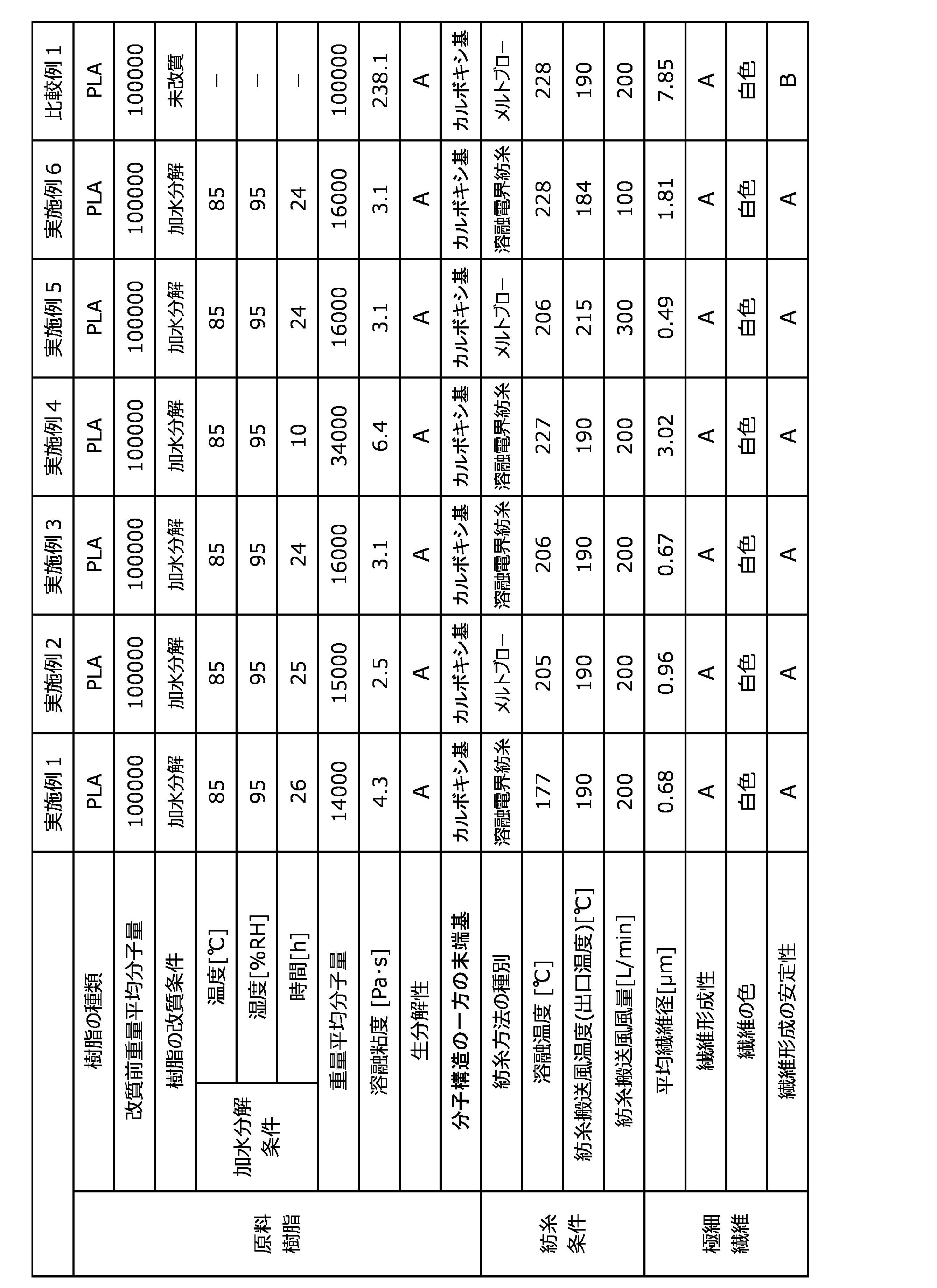
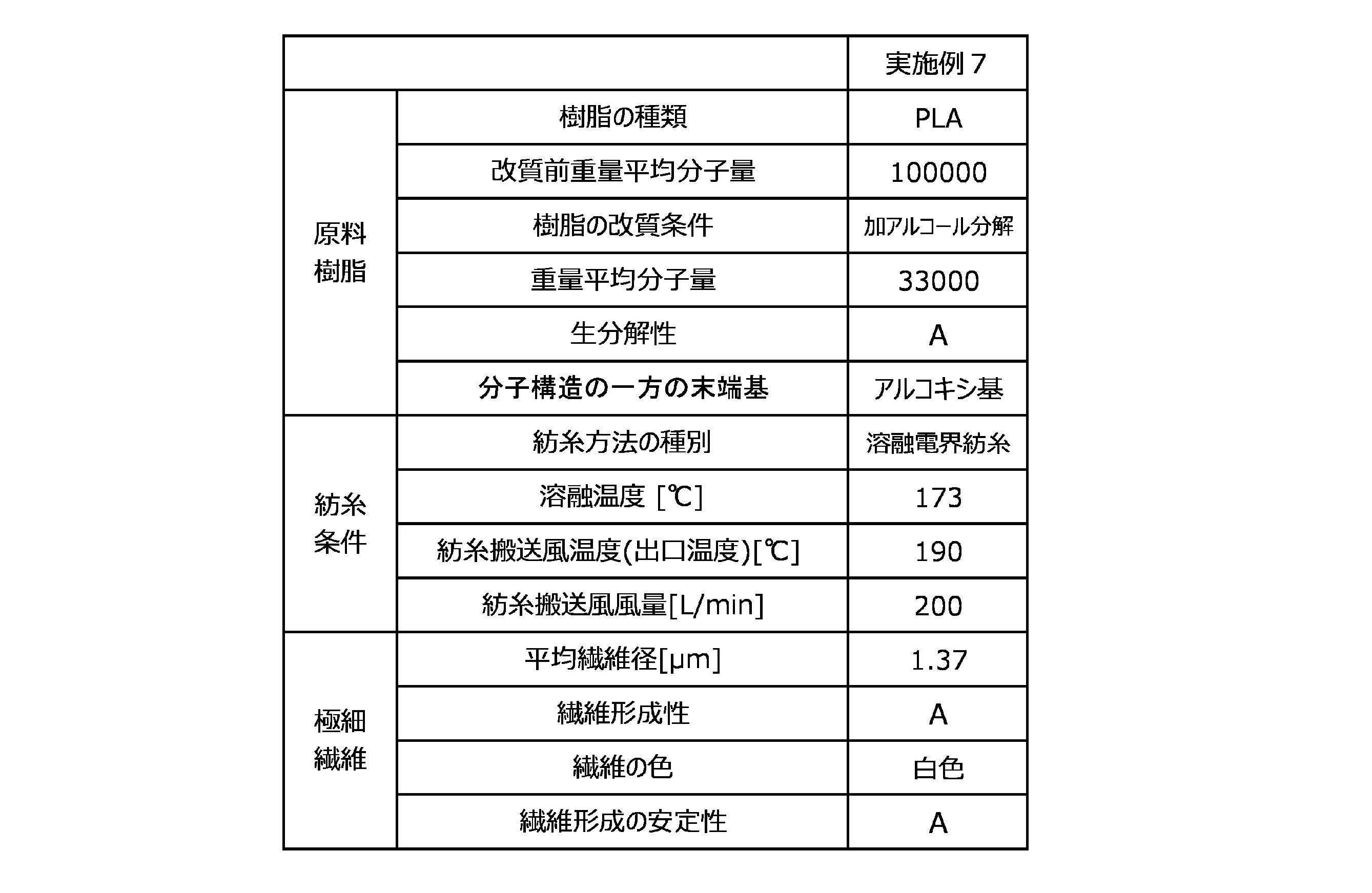
表1及び表2に示すように、所定の重量平均分子量及び溶融粘度を有する生分解性ポリエステルの溶融液を用いて製造した各実施例の繊維は、比較例のものと比較して、繊維を良好に製造できることが判る。一般的に、原料樹脂の溶融温度を高くすることによって溶融粘度が低くなるところ、各実施例に示すように、所定の重量平均分子量及び溶融粘度を有する生分解性ポリエステルを用いることによって、溶融温度を高く設定しなくとも十分に低い溶融粘度を得ることができる。その結果、生分解性ポリエステルの熱劣化を低減しながら、繊維を溶融紡糸法によって容易に製造できることが判る。
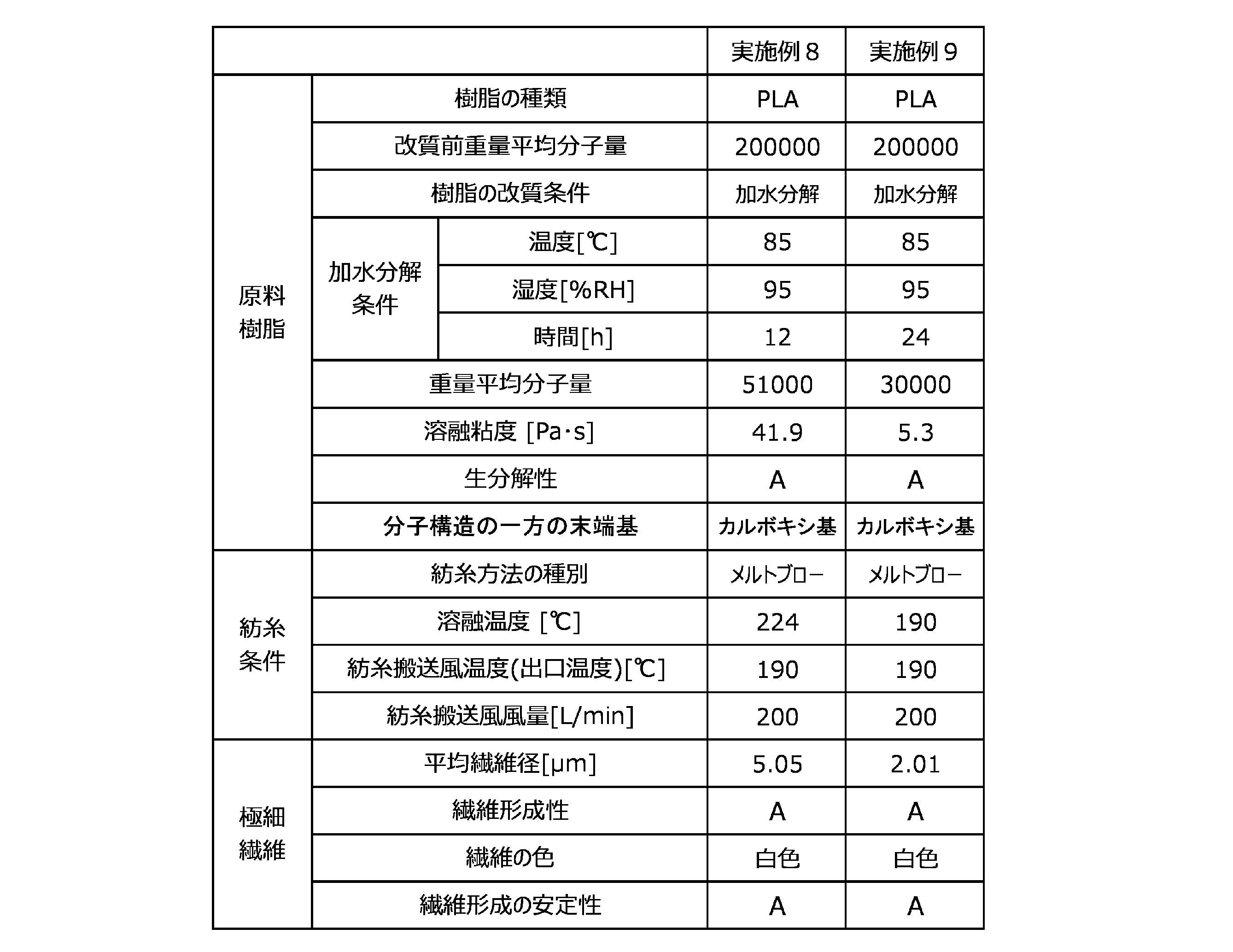
表3に示すように、重量平均分子量が所定の範囲となっている生分解性ポリエステルは、これを溶融液として用いることによって、繊維を良好に製造することができる。
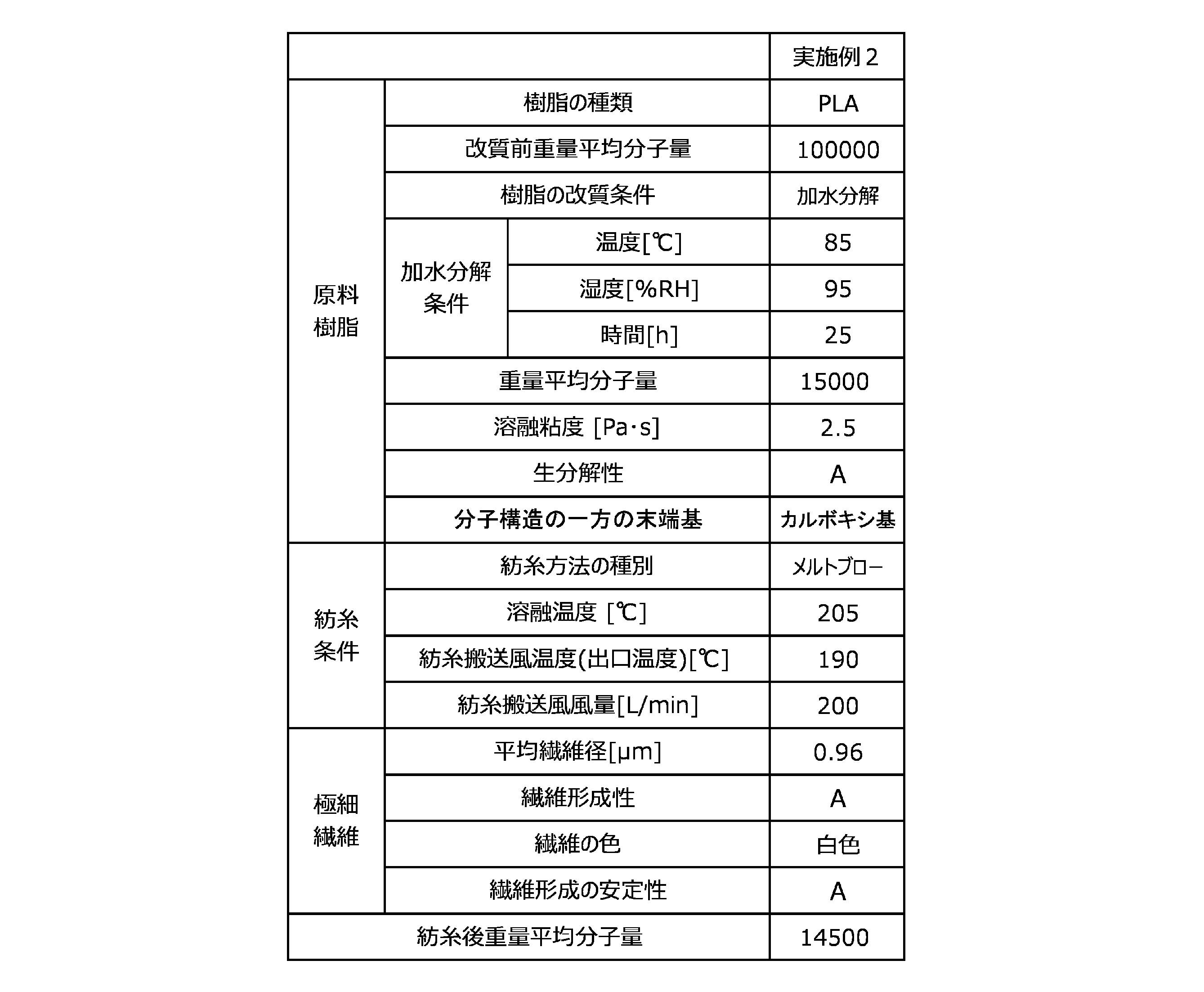
表4に、実施例2の生分解性ポリエステルの繊維形成前の分子量と繊維形成後の分子量を示す。表4に示すように、所定の重量平均分子量及び溶融粘度を有する生分解性ポリエステルを用いることによって、繊維形成後においても生分解性ポリエステルの分解が抑制されており、重量平均分子量が所定の範囲に維持されていることが判る。このように、生分解性ポリエステルを繊維の製造原料として用いることによって、生分解性ポリエステルの繊維を安定的に且つ良好に製造することができる。
また各実施例の繊維はいずれも白色であり、用いられた生分解性ポリエステルの熱分解が発生していないことも判る。また、各実施例の繊維は外力の付与によって崩壊することなく、繊維としての形状を維持しているものであった。
本発明によれば、溶融した生分解性樹脂から極細繊維を製造することができる。
Claims (31)
- 生分解性ポリエステルを含み、以下の(1)~(3)を満たす繊維。
(1)前記生分解性ポリエステルの重量平均分子量が1.0×10⁴以上1.0×10⁵未満である。
(2)温度200℃、せん断速度0.1s-1における前記生分解性ポリエステルの溶融粘度が1Pa・s以上2.0×10²Pa・s以下である。
(3)平均繊維径が0.1μm以上6μm以下である。 - 前記溶融粘度が1Pa・s以上1.0×10²Pa・s以下である、請求項1に記載の繊維。
- 前記溶融粘度が1.5Pa・s以上5.0×101Pa・s以下である、請求項1又は2に記載の繊維。
- 前記溶融粘度が2Pa・s以上2.0×101Pa・s以下である、請求項1~3のいずれか一項に記載の繊維。
- 前記重量平均分子量が1.0×10⁴以上8.0×10⁴未満である、請求項1~4のいずれか一項に記載の繊維。
- 前記重量平均分子量が1.2×10⁴以上4.0×10⁴未満である、請求項1~5のいずれか一項に記載の繊維。
- 前記生分解性ポリエステルにおける末端基の少なくとも一方がアルコキシ基又はカルボキシ基である、請求項1~6のいずれか一項に記載の繊維。
- 前記生分解性ポリエステルは、ヒドロキシアルカン酸に由来する構造を含む重合体である、請求項1~7のいずれか一項に記載の繊維。
- 前記生分解性ポリエステルが、ヒドロキシカルボン酸を繰り返し単位に含む単重合体及び共重合体から選ばれる1種又は2種以上である、請求項1~8のいずれか一項に記載の繊維。
- 前記生分解性ポリエステルは、脂肪族ヒドロキシアルカン酸に由来する構造を含む重合体である、請求項1~9のいずれか一項に記載の繊維。
- 前記生分解性ポリエステルは、炭素数2以上6以下の脂肪族ヒドロキシアルカン酸に由来する構造を含む重合体である、請求項1~10のいずれか一項に記載の繊維。
- 前記生分解性ポリエステルは乳酸に由来する構造を含む重合体である、請求項1~11のいずれか一項に記載の繊維。
- 前記生分解性ポリエステルはポリ乳酸である、請求項1~12のいずれか一項に記載の繊維。
- 前記繊維における脂肪酸金属塩の含有量が、生分解性ポリエステル100質量部に対して0質量部以上0.001質量部未満であり、好ましくは0.0005質量部以下であり、より好ましくは0質量部である、請求項1~13のいずれか一項に記載の繊維。
- 前記繊維における有機酸又は無機酸の塩並びにアンモニウム塩の合計の含有量が、生分解性ポリエステル100質量部に対して0質量部以上0.001質量部未満であり、好ましくは0.0005質量部以下であり、より好ましくは0質量部である、請求項1~14のいずれか一項に記載の繊維。
- 前記繊維における熱硬化性樹脂の含有量、好ましくは非生分解性樹脂の含有量は、0質量%以上2質量%以下であり、好ましくは1質量%以下、より好ましくは0.1質量%以下であり、更に好ましくは0質量%である、請求項1~15のいずれか一項に記載の繊維。
- 前記平均繊維径が0.1μm以上4μm以下である、請求項1~16のいずれか一項に記載の繊維。
- 前記平均繊維径が0.5μm以上4μm以下である、請求項1~17のいずれか一項に記載の繊維。
- 請求項1~18のいずれか一項に記載の繊維を含む不織布。
- 前記繊維が堆積している、請求項19に記載の不織布。
- 請求項1~18のいずれか一項に記載の繊維の製造方法であって、
前記生分解性ポリエステルをメルトブロー法又は溶融電界紡糸法によって紡糸する工程を有する、繊維の製造方法。 - 請求項1~18のいずれか一項に記載の繊維を形成するための、繊維製造用生分解性ポリエステル。
- 請求項22に記載の繊維製造用生分解性ポリエステルをメルトブロー法又は溶融電界紡糸法によって紡糸して、請求項1~18のいずれか一項に記載の繊維を得る工程を有する、繊維の製造方法。
- 前記ポリエステルを250℃以下の溶融状態でノズルから吐出して紡糸する、請求項21又は23に記載の繊維の製造方法。
- 前記ノズルから吐出された溶融状態の前記ポリエステルと、300℃以下、好ましくは150℃以上の空気流とを接触させる、請求項24に記載の繊維の製造方法。
- 前記空気流の風量が300L/min以下、好ましくは30L/min以上である、請求項25に記載の繊維の製造方法。
- 請求項22に記載の繊維製造用生分解性ポリエステルの製造方法であって、
生分解性樹脂を温度50℃以上、好ましくは220℃以下、湿度75%RH以上、好ましくは100%RH以下の環境下に置いて該生分解性樹脂を加水分解させた後、加水分解させた該生分解性樹脂に残存した水分を0ppm以上500ppm未満まで除去して乾燥させる工程を有する、繊維製造用生分解性ポリエステルの製造方法。 - 前記水分を除去して乾燥させる工程が、残存した水分を0ppm以上200ppm以下まで除去する工程である、請求項27に記載の繊維製造用生分解性ポリエステルの製造方法。
- 請求項22に記載の繊維製造用生分解性ポリエステルの製造方法であって、
ポリヒドロキシカルボン酸と炭素数が6以上30以下のアルコールとを加アルコール分解させる工程を有する、繊維製造用生分解性ポリエステルの製造方法。 - 前記加水分解又は前記加アルコール分解の後の工程において、温度40℃以下、好ましくは0℃以上の環境下で前記ポリエステルを保持する工程を備える、請求項27~29のいずれか一項に記載の繊維製造用生分解性ポリエステルの製造方法。
- 前記ポリエステルを保持する工程は、前記ポリエステルを密封容器に収容した状態で行われる、請求項30に記載の繊維製造用生分解性ポリエステルの製造方法。
Applications Claiming Priority (2)
| Application Number | Priority Date | Filing Date | Title |
|---|---|---|---|
| JP2019122366 | 2019-06-28 | ||
| JP2019-122366 | 2019-06-28 |
Publications (1)
| Publication Number | Publication Date |
|---|---|
| WO2020262575A1 true WO2020262575A1 (ja) | 2020-12-30 |
Family
ID=74060182
Family Applications (1)
| Application Number | Title | Priority Date | Filing Date |
|---|---|---|---|
| PCT/JP2020/025127 Ceased WO2020262575A1 (ja) | 2019-06-28 | 2020-06-26 | 繊維及びその製造方法、繊維製造用生分解性ポリエステル及びその製造方法、並びに不織布 |
Country Status (3)
| Country | Link |
|---|---|
| JP (1) | JP2021008701A (ja) |
| TW (1) | TW202116864A (ja) |
| WO (1) | WO2020262575A1 (ja) |
Families Citing this family (2)
| Publication number | Priority date | Publication date | Assignee | Title |
|---|---|---|---|---|
| JP2022112771A (ja) | 2021-01-22 | 2022-08-03 | 株式会社リコー | 画像処理装置、画像形成システム、画像処理方法およびプログラム |
| KR102695347B1 (ko) * | 2022-12-29 | 2024-08-14 | 케이에이에프 주식회사 | 생분해성 폴리올레핀 섬유 및 이의 제조방법 |
Citations (6)
| Publication number | Priority date | Publication date | Assignee | Title |
|---|---|---|---|---|
| US20090203281A1 (en) * | 2006-07-14 | 2009-08-13 | Aimin He | Biodegradable aliphatic-polyester for use in nonwoven webs |
| US20090311937A1 (en) * | 2006-07-14 | 2009-12-17 | Kimberly-Clark Worldwide, Inc. | Biodegradable polylactic acid for use in nonwoven webs |
| US20100048082A1 (en) * | 2006-12-15 | 2010-02-25 | Topolkaraev Vasily A | Biodegradable polylactic acids for use in forming fibers |
| JP2011105817A (ja) * | 2009-11-14 | 2011-06-02 | Kitakyushu Foundation For The Advancement Of Industry Science & Technology | 乳酸オリゴマーおよびその成形体 |
| JP2011173795A (ja) * | 2010-02-23 | 2011-09-08 | Kyushu Institute Of Technology | 水棲生物の付着防止材料 |
| JP2015178692A (ja) * | 2014-02-28 | 2015-10-08 | 東レ株式会社 | ナノファイバーの製造方法、及びナノファイバー |
-
2020
- 2020-06-23 TW TW109121319A patent/TW202116864A/zh unknown
- 2020-06-26 WO PCT/JP2020/025127 patent/WO2020262575A1/ja not_active Ceased
- 2020-06-26 JP JP2020110067A patent/JP2021008701A/ja active Pending
Patent Citations (6)
| Publication number | Priority date | Publication date | Assignee | Title |
|---|---|---|---|---|
| US20090203281A1 (en) * | 2006-07-14 | 2009-08-13 | Aimin He | Biodegradable aliphatic-polyester for use in nonwoven webs |
| US20090311937A1 (en) * | 2006-07-14 | 2009-12-17 | Kimberly-Clark Worldwide, Inc. | Biodegradable polylactic acid for use in nonwoven webs |
| US20100048082A1 (en) * | 2006-12-15 | 2010-02-25 | Topolkaraev Vasily A | Biodegradable polylactic acids for use in forming fibers |
| JP2011105817A (ja) * | 2009-11-14 | 2011-06-02 | Kitakyushu Foundation For The Advancement Of Industry Science & Technology | 乳酸オリゴマーおよびその成形体 |
| JP2011173795A (ja) * | 2010-02-23 | 2011-09-08 | Kyushu Institute Of Technology | 水棲生物の付着防止材料 |
| JP2015178692A (ja) * | 2014-02-28 | 2015-10-08 | 東レ株式会社 | ナノファイバーの製造方法、及びナノファイバー |
Also Published As
| Publication number | Publication date |
|---|---|
| JP2021008701A (ja) | 2021-01-28 |
| TW202116864A (zh) | 2021-05-01 |
Similar Documents
| Publication | Publication Date | Title |
|---|---|---|
| Santos et al. | Bio-based materials from the electrospinning of lignocellulosic sisal fibers and recycled PET | |
| EP3404130B1 (en) | Biodegradable aliphatic polyester-based fiber and method for producing same | |
| Gu et al. | Electrospinning of poly (butylene-carbonate): effect of solvents on the properties of the nanofibers film | |
| KR101921130B1 (ko) | 셀룰로오스의 미세화 방법, 셀룰로오스 나노파이버, 마스터배치 및 수지 조성물 | |
| Martínez-Sanz et al. | Characterization of polyhydroxyalkanoates synthesized from microbial mixed cultures and of their nanobiocomposites with bacterial cellulose nanowhiskers | |
| Yoon et al. | Influences of poly (lactic acid)‐grafted carbon nanotube on thermal, mechanical, and electrical properties of poly (lactic acid) | |
| Arias et al. | Enhanced dispersion of cellulose nanocrystals in melt-processed polylactide-based nanocomposites | |
| KR102401149B1 (ko) | 용융 방사용 수지 조성물 및 그 제조 방법, 그리고 섬유의 제조 방법 | |
| Lo et al. | Fabrication of biodegradable PLA-PHBV medical textiles via electrospinning for healthcare apparel and personal protective equipment | |
| WO2020262575A1 (ja) | 繊維及びその製造方法、繊維製造用生分解性ポリエステル及びその製造方法、並びに不織布 | |
| CN111205605B (zh) | 高熔体强度的聚羟基脂肪酸酯共混物及薄膜及其制备方法和应用 | |
| JP2013057039A (ja) | 脂肪族ポリエステル系樹脂組成物 | |
| JP6935650B2 (ja) | 脂肪族ポリエステル樹脂組成物および成形体 | |
| CN1882657A (zh) | 聚(3-羟基链烷酸酯)组合物及其成型体 | |
| JP2010150711A (ja) | ポリ乳酸繊維および繊維構造体 | |
| TW202108658A (zh) | 改質羥基羧酸聚合物 | |
| US11124896B2 (en) | Polymeric materials | |
| Wilkanowicz et al. | Electrospinning for catalyst immobilization in waste polylactide processing | |
| Awal et al. | Thermal analysis and spectroscopic studies of electrospun nano-scale composite fibers | |
| EP2033980A1 (en) | Pdc-lactic acid copolyester and molded article thereof | |
| Pavlova et al. | Mechanical properties and morphology of electrospun mats made of poly (ω-pentadecalactone) | |
| CN118715287A (zh) | 聚酰胺树脂组合物和聚酰胺树脂组合物的制造方法 | |
| Weng et al. | Impact of Processing Methods on Mechanical Properties of Neat PLA and PLA Blends with PCL and PEO: Electrospinning vs Solvent Casting | |
| Alongi et al. | Influence of nanoparticles on the morphology, thermal stability and air permeability of electrospun polylactic-acid fibres |
Legal Events
| Date | Code | Title | Description |
|---|---|---|---|
| 121 | Ep: the epo has been informed by wipo that ep was designated in this application |
Ref document number: 20831374 Country of ref document: EP Kind code of ref document: A1 |
|
| NENP | Non-entry into the national phase |
Ref country code: DE |
|
| 122 | Ep: pct application non-entry in european phase |
Ref document number: 20831374 Country of ref document: EP Kind code of ref document: A1 |