WO2020230530A1 - 触媒、電極、水電解方法および触媒の製造方法 - Google Patents
触媒、電極、水電解方法および触媒の製造方法 Download PDFInfo
- Publication number
- WO2020230530A1 WO2020230530A1 PCT/JP2020/017002 JP2020017002W WO2020230530A1 WO 2020230530 A1 WO2020230530 A1 WO 2020230530A1 JP 2020017002 W JP2020017002 W JP 2020017002W WO 2020230530 A1 WO2020230530 A1 WO 2020230530A1
- Authority
- WO
- WIPO (PCT)
- Prior art keywords
- catalyst
- electrode
- present
- metal
- heat treatment
- Prior art date
- Legal status (The legal status is an assumption and is not a legal conclusion. Google has not performed a legal analysis and makes no representation as to the accuracy of the status listed.)
- Ceased
Links
Images



Classifications
-
- C—CHEMISTRY; METALLURGY
- C25—ELECTROLYTIC OR ELECTROPHORETIC PROCESSES; APPARATUS THEREFOR
- C25B—ELECTROLYTIC OR ELECTROPHORETIC PROCESSES FOR THE PRODUCTION OF COMPOUNDS OR NON-METALS; APPARATUS THEREFOR
- C25B1/00—Electrolytic production of inorganic compounds or non-metals
- C25B1/01—Products
- C25B1/02—Hydrogen or oxygen
- C25B1/04—Hydrogen or oxygen by electrolysis of water
-
- B—PERFORMING OPERATIONS; TRANSPORTING
- B01—PHYSICAL OR CHEMICAL PROCESSES OR APPARATUS IN GENERAL
- B01J—CHEMICAL OR PHYSICAL PROCESSES, e.g. CATALYSIS OR COLLOID CHEMISTRY; THEIR RELEVANT APPARATUS
- B01J27/00—Catalysts comprising the elements or compounds of halogens, sulfur, selenium, tellurium, phosphorus or nitrogen; Catalysts comprising carbon compounds
- B01J27/24—Nitrogen compounds
-
- B—PERFORMING OPERATIONS; TRANSPORTING
- B01—PHYSICAL OR CHEMICAL PROCESSES OR APPARATUS IN GENERAL
- B01J—CHEMICAL OR PHYSICAL PROCESSES, e.g. CATALYSIS OR COLLOID CHEMISTRY; THEIR RELEVANT APPARATUS
- B01J37/00—Processes, in general, for preparing catalysts; Processes, in general, for activation of catalysts
- B01J37/08—Heat treatment
-
- H—ELECTRICITY
- H01—ELECTRIC ELEMENTS
- H01M—PROCESSES OR MEANS, e.g. BATTERIES, FOR THE DIRECT CONVERSION OF CHEMICAL ENERGY INTO ELECTRICAL ENERGY
- H01M4/00—Electrodes
- H01M4/86—Inert electrodes with catalytic activity, e.g. for fuel cells
- H01M4/90—Selection of catalytic material
-
- Y—GENERAL TAGGING OF NEW TECHNOLOGICAL DEVELOPMENTS; GENERAL TAGGING OF CROSS-SECTIONAL TECHNOLOGIES SPANNING OVER SEVERAL SECTIONS OF THE IPC; TECHNICAL SUBJECTS COVERED BY FORMER USPC CROSS-REFERENCE ART COLLECTIONS [XRACs] AND DIGESTS
- Y02—TECHNOLOGIES OR APPLICATIONS FOR MITIGATION OR ADAPTATION AGAINST CLIMATE CHANGE
- Y02E—REDUCTION OF GREENHOUSE GAS [GHG] EMISSIONS, RELATED TO ENERGY GENERATION, TRANSMISSION OR DISTRIBUTION
- Y02E60/00—Enabling technologies; Technologies with a potential or indirect contribution to GHG emissions mitigation
- Y02E60/30—Hydrogen technology
- Y02E60/36—Hydrogen production from non-carbon containing sources, e.g. by water electrolysis
-
- Y—GENERAL TAGGING OF NEW TECHNOLOGICAL DEVELOPMENTS; GENERAL TAGGING OF CROSS-SECTIONAL TECHNOLOGIES SPANNING OVER SEVERAL SECTIONS OF THE IPC; TECHNICAL SUBJECTS COVERED BY FORMER USPC CROSS-REFERENCE ART COLLECTIONS [XRACs] AND DIGESTS
- Y02—TECHNOLOGIES OR APPLICATIONS FOR MITIGATION OR ADAPTATION AGAINST CLIMATE CHANGE
- Y02E—REDUCTION OF GREENHOUSE GAS [GHG] EMISSIONS, RELATED TO ENERGY GENERATION, TRANSMISSION OR DISTRIBUTION
- Y02E60/00—Enabling technologies; Technologies with a potential or indirect contribution to GHG emissions mitigation
- Y02E60/30—Hydrogen technology
- Y02E60/50—Fuel cells
Definitions
- the present invention relates to a catalyst, an electrode, a water electrolysis method, and a method for producing a catalyst.
- Non-Patent Document 1 Water electrolyzers are attracting a great deal of attention as next-generation hydrogen production systems. An oxygen-evolving anode and a hydrogen-evolving cathode are indispensable in a water electrolyzer, and various oxygen-evolving anodes and hydrogen-evolving cathodes have been proposed (for example, Non-Patent Document 1).
- the conventional oxygen-evolving anode has a problem that the oxygen-evolving overvoltage is high.
- An object of the present invention is to provide a catalyst having a high catalytic activity, an electrode containing a catalyst having a high catalytic activity, a water electrolysis method capable of efficiently electrolyzing water, and a suitable production of the catalyst.
- the purpose is to provide a method for producing a catalyst capable of producing a catalyst.
- a catalyst characterized in that it is composed of a material containing metal sulfide and ⁇ -C 3 N 4 .
- An electrode comprising the catalyst according to any one of (1) to (7) above.
- the electrode according to (8) which is an electrode for water electrolysis.
- a method for producing a catalyst which comprises obtaining a catalyst composed of a material containing a compound consisting of C and N having a diffraction peak at 0.5) °.
- a method for producing a catalyst which comprises obtaining a catalyst composed of a material containing metal sulfide and ⁇ -C 3 N 4 .
- a catalyst having high catalytic activity an electrode containing a catalyst having high catalytic activity, a water electrolysis method capable of efficiently electrolyzing water, and preferably producing the catalyst. It is possible to provide a method for producing a catalyst capable of producing a catalyst.
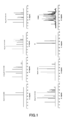
- FIG. 1 shows the X-ray diffraction (XRD) pattern of the catalyst obtained in Example 2, the porosity of nickel as a raw material, and NiS and Ni 3 S 2 and ⁇ -C 3 N 4 as metal sulfides. It is a figure which shows the correspondence with the X-ray diffraction (XRD) pattern of.
- FIG. 2 is an SEM (scanning electron microscope) photograph of the catalyst obtained in Example 2.
- FIG. 3 is an SEM (scanning electron microscope) photograph of the porous nickel (corresponding to the sample of Comparative Example 1) used in the production of the catalyst of Example 2.
- FIG. 4 is a diagram showing an X-ray diffraction (XRD) pattern for the catalysts obtained in Comparative Examples 4 to 6.
- FIG. 5 shows the time of the overvoltage required for oxygen generation when water is electrolyzed at a current density of 10 mA / cm 2 for the catalysts obtained in Example 2, Comparative Example 1, Comparative Example 2 and Comparative Example 3. It is a graph showing a typical change.
- FIG. 6 is a diagram showing an X-ray diffraction (XRD) pattern of the catalyst of Example 2 before and after electrolysis of water.
- FIG. 7 is a TEM (transmission electron microscope) photograph of a fine portion formed on the surface of the catalyst obtained in Example 2.
- the catalyst of the present invention is composed of a material containing a metal sulfide and a compound composed of C and N satisfying predetermined conditions.
- the catalyst of the present invention is composed of a material containing a metal sulfide, ⁇ -C 3 N 4 and (hexagonal carbon nitride). With such a configuration, it is possible to provide a catalyst having high catalytic activity.
- the catalyst whether it includes a metal sulfide and ⁇ -C 3 N 4, for example, X-ray diffractometry (XRD), X-ray photoelectron spectroscopy (XPS), energy dispersive X-ray analysis (EDS) or the like It can be confirmed by various analysis methods of.
- XRD X-ray diffractometry
- XPS X-ray photoelectron spectroscopy
- EDS energy dispersive X-ray analysis
- the diffraction peak at ⁇ 0.5) °, it can be determined that ⁇ -C 3 N 4 (hexagonal carbon nitride) is contained.
- X-ray diffraction pattern obtained by X-ray diffraction method using Cu K ⁇ rays for measurement X-ray is simply referred to as "X-ray diffraction pattern obtained by X-ray diffraction method” or. It is sometimes called an "X-ray diffraction pattern”.
- metal sulfide it is possible to preferably specify what kind of metal sulfide is contained in the catalyst by comparing with the database of the X-ray diffraction pattern.
- the metal element constituting the metal sulfide is not particularly limited, and examples thereof include Ni, Cu, Mn, Fe, Co, Cr, Ti, Ag, and Au, and one or more selected from these. Can be included.
- the function of the catalyst can be adjusted depending on the type of metal element constituting the metal sulfide.
- the catalyst of the present invention includes water oxidation catalyst, water reduction catalyst, oxygen reduction catalyst, carbon dioxide reduction catalyst, hydrogen oxidation catalyst and the like.
- the water oxidation catalyst is a catalyst used for a reaction that electrochemically generates oxygen from water, and can be suitably used as an anode catalyst or the like in the fields of energy conversion, hydrogen generation and the like.
- the water reduction catalyst is a catalyst used for a reaction that electrochemically produces hydrogen from water, and can be suitably used as a cathode catalyst or the like in the fields of energy conversion, hydrogen generation, and the like.
- the catalyst of the present invention contains water as one or more selected from Ni, Cu, Mn, Fe, Co, Cr, Ti, Ag and Au as the metal element constituting the metal sulfide. It functions as an oxidation catalyst and the like.
- the catalyst of the present invention contains water as one or more selected from Ni, Cu, Mn, Fe, Co, Cr, Ti, Ag and Au as the metal element constituting the metal sulfide. It functions as a reduction catalyst and the like.
- the function of water as an oxidation catalyst can be particularly excellent.
- the catalyst of the present invention contains nickel sulfide, it is preferable that Ni S and Ni 3 S 2 are contained as nickel sulfide. As a result, the function of water as an oxidation catalyst can be further improved.
- the metal sulfide and the compound consisting of C and N satisfying the predetermined conditions may be contained in any form in the catalyst of the present invention, but from C and N satisfying the predetermined conditions in the catalyst.
- the compound is preferably contained in a form attached to the surface of the metal sulfide.
- the function as a catalyst as described above can be exhibited more stably.
- an electrode material such as an electrode of a water electrolyzer
- stable electrical conductivity can be ensured, and the function as an electrode can be exhibited more stably.
- the compound consisting of C and N satisfying the predetermined condition is, for example, metal sulfide. It may be attached to only a part of the surface of the object, or may cover the entire surface of the metal sulfide.
- the compound composed of C and N satisfying the predetermined conditions when the compound composed of C and N satisfying the predetermined conditions is contained in the catalyst in the form of adhering to the surface of the metal sulfide, the compound composed of C and N satisfying the predetermined conditions may be, for example, It may be attached to only a part of the surface of the metal sulfide in an island shape, or a metal sulfide such as a protrusion, a fibrous, a plate, a columnar, or a beam may be coated in a sheath shape. It may be the one that exists.
- the catalyst of the present invention may contain other components in addition to the metal sulfide and the compounds consisting of C and N satisfying predetermined conditions.
- the catalyst of the present invention may contain a metallic material.
- the conductivity of the catalyst as a whole can be made excellent, and the catalyst of the present invention can be suitably used as an electrode material or the like (particularly, an electrode material or the like of a water electrolyzer). Further, the catalyst of the present invention can be suitably bonded to other members.
- the metal material examples include simple substance metals, alloys, etc., but the metal material may contain impurities (for example, impurities of 5% by mass or less).
- the metal material may have any relationship with the metal sulfide, but contains a metal element common to the metal element constituting the metal sulfide. It is preferable to be.
- the affinity between the metal material and the metal sulfide can be made excellent, and the metal material and the metal sulfide can be more effectively prevented from being unintentionally separated in the catalyst. Can be done.
- the function as a catalyst as described above can be exhibited more stably.
- an electrode material such as an electrode of a water electrolyzer
- stable electrical conductivity can be ensured, and the function as an electrode can be exhibited more stably.
- the catalyst of the present invention contains a metal material containing a metal element common to the metal element constituting the metal sulfide, for example, only a part of the metal material as a raw material is sulfided to remove the unreacted part. By leaving it, the catalyst of the present invention in a state where the metal material and the metal sulfide are in close contact with each other can be obtained. In this case, the production of the catalyst becomes easy, and the adhesion between the metal material and the metal sulfide can be improved.
- the overvoltage required for oxygen generation at a current density of 10 mA / cm 2 of the catalyst is preferably 150 mV or less, more preferably 100 mV or less, and more preferably 50 mV. The following is more preferable.
- the oxygen evolution reaction due to the oxidation of water (for example, the reaction at the oxygen evolution anode of the water electrolyzer) can proceed more efficiently, and the oxygen evolution efficiency can be made more excellent. ..
- the measured value when water is electrolyzed under the following conditions can be adopted. That is, a water electrolyzer was manufactured using the catalyst of the present invention as an oxygen generating anode and a platinum wire as a hydrogen generating cathode, and the water electrolyzer was used to add 10 mA / cm 2 to a 1 M potassium hydroxide aqueous solution. By energizing for 5 hours at the current density of, it is possible to adopt the value of the overvoltage at 1 hour after the start of energization when electrolysis of water is performed.
- the shape and size of the catalyst of the present invention are not particularly limited, and can be appropriately adjusted according to the use of the catalyst and the like.
- examples of the shape of the catalyst of the present invention include powder, film, plate, block (lump) and the like.
- the catalyst of the present invention may be a dense body, but is preferably a porous body. As a result, the surface area of the catalyst can be increased and the catalytic activity can be increased.
- the compounds composed of C and N satisfying the predetermined conditions are supported in the pores of the porous body, even when the catalyst is used for a long period of time or in a harsh environment. , It is possible to more preferably prevent the unintentional dropout of the compound composed of C and N satisfying the predetermined conditions. As a result, the durability of the catalyst can be improved.
- the method for producing a catalyst of the present invention has a heat treatment step of performing a heat treatment in a state where a metal material and thiourea coexist, and comprises a metal sulfide and a compound composed of C and N satisfying the above-mentioned predetermined conditions. It is characterized by obtaining a catalyst composed of the containing material.
- the metal material is reacted with thiourea to efficiently obtain the catalyst of the present invention composed of a material containing the metal sulfide as described above and a compound composed of C and N satisfying predetermined conditions.
- thiourea functions as a sulfur source for sulfurizing a metal material, and also as a carbon source and a nitrogen source for producing a compound consisting of C and N satisfying predetermined conditions, and is a metal sulfide.
- a compound composed of C and N satisfying a predetermined condition can be efficiently produced, and the catalyst of the present invention can be efficiently produced. Further, it is possible to effectively prevent the unfavorable reaction from proceeding, which is advantageous from the viewpoint of preventing deterioration of the performance of the produced catalyst, preventing waste of raw materials, and the like.
- the heat treatment step may be performed in a state where the metal material and thiourea coexist.
- block-shaped (lumpy) thiourea may be brought into contact with the metal material, but the metal material may be a powder of thiourea. It is preferable to perform heat treatment in a state of being buried therein.
- thiourea can be suitably brought into contact with each target portion of the metal material. More specifically, the concentration of thiourea in contact with the surface of the metal material can be more preferably increased, and the desired reaction proceeds more efficiently. In particular, such an effect can be obtained even if the metal material has a complicated shape or a fine shape. In addition, it is possible to more effectively prevent impurities derived from a solvent or the like from being generated or contained in the produced catalyst, preventing deterioration of the performance of the produced catalyst and improving the productivity of the catalyst. It is advantageous from the viewpoint of.
- a sudden temperature change of the metal material as a base material (work) during this step and each part of the metal material can be performed. It is possible to more effectively prevent unintentional temperature fluctuations in the above, and it is possible to more effectively prevent the generation of internal stress and unintentional deformation of the produced catalyst. Further, by using powdered thiourea, a commercially available product can be preferably used, which is particularly advantageous in improving the productivity of the catalyst and the like.
- the average particle size of the particles constituting the thiourea powder is preferably 1.0 ⁇ m or more and 10 mm or less, more preferably 5.0 ⁇ m or more and 3.0 mm or less, and 10 ⁇ m or more and 1.0 mm or less. Is even more preferable.
- the thiourea powder can be easily handled, and the fluidity of the thiourea powder can be made more excellent, which makes it more suitable for a metal material as a base material (work) having various shapes. It can be contacted and the above-mentioned reaction can proceed more preferably.
- the average particle size refers to the average particle size based on the number of pieces, unless otherwise specified.
- the shape and size of the metal material used in the heat treatment step are not particularly limited, but are usually determined by the size and shape of the catalyst to be manufactured.
- the metal material used in the heat treatment step may be a dense body or a porous body, but a porous body is preferable.
- the specific surface area of the metal material can be increased, the reactivity with thiourea can be enhanced, and the catalytic activity of the produced catalyst can be increased.
- compounds composed of C and N satisfying predetermined conditions can be suitably supported in the pores, even when the produced catalyst is used for a long period of time or in a harsh environment. , It is possible to more preferably prevent the unintentional dropout of the compound composed of C and N satisfying the predetermined conditions. As a result, the durability of the catalyst can be improved.
- the metal material may be any one containing a metal element constituting the metal sulfide of the catalyst to be produced.
- a metal element constituting the metal sulfide of the catalyst to be produced.
- various elemental metals and various alloys for example, stainless steel, brass (brass), bronze, etc.
- Etc. can be used.
- the metal material may contain impurities (for example, impurities of 5% by mass or less).
- the metal material used in the heat treatment step is preferably nickel. This makes it possible to more preferably proceed with the reaction in the heat treatment step as described above. Further, a catalyst containing nickel sulfide as a metal sulfide and having an excellent function as an oxidation catalyst of water can be preferably produced.
- the metal member used in this step may have parts having different compositions.
- the metal material may have a base portion and a coating film having a composition different from that of the base portion, may be a laminate having a plurality of layers, or the composition of the constituent material may change in an inclined manner. It may be made of a functionally graded material.
- the member as the base material (work) to be subjected to the reaction with thiourea in this step is, for example, a portion composed of a material other than the metal material in addition to the metal material having reactivity with thiourea. It may have.
- the member as the base material (work) to be subjected to the reaction with thiourea in this step is the reactivity between the part made of the metal material as the part having the reactivity with thiourea and the reactivity with thiourea. It may have a portion made of a ceramic material as a portion having no urea.
- the member as the base material (work) used for the reaction with thiourea in this step may be partially covered with a mask.
- the finally obtained catalyst can be suitably produced as having a portion whose surface is composed of a metal material.
- it can be connected to an external wiring to more preferably secure the electrical conductivity to the electrodes.
- the heat treatment may be performed at least once, but is preferably performed a plurality of times.
- thiourea that has disappeared due to decomposition, sublimation, etc. in addition to the reaction with the metal material in the previous heat treatment is suitably replenished.
- the sulfide reaction of the metal material and the formation reaction of the compound composed of C and N satisfying the predetermined conditions can be more preferably carried out, and the productivity of the catalyst can be made more excellent. Can be done.
- This step may be performed in any atmosphere, for example, in an atmospheric atmosphere or under reduced pressure such as vacuum, but it is preferably performed in an atmosphere of an inert gas such as helium or argon.
- the heating temperature in this step varies depending on the type of the metal material, the form of the coexistence state of the metal material and thiourea, etc., but is preferably 250 ° C. or higher and 800 ° C. or lower, and is 300 ° C. or higher and 750 ° C. or lower. It is more preferable that the temperature is 350 ° C. or higher and 700 ° C. or lower.
- the heating time in this step (particularly, the total heating time at 350 ° C. or higher) is preferably 10 minutes or more and 1200 minutes or less, more preferably 30 minutes or more and 900 minutes or less, and 60 minutes. It is more preferably 600 minutes or less.
- the desired reaction can proceed more favorably, and the productivity of the catalyst can be made more excellent.
- the total heating time of these heat treatments satisfies the above conditions.
- the treatment may be performed at different temperatures. More specifically, after holding at the first heating temperature for a predetermined time, the temperature may be set to a second temperature different from the first temperature and further held for a predetermined time.
- the amount of thiourea used with respect to the metal material to be sulfurized is preferably 10 times or more, more preferably 20 times or more, and 30 times or more in terms of mass ratio. Is even more preferable.
- the heat treatment is performed a plurality of times, it is preferable that the total amount of thiourea used in these heat treatments satisfies the above conditions.
- This step may be heat-treated by any means, and can be preferably performed using, for example, various electric furnaces. Above all, it is preferable to perform heat treatment using a tubular furnace.
- the temperature can be easily controlled in the heat treatment process, and the temperature uniformity at each part in the furnace can be made excellent.
- this step may be performed, for example, in a state where a part of the surface of the metal material as the base material (work) is hindered from contact with thiourea. More specifically, for example, a part of the surface of the metal material may be covered with a mask.
- the reaction as described above is selectively carried out at the portion where the contact with thiourea is not inhibited (for example, the portion not covered with the mask).
- a catalyst that can be advanced and has a metal material exposed on a part of the surface can be preferably produced.
- energization of the catalyst can be performed more preferably.
- the catalyst can be more preferably bonded to other conductive members (for example, terminals, wiring, etc.).
- the constituent material of the mask is not particularly limited as long as it has a function of inhibiting contact between the metal material and thiourea at the coating portion of the mask, but it is preferably one that can be easily removed after the heat treatment step.
- Examples of such a material include various resin materials.
- the electrode of the present invention is characterized by containing the catalyst of the present invention described above. That is, the electrode of the present invention contains a catalyst composed of a material containing a metal sulfide and a compound composed of C and N satisfying the above-mentioned predetermined conditions. This makes it possible to provide an electrode containing a catalyst having a high catalytic activity.
- the electrode of the present invention may contain the catalyst of the present invention described above, and may contain other components.
- the catalyst of the present invention described above may be used as it is as the electrode of the present invention by itself, or may be used as the electrode of the present invention in combination with other materials.
- the electrode of the present invention may have a portion mainly containing the catalyst of the present invention described above and a portion mainly containing a component other than the catalyst of the present invention. More specifically, for example, the electrode of the present invention is mainly a conductive carbon-based material such as a metal material or graphite bonded to the catalyst of the present invention in addition to the above-mentioned site containing the catalyst of the present invention. It may have a constructed site.
- the electrode of the present invention it is preferable that at least a part of the catalyst of the present invention is exposed on the surface thereof. As a result, the effects of the present invention as described above are more preferably exhibited.
- the electrode of the present invention may be used in any way as long as the function of the catalyst of the present invention is exhibited by energization.
- an electrode for water electrolysis a catalyst electrode for oxygen generation, and carbon dioxide decomposition.
- Examples include electrodes for generating carbon monoxide, electrodes for generating carbon monoxide, and electrodes for generating ammonia.
- the electrode of the present invention When the electrode of the present invention is used as an electrode for water electrolysis, by using it as an anode, it can be suitably used for a reaction that electrochemically generates oxygen from water, for example, in fields such as energy conversion and hydrogen generation. As described above, when the electrode of the present invention is used as an anode for water electrolysis, it can be said that the electrode is a catalyst electrode for oxygen evolution.
- the electrode of the present invention when used as an electrode for water electrolysis, by using it as a cathode, it can be suitably used for a reaction that electrochemically generates hydrogen from water, for example, in fields such as energy conversion and hydrogen generation. it can.
- the electrode of the present invention when used as a cathode for water electrolysis, it can be said that the electrode is a catalyst electrode for hydrogen generation.
- the electrode of the present invention may be used as a catalyst electrode for oxygen evolution in a form other than the electrode for water electrolysis.
- the electrode of the present invention can be suitably manufactured by applying the above-mentioned method for producing a catalyst of the present invention. That is, the electrode of the present invention can be suitably manufactured by using a method having a heat treatment step of performing a heat treatment in a state where a metal material and thiourea coexist.
- the member obtained in the heat treatment step may be used as it is as the electrode of the present invention, or the member obtained in the heat treatment step may be post-treated. For example, removing a part of a region made of a material containing a metal sulfide and a compound composed of C and N satisfying the above-mentioned predetermined conditions, which is provided on the surface of the member obtained in the heat treatment step. May have a step of exposing the unreacted metallic material. As a result, the external wiring can be suitably connected to the metal material, and the electrical conductivity to the electrodes of the present invention can be more preferably secured.
- a part of the surface of the metallic material may be masked with a non-metal material prior to the heat treatment step, and the mask may be removed after the heat treatment step.
- the unreacted metal material can be suitably exposed on a part of the surface of the member obtained in the heat treatment step, and the external wiring can be suitably connected to the metal material to the electrode of the present invention. It is possible to more preferably secure the electrical conductivity of.
- the water electrolysis method of the present invention is characterized in that water is electrolyzed using the electrodes of the present invention described above. This makes it possible to provide a water electrolysis method capable of efficiently electrolyzing water.
- the electrode of the present invention may be used as a cathode or an anode.
- the electrode of the present invention functions as a catalyst electrode for hydrogen generation, and by using the electrode of the present invention as an anode, as described above, the present invention The electrode functions as a catalyst electrode for oxygen generation.
- the method for producing a catalyst of the present invention may have steps other than the above-mentioned steps (for example, pretreatment step, intermediate treatment step, posttreatment step, etc.).
- a powdery catalyst can be obtained more preferably. Further, the particle size and the like of the obtained catalyst powder can be adjusted by appropriately adjusting the pulverization and crushing conditions.
- the order thereof is not particularly limited, and the washing step may be performed after the crushing and crushing step, or the crushing and crushing step may be performed after the washing step. Good. Further, for example, by adopting a wet pulverization method, the cleaning step and the pulverization / crushing step may be performed simultaneously.
- the obtained product may be subjected to a step of performing machining such as cutting or polishing, for example.
- the catalyst of the present invention may be composed of a material containing a metal sulfide and a compound composed of C and N satisfying a predetermined condition, and is produced by a method other than the above-mentioned method. There may be.
- the electrode of the present invention may be made of a material containing the catalyst of the present invention, and may be manufactured by a method other than the above-mentioned method.
- test piece was embedded in 4 g of powdered thiourea, and in this state, nitrogen gas was used in a tubular furnace (program tubular electric furnace TMF-700N manufactured by AS ONE Corporation). The temperature was raised from room temperature to 450 ° C. over 5 hours in an atmosphere, held at 450 ° C. for 1 hour (heat treatment step), and then naturally cooled.
- a tubular furnace program tubular electric furnace TMF-700N manufactured by AS ONE Corporation
- Example 2 A catalyst was produced in the same manner as in Example 1 except that the number of heat treatments in the heat treatment step was changed to 2.
- Example 3 A catalyst was produced in the same manner as in Example 1 except that the number of heat treatments in the heat treatment step was changed to four.
- Example 4 A catalyst was produced in the same manner as in Example 1 above, except that the heating temperature (maximum temperature) in the heat treatment step was changed to 400 ° C.
- Example 5 A catalyst was produced in the same manner as in Example 1 above, except that the heating temperature (maximum temperature) in the heat treatment step was changed to 700 ° C.
- each example was one having a portion made of a Ni as the metal material in addition to metal sulfide and ⁇ -C 3 N 4.
- Example 1 From NI-318161 (pure metal nickel porous body 1.6 ⁇ 100 ⁇ 110 mm) manufactured by Niraco Co., Ltd. used in Example 1, a 1 cm ⁇ 2 cm sheet-shaped test piece was cut out in the same manner as described above, and the test was performed. It was decided to use the piece as it is as a catalyst without heat treatment.
- Example 2 (Comparative Example 2) First, a 1 cm ⁇ 2 cm sheet-shaped test piece was cut out from NI-318161 (pure metal nickel porous body 1.6 ⁇ 100 ⁇ 110 mm) manufactured by Niraco Co., Ltd. used in Example 1 in the same manner as described above. ..
- hexachloroiridium acid H 2 [IrCl 6 ]
- H 2 [IrCl 6 ] hexachloroiridium acid
- the solvent is removed from the solution applied to the test piece by heating at 80 ° C., further heat-treated at 350 ° C. for 60 minutes in the air, and then naturally cooled to make nickel.
- a catalyst was obtained in which a film of iridium oxide was provided on the surface of the base material of. The rate of temperature rise to the maximum temperature was 5 ° C./min.
- Example 3 A catalyst was produced in the same manner as in Example 1 above, except that urea powder was used instead of thiourea powder. As a result, a catalyst in which ⁇ -C 3 N 4 was formed on the base material was obtained.
- Example 4 (Comparative Example 4) First, a 1 cm ⁇ 2 cm sheet-shaped test piece was cut out from NI-318161 (pure metal nickel porous body 1.6 ⁇ 100 ⁇ 110 mm) manufactured by Niraco Co., Ltd. used in Example 1 in the same manner as described above. ..
- a 1 M aqueous solution of thiourea was applied to the test piece by dipping. Then, the solvent is removed from the solution given to the test piece by heating at 80 ° C., and nitrogen is further removed using a tubular furnace (program tubular electric furnace TMF-700N manufactured by AS ONE Corporation) which is an electric furnace.
- a catalyst was obtained by raising the temperature from room temperature to 450 ° C. over 5 hours in a gas atmosphere, holding at 450 ° C. for 1 hour, and then naturally cooling.
- Comparative Example 5 A catalyst was produced in the same manner as in Comparative Example 4 except that the test piece was dipped into a 1 M aqueous solution of thiourea four times.
- Comparative Example 6 A catalyst was produced in the same manner as in Comparative Example 5 except that a 3M aqueous solution of thiourea was used instead of the 1M aqueous solution of thiourea.
- the catalysts obtained in each of the above Examples and Comparative Examples were analyzed by X-ray diffraction (XRD), X-ray electron spectroscopy (XPS) and energy dispersive X-ray analysis (EDS).
- XRD X-ray diffraction
- XPS X-ray electron spectroscopy
- EDS energy dispersive X-ray analysis
- the catalyst of each of the above examples was composed of a material containing Ni S and Ni 3 S 2 as metal sulfides and ⁇ -C 3 N 4 as metal sulfides.
- the coexistence state of the metal sulfide and ⁇ -C 3 N 4 was not confirmed.
- the catalysts obtained in each of the Examples and Comparative Examples were observed with a scanning electron microscope (SEM), the catalysts of each of the Examples had a network structure as compared with the porous material of nickel as a raw material. It was confirmed that the gap (mesh) was small. It is considered that this is because the metal sulfide was generated and expanded by the sulfurization reaction of Ni, which is a metal material. Further, in the catalyst of each of the above-mentioned examples, fibrous and cotton-like substances were attached to the surface. It was confirmed that ⁇ -C 3 N 4 was attached to the surface of nickel sulfide.
- the X-ray diffraction (XRD) pattern for the catalyst obtained in Example 2 the porosity of nickel as a raw material, and the X-ray diffraction for NiS and Ni 3 S 2 , ⁇ -C 3 N 4 as metal sulfides.
- a diagram showing the correspondence with the (XRD) pattern is shown in FIG. 1, and an SEM (scanning electron microscope) photograph of the catalyst obtained in Example 2 is shown in FIG. 2, and the nickel used in the production of the catalyst of Example 2 is shown.
- a SEM (scanning electron microscope) photograph of the porosity (corresponding to the sample of Comparative Example 1) is shown in FIG. 3, and an X-ray diffraction (XRD) pattern for the catalysts obtained in Comparative Examples 4 to 6 is shown in FIG.
- the TEM (transmission electron microscope) photograph of the fine part formed on the surface of the catalyst obtained in Example 2 is shown in FIG. From the comparison between FIGS. 2 and 7 and FIG. 3, in the catalyst obtained in Example 2, ⁇ -C 3 N 4 was attached to the surface of the nickel sulfide, particularly the metal sulfide. It was confirmed that ⁇ -C 3 N 4 covered the surface of the surface in a sheath shape. Further, although not shown, it was confirmed that the catalysts obtained in the other examples have the same configuration. In addition, in FIG. 1, the porosity of nickel is indicated by "NF".
- a 1 M potassium hydroxide aqueous solution is energized at a current density of 10 mA / cm 2 for 5 hours to electrolyze water, and the overvoltage required for oxygen generation at the oxygen generating anode over time. I asked for a change.
- the overvoltage required for oxygen generation was 50 mV or less.
- the overvoltage required for oxygen generation was 220 mV or more.
- FIG. 5 shows changes over time in the overvoltage required for oxygen generation when water is electrolyzed under the above conditions for the catalysts obtained in Example 2, Comparative Example 1, Comparative Example 2 and Comparative Example 3. Shown in.
- the X-ray diffraction (XRD) pattern of the catalyst of Example 2 before and after the electrolysis of water is shown in FIG.
- the metal material as the work instead of the one made of Ni, the one made of Cu, the one made of Ti, the one made of Ag, and the one made of stainless steel (SUS316L) are used. Except for using the place where the was produced in each example and in the same manner the catalyst, similar to the above, a catalyst composed of a material containing a metal sulfide and ⁇ -C 3 N 4 were obtained. Then, these catalysts, metal sulfides, as compared with the material composed of a material that does not include at least one of ⁇ -C 3 N 4, it functions as a catalyst is sufficiently high is confirmed ..
- the catalyst was produced in the same manner as in each of the above-described examples except that a material composed of a dense body was used instead of the porous body.
- the catalyst made of a material containing a metal sulfide and ⁇ -C 3 N 4 were obtained. Then, these catalysts, metal sulfides, as compared with the material composed of a material that does not include at least one of ⁇ -C 3 N 4, it functions as a catalyst is sufficiently high is confirmed However, the function as a catalyst was lower than that produced using a porous body.
- the electrode of the present invention contains the catalyst of the present invention. This makes it possible to provide an electrode containing a catalyst having a high catalytic activity.
- the water electrolysis method of the present invention electrolyzes water using the electrode of the present invention. This makes it possible to provide a water electrolysis method capable of efficiently electrolyzing water.
- the method for producing a catalyst of the present invention includes a step of performing a heat treatment in a state where a metal material and thiourea coexist, and X-rays using metal sulfide and Cu K ⁇ rays as measurement X-rays.
- the manufacturing method of the catalyst of the present invention has a step of performing heat treatment in a state of coexistence of a metal material and thiourea, formed of a material containing a metal sulfide, and a ⁇ -C 3 N 4 Get the catalyst.
- the catalyst, electrode, water electrolysis method and catalyst manufacturing method of the present invention have industrial applicability.
Landscapes
- Chemical & Material Sciences (AREA)
- Engineering & Computer Science (AREA)
- Chemical Kinetics & Catalysis (AREA)
- Materials Engineering (AREA)
- Organic Chemistry (AREA)
- Electrochemistry (AREA)
- Metallurgy (AREA)
- Inorganic Chemistry (AREA)
- Physics & Mathematics (AREA)
- Thermal Sciences (AREA)
- General Chemical & Material Sciences (AREA)
- Catalysts (AREA)
- Electrodes For Compound Or Non-Metal Manufacture (AREA)
- Electrolytic Production Of Non-Metals, Compounds, Apparatuses Therefor (AREA)
Priority Applications (1)
| Application Number | Priority Date | Filing Date | Title |
|---|---|---|---|
| JP2021519323A JP7571351B2 (ja) | 2019-05-13 | 2020-04-20 | 触媒、電極、水電解方法および触媒の製造方法 |
Applications Claiming Priority (2)
| Application Number | Priority Date | Filing Date | Title |
|---|---|---|---|
| JP2019090888 | 2019-05-13 | ||
| JP2019-090888 | 2019-05-13 |
Publications (1)
| Publication Number | Publication Date |
|---|---|
| WO2020230530A1 true WO2020230530A1 (ja) | 2020-11-19 |
Family
ID=73288996
Family Applications (1)
| Application Number | Title | Priority Date | Filing Date |
|---|---|---|---|
| PCT/JP2020/017002 Ceased WO2020230530A1 (ja) | 2019-05-13 | 2020-04-20 | 触媒、電極、水電解方法および触媒の製造方法 |
Country Status (2)
| Country | Link |
|---|---|
| JP (1) | JP7571351B2 (https=) |
| WO (1) | WO2020230530A1 (https=) |
Cited By (2)
| Publication number | Priority date | Publication date | Assignee | Title |
|---|---|---|---|---|
| CN113083006A (zh) * | 2021-03-26 | 2021-07-09 | 上海师范大学 | 气固相光电芬顿降解NO的C3N4Fe(1-x)S不锈钢电极复合材料制备方法及应用 |
| CN113600220A (zh) * | 2021-06-23 | 2021-11-05 | 宁夏大学 | 氮化碳高负载分散NiS光催化降解材料及制备方法 |
Citations (4)
| Publication number | Priority date | Publication date | Assignee | Title |
|---|---|---|---|---|
| WO2011030546A1 (ja) * | 2009-09-09 | 2011-03-17 | 三井化学株式会社 | ガス生成装置およびガス生成方法 |
| CN107892284A (zh) * | 2017-11-28 | 2018-04-10 | 铜仁学院 | 一种NiS/C3N4二元复合物及其制备和应用方法 |
| US20180305231A1 (en) * | 2017-04-19 | 2018-10-25 | King Abdulaziz University | Composite, a method of making thereof, and a method for degrading a pollutant |
| CN110444412A (zh) * | 2019-08-13 | 2019-11-12 | 三峡大学 | 一种等级蜂窝状Ni3S2薄膜电极的制备方法 |
-
2020
- 2020-04-20 JP JP2021519323A patent/JP7571351B2/ja active Active
- 2020-04-20 WO PCT/JP2020/017002 patent/WO2020230530A1/ja not_active Ceased
Patent Citations (4)
| Publication number | Priority date | Publication date | Assignee | Title |
|---|---|---|---|---|
| WO2011030546A1 (ja) * | 2009-09-09 | 2011-03-17 | 三井化学株式会社 | ガス生成装置およびガス生成方法 |
| US20180305231A1 (en) * | 2017-04-19 | 2018-10-25 | King Abdulaziz University | Composite, a method of making thereof, and a method for degrading a pollutant |
| CN107892284A (zh) * | 2017-11-28 | 2018-04-10 | 铜仁学院 | 一种NiS/C3N4二元复合物及其制备和应用方法 |
| CN110444412A (zh) * | 2019-08-13 | 2019-11-12 | 三峡大学 | 一种等级蜂窝状Ni3S2薄膜电极的制备方法 |
Cited By (4)
| Publication number | Priority date | Publication date | Assignee | Title |
|---|---|---|---|---|
| CN113083006A (zh) * | 2021-03-26 | 2021-07-09 | 上海师范大学 | 气固相光电芬顿降解NO的C3N4Fe(1-x)S不锈钢电极复合材料制备方法及应用 |
| CN113083006B (zh) * | 2021-03-26 | 2023-01-17 | 上海师范大学 | 气固相光电芬顿降解NO的C3N4Fe(1-x)S不锈钢电极复合材料制备方法及应用 |
| CN113600220A (zh) * | 2021-06-23 | 2021-11-05 | 宁夏大学 | 氮化碳高负载分散NiS光催化降解材料及制备方法 |
| CN113600220B (zh) * | 2021-06-23 | 2023-11-07 | 宁夏大学 | 氮化碳高负载分散NiS光催化降解材料及制备方法 |
Also Published As
| Publication number | Publication date |
|---|---|
| JP7571351B2 (ja) | 2024-10-23 |
| JPWO2020230530A1 (https=) | 2020-11-19 |
Similar Documents
| Publication | Publication Date | Title |
|---|---|---|
| Zhao et al. | Tin nanoparticles decorated copper oxide nanowires for selective electrochemical reduction of aqueous CO 2 to CO | |
| Ray et al. | Conceptual design of three-dimensional CoN/Ni 3 N-coupled nanograsses integrated on N-doped carbon to serve as efficient and robust water splitting electrocatalysts | |
| Tegou et al. | Rotating disc electrode studies of borohydride oxidation at Pt and bimetallic Pt–Ni and Pt–Co electrodes | |
| Tang et al. | Nickel–silver alloy electrocatalysts for hydrogen evolution and oxidation in an alkaline electrolyte | |
| JP5442757B2 (ja) | 水素発生カソードとして適切な電極 | |
| Keerthiga et al. | Electrochemical reduction of carbon dioxide on zinc-modified copper electrodes | |
| KR102136619B1 (ko) | 다공성 Ni-Al-Mo 알칼리 수전해용 음극 및 그 제조방법과 Ni-Al-Mo 용사코팅재 | |
| KR102360423B1 (ko) | 다공성 Ni-Fe-Al 촉매층이 형성된 알칼리 수전해용 양극 및 그 제조방법 | |
| WO2011128213A1 (en) | Amorphous transition metal sulphide films or solids as efficient electrocatalysts for hydrogen production from water or aqueous solutions | |
| KR102266601B1 (ko) | 복합 금속 산화물 촉매를 포함하는 수전해전극의 제조방법 | |
| JP6506983B2 (ja) | 水素発生用陰極およびその製造方法 | |
| Yu et al. | Superfine Ag nanoparticle decorated Zn nanoplates for the active and selective electrocatalytic reduction of CO 2 to CO | |
| Zhao et al. | Crystal facet regulation and Ru incorporation of Co3O4 for acidic oxygen evolution reaction electrocatalysis | |
| Lin et al. | Electro-deposition of nickel–iron nanoparticles on flower-like MnCo 2 O 4 nanowires as an efficient bifunctional electrocatalyst for overall water splitting | |
| JP2010519029A (ja) | 酸素の電気化学的還元用の触媒 | |
| Jang et al. | Fabrication of self‐supported catalysts via electrodeposition for proton exchange membrane water electrolysis: Emphasizing on the porous transport layers | |
| EP3265422B1 (en) | A method for catalytically induced hydrolysis and recycling of metal borohydride solutions | |
| WO2020230530A1 (ja) | 触媒、電極、水電解方法および触媒の製造方法 | |
| KR102278529B1 (ko) | 다공성 Ni-Al-Mo 알칼리 수전해용 음극 | |
| JP6222121B2 (ja) | 不溶性電極の製造方法 | |
| Biswal et al. | Suppressing H 2 O 2 formation in the oxygen reduction reaction using Co-doped copper oxide electrodes | |
| JP2003277966A (ja) | 低い過電圧と耐久性に優れた水素発生用陰極 | |
| Kumar et al. | Polymorph nickel titanate nanofibers as bifunctional electrocatalysts towards hydrogen and oxygen evolution reactions | |
| Thienprasert et al. | Improving the roughness of copper working electrode through electroless deposition for carbon dioxide reduction reaction | |
| WO2019232576A1 (en) | An electrode for the hydrogen evolution reaction |
Legal Events
| Date | Code | Title | Description |
|---|---|---|---|
| 121 | Ep: the epo has been informed by wipo that ep was designated in this application |
Ref document number: 20804430 Country of ref document: EP Kind code of ref document: A1 |
|
| ENP | Entry into the national phase |
Ref document number: 2021519323 Country of ref document: JP Kind code of ref document: A |
|
| NENP | Non-entry into the national phase |
Ref country code: DE |
|
| 122 | Ep: pct application non-entry in european phase |
Ref document number: 20804430 Country of ref document: EP Kind code of ref document: A1 |