WO2020202738A1 - 腸内フローラ解析システム、情報処理装置、情報処理方法及びプログラム - Google Patents
腸内フローラ解析システム、情報処理装置、情報処理方法及びプログラム Download PDFInfo
- Publication number
- WO2020202738A1 WO2020202738A1 PCT/JP2020/002722 JP2020002722W WO2020202738A1 WO 2020202738 A1 WO2020202738 A1 WO 2020202738A1 JP 2020002722 W JP2020002722 W JP 2020002722W WO 2020202738 A1 WO2020202738 A1 WO 2020202738A1
- Authority
- WO
- WIPO (PCT)
- Prior art keywords
- user
- information
- inspection
- intestinal flora
- result
- Prior art date
- Legal status (The legal status is an assumption and is not a legal conclusion. Google has not performed a legal analysis and makes no representation as to the accuracy of the status listed.)
- Ceased
Links
Images



Classifications
-
- C—CHEMISTRY; METALLURGY
- C12—BIOCHEMISTRY; BEER; SPIRITS; WINE; VINEGAR; MICROBIOLOGY; ENZYMOLOGY; MUTATION OR GENETIC ENGINEERING
- C12M—APPARATUS FOR ENZYMOLOGY OR MICROBIOLOGY; APPARATUS FOR CULTURING MICROORGANISMS FOR PRODUCING BIOMASS, FOR GROWING CELLS OR FOR OBTAINING FERMENTATION OR METABOLIC PRODUCTS, i.e. BIOREACTORS OR FERMENTERS
- C12M1/00—Apparatus for enzymology or microbiology
- C12M1/34—Measuring or testing with condition measuring or sensing means, e.g. colony counters
-
- C—CHEMISTRY; METALLURGY
- C12—BIOCHEMISTRY; BEER; SPIRITS; WINE; VINEGAR; MICROBIOLOGY; ENZYMOLOGY; MUTATION OR GENETIC ENGINEERING
- C12Q—MEASURING OR TESTING PROCESSES INVOLVING ENZYMES, NUCLEIC ACIDS OR MICROORGANISMS; COMPOSITIONS OR TEST PAPERS THEREFOR; PROCESSES OF PREPARING SUCH COMPOSITIONS; CONDITION-RESPONSIVE CONTROL IN MICROBIOLOGICAL OR ENZYMOLOGICAL PROCESSES
- C12Q1/00—Measuring or testing processes involving enzymes, nucleic acids or microorganisms; Compositions therefor; Processes of preparing such compositions
- C12Q1/02—Measuring or testing processes involving enzymes, nucleic acids or microorganisms; Compositions therefor; Processes of preparing such compositions involving viable microorganisms
- C12Q1/04—Determining presence or kind of microorganism; Use of selective media for testing antibiotics or bacteriocides; Compositions containing a chemical indicator therefor
-
- G—PHYSICS
- G01—MEASURING; TESTING
- G01N—INVESTIGATING OR ANALYSING MATERIALS BY DETERMINING THEIR CHEMICAL OR PHYSICAL PROPERTIES
- G01N33/00—Investigating or analysing materials by specific methods not covered by groups G01N1/00 - G01N31/00
- G01N33/48—Biological material, e.g. blood, urine; Haemocytometers
- G01N33/50—Chemical analysis of biological material, e.g. blood, urine; Testing involving biospecific ligand binding methods; Immunological testing
-
- G—PHYSICS
- G16—INFORMATION AND COMMUNICATION TECHNOLOGY [ICT] SPECIALLY ADAPTED FOR SPECIFIC APPLICATION FIELDS
- G16H—HEALTHCARE INFORMATICS, i.e. INFORMATION AND COMMUNICATION TECHNOLOGY [ICT] SPECIALLY ADAPTED FOR THE HANDLING OR PROCESSING OF MEDICAL OR HEALTHCARE DATA
- G16H20/00—ICT specially adapted for therapies or health-improving plans, e.g. for handling prescriptions, for steering therapy or for monitoring patient compliance
Definitions
- the present invention relates to an intestinal flora analysis system, an information processing device, an information processing method and a program.
- DNA is extracted from a sample (feces, etc.) collected from a user, and the DNA is amplified to detect the ratio of intestinal bacteria.
- a polymerase chain reaction PCR: Polymerase Chain Reaction
- PCR Polymerase Chain Reaction
- a chip for heat convection generation that can reduce the labor of weighing a liquid such as a sample solution or a reaction reagent solution has been proposed (see Patent Document 1).
- the intestinal flora gene test service currently in the world takes about one month to obtain the test results. It is difficult to provide the test results to the user immediately after collection. Therefore, it was difficult to immediately give advice and recommendations for countermeasures tailored to each individual after collecting the sample, and it was not possible to reflect the test results in daily life.
- the present invention has been made in view of the above-mentioned problems in the prior art, and an object of the present invention is to provide a user with useful information for improving the intestinal flora.
- the invention according to claim 1 is to the user based on an inspection means for inspecting the intestinal flora of feces or saliva collected from the user and the inspection result by the inspection means.
- the reception means for accepting the input of the answer information for the specified question information by the user, the inspection result, and the answer information received by the reception means, the inspection result
- It is an intestinal flora analysis system including an evaluation means for evaluating the correlation with the answer information and an output means for outputting the evaluation result by the evaluation means.
- the invention according to claim 2 is the intestinal flora analysis system according to claim 1, wherein the question information inquires about the state of the user who is presumed to be the cause of the test result.
- the information regarding the user's condition is information regarding the user's condition before a predetermined time of the examination.
- the invention according to claim 4 is the intestinal flora analysis system according to any one of claims 1 to 3, wherein the output means further outputs information on improvement of the intestinal flora based on the test result. To do.
- the invention according to claim 5 is an acquisition means for acquiring a test result of a test relating to an intestinal flora for feces or saliva collected from a user, and question information for inquiring to the user based on the obtained test result.
- the reception means for accepting the input of the answer information for the specified question information by the user, the inspection result, and the answer information received by the reception means, the inspection result and the answer information.
- It is an information processing apparatus including an evaluation means for evaluating the correlation with the above and an output means for outputting an evaluation result by the evaluation means.
- the invention according to claim 6 comprises an inspection step of inspecting the intestinal flora of feces or saliva collected from the user by an inspection means, and question information for inquiring to the user based on the inspection result in the inspection step.
- the inspection result and the answer information are based on the specific process to be specified, the reception process for receiving the input of the answer information for the specified question information by the user, and the inspection result and the answer information received in the reception process.
- the invention according to claim 7 is an acquisition means for acquiring a test result of a test relating to an intestinal flora for feces or saliva collected from a user, and inquires of the user based on the obtained test result.
- the inspection result and the answer information based on the specific means for specifying the question information, the reception means for receiving the input of the answer information for the specified question information by the user, the inspection result and the answer information received by the reception means.
- It is a program for functioning as an evaluation means for evaluating the correlation with the above, and an output means for outputting the evaluation result by the evaluation means.
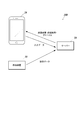
- FIG. 1 shows the configuration of the intestinal flora analysis system 100.
- the intestinal flora analysis system 100 includes an inspection device 10, a smartphone 20, and a server 30.
- the inspection device 10 and the server 30, the smartphone 20 and the server 30 can each perform data communication via the communication network N (see FIG. 2).
- the number of the inspection device 10 and the smartphone 20 is not particularly limited.
- the test device 10 is installed at the user's home, for example, and tests the intestinal flora of feces as a sample collected from the user.
- the test for the intestinal flora is a test for analyzing the types (bacterial species) of bacteria constituting the intestinal flora (intestinal flora) and their ratios.
- the inspection device 10 transmits the inspection data of the inspection regarding the intestinal flora to the server 30.
- the server 30 is a server on the cloud that manages the test results of the test related to the intestinal flora, the attribute information of the user, and the like for each user.
- the server 30 calculates the bacterial species ratio from the test data received from the test device 10.
- the server 30 makes an inquiry to the user based on the test result (bacterial species ratio, etc.) and requests input of an answer to the inquiry.
- the smartphone 20 is a communication terminal device carried by a user.
- the user inputs the answer requested from the server 30 on the smartphone 20.
- the server 30 acquires the input data input from the smartphone 20.
- the server 30 evaluates the correlation between the two based on the inspection result and the input data, and provides the inspection result, the evaluation result, advice, and the like to the user's smartphone 20.
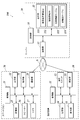
- FIG. 2 shows the functional configuration of each device constituting the intestinal flora analysis system 100.
- the inspection device 10 includes a control unit 11, an operation switch 12, a communication unit 13, a storage unit 14, an inspection unit 15, and the like.
- the control unit 11 is composed of a CPU (Central Processing Unit) and the like, and comprehensively controls the processing operation of each unit of the inspection device 10. Specifically, the control unit 11 reads out various processing programs stored in the storage unit 14 and performs various processing in cooperation with the program.
- CPU Central Processing Unit
- the operation switch 12 is composed of a power switch for turning on / off the power, an open / close switch for instructing the opening / closing of the container insertion port, a measurement switch for instructing the start of measurement, and the like, and responds to the operation of the operation switch 12 by the user.
- the operation signal is output to the control unit 11.
- the communication unit 13 performs data communication with an external device such as a server 30 via the communication network N.
- the storage unit 14 is composed of a non-volatile semiconductor memory or the like, and stores various processing programs, parameters, files, etc. necessary for executing the program.
- the inspection unit 15 inspects the intestinal flora of feces collected from the user. It is not necessary to perform the process of obtaining the bacterial species ratio of the intestinal bacteria in the inspection unit 15 (inspection apparatus 10), and it is sufficient if information capable of calculating the bacterial species ratio of the intestinal bacteria can be generated later.
- the control unit 11 causes the inspection unit 15 to start the inspection.
- the inspection device 10 may include a voice recognition unit and give an instruction to start measurement by voice recognition.
- the inspection unit 15 applies heat or vibration to the pretreatment container to extract the DNA in the sample.
- the inspection unit 15 fits the pretreatment container and the PCR chip, rotates the PCR chip centrifugally, and amplifies the DNA extracted from the sample. While the PCR chip is rotating, the inspection unit 15 irradiates the sample containing DNA with a laser from the light emitting unit, and receives the reflected light by the light receiving unit.
- the control unit 11 transmits the light amount data (change in the amount of light along the time axis) obtained by the light receiving unit of the inspection unit 15 to the server 30 via the communication unit 13 as inspection data.
- the intestinal bacteria to be detected by the inspection by the inspection device 10 include good bacteria, bad bacteria, and opportunistic bacteria.
- Good bacteria are bacteria that have a positive effect on the body, such as maintaining health and preventing aging.
- Good bacteria include, for example, bifidobacteria, lactic acid bacteria, faecalis bacteria, faecali bacteria, Clostridium butyricum bacteria and the like.
- Bad bacteria are bacteria that have a bad effect on the body.
- Bad bacteria include, for example, Clostridium perfringens, Bacteroides fragilis, Bacillus cereus, Copri, and Ruminococcus.
- Opportunistic bacteria are bacteria that work badly in the intestines when the body becomes weak.
- Opportunistic bacteria include, for example, Bacteroides, Escherichia coli (non-toxic strain), streptococcus and the like.
- the smartphone 20 includes a control unit 21, a display unit 22, an operation unit 23, a communication unit 24, a storage unit 25, a speaker 26, a microphone 27, and the like.
- the control unit 21 is composed of a CPU and the like, and comprehensively controls the processing operation of each unit of the smartphone 20. Specifically, the control unit 21 reads out various processing programs stored in the storage unit 25 and performs various processing in cooperation with the program.
- the display unit 22 is composed of an LCD (Liquid Crystal Display) or the like, and displays various screens according to an instruction of a display signal input from the control unit 21.
- the operation unit 23 is composed of an operation key and a touch panel laminated on the display unit 22, and outputs an operation signal corresponding to the operation key and an operation signal according to the position of a touch operation by a user's finger or the like to the control unit 21.
- the operation unit 23 accepts the input of the answer information (details will be described later) by the user. That is, the operation unit 23 functions as a reception means.
- the communication unit 24 wirelessly connects to a communication network N including a mobile communication network via a base station or an access point, and performs data communication with an external device such as a server 30 connected to the communication network N.
- the storage unit 25 is composed of a non-volatile semiconductor memory or the like, and stores various processing programs, parameters, files, etc. necessary for executing the program.
- An intestinal environment improvement application program (hereinafter, referred to as an intestinal environment improvement application) for referring to an intestinal flora test result or the like using the inspection device 10 is installed in the storage unit 25.
- the speaker 26 converts an electric signal received from an external device via the communication unit 24 into an audio signal, and outputs the audio.
- the microphone 27 detects sound waves, converts them into electrical signals, and outputs them to the control unit 21 and the communication unit 24.
- the control unit 21 displays the test result, evaluation result, advice, etc. of the intestinal flora acquired from the server 30 on the display unit 22 in collaboration with the intestinal environment improvement application.
- the power of the inspection device 10 is turned on / on the intestinal environment improvement application of the smartphone 20. You may instruct to turn off, open / close the container insertion port of the inspection device 10, start measurement, and the like.
- the server 30 includes a control unit 31, a communication unit 32, a storage unit 33, and the like.
- the control unit 31 is composed of a CPU and the like, and comprehensively controls the processing operation of each unit of the server 30. Specifically, the control unit 31 reads out various processing programs stored in the storage unit 33, and performs various processing in cooperation with the program.
- the communication unit 32 performs data communication with an external device such as the inspection device 10 or the smartphone 20 via the communication network N.
- the storage unit 33 is composed of a hard disk, a non-volatile semiconductor memory, or the like, and stores various processing programs, parameters, files, and the like necessary for executing the program.
- the storage unit 33 stores the inspection result management DB (Database) 331, the attribute information DB 332, the question information table 333, the countermeasure product table 334, and the like.
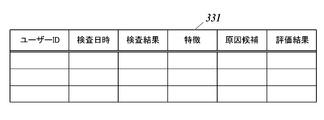
- FIG. 3 shows an example of data configuration of the inspection result management DB 331.
- the inspection result management DB 331 stores the user ID, the inspection date and time, the inspection result, the feature, the cause candidate, the evaluation result, and the like in association with each other.
- the user ID is identification information given to each user.
- the inspection date and time is the date and time when the inspection was performed by the inspection device 10. Since the test by the test device 10 is performed immediately after the sample is collected, the test date and time is substantially the same as the sample collection date and time.
- the test result includes the bacterial species ratio of the intestinal bacteria obtained from the test data received from the test device 10.
- the characteristics are the characteristics of the test results, such as which bacterial species are more or less, and which are increased or decreased as compared with the previous test results.
- the cause candidate is information indicating the cause candidate in which the feature extracted from the inspection result occurs.
- the evaluation result is an evaluation result regarding the correlation between the inspection result and the response information (cause candidate) input by the user.
- Attribute information is stored in the attribute information DB 332 in association with each user ID. Attribute information includes user's gender, date of birth, age, height, weight, ideal weight, body composition, number of steps, sleep time, bedtime, wake-up time, dietary tendency, dietary content, physiology, smoking status (smoking Presence / absence, number, etc.), drinking status (presence / absence of drinking, amount, etc.), exercise, blood pressure, red blood cell count, leukocyte count, blood pigment level, liver function (GOT, GPT, ⁇ -GTP), blood lipid (LDL cholesterol, HDL) Cholesterol, triglyceride), blood sugar level and other information are included. Information that changes daily is accumulated in association with the registration date and time or the measurement date and time.
- weight management constipation relief, calorie intake adjustment, nutritional balance improvement, lower abdominal tightening, constriction, beautiful legs, hip up, small face, upper arm tightening, pelvic correction, beautiful posture , Stretching method, Skin care, Swelling, Kyphosis improvement, Stiff shoulders, Pelvis up, beautiful back, Facial care, Back pain, Hair care, Walking, Women's worries, Decorte line care, Six pack, Open legs, Fasting method, Inverted triangle Upper body, knee pain, humerus, prenatal and postnatal care, pelvis, etc. may be included.
- question information table 333 question information for inquiring to the user is associated with the characteristics of the inspection result.
- the question information basically asks the cause of the test result, but for the increase or decrease of a certain intestinal bacterium, the food candidates (yogurt etc.) that the user thinks to have ingested and the food candidates at that time
- One or more conditions that can be considered as changes in physical condition may be included as options.
- countermeasure products are associated with the characteristics of the inspection result (characteristics that are bad for the body).
- Countermeasure products are foods, medicines, supplements, etc. that the user should ingest in order to improve (return to the normal state) the characteristics of the test result.
- the control unit 31 acquires the test result of the test related to the intestinal flora for feces collected from the user from the test device 10. That is, the control unit 31 functions as an acquisition means.
- the control unit 31 identifies the question information to be inquired to the user based on the inspection result by the inspection device 10. That is, the control unit 31 functions as a specific means.
- the inspection result by the inspection device 10 may be the inspection data itself received from the inspection device 10, or may be information obtained by processing the inspection data.
- the bacterial species ratio of the intestinal bacteria is generated based on the inspection data (light amount data) received from the inspection apparatus 10, and the bacterial species ratio of the intestinal bacteria is used as the inspection result.
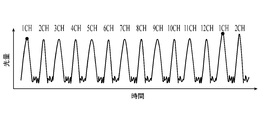
- FIG. 4 is an example of the amount of light data output from the inspection device 10, and the horizontal axis represents time and the vertical axis represents light intensity.
- the PCR chip used in the inspection device 10 can simultaneously measure 12 types of bacterial species with one chip.
- FIG. 4 shows the amounts of light in the 12 channels output in order. Since the amount of light increases with the amplification of DNA, the height (peak value) of the mountain gradually increases when the transition of the amount of light in the same channel (1CH to 2CH, etc.) is observed.
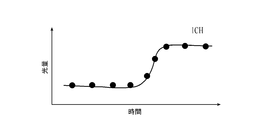
- FIG. 5 is a graph in which the peak values (the parts indicated by black circles in FIG. 4) of the light intensity data of 1CH shown in FIG. 4 are arranged along the time axis. Similar graphs can be obtained for other channels. On the graph, a portion (rising) where the amount of light rapidly increases with the amplification of DNA can be seen. The smaller the initial bacterial mass, the slower the rise of the graph (the rising part shifts to the right). Calculate the amount of bacteria and the ratio to the total number of bacteria based on the calibration curve showing the relationship between the number of cycles Ct value (Cq value) and the amount of bacteria when the amount of light (corresponding to the PCR amplification product) reaches a certain amount (threshold value). can do.
- Cq value the number of cycles Ct value
- the control unit 31 refers to the question information table 333 and specifies the question information corresponding to the characteristics of the inspection result.
- Question information asks for information about the user's condition, which is presumed to be the cause of the test result.
- Information about the user's condition includes foods, medicines, supplements, and the user's physical condition that the user has ingested.
- the information about the user's condition is the information about the user's condition before a predetermined time of inspection. For example, the control unit 31 inquires about foods and the like ingested from two days before the inspection to the day before the inspection.
- the control unit 31 acquires answer information for the question information input from the smartphone 20.
- the control unit 31 evaluates the correlation between the inspection result and the response information based on the inspection result and the response information received by the smartphone 20. That is, the control unit 31 functions as an evaluation means.
- the control unit 31 outputs the evaluation result. That is, the control unit 31 functions as an output means. Specifically, the control unit 31 transmits screen data for displaying the evaluation result on the display unit 22 of the smartphone 20 to the smartphone 20 via the communication unit 32.
- the control unit 31 further outputs information (advice) regarding improvement of the intestinal flora based on the test results.
- the contents of the information on the improvement of the intestinal flora include, for example, the test results (good bacteria / bad bacteria / opportunistic bacteria ratio), recommendations of ingested foods and countermeasure products according to the problems to be solved and improvement goals, and the effects of the countermeasure products.
- the timing of appearance, the timing of the next recommended inspection, etc. are included.
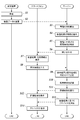
- FIG. 6 is a ladder chart showing an intestinal flora analysis process executed by each device of the intestinal flora analysis system 100.
- the control unit 11 causes the inspection unit 15 to perform the inspection (step S1).
- the inspection unit 15 extracts the DNA in the sample, irradiates the sample containing the DNA with a laser while amplifying the DNA, and receives the reflected light by the light receiving unit.
- the control unit 11 transmits the light amount data (change in the amount of light along the time axis) obtained by the light receiving unit of the inspection unit 15 to the server 30 via the communication unit 13 as inspection data (step S2). At this time, the control unit 11 transmits the inspection data to the server 30 in association with the user ID corresponding to the user and the inspection date and time.
- the control unit 31 calculates the bacterial species ratio (test result) based on the test data (step S3).
- the control unit 31 stores the user ID, the inspection date and time, and the inspection result in association with each other in the inspection result management DB 331 of the storage unit 33.
- control unit 31 extracts features from the inspection results (step S4). For example, the control unit 31 determines which bacterial species are more or less than the average value, which bacterial species are increased or decreased compared to the previous test result of the same user, and if there is a change, the change is made. Extract features such as degree. The control unit 31 stores the extracted features in the "feature" field of the corresponding record of the inspection result management DB 331.
- the control unit 31 specifies question information corresponding to the characteristics of the inspection result (step S5). Specifically, the control unit 31 refers to the question information table 333 of the storage unit 33, and acquires question information corresponding to the characteristics of the test result, that is, question information of the content inquiring the cause of the test result.
- the question information may include one or more options (candidate causes) that can answer the inquiry.
- control unit 31 makes an inquiry to the user's smartphone 20 based on the specified question information (step S6). Specifically, the control unit 31 transmits screen data for displaying the inspection result and the question information on the display unit 22 of the smartphone 20 to the smartphone 20 via the communication unit 32.
- control unit 21 causes the display unit 22 to display that there is update information by push notification in cooperation with the intestinal environment improvement application.
- the control unit 21 displays the question information to be answered by the user on the display unit 22 together with the inspection result (step S7), and answers to the question information. Prompt the user for input.
- control unit 21 transmits the answer information received from the operation unit 23 to the server 30 via the communication unit 24.
- the control unit 31 associates the inspection result with the response information and stores the response information in the storage unit 33 (step S9). Specifically, the control unit 31 stores the answer information in the "cause candidate" field of the corresponding record of the inspection result management DB 331.
- control unit 31 evaluates the correlation between the inspection result and the response information based on the inspection result and the response information received by the smartphone 20 (step S10). For example, the control unit 31 evaluates how much the food obtained as the response information contributes to the change in the intestinal environment indicated by the test result, and whether or not it is an effective countermeasure product for the user. The control unit 31 stores the evaluation result in the "evaluation result" field of the corresponding record of the inspection result management DB 331.
- control unit 31 notifies the smartphone 20 of the evaluation result via the communication unit 32 (step S11). Specifically, the control unit 31 transmits screen data for displaying the evaluation result to the smartphone 20 via the communication unit 32. In the smartphone 20, the control unit 21 causes the display unit 22 to display the evaluation result (step S12).
- the control unit 31 notifies the smartphone 20 of information (advice) regarding the improvement of the intestinal flora based on the test result via the communication unit 32 (step S13). Specifically, the control unit 31 refers to the countermeasure product table 334 of the storage unit 33, acquires the countermeasure product corresponding to the feature of the inspection result, and displays the screen data for displaying the advice including the countermeasure product. It is transmitted to the smartphone 20 via the communication unit 32. In the smartphone 20, the control unit 21 causes the display unit 22 to display advice based on the inspection result (step S14). This completes the intestinal flora analysis process.
- a “countermeasure product” suitable for the user may be extracted and reflected in the countermeasure product table 334.
- ⁇ Ingestion food selection screen> an example of a screen displayed on the display unit 22 of the smartphone 20 after the inspection is completed will be described.
- the control unit 31 of the server 30 extracts a feature that the ratio of bifidobacteria is higher than that of the previous day from the test result (bacterial species ratio).
- the control unit 31 transmits question information (notification requesting input of a cause candidate) corresponding to the increase in bifidobacteria to the target user's smartphone 20.
- control unit 31 refers to the question information table 333 to acquire question information corresponding to the increase in bifidobacteria, and displays the acquired question information on the display unit 22 of the smartphone 20.
- the screen data is transmitted to the smartphone 20 via the communication unit 32.
- FIG. 7 shows an example of the ingested food selection screen 221 displayed on the display unit 22 of the smartphone 20.
- the ingested food selection screen 221 includes a test result display field 221A and a response information selection field 221B.
- the test result display column 221A it is displayed that the ratio of bifidobacteria detected in the user's sample is higher than the average.
- a pie chart 41 showing the ratio of bifidobacteria detected in the user's sample and a circle showing the average ratio of bifidobacteria in a person having the same sex and age as the user.
- Graph 42 and is displayed.
- the ratio of bifidobacteria in the same user on the previous day and the day may be displayed as a graph.
- question information inquiring the user about the cause of the increase in bifidobacteria is displayed.
- foods 43 and 44 which are a plurality of possible causes (various yogurts, etc.), are presented, and the user selects the foods ingested by the previous day from among them.
- the user selects the food (yogurt or the like) ingested by the previous day from the plurality of foods displayed on the display unit 22 by the operation from the operation unit 23. If none of the foods displayed in the answer information selection field 221B is ingested by the user, it is also possible to enter the name of the food ingested by the user.
- the control unit 31 of the server 30 stores the food (actual cause candidate) selected by the smartphone 20 in the inspection result management DB 331 in association with the corresponding inspection result.
- control unit 31 evaluates that the selected food has an effect on increasing bifidobacteria and is suitable for the user in improving the intestinal environment as a correlation between the test result and the response information. ..
- the control unit 31 stores the evaluation result of the correlation between the inspection result and the response information in the inspection result management DB 331 in association with the corresponding inspection result.
- the control unit 31 transmits screen data for displaying the evaluation result on the display unit 22 of the smartphone 20 to the smartphone 20 via the communication unit 32.
- the evaluation result is displayed on the display unit 22 of the smartphone 20.
- the evaluation result that the food ingested by the user is suitable for the user in improving the intestinal environment is displayed. In this way, it is possible to record and manage countermeasure products suitable for each individual user.
- the control unit 31 controls the test result.
- the selected food is a food that affects the increase or decrease of the changed bacterial species ratio and worsens the intestinal environment of the user.
- the control unit 31 of the server 30 refers to the countermeasure product table 334 for the inspection performed in the morning, and measures corresponding to the characteristics of the inspection result (amount of good bacteria / bad bacteria, increase / decrease of predetermined bacterial species, etc.). Get the goods. Then, the control unit 31 transmits screen data for displaying the acquired countermeasure product as a “recommended lunch” on the display unit 22 of the smartphone 20 to the smartphone 20 via the communication unit 32.
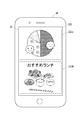
- FIG. 8 shows an example of the lunch proposal screen 222 displayed on the display unit 22 of the smartphone 20.
- the lunch proposal screen 222 includes an inspection result display column 222A and a recommended lunch display column 222B.
- the test result display column 222A the bacterial species ratio of intestinal bacteria (ratio of each bacterial species to the total bacterial mass) is displayed in a pie chart.
- the recommended lunch display column 222B a lunch menu proposed based on the inspection result is displayed.
- control unit 31 requests the user to input the ingested product (food that the user plans to ingest), and whether or not there is a food that should be added based on the ingested product and the test result. May be used to judge.
- the control unit 31 transmits screen data for displaying this food on the display unit 22 of the smartphone 20 to the smartphone 20 via the communication unit 32. On the smartphone 20, foods that should be added are displayed on the display unit 22.
- the control unit 31 of the server 30 extracts a feature that is an inhibitory factor in detecting intestinal bacteria from the test result (bacterial species ratio) or the test data in the previous stage for calculating the test result. For example, the control unit 31 detects that the sample collected from the user was diarrheal stool.
- FIG. 9 is a comparison of normal stool and diarrheal stool with respect to the graph of the light intensity data shown in FIG.
- the inhibitory effect on DNA amplification is large, and the plateau position (the part that becomes constant in the PCR amplification curve) is lower than in the normal case.
- the control unit 31 refers to the countermeasure product table 334 to acquire a countermeasure product (pharmaceutical product, etc.) corresponding to the feature of having diarrheal stool, and displays the acquired countermeasure product on the display unit 22 of the smartphone 20.
- the screen data is transmitted to the smartphone 20 via the communication unit 32.
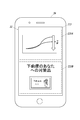
- FIG. 10 shows an example of the medication proposal screen 223 displayed on the display unit 22 of the smartphone 20.
- the medication proposal screen 223 includes a light intensity data display column 223A and a countermeasure product display column 223B.
- the light intensity data display column 223A it is displayed that the light intensity data indicates an abnormality (diarrheal stool).
- the countermeasure product display column 223B a countermeasure product (pharmaceutical product) corresponding to diarrheal stool is displayed. The user confirms the countermeasure product displayed on the display unit 22.
- the meal, exercise, and physical condition of the previous day are input by the user from the operation unit 23 of the smartphone 20 and registered in the server 30 before or after the inspection.
- These attribute information may be input from the smartphone 20 in response to a request from the server 30. For example, information such as "all-you-can-eat at a bar for 3 hours" as “last night's meal”, “muscle training and protein” as “yesterday's exercise”, and “severe diarrhea and hay fever” as "yesterday's physical condition” is registered. To.
- the control unit 31 stores information such as meals, exercise, and physical condition on the previous day in the attribute information DB 332 in association with the user ID of the corresponding user. Before or after the test, it may be possible to input the stress level, smoking status, drinking status, sleeping time, presence / absence of ingestion of countermeasure products, desired time for sending the result, etc. as attribute information.
- FIG. 11 shows an example of the inspection result display screen 224 displayed on the display unit 22 of the smartphone 20.
- the test result display screen 224 includes a test result display field 224A, a feature display field 224B, a correlation display field 224C with meals, a correlation display field 224D with exercise, an advice display field 224E, and the like.
- the test result display column 224A the bacterial species ratio of intestinal bacteria is displayed in a pie chart.
- the feature display column 224B the features of the inspection result are displayed.
- the correlation display column 224C with meals the correlation between the test result and the user's meal contents last night is displayed.
- Correlation with exercise In the display column 224D, the correlation between the test result and the user's exercise yesterday is displayed.
- advice display column 224E advice (meals, countermeasures, etc.) for the user is displayed.
- the correlation between the two is evaluated based on the test result of the intestinal flora and the response information obtained from the user.
- Information useful for improvement can be provided.
- the user can check the test results such as the bacterial species ratio and take measures according to his / her own condition of the day.
- the server 30 can accumulate test results for each user and propose life improvement suitable for the user.
- the user can also acquire past information from the history stored in the server 30.
- the server 30 studies test results (gut flora species ratio) collected from each user, analysis data (characteristics of test results, possible causes, correspondence of evaluation results, etc.), and attribute information data.
- test results gut flora species ratio
- analysis data characteristics of test results, possible causes, correspondence of evaluation results, etc.
- attribute information data can be used for product development. For example, it is possible to develop countermeasure products according to the user's attributes and intestinal flora, and to recommend countermeasure products suitable for each user.
- the sleeping time, the amount of alcohol consumed, and the number of cigarettes smoked may be taken into consideration to determine the countermeasure product that suits the user.
- each functional unit included in the intestinal flora analysis system 100 may be divided into a plurality of devices, or may be integrated into one device.
- each process executed on the server 30 may be performed on the smartphone 20.
- the smartphone 20 includes an acquisition means for acquiring the test result of the test related to the intestinal flora, a specific means for specifying the question information, a reception means for accepting the input of the answer information by the user, and the test result and the answer information.
- An information processing device including an evaluation means for evaluating the correlation and an output means for outputting the evaluation result is configured.
- the bacterial species ratio of the intestinal bacteria is calculated on the server 30, but the bacterial species ratio of the intestinal bacteria is calculated in the inspection device 10 and the bacteria are transferred from the inspection device 10 to the server 30.
- the species ratio may be transmitted.
- the bacterial species ratio of the intestinal bacteria may be calculated in the intestinal environment improvement application of the smartphone 20.
- the server 30 or an external device may include a part of the configuration of the inspection device 10.
- saliva collected from a user may be used as a sample.
- the intestinal flora analysis system, information processing device, information processing method and program according to the present invention may be used in the technical fields of health management such as improvement of the intestinal environment and prevention of lifestyle-related diseases.
Landscapes
- Health & Medical Sciences (AREA)
- Life Sciences & Earth Sciences (AREA)
- Chemical & Material Sciences (AREA)
- Engineering & Computer Science (AREA)
- Bioinformatics & Cheminformatics (AREA)
- Organic Chemistry (AREA)
- Wood Science & Technology (AREA)
- Biotechnology (AREA)
- Zoology (AREA)
- General Health & Medical Sciences (AREA)
- Biochemistry (AREA)
- Biomedical Technology (AREA)
- Immunology (AREA)
- Analytical Chemistry (AREA)
- Medicinal Chemistry (AREA)
- Molecular Biology (AREA)
- Microbiology (AREA)
- Physics & Mathematics (AREA)
- Genetics & Genomics (AREA)
- Urology & Nephrology (AREA)
- General Engineering & Computer Science (AREA)
- Hematology (AREA)
- Food Science & Technology (AREA)
- Sustainable Development (AREA)
- Pathology (AREA)
- General Physics & Mathematics (AREA)
- Proteomics, Peptides & Aminoacids (AREA)
- Epidemiology (AREA)
- Medical Informatics (AREA)
- Primary Health Care (AREA)
- Public Health (AREA)
- Cell Biology (AREA)
- Toxicology (AREA)
- Biophysics (AREA)
- Medical Treatment And Welfare Office Work (AREA)
Priority Applications (1)
| Application Number | Priority Date | Filing Date | Title |
|---|---|---|---|
| JP2021511144A JPWO2020202738A1 (cg-RX-API-DMAC7.html) | 2019-03-29 | 2020-01-27 |
Applications Claiming Priority (2)
| Application Number | Priority Date | Filing Date | Title |
|---|---|---|---|
| JP2019-067066 | 2019-03-29 | ||
| JP2019067066 | 2019-03-29 |
Publications (1)
| Publication Number | Publication Date |
|---|---|
| WO2020202738A1 true WO2020202738A1 (ja) | 2020-10-08 |
Family
ID=72667959
Family Applications (1)
| Application Number | Title | Priority Date | Filing Date |
|---|---|---|---|
| PCT/JP2020/002722 Ceased WO2020202738A1 (ja) | 2019-03-29 | 2020-01-27 | 腸内フローラ解析システム、情報処理装置、情報処理方法及びプログラム |
Country Status (2)
| Country | Link |
|---|---|
| JP (1) | JPWO2020202738A1 (cg-RX-API-DMAC7.html) |
| WO (1) | WO2020202738A1 (cg-RX-API-DMAC7.html) |
Cited By (5)
| Publication number | Priority date | Publication date | Assignee | Title |
|---|---|---|---|---|
| WO2022270081A1 (ja) * | 2021-06-25 | 2022-12-29 | 株式会社サイキンソー | 情報処理装置、情報処理方法、及びプログラム |
| US20230386675A1 (en) * | 2020-12-07 | 2023-11-30 | Suntory Holdings Limited | Information processing apparatus, information processing method, and recording medium |
| JP2024015923A (ja) * | 2022-07-25 | 2024-02-06 | 株式会社サイキンソー | 情報提供方法、情報提供プログラム、及び情報提供装置 |
| WO2024150546A1 (ja) * | 2023-01-12 | 2024-07-18 | 江崎グリコ株式会社 | 食事を推奨する推奨装置、推奨方法、推奨プログラムおよび記録媒体 |
| JP7703249B1 (ja) | 2024-06-14 | 2025-07-07 | 株式会社バイオシスラボ | 情報処理システム、情報処理方法、及びプログラム |
Citations (5)
| Publication number | Priority date | Publication date | Assignee | Title |
|---|---|---|---|---|
| JP2002149830A (ja) * | 2000-11-13 | 2002-05-24 | Matsushita Electric Ind Co Ltd | 健康管理方法、アドバイス装置および健康管理システム |
| WO2005091195A1 (ja) * | 2004-03-23 | 2005-09-29 | Matsushita Electric Industrial Co., Ltd. | 健康管理システム |
| JP2012165716A (ja) * | 2011-02-16 | 2012-09-06 | Infocom Corp | 腸内常在菌解析情報を基にした食事支援システム |
| JP2016184198A (ja) * | 2015-03-25 | 2016-10-20 | Kddi株式会社 | 検査結果管理装置、検査結果管理方法及び検査結果管理システム |
| CN108133744A (zh) * | 2017-12-25 | 2018-06-08 | 北京数果科技有限公司 | 基于肠道菌群检测的人体健康检测方法及其系统 |
-
2020
- 2020-01-27 JP JP2021511144A patent/JPWO2020202738A1/ja active Pending
- 2020-01-27 WO PCT/JP2020/002722 patent/WO2020202738A1/ja not_active Ceased
Patent Citations (5)
| Publication number | Priority date | Publication date | Assignee | Title |
|---|---|---|---|---|
| JP2002149830A (ja) * | 2000-11-13 | 2002-05-24 | Matsushita Electric Ind Co Ltd | 健康管理方法、アドバイス装置および健康管理システム |
| WO2005091195A1 (ja) * | 2004-03-23 | 2005-09-29 | Matsushita Electric Industrial Co., Ltd. | 健康管理システム |
| JP2012165716A (ja) * | 2011-02-16 | 2012-09-06 | Infocom Corp | 腸内常在菌解析情報を基にした食事支援システム |
| JP2016184198A (ja) * | 2015-03-25 | 2016-10-20 | Kddi株式会社 | 検査結果管理装置、検査結果管理方法及び検査結果管理システム |
| CN108133744A (zh) * | 2017-12-25 | 2018-06-08 | 北京数果科技有限公司 | 基于肠道菌群检测的人体健康检测方法及其系统 |
Cited By (10)
| Publication number | Priority date | Publication date | Assignee | Title |
|---|---|---|---|---|
| US20230386675A1 (en) * | 2020-12-07 | 2023-11-30 | Suntory Holdings Limited | Information processing apparatus, information processing method, and recording medium |
| WO2022270081A1 (ja) * | 2021-06-25 | 2022-12-29 | 株式会社サイキンソー | 情報処理装置、情報処理方法、及びプログラム |
| JP2023004215A (ja) * | 2021-06-25 | 2023-01-17 | 株式会社サイキンソー | 情報処理装置、情報処理方法、及びプログラム |
| JP2023164519A (ja) * | 2021-06-25 | 2023-11-10 | 株式会社サイキンソー | 情報処理装置、情報処理方法、及びプログラム |
| JP7421032B2 (ja) | 2021-06-25 | 2024-01-24 | 株式会社サイキンソー | 情報処理装置、情報処理方法、及びプログラム |
| US20240242814A1 (en) * | 2021-06-25 | 2024-07-18 | Cykinso, Inc. | Information processing device, information processing method, and program |
| JP2024015923A (ja) * | 2022-07-25 | 2024-02-06 | 株式会社サイキンソー | 情報提供方法、情報提供プログラム、及び情報提供装置 |
| WO2024150546A1 (ja) * | 2023-01-12 | 2024-07-18 | 江崎グリコ株式会社 | 食事を推奨する推奨装置、推奨方法、推奨プログラムおよび記録媒体 |
| JP7703249B1 (ja) | 2024-06-14 | 2025-07-07 | 株式会社バイオシスラボ | 情報処理システム、情報処理方法、及びプログラム |
| JP2025187879A (ja) * | 2024-06-14 | 2025-12-25 | 株式会社バイオシスラボ | 情報処理システム、情報処理方法、及びプログラム |
Also Published As
| Publication number | Publication date |
|---|---|
| JPWO2020202738A1 (cg-RX-API-DMAC7.html) | 2020-10-08 |
Similar Documents
| Publication | Publication Date | Title |
|---|---|---|
| US20240152783A1 (en) | Improving the accuracy of test data outside the clinic | |
| Liu et al. | Influence of lifestyle on incident cardiovascular disease and mortality in patients with diabetes mellitus | |
| England et al. | Development of a brief, reliable and valid diet assessment tool for impaired glucose tolerance and diabetes: the UK Diabetes and Diet Questionnaire | |
| Metzendorf et al. | Mobile health (m‐health) smartphone interventions for adolescents and adults with overweight or obesity | |
| Conway et al. | Accuracy of dietary recall using the USDA five-step multiple-pass method in men: an observational validation study | |
| Mann et al. | Healthy behavior change of adults with mental retardation: attendance in a health promotion program | |
| Brouwer-Brolsma et al. | Dairy product consumption is associated with pre-diabetes and newly diagnosed type 2 diabetes in the Lifelines Cohort Study | |
| Vega-Lopez et al. | Interindividual variability and intra-individual reproducibility of glycemic index values for commercial white bread | |
| Cho et al. | An empirical comparative study on biological age estimation algorithms with an application of Work Ability Index (WAI) | |
| Palmer et al. | The accuracy of food intake charts completed by nursing staff as part of usual care when no additional training in completing intake tools is provided | |
| Reeves et al. | Nutrient intake of obese female binge eaters | |
| US11348479B2 (en) | Accuracy of measuring nutritional responses in a non-clinical setting | |
| Arnold et al. | Neck and waist circumference biomarkers of cardiovascular risk in a cohort of predominantly African-American college students: a preliminary study | |
| Lin et al. | The relationship between nutritional status and physical function, admission frequency, length of hospital stay, and mortality in old people living in long-term care facilities | |
| Ndanuko et al. | Relationship between sodium and potassium intake and blood pressure in a sample of overweight adults | |
| JP2012165716A (ja) | 腸内常在菌解析情報を基にした食事支援システム | |
| Sammel et al. | Weight gain among women in the late reproductive years | |
| Beck et al. | Ability of different screening tools to predict positive effect on nutritional intervention among the elderly in primary health care | |
| Kruzich et al. | HIV-infected US youth are at high risk of obesity and poor diet quality: a challenge for improving short-and long-term health outcomes | |
| Kwok et al. | Habitual chocolate consumption and the risk of incident heart failure among healthy men and women | |
| CN110634543A (zh) | 一种减脂管理平台及其实现方法 | |
| Saarela et al. | Changes in malnutrition and quality of nutritional care among aged residents in all nursing homes and assisted living facilities in Helsinki 2003–2011 | |
| Muchira et al. | Distribution and characteristics of risk factors for cardiovascular–metabolic disease in a rural Kenyan community | |
| Walker et al. | Lifestyle improvement reduces the consumption of ultra-processed foods in adults with metabolic syndrome | |
| KR101936402B1 (ko) | 장내 미생물 검사 기반 식단 제공 시스템 및 방법 |
Legal Events
| Date | Code | Title | Description |
|---|---|---|---|
| 121 | Ep: the epo has been informed by wipo that ep was designated in this application |
Ref document number: 20783356 Country of ref document: EP Kind code of ref document: A1 |
|
| ENP | Entry into the national phase |
Ref document number: 2021511144 Country of ref document: JP Kind code of ref document: A |
|
| NENP | Non-entry into the national phase |
Ref country code: DE |
|
| 122 | Ep: pct application non-entry in european phase |
Ref document number: 20783356 Country of ref document: EP Kind code of ref document: A1 |