WO2020195084A1 - 音響信号処理装置、音響信号処理システム、および音響信号処理方法、並びにプログラム - Google Patents
音響信号処理装置、音響信号処理システム、および音響信号処理方法、並びにプログラム Download PDFInfo
- Publication number
- WO2020195084A1 WO2020195084A1 PCT/JP2020/002538 JP2020002538W WO2020195084A1 WO 2020195084 A1 WO2020195084 A1 WO 2020195084A1 JP 2020002538 W JP2020002538 W JP 2020002538W WO 2020195084 A1 WO2020195084 A1 WO 2020195084A1
- Authority
- WO
- WIPO (PCT)
- Prior art keywords
- user
- hrtf
- signal processing
- acoustic signal
- unit
- Prior art date
- Legal status (The legal status is an assumption and is not a legal conclusion. Google has not performed a legal analysis and makes no representation as to the accuracy of the status listed.)
- Ceased
Links
Images









Classifications
-
- H—ELECTRICITY
- H04—ELECTRIC COMMUNICATION TECHNIQUE
- H04S—STEREOPHONIC SYSTEMS
- H04S7/00—Indicating arrangements; Control arrangements, e.g. balance control
- H04S7/30—Control circuits for electronic adaptation of the sound field
- H04S7/302—Electronic adaptation of stereophonic sound system to listener position or orientation
- H04S7/303—Tracking of listener position or orientation
-
- H—ELECTRICITY
- H04—ELECTRIC COMMUNICATION TECHNIQUE
- H04S—STEREOPHONIC SYSTEMS
- H04S7/00—Indicating arrangements; Control arrangements, e.g. balance control
- H04S7/30—Control circuits for electronic adaptation of the sound field
- H04S7/302—Electronic adaptation of stereophonic sound system to listener position or orientation
-
- H—ELECTRICITY
- H04—ELECTRIC COMMUNICATION TECHNIQUE
- H04R—LOUDSPEAKERS, MICROPHONES, GRAMOPHONE PICK-UPS OR LIKE ACOUSTIC ELECTROMECHANICAL TRANSDUCERS; ELECTRIC HEARING AIDS; PUBLIC ADDRESS SYSTEMS
- H04R3/00—Circuits for transducers
- H04R3/12—Circuits for transducers for distributing signals to two or more loudspeakers
-
- H—ELECTRICITY
- H04—ELECTRIC COMMUNICATION TECHNIQUE
- H04S—STEREOPHONIC SYSTEMS
- H04S3/00—Systems employing more than two channels, e.g. quadraphonic
- H04S3/002—Non-adaptive circuits, e.g. manually adjustable or static, for enhancing the sound image or the spatial distribution
-
- H—ELECTRICITY
- H04—ELECTRIC COMMUNICATION TECHNIQUE
- H04R—LOUDSPEAKERS, MICROPHONES, GRAMOPHONE PICK-UPS OR LIKE ACOUSTIC ELECTROMECHANICAL TRANSDUCERS; ELECTRIC HEARING AIDS; PUBLIC ADDRESS SYSTEMS
- H04R2499/00—Aspects covered by H04R or H04S not otherwise provided for in their subgroups
- H04R2499/10—General applications
- H04R2499/13—Acoustic transducers and sound field adaptation in vehicles
-
- H—ELECTRICITY
- H04—ELECTRIC COMMUNICATION TECHNIQUE
- H04R—LOUDSPEAKERS, MICROPHONES, GRAMOPHONE PICK-UPS OR LIKE ACOUSTIC ELECTROMECHANICAL TRANSDUCERS; ELECTRIC HEARING AIDS; PUBLIC ADDRESS SYSTEMS
- H04R5/00—Stereophonic arrangements
- H04R5/02—Spatial or constructional arrangements of loudspeakers
- H04R5/023—Spatial or constructional arrangements of loudspeakers in a chair, pillow
-
- H—ELECTRICITY
- H04—ELECTRIC COMMUNICATION TECHNIQUE
- H04S—STEREOPHONIC SYSTEMS
- H04S2400/00—Details of stereophonic systems covered by H04S but not provided for in its groups
- H04S2400/11—Positioning of individual sound objects, e.g. moving airplane, within a sound field
-
- H—ELECTRICITY
- H04—ELECTRIC COMMUNICATION TECHNIQUE
- H04S—STEREOPHONIC SYSTEMS
- H04S2420/00—Techniques used stereophonic systems covered by H04S but not provided for in its groups
- H04S2420/01—Enhancing the perception of the sound image or of the spatial distribution using head related transfer functions [HRTF's] or equivalents thereof, e.g. interaural time difference [ITD] or interaural level difference [ILD]
-
- H—ELECTRICITY
- H04—ELECTRIC COMMUNICATION TECHNIQUE
- H04S—STEREOPHONIC SYSTEMS
- H04S2420/00—Techniques used stereophonic systems covered by H04S but not provided for in its groups
- H04S2420/03—Application of parametric coding in stereophonic audio systems
Definitions
- the present disclosure relates to an acoustic signal processing device, an acoustic signal processing system, an acoustic signal processing method, and a program. More specifically, the present invention relates to an acoustic signal processing device, an acoustic signal processing system, an acoustic signal processing method, and a program that perform signal processing for setting an optimum virtual sound source position for each user (listener).
- speakers are embedded in the left and right positions of the headrest of the seat where the user sits, such as the driver's seat of a vehicle, and sound is output from these speakers.
- a speaker when a speaker is provided in the headrest portion, a user (listener) such as a driver will hear the sound from the back side of the ear, which causes a sense of discomfort, and some people may experience so-called listening fatigue. There is.
- Sound image localization processing is a technique for solving such a problem.
- the sound image localization process is an audio signal processing that allows the user to feel that sound is heard from a virtual sound source position different from the actual speaker position, for example, a virtual sound source position set in front of the listener. For example, when an audio signal subjected to sound image localization processing is output from a speaker behind the ear of the user (listener), the user can feel that the sound source is in front of the user.
- Patent Document 1 Japanese Unexamined Patent Publication No. 2003-111200. It should be noted that this patent document discloses a configuration in which signal processing is performed in consideration of a head-related transfer function (HRTF) from the speaker to the listener's ear to generate an output sound from the speaker. .. By performing signal processing based on the head related transfer function (HRTF), it is possible to control the optimum virtual sound source position according to the listener.
- HRTF head-related transfer function
- the head related transfer function (HRTF) As described above, by outputting the processed signal based on the head related transfer function (HRTF) from the speaker, it is possible to control the sound image position to set the optimum virtual sound source position according to the listener.
- the head related transfer function (HRTF) is a different function for each individual. Therefore, when a processing signal to which a head related transfer function (HRTF) corresponding to a specific user is applied is output from the speaker, the virtual sound source position is the optimum position for the specific user, but is not necessarily the optimum virtual position for other users. There is a problem that it does not become the sound source position.
- the present disclosure solves such a problem, controls the output of a processing signal to which a user (listener) -specific head related transfer function (HRTF) is applied from a speaker, and each user (listener) has a control. It provides an acoustic signal processing device, an acoustic signal processing system, an acoustic signal processing method, and a program that enable setting of an ideal virtual sound source position.
- HRTF head related transfer function
- the first aspect of the disclosure is A user identification unit that executes user identification processing and An acquisition unit that acquires a user-specific head-related transfer function (HRTF) identified by the user identification unit from among one or more head-related transfer functions (HRTFs).
- HRTF head-related transfer function
- a sound image localization processing unit that executes sound image localization processing using a user-specific head-related transfer function (HRTF) acquired by the acquisition unit as a processing parameter, and a sound image localization processing unit. It is in the acoustic signal processing apparatus provided with.
- the second aspect of the present disclosure is A storage unit that stores a user-specific head-related transfer function (HRTF), An acquisition unit that acquires a user-specific head-related transfer function (HRTF) from the storage unit, A sound image localization processing unit that executes sound image localization processing using a user-specific head-related transfer function (HRTF) acquired by the acquisition unit as a processing parameter, and a sound image localization processing unit. It is in the acoustic signal processing apparatus provided with.
- HRTF head-related transfer function
- HRTF head-related transfer function
- HRTF user-specific head-related transfer function
- the third aspect of the present disclosure is An acoustic signal processing system that has a user terminal and a server.
- the server A voice signal is transmitted to the user terminal
- the user terminal is A storage unit that stores a user-specific head-related transfer function (HRTF),
- An acquisition unit that acquires a user-specific head-related transfer function (HRTF) from the storage unit
- An audio signal processing system having a sound image localization processing unit that executes sound image localization processing on a voice signal received from the server by using a user-specific head-related transfer function (HRTF) acquired by the acquisition unit as a processing parameter. is there.
- HRTF head-related transfer function
- the fourth aspect of the present disclosure is It is an acoustic signal processing method executed in an acoustic signal processing device.
- the user identification unit executes the user identification process and
- the acquisition unit acquires a user-specific head-related transfer function (HRTF) identified by the user identification unit from one or more head-related transfer functions (HRTFs).
- HRTF head-related transfer function
- HRTF head-related transfer function
- the fifth aspect of the present disclosure is It is an acoustic signal processing method executed in an acoustic signal processing device.
- the acoustic signal processing device has a storage unit that stores a user-specific head-related transfer function (HRTF).
- the acquisition unit acquires a user-specific head-related transfer function (HRTF) from the storage unit.
- HRTF head-related transfer function
- the sixth aspect of the present disclosure is A program that executes acoustic signal processing in an acoustic signal processing device.
- Have the user identification unit execute the user identification process The acquisition unit is made to acquire a head-related transfer function (HRTF) unique to the user identified by the user identification unit from one or more head-related transfer functions (HRTF).
- HRTF head-related transfer function
- HRTF head-related transfer function
- the program of the present disclosure is, for example, a program that can be provided by a storage medium or a communication medium that is provided in a computer-readable format to an information processing device or a computer system that can execute various program codes.
- a program that can be provided by a storage medium or a communication medium that is provided in a computer-readable format to an information processing device or a computer system that can execute various program codes.
- system is a logical set configuration of a plurality of devices, and the devices having each configuration are not limited to those in the same housing.
- a configuration in which a sound image localization process applying a user-corresponding head-related transfer function (HRTF) identified by user identification is executed and output from an output unit at each user position is configured. It will be realized. Specifically, for example, it has a user identification unit that executes user identification and user position identification processing, and a sound image localization processing unit that executes sound image localization processing using a user-specific head related transfer function (HRTF) as a processing parameter. ..
- the sound image localization processing unit executes the sound image localization processing using the HRTF unique to the identifying user as a processing parameter, and outputs the signal after the sound image localization processing to the output unit at the identification user position.
- the sound image localization processing unit executes sound image localization processing using the HRTFs of each of the plurality of users in parallel, and outputs a processing signal to the output unit at each user position.
- a configuration is realized in which a sound image localization process to which a user-corresponding head-related transfer function (HRTF) identified by user identification is applied is executed and output is output from an output unit at each user position.
- HRTF head-related transfer function
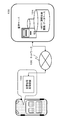
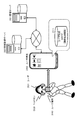
- FIG. 1 shows the automobile 1.
- a user (listener) 10 is sitting in the driver's seat.
- a left speaker 21 and a right speaker 22 are mounted on the headrest portion of the driver's seat, and stereo signals (LR signals) from a sound source such as a CD (not shown) are output from these two speakers.
- LR signals stereo signals
- the stereo signal (LR signal) from the sound source is simply output, the user (listener) 10 will hear the sound from the back side of the ear, which makes the user feel uncomfortable. It occurs, and depending on the person, so-called listening fatigue may occur.
- the acoustic signal processing device inside the automobile 1 executes signal processing on the LR signal output from a sound source such as a CD, and outputs the signal after the signal processing to the left speaker 21 and the right speaker. Output from 22.
- This signal processing is sound image localization processing.
- the sound image localization process is a signal process for making the user (listener) feel that the sound source is located at a virtual sound source position different from the actual speaker position.
- the L signal of the sound source is output from the virtual left speaker 31 located in front of the user (listener) 10 (virtual sound source position), and the R signal of the sound source is output from the virtual right speaker 32. It is possible to make it feel like.
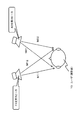
- FIG. 2 is a diagram described in the above-mentioned Patent Document 1 (Japanese Unexamined Patent Publication No. 2003-111200), which is a prior art disclosed regarding sound image localization processing.
- the processing of the present disclosure can be executed by utilizing the existing sound image localization processing described in Patent Document 1 and the like.
- the user 10 actually has the left real speaker 41 and the right real speaker at the left and right virtual speaker positions (positions where the speakers are assumed to be present). 42 is installed.
- HRTF head-related transfer function
- the head-related transfer function of the voice from the left real speaker 41 to the left ear of the user 10 is M11, and the head-related transfer function of the voice from the left real speaker 41 to the right ear of the user 10 is M12. Is.
- the head-related transfer function of the voice from the right real speaker 42 to the left ear of the user 10 is M21, and the head-related transfer function of the voice from the right real speaker 42 to the right ear of the user 10 is M22.
- HRTFs head-related transfer functions
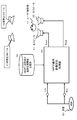
- FIG. 3 is a diagram showing a configuration example of a device that performs sound image localization processing using a head related transfer function (HRTF).
- the L signal and the R signal as stereo signals are reproduced from the sound source 50 such as a CD. This reproduced signal is input (Lin, Rin) to the HRTF application sound image localization processing unit 60.
- the head-related transfer function (HRTF) measured by the measurement process described above with reference to FIG. 2 is acquired from the HRTF storage unit 70, and the HRTF application sound image localization processing unit 60 executes signal processing to which the acquired data is applied. Then, for example, output signals (Lout, Rout) to be output to the left speaker 21 and the right speaker 22 of the head rest portion are generated.
- HRTF head-related transfer function
- the left speaker 21 outputs an output signal (Lout) processed by the HRTF application sound image localization processing unit 60. Further, the right speaker 22 outputs an output signal (Rout) processed by the HRTF application sound image localization processing unit 60.
- the L signal of the sound source is output from the virtual left speaker 31 at the virtual speaker position, that is, the position in front of the user 10 (virtual sound source position) shown in FIG. 3, and the R signal of the sound source is output from the virtual right speaker 32. It is possible to feel as if you are.
- the head related transfer function (HRTF) is a different function for each individual. Therefore, when a processing signal to which a head-related transfer function (HRTF) corresponding to a specific user is applied is output from the speaker, the virtual sound source position is the optimum position for the specific user, but is not necessarily the optimum virtual position for other users. There is a problem that it does not become the sound source position.
- the HRTF-applied sound image localization processing unit 60 shown in FIG. 3 needs to perform signal processing based on the head-related transfer function (HRTF) corresponding to each user.
- HRTF head-related transfer function
- the head-related transfer function is a function that differs for each user, and is optimal unless sound image localization processing that applies the head-related transfer function (HRTF) specific to the user who is the listener is executed.
- the virtual sound source position cannot be set.
- the acoustic signal processing apparatus of the present disclosure described below executes user identification processing and user position identification processing, and based on these identification information, performs a head related transfer function (HRTF) to be applied to sound image localization processing. It is determined and signal processing is performed by applying the head related transfer function (HRTF) corresponding to each user. Further, the output which is the signal processing result is output from the speaker provided at the position of the user who has the head related transfer function (HRTF) applied to the signal processing.
- HRTF head related transfer function
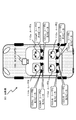
- FIG. 5 shows the automobile 80.
- the automobile 80 is equipped with the acoustic signal processing device 100 of the present disclosure.
- a specific configuration example of the acoustic signal processing device 100 of the present disclosure will be described later.
- LR speakers corresponding to each user are mounted on the headrests of the seats of each user.
- the user A left speaker 122aL and the user A right speaker 122aR are mounted on the headrests of the users A and 110a.
- the user B left speaker 122bL and the user B right speaker 122bR are mounted on the headrests of the users B and 110b.
- a user C left speaker 122cL and a user C right speaker 122cR are mounted on the headrests of the users C and 110c.
- a user D left speaker 122dL and a user D right speaker 122dR are mounted on the headrests of the users D and 110d.
- the automobile 80 is equipped with a sensor (camera) 101 to photograph the faces of the users A to D.
- the captured images of the faces of the users A to D acquired by the sensor (camera) 101 are input to the acoustic signal processing device 100 of the present disclosure.
- the acoustic signal processing device 100 of the present disclosure executes user identification and user position identification based on the captured images of the faces of the users A to D acquired by the sensor (camera) 101.
- the acoustic signal processing device 100 of the present disclosure selectively acquires the head related transfer functions (HRTFs) of the users A to D from the database based on the user identification information, and acquires the head related transfer functions (HRTFs) of the users A to D.
- Signal processing sound image localization processing
- each of the users A to D can individually hear the output signal after the signal processing (sound image localization processing) to which the head related transfer function (HRTF) is applied from the speaker of the headrest unit. Each user can hear the sound from the ideal virtual sound source position.
- FIG. 6 is a diagram showing a configuration example of the acoustic signal processing device 100 of the present disclosure.
- the acoustic signal processing device 100 of the present disclosure includes a sensor (camera or the like) 101, a user & user position identification unit 102, a user-compatible HRTF acquisition unit 103, an HRTF database 104, and an HRTF application sound image localization processing unit 105.
- the HRTF application sound image localization processing unit 105 includes a plurality of user-compatible HRTF application sound image localization processing units 105-1 to n capable of parallel processing.
- the sensor (camera or the like) 101 is a sensor that acquires information that can identify the user and the position of the user. For example, it is composed of a camera.
- the sensor detection information acquired by the sensor (camera or the like) 101 for example, the image captured by the camera, is input to the user & user position identification unit 102.
- the user & user position identification unit 102 performs user identification and user position identification based on sensor detection information acquired by a sensor (camera or the like) 101, for example, an image captured by a camera.
- the user identification is performed by collating the face image included in the camera-captured image with the user face image information stored in the user database (not shown).
- the location of each identified user is also identified.
- the user position identification is performed as a process of determining which speaker the user is in the position to hear the output sound from.
- the user identification information and the user position identification information generated by the user & user position identification unit 102 are input to the user-corresponding HRTF acquisition unit 103.
- the user-corresponding HRTF acquisition unit 103 acquires a head-related transfer function (HRTF) corresponding to each identified user from the HRTF database 104 based on the user identification information input from the user & user position identification unit 102.
- HRTF head-related transfer function
- the head-related transfer function (HRTF) corresponding to each user, which has been measured in advance, is stored in the HRTF database 104.
- the head-related transfer function (HRTF) corresponding to the user associated with the user identifier is stored in the HRTF database 104.
- the head-related transfer function (HRTF) for the user can be measured by the process described above with reference to FIG.
- the user-corresponding HRTF acquisition unit 103 uses the head-related transfer function (HRTF) for each identification user acquired from the HRTF database 104 into the user identification information and the user position identification information of each user input from the user & user position identification unit 102. Output in association with each other.
- HRTF head-related transfer function
- the HRTF application sound image localization processing unit 105 has a plurality of user-compatible HRTF application sound image localization processing units 105-1 to n.
- Each of the plurality of user-compatible HRTF-applied sound image localization processing units 105-1 to n is associated with an LR speaker that outputs each processing signal (Lout, R-out) in advance.
- the user-compatible HRTF-applied sound image localization processing unit 105-1 is connected to the driver's seat LR speaker, that is, the user A left speaker 122aL and the user A right speaker 122aR in the driver's seat where the user A110a shown in FIG. 5 is sitting. ing.
- each of the user-compatible HRTF-applied sound image localization processing units 105-1 to n is associated with an LR speaker that outputs each processing signal (Lout, R-out) in advance.
- the HRTF application sound image localization processing unit 105 responds to the user based on the corresponding data of the user identification information and the user position identification information input from the user-corresponding HRTF acquisition unit 103 and the head-related transfer function (HRTF) corresponding to each identification user.
- HRTF head-related transfer function
- Each of the HRTF-applied sound image localization processing units 105-1 to n executes signal processing to which the HRTF corresponding to each user is applied.
- the user-compatible HRTF-applied sound image localization processing unit 105-1 connected to the user A left speaker 122aL and the user A right speaker 122aR in the driver's seat where the user A110a is sitting is the head corresponding to the user A.
- a signal processing (speaker localization processing) is executed by inputting a head-related transfer function (HRTF).
- HRTF head-related transfer function
- Output signals (Lout-a, Rout-a) are generated by this signal processing.
- the generated output signals (Lout-a, Rout-a) are output from the user A left speaker 122aL and the user A right speaker 122aR in the driver's seat where the user A110a sits.
- the user-corresponding HRTF-applied sound image localization processing unit 105-n connected to the user N left speaker 122nL and the user N right speaker 122nR of the seat in which the user N110n shown in FIG.
- a transfer function HRTF
- signal processing peaker localization processing
- Output signals (Lout-n, Rout-n) are generated by this signal processing.
- the generated output signals (Lout-n, Rout-n) are output from the user N left speaker 122nL and the user N right speaker 122nR in the seat where the user N110n is sitting.
- the configuration example of the acoustic signal processing device 100 shown in FIG. 6 is an example, and other configurations are also possible.
- the HRTF database 104 of the acoustic signal processing device 100 shown in FIG. 6 can be placed on an external server. An example of this configuration is shown in FIG.
- the acoustic output device 100 inside the automobile is connected by the network 130 and has a configuration capable of communicating with the management server 120.
- the acoustic output device 100 inside an automobile does not have the HRTF database 104 described with reference to FIG.
- the HRTF database 104 is held by the management server 120.
- the management server 120 has an HRTF database 104 that stores a pre-measured head-related transfer function (HRTF) for each user.
- HRTF head-related transfer function
- the head-related transfer function (HRTF) corresponding to the user associated with the user identifier is stored in the HRTF database 104.
- the sound output device 100 executes a search process of the HRTF database 104 of the management server 120 based on the user identification information generated by the user & user position identification unit 102, and acquires a user-corresponding head related transfer function (HRTF). ..
- the subsequent processing is the same as the processing described with reference to FIG.
- the processing according to the flow of FIG. 8 or less described below can be executed according to, for example, a program stored in the storage unit of the acoustic signal processing device, and is, for example, a control having a program execution function such as a CPU. It is executed under the control of the department.
- a program stored in the storage unit of the acoustic signal processing device and is, for example, a control having a program execution function such as a CPU. It is executed under the control of the department.
- a program execution function such as a CPU
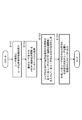
- Step S101 First, the acoustic signal processing device executes user identification and user position identification in step S101. This process is a process executed by the user & user position identification unit 102 shown in FIG.
- the user & user position identification unit 102 performs user identification and user position identification based on sensor detection information acquired by a sensor (camera or the like) 101, for example, an image captured by a camera.
- the user identification is performed by collating the face image included in the camera-captured image with the user face image information stored in the user database (not shown).
- the location of each identified user is also identified.
- the user position identification is performed as a process of determining which speaker the user is in the position to hear the output sound from.
- Step S102 the acoustic signal processing device acquires the HRTF (head related transfer function) of each identifying user from the database.
- This process is a process executed by the user-corresponding HRTF acquisition unit 103 shown in FIG.
- the user-corresponding HRTF acquisition unit 103 acquires a head-related transfer function (HRTF) corresponding to each identified user from the HRTF database 104 based on the user identification information input from the user & user position identification unit 102.
- the head-related transfer function (HRTF) corresponding to the user associated with the user identifier is stored in the HRTF database 104.
- the user-corresponding HRTF acquisition unit 103 executes a database search process based on the user identification information input from the user & user position identification unit 102, and acquires a head related transfer function (HRTF) corresponding to each identified user.
- step S103 the acoustic signal processing device inputs each user's HRTF (head related transfer function) to each of the user-compatible HRTF-applied sound image localization processing units, and generates an output signal corresponding to each user.
- HRTF head related transfer function
- the HRTF application sound image localization processing unit 105 includes a plurality of user-compatible HRTF application sound image localization processing units 105-1 to n. Each of the plurality of user-compatible HRTF-applied sound image localization processing units 105-1 to n is assigned an LR speaker that outputs each processing signal (Lout, R-out) in advance.
- the HRTF application sound image localization processing unit 105 responds to the user based on the corresponding data of the user identification information and the user position identification information input from the user-corresponding HRTF acquisition unit 103 and the head-related transfer function (HRTF) corresponding to each identification user.
- HRTF head-related transfer function
- Each of the HRTF-applied sound image localization processing units 105-1 to n executes signal processing to which the HRTF corresponding to each user is applied.
- Step S104 the acoustic signal processing device outputs the generated output signal corresponding to each user to the speaker installed at the user position corresponding to the generated signal.
- This process is also a process executed by the HRTF application sound image localization processing unit 105 shown in FIG.
- Example 2 [3. About an example of executing output control according to the presence or absence of a user] Next, as Example 2, an example of executing output control according to the presence or absence of a user will be described.
- the embodiment described below solves such a problem, and is an embodiment in which control is performed to stop or mute the output from the speaker at a position where the user is not present.
- step S101a and b are added between steps S101 and S102 of the flow shown in FIG. 8 described above.
- the processing of the other steps is the same as the processing described with reference to FIG. 8, and thus the description thereof will be omitted.
- step S101a and the process of step S101b will be described.
- Step S101a The acoustic signal processing device executes user identification and user position identification in step S101, and then executes the process of step S101a.
- step S101a the acoustic signal processing device determines whether or not there is a speaker installation sheet without a user.
- This process is a process executed by the user & user position identification unit 102 shown in FIG.
- the user & user position identification unit 102 performs user identification and user position identification based on the sensor detection information acquired by the sensor (camera or the like) 101, for example, an image captured by the camera. At this time, it is determined whether or not there is a speaker installation sheet without a user.
- step S102 If there is no speaker installation sheet without a user, the process proceeds to step S102 and the processes of steps S102 to S104 are executed. These processes are the same as the processes described above with reference to FIG. 8, and signals that have undergone signal processing (sound image localization processing) corresponding to each user are output from the speakers of all seats.
- step S101a determines whether there is a speaker installation sheet without a user. If it is determined in the determination process of step S101a that there is a speaker installation sheet without a user, the process proceeds to step S101b.
- Step S101b If it is determined in the determination process of step S101a that there is a speaker installation sheet without a user, the process proceeds to step S101b.
- step S101b the acoustic signal processing device executes stop or mute control of the output from the speaker installation sheet without a user. This process is a process executed by the HRTF application sound image localization processing unit 105 shown in FIG.
- the processing unit that generates the output sound of the speaker without a user does not execute the process.
- the output sound is generated by focusing on the reproduced sound at a level that cannot be heard by surrounding users.
- the HRTF applied to the signal processing (sound image localization processing) at this time is a standard type HRTF stored in the HRTF database 104.
- the reproduced sound from the sound source that does not perform signal processing (sound image localization processing) may be output as it is.
- steps S102 to S104 only the signal processing and output of the reproduced sound of the speaker at the position where the person is in the seat is executed.
- a headphone jack is set on the seat of the airplane, and the user (passenger) seated in the seat can listen to music by inserting the headphone plug.
- FIG. 11 there are seats with and without users (passengers), and there are users who use headphones and users who do not.
- the seats are reserved seats, and the seats on which each user sits are predetermined. Which user sits in which reserved seat is recorded in the database in the boarding reservation system.
- the acoustic signal processing device in the airplane can confirm the seat position of each user (passenger) based on the recorded data in the database of the boarding reservation system.
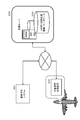
- FIG. 12 is a diagram showing a system configuration example in this embodiment.
- the acoustic signal processing device 200 in the airplane is connected to the boarding reservation system 201 and the management server 202 via a network.
- the management server 202 has an HRTF database 210 that records the head related transfer functions (HRTFs) of each user (passenger).
- the acoustic signal processing device 200 in an airplane has a configuration substantially similar to the configuration described above with reference to FIG. However, the configuration omits the HRTF database 104 and does not have the sensor 101.
- the user identification and the user position identification are performed using the recorded data of the boarding reservation system 201 connected via the network.
- HRTF head-related transfer function
- the acoustic signal processing device 200 generates an output sound via the headphone jack of each seat.
- the HRTF application sound image localization processing unit 105 includes a plurality of user-compatible HRTF application sound image localization processing units 105-1 to n. Headphone jacks for outputting the respective processing signals (Lout, R-out) are assigned in advance to each of the plurality of user-compatible HRTF-applied sound image localization processing units 105-1 to n.
- the HRTF application sound image localization processing unit 105 is based on the correspondence data between the user identification information and the user position (seat) identification information input from the user correspondence HRTF acquisition unit 103 and the head related transfer function (HRTF) corresponding to each identification user.
- HRTF head related transfer function
- User-compatible HRTF-applied sound image localization processing units 105-1 to n execute signal processing.
- Each of the user-corresponding HRTF-applied sound image localization processing units 105-1 to n executes signal processing to which the identified user-corresponding HRTF is applied to generate a sound image localization processing signal corresponding to each user.
- the signal corresponding to each user is output as an output sound from the headphone jack at the seat position of the user.
- the user who is a passenger of an airplane can hear the signal processed (sound image localization processing) based on his / her head related transfer function (HRTF), and the sound from the ideal virtual sound source position. Can be heard.
- HRTF head related transfer function
- the user & user position identification unit of the acoustic signal processing device 200 identifies the user at each seat position based on the boarding reservation system 201 connected via the network. Specifically, the user identifier of the user who made the reservation for each seat position is acquired.
- the user-corresponding HRTF acquisition unit acquires the head-related transfer function (HRTF) corresponding to each user from the HRTF database 210 of the management server 202 based on the user identifier of the reserved user of each seat.
- HRTF head-related transfer function
- step S203 the acoustic signal processing device inputs the HRTF (head related transfer function) of each user to each of the user-compatible HRTF-applied sound image localization processing units, and generates an output signal corresponding to each user.
- HRTF head related transfer function
- This process is a process executed by the HRTF application sound image localization processing unit 105 shown in FIG.
- Each of the multiple user-corresponding HRTF-applied sound image localization processing units 105-1 to n executes signal processing (sound image localization processing) using the user-corresponding head-related transfer function (HRTF) of each seat position as a processing parameter. Generate the corresponding output signal.
- HRTF head-related transfer function
- step S204 the acoustic signal processing device outputs the generated output signal corresponding to each user as an output signal from the headphone jack at the seat position of the user corresponding to the generated signal.
- the output from the headphone jack at each user's seat position is the output signal (Lout-x, Round-x) generated by signal processing (sound image localization processing) to which the head related transfer function (HRTF) corresponding to each user is applied. It becomes.
- signal processing sound image localization processing
- HRTF head related transfer function
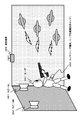
- FIG. 14 shows a user 251 playing at one attraction in an amusement park.
- the user 251 registers the user information, and receives the sensor 252 recording the user identifier in the registration process and wears it on the arm.
- the sensor 252 executes communication with communication devices 263 mounted at various positions in the amusement park, and transmits the user identifier to the acoustic signal processing device located in the management center of the amusement park.
- the acoustic signal processing device placed in the management center of the amusement park has almost the same configuration as that described above with reference to FIG.
- the user & user position identification unit 102 receives the user identification information and the user position information from the sensor 252 mounted by the user 251 shown in FIG. 14 via the communication device 263 to identify each user and identify the user position. To execute.
- each attraction is equipped with a plurality of speakers such as the speaker L261 and the speaker R262.
- the acoustic signal processing device placed in the management center of the amusement park applies the output from these speakers to the head-related transfer function (HRTF) of the user 251 in front of it as a processing parameter (sound image localization processing signal). ).
- HRTF head-related transfer function
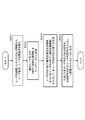
- Step S301 the acoustic signal processing device executes user identification and user position identification based on the received signal from the sensor 252 worn by the user.
- the user & user position identification unit of the acoustic signal processing device receives the output of the sensor 252 worn by the user shown in FIG. 14 via the communication device 263 and executes user identification and user position identification.
- Step S302 the acoustic signal processing device acquires the HRTF (head related transfer function) of each identifying user from the database.
- the user-corresponding HRTF acquisition unit acquires the head-related transfer function (HRTF) corresponding to each user from the HRTF database based on the user identifier of the user in each attraction.
- the HRTF database may be in the acoustic signal processing device of the management center of the amusement park, or in the management server connected via the network.
- step S303 the acoustic signal processing device inputs the HRTF (head related transfer function) of each user to each of the user-compatible HRTF-applied sound image localization processing units, and generates an output signal corresponding to each user.
- HRTF head related transfer function
- This process is a process executed by the HRTF application sound image localization processing unit 105 shown in FIG.
- Each of the multiple user-corresponding HRTF-applied sound image localization processing units 105-1 to n executes signal processing (sound image localization processing) using the user-corresponding head-related transfer function (HRTF) at each attraction position as a processing parameter. Generate the corresponding output signal.
- HRTF head-related transfer function
- Step S304 the acoustic signal processing device outputs the generated output signal corresponding to each user as an output signal from the speaker at the attraction position where the user corresponding to the generated signal is present.
- the output from the speaker at each attraction is the output signal (Lout-x, Round-x) generated by signal processing (sound image localization processing) to which the head-related transfer function (HRTF) corresponding to the user playing at that attraction is applied. ).
- signal processing sound image localization processing
- HRTF head-related transfer function
- the user playing at the attraction can hear the signals (Lout-x, Rout-x) in which the sound image localization process to which his / her head related transfer function (HRTF) is applied is executed. You can hear the sound from the user's optimal virtual sound source position.
- FIG. 16 shows a user 271 who came to visit the museum.
- the user 271 registers the user information and receives the user terminal 272 in which the user identifier is recorded in the registration process.
- a headphone jack is configured in the user terminal 272, and the user 271 can listen to various explanations from the headphones by inserting the plug of the headphone 273 into the headphone shack.
- the user terminal 272 is a terminal capable of communicating with an acoustic signal processing device placed in the management center of the museum.
- the acoustic signal processing device placed in the management center of the museum has almost the same configuration as that described above with reference to FIG.
- the user & user position identification unit 102 receives the user identification information and the user position information from the user terminal 272 worn by the user 271 shown in FIG. 16, and executes the identification of each user and the identification of the user position. For example, if there is no member database in which registered member information is recorded, user identification may be performed using this database record information.
- the acoustic signal processing device placed in the management center of the museum applies a processing signal (sound image localization processing signal) obtained by applying the output of the headphones 273 used by the user 271 to the head related transfer function (HRTF) of the user 271 as a processing parameter. ).
- a processing signal sound image localization processing signal obtained by applying the output of the headphones 273 used by the user 271 to the head related transfer function (HRTF) of the user 271 as a processing parameter.
- the user & user position identification unit of the acoustic signal processing device receives the output of the user terminal 272 worn by the user shown in FIG. 16 and executes user identification and user position identification.
- the user identification may be performed using registered member information such as a member database to be collated at the time of checking when entering the museum.
- Step S402 the acoustic signal processing device acquires the HRTF (head related transfer function) of each identifying user from the database.
- the user-corresponding HRTF acquisition unit acquires the head-related transfer function (HRTF) corresponding to each user from the HRTF database based on the user identifier of the user.
- the HRTF database may be in the acoustic signal processing device of the management center of the museum, or in the management server connected via the network.
- step S403 the acoustic signal processing device inputs the HRTF (head related transfer function) of each user to each of the user-compatible HRTF-applied sound image localization processing units, and generates an output signal corresponding to each user.
- HRTF head related transfer function
- This process is a process executed by the HRTF application sound image localization processing unit 105 shown in FIG.
- Each of the multiple user-compatible HRTF-applied sound image localization processing units 105-1 to n executes signal processing (sound image localization processing) using the user-compatible head-related transfer functions (HRTFs) at various positions in the museum as processing parameters. To generate a user-friendly output signal.
- HRTFs head-related transfer functions
- step S404 the acoustic signal processing device transmits the generated output signal corresponding to each user to the user terminal 272 of the user corresponding to the generated signal, and uses it as an output signal from the headphones 273 attached to the user terminal 272. Output.
- the output from the headphones 273 attached to the user terminal 272 owned by the user at various positions in the museum was generated by signal processing (sound image localization processing) to which a user-compatible head-related transfer function (HRTF) was applied. It becomes an output signal (Lout-x, Rout-x).
- HRTF head-related transfer function
- the acoustic signal processing device placed in the management center of the museum generates the sound image localization processing signal.
- the head corresponding to each user is used in the user terminal 272 owned by the user.
- the signal processing (sound image localization processing) to which the part transfer function (HRTF) is applied may be performed.
- HRTFs head related transfer functions
- HRTFs head related transfer functions
- HRTFs head related transfer functions
- HRTFs head related transfer functions
- HRTFs head related transfer functions
- HRTF head related transfer function
- HRTF head related transfer function
- HRTF head related transfer function
- HRTF approximate representation of head related transfer function
- HRTF approximate representation of head related transfer function
- Fq, Gain, Q information and the like when reproducing the HRTF by EQ can be used.
- data based on an individual's physical characteristics used for signal processing other than sound image localization processing such as a filter used for individual optimization of noise cancellation.
- data based on personal taste for example, EQ parameters for sound quality adjustment, volume, and the like may be used.
- the user terminal 310 outputs an audio signal to the headphone 303 wirelessly or via the headphone jack.
- the user 301 listens to the sound output from the headphones 303.
- the output sound from the headphones 303 is a signal processed by signal processing (sound image localization processing) to which the head related transfer function (HRTF) 311 peculiar to the user 301 is applied.
- signal processing sound image localization processing
- HRTF head related transfer function
- the user 301 receives the music provided by the music distribution server 322 to the user terminal 310 by downloading or streaming distribution.
- the user terminal 310 applies the user-specific head-related transfer function (HRTF) 311 stored in the user terminal 310 to perform signal processing (sound image localization processing) of the voice signal acquired from the music distribution server 322.
- the processed audio signal is output to the headphones 303.
- HRTF head-related transfer function
- the user terminal 310 uses a user-specific head-related transfer function (HRTF) 311 unique to the owning user of the user terminal 310 and signal processing (sound image) to which the user-specific head-related transfer function (HRTF) is applied. It has a signal processing unit 312 that executes localization processing) and a communication unit 313 that outputs the processing signal of the signal processing unit 312 to the headphones 303.
- HRTF head-related transfer function
- the audio signals (Lin, Rin) of the music 351 provided by the music distribution server 322 are input to the signal processing unit 312 of the user terminal 310.
- the signal processing unit 312 applies signal processing (sound image localization processing) to the voice signal acquired from the music distribution server 322 by applying the user-compatible head-related transfer function (HRTF) 311 stored in the storage unit of the user terminal 310. Execute.
- HRTF head-related transfer function
- the signal processing unit 312 performs signal processing (sound image localization processing)
- the user terminal 310 acquires the permission information 371 from the management server 321.
- the permission information 371 is, for example, key information or the like that enables the signal processing (sound image localization processing) program in the signal processing unit 312 to be executed.
- the user terminal 310 applies the user-compatible head-related transfer function (HRTF) 311 to the voice signal distributed from the music distribution server 322 on the condition that the permission information 371 is acquired from the management server 321 to perform signal processing (sound image localization). Process) is executed.
- the processed audio signals (Lout, Round) are output to the headphone 303 via the headphone jack or the communication unit 313.
- the user can listen to the audio signal that has undergone sound image localization processing by applying the user-specific head-related transfer function (HRTF).
- HRTF head-related transfer function
- the user terminal 310 may be configured to store the head related transfer functions (HRTFs) of a plurality of different users, and may be configured to be selected and used by the user.
- the user terminal may be provided with a user identification unit, and voice output control may be executed by applying a user-corresponding head-related transfer function (HRTF) identified by the user identification unit.
- HRTF head-related transfer function
- communication is executed between a voice output system such as an in-vehicle audio system and the user terminal 310, and the voice output system acquires a head related transfer function (HRTF) stored in the user terminal 310 to output voice.
- the system may be configured to execute voice output control according to the acquired head related transfer function (HRTF).
- a stereo signal has been described as an example as a sound source, but the processing of the present disclosure reproduces a multi-channel signal, an object-based signal that reproduces sound in object units, and a sound field in addition to the stereo signal. It can also be applied to processing for ambisonics signals, higher-order ambisonics signals, and the like.
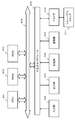
- the CPU (Central Processing Unit) 501 functions as a control unit or a data processing unit that executes various processes according to a program stored in the ROM (Read Only Memory) 502 or the storage unit 508. For example, the process according to the sequence described in the above-described embodiment is executed.
- the RAM (Random Access Memory) 503 stores programs and data executed by the CPU 501. These CPU 501, ROM 502, and RAM 503 are connected to each other by a bus 504.
- the CPU 501 is connected to the input / output interface 505 via the bus 504, and the input / output interface 505 is connected to an input unit 506 consisting of various switches, a keyboard, a mouse, a microphone, a sensor, etc., and an output unit 507 consisting of a display, a speaker, and the like. Has been done.
- the CPU 501 executes various processes in response to a command input from the input unit 506, and outputs the process results to, for example, the output unit 507.
- the storage unit 508 connected to the input / output interface 505 is composed of, for example, a hard disk or the like, and stores a program executed by the CPU 501 and various data.
- the communication unit 509 functions as a transmission / reception unit for Wi-Fi communication, Bluetooth (registered trademark) (BT) communication, and other data communication via a network such as the Internet or a local area network, and communicates with an external device.
- the drive 510 connected to the input / output interface 505 drives a removable medium 511 such as a magnetic disk, an optical disk, a magneto-optical disk, or a semiconductor memory such as a memory card, and records or reads data.
- a removable medium 511 such as a magnetic disk, an optical disk, a magneto-optical disk, or a semiconductor memory such as a memory card
- a user identification unit that executes user identification processing and An acquisition unit that acquires a user-specific head-related transfer function (HRTF) identified by the user identification unit from among one or more head-related transfer functions (HRTFs).
- HRTF head-related transfer function
- a sound image localization processing unit that executes sound image localization processing using a user-specific head-related transfer function (HRTF) acquired by the acquisition unit as a processing parameter, and a sound image localization processing unit.
- An acoustic signal processing device comprising.
- the user identification unit further Execute user location identification processing,
- the sound image localization processing unit The acoustic signal processing device according to (1), which outputs a signal after the sound image localization process from a speaker in the vicinity of the user position identified by the user identification unit.
- the user identification unit is Execute user identification processing for multiple users
- the sound image localization processing unit The acoustic signal processing device according to (1) or (2), wherein sound image localization processing using the head related transfer function (HRTF) of each of a plurality of users identified by the user identification unit as a processing parameter is executed in parallel.
- HRTF head related transfer function
- the user identification unit is The acoustic signal processing device according to any one of (1) to (3), which executes user identification processing based on a camera-captured image, or user identification processing and user position identification processing.
- the user identification unit is The acoustic signal processing device according to any one of (1) to (4), which executes user identification processing based on sensor information, or user identification processing and user position identification processing.
- the acoustic signal processing device further includes The acoustic signal processing device according to any one of (1) to (5), which has a head-related transfer function (HRTF) database that stores a user-compatible head-related transfer function (HRTF).
- HRTF head-related transfer function
- the acquisition unit User identification information is input from the user identification unit, a user-specific head-related transfer function (HRTF) is acquired from a database in the acoustic signal processing device based on the user identification information, and output to the sound image localization processing unit.
- HRTF head-related transfer function
- the acquisition unit User identification information is input from the user identification unit, a user-specific head-related transfer function (HRTF) is acquired from a database of an external server based on the user identification information, and is output to the sound image localization processing unit (1).
- HRTF head-related transfer function
- the acoustic signal processing apparatus according to any one of (7).
- the sound image localization processing unit is The acoustic signal processing device according to any one of (1) to (8), wherein the output signal is stopped or reduced at a position determined by the user identification unit to have no user.
- the user identification unit is The acoustic signal processing device according to any one of (1) to (9), which executes a user identification process or a user identification process and a user position identification process with reference to the registration data of the boarding reservation system.
- the user identification unit is The acoustic signal processing device according to any one of (1) to (10), which executes a user identification process, or a user identification process and a user position identification process, based on information received from a sensor worn by the user or a user terminal.
- the user identification unit is The acoustic signal processing device according to any one of (1) to (11), which executes a user identification process with reference to user member information registered in advance.
- a storage unit that stores a user-specific head-related transfer function (HRTF),
- An acquisition unit that acquires a user-specific head-related transfer function (HRTF) from the storage unit,
- a sound image localization processing unit that executes sound image localization processing using a user-specific head-related transfer function (HRTF) acquired by the acquisition unit as a processing parameter, and a sound image localization processing unit.
- An acoustic signal processing device comprising.
- the sound image localization processing unit is The acoustic signal processing device according to (13), which executes the sound image localization process on an acoustic signal acquired from an external server.
- An acoustic signal processing system having a user terminal and a server.
- the server A voice signal is transmitted to the user terminal
- the user terminal is A storage unit that stores a user-specific head-related transfer function (HRTF),
- An acquisition unit that acquires a user-specific head-related transfer function (HRTF) from the storage unit
- An acoustic signal processing system having a sound image localization processing unit that executes sound image localization processing on a voice signal received from the server by using a user-specific head-related transfer function (HRTF) acquired by the acquisition unit as a processing parameter.
- HRTF head-related transfer function
- An acoustic signal processing method executed in an acoustic signal processing device The user identification unit executes the user identification process and The acquisition unit acquires a user-specific head-related transfer function (HRTF) identified by the user identification unit from one or more head-related transfer functions (HRTFs).
- HRTF head-related transfer function
- An acoustic signal processing method executed in an acoustic signal processing device has a storage unit that stores a user-specific head-related transfer function (HRTF).
- the acquisition unit acquires a user-specific head-related transfer function (HRTF) from the storage unit.
- An acoustic signal processing method in which a sound image localization processing unit executes sound image localization processing using a user-specific head-related transfer function (HRTF) acquired by the acquisition unit as a processing parameter.
- a program that executes acoustic signal processing in an acoustic signal processing device Have the user identification unit execute the user identification process
- the acquisition unit is made to acquire a head-related transfer function (HRTF) unique to the user identified by the user identification unit from one or more head-related transfer functions (HRTF).
- HRTF head-related transfer function
- the series of processes described in the specification can be executed by hardware, software, or a composite configuration of both.
- executing processing by software install the program that records the processing sequence in the memory in the computer built in the dedicated hardware and execute it, or execute the program on a general-purpose computer that can execute various processing. It can be installed and run.
- the program can be pre-recorded on a recording medium.
- LAN Local Area Network
- the various processes described in the specification are not only executed in chronological order according to the description, but may also be executed in parallel or individually as required by the processing capacity of the device that executes the processes.
- the system is a logical set configuration of a plurality of devices, and the devices having each configuration are not limited to those in the same housing.
- the sound image localization process to which the user-corresponding head-related transfer function (HRTF) identified by the user identification is applied is executed, and each user position is determined.
- a configuration that outputs from the output unit is realized.
- it has a user identification unit that executes user identification and user position identification processing, and a sound image localization processing unit that executes sound image localization processing using a user-specific head related transfer function (HRTF) as a processing parameter. ..
- the sound image localization processing unit executes the sound image localization processing using the HRTF unique to the identifying user as a processing parameter, and outputs the signal after the sound image localization processing to the output unit at the identification user position.
- the sound image localization processing unit executes sound image localization processing using the HRTFs of each of the plurality of users in parallel, and outputs a processing signal to the output unit at each user position.
- a configuration is realized in which a sound image localization process to which a user-corresponding head-related transfer function (HRTF) identified by user identification is applied is executed and output is output from an output unit at each user position.
- HRTF head-related transfer function
Landscapes
- Physics & Mathematics (AREA)
- Engineering & Computer Science (AREA)
- Acoustics & Sound (AREA)
- Signal Processing (AREA)
- Health & Medical Sciences (AREA)
- General Health & Medical Sciences (AREA)
- Otolaryngology (AREA)
- Stereophonic System (AREA)
Priority Applications (5)
| Application Number | Priority Date | Filing Date | Title |
|---|---|---|---|
| KR1020217027629A KR102775745B1 (ko) | 2019-03-22 | 2020-01-24 | 음향 신호 처리 장치, 음향 신호 처리 시스템, 및 음향 신호 처리 방법, 그리고 프로그램 |
| US17/439,744 US20220174446A1 (en) | 2019-03-22 | 2020-01-24 | Acoustic signal processing device, acoustic signal processing system, acoustic signal processing method, and program |
| JP2021508134A JPWO2020195084A1 (https=) | 2019-03-22 | 2020-01-24 | |
| CN202080021565.1A CN113574912A (zh) | 2019-03-22 | 2020-01-24 | 声信号处理装置、声信号处理系统、声信号处理方法和程序 |
| EP20777688.1A EP3944639B1 (en) | 2019-03-22 | 2020-01-24 | Acoustic signal processing device, acoustic signal processing system, acoustic signal processing method, and program |
Applications Claiming Priority (2)
| Application Number | Priority Date | Filing Date | Title |
|---|---|---|---|
| JP2019054090 | 2019-03-22 | ||
| JP2019-054090 | 2019-03-22 |
Publications (1)
| Publication Number | Publication Date |
|---|---|
| WO2020195084A1 true WO2020195084A1 (ja) | 2020-10-01 |
Family
ID=72609718
Family Applications (1)
| Application Number | Title | Priority Date | Filing Date |
|---|---|---|---|
| PCT/JP2020/002538 Ceased WO2020195084A1 (ja) | 2019-03-22 | 2020-01-24 | 音響信号処理装置、音響信号処理システム、および音響信号処理方法、並びにプログラム |
Country Status (6)
| Country | Link |
|---|---|
| US (1) | US20220174446A1 (https=) |
| EP (1) | EP3944639B1 (https=) |
| JP (1) | JPWO2020195084A1 (https=) |
| KR (1) | KR102775745B1 (https=) |
| CN (1) | CN113574912A (https=) |
| WO (1) | WO2020195084A1 (https=) |
Cited By (4)
| Publication number | Priority date | Publication date | Assignee | Title |
|---|---|---|---|---|
| WO2022113638A1 (ja) * | 2020-11-25 | 2022-06-02 | ソニーグループ株式会社 | 情報処理装置、情報処理方法 |
| FR3116934A1 (fr) * | 2020-11-27 | 2022-06-03 | Faurecia Clarion Electronics Europe | Procédé et système de traitement audio pour un système audio d’appui-tête de siège |
| US12483816B2 (en) | 2022-05-31 | 2025-11-25 | Panasonic Intellectual Property Management Co., Ltd. | Configuration system and method for aircraft equipment |
| US12587773B2 (en) | 2022-05-31 | 2026-03-24 | Panasonic Intellectual Property Management Co., Ltd. | Configuration system and method for aircraft equipment |
Families Citing this family (2)
| Publication number | Priority date | Publication date | Assignee | Title |
|---|---|---|---|---|
| US20240163630A1 (en) * | 2022-11-14 | 2024-05-16 | Harman International Industries, Incorporated | Systems and methods for a personalized audio system |
| EP4380196A1 (en) | 2022-12-01 | 2024-06-05 | Harman Becker Automotive Systems GmbH | Spatial sound improvement for seat audio using spatial sound zones |
Citations (5)
| Publication number | Priority date | Publication date | Assignee | Title |
|---|---|---|---|---|
| JP2003111200A (ja) | 2001-09-28 | 2003-04-11 | Sony Corp | 音響処理装置 |
| JP2007030732A (ja) * | 2005-07-28 | 2007-02-08 | Clarion Co Ltd | 音響システム |
| JP2009260574A (ja) * | 2008-04-15 | 2009-11-05 | Sony Ericsson Mobilecommunications Japan Inc | 音声信号処理装置、音声信号処理方法及び音声信号処理装置を備えた携帯端末 |
| US20160311348A1 (en) * | 2015-04-22 | 2016-10-27 | Panasonic Avionics Corporation | Passenger seat pairing system |
| JP2016225764A (ja) * | 2015-05-28 | 2016-12-28 | アルパイン株式会社 | 車載システム |
Family Cites Families (13)
| Publication number | Priority date | Publication date | Assignee | Title |
|---|---|---|---|---|
| JP3232521B2 (ja) * | 1993-11-25 | 2001-11-26 | 本田技研工業株式会社 | 車両内音響システム |
| JP2003061197A (ja) * | 2001-08-15 | 2003-02-28 | Sony Corp | 音響機器、シート、交通機関 |
| WO2006095688A1 (ja) * | 2005-03-11 | 2006-09-14 | Pioneer Corporation | 情報再生装置、情報再生方法、情報再生プログラムおよびコンピュータに読み取り可能な記録媒体 |
| JP2007053622A (ja) * | 2005-08-18 | 2007-03-01 | Clarion Co Ltd | シートスピーカー用音響システム |
| US9100748B2 (en) * | 2007-05-04 | 2015-08-04 | Bose Corporation | System and method for directionally radiating sound |
| JP5499513B2 (ja) * | 2009-04-21 | 2014-05-21 | ソニー株式会社 | 音響処理装置、音像定位処理方法および音像定位処理プログラム |
| WO2012028906A1 (en) * | 2010-09-03 | 2012-03-08 | Sony Ericsson Mobile Communications Ab | Determining individualized head-related transfer functions |
| US9544679B2 (en) * | 2014-12-08 | 2017-01-10 | Harman International Industries, Inc. | Adjusting speakers using facial recognition |
| US9706320B2 (en) * | 2015-05-29 | 2017-07-11 | Sound United, LLC | System and method for providing user location-based multi-zone media |
| JP6296072B2 (ja) * | 2016-01-29 | 2018-03-20 | 沖電気工業株式会社 | 音響再生装置及びプログラム |
| US10154365B2 (en) * | 2016-09-27 | 2018-12-11 | Intel Corporation | Head-related transfer function measurement and application |
| US10038966B1 (en) * | 2016-10-20 | 2018-07-31 | Oculus Vr, Llc | Head-related transfer function (HRTF) personalization based on captured images of user |
| US10149089B1 (en) * | 2017-05-31 | 2018-12-04 | Microsoft Technology Licensing, Llc | Remote personalization of audio |
-
2020
- 2020-01-24 JP JP2021508134A patent/JPWO2020195084A1/ja active Pending
- 2020-01-24 CN CN202080021565.1A patent/CN113574912A/zh active Pending
- 2020-01-24 WO PCT/JP2020/002538 patent/WO2020195084A1/ja not_active Ceased
- 2020-01-24 KR KR1020217027629A patent/KR102775745B1/ko active Active
- 2020-01-24 US US17/439,744 patent/US20220174446A1/en not_active Abandoned
- 2020-01-24 EP EP20777688.1A patent/EP3944639B1/en active Active
Patent Citations (5)
| Publication number | Priority date | Publication date | Assignee | Title |
|---|---|---|---|---|
| JP2003111200A (ja) | 2001-09-28 | 2003-04-11 | Sony Corp | 音響処理装置 |
| JP2007030732A (ja) * | 2005-07-28 | 2007-02-08 | Clarion Co Ltd | 音響システム |
| JP2009260574A (ja) * | 2008-04-15 | 2009-11-05 | Sony Ericsson Mobilecommunications Japan Inc | 音声信号処理装置、音声信号処理方法及び音声信号処理装置を備えた携帯端末 |
| US20160311348A1 (en) * | 2015-04-22 | 2016-10-27 | Panasonic Avionics Corporation | Passenger seat pairing system |
| JP2016225764A (ja) * | 2015-05-28 | 2016-12-28 | アルパイン株式会社 | 車載システム |
Non-Patent Citations (1)
| Title |
|---|
| See also references of EP3944639A4 |
Cited By (8)
| Publication number | Priority date | Publication date | Assignee | Title |
|---|---|---|---|---|
| WO2022113638A1 (ja) * | 2020-11-25 | 2022-06-02 | ソニーグループ株式会社 | 情報処理装置、情報処理方法 |
| JPWO2022113638A1 (https=) * | 2020-11-25 | 2022-06-02 | ||
| JP7771977B2 (ja) | 2020-11-25 | 2025-11-18 | ソニーグループ株式会社 | 情報処理装置、情報処理方法 |
| US12495265B2 (en) | 2020-11-25 | 2025-12-09 | Sony Group Corporation | Information processing device and information processing method |
| FR3116934A1 (fr) * | 2020-11-27 | 2022-06-03 | Faurecia Clarion Electronics Europe | Procédé et système de traitement audio pour un système audio d’appui-tête de siège |
| US11673512B2 (en) | 2020-11-27 | 2023-06-13 | Faurecia Clarion Electronics Europe | Audio processing method and system for a seat headrest audio system |
| US12483816B2 (en) | 2022-05-31 | 2025-11-25 | Panasonic Intellectual Property Management Co., Ltd. | Configuration system and method for aircraft equipment |
| US12587773B2 (en) | 2022-05-31 | 2026-03-24 | Panasonic Intellectual Property Management Co., Ltd. | Configuration system and method for aircraft equipment |
Also Published As
| Publication number | Publication date |
|---|---|
| JPWO2020195084A1 (https=) | 2020-10-01 |
| KR20210143174A (ko) | 2021-11-26 |
| EP3944639A1 (en) | 2022-01-26 |
| EP3944639B1 (en) | 2024-09-25 |
| KR102775745B1 (ko) | 2025-03-06 |
| CN113574912A (zh) | 2021-10-29 |
| EP3944639A4 (en) | 2022-05-18 |
| US20220174446A1 (en) | 2022-06-02 |
Similar Documents
| Publication | Publication Date | Title |
|---|---|---|
| KR102775745B1 (ko) | 음향 신호 처리 장치, 음향 신호 처리 시스템, 및 음향 신호 처리 방법, 그리고 프로그램 | |
| EP2288178B1 (en) | A device for and a method of processing audio data | |
| EP2389016B1 (en) | Individualization of sound signals | |
| JP4364326B2 (ja) | 複数の聴取者用3次元音響再生装置及びその方法 | |
| US11221820B2 (en) | System and method for processing audio between multiple audio spaces | |
| CN116471521A (zh) | 音频装置和音频处理的方法 | |
| US20060222182A1 (en) | Speaker system and sound signal reproduction apparatus | |
| JP7622215B2 (ja) | 増強されたオーディオを提供するためのシステム及び方法 | |
| US20230247384A1 (en) | Information processing device, output control method, and program | |
| CN103202038A (zh) | 车辆内声音的方向控制 | |
| JP7581509B2 (ja) | 増強されたオーディオを提供するためのシステム及び方法 | |
| Breebaart et al. | Phantom materialization: A novel method to enhance stereo audio reproduction on headphones | |
| US10321252B2 (en) | Transaural synthesis method for sound spatialization | |
| US11438721B2 (en) | Out-of-head localization system, filter generation device, method, and program | |
| Genuit et al. | A virtual car: Prediction of sound and vibration in an interactive simulation environment | |
| CN116405837A (zh) | 一种立体声转多通道声音的虚拟环绕方法及系统 | |
| JP2006033847A (ja) | 最適な仮想音源を提供する音響再生装置及び音響再生方法 | |
| EP1372356B1 (en) | Method for reproducing a plurality of mutually unrelated sound signals, especially in a motor vehicle | |
| KR20220120587A (ko) | 보이지 않는 스피커를 이용한 가상 음향 효과를 위한 시스템 및 방법 | |
| Larsson et al. | Auditory-induced presence in mediated environments and related technology | |
| EP1838135A1 (en) | Method for simulating the sound of a vehicle and device therefore | |
| CN120751331B (zh) | 音频处理方法、装置及音频输出系统 | |
| JP7188545B2 (ja) | 頭外定位処理システム及び頭外定位処理方法 | |
| CN110830905A (zh) | 用于分发头部相关传递函数滤波器的布置 | |
| Tan | Binaural recording methods with analysis on inter-aural time, level, and phase differences |
Legal Events
| Date | Code | Title | Description |
|---|---|---|---|
| 121 | Ep: the epo has been informed by wipo that ep was designated in this application |
Ref document number: 20777688 Country of ref document: EP Kind code of ref document: A1 |
|
| ENP | Entry into the national phase |
Ref document number: 2021508134 Country of ref document: JP Kind code of ref document: A |
|
| ENP | Entry into the national phase |
Ref document number: 20217027629 Country of ref document: KR Kind code of ref document: A |
|
| NENP | Non-entry into the national phase |
Ref country code: DE |
|
| WWE | Wipo information: entry into national phase |
Ref document number: 2020777688 Country of ref document: EP |
|
| WWG | Wipo information: grant in national office |
Ref document number: 202117037047 Country of ref document: IN |