EP3944639B1 - Acoustic signal processing device, acoustic signal processing system, acoustic signal processing method, and program - Google Patents
Acoustic signal processing device, acoustic signal processing system, acoustic signal processing method, and program Download PDFInfo
- Publication number
- EP3944639B1 EP3944639B1 EP20777688.1A EP20777688A EP3944639B1 EP 3944639 B1 EP3944639 B1 EP 3944639B1 EP 20777688 A EP20777688 A EP 20777688A EP 3944639 B1 EP3944639 B1 EP 3944639B1
- Authority
- EP
- European Patent Office
- Prior art keywords
- user
- hrtf
- signal processing
- acoustic signal
- user identification
- Prior art date
- Legal status (The legal status is an assumption and is not a legal conclusion. Google has not performed a legal analysis and makes no representation as to the accuracy of the status listed.)
- Active
Links
Images








Classifications
-
- H—ELECTRICITY
- H04—ELECTRIC COMMUNICATION TECHNIQUE
- H04S—STEREOPHONIC SYSTEMS
- H04S7/00—Indicating arrangements; Control arrangements, e.g. balance control
- H04S7/30—Control circuits for electronic adaptation of the sound field
- H04S7/302—Electronic adaptation of stereophonic sound system to listener position or orientation
- H04S7/303—Tracking of listener position or orientation
-
- H—ELECTRICITY
- H04—ELECTRIC COMMUNICATION TECHNIQUE
- H04S—STEREOPHONIC SYSTEMS
- H04S7/00—Indicating arrangements; Control arrangements, e.g. balance control
- H04S7/30—Control circuits for electronic adaptation of the sound field
- H04S7/302—Electronic adaptation of stereophonic sound system to listener position or orientation
-
- H—ELECTRICITY
- H04—ELECTRIC COMMUNICATION TECHNIQUE
- H04R—LOUDSPEAKERS, MICROPHONES, GRAMOPHONE PICK-UPS OR LIKE ACOUSTIC ELECTROMECHANICAL TRANSDUCERS; ELECTRIC HEARING AIDS; PUBLIC ADDRESS SYSTEMS
- H04R3/00—Circuits for transducers
- H04R3/12—Circuits for transducers for distributing signals to two or more loudspeakers
-
- H—ELECTRICITY
- H04—ELECTRIC COMMUNICATION TECHNIQUE
- H04S—STEREOPHONIC SYSTEMS
- H04S3/00—Systems employing more than two channels, e.g. quadraphonic
- H04S3/002—Non-adaptive circuits, e.g. manually adjustable or static, for enhancing the sound image or the spatial distribution
-
- H—ELECTRICITY
- H04—ELECTRIC COMMUNICATION TECHNIQUE
- H04R—LOUDSPEAKERS, MICROPHONES, GRAMOPHONE PICK-UPS OR LIKE ACOUSTIC ELECTROMECHANICAL TRANSDUCERS; ELECTRIC HEARING AIDS; PUBLIC ADDRESS SYSTEMS
- H04R2499/00—Aspects covered by H04R or H04S not otherwise provided for in their subgroups
- H04R2499/10—General applications
- H04R2499/13—Acoustic transducers and sound field adaptation in vehicles
-
- H—ELECTRICITY
- H04—ELECTRIC COMMUNICATION TECHNIQUE
- H04R—LOUDSPEAKERS, MICROPHONES, GRAMOPHONE PICK-UPS OR LIKE ACOUSTIC ELECTROMECHANICAL TRANSDUCERS; ELECTRIC HEARING AIDS; PUBLIC ADDRESS SYSTEMS
- H04R5/00—Stereophonic arrangements
- H04R5/02—Spatial or constructional arrangements of loudspeakers
- H04R5/023—Spatial or constructional arrangements of loudspeakers in a chair, pillow
-
- H—ELECTRICITY
- H04—ELECTRIC COMMUNICATION TECHNIQUE
- H04S—STEREOPHONIC SYSTEMS
- H04S2400/00—Details of stereophonic systems covered by H04S but not provided for in its groups
- H04S2400/11—Positioning of individual sound objects, e.g. moving airplane, within a sound field
-
- H—ELECTRICITY
- H04—ELECTRIC COMMUNICATION TECHNIQUE
- H04S—STEREOPHONIC SYSTEMS
- H04S2420/00—Techniques used stereophonic systems covered by H04S but not provided for in its groups
- H04S2420/01—Enhancing the perception of the sound image or of the spatial distribution using head related transfer functions [HRTF's] or equivalents thereof, e.g. interaural time difference [ITD] or interaural level difference [ILD]
-
- H—ELECTRICITY
- H04—ELECTRIC COMMUNICATION TECHNIQUE
- H04S—STEREOPHONIC SYSTEMS
- H04S2420/00—Techniques used stereophonic systems covered by H04S but not provided for in its groups
- H04S2420/03—Application of parametric coding in stereophonic audio systems
Definitions
- the present disclosure relates to an acoustic signal processing device, an acoustic signal processing system, an acoustic signal processing method, and a program. More specifically, the present disclosure relates to an acoustic signal processing device, an acoustic signal processing system, an acoustic signal processing method, and a program that perform signal processing to set an optimal virtual sound source position for each user (listener).
- speakers are embedded in the headrest part, at its left and right positions, of a seat where a user such as the driver of a vehicle sits, and sound is output from the speakers.
- the user such as the driver hears sounds coming from behind the ears, which may feel unnatural, and some users may, in some cases, experience listening fatigue.
- Sound localization processing is a technology that addresses such a problem.
- Sound localization processing is audio signal processing that causes a user to perceive sound as if the sound is coming from a virtual sound source position that is different from the actual speaker position, such as a virtual sound source position set to a position in front of the listener, for example.
- an audio signal that has been subjected to sound localization processing is output from a speaker behind the ears of the user (listener), the user will perceive sound as if the sound source is in front of the user.
- Patent Document 1 Japanese Patent Application Laid-Open No. 2003-111200 .
- the above patent document discloses a configuration that generates sound to output from a speaker by performing signal processing that considers a head-related transfer function (HRTF) from the speaker to the ears of the listener.
- HRTF head-related transfer function
- the documents US 10 149 089 B1 , US 10 038 966 B1 , US 2018/091921 A1 , and WO 2012/028906 A1 describe apparatuses and methods related to signal processing based on HRTFs.
- HRTF head-related transfer function
- Patent Document 1 Japanese Patent Application Laid-Open No. 2003-111200
- HRTF head-related transfer function
- the head-related transfer function (HRTF) is different for each individual. Consequently, in a case of outputting a processed signal to which a head-related transfer function (HRTF) corresponding to a specific user has been applied from a speaker, there is a problem in that the virtual sound source position is an optimal position for that specific user, but not necessarily an optimal virtual sound source position for another user.
- the present disclosure addresses such a problem, and provides an acoustic signal processing device, an acoustic signal processing system, an acoustic signal processing method, and a program capable of controlling the output, from a speaker, of a processed signal to which a head-related transfer function (HRTF) specific to a user (listener) has been applied, and setting an ideal virtual sound source position for each user (listener).
- HRTF head-related transfer function
- a system refers to a logical set configuration including a plurality of devices, and the devices of the configuration are not necessarily included in the same casing.
- a configuration that executes sound localization processing applying a head-related transfer function (HRTF) corresponding to a user identified by a user identification, and makes an output from an output unit for each user position.
- HRTF head-related transfer function
- a user identification unit that executes user identification and a user position identification process and a sound localization processing unit that executes sound localization processing using, as a processing parameter, a head-related transfer function (HRTF) specific to the user are included.
- the sound localization processing unit executes sound localization processing that treats the HRTF specific to the identified user as a processing parameter, and outputs a signal obtained by the sound localization processing to an output unit for the identified user position.
- the sound localization processing unit executes the sound localization processing using the HRTF of each of the multiple users in parallel, and outputs processed signals to an output unit for each user position.
- a configuration that executes sound localization processing applying a head-related transfer function (HRTF) corresponding to a user identified by a user identification, and makes an output from an output unit for each user position.
- HRTF head-related transfer function
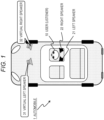
- Fig. 1 illustrates an automobile 1.
- a user (listener) 10 sits in the driver's seat.
- a left speaker 21 and a right speaker 22 are installed in a headrest part of the driver's seat, and a stereo signal (LR signal) from a sound source such as a CD not illustrated is output from the two speakers.
- LR signal stereo signal
- the user (listener) 10 hears sounds coming from behind the ears, which may feel unnatural, and some users may, in some cases, experience listening fatigue.
- an acoustic signal processing device internal to the automobile 1 executes signal processing on the LR signal output from a sound source such as a CD, and outputs a signal obtained by the signal processing from the left speaker 21 and the right speaker 22.
- the signal processing is sound localization processing.
- sound localization processing is signal processing causing the user (listener) to perceive sound as if a sound source exists at a virtual sound source position different from the actual speaker position.
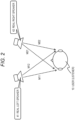
- Fig. 2 will be referenced to describe an example of a process of measuring the head-related transfer function (HRTF) treated as a parameter to apply to the sound localization processing.
- HRTF head-related transfer function
- Fig. 2 is a diagram recorded in Patent Document 1 ( Japanese Patent Application Laid-Open No. 2003-111200 ) described earlier as a disclosed technology of the related art regarding sound localization processing.
- the process according to the present disclosure can be executed by using existing sound localization processing described in Patent Document 1 and the like.
- a real left speaker 41 and a real right speaker 42 are actually installed at the left and right virtual speaker positions (positions where speakers are expected to exist) with respect to the user 10.
- M11 is the head-related transfer function of the sound from the real left speaker 41 to the left ear of the user 10
- M12 is the head-related transfer function of the sound from the real left speaker 41 to the right ear of the user 10.
- M21 is the head-related transfer function of the sound from the real right speaker 42 to the left ear of the user 10
- M22 is the head-related transfer function of the sound from the real right speaker 42 to the right ear of the user 10.
- HRTFs head-related transfer functions
- Fig. 3 is a diagram illustrating an exemplary configuration of a device that performs sound localization processing using the head-related transfer function (HRTF).
- HRTF head-related transfer function
- An L signal and an R signal are reproduced as a stereo signal from a sound source 50 such as a CD.
- the reproduced signal is inputted (Lin, Rin) into an HRTF-applying sound localization processing unit 60.
- the HRTF-applying sound localization processing unit 60 acquires a head-related transfer function (HRTF) measured by the measurement process described earlier with reference to Fig. 2 from an HRTF storage unit 70, executes signal processing applying the acquired data, and generates output signals (Lout, Rout) to be output to the left speaker 21 and the right speaker 22 of the headrest part, for example.
- HRTF head-related transfer function
- the left speaker 21 outputs the output signal (Lout) processed in the HRTF-applying sound localization processing unit 60.
- the right speaker 22 outputs the output signal (Rout) processed in the HRTF-applying sound localization processing unit 60.
- the user 10 when a signal subjected to sound localization processing in the HRTF-applying sound localization processing unit 60 is output to the left speaker 21 and the right speaker 22 in the headrest part, the user 10 is able to perceive sound as if the sounds emitted from the speakers in the headrest part are at the virtual speaker positions, or in other words, as if the L signal of the sound source is being output from the virtual left speaker 31 and the R signal of the sound source is being output from the virtual right speaker 32 at positions (virtual sound source positions) in front of the user 3 illustrated in Fig. 10 .
- HRTF head-related transfer function
- the head-related transfer function (HRTF) is different for each individual. Consequently, in a case of outputting a processed signal to which a head-related transfer function (HRTF) corresponding to a specific user has been applied from a speaker, there is a problem in that the virtual sound source position can be an optimal position for that specific user, but not necessarily an optimal virtual sound source position for another user.
- the HRTF-applying sound localization processing unit 60 illustrated in Fig. 3 needs to perform signal processing based on the head-related transfer function (HRTF) corresponding to each user.
- HRTF head-related transfer function
- a user A 11 is sitting in the driver's seat, and in this case, it is necessary to execute signal processing applying the head-related transfer function (HRTF) of the user A 11 to output from the speakers.
- HRTF head-related transfer function
- a user B 12 is sitting in the driver's seat, and in this case, it is necessary to execute signal processing applying the head-related transfer function (HRTF) of the user B 12 to make an output from the speakers.
- HRTF head-related transfer function
- the head-related transfer function (HRTF) is different for every user, and an optimal virtual sound source position cannot be set unless sound localization processing applying the head-related transfer function (HRTF) unique to the user acting as the listener is executed.
- the acoustic signal processing device executes a user identification process and a user position identification process, decides the head-related transfer function (HRTF) to apply to the sound localization processing on the basis of identification information, and performs signal processing applying the head-related transfer function (HRTF) corresponding to each user. Moreover, the signal processing result obtained as the output is output from speakers provided at the position of the user having the head-related transfer function (HRTF) applied to the signal processing.
- HRTF head-related transfer function
- Embodiment 1 a configuration and process of Embodiment 1 according to the present disclosure will be described with reference to Fig. 5 and subsequent drawings.
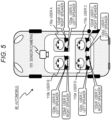
- Fig. 5 illustrates an automobile 80.
- An acoustic signal processing device 100 according to the present disclosure is installed onboard the automobile 80. Note that a specific example of the configuration of the acoustic signal processing device 100 according to the present disclosure will be described later.
- a user A 110a a user A 110a
- a user B 110b a user B 110b
- a user C 110c a user D 110d
- a user D 110d a user D 110d
- LR speakers corresponding to each user are installed in a headrest part of each user's seat.
- a user A left speaker 122aL and a user A right speaker 122aR are installed.
- a user B left speaker 122bL and a user B right speaker 122bR are installed.
- a user C left speaker 122cL and a user C right speaker 122cR are installed.
- a user D left speaker 122dL and a user D right speaker 122dR are installed.
- a sensor (camera) 101 that captures an image of the face of each of the users A to D is installed onboard the automobile 80.
- the captured image of the face of each of the users A to D acquired by the sensor (camera) 101 is inputted into the acoustic signal processing device 100 according to the present disclosure.
- the acoustic signal processing device 100 executes user identification and user position identification on the basis of the captured image of the face of each of the users A to D acquired by the sensor (camera) 101.
- the acoustic signal processing device 100 acquires the head-related transfer function (HRTF) of each of the users A to D from a database on the basis of user identification information, and executes signal processing (sound localization processing) applying the acquired head-related transfer function (HRTF) of each of the users A to D in parallel.
- HRTF head-related transfer function
- four pairs of output LR signals obtained by the signal processing (sound localization processing) applying the head-related transfer function (HRTF) of each of the users A to D are output from the LR speakers at the position of each user specified on the basis of user position identification information.
- HRTF head-related transfer function
- each of the users A to D can individually listen to the output signal obtained by the signal processing (sound localization processing) applying that user's own head-related transfer function (HRTF) from the speakers in the headrest part, and each user can listen to sounds from an ideal virtual sound source position.
- signal processing sound localization processing
- HRTF head-related transfer function
- Fig. 6 is a diagram illustrating an exemplary configuration of an acoustic signal processing device 100 according to the present disclosure.
- the acoustic signal processing device 100 includes a sensor (such as a camera) 101, a user & user position identification unit 102, a user-corresponding HRTF acquisition unit 103, an HRTF database 104, and an HRTF-applying sound localization processing unit 105.
- a sensor such as a camera
- the HRTF-applying sound localization processing unit 105 includes a plurality of user-corresponding HRTF-applying sound localization processing units 105-1 to 105-n capable of executing processing in parallel.
- the sensor (such as a camera) 101 is a sensor that acquires information that can be used to identify the user and the user position, and includes, for example, a camera.
- Sensor detection information acquired by the sensor (such as a camera) 101 is inputted into the user & user position identification unit 102.
- the user & user position identification unit 102 identifies the user and the user position on the basis of sensor detection information acquired by the sensor (such as a camera) 101, such as an image captured by a camera for example.
- the user & user position identification unit 102 identifies the user by comparing a face image included in the image captured by a camera to user face image information stored in a user database not illustrated.
- the user & user position identification unit 102 also identifies the position of each identified user. The identification of the user position is performed as a process of determining the position where each user is located to hear the sound output from which speakers.
- the user identification information and user position identification information generated by the user & user position identification unit 102 are inputted into the user-corresponding HRTF acquisition unit 103.
- the user-corresponding HRTF acquisition unit 103 acquires the head-related transfer function (HRTF) corresponding to each identified user from the HRTF database 104, on the basis of the user identification information inputted from the user & user position identification unit 102.
- HRTF head-related transfer function
- the head-related transfer function (HRTF) corresponding to each user measured in advance is stored in the HRTF database 104.
- the head-related transfer function (HRTF) corresponding to each user is stored in association with a user identifier. Note that the head-related transfer function (HRTF) corresponding to each user is measurable by the process described with reference to Fig. 2 above.
- the user-corresponding HRTF acquisition unit 103 outputs the head-related transfer function (HRTF) corresponding to each identified user acquired from the HRTF database 104 in association with the user identification information and the user position identification information inputted from the user & user position identification unit 102.
- HRTF head-related transfer function
- the HRTF-applying sound localization processing unit 105 includes a plurality of user-corresponding HRTF-applying sound localization processing units 105-1 to 105-n.
- Each of the plurality of user-corresponding HRTF-applying sound localization processing units 105-1 to 105-n is pre-associated with LR speakers that respectively output processed signals (Lout, R-out).
- the user-corresponding HRTF-applying sound localization processing unit 105-1 is connected to the LR speakers of the driver's seat, namely the user A left speaker 122aL and the user A right speaker 122aR of the driver's seat where the user A 110a illustrated in Fig. 5 is sitting.
- each of the user-corresponding HRTF-applying sound localization processing units 105-1 to 105-n is pre-associated with LR speakers that respectively output processed signals (Lout, R-out).
- the HRTF-applying sound localization processing unit 105 executes signal processing applying the HRTF corresponding to each user in the user-corresponding HRTF-applying sound localization processing units 105-1 to 105-n on the basis of the data associating the user identification information and the user position identification information inputted from the user-corresponding HRTF acquisition unit 103 with the head-related transfer function (HRTF) corresponding to each identified user.
- HRTF head-related transfer function
- the user-corresponding HRTF-applying sound localization processing unit 105-1 which is connected to the user A left speaker 122aL and the user A right speaker 122aR of the driver's seat where the user A 110a is sitting, executes signal processing (sound localization processing) that accepts the head-related transfer function (HRTF) corresponding to the user A as input.
- signal processing sound localization processing
- Output signals (Lout-a, Rout-a) are generated by the signal processing.
- the generated output signals (Lout-a, Rout-a) are output from the user A left speaker 122aL and the user A right speaker 122aR of the driver's seat where the user A 110a is sitting.
- the user-corresponding HRTF-applying sound localization processing unit 105-n which is connected to the user N left speaker 122nL and the user N right speaker 122nR of the driver's seat where the user N 110n illustrated in Fig. 6 is sitting, executes signal processing (sound localization processing) that accepts the head-related transfer function (HRTF) corresponding to the user N as input.
- signal processing sound localization processing
- Output signals (Lout-n, Rout-n) are generated by the signal processing.
- the generated output signals (Lout-n, Rout-n) are output from the user N left speaker 122nL and the user N right speaker 122nR of the driver's seat where the user N 110n is sitting.
- exemplary configuration of the acoustic signal processing device 100 illustrated in Fig. 6 is an example, and other configurations are also possible.
- the HRTF database 104 of the acoustic signal processing device 100 illustrated in Fig. 6 on an external server.
- FIG. 7 This exemplary configuration is illustrated in Fig. 7 .
- the acoustic output device 100 built into an automobile is configured to be connected over a network 130 and capable of communication with a management server 120.
- the acoustic output device 100 built into an automobile does not include the HRTF database 104 described with reference to Fig. 6 .
- the HRTF database 104 is held in the management server 120.
- the management server 120 includes the HRTF database 104 that stores the head-related transfer function (HRTF) corresponding to each user measured in advance.
- HRTF head-related transfer function
- the HRTF database 104 stores the head-related transfer function (HRTF) corresponding to each user in association with a user identifier.
- the acoustic output device 100 executes a process of searching the HRTF database 104 in the management server 120 to acquire the head-related transfer function (HRTF) corresponding to each user on the basis of the user identification information generated by the user & user position identification unit 102.
- HRTF head-related transfer function
- HRTF database 104 in the management server 120, it is possible to perform signal processing applying the head-related transfer functions (HRTFs) of a greater number of users.
- HRTFs head-related transfer functions
- step S101 the acoustic signal processing device executes user identification and user position identification.
- This process is executed by the user & user position identification unit 102 illustrated in Fig. 6 .
- the user & user position identification unit 102 identifies the user and the user position on the basis of sensor detection information acquired by the sensor (such as a camera) 101, such as an image captured by a camera for example.
- the user & user position identification unit 102 identifies the user by comparing a face image included in the image captured by a camera to user face image information stored in a user database not illustrated.
- the user & user position identification unit 102 also identifies the position of each identified user. The identification of the user position is performed as a process of determining the position where each user is located to hear the sound output from which speakers.
- step S102 the acoustic signal processing device acquires the head-related transfer function (HRTF) of each identified user from a database.
- HRTF head-related transfer function
- This process is executed by the user-corresponding HRTF acquisition unit 103 illustrated in Fig. 6 .
- the user-corresponding HRTF acquisition unit 103 acquires the head-related transfer function (HRTF) corresponding to each identified user from the HRTF database 104, on the basis of the user identification information inputted from the user & user position identification unit 102.
- HRTF head-related transfer function
- the head-related transfer function (HRTF) corresponding to each user is stored in association with a user identifier.
- the user-corresponding HRTF acquisition unit 103 executes a database search process based on the user identification information inputted from the user & user position identification unit 102, and acquires the head-related transfer function (HRTF) corresponding to each identified user.
- HRTF head-related transfer function
- step S103 the acoustic signal processing device inputs the head-related transfer function (HRTF) of each user into respective user-corresponding HRTF-applying sound localization processing units, and generates an output signal corresponding to each user.
- HRTF head-related transfer function
- This process is executed by the HRTF-applying sound localization processing unit 105 illustrated in Fig. 6 .
- the HRTF-applying sound localization processing unit 105 includes a plurality of user-corresponding HRTF-applying sound localization processing units 105-1 to 105-n.
- Each of the plurality of user-corresponding HRTF-applying sound localization processing units 105-1 to 105-n is pre-assigned with LR speakers that respectively output processed signals (Lout, R-out).
- the HRTF-applying sound localization processing unit 105 executes signal processing applying the HRTF corresponding to each user in the user-corresponding HRTF-applying sound localization processing units 105-1 to 105-n on the basis of the data associating the user identification information and the user position identification information inputted from the user-corresponding HRTF acquisition unit 103 with the head-related transfer function (HRTF) corresponding to each identified user.
- HRTF head-related transfer function
- step S104 the acoustic signal processing device outputs the generated output signal corresponding to each user to speakers installed at the user position corresponding to each generated signal.
- This process is also executed by the HRTF-applying sound localization processing unit 105 illustrated in Fig. 6 .
- Output signals (Lout-x, Rout-x) generated by signal processing (sound localization processing) applying the head-related transfer function (HRTF) corresponding to each user are output from the speakers at each user's position.
- signal processing sound localization processing
- HRTF head-related transfer function
- Embodiment 2 an embodiment output control according to the presence or absence of a user is executed will be described.
- the embodiment described hereinafter addresses such a problem, and is an embodiment the output from speakers at positions where no user is present is controlled to stop or mute.
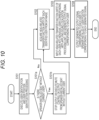
- the flow illustrated in Fig. 10 is obtained by adding steps S101a and S101b between step S101 and step S102 of the flow illustrated in Fig. 8 described above.
- step S101 and steps S102 to S104 are similar to the processes described with reference to Fig. 8 and therefore a description is omitted.
- step S101a the process in step S101a and the process in step S101b will be described.
- step S101 the acoustic signal processing device executes user identification and user position identification, and then executes processing of step S101a.
- step S101a the acoustic signal processing device determines whether or not a speaker-installed seat without a user present exists.
- This process is executed by the user & user position identification unit 102 illustrated in Fig. 6 .
- the user & user position identification unit 102 identifies the user and the user position on the basis of sensor detection information acquired by the sensor (such as a camera) 101, such as an image captured by a camera for example. At this time, it is determined whether or not a speaker-installed seat without a user present exists.
- step S102 the flow proceeds to step S102, and the processes in steps S102 to S104 are executed.
- step S101b the flow proceeds to step S101b.
- step S101b In the case of determining that a speaker-installed seat without a user present exists in the determination process of step S101a, the flow proceeds to step S101b.
- step S101b the acoustic signal processing device stops the output or executes a mute control on the output from each speaker-installed seat without a user present.
- This process is executed by the HRTF-applying sound localization processing unit 105 illustrated in Fig. 6 .
- the generation of output sounds for the speakers in these seats is not executed either.
- the processing units that generate output sounds for speakers without a user present do not execute any processing.
- output sounds are generated to be limited to playback sounds at a level that is inaudible to the ears of nearby users.
- the HRTF to apply to the signal processing (sound localization processing) in this case is an HRTF of standard type stored in the HRTF database 104.
- playback sounds may be output directly from the sound source without executing signal processing (sound localization processing).
- steps S102 to S104 the signal processing and outputting of playback sounds is executed only for the speakers at positions where a user is present in the seat.
- the output from speakers at positions without a user present is stopped or muted, and a reduction in power consumption is achieved. Furthermore, it is possible to reduce noise entering the ears of the users in other seats.
- Fig. 11 some seats are filled by users (passengers) while other seats are empty. Moreover, some users are using headphones while other users are not.
- the seats are assigned, and the seat where each user sits is predetermined.
- a record of which user sits in which seat is recorded in a database in a boarding reservation system.
- an acoustic signal processing device onboard an airplane is capable of checking the seat position of each user (passenger) on the basis of the record data in the boarding reservation system.
- Fig. 12 illustrates an exemplary system configuration according to the present embodiment.
- An acoustic signal processing device 200 onboard an airplane is connected to a boarding reservation system 201 and a management server 202 over a network.
- the management server 202 includes an HRTF database 210 in which the head-related transfer function (HRTF) of each user (passenger) is recorded.
- HRTF head-related transfer function
- the acoustic signal processing device 200 onboard an airplane has a configuration substantially similar to the configuration described above with reference to Fig. 6 .
- the configuration omits the HRTF database 104, and also does not include the sensor 101.
- User identification and user position identification is executed using record data in the boarding reservation system 201 connected over the network.
- a user & user position identification unit (that is, the user & user position identification unit 102 illustrated in Fig. 6 ) of the acoustic signal processing device 200 onboard an airplane identifies the user at each seat position on the basis of the boarding reservation system 201 connected over the network. Specifically, a user identifier of the user who reserved each seat position is acquired.
- a user-corresponding HRTF acquisition unit (that is, the user-corresponding HRTF acquisition unit 103 illustrated in Fig. 6 ) of the acoustic signal processing device 200 acquires the head-related transfer function (HRTF) corresponding to each user from the HRTF database 210 of the management server 202 on the basis of the user identifier for each seat position.
- HRTF head-related transfer function
- the acoustic signal processing device 200 generates output sounds through the headphone jack in each set.
- the generation of output sounds is a process executed by an HRTF-applying sound localization processing unit (that is, the HRTF-applying sound localization processing unit 105 illustrated in Fig. 6 ) of the acoustic signal processing device 200.
- the HRTF-applying sound localization processing unit 105 includes a plurality of user-corresponding HRTF-applying sound localization processing units 105-1 to 105-n.
- Each of the plurality of user-corresponding HRTF-applying sound localization processing units 105-1 to 105-n is pre-assigned with the headphone jack that respectively output processed signals (Lout, R-out).
- the HRTF-applying sound localization processing unit 105 executes signal processing in the user-corresponding HRTF-applying sound localization processing units 105-1 to 105-n on the basis of the data associating the user (seat) identification information and the user position identification information inputted from the user-corresponding HRTF acquisition unit 103 with the head-related transfer function (HRTF) corresponding to each identified user.
- HRTF head-related transfer function
- each of the user-corresponding HRTF-applying sound localization processing units 105-1 signal processing applying the HRTF corresponding to each identified user is executed to generate a sound localization processed signal corresponding to each user.
- the signal corresponding to each user is output as output sounds from the headphone jack at the seat position of each user.
- the users who are passengers on the airplane are able to listen to signals that have been subjected to processing (sound localization processing) on the basis of each user's own head-related transfer function (HRTF), and are able to listen to sounds from an ideal virtual sound source position.
- processing sound localization processing
- HRTF head-related transfer function
- step S201 the acoustic signal processing device executes user identification and user position identification on the basis of check-in information.
- This process is executed by a user & user position identification unit (that is, the user & user position identification unit 102 illustrated in Fig. 6 ) of the acoustic signal processing device 200 onboard the airplane illustrated in Fig. 12 .
- a user & user position identification unit that is, the user & user position identification unit 102 illustrated in Fig. 6
- the acoustic signal processing device 200 onboard the airplane illustrated in Fig. 12 .
- a user & user position identification unit of the acoustic signal processing device 200 identifies the user at each seat position on the basis of the boarding reservation system 201 connected over the network. Specifically, a user identifier of the user who reserved each seat position is acquired.
- step S202 the acoustic signal processing device acquires the head-related transfer function (HRTF) of each identified user from a database.
- HRTF head-related transfer function
- This process is executed by a user-corresponding HRTF acquisition unit (that is, the user-corresponding HRTF acquisition unit 103 illustrated in Fig. 6 ) of the acoustic signal processing device 200.
- the user-corresponding HRTF acquisition unit acquires the head-related transfer function (HRTF) corresponding to each user from the HRTF database 210 of the management server 202 on the basis of the user identifier of the user who reserved each seat.
- HRTF head-related transfer function
- step S203 the acoustic signal processing device inputs the head-related transfer function (HRTF) of each user into respective user-corresponding HRTF-applying sound localization processing units, and generates an output signal corresponding to each user.
- HRTF head-related transfer function
- This process is executed by the HRTF-applying sound localization processing unit 105 illustrated in Fig. 6 .
- Each of the plurality of user-corresponding HRTF-applying sound localization processing units 105-1 to 105-n generates an output signal corresponding to a user by executing signal processing (sound localization processing) that treats the head-related transfer function (HRTF) corresponding to each user at each seat position as a processing parameter.
- signal processing sound localization processing
- HRTF head-related transfer function
- step S204 the acoustic signal processing device outputs the generated output signal corresponding to each user as an output signal from the headphone jack at the seat position of each user corresponding to the generated signal.
- the output from the headphone jack at the seat position of each user is output signals (Lout-x, Rout-x) generated by signal processing (sound localization processing) applying the head-related transfer function (HRTF) corresponding to each user.
- signal processing sound localization processing
- HRTF head-related transfer function
- Fig. 14 illustrates a user 251 playing an attraction at an amusement park.
- the sensor 252 communicates with communication equipment 263 installed at various locations inside the amusement park, and transmits the user identifier to an acoustic signal processing device disposed in a management center of the amusement park.
- the acoustic signal processing device disposed in the management center of the amusement park has a configuration substantially similar to the configuration described above with reference to Fig. 6 .
- the user & user position identification unit 102 receives user identification information and user position information from the sensor 252 worn by the user 251 illustrated in Fig. 14 through the communication equipment 263, and identifies each user and the position of each user.
- a plurality of speakers such as a speaker L 261 and a speaker R 262, is installed in each attraction.
- the acoustic signal processing device disposed in the management center of the amusement park uses the output from these speakers as a processed signal (sound localization processed signal), in which the head-related transfer function (HRTF) of the user 251 in front of the speakers has been applied as a processing parameter.
- a processed signal sound localization processed signal
- HRTF head-related transfer function
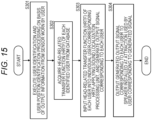
- FIG. 15 The flowchart illustrated in Fig. 15 will be referenced to describe a sequence of processes executed by an acoustic signal processing device according to the present embodiment.
- step S301 the acoustic signal processing device executes user identification and user position identification on the basis of a received signal from the sensor 252 worn by the user.
- This process is executed by a user & user position identification unit (that is, the user & user position identification unit 102 illustrated in Fig. 6 ) of the acoustic signal processing device in the management center of the amusement park.
- a user & user position identification unit that is, the user & user position identification unit 102 illustrated in Fig. 6
- the user & user position identification unit of the acoustic signal processing device executes user identification and user position identification by receiving the output of the sensor 252 worn by the user illustrated in Fig. 14 through the communication equipment 263.
- step S302 the acoustic signal processing device acquires the head-related transfer function (HRTF) of each identified user from a database.
- HRTF head-related transfer function
- This process is executed by a user-corresponding HRTF acquisition unit (that is, the user-corresponding HRTF acquisition unit 103 illustrated in Fig. 6 ) of the acoustic signal processing device in the management center of the amusement park.
- a user-corresponding HRTF acquisition unit that is, the user-corresponding HRTF acquisition unit 103 illustrated in Fig. 6
- the user-corresponding HRTF acquisition unit acquires the head-related transfer function (HRTF) corresponding to each user from the HRTF database on the basis of the user identifier of the user in each attraction.
- HRTF head-related transfer function
- the HRTF database may be stored in the acoustic signal processing device in the management center of the amusement park in some cases, or may be stored in a management server connected over a network in other cases.
- step S303 the acoustic signal processing device inputs the head-related transfer function (HRTF) of each user into respective user-corresponding HRTF-applying sound localization processing units, and generates an output signal corresponding to each user.
- HRTF head-related transfer function
- This process is executed by the HRTF-applying sound localization processing unit 105 illustrated in Fig. 6 .
- Each of the plurality of user-corresponding HRTF-applying sound localization processing units 105-1 to 105-n generates an output signal corresponding to a user by executing signal processing (sound localization processing) that treats the head-related transfer function (HRTF) corresponding to each user at each attraction position as a processing parameter.
- signal processing sound localization processing
- HRTF head-related transfer function
- step S304 the acoustic signal processing device outputs the generated output signal corresponding to each user as an output signal from the speaker at the attraction position of each user corresponding to the generated signal.
- the output from the speakers at each attraction is output signals (Lout-x, Rout-x) generated by signal processing (sound localization processing) applying the head-related transfer function (HRTF) corresponding to the user playing the attraction.
- signal processing sound localization processing
- HRTF head-related transfer function
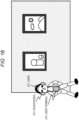
- Fig. 16 illustrates a user 271 visiting an art museum.
- the user terminal 272 is provided with a headphone jack, and by inserting a plug of headphones 273 into the headphone jack, the user 271 is able to listen to various commentary from the headphones.
- the user terminal 272 is capable of communicating with an acoustic signal processing device disposed in a management center of the art museum.
- the acoustic signal processing device disposed in the management center of the art museum has a configuration substantially similar to the configuration described above with reference to Fig. 6 .
- the user & user position identification unit 102 receives user identification information and user position information from the user terminal 272 worn by the user 271 illustrated in Fig. 16 , and identifies each user and the position of each user.
- the database registration information may also be used for user identification.
- the acoustic signal processing device disposed in the management center of the art museum uses the output from the headphones 273 used by the user 271 as a processed signal (sound localization processed signal), in which the head-related transfer function (HRTF) of the user 271 has been applied as a processing parameter.
- a processed signal sound localization processed signal
- HRTF head-related transfer function
- FIG. 17 The flowchart illustrated in Fig. 17 will be referenced to describe a sequence of processes executed by an acoustic signal processing device according to the present embodiment.
- step S401 the acoustic signal processing device executes user identification and user position identification on the basis of a received signal from the user terminal 272 worn by the user or registered membership information.
- This process is executed by a user & user position identification unit (that is, the user & user position identification unit 102 illustrated in Fig. 6 ) of the acoustic signal processing device in the management center of the art museum.
- a user & user position identification unit that is, the user & user position identification unit 102 illustrated in Fig. 6
- the user & user position identification unit of the acoustic signal processing device executes user identification and user position identification by receiving the output of the user terminal 272 worn by the user illustrated in Fig. 16 .
- user identification may also be executed using registered membership information, such as a membership database that is referenced during a check when entering the art museum, for example.
- step S402 the acoustic signal processing device acquires the head-related transfer function (HRTF) of each identified user from a database.
- HRTF head-related transfer function
- This process is executed by a user-corresponding HRTF acquisition unit (that is, the user-corresponding HRTF acquisition unit 103 illustrated in Fig. 6 ) of the acoustic signal processing device in the management center of the art museum.
- the user-corresponding HRTF acquisition unit acquires the head-related transfer function (HRTF) corresponding to each user from the HRTF database on the basis of the user identifier of the user.
- HRTF head-related transfer function
- the HRTF database may be stored in the acoustic signal processing device in the management center of the art museum in some cases, or may be stored in a management server connected over a network in other cases.
- step S403 the acoustic signal processing device inputs the head-related transfer function (HRTF) of each user into respective user-corresponding HRTF-applying sound localization processing units, and generates an output signal corresponding to each user.
- HRTF head-related transfer function
- This process is executed by the HRTF-applying sound localization processing unit 105 illustrated in Fig. 6 .
- Each of the plurality of user-corresponding HRTF-applying sound localization processing units 105-1 to 105-n generates an output signal corresponding to a user by executing signal processing (sound localization processing) that treats the head-related transfer function (HRTF) corresponding to each user at various locations in the art museum as a processing parameter.
- signal processing sound localization processing
- HRTF head-related transfer function
- step S404 the acoustic signal processing device transmits the generated output signal corresponding to each user to the user terminal 272 of the user corresponding to the generated signal as an output signal from the headphones 273 plugged into the user terminal 272.
- the output from the headphones 273 plugged into the user terminal 272 carried by the user at various locations inside the art museum is output signals (Lout-x, Rout-x) generated by signal processing (sound localization processing) applying the head-related transfer function (HRTF) corresponding to the user.
- Lout-x, Rout-x generated by signal processing (sound localization processing) applying the head-related transfer function (HRTF) corresponding to the user.
- HRTF head-related transfer function
- the signal processing (sound localization processing) applying the head-related transfer function (HRTF) corresponding to each user may also be configured to be performed in the user terminal 272 carried by each user, for example.
- HRTF head-related transfer function
- parameters that determine the head-related transfer function (HRTF) or an approximate value thereof are applicable to the signal processing.
- the parameters are, for example:
- EQ parameters for adjusting the sound quality and the volume may also be used.
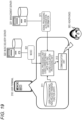
- the embodiment described with reference to Fig. 18 and subsequent drawings is an embodiment in which the head-related transfer function (HRTF) 311 unique to a specific user 301 is stored in a user terminal 310 carried by the user 301.
- HRTF head-related transfer function
- the user terminal 310 outputs an audio signal to headphones 303 wirelessly or through a headphone jack.
- the user 301 listens to audio output from the headphones 303.
- the output sounds from the headphones 303 are signals processed by signal processing (sound localization processing) applying the head-related transfer function (HRTF) 311 unique to the user 301.
- HRTF head-related transfer function
- the user 301 receives music provided by a music delivery server 322 by downloading or streaming to the user terminal 310.
- the user terminal 310 performs signal processing (sound localization processing) applying the user-corresponding head-related transfer function (HRTF) 311 unique to the user 301 stored in the user terminal 310 to an audio signal acquired from the music delivery server 322, and outputs a processed audio signal to the headphones 303.
- signal processing sound localization processing
- HRTF head-related transfer function
- an audio signal that has been subjected to sound localization processing applying the head-related transfer function (HRTF) unique to the user can be heard.
- HRTF head-related transfer function
- the user terminal 310 includes the user-corresponding head-related transfer function (HRTF) 311 unique to the user carrying the user terminal 310, a signal processing unit 312 that executes signal processing (sound localization processing) applying the head-related transfer function (HRTF) unique to the user, and a communication unit 313 that outputs a processed signal from the signal processing unit 312 to the headphones 303.
- HRTF head-related transfer function
- Audio signals (Lin, Rin) of music 351 provided by the music delivery server 322 are inputted into the signal processing unit 312 of the user terminal 310.
- the signal processing unit 312 executes signal processing (sound localization processing) applying the user-corresponding head-related transfer function (HRTF) 311 stored in a storage unit of the user terminal 310 to the audio signals acquired from the music delivery server 322.
- signal processing sound localization processing
- HRTF head-related transfer function
- the user terminal 310 acquires authorization information 371 from the management server 321.
- the authorization information 371 is key information or the like that enables the execution of a signal processing (sound localization processing) program in the signal processing unit 312, for example.
- the user terminal 310 executes the signal processing (sound localization processing) applying the user-corresponding head-related transfer function (HRTF) 311 to the audio signals delivered from the music delivery server 322, on the condition that the authorization information 371 is acquired from the management server 321.
- signal processing sound localization processing
- HRTF head-related transfer function
- Processed audio signals (Lout, Rout) are output to the headphones 303 through the headphone jack or the communication unit 313.
- the user is able to listen to an audio signal that has been subjected to sound localization processing applying the head-related transfer function (HRTF) unique to the user.
- HRTF head-related transfer function
- the user terminal may be configured such that the using user selects which head-related transfer function (HRTF) to use.
- HRTF head-related transfer function
- the user terminal may be provided with a user identification unit, and the user identification unit may be configured to execute audio output control applying the head-related transfer function (HRTF) corresponding to an identified user.
- HRTF head-related transfer function
- an audio output system such as an in-vehicle audio system communicates with the user terminal 310
- the audio output system acquires the head-related transfer function (HRTF) stored in the user terminal 310
- audio output control in accordance with the acquired head-related transfer function (HRTF) is executed on the audio output system side
- the hardware to be described with reference to Fig. 20 is an exemplary hardware configuration of the acoustic signal processing device, the user terminal, the server, and the like described in the embodiment above.
- a central processing unit (CPU) 501 functions as a control unit and a data processing unit which execute various processing according to a program stored in a read only memory (ROM) 502 or a storage unit 508. For example, processing according to the sequence described in the above embodiment is executed.
- a random access memory (RAM) 503 stores the program executed by the CPU 501, data, and the like.
- the CPU 501, the ROM 502, and the RAM 503 are connected to each other by a bus 504.
- the CPU 501 is connected to an input/output interface 505 via the bus 504, and the input/output interface 505 is connected to an input unit 506 including various switches, a keyboard, a mouse, a microphone, a sensor, and the like and an output unit 507 including a display, a speaker, and the like.
- the CPU 501 executes various processing in response to an instruction input from the input unit 506 and outputs the processing result to, for example, the output unit 507.
- the storage unit 508 connected to the input/output interface 505 includes, for example, a hard disk and the like and stores the program executed by the CPU 501 and various data.
- a communication unit 509 functions as a transmission/reception unit of Wi-Fi communication, Bluetooth (registered trademark) (BT) communication, and other data communication via a network such as the Internet and a local area network, and communicates with an external apparatus.
- Wi-Fi Wi-Fi
- BT registered trademark
- a drive 510 connected to the input/output interface 505 drives a removable medium 511 such as a magnetic disk, an optical disk, a magneto-optical disk, or a semiconductor memory such as a memory card and records or reads data.
- a removable medium 511 such as a magnetic disk, an optical disk, a magneto-optical disk, or a semiconductor memory such as a memory card and records or reads data.
- a program having a process sequence therefor recorded therein can be executed after being installed in a memory incorporated in dedicated hardware in a computer, or can be executed after being installed in a general-purpose computer capable of various processes.
- a program may be previously recorded in a recording medium.
- the program can be installed in the computer from the recording medium.
- the program can be received over a network such as a LAN (Local Area Network) or the internet, and be installed in a recording medium such as an internal hard disk.
- LAN Local Area Network
- a system refers to a logical set configuration including a plurality of devices, and the devices of the respective configurations are not necessarily included in the same casing.
- a configuration that executes sound localization processing applying a head-related transfer function (HRTF) corresponding to a user identified by a user identification, and makes an output from an output unit for each user position.
- HRTF head-related transfer function
- a user identification unit that executes user identification and a user position identification process and a sound localization processing unit that executes sound localization processing using, as a processing parameter, a head-related transfer function (HRTF) specific to the user are included.
- the sound localization processing unit executes sound localization processing that treats the HRTF specific to the identified user as a processing parameter, and outputs a signal obtained by the sound localization processing to an output unit for the identified user position.
- the sound localization processing unit executes the sound localization processing using the HRTF of each of the multiple users in parallel, and outputs processed signals to an output unit for each user position.
- a configuration that executes sound localization processing applying a head-related transfer function (HRTF) corresponding to a user identified by a user identification, and makes an output from an output unit for each user position.
- HRTF head-related transfer function
Landscapes
- Physics & Mathematics (AREA)
- Engineering & Computer Science (AREA)
- Acoustics & Sound (AREA)
- Signal Processing (AREA)
- Health & Medical Sciences (AREA)
- General Health & Medical Sciences (AREA)
- Otolaryngology (AREA)
- Stereophonic System (AREA)
Applications Claiming Priority (2)
| Application Number | Priority Date | Filing Date | Title |
|---|---|---|---|
| JP2019054090 | 2019-03-22 | ||
| PCT/JP2020/002538 WO2020195084A1 (ja) | 2019-03-22 | 2020-01-24 | 音響信号処理装置、音響信号処理システム、および音響信号処理方法、並びにプログラム |
Publications (3)
| Publication Number | Publication Date |
|---|---|
| EP3944639A1 EP3944639A1 (en) | 2022-01-26 |
| EP3944639A4 EP3944639A4 (en) | 2022-05-18 |
| EP3944639B1 true EP3944639B1 (en) | 2024-09-25 |
Family
ID=72609718
Family Applications (1)
| Application Number | Title | Priority Date | Filing Date |
|---|---|---|---|
| EP20777688.1A Active EP3944639B1 (en) | 2019-03-22 | 2020-01-24 | Acoustic signal processing device, acoustic signal processing system, acoustic signal processing method, and program |
Country Status (6)
| Country | Link |
|---|---|
| US (1) | US20220174446A1 (https=) |
| EP (1) | EP3944639B1 (https=) |
| JP (1) | JPWO2020195084A1 (https=) |
| KR (1) | KR102775745B1 (https=) |
| CN (1) | CN113574912A (https=) |
| WO (1) | WO2020195084A1 (https=) |
Families Citing this family (6)
| Publication number | Priority date | Publication date | Assignee | Title |
|---|---|---|---|---|
| WO2022113638A1 (ja) * | 2020-11-25 | 2022-06-02 | ソニーグループ株式会社 | 情報処理装置、情報処理方法 |
| FR3116934B1 (fr) | 2020-11-27 | 2023-05-19 | Faurecia Clarion Electronics Europe | Procédé et système de traitement audio pour un système audio d’appui-tête de siège |
| US12483816B2 (en) | 2022-05-31 | 2025-11-25 | Panasonic Intellectual Property Management Co., Ltd. | Configuration system and method for aircraft equipment |
| US12587773B2 (en) | 2022-05-31 | 2026-03-24 | Panasonic Intellectual Property Management Co., Ltd. | Configuration system and method for aircraft equipment |
| US20240163630A1 (en) * | 2022-11-14 | 2024-05-16 | Harman International Industries, Incorporated | Systems and methods for a personalized audio system |
| EP4380196A1 (en) | 2022-12-01 | 2024-06-05 | Harman Becker Automotive Systems GmbH | Spatial sound improvement for seat audio using spatial sound zones |
Family Cites Families (18)
| Publication number | Priority date | Publication date | Assignee | Title |
|---|---|---|---|---|
| JP3232521B2 (ja) * | 1993-11-25 | 2001-11-26 | 本田技研工業株式会社 | 車両内音響システム |
| JP2003061197A (ja) * | 2001-08-15 | 2003-02-28 | Sony Corp | 音響機器、シート、交通機関 |
| JP4692803B2 (ja) * | 2001-09-28 | 2011-06-01 | ソニー株式会社 | 音響処理装置 |
| WO2006095688A1 (ja) * | 2005-03-11 | 2006-09-14 | Pioneer Corporation | 情報再生装置、情報再生方法、情報再生プログラムおよびコンピュータに読み取り可能な記録媒体 |
| JP2007030732A (ja) * | 2005-07-28 | 2007-02-08 | Clarion Co Ltd | 音響システム |
| JP2007053622A (ja) * | 2005-08-18 | 2007-03-01 | Clarion Co Ltd | シートスピーカー用音響システム |
| US9100748B2 (en) * | 2007-05-04 | 2015-08-04 | Bose Corporation | System and method for directionally radiating sound |
| JP2009260574A (ja) * | 2008-04-15 | 2009-11-05 | Sony Ericsson Mobilecommunications Japan Inc | 音声信号処理装置、音声信号処理方法及び音声信号処理装置を備えた携帯端末 |
| JP5499513B2 (ja) * | 2009-04-21 | 2014-05-21 | ソニー株式会社 | 音響処理装置、音像定位処理方法および音像定位処理プログラム |
| WO2012028906A1 (en) * | 2010-09-03 | 2012-03-08 | Sony Ericsson Mobile Communications Ab | Determining individualized head-related transfer functions |
| US9544679B2 (en) * | 2014-12-08 | 2017-01-10 | Harman International Industries, Inc. | Adjusting speakers using facial recognition |
| US9694725B2 (en) * | 2015-04-22 | 2017-07-04 | Panasonic Avionics Corporation | Passenger seat pairing system |
| JP2016225764A (ja) * | 2015-05-28 | 2016-12-28 | アルパイン株式会社 | 車載システム |
| US9706320B2 (en) * | 2015-05-29 | 2017-07-11 | Sound United, LLC | System and method for providing user location-based multi-zone media |
| JP6296072B2 (ja) * | 2016-01-29 | 2018-03-20 | 沖電気工業株式会社 | 音響再生装置及びプログラム |
| US10154365B2 (en) * | 2016-09-27 | 2018-12-11 | Intel Corporation | Head-related transfer function measurement and application |
| US10038966B1 (en) * | 2016-10-20 | 2018-07-31 | Oculus Vr, Llc | Head-related transfer function (HRTF) personalization based on captured images of user |
| US10149089B1 (en) * | 2017-05-31 | 2018-12-04 | Microsoft Technology Licensing, Llc | Remote personalization of audio |
-
2020
- 2020-01-24 JP JP2021508134A patent/JPWO2020195084A1/ja active Pending
- 2020-01-24 CN CN202080021565.1A patent/CN113574912A/zh active Pending
- 2020-01-24 WO PCT/JP2020/002538 patent/WO2020195084A1/ja not_active Ceased
- 2020-01-24 KR KR1020217027629A patent/KR102775745B1/ko active Active
- 2020-01-24 US US17/439,744 patent/US20220174446A1/en not_active Abandoned
- 2020-01-24 EP EP20777688.1A patent/EP3944639B1/en active Active
Also Published As
| Publication number | Publication date |
|---|---|
| WO2020195084A1 (ja) | 2020-10-01 |
| JPWO2020195084A1 (https=) | 2020-10-01 |
| KR20210143174A (ko) | 2021-11-26 |
| EP3944639A1 (en) | 2022-01-26 |
| KR102775745B1 (ko) | 2025-03-06 |
| CN113574912A (zh) | 2021-10-29 |
| EP3944639A4 (en) | 2022-05-18 |
| US20220174446A1 (en) | 2022-06-02 |
Similar Documents
| Publication | Publication Date | Title |
|---|---|---|
| EP3944639B1 (en) | Acoustic signal processing device, acoustic signal processing system, acoustic signal processing method, and program | |
| US12133061B1 (en) | Placement of virtual speakers based on room layout | |
| CA2699004C (en) | A method and an apparatus of decoding an audio signal | |
| CN118398020A (zh) | 用于回放捕获的声音的方法和电子设备 | |
| US11221820B2 (en) | System and method for processing audio between multiple audio spaces | |
| US11617051B2 (en) | Streaming binaural audio from a cloud spatial audio processing system to a mobile station for playback on a personal audio delivery device | |
| CN102144410B (zh) | 增强多个音频通道的再现的方法和设备 | |
| US20230247384A1 (en) | Information processing device, output control method, and program | |
| US10812906B2 (en) | System and method for providing a shared audio experience | |
| CN107980225A (zh) | 使用驱动信号驱动扬声器阵列的装置和方法 | |
| CN107135301A (zh) | 一种音频数据处理方法及装置 | |
| CN114125655A (zh) | 一种扬声器控制方法、装置、电子设备及存储介质 | |
| Breebaart et al. | Phantom materialization: A novel method to enhance stereo audio reproduction on headphones | |
| US11438721B2 (en) | Out-of-head localization system, filter generation device, method, and program | |
| CN121418724A (zh) | 一种车内外场景自适应的音效调整方法、系统及应用 | |
| Mackensen et al. | Binaural room scanning—A new tool for acoustic and psychoacoustic research | |
| US11218832B2 (en) | System for modelling acoustic transfer functions and reproducing three-dimensional sound | |
| CN120751331B (zh) | 音频处理方法、装置及音频输出系统 | |
| CN113590077A (zh) | 车辆放音系统和方法、车辆以及存储介质 | |
| CN115442732B (en) | Sound channel mapping method, device, vehicle-mounted playing equipment, vehicle and storage medium | |
| US7873424B1 (en) | System and method for optimizing digital audio playback | |
| US20250063316A1 (en) | Signal processing approximating a standardized studio experience in a vehicle audio system having non-standard speaker locations | |
| CN119211806A (zh) | 车辆音区的控制方法、装置、车辆和存储介质 | |
| WO2023122547A1 (en) | A method of processing audio for playback of immersive audio | |
| JP2009027331A (ja) | 音場再現システム |
Legal Events
| Date | Code | Title | Description |
|---|---|---|---|
| STAA | Information on the status of an ep patent application or granted ep patent |
Free format text: STATUS: THE INTERNATIONAL PUBLICATION HAS BEEN MADE |
|
| PUAI | Public reference made under article 153(3) epc to a published international application that has entered the european phase |
Free format text: ORIGINAL CODE: 0009012 |
|
| STAA | Information on the status of an ep patent application or granted ep patent |
Free format text: STATUS: REQUEST FOR EXAMINATION WAS MADE |
|
| 17P | Request for examination filed |
Effective date: 20211022 |
|
| AK | Designated contracting states |
Kind code of ref document: A1 Designated state(s): AL AT BE BG CH CY CZ DE DK EE ES FI FR GB GR HR HU IE IS IT LI LT LU LV MC MK MT NL NO PL PT RO RS SE SI SK SM TR |
|
| A4 | Supplementary search report drawn up and despatched |
Effective date: 20220422 |
|
| RIC1 | Information provided on ipc code assigned before grant |
Ipc: H04S 7/00 20060101AFI20220414BHEP |
|
| DAV | Request for validation of the european patent (deleted) | ||
| DAX | Request for extension of the european patent (deleted) | ||
| GRAP | Despatch of communication of intention to grant a patent |
Free format text: ORIGINAL CODE: EPIDOSNIGR1 |
|
| RIC1 | Information provided on ipc code assigned before grant |
Ipc: H04R 5/02 20060101ALN20240326BHEP Ipc: H04S 7/00 20060101AFI20240326BHEP |
|
| STAA | Information on the status of an ep patent application or granted ep patent |
Free format text: STATUS: GRANT OF PATENT IS INTENDED |
|
| RIC1 | Information provided on ipc code assigned before grant |
Ipc: H04R 5/02 20060101ALN20240408BHEP Ipc: H04S 7/00 20060101AFI20240408BHEP |
|
| RIC1 | Information provided on ipc code assigned before grant |
Ipc: H04R 5/02 20060101ALN20240412BHEP Ipc: H04S 7/00 20060101AFI20240412BHEP |
|
| INTG | Intention to grant announced |
Effective date: 20240502 |
|
| GRAS | Grant fee paid |
Free format text: ORIGINAL CODE: EPIDOSNIGR3 |
|
| GRAA | (expected) grant |
Free format text: ORIGINAL CODE: 0009210 |
|
| STAA | Information on the status of an ep patent application or granted ep patent |
Free format text: STATUS: THE PATENT HAS BEEN GRANTED |
|
| P01 | Opt-out of the competence of the unified patent court (upc) registered |
Free format text: CASE NUMBER: APP_45420/2024 Effective date: 20240806 |
|
| AK | Designated contracting states |
Kind code of ref document: B1 Designated state(s): AL AT BE BG CH CY CZ DE DK EE ES FI FR GB GR HR HU IE IS IT LI LT LU LV MC MK MT NL NO PL PT RO RS SE SI SK SM TR |
|
| REG | Reference to a national code |
Ref country code: GB Ref legal event code: FG4D |
|
| REG | Reference to a national code |
Ref country code: CH Ref legal event code: EP |
|
| REG | Reference to a national code |
Ref country code: DE Ref legal event code: R096 Ref document number: 602020038370 Country of ref document: DE |
|
| REG | Reference to a national code |
Ref country code: IE Ref legal event code: FG4D |
|
| REG | Reference to a national code |
Ref country code: LT Ref legal event code: MG9D |
|
| PG25 | Lapsed in a contracting state [announced via postgrant information from national office to epo] |
Ref country code: NO Free format text: LAPSE BECAUSE OF FAILURE TO SUBMIT A TRANSLATION OF THE DESCRIPTION OR TO PAY THE FEE WITHIN THE PRESCRIBED TIME-LIMIT Effective date: 20241225 |
|
| PG25 | Lapsed in a contracting state [announced via postgrant information from national office to epo] |
Ref country code: GR Free format text: LAPSE BECAUSE OF FAILURE TO SUBMIT A TRANSLATION OF THE DESCRIPTION OR TO PAY THE FEE WITHIN THE PRESCRIBED TIME-LIMIT Effective date: 20241226 Ref country code: FI Free format text: LAPSE BECAUSE OF FAILURE TO SUBMIT A TRANSLATION OF THE DESCRIPTION OR TO PAY THE FEE WITHIN THE PRESCRIBED TIME-LIMIT Effective date: 20240925 |
|
| PG25 | Lapsed in a contracting state [announced via postgrant information from national office to epo] |
Ref country code: BG Free format text: LAPSE BECAUSE OF FAILURE TO SUBMIT A TRANSLATION OF THE DESCRIPTION OR TO PAY THE FEE WITHIN THE PRESCRIBED TIME-LIMIT Effective date: 20240925 |
|
| PG25 | Lapsed in a contracting state [announced via postgrant information from national office to epo] |
Ref country code: LV Free format text: LAPSE BECAUSE OF FAILURE TO SUBMIT A TRANSLATION OF THE DESCRIPTION OR TO PAY THE FEE WITHIN THE PRESCRIBED TIME-LIMIT Effective date: 20240925 |
|
| PG25 | Lapsed in a contracting state [announced via postgrant information from national office to epo] |
Ref country code: RS Free format text: LAPSE BECAUSE OF FAILURE TO SUBMIT A TRANSLATION OF THE DESCRIPTION OR TO PAY THE FEE WITHIN THE PRESCRIBED TIME-LIMIT Effective date: 20241225 |
|
| REG | Reference to a national code |
Ref country code: NL Ref legal event code: MP Effective date: 20240925 |
|
| PG25 | Lapsed in a contracting state [announced via postgrant information from national office to epo] |
Ref country code: RS Free format text: LAPSE BECAUSE OF FAILURE TO SUBMIT A TRANSLATION OF THE DESCRIPTION OR TO PAY THE FEE WITHIN THE PRESCRIBED TIME-LIMIT Effective date: 20241225 Ref country code: NO Free format text: LAPSE BECAUSE OF FAILURE TO SUBMIT A TRANSLATION OF THE DESCRIPTION OR TO PAY THE FEE WITHIN THE PRESCRIBED TIME-LIMIT Effective date: 20241225 Ref country code: LV Free format text: LAPSE BECAUSE OF FAILURE TO SUBMIT A TRANSLATION OF THE DESCRIPTION OR TO PAY THE FEE WITHIN THE PRESCRIBED TIME-LIMIT Effective date: 20240925 Ref country code: GR Free format text: LAPSE BECAUSE OF FAILURE TO SUBMIT A TRANSLATION OF THE DESCRIPTION OR TO PAY THE FEE WITHIN THE PRESCRIBED TIME-LIMIT Effective date: 20241226 Ref country code: FI Free format text: LAPSE BECAUSE OF FAILURE TO SUBMIT A TRANSLATION OF THE DESCRIPTION OR TO PAY THE FEE WITHIN THE PRESCRIBED TIME-LIMIT Effective date: 20240925 Ref country code: BG Free format text: LAPSE BECAUSE OF FAILURE TO SUBMIT A TRANSLATION OF THE DESCRIPTION OR TO PAY THE FEE WITHIN THE PRESCRIBED TIME-LIMIT Effective date: 20240925 |
|
| REG | Reference to a national code |
Ref country code: AT Ref legal event code: MK05 Ref document number: 1727674 Country of ref document: AT Kind code of ref document: T Effective date: 20240925 |
|
| PG25 | Lapsed in a contracting state [announced via postgrant information from national office to epo] |
Ref country code: NL Free format text: LAPSE BECAUSE OF FAILURE TO SUBMIT A TRANSLATION OF THE DESCRIPTION OR TO PAY THE FEE WITHIN THE PRESCRIBED TIME-LIMIT Effective date: 20240925 |
|
| PG25 | Lapsed in a contracting state [announced via postgrant information from national office to epo] |
Ref country code: PT Free format text: LAPSE BECAUSE OF FAILURE TO SUBMIT A TRANSLATION OF THE DESCRIPTION OR TO PAY THE FEE WITHIN THE PRESCRIBED TIME-LIMIT Effective date: 20250127 Ref country code: IS Free format text: LAPSE BECAUSE OF FAILURE TO SUBMIT A TRANSLATION OF THE DESCRIPTION OR TO PAY THE FEE WITHIN THE PRESCRIBED TIME-LIMIT Effective date: 20250125 |
|
| PG25 | Lapsed in a contracting state [announced via postgrant information from national office to epo] |
Ref country code: RO Free format text: LAPSE BECAUSE OF FAILURE TO SUBMIT A TRANSLATION OF THE DESCRIPTION OR TO PAY THE FEE WITHIN THE PRESCRIBED TIME-LIMIT Effective date: 20240925 Ref country code: SM Free format text: LAPSE BECAUSE OF FAILURE TO SUBMIT A TRANSLATION OF THE DESCRIPTION OR TO PAY THE FEE WITHIN THE PRESCRIBED TIME-LIMIT Effective date: 20240925 |
|
| PG25 | Lapsed in a contracting state [announced via postgrant information from national office to epo] |
Ref country code: ES Free format text: LAPSE BECAUSE OF FAILURE TO SUBMIT A TRANSLATION OF THE DESCRIPTION OR TO PAY THE FEE WITHIN THE PRESCRIBED TIME-LIMIT Effective date: 20240925 |
|
| PG25 | Lapsed in a contracting state [announced via postgrant information from national office to epo] |
Ref country code: AT Free format text: LAPSE BECAUSE OF FAILURE TO SUBMIT A TRANSLATION OF THE DESCRIPTION OR TO PAY THE FEE WITHIN THE PRESCRIBED TIME-LIMIT Effective date: 20240925 Ref country code: EE Free format text: LAPSE BECAUSE OF FAILURE TO SUBMIT A TRANSLATION OF THE DESCRIPTION OR TO PAY THE FEE WITHIN THE PRESCRIBED TIME-LIMIT Effective date: 20240925 |
|
| PG25 | Lapsed in a contracting state [announced via postgrant information from national office to epo] |
Ref country code: PL Free format text: LAPSE BECAUSE OF FAILURE TO SUBMIT A TRANSLATION OF THE DESCRIPTION OR TO PAY THE FEE WITHIN THE PRESCRIBED TIME-LIMIT Effective date: 20240925 Ref country code: CZ Free format text: LAPSE BECAUSE OF FAILURE TO SUBMIT A TRANSLATION OF THE DESCRIPTION OR TO PAY THE FEE WITHIN THE PRESCRIBED TIME-LIMIT Effective date: 20240925 |
|
| PG25 | Lapsed in a contracting state [announced via postgrant information from national office to epo] |
Ref country code: IT Free format text: LAPSE BECAUSE OF FAILURE TO SUBMIT A TRANSLATION OF THE DESCRIPTION OR TO PAY THE FEE WITHIN THE PRESCRIBED TIME-LIMIT Effective date: 20240925 Ref country code: SK Free format text: LAPSE BECAUSE OF FAILURE TO SUBMIT A TRANSLATION OF THE DESCRIPTION OR TO PAY THE FEE WITHIN THE PRESCRIBED TIME-LIMIT Effective date: 20240925 |
|
| REG | Reference to a national code |
Ref country code: DE Ref legal event code: R097 Ref document number: 602020038370 Country of ref document: DE |
|
| PG25 | Lapsed in a contracting state [announced via postgrant information from national office to epo] |
Ref country code: DK Free format text: LAPSE BECAUSE OF FAILURE TO SUBMIT A TRANSLATION OF THE DESCRIPTION OR TO PAY THE FEE WITHIN THE PRESCRIBED TIME-LIMIT Effective date: 20240925 |
|
| PLBE | No opposition filed within time limit |
Free format text: ORIGINAL CODE: 0009261 |
|
| STAA | Information on the status of an ep patent application or granted ep patent |
Free format text: STATUS: NO OPPOSITION FILED WITHIN TIME LIMIT |
|
| REG | Reference to a national code |
Ref country code: CH Ref legal event code: PL |
|
| 26N | No opposition filed |
Effective date: 20250626 |
|
| PG25 | Lapsed in a contracting state [announced via postgrant information from national office to epo] |
Ref country code: SE Free format text: LAPSE BECAUSE OF FAILURE TO SUBMIT A TRANSLATION OF THE DESCRIPTION OR TO PAY THE FEE WITHIN THE PRESCRIBED TIME-LIMIT Effective date: 20240925 |
|
| PG25 | Lapsed in a contracting state [announced via postgrant information from national office to epo] |
Ref country code: LU Free format text: LAPSE BECAUSE OF NON-PAYMENT OF DUE FEES Effective date: 20250124 Ref country code: MC Free format text: LAPSE BECAUSE OF FAILURE TO SUBMIT A TRANSLATION OF THE DESCRIPTION OR TO PAY THE FEE WITHIN THE PRESCRIBED TIME-LIMIT Effective date: 20240925 |
|
| PG25 | Lapsed in a contracting state [announced via postgrant information from national office to epo] |
Ref country code: BE Free format text: LAPSE BECAUSE OF NON-PAYMENT OF DUE FEES Effective date: 20250131 |
|
| PG25 | Lapsed in a contracting state [announced via postgrant information from national office to epo] |
Ref country code: CH Free format text: LAPSE BECAUSE OF NON-PAYMENT OF DUE FEES Effective date: 20250131 |
|
| REG | Reference to a national code |
Ref country code: BE Ref legal event code: MM Effective date: 20250131 |
|
| PGFP | Annual fee paid to national office [announced via postgrant information from national office to epo] |
Ref country code: GB Payment date: 20251219 Year of fee payment: 7 |
|
| PG25 | Lapsed in a contracting state [announced via postgrant information from national office to epo] |
Ref country code: HR Free format text: LAPSE BECAUSE OF FAILURE TO SUBMIT A TRANSLATION OF THE DESCRIPTION OR TO PAY THE FEE WITHIN THE PRESCRIBED TIME-LIMIT Effective date: 20240925 |
|
| PGFP | Annual fee paid to national office [announced via postgrant information from national office to epo] |
Ref country code: FR Payment date: 20251217 Year of fee payment: 7 |
|
| PG25 | Lapsed in a contracting state [announced via postgrant information from national office to epo] |
Ref country code: IE Free format text: LAPSE BECAUSE OF NON-PAYMENT OF DUE FEES Effective date: 20250124 |
|
| PGFP | Annual fee paid to national office [announced via postgrant information from national office to epo] |
Ref country code: DE Payment date: 20251217 Year of fee payment: 7 |