WO2020189015A1 - 商品再利用促進方法、商品再利用促進システム - Google Patents
商品再利用促進方法、商品再利用促進システム Download PDFInfo
- Publication number
- WO2020189015A1 WO2020189015A1 PCT/JP2020/002594 JP2020002594W WO2020189015A1 WO 2020189015 A1 WO2020189015 A1 WO 2020189015A1 JP 2020002594 W JP2020002594 W JP 2020002594W WO 2020189015 A1 WO2020189015 A1 WO 2020189015A1
- Authority
- WO
- WIPO (PCT)
- Prior art keywords
- reuse
- product
- collected
- processing
- information
- Prior art date
- Legal status (The legal status is an assumption and is not a legal conclusion. Google has not performed a legal analysis and makes no representation as to the accuracy of the status listed.)
- Ceased
Links
Images










Classifications
-
- G—PHYSICS
- G06—COMPUTING OR CALCULATING; COUNTING
- G06Q—INFORMATION AND COMMUNICATION TECHNOLOGY [ICT] SPECIALLY ADAPTED FOR ADMINISTRATIVE, COMMERCIAL, FINANCIAL, MANAGERIAL OR SUPERVISORY PURPOSES; SYSTEMS OR METHODS SPECIALLY ADAPTED FOR ADMINISTRATIVE, COMMERCIAL, FINANCIAL, MANAGERIAL OR SUPERVISORY PURPOSES, NOT OTHERWISE PROVIDED FOR
- G06Q10/00—Administration; Management
Definitions
- the present invention relates to a method and a system for promoting reuse of a product.
- Examples of cases where the material is reused without being incinerated include feed, composting, and energy generation. In such a reuse process, it is common that a plurality of types of products, food materials, and the like are mixed.
- the present invention is a method of promoting the collection and reuse of a plurality of types of collected products collected from a base by using a computer, wherein the computer is a product type of each of the plurality of types of collected products.
- the composition composition information of the object to be reused is automatically based on the database construction stage of constructing the collected product database having at least the composition information and the quantity information corresponding to the above, and the collected product database.
- Provided is a method for promoting product reuse, which at least performs a step of specifying a processing object to be specified and a step of determining a processing condition for automatically determining an optimized reuse processing condition based on the composition composition information. ..
- the product reuse promotion method may include a reuse processing step of performing reuse processing based on the reuse processing conditions, and a renewable energy acquisition stage of obtaining an energy source in the process of the reuse processing. It can.
- the base may be an organized store.
- the composition information and the quantity information can be obtained from the identification information attached to the collected product.
- the identification information may be a POS code.
- the collected product may be food.
- the collected product may be a product collected from the base for a fee.
- the reuse treatment may be fermentation.
- the fermentation may be a wet methane fermentation.
- the energy source may be gas or heat.
- the product reuse promotion method can include a step of generating electricity using the energy source.
- the product reuse promotion method can include a step of reusing the residue generated in the process of reuse.
- the product reuse promotion method can further include a step of reusing the packaging material separated from the collected product.
- the reusing treatment step can also include reusing food materials and / or cooked foods recovered from a food processing plant.
- the present invention is a system for promoting the collection and reuse of a plurality of types of collected products collected from a base by using a computer, wherein the computer is used for each of the plurality of types of collected products.
- the composition composition information of the object to be reused is automatically specified, and the above-mentioned A processing condition determination unit that automatically determines the optimized reuse processing condition based on the composition composition information is provided at least, and the reuse processing is performed based on the reuse processing condition, and the reuse processing is performed.
- FIG. 1 It is a block diagram of one Embodiment of the supply chain which realizes the product reuse promotion method which concerns on this invention.
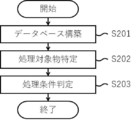
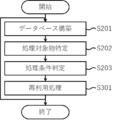
- This is an example of a flowchart of a product reuse promotion method according to the present invention.
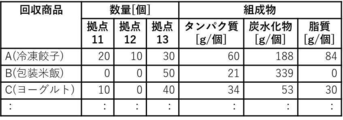
- It is an embodiment of the collected product database according to the present invention.
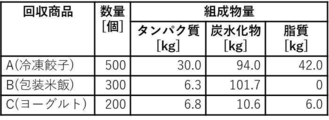
- This is an example of composition composition information according to the present invention.
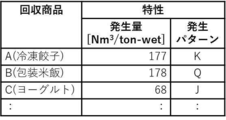
- It is an embodiment of the collected product database according to the present invention.
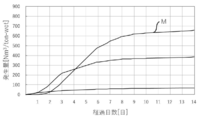
- It is a figure explaining the difference of the energy generation pattern for each recovered product.
- This is an example of a flowchart of the processing condition determination stage according to the present invention. It is explanatory drawing about the determination of the processing condition determination stage which concerns on this invention. It is explanatory drawing about the determination of the processing condition determination stage which concerns on this invention.
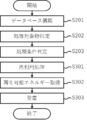
- This is an example of a flowchart of a product reuse promotion method according to the present invention.
- It is a block diagram of one Embodiment of the supply chain which realizes the product reuse promotion method which concerns on this invention.
- This is an example of a flowchart of a product reuse promotion method according to the present technology.
- This is an example of a flowchart of the take-back condition determination stage according to the present technology.
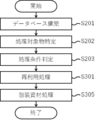
- This is an example of a flowchart of a product reuse promotion method according to the present invention.
- This is an example of a flowchart of a product reuse promotion method according to the present invention.
- It is a block diagram of one Embodiment of the supply chain which realizes the product reuse promotion method which concerns on this invention.
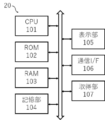
- It is a hardware block diagram which shows one Embodiment of the computer apparatus used by the product reuse promotion method which concerns on this invention.
- the method for promoting product reuse according to the present invention is a method for promoting the collection and reuse of a plurality of types of collected products collected from a base by using a computer.
- the aim of the product reuse promotion method according to the present invention is to contribute to the construction of a recycling-oriented society by promoting the reuse of products.
- FIG. 1 shows a configuration diagram of an embodiment of a supply chain that realizes the product reuse promotion method according to the present invention.
- this supply chain includes a plurality of stores (11 to 13) such as a convenience store, which is an example of a base, a relay base 14, a computer device 20, and a heat recovery facility 30. , A power transmission and distribution facility 40, and so on.
- the base may be composed of, for example, a distribution center, a food processing factory, or the like.
- the computer device 20 can include a collected product database 21 and a processing condition determination unit 22.
- the heat recovery facility 30 can include a reuse processing device 31 and a power generation device 32.
- the product reuse promotion method according to this technology is realized by using a stand-alone computer device such as a so-called PC, server, workstation, or tablet terminal.
- the product reuse promotion method according to the present technology is realized by using a computer system composed of a plurality of computer devices that cooperate with each other via a network.
- a plurality of types of products collected from a plurality of stores (11 to 13) can be collected at a relay base 14, for example, and transported to a reuse processing device 31.
- the product may be transported from the plurality of stores (11 to 13) to the reuse processing device 31 without going through the relay base 14.
- the computer device 20 constructs the collected product database 21 based on the data related to these collected products.
- the processing condition determination unit 22 refers to the collected product database 21 and determines the optimum processing conditions.
- the reuse processing device 31 reuses the product and converts it into an energy source based on this processing condition.
- the power generation device 32 converts this energy source into electric power.
- the power transmission and distribution facility 40 supplies this electric power to the plurality of stores (11 to 13). In this way, the product reuse promotion method according to the present invention contributes to the construction of a recycling-oriented society.
- FIG. 2 shows an example of a flowchart of the product reuse promotion method according to the present invention.
- the computer performs at least a database construction step S201, a processing object identification step S202, and a processing condition determination step S203.
- the database construction stage S201 constructs a collected product database.
- An embodiment of this collected product database is shown in FIG. As shown in FIG. 3, this collected product database holds at least composition information and quantity information corresponding to each product type of a plurality of collected products.
- This quantity information includes information on the quantity of each collected product held by each base.
- the quantity of the collected product A held by the base 11 is 20.
- the quantity of the collected product A held by the base 12 is 10.
- the quantity of the collected product A held by the base 13 is 30.
- This composition information includes information on the composition composed of each product type of a plurality of types of collected products.
- the composition information includes protein information, carbohydrate information, and lipid information. It is known that there is a correlation between this information and the amount of energy generated.
- the information included in this composition information is not particularly limited. Therefore, such information may not be included in this composition information, and information other than these may be included in this composition information.
- the amount of protein per recovered product A (frozen dumplings) is 60 grams.
- the amount of carbohydrates per recovered product A is 188 grams.
- the amount of lipid per recovered product A is 84 grams.
- This collected product database can be constructed by using a database management system (DBMS).
- DBMS database management system
- the collected product database and the database management system can be stored in a storage device such as a hard disk drive or a solid state drive built in or externally provided by the computer device.
- An arithmetic unit such as a CPU built in the computer device can operate the database management system.
- the processing target identification step S202 automatically specifies the composition composition information of the processing target to be reused based on the collected product database.
- FIG. 4 shows an example of composition composition information.
- the quantity of the collected product A is 500
- the quantity of the collected product B is 300
- the quantity of the collected product C is 200.
- the composition composition information of the object to be treated in this case is as shown in FIG.
- the amount of protein in the recovered product A is 30.0 kilograms (60 grams per piece x quantity of 500 pieces).
- composition composition information may be configured as a database or stored as a data file in a storage device built in or externally provided by a computer device.
- This database may be constructed as a part of the collected product database, or may be independently constructed as a database for composition composition information.
- the processing target identification stage S202 can be realized by, for example, a program.
- This program can be stored in the storage device such as a memory or a hard disk drive built in the computer device.
- An arithmetic unit such as a CPU built in the computer device can operate this program.
- this program may be stored in another computer device or computer system of the computer device that holds the collected product database.
- the computer device having the collected product database can use the cloud service that provides the function of this program.
- this cloud service include SaaS (Software as a Service), IaaS (Infrastructure as a Service), and PaaS (Platform as a Service).
- this program can be stored in a storage medium. That is, this program can be stored in a storage medium such as a CD-ROM, a DVD, a flash memory, or a hard disk drive in a form readable by a computer device.
- a storage medium such as a CD-ROM, a DVD, a flash memory, or a hard disk drive in a form readable by a computer device.
- the configuration described in the above embodiment can be selected or changed to another configuration as appropriate.
- the processing condition determination step S203 automatically determines the optimized reuse processing condition based on the composition composition information.
- the processing condition determination step S203 can be realized, for example, by a program, similarly to the processing object identification step S202.
- This program may be stored in a computer device in which the program for realizing the processing target identification step S202 is stored, or may be stored in a computer device different from this computer device.
- An arithmetic unit such as a CPU built in the computer device can operate this program.
- the processing condition determination step S203 automatically determines the optimum reuse processing condition for the processing object based on the composition composition information while referring to the collected product database.
- a further embodiment of this collected merchandise database is shown in FIG. As shown in FIG. 5, this collected product database can hold at least energy generation amount information or energy generation pattern information corresponding to each product type of a plurality of types of collected products.
- This energy generation amount information is a value indicating the energy generation amount for each recovered product in the reuse process. The higher the value of this energy generation amount, the larger the energy generation amount obtained in the reuse process. The lower the value of this energy generation amount, the smaller the energy generation amount obtained in the reuse process.
- This energy generation pattern information indicates the energy generation pattern for each recovered product in the reuse process.
- FIG. 6 shows a diagram explaining the difference in energy generation patterns for each recovered product.
- the horizontal axis is the number of days that have passed since the reuse process was started.
- the vertical axis is the amount of energy generated in the reuse process.
- the energy generation pattern differs depending on the recovered product. For example, with respect to the recovered product M, the amount of energy generated increases sharply two days after the start of the reuse process. After that, the amount of this energy generated has gradually decreased after 6 days have passed. Then, after 9 days have passed, the amount of this energy generated has decreased.
- the collected product database contains, for example, total solid content information, volatile solid content information, decomposition rate information, weight loss rate information, residue information, power generation amount information, and the like.
- This total solids information indicates the percentage of residue when the liquid is evaporated and solidified.
- This volatile solid content information shows the percentage of substances that volatilize by igniting this residue at 600 degrees.
- This decomposition rate information indicates the ratio of the volatile solid content information converted into an energy source.
- This weight loss rate information indicates the ratio of the fermentation residue to the total solid content information.
- This residue information indicates the amount and ratio of the residue in the reuse treatment.
- This power generation amount information indicates the amount of power generation when power is generated using this energy source.
- the processing condition determination step S203 is optimally regenerated for the processing target based on the information of the collected product database as shown in FIG. 3 or 5 and the composition composition information as shown in FIG. The usage processing conditions are automatically determined.
- FIG. 7 shows an example of a flowchart in which the processing condition determination stage S203 determines the processing condition.
- the processing condition determination stage S203 includes a stage S2031 for acquiring composition composition information, a stage S2032 for acquiring energy generation amount information and energy generation pattern information, and a stage S2033 for determining processing conditions.
- the step S2031 for acquiring the composition composition information acquires the composition composition information specified by the processing target object specifying step S202.
- the step S2032 for acquiring the energy generation amount information and the energy generation pattern information refers to the recovered product database and acquires the energy generation amount information and the energy generation pattern information corresponding to the composition composition information.
- the step S2033 for determining the processing conditions determines the optimum processing conditions based on the energy generation amount information and the energy generation pattern information.
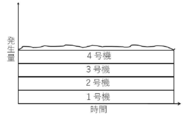
- FIG. 8 shows an example of a change over time in the amount of energy generated when the processing condition determination step S203 does not determine the processing condition.
- the processing object having a slow energy generation rate is reused, and then the processing object having a high energy generation rate is reused. Therefore, the amount of energy generated increases sharply after the time t1.
- Units 1 to 6 indicate devices that generate electricity using the generated energy source. In the embodiment shown in FIG. 8, it can be seen that six of these devices must be in operation.
- FIG. 9 shows an example of a change over time in the amount of energy generated when the processing condition determination step S203 determines the processing condition.
- the reuse treatment is performed on the processing target whose energy generation amount does not change with time.
- the amount of other processing objects is divided into a plurality of parts, and reuse processing is sequentially performed for each processing object. Therefore, the amount of energy generated is leveled without a sharp increase.
- the number of operating devices for generating electricity or the like using the generated energy source is reduced to four. Therefore, the operating cost is reduced.
- This reuse processing condition can include, for example, the input amount, input period, input frequency, and the like of the object to be processed.
- the reuse processing condition including this information can be recorded in a program, stored in a data file, or stored in a database, for example.
- This input amount indicates the amount of the object to be processed to be charged into the container or the like in the reuse processing device 31.
- This charging period indicates the period during which the object to be processed is charged into the container or the like.
- the number of times of charging indicates the number of times that the object to be processed is charged into this container or the like.
- the processing condition determination step S203 determines the reuse processing conditions such as the input amount, the input period, and the number of inputs so that the energy generation amount is leveled. This improves the efficiency of the reuse process.
- FIG. 10 shows a block diagram of an embodiment of the supply chain that realizes the product reuse promotion method according to the present invention.
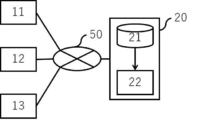
- this supply chain consists of one or more bases (11 to 13) and a computer device 20.
- the computer device 20 includes at least a collected product database 21 and a processing condition determination unit 22.
- the number of bases is not limited to three.
- Each base (11-13) manufactures or sells products. Based on this product data, the computer device 20 performs a database construction step S201, a processing object identification step S202, and a processing condition determination step S203.
- composition information and quantity information corresponding to each product type of the plurality of types of products to be shipped are stored in the collected product database 21 via the communication network. It is registered (database construction stage S201).
- the composition information and the quantity information can be acquired by the identification information attached to the collected product.
- the form of this identification information is not particularly limited, but for example, a POS (Point Of Sales) code can be used.
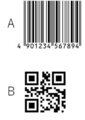
- An embodiment of the POS code is shown in FIG.
- FIG. 11A is a bar code representation of this POS code.
- FIG. 11B is a two-dimensional code representing this POS code.
- this POS code may be expressed by, for example, OCR (not shown).
- This POS code is the identification information used in the POS system.
- This POS system is a product sales information management system and is widely used in supermarkets and convenience stores nationwide. By using this POS system, inventory information of products at each base can be acquired in real time.
- One embodiment of this supply chain includes at least a reading device (not shown) that reads the POS code and a processing device (not shown) that is connected to the reading device and has a communication function.
- the reading device and the processing device are arranged at their respective bases (11 to 13).
- the computer device 20 also has a communication function. This communication function can be realized by, for example, a router or the like.
- this reading device When the collected products are shipped from each of the bases (11 to 13), this reading device reads the POS code attached to each of the collected products at each of the bases (11 to 13). This processing device transmits the collected product information related to the read POS code to the computer device 20 via the communication network.
- the database management system (not shown) of the computer device 20 updates the data in the collected product database 21 based on the transmitted collected product information.
- the reading device arranged at the base 11 reads the POS code attached to each of the five collected products A. Then, the processing device arranged at the base 11 transmits the collected product information regarding the five collected products A to the computer device 20.
- the database management system of the computer device 20 subtracts five quantity information of the base 11 of the collected product A in the collected product database 21.
- the identification information may be, for example, an IC tag.
- an IC tag By using an IC tag, identification information of a plurality of products can be acquired at once. Therefore, the processing efficiency is improved.
- the processing condition determination unit 22 refers to the collected product database 21 and automatically specifies the composition composition information of the processed object to be reused (processing object specifying step S202). As described above, the processing condition determination unit 22 can be realized by a program.
- the composition composition information can be stored in a storage device (not shown) built in or externally attached to the computer device 20.
- processing condition determination unit 22 automatically determines the optimized reuse processing condition based on the composition composition information while referring to the collected product database 21 and the like (processing condition determination step S203). ..
- FIG. 12 shows an example of a flowchart of the product reuse promotion method according to the present invention.
- the product reuse promotion method according to the present invention can further include a reuse processing step S301 and a renewable energy acquisition step S302 after the processing condition determination step S203.
- the reuse processing stage S301 performs the reuse processing based on the optimum reuse processing conditions determined by the processing condition determination stage S203.
- a heat recovery facility can perform this reuse process.
- the content of this reuse treatment is not particularly limited, and examples thereof include feed conversion, composting, and fermentation.
- the renewable energy acquisition stage S302 obtains an energy source in the process of the reuse processing stage S301.
- a heat recovery facility can obtain this energy source.
- the energy source may be gas or heat.
- the reuse processing stage S301 can ferment the food product, so that the renewable energy acquisition stage S302 can acquire the gas as an energy source.
- This fermentation refers to the process of obtaining an energy source by putting organic matter such as food into an anaerobic state (a state without oxygen).
- This food contains, for example, processed foods, fresh foods, additives and the like.
- Processed foods include, for example, bento boxes, vegetable cans, fruit cans, tea, spices, breads, frozen desserts, processed meat products, milk, ice creams, boiled and dried seafood, edible vegetable oils and fats, cooked frozen foods, beverages and the like.
- fresh foods include, for example, milled rice, barley, corn, soybeans, root vegetables, citrus fruits, beef, chicken eggs, fish, shellfish, seaweed and the like.
- This beverage can be used, for example, as diluted water in the reuse treatment step S301.
- This beverage includes, for example, PET bottle beverages, paper carton beverages, and the like.
- the reuse processing stage S301 incinerates this product, so that the renewable energy acquisition stage S302 can acquire heat as an energy source.
- Examples of the fermentation type include alcoholic fermentation, lactic acid fermentation, oxidative fermentation, butyric acid type fermentation, butanol-acetone type fermentation, nitrate fermentation, acetic acid fermentation and the like. Methane fermentation is effective in obtaining a large amount of renewable energy.
- Methane fermentation is the process of decomposing organic matter into microorganisms and generating methane gas by making organic matter such as food anaerobic.
- This food contains proteins, lipids, cellulose and the like.
- This food is decomposed into amino acids, fatty acids, sugars and the like by hydrolyzing bacteria, which are converted into acetic acid by acetic acid-producing bacteria, and further they generate methane gas by methanogens.
- This methane gas can be, for example, a power source or a boiler fuel.
- Examples of the type of methane fermentation method include a UASB (Upflow Anaerobic Sludge Blanket) method and a wet methane fermentation method.
- the UASB method is a method of granulating and treating methanogens.
- the UASB method is a method for treating food wastewater mainly, and is not good at treating solid matter.
- the wet methane fermentation method is a method using methane bacteria whose decomposition rate increases in a high temperature environment of about 55 ° C or a medium temperature environment of about 35 ° C.
- the wet methane fermentation method is a method mainly for treating food waste and sewage sludge.
- the methane fermentation method according to the present invention can be, for example, a wet methane fermentation method.
- methane gas generation amount by the wet methane fermentation method is the object to be processed per ton of about 120Nm 3.
- FIG. 13 shows an example of the flowchart of the reuse processing step S301 according to the present invention.
- the reuse processing step S301 can include a sorting step S3011, a mixing step S3012, and a retention step S3013.
- the product is sorted into the organic matter which is the content thereof and the packaging material of the product.
- the means for realizing the sorting step S3011 is not particularly limited, but can be realized by, for example, a sorting device including at least a crusher and a sieve. The goods crushed by this crusher pass over a vibrating sieve. The packaging material then falls under the sieve and only organic matter passes over the sieve.
- the means for realizing the mixing step S3012 is not particularly limited, but can be realized by, for example, a charging device including at least a rotating container and a heating unit.
- This container filled with this organic matter and methane bacteria rotates.
- This heating unit heats this container.
- the temperature in this heating corresponds to the temperature information included in the reuse treatment condition.
- the organic matter is decomposed into methane bacteria to generate methane gas.
- the means for realizing the retention stage S3013 is not particularly limited, but can be realized by, for example, a methane fermenter. Inside the methane fermenter, the organic matter and the methane bacteria are allowed to stay for a predetermined time.
- the freshly produced methane gas contains various impurities such as hydrogen sulfide. Therefore, it is necessary to remove impurities as needed.
- the undecomposed organic matter that has been fermented becomes a residue.
- a part of this residue can be charged into the charging device to assist the mixing of the organic substance and the methane bacteria.
- the renewable energy acquisition stage S302 stores the methane gas generated in the reuse processing stage S301.
- the means for realizing the renewable energy acquisition stage S302 is not particularly limited, but can be realized by, for example, a biogas holder.
- FIG. 14 shows a configuration diagram of an embodiment of a supply chain that realizes the product reuse promotion method according to the present invention.
- this supply chain can further include a heat recovery facility 30.
- the heat recovery facility 30 can be provided with at least a reuse processing device 31.
- the reuse processing device 31 performs reuse processing on the collected products based on the reuse processing conditions determined by the processing condition determination unit 22 of the computer device 20 (reuse processing step S301). Further, the reuse processing device 31 obtains an energy source in the process of the reuse processing step S301 (renewable energy acquisition step S302).
- a relay base (not shown) may be provided in the collection route, and a plurality of collected products may be collected at this relay base. As a result, a plurality of collected products can be efficiently collected, and a plurality of collected products can be sorted by product type at this relay base.
- each of the plurality of bases (11 to 13) may be an organized store or an independent store. Alternatively, there may be a plurality of organized stores.
- the computer device 20 can collectively manage the inventory information of the products held by each store. Alternatively, one vehicle can collect products from multiple stores at once.
- each of the plurality of bases may be a distribution center that delivers products to stores.
- Products shipped by the distribution center may be transported to the reuse processing device 31 without being delivered to the store.
- Products shipped by the distribution center may be transported to the reuse processing device 31 without being delivered to the store.
- imported bananas and the like are aged at a distribution center and then delivered to the base, but if the bananas and the like are discolored, they are generally not delivered to the store.
- products with a near expiration date are generally not delivered to stores. Such products are generally transported to the reuse processing device 31 without being delivered to the store.
- each of the plurality of bases may be a food processing factory.
- the food material and / or the cooked food produced by this food processing factory is transported to the reuse processing device 31 without being commercialized.
- the reuse processing device 31 reuses the food material or the like (reuse processing step S301).
- the cooked food is a processed food cooked at a food processing factory. For example, cooked foods that are close to the expiration date may be transported to the reuse processing device 31 instead of the store.
- the collected product database 21 holds the expiration date information, and the computer device 20 may determine the delivery destination of the food material and / or the cooked food based on the expiration date information.
- the food materials to be manufactured are determined for each food processing factory. Therefore, when the food material or the like is shipped from the food processing factory, it is not necessary to attach the identification information to the food material or the like.
- the data in the collected product database 21 may be updated based on the quantity information of the food material or the like.
- the processing device In order to update the data of the collected product database 21, the processing device (not shown) arranged in this food processing factory prompts the input of quantity information related to the food materials to be shipped. This processing device transmits this quantity information to the computer device 20 via the communication network.
- the database management system (not shown) of the computer device 20 updates the data in the collected product database 21 based on the transmitted quantity information.
- the product reuse promotion method according to the present invention may further include a step of inspecting the quantity of collected products. By this inspection, it can be confirmed that the quantity of collected products is not insufficient.
- the computer device 20 determines the processing conditions on the premise that the quantity of collected products is not insufficient. Therefore, if the quantity of collected products is insufficient, even if the reuse processing device 31 performs the reuse processing according to the processing conditions determined by the computer device 20, the desired processing result may not be obtained.
- the stage of inspecting the quantity of this collected product can be realized by, for example, a program.
- This program can be stored in the storage device such as a memory or a hard disk drive built in the computer device 20.
- An arithmetic unit such as a CPU built in the computer device 20 can operate this program.
- the program may be stored in the processing apparatus located at the site.
- FIG. 15 shows an example of a flowchart at the stage of inspecting the quantity of the collected products.
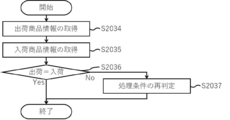
- the computer device 20 and the like acquire information on the collected products shipped by the respective bases (S2034). Specifically, as described above, when the collected products are shipped from each base, the data in the collected product database 21 is updated based on the quantity information corresponding to each product type of the collected products to be shipped. (Database construction stage S201). More specifically, when the five collected products A are carried from the base 11 to the reuse processing device 31, the quantity information of the collected products A at the base 11 is subtracted from the collected product database 21 and reused. Five pieces of quantity information of the collected product A of the processing device 31 are added.
- the computer device 20 and the like acquire information on the collected products received by the reuse processing device 31 (S2035).
- the acquisition means is not particularly limited, but the reading device arranged in the reuse processing device 31 may read the identification information attached to each of the received collected products, for example, as in the case of shipping from the base. ..
- the total weight of the received collected products may be acquired by the weighing scale arranged in the reuse processing device 31, or the total volume of the received collected products may be obtained by the three-dimensional arrangement arranged in the reuse processing device 31. It may be acquired by the sensor. This three-dimensional sensor collects surface area information of 360 degrees around the received collected product, and by analyzing this surface area information, the total volume of the received collected product can be acquired.
- the computer device 20 compares the information on the collected products shipped by each base with the information on the collected products received by the reuse processing device 31 (S2036).
- This comparison means is not particularly limited, but for example, comparison can be made by quantity, total weight, total volume, or the like.
- the calculation unit of the computer device 20 can compare the quantity of shipped products with the quantity of received products by referring to the collected product database 21. Specifically, when one or more collected products A are carried from the base 11 to the reuse processing device 31, the quantity information of the collected products A at the base 11 is subtracted from the collected product database 21 and reused. The quantity information of the collected product A of the processing device 31 is added. The subtraction information and the addition information are recorded in the collected product database 21 as history information. When the collected product A arrives at the reuse processing device 31, the received collection product A is read by the reading device arranged in the reuse processing device 31 to read the identification information attached to the collected product A. Quantity information can be obtained. The calculation unit of the computer device 20 compares the acquired quantity information with the quantity information included in the history information of the collected product database 21. As a result, the calculation unit of the computer device 20 can compare the quantity of the shipped product with the quantity of the received product.
- the collected product database 21 may have weight information corresponding to each product type of the collected products. As a result, the total weight of the shipped product can be obtained. The total weight of the received products can be obtained by a weighing scale arranged in the reuse processing device 31.
- the collected product database 21 may have volume information corresponding to each product type of the collected products. As a result, the total volume of the shipped product can be obtained. The total volume of the received products can be acquired by the three-dimensional sensor arranged in the reuse processing device 31.
- the calculation unit of the computer device 20 determines. For example, the optimum reuse processing conditions may be redetermined based on the composition composition information of the received processing object (S2037). For this re-determination, a program that realizes the processing condition determination step S203 may be used. Alternatively, the processing condition determination unit 22 of the computer device 20 may make this re-determination.
- composition composition of the object to be treated may be adjusted so as to satisfy the already determined processing conditions without re-judgment. For example, when 10 collected products A are insufficient, 10 collected products A included in other processing objects can be included in this processing object. When the 10 collected products A contained in the other processing objects are in the process of being collected, they can be reused after waiting for their arrival.
- the notification unit included in the computer device 20 may notify that the collected product information does not match.
- This notification unit can be realized by, for example, a display device, a speaker, or the like.
- FIG. 16 shows an example of a flowchart of the product reuse promotion method according to the present invention.
- the database construction stage S201 may update the collected product database based on the processing result information of the reuse processing stage S301.
- This processing result information can include, for example, an energy generation amount or an energy generation pattern.
- this collected product database holds energy generation amount information or energy generation pattern information corresponding to each product type of a plurality of types of collected products.
- the energy generation amount information or the energy generation pattern information held in the recovered product database may be updated based on the energy generation amount or the energy generation pattern in the reuse processing step S301.
- the processing condition determination step S203 can determine a more optimal processing condition.
- FIG. 17 shows a configuration diagram of an embodiment of a supply chain that realizes the product reuse promotion method according to the present invention.
- the reuse processing device 31 transmits the processing result information to the processing condition determination unit 22 of the computer device 20 via the communication network.
- the processing condition determination unit 22 transmits this processing result information to a database management system (not shown) or the like.
- the database management system or the like updates the data in the collected product database 21 based on the processing result information.
- the processing condition determination unit 22 of the computer device 20 can determine more optimal processing conditions.
- the processing condition determination unit 22 can be realized by a program. Furthermore, this program may consist of, for example, a neural network. When the weighting coefficient of the neural network learns the processing result information, the processing condition determination unit 22 can determine a more optimal processing condition.
- FIG. 18 shows an example of a flowchart of the product reuse promotion method according to the present invention.
- the product reuse promotion method according to the present invention may further include a step S303 for generating electricity after the renewable energy acquisition step S302.
- power generation stage S303 power is generated using the energy source.
- This energy source is gas or heat.
- This gas is mainly methane gas. Since methane gas is a gas that easily burns, it can be used for biomass power generation. According to the Ministry of the Environment discloses "FY2013 waste biomass utilization introduction promotion business consignment business report", the power generation amount when the energy source of the methane gas, is about per methane gas 1Nm 3 1.9kWh .. Since this biomass power generation does not emit carbon dioxide, it can greatly contribute to global warming countermeasures.
- the heat is mainly exhaust heat.
- this exhaust heat can be used, for example, for hot water supply or exhaust heat power generation. Since this waste heat power generation reduces carbon dioxide, it can greatly contribute to global warming countermeasures.
- FIG. 19 shows a configuration diagram of an embodiment of a supply chain that realizes the product reuse promotion method according to the present invention.
- the heat recovery facility 30 may further include a power generation device 32.
- the heat recovery facility provided with the reuse processing device 31 and the heat recovery facility provided with the power generation device 32 may be different.
- the heat recovery facility 30 supplies the energy source obtained by the reuse processing device 31 to the power generation device 32.
- the power generation device 32 generates power using the supplied energy source (stage S301 for generating power).
- this energy source is methane gas
- the power generator 32 can be realized, for example, by a gas engine generator.
- the heat recovery facility 30 can be further equipped with a boiler (not shown).
- This boiler can produce steam using methane gas as fuel.
- This boiler can be realized, for example, by a biogas boiler.
- the collected products may be products collected from each of the bases (11 to 13) for a fee.
- the heat recovery facility 30 can pick up this recovered product for a fee.
- the collection destination of this recovered product is not limited to the heat recovery facility 30.
- each base (11 to 13) can get a price in addition to the above-mentioned electric power. As a result, the reuse of products is promoted and a recycling-oriented society is built.
- FIG. 20 shows an example of a flowchart of the product reuse promotion method according to the present invention.
- the product reuse promotion method according to the present invention may further include a collection condition determination step S204 for determining the collection conditions of the collected products based on at least the generation information of the energy source.
- the take-back condition determination stage S204 can determine the take-back condition at least based on the generation information of the energy source.
- This generation information can include, for example, the generation amount or the generation pattern.
- This collection condition can include, for example, the collection quantity, the collection product type, the collection fee, and the like.
- This collection quantity indicates the quantity of collected products to be collected. For example, it is possible to determine a collection condition such that only a collection product having a quantity larger than a predetermined value or a quantity smaller than a predetermined quantity can be collected.
- This pick-up product type indicates the product type for which the collected product is picked up. For example, it is possible to determine the collection conditions such that only the collected products of a predetermined product type can be collected.
- the pick-up condition may be determined by combining this pick-up condition and the pick-up product type. For example, it is possible to determine the collection conditions such that the product type has a large amount of energy generated and only the collected products in a quantity larger than a predetermined amount can be collected. Alternatively, for example, when a collected product of a product type having a high energy generation rate is particularly required, it is possible to determine a collection condition such that the collected product can be preferentially collected.
- This collection fee refers to the fee paid to each base (11 to 13) in response to the collection of collected products.
- the payee of the collection conditions is not limited to the base.
- Such collection conditions can be held by, for example, a collection product database.
- the collected goods database can hold this collection condition for each collected goods.
- this collection condition may be held in another database of the collected product database.
- this collection condition can be automatically updated according to the energy generation information.
- the amount of energy generated in the energy source actually obtained in the process of reuse processing may be larger than the amount of energy generated in the recovered product database.
- the collected product database can be updated so that the amount of energy generated is larger, and the collection fee can be updated to be larger.
- FIG. 21 shows an example of a flowchart in which the take-back condition determination step S204 determines the take-back condition.
- the pick-up condition determination step S204 may include at least a step S2041 for acquiring the collected product information, a step S2042 for acquiring the energy generation information, and a step S2043 for determining the pick-up condition.
- the information about the collected product is acquired.
- This collected product information can include, for example, product type information, quantity information, collection fee, and the like of the collected product.
- the stage S2041 for acquiring the collected product information can acquire the collected product information.
- the stage S2042 of acquiring the energy generation information refers to the collected product database and acquires the energy generation information corresponding to the collected product information. This energy generation information may correlate with the collection fee.
- the step S2043 for determining the take-back condition determines the take-back condition based on this energy generation information. For example, the stage S2043 for determining the collection conditions by multiplying the quantity information of the collected products obtained by the stage S2041 for acquiring the collected product information and the collection fee for each collected product obtained in the stage S2042 for acquiring the energy generation information. Can calculate the pick-up fee.
- the take-back condition determination stage S204 can be realized by, for example, a program.
- This program can be stored in the storage device such as a memory or a hard disk drive built in the computer device.
- An arithmetic unit such as a CPU built in the computer device can operate this program.
- the efficiency of take-back negotiations between each base (11 to 13) and the heat recovery facility 30 will be improved. For example, since the collection fee for each collected product is shared online, the time for negotiation regarding the collection fee can be shortened.
- FIG. 22 shows a configuration diagram of an embodiment of a supply chain that realizes the product reuse promotion method according to the present invention.
- the computer device 20 may further include a take-back condition determination unit 24.
- the collection condition determination unit 24 automatically determines the collection condition based on the collection product information while referring to the collection product database 21 (collection condition determination stage S204). As described above, the take-back condition determination unit 24 can be realized by a program.
- the product reuse promotion method according to the present invention may further include a step S304 of treating and reusing the residue after the reuse treatment step S301.
- the undecomposed organic matter that has finished fermentation becomes a residue.
- the step S304 of treating and reusing the residue recycles the residue.
- this residue may be reused as liquid fertilizer.
- the residue may be reused as fertilizer or fuel after being solid-liquid separated.
- the residue may be reused to aid mixing of organic matter with methanogens as described above.
- FIG. 24 shows a configuration diagram of an embodiment of a supply chain that realizes the product reuse promotion method according to the present invention.
- the heat recovery facility 30 may further include a residue treatment device 33.
- the reuse processing device 31 supplies the residue generated in the process of the reuse processing step S301 to the residue processing device 33.
- the residue treatment apparatus 33 processes and reuses the residue (step S304 of treating and reusing the residue).
- the processing condition determination unit 22 of the computer device 20 may determine the optimum reuse processing conditions so that the residue produced by the reuse processing device 31 has the optimum quality or quantity.
- the collected product database 21 of the computer device 20 can hold the amount of the residue generated and the like.
- the processing condition determination unit 22 may determine the optimum reuse processing condition by referring to the collected product database 21.
- the composition information held in the recovered product database 21 can include the components of this processing target.
- the processing condition determination unit 22 may change the processing conditions so that the processing conditions performed by the residue processing apparatus 33 are optimal. For example, when fertilizer is produced by reusing the residue, the fertilizer control law requires that the quality of the product be specified. Therefore, the treatment condition determination unit 22 periodically analyzes the components of the fertilizer and treats the conditions. May be changed.
- FIG. 25 shows an example of a flowchart of the product reuse promotion method according to the present invention.
- the product reuse promotion method according to the present invention may further include a step S305 of processing and reusing the packaging material after the reuse processing step S301.
- the collected product is separated into the food content thereof and the packaging material of the product.
- the stage S305 of processing and reusing the packaging material reuses the packaging material.
- paper can be a raw material for toilet paper, corrugated cardboard, and the like.
- Plastics can be reused by melting them, chemically decomposing them, or incinerating them to obtain thermal energy.
- FIG. 26 shows a configuration diagram of an embodiment of a supply chain that realizes the product reuse promotion method according to the present invention.
- the heat recovery facility 30 may further include a packaging material processing device 34.
- the reuse processing device 31 supplies the packaging material generated in the process of the reuse processing step S301 to the packaging material processing device 34.
- the packaging material processing device 34 processes and reuses the packaging material (step S305 of processing and reusing the packaging material).
- the processing condition determination unit 22 of the computer device 20 may determine the optimum reuse processing conditions so that the packaging material produced by the reuse processing device 31 has the optimum quality or quantity.
- the collected product database 21 of the computer device 20 can hold material information and the like of the packaging material. This material information can include information such as paper and plastic.
- the processing condition determination unit 22 may determine the optimum reuse processing condition by referring to the collected product database 21.
- the processing condition determination unit 22 may determine the processing conditions so that the processing conditions performed by the packaging material processing device 34 are optimal.
- one of the plastic recycling methods is material recycling, in which plastic is melted and reused as a new raw material or product. In this material recycling, for example, it is difficult to use a plastic to which food residues are attached as a raw material. Therefore, it is necessary to clean this plastic before material recycling.
- the processing condition determination unit 22 can determine the processing conditions performed by the packaging material processing device 34 because the collected product database 21 holds the packaging material information, the packaging material processing device 34 includes the sensor, and the like.
- FIG. 27 is a hardware configuration diagram showing an embodiment of the computer device 20.
- the computer device 20 may include a CPU 101, a ROM 102, a RAM 103, a storage unit 104, a display unit 105, a communication I / F (interface) 106, and an acquisition unit 107 as components.
- Each component is connected by a bus, for example, as a data transmission line.
- the CPU 101 is realized by, for example, a microcomputer, and controls each component of the computer device 20.
- the CPU 101 can realize, for example, the processing condition determination step S203. This determination can be realized, for example, by a program.
- the ROM 102 stores control data such as programs and calculation parameters used by the CPU 101.
- the RAM 103 temporarily stores, for example, a program executed by the CPU 101.
- the storage unit 104 stores various data.
- the storage unit 104 functions as, for example, a database that holds information about members and the like.
- the storage unit 104 can be realized by using, for example, a storage device or the like.
- the display unit 105 displays information to the user.
- the display unit 105 is realized by, for example, an LCD (Liquid Crystal Display) or an OLED (Organic Light-Emitting Diode).
- the communication I / F 106 has a function of communicating via an information communication network by using communication technology such as Wi-Fi, Bluetooth (registered trademark), LTE (Long Term Evolution) and the like.
- the acquisition unit 107 has a function of reading the code.
- the acquisition unit 107 can be realized by, for example, a camera or the like.
- the computer device 20 includes, for example, a smartphone terminal, a tablet terminal, a mobile phone terminal, a PDA (Personal Digital Assistant), a PC (Personal Computer), a server, or a wearable terminal (HMD: Head Mounted Display, glasses-type HMD, clock-type terminal, band). It can be a type terminal, etc.).
- the program that realizes the product reuse promotion method according to the present invention may be stored in another computer device or computer system of the computer device 20.
- the computer device 20 can use the cloud service that provides the function of this program.
- this cloud service include SaaS (Software as a Service), IaaS (Infrastructure as a Service), and PaaS (Platform as a Service).
- Non-temporary computer-readable media include various types of tangible storage media. Examples of non-temporary computer-readable media are magnetic recording media (eg flexible disks, magnetic tapes, hard disk drives), magneto-optical recording media (eg magneto-optical disks), CompactDisc ReadOnlyMemory (CD-ROM), CD-ROM. Includes R, CD-R / W, and semiconductor memory (eg, mask ROM, Programmable ROM (PROM), Erasable PROM (EPROM), flash ROM, Random Access Memory (RAM)).
- the above program may be supplied to a computer by various types of temporary computer readable media (transitory computer readable medium). Examples of temporary computer-readable media include electrical, optical, and electromagnetic waves.
- the temporary computer-readable medium can supply the above program to the computer via a wired communication path such as an electric wire and an optical fiber, or a wireless communication path.
- the product reuse promotion system according to the present invention is a system that promotes the collection and reuse of a plurality of types of collected products collected from a base by using a computer.
- FIG. 28 shows a configuration diagram of an embodiment of a supply chain including a product reuse promotion system according to the present invention.
- this supply chain is composed of at least one or a plurality of bases (11 to 13) and a computer device 20. These are connected via the communication network 50.
- the computer device 20 includes at least a collected product database 21 and a processing condition determination unit 22.
- the number of bases is not limited to three.
- This product reuse promotion system is realized by using a stand-alone computer device such as a so-called PC, server, workstation, or tablet terminal.
- this product reuse promotion system is realized by utilizing a computer system composed of a plurality of computer devices that cooperate with each other via a network.
- the collected product database 21 holds information related to the products collected from the bases (11 to 13).
- the collected product database 21 has at least composition information and quantity information corresponding to each product type of the plurality of types of collected products.
- the processing condition determination unit 22 automatically specifies the composition composition information of the processed object to be reused based on the composition information and the quantity information held in the collected product database 21. Then, the processing condition determination unit 22 automatically determines the optimized reuse processing condition based on the composition composition information.
- This product reuse promotion system is characterized in that a reuse process is performed based on the reuse process conditions to obtain an energy source obtained in the process of the reuse process.
- the collected product database 21 can be constructed by using a database management system (not shown).
- the collected product database 21 and the database management system can be stored in a storage device such as a hard disk drive or a solid state drive built in or externally provided by the computer device.
- An arithmetic unit such as a CPU built in the computer device can operate the database management system.
- the processing condition determination unit 22 can be realized by, for example, a program.
- This program can be stored in the storage device such as a memory or a hard disk drive built in the computer device.
- An arithmetic unit such as a CPU built in the computer device can operate this program.
- this program may be stored in another computer device or computer system of the computer device that holds the collected product database 21.
- the computer device having the collected product database 21 can use the cloud service that provides the function of this program.
- this cloud service include SaaS (Software as a Service), IaaS (Infrastructure as a Service), and PaaS (Platform as a Service).
- this product reuse promotion system can utilize the technique described in the first embodiment. The technique described in the first embodiment will not be described again.
Landscapes
- Business, Economics & Management (AREA)
- Engineering & Computer Science (AREA)
- Economics (AREA)
- Entrepreneurship & Innovation (AREA)
- Human Resources & Organizations (AREA)
- Marketing (AREA)
- Operations Research (AREA)
- Quality & Reliability (AREA)
- Strategic Management (AREA)
- Tourism & Hospitality (AREA)
- Physics & Mathematics (AREA)
- General Business, Economics & Management (AREA)
- General Physics & Mathematics (AREA)
- Theoretical Computer Science (AREA)
- Management, Administration, Business Operations System, And Electronic Commerce (AREA)
- Processing Of Solid Wastes (AREA)
Abstract
再利用処理条件の自動的な判定により商品の再利用を促進する方法及びシステムを提供する。 コンピュータを利用して、拠点から回収した複数種の回収商品を寄せ集めて再利用することを促進する方法であって、前記コンピュータが、前記複数種の回収商品のそれぞれの商品種に対応する組成物情報及び数量情報を少なくとも保有する回収商品データベースを構築するデータベース構築段階S201と、前記回収商品データベースに基づいて、前記再利用がなされる処理対象物の組成物構成情報を自動的に特定する処理対象物特定段階S202と、前記組成物構成情報に基づいて、最適化された再利用処理条件を自動的に判定する処理条件判定段階S203と、を少なくとも行う、商品再利用促進方法を提供する。
Description
本発明は、商品の再利用を促進する方法及びシステムに関する。
限りある資源の有効活用や地球温暖化対策等のために、商品の再利用により循環型社会の構築に寄与することが求められている。
一方、コンビニエンスストア等の店舗が賞味期限までに販売できなかった商品の処理方法が社会的な問題となっている。食品加工工場が賞味期限までに出荷できなかった食品材料及び/又は調理済み食品についても同様である。現状、このような商品又は食品材料等は、回収されて大半が焼却処理されている。
焼却処理せず再利用処理する場合の一例として、飼料化、堆肥化、又はエネルギー生成等が挙げられる。このような再利用処理では、複数種の商品又は食品材料等が混合されることが一般的である。
しかしながら、この再利用処理において、商品又は食品材料等の組成物の構成によって適切な処理条件が異なるため、再利用処理が非効率であるという問題があった。
そこで本発明は、この処理条件の自動的な判定により、商品又は食品材料等の再利用を促進する方法及びシステムを提供することを主目的とする。
本発明は、コンピュータを利用して、拠点から回収した複数種の回収商品を寄せ集めて再利用することを促進する方法であって、前記コンピュータが、前記複数種の回収商品のそれぞれの商品種に対応する組成物情報及び数量情報を少なくとも保有する回収商品データベースを構築するデータベース構築段階と、前記回収商品データベースに基づいて、前記再利用がなされる処理対象物の組成物構成情報を自動的に特定する処理対象物特定段階と、前記組成物構成情報に基づいて、最適化された再利用処理条件を自動的に判定する処理条件判定段階と、を少なくとも行う、商品再利用促進方法を提供する。
前記商品再利用促進方法は、前記再利用処理条件に基づいて、再利用処理を行う再利用処理段階と、前記再利用処理の過程でエネルギー源を得る再生可能エネルギー取得段階と、を含むことができる。
前記拠点は組織化された店舗であってもよい。
前記組成物情報及び前記数量情報は、回収される商品に付された識別情報によって取得することができる。
前記識別情報はPOSコードであってもよい。
前記回収商品は食品であってもよい。
前記回収商品は、前記拠点から有償で引き取られた商品であってもよい。
前記再利用処理は発酵であってもよい。
前記発酵は湿式メタン発酵であってもよい。
前記エネルギー源はガス又は熱であってもよい。
前記商品再利用促進方法は、前記エネルギー源を用いて発電を行う段階を含むことができる。
前記商品再利用促進方法は、前記再利用の過程で生じる残渣物を再利用する段階を含むことができる。
前記商品再利用促進方法は、前記回収商品から分別された包装資材を再利用する段階をさらに含むことができる。
前記再利用処理段階は、食品加工工場から回収された食品材料及び/又は調理済み食品を再利用処理することも含むことができる。
また、本発明は、コンピュータを利用して、拠点から回収した複数種の回収商品を寄せ集めて再利用することを促進するシステムであって、前記コンピュータが、前記複数種の回収商品のそれぞれの商品種に対応する組成物情報及び数量情報を少なくとも保有する回収商品データベースと、前記回収商品データベースに基づいて、前記再利用がなされる処理対象物の組成物構成情報を自動的に特定し、前記組成物構成情報に基づいて、最適化された再利用処理条件を自動的に判定する処理条件判定部と、を少なくとも備え、前記再利用処理条件に基づいて再利用処理を行い、前記再利用処理の過程で得られたエネルギー源を得ることを特徴とする、商品再利用促進システムを提供する。
前記商品再利用促進方法は、前記再利用処理条件に基づいて、再利用処理を行う再利用処理段階と、前記再利用処理の過程でエネルギー源を得る再生可能エネルギー取得段階と、を含むことができる。
前記拠点は組織化された店舗であってもよい。
前記組成物情報及び前記数量情報は、回収される商品に付された識別情報によって取得することができる。
前記識別情報はPOSコードであってもよい。
前記回収商品は食品であってもよい。
前記回収商品は、前記拠点から有償で引き取られた商品であってもよい。
前記再利用処理は発酵であってもよい。
前記発酵は湿式メタン発酵であってもよい。
前記エネルギー源はガス又は熱であってもよい。
前記商品再利用促進方法は、前記エネルギー源を用いて発電を行う段階を含むことができる。
前記商品再利用促進方法は、前記再利用の過程で生じる残渣物を再利用する段階を含むことができる。
前記商品再利用促進方法は、前記回収商品から分別された包装資材を再利用する段階をさらに含むことができる。
前記再利用処理段階は、食品加工工場から回収された食品材料及び/又は調理済み食品を再利用処理することも含むことができる。
また、本発明は、コンピュータを利用して、拠点から回収した複数種の回収商品を寄せ集めて再利用することを促進するシステムであって、前記コンピュータが、前記複数種の回収商品のそれぞれの商品種に対応する組成物情報及び数量情報を少なくとも保有する回収商品データベースと、前記回収商品データベースに基づいて、前記再利用がなされる処理対象物の組成物構成情報を自動的に特定し、前記組成物構成情報に基づいて、最適化された再利用処理条件を自動的に判定する処理条件判定部と、を少なくとも備え、前記再利用処理条件に基づいて再利用処理を行い、前記再利用処理の過程で得られたエネルギー源を得ることを特徴とする、商品再利用促進システムを提供する。
本発明によれば、再利用処理条件の自動的な判定により商品の再利用を促進する方法及びシステムを提供することができる。
以下、本発明を実施するための好適な形態について、添付した図面を参照しつつ説明する。なお、以下に説明する実施形態は、本発明の代表的な実施形態を示したものであり、本発明の範囲がこれらの実施形態に限定されることはない。なお、本発明の説明は以下の順序で行う。
1.本発明に係る第1の実施形態(商品再利用促進方法)
(1)概要
(2)処理条件判定
(3)再利用処理
(4)発電
(5)引取条件判定
(6)残渣物処理
(7)包装資材処理
(8)ハードウェア構成
2.本発明に係る第2の実施形態(商品再利用促進システム)
1.本発明に係る第1の実施形態(商品再利用促進方法)
(1)概要
(2)処理条件判定
(3)再利用処理
(4)発電
(5)引取条件判定
(6)残渣物処理
(7)包装資材処理
(8)ハードウェア構成
2.本発明に係る第2の実施形態(商品再利用促進システム)
1.本発明に係る第1の実施形態(商品再利用促進方法)
(1)概要
本発明に係る商品再利用促進方法は、コンピュータを利用して、拠点から回収した複数種の回収商品を寄せ集めて再利用することを促進する方法である。本発明に係る商品再利用促進方法が目指すところは、商品の再利用を促進することにより、循環型社会の構築に寄与することである。
本発明に係る商品再利用促進方法は、コンピュータを利用して、拠点から回収した複数種の回収商品を寄せ集めて再利用することを促進する方法である。本発明に係る商品再利用促進方法が目指すところは、商品の再利用を促進することにより、循環型社会の構築に寄与することである。
本発明に係る商品再利用促進方法を実現するサプライチェーンの一実施形態の構成図を図1に示す。図1に示されるとおり、このサプライチェーンの一実施形態は、拠点の一例であるコンビニエンスストア等の複数の店舗(11~13)と、中継拠点14と、コンピュータ装置20と、熱回収施設30と、送配電施設40と、から構成される。なお、この拠点は、例えば配送センターや食品加工工場等から構成されてもよい。
コンピュータ装置20は、回収商品データベース21と、処理条件判定部22と、を備えることができる。熱回収施設30は、再利用処理装置31と、発電装置32と、を備えることができる。
本技術に係る商品再利用促進方法は、いわゆるPC、サーバ、ワークステーション、タブレット端末等のスタンドアロンのコンピュータ装置を利用することによって実現される。あるいは、本技術に係る商品再利用促進方法は、ネットワークを介して協働する複数のコンピュータ装置から成るコンピュータシステムを利用することによって実現される。
複数の店舗(11~13)から回収された複数種の商品は、例えば中継拠点14に寄せ集められて、再利用処理装置31へ運ばれることができる。なお、中継拠点14を経由せず、複数の店舗(11~13)から再利用処理装置31へ商品が運ばれてもよい。
あわせて、これらの回収商品に係るデータに基づいて、コンピュータ装置20が、回収商品データベース21を構築する。処理条件判定部22は、回収商品データベース21を参照し、最適な処理条件を判定する。
再利用処理装置31は、この処理条件に基づいて、前記商品を再利用処理し、エネルギー源に変換する。発電装置32は、このエネルギー源を電力に変換する。
送配電施設40は、この電力を前記複数の店舗(11~13)へ供給する。このようにして、本発明に係る商品再利用促進方法は、循環型社会の構築に寄与している。
(2)処理条件判定
本発明に係る商品再利用促進方法のフローチャートの一例を図2に示す。図2に示されるとおり、前記コンピュータは、データベース構築段階S201と、処理対象物特定段階S202と、処理条件判定段階S203と、を少なくとも行う。
本発明に係る商品再利用促進方法のフローチャートの一例を図2に示す。図2に示されるとおり、前記コンピュータは、データベース構築段階S201と、処理対象物特定段階S202と、処理条件判定段階S203と、を少なくとも行う。
データベース構築段階S201は、回収商品データベースを構築する。この回収商品データベースの一実施形態を図3に示す。図3に示されるとおり、この回収商品データベースは、複数種の回収商品のそれぞれの商品種に対応する組成物情報及び数量情報を少なくとも保有している。
この数量情報は、それぞれの拠点が保有しているそれぞれの回収商品の数量に関する情報を含んでいる。図3に示される一実施形態では、拠点11が保有している回収商品Aの数量は20である。拠点12が保有している回収商品Aの数量は10である。拠点13が保有している回収商品Aの数量は30である。
この組成物情報は、複数種の回収商品のそれぞれの商品種が構成する組成物に関する情報を含んでいる。図3に示される一実施形態では、この組成物情報は、タンパク質情報と、炭水化物情報と、脂質情報と、を含んでいる。これらの情報と、エネルギー源の発生量との間に相関関係があることが知られている。なお、この組成物情報が含む情報は特に限定されない。よって、これらの情報がこの組成物情報に含まれていなくてもよいし、これら以外の情報がこの組成物情報に含まれていてもよい。
さらに組成物情報について説明すると、回収商品A(冷凍餃子)の1個あたりのタンパク質の量は60グラムである。回収商品Aの1個あたりの炭水化物の量は188グラムである。回収商品Aの1個あたりの脂質の量は84グラムである。
この回収商品データベースは、データベース管理システム(DBMS:database management system)を利用することにより構築されることができる。この回収商品データベース及びデータベース管理システムは、前記コンピュータ装置が内蔵する又は外付けされるハードディスクドライブやソリッドステートドライブ等の記憶装置に格納されることができる。このコンピュータ装置が内蔵するCPU等の演算部が、このデータベース管理システムを動作させることができる。
続いて、処理対象物特定段階S202は、前記回収商品データベースに基づいて、前記再利用がなされる処理対象物の組成物構成情報を自動的に特定する。
組成物構成情報の一例を図4に示す。図4に示される一実施形態では、例えば、回収商品Aの数量が500、回収商品Bの数量が300、回収商品Cの数量が200となっている。この場合の処理対象物の組成物構成情報は、図4に示されるとおりとなる。この例では、回収商品Aのタンパク質の量は30.0キログラム(1個あたり60グラム×数量500個)である。
この組成物構成情報は、コンピュータ装置が内蔵する又は外付けされる記憶装置に、データベースとして構成されてもよいし、データファイルとして保存されてもよい。このデータベースは、前記回収商品データベースの一部として構築されてもよいし、組成物構成情報用のデータベースとして独自に構築されてもよい。
処理対象物特定段階S202は、例えばプログラムによって実現されることができる。このプログラムは、前記コンピュータ装置が内蔵するメモリやハードディスクドライブ等の前記記憶装置に格納されることができる。このコンピュータ装置が内蔵するCPU等の演算部が、このプログラムを動作させることができる。
あるいは、このプログラムは、前記回収商品データベースを保有するコンピュータ装置のほかのコンピュータ装置又はコンピュータシステムに格納されてもよい。この場合、前記回収商品データベースを保有するコンピュータ装置は、このプログラムが有する機能を提供するクラウドサービスを利用することができる。このクラウドサービスとして、例えばSaaS(Software as a Service)、IaaS(Infrastructure as a Service)、PaaS(Platform as a Service)等が挙げられる。
さらにこのプログラムは、記憶媒体に記憶されることができる。すなわち、このプログラムは、CD-ROM、DVD、フラッシュメモリ、ハードディスクドライブ等の記憶媒体に、コンピュータ装置が読み取り可能な形態で記憶されることができる。これ以外にも、本発明の主旨を逸脱しない限り、上記実施の形態で挙げた構成を取捨選択したり、他の構成に適宜変更したりすることが可能である。
図2の説明に戻る。処理条件判定段階S203は、前記組成物構成情報に基づいて、最適化された再利用処理条件を自動的に判定する。処理条件判定段階S203は、処理対象物特定段階S202と同様に、例えばプログラムによって実現されることができる。このプログラムは、処理対象物特定段階S202を実現するプログラムが格納されるコンピュータ装置に格納されてもよいし、このコンピュータ装置と異なるコンピュータ装置に格納されてもよい。このコンピュータ装置が内蔵するCPU等の演算部が、このプログラムを動作させることができる。
処理条件判定段階S203は、前記組成物構成情報に基づいて、前記回収商品データベースを参照しながら、前記処理対象物に最適な再利用処理条件を自動的に判定する。この回収商品データベースのさらなる一実施形態を図5に示す。図5に示されるとおり、この回収商品データベースは、複数種の回収商品のそれぞれの商品種に対応するエネルギー発生量情報又はエネルギー発生パターン情報を少なくとも保有することができる。
このエネルギー発生量情報は、再利用処理における回収商品ごとのエネルギー発生量を示す値である。このエネルギー発生量の値が高いほど、再利用処理において得られるエネルギー発生量が多いことを示す。このエネルギー発生量の値が低いほど、再利用処理において得られるエネルギー発生量が少ないことを示す。
このエネルギー発生パターン情報は、再利用処理における回収商品ごとのエネルギー発生パターンを示す。
回収商品ごとのエネルギー発生パターンの違いを説明する図を図6に示す。図6において、横軸は再利用処理を開始してから経過した日数である。縦軸は再利用処理におけるエネルギー発生量である。このように、回収商品によってエネルギー発生パターンが異なることがわかる。例えば回収商品Mについては、再利用処理開始後2日経過した後から急激にエネルギー発生量が多くなっている。その後、このエネルギー発生量は6日経過した後から緩やかに減少している。そして、9日経過した後はこのエネルギー発生量が少なくなっている。
なお、回収商品データベースは、このエネルギー発生量情報とエネルギー発生パターン情報のほかに、例えば全固形分情報、揮発性固形分情報、分解率情報、減量率情報、残渣物情報又は発電量情報等を含むことができる。この全固形分情報は、液体を蒸発固化したときの残留物の割合を示す。この揮発性固形分情報は、この残留物を600度で強熱することにより揮散する物質の割合を示す。この分解率情報は、この揮発性固形分情報に対する、エネルギー源に変換される割合を示す。この減量率情報は、この全固形分情報に対する、発酵残渣が生成する割合を示す。この残渣物情報は、再利用処理における残渣物の量や割合等を示す。この発電量情報は、このエネルギー源を用いて発電するときの発電量を示す。
図2の説明に戻る。処理条件判定段階S203は、図3又は5に示されるような前記回収商品データベースの情報と、図4に示されるような前記組成物構成情報と、に基づいて、前記処理対象物に最適な再利用処理条件を自動的に判定する。
処理条件判定段階S203が処理条件を判定するフローチャートの一例を図7に示す。図7に示されるとおり、処理条件判定段階S203は、組成物構成情報を取得する段階S2031と、エネルギー発生量情報とエネルギー発生パターン情報を取得する段階S2032と、処理条件を判定する段階S2033と、を少なくとも含むことができる。
組成物構成情報を取得する段階S2031は、処理対象物特定段階S202が特定した組成物構成情報を取得する。エネルギー発生量情報とエネルギー発生パターン情報を取得する段階S2032は、回収商品データベースを参照して、前記組成物構成情報に対応するエネルギー発生量情報とエネルギー発生パターン情報を取得する。処理条件を判定する段階S2033は、このエネルギー発生量情報とエネルギー発生パターン情報に基づいて、最適な処理条件を判定する。
処理条件判定段階S203の判定についての説明図を図8及び9に示す。図8は、処理条件判定段階S203が処理条件を判定しないときの、エネルギー発生量の経時的変化の一例を示す。この一例では、まず、エネルギー発生速度が遅い処理対象物に対して再利用処理が行われ、その後、エネルギー発生速度が速い処理対象物に対して再利用処理が行われている。そのため、時間t1以降にエネルギー発生量が急激に増加している。
1~6号機は、発生したエネルギー源を用いて発電等をする装置を示す。図8に示される実施例では、この装置を6台稼働させなければならないことがわかる。
一方、図9は、処理条件判定段階S203が処理条件を判定するときの、エネルギー発生量の経時的変化の一例を示す。この一例では、まず、エネルギー発生量の経時的変化が少ない処理対象物に対して再利用処理が行われている。その後、その他の処理対象物の量を複数に分割し、それぞれの処理対象物に対して再利用処理が順次行われている。そのため、エネルギー発生量が急激に増加することなく、平準化されている。
したがって、図8に示される実施例と比較して、図9に示される実施例では、発生したエネルギー源を用いて発電等をする装置の稼働台数が4台に削減されている。そのため、運用コストが削減される。
この再利用処理条件は、例えば処理対象物の投入量、投入期間、又は投入回数等を含むことができる。これらの情報を含んだ再利用処理条件は、例えばプログラムに記録されたり、データファイルに格納されたり、データベースに格納されたりすることができる。
この投入量は、再利用処理装置31内の容器等に投入される処理対象物の量を示す。この投入期間は、処理対象物がこの容器等に投入される期間を示す。この投入回数は、処理対象物がこの容器等に投入される回数を示す。
図6に示されるように、回収商品ごとにエネルギー発生速度のピークがある。例えばこのピークに基づいて、処理条件判定段階S203は、エネルギー発生量が平準化するように、この投入量、投入期間、又は投入回数等の再利用処理条件を判定する。これにより、再利用処理の効率が向上する。
本発明に係る商品再利用促進方法を実現するサプライチェーンの一実施形態の構成図を図10に示す。図10に示されるとおり、このサプライチェーンは、一つ又は複数の拠点(11~13)と、コンピュータ装置20から構成される。コンピュータ装置20は、回収商品データベース21と、処理条件判定部22と、を少なくとも備える。なお、拠点の数は3つに限られない。
それぞれの拠点(11~13)は、商品の製造又は販売等を行う。コンピュータ装置20は、この商品データに基づいて、データベース構築段階S201と、処理対象物特定段階S202と、処理条件判定段階S203と、を行う。
それぞれの拠点(11~13)から商品が出荷されるとき、出荷される複数種の商品のそれぞれの商品種に対応する組成物情報及び数量情報が、通信ネットワークを介して、回収商品データベース21に登録される(データベース構築段階S201)。
前記組成物情報及び前記数量情報は、回収される商品に付された識別情報によって取得することができる。この識別情報の形態は特に限定されないが、例えばPOS(Point Of Sales)コードを利用できる。POSコードの一実施形態を図11に示す。図11Aは、このPOSコードをバーコードで表現したものである。図11Bは、このPOSコードを二次元コードで表現したものである。その他、このPOSコードは例えばOCR(図示せず)等で表現されてもよい。
このPOSコードはPOSシステムで利用されている識別情報である。このPOSシステムは、商品の販売情報の管理システムであり、全国のスーパーマーケットやコンビニエンスストア等で広く利用されている。このPOSシステムの利用により、それぞれの拠点における商品の在庫情報がリアルタイムに取得できる。
図10の説明に戻る。このサプライチェーンの一実施形態は、前記POSコードを読み取る読み取り装置(図示せず)と、この読み取り装置に接続されており通信機能を有する処理装置(図示せず)と、を少なくとも備えている。この読み取り装置とこの処理装置は、それぞれの拠点(11~13)に配置されている。また、コンピュータ装置20も通信機能を有している。この通信機能は、例えばルータ等によって実現されることができる。
それぞれの拠点(11~13)から回収商品が出荷されるとき、それぞれの拠点(11~13)において、それぞれの回収商品に付されたPOSコードをこの読み取り装置が読み取る。この処理装置は、この読み取られたPOSコードに係る回収商品情報を、通信ネットワークを介してコンピュータ装置20に送信する。コンピュータ装置20の前記データベース管理システム(図示せず)は、送信された回収商品情報に基づいて、回収商品データベース21のデータを更新する。
より具体的に説明すると、例えば5個の回収商品Aが拠点11から出荷されるとする。この5個の回収商品Aのそれぞれに付されたPOSコードを、拠点11に配置された読み取り装置が読み取る。すると、この5個の回収商品Aに関する回収商品情報を、拠点11に配置された処理装置がコンピュータ装置20に送信する。コンピュータ装置20のデータベース管理システムは、回収商品データベース21において、回収商品Aの拠点11の数量情報を5個減算する。
なお、前記識別情報は、例えばICタグであってもよい。ICタグとすることにより、複数の商品の識別情報が一度に取得されることができる。そのため、処理の効率が向上する。
処理条件判定部22は、回収商品データベース21を参照し、前記再利用がなされる処理対象物の組成物構成情報を自動的に特定する(処理対象物特定段階S202)。上述したように、処理条件判定部22はプログラムによって実現されることができる。組成物構成情報は、コンピュータ装置20が内蔵する又は外付けされる記憶装置(図示せず)に格納されることができる。
さらに、処理条件判定部22は、前記組成物構成情報に基づいて、前記回収商品データベース21等を参照しながら、最適化された再利用処理条件を自動的に判定する(処理条件判定段階S203)。
(3)再利用処理
本発明に係る商品再利用促進方法のフローチャートの一例を図12に示す。図12に示されるとおり、本発明に係る商品再利用促進方法は、処理条件判定段階S203の後に、さらに再利用処理段階S301と、再生可能エネルギー取得段階S302と、を含むことができる。
本発明に係る商品再利用促進方法のフローチャートの一例を図12に示す。図12に示されるとおり、本発明に係る商品再利用促進方法は、処理条件判定段階S203の後に、さらに再利用処理段階S301と、再生可能エネルギー取得段階S302と、を含むことができる。
再利用処理段階S301は、処理条件判定段階S203が判定した最適な再利用処理条件に基づいて、再利用処理を行う。例えば熱回収施設がこの再利用処理を行うことができる。この再利用処理の内容は特に限定されないが、一例を挙げれば、飼料化、堆肥化、発酵等が挙げられる。
再生可能エネルギー取得段階S302は、再利用処理段階S301の過程でエネルギー源を得る。例えば熱回収施設がこのエネルギー源を得ることができる。
前記エネルギー源はガスであってもよいし、熱であってもよい。前記商品が食品である場合、再利用処理段階S301が、この食品を発酵させることによって、再生可能エネルギー取得段階S302が、エネルギー源であるガスを取得できる。この発酵とは、食品などの有機物を嫌気状態(酸素がない状態)にすることにより、エネルギー源を得る過程のことをいう。
この食品は、例えば加工食品、生鮮食品、又は添加物等を含む。加工食品は、一例として弁当、野菜缶、果実缶、茶、香辛料、パン類、冷菓、加工食肉製品、牛乳、アイスクリーム類、煮干魚介類、食用植物油脂、調理冷凍食品、飲料等を含む。また、生鮮食品は、一例として精米、大麦、とうもろこし、大豆、根菜類、かんきつ類、牛肉、鶏卵、魚類、貝類、海藻類等を含む。
この飲料は、例えば再利用処理段階S301における希釈水として用いられることができる。この飲料は、例えばペットボトル飲料や紙パック飲料等を含む。
前記商品が食品ではない場合、再利用処理段階S301が、この商品を焼却することによって、再生可能エネルギー取得段階S302が、エネルギー源である熱を取得できる。
前記発酵の型には、一例を挙げれば、アルコール発酵、乳酸発酵、酸化発酵、酪酸型発酵、ブタノール-アセトン型発酵、硝酸塩発酵、酢酸発酵等がある。多くの再生可能エネルギーを得るためには、メタン発酵が効果的である。
メタン発酵とは、食品などの有機物を嫌気状態にすることにより、有機物を微生物に分解させ、メタンガスを発生させる過程のことをいう。この食品にはタンパク質や脂質、セルロース等が含まれる。この食品が、加水分解菌によってアミノ酸、脂肪酸、糖等に分解され、それらが酢酸生成菌によって酢酸に変換され、さらにそれらがメタン生成菌によってメタンガスを発生する。このメタンガスは、例えば発電源となったり、ボイラー燃料となったりすることができる。
メタン発酵法の種類として、例えばUASB(Upflow Anaerobic Sludge Blanket)法や湿式メタン発酵法等が挙げられる。UASB法は、メタン菌をグラニュー化して処理する方法である。UASB法は、主に食品排水を処理する方法であり、固形物の処理を不得意とする。湿式メタン発酵法は、約55度の高温環境又は約35度の中温環境で分解速度が高まるメタン菌を利用する方法である。湿式メタン発酵法は、主に生ごみや下水汚泥を処理する方法である。
本発明に係るメタン発酵法は、例えば湿式メタン発酵法とすることができる。環境省が開示している「平成25年度廃棄物系バイオマス利活用導入促進事業委託業務報告書」によると、湿式メタン発酵法によるメタンガス発生量は、処理対象物1トンあたり約120Nm3である。
本発明に係る再利用処理段階S301のフローチャートの一例を図13に示す。図13に示されるとおり、再利用処理段階S301は、分別段階S3011と、混合段階S3012と、滞留段階S3013と、を含むことができる。
分別段階S3011は、商品を、その内容物である有機物と、その商品の包装資材とに分別する。分別段階S3011の実現手段は特に限定されないが、例えば粉砕機とふるいとを少なくとも備える分別装置によって実現されることができる。この粉砕機により粉砕された商品が、振動するふるいの上を通過する。すると、包装資材がふるいの下に落ちて、有機物のみがふるいの上を通過する。
混合段階S3012は、この有機物とメタン菌を加熱しながら混合することも可能である。混合段階S3012の実現手段は特に限定されないが、例えば回転する容器と加熱部とを少なくとも備える投入装置によって実現されることができる。この有機物とメタン菌とが投入されたこの容器が回転する。この加熱部がこの容器を加熱する。このことにより、有機物とメタン菌とが混合される。この加熱における温度は、前記再利用処理条件が含んでいる前記温度情報に対応している。
滞留段階S3013は、前記有機物をメタン菌に分解させ、メタンガスを発生させる。滞留段階S3013の実現手段は特に限定されないが、例えばメタン発酵槽によって実現されることができる。このメタン発酵槽の内部で、前記有機物と前記メタン菌を所定の時間滞留させる。なお、生成されたばかりのメタンガスは硫化水素をはじめとする種々の不純物を含んでいる。そのため、必要に応じて不純物を除去する必要がある。
発酵を終えた未分解の前記有機物は残渣物となる。この残渣物の一部は、前記投入装置に投入されることにより、有機物とメタン菌との混合を補助することができる。
図12の説明に戻る。再生可能エネルギー取得段階S302は、再利用処理段階S301において発生したメタンガスを貯留する。再生可能エネルギー取得段階S302の実現手段は特に限定されないが、例えばバイオガスホルダーによって実現されることができる。
本発明に係る商品再利用促進方法を実現するサプライチェーンの一実施形態の構成図を図14に示す。図14に示されるとおり、このサプライチェーンは、熱回収施設30をさらに備えることができる。この熱回収施設30は、再利用処理装置31を少なくとも備えることができる。
再利用処理装置31は、コンピュータ装置20の処理条件判定部22が判定した再利用処理条件に基づいて、回収商品に対して再利用処理を行う(再利用処理段階S301)。さらに、再利用処理装置31は、再利用処理段階S301の過程でエネルギー源を得る(再生可能エネルギー取得段階S302)。
それぞれの拠点(11~13)から回収された商品は、再利用処理装置31へ運ばれる。なお、回収経路に中継拠点(図示せず)を設けて、複数の回収商品がこの中継拠点に寄せ集められてもよい。このことにより、複数の回収商品は効率的に回収されることができるし、この中継拠点において複数の回収商品は商品種ごとに仕分けられることができる。
なお、複数の拠点(11~13)のそれぞれは、組織化された店舗であってもよいし、独立した店舗であってもよい。あるいは、組織化された店舗群が複数あってもよい。複数の拠点(11~13)のそれぞれが組織化された店舗である場合は、例えば、それぞれの店舗が保有する商品の在庫情報を、コンピュータ装置20が一括で管理できる。あるいは、一台の車両が複数の店舗の商品を一度に回収できる。
また、複数の拠点(11~13)のそれぞれは、商品を店舗に配送する配送センターであってもよい。
配送センターが出荷した商品は、店舗に配送されずに再利用処理装置31へ運ばれる場合がある。例えば、輸入したバナナ等は配送センターで熟成させてから拠点に配送されるが、このバナナ等が変色等した場合は店舗に配送されないことが一般的である。また、賞味期限が近い商品も店舗に配送されないことが一般的である。このような商品は、店舗に配送されずに再利用処理装置31へ運ばれることが一般的である。
また、複数の拠点(11~13)のそれぞれは、食品加工工場であってもよい。この場合は、この食品加工工場が製造した食品材料及び/又は調理済み食品は、商品化されずに、再利用処理装置31へ運ばれる。再利用処理装置31は、この食品材料等を再利用処理する(再利用処理段階S301)。
なお、調理済み食品は、食品加工工場で調理された加工食品である。例えば賞味期限が近い調理済み食品は、店舗ではなく再利用処理装置31へ運ばれる場合がある。このとき、回収商品データベース21が賞味期限情報を保有し、この賞味期限情報に基づいて、コンピュータ装置20が食品材料及び/又は調理済み食品の配送先を判定してもよい。
食品加工工場ごとに、製造される食品材料等が定まっていることが一般的である。そのため、食品加工工場から食品材料等が出荷されるとき、この食品材料等に前記識別情報が付される必要はない。食品加工工場から食品材料等が出荷されるとき、この食品材料等の数量情報に基づいて、回収商品データベース21のデータが更新されればよい。
回収商品データベース21のデータ更新のために、この食品加工工場に配置された処理装置(図示せず)は、出荷される食品材料等に係る数量情報の入力を促す。この処理装置は、この数量情報を、通信ネットワークを介してコンピュータ装置20に送信する。コンピュータ装置20のデータベース管理システム(図示せず)は、送信された数量情報に基づいて、回収商品データベース21のデータを更新する。
ここで、本発明に係る商品再利用促進方法は、回収商品の数量を検査する段階をさらに含んでもよい。この検査により、回収商品の数量が不足していないことを確認できる。コンピュータ装置20は回収商品の数量が不足していない前提で処理条件を判定している。そのため、もし回収商品の数量が不足している場合、コンピュータ装置20が判定した処理条件に従って再利用処理装置31が再利用処理を行っても、望ましい処理結果にならないおそれがある。
この回収商品の数量を検査する段階は、例えばプログラムによって実現されることができる。このプログラムは、コンピュータ装置20が内蔵するメモリやハードディスクドライブ等の前記記憶装置に格納されることができる。コンピュータ装置20が内蔵するCPU等の演算部が、このプログラムを動作させることができる。あるいは、このプログラムは、前記拠点に配置される前記処理装置に格納されてもよい。
この回収商品の数量を検査する段階のフローチャートの一例を図15に示す。図15に示される通り、まず、コンピュータ装置20等は、それぞれの拠点が出荷した回収商品の情報を取得する(S2034)。具体的に説明すると、上述したように、それぞれの拠点から回収商品が出荷されるとき、出荷される回収商品のそれぞれの商品種に対応する数量情報に基づいて、回収商品データベース21のデータが更新される(データベース構築段階S201)。さらに具体的に説明すると、5個の回収商品Aが拠点11から再利用処理装置31に運ばれるとき、回収商品データベース21において、拠点11の回収商品Aの数量情報が5個減算され、再利用処理装置31の回収商品Aの数量情報が5個加算される。
次に、コンピュータ装置20等は、再利用処理装置31が入荷した回収商品の情報を取得する(S2035)。この取得手段は特に限定されないが、例えば拠点からの出荷時と同様に、入荷した回収商品のそれぞれに付された識別情報を、再利用処理装置31に配置された前記読み取り装置が読み取ってもよい。あるいは、入荷した回収商品の総重量を、再利用処理装置31に配置された重量計が取得してもよいし、入荷した回収商品の総体積を、再利用処理装置31に配置された三次元センサが取得してもよい。この三次元センサは、入荷した回収商品の周囲360度の表面積情報を収集し、この表面積情報を解析することにより、入荷した回収商品の総体積を取得することができる。
次に、コンピュータ装置20は、それぞれの拠点が出荷した回収商品の情報と、再利用処理装置31が入荷した回収商品の情報と、を比較する(S2036)。この比較手段は特に限定されないが、例えば数量、総重量、総体積等で比較できる。
数量で比較する場合、例えばコンピュータ装置20の前記演算部が、回収商品データベース21を参照することにより、出荷商品の数量と入荷商品の数量とを比較できる。具体的に説明すると、一つ又は複数の回収商品Aが拠点11から再利用処理装置31へ運ばれたとき、回収商品データベース21において、拠点11の回収商品Aの数量情報が減算され、再利用処理装置31の回収商品Aの数量情報が加算される。この減算情報及び加算情報は、履歴情報として回収商品データベース21に記録される。この回収商品Aが再利用処理装置31へ入荷されたとき、回収商品Aに付された識別情報を、再利用処理装置31に配置された前記読み取り装置が読み取ることにより、入荷された回収商品Aの数量情報が取得できる。この取得した数量情報と、回収商品データベース21の履歴情報に含まれる数量情報とを、コンピュータ装置20の演算部が比較する。このことにより、コンピュータ装置20の演算部が、出荷商品の数量と入荷商品の数量とを比較できる。
総重量で比較する場合、例えば、回収商品のそれぞれの商品種に対応する重量情報を、回収商品データベース21が保有してもよい。このことにより、出荷商品の総重量が取得できる。入荷商品の総重量は、再利用処理装置31に配置された重量計が取得できる。
総体積で比較する場合、例えば、回収商品のそれぞれの商品種に対応する体積情報を、回収商品データベース21が保有してもよい。このことにより、出荷商品の総体積が取得できる。入荷商品の総体積は、再利用処理装置31に配置された三次元センサが取得できる。
次に、それぞれの拠点(11~13)が出荷した回収商品の情報と、再利用処理装置31が入荷した回収商品の情報と、が一致したとき(S2036:Yes)、コンピュータ装置20の演算部は処理を終了する。引き続き、再利用処理装置31が再利用処理を行う。
それぞれの拠点(11~13)が出荷した回収商品の情報と、再利用処理装置31が入荷した回収商品の情報と、が不一致であるとき(S2036:No)、コンピュータ装置20の演算部は、例えば、入荷された処理対象物の組成物構成情報に基づいて、最適な再利用処理条件を再判定してもよい(S2037)。この再判定は、前記処理条件判定段階S203を実現するプログラムを利用してもよい。または、コンピュータ装置20の処理条件判定部22が、この再判定をしてもよい。
あるいは、再判定せず、既に判定された処理条件を満たすように、処理対象物の組成物構成が調整されてもよい。例えば回収商品Aが10個不足している場合は、他の処理対象物に含まれる10個の回収商品Aを、この処理対象物に含めることができる。他の処理対象物に含まれる10個の回収商品Aが回収途中である場合は、それの入荷を待って再利用処理をすることができる。
あるいは、コンピュータ装置20が備える報知部が、回収商品情報が不一致である旨を報知してもよい。この報知部は、例えば、ディスプレイ装置やスピーカー等によって実現できる。
ところで、再利用処理段階S301の処理結果情報に基づいて、回収商品データベースのデータが自動的に更新されてもよい。本発明に係る商品再利用促進方法のフローチャートの一例を図16に示す。図16に示されるとおり、再利用処理段階S301の処理結果情報に基づいて、データベース構築段階S201が、回収商品データベースを更新してもよい。
この処理結果情報は、例えばエネルギー発生量又はエネルギー発生パターン等を含むことができる。図5を再度参照しながら説明すると、この回収商品データベースは、複数種の回収商品のそれぞれの商品種に対応するエネルギー発生量情報又はエネルギー発生パターン情報を保有する。再利用処理段階S301におけるエネルギー発生量又はエネルギー発生パターンに基づいて、この回収商品データベースが保有するエネルギー発生量情報又はエネルギー発生パターン情報が更新されてもよい。このことにより、処理条件判定段階S203は、より最適な処理条件を判定できるようになる。
本発明に係る商品再利用促進方法を実現するサプライチェーンの一実施形態の構成図を図17に示す。図17に示されるとおり、再利用処理装置31は、前記処理結果情報を、通信ネットワークを介して、コンピュータ装置20の処理条件判定部22に送信する。処理条件判定部22は、この処理結果情報をデータベース管理システム(図示せず)等に送信する。データベース管理システム等は、この処理結果情報に基づいて、回収商品データベース21のデータを更新する。このことにより、コンピュータ装置20の処理条件判定部22が、より最適な処理条件を判定できるようになる。
上述したように、処理条件判定部22はプログラムによって実現されることができる。さらには、このプログラムは、例えばニューラルネットワークから構成されてもよい。このニューラルネットワークの重み付け係数が前記処理結果情報を学習することにより、処理条件判定部22は、より最適な処理条件を判定できるようになる。
(4)発電
本発明に係る商品再利用促進方法のフローチャートの一例を図18に示す。図18に示されるとおり、本発明に係る商品再利用促進方法は、再生可能エネルギー取得段階S302の後に、発電を行う段階S303をさらに含んでもよい。
本発明に係る商品再利用促進方法のフローチャートの一例を図18に示す。図18に示されるとおり、本発明に係る商品再利用促進方法は、再生可能エネルギー取得段階S302の後に、発電を行う段階S303をさらに含んでもよい。
発電を行う段階S303は、前記エネルギー源を用いて発電を行う。このエネルギー源はガス又は熱である。
このガスは、主にメタンガスである。メタンガスは燃焼しやすい気体であるため、バイオマス発電に利用することができる。環境省が開示している「平成25年度廃棄物系バイオマス利活用導入促進事業委託業務報告書」によると、メタンガスをエネルギー源としたときの発電量は、メタンガス1Nm3あたり約1.9kWhである。このバイオマス発電は二酸化炭素を排出しないため、地球温暖化対策に大きく貢献できる。
また、前記熱は、主に排熱である。例えば排熱ボイラー、スターリングエンジン、又は熱電変換素子等を利用することにより、この排熱を例えば温水供給又は排熱発電等に利用することができる。この排熱発電は二酸化炭素を削減するため、地球温暖化対策に大きく貢献できる。
本発明に係る商品再利用促進方法を実現するサプライチェーンの一実施形態の構成図を図19に示す。図19に示されるとおり、熱回収施設30は、発電装置32をさらに備えることができる。なお、再利用処理装置31を備える熱回収施設と、発電装置32を備える熱回収施設が異なってもよい。
熱回収施設30は、再利用処理装置31が得たエネルギー源を、発電装置32へ供給する。発電装置32は、供給されたエネルギー源を用いて発電を行う(発電を行う段階S301)。このエネルギー源がメタンガスであるとき、発電装置32は、例えばガスエンジン発電機によって実現されることができる。
あるいは、熱回収施設30は、ボイラー(図示せず)をさらに備えることができる。このボイラーは、メタンガスを燃料にして蒸気を作り出すことができる。このボイラーは、例えばバイオガスボイラーによって実現されることができる。
(5)引取条件判定
前記回収商品は、それぞれの拠点(11~13)から有償で引き取られた商品であってもよい。例えば熱回収施設30がこの回収商品を有償で引き取ることができる。なお、この回収商品の引き取り先は熱回収施設30に限定されない。
前記回収商品は、それぞれの拠点(11~13)から有償で引き取られた商品であってもよい。例えば熱回収施設30がこの回収商品を有償で引き取ることができる。なお、この回収商品の引き取り先は熱回収施設30に限定されない。
従来は廃棄処理されていた商品が有償で引き取られることにより、それぞれの拠点(11~13)は、前記電力に加えて、代金をも得ることができる。その結果、商品の再利用が促進されて、循環型社会が構築される。
ここで、コンピュータが回収商品の引取条件を判定してもよい。本発明に係る商品再利用促進方法のフローチャートの一例を図20に示す。図20に示されるとおり、本発明に係る商品再利用促進方法は、少なくともエネルギー源の発生情報に基づいて、回収商品の引取条件を判定する引取条件判定段階S204をさらに含んでもよい。
引取条件判定段階S204は、少なくともエネルギー源の発生情報に基づいて、引取条件を判定できる。この発生情報は、例えば発生量又は発生パターン等を含むことができる。この引取条件は、例えば引取数量、引取商品種、又は引取料金等を含むことができる。
この引取数量は、回収商品が引き取られる数量を示す。例えば、所定より多い数量又は所定より少ない数量の回収商品のみ引き取ることができる等の引取条件が判定されることができる。
この引取商品種は、回収商品が引き取られる商品種を示す。例えば、所定の商品種の回収商品のみ引き取ることができる等の引取条件が判定されることができる。
例えばこの引取条件と引取商品種が組み合わされて引取条件が判定されてもよい。例えば、エネルギー発生量が多い商品種であり、かつ、所定より多い数量の回収商品のみ引き取ることができる等の引取条件が判定されることができる。あるいは、例えば、エネルギー発生速度が速い発生パターンの商品種の回収商品が特に必要であるときは、この回収商品を優先して引き取ることができる等の引取条件が判定されることができる。
この引取料金は、回収商品の引き取りに対応してそれぞれの拠点(11~13)に支払われる料金をいう。なお、引取条件の支払先は拠点に限定されない。
このような引取条件は、例えば回収商品データベースが保有することができる。回収商品データベースは、回収商品ごとにこの引取条件を保有することができる。なお、この引取条件は、回収商品データベースのほかのデータベースに保有されてもよい。
さらに、この引取条件は、エネルギー発生情報に対応して自動的に更新されることができる。例えば、回収商品データベースが保有するエネルギー発生量よりも、実際に再利用処理の過程で得られたエネルギー源の発生量の方が多い場合がある。この場合、回収商品データベースが保有するエネルギー発生量がより多くなるように更新されるとともに、引取料金もより多くなるように更新されることができる。
引取条件判定段階S204が引取条件を判定するフローチャートの一例を図21に示す。図21に示されるとおり、引取条件判定段階S204は、回収商品情報を取得する段階S2041と、エネルギー発生情報を取得する段階S2042と、引取条件を判定する段階S2043と、を少なくとも含むことができる。
回収商品情報を取得する段階S2041は、回収商品についての情報を取得する。この回収商品情報は、例えば回収商品の商品種情報、数量情報、又は引取料金等を含むことができる。回収商品データベース又はPOSシステム等を利用することにより、回収商品情報を取得する段階S2041は、この回収商品情報を取得できる。
エネルギー発生情報を取得する段階S2042は、回収商品データベースを参照して、この回収商品情報に対応するエネルギー発生情報を取得する。このエネルギー発生情報は、前記引取料金と相関関係でありうる。
引取条件を判定する段階S2043は、このエネルギー発生情報に基づいて、引取条件を判定する。例えば、回収商品情報を取得する段階S2041が得た回収商品の数量情報と、エネルギー発生情報を取得する段階S2042が得た回収商品ごとの引取料金を乗算することにより、引取条件を判定する段階S2043は、引取料金を算出することができる。
引取条件判定段階S204は、例えばプログラムによって実現されることができる。このプログラムは、前記コンピュータ装置が内蔵するメモリやハードディスクドライブ等の前記記憶装置に格納されることができる。このコンピュータ装置が内蔵するCPU等の演算部が、このプログラムを動作させることができる。
コンピュータによる引取条件判定により、それぞれの拠点(11~13)と熱回収施設30との引取交渉における効率が向上する。例えば、オンライン上で回収商品ごとの引取料金が共有されていることにより、引取料金に係る交渉の時間が短縮できる。
本発明に係る商品再利用促進方法を実現するサプライチェーンの一実施形態の構成図を図22に示す。図22に示されるとおり、コンピュータ装置20は、引取条件判定部24をさらに備えることができる。
引取条件判定部24は、回収商品データベース21を参照しながら、回収商品情報に基づいて、引取条件を自動的に判定する(引取条件判定段階S204)。上述したように、引取条件判定部24はプログラムによって実現されることができる。
(6)残渣物処理
本発明に係る商品再利用促進方法のフローチャートの一例を図23に示す。図23に示されるとおり、本発明に係る商品再利用促進方法は、再利用処理段階S301の後に、残渣物を処理して再利用する段階S304をさらに含んでもよい。
本発明に係る商品再利用促進方法のフローチャートの一例を図23に示す。図23に示されるとおり、本発明に係る商品再利用促進方法は、再利用処理段階S301の後に、残渣物を処理して再利用する段階S304をさらに含んでもよい。
再利用処理段階S301の過程で、発酵を終えた未分解の有機物は残渣物となる。残渣物を処理して再利用する段階S304は、この残渣物を再利用する。一例を挙げれば、この残渣物は、液肥として再利用されてもよい。あるいは、この残渣物は、固液分離された後に肥料や燃料として再利用されてもよい。あるいは、この残渣物は、上述したように有機物とメタン菌との混合を補助するために再利用されてもよい。
本発明に係る商品再利用促進方法を実現するサプライチェーンの一実施形態の構成図を図24に示す。図24に示されるとおり、熱回収施設30は、残渣物処理装置33をさらに備えることができる。再利用処理装置31は、再利用処理段階S301の過程で生じる残渣物を、残渣物処理装置33へ供給する。残渣物処理装置33は、この残渣物を処理して再利用する(残渣物を処理して再利用する段階S304)。
再利用処理装置31が生成する残渣物が最適な品質又は量になるように、コンピュータ装置20の処理条件判定部22が、最適な再利用処理条件を判定してもよい。この場合、コンピュータ装置20の回収商品データベース21は、この残渣物の発生量等を保有することができる。処理条件判定部22は、回収商品データベース21を参照することにより、最適な再利用処理条件を判定してもよい。
例えば、処理対象物の成分によって、残渣物の発生量が異なることが知られている。したがって、回収商品データベース21が保有する組成物情報は、この処理対象物の成分を含むことができる。
あるいは、処理条件判定部22は、残渣物処理装置33が行う処理の条件が最適になるように、この処理条件を変更してもよい。例えば、残渣物を再利用して肥料を製造する場合、肥料取締法において製品の品質等の明記が義務付けられているため、処理条件判定部22が定期的に肥料の成分分析をし、処理条件を変更してもよい。
(7)包装資材処理
本発明に係る商品再利用促進方法のフローチャートの一例を図25に示す。図25に示されるとおり、本発明に係る商品再利用促進方法は、再利用処理段階S301の後に、包装資材を処理して再利用する段階S305をさらに含んでもよい。
本発明に係る商品再利用促進方法のフローチャートの一例を図25に示す。図25に示されるとおり、本発明に係る商品再利用促進方法は、再利用処理段階S301の後に、包装資材を処理して再利用する段階S305をさらに含んでもよい。
再利用処理段階S301の過程で、回収商品は、その内容物である食品と、その商品の包装資材とに分別される。包装資材を処理して再利用する段階S305は、この包装資材を再利用する。一例を挙げれば、紙は、トイレットペーパーや段ボール等の原料となることができる。プラスチックは、溶かしたり、化学的に分解したり、焼却して熱エネルギーを得たりして、再利用できる。
本発明に係る商品再利用促進方法を実現するサプライチェーンの一実施形態の構成図を図26に示す。図26に示されるとおり、熱回収施設30は、包装資材処理装置34をさらに備えることができる。再利用処理装置31は、再利用処理段階S301の過程で生じる包装資材を、包装資材処理装置34へ供給する。包装資材処理装置34は、この包装資材を処理して再利用する(包装資材を処理して再利用する段階S305)。
再利用処理装置31が生成する包装資材が最適な品質又は量になるように、コンピュータ装置20の処理条件判定部22が、最適な再利用処理条件を判定してもよい。この場合、コンピュータ装置20の回収商品データベース21は、この包装資材の素材情報等を保有することができる。この素材情報は、例えば紙やプラスチック等の情報を含むことができる。処理条件判定部22は、回収商品データベース21を参照することにより、最適な再利用処理条件を判定してもよい。
あるいは、処理条件判定部22は、包装資材処理装置34が行う処理の条件が最適になるように、この処理条件を判定してもよい。例えば、プラスチックのリサイクル手法の一つに、プラスチックを溶かして新たな原料や製品として再利用するマテリアルリサイクルという方法がある。このマテリアルリサイクルにおいて、例えば食品残渣物が付着しているプラスチックを原料とすることは困難である。そのため、マテリアルリサイクルを行う前に、このプラスチックを洗浄する必要がある。回収商品データベース21が包装資材情報を保有したり、包装資材処理装置34がセンサを備えたりする等により、処理条件判定部22は、包装資材処理装置34が行う処理条件が判定できる。
(8)ハードウェア構成
本発明に係る商品再利用促進方法は、プログラム及びハードウェアを利用することによって実現できる。本発明に係る商品再利用促進方法が利用するコンピュータ装置20のハードウェア構成について図27を参照しつつ説明する。図27は、コンピュータ装置20の一実施形態を示すハードウェア構成図である。図27に示されるとおり、コンピュータ装置20は、構成要素として、CPU101、ROM102、RAM103、記憶部104、表示部105、通信I/F(インターフェース)106、及び取得部107を備えうる。それぞれの構成要素は、例えばデータの伝送路としてのバスで接続されている。
本発明に係る商品再利用促進方法は、プログラム及びハードウェアを利用することによって実現できる。本発明に係る商品再利用促進方法が利用するコンピュータ装置20のハードウェア構成について図27を参照しつつ説明する。図27は、コンピュータ装置20の一実施形態を示すハードウェア構成図である。図27に示されるとおり、コンピュータ装置20は、構成要素として、CPU101、ROM102、RAM103、記憶部104、表示部105、通信I/F(インターフェース)106、及び取得部107を備えうる。それぞれの構成要素は、例えばデータの伝送路としてのバスで接続されている。
CPU101は、例えばマイクロコンピュータにより実現され、コンピュータ装置20のそれぞれの構成要素を制御する。CPU101は、例えば、処理条件判定段階S203を実現することができる。この判定は、例えばプログラムにより実現されうる。
ROM102は、CPU101が使用するプログラムや演算パラメータ等の制御用データ等を記憶する。
RAM103は、例えば、CPU101により実行されるプログラム等を一時的に記憶する。
記憶部104は、様々なデータを記憶する。記憶部104は、例えば、部材に関する情報などを保有するデータベースとして機能する。記憶部104は、例えばストレージデバイス等を利用することにより実現されうる。
表示部105は、ユーザに対して情報を表示する。表示部105は、例えばLCD(Liquid Crystal Display)またはOLED(Organic Light-Emitting Diode)等により実現される。
通信I/F106は、例えばWi-Fi、Bluetooth(登録商標)、LTE(Long Term Evolution)等の通信技術を利用して、情報通信ネットワークを介して通信する機能を有する。
取得部107は、前記コードの読み取り機能を有する。取得部107は、例えばカメラ等により実現されうる。
コンピュータ装置20は、例えばスマートフォン端末、タブレット端末、携帯電話端末、PDA(Personal Digital Assistant)、PC(Personal Computer)、サーバ、またはウェアラブル端末(HMD:Head Mounted Display、メガネ型HMD、時計型端末、バンド型端末等)でありうる。
本発明に係る商品再利用促進方法を実現するプログラムは、コンピュータ装置20のほかのコンピュータ装置又はコンピュータシステムに格納されてもよい。この場合、コンピュータ装置20は、このプログラムが有する機能を提供するクラウドサービスを利用することができる。このクラウドサービスとして、例えばSaaS(Software as a Service)、IaaS(Infrastructure as a Service)、PaaS(Platform as a Service)等が挙げられる。
さらにこのプログラムは、様々なタイプの非一時的なコンピュータ可読媒体(non-transitory computer readable medium)を用いて格納され、コンピュータに供給することができる。非一時的なコンピュータ可読媒体は、様々なタイプの実体のある記録媒体(tangible storage medium)を含む。非一時的なコンピュータ可読媒体の例は、磁気記録媒体(例えばフレキシブルディスク、磁気テープ、ハードディスクドライブ)、光磁気記録媒体(例えば光磁気ディスク)、Compact Disc Read Only Memory(CD-ROM)、CD-R、CD-R/W、半導体メモリ(例えば、マスクROM、Programmable ROM(PROM)、Erasable PROM(EPROM)、フラッシュROM、Random Access Memory(RAM))を含む。また、上記プログラムは、様々なタイプの一時的なコンピュータ可読媒体(transitory computer readable medium)によってコンピュータに供給されてもよい。一時的なコンピュータ可読媒体の例は、電気信号、光信号、及び電磁波を含む。一時的なコンピュータ可読媒体は、電線及び光ファイバ等の有線通信路、又は無線通信路を介して、上記プログラムをコンピュータに供給できる。
これ以外にも、本技術の主旨を逸脱しない限り、上記実施の形態で挙げた構成を取捨選択したり、他の構成に適宜変更したりできる。
2.本発明に係る第2の実施形態(商品再利用促進システム)
本発明に係る商品再利用促進システムは、コンピュータを利用して、拠点から回収した複数種の回収商品を寄せ集めて再利用することを促進するシステムである。本発明に係る商品再利用促進システムを備えるサプライチェーンの一実施形態の構成図を図28に示す。
図28に示されるとおり、このサプライチェーンは、一つ又は複数の拠点(11~13)と、コンピュータ装置20と、から少なくとも構成される。これらは、通信ネットワーク50を介して接続されている。コンピュータ装置20は、回収商品データベース21と、処理条件判定部22と、を少なくとも備える。なお、拠点の数は3つに限られない。
この商品再利用促進システムは、いわゆるPC、サーバ、ワークステーション、タブレット端末等のスタンドアロンのコンピュータ装置を利用することによって実現される。あるいは、この商品再利用促進システムは、ネットワークを介して協働する複数のコンピュータ装置から成るコンピュータシステムを利用することによって実現される。
回収商品データベース21は、拠点(11~13)から回収された商品に係る情報を保有する。回収商品データベース21は、前記複数種の回収商品のそれぞれの商品種に対応する組成物情報及び数量情報を少なくとも保有する。
処理条件判定部22は、回収商品データベース21が保有する前記組成物情報及び前記数量情報に基づいて、前記再利用がなされる処理対象物の組成物構成情報を自動的に特定する。そして、処理条件判定部22は、前記組成物構成情報に基づいて、最適化された再利用処理条件を自動的に判定する。
この商品再利用促進システムは、前記再利用処理条件に基づいて再利用処理を行い、前記再利用処理の過程で得られたエネルギー源を得ることを特徴とする。
回収商品データベース21は、データベース管理システム(図示せず)を利用することにより構築されることができる。回収商品データベース21及びこのデータベース管理システムは、前記コンピュータ装置が内蔵する又は外付けされるハードディスクドライブやソリッドステートドライブ等の記憶装置に格納されることができる。このコンピュータ装置が内蔵するCPU等の演算部が、このデータベース管理システムを動作させることができる。
処理条件判定部22は、例えばプログラムによって実現されることができる。このプログラムは、前記コンピュータ装置が内蔵するメモリやハードディスクドライブ等の前記記憶装置に格納されることができる。このコンピュータ装置が内蔵するCPU等の演算部が、このプログラムを動作させることができる。
あるいは、このプログラムは、回収商品データベース21を保有するコンピュータ装置のほかのコンピュータ装置又はコンピュータシステムに格納されてもよい。この場合、回収商品データベース21を保有するコンピュータ装置は、このプログラムが有する機能を提供するクラウドサービスを利用することができる。このクラウドサービスとして、例えばSaaS(Software as a Service)、IaaS(Infrastructure as a Service)、PaaS(Platform as a Service)等が挙げられる。
これ以外にも、本発明の主旨を逸脱しない限り、上記実施の形態で挙げた構成を取捨選択したり、他の構成に適宜変更したりすることが可能である。なお、この商品再利用促進システムは、第1の実施形態において説明した技術を利用することができる。第1の実施形態において説明した技術については、再度の説明を割愛する。
なお、本明細書中に記載した効果はあくまで例示であって限定されるものではなく、また他の効果があってもよい。
S201 データベース構築段階
S202 処理対象物特定段階
S203 処理条件判定段階
S204 引取条件判定段階
S301 再利用処理段階
S302 再生可能エネルギー取得段階
S303 発電を行う段階
S304 残渣物を再利用する段階
S305 包装資材を再利用する段階
11~14 拠点(中継拠点、食品加工工場、配送センター等を含む)
20 コンピュータ装置
21 回収商品データベース
22 処理条件判定部
23 拠点特定部
24 引取条件判定部
30 熱回収施設
31 再利用処理装置
32 発電装置
33 残渣物処理装置
34 包装資材処理装置
40 送配電施設
S202 処理対象物特定段階
S203 処理条件判定段階
S204 引取条件判定段階
S301 再利用処理段階
S302 再生可能エネルギー取得段階
S303 発電を行う段階
S304 残渣物を再利用する段階
S305 包装資材を再利用する段階
11~14 拠点(中継拠点、食品加工工場、配送センター等を含む)
20 コンピュータ装置
21 回収商品データベース
22 処理条件判定部
23 拠点特定部
24 引取条件判定部
30 熱回収施設
31 再利用処理装置
32 発電装置
33 残渣物処理装置
34 包装資材処理装置
40 送配電施設
Claims (15)
- コンピュータを利用して、拠点から回収した複数種の回収商品を寄せ集めて再利用することを促進する方法であって、
前記コンピュータが、
前記複数種の回収商品のそれぞれの商品種に対応する組成物情報及び数量情報を少なくとも保有する回収商品データベースを構築するデータベース構築段階と、
前記回収商品データベースに基づいて、前記再利用がなされる処理対象物の組成物構成情報を自動的に特定する処理対象物特定段階と、
前記組成物構成情報に基づいて、最適化された再利用処理条件を自動的に判定する処理条件判定段階と、
を少なくとも行う、商品再利用促進方法。 - 前記再利用処理条件に基づいて、再利用処理を行う再利用処理段階と、
前記再利用処理の過程でエネルギー源を得る再生可能エネルギー取得段階と、
を含む、請求項1に記載の商品再利用促進方法。 - 前記拠点は組織化された店舗である、請求項1又は2に記載の商品再利用促進方法。
- 前記組成物情報及び前記数量情報は、回収される商品に付された識別情報によって取得する、請求項1~3のいずれか一項に記載の商品再利用促進方法。
- 前記識別情報はPOSコードである、請求項4に記載の商品再利用促進方法。
- 前記回収商品は食品である、請求項1~5のいずれか一項に記載の商品再利用促進方法。
- 前記回収商品は、前記拠点から有償で引き取られた商品である、請求項1~6のいずれか一項に記載の商品再利用促進方法。
- 前記再利用処理は発酵である、請求項2に記載の商品再利用促進方法。
- 前記発酵は湿式メタン発酵である、請求項8に記載の商品再利用促進方法。
- 前記エネルギー源はガス又は熱である、請求項2に記載の商品再利用促進方法。
- 前記エネルギー源を用いて発電を行う段階を含む、請求項2、8、9、又は10に記載の商品再利用促進方法。
- 前記再利用の過程で生じる残渣物を再利用する段階を含む、請求項1~11のいずれか一項に記載の商品再利用促進方法。
- 前記回収商品から分別された包装資材を再利用する段階をさらに含む、請求項1~12のいずれか一項に記載の商品再利用促進方法。
- 前記再利用処理段階は、食品加工工場から回収された食品材料及び/又は調理済み食品を再利用処理することも含む、請求項2に記載の商品再利用促進方法。
- コンピュータを利用して、拠点から回収した複数種の回収商品を寄せ集めて再利用することを促進するシステムであって、
前記コンピュータが、
前記複数種の回収商品のそれぞれの商品種に対応する組成物情報及び数量情報を少なくとも保有する回収商品データベースと、
前記回収商品データベースに基づいて、前記再利用がなされる処理対象物の組成物構成情報を自動的に特定し、前記組成物構成情報に基づいて、最適化された再利用処理条件を自動的に判定する処理条件判定部と、を少なくとも備え、
前記再利用処理条件に基づいて再利用処理を行い、前記再利用処理の過程で得られたエネルギー源を得ることを特徴とする、商品再利用促進システム。
Applications Claiming Priority (2)
| Application Number | Priority Date | Filing Date | Title |
|---|---|---|---|
| JP2019-049720 | 2019-03-18 | ||
| JP2019049720A JP6737366B1 (ja) | 2019-03-18 | 2019-03-18 | 商品再利用促進方法、商品再利用促進システム |
Publications (1)
| Publication Number | Publication Date |
|---|---|
| WO2020189015A1 true WO2020189015A1 (ja) | 2020-09-24 |
Family
ID=71892446
Family Applications (1)
| Application Number | Title | Priority Date | Filing Date |
|---|---|---|---|
| PCT/JP2020/002594 Ceased WO2020189015A1 (ja) | 2019-03-18 | 2020-01-24 | 商品再利用促進方法、商品再利用促進システム |
Country Status (3)
| Country | Link |
|---|---|
| JP (1) | JP6737366B1 (ja) |
| TW (1) | TW202040487A (ja) |
| WO (1) | WO2020189015A1 (ja) |
Families Citing this family (4)
| Publication number | Priority date | Publication date | Assignee | Title |
|---|---|---|---|---|
| JP7485373B2 (ja) * | 2021-03-31 | 2024-05-16 | 株式会社V&AJapan | 繊維製品の再資源化方法 |
| JP7461327B2 (ja) * | 2021-11-11 | 2024-04-03 | プライムプラネットエナジー&ソリューションズ株式会社 | 廃食用油を用いたエネルギー生成システムおよびエネルギー生成方法 |
| JP2023103536A (ja) * | 2022-01-14 | 2023-07-27 | 株式会社Jems | トレーサビリティ管理装置、トレーサビリティ管理方法及びトレーサビリティ管理プログラム |
| JP2024025101A (ja) * | 2022-08-10 | 2024-02-26 | 株式会社V&AJapan | 繊維製品の再資源化方法 |
Citations (2)
| Publication number | Priority date | Publication date | Assignee | Title |
|---|---|---|---|---|
| JP2012252436A (ja) * | 2011-06-01 | 2012-12-20 | Nippon Telegr & Teleph Corp <Ntt> | バイオマス発電システム、資源分配輸送量算出装置および方法 |
| JP2013064571A (ja) * | 2011-09-20 | 2013-04-11 | Mitake Sogyo:Kk | ごみ焼却施設における発電方法 |
-
2019
- 2019-03-18 JP JP2019049720A patent/JP6737366B1/ja active Active
-
2020
- 2020-01-24 WO PCT/JP2020/002594 patent/WO2020189015A1/ja not_active Ceased
- 2020-02-12 TW TW109104411A patent/TW202040487A/zh unknown
Patent Citations (2)
| Publication number | Priority date | Publication date | Assignee | Title |
|---|---|---|---|---|
| JP2012252436A (ja) * | 2011-06-01 | 2012-12-20 | Nippon Telegr & Teleph Corp <Ntt> | バイオマス発電システム、資源分配輸送量算出装置および方法 |
| JP2013064571A (ja) * | 2011-09-20 | 2013-04-11 | Mitake Sogyo:Kk | ごみ焼却施設における発電方法 |
Also Published As
| Publication number | Publication date |
|---|---|
| JP2020154394A (ja) | 2020-09-24 |
| TW202040487A (zh) | 2020-11-01 |
| JP6737366B1 (ja) | 2020-08-05 |
Similar Documents
| Publication | Publication Date | Title |
|---|---|---|
| WO2020189015A1 (ja) | 商品再利用促進方法、商品再利用促進システム | |
| Ramirez et al. | Wastes to profit: a circular economy approach to value-addition in livestock industries | |
| Atashbar et al. | Modeling and optimization of biomass supply chains: A review and a critical look | |
| Kowalski et al. | Industrial symbiosis for sustainable management of meat waste: the case of Śmiłowo Eco-Industrial Park, Poland | |
| US20240265353A1 (en) | Matching system for methane resource utilizing food waste | |
| López et al. | Energy life cycle assessment for the production of biodiesel from rendered lipids in the United States | |
| Safarian et al. | Sustainability assessment of biodiesel supply chain from various biomasses and conversion technologies | |
| Celma et al. | Feasibility analysis of CHP in an olive processing industry | |
| Nanda et al. | The waste-to-energy (WtE) technology to support alternative fuels for agriculture in the context of effective solid waste management in the Jabodetabek Area, Indonesia | |
| Gautam et al. | Evaluation of Areca palm renewable options to replace disposable plastic containers using life cycle assessment methodology | |
| Mendes et al. | An overview of the integrated biogas production through agro‐industrial and livestock residues in the Brazilian São Paulo state | |
| Owolarafe et al. | Modern mill technology and centralised processing system, an alternative for improving performance of palm oil mills in Abia State, Nigeria | |
| WO2020067899A1 (en) | Method of recircling and associated computer program | |
| Adal et al. | Assessment of Sustainability in the Supply Chain of Sweet Red Pepper Paste Production With Exergy and Life Cycle Analyses | |
| Stefanini et al. | Transition toward circular economy in the agrifood seedling phase: A Life Cycle Assessment on tomato trays | |
| Bambara et al. | Biofuel from Balanites aegyptiaca: Optimization of the Feedstock Supply Chain | |
| Onyeaka et al. | Closing the loop: how circular economy approaches can tackle food waste and promote sustainability | |
| JP7410692B2 (ja) | 電気供給方法、電気供給システム | |
| Adelina et al. | Carbon footprint in the food industry. Case study–meat industry | |
| Dieu | Food processing and food waste | |
| Angulo et al. | Enzymatic hydrolysis of meat waste for a circular economy | |
| Swetha et al. | By-products approach to mitigating the menace of food loss | |
| JP2008192101A (ja) | 廃棄物再利用システムおよび管理センターサーバ | |
| Sülük et al. | Importance of Waste Management in terms of Quality Management System in Food Industry: Fruit Juice Concentrate Facility | |
| Agoshkov et al. | ENTREPRENEURIAL OPPORTUNITIES AND CHALLENGES IN THE UKRAINIAN BIOFUEL MARKET: HARNESSING ANIMAL FATS FOR SUSTAINABLE ENERGY |
Legal Events
| Date | Code | Title | Description |
|---|---|---|---|
| 121 | Ep: the epo has been informed by wipo that ep was designated in this application |
Ref document number: 20773342 Country of ref document: EP Kind code of ref document: A1 |
|
| NENP | Non-entry into the national phase |
Ref country code: DE |
|
| 122 | Ep: pct application non-entry in european phase |
Ref document number: 20773342 Country of ref document: EP Kind code of ref document: A1 |