WO2020178964A1 - 眼用医療機器の水分の吸収又は排出方法及び眼用医療機器 - Google Patents
眼用医療機器の水分の吸収又は排出方法及び眼用医療機器 Download PDFInfo
- Publication number
- WO2020178964A1 WO2020178964A1 PCT/JP2019/008475 JP2019008475W WO2020178964A1 WO 2020178964 A1 WO2020178964 A1 WO 2020178964A1 JP 2019008475 W JP2019008475 W JP 2019008475W WO 2020178964 A1 WO2020178964 A1 WO 2020178964A1
- Authority
- WO
- WIPO (PCT)
- Prior art keywords
- medical device
- ophthalmic medical
- ophthalmic
- electrodes
- absorbing
- Prior art date
- Legal status (The legal status is an assumption and is not a legal conclusion. Google has not performed a legal analysis and makes no representation as to the accuracy of the status listed.)
- Ceased
Links
Images












Classifications
-
- A—HUMAN NECESSITIES
- A61—MEDICAL OR VETERINARY SCIENCE; HYGIENE
- A61F—FILTERS IMPLANTABLE INTO BLOOD VESSELS; PROSTHESES; DEVICES PROVIDING PATENCY TO, OR PREVENTING COLLAPSING OF, TUBULAR STRUCTURES OF THE BODY, e.g. STENTS; ORTHOPAEDIC, NURSING OR CONTRACEPTIVE DEVICES; FOMENTATION; TREATMENT OR PROTECTION OF EYES OR EARS; BANDAGES, DRESSINGS OR ABSORBENT PADS; FIRST-AID KITS
- A61F2/00—Filters implantable into blood vessels; Prostheses, i.e. artificial substitutes or replacements for parts of the body; Appliances for connecting them with the body; Devices providing patency to, or preventing collapsing of, tubular structures of the body, e.g. stents
- A61F2/02—Prostheses implantable into the body
- A61F2/14—Eye parts, e.g. lenses or corneal implants; Artificial eyes
- A61F2/16—Intraocular lenses
-
- A—HUMAN NECESSITIES
- A61—MEDICAL OR VETERINARY SCIENCE; HYGIENE
- A61F—FILTERS IMPLANTABLE INTO BLOOD VESSELS; PROSTHESES; DEVICES PROVIDING PATENCY TO, OR PREVENTING COLLAPSING OF, TUBULAR STRUCTURES OF THE BODY, e.g. STENTS; ORTHOPAEDIC, NURSING OR CONTRACEPTIVE DEVICES; FOMENTATION; TREATMENT OR PROTECTION OF EYES OR EARS; BANDAGES, DRESSINGS OR ABSORBENT PADS; FIRST-AID KITS
- A61F9/00—Methods or devices for treatment of the eyes; Devices for putting in contact-lenses; Devices to correct squinting; Apparatus to guide the blind; Protective devices for the eyes, carried on the body or in the hand
- A61F9/0008—Introducing ophthalmic products into the ocular cavity or retaining products therein
- A61F9/0017—Introducing ophthalmic products into the ocular cavity or retaining products therein implantable in, or in contact with, the eye, e.g. ocular inserts
-
- A—HUMAN NECESSITIES
- A61—MEDICAL OR VETERINARY SCIENCE; HYGIENE
- A61F—FILTERS IMPLANTABLE INTO BLOOD VESSELS; PROSTHESES; DEVICES PROVIDING PATENCY TO, OR PREVENTING COLLAPSING OF, TUBULAR STRUCTURES OF THE BODY, e.g. STENTS; ORTHOPAEDIC, NURSING OR CONTRACEPTIVE DEVICES; FOMENTATION; TREATMENT OR PROTECTION OF EYES OR EARS; BANDAGES, DRESSINGS OR ABSORBENT PADS; FIRST-AID KITS
- A61F9/00—Methods or devices for treatment of the eyes; Devices for putting in contact-lenses; Devices to correct squinting; Apparatus to guide the blind; Protective devices for the eyes, carried on the body or in the hand
- A61F9/007—Methods or devices for eye surgery
-
- G—PHYSICS
- G02—OPTICS
- G02C—SPECTACLES; SUNGLASSES OR GOGGLES INSOFAR AS THEY HAVE THE SAME FEATURES AS SPECTACLES; CONTACT LENSES
- G02C7/00—Optical parts
- G02C7/02—Lenses; Lens systems ; Methods of designing lenses
- G02C7/04—Contact lenses for the eyes
-
- A—HUMAN NECESSITIES
- A61—MEDICAL OR VETERINARY SCIENCE; HYGIENE
- A61N—ELECTROTHERAPY; MAGNETOTHERAPY; RADIATION THERAPY; ULTRASOUND THERAPY
- A61N1/00—Electrotherapy; Circuits therefor
- A61N1/18—Applying electric currents by contact electrodes
- A61N1/32—Applying electric currents by contact electrodes alternating or intermittent currents
- A61N1/325—Applying electric currents by contact electrodes alternating or intermittent currents for iontophoresis, i.e. transfer of media in ionic state by an electromotoric force into the body
-
- G—PHYSICS
- G02—OPTICS
- G02C—SPECTACLES; SUNGLASSES OR GOGGLES INSOFAR AS THEY HAVE THE SAME FEATURES AS SPECTACLES; CONTACT LENSES
- G02C7/00—Optical parts
- G02C7/02—Lenses; Lens systems ; Methods of designing lenses
- G02C7/022—Ophthalmic lenses having special refractive features achieved by special materials or material structures
-
- Y—GENERAL TAGGING OF NEW TECHNOLOGICAL DEVELOPMENTS; GENERAL TAGGING OF CROSS-SECTIONAL TECHNOLOGIES SPANNING OVER SEVERAL SECTIONS OF THE IPC; TECHNICAL SUBJECTS COVERED BY FORMER USPC CROSS-REFERENCE ART COLLECTIONS [XRACs] AND DIGESTS
- Y02—TECHNOLOGIES OR APPLICATIONS FOR MITIGATION OR ADAPTATION AGAINST CLIMATE CHANGE
- Y02E—REDUCTION OF GREENHOUSE GAS [GHG] EMISSIONS, RELATED TO ENERGY GENERATION, TRANSMISSION OR DISTRIBUTION
- Y02E60/00—Enabling technologies; Technologies with a potential or indirect contribution to GHG emissions mitigation
- Y02E60/30—Hydrogen technology
- Y02E60/50—Fuel cells
Definitions
- the present invention relates to a method for absorbing or discharging water in an ophthalmic medical device and an ophthalmic medical device.
- Tear fluid is a dilute aqueous solution containing lipids and electrolytes (about 98% is water), and the tear meniscus on the back of the lower eyelid blinks to form a liquid film of about 7 ⁇ m on the eyeball to protect the eyeball surface from foreign matter and infection. It protects and supplies oxygen and nutrients to the cornea. Further, in order to obtain clear vision, it is necessary that tear fluid is sufficiently supplied to the surface of the keratoconjunctiva. Dry eye due to lack of tears causes a decrease in QOL due to discomfort, inflammation and damage on the surface of the eyeball, and visual impairment, but it has been increasing in recent years due to the spread of contact lenses. In the past, contact lenses for dry eye patients were contraindicated, but recently, there is a tendency to prescribe contact lenses for patients in need even with dry eyes.
- Non-Patent Document 1 an intraocular pressure sensing lens for glaucoma prevention (Non-Patent Document 1) and a contact lens equipped with a biobattery that generates power by sugar in tears (Non-Patent Document 1). 2) etc. are known.
- an object of the present invention is to provide a method for absorbing or discharging water in an ophthalmic medical device having a water absorbing ability and a draining ability, and an ocular medical apparatus.
- the present invention is as follows. [1] A method for absorbing or discharging water from an ophthalmic medical device, which comprises generating an electroosmotic flow inside and / or outside the ophthalmic medical device using an ophthalmic medical device including a plurality of electrodes. [2] The method for absorbing or discharging water from an ophthalmic medical device according to [1], wherein the ophthalmic medical device is an ophthalmic lens. [3] The method for absorbing or discharging water from an ophthalmic medical device according to [1] or [2], wherein the ophthalmic medical device is a contact lens.
- the hydrogel material is a polymer material containing a monomer unit having the fixed charge, The method for absorbing or discharging water from an ophthalmic medical device according to [7], wherein the content of the fixedly charged monomer unit in the hydrogel material is 0.1% by mass to 20.0% by mass.
- An ophthalmic medical device comprising a plurality of electrodes and capable of generating an electroosmotic flow.
- the ophthalmic medical device according to [15] which is an ophthalmic lens.
- the hydrogel material is a polymer material containing a monomer unit having the fixed charge
- the ophthalmic medical device according to [21] wherein the content of the monomer unit having a fixed charge in the hydrogel material is 0.1% by mass to 20.0% by mass.
- the monomer unit having a fixed charge is a methacrylic acid unit.
- the plurality of electrodes are provided at an end of the ophthalmic medical device.
- the ophthalmic medical device according to any of [15] to [26], wherein at least one of the plurality of electrodes is an electrode carrying an enzyme that catalyzes a redox reaction.
- the enzyme includes at least one selected from the group consisting of bilirubin oxidase and fructose dehydrogenase.
- the water absorbing method for an ophthalmic medical device and the ophthalmic medical device of the present invention have the above-described configuration, and thus have a water absorbing ability and a draining ability.
- FIG. 5 is a diagram showing the result of weight change during natural drying of Example 1.
- FIG. 5 is a diagram showing a result of resistance change during natural drying in Example 1. It is a figure which shows the water content of Example 1 and the relationship of resistance.
- FIG. 5 is a diagram showing the result of weight change during natural drying of Example 1.
- FIG. 5 is a diagram showing a result of resistance change during natural drying in Example 1. It is a figure which shows the water content of Example 1 and the relationship of resistance.
- FIG. 3 is a diagram showing the relationship between water content and conductivity in Example 1.
- 5 is a diagram showing the results of Example 2.
- FIG. It is the relationship between the water content and the conductivity of the molded pieces having different amounts of methacrylic acid added.
- FIG. 7 is a diagram illustrating an experimental system of the test of Example 3;
- FIG. 7 is a diagram illustrating an experimental system of the test of Example 3;
- FIG. 7 is a diagram showing the results of Example 3. This is the result of examining the change in conductivity due to the occurrence of electroosmotic flow in the order of natural drying, upward electroosmotic flow (0.2 mA), and downward electroosmotic flow ( ⁇ 0.2 mA).
- FIG. 6 is a diagram illustrating an experimental system used in the test of Example 4.
- Example 4 by observing the movement of fine particles, it is the result of confirming that an electroosmotic flow is generated inside the hydrogel sheet. It is a figure explaining the experimental system used for the test of Example 5 (current supply by an external power supply). It is a measurement result of conductivity of Example 5 (energization by an external power supply). It is a diagram illustrating the experimental system used in the test of Example 5 (energized by Al / O 2 cells). It is a measurement result of the electrical conductivity of Example 5 (energization by Al/O 2 battery). It is a figure explaining the experiment system used for the test of Example 5 (energization by a bio battery). It is a measurement result of the electrical conductivity of Example 5 (electricity supply by a bio battery).
- the present embodiment a method for absorbing or discharging water from a contact lens and a contact lens according to a mode for carrying out the present invention (hereinafter, simply referred to as “the present embodiment”) will be specifically described.
- the present invention is not limited to the following description, but can be variously modified and implemented within the scope of the gist.
- the method for absorbing or discharging water from an ophthalmic medical device uses an ophthalmic medical device including a plurality of electrodes to generate an electroosmotic flow inside or/and outside the ocular medical device. It has a feature.
- the ophthalmic medical device of this embodiment includes a plurality of electrodes and can generate an electroosmotic flow.
- the ophthalmic medical device is preferably a medical device that includes, for example, a platform and a plurality of electrodes provided in contact with the platform, and generates an electroosmotic flow between the plurality of electrodes.
- an ophthalmic medical device is provided with a plurality of electrodes (for example, one electrode and the other electrode) to generate an electroosmotic flow from one electrode to the other inside and / or outside the medical device. be able to.
- the outer surface of the ophthalmic medical device has a positive charge
- negatively charged ions in the aqueous solution around the ocular medical device are pulled by the positive electrode, and the entire aqueous solution near the outer surface of the ocular medical device is positive.
- An electroosmotic flow that flows toward the electrodes is generated. This makes it possible to retain water on the surface of the ophthalmic medical device or move the aqueous solution from one electrode of the ophthalmic medical device to the other electrode.
- the ophthalmic medical device has a cavity that serves as a flow path inside a porous body or the like, a positive charge is applied to the surface of the internal flow path to carry a negative charge in the aqueous solution inside the ophthalmic medical device.
- the ions are pulled by the positive electrode, and an electroosmotic flow is generated in which the entire aqueous solution inside the ophthalmic medical device flows in the direction of the positive electrode.
- the ophthalmic medical device is used for the prevention and treatment of ocular diseases such as ocular stents used for MIGS (minimally invasive glaucoma surgery), eyeglasses, contact lenses, intraocular lenses, intraocular contact lenses and the like.
- ocular diseases such as ocular stents used for MIGS (minimally invasive glaucoma surgery), eyeglasses, contact lenses, intraocular lenses, intraocular contact lenses and the like.
- ocular stents used for MIGS minimally invasive glaucoma surgery
- eyeglasses contact lenses
- intraocular lenses intraocular lenses
- intraocular contact lenses intraocular contact lenses and the like.
- contact lenses are more preferable.
- the ophthalmic medical device has a fixed charge.
- the amount of the fixed charge per unit mass of the ophthalmic medical device is preferably 1 C/g to 200 C/g from the viewpoint of obtaining an electroosmotic flow having an appropriate flow rate for the ophthalmic medical device.
- the ophthalmic medical device preferably contains a hydrogel material, from the viewpoint of obtaining an electroosmotic flow of a moderate flow rate as an ophthalmic medical device, the hydrogel material is high containing a monomer unit having the fixed charge. It is more preferable that the content of the monomer unit having the fixed charge in the hydrogel material is 0.1% by mass to 20.0% by mass, which is a molecular material.
- the monomer unit having a fixed charge is selected from the group consisting of a sulfonic acid group, a carboxyl group, a phosphoric acid group, and an amino group from the viewpoint of obtaining an electric permeation flow having an appropriate flow rate as an ophthalmic medical device. It is preferably a monomer unit having at least one group, and more preferably a methacrylic acid unit.
- the plurality of electrodes are preferably provided at the ends of the medical device from the viewpoint of being able to generate an electroosmotic flow throughout the medical device.
- the plurality of electrodes preferably form a metal/O 2 battery.
- At least one of the plurality of electrodes is an electrode carrying an enzyme that catalyzes a redox reaction, and from the viewpoint of being suitable for use as an ophthalmic medical device, the above-mentioned enzyme. More preferably contains at least one selected from the group consisting of bilirubin oxidase and fructose dehydrogenase.
- contact lens A contact lens will be described below as an example of the ophthalmic medical device of the present embodiment.
- the contact lens include soft contact lenses, hard contact lenses, and soft/hard hybrid contact lenses. Of these, soft contact lenses are preferable.
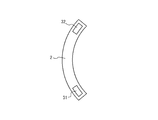
- FIG. 1 shows an example of the contact lens of this embodiment.
- the contact lens 1 includes a plurality of electrodes (one electrode 31, the other electrode 32), and the electrodes (31, 32) are in contact with the contact lens 1.
- An electroosmotic flow is generated in the contact lens 1 by applying a voltage to the electrodes (31, 32).
- the one electrode 31 and the other electrode 32 are preferably electrically connected, and may be electrically connected via the conductive member 4, for example.
- the platform is preferably the lens part 2. With the generation of the electroosmotic flow, for example, the water contained in the contact lens flows from one electrode 31 toward the other electrode 32.
- the contact lens of the present embodiment energizes the contact lens itself to generate an electroosmotic flow, tears and the like can be taken into the contact lens, and the contact lens can be worn for a long period of time. Is also excellent. Moreover, dry eye can be prevented and improved.
- the contact lens preferably contains a hydrogel material.
- the hydrogel material refers to a material that forms a hydrogel by dispersing it in water (dispersion medium).
- the contact lens may consist of only the electrode and the hydrogel material.
- the contact lens preferably has a fixed charge
- the hydrogel material contained in the contact lens preferably has a fixed charge.
- the "fixed charge” refers to a charge that is fixed and exists in the region of an ophthalmic medical device (for example, a porous material of a contact lens), and the charge contained in a substance that flows in and out of a contact lens is It shall not be included. Further, “having a fixed charge” means that the amount of an ophthalmic medical device such as a contact lens per unit mass is 1 C/g or more on average for the entire lens.
- the contact lens preferably includes an electrode and a lens portion 2 having a function as a lens.
- the lens portion is preferably made of a hydrogel material.
- the hydrogel material include agar, gelatin, agarose, xanthan gum, gellan gum, scleroti gum, arabia gum, tragacanth gum, karaya gum, cellulose gum, tamarind gum, guar gum, locust bean gum, glucomannan, chitosan, carrageenan, quince seed, galactan.
- the hydrogel material preferably contains a monomer unit having a silicone chain from the viewpoint of improving oxygen permeability.
- the monomer having a silicone chain include trimethylsiloxydimethylsilylmethyl(meth)acrylate, trimethylsiloxydimethylsilylpropyl(meth)acrylate, methylbis(trimethylsiloxy)silylpropyl(meth)acrylate, and tris(trimethylsiloxy).
- Silylpropyl(meth)acrylate mono[methylbis(trimethylsiloxy)siloxy]bis(trimethylsiloxy)silylpropyl(meth)acrylate, tris[methylbis(trimethylsiloxy)siloxy]silylpropyl(meth)acrylate, methylbis(trimethylsiloxy)silyl Propylglyceryl(meth)acrylate, tris(trimethylsiloxy)silylpropylglyceryl(meth)acrylate, mono[methylbis(trimethylsiloxy)siloxy]bis(trimethylsiloxy)silylpropylglyceryl(meth)acrylate, trimethylsilylethyltetramethyldisiloxypropylglyceryl (Meth)acrylate, trimethylsilylmethyl (meth)acrylate, trimethylsilylpropyl (meth)acrylate, trimethylsilylpropylglyceryl (meth)acrylate, trimethylsilyloxyd
- the above hydrogel material contains a monomer unit having an ethylenically unsaturated group which is a polymerizable group at both ends, from the viewpoint that the resulting polymer has a polymer crosslinked structure and is excellent in physical strength. You can leave.
- the monomer having an ethylenically unsaturated group which is a polymerizable group at both ends may be a monomer having a structure derived from a hydrophilic polymer added.
- hydrophilic polymers include polyethylene glycol, polypropylene glycol, polyvinyl alcohol, polyvinylpyrrolidone, poly (meth) acrylic acid, poly (meth) acrylate, poly (2-hydroxyethyl (meth) acrylate), and the like. Examples thereof include polytetrahydrofuran, polyoxetane, polyoxazoline, polydimethylacrylamide, polydiethylacrylamide, poly(2-methacryloyloxyethylphosphorylcholine) and the like.
- the hydrogel material may include a hydrophilic monomer unit.
- hydrophilic monomer examples include (meth) acrylamide; 2-hydroxyethyl (meth) acrylate, hydroxypropyl (meth) acrylate, hydroxybutyl (meth) acrylate and other hydroxyalkyl (meth) acrylates; 2-dimethylaminoethyl.
- alkyl)aminoalkyl (meth)acrylates such as (meth)acrylate and 2-butylaminoethyl (meth)acrylate; alkylene glycol mono(meth)acrylates such as ethylene glycol mono(meth)acrylate and propylene glycol mono(meth)acrylate Polyalkylene glycol mono (meth) acrylates such as polyethylene glycol mono (meth) acrylate and polypropylene glycol mono (meth) acrylate; ethylene glycol allyl ether; ethylene glycol vinyl ether; (meth) acrylic acid; aminostyrene; hydroxystyrene; vinyl acetate Glycidyl (meth)acrylate; allyl glycidyl ether; vinyl propionate; N,N-dimethylmethacrylamide, N,N-diethylmethacrylamide, N-(2-hydroxyethyl)methacrylamide, N-isopropylmethacrylamide, methacrylo
- the hydrogel material is methyl (meth) acrylate, ethyl (meth) acrylate, isopropyl (meth) acrylate, n-propyl (meth) from the viewpoint of adjusting the hardness of the contact lens to adjust the hardness and softness.
- the hardness adjusting monomer unit is preferably 1 to 30% by mass, more preferably 3 to 20% by mass, based on 100% by mass of the hydrogel material.
- a copolymer containing a structural unit derived from hydroxyethyl methacrylate, a copolymer containing a structural unit derived from vinylpyrrolidone, a copolymer containing a structural unit derived from dimethylacrylamide, Polyvinyl alcohol is preferred, and a copolymer containing hydroxyethyl methacrylate as a constituent unit is more preferred from the viewpoint of obtaining a hydrogel material having pores particularly suitable for absorbing and discharging water from a contact lens. These may be used alone or in combination of two or more.
- the hydrogel material having a fixed charge is a gel material obtained by introducing a functional group having a fixed charge into a hydrogel material having no fixed charge, or a polymer (polymer) containing a monomer unit having a fixed charge.
- the gel material include a gel material, which is a polymer (polymer) containing a monomer unit having a fixed charge, and a copolymer of a non-charged monomer and a monomer having a fixed charge is preferable. Coalescence is more preferred.
- the fixed charge may be either positive charge and/or negative charge as long as the amount of one of positive charge and negative charge is large, but it is preferably either positive charge or negative charge.
- a monomer unit having a fixed charge a monomer unit having a negative charge is preferable, and a monomer unit containing at least one selected from the group consisting of a sulfonic acid group, a carboxyl group, a phosphoric acid group and an amino group.
- a unit derived from a body or a salt thereof is more preferable, and a unit derived from a monomer containing a sulfonic acid group or a carboxyl group or a salt thereof, from the viewpoint of obtaining an electroosmotic flow suitable for contact lens applications. Is more preferable, and a unit derived from a monomer containing a carboxyl group or a salt thereof is particularly preferable.
- the monomer unit having a fixed charge is preferably a monomer unit having at least one selected from the group consisting of a sulfonic acid group, a carboxyl group, a phosphoric acid group, and an amino group, and is preferably a sulfonic acid group or a carboxyl group. Is more preferable, and a monomer unit having a carboxyl group is still more preferable.
- non-chargeable monomer examples include hydroxyethyl methacrylate, ethylene glycol diacrylate, methyl methacrylate, N-vinylpyrrolidone, dimethylacrylamide, glycerol methacrylate, vinyl alcohol and the like.
- the non-chargeable monomers may be used alone or in combination of two or more.
- the non-chargeable monomer is hydroxyethyl methacrylate, from the viewpoint of obtaining a contact lens with more excellent strength and flexibility, and the content of hydroxyethyl methacrylate units is 100% by mass of the hydrogel material.
- the content is preferably 78 to 93% by mass.
- Examples of the monomer having a fixed charge include acrylic acid, methacrylic acid, itaconic acid, 1-(2-methacryloyloxyethyl) succinate, ⁇ -carboxyethyl acrylate, itaconic acid, maleic acid, fumaric acid, crotonic acid.
- Carboxyl group-containing monomer such as isocrotonic acid; 2-acrylamido-2-methyl-propanesulfonic acid, styrenesulfonic acid, vinylsulfonic acid, (meth)acrylsulfonic acid, (meth)acrylamidepropanesulfonic acid, sulfopropyl(meth) Sulfonic acid group-containing monomers such as acrylate and (meth)acryloyloxynaphthalene sulfonic acid; Phosphoric acid group-containing monomers such as 2-hydroxyethyl acryloyl phosphate; 2-Dimethylaminoethyl (meth)acrylate, 2-butylaminoethyl (meth) Acrylates, (alkyl)aminoalkyl (meth)acrylates such as aminoethyl (meth)acrylate, amino group-containing monomers such as aminostyrene; and the like, and salts thereof.
- methacrylic acid and styrene sulfonic acid are preferable from the viewpoint that an electroosmotic flow having a flow rate suitable for contact lens applications can be generated.
- the above-mentioned monomer having a fixed charge can be used alone or in combination of two or more.
- the content of the monomer unit having a fixed charge in the hydrogel material a fixed charge capable of generating an electroosmotic flow at an appropriate flow rate in the contact lens can be imparted, and the contact lens has an appropriate strength.
- the content is preferably 0.1 to 20% by mass, more preferably 2 to 15% by mass, and further preferably 3 to 10% by mass, relative to 100% by mass of the hydrogel material. ..
- the polymer in the hydrogel material is, for example, a polymerization initiator, a cross-linking agent, a polymerization accelerator, etc. are added to a monomer mixture liquid containing the monomer constituting the hydrogel material, the monomer having the fixed charge, or the like. It can be obtained by polymerization.
- polymerization initiator examples include peroxides such as lauroyl peroxide, cumene hydroperoxide and benzoyl peroxide, which are general radical polymerization initiators, and 2,2′-azobis(2,4dimethylvaleronitrile) (V -65) etc., such as azobisvaleronitrile, azobisisobutyronitrile (AIBN) and the like can be used.
- peroxides such as lauroyl peroxide, cumene hydroperoxide and benzoyl peroxide
- benzoyl peroxide which are general radical polymerization initiators
- V -65 2,2′-azobis(2,4dimethylvaleronitrile)
- AIBN azobisisobutyronitrile
- cross-linking agent examples include allyl methacrylate, vinyl methacrylate, 4-vinylbenzyl methacrylate, 3-vinylbenzyl methacrylate, methacryloyloxyethyl acrylate, ethylene glycol dimethacrylate, diethylene glycol dimethacrylate, diethylene glycol diallyl ether, triethylene glycol dimethacrylate, tetraethylene.
- the cross-linking agent is preferably 1 part by mass or less, more preferably 0.8 parts by mass or less, and preferably 0.05 parts by mass or more, with respect to 100 parts by mass of the total amount of monomers used for polymerization. It is more preferably 0.1 part by mass or more.
- the hydrogel material is, for example, a method of solidifying a gel solution, placing the above-mentioned monomer mixed solution in a contact lens mold of metal, glass, plastic, etc., hermetically sealing it, and gradually or continuously for 25 to 25 times by a thermostat or the like. It can be obtained by a method of raising the temperature in the range of 120° C. and polymerizing in 5 to 120 hours. In the polymerization, ultraviolet rays, electron beams, gamma rays and the like may be used. Further, water or an organic solvent may be added to the above-mentioned monomer mixed solution, and solution polymerization may be applied.
- the obtained contact lens may be hydrated and swollen to form a hydrogel.
- the liquid used for hydration swelling include water contained in the contact lens described later.
- the swelling liquid can be heated to 60 to 100° C. and immersed for a certain period of time to quickly bring into a hydrated and swollen state.
- the swelling treatment also makes it possible to remove the unreacted monomer contained in the polymer.
- the water contained in the contact lens may be an aqueous solution containing ions having a charge opposite to the fixed charge from the viewpoint of generating an electroosmotic flow.
- anion ions contained in the aqueous solution include amino acid ions (natural amino acid ions, non-natural amino acid ions), chloride ions, citrate ions, lactate ions, succinate ions, phosphate ions, malate ions, pyrrolidone carbonates.
- Examples thereof include acid ion, sulfocarbonate ion, sulfate ion, nitrate ion, phosphate ion, carbonate ion, perchlorate ion, and the like, and as the natural amino acid, glycine, alanine, valine, leucine, isoleucine, phenylalanine, tyrosine. , Threonine, serine, proline, tryptophan, methionine, cysteine, aspartic acid, glutamic acid, asparagine, glutamine, lysine, arginine, histidine, and non-natural amino acids include hydroxyproline, cystine, thyroxine and the like.
- Examples of the cation ions contained in the aqueous solution include K + , Na + , Ca 2+ , Mg 2+ and the like.
- Examples of the aqueous solution include tear fluid, artificial tear fluid, physiological saline, Ringer's solution, and the like.
- the aqueous solution may contain a drug.
- the amount of fixed charge per unit mass of the contact lens is preferably 1 to 200 C / g, more preferably 20 to 200 C / g from the viewpoint of being able to generate an electroosmotic flow having an appropriate flow velocity in the contact lens. It is 150 C/g, more preferably 30 to 100 C/g. In the present specification, the amount of fixed charge per unit mass can be measured by a zeta potential measuring device or the like.
- the thickness of the contact lens is preferably 0.05 to 0.20 mm.
- the contact lens 1 has a plurality of electrodes, at least some of which are in contact with the contact lens.
- the number of electrodes may be two or more, but it is preferable that the number of electrodes is two, that is, a positive electrode and a negative electrode. It is preferable that the plurality of electrodes are electrically connected to each other.
- the electrode may be provided on the surface of the contact lens (FIG. 2) or may be embedded inside the contact lens (for example, inside the hydrogel material of the lens portion 2) (FIG. 3).
- the electrode surface When provided on the surface of the contact lens, the electrode surface may be covered with the outer surface cover 5 from the viewpoint of protecting the surface of the eyeball and the back of the eyelid.
- the electrodes are preferably arranged at the end of the contact lens from the viewpoint that an electroosmotic flow can be generated in the entire contact lens.
- the total length of the line segment is 100%, and 0 to 30% from one end
- One electrode 31 may be provided at that position, and the other electrode 32 may be provided at any of positions 0 to 30% from the other end.
- the electrode may be provided on the surface of the contact lens (FIG. 2), or the water can be retained in the entire lens, and the electrode can be arranged closer to the tear meniscus or the lacrimal gland, whereby the tear absorption efficiency is further improved.
- the contact lens may be provided on the side surface of the contact lens (FIG. 4).
- To be provided on the side surface of the contact lens means to be provided at a position 0% from the one end or the other end described above.
- the plurality of electrodes may be provided at positions having the same distance from the center of the contact lens, or may be provided at different positions.
- the electrodes include metal electrodes and bio electrodes. Among them, one of the electrodes is preferably an oxygen electrode, and the cathode is preferably an oxygen electrode.
- the material for the electrode include carbon materials such as carbon nanotubes, ketjen black, glassy carbon, graphene, fullerene, carbon fiber, carbon fabric, and carbon airgel; polyaniline, polyacetylene, polypyrrole, poly(p-phenylene vinylene), polythiophene, Conductive polymers such as poly(p-phenylene sulfide); semiconductors such as silicone, germanium, indium tin oxide (ITO), titanium oxide, copper oxide, silver oxide; gold, platinum, titanium, aluminum, tungsten, copper, iron, Examples thereof include metals such as palladium.
- ITO indium tin oxide
- a combination of a positive electrode (cathode) and a negative electrode (anode) a combination of a metal electrode and an oxygen electrode (metal) such as a combination of aluminum and a carbon electrode (CF/CNT, an electrode obtained by modifying a carbon fabric with carbon nanotubes). /Oxygen battery) and the like.
- the electrode includes at least one electrode carrying an enzyme that catalyzes a redox reaction.
- the enzyme that catalyzes the reduction reaction carried on the positive electrode (cathode) include bilirubin oxidase (BOD), glucose oxidase, glucose dehydrogenase, amino acid oxidase, lactic acid oxidase, laccase, Cu efflux oxidase (Cueo), and ascorbin.
- BOD bilirubin oxidase
- glucose oxidase glucose dehydrogenase
- amino acid oxidase lactic acid oxidase
- laccase laccase
- ascorbin ascorbin.
- acid oxidase and in particular, bilirubin oxidase (BOD) is preferable from the viewpoint of being capable of absorbing and discharging water for a long period of time and generating an appropriate electroosmotic flow in the lens
- Examples of the enzyme that catalyzes the oxidation reaction carried on the negative electrode (anode) include, for example, fructose dehydrogenase (D-Fructose Dehydrogenase, FDH), glucose oxidase, glucose dehydrogenase (Glucose Dehydrogenase, GDH), alcohol oxidase, alcohol dehydrogenase, lactate oxidase. , Lactate dehydrogenase and the like are preferable, and fructose dehydrogenase (FDH) is particularly preferable from the viewpoint that the enzyme reaction system can be simplified because a mediator (coenzyme) is not required.
- FDH fructose dehydrogenase
- FDH fructose dehydrogenase
- FDH fructose dehydrogenase
- FDH fructose dehydrogenase
- FDH fructose dehydrogenase
- FDH fructose dehydrogenas
- the enzyme preferably contains at least one selected from the group consisting of bilirubin oxidase and fructose dehydrogenase, and a combination of an electrode containing BOD and an electrode containing FDH is preferable.
- the combination of BOD and FDH is preferable because it can exhibit high activity at around pH 5.
- the enzymes that catalyze these reduction reactions may be used alone or in combination of two or more.
- the material of the conductive member 4 examples include carbon materials such as carbon nanotube, Ketjen black, glassy carbon, graphene, fullerene, carbon fiber, carbon fabric, carbon airgel; polyaniline, polyacetylene, polypyrrole, poly(p-phenylene vinylene).
- Conductive polymers such as polythiophene and poly(p-phenylene sulfide); semiconductors such as silicone, germanium, indium tin oxide (ITO), titanium oxide, copper oxide and silver oxide; gold, platinum, titanium, aluminum, tungsten, copper
- the metal include iron, palladium, stainless steel, and the like, and the conductive polymer is particularly preferable from the viewpoint of flexibility and biocompatibility.
- the conductive member 4 may be electrically connected between the electrodes through the surface or inside of the contact lens, or may be connected to a power source outside the contact lens.
- the external power supply may be connected via an inductor or a capacitor.
- the conductive member 4 may be one in which a circuit made of a conductive polymer is formed on the surface of the lens portion 2 by using a printing technique.
- the outer surface cover 5 may be provided only on the electrode surface, or may be provided on the entire lens surface (FIG. 2).
- the outer surface cover preferably has flexibility and is compatible with the outer surface of the living tissue 50.
- Examples of the hydrogel used for the outer surface cover include the same hydrogel materials as those used for the contact lenses described above.
- the outer cover may have the same composition as the hydrogel material of the contact lens or a different composition.
- the hydrogel for the outer cover may be used alone or in combination of two or more.
- the electrodes (31, 32) and the conductive member 4 may be provided, for example, by impregnating the electrode and the conductive member in a gel solution or a monomer solution, and then solidifying or polymerizing the electrodes or the electrodes on the contact lens surface.
- a conductive member may be placed and covered with an external cover.
- the contact lens of the present embodiment can be used, for example, as a contact lens worn on the eyes of humans or mammals other than humans.
- the above-mentioned ocular medical device is, for example, an ocular stent.
- the above-mentioned ocular stent includes, for example, a stent including a platform and a plurality of electrodes provided in contact with the platform, and generating an electroosmotic flow between the plurality of electrodes.
- the shape of the ocular stent may be, for example, a columnar shape, a conical shape, a polygonal pillar shape, a polygonal pyramid shape, a spherical shape, or a combination thereof, and may have a bent structure.
- the cross-sectional shape of the ocular stent may be an elliptical shape, a circular shape, a polygonal shape, or the like, and all cross sections may have the same shape or different cross sections.
- the ocular stent may be provided with a protrusion on the outside to prevent the stent from being displaced from the insertion position after being inserted.
- the ocular stent is preferably hollow, and more preferably hollow from one end to the other end.
- the ocular stent preferably has a cylindrical portion, and may be composed of only the cylindrical portion.
- the ocular stent may have a cylindrical portion having an outer diameter of 50 to 500 ⁇ m and a length of 0.1 to 5 mm.
- the ocular stent may have a mesh-like surface with holes on the outer surface, or may not have holes on the surface.
- the platform of the ocular stent may be made of metal or resin.
- the resin include polyolefin resin, polyester resin, polyamide resin, polyurethane resin, and silicone resin.
- the metal of the platform and the electrode may be covered with the resin. Further, the platform and the electrode may be coated with heparin or the like, or may be coated with a drug having a fixed charge (for example, a drug having an anticoagulant effect).
- the platform of the ocular stent preferably has a fixed charge. From the viewpoint of generating electroosmotic flow in the entire ocular stent, it is preferable that a portion having a fixed charge is provided continuously from one end to the other end of the platform, and if the platform is cylindrical, The entire inner surface of the cylinder preferably has a fixed charge. The amount of the fixed charge per unit mass of the stent is preferably 1 C/g to 200 C/g.
- the ocular stent preferably contains a hydrogel material, and more preferably contains a portion made of the hydrogel material in the platform. Examples of the hydrogel material include the same as the hydrogel material in the above contact lens. When the ocular stent has a cylindrical shape, the entire inner surface of the cylinder is preferably made of a hydrogel material.
- the ocular stent has a plurality of electrodes, at least a portion of which is provided in contact with the platform.
- the number of electrodes may be two or more, but it is preferable that the number of electrodes is two, that is, a positive electrode and a negative electrode. It is preferable that the plurality of electrodes are electrically connected to each other.
- the electrode may be provided on the surface of the platform or may be embedded inside the platform.
- the electrodes are preferably provided in the vicinity of the upper surface and the vicinity of the bottom surface, and are provided with the inner wall surface of the cylinder on the upper surface and the inner wall surface of the cylinder on the bottom surface, or the side surface of the upper surface. And more preferably on the side surface of the bottom surface.
- Examples of the electrode of the ocular stent include the same as the electrode of the contact lens described above.
- the plurality of electrodes may be electrically connected via a conductive member.
- the conductive member include the same as the conductive member in the above contact lens.
- the above-mentioned ocular stent can be used as a stent that can be inserted into the eyes of humans or mammals other than humans, and for example, can be used as a stent that can be inserted into Schlemm's canal.
- the above-mentioned ocular stent for example, a negative charge is fixed to the inner surface of the cylindrical shape, in the case where a positive electrode is provided at one end and a negative electrode is provided at the other end, an aqueous solution around the ocular stent is formed on the inner surface of the ocular stent.
- An electroosmotic flow flowing toward the negative electrode can be generated.
- aqueous humor and the like accumulated in the eye can be discharged, and the aqueous solution can be injected into the eye from outside the eye.
- the absorption and / or discharge of water from the ophthalmic medical device of the present embodiment generates an electroosmotic flow inside and / or outside the ophthalmic medical device by using the ophthalmic medical device including a plurality of electrodes. ..
- the case where a contact lens is used will be described below as an example.
- the direction in which the aqueous solution flows can be adjusted by, for example, the type of fixed charge, the arrangement of the negative electrode and the positive electrode, and the like.
- the electroosmotic flow can be adjusted by, for example, the porosity of the hydrogel material, the amount of fixed charges of the hydrogel material, the charge concentration of the aqueous solution, the voltage applied between the electrodes, the type of the electrodes, and the like.
- the electroosmotic flow in the lens decreases as the lens dries (Example 3, FIG. 7C).
- the electroosmotic flow can be adjusted by increasing the water content of the lens by adding artificial tears to the lens.
- the inventors have found that there is a proportional relationship between the water content in the contact lens and the conductivity (Example 1, FIG. 5D).
- electroosmotic flow in a lens can be ascertained by measuring the conductivity of the contact lens.
- the contact lens is preferably energized with a current between the plurality of electrodes.
- a constant voltage may be applied by direct current between the plurality of electrodes, or a varying voltage may be applied.
- the voltage is preferably 1.5 V or less, more preferably 10 mV to 800 mV.
- the electroosmotic flow in the contact lens may be generated continuously or intermittently.
- the copolymer S1 comprises 2-hydroxyethyl methacrylate (HEMA, uncharged monomer) 92% by mass, methacrylic acid (MA) 2% by mass, ethylene glycol diacrylate (EDMA) 0.2% by mass, methyl methacrylate (MMA). ) 3% by mass is polymerized with 0.1% by mass of V-65 as a polymerization initiator, and the copolymer S1 obtained by sterilizing after sodium chloride after elution treatment with water, neutralization treatment Say.
- the copolymers S2 to S5 are copolymers obtained in the same manner as the copolymer S1 except that the amounts of the monomers blended are shown in Table 1.
- the amount of fixed electrolysis per unit mass of the copolymers S1 to S5 is about 20 C/g for the copolymer S1, about 50 C/g for the copolymer S2, and about 70 C/g for the copolymer S3.
- S4 is about 100 C/g and copolymer S5 is about 150 C/g.
- the electrical resistance was measured by a glass plate (short side 26 mm, long side 4 mm, short side 4 mm, long side 7.5 mm, interval 6 mm) having two gold electrodes, a positive electrode and a negative electrode obtained by sputtering and patterning a gold electrode.
- a molded piece was attached so as to straddle the electrodes on a side of 32 mm and a thickness of 1 mm), and the method was carried out by the AC impedance method using an electrochemical analyzer ALS 7082E (BAS Co., Ltd.).
- an AC frequency of 1 kHz to 100 kHz, a voltage amplitude of 5 mV, and an absolute value of impedance at 82.5 kHz as an electric resistance were adopted.
- the molded piece was infiltrated with McIlvaine buffer (150 mM, pH 7.0) as an electrolyte solution, and all experiments were carried out under the conditions of maintaining a temperature of 25 ° C. and a humidity of 35%.
- McIlvaine buffer 150 mM, pH 7.0
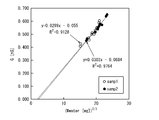
- FIG. 5C the relationship between the weight of water (mg) and the resistance value ( ⁇ ) shown in FIG. 5C was obtained from the change in weight (FIG. 5A) and the change in resistance (FIG. 5B) during drying.
- FIG. 5D was obtained in consideration of the change in the cross-sectional area of the sample due to drying. It was confirmed that the water content and the conductivity were in a proportional relationship, and it was verified that the proper measurement was performed (FIG. 5D).
- Example 2 Using the above-mentioned copolymers S1 to S5, a molded piece (corresponding to the thickness of a contact lens) having a thickness of 0.15 mm is produced, and a glove box and a humidifier are provided to slow down the evaporation rate and facilitate measurement.
- the relationship between the water content and the conductivity was obtained in the same manner as in Example 1 except that the humidity was maintained at 70% by using. From this result, the relationship between the water content and the conductivity (slope of a line) does not change significantly depending on the gel composition, but as the content of methacrylic acid (monomer having a fixed charge) increases, the conductivity becomes more conductive. The value was shown to increase. This indicates that the counter cation (Na + ) of the carboxy group derived from methacrylic acid is the main conductive carrier.
- Example 3 Hydrogel water retention by electroosmotic flow- Utilizing the fact that the water content can be monitored by the conductivity, the water retention of the hydrogel sheet (0.15 mm thickness) by the electroosmotic flow was evaluated.
- a hydrogel sheet is sandwiched between two carbon electrodes (for electroosmotic flow generation), two positive and negative electrodes arranged on an acrylic plate at 6 mm intervals, and two gold electrodes (for conductivity measurement), which are patterned on a glass plate.
- the top and bottom of the gel sheet were in contact with each other with a length of 4 mm, and the intermediate portion having a length of 6 mm was exposed so as not to prevent natural drying (FIGS. 7A and 7B).
- the hydrogel sheet was a copolymer S4 in which the amount of methacrylic acid added was 10 wt%. For handling, it was prepared using a copolymer S4 having mechanical strength. Since no voltage was applied for the first 25 minutes, a decrease in conductivity due to natural drying was observed. After that, for 30 minutes, the buffer solution was pumped up by energization (about 0.2 mA) by applying 4 V to the carbon electrode, so that the conductivity reduced by natural drying was recovered.
- the polarity of voltage application is negative in the upper part of the hydrogel sheet and positive in the lower part of the hydrogel sheet. Then, when the polarity was reversed and 4 V was applied to the carbon electrode and the buffer aqueous solution was discharged from the hydrogel sheet, a decrease in conductivity was observed, which indicates that the hydrogel sheet was dried again (FIG. 7C). These results indicate that the hydrogel sheet can be prevented from being dried by the energization by the voltage application.
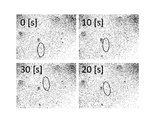
- Example 4 The generation of electroosmotic flow was confirmed by direct observation.
- a 4 mm end of the hydrogel sheet on the negative electrode side was immersed in a McKilvein buffer aqueous solution (pH 7.0), and electricity was applied (about 0.2 mA) by applying 4 V.
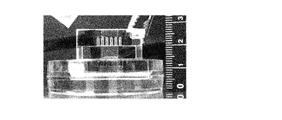
- FIG. 8B shows a result of observing a portion exposed by attaching a self-made jig to the dry eye observation device (Kowa DR-1 ⁇ ) shown in FIG. 8A and generating an upward electroosmotic flow.
- the electroosmotic flow is generated inside the hydrogel sheet, and what is observed here is the movement of the surface water film dragged by the flow inside the hydrogel sheet, or the flow due to the buffer solution overflowing from the inside of the gel.
- Example 5 Water retention of contact lenses- [1] Energization by External Power Supply A contact lens (MA 5 wt%) having the composition of the copolymer S2 was placed on the cornea of a pig eye, and about 1/3 of the contact lens was dipped in an aqueous solution of PBS buffer. Voltage (3 V or -3 V) was applied using a product (FIG. 9A). The contact lens had a thickness of 0.15 mm. Further, the tweezers-shaped electrode was fixed in position by pinching the end portion of the contact lens. From the results shown in FIG.
- the aluminum electrode and the carbon electrode were electrically connected by a stainless steel conductive member passing through the lens (not shown).
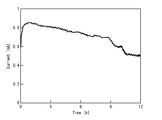
- the current value was measured by a measuring device connected to the aluminum electrode and the carbon electrode outside the lens. From the results shown in FIG. 10B, due to the effect of the upward electroosmotic flow, the current reflecting the wet state continued to flow even after 12 hours. This result indicates that by equipping the contact lens with a battery, it is possible to absorb and retain water without wiring to the outside.
- the anode is not limited to aluminum, but in principle metal-air batteries and all batteries are applicable.
- a contact lens (thickness 0.15 mm) produced by using the copolymer S2 was provided with a fructose/O 2 bio-battery by an enzyme electrode (FIG. 11A ), and was covered on a pig eye to generate electricity. The water retention by the permeation flow was verified.
- the enzyme electrode of the anode is a carbon cloth (CF) on which fructose dehydrogenase (FDH) is immobilized
- the enzyme electrode of the cathode is CF on which bilirubin oxidase (BOD) is immobilized.
- FDH oxidizes fructose and BOD is an enzyme that catalyzes an electrode reaction that reduces O 2 .
- McIlvaine buffer solution 150 mM, pH 5.0
- the FDH electrode and the BOD electrode were electrically connected by a conductive member made of stainless steel.
- the current value was measured by a measuring device connected to the FDH electrode and the BOD electrode.
- FIG. 11B stable energization was confirmed for 12 hours or more, suggesting the possibility that water could be absorbed and retained by the biocell using the enzyme electrode.
- the enzyme used for the enzyme electrode all redox enzymes such as glucose oxidase, glucose dehydrogenase, amino acid oxidase, lactate oxidase, and laccase can be applied.
- the contact lens of the present invention has an appropriate water absorption capacity and/or water discharge capacity, and by increasing the flow rate of tear fluid on the front surface and the ocular surface of the contact lens, tear fluid can be spread over the corneal surface and dried. The feeling can be reduced. As a result, the contact lens can be worn for a long time. Furthermore, when the water contained in the contact lens contains a drug or the like, when the water absorbed in the lens is released, the drug or the like contained in the contact lens is also released. Can be effectively spread over the eye surface.
Landscapes
- Health & Medical Sciences (AREA)
- Ophthalmology & Optometry (AREA)
- General Health & Medical Sciences (AREA)
- Veterinary Medicine (AREA)
- Heart & Thoracic Surgery (AREA)
- Vascular Medicine (AREA)
- Life Sciences & Earth Sciences (AREA)
- Animal Behavior & Ethology (AREA)
- Biomedical Technology (AREA)
- Public Health (AREA)
- Engineering & Computer Science (AREA)
- Physics & Mathematics (AREA)
- Oral & Maxillofacial Surgery (AREA)
- Transplantation (AREA)
- Nuclear Medicine, Radiotherapy & Molecular Imaging (AREA)
- Surgery (AREA)
- Cardiology (AREA)
- General Physics & Mathematics (AREA)
- Optics & Photonics (AREA)
- Eyeglasses (AREA)
- Prostheses (AREA)
- Compositions Of Macromolecular Compounds (AREA)
- Materials For Medical Uses (AREA)
Priority Applications (5)
| Application Number | Priority Date | Filing Date | Title |
|---|---|---|---|
| JP2021503300A JP7352979B2 (ja) | 2019-03-04 | 2019-03-04 | 眼用医療機器の水分の吸収又は排出方法及び眼用医療機器 |
| PCT/JP2019/008475 WO2020178964A1 (ja) | 2019-03-04 | 2019-03-04 | 眼用医療機器の水分の吸収又は排出方法及び眼用医療機器 |
| CN201980093650.6A CN113543753B (zh) | 2019-03-04 | 2019-03-04 | 眼用医疗器械的水分的吸收或排出方法及眼用医疗器械 |
| EP19918200.7A EP3936091B1 (en) | 2019-03-04 | 2019-03-04 | Method for absorbing or discharging water in ophthalmic medical device and ophthalmic medical device |
| US17/310,995 US12239527B2 (en) | 2019-03-04 | 2019-03-04 | Method of absorbing or discharging water of ophthalmic medical device and ophthalmic medical device |
Applications Claiming Priority (1)
| Application Number | Priority Date | Filing Date | Title |
|---|---|---|---|
| PCT/JP2019/008475 WO2020178964A1 (ja) | 2019-03-04 | 2019-03-04 | 眼用医療機器の水分の吸収又は排出方法及び眼用医療機器 |
Publications (1)
| Publication Number | Publication Date |
|---|---|
| WO2020178964A1 true WO2020178964A1 (ja) | 2020-09-10 |
Family
ID=72338625
Family Applications (1)
| Application Number | Title | Priority Date | Filing Date |
|---|---|---|---|
| PCT/JP2019/008475 Ceased WO2020178964A1 (ja) | 2019-03-04 | 2019-03-04 | 眼用医療機器の水分の吸収又は排出方法及び眼用医療機器 |
Country Status (5)
| Country | Link |
|---|---|
| US (1) | US12239527B2 (https=) |
| EP (1) | EP3936091B1 (https=) |
| JP (1) | JP7352979B2 (https=) |
| CN (1) | CN113543753B (https=) |
| WO (1) | WO2020178964A1 (https=) |
Cited By (2)
| Publication number | Priority date | Publication date | Assignee | Title |
|---|---|---|---|---|
| CN113413541A (zh) * | 2021-06-17 | 2021-09-21 | 中央民族大学 | 一种利用环状电极的眼部离子电渗透药物输送设备及方法 |
| JP2022125941A (ja) * | 2021-02-17 | 2022-08-29 | 株式会社ティ・エム・ディ | コンタクトレンズ |
Families Citing this family (2)
| Publication number | Priority date | Publication date | Assignee | Title |
|---|---|---|---|---|
| EP4176855A1 (en) * | 2021-11-09 | 2023-05-10 | Valsigna GmbH | Glaucoma implant device |
| WO2023218324A1 (en) * | 2022-05-09 | 2023-11-16 | Alcon Inc. | Method for making embedded hydrogel contact lenses |
Citations (6)
| Publication number | Priority date | Publication date | Assignee | Title |
|---|---|---|---|---|
| CN103197437A (zh) * | 2013-04-19 | 2013-07-10 | 哈尔滨工业大学 | 光敏流体变色眼镜 |
| JP2016067401A (ja) * | 2014-09-26 | 2016-05-09 | 株式会社 東北テクノアーチ | 創傷治癒用パッチ |
| JP2017198984A (ja) * | 2016-04-14 | 2017-11-02 | ジョンソン・アンド・ジョンソン・ビジョン・ケア・インコーポレイテッドJohnson & Johnson Vision Care, Inc. | 高度な眼用デバイスのための酸素濃度を高める方法及び装置 |
| JP2018502639A (ja) * | 2015-01-22 | 2018-02-01 | アイゲート ファーマスーティカルズ,インコーポレイテッド | イオントフォレシスコンタクトレンズ |
| JP2018530003A (ja) * | 2015-10-08 | 2018-10-11 | オプトチューン アクチェンゲゼルシャフト | 調節可能な焦点距離を備えるレンズ |
| WO2018194079A1 (ja) * | 2017-04-21 | 2018-10-25 | 日本電信電話株式会社 | 生体組織貼付けパッチ |
Family Cites Families (7)
| Publication number | Priority date | Publication date | Assignee | Title |
|---|---|---|---|---|
| US5760100B1 (en) * | 1994-09-06 | 2000-11-14 | Ciba Vision Corp | Extended wear ophthalmic lens |
| JP5723293B2 (ja) * | 2008-12-31 | 2015-05-27 | アイゲート・ファーマシューティカルズ・インコーポレーテッドEyegate Pharmaceuticals, Inc. | 緩衝系を用いた経眼イオントフォレシスの装置および方法 |
| CN105739120B (zh) * | 2011-08-17 | 2019-03-15 | 东丽株式会社 | 医疗设备、涂布溶液的组合和医疗设备的制造方法 |
| US20140190839A1 (en) * | 2012-08-06 | 2014-07-10 | Google Inc. | Contact lenses having two-electrode electrochemical sensors |
| US8874182B2 (en) * | 2013-01-15 | 2014-10-28 | Google Inc. | Encapsulated electronics |
| US9383593B2 (en) * | 2014-08-21 | 2016-07-05 | Johnson & Johnson Vision Care, Inc. | Methods to form biocompatible energization elements for biomedical devices comprising laminates and placed separators |
| US20170258635A1 (en) * | 2016-03-14 | 2017-09-14 | Michael Reynard | Method and device for electrolysis of aqueous humor to treat glaucoma |
-
2019
- 2019-03-04 CN CN201980093650.6A patent/CN113543753B/zh active Active
- 2019-03-04 WO PCT/JP2019/008475 patent/WO2020178964A1/ja not_active Ceased
- 2019-03-04 JP JP2021503300A patent/JP7352979B2/ja active Active
- 2019-03-04 EP EP19918200.7A patent/EP3936091B1/en active Active
- 2019-03-04 US US17/310,995 patent/US12239527B2/en active Active
Patent Citations (6)
| Publication number | Priority date | Publication date | Assignee | Title |
|---|---|---|---|---|
| CN103197437A (zh) * | 2013-04-19 | 2013-07-10 | 哈尔滨工业大学 | 光敏流体变色眼镜 |
| JP2016067401A (ja) * | 2014-09-26 | 2016-05-09 | 株式会社 東北テクノアーチ | 創傷治癒用パッチ |
| JP2018502639A (ja) * | 2015-01-22 | 2018-02-01 | アイゲート ファーマスーティカルズ,インコーポレイテッド | イオントフォレシスコンタクトレンズ |
| JP2018530003A (ja) * | 2015-10-08 | 2018-10-11 | オプトチューン アクチェンゲゼルシャフト | 調節可能な焦点距離を備えるレンズ |
| JP2017198984A (ja) * | 2016-04-14 | 2017-11-02 | ジョンソン・アンド・ジョンソン・ビジョン・ケア・インコーポレイテッドJohnson & Johnson Vision Care, Inc. | 高度な眼用デバイスのための酸素濃度を高める方法及び装置 |
| WO2018194079A1 (ja) * | 2017-04-21 | 2018-10-25 | 日本電信電話株式会社 | 生体組織貼付けパッチ |
Non-Patent Citations (2)
| Title |
|---|
| KIM, J. ET AL.: "Wearable smart sensor systems integrated on soft contact lenses for wireless ocular diagnostics", NATURE COMMUNICATIONS, vol. 8, 2017, pages 1 - 8, XP055635553, DOI: 10.1038/ncomms14997 |
| M. FALKV. ANDORALOVM. SILOWM. D. TOSCANOS. SHLEEV, ANAL. CHEM., vol. 85, 2013, pages 6342 - 8 |
Cited By (2)
| Publication number | Priority date | Publication date | Assignee | Title |
|---|---|---|---|---|
| JP2022125941A (ja) * | 2021-02-17 | 2022-08-29 | 株式会社ティ・エム・ディ | コンタクトレンズ |
| CN113413541A (zh) * | 2021-06-17 | 2021-09-21 | 中央民族大学 | 一种利用环状电极的眼部离子电渗透药物输送设备及方法 |
Also Published As
| Publication number | Publication date |
|---|---|
| EP3936091A4 (en) | 2022-10-19 |
| US20220117724A1 (en) | 2022-04-21 |
| EP3936091A1 (en) | 2022-01-12 |
| JPWO2020178964A1 (https=) | 2020-09-10 |
| CN113543753A (zh) | 2021-10-22 |
| JP7352979B2 (ja) | 2023-09-29 |
| CN113543753B (zh) | 2024-04-19 |
| EP3936091B1 (en) | 2023-07-19 |
| US12239527B2 (en) | 2025-03-04 |
Similar Documents
| Publication | Publication Date | Title |
|---|---|---|
| JP7352979B2 (ja) | 眼用医療機器の水分の吸収又は排出方法及び眼用医療機器 | |
| JP5005147B2 (ja) | 眼科用レンズおよび組成物、並びにそれらの製造方法 | |
| JP4381297B2 (ja) | (セミ)相互侵入網目構造ハイドロゲル及びその製造方法 | |
| JP4966495B2 (ja) | LbLコーティングされた医療用デバイスおよびそれを製造する方法 | |
| Zhang et al. | Physical, chemical, and chemical− physical double network of zwitterionic hydrogels | |
| US9454021B2 (en) | Contact lenses | |
| US8999378B2 (en) | Porous electroactive hydrogels and uses thereof | |
| US20160141065A1 (en) | Porous substrate electrode body and method for producing same | |
| Zhang et al. | Antifouling and antibacterial zwitterionic hydrogels as soft contact lens against ocular bacterial infections | |
| US20180066132A1 (en) | Conductive polymeric compositions and applications | |
| TW200407224A (en) | Polymeric articles having a lubricious coating and method for making the same | |
| KR20030010654A (ko) | 의료기기의 표면 처리 | |
| JP4379778B2 (ja) | 薬物徐放性眼用レンズ | |
| JP7043405B2 (ja) | 電気活性親水性バイオポリマー | |
| JP6385775B2 (ja) | 創傷治癒用パッチ | |
| La Gatta et al. | Novel poly (HEMA‐co‐METAC)/alginate semi‐interpenetrating hydrogels for biomedical applications: Synthesis and characterization | |
| JP2026012428A (ja) | 電気浸透流ポンプ | |
| KR102541797B1 (ko) | 전기장 감응성 하이드로겔 액추에이터 및 이의 제조방법 | |
| WO2006055707A2 (en) | Composition and method for modifying contact lens shape | |
| JP4879554B2 (ja) | ポストインプリント可能なヒドロゲル材料の製造方法 | |
| CN114158254B (zh) | 医疗设备的制造方法 | |
| Farag et al. | Crosslinked polymer hydrogels | |
| Kim et al. | Stimuli-modulated delivery systems | |
| JP4855782B2 (ja) | 眼の遺伝子治療に用いられるハイドロゲル製眼用レンズ | |
| JP2023102310A (ja) | マイクロ突起、マイクロ突起アレイ、および経皮投与システム |
Legal Events
| Date | Code | Title | Description |
|---|---|---|---|
| 121 | Ep: the epo has been informed by wipo that ep was designated in this application |
Ref document number: 19918200 Country of ref document: EP Kind code of ref document: A1 |
|
| DPE1 | Request for preliminary examination filed after expiration of 19th month from priority date (pct application filed from 20040101) | ||
| ENP | Entry into the national phase |
Ref document number: 2021503300 Country of ref document: JP Kind code of ref document: A |
|
| NENP | Non-entry into the national phase |
Ref country code: DE |
|
| ENP | Entry into the national phase |
Ref document number: 2019918200 Country of ref document: EP Effective date: 20211004 |
|
| WWG | Wipo information: grant in national office |
Ref document number: 17310995 Country of ref document: US |