WO2020090813A1 - フラボノイド類の製造方法 - Google Patents
フラボノイド類の製造方法 Download PDFInfo
- Publication number
- WO2020090813A1 WO2020090813A1 PCT/JP2019/042359 JP2019042359W WO2020090813A1 WO 2020090813 A1 WO2020090813 A1 WO 2020090813A1 JP 2019042359 W JP2019042359 W JP 2019042359W WO 2020090813 A1 WO2020090813 A1 WO 2020090813A1
- Authority
- WO
- WIPO (PCT)
- Prior art keywords
- extract
- flavonoids
- extraction
- extractant
- flavonoid
- Prior art date
- Legal status (The legal status is an assumption and is not a legal conclusion. Google has not performed a legal analysis and makes no representation as to the accuracy of the status listed.)
- Ceased
Links
Images
Classifications
-
- C—CHEMISTRY; METALLURGY
- C07—ORGANIC CHEMISTRY
- C07D—HETEROCYCLIC COMPOUNDS
- C07D311/00—Heterocyclic compounds containing six-membered rings having one oxygen atom as the only hetero atom, condensed with other rings
- C07D311/02—Heterocyclic compounds containing six-membered rings having one oxygen atom as the only hetero atom, condensed with other rings ortho- or peri-condensed with carbocyclic rings or ring systems
- C07D311/04—Benzo[b]pyrans, not hydrogenated in the carbocyclic ring
- C07D311/22—Benzo[b]pyrans, not hydrogenated in the carbocyclic ring with oxygen or sulfur atoms directly attached in position 4
- C07D311/26—Benzo[b]pyrans, not hydrogenated in the carbocyclic ring with oxygen or sulfur atoms directly attached in position 4 with aromatic rings attached in position 2 or 3
- C07D311/28—Benzo[b]pyrans, not hydrogenated in the carbocyclic ring with oxygen or sulfur atoms directly attached in position 4 with aromatic rings attached in position 2 or 3 with aromatic rings attached in position 2 only
- C07D311/30—Benzo[b]pyrans, not hydrogenated in the carbocyclic ring with oxygen or sulfur atoms directly attached in position 4 with aromatic rings attached in position 2 or 3 with aromatic rings attached in position 2 only not hydrogenated in the hetero ring, e.g. flavones
Definitions
- the present disclosure relates to a method for producing flavonoids.
- Flavonoids are a group of naturally occurring organic compounds and are contained in flowers, leaves, roots, stems, fruits, seeds, etc. of various plants including citrus fruits and beans. Flavonoids have different characteristics and actions depending on the type, but most of them have a strong antioxidant action.
- polymethoxyflavone which is a flavonoid contained in citrus fruits, is known to have an antioxidant action, a carcinogenesis inhibiting action, an antibacterial action, an antiviral action, an antiallergic action, a melanin production inhibiting action, a blood glucose level inhibiting action, and the like. Therefore, it is expected to be applied to various uses such as pharmaceuticals, health foods, and cosmetics.
- flavonoids As a method for producing flavonoids from citrus fruits, for example, a method is known in which flavonoids are extracted from a citrus peel and the like with an aqueous ethanol solution, and the extracted flavonoids are recovered from the solution (see, for example, Patent Document 1).
- the conventional flavonoid production method has a problem that the concentration of the obtained flavonoid is low. Therefore, it is required to develop a production method capable of improving the concentration of the obtained flavonoid.
- the present disclosure has been made in view of the above problems of the conventional art, and an object of the present disclosure is to provide a method for producing flavonoids that can improve the concentration of the obtained flavonoids.
- an extraction step of contacting an extractant containing flavonoids with an extractant containing liquefied dimethyl ether, and extracting an extract containing flavonoids, and an extractant from the extract Vaporizing and removing at least a part of the flavonoids to obtain an extract containing flavonoids, and a method for producing flavonoids.
- the extraction obtained is compared with the conventional method of extracting using an aqueous ethanol solution or the like.
- the concentration of flavonoids in the product can be greatly improved.
- not only flavonoids but also glycosides thereof can be extracted.
- the present inventors can extract flavonoids from dimethyl ether as a gas at normal temperature and normal pressure (25 ° C., 0.1 MPa) and a liquefied gas that can be easily liquefied at a pressure of 1 MPa or less. It was found that it is a solvent with extremely rare properties.
- flavonoids can be extracted at a high concentration by liquefying this dimethyl ether and using it as an extractant.
- the liquefied gas easily becomes a gas when the pressure is returned to normal pressure
- the extractant contained in the extract can be easily reduced to zero and vaporized by setting the pressure to normal pressure.
- the dimethyl ether can be recovered as a gas, and the waste solvent can be significantly reduced as compared with the conventional technique.
- the flavonoids may contain at least one of sudatin and glycosidase. According to the above-mentioned production method, sudatin and glycosides can be extracted particularly efficiently.
- the extraction material may include Sudachi pericarp. According to the above-mentioned production method, flavonoids can be extracted particularly efficiently from the extract containing the Sudachi peel.
- the production method may further include an acid treatment step of acid-treating the extract before the extraction step.
- an acid treatment step of acid-treating the extract before the extraction step.
- the production method may further include, after the vaporization step, a decomposition step of decomposing at least a part of the flavonoid glycosides in the extract into flavonoids.
- a decomposition step of decomposing at least a part of the flavonoid glycosides in the extract into flavonoids.
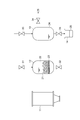
- FIG. 3 is a schematic diagram for explaining one embodiment of a method for producing flavonoids of the present disclosure.
- the numerical range indicated by using “to” indicates the range including the numerical values before and after “to” as the minimum value and the maximum value, respectively.
- the upper limit value or the lower limit value of the numerical range of a certain stage can be arbitrarily combined with the upper limit value or the lower limit value of the numerical range of another stage.
- the upper limit value or the lower limit value of the numerical range may be replaced with the values shown in the examples.
- “A or B” may include either one of A and B, or may include both.
- the materials exemplified in the present specification can be used alone or in combination of two or more kinds.
- FIG. 1 is a schematic diagram for explaining one embodiment of the method for producing flavonoids of the present disclosure.
- the method for producing flavonoids according to this embodiment will be described with reference to FIG.
- the extractant 21 containing flavonoids is brought into contact with the extractant 22 containing liquefied dimethyl ether in the extraction tank 12.
- Liquefied dimethyl ether is contained in the liquefied gas cylinder 11 and is supplied from the liquefied gas cylinder 11 to the extraction tank 12 by opening and closing a valve 31 provided between the liquefied gas cylinder 11 and the extraction tank 12.
- the extractant 22 is preferably supplied so that the entire extractant 21 is immersed in the extractant 22.
- a filtration filter 23 is installed in the extraction tank 12, and the extraction material 21 is arranged on the filtration filter 23.
- the extraction step it is preferable to shake the extraction tank 12 and / or agitate the inside of the extraction tank 12 in order to promote extraction of flavonoids from the extraction material 21 to the extraction agent 22. By performing these operations, high-concentration flavonoids can be extracted in a shorter time.
- the liquid temperature of the extractant 22 in the extraction tank 12 is not particularly limited as long as it can keep dimethyl ether in a liquid state, but may be, for example, 80 ° C. or lower and 10 to 40 ° C. Good.
- the pressure in the extraction tank 12 is not particularly limited as long as dimethyl ether is liquid, and may be in a pressurized state or an atmospheric pressure state.
- the pressure is higher than atmospheric pressure and may be 100 MPa or less, 10 MPa or less, or 1 MPa or less.
- the liquid temperature of the extractant 22 can be raised, and the extraction of flavonoids from the extractant 21 to the extractant 22 can be promoted.
- the inside of the extraction tank 12 is in a pressurized state, the liquid temperature of the extractant 22 in the extraction tank 12 can be made equal to or higher than the boiling point of dimethyl ether at normal pressure while keeping dimethyl ether in a liquid state.
- the extraction time in the extraction step is not particularly limited, but may be 1 to 300 minutes, or 20 to 60 minutes. By setting the extraction time to 1 minute or more, the flavonoids contained in the extract 21 can be sufficiently extracted into the extract 22.
- the extraction time can be adjusted according to the conditions such as the above-described operations such as shaking and stirring, the liquid temperature of the extractant 22, the pressure in the extraction tank 12, and the like.
- the ratio of the mass of the extractant 22 to the mass of the extractant 21 is not particularly limited, but may be, for example, 1 to 1000 or 2 to 20. Good.
- the mass ratio is 1 or more, the extractant 21 and the extractant 22 are easily brought into contact with each other, and the flavonoids contained in the extractant 21 are easily extracted into the extractant 22. Further, even if this mass ratio exceeds 1000, the extraction efficiency of flavonoids is difficult to further improve, so from the viewpoint of reducing the amount of extractant 22 used and suppressing the enlargement of the extraction tank 12, the mass ratio. May be 1000 or less.
- the extraction material 24 is separated from the extraction material 21 and the extraction agent 22 by the filtration filter 23, and the extraction liquid 24 containing the extracted flavonoids and the extraction agent 22 is obtained.
- the extraction liquid 24 is transferred by opening and closing valves 32 and 33 provided between the extraction tank 12 and the vaporization tank 13. Only one of the valves 32 and 33 may be provided.
- the extraction process is usually performed with the valve 32 closed. Thereby, the flavonoids contained in the extraction material 21 can be easily extracted into the extraction material 22 sufficiently. It is also possible to continuously supply the extractant 22, extract flavonoids, and discharge the extract 24 with the valves 31, 32, and 33 opened.
- the lottery material 21 is not particularly limited as long as it contains flavonoids.
- flavonoids include flavonoids and their glycosides (hereinafter, also referred to as “flavonoid glycosides”), sugar adducts in which sugars are further bound to flavonoid glycosides, and those treated with an enzyme. Including things.
- Flavonoids are aromatic compounds having a basic structure of phenylchroman skeleton, and include flavones, flavonols, flavanones, flavanonols, isoflavones, anthocyanins, flavanols, chalcones, aurones and the like.
- the flavonoid may be polymethoxyflavone which is a flavone.
- polymethoxyflavone examples include sudatitin, demethoxysudacitin, nobiletin, tangeretin, pentamethoxyflavone, tetramethoxyflavone, and heptamethoxyflavone.
- the polymethoxyflavone may be sudatin or demethoxysudatin.
- the flavonoid may be a flavanone, hesperetin.
- the flavonoid may contain quercetin or anthocyanidin.
- Flavonoid glycosides are hydrophilic compounds having a structure in which flavonoids and sugars are linked by glycoside bonds as described above.
- the sugar that constitutes the flavonoid glycoside is not particularly limited, and examples thereof include known sugars that can form a glycoside by binding to the flavonoid described above through a glycoside bond.
- the extract 21 may include one or more of the above-mentioned flavonoids.
- the extraction fee 21 may include components other than flavonoids.
- the other component include sugar, cellulose, acid and the like.
- the content of flavonoids in the extract 21 is preferably 5 mass ppm or more, and more preferably 10 to 1000 mass ppm, based on the total solid content of the extract 21.
- the extraction material 21 plants, seaweed flowers, leaves, roots, stems, fruits, seeds and the like can be used.
- the pericarp contains a large amount of polymethoxyflavone and glycosides thereof
- the squeezed residue of citrus fruits can be preferably used.
- the extraction material 21 may be a dry powder obtained from citrus fruits, or may be a dry powder obtained from citrus peels. Examples of citrus fruits include Sudachi, Wenshu mandarin orange, ponkan, and shikwasa.
- the citrus fruits may be polymethoxyflavone such as sudatin and demethoxysudatin, and sudachi containing a large amount of glycosides thereof.
- the dry powder can be obtained by crushing plants, seaweed flowers, leaves, roots, stems, fruits, seeds and the like with a mixer or the like.
- the particle size of the dry powder may be 0.1 to 5 mm in terms of major axis diameter from the viewpoint of extraction efficiency of flavonoids.
- the extraction fee 21 may be previously subjected to acid treatment.
- the manufacturing method of the present embodiment may further include an acid treatment step of acidizing the extractant before the extraction step.
- the acid treatment can be performed by reacting the extract with an acid such as hydrochloric acid or sulfuric acid.
- the reaction is not particularly limited, but can be carried out, for example, at a temperature of 60 to 120 ° C. for 0.5 to 3 hours.
- the acid treatment step when the acid treatment step is performed, even if the decomposition step described below is not performed after the vaporization step, the flavonoid glycoside has been decomposed into flavonoids in advance, so that an extract with a high concentration of flavonoids can be obtained.
- a base such as an aqueous sodium hydroxide solution before the extraction step.
- the extractant 22 may be made of only liquefied dimethyl ether or may contain a solvent other than liquefied dimethyl ether.
- the other solvent include water, ethanol, supercritical carbon dioxide, isobutane, isobutene, normal butane, propane and the like.
- the content of liquefied dimethyl ether in the extractant 22 is preferably 50% by mass or more, and 90% by mass or more, based on the total amount of the extractant 22. Is more preferable.
- the vaporizing step at least a part of the extractant 22 is vaporized and removed from the extract liquid 24 obtained in the extracting step to obtain an extract 26 containing flavonoids.
- the extraction liquid 24 transferred to the vaporization tank 13 is brought to normal pressure or heated to a temperature of 20 ° C. or higher to vaporize at least a part of the extractant 22 and exhaust gas provided in the vaporization tank 13.
- the valve 34 By opening and closing the valve 34 from the mouth, the gas 25 is discharged to the outside of the vaporization tank 13.
- the extract 26 containing flavonoids from which at least a part of the extraction agent 22 is removed can be obtained.
- the obtained extract 26 can be discharged from the discharge port provided in the vaporization tank 13 by opening and closing the valve 35 and collected in the container 14.
- the extract 26 may be a liquid or a solid, but it is preferable to collect it in a liquid state from the viewpoint of work efficiency.
- the extractant 22 contains a solvent that is liquid at room temperature and normal pressure in addition to liquefied dimethyl ether.
- Solvents other than liquefied dimethyl ether include alcohols (ethanol and the like), alkanes (hexane and the like), esters (ethyl acetate and the like), water and the like.
- the extract 26 obtained through the vaporization step When the extract 26 obtained through the vaporization step is recovered in a liquid state, it can be dried to be a solid after the recovery. Thereby, the solid extract 26 can be obtained.
- the production method of the present embodiment may further include a decomposition step of decomposing at least a part of the flavonoid glycosides in the obtained extract 26 into flavonoids after the vaporization step.
- a decomposition product containing a high concentration of flavonoid can be obtained.
- Degradation of flavonoid glycosides can be carried out in the same manner as the acid treatment of the extract described above.
- the extract 26 to be subjected to the acid treatment is preferably in a solid state.
- the production method of the present embodiment may further include a purification step of extracting and purifying flavonoid from the extract 26 or the degradation product after the vaporization step or after the decomposition step. ..
- the extract 26 or the decomposed product may contain, in addition to flavonoids, sugar, flavonoid glycosides, citric acid, limonene, and the like.
- flavonoids are hydrophobic, while sugars, flavonoid glycosides, and citric acid are hydrophilic.
- the flavonoid can be further extracted and purified by introducing the extract 26 or the decomposed product into an organic solvent such as ethanol, ethyl acetate, hexane and a mixture thereof, and removing the insoluble matter by filtration or the like.
- an organic solvent such as ethanol, ethyl acetate, hexane and a mixture thereof, and removing the insoluble matter by filtration or the like.
- the flavonoids can be efficiently produced at a high concentration by the production method of the present embodiment described above.
- the flavonoids produced by the production method of the present embodiment may be polymethoxyflavone, and may be sudatin and / or demethoxysudatin.
- the production method of the present embodiment is suitable for producing polymethoxyflavone, particularly sudatinine and demethoxysudacitin, and the concentration thereof can be greatly improved.
- each step it is necessary to perform each step continuously or intermittently by using the liquefied gas extraction device to which the liquefied gas cylinder 11, the extraction tank 12, and the vaporization tank 13 shown in FIG. 1 are connected.
- each step may be performed independently.
- the filtration filter 23 may not be provided in the extraction tank 12, and the contact between the extraction material 21 and the extraction material 22 and the separation of the extraction material 21 and the extraction material 22 are not performed in the same tank but separately. You can go.
- Example 1 Flavonoids were extracted from the extract by the method shown in FIG. First, the frozen Sudachi juice residue containing the Sudachi peel after squeezing Sudachi juice was crushed with a mixer to obtain a crushed frozen Sudachi juice residue having a particle size (major axis diameter) of about 0.1 to 5 mm. 30 g of the obtained crushed frozen Sudachi juice residue is put into the extraction tank of the liquefied gas extraction device as an extractant, and 60 ml of liquefied DME (dimethyl ether) is injected as an extractant from the liquefied gas cylinder into the extraction tank to extract 5 extraction tanks. Shaking for minutes, the flavonoids (extractant) in the extract were extracted into the extractant (extraction step).
- DME dimethyl ether
- the extraction step was carried out under a room temperature (25 ° C.) environment in a state where the liquefied DME vaporized in the closed extraction tank and reached the saturated vapor pressure (about 0.6 MPa). Then, the extract-containing liquefied DME (extract) was transferred from the extraction tank to the vaporization tank through a filter having a pore size of 1 ⁇ m. By keeping the inside of the vaporization tank at normal pressure, DME was vaporized and removed in the vaporization tank (vaporization step), and the liquid extract was separated and collected. The liquid extract contains water contained in the pericarp of Sudachi. The operation from the injection of liquefied DME to the extraction tank containing the crushed frozen Sudachi juice residue to the separation and recovery of the liquid extract was repeated 3 times, and the collected liquid extracts for 3 times were combined to extract Sudachi peel. A liquid was obtained.
- the obtained Sudachi peel skin extract was dried in a vacuum dryer at 60 ° C for 300 minutes to obtain a solid Sudachi peel skin extract. Then, 0.1 g of the extract of Sudachi pericarp was immersed in 2 g of 1N hydrochloric acid, and the flavonoid glycosides in the extract were decomposed into flavonoids by reacting at 120 ° C. for 1 hour. Neutralized. The neutralized solution was dried in a vacuum dryer at 60 ° C. for 300 minutes to obtain a solid decomposition product of glycosides of Sudachi pericarp.
- Example 2 A crushed frozen Sudachi juice residue was obtained in the same manner as in Example 1. 100 g of the obtained crushed frozen Sudachi juice residue was immersed in 300 g of 1N hydrochloric acid and reacted at 120 ° C. for 1 hour to decompose the flavonoid glycosides in the crushed frozen Sudachi juice residue into flavonoids, and then 1N hydroxylated. The solution was neutralized with an aqueous sodium solution (acid treatment step). The neutralized solution was dried in a vacuum dryer at 60 ° C. for 300 minutes to obtain an acid-treated ground Sudachi juice residue. A solid Sudachi peel extract and a solid Sudachi peel extract glycoside decomposition product were obtained in the same manner as in Example 1 except that 30 g of the acid-treated ground Sudachi juice residue was used as the extractant.
- Example 1 A crushed frozen Sudachi juice residue was obtained in the same manner as in Example 1. 100 g of the obtained crushed frozen Sudachi juice residue was weighed into a 1 L flask as an extractant, 120 g of ethanol and 280 g of pure water were added thereto as an extractant, and the liquid temperature was 60 ° C. for 5 hours in an oil bath. Extraction was performed, and flavonoids (extractant) in the extract were extracted as an extractant. Then, the solid matter was separated using a PTFE filter having a pore size of 1 ⁇ m to obtain a water / ethanol extract. The obtained water / ethanol extract was dried at 60 ° C.
- Comparative example 2 A solid extract of Sudachi pericarp (water extract) was obtained in the same manner as in Comparative Example 1 except that the extractant was changed to 400 g of pure water. In Comparative Example 2, the acid treatment (degradation of glycoside) of the Sudachi peel extract was not performed.
- Example 3 A solid Sudachi peel extract (isobutane extract) was obtained in the same manner as in Example 1 except that liquefied isobutane was used as the extractant.
- the extraction step was carried out under a room temperature (25 ° C.) environment in a state where the liquefied isobutane was vaporized in the closed extraction tank to reach the saturated vapor pressure.
- the extract was a syrup-like semi-solid state, and 0.1 g or more of the extract could not be obtained. Therefore, acid treatment (glycoside decomposition) of the Sudachi peel extract was not performed. Further, since the extract was in the above state, there was almost no waste liquid described later.
- the flavonoids in the Sudachi peel extract obtained in each Example and Comparative Example were measured by the following method.
- 1 g of a solid Sudachi pericarp extract was dissolved / dispersed in 100 g of ethanol and filtered through a PTFE filter having a pore size of 0.1 ⁇ m to obtain an ethanol solution.
- the components of this ethanol solution were analyzed by high performance liquid chromatography (HPLC).
- HPLC high performance liquid chromatography
- a calibration curve was prepared using a commercially available standard purified sample of the target substance as a standard substance, and the concentration of the target substance in the extract of perch of Sudachi was roughly calculated using the calibration curve.
- HPLC apparatus "Chrome Master" manufactured by Hitachi High-Tech was used.
- the target substances for measuring the concentrations were sudatin, hesperidin, and demethoxysudatin. Further, in Examples 1 and 2 and Comparative Example 1, the concentration of sudatinine glycoside was also measured. The concentration of sudachitin glycoside was determined from the difference between the sudachitin concentration of the acid-treated sudachi peel extract glycoside decomposition product and the sudachitin concentration of the sudachi peel extract. The results are summarized in Table 1.
Landscapes
- Chemical & Material Sciences (AREA)
- Organic Chemistry (AREA)
- Extraction Or Liquid Replacement (AREA)
- Saccharide Compounds (AREA)
Abstract
フラボノイド類を含む抽料を、液化したジメチルエーテルを含む抽剤と接触させ、フラボノイド類を含む抽出液を抽出する抽出工程と、抽出液から抽剤の少なくとも一部を気化させて除去し、フラボノイド類を含む抽出物を得る気化工程と、を有するフラボノイド類の製造方法。
Description
本開示は、フラボノイド類の製造方法に関する。
フラボノイドは、天然に存在する有機化合物群であり、柑橘類及び豆類をはじめとして、様々な植物の花、葉、根、茎、果実、種子等に含まれている。フラボノイドは、種類によって特徴及び作用が異なるが、その多くが強い抗酸化作用を有している。例えば、柑橘類に含まれるフラボノイドであるポリメトキシフラボンは、抗酸化作用、発ガン抑制作用、抗菌作用、抗ウイルス作用、抗アレルギー作用、メラニン生成抑制作用、血糖値抑制作用等を有することが知られており、医薬品、健康食品、化粧品等の様々な用途への応用が期待されている。
柑橘類からフラボノイドを製造する方法としては、例えば、柑橘類の果皮等からエタノール水溶液でフラボノイドを抽出し、抽出されたフラボノイドを溶液中から回収する方法が知られている(例えば、特許文献1参照)。
しかしながら、従来のフラボノイドの製造方法では、得られるフラボノイドの濃度が低いという問題がある。そのため、得られるフラボノイドの濃度を向上できる製造方法の開発が求められている。
本開示は、上記従来技術の有する課題に鑑みてなされたものであり、得られるフラボノイド類の濃度を向上できるフラボノイド類の製造方法を提供することを目的とする。
上記目的を達成するために、本開示は、フラボノイド類を含む抽料を、液化したジメチルエーテルを含む抽剤と接触させ、フラボノイド類を含む抽出液を抽出する抽出工程と、上記抽出液から抽剤の少なくとも一部を気化させて除去し、フラボノイド類を含む抽出物を得る気化工程と、を有するフラボノイド類の製造方法を提供する。
上記製造方法によれば、液化したジメチルエーテルを含む抽剤を用いて抽料からのフラボノイド類の抽出を行うことにより、エタノール水溶液等を用いて抽出を行う従来の方法と比較して、得られる抽出物中のフラボノイド類の濃度を大きく向上させることができる。また、上記製造方法によれば、フラボノイドだけでなく、その配糖体等も抽出することができる。ここで、本発明者らは、ジメチルエーテルが、常温常圧(25℃、0.1MPa)で気体、且つ、1MPa以下の加圧で簡便に液化できる液化ガスの中でも、フラボノイド類を抽出可能であるという極めて稀な性質を持つ溶剤であることを見出した。そして、本発明者らは、このジメチルエーテルを液化して抽剤として用いることで、フラボノイド類を高濃度で抽出できることを見出した。また、液化ガスは圧力を常圧に戻せば容易に気体になるため、圧力を常圧にすることで容易に抽出物中に含まれる抽剤を限りなくゼロにすることができ、且つ、気化したジメチルエーテルはガスとして回収可能であり、従来技術と比較して廃溶剤を大幅に低減することが可能となる。
上記製造方法において、上記フラボノイド類は、スダチチン及びスダチチン配糖体のうちの少なくとも一種を含んでいてもよい。上記製造方法によれば、スダチチン及びスダチチン配糖体を特に効率的に抽出することができる。
上記製造方法において、上記抽料は、スダチ果皮を含んでいてもよい。上記製造方法によれば、スダチ果皮を含む抽料からのフラボノイド類の抽出を特に効率的に行うことができる。
上記製造方法は、上記抽出工程の前に、上記抽料を酸処理する酸処理工程を更に有していてもよい。酸処理工程を行うことにより、抽料に含まれるフラボノイド配糖体の少なくとも一部をフラボノイドに分解することができると共に、抽出工程でのフラボノイド類の抽出効率を向上させることができる。
上記製造方法は、上記気化工程の後に、上記抽出物中のフラボノイド配糖体の少なくとも一部をフラボノイドに分解する分解工程を更に含んでいてもよい。分解工程を行うことにより、フラボノイドの濃度をより向上させることができる。
本開示によれば、得られるフラボノイド類の濃度を向上できるフラボノイド類の製造方法を提供することができる。
以下、本開示をその好適な実施形態に即して詳細に説明する。但し、本開示は以下の実施形態に限定されるものではない。
本明細書において、「~」を用いて示された数値範囲は、「~」の前後に記載される数値をそれぞれ最小値及び最大値として含む範囲を示す。本明細書に段階的に記載されている数値範囲において、ある段階の数値範囲の上限値又は下限値は、他の段階の数値範囲の上限値又は下限値と任意に組み合わせることができる。本明細書に記載されている数値範囲において、その数値範囲の上限値又は下限値は、実施例に示されている値に置き換えてもよい。「A又はB」とは、A及びBのどちらか一方を含んでいればよく、両方とも含んでいてもよい。本明細書に例示する材料は、特に断らない限り、1種を単独で又は2種以上を組み合わせて用いることができる。
本開示のフラボノイド類の製造方法は、フラボノイド類を含む抽料を、液化したジメチルエーテルを含む抽剤と接触させ、フラボノイド類を含む抽出液を抽出する抽出工程と、上記抽出液から抽剤の少なくとも一部を気化させて除去し、フラボノイド類を含む抽出物を得る気化工程と、を有する。ここで、図1は、本開示のフラボノイド類の製造方法の一実施形態を説明するための模式図である。以下、図1を用いながら本実施形態に係るフラボノイド類の製造方法を説明する。
[抽出工程]
抽出工程では、抽出槽12において、フラボノイド類を含む抽料21を、液化したジメチルエーテルを含む抽剤22と接触させる。液化したジメチルエーテルは液化ガスボンベ11に収容されており、液化ガスボンベ11と抽出槽12との間に設けられたバルブ31の開閉により、液化ガスボンベ11から抽出槽12に供給される。抽剤22は、抽料21の全体が抽剤22に浸漬するように供給することが好ましい。また、抽出槽12内には濾過フィルタ23が設置されており、抽料21は濾過フィルタ23上に配置される。
抽出工程では、抽出槽12において、フラボノイド類を含む抽料21を、液化したジメチルエーテルを含む抽剤22と接触させる。液化したジメチルエーテルは液化ガスボンベ11に収容されており、液化ガスボンベ11と抽出槽12との間に設けられたバルブ31の開閉により、液化ガスボンベ11から抽出槽12に供給される。抽剤22は、抽料21の全体が抽剤22に浸漬するように供給することが好ましい。また、抽出槽12内には濾過フィルタ23が設置されており、抽料21は濾過フィルタ23上に配置される。
抽出工程では、抽料21から抽剤22へのフラボノイド類の抽出を促すために、抽出槽12を振とうする、及び/又は、抽出槽12内を撹拌することが好ましい。これらの操作を行うことで、より短時間で高濃度のフラボノイド類を抽出することができる。
抽出槽12内において、抽剤22の液温は、ジメチルエーテルを液体状態に保つことができる温度であれば特に限定されないが、例えば、80℃以下であってもよく、10~40℃であってもよい。
抽出槽12内の圧力はジメチルエーテルが液状であれば特に限定されず、加圧状態又は大気圧状態のいずれであってもよい。抽出槽12内を加圧状態とする場合、圧力は大気圧より高く、100MPa以下であってもよく、10MPa以下であってもよく、1MPa以下であってもよい。抽出槽12内を加圧状態とすることで、抽剤22の液温を高くすることができ、抽料21から抽剤22へのフラボノイド類の抽出を促進することができる。なお、抽出槽12内を加圧状態とした場合、抽出槽12内における抽剤22の液温は、ジメチルエーテルを液体状態に保ったまま、ジメチルエーテルの常圧での沸点以上にすることができる。
抽出工程における抽出時間は特に限定されないが、1~300分間であってもよく、20~60分間であってもよい。抽出時間を1分間以上とすることで、抽料21に含まれるフラボノイド類を抽剤22に十分に抽出することができる。なお、抽出時間は、上述した振とう及び撹拌等の操作の有無、抽剤22の液温、抽出槽12内の圧力等の条件に応じて調整することができる。
抽料21の質量に対する抽剤22の質量の比(抽剤22の質量/抽料21の質量)は特に限定されないが、例えば、1~1000であってもよく、2~20であってもよい。この質量比が1以上であることで、抽料21と抽剤22とを十分に接触させ易く、抽料21に含まれるフラボノイド類を抽剤22に十分に抽出し易い。また、この質量比が1000を超えても、フラボノイド類の抽出効率はそれ以上向上し難いため、抽剤22の使用量を低減すると共に、抽出槽12の大型化を抑制する観点から、質量比は1000以下であってもよい。
抽出工程により抽料21からフラボノイド類を抽剤22に抽出した後、濾過フィルタ23により抽料21と抽剤22とを分離し、抽出されたフラボノイド類と抽剤22とを含む抽出液24を抽出槽12から気化槽13に移送する。抽出液24の移送は、抽出槽12と気化槽13との間に設けられたバルブ32,33の開閉により行われる。なお、バルブ32及びバルブ33は、一方のみ設けられていてもよい。
抽出工程は、通常、バルブ32を閉じた状態で行われる。これにより、抽料21に含まれるフラボノイド類を抽剤22に十分に抽出し易い。なお、バルブ31,32,33を開けた状態で、抽剤22の供給、フラボノイド類の抽出、及び、抽出液24の排出を連続的に行うこともできる。
(抽料)
抽料21は、フラボノイド類を含むものであれば特に限定されない。本明細書において、フラボノイド類とは、フラボノイド及びその配糖体(以下、「フラボノイド配糖体」ともいう)、フラボノイド配糖体に更に糖が結合した糖付加物、並びに、それらを酵素処理したものを含む。
抽料21は、フラボノイド類を含むものであれば特に限定されない。本明細書において、フラボノイド類とは、フラボノイド及びその配糖体(以下、「フラボノイド配糖体」ともいう)、フラボノイド配糖体に更に糖が結合した糖付加物、並びに、それらを酵素処理したものを含む。
フラボノイドは、フェニルクロマン骨格を基本構造とする芳香族化合物であり、フラボン類、フラボノール類、フラバノン類、フラバノノール類、イソフラボン類、アントシアニン類、フラバノール類、カルコン類、オーロン類等が挙げられる。これらの中でも、フラボノイドは、フラボン類であるポリメトキシフラボンであってもよい。
ポリメトキシフラボンとしては、スダチチン、デメトキシスダチチン、ノビレチン、タンゲレチン、ペンタメトキシフラボン、テトラメトキシフラボン、ヘプタメトキシフラボン等が挙げられる。これらの中でも、ポリメトキシフラボンは、スダチチン、又は、デメトキシスダチチンであってもよい。
また、フラボノイドは、フラバノン類であるヘスペレチンであってもよい。また、フラボノイドは、ケルセチン、又は、アントシアニジンを含んでいてもよい。
フラボノイド配糖体は上述したようなフラボノイドと糖とがグリコシド結合により結合した構造を有する親水性の化合物である。フラボノイド配糖体を構成する糖としては、特に限定されず、上述したフラボノイドとグリコシド結合により結合して配糖体を形成することができる公知の糖が挙げられる。
抽料21は、上述したフラボノイド類の1種又は2種以上を含んでいてもよい。
抽料21は、フラボノイド類以外の他の成分を含んでいてもよい。他の成分としては、例えば、糖、セルロース、酸等が挙げられる。抽料21におけるフラボノイド類の含有量は、抽料21の固形分全量を基準として、5質量ppm以上であることが好ましく、10~1000質量ppmであることがより好ましい。
抽料21として具体的には、植物及び海草の花、葉、根、茎、果実、種子等を用いることができる。特に果皮はポリメトキシフラボン、及びそれらの配糖体を多く含有するため、柑橘果実の搾汁残渣を好適に用いることができる。また、抽料21は、柑橘類から得られた乾燥粉末であってもよく、柑橘類の果皮から得られた乾燥粉末であってもよい。柑橘類としては、スダチ、温州みかん、ポンカン、シークワサー等が挙げられる。柑橘類は、スダチチン及びデメトキシスダチチン等のポリメトキシフラボン、及びそれらの配糖体を多く含有するスダチであってもよい。上記乾燥粉末は、植物及び海草の花、葉、根、茎、果実、種子等をミキサー等で粉砕して得ることができる。乾燥粉末の粒径は、フラボノイド類の抽出効率の観点から、長軸径で0.1~5mmであってもよい。
抽料21は、予め酸処理が施されたものであってもよい。この場合、本実施形態の製造方法は、抽出工程の前に、抽料を酸処理する酸処理工程を更に有していてもよい。酸処理は、抽料を塩酸、硫酸等の酸と反応させることにより行うことができる。反応は、特に限定されないが、例えば60~120℃の温度で0.5~3時間行うことができる。酸処理工程を行うことにより、抽料に含まれるフラボノイド配糖体の少なくとも一部をフラボノイドに分解することができると共に、抽出工程でのフラボノイド類の抽出効率を向上させることができる。また、酸処理工程を行った場合、気化工程後に後述する分解工程を行わなかった場合でも、予めフラボノイド配糖体がフラボノイドに分解されているため、フラボノイドの濃度の高い抽出物を得ることができる。なお、酸処理を行った場合、抽出工程の前に、水酸化ナトリウム水溶液等の塩基で酸を中和することが好ましい。
(抽剤)
抽剤22は、液化ジメチルエーテルのみからなるものであってもよく、液化ジメチルエーテル以外の他の溶剤を含んでいてもよい。他の溶剤としては、例えば、水、エタノール、超臨界二酸化炭素、イソブタン、イソブテン、ノルマルブタン、プロパン等が挙げられる。抽剤22中の液化ジメチルエーテルの含有量は、抽出工程でのフラボノイド類の抽出効率の観点から、抽剤22全量を基準として、50質量%以上であることが好ましく、90質量%以上であることがより好ましい。
抽剤22は、液化ジメチルエーテルのみからなるものであってもよく、液化ジメチルエーテル以外の他の溶剤を含んでいてもよい。他の溶剤としては、例えば、水、エタノール、超臨界二酸化炭素、イソブタン、イソブテン、ノルマルブタン、プロパン等が挙げられる。抽剤22中の液化ジメチルエーテルの含有量は、抽出工程でのフラボノイド類の抽出効率の観点から、抽剤22全量を基準として、50質量%以上であることが好ましく、90質量%以上であることがより好ましい。
[気化工程]
気化工程では、抽出工程で得られた抽出液24から抽剤22の少なくとも一部を気化させて除去し、フラボノイド類を含む抽出物26を得る。気化工程では、気化槽13に移送した抽出液24を常圧にするか、20℃以上の温度に加熱することにより、抽剤22の少なくとも一部を気化させ、気化槽13に設けられた排気口からバルブ34の開閉により、ガス25として気化槽13の外に排出する。これにより、抽剤22の少なくとも一部が除去されたフラボノイド類を含む抽出物26を得ることができる。得られた抽出物26は、気化槽13に設けられた排出口からバルブ35の開閉により排出し、容器14に回収することができる。
気化工程では、抽出工程で得られた抽出液24から抽剤22の少なくとも一部を気化させて除去し、フラボノイド類を含む抽出物26を得る。気化工程では、気化槽13に移送した抽出液24を常圧にするか、20℃以上の温度に加熱することにより、抽剤22の少なくとも一部を気化させ、気化槽13に設けられた排気口からバルブ34の開閉により、ガス25として気化槽13の外に排出する。これにより、抽剤22の少なくとも一部が除去されたフラボノイド類を含む抽出物26を得ることができる。得られた抽出物26は、気化槽13に設けられた排出口からバルブ35の開閉により排出し、容器14に回収することができる。
抽出物26は、液体であっても固体であってもよいが、液体の状態で回収することが作業効率の観点から好ましい。
気化工程では、抽剤22の全量を除去する必要はなく、一部を残存させてもよい。抽剤22の一部を残存させることで、抽出物26を液体の状態で回収することが容易となる。抽出物26を液体の状態で回収する場合、抽剤22には液化ジメチルエーテル以外に、常温常圧で液体である溶剤を含有させることが好ましい。液化ジメチルエーテル以外の溶剤としては、アルコール類(エタノール等)、アルカン類(ヘキサン等)、エステル類(酢酸エチル等)、水などが挙げられる。
気化工程を経て得られた抽出物26は、液体の状態で回収した場合には、回収後に乾燥して固体にすることができる。これにより、固体の抽出物26を得ることができる。
[分解工程]
本実施形態の製造方法は、気化工程の後に、得られた抽出物26中のフラボノイド配糖体の少なくとも一部をフラボノイドに分解する分解工程を更に含んでいてもよい。これにより、フラボノイドを高濃度で含む分解物を得ることができる。フラボノイド配糖体の分解は、上述した抽料に対する酸処理と同様の方法で行うことができる。酸処理を行う対象となる抽出物26は、固体状態であることが好ましい。
本実施形態の製造方法は、気化工程の後に、得られた抽出物26中のフラボノイド配糖体の少なくとも一部をフラボノイドに分解する分解工程を更に含んでいてもよい。これにより、フラボノイドを高濃度で含む分解物を得ることができる。フラボノイド配糖体の分解は、上述した抽料に対する酸処理と同様の方法で行うことができる。酸処理を行う対象となる抽出物26は、固体状態であることが好ましい。
[精製工程]
フラボノイドを目的物質とする場合、本実施形態の製造方法は、気化工程の後、又は、分解工程の後に、抽出物26又は分解物からフラボノイドを抽出・精製する精製工程を更に含んでいてもよい。抽出物26又は分解物には、フラボノイドの他に、糖、フラボノイド配糖体、クエン酸、リモネン等が含まれていることがある。ここで、フラボノイドは疎水性であるのに対し、糖、フラボノイド配糖体、クエン酸は親水性である。そのため、抽出物26又は分解物をエタノール、酢酸エチル、ヘキサン及びその混合物等の有機溶媒に投入し、不溶物をろ過等により除去することで、フラボノイドをさらに抽出・精製することができる。
フラボノイドを目的物質とする場合、本実施形態の製造方法は、気化工程の後、又は、分解工程の後に、抽出物26又は分解物からフラボノイドを抽出・精製する精製工程を更に含んでいてもよい。抽出物26又は分解物には、フラボノイドの他に、糖、フラボノイド配糖体、クエン酸、リモネン等が含まれていることがある。ここで、フラボノイドは疎水性であるのに対し、糖、フラボノイド配糖体、クエン酸は親水性である。そのため、抽出物26又は分解物をエタノール、酢酸エチル、ヘキサン及びその混合物等の有機溶媒に投入し、不溶物をろ過等により除去することで、フラボノイドをさらに抽出・精製することができる。
上述した本実施形態の製造方法により、フラボノイド類を高い濃度で効率的に製造することができる。本実施形態の製造方法で製造されるフラボノイド類は、ポリメトキシフラボンであってもよく、スダチチン及び/又はデメトキシスダチチンであってもよい。本実施形態の製造方法は、ポリメトキシフラボン、特にスダチチン及びデメトキシスダチチンの製造に好適であり、その濃度を大きく向上させることができる。
以上、本開示の好適な実施形態について詳細に説明したが、本開示は上記実施形態に限定されるものではない。例えば、本開示の製造方法は、図1に示したような液化ガスボンベ11、抽出槽12及び気化槽13が接続された液化ガス抽出装置を用いて各工程を連続的に又は断続的に行う必要はなく、各工程を独立させて行ってもよい。また、抽出槽12内に濾過フィルタ23を設けなくてもよく、抽料21と抽剤22との接触と、抽料21と抽剤22との分離とを同じ槽内で行わずに別々に行ってもよい。
以下、実施例及び比較例に基づいて本開示をより具体的に説明するが、本開示は以下の実施例に限定されるものではない。
(実施例1)
図1に示される方法により、抽料からのフラボノイド類の抽出を行った。まず、スダチ果汁を搾汁した後のスダチ果皮を含む冷凍スダチ搾汁残渣をミキサーで粉砕し、粒径(長軸径)が0.1~5mm程度の粉砕冷凍スダチ搾汁残渣を得た。得られた粉砕冷凍スダチ搾汁残渣30gを抽料として、液化ガス抽出装置の抽出槽に投入し、抽剤として液化DME(ジメチルエーテル)60mlを液化ガスボンベから抽出槽に注液して抽出槽を5分間震とうし、抽料中のフラボノイド類(抽質)を抽剤に抽出した(抽出工程)。抽出工程は、室温(25℃)環境下、密閉した抽出槽内で液化DMEが気化して飽和蒸気圧(約0.6MPa)に達した状態で実施した。その後、抽出物含有液化DME(抽出液)を、孔径1μmの濾過フィルタを通して抽出槽から気化槽に移送した。気化槽内を常圧とすることで、気化槽内でDMEを気化させて除去し(気化工程)、液状の抽出物を分離回収した。なお、この液状の抽出物には、スダチ果皮に含有される水が含まれる。上記の粉砕冷凍スダチ搾汁残渣を入れた抽出槽への液化DMEの注液から液状抽出物の分離回収までの操作を3回繰り返し行い、回収した3回分の液状抽出物を合わせてスダチ果皮抽出液を得た。
図1に示される方法により、抽料からのフラボノイド類の抽出を行った。まず、スダチ果汁を搾汁した後のスダチ果皮を含む冷凍スダチ搾汁残渣をミキサーで粉砕し、粒径(長軸径)が0.1~5mm程度の粉砕冷凍スダチ搾汁残渣を得た。得られた粉砕冷凍スダチ搾汁残渣30gを抽料として、液化ガス抽出装置の抽出槽に投入し、抽剤として液化DME(ジメチルエーテル)60mlを液化ガスボンベから抽出槽に注液して抽出槽を5分間震とうし、抽料中のフラボノイド類(抽質)を抽剤に抽出した(抽出工程)。抽出工程は、室温(25℃)環境下、密閉した抽出槽内で液化DMEが気化して飽和蒸気圧(約0.6MPa)に達した状態で実施した。その後、抽出物含有液化DME(抽出液)を、孔径1μmの濾過フィルタを通して抽出槽から気化槽に移送した。気化槽内を常圧とすることで、気化槽内でDMEを気化させて除去し(気化工程)、液状の抽出物を分離回収した。なお、この液状の抽出物には、スダチ果皮に含有される水が含まれる。上記の粉砕冷凍スダチ搾汁残渣を入れた抽出槽への液化DMEの注液から液状抽出物の分離回収までの操作を3回繰り返し行い、回収した3回分の液状抽出物を合わせてスダチ果皮抽出液を得た。
得られたスダチ果皮抽出液を真空乾燥機にて60℃で300分間乾燥し、固体のスダチ果皮抽出物を得た。次いで、スダチ果皮抽出物0.1gを2gの1N塩酸に浸漬し、120℃で1時間反応させることで抽出物中のフラボノイド配糖体をフラボノイドに分解した後、1N水酸化ナトリウム水溶液を用いて中和した。中和した溶液を真空乾燥機にて60℃で300分間乾燥し、固体のスダチ果皮抽出物配糖体分解物を得た。
(実施例2)
実施例1と同様の方法で粉砕冷凍スダチ搾汁残渣を得た。得られた粉砕冷凍スダチ搾汁残渣100gを300gの1N塩酸に浸漬し、120℃で1時間反応させることで粉砕冷凍スダチ搾汁残渣中のフラボノイド配糖体をフラボノイドに分解した後、1N水酸化ナトリウム水溶液を用いて中和した(酸処理工程)。中和した溶液を真空乾燥機にて60℃で300分間乾燥し、酸処理粉砕スダチ搾汁残渣を得た。この酸処理粉砕スダチ搾汁残渣30gを抽料として用いたこと以外は実施例1と同様にして、固体のスダチ果皮抽出物、及び、固体のスダチ果皮抽出物配糖体分解物を得た。
実施例1と同様の方法で粉砕冷凍スダチ搾汁残渣を得た。得られた粉砕冷凍スダチ搾汁残渣100gを300gの1N塩酸に浸漬し、120℃で1時間反応させることで粉砕冷凍スダチ搾汁残渣中のフラボノイド配糖体をフラボノイドに分解した後、1N水酸化ナトリウム水溶液を用いて中和した(酸処理工程)。中和した溶液を真空乾燥機にて60℃で300分間乾燥し、酸処理粉砕スダチ搾汁残渣を得た。この酸処理粉砕スダチ搾汁残渣30gを抽料として用いたこと以外は実施例1と同様にして、固体のスダチ果皮抽出物、及び、固体のスダチ果皮抽出物配糖体分解物を得た。
(比較例1)
実施例1と同様の方法で粉砕冷凍スダチ搾汁残渣を得た。得られた粉砕冷凍スダチ搾汁残渣100gを抽料として1Lのフラスコに秤量し、そこに120gのエタノールと280gの純水とを抽剤として投入して、オイルバスで液温60℃で5時間抽出を行い、抽料中のフラボノイド類(抽質)を抽剤に抽出した。その後、孔径1μmのPTFEフィルタを用いて固形物を分離して、水/エタノール抽出液を得た。得られた水/エタノール抽出液を真空乾燥機にて60℃で300分間乾燥し、固体のスダチ果皮抽出物(水/エタノール抽出物)を得た。得られたスダチ果皮抽出物について、実施例1と同様の方法で酸処理(配糖体分解)を行い、固体のスダチ果皮抽出物配糖体分解物を得た。
実施例1と同様の方法で粉砕冷凍スダチ搾汁残渣を得た。得られた粉砕冷凍スダチ搾汁残渣100gを抽料として1Lのフラスコに秤量し、そこに120gのエタノールと280gの純水とを抽剤として投入して、オイルバスで液温60℃で5時間抽出を行い、抽料中のフラボノイド類(抽質)を抽剤に抽出した。その後、孔径1μmのPTFEフィルタを用いて固形物を分離して、水/エタノール抽出液を得た。得られた水/エタノール抽出液を真空乾燥機にて60℃で300分間乾燥し、固体のスダチ果皮抽出物(水/エタノール抽出物)を得た。得られたスダチ果皮抽出物について、実施例1と同様の方法で酸処理(配糖体分解)を行い、固体のスダチ果皮抽出物配糖体分解物を得た。
(比較例2)
抽剤を400gの純水に変更したこと以外は比較例1と同様にして、固体のスダチ果皮抽出物(水抽出物)を得た。なお、比較例2において、スダチ果皮抽出物の酸処理(配糖体分解)は行わなかった。
抽剤を400gの純水に変更したこと以外は比較例1と同様にして、固体のスダチ果皮抽出物(水抽出物)を得た。なお、比較例2において、スダチ果皮抽出物の酸処理(配糖体分解)は行わなかった。
(比較例3)
抽剤を液化イソブタンに変更したこと以外は実施例1と同様にして、固体のスダチ果皮抽出物(イソブタン抽出物)を得た。抽出工程は、室温(25℃)環境下、密閉した抽出槽内で液化イソブタンが気化して飽和蒸気圧に達した状態で実施した。なお、比較例3において、抽出液は水あめ状の半固体状態であり、0.1g以上の抽出液を得ることができなかった。そのため、スダチ果皮抽出物の酸処理(配糖体分解)は行わなかった。また、抽出液が上記の状態であったため、後述する廃液もほぼ無かった。
抽剤を液化イソブタンに変更したこと以外は実施例1と同様にして、固体のスダチ果皮抽出物(イソブタン抽出物)を得た。抽出工程は、室温(25℃)環境下、密閉した抽出槽内で液化イソブタンが気化して飽和蒸気圧に達した状態で実施した。なお、比較例3において、抽出液は水あめ状の半固体状態であり、0.1g以上の抽出液を得ることができなかった。そのため、スダチ果皮抽出物の酸処理(配糖体分解)は行わなかった。また、抽出液が上記の状態であったため、後述する廃液もほぼ無かった。
<フラボノイド類の濃度測定>
各実施例及び比較例で得られたスダチ果皮抽出物中のフラボノイド類は、以下の方法で測定した。まず、固体のスダチ果皮抽出物1gをエタノール100gに溶解/分散させ、孔径0.1μmのPTFEフィルタでろ過して、エタノール溶液を得た。このエタノール溶液について、高速液体クロマトグラフィー(HPLC)により成分分析を行った。標準物質に市販の目的物標準精製試料を用いてそれぞれ検量線を作成し、それを用いてスダチ果皮抽出物中の目的物濃度を概算した。HPLC装置には、日立ハイテク製「クロムマスター」を用いた。濃度を測定する目的物は、スダチチン、ヘスペリジン、デメトキシスダチチンとした。また、実施例1~2及び比較例1については、スダチチン配糖体の濃度も測定した。スダチチン配糖体の濃度は、酸処理したスダチ果皮抽出物配糖体分解物のスダチチン濃度とスダチ果皮抽出物のスダチチン濃度との差分から求めた。結果は表1にまとめて示した。
各実施例及び比較例で得られたスダチ果皮抽出物中のフラボノイド類は、以下の方法で測定した。まず、固体のスダチ果皮抽出物1gをエタノール100gに溶解/分散させ、孔径0.1μmのPTFEフィルタでろ過して、エタノール溶液を得た。このエタノール溶液について、高速液体クロマトグラフィー(HPLC)により成分分析を行った。標準物質に市販の目的物標準精製試料を用いてそれぞれ検量線を作成し、それを用いてスダチ果皮抽出物中の目的物濃度を概算した。HPLC装置には、日立ハイテク製「クロムマスター」を用いた。濃度を測定する目的物は、スダチチン、ヘスペリジン、デメトキシスダチチンとした。また、実施例1~2及び比較例1については、スダチチン配糖体の濃度も測定した。スダチチン配糖体の濃度は、酸処理したスダチ果皮抽出物配糖体分解物のスダチチン濃度とスダチ果皮抽出物のスダチチン濃度との差分から求めた。結果は表1にまとめて示した。
<廃液(廃溶剤)量の測定>
気化工程及びその後の乾燥時に気化した、常温常圧で液体である溶剤(水及びエタノール)の量を、廃液量として測定した。測定結果を表1に示す。
気化工程及びその後の乾燥時に気化した、常温常圧で液体である溶剤(水及びエタノール)の量を、廃液量として測定した。測定結果を表1に示す。

表1に示すとおり、実施例1及び2では、構造の異なるフラボノイド類であるスダチチン、ヘスペリジン及びデメトキシスダチチンが、比較例1~3と比べて高濃度で抽出され、スダチチン配糖体も抽出された。また、実施例1及び2では、比較例1及び2と比較して廃液量が大幅に減少した。なお、比較例3では、液化ガスである液化イソブタンで抽出を行ったが、液化DMEを用いた場合と異なり、フラボノイド類の抽出ができなかった。
11…液化ガスボンベ、12…抽出槽、13…気化槽、14…容器、21…抽料、22…抽剤、23…濾過フィルタ、24…抽出液、25…ガス、26…抽出物、31,32,33,34,35…バルブ。
Claims (5)
- フラボノイド類を含む抽料を、液化したジメチルエーテルを含む抽剤と接触させ、フラボノイド類を含む抽出液を抽出する抽出工程と、
前記抽出液から抽剤の少なくとも一部を気化させて除去し、フラボノイド類を含む抽出物を得る気化工程と、
を有するフラボノイド類の製造方法。 - 前記フラボノイド類が、スダチチン及びスダチチン配糖体のうちの少なくとも一種を含む、請求項1に記載の製造方法。
- 前記抽料が、スダチ果皮を含む、請求項1又は2に記載の製造方法。
- 前記抽出工程の前に、前記抽料を酸処理する酸処理工程を更に有する、請求項1~3のいずれか一項に記載の製造方法。
- 前記気化工程の後に、前記抽出物中のフラボノイド配糖体の少なくとも一部をフラボノイドに分解する分解工程を更に含む、請求項1~4のいずれか一項に記載の製造方法。
Priority Applications (1)
| Application Number | Priority Date | Filing Date | Title |
|---|---|---|---|
| JP2020553935A JPWO2020090813A1 (ja) | 2018-10-30 | 2019-10-29 | フラボノイド類の製造方法 |
Applications Claiming Priority (2)
| Application Number | Priority Date | Filing Date | Title |
|---|---|---|---|
| JP2018-204259 | 2018-10-30 | ||
| JP2018204259 | 2018-10-30 |
Publications (1)
| Publication Number | Publication Date |
|---|---|
| WO2020090813A1 true WO2020090813A1 (ja) | 2020-05-07 |
Family
ID=70463182
Family Applications (1)
| Application Number | Title | Priority Date | Filing Date |
|---|---|---|---|
| PCT/JP2019/042359 Ceased WO2020090813A1 (ja) | 2018-10-30 | 2019-10-29 | フラボノイド類の製造方法 |
Country Status (3)
| Country | Link |
|---|---|
| JP (1) | JPWO2020090813A1 (ja) |
| TW (1) | TW202017913A (ja) |
| WO (1) | WO2020090813A1 (ja) |
Citations (5)
| Publication number | Priority date | Publication date | Assignee | Title |
|---|---|---|---|---|
| JP2000128792A (ja) * | 1998-10-21 | 2000-05-09 | Asahi Chem Ind Co Ltd | イチョウ葉エキスの製造法 |
| JP2008208064A (ja) * | 2007-02-26 | 2008-09-11 | Univ Of Tokushima | スダチチンおよびノビレチンの製造方法 |
| JP2011153084A (ja) * | 2010-01-26 | 2011-08-11 | Shizuoka Shoko Kaigisho | 柑橘類の果皮からのポリメトキシフラボノイドの回収方法 |
| CN102659736A (zh) * | 2012-04-19 | 2012-09-12 | 南京泽朗医药科技有限公司 | 一种苏打其亭的制备方法 |
| CN102994222A (zh) * | 2012-12-14 | 2013-03-27 | 高英 | 一种从苦杏仁中同时提取多种有效成分的方法 |
-
2019
- 2019-10-29 WO PCT/JP2019/042359 patent/WO2020090813A1/ja not_active Ceased
- 2019-10-29 TW TW108139072A patent/TW202017913A/zh unknown
- 2019-10-29 JP JP2020553935A patent/JPWO2020090813A1/ja active Pending
Patent Citations (5)
| Publication number | Priority date | Publication date | Assignee | Title |
|---|---|---|---|---|
| JP2000128792A (ja) * | 1998-10-21 | 2000-05-09 | Asahi Chem Ind Co Ltd | イチョウ葉エキスの製造法 |
| JP2008208064A (ja) * | 2007-02-26 | 2008-09-11 | Univ Of Tokushima | スダチチンおよびノビレチンの製造方法 |
| JP2011153084A (ja) * | 2010-01-26 | 2011-08-11 | Shizuoka Shoko Kaigisho | 柑橘類の果皮からのポリメトキシフラボノイドの回収方法 |
| CN102659736A (zh) * | 2012-04-19 | 2012-09-12 | 南京泽朗医药科技有限公司 | 一种苏打其亭的制备方法 |
| CN102994222A (zh) * | 2012-12-14 | 2013-03-27 | 高英 | 一种从苦杏仁中同时提取多种有效成分的方法 |
Non-Patent Citations (1)
| Title |
|---|
| NAKAGAWA, HIROYUKI: "Chemical Constituents from the Peels of Citrus sudachi", JOURNAL OF NATURAL PRODUCTS, vol. 69, 2006, pages 1177 - 1179, XP002530453 * |
Also Published As
| Publication number | Publication date |
|---|---|
| JPWO2020090813A1 (ja) | 2021-09-16 |
| TW202017913A (zh) | 2020-05-16 |
Similar Documents
| Publication | Publication Date | Title |
|---|---|---|
| Stéphane et al. | Compounds from medicinal plants | |
| US6228996B1 (en) | Process for extracting sweet diterpene glycosides | |
| Easmin et al. | Bioactive compounds and advanced processing technology: Phaleria macrocarpa (sheff.) Boerl, a review | |
| JPS6333341A (ja) | 配糖体の処理方法 | |
| Zabot et al. | Recovering bioactive compounds from other agricultural wastes | |
| CN102850416A (zh) | 一种油橄榄叶提取物的制备方法及所用装置 | |
| Machmudah et al. | Phytochemical compounds extraction from medicinal plants by subcritical water and its encapsulation via electrospraying | |
| Alam et al. | Bioactive compounds and extraction techniques | |
| Zaini et al. | Comparison of charantin extract from Momordica charantia using modified supercritical carbon dioxide and soxhlet extraction method | |
| CN105132172A (zh) | 一种从鸢尾根中制备烟草用鸢尾根黄酮类物质的方法 | |
| JPH02247196A (ja) | アスパラガスから精製サポニンを回収する方法 | |
| CN115209907A (zh) | 用于获得植物提取物的方法 | |
| JP7581625B2 (ja) | 配糖体の分解方法及びアグリコンの製造方法 | |
| Li et al. | Effects of ultrasonic-assistant extraction parameters on total flavones yield of Selaginella doederleinii and its antioxidant activity | |
| Lang et al. | Pressurized water extraction (PWE) of terpene trilactones from Ginkgo biloba leaves | |
| WO2020090813A1 (ja) | フラボノイド類の製造方法 | |
| JP7567475B2 (ja) | フラボノイド配糖体の分解方法及びフラボノイドの製造方法 | |
| Tran | Study on extracting polyphenol from durian peel by the percolation extraction | |
| EP4164669B1 (en) | Process for the preparation of an extract of epilobium spp. with high oenothein b content | |
| JP7581624B2 (ja) | アグリコンの製造方法 | |
| JP7600524B2 (ja) | 配糖体の分解方法、アグリコンの製造方法及びスフィンゴ糖脂質の分解方法 | |
| JP7484190B2 (ja) | 配糖体の分解方法及びアグリコンの製造方法 | |
| JP7264244B2 (ja) | フラボノイド配糖体の分解方法及びフラボノイドの製造方法 | |
| Ilić et al. | Innovative extraction technologies | |
| TWI835827B (zh) | 類黃酮苷的分解方法和類黃酮的製造方法 |
Legal Events
| Date | Code | Title | Description |
|---|---|---|---|
| 121 | Ep: the epo has been informed by wipo that ep was designated in this application |
Ref document number: 19878335 Country of ref document: EP Kind code of ref document: A1 |
|
| ENP | Entry into the national phase |
Ref document number: 2020553935 Country of ref document: JP Kind code of ref document: A |
|
| NENP | Non-entry into the national phase |
Ref country code: DE |
|
| 122 | Ep: pct application non-entry in european phase |
Ref document number: 19878335 Country of ref document: EP Kind code of ref document: A1 |