WO2020054734A1 - ピラゾール-アミド化合物を含有する慢性腎臓病の治療又は予防剤 - Google Patents
ピラゾール-アミド化合物を含有する慢性腎臓病の治療又は予防剤 Download PDFInfo
- Publication number
- WO2020054734A1 WO2020054734A1 PCT/JP2019/035586 JP2019035586W WO2020054734A1 WO 2020054734 A1 WO2020054734 A1 WO 2020054734A1 JP 2019035586 W JP2019035586 W JP 2019035586W WO 2020054734 A1 WO2020054734 A1 WO 2020054734A1
- Authority
- WO
- WIPO (PCT)
- Prior art keywords
- compound
- pharmaceutically acceptable
- acid
- acceptable salt
- structural formula
- Prior art date
- Legal status (The legal status is an assumption and is not a legal conclusion. Google has not performed a legal analysis and makes no representation as to the accuracy of the status listed.)
- Ceased
Links
- 0 C[C@](C1)[n]2c(*(C(F)(F)F)O)ncc2CN1C(c(cc1O2)ccc1OC2(F)F)=O Chemical compound C[C@](C1)[n]2c(*(C(F)(F)F)O)ncc2CN1C(c(cc1O2)ccc1OC2(F)F)=O 0.000 description 7
- QBABDPMKOQHCQH-HXPMCKFVSA-N C[C@@H](C1)[n]2c([C@](C)(C(F)(F)F)O)ncc2CN1C(C1Cc2ccccc2C1)=O Chemical compound C[C@@H](C1)[n]2c([C@](C)(C(F)(F)F)O)ncc2CN1C(C1Cc2ccccc2C1)=O QBABDPMKOQHCQH-HXPMCKFVSA-N 0.000 description 1
- ZGBFBHGZYPWPCB-NIVTXAMTSA-N C[C@@H](C1)[n]2c([C@](C)(C(F)(F)F)O)ncc2CN1C(c1c(cc(c(F)c2)F)c2n[n]1C)=O Chemical compound C[C@@H](C1)[n]2c([C@](C)(C(F)(F)F)O)ncc2CN1C(c1c(cc(c(F)c2)F)c2n[n]1C)=O ZGBFBHGZYPWPCB-NIVTXAMTSA-N 0.000 description 1
- PJBJZXQMMLTSPW-JEOXALJRSA-N C[C@@H](C1)[n]2c([C@](C)(C(F)(F)F)O)ncc2CN1C(c1c(ccc(C#N)c2)c2n[n]1C)=O Chemical compound C[C@@H](C1)[n]2c([C@](C)(C(F)(F)F)O)ncc2CN1C(c1c(ccc(C#N)c2)c2n[n]1C)=O PJBJZXQMMLTSPW-JEOXALJRSA-N 0.000 description 1
- ROTSUPQHTLQDLC-NIVTXAMTSA-N C[C@@H](C1)[n]2c([C@](C)(C(F)(F)F)O)ncc2CN1C(c1n[n](C)c(cc2F)c1cc2F)=O Chemical compound C[C@@H](C1)[n]2c([C@](C)(C(F)(F)F)O)ncc2CN1C(c1n[n](C)c(cc2F)c1cc2F)=O ROTSUPQHTLQDLC-NIVTXAMTSA-N 0.000 description 1
- OVUVBOKXIGLHDV-JEOXALJRSA-N C[C@@H](C1)[n]2c([C@](C)(C(F)(F)F)O)ncc2CN1C(c1n[n](C)c2cc(C#N)ccc12)=O Chemical compound C[C@@H](C1)[n]2c([C@](C)(C(F)(F)F)O)ncc2CN1C(c1n[n](C)c2cc(C#N)ccc12)=O OVUVBOKXIGLHDV-JEOXALJRSA-N 0.000 description 1
Images


Classifications
-
- A—HUMAN NECESSITIES
- A61—MEDICAL OR VETERINARY SCIENCE; HYGIENE
- A61K—PREPARATIONS FOR MEDICAL, DENTAL OR TOILETRY PURPOSES
- A61K45/00—Medicinal preparations containing active ingredients not provided for in groups A61K31/00 - A61K41/00
- A61K45/06—Mixtures of active ingredients without chemical characterisation, e.g. antiphlogistics and cardiaca
-
- A—HUMAN NECESSITIES
- A61—MEDICAL OR VETERINARY SCIENCE; HYGIENE
- A61K—PREPARATIONS FOR MEDICAL, DENTAL OR TOILETRY PURPOSES
- A61K31/00—Medicinal preparations containing organic active ingredients
- A61K31/33—Heterocyclic compounds
- A61K31/395—Heterocyclic compounds having nitrogen as a ring hetero atom, e.g. guanethidine or rifamycins
- A61K31/41—Heterocyclic compounds having nitrogen as a ring hetero atom, e.g. guanethidine or rifamycins having five-membered rings with two or more ring hetero atoms, at least one of which being nitrogen, e.g. tetrazole
- A61K31/415—1,2-Diazoles
-
- A—HUMAN NECESSITIES
- A61—MEDICAL OR VETERINARY SCIENCE; HYGIENE
- A61P—SPECIFIC THERAPEUTIC ACTIVITY OF CHEMICAL COMPOUNDS OR MEDICINAL PREPARATIONS
- A61P13/00—Drugs for disorders of the urinary system
- A61P13/12—Drugs for disorders of the urinary system of the kidneys
Definitions
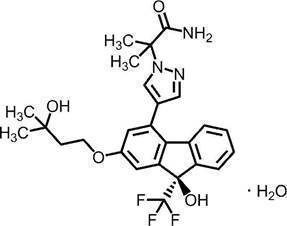
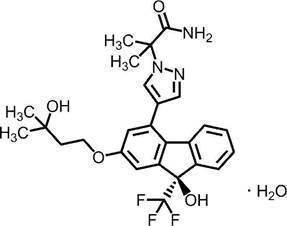
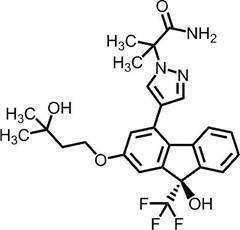
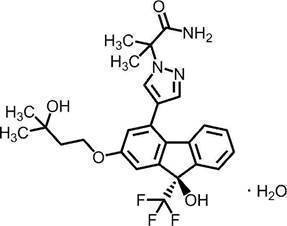
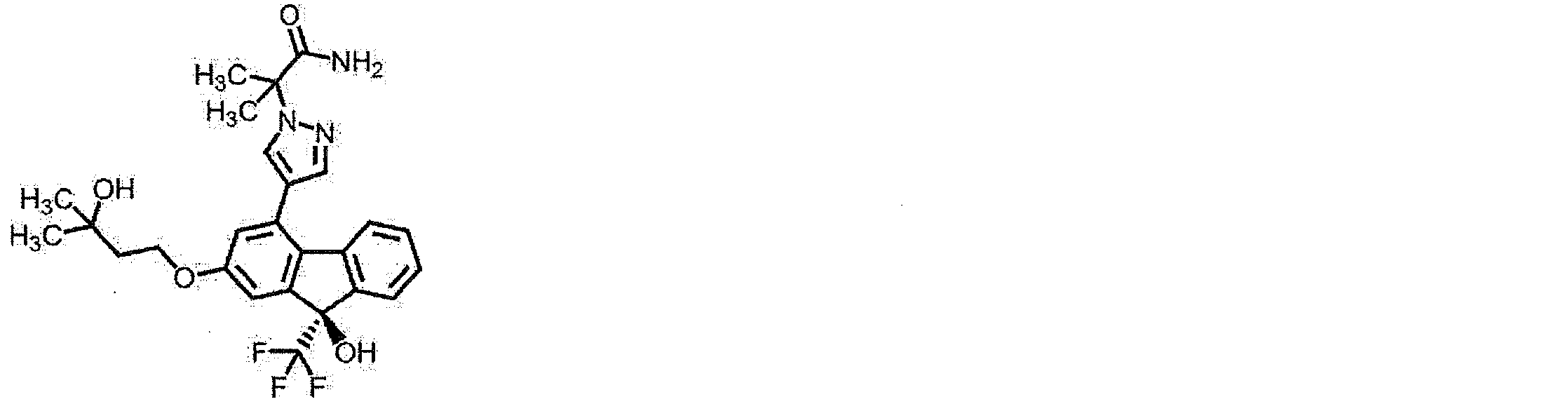
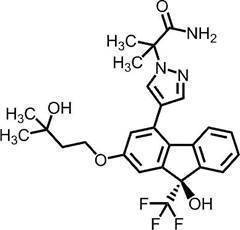
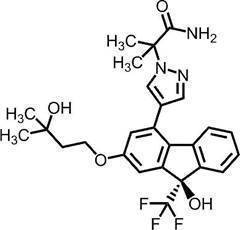
- the invention provides 2- ⁇ 4-[(9R) -9-hydroxy-2- (3-hydroxy-3-methylbutyloxy) -9- (trifluoromethyl) -9H-fluoren-4-yl] -1H -Pyrazol-1-yl ⁇ -2-methylpropanamide (2- ⁇ 4-[(9R) -9-Hydroxy-2- (3-hydroxy-3-methylbutyloxy) -9- (trifluoromethyl) -9H-fluoren- 4-yl] -1H-pyrazol-1-yl ⁇ -2-methylpropanamide (hereinafter referred to as compound A) or a pharmaceutically acceptable salt thereof, or a monohydrate of compound A, for a novel pharmaceutical use. More specifically, the present invention relates to a therapeutic or preventive agent for chronic kidney disease, comprising Compound A or a pharmaceutically acceptable salt thereof, or Compound A monohydrate.
- CKD Chronic kidney disease
- ESRD end-stage renal failure
- cardiovascular diseases such as myocardial infarction, stroke, heart failure, and death. Therefore, it is important to prevent CKD from becoming severe and to suppress the onset of cardiovascular disease.
- CKD is defined as a condition in which renal damage and / or a decrease in glomerular filtration rate (GFR) ( ⁇ 60 mL / min / 1.73 m 2 ) persists for more than 3 months. Renal damage is diagnosed by urine abnormalities, diagnostic imaging, blood, and pathology. In particular, the presence of proteinuria in urine abnormalities (proteinuria of 0.15 g / gCr or more or albuminuria of 30 mg / gCr or more) is important. GFR is measured by inulin clearance, but is also simply evaluated by an estimated GFR using serum creatinine (eGFR).
- GFR glomerular filtration rate
- CKD has almost no subjective symptoms in the early stage, but as it progresses, symptoms such as nocturnal urine, edema, anemia, malaise, shortness of breath and the like are observed.
- Non-Patent Documents 1 and 2 ⁇ Salt-loaded SDT-fatty rats, 5/6 nephrectomized rats, and the like are known as animal models exhibiting CKD-like renal damage and reduced renal function.
- Patent Document 1 discloses that compound A and its monohydrate have pyruvate dehydrogenase kinase (PDHK) inhibitory activity, and have diabetes, insulin resistance syndrome, metabolic syndrome, hyperglycemia, hyperlactemia, and diabetic complications.
- PDHK pyruvate dehydrogenase kinase
- Patent Document 2 discloses a method for producing compound A or a pharmaceutically acceptable salt thereof, or a monohydrate of compound A.
- KATSUDA Yoshiaki, et al.
- TSUPRYKOV Oleg, et al.
- the dipeptidyl peptidase inhibitor linagliptin and the angiotensin II receptor blocker telmisartan show renal benefit by different pathways in rats with 5/6 nephrectomy.
- the problem to be solved by the present invention is to provide a therapeutic agent for CKD.
- the present invention is as follows.
- a therapeutic or prophylactic agent for chronic kidney disease comprising a compound represented by the formula: [2] The following chemical structural formula:
- a renal function-improving agent comprising a compound represented by the formula: [3] The following chemical structural formula:
- An agent for improving serum creatinine level comprising a compound represented by the formula: [7] The following chemical structural formula:
- An agent for improving blood urea nitrogen level comprising a compound represented by the formula: [8] The following chemical structural formula:
- An agent for improving a protein level in urine which comprises a compound represented by the formula: [10] The following chemical structural formula:
- An agent for improving urinary albumin level comprising a compound represented by the formula: [11] The following chemical structural formula:
- a method for preventing or treating chronic kidney disease in a mammal which comprises administering an effective amount of the compound represented by the formula (1) to the mammal.
- the compound A or a pharmaceutically acceptable salt thereof or the monohydrate of the compound A in the present invention is effective as a therapeutic or preventive agent for CKD.
- FIG. 1 shows urinary protein excretion in saline-loaded SDT-fatty rats to which water (Normal), saline (Vehicle), or saline and Compound A monohydrate (Compound IIA) were orally administered.
- FIG. 2 shows representative examples of renal histology of saline-loaded SDT-fatty rats to which (a) water, (b) saline, or (c) saline and Compound A monohydrate were orally administered, respectively. .
- FIG. 1 shows urinary protein excretion in saline-loaded SDT-fatty rats to which water (Normal), saline (Vehicle), or saline and Compound A monohydrate (Compound IIA) were orally administered.
- FIG. 2 shows representative examples of renal histology of saline-loaded SDT-fatty rats to which (a) water, (b) saline, or (c) saline and Compound A monohydrate were orally administered, respectively. .
- Compound A is 2- ⁇ 4-[(9R) -9-hydroxy-2- (3-hydroxy-3-methylbutyloxy) -9- (trifluoromethyl) -9H-fluoren-4-yl] -1H -Pyrazol-1-yl ⁇ -2-methylpropanamide having the following chemical structural formula:
- “Pharmaceutically acceptable salt” is any salt known in the art without undue toxicity. Specific examples include salts with inorganic acids, salts with organic acids, salts with inorganic bases, salts with organic bases, and the like. Various forms of pharmaceutically acceptable salts are well known in the art and are described, for example, in the following references: (a) Berge et al., J. Pharm. Sci., 66, p1-19 (1977), (b) Stahl et al., “Handbook of Pharmaceutical Salts: Properties, Selection, and Use” (Wiley-VCH, Weinheim, Germany, 2002), (c) Paulekuhn et al., J. Med. Chem., 50, p6665-6672 (2007).
- a pharmaceutically acceptable salt thereof By reacting compound A with an inorganic acid, an organic acid, an inorganic base or an organic base according to a method known per se, a pharmaceutically acceptable salt thereof can be obtained.
- the pharmaceutically acceptable salt of compound A may be formed with one half molecule, one molecule or two or more molecules of acid or base per one molecule of compound A.
- salts with inorganic acids include salts with hydrofluoric acid, hydrochloric acid, hydrobromic acid, hydroiodic acid, nitric acid, phosphoric acid or sulfuric acid.
- Salts with organic acids include acetic acid, adipic acid, alginic acid, 4-aminosalicylic acid, anhydromethylene citric acid, benzoic acid, benzenesulfonic acid, calcium edetate, camphoric acid, camphor-10-sulfonic acid, carbonic acid, citric acid Acid, edetic acid, ethane-1,2-disulfonic acid, dodecyl sulfate, ethanesulfonic acid, fumaric acid, glucoheptonic acid, gluconic acid, glucuronic acid, glycolylarsanilic acid, hexylresorcinic acid, hydroxy-naphthoic acid, 2-hydroxy-1-ethanesulfonic acid, lactic acid, lactobionic acid, malic acid, maleic acid, mandelic acid, methanesulfonic acid, methylsulfuric acid, methyl nitric acid, methylenebis (salicylic
- Examples of the salt with an inorganic base include salts with lithium, sodium, potassium, magnesium, calcium, barium, aluminum, zinc, bismuth or ammonium.
- Examples of the salt with an organic base include salts with arecoline, betaine, choline, clemizole, ethylenediamine, N-methylglucamine, N-benzylphenethylamine, tris (hydroxymethyl) methylamine, arginine or lysine.
- Compound A or a pharmaceutically acceptable salt thereof, or monohydrate of compound A can be produced by a known method, for example, a method described in Patent Document 1 or Patent Document 2.
- Compound A or a pharmaceutically acceptable salt thereof may be present as a solvate.
- the “solvate” is a compound in which a solvent molecule is coordinated to Compound A or a pharmaceutically acceptable salt thereof, and includes a hydrate.
- the solvate is preferably a pharmaceutically acceptable solvate, and examples include hydrate, ethanol solvate, dimethyl sulfoxide solvate of compound A or a pharmaceutically acceptable salt thereof.
- the solvate can be obtained according to a known method.
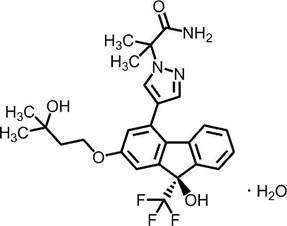
- the solvate is preferably a hydrate of Compound A, more preferably a monohydrate of Compound A, and has the following structural formula:
- the therapeutic or prophylactic agent for CKD of the present invention can be obtained by converting Compound A or a pharmaceutically acceptable salt thereof, or a monohydrate of Compound A into at least one or more pharmaceutically acceptable salts according to a method known in the art of pharmaceutical formulation. It is manufactured by appropriately mixing an appropriate amount with a carrier or the like which is allowed above.
- the content of compound A or a pharmaceutically acceptable salt thereof, or the monohydrate of compound A in the preparation varies depending on the dosage form, dosage, etc., but may be, for example, 0.1 to 100% by weight of the whole preparation. is there.
- the therapeutic or prophylactic agent of the present invention can be administered orally or parenterally.
- the administration form include oral administration and parenteral administration such as intravenous, intramuscular, subcutaneous, transdermal, topical, and rectal administration.
- Dosage forms suitable for oral administration include tablets, capsules, granules, powders, troches, syrups, emulsions, suspensions and the like, and dosage forms suitable for parenteral administration include external preparations, suppositories Preparations, injections, eye drops, eye ointments, patches, gels, inserts, nasal agents, pulmonary agents and the like. These can be prepared according to methods known in the art of pharmaceutical formulation.
- “Pharmaceutically acceptable carrier” includes various organic or inorganic carrier substances commonly used as formulation materials, such as excipients, disintegrants, binders, fluidizers, lubricants and the like in solid preparations.
- Bases emulsifiers, wetting agents, stabilizers, stabilizers, dispersants, plasticizers, etc. in semisolid preparations and solvents, dissolution aids, suspending agents, isotonic agents, buffers, soothing agents, etc.
- Examples include pH adjusters, absorption enhancers, gelling agents, preservatives, fillers, solubilizers, solubilizers, suspending agents, and the like. If necessary, additives such as preservatives, antioxidants, coloring agents, sweeteners and the like may be used.
- Excipients include lactose, sucrose, D-mannitol, D-sorbitol, corn starch, dextrin, microcrystalline cellulose, crystalline cellulose, carmellose, carmellose calcium, sodium carboxymethyl starch, low-substituted hydroxypropylcellulose, Gum arabic and the like.
- Disintegrant includes carmellose, carmellose calcium, carmellose sodium, sodium carboxymethyl starch, croscarmellose sodium, crospovidone, low-substituted hydroxypropylcellulose, hydroxypropylmethylcellulose, crystalline cellulose and the like.
- Binders include hydroxypropylcellulose, hydroxypropylmethylcellulose, povidone, crystalline cellulose, sucrose, dextrin, starch, gelatin, carmellose sodium, gum arabic and the like.
- fluidizer examples include light anhydrous silicic acid, magnesium stearate and the like.
- Lubricants include magnesium stearate, calcium stearate, talc and the like.
- solvent includes purified water, ethanol, propylene glycol, macrogol, sesame oil, corn oil, olive oil and the like.
- dissolution aid examples include propylene glycol, D-mannitol, benzyl benzoate, ethanol, triethanolamine, sodium carbonate, sodium citrate and the like.
- “suspension agent” examples include benzalkonium chloride, carmellose, hydroxypropylcellulose, propylene glycol, povidone, methylcellulose, glyceryl monostearate and the like.
- tonicity agent examples include glucose, D-sorbitol, sodium chloride, D-mannitol and the like.
- Buffer includes sodium hydrogen phosphate, sodium acetate, sodium carbonate, sodium citrate and the like.
- base examples include water, animal and vegetable oils (olive oil, corn oil, peanut oil, sesame oil, castor oil, etc.), lower alcohols (ethanol, propanol, propylene glycol, 1,3-butylene glycol, phenol, etc.), high-grade Fatty acids and their esters, waxes, higher alcohols, polyhydric alcohols, hydrocarbons (white petrolatum, liquid paraffin, paraffin, etc.), hydrophilic petrolatum, purified lanolin, water-absorbing ointment, hydrating hydrin, hydrophilic ointment, starch, pullulan, gum arabic , Tragacanth gum, gelatin, dextran, cellulose derivatives (methylcellulose, carboxymethylcellulose, hydroxyethylcellulose, hydroxypropylcellulose, etc.), synthetic polymers (carboxyvinyl polymer, sodium polyacrylate, poly) Alkenyl alcohol, polyvinyl pyrrolidone, etc.), propylene glycol, macrogol (
- Preservatives include ethyl paraoxybenzoate, chlorobutanol, benzyl alcohol, sodium dehydroacetate, sorbic acid and the like.
- antioxidants examples include sodium sulfite, ascorbic acid and the like.
- Examples of the “colorant” include food colors (food red No. 2 or No. 3, food yellow No. 4 or No. 5), ⁇ -carotene and the like.
- sweetener examples include saccharin sodium, dipotassium glycyrrhizinate, aspartame and the like.
- the dose of the therapeutic or prophylactic agent of the present invention for mammals including humans eg, human, mouse, rat, hamster, guinea pig, rabbit, cat, dog, pig, cow, horse, sheep, monkey, etc.
- mammals including humans (eg, human, mouse, rat, hamster, guinea pig, rabbit, cat, dog, pig, cow, horse, sheep, monkey, etc.)
- a dose of the therapeutic or prophylactic agent of the present invention for mammals including humans (eg, human, mouse, rat, hamster, guinea pig, rabbit, cat, dog, pig, cow, horse, sheep, monkey, etc.)
- 0.1 mg to 1 g preferably 30 mg to 900 mg
- the administration period is not particularly limited.
- CKD causes of CKD include, for example, the diseases listed in Table 1 (“Chronic Kidney Disease” Merck Manual Professional Version (Online Edition), Anna Malkina, updated October 2018, URL: https://www.merckmanuals.com/ en-pr / professional / genitourinary-disorders / chronic-kidney-disease / chronic-kidney-disease).
- the CKD due to diabetes includes diabetic nephropathy and diabetic kidney disease.
- the CKD is a CKD that does not include diabetic nephropathy, preferably a CKD that does not cause diabetes (primary disease).
- the CKD is (1) chronic tubular interstitial nephropathy, (2) (A) focal segmental glomerulosclerosis, (B) idiopathic crescentic glomerulonephritis, (C) IgA nephropathy, (D) membranous proliferative glomerulonephritis, (E) membranous nephropathy, (3) (A) amyloidosis, (B) anti-GBM antibody disease (Goodpasture's syndrome), (C) polyangiitis granulomatosis, (D) hemolytic uremic syndrome, (E) mixed cryoglobulinemia, (F) post-infective glomerulonephritis, (G) systemic lupus erythematosus, (4) (A) autosomal dominant interstitial kidney disease (medullary cystic kidney), (B) hereditary nephritis (Alport syndrome), (C) nail patellar syndrome, (D)
- the CKD is CKD caused by diabetes, preferably diabetic kidney disease (DKD) or diabetic nephropathy.
- diabetes preferably diabetic kidney disease (DKD) or diabetic nephropathy.
- DKD diabetic kidney disease
- ACE inhibitors rather than antidiabetic drugs
- Am J Kidney Dis (2013) Vol.62, pp.201-213; Nephol Dial Transplant (2014) Vol.29, pp.490-496 Although such blood pressure management is undoubtedly beneficial for these groups of patients, a blood pressure lowering strategy does not necessarily meet all of the treatment needs (Lancet (2015) Vol.385, pp.2047). -2056).
- Compound A or a pharmaceutically acceptable salt thereof, or a monohydrate of Compound A surprisingly reduces the severity of the disease, and thus DKD Or provide another option for the treatment or prevention of diabetic nephropathy.
- treatment refers to (1) improvement of renal function, renal impairment, or symptoms of CKD, (2) prevention or delay of renal function decline, progression of renal impairment, or aggravation of symptoms of CKD. Or (3) a reduction in renal function, progression of renal impairment, or prevention of recurrence of CKD symptoms.
- prevention refers to (4) a decrease in GFR or eGFR to less than 60 mL / min / 1.73 m 2 , an increase in urine protein to 0.15 g / gCr or more, or 30 mg / gCr or more. This means suppression of an increase in the amount of urinary albumin in the urine, or prevention of continuation of the state of (4) for 3 months or more.
- improved of renal function means improvement of renal function, or cessation of reduction or delay of reduction. Renal function can be evaluated by changes in parameters such as GFR, eGFR, creatinine clearance, urine serum creatinine level, blood urea nitrogen level, urinary protein level, and urinary albumin level. “Improvement of renal function” is preferably improvement of renal function of a CKD patient.
- GFR, eGFR, serum creatinine level, blood urea nitrogen level, creatinine clearance, urinary protein level or urinary albumin level includes GFR, eGFR, serum creatinine level, blood urea nitrogen level, creatinine clearance, It is an improvement of one or more parameters selected from a urine protein value and a urine albumin value, and preferably an improvement of each of these parameters in a CKD patient.
- the term "improvement of GFR” means an increase in GFR, or a halt of the decrease or a delay in the decrease. In one embodiment, “improvement of GFR” refers to improvement of GFR in a patient having a GFR of 90 ml / min or less.
- “improvement of eGFR” means an increase in eGFR, or the cessation of decrease or delay of decrease. In one embodiment, “improved eGFR” is an improved eGFR in a patient having an eGFR of 90 ml / min / 1.73 m 2 or less.
- “improving creatinine clearance” means increasing creatinine clearance, stopping the decrease or delaying the decrease.
- “improvement in creatinine clearance” refers to improvement in creatinine clearance in a patient whose creatinine clearance is 100 ⁇ mL / min or less.
- “Improvement in serum creatinine level” as used herein means a decrease in serum creatinine level, or a cessation of elevation or a delay in elevation.
- “improvement of serum creatinine level” refers to improvement of serum creatinine level in a patient having a serum creatinine level of 1.2 mg / dl or more.
- “improvement of blood urea nitrogen level” means a decrease in blood urea nitrogen level, or a stop of the rise or a delay in the rise. In one embodiment, “improvement of blood urea nitrogen level” refers to improvement of blood urea nitrogen level in a patient having a blood urea nitrogen level of 20 mg / dl or more.
- “improvement of urine protein level” means a decrease in urine protein level, or a cessation of elevation or a delay in elevation. In one embodiment, “improvement of urine protein level” refers to improvement of urine protein level in a patient having a urine protein level of 0.15 ⁇ g / gCr or more.
- “improvement of urinary albumin level” means a decrease in urinary albumin level, or a cessation of elevation or a delay in elevation.
- “improved urinary albumin level” refers to an improvement in urinary albumin level in a patient having a urinary albumin level of 30 mg / gCr or more.
- Compound A or a pharmaceutically acceptable salt thereof, or a monohydrate of Compound A can be used to prevent or delay the progression of the stage by the GFR category.
- Compound A or a pharmaceutically acceptable salt thereof, or a monohydrate of Compound A inhibits or delays the progression of stages G1 to G2, G2 to G3a, G3a to G3b, G3b to G4, G4 to G5. Can be used.
- Compound A or a pharmaceutically acceptable salt thereof, or monohydrate of Compound A can be used for the treatment or prevention of CKD because it improves the disordered changes in glomeruli, tubules or renal vessels.
- Compound A or a pharmaceutically acceptable salt thereof or Compound A monohydrate improves sclerosis, fibrosis, disintegration, hypertrophy, or exudative changes of glomeruli, Improve dilatation or ameliorate arteriolar wall thickening or fibrous, necrotic changes in renal vessels.
- Compound A or a pharmaceutically acceptable salt thereof, or monohydrate of compound A can be used for treating or preventing nocturnal urine, edema, anemia, malaise, shortness of breath and the like of CKD.
- the pharmaceutical composition of the present invention can be used in combination with one or more other drugs (hereinafter, also referred to as concomitant drugs) by a general method used in the pharmaceutical field (hereinafter, also referred to as concomitant drug). it can.
- the administration time of the compound A or a pharmaceutically acceptable salt thereof, or the drug containing the monohydrate of compound A and the concomitant drug is not limited, and these may be administered to a subject to be administered as a combination drug, Both formulations may be administered simultaneously or at regular intervals.
- the concomitant drug may be in accordance with the dose clinically used, and can be appropriately selected depending on the administration subject, disease, symptom, dosage form, administration route, administration time, combination, and the like.
- the administration form of the concomitant drug is not particularly limited as long as the drug containing Compound A or a pharmaceutically acceptable salt thereof or the monohydrate of Compound A and the concomitant drug are combined.
- Examples of the concomitant drug include an angiotensin converting enzyme (ACE) inhibitor, an angiotensin II receptor antagonist (ARB), a calcium antagonist, a diuretic, an ⁇ -blocker, and a ⁇ -blocker.
- ACE angiotensin converting enzyme
- ARB angiotensin II receptor antagonist
- Examples of the ⁇ angiotensin converting enzyme inhibitor '' include, but are not limited to, for example, benazepril, captopril, enalapril, fosinopril, lisinopril, moexipril, perindopril, quinapril, ramipril, trandolapril, imidapril, alacepril, delapril, cilazapril, cilazapril, etc. Is mentioned.
- the angiotensin converting enzyme inhibitor can be used in the form of a pharmaceutically acceptable salt or a pharmaceutically acceptable prodrug.
- the "angiotensin II receptor antagonist” is not limited to, but includes, for example, candesartan, eprosartan, irbesartan, telmisartan, valsartan, losartan, olmesartan and the like.
- the angiotensin II receptor antagonist can also be used in the form of a pharmaceutically acceptable salt or a pharmaceutically acceptable prodrug.
- the “calcium antagonist” is not limited to, but includes, for example, amlodipine, nifedipine, nicadipine, diltiazem, manidipine, benidipine, nilvadipine, nitrendipine, nisoldipine, valnidipine and the like.
- the calcium antagonist can also be used in the form of a pharmaceutically acceptable salt thereof or a pharmaceutically acceptable prodrug.
- Diuretics include, but are not limited to, spironolactone, hydrochlorothiazide, furosemide, triamterene and the like. Diuretics can also be used in the form of their pharmaceutically acceptable salts or pharmaceutically acceptable prodrugs.
- the “ ⁇ blocker” is not limited to, but includes, for example, doxazosin, prazosin, bunazosin, terazosin, urapidil and the like.
- the ⁇ -blocker can be used in the form of a pharmaceutically acceptable salt or a pharmaceutically acceptable prodrug.
- ⁇ -blocker is not limited to the following, but includes, for example, metoprolol, atenolol, bisoprolol, arotinolol, ceriprolol, betaxol and the like. ⁇ -blockers can also be used in the form of their pharmaceutically acceptable salts or pharmaceutically acceptable prodrugs.
- One embodiment of the present invention provides a method for treating chronic kidney disease, comprising administering to a mammal a therapeutically effective amount of Compound A or a pharmaceutically acceptable salt thereof, or Compound A monohydrate. Methods of treatment or prevention are included. Definitions and the like are as described above.
- the term “effective amount” means, for example, an amount of a drug or a drug that elicits a biological or medical response in a tissue, system, animal, or human.
- a “therapeutically effective amount” refers to a treatment, cure, prevention or amelioration of a disease, disorder, or side effect, as compared to a corresponding subject that has not received such amount, or to treat a disease. Any amount that reduces the rate of progression is meant.
- An embodiment of the present invention includes a pharmaceutical composition for treating or preventing chronic kidney disease, comprising Compound A or a pharmaceutically acceptable salt thereof, or Compound A monohydrate. Definitions and the like are as described above.
- One embodiment of the present invention includes the use of Compound A or a pharmaceutically acceptable salt thereof or a monohydrate of Compound A for the manufacture of a therapeutic or prophylactic agent for chronic kidney disease. Definitions and the like are as described above.
- One embodiment of the present invention includes Compound A or a pharmaceutically acceptable salt thereof or a monohydrate of Compound A for use in treating or preventing chronic kidney disease. Definitions and the like are as described above.
- CKD chronic kidney disease
- Formulation Example 1 Production of capsule 1) Compound A monohydrate 50 mg 2) Microcrystalline cellulose 10mg 3) Lactose 19mg 4) 1 mg of magnesium stearate 1), 2), 3) and 4) are mixed and filled into a gelatin capsule.
- Formulation Example 2 Production of tablet 1) Compound A monohydrate 50 g 2) Lactose 50g 3) Corn starch 15g 4) Carmellose calcium 44g 5) Magnesium stearate 1g The total amount of 1), 2) and 3) and 30 g of 4) are kneaded with water, dried under vacuum, and sized. 14 g of 4) and 1 g of 5) are mixed with the sized powder and tableted with a tableting machine. Thus, 1000 tablets containing 50 mg of the monohydrate of Compound A per tablet are obtained.
- Test Example 1 Inhibition of urinary protein excretion and progression of renal injury by oral administration of monohydrate of Compound A in a saline-loaded SDT-fatty rat model
- Compound A was used to evaluate the urinary protein excretion and the inhibitory effect on the progression of renal impairment by using a salt-loaded spontaneously diabetic torii fatty (SDT-fatty) rat. The evaluation was performed with reference to Non-Patent Document 1. As experimental animals, 6-week-old male SDT-fatty rats (CLEA Japan) were used. A normal powder feed (CRF-1 powder, Oriental Yeast Co., Ltd.) containing 0.005 w / w% of a monohydrate of Compound A as a free form of Compound A was prepared.
- 1 w / v% saline was supplied to the control group (Vehicle) and the compound A administration group (Compound 1A).
- the group supplied with water containing no salt was defined as a disease state control group (Normal).
- the compound A administration group was orally administered the compound A for 14 weeks by feeding the feed containing the compound A simultaneously with the water supply of the saline.
- the control group and the disease state control group were fed with the above-mentioned normal powdered feed containing no compound A.
- Urine was collected for 6 hours (10 weeks after administration), and kidneys were removed (14 weeks after administration).
- the protein concentration in the urine was measured using a total protein quantification kit (Tonein TP, Otsuka Pharmaceutical Co., Ltd.) by the absorbance at a wavelength of 590 nm.
- Urine protein excretion (mg / ⁇ 6 hours) was calculated from urine volume and protein concentration.
- the tissue was fixed with 10% neutral buffered formalin solution (Wako Pure Chemical Industries, Ltd.), and the tissue section was stained with hematoxylin and eosin (HE).
- HE hematoxylin and eosin
- FIG. 2 shows a representative example of the renal histology.
- Test Example 2 Inhibition of urinary protein excretion and progression of renal injury by oral administration of Compound A monohydrate in a 5/6 nephrectomized rat model
- Non-Patent Document 2 The experimental animals used were male Wistar rats (Japan SLC, Inc.) from which 60% of the right kidney had been removed at the age of 7 weeks, and whose left kidney had been completely removed at the age of 8 weeks. A group similarly treated except for the nephrectomy was used as a Sham group (Sham). A normal powder feed (CRF-1 powder, Oriental Yeast Co., Ltd.) containing 0.0218 to 0.0317 w / w% of a monohydrate of Compound A as a free form of Compound A was prepared.
- the compound A-administered group (Compound A) was fed the above-mentioned feed containing Compound A at the age of 21 weeks, and was orally administered Compound A for 10 weeks.
- the control group (Vehicle) and the Sham group were fed with the above-mentioned normal powdered feed containing no compound A.
- Urine was collected for 24 hours (5 weeks after administration), and kidneys were removed (10 weeks after administration).
- Urine protein excretion (mg / day) was calculated from urine volume and protein concentration.
- the tissue was fixed with 10% neutral buffered formalin solution (Wako Pure Chemical Industries, Ltd.), and the tissue section was stained with hematoxylin and eosin (HE).
- HE hematoxylin and eosin
- Reference Example 1 Inhibition of urinary protein excretion and progression of renal injury by oral administration of condensed heterocyclic compound in saline-loaded SDT-fatty rat model
- fused heterocyclic compound is represented by the following formula:
- the condensed heterocyclic compound is evaluated for its urinary protein excretion and its inhibitory effect on progression of renal damage.
- the experimental animals used are 6-week-old male SDT-fatty rats (CLEA Japan).
- Each of the fused heterocyclic compounds can be obtained by the method described in Patent Document 3 (WO 2019/151274).
- a normal powder feed (CRF-1 powder, Oriental Yeast Co., Ltd.) containing each fused heterocyclic compound is prepared.
- a group supplied with water containing no salt is referred to as a disease state control group (Normal).
- the condensed heterocyclic compound administration group is orally administered the condensed heterocyclic compound for 14 weeks by feeding the above-mentioned feed containing the condensed heterocyclic compound simultaneously with the supply of saline.
- the control group and the disease state control group are fed with the above-mentioned normal powder feed not containing the above-mentioned condensed heterocyclic compound.
- Urine is collected for 6 hours (10 weeks after administration), and the kidney is removed (14 weeks after administration).
- the protein concentration in the urine is measured using a total protein quantification kit (Tonein TP, Otsuka Pharmaceutical Co., Ltd.) by the absorbance at a wavelength of 590 nm. Calculate urine protein excretion (mg / 6 hours) from urine volume and protein concentration.
- HE hematoxylin and eosin
- Reference Example 2 Inhibition of urinary protein excretion and progression of renal damage by oral administration of a fused heterocyclic compound in a 5/6 nephrectomized rat model
- the above-mentioned condensed heterocyclic compound is evaluated for its excretion of urinary protein and suppression of progression of renal damage.
- Experimental animals used are male Wistar rats (Nippon SLC Co., Ltd.) from which 60% of the right kidney was excised at the age of 7 weeks and whose left kidney was excised at the age of 8 weeks.
- a group similarly treated except for the nephrectomy is used as a Sham group (Sham).
- a normal powder feed (CRF-1 powder, Oriental Yeast Co., Ltd.) containing each fused heterocyclic compound is prepared.
- the condensed heterocyclic compound administration group is fed the above-mentioned feed containing the condensed heterocyclic compound from the age of 21 weeks, and is orally administered the condensed heterocyclic compound for 10 weeks.
- the control group (Vehicle) and the Sham group are fed with the above-mentioned normal powdered feed that does not contain the condensed heterocyclic compound.
- Urine is collected for 24 hours (5 weeks after administration), and the kidney is removed (10 weeks after administration).
- the protein concentration is measured by absorbance at a wavelength of 590 nm using a total protein quantification kit (Tonein TP, Otsuka Pharmaceutical Co., Ltd.). Calculate urine protein excretion (mg / day) from urine volume and protein concentration.
- HE hematoxylin and eosin
- the present invention provides a novel pharmaceutical use of compound A or a pharmaceutically acceptable salt thereof, or a monohydrate of compound A for CKD.
Landscapes
- Health & Medical Sciences (AREA)
- Animal Behavior & Ethology (AREA)
- Public Health (AREA)
- Veterinary Medicine (AREA)
- Chemical & Material Sciences (AREA)
- Life Sciences & Earth Sciences (AREA)
- General Health & Medical Sciences (AREA)
- Medicinal Chemistry (AREA)
- Pharmacology & Pharmacy (AREA)
- Epidemiology (AREA)
- Bioinformatics & Cheminformatics (AREA)
- Nuclear Medicine, Radiotherapy & Molecular Imaging (AREA)
- Organic Chemistry (AREA)
- Engineering & Computer Science (AREA)
- General Chemical & Material Sciences (AREA)
- Chemical Kinetics & Catalysis (AREA)
- Urology & Nephrology (AREA)
- Pharmaceuticals Containing Other Organic And Inorganic Compounds (AREA)
Abstract
本発明は、化合物Aもしくはその製薬上許容される塩、又は化合物Aの一水和物の新規医薬用途を提供することを目的とする。本発明は、化合物Aもしくはその製薬上許容される塩、又は化合物Aの一水和物を有効成分として含有する慢性腎臓病の治療剤又は予防剤に関する。
Description
本発明は、2-{4-[(9R)-9-ヒドロキシ-2-(3-ヒドロキシ-3-メチルブチルオキシ)-9- (トリフルオロメチル)-9H-フルオレン-4-イル]-1H-ピラゾール-1-イル}-2-メチルプロパンアミド(2-{4-[(9R)-9-Hydroxy-2-(3-hydroxy-3-methylbutyloxy)-9- (trifluoromethyl)-9H-fluoren-4-yl]-1H-pyrazol-1-yl}-2-methylpropanamide)(以下、化合物Aと表す)もしくはその製薬上許容される塩、又は化合物Aの一水和物の新規医薬用途に関する。より詳細には、本発明は、化合物Aもしくはその製薬上許容される塩、又は化合物Aの一水和物を含む慢性腎臓病の治療剤又は予防剤に関する。
慢性腎臓病(CKD)は、腎障害や腎機能の低下が持続する疾患である。CKDが進行すると末期腎不全(ESRD)に至り、透析や腎臓移植が必要となる。さらにCKDは、心筋梗塞や脳卒中、心不全等の心血管疾患や、死亡のリスクを上昇させることが多くの臨床研究により示されている。したがって、CKDの重症化を防ぎ、心血管疾患の発症を抑制することが重要である。
CKDは、腎障害及び/又は糸球体濾過速度(GFR)の低下(60 mL/min/1.73 m2未満)が3か月以上続く状態と定義される。腎障害は、尿異常、画像診断、血液、病理により診断され、特に尿異常における蛋白尿の存在(0.15 g/gCr以上の蛋白尿又は30 mg/gCr以上のアルブミン尿)が重要である。GFRは、イヌリンクリアランスにより測定されるが、血清クレアチニン値を用いた推算GFR(eGFR)によっても簡易的に評価される。
CKDは、初期においてほとんど自覚症状はないが、進行すると夜間尿、浮腫、貧血、倦怠感、息切れ等の症状がみられる。
CKD様の腎障害及び腎機能低下を呈する動物モデルとして、食塩負荷SDT-fattyラットや5/6腎摘出ラット等が知られている(非特許文献1、2)。
化合物Aである2-{4-[(9R)-9-ヒドロキシ-2-(3-ヒドロキシ-3-メチルブチルオキシ)-9-(トリフルオロメチル)-9H-フルオレン-4-イル]-1H-ピラゾール-1-イル}-2-メチルプロパンアミドもしくはその製薬上許容される塩、又は化合物Aの一水和物は、特許文献1及び特許文献2に記載される。特許文献1には、化合物A及びその一水和物がピルビン酸デヒドロゲナーゼキナーゼ(PDHK)阻害活性を有し、糖尿病、インスリン抵抗性症候群、メタボリックシンドローム、高血糖症、高乳酸血症、糖尿病合併症、心不全、心筋症、心筋虚血症、心筋梗塞、狭心症、脂質異常症、アテローム性硬化症、末梢動脈疾患、間欠性跛行、慢性閉塞性肺疾患、脳虚血症、脳卒中、ミトコンドリア病、ミトコンドリア脳筋症、癌又は肺高血圧症に有効な薬剤となり得る旨が記載されている。特許文献2には、化合物Aもしくはその製薬上許容される塩、又は化合物Aの一水和物の製造方法が記載されている。
KATSUDA, Yoshiaki, et al. Physiological changes induced by salt intake in female Spontaneously Diabetic Torii‐Lepr(fa) (SDT fatty) rat, a novel obese type 2 diabetic model. Animal science journal, 2014, 85(5), 588-594.
TSUPRYKOV, Oleg, et al. The dipeptidyl peptidase inhibitor linagliptin and the angiotensin II receptor blocker telmisartan show renal benefit by different pathways in rats with 5/6 nephrectomy. Kidney international, 2016, 89(5), 1049-1061.
本発明が解決しようとする課題は、CKDの治療薬を提供することである。
本発明者らは、CKD様の腎障害及び腎機能低下を呈する疾患モデル動物を用いた実験において、化合物Aもしくはその製薬上許容される塩、又は化合物Aの一水和物がその疾患の重症度を有意に軽減することを発見した。そして、本発明者は、本発見に基づいて、化合物Aもしくはその製薬上許容される塩、又は化合物Aの一水和物がCKDに対して有効な薬剤となり得ることを見出し、本発明を完成させた。
すなわち、本発明は、以下の通りである。
[1]下記化学構造式:

で示される化合物もしくはその製薬上許容される塩、又は下記化学構造式:
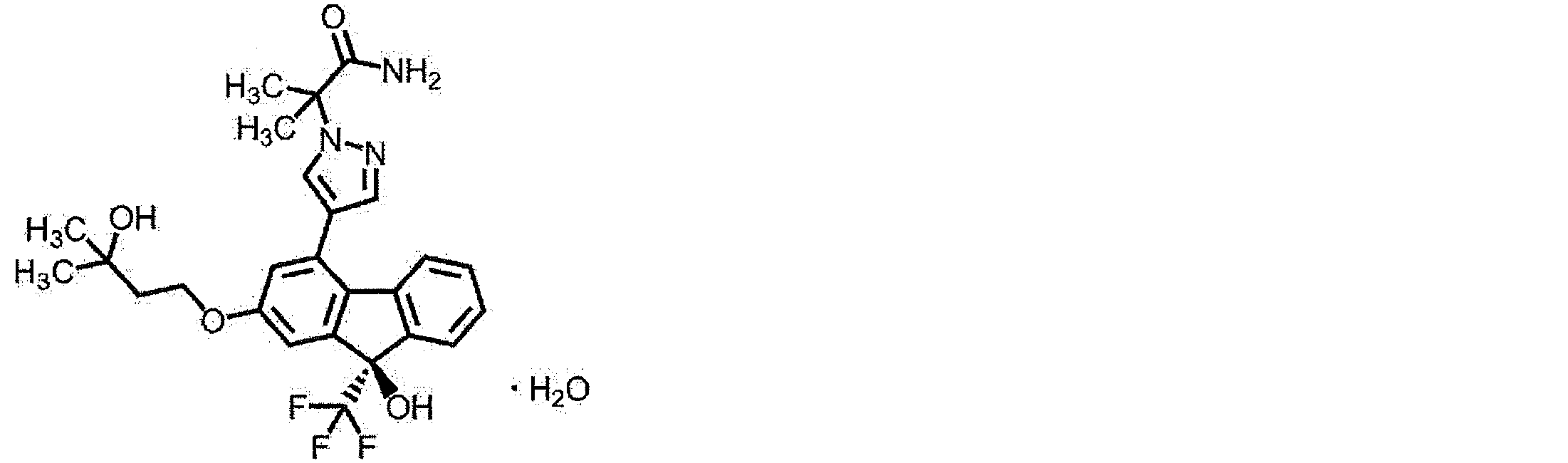
で示される化合物を含有することを特徴とする、慢性腎臓病の治療剤又は予防剤。
[2]下記化学構造式:
[2]下記化学構造式:
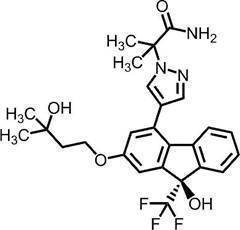
で示される化合物もしくはその製薬上許容される塩、又は下記化学構造式:

で示される化合物を含有することを特徴とする、腎機能改善剤。
[3]下記化学構造式:
[3]下記化学構造式:
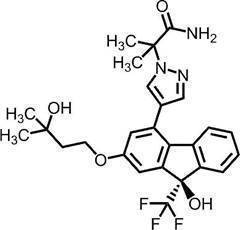
で示される化合物もしくはその製薬上許容される塩、又は下記化学構造式:

で示される化合物を含有することを特徴とする、GFR、eGFR、血清クレアチニン値、血中尿素窒素値、クレアチニン・クリアランス、尿中蛋白値及び尿中アルブミン値から選択される1又は2以上のパラメーターの改善剤。
[4]下記化学構造式:
[4]下記化学構造式:
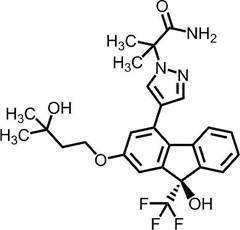
で示される化合物もしくはその製薬上許容される塩、又は下記化学構造式:
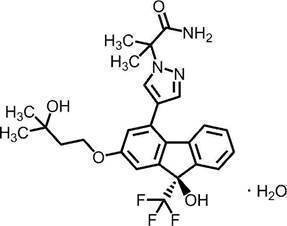
で示される化合物を含有することを特徴とする、GFRの改善剤。
[5]下記化学構造式:
[5]下記化学構造式:

で示される化合物もしくはその製薬上許容される塩、又は下記化学構造式:
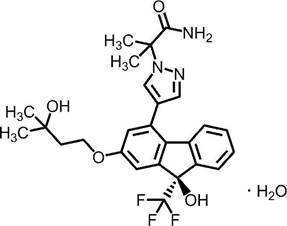
で示される化合物を含有することを特徴とする、eGFRの改善剤。
[6]下記化学構造式:
[6]下記化学構造式:

で示される化合物もしくはその製薬上許容される塩、又は下記化学構造式:
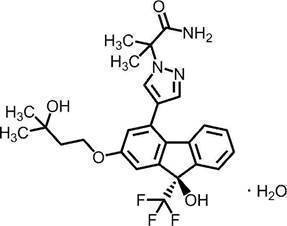
で示される化合物を含有することを特徴とする、血清クレアチニン値の改善剤。
[7]下記化学構造式:
[7]下記化学構造式:

で示される化合物もしくはその製薬上許容される塩、又は下記化学構造式:
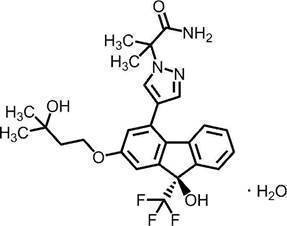
で示される化合物を含有することを特徴とする、血中尿素窒素値の改善剤。
[8]下記化学構造式:
[8]下記化学構造式:

で示される化合物もしくはその製薬上許容される塩、又は下記化学構造式:
で示される化合物を含有することを特徴とする、クレアチニン・クリアランスの改善剤。
[9]下記化学構造式:
[9]下記化学構造式:

で示される化合物もしくはその製薬上許容される塩、又は下記化学構造式:
で示される化合物を含有することを特徴とする、尿中蛋白値の改善剤。
[10]下記化学構造式:
[10]下記化学構造式:
で示される化合物もしくはその製薬上許容される塩、又は下記化学構造式:
で示される化合物を含有することを特徴とする、尿中アルブミン値の改善剤。
[11]下記化学構造式:
[11]下記化学構造式:
で示される化合物を含有することを特徴とする、前記[1]から[10]のいずれかに記載の剤。
[12]下記化学構造式:
[12]下記化学構造式:

で示される化合物を含有することを特徴とする、前記[1]から[10]のいずれかに記載の剤。
[13]慢性腎臓病が、糖尿病性腎症を除く慢性腎臓病である、前記[1]の剤。
[14]慢性腎臓病が、糖尿病を原疾患とする慢性腎臓病を除く慢性腎臓病である、前記[1]の剤。
[15]下記化学構造式:
[13]慢性腎臓病が、糖尿病性腎症を除く慢性腎臓病である、前記[1]の剤。
[14]慢性腎臓病が、糖尿病を原疾患とする慢性腎臓病を除く慢性腎臓病である、前記[1]の剤。
[15]下記化学構造式:
で示される化合物もしくはその製薬上許容される塩、又は下記化学構造式:
で示される化合物を哺乳動物に有効量投与することを特徴とする、哺乳動物における慢性腎臓病の予防または治療方法。
[16]慢性腎臓病の予防または治療に使用するための下記化学構造式:
[16]慢性腎臓病の予防または治療に使用するための下記化学構造式:
で示される化合物もしくはその製薬上許容される塩、又は下記化学構造式:

で示される化合物。
[17]慢性腎臓病の治療剤又は予防剤を製造するための下記化学構造式:
[17]慢性腎臓病の治療剤又は予防剤を製造するための下記化学構造式:
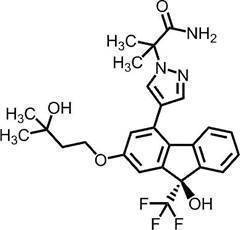
で示される化合物もしくはその製薬上許容される塩、又は下記化学構造式:
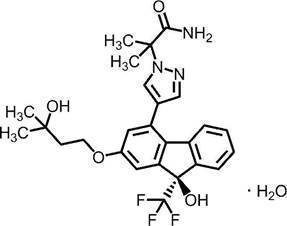
で示される化合物の使用。
本発明における化合物Aもしくはその製薬上許容される塩、又は化合物Aの一水和物は、CKDの治療剤又は予防剤として有効である。
本明細書における用語の定義は以下のとおりである。
化合物Aは、2-{4-[(9R)-9-ヒドロキシ-2-(3-ヒドロキシ-3-メチルブチルオキシ)-9- (トリフルオロメチル)-9H-フルオレン-4-イル]-1H-ピラゾール-1-イル}-2-メチルプロパンアミドであり、下記化学構造式:

で表される。
「製薬上許容される塩」とは、当技術分野で知られている過度の毒性を伴わない塩であればいかなる塩でもよい。具体的には、無機酸との塩、有機酸との塩、無機塩基との塩、有機塩基との塩等が挙げられる。様々な形態の製薬上許容される塩が当分野で周知であり、例えば以下の参考文献に記載されている:
(a) Bergeら, J. Pharm. Sci., 66, p1-19(1977)、
(b) Stahlら, 「Handbook of Pharmaceutical Salts: Properties, Selection, and Use」(Wiley-VCH, Weinheim, Germany, 2002)、
(c) Paulekuhnら, J. Med. Chem., 50, p6665-6672 (2007)。
(a) Bergeら, J. Pharm. Sci., 66, p1-19(1977)、
(b) Stahlら, 「Handbook of Pharmaceutical Salts: Properties, Selection, and Use」(Wiley-VCH, Weinheim, Germany, 2002)、
(c) Paulekuhnら, J. Med. Chem., 50, p6665-6672 (2007)。
自体公知の方法に従って化合物Aと、無機酸、有機酸、無機塩基又は有機塩基とを反応させることにより、その製薬上許容される塩を各々得ることができる。化合物Aの製薬上許容される塩は、化合物A1分子に対し、2分の1分子、1分子もしくは2分子以上の酸又は塩基と形成されていてもよい。
無機酸との塩としては、フッ化水素酸、塩化水素酸、臭化水素酸、ヨウ化水素酸、硝酸、リン酸又は硫酸との塩が例示される。
有機酸との塩としては、酢酸、アジピン酸、アルギン酸、4-アミノサリチル酸、アンヒドロメチレンクエン酸、安息香酸、ベンゼンスルホン酸、エデト酸カルシウム、ショウノウ酸、カンファ-10-スルホン酸、炭酸、クエン酸、エデト酸、エタン-1,2-ジスルホン酸、ドデシル硫酸、エタンスルホン酸、フマル酸、グルコヘプトン酸、グルコン酸、グルクロン酸、グリコリルアルサニル酸、ヘキシルレソルシン酸、ヒドロキシ-ナフトエ酸、2-ヒドロキシ-1-エタンスルホン酸、乳酸、ラクトビオン酸、リンゴ酸、マレイン酸、マンデル酸、メタンスルホン酸、メチル硫酸、メチル硝酸、メチレンビス(サリチル酸)、ガラクタル酸、ナフタレン-2-スルホン酸、2-ナフトエ酸、1,5-ナフタレンジスルホン酸、オレイン酸、シュウ酸、パモ酸、パントテン酸、ペクチン酸、ピクリン酸、プロピオン酸、ポリガラクツロン酸、サリチル酸、ステアリン酸、コハク酸、タンニン酸、酒石酸、テオクル酸、チオシアン酸、トリフルオロ酢酸、p-トルエンスルホン酸、ウンデカン酸、アスパラギン酸又はグルタミン酸との塩が例示される。
無機塩基との塩としては、リチウム、ナトリウム、カリウム、マグネシウム、カルシウム、バリウム、アルミニウム、亜鉛、ビスマス又はアンモニウムとの塩が例示される。
有機塩基との塩としては、アレコリン、ベタイン、コリン、クレミゾール、エチレンジアミン、N-メチルグルカミン、N-ベンジルフェネチルアミン、トリス(ヒドロキシメチル)メチルアミン、アルギニン又はリジンとの塩が例示される。
化合物Aもしくはその製薬上許容される塩、又は化合物Aの一水和物は、公知の方法、例えば、特許文献1又は特許文献2に記載の方法で製造することができる。
化合物A又はその製薬上許容される塩は、溶媒和物として存在することもある。「溶媒和物」とは、化合物A又はその製薬上許容される塩に溶媒分子が配位したものであり、水和物も包含される。溶媒和物は、製薬上許容される溶媒和物が好ましく、化合物A又はその製薬上許容される塩の水和物、エタノール和物、ジメチルスルホキシド和物等が挙げられる。具体的には、化合物Aの半水和物、1水和物、2水和物もしくは1エタノール和物、又は化合物Aの製薬上許容される塩の1水和物もしくは2塩酸塩の2/3エタノール和物等が挙げられる。公知の方法に従って、その溶媒和物を得ることができる。
溶媒和物として、好ましくは化合物Aの水和物であり、より好ましくは化合物Aの一水和物であり、下記構造式:
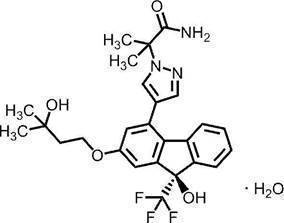
で表される。
本発明のCKDの治療剤又は予防剤は、医薬製剤の技術分野において公知の方法に従って、化合物Aもしくはその製薬上許容される塩、又は化合物Aの一水和物を、少なくとも1種以上の製薬上許容される担体等と、適宜、適量混合等することによって、製造される。該製剤中の化合物Aもしくはその製薬上許容される塩、又は化合物Aの一水和物の含量は、剤形、投与量等により異なるが、例えば、剤全体の0.1から100重量%である。
本発明の治療剤又は予防剤は、経口的又は非経口的に投与することができる。投与形態としては、経口投与、又は静脈内、筋肉内、皮下、経皮、局所、直腸投与等の非経口投与が挙げられる。経口投与に適した剤形としては、錠剤、カプセル剤、顆粒剤、散剤、トローチ剤、シロップ剤、乳剤、懸濁剤等が挙げられ、非経口投与に適した剤形としては外用剤、坐剤、注射剤、点眼剤、眼軟膏、貼布剤、ゲル、挿入剤、経鼻剤、経肺剤等が挙げられる。これらは、医薬製剤の技術分野において公知の方法に従って、調製することができる。
「製薬上許容される担体」としては、製剤素材として慣用の各種有機又は無機担体物質が挙げられ、固形製剤における賦形剤、崩壊剤、結合剤、流動化剤、滑沢剤等、液状製剤における溶剤、溶解補助剤、懸濁化剤、等張化剤、緩衝剤、無痛化剤等及び半固形製剤における基剤、乳化剤、湿潤剤、安定剤、安定化剤、分散剤、可塑剤、pH調節剤、吸収促進剤、ゲル化剤、防腐剤、充填剤、溶解剤、溶解補助剤、懸濁化剤等が挙げられる。更に必要に応じて、保存剤、抗酸化剤、着色剤、甘味剤等の添加物を用いてもよい。
「賦形剤」としては、乳糖、白糖、D-マンニトール、D-ソルビトール、トウモロコシデンプン、デキストリン、微結晶セルロース、結晶セルロース、カルメロース、カルメロースカルシウム、カルボキシメチルスターチナトリウム、低置換度ヒドロキシプロピルセルロース、アラビアゴム等が挙げられる。
「崩壊剤」としては、カルメロース、カルメロースカルシウム、カルメロースナトリウム、カルボキシメチルスターチナトリウム、クロスカルメロースナトリウム、クロスポビドン、低置換度ヒドロキシプロピルセルロース、ヒドロキシプロピルメチルセルロース、結晶セルロース等が挙げられる。
「結合剤」としては、ヒドロキシプロピルセルロース、ヒドロキシプロピルメチルセルロース、ポビドン、結晶セルロース、白糖、デキストリン、デンプン、ゼラチン、カルメロースナトリウム、アラビアゴム等が挙げられる。
「流動化剤」としては、軽質無水ケイ酸、ステアリン酸マグネシウム等が挙げられる。
「滑沢剤」としては、ステアリン酸マグネシウム、ステアリン酸カルシウム、タルク等が挙げられる。
「溶剤」としては、精製水、エタノール、プロピレングリコール、マクロゴール、ゴマ油、トウモロコシ油、オリーブ油等が挙げられる。
「溶解補助剤」としては、プロピレングリコール、D-マンニトール、安息香酸ベンジル、エタノール、トリエタノールアミン、炭酸ナトリウム、クエン酸ナトリウム等が挙げられる。
「懸濁化剤」としては、塩化ベンザルコニウム、カルメロース、ヒドロキシプロピルセルロース、プロピレングリコール、ポビドン、メチルセルロース、モノステアリン酸グリセリン等が挙げられる。
「等張化剤」としては、ブドウ糖、D-ソルビトール、塩化ナトリウム、D-マンニトール等が挙げられる。
「緩衝剤」としては、リン酸水素ナトリウム、酢酸ナトリウム、炭酸ナトリウム、クエン酸ナトリウム等が挙げられる。
「無痛化剤」としては、ベンジルアルコール等が挙げられる。
「基剤」としては、水、動植物油(オリーブ油、トウモロコシ油、ラッカセイ油、ゴマ油、ヒマシ油等)、低級アルコール類(エタノール、プロパノール、プロピレングリコール、1,3-ブチレングリコール、フェノール等)、高級脂肪酸及びそのエステル、ロウ類、高級アルコール、多価アルコール、炭化水素類(白色ワセリン、流動パラフィン、パラフィン等)、親水ワセリン、精製ラノリン、吸水軟膏、加水ラノリン、親水軟膏、デンプン、プルラン、アラビアガム、トラガカントガム、ゼラチン、デキストラン、セルロース誘導体(メチルセルロース、カルボキシメチルセルロース、ヒドロキシエチルセルロース、ヒドロキシプロピルセルロース等)、合成高分子(カルボキシビニルポリマー、ポリアクリル酸ナトリウム、ポリビニルアルコール、ポリビニルピロリドン等)、プロピレングリコール、マクロゴール(マクロゴール200~600等)、及びそれらの2種以上の組合せが挙げられる。
「保存剤」としては、パラオキシ安息香酸エチル、クロロブタノール、ベンジルアルコール、デヒドロ酢酸ナトリウム、ソルビン酸等が挙げられる。
「抗酸化剤」としては、亜硫酸ナトリウム、アスコルビン酸等が挙げられる。
「着色剤」としては、食用色素(食用赤色2号又は3号、食用黄色4号又は5号等)、β-カロテン等が挙げられる。
「甘味剤」としては、サッカリンナトリウム、グリチルリチン酸二カリウム、アスパルテーム等が挙げられる。
本発明の治療剤又は予防剤の、ヒトを含む哺乳動物(例えば、ヒト、マウス、ラット、ハムスター、モルモット、ウサギ、ネコ、イヌ、ブタ、ウシ、ウマ、ヒツジ、サル等)に対する投与量は、投与対象、疾患、症状、剤形、投与ルート等により異なるが、例えば、ヒトの場合、成人の患者(体重約60kg)に経口投与する場合、1日あたり、有効成分である化合物Aに換算すると通常0.1mg~1g、好ましくは30mg~900mgを、1日1回から数回に分けて投与することができ、食前、食後、食間を問わない。投与期間は特に限定されない。
CKDの原因として、例えば表1に挙げる疾患が挙げられる(“Chronic Kidney Disease” Merck Manual Professional Version(Online Edition),Anna Malkina,2018年10月更新、URL: https://www.merckmanuals.com/en-pr/professional/genitourinary-disorders/chronic-kidney-disease/chronic-kidney-disease)。

糖尿病を原因とするCKDとして、糖尿病性腎症及び糖尿病性腎臓病が挙げられる。いくつかの態様において、CKDは、糖尿病性腎症を含まないCKDであり、好ましくは糖尿病を原因(原疾患)としないCKDである。
別のいくつかの態様において、CKDは、
(1)慢性尿細管間質性腎症、
(2)(A)巣状分節性糸球体硬化症、
(B)特発性半月体形成性糸球体腎炎、
(C)IgA腎症、
(D)膜性増殖性糸球体腎炎、
(E)膜性腎症、
(3)(A)アミロイドーシス、
(B)抗GBM抗体病(グッドパスチャー症候群)、
(C)多発血管炎性肉芽腫症、
(D)溶血性尿毒症症候群、
(E)混合型クリオグロブリン血症、
(F)感染後糸球体腎炎、
(G)全身性エリテマトーデス、
(4)(A)常染色体優性間質性腎疾患(髄質嚢胞腎)、
(B)遺伝性腎炎(アルポート症候群)、
(C)爪膝蓋骨症候群、
(D)多発性嚢胞腎、
(5)高血圧、
(6)(A)前立腺肥大症
(B)後部尿道弁
(C)後腹膜線維症
(D)尿管閉塞(先天性,結石,癌)、
(E)膀胱尿管逆流、及び
(7)腎大血管疾患
からなる群から選択される1又は2以上の疾患を原因とするCKDである。
別のいくつかの態様において、CKDは、
(1)慢性尿細管間質性腎症、
(2)(A)巣状分節性糸球体硬化症、
(B)特発性半月体形成性糸球体腎炎、
(C)IgA腎症、
(D)膜性増殖性糸球体腎炎、
(E)膜性腎症、
(3)(A)アミロイドーシス、
(B)抗GBM抗体病(グッドパスチャー症候群)、
(C)多発血管炎性肉芽腫症、
(D)溶血性尿毒症症候群、
(E)混合型クリオグロブリン血症、
(F)感染後糸球体腎炎、
(G)全身性エリテマトーデス、
(4)(A)常染色体優性間質性腎疾患(髄質嚢胞腎)、
(B)遺伝性腎炎(アルポート症候群)、
(C)爪膝蓋骨症候群、
(D)多発性嚢胞腎、
(5)高血圧、
(6)(A)前立腺肥大症
(B)後部尿道弁
(C)後腹膜線維症
(D)尿管閉塞(先天性,結石,癌)、
(E)膀胱尿管逆流、及び
(7)腎大血管疾患
からなる群から選択される1又は2以上の疾患を原因とするCKDである。
さらに別のいくつかの態様において、CKDは、糖尿病を原因とするCKDであり、好ましくは糖尿病性腎臓病(DKD)又は糖尿病性腎症である。現状として、糖尿病を有するCKD患者は、(糖尿病用薬ではなく、むしろ)ARB又はACE阻害剤等の血圧管理による治療を受けている(Kidney Int Suppl (2012) Vol.2, pp.363-369;Am J Kidney Dis (2013) Vol.62, pp.201-213;Nephol Dial Transplant (2014) Vol.29, pp.490-496)。そのような血圧管理はそれらの患者群にとって有益であることは疑いないけれども、血圧低下戦略は治療ニーズの全てを充足しているとは言い切れない(Lancet (2015) Vol.385, pp.2047-2056)。以下の試験例にて具体的に説明するように、化合物Aもしくはその製薬上許容される塩、又は化合物Aの一水和物は、驚くべきことに疾患の重症度を軽減し、したがって、DKD又は糖尿病性腎症の治療又は予防のための別の選択肢を提供する。
本明細書において「治療」とは、(1)腎機能、腎障害、もしくはCKDの症状の改善、(2)腎機能低下、腎障害の進行、もしくはCKDの症状の重症化の防止又は遅延、又は(3)腎機能低下、腎障害の進行、もしくはCKDの症状の再発の防止を意味する。
本明細書において「予防」とは、(4)60 mL/min/1.73 m2未満へのGFRもしくはeGFRの低下、0.15 g/gCr以上への尿中蛋白質量の上昇、もしくは30 mg/gCr以上への尿中アルブミン量の上昇の抑制、又は(4)の状態の3か月以上の継続の防止を意味する。
本明細書において「腎機能改善」とは、腎機能の向上、又は低下の停止もしくは低下の遅延を意味する。腎機能は、GFR、eGFR、クレアチニン・クリアランス、尿中血清クレアチニン値、血中尿素窒素値、尿中蛋白値、尿中アルブミン値等のパラメーターの変化により評価することができる。
「腎機能改善」は、好ましくは、CKD患者の腎機能改善である。
「腎機能改善」は、好ましくは、CKD患者の腎機能改善である。
GFR、eGFR、血清クレアチニン値、血中尿素窒素値、クレアチニン・クリアランス、尿中蛋白値又は尿中アルブミン値の改善とは、GFR、eGFR、血清クレアチニン値、血中尿素窒素値、クレアチニン・クリアランス、尿中蛋白値及び尿中アルブミン値から選択される1又は2以上のパラメーターの改善であり、好ましくは、CKD患者におけるこれら各パラメーターの改善である。
本明細書において「GFRの改善」とは、GFRの上昇、又は低下の停止もしくは低下の遅延を意味する。一つの態様として、「GFRの改善」とは、GFRが90 ml/min以下の患者におけるGFRの改善である。
本明細書において「eGFRの改善」とは、eGFRの上昇、又は低下の停止もしくは低下の遅延を意味する。一つの態様として、「eGFRの改善」とは、eGFRが90 ml/min/1.73 m2以下の患者におけるeGFRの改善である。
本明細書において「クレアチニン・クリアランスの改善」とは、クレアチニン・クリアランスの上昇、又は低下の停止もしくは低下の遅延を意味する。一つの態様として、「クレアチニン・クリアランスの改善」とは、クレアチニン・クリアランスが100 mL/min以下の患者におけるクレアチニン・クリアランスの改善である。
本明細書において「血清クレアチニン値の改善」とは、血清クレアチニン値の低下、又は上昇の停止もしくは上昇の遅延を意味する。一つの態様として、「血清クレアチニン値の改善」とは、血清クレアチニン値が1.2mg/dl以上の患者における血清クレアチニン値の改善である。
本明細書において「血中尿素窒素値の改善」とは、血中尿素窒素値の低下、又は上昇の停止もしくは上昇の遅延を意味する。一つの態様として、「血中尿素窒素値の改善」とは、血中尿素窒素値が20mg/dl以上の患者における血中尿素窒素値の改善である。
本明細書において「尿中蛋白値の改善」とは、尿中蛋白値の低下、又は上昇の停止もしくは上昇の遅延を意味する。一つの態様として、「尿中蛋白値の改善」とは、尿中蛋白値が0.15 g/gCr以上の患者における尿中蛋白値の改善である。
本明細書において「尿中アルブミン値の改善」とは、尿中アルブミン値の低下、又は上昇の停止もしくは上昇の遅延を意味する。一つの態様として、「尿中アルブミン値の改善」とは、尿中アルブミン値が30 mg/gCr以上の患者における尿中アルブミン値の改善である。
CKDの重症度の指標として、例えば、GFR区分が挙げられる。化合物Aもしくはその製薬上許容される塩、又は化合物Aの一水和物は、GFR区分によるステージの進行の阻止または遅延に使用することができる。例えば、化合物Aもしくはその製薬上許容される塩、又は化合物Aの一水和物はステージG1からG2、G2からG3a、G3aからG3b、G3bからG4、G4からG5への進行の阻止または遅延に使用することができる。
化合物Aもしくはその製薬上許容される塩、又は化合物Aの一水和物は、糸球体、尿細管又は腎血管の障害性変化を改善するので、CKDの治療又は予防に使用することができる。
より具体的には、化合物Aもしくはその製薬上許容される塩、又は化合物Aの一水和物は、糸球体の硬化、線維化、崩壊、肥大、もしくは滲出性変化を改善し、尿細管の拡張を改善し、又は腎血管における細動脈壁の肥厚もしくは動脈壁の線維性、壊死性変化を改善する。
化合物Aもしくはその製薬上許容される塩、又は化合物Aの一水和物は、CKDの夜間尿、浮腫、貧血、倦怠感、息切れ等の症状の治療又は予防に使用することができる。
本発明の医薬組成物を、医薬分野で行われている一般的な方法で、1又は複数の他の薬剤(以下、併用薬剤ともいう)と組み合わせて使用(以下、併用ともいう)することができる。
化合物Aもしくはその製薬上許容される塩、又は化合物Aの一水和物を含む薬剤及び併用薬剤の投与時期は限定されず、これらを投与対象に対し、配合剤として投与してもよいし、両製剤を同時に又は一定の間隔をおいて投与してもよい。
また、本発明の医薬組成物及び併用薬剤とからなるキットであることを特徴とする医薬として用いてもよい。併用薬剤の投与量は、臨床上用いられている投与量に準ずればよく、投与対象、疾患、症状、剤形、投与ルート、投与時間、組み合わせ等により適宜選択することができる。併用薬剤の投与形態は、特に限定されず、化合物Aもしくはその製薬上許容される塩、又は化合物Aの一水和物を含む薬剤と併用薬剤とが組み合わされていればよい。
併用薬剤としては、例えば、アンジオテンシン転換酵素(ACE)阻害剤、アンジオテンシンII受容体拮抗薬(ARB)、カルシウム拮抗剤、利尿剤、α遮断剤、β遮断剤等が挙げられる。
「アンジオテンシン転換酵素阻害剤」としては、以下に限定されないが、例えば、ベナゼプリル、カプトプリル、エナラプリル、ホシノプリル、リシノプリル、モエキシプリル、ペリンドプリル、キナプリル、ラミプリル、トランドラプリル、イミダプリル、アラセプリル、デラプリル、シラザプリル、テモカプリル等が挙げられる。アンジオテンシン転換酵素阻害剤は、その製薬上許容される塩、又は製薬上許容されるプロドラッグの形で用いることもできる。
「アンジオテンシンII受容体拮抗薬」としては、以下に限定されないが、例えば、カンデサルタン、エプロサルタン、イルベサルタン、テルミサルタン、バルサルタン、ロサルタン、オルメサルタン等が挙げられる。アンジオテンシンII受容体拮抗薬は、その製薬上許容される塩、又は製薬上許容されるプロドラッグの形で用いることもできる。
「カルシウム拮抗剤」としては、以下に限定されないが、例えば、アムロジピン、ニフェジピン、ニカジピン、ジルチアゼム、マニジピン、ベニジピン、ニルバジピン、ニトレンジピン、ニソルジピン、バルニジピン等が挙げられる。カルシウム拮抗剤は、その製薬上許容される塩、又は製薬上許容されるプロドラッグの形で用いることもできる。
「利尿剤」としては、以下に限定されないが、例えば、スピロノラクトン、ヒドロクロロチアジド、フロセミド、トリアムテレン等が挙げられる。利尿剤は、その製薬上許容される塩、又は製薬上許容されるプロドラッグの形で用いることもできる。
「α遮断剤」としては、以下に限定されないが、例えば、ドキサゾシン、プラゾシン、ブナゾシン、テラゾシン、ウラピジル等が挙げられる。α遮断剤は、その製薬上許容される塩、又は製薬上許容されるプロドラッグの形で用いることもできる。
「β遮断剤」としては、以下に限定されないが、例えば、メトプロロール、アテノロール、ビソプロロール、アロチノロール、セリプロロール、ベタキソール等が挙げられる。β遮断剤は、その製薬上許容される塩、又は製薬上許容されるプロドラッグの形で用いることもできる。
本発明の実施の一態様としては、化合物Aもしくはその製薬上許容される塩、又は化合物Aの一水和物の治療上有効量を哺乳動物に投与することを含んでなる、慢性腎臓病を治療又は予防する方法が挙げられる。定義等は既述に準ずる。
本明細書において「有効量」とは、例えば、組織、系、動物もしくはヒトの生物学的もしくは医学的反応を惹起する、医薬又は薬剤の量を意味する。また、「治療上有効量」とは、かかる量を受容していない対応する対象と比較して、疾患、障害もしくは副作用の改善された、治療、治癒、予防もしくは改善をもたらすか、又は疾患の進行速度を減少させる任意の量を意味する。
本発明の実施の一態様として、化合物Aもしくはその製薬上許容される塩、又は化合物Aの一水和物を含む、慢性腎臓病の治療又は予防用医薬組成物が挙げられる。定義等は既述に準ずる。
本発明の実施の一態様として、慢性腎臓病の治療剤又は予防剤の製造のための化合物Aもしくはその製薬上許容される塩、又は化合物Aの一水和物の使用が挙げられる。定義等は既述に準ずる。
本発明の実施の一態様として、慢性腎臓病の治療又は予防に使用されるための化合物Aもしくはその製薬上許容される塩、又は化合物Aの一水和物が挙げられる。定義等は既述に準ずる。
本発明の実施の別の態様として、下記式:

から選ばれる縮合複素環化合物を含む、慢性腎臓病(CKD)の治療剤又は予防剤が挙げられるが、その使用方法、当該縮合複素環化合物の有効量、製剤化方法等は、前述した化合物Aもしくはその製薬上許容される塩を使用する態様と同様であるか、又はそれらに準ずる。
以下、実施例を挙げて本発明を具体的に説明するが、本発明は、これらの実施例に限定されるものではない。
本発明の製剤例として、下記の製剤が挙げられる。しかしながら、本発明は、これら製剤例によって限定されるものではない。
製剤例1:カプセルの製造
1)化合物Aの一水和物 50mg
2)微結晶セルロース 10mg
3)乳糖 19mg
4)ステアリン酸マグネシウム 1mg
1)、2)、3)及び4)を混合して、ゼラチンカプセルに充填する。
1)化合物Aの一水和物 50mg
2)微結晶セルロース 10mg
3)乳糖 19mg
4)ステアリン酸マグネシウム 1mg
1)、2)、3)及び4)を混合して、ゼラチンカプセルに充填する。
製剤例2:錠剤の製造
1)化合物Aの一水和物 50g
2)乳糖 50g
3)トウモロコシデンプン 15g
4)カルメロースカルシウム 44g
5)ステアリン酸マグネシウム 1g
1)、2)及び3)の全量及び30gの4)を水で練合し、真空乾燥後、整粒を行う。この整粒末に14gの4)及び1gの5)を混合し、打錠機により打錠する。このようにして、1錠あたり化合物Aの一水和物を50mg含有する錠剤1000錠を得る。
1)化合物Aの一水和物 50g
2)乳糖 50g
3)トウモロコシデンプン 15g
4)カルメロースカルシウム 44g
5)ステアリン酸マグネシウム 1g
1)、2)及び3)の全量及び30gの4)を水で練合し、真空乾燥後、整粒を行う。この整粒末に14gの4)及び1gの5)を混合し、打錠機により打錠する。このようにして、1錠あたり化合物Aの一水和物を50mg含有する錠剤1000錠を得る。
試験例1:食塩水負荷SDT-fattyラットモデルにおける、化合物Aの一水和物の経口投与による、尿中蛋白質排泄量及び腎障害進行抑制作用
食塩水負荷Spontaneously Diabetic Torii fatty (SDT-fatty)ラットを用いて、化合物Aによる、尿中蛋白質排泄量及び腎障害進行抑制作用を評価した。評価は非特許文献1を参考に実施した。実験動物は、6週齢の雄性SDT-fattyラット(日本クレア株式会社)を用いた。化合物Aの一水和物を化合物Aフリー体として0.005w/w%含む通常粉末飼料(CRF-1粉末、オリエンタル酵母株式会社)を調製した。
対照群(Vehicle)及び化合物A投与群(Compound A)に1w/v%の食塩水を給水した。また、食塩を含まない水を給水した群を病態対照群(Normal)とした。化合物A投与群には食塩水の給水と同時に化合物Aを含む上記飼料を給餌することにより、化合物Aを14週間経口投与した。対照群及び病態対照群には化合物Aを含まない上記通常粉末飼料を給餌した。尿を6時間採取し(投与開始10週間後)、腎臓を摘出(投与開始14週間後)した。
尿については、尿量を測定後、尿中の蛋白質濃度を総蛋白質定量キット(トネインTP、大塚製薬株式会社)を用い、波長590 nmの吸光度により測定した。尿量と蛋白質濃度から尿中蛋白質排泄量(mg/ 6 hours)を算出した。
腎臓については、組織を10%中性緩衝ホルマリン液(和光純薬工業株式会社)で固定し、組織切片をヘマトキシリン・エオジン(HE)染色した。
群毎の尿中蛋白質排泄量の平均値及び標準偏差を算出し、その結果を図1に示した。腎組織像の代表例を図2に示した。
試験例2:5/6腎摘出ラットモデルにおける、化合物Aの一水和物の経口投与による、尿中蛋白質排泄量及び腎障害進行抑制作用
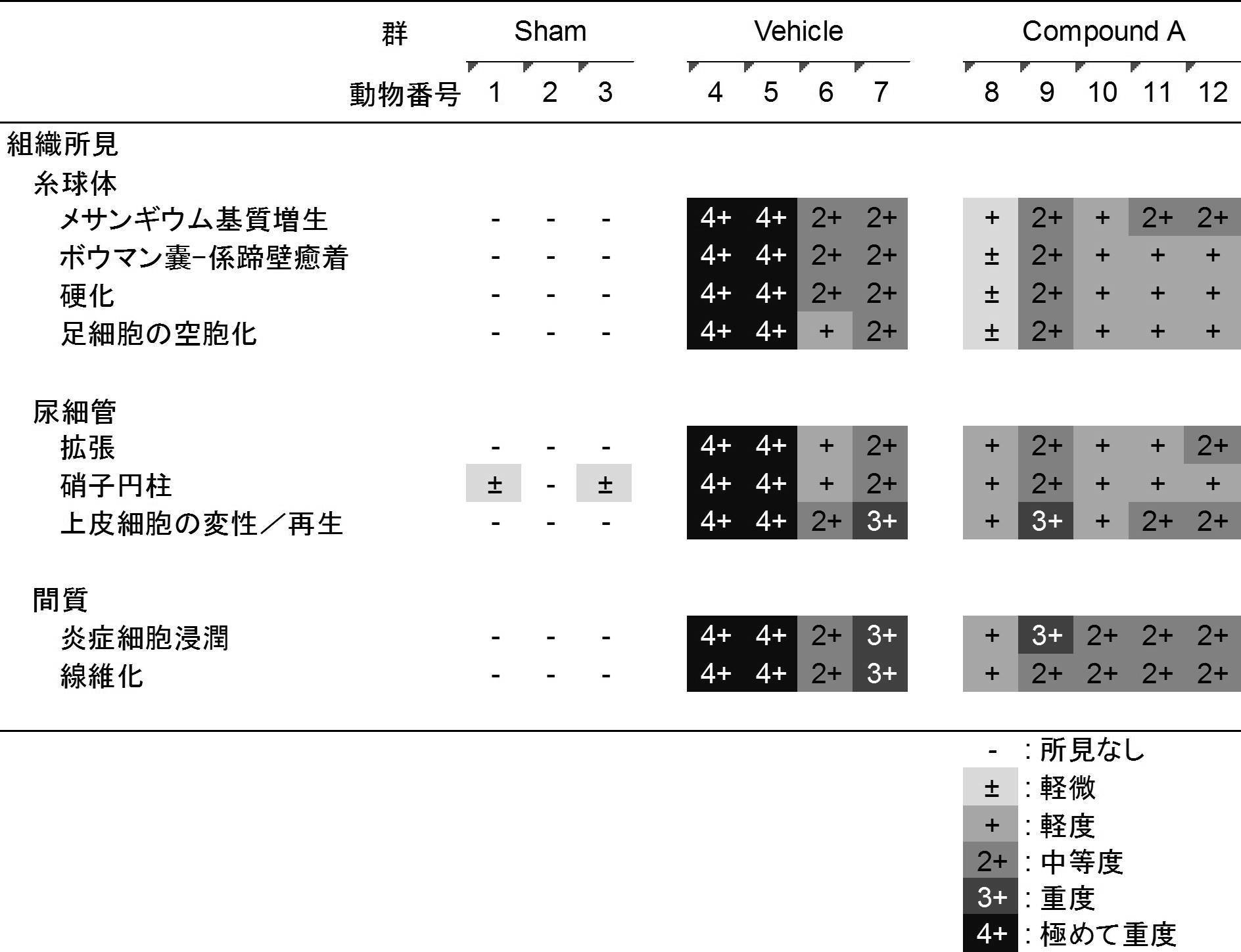
5/6腎摘出ラットを用いて、化合物Aによる、尿中蛋白質排泄量及び腎障害進行抑制作用を評価した。評価は非特許文献2を参考に実施した。実験動物は、雄性Wistarラット(日本エスエルシー株式会社)を7週齢時に右腎60%摘出、8週齢時に左腎全摘出した動物を用いた。腎摘出処置以外を同様に施した群をSham群(Sham)として用いた。化合物Aの一水和物を化合物Aフリー体として0.0218から0.0317w/w%含む通常粉末飼料(CRF-1粉末、オリエンタル酵母株式会社)を調製した。
化合物A投与群(Compound A)には21週齢より化合物Aを含む上記飼料を給餌することにより、化合物Aを10週間経口投与した。対照群(Vehicle)及びSham群には化合物Aを含まない上記通常粉末飼料を給餌した。尿を24時間採取し(投与開始5週間後)、腎臓を摘出(投与開始10週間後)した。
尿については、尿量を測定後、蛋白質濃度を総蛋白質定量キット(トネインTP、大塚製薬株式会社)を用い、波長590 nmの吸光度により測定した。尿量と蛋白質濃度から尿中蛋白質排泄量(mg/day)を算出した。
腎臓については、組織を10%中性緩衝ホルマリン液(和光純薬工業株式会社)で固定し、組織切片をヘマトキシリン・エオジン(HE)染色した。
群毎の尿中蛋白質排泄量の平均値及び標準偏差を算出し、その結果を図3に示した。腎組織の各部位における障害をスコアで評価し、表2に示した。
参考例1:食塩水負荷SDT-fattyラットモデルにおける、縮合複素環化合物の経口投与による、尿中蛋白質排泄量及び腎障害進行抑制作用
ここで、縮合複素環化合物とは下記式:
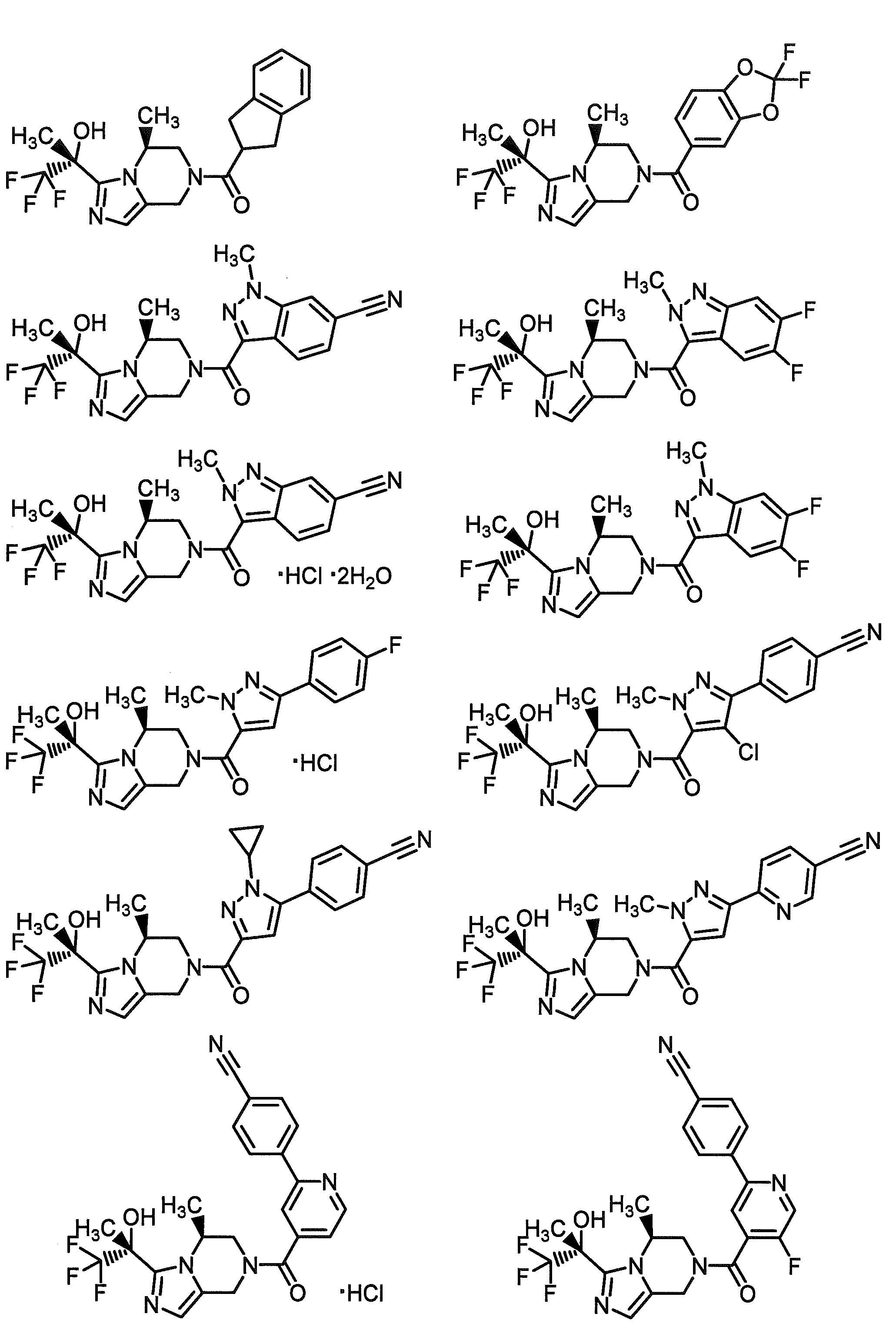
から選ばれる化合物である。
食塩水負荷SDT-fattyラットモデルを用いて、前記縮合複素環化合物による、尿中蛋白質排泄量及び腎障害進行抑制作用を評価する。実験動物は、6週齢の雄性SDT-fattyラット(日本クレア株式会社)を用いる。縮合複素環化合物はそれぞれ、特許文献3(国際公開第2019/151274号)に記載の方法により得ることができる。各縮合複素環化合物を含む通常粉末飼料(CRF-1粉末、オリエンタル酵母株式会社)を調製する。
対照群(Vehicle)及び縮合複素環化合物投与群に1w/v%の食塩水を給水する。また、食塩を含まない水を給水した群を病態対照群(Normal)とする。縮合複素環化合物投与群には食塩水の給水と同時に前記縮合複素環化合物を含む上記飼料を給餌することにより、縮合複素環化合物を14週間経口投与する。対照群及び病態対照群には前記縮合複素環化合物を含まない上記通常粉末飼料を給餌する。尿を6時間採取し(投与開始10週間後)、腎臓を摘出(投与開始14週間後)する。
尿については、尿量を測定後、尿中の蛋白質濃度を総蛋白質定量キット(トネインTP、大塚製薬株式会社)を用い、波長590 nmの吸光度により測定する。尿量と蛋白質濃度から尿中蛋白質排泄量(mg/ 6 hours)を算出する。
腎臓については、組織を10%中性緩衝ホルマリン液(和光純薬工業株式会社)で固定し、組織切片をヘマトキシリン・エオジン(HE)染色する。
群毎の尿中蛋白質排泄量の平均値及び標準偏差を算出する。
参考例2:5/6腎摘出ラットモデルにおける、縮合複素環化合物の経口投与による、尿中蛋白質排泄量及び腎障害進行抑制作用
5/6腎摘出ラットを用いて、前記縮合複素環化合物による、尿中蛋白質排泄量及び腎障害進行抑制作用を評価する。実験動物は、雄性Wistarラット(日本エスエルシー株式会社)を7週齢時に右腎60%摘出、8週齢時に左腎全摘出した動物を用いる。腎摘出処置以外を同様に施した群をSham群(Sham)として用いる。各縮合複素環化合物を含む通常粉末飼料(CRF-1粉末、オリエンタル酵母株式会社)を調製する。
縮合複素環化合物投与群には21週齢より前記縮合複素環化合物を含む上記飼料を給餌することにより、前記縮合複素環化合物を10週間経口投与する。対照群(Vehicle)及びSham群には前記縮合複素環化合物を含まない上記通常粉末飼料を給餌する。尿を24時間採取し(投与開始5週間後)、腎臓を摘出(投与開始10週間後)する。
尿については、尿量を測定後、蛋白質濃度を総蛋白質定量キット(トネインTP、大塚製薬株式会社)を用い、波長590 nmの吸光度により測定する。尿量と蛋白質濃度から尿中蛋白質排泄量(mg/day)を算出する。
腎臓については、組織を10%中性緩衝ホルマリン液(和光純薬工業株式会社)で固定し、組織切片をヘマトキシリン・エオジン(HE)染色する。
群毎の尿中蛋白質排泄量の平均値及び標準偏差を算出する。
本発明は、化合物Aもしくはその製薬上許容される塩、又は化合物Aの一水和物のCKDを対象疾患とする新規医薬用途を提供する。
本出願は、特願2018-169632を基礎としており、その内容は本明細書に全て包含されるものである。
Claims (5)
- 下記化学構造式:

で示される化合物もしくはその製薬上許容される塩、又は下記化学構造式:

で示される化合物を含有することを特徴とする、慢性腎臓病の治療剤又は予防剤。 - 下記化学構造式:

で示される化合物もしくはその製薬上許容される塩、又は下記化学構造式:

で示される化合物を含有することを特徴とする、腎機能改善剤。 - 下記化学構造式:
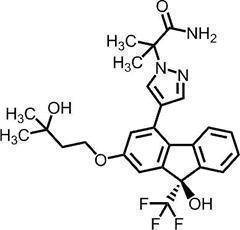
で示される化合物もしくはその製薬上許容される塩、又は下記化学構造式:

で示される化合物を含有することを特徴とする、GFR、eGFR、血清クレアチニン値、血中尿素窒素値、クレアチニン・クリアランス、尿中蛋白値及び尿中アルブミン値から選択される1又は2以上のパラメーターの改善剤。 - 下記化学構造式:
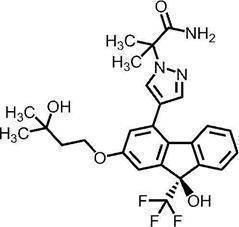
で示される化合物を含有することを特徴とする、請求項1から3のいずれか一項に記載の剤。 - 下記化学構造式:

で示される化合物を含有することを特徴とする、請求項1から3のいずれか一項に記載の剤。
Priority Applications (4)
| Application Number | Priority Date | Filing Date | Title |
|---|---|---|---|
| CN201980059377.5A CN112638377A (zh) | 2018-09-11 | 2019-09-10 | 含有吡唑酰胺化合物的慢性肾脏病的治疗或预防剂 |
| JP2020546043A JPWO2020054734A1 (ja) | 2018-09-11 | 2019-09-10 | ピラゾール−アミド化合物を含有する慢性腎臓病の治療又は予防剤 |
| US17/274,837 US20220362215A1 (en) | 2018-09-11 | 2019-09-10 | Therapeutic or prophylactic agent for chronic kidney disease containing pyrazole-amide compound |
| EP19860814.3A EP3851103A4 (en) | 2018-09-11 | 2019-09-10 | THERAPEUTIC OR PROPHYLACTIC AGENT FOR CHRONIC KIDNEY DISEASE CONTAINING A PYRAZOLE-AMIDE COMPOUND |
Applications Claiming Priority (2)
| Application Number | Priority Date | Filing Date | Title |
|---|---|---|---|
| JP2018-169632 | 2018-09-11 | ||
| JP2018169632 | 2018-09-11 |
Publications (1)
| Publication Number | Publication Date |
|---|---|
| WO2020054734A1 true WO2020054734A1 (ja) | 2020-03-19 |
Family
ID=69778346
Family Applications (1)
| Application Number | Title | Priority Date | Filing Date |
|---|---|---|---|
| PCT/JP2019/035586 Ceased WO2020054734A1 (ja) | 2018-09-11 | 2019-09-10 | ピラゾール-アミド化合物を含有する慢性腎臓病の治療又は予防剤 |
Country Status (5)
| Country | Link |
|---|---|
| US (1) | US20220362215A1 (ja) |
| EP (1) | EP3851103A4 (ja) |
| JP (1) | JPWO2020054734A1 (ja) |
| CN (1) | CN112638377A (ja) |
| WO (1) | WO2020054734A1 (ja) |
Cited By (2)
| Publication number | Priority date | Publication date | Assignee | Title |
|---|---|---|---|---|
| WO2021177330A1 (ja) | 2020-03-04 | 2021-09-10 | 日本たばこ産業株式会社 | 縮合三環性化合物及びその医薬用途 |
| KR20240055793A (ko) | 2021-09-01 | 2024-04-29 | 니뽄 다바코 산교 가부시키가이샤 | 질소 함유 3환성 화합물 및 그 의약 용도 |
Citations (5)
| Publication number | Priority date | Publication date | Assignee | Title |
|---|---|---|---|---|
| JPH01242523A (ja) * | 1988-03-23 | 1989-09-27 | Otsuka Pharmaceut Factory Inc | 腎虚血改善剤 |
| WO2010041748A1 (ja) * | 2008-10-10 | 2010-04-15 | 日本たばこ産業株式会社 | フルオレン化合物及びその医薬用途 |
| WO2014142290A1 (ja) | 2013-03-15 | 2014-09-18 | 日本たばこ産業株式会社 | ピラゾール-アミド化合物およびその医薬用途 |
| WO2018021508A1 (ja) | 2016-07-29 | 2018-02-01 | 日本たばこ産業株式会社 | ピラゾール-アミド化合物の製造方法 |
| WO2019151274A1 (ja) | 2018-02-01 | 2019-08-08 | 日本たばこ産業株式会社 | 含窒素複素環アミド化合物及びその医薬用途 |
-
2019
- 2019-09-10 CN CN201980059377.5A patent/CN112638377A/zh active Pending
- 2019-09-10 EP EP19860814.3A patent/EP3851103A4/en not_active Withdrawn
- 2019-09-10 US US17/274,837 patent/US20220362215A1/en not_active Abandoned
- 2019-09-10 WO PCT/JP2019/035586 patent/WO2020054734A1/ja not_active Ceased
- 2019-09-10 JP JP2020546043A patent/JPWO2020054734A1/ja active Pending
Patent Citations (5)
| Publication number | Priority date | Publication date | Assignee | Title |
|---|---|---|---|---|
| JPH01242523A (ja) * | 1988-03-23 | 1989-09-27 | Otsuka Pharmaceut Factory Inc | 腎虚血改善剤 |
| WO2010041748A1 (ja) * | 2008-10-10 | 2010-04-15 | 日本たばこ産業株式会社 | フルオレン化合物及びその医薬用途 |
| WO2014142290A1 (ja) | 2013-03-15 | 2014-09-18 | 日本たばこ産業株式会社 | ピラゾール-アミド化合物およびその医薬用途 |
| WO2018021508A1 (ja) | 2016-07-29 | 2018-02-01 | 日本たばこ産業株式会社 | ピラゾール-アミド化合物の製造方法 |
| WO2019151274A1 (ja) | 2018-02-01 | 2019-08-08 | 日本たばこ産業株式会社 | 含窒素複素環アミド化合物及びその医薬用途 |
Non-Patent Citations (14)
| Title |
|---|
| "Chronic Kidney Disease", MERCK MANUAL PROFESSIONAL VERSION, October 2018 (2018-10-01), Retrieved from the Internet <URL:https://www.merckmanuals.com/en-pr/professional/genitourinary-disorders/chronic-kidney-disease/chronic-kidney-disease> |
| AM J KIDNEY DIS, vol. 62, 2013, pages 201 - 213 |
| BERGE ET AL., J. PHARM. SCI., vol. 66, 1977 |
| KATO, MASATO ET AL.: "Distinct Structural Mechanisms for Inhibition of Pyruvate Dehydrogenase Kinase Isoforms by AZD7545", DICHLOROACETATE, AND RADICICOL, STRUCTURE, vol. 15, no. 8, August 2007 (2007-08-01), pages 992 - 1004, XP022192478, DOI: 10.1016/j.str.2007.07.001 * |
| KATSUDAYOSHIAKI ET AL.: "Physiological changes induced by salt intake in female Spontaneously Diabetic Torii-Lepr(fa) (SDT fatty) rat, a novel obese type 2 diabetic model", ANIMAL SCIENCE JOURNAL, vol. 85, no. 5, 2014, pages 588 - 594 |
| KIDNEY INT SUPPL, vol. 2, 2012, pages 363 - 369 |
| LANCET, vol. 385, 2015, pages 2047 - 2056 |
| MIYASHITA, KAZUTOSHI ET AL.: "Elucidation of the mechanism of tubulo-interstitial injury in chronic kidney disease by use of newly developed chronic renal ischemia model", NEPHROLOGY DIALYSIS TRANSPLANTATION, vol. 30, no. 3, 21 May 2015 (2015-05-21), pages iii404, XP009527138, ISSN: 0931-0509 * |
| NEPHOL DIAL TRANSPLANT, vol. 29, 2014, pages 490 - 496 |
| PAULEKUHN ET AL., J. MED. CHEM., vol. 50, 2007, pages 6665 - 6672 |
| See also references of EP3851103A4 |
| STAHL ET AL.: "Handbook of Pharmaceutical Salts: Properties, Selection, and Use", 2002, WILEY-VCH |
| TAMAKI, MASANORI ET AL.: "Chronic kidney disease reduces muscle mitochondria and exercise endurance and its exacerbation by dietary protein through inactivation of pyruvate dehydrogenase", KIDNEY INTERNATIONAL, vol. 85, no. 6, June 2014 (2014-06-01), pages 1330 - 1339, XP055693091 * |
| TSUPRYKOVOLEG ET AL.: "The dipeptidyl peptidase inhibitor linagliptin and the angiotensin II receptor blocker telmisartan show renal benefit by different pathways in rats with 5/6 nephrectomy", KIDNEY INTERNATIONAL, vol. 89, no. 5, 2016, pages 1049 - 1061 |
Cited By (4)
| Publication number | Priority date | Publication date | Assignee | Title |
|---|---|---|---|---|
| WO2021177330A1 (ja) | 2020-03-04 | 2021-09-10 | 日本たばこ産業株式会社 | 縮合三環性化合物及びその医薬用途 |
| KR20220149688A (ko) | 2020-03-04 | 2022-11-08 | 니뽄 다바코 산교 가부시키가이샤 | 축합 3환성 화합물 및 그의 의약 용도 |
| EP4663189A2 (en) | 2020-03-04 | 2025-12-17 | Japan Tobacco Inc. | Fused tricyclic compound and medicinal use thereof |
| KR20240055793A (ko) | 2021-09-01 | 2024-04-29 | 니뽄 다바코 산교 가부시키가이샤 | 질소 함유 3환성 화합물 및 그 의약 용도 |
Also Published As
| Publication number | Publication date |
|---|---|
| EP3851103A4 (en) | 2022-06-08 |
| JPWO2020054734A1 (ja) | 2021-08-30 |
| EP3851103A1 (en) | 2021-07-21 |
| CN112638377A (zh) | 2021-04-09 |
| US20220362215A1 (en) | 2022-11-17 |
Similar Documents
| Publication | Publication Date | Title |
|---|---|---|
| CN115209919B (zh) | 慢性心衰的治疗或预防方法 | |
| US20250152596A1 (en) | Method of treating pain or interstitial cystitis using indole compound | |
| WO2020054734A1 (ja) | ピラゾール-アミド化合物を含有する慢性腎臓病の治療又は予防剤 | |
| EP3804727B1 (en) | Indol-containing compound for use in the treatment of the nephrotic syndrome | |
| KR20100119862A (ko) | 의약 조성물, 의약 조성물 제조를 위한 2-이미노피롤리딘 유도체의 사용 및 심질환의 치료용 또는 개선용 키트 | |
| WO2008148359A1 (en) | The therapeutic uses of imidazol-5-carboxylic acid derivatives | |
| JP6934859B2 (ja) | 腎疾患の治療のための医薬 | |
| EP2568982B1 (en) | Association of xanthine oxidase inhibitors and angiotensin ii receptor antagonists and use thereof | |
| HK40047721A (en) | Therapeutic or prophylactic agent for chronic kidney disease containing pyrazole-amide compound | |
| JP6814134B2 (ja) | 糖尿病性腎症を治療又は予防する方法 | |
| JP2021519322A (ja) | 重水素化イミダゾリジンジオン化合物とその用途 | |
| KR20130088755A (ko) | 서방성 고혈압 및 신 기능 장애 치료제 | |
| HK40049573A (en) | Indol-containing compound for use in the treatment of the nephrotic syndrome | |
| HK40049573B (en) | Indol-containing compound for use in the treatment of the nephrotic syndrome | |
| US20090281083A1 (en) | Combination Product | |
| HK40049577A (en) | Indole compound for treating interstitial cystitis | |
| HK40049577B (en) | Indole compound for treating interstitial cystitis | |
| HK1179890A (en) | Sustained-release therapeutic agent for hypertension and renal dysfunction | |
| KR20150111644A (ko) | 미세환경 조절에 의한 근육 손상 예방용 소분자 화합물 |
Legal Events
| Date | Code | Title | Description |
|---|---|---|---|
| 121 | Ep: the epo has been informed by wipo that ep was designated in this application |
Ref document number: 19860814 Country of ref document: EP Kind code of ref document: A1 |
|
| ENP | Entry into the national phase |
Ref document number: 2020546043 Country of ref document: JP Kind code of ref document: A |
|
| NENP | Non-entry into the national phase |
Ref country code: DE |
|
| ENP | Entry into the national phase |
Ref document number: 2019860814 Country of ref document: EP Effective date: 20210412 |