WO2020022346A1 - 糖尿病指標値推定システム - Google Patents
糖尿病指標値推定システム Download PDFInfo
- Publication number
- WO2020022346A1 WO2020022346A1 PCT/JP2019/028895 JP2019028895W WO2020022346A1 WO 2020022346 A1 WO2020022346 A1 WO 2020022346A1 JP 2019028895 W JP2019028895 W JP 2019028895W WO 2020022346 A1 WO2020022346 A1 WO 2020022346A1
- Authority
- WO
- WIPO (PCT)
- Prior art keywords
- index value
- subject
- diabetes
- acetone
- diabetes index
- Prior art date
- Legal status (The legal status is an assumption and is not a legal conclusion. Google has not performed a legal analysis and makes no representation as to the accuracy of the status listed.)
- Ceased
Links
Images


Classifications
-
- G—PHYSICS
- G01—MEASURING; TESTING
- G01N—INVESTIGATING OR ANALYSING MATERIALS BY DETERMINING THEIR CHEMICAL OR PHYSICAL PROPERTIES
- G01N33/00—Investigating or analysing materials by specific methods not covered by groups G01N1/00 - G01N31/00
- G01N33/48—Biological material, e.g. blood, urine; Haemocytometers
- G01N33/483—Physical analysis of biological material
- G01N33/497—Physical analysis of biological material of gaseous biological material, e.g. breath
-
- G—PHYSICS
- G01—MEASURING; TESTING
- G01N—INVESTIGATING OR ANALYSING MATERIALS BY DETERMINING THEIR CHEMICAL OR PHYSICAL PROPERTIES
- G01N33/00—Investigating or analysing materials by specific methods not covered by groups G01N1/00 - G01N31/00
- G01N33/48—Biological material, e.g. blood, urine; Haemocytometers
- G01N33/50—Chemical analysis of biological material, e.g. blood, urine; Testing involving biospecific ligand binding methods; Immunological testing
- G01N33/64—Chemical analysis of biological material, e.g. blood, urine; Testing involving biospecific ligand binding methods; Immunological testing involving ketones
-
- G—PHYSICS
- G01—MEASURING; TESTING
- G01N—INVESTIGATING OR ANALYSING MATERIALS BY DETERMINING THEIR CHEMICAL OR PHYSICAL PROPERTIES
- G01N33/00—Investigating or analysing materials by specific methods not covered by groups G01N1/00 - G01N31/00
- G01N33/48—Biological material, e.g. blood, urine; Haemocytometers
- G01N33/50—Chemical analysis of biological material, e.g. blood, urine; Testing involving biospecific ligand binding methods; Immunological testing
- G01N33/66—Chemical analysis of biological material, e.g. blood, urine; Testing involving biospecific ligand binding methods; Immunological testing involving blood sugars, e.g. galactose
Definitions
- the present invention relates to a diabetes index value estimation system for estimating a diabetes index value of a subject.
- Patent Document 1 discloses a device that irradiates a living body with near-infrared light and estimates a blood glucose level from an obtained optical spectrum.
- acetone contained in the gas component released from the living body is one of the metabolites produced by burning and decomposing body fat, and after being produced in the blood, exhaled through the lungs and skin. It is discharged outside the body as gas and skin gas.
- sugar is first consumed as energy, and then fat is used as energy. It is known that diabetics have abnormalities in sugar metabolism, and fat is used as energy even if sugar remains, so that the acetone concentration generally tends to be high.
- Acetone is expected as a non-invasive index for monitoring the presence or absence of diabetes or the success or failure of control, and the correlation between acetone concentration and blood glucose level has been verified.
- Non-Patent Document 1 discloses the result of verifying the correlation between the breath acetone concentration of a diabetic patient and the above index value.
- 4 diabetic patients according to the blood glucose level or blood HbA1c level (low blood glucose level of 40 to 100 mg / dl, boundary blood glucose level of 101 to 150 mg / dl, high blood glucose level of 151 to 200 mg / dl, Groups of 201-419 mg / dl ultra-high blood sugar level or 3 groups (standard value of HbA1c concentration of 5.9-6.9%, high value of 7.0-9.9%, ultra-high value of 10-13%)
- the average breath acetone concentration of the diabetic patients in each group is calculated, it is disclosed that there is a positive correlation that the group having a higher index value tends to have a higher mean breath acetone concentration.
- the index value can be estimated without performing blood sampling, but there is a problem in the estimation accuracy.
- the method according to Patent Literature 1 has a problem that the change in the optical spectrum with respect to the change in the blood sugar level is small, so that the method is easily affected by the measurement environment light and the skin condition, and the measurement error tends to increase.
- the method according to Non-Patent Document 1 has a problem that the index value can only be roughly estimated in three or four levels.
- One embodiment of the present invention has been made in view of the above problems, and has as its object to provide a diabetes index value estimation system capable of accurately estimating a diabetes index value without performing blood sampling. .
- a diabetes index value estimating system includes an acetone concentration input unit for inputting a concentration value of acetone released from a subject, A subject information input unit for inputting the diabetes index value of the subject; and a acetone concentration value and a first value stored in advance based on the first diabetes index value of the subject input by the subject information input unit. And selecting a calibration curve from a plurality of calibration curves indicating a relationship with a second type of diabetes index value different from the diabetes index value, and selecting the selected calibration curve and the concentration value input by the acetone concentration input unit. , An index value estimating unit for estimating a second diabetes index value of the subject, and an output unit for outputting the second diabetes index value estimated by the index value estimating unit.
- the diabetes index value of the subject is estimated using the concentration value of acetone released from the subject. Thereby, the diabetes index value can be estimated without performing blood sampling.
- the second diabetes index value is estimated using a calibration curve selected based on the first diabetes index value of the subject. Accordingly, the appropriate second diabetes index value is estimated in accordance with the first diabetes index value of the subject, so that the index value can be accurately estimated. That is, according to the diabetes index value estimation system according to one embodiment of the present invention, the diabetes index value can be accurately estimated without performing blood collection.
- a diabetic index value of the subject is estimated using the concentration value of acetone released from the subject. Thereby, the diabetes index value can be estimated without performing blood sampling.
- the second diabetes index value is estimated using a calibration curve selected based on the first diabetes index value of the subject. Accordingly, the appropriate second diabetes index value is estimated in accordance with the first diabetes index value of the subject, so that the index value can be accurately estimated. That is, according to the embodiment of the present invention, the diabetes index value can be accurately estimated without performing blood collection.
- FIG. 2 is a diagram illustrating a hardware configuration of a diabetes index value estimation device and an acetone measurement device included in the diabetes index value estimation system according to the embodiment of the present invention.
- FIG. 1 shows a diabetes index value estimation system 1 according to the present embodiment.
- the diabetes index value estimation system 1 calculates the diabetes index value of the subject (physical quantity of a specific component which can be a diabetes index value contained in the body of the subject) from the concentration value of acetone released from the subject. Is a system for estimating.
- the diabetes index value estimated by the diabetes index value estimation system 1 is specifically a blood sugar level.
- the diabetes index value estimation system 1 includes a diabetes index value estimation device 10 and an acetone measurement device 20.
- the diabetes index value estimation device 10 and the acetone measurement device 20 are connected to each other so that at least information indicating the measurement result can be transmitted from the acetone measurement device 20 to the diabetes index value estimation device 10.
- the diabetes index value estimation device 10 and the acetone measurement device 20 may be connected via a network.
- the network is, for example, a mobile communication network or the Internet.
- the acetone measuring device 20 may be connected to a network via a communication terminal device. That is, information indicating the measurement result by the acetone measurement device 20 may be output to the network via the communication terminal device and transmitted to the diabetes index value estimation device 10.
- the communication terminal device is, for example, a portable electronic device such as a mobile phone owned by the user (subject) of the diabetes index value estimation system 1.
- the communication terminal device may be other than the mobile phone, and may be, for example, a smartphone, a tablet computer, a personal digital assistant (PDA), a mobile personal computer, a palmtop computer, a laptop computer, or the like. Further, the communication terminal device is not necessarily limited to the above.
- Communication between the acetone measuring device 20 and the communication terminal device may be performed by wireless LAN (local area network) or short-range wireless communication such as Bluetooth (registered trademark) and ZigBee (registered trademark).
- the communication may be performed using a wired communication such as a USB (Universal Serial Bus) or an audio cable.
- the diabetes index value estimating device 10 and the acetone measuring device 20 may be integrated. That is, a function of estimating the diabetes index value based on the acetone concentration value may be added to the acetone measuring device.
- the diabetes index value estimation device 10 is a device that estimates a diabetes index value of a subject by performing information processing based on information received from the acetone measurement device 20.
- the diabetes index value estimating device 10 is specifically equivalent to an information processing device such as a server device, a workstation, a personal computer, and a portable terminal.
- the diabetes index value estimating device 10 may be realized by one device, or may be realized by an information processing system configured by connecting a plurality of information processing devices (for example, a mobile terminal and a server device) to each other via a network. May be.
- the function of the diabetes index value estimation device 10 according to the present embodiment will be described later.
- the acetone measuring device 20 is a device that measures the concentration value of acetone contained in gas components emitted from a living body as a subject.
- the acetone measurement device 20 includes a sensor unit that detects the breath of the subject, detects acetone from the detected breath, and calculates (measures) the concentration value of acetone.
- a conventional function can be used for the function of measuring the concentration value of acetone (the hardware configuration of the acetone measuring device 20).
- the measurement of the acetone concentration value is performed, for example, using an operation performed on an operation unit included in the acetone measurement device 20 of the subject as a trigger. Alternatively, the measurement of the acetone concentration value may be automatically performed at a preset time.
- the measurement of the acetone concentration value is performed at the timing when the diabetes index value of the subject is estimated. For example, it may be performed at a preset time of the day, specifically before breakfast, immediately after getting up, after eating, before sleeping, or the like. However, it may be measured at any other timing.
- the measured concentration value of acetone is, for example, a numerical value in ppm as in a conventional acetone measuring device. However, it may be a numerical value of a unit other than the above.
- the acetone measuring device 20 transmits information indicating the measured acetone concentration value to the diabetes index value estimating device 10.
- the acetone measurement device 20 receives the estimation result from the diabetes index value estimation device 10 in response to the transmission of the acetone concentration value.
- the acetone measuring device 20 may include, for example, a display unit, and may display the received estimation result and the operation result performed through the operation unit on the display unit.
- the acetone measuring device 20 various types of devices such as a type that allows the subject to be in close contact with the body, a type that can be carried by the user, and a type that is installed at home or the like can be used.
- the acetone measuring device 20 may be a portable measuring device (for example, T. Toyooka et al., J. Breath Res., Vol. 7, 036005, 2013) that can be easily measured at home or outside. Can be.
- the acetone measurement device 20 may be another semiconductor gas sensor, a gas chromatography device, an ion mobility spectrometer, or the like.
- the concentration value of acetone is detected from the breath of the subject, but may be not only the breath but also the skin acetone naturally released from the skin or mucous membranes.
- the release site of skin acetone is not particularly limited, and may be any site where skin acetone is released. It is known that there is a correlation between the breath acetone concentration and the skin acetone concentration (for example, C. Turner et al., Rapid Commun. Mass. Spectrom., Vol. 22, pp. 526-532, 2008).
- the concept of blood glucose level estimation performed by the diabetes index value estimation device 10 in the present embodiment will be described.
- the blood glucose level of the subject is estimated from the concentration value of acetone released from the subject.
- a calibration curve indicating the relationship between the acetone concentration value and the blood glucose level is used.
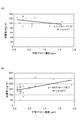
- FIG. 2 shows a graph of the breath acetone concentration and the blood glucose level of a diabetic patient.
- the horizontal axis indicates the breath acetone concentration (ppm)
- the vertical axis indicates the blood glucose level (mg / dl).
- the straight lines and equations in the graph are linear regression equations (y: blood sugar level, x: breath acetone concentration), and correspond to a calibration curve described later.
- R in the graph is the value of the correlation coefficient.
- FIG. 2 (a) is a graph relating to a diabetic patient who is taking an antidiabetic drug and has a blood HbA1c concentration of less than 6.9%.
- FIG. 2 (b) is a graph relating to a person who is taking a therapeutic agent for diabetes and has a blood HbA1c concentration of 7.4% or more among the diabetic patients.
- the relationship between the acetone concentration value and the blood glucose level differs for each group of diabetic patients according to the blood HbA1c concentration.
- the acetone concentration value and the blood glucose level have a negative correlation.
- the acetone concentration value and the blood glucose level have a positive correlation.
- a plurality of calibration curves indicating the relationship between the acetone concentration value and the blood glucose level are prepared in advance, and the calibration curve used for estimation is selected based on the subject's blood HbA1c concentration. You.
- the blood HbA1c concentration of the subject is required to estimate the blood sugar level of the subject. Therefore, for example, it is necessary to measure the blood HbA1c concentration by collecting blood. Normally, the blood HbA1c concentration does not greatly fluctuate on a daily basis. Therefore, it can be used for selecting a calibration curve without frequently measuring the blood HbA1c concentration. For example, in the present embodiment, the blood HbA1c concentration may be measured about once every two or three months.
- blood sugar levels can fluctuate greatly on a daily or hourly basis. It is important for a diabetic patient or the like to grasp the blood sugar level on a daily or hourly basis for the purpose of health management.
- An object of the present embodiment is to accurately estimate a blood sugar level on a daily or hourly basis without collecting blood.
- the diabetes index value estimation device 10 includes an acetone concentration input unit 11, a subject information input unit 12, an index value estimation unit 13, and an output unit 14.
- the acetone concentration input unit 11 is a functional unit for inputting the concentration value of acetone released from the subject whose diabetes index value is to be calculated.
- the acetone concentration input unit 11 receives the information indicating the acetone concentration value from the acetone measuring device 20, and inputs the acetone concentration value released from the subject.
- the acetone concentration input unit 11 may also receive, from the acetone measuring device 20, information related to the acetone concentration value together with the information indicating the acetone concentration value (the subject identifier which is information for identifying the subject and the measurement time). Good. Note that the acetone concentration input unit 11 does not necessarily need to input the acetone concentration value from the acetone measuring device 20.
- the acetone concentration input unit 11 may input the concentration value of acetone by a user's operation on the diabetes index value estimation device 10.
- the acetone concentration input unit 11 stores the information indicating the received acetone concentration value in a database provided in the diabetes index value estimation device 10 in association with the subject identifier, and stores the diabetes index value of the subject. May be read and used at the time of estimation.
- the acetone concentration input unit 11 outputs the input acetone concentration value to the index value estimation unit 13.
- the subject information input unit 12 is a functional unit that inputs a first diabetes index value of the subject.
- the first diabetes index value is a diabetes index value used for selecting a calibration curve, and in this embodiment, is a blood HbA1c concentration.
- the blood HbA1c concentration of the subject to be input is, for example, a previously measured blood HbA1c concentration as described above.
- the blood HbA1c concentration is usually input as a numerical value in units of% as in the case of being used as a diabetes index value. However, it may be input as a numerical value of a unit other than the above.
- the subject information input unit 12 may also input information indicating whether or not the subject is taking a drug for treating diabetes. The information is also used for selecting a calibration curve.
- the diabetes index value estimating apparatus 10 receives, for example, the above information from a communication terminal device or the like used by the subject, and stores the information in its own database in association with the subject identifier.
- the transmission of the above information (information for grouping the subjects described later) from the subject may be performed based on the subject's own self-report, or may be performed by a doctor or a nurse. It may be performed based on the judgment of a third party.
- the subject information input unit 12 inputs subject information by reading the information.
- the database includes, for example, the gender, age, height, weight, blood pressure, BMI (Body Mass Index), body fat percentage, visceral fat, abdominal girth, chronic disease, electronic medical records, and medication of the subject. Information such as a history, an electronic scheduler, a food and drink history, and an exercise history may be stored. Further, the storage contents are not limited to these.
- the subject information input unit 12 receives information from the communication terminal device or the acetone measuring device 20 used by the subject, other than reading the information from the database, and inputs the information of the subject. Is also good.
- the subject information input unit 12 outputs the input information to the index value estimation unit 13.
- the index value estimation unit 13 is a functional unit that estimates a second diabetes index value of the subject from the acetone concentration value input by the acetone concentration input unit 11.
- the second diabetes index value to be estimated is a different type of diabetes index value from the first diabetes index value, and is a blood sugar level in the present embodiment.
- the blood sugar level is usually estimated as a numerical value in mg / dl unit as in the case where the blood sugar level is used as a diabetes index value. However, it may be estimated as a numerical value of a unit other than the above.
- the index value estimating unit 13 is based on the subject's blood HbA1c concentration input by the subject information input unit 12, and stores in advance a plurality of calibration curves indicating the relationship between the acetone concentration value and the blood glucose level. Select one of the calibration curves from.
- the index value estimating unit 13 estimates the blood glucose level of the subject from the selected calibration curve and the acetone concentration value input by the acetone concentration input unit 11.
- the index value estimating unit 13 may select the calibration curve based on the information input by the subject information input unit 12 indicating whether or not the subject is taking a therapeutic drug for diabetes. .
- the index value estimation unit 13 may determine whether the subject belongs to any of at least two groups according to the blood HbA1c concentration. If the index value estimating unit 13 determines that the subject belongs to the group having a high blood HbA1c concentration among the at least two groups, the calibration value indicating that the acetone concentration value and the blood glucose level have a positive correlation A line may be selected.
- the index value estimating unit 13 determines that the subject belongs to a group having a low blood HbA1c concentration among the at least two groups, the calibration value indicating a negative correlation between the acetone concentration value and the blood glucose level.
- a line may be selected.
- the index value estimating unit 13 estimates the blood sugar level of the subject as follows.
- the index value estimating unit 13 stores in advance a plurality of calibration curves indicating the relationship between the acetone concentration value and the blood glucose level according to the group of subjects in a database provided in the diabetes index value estimating device 10. And so on.
- the calibration curve is, for example, a function using the blood glucose level as an output value with the acetone concentration value as a variable.
- the function is, for example, a linear function indicated by a straight line on the graph of FIG. However, the function may be a function other than the linear function.
- the plurality of groups of subjects set in advance correspond to the blood HbA1c concentration.
- two groups a group having a blood HbA1c concentration of less than 6.9% and a group having a blood HbA1c concentration of 7.4% or more, are set in advance.
- a group having a blood HbA1c concentration of 6.9% or more and less than 7.4% may be excluded from the blood sugar level estimation target in the present embodiment.
- three or more groups may be set in advance.
- the group may depend on whether or not the subject is taking an antidiabetic drug in addition to the blood HbA1c concentration.
- a group including the two groups is set in advance.
- the index value estimation unit 13 stores a calibration curve for each group.
- the calibration curve can be created by analyzing sample data of the acetone concentration value and the blood glucose level of the subjects in each group prepared in advance.
- the analysis of the sample data may be performed by the diabetes index value estimation device 10 or may be performed by another device.
- the information of the calibration curve obtained by the analysis is transmitted from the another device to the diabetes index value estimation device 10.
- the group having a low blood HbA1c concentration ie, the group having a blood HbA1c concentration of less than 6.9%
- the group having a high blood HbA1c concentration ie, the group having a blood HbA1c concentration of 7.4% or more
- a calibration curve is associated.
- the index value estimating unit 13 determines which group the subject belongs to based on the information input from the subject information input unit 12, and is stored in association with the group determined to belong. Select a calibration curve.
- the index value estimating unit 13 estimates a blood glucose level from the selected calibration curve and the concentration value input from the acetone concentration input unit 11. Specifically, the index value estimating unit 13 inputs the acetone concentration value into the calibration curve, and uses the output value from the calibration curve as the estimated value of the blood glucose level.
- the index value estimation unit 13 outputs the estimated blood glucose level of the subject to the output unit 14.
- the output unit 14 is a functional unit that outputs the blood sugar level estimated by the index value estimation unit 13. Specifically, the output unit 14 performs output by transmitting the blood glucose level input from the index value estimation unit 13 to the acetone measurement device 20.
- the acetone measuring device 20 receives and displays the blood glucose level, for example.
- the subject can grasp the blood sugar level by referring to this display, and the output unit 14 may transmit the blood sugar level to a device other than the acetone measuring device 20.
- the output unit 14 may be transmitted to a communication terminal device.
- the output unit 14 may output the blood glucose level to the display device. Thereby, the blood glucose level can be displayed in the diabetes index value estimating device 10.
- the above is the function of the diabetes index value estimation device 10.
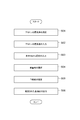
- the processing executed by the diabetes index value estimation system 1 according to the present embodiment (the operation method of the diabetes index value estimation system 1) will be described with reference to the flowchart of FIG.
- the acetone concentration value contained in the gas component emitted from the subject is measured by the acetone measuring device 20 (S01).
- the measured acetone concentration value is transmitted from the acetone measuring device 20 to the diabetes index value estimating device 10.
- the acetone concentration value is received and input by the acetone concentration input unit 11 (S02). Subsequently, the subject's blood HbA1c concentration is input by the subject information input unit 12 (S03). At this time, information indicating whether or not the subject is taking a therapeutic drug for diabetes may also be input.
- the measurement and input of the acetone concentration value (S01, S02) and the input of the blood HbA1c concentration (S03) are performed independently of each other. Therefore, it is not always necessary to perform the operations in the above order.
- a calibration curve is selected by the index value estimating unit 13 based on the information input by the subject information input unit 12 (S04). Subsequently, the index value estimating unit 13 inputs the acetone concentration value to the selected calibration curve, and estimates the blood sugar level of the subject (S05). Subsequently, the output unit 14 outputs the blood glucose level (S06).
- the above is the processing executed by the diabetes index value estimation system 1 according to the present embodiment.
- the diabetes index value of the subject is estimated using the concentration value of acetone released from the subject, which can be easily and noninvasively collected and measured. Thereby, the diabetes index value can be estimated without performing blood sampling.
- the second diabetes index value is estimated using the calibration curve selected based on the first diabetes index value of the subject. Accordingly, the appropriate second diabetes index value is estimated in accordance with the first diabetes index value of the subject, so that the index value can be accurately estimated. That is, according to the present embodiment, it is possible to accurately estimate the diabetes index value without performing blood collection.
- the second diabetes index value can be estimated by storing a plurality of calibration curves corresponding to the first diabetes index value
- hardware resources such as a memory and a processor of the diabetes index value estimation device 10 are used. Can be implemented without imposing a large burden on the user.
- the first diabetes index value used for selecting the calibration curve may be the blood HbA1c concentration
- the second diabetes index value to be estimated may be the blood glucose level. Since the blood HbA1c concentration does not greatly fluctuate on a daily basis as described above, estimation of the blood glucose level on a daily or hourly basis based on the blood HbA1c concentration measured about once every two or three months. Can be accurately estimated without performing blood sampling.
- the first diabetes index value does not necessarily need to be the blood HbA1c concentration, and may be another index value as long as it can be used for selecting a calibration curve.
- the first diabetes index value may be an average of the blood sugar level of the subject for a certain period or the amount of insulin.
- the second diabetes index value does not necessarily need to be a blood sugar level, and may be another index value as long as it can be estimated in the framework of the present invention.
- the first diabetes index value and the second diabetes index value may be values related to components in the blood of the subject, or values related to components other than components in the blood of the subject. Good.
- the calibration curve may be selected based on information indicating whether or not the subject is taking a therapeutic agent for diabetes.
- the diabetes index value can be appropriately and reliably estimated with high accuracy.
- the calibration curve may be selected based on information indicating whether or not the subject is taking a drug other than the diabetes therapeutic drug. This is because taking a drug other than the diabetes remedy may also affect the estimation of the second diabetes index value.
- taking the medicine includes not only drinking from the mouth but also injection or absorption from the skin.
- a calibration curve showing a negative correlation between the acetone concentration value and the blood glucose level was selected, and the group having a large blood HbA1c concentration was selected.
- a calibration curve showing a positive correlation between the acetone concentration value and the blood glucose level may be selected.
- the above calibration curve may not necessarily be used depending on the grouping conditions other than the first diabetes index value, the second diabetes index value, or the blood HbA1c concentration.
- the subject information input unit 12 outputs one of gender, age, height, weight, blood pressure, BMI, body fat percentage, visceral fat, eating and drinking history, and exercise history as subject information of the subject.
- the above information is also entered.
- the subject information input unit 12 inputs the subject information in the same manner as the information described above.
- the subject information input unit 12 inputs subject information by reading the subject information from the database.
- the index value estimating unit 13 selects a calibration curve based on the subject information input by the subject information input unit 12. The group corresponding to the calibration curve is determined in advance according to the subject information.
- the index value estimating unit 13 determines to which group the subject belongs based on the subject information, and selects a calibration curve stored in association with the group determined to belong.
- the group is associated in advance with a range of numerical values and the like indicated by the subject information based on actual measurement values and the like, similarly to the above-described blood HbA1c concentration and the presence or absence of taking a therapeutic agent for diabetes.
- the subject information regarding the eating and drinking history and the exercise history, for example, the calorie intake or calorie consumption is calculated from the information by a conventional method, and the group to which the subject belongs is determined based on these numerical values. You may. With the above configuration, the diabetes index value can be more appropriately and reliably estimated with high accuracy.
- the diabetes index value estimating system 1 includes the diabetes index value estimating device 10 and the acetone measuring device 20, but it is sufficient that the diabetes index value is estimated by inputting information.
- the measuring device 20 need not be included.
- the diabetes index value estimation system 1 only needs to be configured to be able to externally acquire the acetone concentration value and the like of the subject.
- each functional block may be realized by one device physically and / or logically coupled, or two or more devices physically and / or logically separated from each other directly and / or indirectly. (For example, wired and / or wireless) and may be realized by these multiple devices.
- the diabetes index value estimating device 10 and the acetone measuring device 20 may function as a computer that performs the processing of the diabetes index value estimating device 10 and the acetone measuring device 20 according to the present embodiment.
- FIG. 4 is a diagram illustrating an example of a hardware configuration of the diabetes index value estimation device 10 and the acetone measurement device 20 according to the present embodiment.
- the diabetes index value estimating device 10 and the acetone measuring device 20 described above are physically configured as computer devices including a processor 1001, a memory 1002, a storage 1003, a communication device 1004, an input device 1005, an output device 1006, a bus 1007, and the like. May be done.
- the acetone measuring device 20 may include the same hardware as the conventional hardware for detecting acetone in addition to the above hardware.
- the term “apparatus” can be read as a circuit, a device, a unit, or the like.
- the hardware configuration of the diabetes index value estimating device 10 and the acetone measuring device 20 may be configured to include one or more of the devices illustrated in the drawing, or may be configured without including some devices. Good.
- the functions of the diabetes index value estimating device 10 and the acetone measuring device 20 are performed by reading predetermined software (program) on hardware such as the processor 1001 and the memory 1002 so that the processor 1001 performs an operation and the communication device 1004 It is realized by controlling communication and reading and / or writing of data in the memory 1002 and the storage 1003.
- the processor 1001 controls the entire computer by operating an operating system, for example.
- the processor 1001 may be configured by a central processing unit (CPU: Central Processing Unit) including an interface with a peripheral device, a control device, an arithmetic device, a register, and the like.
- CPU Central Processing Unit
- the functions of the diabetes index value estimation device 10 and the acetone measurement device 20 may be realized by the processor 1001.
- the processor 1001 reads out a program (program code), a software module, and data from the storage 1003 and / or the communication device 1004 to the memory 1002, and executes various processes according to these.
- a program program that causes a computer to execute at least a part of the operation described in the above embodiment is used.
- the functions of the diabetes index value estimation device 10 and the acetone measurement device 20 may be realized by a control program stored in the memory 1002 and operated by the processor 1001.
- the various processes described above are executed by one processor 1001, the processes may be executed simultaneously or sequentially by two or more processors 1001.
- Processor 1001 may be implemented with one or more chips.
- the program may be transmitted from a network via a telecommunication line.
- the memory 1002 is a computer-readable recording medium, and includes at least one of a ROM (Read Only Memory), an EPROM (Erasable Programmable ROM), an EEPROM (Electrically Erasable Programmable ROM), and a RAM (Random Access Memory). May be done.
- the memory 1002 may be called a register, a cache, a main memory (main storage device), or the like.
- the memory 1002 can store a program (program code), a software module, and the like that can be executed to perform the method according to an embodiment of the present invention.
- the storage 1003 is a computer-readable recording medium, for example, an optical disk such as a CD-ROM (Compact Disc), a hard disk drive, a flexible disk, and a magneto-optical disk (for example, a compact disk, a digital versatile disk, a Blu-ray). (Registered trademark) disk), a smart card, a flash memory (for example, a card, a stick, a key drive), a floppy (registered trademark) disk, and a magnetic strip.
- the storage 1003 may be called an auxiliary storage device.
- the storage medium described above may be, for example, a database including the memory 1002 and / or the storage 1003, a server, or any other suitable medium.
- the communication device 1004 is hardware (transmitting / receiving device) for performing communication between computers via a wired and / or wireless network, and is also referred to as, for example, a network device, a network controller, a network card, a communication module, or the like.
- a network device for example, a network controller, a network card, a communication module, or the like.
- the functions of the diabetes index value estimation device 10 and the acetone measurement device 20 described above may be implemented by the communication device 1004.
- the input device 1005 is an input device (for example, a keyboard, a mouse, a microphone, a switch, a button, a sensor, and the like) that receives an external input.
- the output device 1006 is an output device that performs output to the outside (for example, a display, a speaker, an LED lamp, and the like). Note that the input device 1005 and the output device 1006 may have an integrated configuration (for example, a touch panel).
- the devices such as the processor 1001 and the memory 1002 are connected by a bus 1007 for communicating information.
- the bus 1007 may be configured by a single bus, or may be configured by a different bus between the devices.
- the diabetes index value estimating device 10 and the acetone measuring device 20 are a microprocessor, a digital signal processor (DSP: Digital Signal Processor), an ASIC (Application Specific Integrated Circuit), a PLD (Programmable Logic Device), and an FPGA (Field Programmable Gate Array). ) May be included, and some or all of the functional blocks may be realized by the hardware.
- the processor 1001 may be implemented by at least one of these hardware.
- Input and output information and the like may be stored in a specific place (for example, a memory) or may be managed in a management table. Information that is input and output can be overwritten, updated, or added. The output information or the like may be deleted. The input information or the like may be transmitted to another device.
- the determination may be made based on a value (0 or 1) represented by one bit, a Boolean value (Boolean: true or false), or a comparison of numerical values (for example, a predetermined value). Value).
- Each aspect / embodiment described in this specification may be used alone, may be used in combination, or may be switched with execution. Further, the notification of the predetermined information (for example, the notification of “X”) is not limited to being explicitly performed, and is performed implicitly (for example, not performing the notification of the predetermined information). Is also good.
- software, instructions, and the like may be transmitted and received via a transmission medium.
- a transmission medium such as coaxial cable, fiber optic cable, twisted pair and digital subscriber line (DSL) and / or a wireless technology such as infrared, wireless and microwave, the website, server, or other When transmitted from a remote source, these wired and / or wireless technologies are included within the definition of transmission medium.
- the information, signals, etc. described herein may be represented using any of a variety of different technologies.
- data, instructions, commands, information, signals, bits, symbols, chips, etc. that can be referred to throughout the above description are not limited to voltages, currents, electromagnetic waves, magnetic or magnetic particles, optical or photons, or any of these. May be represented by a combination of
- system and “network” are used interchangeably.
- information, parameters, and the like described in this specification may be represented by an absolute value, may be represented by a relative value from a predetermined value, or may be represented by another corresponding information. .
- determining and “determining” may encompass a wide variety of actions. “Judgment” and “decision” are, for example, judgment (judging), calculation (calculating), calculation (computing), processing (processing), derivation (deriving), investigating (investigating), searching (looking up) (for example, table , Searching in a database or another data structure), ascertaining what is considered as “determining", “determining", and the like. Also, “determining” and “deciding” include receiving (eg, receiving information), transmitting (eg, transmitting information), input (input), output (output), and access. (accessing) (for example, accessing data in a memory) may be regarded as “determined” or “determined”.
- ⁇ judgment '' and ⁇ decision '' means that resolving, selecting, selecting, establishing, establishing, comparing, etc. are regarded as ⁇ judgment '' and ⁇ decided ''. May be included.
- “judgment” and “decision” may include deeming any operation as “judgment” and “determined”.
- connection means any direct or indirect connection or connection between two or more elements that It may include the presence of one or more intermediate elements between the two elements “connected” or “coupled.”
- the coupling or connection between the elements may be physical, logical, or a combination thereof.
- two elements are defined by the use of one or more electrical wires, cables and / or printed electrical connections, and, as some non-limiting and non-exhaustive examples, radio frequency
- electromagnetic energy such as electromagnetic energy having wavelengths in the region, microwave region and light (both visible and invisible) region, it can be considered to be “connected” or “coupled” to each other.
- any reference to the element does not generally limit the quantity or order of the element. These designations may be used herein as a convenient way to distinguish between two or more elements. Thus, reference to a first and second element does not mean that only two elements may be employed therein, or that the first element must somehow precede the second element.
Landscapes
- Health & Medical Sciences (AREA)
- Life Sciences & Earth Sciences (AREA)
- Engineering & Computer Science (AREA)
- Molecular Biology (AREA)
- Biomedical Technology (AREA)
- Hematology (AREA)
- Chemical & Material Sciences (AREA)
- Immunology (AREA)
- Urology & Nephrology (AREA)
- Physics & Mathematics (AREA)
- Food Science & Technology (AREA)
- Medicinal Chemistry (AREA)
- Analytical Chemistry (AREA)
- Biochemistry (AREA)
- General Health & Medical Sciences (AREA)
- General Physics & Mathematics (AREA)
- Pathology (AREA)
- Biotechnology (AREA)
- Cell Biology (AREA)
- Microbiology (AREA)
- Biophysics (AREA)
- Diabetes (AREA)
- Investigating Or Analysing Biological Materials (AREA)
Abstract
採血を行わずに精度良く糖尿病指標値を推定する。 糖尿病指標値推定システム1に含まれる糖尿病指標値推定装置10は、被検者から放出されるアセトンの濃度値を入力するアセトン濃度入力部11と、被検者の第1の糖尿病指標値を入力する被検者情報入力部12と、入力された被検者の第1の糖尿病指標値に基づいて、予め記憶した、アセトンの濃度値と第1の糖尿病指標値とは別の種類の第2の糖尿病指標値との関係を示す複数の検量線から何れかの検量線を選択し、選択した検量線及び入力されたアセトンの濃度値から、当該被検者の第2の糖尿病指標値を推定する指標値推定部13と、推定された第2の糖尿病指標値を出力する出力部14とを備える。
Description
本発明は、被検者の糖尿病指標値を推定する糖尿病指標値推定システムに関する。
糖尿病はインスリン作用の低下により、慢性的に高血糖になる代謝症候群の一つである。日本国内で糖尿病の疑いのある人は890万人にのぼるといわれ(平成19年の国民健康・栄養調査、厚生労働省)、糖尿病は生活習慣病の一つとしても広く知られている。糖尿病の症状を表わす主な指標値として血糖値(血中グルコース濃度)及び血中HbA1c濃度があり、採血によって測定することが一般的である。しかし、採血には痛みを伴ったり、感染症に罹るリスクが伴ったりするため、採血を行わずに上記の指標値を測定する技術が望まれている。例えば、特許文献1では、近赤外光を生体に照射し、得られた光学スペクトルから血糖値を推定する装置が開示されている。
一方、生体から放出されるガス成分に含まれているアセトンは、体脂肪の燃焼及び分解に伴って生成される代謝産物の一つであり、血中に産出された後、肺及び皮膚を通じて呼気ガス及び皮膚ガスとして体外に排出されている。糖尿病ではない健常人の場合、まず糖がエネルギーとして消費された後、脂肪がエネルギーとして使用される。糖尿病患者は糖の代謝に異常があり、糖が残っていても脂肪がエネルギーとして用いられるため、総じてアセトン濃度が高い傾向にあることが知られている。アセトンは非侵襲的に糖尿病の有無、あるいはコントロールの成否をモニタする指標として期待されており、アセトン濃度と血糖値の相関性が検証されている。
非特許文献1では、糖尿病患者の呼気アセトン濃度と上記の指標値との相関性を検証した結果が開示されている。血糖値又は血中HbA1c濃度の大小に応じて糖尿病患者を4つ(血糖値40~100mg/dlの低血糖値、101~150mg/dlの境界血糖値、151~200mg/dlの高血糖値、201~419mg/dlの超高血糖値)又は3つ(HbA1c濃度5.9~6.9%の標準値、7.0~9.9%の高値、10~13%の超高値)のグループに分けて、各グループにおける糖尿病患者の平均呼気アセトン濃度を算出すると、指標値の高いグループほど平均呼気アセトン濃度が高い傾向を示す、正の相関があることが開示されている。
C. Wang, et al., IEEE Sensors J. vol.10, pp.54-63, 2010.
上述した文献に基づく従来技術では、いずれも採血を行うことなく指標値を推定することができるものの、その推定精度に問題があった。特許文献1による方法では、血糖値の変化に対する光学スペクトルの変化が小さいため、測定環境光及び皮膚状態等の影響を受けやすく、測定誤差が大きくなりやすいという問題があった。非特許文献1による方法では、指標値を3ないしは4段階の大小による大雑把な推定しかできない、という問題があった。
本発明の一実施形態は、上記の問題点に鑑みてなされたものであり、採血を行わずに精度良く糖尿病指標値を推定することができる糖尿病指標値推定システムを提供することを目的とする。
上記の目的を達成するために、本発明の一実施形態に係る糖尿病指標値推定システムは、被検者から放出されるアセトンの濃度値を入力するアセトン濃度入力部と、被検者の第1の糖尿病指標値を入力する被検者情報入力部と、被検者情報入力部によって入力された被検者の第1の糖尿病指標値に基づいて、予め記憶した、アセトンの濃度値と第1の糖尿病指標値とは別の種類の第2の糖尿病指標値との関係を示す複数の検量線から何れかの検量線を選択し、選択した検量線及びアセトン濃度入力部によって入力された濃度値から、当該被検者の第2の糖尿病指標値を推定する指標値推定部と、指標値推定部によって推定された第2の糖尿病指標値を出力する出力部と、を備える。
本発明の一実施形態に係る糖尿病指標値推定システムでは、被検者から放出されるアセトンの濃度値が用いられて、被検者の糖尿病指標値が推定される。これにより、採血を行わずに糖尿病指標値を推定することができる。また、本発明の一実施形態に係る糖尿病指標値推定システムでは、被検者の第1の糖尿病指標値に基づいて選択された検量線が用いられて第2の糖尿病指標値が推定される。これにより、被検者の第1の糖尿病指標値に応じた適切な第2の糖尿病指標値の推定が行われるため、精度良く指標値を推定することができる。即ち、本発明の一実施形態に係る糖尿病指標値推定システムによれば、採血を行わずに精度良く糖尿病指標値を推定することができる。
本発明の一実施形態では、被検者から放出されるアセトンの濃度値が用いられて、被検者の糖尿病指標値が推定される。これにより、採血を行わずに糖尿病指標値を推定することができる。また、本発明の一実施形態では、被検者の第1の糖尿病指標値に基づいて選択された検量線が用いられて第2の糖尿病指標値が推定される。これにより、被検者の第1の糖尿病指標値に応じた適切な第2の糖尿病指標値の推定が行われるため、精度良く指標値を推定することができる。即ち、本発明の一実施形態によれば、採血を行わずに精度良く糖尿病指標値を推定することができる。
以下、図面と共に本発明に係る糖尿病指標値推定システムの実施形態について詳細に説明する。なお、図面の説明においては同一要素には同一符号を付し、重複する説明を省略する。
図1に本実施形態に係る糖尿病指標値推定システム1を示す。糖尿病指標値推定システム1は、被検者から放出されるアセトンの濃度値から、当該被検者の糖尿病指標値(当該被検者の体内に含まれる糖尿病指標値となり得る特定の成分の物理量)を推定するシステムである。糖尿病指標値推定システム1によって推定される糖尿病指標値は、具体的には血糖値である。
図1に示すように糖尿病指標値推定システム1は、糖尿病指標値推定装置10と、アセトン測定装置20とを含んで構成されている。糖尿病指標値推定装置10とアセトン測定装置20とは、少なくともアセトン測定装置20から糖尿病指標値推定装置10に測定結果を示す情報を送信できるように互いに接続されている。例えば、糖尿病指標値推定装置10とアセトン測定装置20とは、ネットワークを介して接続されていてもよい。ネットワークは、例えば、移動体通信網又はインターネットである。また、アセトン測定装置20は、通信端末装置を介してネットワークに接続されていてもよい。即ち、アセトン測定装置20による測定結果を示す情報が、通信端末装置を介してネットワークに出力され、糖尿病指標値推定装置10に送信されてもよい。
ここで、通信端末装置とは、例えば、糖尿病指標値推定システム1のユーザ(被検者)が所持する携帯電話のような持ち運び可能な電子機器である。通信端末装置は、携帯電話以外でもよく、例えば、スマートフォン、タブレット型コンピュータ、パーソナルデジタルアシスタント(PDA)、携帯型パーソナルコンピュータ、パームトップコンピュータ、ラップトップコンピュータ等でもよい。また、通信端末装置は、必ずしも上記のものに限定されない。アセトン測定装置20と通信端末装置との間の通信は、無線LAN(ローカルエリアネットワーク)、若しくはBluetooth(登録商標)及びZigBee(登録商標)等の近距離無線通信により行われてもよい。また、当該通信は、それ以外にもUSB(ユニバーサルシリアルバス)又は音声ケーブル等のような有線通信を用いて行われてもよい。また、糖尿病指標値推定装置10とアセトン測定装置20とは一体になっていてもよい。即ち、アセトン測定装置に、アセトンの濃度値を基に糖尿病指標値を推定する機能が付加されていてもよい。
糖尿病指標値推定装置10は、アセトン測定装置20から受信した情報に基づいて情報処理を行うことにより、被検者の糖尿病指標値を推定する装置である。糖尿病指標値推定装置10は、具体的には、サーバ装置、ワークステーション、パーソナルコンピュータ及び携帯端末等の情報処理装置に相当する。糖尿病指標値推定装置10は一つの装置で実現されていてもよいし、複数の情報処理装置(例えば、携帯端末とサーバ装置等)がネットワークにより互いに接続されて構成される情報処理システムにより実現されていてもよい。糖尿病指標値推定装置10の本実施形態に係る機能については、後述する。
アセトン測定装置20は、被検者である生体から放出されるガス成分に含まれているアセトンの濃度値を測定する装置である。具体的には、アセトン測定装置20は、被検者の呼気を検出して、検出した呼気からアセトンを検出して、アセトンの濃度値を算出(測定)するセンサ部を備えている。なお、アセトンの濃度値の測定機能(アセトン測定装置20のハードウェア構成)については、従来のものを用いることができる。アセトンの濃度値の測定は、例えば、被検者のアセトン測定装置20が備える操作部に対する操作をトリガとして行われる。あるいは、アセトンの濃度値の測定は、予め設定された時刻に自動的に行われてもよい。アセトンの濃度値の測定は、被検者の糖尿病指標値の推定を行うタイミングで行う。例えば、1日の予め設定された時刻、具体的には、起床直後の朝食摂取前、食後、睡眠前等に行うこととしてもよい。但し、それ以外の任意のタイミングで測定されてもよい。測定されたアセトンの濃度値は、例えば、従来のアセトン測定器と同様にppm単位の数値である。但し、上記以外の単位の数値であってもよい。アセトン測定装置20は、測定したアセトンの濃度値を示す情報を糖尿病指標値推定装置10に送信する。
また、アセトン測定装置20は、アセトンの濃度値の送信に応じて、糖尿病指標値推定装置10から推定結果を受信する。アセトン測定装置20は、例えば、表示部を備えており、受信した推定結果及び操作部を通じて行われた操作結果を当該表示部に表示させてもよい。
アセトン測定装置20としては、被検者が体に密着できるタイプ、ユーザが持ち運ぶことができるタイプ、家庭等に据え置きするタイプ等の様々な形態の装置を用いることができる。例えば、アセトン測定装置20は、自宅又は外出先等でも手軽に測定できるポータブル型の測定器(例えば、T. Toyooka et al., J. Breath Res., vol.7, 036005, 2013)とすることができる。また、アセトン測定装置20は、それ以外でも、他の半導体式ガスセンサ、ガスクロマトグラフィー装置又はイオン移動度分光分析装置等であってもよい。
なお、上記では、アセトンの濃度値は、被検者の呼気から検出することとしているが、呼気だけでなく、皮膚又は粘膜から自然に放出される皮膚アセトンであってもよい。また、皮膚アセトンの放出部位は特に限定されず、皮膚アセトンが放出されている部位であればどこでもよい。なお、呼気アセトン濃度と皮膚アセトン濃度との間には相関があることが知られている(例えば、C. Turner et al., Rapid Commun. Mass Spectrom., vol.22, pp.526-532, 2008)。
ここで、本実施形態において糖尿病指標値推定装置10によって行われる血糖値の推定の考え方を示す。上述したように本実施形態では、被検者から放出されるアセトンの濃度値から、当該被検者の血糖値が推定される。当該推定には、アセトンの濃度値と血糖値との関係を示す検量線が用いられる。
本発明者は、糖尿病患者の実測値等から、アセトンの濃度値と血糖値との関係が血中HbA1c濃度に応じたものであることを見出した。本実施形態における血糖値の推定は、本知見に基づいてなされる。図2に糖尿病患者の呼気アセトン濃度と血糖値とのグラフを示す。当該グラフにおいて、横軸が呼気アセトン濃度(ppm)を示し、縦軸が血糖値(mg/dl)を示す。グラフ中の直線及び式は、一次回帰式(y:血糖値、x:呼気アセトン濃度)であり、後述する検量線に相当する。グラフ中のRは、相関係数の値である。図2(a)は糖尿病患者のうち、糖尿病治療薬を服用しており、かつ血中HbA1c濃度が6.9%未満の人に係るグラフである。図2(b)は糖尿病患者のうち、糖尿病治療薬を服用しており、かつ血中HbA1c濃度が7.4%以上の人に係るグラフである。
上記のグラフに示されるように、血中HbA1c濃度に応じた糖尿病患者のグループ毎にアセトンの濃度値と血糖値との関係が異なっている。図2(a)に示すように、血中HbA1c濃度が6.9%未満の患者のグループでは、アセトンの濃度値と血糖値とは負の相関関係となっている。一方で、図2(b)に示すように、血中HbA1c濃度が7.4%以上の患者のグループでは、アセトンの濃度値と血糖値とは正の相関関係となっている。糖尿病指標値推定装置10では、予め、アセトンの濃度値と血糖値との関係を示す複数の検量線が用意され、被検者の血中HbA1c濃度に基づいて、推定に用いる検量線が選択される。
本実施形態では、被検者の血糖値を推定するために被検者の血中HbA1c濃度が必要になる。そのため、例えば、血中HbA1c濃度を採血によって測定することが必要になる。通常、血中HbA1c濃度は、日単位で大きく変動することはない。そのため、血中HbA1c濃度を頻繁に測定しなくても、検量線の選択のために用いることができる。例えば、本実施形態では、血中HbA1c濃度は、2,3か月に1度程度測定されればよい。
一方で、血糖値は、日単位、時間単位で大きく変動し得る。糖尿病患者等にとって、健康管理の目的のために、日単位、時間単位で血糖値を把握することは重要である。本実施形態は、日単位又は時間単位等での血糖値を、採血を行わずに精度良く推定することを目的とするものである。
引き続いて、糖尿病指標値推定装置10の機能について詳細に説明する。図1に示すように、糖尿病指標値推定装置10は、アセトン濃度入力部11と、被検者情報入力部12と、指標値推定部13と、出力部14とを備えて構成される。
アセトン濃度入力部11は、糖尿病指標値の算出対象となる被検者から放出されるアセトンの濃度値を入力する機能部である。アセトン濃度入力部11は、アセトンの濃度値を示す情報をアセトン測定装置20から受信することで、被検者から放出されるアセトンの濃度値を入力する。アセトン濃度入力部11は、アセトンの濃度値を示す情報とあわせてそれに関連した情報(被検者を特定する情報である被検者識別子及び測定時刻)もアセトン測定装置20から受信することとしてもよい。なお、アセトン濃度入力部11は、必ずしもアセトン測定装置20からアセトンの濃度値を入力しなくてもよい。例えば、アセトン濃度入力部11は、糖尿病指標値推定装置10に対するユーザの操作によってアセトンの濃度値を入力することとしてもよい。また、アセトン濃度入力部11は、受信したアセトンの濃度値を示す情報を、糖尿病指標値推定装置10が備えるデータベースに被検者識別子に対応付けて記憶しておき、被検者の糖尿病指標値の推定の際に読み出して利用することとしてもよい。アセトン濃度入力部11は、入力したアセトンの濃度値を指標値推定部13に出力する。
被検者情報入力部12は、被検者の第1の糖尿病指標値を入力する機能部である。第1の糖尿病指標値は、検量線の選択に用いられる糖尿病指標値であり、本実施形態では、血中HbA1c濃度である。入力される被検者の血中HbA1c濃度は、上述したように例えば、予め測定された血中HbA1c濃度である。血中HbA1c濃度は、通常、糖尿病指標値として用いられる際と同様に%単位の数値として入力される。但し、上記以外の単位の数値として入力されてもよい。被検者情報入力部12は、被検者が糖尿病治療薬を服用しているか否かを示す情報も入力してもよい。当該情報も、検量線の選択に用いられる。
糖尿病指標値推定装置10は、例えば、上記の情報を被検者が用いている通信端末装置等から受信し、被検者識別子に対応付けて自身が備えるデータベースに格納しておく。上記の情報(後述する被検者のグループ分けをするための情報)の被検者からの送信は、被検者自身の自己申告に基づいて行われてもよいし、医師又は看護師等の第三者の判断に基づいて行われてもよい。被検者情報入力部12は、当該情報を読み出すことによって被検者の情報を入力する。なお、データベースは、上記の情報以外にも、例えば、被検者の性別、年齢、身長、体重、血圧、BMI(Body Mass Index)、体脂肪率、内臓脂肪、腹囲、持病、電子カルテ、投薬履歴、電子スケジューラ、飲食履歴及び運動履歴等の情報を記憶してもよい。また、記憶内容もこれらに限定されない。
被検者情報入力部12は、データベースから情報を読み出す以外でも、被検者が用いている通信端末装置又はアセトン測定装置20から情報を受信することで、被検者の情報を入力することとしてもよい。被検者情報入力部12は、入力した情報を指標値推定部13に出力する。
指標値推定部13は、アセトン濃度入力部11によって入力されたアセトンの濃度値から、当該被検者の第2の糖尿病指標値を推定する機能部である。推定対象となる第2の糖尿病指標値は、第1の糖尿病指標値とは別の種類の糖尿病指標値であり、本実施形態では、血糖値である。血糖値は、通常、糖尿病指標値として用いられる際と同様にmg/dl単位の数値として推定される。但し、上記以外の単位の数値として推定されてもよい。指標値推定部13は、被検者情報入力部12によって入力された被検者の血中HbA1c濃度に基づいて、予め記憶した、アセトンの濃度値と血糖値との関係を示す複数の検量線から何れかの検量線を選択する。指標値推定部13は、選択した検量線及びアセトン濃度入力部11によって入力されたアセトンの濃度値から、被検者の血糖値を推定する。
指標値推定部13は、被検者情報入力部12によって入力された、被検者が糖尿病治療薬を服用しているか否かを示す情報にも基づいて、検量線を選択することとしてもよい。指標値推定部13は、血中HbA1c濃度に応じて被検者を少なくとも2つのグループの何れに属するか否かを判定してもよい。指標値推定部13は、当該少なくとも2つのグループのうち、血中HbA1c濃度が大きいグループに被検者が属すると判定した場合には、アセトンの濃度値と血糖値とが正の相関を示す検量線を選択してもよい。指標値推定部13は、当該少なくとも2つのグループのうち、血中HbA1c濃度が小さいグループに被検者が属すると判定した場合には、アセトンの濃度値と血糖値とが負の相関を示す検量線を選択してもよい。具体的には、指標値推定部13は、以下のように被検者の血糖値を推定する。
指標値推定部13は、予め、被検者のグループに応じた複数の、アセトンの濃度値と血糖値との関係を示す検量線を、糖尿病指標値推定装置10が備えるデータベースに格納しておく等により記憶しておく。検量線は、例えば、アセトンの濃度値を変数として、血糖値を出力値とした関数である。当該関数は、例えば、図2のグラフ上に直線で示される一次関数である。但し、当該関数は、一次関数以外の関数であってもよい。
予め設定される被検者の複数のグループは、血中HbA1c濃度に応じたものである。例えば、血中HbA1c濃度が6.9%未満であるグループと、血中HbA1c濃度が7.4%以上であるグループとの2つのグループを予め設定しておく。なお、血中HbA1c濃度が6.9%以上かつ7.4%未満であるグループは、本実施形態における血糖値の推定対象から除外してもよい。また、3つ以上のグループを予め設定しておいてもよい。
また、当該グループは、血中HbA1c濃度に加えて、被検者が糖尿病治療薬を服用しているか否かに応じたものであってもよい。例えば、糖尿病治療薬を服用しており、かつ血中HbA1c濃度が6.9%未満であるグループと、糖尿病治療薬を服用しており、かつ血中HbA1c濃度が7.4%以上であるグループとの2つのグループを含むグループを予め設定しておく。
指標値推定部13は、当該グループ毎に検量線を記憶しておく。検量線は、予め用意された各グループの被検者のアセトンの濃度値と血糖値とのサンプルデータの解析を行うことによって作成することができる。なお、サンプルデータの解析は、糖尿病指標値推定装置10において行われてもよいし、別の装置で行われてもよい。別の装置で解析が行われた場合には、解析によって得られた検量線の情報が、当該別の装置から糖尿病指標値推定装置10に送信される。
図2に示す例では、2つのグループのうち、血中HbA1c濃度が小さいグループ(即ち、血中HbA1c濃度が6.9%未満であるグループ)には、アセトンの濃度値と血糖値とが負の相関を示す検量線が対応付けられる。一方で、2つのグループのうち、血中HbA1c濃度が大きいグループ(即ち、血中HbA1c濃度が7.4%以上であるグループ)には、アセトンの濃度値と血糖値とが正の相関を示す検量線が対応付けられる。
なお、上記のように血中HbA1c濃度でグループ分けしない場合(即ち、被検者全体を1つのグループとした場合)には、呼気アセトン濃度と血糖値とは相関が低い。そのため、任意の血中HbA1c濃度に対して、同一の検量線を用いて血糖値の推定を行うと、精度良い推定値とはならない。本知見も、本発明者によって見出されたものである。
指標値推定部13は、被検者情報入力部12から入力された情報に基づいて、被検者が何れのグループに属するかを判定し、属すると判定したグループに対応付けられて記憶されている検量線を選択する。指標値推定部13は、選択した検量線及びアセトン濃度入力部11から入力された濃度値から血糖値を推定する。具体的には、指標値推定部13は、アセトンの濃度値を検量線に入力して、検量線からの出力値を血糖値の推定値とする。指標値推定部13は、推定した被検者の血糖値を出力部14に出力する。
出力部14は、指標値推定部13によって推定された血糖値を出力する機能部である。具体的には、出力部14は、指標値推定部13から入力された血糖値を、アセトン測定装置20に送信することで出力を行う。アセトン測定装置20は、例えば、当該血糖値を受信して表示する。被検者は、この表示を参照することで血糖値を把握することができる、また、出力部14は、アセトン測定装置20以外の装置に血糖値を送信することとしてもよい。例えば、出力部14は、通信端末装置に送信されてもよい。また、糖尿病指標値推定装置10にディスプレイ等の表示装置が備えられている場合には、出力部14は、当該表示装置に血糖値を出力してもよい。これにより、糖尿病指標値推定装置10において血糖値の表示をすることができる。以上が、糖尿病指標値推定装置10の機能である。
引き続いて、図3のフローチャートを用いて、本実施形態に係る糖尿病指標値推定システム1で実行される処理(糖尿病指標値推定システム1の動作方法)を説明する。本処理では、まず、アセトン測定装置20によって、被検者から放出されるガス成分に含まれているアセトンの濃度値が測定される(S01)。測定されたアセトンの濃度値は、アセトン測定装置20から糖尿病指標値推定装置10に送信される。
糖尿病指標値推定装置10では、アセトン濃度入力部11によって、アセトンの濃度値が受信されて入力される(S02)。続いて、被検者情報入力部12によって、被検者の血中HbA1c濃度が入力される(S03)。また、この際に被検者が糖尿病治療薬を服用しているか否かを示す情報も入力されてもよい。なお、アセトンの濃度値の測定及び入力(S01,S02)と、血中HbA1c濃度の入力(S03)とは、互いに独立に行われる。従って、必ずしも上記の順番で行われる必要はない。
続いて、指標値推定部13によって、被検者情報入力部12によって入力された情報に基づいて検量線が選択される(S04)。続いて、指標値推定部13によって、選択された検量線にアセトンの濃度値が入力されて、被検者の血糖値が推定される(S05)。続いて、出力部14によって当該血糖値の出力が行われる(S06)。以上が、本実施形態に係る糖尿病指標値推定システム1で実行される処理である。
上述したように本実施形態では、簡便かつ非侵襲的な採取及び測定が可能な、被検者から放出されるアセトンの濃度値が用いられて、被検者の糖尿病指標値が推定される。これにより、採血を行わずに糖尿病指標値を推定することができる。また、本発明に係る本実施形態では、被検者の第1の糖尿病指標値に基づいて選択された検量線が用いられて第2の糖尿病指標値が推定される。これにより、被検者の第1の糖尿病指標値に応じた適切な第2の糖尿病指標値の推定が行われるため、精度良く指標値を推定することができる。即ち、本実施形態によれば、採血を行わずに精度良く糖尿病指標値を推定することができる。本実施形態は、第1の糖尿病指標値に応じた複数の検量線を記憶しておけば第2の糖尿病指標値を推定できるので、糖尿病指標値推定装置10のメモリ、プロセッサ等のハードウェア資源に大きな負担をかけずに実施することができる。
例えば、本実施形態のように、検量線の選択に用いられる第1の糖尿病指標値を血中HbA1c濃度とし、推定対象となる第2の糖尿病指標値を血糖値とすることとしてもよい。血中HbA1c濃度は、上述したように日単位で大きく変動することはないため、2,3か月に1度程度測定した血中HbA1c濃度に基づき、日単位、時間単位での血糖値の推定を、採血を行わずに精度良く推定することができる。但し、必ずしも、第1の糖尿病指標値を血中HbA1c濃度とする必要はなく、検量線の選択に用いることができるものであれば他の指標値としてもよい。例えば、第1の糖尿病指標値を、被検者の一定期間の血糖値の平均、又はインスリン量としてもよい。また、必ずしも、第2の糖尿病指標値を血糖値とする必要はなく、本発明の枠組みで推定可能なものであれば他の指標値としてもよい。また、第1の糖尿病指標値及び第2の糖尿病指標値は、被検者の血中の成分に係る値であってもよく、被検者の血中の成分以外に係る値であってもよい。
また、本実施形態のように被検者が糖尿病治療薬を服用しているか否かを示す情報にも基づいて検量線を選択することとしてもよい。この構成により、適切かつ確実に精度良く糖尿病指標値を推定することができる。但し、必ずしも、検量線の選択に当該情報を用いる必要はない。また、被検者が糖尿病治療薬以外を含む薬を服用しているか否かを示す情報にも基づいて検量線を選択することとしてもよい。糖尿病治療薬以外の薬の服用も、第2の糖尿病指標値の推定に影響を与える可能性があるからである。ここで、薬の服用には、口から飲むだけでなく、注射又は皮膚からの吸収等も含まれるものとする。
また、図2のグラフに示すように、血中HbA1c濃度が小さいグループに対しては、アセトンの濃度値と血糖値とが負の相関を示す検量線を選択し、血中HbA1c濃度が大きいグループに対しては、アセトンの濃度値と血糖値とが正の相関を示す検量線を選択することとしてもよい。この構成により、適切かつ確実に精度良く糖尿病指標値を推定することができる。但し、第1の糖尿病指標値、第2の糖尿病指標値又は血中HbA1c濃度以外のグループ分けの条件によっては、必ずしも上記の検量線を用いなくてもよい。
また、本実施形態で検量線の選択に用いた上述した情報に加えて、以下のように被検者に係るそれ以外の情報を検量線の選択に用いることとしてもよい。この場合、被検者情報入力部12は、被検者の被検者情報として、性別、年齢、身長、体重、血圧、BMI、体脂肪率、内臓脂肪、飲食履歴及び運動履歴のうち1つ以上の情報も入力する。被検者情報入力部12は、当該被検者情報を上述した情報と同様に入力する。例えば、被検者情報入力部12は、当該被検者情報をデータベースから読み出すことによって被検者の情報を入力する。指標値推定部13は、被検者情報入力部12によって入力された被検者情報にも基づいて、検量線を選択する。予め、検量線に対応するグループを被検者情報に応じたものとしておく。指標値推定部13は、被検者情報にも基づいて被検者が何れのグループに属するかを判定し、属すると判定したグループに対応付けられて記憶されている検量線を選択する。当該グループは、上述した血中HbA1c濃度及び糖尿病治療薬の服用の有無等と同様に、実測値等に基づいて被検者情報によって示される数値等の範囲に予め対応付けられる。被検者情報のうち、飲食履歴及び運動履歴については、例えば、従来の方法によってこれらの情報から摂取カロリー又は消費カロリーを算出して、これらの数値に基づいて被検者が属するグループを判定してもよい。上記の構成により、更に適切かつ確実に精度良く糖尿病指標値を推定することができる。
なお、本実施形態では、糖尿病指標値推定システム1は、糖尿病指標値推定装置10と、アセトン測定装置20とを含んでいたが、情報を入力して糖尿病指標値を推定できればよいため、必ずしもアセトン測定装置20が含まれている必要はない。この場合、糖尿病指標値推定システム1は、被検者のアセトンの濃度値等を外部から取得できる構成となっていればよい。
なお、上記実施の形態の説明に用いたブロック図は、機能単位のブロックを示している。これらの機能ブロック(構成部)は、ハードウェア及び/又はソフトウェアの任意の組み合わせによって実現される。また、各機能ブロックの実現手段は特に限定されない。すなわち、各機能ブロックは、物理的及び/又は論理的に結合した1つの装置により実現されてもよいし、物理的及び/又は論理的に分離した2つ以上の装置を直接的及び/又は間接的に(例えば、有線及び/又は無線)で接続し、これら複数の装置により実現されてもよい。
例えば、本発明の一実施の形態における糖尿病指標値推定装置10及びアセトン測定装置20は、本実施形態の糖尿病指標値推定装置10及びアセトン測定装置20の処理を行うコンピュータとして機能してもよい。図4は、本実施形態に係る糖尿病指標値推定装置10及びアセトン測定装置20のハードウェア構成の一例を示す図である。上述の糖尿病指標値推定装置10及びアセトン測定装置20は、物理的には、プロセッサ1001、メモリ1002、ストレージ1003、通信装置1004、入力装置1005、出力装置1006、バス1007などを含むコンピュータ装置として構成されてもよい。また、アセトン測定装置20は、上記のハードウェアに加えて、アセトンの検出のための従来と同様のハードウェアを含んでいてもよい。
なお、以下の説明では、「装置」という文言は、回路、デバイス、ユニットなどに読み替えることができる。糖尿病指標値推定装置10及びアセトン測定装置20のハードウェア構成は、図に示した各装置を1つ又は複数含むように構成されてもよいし、一部の装置を含まずに構成されてもよい。
糖尿病指標値推定装置10及びアセトン測定装置20における各機能は、プロセッサ1001、メモリ1002などのハードウェア上に所定のソフトウェア(プログラム)を読み込ませることで、プロセッサ1001が演算を行い、通信装置1004による通信、並びにメモリ1002及びストレージ1003におけるデータの読み出し及び/又は書き込みを制御することで実現される。
プロセッサ1001は、例えば、オペレーティングシステムを動作させてコンピュータ全体を制御する。プロセッサ1001は、周辺装置とのインターフェース、制御装置、演算装置、レジスタなどを含む中央処理装置(CPU:Central Processing Unit)で構成されてもよい。例えば、糖尿病指標値推定装置10及びアセトン測定装置20の各機能は、プロセッサ1001で実現されてもよい。
また、プロセッサ1001は、プログラム(プログラムコード)、ソフトウェアモジュール及びデータを、ストレージ1003及び/又は通信装置1004からメモリ1002に読み出し、これらに従って各種の処理を実行する。プログラムとしては、上述の実施の形態で説明した動作の少なくとも一部をコンピュータに実行させるプログラムが用いられる。例えば、糖尿病指標値推定装置10及びアセトン測定装置20の各機能は、メモリ1002に格納され、プロセッサ1001で動作する制御プログラムによって実現されてもよい。上述の各種処理は、1つのプロセッサ1001で実行される旨を説明してきたが、2以上のプロセッサ1001により同時又は逐次に実行されてもよい。プロセッサ1001は、1以上のチップで実装されてもよい。なお、プログラムは、電気通信回線を介してネットワークから送信されても良い。
メモリ1002は、コンピュータ読み取り可能な記録媒体であり、例えば、ROM(Read Only Memory)、EPROM(Erasable Programmable ROM)、EEPROM(Electrically Erasable Programmable ROM)、RAM(Random Access Memory)などの少なくとも1つで構成されてもよい。メモリ1002は、レジスタ、キャッシュ、メインメモリ(主記憶装置)などと呼ばれてもよい。メモリ1002は、本発明の一実施の形態に係る方法を実施するために実行可能なプログラム(プログラムコード)、ソフトウェアモジュールなどを保存することができる。
ストレージ1003は、コンピュータ読み取り可能な記録媒体であり、例えば、CD-ROM(Compact Disc ROM)などの光ディスク、ハードディスクドライブ、フレキシブルディスク、光磁気ディスク(例えば、コンパクトディスク、デジタル多用途ディスク、Blu-ray(登録商標)ディスク)、スマートカード、フラッシュメモリ(例えば、カード、スティック、キードライブ)、フロッピー(登録商標)ディスク、磁気ストリップなどの少なくとも1つで構成されてもよい。ストレージ1003は、補助記憶装置と呼ばれてもよい。上述の記憶媒体は、例えば、メモリ1002及び/又はストレージ1003を含むデータベース、サーバその他の適切な媒体であってもよい。
通信装置1004は、有線及び/又は無線ネットワークを介してコンピュータ間の通信を行うためのハードウェア(送受信デバイス)であり、例えばネットワークデバイス、ネットワークコントローラ、ネットワークカード、通信モジュールなどともいう。例えば、上述の糖尿病指標値推定装置10及びアセトン測定装置20の各機能は、通信装置1004で実現されてもよい。
入力装置1005は、外部からの入力を受け付ける入力デバイス(例えば、キーボード、マウス、マイクロフォン、スイッチ、ボタン、センサなど)である。出力装置1006は、外部への出力を実施する出力デバイス(例えば、ディスプレイ、スピーカー、LEDランプなど)である。なお、入力装置1005及び出力装置1006は、一体となった構成(例えば、タッチパネル)であってもよい。
また、プロセッサ1001及びメモリ1002などの各装置は、情報を通信するためのバス1007で接続される。バス1007は、単一のバスで構成されてもよいし、装置間で異なるバスで構成されてもよい。
また、糖尿病指標値推定装置10及びアセトン測定装置20は、マイクロプロセッサ、デジタル信号プロセッサ(DSP:Digital Signal Processor)、ASIC(Application Specific Integrated Circuit)、PLD(Programmable Logic Device)、FPGA(Field Programmable Gate Array)などのハードウェアを含んで構成されてもよく、当該ハードウェアにより、各機能ブロックの一部又は全てが実現されてもよい。例えば、プロセッサ1001は、これらのハードウェアの少なくとも1つで実装されてもよい。
以上、本実施形態について詳細に説明したが、当業者にとっては、本実施形態が本明細書中に説明した実施形態に限定されるものではないということは明らかである。本実施形態は、特許請求の範囲の記載により定まる本発明の趣旨及び範囲を逸脱することなく修正及び変更態様として実施することができる。したがって、本明細書の記載は、例示説明を目的とするものであり、本実施形態に対して何ら制限的な意味を有するものではない。
本明細書で説明した各態様/実施形態の処理手順、シーケンス、フローチャートなどは、矛盾の無い限り、順序を入れ替えてもよい。例えば、本明細書で説明した方法については、例示的な順序で様々なステップの要素を提示しており、提示した特定の順序に限定されない。
入出力された情報等は特定の場所(例えば、メモリ)に保存されてもよいし、管理テーブルで管理してもよい。入出力される情報等は、上書き、更新、または追記され得る。出力された情報等は削除されてもよい。入力された情報等は他の装置へ送信されてもよい。
判定は、1ビットで表される値(0か1か)によって行われてもよいし、真偽値(Boolean:trueまたはfalse)によって行われてもよいし、数値の比較(例えば、所定の値との比較)によって行われてもよい。
本明細書で説明した各態様/実施形態は単独で用いてもよいし、組み合わせて用いてもよいし、実行に伴って切り替えて用いてもよい。また、所定の情報の通知(例えば、「Xであること」の通知)は、明示的に行うものに限られず、暗黙的(例えば、当該所定の情報の通知を行わない)ことによって行われてもよい。
ソフトウェアは、ソフトウェア、ファームウェア、ミドルウェア、マイクロコード、ハードウェア記述言語と呼ばれるか、他の名称で呼ばれるかを問わず、命令、命令セット、コード、コードセグメント、プログラムコード、プログラム、サブプログラム、ソフトウェアモジュール、アプリケーション、ソフトウェアアプリケーション、ソフトウェアパッケージ、ルーチン、サブルーチン、オブジェクト、実行可能ファイル、実行スレッド、手順、機能などを意味するよう広く解釈されるべきである。
また、ソフトウェア、命令などは、伝送媒体を介して送受信されてもよい。例えば、ソフトウェアが、同軸ケーブル、光ファイバケーブル、ツイストペア及びデジタル加入者回線(DSL)などの有線技術及び/又は赤外線、無線及びマイクロ波などの無線技術を使用してウェブサイト、サーバ、又は他のリモートソースから送信される場合、これらの有線技術及び/又は無線技術は、伝送媒体の定義内に含まれる。
本明細書で説明した情報、信号などは、様々な異なる技術のいずれかを使用して表されてもよい。例えば、上記の説明全体に渡って言及され得るデータ、命令、コマンド、情報、信号、ビット、シンボル、チップなどは、電圧、電流、電磁波、磁界若しくは磁性粒子、光場若しくは光子、又はこれらの任意の組み合わせによって表されてもよい。
なお、本明細書で説明した用語及び/又は本明細書の理解に必要な用語については、同一の又は類似する意味を有する用語と置き換えてもよい。
本明細書で使用する「システム」および「ネットワーク」という用語は、互換的に使用される。
また、本明細書で説明した情報、パラメータなどは、絶対値で表されてもよいし、所定の値からの相対値で表されてもよいし、対応する別の情報で表されてもよい。
上述したパラメータに使用する名称はいかなる点においても限定的なものではない。さらに、これらのパラメータを使用する数式等は、本明細書で明示的に開示したものと異なる場合もある。
本明細書で使用する「判断(determining)」、「決定(determining)」という用語は、多種多様な動作を包含する場合がある。「判断」、「決定」は、例えば、判定(judging)、計算(calculating)、算出(computing)、処理(processing)、導出(deriving)、調査(investigating)、探索(looking up)(例えば、テーブル、データベースまたは別のデータ構造での探索)、確認(ascertaining)した事を「判断」「決定」したとみなす事などを含み得る。また、「判断」、「決定」は、受信(receiving)(例えば、情報を受信すること)、送信(transmitting)(例えば、情報を送信すること)、入力(input)、出力(output)、アクセス(accessing)(例えば、メモリ中のデータにアクセスすること)した事を「判断」「決定」したとみなす事などを含み得る。また、「判断」、「決定」は、解決(resolving)、選択(selecting)、選定(choosing)、確立(establishing)、比較(comparing)などした事を「判断」「決定」したとみなす事を含み得る。つまり、「判断」「決定」は、何らかの動作を「判断」「決定」したとみなす事を含み得る。
「接続された(connected)」、「結合された(coupled)」という用語、又はこれらのあらゆる変形は、2又はそれ以上の要素間の直接的又は間接的なあらゆる接続又は結合を意味し、互いに「接続」又は「結合」された2つの要素間に1又はそれ以上の中間要素が存在することを含むことができる。要素間の結合又は接続は、物理的なものであっても、論理的なものであっても、或いはこれらの組み合わせであってもよい。本明細書で使用する場合、2つの要素は、1又はそれ以上の電線、ケーブル及び/又はプリント電気接続を使用することにより、並びにいくつかの非限定的かつ非包括的な例として、無線周波数領域、マイクロ波領域及び光(可視及び不可視の両方)領域の波長を有する電磁エネルギーなどの電磁エネルギーを使用することにより、互いに「接続」又は「結合」されると考えることができる。
本明細書で使用する「に基づいて」という記載は、別段に明記されていない限り、「のみに基づいて」を意味しない。言い換えれば、「に基づいて」という記載は、「のみに基づいて」と「に少なくとも基づいて」の両方を意味する。
本明細書で「第1の」、「第2の」などの呼称を使用した場合においては、その要素へのいかなる参照も、それらの要素の量または順序を全般的に限定するものではない。これらの呼称は、2つ以上の要素間を区別する便利な方法として本明細書で使用され得る。したがって、第1および第2の要素への参照は、2つの要素のみがそこで採用され得ること、または何らかの形で第1の要素が第2の要素に先行しなければならないことを意味しない。
「含む(include)」、「含んでいる(including)」、およびそれらの変形が、本明細書あるいは特許請求の範囲で使用されている限り、これら用語は、用語「備える(comprising)」と同様に、包括的であることが意図される。さらに、本明細書あるいは特許請求の範囲において使用されている用語「または(or)」は、排他的論理和ではないことが意図される。
本明細書において、文脈または技術的に明らかに1つのみしか存在しない装置である場合以外は、複数の装置をも含むものとする。本開示の全体において、文脈から明らかに単数を示したものではなければ、複数のものを含むものとする。
1…糖尿病指標値推定システム、10…糖尿病指標値推定装置、11…アセトン濃度入力部、12…被検者情報入力部、13…指標値推定部、14…出力部、20…アセトン測定装置、1001…プロセッサ、1002…メモリ、1003…ストレージ、1004…通信装置、1005…入力装置、1006…出力装置、1007…バス。
Claims (5)
- 被検者から放出されるアセトンの濃度値を入力するアセトン濃度入力部と、
前記被検者の第1の糖尿病指標値を入力する被検者情報入力部と、
前記被検者情報入力部によって入力された前記被検者の第1の糖尿病指標値に基づいて、予め記憶した、アセトンの濃度値と第1の糖尿病指標値とは別の種類の第2の糖尿病指標値との関係を示す複数の検量線から何れかの検量線を選択し、選択した検量線及び前記アセトン濃度入力部によって入力された前記濃度値から、当該被検者の第2の糖尿病指標値を推定する指標値推定部と、
前記指標値推定部によって推定された第2の糖尿病指標値を出力する出力部と、
を備える糖尿病指標値推定システム。 - 前記被検者情報入力部は、前記被検者が薬を服用しているか否かを示す情報も入力し、
前記指標値推定部は、前記被検者情報入力部によって入力された、前記被検者が薬を服用しているか否かを示す情報にも基づいて、検量線を選択する請求項1に記載の糖尿病指標値推定システム。 - 前記第1の糖尿病指標値は血中HbA1c濃度であり、前記第2の糖尿病指標値は血糖値である請求項1又は2に記載の糖尿病指標値推定システム。
- 前記指標値推定部は、第1の糖尿病指標値に応じて被検者を少なくとも2つのグループの何れに属するか否かを判定し、当該少なくとも2つのグループのうち、第1の糖尿病指標値が大きいグループに被検者が属すると判定した場合には、アセトンの濃度値と第2の糖尿病指標値とが正の相関を示す検量線を選択し、当該少なくとも2つのグループのうち、第1の糖尿病指標値が小さいグループに被検者が属すると判定した場合には、アセトンの濃度値と第2の糖尿病指標値とが負の相関を示す検量線を選択する請求項1~3の何れか一項に記載の糖尿病指標値推定システム。
- 前記被検者情報入力部は、前記被検者の被検者情報として、性別、年齢、身長、体重、血圧、BMI、体脂肪率、内臓脂肪、飲食履歴及び運動履歴のうち1つ以上の情報も入力し、
前記指標値推定部は、前記被検者情報入力部によって入力された前記被検者情報にも基づいて、検量線を選択する請求項1~4の何れか一項に記載の糖尿病指標値推定システム。
Applications Claiming Priority (2)
| Application Number | Priority Date | Filing Date | Title |
|---|---|---|---|
| JP2018-137495 | 2018-07-23 | ||
| JP2018137495A JP7083128B2 (ja) | 2018-07-23 | 2018-07-23 | 糖尿病指標値推定システム |
Publications (1)
| Publication Number | Publication Date |
|---|---|
| WO2020022346A1 true WO2020022346A1 (ja) | 2020-01-30 |
Family
ID=69180470
Family Applications (1)
| Application Number | Title | Priority Date | Filing Date |
|---|---|---|---|
| PCT/JP2019/028895 Ceased WO2020022346A1 (ja) | 2018-07-23 | 2019-07-23 | 糖尿病指標値推定システム |
Country Status (2)
| Country | Link |
|---|---|
| JP (1) | JP7083128B2 (ja) |
| WO (1) | WO2020022346A1 (ja) |
Citations (2)
| Publication number | Priority date | Publication date | Assignee | Title |
|---|---|---|---|---|
| JP2003079601A (ja) * | 2001-09-11 | 2003-03-18 | Tanita Corp | 血中ケトン体濃度測定装置 |
| JP2015102381A (ja) * | 2013-11-22 | 2015-06-04 | 株式会社Nttドコモ | 糖尿病指標値推定システム及び糖尿病指標値推定方法 |
-
2018
- 2018-07-23 JP JP2018137495A patent/JP7083128B2/ja active Active
-
2019
- 2019-07-23 WO PCT/JP2019/028895 patent/WO2020022346A1/ja not_active Ceased
Patent Citations (2)
| Publication number | Priority date | Publication date | Assignee | Title |
|---|---|---|---|---|
| JP2003079601A (ja) * | 2001-09-11 | 2003-03-18 | Tanita Corp | 血中ケトン体濃度測定装置 |
| JP2015102381A (ja) * | 2013-11-22 | 2015-06-04 | 株式会社Nttドコモ | 糖尿病指標値推定システム及び糖尿病指標値推定方法 |
Non-Patent Citations (1)
| Title |
|---|
| "The Essence of Diabetes Treatment 2017", THE JAPAN PROMOTION COUNCIL FOR DIABETES PREVENTION AND COUNTERMEASURES, December 2016 (2016-12-01), pages 4 - 10, XP055679622, Retrieved from the Internet <URL:http://dl.med.or.jp/dl-med/tounyoubyou/essence2017.pdf> [retrieved on 20190919] * |
Also Published As
| Publication number | Publication date |
|---|---|
| JP2020016448A (ja) | 2020-01-30 |
| JP7083128B2 (ja) | 2022-06-10 |
Similar Documents
| Publication | Publication Date | Title |
|---|---|---|
| Basu et al. | Validation of risk equations for complications of type 2 diabetes (RECODe) using individual participant data from diverse longitudinal cohorts in the US | |
| Pettus et al. | Incidences of severe hypoglycemia and diabetic ketoacidosis and prevalence of microvascular complications stratified by age and glycemic control in US adult patients with type 1 diabetes: a real-world study | |
| Petrie et al. | Recent trends in life expectancy for people with type 1 diabetes in Sweden | |
| Matuleviciene-Anängen et al. | Glycaemic control and excess risk of major coronary events in persons with type 1 diabetes | |
| Gothong et al. | Continuous glucose monitoring in the hospital: an update in the era of COVID-19 | |
| Castle et al. | The accuracy benefit of multiple amperometric glucose sensors in people with type 1 diabetes | |
| CN105452866B (zh) | 分析血糖数据并量化胰岛素疗法成功对于失败的系统和方法 | |
| CN103250157B (zh) | 在手持糖尿病管理设备上的结构化血糖试验的可更新性 | |
| CN101785701B (zh) | 信息处理的装置、方法、设备及试剂载体 | |
| Kim et al. | Hyperkalemia detection in emergency departments using initial ECGs: a smartphone AI ECG analyzer vs. board-certified physicians | |
| Myers et al. | Cardiorespiratory fitness and health care costs in diabetes: The veterans exercise testing study | |
| US20190355448A1 (en) | Automated health assessment system and method thereof | |
| JP6251552B2 (ja) | 糖尿病指標値推定システム及び糖尿病指標値推定方法 | |
| Bhattarai et al. | Signs and symptoms clusters among patients with acute heart failure: a correlational study | |
| Mansoor et al. | Self-measured home blood pressure in predicting ambulatory hypertension | |
| Harmon et al. | Validation of Noninvasive Detection of Hyperkalemia by Artificial Intelligence–Enhanced Electrocardiography in High Acuity Settings | |
| Kang et al. | Definitions, epidemiology, clinical risk factors, and health disparities in acute respiratory distress syndrome | |
| Li et al. | Assessing the validity of aa priori patient-trial generalizability score using real-world data from a large clinical data research network: a colorectal cancer clinical trial case study | |
| Ten Broeke et al. | The Roth score as a triage tool for detecting hypoxaemia in general practice: a diagnostic validation study in patients with possible COVID-19 | |
| Karaarslan et al. | Value of integrated pulmonary index to predict exacerbation of chronic obstructive pulmonary Disease's severity | |
| JP7083128B2 (ja) | 糖尿病指標値推定システム | |
| US20160051189A1 (en) | Method and apparatus for processing food information | |
| Austin et al. | GSM and Arduino Based Vital Sign Monitoring System | |
| Pazi et al. | Prediction of in-hospital mortality: An adaptive severity-of-illness score for a tertiary ICU in South Africa | |
| Shiota et al. | Suspicion of pulmonary embolism after COVID-19 infection raised by a smartwatch |
Legal Events
| Date | Code | Title | Description |
|---|---|---|---|
| 121 | Ep: the epo has been informed by wipo that ep was designated in this application |
Ref document number: 19841338 Country of ref document: EP Kind code of ref document: A1 |
|
| NENP | Non-entry into the national phase |
Ref country code: DE |
|
| 122 | Ep: pct application non-entry in european phase |
Ref document number: 19841338 Country of ref document: EP Kind code of ref document: A1 |