WO2020003451A1 - 検索装置、検索方法および機械学習装置 - Google Patents
検索装置、検索方法および機械学習装置 Download PDFInfo
- Publication number
- WO2020003451A1 WO2020003451A1 PCT/JP2018/024646 JP2018024646W WO2020003451A1 WO 2020003451 A1 WO2020003451 A1 WO 2020003451A1 JP 2018024646 W JP2018024646 W JP 2018024646W WO 2020003451 A1 WO2020003451 A1 WO 2020003451A1
- Authority
- WO
- WIPO (PCT)
- Prior art keywords
- similarity
- search
- unit
- similar
- data
- Prior art date
- Legal status (The legal status is an assumption and is not a legal conclusion. Google has not performed a legal analysis and makes no representation as to the accuracy of the status listed.)
- Ceased
Links
Images












Classifications
-
- G—PHYSICS
- G06—COMPUTING OR CALCULATING; COUNTING
- G06N—COMPUTING ARRANGEMENTS BASED ON SPECIFIC COMPUTATIONAL MODELS
- G06N20/00—Machine learning
-
- G—PHYSICS
- G06—COMPUTING OR CALCULATING; COUNTING
- G06F—ELECTRIC DIGITAL DATA PROCESSING
- G06F16/00—Information retrieval; Database structures therefor; File system structures therefor
- G06F16/20—Information retrieval; Database structures therefor; File system structures therefor of structured data, e.g. relational data
- G06F16/24—Querying
- G06F16/245—Query processing
- G06F16/2458—Special types of queries, e.g. statistical queries, fuzzy queries or distributed queries
- G06F16/2465—Query processing support for facilitating data mining operations in structured databases
Definitions
- the present invention relates to a search device, a search method, and a machine learning device for searching data relating to specifications similar to the specification indicated by input data from data relating to specifications of past products.
- Patent Document 1 has been proposed as a technique for efficiently searching for data of past product design cases without depending on the experience of the designer.
- the invention described in Patent Document 1 should be applied using a design case base storing past design case data, a knowledge base storing knowledge for determining a design specification to be applied from a required specification, and a knowledge base.
- An inference engine for determining design specifications is provided, and similar design cases are searched for in consideration of design constraints and interference relations between specification items constituting the required specifications.
- Patent Literature 1 has a problem that it is necessary to manually describe in a knowledge base a rule for determining a design specification to be applied from a required specification in a rule, which is extremely troublesome.
- the present invention has been made in view of the above, and an object of the present invention is to provide a search device capable of reducing a user's work load.
- the present invention provides a method for searching a specification data group including at least one specification item value indicating details of an item indicating a product specification.
- This is a search device for searching for specification data similar to conditions.
- the search device learns, for all combinations of specification item values, how similar two specification item values of the same item are based on the specification data group held in the product design database.
- an input unit for receiving an input of a specification item value used as a search condition.
- the search device includes a similar specification search unit that searches for specification data similar to input specification data composed of specification item values received by the input unit based on a learning result by the similarity learning unit.
- the search device according to the present invention has an effect that the work load on the user can be reduced.
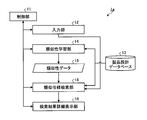
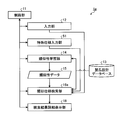
- FIG. 2 is a diagram illustrating a configuration example of a search device according to the first embodiment
- FIG. 2 is a diagram illustrating an example of a hardware configuration that implements a search device according to the first embodiment.
- FIG. 4 is a diagram showing another example of a hardware configuration for realizing the search device according to the first embodiment.
- FIG. 3 is a diagram illustrating an example of a detailed configuration of a similarity learning unit included in the search device according to the first embodiment;
- FIG. 3 is a diagram showing a configuration example of a product design database provided in the search device according to the first embodiment;
- FIG. 4 is a diagram showing an example of a specification list stored in a product design database according to the first embodiment.
- FIG. 4 is a diagram showing an example of a component configuration table held by a product design database according to the first embodiment.
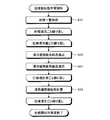
- 9 is a flowchart illustrating an example of the operation of the similarity learning unit included in the search device according to the first embodiment.
- FIG. 4 is a diagram illustrating a concept of a method of calculating a similarity between item values in a similarity learning unit included in the search device according to the first embodiment;
- FIG. 3 is a diagram illustrating an example of similarity data generated by a similarity learning unit included in the search device according to the first embodiment;
- FIG. 6 is a diagram illustrating another example of the similarity data generated by the similarity learning unit included in the search device according to the first embodiment
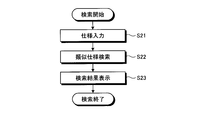
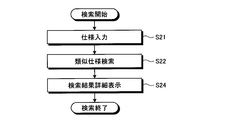
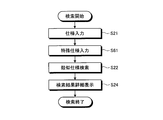
- 9 is a flowchart illustrating an example of a search operation performed by the search device according to the first embodiment.
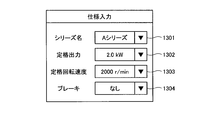
- FIG. 4 is a diagram showing an example of a specification input screen displayed by the search device according to the first embodiment.
- FIG. 3 is a diagram illustrating an example of a detailed configuration of a similar specification search unit included in the search device according to the first embodiment;
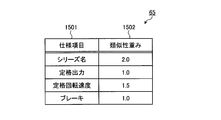
- FIG. 4 is a diagram illustrating an example of similarity weight data used by a similar specification search unit of the search device according to the first embodiment;
- 9 is a flowchart illustrating an example of the operation of the similar specification search unit included in the search device according to the first embodiment.
- FIG. 4 is a diagram illustrating an example of a calculation result by a specification similarity calculation unit of the search device according to the first embodiment
- FIG. 4 is a diagram showing an example of a similar specification search result displayed by a search result display unit of the search device according to the first embodiment
- FIG. 4 is a diagram showing a first modification of the search device according to the first embodiment.
- 11 is a flowchart illustrating an example of a search operation performed by the search device according to the first modification of the first embodiment
- FIG. 10 is a diagram showing an example of a similar specification search result displayed by a search result detail display unit of the search device according to the first modification of the first embodiment
- FIG. 9 is a diagram showing a second modification of the search device according to the first embodiment.
- FIG. 9 is a flowchart illustrating an example of a search operation performed by the search device according to the second modification of the first embodiment
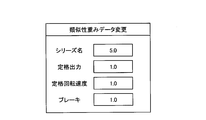
- FIG. 11 is a diagram showing an example of a similarity weight data change screen displayed by the search device of the second modification example according to the first embodiment.
- FIG. 10 is a diagram showing an example of a similar specification search result displayed by a search result detail display unit of the search device of the second modification example according to the first embodiment.
- FIG. 9 is a diagram illustrating a configuration example of a search device according to a second embodiment; 11 is a flowchart illustrating an example of a specification similarity learning process in the search device according to the second embodiment.
- FIG. 11 is a diagram showing an example of a similarity adjustment screen between item values displayed by the search device according to the second embodiment; The figure which shows an example of the adjusted similarity data which the similarity adjustment part of the search device concerning Embodiment 2 outputs.
- FIG. 9 is a diagram illustrating a configuration example of a similar specification search unit included in the search device according to the second embodiment. The figure which shows the example of a structure of the similarity learning part with which the search device concerning Embodiment 3 is provided.
- 11 is a flowchart illustrating an example of the operation of the similarity learning unit included in the search device according to the third embodiment. The figure which shows an example of the use component selection definition which the similarity learning part of the search device concerning Embodiment 3 uses.
- FIG. 14 is a diagram illustrating a configuration example of a search device according to a fourth embodiment.
- 11 is a flowchart illustrating an example of a search operation performed by the search device according to the fourth embodiment.
- FIG. 14 is a diagram illustrating a configuration example of a similar specification search unit included in a search device according to a fourth embodiment.
- FIG. 11 is a flowchart illustrating an example of the operation of the similar specification search unit included in the search device according to the fourth embodiment.
- 15 is a flowchart illustrating an example of the operation of the similar specification search unit included in the search device according to the fifth embodiment.
- FIG. 17 is a diagram illustrating an example of a search result obtained by the search device according to the fifth embodiment.
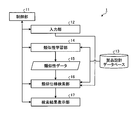
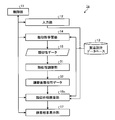
- FIG. 1 is a diagram illustrating a configuration example of the search device according to the first embodiment of the present invention.
- the search device 1 according to the first embodiment includes a control unit 11, an input unit 12, a product design database 13, a similarity learning unit 14, a similar specification search unit 16, and a search result display unit 17.
- the control unit 11 controls the entire processing executed by the search device 1.
- the control unit 11 controls the input unit 12, the similarity learning unit 14, the similar specification search unit 16, and the search result display unit 17. I do.
- the input unit 12 is provided to allow a user to input information on product specifications as a condition for searching for necessary data from data held in the product design database 13.
- the input unit 12 acquires information on product specifications input by the user.
- the information on the product specifications acquired by the input unit 12 is assumed to be information representing the specifications of a newly designed product.
- the product design database 13 holds data on specifications of products designed in the past. Details of the data held by the product design database 13 will be described later.
- the similarity learning unit 14 analyzes the data held in the product design database 13 to learn the similarity between the item values of the product specification, and the similarity used in the search processing by the similar specification search unit 16.
- the data 15 is generated.
- the item value of the product specification is a value of each item representing the specification of the product.
- the similarity learning unit 14 constitutes a machine learning device.
- the similar specification search unit 16 converts the specification data indicating the specification similar to the specification indicated by the information acquired by the input unit 12 into the product design database 13 based on the similarity data 15 which is a learning result by the similarity learning unit 14. Search from the stored specification data group.
- the search result display unit 17 displays a search result by the similar specification search unit 16.
- the description will be given on the assumption that the product design database 13 exists inside the search device 1.
- the configuration may be such that the product design database 13 exists outside the search device 1.
- the search device 1 and the product design database 13 may be connected via a communication network, and the search device 1 may acquire necessary data from the product design database 13 via the communication network.
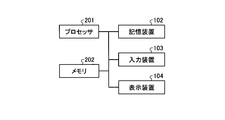
- FIG. 2 is a diagram illustrating an example of a hardware configuration that implements the search device according to the first embodiment.
- the search device 1 is realized by the processing circuit 101, the storage device 102, the input device 103, and the display device 104 illustrated in FIG.
- the processing circuit 101 is a circuit that executes various types of processing in the search device 1, and includes, for example, a single circuit, a composite circuit, a programmed processor, a parallel programmed processor, an ASIC (Application Specific Integrated Circuit), and an FPGA ( Field-Programmable ⁇ Gate ⁇ Array) or a combination of these.
- the storage device 102 is a hard disk drive, a flash memory, or the like.
- the input device 103 is a keyboard, a mouse, a touch panel, or the like, and may be any device that can input information necessary for the search device 1 to operate.
- the display device 104 is a display, a liquid crystal monitor device, or the like. The display device 104 may be any device as long as the user can refer to the information input using the input device 103, the search result by the similar specification search unit 16, and the like, and may be a projector or the like.
- the control unit 11, the similarity learning unit 14, and the similar specification search unit 16 of the search device 1 are realized by the processing circuit 101.
- the product design database 13 is realized by the storage device 102.
- the storage device 102 also stores the similarity data 15, information input by the user via the input unit 12, a search result by the similar specification search unit 16, and the like.
- the input unit 12 is realized by the input device 103, and the search result display unit 17 is realized by the display device 104.
- FIG. 3 is a diagram illustrating another example of the hardware configuration that implements the search device according to the first embodiment.
- the processor 201 illustrated in FIG. 3 includes a CPU (Central Processing Unit), a central processing unit, a processing unit, an arithmetic unit, a microprocessor, a microcomputer, a DSP (Digital Signal Processor), a system LSI (Large Scale Integration), and the like. is there.
- the memory 202 is a RAM (Random Access Memory), a ROM (Read Only Memory), an EPROM (Erasable Programmable Read Only Memory), an EEPROM (registered trademark) (Electrically Erasable Programmable Read Only Memory), or the like.
- the storage device 102, the input device 103, and the display device 104 illustrated in FIG. 3 are similar to the storage device 102, the input device 103, and the display device 104 illustrated in FIG.
- the hardware having the configuration shown in FIG. 3 may be a tablet PC (Personal Computer), a desktop PC, or a server-client server and client PC.
- the control unit 11, the similarity learning unit 14, and the similar specification search unit 16 are realized by the processor 201 and the memory 202 illustrated in FIG. 3, the processor 201 is used as the control unit 11, the similarity learning unit 14, and the similar specification search unit 16.
- a program for functioning is stored in the memory 202 or the like. Then, the processor 201 reads out and executes the program stored in the memory 202, thereby realizing the control unit 11, the similarity learning unit 14, and the similar specification search unit 16.
- search device according to each of the embodiments after the second embodiment described later is also realized by the hardware having the configuration shown in FIG. 2 or FIG.
- search device 1 First, the specification similarity learning processing by the similarity learning unit 14 will be described, and then the search operation by the search device 1 will be described. Hereinafter, an example of a search operation when designing a motor will be described. However, the present invention can be applied to any product having data corresponding to data held in a product design database 13 described below.
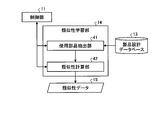
- FIG. 4 is a diagram illustrating an example of a detailed configuration of the similarity learning unit 14 included in the search device 1 according to the first embodiment.
- the similarity learning unit 14 included in the machine learning device includes a used component extraction unit 41 and a similarity calculation unit 42.
- the used component extraction unit 41 extracts a used component list for each specification item value from the product design database 13.
- the similarity calculation unit 42 calculates the similarity between the item values based on the used component list for each specification item value extracted by the used component extraction unit 41.
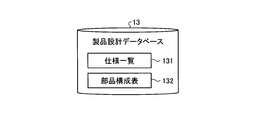
- FIG. 5 is a diagram illustrating a configuration example of the product design database 13 included in the search device 1 according to the first embodiment.
- the product design database 13 includes a specification list 131 listing specifications of products designed in the past, and a component configuration table 132 recording the component configuration of each product.
- the specification list 131 corresponds to specification data.
- An example of the specification list 131 is shown in FIG. 6, and an example of the component configuration table 132 is shown in FIG.
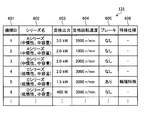
- FIG. 6 is a diagram illustrating an example of a specification list stored in the product design database 13 according to the first embodiment.
- the specification list 131 includes at least a model ID (Identification) 601 for identifying individual products, a series name 602 which is a name of a product group in which specific products having similar specifications are collected, and a rating of each series of products. Includes an output 603, a rated rotation speed 604 of each series of products, a brake 605 indicating whether each series of products has an electromagnetic brake, and a special specification 606 indicating special specifications of each series of products. .
- the special specification 606 stores a natural sentence, that is, text data. A series in which the special specification 606 is "-" means that text data indicating the special specification is not stored.
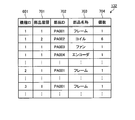
- FIG. 7 is a diagram illustrating an example of a component configuration table held by the product design database 13 according to the first embodiment.
- the component configuration table 132 includes at least a model ID 601 for identifying individual products, a component hierarchy 701, a component ID 702 for identifying individual components, a component name 703, and components used for one product. And the number 704 indicating the number.
- the component configuration table 132 is information on components configuring each product corresponding to the model ID 601.
- the model ID 601 included in the component configuration table 132 is the same as the model ID 601 included in the specification list 131.
- a code common to the specification list 131 and the component configuration table 132 is used as the model ID 601.
- the component hierarchy 701 indicates which hierarchy the component belongs to when managing the components hierarchically.
- the part hierarchy 701 of the first part is “1”
- the component hierarchy 701 of the second component is “2”.
- the part hierarchy 701 of the third part is “3”.
- the actual motor also includes other items such as material and dimensions, but only the five items shown in FIG. 7 will be used below to simplify the description.
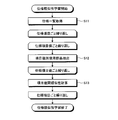
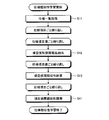
- FIG. 8 is a flowchart illustrating an example of an operation of the similarity learning unit 14 included in the search device 1 according to the first embodiment, and illustrates a procedure of a specification similarity learning process. For example, when the search device 1 receives an operation for instructing the start of the specification similarity learning from the user, the similarity learning unit 14 starts the specification similarity learning process illustrated in FIG.
- the similarity learning unit 14 When the similarity learning unit 14 starts the specification similarity learning process, first, it executes a specification list acquisition process (step S11). Specifically, the used component extraction unit 41 acquires a specification list 131 having the contents shown in FIG. 6 from the product design database 13.
- the similarity learning unit 14 repeats the processing of steps S12 and S13 for each specification item included in the specification list 131. Specifically, the similarity learning unit 14 repeats the processing of steps S12 and S13 for each specification item of the series name 602, the rated output 603, and the rated rotation speed 604. At this time, the similarity learning unit 14 repeats the process of step S12 for each specification item value belonging to the specification item. For example, when the specification item A includes the specification item values a1, a2, and a3, the similarity learning unit 14 performs the processing of step S12 when performing the processing of steps S12 and S13 for the specification item A. It is repeatedly executed for each of the specification item values a1, a2 and a3.
- step S12 the similarity learning unit 14 extracts a component corresponding to the specification item value from the component configuration table 132.
- the similarity learning unit 14 calculates the similarity between the item values by using a method described later.
- Step S12 is a process executed by the used component extraction unit 41
- step S13 is a process executed by the similarity calculation unit 42.
- the series name 602 of the specification list 131 shown in FIG. 6 includes A series, B series, C series, D series,... Therefore, the similarity learning unit 14 repeatedly performs the processing of step S12 for the A series, B series, C series, D series,... In the processing of steps S12 and S13 performed on the series name 602. Then, the similarity between the item values is calculated using the extracted parts.
- the A series includes a product with a model ID of “1” and a product with a model ID of “2”. Therefore, the similarity learning unit 14 determines all the components used in the product with the model ID “1” and all the components used in the product with the model ID “2” in the component configuration shown in FIG. Obtained from the table 132.
- the parts used in the product whose model ID is "1" correspond to parts whose part IDs are PA001, PA002, PA003, PA004,.
- the rated output 603 of the specification list 131 shown in FIG. 6 includes 3.5 kW, 2.0 kW, 1.5 kW, 400 W,... Therefore, in the processing of steps S12 and S13 performed on the rated output 603, the similarity learning unit 14 executes the processing of step S12 for 3.5 kW, 2.0 kW, 1.5 kW, 400 W,.
- the corresponding part is extracted, and then the similarity between the item values is calculated using the extracted part.
- the product with the rated output of 2.0 kW includes the product with the model ID of “2”, the product with the model ID of “3”, and the product with the model ID of “3”.
- the similarity learning unit 14 determines that all the parts used in the product with the model ID “2”, all the parts used in the product with the model ID “3”, and the parts with the model ID “4”. All parts used in the product are acquired from the parts configuration table 132 shown in FIG.
- step S13 the similarity calculation unit 42 determines the item value based on the used component data acquired by the used component extraction unit 41 executing step S12 for each specification item value included in the specification item to be processed. A similarity between them, that is, a value indicating how similar the specification item values are, is calculated.
- the value calculated by the similarity calculator 42 is referred to as similarity.
- the similarity calculation unit 42 calculates the value of the item value similarity SimSpecValue (Va, Vb), which is the similarity between the specification item value Va and the specification item value Vb, according to the following equation (1).
- Parts (V) is a set of parts used in the entire model having V as the specification item value.
- Count (P) is the number of types of components in the component set P.
- step S13 the similarity calculation unit 42 determines the similarity between the item values of the A series and the B series, the similarity between the item values of the A series and the C series, and The similarity between the item values of the B series and the C series is calculated.
- step S13 when the similarity calculation unit 42 finishes calculating the inter-item-value similarities for all the combinations of the specification item values, the similarity calculation unit 42 generates the similarity data 15 including all the calculated inter-item-value similarities. Output.
- the similarity learning unit 14 analyzes the specification list 131, which is the specification data group held by the product design database 13, and the component configuration table 132, and determines the same for each of the specification items representing the product specifications. The degree of similarity between the two specification item values of the specification item is learned for all combinations of the specification item values. That is, the similarity learning unit 14 determines, based on the specification data group held in the product design database 13, how similar two specification item values of the same use item are to each other. Learn about combinations.
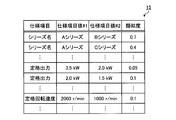
- FIG. 10 is a diagram illustrating an example of the similarity data 15 generated by the similarity learning unit 14 included in the search device 1 according to the first embodiment.
- the similarity data 15 includes at least a specification item, a specification item value # 1, a specification item value # 2, and a similarity.
- the similarity between the specification item values is a one-to-one relationship, that is, the similarity between one specification item, but the similarity calculation unit 42 has a plurality of similarities as shown in FIG.
- the similarity data 15 may be generated by calculating the similarity between the combinations of the specification items.
- FIG. 11 shows an example of the similarity data 15 including the similarity for the combination of the series name and the rated output, and the similarity for the combination of the rated output and the rated rotation speed.
- FIG. 12 is a flowchart illustrating an example of a search operation performed by the search device 1 according to the first embodiment. For example, when the search device 1 receives an operation for instructing the start of the search process from the user, the search device 1 starts the operation according to the flowchart illustrated in FIG.
- the input unit 12 receives a specification input, that is, receives a specification item value input by a designer who is a user as a search condition (step S21).
- the search device 1 displays, for example, the specification input screen shown in FIG. 13 on a display unit not shown in FIG. 1, and waits for a specification item value to be input by the user.
- the display unit is realized by the display device 104 shown in FIGS.
- the specification input screen shown in FIG. 13 includes a series name input field 1301, a rated output input field 1302, a rated rotation speed input field 1303, and a brake input / output field 1304.
- the specification item value is input by selecting a pull-down menu, but may be input by any method.
- the specification item value may be automatically set based on the order data in cooperation with another system, for example, a sales system.
- the similar specification search unit 16 searches for a similar specification (step S22). That is, the similar specification search unit 16 searches the product design database 13 based on the similarity data 15 and the specification item value input in step S21, and obtains a specification similar to the specification indicated by the specification item value input in step S21. Specify the model of. Hereinafter, details of the search processing by the similar specification search unit 16 will be described.
- FIG. 14 is a diagram illustrating an example of a detailed configuration of the similar specification search unit 16 included in the search device 1 according to the first embodiment.
- the similar specification search unit 16 includes a specification similarity calculation unit 61 and a data alignment unit 62.
- the specification similarity calculation unit 61 calculates the specification of the past model which is the model stored in the product design database 13. For each of them, the similarity with the specification indicated by the input specification data 63 output from the input unit 12 is calculated.
- the input specification data 63 is data including each specification item value that the input unit 12 has received an input in step S21. Details of the similarity weight data 65 will be described separately.
- the data sorting unit 62 sorts the calculation result of the specification similarity calculation unit 61, that is, the similarity of the specifications of each past model in descending order of similarity, and the similarity of the specifications of each past model after the sorting.
- the similarity is output as the similar specification search result 64.
- FIG. 15 is a diagram illustrating an example of the similarity weight data used by the similar specification search unit 16 of the search device 1 according to the first embodiment.
- the similarity weight data 65 includes a specification item 1501 and a similarity weight 1502.
- the similarity which is a weight coefficient for each of the series name, the rated output, the rated rotational speed, and the brake, which are the specification items included in the specification list 131 of the product design database 13. Includes weights. These similarity weights are used when calculating the similarity of specifications described later. The weighting of each specification item shall be manually defined.
- the search device 1 has a function of creating the similarity weight data 65, and the designer creates the similarity weight data 65 using this function.
- the designer may create the similarity weight data 65 using an external device, for example, a personal computer.
- the search result may be evaluated by trial operation using the temporarily set similarity weight, and the value of each similarity weight may be adjusted based on the evaluation result.
- FIG. 16 is a flowchart illustrating an example of an operation of the similar specification search unit 16 included in the search device 1 according to the first embodiment, and illustrates a procedure of a similar specification search process. For example, when the search device 1 receives from the user an operation for instructing a search for a similar specification, the similar specification search unit 16 starts the similar specification search process illustrated in FIG.
- the similar specification search unit 16 starts the similar specification search process, first, it executes a specification list acquisition process (step S31). Specifically, the specification similarity calculation unit 61 acquires the specification list 131 from the product design database 13.
- the similar specification search unit 16 repeats the process of step S32 for each past model included in the specification list 131. For example, when the specification list 131 includes models whose model IDs are 1 to 5, the similar specification search unit 16 executes the process of step S32 for each of the five past models whose model IDs are 1 to 5. Then, an item-specific specification similarity described later is calculated.
- step S32 the specification similarity calculation unit 61 of the similar specification search unit 16 compares the specifications of the past model and the input specification data 63 stored in the product design database 13 based on the similarity data 15 and the similarity weight data 65. Calculate the similarity of Specifically, the specification similarity calculation unit 61 calculates the similarity SimSpec (Sinp, Smx) between the input specification Sinp and the specification Smx of the model mx according to the following equation (2).
- Sim (Sinp (s), Smx (s)) indicates whether the s-th specification item Simp (s) and Smx (s) of the four types of specification items included in the specification list 131 match. Is a value determined by Sim (Sinp (s), Smx (s)) is included in the similarity data 15 shown in FIG. 10 when the Sinp (s) and Smx (s) match, and when the Sin (s) and Smx (s) do not match. Is the value of the similarity. Wdef (s) is the value of the similarity weight corresponding to the s-th specification item defined in the similarity weight data 65.
- FIG. 17 is a diagram illustrating an example of a calculation result by the specification similarity calculation unit 61 of the similar specification search unit 16 included in the search device 1 according to the first embodiment.
- the model IDs of the specification list 131 shown in FIG. 6 are “1”, “2”, and “3”. Indicates the result of calculation of the similarity SimSpec with each model by the specification similarity calculation unit 61.
- the series name is “A series”
- the rated output is “2.0 kW”
- the rated rotation speed is “2000 r / min”
- the brake is “none”. Therefore, for example, the past model whose model ID is “1” has the same series name, rated rotational speed, and brake specifications from the contents shown in FIG. 6, and the similarity of these specification items is “1”.
- the specifications of the rated outputs do not match, and the similarity of the rated outputs is similar to the similarity “0.05” of the rated outputs 3.5 kW and 2.0 Kw included in the similarity data 15 shown in FIG. Become.
- the similarity SimSpec (Sinp, Sm1) of the past model whose model ID is “1” is 0.83
- the similarity SimSpec (Sinp, Simp, Sm2) is 0.75
- the similarity SimSpec (Sinp, Sm3) of the past model whose model ID is “3” is 0.89.
- the past model whose model ID is “3” has a series name different from the series name input in step S21 described above. However, due to the effect of the similarity data 15, the similarity is the highest among the three models. Become.
- step S33 the data alignment unit 62 sets the similarity calculation result SimSpec (Sinp , Smx) are rearranged (step S33). That is, the data sorting unit 62 sorts the similarity calculation results SimSpec (Sinp, Smx) such that the similarity is sorted in descending order of similarity.
- FIG. 18 is a diagram illustrating an example of the similar specification search result displayed by the search result display unit 17 of the search device 1 according to the first embodiment.
- FIG. 18 shows an example in which the similar specification search result is displayed together with the specification input in step S21.
- the model ID of the past model and the similarity score that is the above-described similarity SimSpec (Sinp, Smx) are arranged and displayed in descending order of the similarity score.
- the search result display unit 17 may extract and display the similarity score that is larger than a predetermined value, or may display the similarity score in descending order of the highest similarity score. Alternatively, a predetermined number of past models may be extracted and displayed. The designer appropriately selects a model similar to the required specification based on the search result displayed on the search result display unit 17 and designs a new model that satisfies the required specification.
- FIG. 19 is a diagram illustrating a first modification of the search device according to the first embodiment.
- the search device 1a shown in FIG. 19 is obtained by replacing the search result display unit 17 of the search device 1 shown in FIG.
- the configuration of the search device 1a other than the search result detail display section 18 is the same as that of the search device 1.
- FIG. 20 is a flowchart illustrating an example of a search operation performed by the search device 1a according to the first modification of the first embodiment.
- the flowchart shown in FIG. 20 is obtained by replacing step S23 of the flowchart shown in FIG. 12 with step S24.
- Step S23 is a process executed by the search result detail display unit 18. That is, in step S23, the search result detailed display unit 18 performs display based on the search result output from the similar specification search unit 16, and presents the search result of the similar specification to the designer.
- the search result details display section 18 displays, for example, search results of similar specifications having the configuration shown in FIG.
- the example shown in FIG. 21 displays details of the similarity score corresponding to the search score in addition to the contents of the similar specification search result shown in FIG.
- the search result detail display unit 18 corresponds to a search result display unit that displays the search result by the similar specification search unit 16 together with the similarity corresponding to the search result.
- the search device 1 is provided with a search weight changing unit for changing the weight of the specification similarity, so that it is possible to easily change the search condition for obtaining the search result desired by the designer.
- FIG. 22 is a diagram illustrating a second modification of the search device according to the first embodiment.
- the search device 1b shown in FIG. 22 is obtained by adding a weight data changing unit 21 as search weight changing means to the search device 1a shown in FIG.
- the configuration of the search device 1b other than the weight data changing unit 21 is the same as that of the search device 1a.
- FIG. 23 is a flowchart illustrating an example of a search operation performed by the search device 1b according to the second modification of the first embodiment.
- the flowchart shown in FIG. 23 is obtained by adding step S25 after step S24 of the flowchart shown in FIG.
- step S25 the weight data changing unit 21 receives a similarity weight changing operation from the user.
- the weight data change unit 21 displays, for example, the similarity weight data change screen shown in FIG. 24 on a display unit not shown in FIG. 22 and performs an operation for the user to correct the similarity weight data. Wait to do.
- FIG. 24 shows an example in which the weight is changed to the similarity weight that emphasizes the matching of the series names. Specifically, FIG. 24 shows an example in which the similarity weight of the series name is changed from 2.0 to 5.0, and the similarity weight of the rated rotation speed is changed from 1.5 to 1.0. ing.
- FIG. 25 is a diagram illustrating an example of a result of the re-search performed by changing the similarity weight data. Since the similarity weight is changed in step S25, the past model having the same series name is a high-ranking candidate as intended by the designer.
- the search device learns the similarity between the item values of the specifications of the past model, which is the product designed in the past, based on the data on the product designed in the past.
- a learning unit; and a similar specification search unit configured to search for specification data indicating a specification similar to the specification specified by the designer, based on the similarity data obtained as a result of learning by the similarity learning unit.
- the search device when the search device according to the present embodiment displays the details of the similarity score in addition to the similar specification search result as the configuration shown in FIG. 19, the search device notifies the designer of the basis of the search result. be able to.
- the search device displays the details of the similarity score in addition to the similar specification search result as the configuration illustrated in FIG. 22, and further receives a change in the similarity weighting for each specification item.
- the search conditions can be changed so that the search result desired by the designer can be obtained.
- FIG. FIG. 26 is a diagram illustrating a configuration example of a search device according to the second embodiment.
- the search device 1c according to the second embodiment replaces the similar specification search unit 16 of the search device 1 (see FIG. 1) according to the first embodiment with a similar specification search unit 16c, and further adds a similarity adjustment unit 31. Things.
- the similar specification search unit 16c performs a search process using the adjusted similarity data generated by the similarity adjustment unit 31.
- the configuration of the search device 1c other than the similarity adjustment unit 31 and the similar specification search unit 16c is the same as that of the search device 1, so the same reference numerals as those in FIG.
- the basic operation when the search device 1c searches for a past model having a specification similar to the specification specified by the designer is the same as that of the search device 1 (see FIG. 12).
- the search device 1c differs from the search device 1 in part of the content of the specification similarity learning process.
- FIG. 27 is a flowchart illustrating an example of the specification similarity learning process in the search device 1c according to the second embodiment.
- the flowchart shown in FIG. 27 is obtained by adding step S41 to the flowchart shown in FIG. Except for step S41, the process is the same as the specification similarity learning process described in the first embodiment, and thus the same step numbers as those in the corresponding processes in FIG.
- step S41 the similarity between the item values is adjusted.
- This adjustment is adjustment of the similarity data 15 which is a learning result by the similarity learning unit 14, and is performed by the designer using the similarity adjustment unit 31.
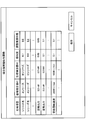
- the similarity adjustment unit 31 displays, for example, the similarity adjustment screen between item values illustrated in FIG. 28 on a display unit not illustrated in FIG.
- the similarity adjustment unit 31 waits for an operation performed by the designer with the similarity adjustment screen between item values displayed on the display unit. If the similarity adjustment is necessary, the designer inputs the adjusted similarity for the similarity to be adjusted, and presses the save button when the input is completed to end the operation.
- FIG. 28 shows an example in which the similarity between the A series and the B series and the similarity between the A series and the C series are adjusted by the user.
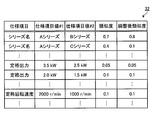
- FIG. 29 is a diagram illustrating an example of the adjusted similarity data 32.
- the adjusted similarity data 32 has a configuration in which the adjusted similarity is added to the similarity data 15 (see FIG. 10) described in the first embodiment.
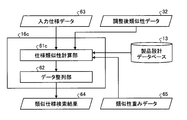
- FIG. 30 is a diagram illustrating a configuration example of the similar specification search unit 16c included in the search device 1c according to the second embodiment.
- the similar specification search unit 16c is configured by replacing the specification similarity calculation unit 61 of the similar specification search unit 16 (see FIG. 14) described in the first embodiment with a specification similarity calculation unit 61c.
- the specification similarity calculation unit 61c inputs the specification of the past model stored in the product design database 13 based on the adjusted similarity data 32 generated by the similarity adjustment unit 31 and the similarity weight data 65.
- the similarity with the input specification data 63 output from the unit 12 is calculated.
- the specification similarity calculation unit 61c performs the calculation using the adjusted similarity included in the adjusted similarity data 32.
- the method of calculating similarity by the specification similarity calculation unit 61c is the same as the method of calculating similarity by the specification similarity calculation unit 61, and a description thereof will be omitted.
- the search device 1c includes the similarity adjustment unit 31 that adjusts the similarity data 15 that is the learning result of the similarity learning unit 14.
- the designer can specify the similarity to be strengthened and the similarity to be suppressed, and adjust the value of the similarity appropriately.
- the designer can individually check the value of the similarity data 15 to determine whether appropriate learning has been performed, even when the similarity data is not adjusted. it can.
- FIG. 31 is a diagram illustrating a configuration example of the similarity learning unit 14d included in the search device according to the third embodiment.
- the configuration of the search device according to the third embodiment other than the similarity learning unit 14d is the same as that of the search device 1 according to the first embodiment. Therefore, description of components other than the similarity learning unit 14d is omitted.
- the similarity learning unit 14d is obtained by adding a used component selection unit 43 to the similarity learning unit 14 described in the first embodiment.
- FIG. 32 is a flowchart illustrating an example of the operation of the similarity learning unit 14d included in the search device according to the third embodiment.
- the flowchart shown in FIG. 32 is obtained by adding step S51 to the flowchart shown in FIG. Since the processes other than step S51 are the same as the processes included in the flowchart illustrated in FIG. 8, the same step numbers as those of the corresponding processes in FIG. 8 are assigned and the description is omitted.
- Step S51 is a use component selection process for each item value.
- the used component selection unit 43 calculates the similarity between the item values from the extraction result by the used component extraction unit 41 based on the used component selection definition 44, Select the extraction result to use.
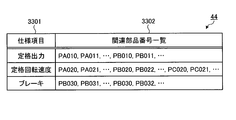
- FIG. 33 is a diagram illustrating an example of the used component selection definition 44.
- the used component selection definition 44 includes at least a specification item 3301 and a related component number list 3302 corresponding thereto.
- the used component selection definition 44 is created in advance by, for example, a designer.
- the use component selection definition 44 may be created using a device external to the search device, for example, a personal computer, or the search device has a function of creating the use component selection definition 44. May be created by the designer.
- step S ⁇ b> 51 the used component selection unit 43 writes the related component number list 3302 associated with the corresponding specification item of the used component selection definition 44 among the components corresponding to the specification item value extracted in step S ⁇ b> 12. Select the part with the part number.
- the used component selection unit 43 outputs the selection result to the similarity calculation unit 42.
- step S13 the similarity learning unit 14d does not calculate the similarity between the item values for all the item values extracted by the used component extraction unit 41, but targets the item values selected by the used component selection unit 43. , Calculate the similarity between the item values.
- FIG. 34 is a diagram illustrating a concept of the specification similarity learning process executed by the similarity learning unit 14d of the search device according to the third embodiment.
- the similarity changes depending on which of the specification item “rated output” and the specification item “rated rotation speed” is focused on. That is, focusing on the “rated output”, it can be said that the similarity is high because the component PA010 and the component PA011 are common.
- focusing on the “rated rotation speed” since the model X is composed of the components PB020 and PB021, and the model Y is composed of the components PC020 and PC021, the two have no commonality and low similarity. It can be said that.
- the similarity learning unit 14d improves the calculation accuracy of the similarity data 15 by selecting the characteristic component group for each specification item and calculating the similarity using the used component selection definition 44. be able to.
- the similarity learning unit 14d includes the used component selection unit 43, and the used component selection unit 43 selects a characteristic component group for each specification item, and Calculate the similarity between values. Thereby, the calculation accuracy of the similarity data can be improved.
- FIG. FIG. 35 is a diagram illustrating a configuration example of a search device according to the fourth embodiment.
- the search device 1e according to the fourth embodiment is obtained by replacing the similar specification search unit 16 of the search device 1a shown in FIG. 19 with a similar specification search unit 16e, and further adding a special specification input unit 51.
- the configuration of the search device 1e other than the special specification input unit 51 and the similar specification search unit 16e is the same as that of the search device 1a.
- FIG. 36 is a flowchart illustrating an example of a search operation by the search device 1e according to the fourth embodiment.
- the flowchart shown in FIG. 36 is obtained by adding step S61 to the flowchart shown in FIG. Since the processes other than step S61 are the same as the processes included in the flowchart shown in FIG. 12, the same step numbers as those of the corresponding processes in FIG. 20 are assigned and the description is omitted.
- step S61 the special specification input unit 51 receives an input of a special specification from a designer.
- the search device 1e displays the specification input screen shown in FIG. 37 on a display unit not shown in FIG.
- the special specification input unit 51 waits for an operation performed by the designer with the display unit displaying the specification input screen.
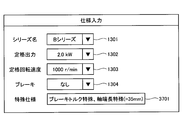
- the specification input screen shown in FIG. 37 has a configuration in which a special specification input field 3701 is added to the specification input screen shown in FIG.
- the specification input screen of FIG. 37 is displayed at the start of step S21.
- the designer inputs a series name, a rated output, and the like to the search device 1e, and inputs special specifications.
- the special specification input unit 51 When the input operation of the special specification by the designer is completed, the special specification input unit 51 generates data indicating the content input in the special specification input field 3701 and outputs the data to the similar specification search unit 16e.
- FIG. 38 is a diagram illustrating a configuration example of the similar specification search unit 16e included in the search device 1e according to the fourth embodiment.
- the similar specification search unit 16e is obtained by replacing the specification similarity calculation unit 61 of the similar specification search unit 16 (see FIG. 14) described in the first embodiment with a special specification similarity calculation unit 81 and an extended specification similarity calculation unit 82. It is.
- the special specification similarity calculation unit 81 calculates the similarity between the input special specification data 83 output from the special specification input unit 51 and the special specification of the past model stored in the product design database 13. Based on the similarity of the special specification calculated by the special specification similarity calculation unit 81 and the extended similarity weight data 84, the extended specification similarity calculation unit 82 stores the specifications of the past models stored in the product design database 13. And the input specification data 63 output from the input unit 12 are calculated.
- FIG. 39 is a diagram showing an example of the extended similarity weight data 84.
- the extended similarity weight data 84 includes a specification item 3901 and a similarity weight 3902.
- the extended similarity weight data of the example shown in FIG. 39 is a weight coefficient for each of the series name, the rated output, the rated rotation speed, the brake, and the special specification, which are the specification items included in the specification list 131 of the product design database 13. Contains some similarity weights. The weighting of each specification item shall be manually defined.
- the search result may be evaluated by trial operation using the temporarily set similarity weight, and the value of each similarity weight may be adjusted based on the evaluation result.
- FIG. 40 is a flowchart illustrating an example of the operation of the similar specification search unit 16e included in the search device according to the fourth embodiment.
- the flowchart shown in FIG. 40 is obtained by replacing step S32 of the flowchart shown in FIG. 16 with steps S71 and S72. Since the processes other than steps S71 and S72 are the same as the processes included in the flowchart shown in FIG. 16, the same step numbers as those of the corresponding processes in FIG. 16 are assigned and the description is omitted.
- Step S71 is a special specification similarity calculation process.
- the special specification similarity calculation unit 81 calculates the similarity between the special specification of the past model stored in the product design database 13 and the input special specification data 83. Specifically, the special specification similarity calculation unit 81 calculates the degree of similarity SpecialSimSpec (SSinp, SSmx) between the input special specification SSinp and the special specification SSmx of the model mx according to the following equation (3).
- SSinp (t1) and SSmx (t2) are the t1st and t2th texts when each special specification is separated by a reading point (,), and SSim (SSinp (t1), SSmx (t2)) is , Is the edit distance between these texts.
- MAX (1-SSim (SSinp (t1), SSmx (t2)) / L) indicates the maximum value and the value at t2 of the expression on the left with respect to SSinp (t1).
- L is the total number of characters of the texts SSinp (t) and SSmx (t)
- n indicates the number of texts when the input special specification is delimited by reading points (,).
- the calculation of the edit distance between texts is performed using a known method, for example, a method disclosed in Patent Document “International Publication No. WO 2015/040793”.
- FIG. 41 is a diagram illustrating a concept of the special specification similarity calculation performed by the special specification similarity calculation unit 81 of the similar specification search unit 16e included in the search device according to the fourth embodiment.
- the special specification similarity calculation unit 81 divides each of the text indicated by the input special specification data 83 and the text corresponding to the special specification of the past model mx by a reading point, and , The similarity is calculated.
- the special specification similarity calculation unit 81 divides each text into two, and calculates the similarity of the divided text.
- the special specification similarity calculation unit 81 outputs the calculated average value of the similarities as the special specification similarity.
- Step S72 is an extended item-specification similarity calculation process.
- the extended specification similarity calculation unit 82 stores in the product design database 13 based on the similarity of the special specification calculated by the special specification similarity calculation unit 81 in step S71 and the extended similarity weight data 84.
- the similarity between the specification of the past model and the input specification data 63 is calculated.
- the extended specification similarity calculation unit 82 calculates the similarity ESimSpec (Sinp, SSinp) between the input specification Sinp and the input special specification SSinp, and the specification Smx and the special specification SSmx of the model mx according to the following equation (4). , Smx, SSmx).
- Sim (Sinp (s), Smx (s)) is the s-th specification item Sinp (s) and Smx of the four types of specification items included in the specification list 131 as described in the first embodiment. This value is determined depending on whether or not (s) matches. That is, Sim (Sinp (s), Smx (s)) is “1” when Sinp (s) and Smx (s) match, and similarity data 15 shown in FIG. Is the value of the similarity included in the.
- EWdef (s) is the value of the similarity weight corresponding to the s-th specification item defined in the extended similarity weight data 84.
- step S33 in FIG. 40 the data sorting unit 62 sorts the similarity calculation results ESimSpec (Sinp, SSinp, Smx, SSmx) by the extended specification similarity calculation unit 82. That is, the data sorting unit 62 sorts the similarity calculation results ESimSpec (Sinp, SSinp, Smx, SSmx) so that they are sorted in descending order of similarity.
- the search result details display unit 18 displays, for example, a search result of a similar specification having the configuration shown in FIG. 42 on the display unit, and presents the search result to the designer (FIG. 36, step S24).
- the similar specification search unit 16e of the search device analyzes the special specification described in a natural sentence, which is a text, and calculates the similarity of the special specification. And searches for a past model having a specification similar to the specification specified by the designer in consideration of the similarity of the special specification. As a result, it is possible to search for past models having high similarity in consideration of special specifications, and search accuracy can be improved.
- FIG. 43 is a diagram illustrating a configuration example of the similar specification search unit 16f included in the search device according to the fifth embodiment.
- the configuration of the search device according to the fifth embodiment other than the similar specification search unit 16f is the same as that of the search device 1e according to the fourth embodiment. Therefore, description of components other than the similar specification search unit 16f will be omitted.
- the similar specification search unit 16f is obtained by adding a weight adjustment unit 85 to the similar specification search unit 16e according to the fourth embodiment.
- the weight adjustment unit 85 adjusts the extended similarity weight data 84 based on the input special specification data 83 and the item-specific keywords 86.
- FIG. 44 is a flowchart illustrating an example of the operation of the similar specification search unit 16f included in the search device according to the fifth embodiment.
- the flowchart shown in FIG. 44 is obtained by adding step S81 to the flowchart shown in FIG. Since the processes other than step S81 are the same as the processes included in the flowchart shown in FIG. 40, the same step numbers as those of the corresponding processes in FIG. 40 are assigned and the description is omitted.
- Step S81 is similarity weight adjustment processing.
- the weight adjusting unit 85 checks whether or not the input special specification data 83 includes the keyword registered as the item-specific keyword 86, and based on the check result, changes the value of the extended similarity weight data 84. adjust.
- the extended specification similarity calculator 82 receives the extended similarity weight data 84 adjusted by the weight adjuster 85.
- the weight adjustment unit 85 adjusts the extended similarity weight data 84 according to a procedure defined in advance. For example, when the keyword registered in the item-specific keyword 86 is included in the input special specification data 83, the weight adjustment unit 85 determines, among the similarity weights included in the extended similarity weight data 84, the input special specification data 83.
- the similarity weight of the specification item corresponding to the keyword included in is changed to a large value.
- One example of a process in which the weight adjusting unit 85 changes the similarity weight to a large value is a process of multiplying the similarity weight by a coefficient having a value larger than one.
- FIG. 45 is a diagram illustrating an example of an item-specific keyword 86 used by the similar specification search unit 16f of the search device according to the fifth embodiment.
- the item-specific keyword 86 includes a specification item 4501 and a keyword list 4502.
- FIG. 46 is a diagram illustrating an example of a search result obtained by the search device according to the fifth embodiment.
- the series name included in the information input using the input unit 12 and the special specification input unit 51 is “B series”
- the rated output is “2.0 kW”
- the rated rotational speed is “1000r”.
- Min “ with brake ”,“ special brake torque ”, and the keyword list 4502 shown in FIG. 45.
- the special specification is “brake torque special”, and “brake torque special” exists in the keyword list of the specification item “brake” of the item-specific keyword 86 shown in FIG. Therefore, the search result shown in FIG. 46 is obtained by adjusting the similarity weight 3902 corresponding to the brake of the specification item 3901 of the extended similarity weight data 84 shown in FIG. Has been done.
- the reason why the similarity weight corresponding to the brake is adjusted to be twice is to simplify the explanation. It may be adjusted to another value.
- the item-specific keyword 86 is created in advance by, for example, a designer.
- the item-specific keywords 86 may be created using a device external to the search device, for example, a personal computer, or the search device has a function of creating the item-specific keywords 86, and is designed using this function. May be created by the user.
- the similar specification search unit 16f of the search device includes the weight adjustment unit 85 that adjusts the similarity weight for each specification item based on the keyword included in the item and the text included in the special specification. . This makes it possible to calculate the similarity after adjusting the similarity weight according to the description content of the special specification, and to search for a past model having a high similarity.
Landscapes
- Engineering & Computer Science (AREA)
- Theoretical Computer Science (AREA)
- Software Systems (AREA)
- Physics & Mathematics (AREA)
- General Engineering & Computer Science (AREA)
- Databases & Information Systems (AREA)
- Data Mining & Analysis (AREA)
- Mathematical Physics (AREA)
- General Physics & Mathematics (AREA)
- Evolutionary Computation (AREA)
- Computing Systems (AREA)
- Medical Informatics (AREA)
- Computer Vision & Pattern Recognition (AREA)
- Artificial Intelligence (AREA)
- Fuzzy Systems (AREA)
- Probability & Statistics with Applications (AREA)
- Computational Linguistics (AREA)
- Information Retrieval, Db Structures And Fs Structures Therefor (AREA)
Abstract
製品の仕様を表す項目の詳細を示す仕様項目値を1つ以上含んで各々が構成される仕様データ群の中から、検索条件に類似する仕様データを検索する検索装置(1)であって、製品設計データベース(13)が保持している仕様データ群に基づいて、同じ項目の2つの仕様項目値同士がどの程度類似しているかを、仕様項目値の全ての組み合わせについて学習する類似性学習部(14)と、検索条件として使用する仕様項目値の入力を受け付ける入力部(12)と、入力部(12)が入力を受け付けた仕様項目値で構成される入力仕様データに類似する仕様データを類似性学習部(14)による学習結果に基づいて検索する類似仕様検索部(16)と、を備える。
Description
本発明は、過去の製品の仕様に関するデータの中から、入力されたデータが示す仕様と類似する仕様に関するデータを検索する検索装置、検索方法および機械学習装置に関する。
顧客の要求仕様が多岐にわたる製品の設計現場では、新規に製品を設計する際、仕様が類似する過去の製品の設計事例のデータの一部を再利用することにより、設計作業の効率化および設計妥当性のチェックの簡易化を図っている。しかし、仕様が類似する過去の製品の設計事例のデータを効率よく検索するためには該当製品に関する深い知識が必要とされ、設計担当者の経験に依存する部分が大きい。
そこで、設計者の経験によらずに効率よく過去の製品の設計事例のデータを検索するための技術として、特許文献1に記載の発明が提案されている。特許文献1に記載の発明は、過去の設計事例のデータを格納した設計事例ベースと、要求仕様から適用すべき設計仕様を判定する知識を格納した知識ベースと、知識ベースを用いて適用すべき設計仕様を判定する推論エンジンとを備え、要求仕様を構成する仕様項目間の設計上の制約および干渉関係を考慮して、類似する設計事例を検索する。
しかしながら、特許文献1に記載の発明では、要求仕様から適用すべき設計仕様を判定する知識をルールとして手作業で知識ベースに記述する必要があり、非常に手間がかかるという問題があった。
本発明は、上記に鑑みてなされたものであって、ユーザの作業負荷を低減することが可能な検索装置を得ることを目的とする。
上述した課題を解決し、目的を達成するために、本発明は、製品の仕様を表す項目の詳細を示す仕様項目値を1つ以上含んで各々が構成される仕様データ群の中から、検索条件に類似する仕様データを検索する検索装置である。検索装置は、製品設計データベースが保持している仕様データ群に基づいて、同じ項目の2つの仕様項目値同士がどの程度類似しているかを、仕様項目値の全ての組み合わせについて学習する類似性学習部と、検索条件として使用する仕様項目値の入力を受け付ける入力部と、を備える。また、検索装置は、入力部が入力を受け付けた仕様項目値で構成される入力仕様データに類似する仕様データを類似性学習部による学習結果に基づいて検索する類似仕様検索部を備える。
本発明にかかる検索装置は、ユーザの作業負荷を低減することができるという効果を奏する。
以下に、本発明の実施の形態にかかる検索装置、検索方法および機械学習装置を図面に基づいて詳細に説明する。なお、この実施の形態によりこの発明が限定されるものではない。
実施の形態1.
図1は、本発明の実施の形態1にかかる検索装置の構成例を示す図である。実施の形態1にかかる検索装置1は、制御部11、入力部12、製品設計データベース13、類似性学習部14、類似仕様検索部16および検索結果表示部17を備える。
図1は、本発明の実施の形態1にかかる検索装置の構成例を示す図である。実施の形態1にかかる検索装置1は、制御部11、入力部12、製品設計データベース13、類似性学習部14、類似仕様検索部16および検索結果表示部17を備える。
制御部11は、検索装置1が実行する全体の処理を制御するものであり、本実施の形態では、入力部12、類似性学習部14、類似仕様検索部16および検索結果表示部17を制御する。
入力部12は、製品設計データベース13が保持しているデータの中から必要なデータを検索するための条件として、製品の仕様の情報をユーザに入力させるために設けられている。入力部12は、ユーザにより入力される製品の仕様の情報を取得する。入力部12が取得する製品の仕様の情報は、新たに設計される製品の仕様を表す情報が想定される。
製品設計データベース13は、過去に設計された製品の仕様に関するデータを保持する。製品設計データベース13が保持するデータの詳細については後述する。
類似性学習部14は、製品設計データベース13が保持しているデータを解析して製品仕様の項目値の間の類似性を学習し、類似仕様検索部16での検索処理で使用される類似性データ15を生成する。製品仕様の項目値とは、製品の仕様を表す各項目の値である。この類似性学習部14は、機械学習装置を構成する。
類似仕様検索部16は、入力部12が取得した情報が示す仕様と類似する仕様を示す仕様データを、類似性学習部14による学習結果である類似性データ15に基づいて、製品設計データベース13が保持している仕様データ群の中から検索する。
検索結果表示部17は、類似仕様検索部16による検索結果を表示する。
なお、本実施の形態では、検索装置1の内部に製品設計データベース13が存在する構成を前提として説明を行うが、製品設計データベース13が検索装置1の外部に存在する構成であってもよい。例えば、検索装置1と製品設計データベース13が通信ネットワークを介して接続され、検索装置1が通信ネットワークを介して製品設計データベース13から必要なデータを取得する構成としてもよい。
図2は、実施の形態1にかかる検索装置を実現するハードウェア構成の一例を示す図である。検索装置1は、図2に示した処理回路101、記憶装置102、入力装置103および表示装置104で実現される。
処理回路101は、検索装置1において各種処理を実行する回路であり、例えば、単一回路、複合回路、プログラム化されたプロセッサ、並列プログラム化されたプロセッサ、ASIC(Application Specific Integrated Circuit)、FPGA(Field-Programmable Gate Array)、またはこれらを組み合わせたものである。記憶装置102は、ハードディスクドライブ、フラッシュメモリなどである。入力装置103は、キーボード、マウス、タッチパネルなどであり、検索装置1が動作するために必要な情報を入力可能な機器であればどのようなものでもよい。表示装置104は、ディスプレイ、液晶モニタ装置などである。表示装置104は、入力装置103を使用して入力された情報、類似仕様検索部16による検索結果などをユーザが参照可能な機器であればどのようなものでもよく、プロジェクタなどでも構わない。
検索装置1の制御部11、類似性学習部14および類似仕様検索部16は処理回路101で実現される。製品設計データベース13は記憶装置102で実現される。なお、記憶装置102は、類似性データ15、入力部12を介してユーザにより入力された情報、類似仕様検索部16による検索結果なども保持する。入力部12は入力装置103で実現され、検索結果表示部17は表示装置104で実現される。
なお、検索装置1の制御部11、類似性学習部14および類似仕様検索部16の全て、または一部を汎用のプロセッサとメモリで実現することも可能である。この場合、検索装置1のハードウェア構成は図3に示したものとなる。図3は、実施の形態1にかかる検索装置を実現するハードウェア構成の他の例を示す図である。
図3に示したプロセッサ201は、CPU(Central Processing Unit、中央処理装置、処理装置、演算装置、マイクロプロセッサ、マイクロコンピュータ、DSP(Digital Signal Processor)ともいう)、システムLSI(Large Scale Integration)などである。メモリ202は、RAM(Random Access Memory)、ROM(Read Only Memory)、EPROM(Erasable Programmable Read Only Memory)、EEPROM(登録商標)(Electrically Erasable Programmable Read Only Memory)などである。図3に示した記憶装置102、入力装置103および表示装置104は、図2に示した記憶装置102、入力装置103および表示装置104と同様のものである。
図3に示した構成のハードウェアは、タブレットPC(Personal Computer)、デスクトップPC、または、サーバクライアント型のサーバおよびクライアントPCであってもよい。制御部11、類似性学習部14および類似仕様検索部16を図3に示したプロセッサ201およびメモリ202で実現する場合、プロセッサ201を制御部11、類似性学習部14および類似仕様検索部16として機能させるためのプログラムをメモリ202などに格納しておく。そして、プロセッサ201が、メモリ202に格納されているプログラムを読み出して実行することにより、制御部11、類似性学習部14および類似仕様検索部16を実現する。
なお、後述する実施の形態2以降の各実施の形態にかかる検索装置も、図2または図3に示した構成のハードウェアで実現される。
以下、実施の形態1にかかる検索装置1の動作について説明する。まず、類似性学習部14による仕様類似性学習処理について説明し、つぎに、検索装置1による検索動作について説明する。以下では、モータの設計を行う場合の検索動作の例を説明するが、後述する製品設計データベース13が保持するデータに相当するデータを有する製品であれば、本発明を適用できる。
(類似性学習部14による仕様類似性学習処理)
図4は、実施の形態1にかかる検索装置1が備える類似性学習部14の詳細構成の一例を示す図である。機械学習装置を構成する類似性学習部14は、使用部品抽出部41および類似性計算部42を備える。使用部品抽出部41は、製品設計データベース13から、仕様項目値ごとの使用部品一覧を抽出する。類似性計算部42は、使用部品抽出部41で抽出された仕様項目値ごとの使用部品一覧をもとに、項目値間の類似性を計算する。
図4は、実施の形態1にかかる検索装置1が備える類似性学習部14の詳細構成の一例を示す図である。機械学習装置を構成する類似性学習部14は、使用部品抽出部41および類似性計算部42を備える。使用部品抽出部41は、製品設計データベース13から、仕様項目値ごとの使用部品一覧を抽出する。類似性計算部42は、使用部品抽出部41で抽出された仕様項目値ごとの使用部品一覧をもとに、項目値間の類似性を計算する。
図5は、実施の形態1にかかる検索装置1が備える製品設計データベース13の構成例を示す図である。製品設計データベース13は、過去に設計された製品の仕様を列挙した仕様一覧131と、各製品の部品構成を記録した部品構成表132とを含む。仕様一覧131は仕様データに相当する。仕様一覧131の一例を図6に示し、部品構成表132の一例を図7に示す。
図6は、実施の形態1にかかる製品設計データベース13が保持する仕様一覧の一例を示す図である。仕様一覧131は、少なくとも、個々の製品を識別するための機種ID(Identification)601と、仕様が類似する特定の製品をまとめた製品群の名称であるシリーズ名602と、各シリーズの製品の定格出力603と、各シリーズの製品の定格回転速度604と、各シリーズの製品が電磁ブレーキを有するか否かを示すブレーキ605と、各シリーズの製品が有する特殊な仕様を示す特殊仕様606とを含む。特殊仕様606には、自然文、すなわちテキストデータが格納される。特殊仕様606が‘-’となっているシリーズは特殊な仕様を示すテキストデータが格納されていないことを意味する。実際のモータには、最高回転速度、オイルシールの有無、軸端の形状など多数の仕様項目が存在するが、以下では説明を簡便化するため、図6に示した6種類の項目のうち、特殊仕様606を除いた5種類の項目のみを用いる。なお、検索に用いる項目は1つ以上であればいくつでもよい。以下、同じシリーズに属する製品、すなわち、同じ機種IDが付与されている製品群をまとめて機種と称する場合がある。
図7は、実施の形態1にかかる製品設計データベース13が保持する部品構成表の一例を示す図である。部品構成表132は、少なくとも、個々の製品を識別するための機種ID601と、部品階層701と、個々の部品を識別するための部品ID702と、部品名称703と、1つの製品で使用される部品の数を示す個数704とを含む。部品構成表132は、機種ID601に対応する各製品を構成する部品の情報である。部品構成表132に含まれる機種ID601は仕様一覧131に含まれる機種ID601と同じものである。仕様一覧131と部品構成表132で共通のコードを機種ID601として用いるものとする。部品階層701は、部品を階層化して管理する場合に部品がどの階層に属するのかを示す。例えば、製品が複数種類の第1の部品で構成され、また、ある第1の部品が複数の第2の部品で構成されている場合、第1の部品の部品階層701は‘1’となり、第2の部品の部品階層701は‘2’となる。さらに、第2の部品が第3の部品で構成されている場合、第3の部品の部品階層701は‘3’となる。実際のモータには、素材、寸法などその他の項目も含まれているが、以下では説明を簡便化するため、図7に示した5種類の項目のみを用いる。
図8は、実施の形態1にかかる検索装置1が備える類似性学習部14の動作の一例を示すフローチャートであり、仕様類似性学習処理の手順を示している。例えば、仕様類似性学習の開始を指示する操作を検索装置1がユーザから受け付けた場合、類似性学習部14は、図8に示した仕様類似性学習処理を開始する。
類似性学習部14は、仕様類似性学習処理を開始すると、まず、仕様一覧取得処理を実行する(ステップS11)。具体的には、使用部品抽出部41が、製品設計データベース13から図6に示した内容の仕様一覧131を取得する。
次に、類似性学習部14は、ステップS12およびS13の処理を、仕様一覧131に含まれる仕様項目ごとに繰り返す。具体的には、類似性学習部14は、シリーズ名602、定格出力603および定格回転速度604の各仕様項目について、ステップS12およびS13の処理を繰り返す。このとき、類似性学習部14は、ステップS12の処理を、仕様項目に属する仕様項目値ごとに繰り返す。例えば、仕様項目Aに仕様項目値a1、a2およびa3が属している場合、類似性学習部14は、仕様項目Aを対象としてステップS12およびS13の処理を実行するときに、ステップS12の処理を仕様項目値a1、a2およびa3のそれぞれについて繰り返し実行する。類似性学習部14は、ステップS12では、仕様項目値に対応する部品を部品構成表132から抽出する。類似性学習部14は、ステップS13では、後述する方法を用いて、項目値間の類似性を計算する。ステップS12は使用部品抽出部41が実行する処理、ステップS13は類似性計算部42が実行する処理である。
例えば、図6に示した仕様一覧131のシリーズ名602にはAシリーズ,Bシリーズ,Cシリーズ,Dシリーズ,…が含まれている。そのため、類似性学習部14は、シリーズ名602を対象として行うステップS12およびS13の処理では、Aシリーズ,Bシリーズ,Cシリーズ,Dシリーズ,…に対してステップS12の処理を繰り返し実行して対応する部品を抽出し、その後、抽出した部品を用いて項目値間の類似性を計算する。
ここで、Aシリーズを対象としたステップS12の処理の場合、Aシリーズには、機種IDが‘1’の製品、機種IDが‘2’の製品が存在する。そのため、類似性学習部14は、機種IDが‘1’の製品で使用される全ての部品と、機種IDが‘2’の製品で使用される全ての部品とを図7に示した部品構成表132から取得する。例えば、機種IDが‘1’の製品で使用される部品は、部品IDがPA001,PA002,PA003,PA004,…の部品が該当する。
また、図6に示した仕様一覧131の定格出力603には3.5kW,2.0kW,1.5kW,400W,…が含まれている。そのため、類似性学習部14は、定格出力603を対象として行うステップS12およびS13の処理では、3.5kW,2.0kW,1.5kW,400W,…に対してステップS12の処理を実行して対応する部品を抽出し、その後、抽出した部品を用いて項目値間の類似性を計算する。
ここで、2.0kWを対象としたステップS12の処理の場合、定格出力が2.0kWの製品には、機種IDが‘2’の製品と、機種IDが‘3’の製品と、機種IDが‘4’の製品とが存在する。そのため、類似性学習部14は、機種IDが‘2’の製品で使用される全ての部品と、機種IDが‘3’の製品で使用される全ての部品と、機種IDが‘4’の製品で使用される全ての部品とを図7に示した部品構成表132から取得する。
ステップS13において、類似性計算部42は、処理対象の仕様項目に含まれる各仕様項目値に対して使用部品抽出部41がステップS12を実行して取得した使用部品のデータに基づいて、項目値間の類似性、すなわち仕様項目値同士がどの程度類似しているのかを示す値を計算する。以下、類似性計算部42が計算する値を類似度と称する。類似性計算部42は、下記の式(1)に従って、仕様項目値Vaと仕様項目値Vbの類似度である項目値間類似度SimSpecValue(Va,Vb)の値を計算する。

ここで、Parts(V)は仕様項目値としてVを持つ機種全体で使用している部品の集合である。また、Count(P)は、部品集合Pにおける部品の種類数である。図9は、実施の形態1にかかる検索装置1が備える類似性学習部14における項目値間類似度の計算方法の概念を示す図である。例えば、Aシリーズの機種で使用している部品が、PA001,PA002,…,PA090の90種類あり、Bシリーズの機種で使用している部品が、PB001,PB002,…,PB080の80種類あるとする。これらのうち、70種類の部品が共通である場合には、SimSpecValue(‘Aシリーズ’,‘Bシリーズ’)=70/(90+80-70)=0.7となる。
AシリーズおよびBシリーズを対象として項目値間類似度を計算する場合の例を説明したが、AシリーズおよびBシリーズの他にもシリーズが存在する場合、ステップS13では、すべてのシリーズの組み合わせについて、項目値間類似度を計算する。例えば、AシリーズおよびBシリーズの他にCシリーズが存在する場合、類似性計算部42は、AシリーズとBシリーズの項目値間類似度、AシリーズとCシリーズの項目値間類似度、および、BシリーズとCシリーズの項目値間類似度を計算する。
ステップS13において、類似性計算部42は、すべての仕様項目値の組み合わせについて項目値間類似度を計算し終えたら、計算した全ての項目値間類似度を含んだ類似性データ15を生成して出力する。
このように、類似性学習部14は、製品設計データベース13が保持している仕様データ群である仕様一覧131、および部品構成表132を解析し、製品の仕様を表す仕様項目のそれぞれについて、同じ仕様項目の2つの仕様項目値同士がどの程度類似しているかを、仕様項目値の全ての組み合わせについて学習する。すなわち、類似性学習部14は、製品設計データベース13が保持している仕様データ群に基づいて、同じ使用項目の2つの仕様項目値同士がどの程度類似しているかを、仕様項目値の全ての組み合わせについて学習する。
図10は、実施の形態1にかかる検索装置1が備える類似性学習部14が生成する類似性データ15の一例を示す図である。類似性データ15は、少なくとも仕様項目、仕様項目値#1、仕様項目値#2および類似度を含む。なお、以下の例では、仕様項目値間の類似性は1対1の関係、すなわち、1つの仕様項目同士についての類似性とするが、類似性計算部42は、図11に示すように複数の仕様項目の組合せ同士について同様の類似度を計算して類似性データ15を生成してもよい。図11は、シリーズ名と定格出力の組み合わせについての類似度、および、定格出力と定格回転速度の組み合わせについての類似度を含む類似性データ15の例を示している。
(検索装置1による検索動作)
つづいて、検索装置1による検索動作について説明する。図12は、実施の形態1にかかる検索装置1による検索動作の一例を示すフローチャートである。例えば、検索処理の開始を指示する操作を検索装置1がユーザから受け付けた場合、検索装置1は図12に示したフローチャートに従った動作を開始する。
つづいて、検索装置1による検索動作について説明する。図12は、実施の形態1にかかる検索装置1による検索動作の一例を示すフローチャートである。例えば、検索処理の開始を指示する操作を検索装置1がユーザから受け付けた場合、検索装置1は図12に示したフローチャートに従った動作を開始する。
検索装置1が検索処理を開始すると、まず、入力部12が、仕様入力を受け付ける、すなわち、ユーザである設計者により入力される仕様項目値を検索条件として受け付ける(ステップS21)。このステップS21において、検索装置1は、例えば、図13に示した仕様入力画面を図1では記載を省略した表示部に表示し、ユーザにより仕様項目値が入力されるのを待つ。なお、表示部は、図2および図3に示した表示装置104により実現される。図13に示した仕様入力画面は、シリーズ名の入力欄1301、定格出力の入力欄1302、定格回転速度の入力欄1303およびブレーキの有無の入力欄1304を含む。図13に示した仕様入力画面の例ではプルダウンメニューを選択することで仕様項目値を入力する構成としているが、どのような方法で入力させる構成であってもよい。他システム、例えば営業システムとの連携により、受注データをもとに仕様項目値を自動的に設定してもよい。
入力部12による仕様項目値の入力の受け付けが終了すると、次に、類似仕様検索部16が類似仕様の検索を行う(ステップS22)。すなわち、類似仕様検索部16は、類似性データ15およびステップS21で入力された仕様項目値に基づいて製品設計データベース13を検索し、ステップS21で入力された仕様項目値が示す仕様に類似する仕様の機種を特定する。以下、類似仕様検索部16による検索処理の詳細について説明する。
図14は、実施の形態1にかかる検索装置1が備える類似仕様検索部16の詳細構成の一例を示す図である。類似仕様検索部16は、仕様類似性計算部61およびデータ整列部62を備える。
仕様類似性計算部61は、類似性学習部14で生成された類似性データ15と、類似性重みデータ65とに基づいて、製品設計データベース13に格納されている機種である過去機種の仕様の各々について、入力部12から出力される入力仕様データ63で示される仕様との類似性を計算する。入力仕様データ63は、ステップS21で入力部12が入力を受け付けた各仕様項目値を含むデータである。類似性重みデータ65の詳細については別途説明する。
データ整列部62は、仕様類似性計算部61における計算結果、すなわち、各過去機種の仕様の類似性を、類似性が高い順に並び替え、並べ替えを行った後の各過去機種の仕様の類似性を類似仕様検索結果64として出力する。
図15は、実施の形態1にかかる検索装置1の類似仕様検索部16が使用する類似性重みデータの一例を示す図である。類似性重みデータ65は、仕様項目1501および類似性重み1502を含む。図15に示した例の類似性重みデータ65では、製品設計データベース13の仕様一覧131に含まれる仕様項目であるシリーズ名、定格出力、定格回転速度およびブレーキのそれぞれについての重み係数である類似性重みを含んでいる。これらの類似性重みは、後述する仕様の類似性を計算する際に使用される。各仕様項目の重み付けについては人手により定義するものとする。例えば、検索装置1が類似性重みデータ65を作成する機能を有し、この機能を使用して設計者が類似性重みデータ65を作成するようにする。外部の装置、例えばパーソナルコンピュータを使用して設計者が類似性重みデータ65を作成してもよい。検索装置1の運用を開始する際に、仮設定した類似性重みを用いた試運用で検索結果を評価し、その評価結果にもとづいて各類似性重みの値を調整するようにしてもよい。
図16は、実施の形態1にかかる検索装置1が備える類似仕様検索部16の動作の一例を示すフローチャートであり、類似仕様検索処理の手順を示している。例えば、類似仕様の検索開始を指示する操作を検索装置1がユーザから受け付けた場合、類似仕様検索部16は、図16に示した類似仕様検索処理を開始する。
類似仕様検索部16は、類似仕様検索処理を開始すると、まず、仕様一覧取得処理を実行する(ステップS31)。具体的には、仕様類似性計算部61が、製品設計データベース13から仕様一覧131を取得する。
次に、類似仕様検索部16は、ステップS32の処理を、仕様一覧131に含まれる過去機種ごとに繰り返す。例えば、仕様一覧131に機種IDが1から5の機種が含まれている場合、類似仕様検索部16は、機種IDが1から5の5種類の過去機種のそれぞれについて、ステップS32の処理を実行し、後述する項目別仕様類似性を計算する。
ステップS32において、類似仕様検索部16の仕様類似性計算部61は、類似性データ15および類似性重みデータ65に基づいて、製品設計データベース13に格納された過去機種の仕様と入力仕様データ63との類似性を計算する。具体的には、仕様類似性計算部61は、下記の式(2)に従って、入力仕様Sinpと、機種mxの仕様Smxとの類似度SimSpec(Sinp,Smx)を計算する。

ここで、Sim(Sinp(s),Smx(s))は、仕様一覧131に含まれる4種類の仕様項目のうちs番目の仕様項目Sinp(s)とSmx(s)とが一致するかどうかにより決まる値である。Sim(Sinp(s),Smx(s))は、Sinp(s)とSmx(s)とが一致している場合は‘1’、不一致の場合は図10に示した類似性データ15に含まれる類似度の値となる。また、Wdef(s)は、類似性重みデータ65で定義されたs番目の仕様項目に対応する類似性重みの値である。
図17は、実施の形態1にかかる検索装置1が備える類似仕様検索部16の仕様類似性計算部61による計算結果の一例を示す図である。図17に示した例は、図13に示した内容の仕様が上記のステップS21で入力された場合に、図6に示した仕様一覧131の機種IDが‘1’,'2',‘3'の各機種との類似度SimSpecを仕様類似性計算部61が計算した結果を表している。
図13に示した内容の仕様では、シリーズ名が「Aシリーズ」、定格出力が「2.0kW」、定格回転速度が「2000r/min」、ブレーキが「なし」である。そのため、例えば、機種IDが「1」の過去機種は、図6に示した内容より、シリーズ名、定格回転速度およびブレーキの仕様が一致し、これらの仕様項目の類似度は「1」となる。一方、定格出力の仕様は不一致となり、定格出力の類似度は、図10に示した類似性データ15に含まれている、定格出力3.5kWと2.0Kwの類似度「0.05」となる。
図17に示した計算結果の例では、機種IDが「1」の過去機種の類似度SimSpec(Sinp,Sm1)が0.83、機種IDが「2」の過去機種の類似度SimSpec(Sinp,Sm2)が0.75、機種IDが「3」の過去機種の類似度SimSpec(Sinp,Sm3)が0.89となる。機種IDが「3」の過去機種は、シリーズ名が上記のステップS21で入力されたシリーズ名とは異なるが、上述した類似性データ15の効果により、この3機種の中では類似度が最も高くなる。
図16の説明に戻り、仕様類似性計算部61が全ての過去機種に対してステップS32の処理を実行した後、データ整列部62は、仕様類似性計算部61による類似性計算結果SimSpec(Sinp,Smx)を並べ替える(ステップS33)。すなわち、データ整列部62は、類似性計算結果SimSpec(Sinp,Smx)を、類似度が高いものから順番に整列するよう並び替える。
図12の説明に戻り、類似仕様検索部16によるステップS22の類似仕様検索処理が終了すると、検索結果表示部17が、類似仕様の検索結果を表示し、設計者に検索結果を提示する(ステップS23)。図18は、実施の形態1にかかる検索装置1の検索結果表示部17が表示する類似仕様検索結果の一例を示す図である。図18は、類似仕様検索結果をステップS21で入力された仕様とともに表示する例を示している。図18に示した例では、過去機種の機種IDと上述した類似度SimSpec(Sinp,Smx)である類似性スコアとを、類似性スコアの高い順に並べて表示している。なお、過去機種の数が多い場合、検索結果表示部17は、類似性スコアが予め定められた値よりも大きいものを抽出して表示してもよいし、類似性スコアが最も高いものから順番に、予め決められた数の過去機種を抽出して表示するようにしてもよい。設計者は、検索結果表示部17に表示された検索結果をもとに、要求仕様と類似する機種を適宜選択し、要求仕様を満たす新機種を設計する。
また、検索装置1は、類似仕様検索部16による検索結果を表示する際、なぜその機種が検索されたかを明示するため、検索結果の根拠となる検索スコアを詳細表示する構成としてもよい。図19は、実施の形態1にかかる検索装置の第1の変形例を示す図である。図19に示した検索装置1aは、図1に示した検索装置1の検索結果表示部17を検索結果詳細表示部18に置き換えたものである。検索装置1aの検索結果詳細表示部18以外の構成は検索装置1と同様である。
図20は、実施の形態1にかかる第1の変形例の検索装置1aによる検索動作の一例を示すフローチャートである。図20に示したフローチャートは、図12に示したフローチャートのステップS23をステップS24に置き換えたものである。ステップS23は検索結果詳細表示部18が実行する処理である。すなわち、ステップS23において、検索結果詳細表示部18は、類似仕様検索部16から出力される検索結果に基づく表示を行い、設計者に類似仕様の検索結果を提示する。検索結果詳細表示部18は、例えば、図21に示す構成の類似仕様の検索結果を表示する。図21に示した例は、図18に示した類似仕様検索結果の内容に加えて、検索スコアに相当する類似性スコアの詳細を表示するようにしたものである。検索結果詳細表示部18は、類似仕様検索部16による検索結果を検索結果に対応する類似度とともに表示する検索結果表示部に相当する。
さらに、仕様類似性の重み付けを変更するための検索重み付け変更手段を検索装置1が備える構成とすることで、設計者が望む検索結果とするための検索条件の変更を容易にすることもできる。図22は、実施の形態1にかかる検索装置の第2の変形例を示す図である。図22に示した検索装置1bは、図19に示した検索装置1aに対して、検索重み付け変更手段である重みデータ変更部21を追加したものである。検索装置1bの重みデータ変更部21以外の構成は検索装置1aと同様である。
図23は、実施の形態1にかかる第2の変形例の検索装置1bによる検索動作の一例を示すフローチャートである。図23に示したフローチャートは、図20に示したフローチャートのステップS24の後にステップS25を追加したものである。
ステップS25では、重みデータ変更部21が、類似性重みの変更操作をユーザから受け付ける。このとき、重みデータ変更部21は、例えば、図24に示した類似性重みデータ変更画面を図22では図示を省略した表示部に表示し、ユーザが類似性重みデータを修正するための操作を行うのを待つ。図24は、シリーズ名の一致を重視する類似性重みに変更する場合の例を示している。具体的には、図24は、シリーズ名の類似性重みを2.0から5.0に変更し、定格回転速度の類似性重みを1.5から1.0に変更する場合の例を示している。
ステップS25で類似性重みデータの変更操作を受け付けた場合、検索装置1bは、変更後の類似性重みデータを用いてステップS22を実行して再検索を行い、ステップS23で再検索結果を表示する。図25は、類似性重みデータを変更して行った再検索の結果の一例を示す図である。上記のステップS25で類似性重みを変更したことにより、設計者が意図したように、シリーズ名が一致する過去機種が上位の候補となっている。
このように、本実施の形態にかかる検索装置は、過去に設計された製品に関するデータに基づいて、過去に設計された製品である過去機種の仕様の項目値間の類似性を学習する類似性学習部と、類似性学習部による学習結果である類似性データに基づいて、設計者により指定された仕様に類似する仕様を示す仕様データを検索する類似仕様検索部とを備える。これにより、特許文献1に記載されている知識ベースのような複雑なルールを設計者が事前に作成する必要が無くなり、再利用するデータの検索にかかる設計者の作業負荷を低減することができる。また、設計者の経験によらない効率的な検索を実現できる。
また、本実施の形態にかかる検索装置は、図19に示した構成として、類似仕様検索結果に加えて類似性スコアの詳細を表示するようにした場合、検索結果の根拠を設計者に報知することができる。
また、本実施の形態にかかる検索装置は、図22に示した構成として、類似仕様検索結果に加えて類似性スコアの詳細を表示し、さらに、仕様項目ごとの類似性の重み付けの変更を受け付けるようにした場合、設計者が望む検索結果となるように検索条件を変更することが可能となる。
実施の形態2.
図26は、実施の形態2にかかる検索装置の構成例を示す図である。実施の形態2にかかる検索装置1cは、実施の形態1にかかる検索装置1(図1参照)の類似仕様検索部16を類似仕様検索部16cに置き換え、さらに、類似性調整部31を追加したものである。検索装置1cでは、類似性調整部31が生成する調整後類似性データを使用して類似仕様検索部16cが検索処理を行う。検索装置1cは、類似性調整部31および類似仕様検索部16c以外の構成については検索装置1と同様であるため、図1と同一の符号を付して説明を省略する。
図26は、実施の形態2にかかる検索装置の構成例を示す図である。実施の形態2にかかる検索装置1cは、実施の形態1にかかる検索装置1(図1参照)の類似仕様検索部16を類似仕様検索部16cに置き換え、さらに、類似性調整部31を追加したものである。検索装置1cでは、類似性調整部31が生成する調整後類似性データを使用して類似仕様検索部16cが検索処理を行う。検索装置1cは、類似性調整部31および類似仕様検索部16c以外の構成については検索装置1と同様であるため、図1と同一の符号を付して説明を省略する。
検索装置1cが設計者により指定された仕様と類似する仕様の過去機種を検索する際の基本動作は検索装置1と同様である(図12参照)。検索装置1cは、仕様類似性学習処理の一部の内容が検索装置1と異なる。
図27は、実施の形態2にかかる検索装置1cにおける仕様類似性学習処理の一例を示すフローチャートである。図27に示したフローチャートは、図8に示したフローチャートに対してステップS41を追加したものである。ステップS41以外は実施の形態1で説明した仕様類似性学習処理と同様であるため、図8の対応する処理と同一のステップ番号を付して説明を省略する。
ステップS41では、項目値間の類似性を調整する。この調整は、類似性学習部14による学習結果である類似性データ15の調整であり、設計者が類似性調整部31を用いて行う。類似性調整部31は、ステップS41を実行する場合、例えば、図28に示した項目値間類似性調整画面を、図26では記載を省略した表示部に表示させる。類似性調整部31は、項目値間類似性調整画面を表示部に表示させた状態で設計者により操作が行われるのを待つ。設計者は、類似度の調整が必要な場合、調整を行いたい類似度について、調整後の類似度を入力し、入力が終わると保存ボタンを押下して操作を終了する。設計者は、類似度の調整が必要ない場合、調整後の類似度を入力せずに保存ボタンを押下するかキャンセルボタンを押下して操作を終了する。なお、図28では、AシリーズとBシリーズの類似度、および、AシリーズとCシリーズの類似度がユーザにより調整される場合の例を示している。
類似性調整部31は、設計者による類似度を調整する操作が終了すると、調整後の類似度を含む全ての項目値間類似度を調整後類似性データ32として出力する。図29は、調整後類似性データ32の一例を示す図である。調整後類似性データ32は、実施の形態1で説明した類似性データ15(図10参照)に調整後類似度が追加された構成である。
図30は、実施の形態2にかかる検索装置1cが備える類似仕様検索部16cの構成例を示す図である。類似仕様検索部16cは実施の形態1で説明した類似仕様検索部16(図14参照)の仕様類似性計算部61を仕様類似性計算部61cとしたものである。仕様類似性計算部61cは、類似性調整部31で生成された調整後類似性データ32と、類似性重みデータ65とに基づいて、製品設計データベース13に格納されている過去機種の仕様と入力部12から出力される入力仕様データ63との類似性を計算する。このとき、仕様類似性計算部61cは、調整後類似性データ32に含まれる調整後類似度を使用して計算を行う。仕様類似性計算部61cによる類似性の計算方法は仕様類似性計算部61による類似性の計算方法と同様であるため、説明を省略する。
このように、本実施の形態にかかる検索装置1cは、類似性学習部14による学習結果である類似性データ15を調整する類似性調整部31を備える。これにより、設計者が、強化したい類似性および抑制したい類似性を指定し、類似度の値を適宜調整できるようになる。また、検索装置1cによれば、設計者は、類似性データに調整を加えない場合であっても、適切な学習が行われているかどうか、類似性データ15の値を個々に確認することができる。
実施の形態3.
図31は、実施の形態3にかかる検索装置が備える類似性学習部14dの構成例を示す図である。実施の形態3にかかる検索装置の類似性学習部14d以外の構成は実施の形態1にかかる検索装置1と同様である。そのため、類似性学習部14d以外の構成要素の説明は省略する。
図31は、実施の形態3にかかる検索装置が備える類似性学習部14dの構成例を示す図である。実施の形態3にかかる検索装置の類似性学習部14d以外の構成は実施の形態1にかかる検索装置1と同様である。そのため、類似性学習部14d以外の構成要素の説明は省略する。
類似性学習部14dは、実施の形態1で説明した類似性学習部14に使用部品選択部43を追加したものである。
図32は、実施の形態3にかかる検索装置が備える類似性学習部14dの動作の一例を示すフローチャートである。図32に示したフローチャートは、図8に示したフローチャートに対してステップS51を追加したものである。ステップS51以外の処理は図8に示したフローチャートに含まれる各処理と同様であるため、図8の対応する処理と同一のステップ番号を付して説明を省略する。
ステップS51は、項目値別使用部品選択処理である。このステップS51では、使用部品選択部43が、使用部品選択定義44に基づいて、使用部品抽出部41による抽出結果の中から、類似性計算部42が項目値間の類似性を計算する際に使用する抽出結果を選択する。図33は、使用部品選択定義44の一例を示す図である。図33に示したように、使用部品選択定義44は、少なくとも、仕様項目3301と、これに対応する関連部品番号一覧3302とを含む。使用部品選択定義44は、例えば設計者により予め作成される。使用部品選択定義44の作成は、検索装置の外部の装置、例えばパーソナルコンピュータを使用して行ってもよいし、使用部品選択定義44を作成する機能を検索装置が有し、この機能を使用して設計者が作成するようにしてもよい。
ステップS51において、使用部品選択部43は、ステップS12で抽出される、仕様項目値に対応する部品のうち、使用部品選択定義44の該当仕様項目に関連付けられた関連部品番号一覧3302に記された部品番号の部品を選択する。使用部品選択部43は、選択結果を類似性計算部42に出力する。
ステップS13において、類似性学習部14dは、使用部品抽出部41で抽出されたすべての項目値について項目値間の類似性を計算するのではなく、使用部品選択部43が選択した項目値を対象として、項目値間の類似性を計算する。
図34は、実施の形態3にかかる検索装置の類似性学習部14dが実行する仕様類似性学習処理の概念を示す図である。図34に示した例では、機種Xと機種Yの仕様の類似性を計算するにあたり、仕様項目「定格出力」と仕様項目「定格回転速度」のいずれに着目するかにより類似性が変化する。すなわち、「定格出力」に着目すれば、部品PA010と部品PA011が共通であるため、類似性が高いといえる。一方、「定格回転速度」に着目すれば、機種Xは部品PB020および部品PB021で構成され、機種Yは部品PC020および部品PC021で構成されているため、両者に共通性がなく、類似性が低いといえる。類似性学習部14dは、使用部品選択定義44を用いて、仕様項目ごとにこれらの特徴的な部品群を選択した上で類似性を計算することにより、類似性データ15の計算精度を向上させることができる。
このように、本実施の形態にかかる検索装置において、類似性学習部14dは、使用部品選択部43を備え、使用部品選択部43が仕様項目ごとに特徴的な部品群を選択した上で項目値間の類似性を計算する。これにより、類似性データの計算精度を向上させることができる。
実施の形態4.
図35は、実施の形態4にかかる検索装置の構成例を示す図である。実施の形態4にかかる検索装置1eは、図19に示した検索装置1aの類似仕様検索部16を類似仕様検索部16eに置き換え、さらに、特殊仕様入力部51を追加したものである。検索装置1eは、特殊仕様入力部51および類似仕様検索部16e以外の構成については検索装置1aと同様であるため、図19と同一の符号を付して説明を省略する。
図35は、実施の形態4にかかる検索装置の構成例を示す図である。実施の形態4にかかる検索装置1eは、図19に示した検索装置1aの類似仕様検索部16を類似仕様検索部16eに置き換え、さらに、特殊仕様入力部51を追加したものである。検索装置1eは、特殊仕様入力部51および類似仕様検索部16e以外の構成については検索装置1aと同様であるため、図19と同一の符号を付して説明を省略する。
図36は、実施の形態4にかかる検索装置1eによる検索動作の一例を示すフローチャートである。図36に示したフローチャートは、図20に示したフローチャートにステップS61を追加したものである。ステップS61以外の処理は図12に示したフローチャートに含まれる各処理と同様であるため、図20の対応する処理と同一のステップ番号を付して説明を省略する。
ステップS61では、特殊仕様入力部51が、特殊仕様の入力を設計者から受け付ける。このとき、検索装置1eは、図37に示した仕様入力画面を、図35では図示を省略した表示部に表示する。特殊仕様入力部51は、表示部が仕様入力画面を表示した状態で設計者により操作が行われるのを待つ。図37に示した仕様入力画面は、図13に示した仕様入力画面に特殊仕様の入力欄3701を追加した構成である。図37の仕様入力画面は、ステップS21の開始時に表示される。
設計者は、検索装置1eにシリーズ名、定格出力などを入力するとともに、特殊仕様を入力する。特殊仕様入力部51は、設計者による特殊仕様の入力操作が終了すると、特殊仕様の入力欄3701に入力された内容を示すデータを生成して類似仕様検索部16eに出力する。
図38は、実施の形態4にかかる検索装置1eが備える類似仕様検索部16eの構成例を示す図である。類似仕様検索部16eは実施の形態1で説明した類似仕様検索部16(図14参照)の仕様類似性計算部61を特殊仕様類似性計算部81および拡張仕様類似性計算部82に置き換えたものである。
特殊仕様類似性計算部81は、特殊仕様入力部51から出力されたデータである入力特殊仕様データ83と、製品設計データベース13に格納された過去機種の特殊仕様との類似性を計算する。拡張仕様類似性計算部82は、特殊仕様類似性計算部81が計算した特殊仕様の類似性と、拡張類似性重みデータ84とに基づいて、製品設計データベース13に格納されている過去機種の仕様と入力部12から出力される入力仕様データ63との類似性を計算する。
図39は、拡張類似性重みデータ84の一例を示す図である。拡張類似性重みデータ84は、仕様項目3901および類似性重み3902を含む。図39に示した例の拡張類似性重みデータは、製品設計データベース13の仕様一覧131に含まれる仕様項目であるシリーズ名、定格出力、定格回転速度、ブレーキおよび特殊仕様のそれぞれについての重み係数である類似性重みを含んでいる。各仕様項目の重み付けについては人手により定義するものとする。検索装置1eの運用を開始する際に、仮設定した類似性重みを用いた試運用で検索結果を評価し、その評価結果にもとづいて各類似性重みの値を調整するようにしてもよい。
図40は、実施の形態4にかかる検索装置が備える類似仕様検索部16eの動作の一例を示すフローチャートである。図40に示したフローチャートは、図16に示したフローチャートのステップS32をステップS71およびS72に置き換えたものである。ステップS71およびS72以外の処理は図16に示したフローチャートに含まれる各処理と同様であるため、図16の対応する処理と同一のステップ番号を付して説明を省略する。
ステップS71は、特殊仕様類似性計算処理である。ステップS71では、特殊仕様類似性計算部81が、製品設計データベース13に格納された過去機種の特殊仕様と入力特殊仕様データ83との類似性を計算する。具体的には、特殊仕様類似性計算部81は、下記の式(3)に従って、入力特殊仕様SSinpと、機種mxの特殊仕様SSmxとの類似度SpecialSimSpec(SSinp,SSmx)を計算する。

ここで、SSinp(t1)およびSSmx(t2)は、各特殊仕様を読点(、)で区切ったときのt1番目およびt2番目のテキストであり、SSim(SSinp(t1),SSmx(t2))は、これらのテキスト間の編集距離である。また、MAX(1-SSim(SSinp(t1),SSmx(t2))/L)は、SSinp(t1)に対して左記式の値が最大とt2での値を示す。また、LはテキストSSinp(t)およびSSmx(t)の文字数の合計であり、nは入力特殊仕様を読点(、)で区切ったときのテキストの個数を示す。なお、テキスト間の編集距離の計算は公知の手法、例えば、特許文献「国際公開第2015/040793号」に示される手法を用いて行う。
図41は、実施の形態4にかかる検索装置が備える類似仕様検索部16eの特殊仕様類似性計算部81が行う特殊仕様類似度計算の概念を示す図である。図41に示したように、特殊仕様類似性計算部81は、入力特殊仕様データ83で示されるテキストおよび過去機種mxの特殊仕様に対応するテキストのそれぞれを、読点で分割し、分割後のテキストについて、類似度を計算する。図41に示した例では、特殊仕様類似性計算部81は、各テキストを2つに分割し、分割後のテキストについて類似度を算出している。特殊仕様類似性計算部81は、算出した類似度の平均値を特殊仕様の類似度として出力する。
ステップS72は、拡張項目別仕様類似性計算処理である。ステップS72では、拡張仕様類似性計算部82が、ステップS71で特殊仕様類似性計算部81が計算した特殊仕様の類似度と、拡張類似性重みデータ84とに基づいて、製品設計データベース13に格納された過去機種の仕様と入力仕様データ63との類似性を計算する。具体的には、拡張仕様類似性計算部82は、下記の式(4)に従って、入力仕様Sinpおよび入力特殊仕様SSinpと、機種mxの仕様Smxおよび特殊仕様SSmxとの類似度ESimSpec(Sinp,SSinp,Smx,SSmx)を計算する。

ここで、Sim(Sinp(s),Smx(s))は、実施の形態1で説明したとおり、仕様一覧131に含まれる4種類の仕様項目のうちs番目の仕様項目Sinp(s)とSmx(s)とが一致するかどうかにより決まる値である。すなわち、Sim(Sinp(s),Smx(s))は、Sinp(s)とSmx(s)とが一致している場合は‘1’、不一致の場合は図10に示した類似性データ15に含まれる類似度の値となる。また、EWdef(s)は、拡張類似性重みデータ84で定義されたs番目の仕様項目に対応する類似性重みの値である。
図40のステップS33では、データ整列部62が、拡張仕様類似性計算部82による類似性計算結果ESimSpec(Sinp,SSinp,Smx,SSmx)を並べ替える。すなわち、データ整列部62は、類似性計算結果ESimSpec(Sinp,SSinp,Smx,SSmx)を、類似度が高いものから順番に整列するよう並び替える。
検索結果詳細表示部18は、例えば、図42に示した構成の類似仕様の検索結果を表示部に表示させ、検索結果を設計者に提示する(図36、ステップS24)。
このように、本実施の形態にかかる検索装置の類似仕様検索部16eは、テキストである自然文で記載された特殊仕様を解析して特殊仕様の類似度を計算する特殊仕様類似性計算部81を備え、特殊仕様の類似度も考慮して、設計者により指定された仕様に類似する仕様の過去機種を検索する。これにより、特殊仕様も考慮して類似性の高い過去機種を検索することが可能となり、検索精度を向上させることができる。
実施の形態5.
図43は、実施の形態5にかかる検索装置が備える類似仕様検索部16fの構成例を示す図である。実施の形態5にかかる検索装置の類似仕様検索部16f以外の構成は実施の形態4にかかる検索装置1eと同様である。そのため、類似仕様検索部16f以外の構成要素の説明は省略する。
図43は、実施の形態5にかかる検索装置が備える類似仕様検索部16fの構成例を示す図である。実施の形態5にかかる検索装置の類似仕様検索部16f以外の構成は実施の形態4にかかる検索装置1eと同様である。そのため、類似仕様検索部16f以外の構成要素の説明は省略する。
類似仕様検索部16fは、実施の形態4にかかる類似仕様検索部16eに重み調整部85を追加したものである。重み調整部85は、入力特殊仕様データ83および項目別キーワード86に基づいて、拡張類似性重みデータ84を調整する。
図44は、実施の形態5にかかる検索装置が備える類似仕様検索部16fの動作の一例を示すフローチャートである。図44に示したフローチャートは、図40に示したフローチャートにステップS81を追加したものである。ステップS81以外の処理は図40に示したフローチャートに含まれる各処理と同様であるため、図40の対応する処理と同一のステップ番号を付して説明を省略する。
ステップS81は、類似性重み調整処理である。ステップS81では、重み調整部85が、入力特殊仕様データ83に項目別キーワード86に登録されたキーワードが含まれているか否かを確認し、確認結果に基づいて拡張類似性重みデータ84の値を調整する。拡張仕様類似性計算部82には、重み調整部85で調整された後の拡張類似性重みデータ84が入力される。重み調整部85は、事前に定義された手順により拡張類似性重みデータ84を調整する。重み調整部85は、例えば、項目別キーワード86に登録されたキーワードが入力特殊仕様データ83に含まれている場合、拡張類似性重みデータ84に含まれる類似性重みのうち、入力特殊仕様データ83に含まれているキーワードに対応する仕様項目の類似性重みを大きな値に変更する。重み調整部85が類似性重みを大きな値に変更する処理の一例は、1よりも大きな値の係数を類似性重みに乗算する処理である。
図45は、実施の形態5にかかる検索装置の類似仕様検索部16fが使用する項目別キーワード86の一例を示す図である。項目別キーワード86は、仕様項目4501およびキーワードリスト4502を含む。
図46は、実施の形態5にかかる検索装置による検索結果の一例を示す図である。図46に示した例は、入力部12および特殊仕様入力部51を用いて入力された情報に含まれるシリーズ名が「Bシリーズ」、定格出力が「2.0kW」、定格回転速度が「1000r/min」、ブレーキが「あり」、特殊仕様が「ブレーキトルク特殊」であり、かつキーワードリスト4502が図45に示したものである場合の検索結果を示している。
上記の例では、特殊仕様が「ブレーキトルク特殊」であり、図45に示した項目別キーワード86の仕様項目「ブレーキ」のキーワードリストに「ブレーキトルク特殊」が存在する。そのため、図46に示した検索結果は、図39に示した拡張類似性重みデータ84の仕様項目3901のブレーキに対応する類似性重み3902を2倍に調整して類似度を計算し、並べ替えを行ったものとなっている。ブレーキに対応する類似性重みを2倍に調整したのは説明を簡単化するためである。他の値に調整しても構わない。
項目別キーワード86は、例えば設計者により予め作成される。項目別キーワード86の作成は、検索装置の外部の装置、例えばパーソナルコンピュータを使用して行ってもよいし、項目別キーワード86を作成する機能を検索装置が有し、この機能を使用して設計者が作成するようにしてもよい。
このように、本実施の形態にかかる検索装置の類似仕様検索部16fは、項目別キーワードおよび特殊仕様に含まれるテキストに基づいて、仕様項目別の類似性重みを調整する重み調整部85を備える。これにより、特殊仕様の記載内容に応じて類似性重みを調整した上で類似性の計算を行い、類似性の高い過去機種を検索することが可能となる。
以上の実施の形態に示した構成は、本発明の内容の一例を示すものであり、別の公知の技術と組み合わせることも可能であるし、本発明の要旨を逸脱しない範囲で、構成の一部を省略、変更することも可能である。
1,1a,1b,1c,1e 検索装置、11 制御部、12 入力部、13 製品設計データベース、14,14d 類似性学習部、15 類似性データ、16,16c,16e,16f 類似仕様検索部、17 検索結果表示部、18 検索結果詳細表示部、21 重みデータ変更部、31 類似性調整部、32 調整後類似性データ、41 使用部品抽出部、42 類似性計算部、43 使用部品選択部、44 使用部品選択定義、51 特殊仕様入力部、61,61c 仕様類似性計算部、62 データ整列部、63 入力仕様データ、64 類似仕様検索結果、65 類似性重みデータ、81 特殊仕様類似性計算部、82 拡張仕様類似性計算部、83 入力特殊仕様データ、84 拡張類似性重みデータ、85 重み調整部、86 項目別キーワード。
Claims (12)
- 製品の仕様を表す項目の詳細を示す仕様項目値を1つ以上含んで各々が構成される仕様データ群の中から、検索条件に類似する仕様データを検索する検索装置であって、
製品設計データベースが保持している前記仕様データ群に基づいて、同じ項目の2つの仕様項目値同士がどの程度類似しているかを、仕様項目値の全ての組み合わせについて学習する類似性学習部と、
前記検索条件として使用する仕様項目値の入力を受け付ける入力部と、
前記入力部が入力を受け付けた仕様項目値で構成される入力仕様データに類似する仕様データを前記類似性学習部による学習結果に基づいて検索する類似仕様検索部と、
を備えることを特徴とする検索装置。 - 前記類似仕様検索部による検索結果を表示する検索結果表示部、
を備えることを特徴とする請求項1に記載の検索装置。 - 前記類似仕様検索部は、前記学習結果に基づいて、前記入力部が受け付けた各仕様項目値と、前記製品設計データベースが保持している仕様データの対応する仕様項目値とがどの程度類似しているかを示す類似度を、前記製品設計データベースが保持している全ての前記仕様データについて算出し、算出した類似度に基づいて前記検索を行い、
前記検索結果表示部は、前記類似仕様検索部による検索結果を検索結果に対応する前記類似度とともに表示する、
ことを特徴とする請求項2に記載の検索装置。 - 前記類似性学習部は、前記仕様データと、前記仕様データの各々に対応する各製品を構成する部品のデータとに基づき、2つの仕様項目値同士がどの程度類似しているかを示す項目値間類似度を算出することで前記学習を行い、
前記類似仕様検索部は、前記項目値間類似度に基づいて前記検索を行う、
ことを特徴とする請求項1から3のいずれか一つに記載の検索装置。 - 前記類似仕様検索部は、前記項目値間類似度に重み付けを行い、重み付けを行った後の項目値間類似度に基づいて前記検索を行う、
ことを特徴とする請求項4に記載の検索装置。 - 前記類似仕様検索部が前記項目値間類似度に重み付けを行う際に使用する重み係数を変更する重みデータ変更部、
を備えることを特徴とする請求項5に記載の検索装置。 - 前記類似性学習部による学習結果を調整する類似性調整部、
を備え、
前記類似仕様検索部は、前記類似性調整部で調整された後の学習結果に基づいて前記検索を行う、
ことを特徴とする請求項1から6のいずれか一つに記載の検索装置。 - 前記類似性学習部は、製品設計データベースが保持している前記仕様データに含まれる仕様項目値のうち、指定された仕様項目値を対象として前記学習を行う、
ことを特徴とする請求項1から7のいずれか一つに記載の検索装置。 - 前記製品の特殊仕様を表すテキストデータを取得する特殊仕様データ取得部、
を備え、
前記類似仕様検索部は、前記入力仕様データおよび前記特殊仕様に類似する仕様データを検索する、
ことを特徴とする請求項1から8のいずれか一つに記載の検索装置。 - 前記類似仕様検索部は、前記テキストデータに基づいて前記学習結果を調整し、調整後の前記学習結果に基づいて前記検索を行う、
ことを特徴とする請求項9に記載の検索装置。 - 製品の仕様を表す項目の詳細を示す仕様項目値を1つ以上含んで各々が構成される仕様データ群の中から、検索条件に類似する仕様データを検索する検索装置が実行する検索方法であって、
製品設計データベースが保持している前記仕様データ群に基づいて、同じ項目の2つの仕様項目値同士がどの程度類似しているかを、仕様項目値の全ての組み合わせについて学習する類似性学習ステップと、
前記検索条件として使用する仕様項目値の入力を受け付ける入力ステップと、
前記入力ステップで入力を受け付けた仕様項目値で構成される入力仕様データに類似する仕様データを前記類似性学習ステップにおける学習結果に基づいて検索する類似仕様検索ステップと、
を含むことを特徴とする検索方法。 - 製品の仕様を表す項目の詳細を示す仕様項目値を1つ以上含んで各々が構成される仕様データ群の中から、検索条件に類似する仕様データを検索する検索装置の、前記仕様データ群の、同じ項目の2つの仕様項目値同士がどの程度類似しているかを、仕様項目値の全ての組合せについて学習する類似性学習部を備え、
前記類似性学習部は、前記仕様データと、前記仕様データの各々に対応する各製品を構成する部品のデータとに基づき、2つの仕様項目値同士がどの程度類似しているかを示す項目値間類似度を算出することで前記学習を行うことを特徴とする機械学習装置。
Priority Applications (4)
| Application Number | Priority Date | Filing Date | Title |
|---|---|---|---|
| PCT/JP2018/024646 WO2020003451A1 (ja) | 2018-06-28 | 2018-06-28 | 検索装置、検索方法および機械学習装置 |
| CN201880094935.7A CN112352230B (zh) | 2018-06-28 | 2018-06-28 | 检索装置、检索方法及机器学习装置 |
| JP2019536602A JP6639749B1 (ja) | 2018-06-28 | 2018-06-28 | 検索装置、検索方法および機械学習装置 |
| TW108121432A TWI735892B (zh) | 2018-06-28 | 2019-06-20 | 檢索裝置及檢索方法 |
Applications Claiming Priority (1)
| Application Number | Priority Date | Filing Date | Title |
|---|---|---|---|
| PCT/JP2018/024646 WO2020003451A1 (ja) | 2018-06-28 | 2018-06-28 | 検索装置、検索方法および機械学習装置 |
Publications (1)
| Publication Number | Publication Date |
|---|---|
| WO2020003451A1 true WO2020003451A1 (ja) | 2020-01-02 |
Family
ID=68986742
Family Applications (1)
| Application Number | Title | Priority Date | Filing Date |
|---|---|---|---|
| PCT/JP2018/024646 Ceased WO2020003451A1 (ja) | 2018-06-28 | 2018-06-28 | 検索装置、検索方法および機械学習装置 |
Country Status (4)
| Country | Link |
|---|---|
| JP (1) | JP6639749B1 (ja) |
| CN (1) | CN112352230B (ja) |
| TW (1) | TWI735892B (ja) |
| WO (1) | WO2020003451A1 (ja) |
Cited By (1)
| Publication number | Priority date | Publication date | Assignee | Title |
|---|---|---|---|---|
| CN115879901A (zh) * | 2023-02-22 | 2023-03-31 | 陕西湘秦衡兴科技集团股份有限公司 | 一种智能人事自助服务平台 |
Families Citing this family (2)
| Publication number | Priority date | Publication date | Assignee | Title |
|---|---|---|---|---|
| CN114625931A (zh) * | 2022-02-21 | 2022-06-14 | 深圳市世强元件网络有限公司 | 搜索产品规格的方法及系统 |
| CN115438032A (zh) * | 2022-08-23 | 2022-12-06 | 中国银联股份有限公司 | 一种基于云计算的数据检索方法、装置及系统 |
Citations (3)
| Publication number | Priority date | Publication date | Assignee | Title |
|---|---|---|---|---|
| JPH08212233A (ja) * | 1995-02-03 | 1996-08-20 | Hitachi Ltd | 類似商品検索システム |
| JP2008084193A (ja) * | 2006-09-28 | 2008-04-10 | Toshiba Corp | インスタンス選択装置、インスタンス選択方法及びインスタンス選択プログラム |
| JP2008276449A (ja) * | 2007-04-27 | 2008-11-13 | Albert:Kk | 希望商品に類似する商品の推薦システム |
Family Cites Families (9)
| Publication number | Priority date | Publication date | Assignee | Title |
|---|---|---|---|---|
| CN104850616B (zh) * | 2009-12-24 | 2018-07-10 | 株式会社尼康 | 检索辅助系统、检索辅助方法以及检索辅助程序 |
| JP5452534B2 (ja) * | 2011-03-30 | 2014-03-26 | 株式会社日立製作所 | 製品情報管理支援装置 |
| JP5324677B2 (ja) * | 2012-02-24 | 2013-10-23 | 株式会社日立製作所 | 類似文書検索支援装置及び類似文書検索支援プログラム |
| JP2014126902A (ja) * | 2012-12-25 | 2014-07-07 | Hitachi Ltd | 製品情報管理装置及び方法 |
| JP6225039B2 (ja) * | 2014-01-31 | 2017-11-01 | 株式会社日立製作所 | 画像検索システム、画像検索装置及び画像検索方法 |
| JP6099592B2 (ja) * | 2014-03-27 | 2017-03-22 | 富士フイルム株式会社 | 類似症例検索装置及び類似症例検索プログラム |
| JP6109778B2 (ja) * | 2014-03-27 | 2017-04-05 | 富士フイルム株式会社 | 類似症例検索装置、類似症例検索方法、及び類似症例検索プログラム |
| WO2016147260A1 (ja) * | 2015-03-13 | 2016-09-22 | 株式会社日立製作所 | 画像検索装置、及び画像を検索する方法 |
| US10970326B2 (en) * | 2016-11-16 | 2021-04-06 | Fanuc Corporation | Retrieving device, retrieving method, and retrieving program |
-
2018
- 2018-06-28 CN CN201880094935.7A patent/CN112352230B/zh active Active
- 2018-06-28 JP JP2019536602A patent/JP6639749B1/ja active Active
- 2018-06-28 WO PCT/JP2018/024646 patent/WO2020003451A1/ja not_active Ceased
-
2019
- 2019-06-20 TW TW108121432A patent/TWI735892B/zh active
Patent Citations (3)
| Publication number | Priority date | Publication date | Assignee | Title |
|---|---|---|---|---|
| JPH08212233A (ja) * | 1995-02-03 | 1996-08-20 | Hitachi Ltd | 類似商品検索システム |
| JP2008084193A (ja) * | 2006-09-28 | 2008-04-10 | Toshiba Corp | インスタンス選択装置、インスタンス選択方法及びインスタンス選択プログラム |
| JP2008276449A (ja) * | 2007-04-27 | 2008-11-13 | Albert:Kk | 希望商品に類似する商品の推薦システム |
Cited By (2)
| Publication number | Priority date | Publication date | Assignee | Title |
|---|---|---|---|---|
| CN115879901A (zh) * | 2023-02-22 | 2023-03-31 | 陕西湘秦衡兴科技集团股份有限公司 | 一种智能人事自助服务平台 |
| CN115879901B (zh) * | 2023-02-22 | 2023-07-28 | 陕西湘秦衡兴科技集团股份有限公司 | 一种智能人事自助服务平台 |
Also Published As
| Publication number | Publication date |
|---|---|
| JPWO2020003451A1 (ja) | 2020-07-09 |
| CN112352230B (zh) | 2021-08-27 |
| TWI735892B (zh) | 2021-08-11 |
| TW202001613A (zh) | 2020-01-01 |
| CN112352230A (zh) | 2021-02-09 |
| JP6639749B1 (ja) | 2020-02-05 |
Similar Documents
| Publication | Publication Date | Title |
|---|---|---|
| US20180268038A1 (en) | Systems and Methods for Similarity and Context Measures for Trademark and Service Mark Analysis and Repository Searches | |
| US20160260033A1 (en) | Systems and Methods for Similarity and Context Measures for Trademark and Service Mark Analysis and Repository Searchess | |
| US20190318407A1 (en) | Method for product search using the user-weighted, attribute-based, sort-ordering and system thereof | |
| US20230134989A1 (en) | System and method for building document relationships and aggregates | |
| US9898464B2 (en) | Information extraction supporting apparatus and method | |
| JP7198408B2 (ja) | 商標情報処理装置及び方法、並びにプログラム | |
| EP2631815A1 (en) | Method and device for ordering search results, method and device for providing information | |
| CN114297535A (zh) | 查询条件的页面展示方法、装置、设备及存储介质 | |
| US11403339B2 (en) | Techniques for identifying color profiles for textual queries | |
| JP2011060182A (ja) | コンテンツ選択システム | |
| US10599760B2 (en) | Intelligent form creation | |
| JP6639749B1 (ja) | 検索装置、検索方法および機械学習装置 | |
| US20240303437A1 (en) | Systems and methods for implementing an advanced content intelligence platform | |
| TW201617981A (zh) | 剖析求職者的方法及系統 | |
| US20230126421A1 (en) | Method and apparatus for deriving keywords based on technical document database | |
| JP6480991B2 (ja) | 検索装置、検索方法及び検索プログラム | |
| JP2012138027A (ja) | 情報検索システム、検索キーワード提示方法、およびプログラム | |
| JP7173314B2 (ja) | マッピング支援装置、マッピング支援方法、及びプログラム | |
| CN117519702B (zh) | 基于低代码配置化的搜索页面设计方法及系统 | |
| JP2013065077A (ja) | 保険料算出システム、保険料算出装置及びプログラム | |
| JP6677624B2 (ja) | 分析装置、分析方法、および分析プログラム | |
| JP6662190B2 (ja) | 検索プログラム、検索方法、検索装置、及び検索システム | |
| WO2012127986A1 (ja) | 情報検索システム、情報検索方法および情報検索プログラム | |
| KR102079872B1 (ko) | 논리연산 입력테이블에 입력된 키워드를 이용한 데이터 검색 및 정렬방법과 그 시스템 | |
| JP6852002B2 (ja) | データ検索方法、データ検索装置及びプログラム |
Legal Events
| Date | Code | Title | Description |
|---|---|---|---|
| ENP | Entry into the national phase |
Ref document number: 2019536602 Country of ref document: JP Kind code of ref document: A |
|
| NENP | Non-entry into the national phase |
Ref country code: DE |
|
| 122 | Ep: pct application non-entry in european phase |
Ref document number: 18924124 Country of ref document: EP Kind code of ref document: A1 |