WO2020001062A1 - 一种使用智能设备进行支付的方法和装置 - Google Patents
一种使用智能设备进行支付的方法和装置 Download PDFInfo
- Publication number
- WO2020001062A1 WO2020001062A1 PCT/CN2019/076955 CN2019076955W WO2020001062A1 WO 2020001062 A1 WO2020001062 A1 WO 2020001062A1 CN 2019076955 W CN2019076955 W CN 2019076955W WO 2020001062 A1 WO2020001062 A1 WO 2020001062A1
- Authority
- WO
- WIPO (PCT)
- Prior art keywords
- payment
- account
- sub
- server
- request
- Prior art date
- Legal status (The legal status is an assumption and is not a legal conclusion. Google has not performed a legal analysis and makes no representation as to the accuracy of the status listed.)
- Ceased
Links
Images




Classifications
-
- G—PHYSICS
- G06—COMPUTING OR CALCULATING; COUNTING
- G06Q—INFORMATION AND COMMUNICATION TECHNOLOGY [ICT] SPECIALLY ADAPTED FOR ADMINISTRATIVE, COMMERCIAL, FINANCIAL, MANAGERIAL OR SUPERVISORY PURPOSES; SYSTEMS OR METHODS SPECIALLY ADAPTED FOR ADMINISTRATIVE, COMMERCIAL, FINANCIAL, MANAGERIAL OR SUPERVISORY PURPOSES, NOT OTHERWISE PROVIDED FOR
- G06Q20/00—Payment architectures, schemes or protocols
- G06Q20/08—Payment architectures
- G06Q20/10—Payment architectures specially adapted for electronic funds transfer [EFT] systems; specially adapted for home banking systems
- G06Q20/102—Bill distribution or payments
-
- G—PHYSICS
- G06—COMPUTING OR CALCULATING; COUNTING
- G06Q—INFORMATION AND COMMUNICATION TECHNOLOGY [ICT] SPECIALLY ADAPTED FOR ADMINISTRATIVE, COMMERCIAL, FINANCIAL, MANAGERIAL OR SUPERVISORY PURPOSES; SYSTEMS OR METHODS SPECIALLY ADAPTED FOR ADMINISTRATIVE, COMMERCIAL, FINANCIAL, MANAGERIAL OR SUPERVISORY PURPOSES, NOT OTHERWISE PROVIDED FOR
- G06Q20/00—Payment architectures, schemes or protocols
- G06Q20/22—Payment schemes or models
- G06Q20/227—Payment schemes or models characterised in that multiple accounts are available, e.g. to the payer
-
- G—PHYSICS
- G06—COMPUTING OR CALCULATING; COUNTING
- G06Q—INFORMATION AND COMMUNICATION TECHNOLOGY [ICT] SPECIALLY ADAPTED FOR ADMINISTRATIVE, COMMERCIAL, FINANCIAL, MANAGERIAL OR SUPERVISORY PURPOSES; SYSTEMS OR METHODS SPECIALLY ADAPTED FOR ADMINISTRATIVE, COMMERCIAL, FINANCIAL, MANAGERIAL OR SUPERVISORY PURPOSES, NOT OTHERWISE PROVIDED FOR
- G06Q20/00—Payment architectures, schemes or protocols
- G06Q20/30—Payment architectures, schemes or protocols characterised by the use of specific devices or networks
- G06Q20/32—Payment architectures, schemes or protocols characterised by the use of specific devices or networks using wireless devices
-
- G—PHYSICS
- G06—COMPUTING OR CALCULATING; COUNTING
- G06Q—INFORMATION AND COMMUNICATION TECHNOLOGY [ICT] SPECIALLY ADAPTED FOR ADMINISTRATIVE, COMMERCIAL, FINANCIAL, MANAGERIAL OR SUPERVISORY PURPOSES; SYSTEMS OR METHODS SPECIALLY ADAPTED FOR ADMINISTRATIVE, COMMERCIAL, FINANCIAL, MANAGERIAL OR SUPERVISORY PURPOSES, NOT OTHERWISE PROVIDED FOR
- G06Q20/00—Payment architectures, schemes or protocols
- G06Q20/30—Payment architectures, schemes or protocols characterised by the use of specific devices or networks
- G06Q20/36—Payment architectures, schemes or protocols characterised by the use of specific devices or networks using electronic wallets or electronic money safes
- G06Q20/363—Payment architectures, schemes or protocols characterised by the use of specific devices or networks using electronic wallets or electronic money safes with the personal data of a user
Definitions
- the present disclosure relates to the technical field of the Internet of Things, and in particular, to a method and device for making payment using a smart device.
- the Internet of Things is an important part of the new generation of information technology.
- the Internet of Things can implement information exchange and communication between items through intelligent sensing, identification technology and pervasive computing and other communication sensing technologies.
- the Internet of Things is also known as the third wave of world information industry development after computers and the Internet. With the rapid development of the Internet of Things technology, IOT devices are also increasing. Many devices can be connected to the Internet of Things. Devices connected to the Internet of Things can be called smart devices.
- one or more embodiments of the present specification provide a method and apparatus for payment using a smart device, so as to implement payment using an Internet of Things device.
- a method for making a payment using a smart device includes:
- the control device sends a device binding request to the server, where the device binding request includes a device identifier of the smart device and a master account corresponding to the control device;
- the smart device displays a payment code, so that a payment request initiator scans the payment code to initiate a payment request to the server, and the payment code includes a device identifier of the smart device, and the payment request carries the payment identifier.
- Equipment Identity
- the server When the server receives the payment request, according to the payment conditions corresponding to the device identifier carried in the payment request, and when the payment request meets the payment conditions, the server performs payment processing on the main account.
- a method for making a payment using a smart device includes:
- the control device sends a device binding request to the server, where the device binding request includes a device identifier of the smart device and a master account corresponding to the control device;
- the smart device displays a payment code, so that a payment request initiator scans the payment code to initiate a payment request to the server, and the payment code includes a device identifier of the smart device, and the payment request carries the payment identifier.
- Equipment Identity
- the server When receiving the payment request, the server performs payment processing on the sub-account corresponding to the device identifier in the payment request according to the correspondence relationship established in advance.
- a method for making payment using a smart device includes:
- the control device sends a device binding request to the server, where the device binding request includes a device identifier of the smart device and a master account corresponding to the control device;
- the smart device displays a payment code, so that the payment request initiator scans the payment code to initiate a payment request to the server, and the payment code includes: an account identifier of the sub-account; and the payment request carries the Account identification
- the server When receiving the payment request, the server determines a corresponding sub-account according to the account identifier, and performs payment processing on the sub-account.
- a method for making payment using a smart device includes:
- the control device sends a device binding request to the server, where the device binding request includes: a device identifier of the smart device and a master account of the control device;
- a payment code includes: an account ID of the sub-account and a device ID of the smart device, the The device identification and the account identification are carried in the payment request;
- the server When the server receives a payment request, according to the correspondence relationship established in advance, if the device identification corresponds to the sub-account, payment processing is performed on the sub-account.
- a method for making a payment using a smart device includes:
- the smart device obtains a payment code, where the payment code is a payment code or a payment code;
- a method for making a payment using a smart device includes:
- the server receives a device binding request sent by the control device, and the device binding request includes: a device identifier of the smart device and a master account of the control device;
- the server establishes a correspondence relationship between the payment condition and the sub-account, so as to perform payment processing on the sub-account when a payment request meets the payment condition.
- a payment device using a smart device includes:
- a request receiving module configured to control a device binding request sent by a control device, where the device binding request includes a device identifier of a smart device and a master account of the control device;
- a binding processing module configured to establish a correspondence relationship between the master account, the device identifier, and a sub-account corresponding to the smart device according to the device binding request;
- a condition receiving module configured to receive a payment condition set by the sub-account sent by the control device
- a payment setting module is configured to establish a correspondence between the payment condition and the sub-account, so as to perform payment processing on the sub-account when a payment request meets the payment condition.
- an apparatus for making payment using a smart device includes:
- a code acquisition module configured to acquire a payment code, where the payment code is a payment code or a payment code
- a code display module is used to display the payment code, so that the payment request initiator requests the server to perform payment processing on the sub-account corresponding to the smart device according to the payment code.
- the sub-account is based on the master account corresponding to the control device.
- Payment control is generated and performed by the control device.
- a smart device includes a memory, a processor, and computer instructions stored on the memory and executable on the processor. When the processor executes the instructions, the following steps are implemented:
- Obtaining a payment code where the payment code is a payment code or a payment code
- a server includes a memory, a processor, and computer instructions stored on the memory and executable on the processor. When the processor executes the instructions, the following steps are implemented:
- the device binding request includes a device identifier of a smart device and a master account of the control device;
- an IoT system applied to payment includes: a smart device, a control device, and a server;
- the server is configured to establish a correspondence between a master account corresponding to the control device, a sub-account corresponding to the smart device, and a device identifier of the smart device; and is configured to, according to a payment request, satisfy the payment request When controlling the payment conditions set by the control device, performing payment processing on the sub-account corresponding to the device identifier;
- the smart device is configured to display a payment code, so that a payment request initiator scans the payment code and sends a payment request to a server to request payment processing for a sub-account corresponding to the device identifier;
- the control device is configured to set payment conditions for the sub-account to control payment of the smart device.
- the method and device for payment using a smart device by setting a sub account to be generated based on the master account and binding the sub account to an entity's smart device, not only can the sub account be controlled, but also To use smart devices for payment.
- FIG. 1 is a system architecture diagram of an IoT system provided by one or more embodiments of the present specification
- FIG. 2 is a schematic diagram of a payment scenario provided by one or more embodiments of the present specification.
- FIG. 3 is a process of binding a parent's mobile phone and a smart piggy bank provided by one or more embodiments of the present specification
- FIG. 4 is a flow of a payment setting of a parent mobile phone to a smart piggy bank provided by one or more embodiments of the present specification
- FIG. 5 is a flow chart of a piggy bank payment provided by one or more embodiments of the present specification.
- FIG. 6 is a flowchart of a task display provided by one or more embodiments of the present specification.
- FIG. 7 is a flowchart of a wish display provided by one or more embodiments of the present specification.
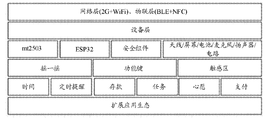
- FIG. 8 is an exemplary product architecture diagram of a smart savings tank provided by one or more embodiments of the present specification.
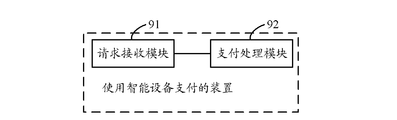
- FIG. 9 is an apparatus for payment using a smart device provided by one or more embodiments of the present specification.
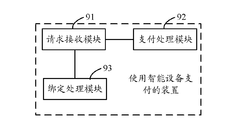
- FIG. 10 is a device for payment using a smart device provided by one or more embodiments of the present specification.
- FIG. 11 is a device for payment using a smart device provided by one or more embodiments of the present specification.
- FIG. 12 is a device for payment using a smart device provided by one or more embodiments of the present specification.
- FIG. 13 is a device for payment using a smart device provided by one or more embodiments of the present specification.
- FIG. 14 is an apparatus for payment using a smart device provided by one or more embodiments of the present specification.
- FIG. 15 is an apparatus for payment using a smart device provided by one or more embodiments of the present specification.
- an IoT server can be used to control the operation of the IoT device. If a user wants to use an IoT device, he can apply to the corresponding IoT server for the device to operate the device. Refer to the IoT system illustrated in FIG. 1. As shown in FIG. 1, the system may include: IoT device 11, IoT device 12, IoT device 1n and other devices. The operation control of these devices may all be controlled by the IoT server 21. management.
- a user 22 wants to use one of the IoT devices 11, he can apply to the IoT server 21 for authorization to use this device. For example, after the IoT server 21 authorizes the user 22 to use the IoT device 11, it is equivalent to establishing a binding relationship between the IoT device 11 and the user 22, and other users may no longer have the operation and use rights for the device. If the IoT server 21 releases the binding relationship between the IoT device 11 and the user 22, which is equivalent to that there is no user bound to the IoT device 11, the device will not respond to any user's operation instructions , The device is locked.
- One or more embodiments of the present specification provide a method for payment using a smart device, which applies the above-mentioned IoT system to payment.
- the user 22 can control the smart device through his own control device (for example, the user's mobile phone), where the control may include "payment control".
- the smart device may be applied for payment (eg, payment or receipt), and the user 22 may control payment conditions such as the limit, number of times, etc. of the smart device when paying.
- a parent A and a child B In order to educate the child B about financial quotient and cultivate children's awareness of saving and spending money, the parent A can buy a smart piggy bank C for child B.
- the smart savings tank C in this embodiment does not store cash, but is associated with a sub-account D in the cloud. How much money is in the savings tank is determined by the virtual currency in the sub-account D.
- main account E which is an account of parent A, for example, an Alipay account of parent A.
- Parent A can manage the funds in his main account E through mobile phone F.
- child B is younger, parent A cannot control the funds in child account D like parent A. Instead, parent A also controls child B's sub-account through mobile phone F, including the generation and use of sub-accounts. Can be controlled by Parent A.
- the information such as the balance and usage results of the sub-account D can be displayed by the smart piggy bank C, and the child B can conveniently view the information through the smart piggy bank C.
- the use of smart piggy bank C not only allows child B to see the use of their funds intuitively through the physical device, it is more conducive to the cultivation of financial quotients, but also prevents the child from leaving the control of parent A, ensuring Safe use of funds.
- the linkage (eg, transfer, etc.) and management between the main account E and the sub account D in the cloud can be controlled by the server G.
- a smart device may not be a smart piggy bank, but a portable device such as a bracelet or a watch worn by children.
- parent A in Figure 2 just bought a smart piggy bank C for child B (of course, the actual appearance of the piggy bank is not limited to that shown in Figure 2, and various designs can be freely designed).
- Parent A wants to train child B's Financial awareness.
- the first thing parents need to do is to bind their mobile phone F (controlling the device, taking the mobile phone as an example) to the smart piggy bank C so that they can control the payment or information display of smart piggy bank C. .
- Figure 3 illustrates the process of binding a parent's mobile phone with a smart piggy bank, which can include:
- step 300 the parent mobile phone obtains the device identification of the smart piggy bank.
- a QR code can be affixed to a smart savings tank, and a parent's mobile phone can scan the QR code to obtain the device identification of the smart savings tank.
- a payment application can be installed on a parent's mobile phone, and the payment application can be opened to scan the above-mentioned QR code through a “scan and scan” function in the payment application.
- the device identification of the smart piggy bank can also be manually entered by the parent directly in the payment application of the mobile phone.
- the device identification uniquely identifies a smart piggy bank.
- the parent mobile phone sends a device binding request to the server, and the device binding request carries: the device identification of the smart piggy bank, the account identification of the master account, and the sub account.
- the form of an example application scenario may be that the parent's mobile payment application has been bound to the parent's own master account when registering, and the parent has previously generated a child account for the child, and the child account has been previously established with Correspondence between the master accounts.
- the smart piggy bank can be linked to the child's existing sub-account.
- the parent may click "add a device” for the child's sub-account on the business interface of the payment application, and then, obtain the device identification by "scanning" in step 300.
- Parents can continue to click "OK to add a device” in the business interface, and then the parent's mobile phone can send a device binding request to the server (for example, the server can be a server for payment applications and a server for managing smart devices).
- the parent has not yet created a child account for the child, but has purchased a smart piggy bank first.
- the parent can choose which child to add the device to.
- the device binding request can carry the device ID and master account of the smart piggy bank, and the server will create a child for the child according to the request. Account, and bind the sub-account with the device ID of the child ’s smart piggy bank.
- the parent may first bind only the main account and the smart piggy bank, and a child account corresponding to the smart piggy bank is not generated for the time being. However, before the sub-account is generated, the smart savings tank cannot be used for payment. The payment of the smart savings tank must be realized through the sub-account. After the subsequent parents generate a sub-account for the child, the sub-account can be bound to the smart piggy bank, at which time the smart piggy bank can be used.
- step 304 the server establishes a correspondence relationship between the main account, the device identification, and the sub-account.
- the server can establish a binding relationship between the three:
- the establishment of the binding relationship shows that on the one hand, the smart piggy bank already has a corresponding sub-account, which can perform subsequent sub-account balance display and payment operations.
- parents can already control the sub-accounts through their mobile phones. Pay and display.
- the server may return a successful binding response to the parent mobile phone after the binding is completed.
- the business interface of the parent's mobile phone can display "Successfully added device! You can have your own piggy bank, go and try it".
- the smart savings tank can be networked to facilitate receiving information issued by the server, such as sub-account balances and payment results at the time of payment.
- the server can be networked to facilitate receiving information issued by the server, such as sub-account balances and payment results at the time of payment.
- the distribution mode of the smart piggy bank can be activated, and the piggy bank listens to the account and password broadcasted by the parent's mobile phone when connecting to WiFi, thus performing WiFi networking .
- the smart piggy bank uses the Android operating system, it is possible to directly set the Wi-Fi account and password on the piggy bank for networking.
- parents can set payment conditions on the sub-account through the mobile phone.
- Figure 4 illustrates the process of setting a parent's mobile phone for a smart piggy bank payment, which can include:
- step 400 the parent mobile phone sends the payment conditions set for the sub-account to the server.
- the payment conditions in this step may include at least one of the following: a payment limit and a payment limit.
- the payment limit may be the maximum amount of each payment, or the sum of the maximum payments over a period of time.
- the payment limit may be the highest number of payments within a preset time period (for example, one day).
- step 402 the server stores the payment conditions.
- Table 1 can be changed as shown in Table 2:
- step 404 the server may return a successful response to the payment setting to the parent mobile phone.
- the smart savings tank will be subject to the above payment conditions when it is used for payment.
- the parent Before using the smart piggy bank to pay, you must ensure that there is a balance in the sub-account corresponding to the smart piggy bank. If there is no balance, the parent can transfer a part of the amount to the child's sub-account. For example, the parent's mobile phone can send a transfer request to the server through the business interface to the server, carrying the transfer amount. The parent's master account is transferred to the child's sub-account. In addition, in the case of smart piggy bank networking, the server can send the latest balance of the sub-account to the smart piggy bank after the transfer is successful, so that the child can check how much money they have on the smart piggy bank.
- Figure 5 illustrates the process of a piggy bank payment. The process takes payment as an example.
- a piggy bank can also be used to collect payments.
- the smart piggy bank obtains a payment code, and the payment code includes: a device identifier of the smart piggy bank.
- the payment code may be generated offline by the smart piggy bank. Alternatively, it can also be generated by the server and sent to the smart piggy bank when the smart piggy bank is networked.
- the trigger for generating the payment code may be triggered by a touch key on the screen of the piggy bank, or triggered by a physical key of the piggy bank, or may be triggered by a sonic voice, or triggered by an image recognition gesture.
- the piggy bank can start to obtain the payment code when it is triggered by the above-mentioned sound waves and keys.
- a piggy bank can detect a control instruction and execute a corresponding control process according to the instruction.
- the triggering method of the instruction includes, but is not limited to, the above-mentioned gestures, physical keys, touch screens, and sound waves.
- the control process performed may also be other processes such as querying sub-account balances, viewing the latest task display, etc.
- a piggy bank can recognize various gestures of the user through sensors or cameras and perform corresponding processing. For example, if the user waved twice to check the balance.
- the payment code may carry the device identification of the smart piggy bank.
- step 502 the smart piggy bank displays a payment code.
- the smart savings tank can display the payment code on the screen, so that the payment request initiator (ie, the payee) can scan the payment code, initiate a payment request to the server, and carry the smart savings in the payment code in the payment request.
- the payment request initiator ie, the payee
- the payee can also send the QR code to the server for analysis, and the server obtains the device identification through analysis.
- the server receives a payment request, and the payment request includes: a device identification of the smart piggy bank.
- the payment request may also include the payment amount for this payment.
- step 506 the server uses the sub-account as a payment account according to the device identification, and determines whether the current payment request meets a preset payment condition.
- the server can obtain the sub-account corresponding to the device identification and the payment conditions according to Table 2. Taking the payment condition as an example, the server can determine whether the payment amount of the current payment is within the stated limit. Assuming that the payment amount is 100 yuan and the payment amount is 50 yuan, the payment condition is satisfied.
- the server may return response information to the payee that the payment does not meet the payment conditions, or the payment failed. If the smart piggy bank is networked, the server can also send a response message to the piggy bank for display on the piggy bank screen for children to view. Alternatively, even if the smart piggy bank is not currently connected to the network, the server can send a response message to the piggy bank when the piggy bank is connected to the network.
- the server may proceed to step 508.
- step 508 the server uses the sub-account as the payment account to transfer a preset payment amount to the receiving account.
- the server may feedback the payment result to the smart piggy bank, for example, the payment is successful.
- the above example uses the payment code as an example.
- the smart savings bank can also be used to collect money, and a receipt code can be generated.
- the receipt code can also include the device identification of the smart savings tank. Make a payment request for receiving money, use the sub-account as a receiving account, and transfer a preset receiving amount from the payment account to the sub-account.
- the "task” may be a parent instructing a child to do something, such as washing dishes, and after the child finishes the task, the parent gives the child a certain reward.
- the child can use the screen display of the smart piggy bank to see what the task created by the parent is, and what the reward amount can be obtained for this task.
- the screen of the piggy bank can be used to see the task The amount of sub-account changes, so that children have a very intuitive experience of making money.
- the “wish” may be a child ’s own wish, but the wish may be created by the parent to help the child and displayed on the screen of the child ’s smart piggy bank. Children can check their wish progress in real time through the screen display of the piggy bank. For example, suppose a child's wish is to have a rag doll, and this rag doll needs 100 yuan to buy, then "wish” can be "buy a rag doll, 100 yuan".
- the piggy bank can also show that the current amount of the child's account is 70 yuan, which has not yet reached the wish. This kind of wish scene also helps to cultivate children's awareness of saving money and save money for their own wishes.
- Figure 6 illustrates the process of task display, which can include:
- the parent mobile phone creates task information, and the task information includes at least one of the following: a task name and a task amount.
- the task name of the created task can be "wash dishes", this task needs children to do it. After the child completes the task, the reward amount can be 10 yuan. Then the task information can include: "wash dishes, 10 yuan.”
- step 602 the parent mobile phone sends the task information to the server.
- the server can store task information, as shown in Table 3 below.
- the server can manage tasks, such as managing the status of tasks and transferring money when tasks are completed.
- step 604 the server sends the task information to the smart piggy bank for display.
- the smart piggy bank can display information such as task name, task amount, and task status.
- the child can know through the display screen of the piggy bank that he has an unfinished task of washing dishes, and knows that he can get a reward of 10 yuan after the task is completed.
- the task information can be set to be more complicated, such as "wash dishes today” or “wash dishes twice". Parents can negotiate with their children to create task information.
- step 606 the server receives a task completion instruction corresponding to the task name.
- the task completion instruction may be sent from the parent's mobile phone to the server.
- the parent clicks "task completion" on the business interface of the mobile phone.
- it can also be initiated by a child in a smart piggy bank. For example, after the child is washing dishes, he can click on the task to complete the task.
- Figure 6 uses parents as an example.
- step 608 the server transfers the task amount from the main account to the sub-account according to the instruction.
- the server can transfer 10 yuan from the parent's master account to the child's sub-account to complete the reward for the child.
- the child's sub-account has an updated balance.
- the original balance was 50
- the current updated balance is 60 yuan.
- step 610 the server sends the updated balance of the sub-account to the smart piggy bank.
- the smart savings tank can display the updated balance of the sub-account, and it can also display "your account has increased by 10 yuan, the updated balance is 60 yuan", so that the child has a more intuitive experience of earning money.
- Figure 7 illustrates the process of wish display, which can include:
- the parent mobile phone creates wish information
- the task information includes at least one of the following: a wish name, a target amount, a current amount, and a wish achievement status.
- the name of the wish created may be "buy a rag doll", and the target amount needed to realize the wish may be 100 yuan.
- the child's current sub-account balance is 70 yuan, and the wish status is "unfulfilled”.
- the wish achievement status may be used to indicate whether the current amount reaches a target amount.
- step 702 the parent mobile phone sends the wish information to the server.
- the server may store wish information as shown in Table 4 below. And, the server can manage the wish, for example, manage the wish achievement status according to the comparison of the target amount and the current amount.
- step 704 the server sends the wish information to the smart piggy bank for display.
- a smart piggy bank can display information such as wish name, wish status, and so on. The child can know that he has an unfulfilled wish through the display screen of the piggy bank.
- the server can compare the current balance and the target balance of the sub-accounts periodically or in real time, and update the wish status, and send the updated wish status to the piggy bank for display.
- one master account corresponds to one sub account as an example.
- a master account can correspond to multiple sub-accounts.
- a parent can have multiple children, and each child can have its own sub-account. Accounts can transfer money to these sub-accounts.
- One sub account can also correspond to multiple master accounts, for example, a child with multiple parents, and the parent account of these parents can transfer money to the child's sub account.
- a child's sub-account can also correspond to multiple smart savings jars, as long as they are distinguished by different device identifiers. The binding and payment of each savings jar can use the above method.
- Piggy banks can also have personified emotions to enhance the interactive experience.
- the piggy bank can adjust the display of the device's emotional screen according to the detected emotional basis information.
- the display of the emotional screen of the device may be displaying a smiley face or a crying face, or the eyes are happy or sad.
- FIG. 8 illustrates an exemplary product architecture diagram of a smart piggy bank.
- the piggy bank can have multiple functions, for example, it can have an antenna to receive signals, it can have a screen to display related information, and it can have Speakers, touch zones, and more can also have payment-related security components.
- the piggy bank can also support dual offline near field communication with the mobile phone, so that the mobile phone and the piggy bank can interact without the Internet. For example, you can touch the mobile phone near the piggy bank to exchange data.
- the payment code generated by the smart device may carry the account ID of the sub-account.
- the payment request initiator can scan the payment code to obtain the account ID, and carry the account ID in the payment request sent to the server.
- the server may determine the sub-account corresponding to the smart device according to the account identifier, and perform payment processing on the sub-account.
- the payment code generated by the smart device may also carry the account ID of the sub-account and the device ID of the smart device.
- the payment request initiator can scan the payment code to obtain the account ID and the device ID, and determine the sub-account based on the account ID.
- the device identification can be applied to security verification.
- the server can check the pre-established binding relationship of “main account—device identification—subaccount” after the subaccount is determined according to the account identification, and the subaccount corresponds to Whether the device ID is the device ID carried in the payment request.
- the server can continue to allow payment using the sub-account. Otherwise, if the judgment result is no, the device may be swapped, the smart device and the sub-account do not have a corresponding relationship, and the server may reject the payment.
- the server can still establish the binding relationship between the main account, the sub account, and the device identifier.
- the control device can also set the payment conditions of the sub-account, the server can also send tasks and wish information to the smart device, and so on.
- the sub-account corresponding to the smart device may not be set, but the server may establish the correspondence between the main account and the device identifier according to the device binding request.
- the payment conditions can be corresponding to the device identification, and when the actual payment is made, the main account can be processed according to the payment conditions, that is, the payment conditions are set corresponding to the smart device, and the payment It is also possible for the account to be processed in accordance with these payment conditions. For example, if a child's piggy bank is set to pay a maximum of 100 yuan each time, then when the child pays with the piggy bank, the child's parent's main account will be deducted. When the parent's main account is deducted, the amount will be limited, up to 100 yuan. If parents pay on their own devices, they are not subject to this restriction.
- the method for making payment using a smart device may include the following processing:
- the control device sends a device binding request to the server.
- the device binding request includes a device identifier of the smart device and a master account corresponding to the control device.
- the server establishes a corresponding relationship between the master account and the device identifier according to the device binding request. For example, a correspondence relationship between an adult's main account and a child's piggy bank device identification is established.
- the server receives a payment condition corresponding to the device identifier set by the control device, and stores a correspondence relationship between the payment condition and the device identifier.
- This step is also equivalent to setting payment conditions for the child to use the piggy bank to pay, for example, conditions such as limit or limit.
- the smart device may display a payment code, so that the payment request initiator scans the payment code to initiate a payment request to the server, and the payment code includes: the device identifier of the smart device, and the payment The request carries the device identification.
- the payment code may be a payment code, and the merchant may scan the payment code and request the server to make a charge, and carry the device identification.
- the server finds a corresponding payment condition according to the device identifier carried in the payment request, and performs payment processing on the main account when the payment request meets the payment condition. For example, the server can determine whether the limit is met or if the limit is met, and if it is, the adult's main account is deducted.
- one or more embodiments of the present specification provide an apparatus for performing payment using a smart device.
- the device may be applied to a server, and the device may include a request receiving module 91 and a payment processing module 92.
- the request receiving module 91 is configured to receive a payment request, where the payment request includes: a device identifier of the smart device;
- a payment processing module 92 configured to perform payment processing on a subaccount corresponding to the device identifier according to the device identifier; the subaccount is generated based on a master account corresponding to a control device, and the control device is configured to Account for payment control.
- the apparatus may further include a binding processing module 93.
- the request receiving module 91 is further configured to receive a device binding request sent by the control device, where the device binding request includes: a device identifier of the smart device and an account identifier of the master account;
- a binding processing module 93 is configured to establish a correspondence between the main account, the sub account, and the device identifier according to the device binding request.
- the payment processing module 92 is further configured to receive a payment condition set on the sub-account sent by the control device; store the payment condition; and when the payment request meets the payment condition, The sub-account performs payment processing.
- one or more embodiments of the present specification provide an apparatus for performing payment using a smart device.
- the apparatus may be applied to a smart device, and the apparatus may include a code acquisition module 1101 and a code display module 1102.
- a code acquisition module 1101 is configured to acquire a payment code, where the payment code is a payment code or a payment code;
- a code display module 1102 is used to display the payment code, so that a payment request initiator requests payment processing to a sub-account corresponding to the smart device according to the payment code.
- the sub-account is based on a master account corresponding to the control device. An account is generated and payment control is performed by the control device.
- the device further includes at least one of the following:
- a task display module 1103, configured to receive and display task information sent by the server, the task information created by the control device and sent to the server, and the task information includes at least one of the following: a task name and a task amount; Receiving and displaying an updated balance of a sub-account sent by the server, where the updated balance is transferred from the master account to the sub-account when the server receives a task completion instruction corresponding to the task name Obtained after the amount of the task;
- the wish display module 1104 is configured to receive and display the wish information sent by the server, the wish information is created by the control device and sent to the server, and the wish information includes at least one of the following: a wish name, a target amount, The current amount and a wish achievement state, the wish achievement state is used to indicate whether the current amount reaches a target amount.
- one or more embodiments of the present specification provide an apparatus for performing payment using a smart device.
- the apparatus may be applied to a control device, and the apparatus may include an identity acquisition module 1301 and a binding request module 1302.
- An identification acquisition module 1301, configured to acquire a device identification of a smart device
- a binding request module 1302 is configured to send a device binding request to the server, where the device binding request carries: a device identifier of the smart device and an account identifier of a master account; so that the server establishes the master account, The corresponding relationship between the device identifier and the subaccount corresponding to the device identifier is described.
- the device may further include: a payment setting module 1303, configured to send a payment condition set for the sub-account to the server, so that the server is configured according to the payment condition Perform payment processing; the payment conditions include at least one of the following: payment limit and payment limit.
- FIG. 15 provides a device for payment using a smart device.
- the device may be applied to a server.
- the device may include a request receiving module 1501, a binding processing module 1502, a condition receiving module 1503, and a payment setting module 1504.
- the request receiving module 1501 is configured to control a device binding request sent by a control device, where the device binding request includes a device identifier of a smart device and a master account of the control device;
- a binding processing module 1502 configured to establish a correspondence relationship between the master account, the device identifier, and a sub-account corresponding to the smart device according to the device binding request;
- a condition receiving module 1503 configured to receive a payment condition set by a sub-account sent by the control device;
- a payment setting module 1504 is configured to establish a correspondence between the payment condition and the sub-account, so as to perform payment processing on the sub-account when a payment request meets the payment condition.
- the device or module explained in the foregoing embodiments may be specifically implemented by a computer chip or entity, or may be implemented by a product having a certain function.
- a typical implementation device is a computer, and the specific form of the computer may be a personal computer, a laptop computer, a cellular phone, a camera phone, a smart phone, a personal digital assistant, a media player, a navigation device, an email sending and receiving device, and a game control Desk, tablet computer, wearable device, or a combination of any of these devices.
- each step may be implemented in the form of software, hardware, or a combination thereof.
- those skilled in the art may implement it in the form of software code, and may be computer-executable capable of implementing the logical functions corresponding to the steps. instruction.
- the executable instructions may be stored in a memory and executed by a processor in the device.
- the device may include a processor, a memory, and computer instructions stored on the memory and executable on the processor.
- the processor implements the following steps by executing the instructions:
- Obtaining a payment code where the payment code is a payment code or a payment code
- the payment request initiator requests the server to perform payment processing on the sub-account corresponding to the device identifier according to the payment code, and the sub-account is generated based on the master account corresponding to the control device and is controlled by the control
- the device performs payment control.
- the smart device may be a smart piggy bank.
- the smart piggy bank may include a detection component, which may be used to detect a trigger for requesting to display a payment code.
- the trigger may be:
- the trigger made by a gesture
- a trigger issued by a physical button on the smart savings tank Or, a trigger issued by a physical button on the smart savings tank;
- the trigger issued by a touch screen on the smart savings tank issuing a touch screen on the smart savings tank
- the trigger is sent by a sound wave.
- the above-mentioned trigger is equivalent to a control instruction for a smart piggy bank, and the instruction may be an instruction to the smart piggy bank to acquire and display a payment code.
- the processor of the smart piggy bank can display the payment code according to the trigger.
- the detection component may be a camera or a sensor.
- the control instructions in the foregoing multiple manners may also be used to control the smart savings tank to perform other types of control processing.
- the payment code displayed on the smart piggy bank can be displayed on the display.
- the smart piggy bank when the smart piggy bank generates a payment code carrying a device identifier, the smart piggy bank may store a device identifier that uniquely identifies the smart piggy bank.
- the processor is respectively connected to the memory and the detection component, and when the detection component detects the trigger, the payment code carrying the device identification is generated offline according to the device identification stored in the memory.
- the smart savings tank may be in communication with the server through a communication component, and the communication component may be, for example, a WiFi component, 2G, 3G, 4G and other modules.
- the communication component may communicate with the server through a wireless and / or wired link, and receive data sent by the server to the smart savings tank.
- the received data may be task information and wish information, and the data may be displayed on a display screen of a smart piggy bank for a child to view.
- the detection component of the smart savings tank is further used to detect the emotional basis information; the processor may adjust the display of the device emotional screen according to the emotional basis information detected by the sensor component and display the device emotional screen on the display screen on. For details, see the description of the emotional management of the smart piggy bank above.
- the smart savings tank can also use near-field communication components to conduct near-field communication with another device to transmit data. For example, you can use your mobile phone to touch the savings tank to exchange data.
- the device may include a processor, a memory, and computer instructions stored on the memory and executable on the processor.
- the processor By executing the instructions, the following steps are implemented:
- the device binding request includes a device identifier of a smart device and a master account of the control device;
- control device which may include a processor, a memory, and computer instructions stored on the memory and executable on the processor.
- the processor implements the following steps by executing the instructions:
- the device binding request carries: the device identifier of the smart device and the account identifier of the master account; so that the server establishes the master account, the device identifier, and the Correspondence between the three sub-accounts corresponding to the device identification.
- One or more embodiments of the present specification also provide an IoT system applied to payment.
- the system may include: a smart device, a control device, and a server. This system can also be called an electronic savings system.
- the server is configured to establish a correspondence between a master account corresponding to the control device, a sub-account corresponding to the smart device, and a device identifier of the smart device; and is configured to, according to a payment request, satisfy the payment request When controlling the payment conditions set by the control device, performing payment processing on the sub-account corresponding to the device identifier;
- the smart device is configured to display a payment code, so that a payment request initiator sends a payment request to a server according to the payment code to request payment processing for a subaccount corresponding to the device identifier;
- the control device is configured to set payment conditions for the sub-account to control payment of the smart device.
- one or more embodiments of the present specification may be provided as a method, a system, or a computer program product. Therefore, one or more embodiments of this specification may take the form of an entirely hardware embodiment, an entirely software embodiment, or an embodiment combining software and hardware aspects. Moreover, one or more embodiments of the present specification may adopt a computer program implemented on one or more computer-usable storage media (including but not limited to disk storage, CD-ROM, optical storage, etc.) containing computer-usable program code therein. The form of the product.
- computer-usable storage media including but not limited to disk storage, CD-ROM, optical storage, etc.
- One or more embodiments of the specification may be described in the general context of computer-executable instructions executed by a computer, such as program modules.
- program modules include routines, programs, objects, components, data structures, etc. that perform specific tasks or implement specific abstract data types.
- One or more embodiments of the present specification may also be practiced in distributed computing environments in which tasks are performed by remote processing devices connected through a communication network.
- program modules may be located in local and remote computer storage media, including storage devices.
Landscapes
- Business, Economics & Management (AREA)
- Accounting & Taxation (AREA)
- Engineering & Computer Science (AREA)
- General Business, Economics & Management (AREA)
- Strategic Management (AREA)
- Physics & Mathematics (AREA)
- General Physics & Mathematics (AREA)
- Theoretical Computer Science (AREA)
- Finance (AREA)
- Computer Networks & Wireless Communication (AREA)
- Development Economics (AREA)
- Economics (AREA)
- Financial Or Insurance-Related Operations Such As Payment And Settlement (AREA)
Abstract
一种使用智能设备进行支付的方法和装置,其中,所述方法包括:控制设备向服务器发送设备绑定请求,请求中包括:智能设备的设备标识以及控制设备对应的主账户;服务器根据设备绑定请求,建立主账户、设备标识以及智能设备对应的子账户之间的对应关系;智能设备显示支付码,以使得支付请求发起端扫描所述支付码向所述服务器发起支付请求,所述支付码中包括:所述智能设备的设备标识,请求中携带设备标识;服务器在接收到支付请求时,根据预先建立的所述对应关系,对支付请求中的设备标识对应的子账户进行支付处理。
Description
本公开涉及物联网技术领域,特别涉及一种使用智能设备进行支付的方法和装置。
物联网(Internet of things,简称:IoT)是新一代信息技术的重要组成部分,物联网可以通过智能感知、识别技术与普适计算等通信感知技术,在物品和物品之间实现信息交换和通信,物联网也被称为继计算机、互联网之后世界信息产业发展的第三次浪潮。随着物联网技术的快速发展,IOT设备也日益增多,很多设备都可以联入物联网,可以将联入物联网的设备称为智能设备。
发明内容
有鉴于此,本说明书一个或多个实施例提供一种使用智能设备进行支付的方法和装置,以实现使用物联网设备进行支付。
具体地,本说明书一个或多个实施例是通过如下技术方案实现的:
第一方面,提供一种使用智能设备进行支付的方法,所述方法包括:
控制设备向服务器发送设备绑定请求,所述设备绑定请求中包括:智能设备的设备标识、以及所述控制设备对应的主账户;
所述服务器根据设备绑定请求,建立所述主账户与设备标识的对应关系;
所述服务器接收所述控制设备设置的对应所述设备标识的支付条件,并存储所述支付条件和所述设备标识的对应关系;
所述智能设备显示支付码,以使得支付请求发起端扫描所述支付码向所述服务器发起支付请求,所述支付码中包括:所述智能设备的设备标识,所述支付请求中携带所述设备标识;
所述服务器在接收到支付请求时,根据所述支付请求中携带的设备标识对应的支付条件,在所述支付请求满足所述支付条件时,对所述主账户进行支付处理。
第二方面,提供一种使用智能设备进行支付的方法,所述方法包括:
控制设备向服务器发送设备绑定请求,所述设备绑定请求中包括:智能设备的设备标识、以及所述控制设备对应的主账户;
所述服务器根据所述设备绑定请求,建立所述主账户、所述设备标识以及所述智能设备对应的子账户之间的对应关系;
所述智能设备显示支付码,以使得支付请求发起端扫描所述支付码向所述服务器发起支付请求,所述支付码中包括:所述智能设备的设备标识,所述支付请求中携带所述设备标识;
所述服务器在接收到支付请求时,根据预先建立的所述对应关系,对所述支付请求中的设备标识对应的子账户进行支付处理。
第三方面,提供一种使用智能设备进行支付的方法,所述方法包括:
控制设备向服务器发送设备绑定请求,所述设备绑定请求中包括:智能设备的设备标识、以及所述控制设备对应的主账户;
所述服务器根据所述设备绑定请求,建立所述主账户、所述设备标识以及所述智能设备对应的子账户的对应关系;
所述智能设备显示支付码,以使得支付请求发起端扫描所述支付码向所述服务器发起支付请求,所述支付码中包括:所述子账户的账户标识;所述支付请求中携带所述账户标识;
所述服务器在接收到支付请求时,根据所述账户标识确定对应的子账户,并对所述子账户进行支付处理。
第四方面,提供一种使用智能设备进行支付的方法,所述方法包括:
控制设备向服务器发送设备绑定请求,所述设备绑定请求中包括:智能设备的设备标识、以及所述控制设备的主账户;
所述服务器根据所述设备绑定请求,建立所述主账户、所述设备标识以及所述智能设备对应的子账户的对应关系;
所述智能设备显示支付码,以使得支付请求发起端扫描所述支付码向所述服务器发起支付请求,所述支付码中包括:所述子账户的账号标识和智能设备的设备标识,所述设备标识和账户标识携带在所述支付请求中;
所述服务器在接收到支付请求时,根据预先建立的所述对应关系,若所述设备标 识是与所述子账户对应,则对所述子账户进行支付处理。
第五方面,提供一种使用智能设备进行支付的方法,所述方法包括:
智能设备获取支付码,所述支付码是付款码或者收款码;
所述智能设备展示所述支付码,以使得支付请求发起端根据所述支付码请求服务器对所述智能设备对应的子账户进行支付处理,所述子账户是基于控制设备对应的主账户生成且由所述控制设备进行支付控制。
第六方面,提供一种使用智能设备进行支付的方法,所述方法包括:
服务器接收控制设备发送的设备绑定请求,所述设备绑定请求中包括:智能设备的设备标识、以及所述控制设备的主账户;
所述服务器根据所述设备绑定请求,建立所述主账户、所述设备标识以及所述智能设备对应的子账户之间的对应关系;
所述服务器接收所述控制设备发送的所述子账户设置的支付条件;
所述服务器建立所述支付条件和所述子账户的对应关系,以在支付请求满足支付条件时,对所述子账户进行支付处理。
第七方面,提供一种使用智能设备进行支付的装置,所述装置包括:
请求接收模块,用于控制设备发送的设备绑定请求,所述设备绑定请求中包括:智能设备的设备标识、以及所述控制设备的主账户;
绑定处理模块,用于根据所述设备绑定请求,建立所述主账户、所述设备标识以及所述智能设备对应的子账户的对应关系;
条件接收模块,用于接收所述控制设备发送的所述子账户设置的支付条件;
支付设置模块,用于建立所述支付条件和所述子账户的对应关系,以在支付请求满足支付条件时,对所述子账户进行支付处理。
第八方面,提供一种使用智能设备进行支付的装置,所述装置包括:
码获取模块,用于获取支付码,所述支付码是付款码或者收款码;
码展示模块,用于展示所述支付码,以使得支付请求发起端根据所述支付码请求服务器对所述智能设备对应的子账户进行支付处理,所述子账户是基于控制设备对应的主账户生成且由所述控制设备进行支付控制。
第九方面,提供一种智能设备,所述设备包括存储器、处理器,以及存储在存储器上并可在处理器上运行的计算机指令,所述处理器执行指令时实现以下步骤:
获取支付码,所述支付码是付款码或者收款码;
展示所述支付码,以使得支付请求发起端根据所述支付码请求服务器对所述智能设备对应的子账户进行支付处理,所述子账户是基于控制设备对应的主账户生成且由所述控制设备进行支付控制。
第十方面,提供一种服务器,所述服务器包括存储器、处理器,以及存储在存储器上并可在处理器上运行的计算机指令,所述处理器执行指令时实现以下步骤:
接收控制设备发送的设备绑定请求,所述设备绑定请求中包括:智能设备的设备标识、以及所述控制设备的主账户;
根据所述设备绑定请求,建立所述主账户、所述设备标识以及所述智能设备对应的子账户的对应关系;
接收所述控制设备发送的所述子账户设置的支付条件;
建立所述支付条件和所述子账户的对应关系,以在支付请求满足支付条件时,对所述子账户进行支付处理。
第十一方面,提供一种应用于支付的物联网系统,所述系统包括:智能设备、控制设备和服务器;
所述服务器,用于建立所述控制设备对应的主账户、所述智能设备对应的子账户和所述智能设备的设备标识之间的对应关系;并用于根据支付请求,在所述支付请求满足所述控制设备设置的支付条件时,对所述设备标识对应的子账户进行支付处理;
所述智能设备,用于展示支付码,以使得支付请求发起端扫描所述支付码向服务器发送支付请求,以请求对所述设备标识对应的子账户进行支付处理;
所述控制设备,用于对所述子账户设置支付条件,以对所述智能设备的支付进行控制。
本说明书一个或多个实施例的使用智能设备进行支付的方法和装置,通过设置子账户基于主账户生成,并且将子账户绑定实体的智能设备,不仅可以实现对子账户的控制,而且实现了使用智能设备进行支付。
为了更清楚地说明本说明书一个或多个实施例或现有技术中的技术方案,下面将对实施例或现有技术描述中所需要使用的附图作简单地介绍,显而易见地,下面描述中的附图仅仅是本说明书一个或多个实施例中记载的一些实施例,对于本领域普通技术人员来讲,在不付出创造性劳动的前提下,还可以根据这些附图获得其他的附图。
图1为本说明书一个或多个实施例提供的物联网系统的系统架构图;
图2为本说明书一个或多个实施例提供的支付场景示意图;
图3为本说明书一个或多个实施例提供的家长的手机与智能储蓄罐绑定的流程;
图4为本说明书一个或多个实施例提供的家长手机对智能储蓄罐的支付设置的流程;
图5为本说明书一个或多个实施例提供的储蓄罐支付的流程;
图6为本说明书一个或多个实施例提供的任务显示的流程;
图7为本说明书一个或多个实施例提供的心愿显示的流程;
图8为本说明书一个或多个实施例提供的智能储蓄罐的一个示例性的产品架构图;
图9为本说明书一个或多个实施例提供的使用智能设备进行支付的装置;
图10为本说明书一个或多个实施例提供的使用智能设备进行支付的装置;
图11为本说明书一个或多个实施例提供的使用智能设备进行支付的装置;
图12为本说明书一个或多个实施例提供的使用智能设备进行支付的装置;
图13为本说明书一个或多个实施例提供的使用智能设备进行支付的装置;
图14为本说明书一个或多个实施例提供的使用智能设备进行支付的装置;
图15为本说明书一个或多个实施例提供的使用智能设备进行支付的装置。
为了使本技术领域的人员更好地理解本说明书一个或多个实施例中的技术方案,下面将结合本说明书一个或多个实施例中的附图,对本说明书一个或多个实施例中的技术方案进行清楚、完整地描述,显然,所描述的实施例仅仅是本说明书一部分实施例, 而不是全部的实施例。基于本说明书一个或多个实施例,本领域普通技术人员在没有作出创造性劳动前提下所获得的所有其他实施例,都应当属于本公开保护的范围。
在物联网系统中,可以由物联网服务器来对物联网设备进行操作控制,如果一个用户想要使用一个物联网设备,可以向设备对应的物联网服务器申请对该设备的操作权限。可以参见图1示例的物联网系统,如图1所示,该系统可以包括:物联网设备11、物联网设备12、物联网设备1n等设备,这些设备的操作控制可以都由物联网服务器21管理。
如果一个用户22想要使用其中一个物联网设备11,他可以向物联网服务器21申请对这个设备的使用授权。例如,当物联网服务器21授权用户22使用物联网设备11之后,相当于建立了物联网设备11与用户22之间的绑定关系,其他用户可以不再具有对该设备的操作使用权限。而假如物联网服务器21解除了物联网设备11与用户22之间的绑定关系,相当于该物联网设备11不存在与之绑定的用户,则该设备将可以不响应任何用户的操作指令,设备处于锁定状态。
本说明书一个或多个实施例提供了一种使用智能设备进行支付的方法,该方法将上述的物联网系统应用于支付。
假设上述的物联网设备11是所述的智能设备,用户22可以通过自己的控制设备(如,用户的手机)来对智能设备进行控制,其中,所述的控制可以包括“支付控制”。例如,智能设备可以应用于支付(如,付款或者收款),而用户22可以控制智能设备在支付时的限额、限次等支付条件。
如下示例一种应用于支付的物联网系统的场景:
请参见图2的示例,一个家长A和小孩B,为了对小孩B进行财商教育,培养孩子的存钱、花钱等意识,家长A可以给小孩B买一个智能储蓄罐C。但是,需要注意的是,本实施例的智能储蓄罐C并不存储现金,而是关联至云端的一个子账户D,储蓄罐有多少钱是由子账户D中的虚拟货币决定。
进一步的,还有一个主账户E,该主账户E是家长A的账户,例如,家长A的支付宝账户。家长A可以通过手机F管理自己的主账户E中的资金。但是,小孩B由于年龄较小,不能像家长A那样自己来控制子账户D中的资金,而是由家长A同样通过手机F来控制小孩B的子账户,包括子账户的生成和使用,都可以由家长A控制。
而子账户D的余额、使用结果等信息可以由智能储蓄罐C显示,小孩B可以方便 的通过智能储蓄罐C进行查看。如此一来,智能储蓄罐C的使用,既使得小孩B能够通过实体设备直观的看到自己的资金的使用情况,更有利于培养财商,并且又使得小孩不会脱离家长A的控制,保证资金安全使用。
再者,如图2所示,云端的主账户E和子账户D之间的联动(如,转账等)和管理,都可以由服务器G控制。
如上是以智能储蓄罐为例,说明物联网系统的支付场景的应用,当然,实际使用中并不局限于此,其他的应用场景或者其他类型的智能设备也可以使用该方法。比如,智能设备也可以不是智能储蓄罐,而是小孩随身佩戴的手环、手表等便携式设备。
接着仍以智能设备是智能储蓄罐为例,描述如何根据本说明书实施例的方法使用该智能储蓄罐进行支付。描述将分为几个场景进行:
设备绑定
假设图2中的家长A刚刚给小孩B买了一个智能储蓄罐C(当然,实际的储蓄罐外观不局限于图2所示,可以自由设计各种外观),家长A想要培养小孩B的理财意识。那么,家长首先要做的事情,可以是将自己的手机F(即控制设备,以手机为例)与智能储蓄罐C绑定,以使得自己可以控制智能储蓄罐C的支付或者信息显示等处理。
图3示例了家长的手机与智能储蓄罐绑定的流程,可以包括:
在步骤300中,家长手机获取智能储蓄罐的设备标识。
例如,智能储蓄罐上可以贴有二维码,家长手机可以扫描该二维码获取智能储蓄罐的设备标识。在一个例子中,家长的手机上可以安装有支付应用,可以打开该支付应用,通过支付应用中的“扫一扫”功能扫描上述二维码。
在其他的例子中,也可以由家长直接在手机的支付应用中手动输入智能储蓄罐的设备标识。该设备标识能够唯一标识一个智能储蓄罐。
在步骤302中,家长手机向服务器发送设备绑定请求,所述设备绑定请求中携带:智能储蓄罐的设备标识、主账户的账户标识以及子账户。
例如,示例一个应用场景的形式可以是,家长手机的支付应用在注册时已经绑定了家长自己的主账户,并且家长已经预先为小孩生成了一个子账户,并且该子账户已经预先建立了与所述主账户之间的对应关系。
当家长为小孩购买了智能储蓄罐后,可以将该智能储蓄罐与小孩已有的上述的子 账户绑定。在操作时,家长可以在支付应用的业务界面上点击为小孩的子账户“添加设备”,接着,可以通过步骤300中的“扫一扫”获取到设备标识。家长可以继续点击业务界面中的“确定添加设备”,则家长手机可以向服务器(例如,该服务器可以同时是支付应用的服务器,也是用于管理智能设备的服务器)发送设备绑定请求,请求中携带:智能储蓄罐的设备标识、主账户以及子账户。
在另一个例子中,也许家长还尚未为小孩创建子账户,而是先购买了一个智能储蓄罐。这种情况下,扫码添加设备时,家长可以选择为哪个小孩添加设备,设备绑定请求中可以携带智能储蓄罐的设备标识和主账户,而由服务器侧根据该请求为上述小孩创建一个子账户,并将该子账户与小孩的智能储蓄罐的设备标识进行绑定。
或者,家长也可以先只绑定主账户和智能储蓄罐,而暂时未生成对应智能储蓄罐的子账户。但是,在子账户生成以前,智能储蓄罐是不能用于支付的,智能储蓄罐的支付实现要通过子账户。当后续家长为小孩生成子账户后,可以将该子账户与智能储蓄罐绑定,此时智能储蓄罐才可以使用。
在步骤304中,服务器建立主账户、设备标识以及子账户之间的对应关系。
如下表1所示,服务器可以建立三者之间的绑定关系:
表1绑定关系
| 主账户(家长) | 子账户(小孩) | 设备标识(储蓄罐) |
| ABC | abc | 1111 |
绑定关系的建立表明,一方面,智能储蓄罐已经具有了对应的子账户,可以进行后续的子账户余额显示、支付等操作,另一方面,家长已经可以通过自己的手机来控制子账户的支付和显示。
在步骤306中,服务器可以在绑定完成后,可以向家长手机返回一个绑定成功的响应。例如,家长手机的业务界面上可以显示“添加设备成功!您可以有自己的储蓄罐了,快去试试吧”。
此外,智能储蓄罐可以进行联网配置,以方便接收服务器下发的信息,比如,子账户余额、支付时的支付结果。例如,当智能储蓄罐使用RTOS(Real-time Operation System,实时操作系统)时,可以激活智能储蓄罐的配网模式,由储蓄罐监听家长手机连接WiFi时广播的账户和密码,从而进行WiFi联网。又例如,当智能储蓄罐使用Android操作系统时,可以直接在储蓄罐上设置WiFi时的账户和密码进行联网。
支付条件设置
在完成了上述的设备绑定操作后,家长为了实现对小孩使用智能储蓄罐进行支付交易的控制,可以通过手机对子账户进行支付条件设置。
图4示例了家长手机对智能储蓄罐的支付设置的流程,可以包括:
在步骤400中,家长手机向所述服务器发送对所述子账户设置的支付条件。
本步骤中的支付条件,可以包括如下至少一项:支付限额和支付限次。例如,所述的支付限额可以是每次付款时的最高额度,或者一段时间内的最高付款总和。所述的支付限次,可以是预设时间段内(如,一天)的最高支付次数。
在步骤402中,服务器存储所述支付条件。
例如,服务器存储支付条件后,表1可以变更为如表2所示:
表2绑定关系
| 主账户(家长) | 子账户(小孩) | 设备标识(储蓄罐) | 支付条件 |
| ABC | abc | 1111 | 限额 |
在步骤404中,服务器可以向家长手机返回支付设置成功的响应。
经过上述设置,智能储蓄罐在应用于支付时,将受到上述支付条件的约束。
应用智能储蓄罐进行支付
在使用智能储蓄罐支付前,得确保智能储蓄罐对应的子账户中尚有余额。如果没有余额,则家长可以向小孩的子账户中转入一部分金额,比如,家长手机可以通过业务界面向服务器发送向所述子账户转账的转账请求,携带转账金额,服务器可以根据该请求,由家长的主账户向小孩的子账户转账。此外,在智能储蓄罐联网的情况下,服务器可以在转账成功后,向智能储蓄罐发送子账户的最新余额,以使得小孩可以在智能储蓄罐上查看自己有多少钱。
在一个示例性的场景中,假设小孩要进行购物付款,小孩可以拿自己的智能储蓄罐来支付。图5示例了储蓄罐支付的流程,其中,该流程以付款为例,当然,在其他的场景中,储蓄罐也可以用来收款。
在步骤500中,智能储蓄罐获取付款码,付款码中包括:智能储蓄罐的设备标识。
本步骤中,付款码可以是由智能储蓄罐离线生成。或者,还可以是,在智能储蓄 罐联网的情况下,由服务器生成并发送给智能储蓄罐。
付款码生成的触发,例如,可以是通过储蓄罐屏幕上的触控键触发,或者储蓄罐的物理键触发,或者还可以是声波语音触发,或者图像识别手势触发等。储蓄罐在接收到上述的声波、按键等方式触发时,可以开始获取付款码。
此外,上述的多种触发方式也不仅可以应用于触发付款码的生成,也可以触发储蓄罐的其他处理。例如,储蓄罐可以检测控制指令,并根据指令执行相应的控制处理,该指令的触发方式包括但不限于上述的手势、物理按键、触屏、声波等方式。所执行的控制处理也可以是例如查询子账户余额、查看最新任务显示等其他处理,示例性的,以手势为例,储蓄罐可以通过传感器或者摄像头,识别用户的多种手势并进行对应处理,比如,如果用户挥手两下表示查询余额。
例如,支付码中可以携带智能储蓄罐的设备标识。
在步骤502中,智能储蓄罐展示付款码。
例如,智能储蓄罐可以将付款码显示在屏幕上,这样支付请求发起端(即收款方)可以扫描该付款码,发起向服务器的支付请求,并在支付请求中携带付款码中的智能储蓄罐的设备标识。或者,收款方也可以将二维码发送至服务器进行解析,由服务器解析获得设备标识。
在步骤504中,服务器接收到支付请求,所述支付请求中包括:智能储蓄罐的设备标识。该支付请求中还可以包括本次付款的付款金额。
在步骤506中,服务器根据所述设备标识,将所述子账户作为付款账户,判断本次支付请求是否满足预设的支付条件。
例如,服务器可以根据表2,得到设备标识对应的子账户以及支付条件。以支付条件为限额为例,服务器可以判断本次支付的付款金额是否在所述的限额以内,假设限额是100元,付款金额是50元,则满足支付条件。
若支付条件不满足,则服务器可以向收款方返回本次支付不符合支付条件,支付失败等响应信息。若智能储蓄罐联网,服务器也可以将响应信息发送至储蓄罐,以在储蓄罐的屏幕上显示供小孩查看。或者,即使智能储蓄罐当前未联网,可以待储蓄罐联网时,服务器再将响应信息发送至储蓄罐。
若支付条件满足,则服务器可以继续执行步骤508。
在步骤508中,服务器以子账户作为付款账户,向收款账户转账预设的付款金额。
在步骤510中,服务器可以向智能储蓄罐反馈支付结果,例如支付成功。
此外,上述例子是以付款码为例,智能储蓄罐也可以用于收款,可以生成收款码,收款码中也可以包括智能储蓄罐的设备标识,服务器可以根据请求由所述子账户进行收款的支付请求,将所述子账户作为收款账号,由付款账户向所述子账户转账预设的收款金额。
在上述的支付场景之外,智能储蓄罐还可以有多种培养小孩财商的方式。比如,家长可以为小孩创建“任务”和“心愿”,小孩可以在自己的智能储蓄罐侧查看任务和心愿是否达成。
其中,所述的“任务”可以是家长指示一个事情让小孩去做,如,洗碗,待小孩做完事情后,由家长给予小孩一定的奖励。这个任务场景中,小孩就可以通过智能储蓄罐的屏幕显示来查看家长创建的任务是什么,以及本次任务能够得到的奖励金额是多少,还可以在储蓄罐的屏幕显示看到任务完成后的子账户金额变动,从而使得小孩有一个非常直观的挣钱体验。
其中,所述的“心愿”可以是小孩自己的一个心里愿望,只是这个愿望可以由家长帮小孩创建,并显示在小孩的智能储蓄罐的屏幕上。小孩可以通过储蓄罐的屏幕显示实时的查看自己的心愿达成进度。比如,假设小孩的愿望是有一个布娃娃,而这个布娃娃需要100元购买,那么“心愿”就可以是“买布娃娃,100元”。并且,储蓄罐还可以显示小孩子账户的当前金额是70元,尚未达成心愿。这种心愿场景也有助于培养小孩的存钱意识,为了自己的愿望实现去存钱。
上述的任务和心愿只是两个例子,实际实施中不局限于此,可以根据具体的业务设定,形成多种丰富的理财场景,并结合智能储蓄罐的显示,实现家长和小孩之间的理财互动。如下简单说明“任务”和“心愿”场景下的交互:
智能储蓄罐显示任务
图6示例了任务显示的流程,可以包括:
在步骤600中,家长手机创建任务信息,所述任务信息包括如下至少一项:任务名称、任务金额。
例如,创建的任务的任务名称可以是“洗碗”,这个任务是需要小孩去做的。待 小孩完成任务后,奖励的金额可以是10元。那么任务信息可以包括:“洗碗,10元”。
在步骤602中,家长手机将任务信息发送至服务器。
例如,服务器可以存储任务信息,如下表3所示。并且,服务器可以对任务进行管理,比如,管理任务的状态,以及在任务完成时进行转账。
表3任务信息
| 主账户(家长) | 子账户(小孩) | 任务名称 | 任务金额 | 任务状态 |
| ABC | abc | 洗碗 | 10元 | 未完成 |
在步骤604中,服务器将任务信息发送至智能储蓄罐显示。
例如,智能储蓄罐可以显示任务名称、任务金额、任务状态等信息。小孩通过储蓄罐的显示屏幕就可以知道自己有一个未完成的任务是洗碗,并且知道该任务完成后可以得到奖励10元。
此外,任务信息还可以设置的较复杂一些,比如,“在今天内洗碗”、或者“洗碗两次”。家长可以和小孩协商创建任务信息。
在步骤606中,服务器接收到所述任务名称对应的任务完成指令。
本步骤中,任务完成指令可以是由家长手机发送至服务器,比如,家长在手机的业务界面点击“任务完成”。或者还可以由小孩在智能储蓄罐发起,比如,小孩在洗碗后,可以在智能储蓄罐上点击任务完成。图6以家长发起为例。
在步骤608中,服务器根据指令,由主账户向子账户转入任务金额。
例如,在任务完成后,服务器可以由家长的主账户向小孩的子账户转账10元,完成对小孩的奖励。此时,小孩的子账户有了更新余额,比如,原来的余额是50,现在的更新余额是60元。
在步骤610中,服务器向智能储蓄罐发送子账户的更新余额。
本步骤中,智能储蓄罐可以显示子账户的更新余额,还可以显示出“您的账户增加了10元,更新余额是60元”,使得小孩有个较为直观的挣钱体验。
智能储蓄罐显示心愿
图7示例了心愿显示的流程,可以包括:
在步骤700中,家长手机创建心愿信息,所述任务信息包括如下至少一项:心愿 名称、目标金额、当前金额、心愿达成状态。
例如,创建的心愿名称可以是“买一个布娃娃”,实现该心愿需要的目标金额可以是100元。小孩当前的子账户余额是70元,心愿达成状态是“未实现”。所述心愿达成状态可以用于表示所述当前金额是否达到目标金额。
在步骤702中,家长手机将心愿信息发送至服务器。
例如,服务器可以存储心愿信息,如下表4所示。并且,服务器可以对心愿进行管理,比如,根据目标金额和当前金额的比较管理心愿达成状态。
表4心愿信息
| 主账户 | 子账户 | 心愿名称 | 目标金额 | 当前金额 | 心愿达成状态 |
| ABC | abc | 买一个布娃娃 | 100元 | 70元 | 未实现 |
在步骤704中,服务器将心愿信息发送至智能储蓄罐显示。
例如,智能储蓄罐可以显示心愿名称、心愿状态等信息。小孩通过储蓄罐的显示屏幕就可以知道自己有一个未实现的心愿。此外,服务器可以定期或者实时的比较子账户的当前余额和目标余额,并更新心愿达成状态,将更新后的心愿达成状态发送至储蓄罐显示。
此外,上述的例子中,是以一个主账户对应一个子账户为例。但是具体实施中并不局限于此,比如,一个主账户可以对应多个子账户,这种情况可以是一个家长有多个小孩,每个小孩都可以各自有一个对应自己的子账户,家长的主账户都可以向这些子账户转账。一个子账户也可以对应多个主账户,比如,一个孩子多个家长,这些家长的主账户都可以分别向小孩的子账户转账。再比如,一个小孩的子账户还可以对应多个智能储蓄罐,只要由不同的设备标识区分即可,每一个储蓄罐的绑定和支付使用都可以使用上述的方法。
智能储蓄罐的情绪管理
储蓄罐还可以有拟人化的情绪,以增强互动体验。储蓄罐可以根据检测到的情绪依据信息,调整设备情绪画面的显示。所述的设备情绪画面的显示可以是显示一个笑脸或者哭脸,或者眼睛呈高兴状或者伤心状等。所述的情绪依据信息可以有多种,例如,可以依据设备交互频次,如果小孩经常与储蓄罐互动,则储蓄罐可以展现笑脸。又例如,还可以依据任务完成状态,如果小孩完成任务了,可以展示一个大大的笑脸。再例如,还可以依据心愿完成状态。
图8示例了智能储蓄罐的一个示例性的产品架构图,如图8所示,该储蓄罐可以具有多种功能,例如,可以具有天线以接收信号,可以具有屏幕以显示相关信息,可以具有扬声器、触感区等多种功能,还可以具有支付相关的安全组件。储蓄罐还可以支持与手机之间的双离线近场通讯,使得手机和储蓄罐在没有网络的情况下可以互动,比如,用手机靠近储蓄罐碰一下,可以交换数据。
此外,上述的本说明书一个或多个实施例,是以智能设备显示的支付码中携带设备标识为例描述。在其他的例子中,还可以有其他的支付方式:
例如,智能设备生成的支付码中可以携带子账户的账户标识。支付请求发起端可以扫描支付码得到该账户标识,并将账户标识携带在向服务器发送的支付请求中。服务器在接收到支付请求后,可以根据账户标识确定智能设备对应的子账户,并对该子账户进行支付处理。
又例如,智能设备生成的支付码中还可以是同时携带子账户的账户标识和智能设备的设备标识。支付请求发起端可以扫描支付码得到该账户标识和设备标识,并且根据账户标识确定子账户。此时,设备标识可以应用于安全验证,比如,服务器可以根据在根据账户标识确定子账户后,查看预先建立的“主账户——设备标识——子账户”的绑定关系中,子账户对应的设备标识是否是支付请求中携带的设备标识。如果是,则表明支付码支付的智能设备是正确的,的确是该子账户绑定的智能设备,则服务器可以继续允许使用该子账户进行支付。否则,如果判断结果为否,则可能是调换了设备,智能设备和子账户并不具有对应关系,服务器可以拒绝本次支付。
此外,需要说明的是,上述示例的两种情况,同样适用于图1至图8的例子中描述的支付方法,比如,服务器也还是可以建立主账户、子账户和设备标识的绑定关系,控制设备也同样可以设置子账户的支付条件,服务器也可以向智能设备发送任务和心愿信息,等。详细的可以参见图1至图8的实施例中所述,不再赘述。
本实施例的方法,通过设置子账户基于主账户生成,并且将子账户绑定实体的智能设备,不仅可以实现对子账户的控制,而且实现了使用智能设备进行支付。
此外,在其他的至少一个实施例中,也可以并不设置智能设备对应的子账户,而是由服务器根据设备绑定请求,建立主账户和设备标识的对应关系。并且,设置支付条件时,可以是将支付条件与设备标识对应,而在实际支付时,可以根据支付条件对主账户进行支付处理,即支付条件是对应于智能设备设置的,而支付时由主账户按照该支付 条件进行处理也是可以的。例如,设置的小孩的储蓄罐每次支付时最高限额100元,那么当小孩用储蓄罐付款时,从小孩家长的主账户进行扣款,但是由于是小孩用储蓄罐显示支付码付款,所以此时家长的主账户扣款的数额将受到限制,最多100元。而如果家长自己用自己的设备付款时,可以不受该限制。
当不设置子账户时,该使用智能设备进行支付的方法可以包括如下处理:
首先,控制设备向服务器发送设备绑定请求,所述设备绑定请求中包括:智能设备的设备标识、以及所述控制设备对应的主账户。
接着,服务器根据设备绑定请求,建立所述主账户与设备标识的对应关系。例如,建立大人的主账户和小孩的储蓄罐的设备标识的对应关系。
然后,服务器接收所述控制设备设置的对应所述设备标识的支付条件,并存储所述支付条件和所述设备标识的对应关系。这个步骤也相当于为小孩使用储蓄罐进行支付设置了支付条件,例如,限额或者限次等条件。
在实际进行支付时,智能设备可以显示支付码,以使得支付请求发起端扫描所述支付码向所述服务器发起支付请求,所述支付码中包括:所述智能设备的设备标识,所述支付请求中携带所述设备标识。例如,支付码可以是付款码,商家可以扫描该付款码请求服务器进行扣款,携带设备标识。
最后,所述服务器在接收到支付请求时,根据所述支付请求中携带的设备标识找到对应的支付条件,并在所述支付请求满足所述支付条件时,对所述主账户进行支付处理。例如,服务器可以判断是否满足限额或者是否满足限次,若满足,则对大人的主账户进行扣款。
为了实现上述方法,本说明书一个或多个实施例提供了一种使用智能设备进行支付的装置。如图9所示,该装置可以应用于服务器,该装置可以包括:请求接收模块91、支付处理模块92。
请求接收模块91,用于接收支付请求,所述支付请求中包括:智能设备的设备标识;
支付处理模块92,用于根据所述设备标识,对所述设备标识对应的子账户进行支付处理;所述子账户是基于控制设备对应的主账户生成,所述控制设备用于对所述子账户进行支付控制。
在一个例子中,如图10所示,该装置还可以包括:绑定处理模块93。
所述请求接收模块91,还用于接收所述控制设备发送的设备绑定请求,所述设备绑定请求中包括:所述智能设备的设备标识以及所述主账户的账户标识;
绑定处理模块93,用于根据所述设备绑定请求,建立所述主账户、所述子账户以及所述设备标识三者之间的对应关系。
在一个例子中,支付处理模块92,还用于接收所述控制设备发送的对所述子账户设置的支付条件;存储所述支付条件;在所述支付请求满足所述支付条件时,对所述子账户进行支付处理。
为了实现上述方法,本说明书一个或多个实施例提供了一种使用智能设备进行支付的装置。如图11所示,该装置可以应用于智能设备,该装置可以包括:码获取模块1101、码展示模块1102。
码获取模块1101,用于获取支付码,所述支付码是付款码或者收款码;
码展示模块1102,用于展示所述支付码,以使得支付请求发起端根据所述支付码请求服务器对所述智能设备对应的子账户进行支付处理,所述子账户是基于控制设备对应的主账户生成且由所述控制设备进行支付控制。
如图12所示,该装置还包括如下至少一项:
任务显示模块1103,用于接收并显示所述服务器发送的任务信息,所述任务信息由所述控制设备创建并发送至服务器,且所述任务信息包括如下至少一项:任务名称、任务金额;接收并显示所述服务器发送的子账户的更新余额,所述更新余额是所述服务器在接收到所述任务名称对应的任务完成指令时,由所述主账户向所述子账户转入所述任务金额后得到;
心愿显示模块1104,用于接收并显示所述服务器发送的心愿信息,所述心愿信息由所述控制设备创建并发送至服务器,且所述心愿信息包括如下至少一项:心愿名称、目标金额、当前金额以及心愿达成状态,所述心愿达成状态用于表示所述当前金额是否达到目标金额。
为了实现上述方法,本说明书一个或多个实施例提供了一种使用智能设备进行支付的装置。如图13所示,该装置可以应用于控制设备,该装置可以包括:标识获取模块1301、绑定请求模块1302。
标识获取模块1301,用于获取智能设备的设备标识;
绑定请求模块1302,用于向服务器发送设备绑定请求,所述设备绑定请求中携带:所述智能设备的设备标识、以及主账户的账户标识;以使得服务器建立所述主账户、所述设备标识以及设备标识对应的子账户三者之间的对应关系。
在另一个例子中,如图14所示,该装置还可以包括:支付设置模块1303,用于向所述服务器发送对所述子账户设置的支付条件,以使得所述服务器根据所述支付条件进行支付处理;所述支付条件,包括如下至少一项:支付限额和支付限次。
图15提供了一种使用智能设备支付的装置,该装置可以应用于服务器,如图15所示,可以包括:请求接收模块1501、绑定处理模块1502、条件接收模块1503和支付设置模块1504。
请求接收模块1501,用于控制设备发送的设备绑定请求,所述设备绑定请求中包括:智能设备的设备标识、以及所述控制设备的主账户;
绑定处理模块1502,用于根据所述设备绑定请求,建立所述主账户、所述设备标识以及所述智能设备对应的子账户的对应关系;
条件接收模块1503,用于接收所述控制设备发送的子账户设置的支付条件;
支付设置模块1504,用于建立所述支付条件和所述子账户的对应关系,以在支付请求满足支付条件时,对所述子账户进行支付处理。
上述实施例阐明的装置或模块,具体可以由计算机芯片或实体实现,或者由具有某种功能的产品来实现。一种典型的实现设备为计算机,计算机的具体形式可以是个人计算机、膝上型计算机、蜂窝电话、相机电话、智能电话、个人数字助理、媒体播放器、导航设备、电子邮件收发设备、游戏控制台、平板计算机、可穿戴设备或者这些设备中的任意几种设备的组合。
为了描述的方便,描述以上装置时以功能分为各种模块分别描述。当然,在实施本说明书一个或多个实施例时可以把各模块的功能在同一个或多个软件和/或硬件中实现。
上述图中所示流程中的各个步骤,其执行顺序不限制于流程图中的顺序。此外,各个步骤的描述,可以实现为软件、硬件或者其结合的形式,例如,本领域技术人员可以将其实现为软件代码的形式,可以为能够实现所述步骤对应的逻辑功能的计算机可执 行指令。当其以软件的方式实现时,所述的可执行指令可以存储在存储器中,并被设备中的处理器执行。
例如,对应于上述方法,本说明书一个或多个实施例同时提供一种智能设备,该设备可以包括处理器、存储器、以及存储在存储器上并可在处理器上运行的计算机指令,所述处理器通过执行所述指令,用于实现如下步骤:
获取支付码,所述支付码是付款码或者收款码;
展示所述支付码,以使得支付请求发起端根据所述支付码请求服务器对所述设备标识对应的子账户进行支付处理,所述子账户是基于控制设备对应的主账户生成且由所述控制设备进行支付控制。
例如,该智能设备可以是智能储蓄罐。
以智能设备是智能储蓄罐为例,该智能储蓄罐可以包括:检测组件,该检测组件可以用于检测请求显示支付码的触发。
例如,所述的触发可以是:
通过手势做出的所述触发;
或者,通过所述智能储蓄罐上的物理按键发出的触发;
或者,通过所述智能储蓄罐上的触屏发出的所述触发;
或者,通过声波发送的所述触发。
上述的触发相当于是对智能储蓄罐的控制指令,该指令可以是指示智能储蓄罐获取和展示支付码。则智能储蓄罐的处理器可以根据该触发,展示支付码。例如,检测组件可以是摄像头或者传感器等。此外,上述多种方式的控制指令,也可以是控制智能储蓄罐执行其他类型的控制处理。
此外,智能储蓄罐展示的支付码,可以展示在显示屏上。
在一个例子中,当智能储蓄罐生成携带设备标识的支付码时,可以是由智能储蓄罐的存储器存储唯一标识所述智能储蓄罐的设备标识。处理器,分别与所述存储器和检测组件连接,可以在所述检测组件检测到所述触发时,根据所述存储器存储的设备标识,离线生成携带所述设备标识的所述支付码。
在一个例子中,智能储蓄罐可以是通过通信组件与服务器进行通信连接,该通信 组件例如可以是WiFi组件、2G、3G、4G等模块。通信组件可以通过无线和/或有线链路与服务器进行通信,并接收所述服务器向所述智能储蓄罐发送的数据。例如,所述接收的数据可以是任务信息和心愿信息,该数据可以展示在智能储蓄罐的显示屏上供小孩查看。
在一个例子中,智能储蓄罐的检测组件,还用于检测情绪依据信息;处理器可以根据所述传感器组件检测的情绪依据信息,调整设备情绪画面的显示,并将设备情绪画面展现在显示屏上。具体可以参见上面的智能储蓄罐的情绪管理的部分描述。
此外,智能储蓄罐还可以通过近场通讯组件,与另一个设备进行近场通讯以传输数据,比如,用手机靠近储蓄罐碰一下,可以交换数据。
例如,对应于上述方法,本说明书一个或多个实施例同时提供一种服务器,该设备可以包括处理器、存储器、以及存储在存储器上并可在处理器上运行的计算机指令,所述处理器通过执行所述指令,用于实现如下步骤:
接收控制设备发送的设备绑定请求,所述设备绑定请求中包括:智能设备的设备标识、以及所述控制设备的主账户;
根据所述设备绑定请求,建立所述主账户、所述设备标识以及所述智能设备对应的子账户的对应关系;
接收所述控制设备发送的所述子账户设置的支付条件;
建立所述支付条件和所述子账户的对应关系,以在支付请求满足支付条件时,对所述子账户进行支付处理。
例如,对应于上述方法,本说明书一个或多个实施例同时提供一种控制设备,该设备可以包括处理器、存储器、以及存储在存储器上并可在处理器上运行的计算机指令,所述处理器通过执行所述指令,用于实现如下步骤:
获取智能设备的设备标识;
向服务器发送设备绑定请求,所述设备绑定请求中携带:所述智能设备的设备标识、以及主账户的账户标识;以使得所述服务器建立所述主账户、所述设备标识以及所述设备标识对应的子账户三者之间的对应关系。
本说明书一个或多个实施例还提供了一种应用于支付的物联网系统,该系统可以包括:智能设备、控制设备和服务器。该系统也可以称为电子储蓄系统。
所述服务器,用于建立所述控制设备对应的主账户、所述智能设备对应的子账户和所述智能设备的设备标识之间的对应关系;并用于根据支付请求,在所述支付请求满足所述控制设备设置的支付条件时,对所述设备标识对应的子账户进行支付处理;
所述智能设备,用于展示支付码,以使得支付请求发起端根据所述支付码向服务器发送支付请求以请求对所述设备标识对应的子账户进行支付处理;
所述控制设备,用于对所述子账户设置支付条件,以对所述智能设备的支付进行控制。
还需要说明的是,术语“包括”、“包含”或者其任何其他变体意在涵盖非排他性的包含,从而使得包括一系列要素的过程、方法、商品或者设备不仅包括那些要素,而且还包括没有明确列出的其他要素,或者是还包括为这种过程、方法、商品或者设备所固有的要素。在没有更多限制的情况下,由语句“包括一个……”限定的要素,并不排除在包括所述要素的过程、方法、商品或者设备中还存在另外的相同要素。
本领域技术人员应明白,本说明书一个或多个实施例可提供为方法、系统或计算机程序产品。因此,本说明书一个或多个实施例可采用完全硬件实施例、完全软件实施例或结合软件和硬件方面的实施例的形式。而且,本说明书一个或多个实施例可采用在一个或多个其中包含有计算机可用程序代码的计算机可用存储介质(包括但不限于磁盘存储器、CD-ROM、光学存储器等)上实施的计算机程序产品的形式。
本说明书一个或多个实施例可以在由计算机执行的计算机可执行指令的一般上下文中描述,例如程序模块。一般地,程序模块包括执行特定任务或实现特定抽象数据类型的例程、程序、对象、组件、数据结构等等。也可以在分布式计算环境中实践本说明书一个或多个实施例,在这些分布式计算环境中,由通过通信网络而被连接的远程处理设备来执行任务。在分布式计算环境中,程序模块可以位于包括存储设备在内的本地和远程计算机存储介质中。
本说明书中的各个实施例均采用递进的方式描述,各个实施例之间相同相似的部分互相参见即可,每个实施例重点说明的都是与其他实施例的不同之处。尤其,对于数据处理设备实施例而言,由于其基本相似于方法实施例,所以描述的比较简单,相关之处参见方法实施例的部分说明即可。
上述对本说明书特定实施例进行了描述。其它实施例在所附权利要求书的范围内。在一些情况下,在权利要求书中记载的动作或步骤可以按照不同于实施例中的顺序来执 行并且仍然可以实现期望的结果。另外,在附图中描绘的过程不一定要求示出的特定顺序或者连续顺序才能实现期望的结果。在某些实施方式中,多任务处理和并行处理也是可以的或者可能是有利的。
以上所述仅为本说明书一个或多个实施例的较佳实施例而已,并不用以限制本说明书一个或多个实施例,凡在本说明书一个或多个实施例的精神和原则之内,所做的任何修改、等同替换、改进等,均应包含在本说明书一个或多个实施例保护的范围之内。
Claims (24)
- 一种使用智能设备进行支付的方法,所述方法包括:控制设备向服务器发送设备绑定请求,所述设备绑定请求中包括:智能设备的设备标识、以及所述控制设备对应的主账户;所述服务器根据设备绑定请求,建立所述主账户与设备标识的对应关系;所述服务器接收所述控制设备设置的对应所述设备标识的支付条件,并存储所述支付条件和所述设备标识的对应关系;所述智能设备显示支付码,以使得支付请求发起端扫描所述支付码向所述服务器发起支付请求,所述支付码中包括:所述智能设备的设备标识,所述支付请求中携带所述设备标识;所述服务器在接收到支付请求时,根据所述支付请求中携带的设备标识对应的支付条件,在所述支付请求满足所述支付条件时,对所述主账户进行支付处理。
- 一种使用智能设备进行支付的方法,所述方法包括:控制设备向服务器发送设备绑定请求,所述设备绑定请求中包括:智能设备的设备标识、以及所述控制设备对应的主账户;所述服务器根据所述设备绑定请求,建立所述主账户、所述设备标识以及所述智能设备对应的子账户之间的对应关系;所述智能设备显示支付码,以使得支付请求发起端扫描所述支付码向所述服务器发起支付请求,所述支付码中包括:所述智能设备的设备标识,所述支付请求中携带所述设备标识;所述服务器在接收到支付请求时,根据预先建立的所述对应关系,对所述支付请求中的设备标识对应的子账户进行支付处理。
- 根据权利要求2所述的方法,在所述服务器建立所述对应关系之后,所述方法还包括:所述控制设备向所述服务器发送对所述子账户设置的支付条件;所述服务器建立所述支付条件和所述子账户之间的对应关系;所述对所述支付请求中的设备标识对应的子账户进行支付处理,包括:所述服务器在所述支付请求满足所述支付条件时,对所述子账户进行支付处理。
- 根据权利要求3所述的方法,所述支付条件,包括如下至少一项:支付限额和支付限次。
- 一种使用智能设备进行支付的方法,所述方法包括:控制设备向服务器发送设备绑定请求,所述设备绑定请求中包括:智能设备的设备标识、以及所述控制设备对应的主账户;所述服务器根据所述设备绑定请求,建立所述主账户、所述设备标识以及所述智能设备对应的子账户的对应关系;所述智能设备显示支付码,以使得支付请求发起端扫描所述支付码向所述服务器发起支付请求,所述支付码中包括:所述子账户的账户标识;所述支付请求中携带所述账户标识;所述服务器在接收到支付请求时,根据所述账户标识确定对应的子账户,并对所述子账户进行支付处理。
- 根据权利要求5所述的方法,所述方法还包括:所述服务器根据所述对应关系,向所述子账户对应的智能设备发送所述子账户的余额信息,以在所述智能设备进行显示。
- 根据权利要求5所述的方法,在所述服务器建立所述对应关系之后,所述方法还包括:所述控制设备向所述服务器发送对所述子账户设置的支付条件;所述服务器建立所述支付条件和所述子账户之间的对应关系;所述对所述子账户进行支付处理,包括:所述服务器在所述支付请求满足所述支付条件时,对所述子账户进行支付处理。
- 一种使用智能设备进行支付的方法,所述方法包括:控制设备向服务器发送设备绑定请求,所述设备绑定请求中包括:智能设备的设备标识、以及所述控制设备的主账户;所述服务器根据所述设备绑定请求,建立所述主账户、所述设备标识以及所述智能设备对应的子账户的对应关系;所述智能设备显示支付码,以使得支付请求发起端扫描所述支付码向所述服务器发起支付请求,所述支付码中包括:所述子账户的账号标识和智能设备的设备标识,所述设备标识和账户标识携带在所述支付请求中;所述服务器在接收到支付请求时,根据预先建立的所述对应关系,若所述设备标识是与所述子账户对应,则对所述子账户进行支付处理。
- 根据权利要求8所述的方法,在所述服务器建立所述对应关系之后,所述方法还包括:所述控制设备向所述服务器发送对所述子账户设置的支付条件;所述服务器建立所述支付条件和所述子账户的对应关系;所述对所述子账户进行支付处理,包括:所述服务器在所述支付请求满足所述支付条件时,对所述子账户进行支付处理。
- 一种使用智能设备进行支付的方法,所述方法包括:智能设备获取支付码,所述支付码是付款码或者收款码;所述智能设备展示所述支付码,以使得支付请求发起端根据所述支付码请求服务器对所述智能设备对应的子账户进行支付处理,所述子账户是基于控制设备对应的主账户生成且由所述控制设备进行支付控制。
- 根据权利要求10所述的方法,所述支付码中包括:所述子账户的账户标识;或者,所述智能设备的设备标识;或者,所述智能设备的设备标识和所述子账户的账户标识。
- 根据权利要求10所述的方法,所述方法还包括:接收并显示所述服务器发送的任务信息,所述任务信息由所述控制设备创建并发送至服务器,且所述任务信息包括如下至少一项:任务名称、任务金额;接收并显示所述服务器发送的子账户的更新余额,所述更新余额是所述服务器在接收到所述任务名称对应的任务完成指令时,由所述主账户向所述子账户转入所述任务金额后得到。
- 根据权利要求10所述的方法,所述方法还包括:接收并显示所述服务器发送的心愿信息,所述心愿信息由所述控制设备创建并发送至服务器,且所述心愿信息包括如下至少一项:心愿名称、目标金额、当前金额以及心愿达成状态,所述心愿达成状态用于表示所述当前金额是否达到目标金额。
- 根据权利要求10所述的方法,所述方法还包括:根据检测到的情绪依据信息,调整设备情绪画面的显示。
- 根据权利要求10所述的方法,所述方法还包括:检测对所述智能设备的控制指令;根据所述控制指令,执行对应的控制处理。
- 根据权利要求15所述的方法,所述控制指令,包括:通过手势做出的所述控制指令;或者,通过所述智能设备上的物理按键触发的所述控制指令;或者,通过所述智能设备上的触屏触发的所述控制指令;或者,通过声波发送的所述控制指令。
- 根据权利要求15所述的方法,所述执行对应的控制处理,包括:获取并展示所述支付码。
- 一种使用智能设备进行支付的方法,所述方法包括:服务器接收控制设备发送的设备绑定请求,所述设备绑定请求中包括:智能设备的设备标识、以及所述控制设备的主账户;所述服务器根据所述设备绑定请求,建立所述主账户、所述设备标识以及所述智能设备对应的子账户之间的对应关系;所述服务器接收所述控制设备发送的所述子账户设置的支付条件;所述服务器建立所述支付条件和所述子账户的对应关系,以在支付请求满足支付条件时,对所述子账户进行支付处理。
- 一种使用智能设备进行支付的装置,所述装置包括:请求接收模块,用于控制设备发送的设备绑定请求,所述设备绑定请求中包括:智能设备的设备标识、以及所述控制设备的主账户;绑定处理模块,用于根据所述设备绑定请求,建立所述主账户、所述设备标识以及所述智能设备对应的子账户的对应关系;条件接收模块,用于接收所述控制设备发送的所述子账户设置的支付条件;支付设置模块,用于建立所述支付条件和所述子账户的对应关系,以在支付请求满足支付条件时,对所述子账户进行支付处理。
- 一种使用智能设备进行支付的装置,所述装置包括:码获取模块,用于获取支付码,所述支付码是付款码或者收款码;码展示模块,用于展示所述支付码,以使得支付请求发起端根据所述支付码请求服务器对所述智能设备对应的子账户进行支付处理,所述子账户是基于控制设备对应的主账户生成且由所述控制设备进行支付控制。
- 一种智能设备,所述设备包括存储器、处理器,以及存储在存储器上并可在处理器上运行的计算机指令,所述处理器执行指令时实现以下步骤:获取支付码,所述支付码是付款码或者收款码;展示所述支付码,以使得支付请求发起端根据所述支付码请求服务器对所述智能设备对应的子账户进行支付处理,所述子账户是基于控制设备对应的主账户生成且由所述控制设备进行支付控制。
- 根据权利要求21所述的设备,所述智能设备是智能储蓄罐。
- 一种服务器,所述服务器包括存储器、处理器,以及存储在存储器上并可在处理器上运行的计算机指令,所述处理器执行指令时实现以下步骤:接收控制设备发送的设备绑定请求,所述设备绑定请求中包括:智能设备的设备标识、以及所述控制设备的主账户;根据所述设备绑定请求,建立所述主账户、所述设备标识以及所述智能设备对应的子账户的对应关系;接收所述控制设备发送的所述子账户设置的支付条件;建立所述支付条件和所述子账户的对应关系,以在支付请求满足支付条件时,对所述子账户进行支付处理。
- 一种应用于支付的物联网系统,所述系统包括:智能设备、控制设备和服务器;所述服务器,用于建立所述控制设备对应的主账户、所述智能设备对应的子账户和所述智能设备的设备标识之间的对应关系;并用于根据支付请求,在所述支付请求满足所述控制设备设置的支付条件时,对所述设备标识对应的子账户进行支付处理;所述智能设备,用于展示支付码,以使得支付请求发起端扫描所述支付码向服务器发送支付请求,以请求对所述设备标识对应的子账户进行支付处理;所述控制设备,用于对所述子账户设置支付条件,以对所述智能设备的支付进行控制。
Applications Claiming Priority (2)
| Application Number | Priority Date | Filing Date | Title |
|---|---|---|---|
| CN201810661938.6A CN109118189A (zh) | 2018-06-25 | 2018-06-25 | 一种使用智能设备进行支付的方法和装置 |
| CN201810661938.6 | 2018-06-25 |
Publications (1)
| Publication Number | Publication Date |
|---|---|
| WO2020001062A1 true WO2020001062A1 (zh) | 2020-01-02 |
Family
ID=64822922
Family Applications (1)
| Application Number | Title | Priority Date | Filing Date |
|---|---|---|---|
| PCT/CN2019/076955 Ceased WO2020001062A1 (zh) | 2018-06-25 | 2019-03-05 | 一种使用智能设备进行支付的方法和装置 |
Country Status (3)
| Country | Link |
|---|---|
| CN (1) | CN109118189A (zh) |
| TW (1) | TW202001725A (zh) |
| WO (1) | WO2020001062A1 (zh) |
Families Citing this family (14)
| Publication number | Priority date | Publication date | Assignee | Title |
|---|---|---|---|---|
| CN109118189A (zh) * | 2018-06-25 | 2019-01-01 | 阿里巴巴集团控股有限公司 | 一种使用智能设备进行支付的方法和装置 |
| CN109741051A (zh) * | 2019-01-03 | 2019-05-10 | 深圳市融纳海川科技有限公司 | 一种电子卡图形码实现交易的方法及系统 |
| CN109726934A (zh) * | 2019-01-22 | 2019-05-07 | 台州银行股份有限公司 | 一种用于管理未成年人日常的虚拟账户的系统 |
| CN110060039B (zh) * | 2019-03-06 | 2023-12-22 | 创新先进技术有限公司 | 一种业务执行方法和设备 |
| CN110472968A (zh) * | 2019-07-29 | 2019-11-19 | 阿里巴巴集团控股有限公司 | 一种资源处理方法和装置 |
| CN111080302A (zh) * | 2019-11-26 | 2020-04-28 | 支付宝(杭州)信息技术有限公司 | 一种交易风险识别方法及装置 |
| TWM612569U (zh) * | 2020-01-21 | 2021-06-01 | 茂為歐買尬數位科技股份有限公司 | 利用通訊平台的交易系統 |
| CN111523875A (zh) * | 2020-03-03 | 2020-08-11 | 支付宝实验室(新加坡)有限公司 | 跨境支付方法、装置、设备及系统 |
| CN112633888A (zh) * | 2020-09-22 | 2021-04-09 | 中国银联股份有限公司 | 基于Token的数据处理方法及其系统、移动终端 |
| CN114221776B (zh) * | 2020-10-26 | 2024-06-18 | 广州融至益教育科技有限公司 | 应用于智能电子存钱场景中的账号绑定方法及装置 |
| CN114693292B (zh) * | 2020-12-30 | 2025-08-15 | Oppo广东移动通信有限公司 | 支付方法、装置、电子设备和计算机可读存储介质 |
| CN113159757B (zh) * | 2021-01-19 | 2023-06-30 | 中国银联股份有限公司 | 一种支付码生成方法及装置 |
| CN114445064B (zh) * | 2022-01-27 | 2026-02-13 | 支付宝支付科技有限公司 | 支付授权方法及装置 |
| CN115392888A (zh) * | 2022-09-26 | 2022-11-25 | 中国建设银行股份有限公司 | 一种支付方法、系统、装置、电子设备及存储介质 |
Citations (4)
| Publication number | Priority date | Publication date | Assignee | Title |
|---|---|---|---|---|
| CN106709713A (zh) * | 2016-12-16 | 2017-05-24 | 捷德(中国)信息科技有限公司 | 一种管理用户多个可穿戴设备的方法 |
| CN107220828A (zh) * | 2016-03-22 | 2017-09-29 | 阿里巴巴集团控股有限公司 | 通过穿戴式设备进行支付授权与支付的方法、系统及装置 |
| CN107767297A (zh) * | 2017-08-18 | 2018-03-06 | 广州今也社教育科技有限公司 | 一种基于托管平台的用户管理方法、设备及系统 |
| CN109118189A (zh) * | 2018-06-25 | 2019-01-01 | 阿里巴巴集团控股有限公司 | 一种使用智能设备进行支付的方法和装置 |
Family Cites Families (5)
| Publication number | Priority date | Publication date | Assignee | Title |
|---|---|---|---|---|
| CN105225112A (zh) * | 2014-06-20 | 2016-01-06 | 中国电信股份有限公司 | 移动支付授权方法与服务器 |
| CN105321073A (zh) * | 2014-07-14 | 2016-02-10 | 中国移动通信集团广东有限公司 | 一种建立账户间关系的方法、账户管理平台和系统 |
| CN110502887B (zh) * | 2015-09-11 | 2023-07-18 | 创新先进技术有限公司 | 电子支付方法和装置 |
| CN105550860A (zh) * | 2015-12-11 | 2016-05-04 | 小米科技有限责任公司 | 支付方法及装置 |
| CN108074093B (zh) * | 2017-12-14 | 2022-03-04 | 重庆金康特智能穿戴技术研究院有限公司 | 一种基于儿童手表装置的零花钱支付方法及系统 |
-
2018
- 2018-06-25 CN CN201810661938.6A patent/CN109118189A/zh active Pending
-
2019
- 2019-03-05 WO PCT/CN2019/076955 patent/WO2020001062A1/zh not_active Ceased
- 2019-03-06 TW TW108107392A patent/TW202001725A/zh unknown
Patent Citations (4)
| Publication number | Priority date | Publication date | Assignee | Title |
|---|---|---|---|---|
| CN107220828A (zh) * | 2016-03-22 | 2017-09-29 | 阿里巴巴集团控股有限公司 | 通过穿戴式设备进行支付授权与支付的方法、系统及装置 |
| CN106709713A (zh) * | 2016-12-16 | 2017-05-24 | 捷德(中国)信息科技有限公司 | 一种管理用户多个可穿戴设备的方法 |
| CN107767297A (zh) * | 2017-08-18 | 2018-03-06 | 广州今也社教育科技有限公司 | 一种基于托管平台的用户管理方法、设备及系统 |
| CN109118189A (zh) * | 2018-06-25 | 2019-01-01 | 阿里巴巴集团控股有限公司 | 一种使用智能设备进行支付的方法和装置 |
Also Published As
| Publication number | Publication date |
|---|---|
| CN109118189A (zh) | 2019-01-01 |
| TW202001725A (zh) | 2020-01-01 |
Similar Documents
| Publication | Publication Date | Title |
|---|---|---|
| WO2020001062A1 (zh) | 一种使用智能设备进行支付的方法和装置 | |
| AU2023203542B2 (en) | User interfaces for transfer accounts | |
| US11481769B2 (en) | User interface for transactions | |
| JP7234281B2 (ja) | ウェアラブルデバイス用のロイヤルティアカウント及びプライベートラベルアカウントのためのユーザインタフェース | |
| CN110298653B (zh) | 用于支付的用户界面 | |
| JP2025535839A (ja) | 近距離無線通信に基づく支払い方法、装置、機器、及び媒体 | |
| US12002042B2 (en) | User interface for transactions | |
| KR20180037782A (ko) | 결제 방법 및 이를 사용하는 전자 장치 | |
| CN108064373A (zh) | 资源转移方法及装置 | |
| KR102632841B1 (ko) | 복수의 결제들을 수행하는 전자 장치 및 그 방법 | |
| CN108830591A (zh) | 一种移动支付方法和可穿戴设备 | |
| CN112036887A (zh) | 资源转移的方法、装置、设备及存储介质 | |
| CN211180875U (zh) | 智能储蓄罐 | |
| KR20180000582A (ko) | 결제 방법 및 이를 사용하는 전자 장치 | |
| HK40002332A (zh) | 一种使用智能设备进行支付的方法和装置 | |
| CN117114673A (zh) | 群收款方法、装置、设备和存储介质 |
Legal Events
| Date | Code | Title | Description |
|---|---|---|---|
| 121 | Ep: the epo has been informed by wipo that ep was designated in this application |
Ref document number: 19827454 Country of ref document: EP Kind code of ref document: A1 |
|
| NENP | Non-entry into the national phase |
Ref country code: DE |
|
| 122 | Ep: pct application non-entry in european phase |
Ref document number: 19827454 Country of ref document: EP Kind code of ref document: A1 |