WO2019010790A1 - 设备管理方法及存储介质 - Google Patents
设备管理方法及存储介质 Download PDFInfo
- Publication number
- WO2019010790A1 WO2019010790A1 PCT/CN2017/100760 CN2017100760W WO2019010790A1 WO 2019010790 A1 WO2019010790 A1 WO 2019010790A1 CN 2017100760 W CN2017100760 W CN 2017100760W WO 2019010790 A1 WO2019010790 A1 WO 2019010790A1
- Authority
- WO
- WIPO (PCT)
- Prior art keywords
- street light
- target
- unit
- living body
- detection range
- Prior art date
- Legal status (The legal status is an assumption and is not a legal conclusion. Google has not performed a legal analysis and makes no representation as to the accuracy of the status listed.)
- Ceased
Links
Images



Classifications
-
- H—ELECTRICITY
- H05—ELECTRIC TECHNIQUES NOT OTHERWISE PROVIDED FOR
- H05B—ELECTRIC HEATING; ELECTRIC LIGHT SOURCES NOT OTHERWISE PROVIDED FOR; CIRCUIT ARRANGEMENTS FOR ELECTRIC LIGHT SOURCES, IN GENERAL
- H05B47/00—Circuit arrangements for operating light sources in general, i.e. where the type of light source is not relevant
- H05B47/10—Controlling the light source
- H05B47/105—Controlling the light source in response to determined parameters
- H05B47/115—Controlling the light source in response to determined parameters by determining the presence or movement of objects or living beings
-
- Y—GENERAL TAGGING OF NEW TECHNOLOGICAL DEVELOPMENTS; GENERAL TAGGING OF CROSS-SECTIONAL TECHNOLOGIES SPANNING OVER SEVERAL SECTIONS OF THE IPC; TECHNICAL SUBJECTS COVERED BY FORMER USPC CROSS-REFERENCE ART COLLECTIONS [XRACs] AND DIGESTS
- Y02—TECHNOLOGIES OR APPLICATIONS FOR MITIGATION OR ADAPTATION AGAINST CLIMATE CHANGE
- Y02B—CLIMATE CHANGE MITIGATION TECHNOLOGIES RELATED TO BUILDINGS, e.g. HOUSING, HOUSE APPLIANCES OR RELATED END-USER APPLICATIONS
- Y02B20/00—Energy efficient lighting technologies, e.g. halogen lamps or gas discharge lamps
- Y02B20/40—Control techniques providing energy savings, e.g. smart controller or presence detection
Definitions
- the present invention relates to the field of Internet of Things, and in particular, to a device management method and a storage medium.
- the Internet of Things collects any object or process that needs to be monitored, connected, and interacted, and collects various needs such as sound, light, heat, electricity, mechanics, chemistry, biology, and location.
- the information through all kinds of possible network access, realizes the ubiquitous connection between things and things, things and people, and realizes the intelligent perception, identification and management of goods and processes.
- the opening of street lamps is mainly through unified manpower control, which is turned on and off at a fixed time. When there are fewer pedestrians and vehicles crossing at night, energy is wasted.
- the invention provides a device management method and a storage medium, which are beneficial to improving the intelligence of street lamp management and reducing power resource waste.
- an embodiment of the present invention provides a street lamp management method based on the Internet of Things, which is applied to an intelligent street lamp management system, where the intelligent street lamp management system includes an Internet of Things terminal, a transit node, a convergence unit, a server, and a mobile terminal.
- the IoT terminal is in communication with the transit node, the transit node is communicatively coupled to the aggregation unit, the aggregation unit is in communication with the server, and the server is in communication with the mobile terminal, the method comprising :
- the aggregation unit receives the report data that is sent by the transit node and carries the target street light identification information
- the convergence unit controls at least one street light in the preset range of the target street light to perform an opening operation according to the preset opening policy.
- the aggregation unit first receives the report data that is sent by the transit node and carries the target street light identification information, and then determines, according to the reported data, whether there is a living body in the target street light detection range. Finally, when it is determined that there is a living body in the target streetlight detection range, at least one street light in the preset range of the target street light is controlled to perform an opening operation according to a preset opening policy, which is beneficial to improving the intelligence of the street lamp management. Reduce waste of power resources.
- the reported data is data reported by a plurality of sensors built in the target street light, and the method further includes:
- the aggregation unit does not receive the reported data carrying the target street light identification information sent by the transit node, and/or determines the maximum brightness value of the target street light according to the reported data.
- the threshold is less than the preset threshold, the notification message is sent to the server, and the notification message is used by the server to send the information of the target street light to the maintenance personnel mobile terminal.
- the aggregation unit when the aggregation unit does not receive the reported data of the target street light or the reported data shows that the maximum brightness value of the target street light is small, the information of the target street light is sent from the server to the mobile terminal in time, which is beneficial to improving intelligence.
- the management of the street light management system when the aggregation unit does not receive the reported data of the target street light or the reported data shows that the maximum brightness value of the target street light is small, the information of the target street light is sent from the server to the mobile terminal in time, which is beneficial to improving intelligence.
- the convergence unit controls at least one street light in the preset range of the target street light to perform an opening operation according to a preset opening policy.
- the convergence unit detects a traffic flow density in the target streetlight detection range
- the detecting unit when detecting that the traffic flow density is greater than a preset threshold, controls all the street lights in the preset range of the target street light to perform an opening operation.
- the convergence unit detects the traffic flow density in the target streetlight detection range, the method further includes:
- the aggregation unit detects that the traffic flow density is less than a preset threshold, determining, according to the reported data, a moving direction and a moving speed of the living body;
- the concentrating unit predicts an opening time and an opening time of the at least one street lamp according to a moving direction and a moving speed of the living body and an irradiation range of the at least one street lamp;
- the aggregation unit turns on the at least one street light according to an opening time of the at least one street light
- the convergence unit turns off the at least one street light according to an opening duration of the at least one street light.
- the convergence unit determines the street light opening strategy according to the traffic flow density, and the traffic flow is dense.
- the degree is large, the street lights in all preset ranges are opened, which is beneficial to improve the opening efficiency of the street lights.
- the traffic flow density is small, the lights are sequentially turned on according to the moving direction and the moving speed, and the smart lights management system is further improved. Reduced energy waste.
- the reported data is data reported by a mobile terminal that accesses the transit node
- the target street light identification information is an identifier of a street light that is closest to the mobile terminal in a moving direction of the mobile terminal.
- the information that is determined by the aggregation unit to control the at least one street light in the preset range of the target street light to perform the opening operation according to the preset opening policy including:
- the aggregation unit determines that there is a living body in the target streetlight detection range, determining, according to the reported data, an opening time and an opening time of the at least one street light;
- the aggregation unit turns on the at least one street light according to an opening time of the at least one street light
- the aggregation unit receives brightness adjustment information of the at least one street light sent by the mobile terminal;
- the concentrating unit adjusts brightness of the at least one street lamp according to the brightness adjustment information
- the convergence unit turns off the at least one street light according to an opening duration of the at least one street light.
- the convergence unit determines the policy of turning on the street light and receiving the adjustment information of the mobile terminal according to the information of the temporarily accessed mobile terminal, and adjusting the brightness of the street lamp according to individual needs, which is beneficial to improving the rationality of the intelligent street lamp management system. .
- the concentrating unit receives the brightness adjustment information of the at least one street light sent by the plurality of mobile terminals, and the concentrating unit adjusts the brightness of the at least one street light according to the brightness adjustment information, including:
- the aggregation unit determines a priority of the multiple mobile terminals according to a time sequence of accessing the transit node
- the aggregation unit adjusts the brightness of the at least one street lamp according to the brightness adjustment information of the mobile terminal with the highest priority, and locks the adjusted brightness value;
- the aggregation unit releases the adjusted brightness value lock when detecting that the mobile terminal with the highest priority moves out of the transit node.
- the convergence unit determines the brightness value adjusted by the street lamp according to the priority, and can change the street lamp again after the mobile terminal moves out of the transit node.
- the brightness avoids the confusion of the system of the intelligent street lamp due to the constant adjustment of the brightness value, which is beneficial to improving the service life of the street lamp.
- an embodiment of the present invention provides a convergence unit, where the convergence unit has the function of implementing a convergence unit in the method design of the first aspect.
- the functions may be implemented by hardware or by corresponding software implemented by hardware.
- the hardware or software includes one or more modules corresponding to the functions described above.
- the aggregation unit is applied to an intelligent street lamp management system, where the intelligent street lamp management system includes an Internet of Things terminal, a transit node, a convergence unit, a server, and a mobile terminal, and the Internet of Things terminal is in communication with the transit node.
- the transit node is communicatively coupled to the aggregation unit
- the aggregation unit is communicatively coupled to the server
- the server is communicatively coupled to the mobile terminal
- the aggregation unit includes a processing unit and a communication unit
- the processing unit is configured to receive, by the communication unit, report data that carries the target street light identification information that is sent by the transit node, and is configured to determine, according to the reported data, whether a living body exists in the target street light detection range; When it is determined that the living body exists in the target street light detection range, at least one street light in the preset range of the target street light is controlled to perform an opening operation according to the preset opening policy.
- the reported data is data reported by a plurality of sensors built in the target street light
- the processing unit is further configured to: receive the carrying that is sent by the transit node within a preset time.
- the notification message is sent to the server by the communication unit, the notification message And sending, by the server, information of the target street light to a maintenance personnel mobile terminal.
- the processing unit when it is determined that there is a living body in the target streetlight detection range, controlling at least one street light in the preset range of the target street light to perform an opening operation according to a preset opening policy,
- the processing unit is configured to: when it is determined that there is a living body in the target streetlight detection range, detect a traffic flow density in the target streetlight detection range; and when detecting that the traffic flow density is greater than a preset threshold And controlling the street lights in the preset range of the target street light to perform the opening operation.
- the processing unit detects the traffic flow density in the target streetlight detection range, and is further used to: when detecting the When the traffic flow density is less than a preset threshold, determining a moving direction and a moving speed of the living body according to the reported data; and for using a moving direction and a moving speed of the living body and an irradiation range of the at least one street lamp Predicting an opening time and an opening time of the at least one street light; and opening the at least one street light according to an opening time of the at least one street light; and closing the at least one street light according to an opening time of the at least one street light .
- the reported data is data reported by a mobile terminal accessing the transit node
- the target street light identification information is identification information of a street light that is closest to the mobile terminal in the moving direction of the mobile terminal, and when the living body is determined to have a living body in the target street light detection range, the target street light is controlled.
- the at least one street light in the range is configured to perform the opening operation according to the preset opening policy
- the processing unit is configured to: when it is determined that the living body exists in the target street light detection range, determine the at least one according to the reported data Opening time of the street light and opening time; and for turning on the at least one street light according to an opening time of the at least one street light; and for receiving, by the communication unit, brightness adjustment of the at least one street light sent by the mobile terminal Information; and for adjusting brightness of the at least one street light according to the brightness adjustment information; and for turning off the at least one street light according to an opening time of the at least one street light.
- an embodiment of the present invention provides a convergence unit, where the aggregation unit includes a processor, and the processor is configured to support a convergence unit to perform a corresponding function in the method of the foregoing first aspect.
- the convergence unit may further include a transceiver for supporting communication between the aggregation unit and other devices.
- the aggregation unit may further include a memory for coupling with the processor, which stores program instructions and data necessary for the aggregation unit.
- a fourth aspect of the embodiments of the present invention provides a convergence unit, where the aggregation unit includes one or more processors, a memory, and one or more programs, wherein the one or more programs are stored in the memory. And configured to be executed by the one or more processors, the program comprising instructions for performing any of the steps of the first aspect described above.
- an embodiment of the present invention provides a computer readable storage medium, wherein the computer readable storage medium stores a computer program for electronic data exchange, wherein the computer program causes the computer to perform the implementation of the present invention.
- an embodiment of the present invention provides a computer program product, wherein the computer program product comprises a non-transitory computer readable storage medium storing a computer program, the computer program being operative to cause a computer to execute Some or all of the steps described in any of the methods of the first aspect of the invention.
- the computer program product can be a software installation package.
- the convergence unit first receives the report data that is sent by the transit node and carries the target street light identification information, and then determines whether there is a living body in the target street light detection range according to the reported data, and finally When it is determined that there is a living body in the target street light detection range, at least one street light in the preset range of the target street light is controlled to perform an opening operation according to a preset opening policy, which is beneficial to improving the intelligence of the street lamp management and reducing the power resource. waste.
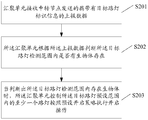
- FIG. 1 is a network architecture diagram of an intelligent street lamp management system according to an embodiment of the present invention.
- FIG. 2 is a schematic flowchart of a method for managing a street lamp based on the Internet of Things according to an embodiment of the present invention
- FIG. 3 is a schematic flowchart diagram of another method for managing a street lamp based on the Internet of Things according to an embodiment of the present invention
- FIG. 4 is a schematic flowchart diagram of still another method for managing a street lamp based on the Internet of Things according to an embodiment of the present invention
- 5A is a functional block diagram of a convergence unit according to an embodiment of the present invention.
- FIG. 5B is a schematic structural diagram of a convergence unit according to an embodiment of the present invention.
- references to "an embodiment” herein mean that a particular feature, structure, or characteristic described in connection with the embodiments can be included in at least one embodiment of the invention.
- the appearances of the phrases in various places in the specification are not necessarily referring to the same embodiments, and are not exclusive or alternative embodiments that are mutually exclusive. Those skilled in the art will understand and implicitly understand that the embodiments described herein can be combined with other embodiments.
- FIG. 1 is a network architecture diagram of an intelligent street lamp management system according to an embodiment of the present invention.
- the smart street lamp management system includes an Internet of Things terminal, a transit node, a convergence unit, a server, and a mobile terminal, and an Internet of Things terminal.
- the utility model comprises various sensors for detecting data in a street lamp, various sensors installed in a passerby mobile terminal, various sensors installed at the vehicle terminal, and a communication unit for transmitting data parameters to the transit node by the various types of sensors.
- the IoT terminal is in communication with the transit node, the transit node is communicatively coupled to the aggregation unit, the aggregation unit is in communication with the server, and the server is in communication with the mobile terminal through a mobile communication network. To handle various application needs.
- the mobile terminal involved in the embodiments of the present invention may include various handheld devices, wireless devices, wearable devices, computing devices, or other processing devices connected to the wireless modem, and various forms of user devices.
- UE User Equipment
- MS mobile station
- terminal device terminal device, and the like.
- the devices mentioned above are collectively referred to as mobile terminals.
- the embodiments of the present invention are described in detail below.
- FIG. 2 is a schematic flowchart of a method for managing a street lamp based on the Internet of Things according to an embodiment of the present invention, which is applied to an intelligent street lamp management system, where the intelligent street lamp management system includes an Internet of Things terminal, a transit node, and a convergence unit. a server, and a mobile terminal, wherein the Internet of Things terminal is in communication with the transit node, the transit node is communicatively coupled to the aggregation unit, the aggregation unit is communicatively coupled to the server, and the server and the mobile terminal Communication connection, as shown in Figure 2, the method includes:
- the aggregation unit receives the report data that is sent by the transit node and carries the target street light identifier information.
- the report data includes passerby data, brightness data of the target street lamp, and data such as a position and a moving speed of the mobile terminal that accesses the smart street lamp management system.
- an IOT terminal such as an infrared sensor or an image sensor for detecting biological information on the road is provided in the street lamp.
- the transit node implements a forwarding function of the reported data from the Internet of Things terminal to the aggregation unit.
- the communication connection between the IoT terminal, the transit node, and the aggregation unit may be wireless short-range communication, and the wireless short-range communication may be Bluetooth, wireless fidelity WiFi, Huawei Hilink protocol, and wireless network. Grid Mesh, ZigBee protocol, visible light wireless communication LiFi, etc.
- the aggregation unit determines, according to the reported data, whether a living body exists in the target streetlight detection range
- the aggregation unit controls at least one street light in the preset range of the target street light to perform an opening operation according to a preset opening policy
- the aggregation unit controls at least one street light in the preset range of the target street light to perform an opening operation according to a preset opening policy.
- the specific implementation can be:
- the convergence unit detects a traffic flow density in the target streetlight detection range
- the detecting unit when detecting that the traffic flow density is greater than a preset threshold, controls all the street lights in the preset range of the target street light to perform an opening operation.
- the convergence unit performs an opening operation by controlling a switch controller of each street lamp.
- the convergence unit detects the traffic flow density in the target streetlight detection range, the method further includes:
- the aggregation unit detects that the traffic flow density is less than a preset threshold, determining, according to the reported data, a moving direction and a moving speed of the living body;
- the concentrating unit predicts an opening time and an opening time of the at least one street lamp according to a moving direction and a moving speed of the living body and an irradiation range of the at least one street lamp;
- the aggregation unit turns on the at least one street light according to an opening time of the at least one street light
- the convergence unit turns off the at least one street light according to an opening duration of the at least one street light.
- the reported data is data reported by a mobile terminal that accesses the transit node
- the target street light identification information is an identifier of a street light that is closest to the mobile terminal in a moving direction of the mobile terminal.
- the aggregation unit determines that there is a living body in the target streetlight detection range, according to the reported data Determining an opening time and an opening time of the at least one street light;
- the aggregation unit turns on the at least one street light according to an opening time of the at least one street light
- the aggregation unit receives brightness adjustment information of the at least one street light sent by the mobile terminal;
- the concentrating unit adjusts brightness of the at least one street lamp according to the brightness adjustment information
- the convergence unit turns off the at least one street light according to an opening duration of the at least one street light.
- the mobile terminal moves into the range of the transit node, a request for accessing the transit node is issued, and when the transit node receives the request, and the load is not saturated, the mobile terminal The terminal establishes a communication connection, and receives data reported by the mobile terminal, and forwards the data to the convergence unit.
- the mobile terminal can be installed with an application dedicated to the service intelligent street lamp management system.
- the application can display the current location and the location of each street lamp through a map, and the user can select through the application.
- the street lamp needs to adjust the brightness, set the adjustment information, and then the mobile phone obtains the selected street lamp identification information and reports the brightness adjustment information.
- the convergence unit first receives the report data that is sent by the transit node and carries the target street light identification information, and then determines whether there is a living body in the target street light detection range according to the reported data, and finally When it is determined that there is a living body in the target street light detection range, at least one street light in the preset range of the target street light is controlled to perform an opening operation according to a preset opening policy, which is beneficial to improving the intelligence of the street lamp management and reducing the power resource. waste.
- the reported data is data reported by a plurality of sensors built in the target street light, and the method further includes:
- the aggregation unit does not receive the reported data carrying the target street light identification information sent by the transit node, and/or determines the maximum brightness value of the target street light according to the reported data.
- the threshold is less than the preset threshold, the notification message is sent to the server, and the notification message is used by the server to send the information of the target street light to the maintenance personnel mobile terminal.
- the aggregation unit when the aggregation unit does not receive the reported data of the target street light or the reported data shows that the maximum brightness value of the target street light is small, the information of the target street light is sent from the server to the mobile terminal in time, which is beneficial to improving intelligence.
- the management of the street light management system when the aggregation unit does not receive the reported data of the target street light or the reported data shows that the maximum brightness value of the target street light is small, the information of the target street light is sent from the server to the mobile terminal in time, which is beneficial to improving intelligence.
- the aggregation unit receives the brightness adjustment information of the at least one street light sent by the plurality of mobile terminals, and the convergence unit adjusts the brightness of the at least one street light according to the brightness adjustment information, including:
- the aggregation unit determines a priority of the multiple mobile terminals according to a time sequence of accessing the transit node
- the aggregation unit adjusts the brightness of the at least one street lamp according to the brightness adjustment information of the mobile terminal with the highest priority, and locks the adjusted brightness value;
- the aggregation unit releases the adjusted brightness value lock when detecting that the mobile terminal with the highest priority moves out of the transit node.
- the convergence unit determines the brightness value adjusted by the street lamp according to the priority, and can change the street lamp again after the mobile terminal moves out of the transit node.
- the brightness avoids the confusion of the system of the intelligent street lamp due to the constant adjustment of the brightness value, which is beneficial to improving the service life of the street lamp.
- FIG. 3 is a schematic flowchart of another method for managing a street lamp based on the Internet of Things according to an embodiment of the present disclosure, which is applied to an intelligent street lamp management system, and the smart
- the streetlight management system includes an Internet of Things terminal, a transit node, a convergence unit, a server, and a mobile terminal, and the Internet of Things terminal is in communication connection with the transit node, and the transit node is communicably connected to the aggregation unit, and the convergence unit and the The server is in communication connection, and the server is in communication connection with the mobile terminal.
- the method includes:
- the aggregation unit receives the report data that is sent by the transit node and carries the target street light identifier information.
- the aggregation unit determines, according to the reported data, whether a living body exists in the target streetlight detection range
- the convergence unit detects a traffic flow density in the target streetlight detection range
- the aggregation unit controls all the street lamps in the preset range of the target street light to perform an opening operation.
- the convergence unit predicts an opening time and an opening time of the at least one street lamp according to a moving direction and a moving speed of the living body and an irradiation range of the at least one street lamp;
- the aggregation unit turns on the at least one street light according to an opening time of the at least one street light
- the convergence unit turns off the at least one street light according to an opening duration of the at least one street light.
- steps S301 and S302 can refer to the corresponding steps in the embodiment described in FIG. 2 .
- the convergence unit first receives the report data that is sent by the transit node and carries the target street light identification information, and then determines whether there is a living body in the target street light detection range according to the reported data, and finally When it is determined that there is a living body in the target street light detection range, at least one street light in the preset range of the target street light is controlled to perform an opening operation according to a preset opening policy, which is beneficial to improving the intelligence of the street lamp management and reducing the power resource. waste.
- the convergence unit determines the street light opening strategy according to the traffic flow density, and turns on the street lights in all preset ranges when the traffic flow density is large, which is beneficial to improving the street light opening efficiency.
- the traffic flow density is small, according to the moving direction and the moving speed Turning on and turning off in turn further enhances the intelligence of the intelligent street lamp management system and reduces energy waste.
- FIG. 4 is a schematic flowchart of another method for managing a street lamp based on the Internet of Things according to an embodiment of the present invention, which is applied to a smart street lamp management system.
- the smart street light management system includes an Internet of Things terminal, a transit node, a convergence unit, a server, and a mobile terminal, wherein the Internet of Things terminal is in communication connection with the transit node, and the transit node is communicably connected to the aggregation unit, The aggregation unit is in communication with the server, and the server is in communication with the mobile terminal.
- the method for managing a street lamp based on the Internet of Things includes:
- the aggregation unit receives the report data that is sent by the transit node and carries the target street light identifier information.
- the reported data is data reported by the mobile terminal that accesses the transit node
- the target street light identification information is identification information of a street light that is closest to the mobile terminal in a moving direction of the mobile terminal.
- the aggregation unit determines, according to the reported data, whether a living body exists in the target streetlight detection range
- the aggregation unit determines, according to the reported data, an opening time and an opening time of the at least one street lamp when it is determined that the living body exists in the target streetlight detection range;
- the convergence unit turns on the at least one street light according to an opening time of the at least one street light.
- the convergence unit receives brightness adjustment information of the at least one street light sent by the mobile terminal.
- the convergence unit adjusts brightness of the at least one street lamp according to the brightness adjustment information.
- the convergence unit turns off the at least one street light according to an opening duration of the at least one street light.
- steps S401 and S402 can refer to the corresponding steps in the embodiment described in FIG. 2.
- the convergence unit first receives the report data that is sent by the transit node and carries the target street light identification information, and then determines whether there is a living body in the target street light detection range according to the reported data, and finally When it is determined that there is a living body in the target street light detection range, at least one street light in the preset range of the target street light is controlled to perform an opening operation according to a preset opening policy, which is beneficial to improving the intelligence of the street lamp management and reducing the power resource. waste.
- the aggregation unit determines the policy of turning on the street light and receiving the adjustment information of the mobile terminal according to the information of the temporarily accessed mobile terminal, and adjusting the brightness of the street lamp according to individual needs, thereby improving the rationality of the intelligent street lamp management system.
- the aggregation unit includes corresponding hardware structures and/or software modules for performing various functions.
- the present invention can be implemented in a combination of hardware or hardware and computer software in combination with the elements and algorithm steps of the various examples described in the embodiments disclosed herein. Whether a function is implemented in hardware or computer software to drive hardware depends on the specific application and design constraints of the solution. A person skilled in the art can use different methods for implementing the described functions for each particular application, but such implementation should not be considered to be beyond the scope of the present invention.
- the embodiment of the present invention may divide the functional unit into the aggregation unit according to the foregoing method example.
- each functional unit may be divided according to each function, or two or more functions may be integrated into one processing unit.
- the above integrated unit can be implemented in the form of hardware or in the form of a software functional unit. It should be noted that the division of the unit in the embodiment of the present invention is schematic, and is only a logical function division, and the actual implementation may have another division manner.
- FIG. 5A shows a possible structural diagram of the convergence unit involved in the above embodiment.
- the aggregation unit 500 includes a processing unit 502 and a communication unit 503.
- the processing unit 502 is configured to perform control management on the action of the aggregation unit.
- the processing unit 502 is configured to support the aggregation unit to perform steps S201 to S203 in FIG. 2, steps S301 to S307 in FIG. 3, and step S401 in FIG. S407 and/or other processes for the techniques described herein.
- the communication unit 503 is used to support communication between the aggregation unit and other devices, such as communication with the Internet of Things terminals.
- the aggregation unit may further include a storage unit 501 for storing program codes and data of the server.
- the processing unit 502 can be a processor or a controller, and can be, for example, a central processing unit (CPU), a general-purpose processor, a digital signal processor (DSP), and an application-specific integrated circuit (Application-Specific). Integrated Circuit (ASIC), Field Programmable Gate Array (FPGA) or other programmable logic device, transistor logic device, hardware component, or any combination thereof. It is possible to implement or carry out the various illustrative logical blocks, modules and circuits described in connection with the present disclosure.
- the processor may also be a combination of computing functions, for example, including one or more microprocessor combinations, a combination of a DSP and a microprocessor, and the like.
- the communication unit 503 can be a communication interface, a transceiver, a transceiver circuit, etc., wherein the communication interface is a collective name and can include one or more interfaces.
- the storage unit 501 can be a memory.
- the processing unit 502 is configured to receive, by using the communication unit, report data that carries the target street light identification information that is sent by the transit node, and is configured to determine, according to the reported data, whether there is a living body in the target street light detection range. Executing; and when determining that there is a living body in the target streetlight detection range, controlling at least one street light in the preset range of the target street light to perform an opening operation according to a preset opening policy.
- the reported data is data reported by a plurality of sensors built in the target street light
- the processing unit is further configured to: receive the carrying that is sent by the transit node within a preset time.
- the notification message is sent to the server by the communication unit, the notification message And sending, by the server, information of the target street light to a maintenance personnel mobile terminal.
- the processing unit is configured to: when it is determined that there is a living body in the target streetlight detection range, detect a traffic flow density in the target streetlight detection range; and when detecting that the traffic flow density is greater than a preset threshold And controlling the street lights in the preset range of the target street light to perform the opening operation.
- the processing unit detects the traffic flow density in the target streetlight detection range, and is further used to: when detecting the When the traffic flow density is less than a preset threshold, determining a moving direction and a moving speed of the living body according to the reported data; and for using a moving direction and a moving speed of the living body and an irradiation range of the at least one street lamp Predicting an opening time and an opening time of the at least one street light; and opening the at least one street light according to an opening time of the at least one street light; and closing the at least one street light according to an opening time of the at least one street light .
- the reported data is data reported by a mobile terminal that accesses the transit node
- the target street light identification information is an identifier of a street light that is closest to the mobile terminal in a moving direction of the mobile terminal.
- the information processing unit is configured to: when the at least one street light in the preset range of the target street light is controlled to perform an opening operation according to a preset opening policy, the processing unit is specifically configured to: Determining, according to the reported data, an opening time and an opening time of the at least one street lamp, and determining that the at least one street light is turned on according to the opening time of the at least one street lamp; a street light; and brightness adjustment information for receiving the at least one street light transmitted by the mobile terminal by the communication unit; and for adjusting brightness of the at least one street light according to the brightness adjustment information; The opening duration of the at least one street light turns off the at least one street light.
- the processing unit 502 is a processor
- the communication unit 503 is a transceiver
- the storage unit 501 is a memory
- the aggregation unit according to the embodiment of the present invention may be the aggregation unit shown in FIG. 5B.
- the aggregation unit 510 includes a processor 512, a transceiver 513, and a memory 511.
- the aggregation unit 510 may further include a bus 515.
- the transceiver 513, the processor 512, and the memory 511 may be connected to each other through a bus 515.
- the bus 515 may be a Peripheral Component Interconnect (PCI) bus or an Extended Industry Standard Architecture (abbreviated). EISA) bus and so on.
- PCI Peripheral Component Interconnect
- EISA Extended Industry Standard Architecture
- the bus 515 can be divided into an address bus, a data bus, a control bus, and the like. For ease of representation, only one thick line is shown in Figure 5B, but it does not mean that there is only one bus or one type of bus.
- the concentrating unit shown in FIG. 5A or FIG. 5B can also be understood as a device for the concentrating unit, which is not limited in the embodiment of the present invention.
- An embodiment of the present invention further provides a convergence unit, including one or more processors, a memory, and one or more programs, wherein the one or more programs are stored in the memory, and configured to be configured by the Executed by one or more processors, the program comprising instructions for performing any one of the IoT-based street lamp management methods recited in the above method embodiments.
- a convergence unit including one or more processors, a memory, and one or more programs, wherein the one or more programs are stored in the memory, and configured to be configured by the Executed by one or more processors, the program comprising instructions for performing any one of the IoT-based street lamp management methods recited in the above method embodiments.
- the embodiment of the present invention further provides a computer storage medium, wherein the computer storage medium stores a computer program for electronic data exchange, the computer program causing the computer to execute any one of the Internet of Things-based street lamps as described in the foregoing method embodiments. Part or all of the steps of the management method.
- Embodiments of the present invention also provide a computer program product comprising a non-transitory computer readable storage medium storing a computer program, the computer program being operative to cause a computer to perform the method as described above Any part or all of the steps of the Internet of Things-based street lamp management method described in the example.
- the computer program product can be a software installation package.
- the disclosed apparatus may be implemented in other manners.
- the device embodiments described above are merely illustrative.
- the division of the unit is only a logical function division.
- there may be another division manner for example, multiple units or components may be combined or may be Integrate into another system, or some features can be ignored or not executed.
- the mutual coupling or direct coupling or communication connection shown or discussed may be an indirect coupling or communication connection through some interface, device or unit, and may be electrical or otherwise.
- the units described as separate components may or may not be physically separated, and the components displayed as units may or may not be physical units, that is, may be located in one place, or may be distributed to multiple network units. Some or all of the units may be selected according to actual needs to achieve the purpose of the solution of the embodiment.
- each functional unit in each embodiment of the present invention may be integrated into one processing unit, or each unit may exist physically separately, or two or more units may be integrated into one unit.
- the above integrated unit can be implemented in the form of hardware or in the form of a software functional unit.
- the integrated unit if implemented in the form of a software functional unit and sold or used as a standalone product, may be stored in a computer readable memory. Based on such understanding, the technical solution of the present invention may contribute to the prior art or all or part of the technical solution may be embodied in the form of a software product stored in a memory.
- a number of instructions are included to cause a computer device (which may be a personal computer, server or network device, etc.) to perform all or part of the steps of the methods described in various embodiments of the present invention.
- the foregoing memory includes: a U disk, a read-only memory (ROM), a random access memory (RAM), a mobile hard disk, a magnetic disk, or an optical disk, and the like, which can store program codes. medium.
- ROM Read-Only Memory
- RAM Random Access Memory
Landscapes
- Circuit Arrangement For Electric Light Sources In General (AREA)
Abstract
本发明公开了一种设备管理方法及存储介质,包括:汇聚单元接收中转节点发送的携带有目标路灯标识信息的上报数据;所述汇聚单元根据所述上报数据判断所述目标路灯检测范围内是否有生物体存在;当判断出所述目标路灯检测范围内存在生物体时,所述汇聚单元控制所述目标路灯预设范围内的至少一个路灯按照预设开启策略执行开启操作。本发明实施例有利于提升路灯管理的智能性,减少电力资源浪费。
Description
本发明涉及物联网领域,尤其涉及一种设备管理方法及存储介质。
物联网通过传感器、射频识别技术、全球定位系统等技术,实时采集任何需要监控、连接、互动的物体或过程,采集其声、光、热、电、力学、化学、生物、位置等各种需要的信息,通过各类可能的网络接入,实现物与物、物与人的泛在连接,实现对物品和过程的智能化感知、识别和管理。
目前,路灯的开启主要是通过统一人力管控,在固定时间开启关闭,当在夜间过路的行人和车辆较少时,造成能源浪费。
发明内容
本发明提供一种设备管理方法及存储介质,有利于提升路灯管理的智能性,减少电力资源浪费。
第一方面,本发明实施例提供一种基于物联网的路灯管理方法,应用于智能路灯管理系统,所述智能路灯管理系统包括物联网终端、中转节点、汇聚单元、服务器、和移动终端,所述物联网终端与所述中转节点通信连接,所述中转节点与所述汇聚单元通信连接,所述汇聚单元与所述服务器通信连接,所述服务器与所述移动终端通信连接,所述方法包括:
汇聚单元接收中转节点发送的携带有目标路灯标识信息的上报数据;
所述汇聚单元根据所述上报数据判断所述目标路灯检测范围内是否有生物体存在;
当判断出所述目标路灯检测范围内存在生物体时,所述汇聚单元控制所述目标路灯预设范围内的至少一个路灯按照预设开启策略执行开启操作。
由上可见,本发明实施例中,汇聚单元首先接收中转节点发送的携带有目标路灯标识信息的上报数据,然后,根据所述上报数据判断所述目标路灯检测范围内是否有生物体存
在,最后,当判断出所述目标路灯检测范围内存在生物体时,控制所述目标路灯预设范围内的至少一个路灯按照预设开启策略执行开启操作,有利于提升路灯管理的智能性,减少电力资源浪费。
在一个可能的设计中,所述上报数据为所述目标路灯内置的多种传感器上报的数据,所述方法还包括:
所述汇聚单元在预设时间内未接收到所述中转节点发送的所述携带有目标路灯标识信息的上报数据时,和/或,根据所述上报数据判断出所述目标路灯的最大亮度值小于预设阈值时,发送通知消息给服务器,所述通知消息用于所述服务器将所述目标路灯的信息发送给维修人员移动终端。
可见,本可能的设计中,汇聚单元在未收到目标路灯的上报数据或者上报数据显示出目标路灯的最大亮度值较小时,及时将目标路灯的信息由服务器发送给移动终端,有利于提升智能路灯管理系统的管理性。
在一个可能的设计中,所述当判断出所述目标路灯检测范围内存在生物体时,所述汇聚单元控制所述目标路灯预设范围内的至少一个路灯按照预设开启策略执行开启操作,包括:
当判断出所述目标路灯检测范围内存在生物体时,所述汇聚单元检测所述目标路灯检测范围内的交通流密度;
所述汇聚单元当检测出所述交通流密度大于预设阈值时,控制所述目标路灯预设范围内的路灯全部执行开启操作。
在这个可能的设计中,所述当判断出所述目标路灯检测范围内存在生物体时,所述汇聚单元检测所述目标路灯检测范围内的交通流密度之后,所述方法还包括:
所述汇聚单元当检测出所述交通流密度小于预设阈值时,根据所述上报数据确定所述生物体的移动方向和移动速度;
所述汇聚单元根据所述生物体的移动方向和移动速度以及所述至少一个路灯的照射范围预测所述至少一个路灯的开启时间以及开启时长;
所述汇聚单元根据所述至少一个路灯的开启时间开启所述至少一个路灯;
所述汇聚单元根据所述至少一个路灯的开启时长关闭所述至少一个路灯。
可见,本可能的设计中,汇聚单元根据交通流密度确定路灯开启的策略,在交通流密
度大的时候开启全部预设范围内的路灯,有利于提升路灯开启效率,在交通流密度较小时,根据移动方向和移动速度依次开启并依次关闭,进一步提升了智能路灯管理系统的智能性,降低了能源浪费。
在一个可能的设计中,所述上报数据为接入所述中转节点的移动终端上报的数据,所述目标路灯标识信息为在所述移动终端移动方向上距离所述移动终端最近的路灯的标识信息,所述当判断出所述目标路灯检测范围内存在生物体时,所述汇聚单元控制所述目标路灯预设范围内的至少一个路灯按照预设开启策略执行开启操作,包括:
所述汇聚单元当判断出所述目标路灯检测范围内存在生物体时,根据所述上报数据确定所述至少一个路灯的开启时间以及开启时长;
所述汇聚单元根据所述至少一个路灯的开启时间开启所述至少一个路灯;
所述汇聚单元接收所述移动终端发送的所述至少一个路灯的亮度调节信息;
所述汇聚单元根据所述亮度调节信息调节所述至少一个路灯的亮度;
所述汇聚单元根据所述至少一个路灯的开启时长关闭所述至少一个路灯。
可见,本可能的设计中,汇聚单元根据临时接入的移动终端的信息确定开启路灯的策略以及接收移动终端的调节信息,根据个人需求调节路灯的亮度,有利于提升智能路灯管理系统的合理性。
在这个可能的设计中,所述汇聚单元接收多个移动终端发送的所述至少一个路灯的亮度调节信息,所述汇聚单元根据所述亮度调节信息调节所述至少一个路灯的亮度,包括:
所述汇聚单元根据接入所述中转节点的时间顺序确定所述多个移动终端的优先级;
所述汇聚单元根据所述优先级最高的移动终端的亮度调节信息调节所述至少一个路灯的亮度,并锁定调节后的亮度值;
所述汇聚单元当检测到所述优先级最高的移动终端移出所述中转节点时,解除所述调节后的亮度值锁定。
可见,本可能的设计中,汇聚单元在接收到多个移动终端调节路灯亮度的信息后,根据优先级确定路灯调节的亮度值,并在移动终端移出所述中转节点后,才可以再次更改路灯的亮度,避免了因不断调整亮度值引起智能路灯的系统混乱,有利于提升路灯的使用寿命。
第二方面,本发明实施例提供一种汇聚单元,该汇聚单元有实现上述第一方面的方法设计中汇聚单元的功能。所述功能可以通过硬件实现,也可以通过硬件执行相应的软件实现。所述硬件或软件包括一个或多个与上述功能相对应的模块。
具体来说,该汇聚单元应用于智能路灯管理系统,所述智能路灯管理系统包括物联网终端、中转节点、汇聚单元、服务器、和移动终端,所述物联网终端与所述中转节点通信连接,所述中转节点与所述汇聚单元通信连接,所述汇聚单元与所述服务器通信连接,所述服务器与所述移动终端通信连接,所述汇聚单元包括处理单元和通信单元,
所述处理单元用于通过所述通信单元接收中转节点发送的携带有目标路灯标识信息的上报数据;以及用于根据所述上报数据判断所述目标路灯检测范围内是否有生物体存在;以及用于当判断出所述目标路灯检测范围内存在生物体时,控制所述目标路灯预设范围内的至少一个路灯按照预设开启策略执行开启操作。
在一个可能的设计中,所述上报数据为所述目标路灯内置的多种传感器上报的数据,所述处理单元还用于:在预设时间内未接收到所述中转节点发送的所述携带有目标路灯标识信息的上报数据时,和/或,根据所述上报数据判断出所述目标路灯的最大亮度值小于预设阈值时,通过所述通信单元发送通知消息给服务器,所述通知消息用于所述服务器将所述目标路灯的信息发送给维修人员移动终端。
在一个可能的设计中,在所述当判断出所述目标路灯检测范围内存在生物体时,控制所述目标路灯预设范围内的至少一个路灯按照预设开启策略执行开启操作方面,所述处理单元具体用于:当判断出所述目标路灯检测范围内存在生物体时,检测所述目标路灯检测范围内的交通流密度;以及用于当检测出所述交通流密度大于预设阈值时,控制所述目标路灯预设范围内的路灯全部执行开启操作。
在这个可能的设计中,所述当判断出所述目标路灯检测范围内存在生物体时,所述处理单元检测所述目标路灯检测范围内的交通流密度之后,还用于:当检测出所述交通流密度小于预设阈值时,根据所述上报数据确定所述生物体的移动方向和移动速度;以及用于根据所述生物体的移动方向和移动速度以及所述至少一个路灯的照射范围预测所述至少一个路灯的开启时间以及开启时长;以及用于根据所述至少一个路灯的开启时间开启所述至少一个路灯;以及用于根据所述至少一个路灯的开启时长关闭所述至少一个路灯。
在一个可能的设计中,所述上报数据为接入所述中转节点的移动终端上报的数据,所
述目标路灯标识信息为在所述移动终端移动方向上距离所述移动终端最近的路灯的标识信息,在所述当判断出所述目标路灯检测范围内存在生物体时,控制所述目标路灯预设范围内的至少一个路灯按照预设开启策略执行开启操作方面,所述处理单元具体用于:当判断出所述目标路灯检测范围内存在生物体时,根据所述上报数据确定所述至少一个路灯的开启时间以及开启时长;以及用于根据所述至少一个路灯的开启时间开启所述至少一个路灯;以及用于通过所述通信单元接收所述移动终端发送的所述至少一个路灯的亮度调节信息;以及用于根据所述亮度调节信息调节所述至少一个路灯的亮度;以及用于根据所述至少一个路灯的开启时长关闭所述至少一个路灯。
第三方面,本发明实施例提供一种汇聚单元,该汇聚单元包括处理器,所述处理器被配置为支持汇聚单元执行上述第一方面的方法中相应的功能。进一步的,汇聚单元还可以包括收发器,所述收发器用于支持汇聚单元与其他设备之间的通信。进一步的,汇聚单元还可以包括存储器,所述存储器用于与处理器耦合,其保存汇聚单元必要的程序指令和数据。
本发明实施例的第四方面,提供一种汇聚单元,该汇聚单元包括一个或多个处理器、存储器、一个或多个程序,其中所述一个或多个程序被存储在所述存储器中,并且被配置成由所述一个或多个处理器执行,所述程序包括用于执行上述第一方面的方法中任意一个步骤的指令。
第五方面,本发明实施例提供了一种计算机可读存储介质,其中,所述计算机可读存储介质存储用于电子数据交换的计算机程序,其中,所述计算机程序使得计算机执行如本发明实施例第一方面任一方法中所描述的部分或全部步骤。
第六方面,本发明实施例提供了一种计算机程序产品,其中,所述计算机程序产品包括存储了计算机程序的非瞬时性计算机可读存储介质,所述计算机程序可操作来使计算机执行如本发明实施例第一方面任一方法中所描述的部分或全部步骤。该计算机程序产品可以为一个软件安装包。
可以看出,本发明实施例中,汇聚单元首先接收中转节点发送的携带有目标路灯标识信息的上报数据,然后,根据所述上报数据判断所述目标路灯检测范围内是否有生物体存在,最后,当判断出所述目标路灯检测范围内存在生物体时,控制所述目标路灯预设范围内的至少一个路灯按照预设开启策略执行开启操作,有利于提升路灯管理的智能性,减少电力资源浪费。
为了更清楚地说明本发明实施例的技术方案,下面将对实施例描述中所需要使用的附图作简单地介绍,显而易见地,下面描述中的附图是本发明的一些实施例,对于本领域普通技术人员来讲,在不付出创造性劳动的前提下,还可以根据这些附图获得其他的附图。
图1是本发明实施例提供的一种智能路灯管理系统的网络架构图;
图2是本发明实施例提供的一种基于物联网的路灯管理方法的流程示意图;
图3是本发明实施例提供的另一种基于物联网的路灯管理方法的流程示意图;
图4是本发明实施例提供的又一种基于物联网的路灯管理方法的流程示意图;
图5A是本发明实施例提供的一种汇聚单元的功能单元框图;
图5B是本发明实施例提供的一种汇聚单元的结构示意图。
为了使本技术领域的人员更好地理解本发明方案,下面将结合本发明实施例中的附图,对本发明实施例中的技术方案进行清楚、完整地描述,显然,所描述的实施例仅仅是本发明一部分实施例,而不是全部的实施例。基于本发明中的实施例,本领域普通技术人员在没有作出创造性劳动前提下所获得的所有其他实施例,都属于本发明保护的范围。
本发明的说明书和权利要求书及上述附图中的术语“第一”、“第二”等是用于区别不同对象,而不是用于描述特定顺序。此外,术语“包括”和“具有”以及它们任何变形,意图在于覆盖不排他的包含。例如包含了一系列步骤或单元的过程、方法、系统、产品或设备没有限定于已列出的步骤或单元,而是可选地还包括没有列出的步骤或单元,或可选地还包括对于这些过程、方法、产品或设备固有的其他步骤或单元。
在本文中提及“实施例”意味着,结合实施例描述的特定特征、结构或特性可以包含在本发明的至少一个实施例中。在说明书中的各个位置出现该短语并不一定均是指相同的实施例,也不是与其它实施例互斥的独立的或备选的实施例。本领域技术人员显式地和隐式地理解的是,本文所描述的实施例可以与其它实施例相结合。
下面结合具体实施例进行详细说明。
请参阅图1,图1是本发明实施例提供的一种智能路灯管理系统的网络架构图,该智能路灯管理系统包括物联网终端、中转节点、汇聚单元、服务器、和移动终端,物联网终端包括设置在路灯内用于数据检测的各类传感器、设置在路人移动终端的各类传感器,设置在车辆终端的各类传感器,以及用于所述各类传感器向中转节点发送数据参数的通信单元,所述物联网终端与所述中转节点通信连接,所述中转节点与所述汇聚单元通信连接,所述汇聚单元与所述服务器通信连接、所述服务器通过移动通信网络与移动终端实现通信连接,从而处理各种应用需求。
此外,本发明实施例所涉及到的移动终端可以包括各种具有无线通信功能的手持设备、车载设备、可穿戴设备、计算设备或连接到无线调制解调器的其他处理设备,以及各种形式的用户设备(User Equipment,UE),移动台(Mobile Station,MS),终端设备(terminal device)等等。为方便描述,上面提到的设备统称为移动终端。下面对本发明实施例进行详细介绍。
参阅图2,图2为本发明实施例提供的一种基于物联网的路灯管理方法的流程示意图,应用于智能路灯管理系统,所述智能路灯管理系统包括物联网终端、中转节点、汇聚单元、服务器、和移动终端,所述物联网终端与所述中转节点通信连接,所述中转节点与所述汇聚单元通信连接,所述汇聚单元与所述服务器通信连接,所述服务器与所述移动终端通信连接,如图2所示,该方法包括:
S201,汇聚单元接收中转节点发送的携带有目标路灯标识信息的上报数据;
其中,所述上报数据包括路人数据、目标路灯的亮度数据,以及接入所述智能路灯管理系统的移动终端的位置和移动速度等数据。
其中,路灯内设置用于检测道路上生物体信息的红外传感器、图像传感器等物联网终端。
其中,所述中转节点实现所述上报数据从物联网终端到汇聚单元的转发功能。
其中,所述物联网终端,所述中转节点,所述汇聚单元之间的通信连接可以为无线短距离通信,所述无线短距离通信可以是蓝牙、无线保真WiFi,华为Hilink协议、无线网格网络Mesh、紫蜂协议ZigBee、可见光无线通信LiFi等。
S202,所述汇聚单元根据所述上报数据判断所述目标路灯检测范围内是否有生物体存在;
S203,当判断出所述目标路灯检测范围内存在生物体时,所述汇聚单元控制所述目标路灯预设范围内的至少一个路灯按照预设开启策略执行开启操作;
在一个可能的示例中,所述当判断出所述目标路灯检测范围内存在生物体时,所述汇聚单元控制所述目标路灯预设范围内的至少一个路灯按照预设开启策略执行开启操作,具体实现方式可以是:
当判断出所述目标路灯检测范围内存在生物体时,所述汇聚单元检测所述目标路灯检测范围内的交通流密度;
所述汇聚单元当检测出所述交通流密度大于预设阈值时,控制所述目标路灯预设范围内的路灯全部执行开启操作。
其中,所述汇聚单元通过控制每个路灯的开关控制器执行开启操作。
在这个可能的示例中,所述当判断出所述目标路灯检测范围内存在生物体时,所述汇聚单元检测所述目标路灯检测范围内的交通流密度之后,所述方法还包括:
所述汇聚单元当检测出所述交通流密度小于预设阈值时,根据所述上报数据确定所述生物体的移动方向和移动速度;
所述汇聚单元根据所述生物体的移动方向和移动速度以及所述至少一个路灯的照射范围预测所述至少一个路灯的开启时间以及开启时长;
所述汇聚单元根据所述至少一个路灯的开启时间开启所述至少一个路灯;
所述汇聚单元根据所述至少一个路灯的开启时长关闭所述至少一个路灯。
在一个可能的示例中,所述上报数据为接入所述中转节点的移动终端上报的数据,所述目标路灯标识信息为在所述移动终端移动方向上距离所述移动终端最近的路灯的标识信息,所述当判断出所述目标路灯检测范围内存在生物体时,所述汇聚单元控制所述目标路灯预设范围内的至少一个路灯按照预设开启策略执行开启操作,具体实现方式可以是:
所述汇聚单元当判断出所述目标路灯检测范围内存在生物体时,根据所述上报数据确
定所述至少一个路灯的开启时间以及开启时长;
所述汇聚单元根据所述至少一个路灯的开启时间开启所述至少一个路灯;
所述汇聚单元接收所述移动终端发送的所述至少一个路灯的亮度调节信息;
所述汇聚单元根据所述亮度调节信息调节所述至少一个路灯的亮度;
所述汇聚单元根据所述至少一个路灯的开启时长关闭所述至少一个路灯。
具体的,当移动终端移动至所述中转节点范围内时,发出接入所述中转节点的请求,所述中转节点接收到所述请求时,并在负载没有饱和的情况下,与所述移动终端建立通信连接,并接收所述移动终端上报的数据,以及转发所述数据给汇聚单元。
举例而言,移动终端可以安装有专用于服务智能路灯管理系统的应用,当用户手机接入中转节点时,应用可以通过地图的形式显示当前的位置和各个路灯的位置,用户可以通过该应用选取需要调节亮度的路灯,设置调节信息,然后手机获取所选路灯标识信息并上报亮度调节信息。
可以看出,本发明实施例中,汇聚单元首先接收中转节点发送的携带有目标路灯标识信息的上报数据,然后,根据所述上报数据判断所述目标路灯检测范围内是否有生物体存在,最后,当判断出所述目标路灯检测范围内存在生物体时,控制所述目标路灯预设范围内的至少一个路灯按照预设开启策略执行开启操作,有利于提升路灯管理的智能性,减少电力资源浪费。
在一个可能的示例中,所述上报数据为所述目标路灯内置的多种传感器上报的数据,所述方法还包括:
所述汇聚单元在预设时间内未接收到所述中转节点发送的所述携带有目标路灯标识信息的上报数据时,和/或,根据所述上报数据判断出所述目标路灯的最大亮度值小于预设阈值时,发送通知消息给服务器,所述通知消息用于所述服务器将所述目标路灯的信息发送给维修人员移动终端。
可见,本可能的示例中,汇聚单元在未收到目标路灯的上报数据或者上报数据显示出目标路灯的最大亮度值较小时,及时将目标路灯的信息由服务器发送给移动终端,有利于提升智能路灯管理系统的管理性。
在一个可能的示例中,所述汇聚单元接收多个移动终端发送的所述至少一个路灯的亮度调节信息,所述汇聚单元根据所述亮度调节信息调节所述至少一个路灯的亮度,包括:
所述汇聚单元根据接入所述中转节点的时间顺序确定所述多个移动终端的优先级;
所述汇聚单元根据所述优先级最高的移动终端的亮度调节信息调节所述至少一个路灯的亮度,并锁定调节后的亮度值;
所述汇聚单元当检测到所述优先级最高的移动终端移出所述中转节点时,解除所述调节后的亮度值锁定。
可见,本可能的设计中,汇聚单元在接收到多个移动终端调节路灯亮度的信息后,根据优先级确定路灯调节的亮度值,并在移动终端移出所述中转节点后,才可以再次更改路灯的亮度,避免了因不断调整亮度值引起智能路灯的系统混乱,有利于提升路灯的使用寿命。
与上述图2所示的实施例一致的,请参阅图3,图3是本发明实施例提供的另一种基于物联网的路灯管理方法的流程示意图,应用于智能路灯管理系统,所述智能路灯管理系统包括物联网终端、中转节点、汇聚单元、服务器、和移动终端,所述物联网终端与所述中转节点通信连接,所述中转节点与所述汇聚单元通信连接,所述汇聚单元与所述服务器通信连接,所述服务器与所述移动终端通信连接,如图3所示,该方法包括:
S301,汇聚单元接收中转节点发送的携带有目标路灯标识信息的上报数据;
S302,所述汇聚单元根据所述上报数据判断所述目标路灯检测范围内是否有生物体存在;
S303,当判断出所述目标路灯检测范围内存在生物体时,所述汇聚单元检测所述目标路灯检测范围内的交通流密度;
在一个可能的示例中,所述汇聚单元当检测出所述交通流密度大于预设阈值时,控制所述目标路灯预设范围内的路灯全部执行开启操作。
S304,所述汇聚单元当检测出所述交通流密度小于预设阈值时,根据所述上报数据确定所述生物体的移动方向和移动速度;
S305,所述汇聚单元根据所述生物体的移动方向和移动速度以及所述至少一个路灯的照射范围预测所述至少一个路灯的开启时间以及开启时长;
S306,所述汇聚单元根据所述至少一个路灯的开启时间开启所述至少一个路灯;
S307,所述汇聚单元根据所述至少一个路灯的开启时长关闭所述至少一个路灯。
其中,上述S301、S302可参照图2所描述的实施例中的相应步骤。
可以看出,本发明实施例中,汇聚单元首先接收中转节点发送的携带有目标路灯标识信息的上报数据,然后,根据所述上报数据判断所述目标路灯检测范围内是否有生物体存在,最后,当判断出所述目标路灯检测范围内存在生物体时,控制所述目标路灯预设范围内的至少一个路灯按照预设开启策略执行开启操作,有利于提升路灯管理的智能性,减少电力资源浪费。
此外,汇聚单元根据交通流密度确定路灯开启的策略,在交通流密度大的时候开启全部预设范围内的路灯,有利于提升路灯开启效率,在交通流密度较小时,根据移动方向和移动速度依次开启并依次关闭,进一步提升了智能路灯管理系统的智能性,降低了能源浪费。
与上述图2和图3所示的实施例一致的,请参阅图4,图4是本发明实施例提供的另一种基于物联网的路灯管理方法的流程示意图,应用于智能路灯管理系统,所述智能路灯管理系统包括物联网终端、中转节点、汇聚单元、服务器、和移动终端,所述物联网终端与所述中转节点通信连接,所述中转节点与所述汇聚单元通信连接,所述汇聚单元与所述服务器通信连接,所述服务器与所述移动终端通信连接,如图4所示,本基于物联网的路灯管理方法包括:
S401、汇聚单元接收中转节点发送的携带有目标路灯标识信息的上报数据;
其中,所述上报数据为接入所述中转节点的移动终端上报的数据,所述目标路灯标识信息为在所述移动终端移动方向上距离所述移动终端最近的路灯的标识信息。
S402、所述汇聚单元根据所述上报数据判断所述目标路灯检测范围内是否有生物体存在;
S403、所述汇聚单元当判断出所述目标路灯检测范围内存在生物体时,根据所述上报数据确定所述至少一个路灯的开启时间以及开启时长;
S404、所述汇聚单元根据所述至少一个路灯的开启时间开启所述至少一个路灯;
S405、所述汇聚单元接收所述移动终端发送的所述至少一个路灯的亮度调节信息;
S406、所述汇聚单元根据所述亮度调节信息调节所述至少一个路灯的亮度;
S407、所述汇聚单元根据所述至少一个路灯的开启时长关闭所述至少一个路灯。
其中,上述S401、S402可参照图2所描述的实施例中的相应步骤。
可以看出,本发明实施例中,汇聚单元首先接收中转节点发送的携带有目标路灯标识信息的上报数据,然后,根据所述上报数据判断所述目标路灯检测范围内是否有生物体存在,最后,当判断出所述目标路灯检测范围内存在生物体时,控制所述目标路灯预设范围内的至少一个路灯按照预设开启策略执行开启操作,有利于提升路灯管理的智能性,减少电力资源浪费。
此外,汇聚单元根据临时接入的移动终端的信息确定开启路灯的策略以及接收移动终端的调节信息,根据个人需求调节路灯的亮度,有利于提升智能路灯管理系统的合理性。
上述主要从方法侧执行过程的角度对本发明实施例的方案进行了介绍。可以理解的是,汇聚单元为了实现上述功能,其包含了执行各个功能相应的硬件结构和/或软件模块。本领域技术人员应该很容易意识到,结合本文中所公开的实施例描述的各示例的单元及算法步骤,本发明能够以硬件或硬件和计算机软件的结合形式来实现。某个功能究竟以硬件还是计算机软件驱动硬件的方式来执行,取决于技术方案的特定应用和设计约束条件。专业技术人员可以对每个特定的应用使用不同方法来实现所描述的功能,但是这种实现不应认为超出本发明的范围。
本发明实施例可以根据上述方法示例对汇聚单元进行功能单元的划分,例如,可以对应各个功能划分各个功能单元,也可以将两个或两个以上的功能集成在一个处理单元中。上述集成的单元既可以采用硬件的形式实现,也可以采用软件功能单元的形式实现。需要说明的是,本发明实施例中对单元的划分是示意性的,仅仅为一种逻辑功能划分,实际实现时可以有另外的划分方式。
在采用集成的单元的情况下,图5A示出了上述实施例中所涉及的汇聚单元的一种可能的结构示意图。汇聚单元500包括:处理单元502和通信单元503。处理单元502用于对汇聚单元的动作进行控制管理,例如,处理单元502用于支持汇聚单元执行图2中的步骤S201至S203、图3中的步骤S301至S307、图4中的步骤S401至S407和/或用于本文所描述的技术的其它过程。通信单元503用于支持汇聚单元与其他设备的通信,例如与物联网终端之间的通信。汇聚单元还可以包括存储单元501,用于存储服务器的程序代码和数据。
其中,处理单元502可以是处理器或控制器,例如可以是中央处理器(Central Processing Unit,CPU),通用处理器,数字信号处理器(Digital Signal Processor,DSP),专用集成电路(Application-Specific Integrated Circuit,ASIC),现场可编程门阵列(Field Programmable Gate Array,FPGA)或者其他可编程逻辑器件、晶体管逻辑器件、硬件部件或者其任意组合。其可以实现或执行结合本发明公开内容所描述的各种示例性的逻辑方框,模块和电路。所述处理器也可以是实现计算功能的组合,例如包含一个或多个微处理器组合,DSP和微处理器的组合等等。通信单元503可以是通信接口、收发器、收发电路等,其中,通信接口是统称,可以包括一个或多个接口。存储单元501可以是存储器。
其中,所述处理单元502,用于通过所述通信单元接收中转节点发送的携带有目标路灯标识信息的上报数据;以及用于根据所述上报数据判断所述目标路灯检测范围内是否有生物体存在;以及用于当判断出所述目标路灯检测范围内存在生物体时,控制所述目标路灯预设范围内的至少一个路灯按照预设开启策略执行开启操作。
在一个可能的示例中,所述上报数据为所述目标路灯内置的多种传感器上报的数据,所述处理单元还用于:在预设时间内未接收到所述中转节点发送的所述携带有目标路灯标识信息的上报数据时,和/或,根据所述上报数据判断出所述目标路灯的最大亮度值小于预设阈值时,通过所述通信单元发送通知消息给服务器,所述通知消息用于所述服务器将所述目标路灯的信息发送给维修人员移动终端。
在一个可能的示例中,在所述当判断出所述目标路灯检测范围内存在生物体时,控制所述目标路灯预设范围内的至少一个路灯按照预设开启策略执行开启操作方面,所述处理单元具体用于:当判断出所述目标路灯检测范围内存在生物体时,检测所述目标路灯检测范围内的交通流密度;以及用于当检测出所述交通流密度大于预设阈值时,控制所述目标路灯预设范围内的路灯全部执行开启操作。
在这个可能的示例中,所述当判断出所述目标路灯检测范围内存在生物体时,所述处理单元检测所述目标路灯检测范围内的交通流密度之后,还用于:当检测出所述交通流密度小于预设阈值时,根据所述上报数据确定所述生物体的移动方向和移动速度;以及用于根据所述生物体的移动方向和移动速度以及所述至少一个路灯的照射范围预测所述至少一个路灯的开启时间以及开启时长;以及用于根据所述至少一个路灯的开启时间开启所述至少一个路灯;以及用于根据所述至少一个路灯的开启时长关闭所述至少一个路灯。
在一个可能的示例中,所述上报数据为接入所述中转节点的移动终端上报的数据,所述目标路灯标识信息为在所述移动终端移动方向上距离所述移动终端最近的路灯的标识信息,在所述当判断出所述目标路灯检测范围内存在生物体时,控制所述目标路灯预设范围内的至少一个路灯按照预设开启策略执行开启操作方面,所述处理单元具体用于:当判断出所述目标路灯检测范围内存在生物体时,根据所述上报数据确定所述至少一个路灯的开启时间以及开启时长;以及用于根据所述至少一个路灯的开启时间开启所述至少一个路灯;以及用于通过所述通信单元接收所述移动终端发送的所述至少一个路灯的亮度调节信息;以及用于根据所述亮度调节信息调节所述至少一个路灯的亮度;以及用于根据所述至少一个路灯的开启时长关闭所述至少一个路灯。
当处理单元502为处理器,通信单元503为收发器,存储单元501为存储器时,本发明实施例所涉及的汇聚单元可以为图5B所示的汇聚单元。
参阅图5B所示,该汇聚单元510包括:处理器512、收发器513、存储器511。可选的,汇聚单元510还可以包括总线515。其中,收发器513、处理器512以及存储器511可以通过总线515相互连接;总线515可以是外设部件互连标准(Peripheral Component Interconnect,简称PCI)总线或扩展工业标准结构(Extended Industry Standard Architecture,简称EISA)总线等。所述总线515可以分为地址总线、数据总线、控制总线等。为便于表示,图5B中仅用一条粗线表示,但并不表示仅有一根总线或一种类型的总线。
上述图5A或图5B所示的汇聚单元也可以理解为一种用于汇聚单元的装置,本发明实施例不限定。
本发明实施例还提供一种汇聚单元,包括一个或多个处理器、存储器、一个或多个程序,其中所述一个或多个程序被存储在所述存储器中,并且被配置成由所述一个或多个处理器执行,所述程序包括用于执行上述方法实施例中记载的任何一种基于物联网的路灯管理方法中的任意一个步骤的指令。
本发明实施例还提供一种计算机存储介质,其中,该计算机存储介质存储用于电子数据交换的计算机程序,该计算机程序使得计算机执行如上述方法实施例中记载的任何一种基于物联网的路灯管理方法的部分或全部步骤。
本发明实施例还提供一种计算机程序产品,所述计算机程序产品包括存储了计算机程序的非瞬时性计算机可读存储介质,所述计算机程序可操作来使计算机执行如上述方法实
施例中记载的任何一种基于物联网的路灯管理方法的部分或全部步骤。该计算机程序产品可以为一个软件安装包。
需要说明的是,对于前述的各方法实施例,为了简单描述,故将其都表述为一系列的动作组合,但是本领域技术人员应该知悉,本发明并不受所描述的动作顺序的限制,因为依据本发明,某些步骤可以采用其他顺序或者同时进行。其次,本领域技术人员也应该知悉,说明书中所描述的实施例均属于优选实施例,所涉及的动作和模块并不一定是本发明所必须的。
在上述实施例中,对各个实施例的描述都各有侧重,某个实施例中没有详述的部分,可以参见其他实施例的相关描述。
在本发明所提供的几个实施例中,应该理解到,所揭露的装置,可通过其它的方式实现。例如,以上所描述的装置实施例仅仅是示意性的,例如所述单元的划分,仅仅为一种逻辑功能划分,实际实现时可以有另外的划分方式,例如多个单元或组件可以结合或者可以集成到另一个系统,或一些特征可以忽略,或不执行。另一点,所显示或讨论的相互之间的耦合或直接耦合或通信连接可以是通过一些接口,装置或单元的间接耦合或通信连接,可以是电性或其它的形式。
所述作为分离部件说明的单元可以是或者也可以不是物理上分开的,作为单元显示的部件可以是或者也可以不是物理单元,即可以位于一个地方,或者也可以分布到多个网络单元上。可以根据实际的需要选择其中的部分或者全部单元来实现本实施例方案的目的。
另外,在本发明各个实施例中的各功能单元可以集成在一个处理单元中,也可以是各个单元单独物理存在,也可以两个或两个以上单元集成在一个单元中。上述集成的单元既可以采用硬件的形式实现,也可以采用软件功能单元的形式实现。
所述集成的单元如果以软件功能单元的形式实现并作为独立的产品销售或使用时,可以存储在一个计算机可读取存储器中。基于这样的理解,本发明的技术方案本质上或者说对现有技术做出贡献的部分或者该技术方案的全部或部分可以以软件产品的形式体现出来,该计算机软件产品存储在一个存储器中,包括若干指令用以使得一台计算机设备(可为个人计算机、服务器或者网络设备等)执行本发明各个实施例所述方法的全部或部分步骤。而前述的存储器包括:U盘、只读存储器(ROM,Read-Only Memory)、随机存取存储器(RAM,Random Access Memory)、移动硬盘、磁碟或者光盘等各种可以存储程序代码的
介质。
本领域普通技术人员可以理解上述实施例的各种方法中的全部或部分步骤是可以通过程序来指令相关的硬件来完成,该程序可以存储于一计算机可读存储器中,存储器可以包括:闪存盘、只读存储器(英文:Read-Only Memory,简称:ROM)、随机存取器(英文:Random Access Memory,简称:RAM)、磁盘或光盘等。
以上对本发明实施例进行了详细介绍,本文中应用了具体个例对本发明的原理及实施方式进行了阐述,以上实施例的说明只是用于帮助理解本发明的方法及其核心思想;同时,对于本领域的一般技术人员,依据本发明的思想,在具体实施方式及应用范围上均会有改变之处,综上所述,本说明书内容不应理解为对本发明的限制。
Claims (10)
- 一种基于物联网的路灯管理方法,其特征在于,所述方法包括:汇聚单元接收中转节点发送的携带有目标路灯标识信息的上报数据;所述汇聚单元根据所述上报数据判断所述目标路灯检测范围内是否有生物体存在;当判断出所述目标路灯检测范围内存在生物体时,所述汇聚单元控制所述目标路灯预设范围内的至少一个路灯按照预设开启策略执行开启操作。
- 根据权利要求1所述的方法,其特征在于,所述上报数据为所述目标路灯内置的多种传感器上报的数据,所述方法还包括:所述汇聚单元在预设时间内未接收到所述中转节点发送的所述携带有目标路灯标识信息的上报数据时,和/或,根据所述上报数据判断出所述目标路灯的最大亮度值小于预设阈值时,发送通知消息给服务器,所述通知消息用于所述服务器将所述目标路灯的信息发送给维修人员移动终端。
- 根据权利要求1或2所述的方法,其特征在于,所述当判断出所述目标路灯检测范围内存在生物体时,所述汇聚单元控制所述目标路灯预设范围内的至少一个路灯按照预设开启策略执行开启操作,包括:当判断出所述目标路灯检测范围内存在生物体时,所述汇聚单元检测所述目标路灯检测范围内的交通流密度;所述汇聚单元当检测出所述交通流密度大于预设阈值时,控制所述目标路灯预设范围内的路灯全部执行开启操作。
- 根据权利要求3所述的方法,其特征在于,所述当判断出所述目标路灯检测范围内存在生物体时,所述汇聚单元检测所述目标路灯检测范围内的交通流密度之后,所述方法还包括:所述汇聚单元当检测出所述交通流密度小于预设阈值时,根据所述上报数据确定所述生物体的移动方向和移动速度;所述汇聚单元根据所述生物体的移动方向和移动速度以及所述至少一个路灯的照射范围预测所述至少一个路灯的开启时间以及开启时长;所述汇聚单元根据所述至少一个路灯的开启时间开启所述至少一个路灯;所述汇聚单元根据所述至少一个路灯的开启时长关闭所述至少一个路灯。
- 根据权利要求1所述的方法,其特征在于,所述上报数据为接入所述中转节点的移动终端上报的数据,所述目标路灯标识信息为在所述移动终端移动方向上距离所述移动终端最近的路灯的标识信息,所述当判断出所述目标路灯检测范围内存在生物体时,所述汇聚单元控制所述目标路灯预设范围内的至少一个路灯按照预设开启策略执行开启操作,包括:所述汇聚单元当判断出所述目标路灯检测范围内存在生物体时,根据所述上报数据确定所述至少一个路灯的开启时间以及开启时长;所述汇聚单元根据所述至少一个路灯的开启时间开启所述至少一个路灯;所述汇聚单元接收所述移动终端发送的所述至少一个路灯的亮度调节信息;所述汇聚单元根据所述亮度调节信息调节所述至少一个路灯的亮度;所述汇聚单元根据所述至少一个路灯的开启时长关闭所述至少一个路灯。
- 一种汇聚单元,其特征在于,所述汇聚单元包括处理单元和通信单元,所述处理单元用于通过所述通信单元接收中转节点发送的携带有目标路灯标识信息的上报数据;以及用于根据所述上报数据判断所述目标路灯检测范围内是否有生物体存在;以及用于当判断出所述目标路灯检测范围内存在生物体时,控制所述目标路灯预设范围内的至少一个路灯按照预设开启策略执行开启操作。
- 根据权利要求6所述的汇聚单元,其特征在于,所述上报数据为所述目标路灯内置的多种传感器上报的数据,所述处理单元还用于:在预设时间内未接收到所述中转节点发送的所述携带有目标路灯标识信息的上报数据时,和/或,根据所述上报数据判断出所述目标路灯的最大亮度值小于预设阈值时,通过所述通信单元发送通知消息给服务器,所述通知消息用于所述服务器将所述目标路灯的信息发送给维修人员移动终端。
- 根据权利要求6或7所述的汇聚单元,其特征在于,在所述当判断出所述目标路灯检测范围内存在生物体时,控制所述目标路灯预设范围内的至少一个路灯按照预设开启策略执行开启操作方面,所述处理单元具体用于:当判断出所述目标路灯检测范围内存在生物体时,检测所述目标路灯检测范围内的交通流密度;以及用于当检测出所述交通流密度大于预设阈值时,控制所述目标路灯预设范围内的路灯全部执行开启操作。
- 根据权利要求8所述的汇聚单元,其特征在于,所述当判断出所述目标路灯检测范围内存在生物体时,所述处理单元检测所述目标路灯检测范围内的交通流密度之后,还用于:当检测出所述交通流密度小于预设阈值时,根据所述上报数据确定所述生物体的移动方向和移动速度;以及用于根据所述生物体的移动方向和移动速度以及所述至少一个路灯的照射范围预测所述至少一个路灯的开启时间以及开启时长;以及用于根据所述至少一个路灯的开启时间开启所述至少一个路灯;以及用于根据所述至少一个路灯的开启时长关闭所述至少一个路灯。
- 根据权利要求6所述的汇聚单元,其特征在于,所述上报数据为接入所述中转节点的移动终端上报的数据,所述目标路灯标识信息为在所述移动终端移动方向上距离所述移动终端最近的路灯的标识信息,在所述当判断出所述目标路灯检测范围内存在生物体时,控制所述目标路灯预设范围内的至少一个路灯按照预设开启策略执行开启操作方面,所述处理单元具体用于:当判断出所述目标路灯检测范围内存在生物体时,根据所述上报数据确定所述至少一个路灯的开启时间以及开启时长;以及用于根据所述至少一个路灯的开启时间开启所述至少一个路灯;以及用于通过所述通信单元接收所述移动终端发送的所述至少一个路灯的亮度调节信息;以及用于根据所述亮度调节信息调节所述至少一个路灯的亮度;以及用于根据所述至少一个路灯的开启时长关闭所述至少一个路灯。
Applications Claiming Priority (2)
| Application Number | Priority Date | Filing Date | Title |
|---|---|---|---|
| CN201710573261.6 | 2017-07-14 | ||
| CN201710573261.6A CN107454722B (zh) | 2017-07-14 | 2017-07-14 | 一种基于物联网的路灯管理方法及用于该方法的汇聚单元 |
Publications (1)
| Publication Number | Publication Date |
|---|---|
| WO2019010790A1 true WO2019010790A1 (zh) | 2019-01-17 |
Family
ID=60488641
Family Applications (1)
| Application Number | Title | Priority Date | Filing Date |
|---|---|---|---|
| PCT/CN2017/100760 Ceased WO2019010790A1 (zh) | 2017-07-14 | 2017-09-06 | 设备管理方法及存储介质 |
Country Status (2)
| Country | Link |
|---|---|
| CN (1) | CN107454722B (zh) |
| WO (1) | WO2019010790A1 (zh) |
Families Citing this family (9)
| Publication number | Priority date | Publication date | Assignee | Title |
|---|---|---|---|---|
| CN110062197A (zh) * | 2018-01-18 | 2019-07-26 | 杭州海康威视数字技术股份有限公司 | 一种设备控制方法、装置、系统、电子设备及存储介质 |
| CN110611978A (zh) * | 2018-06-15 | 2019-12-24 | 中国电信股份有限公司 | 路灯动态调光方法、路灯管理平台、移动终端和系统 |
| CN109475035A (zh) * | 2018-12-13 | 2019-03-15 | 深圳市华慧能节能科技有限公司 | 一种具有多种操控模式的智慧路灯操控方法及系统 |
| CN110035592A (zh) * | 2019-05-28 | 2019-07-19 | 莆田市烛火信息技术有限公司 | 一种智慧城市交通照明控制服务系统 |
| CN110139444A (zh) * | 2019-05-28 | 2019-08-16 | 莆田市烛火信息技术有限公司 | 一种智慧城市道路照明控制方法 |
| CN110708838A (zh) * | 2019-08-15 | 2020-01-17 | 安徽文康科技有限公司 | 一种基于交通道路实时雷达探测的智慧路灯系统 |
| CN110602847A (zh) * | 2019-08-23 | 2019-12-20 | 安徽文康科技有限公司 | 一种基于车联网共享信息的智慧路灯控制节能系统和方法 |
| CN113518494A (zh) * | 2020-04-09 | 2021-10-19 | 宇龙计算机通信科技(深圳)有限公司 | 智慧路灯控制方法、装置、存储介质及服务器 |
| CN114390038B (zh) * | 2022-01-21 | 2024-05-10 | 京东方科技集团股份有限公司 | 路灯监控方法、装置、设备和存储介质 |
Citations (5)
| Publication number | Priority date | Publication date | Assignee | Title |
|---|---|---|---|---|
| CN102123550A (zh) * | 2011-01-10 | 2011-07-13 | 中山兴瀚科技有限公司 | 基于物联网架构的智能照明控制方法 |
| US20120326611A1 (en) * | 2011-06-22 | 2012-12-27 | Panasonic Corporation | Illumination apparatus |
| CN105101520A (zh) * | 2014-05-22 | 2015-11-25 | 中兴通讯股份有限公司 | 一种灯具控制方法、装置和控制系统 |
| CN105960081A (zh) * | 2016-07-26 | 2016-09-21 | 厦门华泉智慧能源科技有限公司 | 一种调节灯光亮度的方法及装置 |
| CN106793406A (zh) * | 2016-12-28 | 2017-05-31 | 重庆金鑫科技产业发展有限公司 | 一种路灯控制设备及路灯控制系统 |
Family Cites Families (5)
| Publication number | Priority date | Publication date | Assignee | Title |
|---|---|---|---|---|
| CN102264169B (zh) * | 2010-05-25 | 2015-11-25 | 国网上海市电力公司 | 具有分辨行人和车辆行驶方向功能的感应路灯系统 |
| CN105007655B (zh) * | 2015-07-07 | 2018-06-08 | 中国船舶重工集团公司第七一〇研究所 | 一种智能节能路灯控制系统 |
| CN105208732A (zh) * | 2015-10-12 | 2015-12-30 | 冯大江 | 一种综合led路灯管理系统 |
| CN106152042A (zh) * | 2016-07-08 | 2016-11-23 | 天津大世自动化科技有限公司 | 一种物联网蓝牙mesh路灯系统 |
| CN106686808B (zh) * | 2016-12-09 | 2018-09-18 | 国网北京市电力公司 | 控制路灯照明的方法和装置 |
-
2017
- 2017-07-14 CN CN201710573261.6A patent/CN107454722B/zh active Active
- 2017-09-06 WO PCT/CN2017/100760 patent/WO2019010790A1/zh not_active Ceased
Patent Citations (5)
| Publication number | Priority date | Publication date | Assignee | Title |
|---|---|---|---|---|
| CN102123550A (zh) * | 2011-01-10 | 2011-07-13 | 中山兴瀚科技有限公司 | 基于物联网架构的智能照明控制方法 |
| US20120326611A1 (en) * | 2011-06-22 | 2012-12-27 | Panasonic Corporation | Illumination apparatus |
| CN105101520A (zh) * | 2014-05-22 | 2015-11-25 | 中兴通讯股份有限公司 | 一种灯具控制方法、装置和控制系统 |
| CN105960081A (zh) * | 2016-07-26 | 2016-09-21 | 厦门华泉智慧能源科技有限公司 | 一种调节灯光亮度的方法及装置 |
| CN106793406A (zh) * | 2016-12-28 | 2017-05-31 | 重庆金鑫科技产业发展有限公司 | 一种路灯控制设备及路灯控制系统 |
Also Published As
| Publication number | Publication date |
|---|---|
| CN107454722B (zh) | 2019-08-13 |
| CN107454722A (zh) | 2017-12-08 |
Similar Documents
| Publication | Publication Date | Title |
|---|---|---|
| US12022323B2 (en) | Connectivity service level orchestrator and arbitrator in internet of things (IoT) platforms | |
| US20230401110A1 (en) | Technologies for managing accelerator resources by a cloud resource manager | |
| CN107454722B (zh) | 一种基于物联网的路灯管理方法及用于该方法的汇聚单元 | |
| US20250363390A1 (en) | Artificial intelligence inference architecture with hardware acceleration | |
| WO2020228615A1 (zh) | 一种测量上报方法、电子设备及存储介质 | |
| US20220303896A1 (en) | Intelligent power saving | |
| CN110213812A (zh) | 节能控制方法、装置、网络设备及存储介质 | |
| US12621900B2 (en) | Vehicle communication method and apparatus, computer-readable medium, and electronic device | |
| JP2019220858A (ja) | センサ情報共有システム、センサ情報共有サーバ及びセンサ情報報告装置 | |
| CN111405481B (zh) | 一种网络资源调度方法、装置、系统、电子设备及介质 | |
| CN105828459A (zh) | 场所车辆管理系统、车载终端及车辆 | |
| CN104093239B (zh) | 一种基于物联网的led路灯控制管理系统和方法 | |
| CN203070543U (zh) | 基于Zigbee的车载红绿灯提醒器 | |
| WO2019015051A1 (zh) | 一种工作模式的切换方法及装置 | |
| CN205545653U (zh) | 一种互联网可视对讲无线门铃智能机 | |
| CN107820298A (zh) | 无线网络管理方法、无线网络管理装置及智能终端 | |
| US20140307545A1 (en) | Method and apparatus for reducing wireless traffic by controlling management frame in wireless local area network (wlan) | |
| CN116506999A (zh) | 智慧路灯控制方法、系统、智慧路灯及存储介质 | |
| WO2019010779A1 (zh) | 数据控制方法及设备 | |
| CN115915177A (zh) | 一种承载大规模5g终端用户的组网优化方法和装置 | |
| CN114390646A (zh) | Nsa基站节能方法及装置 | |
| US12463921B1 (en) | Systems, devices, and methods for wireless edge computing | |
| WO2026081216A1 (zh) | 通信方法、终端、设备及存储介质 | |
| CN108353485B (zh) | 为了成本减小而优化的照明系统 | |
| TWI730162B (zh) | 傳輸資料的方法和裝置 |
Legal Events
| Date | Code | Title | Description |
|---|---|---|---|
| 121 | Ep: the epo has been informed by wipo that ep was designated in this application |
Ref document number: 17917256 Country of ref document: EP Kind code of ref document: A1 |
|
| NENP | Non-entry into the national phase |
Ref country code: DE |
|
| 32PN | Ep: public notification in the ep bulletin as address of the adressee cannot be established |
Free format text: NOTING OF LOSS OF RIGHTS PURSUANT TO RULE 112(1) EPC (EPO FORM 1205A DATED 25.05.2020) |
|
| 122 | Ep: pct application non-entry in european phase |
Ref document number: 17917256 Country of ref document: EP Kind code of ref document: A1 |