WO2018199156A1 - メタリル基含有樹脂、硬化性樹脂組成物およびその硬化物 - Google Patents
メタリル基含有樹脂、硬化性樹脂組成物およびその硬化物 Download PDFInfo
- Publication number
- WO2018199156A1 WO2018199156A1 PCT/JP2018/016783 JP2018016783W WO2018199156A1 WO 2018199156 A1 WO2018199156 A1 WO 2018199156A1 JP 2018016783 W JP2018016783 W JP 2018016783W WO 2018199156 A1 WO2018199156 A1 WO 2018199156A1
- Authority
- WO
- WIPO (PCT)
- Prior art keywords
- group
- methallyl
- resin composition
- curable resin
- weight
- Prior art date
- Legal status (The legal status is an assumption and is not a legal conclusion. Google has not performed a legal analysis and makes no representation as to the accuracy of the status listed.)
- Ceased
Links
- 0 CC(N(C)C)=CC=C*(*)=CC=C Chemical compound CC(N(C)C)=CC=C*(*)=CC=C 0.000 description 1
Classifications
-
- C—CHEMISTRY; METALLURGY
- C08—ORGANIC MACROMOLECULAR COMPOUNDS; THEIR PREPARATION OR CHEMICAL WORKING-UP; COMPOSITIONS BASED THEREON
- C08F—MACROMOLECULAR COMPOUNDS OBTAINED BY REACTIONS ONLY INVOLVING CARBON-TO-CARBON UNSATURATED BONDS
- C08F12/00—Homopolymers and copolymers of compounds having one or more unsaturated aliphatic radicals, each having only one carbon-to-carbon double bond, and at least one being terminated by an aromatic carbocyclic ring
- C08F12/34—Monomers containing two or more unsaturated aliphatic radicals
Definitions
- the present invention relates to a methallyl group-containing resin, a curable resin composition, and a cured product thereof, and includes a semiconductor element sealing material, a liquid crystal display element sealing material, and an electroluminescent element (hereinafter referred to as “EL”).
- EL electroluminescent element
- Suitable for electrical and electronic parts such as sealing materials for printed circuit boards, printed wiring boards, build-up laminates, lightweight high-strength materials such as carbon fiber reinforced composite materials (hereinafter referred to as “CFRP”) and glass fiber reinforced composite materials used.
- Patent Documents 3 and 4 disclose a resin composition of a maleimide resin and a propenyl group-containing phenol resin.
- Patent Document 2 discloses a resin composition of a maleimide resin and an allyl group-containing phenol resin.
- Patent Document 1 uses a phenol resin substituted with a propenyl group, the dielectric properties are insufficient. Further, in Patent Document 2, all phenolic resins substituted with allyl groups are used, so the reactivity is poor and the dielectric properties are still not sufficient, and further improvements are required. Therefore, the present invention provides a methallyl group-containing resin, a curable resin composition, and a cured product thereof that exhibit excellent low hygroscopicity (low water absorption), dielectric properties, and heat resistance in the cured product.
- multiple Zs each independently represent a single bond, a hydrocarbon group having 6 to 18 carbon atoms including an aromatic ring, a carbon atom to which a heterocyclic ring is bonded, an isobenzofuran group analog, or an isoindole group analog.
- multiple Ys each independently represent a hydrogen atom or a methallyl group, and 20% or more of the total number of Y is a methallyl group.
- n is an average value and represents a real number of 1 to 20.
- m is an average value and represents a real number of 0 to 10, provided that m is 0 Z is not a single bond or a fluorene group, and a dotted line indicates that a phenyl group may be present.
- the cured product of the resin composition using the methallyl group-containing resin of the present invention exhibits excellent low moisture absorption (low water absorption), heat resistance (solder reflow resistance), and dielectric properties. Therefore, insulating materials for electrical and electronic parts (such as highly reliable semiconductor sealing materials) and laminates (printed wiring boards, BGA substrates, build-up substrates, etc.), liquid crystal sealing materials, EL sealing materials, adhesives (conductive) Adhesives, etc.), various composite materials including CFRP, and paints.
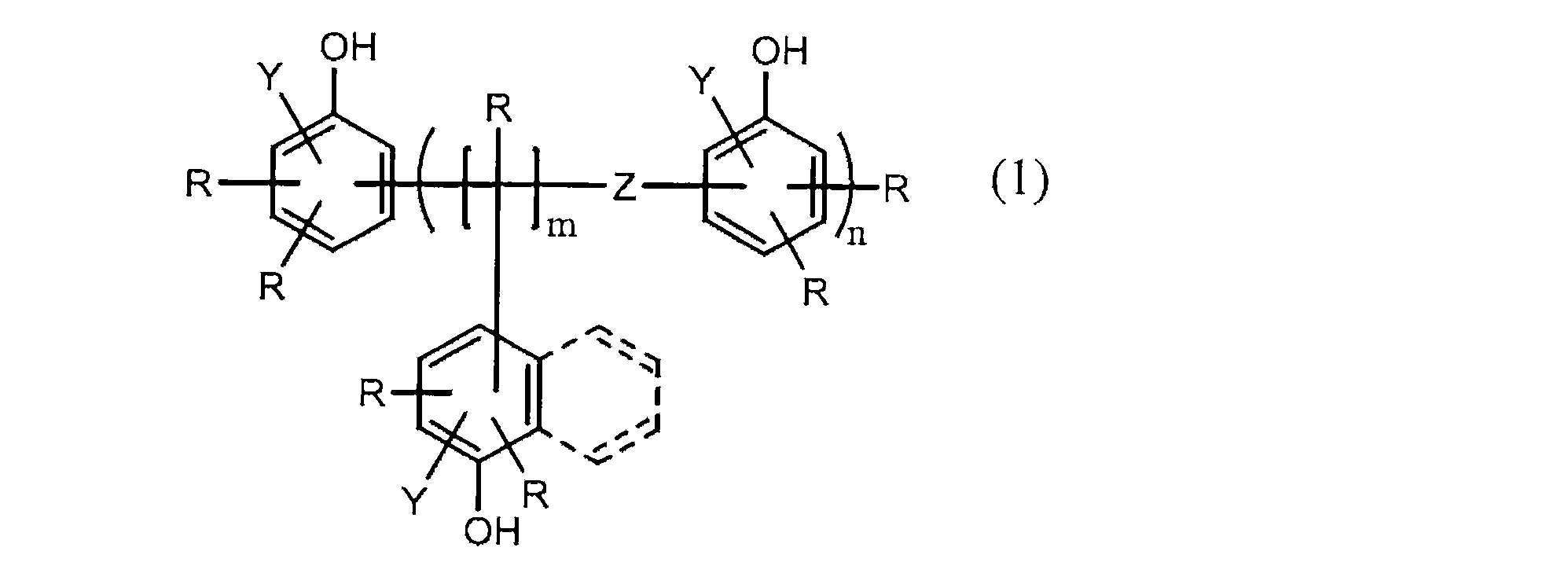
- the methallyl group-containing resin of the present invention is represented by the following formula (1).
- multiple Zs each independently represent a single bond, a hydrocarbon group having 6 to 18 carbon atoms including an aromatic ring, a carbon atom to which a heterocyclic ring is bonded, an isobenzofuran group analog, or an isoindole group analog.
- multiple Ys each independently represent a hydrogen atom or a methallyl group, and 20% or more of the total number of Y is a methallyl group.
- n is an average value and represents a real number of 1 to 20.
- m is an average value and represents a real number of 0 to 10, provided that m is 0 Z is not a single bond or a fluorene group, and a dotted line indicates that a phenyl group may be present.
- the methallyl group-containing resin of the present invention When mixed with a reactive olefin resin containing a maleimide group or an acrylate group, the methallyl group-containing resin of the present invention has a lower hygroscopicity than the allyl group-containing resin or propenyl group-containing resin of the same skeleton, and has dielectric properties. A good cured product can be obtained.
- polar groups are not generated, so that it is possible to suppress an increase in water absorption (humidity) due to improved heat resistance.
- a plurality of Z are each independently a single bond, a hydrocarbon group having 6 to 18 carbon atoms including an aromatic ring, a carbon atom to which a heterocyclic ring is bonded, an isobenzofuran group analog, an isoindole group Represents an analog.
- the hydrocarbon group containing an aromatic ring preferably has 6 to 12 carbon atoms.
- a thiophene ring, a furan ring, and a pyridine ring are more preferable.
- the isobenzofuran group analog means a structure represented by the following formula (A), wherein R 1 is preferably a hydrogen atom.
- the isoindole group analog means a structure represented by the following formula (B), in which R 2 is preferably a hydrogen atom or an aromatic group, more preferably an aromatic group.
- R 2 is preferably a hydrogen atom or an aromatic group, more preferably an aromatic group.
- a plurality of Y each independently represents a hydrogen atom or a methallyl group, and 20% or more of the total number of Y is a methallyl group, more preferably 30% or more, particularly Preferably it is 40% or more.
- 20% or more of the total number of Y is a methallyl group, the heat resistance is improved.
- it is not the definition of one molecular unit of the corresponding compound, but means the average of a plurality of molecules of the corresponding compound.
- R 1 represents a hydrogen atom, an alkyl group having 1 to 10 carbon atoms, or an aromatic group.
- R 2 represents a hydrogen atom, an alkyl group having 1 to 10 carbon atoms, or an aromatic group.
- P represents 1 to 4). (* Represents a bonding position.)
- Z in the formula (1) include the following structures, but are not limited thereto. Note that * represents a bonding position.
- the structure is as follows in Z exemplified above.
- the average value of n is a real number of 1 to 20, preferably 1 to 10, and particularly preferably 1 to 6.
- the manufacturing method of the methallyl group containing resin of this invention is demonstrated.
- the methallyl group-containing resin of the present invention described in the above (1) is obtained by using a phenol resin of the following formula (2) as a raw material, synthesizing a methallyl ether, and rearranging the methallyl group by Claisen rearrangement.
- multiple Zs each independently represent a single bond, a hydrocarbon group having 6 to 18 carbon atoms including an aromatic ring, a carbon atom to which a heterocyclic ring is bonded, an isobenzofuran group analog, or an isoindole group analog.
- a plurality of R's each independently represent a hydrogen atom, a hydrocarbon group having 1 to 6 carbon atoms, a methoxy group or an ethoxy group, n is an average value and represents a real number of 1 to 20, m is an average value And represents a real number of 0 to 10.
- n is an average value and represents a real number of 1 to 20
- m is an average value
- Z is not a single bond or a fluorene group, and a dotted line indicates that a phenyl group may be present.
- the reaction for converting the hydroxyl group of the phenol resin represented by the formula (2) to methallyl ether is a known method, and generally methallyl chloride, methallyl bromide, methallyl iodide using a base such as an alkali metal hydroxide. A methallyl ether such as methallyl halide is reacted.
- a highly polar solvent such as methanol, isopropanol, acetone, methyl ethyl ketone, methyl isobutyl ketone, dimethyl sulfone, dimethyl sulfoxide, dimethylformamide, 1,3-dimethyl-2-imidazolidinone, N-methyl-2-pyrrolidone is used. It is preferable to use it.
- the amount of the polar solvent used is usually 50 to 400 parts by weight, preferably 70 to 300 parts by weight, based on 100 parts by weight of the raw material. These may be used alone or in combination, and a solvent having low polarity such as toluene or xylene may be used in combination.
- the amount of methallyl halide and base used is usually 0.1 to 2.0 mol, preferably 0.2 to 1.5 mol, based on 1 equivalent of the hydroxyl group of the phenol resin.
- the rate can be adjusted.
- a phenol resin is dissolved in the above-mentioned isopropanol or dimethyl sulfoxide, and then an alkali metal hydroxide such as sodium hydroxide or potassium hydroxide is added. After dissolving the alkali metal hydroxide at 50 to 100 ° C., 30 to 50 Add methallyl chloride or methallyl bromide at 2 ° C. over 2 to 5 hours, and then react at 30 to 70 ° C. for 1 to 10 hours.
- the Claisen rearrangement reaction of the obtained methallyl ether may be carried out according to a conventional method.
- a compound having a methallyl ether group may be used in the presence of a high-boiling solvent such as carbitol, paraffin oil, N, N′-dimethylaniline, or solvent-free. Under heating at 150-230 ° C. for 0.5-100 hours.
- the solvent is used as required in an amount of 10 to 200 parts by weight based on 100 parts by weight of methallyl ether. After completion of the reaction, the solvent used can be removed if necessary to obtain a methallylated phenol resin.
- the reaction is preferably performed in a vacuum or in an inert gas atmosphere such as nitrogen or argon, and the product can be prevented from being colored.
- an antioxidant may be added to perform the Claisen rearrangement.
- the antioxidant is preferably used in an amount of about 10 parts by weight per 100 parts by weight of methallyl ether.
- Phenol antioxidants include methylhydroquinone, 2,5-di-tert-butylhydroquinone, 2,5-di-tert-amylhydroquinone, tert-butylated bisphenol A, 2,2'-methylenebis (4-methyl- 6-tert-butylphenol), 2,2′-methylenebis (4-ethyl-6-tert-butylphenol), 4,4′-ethylidenebis (3-methyl-6-tert-butylphenol), 4,4′-methylenebis (2,6-di-tert-butylphenol), 4,4′-butylidenebis (3-methyl-6-tert-butylphenol), 4,4′-thiobis (3-methyl-6-tert-butylphenol), 1, 1,3-tris- (2-methyl-4-hydroxy-5-tert-butylphenyl) buta 1,3,5-trimethyl-2,4,6-tris (3,5-di-tert-butyl-4-hydroxybenzyl
- the curable resin composition of the present invention contains the methallyl group-containing resin of the present invention and can contain a compound having a functional group that reacts by heating.
- the curable resin composition of the present invention may contain a maleimide compound.
- a conventionally well-known maleimide compound can be used as a maleimide compound which can be mix
- Specific examples of the maleimide compound include 4,4′-diphenylmethane bismaleimide, polyphenylmethane maleimide, m-phenylene bismaleimide, 2,2′-bis [4- (4-maleimidophenoxy) phenyl] propane, 3,3 '-Dimethyl-5,5'-diethyl-4,4'-diphenylmethane bismaleimide, 4-methyl-1,3-phenylene bismaleimide, 4,4'-diphenyl ether bismaleimide, 4,4'-diphenylsulfone bismaleimide 1,3-bis (3-maleimidophenoxy) benzene, 1,3-bis (4-maleimidophenoxy) benzene and the like, but are not limited thereto.
- the blending amount of the maleimide compound is preferably not more than 5 times, more preferably not more than 2 times the weight of the methallyl group-containing resin of the present invention.
- maleimide compounds described in Japanese Patent Application Laid-Open No. 2009-001783 (Patent Document 3) and Japanese Patent Application Laid-Open No. 01-294661 (Patent Document 4) have low hygroscopicity, flame retardancy, and dielectric properties. Since it is excellent in characteristics, it is particularly preferable as a maleimide compound.
- a radical polymerization initiator for reacting methallyl groups of the methallyl group-containing resin of the present invention with each other or a methallyl group and a maleimide group.
- the radical polymerization initiator include methyl ethyl ketone peroxide, benzoyl peroxide, dicumyl peroxide, t-butyl hydroperoxide, cumene hydroperoxide, t-butyl peroxyoctate, and t-butyl peroxy.
- Organic peroxides such as benzoate and lauroyl peroxide, azobisisobutyronitrile, 4,4'-azobis (4-cyanovaleric acid), 2,2'-azobis (2,4-dimethylvaleronitrile), etc.
- the well-known hardening accelerator of an azo type compound is mentioned, It does not specifically limit to these.
- the amount is preferably 0.01 to 5 parts by weight, particularly preferably 0.01 to 3 parts by weight, based on 100 parts by weight of the curable resin composition.
- the curable resin composition of the present invention may contain an epoxy resin.
- an epoxy resin that can be blended in the curable resin composition of the present invention any conventionally known epoxy resin can be used.
- Specific examples of epoxy resins include polycondensates of phenols and various aldehydes, polymers of phenols and various diene compounds, polycondensates of phenols and ketones, and polycondensation of bisphenols and various aldehydes.
- examples include, but are not limited to, epoxy resins, glycidylamine epoxy resins such as tetraglycidyldiaminodiphenylmethane (TGDDM) and triglycidyl-p-aminophenol, and glycidyl ester epoxy resins. These may be used alone or in combination of two or more.
- a phenol aralkyl resin obtained by condensation reaction of phenols and the above-mentioned bishalogenomethyl aralkyl derivative or aralkyl alcohol derivative, and an epoxy resin obtained by dehydrochlorination reaction with epichlorohydrin are low hygroscopic, Since it is excellent in a flame retardance and a dielectric characteristic, it is especially preferable as an epoxy resin.
- an epoxy resin curing catalyst (curing accelerator) can be blended as necessary.
- imidazoles such as 2-methylimidazole, 2-ethylimidazole, 2-phenylimidazole, 2-ethyl-4-methylimidazole, 2-undecylimidazole, 1-cyanoethyl-2-ethyl-4-methylimidazole, triethylamine
- Amines such as triethylenediamine, 2- (dimethylaminomethyl) phenol, 1,8-diaza-bicyclo (5,4,0) undecene-7, tris (dimethylaminomethyl) phenol, benzyldimethylamine, triphenylphosphine, Examples thereof include phosphines such as tributylphosphine and trioctylphosphine.
- the amount of the curing catalyst is preferably 10 parts by weight or less, more preferably 5 parts by weight or less, based
- the curable resin composition of the present invention contains the above-described epoxy resin, in a preferred embodiment thereof, it contains various epoxy resin curing agents.
- the epoxy resin curing agent amine compounds, acid anhydride compounds, amide compounds, phenol compounds, and the like can be used.
- Specific examples of the curing agent that can be used include diaminodiphenylmethane, diethylenetriamine, triethylenetetramine, diaminodiphenylsulfone, isophoronediamine, dicyandiamide, polyamide resin synthesized from linolenic acid and ethylenediamine, phthalic anhydride, triethylene anhydride.
- the amount of the epoxy resin curing agent used is preferably 0.5 to 1.5 equivalents, particularly preferably 0.6 to 1.2 equivalents per 1 equivalent of epoxy group (or glycidyl group). When less than 0.5 equivalent or more than 1.5 equivalent with respect to 1 equivalent of epoxy group, curing may be incomplete and good cured properties may not be obtained.
- the curable resin composition of the present invention may contain a cyanate ester resin.
- a conventionally well-known cyanate ester compound can be used as a cyanate ester compound which can be mix
- Specific examples of cyanate ester compounds include polycondensates of phenols and various aldehydes, polymers of phenols and various diene compounds, polycondensates of phenols and ketones, and polycondensates of bisphenols and various aldehydes. Examples include, but are not limited to, cyanate ester compounds obtained by reacting a condensate with cyanogen halide. These may be used alone or in combination of two or more.
- phenols examples include phenol, alkyl-substituted phenol, aromatic-substituted phenol, naphthol, alkyl-substituted naphthol, dihydroxybenzene, alkyl-substituted dihydroxybenzene, and dihydroxynaphthalene.
- aldehydes examples include formaldehyde, acetaldehyde, alkyl aldehyde, benzaldehyde, alkyl-substituted benzaldehyde, hydroxybenzaldehyde, naphthaldehyde, glutaraldehyde, phthalaldehyde, crotonaldehyde, and cinnamaldehyde.
- Examples of the various diene compounds include dicyclopentadiene, terpenes, vinylcyclohexene, norbornadiene, vinylnorbornene, tetrahydroindene, divinylbenzene, divinylbiphenyl, diisopropenylbiphenyl, butadiene, and isoprene.
- Examples of the ketones include acetone, methyl ethyl ketone, methyl isobutyl ketone, acetophenone, and benzophenone.
- cyanate ester resin examples include dicyanate benzene, tricyanate benzene, dicyanate naphthalene, dicyanate biphenyl, 2,2′-bis (4-cyanatophenyl) propane, bis (4-cyanatophenyl).
- the curable resin composition of the present invention contains a cyanate ester resin, zinc naphthenate, cobalt naphthenate, copper naphthenate are used to form a sym-triazine ring by trimerizing cyanate groups as necessary.
- Catalysts such as lead naphthenate, zinc octylate, tin octylate, lead acetylacetonate, and dibutyltin maleate can also be included.
- the catalyst is usually used in an amount of 0.0001 to 0.10 parts by weight, preferably 0.00015 to 0.0015 parts by weight, per 100 parts by weight of the curable resin composition.
- the curable resin composition of the present invention includes fused silica, crystalline silica, porous silica, alumina, zircon, calcium silicate, calcium carbonate, silicon carbide, silicon nitride, boron nitride, zirconia, aluminum nitride as necessary.
- Powders such as forsterite, steatite, spinel, mullite, titania, talc, etc., or various fillers such as inorganic fillers, silane coupling agents, mold release agents, pigments, etc., in which these are spherical or crushed
- a thermosetting resin or the like can be added.
- the amount of the inorganic filler used is usually 80 to 92% by weight, preferably 83 to 90% by weight in the curable resin composition. is there.
- the curable resin composition of the present invention can contain known additives as required.
- additives that can be used include polybutadiene and modified products thereof, modified products of acrylonitrile copolymer, polyphenylene ether, polystyrene, polyethylene, polyimide, fluororesin, silicone gel, silicone oil, and silica, alumina, quartz powder, Aluminum powder, graphite, talc, clay, iron oxide, titanium oxide, aluminum nitride, asbestos, mica, glass powder and other inorganic fillers, filler surface treatments such as silane coupling agents, mold release agents, carbon black And colorants such as phthalocyanine blue and phthalocyanine green.
- the amount of these additives is preferably 1,000 parts by weight or less, more preferably 700 parts by weight or less, with respect to 100 parts by weight of the curable resin composition.
- the method for preparing the curable resin composition of the present invention is not particularly limited, but each component may be mixed evenly or prepolymerized.
- the methallyl group-containing resin and the maleimide compound are prepolymerized by heating in the presence or absence of a catalyst and in the presence or absence of a solvent.
- a methallyl group-containing resin and a maleimide resin, and if necessary, an epoxy resin, an amine compound, a cyanate ester resin, a phenol resin, an acid anhydride compound, and other additives may be added for prepolymerization.
- an extruder for example, an extruder, a kneader, a roll or the like is used in the absence of a solvent, and a reaction vessel with a stirrer is used in the presence of a solvent.
- the curable resin composition of the present invention is obtained by uniformly mixing each of the above components at a predetermined ratio, and is usually precured at 130 to 180 ° C. for 30 to 500 seconds, and further 150 to 200 ° C. And after curing for 2 to 15 hours, a sufficient curing reaction proceeds and the cured product of the present invention is obtained.
- the components of the curable resin composition can be uniformly dispersed or dissolved in a solvent or the like, and the solvent can be removed and then cured.
- the cured product of the present invention thus obtained has low hygroscopicity, high heat resistance, and dielectric properties. Therefore, the curable resin composition of the present invention can be used in a wide range of fields requiring low hygroscopicity, high heat resistance, and dielectric properties. Specifically, it is useful as a material for all electrical and electronic components such as an insulating material, a laminated board (printed wiring board, BGA substrate, build-up substrate, etc.), a sealing material, and a resist. In addition to molding materials and composite materials, they can also be used in fields such as paint materials and adhesives. In particular, in soldering for semiconductor elements, solder reflow resistance is beneficial.
- the curable resin composition of the present invention can be applied to a semiconductor device using the cured product for sealing.
- semiconductor devices for example, DIP (Dual Inline Package), QFP (Quad Flat Package), BGA (Ball Grid Array), CSP (Chip Size Package), SOP (Small Outline Package), TSOP (Thin Small Outline Package), TQFP (Sink Quad Flat Package).
- An organic solvent can be added to the curable resin composition of the present invention to obtain a varnish-like composition (hereinafter simply referred to as “varnish”).
- the organic solvent used include amide solvents such as ⁇ -butyrolactone, N-methylpyrrolidone, N, N-dimethylformamide, N, N-dimethylacetamide, N, N-dimethylimidazolidinone, tetramethylene sulfone, etc.
- Sulfones diethylene glycol dimethyl ether, diethylene glycol diethyl ether, propylene glycol, propylene glycol monomethyl ether, propylene glycol monomethyl ether monoacetate, propylene glycol monobutyl ether and other ether solvents, methyl ethyl ketone, methyl isobutyl ketone, cyclopentanone, cyclohexanone and other ketones And aromatic solvents such as toluene and xylene.
- the solvent is used in the range where the solid content concentration excluding the solvent in the obtained varnish is usually 10 to 80% by weight, preferably 20 to 70% by weight.
- a prepreg can be obtained by heating and melting the curable resin composition of the present invention to lower the viscosity and impregnating the fiber with a reinforcing fiber such as glass fiber, carbon fiber, polyester fiber, polyamide fiber, or alumina fiber. Moreover, a prepreg can also be obtained by impregnating the varnish into a reinforcing fiber and drying by heating. The above prepreg is cut into a desired shape, laminated with copper foil as necessary, and then the curable resin composition is heated and cured while applying pressure to the laminate by a press molding method, autoclave molding method, sheet winding molding method, etc. Thus, a laminated board for electric and electronic (printed wiring board) and a carbon fiber reinforced composite material can be obtained.
- a reinforcing fiber such as glass fiber, carbon fiber, polyester fiber, polyamide fiber, or alumina fiber.
- a prepreg can also be obtained by impregnating the varnish into a reinforcing fiber and drying by heating.
- the above prepreg is cut into
- melt viscosity and softening point were measured under the following conditions.
- Melt viscosity Melt viscosity in the cone plate method.
- Softening point Measured by a method according to JIS K-7234.
- the ratio of the methallyl group to the total number of Y in the formula (1) was confirmed by 1 H-NMR (JNM-EC400, manufactured by JEOL Ltd.).
- Example 1 A flask equipped with a stirrer, a reflux condenser, and a stirrer is purged with nitrogen, 25 parts by weight of water, 600 parts by weight of dimethyl sulfoxide, and a phenol resin represented by the following formula (3) (hereinafter referred to as “BPN”). 525 parts by weight of a softening point of 74 ° C., a melt viscosity of 0.16 Pa ⁇ s, and a hydroxyl group equivalent of 210 g / eq) were added, and the mixture was heated to 45 ° C. and dissolved.
- BPN phenol resin represented by the following formula (3)
- the mixture was cooled to 38 to 40 ° C., and 110.0 parts by weight of flake caustic soda (purity: 99%, manufactured by Tosoh Corp.) (1.1 molar equivalents relative to 1 molar equivalent of hydroxyl group of BPN) was added over 60 minutes. Thereafter, 250 parts by weight of methallyl chloride (purity: 99%, manufactured by Tokyo Chemical Industry Co., Ltd.) (1.1 molar equivalents relative to 1 molar equivalent of hydroxyl group of BPN) was further added dropwise over 60 minutes and left at 38-40 ° C. for 5 hours. The reaction was performed at 60 to 65 ° C. for 1 hour.
- BPN-ME BPN methallyl ether
- BMPN methallylated BPN
- the softening point of the obtained BMPN was 50.4 ° C.
- the melt viscosity at 150 ° C. was 0.125 Pa ⁇ s
- the methallyl group was 96% with respect to the total number of Y in the formula (1).
- n is an average value and represents a number from 1 to 10.
- Example 2 In a flask equipped with a stirrer, a reflux condenser, and a stirrer, 720 parts by weight of dimethyl sulfoxide and a phenol resin represented by the following formula (4) (hereinafter referred to as “PXLC”. Hydroxyl equivalent 170 g / eq. Softening point 65 C. 510 parts by weight of MEH (C) -7800-SS manufactured by Meiwa Kasei Co., Ltd., 272 parts by weight of methallyl chloride (purity 99% manufactured by Tokyo Chemical Industry) (1.1 moles relative to 1 mole equivalent of hydroxyl group of phenol resin) Equivalent) and heated to 27 ° C. to dissolve.
- PXLC Hydroxyl equivalent 170 g / eq.
- MEH (C) -7800-SS manufactured by Meiwa Kasei Co., Ltd.
- methallyl chloride purity 99% manufactured by Tokyo Chemical Industry
- PXLC-ME PXLC methallyl ether resin
- MPXLC methallylated PXLC
- the softening point of the obtained MPXLC was 64 ° C.
- the melt viscosity at 150 ° C. was 0.218 Pa ⁇ s
- the methallyl group was 95% with respect to the total number of Y in the formula (1).
- n is an average value and represents a number from 1 to 10.
- Example 3 A flask equipped with a stirrer, a reflux condenser, and a stirrer was purged with nitrogen, while 700 parts by weight of dimethyl sulfoxide, a trisphenol methane type phenol resin represented by the following formula (5) (hereinafter referred to as “TPM”).
- TPM trisphenol methane type phenol resin
- caustic soda purity: 99%, manufactured by Tosoh Corp.
- the reaction was carried out at 30 to 35 ° C. for 4 hours, at 40 to 45 ° C. for 1 hour, and at 60 to 65 ° C. for 1 hour.
- water, dimethyl sulfoxide and the like were distilled off by heating on a rotary evaporator at 120 ° C. or lower under reduced pressure.
- 600 parts by weight of methyl isobutyl ketone was added, and washing with water was repeated to confirm that the aqueous layer became neutral.
- 523 parts by weight of methallyl ether resin (hereinafter referred to as “TPM-ME”) was obtained by distilling off the solvents from the oil layer using a rotary evaporator while bubbling nitrogen under reduced pressure.
- TMPM methallylated TPM
- n is an average value and represents a number from 1 to 10.
- Example 4 A flask equipped with a stirrer, a reflux condenser, and a stirrer was purged with nitrogen, and 900 parts by weight of dimethyl sulfoxide, ⁇ , ⁇ -bis (4-hydroxyphenyl) -4- represented by the following formula (6) 494 parts by weight of (4-hydroxy- ⁇ , ⁇ -dimethylbenzyl) -ethylbenzene (hereinafter referred to as “TPPA”, TrisP-PA manufactured by Honshu Chemical Industry), 349 parts by weight of methallyl chloride (purity 99% manufactured by Tokyo Chemical Industry Co., Ltd.) (1.1 molar equivalents relative to 1 molar equivalent of the hydroxyl group of the phenol resin) was added, and the mixture was heated to 27 ° C.
- TPPA (4-hydroxy- ⁇ , ⁇ -dimethylbenzyl) -ethylbenzene
- TPPA-ME methallyl ether resin
- TMPPA methallylated TPPA
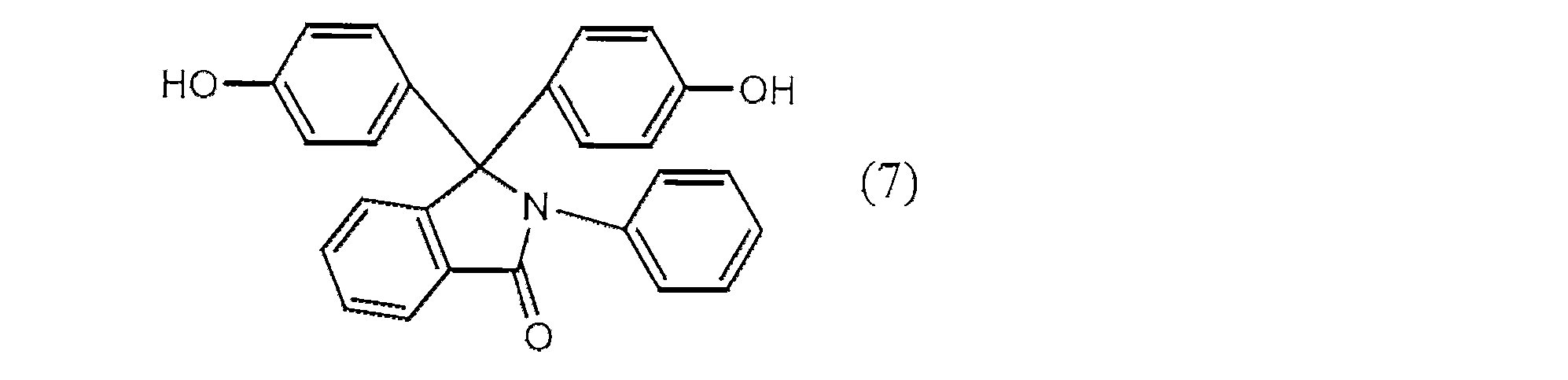
- Example 5 While purging a flask equipped with a stirrer, a reflux condenser, and a stirrer with nitrogen purge, 900 parts by weight of dimethyl sulfoxide and 492 weights of a phenol compound represented by the following formula (7) (hereinafter referred to as “PPPBP”). Part, 249 parts by weight of methallyl chloride (purity 99%, manufactured by Tokyo Chemical Industry Co., Ltd.) (1.1 molar equivalents relative to 1 molar equivalent of the hydroxyl group of the phenol resin) was heated to 27 ° C. and dissolved.
- PPPBP a phenol compound represented by the following formula (7)
- caustic soda purity: 99%, manufactured by Tosoh Corp.
- 70 parts by weight of water were added over 60 minutes.
- the reaction was carried out at 30 to 35 ° C. for 4 hours, at 40 to 45 ° C. for 1 hour, and at 60 to 65 ° C. for 1 hour.
- water, dimethyl sulfoxide and the like were distilled off by heating on a rotary evaporator at 120 ° C. or lower under reduced pressure.
- 1500 parts by weight of methyl isobutyl ketone was added and cooled to precipitate crystals.
- PPPBP-ME methallyl ether compound
- 200 parts by weight of the obtained PPPBP-ME was charged into a reaction vessel, the degree of vacuum in the system was set to ⁇ 730 mmHg, heated with stirring, reacted at 200 ° C. for 5 hours, and subjected to Claisen rearrangement to produce methallylated PPPBP (hereinafter referred to as “PPBP-ME”).
- PPBP-ME methallylated PPPBP
- PPPBMP methallylated PPPBP
- Example 1 Comparative Synthesis Example 1 In Example 1, the same operation was performed except that 250 parts by weight of methallyl chloride was changed to 211 parts by weight of allyl chloride to obtain allylated BPN (hereinafter referred to as “BAPN”).
- BAPN allylated BPN
- Example 2 Comparative Synthesis Example 2 In Example 2, the same operation was performed except that 272 parts by weight of methallyl chloride was changed to 230 parts by weight of allyl chloride to obtain allylated PXLC (hereinafter referred to as “APXLC”).
- APXLC allylated PXLC
- Example 3 Comparative Synthesis Example 3 In Example 3, the same operation was performed except that 349 parts by weight of methallyl chloride was changed to 295 parts by weight of allyl chloride to obtain an allylated TPM (hereinafter referred to as “TAPM”).
- TAPM allylated TPM
- Example 4 Comparative Synthesis Example 4 In Example 4, the same operation was carried out except that 349 parts by weight of methallyl chloride was changed to 295 parts by weight of allyl chloride to obtain allylated TPPA (hereinafter referred to as “TAPPA”).
- TAPPA allylated TPPA
- Example 5 Comparative Synthesis Example 5 In Example 5, the same operation was performed except that 249 parts by weight of methallyl chloride was changed to 210 parts by weight of allyl chloride to obtain allylated PPPBP (hereinafter referred to as “PPPBAP”).
- PPPBAP allylated PPPBP
- Examples 6 to 10, Comparative Examples 6 to 10 The methallyl group-containing resin, allyl group-containing resin, and maleimide (MIR-3000 manufactured by Nippon Kayaku Co., Ltd.) obtained in Examples and Comparative Synthesis Examples were blended in the proportions (parts by weight) shown in Table 1, and after heating and melt mixing, It was cast and cured at 200 ° C. for 1 hour and 230 ° C. for 1 hour. The results of measuring the physical properties of the cured product thus obtained for the following items are shown in Table 1.
- Hygroscopic evaluation Glass transition temperature: Temperature measured by a dynamic viscoelasticity tester and tan ⁇ is a maximum value.
- Hygroscopic evaluation Hygroscopicity: Weight increase rate after 24 hours at 121 ° C./100%.
- the test piece is a disk having a diameter of 50 mm and a thickness of 4 mm.
- Dielectric constant and dielectric loss tangent (Measured at 1 GHz in accordance with K6991 (Cavity Resonator, Agilent Technologies).
- the cured product of the composition using the methallyl group-containing resin of the present invention has excellent heat resistance (solder reflow resistance) and excellent low hygroscopicity (low) compared to the allyl group-containing resin of the comparative example. It can be confirmed that water absorption and dielectric properties are exhibited.
- the methallyl group-containing resin of the present invention includes an insulating material for electrical and electronic parts (high reliability semiconductor encapsulating material, etc.), a laminated board (printed wiring board, a substrate for BGA, a buildup board, etc.), an adhesive (conductive adhesive). Etc.), for various composite materials such as CFRP, and paints.
Landscapes
- Chemical & Material Sciences (AREA)
- Health & Medical Sciences (AREA)
- Chemical Kinetics & Catalysis (AREA)
- Medicinal Chemistry (AREA)
- Polymers & Plastics (AREA)
- Organic Chemistry (AREA)
- Epoxy Resins (AREA)
- Addition Polymer Or Copolymer, Post-Treatments, Or Chemical Modifications (AREA)
Abstract
硬化性樹脂組成物に用いた場合、その硬化物において優れた低吸湿性、耐熱性、誘電特性を示すメタリル基含有樹脂、硬化性樹脂組成物及びその硬化物を提供する。 メタリル基含有樹脂は、下記式(1)で表される。 (式中、Zは単結合、炭化水素基、複素環が結合した炭素原子等を、Yは水素原子またはメタリル基を表し、Yの総数に対して20%以上がメタリル基であり、Rは水素原子等を表す。nは平均値であり1~20の実数を表す。mは平均値であり0~10の実数を表す。ただし、mが0のときにZは単結合またはフルオレン基ではない。点線はフェニル基が存在してもよいことを表す。)
Description
本発明は、メタリル基含有樹脂、硬化性樹脂組成物およびその硬化物に関するものであり、半導体素子用封止材、液晶表示素子用封止材、電界発光素子(以下、「EL」と表す)用封止材、プリント配線板、ビルドアップ積層板などの電気・電子部品や、炭素繊維強化複合材料(以下、「CFRP」と表す)、ガラス繊維強化複合材料などの軽量高強度材料に好適に使用される。
近年、電気・電子部品を搭載する積層板はその利用分野の拡大により、要求特性が広範かつ高度化している。例えば従来、半導体チップは金属製のリードフレームに搭載することが主流であったが、中央処理装置(以下、「CPU」と表す)などの高度な処理能力のある半導体チップは高分子材料で作られる積層板に搭載されることが多くなっている。CPU等の素子の高速化が進みクロック周波数が高くなるにつれ、信号伝搬遅延や伝送損失が問題となり、配線板に低誘電率化、低誘電正接化が求められるようになっている。同時に素子の高速化に伴い、チップの発熱が大きくなっているため耐熱性を高める必要も生じている。
また、近年スマートフォンなどのモバイル電子機器が普及してきており、精密電子機器が屋外環境や人体の極近傍で使用・携帯されるようになってきているため、外的環境(特に耐湿及び耐熱)に対する耐性が必要とされる。
更に自動車分野においては電子化が進み、エンジンの近くに精密電子機器が配置されることもあるため、耐熱・耐湿性がより高いレベルで要求されるようになっており、また、電車やエアコンなどにはSiC半導体が使用され始めており、半導体素子の封止に高耐熱性が必要となり、従来のエポキシ樹脂封止では対応できなくなっている。
また、近年省エネルギーの観点から飛行機、自動車、列車、船舶等の軽量化が進んでいる。従来は金属材料を用いていたものを、軽量で高強度な炭素繊維複合材料に置き換える検討が輸送機器分野で特に行われている。例を挙げれば、ボーイング787においてはCFRPの比率を上げることで軽量化を行い、燃費効率を大幅に改善している。自動車分野では一部ではあるがCFRP製のシャフトを搭載しており、また高級車向けに車体をCFRPで作る動きもある。これらの要求に対して、主としてエポキシ樹脂及びこれを含有する樹脂組成物について多くの提案がなされている。さらに、エンジン周りの部材にもCFRPの適用要求が始まってきていることから、耐熱性に優れるマレイミド樹脂などの使用が検討され始めている(特許文献3、特許文献4)。特許文献1にはマレイミド樹脂とプロペニル基含有フェノール樹脂との樹脂組成物が開示されている。特許文献2にはマレイミド樹脂とアリル基含有フェノール樹脂との樹脂組成物が開示されている。
また、近年スマートフォンなどのモバイル電子機器が普及してきており、精密電子機器が屋外環境や人体の極近傍で使用・携帯されるようになってきているため、外的環境(特に耐湿及び耐熱)に対する耐性が必要とされる。
更に自動車分野においては電子化が進み、エンジンの近くに精密電子機器が配置されることもあるため、耐熱・耐湿性がより高いレベルで要求されるようになっており、また、電車やエアコンなどにはSiC半導体が使用され始めており、半導体素子の封止に高耐熱性が必要となり、従来のエポキシ樹脂封止では対応できなくなっている。
また、近年省エネルギーの観点から飛行機、自動車、列車、船舶等の軽量化が進んでいる。従来は金属材料を用いていたものを、軽量で高強度な炭素繊維複合材料に置き換える検討が輸送機器分野で特に行われている。例を挙げれば、ボーイング787においてはCFRPの比率を上げることで軽量化を行い、燃費効率を大幅に改善している。自動車分野では一部ではあるがCFRP製のシャフトを搭載しており、また高級車向けに車体をCFRPで作る動きもある。これらの要求に対して、主としてエポキシ樹脂及びこれを含有する樹脂組成物について多くの提案がなされている。さらに、エンジン周りの部材にもCFRPの適用要求が始まってきていることから、耐熱性に優れるマレイミド樹脂などの使用が検討され始めている(特許文献3、特許文献4)。特許文献1にはマレイミド樹脂とプロペニル基含有フェノール樹脂との樹脂組成物が開示されている。特許文献2にはマレイミド樹脂とアリル基含有フェノール樹脂との樹脂組成物が開示されている。
しかしながら、特許文献1では全てプロペニル基で置換されたフェノール樹脂を用いているため、誘電特性が不十分である。また特許文献2では全てアリル基で置換されたフェノール樹脂を用いているため反応性が悪く、誘電特性も未だ十分とはいえず、更なる改良が求められている。
そこで、本発明は、その硬化物において優れた低吸湿性(低吸水性)、誘電特性、耐熱性を示すメタリル基含有樹脂、硬化性樹脂組成物及びその硬化物を提供する。
そこで、本発明は、その硬化物において優れた低吸湿性(低吸水性)、誘電特性、耐熱性を示すメタリル基含有樹脂、硬化性樹脂組成物及びその硬化物を提供する。
本発明者らは上記課題を解決するために鋭意研究した結果、本発明を完成させるに到った。
すなわち本発明は、
[1]下記式(1)で表されるメタリル基含有樹脂、
[1]下記式(1)で表されるメタリル基含有樹脂、
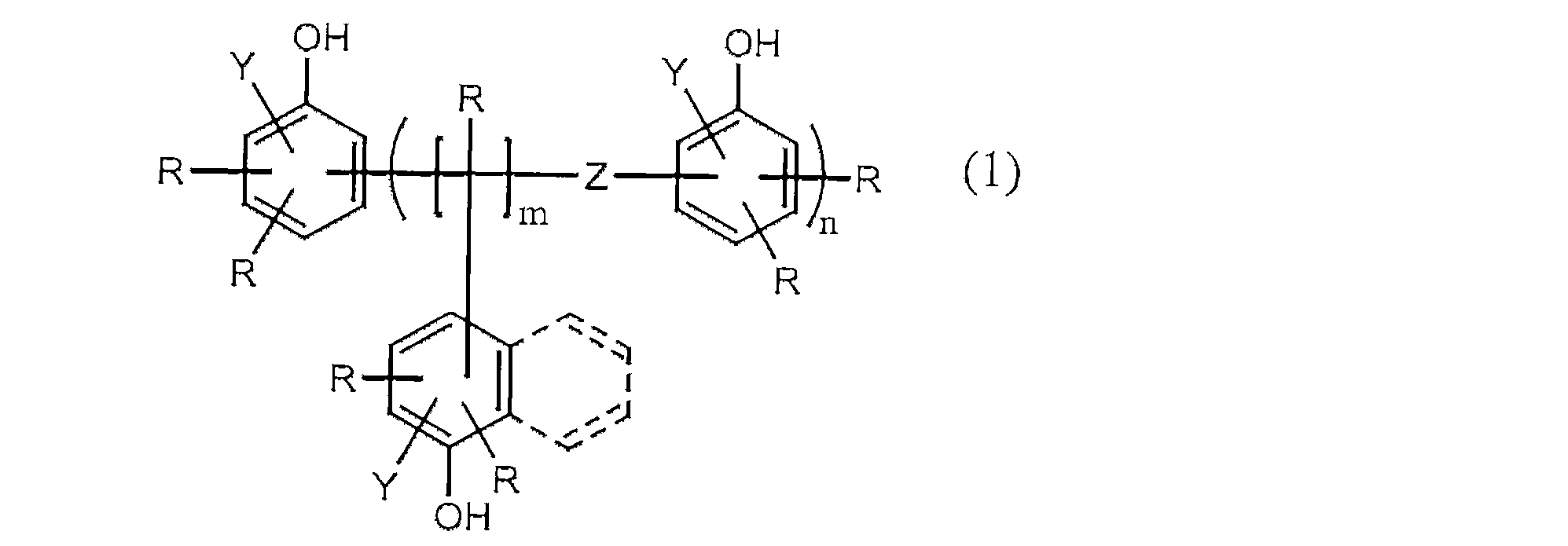
(式中、複数存在するZはそれぞれ独立して単結合、芳香環を含む炭素数6~18の炭化水素基、複素環が結合した炭素原子、イソベンゾフラン基類縁体、イソインドール基類縁体を表す。式中、複数存在するYはそれぞれ独立して水素原子またはメタリル基を表し、Yの総数に対して20%以上がメタリル基である。複数存在するRはそれぞれ独立して水素原子、炭素数1~6の炭化水素基、メトキシ基、エトキシ基を表す。nは平均値であり1~20の実数を表す。mは平均値であり0~10の実数を表す。ただし、mが0のときにZは単結合またはフルオレン基ではない。点線はフェニル基が存在してもよいことを表す。)
[2]前項[1]に記載のメタリル基含有樹脂を含有する硬化性樹脂組成物、
[3]ラジカル重合開始剤を含有する前項[2]に記載の硬化性樹脂組成物、
[4]マレイミド化合物を含有する前項[2]又は[3]に記載の硬化性樹脂組成物、
[5]前項[2]~[4]のいずれか一項に記載の硬化性樹脂組成物を硬化した硬化物、
を、提供するものである。
[2]前項[1]に記載のメタリル基含有樹脂を含有する硬化性樹脂組成物、
[3]ラジカル重合開始剤を含有する前項[2]に記載の硬化性樹脂組成物、
[4]マレイミド化合物を含有する前項[2]又は[3]に記載の硬化性樹脂組成物、
[5]前項[2]~[4]のいずれか一項に記載の硬化性樹脂組成物を硬化した硬化物、
を、提供するものである。
本発明のメタリル基含有樹脂を用いた樹脂組成物の硬化物は、優れた低吸湿性(低吸水性)、耐熱性(耐半田リフロー性)、誘電特性を示す。そのため、電気電子部品用絶縁材料(高信頼性半導体封止材料など)及び積層板(プリント配線板、BGA用基板、ビルドアップ基板など)、液晶封止材、EL封止材、接着剤(導電性接着剤など)やCFRPを始めとする各種複合材料用、塗料等の用途に用いることができる。
以下、本発明につき詳細に説明する。
本発明のメタリル基含有樹脂は、下記式(1)で表される。
本発明のメタリル基含有樹脂は、下記式(1)で表される。

(式中、複数存在するZはそれぞれ独立して単結合、芳香環を含む炭素数6~18の炭化水素基、複素環が結合した炭素原子、イソベンゾフラン基類縁体、イソインドール基類縁体を表す。式中、複数存在するYはそれぞれ独立して水素原子またはメタリル基を表し、Yの総数に対して20%以上がメタリル基である。複数存在するRはそれぞれ独立して水素原子、炭素数1~6の炭化水素基、メトキシ基、エトキシ基を表す。nは平均値であり1~20の実数を表す。mは平均値であり0~10の実数を表す。ただし、mが0のときにZは単結合またはフルオレン基ではない。点線はフェニル基が存在してもよいことを表す。)
本発明のメタリル基含有樹脂は、マレイミド基やアクリレート基などを含有する反応性オレフィン樹脂と混合した場合、同じ骨格のアリル基含有樹脂やプロペニル基含有樹脂よりも、吸湿性が低く、誘電特性の良い硬化物を得ることができる。また、エポキシ基の反応と異なり極性基が発生しないため、耐熱性の向上に伴う吸水(湿)率の増加を抑えることができる。
前記式(1)中、複数存在するZはそれぞれ独立して単結合、芳香環を含む炭素数6~18の炭化水素基、複素環が結合した炭素原子、イソベンゾフラン基類縁体、イソインドール基類縁体を表す。芳香環を含む炭化水素基の炭素数は6~12がより好ましい。炭素原子に結合している複素環としてはチオフェン環、フラン環、ピリジン環がより好ましい。イソベンゾフラン基類縁体とは下記式(A)で表される構造を意味し、式中R1は水素原子が好ましい。イソインドール基類縁体とは、下記式(B)で表される構造を意味し、式中R2は水素原子、芳香族基が好ましく、芳香族基がより好ましい。
前記式(1)中、複数存在するYはそれぞれ独立して水素原子またはメタリル基を表し、Yの総数の内の20%以上の個数がメタリル基であるが、より好ましくは30%以上、特に好ましくは40%以上である。Yの総数に対して20%以上がメタリル基であることにより、耐熱性が向上する。また、この場合、該当する化合物の1分子単位の規定ではなく、該当する化合物の複数の分子における平均を意味するものである。
前記式(1)中、複数存在するYはそれぞれ独立して水素原子またはメタリル基を表し、Yの総数の内の20%以上の個数がメタリル基であるが、より好ましくは30%以上、特に好ましくは40%以上である。Yの総数に対して20%以上がメタリル基であることにより、耐熱性が向上する。また、この場合、該当する化合物の1分子単位の規定ではなく、該当する化合物の複数の分子における平均を意味するものである。

(式中R1は水素原子、炭素数1~10のアルキル基、芳香族基を表す。R2は水素原子、炭素数1~10のアルキル基、芳香族基を表す。pは1~4の整数を表わす。*は結合位置を表す。)
前記式(1)中のZは具体的に下記の構造が例示されるが、これらに限定されない。なお、*は結合位置を表す。
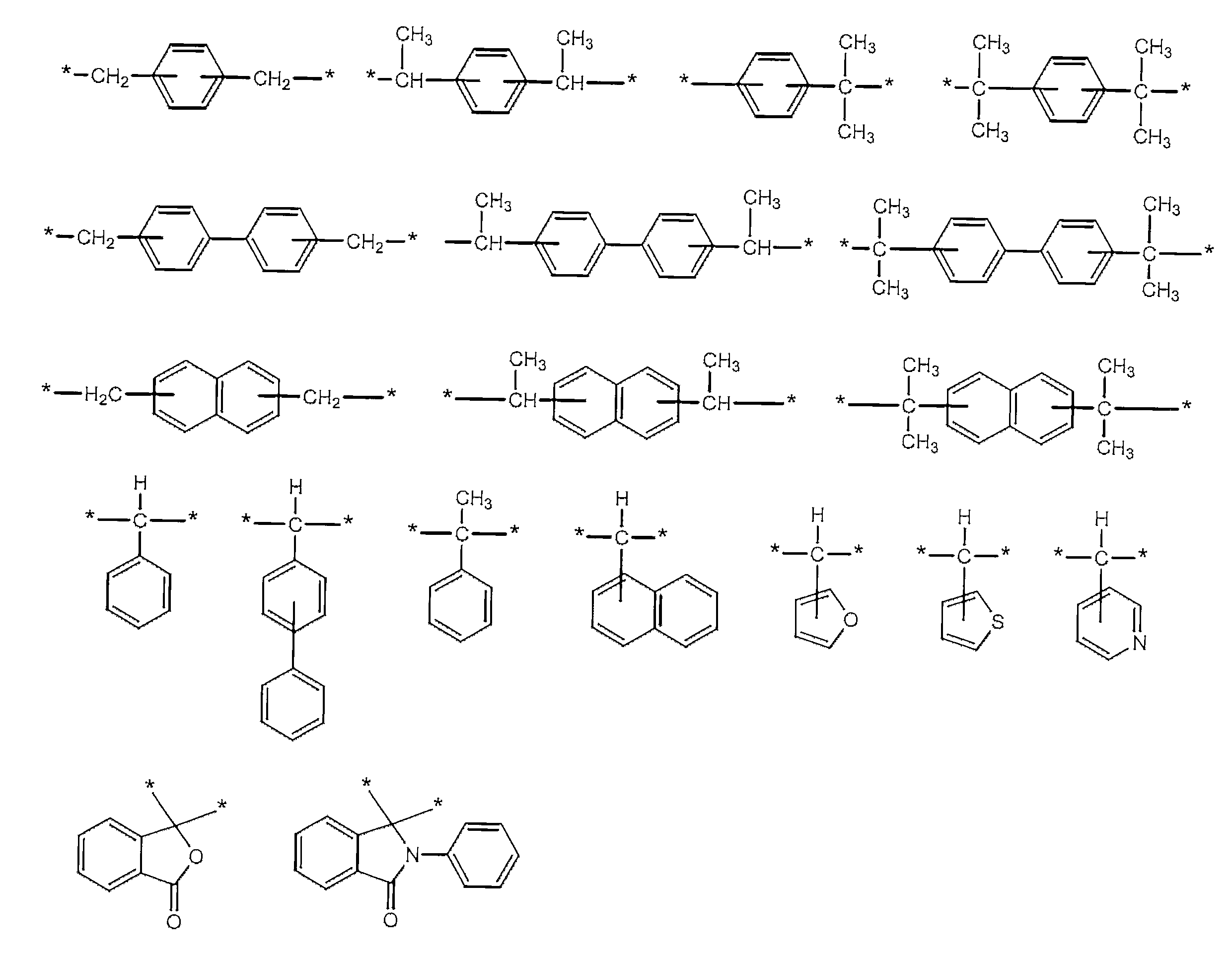
上記例示したZの中で下記構造であることが特に好ましい。

また前式(1)中、nの平均値は1~20の実数であり、1~10が好ましく、特に1~6が好ましい。
次に、本発明のメタリル基含有樹脂の製造方法について説明する。
まず上記(1)記載の本発明のメタリル基含有樹脂は、下記式(2)のフェノール樹脂を原料として使用し、メタリルエーテル体を合成後、クライゼン転位によりメタリル基を転位させることで得られる。
まず上記(1)記載の本発明のメタリル基含有樹脂は、下記式(2)のフェノール樹脂を原料として使用し、メタリルエーテル体を合成後、クライゼン転位によりメタリル基を転位させることで得られる。

(式中、複数存在するZはそれぞれ独立して単結合、芳香環を含む炭素数6~18の炭化水素基、複素環が結合した炭素原子、イソベンゾフラン基類縁体、イソインドール基類縁体を表す。複数存在するRはそれぞれ独立して水素原子、炭素数1~6の炭化水素基、メトキシ基、エトキシ基を表す。nは平均値であり1~20の実数を表す。mは平均値であり0~10の実数を表す。ただし、mが0のときにZは単結合またはフルオレン基ではない。点線はフェニル基が存在してもよいことを表す。)
前記式(2)で表されるフェノール樹脂の水酸基をメタリルエーテル化する反応は公知の方法であり、一般的にアルカリ金属水酸化物等の塩基を用いて塩化メタリルや臭化メタリル、ヨウ化メタリルなどのハロゲン化メタリルを反応させてメタリルエーテル化する。
この際、メタノール、イソプロパノール、アセトン、メチルエチルケトン、メチルイソブチルケトン、ジメチルスルホン、ジメチルスルホキシド、ジメチルホルムアミド、1,3-ジメチル-2-イミダゾリジノン、N-メチル-2-ピロリドン等の極性の高い溶剤を使用することが好ましい。極性溶剤の使用量は、通常原料100重量部に対して50~400重量部、好ましくは70~300重量部である。またこれらは単独で用いても併用しても良く、またトルエン、キシレンなどの極性の低い溶剤を併用しても良い。
ハロゲン化メタリル及び塩基の使用量はフェノール樹脂の水酸基1当量に対し通常0.1~2.0モル、好ましくは0.2~1.5モルであり、使用量の調整により、メタリル基の付加率を調整することができる。
例えばフェノール樹脂を前記のイソプロパノールやジメチルスルホキシドなどに溶解後、水酸化ナトリウム、水酸化カリウムなどのアルカリ金属水酸化物を添加し、50~100℃でアルカリ金属水酸化物を溶解後、30~50℃で塩化メタリルや臭化メタリルを2~5時間で添加し、その後30~70℃で1~10時間反応させる。反応終了後、トルエン、メチルイソブチルケトンなどを加え、副生した塩をろ過、水洗などにより除去し、さらに加熱減圧下トルエン、メチルイソブチルケトン等の溶媒を留去することによりメタリルエーテル体を得ることができる。
この際、メタノール、イソプロパノール、アセトン、メチルエチルケトン、メチルイソブチルケトン、ジメチルスルホン、ジメチルスルホキシド、ジメチルホルムアミド、1,3-ジメチル-2-イミダゾリジノン、N-メチル-2-ピロリドン等の極性の高い溶剤を使用することが好ましい。極性溶剤の使用量は、通常原料100重量部に対して50~400重量部、好ましくは70~300重量部である。またこれらは単独で用いても併用しても良く、またトルエン、キシレンなどの極性の低い溶剤を併用しても良い。
ハロゲン化メタリル及び塩基の使用量はフェノール樹脂の水酸基1当量に対し通常0.1~2.0モル、好ましくは0.2~1.5モルであり、使用量の調整により、メタリル基の付加率を調整することができる。
例えばフェノール樹脂を前記のイソプロパノールやジメチルスルホキシドなどに溶解後、水酸化ナトリウム、水酸化カリウムなどのアルカリ金属水酸化物を添加し、50~100℃でアルカリ金属水酸化物を溶解後、30~50℃で塩化メタリルや臭化メタリルを2~5時間で添加し、その後30~70℃で1~10時間反応させる。反応終了後、トルエン、メチルイソブチルケトンなどを加え、副生した塩をろ過、水洗などにより除去し、さらに加熱減圧下トルエン、メチルイソブチルケトン等の溶媒を留去することによりメタリルエーテル体を得ることができる。
得られたメタリルエーテル体のクライゼン転位反応は常法に従って行えばよく、例えばメタリルエーテル基を有する化合物をカルビトール、パラフィンオイル、N,N’-ジメチルアニリン等の高沸点溶媒の存在下または無溶剤下において、150~230℃で0.5~100時間加熱する。溶媒は、メタリルエーテル100重量部に対して、10~200重量部必要に応じて使用する。反応終了後、必要により使用した溶媒を除去し、メタリル化フェノール樹脂を得ることができる。
クライゼン転位反応においては、真空中あるいは窒素、アルゴン等の不活性ガス雰囲気中で反応を行うことが好ましく、生成物の着色も防ぐことが出来る。しかしながら、完全な真空や不活性ガス雰囲気を保つことは難しく、微量の酸素の系中への混入は避けられないため、酸化防止剤を添加してクライゼン転位を行っても良い。酸化防止剤はメタリルエーテル100重量部に対して10重量部程度使用するのが好ましい。
フェノール系酸化防止剤としてはメチルヒドロキノン、2,5-ジ-tert-ブチルハイドロキノン、2,5-ジ-tert-アミルハイドロキノン、tert-ブチル化ビスフェノールA、2,2’-メチレンビス(4-メチル-6-tert-ブチルフェノール)、2,2’-メチレンビス(4-エチル-6-tert-ブチルフェノール)、4,4’-エチリデンビス(3-メチル-6-tert-ブチルフェノール)、4,4’-メチレンビス(2,6-ジ-tert-ブチルフェノール)、4,4’-ブチリデンビス(3-メチル-6-tert-ブチルフェノール)、4,4’-チオビス(3-メチル-6-tert-ブチルフェノール)、1,1,3-トリス-(2-メチル-4-ヒドロキシ-5-tert-ブチルフェニル)ブタン、1,3,5-トリメチル-2,4,6-トリス(3,5-ジ-tert-ブチル-4-ヒドロキシベンジル)ベンゼン、1,1-ビス(4-ヒドロキシフェニル)-シクロヘキサン等が挙げられるがこれらに限定されるものではない。また、これらは単独でも2種以上併用しても良いが、1分子あたりフェノール性水酸基を2個以上有する化合物を用いることが好ましい。反応温度、反応時間の調整により、メタリル基への変換率を調節することもできる。
クライゼン転位反応においては、真空中あるいは窒素、アルゴン等の不活性ガス雰囲気中で反応を行うことが好ましく、生成物の着色も防ぐことが出来る。しかしながら、完全な真空や不活性ガス雰囲気を保つことは難しく、微量の酸素の系中への混入は避けられないため、酸化防止剤を添加してクライゼン転位を行っても良い。酸化防止剤はメタリルエーテル100重量部に対して10重量部程度使用するのが好ましい。
フェノール系酸化防止剤としてはメチルヒドロキノン、2,5-ジ-tert-ブチルハイドロキノン、2,5-ジ-tert-アミルハイドロキノン、tert-ブチル化ビスフェノールA、2,2’-メチレンビス(4-メチル-6-tert-ブチルフェノール)、2,2’-メチレンビス(4-エチル-6-tert-ブチルフェノール)、4,4’-エチリデンビス(3-メチル-6-tert-ブチルフェノール)、4,4’-メチレンビス(2,6-ジ-tert-ブチルフェノール)、4,4’-ブチリデンビス(3-メチル-6-tert-ブチルフェノール)、4,4’-チオビス(3-メチル-6-tert-ブチルフェノール)、1,1,3-トリス-(2-メチル-4-ヒドロキシ-5-tert-ブチルフェニル)ブタン、1,3,5-トリメチル-2,4,6-トリス(3,5-ジ-tert-ブチル-4-ヒドロキシベンジル)ベンゼン、1,1-ビス(4-ヒドロキシフェニル)-シクロヘキサン等が挙げられるがこれらに限定されるものではない。また、これらは単独でも2種以上併用しても良いが、1分子あたりフェノール性水酸基を2個以上有する化合物を用いることが好ましい。反応温度、反応時間の調整により、メタリル基への変換率を調節することもできる。
次に、本発明の硬化性樹脂組成物について説明する。本発明の硬化性樹脂組成物は、本発明のメタリル基含有樹脂を含有し、加熱により反応する官能基を有する化合物を含有することができる。
本発明の硬化性樹脂組成物においてはマレイミド化合物を含有させても良い。
本発明の硬化性樹脂組成物に配合し得るマレイミド化合物としては従来公知のマレイミド化合物を使用することができる。マレイミド化合物の具体例としては、4,4’-ジフェニルメタンビスマレイミド、ポリフェニルメタンマレイミド、m-フェニレンビスマレイミド、2,2’-ビス〔4-(4-マレイミドフェノキシ)フェニル〕プロパン、3,3’-ジメチル-5,5’-ジエチル-4,4’-ジフェニルメタンビスマレイミド、4-メチル-1,3-フェニレンビスマレイミド、4,4’-ジフェニルエーテルビスマレイミド、4,4’-ジフェニルスルフォンビスマレイミド、1,3-ビス(3-マレイミドフェノキシ)ベンゼン、1,3-ビス(4-マレイミドフェノキシ)ベンゼンなどが挙げられるがこれらに限定されるものではない。これらは単独で用いてもよく、2種以上併用してもよい。マレイミド化合物の配合量は、重量比で、本発明のメタリル基含有樹脂の5倍以下が好ましく、より好ましくは2倍以下の範囲である。
また、日本国特開2009-001783号公報(特許文献3)や、日本国特開平01-294662号公報(特許文献4)に記載されているマレイミド化合物は、低吸湿性、難燃性、誘電特性に優れているためマレイミド化合物として特に好ましい。
本発明の硬化性樹脂組成物に配合し得るマレイミド化合物としては従来公知のマレイミド化合物を使用することができる。マレイミド化合物の具体例としては、4,4’-ジフェニルメタンビスマレイミド、ポリフェニルメタンマレイミド、m-フェニレンビスマレイミド、2,2’-ビス〔4-(4-マレイミドフェノキシ)フェニル〕プロパン、3,3’-ジメチル-5,5’-ジエチル-4,4’-ジフェニルメタンビスマレイミド、4-メチル-1,3-フェニレンビスマレイミド、4,4’-ジフェニルエーテルビスマレイミド、4,4’-ジフェニルスルフォンビスマレイミド、1,3-ビス(3-マレイミドフェノキシ)ベンゼン、1,3-ビス(4-マレイミドフェノキシ)ベンゼンなどが挙げられるがこれらに限定されるものではない。これらは単独で用いてもよく、2種以上併用してもよい。マレイミド化合物の配合量は、重量比で、本発明のメタリル基含有樹脂の5倍以下が好ましく、より好ましくは2倍以下の範囲である。
また、日本国特開2009-001783号公報(特許文献3)や、日本国特開平01-294662号公報(特許文献4)に記載されているマレイミド化合物は、低吸湿性、難燃性、誘電特性に優れているためマレイミド化合物として特に好ましい。
本発明の硬化性樹脂組成物において、本発明のメタリル基含有樹脂のメタリル基同士や、メタリル基とマレイミド基を反応させるためにラジカル重合開始剤を使用することが好ましい。用い得るラジカル重合開始剤の具体例としては、メチルエチルケトンパーオキサイド、過酸化ベンゾイル、ジクミルパーオキサイド、t-ブチルハイドロパーオキサイド、クメンハイドロパーオキサイド、t-ブチルパーオキシオクトエート、t-ブチルパーオキシベンゾエート、ラウロイルパーオキサイド等の有機過酸化物やアゾビスイソブチロニトリル、4,4’-アゾビス(4-シアノ吉草酸)、2,2’-アゾビス(2,4-ジメチルバレロニトリル)等のアゾ系化合物の公知の硬化促進剤が挙げられるが、これらに特に限定されるものではない。硬化性樹脂組成物100重量部に対して0.01~5重量部が好ましく、0.01~3重量部が特に好ましい。
本発明の硬化性樹脂組成物においてはエポキシ樹脂を含有させても良い。本発明の硬化性樹脂組成物に配合し得るエポキシ樹脂としては、従来公知のエポキシ樹脂のいずれも使用することができる。エポキシ樹脂の具体例としては、フェノール類と各種アルデヒドとの重縮合物、フェノール類と各種ジエン化合物との重合物、フェノール類とケトン類との重縮合物、ビスフェノール類と各種アルデヒドとの重縮合物及びアルコール類等をグリシジル化したグリシジルエーテル系エポキシ樹脂、4-ビニル-1-シクロヘキセンジエポキシドや3,4-エポキシシクロヘキシルメチル-3,4’-エポキシシクロヘキサンカルボキシラートなどを代表とする脂環式エポキシ樹脂、テトラグリシジルジアミノジフェニルメタン(TGDDM)やトリグリシジル-p-アミノフェノールなどを代表とするグリシジルアミン系エポキシ樹脂、グリシジルエステル系エポキシ樹脂等が挙げられるがこれらに限定されるものではない。これらは単独で用いてもよく2種以上を併用して用いてもよい。
また、フェノール類と前記のビスハロゲノメチルアラルキル誘導体またはアラルキルアルコール誘導体とを縮合反応させることにより得られるフェノールアラルキル樹脂を原料とし、エピクロルヒドリンと脱塩酸反応させることにより得られるエポキシ樹脂は、低吸湿性、難燃性、誘電特性に優れているためエポキシ樹脂として特に好ましい。
また、フェノール類と前記のビスハロゲノメチルアラルキル誘導体またはアラルキルアルコール誘導体とを縮合反応させることにより得られるフェノールアラルキル樹脂を原料とし、エピクロルヒドリンと脱塩酸反応させることにより得られるエポキシ樹脂は、低吸湿性、難燃性、誘電特性に優れているためエポキシ樹脂として特に好ましい。
本発明の硬化性樹脂組成物にエポキシ樹脂を含む場合、必要に応じてエポキシ樹脂硬化用の触媒(硬化促進剤)を配合することができる。例えば2-メチルイミダゾール、2-エチルイミダゾール、2-フェニルイミダゾール、2-エチル-4-メチルイミダゾール、2-ウンデシルイミダゾール、1-シアノエチル-2-エチル-4-メチルイミダゾールなどのイミダゾール類、トリエチルアミン、トリエチレンジアミン、2-(ジメチルアミノメチル)フェノール、1,8-ジアザ-ビシクロ(5,4,0)ウンデセン-7、トリス(ジメチルアミノメチル)フェノール、ベンジルジメチルアミン等のアミン類、トリフェニルホスフィン、トリブチルホスフィン、トリオクチルホスフィンなどのホスフィン類などが挙げられる。硬化用の触媒の配合量は、硬化性樹脂組成物の合計100重量部に対して好ましくは10重量部以下、より好ましくは5重量部以下の範囲である。
本発明の硬化性樹脂組成物は、前述のエポキシ樹脂を含有する場合その好ましい実施態様において様々なエポキシ樹脂硬化剤を含有する。
エポキシ樹脂硬化剤としてはアミン系化合物、酸無水物系化合物、アミド系化合物、フェノ-ル系化合物などが使用できる。用いうる硬化剤の具体例としては、ジアミノジフェニルメタン、ジエチレントリアミン、トリエチレンテトラミン、ジアミノジフェニルスルホン、イソホロンジアミン、ジシアンジアミド、リノレン酸の2量体とエチレンジアミンとより合成されるポリアミド樹脂、無水フタル酸、無水トリメリット酸、無水ピロメリット酸、無水マレイン酸、テトラヒドロ無水フタル酸、メチルテトラヒドロ無水フタル酸、無水メチルナジック酸、ヘキサヒドロ無水フタル酸、メチルヘキサヒドロ無水フタル酸、ビスフェノール類、フェノール類(フェノール、アルキル置換フェノール、ナフトール、アルキル置換ナフトール、ジヒドロキシベンゼン、ジヒドロキシナフタレン等)と各種アルデヒドとの重縮合物、フェノール類と各種ジエン化合物との重合物、フェノール類と芳香族ジメチロールとの重縮合物、ビフェノール類及びこれらの変性物、イミダゾ-ル、BF3-アミン錯体、グアニジン誘導体などが挙げられる。エポキシ樹脂硬化剤の使用量は、エポキシ基(またはグリシジル基)1当量に対して0.5~1.5当量が好ましく、0.6~1.2当量が特に好ましい。エポキシ基1当量に対して、0.5当量に満たない場合、あるいは1.5当量を超える場合、いずれも硬化が不完全となり良好な硬化物性が得られないことがある。
エポキシ樹脂硬化剤としてはアミン系化合物、酸無水物系化合物、アミド系化合物、フェノ-ル系化合物などが使用できる。用いうる硬化剤の具体例としては、ジアミノジフェニルメタン、ジエチレントリアミン、トリエチレンテトラミン、ジアミノジフェニルスルホン、イソホロンジアミン、ジシアンジアミド、リノレン酸の2量体とエチレンジアミンとより合成されるポリアミド樹脂、無水フタル酸、無水トリメリット酸、無水ピロメリット酸、無水マレイン酸、テトラヒドロ無水フタル酸、メチルテトラヒドロ無水フタル酸、無水メチルナジック酸、ヘキサヒドロ無水フタル酸、メチルヘキサヒドロ無水フタル酸、ビスフェノール類、フェノール類(フェノール、アルキル置換フェノール、ナフトール、アルキル置換ナフトール、ジヒドロキシベンゼン、ジヒドロキシナフタレン等)と各種アルデヒドとの重縮合物、フェノール類と各種ジエン化合物との重合物、フェノール類と芳香族ジメチロールとの重縮合物、ビフェノール類及びこれらの変性物、イミダゾ-ル、BF3-アミン錯体、グアニジン誘導体などが挙げられる。エポキシ樹脂硬化剤の使用量は、エポキシ基(またはグリシジル基)1当量に対して0.5~1.5当量が好ましく、0.6~1.2当量が特に好ましい。エポキシ基1当量に対して、0.5当量に満たない場合、あるいは1.5当量を超える場合、いずれも硬化が不完全となり良好な硬化物性が得られないことがある。
本発明の硬化性樹脂組成物においてはシアネートエステル樹脂を含有させても良い。本発明の硬化性樹脂組成物に配合し得るシアネートエステル化合物としては従来公知のシアネートエステル化合物を使用することができる。シアネートエステル化合物の具体例としては、フェノール類と各種アルデヒドとの重縮合物、フェノール類と各種ジエン化合物との重合物、フェノール類とケトン類との重縮合物及びビスフェノール類と各種アルデヒドとの重縮合物などをハロゲン化シアンと反応させることにより得られるシアネートエステル化合物が挙げられるがこれらに限定されるものではない。これらは単独で用いてもよく2種以上を用いてもよい。
上記フェノール類としては、フェノール、アルキル置換フェノール、芳香族置換フェノール、ナフトール、アルキル置換ナフトール、ジヒドロキシベンゼン、アルキル置換ジヒドロキシベンゼン、ジヒドロキシナフタレン等が挙げられる。
上記各種アルデヒドとしては、ホルムアルデヒド、アセトアルデヒド、アルキルアルデヒド、ベンズアルデヒド、アルキル置換ベンズアルデヒド、ヒドロキシベンズアルデヒド、ナフトアルデヒド、グルタルアルデヒド、フタルアルデヒド、クロトンアルデヒド、シンナムアルデヒド等が挙げられる。
上記各種ジエン化合物としては、ジシクロペンタジエン、テルペン類、ビニルシクロヘキセン、ノルボルナジエン、ビニルノルボルネン、テトラヒドロインデン、ジビニルベンゼン、ジビニルビフェニル、ジイソプロペニルビフェニル、ブタジエン、イソプレン等が挙げられる。
上記ケトン類としてはアセトン、メチルエチルケトン、メチルイソブチルケトン、アセトフェノン、ベンゾフェノン等が挙げられる。
シアネートエステル樹脂の具体例としては、ジシアナートベンゼン、トリシアナートベンゼン、ジシアナートナフタレン、ジシアナートビフェニル、2、2’-ビス(4-シアナートフェニル)プロパン、ビス(4-シアナートフェニル)メタン、ビス(3,5-ジメチル-4-シアナートフェニル)メタン、2,2’-ビス(3,5-ジメチル-4-シアナートフェニル)プロパン、2,2’-ビス(4-シアナートフェニル)エタン、2,2’-ビス(4-シアナートフェニル)ヘキサフロロプロパン、ビス(4-シアナートフェニル)スルホン、ビス(4-シアナートフェニル)チオエーテル、フェノールノボラックシアナート、フェノール・ジシクロペンタジエン共縮合物の水酸基をシアネート基に変換したもの等が挙げられるがこれらに限定されるものではない。
また、日本国特許第4407823号公報に合成方法が記載されているシアネートエステル化合物は、低吸湿性、難燃性、誘電特性に優れているためシアネートエステル化合物として特に好ましい。
上記フェノール類としては、フェノール、アルキル置換フェノール、芳香族置換フェノール、ナフトール、アルキル置換ナフトール、ジヒドロキシベンゼン、アルキル置換ジヒドロキシベンゼン、ジヒドロキシナフタレン等が挙げられる。
上記各種アルデヒドとしては、ホルムアルデヒド、アセトアルデヒド、アルキルアルデヒド、ベンズアルデヒド、アルキル置換ベンズアルデヒド、ヒドロキシベンズアルデヒド、ナフトアルデヒド、グルタルアルデヒド、フタルアルデヒド、クロトンアルデヒド、シンナムアルデヒド等が挙げられる。
上記各種ジエン化合物としては、ジシクロペンタジエン、テルペン類、ビニルシクロヘキセン、ノルボルナジエン、ビニルノルボルネン、テトラヒドロインデン、ジビニルベンゼン、ジビニルビフェニル、ジイソプロペニルビフェニル、ブタジエン、イソプレン等が挙げられる。
上記ケトン類としてはアセトン、メチルエチルケトン、メチルイソブチルケトン、アセトフェノン、ベンゾフェノン等が挙げられる。
シアネートエステル樹脂の具体例としては、ジシアナートベンゼン、トリシアナートベンゼン、ジシアナートナフタレン、ジシアナートビフェニル、2、2’-ビス(4-シアナートフェニル)プロパン、ビス(4-シアナートフェニル)メタン、ビス(3,5-ジメチル-4-シアナートフェニル)メタン、2,2’-ビス(3,5-ジメチル-4-シアナートフェニル)プロパン、2,2’-ビス(4-シアナートフェニル)エタン、2,2’-ビス(4-シアナートフェニル)ヘキサフロロプロパン、ビス(4-シアナートフェニル)スルホン、ビス(4-シアナートフェニル)チオエーテル、フェノールノボラックシアナート、フェノール・ジシクロペンタジエン共縮合物の水酸基をシアネート基に変換したもの等が挙げられるがこれらに限定されるものではない。
また、日本国特許第4407823号公報に合成方法が記載されているシアネートエステル化合物は、低吸湿性、難燃性、誘電特性に優れているためシアネートエステル化合物として特に好ましい。
本発明の硬化性樹脂組成物には、シアネートエステル樹脂を含む場合、必要に応じてシアネート基を三量化させてsym-トリアジン環を形成するために、ナフテン酸亜鉛、ナフテン酸コバルト、ナフテン酸銅、ナフテン酸鉛、オクチル酸亜鉛、オクチル酸錫、鉛アセチルアセトナート、ジブチル錫マレエート等の触媒を含有させることもできる。触媒は、硬化性樹脂組成物100重量部に対して通常0.0001~0.10重量部、好ましくは0.00015~0.0015重量部使用する。
さらに、本発明の硬化性樹脂組成物には、必要に応じて溶融シリカ、結晶シリカ、多孔質シリカ、アルミナ、ジルコン、珪酸カルシウム、炭酸カルシウム、炭化珪素、窒化珪素、窒化ホウ素、ジルコニア、窒化アルミニウム、フォルステライト、ステアタイト、スピネル、ムライト、チタニア、タルク等の粉体、またはこれらを球形状あるいは破砕状にした無機充填材やシランカップリング剤、離型剤、顔料等種々の配合剤、各種熱硬化性樹脂などを添加することができる。また、特に半導体封止用の硬化性樹脂組成物を得る場合、上記の無機充填材の使用量は硬化性樹脂組成物中、通常80~92重量%、好ましくは83~90重量%の範囲である。
更に本発明の硬化性樹脂組成物には、必要に応じて公知の添加剤を配合することが出来る。用いうる添加剤の具体例としては、ポリブタジエン及びこの変性物、アクリロニトリル共重合体の変性物、ポリフェニレンエーテル、ポリスチレン、ポリエチレン、ポリイミド、フッ素樹脂、シリコーンゲル、シリコーンオイル、並びにシリカ、アルミナ、石英粉、アルミニウム粉末、グラファイト、タルク、クレー、酸化鉄、酸化チタン、窒化アルミニウム、アスベスト、マイカ、ガラス粉末等の無機充填材、シランカップリング剤のような充填材の表面処理剤、離型剤、カーボンブラック、フタロシアニンブルー、フタロシアニングリーン等の着色剤が挙げられる。これら添加剤の配合量は、硬化性樹脂組成物100重量部に対して好ましくは1,000重量部以下、より好ましくは700重量部以下の範囲である。
本発明の硬化性樹脂組成物の調製方法は特に限定されないが、各成分を均一に混合するだけでも、あるいはプレポリマー化してもよい。例えばメタリル基含有樹脂とマレイミド化合物を触媒の存在下または不存在下、溶剤の存在下または不存在下において加熱することによりプレポリマー化する。同様に、メタリル基含有樹脂とマレイミド樹脂と、必要によりエポキシ樹脂、アミン化合物、シアネートエステル樹脂、フェノール樹脂、酸無水物化合物及びその他添加剤を追加してプレポリマー化してもよい。各成分の混合またはプレポリマー化は溶剤の不存在下では例えば押出機、ニーダ、ロールなどを用い、溶剤の存在下では攪拌装置つきの反応槽などを使用する。
本発明の硬化性樹脂組成物は、上記各成分を所定の割合で均一に混合することにより得られ、通常130~180℃で30~500秒の範囲で予備硬化し、更に、150~200℃で2~15時間、後硬化することにより充分な硬化反応が進行し、本発明の硬化物が得られる。又、硬化性樹脂組成物の成分を溶剤等に均一に分散または溶解させ、溶媒を除去した後硬化させることもできる。
こうして得られる本発明の硬化物は、低吸湿性、高耐熱性、誘電特性を有する。従って、本発明の硬化性樹脂組成物は、低吸湿性、高耐熱性、誘電特性の要求される広範な分野で用いることが出来る。具体的には、絶縁材料、積層板(プリント配線板、BGA用基板、ビルドアップ基板など)、封止材料、レジスト等あらゆる電気・電子部品用材料として有用である。又、成形材料、複合材料の他、塗料材料、接着剤等の分野にも用いることが出来る。特に半導体素子用封止においては、耐ハンダリフロー性が有益なものとなる。
本発明の硬化性樹脂組成物は、その硬化物を封止に使用して半導体装置に適用することができる。半導体装置としては、例えばDIP(デュアルインラインパッケージ)、QFP(クワッドフラットパッケージ)、BGA(ボールグリッドアレイ)、CSP(チップサイズパッケージ)、SOP(スモールアウトラインパッケージ)、TSOP(シンスモールアウトラインパッケージ)、TQFP(シンクワッドフラットパッケージ)等が挙げられる。
本発明の硬化性樹脂組成物に有機溶剤を添加してワニス状の組成物(以下、単に「ワニス」という)とすることができる。用いられる有機溶剤としては、例えばγ-ブチロラクトン類、N-メチルピロリドン、N,N-ジメチルホルムアミド、N,N-ジメチルアセトアミド、N,N-ジメチルイミダゾリジノン等のアミド系溶剤、テトラメチレンスルフォン等のスルホン類、ジエチレングリコールジメチルエーテル、ジエチレングリコールジエチルエーテル、プロピレングリコール、プロピレングリコールモノメチルエーテル、プロピレングリコールモノメチルエーテルモノアセテート、プロピレングリコールモノブチルエーテル等のエーテル系溶剤、メチルエチルケトン、メチルイソブチルケトン、シクロペンタノン、シクロヘキサノン等のケトン系溶剤、トルエン、キシレンなどの芳香族系溶剤が挙げられる。溶剤は、得られたワニス中の溶剤を除く固形分濃度が通常10~80重量%、好ましくは20~70重量%となる範囲で使用する。
本発明の硬化性樹脂組成物を加熱溶融し、低粘度化してガラス繊維、カーボン繊維、ポリエステル繊維、ポリアミド繊維、アルミナ繊維などの強化繊維に含浸させることによりプリプレグを得ることができる。
また、前記ワニスを、強化繊維に含浸させて加熱乾燥させることによりプリプレグを得ることもできる。
上記のプリプレグを所望の形に裁断、必要により銅箔などと積層後、積層物にプレス成形法やオートクレーブ成形法、シートワインディング成形法などで圧力をかけながら硬化性樹脂組成物を加熱硬化させることにより電気電子用積層板(プリント配線板)や、炭素繊維強化複合材を得ることができる。
また、前記ワニスを、強化繊維に含浸させて加熱乾燥させることによりプリプレグを得ることもできる。
上記のプリプレグを所望の形に裁断、必要により銅箔などと積層後、積層物にプレス成形法やオートクレーブ成形法、シートワインディング成形法などで圧力をかけながら硬化性樹脂組成物を加熱硬化させることにより電気電子用積層板(プリント配線板)や、炭素繊維強化複合材を得ることができる。
以下、本発明を実施例により詳細に説明する。尚、本発明はこれら実施例に限定されるものではない。また実施例において、溶融粘度、軟化点は以下の条件で測定した。
溶融粘度:コーンプレート法における溶融粘度。
軟化点:JIS K-7234に準じた方法で測定。
溶融粘度:コーンプレート法における溶融粘度。
軟化点:JIS K-7234に準じた方法で測定。
前記式(1)のYの総数に対するメタリル基の割合は、1H-NMR(JNM-EC400 日本電子株式会社製)で確認した。
実施例1
撹拌機、還流冷却管、撹拌装置を備えたフラスコに、窒素パージを施しながら水25重量部、ジメチルスルホキシド600重量部、下記式(3)で表されるフェノール樹脂(以下、「BPN」と表す。軟化点74℃、溶融粘度0.16Pa・s、水酸基当量210g/eq)525重量部を加え、45℃に昇温し溶解させた。次いで38~40℃に冷却、そのままフレーク状の苛性ソーダ(純度 99% 東ソー製)110.0重量部(BPNの水酸基1モル当量に対し、1.1モル当量)を60分かけて添加した。その後、さらにメタリルクロライド(純度99% 東京化成工業製)250重量部(BPNの水酸基1モル当量に対し、1.1モル当量)を60分かけて滴下し、そのまま38~40℃で5時間、60~65℃で1時間反応を行った。
反応終了後、ロータリーエバポレータにて125℃以下で加熱減圧下、ジメチルスルホキシドと水を留去した。そして、メチルイソブチルケトン800重量部を加え、水洗を繰り返し、水層が中性になったことを確認した。その後油層からロータリーエバポレータを用いて、減圧下、窒素バブリングしながら溶剤類を留去することで、BPNのメタリルエーテル体(以下、「BPN-ME」と表す)662重量部を得た。
得られたBPN-ME200重量部を反応容器に仕込み、撹拌しながら加熱し、200℃で6時間反応させクライゼン転位させることにより、メタリル化されたBPN(以下、「BMPN」と表す)198重量部を得た。得られたBMPNの軟化点は50.4℃、150℃における溶融粘度は0.125Pa・s、前記式(1)のYの総数に対してメタリル基は96%であった。
撹拌機、還流冷却管、撹拌装置を備えたフラスコに、窒素パージを施しながら水25重量部、ジメチルスルホキシド600重量部、下記式(3)で表されるフェノール樹脂(以下、「BPN」と表す。軟化点74℃、溶融粘度0.16Pa・s、水酸基当量210g/eq)525重量部を加え、45℃に昇温し溶解させた。次いで38~40℃に冷却、そのままフレーク状の苛性ソーダ(純度 99% 東ソー製)110.0重量部(BPNの水酸基1モル当量に対し、1.1モル当量)を60分かけて添加した。その後、さらにメタリルクロライド(純度99% 東京化成工業製)250重量部(BPNの水酸基1モル当量に対し、1.1モル当量)を60分かけて滴下し、そのまま38~40℃で5時間、60~65℃で1時間反応を行った。
反応終了後、ロータリーエバポレータにて125℃以下で加熱減圧下、ジメチルスルホキシドと水を留去した。そして、メチルイソブチルケトン800重量部を加え、水洗を繰り返し、水層が中性になったことを確認した。その後油層からロータリーエバポレータを用いて、減圧下、窒素バブリングしながら溶剤類を留去することで、BPNのメタリルエーテル体(以下、「BPN-ME」と表す)662重量部を得た。
得られたBPN-ME200重量部を反応容器に仕込み、撹拌しながら加熱し、200℃で6時間反応させクライゼン転位させることにより、メタリル化されたBPN(以下、「BMPN」と表す)198重量部を得た。得られたBMPNの軟化点は50.4℃、150℃における溶融粘度は0.125Pa・s、前記式(1)のYの総数に対してメタリル基は96%であった。

(式中nは平均値であり1~10の数を示す。)
実施例2
撹拌機、還流冷却管、撹拌装置を備えたフラスコに、ジメチルスルホキシド720重量部、下記式(4)で表されるフェノール樹脂(以下、「PXLC」と表す。水酸基当量170g/eq.軟化点65℃。明和化成株式会社製 MEH(C)-7800-SS)510重量部、メタリルクロライド(純度99% 東京化成工業製)272重量部(フェノール樹脂の水酸基1モル当量に対し、1.1モル当量)を加え、27℃に昇温し溶解させた。次いで46.3%水酸化ナトリウム水溶液134重量部を、内温35℃を超えないようにゆっくり加え、その後にフレーク状の苛性ソーダ(純度 99% 東ソー製)70.0重量部(フェノール樹脂の水酸基1モル当量に対し、1.1モル当量)を60分かけて添加した。そのまま30~35℃で4時間、40~45℃で1時間、55~60℃で1時間反応を行った。
反応終了後、ロータリーエバポレータにて水やジメチルスルホキシド等を留去した。そして、酢酸30重量部を加えて中和し、メチルイソブチルケトン700重量部を加え、水洗を繰り返し、水層が中性になったことを確認した。その後油層からロータリーエバポレータを用いて、減圧下、窒素バブリングしながら溶剤類を留去することで、PXLCのメタリルエーテル樹脂(以下、「PXLC-ME」と表す)670重量部を得た。
得られたPXLC-ME200重量部を反応容器に仕込み、撹拌しながら加熱し、200℃で6時間反応させクライゼン転位させることにより、メタリル化されたPXLC(以下、「MPXLC」と表す)199重量部を得た。得られたMPXLCの軟化点は64℃、150℃における溶融粘度は0.218Pa・s、前記式(1)のYの総数に対してメタリル基は95%であった。
撹拌機、還流冷却管、撹拌装置を備えたフラスコに、ジメチルスルホキシド720重量部、下記式(4)で表されるフェノール樹脂(以下、「PXLC」と表す。水酸基当量170g/eq.軟化点65℃。明和化成株式会社製 MEH(C)-7800-SS)510重量部、メタリルクロライド(純度99% 東京化成工業製)272重量部(フェノール樹脂の水酸基1モル当量に対し、1.1モル当量)を加え、27℃に昇温し溶解させた。次いで46.3%水酸化ナトリウム水溶液134重量部を、内温35℃を超えないようにゆっくり加え、その後にフレーク状の苛性ソーダ(純度 99% 東ソー製)70.0重量部(フェノール樹脂の水酸基1モル当量に対し、1.1モル当量)を60分かけて添加した。そのまま30~35℃で4時間、40~45℃で1時間、55~60℃で1時間反応を行った。
反応終了後、ロータリーエバポレータにて水やジメチルスルホキシド等を留去した。そして、酢酸30重量部を加えて中和し、メチルイソブチルケトン700重量部を加え、水洗を繰り返し、水層が中性になったことを確認した。その後油層からロータリーエバポレータを用いて、減圧下、窒素バブリングしながら溶剤類を留去することで、PXLCのメタリルエーテル樹脂(以下、「PXLC-ME」と表す)670重量部を得た。
得られたPXLC-ME200重量部を反応容器に仕込み、撹拌しながら加熱し、200℃で6時間反応させクライゼン転位させることにより、メタリル化されたPXLC(以下、「MPXLC」と表す)199重量部を得た。得られたMPXLCの軟化点は64℃、150℃における溶融粘度は0.218Pa・s、前記式(1)のYの総数に対してメタリル基は95%であった。

(式中nは平均値であり1~10の数を示す。)
実施例3
撹拌機、還流冷却管、撹拌装置を備えたフラスコに、窒素パージを施しながら、ジメチルスルホキシド700重量部、下記式(5)で表されるトリスフェノールメタン型フェノール樹脂(以下、「TPM」と表す。フェノール-ヒドロキシベンズアルデヒド型 水酸基当量97.3g/eq.軟化点114℃、明和化成工業製)341重量部、メタリルクロライド(純度99% 東京化成工業製)349重量部(フェノール樹脂の水酸基1モル当量に対し、1.1モル当量)を加え、27℃に昇温し溶解させた。次いで苛性ソーダ(純度 99% 東ソー製)154.0重量部(フェノール樹脂の水酸基1モル当量に対し、1.1モル当量)及び水70重量部を60分かけて添加した。そのまま30~35℃で4時間、40~45℃で1時間、60~65℃で1時間反応を行った。
反応終了後、ロータリーエバポレータにて120℃以下で加熱減圧下、水やジメチルスルホキシド等を留去した。そして、メチルイソブチルケトン600重量部を加え、水洗を繰り返し、水層が中性になったことを確認した。その後油層からロータリーエバポレータを用いて、減圧下、窒素バブリングしながら溶剤類を留去することで、メタリルエーテル樹脂(以下、「TPM-ME」と表す)523重量部を得た。
得られたTPM-ME200重量部を反応容器に仕込み、系内の真空度を-730mmHgにし、撹拌しながら加熱し、200℃で4時間反応させクライゼン転位させることにより、メタリル化されたTPM(以下、「TMPM」と表す)198重量部を得た。得られたTMPMの軟化点は49℃、150℃における溶融粘度は0.033Pa・s、前記式(1)のYの総数に対してメタリル基は95%であった。
撹拌機、還流冷却管、撹拌装置を備えたフラスコに、窒素パージを施しながら、ジメチルスルホキシド700重量部、下記式(5)で表されるトリスフェノールメタン型フェノール樹脂(以下、「TPM」と表す。フェノール-ヒドロキシベンズアルデヒド型 水酸基当量97.3g/eq.軟化点114℃、明和化成工業製)341重量部、メタリルクロライド(純度99% 東京化成工業製)349重量部(フェノール樹脂の水酸基1モル当量に対し、1.1モル当量)を加え、27℃に昇温し溶解させた。次いで苛性ソーダ(純度 99% 東ソー製)154.0重量部(フェノール樹脂の水酸基1モル当量に対し、1.1モル当量)及び水70重量部を60分かけて添加した。そのまま30~35℃で4時間、40~45℃で1時間、60~65℃で1時間反応を行った。
反応終了後、ロータリーエバポレータにて120℃以下で加熱減圧下、水やジメチルスルホキシド等を留去した。そして、メチルイソブチルケトン600重量部を加え、水洗を繰り返し、水層が中性になったことを確認した。その後油層からロータリーエバポレータを用いて、減圧下、窒素バブリングしながら溶剤類を留去することで、メタリルエーテル樹脂(以下、「TPM-ME」と表す)523重量部を得た。
得られたTPM-ME200重量部を反応容器に仕込み、系内の真空度を-730mmHgにし、撹拌しながら加熱し、200℃で4時間反応させクライゼン転位させることにより、メタリル化されたTPM(以下、「TMPM」と表す)198重量部を得た。得られたTMPMの軟化点は49℃、150℃における溶融粘度は0.033Pa・s、前記式(1)のYの総数に対してメタリル基は95%であった。
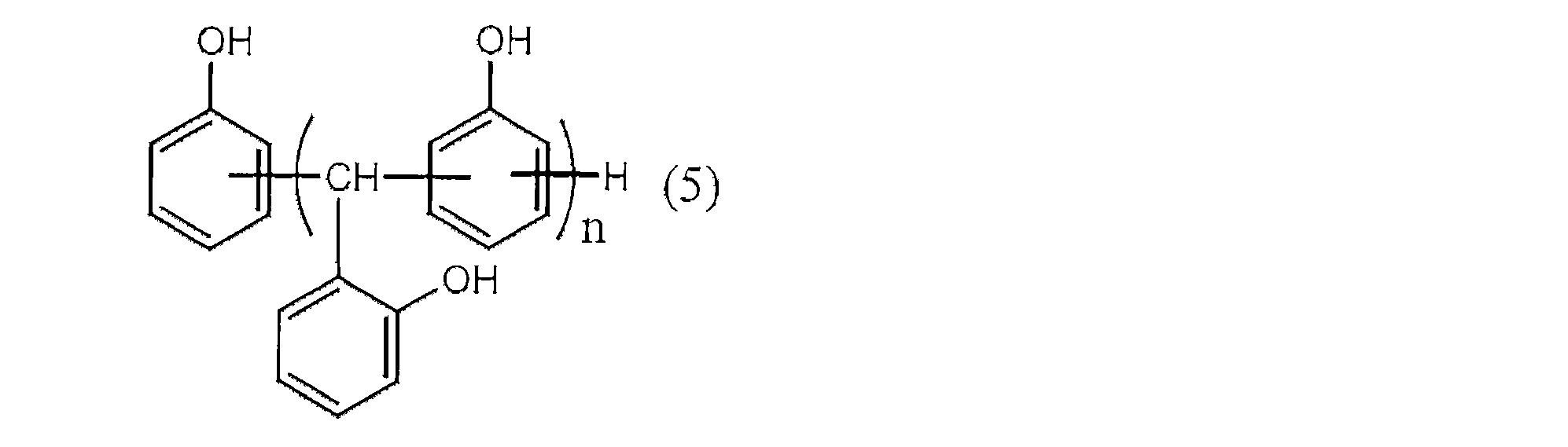
(式中nは平均値であり1~10の数を示す。)
実施例4
撹拌機、還流冷却管、撹拌装置を備えたフラスコに、窒素パージを施しながら、ジメチルスルホキシド900重量部、下記式(6)で表されるα,α-ビス(4-ヒドロキシフェニル)-4-(4-ヒドロキシ-α,α-ジメチルベンジル)-エチルベンゼン(以下、「TPPA」と表す。本州化学工業製 TrisP-PA)494重量部、メタリルクロライド(純度99% 東京化成工業製)349重量部(フェノール樹脂の水酸基1モル当量に対し、1.1モル当量)を加え、27℃に昇温し溶解させた。次いで苛性ソーダ(純度 99% 東ソー製)154.0重量部(フェノール樹脂の水酸基1モル当量に対し、1.1モル当量)及び水70重量部を60分かけて添加した。そのまま30~35℃で4時間、40~45℃で1時間、60~65℃で1時間反応を行った。
反応終了後、ロータリーエバポレータにて120℃以下で加熱減圧下、水やジメチルスルホキシド等を留去した。そして、メチルイソブチルケトン950重量部を加え、水洗を繰り返し、水層が中性になったことを確認した。その後油層からロータリーエバポレータを用いて、減圧下、窒素バブリングしながら溶剤類を留去することで、メタリルエーテル樹脂(以下、「TPPA-ME」と表す)665重量部を得た。
得られたTPPA-ME200重量部を反応容器に仕込み、系内の真空度を-730mmHgにし、撹拌しながら加熱し、200℃で5時間反応させクライゼン転位させることにより、メタリル化されたTPPA(以下、「TMPPA」と表す)199重量部を得た。得られたTMPPAの軟化点は60℃、150℃における溶融粘度は0.075Pa・s、前記式(1)のYの総数に対してメタリル基は97%であった。
撹拌機、還流冷却管、撹拌装置を備えたフラスコに、窒素パージを施しながら、ジメチルスルホキシド900重量部、下記式(6)で表されるα,α-ビス(4-ヒドロキシフェニル)-4-(4-ヒドロキシ-α,α-ジメチルベンジル)-エチルベンゼン(以下、「TPPA」と表す。本州化学工業製 TrisP-PA)494重量部、メタリルクロライド(純度99% 東京化成工業製)349重量部(フェノール樹脂の水酸基1モル当量に対し、1.1モル当量)を加え、27℃に昇温し溶解させた。次いで苛性ソーダ(純度 99% 東ソー製)154.0重量部(フェノール樹脂の水酸基1モル当量に対し、1.1モル当量)及び水70重量部を60分かけて添加した。そのまま30~35℃で4時間、40~45℃で1時間、60~65℃で1時間反応を行った。
反応終了後、ロータリーエバポレータにて120℃以下で加熱減圧下、水やジメチルスルホキシド等を留去した。そして、メチルイソブチルケトン950重量部を加え、水洗を繰り返し、水層が中性になったことを確認した。その後油層からロータリーエバポレータを用いて、減圧下、窒素バブリングしながら溶剤類を留去することで、メタリルエーテル樹脂(以下、「TPPA-ME」と表す)665重量部を得た。
得られたTPPA-ME200重量部を反応容器に仕込み、系内の真空度を-730mmHgにし、撹拌しながら加熱し、200℃で5時間反応させクライゼン転位させることにより、メタリル化されたTPPA(以下、「TMPPA」と表す)199重量部を得た。得られたTMPPAの軟化点は60℃、150℃における溶融粘度は0.075Pa・s、前記式(1)のYの総数に対してメタリル基は97%であった。
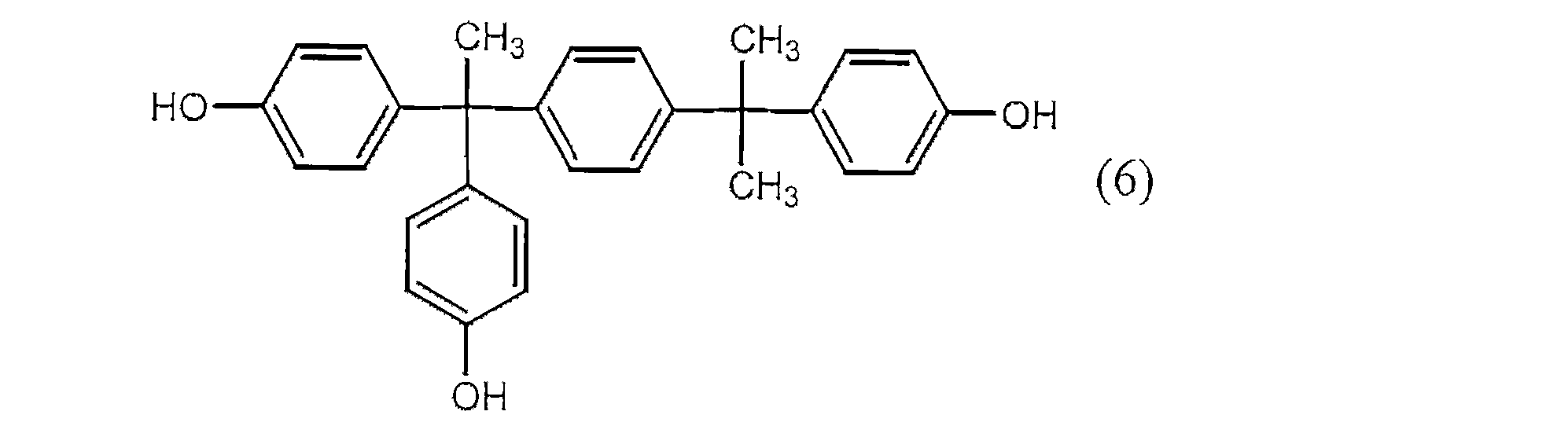
実施例5
撹拌機、還流冷却管、撹拌装置を備えたフラスコに、窒素パージを施しながら、ジメチルスルホキシド900重量部、下記式(7)で表されるフェノール化合物(以下、「PPPBP」と表す。)492重量部、メタリルクロライド(純度99% 東京化成工業製)249重量部(フェノール樹脂の水酸基1モル当量に対し、1.1モル当量)を加え、27℃に昇温し溶解させた。次いで苛性ソーダ(純度 99% 東ソー製)111.1重量部(フェノール化合物の水酸基1モル当量に対し、1.1モル当量)及び水70重量部を60分かけて添加した。そのまま30~35℃で4時間、40~45℃で1時間、60~65℃で1時間反応を行った。
反応終了後、ロータリーエバポレータにて120℃以下で加熱減圧下、水やジメチルスルホキシド等を留去した。そして、メチルイソブチルケトン1500重量部を加え、冷却して結晶を析出させた。結晶をろ過し乾燥することでメタリルエーテル化合物(以下、「PPPBP-ME」と表す)353重量部を得た。
得られたPPPBP-ME200重量部を反応容器に仕込み、系内の真空度を-730mmHgにし、撹拌しながら加熱し、200℃で5時間反応させクライゼン転位させることにより、メタリル化されたPPPBP(以下、「PPPBMP」と表す)197重量部を得た。得られたPPPBMPの軟化点は120℃、前記式(1)のYの総数に対してメタリル基は98%であった。
撹拌機、還流冷却管、撹拌装置を備えたフラスコに、窒素パージを施しながら、ジメチルスルホキシド900重量部、下記式(7)で表されるフェノール化合物(以下、「PPPBP」と表す。)492重量部、メタリルクロライド(純度99% 東京化成工業製)249重量部(フェノール樹脂の水酸基1モル当量に対し、1.1モル当量)を加え、27℃に昇温し溶解させた。次いで苛性ソーダ(純度 99% 東ソー製)111.1重量部(フェノール化合物の水酸基1モル当量に対し、1.1モル当量)及び水70重量部を60分かけて添加した。そのまま30~35℃で4時間、40~45℃で1時間、60~65℃で1時間反応を行った。
反応終了後、ロータリーエバポレータにて120℃以下で加熱減圧下、水やジメチルスルホキシド等を留去した。そして、メチルイソブチルケトン1500重量部を加え、冷却して結晶を析出させた。結晶をろ過し乾燥することでメタリルエーテル化合物(以下、「PPPBP-ME」と表す)353重量部を得た。
得られたPPPBP-ME200重量部を反応容器に仕込み、系内の真空度を-730mmHgにし、撹拌しながら加熱し、200℃で5時間反応させクライゼン転位させることにより、メタリル化されたPPPBP(以下、「PPPBMP」と表す)197重量部を得た。得られたPPPBMPの軟化点は120℃、前記式(1)のYの総数に対してメタリル基は98%であった。
比較合成例1
実施例1において、メタリルクロライド250重量部をアリルクロライド211重量部に変えた以外は同様の操作を行い、アリル化されたBPN(以下、「BAPN」と表す)を得た。
実施例1において、メタリルクロライド250重量部をアリルクロライド211重量部に変えた以外は同様の操作を行い、アリル化されたBPN(以下、「BAPN」と表す)を得た。
比較合成例2
実施例2において、メタリルクロライド272重量部をアリルクロライド230重量部に変えた以外は同様の操作を行い、アリル化されたPXLC(以下、「APXLC」と表す)を得た。
実施例2において、メタリルクロライド272重量部をアリルクロライド230重量部に変えた以外は同様の操作を行い、アリル化されたPXLC(以下、「APXLC」と表す)を得た。
比較合成例3
実施例3において、メタリルクロライド349重量部をアリルクロライド295重量部に変えた以外は同様の操作を行い、アリル化されたTPM(以下、「TAPM」と表す)を得た。
実施例3において、メタリルクロライド349重量部をアリルクロライド295重量部に変えた以外は同様の操作を行い、アリル化されたTPM(以下、「TAPM」と表す)を得た。
比較合成例4
実施例4において、メタリルクロライド349重量部をアリルクロライド295重量部に変えた以外は同様の操作を行い、アリル化されたTPPA(以下、「TAPPA」と表す)を得た。
実施例4において、メタリルクロライド349重量部をアリルクロライド295重量部に変えた以外は同様の操作を行い、アリル化されたTPPA(以下、「TAPPA」と表す)を得た。
比較合成例5
実施例5において、メタリルクロライド249重量部をアリルクロライド210重量部に変えた以外は同様の操作を行い、アリル化されたPPPBP(以下、「PPPBAP」と表す)を得た。
実施例5において、メタリルクロライド249重量部をアリルクロライド210重量部に変えた以外は同様の操作を行い、アリル化されたPPPBP(以下、「PPPBAP」と表す)を得た。
実施例6~10、比較例6~10
実施例及び比較合成例で得られたメタリル基含有樹脂、アリル基含有樹脂、マレイミド(MIR-3000 日本化薬社製)を表1の割合(重量部)で配合し、加熱・溶融混合後、注型し200℃で1時間、230℃で1時間かけて硬化させた。このようにして得られた硬化物の物性を以下の項目について測定した結果を表1に示す。
実施例及び比較合成例で得られたメタリル基含有樹脂、アリル基含有樹脂、マレイミド(MIR-3000 日本化薬社製)を表1の割合(重量部)で配合し、加熱・溶融混合後、注型し200℃で1時間、230℃で1時間かけて硬化させた。このようにして得られた硬化物の物性を以下の項目について測定した結果を表1に示す。
・ 耐熱性評価
ガラス転移温度:動的粘弾性試験機により測定し、tanδが最大値のときの温度。
・ 吸湿性評価
吸湿率:121℃/100%での24時間後の重量増加率。試験片は直径50mm×厚み4mmの円盤。
・誘電率及び誘電正接:(空洞共振機 Agilent Technologies社製)K6991に準拠して1GHzにおいて測定。
ガラス転移温度:動的粘弾性試験機により測定し、tanδが最大値のときの温度。
・ 吸湿性評価
吸湿率:121℃/100%での24時間後の重量増加率。試験片は直径50mm×厚み4mmの円盤。
・誘電率及び誘電正接:(空洞共振機 Agilent Technologies社製)K6991に準拠して1GHzにおいて測定。
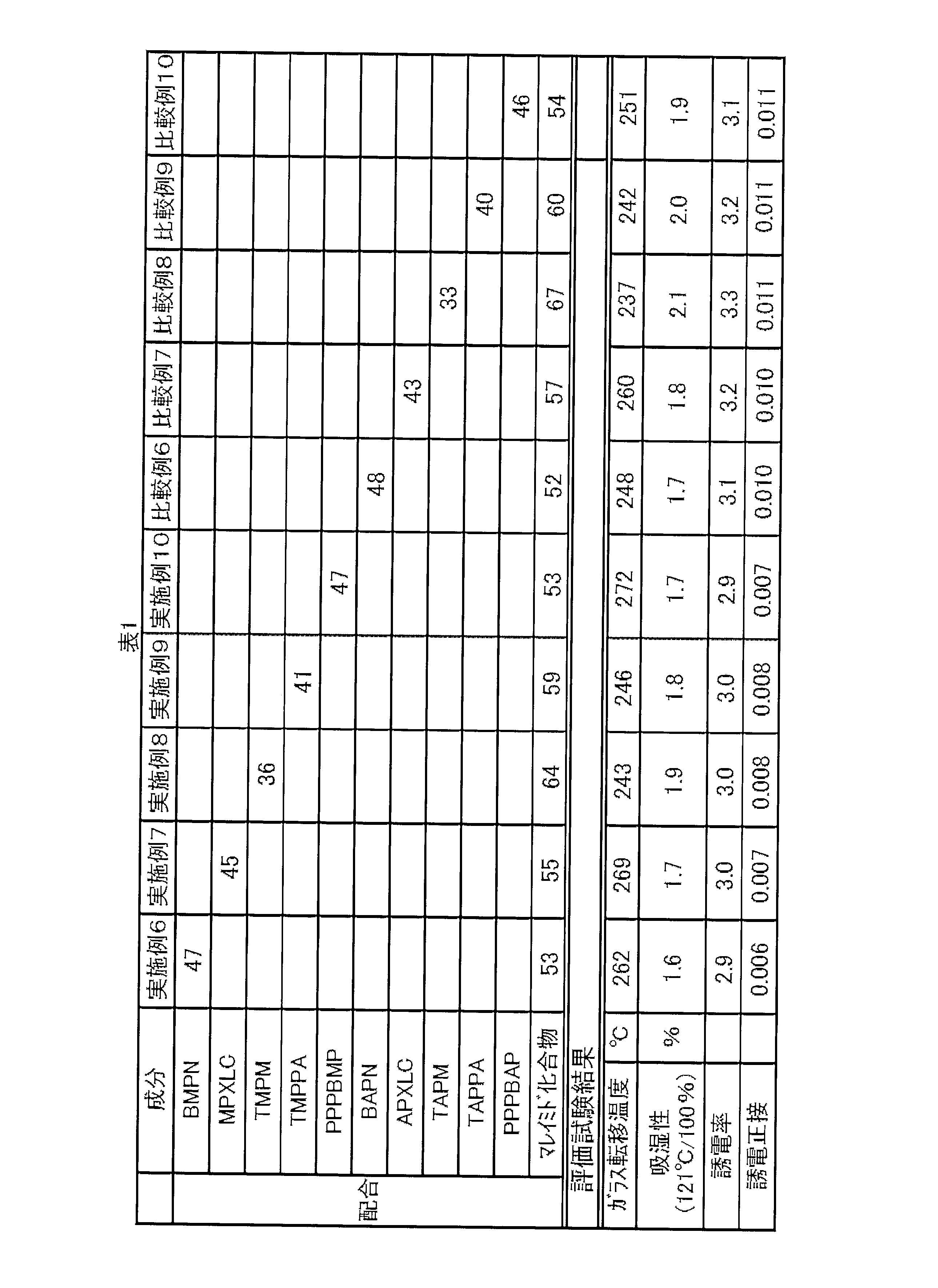
表1から、本件発明のメタリル基含有樹脂を用いた組成物の硬化物は、比較例のアリル基含有樹脂に比べて、優れた耐熱性(耐半田リフロー性)、優れた低吸湿性(低吸水性)、誘電特性を示すことが確認できる。
本発明を特定の態様を参照して詳細に説明したが、本発明の精神と範囲を離れることなく様々な変更および修正が可能であることは、当業者にとって明らかである。
なお、本出願は、2017年4月27日付で出願された日本国特許出願(特願2017-087999)に基づいており、その全体が引用により援用される。また、ここに引用されるすべての参照は全体として取り込まれる。
なお、本出願は、2017年4月27日付で出願された日本国特許出願(特願2017-087999)に基づいており、その全体が引用により援用される。また、ここに引用されるすべての参照は全体として取り込まれる。
本発明のメタリル基含有樹脂は、電気電子部品用絶縁材料(高信頼性半導体封止材料など)及び積層板(プリント配線板、BGA用基板、ビルドアップ基板など)、接着剤(導電性接着剤など)やCFRPを始めとする各種複合材料用、塗料等の用途に有用である。
Claims (5)
- 下記式(1)で表されるメタリル基含有樹脂。
- 請求項1に記載のメタリル基含有樹脂を含有する硬化性樹脂組成物。
- ラジカル重合開始剤を含有する請求項2に記載の硬化性樹脂組成物。
- マレイミド化合物を含有する請求項2又は請求項3に記載の硬化性樹脂組成物。
- 請求項2~請求項4のいずれか一項に記載の硬化性樹脂組成物を硬化した硬化物。
Priority Applications (1)
| Application Number | Priority Date | Filing Date | Title |
|---|---|---|---|
| JP2019514570A JP6979746B2 (ja) | 2017-04-27 | 2018-04-25 | メタリル基含有樹脂、硬化性樹脂組成物およびその硬化物 |
Applications Claiming Priority (2)
| Application Number | Priority Date | Filing Date | Title |
|---|---|---|---|
| JP2017087999 | 2017-04-27 | ||
| JP2017-087999 | 2017-04-27 |
Publications (1)
| Publication Number | Publication Date |
|---|---|
| WO2018199156A1 true WO2018199156A1 (ja) | 2018-11-01 |
Family
ID=63918459
Family Applications (1)
| Application Number | Title | Priority Date | Filing Date |
|---|---|---|---|
| PCT/JP2018/016783 Ceased WO2018199156A1 (ja) | 2017-04-27 | 2018-04-25 | メタリル基含有樹脂、硬化性樹脂組成物およびその硬化物 |
Country Status (3)
| Country | Link |
|---|---|
| JP (1) | JP6979746B2 (ja) |
| TW (1) | TWI754743B (ja) |
| WO (1) | WO2018199156A1 (ja) |
Families Citing this family (1)
| Publication number | Priority date | Publication date | Assignee | Title |
|---|---|---|---|---|
| CN113372521B (zh) * | 2020-03-10 | 2023-11-21 | 山东圣泉新材料股份有限公司 | 一种改性酚醛树脂及其制备方法和其作为增粘树脂的应用 |
Citations (10)
| Publication number | Priority date | Publication date | Assignee | Title |
|---|---|---|---|---|
| JPH05186382A (ja) * | 1992-01-08 | 1993-07-27 | Toagosei Chem Ind Co Ltd | メタリルフェノール化合物 |
| JPH05230368A (ja) * | 1992-02-19 | 1993-09-07 | Toagosei Chem Ind Co Ltd | 熱硬化性樹脂組成物 |
| JPH05239155A (ja) * | 1992-02-28 | 1993-09-17 | Toagosei Chem Ind Co Ltd | 低粘度熱硬化性樹脂組成物 |
| JPH07268078A (ja) * | 1994-03-31 | 1995-10-17 | Toagosei Co Ltd | 耐熱性樹脂硬化物の製造方法 |
| JPH07268068A (ja) * | 1994-04-04 | 1995-10-17 | Toagosei Co Ltd | 耐熱性樹脂硬化物の製造方法 |
| JPH07268074A (ja) * | 1994-03-31 | 1995-10-17 | Toagosei Co Ltd | 熱硬化性樹脂組成物 |
| JPH07330831A (ja) * | 1994-06-14 | 1995-12-19 | Toagosei Co Ltd | 樹脂組成物 |
| JPH09188666A (ja) * | 1995-11-23 | 1997-07-22 | Ciba Geigy Ag | ビス(レソルシニル)トリアジン |
| JP2002356668A (ja) * | 2001-05-30 | 2002-12-13 | Fuji Photo Film Co Ltd | 紫外線吸収剤及びその製造方法、紫外線吸収剤を含有する組成物、ならびに画像形成方法 |
| JP2014040358A (ja) * | 2012-08-24 | 2014-03-06 | Nippon Paper Industries Co Ltd | セメント混和剤およびこれを用いたセメント組成物 |
-
2018
- 2018-04-25 JP JP2019514570A patent/JP6979746B2/ja active Active
- 2018-04-25 WO PCT/JP2018/016783 patent/WO2018199156A1/ja not_active Ceased
- 2018-04-27 TW TW107114390A patent/TWI754743B/zh active
Patent Citations (10)
| Publication number | Priority date | Publication date | Assignee | Title |
|---|---|---|---|---|
| JPH05186382A (ja) * | 1992-01-08 | 1993-07-27 | Toagosei Chem Ind Co Ltd | メタリルフェノール化合物 |
| JPH05230368A (ja) * | 1992-02-19 | 1993-09-07 | Toagosei Chem Ind Co Ltd | 熱硬化性樹脂組成物 |
| JPH05239155A (ja) * | 1992-02-28 | 1993-09-17 | Toagosei Chem Ind Co Ltd | 低粘度熱硬化性樹脂組成物 |
| JPH07268078A (ja) * | 1994-03-31 | 1995-10-17 | Toagosei Co Ltd | 耐熱性樹脂硬化物の製造方法 |
| JPH07268074A (ja) * | 1994-03-31 | 1995-10-17 | Toagosei Co Ltd | 熱硬化性樹脂組成物 |
| JPH07268068A (ja) * | 1994-04-04 | 1995-10-17 | Toagosei Co Ltd | 耐熱性樹脂硬化物の製造方法 |
| JPH07330831A (ja) * | 1994-06-14 | 1995-12-19 | Toagosei Co Ltd | 樹脂組成物 |
| JPH09188666A (ja) * | 1995-11-23 | 1997-07-22 | Ciba Geigy Ag | ビス(レソルシニル)トリアジン |
| JP2002356668A (ja) * | 2001-05-30 | 2002-12-13 | Fuji Photo Film Co Ltd | 紫外線吸収剤及びその製造方法、紫外線吸収剤を含有する組成物、ならびに画像形成方法 |
| JP2014040358A (ja) * | 2012-08-24 | 2014-03-06 | Nippon Paper Industries Co Ltd | セメント混和剤およびこれを用いたセメント組成物 |
Also Published As
| Publication number | Publication date |
|---|---|
| TWI754743B (zh) | 2022-02-11 |
| JPWO2018199156A1 (ja) | 2020-03-12 |
| TW201900712A (zh) | 2019-01-01 |
| JP6979746B2 (ja) | 2021-12-15 |
Similar Documents
| Publication | Publication Date | Title |
|---|---|---|
| KR20210056996A (ko) | 말레이미드 수지, 경화성 수지 조성물 및 그 경화물 | |
| TWI833906B (zh) | 硬化性樹脂組成物 | |
| WO2016208667A1 (ja) | エポキシ樹脂組成物およびその硬化物 | |
| CN111918889B (zh) | 含烯基化合物、固化性树脂组合物及其固化物 | |
| JP6963565B2 (ja) | アルケニル基含有樹脂、硬化性樹脂組成物およびその硬化物 | |
| CN106084184A (zh) | 组合物、环氧树脂固化剂、环氧树脂组合物、热固性组合物、固化物、半导体装置以及层间绝缘材料 | |
| JP6715249B2 (ja) | エポキシ樹脂、変性エポキシ樹脂、エポキシ樹脂組成物およびその硬化物 | |
| KR102677273B1 (ko) | 경화성 수지 조성물 | |
| JP6979746B2 (ja) | メタリル基含有樹脂、硬化性樹脂組成物およびその硬化物 | |
| JP7268256B1 (ja) | エポキシ樹脂、硬化性樹脂組成物、およびその硬化物 | |
| WO2019198607A1 (ja) | アルケニル基含有化合物、硬化性樹脂組成物及びその硬化物 | |
| KR102890722B1 (ko) | 에폭시 수지, 경화성 수지 조성물 및 그 경화물 | |
| WO2023068089A1 (ja) | フェノール樹脂、エポキシ樹脂、硬化性樹脂組成物、およびその硬化物 | |
| CN112105673B (zh) | 具有n-烷基的芳香族胺树脂、硬化性树脂组合物及其硬化物 | |
| KR102787186B1 (ko) | 에폭시 수지, 경화성 수지 조성물, 및 그 경화물 | |
| JP2022025527A (ja) | マレイミド樹脂、硬化性樹脂組成物およびその硬化物 | |
| TWI864369B (zh) | 環氧樹脂及其製造方法、硬化性樹脂組成物、及其硬化物 | |
| JP2025118710A (ja) | エポキシ樹脂、硬化性樹脂組成物、およびその硬化物 | |
| TW202438551A (zh) | 環氧樹脂、硬化性樹脂組成物、及硬化性樹脂組成物的硬化物 |
Legal Events
| Date | Code | Title | Description |
|---|---|---|---|
| 121 | Ep: the epo has been informed by wipo that ep was designated in this application |
Ref document number: 18791803 Country of ref document: EP Kind code of ref document: A1 |
|
| ENP | Entry into the national phase |
Ref document number: 2019514570 Country of ref document: JP Kind code of ref document: A |
|
| NENP | Non-entry into the national phase |
Ref country code: DE |
|
| 122 | Ep: pct application non-entry in european phase |
Ref document number: 18791803 Country of ref document: EP Kind code of ref document: A1 |