WO2018159818A1 - 燃料用ペレット及び燃料用ペレットの製造方法、固形バイオマス燃料の製造方法、ハラール肥料の製造方法、バイオマス改質炭及びバイオマス改質炭の製造方法、水素の製造方法並びに藻類産生油の製造方法 - Google Patents
燃料用ペレット及び燃料用ペレットの製造方法、固形バイオマス燃料の製造方法、ハラール肥料の製造方法、バイオマス改質炭及びバイオマス改質炭の製造方法、水素の製造方法並びに藻類産生油の製造方法 Download PDFInfo
- Publication number
- WO2018159818A1 WO2018159818A1 PCT/JP2018/008037 JP2018008037W WO2018159818A1 WO 2018159818 A1 WO2018159818 A1 WO 2018159818A1 JP 2018008037 W JP2018008037 W JP 2018008037W WO 2018159818 A1 WO2018159818 A1 WO 2018159818A1
- Authority
- WO
- WIPO (PCT)
- Prior art keywords
- palm
- fuel
- biomass
- semi
- oil
- Prior art date
- Legal status (The legal status is an assumption and is not a legal conclusion. Google has not performed a legal analysis and makes no representation as to the accuracy of the status listed.)
- Ceased
Links
Images










Classifications
-
- C—CHEMISTRY; METALLURGY
- C10—PETROLEUM, GAS OR COKE INDUSTRIES; TECHNICAL GASES CONTAINING CARBON MONOXIDE; FUELS; LUBRICANTS; PEAT
- C10L—FUELS NOT OTHERWISE PROVIDED FOR; NATURAL GAS; SYNTHETIC NATURAL GAS OBTAINED BY PROCESSES NOT COVERED BY SUBCLASSES C10G OR C10K; LIQUIFIED PETROLEUM GAS; USE OF ADDITIVES TO FUELS OR FIRES; FIRE-LIGHTERS
- C10L5/00—Solid fuels
- C10L5/40—Solid fuels essentially based on materials of non-mineral origin
- C10L5/44—Solid fuels essentially based on materials of non-mineral origin on vegetable substances
-
- Y—GENERAL TAGGING OF NEW TECHNOLOGICAL DEVELOPMENTS; GENERAL TAGGING OF CROSS-SECTIONAL TECHNOLOGIES SPANNING OVER SEVERAL SECTIONS OF THE IPC; TECHNICAL SUBJECTS COVERED BY FORMER USPC CROSS-REFERENCE ART COLLECTIONS [XRACs] AND DIGESTS
- Y02—TECHNOLOGIES OR APPLICATIONS FOR MITIGATION OR ADAPTATION AGAINST CLIMATE CHANGE
- Y02E—REDUCTION OF GREENHOUSE GAS [GHG] EMISSIONS, RELATED TO ENERGY GENERATION, TRANSMISSION OR DISTRIBUTION
- Y02E50/00—Technologies for the production of fuel of non-fossil origin
- Y02E50/10—Biofuels, e.g. bio-diesel
-
- Y—GENERAL TAGGING OF NEW TECHNOLOGICAL DEVELOPMENTS; GENERAL TAGGING OF CROSS-SECTIONAL TECHNOLOGIES SPANNING OVER SEVERAL SECTIONS OF THE IPC; TECHNICAL SUBJECTS COVERED BY FORMER USPC CROSS-REFERENCE ART COLLECTIONS [XRACs] AND DIGESTS
- Y02—TECHNOLOGIES OR APPLICATIONS FOR MITIGATION OR ADAPTATION AGAINST CLIMATE CHANGE
- Y02E—REDUCTION OF GREENHOUSE GAS [GHG] EMISSIONS, RELATED TO ENERGY GENERATION, TRANSMISSION OR DISTRIBUTION
- Y02E50/00—Technologies for the production of fuel of non-fossil origin
- Y02E50/30—Fuel from waste, e.g. synthetic alcohol or diesel
Definitions
- the present invention relates to a method for producing fuel pellets used as combustion fuel for boilers and the like, and a method for producing fuel pellets.
- Method biomass-modified coal using unused (surplus) biomass derived from lignite and palm industry and its manufacturing method, method for producing hydrogen using biomass resources such as wood waste in palm palm industry, and unprocessed in palm palm industry
- the present invention relates to a method for producing algae-producing oil using biomass resources of used waste.
- This application is filed in Japanese Patent Application Nos. 2017-039481, No. 2017-039482 and No. 2017-039483, filed in Japan on March 2, 2017, and Japanese Patent Application No. 2017-039483, filed in Japan on July 28, 2017.
- Coal is generally classified into anthracite, bituminous coal, subbituminous coal, and lignite in descending order of calorific value.
- Brown coal a low-grade coal with a low degree of carbonization, has a large reserve worldwide.
- Indonesia is a country with a large amount of lignite reserves worldwide.
- lignite has a high moisture content, and its calorific value is low when used as fuel as it is.
- lignite contains many functional groups that may spontaneously ignite due to chemical changes with oxygen in the air. For this reason, long-distance transportation is difficult, and the use of lignite as a fuel is limited to the vicinity of the production area.
- Patent Document 1 after drying low-grade coal such as lignite A method for producing modified coal is disclosed in which ash is removed to produce deashed dry coal, and this deashed dry coal is dry-distilled to obtain deashed dry coal that is a modified coal.
- a low-grade coal such as lignite is pulverized, stored in a silo and dried, and the dried product and oil are mixed to remove water to produce a dehydrated slurry.
- a method for producing modified coal is disclosed in which oil is separated from the dewatered slurry to produce a cake, and the cake is dried using an inert gas and then shaped to obtain a modified coal.
- a low-grade coal such as brown coal and solvent oil are mixed and dehydrated by heating to produce a dehydrated slurry, and oil is separated from the dehydrated slurry to obtain a cake.
- a method for producing modified coal in which dehydrated coal is produced by heating the cake, and the denatured coal and pulverized coal obtained by pulverizing low-grade coal are mixed and molded.
- Palm palm can collect fats and oils from fresh fruit bunches (FFB: Fresh Fruit Bunch) and palm palm nuclei, and is cultivated for the purpose of producing such fats and oils. Palm coconuts have a very large amount of oils and fats per unit area, even among plants, and large-scale cultivation (plantation agriculture) is being carried out as a commercial crop, especially in Indonesia and Malaysia.
- FFB Fresh Fruit Bunch
- “Arecares Bromhead” is a plant belonging to the monocotyledonous palm family, and there are about 3300 or more species mainly in the tropical region.
- palm coconut (Elaeis) is a species cultivated mainly for the purpose of producing coconut oil.
- Palm palm is a general term for plants classified into the genus Palmyra, two species of American palm (Elaeis oleifera) native to tropical regions of Central and South America and Guinea oil palm (Elaeis guineensis) native to West Africa are known. ing.
- Palm oil is obtained from the pulp (mesocarp)
- palm kernel oil is obtained from the palm palm core at the center.
- the quality of palm oil and palm kernel oil is different. Palm oil is mainly used for cooking, and palm kernel oil is mainly used for processed foods.
- palm oil and palm kernel oil have been used as biomass fuel. As a substitute for diesel fuel.
- PKS palm coconut shell
- the supply of thinned wood, which is a biomass raw material (resource) tends to be insufficient, and the amount of palm coconut shell (PKS) used tends to increase.
- palm palm trees are cut down and replanted to new trees when the age is about 20 to 25 years because the economy is low.
- an old palm tree OPT
- the generation amount of this old palm tree (OPT) is about three times that of palm coconut shell (PKS).
- PPS palm coconut shell
- the organization since the organization is fragile, it is not suitable for normal use of wood, and only a part of the outermost layer is used as a plywood material.
- produces with the age of a palm palm tree, there exists a possibility that a supply amount may vary according to a year.
- Patent Documents 4 to 6 for example, there is a technique for producing bioethanol and lactic acid from sugar contained in the obtained sap by squeezing old palm tree (OPT). Proposed.
- palm branches and leaves are harvested when harvesting palm palm bunches, and two palm branches and leaves are harvested when harvesting one fruit tress. Since this palm branch and leaf (OPF) has a weak tissue and a high water content of about 77%, it has no intended use and is currently left in a farm. At local farms, it is used as a snake slaughterhouse for extermination of wild mice as a countermeasure against wild rats aiming at the fruit bunches of palm palms.
- this palm branch and leaf (OPF) is about 10 times the amount of palm coconut shell (PKS), and it is required to use the palm branch and leaf (OPF) effectively.
- PPS palm coconut shell
- palm branches and leaves (OPF) can be supplied stably throughout the year, so that it is possible to obtain a great effect by using it as biomass fuel. .
- Palm palm wastewater which is discharged in large quantities from the palm oil production process, is mostly treated in open lagoons in the producing country, and atmospheric emissions of methane (biogas containing methane) are released into the atmosphere. And there is a problem in terms of water pollution, and the EU and others are demanding improvements from the producing countries.
- palm palm wastewater In palm oil production plants, palm palm wastewater (POME) is processed by a fermentation system, and the use of energy generated by using the obtained biogas as fuel has started in some palm oil production plants. For example, as a greenhouse gas reduction effect, approximately 22,000 tons / day of CO 2 can be reduced per palm oil production plant, and environmental load reduction by improving wastewater treatment capacity can be achieved per palm oil production plant. BOD of about 18t / year is reduced.
- the principle of such PTG technology is very simple, and electric power from renewable energy is used to electrically decompose water into hydrogen and oxygen.
- the obtained hydrogen can be converted into electricity or directly used as fuel.
- the conversion of electric power to hydrogen has some energy loss but is effective for one purpose.
- Electric power from renewable energy can be stored as hydrogen with abundant energy, and methane gas can be obtained from carbon as required.
- Existing gas infrastructure can be used for transport and storage to some extent.
- algae-producing oil green oil
- oils and fats such as hydrocarbons in hydrocarbon-producing algae
- Cyanobacteria also called cyanobacteria, are prokaryotes (bacteria) that do not have a nucleus. Later, one of the cyanobacteria incorporated into the cells of eukaryotes (organisms with nuclei) became the origin of chloroplasts today. The progeny of this first eukaryotic photosynthetic organism (primary plant) were taken up by yet another eukaryotic organism, and multiple photosynthetic organisms (secondary plants) were born. In other words, algae is a general term for photosynthetic organisms with completely different origins, and includes prokaryotes (cyanobacteria) and multistrain eukaryotes (red algae, brown algae, green algae, etc.).
- algae have common properties such as photosynthesis and aquatic organisms. Many algae are unicellular (hereinafter, unicellular algae are referred to as microalgae), and many of them have a high growth rate and are easy to culture. Many algae having these properties belong to cyanobacteria or green algae and have been studied in relation to biofuel production.
- microalgae have been attracting a great deal of attention as a biofuel for the following reasons.
- Some biomass productivity per unit time / unit area is several to several tens of times that of higher plants.
- Algae can be cultured using land and water areas that are not suitable as arable land. That is, it can be produced as a biofuel derived from the palm industry that does not compete with food production.
- the reason for the high cost of biofuel production from microalgae is that the technology that can handle inexpensive large-scale production is immature in all the series of processes from culture to fuel production.
- the technology for mass culture of microalgae has added value such as bioactive substances that have the property that in-vivo chemicals act on specific physiological regulation functions of the living body. It has been developed for commercial production of high-quality substances.
- the “vertical panel type” culture device irradiates the microalgae with a fluorescent lamp from the side of the vertical microalgae culture panel.
- Algal biomass production becomes possible.
- the energy consumption required for the operation of the culture apparatus is large, it is difficult to divert it to inexpensive biofuel production.
- Membrane separation has attracted attention in recent years, but there are problems of clogging and deterioration, and the method of recovering solids by dehydration after concentrating using a flocculant seems to be the most advantageous from the viewpoint of cost. There are also problems such as difficulty in finding harmless flocculants.
- next-generation biofuels has been raised as follows. (1) It has been pointed out that the recent increase in biofuel production has led to competition with the food supply that was the traditional destination for agricultural products. In order to solve the problem of competition with food, we will move away from the “first generation biotechnology” in which agricultural products with high sugar content are fermented to produce biofuel, and we use cellulosic raw materials that do not compete with food such as straw. In addition to fermentation, early commercialization of “second-generation biotechnology” that produces biofuels using completely new chemical technology that utilizes a new enzyme as a catalyst is required. If competition between biofuels and foods accelerates and the amount of foods used decreases, not only will international agricultural prices rise, but food shortages may also occur in food importing countries such as developing countries. The problem of having a great impact on food security in each country also arises.
- Green oil is an oil called “neutral lipid” having properties similar to palm oil and the like produced by extracting “oils” accumulated by microalgae in the body. Green oil has two advantages over other biofuels. The first is that algae can be cultivated on uncultivated land and will not compete with food agriculture. The second is to be expected as a new raw material due to the high growth rate. To make green oil, first cultivate algae that accumulate oil. After collecting the grown algae for a certain period of time, extract the oil in the body with an organic solvent. What remains after evaporation of the organic solvent is crude oil. When this crude oil is refined, it can be used as a fuel or industrial raw material.
- Palm palm wastewater (POME) discharged from the palm oil industry It is considered to use palm palm wastewater (POME) discharged from the palm oil industry to grow such algae.
- Palm insulator drainage (POME) is usually discharged after being subjected to drainage treatment by a vast and simple open lagoon palm insulator drainage system.
- the palm palm wastewater has a high temperature of 70-80 ° C, so this palm palm wastewater was cooled to about 40 ° C in a cooling pond, and the palm palm wastewater from this cooling pond was returned to the anaerobic pond in the subsequent stage in the mixing pond.
- the palm palm drainage from this mixing pond is mainly anaerobic biological treatment in the deep anaerobic pond, and the palm palm drainage from this anaerobic pond is mainly aerobic biological treatment in the shallow aerobic pond. Methane gas is released during the treatment in the pond. And if a series of processing is performed, it will introduce into a sedimentation basin (buffer pond), and will drain a supernatant as processing water in the latter part.
- any of the conventional techniques has a problem that the BOD (Biological Oxygen Demand) component and the SS (Suspended Solid) component cannot be sufficiently reduced.
- the BOD component is not sufficiently reduced by the aerobic biological treatment, and the SS component is not sufficiently reduced.
- the drainage standards for palm oil factories are currently BOD components: less than 100 mg / L and SS components: less than 400 mg / L, but in the future, more stringent standards (for example, BOD components) : Less than 20 mg / L, SS component: less than 200 mg / L), and it is difficult to satisfy such a standard with existing equipment.
- Japanese Unexamined Patent Publication No. 2015-30737 A) Japanese Patent No. 6026367 (B) Japanese Unexamined Patent Publication No. 2015-218271 (A) Japanese Patent No. 4065960 (B) Japanese Patent No. 4418871 (B) Japanese Patent No. 4665257 (B)
- palm branches and leaves for example, when producing solid biofuel and the like using palm branches and leaves (OPF) as a raw material, a squeezed juice containing sugar as in sugarcane is obtained in the squeezing process, Also, in the process of collecting palm oil and palm kernel oil from palm palm, when the crude palm oil is washed with water and then subjected to oil-water separation, a large amount of palm palm drainage (POME: Paim Oil Mill Effect) ) Occurs.
- OPF palm branches and leaves
- Palm palm wastewater (POME) generated by processing palm palm is discharged from a large treatment pond called a lagoon into a river or the like, and the water pollution problem of the river is becoming apparent.
- the depth of the pond is important for the maintenance of the vast lagoon, and sludge treatment measures deposited in the lower layer of the pond are an important issue.
- Palm palm wastewater (POME) still contains a lot of oil, so it is desirable to make effective use of these.
- methane greenhouse gas
- methane greenhouse gas
- CH 4 the global warming coefficient of methane
- the present invention has been made in view of the above-described circumstances, and provides a method for producing a solid biomass fuel and a method for producing a halal fertilizer that effectively uses palm palm wastewater (POME) produced in a palm oil extraction process. Objective.
- the lignite is dried and then carbonized, or the lignite is dried and mixed with oil. Issues that are difficult to implement economically in developing countries, which are the main production areas of lignite, such as costly manufacturing facilities such as deoiling, costly manufacturing processes, and the cost of oil to be added was there.
- the present invention has been made in view of the above-described circumstances, and produces a large amount of low-grade coal such as lignite and surplus energy generated in the production of palm oil in an environment where a large-scale palm insulator industry exists. It is an object of the present invention to provide a biomass-modified coal having a high calorific value, excellent transportability and handling properties, and a method for producing the same, using an unused biomass resource derived from palm industry and lignite.
- methane and bioethanol obtained from renewable energy from unused biomass resources derived from the palm industry have a limited range of use.
- Methane is a typical global warming gas, and there is a concern that it may adversely affect the environment as it is.
- Bioethanol can be used only for limited applications such as automobiles equipped with an ethanol engine. For this reason, it is desired to reform to hydrogen that has a wider industrial application range than methane and bioethanol and has no risk of adversely affecting the environment.
- the present invention has been made in view of the above-described circumstances, and uses methane and bioethanol obtained from energy that can recycle unused biomass resources derived from the palm industry, without consuming external energy.
- An object of the present invention is to provide a method for producing hydrogen using biomass resources that can be neutrally reformed into hydrogen.
- the conventional bioenergy described above has the following problems.
- a large amount of global warming gas (biogas containing methane) is emitted to the atmosphere from the lagoon at Palm Palm Farm.
- MPOB Microlaysia Palm Oil Board
- DOE Department of Environment
- Biofuel production using algae a technology that can cope with inexpensive large-scale production has not yet been developed.
- Biofuel production using algae is difficult to divert to low-cost biofuel production because of the large energy consumption required for the operation of the device. Development of low-cost culture technology is desired.
- Biofuel production using algae has been conventionally performed by centrifugal separation, sedimentation separation using a flocculant, membrane separation, and the like in order to separate algal bodies from the culture solution. Among them, the centrifugal separation in particular consumes a large amount of electric power and requires an operating cost, which leads to an increase in the cost of biofuel production using algae.
- next-generation biofuel production using algae requires a large amount of water resources for culturing algae, when freshwater-derived algae are used, water resources such as drinking water, agricultural water, and industrial water are not available. There are concerns about a decline.
- algae are located at the bottom of the food chain and can be eaten by higher organisms such as plankton.
- Palm insulator wastewater (POME) from a palm oil production plant cannot sufficiently reduce BOD components (biological oxygen demand) and SS components (suspension solids) with conventional facilities using a lagoon. In particular, there is a problem that the BOD component is not sufficiently reduced by the aerobic biological treatment, and the SS component is not sufficiently reduced.
- An object of the present invention is to provide a method for producing algal-producing oil using biomass resources that can be produced at low cost.
- the first aspect of the present invention comprises the following configurations (1) to (6).
- Fuel pellets used as combustion fuel A pellet for fuel comprising a compression-molded body of palm petiole that grows around palm fruit bunches and is semi-carbonized.
- the fuel pellet of this structure is made up of a compression product of palm stalks that grow around the palm coconut bunches. Since the supply amount is large and the supply amount is stable throughout the year, the biomass fuel can be stably supplied. Moreover, it becomes possible to utilize the palm petiole (OPP) which was not used effectively conventionally as biomass fuel.
- OPP palm petiole
- the moisture content of the pellets for combustion can be reduced and the amount of heat per unit weight can be improved although the volatile components are reduced, making it particularly suitable as a biomass fuel. Yes. Furthermore, the surface of the combustion pellets becomes hydrophobic due to the semi-carbonization treatment, and even when it comes into contact with water, the combustion pellets do not easily collapse, and the handling and storage properties are excellent.
- the fuel pellet according to (1) above, wherein the hard glove grindability index (HGI) is in the range of 22 to 50. In this case, the fuel pellets have sufficient hardness, and can be mixed with coal and pulverized. Therefore, the amount of coal used as fossil fuel can be reduced, and the amount of carbon dioxide generated can be reduced.
- HGI hard glove grindability index
- a method for producing pellets for fuel comprising: a pulverizing step for pulverizing; and a pellet forming step of adding palm-derived lignin to the obtained palm leaf pattern pulverized product and compressing and pelletizing the lignin.
- the palm petiole that grows around the palm cocoon fruit fruit is squeezed to obtain sap and squeezed residue, and the resulting squeezed residue is crushed and obtained.
- Palm leaf crushed material is dried, semi-carbonized, and then the semi-carbonized palm leaf crushed material is crushed to a suitable size for pellet production, and the necessary amount of palm-derived lignin is added to palm palm semi-carbonized powder.
- a sap can be extract
- the water content in the state of a pulverized material can be reduced by collecting sap.
- the main components of biomass are cellulose, hemicellulose, and lignin, but the amount of degradation products increases as the thermal decomposition temperature increases.
- the residual is charcoal, and its yield is generally between 10% and 25%.
- water is first evaporated ( ⁇ 110 ° C.), then hemicellulose is decomposed at about 200-260 ° C., cellulose is 240-340 ° C., and lignin is decomposed at 280-500 ° C. Lignin is required for pellet solidification, but lignin, which has the role of solidifying pellets, may be thermally decomposed depending on the temperature conditions of semi-carbonization and carbonization.
- lignin in order to pelletize the semi-carbonized carbide, it is necessary to add lignin separately.
- lignin for example, when pelletizing under the temperature condition of a semi-carbonization temperature of 200 ° C. to 350 ° C., it may be necessary to add lignin at 280 ° C. or higher.
- lignin derived from balm (for example, a powdered material in a petiole portion) can be used. Thereby, self-completed pelletization becomes possible.
- the palm petiole that grows around the palm bunches of palm palm is crushed, and the resulting palm petiole powder is compression molded into pellets, and the resulting compression molded body is obtained.
- the semi-carbonization treatment is performed, the above-described fuel pellets can be manufactured.
- a sap can be extract
- the water content in the state of a pulverized material can be reduced by collecting sap.
- the second aspect of the present invention comprises the following configurations (7) to (12).
- a biofuel manufacturing process for fermenting the juice and producing a biofuel a first energy generating process for generating a first operating energy using the biofuel, and the first operating energy as an energy source.
- a solid palm leaf (OPF), an old palm tree (OPT), or a palm coconut shell (PKS) that has not been effectively used in the past is used.
- OPF solid palm leaf
- PPS palm coconut shell
- the entire palm palm tree can be used effectively.
- palm branches and leaves (OPF) are cut almost twice when harvesting palm fruit bunches, so the supply is large and the supply is stable throughout the year. A stable supply is possible.
- palm branches and leaves (OPF) that have not been effectively used in the past can be used as solid biomass fuel.
- the squeezed liquid containing many sugar components obtained in the squeezing step is fermented to produce biofuel, and the first operating energy using this is used. In this way, the surplus energy can be effectively used and solid biomass fuel can be produced at low cost.
- the second operation energy is used as an energy source in addition to the first operation energy.
- Production method (9)
- the fuel pellet manufacturing process includes a second crushing process for crushing the first solid residue to obtain a palm petiole crushed material, a drying process for adjusting the water content of the palm petiole crushed material, and a semi-carbonizing process.
- Carbonization treatment step, pulverization step for adjusting the semi-carbonized palm leaf crushed material to the input size of the pellet molding machine, and adding the lignin to the crushed semi-carbonized palm leaf crushed material, the pellet molding machine The solid biomass fuel production method according to any one of (7) to (9), further comprising: a compression molding step of charging and molding into pellets.
- (11) The solid material according to any one of (7) to (10), wherein a petiole is used among the leaf part on which the palm leaf grows and the petiole that forms the fruit cluster side of the leaf part.
- a method for producing biomass fuel is produced from any one of (7) to (9), further comprising: a compression molding step of charging and molding into pellets.
- the trunk of the palm coconut tree is further supplied to the squeezing step, as described in any one of (7) to (11) above
- a method for producing solid biomass fuel In the method for producing a solid biomass fuel, the second solid residue includes palm coconut shell and palm fiber of the fruit after oil extraction, and in the fuel pellet production process, the palm is added in addition to the first solid residue.
- the coconut shell and the palm fiber may be further supplied.
- an empty fruit bunch from the defruiting step may be further supplied to the fuel pellet manufacturing step.
- the biofuel production process may include a process of generating methane gas by fermentation of the juice.
- the biofuel may be methane gas or bioethanol.
- the first operating energy may be at least one of electric power, steam, and hot gas obtained using the biofuel as a driving source.
- electric power, steam and hot gas obtained using steam obtained by burning at least one of the empty fruit bunch, the palm coconut shell, and the palm fiber in a boiler as a driving source may be.
- the third aspect of the present invention has the following configurations (13) to (20).
- a method for producing a solid biomass fuel characterized by the above.
- a palm petiole OPT
- OPT old palm tree
- EFB empty fruit bunch
- PPS coconut shell
- the palm petiole (OPP) is cut almost twice when harvesting palm palm bunches, so the supply is large and the supply is stable throughout the year. A stable supply is possible.
- a fruit removal step for removing fruit from the fruit bunches and separating the fruit into empty fruit bunches after fruit removal, and a first oil for squeezing the fruit into crude palm oil and a second solid residue.
- a second operating energy is generated from the oil extraction step, the empty fruit bunch obtained in the defruiting step, and the palm coconut shell and palm fiber that are the second solid residue obtained in the first oil extraction step.
- An oil / water separation step in which oil and water are separated to obtain palm oil and separated water after being added to and suspended in the crude palm oil, and energy for third operation from the separated water obtained in the oil / water separation step.
- the third operating energy that can be manufactured at low cost by collecting and converting methane, which is a huge warming gas generated from the lagoon of such unused biomass energy POME treatment facility, into a river, It contributes to the sustainable operation of palm palm plantation that is suitable for environmental conservation of air and water quality, such as purifying the discharged water and adsorbing the pigment humic acid of the discharged water by unused biomass solid carbide.
- a first crushing step of crushing old palm trees By crushing old palm trees to, for example, about 50 mm to 150 mm, the juice can be efficiently squeezed.
- the fuel pellet manufacturing process includes a second crushing process for crushing the first solid residue to obtain a palm branch crushed material, a drying process for adjusting the water content of the palm branch crushed material, and a semi-carbonizing process.
- Carbonization treatment step pulverization step for adjusting the semi-carbonized palm branch and leaf crushed material to the input size of the pellet molding machine, and adding the lignin to the crushed semi-carbonized palm branch and leaf crushed material, the pellet molding machine
- the solid biomass fuel production method according to any one of (13) to (17), further comprising: a compression molding step of charging and molding into a pellet. Prior to the pellet forming step, either the semi-carbonization treatment of the palm branch crushed material in advance or the semi-carbonization treatment of the pellet after the pellet forming step can be selected.
- pelletizing after semi-carbonization it comprises a pulverization step for pulverizing the semi-carbide to a size suitable for pellet production, and a palm-derived lignin addition step for adding lignin volatilized during semi-carbonization to pellet production.
- a petiole is used as the palm branches and leaves among the leaf part where palm leaves grow and the petiole which forms the fruit cluster side of the leaf part.
- a method for producing a solid biomass fuel as described in 1. above.
- a trunk of the palm palm tree is further supplied to the juice extraction step in addition to the palm branches and leaves. Also good.
- an empty fruit bunch from the defruiting step may be further supplied to the fuel pellet manufacturing step.
- the first energy generation step may include a process of generating methane gas or bioethanol by fermentation of the juice.
- the second energy generation step may use the first operating energy and the third operating energy.
- the third energy generation step may include a process of generating methane gas or bioethanol from the separated water.
- the manufacturing method of the halal fertilizer characterized by including the halal fertilizer manufacturing process to perform.
- a raw material (halal fertilizer) of nitrogen fertilizer and phosphate fertilizer can be obtained using precipitated sludge.
- the raw material (halal fertilizer) of potassium fertilizer can be obtained from the combustion ash of an empty fruit bunch.
- These halal fertilizers are fertilizers based on halal in accordance with Islamic law.
- the fourth aspect of the present invention has the following configurations (21) to (24). (21) It is characterized by comprising a compression-molded product obtained by compression-molding a mixture of biomass semi-carbide obtained by carbonizing palm branches and leaves that grow around the fruit bunches of palm palm trees and dry pulverized lignite. Biomass modified coal.
- the coal mine located in the vicinity of the palm palm plantation to obtain such palm palm The lignite obtained from is dried and pulverized to produce dry lignite, mixed with biomass carbide and compression-molded to produce a calorific value equal to or greater than that of fuel pellets formed with only biomass carbide without mixing lignite. It has a high carbon content and low sulfur content, and it can realize a biomass-modified coal having excellent characteristics as a fuel.
- a palm oil production process for obtaining palm oil from palm palm trees a harvesting and separation process for obtaining recycled raw materials from palm palm trees, a carbonization process for carbonizing the recycled raw materials, and a carbonized recycled raw material and lignite
- a biomass-modified coal production process for obtaining biomass-modified coal.
- biomass-modified coal of the present invention a recycled raw material derived from palm coconut trees that has not been effectively used in the past is carbonized, and lignite obtained from a coal mine located in the vicinity of palm cocoon plantation. By mixing these, biomass-modified coal can be produced easily and at low cost.
- a regenerative energy generation step of generating a regenerative energy using at least one of the semi-carbonization process or the palm oil production process and generating the regenerative energy, wherein the regenerative energy is at least biomass modified The method for producing biomass-modified coal according to (22), wherein the method is used as an operating energy source for a production process.
- the harvesting and separation process has a harvesting step of separating and harvesting the fruit bunches and the palm branches and leaves, which are the recycled raw materials that grow around the fruit bunches, from the palm coconut tree, and the semi-carbonization process includes: Squeezing the palm petiole and separating the juice into a squeezed liquid and a first solid residue; and a semi-carbonization step of semi-carbonizing the first solid residue to obtain a biomass semi-carbide, and the biomass
- the modified coal production process includes a lignite drying step for drying lignite, a lignite pulverization step for pulverizing the lignite after drying to obtain a powdered lignite, and a mixture of the powdered lignite and the biomass carbide.
- a fruit removal step that separates into empty fruit bunches after fruit removal
- a first oil extraction step that squeezes the fruit into crude palm oil and a second solid residue, and hydrates and suspends the crude palm oil.
- the method for producing biomass-modified coal according to (22) or (23) further comprising: an oil / water separation step of separating oil / water to obtain palm oil and separated water.
- the regeneration energy generation step includes the squeezed liquor, the lignite drying step, the lignite pulverization step, the mixing step, and the compression molding step.
- a first energy generating step of generating a first operating energy that is the regenerative energy used as an operating energy source in at least one of the steps may be provided.
- generation process is the said lignite drying process, the said lignite pulverization process, the said mixing process, the said compression molding process from the said empty fruit bunch and the palm coconut shell and palm fiber which are the said 2nd solid residue.
- a second energy generation step of generating a second operation energy that is the regenerative energy used as an operation energy source of at least one of the steps may be provided.
- generation process uses the said regeneration water as an operating energy source of at least any one process among the said lignite drying process, the said lignite pulverization process, the said mixing process, and the said compression molding process. You may provide the 3rd energy production
- the palm coconut tree further includes a first crushing step of crushing old palm trees having a reduced age of 20 years or more, and the palm in the squeezing step You may squeeze the crushed material of the said old palm tree with branches and leaves.
- the palm tree may further be supplied with a trunk of the palm palm tree.
- an empty fruit bunch from the defruiting process may be further supplied to the semi-carbonizing process.
- the first energy generation step may include a process of generating methane gas or bioethanol by fermentation of the juice.
- the third energy generation step may include a process of generating methane gas or bioethanol from the separated water.
- the 5th aspect of this invention is equipped with the structure of following (25).
- Palm oil production process for obtaining palm oil from palm palm tree, fractionation process for obtaining recycled raw material from palm palm tree, semi-carbonized process for producing biomass semi-carbide and bioethanol from the recycled raw material, and palm oil
- palm branches and leaves OPF
- old palm trees OPT
- empty fruit bunches EFB
- palm that has been simply incinerated has not been used effectively.
- Recycled raw materials such as coconut shell (PKS) and palm fiber (Fiber), and methane and bioethanol are produced using the waste produced in the palm oil production process.
- Steam is also generated using surplus energy. Since hydrogen is generated from the steam by steam reforming, it becomes possible to obtain hydrogen at an extremely low cost without newly supplying raw materials and energy from the outside. And because unused waste generated in the palm palm industry is reused without being discharged as waste, it is possible to purify wastewater and suppress the generation of greenhouse gases. It can contribute to sustainable management.
- the fractionation process includes a harvesting step of separating and harvesting fruit bunches and palm branches and leaves that grow around the fruit bunches from palm coconut trees
- the semi-carbonization process includes: The palm branches and leaves are squeezed, and the squeezing process for separating the squeezed liquid and the first solid residue, the bioethanol manufacturing process for fermenting the squeezed liquid to produce bioethanol, and semi-carbonizing the first solid residue
- a semi-carbonization step of obtaining a biomass semi-carbide wherein the palm oil production process defruits fruits from the fruit bunches, and separates the fruits into empty fruit bunches after fruit removal; and the fruits
- Oil extraction step of separating the oil into crude palm oil and a second solid residue, and an oil-water separation step of adding oil to water and suspending the crude palm oil to obtain palm oil and separated water after being suspended in the crude palm oil.
- the hydrogen production process includes a first gasification step for gasifying the bioethanol, a methane production step for producing methane by fermenting the separated water, and the second solid residue obtained in the oil extraction step.
- Hydrogen is generated by steam reforming from an energy generation process for generating steam, electric power, and thermal energy from a certain palm coconut shell and palm fiber, and from the bioethanol gas, the methane, and the steam obtained in the energy generation process.
- the steam reformed hydrogen generation step includes at least a reaction step of reacting the bioethanol gas and the methane with the steam, a separation step of separating hydrogen generated by the reaction step from carbon monoxide and carbon dioxide. May be included.
- the semi-carbonization process may further include a compression molding step of obtaining a solid biomass fuel by compressing and pelletizing the biomass semi-carbide.
- pulverizes the said lignite after drying, and obtains powdery lignite, and the 2nd gasification process which generates carbon monoxide from the said powdery lignite A reformed coal production process may be further provided, and the carbon monoxide may be further added to the steam reformed hydrogen generation step.
- the hydrogen production process may further include a water electrolysis hydrogen generation step of generating hydrogen by a water electrolysis method in which water is electrolyzed using the electric power obtained in the energy generation step.
- a water electrolysis hydrogen generation step of generating hydrogen by a water electrolysis method in which water is electrolyzed using the electric power obtained in the energy generation step.
- you may use a petiole among the leaf part in which a palm leaf grows as a said palm branch leaf, and the petiole which comprises the fruit cluster side from this leaf part.
- a tree trunk of the palm palm tree may be further supplied to the juice extraction step.
- a sixth aspect of the present invention comprises the following configuration (26).
- a palm separation process for harvesting palm palms from palm palm trees and dividing them into parts; a palm oil production process for producing palm oil from the palm palm bunches divided in the sorting process; and from the palm palms A semi-carbonization process for producing biomass semi-carbide as a raw material for fuel pellets, and an algae-producing oil production process for producing algae-producing oil from palm palm wastewater and hydrocarbon-producing algae produced in the palm oil production process.
- the algae-producing oil production process uses a renewable energy generated by using the waste generated in the palm oil production process as a growth energy source for the hydrocarbon-producing algae.
- a method for producing algae-producing oil using resources are examples of resources.
- palm branches and leaves OPF
- old palm trees OPT
- empty fruit bunches EFB
- the fractionation process includes a harvesting step of separating and harvesting the fruit bunches and palm branches and leaves that grow around the fruit bunches from the palm coconut tree,
- the carbonization process includes squeezing the palm branch and leaves into a squeezed juice and a first solid residue, a semi-carbonization step of semi-carbonizing the first solid residue to obtain a biomass semi-carbide, and the biomass semi-carbide
- a fruit is removed from the fruit bunches, and a fruit removal step for separating the fruit into empty fruit bunches after fruit removal, and the fruit is squeezed into crude palm oil and a second
- An oil-separation step for separating, and after hydrating and suspending in the crude palm oil, an oil-water separation step for oil-water separation to obtain palm oil and palm palm wastewater, and the algae-producing oil production process comprises: You may provide the algae growing process which produces the algae production oil which consists of hydrocarbons in the said hydrocarbon production algae, and the algae production oil separation process which isolate
- the algae-producing oil production process may further include an activated carbon treatment step of decolorizing the waste liquid containing the hydrocarbon-producing algae after deoiling discharged in the algae-producing oil separation step with activated carbon.
- the 1st gasification process which gasifies the said bioethanol the methane manufacturing process which manufactures methane by fermentation from the said palm insulator waste_water
- a lignite drying step for drying lignite a lignite pulverization step for pulverizing the lignite after drying to obtain powdered lignite, a mixing step for obtaining a mixture by mixing the powdered lignite and biomass carbide, and And a compression-molding step of compression-molding the mixture to obtain solid biomass-modified coal.
- a tree trunk of the palm palm tree may be further supplied to the juice extraction step.
- the amount of precipitation which is an essential condition for the palm industry itself, and the presence of unused biomass resources derived from the palm industry are algae. It is possible to provide a method for producing a best-matched algae-producing oil on condition that the produced oil and the palm industry coexist.
- a fuel pellet capable of using palm branches and leaves (OPF) as a biomass fuel, and a method for producing the fuel pellet.
- OPF palm branches and leaves
- the use of the second operating energy and the effective use of POME which is an unused biomass resource.
- the manufacturing method of the solid biomass fuel which can prevent the global warming by methane gas and the water pollution by the POME process waste_water
- the sludge generated in the third energy generation step using separated water as a raw material, or the incineration ash of an empty fruit bunch, or a mixture of sludge and incineration ash as a raw material, Halal fertilizer in accordance with Islamic law can be produced by at least one of the first operating energy, the second operating energy, and the third operating energy.
- the surplus energy produced with the production of palm oil and the palm industry origin It is possible to provide a biomass-modified coal using unutilized biomass and lignite and having a high calorific value, excellent transportability and handleability, and a method for producing the same.
- methane or bioethanol obtained by using renewable energy for the unused portion of palm palm is reformed to hydrogen with carbon neutral without consuming external energy. It is possible to provide a method for producing hydrogen using biomass resources.
- FIG. 1 is a schematic explanatory diagram of palm branches and leaves that are raw materials for fuel pellets according to first to sixth embodiments of the present invention.
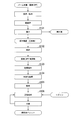
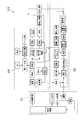
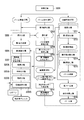
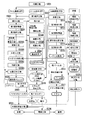
- FIG. 6 is a schematic explanatory diagram of fuel pellets according to first to sixth embodiments of the present invention. It is a flowchart explaining the manufacturing method of the pellet for fuel which is 1st Embodiment of this invention. It is a flowchart explaining the manufacturing method of the pellet for fuel which is 1st Embodiment of this invention. It is the schematic explanatory drawing which showed typically the manufacture procedure of the solid biomass fuel of this invention. It is the flowchart which showed the manufacturing method of the solid biomass fuel of this invention in steps.
- the pellet 120 for fuel which is this embodiment uses the palm branch leaves (OPF) which grows around the fresh fruit bunches (FFB) of palm palm as a raw material.
- OPF palm branch leaves
- palm oil is produced as follows. First, the palm fruit fresh fruit bunches (FFB) cultivated on the palm farm are harvested, and the harvested fresh fruit bunches (FFB) are steamed to extract the fruits. The obtained fruit is squeezed and refined to obtain palm oil crude oil. The residue obtained upon compression purification is separated into palm kernels and mesocarp fibers. The palm kernel is further separated into a core and a shell (PKS), and nuclear oil is produced from the core. Shell (PKS) and mesodermal fiber (Fiber) are used as combustion fuel for boilers and the like.
- FFB palm fruit fresh fruit bunches
- FFB harvested fresh fruit bunches
- a palm branch (OPF) 110 includes a petiole (OPP: Oil Palm Petiole) 111 and a leaf part 112.
- the palm branch leaves (OPF) 110 are used as a snake cradle for extermination of a field mouse aiming at the fruit bunches of palm palms.
- the fuel pellet 120 is also possible to use the fuel pellet 120 as a raw material including the leaf portion 112.
- the weight ratio between the petiole (OPP) 111 and the leaf portion 112 is approximately 50:50.
- the pellet 120 for fuel which is this embodiment carries out the semi-carbonization process of the ground material of the palm branch leaves (OPF) 110 mentioned above, and compression-molds this.
- the fuel pellet 120 according to the present embodiment has, for example, a substantially cylindrical shape, and has a diameter D of 4 mm to 20 mm and a length L of 5 mm to 100 mm. Yes. Further, the bulk specific gravity is in the range of 0.65 or more and 0.85 or less.
- the fuel pellet 120 In the fuel pellet 120 according to the present embodiment, moisture and volatile components are removed by the semi-carbonization treatment, the water content in the fuel pellet 120 is adjusted to 12% or less, and the heat amount is 20 kJ / kg. It is within the range of 24 kJ / kg or less.
- a petiole (OPP) having a low hemicellulose content is used as a raw material among palm branches and leaves (OPF). (OPF) higher than that using the whole.
- Biomass contains hemicellulose, lignin and cellulose as main components.
- hemicellulose is the one that receives the greatest weight reduction at the stage where the heating temperature in the semi-carbonization process is low (Fiscal 2011-2012 Results Report “Biomass Energy Technology R & D, Strategic Next Generation Biomass Energy Utilization” Technology Development Project (Practical Technology Development) Research and development of new biomass solid fuel that can be co-fired in coal-fired pulverized coal boilers (Nippon Paper Industries Co., Ltd., New Energy and Industrial Technology Development Organization). Therefore, in the fuel pellet 120 according to the present embodiment, the palm branches and leaves (OPF) used as the raw material uses a petiole (OPP) having a low hemicellulose content. It becomes higher than the one using the whole palm branch leaves (OPF).
- OPF palm branches and leaves
- the hard glove grindability index (HGI) defined in JIS M 8801 is in the range of 22 to 50.
- a petiole (OPP) having a low cellulose content is used as a raw material among palm branches and leaves (OPF).
- OPF palm branches and leaves
- the mixed firing rate in thermal power is also improved.
- the pellet made from the woody part of the tree as the raw material contains more cellulose than the pellet using the whole palm branch leaves (OPF). Therefore, the pellet 120 for fuel which is this embodiment has higher crushability after a semi-carbonization process than the pellet derived from a wood, and the mixed combustion rate in coal-fired power also improves more. Further, in the fuel pellet 120 according to the present embodiment, the surface of the fuel pellet 120 is hydrophobic due to the semi-carbonization treatment, and the water resistance is improved. That is, even if the fuel pellet 120 according to the present embodiment is immersed in water, the shape is maintained without being easily collapsed.
- the palm content (OPP) is washed with water in advance, so that the potassium content of the fuel pellet after the semi-carbonization treatment is used for the entire palm branch leaf (OPF).
- OPF the entire palm branch leaf
- the petal pattern (OPP) which is a single material, is easier to remove potassium by washing than the entire palm branch leaf (OPF) in which different materials are mixed.
- the chlorine content of the pellet for fuel after semi-carbonization treatment is significantly reduced compared with the one using the entire palm branch leaf (OPF) by washing the petiole (OPP) with water in advance. Can be made.
- the manufacturing method of the fuel pellet 120 according to the present embodiment described above will be described with reference to the flowchart of FIG.
- the palm branch leaves (OPF) 110 stalk OPF: Oil Palm Petiole
- OPF palm branch leaves
- OPF Oil Palm Petiole
- sap is collected (squeezing step S101).
- the obtained sap is used as a raw material for ethanol and lactic acid.
- the biogas obtained from this sap can also be utilized as an energy source in the said manufacturing method.
- the washed and dehydrated petiole (OPP) is roughly broken (approximately 50 mm to 150 mm) in consideration of the efficiency of pressing.
- the squeezed residue obtained by squeezing the OPP coarsely crushed product is crushed to obtain a stalk (OPP) crushed product (crushing step S102).
- the size of the crushed petal (OPP) obtained in the crushing step S102 is the optimum size that balances the crushing power and the drying / semi-carbonizing energy in the subsequent drying step S103, the semi-carbonizing step.
- the crushing conditions are adjusted in the range of approximately 10 mm to 30 mm.
- there is no limitation in particular in the crushing method What is necessary is just to select and employ
- the obtained palm petiole (OPP) crushed material is dried for the purpose of moisture adjustment (drying step S103). And after implementing drying process S103, it inserts into a semi-carbonization furnace and performs a semi-carbonization process (semi-carbonization process process S104).
- the conditions of the semi-carbonizing treatment step S104 are that the holding temperature is 200 ° C. or higher and 350 ° C. or lower, the holding time is 5 min or longer and 90 min or shorter, and the atmosphere in the furnace is an atmosphere in which the oxygen concentration is reduced.
- the calorific value per unit weight improves. For example, when the weight is reduced by 30% and the calorific value is reduced by 10% by the semi-carbonization treatment, the energy per unit weight is about 1.3 times before and after the semi-carbonization treatment.
- the palm carbonized (OPP) crushed material that has been semi-carbonized is pulverized to an optimum size for pelletization (pulverization step S105).
- the size of the pulverized product is preferably 10 mm or less.
- existing equipment such as a hammer mill, a cone mill, and a pin mill can be appropriately selected and used.
- the lignin derived from palm is added with respect to the obtained palm branch pulverized material, this is compression-molded and pelletized (pellet molding step S106).
- the compression molding method is not particularly limited, and an existing method may be appropriately selected and adopted.
- the palm petiole (OPP) 111 that is cut when harvesting fresh fruit buns (FFB) of palm palm is used as a raw material, Since the supply amount of raw materials is large and the supply amount is stable throughout the year, it can be stably supplied as biomass fuel. Moreover, it becomes possible to utilize the palm petiole (OPP) 111 which was not used effectively conventionally as biomass fuel.
- a semi-carbonization treatment is performed on the palm petiole crushed material obtained by crushing the palm petiole (OPP) 111, and the crushed palm petiole crushed material subjected to the semi-carbonization treatment is crushed, Since it is pelletized by compression molding, the water content in the fuel pellet 120 can be reduced, and the amount of heat per unit weight can be improved by removing volatile components. Furthermore, the surface of the fuel pellet 120 becomes hydrophobic due to the semi-carbonization treatment, and the fuel pellet 120 does not easily collapse even when it comes into contact with water, and is excellent in handling and storage.
- the hard glove grindability index (HGI) defined in JIS M 8801 is in the range of 22 to 50, so the fuel pellet 120 is sufficient. Therefore, it can be mixed with coal and pulverized. Therefore, in a thermal power plant that uses fossil fuel, the fuel pellets 120 according to the present embodiment can be mixed and used as a substitute for coal, and the amount of coal used can be reduced. Become.
- the water content is 12% or less, and the water content is sufficiently reduced, so that large energy can be obtained when burned, and biomass Particularly suitable as fuel.
- the Enpulus A1 European standard (ISO 17225-2) has a moisture content ⁇ w / t 10%.
- the wet standard moisture content is ⁇ 10%, there is no lower limit value, and it may be 10% or less.
- the amount of heat is in the range of 20 kJ / kg or more and 24 kJ / kg or less, so that the amount of heat is sufficiently high and large energy can be obtained when burned. And is particularly suitable as a biomass fuel.
- the calorific value is wood chip: (2,508 kcal / kg) ⁇ Low temperature carbonization (semi-carbonization): (4,474 kcal / kg)
- the rising energy density is wood chips: (3.57 GJ / m3) ⁇ low temperature carbonization (semi-carbonization): (12.7 GJ / m3).
- the more preferable range is not the range but the calorific value and energy density closer to coal.
- the fuel pellet 120 has a substantially cylindrical shape, and has a diameter D: 4 mm to 20 mm and a length L: 5 mm to 100 mm. Since the bulk specific gravity is in the range of 0.65 or more and 0.85 or less, it is excellent in handleability and transportability.
- the configuration related to the pellet 120 described above can be similarly applied to the pellet 120 described in Examples 2 to 6 described later.
- the fuel pellet having a substantially cylindrical shape as illustrated in FIG. 2 has been described as an example.
- the present invention is not limited to this, and other shapes may be used.
- the squeezing process S101 which obtains a sap and a squeezed residue by squeezing the palm petiole which grows around the fruit bun of palm palm was obtained,
- the crushing step S102 for crushing the residue
- the drying step S103 for drying the palm petiole crushed material obtained in the crushing step S102
- the semi-carbonizing treatment step for semi-carbonizing the dried palm petiole crushed material Production comprising S104, pulverization step S105 for pulverizing the semi-carbonized palm petiole crushed material, and pellet forming step S106 for adding palm-derived lignin to the obtained palm branch pulverized material and compressing and pelletizing it
- the present invention is not limited to this, and as shown in the flow diagram of FIG.
- the squeezing step S101 for squeezing the petiole from the palm branches and leaves to obtain the sap and the squeezed residue, the crushing step S102 for crushing the obtained squeezed residue, and the obtained palm petiole crushed material are compression molded.
- the pellets for fuel may be manufactured by a manufacturing process including a pellet forming step S106 for pelletizing and a semi-carbonizing step S104 for semi-carbonizing the pellet-molded compression molded body.
- Biomass is an organic substance derived from a plant, and grows while absorbing atmospheric CO 2 during its growth process. Therefore, biomass is characterized by carbon neutral that does not emit additional CO 2 even if it is burned.
- the disadvantages of wood pellets (white pellets), which are conventional biomass resources are (1) low calorific value compared to coal, and (2) poor pulverization, so the coal co-firing rate is about 3 wt% at maximum. (3) It is easy to generate heat spontaneously, (4) It is hydrophilic, the shape deteriorates when wetted by moisture absorption, and the water content is unstable.
- the stable supply (resource securing, logistic) of overseas biomass resources.
- a technique for overcoming the above-mentioned drawbacks for the woody biomass resource is the semi-carbonization technique described in the present invention.
- Characteristics of semi-carbonized pellets include (1) large calorific value, (2) excellent crushability and co-firing property, (3) improved handling due to hydrophobicity, (4) spontaneous heat generation Also has an excellent feature such that it can be almost eliminated by the carbonization temperature.
- production costs energy costs, equipment costs, labor costs, etc.
- transport costs are incurred, and the sales unit price (heat / kg) is Because of its rise, it has not been economically viable in the past, and there have been few examples at the industrial level.
- the requirements for the industrialization of semi-carbonized pellets include: (A) ensuring stable biomass resources (resource securing and logistics), (B) sustainability of economic production of biomass resource-derived products, and (C) technologies for manufacturing biomass resource-derived products. Such as solution of social issues, (D) establishment of Win-Win relationship with palm oil industry location and partner countries.
- the biomass resource amount of the palm oil industry in Malaysia is illustrated.
- EFB ⁇ 7 million tons / year, OPF ⁇ 25 million tons / year (Petiole only), OPT ⁇ 20 million tons / year, PKS ⁇ 5 million tons / year, Fiber ⁇ 8 million tons / year, POME ⁇ 64 million tons / year.
- Indonesia has about 1.3 times as much biomass resources as Malaysia.
- the existing FFB arrival and product shipment logistic can be used as it is for the arrival of OPP and the shipment of products produced at a new unused biomass resource factory, OPT can be received by local replanters.
- EFB, PKS, Fiber, and POME can be easily held from an existing palm oil mill, which is highly economical.
- EFB existing palm oil mill waste
- OPP existing palm oil mill waste
- OPT new unused biomass resource factory
- POME existing liquid of existing palm oil mill, environmental pollution target
- PKS, Fiber product with surplus expected:
- PKS has been established as an external fuel in recent years, but Fiber is basically used up. Therefore, the combustion boilers of existing palm oil mills are not high combustion efficiency boilers, and boiler facilities based on the ability to burn a lot of surplus products are the mainstream. By introducing the high combustion efficiency type from the current combustion efficiency boiler, the surplus of PKS and Fiber will increase, and it will be possible to sell them as valuable materials.
- the existing palm oil mill is located at the center of a 10km square palm plantation.
- the site cost is extremely low compared to Japan.
- Labor costs can be centrally managed by employees and management personnel in cooperation with the local palm oil industry.
- the new unused biomass recycling plant has the minimum necessary number of people by introducing technology from Japan. Therefore, the labor cost in the factory production cost is reduced.
- energy can be produced by surplus biomass resources, and water resources are abundant, so they are abundant.
- Biomass resources supplied from existing palm oil mills and palm plantations are newly obtained products: (1) EFB: private boiler fuel, semi-carbonized fuel, potassium fertilizer, (2) OPF: OPF semi-carbonized fuel, OPF Carbonized fuel / coke alternative briquette, (3) OPT: OPT semi-carbonized fuel, OPT carbonized fuel / coke alternative briquette, (4) PKS: PKS semi-carbonized fuel (simple pellet, mixed pellet, simple semi-carbonized), (5) Fiber: Fiber solid fuel, use of other raw material mixed fuel, (6) POME: Use of methane gas (self-power consumption power generation, power sale, methane gas production), (7) Juice liquid: Use of methane gas production, ethanol production, sugar classification, etc. Can be mentioned.
- the new unused biomass resource factory is assumed to be installed adjacent to or in the same place as the existing palm oil mill, but the expansion range of the industrial scale is, for example, OPF, OPT, EFB which can be transported relatively If the transportation range is about 50 km one way, it can be collected from the area of the plantation of about 20 factories. For example, in Malaysia, OPF: 1.16 million tons / year is expected to be recovered per new unused biomass recycling plant.
- FIG. 5 is a schematic explanatory view schematically showing a production procedure of solid biomass fuel.
- FIG. 6 is a flowchart showing the method for producing a solid biomass fuel step by step.
- the manufacturing method of the pellet for fuel which is a pellet-shaped solid biomass fuel is illustrated as an example of the manufacturing method of solid biomass fuel.
- the solid biomass fuel production process 210 using palm palm as a raw material is roughly divided into a harvesting / sorting process 211, a fuel pellet production process 212, and a palm oil production process 213.
- the facility which performs the pellet production process 212 for fuel and the palm oil production process 213 is a physically close or integrated facility.
- Palm Lion is a hot and humid climate centered on the equator from north latitude 17 degrees to south latitude 20 degrees, annual rainfall 1500-2000mm, minimum temperature 22-24 ° C, maximum temperature 29-30 ° C, and sunshine duration 5 hours / day or more. Is a favorable environment for cultivation, and Southeast Asia, Africa, and Central and South America are suitable for cultivation.
- Oil palms cultivated in plantations are sprouted from seeds, grown in pots for about one to one and a half years, and then planted on a leveled land at a density of about 140 to 150 trees / ha. Three years after planting, the first inflorescence appears at the base of the leaf, and eventually the inflorescence attaches to the base of all the leaves. There are male and female inflorescences. Male flowers are yellow and small, and pollen is produced 3 to 4 days after appearing. Female flowers are also yellow flowers, and 10 to 12 inflorescences form one inflorescence, and these inflorescences gather to form inflorescences. Pollen flying distance is not so long, so insect-mediated pollination is performed.
- FIG. 7 is a schematic diagram showing each component part of palm palm.
- the palm palm 201 includes a trunk 202 that rises from the ground, a palm branch (OPF) 203 (110) that branches and extends from the trunk 202, and a root portion of the palm branch (OPF) 203 (110).
- OPF palm branch
- OPF root portion of the palm branch
- fruit bunches fresh fruit bunches
- FIG. 8 is a schematic view showing a cross section of a palm palm fruit.
- the fruit 204 is composed of an outer pericarp 204A, a pulp (medium pericarp) 204B containing palm oil, and a palm palm core 204C that is wrapped in an inner pericarp and contains palm kernel oil.
- harvesting step S201 fresh palm fruit bunches (FFB) cultivated in the palm plantation are harvested.
- FFB palm fruit fresh fruit bunches
- OPF palm branches and leaves
- the palm branches and leaves (OPF) obtained in the harvesting and sorting process 211 are further cut into leaf parts (Rachis) where palm leaves grow and petiole (OPP) which is on the fresh fruit bunches (FFB) side from these leaves.
- a petiole (OPP) is used as a palm branch leaf (OPF).
- the leaf portion 112 can also be used for the fuel pellet production process 212.
- the weight ratio between the petiole (OPP) 111 and the leaf portion 112 is approximately 50:50.
- the palm branch (OPF) 110 has a particularly high starch content from the root (base) to the center of the palm 202 (OPP) 111.
- the same effect as that of the first embodiment can be obtained by using a petiole (OPP) as the palm branches and leaves (OPF).
- the cut leaves are laid around the palm palm that is being cultivated in the palm palm plantation.
- these leaf-attached leaves we secure a place for snakes that prey on wild rats that aim at palm palm fruit bunches and prevent palm palm damage. To do.
- harvesting step S201 By the above harvesting and sorting process (harvesting step S201) 211, fresh fruit bunches (FFB) and palm branches and leaves (OPF) petiole (OPP) 111 are obtained.
- FFB fresh fruit bunches
- OPF palm branches and leaves
- palm palm 201 that has passed for more than 25 years is also cut down and collected as old palm trees (OPT) and remaining palm petiole (OPP).
- the trunk of old palm trees contains a large amount of sap, and the content of the sap tends to be higher in the central part, but it is about 65% to 85% on average.
- This old palm tree is an excellent sugar solution with a large amount of glucose, fructose and sucrose.
- the total amount of sugar immediately after logging is about 7 to 10%. Looking at the same trunk, the distribution of sugar content at the top and bottom is about 20% lower at the bottom, but almost the same from the middle to the top.
- old palm trees have a change that can be said to be a ripening phenomenon that the sugar content greatly increases when stored for a certain period after logging.
- the sap content immediately after logging is 65% to 85%, which hardly changes during the storage period, while the sugar content increases up to nearly 15%.
- the sugar content of sugarcane juice is about 16% as an example, through an appropriate aging period, there is a possibility that old palm trees (OPT) may become a raw material having a sugar content equivalent to sugarcane. . For this reason, it is also preferable to store the old palm tree (OPT) after logging for a certain period of time to increase the sugar content.
- Fresh fruit bunches (FFB) that have undergone the separation process (harvesting step S201) 211 are sent to the palm oil production process 213, and palm petiole (OPP) is sent to the fuel pellet production process 212.
- FFB Fresh fruit bunches
- OPP palm petiole
- the fuel pellet production process 212 will be described.
- the palm branch (OPF) petiole (OPP) 111 is washed. Use water for cleaning.
- cleaning of such a petiole (OPP) 111 circulates and uses as a reclaimed water by performing processes, such as precipitation.
- the washed petiole (OPP) 111 is dehydrated or dried. It is preferable to dry the petiole (OPP) 111 by, for example, sun drying. Moreover, it can also dry using the dryer by warm air etc. Moreover, it can also dehydrate using a dehydrator.
- the petiole (OPP) 111 of the palm branches and leaves (OPF) roughly cut to about 1 m is sent to the squeezing step S203, which will be described later, but separated together with the petiole (OPP) 111.
- the old palm tree (OPT) recovered in the process (harvesting step S201) 211 can also be used by crushing (first crushing step S202). By using these old palm trees (OPT) together with the petiole (OPP) 111, it is possible to effectively utilize old palm trees (OPT) that were difficult to use as trees due to insufficient strength.
- Separation of the juice and the first solid residue can be performed by a separation method such as centrifugation or filtration.
- the separated squeezed liquid is a yellowish liquid, for example, and contains a large amount of sugar components.
- Biofuel is manufactured using such juice (biofuel manufacturing process S204).
- the sugar component contained in the juice is converted to methane gas or bioethanol by fermentation.
- sugar components glucose, fructose, sucrose
- alcohol fermentation Euthanol® Fermentation
- methane gas biogas
- first operating energy such as electric power, steam and hot gas is generated using the obtained bioethanol or biogas as fuel (first energy generating step S205).
- the first operating energy such as electric power, steam and hot gas obtained here is used as an operating energy source for a process for producing fuel pellets to be described later.
- the squeezed squeezed residue that is the first solid residue obtained in the squeezing step S203 described above forms a palm petiole (OPP) crushed material by crushing (second crushing step S206).
- the squeezed residue of the first solid residue may be crushed by a crusher equipped with a rotary blade, for example.
- the crushed palm petiole obtained by this is approximately 50 mm to 150 mm in size.
- One of the advantages of semi-carbonization by the semi-carbonization step S207B described later is reduction of crushing power. Because of the weakness of palm petiole (OPP) and old palm tree (OPT), the crushing to some extent before the semi-carbonization step S207B has little power load, but the crushing power load of the empty fruit bunch (EFB) is before the semi-carbonization step S207B. The crushing power load is large. For this reason, it is economically preferable for empty fruit bunches (EFB) to be about 50 mm to 150 mm in the crushing before the semi-carbonization step S207B, and after dehydration, the crushing to 15 mm or less after performing the semi-carbonization step S207B.
- OPP palm petiole
- OPT old palm tree
- the fuel pellet manufacturing step S207 includes a drying step S207A, a semi-carbonizing step S207B, a pulverizing step S207C, and a compression molding step S207D.
- the moisture content of the palm petiole crushed material is adjusted using a dryer or the like.
- the palm petiole crushed material obtained in the second crushing step S206 is subjected to a semi-carbonizing treatment (toled) in a semi-carbonizing furnace.
- a semi-carbonizing treatment toled
- the calorific value can be improved by 20 to 30% and the water resistance can be increased.
- the products in the second crushing step S206 have a water content of around 40% in the case of palm petiole (OPP) and old palm tree (OPT), and around 50% in the case of empty fruit bunch (EFB). For this reason, whether the drying process S207A to the semi-carbonization process S207B is performed once or whether these processes are performed in two stages differs depending on the equipment, but the moisture content is usually about 10 to 13% after the drying process. In the subsequent semi-carbonization step S207B, the water content is 12% or less, preferably around 5% (then, 8 to 10% due to moisture absorption).
- Such a semi-carbonizing apparatus for performing the semi-carbonizing process may be, for example, a rotary heat treatment furnace. Using such a rotary heat treatment furnace, the crushed palm petiole is heated to, for example, about 200 ° C. to 350 ° C. and held for 5 minutes to 90 minutes, so that the water content becomes about 0% to 12%.
- the first operating energy such as electric power, steam and hot gas obtained in the first energy generation process S205 is used.
- the semi-carbonization step S207B it is desirable to use a volatile matter (combustible gas) generated by indirect heating during semi-carbonization as the heating heat source. Has the effect of reducing
- the squeezed liquid produced in the squeezing process S203 which is the previous process, is relatively large in volume, and if it is discharged as it is, there is a concern of water contamination, etc., but the first energy generation is performed using ethanol, methane, etc. generated by fermentation of the squeezed liquid
- the first operating energy such as electric power in step S205, it is possible to produce fuel pellets at low cost without introducing fuel or the like from the outside.
- palm-derived lignin is added to the semi-carbonized palm petiole crushed material, followed by compression molding to pelletization (compression molding step S207D).
- compression molding step S207D for example, a die extrusion type pellet molding apparatus can be used.
- the first operating energy such as electric power, steam, and hot gas obtained in the first energy generation step S205, as will be described later.
- the second operating energy in the palm oil production process 213 can be used.
- the pellet for fuel which is a solid biomass fuel is obtained through the above processes.
- the pellet for fuel obtained by the method for producing a solid biomass fuel of the present embodiment is obtained by pelletizing a palm leaf pattern powder that has been subjected to a semi-carbonization treatment.
- the fuel pellet 120 has, for example, a substantially cylindrical shape, and has a diameter D of 4 mm to 20 mm and a length L of 5 mm to 100 mm. Further, the bulk specific gravity is in the range of 0.65 or more and 0.85 or less.
- the pellet 120 for fuel obtained by the manufacturing method of the solid biomass fuel of this embodiment has the water
- regulated by JISM8801 is made into the range of 22-50. .
- the surface of the pellet 120 for fuel has hydrophobicity by the semi-carbonization process, and water resistance is improved. That is, even if the pellet 120 for fuel obtained by the method for producing solid biomass fuel of this embodiment is immersed in water, the shape is maintained without being easily collapsed.
- the palm oil production process 213 will be described.
- the fresh fruit bunches (FFB) are washed, the fresh fruit bunches (FFB) are steamed and separated into fruits and empty fruit bunches (EFB) (defruiting step S211).
- the fresh fruit bunches (FFB) are steamed with saturated steam of about 3 kg / cm 3 for about 1 hour. Since palm palm contains a lipase enzyme that decomposes oil in the fruit, the lipase enzyme is activated from the moment of harvest. For this reason, it is necessary to inactivate the lipase enzyme by applying heat within 24 hours after harvesting the fresh fruit bunches (FFB).
- the purpose of steaming these fresh fruit bunches is to inactivate (deactivate) the enzymes that break down the oil. For such inactivation, treatment at 55 ° C. or higher is necessary. Moreover, it becomes easy to detach
- the fruit buns are beaten using a fruit removal machine or the like and separated into fruit stalks and fruits. Then, in order to extract oil efficiently from the separated fruit, the fruit is stirred for about 30 minutes while being heated from 95 ° C. to 100 ° C. with steam to form a slurry (digestion).
- the fresh fruit bunches (FFB) are cooked using the steam (second working energy) obtained in the second energy generation step S216 generated in the fuel pellet production process 212 described above. be able to.
- Such a defruiting step S211 has the largest amount of steam used in the palm oil production process 213.
- the empty fruit bunch (EFB) after the fruit removal generated in the fruit removal step S211 is dehydrated and then introduced into the second crushing step S206 in the fuel pellet production process 212 described above, and the palm petiole (OPP) crushed material By using it as a raw material for producing fuel pellets as part of the above, it is possible to reduce and effectively use wooden waste.
- This may be an empty fruit bunch EFB or a mixture with palm branches and leaves.
- first oiling step S212 the fruit that has been made into a slurry in the defruiting step S211 is squeezed.
- first oiling step S212 it isolate
- the crude palm oil obtained in the first oil extraction step S212 is hydrated and heated to, for example, about 85 ° C. and allowed to stand, and then oil-water separation is performed by a difference in specific gravity to obtain palm oil (oil-water separation). Step S213).
- oil and water separation can also be quickly performed by removing fibers and moisture with a centrifuge after addition.
- the palm residue is contained in the second solid residue, and after the second solid residue is dried and pulverized, the palm palm core and palm palm shell (PKS) are separated (coconut nucleus separation step S214). Such separation can be performed, for example, by airflow. And the isolated palm palm kernel is extracted and palm kernel oil is obtained (2nd oil extraction process S215).
- second operating energy such as electric power, steam, and hot gas is generated by power generation and water heating (second energy generation step S216).
- second operating energy such as electric power, steam and hot gas obtained here
- steam can be used as saturated steam for steaming the fresh fruit bunches (FFB) in the defruiting step S211.
- electric power is used as a driving force of the heat treatment furnace in the semi-carbonizing step S207B in the fuel pellet manufacturing step S207, or as a power source of the pellet forming apparatus in the compression molding step S207D.
- the hot gas can be used as a heat source for the drying process.
- a part of the palm coconut shell (PKS) separated in this palm nucleus separation step S214 is introduced into the second crushing step S206 in the fuel pellet production process 212 described above, and one part of the palm leaf stalk (OPP) crushed material is obtained. It can be used as a raw material for producing fuel pellets as a part.
- the hard glove grindability index (HGI) is approximately equal to or equal to that of wood pellets and has water resistance, but the moisture content is not stable, and it is difficult to use as a coal co-firing fuel.
- Most examples are used as auxiliary fuel for power generation. Therefore, by incorporating it into the fuel pellet production process 212, it becomes a semi-carbonized fuel, which can be used as a higher value-added fuel, and can further reduce wood waste.
- palm branches and leaves OPF
- old palm trees OPT
- empty fruit bunches EFB
- usage applications that have not been effectively used in the past.
- PPS palm coconut shell
- the entire palm coconut tree can be used effectively.
- palm petiole OPP
- the supply amount is large and the supply amount is stable throughout the year, which is a stable raw material for solid biomass fuel. It becomes possible to supply.
- it becomes possible to utilize the palm petiole (OPP) which was not used effectively conventionally as a solid biomass fuel.
- empty fruit bunches are simple pellets and semi-carbonized pellets, which have many potassium components and have a limited range of use as fuel.
- EFB empty fruit bunches
- squeezed liquid containing a large amount of sugar components obtained in the squeezing step S203 is fermented to produce methane gas and bioethanol.
- the first operating energy such as steam
- the second operating energy using unused biomass, the surplus energy can be effectively used, and solid biomass fuel such as fuel pellets can be produced at low cost.
- Biomass is an organic substance derived from a plant, and grows while absorbing atmospheric CO 2 during its growth process. Therefore, biomass is characterized by carbon neutral that does not emit additional CO 2 even if it is burned.
- the disadvantages of wood pellets (white pellets), which are conventional biomass resources are (1) low calorific value compared to coal, and (2) poor pulverization, so the coal co-firing rate is about 3 wt% at maximum. (3) It is easy to generate heat spontaneously, (4) It is hydrophilic, the shape deteriorates when wetted by moisture absorption, and the water content is unstable.
- the stable supply (resource securing, logistic) of overseas biomass resources.
- a technique for overcoming the above-mentioned drawbacks for the woody biomass resource is the semi-carbonization technique described in the present invention.
- Characteristics of semi-carbonized pellets include (1) large calorific value, (2) excellent crushability and co-firing property, (3) improved handling due to hydrophobicity, (4) spontaneous heat generation Also has an excellent feature such that it can be almost eliminated by the carbonization temperature.
- production costs energy costs, equipment costs, labor costs, etc.
- transport costs are incurred, and the sales unit price (heat / kg) is Because of its rise, it has not been economically viable in the past, and there have been few examples at the industrial level.
- the requirements for the industrialization of semi-carbonized pellets include: (A) ensuring stable biomass resources (resource securing and logistics), (B) sustainability of economic production of biomass resource-derived products, and (C) technologies for manufacturing biomass resource-derived products. Such as solution of social issues, (D) establishment of Win-Win relationship with palm oil industry location and partner countries.
- the biomass resource amount of the palm oil industry in Malaysia is illustrated.
- EFB ⁇ 7 million tons / year
- OPP ⁇ 25 million tons / year
- OPT ⁇ 20 million tons / year
- PKS ⁇ 5 million tons / year
- Fiber ⁇ 8 million tons / year
- POME ⁇ 64 million T / year.
- Indonesia has about 1.3 times as much biomass resources as Malaysia.
- EFB existing palm oil mill waste
- OPP existing palm oil mill waste
- OPT new unused biomass resource factory
- POME converted to methane gas by biomass gas extraction technology and used as thermal energy and power generation fuel
- PKS, Fiber product in which surplus is expected:
- PKS and Fiber obtained as by-products cannot be used as fuel in existing palm oil mills, it is necessary to treat them as surplus.
- PKS has been established as an external fuel in recent years, but Fiber is basically used up. Accordingly, the combustion boilers of existing palm oil mills are not high combustion efficiency boilers, but boiler facilities based on the ability to burn a lot of surplus products are the mainstream. By introducing the high combustion efficiency type from the current combustion efficiency boiler, the surplus of PKS and Fiber will increase, and it will be possible to sell them as valuable materials.
- Halal is an item permitted by Islamic law. In short, it refers to ingredients and dishes that are allowed to be eaten under Islamic law. When translated into Japanese, it means “things you don't care to do (permission)". On the other hand, what is forbidden to speak is called Haram, and this word is the same origin as Harlem in the sense that it must not be done (prohibited). Eating pork is forbidden under Islamic law, but other foods require certain practices for processing and cooking. Foods that comply with this law are considered halal. In addition, there is a concept of suspicious thing Shubuha between Halal and Haram. It is said that you should avoid eating stubby food as much as possible.
- the fertilizers manufactured here are the conditions of plant haram, (1) genetically modified plants, (2) toxic to humans, (3) give unpleasantness to humans (4) Even pesticide-free vegetables that are cultivated using fertilizers that are unclean by Islamic law, that are unclean by Islamic law, that is, carcass, blood, genetically modified substances It is not a component derived from pigs, and it is a halal-compatible fertilizer that can be proved very stably and clearly.
- the existing palm oil mill is located in the center of a 10km square palm plantation. Because of this vast site, the plant site cost is compared with, for example, Malaysia and Indonesia, for example, Japan. The price is extremely low. Labor costs can be centrally managed by employees and management personnel in cooperation with the local palm oil industry. In addition, the new unused biomass recycling plant has the minimum necessary number of people by introducing technology from Japan. Therefore, the labor cost in the factory production cost is reduced. As mentioned above, energy can be self-produced from surplus biomass resources, and water resources are abundant because they are in the rainforest region.
- Biomass resources supplied from existing palm oil mills and palm plantations, newly obtained products include (1) EFB: private boiler fuel, semi-carbonized fuel, potassium fertilizer, (2) OPP: OPP semi-carbonized fuel, OPP carbonized fuel / coke briquette, (3) OPT: OPT semi-carbonized fuel, OPT carbonized fuel / coke briquette, (4) PKS: PKS semi-carbonized fuel (pellet, simple semi-carbonized), (5) Fiber: Fiber solid fuel, Other biomass resource mixed fuel use, (6) POME: methane gas use (in-house power generation, electricity sales, methane gas production), Chisso / phosphate fertilizer (7) juice: methane gas production use, ethanol production, sugar classification, etc. Can be mentioned.
- the new unused biomass resource factory is assumed to be installed adjacent to or in the same place as the existing palm oil mill, but the scope of expansion of the industrial scale is relative to OPP, OPT and EFB that can be transported relatively. For example, if the transportation range is about 50 km one way, it can be collected from the area of the plantation of about 20 factories. As an example, in Malaysia, recovery of OPP: 1.16 million tons / year is expected per one new unused biomass recycling plant.
- the sludge can be recovered by opening the tank valve, which is extremely easy.
- the reason for not paying attention to sludge is that it does not require sludge.
- sludge is a mass of microorganisms, it is rich in nitrogen and phosphoric acid.
- Empty fruit bunches (EFB) are also particularly rich in potassium.
- Incineration ash from empty fruit bunches (EFB) is commercially available as ash potassium.
- FFB fresh fruit bunches
- palm oil mills mainly do not add raw materials other than water.
- the quality of the sludge is extremely well prepared.
- POME sludge and EFB are considered to have extremely high quality, unlike raw materials such as garbage and sewage treatment sludge, which cannot stabilize the quality of raw materials. Therefore, organic fertilizers made from these raw materials can be products with stable or guaranteed quality.
- This fertilizer has value as an Islamic halal fertilizer.
- FIG. 9 is a schematic explanatory view schematically showing a production procedure of solid biomass fuel and a production procedure of halal fertilizer.
- FIG. 10 is the flowchart which showed in steps the manufacturing method of solid biomass fuel, and the manufacturing method of halal fertilizer.
- the manufacturing method of the pellet for fuel which is a pellet-shaped solid biomass fuel is illustrated as an example of the manufacturing method of solid biomass fuel.
- the manufacturing method of the halal fertilizer using the sludge obtained in the process of the manufacturing method of the pellet for fuel mentioned above or the incineration ash of an empty fruit bunch is illustrated as an example of the manufacturing method of a halal fertilizer.
- the solid biomass fuel production process and the halal fertilizer manufacturing process 310 using palm palm as a raw material are roughly classified into a harvest and separation process 311, a fuel pellet production process 312, a palm oil production process 313, and a halal-compatible fertilizer manufacturing process 314. Divided.
- the facilities that perform the fuel pellet production process 312, the palm oil production process 313, and the halal-compatible fertilizer manufacturing process 314 are physically close or integrated.
- palm branch leaves (OPF) of palm palm are the same as those in the first embodiment, and detailed description thereof is omitted.
- harvesting step S301 fresh palm fruit bunches (FFB) cultivated in the palm plantation are harvested.
- FFB palm fruit fresh fruit bunches
- OPF palm branches and leaves
- the palm branches and leaves (OPF) obtained in the harvesting and sorting process 311 are further cut into leaf parts (Rachis) where palm leaves grow and petiole (OPP) that forms the fresh fruit bunches (FFB) side from these leaves.
- a petiole OPP
- the leaf portion 112 can also be used in the fuel pellet production process 312.
- the weight ratio between the petiole (OPP) 111 and the leaf portion (Rachis) 112 is approximately 50:50.
- the palm branch (OPF) 110 has a particularly high starch content from the root (base) to the center of the palm 202 (OPP) 111.
- the cut leaves (Rachis) 112 are laid around the palm palm that is being grown in the palm palm plantation. By placing these leaves with many leaves (Rachis) around the palm palm, we secure a place for snakes that prey on the wild mice that aim at the palm bunches and prevent the palm palm from being damaged. To do. Further, the leaf portion (Rachis) 112 is used as food for grazing livestock (cattle, goats, etc.), and has significance as a fertilizer for palm trees. Even if the above-mentioned usage method has surplus leaves (Rachis), there are cases where it is used as livestock feed by solidifying.
- harvesting step S301 By the above harvesting and sorting process (harvesting step S301) 311, fresh fruit bunches (FFB) and palm branches (OPF) petiole (OPP) 111 are obtained.
- FFB fresh fruit bunches
- OPF palm branches
- palm palm 201 that has passed for more than 25 years is also cut down and collected as old palm tree (OPT) and remaining palm branch (OPF) petiole (OPP).
- the trunk of old palm trees contains a large amount of sap, and the content of the sap tends to be higher in the central part, but it is about 65% to 85% on average.
- This old palm tree is an excellent sugar solution with a large amount of glucose, fructose and sucrose.
- the total amount of sugar immediately after logging is about 7 to 10%. Looking at the same trunk, the distribution of sugar content at the top and bottom is about 20% lower at the bottom, but almost the same from the middle to the top.
- old palm trees have a change that can be said to be a ripening phenomenon that the sugar content greatly increases when stored for a certain period after logging.
- the sap content immediately after logging is 65% to 85%, which hardly changes during the storage period, while the sugar content increases up to nearly 15%.
- the sugar content of sugarcane juice is about 16% as an example, through an appropriate aging period, there is a possibility that old palm trees (OPT) may become a raw material having a sugar content equivalent to sugarcane. . For this reason, it is also preferable to store the old palm tree (OPT) after logging for a certain period of time to increase the sugar content.
- Fresh fruit bunches (FFB) that have undergone the separation process (harvesting step S301) 311 are sent to the palm oil production process 313, and the palm petiole (OPP) is sent to the fuel pellet production process 312.
- the fuel pellet production process 312 will be described.
- the petiole (OPP) 111 of palm branch leaves (OPF) is washed.
- cleaning of such a petiole (OPP) 111 circulates and uses as a reclaimed water by performing processes, such as precipitation.
- the washed petiole (OPP) 111 is dehydrated or dried. It is preferable to dry the petiole (OPP) 111 by, for example, sun drying. Moreover, it can also dry using the dryer by warm air etc. Moreover, it can also dehydrate using a dehydrator.
- the petiole (OPP) 111 of the palm branches and leaves (OPF) roughly cut to about 1 m is sent as it is to the squeezing step S303, which will be described later, but separated together with the petiole (OPP) 111.
- the old palm tree (OPT) recovered in the process (harvesting step S301) 311 can also be used by crushing (first crushing step S302). By using these old palm trees (OPT) together with the petiole (OPP) 111, it is possible to effectively utilize old palm trees (OPT) that were difficult to use as trees due to insufficient strength.
- Separation of the juice and the first solid residue can be performed by a separation method such as centrifugation or filtration.
- the separated squeezed liquid is a yellowish liquid, for example, and contains a large amount of sugar components. Biofuel and food raw materials are manufactured using such juice (processed product manufacturing step S304).
- the processed product manufacturing step S304 includes, for example, a concentration step S304A, a fermentation step S304B, and a purification step S304C.
- concentration step S304A the juice is concentrated to such an extent that it can be efficiently fermented.
- the concentration step S304A can be performed, for example, by centrifuging the juice or reducing moisture by heating.
- the sugar component contained in the juice is converted to methane gas or bioethanol by fermentation.
- sugar components (glucose, fructose, sucrose) are decomposed by alcohol fermentation (Ethanol® Fermentation) to produce ethanol (bioethanol) and carbon dioxide.
- the bioethanol and sugar components are purified to remove impurities, thereby obtaining bioethanol and sugar components (food raw materials) with higher purity.
- the squeezed liquid produced in the squeezing process S303 which is the previous process, is relatively large in volume, and if it is discharged as it is, there is a concern about water contamination, but bioethanol and sugar components (food ingredients) are produced by fermentation and purification of the squeezed liquid. By doing this, while making effective use of the squeezed liquid, it is possible to prevent water contamination by the squeezed liquid.
- the squeezed squeezed residue which is the first solid residue obtained in the squeezing step S303 described above forms a palm petiole crushed material by crushing (second crushing step S305).
- the squeezed residue of the first solid residue may be crushed by a crusher equipped with a rotary blade, for example.
- the crushed palm petiole obtained by this is a crushed product having a size in the range of, for example, about 50 mm to 150 mm.
- the crushed empty fruit bunches (EFB) after the fruit in the palm oil production process 313 to be described later was crushed, and the palm coconut shell (PKS) after the fruit was crushed, Can be added to the crushed material.
- EFB empty fruit bunches
- PHS palm coconut shell
- the fuel pellet manufacturing step S306 includes a drying step S306A, a semi-carbonizing step S306B, a pulverizing step S306C, and a compression molding step S306D.
- the semi-carbonization step S306B the palm petiole crushed material obtained in the second crushing step S305 is subjected to a semi-carbonization treatment (toled) in a semi-carbonization furnace.
- a semi-carbonization treatment toled
- the calorific value can be improved by 20 to 30% and the water resistance can be improved.
- the product in the second crushing step S305 has a water content of around 40% in the case of palm petiole (OPP) and old palm tree (OPT), and around 50% in the case of empty fruit bunch (EFB). For this reason, whether the drying process S306A to the semi-carbonization process S306B is performed once or whether these processes are performed in two stages differs depending on the equipment, but the moisture content is usually about 10 to 13% after the drying process S306A. In the subsequent semi-carbonization step S306B, the water content is 12% or less, preferably around 5% (then, 8 to 10% due to moisture absorption).
- Drying equipment for moisture adjustment includes, for example, a belt dryer or a rotary heat treatment furnace. Making the water content of the material input to the semi-carbonizing process, which is the next process, constant is important for the semi-carbonizing process, which is the next process, and it is required to make the moisture content at the outlet about 10 to 13%.
- the semi-carbonizing apparatus for performing the semi-carbonizing process may be, for example, a rotary heat treatment furnace. Using such a rotary heat treatment furnace, the palm branches and leaves are heated to, for example, about 200 ° C. to 350 ° C. and held for 5 minutes to 90 minutes, so that the water content becomes about 0% to 12%.
- the electric power and steam obtained in the third energy generation step S317 using the separated water (POME) generated in the oil-water separation step S313 described later and Use third operating energy such as hot gas. Furthermore, it is also preferable to supply the first operating energy and the second operating energy in the palm oil production process 313 described later to the drying device and the thermal decomposition device.
- palm-derived lignin is added to the semi-carbonized palm petiole crushed material, followed by compression molding to pelletization (compression molding step S306D).
- compression molding step S306D for example, a die extrusion type pellet molding apparatus can be used. Also in such compression molding step S306D, it is obtained in the third energy generation step S317 using the separated water (POME) generated in the oil / water separation step S313 derived from the first oil extraction step S312 described later, for example, as a drive source of the pellet molding apparatus.
- POME separated water
- the third operating energy such as electric power, steam and hot gas, and the second operating energy in the palm oil production process 313 described later.
- the first operating energy can also be used.
- the amount of lignin in the input material is related to the molding degree of the pellet, but when adjusting the amount of lignin, palm-derived lignin can be used. Further, the material dimensions before pellet forming need to be adjusted by pulverization depending on the pellet diameter to be formed.
- the compression molding step S306D is performed after the semi-carbonization step S306B in the fuel pellet manufacturing step S306.
- the semi-carbonization step S306B may be performed after the compression molding step S306D. it can.
- the input raw material size to the compression molding step S306D is determined by the diameter of the pellet to be molded.
- palm petiole OPP
- old palm tree OPT
- the empty fruit bunch (EFB) structure is non-fragile, and it is preferable that after the semi-carbonization step S306B, the pulverization step S306C is passed and the compression molding step S306D is performed.
- the pellet for fuel which is a solid biomass fuel is obtained through the above processes.
- the compression molding step S306D is performed after the semi-carbonization step S306B is performed.
- these steps can be performed in the reverse order. That is, after the palm petiole crushed material obtained in the second crushing step S305 is pelletized by the compression molding step S306D, the pellet is semi-carbonized by the semi-carbonizing step S306B using a heat treatment furnace or the like to obtain fuel pellets. You can also.
- the pellet for fuel obtained by the method for producing a solid biomass fuel of the present embodiment is obtained by pelletizing a palm leaf pattern powder that has been subjected to a semi-carbonization treatment.
- the fuel pellet 120 has, for example, a substantially cylindrical shape, and has a diameter D of 4 mm to 20 mm and a length L of 5 mm to 100 mm. Further, the bulk specific gravity is in the range of 0.65 or more and 0.85 or less.
- Palm petiole crushed material that has undergone the semi-carbonization step S306B is not only in the form of pellets, but also in bio-coke briquettes of coal coke alternative fuel, for example, products having a diameter in the range of 50 to 150 mm and length (diameter) x 1 to 5 Can also be molded.
- the pellet 120 for fuel obtained by the manufacturing method of the solid biomass fuel of this embodiment also reduces a water
- the moisture content in the pellet 120 for fuel is 12% or less. It is adjusted within the range, and the amount of heat is within the range of 20 kJ / kg or more and 24 kJ / kg or less.
- the hard glove grindability index (HGI) defined in JIS M 8801 is in the range of 22 to 50. .
- wood chips (HGI: 16) according to Table 1 are usually said to have a mixed grinding rate of 3%, so it is considered that the mixed grinding rate increases to 10 to 100% when the HGI is 25 to 40.
- the surface of the pellet 120 for fuel has hydrophobicity by the semi-carbonization process, and water resistance is improved. That is, even if the pellet 120 for fuel obtained by the method for producing solid biomass fuel of this embodiment is immersed in water, the shape is maintained without being easily collapsed.
- the coconut juice-derived juices (OPT / OPP-Juice) produced in the above-described squeezing step S303, processed product manufacturing step S304, and the fuel pellet manufacturing step 6 are combined to generate the first energy.
- step S307 the first operating energy is generated.
- generation process S307 the squeezed liquid produced at each process mentioned above is concentrated, and fermentation and refinement
- Palm juice-derived juice contains a sugar component. After concentrating the juice to a concentration that enables efficient fermentation, ethanol components (glucose, fructose, sucrose) are decomposed by ethanol fermentation fermentation to obtain ethanol (bioethanol) and carbon dioxide. Is generated.
- first operating energy such as electric power or high-pressure steam is generated by power generation or heating of water (first energy generation step S307).
- first operating energy such as electric power and high-pressure steam obtained here, for example, electric power is used as a driving force of the heat treatment furnace in the semi-carbonizing step S306B in the fuel pellet manufacturing step S306, or compression molding. It can be used as a power source for the pellet forming apparatus in step S306D.
- the juice that contains the sugar component derived from the eggplant produced in each step constituting the fuel pellet production process 312 is collected, and first operating energy such as electric power and high-pressure steam is generated by the first energy generation step S307. To do. Thereby, the palm branches and leaves (OPF) and the old palm trees (OPT) including the palm petiole (OPP) that have been discarded, rotted, and released from methane gas can be effectively used as biomass resources.
- first operating energy such as electric power and high-pressure steam
- the second energy generation step S316 is an unused biomass resource, from palm palm shell (PKS), palm fiber (Fiber), and unused empty fruit bunch (EFB) as energy sources of the existing palm oil mill. And second operating energy such as steam and hot gas. Such second operating energy can be used as self-consumed energy or sold as a valuable resource.
- PPS palm palm shell
- Fiber palm fiber
- EFB empty fruit bunch
- second operating energy such as steam and hot gas.
- Such second operating energy can be used as self-consumed energy or sold as a valuable resource.
- the first operating energy, the second operating energy, and the third operating energy are also used for a halal fertilizer manufacturing process 314 in a halal fertilizer manufacturing method described later, and are used for a drying heat source, conveyance power, and the like. .
- the palm oil production process 313 will be described.
- the fresh fruit bunches (FFB) are washed, the fresh fruit bunches (FFB) are steamed and separated into fruits and empty fruit bunches (EFB) (defruiting step S311).
- the fresh fruit bunches (FFB) are steamed with saturated steam of about 3 kg / cm 3 for about 1 hour. Since palm palm contains a lipase enzyme that decomposes oil in the fruit, the lipase enzyme is activated from the moment of harvest. For this reason, it is necessary to inactivate the lipase enzyme by applying heat within 24 hours after harvesting the fresh fruit bunches (FFB).
- the purpose of steaming these fresh fruit bunches is to inactivate (deactivate) the enzymes that break down the oil. For such inactivation, treatment at 55 ° C. or higher is necessary. Moreover, it becomes easy to detach
- the fruit buns are beaten using a fruit removal machine or the like and separated into fruit stalks and fruits. Then, in order to extract oil efficiently from the separated fruit, the fruit is stirred for about 30 minutes while being heated from 95 ° C. to 100 ° C. with steam to form a slurry (digestion).
- the defruiting step S311 the steam (first energy for operation) generated in the first energy generation step S307 generated in the fuel pellet production process 312 described above or obtained in the second energy generation step S316 described later.
- the steam (third operation energy) obtained in the third energy generation step S317 using the separated steam (POME) obtained in the oil / water separation step S313 described later Fresh fruit bunches (FFB) can be steamed.
- Such a defruiting step S311 has the largest amount of steam used in the palm oil production process 313.
- the empty fruit bunch (EFB) after the fruit removal generated in the fruit removal step S311 is introduced to the second crushing step S305 in the fuel pellet production process 312 described above after dehydration to some extent, and the palm branch leaf powder is obtained.
- the empty fruit bunch (EFB) after fruit removal can also be crushed using 1st crushing process S302 of old palm tree.
- first oiling step S312 the fruit that has been made into a slurry in the defruiting step S311 is squeezed.
- first oiling step S312 it isolate
- the crude palm oil obtained in the first oil extraction step S312 is hydrated and heated to, for example, about 85 ° C. and allowed to stand. Waste water (POME) is obtained (oil-water separation step S313).
- oil and water separation can also be quickly performed by removing fibers and moisture with a centrifuge after addition.
- the separated water (POME) separated in the oil-water separation step S313 cannot completely separate and remove the coconut-derived fats and oils dissolved in the aqueous layer even by the oil-water separation, and contains a certain amount of the coconut-derived fats and oils. .
- This separated water (POME) is used as a raw material of the third energy generation step S317 in the fuel pellet production process 312.
- the third energy generation step S317 is used to generate electric power, steam, and hot gas.
- the third energy generation step S317 is used to generate electric power, steam, and hot gas.
- biomass power generation and combustion energy from methane gas is obtained from separated water (POME), which is an unused biomass resource, and can be used as self-consumed energy or sold as valuable resources.
- POME separated water
- methane which is a huge warming gas generated from the separated water (POME) treatment plant lagoon containing the oil and fat derived from the eggplant produced in the first oil extraction step S312, and generate third energy by energy conversion.
- third operating energy such as electric power and high-pressure steam in step S317
- the palm palm plantation suitable for environmental conservation of air and water quality can be managed continuously by purifying the river discharge water and adsorbing the dye and humic acid of the discharge water by the unused solid carbon carbide.
- the palm residue is contained in the second solid residue, and after the second solid residue is dried and pulverized, the palm palm core and palm palm shell (PKS) are separated (coconut nucleus separation step S314).
- PPS palm palm core and palm palm shell
- Such separation can be performed, for example, by airflow.
- the palm palm kernel which separated is obtained, and palm kernel oil is obtained (2nd oil extraction process S315).
- palm coconut shell (PKS) may be added to the pellet manufacturing process S306 derived from palm branches and leaves (OPF) or may be manufactured independently, and the manufacturing cost is lower than that of the current dry product, and This is a semi-carbonized pellet derived from palm coconut shell (PKS) that is very close to coal and highly hydrophobic.
- second operating energy such as electric power or steam is generated by power generation or heating of water (second energy generation step S316).
- second operating energy such as electric power and steam obtained here
- steam can be used as saturated steam for steaming the fresh fruit bunches (FFB) in the defruiting step S311.
- electric power is used as a driving force of the heat treatment furnace in the semi-carbonizing step S306B in the fuel pellet manufacturing step S306, or as a power source of the pellet forming apparatus in the compression molding step S306D. Can be used.
- PPS palm coconut shell
- EFB empty fruit bunches
- palm branches and leaves containing palm petiole (OPP), old palm trees (OPT), and empty fruits that have not been effectively used conventionally.
- EFB solid bunches
- PPS simple incinerated palm coconut shells
- Fiber palm fibers
- palm insulator effluent containing a large amount of oil is separated.
- POME oil-water separation
- the surplus energy can be used effectively and solid biomass fuel such as fuel pellets can be produced at low cost.
- POME separated water
- fermented squeezed juice derived from palm palm that contains a lot of sugar components to produce methane gas and bioethanol, which can produce self-consumed energy and valuable resources that can be sold as primary energy, and generate greenhouse gases This contributes to the sustainable operation of palm palm farms that are suitable for environmental conservation.
- the sludge is generated from the lagoon treatment of the separated water (POME) obtained in the oil / water separation step S313 and the third energy generation step S317 for obtaining the third operating energy through an efficient tank-type fermentation treatment.
- this sludge contains nitrogen and phosphoric acid fertilizer raw materials.
- empty fruit bunches which are unused biomass, contain potassium, and some pulverized empty fruit bunches (EFB) may be used. Used as a fertilizer raw material. As described above, solid biomass fuel production and halal fertilizer production are self-contained without procuring and adding raw materials and energy from other sources. (Fourth embodiment)
- lignite-biomass residue rice bran, jatropha oil cake, eucalyptus chip
- pyrophoricity may be suppressed compared to lignite.
- 60% CO 2 emission reduction is estimated compared to coal combustion.
- the furnace volume of the boiler needs to be increased. However, since the boiler used with blended coal is designed with bituminous coal, the furnace volume becomes large and the blend ratio is limited. (3-2)
- the current low-grade coal co-firing ratio in Japan is generally around 20-30%.
- About 80% of low-grade coal is used for co-firing in power plants and the remaining 20% is for general industry.
- (4-4) The use of modified low-grade coal has become widespread at present. Not in. Technical issues and reduction of reforming costs are issues.
- Indonesian coal has the world's 6th largest confirmed coal reserves, 28017 million tons (2013 WEC data), most of which are low-grade coal of lignite + subbituminous coal.
- Coal containing a large amount of water such as lignite has water content as water vapor and exhaust gas increases, so that the residence time in the boiler must be lengthened. For this reason, it is necessary to increase the furnace volume of the boiler.
- the furnace volume is not large and the mixed combustion ratio is limited (the mixed combustion ratio is about 20 to 30%).
- the characteristics of Indonesian low-grade coal are as follows. (merit) (1) Since reserves are abundant (the harvestable years are long), long-term stable supply is possible. (2) Since the mining is open pit mining and the production cost is low, the purchase price is low. (3) Since it has a high volatile content and a low ash melting point, it has good combustibility and is suitable for gasification. (Demerit) (1) Since the water content is high, CO 2 emission increases due to a decrease in boiler capacity. In addition, there is a concern about a decrease in transport efficiency due to high moisture transport. (2) Since the pore capacity is large and there are many oxygen functional groups, it is easy to ignite spontaneously, and there is a concern that the safety of transportation and coal storage may be reduced. (3) Since drying, reforming, and briquetting are necessary, energy consumption is increased and equipment costs are increased.
- Indonesia is one of the leading producers of low-grade coal (mainly lignite) and a region with a large palm palm industry.
- PKS has been exported as a biomass resource from Indonesia where both the palm industry and low-grade coal (mainly brown coal) exist.
- Medium scale palm oil mill For example, FKS: 65 t / hour of oil production scale produces 15,000 t / year of PKS per year.
- PKS is originally a by-product of oil mills and is used for in-house power generation.
- PKS is mainly used as an auxiliary fuel for Fiber, and about 80% is sold to the outside.
- Plant-derived palm resources such as PKS are treated as carbon neutral.
- LCA Life Cycle Assessment
- CO 2 oil utilization in drying raw materials is larger than that, which causes CO 2 to be raised.
- PKS in recent years, there has been a tendency for contractors to install drying devices in the dumps to ensure the quality of moisture content.
- the outline of the present invention based on the above conditions is as follows.
- Low-grade coal mainly brown coal
- semi-carbides of unused biomass resources derived from the palm industry to produce biomass-modified coal.
- Reduction in combustion capacity due to high moisture Moisture adjustment (drying and mixing) is performed at a location where the coal producing ground and the palm oil mill are in the vicinity, and the moisture is adjusted. Therefore, it is possible to produce a fuel with an adjusted calorific value, and to avoid a reduction in combustion capacity.
- LCA-CO 2 the advantages from the viewpoint of LCA-CO 2 are as follows.
- the biomass-modified coal of the present invention has no problem in any of the production area, raw material, stability, production, fuel, and quality as follows.
- ⁇ Production area Indonesia and Malaysia.
- Raw material Palm-derived biomass and low-grade coal produced nearby.
- Stability Palm-derived biomass resources are produced in large quantities on average per year. Low-grade coal such as lignite is particularly abundant in Indonesia.
- ⁇ Production You can use your own energy and infrastructure from the existing palm and coal industries. Technology is established individually. Unused biomass derived from the palm industry is an extremely sustainable resource.
- Fuel In-house biomass energy and carbon neutral. -Quality: The quality is stable because there is little variation in raw materials and adjustment with mixed fuel is possible.
- the present invention is a comprehensive system including all of the coal industry, palm palm industry, energy production, biomass modified coal production, and palm petiole (OPP) -semi-carbonized pellet production, and a method for producing biomass modified coal
- OPP palm petiole
- OPF methane, CO 2
- Biomass-modified coal production method 410 of the present invention is a biomass resource and lignite-utilizing energy system that uses raw biomass derived from palm industry and lignite (low-quality coal) as raw materials.
- a method 410 for producing biomass-modified coal includes a palm oil production process 413 for obtaining palm oil from palm palm trees, a harvesting / sorting process 411 for obtaining recycled raw materials from palm palm trees, and a semi-carbonizing process 412 for semi-carbonizing the recycled raw materials.
- a biomass-modified coal production process 414 that obtains biomass-modified coal by mixing semi-carbonized recycled raw material and lignite.
- palm oil or palm kernel oil is extracted from the harvested fresh fruit bunches (FFB).
- the palm leaf pattern (OPP) which is a recycled material obtained at the time of harvesting the fresh fruit bunches (FFB), is carbonized.
- the semi-carbonized palm branches and leaves obtained in the semi-carbonization process 412 and the brown coal obtained in the vicinity of the palm palm plantation are mixed and molded to obtain biomass-modified coal.
- the method 410 for producing biomass-modified coal of the present invention includes a renewable energy generation step 415.
- a renewable energy generation step 415 for example, fermented juice (exhaust) obtained by squeezing palm petiole (OPP) in the semi-carbonization process 412 is generated to generate bioethanol and the like, and this is produced as biomass modified coal This is a process of using as an operating energy source for the process 414.
- generation process 415 is, for example, empty fruit buns (exhaust) after ripening fresh fruit bunches (FFB), palm coconut shells (exhaust) discharged after palm oil extraction, palm fiber ( In this step, electric power and steam are generated by burning (exhaust), and these are used as an operating energy source for the biomass-modified coal production process 414.
- the regenerative energy generation step 415 generates bioethanol and the like by, for example, fermenting the separated water (exhaust) generated by the oil separation of palm oil in the palm oil production process 413 and reforming the biomass. This is a process used as an operating energy source for the charcoal production process 414.
- the palm petiole (OPP) (recycled raw material) produced during the production of palm oil is mixed with lignite produced in the vicinity of palm palm plantation, A biomass modified coal can be produced.
- OPP palm leaf pattern
- the biomass generated in the palm oil production process 413 or the semi-carbonization process 412 is used to generate the biomass-modified coal production process 414 through the regeneration energy generation step 415.
- biomass-modified coal can be produced at low cost without the need to procure electric power or thermal energy from the outside, and at the same time reducing emissions and protecting the environment Can do.
- FIG. 12 is a schematic explanatory view showing in more detail the method for producing biomass-modified coal shown in FIG.
- FIG. 13 is the flowchart which showed in steps the manufacturing method of the biomass reformed coal which is one Embodiment of this invention.
- a region surrounded by a dotted line indicates that energy or each substance indicated by an arrow extending toward the region is supplied to an arbitrary process included in the region.
- a region surrounded by an alternate long and short dash line indicates that a certain process includes a plurality of processes (sub-processes).
- the term “lignite” refers to a low-grade coal having a low degree of coalification (for example, a carbon content of 70 wt% or less). Includes all removed coal.
- Biomass resources and lignite utilization energy system 10 using raw biomass derived from palm industry and lignite (low quality coal) as raw materials are roughly divided into palm palm harvesting and separation process 411, semi-carbonization process 412, and palm oil. It is divided into a production process 413 and a biomass modified coal manufacturing process 414. In addition, it is preferable in terms of transportation efficiency that the facilities that perform the semi-carbonization process 412, the palm oil production process 413, and the biomass-modified coal production process 414 are physically close or integrated.
- palm branch leaves (OPF) of palm palm are the same as those in the first embodiment, and detailed description thereof is omitted.
- harvesting step S401 fresh palm fruit bunches (FFB) cultivated in the palm plantation are harvested.
- FFB palm fruit fresh fruit bunches
- OPF palm branches and leaves
- Palm branches and leaves (OPF), which are recycled raw materials, obtained in the harvesting and sorting process 411 are further divided into leaf portions (Rachis) where palm leaves grow and leaf patterns (OPP) that form the fresh fruit bunches (FFB) side from these leaf portions. ).
- a palm palm pattern (OPP) of palm branches and leaves (OPF) is used. Of course, it can be used for the semi-carbonization process 412 including the leaf portion.
- the weight ratio between the petiole (OPP) 111 and the leaf portion 112 is approximately 50:50.
- Such a palm leaf (OPF) 110 stalk (OPP) 111 is characterized by a particularly high glucose content from the root (base) to the center of the trunk 202.
- OPF palm branch leaf
- the cut leaves (Rachis) 112 are laid in the vicinity of the palm palm that is being cultivated in the palm palm plantation.
- these leaf-attached leaves (Rachis) around the palm palm, we secure a place for snakes that prey on wild rats that aim at palm palm fruit bunches and prevent palm palm damage. To do.
- harvesting step S401 By the above harvesting and sorting process (harvesting step S401) 411, fresh fruit bunches (FFB) and palm branches and leaves (OPF) petiole (OPP) 111 are obtained. Further, for example, palm palm 201 that has passed for 20 to 25 years or more is also cut down and collected as old palm tree (OPT) and remaining palm branch leaf (OPF) petiole (OPP).
- FFB fresh fruit bunches
- OPF palm branches and leaves petiole
- the trunk of old palm trees contains a large amount of sap, and the content of the sap tends to be higher in the central part, but it is about 65% to 85% on average.
- This old palm tree is an excellent sugar solution with a large amount of glucose, fructose and sucrose.
- the total amount of sugar immediately after logging is about 7 to 10%. Looking at the same trunk, the distribution of sugar content at the top and bottom is about 20% lower at the bottom, but almost the same from the middle to the top.
- old palm trees have a change that can be said to be a ripening phenomenon that the sugar content greatly increases when stored for a certain period after logging.
- the sap content immediately after logging is 65% to 85%, which hardly changes during the storage period, while the sugar content increases up to nearly 15%.
- the sugar content of sugarcane juice is about 16% as an example, through an appropriate aging period, there is a possibility that old palm trees (OPT) may become a raw material having a sugar content equivalent to sugarcane. . For this reason, it is also preferable to store the old palm tree (OPT) after logging for a certain period of time to increase the sugar content.
- the fresh fruit bunches (FFB) that have undergone the harvesting and sorting process (harvesting step S401) 411 are sent to the palm oil production process 413, and the palm petiole (OPP) is sent to the semi-carbonization process 412.
- the semi-carbonization process 412 will be described.
- the palm leaf (OPF) petiole (OPP) 111 is washed.
- cleaning of such a petiole (OPP) 111 circulates and uses as a reclaimed water by performing processes, such as precipitation.
- the washed petiole (OPP) 111 is dehydrated or dried. It is preferable to dry the petiole (OPP) 111 by, for example, sun drying. Moreover, it can also dry using the dryer by warm air etc. Moreover, it can also dehydrate using a dehydrator.
- the palm leaf (OPF) petiole (OPP) 111 For handling in the harvesting step S401, the palm leaf (OPF) petiole (OPP) 111 roughly cut to about 0.5 to 1 m is directly or roughly crushed and sent to the squeezing step S403 described later.
- the old palm tree (OPT) recovered in the harvesting and sorting process (harvesting step S401) 411 can also be used by crushing (first crushing step S402).
- Separation of the juice (effluent) and the first solid residue (recycled raw material) can be performed by a separation method such as centrifugation or filtration separation.
- the separated squeezed liquid is a yellowish liquid, for example, and contains a large amount of sugar components. Biofuel and food materials are manufactured using such juice (processed product manufacturing step S404).
- Processed product manufacturing process S404 is provided with concentration process S404A, fermentation process S404B, and refinement process S404C, for example.
- concentration step S404A the juice is concentrated to such an extent that it can be efficiently fermented.
- the concentration step S404A can be performed, for example, by centrifuging the juice or reducing moisture by heating.
- the sugar component contained in the juice is converted to methane gas or bioethanol by fermentation.
- sugar components (glucose, fructose, sucrose) are decomposed by alcohol fermentation (Ethanol® Fermentation) to produce ethanol (bioethanol) and carbon dioxide.
- the bioethanol and sugar components are purified to remove impurities, thereby obtaining bioethanol and sugar components (food raw materials) with higher purity.
- the squeezed liquid produced in the squeezing process S403, which is the previous process, is relatively large, and if it is discharged as it is, there is a concern about water contamination, but bioethanol and sugar components (food ingredients) are produced by fermentation and purification of the squeezed liquid. By doing this, while making effective use of the squeezed liquid, it is possible to prevent water contamination by the squeezed liquid.
- the squeezed squeezed residue which is the first solid residue obtained in the squeezing step S403 described above, is crushed to form a palm petiole (OPP) crushed material (second crushing step S405).
- the squeezed residue of the first solid residue may be crushed by a crusher equipped with a rotary blade, for example.
- the palm petiole (OPP) crushed material obtained by this is a crushed material having a size of 50 mm or less, for example.
- former stage of a squeeze process can also be selected depending on a squeeze system.
- crushed empty fruit bunches (EFB: recycled raw material) after fruit removal in palm oil production process 413, which will be described later
- palm coconut shell PHS: recycled
- palm stalk OPP crushed material.
- palm branch leaf powder including what added such empty fruit bunch powder and palm coconut shell powder.
- the drying step S406A for adjusting the moisture and the semi-carbonizing step S406B are performed.
- the power load is reduced, which is economically preferable.
- the fuel pellet manufacturing step S406 includes a drying step S406A, a semi-carbonizing step S406B, a pulverizing step S406C, and a compression molding step S406D.
- the semi-carbonization step S406B the palm petiole (OPP) crushed material obtained in the second crushing step S405 is subjected to a semi-carbonization treatment (toled) in a semi-carbonization furnace.
- a semi-carbonization treatment toled
- the calorific value can be improved by 20 to 30% and the water resistance can be improved.
- the product in the second crushing step S405 has a high moisture content of around 40% in the case of palm petiole (OPP) and old palm tree (OPT), and around 50% in the case of empty fruit bunch (EFB). For this reason, whether the drying process S406A to the semi-carbonization process S406B is performed once or whether these processes are performed in two stages depends on the equipment, but the water content is usually about 10 to 13% after the drying process S406A. In the subsequent semi-carbonization step S406B, the water content is 12% or less, preferably around 5% (then, 8 to 10% by moisture absorption).
- Drying equipment for moisture adjustment includes, for example, a belt dryer or a rotary heat treatment furnace. Making the water content of the material input to the semi-carbonizing process, which is the next process, constant is important for the semi-carbonizing process, which is the next process, and it is required that the moisture content at the outlet is about 13% or less.
- the semi-carbonizing apparatus for performing the semi-carbonizing process may be, for example, a rotary heat treatment furnace. Using such a rotary heat treatment furnace, the palm leaf pattern powder is heated to, for example, about 200 ° C. to 350 ° C. and held for 5 minutes to 90 minutes, so that the water content is reduced to about 0% to 12%.
- the electric power and steam obtained in the third energy generation step S417 using the separated waste water (POME) generated in the oil-water separation step S413 described later and Use third operating energy such as hot gas. Furthermore, it is also preferable to supply the first operation energy and the second operation energy in the palm oil production process 413 described later to the drying device and the thermal decomposition device.
- POME separated waste water
- a biomass semi-carbide obtained by semi-carbonizing (trophied) the palm petiole (OPP) crushed material obtained by pulverizing the first solid residue is obtained.
- This biomass semi-carbide is used as a raw material for producing biomass-modified coal described later.
- the biomass semi-carbide can also be used as a raw material for fuel pellets described below.
- compression molding step S406D When biomass semi-carbide is used for the production of pellets for fuel, palm-derived lignin is added to the semi-carbonized biomass of the palm petiole (OPP), and then compressed and pelletized.
- compression molding step S406D for example, a die extrusion type pellet molding apparatus can be used.
- POME separated waste water
- Third operating energy such as electric power, steam and hot gas, and second operating energy in palm oil production process 413, which will be described later, for the first operation generated from the squeezed liquid obtained in the OPF squeezing step S403 Energy can also be used.
- the amount of lignin in the input material is related to the molding degree of the pellets, but when adjusting the amount of lignin, palm-derived lignin can be used. Further, the material dimensions before pellet forming need to be adjusted by pulverization depending on the pellet diameter to be formed.
- the compression molding step S406D is performed after the semi-carbonization step S406B in the fuel pellet manufacturing step S406.
- the semi-carbonization step S406B may be performed after the compression molding step S406D. it can.
- the input raw material size to the compression molding step S406D is determined by the diameter of the pellet to be molded.
- palm petiole OPP
- old palm tree OPT
- the empty fruit bunch (EFB) structure is non-fragile, and it is preferable that after the semi-carbonization step S406B, the pulverization step S406C is passed and the compression molding step S406D is performed.
- the pellet for fuel which is a solid biomass fuel is obtained through the above processes.
- the compression molding step S406D is performed after the semi-carbonization step S406B is performed, but these steps can be performed in the reverse order. That is, the palm petiole (OPP) crushed material obtained in the second crushing step S405 is pelletized by the compression molding step S406D, and then the pellet is semi-carbonized by the semi-carbonizing step S406B using a heat treatment furnace or the like to obtain the biomass semi-carbide. obtain. And the pellet for fuel can also be manufactured using this biomass semi-carbide.
- OPP palm petiole
- Fuel pellets are pellets of semi-carbonized palm petiole powder.
- the fuel pellet has, for example, a substantially cylindrical shape, and has a diameter of 4 mm to 20 mm and a length of 5 mm to 100 mm. Further, the bulk specific gravity is in the range of 0.65 or more and 0.85 or less.
- Biomass semi-carbide that has undergone the semi-carbonization step S406B is not only in the form of pellets, but also in bio-coke briquettes of coal coke alternative fuel, for example, products having a diameter of 50 to 150 mm and a length in the range of (diameter) x 1 to 5 It can be molded.
- the fuel pellets also reduce moisture and volatile components by dehydration or semi-carbonization, but the moisture content in the fuel pellets is adjusted within a range of 12% or less, and the calorific value is 20 kJ / kg or more and 24 kJ. / Kg or less.
- the hard glove grindability index (HGI) defined in JIS M 8801 is set in the range of 22 to 50.
- the pellets for fuel have a hydrophobic surface due to the semi-carbonization treatment, the water resistance is improved, and even if immersed in water, the shape is maintained without being easily disintegrated. .
- the palm juice-derived juices (OPT / OPP-Juice) produced in the above-described squeezing step S403, processed product manufacturing step S404, and fuel pellet manufacturing step S406 are combined to generate a regenerative energy generation step 415 ( 1st operation
- generation process S407 the squeezed liquid produced at each process mentioned above is concentrated, and fermentation and refinement
- Palm juice-derived juice contains a sugar component. After concentrating the juice to a concentration that enables efficient fermentation, ethanol components (glucose, fructose, sucrose) are decomposed by ethanol fermentation fermentation to obtain ethanol (bioethanol) and carbon dioxide. Is generated.
- first operating energy such as electric power or high-pressure steam is generated by power generation or heating of water (first energy generation step S407).
- first operating energy such as electric power and high-pressure steam obtained here, for example, electric power is used as the driving force of the heat treatment furnace in the semi-carbonizing step S406B, or the power source of the pellet forming apparatus in the compression molding step S406D.
- electric power is used as the driving force of the heat treatment furnace in the semi-carbonizing step S406B, or the power source of the pellet forming apparatus in the compression molding step S406D.
- the squeezed liquid containing sugar-derived sugar components produced in each step constituting the semi-carbonizing process 412 is collected, and first operating energy such as electric power and high-pressure steam is generated in the first energy generation step S407.
- first operating energy such as electric power and high-pressure steam
- palm branches and leaves (OPF) and old palm trees (OPT) that have been discarded, rotted, and released from methane gas can be effectively used as biomass resources.
- Second operating energy regenerative energy
- regenerative energy such as electric power, steam and hot gas is generated from the fiber (Fiber: discharged matter) and the empty fruit bunch (EFB: discharged matter).
- FEB discharged matter
- Such second operating energy can be used as self-consumed energy or sold as a valuable resource.
- the first operation energy and the second operation energy are the operations of each process (the brown coal drying process S421, the brown coal pulverization process S422, the mixing process S423, and the compression molding process S424) which are the biomass modified coal production process 414 described later.
- Used as an energy source for example, a drying heat source, a pulverization power source, a mixing power source, and a compression molding power source.
- the palm oil production process 413 will be described.
- the fresh fruit bunches (FFB) are washed
- the fresh fruit bunches (FFB) are steamed and separated into fruits and empty fruit bunches (EFB) (defruiting step S411). Since palm palm contains a lipase enzyme that decomposes oil in the fruit, the lipase enzyme is activated from the moment of harvest. For this reason, it is necessary to inactivate the lipase enzyme by applying heat within 24 hours after harvesting the fresh fruit bunches (FFB).
- the purpose of steaming these fresh fruit bunches is to inactivate (deactivate) the enzymes that break down the oil.
- the pressure is swung a few times over a period of 75 to 90 minutes with a maximum temperature of 140 ° C. (pressure + 2 atm) as a peak.
- the fruit buns are beaten using a fruit removal machine or the like and separated into fruit stalks and fruits. Then, in order to extract oil efficiently from the separated fruit, the fruit is stirred for about 30 minutes while being heated from 95 ° C. to 100 ° C. with steam to form a slurry (digestion).
- the empty fruit bunch (EFB) after the fruit removal generated in the fruit removal step S411 is introduced to the second crushing step S405 in the semi-carbonization process 412 described above after a certain amount of dehydration, By using it as a raw material for producing fuel pellets as a part, it is possible to reduce and effectively use wooden waste. Moreover, the empty fruit bunch (EFB) after fruit removal can also be crushed using 1st crushing process S402 of an old palm tree.
- the fruit made into a slurry in the defruiting step S411 is squeezed (first oiling step S412).
- first oiling step S412 it isolate
- oil and water separation can also be quickly performed by removing fibers and moisture with a centrifuge after addition.
- the separated water (POME) separated in the oil-water separation step S413 cannot completely separate and remove the coconut-derived oil and fat dissolved in the aqueous layer even by the oil-water separation, and contains a certain amount of the coconut-derived oil and fat. .
- This separated water (POME) is used as a raw material for the third energy generation step S417, which is an example of the regeneration energy generation step 415 (see FIG. 11) in the semi-carbonization process 412.
- the third energy generation step S417 performs the process such as electric power, steam, and hot gas.
- energy for third operation replaceable energy
- water pollution caused by discharge of palm palm-derived wastewater (POME) which has been a problem in the past, to the outside and preventing such wastewater (POME) is effective. Can be reused.
- biomass power generation and combustion energy from methane gas is obtained from separated water (POME), which is an unused biomass resource, and can be used as self-consumed energy or sold as valuable resources.
- POME separated water
- the third operating energy is used as an operating energy source for each step (lignite drying step S421, lignite pulverization step S422, mixing step S423, compression molding step S424), which is a biomass-modified coal production process 414 described later.
- it is used as a drying heat source, a power source for grinding, a power source for mixing, a power source for compression molding, and the like.
- methane which is a huge warming gas generated from the separated water (POME) treatment plant lagoon containing the oil and fat derived from the eggplant produced in the first oil extraction step S412, and generate third energy through energy conversion.
- third operating energy such as electric power or high-pressure steam in step S417
- the palm palm plantation suitable for environmental conservation of air and water quality can be managed continuously by purifying the river discharge water and adsorbing the dye and humic acid of the discharge water by the unused solid carbon carbide.
- the palm residue is contained in the second solid residue, and after the second solid residue is dried and pulverized, the palm palm core and palm palm shell (PKS) are separated (coconut nucleus separation step S414).
- PPS palm palm core and palm palm shell
- Such separation can be performed, for example, by airflow.
- separated is extracted and palm kernel oil is obtained (2nd oil extraction process S415).
- palm coconut shell (PKS) may be added to the pellet manufacturing process S406 derived from palm branches and leaves (OPF) or may be manufactured independently, and the manufacturing cost is lower than that of the current dry product, and It can be made into a biomass semi-carbide, which is a semi-carbide derived from palm coconut shell (PKS) that is very hydrophobic and very close to coal.
- second operating energy such as electric power or steam is generated by power generation or water heating (second energy generation step S416).
- second operating energy such as electric power and steam obtained here, for example, steam can be used as saturated steam for steaming the fresh fruit bunches (FFB) in the defruiting step S411.
- the second operating energy for example, electric power is used as a driving force of the heat treatment furnace in the semi-carbonizing step S406B in the fuel pellet manufacturing step S406, or a power source of the pellet forming apparatus in the compression molding step S406D, It can also be used as an operating energy source for each step (brown coal drying step S421, lignite pulverization step S422, mixing step S423, compression molding step S424) which is a biomass modified coal production process 414 described later.
- lignite is used as a raw material.
- Such lignite is a low-grade coal having a low degree of coalification (for example, a carbon content of 70 wt% or less) that is produced in a large amount in Indonesia, for example, as described in the technical background.
- the spontaneous combustion by the ignitable functional group accompanying the transport cost of lignite and drying of lignite can be suppressed.
- Brown coal is usually dark brown to brownish. More dark coal than richer bituminous coal, rich in moisture, humic acid, and oxygen.
- the proportion of ash (mineral) varies depending on the coal-producing area. The feature is that the moisture occupies more than half of the weight (in the case of much, about 66%). This is because the pore volume of lignite is large (there are many gaps), so that moisture easily penetrates.
- the ignited functional groups contained in the lignite are dried so that the moisture content of the lignite becomes, for example, 20% or less while preventing spontaneous ignition due to evaporation of moisture.
- an indirect heating method is used for drying lignite.
- saturated steam is used as the heat source.
- a configuration in which exhaust heat is further recovered by the heat recovery unit in the condensate from the dryer and returned to the steam generation unit is preferable.
- air or nitrogen gas is fed into the dryer to adjust the water evaporation rate.
- the outlet gas of the dryer contains steam, air (or nitrogen), and lignite fine powder.
- a bag filter is used to remove the lignite fine powder before release to the atmosphere.
- the lignite dried in the lignite drying step S421 is pulverized to produce powdery lignite in the form of a predetermined size (lignite pulverization step S422).
- the dried lignite is pulverized so that the average particle diameter is, for example, about 1 mm or less.
- the particle size distribution and water content of the pulverized lignite obtained by pulverization greatly affect the quality of the biomass-modified coal obtained in the post-process, so control is performed with great care.
- ignition by pulverization and drying is suppressed, and safety is improved.
- the pulverized lignite obtained through the lignite pulverization step S422 and the biomass semi-carbide obtained using the palm petiole (OPP) and the old palm tree (OPT) as raw materials in the semi-carbonization step S406B of the semi-carbonization process 412 are mixed.
- a mixture is obtained (mixing step S423).
- powdery lignite and crushed biomass semi-carbide are mixed at a predetermined mixing ratio using a powder mixing device (mixer).
- the mixing ratio (weight ratio) between the powdered lignite and the biomass semi-carbide is preferably in the range of, for example, 1: 9 to 9: 1.
- the mixture which mixed powdery lignite and biomass semi-carbide by weight ratio 50:50 is formed.
- the mixture of powdered lignite and biomass semi-carbide obtained in the mixing step S423 is compression-molded to obtain a briquette-like or pellet-like biomass-modified coal (compression molding step S424).
- compression molding is performed using, for example, a briquette machine.
- Energy for use and third operating energy obtained from separated water (POME) are used as operating energy sources for each step (brown coal drying step S421, lignite coal grinding step S422, mixing step S423, compression molding step S424). it can. This makes it possible to produce biomass-modified coal at low cost without adding new energy (electric power, steam, etc.) from the outside.
- EFB empty fruit bunch
- PHS simple palm palm shell
- PFS palm fiber
- the resulting lignite is dried and pulverized to produce dried lignite, mixed with biomass semi-carbide and compression molded to produce briquette / pellet-shaped biomass-modified coal easily and at low cost. it can.
- the biomass-modified coal thus obtained has the same calorific value as fuel pellets formed from biomass semi-carbide without mixing lignite, and has excellent characteristics as a fuel with a high carbon content and low sulfur content. Have.
- palm branches and leaves are harvested in large quantities when harvesting palm coconut bunches, so the supply is large and the supply is stable throughout the year, which is a stable raw material for solid biomass fuel. It becomes possible to supply. Moreover, it becomes possible to utilize a part of palm leaf pattern (OPP) of palm branch leaves (OPF) that has not been effectively used conventionally as biomass-modified coal.
- the lignite coal which is not suitable for long-distance transportation and has low characteristics as a fuel, can be obtained by adding the lignite coal produced in the vicinity of the palm palm plantation to the biomass-modified coal. It can be effectively used at low cost.
- palm insulator effluent containing a lot of oil separated water by oil-water separation: POME
- operating energy such as electric power and steam using this
- POME separated water by oil-water separation
- fermented squeezed juice derived from palm coconut containing a lot of sugar components to produce methane gas and bioethanol which can produce self-consumed energy and valuable resources that can be sold as the first operating energy. It can contribute to the sustainable operation of palm palm plantation suitable for environmental conservation.
- Power to Gas is a technology for storing and transporting a large amount of surplus power obtained from renewable energy into hydrogen or methane.
- renewable energy is energy that is continuously renewed by natural activities, supplied semipermanently, and can be used continuously.
- New energy small and medium hydropower that replaces fossil fuels, which are limited resources, is used. ⁇ Geothermal, sunlight, solar heat, wind power, snow and ice heat, temperature difference, biomass, etc.), large-scale hydropower, wave power, ocean temperature difference heat, and other energy.
- Renewable energy still has issues such as energy conversion efficiency, cost, and supply-demand balance. However, renewable energy is gaining importance as a measure against global warming because energy can be obtained without emitting greenhouse gases. Yes.
- the obtained hydrogen can be converted into electricity or directly used as fuel.
- the conversion of electric power to hydrogen has some energy loss but is effective for one purpose.
- Electric power from renewable energy can be stored as hydrogen with abundant energy, and methane gas can be obtained from carbon as required.
- Existing gas infrastructure can be used for transport and storage to some extent.
- the biogas facility itself is a facility of EWE, a local utility company, and it is said that raw materials for operating the facility can be obtained from within a radius of 150 km.
- the facility converts organic matter into biogas consisting of about two-thirds of methane and one-third of carbon dioxide.
- carbon dioxide is removed from the biogas obtained through a number of processes by passing it through activated carbon that adsorbs carbon dioxide.
- carbon dioxide is desorbed at low pressure and sent to the methanation facility.
- the methane is produced from CO 2 + 4H 2 ⁇ CH 4 + 2H 2 O hydrogen I by process.
- GTL gas liquefaction
- BTL biomass liquefaction
- CTL coal liquefaction
- DME dimethyl ether
- SNG alternative natural gas
- biomass liquefaction is an abbreviation for “Biomass To Liquid” and refers to a fuel produced by liquefying biomass (biological resources).
- Organic materials such as wood are heated to gas, and liquid fuel is synthesized from hydrogen and carbon monoxide contained therein. It is characterized by being able to use almost all organic materials such as wood, paper, waste plastic, food waste and sludge.
- BTL does not compete with edible foods, and has the following advantages: (1) Can be used widely for automobiles and boiler fuels, (2) Low sulfur content even when burned, and (3) Easy storage due to liquid. However, mass production technology has become an obstacle, and it has not been popularized.
- biodiesel fuel made from rapeseed and sunflower seeds.
- Europe which has a high penetration rate of diesel vehicles, is the leader in technological development, but the production of raw material plants is limited, and biodiesel fuel is said to have many challenges to ensure stability.
- hydrogen energy can be produced from a wide range of energy sources, and since it produces only water when burned, it is expected as a secondary energy used in energy systems in a sustainable society, and various technological developments Is underway.
- biomass has the advantage that hydrogen can be produced relatively stably among renewable energies because it can convert energy stably as renewable energies.
- renewable energy accounts for only 1% of the primary energy supply in Japan, but most of it is supplied by biomass, and hydrogen production from biomass is a significant impact on renewable hydrogen. Expected as a source.
- thermochemical gasification The typical gasification technology of biomass is roughly divided into thermochemical gasification and biochemical gasification.
- the former is a method in which the biomass is heated to cause chemical reactions such as thermal decomposition, partial oxidation, and hydrolysis to proceed, and gasification proceeds quickly and relatively completely.
- High temperature gasification and supercritical water gasification correspond.
- microorganisms are allowed to act on biomass and converted to gas by the action of fermentation. Since it is a biological action, it takes time, and complete gasification is difficult, but it can be realized under relatively mild conditions. Have advantages. Methane fermentation and hydrogen fermentation are applicable.
- coal can also be used for hydrogen generation.
- Coal has a characteristic that it has a high supply stability and is excellent in economic efficiency. For example, coal has a longer harvestable period than other fossil fuels and is widely distributed throughout the world.
- about half of the finite recoverable reserves are low-grade coal represented by lignite that is rarely used.
- SNG alternative natural gas
- An example of hydrogen production is a steam reforming method.
- steam reforming using natural gas or naphtha is a large endothermic reaction, it requires a high temperature of 900 ° C. or higher, which is severe for catalysts and reforming tubes.
- excessive steam is used to prevent combustion of a large amount of raw material hydrocarbons and deposition of carbonaceous material on the catalyst in order to maintain the reaction temperature, and an extremely large amount of energy is consumed.
- carbon dioxide as a reaction and combustion product and nitrogen oxides generated during combustion are released in large quantities.
- the amount of carbon dioxide discharged as flue gas reaches about 0.9 kg per 1 m 3 of hydrogen.
- hydrogen as a clean energy is in the limelight, but it is regarded as a major issue that the hydrogen production process includes such an environmental pollution process.
- Hydrocarbon steam reforming is performed as follows. (1) C n H m + nH 2 O ⁇ nCO + (n + m / 2) H 2 (2) CO + H 2 O ⁇ CO 2 + H 2 (3) CO + 3H 2 ⁇ CH 4 + H 2 O Hydrocarbons react with water vapor and immediately convert to carbon monoxide and hydrogen, or synthesis gas. Subsequently, the water gas shift reaction (2) occurs, and a part of carbon monoxide and hydrogen is consumed by the methanation reaction (3).
- the composition of the final product gas does not depend on the type of hydrocarbon used as the raw material, and the reaction temperature (catalyst layer outlet temperature), pressure, And the ratio of the number of moles of water vapor to the number of carbon atoms in the raw material (water vapor / carbon ratio). Since steam reforming is a large endothermic reaction other than the water gas shift reaction of (2), it requires a high temperature of 900 ° C or higher, which is severe for the catalyst, and this high temperature imposes great restrictions on mass transfer and heat transfer. It is characterized by the fact that the use conditions of the reforming tube used are close to the metallurgical limit.
- the current large-scale hydrogen production equipment using natural gas or naphtha as a raw material is based on the ICI method and the Topso method, which were constructed one after another in the 1960s.
- the use of heavy naphtha as a raw material, high pressure operation of 30 kg / cm 2 or more, and the production scale of 2 million Nm 3 / day can be used not only for the development of excellent catalysts but also for reaction tubes. This is realized by the advancement of metal materials and the advancement of raw material hydrocarbon desulfurization technology.
- bioethanol and methane are produced from renewable biomass resources derived from the palm industry using renewable energy, and carbon neutral hydrogen is produced using this.
- the present invention includes the following objects. (1) Effective utilization of unused biomass resources in the palm palm industry. (2) Production of liquid fuel derived from unused biomass resources in the palm palm industry. (3) Production of gas fuel derived from unused biomass resources in the palm palm industry. (4) Manufacture of carbon neutral carbonized solid fuel derived from unused biomass resources in the palm palm industry. (5) Production of biomass-modified coal by mixing carbon neutral carbonized solids derived from unused biomass resources and low-grade coal (brown coal) in the palm palm industry.
- a large amount of surplus power and energy obtained from renewable energy is used to produce bioethanol and methane from unused biomass resources derived from palm industry and low-grade coal, and this is reformed into hydrogen.
- An invention based on a simple process is provided.
- POME, squeezed liquid, and lignite are obtained as raw materials by the production method of the present invention.
- energy (electricity, steam, thermal energy) necessary for production is obtained by the production method of the present invention. Therefore, energy costs are mainly biomass resources derived from the palm industry, and bioethanol and methane can be produced at a very low cost, and hydrogen can be produced using this.
- the optimum environment for the present invention is Indonesia and Malaysia. Especially in Indonesia, both low-grade coal (mainly lignite) and unused biomass resources from the palm industry are the only ones in the world in large quantities. It enables independent energy companies to coexist with existing palm oil mills, palm farms, and existing coal industries.
- renewable energy that is, energy sources that are constantly renewed by natural activities, supplied semipermanently, and continuously available, is present in large quantities semi-permanently in the palm palm industry. If there is an environment where coal can be obtained in the same region, biomass-modified coal, liquid fuel, etc. with low environmental impact can be stably produced at the same time for low-grade coal (mainly lignite).
- Basic technology is almost established if production energy costs are not considered, and this reduction in production energy costs can be solved in the process of the present invention. Moreover, it is a process using unused biomass resources derived from the palm industry, can achieve carbon neutral, and can produce electric power, water vapor, thermal energy, bioethanol, hydrogen, biomass semi-carbonized pellets and the like.
- the present invention occupies about 85% of the world palm oil industry.
- A the presence of cheap, stable, unused biomass resources;
- B the presence of biomass fuel, which is cheap, stable and renewable energy;
- C Presence of established existing technologies (including stable technologies with problems in energy costs)
- E It is easy to secure water in areas with constant temperature and heavy rainfall,
- F the presence of industrial utilities established in the existing palm industry, such as transportation roads, port facilities,
- G The presence of rich reserves of low-grade coal (mainly lignite), especially in Indonesia, The various conditions such as are satisfied.
- Coking coal has no problems as a raw material in the hydrogen production process using existing production technology, and hydrogen production is extremely economically superior by using unused biomass resources derived from the palm industry as a necessary energy source. It becomes.
- (1-1) Hydrogen content of coal In general, coal is composed of an organic part and an inorganic part. Various fossil fuels contain hydrogen, but the hydrogen content (weight basis) of coal is about 1/3 that of petroleum and about 1/5 that of natural gas.
- CO, H 2 and some CH 4 are produced.
- gas containing CO and H 2 as main components is generated by the above-described reaction, and the ash content in the coal is removed as a solid matter. Moreover, a part of unburned carbon is extracted out of the system by the process.
- coal contains hydrogen energy comparable to other fossil fuels.
- the number of facilities for gasification and gas refining is larger than that of hydrogen-based fuels such as natural gas, so it cannot necessarily be said that there is an advantage in terms of energy efficiency and economy. Therefore, it is considered that hydrogen production from coal will be positioned by the technological development and energy price trend of the future conversion process.
- OPP and OPT sap which are unused biomass resources derived from the palm industry:
- the juice from squeezed old palm tree (OPT) and palm petiole (OPP) contains a lot of sugar, so it is possible to produce bioethanol and methane gas by fermentation.
- JIRCAS National Research and Development Agency
- palm leaf pattern (OPP) on a business scale, and in countries other than Malaysia and Indonesia, the palm palm industry has not been scaled up, and energy conversion using biomass resources, especially hydrogen generation, is economical. It was not right.
- the following is realized by the method for producing hydrogen using unused biomass resources derived from the palm industry of the present invention.
- the generation of methane gas from POME can be effectively used to suppress the generation of global warming gas.
- a CO 2 reduction effect is obtained by hydrogen production using unused biomass resources derived from palm industry and renewable energy.
- Unutilized biomass resources derived from the palm industry have little seasonal variation, are stable and do not have a large disturbance, and provide a stable energy supply for the future.
- the energy supply company can be separated, and the efficient operation of the existing palm palm industry can be promoted, and the environmental burden (air / water quality) of the palm palm industry can be reduced, and the cost can be reduced.
- Contribute to securing energy in the palm palm industry location increase local employment, increase profits, and effectively use low-grade coal (brown coal) energy conversion.
- FIG. 14 is a block diagram showing an outline of a method for producing hydrogen using biomass resources according to an embodiment of the present invention.
- the method 510 for producing hydrogen using the biomass resource of the present invention includes a palm oil production process 513 for obtaining palm oil from palm palm trees, a harvesting / sorting process 511 for obtaining recycled raw materials from palm palm trees, and a semi-mass of biomass from recycled raw materials.
- Carbon dioxide and bioethanol are produced using the semi-carbonization process 512 and the effluent (for example, separated water) generated in the palm oil production process 513 to produce methane, and steam reforming together with the bioethanol obtained in the semi-carbonization process 512 And a hydrogen production process 514 for obtaining hydrogen.
- the effluent for example, separated water
- palm oil or palm kernel oil is extracted from the harvested fresh fruit bunches (FFB).
- the separated water which is the discharge of oil-water separation performed when producing palm oil
- Palm coconut shell (exhaust) and palm fiber (exhaust) discharged after oil extraction are discharged.
- the semi-carbonization process 512 after squeezing a part of palm leaf pattern (OPP) of palm branches and leaves (OPF), which is a recycled raw material obtained at the time of harvesting fresh fruit bunches (FFB), semi-carbonizing the squeezed residue and semi-carbonizing the biomass Obtain carbides. Moreover, in this semi-carbonization process 512, the squeezed liquid produced by squeezing the palm petiole (OPP) is fermented to produce bioethanol as a by-product.
- OPP palm leaf pattern
- FFB fresh fruit bunches
- methane is produced by fermentation using the separated water that is the discharge of the palm oil production process 513. Then, hydrogen gas is generated by steam reforming using this methane and bioethanol which is a by-product of the semi-carbonization process 512.
- regenerated energy such as heat energy and electric power is generated by combustion or the like using empty fruit bunch, palm coconut shell, palm fiber, etc., which are discharged from the palm oil production process 513. Then, steam reforming is performed using this regenerated energy as an operating energy source.
- a palm oil production process is used as an operating energy source for a steam reforming process that requires a large amount of energy to achieve a high temperature environment such as 700 ° C. to 1000 ° C.
- Renewable energy using 513 emissions is used.
- Hydrogen gas can be produced at low cost by this method.
- wastes such as empty fruit bunches, palm coconut shells, and palm fibers that are discharged with the palm oil production process 513 can be processed without incurring costs, and the waste is reduced to protect the environment. Is possible.
- FIG. 15 is a schematic explanatory view showing in more detail the method for producing hydrogen using the biomass resource shown in FIG.
- FIG. 16 is the flowchart which showed in steps the manufacturing method of the biomass reformed coal which is one Embodiment of this invention.
- a region surrounded by a dotted line indicates that energy or each substance indicated by an arrow extending toward the region is supplied to an arbitrary process included in the region.
- region enclosed with the dashed-dotted line has shown that a certain process consists of a some process (subprocess).
- the term “lignite” refers to a low-grade coal having a low degree of coalification (for example, a carbon content of 70 wt% or less). Includes all removed coal.
- the hydrogen production method 510 using raw biomass from the palm industry and lignite (low quality coal) and using renewable energy is roughly divided into a palm palm harvesting and separation process 511, and a semi-carbonization process. 512, a palm oil production process 513, a biomass reformed coal production process 514, and a hydrogen production process 517 including a steam reformed hydrogen production process 515 and a water electrolysis hydrogen production process 516.
- the biomass-modified coal production process 514 is not an essential component, and is a step that can be preferably performed when lignite, which is a low-grade coal, is available in the vicinity of the palm palm plantation.
- palm branch leaves (OPF) of palm palm are the same as those in the first embodiment, and detailed description thereof is omitted.
- harvesting step S501 fresh palm fruit bunches (FFBs) cultivated in the palm plantation are harvested.
- FFB palm fruit fresh fruit bunches
- OPF palm branches and leaves
- the palm branches and leaves (OPF) obtained in the harvesting and sorting process 511 are further cut into leaf parts (Rachis) where palm leaves grow and petioles (OPPs) that are on the fresh fruit bunches (FFB) side from these leaves.
- a palm petiole (OPP) is used in the following semi-carbonization process 512.
- the weight ratio of the palm petiole (OPP) 111 and the leaf part 112 is about 50:50.
- Palm petiole (OPP) 111 is characterized by a particularly high starch content from the root (base) to the center of the trunk 202.
- the cut leaves (Rachis) 112 are laid in the vicinity of the palm palm that is being cultivated in the palm palm plantation.
- these leaf-attached leaves (Rachis) around the palm palm, we secure a place for snakes that prey on wild rats that aim at palm palm fruit bunches and prevent palm palm damage. To do.
- harvesting step S501 fresh fruit bunches (FFB) and palm branches (OPF) petiole (OPP) 111 are obtained.
- FFB fresh fruit bunches
- OPF palm branches
- POP palm branches
- palm palm 201 that has passed 20 years or more is also cut down and collected as old palm trees (OPT) and remaining palm branches and leaves (OPF).
- the trunk of old palm trees contains a large amount of sap, and the content of the sap tends to be higher in the central part, but it is about 65% to 85% on average.
- This old palm tree is an excellent sugar solution with a large amount of glucose, fructose and sucrose.
- the total amount of sugar immediately after logging is about 7 to 10%. Looking at the same trunk, the distribution of sugar content at the top and bottom is about 20% lower at the bottom, but almost the same from the middle to the top.
- old palm trees have a change that can be said to be a ripening phenomenon that the sugar content greatly increases when stored for a certain period after logging.
- the sap content immediately after logging is 65% to 85%, which hardly changes during the storage period, while the sugar content increases up to nearly 15%.
- an old palm tree OPT: recycled material
- OPT old palm tree
- the fresh fruit bunches (FFB) that have undergone the harvesting and sorting process (harvesting step S501) 511 are converted into the palm oil production process 513, and the palm leaves (OPP) (recycled raw material) of the palm branches and leaves (OPF) are converted into the semi-carbonized process 512. Each is sent.
- the semi-carbonization process 512 will be described.
- the palm petiole (OPP) 111 is washed. Use water for cleaning.
- cleaning of such a petiole (OPP) 111 circulates and uses as a reclaimed water by performing processes, such as precipitation.
- the washed petiole (OPP) 111 is dehydrated or dried. It is preferable to dry the petiole (OPP) 111 by, for example, sun drying. Moreover, it can also dry using the dryer by warm air etc. Moreover, it can also dehydrate using a dehydrator.
- the petiole (OPP) 111 of the palm branches and leaves (OPF) roughly cut to about 0.5 to 1 m is sent as it is to the squeezing step S503 described later.
- an old palm tree (OPT: recycled raw material) recovered in the harvesting and sorting process (harvesting step S501) 511 can also be used by crushing (first crushing step S502).
- Separation of the juice and the first solid residue can be performed by a separation method such as centrifugation or filtration.
- the separated squeezed liquid is a yellowish liquid, for example, and contains a large amount of sugar components.
- bioethanol which is a biofuel
- food materials are manufactured (bioethanol manufacturing step S504).
- a food raw material can also be manufactured using the sugar component of squeezed liquid.
- the bioethanol production step S504 includes, for example, a concentration step S504A, a fermentation step S504B, and a purification step S504C.
- concentration step S504A the juice is concentrated to such an extent that it can be efficiently fermented.
- concentration step S504A can be performed, for example, by centrifuging the juice or reducing moisture by heating.
- the sugar component contained in the juice by fermentation is converted into methane gas or bioethanol.
- sugar components (glucose, fructose, sucrose) are decomposed by alcohol fermentation (Ethanol Fermentation) to produce ethanol (bioethanol) and carbon dioxide.
- bioethanol and sugar components are purified to remove impurities to obtain higher purity bioethanol.
- sugar component produced by fermentation can also be made into a foodstuff raw material.
- the bioethanol obtained in the bioethanol production step S504 is used as one of the hydrogen generation raw materials in the steam reformed hydrogen generation process 515 described later.
- the squeezed liquid produced in the squeezing process S503, which is the previous process, is relatively large, and if it is discharged as it is, there is a concern of water pollution, etc. By doing this, while making effective use of the squeezed liquid, it is possible to prevent water contamination by the squeezed liquid.
- OPT old palm trees
- OPF two palm leaves
- the squeezed squeezed residue which is the first solid residue obtained in the squeezing step S503 described above, is crushed to form a palm petiole (OPP) crushed material (second crushing step S505).
- the squeezed residue of the first solid residue may be crushed by a crusher equipped with a rotary blade, for example.
- the palm petiole (OPP) crushed material obtained by this is a crushed material having a dimension of, for example, about 50 mm or less. Providing a crushing process before the squeezing process is also selected by the squeezing method.
- PPS palm coconut shell
- palm branch leaf powder including what added such empty fruit bunch powder and palm coconut shell powder.
- the fuel pellet manufacturing step S506 includes a drying step S506A, a semi-carbonizing step S506B, a pulverizing step S506C, and a compression molding step S506D.
- the semi-carbonizing step S506B the palm petiole (OPP) crushed material obtained in the second crushing step S505 is subjected to a semi-carbonizing treatment (toled) in a semi-carbonizing furnace.
- the products in the second crushing step S505 are mostly about 40% in the case of some palm petiole (OPP) and old palm tree (OPT), and about 50% in the case of empty fruit bunch (EFB). For this reason, whether the drying process S506A to the semi-carbonization process S506B is performed once or whether these processes are performed in two stages differs depending on the equipment, but the water content is usually about 10 to 13% after the drying process S506A. In the subsequent semi-carbonization step S506B, the water content is set to 12% or less, preferably around 5% (after that, 8 to 10% due to moisture absorption).
- Drying equipment for moisture adjustment includes, for example, a belt dryer or a rotary heat treatment furnace. Keeping the moisture content of the material input to the semi-carbonization process, which is the next process, an important point for the semi-carbonization process, which is the next process, requires that the moisture content of the outlet be stable at about 13% or less. It is done.
- the semi-carbonizing apparatus for performing the semi-carbonizing process may be, for example, a rotary heat treatment furnace. Using such a rotary heat treatment furnace, the palm branches and leaves are heated to, for example, about 200 ° C. to 350 ° C. and held for 5 minutes to 90 minutes, so that the water content becomes about 0% to 12%.
- an operating energy source necessary for the operation of the heat treatment furnace used for the semi-carbonization treatment it is obtained by an energy generation step S516 described later using palm coconut shell (PKS: emissions) or palm fiber (Fiber: emissions).
- PDS palm coconut shell
- Wiber palm fiber
- the generated power, steam and thermal energy can be used.
- biomass semi-carbide that has been semi-carbonized (trophied) from the first solid residue is obtained.
- This biomass semi-carbide is used as a raw material for producing biomass-modified coal described later.
- the biomass semi-carbide can also be used as a raw material for fuel pellets described below.
- compression molding step S506D When biomass semi-carbide is used for the production of pellets for fuel, palm-derived lignin is added to the semi-carbonized biomass of the palm petiole (OPP), and then compressed and pelletized.
- compression molding step S506D for example, a die extrusion type pellet molding apparatus can be used. Also in such compression molding process S506D, it was obtained by energy generation process S516, which will be described later, using empty fruit bunches (EFB), palm coconut shells (PKS), palm fibers (Fiber), etc. as a driving source of the pellet molding apparatus, for example.
- Renewable energy such as electric power, steam, and thermal energy can be used.
- the amount of lignin in the input material is related to the molding degree of the pellet, but when adjusting the amount of lignin, palm-derived lignin can be used. Further, the material dimensions before pellet forming need to be adjusted by pulverization depending on the pellet diameter to be formed.
- the compression molding step S506D is performed after the semi-carbonization step S506B in the fuel pellet manufacturing step S506.
- the semi-carbonization step S506B may be performed after the compression molding step S506D. it can.
- the input raw material size to the compression molding step S506D is determined by the diameter of the pellet to be molded.
- palm petiole OPP
- old palm tree OPT
- the empty fruit bunch (EFB) structure is non-fragile, and it is preferable to perform the compression molding step S506D after the pulverization step S506C after the semi-carbonization step S506B.
- the pellet for fuel which is a solid biomass fuel is obtained through the above processes.
- compression-molding process S506D is implemented after performing semi-carbonization process S506B, these processes can also be performed in reverse order. That is, after the palm petiole (OPP) crushed material obtained in the second crushing step S505 is pelletized by the compression molding step S506D, the pellet is semi-carbonized by the semi-carbonizing step S506B using a heat treatment furnace or the like to obtain the biomass semi-carbide. obtain. And the pellet for fuel can also be manufactured using this biomass semi-carbide.
- OPP palm petiole
- Fuel pellets are pellets of semi-carbonized palm branches and leaves.
- the fuel pellet has, for example, a substantially cylindrical shape, and has a diameter of 4 mm to 20 mm and a length of 5 mm to 100 mm. Further, the bulk specific gravity is in the range of 0.65 or more and 0.85 or less.
- Biomass semi-carbide that has undergone the semi-carbonization step S506B is not only in the form of pellets, but also for bio-coke briquettes, such as coal coke alternative fuel, such as products with a diameter in the range of 50 to 150 mm and length (diameter) x 1 to 5 It can be molded.
- the fuel pellets also reduce moisture and volatile components by dehydration or semi-carbonization, but the moisture content in the fuel pellets is adjusted within a range of 12% or less, and the calorific value is 20 kJ / kg or more and 24 kJ. / Kg or less.
- the hard glove grindability index (HGI) defined in JIS M 8801 is set in the range of 22 to 50.
- the pellets for fuel have a hydrophobic surface due to the semi-carbonization treatment, the water resistance is improved, and even if immersed in water, the shape is maintained without being easily disintegrated. .
- the palm juice-derived juices (OPT / OPP-Juice) produced in the above-described squeezing step S503 and fuel pellet manufacturing step S506 are aggregated, concentrated in the bioethanol manufacturing step S504, and fermented. Purification can be performed.
- Palm branches and leaves (OPF) and old palm trees (OPT) can be effectively used as biomass resources.
- the energy generation step S516 includes the empty fruit bunch (EFB: discharge) and palm fiber (Fiber: discharge) generated in the defruiting step S511, and the palm coconut shell separated in the palm nucleus separation step S514 ( Thermal energy is generated by burning PKS (exhaust) or the like, and water is heated using this thermal energy to generate water vapor (high-temperature steam) or electric power.
- the thermal energy and steam (high-temperature steam) obtained in the energy generation step S516 are used for a steam reformed hydrogen generation process 515 described later, and the electric power is used for a steam reformed hydrogen generation process 515 and a water electrolysis hydrogen generation process 516. be able to.
- the heat energy and electric power obtained in energy generation process S516 are the processes (the lignite drying process S521, the lignite pulverization process S522, the mixing process S523, and the compression molding process S524) which are the biomass modified coal manufacturing process 514 described later. It can also be used as an operating energy source.
- the palm oil production process 513 will be described.
- the fresh fruit bunches (FFB) are washed
- the fresh fruit bunches (FFB) are steamed and separated into fruits and empty fruit bunches (EFB) (defruiting step S511). Since palm palm contains a lipase enzyme that decomposes oil in the fruit, the lipase enzyme is activated from the moment of harvest. For this reason, it is necessary to inactivate the lipase enzyme by applying heat within 24 hours after harvesting the fresh fruit bunches (FFB).
- the purpose of steaming these fresh fruit bunches is to inactivate (deactivate) the enzymes that break down the oil.
- the pressure is swung a few times for a maximum temperature of 140 ° C. (pressure + 2 atm) over 75 to 90 minutes.
- the fruit buns are beaten using a fruit removal machine or the like and separated into fruit stalks and fruits. Then, in order to extract oil efficiently from the separated fruit, the fruit is stirred for about 30 minutes while being heated from 95 ° C. to 100 ° C. with steam to form a slurry (digestion).
- the fresh fruit bunches (FFB) can be steamed using the steam obtained in the energy generation step S516 described above.
- the defruiting step S511 has the largest amount of steam used in the palm oil production process 513.
- the empty fruit bunch (EFB) after the fruit removal generated in the fruit removal step S511 is introduced into the second crushing step S505 in the semi-carbonization process 512 described above after a certain amount of dehydration, and the palm branch leaf powder is obtained.
- the empty fruit bunch (EFB) after fruit removal can also be crushed using 1st crushing process S502 of old palm tree.
- first oiling step S512 the fruit that has been made into a slurry in the defruiting step S511 is squeezed.
- first oiling step S512 it isolate
- oil-water separation step S513 water-water separation step S513
- oil and water separation can also be quickly performed by removing fibers and moisture with a centrifuge after addition.
- the separated water (POME: discharged product) separated in the oil-water separation step S513 cannot completely separate and remove the coconut-derived oil and fat dissolved in the aqueous layer even by the oil-water separation, and a certain amount of the oil and fat derived from the coconut oil. Contains.
- This separated water (POME) is used as a raw material for a methane production step (fermentation step) S517 described later.
- the oil and sugar components remaining in the separated water (POME: discharged product) separated in the oil / water separation process S513 are fermented to methane by, for example, methane bacteria.
- the methane thus obtained in the methane production step (fermentation step) S517 is used as one of the hydrogen generation raw materials in the steam reformed hydrogen generation process 515 described later.
- generated by the methane manufacturing process (fermentation process) S517 from the separation water (POME) which is an unused biomass resource has the biomass power generation and combustion energy by methane gas besides the steam reforming hydrogen production
- the palm residue is contained in the second solid residue, and after the second solid residue is dried and pulverized, the palm palm core and palm palm shell (PKS) are separated (coconut nucleus separation step S514).
- PPS palm palm core and palm palm shell
- Such separation can be performed, for example, by airflow.
- separated are extracted and palm kernel oil is obtained (2nd oil extraction process S515).
- palm coconut shell (PKS) may be added to the palm pellet (OPP) derived fuel pellet manufacturing step S506 or manufactured alone, and the manufacturing cost is lower than the current dry product,
- PPS palm pellet
- it can be a biomass semi-carbide, which is a semi-carbide derived from palm coconut shell (PKS), which is very hydrophobic and close to coal.
- the steam obtained in the energy generation step S516 can be used as saturated steam for steaming the fresh fruit bunches (FFB) in the defruiting step S511.
- the electric power is used as a driving force of the heat treatment furnace in the semi-carbonization step S506B in the fuel pellet manufacturing step S506, an operating energy source of the pellet forming apparatus in the compression molding step S506D, and a biomass reformed coal manufacturing process described later. It can be used as an operating energy source for each step 514 (brown coal drying step S521, lignite pulverization step S522, mixing step S523, compression molding step S524).
- lignite is used as a raw material.
- Such lignite is a low-grade coal having a low degree of coalification (for example, a carbon content of 70 wt% or less) that is produced in a large amount in Indonesia, for example, as described in the technical background.
- the spontaneous combustion by the ignitable functional group accompanying the transport cost of lignite and drying of lignite can be suppressed.
- Brown coal is usually dark brown to brownish. More dark coal than richer bituminous coal, rich in moisture, humic acid, and oxygen.
- the proportion of ash (mineral) varies depending on the coal-producing area. It is characteristic that water accounts for more than half of the weight (66% in the case of much water). This is because the pore volume of lignite is large (there are many gaps), so that moisture easily penetrates.
- lignite drying step S521 lignite drying step S521).
- the moisture content of the lignite is reduced while preventing ignitable functional groups contained in the lignite from spontaneously igniting due to evaporation of moisture.
- an indirect heating method is used for drying lignite.
- Saturated steam is used as the heat source.
- a configuration in which exhaust heat is further recovered by the heat recovery unit in the condensate from the dryer and returned to the steam generation unit is preferable.
- air or nitrogen gas is fed into the dryer to adjust the water evaporation rate.
- the outlet gas of the dryer contains steam, air (or nitrogen), and lignite fine powder.
- a bag filter is used to remove the lignite fine powder before release to the atmosphere.
- the lignite dried in the lignite drying step S521 is pulverized to produce powdered lignite in a fine powder form of a predetermined size (lignite pulverization step S522).
- the particle size distribution and water content of the pulverized lignite obtained by pulverization greatly affect the quality of the biomass-modified coal obtained in the post-process, so control is performed with great care.
- ignition by pulverization and drying is suppressed, and safety is improved.
- Part of the pulverized lignite obtained in this lignite drying step S521 is used for the production of biomass reformed coal, and the remaining part is used for hydrogen production by the steam reformed hydrogen generation process 515 described later.
- the pulverized lignite obtained through the lignite pulverization step S522 is mixed with the biomass semi-carbide obtained using the palm petiole (OPP) and the old palm tree (OPT) as raw materials in the semi-carbonization step S506B of the semi-carbonization process 512.
- OPP palm petiole
- OPT old palm tree
- powdery lignite and pulverized biomass semi-carbide are mixed at a predetermined mixing ratio using a powder mixing device (mixer).
- a powder mixing device mixer
- the mixture which formed powdery lignite and biomass semi-carbide by 50:50 by weight ratio is formed.
- the mixture of powdered lignite and biomass semi-carbide obtained in the mixing step S523 is compression-molded to obtain briquette-like biomass-modified coal (compression molding step S524).
- compression molding is performed using, for example, a briquette machine.
- the steam reformed hydrogen generation process 515 generates hydrocarbon gas from the first gasification step S531 for gasifying the bioethanol obtained in the bioethanol production step S504 and the powdered lignite obtained through the lignite pulverization step S522.
- the bioethanol obtained in the bioethanol production step S504 obtained by fermenting the squeezed liquid of old palm tree (OPT) / palm petiole (OPP) is converted into ethanol gas through a vaporizer, for example.
- carbon monoxide or carbon dioxide is obtained by, for example, heating the powdered lignite obtained in the lignite pulverization step S522 with a heater.
- the ethanol gas obtained in the first gasification step S531, the carbon monoxide obtained in the second gasification step S532, etc. are reformed by the steam reforming method to generate hydrogen.
- the reaction for generating hydrogen from water vapor, hydrocarbon (ethanol, methanol) gas, and carbon monoxide is as follows. (1) C n H m + nH 2 O ⁇ nCO + (n + m / 2) H 2 (2) CO + H 2 O ⁇ CO 2 + H 2
- the renewable heat energy obtained in the energy generation step S516 can be used as the heat energy for the reaction.
- hydrogen can be produced efficiently and at an extremely low cost using unused biomass resources derived from the palm industry and lignite produced from the vicinity of palm palm plantations.
- the hydrogen thus obtained can be used in a liquefied state that can be easily transported and used as a heat energy source or a raw material gas in a wide range of industries.
- the water electrolysis hydrogen generation process 516 includes an electrolysis step S534 in which water is electrolyzed with the electric power generated using the thermal energy obtained in the energy generation step S516.
- hydrogen can be produced at a very low cost by electrolyzing water using electric power that is renewable energy produced using raw biomass resources derived from the palm industry as raw materials.
- the hydrogen thus obtained can be used in a liquefied state that can be easily transported and used as a heat energy source or a raw material gas in a wide range of industries.
- hydrogen is generated by electrolyzing water with electric power, which is renewable energy using unused biomass resources derived from the palm industry, which has not been effectively used in the past, so new raw materials and energy supply from outside Therefore, it is possible to obtain hydrogen at an extremely low cost.
- renewable energy that is, energy that is constantly renewed by natural activities, semi-permanently supplied and continuously available, is semi-permanently present in large quantities. If there is an environment in which coal can be obtained in the same region, low-grade coal (mainly lignite) can be produced stably and stably at the same time, such as reformed coal and liquid fuel that have a low environmental impact.
- low-grade coal mainly lignite
- the present invention is a process using all biomass resources derived from palm, and carbon neutral can be achieved at all. And it can produce various things such as electric power, steam, thermal energy, bioethanol, hydrogen, semi-carbonized pellets, food materials.
- Biomass energy from a standard balm oil mill is about 7 MW, and the energy used in the palm oil mill is about 1 MW, that is, about 6 MW is input to the new energy factory. And, for example, if you get EFB, PKS, OPT, OPP, etc.
- the residual activated carbon can be made into fertilizer or fuel.
- a great amount of power consumption by centrifugation The cost can be reduced by self-consumption of energy.
- Competing problem with food production when diverting cultivated land for edible crops without opening up new cultivated land It can be solved by diverting the existing vast open lagoon.
- the term “oil-producing algae” refers to algae containing a large amount of lipids (hydrocarbons) in the cell. Specific examples include Botryococcus braunii and Pseudochoricystis. ellipsoidea), Aurantiochytrium, Squidamo (Scenedesmus, Desmodesmus) and the like.
- lignite refers to a low-grade coal having a low degree of coalification (for example, a carbon content of 70 wt% or less). Includes all removed coal.
- FIG. 17 is a block diagram showing an outline of a method for producing algae-producing oil using biomass resources according to an embodiment of the present invention.
- the method 610 for producing algae-producing oil using the biomass resource of the present invention includes a separation process 611 for harvesting palm coconut from a palm coconut tree and dividing the palm coconut into parts, and a palm coconut fruit cluster divided by the separation process 611 from palm.
- palm oil or palm kernel oil is extracted from the harvested fresh fruit bunches (FFB).
- palm palm wastewater which is an output by oil-water separation performed when palm oil is generated, empty fruit bunches (exhaust) after ripening fresh fruit bunches (FFB), , Palm coconut shell (exhaust) and palm fiber (exhaust) discharged after palm oil extraction are discharged.
- the squeezed residue is semi-carbonized.
- a biomass semi-carbide is obtained.
- the squeezed liquid produced by squeezing palm branch leaves (OPF) is fermented to produce bioethanol as a by-product.
- the palm palm wastewater (POME) generated in the palm oil production process 613 is subjected to a highly anaerobic treatment, and then the oil-producing algae is grown using the treated water. Then, when the oil-producing algae sufficiently produce the algae-producing oil, the algae-producing oil is separated. It is necessary to keep the water temperature appropriate for the growth of these oil-producing algae.
- the use of empty fruit bunches, palm coconut husks, palm fibers, etc. which are discharged from the palm oil production process 613, the thermal energy generated by combustion, etc., and renewable energy such as electric power are used. Use. Such renewable energy is also used to separate algae-producing oil.
- hydrogen gas is generated by steam reforming using methane generated by highly anaerobic treatment of palm palm wastewater (POME) in the algae-producing oil production process 614, bioethanol which is a by-product of the semi-carbonization process 612, and the like. be able to.
- POME palm palm wastewater
- the oil-producing algae is grown using treated water obtained by treating palm palm wastewater (POME) generated in the palm oil production process 613 with high anaerobic treatment.
- Algae-producing oil can be obtained at a very low cost by using the regenerated energy obtained from the discharge of the palm oil production process 613 as an energy source for performing and growing.
- palm palm wastewater (POME) generated in the palm oil production process 613 is used to cultivate oil-producing algae, thereby preventing water pollution due to the discharge of wastewater to rivers and complying with stricter wastewater treatment standards. It is possible to effectively use the treated water and the old open lagoon that is no longer needed.
- wastes such as empty fruit bunches, palm coconut shells, and palm fibers discharged along with the palm oil production process 613 can be processed without incurring costs, and environmental conservation is achieved by reducing the waste. Is possible.
- FIG. 18 is a schematic explanatory view showing in more detail the method for producing algae-producing oil using the biomass resource shown in FIG. Moreover, FIG. 19, FIG. 20 is the flowchart which showed in steps the manufacturing method of the algal production oil using the biomass resource which is one Embodiment of this invention.
- An algae-producing oil production method 610 using raw biomass derived from the palm industry as a raw material and using renewable energy is roughly divided into a palm palm harvesting and separation process 611, a semi-carbonization process 612, and a palm oil production process.
- a biomass reformed coal production process 614 a hydrogen production process 617 including a steam reformed hydrogen production process 615 and a water electrolysis hydrogen production process 616, and an algae production oil production process for producing an algae production oil from hydrocarbon production algae 618.
- biomass reformed coal production process 614 and the hydrogen production process 617 are not essential components, and are processes that can be preferably performed when lignite, which is a low-grade coal, is available in the vicinity of the palm palm plantation. .
- palm branch leaves (OPF) of palm palm are the same as those in the first embodiment, and detailed description thereof is omitted.
- harvesting step S601 fresh palm fruit bunches (FFB) cultivated in the palm plantation are harvested.
- FFB palm fruit fresh fruit bunches
- OPF palm branches and leaves
- the palm branches and leaves (OPF) obtained in the harvesting and sorting process 611 are further cut into a leaf part (Rachis) where palm leaves grow and a palm petiole (OPP) that forms the fresh fruit bunches (FFB) side from this leaf part. .
- a palm petiole (OPP) is used in the following semi-carbonization process 612.
- the weight ratio between the palm petiole (OPP) 111 and the leaf portion 112 is approximately 50:50.
- Such a palm petiole (OPP) 111 is characterized by a particularly high starch content from the root (base) to the center part connected to the trunk 202.
- the cut leaves (Rachis) 112 are laid in the vicinity of the palm palm that is being cultivated in the palm palm plantation.
- these leaf-attached leaves (Rachis) around the palm palm, we secure a place for snakes that prey on wild rats that aim at palm palm fruit bunches and prevent palm palm damage. To do.
- harvesting step S601 fresh fruit bunches (FFB) and palm palm leaves (OPP) 111 of palm branches and leaves (OPF) are obtained.
- FFB fresh fruit bunches
- OPP palm palm leaves
- palm palm 201 that has passed 20 years or more is also cut down and collected as old palm trees (OPT) and remaining palm branches and leaves (OPF).
- the trunk of old palm trees contains a large amount of sap, and the content of the sap tends to be higher in the central part, but it is about 65% to 85% on average.
- This old palm tree is an excellent sugar solution with a large amount of glucose, fructose and sucrose.
- the total amount of sugar immediately after logging is about 7 to 10%. Looking at the same trunk, the distribution of sugar content at the top and bottom is about 20% lower at the bottom, but almost the same from the middle to the top.
- old palm trees have a change that can be said to be a ripening phenomenon that the sugar content greatly increases when stored for a certain period after logging.
- the sap content immediately after logging is 65% to 85%, which hardly changes during the storage period, while the sugar content increases up to nearly 15%.
- the sugar content of sugarcane juice is about 16% as an example, through an appropriate aging period, there is a possibility that old palm trees (OPT) may become a raw material having a sugar content equivalent to sugarcane. . For this reason, it is also preferable to store the old palm tree (OPT) after logging for a certain period of time to increase the sugar content.
- the fresh fruit bunches (FFB) that have undergone the harvesting and sorting process (harvesting step S601) 611 are sent to the palm oil production process 613, and the palm petiole (OPP) is sent to the semi-carbonizing process 612.
- the semi-carbonization process 612 will be described.
- the palm petiole (OPP) 111 is washed. Use water for cleaning.
- cleaning of such a palm petiole (OPP) 111 performs processes, such as precipitation, and circulates and uses as reclaimed water.
- the washed palm petiole (OPP) 111 is dehydrated or dried. It is preferable to perform drying of the palm petiole (OPP) 111 by, for example, sun drying. Moreover, it can also dry using the dryer by warm air etc. Moreover, it can also dehydrate using a dehydrator.
- the palm leaf pattern (OPP) 111 of the palm branches and leaves (OPF) roughly cut to about 0.5 to 1 m for handling in the harvesting step S601 is sent to the squeezing step S603, which will be described later.
- the old palm tree (OPT) recovered in the harvesting and sorting process (harvesting step S601) 611 can also be used by crushing (first crushing step S602).
- Separation of the juice and the first solid residue can be performed by a separation method such as centrifugation or filtration.
- the separated squeezed liquid is a yellowish liquid, for example, and contains a large amount of sugar components.
- bioethanol which is a biofuel
- food materials are manufactured (bioethanol manufacturing step S604).
- a food raw material can also be manufactured using the sugar component of squeezed liquid.
- the bioethanol production step S604 includes, for example, a concentration step S604A, a fermentation step S604B, and a purification step S604C.
- concentration step S604A the juice is concentrated to such an extent that it can be efficiently fermented.
- concentration step S604A can be performed, for example, by centrifuging the juice or reducing moisture by heating.
- the sugar component contained in the juice by fermentation is converted into methane gas or bioethanol.
- the sugar components (glucose, fructose, sucrose) are decomposed by ethanol fermentation fermentation to produce ethanol (bioethanol) and carbon dioxide.
- bioethanol and sugar components are purified to remove impurities to obtain bioethanol with higher purity.
- sugar component produced by fermentation can also be made into a foodstuff raw material.
- the bioethanol obtained in the bioethanol production step S604 is used as one of the hydrogen generation raw materials in the steam reformed hydrogen generation process 615 described later.
- the squeezed liquid produced in the squeezing process S603, which is the previous process, is relatively large, and if it is discharged as it is, there is a concern about water contamination, but bioethanol and sugar components (food ingredients) are produced by fermentation and purification of the squeezed liquid. By doing this, while making effective use of the squeezed liquid, it is possible to prevent water contamination by the squeezed liquid.
- OPT old palm trees
- OPF two palm leaves
- the squeezed squeezed residue which is the first solid residue obtained in the squeezing step S603 described above, is crushed to form a palm petiole (OPP) crushed material (second crushing step S605).
- the squeezed residue of the first solid residue may be crushed by a crusher equipped with a rotary blade, for example.
- the palm petiole (OPP) crushed material obtained in this way is a crushed material having a size in the range of, for example, about 50 mm or less.
- Providing a crushing process before the squeezing process S603 is also selected by the squeezing method.
- PLS palm coconut shells
- OPP palm coconut shells
- palm branch leaf powder including what added such empty fruit bunch powder and palm coconut shell powder.
- EFB empty fruit bunch
- the fuel pellet manufacturing step S606 includes a drying step S606A, a semi-carbonizing step S606B, a pulverizing step S606C, and a compression molding step S606D.
- the semi-carbonization step S606B the palm petiole (OPP) crushed material obtained in the second crushing step S605 is subjected to a semi-carbonization treatment (toledo) in a semi-carbonization furnace.
- the products in the second crushing step S605 have a water content of around 40% in the case of palm petiole (OPP) and old palm tree (OPT), and around 50% in the case of empty fruit bunch (EFB). For this reason, whether the drying process S606A to the semi-carbonization process S606B is performed once or whether these processes are performed in two stages differs depending on the equipment, but the water content is usually about 10 to 13% after the drying process S606A. In the subsequent semi-carbonization step S606B, the water content is 12% or less, preferably around 5% (then, 8 to 10% by moisture absorption).
- Drying equipment for moisture adjustment includes, for example, a belt dryer or a rotary heat treatment furnace. Keeping the moisture content of the material input to the semi-carbonization process, which is the next process, an important point for the semi-carbonization process, which is the next process, requires that the moisture content of the outlet be stable at about 13% or less. It is done.
- the semi-carbonizing apparatus for performing the semi-carbonizing process may be, for example, a rotary heat treatment furnace. Using such a rotary heat treatment furnace, the palm branches and leaves are heated to, for example, about 200 ° C. to 350 ° C. and held for 5 minutes to 90 minutes, so that the water content becomes about 0% to 12%.
- biomass semi-carbide that has been semi-carbonized (trophied) from the first solid residue is obtained.
- This biomass semi-carbide is used as a raw material for producing biomass-modified coal described later.
- the biomass semi-carbide can also be used as a raw material for fuel pellets described below.
- compression molding step S606D When biomass semi-carbide is used for the production of pellets for fuel, palm-derived lignin is added to the semi-carbonized biomass of the palm petiole (OPP), and then compressed and pelletized.
- compression molding step S606D for example, a die extrusion type pellet molding apparatus can be used. Also in such compression molding process S606D, it was obtained by energy generation process S616 described later using, for example, empty fruit bunches (EFB), palm coconut shells (PKS), and palm fibers (Fiber) as a driving source of the pellet molding apparatus.
- EFB empty fruit bunches
- PHS palm coconut shells
- Fiber palm fibers
- the amount of lignin in the input material is related to the molding degree of the pellet, but when adjusting the amount of lignin, palm-derived lignin can be used. Further, the material dimensions before pellet forming need to be adjusted by pulverization depending on the pellet diameter to be formed.
- the compression molding step S606D is performed after the semi-carbonization step S606B in the fuel pellet manufacturing step S606.
- the semi-carbonization step S606B may be performed after the compression molding step S606D. it can.
- the input raw material size to the compression molding step S606D is determined by the diameter of the pellet to be molded.
- palm petiole OPP
- old palm tree OPT
- the empty fruit bunch (EFB) structure is non-fragile, and it is preferable to perform the compression molding step S606D after the pulverization step S606C after the semi-carbonization step S606B.
- the pellet for fuel which is a solid biomass fuel is obtained through the above processes.
- compression-molding process S606D is implemented after performing semi-carbonization process S606B, these processes can also be performed in reverse order. That is, after the palm petiole (OPP) crushed material obtained in the second crushing step S605 is pelletized by the compression molding step S606D, the pellet is semi-carbonized by the semi-carbonizing step S606B using a heat treatment furnace or the like, and the biomass semi-carbide is obtained. Get. And the pellet for fuel can also be manufactured using this biomass semi-carbide.
- OPP palm petiole
- Fuel pellets are pellets of semi-carbonized palm branches and leaves.
- the fuel pellet has, for example, a substantially cylindrical shape, and has a diameter of 4 mm to 20 mm and a length of 5 mm to 100 mm. Further, the bulk specific gravity is in the range of 0.65 or more and 0.85 or less.
- Biomass semi-carbides that have undergone the semi-carbonization step S606B are not only in the form of pellets, but also bio-coke briquettes that are alternative to coal coke, such as products with a diameter of 50 to 150 mm and a length (diameter) x 1 to 5 It can be molded.
- the fuel pellets also reduce moisture and volatile components by dehydration or semi-carbonization, but the moisture content in the fuel pellets is adjusted within a range of 12% or less, and the calorific value is 20 kJ / kg or more and 24 kJ. / Kg or less.
- the hard glove grindability index (HGI) defined in JIS M 8801 is set in the range of 22 to 50.
- the pellets for fuel have a hydrophobic surface due to the semi-carbonization treatment, the water resistance is improved, and even if immersed in water, the shape is maintained without being easily disintegrated. .
- the palm juice-derived juices (OPT / OPP-Juice) produced in the above-described squeezing step S603 and fuel pellet manufacturing step S606, respectively, are concentrated, concentrated in the bioethanol manufacturing step S604, and fermented. Purification can be performed.
- the squeezed liquor containing sugar components derived from eggplant produced in each step constituting the semi-carbonization process 612 was collected and used in the bioethanol production step S604, which was discarded in the plantation, decayed, and released methane gas. Palm branches and leaves (OPF) and old palm trees (OPT) can be effectively used as biomass resources.
- the empty fruit bunches (EFB) and palm fibers (Fiber) produced in the defruiting step S611 and the palm coconut shell (PKS) separated in the palm nucleus separation step S614 are burned. Heat energy is generated, and water is heated using this heat energy to generate water vapor (high temperature steam), electric power, and the like.
- the thermal energy and steam (high temperature steam) obtained in the energy generation step S616 are used for a steam reformed hydrogen generation process 615, which will be described later, and the electric power is used for a steam reformed hydrogen generation process 615 and a water electrolysis hydrogen generation process 616. be able to.
- the heat energy and electric power obtained by energy generation process S616 are the processes (the lignite drying process S621, the lignite pulverization process S622, the mixing process S623, and the compression molding process S624) which are biomass modified coal manufacturing processes 614 described later. It can also be used as an operating energy source.
- the palm oil production process 613 will be described.
- the fresh fruit bunches (FFB) are washed
- the fresh fruit bunches (FFB) are steamed and separated into fruits and empty fruit bunches (EFB) (defruiting step S611). Since palm palm contains a lipase enzyme that decomposes oil in the fruit, the lipase enzyme is activated from the moment of harvest. For this reason, it is necessary to inactivate the lipase enzyme by applying heat within 24 hours after harvesting the fresh fruit bunches (FFB).
- the purpose of steaming these fresh fruit bunches is to inactivate (deactivate) the enzymes that break down the oil.
- the pressure is swung a few times over a period of 75 to 90 minutes with a maximum temperature of 140 ° C. (pressure + 2 atm) as a peak.
- the fruit buns are beaten using a fruit removal machine or the like and separated into fruit stalks and fruits. Then, in order to extract oil efficiently from the separated fruit, the fruit is stirred for about 30 minutes while being heated from 95 ° C. to 100 ° C. with steam to form a slurry (digestion).
- the fresh fruit bunches (FFB) can be steamed using the steam obtained in the energy generating step S616 described above.
- the defruiting step S611 has the largest amount of steam used in the palm oil production process 613.
- the empty fruit bunch (EFB) after the fruit removal generated in the fruit removal step S611 is introduced to the second crushing step S605 in the semi-carbonization process 612 described above after a certain amount of dehydration, By using it as a raw material for producing fuel pellets as a part, it is possible to reduce the amount of greenhouse gas generated due to decay and to effectively use it. Moreover, the empty fruit bunch (EFB) after fruit removal can also be crushed using 1st crushing process S602 of an old palm tree.
- first oiling step S612 the fruit that has been made into a slurry in the defruiting step S611 is squeezed.
- first oiling step S612 it isolate
- the crude palm oil obtained in the first oil extraction step S612 is hydrated, heated to about 85 ° C., for example, and allowed to stand. Waste water (POME) is obtained (oil-water separation step S613).
- oil and water separation can also be quickly performed by removing fibers and moisture with a centrifuge after addition.
- Palm palm wastewater (POME) separated in such oil-water separation step S613 cannot completely separate and remove the palm-derived oil and fat dissolved in the water layer even by oil-water separation, and contains a certain amount of oil and fat derived from the palm. Yes.
- This palm palm wastewater (POME) is used as a raw material for the algae-producing oil production process 618 described later.
- Algae-producing oil production process (methane production process) 618 ferments the oil and sugar components remaining in the palm palm wastewater (POME) separated in the oil-water separation process S613 into methane by, for example, methane bacteria.
- the methane thus obtained in the algal production oil production process 618 is used as one of the hydrogen production raw materials in the steam reformed hydrogen production process 615 described later.
- the methane produced by the algal production oil production process 618 from palm palm wastewater (POME), which is an unused biomass resource, can be obtained from biomass power generation and combustion energy using methane gas in addition to the steam reformed hydrogen production process 615 described later. It can be used as self-consumed energy or sold as valuable.
- POME palm palm wastewater
- the palm palm plantation suitable for environmental conservation of air and water quality can be managed continuously by purifying the river discharge water and adsorbing the dye and humic acid of the discharge water by the unused solid carbon carbide.
- the palm residue is contained in the second solid residue, and after the second solid residue is dried and pulverized, the palm palm core and palm palm shell (PKS) are separated (coconut nucleus separation step S614).
- PPS palm palm core and palm palm shell
- Such separation can be performed, for example, by airflow.
- separated are squeezed and palm kernel oil is obtained (2nd oil extraction process S615).
- palm coconut shell (PKS) may be added to the palm pellet (OPP) derived fuel pellet manufacturing step S606 or manufactured alone, and the manufacturing cost is lower than that of the current dry product,
- PPS palm pellet
- it can be a biomass semi-carbide, which is a semi-carbide derived from palm coconut shell (PKS), which is very hydrophobic and close to coal.
- the steam obtained in the energy generation step S616 can be used as saturated steam for steaming the fresh fruit bunches (FFB) in the defruiting step S611.
- Electric power is used as a driving force of the heat treatment furnace in the semi-carbonization step S606B in the fuel pellet manufacturing step S606, or in the power source of the pellet forming apparatus in the compression molding step S606D, and in a biomass-modified coal manufacturing process 614 described later. It can be used as an operating energy source for certain processes (lignite drying process S621, lignite pulverization process S622, mixing process S623, compression molding process S624).
- lignite is used as a raw material.
- Such lignite is a low-grade coal having a low degree of coalification (for example, a carbon content of 70 wt% or less) that is produced in a large amount in Indonesia, for example, as described in the technical background. It is preferable to use the brown coal obtained from the coal mine which exists in the vicinity of the palm palm industry which implements the semi-carbonization process 612 mentioned above, the palm oil production process 613, etc. for the following biomass modified coal manufacturing process 614. Thereby, the spontaneous combustion by the ignitable functional group accompanying the transport cost of lignite and drying of lignite can be suppressed.
- Low-grade coal reforming technology is centered on the development of dehydration reforming technology, and measures to improve calorific value and pyrophoricity have been promoted. Many technologies have not been commercialized for economic reasons.
- Brown coal is usually dark brown to brownish. More dark coal than richer bituminous coal, rich in moisture, humic acid, and oxygen.
- the proportion of ash (mineral) varies depending on the coal-producing area. Characteristically, water accounts for more than half of the weight (66% in many cases). This is because the pore volume of lignite is large (there are many gaps), so that moisture easily penetrates.
- lignite drying step S621 lignite drying step S621).
- the moisture content of the lignite is reduced while preventing the ignitable functional groups contained in the lignite from spontaneously igniting due to evaporation of moisture.
- an indirect heating method is used for drying lignite.
- Saturated steam is used as the heat source.
- a configuration in which exhaust heat is further recovered by the heat recovery unit in the condensate from the dryer and returned to the steam generation unit is preferable.
- air or nitrogen gas is fed into the dryer to adjust the water evaporation rate.
- the outlet gas of the dryer contains steam, air (or nitrogen), and lignite fine powder.
- a bag filter is used to remove the lignite fine powder before release to the atmosphere.
- the lignite dried in the lignite drying step S621 is pulverized to produce fine powdery lignite having a predetermined size (lignite pulverization step S622).
- the particle size distribution and water content of the pulverized lignite obtained by pulverization greatly affect the quality of the biomass-modified coal obtained in the post-process, so control is performed with great care.
- ignition by pulverization and drying is suppressed, and safety is improved.
- Part of the pulverized lignite obtained in this lignite drying step S621 is used for the production of biomass reformed coal, and the remaining part is used for hydrogen production by the steam reformed hydrogen generation process 615 described later.
- the pulverized lignite obtained through the lignite pulverization step S622 is mixed with the biomass semi-carbide obtained using the palm petiole (OPP) and the old palm tree (OPT) as raw materials in the semi-carbonization step S606B of the semi-carbonization process 612.
- OPP palm petiole
- OPT old palm tree
- this mixing step S623 powdery lignite and pulverized biomass semi-carbide are mixed at a predetermined mixing ratio using a powder mixing device (mixer).
- a powder mixing device mixer
- the mixture which mixed powdery lignite and biomass semi-carbide by weight ratio 50:50 is formed.
- the mixture of powdered lignite and biomass semi-carbide obtained in the mixing step S623 is compression-molded to obtain briquette-like biomass-modified coal (compression molding step S624).
- compression molding is performed using, for example, a briquette machine.
- the second operation energy obtained from the above and the third operation energy obtained from the palm insulator drainage (POME) are converted into each step (brown coal drying step S621, brown coal crushing step S622, mixing step S623, compression molding step S624). It can be used as an operating energy source. This makes it possible to produce biomass-modified coal at low cost without adding new energy (electric power, steam, etc.) from the outside.
- the steam reforming hydrogen generation process 615 generates hydrocarbon gas from the first gasification step S631 for gasifying the bioethanol obtained in the bioethanol production step S604 and the powdered lignite obtained through the lignite pulverization step S622.
- the bioethanol obtained in the bioethanol production step S604 obtained by fermenting the squeezed liquid of old palm tree (OPT) / palm petiole (OPP) is converted into ethanol gas through a vaporizer, for example.
- carbon monoxide or carbon dioxide is obtained by, for example, heating the powdered lignite obtained in the lignite pulverization step S622 with a heater.
- the methane produced in the algae-producing oil production process 618 using the steam (high-temperature steam) obtained in the energy generation step S616 and the palm palm wastewater (POME) in the oil-water separation step S613, the first The ethanol gas obtained in the gasification step S631, the carbon monoxide obtained in the second gasification step S632, and the like are reformed by a steam reforming method to generate hydrogen.
- the reaction for generating hydrogen from water vapor, hydrocarbon (ethanol, methanol) gas, and carbon monoxide is as follows. (1) CnHm + nH 2 O ⁇ nCO + ((n + m) / 2) H 2 (2) CO + H 2 O ⁇ CO 2 + H 2
- the renewable heat energy obtained in the energy generation step S616 can be used as the heat energy for the reaction.
- hydrogen can be produced efficiently and at a very low cost by using unused biomass resources derived from the palm palm industry and lignite produced from the vicinity of palm palm plantations.
- the hydrogen thus obtained can be used in a liquefied state that can be easily transported and used as a heat energy source or a raw material gas in a wide range of industries.
- the water electrolysis hydrogen generation process 616 includes an electrolysis step S634 in which water is electrolyzed with the electric power generated using the thermal energy obtained in the energy generation step S616.
- hydrogen can be produced at an extremely low cost by electrolyzing water using electric power, which is renewable energy produced using raw biomass resources derived from the palm palm industry.
- the hydrogen thus obtained can be used in a liquefied state that can be easily transported and used as a heat energy source or a raw material gas in a wide range of industries.
- a highly anaerobic drainage treatment of this palm insulator drainage is performed (a highly anaerobic drainage treatment step S641).
- the organic substance of palm palm wastewater POME
- the organic substance of palm palm wastewater POME
- Decomposes methane fermentation method
- Methane gas generated by the decomposition can be effectively used as biomass fuel.
- the methane fermentation method does not require aeration energy and produces less sludge.
- the methane fermentation method is generally an intermediate temperature method in which treatment is performed at 30 to 38 ° C., but a high temperature method performed at 50 to 58 ° C. can also be used.
- the higher the temperature the faster the nitrification rate, but the greater the energy consumption.
- the optimum pH range is usually near neutral, and when the acid concentration is high and the pH is lowered, the methane fermentation may be modulated.
- the average residence time is about 20-30 days, the decomposition rate of organic substances is about 50%, and digestion is promoted by increasing the efficiency of stirring in the tank.
- the proportion of methane in the gas is about 60% and contains about 2% hydrogen.
- the methane fermentation method is used for the anaerobic treatment in the highly anaerobic drainage treatment step S641, it is obtained in the energy generation step S616 using empty fruit bunch (EFB), palm coconut shell (PKS) or palm fiber (Fiber). It is possible to perform treatment without consuming energy from the outside by appropriately adjusting the liquid temperature of palm palm wastewater (POME) using thermal energy that is renewable energy and performing anaerobic treatment.
- EFB empty fruit bunch
- PES palm coconut shell
- Fiber palm fiber
- the organic substance of palm palm wastewater is brought into an aerobic state, and the organic substance is decomposed into carbon dioxide gas and water by an aerobic microorganism group.
- a typical example of the aerobic treatment is an activated sludge method.
- the activated sludge method efficiently decomposes organic substances while blowing air into floating microorganisms, and is widely used for large-scale sewage treatment and factory wastewater treatment.
- the treated water obtained by treating palm palm wastewater (POME) in the highly anaerobic drainage treatment step S641 is then used for growing hydrocarbon-producing algae (algae growing step S642).
- hydrocarbon-producing algae are grown using the treated water obtained in the highly anaerobic drainage treatment step S641, and hydrocarbons (lipids) are produced by the hydrocarbon-producing algae.
- Hydrocarbon-producing algae are a group of microalgae that accumulate oil (hydrocarbon) as a storage substance in the body.
- hydrocarbon-producing algae include Botryococcus braunii, Pseudochoricystis ellipsoidea, Aurantiochytrium, Squidamo (Scenedesmus, Desmodesmus), and the like.
- algae having higher oil accumulation efficiency than these hydrocarbon-producing algae are being studied.
- Various factors such as h) prevention of invasion of other microorganisms, i) modification of extracted oil, j) treatment of extraction residue (for example, methane fermentation), and k) recovery and reuse of input nutrients are intertwined.
- Vast land The average plantation area per mill in the palm industry is approximately 10,000 ha, and there are 434 mills in Malaysia in 2014, for example. Since it is a palm industry that originally requires vast land, there are very few barriers to land problems in this system. In addition to the new form of use of the old open lagoon, it is not a problem to convert nearby farm land. f) Agitation In this system, there is no cheap and large amount of renewable energy, so there is no supply of power energy and economic problems required for agitation. Since there is no such thing, installation and maintenance are easy.
- Extraction oil reforming In this system, there is no problem of heat and power energy required for reforming due to the existence of a large amount of renewable energy at low cost. Further, the reforming itself can be reformed in combination with methane reforming, ethanol reforming, etc. performed separately in this system.
- Treatment of extraction residue eg methane fermentation
- there are processing methods such as dry residue fuel production and plant residue methane fermentation, but since EFB combustion ash becomes potassium fertilizer, it is recommended to produce self-sufficient plant fertilizer with addition of nitrogen and phosphorus residues .
- k) Recovery and reuse of input nutrients In this system, as described above, nutrients are originally included in the palm palm wastewater (POME) treated water, so there is no need for recovery and reuse.
- POME palm palm wastewater
- the treated water and hydrocarbon-producing algae treated in the advanced anaerobic drainage treatment step S641 are used as a culture pond converted from the old open lagoon or a newly introduced large culture vessel (storage tank). It is possible to efficiently accumulate oil (hydrocarbon) in the body of hydrocarbon-producing algae by performing temperature control suitable for culturing predetermined algae.
- the hydrocarbon-producing algae in which the oil (hydrocarbon) is accumulated up to a predetermined standard is taken out from the treated water. Then, the algae-producing oil is separated from the hydrocarbon-producing algae in which oil (hydrocarbon) is accumulated in the body (algae-producing oil separation step S643).
- the algae-producing oil separation step S643 the algae-producing oil (green oil) contained in the body of the hydrocarbon-producing algae is separated using, for example, a centrifuge.
- the separated algae-producing oil (green oil) can be used as an alternative fuel for diesel oil, for example, through an appropriate refining process.
- Biofuels obtained from algae are similar in structure to diesel oil in terms of chemical structure, so that infrastructure such as refineries and storage facilities can be diverted from existing diesel. Table 4 shows a comparative example of the oil production of various crops and microalgae.
- the existing open lagoon is determined by the volume to secure the hydraulic retention time (HRT: Hydraulic Retention Time) necessary to reduce the content of organic matter (evaluated by BOD or COD) in palm palm wastewater (POME) Is done.
- HRT Hydraulic Retention Time
- heat energy and electric power which are renewable energy obtained in the energy generation step S616, using empty fruit bunches (EFB), palm coconut shells (PKS), and palm fibers (Fiber) are used.
- EFB empty fruit bunches
- PDS palm coconut shells
- Fiber palm fibers
- the algae grown in this algae growing step S642 constitute the bottom of the food chain of the organism, and the zooplankton eats these algae, which in turn eat small fish and large fish.
- POME palm palm wastewater
- the residue after separating the algae-producing oil in this algae-producing oil separation step S643 and the residue produced in the highly anaerobic drainage treatment step S641 are collected, and a residual fuel is produced through a process such as fermentation.
- a residual fuel include methane gas and biomass fuel such as fermented solid fuel.
- Algae separation residue can be added to fertilizer by empty fruit bunch (EFB) incineration ash + palm palm wastewater (POME) sludge residue, or algae has a nutritionally balanced carbohydrate, protein, lipid and mineral It is also included, and there is a method of using it as a halal feed for raising livestock for beef including cattle.
- EFB empty fruit bunch
- POME palm palm wastewater
- the drainage liquid after removing the hydrocarbon-producing algae in the algae growing step S642 not only contains organic substances but also changes to dark green or brown.
- a decolorization process using activated carbon using unused biomass derived from the palm industry is performed (activated carbon treatment step S644).
- activated carbon is introduced into the effluent after removing the hydrocarbon-producing algae in the algae growing step S642, and decolorization is performed until the color tone becomes almost colorless.
- excess organic matter is also adsorbed by the activated carbon.
- the wastewater adjusted to meet the water quality standard by the activated carbon treatment step S644 is discharged into the river.
- the activated carbon that has been broken can be used as fertilizer for palm farms, not waste.
- This broken activated carbon contains nitrogen, phosphoric acid, and potash, and also has the effect of preventing runoff from rainwater and water retention by returning to the farmland and swallowing.
- biomass fuel production by algae has the following characteristics.
- F Various aquaculture businesses using food chains can be created.
- a biomass fuel derived from algae can be produced by using renewable energy for all process energies of the system, such as production energy and transportation energy.
- a part of palm branch leaves (OPP) of palm branch leaves (OPF) that have not been effectively used conventionally, or old palm trees Manufacture methane and bioethanol using (OPT), empty fruit bunches (EFB), simple incinerated palm coconut shells (PKS), palm fiber (Fiber) palm coconut effluent (POME), and surplus energy Steam and electric power are generated using these, renewable hydrocarbons are used to grow hydrocarbon-producing algae, and algae-producing oil is separated from the grown hydrocarbon-producing algae. And algae-producing oil (green oil) can be obtained at low cost. Conventionally, the production cost of algae-producing oil (green oil), which has been problematic in terms of manufacturing costs, can be reduced, thereby contributing to the spread of algae-producing oil (green oil) at the industrial level.
- HGI hard glove grindability index
- the pellet for fuel according to the present invention has the same hard glove grindability index (HGI), calorie, and volume energy density as coal, and can be used as a coal substitute fuel. confirmed.
- HGI hard glove grindability index
- a carbon neutral energy source can be supplied efficiently.
- Palm branches and leaves 110, 203 Palm branches and leaves (OPF) DESCRIPTION OF SYMBOLS 111 Petroleum 112 Leaf part 120 Fuel pellet 201 Palm palm 202 Tree trunk 204 Fruit 204A Outer skin 204B Fruit (medium peel) 204C Palm Palm Core 210 Solid Biomass Fuel Production Process 211 Harvesting and Fractionation Process 212 Fuel Pellet Production Process 213 Palm Oil Production Process 310 Solid Biomass Fuel Production Process 311 Harvest and Fractionation Process 312 Fuel Pellet Production Process 313 Palm Oil Production Process 314 Halal Fertilizer production process 410 Biomass modified coal production method (biomass raw material and lignite-based energy system) 411 Harvest and separation process 412 Semi-carbonization process 413 Palm oil production process 414 Biomass modified coal production process 510 Production method of hydrogen using biomass resources (biomass resource and lignite utilization energy system) 511 Harvest and separation process 512 Semi-carbonization process 513 Palm oil production process 514 Biomass reformed coal production process 515 Steam reformed hydrogen production process 516
Landscapes
- Chemical & Material Sciences (AREA)
- Oil, Petroleum & Natural Gas (AREA)
- Organic Chemistry (AREA)
- Solid Fuels And Fuel-Associated Substances (AREA)
- Processing Of Solid Wastes (AREA)
- Hydrogen, Water And Hydrids (AREA)
- Preparation Of Compounds By Using Micro-Organisms (AREA)
Abstract
燃焼燃料として使用される燃料用ペレットであって、パーム椰子の果房の周囲に生えるパーム枝葉の一部パーム葉柄の圧縮成形体からなり、半炭化処理が施されていることを特徴とする。パーム椰子の果房の周囲に生えるパーム葉柄を搾汁して樹液と搾汁残渣とを得る搾汁工程と、得られた前記搾汁残渣を破砕する破砕工程と、前記破砕工程で得られたパーム葉柄破砕物を乾燥して水分調整する乾燥工程と、乾燥後のパーム葉柄破砕物を半炭化処理する半炭化処理工程と、半炭化処理されたパーム葉柄破砕物を粉砕する粉砕工程と、得られたパーム枝葉粉砕物にパーム由来のリグニンを添加するとともに圧縮成形してペレット化するペレット成形工程と、を備えている。
Description
本発明は、ボイラ等の燃焼燃料として使用される燃料用ペレット及び燃料用ペレットの製造方法パーム椰子農園における木質廃棄物の再利用による、固形バイオマス燃料の製造方法及びこれを用いたハラール肥料の製造方法、褐炭とパーム産業由来の未利用(余剰)バイオマスを用いたバイオマス改質炭及びその製造方法、パーム椰子産業における木質廃棄物等のバイオマス資源を用いた水素の製造方法並びにパーム椰子産業における未利用廃棄物のバイオマス資源を用いた藻類産生油の製造方法に関するものである。
本願は、2017年3月2日に日本に出願された特願2017-039481号、特願2017-039482号及び特願2017-039483号、2017年7月28日に日本に出願された特願2017-146387号及び特願2017-147195号並びに2017年9月1日に日本に出願された特願2017-168690号に基づき優先権を主張し、その内容をここに援用する。
本願は、2017年3月2日に日本に出願された特願2017-039481号、特願2017-039482号及び特願2017-039483号、2017年7月28日に日本に出願された特願2017-146387号及び特願2017-147195号並びに2017年9月1日に日本に出願された特願2017-168690号に基づき優先権を主張し、その内容をここに援用する。
石炭は一般的に発熱量の高いものから順に無煙炭、瀝青炭、亜瀝青炭、褐炭に分類される。炭化度の低い低品位炭である褐炭は、世界的に埋蔵量が多い。例えば、インドネシアは、世界的に見ても褐炭埋蔵量の多い国である。
しかしながら、褐炭は含水率が高く、そのまま燃料として用いる場合、発熱量が低い。
また、褐炭は空気中の酸素と化学変化して自然発火する懸念のある官能基を多く含んでおり、含水率を下げるために乾燥させると自然発火する懸念がある。このため、長距離の輸送が困難であり、褐炭の燃料としての利用は、その産出地域の近傍に限られている。
また、褐炭は空気中の酸素と化学変化して自然発火する懸念のある官能基を多く含んでおり、含水率を下げるために乾燥させると自然発火する懸念がある。このため、長距離の輸送が困難であり、褐炭の燃料としての利用は、その産出地域の近傍に限られている。
こうした埋蔵量は多いものの、産出時の状態では発熱量が低く、かつ輸送効率も低い褐炭を有効に利用するために、例えば、特許文献1には、褐炭などの低品位炭を乾燥させた後、灰分を除去して脱灰乾燥炭を生成し、この脱灰乾燥炭を乾留して改質石炭である脱灰乾留炭を得る改質石炭の製造方法が開示されている。
また、例えば、特許文献2には、褐炭などの低品位炭を粉砕してサイロに貯蔵して乾燥させ、この乾燥物と油とを混合して水分を除去して得た脱水スラリーを生成する。更にこの脱水スラリーから油分を分離してケーキを生成し、このケーキを、不活性ガスを用いて乾燥した後に成形して改質石炭を得る改質石炭の製造方法が開示されている。
また、例えば、特許文献3には、褐炭などの低品位炭と溶媒油とを混合して加熱脱水することで脱水スラリーを生成し、この脱水スラリーから油分を分離してケーキを得る。更にこのケーキを加熱して脱水石炭を生成し、この脱水石炭および低品位炭を粉砕した粉砕石炭を混合して成形することにより改質石炭を得る改質石炭の製造方法が開示されている。
一方、褐炭埋蔵量の多い生産国であるインドネシアは、また、世界的にも主要なパーム椰子産業が存在している。
パーム椰子は、生鮮果房(FFB:Fresh Fruit Bunch)の果肉とパーム椰子核とからそれぞれ油脂を採取でき、こうした油脂の生産を目的として栽培が行われている。パーム椰子は、単位面積当たりで得られる油脂の量が植物中でも極めて多く、商業作物として、特にインドネシアやマレーシアを中心に大規模な栽培(プランテーション農業)が行われている。
パーム椰子は、生鮮果房(FFB:Fresh Fruit Bunch)の果肉とパーム椰子核とからそれぞれ油脂を採取でき、こうした油脂の生産を目的として栽培が行われている。パーム椰子は、単位面積当たりで得られる油脂の量が植物中でも極めて多く、商業作物として、特にインドネシアやマレーシアを中心に大規模な栽培(プランテーション農業)が行われている。
椰子(Arecales Bromhead)は、単子葉植物ヤシ科に属する植物であり、熱帯地方を中心に約3300種以上存在している。こうした椰子のうち、主に椰子油の生産を目的として栽培されている種として、パーム椰子(アブラヤシ:Elaeis)がある。パーム椰子は、ヤシ科アブラヤシ属に分類される植物の総称であり、中米および南米の熱帯域原産のアメリカアブラヤシ(Elaeis oleifera)と、西アフリカ原産のギニアアブラヤシ(Elaeis guineensis)の2種が知られている。また、栽培品種の中にはギニアアブラヤシとアメリカアブラヤシとの交配品種も存在する。
今日産業的に大規模栽培されたパーム椰子から収穫された果実は、石鹸や食用植物油の生産に使われている。生鮮果房(FFB)の果実うち果肉(中果皮)からはパーム油が、また、中心部のパーム椰子核からはパーム核油がそれぞれ得られる。パーム油とパーム核油の品質は異なっており、パーム油は主に調理用、パーム核油は主に加工食品用としての用途が多いが、近年では、こうしたパーム油やパーム核油をバイオマス燃料としてディーゼル燃料の代替品として用いられつつある。
こうした、バイオマス燃料の原料として、近年では、パーム椰子のパーム油やパーム核油を採取した際に副産物として得られるパーム椰子殻(PKS:Palm Kernel Shell)が用いられている。特に最近、日本国内においては、バイオマス原料(資源)となる間伐材の供給が不足する傾向にあり、パーム椰子殻(PKS)の使用量が増加傾向にある。
パーム椰子からパーム油やパーム核油を採取するパーム油産業においては、上述のパーム椰子殻(PKS)以外にも、空果房(EFB:Empty Fruit Bunch)、パーム古木(OPT:Oil Palm Trunk)、パーム枝葉(OPF:Oil Palm Frond)等が副産物として発生する。
また、パーム椰子の生鮮果房(FFB:Fresh Fruit Bunch)の果実より搾油する際に、油分などの有機物を含むパーム椰子排水(POME:Paim Oil Mill Effuent)が多量に生じる。
また、パーム椰子の生鮮果房(FFB:Fresh Fruit Bunch)の果実より搾油する際に、油分などの有機物を含むパーム椰子排水(POME:Paim Oil Mill Effuent)が多量に生じる。
ここで、空果房(EFB)においては、パーム椰子の生鮮果房(FFB:Fresh Fruit Bunch)から実を採取する際に蒸煮することから、このときの蒸気によって空果房(EFB)の水分量は65%以上となり、さらに脱水工程が必要になること、及び、カリウム含有量が多いことにより、燃焼用の燃料としては適してはいない。このため、空果房(EFB)のほとんどは、パーム農園に戻して放置されるか、空果房(EFB)の水分含有率を30~50%程度まで脱水し、パーム繊維(Fiber)、パーム椰子殻(PKS)と一緒にボイラで燃焼させ、その燃焼灰は肥料として利用されている。なお、水分を比較的多く含んだ燃料であることから、水分を蒸発させる熱量が必要となり、ボイラの熱効率はその分低くなる。
また、パーム椰子樹木は、樹齢が20~25年程度となると経済性が低くなるため切り倒されて、新しい木に植え替えが行われる。このとき、パーム古木(OPT)が発生することになる。ここで、このパーム古木(OPT)の発生量は、パーム椰子殻(PKS)の約3倍である。上述のパーム古木(OPT)においては、組織が脆弱であるため通常の木材利用には適しておらず、最外層の一部が合板材として利用されるのみであった。また、パーム椰子の樹齢によって発生することから、供給量が年次によってばらつくおそれがある。
なお、最近では、例えば特許文献4~6に開示されているように、パーム古木(OPT)に対して搾汁を行い、得られた樹液に含まれる糖分からバイオエタノールや乳酸を製造する技術が提案されている。
なお、最近では、例えば特許文献4~6に開示されているように、パーム古木(OPT)に対して搾汁を行い、得られた樹液に含まれる糖分からバイオエタノールや乳酸を製造する技術が提案されている。
世界シェアNo.1であるパーム椰子産業が存在し、かつ褐炭埋蔵量の多い国であるインドネシアでは、パーム産業由来のバイオマス資源と、褐炭とを用いて、新たな石炭改質燃料を生産することが考えられている。
ところで、パーム枝葉(OPF)は、パーム椰子の果房を収穫する際に伐採されるものであり、一つの果房を採取する際に2本のパーム枝葉が伐採される。このパーム枝葉(OPF)は、組織が脆弱で、かつ、水分量も約77%と多いことから、使用用途がなく、現状では、農園に放置されている。現地の農園では、パーム椰子の果房を狙う野ネズミ対策として、野ネズミを退治する蛇の棲み処として利用されている。
しかしながら、このパーム枝葉(OPF)は、その発生量がパーム椰子殻(PKS)の約10倍であり、パーム枝葉(OPF)を有効利用することが求められている。また、パーム椰子は、熱帯雨林地方で栽培されていることから、パーム枝葉(OPF)は年間を通して安定して供給可能であるため、バイオマス燃料として利用することで大きな効果を得ることが可能となる。
このようなパーム油産業は、世界的にみて、マレーシアおよびインドネシア(以下、生産国と称することがある)の2か国だけで地球上の全生産量の85%強を占めている。パーム油の生産工程から多量に排出される上述したパーム椰子排水(POME)は、生産国においてはその殆どがオープンラグーンで処理されており、地球温暖化ガス(メタンを含むバイオガス)の大気放散、及び水質汚染の面で課題があり、EU等からも生産国に対して改善を求められている。
このため、例えばマレーシア政府は、パーム油産業を持続可能な環境配慮型の産業に転換すべく、パーム油生産工場に対して「BOD20mg/L以下」という厳しい排水基準値を適用する方向であり、バイオガス発電した電力の買い取り価格を優遇するFeed-inTariff(FiT)制度も導入している。
パーム油生産工場において、パーム椰子排水(POME)を発酵システムにより処理し、得られたバイオガスを燃料として発電したエネルギー利用も幾つかのパーム油生産工場において始まっている。例えば、温室効果ガス削減効果としては、パーム油生産工場一ヶ所当たり約2.2万t/日のCO2削減ができ、排水処理能力向上による環境負荷低減については、パーム油生産工場1ヶ所当たりBOD約18t/年が削減される。
但し、通常のパーム油生産工場では基本的にエネルギーが余っており、ガス発電したとしても、売電に必要な高圧線網が整備されているパーム油生産工場はごく限られ、パーム油生産工場の事業主が、水質規制対策を単なるコストアップとしてではなく、投資回収できる設備投資として捉えるまでには至っていない。
太陽や風力のような再生可能エネルギーの分野において、最も急を要する責務の1つが、出力が時間変動するエネルギー資源から得られた電力の貯蔵に関する問題である。一例として、PTG(Power to Gas)技術は、有望な取り組みとして発展してきた。世界中に多数のプロジェクトがあり、それらのいくつかはパイロット段階を終了し、商業運転へと向かっている。
こうしたPTG技術の原理は極めて単純であり、再生可能エネルギーからの電力は、電気的に水を水素と酸素に分解するために使用される。そして、得られた水素は、電気に変えることも燃料として直接使用することもできる。電力の水素への転換には、ある程度のエネルギー損失があるが、1つの目的のためには有効である。再生可能エネルギーからの電力をエネルギーの豊富な水素として貯蔵できることであり、必要に応じて炭素によってメタンガスを得ることも可能である。ある程度までの輸送と貯蔵には、既存のガスインフラが利用可能である。
例えば、世界で最も大きな6メガワットの最大生産能力を持つメタン化施設は、ドイツ北部のWerlteにおいて運転が行われている。この施設では、自動車メーカーのAudi社が、水ではなく年間11万トンのスラリーと食品廃棄物をメタンに転換することを支援している。メタン化プロセスに必要なエネルギーには、北海の洋上風力発電所で発生する過剰電力が使用される。この施設では、有機物を約3分の2のメタンと3分の1のCO2から構成されるバイオガスに転換する。その後、複数のプロセスを経て得られたバイオガスからCO2を吸着する活性炭中を通過させてCO2が除去される。次の段階では、CO2は低い圧力で脱着され、メタン化施設に送られる。そして、「CO2+4H2→CH4+2H2O」のプロセスが実行される。
一方、再生可能エネルギーの分野において、炭化水素産生藻類に炭化水素などの油脂を産生させ、藻類産生油(グリーンオイル)を得る方法が行われつつある。藻類とは、陸上生活を行わない酸素発生型光合成生物である。酸素発生型の光合成を行う最初の生物は30億年近く前に出現し、シアノバクテリアに類似したものであったと考えられている。
シアノバクテリアはラン藻とも呼ばれるが、核を持たない原核生物(バクテリアの仲間)である。その後、真核生物(核を持つ生物)の細胞内に取り込まれたシアノバクテリアのひとつが、今日の葉緑体の起源となった。この最初の真核光合成生物(一次植物)の複数の子孫は、さらに別の真核生物によって取りこまれ、複数の光合成生物(二次植物)が誕生した。すなわち、藻類とは、起源が全く異なる光合成生物の総称であり、原核生物(シアノバクテリア)と多系統の真核生物(紅藻、褐藻、緑藻など)を含んでいる。
一方において、藻類は、光合成を行うこと、水生生物であることなど、共通の性質を有している。藻類には単細胞性のものが多く(以下、単細胞性藻類を微細藻類と称する)、それらの中には増殖速度が速く培養が容易なものも多い。これらの性質をもつ藻類としては、シアノバクテリアあるいは緑藻に属するものが多く、バイオ燃料生産との関連で研究されている。
微細藻類は以下のことが理由となって、バイオ燃料として大きく注目されるようになったものと考えられる。(1)単位時間・単位面積あたりのバイオマス生産性が、高等植物の数倍から数十倍になるものがいる。(2)増殖速度が速いものがいる。(3)油脂含量あるいはデンプン蓄積量が高いものがいる。(4)培養が比較的容易である。(5)耕地として適さない土地および水域を利用して藻類を培養できる。すなわち、食糧生産と競合しないパーム産業由来の、バイオ燃料として生産出来る。
こうした項目をだけを考慮すると極めて良好なバイオ燃料と考えられるが、実際には微細藻類によって生産されたグリーンオイルは生産コストが高く、現状技術で軽油相当品を生産すると、1リットルあたりの単価が1,000円近くになってしまう。
微細藻類からのバイオ燃料生産が高コストな理由としては、培養から燃料生産までの一連の工程すべてにおいて、安価な大規模生産に対応できる技術が未熟だからと言える。例えば、微細藻類の培養について考えてみると、これまで微細藻類の大量培養技術は、生体内化学物質が生体の特定の生理的調節機能に対して作用する性質を持つ、生理活性物質など付加価値の高い物質の商業生産を対象として開発されてきた。
その1つである「垂直パネル型」培養装置では、垂直に立てた微細藻類培養パネルの側面から蛍光灯などで微細藻類に向けて光を照射することにより、高い増殖速度かつ高密度での微細藻類バイオマス生産が可能となる。しかし、培養装置の運転に要するエネルギー消費が多いことから、廉価なバイオ燃料生産への転用は困難である。バイオ燃料生産のためには、野外開放系での、高効率・低コストな培養技術の開発が必要である。
また、微細藻類を培養した後バイオマスを回収するために、藻体(固形分)と培地(液体部分)とを効率良く分離する必要がある。培養液は不透明な深緑色で、一見すると高濃度のバイオマスが存在するだろうと思われるが、実際には、培養液の99.5%が液体部分である。この培養液から藻体を分離するために、遠心分離、凝集剤による沈降分離、膜分離などの従来技術がある。この中で、遠心分離は、多大な電力コストがかかる。膜分離は近年注目を集めているが、目詰まりや劣化の問題があり、凝集剤を使用して一旦濃縮した後、脱水処理にて固体回収する方法が、コスト面から最も有利と思われるが、無害な凝集剤を見つけるのが困難等の問題もある。
一方、次世代のバイオ燃料の可能性が以下のように提起されている。
(1)最近のバイオ燃料の生産増加は、従来の農産物の仕向け先であった食料供給との競合を招いていると指摘されている。食料との競合問題を解決するため、糖質の多い農産物を発酵させてバイオ燃料を製造するという「第一世代バイオ技術」から脱却し、ワラ等の食料を競合しないセルロース系原料を用い、その製造技術も発酵のみならず、新たな酵素を触媒として活用する全く新しい化学技術によってバイオ燃料を製造する「第二世代バイオ技術」の早期商業化が必要となる。
バイオ燃料向けと食料向けとの競合が加速化し、食料用の仕向け量が減少すると、国際農産物価格が上昇するだけでなく、開発途上国等の食料輸入国において、食糧不足が発生することも考えられるなど、各国の食料安全保障に多大な影響を及ぼすという問題も生じる。
(1)最近のバイオ燃料の生産増加は、従来の農産物の仕向け先であった食料供給との競合を招いていると指摘されている。食料との競合問題を解決するため、糖質の多い農産物を発酵させてバイオ燃料を製造するという「第一世代バイオ技術」から脱却し、ワラ等の食料を競合しないセルロース系原料を用い、その製造技術も発酵のみならず、新たな酵素を触媒として活用する全く新しい化学技術によってバイオ燃料を製造する「第二世代バイオ技術」の早期商業化が必要となる。
バイオ燃料向けと食料向けとの競合が加速化し、食料用の仕向け量が減少すると、国際農産物価格が上昇するだけでなく、開発途上国等の食料輸入国において、食糧不足が発生することも考えられるなど、各国の食料安全保障に多大な影響を及ぼすという問題も生じる。
(2)次世代バイオ燃料の商業的利用への様々な課題として、一般的に第二世代バイオ燃料は、化石燃料の代替となることで温室効果ガスの排出が抑制されることは当然であり、また、その原料が非可食部分であるため、直接的に食料との競合を回避できることが最大の利点とされているが、以下の課題が指摘されている。
(2-1)第二世代バイオ燃料向けの非食用農産物を生産するため、新たな耕地を開墾せずに食用向け農作物の耕地を転用する場合には、結果的に食料との競合を生じさせることになる。
(2-2)農産物全体を畑から回収することで土壌に還元される葉茎等の有機物が減り、土壌の劣化と侵食の影響を受けやすくなり、耕地の生産性が低下することから、化学肥料の使用を増やさざるを得なくなる。
(2-3)さらに問題なのは、現在、第二世代バイオ燃料の実証実験が進められているが、商業ベースの利用に向けては革新的な研究結果が必要とされる段階にある。
これら諸課題をクリアしてもなお、第二世代バイオ燃料の利用のためには、大規模生産施設や原料の効率的収集と輸送コストの低減等、まだまだ大きな課題が残る。
(2-1)第二世代バイオ燃料向けの非食用農産物を生産するため、新たな耕地を開墾せずに食用向け農作物の耕地を転用する場合には、結果的に食料との競合を生じさせることになる。
(2-2)農産物全体を畑から回収することで土壌に還元される葉茎等の有機物が減り、土壌の劣化と侵食の影響を受けやすくなり、耕地の生産性が低下することから、化学肥料の使用を増やさざるを得なくなる。
(2-3)さらに問題なのは、現在、第二世代バイオ燃料の実証実験が進められているが、商業ベースの利用に向けては革新的な研究結果が必要とされる段階にある。
これら諸課題をクリアしてもなお、第二世代バイオ燃料の利用のためには、大規模生産施設や原料の効率的収集と輸送コストの低減等、まだまだ大きな課題が残る。
(3)グリーンオイルとは、微細藻類が体内に蓄積する「油類」を抽出して作るパーム油などと似た性質を持つ「中性脂質」とよばれるオイルである。グリーンオイルには他のバイオ燃料と比べ、2つの利点がある。1つ目は、藻類は耕作不敵地でも育成でき、食料農業と競合しないことである。2つ目は育成速度の速さから新たな原料として期待されることである。グリーンオイルを作るにはまず、オイルを蓄積する性質の藻類を培養する。
一定期間育て、増殖した藻を回収したら有機溶剤で体の中のオイルを抽出する。有機溶剤を蒸発させて残ったものが粗油である。この粗油を精製すると、燃料や工業原料としての活用が可能となる。課題として、効率よく行おうとすると、藻類の培養やオイルの抽出、溶剤の蒸発などに電力を始めとするエネルギーを大量に消費する。つまりCO2削減を目指して化石燃料に代わる燃料を作ろうとしているのに、かえってCO2を発生してしまうという矛盾した状況を生み出してしまう。
また、藻の培養には大量の水資源を必要とする。淡水由来の藻を利用した場合、飲料水、農業用水、工業用水などの水資源の奪い合いとなってしまう。更に安定生産や生産コストの低減などの課題もある。藻類は食物連鎖の底辺に位置し、プランクトンなどの上位の生物に食べられる宿命にあり、屋外培養は捕食されるリスクは高く、コスト削減は、安定生産ができることが前提となる。
一定期間育て、増殖した藻を回収したら有機溶剤で体の中のオイルを抽出する。有機溶剤を蒸発させて残ったものが粗油である。この粗油を精製すると、燃料や工業原料としての活用が可能となる。課題として、効率よく行おうとすると、藻類の培養やオイルの抽出、溶剤の蒸発などに電力を始めとするエネルギーを大量に消費する。つまりCO2削減を目指して化石燃料に代わる燃料を作ろうとしているのに、かえってCO2を発生してしまうという矛盾した状況を生み出してしまう。
また、藻の培養には大量の水資源を必要とする。淡水由来の藻を利用した場合、飲料水、農業用水、工業用水などの水資源の奪い合いとなってしまう。更に安定生産や生産コストの低減などの課題もある。藻類は食物連鎖の底辺に位置し、プランクトンなどの上位の生物に食べられる宿命にあり、屋外培養は捕食されるリスクは高く、コスト削減は、安定生産ができることが前提となる。
こうした藻類の育成にパーム油産業排出されるパーム椰子排水(POME)を利用することが検討される。パーム椰子排水(POME)は、通常、広大で簡易なオープンラグーンパーム椰子排水システムによる排水処理を施してから放流している。
パーム椰子排水は温度が70~80℃と高いため、このパーム椰子排水を冷却池で40°C程度まで冷却し、この冷却池からのパーム椰子排水を混合池で後段の嫌気池から返送した微生物と混合する。この混合池からのパーム椰子排水を、深い嫌気池で主に嫌気性の生物処理を行い、この嫌気池からのパーム椰子排水を浅い好気池で主に好気性の生物処理を行い、これら一連の池での処理に際してメタンガスを放出させる。そして、一連の処理が行われたら、沈殿池(バッファ池)に導入し上澄みを処理水として後段に排水するものである。
しかし、何れの従来技術にあっても、BOD(Biological Oxygen Demand:生物学的酸素要求量)成分及びSS(Suspended Solid:懸濁固形物)成分を十分に低減できないという課題がある。特に、好気性の生物処理によりBOD成分の低減は十分ではなく、SS成分の低減も十分ではない。特に、マレーシアにあっては、パームオイル工場の排水基準が、現在、BOD成分:100mg/L未満、SS成分:400mg/L未満とされているが、今後、さらに厳しい基準値(例えば、BOD成分:20mg/L未満、SS成分:200mg/L未満)とされることが予想され、このような基準を、既存設備で満たすのは困難である。
パーム枝葉(OPF)をバイオマス燃料として利用することが可能な燃料用ペレット、及び、この燃料用ペレットの製造方法を提供することを目的とする。
パーム枝葉(OPF)を有効利用するために、例えば、パーム枝葉(OPF)を原料として固形バイオ燃料などを製造する際には、搾汁工程において糖分をサトウキビ並みに含んだ搾汁液が得られ、また、パーム椰子からパーム油やパーム核油を採取する工程において、粗パーム油を水で洗浄した後に油水分離を行った際に、分離水である多量のパーム椰子排水(POME:Paim Oil Mill Effuent)が生じる。
パーム椰子の処理に伴い発生するパーム椰子排水(POME)は、ラグーンと呼ばれる広大な処理池から河川等に排出され河川の水質汚染問題が顕在化しつつある。広大なラグーンの維持管理は池の深さが重要で、池の下層に堆積する汚泥処理対策が重要課題となる。
パーム椰子排水(POME)にはまだ多くの油分を含むため、これらを有効利用することが望まれる。
又、POMEからは、膨大なメタン(温室効果ガス)が発生しているが、大部分のパーム油搾油工場では、これらはエネルギー源として使われる事無く、大気中にそのまま放出されている。例えば、メタン(CH4)の地球温暖化係数は25と高く、地球温暖化の原因にもなっている。
パーム椰子排水(POME)にはまだ多くの油分を含むため、これらを有効利用することが望まれる。
又、POMEからは、膨大なメタン(温室効果ガス)が発生しているが、大部分のパーム油搾油工場では、これらはエネルギー源として使われる事無く、大気中にそのまま放出されている。例えば、メタン(CH4)の地球温暖化係数は25と高く、地球温暖化の原因にもなっている。
この発明は、前述した事情に鑑みてなされたものであって、パーム油搾油工程で生じるパーム椰子排水(POME)を有効利用した固形バイオマス燃料の製造方法及びハラール肥料の製造方法を提供することを目的とする。
さらに、特許文献1~3に開示された褐炭などの低品位炭を原料にした改質石炭の製造方法では、褐炭を乾燥させてから乾留したり、褐炭を乾燥させてから油と混合して再度脱油させたりするなど、コストの掛かる製造設備、手間の掛かる製造工程、および添加する油のコストなど、褐炭の主要な生産地である発展途上国では経済的に実施が困難であるという課題があった。
この発明は、前述した事情に鑑みてなされたものであって、褐炭などの低品位炭を多く産出し、かつ大規模なパーム椰子産業が存在する環境において、パーム油の生産に伴い生じる余剰エネルギー及びパーム産業由来未利用バイオマス資源と、褐炭とを用いた、発熱量が高く、輸送性、取扱い性に優れたバイオマス改質炭及びその製造方法を提供することを目的とする。
また、パーム産業由来の未利用バイオマス資源を、再生可能なエネルギーを用いて得られたメタンやバイオエタノールは、そのままでは利用範囲が限られるという課題があった。メタンは代表的な地球温暖化ガスであり、そのままの形態では環境に悪影響を及ぼす懸念がある。また、バイオエタノールはエタノール用エンジンを備えた自動車など限られた用途にしか利用できない。このため、メタンやバイオエタノールよりも工業的が利用範囲広く、かつ環境に悪影響を及ぼす虞の無い水素に改質することが望まれている。
この発明は、前述した事情に鑑みてなされたものであって、パーム産業由来の未利用バイオマス資源を再生可能なエネルギーを用いて得られたメタンやバイオエタノールを、外部エネルギーを消費することなくカーボンニュートラルで水素に改質することができるバイオマス資源を用いた水素の製造方法を提供することを目的とする。
一方で、上述した従来のバイオエネルギーは、以下のような課題がある。
(1)パーム椰子農園におけるラグーンから多量の地球温暖化ガス(メタンを含むバイオガス)が大気に放散されている。
MPOB(Malaysia Palm Oil Board)は、2013年パームオイル業界に対し追加認定基準を設定した。「パームオイル工場新設のための許可申請時、及び既存のパームオイル工場において生産能力増強予定のある場合に、共にPOMEからのメタンガスの排出をなくす、または吸収するための設備導入する」ことである。
(2)パーム椰子農園におけるラグーンからの処理水の排水による水質汚染。
例えば、マレーシアにおける公共水域への排出基準を表1に示す。
(1)パーム椰子農園におけるラグーンから多量の地球温暖化ガス(メタンを含むバイオガス)が大気に放散されている。
MPOB(Malaysia Palm Oil Board)は、2013年パームオイル業界に対し追加認定基準を設定した。「パームオイル工場新設のための許可申請時、及び既存のパームオイル工場において生産能力増強予定のある場合に、共にPOMEからのメタンガスの排出をなくす、または吸収するための設備導入する」ことである。
(2)パーム椰子農園におけるラグーンからの処理水の排水による水質汚染。
例えば、マレーシアにおける公共水域への排出基準を表1に示す。

マレーシア政府は、既存パーム産業からの排水基準を、2020年から環境局(DOE : Department of Environment)排水基準(BOD20mg/L)とする意向。
(3)従来のパーム椰子油工場では基本的にエネルギーが余っており、POMEからのメタンガス発電を行ったとしても、売電に必要な高圧線網が整備されているパーム椰子油工場はごく限られる。
(4)パーム油産業を持続可能な環境配慮型の産業に転換させる必要性がある。
(5)水質規制対策が単なるコストアップとなっている状況がある。
(6)現在、藻類によるバイオ燃料製造は、現実には、燃料の生産コストが高く、現状技術で軽油を生産すると、1リットルあたりの単価が既存の燃料油に比べて極めて高コストである。
(7)藻類によるバイオ燃料製造においては、安価な大規模生産に対応できる技術が未だに開発されていない。
(8)藻類によるバイオ燃料製造は、装置運転に要するエネルギー消費が多いことから、廉価なバイオ燃料生産への転用が困難であり、バイオ燃料生産のためには、野外開放系での高効率・低コストな培養技術の開発が望まれている。
(9)藻類によるバイオ燃料製造は、培養液から藻体を分離するために、遠心分離、凝集剤による沈降分離、膜分離などが従来から行われている。この中で、特に遠心分離は、多大な電力を消費して運転コストがかかり、藻類によるバイオ燃料製造のコスト上昇を招いている。
(10)藻類による次世代バイオ燃料向けの非食用農産物を生産するため、新たな耕地を開墾せずに食用向け農作物の耕地を転用する場合には、結果的に食料との競合を生じさせるという課題がある。
(11)藻類による次世代バイオ燃料の実証実験が進められているが、商業ベースの利用に向けては更なる技術開発が必要とされている。
(12)藻類による次世代バイオ燃料は、大規模生産施設や原料の効率的収集、および輸送コストの低減が未だに実現していない。
(13)藻類による次世代バイオ燃料は、効率よく生産を行おうとすると、藻類の培養や油の抽出、溶剤の蒸発などに電力を始めとするエネルギーを大量に消費してしまう。
(14)藻類による次世代バイオ燃料の生産は、藻類の培養には大量の水資源を必要とするため、淡水由来の藻類を利用した場合、飲料水、農業用水、工業用水などの水資源が減少する懸念がある。
(15)藻類による次世代バイオ燃料の生産にあたって、藻類は食物連鎖の底辺に位置し、プランクトンなどの上位の生物に食べられるため、コストの安い屋外培養は藻類が捕食される懸念がある。
(16)パーム油生産工場からのパーム椰子排水(POME)は、ラグーンによる、従来設備ではBOD成分(生物学的酸素要求量)及びSS成分(懸濁固形物)を十分に低減できない。特に、好気性の生物処理によりBOD成分の低減は十分ではなく、SS成分の低減も十分ではないという課題がある。
(3)従来のパーム椰子油工場では基本的にエネルギーが余っており、POMEからのメタンガス発電を行ったとしても、売電に必要な高圧線網が整備されているパーム椰子油工場はごく限られる。
(4)パーム油産業を持続可能な環境配慮型の産業に転換させる必要性がある。
(5)水質規制対策が単なるコストアップとなっている状況がある。
(6)現在、藻類によるバイオ燃料製造は、現実には、燃料の生産コストが高く、現状技術で軽油を生産すると、1リットルあたりの単価が既存の燃料油に比べて極めて高コストである。
(7)藻類によるバイオ燃料製造においては、安価な大規模生産に対応できる技術が未だに開発されていない。
(8)藻類によるバイオ燃料製造は、装置運転に要するエネルギー消費が多いことから、廉価なバイオ燃料生産への転用が困難であり、バイオ燃料生産のためには、野外開放系での高効率・低コストな培養技術の開発が望まれている。
(9)藻類によるバイオ燃料製造は、培養液から藻体を分離するために、遠心分離、凝集剤による沈降分離、膜分離などが従来から行われている。この中で、特に遠心分離は、多大な電力を消費して運転コストがかかり、藻類によるバイオ燃料製造のコスト上昇を招いている。
(10)藻類による次世代バイオ燃料向けの非食用農産物を生産するため、新たな耕地を開墾せずに食用向け農作物の耕地を転用する場合には、結果的に食料との競合を生じさせるという課題がある。
(11)藻類による次世代バイオ燃料の実証実験が進められているが、商業ベースの利用に向けては更なる技術開発が必要とされている。
(12)藻類による次世代バイオ燃料は、大規模生産施設や原料の効率的収集、および輸送コストの低減が未だに実現していない。
(13)藻類による次世代バイオ燃料は、効率よく生産を行おうとすると、藻類の培養や油の抽出、溶剤の蒸発などに電力を始めとするエネルギーを大量に消費してしまう。
(14)藻類による次世代バイオ燃料の生産は、藻類の培養には大量の水資源を必要とするため、淡水由来の藻類を利用した場合、飲料水、農業用水、工業用水などの水資源が減少する懸念がある。
(15)藻類による次世代バイオ燃料の生産にあたって、藻類は食物連鎖の底辺に位置し、プランクトンなどの上位の生物に食べられるため、コストの安い屋外培養は藻類が捕食される懸念がある。
(16)パーム油生産工場からのパーム椰子排水(POME)は、ラグーンによる、従来設備ではBOD成分(生物学的酸素要求量)及びSS成分(懸濁固形物)を十分に低減できない。特に、好気性の生物処理によりBOD成分の低減は十分ではなく、SS成分の低減も十分ではないという課題がある。
この発明は、前述した事情に鑑みてなされたものであって、パーム椰子油の生産に伴って生じたパーム椰子排水(POME)を用いて、炭化水素産生藻類から藻類産生油を効率的に、かつ低コストに製造することが可能なバイオマス資源を用いた藻類産生油の製造方法を提供することを目的とする。
上記の課題を解決するために、本発明の第1の態様は下記(1)~(6)の構成を備える。
(1)燃焼燃料として使用される燃料用ペレットであって、
パーム椰子の果房の周囲に生えるパーム葉柄の圧縮成形体からなり、半炭化処理が施されていることを特徴とする燃料用ペレット。
(1)燃焼燃料として使用される燃料用ペレットであって、
パーム椰子の果房の周囲に生えるパーム葉柄の圧縮成形体からなり、半炭化処理が施されていることを特徴とする燃料用ペレット。
この構成の燃料用ペレットにおいては、パーム椰子の果房の周囲に生えるパーム葉柄の圧縮成形体で構成されているので、パーム椰子の果房を収穫する際に伐採されるパーム葉柄を原料としており、供給量が多く、かつ、年間を通して供給量が安定しており、バイオマス燃料として安定供給することが可能となる。また、従来は有効利用されていなかったパーム葉柄(OPP)をバイオマス燃料として利用することが可能となる。
さらに、半炭化処理を行っているので、燃焼用ペレットの含水量を低減することができるとともに、揮発成分も低減はするが単位重量当たりの熱量を向上させることができ、バイオマス燃料として特に適している。さらに、半炭化処理によって燃焼用ペレットの面が疎水性となり、水に接触した場合でも燃焼用ペレットが容易に崩壊することがなく、取り扱性及び保管性に優れている。
(2)ハードグローブ粉砕性指数(HGI)が22以上50以下の範囲内とされていることを特徴とする前記(1)に記載の燃料用ペレット。
この場合、燃料用ペレットが十分な硬度を有しており、石炭等に混合して粉砕することが可能となる。よって、化石燃料である石炭の使用量を低減することができ、二酸化炭素の発生量の低減を図ることができる。
(3)含水量が12%以下とされていることを特徴とする前記(1)又は(2)に記載の燃料用ペレット。
この場合、含水量が十分に低減されているので、燃焼させた際に大きなエネルギーを得ることができ、バイオマス燃料として特に適している。
(4)熱量が20kJ/kg以上24kJ/kg以下の範囲内とされていることを特徴とする前記(1)から(3)のいずれか一つに記載の燃料用ペレット。
この場合、熱量が十分に高く、燃焼させた際に大きなエネルギーを得ることができ、バイオマス燃料として特に適している。
(5)前記(1)から(4)のいずれか一つに記載の燃料用ペレットの製造方法であって、パーム椰子の果房の周囲に生えるパーム葉柄を搾汁して樹液と搾汁残渣とを得る搾汁工程と、得られた前記搾汁残渣を破砕する破砕工程と、
前記破砕工程で得られたパーム葉柄破砕物を乾燥して水分調整する乾燥工程と、乾燥後のパーム葉柄破砕物を半炭化処理する半炭化処理工程と、半炭化処理されたパーム葉柄破砕物を粉砕する粉砕工程と、得られたパーム葉柄粉砕物にパーム由来のリグニンを添加するとともに圧縮成形してペレット化するペレット成形工程と、を備えていることを特徴とする燃料用ペレットの製造方法。
(2)ハードグローブ粉砕性指数(HGI)が22以上50以下の範囲内とされていることを特徴とする前記(1)に記載の燃料用ペレット。
この場合、燃料用ペレットが十分な硬度を有しており、石炭等に混合して粉砕することが可能となる。よって、化石燃料である石炭の使用量を低減することができ、二酸化炭素の発生量の低減を図ることができる。
(3)含水量が12%以下とされていることを特徴とする前記(1)又は(2)に記載の燃料用ペレット。
この場合、含水量が十分に低減されているので、燃焼させた際に大きなエネルギーを得ることができ、バイオマス燃料として特に適している。
(4)熱量が20kJ/kg以上24kJ/kg以下の範囲内とされていることを特徴とする前記(1)から(3)のいずれか一つに記載の燃料用ペレット。
この場合、熱量が十分に高く、燃焼させた際に大きなエネルギーを得ることができ、バイオマス燃料として特に適している。
(5)前記(1)から(4)のいずれか一つに記載の燃料用ペレットの製造方法であって、パーム椰子の果房の周囲に生えるパーム葉柄を搾汁して樹液と搾汁残渣とを得る搾汁工程と、得られた前記搾汁残渣を破砕する破砕工程と、
前記破砕工程で得られたパーム葉柄破砕物を乾燥して水分調整する乾燥工程と、乾燥後のパーム葉柄破砕物を半炭化処理する半炭化処理工程と、半炭化処理されたパーム葉柄破砕物を粉砕する粉砕工程と、得られたパーム葉柄粉砕物にパーム由来のリグニンを添加するとともに圧縮成形してペレット化するペレット成形工程と、を備えていることを特徴とする燃料用ペレットの製造方法。
この構成の燃料用ペレットの製造方法においては、パーム椰子の果房の周囲に生えるパーム葉柄を搾汁して樹液と搾汁残渣を得て、得られた搾汁残渣を破砕し、得られたパーム葉柄破砕物を乾燥後、半炭化処理し、半炭化処理されたパーム葉柄破砕物をペレット製造に適切な寸法まで粉砕し、パーム椰子半炭化粉状物に必要分のパーム由来のリグニンを添加し、圧縮成形してペレット化しているので、上述した燃料用ペレットを製造することができる。
また、搾汁工程によって樹液を採取することができ、この樹液をエタノールや乳酸の原料として使用することができる。また、樹液を採取することで粉砕物の状態での含水量を低減することができる。
また、搾汁工程によって樹液を採取することができ、この樹液をエタノールや乳酸の原料として使用することができる。また、樹液を採取することで粉砕物の状態での含水量を低減することができる。
バイオマスの主成分はセルロース、ヘミセルロース、リグニンであるが熱分解温度が高くなるにつれて分解物の量が多くなる。残差は炭であり、概ねその収率は10%~25%である。
バイオマスの熱分解工程では、先ず水分が蒸発(~110℃)、次いでヘミセルロースが約200~260℃、セルロースは240~340℃、リグニンは280~500℃で分解する。
ペレット固化にはリグニンが必要とされるが、半炭化・炭化の温度条件により ペレットを固化する役割のあるリグニンが熱分解する場合がある。その場合、半炭化、炭化物をペレット化する為には、別途リグニンを添加する必要が生じる。例えば、半炭化温度が200℃~350℃の温度条件によりペレット化する場合には280℃以上でリグニンの添加が必要となる場合が生じる。通常は別途リグニンを購入する必要があるが、添加するリグニンは、バームの由来のリグニン(例えば、葉柄部分の粉状物)を使用することができる。これにより、自己完結するペレット化が可能となる。
(6)前記(1)から(4)のいずれか一項に記載の燃料用ペレットの製造方法であって、パーム椰子の果房の周囲に生えるパーム葉柄を搾汁して樹液と搾汁残渣とを得る搾汁工程と、得られた前記搾汁残渣を破砕する破砕工程と、得られたパーム葉柄破砕物を圧縮成形してペレット化するペレット成形工程と、ペレット成形された圧縮成形体を半炭化処理する半炭化処理工程と、を備えていることを特徴とする燃料用ペレットの製造方法。
バイオマスの熱分解工程では、先ず水分が蒸発(~110℃)、次いでヘミセルロースが約200~260℃、セルロースは240~340℃、リグニンは280~500℃で分解する。
ペレット固化にはリグニンが必要とされるが、半炭化・炭化の温度条件により ペレットを固化する役割のあるリグニンが熱分解する場合がある。その場合、半炭化、炭化物をペレット化する為には、別途リグニンを添加する必要が生じる。例えば、半炭化温度が200℃~350℃の温度条件によりペレット化する場合には280℃以上でリグニンの添加が必要となる場合が生じる。通常は別途リグニンを購入する必要があるが、添加するリグニンは、バームの由来のリグニン(例えば、葉柄部分の粉状物)を使用することができる。これにより、自己完結するペレット化が可能となる。
(6)前記(1)から(4)のいずれか一項に記載の燃料用ペレットの製造方法であって、パーム椰子の果房の周囲に生えるパーム葉柄を搾汁して樹液と搾汁残渣とを得る搾汁工程と、得られた前記搾汁残渣を破砕する破砕工程と、得られたパーム葉柄破砕物を圧縮成形してペレット化するペレット成形工程と、ペレット成形された圧縮成形体を半炭化処理する半炭化処理工程と、を備えていることを特徴とする燃料用ペレットの製造方法。
この構成の燃料用ペレットの製造方法においては、パーム椰子の果房の周囲に生えるパーム葉柄を粉砕し、得られたパーム葉柄粉状物を圧縮成形してペレット化し、得られた圧縮成形体に対して半炭化処理を行っているので、上述した燃料用ペレットを製造することができる。
また、搾汁工程によって樹液を採取することができ、この樹液をエタノールや乳酸の原料として使用することができる。また、樹液を採取することで粉砕物の状態での含水量を低減することができる。
また、本発明の第2の態様は下記(7)~(12)の構成を備える。
(7)パーム椰子樹木から果房および該果房の周囲に生えるパーム枝葉をそれぞれ分離、収穫する収穫工程と、前記パーム枝葉を搾汁し、搾汁液および第1固形残渣に分離する搾汁工程と、前記搾汁液を発酵させ、バイオ燃料を製造するバイオ燃料製造工程と、前記バイオ燃料を用いて第1稼働用エネルギーを生成する第1エネルギー生成工程と、前記第1稼働用エネルギーをエネルギー源として用いて、前記第1固形残渣の圧縮成形体からなり半炭化処理が施された燃料用ペレットを製造する燃料用ペレット製造工程と、を備えたことを特徴とする固形バイオマス燃料の製造方法。
また、搾汁工程によって樹液を採取することができ、この樹液をエタノールや乳酸の原料として使用することができる。また、樹液を採取することで粉砕物の状態での含水量を低減することができる。
また、本発明の第2の態様は下記(7)~(12)の構成を備える。
(7)パーム椰子樹木から果房および該果房の周囲に生えるパーム枝葉をそれぞれ分離、収穫する収穫工程と、前記パーム枝葉を搾汁し、搾汁液および第1固形残渣に分離する搾汁工程と、前記搾汁液を発酵させ、バイオ燃料を製造するバイオ燃料製造工程と、前記バイオ燃料を用いて第1稼働用エネルギーを生成する第1エネルギー生成工程と、前記第1稼働用エネルギーをエネルギー源として用いて、前記第1固形残渣の圧縮成形体からなり半炭化処理が施された燃料用ペレットを製造する燃料用ペレット製造工程と、を備えたことを特徴とする固形バイオマス燃料の製造方法。
本発明の第2の態様の固形バイオマス燃料の製造方法によれば、従来は有効利用されていなかったパーム枝葉(OPF)、あるいはパーム古木(OPT)、パーム椰子殻(PKS)を用いて、固形バイオマス燃料を製造することで、パーム椰子の樹木全体を有効に利用することができる。
特に、パーム枝葉(OPF)は、パーム椰子の果房を収穫する際にほぼ2本伐採されるので、供給量が多く、かつ、年間を通して供給量が安定しており、固形バイオマス燃料の原料として安定供給することが可能となる。また、従来は有効利用されていなかったパーム枝葉(OPF)を固形バイオマス燃料として利用することが可能となる。
特に、パーム枝葉(OPF)は、パーム椰子の果房を収穫する際にほぼ2本伐採されるので、供給量が多く、かつ、年間を通して供給量が安定しており、固形バイオマス燃料の原料として安定供給することが可能となる。また、従来は有効利用されていなかったパーム枝葉(OPF)を固形バイオマス燃料として利用することが可能となる。
そして、固形バイオマス燃料の製造に必要なエネルギー源として、搾汁工程で得られた糖成分を多く含んだ搾汁液を発酵させてバイオ燃料を生成し、これを利用した第1稼働用エネルギーを用いることで、余剰エネルギーの有効利用を図り、低コストで固形バイオマス燃料の製造を可能にする。
また、こうした余剰エネルギーの有効利用に伴って、木質廃棄物や糖成分を多く含んだ廃液の排出量を大きく減少させることが可能なため、環境保全に適合したパーム椰子農園の持続的な運営に寄与する。
(8)前記果房から果実を脱果させ、該果実および脱果後の空果房に分離する脱果工程と、前記果実を搾油し、粗パーム油および第2固形残渣に分離する第1搾油工程と、前記粗パーム油に加水した後、油水分離してパーム油を得る油水分離工程と、前記第2固形残渣から第2稼働用エネルギーを生成する第2エネルギー生成工程と、を更に備え、前記搾汁工程から前記燃料用ペレット製造工程までは、前記第1稼働用エネルギーに加えて前記第2稼働用エネルギーをエネルギー源として用いることを特徴とする前記(7)記載の固形バイオマス燃料の製造方法。
(9)前記搾汁工程の前工程として、パーム古木を破砕する第1破砕工程を更に備えたことを特徴とする前記(7)または(8)記載の固形バイオマス燃料の製造方法。
(10)燃料用ペレット製造工程は、前記第1固形残渣を破砕してパーム葉柄破砕物を得る第2破砕工程と、前記パーム葉柄破砕物の水分調整をする乾燥工程と、半炭化処理する半炭化処理工程と、半炭化処理されたパーム葉柄破砕物をペレット成形機の投入寸法に調整する粉砕工程と、粉砕後の半炭化処理されたパーム葉柄破砕物にリグニンを添加して前記ペレット成形機で投入圧縮成形してペレット化する圧縮成形工程と、を備えていることを特徴とする前記(7)から(9)のいずれか一つに記載の固形バイオマス燃料の製造方法。
(11)前記パーム葉が生える葉部および該葉部よりも果房側を成す葉柄のうち、葉柄を用いることを特徴とする前記(7)から(10)のいずれか一つに記載の固形バイオマス燃料の製造方法。
(12)前記搾汁工程には、前記パーム葉柄に加えて、更に前記パーム椰子樹木の樹幹が更に供給されることを特徴とする前記(7)から(11)のいずれか一つに記載の固形バイオマス燃料の製造方法。
前記固形バイオマス燃料の製造方法では、前記第2固形残渣は、搾油後の前記果実のパーム椰子殻およびパーム繊維を含み、前記燃料用ペレット製造工程には、前記第1固形残渣に加えて前記パーム椰子殻、前記パーム繊維が更に供給されてもよい。
また、前記燃料用ペレット製造工程には、前記第1固形残渣に加えて前記脱果工程からの空果房が更に供給されてもよい。
また、前記バイオ燃料製造工程は、搾汁液の発酵によってメタンガスを生成する過程を含んでもよい。
また、前記バイオ燃料は、メタンガスまたはバイオエタノールであってもよい。 また、前記第1稼働用エネルギーは、前記バイオ燃料を駆動源として得られた電力、蒸気及び熱ガスのうち、少なくともいずれか1つであってもよい。
また、前記第2エネルギー生成工程は、前記空果房、前記パーム椰子殻、前記パーム繊維のうち少なくとも1つをボイラで燃焼させて得られる蒸気を駆動源として得られた電力、蒸気及び熱ガスであってもよい。
また、本発明の第3の態様は下記(13)~(20)の構成を備える。
(13)パーム椰子樹木から果房および該果房の周囲に生えるパーム枝葉の一部パーム葉柄をそれぞれ分離、収穫する収穫工程と、前記パーム枝葉を搾汁し、搾汁液および第1固形残渣に分離する搾汁工程と、前記搾汁液を用いてバイオ燃料または食品原料のうち少なくとも1つを製造する加工品製造工程と、前記第1固形残渣の圧縮成形体からなり半炭化処理が施された燃料用ペレットを製造する燃料用ペレット製造工程と、前記搾汁液を用いて、前記燃料用ペレット製造工程のエネルギー源となる第1稼働用エネルギーを生成する第1エネルギー生成工程と、を備えたことを特徴とする固形バイオマス燃料の製造方法。
(8)前記果房から果実を脱果させ、該果実および脱果後の空果房に分離する脱果工程と、前記果実を搾油し、粗パーム油および第2固形残渣に分離する第1搾油工程と、前記粗パーム油に加水した後、油水分離してパーム油を得る油水分離工程と、前記第2固形残渣から第2稼働用エネルギーを生成する第2エネルギー生成工程と、を更に備え、前記搾汁工程から前記燃料用ペレット製造工程までは、前記第1稼働用エネルギーに加えて前記第2稼働用エネルギーをエネルギー源として用いることを特徴とする前記(7)記載の固形バイオマス燃料の製造方法。
(9)前記搾汁工程の前工程として、パーム古木を破砕する第1破砕工程を更に備えたことを特徴とする前記(7)または(8)記載の固形バイオマス燃料の製造方法。
(10)燃料用ペレット製造工程は、前記第1固形残渣を破砕してパーム葉柄破砕物を得る第2破砕工程と、前記パーム葉柄破砕物の水分調整をする乾燥工程と、半炭化処理する半炭化処理工程と、半炭化処理されたパーム葉柄破砕物をペレット成形機の投入寸法に調整する粉砕工程と、粉砕後の半炭化処理されたパーム葉柄破砕物にリグニンを添加して前記ペレット成形機で投入圧縮成形してペレット化する圧縮成形工程と、を備えていることを特徴とする前記(7)から(9)のいずれか一つに記載の固形バイオマス燃料の製造方法。
(11)前記パーム葉が生える葉部および該葉部よりも果房側を成す葉柄のうち、葉柄を用いることを特徴とする前記(7)から(10)のいずれか一つに記載の固形バイオマス燃料の製造方法。
(12)前記搾汁工程には、前記パーム葉柄に加えて、更に前記パーム椰子樹木の樹幹が更に供給されることを特徴とする前記(7)から(11)のいずれか一つに記載の固形バイオマス燃料の製造方法。
前記固形バイオマス燃料の製造方法では、前記第2固形残渣は、搾油後の前記果実のパーム椰子殻およびパーム繊維を含み、前記燃料用ペレット製造工程には、前記第1固形残渣に加えて前記パーム椰子殻、前記パーム繊維が更に供給されてもよい。
また、前記燃料用ペレット製造工程には、前記第1固形残渣に加えて前記脱果工程からの空果房が更に供給されてもよい。
また、前記バイオ燃料製造工程は、搾汁液の発酵によってメタンガスを生成する過程を含んでもよい。
また、前記バイオ燃料は、メタンガスまたはバイオエタノールであってもよい。 また、前記第1稼働用エネルギーは、前記バイオ燃料を駆動源として得られた電力、蒸気及び熱ガスのうち、少なくともいずれか1つであってもよい。
また、前記第2エネルギー生成工程は、前記空果房、前記パーム椰子殻、前記パーム繊維のうち少なくとも1つをボイラで燃焼させて得られる蒸気を駆動源として得られた電力、蒸気及び熱ガスであってもよい。
また、本発明の第3の態様は下記(13)~(20)の構成を備える。
(13)パーム椰子樹木から果房および該果房の周囲に生えるパーム枝葉の一部パーム葉柄をそれぞれ分離、収穫する収穫工程と、前記パーム枝葉を搾汁し、搾汁液および第1固形残渣に分離する搾汁工程と、前記搾汁液を用いてバイオ燃料または食品原料のうち少なくとも1つを製造する加工品製造工程と、前記第1固形残渣の圧縮成形体からなり半炭化処理が施された燃料用ペレットを製造する燃料用ペレット製造工程と、前記搾汁液を用いて、前記燃料用ペレット製造工程のエネルギー源となる第1稼働用エネルギーを生成する第1エネルギー生成工程と、を備えたことを特徴とする固形バイオマス燃料の製造方法。
本発明の固形バイオマス燃料の製造方法によれば、従来は有効利用されていなかったパーム葉柄(OPP)、あるいはパーム古木(OPT)、空果房(EFB)、椰子殻(PKS)を用いて、固形バイオマス燃料を製造することで、パーム椰子の樹木全体を有効に利用することができる。
特に、パーム葉柄(OPP)は、パーム椰子の果房を収穫する際にほぼ2本伐採されるので、供給量が多く、かつ、年間を通して供給量が安定しており、固形バイオマス燃料の原料として安定供給することが可能となる。また、従来は有効利用されていなかったパーム葉柄(OPP)を固形バイオマス燃料として利用することが可能となる。
(14)前記果房から果実を脱果させ、該果実および脱果後の空果房に分離する脱果工程と、前記果実を搾油し、粗パーム油および第2固形残渣に分離する第1搾油工程と、前記脱果工程で得られた前記空果房と、前記第1搾油工程で得られた前記第2固形残渣であるパーム椰子殻およびパーム繊維とから第2稼働用エネルギーを生成する第2エネルギー生成工程を備えたことを特徴とする前記(13)に記載の固形バイオマス燃料の製造方法。
(15)前記粗パーム油に加水して懸濁させた後、油水分離してパーム油と分離水とを得る油水分離工程と、前記油水分離工程で得られた分離水から第3稼働用エネルギーを生成する第3エネルギー生成工程を更に備えたことを特徴とする前記(13)又は(14)に記載の固形バイオマス燃料の製造方法。
特に、パーム葉柄(OPP)は、パーム椰子の果房を収穫する際にほぼ2本伐採されるので、供給量が多く、かつ、年間を通して供給量が安定しており、固形バイオマス燃料の原料として安定供給することが可能となる。また、従来は有効利用されていなかったパーム葉柄(OPP)を固形バイオマス燃料として利用することが可能となる。
(14)前記果房から果実を脱果させ、該果実および脱果後の空果房に分離する脱果工程と、前記果実を搾油し、粗パーム油および第2固形残渣に分離する第1搾油工程と、前記脱果工程で得られた前記空果房と、前記第1搾油工程で得られた前記第2固形残渣であるパーム椰子殻およびパーム繊維とから第2稼働用エネルギーを生成する第2エネルギー生成工程を備えたことを特徴とする前記(13)に記載の固形バイオマス燃料の製造方法。
(15)前記粗パーム油に加水して懸濁させた後、油水分離してパーム油と分離水とを得る油水分離工程と、前記油水分離工程で得られた分離水から第3稼働用エネルギーを生成する第3エネルギー生成工程を更に備えたことを特徴とする前記(13)又は(14)に記載の固形バイオマス燃料の製造方法。
固形バイオマス燃料の製造に必要なエネルギー源として、油水分離工程で得られた分離水であるパーム椰子排水(POME)を利用した第3稼働用エネルギーを用いることで、未利用バイオマスエネルギーの有効利用を図り、低コストで固形バイオマス燃料の製造を可能にする。
また、こうした未利用バイオマスエネルギーPOME処理設備のラグーンから発生している膨大な温暖化ガスであるメタンを回収しエネルギー化する事で安価に製造可能となった第3稼働用エネルギーを使用し、河川放流水を浄化する事、未利用バイオマス固形炭化物により、放流水の色素フミン酸を吸着する事等々、大気及び水質の環境保全に適合したパーム椰子農園の持続的な運営に寄与する。
(16)前記発酵工程の前工程として、前記搾汁液を濃縮する濃縮工程を更に備えたことを特徴とする前記(13)から(15)のいずれか一つに記載の固形バイオマス燃料の製造方法。
(17)前記搾汁工程の前工程として、パーム古木を破砕する第1破砕工程を更に備えたことを特徴とする前記(13)から(16)のいずれか一つに記載の固形バイオマス燃料の製造方法。
パーム古木を、例えば50mm~150mm程度に破砕することによって、搾汁を効率的に行うことができる。
(18)燃料用ペレット製造工程は、前記第1固形残渣を破砕してパーム枝葉破砕物を得る第2破砕工程と、前記パーム枝葉破砕物の水分調整をする乾燥工程と、半炭化処理する半炭化処理工程と、半炭化処理されたパーム枝葉破砕物をペレット成形機の投入寸法に調整する粉砕工程と、粉砕後の半炭化処理されたパーム枝葉破砕物にリグニンを添加して前記ペレット成形機で投入圧縮成形してペレット化する圧縮成形工程と、を備えていることを特徴とする前記(13)から(17)のいずれか一つに記載の固形バイオマス燃料の製造方法。
前記ペレット成形工程に先立って、予め前記パーム枝葉破砕物を半炭化処理するか、または、前記ペレット成形工程の後に、前記ペレットを半炭化処理するかは、どちらも選べる。半炭化後にペレット化する場合は、半炭化物をペレット製造に適する寸法に粉砕する
粉砕工程と、ペレット製造に半炭化時に揮発したリグニンを添加するパーム由来リグニン添加過程を備えている。
(19)前記パーム枝葉として、パーム葉が生える葉部および該葉部よりも果房側を成す葉柄のうち、葉柄を用いることを特徴とする前記(13)から(18)のいずれか一つに記載の固形バイオマス燃料の製造方法。
前記(13)から(19)のいずれか一つに記載の固形バイオマス燃料の製造方法では、前記搾汁工程には、前記パーム枝葉に加えて、更に前記パーム椰子樹木の樹幹が更に供給されてもよい。
また、前記燃料用ペレット製造工程には、前記第1固形残渣に加えて前記脱果工程からの空果房が更に供給されてもよい。
また、前記第1エネルギー生成工程は、前記搾汁液の発酵によってメタンガスまたはバイオエタノールを生成する過程を含んでもよい。
また、前記第2エネルギー生成工程は、前記第1稼働用エネルギーおよび前記第3稼働用エネルギーを利用してもよい。
また、前記第3エネルギー生成工程は、前記分離水からメタンガスまたはバイオエタノールを生成する過程を含んでもよい。
(20)前記(15)に記載の固形バイオマス燃料の製造方法を用いたハラール肥料の製造方法であって、前記分離水を原料とした前記第3エネルギー生成工程で生じた汚泥、または前記空果房の焼却灰、あるいは前記汚泥と前記焼却灰との混合物を原料として用い、前記第1稼働用エネルギー、前記第2稼働用エネルギー、前記第3稼働用エネルギーのうち少なくとも1つによってハラール肥料を製造するハラール肥料製造工程を備えたことを特徴とするハラール肥料の製造方法。
(16)前記発酵工程の前工程として、前記搾汁液を濃縮する濃縮工程を更に備えたことを特徴とする前記(13)から(15)のいずれか一つに記載の固形バイオマス燃料の製造方法。
(17)前記搾汁工程の前工程として、パーム古木を破砕する第1破砕工程を更に備えたことを特徴とする前記(13)から(16)のいずれか一つに記載の固形バイオマス燃料の製造方法。
パーム古木を、例えば50mm~150mm程度に破砕することによって、搾汁を効率的に行うことができる。
(18)燃料用ペレット製造工程は、前記第1固形残渣を破砕してパーム枝葉破砕物を得る第2破砕工程と、前記パーム枝葉破砕物の水分調整をする乾燥工程と、半炭化処理する半炭化処理工程と、半炭化処理されたパーム枝葉破砕物をペレット成形機の投入寸法に調整する粉砕工程と、粉砕後の半炭化処理されたパーム枝葉破砕物にリグニンを添加して前記ペレット成形機で投入圧縮成形してペレット化する圧縮成形工程と、を備えていることを特徴とする前記(13)から(17)のいずれか一つに記載の固形バイオマス燃料の製造方法。
前記ペレット成形工程に先立って、予め前記パーム枝葉破砕物を半炭化処理するか、または、前記ペレット成形工程の後に、前記ペレットを半炭化処理するかは、どちらも選べる。半炭化後にペレット化する場合は、半炭化物をペレット製造に適する寸法に粉砕する
粉砕工程と、ペレット製造に半炭化時に揮発したリグニンを添加するパーム由来リグニン添加過程を備えている。
(19)前記パーム枝葉として、パーム葉が生える葉部および該葉部よりも果房側を成す葉柄のうち、葉柄を用いることを特徴とする前記(13)から(18)のいずれか一つに記載の固形バイオマス燃料の製造方法。
前記(13)から(19)のいずれか一つに記載の固形バイオマス燃料の製造方法では、前記搾汁工程には、前記パーム枝葉に加えて、更に前記パーム椰子樹木の樹幹が更に供給されてもよい。
また、前記燃料用ペレット製造工程には、前記第1固形残渣に加えて前記脱果工程からの空果房が更に供給されてもよい。
また、前記第1エネルギー生成工程は、前記搾汁液の発酵によってメタンガスまたはバイオエタノールを生成する過程を含んでもよい。
また、前記第2エネルギー生成工程は、前記第1稼働用エネルギーおよび前記第3稼働用エネルギーを利用してもよい。
また、前記第3エネルギー生成工程は、前記分離水からメタンガスまたはバイオエタノールを生成する過程を含んでもよい。
(20)前記(15)に記載の固形バイオマス燃料の製造方法を用いたハラール肥料の製造方法であって、前記分離水を原料とした前記第3エネルギー生成工程で生じた汚泥、または前記空果房の焼却灰、あるいは前記汚泥と前記焼却灰との混合物を原料として用い、前記第1稼働用エネルギー、前記第2稼働用エネルギー、前記第3稼働用エネルギーのうち少なくとも1つによってハラール肥料を製造するハラール肥料製造工程を備えたことを特徴とするハラール肥料の製造方法。
本発明のハラール肥料の製造方法によれば、沈殿汚泥を用いて、窒素肥料とリン酸肥料の原料(ハラール肥料)を得ることができる。また、空果房の燃焼灰より、カリウム肥料の原料(ハラール肥料)を得ることができる。これらハラール肥料は、イスラム法に則ったハラールに基づく肥料である。
また、本発明の第4の態様は下記(21)~(24)の構成を備える。
(21)パーム椰子樹木の果房の周囲に生えるパーム枝葉を炭化処理したバイオマス半炭化物と、褐炭を乾燥粉砕した粉状褐炭とを混合して圧縮成形した圧縮成形体からなることを特徴とするバイオマス改質炭。
また、本発明の第4の態様は下記(21)~(24)の構成を備える。
(21)パーム椰子樹木の果房の周囲に生えるパーム枝葉を炭化処理したバイオマス半炭化物と、褐炭を乾燥粉砕した粉状褐炭とを混合して圧縮成形した圧縮成形体からなることを特徴とするバイオマス改質炭。
本発明のバイオマス改質炭によれば、従来は有効利用されていなかったパーム産業由来未利用バイオマス資源を用いてバイオマス炭化物を製造するとともに、こうしたパーム椰子を得るパーム椰子農園の近傍に所在する炭鉱から得られた褐炭を乾燥、粉砕して乾燥褐炭を製造し、バイオマス炭化物と混合して圧縮成形することで、褐炭を混合しないでバイオマス炭化物のみで形成した燃料用ペレットと同等以上の発熱量を持ち、かつ、炭素分が多く硫黄分が少ない、燃料として優れた特性を有するバイオマス改質炭を実現できる。
(22)パーム椰子樹木からパーム油を得るパーム油生産プロセスと、パーム椰子樹木からリサイクル原料を得る収穫、分別プロセスと、前記リサイクル原料を炭化する炭化プロセスと、炭化した前記リサイクル原料と褐炭を混合してバイオマス改質炭を得るバイオマス改質炭製造プロセスと、を有することを特徴とするバイオマス改質炭の製造方法。
(22)パーム椰子樹木からパーム油を得るパーム油生産プロセスと、パーム椰子樹木からリサイクル原料を得る収穫、分別プロセスと、前記リサイクル原料を炭化する炭化プロセスと、炭化した前記リサイクル原料と褐炭を混合してバイオマス改質炭を得るバイオマス改質炭製造プロセスと、を有することを特徴とするバイオマス改質炭の製造方法。
本発明のバイオマス改質炭の製造方法によれば、従来は有効利用されていなかったパーム椰子樹木由来のリサイクル原料を炭化物して、これにパーム椰子農園の近傍に所在する炭鉱から得られた褐炭を混合することによって、容易に、かつ低コストにバイオマス改質炭を製造することができる。
炭化したリサイクル原料に褐炭を混合することで、パーム産業由来の未利用バイオマスであるリサイクル原料を有効に利用することができるとともに、バイオマス改質炭中に、パーム椰子農園の近傍で産出する褐炭を乾燥、粉砕して含ませることによって、長距離の輸送に適さず、かつ燃料としての特性が低い低品質炭である褐炭を低コストで有効利用することができる。
(23)前記半炭化プロセスまたは前記パーム油生産プロセスのうち、少なくともいずか一方で生じた排出物を用いて再生エネルギーを生成する再生エネルギー生成工程を備え、前記再生エネルギーを少なくともバイオマス改質炭製造プロセスの稼働エネルギー源として用いることを特徴とする前記(22)に記載のバイオマス改質炭の製造方法。
半炭化プロセスやパーム油生産プロセスの過程で生じる余剰物を用いて再生エネルギーを生成し、これをバイオマス改質炭製造プロセスの稼働エネルギー源として用いることによって、外部から電力や熱エネルギーなどの新たな稼働エネルギー源を導入することなく、低コストにバイオマス改質炭を製造することができ、また、カーボンフリーの実現にも寄与する。
(24)前記収穫、分別プロセスは、前記パーム椰子樹木から果房および該果房の周囲に生える前記リサイクル原料であるパーム枝葉をそれぞれ分離、収穫する収穫工程を有し、前記半炭化プロセスは、前記パーム葉柄を搾汁し、搾汁液および第1固形残渣に分離する搾汁工程と、前記第1固形残渣を半炭化処理してバイオマス半炭化物を得る半炭化工程と、を有し、前記バイオマス改質炭製造プロセスは、褐炭を乾燥する褐炭乾燥工程と、乾燥後の前記褐炭を粉砕して粉状褐炭を得る褐炭粉砕工程と、前記粉状褐炭および前記バイオマス炭化物を混合して混合体を得る混合工程と、前記混合体を圧縮成形し、固形状のバイオマス改質炭を得る圧縮成形工程と、を有し、前記パーム油生産プロセスは、前記果房から果実を脱果させ、該果実および脱果後の空果房に分離する脱果工程と、前記果実を搾油し、粗パーム油および第2固形残渣に分離する第1搾油工程と、前記粗パーム油に加水して懸濁させた後、油水分離してパーム油と分離水とを得る油水分離工程と、を有することを特徴とする前記(22)又は(23)に記載のバイオマス改質炭の製造方法。
前記(24)に記載のバイオマス改質炭の製造方法では、前記再生エネルギー生成工程は、前記搾汁液を用いて、前記褐炭乾燥工程、前記褐炭粉砕工程、前記混合工程、前記圧縮成形工程のうち、少なくともいずれか1つの工程の稼働エネルギー源として用いる、前記再生エネルギーである第1稼働用エネルギーを生成する第1エネルギー生成工程を備えてもよい。
また、前記再生エネルギー生成工程は、前記空果房と、前記第2固形残渣であるパーム椰子殻およびパーム繊維とから、前記褐炭乾燥工程、前記褐炭粉砕工程、前記混合工程、前記圧縮成形工程のうち、少なくともいずれか1つの工程の稼働エネルギー源として用いる、前記再生エネルギーである第2稼働用エネルギーを生成する第2エネルギー生成工程を備えてもよい。
また、前記再生エネルギー生成工程は、前記分離水から、前記褐炭乾燥工程、前記褐炭粉砕工程、前記混合工程、前記圧縮成形工程のうち、少なくともいずれか1つの工程の稼働エネルギー源として用いる、前記再生エネルギーである第3稼働用エネルギーを生成する第3エネルギー生成工程を備えてもよい。
また、前記搾汁工程の前工程として、前記パーム椰子樹木のうち、収率の低下した樹齢が20年以上経過したパーム古木を破砕する第1破砕工程を更に備え、前記搾汁工程において前記パーム枝葉とともに前記パーム古木の破砕物を搾汁してもよい。
また、前記パーム枝葉として、パーム葉が生える葉部および該葉部よりも果房側を成す葉柄のうち、葉柄を用いてもよい。
また、前記搾汁工程には、前記パーム枝葉に加えて、更に前記パーム椰子樹木の樹幹が更に供給されてもよい。
また、前記半炭化工程には、前記第1固形残渣に加えて前記脱果工程からの空果房が更に供給されてもよい。
また、前記第1エネルギー生成工程は、前記搾汁液の発酵によってメタンガスまたはバイオエタノールを生成する過程を含んでもよい。
また、前記第3エネルギー生成工程は、前記分離水からメタンガスまたはバイオエタノールを生成する過程を含んでもよい。
また、本発明の第5の態様は下記(25)の構成を備える。
(25)パーム椰子樹木からパーム油を得るパーム油生産プロセスと、パーム椰子樹木からリサイクル原料を得る分別プロセスと、前記リサイクル原料からバイオマス半炭化物およびバイオエタノールを製造する半炭化プロセスと、前記パーム油生産プロセスで生じた排出物を用いてメタンを生成し、前記バイオエタノールとともに水蒸気改質によって水素を得る水素製造プロセスと、を有し、
前記水素製造プロセスは、前記パーム油生産プロセスで生じた排出物を用いて生成した再生エネルギーを稼働エネルギー源として用いることを特徴とするバイオマス資源を用いた水素の製造方法。
(23)前記半炭化プロセスまたは前記パーム油生産プロセスのうち、少なくともいずか一方で生じた排出物を用いて再生エネルギーを生成する再生エネルギー生成工程を備え、前記再生エネルギーを少なくともバイオマス改質炭製造プロセスの稼働エネルギー源として用いることを特徴とする前記(22)に記載のバイオマス改質炭の製造方法。
半炭化プロセスやパーム油生産プロセスの過程で生じる余剰物を用いて再生エネルギーを生成し、これをバイオマス改質炭製造プロセスの稼働エネルギー源として用いることによって、外部から電力や熱エネルギーなどの新たな稼働エネルギー源を導入することなく、低コストにバイオマス改質炭を製造することができ、また、カーボンフリーの実現にも寄与する。
(24)前記収穫、分別プロセスは、前記パーム椰子樹木から果房および該果房の周囲に生える前記リサイクル原料であるパーム枝葉をそれぞれ分離、収穫する収穫工程を有し、前記半炭化プロセスは、前記パーム葉柄を搾汁し、搾汁液および第1固形残渣に分離する搾汁工程と、前記第1固形残渣を半炭化処理してバイオマス半炭化物を得る半炭化工程と、を有し、前記バイオマス改質炭製造プロセスは、褐炭を乾燥する褐炭乾燥工程と、乾燥後の前記褐炭を粉砕して粉状褐炭を得る褐炭粉砕工程と、前記粉状褐炭および前記バイオマス炭化物を混合して混合体を得る混合工程と、前記混合体を圧縮成形し、固形状のバイオマス改質炭を得る圧縮成形工程と、を有し、前記パーム油生産プロセスは、前記果房から果実を脱果させ、該果実および脱果後の空果房に分離する脱果工程と、前記果実を搾油し、粗パーム油および第2固形残渣に分離する第1搾油工程と、前記粗パーム油に加水して懸濁させた後、油水分離してパーム油と分離水とを得る油水分離工程と、を有することを特徴とする前記(22)又は(23)に記載のバイオマス改質炭の製造方法。
前記(24)に記載のバイオマス改質炭の製造方法では、前記再生エネルギー生成工程は、前記搾汁液を用いて、前記褐炭乾燥工程、前記褐炭粉砕工程、前記混合工程、前記圧縮成形工程のうち、少なくともいずれか1つの工程の稼働エネルギー源として用いる、前記再生エネルギーである第1稼働用エネルギーを生成する第1エネルギー生成工程を備えてもよい。
また、前記再生エネルギー生成工程は、前記空果房と、前記第2固形残渣であるパーム椰子殻およびパーム繊維とから、前記褐炭乾燥工程、前記褐炭粉砕工程、前記混合工程、前記圧縮成形工程のうち、少なくともいずれか1つの工程の稼働エネルギー源として用いる、前記再生エネルギーである第2稼働用エネルギーを生成する第2エネルギー生成工程を備えてもよい。
また、前記再生エネルギー生成工程は、前記分離水から、前記褐炭乾燥工程、前記褐炭粉砕工程、前記混合工程、前記圧縮成形工程のうち、少なくともいずれか1つの工程の稼働エネルギー源として用いる、前記再生エネルギーである第3稼働用エネルギーを生成する第3エネルギー生成工程を備えてもよい。
また、前記搾汁工程の前工程として、前記パーム椰子樹木のうち、収率の低下した樹齢が20年以上経過したパーム古木を破砕する第1破砕工程を更に備え、前記搾汁工程において前記パーム枝葉とともに前記パーム古木の破砕物を搾汁してもよい。
また、前記パーム枝葉として、パーム葉が生える葉部および該葉部よりも果房側を成す葉柄のうち、葉柄を用いてもよい。
また、前記搾汁工程には、前記パーム枝葉に加えて、更に前記パーム椰子樹木の樹幹が更に供給されてもよい。
また、前記半炭化工程には、前記第1固形残渣に加えて前記脱果工程からの空果房が更に供給されてもよい。
また、前記第1エネルギー生成工程は、前記搾汁液の発酵によってメタンガスまたはバイオエタノールを生成する過程を含んでもよい。
また、前記第3エネルギー生成工程は、前記分離水からメタンガスまたはバイオエタノールを生成する過程を含んでもよい。
また、本発明の第5の態様は下記(25)の構成を備える。
(25)パーム椰子樹木からパーム油を得るパーム油生産プロセスと、パーム椰子樹木からリサイクル原料を得る分別プロセスと、前記リサイクル原料からバイオマス半炭化物およびバイオエタノールを製造する半炭化プロセスと、前記パーム油生産プロセスで生じた排出物を用いてメタンを生成し、前記バイオエタノールとともに水蒸気改質によって水素を得る水素製造プロセスと、を有し、
前記水素製造プロセスは、前記パーム油生産プロセスで生じた排出物を用いて生成した再生エネルギーを稼働エネルギー源として用いることを特徴とするバイオマス資源を用いた水素の製造方法。
本発明のバイオマス資源を用いた水素の製造方法によれば、従来は有効利用されていなかったパーム枝葉(OPF)、あるいはパーム古木(OPT)、空果房(EFB)、単純焼却していたパーム椰子殻(PKS)、パーム繊維(Fiber)といったリサイクル原料や、パーム油生産プロセスで生じた排出物を用いてメタンやバイオエタノールを製造し、また、余剰エネルギーを利用して水蒸気を生成し、これらから水蒸気改質によって水素を生成するので、新規に外部から原料やエネルギー供給することなく、極めて低コストに水素を得ることが可能になる。そして、パーム椰子産業で生じる未利用物が廃棄物として排出されることなく再利用されることにより、排水の浄化・温暖化ガスの発生抑制が可能なため、環境保全に適合したパーム椰子農園の持続的な運営に寄与することができる。
前記(25)記載の水素の製造方法では、前記分別プロセスは、パーム椰子樹木から果房および該果房の周囲に生えるパーム枝葉をそれぞれ分離、収穫する収穫工程を備え、前記半炭化プロセスは、前記パーム枝葉を搾汁し、搾汁液および第1固形残渣に分離する搾汁工程と、前記搾汁液を発酵させ、バイオエタノールを製造するバイオエタノール製造工程と、前記第1固形残渣を半炭化させバイオマス半炭化物を得る半炭化工程と、を備え、前記パーム油生産プロセスは、前記果房から果実を脱果させ、該果実および脱果後の空果房に分離する脱果工程と、前記果実を搾油し、粗パーム油および第2固形残渣に分離する搾油工程と、前記粗パーム油に加水して懸濁させた後、油水分離してパーム油および分離水を得る油水分離工程と、を備え、前記水素製造プロセスは、前記バイオエタノールをガス化させる第1ガス化工程と、前記分離水を発酵させてメタンを製造するメタン製造工程と、前記搾油工程で得られた前記第2固形残渣であるパーム椰子殻およびパーム繊維から、水蒸気、電力、および熱エネルギーを生成するエネルギー生成工程と、前記バイオエタノールガス、前記メタン、および前記エネルギー生成工程で得られた水蒸気から、水蒸気改質法によって水素を生成する水蒸気改質水素生成工程と、を備えてもよい。
また、前記水蒸気改質水素生成工程は、前記バイオエタノールガスおよび前記メタンを前記水蒸気と反応させる反応工程、前記反応工程によって生じた水素と一酸化炭素および二酸化炭素とを分離する分離工程、を少なくとも含んでもよい。
また、前記半炭化プロセスは、前記バイオマス半炭化物を圧縮成形してペレット化して固形バイオマス燃料を得る圧縮成形工程を更に備えてもよい。
また、褐炭を乾燥する褐炭乾燥工程と、乾燥後の前記褐炭を粉砕して粉状褐炭を得る褐炭粉砕工程と、前記粉状褐炭から一酸化炭素を発生させる第2ガス化工程とを含むバイオマス改質炭製造プロセスを更に備え、前記一酸化炭素を前記水蒸気改質水素生成工程に更に加えてもよい。
また、前記エネルギー生成工程で得られた電力ないし熱エネルギーを、前記水蒸気改質水素生成工程の稼働エネルギー源として用いてもよい。
また、前記水素製造プロセスは、前記エネルギー生成工程で得られた電力を用いて水を電気分解する水電解法によって水素を生成する水電解水素生成工程を更に備えてもよい。
また、前記パーム枝葉として、パーム葉が生える葉部および該葉部よりも果房側を成す葉柄のうち、葉柄を用いてもよい。
また、前記搾汁工程には、前記パーム枝葉に加えて、更に前記パーム椰子樹木の樹幹が供給されてもよい。
前記(25)記載の水素の製造方法では、前記分別プロセスは、パーム椰子樹木から果房および該果房の周囲に生えるパーム枝葉をそれぞれ分離、収穫する収穫工程を備え、前記半炭化プロセスは、前記パーム枝葉を搾汁し、搾汁液および第1固形残渣に分離する搾汁工程と、前記搾汁液を発酵させ、バイオエタノールを製造するバイオエタノール製造工程と、前記第1固形残渣を半炭化させバイオマス半炭化物を得る半炭化工程と、を備え、前記パーム油生産プロセスは、前記果房から果実を脱果させ、該果実および脱果後の空果房に分離する脱果工程と、前記果実を搾油し、粗パーム油および第2固形残渣に分離する搾油工程と、前記粗パーム油に加水して懸濁させた後、油水分離してパーム油および分離水を得る油水分離工程と、を備え、前記水素製造プロセスは、前記バイオエタノールをガス化させる第1ガス化工程と、前記分離水を発酵させてメタンを製造するメタン製造工程と、前記搾油工程で得られた前記第2固形残渣であるパーム椰子殻およびパーム繊維から、水蒸気、電力、および熱エネルギーを生成するエネルギー生成工程と、前記バイオエタノールガス、前記メタン、および前記エネルギー生成工程で得られた水蒸気から、水蒸気改質法によって水素を生成する水蒸気改質水素生成工程と、を備えてもよい。
また、前記水蒸気改質水素生成工程は、前記バイオエタノールガスおよび前記メタンを前記水蒸気と反応させる反応工程、前記反応工程によって生じた水素と一酸化炭素および二酸化炭素とを分離する分離工程、を少なくとも含んでもよい。
また、前記半炭化プロセスは、前記バイオマス半炭化物を圧縮成形してペレット化して固形バイオマス燃料を得る圧縮成形工程を更に備えてもよい。
また、褐炭を乾燥する褐炭乾燥工程と、乾燥後の前記褐炭を粉砕して粉状褐炭を得る褐炭粉砕工程と、前記粉状褐炭から一酸化炭素を発生させる第2ガス化工程とを含むバイオマス改質炭製造プロセスを更に備え、前記一酸化炭素を前記水蒸気改質水素生成工程に更に加えてもよい。
また、前記エネルギー生成工程で得られた電力ないし熱エネルギーを、前記水蒸気改質水素生成工程の稼働エネルギー源として用いてもよい。
また、前記水素製造プロセスは、前記エネルギー生成工程で得られた電力を用いて水を電気分解する水電解法によって水素を生成する水電解水素生成工程を更に備えてもよい。
また、前記パーム枝葉として、パーム葉が生える葉部および該葉部よりも果房側を成す葉柄のうち、葉柄を用いてもよい。
また、前記搾汁工程には、前記パーム枝葉に加えて、更に前記パーム椰子樹木の樹幹が供給されてもよい。
パーム椰子排水(POME)の処理について、例えば後述する日本のメーカー(株式会社クボタ)の膜型メタン発酵システムと膜を利用した排水処理設備を併設すれば、厳格化される排水処理基準値をクリアする事が可能となる。よって既存の広大なオープンラグーンによる排水処理は不要となり、使用しなくなったオープンラグーンでの藻類産生油という、新たな利用方法が生まれる事となる。
上記課題を解決するため、本発明の第6の態様は下記(26)の構成を備える。
(26)パーム椰子樹木からパーム椰子を収穫して部位ごとに分ける分別プロセスと、前記分別プロセスで分けられた前記パーム椰子の果房からパーム油を生産するパーム油生産プロセスと、前記パーム椰子から燃料用ペレットの原料となるバイオマス半炭化物を製造する半炭化プロセスと、前記パーム油生産プロセスで生じたパーム椰子排水および炭化水素産生藻類から藻類産生油を製造する藻類産生油製造プロセスと、を有し、前記藻類産生油製造プロセスは、前記パーム油生産プロセスで生じた排出物を用いて生成した再生エネルギーを前記炭化水素産生藻類の育成エネルギー源として用いることを特徴とするバイオマス資源を用いたバイオマス資源を用いた藻類産生油の製造方法。
上記課題を解決するため、本発明の第6の態様は下記(26)の構成を備える。
(26)パーム椰子樹木からパーム椰子を収穫して部位ごとに分ける分別プロセスと、前記分別プロセスで分けられた前記パーム椰子の果房からパーム油を生産するパーム油生産プロセスと、前記パーム椰子から燃料用ペレットの原料となるバイオマス半炭化物を製造する半炭化プロセスと、前記パーム油生産プロセスで生じたパーム椰子排水および炭化水素産生藻類から藻類産生油を製造する藻類産生油製造プロセスと、を有し、前記藻類産生油製造プロセスは、前記パーム油生産プロセスで生じた排出物を用いて生成した再生エネルギーを前記炭化水素産生藻類の育成エネルギー源として用いることを特徴とするバイオマス資源を用いたバイオマス資源を用いた藻類産生油の製造方法。
本発明の第6の態様のバイオマス資源を用いた藻類産生油の製造方法によれば、従来は有効利用されていなかったパーム枝葉(OPF)、あるいはパーム古木(OPT)、空果房(EFB)、単純焼却していたパーム椰子殻(PKS)、パーム繊維(Fiber)を用いてメタンやバイオエタノールを製造し、また、余剰エネルギーを利用して水蒸気や電力を生成し、これら再生可能エネルギーを用いて炭化水素産生藻類を育成し、育成した炭化水素産生藻類から藻類産生油を分離するので、新規に外部から原料やエネルギー供給することなく、低コストに藻類産生油(グリーンオイル)を得ることが可能になる。従来は製造コストの面から課題の多かった藻類産生油(グリーンオイル)の生産コストを低減できることで、藻類産生油(グリーンオイル)の産業レベルでの普及に寄与する。
前記(26)記載の藻類産生油の製造方法では、前記分別プロセスは、前記パーム椰子樹木から前記果房および該果房の周囲に生えるパーム枝葉をそれぞれ分離、収穫する収穫工程を備え、前記半炭化プロセスは、前記パーム枝葉を搾汁し、搾汁液および第1固形残渣に分離する搾汁工程と、前記第1固形残渣を半炭化させバイオマス半炭化物を得る半炭化工程と、前記バイオマス半炭化物を圧縮成形してペレット化して固形バイオマス燃料を得る圧縮成形工程と、前記搾汁液を発酵させ、バイオエタノールを製造するバイオエタノール製造工程と、を備え、
前記パーム油生産プロセスは、前記果房から果実を脱果させ、該果実および脱果後の空果房に分離する脱果工程と、前記果実を搾油し、粗パーム油および第2固形残渣に分離する搾油工程と、前記粗パーム油に加水して懸濁させた後、油水分離してパーム油と前記パーム椰子排水とを得る油水分離工程と、を備え、前記藻類産生油製造プロセスは、前記炭化水素産生藻類に炭化水素からなる藻類産生油を産生させる藻類育成工程と、前記炭化水素産生藻類に産生させた前記藻類産生油を分離する藻類産生油分離工程と、を備えてもよい。
また、前記藻類産生油製造プロセスは、前記藻類産生油分離工程で排出される脱油後の前記炭化水素産生藻類を含む排液を活性炭によって脱色させる活性炭処理工程を更に備えてもよい。
また、前記搾油工程で得られた前記第2固形残渣であるパーム椰子殻およびパーム繊維から、水蒸気と、電力ないし熱エネルギーとを生成するエネルギー生成工程を更に備えてもよい。
また、前記エネルギー生成工程で生成された電力ないし熱エネルギーを、前記藻類産生油製造プロセスの稼働エネルギーとして供給してもよい。
また、前記バイオエタノールをガス化させる第1ガス化工程と、前記油水分離工程で得られた前記パーム椰子排水から発酵によってメタンを製造するメタン製造工程と、前記第1ガス化工程で得られたバイオエタノールガス、前記メタン製造工程で得られたメタン、および前記エネルギー生成工程で得られた水蒸気から、水蒸気改質法によって水素を生成させる水蒸気改質水素生成工程と、を含む水素生成プロセスを更に備えてもよい。
また、褐炭を乾燥する褐炭乾燥工程と、乾燥後の前記褐炭を粉砕して粉状褐炭を得る褐炭粉砕工程と、前記粉状褐炭およびバイオマス炭化物を混合して混合体を得る混合工程と、前記混合体を圧縮成形し、固形状のバイオマス改質炭を得る圧縮成形工程と、を含むバイオマス改質炭製造プロセスを更に備えてもよい。
また、前記パーム枝葉として、パーム葉が生える葉部および該葉部よりも果房側を成す葉柄のうち、葉柄を用いてもよい。
また、前記搾汁工程には、前記パーム枝葉に加えて、更に前記パーム椰子樹木の樹幹が供給されてもよい。
前記(26)記載の藻類産生油の製造方法では、前記分別プロセスは、前記パーム椰子樹木から前記果房および該果房の周囲に生えるパーム枝葉をそれぞれ分離、収穫する収穫工程を備え、前記半炭化プロセスは、前記パーム枝葉を搾汁し、搾汁液および第1固形残渣に分離する搾汁工程と、前記第1固形残渣を半炭化させバイオマス半炭化物を得る半炭化工程と、前記バイオマス半炭化物を圧縮成形してペレット化して固形バイオマス燃料を得る圧縮成形工程と、前記搾汁液を発酵させ、バイオエタノールを製造するバイオエタノール製造工程と、を備え、
前記パーム油生産プロセスは、前記果房から果実を脱果させ、該果実および脱果後の空果房に分離する脱果工程と、前記果実を搾油し、粗パーム油および第2固形残渣に分離する搾油工程と、前記粗パーム油に加水して懸濁させた後、油水分離してパーム油と前記パーム椰子排水とを得る油水分離工程と、を備え、前記藻類産生油製造プロセスは、前記炭化水素産生藻類に炭化水素からなる藻類産生油を産生させる藻類育成工程と、前記炭化水素産生藻類に産生させた前記藻類産生油を分離する藻類産生油分離工程と、を備えてもよい。
また、前記藻類産生油製造プロセスは、前記藻類産生油分離工程で排出される脱油後の前記炭化水素産生藻類を含む排液を活性炭によって脱色させる活性炭処理工程を更に備えてもよい。
また、前記搾油工程で得られた前記第2固形残渣であるパーム椰子殻およびパーム繊維から、水蒸気と、電力ないし熱エネルギーとを生成するエネルギー生成工程を更に備えてもよい。
また、前記エネルギー生成工程で生成された電力ないし熱エネルギーを、前記藻類産生油製造プロセスの稼働エネルギーとして供給してもよい。
また、前記バイオエタノールをガス化させる第1ガス化工程と、前記油水分離工程で得られた前記パーム椰子排水から発酵によってメタンを製造するメタン製造工程と、前記第1ガス化工程で得られたバイオエタノールガス、前記メタン製造工程で得られたメタン、および前記エネルギー生成工程で得られた水蒸気から、水蒸気改質法によって水素を生成させる水蒸気改質水素生成工程と、を含む水素生成プロセスを更に備えてもよい。
また、褐炭を乾燥する褐炭乾燥工程と、乾燥後の前記褐炭を粉砕して粉状褐炭を得る褐炭粉砕工程と、前記粉状褐炭およびバイオマス炭化物を混合して混合体を得る混合工程と、前記混合体を圧縮成形し、固形状のバイオマス改質炭を得る圧縮成形工程と、を含むバイオマス改質炭製造プロセスを更に備えてもよい。
また、前記パーム枝葉として、パーム葉が生える葉部および該葉部よりも果房側を成す葉柄のうち、葉柄を用いてもよい。
また、前記搾汁工程には、前記パーム枝葉に加えて、更に前記パーム椰子樹木の樹幹が供給されてもよい。
上記構成を有する本発明の第6の態様では、大量の水資源を必要とするグリーンオイル生産において、パーム産業自体の必須条件である降水量と、パーム産業由来未利用バイオマス資源の存在が、藻類産生油とパーム産業の共存を条件とするベストマッチな藻類産生油の製造方法を提供できる。
また、既存のオープンラグーンによるパーム椰子排水(POME)処理に、高度嫌好気排液処理工程を導入することにより、規制強化される排水処理基準を順守する事を前提にし、その処理水と、不要になる旧オープンラグーンを活用した藻類産生油の製造方法を提供できる。
本発明の第1の態様によれば、パーム枝葉(OPF)をバイオマス燃料として利用することが可能な燃料用ペレット、及び、この燃料用ペレットの製造方法を提供することができる。
また、本発明の第2の態様によれば、パーム枝葉(OPF)をバイオマス燃料として有効利用することを可能にする固形バイオマス燃料の製造方法を提供することができる。
また、本発明の第3の態様によれば、パーム枝葉(OPF)をバイオマス燃料として有効利用する為に、第2稼働用エネルギーの利用と、未利用バイオマス資源であるPOMEを有効利用する事による、メタンガスによる温暖化防止と、POME処理排水による、水質汚染を防止することが可能な固形バイオマス燃料の製造方法を提供することができる。
また、本発明の第3の態様によれば、分離水を原料とした第3エネルギー生成工程で生じた汚泥、または空果房の焼却灰、あるいは汚泥と焼却灰との混合物を原料として用い、第1稼働用エネルギー、第2稼働用エネルギー、第3稼働用エネルギーのうち少なくとも1つによって、イスラム法に則ったハラール肥料を製造することができる。
また、本発明の第4の態様によれば、褐炭などの低品位炭を多く産出し、かつ大規模なパーム椰子産業が存在する環境において、パーム油の生産に伴い生じる余剰エネルギー及びパーム産業由来未利用バイオマスと褐炭とを用いた、発熱量が高く、輸送性、取扱い性に優れたバイオマス改質炭及びその製造方法を提供することができる。
また、本発明の第5の態様によれば、パーム椰子の未利用部位を再生可能エネルギーを用いて得られたメタンやバイオエタノールを、外部エネルギーを消費することなくカーボンニュートラルで水素に改質することができるバイオマス資源を用いた水素の製造方法を提供することができる。
また、本発明の第6の態様によれば、パーム椰子油の生産に伴って生じたパーム椰子排水(POME)を用いて、炭化水素産生藻類から藻類産生油を効率的に、かつ低コストに製造することが可能なバイオマス資源を用いた藻類産生油の製造方法を提供することができる。
(第1の実施形態)
以下に、本発明の第1の実施形態に係る燃料用ペレット、及び、燃料用ペレットの製造方法について、添付した図面を参照して説明する。
本実施形態である燃料用ペレット120は、パーム椰子の生鮮果房(FFB)の周囲に生えるパーム枝葉(OPF)を原料とするものである。
本実施形態である燃料用ペレット120は、パーム椰子の生鮮果房(FFB)の周囲に生えるパーム枝葉(OPF)を原料とするものである。
パーム椰子からパーム油を採取するパーム油生産プラントにおいては、以下のようにしてパーム油を製造している。
まず、パーム農場で栽培されたパーム椰子の生鮮果房(FFB)を収穫し、収穫された生鮮果房(FFB)を蒸煮して果実を取り出す。得られた果実を搾汁精製し、パーム油の原油を得る。圧縮精製した際に得られた残渣は、パーム核と中果皮繊維とに分離される。
パーム核はさらに核と殻(PKS)に分離され、核から核油が生産される。殻(PKS)と中果皮繊維(Fiber)はボイラ等の燃焼燃料として利用される。
まず、パーム農場で栽培されたパーム椰子の生鮮果房(FFB)を収穫し、収穫された生鮮果房(FFB)を蒸煮して果実を取り出す。得られた果実を搾汁精製し、パーム油の原油を得る。圧縮精製した際に得られた残渣は、パーム核と中果皮繊維とに分離される。
パーム核はさらに核と殻(PKS)に分離され、核から核油が生産される。殻(PKS)と中果皮繊維(Fiber)はボイラ等の燃焼燃料として利用される。
ここで、パーム椰子の生鮮果房(FFB)を収穫する際には、生鮮果房(FFB)の周囲に生えているパーム枝葉(OPF)を伐採する必要がある。なお、1つの生鮮果房(FFB)を収穫する際には、2本のパーム枝葉(OPF)が伐採されることになる。
パーム椰子は熱帯雨林地方で栽培されており、1本のパーム椰子において年間で約11個の生鮮果房(FFB)が収穫可能であり、この収穫の際に2本のパーム枝葉(OPF)が伐採されることなる。このため、パーム枝葉(OPF)は、年間を通じて安定して多量に得られることになる。
このパーム枝葉(OPF)は、含水量が多く燃料に不適であったため、従来は、有効活用されることなく、農場に放置されていた。本実施形態である燃料用ペレット120は、上述のパーム枝葉(OPF)をバイオマス燃料として有効活用するものである。
パーム椰子は熱帯雨林地方で栽培されており、1本のパーム椰子において年間で約11個の生鮮果房(FFB)が収穫可能であり、この収穫の際に2本のパーム枝葉(OPF)が伐採されることなる。このため、パーム枝葉(OPF)は、年間を通じて安定して多量に得られることになる。
このパーム枝葉(OPF)は、含水量が多く燃料に不適であったため、従来は、有効活用されることなく、農場に放置されていた。本実施形態である燃料用ペレット120は、上述のパーム枝葉(OPF)をバイオマス燃料として有効活用するものである。
図1に示すように、パーム枝葉(OPF)110は、葉柄(OPP:Oil Palm Petiole)111と葉部112とを備えている。ここで、現地の農場では、パーム枝葉(OPF)110を、パーム椰子の果房を狙う野ネズミを退治する蛇の棲み処として利用していることから、本実施形態においては、葉部112は農場に残しておき、葉柄(OPP)111を燃料用ペレット120の原料とする。もちろん、葉部112も含めて燃料用ペレット120の原料とすることも可能である。なお、パーム枝葉(OPF)110において、葉柄(OPP)111と葉部112との重量比はおよそ50:50である。
そして、本実施形態である燃料用ペレット120は、上述したパーム枝葉(OPF)110の粉砕物を半炭化処理し、これを圧縮成形したものである。本実施形態である燃料用ペレット120においては、図2に示すように、例えば概略円柱形状をなしており、直径D:4mm以上20mm以下、長さL:5mm以上100mm以下の範囲内とされている。
また、その嵩比重が0.65以上0.85以下の範囲内とされている。
また、その嵩比重が0.65以上0.85以下の範囲内とされている。
そして、本実施形態である燃料用ペレット120においては、半炭化処理によって水分及び揮発成分が除去されており、燃料用ペレット120における含水量は12%以下に調整されており、熱量が20kJ/kg以上24kJ/kg以下の範囲内とされている。
本実施形態である燃料用ペレット120においては、原材料にパーム枝葉(OPF)のうち、ヘミセルロース含量が低い葉柄(OPP)を使用しているため、半炭化処理後の質量当たりの熱量が、パーム枝葉(OPF)全体を使用したものよりも高くなる。バイオマスには主要成分としてヘミセルロース、リグニン及びセルロースが含まれる。これらのうち、半炭化処理における加熱温度が低い段階で、最も大きな重量低減を受けるのはヘミセルロースである(平成23年度-平成24年度成果報告書「バイオマスエネルギー技術研究開発 戦略的次世代バイオマスエネルギー利用技術開発事業(実用化技術開発) 石炭火力微粉炭ボイラーに混焼可能な新規バイオマス固形燃料の研究開発」(日本製紙株式会社)新エネルギー・産業技術総合開発機構)。
そのため、本実施形態である燃料用ペレット120においては、原材料にパーム枝葉(OPF)のうち、ヘミセルロース含量が低い葉柄(OPP)を使用しているため、半炭化処理後の質量当たりの熱量が、パーム枝葉(OPF)全体を使用したものよりも高くなる。
さらに、本実施形態である燃料用ペレット120においては、JIS M 8801で規定されているハードグローブ粉砕性指数(HGI)が22以上50以下の範囲内とされている。
本実施形態である燃料用ペレット120においては、原材料にパーム枝葉(OPF)のうち、セルロース含量が低い葉柄(OPP)を使用しているため、半炭化処理後の粉砕性が、パーム枝葉(OPF)全体を使用したものよりも向上する。セルロース含量が多い、すなわち繊維質成分の含有量が多いと、粉砕性は低下し、その結果、石炭火力における混焼率も低下する。
そのため、本実施形態である燃料用ペレット120においては、原材料にパーム枝葉(OPF)のうち、セルロース含量が低い葉柄(OPP)を使用しているため、半炭化処理後の粉砕性が高く、石炭火力における混焼率も向上する。
原材料に樹木の木質部を原材料としたペレットは、パーム枝葉(OPF)全体を使用したペレットよりもさらに多くのセルロースを含有する。従って、本実施形態である燃料用ペレット120は、木質由来のペレットよりも、半炭化処理後の粉砕性がより高く、石炭火力における混焼率もより向上する。
また、本実施形態である燃料用ペレット120においては、半炭化処理によって燃料用ペレット120の表面は疎水性を有しており、耐水性が向上されている。すなわち、本実施形態である燃料用ペレット120を水に浸漬しても、容易に崩壊せずに形状が維持されることになる。
また、本実施形態である燃料用ペレット120においては、葉柄(OPP)を事前に水洗しておくことにより、半炭化処理後の燃料用ペレットのカリウム含有量を、パーム枝葉(OPF)全体を使用したものよりも顕著に低減させることができる。
これは、単一素材である葉柄(OPP)の方が、異なる素材の混在するパーム枝葉(OPF)全体よりも、水洗によるカリウム除去が容易であるためである。
また、同様の理由で、葉柄(OPP)を事前に水洗しておくことにより、半炭化処理後の燃料用ペレットの塩素含有量を、パーム枝葉(OPF)全体を使用したものよりも顕著に低減させることができる。
本実施形態である燃料用ペレット120においては、原材料にパーム枝葉(OPF)のうち、ヘミセルロース含量が低い葉柄(OPP)を使用しているため、半炭化処理後の質量当たりの熱量が、パーム枝葉(OPF)全体を使用したものよりも高くなる。バイオマスには主要成分としてヘミセルロース、リグニン及びセルロースが含まれる。これらのうち、半炭化処理における加熱温度が低い段階で、最も大きな重量低減を受けるのはヘミセルロースである(平成23年度-平成24年度成果報告書「バイオマスエネルギー技術研究開発 戦略的次世代バイオマスエネルギー利用技術開発事業(実用化技術開発) 石炭火力微粉炭ボイラーに混焼可能な新規バイオマス固形燃料の研究開発」(日本製紙株式会社)新エネルギー・産業技術総合開発機構)。
そのため、本実施形態である燃料用ペレット120においては、原材料にパーム枝葉(OPF)のうち、ヘミセルロース含量が低い葉柄(OPP)を使用しているため、半炭化処理後の質量当たりの熱量が、パーム枝葉(OPF)全体を使用したものよりも高くなる。
さらに、本実施形態である燃料用ペレット120においては、JIS M 8801で規定されているハードグローブ粉砕性指数(HGI)が22以上50以下の範囲内とされている。
本実施形態である燃料用ペレット120においては、原材料にパーム枝葉(OPF)のうち、セルロース含量が低い葉柄(OPP)を使用しているため、半炭化処理後の粉砕性が、パーム枝葉(OPF)全体を使用したものよりも向上する。セルロース含量が多い、すなわち繊維質成分の含有量が多いと、粉砕性は低下し、その結果、石炭火力における混焼率も低下する。
そのため、本実施形態である燃料用ペレット120においては、原材料にパーム枝葉(OPF)のうち、セルロース含量が低い葉柄(OPP)を使用しているため、半炭化処理後の粉砕性が高く、石炭火力における混焼率も向上する。
原材料に樹木の木質部を原材料としたペレットは、パーム枝葉(OPF)全体を使用したペレットよりもさらに多くのセルロースを含有する。従って、本実施形態である燃料用ペレット120は、木質由来のペレットよりも、半炭化処理後の粉砕性がより高く、石炭火力における混焼率もより向上する。
また、本実施形態である燃料用ペレット120においては、半炭化処理によって燃料用ペレット120の表面は疎水性を有しており、耐水性が向上されている。すなわち、本実施形態である燃料用ペレット120を水に浸漬しても、容易に崩壊せずに形状が維持されることになる。
また、本実施形態である燃料用ペレット120においては、葉柄(OPP)を事前に水洗しておくことにより、半炭化処理後の燃料用ペレットのカリウム含有量を、パーム枝葉(OPF)全体を使用したものよりも顕著に低減させることができる。
これは、単一素材である葉柄(OPP)の方が、異なる素材の混在するパーム枝葉(OPF)全体よりも、水洗によるカリウム除去が容易であるためである。
また、同様の理由で、葉柄(OPP)を事前に水洗しておくことにより、半炭化処理後の燃料用ペレットの塩素含有量を、パーム枝葉(OPF)全体を使用したものよりも顕著に低減させることができる。
次に、上述した本実施形態である燃料用ペレット120の製造方法について、図3のフロー図を用いて説明する。
まず、農場よりパーム枝葉(OPF)110の葉柄(OPP:Oil Palm Petiole)111を入荷する。入荷した葉柄(OPP)111を洗浄・脱水、粗破砕後、搾汁し、樹液を採取する(搾汁工程S101)。なお、得られた樹液は、エタノールや乳酸の原料として使用される。また、この樹液から得られるバイオガスを、当該製造方法におけるエネルギー源として利用することもできる。
まず、農場よりパーム枝葉(OPF)110の葉柄(OPP:Oil Palm Petiole)111を入荷する。入荷した葉柄(OPP)111を洗浄・脱水、粗破砕後、搾汁し、樹液を採取する(搾汁工程S101)。なお、得られた樹液は、エタノールや乳酸の原料として使用される。また、この樹液から得られるバイオガスを、当該製造方法におけるエネルギー源として利用することもできる。
洗浄・脱水した葉柄(OPP)を、圧搾の効率化を考慮し、粗破壊(おおよそ50mm~150mm)する。OPP粗破砕品を搾汁して得られた搾汁残渣を破砕して葉柄(OPP)破砕物を得る(破砕工程S102)。ここで、本実施形態においては、破砕工程S102で得られる葉柄(OPP)破砕物の寸法が、後段の乾燥工程S103、半炭化工程での破砕動力と乾燥・半炭化エネルギーの折り合う最適サイズになるように、おおよそ10mm~30mm範囲で破砕条件を調整する。なお、破砕方法に特に限定はなく、既存の手法を適宜選択して採用すればよい。
すなわち、乾燥工程S103においては原料のサイズは小さいほど効率良く乾燥でき、半炭化工程においても原料のサイズは小さいほど効率良く半炭化できるが、原料を小さく破砕するためには、大きな動力が必要となる。このため、取り扱い性等も考慮して葉柄(OPP)破砕物の寸法を設定することが好ましい。
すなわち、乾燥工程S103においては原料のサイズは小さいほど効率良く乾燥でき、半炭化工程においても原料のサイズは小さいほど効率良く半炭化できるが、原料を小さく破砕するためには、大きな動力が必要となる。このため、取り扱い性等も考慮して葉柄(OPP)破砕物の寸法を設定することが好ましい。
次に、得られたパーム葉柄(OPP)破砕物を、水分調整を目的として乾燥する(乾燥工程S103)。
そして、乾燥工程S103を実施後に、半炭化炉に装入して半炭化処理を施す(半炭化処理工程S104)。ここで、半炭化処理工程S104の条件は、保持温度が200℃以上350℃以下、保持時間が5min以上90min以下、炉内雰囲気を酸素濃度が低減された雰囲気にしなければならない。
この半炭化処理工程S104において、水分と揮発成分とが低減される。これにより、単位重量当たりの発熱量が向上する。例えば、半炭化処理によって重量が30%低減され、熱量が10%低減した場合には、半炭化処理前後で単位重量当たりのエネルギーは約1.3倍となる。
そして、乾燥工程S103を実施後に、半炭化炉に装入して半炭化処理を施す(半炭化処理工程S104)。ここで、半炭化処理工程S104の条件は、保持温度が200℃以上350℃以下、保持時間が5min以上90min以下、炉内雰囲気を酸素濃度が低減された雰囲気にしなければならない。
この半炭化処理工程S104において、水分と揮発成分とが低減される。これにより、単位重量当たりの発熱量が向上する。例えば、半炭化処理によって重量が30%低減され、熱量が10%低減した場合には、半炭化処理前後で単位重量当たりのエネルギーは約1.3倍となる。
次に、半炭化処理されたパーム葉柄(OPP)破砕物をペレット化する最適サイズに粉砕する(粉砕工程S105)。例えば、径8mmのペレット製造時には、粉砕物のサイズは10mm以下とすることが好ましい。粉砕する手段としては、ハンマーミル、コーンミル、ピンミル等の既存設備を適宜選択して使用することができる。
そして、得られたパーム枝葉粉砕物に対してパーム由来のリグニンを添加し、これを圧縮成形してペレット化する(ペレット成形工程S106)。ここで、圧縮成形方法に特に限定はなく、既存の手法を適宜選択して採用すればよい。
以上の工程により、本実施形態である燃料用ペレット120が製造される。
そして、得られたパーム枝葉粉砕物に対してパーム由来のリグニンを添加し、これを圧縮成形してペレット化する(ペレット成形工程S106)。ここで、圧縮成形方法に特に限定はなく、既存の手法を適宜選択して採用すればよい。
以上の工程により、本実施形態である燃料用ペレット120が製造される。
以上のような構成とされた本実施形態である燃料用ペレット120においては、パーム椰子の新鮮果房(FFB)を収穫する際に伐採されるパーム葉柄(OPP)111を原料としていることから、原料の供給量が多く、かつ、年間を通して供給量が安定しており、バイオマス燃料として安定供給することが可能となる。また、従来は有効利用されていなかったパーム葉柄(OPP)111をバイオマス燃料として利用することが可能となる。
さらに、本実施形態においては、パーム葉柄(OPP)111を破砕して得られたパーム葉柄破砕物に対して半炭化処理を行い、この半炭化処理を施したパーム葉柄破砕物を、粉砕後、圧縮成形することよってペレット化されているので、燃料用ペレット120における含水量を低減することができるとともに、揮発成分を除去することで単位重量当たりの熱量を向上させることができる。
さらに、半炭化処理によって燃料用ペレット120の表面が疎水性となり、水に接触した場合でも燃料用ペレット120が容易に崩壊することがなく、取り扱性及び保管性に優れている。
さらに、半炭化処理によって燃料用ペレット120の表面が疎水性となり、水に接触した場合でも燃料用ペレット120が容易に崩壊することがなく、取り扱性及び保管性に優れている。
さらに、本実施形態である燃料用ペレット120においては、JIS M 8801で規定されているハードグローブ粉砕性指数(HGI)が22以上50以下の範囲内とされているので、燃料用ペレット120が十分な硬度を有しており、石炭等に混合して粉砕することが可能となる。よって、化石燃料を使用している火力発電所等において、石炭の代用として本実施形態である燃料用ペレット120を混在させて使用することができ、石炭等の使用量を低減することが可能となる。
また、本実施形態である燃料用ペレット120においては、含水量が12%以下とされており、含水量が十分に低減されているので、燃焼させた際に大きなエネルギーを得ることができ、バイオマス燃料として特に適している。
本案件の半炭化ペレットについては、規格が無く、半炭化する前の木質ペレットでは、Enpulus A1 欧州規格(ISO17225-2)では、含水率≦w/t10%であり、日本木質ペレット協会規格(JPA規格)では、湿式基準含水率≦10%となっており、下限値は無く、10%以下であれば良いとしている。
さらに、本実施形態である燃料用ペレット120においては、熱量が20kJ/kg以上24kJ/kg以下の範囲内とされているので、熱量が十分に高く、燃焼させた際に大きなエネルギーを得ることができ、バイオマス燃料として特に適している。
電力研究所「混焼率向上を目指した新規バイオマス燃料の評価」第1表によると、発熱量は木質チップ:(2,508kcal/kg)→低温炭化(半炭化):(4,474kcal/kg)と上昇エネルギー密度は木質チップ:(3.57GJ/m3)→低温炭化(半炭化):(12.7GJ/m3)となっている。より好ましい範囲は、範囲ではなくより石炭に近い発熱量とエネルギー密度と言える。
本案件の半炭化ペレットについては、規格が無く、半炭化する前の木質ペレットでは、Enpulus A1 欧州規格(ISO17225-2)では、含水率≦w/t10%であり、日本木質ペレット協会規格(JPA規格)では、湿式基準含水率≦10%となっており、下限値は無く、10%以下であれば良いとしている。
さらに、本実施形態である燃料用ペレット120においては、熱量が20kJ/kg以上24kJ/kg以下の範囲内とされているので、熱量が十分に高く、燃焼させた際に大きなエネルギーを得ることができ、バイオマス燃料として特に適している。
電力研究所「混焼率向上を目指した新規バイオマス燃料の評価」第1表によると、発熱量は木質チップ:(2,508kcal/kg)→低温炭化(半炭化):(4,474kcal/kg)と上昇エネルギー密度は木質チップ:(3.57GJ/m3)→低温炭化(半炭化):(12.7GJ/m3)となっている。より好ましい範囲は、範囲ではなくより石炭に近い発熱量とエネルギー密度と言える。
また、本実施形態である燃料用ペレット120においては、図2に示すように、概略円柱形状をなしており、直径D:4mm以上20mm以下、長さL:5mm以上100mm以下の範囲内とされており、嵩比重が0.65以上0.85以下の範囲内とされているので、取り扱い性、搬送性に優れている。
以上で説明したペレット120に係る構成は、後述の実施例2~6に記載されるペレット120にも同様に適用することができる。
以上で説明したペレット120に係る構成は、後述の実施例2~6に記載されるペレット120にも同様に適用することができる。
さらに、本実施形態においては、パーム葉柄(OPP)111を搾汁して樹液を採取する搾汁工程S101を有しているので、搾汁工程S101で採取された樹液からエタノールや乳酸を生産することが可能となる。また、この樹液から得られたバイオマスガス等を当該製造方法のエネルギー源として利用することが可能となる。
また、本実施形態では、半炭化工程の後に粉砕工程S105を有しているので、粉砕に要するエネルギーを低く抑えることができる。
さらに、本実施形態では、ペレット成形工程S106でパーム由来のリグニンを添加しているので、別途リグニンを購入する必要がなく、自己完結で燃料用ペレットを製造することが可能となる。
さらに、本実施形態では、ペレット成形工程S106でパーム由来のリグニンを添加しているので、別途リグニンを購入する必要がなく、自己完結で燃料用ペレットを製造することが可能となる。
以上、本発明の実施形態について説明したが、本発明はこれに限定されることはなく、その発明の技術的思想を逸脱しない範囲で適宜変更可能である。
例えば、本実施形態では、図2に示すように概略円柱形状をなす燃料用ペレットを例に挙げて説明したが、これに限定されることはなく、その他の形状であってもよい。
例えば、本実施形態では、図2に示すように概略円柱形状をなす燃料用ペレットを例に挙げて説明したが、これに限定されることはなく、その他の形状であってもよい。
また、本実施形態では、図3のフロー図に示すように、パーム椰子の果房の周囲に生えるパーム葉柄を搾汁して樹液と搾汁残渣とを得る搾汁工程S101と、得られた前記残渣を破砕する破砕工程S102と、前記破砕工程S102で得られたパーム葉柄破砕物を乾燥して水分調整する乾燥工程S103と、乾燥後のパーム葉柄破砕物を半炭化処理する半炭化処理工程S104と、半炭化処理されたパーム葉柄破砕物を粉砕する粉砕工程S105と、得られたパーム枝葉粉砕物にパーム由来のリグニンを添加するとともに圧縮成形してペレット化するペレット成形工程S106を有する製造工程で燃料用ペレットを製造するものとして説明したが、これに限定されることはなく、図4のフロー図に示すように、パーム椰子の果房の周囲に生えるパーム枝葉からの葉柄を搾汁して樹液と搾汁残渣とを得る搾汁工程S101と、得られた前記搾汁残渣を破砕する破砕工程S102と、得られたパーム葉柄破砕物を圧縮成形してペレット化するペレット成形工程S106と、ペレット成形された圧縮成形体を半炭化処理する半炭化処理工程S104と、を有する製造工程で燃料用ペレットを製造してもよい。
(第2の実施形態)
(第2の実施形態)
まず始めに、本発明の第2の実施形態の技術的背景について説明する。
バイオマスは植物に由来する有機物であり、その育成過程において大気のCO2を吸収しながら成長するため、これらを燃焼させても追加的なCO2を排出しないカーボンニュートラルという特徴がある。一般的に、従来のバイオマス資源である木質ペレット(ホワイトペレット)の欠点は、(1)石炭と比較すると発熱量が低い、(2)粉砕性が悪い為、石炭混焼率が最大で3wt%程度に過ぎない、(3)自然発熱しやすい、(4)親水性で、吸湿により湿潤すると形状劣化し、含水率が不安定、といったことが挙げられる。特に、日本国内での利用を考えると、海外バイオマス資源の安定供給(資源確保、ロジスティック)に不確実性がある。また、バイオマス燃料の持続可能性の不確実性がある。
バイオマスは植物に由来する有機物であり、その育成過程において大気のCO2を吸収しながら成長するため、これらを燃焼させても追加的なCO2を排出しないカーボンニュートラルという特徴がある。一般的に、従来のバイオマス資源である木質ペレット(ホワイトペレット)の欠点は、(1)石炭と比較すると発熱量が低い、(2)粉砕性が悪い為、石炭混焼率が最大で3wt%程度に過ぎない、(3)自然発熱しやすい、(4)親水性で、吸湿により湿潤すると形状劣化し、含水率が不安定、といったことが挙げられる。特に、日本国内での利用を考えると、海外バイオマス資源の安定供給(資源確保、ロジスティック)に不確実性がある。また、バイオマス燃料の持続可能性の不確実性がある。
そこで木質バイオマス資源に対して、上述した欠点を克服するための技術が、本発明で述べる半炭化技術となる。半炭化ペレット化(ブラックペレット)の特徴として、(1)発熱量が大きい、(2)解砕性、および混焼性に優れる、(3)疎水性により取扱い性が向上する、(4)自然発熱も炭化温度によってほぼ無くすことができる、などの優れた特徴がある。但し、半炭化ペレット(ブラックペレット)の製造には、高い素材コストに加えて、製造コスト(エネルギーコスト、設備コスト、人件費コスト等)と搬送コストが発生し、販売単価(熱量/kg)が上昇する為、従来は経済的に成り立たっておらず、産業レベルでの実例は殆ど見られなかった。
特に日本国内ではバイオマス資源量が少なく、製造コストも高くなるため、従来は半炭化ペレット(ブラックペレット)を製造するメリットを見出すことは難しいのが現状であった。
本発明では、こうした半炭化ペレット(ブラックペレット)に係る経済性、産業化困難性等の諸問題を解決する。
本発明では、こうした半炭化ペレット(ブラックペレット)に係る経済性、産業化困難性等の諸問題を解決する。
半炭化ペレットの産業化の要件として、(A)バイオマス資源の安定確保(資源確保とロジスティック)、(B)バイオマス資源由来製品の経済的生産の持続性、(C)バイオマス資源由来製品製造に関する技術的課題の解決、(D)パーム油産業立地地域及び相手国とのWin-Winの関係構築、などが挙げられる。
(A)バイオマス資源の安定確保としては、新規の未利用バイオマス資源化工場を、大規模なパーム油産業が存在する代表例であるマレーシア、インドネシアの既存パーム搾油工場に隣接または同一場所に設置する事により、既存パーム油産業と協業することにより、種々のバイオマス資源を安定的に入手可能にすることができる。
一例として、マレーシアにおけるパーム油産業のバイオマス資源量を例示する。
EFB≒7百万トン/年、OPF≒25百万トン/年(Petioleのみ)、OPT≒20百万トン/年、PKS≒5百万トン/年、Fiber≒8百万トン/年、POME≒64百万トン/年。参考までに、インドネシアには、マレーシアの約1.3倍量のバイオマス資源があるとされている。
EFB≒7百万トン/年、OPF≒25百万トン/年(Petioleのみ)、OPT≒20百万トン/年、PKS≒5百万トン/年、Fiber≒8百万トン/年、POME≒64百万トン/年。参考までに、インドネシアには、マレーシアの約1.3倍量のバイオマス資源があるとされている。
これらバイオマス資源の内、既存のパーム搾油工場では、PKSとFiberのみが利用されており、それ以外の部位は現状では有効利用されていない。そこで、資源確保の意味で、バイオマス資源であるEFB、OPF(OPP)(含む搾汁液)、OPT(含む搾汁液)、PKS、Fiber、POMEの利用を行う。特に、PKS、Fiberに関しては、高付加価値化が可能である。また、季節変動によるこれらバイオマス資源の入荷の安定性については、四季の無いマレーシア、インドネシアにおいては、雨期による若干の入荷量変動はあるが、極めて安定的にパーム由来バイオマス資源が発生するため、安定してバイオマス資源を入手することができる。
また、現地のパーム油産業との協業により、既存のFFB入荷及び製品出荷のロジスティックがそのままOPPの入荷、新規の未利用バイオマス資源化工場で生産された製品群の出荷に利用することができ、OPTは現地植替え業者による入荷が可能である。更に、立地上、既存パーム搾油工場から、EFB、PKS、Fiber、POMEの横持ちが極めて容易であり、経済性が高い。
(B)バイオマス資源由来製品の経済的生産の持続性としては、資源価格と、ロジスティック費用、製造費用等は、パーム油産業がある現地の既存パーム搾油工場との協業により達成できる。
素材コストは、例えばマレーシア、インドネシアのパーム油産業において、EFB、OPP、OPT、POMEは、現状では廃棄物、処理困難物、環境汚染対象物であり、素材コストとしてほぼ無価値となっている。
PKS、Fiberは、搾油工場内のボイラ燃料として熱利用されているが、EFB等の未利用バイオマスを代替燃焼利用する事により、それらは外販燃料としての価値が新たに生まれる。
素材コストは、例えばマレーシア、インドネシアのパーム油産業において、EFB、OPP、OPT、POMEは、現状では廃棄物、処理困難物、環境汚染対象物であり、素材コストとしてほぼ無価値となっている。
PKS、Fiberは、搾油工場内のボイラ燃料として熱利用されているが、EFB等の未利用バイオマスを代替燃焼利用する事により、それらは外販燃料としての価値が新たに生まれる。
エネルギーコストは、既存のパーム油産業と協業する最も重要なポイントであり、上述した素材コストとしてほぼ無価値なEFB、OPP、OPT、POMEと、余剰が見込まれるPKS、Fiberをエネルギー資源として利用することによって、大きな低減効果が得られる。例えば、(1)EFB(既存パーム搾油工場の廃棄物):脱水技術+低温燃焼技術により熱エネルギーを回収する。(2)OPP、OPTからの搾汁液(新規の未利用バイオマス資源化工場からの産物):発酵によってメタンガス、エタノールに変換し、熱エネルギー、発電用燃料として使用する。(3)POME(既存パーム搾油工場の廃液、環境汚染対象物):バイオマスガス抽出技術によりメタンガス変換し、熱エネルギー、発電用燃料として使用する。
PKS、Fiber(余剰が見込まれる産物):副産物として得られるPKS、Fiberは、既存パーム搾油工場に於いては燃料として使用しきれない場合、余剰物として廃棄物処理する必要が生じる。PKSは近年、外販燃料として定着してきたが、Fiberは使い切りを基本としている。よって、既存パーム搾油工場の燃焼ボイラは、高燃焼効率ボイラでは無く、より余剰物を沢山燃焼処理出来る事を基本としたボイラ設備が主流となっている。
現状の燃焼効率ボイラから高燃焼効率型を導入する事により、PKS、Fiberは余剰分が増加する事となり、有価物として外販可能となる。
現状の燃焼効率ボイラから高燃焼効率型を導入する事により、PKS、Fiberは余剰分が増加する事となり、有価物として外販可能となる。
用地費用については、既存パーム搾油工場が設置状況は、おおよそ10km四方のパーム農園の中心にあり、工場用地費用としては、例えば、マレーシア、インドネシアでは、例えば日本と比較すると極めて低価格である。
人件費については、現地のパーム油産業との協業によって従業員、管理人員等の一元管理が可能となり、更に、新規の未利用バイオマス資源化工場は、日本からの技術導入により必要最小限の人数となるので、工場生産コストに占める人件費は少なくなる。
エネルギーは前述のように余剰バイオマス資源により自己生産出来、水資源は多雨地域である為、豊富にある。
人件費については、現地のパーム油産業との協業によって従業員、管理人員等の一元管理が可能となり、更に、新規の未利用バイオマス資源化工場は、日本からの技術導入により必要最小限の人数となるので、工場生産コストに占める人件費は少なくなる。
エネルギーは前述のように余剰バイオマス資源により自己生産出来、水資源は多雨地域である為、豊富にある。
ストック費用については、前述したようにバイオマス資源が極めて安定的に入手可能であるため、広大ストックヤードや保管施設を必要とせず、保管設備費は相当に安価となる。ロジスティックに関する費用については、現地のパーム油産業との協業により、既存のFFB入荷及び輸出まで含めた製品出荷のロジスティックが、そのままOPPの入荷、新規の未利用バイオマス資源化工場で生産された製品群の出荷に利用出来るので、相対的に安価となる。また、マレーシアやインドネシアなどの現地のパーム油産業は、地方であっても道路に関するインフラは確立しており、協業によるメリットは大きくなる。バラ物出荷の港湾設備も、両国から出荷しているPKS出荷設備、インドネシアでは石炭出荷設備の利用が想定できる。
未利用バイオマス原料側の横持ち費用については、既存のパーム搾油工場との間で、EFB、PKS、Fiber、POMEの横持ち自動搬送設備が設置可能であり、設置後は大きな横持ち費用は発生しない。
未利用バイオマス原料側の横持ち費用については、既存のパーム搾油工場との間で、EFB、PKS、Fiber、POMEの横持ち自動搬送設備が設置可能であり、設置後は大きな横持ち費用は発生しない。
そして、多様性のあるバイオマス製品及びエネルギーを創出することができる。既存パーム搾油工場とパーム農園から供給されるバイオマス資源で、新たに得られる産物としては、(1)EFB:自家用ボイラ燃料,半炭化燃料,カリウム肥料、(2)OPF:OPF半炭化燃料,OPF炭化燃料・コークス代替ブリケット、(3)OPT:OPT半炭化燃料,OPT炭化燃料・コークス代替ブリケット、(4)PKS:PKS半炭化燃料(単味ペレット、混合ペレット、単純半炭化)、(5)Fiber:Fiber固形燃料、他原料混合燃料利用、(6)POME:メタンガス利用(自家消費電力発電,売電,メタンガス製造)、(7)搾汁液:メタンガス生産利用,エタノール製造,糖分類、などが挙げられる。
また、既存のパーム搾油工場との協業による、ユーティリティのバックアップ化、及び、作業員の管理、防犯の共同化等のメリットがあり、特に既存のパーム油工場の環境管理は、協業によって飛躍的な向上が見込まれる。
(C)バイオマス資源由来製品製造に関する技術的課題としては、日本の政府機関及び民間、現地国(マレーシア・インドネシア)の大学を含む研究機関でコア技術開発が進んでおり、本発明ではそれら技術を、例えば、マレーシア・インドネシアにおけるパーム油産業のバイオマス資源の有効利用に適用可能な、固形バイオマス燃料の製造方法として提案する。
(D)パーム油産業立地地域及び相手国とのWin-Winの関係構築としては、現地既存パーム搾油工場に隣接または同一場所に設置することで解決することができる。(1)協業体制により、既存のパーム油産業における廃棄物、処理困難物、環境汚染対象物を、新規の未利用バイオマス資源化工場でバイオマス資源として有効利用することが可能である。社会問題化しているPOME浄化による環境保全が、そのまま新規の未利用バイオマス資源化工場で可能となる。よって、既存パーム油産業のコスト削減、回収費用及び売却費用も見込まれ、収入増加に繋がる。(2)パーム椰子農園従事者に対し、電気・熱源供給、及びOPF回収等の作業による新たな収入源を供与することができる。(3)新規の未利用バイオマス資源化工場自体は省人化工場であるが、受入・出荷・操業管理等々の雇用が期待され、現地協業企業及び地域活性化が見込まれる。(4)相手国及び日本でのバイオマス資源活用によって「カーボンニュートラル」な成果物が得られる。
新規の未利用バイオマス資源化工場は、既存パーム搾油工場に隣接または同一場所に設置する事を想定しているが、産業規模の拡大範囲は、比較的搬送可能なOPF、OPT、EFBに関して、例えば、片道50km程度を輸送範囲とすると、約20箇所の工場の所掌農園面積から回収可能となる。一例としてマレーシアでは、1つの新規の未利用バイオマス資源化工場当たり、OPF:116万トン/年の回収が見込まれる。
以下、図面を参照して、上述した技術的背景や課題を解決するための本発明の一実施形態の固形バイオマス燃料の製造方法について説明する。以下に示す各実施形態は、発明の趣旨をより良く理解させるために具体的に説明するものであり、特に指定のない限り、本発明を限定するものではない。
図5は、固形バイオマス燃料の製造手順を模式的に示した概略説明図である。
また、図6は、固形バイオマス燃料の製造方法を段階的に示したフローチャートである。
なお、本実施形態では、固形バイオマス燃料の製造方法の一例として、ペレット状の固形バイオマス燃料である燃料用ペレットの製造方法を例示する。
図5は、固形バイオマス燃料の製造手順を模式的に示した概略説明図である。
また、図6は、固形バイオマス燃料の製造方法を段階的に示したフローチャートである。
なお、本実施形態では、固形バイオマス燃料の製造方法の一例として、ペレット状の固形バイオマス燃料である燃料用ペレットの製造方法を例示する。
パーム椰子を原料とする固形バイオマス燃料生産プロセス210は、大別して、収穫、分別プロセス211と、燃料用ペレット生産プロセス212と、パーム油生産プロセス213に分けられる。なお、燃料用ペレット生産プロセス212およびパーム油生産プロセス213を行う施設は、物理的に近接ないし一体の施設とすることが好ましい。
パーム椰子は、赤道を中心に北緯17度~南緯20度の範囲、年間雨量1500~2000mm、最低気温22~24℃、最高気温29~30℃、日照時間5時間/日以上の高温多湿な気候が栽培に好ましい環境であり、東南アジアやアフリカ、中南米が栽培適地とされている。
プランテーションで栽培されるアブラヤシは、種子から発芽したのち、1年~1年半程度、鉢で育てられた後、整地された土地に約140~150本/ha程度の密度で植え付けられる。植え付け後、3年で葉の付け根に最初の花房が現れ、やがて全ての葉の付け根に花房がついていく。花房には、雄花房と雌花房があり、雄花は黄色で小さく、現れてから3~4日で花粉をつくる。雌花も黄色い花で、10~12個でひとつの花序をつくり、この花序が集まって花房になっている。花粉の飛ぶ距離はあまり長くないため、虫を媒介とした受粉などが行われる。
受粉後、約150日で果実が成熟する。収穫は、発芽から3年~4年半から始まり、8~15年の木がもっともよく収穫できる。1本のパーム椰子からは年間で約11個の生鮮果房(FFB)が収穫可能であり、この収穫の際に2本のパーム枝葉(OPF)が伐採される。そして、約18年を過ぎると収穫量が減りはじめるため、通常は20~25年ほどで伐採され、植え替えが行われる。
図7は、パーム椰子の各構成部位を示す模式図である。
図7に示すように、パーム椰子201は、地面から立ち上がる樹幹202と、この樹幹202から枝分かれして延びるパーム枝葉(OPF)203(110)と、パーム枝葉(OPF)203(110)の付け根部分に生じる、多数の果実204を実らせた果房(生鮮果房)205とを有している。
図7に示すように、パーム椰子201は、地面から立ち上がる樹幹202と、この樹幹202から枝分かれして延びるパーム枝葉(OPF)203(110)と、パーム枝葉(OPF)203(110)の付け根部分に生じる、多数の果実204を実らせた果房(生鮮果房)205とを有している。
パーム椰子のパーム枝葉(OPF)については、については、第1の実施形態と同様であるため詳しい説明は省略する。
図8はパーム椰子の果実の断面を示す模式図である。
果実204は、外果皮204Aと、パーム油を含む果肉(中果皮)204Bと、内果皮に包まれ、パーム核油を含むパーム椰子核204Cとからなる。
果実204は、外果皮204Aと、パーム油を含む果肉(中果皮)204Bと、内果皮に包まれ、パーム核油を含むパーム椰子核204Cとからなる。
収穫、分別プロセス(収穫工程S201)211では、パーム農園で栽培されたパーム椰子の生鮮果房(FFB)を収穫する。また、パーム椰子の生鮮果房(FFB)を収穫する際には、生鮮果房(FFB)の周囲に生えているパーム枝葉(OPF)を伐採する必要がある。なお、1つの生鮮果房(FFB)を収穫する際には、2本のパーム枝葉(OPF)が伐採されることになる。
収穫、分別プロセス211で得られたパーム枝葉(OPF)は、更に、パーム葉が生える葉部(Rachis)およびこの葉部よりも生鮮果房(FFB)側を成す葉柄(OPP)に切り分けられる。そして、以下の燃料用ペレット生産プロセス212では、パーム枝葉(OPF)として、葉柄(OPP)が用いられる。もちろん、葉部112も含めて燃料用ペレット生産プロセス212に用いることも可能である。なお、パーム枝葉(OPF)110において、葉柄(OPP)111と葉部112との重量比はおよそ50:50である。こうしたパーム枝葉(OPF)110の葉柄(OPP)111は、樹幹202に繋がる付け根(基部)から中央部分にかけて、澱粉含量がとりわけ高いのが特徴となっている。
燃料用ペレット生産プロセス212で、パーム枝葉(OPF)として、葉柄(OPP)を用いることで、第1の実施形態と同じ効果を得ることができる。
燃料用ペレット生産プロセス212で、パーム枝葉(OPF)として、葉柄(OPP)を用いることで、第1の実施形態と同じ効果を得ることができる。
一方、切り分けられた葉部(Rachis)は、パーム椰子農園の育成中のパーム椰子の周辺に敷設される。こうした多数の葉が付いた葉部(Rachis)をパーム椰子の周辺に置くことによって、パーム椰子の果房を狙う野ネズミを捕食する蛇類の棲み処を確保し、パーム椰子の鼠害を防止する。
以上の収穫、分別プロセス(収穫工程S201)211によって、生鮮果房(FFB)、およびパーム枝葉(OPF)の葉柄(OPP)111が得られる。また、例えば、25年以上経過したパーム椰子201も伐採され、パーム古木(OPT)および残ったパーム葉柄(OPP)として回収される。
パーム古木(OPT)の樹幹は、大量の樹液を含んでおり、その樹液の含量は中心部分ほど高い傾向があるが、平均して約65%~85%程度である。このパーム古木(OPT)は、グルコース、フルクトース、スクロースが非常に多い優良な糖液である。パーム古木(OPT)の樹齢などによって若干の差異はあるが、伐採直後の全糖量はおおよそ7~10%程度である。同一樹幹でみればその上下における糖含量の分布では、最下部では2割程度低いが、中間部から最上部までほぼ同程度である。
なお、パーム古木(OPT)は、伐採後に一定期間貯蔵することによって、糖含量が大きく増加するという、熟成現象ともいえる変化があることも知られている。例えば、伐採直後の樹液含量は65%~85%で貯蔵期間中ほとんど変化しないが、一方で糖含量は最大15%近くまで上昇することが知られている。一例としてサトウキビの搾汁液の糖含量が約16%であることを考慮すると、適当な熟成期間を経ることによって、パーム古木(OPT)がサトウキビに相当する糖含量を持つ原料になる可能性がある。このため、伐採後のパーム古木(OPT)を一定期間貯蔵して糖含量を増加させることも好ましい。
分別プロセス(収穫工程S201)211を経た生鮮果房(FFB)はパーム油生産プロセス213に、またパーム葉柄(OPP)は燃料用ペレット生産プロセス212にそれぞれ送られる。
まず、燃料用ペレット生産プロセス212について説明する。燃料用ペレット生産プロセス212では、パーム枝葉(OPF)の葉柄(OPP)111を洗浄する。洗浄には水を用いる。なお、こうした葉柄(OPP)111の洗浄に用いた洗浄排水は、沈殿などの工程を行って再生水として循環利用することが好ましい。
次に、洗浄した葉柄(OPP)111を脱水ないし乾燥させる。葉柄(OPP)111の乾燥は、例えば、天日干しによって行うことが好ましい。また、温風等による乾燥機を用いて乾燥することもできる。
また、脱水機を用いて脱水することもできる。
また、脱水機を用いて脱水することもできる。
収穫工程S201でのハンドリング上、1m程度におおまかに切断されたパーム枝葉(OPF)の葉柄(OPP)111は、そのまま、後述する搾汁工程S203に送られるが、葉柄(OPP)111とともに、分別プロセス(収穫工程S201)211で回収されたパーム古木(OPT)も破砕する事により(第1破砕工程S202)用いることができる。こうしたパーム古木(OPT)も葉柄(OPP)111と共に用いることで、樹木としては強度不足で活用することが困難であったパーム古木(OPT)を有効に活用できる。
次に、第1破砕工程S202で破砕されたパーム古木(OPT)および葉柄(OPP)111から搾汁し、得られた搾汁液と第1固形残渣(葉柄(OPP)111およびパーム古木(OPT)の破砕物(例えば、50mm程度の塊状物)から樹液を搾り取ったもの)とを分離する(搾汁工程S203)。葉柄(OPP)111やパーム古木(OPT)の破砕物を搾汁する際には、例えば、サトウキビの搾汁などに用いるローラープレス式の搾汁機を用いることができる。
搾汁液と第1固形残渣との分離は、遠心分離や濾過分離などの分離方法によって行うことができる。分離された搾汁液は、例えば黄濁色の液体を成し、多量の糖成分を含有している。こうした搾汁液を用いて、バイオ燃料を製造する(バイオ燃料製造工程S204)。
バイオ燃料製造工程S204では、発酵によって搾汁液に含まれる糖成分をメタンガスやバイオエタノールにする。例えば、アルコール発酵(Ethanol Fermentation)によって、糖成分(グルコース、フルクトース、ショ糖)を分解して、エタノール(バイオエタノール)および二酸化炭素を生成させる。また、この二酸化炭素と水素からメタン発酵(Methanogenesis)によってメタンガス(バイオガス)を生成する。
次に、得られたバイオエタノールやバイオガスを燃料として、電力や蒸気及び熱ガスなどの第1稼働用エネルギーを生成する(第1エネルギー生成工程S205)。ここで得られた電力や蒸気及び熱ガスなどの第1稼働用エネルギーは、後述する燃料用ペレットを生産するプロセスの稼働用エネルギー源として用いられる。
前述した搾汁工程S203で得られた、第1固形残渣である搾汁された搾汁残渣は、破砕によってパーム葉柄(OPP)破砕物が形成される(第2破砕工程S206)。第1固形残渣の搾汁残渣は、例えば、ロータリー刃を備えた破砕機によって破砕されればよい。これによって得られるパーム葉柄破砕物は、例えば本実施形態においては、おおよそ寸法は50mm~150mm程度である。
なお、第2破砕工程S206において、後述するパーム油生産プロセス213における果実を脱果させた後の空果房(EFB)、および果実を搾油後のパーム椰子殻(PKS)も破砕し、パーム葉柄破砕物に加えることができる。
後述する半炭化工程S207Bによる半炭化の利点の1つとして、破砕動力の低減が挙げられる。パーム葉柄(OPP)、パーム古木(OPT)組織が脆弱な為、半炭化工程S207B前のある程度の破砕は動力負荷が少ないが、空果房(EFB)の破砕動力負荷に関しては
半炭化工程S207B前の破砕動力負荷が大きい。このため、空果房(EFB)に関しては、半炭化工程S207B前の破砕では50mm~150mm程度にして脱水後、半炭化工程S207Bを行ってから15mm以下に破砕することが経済的には好ましい。
半炭化工程S207B前の破砕動力負荷が大きい。このため、空果房(EFB)に関しては、半炭化工程S207B前の破砕では50mm~150mm程度にして脱水後、半炭化工程S207Bを行ってから15mm以下に破砕することが経済的には好ましい。
次に、第2破砕工程S206で得られたパーム葉柄破砕物を用いて、固形バイオマス燃料である燃料用ペレットを製造する(燃料用ペレット製造工程S207)。燃料用ペレット製造工程S207は、乾燥工程S207A、半炭化工程S207B、粉砕工程S207C及び圧縮成形工程S207Dを含む。
乾燥工程S207Aでは、乾燥機などを用いてパーム葉柄破砕物の水分調整を行う。半炭化工程S207Bでは、第2破砕工程S206で得られたパーム葉柄破砕物を半炭化炉によって半炭化処理(トレファイド)を施す。パーム葉柄(OPP)破砕物を例えば300℃以下、酸素10%未満の雰囲気で半炭化処理することで、発熱量を2~3割向上させるとともに、耐水性を高めることができる。
第2破砕工程S206での産物は、パーム葉柄(OPP)、パーム古木(OPT)の場合は、含水率は40%前後、空果房(EFB)の場合は50%前後と多い。このため、乾燥工程S207Aから半炭化工程S207Bまでを1回で行うか、これらの工程を2段階にするかは、設備によって異なるが、乾燥工程後において通常、含水率は10~13%程度、その後の半炭化工程S207Bにおいて含水率12%以下、好ましくは5%前後(その後、吸湿によって8~10%)とする。
こうした半炭化処理を行うための半炭化処理装置は、例えば、回転式の熱処理炉であればよい。こうした回転式の熱処理炉を用いて、パーム葉柄破砕物を例えば200℃~350℃程度に加熱し、5分~90分間保持することによって、含水率を0%~12%程度にする。
燃料用ペレット製造工程S207に用いる必要なエネルギー源として、第1エネルギー生成工程S205で得られた電力や蒸気及び熱ガスなどの第1稼働用エネルギーを用いる。半炭化工程S207Bでは、加熱熱源を半炭化時の間接加熱により発生する揮発分(可燃ガス)を使用する事が望ましく、揮発分(可燃ガス)が冷却されると出来る重質油による閉塞問題等を減ずる効果がある。更に、後述するパーム油生産プロセス213における第2稼働用エネルギーは、パーム油産業全体及び新規固形バイオマス燃料製造等に供給することも好ましい。
前工程である搾汁工程S203で生じる搾汁液は比較的多量であり、そのまま排出すれば水質汚染等の懸念があるが、搾汁液の発酵によって生じたエタノールやメタン等を用いて第1エネルギー生成工程S205で電力などの第1稼働用エネルギーを生成することで、外部から燃料等を導入せずに、低コストで燃料用ペレット生産を行うことができる。
次に、半炭化処理されたパーム葉柄破砕物に対してパーム由来のリグニンを添加した後、圧縮成形してペレット化する(圧縮成形工程S207D)。圧縮成形工程S207Dでは、例えば、ダイス押出式のペレット成形装置を用いることができる。なお、製造するペレット寸法により、ペレット成形装置に投入する原料の寸法を調整する必要が生じる。そのため、圧縮成形工程S207Dの前工程として、原料寸法調整のための粉砕工程S207Cを設置する事が望ましい。こうした、粉砕工程S207C及び、圧縮成形工程S207Dにおいても、例えばペレット成形装置の駆動源として、第1エネルギー生成工程S205で得られた電力や蒸気及び熱ガスなどの第1稼働用エネルギー、および後述するパーム油生産プロセス213における第2稼働用エネルギーを用いることができる。
以上のような工程を経て固形バイオマス燃料である燃料用ペレットが得られる。
本実施形態の固形バイオマス燃料の製造方法によって得られる燃料用ペレットは、半炭化処理を行ったパーム葉柄粉状物をペレット化したものである。図2に示すように、燃料用ペレット120は、例えば概略円柱形状をなしており、直径D:4mm~20mmと長さL:5mm~100mmの範囲内とされている。また、その嵩比重が0.65以上0.85以下の範囲内とされている。
本実施形態の固形バイオマス燃料の製造方法によって得られる燃料用ペレットは、半炭化処理を行ったパーム葉柄粉状物をペレット化したものである。図2に示すように、燃料用ペレット120は、例えば概略円柱形状をなしており、直径D:4mm~20mmと長さL:5mm~100mmの範囲内とされている。また、その嵩比重が0.65以上0.85以下の範囲内とされている。
そして、本実施形態の固形バイオマス燃料の製造方法によって得られる燃料用ペレット120は、脱水処理や半炭化処理によって水分及び揮発成分が減少されており、燃料用ペレット120における含水率は12%以下の範囲内に調整されている。
さらに、本実施形態の固形バイオマス燃料の製造方法によって得られる燃料用ペレット120においては、JIS M 8801で規定されているハードグローブ粉砕性指数(HGI)が22以上50以下の範囲内とされている。
また、本実施形態の固形バイオマス燃料の製造方法によって得られる燃料用ペレット120においては、半炭化処理によって燃料用ペレット120の表面は疎水性を有しており、耐水性が向上されている。すなわち、本実施形態の固形バイオマス燃料の製造方法によって得られる燃料用ペレット120を水に浸漬しても、容易に崩壊せずに形状が維持されることになる。
次に、パーム油生産プロセス213について説明する。
パーム油生産プロセス213では、生鮮果房(FFB)を洗浄した後、生鮮果房(FFB)を蒸煮して、果実と空果房(EFB)に分離する(脱果工程S211)。例えば、約3kg/cm3程度の飽和蒸気で約1時間生鮮果房(FFB)を蒸す。パーム椰子は、果実の中に油分を分解するリパーゼ酵素を含んでいるため、収穫した瞬間から、このリパーゼ酵素が活性化される。このため、生鮮果房(FFB)の収穫後は24時間以内に熱を加え、リパーゼ酵素を不活性化させる必要がある。
パーム油生産プロセス213では、生鮮果房(FFB)を洗浄した後、生鮮果房(FFB)を蒸煮して、果実と空果房(EFB)に分離する(脱果工程S211)。例えば、約3kg/cm3程度の飽和蒸気で約1時間生鮮果房(FFB)を蒸す。パーム椰子は、果実の中に油分を分解するリパーゼ酵素を含んでいるため、収穫した瞬間から、このリパーゼ酵素が活性化される。このため、生鮮果房(FFB)の収穫後は24時間以内に熱を加え、リパーゼ酵素を不活性化させる必要がある。
こうした生鮮果房(FFB)を蒸煮の目的は、油を分解する酵素を不活性化(失活)させることである。こうした不活性化のためには55℃以上での処理が必要である。また、蒸煮することで、果房から果実が離脱しやすくなり、また果実を柔軟にして、パーム油生産プロセス213での搾油を容易にする。果房から果実を離脱させるには、例えば、脱果機などを用いて果房を叩き、果房の茎と果実に分離する。
この後、分離した果実から効率よく搾油するため、果実を蒸気で95℃から100℃に加熱しながら約30分程度攪拌し、スラリー状にする(消化)。
この後、分離した果実から効率よく搾油するため、果実を蒸気で95℃から100℃に加熱しながら約30分程度攪拌し、スラリー状にする(消化)。
こうした脱果工程S211において、前述した燃料用ペレット生産プロセス212において生成した、第2エネルギー生成工程S216で得られた蒸気(第2稼働用エネルギー)を用いて、生鮮果房(FFB)を蒸煮することができる。こうした脱果工程S211は、パーム油生産プロセス213の中でもっとも蒸気使用量が大きい。
また、この脱果工程S211で生じた脱果後の空果房(EFB)は、脱水後、前述した燃料用ペレット生産プロセス212における第2破砕工程S206に導入し、パーム葉柄(OPP)破砕物の一部として燃料用ペレットの製造原料に用いることで、木質廃棄物の削減、有効利用を図ることができる。これは空果房EFB単味でも良く、パーム枝葉との混合でも良い。
次に、脱果工程S211においてスラリー状にした果実を搾油する(第1搾油工程S212)。例えば、第1搾油工程S212では、スクリュー式の搾油機を用いて、圧力によって粗パーム油およびパーム椰子核を含む繊維質である第2固形残渣に分離する。
次に、第1搾油工程S212で得られた粗パーム油に対して加水し、例えば約85℃程度に加熱して静置した後、比重差による油水分離を行ってパーム油を得る(油水分離工程S213)。なお、加水後に更に遠心分離器によって繊維や水分などを取り除くことで、迅速に油水分離を行うこともできる。
一方、第2固形残渣には、パーム椰子核が含まれており、第2固形残渣を乾燥、粉砕後、パーム椰子核とパーム椰子殻(PKS)とを分離する(椰子核分離工程S214)。こうした分離は、例えば、空気流によって行うことができる。そして、分離されたパーム椰子核を搾油してパーム核油を得る(第2搾油工程S215)。
次に、得られたバイオエタノールやバイオガスを燃料として、発電や水の加熱によって電力や蒸気及び熱ガスなどの第2稼働用エネルギーを生成する(第2エネルギー生成工程S216)。ここで得られた電力や蒸気及び熱ガスなどの第2稼働用エネルギーのうち、例えば、蒸気は、脱果工程S211で生鮮果房(FFB)を蒸すための飽和蒸気として用いることができる。また、第2稼働用エネルギーのうち、例えば、電力は、燃料用ペレット製造工程S207における半炭化工程S207Bでの熱処理炉の駆動力として用いたり、圧縮成形工程S207Dでのペレット成形装置の動力源として用いたりすることができる。また、熱ガスは乾燥工程の熱源として用いることができる。
また、この椰子核分離工程S214で分離されたパーム椰子殻(PKS)の一部は、前述した燃料用ペレット生産プロセス212における第2破砕工程S206に導入し、パーム葉柄(OPP)破砕物の一部として燃料用ペレットの製造原料に用いることが出来る。従来のPKSでは、ハードグローブ粉砕性指数(HGI)は≒14と木質ペレット同等以下、耐水性はあるものの、含水率が安定せず、石炭の混焼燃料としては使いづらい燃料である為、木質バイオマス発電用の補助燃料として使用される例がほとんどである。そこで燃料用ペレット生産プロセス212に取込むことにより、半炭化燃料となり、より高付加価値燃料としての利用可能、更に木質廃棄物の削減を図ることができる。
以上、説明したように、本発明の固形バイオマス燃料の製造方法によれば、従来は有効利用されていなかったパーム枝葉(OPF)、パーム古木(OPT)、空果房(EFB)、利用用途が少なかったパーム椰子殻(PKS)を用いて、固形バイオマス燃料、例えば燃料用ペレットを製造することで、パーム椰子の樹木全体を有効に利用することができる。特に、パーム葉柄(OPP)は、パーム椰子の果房を収穫する際に多量に伐採されるので、供給量が多く、かつ、年間を通して供給量が安定しており、固形バイオマス燃料の原料として安定供給することが可能となる。また、従来は有効利用されていなかったパーム葉柄(OPP)を固形バイオマス燃料として利用することが可能となる。
なお、空果房(EFB)は、単なるペレット及び半炭化ペレットでは、カリウム成分が多く燃料としての利用範囲は限定的である。ここでは、(1)石炭使用量が多い火力発電燃料の混合燃料として、カリウムが含まれていても問題が無い範囲での用途向けの半炭化燃料とする、(2)生産地で、カリウムの沸点774℃以下での低温燃焼用燃料として使用し、焼却灰を「アッシュカリウム」として商品化する、という利用例を挙げることができる。
そして、こうした燃料用ペレットの製造に必要なエネルギー源として、搾汁工程S203で得られた糖成分を多く含んだ搾汁液を発酵させてメタンガスやバイオエタノールを生成し、これを利用した電力や高圧蒸気などの第1稼働用エネルギー、未利用バイオマス利用の第2稼働用エネルギーを用いることで、余剰エネルギーの有効利用を図り、低コストで燃料用ペレットなどの固形バイオマス燃料の製造を可能にする。
また、こうした余剰エネルギーの有効利用に伴って、木質廃棄物や糖成分を多く含んだ廃液の排出量を大きく減少させることが可能なため、環境保全に適合したパーム椰子農園の持続的な運営に寄与する。
(第3の実施形態)
(第3の実施形態)
まず始めに、本発明の第3実施形態の技術的背景について説明する。
バイオマスは植物に由来する有機物であり、その育成過程において大気のCO2を吸収しながら成長するため、これらを燃焼させても追加的なCO2を排出しないカーボンニュートラルという特徴がある。一般的に、従来のバイオマス資源である木質ペレット(ホワイトペレット)の欠点は、(1)石炭と比較すると発熱量が低い、(2)粉砕性が悪い為、石炭混焼率が最大で3wt%程度に過ぎない、(3)自然発熱しやすい、(4)親水性で、吸湿により湿潤すると形状劣化し、含水率が不安定、といったことが挙げられる。特に、日本国内での利用を考えると、海外バイオマス資源の安定供給(資源確保、ロジスティック)に不確実性がある。また、バイオマス燃料の持続可能性の不確実性がある。
バイオマスは植物に由来する有機物であり、その育成過程において大気のCO2を吸収しながら成長するため、これらを燃焼させても追加的なCO2を排出しないカーボンニュートラルという特徴がある。一般的に、従来のバイオマス資源である木質ペレット(ホワイトペレット)の欠点は、(1)石炭と比較すると発熱量が低い、(2)粉砕性が悪い為、石炭混焼率が最大で3wt%程度に過ぎない、(3)自然発熱しやすい、(4)親水性で、吸湿により湿潤すると形状劣化し、含水率が不安定、といったことが挙げられる。特に、日本国内での利用を考えると、海外バイオマス資源の安定供給(資源確保、ロジスティック)に不確実性がある。また、バイオマス燃料の持続可能性の不確実性がある。
そこで木質バイオマス資源に対して、上述した欠点を克服するための技術が、本発明で述べる半炭化技術となる。半炭化ペレット化(ブラックペレット)の特徴として、(1)発熱量が大きい、(2)解砕性、および混焼性に優れる、(3)疎水性により取扱い性が向上する、(4)自然発熱も炭化温度によってほぼ無くすことができる、などの優れた特徴がある。但し、半炭化ペレット(ブラックペレット)の製造には、高い素材コストに加えて、製造コスト(エネルギーコスト、設備コスト、人件費コスト等)と搬送コストが発生し、販売単価(熱量/kg)が上昇する為、従来は経済的に成り立たっておらず、産業レベルでの実例は殆ど見られなかった。
特に日本国内ではバイオマス資源量が少なく、製造コストも高くなるため、従来は半炭化ペレット(ブラックペレット)を製造するメリットを見出すことは難しいのが現状であった。
本発明では、こうした半炭化ペレット(ブラックペレット)に係る経済性、産業化困難性等の諸問題を解決する。
本発明では、こうした半炭化ペレット(ブラックペレット)に係る経済性、産業化困難性等の諸問題を解決する。
半炭化ペレットの産業化の要件として、(A)バイオマス資源の安定確保(資源確保とロジスティック)、(B)バイオマス資源由来製品の経済的生産の持続性、(C)バイオマス資源由来製品製造に関する技術的課題の解決、(D)パーム油産業立地地域及び相手国とのWin-Winの関係構築、などが挙げられる。
(A)バイオマス資源の安定確保としては、新規の未利用バイオマス資源化工場を、大規模なパーム油産業が存在する代表例であるマレーシア、インドネシアの既存パーム油搾油工場に隣接または同一場所に設置する事により、既存パーム油産業と協業することにより、種々のバイオマス資源を安定的に入手可能にすることができる。
一例として、マレーシアにおけるパーム油産業のバイオマス資源量を例示する。
EFB≒7百万トン/年、OPP≒25百万トン/年、OPT≒20百万トン/年、PKS≒5百万トン/年、Fiber≒8百万トン/年、POME≒64百万トン/年。参考までに、インドネシアには、マレーシアの約1.3倍量のバイオマス資源があるとされている。
EFB≒7百万トン/年、OPP≒25百万トン/年、OPT≒20百万トン/年、PKS≒5百万トン/年、Fiber≒8百万トン/年、POME≒64百万トン/年。参考までに、インドネシアには、マレーシアの約1.3倍量のバイオマス資源があるとされている。
これらバイオマス資源の内、既存のパーム油搾油工場では、PKSとFiberのみが利用されており、それ以外の部位は現状では有効利用されていない。そこで、資源確保の意味で、バイオマス資源であるEFB、OPP(含む搾汁液)、OPT(含む搾汁液)、PKS、Fiber、POMEの利用を行う。特に、PKS、Fiberに関しては、高付加価値化が可能である。また、季節変動によるこれらバイオマス資源の入荷の安定性については、四季の無いマレーシア、インドネシアにおいては、雨期による若干の入荷量変動はあるが、極めて安定的にパーム由来バイオマス資源が発生するため、安定してバイオマス資源を入手することができる。
また、現地のパーム油産業との協業により、既存のFFB入荷及び製品出荷のロジスティックがそのままパーム葉柄(OPP)の入荷、新規の未利用バイオマス資源化工場で生産された製品群の出荷に利用することができ、OPTは現地植替え業者による入荷が可能である。更に、立地上、既存パーム油搾油工場から、EFB、PKS、Fiber、POMEの横持ちが極めて容易であり、経済性が高い。
(B)バイオマス資源由来製品の経済的生産の持続性としては、資源価格と、ロジスティック費用、製造費用等は、パーム油産業がある現地の既存パーム油搾油工場との協業により達成できる。
素材コストは、例えばマレーシア、インドネシアのパーム油産業において、EFB、OPP、OPT、POMEは、現状では廃棄物、処理困難物、環境汚染対象物であり、素材コストとしてほぼ無価値となっている。
PKS、Fiberは、パーム油搾油工場内ボイラ燃料として熱利用されているが、EFB等の未利用バイオマスを代替燃焼利用する事により、それらは外販燃料としての価値が新たに生まれる。
素材コストは、例えばマレーシア、インドネシアのパーム油産業において、EFB、OPP、OPT、POMEは、現状では廃棄物、処理困難物、環境汚染対象物であり、素材コストとしてほぼ無価値となっている。
PKS、Fiberは、パーム油搾油工場内ボイラ燃料として熱利用されているが、EFB等の未利用バイオマスを代替燃焼利用する事により、それらは外販燃料としての価値が新たに生まれる。
エネルギーコストは、既存のパーム油産業と協業する最も重要なポイントであり、上述した素材コストとしてほぼ無価値なEFB、OPP、OPT、POMEと、余剰が見込まれるPKS、Fiberをエネルギー資源として利用することによって、大きな低減効果が得られる。例えば、(1)EFB(既存パーム油搾油工場の廃棄物):脱水技術+低温燃焼技術により熱エネルギーを回収する。(2)OPP、OPTからの搾汁液(新規の未利用バイオマス資源化工場からの産物):発酵によってメタンガス、エタノールに変換し、熱エネルギー、発電用燃料として使用する。(3)POME(既存パーム油搾油工場の廃液、環境汚染対象物):バイオマスガス抽出技術によりメタンガス変換し、熱エネルギー、発電用燃料として使用する。
PKS、Fiber(余剰が見込まれる産物):副産物として得られるPKS、Fiberは、既存パーム油搾油工場に於いては燃料として使用しきれない場合、余剰物として廃棄物処理する必要が生じる。PKSは近年、外販燃料として定着してきたが、Fiberは使い切りを基本としている。よって、既存パーム油搾油工場の燃焼ボイラは、高燃焼効率ボイラでは無く、より余剰物を沢山燃焼処理出来る事を基本としたボイラ設備が主流となっている。
現状の燃焼効率ボイラから高燃焼効率型を導入する事により、PKS、Fiberは余剰分が増加する事となり、有価物として外販可能となる。
現状の燃焼効率ボイラから高燃焼効率型を導入する事により、PKS、Fiberは余剰分が増加する事となり、有価物として外販可能となる。
ハラールは、イスラム法で許された項目をいう。端的にはイスラム法上で食べることが許されている食材や料理を指す。日本語に訳すと、「やってもやらなくてもかまわないもの(許可)」という意味となる。反対に、口にすることを禁止されている物をハラームと言い、この語は「やってはならないもの(禁止)」という意味でハーレムと同じ語源である。イスラム法の下では豚肉を食べることは禁じられているが、その他の食品でも加工や調理に関して一定の作法が要求される。この作法が遵守された食品がハラールとされる。
なお、ハラールとハラームの中間に疑わしいものシュブハという概念がある。シュブハな食品はできるだけ食べることを避けることとされている。
なお、ハラールとハラームの中間に疑わしいものシュブハという概念がある。シュブハな食品はできるだけ食べることを避けることとされている。
基本的に魚、植物は有毒でなければすべてハラールで、キノコ、天然鉱物、物質、飲料はすべて有害でない限りハラールとなる。ただし、同じ家畜・水産物・植物でも、自然な状態の餌や肥料を与えられているものは「ハラール」で、イスラム法で不浄とされる餌を与えられた物は、「ハラーム」になる。
POME処理設備である、第3エネルギー生成工程で発生する汚泥の取出しは、タンクのバルブを開けば回収できるので、極めて安易である。従来、汚泥に関心が払われないのは、汚泥を必要としないからである。汚泥は微生物の塊なので、窒素やリン酸に富んでいる。また、空果房(EFB)は特にカリウムが豊富である。空果房(EFB)の焼却灰はアッシュカリウムとして、市場性がある。しかもパーム油搾油工場では油が搾られているだけで、それ以外の有機物は入って来ない。また、パーム油の収率を高い値で一定にするために生鮮果房(FFB)は厳選され、農家も買ってもらえるもの以外持ち込まない。つまり、原料も製品もずっと同じである。
上記の原料、製造方法から、ここで製造する肥料は、植物のハラームの条件である、(1)遺伝子組み換えをした植物、(2)人間に有毒なもの、(3)人間に不快感を与えるもの、(4)無農薬野菜であっても、イスラム法で不浄とされる肥料を用いて栽培されたものの内、イスラム法で不浄とされるもの、即ち、死肉、血液、遺伝子組み換えの物質、豚由来成分のものには当たらず、極めて安定的に明確に証明が可能なハラール対応肥料となる。
用地費用については、既存パーム油搾油工場の設置状況が、おおよそ10km四方のパーム農園の中心にあり、この広大な敷地の為、工場用地費用としては、例えば、マレーシア、インドネシアでは、例えば日本と比較すると極めて低価格である。
人件費については、現地のパーム油産業との協業によって従業員、管理人員等の一元管理が可能となり、更に、新規の未利用バイオマス資源化工場は、日本からの技術導入により必要最小限の人数となるので、工場生産コストに占める人件費は少なくなる。
エネルギーは前述のように余剰バイオマス資源により自己生産出来、水資源は熱帯雨林地方である為、豊富にある。
人件費については、現地のパーム油産業との協業によって従業員、管理人員等の一元管理が可能となり、更に、新規の未利用バイオマス資源化工場は、日本からの技術導入により必要最小限の人数となるので、工場生産コストに占める人件費は少なくなる。
エネルギーは前述のように余剰バイオマス資源により自己生産出来、水資源は熱帯雨林地方である為、豊富にある。
ストック費用については、前述したようにバイオマス資源が極めて安定的に入手可能であるため、広大ストックヤードや保管施設を必要とせず、保管設備費は相当に安価となる。
ロジスティックに関する費用については、現地のパーム油産業との協業により、既存のFFB入荷及び輸出まで含めた製品出荷のロジスティックが、そのままOPFの入荷、新規の未利用バイオマス資源化工場で生産された製品群の出荷に利用出来るので、相対的に安価となる。また、マレーシアやインドネシアなどの現地のパーム油産業は、地方であっても道路に関するインフラは確立しており、協業によるメリットは大きくなる。
バラ物出荷の港湾設備も、両国から出荷しているPKS出荷設備、インドネシアでは石炭出荷設備の利用ができる。
未利用バイオマス原料側の横持ち費用については、既存のパーム油搾油工場との間で、EFB、PKS、Fiber、POMEの横持ち自動搬送設備が設置可能であり、設置後は大きな横持ち費用は発生しない。
ロジスティックに関する費用については、現地のパーム油産業との協業により、既存のFFB入荷及び輸出まで含めた製品出荷のロジスティックが、そのままOPFの入荷、新規の未利用バイオマス資源化工場で生産された製品群の出荷に利用出来るので、相対的に安価となる。また、マレーシアやインドネシアなどの現地のパーム油産業は、地方であっても道路に関するインフラは確立しており、協業によるメリットは大きくなる。
バラ物出荷の港湾設備も、両国から出荷しているPKS出荷設備、インドネシアでは石炭出荷設備の利用ができる。
未利用バイオマス原料側の横持ち費用については、既存のパーム油搾油工場との間で、EFB、PKS、Fiber、POMEの横持ち自動搬送設備が設置可能であり、設置後は大きな横持ち費用は発生しない。
そして、多様性のあるバイオマス製品及びエネルギーを創出することができる。既存パーム油搾油工場とパーム農園から供給されるバイオマス資源で、新たに得られる産物としては、(1)EFB:自家用ボイラ燃料,半炭化燃料,カリウム肥料、(2)OPP:OPP半炭化燃料,OPP炭化燃料・コークスブリケット、(3)OPT:OPT半炭化燃料,OPT炭化燃料・コークスブリケット、(4)PKS:PKS半炭化燃料(ペレット、単純半炭化)、(5)Fiber:Fiber固形燃料、他バイオマス資源混合燃料利用、(6)POME:メタンガス利用(自家消費電力発電,売電,メタンガス製造)、チッソ・リン酸肥料(7)搾汁液:メタンガス生産利用,エタノール製造,糖分類、などが挙げられる。
また、既存のパーム油搾油工場との協業による、ユーティリティのバックアップ化、及び、作業員の管理、防犯の共同化等のメリットがあり、特に既存のパーム油搾油工場の環境管理は、協業によって飛躍的な向上が見込まれる。更には、比較的軽作業である、OPF回収・工場品質管理等々の、パーム農園の従業員家族の雇用を創出できる。
パーム農園の製造原価の内、農園用の化学肥料費用が50%以上という報告もあり、これをパーム農園由来の天然肥料に替え、安価に提供出来れば、農園経営にも貢献でき、環境保全にも有益となりえる。
(C)バイオマス資源由来製品製造に関する技術的課題としては、日本の政府機関及び民間、現地国(マレーシア・インドネシア)の大学を含む研究機関でコア技術開発が進んでおり、本発明ではそれら技術を、例えば、マレーシア・インドネシアにおけるパーム油産業のバイオマス資源の有効利用に適用可能な、固形バイオマス燃料及びハラール肥料の製造方法として提案する。
(D)パーム油産業立地地域及び相手国とのWin-Winの関係構築としては、現地既存パーム油搾油工場に隣接または同一場所に設置することで解決することができる。(1)協業体制により、既存のパーム油産業における廃棄物、処理困難物、環境汚染対象物を、新規の未利用バイオマス資源化工場でバイオマス資源として有効活用することが可能である。社会問題化しているPOME浄化による環境保全が、そのまま新規の未利用バイオマス資源化工場で可能となる。よって、既存パーム油産業のコスト削減、回収費用及び売却費用も見込まれ、収入増加に繋がる。(2)パーム椰子農園従事者に対し、電気・熱源供給、及びOPF回収等の作業による新たな収入源を供与することができる。(3)新規の未利用バイオマス資源化工場自体は省人化工場であるが、受入・出荷・操業管理等々の雇用が期待され、現地協業企業及び地域活性化が見込まれる。(4)相手国及び日本でのバイオマス資源活用によって「カーボンニュートラル」な成果物が得られる。(5)ハラール肥料を製造する事により、パーム農園の収益向上、環境保全、イスラム法で植物を栽培している農家に対する、安全な肥料提供を図れる。
新規の未利用バイオマス資源化工場は、既存パーム油搾油工場に隣接または同一場所に設置する事を想定しているが、産業規模の拡大範囲は、比較的搬送可能なOPP、OPT、EFBに関して、例えば、片道50km程度を輸送範囲とすると、約20箇所の工場の所掌農園面積から回収可能となる。一例としてマレーシアでは、1つの新規の未利用バイオマス資源化工場当たり、OPP:116万トン/年の回収が見込まれる。
特に、本発明の重要な構成であるPMOEの処理に関して、現状はPOMEが処理される広大な処理池(ラグーン)からは、自然な嫌気状態によって、強い温室効果ガスであるメタンが膨大に発生しているが、ほとんどのパーム油搾油工場では、これらはエネルギー源として使われる事無く、大気中に放出されている。パーム油産業がラグーンを設置する理由は広大なプランテーションのほんの一部を、それも掘るだけで設備ができる安易性による。今回想定しているバイオガスタンクを備えたPOME処理の方が、設備費が高くなる可能性もある。しかし、前述したラグーン方式の場合、嫌気や好気の処理に伴い汚泥が発生し、これをラグーン底から取り除く必要がある。広大なラグーンから例え年に一度であっても、広大な面積であることから、処理コストは決して安価ではない。
一方、ガスタンクを備えたPOME処理の場合、汚泥の取出しはタンクのバルブを開けば回収できるので、極めて安易である。従来、汚泥に関心が払われないのは、汚泥を必要としないからである。汚泥は微生物の塊なので、窒素やリン酸に富んでいる。また、空果房(EFB)は特にカリウムが豊富である。空果房(EFB)の焼却灰はアッシュカリウムとして、市場性がある。しかもパーム油搾油工場では油が搾られているだけで、それ以外の有機物は入って来ない。また、パーム油の収率を高い値で一定にするために生鮮果房(FFB)は厳選され、農家も買ってもらえるもの以外持ち込まない。つまり、原料も製品もずっと同じである。
しかも、パーム油搾油工場では主に水以外の原料は加わらない。つまり、汚泥の質が極めて整っているといえる。つまり、生ごみや下水処理汚泥のような原料の品質が安定に出来ないものと違い、POME汚泥とEFBは極めて質が整っていると考えられる。したがって、これらの原料から作られた有機肥料は品質が安定した、あるいは、品質が保証された製品が可能である。この肥料はイスラム法のハラール肥料としての価値を持つ。有機肥料産業というパーム油産業とは異なる産業を、ここに付加することにより、経済合理性においてラグーンではなく、近代的なバイオガスタンクが選択されることになる。パーム油搾油工場でPOMEによるバイオマス発電を行った場合、パーム油搾油工場の必要電力を賄うことが可能になる。POMEからのバイオガスで蒸気製造も可能であるが、蒸気は、これも未利用バイオマス資源のEFBをボイラ燃料として製造する方が、肥料製造の面からも利点がある。これにより、従来、パーム油搾油工場で使用している膨大なパームバイオマス(Fiber、PKS)はすべてフリーとなる。
以下、図面を参照して、上述した技術的背景や課題を解決するための本発明の一実施形態の固形バイオマス燃料の製造方法及びハラール肥料の製造方法について説明する。以下に示す各実施形態は、発明の趣旨をより良く理解させるために具体的に説明するものであり、特に指定のない限り、本発明を限定するものではない。
図9は、固形バイオマス燃料の製造手順及びハラール肥料の製造手順を模式的に示した概略説明図である。
また、図10は、固形バイオマス燃料の製造方法及びハラール肥料の製造方法を段階的に示したフローチャートである。
なお、本実施形態では、固形バイオマス燃料の製造方法の一例として、ペレット状の固形バイオマス燃料である燃料用ペレットの製造方法を例示する。また、本実施形態では、ハラール肥料の製造方法の一例として、上述した燃料用ペレットの製造方法の過程で得られる汚泥、あるいは空果房の焼却灰を用いたハラール肥料の製造方法を例示する。
図9は、固形バイオマス燃料の製造手順及びハラール肥料の製造手順を模式的に示した概略説明図である。
また、図10は、固形バイオマス燃料の製造方法及びハラール肥料の製造方法を段階的に示したフローチャートである。
なお、本実施形態では、固形バイオマス燃料の製造方法の一例として、ペレット状の固形バイオマス燃料である燃料用ペレットの製造方法を例示する。また、本実施形態では、ハラール肥料の製造方法の一例として、上述した燃料用ペレットの製造方法の過程で得られる汚泥、あるいは空果房の焼却灰を用いたハラール肥料の製造方法を例示する。
パーム椰子を原料とする固形バイオマス燃料生産プロセス及びハラール肥料製造プロセス310は、大別して、収穫、分別プロセス311と、燃料用ペレット生産プロセス312と、パーム油生産プロセス313とハラール対応肥料製造プロセス314に分けられる。なお、燃料用ペレット生産プロセス312およびパーム油生産プロセス313及びハラール対応肥料製造プロセス314を行う施設は、物理的に近接ないし一体の施設とすることが好ましい。
パーム椰子については、第2の実施形態と同様であるため詳しい説明は省略する。
また、パーム椰子の各構成部位及びパーム椰子の果実の断面については、第2の実施形態と同様でるため詳しい説明は省略する。
パーム椰子のパーム枝葉(OPF)については、第1の実施形態と同様であるため詳しい説明は省略する。
収穫、分別プロセス(収穫工程S301)311では、パーム農園で栽培されたパーム椰子の生鮮果房(FFB)を収穫する。また、パーム椰子の生鮮果房(FFB)を収穫する際には、生鮮果房(FFB)の周囲に生えているパーム枝葉(OPF)を伐採する必要がある。なお、1つの生鮮果房(FFB)を収穫する際には、2本のパーム枝葉(OPF)が伐採されることになる。
収穫、分別プロセス311で得られたパーム枝葉(OPF)は、更に、パーム葉が生える葉部(Rachis)およびこの葉部よりも生鮮果房(FFB)側を成す葉柄(OPP)に切り分けられる。そして、以下の燃料用ペレット生産プロセス312では、葉柄(OPP)が用いられる。もちろん、葉部112も含めて燃料用ペレット生産プロセス312に用いることも可能である。なお、パーム枝葉(OPF)110において、葉柄(OPP)111と葉部(Rachis)112との重量比はおよそ50:50である。こうしたパーム枝葉(OPF)110の葉柄(OPP)111は、樹幹202に繋がる付け根(基部)から中央部分にかけて、澱粉含量がとりわけ高いのが特徴となっている。
燃料用ペレット生産プロセス312で、葉柄(OPP)を用いることで、第1の実施形態と同じ効果を得ることができる。
燃料用ペレット生産プロセス312で、葉柄(OPP)を用いることで、第1の実施形態と同じ効果を得ることができる。
一方、切り分けられた葉部(Rachis)112は、パーム椰子農園の育成中のパーム椰子の周辺に敷設される。こうした多数の葉が付いた葉部(Rachis)をパーム椰子の周辺に置くことによって、パーム椰子の果房を狙う野ネズミを捕食する蛇類の棲み処を確保し、パーム椰子の鼠害を防止する。
更に葉部(Rachis)112は、放牧した家畜(牛・山羊等)の餌として利用されたり、パーム樹木の肥料としての意義があるとされている。前述の利用法でも余剰葉部(Rachis)があれば、固形化する事により、家畜用の飼料として利用されている事例もある。
更に葉部(Rachis)112は、放牧した家畜(牛・山羊等)の餌として利用されたり、パーム樹木の肥料としての意義があるとされている。前述の利用法でも余剰葉部(Rachis)があれば、固形化する事により、家畜用の飼料として利用されている事例もある。
以上の収穫、分別プロセス(収穫工程S301)311によって、生鮮果房(FFB)、およびパーム枝葉(OPF)の葉柄(OPP)111が得られる。また、例えば、25年以上経過したパーム椰子201も伐採され、パーム古木(OPT)および残ったパーム枝葉(OPF)の葉柄(OPP)として回収される。
パーム古木(OPT)の樹幹は、大量の樹液を含んでおり、その樹液の含量は中心部分ほど高い傾向があるが、平均して約65%~85%程度である。このパーム古木(OPT)は、グルコース、フラクトース、スクロースが非常に多い優良な糖液である。パーム古木(OPT)の樹齢などによって若干の差異はあるが、伐採直後の全糖量はおおよそ7~10%程度である。同一樹幹でみればその上下における糖含量の分布では、最下部では2割程度低いが、中間部から最上部までほぼ同程度である。
なお、パーム古木(OPT)は、伐採後に一定期間貯蔵することによって、糖含量が大きく増加するという、熟成現象ともいえる変化があることも知られている。例えば、伐採直後の樹液含量は65%~85%で貯蔵期間中ほとんど変化しないが、一方で糖含量は最大15%近くまで上昇することが知られている。一例としてサトウキビの搾汁液の糖含量が約16%であることを考慮すると、適当な熟成期間を経ることによって、パーム古木(OPT)がサトウキビに相当する糖含量を持つ原料になる可能性がある。このため、伐採後のパーム古木(OPT)を一定期間貯蔵して糖含量を増加させることも好ましい。
分別プロセス(収穫工程S301)311を経た生鮮果房(FFB)はパーム油生産プロセス313に、またパーム葉柄(OPP)は燃料用ペレット生産プロセス312にそれぞれ送られる。
まず、燃料用ペレット生産プロセス312について説明する。燃料用ペレット生産プロセス312では、パーム枝葉(OPF)の葉柄(OPP)111を洗浄する。洗浄には水を用いる。なお、こうした葉柄(OPP)111の洗浄に用いた洗浄排水は、沈殿などの工程を行って再生水として循環利用することが好ましい。
次に、洗浄した葉柄(OPP)111を脱水ないし乾燥させる。葉柄(OPP)111の乾燥は、例えば、天日干しによって行うことが好ましい。また、温風等による乾燥機を用いて乾燥することもできる。
また、脱水機を用いて脱水することもできる。
また、脱水機を用いて脱水することもできる。
収穫工程S301でのハンドリング上、1m程度におおまかに切断されたパーム枝葉(OPF)の葉柄(OPP)111は、そのまま、後述する搾汁工程S303に送られるが、葉柄(OPP)111とともに、分別プロセス(収穫工程S301)311で回収されたパーム古木(OPT)も破砕する事(第1破砕工程S302)により用いることができる。こうしたパーム古木(OPT)も葉柄(OPP)111と共に用いることで、樹木としては強度不足で活用することが困難であったパーム古木(OPT)を有効に活用できる。
次に、第1破砕工程S302で破砕されたパーム古木(OPT)および葉柄(OPP)111から搾汁し、得られた搾汁液と第1固形残渣(葉柄(OPP)111およびパーム古木(OPT)の破砕物(例えば、50mm程度の塊状物)から樹液を搾り取ったもの)とを分離する(搾汁工程S303)。葉柄(OPP)111やパーム古木(OPT)の破砕物を搾汁する際には、例えば、サトウキビの搾汁などに用いるローラープレス式の搾汁機を用いることができる。
搾汁液と第1固形残渣との分離は、遠心分離や濾過分離などの分離方法によって行うことができる。分離された搾汁液は、例えば黄濁色の液体を成し、多量の糖成分を含有している。こうした搾汁液を用いて、バイオ燃料や食品原料を製造する(加工品製造工程S304)。
加工品製造工程S304は、例えば、濃縮工程S304A,発酵工程S304B,および精製工程S304Cを備えている。濃縮工程S304Aでは、搾汁液を効率的に発酵可能な程度まで濃縮を行う。濃縮工程S304Aは、例えば、搾汁液の遠心分離や、加熱による水分の減少などによって行うことができる。
発酵工程S304Bでは、発酵によって搾汁液に含まれる糖成分をメタンガスやバイオエタノールにする。例えば、アルコール発酵(Ethanol Fermentation)によって、糖成分(グルコース、フラクトース、ショ糖)を分解して、エタノール(バイオエタノール)および二酸化炭素を生成させる。
精製工程S304Cでは、バイオエタノールや糖成分を精製して不純物を除去し、より純度の高いバイオエタノールや糖成分(食品原料)を得る。
前工程である搾汁工程S303で生じる搾汁液は比較的多量であり、そのまま排出すれば水質汚染等の懸念があるが、搾汁液の発酵、精製によってバイオエタノールや糖成分(食品原料)を製造することによって、搾汁液の有効利用を図るとともに、搾汁液による水質汚染を防止することができる。
前工程である搾汁工程S303で生じる搾汁液は比較的多量であり、そのまま排出すれば水質汚染等の懸念があるが、搾汁液の発酵、精製によってバイオエタノールや糖成分(食品原料)を製造することによって、搾汁液の有効利用を図るとともに、搾汁液による水質汚染を防止することができる。
一方、前述した搾汁工程S303で得られた、第1固形残渣である搾汁された搾汁残渣は、破砕によってパーム葉柄破砕物が形成される(第2破砕工程S305)。第1固形残渣の搾汁残渣は、例えば、ロータリー刃を備えた破砕機によって破砕されればよい。これによって得られるパーム葉柄破砕物は、例えば本実施形態においては、寸法が例えば50mm~150mm程度範囲の破砕物である。
なお、第2破砕工程S305において、後述するパーム油生産プロセス313における果実を脱果させた後の破砕した空果房(EFB)、および果実を搾油後のパーム椰子殻(PKS)を、パーム葉柄破砕物に加えることができる。なお、以下の説明では、こうした空果房粉状物やパーム椰子殻粉状物を加えたものも含めてパーム枝葉粉状物と述べる。
後述する、乾燥工程S306A、半炭化工程S306Bによる半炭化の利点の1つとして、破砕動力の低減が挙げられる。パーム葉柄(OPP))、パーム古木(OPT)組織が脆弱な為、半炭化工程S306B前のある程度の破砕は動力負荷が少ないが、空果房(EFB)の破砕動力負荷に関しては、半炭化工程S306B前の破砕動力負荷が大きい。このため、空果房(EFB)に関しては、半炭化工程S306B前の第2破砕工程S305で例えば50mm~150mm程度に破砕後、水分調整のための乾燥工程S306A、半炭化工程S306Bを行ってから15mm以下程度に粉砕することで動力負荷が低減するので、経済的には好ましい。
次に、第2破砕工程S305で得られたパーム葉柄破砕物を用いて、固形バイオマス燃料である燃料用ペレットを製造する(燃料用ペレット製造工程S306)。燃料用ペレット製造工程S306は、乾燥工程S306A、半炭化工程S306B、粉砕工程S306C及び圧縮成形工程S306Dを含む。半炭化工程S306Bでは、第2破砕工程S305で得られたパーム葉柄破砕物を半炭化炉によって半炭化処理(トレファイド)を施す。パーム葉柄破砕後の水分調整した乾燥物を例えば300℃以下、酸素10%未満の雰囲気で半炭化処理することで、発熱量を2~3割向上させるとともに、耐水性を高めることができる。
第2破砕工程S305での産物は、パーム葉柄(OPP)、パーム古木(OPT)の場合は、含水率は40%前後、空果房(EFB)の場合は50%前後と多い。このため、乾燥工程S306Aから半炭化工程S306Bまでを1回で行うか、これらの工程を2段階にするかは、設備によって異なるが、乾燥工程S306A後において通常、含水率は10~13%程度、その後の半炭化工程S306Bにおいて含水率12%以下、好ましくは5%前後(その後、吸湿によって8~10%)とする。
水分調整のための乾燥設備は、例えばベルト乾燥機、あるいは回転式の熱処理炉がある。次工程である半炭化工程投入材料の水分量を一定にする事は、次工程である半炭化処理に重要な点で、出口含水率を10~13%程度にする事が求められる。
半炭化処理を行うための半炭化処理装置は、例えば、回転式の熱処理炉であればよい。
こうした回転式の熱処理炉を用いて、パーム枝葉粉状物を例えば200℃~350℃程度に加熱し、5分~90分間保持することによって、含水率を0%~12%程度にする。
こうした回転式の熱処理炉を用いて、パーム枝葉粉状物を例えば200℃~350℃程度に加熱し、5分~90分間保持することによって、含水率を0%~12%程度にする。
半炭化処理(トレファイド)に用いる熱処理炉の稼働に必要なエネルギー源として、後述する油水分離工程S313で生じた分離水(POME)を利用した第3エネルギー生成工程S317で得られた電力や蒸気及び熱ガスなどの第3稼働用エネルギーを用いる。更に、後述するパーム油生産プロセス313における第1稼働用エネルギー及び第2稼働用エネルギーを乾燥装置および熱分解装置に供給することも好ましい。
次に、半炭化処理されたパーム葉柄破砕物に対してパーム由来のリグニンを添加した後、圧縮成形してペレット化する(圧縮成形工程S306D)。圧縮成形工程S306Dでは、例えば、ダイス押出式のペレット成形装置を用いることができる。こうした圧縮成形工程S306Dにおいても、例えばペレット成形装置の駆動源として、後述する第1搾油工程S312由来の油水分離工程S313で生じた分離水(POME)を利用した第3エネルギー生成工程S317で得られた電力や蒸気及び熱ガスなどの第3稼働用エネルギー、および後述するパーム油生産プロセス313における第2稼働用エネルギー、パーム葉柄(OPP)の搾汁工程S303で得られた搾汁液から生成された第1稼働用エネルギーをも用いることができる。
なお、圧縮成形工程S306Dにおいて、投入材料中のリグニン量がペレットの成形度合に関係するが、リグニン量を調整する場合、パーム由来のリグニンが利用できる。また、ペレット成形前の材料寸法は、成形するペレット径により、粉砕による寸法調整が必要となる。また、上述した実施形態では、燃料用ペレット製造工程S306において、半炭化工程S306Bの後、圧縮成形工程S306Dを行っているが、圧縮成形工程S306Dを行ってから、半炭化工程S306Bを行うこともできる。この場合、圧縮成形工程S306Dへの投入原料寸法は、成形するペレット径により決まる。
通常、木質の場合、ペレット成形機投入物の前処理粉砕所要エネルギーは、半炭化による脆化の為、半炭化度合いが進むほど粉砕エネルギーは低減する。このため、半炭化工程S306Bの後、圧縮成形工程S306Dを行うことが好ましい。
一方、パーム葉柄(OPP)、あるいはパーム古木(OPT)は、組織が脆弱な為、粉砕所要エネルギーは少ない。このため、圧縮成形工程S306Dを行ってから、半炭化工程S306Bを行うことも好ましい。また、空果房(EFB)組織が非脆弱であり、半炭化工程S306Bの後、粉砕工程S306Cを経過し、圧縮成形工程S306Dを行うことが好ましい。
以上のような工程を経て固形バイオマス燃料である燃料用ペレットが得られる。
なお、本実施形態においては、半炭化工程S306Bを行った後に圧縮成形工程S306Dを実施しているが、こうした工程は、逆の順番で行うこともできる。即ち、第2破砕工程S305で得られたパーム葉柄破砕物を圧縮成形工程S306Dによってペレット化した後、このペレットを、熱処理炉等を用いた半炭化工程S306Bによって半炭化し、燃料用ペレットを得ることもできる。
なお、本実施形態においては、半炭化工程S306Bを行った後に圧縮成形工程S306Dを実施しているが、こうした工程は、逆の順番で行うこともできる。即ち、第2破砕工程S305で得られたパーム葉柄破砕物を圧縮成形工程S306Dによってペレット化した後、このペレットを、熱処理炉等を用いた半炭化工程S306Bによって半炭化し、燃料用ペレットを得ることもできる。
本実施形態の固形バイオマス燃料の製造方法によって得られる燃料用ペレットは、半炭化処理を行ったパーム葉柄粉状物をペレット化したものである。図2に示すように、燃料用ペレット120は、例えば概略円柱形状をなしており、直径D:4mm~20mm、長さL:5mm~100mmの範囲内とされている。また、その嵩比重が0.65以上0.85以下の範囲内とされている。
半炭化工程S306Bを経たパーム葉柄破砕物は、ペレット形状のみならず、石炭コークス代替燃料のバイオコークスブリケット、例えば直径が50~150mm、長さが(直径)×1~5の範囲内の製品にも成形可能である。
そして、本実施形態の固形バイオマス燃料の製造方法によって得られる燃料用ペレット120は、脱水処理や半炭化処理によって水分及び揮発成分も低減はするが、燃料用ペレット120における含水率は12%以下の範囲内に調整されており、熱量が20kJ/kg以上24kJ/kg以下の範囲内とされている。
さらに、本実施形態の固形バイオマス燃料の製造方法によって得られる燃料用ペレット120においては、JIS M 8801で規定されているハードグローブ粉砕性指数(HGI)が22以上50以下の範囲内とされている。なお、参考例として、微粉炭ボイラにおける運用下限値は、HGI=40以上とされている。
石炭への混焼率から推測すると、上記HGIが40あれば100%石炭と置換え出来ると考えられる。よって例えば電力研究所「混焼率向上を目指した新規バイオマス燃料の評価」によるとPKSの低温炭化(半炭化)はHGI:25の時、予想値ではあるが、10%までの混合粉砕可能としている。同時に第1表による、木質チップ(HGI:16)が通常混合粉砕率3%と言われる事より、HGIが25~40までで混合粉砕率が10~100%に上昇すると考えられる
石炭への混焼率から推測すると、上記HGIが40あれば100%石炭と置換え出来ると考えられる。よって例えば電力研究所「混焼率向上を目指した新規バイオマス燃料の評価」によるとPKSの低温炭化(半炭化)はHGI:25の時、予想値ではあるが、10%までの混合粉砕可能としている。同時に第1表による、木質チップ(HGI:16)が通常混合粉砕率3%と言われる事より、HGIが25~40までで混合粉砕率が10~100%に上昇すると考えられる
また、本実施形態の固形バイオマス燃料の製造方法によって得られる燃料用ペレット120においては、半炭化処理によって燃料用ペレット120の表面は疎水性を有しており、耐水性が向上されている。すなわち、本実施形態の固形バイオマス燃料の製造方法によって得られる燃料用ペレット120を水に浸漬しても、容易に崩壊せずに形状が維持されることになる。
一方、上述した搾汁工程S303、加工品製造工程S304、および前記燃料用ペレット製造工程と6でそれぞれ生じたパーム椰子由来の搾汁液(OPT・OPP-Juice)を集約して、第1エネルギー生成工程S307によって、第1稼働用エネルギーを生成する。第1エネルギー生成工程S307では、上述した各工程で生じた搾汁液を濃縮し、発酵、精製を行う。
パーム椰子由来の搾汁液(OPT・OPP-Juice)は糖成分を含んでいる。この搾汁液を濃縮して効率的に発酵が可能な濃度にした後、アルコール発酵 (Ethanol Fermentation)によって、糖成分(グルコース、フラクトース、ショ糖)を分解して、エタノール(バイオエタノール)および二酸化炭素を生成させる。
そして、こうしたバイオエタノールを用いて、発電や水の加熱によって電力や高圧蒸気などの第1稼働用エネルギーを生成する(第1エネルギー生成工程S307)。ここで得られた電力や高圧蒸気などの第1稼働用エネルギーのうち、例えば、例えば、電力は、燃料用ペレット製造工程S306における半炭化工程S306Bでの熱処理炉の駆動力として用いたり、圧縮成形工程S306Dでのペレット成形装置の動力源として用いたりすることができる。
燃料用ペレット生産プロセス312を構成する各工程で生じた、椰子由来の糖成分を含んでいる搾汁液を集めて、第1エネルギー生成工程S307によって電力や高圧蒸気などの第1稼働用エネルギーを生成する。これにより、農園に廃棄し、腐敗し、メタンガス放出していたパーム葉柄(OPP)を含むパーム枝葉(OPF)、パーム古木(OPT)がバイオマス資源として有効利用が出来る。
第2エネルギー生成工程S316は、未利用バイオマス資源である、既存パーム油搾油工場のエネルギー源としていたパーム椰子殻(PKS)、パーム繊維(Fiber)、及び未、空果房(EFB)から、電力や蒸気及び熱ガスなどの第2稼働用エネルギーを生成する。こうした第2稼働用エネルギーは、自家消費エネルギーとして使用する事も、有価物として売却する事も出来る。
なお、第1稼働用エネルギー、第2稼働用エネルギー、および第3稼働用エネルギーは、後述するハラール肥料の製造方法におけるハラール肥料製造プロセス314にも使用され、乾燥熱源、搬送動力等に利用される。
次に、パーム油生産プロセス313について説明する。
パーム油生産プロセス313では、生鮮果房(FFB)を洗浄した後、生鮮果房(FFB)を蒸煮して、果実と空果房(EFB)に分離する(脱果工程S311)。例えば、約3kg/cm3程度の飽和蒸気で約1時間生鮮果房(FFB)を蒸す。パーム椰子は、果実の中に油分を分解するリパーゼ酵素を含んでいるため、収穫した瞬間から、このリパーゼ酵素が活性化される。このため、生鮮果房(FFB)の収穫後は24時間以内に熱を加え、リパーゼ酵素を不活性化させる必要がある。
パーム油生産プロセス313では、生鮮果房(FFB)を洗浄した後、生鮮果房(FFB)を蒸煮して、果実と空果房(EFB)に分離する(脱果工程S311)。例えば、約3kg/cm3程度の飽和蒸気で約1時間生鮮果房(FFB)を蒸す。パーム椰子は、果実の中に油分を分解するリパーゼ酵素を含んでいるため、収穫した瞬間から、このリパーゼ酵素が活性化される。このため、生鮮果房(FFB)の収穫後は24時間以内に熱を加え、リパーゼ酵素を不活性化させる必要がある。
こうした生鮮果房(FFB)を蒸煮の目的は、油を分解する酵素を不活性化(失活)させることである。こうした不活性化のためには55℃以上での処理が必要である。また、蒸煮することで、果房から果実が離脱しやすくなり、また果実を柔軟にして、パーム油生産プロセス313での搾油を容易にする。果房から果実を離脱させるには、例えば、脱果機などを用いて果房を叩き、果房の茎と果実に分離する。
この後、分離した果実から効率よく搾油するため、果実を蒸気で95℃から100℃に加熱しながら約30分程度攪拌し、スラリー状にする(消化)。
この後、分離した果実から効率よく搾油するため、果実を蒸気で95℃から100℃に加熱しながら約30分程度攪拌し、スラリー状にする(消化)。
こうした脱果工程S311において、前述した燃料用ペレット生産プロセス312で生成した、第1エネルギー生成工程S307で得られた蒸気(第1稼働用エネルギー)や、後述する第2エネルギー生成工程S316で得られた蒸気(第2稼働用エネルギー)、後述する油水分離工程S313で得られた分離水(POME)を用いて第3エネルギー生成工程S317で得られた蒸気(第3稼働用エネルギー)を用いて、生鮮果房(FFB)を蒸煮することができる。こうした脱果工程S311は、パーム油生産プロセス313の中でもっとも蒸気使用量が大きい。
また、この脱果工程S311で生じた脱果後の空果房(EFB)は、ある程度の脱水後、前述した燃料用ペレット生産プロセス312における第2破砕工程S305に導入し、パーム枝葉粉状物の一部として燃料用ペレットの製造原料に用いることで、木質廃棄物の削減、有効利用を図ることができる。また、脱果後の空果房(EFB)は、パーム古木の第1破砕工程S302を使用して破砕することも可能である。
次に、脱果工程S311においてスラリー状にした果実を搾油する(第1搾油工程S312)。例えば、第1搾油工程S312では、スクリュー式の搾油機を用いて、圧力によって粗パーム油およびパーム椰子核を含む繊維質である第2固形残渣に分離する。
次に、第1搾油工程S312で得られた粗パーム油に対して加水し、例えば約85℃程度に加熱して静置した後、比重差による油水分離を行ってパーム油と第2パーム椰子排水(POME)とを得る(油水分離工程S313)。なお、加水後に更に遠心分離器によって繊維や水分などを取り除くことで、迅速に油水分離を行うこともできる。
こうした油水分離工程S313で分離された分離水(POME)は、油水分離によっても水層に溶存している椰子由来の油脂を完全には分離除去できず、椰子由来の油脂を一定量含んでいる。この分離水(POME)を燃料用ペレット生産プロセス312における第3エネルギー生成工程S317の原料として用いる。
このように、パーム油生産プロセス313を構成する油水分離工程S313で生じた、椰子由来の油脂を含む分離水(POME)を用いて、第3エネルギー生成工程S317によって電力や蒸気及び熱ガスなどの第3稼働用エネルギーを生成することによって、従来、問題となっていたパーム椰子由来の排水(POME)の外部への排出による水質汚染を防止するとともに、こうした排水(POME)を有効に再利用することが可能になる。
未利用バイオマス資源である分離水(POME)から第3エネルギー生成工程S317で、メタンガスによるバイオマス発電および燃焼エネルギーが得られ、自家消費エネルギーとして、使用する事も、有価物として売却する事も出来る。
第1搾油工程S312で生じた、椰子由来の油脂を含んでいる分離水(POME)処理場ラグーンから発生していた膨大な温暖化ガスであるメタンを回収し出来、エネルギー化により第3エネルギー生成工程S317によって電力や高圧蒸気などの第3稼働用エネルギーを生成することによって、自家消費エネルギーに加え、メタンガス利用による温暖化防止と、POME処理排水による、水質汚染を防止することが可能になる。更に河川放流水の浄化、未利用バイオマス固形炭化物により、放流水の色素、フミン酸を吸着する事等々、大気及び水質の環境保全に適合したパーム椰子農園の持続的な運営が出来る。
一方、第2固形残渣には、パーム椰子核が含まれており、第2固形残渣を乾燥、粉砕後、パーム椰子核とパーム椰子殻(PKS)とを分離する(椰子核分離工程S314)。こうした分離は、例えば、空気流によって行うことができる。そして、分離されたパーム椰子核を搾油してパーム核油を得る(第2搾油工程S315)。
一方、椰子核分離工程S314で分離されたパーム椰子殻(PKS)の一部は、そのままで市場性を有した有価物燃料として売却されるが、含水率が一定ではなく乾燥する事例もある。但し、その後の吸湿、並びに乾燥コストが増加する等の問題がある。本発明では、パーム枝葉(OPF)由来の燃料用ペレット製造工程S306にパーム椰子殻(PKS)を添加若しくは、単独で製造すればよく、製造コストは現状の乾燥製品に比べても安価で、尚且つ疎水性のある極めて石炭に近いパーム椰子殻(PKS)由来の半炭化ペレットとなる。
次に、得られたバイオエタノールやバイオガスを燃料として、発電や水の加熱によって電力や蒸気などの第2稼働用エネルギーを生成する(第2エネルギー生成工程S316)。
ここで得られた電力や蒸気などの第2稼働用エネルギーのうち、例えば、蒸気は、脱果工程S311で生鮮果房(FFB)を蒸すための飽和蒸気として用いることができる。また、第2稼働用エネルギーのうち、例えば、電力は、燃料用ペレット製造工程S306における半炭化工程S306Bでの熱処理炉の駆動力として用いたり、圧縮成形工程S306Dでのペレット成形装置の動力源として用いたりすることができる。
ここで得られた電力や蒸気などの第2稼働用エネルギーのうち、例えば、蒸気は、脱果工程S311で生鮮果房(FFB)を蒸すための飽和蒸気として用いることができる。また、第2稼働用エネルギーのうち、例えば、電力は、燃料用ペレット製造工程S306における半炭化工程S306Bでの熱処理炉の駆動力として用いたり、圧縮成形工程S306Dでのペレット成形装置の動力源として用いたりすることができる。
また、この椰子核分離工程S314で分離されたパーム椰子殻(PKS)の他の一部は、前述した燃料用ペレット生産プロセス312における第2破砕工程S305に導入し、パーム葉柄(OPP)破砕物の一部として燃料用ペレットの製造原料に用いることで、木質廃棄物の削減、有効利用を図ることができる。これらはパーム繊維(Fiber)、空果房(EFB)もまた同様である。
以上、説明したように、本発明の固形バイオマス燃料の製造方法によれば、従来は有効利用されていなかったパーム葉柄(OPP)を含むパーム枝葉(OPF)、あるいはパーム古木(OPT)、空果房(EFB)、単純焼却していたパーム椰子殻(PKS)、パーム繊維(Fiber)を用いて、固形バイオマス燃料、例えば燃料用ペレットを製造することで、パーム椰子の樹木全体を有効に利用することができる。特に、パーム葉柄(OPP)は、パーム椰子の果房を収穫する際に多量に伐採されるので、供給量が多く、かつ、年間を通して供給量が安定しており、固形バイオマス燃料の原料として安定供給することが可能となる。また、従来は有効利用されていなかったパーム枝葉(OPF)を固形バイオマス燃料として利用することが可能となる。
そして、こうした燃料用ペレットの製造に必要なエネルギー源として、油分を多く含んだパーム椰子排水(油水分離による分離水:POME)、これを利用した電力や蒸気などの稼働用エネルギーを用いると共に、分離水(POME)から第3稼働用エネルギーを得られる事で、余剰エネルギーの有効利用を図り、低コストで燃料用ペレットなどの固形バイオマス燃料の製造を可能にする。分離水(POME)の利用は、最終排水浄化・温暖化ガス発生の発生抑制が可能なため、環境保全に適合したパーム椰子農園の持続的な運営に寄与する。
また、糖成分を多く含んだパーム椰子由来の搾汁液を発酵させてメタンガスやバイオエタノールを生成し、第1エネルギーとして、自家消費エネルギー、及び売却可能な有価物を生産出来、温室効果ガスの発生を抑制することが可能なため、環境保全に適合したパーム椰子農園の持続的な運営に寄与する。
本発明のハラール肥料の製造方法であるハラール肥料製造プロセス314は、汚泥や焼却灰を用いたハラール肥料製造工程S318を備えている。
汚泥は、油水分離工程S313で得られた分離水(POME)をラグーン処理から、効率的なタンク式発酵処理にて第3稼働用エネルギーを得る第3エネルギー生成工程S317の過程で発生する汚泥を用いる。この汚泥は前述したように、窒素およびリン酸の肥料原料が含まれている。
汚泥は、油水分離工程S313で得られた分離水(POME)をラグーン処理から、効率的なタンク式発酵処理にて第3稼働用エネルギーを得る第3エネルギー生成工程S317の過程で発生する汚泥を用いる。この汚泥は前述したように、窒素およびリン酸の肥料原料が含まれている。
また、未利用バイオマスである空果房(EFB)にはカリウムが含まれ、ある程度の粉砕空果房(EFB)でもよいがボイラー燃料として使用した際得られた焼却灰をハラール肥料製造工程S318の肥料原料として用いる。
以上のように、固形バイオマス燃料製造とハラール肥料製造とが、他からの原料、エネルギーを調達して追加することなく自己完結する。
(第4の実施形態)
以上のように、固形バイオマス燃料製造とハラール肥料製造とが、他からの原料、エネルギーを調達して追加することなく自己完結する。
(第4の実施形態)
まず始めに、本発明の第4の実施形態の技術的背景について説明する。
一般財団法人電力中央研究所による「バイオマス残渣の燃料利用技術の探索」の報告書(V14008)によれば、低品位炭である褐炭は、埋蔵量が多いものの、含水率が高いために発熱量が低く乾燥すると自然発火性のあることから、その利用は主に褐炭採掘地域に限定されている。脱水、乾燥を中心に褐炭改質技術の開発は進められているが、多くの技術に経済的な課題がある。低コストに褐炭を改質する手段として、バイオマス残渣の利用が有望視されているが、改質後の燃料特性や安全性に関する知見は得られていない。
一般財団法人電力中央研究所による「バイオマス残渣の燃料利用技術の探索」の報告書(V14008)によれば、低品位炭である褐炭は、埋蔵量が多いものの、含水率が高いために発熱量が低く乾燥すると自然発火性のあることから、その利用は主に褐炭採掘地域に限定されている。脱水、乾燥を中心に褐炭改質技術の開発は進められているが、多くの技術に経済的な課題がある。低コストに褐炭を改質する手段として、バイオマス残渣の利用が有望視されているが、改質後の燃料特性や安全性に関する知見は得られていない。
褐炭の燃料としての利用を目的として、褐炭-バイオマス残渣(米糠・ジャトロファ搾油かす・ユーカリチップ)混合ペレットの試作を行っているが、燃焼特性として褐炭混合率の増加に伴いペレットの機械的耐久力は向上するものの、発熱量を維持するためには褐炭混合率を50%程度に抑える必要がある。こうした混合ペレットの試作により、褐炭に比べ自然発火性が抑制される可能性が示唆された。また、石炭燃焼に比べ、60%のCO2排出削減が見積られている。
また、一般財団法人電力中央研究所による「日本のバイオエネルギーシナリオの検討」の報告書(V08003)には、長距離船舶輸送によるバイオマス資源の海外調達の可能性についてのシナリオが示されている。これによれば、電力シナリオとして、キーアクターは電気事業者、トリガーはRPS制度への対策と原油価格高騰である。なお、RPS制度(Renewables Portfolio Standard)とは、「電気事業者による新エネルギー等の利用に関する特別措置法」(以下、「新エネルギー等利用法」という。)に基づき、エネルギーの安定的かつ適切な供給を確保するため、電気事業者に対して、毎年、その販売電力量に応じた一定割合以上の新エネルギー等から発電される電気の利用を義務付け、新エネルギー等の更なる普及を図るものである(なお、このRPS制度は、段階的に廃止され、FIT(固定買取制度)に移行する予定である)。
こうしたRPS制度への対策をきっかけに、木質ペレットとパーム油と残渣輸入が本格化する。しかしながら、ボトルネックとして、(1)海外バイオマス資源の安定供給(資源確保、ロジスティクス)に不安があること、(2)バイオマス燃料の持続可能性への疑問、が提起されている。
また、一般財団法人電力中央研究所による「炭化燃料化実験設備の運転条件が炭化燃料性状に及ぼす影響の評価」の報告書(M14012)には、木質バイオマスは発熱量が低く破砕性が悪いことから、1~3wt%程度の混焼率で、混焼率の向上には発熱量を高め、かつ破砕性を改善できる炭化処理が有効であるとされている。
また、一般財団法人電力中央研究所による「世界の褐炭の需給動向とインドネシア・豪州の炭鉱別資源量等に関する調査」の報告書(Y13012)には、(1)炭鉱別にみるとインドネシアは中小規模炭鉱が多い、(2)インドネシアは2010年頃から中国やインドに向けて褐炭の輸出量を増加させている、とされている。一例として2010年におけるインドネシアの褐炭に関する状況は以下の通りである。
・褐炭生産量(輸出量) 179百万t
・褐炭可採埋蔵量 1105百万t
・褐炭推定資源量 21228百万t
・褐炭生産量(輸出量) 179百万t
・褐炭可採埋蔵量 1105百万t
・褐炭推定資源量 21228百万t
また、独立行政法人石油天然ガス・金属鉱物資源機構による「世界における低品位炭の開発・利用状況と我が国への輸入可能性調査」(平成27年3月11日)の報告書によれば、インドネシアではMedium rankとLow rankの石炭、つまり気乾ベース6100Kcal/Kg以下の石炭を低品位炭とみなしている。
そして、この低品位炭に関する技術課題の取り纏めと今後の動向として、以下のことが挙げられている。
(1)改質・ブリケット化の場合は同等発熱量炭の市場価格レベルで提供出来なければならない。低品位炭利用の全体プロセスはコスト削減への工夫が不可欠である。
(2)各国で低品位炭の高付加価値化を目的とした技術開発・実証が行なわれている。
(2-1)乾燥・改質してハンドリング性、輸送性を向上させる。
(2-2)燃焼やガス化によって電気・クリーン燃料・化学品に転換する。
(3)低品位炭の混焼比率について
(3-1)褐炭のように水分を多く含む石炭は含まれる水分が水蒸気となり排ガス量が増える為ボイラ内の滞留時間を長くしなければならず、そのため、ボイラの火炉容積は大きくする必要がある。しかしながら、混炭で使用するボイラは瀝青炭で設計されているので火炉容積は大きくなり、混炭比率には限度がある。
(3-2)現在の日本での、低品位炭の混焼比率は、概ね20~30%程度が限界である。
(4)低品位炭又は改質した低品位炭の使用状況
(4-1)日本の輸入量は、2008年がピークで1700万t、2013年で1000万t
(4-2)2013年では、インドネシアが最も多く760万t(72%)
(4-3)低品位炭の使用は、約8割が発電所の混焼用、残り約2割が一般産業用
(4-4)改質した低品位炭の利用は現在のところ普及に至っていない。
技術的な課題や改質コストの低減が課題となっている。
(5)今後の低品位炭の利用・輸入可能性
(5-1)低品位炭は瀝青炭との価格優位性を維持しており、今後もインドネシアからの低品位炭輸入が大勢を占めると見られる。
(5-2)産炭国において高発熱量の良質瀝青炭の生産割合が徐々に減少する傾向に向かう中、世界の低品位炭の生産量・貿易量は増加している。
(5-3)現在、日本から様々な低品位炭の利用技術が実用段階に来ており、コスト面での問題が解決できれば、近い将来には産炭国で改質された低品位炭が輸入される可能性がある。
(6)今後の課題
(6-1)経済評価
低品位炭の混焼比率が上がるに伴い、(a)燃料コストは低減、(b)発電効率は低下
、(c)石炭取扱量は増加、(d)自然発火、ミルでのトラブル、事前乾燥などの費用増加(e)各課題に対する技術的改善が必要、とされている。
(6-2)インドネシアでは経済成長に伴う電力需要に対応するために山元発電所建設が続く。その場合、低品位炭は山元発電所へDMO(石炭国内供給義務)に従って優先的に使用されることが予想され、低品位炭の日本への輸入へ影響を与える懸念があり、輸出規制、付加価値の義務化の石炭への適用が検討されている。
(1)改質・ブリケット化の場合は同等発熱量炭の市場価格レベルで提供出来なければならない。低品位炭利用の全体プロセスはコスト削減への工夫が不可欠である。
(2)各国で低品位炭の高付加価値化を目的とした技術開発・実証が行なわれている。
(2-1)乾燥・改質してハンドリング性、輸送性を向上させる。
(2-2)燃焼やガス化によって電気・クリーン燃料・化学品に転換する。
(3)低品位炭の混焼比率について
(3-1)褐炭のように水分を多く含む石炭は含まれる水分が水蒸気となり排ガス量が増える為ボイラ内の滞留時間を長くしなければならず、そのため、ボイラの火炉容積は大きくする必要がある。しかしながら、混炭で使用するボイラは瀝青炭で設計されているので火炉容積は大きくなり、混炭比率には限度がある。
(3-2)現在の日本での、低品位炭の混焼比率は、概ね20~30%程度が限界である。
(4)低品位炭又は改質した低品位炭の使用状況
(4-1)日本の輸入量は、2008年がピークで1700万t、2013年で1000万t
(4-2)2013年では、インドネシアが最も多く760万t(72%)
(4-3)低品位炭の使用は、約8割が発電所の混焼用、残り約2割が一般産業用
(4-4)改質した低品位炭の利用は現在のところ普及に至っていない。
技術的な課題や改質コストの低減が課題となっている。
(5)今後の低品位炭の利用・輸入可能性
(5-1)低品位炭は瀝青炭との価格優位性を維持しており、今後もインドネシアからの低品位炭輸入が大勢を占めると見られる。
(5-2)産炭国において高発熱量の良質瀝青炭の生産割合が徐々に減少する傾向に向かう中、世界の低品位炭の生産量・貿易量は増加している。
(5-3)現在、日本から様々な低品位炭の利用技術が実用段階に来ており、コスト面での問題が解決できれば、近い将来には産炭国で改質された低品位炭が輸入される可能性がある。
(6)今後の課題
(6-1)経済評価
低品位炭の混焼比率が上がるに伴い、(a)燃料コストは低減、(b)発電効率は低下
、(c)石炭取扱量は増加、(d)自然発火、ミルでのトラブル、事前乾燥などの費用増加(e)各課題に対する技術的改善が必要、とされている。
(6-2)インドネシアでは経済成長に伴う電力需要に対応するために山元発電所建設が続く。その場合、低品位炭は山元発電所へDMO(石炭国内供給義務)に従って優先的に使用されることが予想され、低品位炭の日本への輸入へ影響を与える懸念があり、輸出規制、付加価値の義務化の石炭への適用が検討されている。
インドネシアの石炭について、石炭確認可採埋蔵量は世界6位、28017百万t(2013 WEC資料)あるが、その内訳のほとんどは褐炭+亜瀝青炭の低品位炭である。
褐炭のように水分を多く含む石炭は含まれる水分が水蒸気となり排ガスが増える為、ボイラ内の滞留時間を長くしなければならず、そのため、ボイラの火炉容積を大きくする必要がある。しかしながら、混炭で使用するボイラは瀝青炭で設計されているので、火炉容積は大きくなく、混焼比率には限度がある(混焼比率は概ね20~30%程度)。
褐炭のように水分を多く含む石炭は含まれる水分が水蒸気となり排ガスが増える為、ボイラ内の滞留時間を長くしなければならず、そのため、ボイラの火炉容積を大きくする必要がある。しかしながら、混炭で使用するボイラは瀝青炭で設計されているので、火炉容積は大きくなく、混焼比率には限度がある(混焼比率は概ね20~30%程度)。
インドネシアが保有する低品位炭の特性は以下のとおりである。
(メリット)
(1)埋蔵量が豊富である(可採年数が長い)ため、長期安定供給が可能である。
(2)採掘が露天掘りで生産コストが低いため、購入価格が安い。
(3)高揮発分、低灰融点であるため、燃焼性が良く、ガス化利用に適している。
(デメリット)
(1)高水分であるため、ボイラ能力低下によりCO2排出量が増大する。また、高水分輸送による輸送効率の低下が懸念される。
(2)細孔容量が大きく、酸素官能基が多いため、自然発火しやすく、輸送、貯炭の安全性の低下が懸念される。
(3)乾燥、改質、ブリケット処理が必要であるため、エネルギー消費が大きくなり、設備費が高くなる。
(メリット)
(1)埋蔵量が豊富である(可採年数が長い)ため、長期安定供給が可能である。
(2)採掘が露天掘りで生産コストが低いため、購入価格が安い。
(3)高揮発分、低灰融点であるため、燃焼性が良く、ガス化利用に適している。
(デメリット)
(1)高水分であるため、ボイラ能力低下によりCO2排出量が増大する。また、高水分輸送による輸送効率の低下が懸念される。
(2)細孔容量が大きく、酸素官能基が多いため、自然発火しやすく、輸送、貯炭の安全性の低下が懸念される。
(3)乾燥、改質、ブリケット処理が必要であるため、エネルギー消費が大きくなり、設備費が高くなる。
以上、褐炭などの低品位炭に関する課題のまとめとして、(1)最終製品のコストを競合製品(同等発熱量炭)に対抗できるレベルまで下げられるか、(2)ハンドリング性、輸送性を向上し競合製品(同等発熱量炭)に対抗できるレベルに上げられるか、ということを解決する必要がある。
一方、インドネシアでは、低品位炭(主に褐炭)の有数の産出地域であるとともに、大規模なパーム椰子産業が存在する地域でもある。
パーム産業と低品位炭(主に褐炭)両方が存在するインドネシアから、近年PKSがバイオマス資源として輸出されている。中規模のパーム油搾油工場例えば、FFB:65t/時の搾油規模では、年間15000t/年のPKSが産出される。PKSは元々搾油工場の副産物であり、自社内発電用に使用されるが、従来、Fiberの補助燃料としての使用が主力であり、約80%は外部売却されている。
パーム産業と低品位炭(主に褐炭)両方が存在するインドネシアから、近年PKSがバイオマス資源として輸出されている。中規模のパーム油搾油工場例えば、FFB:65t/時の搾油規模では、年間15000t/年のPKSが産出される。PKSは元々搾油工場の副産物であり、自社内発電用に使用されるが、従来、Fiberの補助燃料としての使用が主力であり、約80%は外部売却されている。
インドネシアにおける多くのパーム油搾油工場は零細な生産者であり、PKS中の異物混入、高水分率(露天保管による雨水吸収)等の品質のバラつきがある。加えて、バイヤーが工場まで直接買付けする商取引がほとんどである為、産地トレーサビリティは確保されておらず、バイオマス資源(ここではPKS)の持続性に課題がある。
植物由来の、PKSをはじめとするパーム由来のバイオマス資源はカーボンニュートラルとして扱われる。しかし、LCA(ライフサイクルアセスメント)-CO2でみると輸送手段(例えば海運)により増加するが、それよりも原料乾燥での石油利用が大きく、CO2を引き上げる原因となっている。PKSを例に取ると、含水率の品質確保のため、近年は業者が集積場に乾燥装置を設置する傾向にある。
以上に基づいて、全く新しく発明した低品質炭とパーム産業由来未利用バイオマス資源の組み合わせで包括的なプロセスによる解決方法を提供する。
(1)新エネルギーの創出
低品位炭(主に褐炭)の改質炭、褐炭ブリケット、ガス化・液化等での製品が開発若しくは実用段階に入っているが、本発明はそれらとコンセプトが違う高付加価値バイオマス混合燃料炭であるバイオマス改質炭を創出する。これらは限定された地域で、限られた条件での新規燃料となるが、製造能力は多大である。個々の技術は、確立あるいは実証確認されている技術で、その新規な組合せによる包括的なプロセスとなる。
(2)本発明の好適な条件
A.パーム産業由来のバイオマス資源、例えばOPFが安易に入手可能であること。
B.パーム産業由来のバイオマス資源、例えばOPFを安価に半炭化(炭化を含む)出来る環境、即ち必要なエネルギーが極めて安価に入手可能であること。
C.パーム椰子農園及びその近隣で産出する低品位炭(主に褐炭)が入手可能なこと。
あるいは、低品位炭(主に褐炭)の産地及びその近隣でパーム椰子由来のバイオマス資源の炭化(半炭化を含む)物が入手可能なこと。
これら好適な条件A~Cを満たす国や地域は、インドネシアとマレーシアの一部である。
(1)新エネルギーの創出
低品位炭(主に褐炭)の改質炭、褐炭ブリケット、ガス化・液化等での製品が開発若しくは実用段階に入っているが、本発明はそれらとコンセプトが違う高付加価値バイオマス混合燃料炭であるバイオマス改質炭を創出する。これらは限定された地域で、限られた条件での新規燃料となるが、製造能力は多大である。個々の技術は、確立あるいは実証確認されている技術で、その新規な組合せによる包括的なプロセスとなる。
(2)本発明の好適な条件
A.パーム産業由来のバイオマス資源、例えばOPFが安易に入手可能であること。
B.パーム産業由来のバイオマス資源、例えばOPFを安価に半炭化(炭化を含む)出来る環境、即ち必要なエネルギーが極めて安価に入手可能であること。
C.パーム椰子農園及びその近隣で産出する低品位炭(主に褐炭)が入手可能なこと。
あるいは、低品位炭(主に褐炭)の産地及びその近隣でパーム椰子由来のバイオマス資源の炭化(半炭化を含む)物が入手可能なこと。
これら好適な条件A~Cを満たす国や地域は、インドネシアとマレーシアの一部である。
以上の条件を踏まえた本発明の概要は以下のとおりである。
低品位炭(主に褐炭)をパーム産業由来未利用バイオマス資源の半炭化物に混合してバイオマス改質炭にする。これにより、以下の課題を解決する効果が得られる。
(1)高水分による燃焼能力低下:
水分調整(乾燥及び混合)は産炭地とパーム搾油工場が近傍にある場所で行い、水分調整された燃料となる。その為、発熱量も調整された燃料を生産でき、燃焼能力の低下を回避することができる。
(2)高水分による輸送効率:
産炭地とパーム搾油工場が近傍にある条件を満たすことで、水分調整は現地で行われる。よって、高水分の低品位炭を輸送する距離は短くて済み、生産された燃料水分は瀝青炭相当と少量である。
(3)高水分調整のコスト:
搬送コストは上述した状況である為、低コストである。また、乾燥・粉砕等のエネルギーコストは、パーム産業由来未利用バイオマス資源を利用するため低コストである。さらに、生産する燃料(低品位炭+炭化バイオマス(例えばパーム葉柄(OPP)半炭化粉砕物)の混合燃料)におけるバイオマス側は、パーム産業由来未利用バイオマス資源使用する為、低コストである。
(4)高水分による水蒸気などの排ガス量が増える為、ボイラ内の滞留時間を長くとる必要があり、火炉容積の大きな設備とするか、混合比率を抑制:
水分調整された新燃料の為、火炉容積を増加する必要は無く、混合比率も瀝青炭+低品位炭の混合比率よりは、大きくなる。
(5)低灰融点によるボイラ能力の低下:
生産する燃料を低品位炭+炭化バイオマス(例えばパーム葉柄(OPP)半炭化粉砕物)の混合燃料とする場合、燃料は、微粉炭ボイラ燃料の混合物としての利用がメインである為、低灰融点によるボイラ能力低下は、炭化バイオマス燃料の混合割合が、50%以下では問題が発生しない。但し、カリウム含有が高いEFB炭化物の場合は混合条件を調整する必要がある。
(6)自然発火しやすく、輸送・貯炭の安全性が低い:
生産する燃料(低品位炭+炭化バイオマス(例えばパーム葉柄(OPP)半炭化粉砕物)の混合燃料)は、混合固形燃料(バイオマス改質炭)になった時点で自然発火は生じにくくなり、輸送・貯炭の安全性は、瀝青炭と同等になり安全性が高められる。
(7)低品位炭(主に褐炭)を利用するには、乾燥、改質、ブリケット・ペレット処理が必要で、そのための設備費とエネルギーコストがかかり、製造コストが上昇:
上記(1)~(6)の必要条件が揃った場所での生産であれば、低コストでの製造が可能となる。
(8)木質バイオマスは発熱量が低く破砕性が悪いことから、1~3wt%程度の混焼率で混焼率の向上には、発熱量を高め、かつ破砕性を改善できる炭化処理が必要:
バイオマス改質炭(パーム葉柄(OPP)-半炭化物と低品位炭(主には褐炭)の乾燥破砕物との混合ブリケット・ペレット)である事より、GHIが20~45程度に硬度を持つことができ、混焼率は1~100%の間で調整できる。また、発熱量も5300kcal/kg以上と高いので、微粉炭式ボイラに問題なく対応可能であり、循環流動層ボイラ、ストーカーボイラ等も使用が可能である。
低品位炭(主に褐炭)をパーム産業由来未利用バイオマス資源の半炭化物に混合してバイオマス改質炭にする。これにより、以下の課題を解決する効果が得られる。
(1)高水分による燃焼能力低下:
水分調整(乾燥及び混合)は産炭地とパーム搾油工場が近傍にある場所で行い、水分調整された燃料となる。その為、発熱量も調整された燃料を生産でき、燃焼能力の低下を回避することができる。
(2)高水分による輸送効率:
産炭地とパーム搾油工場が近傍にある条件を満たすことで、水分調整は現地で行われる。よって、高水分の低品位炭を輸送する距離は短くて済み、生産された燃料水分は瀝青炭相当と少量である。
(3)高水分調整のコスト:
搬送コストは上述した状況である為、低コストである。また、乾燥・粉砕等のエネルギーコストは、パーム産業由来未利用バイオマス資源を利用するため低コストである。さらに、生産する燃料(低品位炭+炭化バイオマス(例えばパーム葉柄(OPP)半炭化粉砕物)の混合燃料)におけるバイオマス側は、パーム産業由来未利用バイオマス資源使用する為、低コストである。
(4)高水分による水蒸気などの排ガス量が増える為、ボイラ内の滞留時間を長くとる必要があり、火炉容積の大きな設備とするか、混合比率を抑制:
水分調整された新燃料の為、火炉容積を増加する必要は無く、混合比率も瀝青炭+低品位炭の混合比率よりは、大きくなる。
(5)低灰融点によるボイラ能力の低下:
生産する燃料を低品位炭+炭化バイオマス(例えばパーム葉柄(OPP)半炭化粉砕物)の混合燃料とする場合、燃料は、微粉炭ボイラ燃料の混合物としての利用がメインである為、低灰融点によるボイラ能力低下は、炭化バイオマス燃料の混合割合が、50%以下では問題が発生しない。但し、カリウム含有が高いEFB炭化物の場合は混合条件を調整する必要がある。
(6)自然発火しやすく、輸送・貯炭の安全性が低い:
生産する燃料(低品位炭+炭化バイオマス(例えばパーム葉柄(OPP)半炭化粉砕物)の混合燃料)は、混合固形燃料(バイオマス改質炭)になった時点で自然発火は生じにくくなり、輸送・貯炭の安全性は、瀝青炭と同等になり安全性が高められる。
(7)低品位炭(主に褐炭)を利用するには、乾燥、改質、ブリケット・ペレット処理が必要で、そのための設備費とエネルギーコストがかかり、製造コストが上昇:
上記(1)~(6)の必要条件が揃った場所での生産であれば、低コストでの製造が可能となる。
(8)木質バイオマスは発熱量が低く破砕性が悪いことから、1~3wt%程度の混焼率で混焼率の向上には、発熱量を高め、かつ破砕性を改善できる炭化処理が必要:
バイオマス改質炭(パーム葉柄(OPP)-半炭化物と低品位炭(主には褐炭)の乾燥破砕物との混合ブリケット・ペレット)である事より、GHIが20~45程度に硬度を持つことができ、混焼率は1~100%の間で調整できる。また、発熱量も5300kcal/kg以上と高いので、微粉炭式ボイラに問題なく対応可能であり、循環流動層ボイラ、ストーカーボイラ等も使用が可能である。
また、LCA-CO2の観点から見たメリットは以下のとおりである。
(1)石炭を燃料とするため、CO2発生の問題:
上述した好適な条件と低品位炭+炭化バイオマスの混合燃料という条件により、製造エネルギーの全量と、炭化バイオマスの混合燃料割合分がカーボンニュートラルであり、CO2削減に寄与する。
(2)製造に関するLCA-CO2:
ここで使用する全てのエネルギーは、パーム産業由来の未利用バイオマス資源から利用可能な、電力、蒸気、熱ガス、バイオエタノール、水素が得られることにより、バイオマス改質炭は、極めてLCA-CO2低減に効果のある燃料となる。
(1)石炭を燃料とするため、CO2発生の問題:
上述した好適な条件と低品位炭+炭化バイオマスの混合燃料という条件により、製造エネルギーの全量と、炭化バイオマスの混合燃料割合分がカーボンニュートラルであり、CO2削減に寄与する。
(2)製造に関するLCA-CO2:
ここで使用する全てのエネルギーは、パーム産業由来の未利用バイオマス資源から利用可能な、電力、蒸気、熱ガス、バイオエタノール、水素が得られることにより、バイオマス改質炭は、極めてLCA-CO2低減に効果のある燃料となる。
また、トレーサビリティの観点から見たメリットは以下のとおりである。
本発明のバイオマス改質炭は、産地・原料・安定性・生産・燃料・品質の何れも以下のように問題は無い。
・産地:インドネシア・マレーシア。
・原料:パーム由来バイオマス資源と近隣で産出される低品位炭。
・安定性:パーム由来バイオマス資源は年間平均的に多量に産出される。また、褐炭などの低品位炭は特にインドネシアに豊富にある。
・生産:エネルギーは自前、インフラは既存パーム産業と石炭産業のものを利用できる。技術は個別には確立している。パーム産業由来未利用バイオマスは、極めてサステイナブルな資源である。
・燃料:自前バイオマスエネルギーでカーボンニュートラルである。
・品質:原料のバラつきが少なく、混合燃料での調整が可能な為、品質は安定している。
・環境:本発明は石炭産業、パーム椰子産業、エネルギー製造、バイオマス改質炭製造、パーム葉柄(OPP)-半炭化ペレット製造の全てを含む包括的なシステムであり、バイオマス改質炭の製造方法の各工程での環境保護について、POMEを含む事で相互に補完が可能となっている。
本発明のバイオマス改質炭は、産地・原料・安定性・生産・燃料・品質の何れも以下のように問題は無い。
・産地:インドネシア・マレーシア。
・原料:パーム由来バイオマス資源と近隣で産出される低品位炭。
・安定性:パーム由来バイオマス資源は年間平均的に多量に産出される。また、褐炭などの低品位炭は特にインドネシアに豊富にある。
・生産:エネルギーは自前、インフラは既存パーム産業と石炭産業のものを利用できる。技術は個別には確立している。パーム産業由来未利用バイオマスは、極めてサステイナブルな資源である。
・燃料:自前バイオマスエネルギーでカーボンニュートラルである。
・品質:原料のバラつきが少なく、混合燃料での調整が可能な為、品質は安定している。
・環境:本発明は石炭産業、パーム椰子産業、エネルギー製造、バイオマス改質炭製造、パーム葉柄(OPP)-半炭化ペレット製造の全てを含む包括的なシステムであり、バイオマス改質炭の製造方法の各工程での環境保護について、POMEを含む事で相互に補完が可能となっている。
日本における微粉炭発電所の安定的な燃料確保について、限定的な条件下での燃料製造となるが、インドネシア、マレーシアの一部では、低品位炭は埋蔵量が豊富で長期安定供給可能であり、また、パーム産業由来未利用バイオマス資源の利用で安価で豊富に長期安定供給が可能である。よって、バイオマス改質炭の生産の持続性は十分に確保できる。
既存パーム産業の環境破壊問題については、パーム椰子農園に放置されるOPT、OPFを回収して腐敗ガス(メタン、CO2)の発生を防ぐことができる。また、POMEからのメタンガスを回収し、バイオマス改質炭の製造のためのエネルギー源として利用することができる。また、パーム油搾油工場からのEFBを有効利用する事により、腐敗ガス発生を防ぐことができる。
以下、図面を参照して、上述した背景や課題を解決するための本発明の一実施形態のバイオマス改質炭、およびその製造方法について説明する。なお、以下に示す実施形態は、発明の趣旨をより良く理解させるために具体的に説明するものであり、特に指定のない限り、本発明を限定するものではない。
最初に図11を参照して、本発明のバイオマス改質炭の製造方法の概要を説明する。
図11は、本発明の一実施形態であるバイオマス改質炭の製造方法の概要を示したブロック図である。
本発明のバイオマス改質炭の製造方法410は、パーム産業由来未利用バイオマス資源と褐炭(低品質炭)とを原料とするバイオマス資源および褐炭利用エネルギーシステムである。バイオマス改質炭の製造方法410は、パーム椰子樹木からパーム油を得るパーム油生産プロセス413と、パーム椰子樹木からリサイクル原料を得る収穫、分別プロセス411と、リサイクル原料を半炭化する半炭化プロセス412と、半炭化したリサイクル原料と褐炭を混合してバイオマス改質炭を得るバイオマス改質炭製造プロセス414と、を有する。
図11は、本発明の一実施形態であるバイオマス改質炭の製造方法の概要を示したブロック図である。
本発明のバイオマス改質炭の製造方法410は、パーム産業由来未利用バイオマス資源と褐炭(低品質炭)とを原料とするバイオマス資源および褐炭利用エネルギーシステムである。バイオマス改質炭の製造方法410は、パーム椰子樹木からパーム油を得るパーム油生産プロセス413と、パーム椰子樹木からリサイクル原料を得る収穫、分別プロセス411と、リサイクル原料を半炭化する半炭化プロセス412と、半炭化したリサイクル原料と褐炭を混合してバイオマス改質炭を得るバイオマス改質炭製造プロセス414と、を有する。
収穫、分別プロセス411では、パーム農園で栽培されたパーム椰子の生鮮果房(FFB)を収穫する。また、パーム椰子の生鮮果房(FFB)を収穫する際に、パーム葉柄OPP:リサイクル原料)が得られる。
パーム油生産プロセス413では、収穫した生鮮果房(FFB)からパーム油やパーム核油を搾油する。
半炭化プロセス412では、生鮮果房(FFB)を収穫時に得られたリサイクル原料であるパーム葉柄(OPP)を炭化させる。
バイオマス改質炭製造プロセス414では、半炭化プロセス412で得られた半炭化させたパーム枝葉と、パーム椰子農園の近隣で得られた褐炭とを混合し、成形してバイオマス改質炭を得る。
また、本発明のバイオマス改質炭の製造方法410は、再生エネルギー生成工程415を備えることが好ましい。再生エネルギー生成工程415は、例えば、半炭化プロセス412においてパーム葉柄(OPP)を搾汁した搾汁液(排出物)を発酵させるなどして、バイオエタノールなどを生成し、これをバイオマス改質炭製造プロセス414の稼働エネルギー源とする工程である。
また、再生エネルギー生成工程415は、例えば、生鮮果房(FFB)の脱果後の空果房(排出物)や、パーム油の搾油後に排出されるパーム椰子殻(排出物)やパーム繊維(排出物)を燃焼させることによって電力や蒸気を生成し、これらをバイオマス改質炭製造プロセス414の稼働エネルギー源とする工程である。
また、再生エネルギー生成工程415は、例えば、パーム油生産プロセス413においてパーム油の油水分離によって生じた分離水(排出物)を発酵させるなどして、バイオエタノールなどを生成し、これをバイオマス改質炭製造プロセス414の稼働エネルギー源とする工程である。
本発明のバイオマス改質炭の製造方法410によれば、パーム油の製造時に生じるパーム葉柄(OPP)(リサイクル原料)と、パーム椰子農園の近隣で産する褐炭とを混合して、固形燃料であるバイオマス改質炭を製造できる。これによって、余剰物であるパーム葉柄(OPP)(リサイクル原料)と、用途が限られていた褐炭とを有効利用することが可能になる。
また、本発明のバイオマス改質炭の製造方法410によれば、パーム油生産プロセス413や半炭化プロセス412において生じた排出物を用いて、再生エネルギー生成工程415によってバイオマス改質炭製造プロセス414の稼働エネルギー源を生成することにより、外部から電力や熱エネルギーなどを調達しなくても、バイオマス改質炭を低コストに製造することができ、同時に、排出物を低減して環境保全を図ることができる。
以下、上述したバイオマス改質炭の製造方法の概要の各部をより詳細に説明する。
図12は、図11に示すバイオマス改質炭の製造方法をより詳細に示した概略説明図である。また、図13は、本発明の一実施形態であるバイオマス改質炭の製造方法を段階的に示したフローチャートである。なお、図13において、点線で囲まれた領域は、当該領域に向けて延びる矢印で示されるエネルギーや各物質が、当該領域に含まれる任意の工程に供給されることを示している。また、図13において、一点鎖線で囲まれた領域は、ある工程が複数の工程(下位工程)からなることを示している。
また、以下の説明において、褐炭と言った場合、石炭化度の低い(例えば、炭素含有量70wt%以下)の低品位炭を指し、これよりも石炭化度の高い亜瀝青炭、瀝青炭、無煙炭を除いた石炭を全て含む。
図12は、図11に示すバイオマス改質炭の製造方法をより詳細に示した概略説明図である。また、図13は、本発明の一実施形態であるバイオマス改質炭の製造方法を段階的に示したフローチャートである。なお、図13において、点線で囲まれた領域は、当該領域に向けて延びる矢印で示されるエネルギーや各物質が、当該領域に含まれる任意の工程に供給されることを示している。また、図13において、一点鎖線で囲まれた領域は、ある工程が複数の工程(下位工程)からなることを示している。
また、以下の説明において、褐炭と言った場合、石炭化度の低い(例えば、炭素含有量70wt%以下)の低品位炭を指し、これよりも石炭化度の高い亜瀝青炭、瀝青炭、無煙炭を除いた石炭を全て含む。
パーム産業由来未利用バイオマス資源と褐炭(低品質炭)とを原料とするバイオマス資源および褐炭利用エネルギーシステム10は、大別して、パーム椰子の収穫、分別プロセス411と、半炭化プロセス412と、パーム油生産プロセス413と、バイオマス改質炭製造プロセス414に分けられる。なお、半炭化プロセス412およびパーム油生産プロセス413及びバイオマス改質炭製造プロセス414を行う施設は、物理的に近接ないし一体の施設とすることが輸送効率上好ましい。
パーム椰子はについては、第2の実施形態と同様であるため詳しい説明は省略する。
また、パーム椰子樹木の各構成部位及びパーム椰子の果実の断面については、第2の実施形態と同様でるため詳しい説明は省略する。
パーム椰子のパーム枝葉(OPF)については、第1の実施形態と同様であるため詳しい説明は省略する。
収穫、分別プロセス(収穫工程S401)411では、パーム農園で栽培されたパーム椰子の生鮮果房(FFB)を収穫する。また、パーム椰子の生鮮果房(FFB)を収穫する際には、生鮮果房(FFB)の周囲に生えているパーム枝葉(OPF)を伐採する必要がある。なお、1つの生鮮果房(FFB)を収穫する際には、2本のパーム枝葉(OPF)が伐採されることになる。
収穫、分別プロセス411で得られた、リサイクル原料であるパーム枝葉(OPF)は、更に、パーム葉が生える葉部(Rachis)およびこの葉部よりも生鮮果房(FFB)側を成す葉柄(OPP)に切り分けられる。そして、以下の半炭化プロセス412では、パーム枝葉(OPF)の一部パーム葉柄(OPP)が用いられる。もちろん、葉部も含めて半炭化プロセス412に用いることも可能である。なお、パーム枝葉(OPF)110において、葉柄(OPP)111と葉部112との重量比はおよそ50:50である。こうしたパーム枝葉(OPF)110の葉柄(OPP)111は、樹幹202に繋がる付け根(基部)から中央部分にかけて、ブドウ糖含量がとりわけ高いのが特徴となっている。
半炭化プロセス412で、パーム枝葉(OPF)として、葉柄(OPP)を用いることで、第1の実施形態と同じ効果を得ることができる。
半炭化プロセス412で、パーム枝葉(OPF)として、葉柄(OPP)を用いることで、第1の実施形態と同じ効果を得ることができる。
一方、切り分けられた葉部(Rachis)112は、パーム椰子農園の育成中のパーム椰子の周辺に敷設される。こうした多数の葉が付いた葉部(Rachis)をパーム椰子の周辺に置くことによって、パーム椰子の果房を狙う野ネズミを捕食する蛇類の棲み処を確保し、パーム椰子の鼠害を防止する。
以上の収穫、分別プロセス(収穫工程S401)411によって、生鮮果房(FFB)、およびパーム枝葉(OPF)の葉柄(OPP)111が得られる。また、例えば、20~25年以上経過したパーム椰子201も伐採され、パーム古木(OPT)および残ったパーム枝葉(OPF)の葉柄(OPP)として回収される。
パーム古木(OPT)の樹幹は、大量の樹液を含んでおり、その樹液の含量は中心部分ほど高い傾向があるが、平均して約65%~85%程度である。このパーム古木(OPT)は、グルコース、フラクトース、スクロースが非常に多い優良な糖液である。パーム古木(OPT)の樹齢などによって若干の差異はあるが、伐採直後の全糖量はおおよそ7~10%程度である。同一樹幹でみればその上下における糖含量の分布では、最下部では2割程度低いが、中間部から最上部までほぼ同程度である。
なお、パーム古木(OPT)は、伐採後に一定期間貯蔵することによって、糖含量が大きく増加するという、熟成現象ともいえる変化があることも知られている。例えば、伐採直後の樹液含量は65%~85%で貯蔵期間中ほとんど変化しないが、一方で糖含量は最大15%近くまで上昇することが知られている。一例としてサトウキビの搾汁液の糖含量が約16%であることを考慮すると、適当な熟成期間を経ることによって、パーム古木(OPT)がサトウキビに相当する糖含量を持つ原料になる可能性がある。このため、伐採後のパーム古木(OPT)を一定期間貯蔵して糖含量を増加させることも好ましい。
収穫、分別プロセス(収穫工程S401)411を経た生鮮果房(FFB)はパーム油生産プロセス413に、またパーム葉柄(OPP)は半炭化プロセス412にそれぞれ送られる。
まず、半炭化プロセス412について説明する。半炭化プロセス412では、パーム枝葉(OPF)の葉柄(OPP)111を洗浄する。洗浄には水を用いる。なお、こうした葉柄(OPP)111の洗浄に用いた洗浄排水は、沈殿などの工程を行って再生水として循環利用することが好ましい。
次に、洗浄した葉柄(OPP)111を脱水ないし乾燥させる。葉柄(OPP)111の乾燥は、例えば、天日干しによって行うことが好ましい。また、温風等による乾燥機を用いて乾燥することもできる。
また、脱水機を用いて脱水することもできる。
また、脱水機を用いて脱水することもできる。
収穫工程S401でのハンドリング上、0.5~1m程度におおまかに切断されたパーム枝葉(OPF)の葉柄(OPP)111は、そのまま、あるいは粗破砕され、後述する搾汁工程S403に送られるが、葉柄(OPP)111とともに、収穫、分別プロセス(収穫工程S401)411で回収されたパーム古木(OPT)も破砕する事(第1破砕工程S402)により用いることができる。こうしたパーム古木(OPT)も葉柄(OPP)111と共に用いることで、樹木としては強度不足で活用することが困難であったパーム古木(OPT)を有効に活用できる。
次に、第1破砕工程S402で破砕されたパーム古木(OPT)および葉柄(OPP)111から搾汁し、得られた搾汁液(排出物)と第1固形残渣(葉柄(OPP)111およびパーム古木(OPT)の破砕物(例えば、50mm程度の塊状物)から樹液を搾り取ったもの:リサイクル原料)とを分離する(搾汁工程S403)。葉柄(OPP)111やパーム古木(OPT)の破砕物を搾汁する際には、例えば、サトウキビの搾汁などに用いるローラープレス式の搾汁機を用いることができる。
搾汁液(排出物)と第1固形残渣(リサイクル原料)との分離は、遠心分離や濾過分離などの分離方法によって行うことができる。分離された搾汁液は、例えば黄濁色の液体を成し、多量の糖成分を含有している。こうした搾汁液を用いて、バイオ燃料や食品原料を製造する(加工品製造工程S404)。
加工品製造工程S404は、例えば、濃縮工程S404A,発酵工程S404B,および精製工程S404Cを備えている。濃縮工程S404Aでは、搾汁液を効率的に発酵可能な程度まで濃縮を行う。濃縮工程S404Aは、例えば、搾汁液の遠心分離や、加熱による水分の減少などによって行うことができる。
発酵工程S404Bでは、発酵によって搾汁液に含まれる糖成分をメタンガスやバイオエタノールにする。例えば、アルコール発酵(Ethanol Fermentation)によって、糖成分(グルコース、フラクトース、ショ糖)を分解して、エタノール(バイオエタノール)および二酸化炭素を生成させる。
精製工程S404Cでは、バイオエタノールや糖成分を精製して不純物を除去し、より純度の高いバイオエタノールや糖成分(食品原料)を得る。
前工程である搾汁工程S403で生じる搾汁液は比較的多量であり、そのまま排出すれば水質汚染等の懸念があるが、搾汁液の発酵、精製によってバイオエタノールや糖成分(食品原料)を製造することによって、搾汁液の有効利用を図るとともに、搾汁液による水質汚染を防止することができる。
前工程である搾汁工程S403で生じる搾汁液は比較的多量であり、そのまま排出すれば水質汚染等の懸念があるが、搾汁液の発酵、精製によってバイオエタノールや糖成分(食品原料)を製造することによって、搾汁液の有効利用を図るとともに、搾汁液による水質汚染を防止することができる。
一方、前述した搾汁工程S403で得られた、第1固形残渣である搾汁された搾汁残渣は、破砕によってパーム葉柄(OPP)破砕物が形成される(第2破砕工程S405)。第1固形残渣の搾汁残渣は、例えば、ロータリー刃を備えた破砕機によって破砕されればよい。これによって得られるパーム葉柄(OPP)破砕物は、例えば本実施形態においては、寸法が例えば、50mm以下の破砕物である。また、搾汁工程の前段に破砕工程を設けることも、搾汁方式によっては選択可能である。
なお、第2破砕工程S405において、後述するパーム油生産プロセス413における果実を脱果させた後の破砕した空果房(EFB:リサイクル原料)、および果実を搾油後のパーム椰子殻(PKS:リサイクル原料)を、パーム葉柄(OPP)破砕物に加えることができる。なお、以下の説明では、こうした空果房粉状物やパーム椰子殻粉状物を加えたものも含めてパーム枝葉粉状物と述べる。
後述する、乾燥工程S406A、半炭化工程S406Bによる半炭化の利点の1つとして、破砕動力の低減が挙げられる。パーム葉柄(OPP)、パーム古木(OPT)組織が脆弱な為、半炭化工程S406B前のある程度の破砕は動力負荷が少ないが、空果房(EFB)の破砕動力負荷に関しては半炭化工程S406B前の破砕動力負荷が大きい。このため、空果房(EFB)に関しては、半炭化工程S406B前の第2破砕工程S405で例えば50mm~150mm程度に破砕後、水分調整のための乾燥工程S406A、半炭化工程S406Bを行ってから15mm以下程度に粉砕することで動力負荷が低減し、経済的には好ましい。
次に、第2破砕工程S405で得られたパーム葉柄(OPP)破砕物を用いて、後述するバイオマス改質炭の原料となるバイオマス半炭化物やこれを用いた燃料用ペレットを製造する(燃料用ペレット製造工程S406)。燃料用ペレット製造工程S406は、乾燥工程S406A、半炭化工程S406B、粉砕工程S406C及び圧縮成形工程S406Dを含む。半炭化工程S406Bでは、第2破砕工程S405で得られたパーム葉柄(OPP)破砕物を半炭化炉によって半炭化処理(トレファイド)を施す。パーム葉柄破砕後の水分調整した乾燥物を例えば300℃以下、酸素10%未満の雰囲気で半炭化処理することで、発熱量を2~3割向上させるとともに、耐水性を高めることができる。
第2破砕工程S405での産物は、パーム葉柄(OPP)、パーム古木(OPT)の場合は、含水率は40%前後、空果房(EFB)の場合は50%前後と多い。このため、乾燥工程S406Aから半炭化工程S406Bまでを1回で行うか、これらの工程を2段階にするかは、設備によって異なるが、乾燥工程S406A後において通常、含水率は10~13%程度、その後の半炭化工程S406Bにおいて含水率12%以下、好ましくは5%前後(その後、吸湿によって8~10%)とする。
水分調整のための乾燥設備は、例えばベルト乾燥機、あるいは回転式の熱処理炉がある。次工程である半炭化工程投入材料の水分量を一定にする事は、次工程である半炭化処理に重要な点で、出口含水率を13%程度以下にする事が求められる。
半炭化処理を行うための半炭化処理装置は、例えば、回転式の熱処理炉であればよい。
こうした回転式の熱処理炉を用いて、パーム葉柄粉状物を例えば200℃~350℃程度に加熱し、5分~90分間保持することによって、含水率を0%~12%程度にする。
こうした回転式の熱処理炉を用いて、パーム葉柄粉状物を例えば200℃~350℃程度に加熱し、5分~90分間保持することによって、含水率を0%~12%程度にする。
半炭化処理(トレファイド)に用いる熱処理炉の稼働に必要なエネルギー源として、後述する油水分離工程S413で生じた分離排水(POME)を利用した第3エネルギー生成工程S417で得られた電力や蒸気及び熱ガスなどの第3稼働用エネルギーを用いる。更に、後述するパーム油生産プロセス413における第1稼働用エネルギー及び第2稼働用エネルギーを乾燥装置および熱分解装置に供給することも好ましい。
以上のような半炭化工程S406Bによって、第1固形残渣を粉砕したパーム葉柄(OPP)破砕物が半炭化処理(トレファイド)されたバイオマス半炭化物が得られる。このバイオマス半炭化物は、後述するバイオマス改質炭の製造原料として用いられる。また、このバイオマス半炭化物は、次に述べる燃料用ペレットの原料としても用いることができる。
バイオマス半炭化物を燃料用ペレットの製造に用いる場合、半炭化処理されたパーム葉柄(OPP)破砕物であるバイオマス半炭化物に対して、パーム由来のリグニンを添加した後、圧縮成形してペレット化する(圧縮成形工程S406D)。圧縮成形工程S406Dでは、例えば、ダイス押出式のペレット成形装置を用いることができる。こうした圧縮成形工程S406Dにおいても、例えばペレット成形装置の駆動源として、後述する第1搾油工程S412由来の油水分離工程S413で生じた分離排水(POME)を利用した第3エネルギー生成工程S417で得られた電力や蒸気及び熱ガスなどの第3稼働用エネルギー、および後述するパーム油生産プロセス413における第2稼働用エネルギー、OPFの搾汁工程S403で得られた搾汁液から生成された第1稼働用エネルギーをも用いることができる。
なお、圧縮成形工程S406Dにおいて、投入材料中のリグニン量がペレットの成形度合に関係するが、リグニン量を調整する場合、パーム由来のリグニンが利用できる。また、ペレット成形前の材料寸法は、成形するペレット径により、粉砕による寸法調整が必要となる。また、上述した実施形態では、燃料用ペレット製造工程S406において、半炭化工程S406Bの後、圧縮成形工程S406Dを行っているが、圧縮成形工程S406Dを行ってから、半炭化工程S406Bを行うこともできる。この場合、圧縮成形工程S406Dへの投入原料寸法は、成形するペレット径により決まる。
通常、木質の場合、ペレット成形機投入物の前処理粉砕所要エネルギーは、半炭化による脆化の為、半炭化度合いが進むほど粉砕エネルギーは低減する。このため、半炭化工程S406Bの後、圧縮成形工程S406Dを行うことが好ましい。
一方、パーム葉柄(OPP)、あるいはパーム古木(OPT)は、組織が脆弱な為、粉砕所要エネルギーは少ない。このため、圧縮成形工程S406Dを行ってから、半炭化工程S406Bを行うことも好ましい。また、空果房(EFB)組織が非脆弱であり、半炭化工程S406Bの後、粉砕工程S406Cを経過し、圧縮成形工程S406Dを行うことが好ましい。
以上のような工程を経て固形バイオマス燃料である燃料用ペレットが得られる。
なお、本実施形態においては、半炭化工程S406Bを行った後に圧縮成形工程S406Dを実施しているが、こうした工程は、逆の順番で行うこともできる。即ち、第2破砕工程S405で得られたパーム葉柄(OPP)破砕物を圧縮成形工程S406Dによってペレット化した後、このペレットを熱処理炉等を用いた半炭化工程S406Bによって半炭化しバイオマス半炭化物を得る。そして、このバイオマス半炭化物を用いて、燃料用ペレットを製造することもできる。
なお、本実施形態においては、半炭化工程S406Bを行った後に圧縮成形工程S406Dを実施しているが、こうした工程は、逆の順番で行うこともできる。即ち、第2破砕工程S405で得られたパーム葉柄(OPP)破砕物を圧縮成形工程S406Dによってペレット化した後、このペレットを熱処理炉等を用いた半炭化工程S406Bによって半炭化しバイオマス半炭化物を得る。そして、このバイオマス半炭化物を用いて、燃料用ペレットを製造することもできる。
燃料用ペレットは、半炭化処理を行ったパーム葉柄粉状物をペレット化したものである。燃料用ペレットは、例えば概略円柱形状をなしており、直径が4mm~20mm、長さが5mm~100mmの範囲内とされている。また、その嵩比重が0.65以上0.85以下の範囲内とされている。
半炭化工程S406Bを経たバイオマス半炭化物は、ペレット形状のみならず、石炭コークス代替燃料のバイオコークスブリケット、例えば直径が50~150mm、長さが(直径)×1~5の範囲内の製品にも成形可能である。
そして、燃料用ペレットは、脱水処理や半炭化処理によって水分及び揮発成分も低減はするが、燃料用ペレットにおける含水率は12%以下の範囲内に調整されており、熱量が20kJ/kg以上24kJ/kg以下の範囲内とされている。
さらに、燃料用ペレット120においては、JIS M 8801で規定されているハードグローブ粉砕性指数(HGI)が22以上50以下の範囲内とされている。なお、参考例として、微粉炭ボイラにおける運用下限値は、HGI=40以上とされている。
また、燃料用ペレットは、半炭化処理によって表面が疎水性を有しており、耐水性が向上されており、水に浸漬しても、容易に崩壊せずに形状が維持されることになる。
また、燃料用ペレットは、半炭化処理によって表面が疎水性を有しており、耐水性が向上されており、水に浸漬しても、容易に崩壊せずに形状が維持されることになる。
一方、上述した搾汁工程S403、加工品製造工程S404、および燃料用ペレット製造工程S406でそれぞれ生じたパーム椰子由来の搾汁液(OPT・OPP-Juice)を集約して、再生エネルギー生成工程415(図1参照)の一例である第1エネルギー生成工程S407によって、第1稼働用エネルギー(再生エネルギー)を生成する。第1エネルギー生成工程S407では、上述した各工程で生じた搾汁液を濃縮し、発酵、精製を行う。
パーム椰子由来の搾汁液(OPT・OPP-Juice)は糖成分を含んでいる。この搾汁液を濃縮して効率的に発酵が可能な濃度にした後、アルコール発酵 (Ethanol Fermentation)によって、糖成分(グルコース、フラクトース、ショ糖)を分解して、エタノール(バイオエタノール)および二酸化炭素を生成させる。
そして、こうしたバイオエタノールを用いて、発電や水の加熱によって電力や高圧蒸気などの第1稼働用エネルギーを生成する(第1エネルギー生成工程S407)。ここで得られた電力や高圧蒸気などの第1稼働用エネルギーのうち、例えば電力は、半炭化工程S406Bでの熱処理炉の駆動力として用いたり、圧縮成形工程S406Dでのペレット成形装置の動力源として用いることができる。
半炭化プロセス412を構成する各工程で生じた、椰子由来の糖成分を含んでいる搾汁液を集めて、第1エネルギー生成工程S407によって電力や高圧蒸気などの第1稼働用エネルギーを生成する。これにより、農園に廃棄し、腐敗し、メタンガス放出していたパーム枝葉(OPF)、パーム古木(OPT)がバイオマス資源として有効利用が出来る。
再生エネルギー生成工程415(図11参照)の一例である第2エネルギー生成工程S416は、未利用バイオマス資源である、既存パーム油搾油工場のエネルギー源としていたパーム椰子殻(PKS:排出物)、パーム繊維(Fiber:排出物)、及び空果房(EFB:排出物)から、電力や蒸気及び熱ガスなどの第2稼働用エネルギー(再生エネルギー)を生成する。こうした第2稼働用エネルギーは、自家消費エネルギーとして使用する事も、有価物として売却する事も出来る。
なお、第1稼働用エネルギー、第2稼働用エネルギーは、後述するバイオマス改質炭製造プロセス414である各工程(褐炭乾燥工程S421、褐炭粉砕工程S422、混合工程S423、圧縮成型工程S424)の動作エネルギー源として使用され、例えば、乾燥熱源、粉砕用動力源、混合用動力源、および圧縮成形用動力源などに利用される。
次に、パーム油生産プロセス413について説明する。
パーム油生産プロセス413では、生鮮果房(FFB)を洗浄した後、生鮮果房(FFB)を蒸煮して、果実と空果房(EFB)に分離する(脱果工程S411)。パーム椰子は、果実の中に油分を分解するリパーゼ酵素を含んでいるため、収穫した瞬間から、このリパーゼ酵素が活性化される。このため、生鮮果房(FFB)の収穫後は24時間以内に熱を加え、リパーゼ酵素を不活性化させる必要がある。
パーム油生産プロセス413では、生鮮果房(FFB)を洗浄した後、生鮮果房(FFB)を蒸煮して、果実と空果房(EFB)に分離する(脱果工程S411)。パーム椰子は、果実の中に油分を分解するリパーゼ酵素を含んでいるため、収穫した瞬間から、このリパーゼ酵素が活性化される。このため、生鮮果房(FFB)の収穫後は24時間以内に熱を加え、リパーゼ酵素を不活性化させる必要がある。
こうした生鮮果房(FFB)を蒸煮の目的は、油を分解する酵素を不活性化(失活)させることである。こうした不活性化のためには、例えば、回転式の蒸煮プロセスでは、75分から90分にわたって、最高温度140℃(圧力+2気圧)をピークに2,3回圧力をスイングする操作がなされる。また、蒸煮することで、果房から果実が離脱しやすくなり、また果実を柔軟にして、パーム油生産プロセス413での搾油を容易にする。果房から果実を離脱させるには、例えば、脱果機などを用いて果房を叩き、果房の茎と果実に分離する。
この後、分離した果実から効率よく搾油するため、果実を蒸気で95℃から100℃に加熱しながら約30分程度攪拌し、スラリー状にする(消化)。
この後、分離した果実から効率よく搾油するため、果実を蒸気で95℃から100℃に加熱しながら約30分程度攪拌し、スラリー状にする(消化)。
こうした脱果工程S411において、前述した半炭化プロセス412で生成した、第1エネルギー生成工程S407で得られた蒸気(第1稼働用エネルギー)、後述する第2エネルギー生成工程S416で得られた蒸気(第2稼働用エネルギー)、後述する油水分離工程S413で得られた分離水(POME:排出物)を用いて第3エネルギー生成工程S417で得られた蒸気(第3稼働用エネルギー)を用いて、生鮮果房(FFB)を蒸煮することができる。こうした脱果工程S411は、パーム油生産プロセス413の中でもっとも蒸気使用量が大きい。
また、この脱果工程S411で生じた脱果後の空果房(EFB)は、ある程度の脱水後、前述した半炭化プロセス412における第2破砕工程S405に導入し、パーム葉柄粉状物の一部として燃料用ペレットの製造原料に用いることで、木質廃棄物の削減、有効利用を図ることができる。また、脱果後の空果房(EFB)は、パーム古木の第1破砕工程S402を使用して破砕することも可能である。
次に、脱果工程S411においてスラリー状にした果実を搾油する(第1搾油工程S412)。例えば、第1搾油工程S412では、スクリュー式の搾油機を用いて、圧力によって粗パーム油およびパーム椰子核を含む繊維質である第2固形残渣に分離する。
次に、第1搾油工程S412で得られた粗パーム油に対して加水し、例えば約85℃程度に加熱して静置した後、比重差による油水分離を行ってパーム油と第2パーム椰子排水(POME)とを得る(油水分離工程S413)。なお、加水後に更に遠心分離器によって繊維や水分などを取り除くことで、迅速に油水分離を行うこともできる。
こうした油水分離工程S413で分離された分離水(POME)は、油水分離によっても水層に溶存している椰子由来の油脂を完全には分離除去できず、椰子由来の油脂を一定量含んでいる。この分離水(POME)を半炭化プロセス412における再生エネルギー生成工程415(図11参照)の一例である第3エネルギー生成工程S417の原料として用いる。
このように、パーム油生産プロセス413を構成する油水分離工程S413で生じた、椰子由来の油脂を含む分離水(POME)を用いて、第3エネルギー生成工程S417によって電力や蒸気及び熱ガスなどの第3稼働用エネルギー(再生エネルギー)を生成することによって、従来、問題となっていたパーム椰子由来の排水(POME)の外部への排出による水質汚染を防止するとともに、こうした排水(POME)を有効に再利用することが可能になる。
未利用バイオマス資源である分離水(POME)から第3エネルギー生成工程S417で、メタンガスによるバイオマス発電および燃焼エネルギーが得られ、自家消費エネルギーとして使用する事も、有価物として売却する事も出来る。例えば、第3稼働用エネルギーは、後述するバイオマス改質炭製造プロセス414である各工程(褐炭乾燥工程S421、褐炭粉砕工程S422、混合工程S423、圧縮成型工程S424)の動作エネルギー源として使用され、例えば、乾燥熱源、粉砕用動力源、混合用動力源、および圧縮成形用動力源などに利用される。
第1搾油工程S412で生じた、椰子由来の油脂を含んでいる分離水(POME)処理場ラグーンから発生していた膨大な温暖化ガスであるメタンを回収し出来、エネルギー化により第3エネルギー生成工程S417によって電力や高圧蒸気などの第3稼働用エネルギーを生成することによって、自家消費エネルギーに加え、メタンガス利用による温暖化防止と、POME処理排水による、水質汚染を防止することが可能になる。更に河川放流水の浄化、未利用バイオマス固形炭化物により、放流水の色素、フミン酸を吸着する事等々、大気及び水質の環境保全に適合したパーム椰子農園の持続的な運営が出来る。
一方、第2固形残渣には、パーム椰子核が含まれており、第2固形残渣を乾燥、粉砕後、パーム椰子核とパーム椰子殻(PKS)とを分離する(椰子核分離工程S414)。こうした分離は、例えば、空気流によって行うことができる。そして、分離されたパーム椰子核を搾油してパーム核油を得る(第2搾油工程S415)。
一方、椰子核分離工程S414で分離されたパーム椰子殻(PKS)の一部は、そのままで市場性を有した有価物燃料として売却されるが、含水率が一定ではなく乾燥する事例もある。但し、その後の吸湿、並びに乾燥コストが増加する等の問題がある。本発明では、パーム枝葉(OPF)由来の燃料用ペレット製造工程S406にパーム椰子殻(PKS)を添加若しくは、単独で製造すればよく、製造コストは現状の乾燥製品に比べても安価で、尚且つ疎水性のある極めて石炭に近いパーム椰子殻(PKS)由来の半炭化物であるバイオマス半炭化物にすることができる。
次に、得られたバイオエタノールやバイオガスを燃料として、発電や水の加熱によって電力や蒸気などの第2稼働用エネルギーを生成する(第2エネルギー生成工程S416)。
ここで得られた電力や蒸気などの第2稼働用エネルギーのうち、例えば、蒸気は、脱果工程S411で生鮮果房(FFB)を蒸すための飽和蒸気として用いることができる。また、第2稼働用エネルギーのうち、例えば、電力は、燃料用ペレット製造工程S406における半炭化工程S406Bでの熱処理炉の駆動力として用いたり、圧縮成形工程S406Dでのペレット成形装置の動力源、および後述するバイオマス改質炭製造プロセス414である各工程(褐炭乾燥工程S421、褐炭粉砕工程S422、混合工程S423、圧縮成型工程S424)の動作エネルギー源として用いたりすることができる。
ここで得られた電力や蒸気などの第2稼働用エネルギーのうち、例えば、蒸気は、脱果工程S411で生鮮果房(FFB)を蒸すための飽和蒸気として用いることができる。また、第2稼働用エネルギーのうち、例えば、電力は、燃料用ペレット製造工程S406における半炭化工程S406Bでの熱処理炉の駆動力として用いたり、圧縮成形工程S406Dでのペレット成形装置の動力源、および後述するバイオマス改質炭製造プロセス414である各工程(褐炭乾燥工程S421、褐炭粉砕工程S422、混合工程S423、圧縮成型工程S424)の動作エネルギー源として用いたりすることができる。
また、この椰子核分離工程S414で分離されたパーム椰子殻(PKS)の他の一部は、前述した半炭化プロセス412における第2破砕工程S405に導入し、パーム葉柄(OPP)破砕物の一部として半炭化工程S406Bを経てバイオマス半炭化物にして、後述するバイオマス改質炭製造プロセス414である混合工程S423に送られ、バイオマス改質炭の製造に用いることができる。これにより、木質廃棄物の削減、有効利用を図ることができる。これらはパーム繊維(Fiber)、空果房(EFB)もまた同様である。
次に、バイオマス改質炭製造プロセス414について説明する。
バイオマス改質炭製造プロセス414では、原料として褐炭を用いる。こうした褐炭は、前述した技術的背景でも説明したように、例えば、インドネシアなどにおいて多く産出する石炭化度の低い(例えば、炭素含有量70wt%以下)の低品位炭である。以下のバイオマス改質炭製造プロセス414は、前述した半炭化プロセス412やパーム油生産プロセス413などを実施するパーム椰子産業の近傍に存在する炭鉱から得られる褐炭を用いることが好ましい。これにより、褐炭の輸送コストや褐炭の乾燥に伴う発火性の官能基による自然発火を抑制できる。
低品位炭の改質技術は脱水改質技術の開発を中心に、発熱量の改善や自然発火性への対策が進められ、既に実用化段階にあり、商業化の計画も進めれれているが、多くの技術が経済的理由から商業化に至っていない。
バイオマス改質炭製造プロセス414では、原料として褐炭を用いる。こうした褐炭は、前述した技術的背景でも説明したように、例えば、インドネシアなどにおいて多く産出する石炭化度の低い(例えば、炭素含有量70wt%以下)の低品位炭である。以下のバイオマス改質炭製造プロセス414は、前述した半炭化プロセス412やパーム油生産プロセス413などを実施するパーム椰子産業の近傍に存在する炭鉱から得られる褐炭を用いることが好ましい。これにより、褐炭の輸送コストや褐炭の乾燥に伴う発火性の官能基による自然発火を抑制できる。
低品位炭の改質技術は脱水改質技術の開発を中心に、発熱量の改善や自然発火性への対策が進められ、既に実用化段階にあり、商業化の計画も進めれれているが、多くの技術が経済的理由から商業化に至っていない。
褐炭は通常暗褐色から帯褐色を呈する。より高品位な瀝青炭に比べ暗炭が多く、水分、腐植酸、酸素に富む。灰分の(ミネラル)の割合は産炭地によって様々である。水分が重量の半分以上(多い場合は66%程度)を占めるのが特徴である。これは褐炭の細孔容積が大きい(隙間が多い)ため、水分が浸み込みやすいからである。
まず、こうした水分を効率的かつ安全に蒸発させることで褐炭を乾燥させる(褐炭乾燥工程S421)。なお、採掘された褐炭が大きな塊状である場合、褐炭破砕工程によって、所定の大きさになるまで褐炭を予め破砕しておくことが好ましい。
まず、こうした水分を効率的かつ安全に蒸発させることで褐炭を乾燥させる(褐炭乾燥工程S421)。なお、採掘された褐炭が大きな塊状である場合、褐炭破砕工程によって、所定の大きさになるまで褐炭を予め破砕しておくことが好ましい。
褐炭乾燥工程S421では、褐炭に含まれる発火性の官能基が水分の蒸発によって自然発火することを防止しつつ、褐炭の水分量が例えば20%以下になるように乾燥させる。
具体的には、褐炭の乾燥に間接加熱方式を用いる。例えば、熱源としては飽和スチームを用いる。こうした褐炭乾燥工程S421消費する熱量を減らすため、乾燥機からの復水に熱回収ユニットで排熱をさらに回収し、スチーム発生ユニットに戻す構成が好ましい。例えば、空気、または窒素ガスを乾燥機に送り込み、水分蒸発速度を調整する。乾燥機の出口ガスはスチーム、空気(または窒素)、褐炭の微粉を含んでおり、大気に放出する前にバグフィルタを使用し褐炭の微粉を除去する。
具体的には、褐炭の乾燥に間接加熱方式を用いる。例えば、熱源としては飽和スチームを用いる。こうした褐炭乾燥工程S421消費する熱量を減らすため、乾燥機からの復水に熱回収ユニットで排熱をさらに回収し、スチーム発生ユニットに戻す構成が好ましい。例えば、空気、または窒素ガスを乾燥機に送り込み、水分蒸発速度を調整する。乾燥機の出口ガスはスチーム、空気(または窒素)、褐炭の微粉を含んでおり、大気に放出する前にバグフィルタを使用し褐炭の微粉を除去する。
次に、褐炭乾燥工程S421で乾燥させた褐炭を粉砕して、所定サイズの粉末状の粉状褐炭を製造する(褐炭粉砕工程S422)。この褐炭粉砕工程S422では、例えば、ハンマーミルを用いて、平均粒子径が例えば1mm以下程度になるように乾燥褐炭を粉砕する。粉砕によって得られる粉状褐炭の粒子径分布と水分は、後工程で得られるバイオマス改質炭の品質に大きく影響するため、制御には細心の注意を払って行う。燃焼性ガスやイナートガスを循環させ、粉砕雰囲気の酸素濃度を制御することによって粉砕、乾燥による発火を抑制し、安全性を向上させる。
次に、褐炭粉砕工程S422を経て得られた粉状褐炭と、半炭化プロセス412の半炭化工程S406Bにおいてパーム葉柄(OPP)やパーム古木(OPT)を原料として得られたバイオマス半炭化物とを混合して混合体を得る(混合工程S423)。
この混合工程S423では、粉体用の混合装置(ミキサー)を用いて、粉状褐炭と粉砕したバイオマス半炭化物とを、所定の混合比率で混合する。粉状褐炭とバイオマス半炭化物との混合比率(重量比)は、例えば1:9~9:1の範囲にすることが好ましい。本実施形態では、粉状褐炭とバイオマス半炭化物とを、重量比50:50で混合した混合体を形成している。
次に、混合工程S423で得られた粉状褐炭とバイオマス半炭化物との混合体を圧縮成形し、ブリケット状、或いはペレット状のバイオマス改質炭を得る(圧縮成型工程S424)。圧縮成型工程S424では、例えばブリケットマシンを使用して圧縮成形する。ブリケットの形状・サイズ、ロール回転数、ロール支持圧力を最適設定することにより、バインダーを使用せず、高強度、高密度のブリケット状のバイオマス改質炭が製造でき、同時に電力消費を抑えることができる。
これら一連のバイオマス改質炭製造プロセス414では、搾汁工程S403で得られた搾汁液から生成した第1稼働用エネルギー、パーム椰子殻(PKS)やパーム繊維(Fiber)から得られた第2稼働用エネルギー、および分離水(POME)から得られた第3稼働用エネルギーを、各工程(褐炭乾燥工程S421、褐炭粉砕工程S422、混合工程S423、圧縮成型工程S424)の動作エネルギー源として用いることができる。これによって、外部から新たなエネルギー(電力、蒸気等)を追加することなく、低コストにバイオマス改質炭を製造することができる。
以上のようなバイオマス改質炭製造プロセス414を経て得られた本発明のバイオマス改質炭と、比較例である瀝青炭、褐炭、および燃料用ペレット製造工程S406で得られた燃料用ペレットの性状例とを表2に示す。

以上、説明したように、本発明のバイオマス改質炭の製造方法によれば、従来は有効利用されていなかったパーム枝葉(OPF)の一部パーム葉柄(OPP)、あるいはパーム古木(OPT)、空果房(EFB)、単純焼却していたパーム椰子殻(PKS)、パーム繊維(Fiber)を用いてバイオマス半炭化物を製造するとともに、こうしたパーム椰子を得るパーム椰子農園の近傍に所在する炭鉱から得られた褐炭を乾燥、粉砕して乾燥褐炭を製造し、バイオマス半炭化物と混合して圧縮成形することで、容易に、かつ低コストにブリケット・ペレット状のバイオマス改質炭を製造することができる。
こうして得られたバイオマス改質炭は、褐炭を混合しないでバイオマス半炭化物のみで形成した燃料用ペレットと同等の発熱量を持ち、かつ、炭素分が多く硫黄分が少ない、燃料として優れた特性を有する。
バイオマス改質炭にバイオマス半炭化物を含ませることで、パーム椰子の樹木全体を有効に利用することができる。特に、パーム枝葉(OPF)は、パーム椰子の果房を収穫する際に多量に伐採されるので、供給量が多く、かつ、年間を通して供給量が安定しており、固形バイオマス燃料の原料として安定供給することが可能となる。また、従来は有効利用されていなかったパーム枝葉(OPF)の一部パーム葉柄(OPP)をバイオマス改質炭として利用することが可能となる。
また、バイオマス改質炭に、パーム椰子農園の近傍で産出する褐炭を乾燥、粉砕して含ませることによって、長距離の輸送に適さず、かつ燃料としての特性が低い低品質炭である褐炭を低コストで有効利用することができる。
そして、こうしたバイオマス改質炭の製造に必要なエネルギー源として、油分を多く含んだパーム椰子排水(油水分離による分離水:POME)、これを利用した電力や蒸気などの稼働用エネルギーを用いると共に、分離水(POME)から第3稼働用エネルギーを得られる事で、余剰エネルギーの有効利用を図り、低コストでバイオマス改質炭の製造を可能にする。分離水(POME)の利用は、最終排水浄化・温暖化ガス発生の発生抑制が可能なため、環境保全に適合したパーム椰子農園の持続的な運営に寄与する。
また、糖成分を多く含んだパーム椰子由来の搾汁液を発酵させてメタンガスやバイオエタノールを生成し、第1稼働用エネルギーとして、自家消費エネルギー、及び売却可能な有価物を生産出来、温室効果ガスの発生を抑制することが可能なため、環境保全に適合したパーム椰子農園の持続的な運営に寄与する。
(第5の実施形態)
(第5の実施形態)
まず始めに、本発明の第5の実施形態の技術的背景について説明する。
再生可能エネルギーの利用法として、Power to Gas(PTG)とは、再生可能エネルギーで得た大量の余剰電力を水素やメタンに変換して貯蔵、輸送する技術の事である。ここで、再生可能エネルギーとは、自然の活動によってエネルギー源が絶えず再生され、半永久的に供給され、継続して利用できるエネルギーであり、有限の資源である化石燃料などに代わる新エネルギー(中小水力・地熱・太陽光・太陽熱・風力・雪氷熱・温度差・バイオマスなど)、大規模水力、波力・海洋温度差熱などのエネルギーを意味している。再生可能エネルギーは、エネルギー変換効率やコスト、需給バランスなどの課題も残されているが、温室効果ガスを排出することなくエネルギーを得られるため、地球温暖化対策の一つとしても重要視されている。
再生可能エネルギーの利用法として、Power to Gas(PTG)とは、再生可能エネルギーで得た大量の余剰電力を水素やメタンに変換して貯蔵、輸送する技術の事である。ここで、再生可能エネルギーとは、自然の活動によってエネルギー源が絶えず再生され、半永久的に供給され、継続して利用できるエネルギーであり、有限の資源である化石燃料などに代わる新エネルギー(中小水力・地熱・太陽光・太陽熱・風力・雪氷熱・温度差・バイオマスなど)、大規模水力、波力・海洋温度差熱などのエネルギーを意味している。再生可能エネルギーは、エネルギー変換効率やコスト、需給バランスなどの課題も残されているが、温室効果ガスを排出することなくエネルギーを得られるため、地球温暖化対策の一つとしても重要視されている。
再生可能エネルギーの分野において、最も急を要する責務の1つが、太陽や風力のような変動するエネルギー資源から得られた電力の貯蔵に関する課題を解消することである。
上述したPTG技術のコンセプトは、非常に前途有望な取り組みとして発展してきた。世界中に多数のプロジェクトがあり、それらのいくつかはパイロット段階を終了し、商業運転へと向かっている。PTG技術の原理は極めて単純であり、再生可能エネルギーからの電力は、電気的に水を水素と酸素に分解するために使用される。
上述したPTG技術のコンセプトは、非常に前途有望な取り組みとして発展してきた。世界中に多数のプロジェクトがあり、それらのいくつかはパイロット段階を終了し、商業運転へと向かっている。PTG技術の原理は極めて単純であり、再生可能エネルギーからの電力は、電気的に水を水素と酸素に分解するために使用される。
そして、得られた水素は、電気に変えることも燃料として直接使用することもできる。
電力の水素への転換には、ある程度のエネルギー損失があるが、1つの目的のためには有効である。再生可能エネルギーからの電力をエネルギーの豊富な水素として貯蔵できることであり、必要に応じて炭素によってメタンガスを得ることも可能である。ある程度までの輸送と貯蔵には、既存のガスインフラが利用可能である。
電力の水素への転換には、ある程度のエネルギー損失があるが、1つの目的のためには有効である。再生可能エネルギーからの電力をエネルギーの豊富な水素として貯蔵できることであり、必要に応じて炭素によってメタンガスを得ることも可能である。ある程度までの輸送と貯蔵には、既存のガスインフラが利用可能である。
例えば、世界で最も大きな6メガワットの最大生産能力を持つメタン化施設は、ドイツ北部のWerlteにおいて2013年中旬から運転に入った。この施設では、ドイツの自動車メーカーのアウディ社が、水ではなく年間11万トンのスラリーと食品廃棄物をメタンに転換することを支援している。メタン化プロセスに必要なエネルギーには、北海の洋上風力発電所で発生する過剰電力が使用される。
また、アウディ社は、バイオガス施設によって生成されるガス中成分の二酸化炭素をメタンに変える施設を建設している。このバイオガス施設自体は地域のユーティリティ企業であるEWE社の施設であり、施設稼働のための原材料は半径150km以内から得られるとしている。この施設では、有機物を約3分の2のメタンと3分の1の二酸化炭素から構成されるバイオガスに転換する。それから、多数のプロセスを経て得られたバイオガスから二酸化炭素を吸着する活性炭中を通過させて二酸化炭素が除去される。次の段階では二酸化炭素は低い圧力で脱着されメタン化施設に送られる。そして、CO2+4H2→CH4+2H2Oのプロセスよって水素からメタンが生成される。
他にもPTGの既存技術としては、ガス液化(GTL)、バイオマス液化(BTL)、石炭液化(CTL)、ジメチルエーテル(DME)化、代替天然ガス(SNG)化などが挙げられる。
このうち、バイオマス液化(BTL)は「Biomass To Liquid」の略称であり、バイオマス(生物資源)を液化してつくる燃料をさす。木材などの有機物を加熱してガスにし、そこに含まれる水素と一酸化炭素から液体燃料を合成する。木材や紙、廃プラスチック、食品廃棄物、汚泥などほぼすべての有機物を原料にできるのが特徴である。
BTLは食用と競合しないほか、(1)自動車やボイラの燃料などに幅広く使える、(2)燃やしても硫黄分の発生が少ない、(3)液体のため貯蔵が容易、などの利点を持つ。しかし量産技術が障害となり、一般的な普及には至っていない。
BTLは食用と競合しないほか、(1)自動車やボイラの燃料などに幅広く使える、(2)燃やしても硫黄分の発生が少ない、(3)液体のため貯蔵が容易、などの利点を持つ。しかし量産技術が障害となり、一般的な普及には至っていない。
従来、バイオ燃料では、サトウキビやトウモロコシを発酵させるバイオエタノールの利用が先行してきた。日本では2007年度に給油所でガソリンに混ぜて販売する実証事業が始まり、政府は東日本大震災前のエネルギー基本計画で2020年までにガソリン需要の3%相当を賄う目標を掲げた。ただ大半はブラジルからの輸入であり、安定確保には課題も多いとされる。
バイオエタノールに次に挙げられるのが、菜種やヒマワリの種などからつくるバイオディーゼル燃料である。ディーゼル車の普及率が高い欧州が技術開発でリードしているが、原料植物の生産量に限界があり、バイオディーゼル燃料も安定確保には課題が多いとされている。
一方、水素エネルギーは幅広いエネルギー源から生産することが可能であり、燃焼しても水しか生成しないという特性から、持続可能な社会におけるエネルギーシステムに用いられる2次エネルギーとして期待され、様々な技術開発が進められている。
1次エネルギーから水素を生産するにあたって、既存の化石燃料や原子力からの水素生産は燃料改質や大規模な水の電気分解を用いて比較的容易に行えるが、再生可能エネルギーである太陽エネルギーや風力エネルギーからの水素生産は、規模が小さいこと、エネルギー出力の変動があることなどのために必ずしも安価かつ効率的な生産ができる状況にはなっていない。
これに対してバイオマスは再生可能エネルギーとして安定したエネルギー変換が可能であるため、再生可能エネルギーの中でも比較的安定に水素生産が行える利点がある。現在、日本における1次エネルギー供給量の中で再生可能エネルギーの占める割合は1%に過ぎないが、その大部分はバイオマスによって供給されており、バイオマスからの水素生産は、インパクトの大きな再生可能水素源として期待されている。
バイオマスから水素を生産するには、バイオマスをガス化し、生成した可燃性ガスを改質する手法が最も多く用いられる。バイオマスのガス化によって生成するガスは、ガス化の手法によってさまざまではあるが、主に水素、メタン、一酸化炭素、二酸化炭素のいくつかを主成分とする。メタンの改質による水素の生成は以下の反応による。
(1)CH4+H2O→3H2+CO
(2)CO+H2O→H2+CO2
こうした反応によって、メタンを容易に水素と二酸化炭素に変換することができるため、ガスの形に変換できれば、水素を得ることは難しくない。よって、バイオマスから水素を得るためには、如何に効率よくガス化を行うかが重要となる。生成ガスの改質と比較して、バイオマスのガス化技術そのものには開発課題もあり、多くの研究が進められている。
(1)CH4+H2O→3H2+CO
(2)CO+H2O→H2+CO2
こうした反応によって、メタンを容易に水素と二酸化炭素に変換することができるため、ガスの形に変換できれば、水素を得ることは難しくない。よって、バイオマスから水素を得るためには、如何に効率よくガス化を行うかが重要となる。生成ガスの改質と比較して、バイオマスのガス化技術そのものには開発課題もあり、多くの研究が進められている。
バイオマスの代表的なガス化技術は、熱化学的ガス化と生物化学的ガス化に大別される。前者はバイオマスに熱をかけて熱分解や部分酸化、加水分解などの化学反応を進行させるものであり、迅速かつ比較的完全にガス化が進行する特徴を有する。高温ガス化、超臨界水ガス化が相当する。
後者はバイオマスに微生物を作用させて発酵の作用によってガスへの変換を進めるものであり、生物作用であるために時間がかかり、また完全なガス化は難しいが、比較的穏和な条件で実現できる利点を有する。メタン発酵、水素発酵が該当する。
後者はバイオマスに微生物を作用させて発酵の作用によってガスへの変換を進めるものであり、生物作用であるために時間がかかり、また完全なガス化は難しいが、比較的穏和な条件で実現できる利点を有する。メタン発酵、水素発酵が該当する。
一方、水素生成には石炭を用いることもできる。石炭は他の化石燃料に比べて可採年数が長く、世界各国に幅広く分布する等、供給安定性が高く経済性に優れているという特徴を有している。一方で有限な可採埋蔵量のうち約半分は、ほとんど利用されていない褐炭に代表される低品位炭である。こうした石炭を用いて、高濃度CO条件でのメタネーション技術開発及び代替天然ガス(SNG)の高カロリー化技術が開発されている。これにより、褐炭等の低品位炭をガス化した既存技術よりも効率的に利便性の高いSNG(メタン、エタン、プロパン等)へ変換し、低品位炭の有効利用を図ることができるとされている。
水素製造の一例として水蒸気改質法が挙げられる。しかしながら、天然ガスやナフサを用いた水蒸気改質は大きな吸熱反応であるために,触媒や改質管にとって過酷な900℃以上の高温を必要としている。また、反応温度を維持するために大量の原料炭化水素の燃焼および触媒上への炭素質の析出を防ぐために過剰な水蒸気を使用しており,極めて多量のエネルギーを消費している。更に、反応、燃焼生成物としての二酸化炭素と燃焼時に発生する窒素酸化物が多量に放出される。例えば、天然ガスを原料とした場合、煙道ガスとして排出される二酸化炭素の量は水素1m3あたり約0.9kgにも達している。最近の環境問題と関連して,クリーンエネルギーとしての水素が脚光を浴びているが,水素製造プロセスがこのような環境汚染プロセスを含むことは大きな課題とされている。
現行の水蒸気改質プロセスは,触媒のみならず脱硫技術や改質管材料の格段の進歩によって高圧化と大型化を可能としており,近年ではもはや技術革新はないものと考えられていたが、最近、水素の需要拡大、高品位化、高効率化および環境対策のため、環境調和型の水素製造法に関する研究も行われている。また,最近では、半導体、電子産業や燃料電池などの比較的小規模なプラントでの水素の需要も増加しつつあることから、触媒に要求される本来の定常性能のほかに,頻繁な起動や停止(DSS運転)対応する機械的強度の維持や負荷追従性が良いことが要求されている。
炭化水素の水蒸気改質は以下によって行われる。
(1)CnHm+nH2O→nCO+(n+m/2)H2
(2)CO+H2O→CO2+H2
(3)CO+3H2→CH4+H2O
炭化水素は水蒸気と反応して直ちに一酸化炭素と水素,つまり合成ガスに転化する。そして、引き続き(2)の水性ガスシフト反応が起こり、また一酸化炭素と水素の一部は(3)のメタネーション反応で消費される。
(2)と(3)の反応は熱力学的平衡に達しているので,最終的な生成ガスの組成は原料の炭化水素の種類に依存せず、反応温度(触媒層出口温度)、圧力,および水蒸気モル数と原料の炭素原子数の比(水蒸気/カーボン比)によって決まる。水蒸気改質は(2)の水性ガスシフト反応以外は大きな吸熱反応であるために、触媒にとって過酷な900℃以上の高温を必要とすること、この高温のために物質移動と熱移動の大きな制約を受けていること、用いられる改質管の使用条件が金属学的に限界に近いことが特徴である。現行の天然ガスやナフサを原料とする大型水素製造装置は1960年代に相次いで建設されたICI法やトプソ法を基礎とするものである。原料としての重質ナフサの使用、30kg/cm2以上の高圧運転、200万Nm3/日の製造規模を可能としたこれらのプロセスは、優れた触媒の開発だけではなく、反応管に使用する金属材料の進歩や原料炭化水素の脱硫技術の進歩により実現されている。
(1)CnHm+nH2O→nCO+(n+m/2)H2
(2)CO+H2O→CO2+H2
(3)CO+3H2→CH4+H2O
炭化水素は水蒸気と反応して直ちに一酸化炭素と水素,つまり合成ガスに転化する。そして、引き続き(2)の水性ガスシフト反応が起こり、また一酸化炭素と水素の一部は(3)のメタネーション反応で消費される。
(2)と(3)の反応は熱力学的平衡に達しているので,最終的な生成ガスの組成は原料の炭化水素の種類に依存せず、反応温度(触媒層出口温度)、圧力,および水蒸気モル数と原料の炭素原子数の比(水蒸気/カーボン比)によって決まる。水蒸気改質は(2)の水性ガスシフト反応以外は大きな吸熱反応であるために、触媒にとって過酷な900℃以上の高温を必要とすること、この高温のために物質移動と熱移動の大きな制約を受けていること、用いられる改質管の使用条件が金属学的に限界に近いことが特徴である。現行の天然ガスやナフサを原料とする大型水素製造装置は1960年代に相次いで建設されたICI法やトプソ法を基礎とするものである。原料としての重質ナフサの使用、30kg/cm2以上の高圧運転、200万Nm3/日の製造規模を可能としたこれらのプロセスは、優れた触媒の開発だけではなく、反応管に使用する金属材料の進歩や原料炭化水素の脱硫技術の進歩により実現されている。
以上のような背景を踏まえて、本発明では、パーム産業由来の未利用バイオマス資源を、再生可能エネルギーによりバイオエタノールやメタンを生成し、これを用いてカーボンニュートラルな水素を製造する。本発明は、以下の目的を含む。
(1)パーム椰子産業における未利用バイオマス資源の有効的な活用。
(2)パーム椰子産業における未利用バイオマス資源由来の液体燃料の製造。
(3)パーム椰子産業における未利用バイオマス資源由来のガス燃料の製造。
(4)パーム椰子産業における未利用バイオマス資源由来のカーボンニュートラルな炭化固形燃料の製造。
(5)パーム椰子産業における未利用バイオマス資源由来のカーボンニュートラルな炭化固形物と低品位炭(褐炭)の混合によるバイオマス改質炭の製造。
(6)持続的生産可能なパーム椰子産業における未利用バイオマス資源利用による環境に悪影響を与えないバイオ燃料の製造。
(7)パーム椰子産業における未利用バイオマス資源由来のOPF・OPT搾汁液を原料とした高糖分食物原料の製造。
(8)パーム椰子産業における未利用バイオマス資源由来エネルギー創生による炭酸ガス低減と地球環境の保全。
(9)化石資源(石炭・石油)代替の為のバイオマスのエネルギー利用最適システムの構築。
(10)パーム椰子産業における、搾油工場と、エネルギー供給工場(会社)の分離が可能となり、搾油工場にとっては、エネルギー製造の手間が無くなりパーム油生産に特化出来、エネルギー供給工場は、安価なバイオマス資源の安定的入手が可能となる。
(11)LPGに類似したDME(ジメチルエーテル)の合成を可能にする。
(12)1つのプラントで、ガス液化(GTL)、バイオマス液化(BTL)、石炭液化(CTL)を可能にする(但し、石炭液化(CTL)は、パーム椰子産業と石炭産出地が同一地域に存在する事が条件)。
(13)本システムは、各技術要素として確立されたものを用いた独自のシステム構築であり、経済性の高いエネルギー生産技術の提供出来る。
(14)パーム椰子産業が存在する国や地域と日本の双方にメリットのある相互補完性の高い、全く新しいエネルギー生産技術の提供。
(15)パーム椰子産業と低品位炭(主に褐炭)産出地が同一地域に存在する国でのパーム椰子産業と石炭産業との融合。
(16)製造したバイオマス燃料、バイオマス改質炭を既存のインフラをそのまま利用して環境特性の優れたクリーンシステムを実現。
(1)パーム椰子産業における未利用バイオマス資源の有効的な活用。
(2)パーム椰子産業における未利用バイオマス資源由来の液体燃料の製造。
(3)パーム椰子産業における未利用バイオマス資源由来のガス燃料の製造。
(4)パーム椰子産業における未利用バイオマス資源由来のカーボンニュートラルな炭化固形燃料の製造。
(5)パーム椰子産業における未利用バイオマス資源由来のカーボンニュートラルな炭化固形物と低品位炭(褐炭)の混合によるバイオマス改質炭の製造。
(6)持続的生産可能なパーム椰子産業における未利用バイオマス資源利用による環境に悪影響を与えないバイオ燃料の製造。
(7)パーム椰子産業における未利用バイオマス資源由来のOPF・OPT搾汁液を原料とした高糖分食物原料の製造。
(8)パーム椰子産業における未利用バイオマス資源由来エネルギー創生による炭酸ガス低減と地球環境の保全。
(9)化石資源(石炭・石油)代替の為のバイオマスのエネルギー利用最適システムの構築。
(10)パーム椰子産業における、搾油工場と、エネルギー供給工場(会社)の分離が可能となり、搾油工場にとっては、エネルギー製造の手間が無くなりパーム油生産に特化出来、エネルギー供給工場は、安価なバイオマス資源の安定的入手が可能となる。
(11)LPGに類似したDME(ジメチルエーテル)の合成を可能にする。
(12)1つのプラントで、ガス液化(GTL)、バイオマス液化(BTL)、石炭液化(CTL)を可能にする(但し、石炭液化(CTL)は、パーム椰子産業と石炭産出地が同一地域に存在する事が条件)。
(13)本システムは、各技術要素として確立されたものを用いた独自のシステム構築であり、経済性の高いエネルギー生産技術の提供出来る。
(14)パーム椰子産業が存在する国や地域と日本の双方にメリットのある相互補完性の高い、全く新しいエネルギー生産技術の提供。
(15)パーム椰子産業と低品位炭(主に褐炭)産出地が同一地域に存在する国でのパーム椰子産業と石炭産業との融合。
(16)製造したバイオマス燃料、バイオマス改質炭を既存のインフラをそのまま利用して環境特性の優れたクリーンシステムを実現。
最近の環境問題の高まりからクリーンエネルギーとしての水素への期待が大きくなっている。しかし、水素の製造方法に関して、減圧残油や石油の部分酸化による水素の製造コストは水蒸気改質に比べてかなり高く、また熱化学法,光化学法,あるいは太陽発電と水の電気分解による水素の製造は、将来見込まれる技術の大幅な進歩を考慮しでも、まだ解決すべき課題が多い。このため、近将来的には炭化水素を原料とする水蒸気改質によって水素を製造せざるを得ないと見込まれることから、より一層の省エネルギー化と放出物質の低減を目指した技術開発が求められている。
本発明では、再生可能エネルギーで得た大量の余剰電力やエネルギーを利用してパーム産業由来の未利用バイオマス資源と低品位炭から、バイオエタノールやメタン製造し、これを水素に改質する包括的なプロセスに基づく発明を提供する。
本発明では、原材料としてPOME、搾汁液、褐炭を本発明の製造方法で入手する。
また、製造に必要なエネルギー(電気・蒸気・熱エネルギー)を本発明の製造方法で入手する。よってエネルギーコストはパーム産業由来のバイオマス資源が主体であり、極めて安価にバイオエタノールやメタン製造し、これを用いて水素を製造できる。
本発明の最適な環境としては、インドネシアとマレーシアが挙げられる。特にインドネシアでは、低品位炭(主に褐炭)とパーム産業由来の未利用バイオマス資源の両方が世界で唯一、大量に存在している。独立したエネルギー会社と、既存パーム搾油工場・パーム農園、既存石炭産業とが共生する事を可能にする。
本発明では、原材料としてPOME、搾汁液、褐炭を本発明の製造方法で入手する。
また、製造に必要なエネルギー(電気・蒸気・熱エネルギー)を本発明の製造方法で入手する。よってエネルギーコストはパーム産業由来のバイオマス資源が主体であり、極めて安価にバイオエタノールやメタン製造し、これを用いて水素を製造できる。
本発明の最適な環境としては、インドネシアとマレーシアが挙げられる。特にインドネシアでは、低品位炭(主に褐炭)とパーム産業由来の未利用バイオマス資源の両方が世界で唯一、大量に存在している。独立したエネルギー会社と、既存パーム搾油工場・パーム農園、既存石炭産業とが共生する事を可能にする。
再生可能なエネルギー、即ち自然の活動によってエネルギー源が絶えず再生され、半永久的に供給され、継続して利用できるエネルギーは、パーム椰子産業中に半永久的に大量に存在する。石炭が同一地域で入手できる環境があれば、低品位炭(主に褐炭)に関しても環境負荷の少ないバイオマス改質炭・液体燃料等が同時に安定的に製造可能となる。
基本的技術は製造エネルギーコストを考慮しなければ殆ど確立されており、この製造エネルギーコスト低減が、本発明のプロセスにおいて解決可能となる。また、パーム産業由来の未利用バイオマス資源を利用したプロセスであり、カーボンニュートラルが達成可能で、電力、水蒸気、熱エネルギー、バイオエタノール、水素、バイオマス半炭化ペレットなどを製造できる。
標準的なバームオイル搾油工場と農場から発生する、製品以外のバイオマスエネルギー総量は7MW程度であり、バームオイル搾油工場で使用するエネルギーは約1MW、即ち6MWが新エネルギー工場のインプットとなり得る。更に、近隣50km圏内のバームオイル搾油工場(約20)とパーム椰子農園(約20工場分)から、POMEを除く、EFB、PKS、OPT、OPPを入手すると、大よそ4MW×20倍=80MWがエネルギー会社の入手可能なエネルギーとなる。
本発明は、世界のパームオイル産業約85%を占める、マレーシア、インドネシアの2国において、
(a)安価で安定的な、未利用バイオマス資源の存在、
(b)安価で安定的で再生可能エネルギーである、バイオマス燃料の存在、
(c)確立した既存技術の存在(エネルギーコストに課題がある安定的な技術を含む)(d)広大な用地確保がしかも低価格で使用可能な事、
(e)恒温で、雨量が多い地域で水の確保が容易なこと、
(f)既存パーム産業で確立された産業ユーティリティ、例えば輸送用道路、港湾設備等の存在、
(g)特にインドネシアでは豊富な埋蔵量の低品位炭(主に褐炭)の存在、
などの好適な諸条件が満たされている。
(a)安価で安定的な、未利用バイオマス資源の存在、
(b)安価で安定的で再生可能エネルギーである、バイオマス燃料の存在、
(c)確立した既存技術の存在(エネルギーコストに課題がある安定的な技術を含む)(d)広大な用地確保がしかも低価格で使用可能な事、
(e)恒温で、雨量が多い地域で水の確保が容易なこと、
(f)既存パーム産業で確立された産業ユーティリティ、例えば輸送用道路、港湾設備等の存在、
(g)特にインドネシアでは豊富な埋蔵量の低品位炭(主に褐炭)の存在、
などの好適な諸条件が満たされている。
[1]化石燃料改質、低品位炭(主に褐炭)からの水素化
低品位炭(主に褐炭)を乾燥、粉砕した状態、即ち、水分が減少し、かつ揮発分比率が高くなった原料炭は、既存製造技術での水素製造プロセスでの原料としての問題は無く、また、必要エネルギー源として、パーム産業由来の未利用バイオマス資源を使用する事により、水素製造が極めて経済的により優位となる。
(1-1)石炭の持つ水素量:
一般的には石炭は、有機質部分と無機質部分から構成されている。各種の化石燃料中には水素が含まれているが、石炭の水素含有量(重量ベース)は石油の約1/3、天然ガスの約1/5となっている。概略値として、化石燃料の賦存量の値を基に燃料種別の水素賦存量を計算すると、かなりの量の水素が石炭として地球に賦存されていることになる。
(1-2)石炭から水素製造プロセス:
石炭から水素を製造するプロセスとしては、石炭をガス化し、精製後に天然ガスからの水素製造と同様な工程で水素系燃料を得る間接ガス化プロセスが挙げられる。なお、石炭を乾留した場合でも、石炭中の揮発分がガスとして得られ水素源とすることができるが、石炭中の未反応炭素分が多く残る。
(1-3)石炭のガス化プロセス:
石炭から水素を生成させる方法としては、工業的に行われているのは、ガス化である。
ガス化炉では、高温により石炭の熱分解(大きな石炭分子が小さな分子に転換する事)が行われ、炭素に酸素、水蒸気が反応してガス化される基本反応は、以下の通りである。
(a)石炭の熱分解→CH4+C
(b)C+O2→CO2+97.0(kcal/mol)
(c)C+1/2O2→CO+29.4(kcal/mol)
(d)C+CO2→2CO+38.2(kcal/mol)
(e)C+H2O→CO+H2-31.4(kcal/mol)
(f)C+2H2O→CO2+2H2-18.2(kcal/mol)
(g)CO+H2O→CO2+H2+10.0(kcal/mol)
一般的にガス化の温度が低い場合(800~900℃以下)の場合には、タール分の発生が多くなるが、高温ガス化(千数百℃以上)でガス化する場合には、最終的な可燃成分として、CO、H2と若干のCH4が生成される。
石炭ガス化炉では、上述の反応によりCO、H2が主成分のガスが生成され、石炭中の灰分は固形物として除去される。また、プロセスにより一部の未燃炭素は、系外へ抜き出される。
低品位炭(主に褐炭)を乾燥、粉砕した状態、即ち、水分が減少し、かつ揮発分比率が高くなった原料炭は、既存製造技術での水素製造プロセスでの原料としての問題は無く、また、必要エネルギー源として、パーム産業由来の未利用バイオマス資源を使用する事により、水素製造が極めて経済的により優位となる。
(1-1)石炭の持つ水素量:
一般的には石炭は、有機質部分と無機質部分から構成されている。各種の化石燃料中には水素が含まれているが、石炭の水素含有量(重量ベース)は石油の約1/3、天然ガスの約1/5となっている。概略値として、化石燃料の賦存量の値を基に燃料種別の水素賦存量を計算すると、かなりの量の水素が石炭として地球に賦存されていることになる。
(1-2)石炭から水素製造プロセス:
石炭から水素を製造するプロセスとしては、石炭をガス化し、精製後に天然ガスからの水素製造と同様な工程で水素系燃料を得る間接ガス化プロセスが挙げられる。なお、石炭を乾留した場合でも、石炭中の揮発分がガスとして得られ水素源とすることができるが、石炭中の未反応炭素分が多く残る。
(1-3)石炭のガス化プロセス:
石炭から水素を生成させる方法としては、工業的に行われているのは、ガス化である。
ガス化炉では、高温により石炭の熱分解(大きな石炭分子が小さな分子に転換する事)が行われ、炭素に酸素、水蒸気が反応してガス化される基本反応は、以下の通りである。
(a)石炭の熱分解→CH4+C
(b)C+O2→CO2+97.0(kcal/mol)
(c)C+1/2O2→CO+29.4(kcal/mol)
(d)C+CO2→2CO+38.2(kcal/mol)
(e)C+H2O→CO+H2-31.4(kcal/mol)
(f)C+2H2O→CO2+2H2-18.2(kcal/mol)
(g)CO+H2O→CO2+H2+10.0(kcal/mol)
一般的にガス化の温度が低い場合(800~900℃以下)の場合には、タール分の発生が多くなるが、高温ガス化(千数百℃以上)でガス化する場合には、最終的な可燃成分として、CO、H2と若干のCH4が生成される。
石炭ガス化炉では、上述の反応によりCO、H2が主成分のガスが生成され、石炭中の灰分は固形物として除去される。また、プロセスにより一部の未燃炭素は、系外へ抜き出される。
[2]バイオマス資源POMEの水素化:
既存パームオイル搾油工場排水であるパーム椰子排水(POME)からメタンガスを得る事は、例えば、マレーシア、インドネシアでは10例以上が稼働中である。しかし、そのメタンガスは、ガス発電、若しくは単純焼却され、POMEから水素製造の事例は知られていない。既に確立された水素製造方法である水蒸気改質法は現段階では製造コストが高く、故にPOME発生地では発生するメタンガスを、現地消費する方法が経済的な選択となっている。
既存パームオイル搾油工場排水であるパーム椰子排水(POME)からメタンガスを得る事は、例えば、マレーシア、インドネシアでは10例以上が稼働中である。しかし、そのメタンガスは、ガス発電、若しくは単純焼却され、POMEから水素製造の事例は知られていない。既に確立された水素製造方法である水蒸気改質法は現段階では製造コストが高く、故にPOME発生地では発生するメタンガスを、現地消費する方法が経済的な選択となっている。
マレーシア、インドネシア以外のほとんどの国では、パーム油製造産業が無い為、POMEの発生がほとんどなく、他の未利用バイオマス資源も安易に入手できる環境に無い為、バイオマス資源から水素を製造することは経済的ではない。 POMEからのメタンガスを原料とし、水素改質に必要なエネルギーは、パーム産業由来の未利用バイオマス資源を使用する事により、水蒸気改質法による水素製造が経済的に有利となる。こうして得られた水素は世界市場に向けて供給可能となる。水素は利用時にCO2を発生しないという優位性がある事に加え、製造工程もCO2フリーとなる。水素及びバイオエタノール、メタンガスを燃料とした輸送手段が加われば、全くのCO2フリーの水素エネルギーとなる。
また、メタンガスよりメタノールを製造することも確立された技術が存在するが、同様に現地では製造コストの課題があり、実機ベースでは無いと思われる。これも必要エネルギーをパーム産業由来の未利用バイオマス資源を使用する事により、メタン製造が経済的に有利となる。
前述のように石炭から合成する水素系燃料は、石炭のガス化、ガス精製プロセスが必要なため、所要エネルギー及び所要設備が多くなる。一般的に、石炭からの年産100万トン規模のガス液化(GTL)製造と天然ガスからのガス液化(GTL)を比較すると、エネルギー効率、経済性ともに現状では天然ガスからのGTLに対して劣る事となる。
しかしながら、将来的な原料価格の変動、技術革新による設備費の低減等を考慮すると、石炭からのGTL製造が経済性ベースで実現する可能性もある。資源量の観点から、石炭には他の化石燃料と比較しでも遜色無い水素エネルギーが含まれている。また、石炭のガス化、精製を行うことにより、燃料電池等に使用可能な実用燃料への転換も技術的には可能と考えられる。しかし、現時点では、天然ガス等からの水素系燃料と比較すると、ガス化、ガス精製での設備点数が多いため、エネルギー効率及び経済性の面で必ずしも優位にあるとはいえない。よって、石炭からの水素製造は、今後の転換プロセスの技術開発及びエネルギー価格動向により位置づけが定まると考えられる。
以上を纏めると以下のとおりである。
[条件]
(1)パーム産業由来の未利用バイオマス資源(POME、OPP、OPT、EFB、PKS)が存在している。
(2)既存パーム産業と高付価値バイオマス混合燃料製造との複合生産システムが可能な状況がある。
(3)POME:未利用排水,現状無価値物、OPP・OPT:未利用バイオマス,現状無価値、EFB:未利用バイオマス,現状無価値、PKS:自家消費は約20%その他は売却。
(4)パーム椰子産業の持つ、広大な敷地(工場用地のコストが極めて低い)がある。
(5)パーム椰子産業の持つ利用可能ロジスティックス(新規開発の必要なし)。
[手段]
(1)既存技術(低品位炭(褐炭)乾燥粉砕物製造、水蒸気改質法による水素製造等)を利用する。
(2)パーム産業の主要国であるインドネシアは、低品位炭の産出国であり、その両条件を備えたところであるからこその、複合生産システムが可能となる。
(3)既存パームオイル搾油工場、新規の高付加価値バイオマス燃料製造工場、および近くにある低品位炭(褐炭)の産炭地での利用技術、パーム由来未利用バイオマス資源からの必要エネルギー製造の要素を組合せる事によって初めて可能になる経済的な水素製造の複合的生産技術となる。
[条件]
(1)パーム産業由来の未利用バイオマス資源(POME、OPP、OPT、EFB、PKS)が存在している。
(2)既存パーム産業と高付価値バイオマス混合燃料製造との複合生産システムが可能な状況がある。
(3)POME:未利用排水,現状無価値物、OPP・OPT:未利用バイオマス,現状無価値、EFB:未利用バイオマス,現状無価値、PKS:自家消費は約20%その他は売却。
(4)パーム椰子産業の持つ、広大な敷地(工場用地のコストが極めて低い)がある。
(5)パーム椰子産業の持つ利用可能ロジスティックス(新規開発の必要なし)。
[手段]
(1)既存技術(低品位炭(褐炭)乾燥粉砕物製造、水蒸気改質法による水素製造等)を利用する。
(2)パーム産業の主要国であるインドネシアは、低品位炭の産出国であり、その両条件を備えたところであるからこその、複合生産システムが可能となる。
(3)既存パームオイル搾油工場、新規の高付加価値バイオマス燃料製造工場、および近くにある低品位炭(褐炭)の産炭地での利用技術、パーム由来未利用バイオマス資源からの必要エネルギー製造の要素を組合せる事によって初めて可能になる経済的な水素製造の複合的生産技術となる。
[3]パーム産業由来の未利用バイオマス資源であるOPP、OPT樹液の水素化:
パーム古木(OPT)・パーム葉柄(OPP)を搾汁した搾汁液は糖分が多く含まれるため、発酵によりバイオエタノール・メタンガス製造が可能な事はJIRCAS(国立研究開発法人 国際農林水産研究センター)等で実証済みである。
世界のパーム椰子産業の主要国であるマレーシア、インドネシアではパーム古木(OPT)の利用(外皮利用を除く)は、入荷の安定性と製作コストが経済的でないため大きくは進んでいない。パーム葉柄(OPP)は、事業規模での実施例は無く、また、マレーシア、インドネシア以外の国では、パーム椰子産業は大規模化されておらず、バイオマス資源利用によるエネルギー変換、特に水素生成は経済的ではなかった。
パーム古木(OPT)・パーム葉柄(OPP)を搾汁した搾汁液は糖分が多く含まれるため、発酵によりバイオエタノール・メタンガス製造が可能な事はJIRCAS(国立研究開発法人 国際農林水産研究センター)等で実証済みである。
世界のパーム椰子産業の主要国であるマレーシア、インドネシアではパーム古木(OPT)の利用(外皮利用を除く)は、入荷の安定性と製作コストが経済的でないため大きくは進んでいない。パーム葉柄(OPP)は、事業規模での実施例は無く、また、マレーシア、インドネシア以外の国では、パーム椰子産業は大規模化されておらず、バイオマス資源利用によるエネルギー変換、特に水素生成は経済的ではなかった。
パーム古木(OPT)・パーム葉柄(OPP)の搾汁液からのメタン発酵で得られるメタンガスを原料とし、ガス改質に必要なエネルギーは、パーム産業由来の未利用バイオマス資源を使用する事により、水素製造の一般的な方法である、水蒸気改質法による水素製造が経済的に有利となる。生産された水素は世界市場に供給可能。また、メタンガスよりメタノール製造も確立された既存技術が存在するが、製造コストの課題があり、実機ベースでは経済的な課題が大きいと推測される。本発明では、必要エネルギーをパーム産業由来の未利用バイオマス資源を使用する事により、メタノール製造が経済的に有利となる。
水素は利用時にCO2を発生しないという優位性がある事に加え、製造工程もCO2フリーとなる。水素及びバイオエタノール、メタンガスを燃料とした輸送手段が加われば、全くのCO2フリーの水素エネルギーとなる。
水素は利用時にCO2を発生しないという優位性がある事に加え、製造工程もCO2フリーとなる。水素及びバイオエタノール、メタンガスを燃料とした輸送手段が加われば、全くのCO2フリーの水素エネルギーとなる。
以上を纏めると以下のとおりである。
[条件]
(1)パーム産業由来の未利用バイオマス資源(POME、OPP、OPT、EFB、PKS)が存在している。
(2)既存パーム産業との複合生産システムが可能な状況が存在する。
(3)POME:未利用排水,現状無価値物、OPT・OPP:未利用バイオマス,現状無価値、EFB:未利用バイオマス,現状無価値、PKS:自家消費は約20%、その他は売却される。
(4)パーム産業の持つ、広大な敷地(工場用地のコストが極めて低い)が存在する。
(5)パーム産業の持つ利用可能ロジスティックス(新規開発の必要なし)が存在する。
[手段]
(1)既存技術(OPT・OPP搾汁液からのバイオエタノール製造、水蒸気改質法による水素製造等)が利用可能。
(2)既存のパームオイル搾油工場があり、且つ、パーム産業由来の未利用バイオマス資源と再生可能エネルギーを利用した、水素製造する複合的生産技術で可能になる。
[条件]
(1)パーム産業由来の未利用バイオマス資源(POME、OPP、OPT、EFB、PKS)が存在している。
(2)既存パーム産業との複合生産システムが可能な状況が存在する。
(3)POME:未利用排水,現状無価値物、OPT・OPP:未利用バイオマス,現状無価値、EFB:未利用バイオマス,現状無価値、PKS:自家消費は約20%、その他は売却される。
(4)パーム産業の持つ、広大な敷地(工場用地のコストが極めて低い)が存在する。
(5)パーム産業の持つ利用可能ロジスティックス(新規開発の必要なし)が存在する。
[手段]
(1)既存技術(OPT・OPP搾汁液からのバイオエタノール製造、水蒸気改質法による水素製造等)が利用可能。
(2)既存のパームオイル搾油工場があり、且つ、パーム産業由来の未利用バイオマス資源と再生可能エネルギーを利用した、水素製造する複合的生産技術で可能になる。
本発明のパーム産業由来の未利用バイオマス資源を用いた水素の製造方法によって、以下のようなことを実現する。
(1)POMEからのメタンガス発生を有効利用出来して、地球温暖化ガスの発生を抑制する。
(2)POMEから得られたメタンガスを用いて水素を製造する、エネルギーコスト、輸送コスト、設備建設コスト等が抑えられるため、今までに成し得なかった低コストでの水素製造を可能にする。
(3)パーム産業由来の未利用バイオマス資源の腐敗によって大気中に放出されていたメタンガス等を有効利用する事で、地球温暖化ガスの発生を抑制する。
(4)パーム産業由来の未利用バイオマス資源と再生可能エネルギーを利用しての水素製造によってCO2削減効果を得る。
(5)OPT・OPP搾汁液からの水素製造も上述したCO2削減効果に置き換えられる。
(6)低品位炭(主に褐炭)の利用用途を拡大する。
(7)そのままでは輸出が困難である低品位炭(主に褐炭)を水素に変換するため現状と異なるエネルギーの移動が可能となる。バイオエタノールもまた同様である。
(8)低品位炭(主に褐炭)からの水素製造コストを本発明の枠組みにより大きく低減する。
(9)低品位炭(主に褐炭)から水素を製造するエネルギーが全てバイオマス由来の再生可能エネルギーでまかなえる事よりCO2排出を、化石燃料を利用したエネルギーで、水蒸気改質法による水素製造と比較して大きく低減する。
(10)膨大な量の新再生可能エネルギーが極めて安定的且つ安価に工場生産で可能となる。
(11)パーム産業由来の未利用バイオマス資源は季節変動が少なく、安定的に発生し大きな外乱も無い事より、将来に亘り安定したエネルギー供給を行う。
(12)エネルギー供給会社の分離が可能となり、既存パーム椰子産業の効率的運用が促進されると共に、パーム椰子産業の環境負荷(大気・水質)を低減し、またコスト削減を可能となる。
(13)パーム椰子産業の立地地域でのエネルギー確保に貢献し、現地の雇用拡大、収益拡大、低品位炭(褐炭)のエネルギー変換による有効利用を図れる。
(1)POMEからのメタンガス発生を有効利用出来して、地球温暖化ガスの発生を抑制する。
(2)POMEから得られたメタンガスを用いて水素を製造する、エネルギーコスト、輸送コスト、設備建設コスト等が抑えられるため、今までに成し得なかった低コストでの水素製造を可能にする。
(3)パーム産業由来の未利用バイオマス資源の腐敗によって大気中に放出されていたメタンガス等を有効利用する事で、地球温暖化ガスの発生を抑制する。
(4)パーム産業由来の未利用バイオマス資源と再生可能エネルギーを利用しての水素製造によってCO2削減効果を得る。
(5)OPT・OPP搾汁液からの水素製造も上述したCO2削減効果に置き換えられる。
(6)低品位炭(主に褐炭)の利用用途を拡大する。
(7)そのままでは輸出が困難である低品位炭(主に褐炭)を水素に変換するため現状と異なるエネルギーの移動が可能となる。バイオエタノールもまた同様である。
(8)低品位炭(主に褐炭)からの水素製造コストを本発明の枠組みにより大きく低減する。
(9)低品位炭(主に褐炭)から水素を製造するエネルギーが全てバイオマス由来の再生可能エネルギーでまかなえる事よりCO2排出を、化石燃料を利用したエネルギーで、水蒸気改質法による水素製造と比較して大きく低減する。
(10)膨大な量の新再生可能エネルギーが極めて安定的且つ安価に工場生産で可能となる。
(11)パーム産業由来の未利用バイオマス資源は季節変動が少なく、安定的に発生し大きな外乱も無い事より、将来に亘り安定したエネルギー供給を行う。
(12)エネルギー供給会社の分離が可能となり、既存パーム椰子産業の効率的運用が促進されると共に、パーム椰子産業の環境負荷(大気・水質)を低減し、またコスト削減を可能となる。
(13)パーム椰子産業の立地地域でのエネルギー確保に貢献し、現地の雇用拡大、収益拡大、低品位炭(褐炭)のエネルギー変換による有効利用を図れる。
以下、図面を参照して、上述した背景や課題を解決するための本発明の一実施形態のバイオマス資源を用いた水素の製造方法について説明する。以下に示す各実施形態は、発明の趣旨をより良く理解させるために具体的に説明するものであり、特に指定のない限り、本発明を限定するものではない。
最初に図14を参照して、本発明のバイオマス資源を用いた水素の製造方法の概要を説明する。
図14は、本発明の一実施形態であるバイオマス資源を用いた水素の製造方法の概要を示したブロック図である。
本発明のバイオマス資源を用いた水素の製造方法510は、パーム椰子樹木からパーム油を得るパーム油生産プロセス513と、パーム椰子樹木からリサイクル原料を得る収穫、分別プロセス511と、リサイクル原料からバイオマス半炭化物およびバイオエタノールを製造するを半炭化プロセス512と、パーム油生産プロセス513で生じた排出物(例えば分離水)を用いてメタンを生成し、半炭化プロセス512で得たバイオエタノールとともに水蒸気改質によって水素を得る水素製造プロセス514と、を有する。
図14は、本発明の一実施形態であるバイオマス資源を用いた水素の製造方法の概要を示したブロック図である。
本発明のバイオマス資源を用いた水素の製造方法510は、パーム椰子樹木からパーム油を得るパーム油生産プロセス513と、パーム椰子樹木からリサイクル原料を得る収穫、分別プロセス511と、リサイクル原料からバイオマス半炭化物およびバイオエタノールを製造するを半炭化プロセス512と、パーム油生産プロセス513で生じた排出物(例えば分離水)を用いてメタンを生成し、半炭化プロセス512で得たバイオエタノールとともに水蒸気改質によって水素を得る水素製造プロセス514と、を有する。
収穫、分別プロセス511では、パーム農園で栽培されたパーム椰子の生鮮果房(FFB)を収穫する。また、パーム椰子の生鮮果房(FFB)を収穫する際に、パーム枝葉(OPF:リサイクル原料)が得られる。
パーム油生産プロセス513では、収穫した生鮮果房(FFB)からパーム油やパーム核油を搾油する。こうしたパーム油生産プロセス513では、パーム油を生成する際に行う油水分離による排出物である分離水や、生鮮果房(FFB)の脱果後の空果房(排出物)や、パーム油の搾油後に排出されるパーム椰子殻(排出物)やパーム繊維(排出物)が排出される。
半炭化プロセス512では、生鮮果房(FFB)を収穫時に得られたリサイクル原料であるパーム枝葉(OPF)の一部パーム葉柄(OPP)を搾汁した後、搾汁残渣を半炭化させバイオマス半炭化物を得る。また、この半炭化プロセス512では、パーム葉柄(OPP)の搾汁によって生じた搾汁液を発酵させて、副産物であるバイオエタノールを生成する。
水素製造プロセス514では、パーム油生産プロセス513の排出物である分離水を用いて、発酵によってメタンを生成する。そして、このメタンや、半炭化プロセス512の副産物であるバイオエタノールを用いて、水蒸気改質によって水素ガスを生成する。
この水素製造プロセス514では、パーム油生産プロセス513の排出物である空果房、パーム椰子殻、パーム繊維などを用いて、燃焼などによって熱エネルギーや電力などの再生エネルギーを生成する。そして、この再生エネルギーを稼働エネルギー源として水蒸気改質を行う。
本発明のバイオマス資源を用いた水素の製造方法510によれば、例えば700℃~1000℃といった高温環境にするために大きなエネルギーを必要とする水蒸気改質工程の稼働エネルギー源として、パーム油生産プロセス513の排出物を用いた再生エネルギーを利用する。これによって、パーム油生産プロセス513の排出物である空果房、パーム椰子殻、パーム繊維などを有効に利用することができ、外部から電力や熱エネルギーなどを調達しなくても、水蒸気改質法により水素ガスを低コストに製造することができる。また、パーム油生産プロセス513に伴い排出される空果房、パーム椰子殻、パーム繊維などの排出物を、コストを掛けずに処理することができ、排出物を低減して環境保全を図ることが可能になる。
図15は、図14に示すバイオマス資源を用いた水素の製造方法をより詳細に示した概略説明図である。また、図16は、本発明の一実施形態であるバイオマス改質炭の製造方法を段階的に示したフローチャートである。なお、図16において、点線で囲まれた領域は、当該領域に向けて延びる矢印で示されるエネルギーや各物質が、当該領域に含まれる任意の工程に供給されることを示している。また、図16において、一点鎖線で囲まれた領域は、ある工程が複数の工程(下位工程)からなることを示している。
また、以下の説明において、褐炭と言った場合、石炭化度の低い(例えば、炭素含有量70wt%以下)の低品位炭を指し、これよりも石炭化度の高い亜瀝青炭、瀝青炭、無煙炭を除いた石炭を全て含む。
また、以下の説明において、褐炭と言った場合、石炭化度の低い(例えば、炭素含有量70wt%以下)の低品位炭を指し、これよりも石炭化度の高い亜瀝青炭、瀝青炭、無煙炭を除いた石炭を全て含む。
パーム産業由来の未利用バイオマス資源と褐炭(低品質炭)とを原料とし、再生可能エネルギーを利用した、水素の製造方法510は、大別して、パーム椰子の収穫、分別プロセス511と、半炭化プロセス512と、パーム油生産プロセス513と、バイオマス改質炭製造プロセス514と、水蒸気改質水素生成プロセス515および水電解水素生成プロセス516を含む水素製造プロセス517とを備えている。なお、これら各プロセスを行う施設は、物理的に近接ないし一体の施設とすることが輸送効率上好ましい。また、バイオマス改質炭製造プロセス514は、必須の構成ではなく、低品位炭である褐炭がパーム椰子農園の近傍で入手可能な場合において、好ましく行うことができる工程である。
パーム椰子については、第2の実施形態と同様であるため詳しい説明は省略する。
また、パーム椰子の各構成部位及びパーム椰子の果実の断面については、第2の実施形態と同様でるため詳しい説明は省略する。
パーム椰子のパーム枝葉(OPF)については、第1の実施形態と同様であるため詳しい説明は省略する。
収穫、分別プロセス(収穫工程S501)511では、パーム農園で栽培されたパーム椰子の生鮮果房(FFB)を収穫する。また、パーム椰子の生鮮果房(FFB)を収穫する際には、生鮮果房(FFB)の周囲に生えているパーム枝葉(OPF)を伐採する必要がある。なお、1つの生鮮果房(FFB)を収穫する際には、2本のパーム枝葉(OPF)が伐採されることになる。
収穫、分別プロセス511で得られたパーム枝葉(OPF)は、更に、パーム葉が生える葉部(Rachis)およびこの葉部よりも生鮮果房(FFB)側を成す葉柄(OPP)に切り分けられる。そして、以下の半炭化プロセス512では、パーム葉柄(OPP)が用いられる。もちろん、葉部も含めて半炭化プロセス512に用いることも可能である。なお、パーム葉柄(OPP)111と葉部112との重量比はおよそ50:50である。パーム葉柄(OPP)111は、樹幹202に繋がる付け根(基部)から中央部分にかけて、澱粉含量がとりわけ高いのが特徴となっている。
半炭化プロセス512で、パーム葉柄(OPP)を用いることで、第1の実施形態と同じ効果を得ることができる。
半炭化プロセス512で、パーム葉柄(OPP)を用いることで、第1の実施形態と同じ効果を得ることができる。
一方、切り分けられた葉部(Rachis)112は、パーム椰子農園の育成中のパーム椰子の周辺に敷設される。こうした多数の葉が付いた葉部(Rachis)をパーム椰子の周辺に置くことによって、パーム椰子の果房を狙う野ネズミを捕食する蛇類の棲み処を確保し、パーム椰子の鼠害を防止する。
以上の収穫、分別プロセス(収穫工程S501)511によって、生鮮果房(FFB)、およびパーム枝葉(OPF)の葉柄(OPP)111が得られる。また、例えば、20年以上経過したパーム椰子201も伐採され、パーム古木(OPT)および残ったパーム枝葉(OPF)として回収される。
パーム古木(OPT)の樹幹は、大量の樹液を含んでおり、その樹液の含量は中心部分ほど高い傾向があるが、平均して約65%~85%程度である。このパーム古木(OPT)は、グルコース、フラクトース、スクロースが非常に多い優良な糖液である。パーム古木(OPT)の樹齢などによって若干の差異はあるが、伐採直後の全糖量はおおよそ7~10%程度である。同一樹幹でみればその上下における糖含量の分布では、最下部では2割程度低いが、中間部から最上部までほぼ同程度である。
なお、パーム古木(OPT)は、伐採後に一定期間貯蔵することによって、糖含量が大きく増加するという、熟成現象ともいえる変化があることも知られている。例えば、伐採直後の樹液含量は65%~85%で貯蔵期間中ほとんど変化しないが、一方で糖含量は最大15%近くまで上昇することが知られている。一例としてサトウキビの搾汁液の糖含量が約16%であることを考慮すると、適当な熟成期間を経ることによって、パーム古木(OPT:リサイクル原料)がサトウキビに相当する糖含量を持つ原料になる可能性がある。このため、伐採後のパーム古木(OPT)を一定期間貯蔵して糖含量を増加させることも好ましい。
収穫、分別プロセス(収穫工程S501)511を経た生鮮果房(FFB)はパーム油生産プロセス513に、またパーム枝葉(OPF)の一部パーム葉柄(OPP)(リサイクル原料)は半炭化プロセス512にそれぞれ送られる。
まず、半炭化プロセス512について説明する。半炭化プロセス512では、パーム葉柄(OPP)111を洗浄する。洗浄には水を用いる。なお、こうした葉柄(OPP)111の洗浄に用いた洗浄排水は、沈殿などの工程を行って再生水として循環利用することが好ましい。
次に、洗浄した葉柄(OPP)111を脱水ないし乾燥させる。葉柄(OPP)111の乾燥は、例えば、天日干しによって行うことが好ましい。また、温風等による乾燥機を用いて乾燥することもできる。
また、脱水機を用いて脱水することもできる。
また、脱水機を用いて脱水することもできる。
収穫工程S501でのハンドリング上、0.5~1m程度におおまかに切断されたパーム枝葉(OPF)の葉柄(OPP)111は、そのまま、後述する搾汁工程S503に送られるが、葉柄(OPP)111とともに、収穫、分別プロセス(収穫工程S501)511で回収されたパーム古木(OPT:リサイクル原料)も破砕する事(第1破砕工程S502)により用いることができる。こうしたパーム古木(OPT)も葉柄(OPP)111と共に用いることで、樹木としては強度不足で活用することが困難であったパーム古木(OPT)を有効に活用できる。
次に、第1破砕工程S502で破砕されたパーム古木(OPT)および葉柄(OPP)111から搾汁し、得られた搾汁液と第1固形残渣(葉柄(OPP)111およびパーム古木(OPT)の破砕物(例えば、50mm以下程度の塊状物)から樹液を搾り取ったもの)とを分離する(搾汁工程S503)。葉柄(OPP)111やパーム古木(OPT)の破砕物を搾汁する際には、例えば、サトウキビの搾汁などに用いるローラープレス式の搾汁機を用いることができる。
搾汁液と第1固形残渣との分離は、遠心分離や濾過分離などの分離方法によって行うことができる。分離された搾汁液は、例えば黄濁色の液体を成し、多量の糖成分を含有している。こうした搾汁液を用いて、バイオ燃料であるバイオエタノールや食品原料を製造する(バイオエタノール製造工程S504)。また、このバイオエタノール製造工程S504において、搾汁液の糖成分を用いて食品原料を製造することもできる。
バイオエタノール製造工程S504は、例えば、濃縮工程S504A,発酵工程S504B,および精製工程S504Cを備えている。濃縮工程S504Aでは、搾汁液を効率的に発酵可能な程度まで濃縮を行う。濃縮工程S504Aは、例えば、搾汁液の遠心分離や、加熱による水分の減少などによって行うことができる。
発酵工程S504Bでは、発酵によって搾汁液に含まれる糖成分をメタンガスやバイオエタノールにする。例えば、アルコール発酵(Ethanol Fermentation)によって、糖成分(グルコース、フラクトース、ショ糖)を分解して、エタノール(バイオエタノール)および二酸化炭素を生成させる。
精製工程S504Cでは、バイオエタノールや糖成分を精製して不純物を除去し、より純度の高いバイオエタノールを得る。また、発酵によって生じた糖成分を食品原料とすることもできる。このようなバイオエタノール製造工程S504で得られたバイオエタノールは、後述する水蒸気改質水素生成プロセス515において、水素生成原料の1つとして用いられる。
前工程である搾汁工程S503で生じる搾汁液は比較的多量であり、そのまま排出すれば水質汚染等の懸念があるが、搾汁液の発酵、精製によってバイオエタノールや糖成分(食品原料)を製造することによって、搾汁液の有効利用を図るとともに、搾汁液による水質汚染を防止することができる。現状、パーム古木(OPT)は農地に於いて破砕若しくは切倒されたまま腐敗し、パーム枝葉(OPF)もFFB収穫時に2本切落され、その場に放置されるため、腐敗し、環境汚染源となっている。
一方、前述した搾汁工程S503で得られた、第1固形残渣である搾汁された搾汁残渣は、破砕によってパーム葉柄(OPP)破砕物が形成される(第2破砕工程S505)。第1固形残渣の搾汁残渣は、例えば、ロータリー刃を備えた破砕機によって破砕されればよい。これによって得られるパーム葉柄(OPP)破砕物は、例えば本実施形態においては、寸法が例えば50mm程度以下の破砕物である。搾汁工程の前段に破砕工程を設ける事も搾汁方式により選択する。
なお、第2破砕工程S505において、後述するパーム油生産プロセス513における果実を脱果させた後の破砕した空果房(EFB)、および果実を搾油後のパーム椰子殻(PKS)を、パーム葉柄(OPP)破砕物に加えることができる。なお、以下の説明では、こうした空果房粉状物やパーム椰子殻粉状物を加えたものも含めてパーム枝葉粉状物と述べる。
後述する、乾燥工程S506A、半炭化工程S506Bによる半炭化の利点の1つとして、破砕動力の低減が挙げられる。パーム葉柄(OPP)、パーム古木(OPT)組織が脆弱な為、半炭化工程S506B前のある程度の破砕は動力負荷が少ないが、空果房(EFB)の破砕動力負荷に関しては半炭化工程S506B前の破砕動力負荷が大きい。このため、空果房(EFB)に関しては、半炭化工程S506B前の第2破砕工程S505で例えば50mm~150mm程度に破砕後、水分調整のための乾燥工程S506A、半炭化工程S506Bを行ってから15mm以下程度に粉砕することで動力負荷が低減し、経済的には好ましい。
次に、第2破砕工程S505で得られたパーム葉柄(OPP)破砕物を用いて、後述するバイオマス改質炭の原料となるバイオマス半炭化物やこれを用いた燃料用ペレットを製造する(燃料用ペレット製造工程S506)。燃料用ペレット製造工程S506は、乾燥工程S506A、半炭化工程S506B、粉砕工程S506C及び圧縮成形工程S506Dを含む。半炭化工程S506Bでは、第2破砕工程S505で得られたパーム葉柄(OPP)破砕物を半炭化炉によって半炭化処理(トレファイド)を施す。パーム枝葉破砕後の水分調整した乾燥物を例えば300℃以下、酸素10%未満の雰囲気で半炭化処理することで、発熱量を2~3割向上させるとともに、耐水性を高めることができる。
第2破砕工程S505での産物は、の一部パーム葉柄(OPP)、パーム古木(OPT)の場合は、含水率は40%前後、空果房(EFB)の場合は50%前後と多い。このため、乾燥工程S506Aから半炭化工程S506Bまでを1回で行うか、これらの工程を2段階にするかは、設備によって異なるが、乾燥工程S506A後において通常、含水率は10~13%程度、その後の半炭化工程S506Bにおいて含水率12%以下、好ましくは5%前後(その後、吸湿によって8~10%)とする。
水分調整のための乾燥設備は、例えばベルト乾燥機、あるいは回転式の熱処理炉がある。次工程である半炭化工程投入材料の水分量を一定にする事は、次工程である半炭化処理に重要な点で、出口含水率を13%程度以下で安定した含水率にする事が求められる。
半炭化処理を行うための半炭化処理装置は、例えば、回転式の熱処理炉であればよい。
こうした回転式の熱処理炉を用いて、パーム枝葉粉状物を例えば200℃~350℃程度に加熱し、5分~90分間保持することによって、含水率を0%~12%程度にする。
こうした回転式の熱処理炉を用いて、パーム枝葉粉状物を例えば200℃~350℃程度に加熱し、5分~90分間保持することによって、含水率を0%~12%程度にする。
半炭化処理(トレファイド)に用いる熱処理炉の稼働に必要な稼働エネルギー源としては、パーム椰子殻(PKS:排出物)やパーム繊維(Fiber:排出物)を用いた後述するエネルギー生成工程S516によって得られた電力、蒸気及び熱エネルギーなどを用いることができる。
以上のような半炭化工程S506Bによって、第1固形残渣から半炭化処理(トレファイド)されたバイオマス半炭化物が得られる。このバイオマス半炭化物は、後述するバイオマス改質炭の製造原料として用いられる。また、このバイオマス半炭化物は、次に述べる燃料用ペレットの原料としても用いることができる。
バイオマス半炭化物を燃料用ペレットの製造に用いる場合、半炭化処理されたパーム葉柄(OPP)破砕物であるバイオマス半炭化物に対して、パーム由来のリグニンを添加した後、圧縮成形してペレット化する(圧縮成形工程S506D)。圧縮成形工程S506Dでは、例えば、ダイス押出式のペレット成形装置を用いることができる。こうした圧縮成形工程S506Dにおいても、例えばペレット成形装置の駆動源として、空果房(EFB)やパーム椰子殻(PKS)やパーム繊維(Fiber)などを用いた後述するエネルギー生成工程S516によって得られた再生可能エネルギーである、電力、蒸気及び熱エネルギーなどを用いることができる。
なお、圧縮成形工程S506Dにおいて、投入材料中のリグニン量がペレットの成形度合に関係するが、リグニン量を調整する場合、パーム由来のリグニンが利用できる。また、ペレット成形前の材料寸法は、成形するペレット径により、粉砕による寸法調整が必要となる。また、上述した実施形態では、燃料用ペレット製造工程S506において、半炭化工程S506Bの後、圧縮成形工程S506Dを行っているが、圧縮成形工程S506Dを行ってから、半炭化工程S506Bを行うこともできる。この場合、圧縮成形工程S506Dへの投入原料寸法は、成形するペレット径により決まる。
通常、木質の場合、ペレット成形機投入物の前処理粉砕所要エネルギーは、半炭化による脆化の為、半炭化度合いが進むほど粉砕エネルギーは低減する。このため、半炭化工程S506Bの後、圧縮成形工程S506Dを行うことが好ましい。
一方、パーム葉柄(OPP)、あるいはパーム古木(OPT)は、組織が脆弱な為、粉砕所要エネルギーは少ない。このため、圧縮成形工程S506Dを行ってから、半炭化工程S506Bを行うことも好ましい。また、空果房(EFB)組織が非脆弱であり、半炭化工程S506Bの後、粉砕工程S506Cを経過し、圧縮成形工程S506Dを行うことが好ましい。
以上のような工程を経て固形バイオマス燃料である燃料用ペレットが得られる。
なお、本実施形態においては、半炭化工程S506Bを行った後に圧縮成形工程S506Dを実施しているが、こうした工程は、逆の順番で行うこともできる。即ち、第2破砕工程S505で得られたパーム葉柄(OPP)破砕物を圧縮成形工程S506Dによってペレット化した後、このペレットを熱処理炉等を用いた半炭化工程S506Bによって半炭化しバイオマス半炭化物を得る。そして、このバイオマス半炭化物を用いて、燃料用ペレットを製造することもできる。
なお、本実施形態においては、半炭化工程S506Bを行った後に圧縮成形工程S506Dを実施しているが、こうした工程は、逆の順番で行うこともできる。即ち、第2破砕工程S505で得られたパーム葉柄(OPP)破砕物を圧縮成形工程S506Dによってペレット化した後、このペレットを熱処理炉等を用いた半炭化工程S506Bによって半炭化しバイオマス半炭化物を得る。そして、このバイオマス半炭化物を用いて、燃料用ペレットを製造することもできる。
燃料用ペレットは、半炭化処理を行ったパーム枝葉粉状物をペレット化したものである。燃料用ペレットは、例えば概略円柱形状をなしており、直径が4mm~20mm、長さが5mm~100mmの範囲内とされている。また、その嵩比重が0.65以上0.85以下の範囲内とされている。
半炭化工程S506Bを経たバイオマス半炭化物は、ペレット形状のみならず、石炭コークス代替燃料のバイオコークスブリケット、例えば直径が50~150mm、長さが(直径)×1~5の範囲内の製品にも成形可能である。
そして、燃料用ペレットは、脱水処理や半炭化処理によって水分及び揮発成分も低減はするが、燃料用ペレットにおける含水率は12%以下の範囲内に調整されており、熱量が20kJ/kg以上24kJ/kg以下の範囲内とされている。
さらに、燃料用ペレット120においては、JIS M 8801で規定されているハードグローブ粉砕性指数(HGI)が22以上50以下の範囲内とされている。なお、参考例として、微粉炭ボイラにおける運用下限値は、HGI=40以上とされている。
また、燃料用ペレットは、半炭化処理によって表面が疎水性を有しており、耐水性が向上されており、水に浸漬しても、容易に崩壊せずに形状が維持されることになる。
また、燃料用ペレットは、半炭化処理によって表面が疎水性を有しており、耐水性が向上されており、水に浸漬しても、容易に崩壊せずに形状が維持されることになる。
一方、上述した搾汁工程S503、および燃料用ペレット製造工程S506でそれぞれ生じたパーム椰子由来の搾汁液(OPT・OPP-Juice)を集約して、バイオエタノール製造工程S504に用いて濃縮し、発酵、精製を行うことができる。
半炭化プロセス512を構成する各工程で生じた、椰子由来の糖成分を含んでいる搾汁液を集めてバイオエタノール製造工程S504に用いることにより、農園に廃棄し、腐敗し、メタンガス放出していたパーム枝葉(OPF)、パーム古木(OPT)がバイオマス資源として有効利用が出来る。
エネルギー生成工程S516は、脱果工程S511で生じた脱果後の空果房(EFB:排出物)やパーム繊維(Fiber:排出物)、および椰子核分離工程S514で分離されたパーム椰子殻(PKS:排出物)を燃焼等によって熱エネルギーを生成し、この熱エネルギーを用いて水を加熱して水蒸気(高温蒸気)や電力など生成する。こうしたエネルギー生成工程S516で得られた熱エネルギーや水蒸気(高温蒸気)は、後述する水蒸気改質水素生成プロセス515に、また、電力は水蒸気改質水素生成プロセス515や水電解水素生成プロセス516に用いることができる。
また、エネルギー生成工程S516で得られた熱エネルギーや電力は、後述するバイオマス改質炭製造プロセス514である各工程(褐炭乾燥工程S521、褐炭粉砕工程S522、混合工程S523、圧縮成型工程S524)の稼働エネルギー源として使用することもできる。
次に、パーム油生産プロセス513について説明する。
パーム油生産プロセス513では、生鮮果房(FFB)を洗浄した後、生鮮果房(FFB)を蒸煮して、果実と空果房(EFB)に分離する(脱果工程S511)。パーム椰子は、果実の中に油分を分解するリパーゼ酵素を含んでいるため、収穫した瞬間から、このリパーゼ酵素が活性化される。このため、生鮮果房(FFB)の収穫後は24時間以内に熱を加え、リパーゼ酵素を不活性化させる必要がある。
パーム油生産プロセス513では、生鮮果房(FFB)を洗浄した後、生鮮果房(FFB)を蒸煮して、果実と空果房(EFB)に分離する(脱果工程S511)。パーム椰子は、果実の中に油分を分解するリパーゼ酵素を含んでいるため、収穫した瞬間から、このリパーゼ酵素が活性化される。このため、生鮮果房(FFB)の収穫後は24時間以内に熱を加え、リパーゼ酵素を不活性化させる必要がある。
こうした生鮮果房(FFB)を蒸煮の目的は、油を分解する酵素を不活性化(失活)させることである。こうした不活性化のためには例えば、回転式の蒸煮プロセスでは、75分から90分にわたって、最高温度140℃(圧力+2気圧)をピークに2,3回圧力をスイングする操作がなされる。また、蒸煮することで、果房から果実が離脱しやすくなり、また果実を柔軟にして、パーム油生産プロセス513での搾油を容易にする。果房から果実を離脱させるには、例えば、脱果機などを用いて果房を叩き、果房の茎と果実に分離する。
この後、分離した果実から効率よく搾油するため、果実を蒸気で95℃から100℃に加熱しながら約30分程度攪拌し、スラリー状にする(消化)。
この後、分離した果実から効率よく搾油するため、果実を蒸気で95℃から100℃に加熱しながら約30分程度攪拌し、スラリー状にする(消化)。
こうした脱果工程S511において、前述したエネルギー生成工程S516で得られた蒸気を用いて、生鮮果房(FFB)を蒸煮することができる。脱果工程S511は、パーム油生産プロセス513の中でもっとも蒸気使用量が大きい。
また、この脱果工程S511で生じた脱果後の空果房(EFB)は、ある程度の脱水後、前述した半炭化プロセス512における第2破砕工程S505に導入し、パーム枝葉粉状物の一部として燃料用ペレットの製造原料に用いることで、木質廃棄物の削減、有効利用を図ることができる。また、脱果後の空果房(EFB)は、パーム古木の第1破砕工程S502を使用して破砕することも可能である。
次に、脱果工程S511においてスラリー状にした果実を搾油する(第1搾油工程S512)。例えば、第1搾油工程S512では、スクリュー式の搾油機を用いて、圧力によって粗パーム油およびパーム椰子核を含む繊維質である第2固形残渣に分離する。
次に、第1搾油工程S512で得られた粗パーム油に対して加水し、例えば約85℃程度に加熱して静置した後、比重差による油水分離を行ってパーム油と第2パーム椰子排水(POME)とを得る(油水分離工程S513)。なお、加水後に更に遠心分離器によって繊維や水分などを取り除くことで、迅速に油水分離を行うこともできる。
こうした油水分離工程S513で分離された分離水(POME:排出物)は、油水分離によっても水層に溶存している椰子由来の油脂を完全には分離除去できず、椰子由来の油脂を一定量含んでいる。この分離水(POME)を後述するメタン製造工程(発酵工程)S517の原料として用いる。
メタン製造工程(発酵工程)S517は、油水分離工程S513で分離された分離水(POME:排出物)に残留している油分、糖成分を、例えばメタン細菌などによって発酵させメタンにする。こうしてメタン製造工程(発酵工程)S517で得られたメタンは、後述する水蒸気改質水素生成プロセス515において、水素生成原料の1つとして用いられる。
このように、パーム油生産プロセス513を構成する油水分離工程S513で生じた、椰子由来の油脂を含む分離水(POME)を用いて、メタン製造工程(発酵工程)S517によってメタンを生成することによって、従来、問題となっていたパーム椰子由来の排水(POME)の外部への排出による水質汚染を防止するとともに、こうした排水(POME)を有効に再利用することが可能になる。
なお、未利用バイオマス資源である分離水(POME)からメタン製造工程(発酵工程)S517によって生成されたメタンは、後述する水蒸気改質水素生成プロセス515以外にも、メタンガスによるバイオマス発電および燃焼エネルギーが得られ、自家消費エネルギーとして使用する事も、有価物として売却する事も出来る。
第1搾油工程S512で生じた、椰子由来の油脂を含んでいる分離水(POME)処理場ラグーンから発生していた膨大な温暖化ガスであるメタンを回収することで、自家消費エネルギーに加え、メタンガス利用による温暖化防止と、POME処理排水による、水質汚染を防止することが可能になる。更に河川放流水の浄化、未利用バイオマス固形炭化物により、放流水の色素、フミン酸を吸着する事等々、大気及び水質の環境保全に適合したパーム椰子農園の持続的な運営が出来る。
一方、第2固形残渣には、パーム椰子核が含まれており、第2固形残渣を乾燥、粉砕後、パーム椰子核とパーム椰子殻(PKS)とを分離する(椰子核分離工程S514)。こうした分離は、例えば、空気流によって行うことができる。そして、分離されたパーム椰子核を搾油してパーム核油を得る(第2搾油工程S515)。
一方、椰子核分離工程S514で分離されたパーム椰子殻(PKS)の一部は、そのままで市場性を有した有価物燃料として売却されるが、含水率が一定ではなく乾燥する事例もある。但し、その後の吸湿、並びに乾燥コストが増加する等の問題がある。本実施形態では、パーム葉柄(OPP)由来の燃料用ペレット製造工程S506にパーム椰子殻(PKS)を添加若しくは、単独で製造すればよく、製造コストは現状の乾燥製品に比べても安価で、尚且つ疎水性のある極めて石炭に近いパーム椰子殻(PKS)由来の半炭化物であるバイオマス半炭化物にすることができる。
また、エネルギー生成工程S516で得られた蒸気は、脱果工程S511で生鮮果房(FFB)を蒸すための飽和蒸気として用いることができる。また、電力は、燃料用ペレット製造工程S506における半炭化工程S506Bでの熱処理炉の駆動力として用いたり、圧縮成形工程S506Dでのペレット成形装置の稼働エネルギー源、および後述するバイオマス改質炭製造プロセス514である各工程(褐炭乾燥工程S521、褐炭粉砕工程S522、混合工程S523、圧縮成型工程S524)の稼働エネルギー源として用いたりすることができる。
また、この椰子核分離工程S514で分離されたパーム椰子殻(PKS)の他の一部は、前述した半炭化プロセス512における第2破砕工程S505に導入し、パーム葉柄(OPP)破砕物の一部として半炭化工程S506Bを経てバイオマス半炭化物にして、後述するバイオマス改質炭製造プロセス514である混合工程S523に送られ、バイオマス改質炭の製造に用いることができる。これにより、木質廃棄物の削減、有効利用を図ることができる。これらはパーム繊維(Fiber)、空果房(EFB)もまた同様である。
次に、バイオマス改質炭製造プロセス514について説明する。
バイオマス改質炭製造プロセス514では、原料として褐炭を用いる。こうした褐炭は、前述した技術的背景でも説明したように、例えば、インドネシアなどにおいて多く産出する石炭化度の低い(例えば、炭素含有量70wt%以下)の低品位炭である。以下のバイオマス改質炭製造プロセス514は、前述した半炭化プロセス512やパーム油生産プロセス513などを実施するパーム椰子産業の近傍に存在する炭鉱から得られる褐炭を用いることが好ましい。これにより、褐炭の輸送コストや褐炭の乾燥に伴う発火性の官能基による自然発火を抑制できる。
低品位炭の改質技術は脱水改質技術の開発を中心に、発熱量の改善や自然発火性への対策が進められ、既に実用化段階にあり、商業化の計画も進めれれているが、多くの技術が経済的理由から商業化に至っていない。
バイオマス改質炭製造プロセス514では、原料として褐炭を用いる。こうした褐炭は、前述した技術的背景でも説明したように、例えば、インドネシアなどにおいて多く産出する石炭化度の低い(例えば、炭素含有量70wt%以下)の低品位炭である。以下のバイオマス改質炭製造プロセス514は、前述した半炭化プロセス512やパーム油生産プロセス513などを実施するパーム椰子産業の近傍に存在する炭鉱から得られる褐炭を用いることが好ましい。これにより、褐炭の輸送コストや褐炭の乾燥に伴う発火性の官能基による自然発火を抑制できる。
低品位炭の改質技術は脱水改質技術の開発を中心に、発熱量の改善や自然発火性への対策が進められ、既に実用化段階にあり、商業化の計画も進めれれているが、多くの技術が経済的理由から商業化に至っていない。
褐炭は通常暗褐色から帯褐色を呈する。より高品位な瀝青炭に比べ暗炭が多く、水分、腐植酸、酸素に富む。灰分の(ミネラル)の割合は産炭地によって様々である。水分が重量の半分以上(多い場合は66%)を占めるのが特徴である。これは褐炭の細孔容積が大きい(隙間が多い)ため、水分が浸み込みやすいからである。まず、こうした水分を効率的かつ安全に蒸発させることで褐炭を乾燥させる(褐炭乾燥工程S521)。なお、採掘された褐炭が大きな塊状である場合、褐炭破砕工程によって、所定の大きさになるまで褐炭を予め破砕しておくことが好ましい。
褐炭乾燥工程S521では、褐炭に含まれる発火性の官能基が水分の蒸発によって自然発火することを防止しつつ、褐炭の水分量を低減させる。具体的には、褐炭の乾燥に間接加熱方式を用いる。熱源としては飽和スチームを用いる。こうした褐炭乾燥工程S521消費する熱量を減らすため、乾燥機からの復水に熱回収ユニットで排熱をさらに回収し、スチーム発生ユニットに戻す構成が好ましい。例えば、空気、または窒素ガスを乾燥機に送り込み、水分蒸発速度を調整する。乾燥機の出口ガスはスチーム、空気(または窒素)、褐炭の微粉を含んでおり、大気に放出する前にバグフィルタを使用し褐炭の微粉を除去する。
次に、褐炭乾燥工程S521で乾燥させた褐炭を粉砕して、所定サイズの微粉末状の粉状褐炭を製造する(褐炭粉砕工程S522)。粉砕によって得られる粉状褐炭の粒子径分布と水分は、後工程で得られるバイオマス改質炭の品質に大きく影響するため、制御には細心の注意を払って行う。燃焼性ガスやイナートガスを循環させ、粉砕雰囲気の酸素濃度を制御することによって粉砕、乾燥による発火を抑制し、安全性を向上させる。
この褐炭乾燥工程S521で得られた粉状褐炭は、一部がバイオマス改質炭の製造に用いられ、また残りの一部は後述する水蒸気改質水素生成プロセス515による水素製造に用いられる。
次に、褐炭粉砕工程S522を経て得られた粉状褐炭と、半炭化プロセス512の半炭化工程S506Bにおいてパーム葉柄(OPP)やパーム古木(OPT)を原料として得られたバイオマス半炭化物とを混合して混合体を得る(混合工程S523)。
この混合工程S523では、粉体用の混合装置(ミキサー)を用いて、粉状褐炭と粉砕したバイオマス半炭化物とを、所定の混合比率で混合する。本実施形態では、粉状褐炭とバイオマス半炭化物とを、重量比で50:50で混合した混合体を形成している。
次に、混合工程S523で得られた粉状褐炭とバイオマス半炭化物との混合体を圧縮成形し、ブリケット状のバイオマス改質炭を得る(圧縮成型工程S524)。圧縮成型工程S524では、例えばブリケットマシンを使用して圧縮成形する。ブリケットの形状・サイズ、ロール回転数、ロール支持圧力を最適設定することにより、バインダーを使用せず、高強度、高密度のブリケット状のバイオマス改質炭が製造でき、同時に電力消費を抑えることができる。
これら一連のバイオマス改質炭製造プロセス514では、搾汁工程S503で得られた搾汁液から生成した第1稼働用エネルギー、空果房(EFB)や、パーム椰子殻(PKS)やパーム繊維(Fiber)から得られた第2稼働用エネルギー、および分離水(POME)から得られた第3稼働用エネルギーを、各工程(褐炭乾燥工程S521、褐炭粉砕工程S522、混合工程S523、圧縮成型工程S524)の稼働エネルギー源として用いることができる。これによって、外部から新たなエネルギー(電力、蒸気等)を追加することなく、低コストにバイオマス改質炭を製造することができる。
次に、水蒸気改質水素生成プロセス515について説明する。
水蒸気改質水素生成プロセス515は、バイオエタノール製造工程S504で得られたバイオエタノールをガス化させる第1ガス化工程S531と、褐炭粉砕工程S522を経て得られた粉状褐炭から炭化水素ガスを発生させる第2ガス化工程S532と、水蒸気改質工程S533とを備えている。
水蒸気改質水素生成プロセス515は、バイオエタノール製造工程S504で得られたバイオエタノールをガス化させる第1ガス化工程S531と、褐炭粉砕工程S522を経て得られた粉状褐炭から炭化水素ガスを発生させる第2ガス化工程S532と、水蒸気改質工程S533とを備えている。
第1ガス化工程S531は、パーム古木(OPT)・パーム葉柄(OPP)の搾汁液を発酵させたバイオエタノール製造工程S504で得られたバイオエタノールを、例えば気化器などを通してエタノールガスにする。
第2ガス化工程S532は、褐炭粉砕工程S522で得られた粉状褐炭を加熱器によってするなどして一酸化炭素や二酸化炭素を得る。
第2ガス化工程S532は、褐炭粉砕工程S522で得られた粉状褐炭を加熱器によってするなどして一酸化炭素や二酸化炭素を得る。
水蒸気改質工程S533では、エネルギー生成工程S516で得られた水蒸気(高温蒸気)と、油水分離工程S513の分離水(POME)を用いてメタン製造工程(発酵工程)S517で生成させたメタン、第1ガス化工程S531で得られたエタノールガス、第2ガス化工程S532で得られた一酸化炭素などを水蒸気改質法によって改質し、水素を発生させる。
これに水蒸気と、炭化水素(エタノール、メタノール)ガス、一酸化炭素から水素を生成する反応は以下のようなものである。
(1)CnHm+nH2O→nCO+(n+m/2)H2
(2)CO+H2O→CO2+H2
これに水蒸気と、炭化水素(エタノール、メタノール)ガス、一酸化炭素から水素を生成する反応は以下のようなものである。
(1)CnHm+nH2O→nCO+(n+m/2)H2
(2)CO+H2O→CO2+H2
こうした水蒸気改質工程S533では、反応のための熱エネルギーとして、エネルギー生成工程S516で得られる再生可能な熱エネルギーを用いることができる。以上のような工程を経て、パーム産業由来の未利用バイオマス資源や、パーム椰子農園の近傍から産出する褐炭を用いて、効率的に、かつ極めて低コストに水素を生産することができる。こうして得られた水素は輸送が容易な液化状態にして、幅広い産業の熱エネルギー源や原料ガスとして用いることができる。
次に、水電解水素生成プロセス516について説明する。
水電解水素生成プロセス516では、エネルギー生成工程S516で得られた熱エネルギーを用いて発電した電力によって、水を電気分解する電解工程S534を備えている。この電解工程S534では、パーム産業由来の未利用バイオマス資源を原料として製造した再生可能エネルギーである電力を用いて水を電気分解することによって、極めて低コストに水素を生産することができる。こうして得られた水素は輸送が容易な液化状態にして、幅広い産業の熱エネルギー源や原料ガスとして用いることができる。
水電解水素生成プロセス516では、エネルギー生成工程S516で得られた熱エネルギーを用いて発電した電力によって、水を電気分解する電解工程S534を備えている。この電解工程S534では、パーム産業由来の未利用バイオマス資源を原料として製造した再生可能エネルギーである電力を用いて水を電気分解することによって、極めて低コストに水素を生産することができる。こうして得られた水素は輸送が容易な液化状態にして、幅広い産業の熱エネルギー源や原料ガスとして用いることができる。
以上、説明したように、本発明のバイオマス資源を用いた水素の製造方法によれば、従来は有効利用されていなかったパーム枝葉(OPF)の一部パーム葉柄(OPP)、あるいはパーム古木(OPT)、空果房(EFB)、単純焼却していたパーム椰子殻(PKS)、パーム繊維(Fiber)、パーム椰子排水(POME)を用いてメタンやバイオエタノールを製造し、また、余剰エネルギーを利用して水蒸気を生成し、これらから水蒸気改質法によって水素を生成するので、新規に外部から原料やエネルギー供給することなく、極めて低コストに水素を得ることが可能になる。また、従来は有効利用されていなかったパーム産業由来の未利用バイオマス資源を用いた再生可能エネルギーである電力によって水を電気分解して水素を生成するので、新規に外部から原料やエネルギー供給することなく、極めて低コストに水素を得ることが可能になる。
そして、パーム椰子産業で生じる未利用バイオマス資源が廃棄物として排出されることなく再利用されることにより、排水の浄化・温暖化ガスの発生抑制が可能なため、環境保全に適合したパーム椰子農園の持続的な運営に寄与する。
(第6の実施形態)
(第6の実施形態)
まず始めに、本発明の第6実施形態の技術的背景、諸課題の解決方法について説明する。
(1)前提条件:
a)原材料(パーム椰子排水(POME)、搾汁液、褐炭)を入手可能であること。
b)エネルギー(電気、蒸気、熱エネルギー)を入手可能であること。これについては、エネルギーコストは未利用のパーム椰子由来バイオマスが主体であり、極めて安価に入手可能である。
c)低品位炭とパーム産業の両方が大量に存在すること。例えば、インドネシアが挙げられる。
(2)既存パーム産業との共生の確立:
ここでは、独立したエネルギー会社と既存パーム搾油工場、パーム農園が共生可能であることが特徴となる。
(3)工程の概念:
再生エネルギー、即ち自然の活動によってエネルギー源が絶えず再生され、半永久的に供給され継続して利用できるエネルギーは、パーム椰子産業中に半永久的に大量に存在する。石炭が同地域で入手できる環境があれば、低品位炭(主に褐炭)に関しても環境負荷の少ない改質炭・液体燃料等が同時に安定的に製造可能となる。
(1)前提条件:
a)原材料(パーム椰子排水(POME)、搾汁液、褐炭)を入手可能であること。
b)エネルギー(電気、蒸気、熱エネルギー)を入手可能であること。これについては、エネルギーコストは未利用のパーム椰子由来バイオマスが主体であり、極めて安価に入手可能である。
c)低品位炭とパーム産業の両方が大量に存在すること。例えば、インドネシアが挙げられる。
(2)既存パーム産業との共生の確立:
ここでは、独立したエネルギー会社と既存パーム搾油工場、パーム農園が共生可能であることが特徴となる。
(3)工程の概念:
再生エネルギー、即ち自然の活動によってエネルギー源が絶えず再生され、半永久的に供給され継続して利用できるエネルギーは、パーム椰子産業中に半永久的に大量に存在する。石炭が同地域で入手できる環境があれば、低品位炭(主に褐炭)に関しても環境負荷の少ない改質炭・液体燃料等が同時に安定的に製造可能となる。
(4)発明の実施に必要な技術的要素:
基本的な各技術要素は、製造エネルギーコストを考慮しなければ、ほとんどが確立されており、この製造エネルギーコストが、本発明において解決可能である。
(5)本発明はパーム由来のバイオマス資源を全て利用したプロセスであり、全てでカーボンニュートラルが達成可能である。そして、電力、蒸気、熱エネルギー、バイオエタノール、水素、半炭化ペレット、食糧原料など、多様なものを生産可能である。
(6)標準的なバーム油搾油工場から出るバイオマスエネルギーは7MW程度で、パーム油搾油工場で使用するエネルギーは約1MW、即ち、約6MWが新エネルギー工場のインプットとなる。そして、例えば近隣25km圏内のパーム油搾油工場とパーム椰子農園から、EFB、PKS、OPT、OPP等を入手すると、おおよそ4MW×20=80MW
と6MWの合計86MWがエネルギー会社の入手可能なエネルギーになる。
(7)本発明の実施を想定するマレーシア、インドネシアにおいては、1.安価な安定的なバイオマス原料の存在、2.安価で安定的に供給可能なバイオマス燃料の存在、3.既に確立した技術の存在(エネルギーコストに問題がある安定的な技術を含む)、4.広大な用地確保が低価格で可能、5.雨量が多い地域である事による水の確保が容易、6.特にインドネシアでは豊富な埋蔵量の褐炭が存在する、などの限定的な条件下で好適な発明である。
基本的な各技術要素は、製造エネルギーコストを考慮しなければ、ほとんどが確立されており、この製造エネルギーコストが、本発明において解決可能である。
(5)本発明はパーム由来のバイオマス資源を全て利用したプロセスであり、全てでカーボンニュートラルが達成可能である。そして、電力、蒸気、熱エネルギー、バイオエタノール、水素、半炭化ペレット、食糧原料など、多様なものを生産可能である。
(6)標準的なバーム油搾油工場から出るバイオマスエネルギーは7MW程度で、パーム油搾油工場で使用するエネルギーは約1MW、即ち、約6MWが新エネルギー工場のインプットとなる。そして、例えば近隣25km圏内のパーム油搾油工場とパーム椰子農園から、EFB、PKS、OPT、OPP等を入手すると、おおよそ4MW×20=80MW
と6MWの合計86MWがエネルギー会社の入手可能なエネルギーになる。
(7)本発明の実施を想定するマレーシア、インドネシアにおいては、1.安価な安定的なバイオマス原料の存在、2.安価で安定的に供給可能なバイオマス燃料の存在、3.既に確立した技術の存在(エネルギーコストに問題がある安定的な技術を含む)、4.広大な用地確保が低価格で可能、5.雨量が多い地域である事による水の確保が容易、6.特にインドネシアでは豊富な埋蔵量の褐炭が存在する、などの限定的な条件下で好適な発明である。
(8)発明を実現する個別的技術要素:
a)バイオガス回収技術:IKE社「ICリアクター技術」、クボタ「MBR技術」、富士化工業「UASB技術」などがある。
b)排水処理技術:クボタ「MBR技術」、他、日本国内の排水処理技術が多数ある。
c)余剰エネルギーの利用:OPF半炭化ペレット製造、バイオエタノール製造などが挙げられる。
d)持続可能な環境配慮型の産業に転換:本願発明で実現できる。
e)水質規制対策によるコストアップの解決:排水処理の最終工程にEFBなどパーム椰子バイオマス由来の活性炭を使用し、排水色対策及び、高度規制値の対応でのコスト対策を実現可能。更に、残渣活性炭を肥料化若しくは燃料化できる。
f)藻類によるバイオ燃料製造の高コストの解決:エネルギーの自家消費などでコストダウンできる。
g)安価な大規模生産に対応できる技術:既存の広大なラグーンを転用とエネルギー自家消費で解決可能である。
h)野外開放系での高効率、低コストな藻類の培養技術:既存の広大なオープンラグーンを転用とエネルギー自家消費で解決可能である。
i)遠心分離による多大な電力消費:エネルギーの自家消費などでコストダウンが可能になる。
j)新たな耕地を開墾せずに食用向け農作物の耕地を転用する際の食料生産との競合問題:既存の広大なオープンラグーンを転用する事で解決可能である。
k)土壌の劣化と侵食の影響:旧オープンラグーン跡地を利用する藻類によるバイオ燃料製造であればこうした課題は回避できる。
l)商業ベースの利用に向けた革新的な技術の必要性:藻類によるバイオ燃料製造技術は実用段階にあり、現状はコストがネックとなっているが、上記各項に挙げたコストについてはほぼ解決可能である。
m)大規模生産施設や原料の効率的収集と輸送コストの低減の課題:既存の広大なラグーンを転用とエネルギー自家消費(輸送用エネルギー)で解決可能である。
n)藻類の培養、オイルの抽出、溶剤の蒸発等に必要な大量のエネルギー消費の課題:エネルギーの自家消費などによって低原価化を実現できる。CO2発生に関しては、バイオマス由来エネルギーを使用するため、カーボンニュートラルが実現できる。
o)藻類の培養に大量の水資源が必要となる課題:オイルパーム産業は、多湿地帯であり、水資源は豊富で、かつ低コストに調達可能である。
p)BOD成分(生物学的酸素要求量)及びSS成分(懸濁固形物)を十分に低減できない。特に、既存好気性の生物処理によりBOD成分の低減は十分ではなく、SS成分の低減も十分ではないという課題;日本での排水処理技術およびEFBなどバーム椰子バイオマス由来の活性炭を使用し、排水色対策及び、高度規制値の対応でのコスト対策で対応可能となる。
a)バイオガス回収技術:IKE社「ICリアクター技術」、クボタ「MBR技術」、富士化工業「UASB技術」などがある。
b)排水処理技術:クボタ「MBR技術」、他、日本国内の排水処理技術が多数ある。
c)余剰エネルギーの利用:OPF半炭化ペレット製造、バイオエタノール製造などが挙げられる。
d)持続可能な環境配慮型の産業に転換:本願発明で実現できる。
e)水質規制対策によるコストアップの解決:排水処理の最終工程にEFBなどパーム椰子バイオマス由来の活性炭を使用し、排水色対策及び、高度規制値の対応でのコスト対策を実現可能。更に、残渣活性炭を肥料化若しくは燃料化できる。
f)藻類によるバイオ燃料製造の高コストの解決:エネルギーの自家消費などでコストダウンできる。
g)安価な大規模生産に対応できる技術:既存の広大なラグーンを転用とエネルギー自家消費で解決可能である。
h)野外開放系での高効率、低コストな藻類の培養技術:既存の広大なオープンラグーンを転用とエネルギー自家消費で解決可能である。
i)遠心分離による多大な電力消費:エネルギーの自家消費などでコストダウンが可能になる。
j)新たな耕地を開墾せずに食用向け農作物の耕地を転用する際の食料生産との競合問題:既存の広大なオープンラグーンを転用する事で解決可能である。
k)土壌の劣化と侵食の影響:旧オープンラグーン跡地を利用する藻類によるバイオ燃料製造であればこうした課題は回避できる。
l)商業ベースの利用に向けた革新的な技術の必要性:藻類によるバイオ燃料製造技術は実用段階にあり、現状はコストがネックとなっているが、上記各項に挙げたコストについてはほぼ解決可能である。
m)大規模生産施設や原料の効率的収集と輸送コストの低減の課題:既存の広大なラグーンを転用とエネルギー自家消費(輸送用エネルギー)で解決可能である。
n)藻類の培養、オイルの抽出、溶剤の蒸発等に必要な大量のエネルギー消費の課題:エネルギーの自家消費などによって低原価化を実現できる。CO2発生に関しては、バイオマス由来エネルギーを使用するため、カーボンニュートラルが実現できる。
o)藻類の培養に大量の水資源が必要となる課題:オイルパーム産業は、多湿地帯であり、水資源は豊富で、かつ低コストに調達可能である。
p)BOD成分(生物学的酸素要求量)及びSS成分(懸濁固形物)を十分に低減できない。特に、既存好気性の生物処理によりBOD成分の低減は十分ではなく、SS成分の低減も十分ではないという課題;日本での排水処理技術およびEFBなどバーム椰子バイオマス由来の活性炭を使用し、排水色対策及び、高度規制値の対応でのコスト対策で対応可能となる。
以下、図面を参照して、上述した背景や課題を解決するための本発明の一実施形態のバイオマス資源を用いた藻類産生油の製造方法について説明する。以下に示す各実施形態は、発明の趣旨をより良く理解させるために具体的に説明するものであり、特に指定のない限り、本発明を限定するものではない。
なお、以下の説明において、油産生藻類と言った場合、細胞内に脂質(炭化水素)を多く含んだ藻を指し、具体例としては、ボトリオコッカス(Botryococcus braunii)、シュードコリシスティス(Pseudochoricystis ellipsoidea)、オーランチオキトリウム(Aurantiochytrium)、イカダモ(Scenedesmus, Desmodesmus)などが挙げられる。これら油産生藻類の細胞を破壊し、脂質を取り出して化学反応させれば藻類産生油(グリーンオイル)が得られる。
また、以下の説明において、褐炭と言った場合、石炭化度の低い(例えば、炭素含有量70wt%以下)の低品位炭を指し、これよりも石炭化度の高い亜瀝青炭、瀝青炭、無煙炭を除いた石炭を全て含む。
なお、以下の説明において、油産生藻類と言った場合、細胞内に脂質(炭化水素)を多く含んだ藻を指し、具体例としては、ボトリオコッカス(Botryococcus braunii)、シュードコリシスティス(Pseudochoricystis ellipsoidea)、オーランチオキトリウム(Aurantiochytrium)、イカダモ(Scenedesmus, Desmodesmus)などが挙げられる。これら油産生藻類の細胞を破壊し、脂質を取り出して化学反応させれば藻類産生油(グリーンオイル)が得られる。
また、以下の説明において、褐炭と言った場合、石炭化度の低い(例えば、炭素含有量70wt%以下)の低品位炭を指し、これよりも石炭化度の高い亜瀝青炭、瀝青炭、無煙炭を除いた石炭を全て含む。
最初に図17を参照して、本発明のバイオマス資源を用いた藻類産生油の製造方法の概要を説明する。
図17は、本発明の一実施形態であるバイオマス資源を用いた藻類産生油の製造方法の概要を示したブロック図である。
本発明のバイオマス資源を用いた藻類産生油の製造方法610は、パーム椰子樹木からパーム椰子を収穫して部位ごとに分ける分別プロセス611と、分別プロセス611で分けられたパーム椰子の果房からパーム油を生産するパーム油生産プロセス613と、パーム椰子のリサイクル原料から燃料用ペレットの原料となるバイオマス半炭化物を製造する半炭化プロセス612と、パーム油生産プロセスで生じたパーム椰子排水および油産生藻類から藻類産生油を製造する藻類産生油製造プロセス614と、を有する。
図17は、本発明の一実施形態であるバイオマス資源を用いた藻類産生油の製造方法の概要を示したブロック図である。
本発明のバイオマス資源を用いた藻類産生油の製造方法610は、パーム椰子樹木からパーム椰子を収穫して部位ごとに分ける分別プロセス611と、分別プロセス611で分けられたパーム椰子の果房からパーム油を生産するパーム油生産プロセス613と、パーム椰子のリサイクル原料から燃料用ペレットの原料となるバイオマス半炭化物を製造する半炭化プロセス612と、パーム油生産プロセスで生じたパーム椰子排水および油産生藻類から藻類産生油を製造する藻類産生油製造プロセス614と、を有する。
収穫、分別プロセス611では、パーム農園で栽培されたパーム椰子の生鮮果房(FFB)を収穫する。また、パーム椰子の生鮮果房(FFB)を収穫する際に、パーム枝葉(OPF:リサイクル原料)が得られる。
パーム油生産プロセス613では、収穫した生鮮果房(FFB)からパーム油やパーム核油を搾油する。こうしたパーム油生産プロセス613では、パーム油を生成する際に行う油水分離による排出物であるパーム椰子排水(POME)や、生鮮果房(FFB)の脱果後の空果房(排出物)や、パーム油の搾油後に排出されるパーム椰子殻(排出物)やパーム繊維(排出物)が排出される。
半炭化プロセス612では、生鮮果房(FFB)を収穫時に得られた未利用バイオマス資源であるパーム枝葉(OPF)の一部パーム葉柄(OPP)を搾汁した後、搾汁残渣を半炭化させバイオマス半炭化物を得る。また、この半炭化プロセス612では、パーム枝葉(OPF)の搾汁によって生じた搾汁液を発酵させて、副産物であるバイオエタノールを生成する。
藻類産生油製造プロセス614では、パーム油生産プロセス613で生じたパーム椰子排水(POME)を高度好嫌気処理を行った後、この処理水を用いて油産生藻類の育成を行う。そして、油産生藻類が十分に藻類産生油を生成したら、藻類産生油を分離する。
こうした油産生藻類の育成には水温を適切に保つ必要がある。本発明では、油産生藻類の育成に、パーム油生産プロセス613の排出物である空果房、パーム椰子殻、パーム繊維などを用いて、燃焼などによって生成した熱エネルギーや電力などの再生エネルギーを用いる。また、藻類産生油を分離にもこうした再生エネルギーを用いる。
こうした油産生藻類の育成には水温を適切に保つ必要がある。本発明では、油産生藻類の育成に、パーム油生産プロセス613の排出物である空果房、パーム椰子殻、パーム繊維などを用いて、燃焼などによって生成した熱エネルギーや電力などの再生エネルギーを用いる。また、藻類産生油を分離にもこうした再生エネルギーを用いる。
一方、藻類産生油製造プロセス614のパーム椰子排水(POME)の高度好嫌気処理で生じたメタンや、半炭化プロセス612の副産物であるバイオエタノールなどを用いて、水蒸気改質によって水素ガスを生成することができる。
本発明のバイオマス資源を用いた藻類産生油の製造方法610によれば、パーム油生産プロセス613で生じたパーム椰子排水(POME)を高度好嫌気処理した処理水を用いて油産生藻類の育成を行い、また、育成のためのエネルギー源として、パーム油生産プロセス613の排出物から得られた再生エネルギーを用いることにより、極めて低コストに藻類産生油をを得ることができる。また、パーム油生産プロセス613で生じたパーム椰子排水(POME)を油産生藻類の育成に用いることで、河川などへの排水の放出による水質汚染を防止し、規制強化される排水処理基準を順守する事を前提にし、その処理水と、不要になる旧オープンラグーンを有効に活用することができる。また、パーム油生産プロセス613に伴い排出される空果房、パーム椰子殻、パーム繊維などの排出物を、コストを掛けずに処理することができ、排出物を低減して環境保全を図ることが可能になる。
図18は、図17に示すバイオマス資源を用いた藻類産生油の製造方法をより詳細に示した概略説明図である。また、図19、図20は、本発明の一実施形態であるバイオマス資源を用いた藻類産生油の製造方法を段階的に示したフローチャートである。
パーム産業由来の未利用バイオマス資源を原料とし、再生可能エネルギーを利用した藻類産生油の製造方法610は、大別して、パーム椰子の収穫、分別プロセス611と、半炭化プロセス612と、パーム油生産プロセス613と、バイオマス改質炭製造プロセス614と、水蒸気改質水素生成プロセス615および水電解水素生成プロセス616を含む水素製造プロセス617と、炭化水素産生藻類から藻類産生油を製造する藻類産生油製造プロセス618と、を備えている。
パーム産業由来の未利用バイオマス資源を原料とし、再生可能エネルギーを利用した藻類産生油の製造方法610は、大別して、パーム椰子の収穫、分別プロセス611と、半炭化プロセス612と、パーム油生産プロセス613と、バイオマス改質炭製造プロセス614と、水蒸気改質水素生成プロセス615および水電解水素生成プロセス616を含む水素製造プロセス617と、炭化水素産生藻類から藻類産生油を製造する藻類産生油製造プロセス618と、を備えている。
なお、これら各プロセスを行う施設は、物理的に近接ないし一体の施設とすることが輸送効率上好ましい。また、バイオマス改質炭製造プロセス614や水素製造プロセス617は、必須の構成ではなく、低品位炭である褐炭がパーム椰子農園の近傍で入手可能な場合などにおいて、好ましく行うことができるプロセスである。
パーム椰子については、第2の実施形態と同様であるため詳しい説明は省略する。
また、パーム椰子の各構成部位及びパーム椰子の果実の断面については、第2の実施形態と同様でるため詳しい説明は省略する。
パーム椰子のパーム枝葉(OPF)については、第1の実施形態と同様であるため詳しい説明は省略する。
収穫、分別プロセス(収穫工程S601)611では、パーム農園で栽培されたパーム椰子の生鮮果房(FFB)を収穫する。また、パーム椰子の生鮮果房(FFB)を収穫する際には、生鮮果房(FFB)の周囲に生えているパーム枝葉(OPF)を伐採する必要がある。なお、1つの生鮮果房(FFB)を収穫する際には、2本のパーム枝葉(OPF)が伐採されることになる。
収穫、分別プロセス611で得られたパーム枝葉(OPF)は、更に、パーム葉が生える葉部(Rachis)およびこの葉部よりも生鮮果房(FFB)側を成すパーム葉柄(OPP)に切り分けられる。そして、以下の半炭化プロセス612では、パーム葉柄(OPP)が用いられる。もちろん、葉部も含めて半炭化プロセス612に用いることも可能である。パーム葉柄(OPP)111と葉部112との重量比はおよそ50:50である。こうしたパーム葉柄(OPP)111は、樹幹202に繋がる付け根(基部)から中央部分にかけて、澱粉含量がとりわけ高いのが特徴となっている。
半炭化プロセス612で、パーム葉柄(OPP)を用いることで、第1の実施形態と同じ効果を得ることができる。
半炭化プロセス612で、パーム葉柄(OPP)を用いることで、第1の実施形態と同じ効果を得ることができる。
一方、切り分けられた葉部(Rachis)112は、パーム椰子農園の育成中のパーム椰子の周辺に敷設される。こうした多数の葉が付いた葉部(Rachis)をパーム椰子の周辺に置くことによって、パーム椰子の果房を狙う野ネズミを捕食する蛇類の棲み処を確保し、パーム椰子の鼠害を防止する。
以上の収穫、分別プロセス(収穫工程S601)611によって、生鮮果房(FFB)、およびパーム枝葉(OPF)の一部パーム葉柄(OPP)111が得られる。また、例えば、20年以上経過したパーム椰子201も伐採され、パーム古木(OPT)および残ったパーム枝葉(OPF)として回収される。
パーム古木(OPT)の樹幹は、大量の樹液を含んでおり、その樹液の含量は中心部分ほど高い傾向があるが、平均して約65%~85%程度である。このパーム古木(OPT)は、グルコース、フラクトース、スクロースが非常に多い優良な糖液である。パーム古木(OPT)の樹齢などによって若干の差異はあるが、伐採直後の全糖量はおおよそ7~10%程度である。同一樹幹でみればその上下における糖含量の分布では、最下部では2割程度低いが、中間部から最上部までほぼ同程度である。
なお、パーム古木(OPT)は、伐採後に一定期間貯蔵することによって、糖含量が大きく増加するという、熟成現象ともいえる変化があることも知られている。例えば、伐採直後の樹液含量は65%~85%で貯蔵期間中ほとんど変化しないが、一方で糖含量は最大15%近くまで上昇することが知られている。一例としてサトウキビの搾汁液の糖含量が約16%であることを考慮すると、適当な熟成期間を経ることによって、パーム古木(OPT)がサトウキビに相当する糖含量を持つ原料になる可能性がある。このため、伐採後のパーム古木(OPT)を一定期間貯蔵して糖含量を増加させることも好ましい。
収穫、分別プロセス(収穫工程S601)611を経た生鮮果房(FFB)はパーム油生産プロセス613に、またパーム葉柄(OPP)は半炭化プロセス612にそれぞれ送られる。
まず、半炭化プロセス612について説明する。半炭化プロセス612では、パーム葉柄(OPP)111を洗浄する。洗浄には水を用いる。なお、こうしたパーム葉柄(OPP)111の洗浄に用いた洗浄排水は、沈殿などの工程を行って再生水として循環利用することが好ましい。
次に、洗浄したパーム葉柄(OPP)111を脱水ないし乾燥させる。パーム葉柄(OPP)111の乾燥は、例えば、天日干しによって行うことが好ましい。また、温風等による乾燥機を用いて乾燥することもできる。
また、脱水機を用いて脱水することもできる。
また、脱水機を用いて脱水することもできる。
収穫工程S601でのハンドリング上、0.5~1m程度におおまかに切断されたパーム枝葉(OPF)のパーム葉柄(OPP)111は、そのまま、後述する搾汁工程S603に送られるが、パーム葉柄(OPP)111とともに、収穫、分別プロセス(収穫工程S601)611で回収されたパーム古木(OPT)も破砕する事(第1破砕工程S602)により用いることができる。こうしたパーム古木(OPT)もパーム葉柄(OPP)111と共に用いることで、樹木としては強度不足で活用することが困難であったパーム古木(OPT)を有効に活用できる。
次に、第1破砕工程S602で破砕されたパーム古木(OPT)およびパーム葉柄(OPP)111から搾汁し、得られた搾汁液と第1固形残渣(パーム葉柄(OPP)111およびパーム古木(OPT)の破砕物(例えば、50mm程度の塊状物)から樹液を搾り取ったもの)とを分離する(搾汁工程S603)。パーム葉柄(OPP)111やパーム古木(OPT)の破砕物を搾汁する際には、例えば、サトウキビの搾汁などに用いるローラープレス式の搾汁機を用いることができる。
搾汁液と第1固形残渣との分離は、遠心分離や濾過分離などの分離方法によって行うことができる。分離された搾汁液は、例えば黄濁色の液体を成し、多量の糖成分を含有している。こうした搾汁液を用いて、バイオ燃料であるバイオエタノールや食品原料を製造する(バイオエタノール製造工程S604)。また、このバイオエタノール製造工程S604において、搾汁液の糖成分を用いて食品原料を製造することもできる。
バイオエタノール製造工程S604は、例えば、濃縮工程S604A,発酵工程S604B,および精製工程S604Cを備えている。濃縮工程S604Aでは、搾汁液を効率的に発酵可能な程度まで濃縮を行う。濃縮工程S604Aは、例えば、搾汁液の遠心分離や、加熱による水分の減少などによって行うことができる。
発酵工程S604Bでは、発酵によって搾汁液に含まれる糖成分をメタンガスやバイオエタノールにする。例えば、アルコール発酵 (Ethanol Fermentation)によって、糖成分(グルコース、フラクトース、ショ糖)を分解して、エタノール(バイオエタノール)および二酸化炭素を生成させる。
精製工程S604Cでは、バイオエタノールや糖成分を精製して不純物を除去し、より純度の高いバイオエタノールを得る。また、発酵によって生じた糖成分を食品原料とすることもできる。このようなバイオエタノール製造工程S604で得られたバイオエタノールは、後述する水蒸気改質水素生成プロセス615において、水素生成原料の1つとして用いられる。
前工程である搾汁工程S603で生じる搾汁液は比較的多量であり、そのまま排出すれば水質汚染等の懸念があるが、搾汁液の発酵、精製によってバイオエタノールや糖成分(食品原料)を製造することによって、搾汁液の有効利用を図るとともに、搾汁液による水質汚染を防止することができる。現状、パーム古木(OPT)は農地に於いて破砕若しくは切倒されたまま腐敗し、パーム枝葉(OPF)もFFB収穫時に2本切落され、その場に放置されるため、腐敗し、環境汚染源となっている。
一方、前述した搾汁工程S603で得られた、第1固形残渣である搾汁された搾汁残渣は、破砕によってパーム葉柄(OPP)破砕物が形成される(第2破砕工程S605)。第1固形残渣の搾汁残渣は、例えば、ロータリー刃を備えた破砕機によって破砕されればよい。これによって得られるパーム葉柄(OPP)破砕物は、例えば本実施形態においては、寸法が例えば50mm以下程度範囲の破砕物である。搾汁工程S603の前段に破砕工程を設ける事も搾汁方式により選択する。
なお、第2破砕工程S605において、後述するパーム油生産プロセス613における果実を脱果させた後の破砕した空果房(EFB)、および果実を搾油後のパーム椰子殻(PKS)を、パーム葉柄(OPP)破砕物に加えることができる。なお、以下の説明では、こうした空果房粉状物やパーム椰子殻粉状物を加えたものも含めてパーム枝葉粉状物と述べる。
後述する、乾燥工程S606A、半炭化工程S606Bによる半炭化の利点の1つとして、破砕動力の低減が挙げられる。パーム葉柄(OPP)、パーム古木(OPT)組織が脆弱な為、半炭化工程S606B前のある程度の破砕は動力負荷が少ないが、空果房(EFB)の破砕動力負荷に関しては、半炭化工程S606B前の破砕動力負荷が大きい。このため、空果房(EFB)に関しては、半炭化工程S606B前の第2破砕工程S605で例えば50mm~150mm程度に破砕後、水分調整のための乾燥工程S606A、半炭化工程S606Bを行ってから15mm以下程度に粉砕することで動力負荷が低減し、経済的には好ましい。
次に、第2破砕工程S605で得られたパーム葉柄(OPP)破砕物を用いて、後述するバイオマス改質炭の原料となるバイオマス半炭化物やこれを用いた燃料用ペレットを製造する(燃料用ペレット製造工程S606)。燃料用ペレット製造工程S606は、乾燥工程S606A、半炭化工程S606B、粉砕工程S606C及び圧縮成形工程S606Dを含む。半炭化工程S606Bでは、第2破砕工程S605で得られたパーム葉柄(OPP)破砕物を半炭化炉によって半炭化処理(トレファイド)を施す。パーム枝葉破砕後の水分調整した乾燥物を例えば300℃以下、酸素10%未満の雰囲気で半炭化処理することで、発熱量を2~3割向上させるとともに、耐水性を高めることができる。
第2破砕工程S605での産物は、パーム葉柄(OPP)、パーム古木(OPT)の場合は、含水率は40%前後、空果房(EFB)の場合は50%前後と多い。このため、乾燥工程S606Aから半炭化工程S606Bまでを1回で行うか、これらの工程を2段階にするかは、設備によって異なるが、乾燥工程S606A後において通常、含水率は10~13%程度、その後の半炭化工程S606Bにおいて含水率12%以下、好ましくは5%前後(その後、吸湿によって8~10%)とする。
水分調整のための乾燥設備は、例えばベルト乾燥機、あるいは回転式の熱処理炉がある。次工程である半炭化工程投入材料の水分量を一定にする事は、次工程である半炭化処理に重要な点で、出口含水率を13%程度以下で安定した含水率にする事が求められる。
半炭化処理を行うための半炭化処理装置は、例えば、回転式の熱処理炉であればよい。
こうした回転式の熱処理炉を用いて、パーム枝葉粉状物を例えば200℃~350℃程度に加熱し、5分~90分間保持することによって、含水率を0%~12%程度にする。
こうした回転式の熱処理炉を用いて、パーム枝葉粉状物を例えば200℃~350℃程度に加熱し、5分~90分間保持することによって、含水率を0%~12%程度にする。
半炭化処理(トレファイド)に用いる熱処理炉の稼働に必要なエネルギー源としては、パーム椰子殻(PKS)やパーム繊維(Fiber)を用いた後述するエネルギー生成工程S616によって得られた電力、蒸気及び熱エネルギーなどを用いることができる。
以上のような半炭化工程S606Bによって、第1固形残渣から半炭化処理(トレファイド)されたバイオマス半炭化物が得られる。このバイオマス半炭化物は、後述するバイオマス改質炭の製造原料として用いられる。また、このバイオマス半炭化物は、次に述べる燃料用ペレットの原料としても用いることができる。
バイオマス半炭化物を燃料用ペレットの製造に用いる場合、半炭化処理されたパーム葉柄(OPP)破砕物であるバイオマス半炭化物に対して、パーム由来のリグニンを添加した後、圧縮成形してペレット化する(圧縮成形工程S606D)。圧縮成形工程S606Dでは、例えば、ダイス押出式のペレット成形装置を用いることができる。こうした圧縮成形工程S606Dにおいても、例えばペレット成形装置の駆動源として、空果房(EFB)やパーム椰子殻(PKS)やパーム繊維(Fiber)などを用いた後述するエネルギー生成工程S616によって得られた再生可能エネルギーである、電力、蒸気及び熱エネルギーなどを用いることができる。
なお、圧縮成形工程S606Dにおいて、投入材料中のリグニン量がペレットの成形度合に関係するが、リグニン量を調整する場合、パーム由来のリグニンが利用できる。また、ペレット成形前の材料寸法は、成形するペレット径により、粉砕による寸法調整が必要となる。また、上述した実施形態では、燃料用ペレット製造工程S606において、半炭化工程S606Bの後、圧縮成形工程S606Dを行っているが、圧縮成形工程S606Dを行ってから、半炭化工程S606Bを行うこともできる。この場合、圧縮成形工程S606Dへの投入原料寸法は、成形するペレット径により決まる。
通常、木質の場合ペレット成形機投入物の前処理粉砕所要エネルギーは、半炭化による脆化の為、半炭化度合いが進むほど粉砕エネルギーは低減する。このため、半炭化工程S606Bの後、圧縮成形工程S606Dを行うことが好ましい。
一方、パーム葉柄(OPP)、あるいはパーム古木(OPT)は、組織が脆弱な為、粉砕所要エネルギーは少ない。このため、圧縮成形工程S606Dを行ってから、半炭化工程S606Bを行うことも好ましい。また、空果房(EFB)組織が非脆弱であり、半炭化工程S606Bの後、粉砕工程S606Cを経過し、圧縮成形工程S606Dを行うことが好ましい。
以上のような工程を経て固形バイオマス燃料である燃料用ペレットが得られる。
なお、本実施形態においては、半炭化工程S606Bを行った後に圧縮成形工程S606Dを実施しているが、こうした工程は、逆の順番で行うこともできる。
即ち、第2破砕工程S605で得られたパーム葉柄(OPP)破砕物を圧縮成形工程S606Dによってペレット化した後、このペレットを、熱処理炉等を用いた半炭化工程S606Bによって半炭化しバイオマス半炭化物を得る。そして、このバイオマス半炭化物を用いて、燃料用ペレットを製造することもできる。
なお、本実施形態においては、半炭化工程S606Bを行った後に圧縮成形工程S606Dを実施しているが、こうした工程は、逆の順番で行うこともできる。
即ち、第2破砕工程S605で得られたパーム葉柄(OPP)破砕物を圧縮成形工程S606Dによってペレット化した後、このペレットを、熱処理炉等を用いた半炭化工程S606Bによって半炭化しバイオマス半炭化物を得る。そして、このバイオマス半炭化物を用いて、燃料用ペレットを製造することもできる。
燃料用ペレットは、半炭化処理を行ったパーム枝葉粉状物をペレット化したものである。燃料用ペレットは、例えば概略円柱形状をなしており、直径が4mm~20mm、長さが5mm~100mmの範囲内とされている。また、その嵩比重が0.65以上0.85以下の範囲内とされている。
半炭化工程S606Bを経たバイオマス半炭化物は、ペレット形状のみならず、石炭コークス代替燃料のバイオコークスブリケット、例えば直径が50~150mm、長さが(直径)×1~5の範囲内の製品にも成形可能である。
そして、燃料用ペレットは、脱水処理や半炭化処理によって水分及び揮発成分も低減はするが、燃料用ペレットにおける含水率は12%以下の範囲内に調整されており、熱量が20kJ/kg以上24kJ/kg以下の範囲内とされている。
さらに、燃料用ペレット120においては、JIS M 8801で規定されているハードグローブ粉砕性指数(HGI)が22以上50以下の範囲内とされている。なお、参考例として、微粉炭ボイラにおける運用下限値は、HGI=40以上とされている。
また、燃料用ペレットは、半炭化処理によって表面が疎水性を有しており、耐水性が向上されており、水に浸漬しても、容易に崩壊せずに形状が維持されることになる。
また、燃料用ペレットは、半炭化処理によって表面が疎水性を有しており、耐水性が向上されており、水に浸漬しても、容易に崩壊せずに形状が維持されることになる。
一方、上述した搾汁工程S603、および燃料用ペレット製造工程S606でそれぞれ生じたパーム椰子由来の搾汁液(OPT・OPP-Juice)を集約して、バイオエタノール製造工程S604に用いて濃縮し、発酵、精製を行うことができる。
半炭化プロセス612を構成する各工程で生じた、椰子由来の糖成分を含んでいる搾汁液を集めてバイオエタノール製造工程S604に用いることにより、農園に廃棄し、腐敗し、メタンガス放出していたパーム枝葉(OPF)、パーム古木(OPT)がバイオマス資源として有効利用が出来る。
エネルギー生成工程S616は、脱果工程S611で生じた脱果後の空果房(EFB)やパーム繊維(Fiber)、および椰子核分離工程S614で分離されたパーム椰子殻(PKS)を燃焼等によって熱エネルギーを生成し、この熱エネルギーを用いて水を加熱して水蒸気(高温蒸気)や電力など生成する。こうしたエネルギー生成工程S616で得られた熱エネルギーや水蒸気(高温蒸気)は、後述する水蒸気改質水素生成プロセス615に、また、電力は水蒸気改質水素生成プロセス615や水電解水素生成プロセス616に用いることができる。
また、エネルギー生成工程S616で得られた熱エネルギーや電力は、後述するバイオマス改質炭製造プロセス614である各工程(褐炭乾燥工程S621、褐炭粉砕工程S622、混合工程S623、圧縮成型工程S624)の動作エネルギー源として使用することもできる。
次に、パーム油生産プロセス613について説明する。
パーム油生産プロセス613では、生鮮果房(FFB)を洗浄した後、生鮮果房(FFB)を蒸煮して、果実と空果房(EFB)に分離する(脱果工程S611)。パーム椰子は、果実の中に油分を分解するリパーゼ酵素を含んでいるため、収穫した瞬間から、このリパーゼ酵素が活性化される。このため、生鮮果房(FFB)の収穫後は24時間以内に熱を加え、リパーゼ酵素を不活性化させる必要がある。
パーム油生産プロセス613では、生鮮果房(FFB)を洗浄した後、生鮮果房(FFB)を蒸煮して、果実と空果房(EFB)に分離する(脱果工程S611)。パーム椰子は、果実の中に油分を分解するリパーゼ酵素を含んでいるため、収穫した瞬間から、このリパーゼ酵素が活性化される。このため、生鮮果房(FFB)の収穫後は24時間以内に熱を加え、リパーゼ酵素を不活性化させる必要がある。
こうした生鮮果房(FFB)を蒸煮の目的は、油を分解する酵素を不活性化(失活)させることである。こうした不活性化のためには、例えば、回転式の蒸煮プロセスでは、75分から90分にわたって、最高温度140℃(圧力+2気圧)をピークに2,3回圧力をスイングする操作がなされる。また、蒸煮することで、果房から果実が離脱しやすくなり、また果実を柔軟にして、パーム油生産プロセス613での搾油を容易にする。果房から果実を離脱させるには、例えば、脱果機などを用いて果房を叩き、果房の茎と果実に分離する。
この後、分離した果実から効率よく搾油するため、果実を蒸気で95℃から100℃に加熱しながら約30分程度攪拌し、スラリー状にする(消化)。
この後、分離した果実から効率よく搾油するため、果実を蒸気で95℃から100℃に加熱しながら約30分程度攪拌し、スラリー状にする(消化)。
こうした脱果工程S611において、前述したエネルギー生成工程S616で得られた蒸気を用いて、生鮮果房(FFB)を蒸煮することができる。脱果工程S611は、パーム油生産プロセス613の中でもっとも蒸気使用量が大きい。
また、この脱果工程S611で生じた脱果後の空果房(EFB)は、ある程度の脱水後、前述した半炭化プロセス612における第2破砕工程S605に導入し、パーム枝葉粉状物の一部として燃料用ペレットの製造原料に用いることで、腐敗による温暖化ガス発生量の削減、有効利用を図ることができる。また、脱果後の空果房(EFB)は、パーム古木の第1破砕工程S602を使用して破砕することも可能である。
次に、脱果工程S611においてスラリー状にした果実を搾油する(第1搾油工程S612)。例えば、第1搾油工程S612では、スクリュー式の搾油機を用いて、圧力によって粗パーム油およびパーム椰子核を含む繊維質である第2固形残渣に分離する。
次に、第1搾油工程S612で得られた粗パーム油に対して加水し、例えば約85℃程度に加熱して静置した後、比重差による油水分離を行ってパーム油と第2パーム椰子排水(POME)とを得る(油水分離工程S613)。なお、加水後に更に遠心分離器によって繊維や水分などを取り除くことで、迅速に油水分離を行うこともできる。
こうした油水分離工程S613で分離されたパーム椰子排水(POME)は、油水分離によっても水層に溶存している椰子由来の油脂を完全には分離除去できず、椰子由来の油脂を一定量含んでいる。このパーム椰子排水(POME)を後述する藻類産生油製造プロセス618の原料として用いる。
藻類産生油製造プロセス(メタン製造工程)618は、油水分離工程S613で分離されたパーム椰子排水(POME)に残留している油分、糖成分を、例えばメタン細菌などによって発酵させメタンにする。こうして藻類産生油製造プロセス618で得られたメタンは、後述する水蒸気改質水素生成プロセス615において、水素生成原料の1つとして用いられる。
このように、パーム油生産プロセス613を構成する油水分離工程S613で生じた、椰子由来の油脂を含むパーム椰子排水(POME)を用いて、藻類産生油製造プロセス618によってメタンを生成することによって、従来、問題となっていたパーム椰子排水(POME)の外部への排出による水質汚染を防止するとともに、こうしたパーム椰子排水(POME)を有効に再利用することが可能になる。
なお、未利用バイオマス資源であるパーム椰子排水(POME)から藻類産生油製造プロセス618によって生成されたメタンは、後述する水蒸気改質水素生成プロセス615以外にも、メタンガスによるバイオマス発電および燃焼エネルギーが得られ、自家消費エネルギーとして使用する事も、有価物として売却する事も出来る。
第1搾油工程S612で生じた、椰子由来の油脂を含んでいるパーム椰子排水(POME)処理場ラグーンから発生していた膨大な温暖化ガスであるメタンを回収することで、自家消費エネルギーに加え、メタンガス利用による温暖化防止と、POME処理排水による、水質汚染を防止することが可能になる。更に河川放流水の浄化、未利用バイオマス固形炭化物により、放流水の色素、フミン酸を吸着する事等々、大気及び水質の環境保全に適合したパーム椰子農園の持続的な運営が出来る。
一方、第2固形残渣には、パーム椰子核が含まれており、第2固形残渣を乾燥、粉砕後、パーム椰子核とパーム椰子殻(PKS)とを分離する(椰子核分離工程S614)。こうした分離は、例えば、空気流によって行うことができる。そして、分離されたパーム椰子核を搾油してパーム核油を得る(第2搾油工程S615)。
一方、椰子核分離工程S614で分離されたパーム椰子殻(PKS)の一部は、そのままで市場性を有した有価物燃料として売却されるが、含水率が一定ではなく乾燥する事例もある。但し、その後の吸湿、並びに乾燥コストが増加する等の問題がある。本実施形態では、パーム葉柄(OPP)由来の燃料用ペレット製造工程S606にパーム椰子殻(PKS)を添加若しくは、単独で製造すればよく、製造コストは現状の乾燥製品に比べても安価で、尚且つ疎水性のある極めて石炭に近いパーム椰子殻(PKS)由来の半炭化物であるバイオマス半炭化物にすることができる。
また、エネルギー生成工程S616で得られた蒸気は、脱果工程S611で生鮮果房(FFB)を蒸すための飽和蒸気として用いることができる。また、電力は、燃料用ペレット製造工程S606における半炭化工程S606Bでの熱処理炉の駆動力として用いたり圧縮成形工程S606Dでのペレット成形装置の動力源、および後述するバイオマス改質炭製造プロセス614である各工程(褐炭乾燥工程S621、褐炭粉砕工程S622、混合工程S623、圧縮成型工程S624)の動作エネルギー源として用いたりすることができる。
また、この椰子核分離工程S614で分離されたパーム椰子殻(PKS)の他の一部は、前述した半炭化プロセス612における第2破砕工程S605に導入し、パーム葉柄(OPP)破砕物の一部として半炭化工程S606Bを経てバイオマス半炭化物にして、後述するバイオマス改質炭製造プロセス614である混合工程S623に送られ、バイオマス改質炭の製造に用いることができる。これにより、未利用廃棄物の削減、有効利用を図ることができる。これらはパーム繊維(Fiber)、空果房(EFB)もまた同様である。
次に、バイオマス改質炭製造プロセス614について説明する。
バイオマス改質炭製造プロセス614では、原料として褐炭を用いる。こうした褐炭は、前述した技術的背景でも説明したように、例えば、インドネシアなどにおいて多く産出する石炭化度の低い(例えば、炭素含有量70wt%以下)の低品位炭である。以下のバイオマス改質炭製造プロセス614は、前述した半炭化プロセス612やパーム油生産プロセス613などを実施するパーム椰子産業の近傍に存在する炭鉱から得られる褐炭を用いることが好ましい。これにより、褐炭の輸送コストや褐炭の乾燥に伴う発火性の官能基による自然発火を抑制できる。低品位炭の改質技術は脱水改質技術の開発を中心に、発熱量の改善や自然発火性への対策が進められ、既に実用化段階にあり、商業化の計画も進められているが、多くの技術が経済的理由から商業化に至っていない。
バイオマス改質炭製造プロセス614では、原料として褐炭を用いる。こうした褐炭は、前述した技術的背景でも説明したように、例えば、インドネシアなどにおいて多く産出する石炭化度の低い(例えば、炭素含有量70wt%以下)の低品位炭である。以下のバイオマス改質炭製造プロセス614は、前述した半炭化プロセス612やパーム油生産プロセス613などを実施するパーム椰子産業の近傍に存在する炭鉱から得られる褐炭を用いることが好ましい。これにより、褐炭の輸送コストや褐炭の乾燥に伴う発火性の官能基による自然発火を抑制できる。低品位炭の改質技術は脱水改質技術の開発を中心に、発熱量の改善や自然発火性への対策が進められ、既に実用化段階にあり、商業化の計画も進められているが、多くの技術が経済的理由から商業化に至っていない。
褐炭は通常暗褐色から帯褐色を呈する。より高品位な瀝青炭に比べ暗炭が多く、水分、腐植酸、酸素に富む。灰分の(ミネラル)の割合は産炭地によって様々である。水分が重量の半分以上(多い場合は66%)を占めるのが特徴である。これは褐炭の細孔容積が大きい(隙間が多い)ため、水分が浸み込みやすいからである。まず、こうした水分を効率的かつ安全に蒸発させることで褐炭を乾燥させる(褐炭乾燥工程S621)。なお、採掘された褐炭が大きな塊状である場合、褐炭破砕工程によって、所定の大きさになるまで褐炭を予め破砕しておくことが好ましい。
褐炭乾燥工程S621では、褐炭に含まれる発火性の官能基が水分の蒸発によって自然発火することを防止しつつ、褐炭の水分量を低減させる。具体的には、褐炭の乾燥に間接加熱方式を用いる。熱源としては飽和スチームを用いる。こうした褐炭乾燥工程S621消費する熱量を減らすため、乾燥機からの復水に熱回収ユニットで排熱をさらに回収し、スチーム発生ユニットに戻す構成が好ましい。例えば、空気、または窒素ガスを乾燥機に送り込み、水分蒸発速度を調整する。乾燥機の出口ガスはスチーム、空気(または窒素)、褐炭の微粉を含んでおり、大気に放出する前にバグフィルタを使用し褐炭の微粉を除去する。
次に、褐炭乾燥工程S621で乾燥させた褐炭を粉砕して、所定サイズの微粉末状の粉状褐炭を製造する(褐炭粉砕工程S622)。粉砕によって得られる粉状褐炭の粒子径分布と水分は、後工程で得られるバイオマス改質炭の品質に大きく影響するため、制御には細心の注意を払って行う。燃焼性ガスやイナートガスを循環させ、粉砕雰囲気の酸素濃度を制御することによって粉砕、乾燥による発火を抑制し、安全性を向上させる。
この褐炭乾燥工程S621で得られた粉状褐炭は、一部がバイオマス改質炭の製造に用いられ、また残りの一部は後述する水蒸気改質水素生成プロセス615による水素製造に用いられる。
次に、褐炭粉砕工程S622を経て得られた粉状褐炭と、半炭化プロセス612の半炭化工程S606Bにおいてパーム葉柄(OPP)やパーム古木(OPT)を原料として得られたバイオマス半炭化物とを混合して混合体を得る(混合工程S623)。
この混合工程S623では、粉体用の混合装置(ミキサー)を用いて、粉状褐炭と粉砕したバイオマス半炭化物とを、所定の混合比率で混合する。本実施形態では、粉状褐炭とバイオマス半炭化物とを、重量比50:50で混合した混合体を形成している。
次に、混合工程S623で得られた粉状褐炭とバイオマス半炭化物との混合体を圧縮成形し、ブリケット状のバイオマス改質炭を得る(圧縮成型工程S624)。圧縮成型工程S624では、例えばブリケットマシンを使用して圧縮成形する。ブリケットの形状・サイズ、ロール回転数、ロール支持圧力を最適設定することにより、バインダーを使用せず、高強度、高密度のブリケット状のバイオマス改質炭が製造でき、同時に電力消費を抑えることができる。
これら一連のバイオマス改質炭製造プロセス614では、搾汁工程S603で得られた搾汁液から生成した第1稼働用エネルギー、空果房(EFB)やパーム椰子殻(PKS)やパーム繊維(Fiber)から得られた第2稼働用エネルギー、およびパーム椰子排水(POME)から得られた第3稼働用エネルギーを、各工程(褐炭乾燥工程S621、褐炭粉砕工程S622、混合工程S623、圧縮成型工程S624)の動作エネルギー源として用いることができる。これによって、外部から新たなエネルギー(電力、蒸気等)を追加することなく、低コストにバイオマス改質炭を製造することができる。
次に、水蒸気改質水素生成プロセス615について説明する。
水蒸気改質水素生成プロセス615は、バイオエタノール製造工程S604で得られたバイオエタノールをガス化させる第1ガス化工程S631と、褐炭粉砕工程S622を経て得られた粉状褐炭から炭化水素ガスを発生させる第2ガス化工程S632と、水蒸気改質工程S633とを備えている。
水蒸気改質水素生成プロセス615は、バイオエタノール製造工程S604で得られたバイオエタノールをガス化させる第1ガス化工程S631と、褐炭粉砕工程S622を経て得られた粉状褐炭から炭化水素ガスを発生させる第2ガス化工程S632と、水蒸気改質工程S633とを備えている。
第1ガス化工程S631は、パーム古木(OPT)・パーム葉柄(OPP)の搾汁液を発酵させたバイオエタノール製造工程S604で得られたバイオエタノールを、例えば気化器などを通してエタノールガスにする。
第2ガス化工程S632は、褐炭粉砕工程S622で得られた粉状褐炭を加熱器によってするなどして一酸化炭素や二酸化炭素を得る。
第2ガス化工程S632は、褐炭粉砕工程S622で得られた粉状褐炭を加熱器によってするなどして一酸化炭素や二酸化炭素を得る。
水蒸気改質工程S633では、エネルギー生成工程S616で得られた水蒸気(高温蒸気)と、油水分離工程S613のパーム椰子排水(POME)を用いて藻類産生油製造プロセス618で生成させたメタン、第1ガス化工程S631で得られたエタノールガス、第2ガス化工程S632で得られた一酸化炭素などを水蒸気改質法によって改質し、水素を発生させる。これに水蒸気と、炭化水素(エタノール、メタノール)ガス、一酸化炭素から水素を生成する反応は以下のようなものである。
(1)CnHm+nH2O→nCO+((n+m)/2)H2(2)CO+H2O→CO2+H2
(1)CnHm+nH2O→nCO+((n+m)/2)H2(2)CO+H2O→CO2+H2
こうした水蒸気改質工程S633では、反応のための熱エネルギーとして、エネルギー生成工程S616で得られる再生可能な熱エネルギーを用いることができる。以上のような工程を経て、パーム椰子産業由来の未利用バイオマス資源や、パーム椰子農園の近傍から産出する褐炭を用いて、効率的に、かつ極めて低コストに水素を生産することができる。こうして得られた水素は輸送が容易な液化状態にして、幅広い産業の熱エネルギー源や原料ガスとして用いることができる。
次に、水電解水素生成プロセス616について説明する。
水電解水素生成プロセス616では、エネルギー生成工程S616で得られた熱エネルギーを用いて発電した電力によって、水を電気分解する電解工程S634を備えている。この電解工程S634では、パーム椰子産業由来の未利用バイオマス資源を原料として製造した再生可能エネルギーである電力を用いて水を電気分解することによって、極めて低コストに水素を生産することができる。こうして得られた水素は輸送が容易な液化状態にして、幅広い産業の熱エネルギー源や原料ガスとして用いることができる。
水電解水素生成プロセス616では、エネルギー生成工程S616で得られた熱エネルギーを用いて発電した電力によって、水を電気分解する電解工程S634を備えている。この電解工程S634では、パーム椰子産業由来の未利用バイオマス資源を原料として製造した再生可能エネルギーである電力を用いて水を電気分解することによって、極めて低コストに水素を生産することができる。こうして得られた水素は輸送が容易な液化状態にして、幅広い産業の熱エネルギー源や原料ガスとして用いることができる。
次に、藻類産生油製造プロセス618について説明する。
藻類産生油製造プロセス618では、油水分離工程S613で生じたパーム椰子排水(POME)を用いる。3にこうしたパーム椰子排水(POME)の性状の一例を示す。
藻類産生油製造プロセス618では、油水分離工程S613で生じたパーム椰子排水(POME)を用いる。3にこうしたパーム椰子排水(POME)の性状の一例を示す。
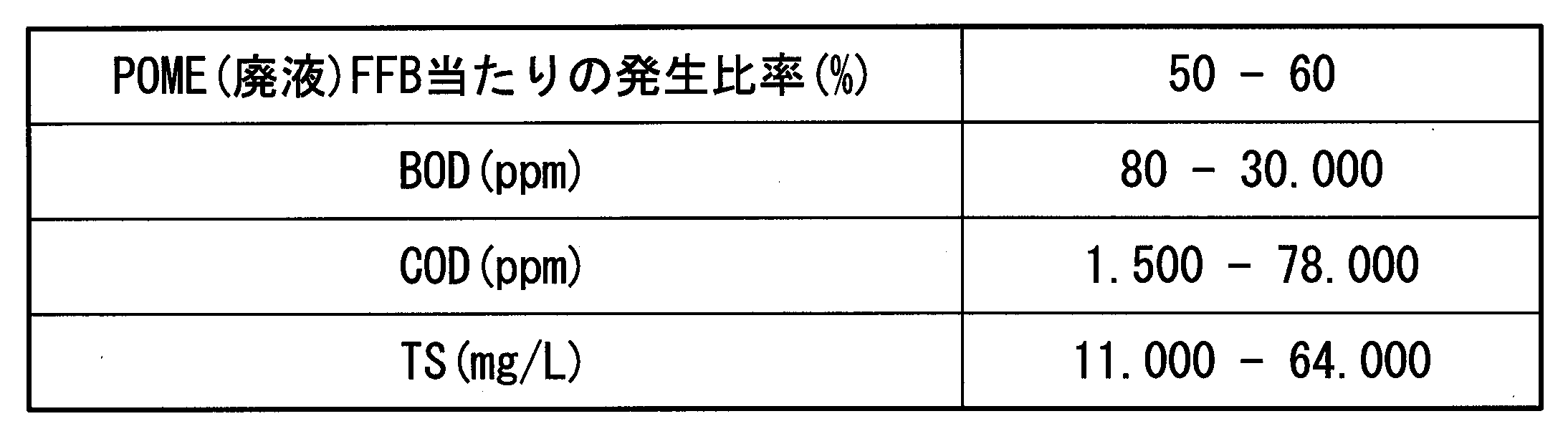
まず、このパーム椰子排水(POME)の高度嫌好気排液処理を行う(高度嫌好気排液処理工程S641)。この高度嫌好気排液処理工程S641では、まず、パーム椰子排水(POME)の有機性物質を嫌気状態にして、嫌気性微生物群によって分解し低級脂肪酸の生成過程を経て、メタンと二酸化炭素に分解する(メタン発酵法)。分解によって発生したメタンガスはバイオマス燃料として有効に用いることができる。
メタン発酵法は曝気エネルギーが不要で、生成する汚泥量も少ない。メタン発酵法は、30~38℃で処理を行う中温法が一般的であるが、50~58℃で行う高温法も用いることができる。メタン発酵法では、温度が高い程、硝化速度が速い反面、エネルギー消費が大きい。pHの最適領域は通常中性付近であり、酸類濃度が高くpHが低下するとメタン発酵に変調をきたす場合がある。平均滞留時間は約20~30日、有機物類の分解率は約50%程度、槽内の撹拌等の効率を高めると消化は促進される。ガス中のメタンの占める比率は約60%で2%程度の水素を含んでいる。
こうした高度嫌好気排液処理工程S641の嫌気処理にメタン発酵法を用いる場合、空果房(EFB)やパーム椰子殻(PKS)やパーム繊維(Fiber)を用いてエネルギー生成工程S616で得られた再生可能エネルギーである熱エネルギーを用いてパーム椰子排水(POME)の液温を適切に調節し、嫌気処理を行うことで、外部からのエネルギーを消費することなく処理を行うことができる。
また、高度嫌好気排液処理工程S641では、パーム椰子排水(POME)の有機性物質を好気状態にして、好気性微生物群によって有機性物質を炭酸ガスと水に分解する。好気処理の代表的なものとしては、活性汚泥法が挙げられる。活性汚泥法は、浮遊する微生物に空気を吹き込みながら有機物の分解を効率的に行うもので、大規模な下水処理や工場排水処理に広く使用されている。
パーム椰子排水(POME)を高度嫌好気排液処理工程S641によって処理した処理水は、次に炭化水素産生藻類の育成に用いられる(藻類育成工程S642)。この藻類育成工程S642では、高度嫌好気排液処理工程S641によって得られた処理水を用いて、炭化水素産生藻類を育成し、炭化水素産生藻類に炭化水素(脂質)を産生させる。
炭化水素産生藻類は、微細藻類の一群であり体内に貯蔵物質としてオイル(炭化水素)を蓄積する。炭化水素産生藻類としては、例えば、ボトリオコッカス(Botryococcus braunii)、シュードコリシスティス(Pseudochoricystis ellipsoidea)、オーランチオキトリウム(Aurantiochytrium)、イカダモ(Scenedesmus, Desmodesmus)などが挙げられる。近年では、これら炭化水素産生藻類よりもさらにオイルの蓄積効率が高い藻類も研究されつつある。
藻類の培養と藻類バイオ燃料の生産には、a)太陽エネルギー、b)栄養塩類、c)水資源、d)適した温度、e)広大な土地、f)撹拌、g)CO2の供給、h)他の微生物の侵入防止、i)抽出油の改質、j)抽出残渣の処理(例えばメタン発酵)、k)投入栄養塩類の回収と再利用、などの多岐にわたる要因が絡み合っている。
本発明プロセスでは、既存パーム産業とパーム産業由来未利用バイオマス資源を利用する産業が存在する事により、ほとんどの問題は安価に安易に持続性を持って解決できる。
a)太陽エネルギー
パームオイル樹木は、赤道を中心として経度で南北15度程度の地域でしか育成しない事より、本プロセスの提案する藻類培養には、太陽エネルギーは全く問題ないレベルで供給される。
b)栄養塩類
栄養塩類とは、N(窒素)、P(リン)、Si(珪素)など、植物が正常な生活を営むのに必要な無機塩類の事で、元々、パーム由来物質のみで、他の混合物が極めて少ないPOMEであり高度嫌好気処理後の処理水には、N(窒素)、P(リン)、Si(珪素)は充分に含まれている。
c)水資源
d)適した温度
高度嫌好気処理で、BOD:20mg/L以下,COD:400mg/L前後までになる為、藻類の生成にとって水資源として全く問題なく、且つ追加水量についても、豊富な地下水からの水資源があり、適した温度調整も可能となっている。
一例として、マレーシア(クアラルンプール)における月毎の平均気温と降水量を図21に示す。
この図21に示すグラフの様に、パーム産業の適地であるマレーシアに於いて、比較的25℃~28℃のほぼ一定の気温で、多雨な状況がよくわかる。
水資源については、パーム搾油工場排水を処理した安定的で管理された水資源を使用する事と、更に豊富な地下水利用で変動に対するコントロールが出来、水温に関しても本システム内で安価なエネルギーが供給されることにより、元々変動が少ない水温も、より高度な温度制御が出来る事となる。
e)広大な土地
パーム産業における、1つの搾油工場当たりの農園面積は、おおよそ平均1万haで、その搾油工場は例えば2014年でマレーシア国内に434か所の工場に存在する。
元々広大な土地が必要なパーム産業である為、本システムに於いて土地問題の障壁は極めて少ないといえる。旧オープンラグーンの新利用形態に加え、近傍の農園用地を転用することも問題とはならない。
f)撹拌
本システムに於いて、安価で多量な再生可能エネルギーが存在する事により、撹拌に要する動力エネルギーの供給及び経済的問題は無い、又、広大な敷地であるが、障壁となる工作物等が無い為、設置及び維持管理が安易となる。
g)CO2の供給
前述した、例えばバイオエタノール製造工程、水素製造工程、メタン発酵工程、エネルギー生成工程等から得られる二酸化炭素を、培養池に直接通気させ、藻類の成長促進を図れる。藻類は、光合成によって二酸化炭素を体内に取込み固定化し有機物を生産する事となる。
h)他の微生物の侵入防止、
本システムでは、パーム搾油工場排水を処理した安定的で管理された水資源を利用する事より、上流側からの他の微生物進入は少ない。但しオープンラグーンを利用する為の他微生物進入リスクは存在する。
i)抽出油の改質
本システムに於いて、安価で多量な再生可能エネルギーが存在する事により、改質に要する熱及び動力エネルギー問題は無い。
又、改質自体も本システム内で別に行うメタン改質、エタノール改質等に合併した改質も可能となる。
j)抽出残渣の処理(例えばメタン発酵)
例えば、乾燥残渣燃料製造、植物性残渣部分のメタン発酵、等の処理方法はあるがEFB燃焼灰がカリウム肥料となる事より、残渣の窒素、リンを加えた自給できる農園用肥料製造が推奨できる。
k)投入栄養塩類の回収と再利用
本システムでは、前述したように栄養塩類は、パーム椰子排水(POME)処理水中に元々含まれている為、特に回収と再利用の必要性はない。
a)太陽エネルギー
パームオイル樹木は、赤道を中心として経度で南北15度程度の地域でしか育成しない事より、本プロセスの提案する藻類培養には、太陽エネルギーは全く問題ないレベルで供給される。
b)栄養塩類
栄養塩類とは、N(窒素)、P(リン)、Si(珪素)など、植物が正常な生活を営むのに必要な無機塩類の事で、元々、パーム由来物質のみで、他の混合物が極めて少ないPOMEであり高度嫌好気処理後の処理水には、N(窒素)、P(リン)、Si(珪素)は充分に含まれている。
c)水資源
d)適した温度
高度嫌好気処理で、BOD:20mg/L以下,COD:400mg/L前後までになる為、藻類の生成にとって水資源として全く問題なく、且つ追加水量についても、豊富な地下水からの水資源があり、適した温度調整も可能となっている。
一例として、マレーシア(クアラルンプール)における月毎の平均気温と降水量を図21に示す。
この図21に示すグラフの様に、パーム産業の適地であるマレーシアに於いて、比較的25℃~28℃のほぼ一定の気温で、多雨な状況がよくわかる。
水資源については、パーム搾油工場排水を処理した安定的で管理された水資源を使用する事と、更に豊富な地下水利用で変動に対するコントロールが出来、水温に関しても本システム内で安価なエネルギーが供給されることにより、元々変動が少ない水温も、より高度な温度制御が出来る事となる。
e)広大な土地
パーム産業における、1つの搾油工場当たりの農園面積は、おおよそ平均1万haで、その搾油工場は例えば2014年でマレーシア国内に434か所の工場に存在する。
元々広大な土地が必要なパーム産業である為、本システムに於いて土地問題の障壁は極めて少ないといえる。旧オープンラグーンの新利用形態に加え、近傍の農園用地を転用することも問題とはならない。
f)撹拌
本システムに於いて、安価で多量な再生可能エネルギーが存在する事により、撹拌に要する動力エネルギーの供給及び経済的問題は無い、又、広大な敷地であるが、障壁となる工作物等が無い為、設置及び維持管理が安易となる。
g)CO2の供給
前述した、例えばバイオエタノール製造工程、水素製造工程、メタン発酵工程、エネルギー生成工程等から得られる二酸化炭素を、培養池に直接通気させ、藻類の成長促進を図れる。藻類は、光合成によって二酸化炭素を体内に取込み固定化し有機物を生産する事となる。
h)他の微生物の侵入防止、
本システムでは、パーム搾油工場排水を処理した安定的で管理された水資源を利用する事より、上流側からの他の微生物進入は少ない。但しオープンラグーンを利用する為の他微生物進入リスクは存在する。
i)抽出油の改質
本システムに於いて、安価で多量な再生可能エネルギーが存在する事により、改質に要する熱及び動力エネルギー問題は無い。
又、改質自体も本システム内で別に行うメタン改質、エタノール改質等に合併した改質も可能となる。
j)抽出残渣の処理(例えばメタン発酵)
例えば、乾燥残渣燃料製造、植物性残渣部分のメタン発酵、等の処理方法はあるがEFB燃焼灰がカリウム肥料となる事より、残渣の窒素、リンを加えた自給できる農園用肥料製造が推奨できる。
k)投入栄養塩類の回収と再利用
本システムでは、前述したように栄養塩類は、パーム椰子排水(POME)処理水中に元々含まれている為、特に回収と再利用の必要性はない。
藻類育成工程S642では、高度嫌好気排液処理工程S641によって処理した処理水と炭化水素産生藻類とを、旧オープンラグーンを転用した培養池や、新たに導入する大型の培養容器(貯槽)を用いて、所定の藻類の培養に適した温度管理を行うことで、効率的に炭化水素産生藻類の体内にオイル(炭化水素)を蓄積させる。
こうした藻類育成工程S642においても、空果房(EFB)やパーム椰子殻(PKS)やパーム繊維(Fiber)を用いてエネルギー生成工程S616で得られた再生可能エネルギーである熱エネルギーおよび電力を用いて、炭化水素産生藻類の培養池や培養容器内の温度管理、日照管理を行うことによって、外部からのエネルギーを消費することなく炭化水素産生藻類の育成を行うことができる。
藻類育成工程S642によって、所定の基準までオイル(炭化水素)を蓄積させた炭化水素産生藻類は処理水から取り出される。そして、体内にオイル(炭化水素)を蓄積させた炭化水素産生藻類から、藻類産生油が分離される(藻類産生油分離工程S643)。この藻類産生油分離工程S643では、例えば遠心分離機を用いて、炭化水素産生藻類の体内に含まれる藻類産生油(グリーンオイル)を分離する。分離した藻類産生油(グリーンオイル)は、適切な精製工程等を経て、例えば、ディーゼルオイルの代替燃料として用いることができる。藻類から得られるバイオ燃料は化学構造上ディーゼルオイルに類似しているので、製油施設や貯蔵施設などのインフラは既存のディーゼルのものが流用できる。
表4に、各種作物、微細藻類のオイル生産量の比較例を示す。
表4に、各種作物、微細藻類のオイル生産量の比較例を示す。
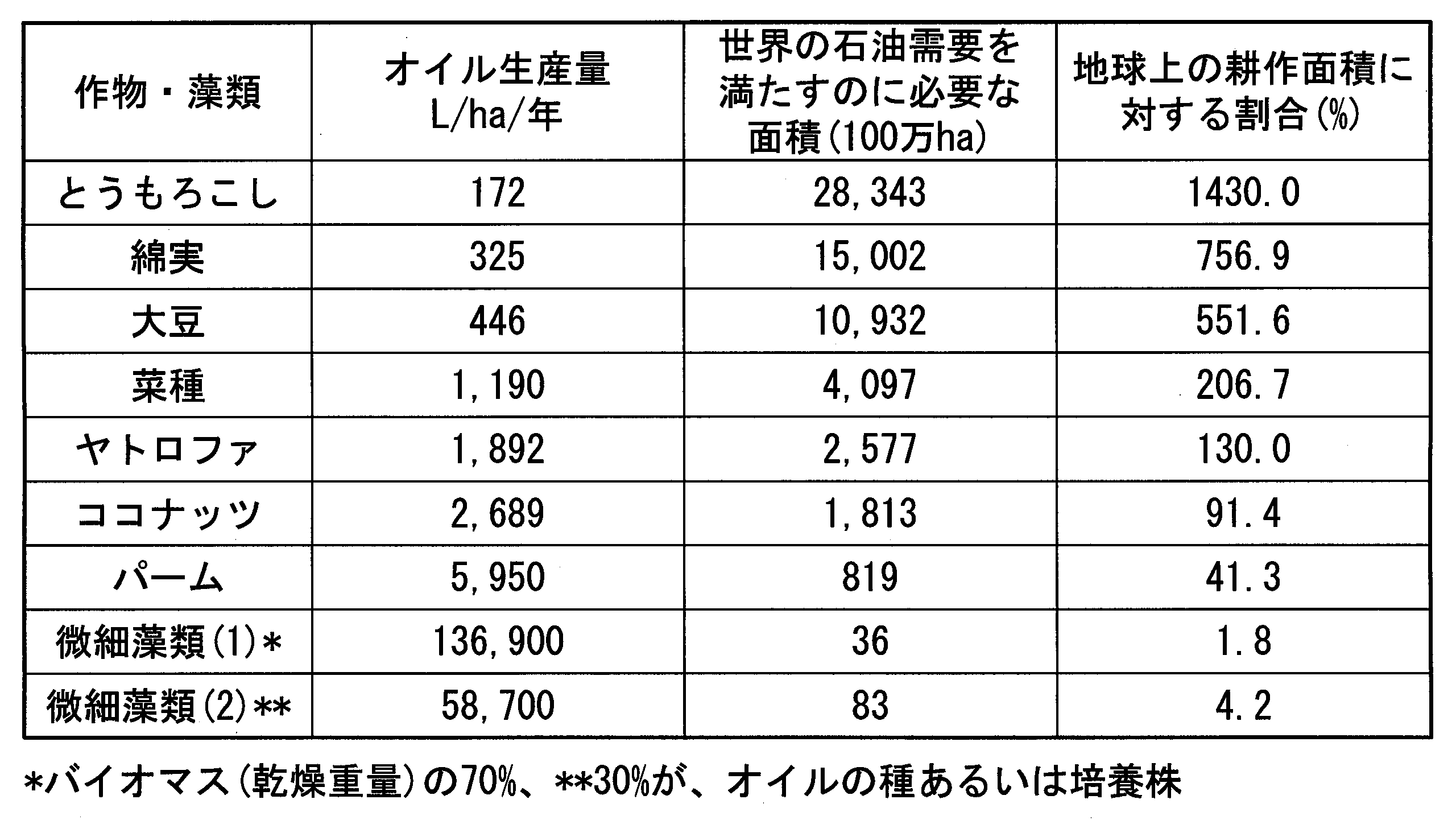
既存オープンラグーンは、パーム椰子排水(POME)中の有機物(BODもしくはCODで評価)含有量を低減する為に必要な水力学的滞留時間(HRT:Hydraulic Retention Time )を確保するための容積で決定される。
2020年から厳守化される予定の、DOE排水基準(特にBOD<20mg/L)をクリアするには、HRTは約120日必要で、仮に搾油工場規模を平均的な、FFB処理能力:60tFFB/hで考察すると、ミルのパーム椰子排水(POME)は最大936m3/dで、ラグーンでは、混入雨量を考慮する必要があり、およそ2倍の排水量で計算される。従って、約2000m3/dの排水を120日間滞留する容量(2000m3/d×120d=240000m3が必要になり、仮にPONDの深さを5m均一とすると、240000m3/5m=48000m2の面積とる。1ha=10000m2より、面積は4.8haで、表4中の微細藻類(2)で旧オープンラグーンを4.8ha流用すると、生産量は4.8×58,7000=281,760L/年となる。
こうした藻類産生油分離工程S643においても、空果房(EFB)やパーム椰子殻(PKS)やパーム繊維(Fiber)を用いてエネルギー生成工程S616で得られた再生可能エネルギーである熱エネルギーおよび電力を用いて、藻類産生油(グリーンオイル)を分離することにより、従来は藻類産生油(グリーンオイル)の高コストの主な原因であった藻類産生油の分離に必要な大きなエネルギーを外部から供給する必要がなく藻類産生油(グリーンオイル)の低コスト化に大きく寄与する。
また、この藻類育成工程S642によって育成した藻類は、生物の食物連鎖の底辺を構成し、この藻類を動物プランクトンが食べ、それを順次、小魚・大型魚等食べる事となる。
即ち、パーム椰子排水(POME)の高度嫌好気排液処理導入により、旧オープンラグーンは藻類育成工程に加え、各種養殖池としての流用が可能で、新事業化の創設となる。
即ち、パーム椰子排水(POME)の高度嫌好気排液処理導入により、旧オープンラグーンは藻類育成工程に加え、各種養殖池としての流用が可能で、新事業化の創設となる。
一方、この藻類産生油分離工程S643によって藻類産生油を分離した後の残渣、および高度嫌好気排液処理工程S641で生じた残渣を纏めて、発酵等のプロセスを経て残渣燃料を生産する。こうした残渣燃料としては、メタンガスや、発酵固形燃料などのバイオマス燃料が挙げられる。
藻類の分離残渣は、空果房(EFB)焼却灰+パーム椰子排水(POME)汚泥残渣による肥料に加える利用法、或いは藻には、糖質、タンパク質、脂質、ミネラルが栄養学的にバランスよく含まれており、牛をはじめとする肉用家畜の飼育用ハラール飼料としての利用法もある。
また、藻類育成工程S642で炭化水素産生藻類を取り除いた後の排液は、有機物が含まれているだけでなく、暗緑色や茶色に変色している。こうした変色した排液を河川等に放流することは河川の美観を低下させるため、パーム産業由来の未利用バイオマスを利用した、活性炭による脱色処理を行う(活性炭処理工程S644)。この活性炭処理工程S644では、藻類育成工程S642で炭化水素産生藻類を取り除いた後の排液に活性炭を投入し、無色に近い色調になるまで脱色を行う。また、活性炭によって、過剰な有機物も吸着される。こうした活性炭処理工程S644によって水質基準を満たすように調整された排水は、河川に放流される。
破瓜(吸着できなくなった状態)した活性炭は廃棄物ではなく、パーム農園の肥料として利用出来る。この破瓜した活性炭には窒素、リン酸、カリを含み、且つ、農地に戻し、すき込む事で雨水による流出を防ぐ効果・保水効果も持っている。
一般的な(1)バイオエタノール(糖質のアルコール発酵)、(2)バイオディーゼル(植物油の改質)生産に比較して、藻類によるバイオマス燃料生産は、以下の特徴がある。
(a)食料生産と競合しない。
(b)植物より単位面積あたりの生産性が高い(表4を参照)。
(c)植物栽培に適さない土地でも利用できる。
(d)CO2固定への寄与率が高い。
などの利点があり、更に本特許のパーム産業由来の未利用バイオマス資源を有効利用した藻類産生油するシステムでは、更に次の利点が挙げられる。
(e)エネルギーコスト、旧POME処理用オープンラグーン使用による培養池製造コスト、残差処理コスト、ユーティリティ整備コスト等が安価となり、総合的な藻類産生油
生産コストが大幅に低減できる。
(f)食物連鎖を利用した各種養殖業を創出できる。この養殖事業から、食用及び畜産用飼料生産が可能でハラール食物となる。
(g)パーム由来未利用バイオマス資源を利用した、再生可能エネルギーであるカーボンニュートラル事業と、現状のバイオマス資源を放置することによる温暖化腐敗ガス、POMEから大気放出している温暖化メタンガスを防止できることより、CO2削減事業となり得る。
(h)システム全ての工程エネルギー、例えば製造エネルギー、輸送エネルギーなどを再生可能エネルギーでまかなった藻由来のバイオマス燃料ができる。
(a)食料生産と競合しない。
(b)植物より単位面積あたりの生産性が高い(表4を参照)。
(c)植物栽培に適さない土地でも利用できる。
(d)CO2固定への寄与率が高い。
などの利点があり、更に本特許のパーム産業由来の未利用バイオマス資源を有効利用した藻類産生油するシステムでは、更に次の利点が挙げられる。
(e)エネルギーコスト、旧POME処理用オープンラグーン使用による培養池製造コスト、残差処理コスト、ユーティリティ整備コスト等が安価となり、総合的な藻類産生油
生産コストが大幅に低減できる。
(f)食物連鎖を利用した各種養殖業を創出できる。この養殖事業から、食用及び畜産用飼料生産が可能でハラール食物となる。
(g)パーム由来未利用バイオマス資源を利用した、再生可能エネルギーであるカーボンニュートラル事業と、現状のバイオマス資源を放置することによる温暖化腐敗ガス、POMEから大気放出している温暖化メタンガスを防止できることより、CO2削減事業となり得る。
(h)システム全ての工程エネルギー、例えば製造エネルギー、輸送エネルギーなどを再生可能エネルギーでまかなった藻由来のバイオマス燃料ができる。
表4による微細藻類(2)のオイル生産量を参考に、マレーシアでの生産量を想定すると、(a)2014年のマレーシア内搾油工場数=434工場、(b)281760L/年(平均≒60tFFB/h工場と仮定)これにより、434工場×281kL/年≒13万kL/年(マレーシアの例)となる。
以上、説明したように、本発明のバイオマス資源を用いた藻類産生油の製造方法によれば、従来は有効利用されていなかったパーム枝葉(OPF)の一部パーム葉柄(OPP)、あるいはパーム古木(OPT)、空果房(EFB)、単純焼却していたパーム椰子殻(PKS)、パーム繊維(Fiber)パーム椰子排水(POME)を用いてメタンやバイオエタノールを製造し、また、余剰エネルギーを利用して水蒸気や電力を生成し、これら再生可能エネルギーを用いて炭化水素産生藻類を育成し、育成した炭化水素産生藻類から藻類産生油を分離するので、新規に外部から原料やエネルギー供給することなく、低コストに藻類産生油(グリーンオイル)を得ることが可能になる。従来は製造コストの面から課題の多かった藻類産生油(グリーンオイル)の生産コストを低減できることで、藻類産生油(グリーンオイル)の産業レベルでの普及に寄与する。
また、パーム椰子産業で生じる未利用物が廃棄物として排出されることなく再利用されることにより、排水の浄化・温暖化ガスの発生抑制が可能なため、環境保全に適合したパーム椰子農園の持続的な運営に寄与する。
以下に、本発明の効果を確認すべく行った確認実験の結果について説明する。
本実施形態で記載された方法によって、パーム枝葉(OPF)の粉砕物を半炭化処理して圧縮成形し、燃料用ペレットを得た。
比較対象として、市販されているパーム椰子殻(PKS)、石炭、木質ペレットを準備した。
本実施形態で記載された方法によって、パーム枝葉(OPF)の粉砕物を半炭化処理して圧縮成形し、燃料用ペレットを得た。
比較対象として、市販されているパーム椰子殻(PKS)、石炭、木質ペレットを準備した。
これらのハードグローブ粉砕性指数(HGI)、含水量、熱量、嵩密度、体積エネルギー密度、表面特性を評価した。評価結果を表5に示す。

5に示すように、本発明である燃料用ペレットにおいては、石炭と同等のハードグローブ粉砕性指数(HGI)、熱量、体積エネルギー密度を有しており、石炭代替燃料として使用可能であることが確認された。
カーボンニュートラルなエネルギー源を効率的に供給することができる。
110、203 パーム枝葉(OPF)
111 葉柄
112 葉部
120 燃料用ペレット
201 パーム椰子
202 樹幹
204 果実
204A 外果皮
204B 果肉(中果皮)
204C パーム椰子核
210 固形バイオマス燃料生産プロセス
211 収穫、分別プロセス
212 燃料用ペレット生産プロセス
213 パーム油生産プロセス
310 固形バイオマス燃料生産プロセス
311 収穫、分別プロセス
312 燃料用ペレット生産プロセス
313 パーム油生産プロセス
314 ハラール肥料製造プロセス
410 バイオマス改質炭の製造方法(バイオマス原料および褐炭利用エネルギーシステム)
411 収穫、分別プロセス
412 半炭化プロセス
413 パーム油生産プロセス
414 バイオマス改質炭製造プロセス
510 バイオマス資源を用いた水素の製造方法(バイオマス資源および褐炭利用エネルギーシステム)
511 収穫、分別プロセス
512 半炭化プロセス
513 パーム油生産プロセス
514 バイオマス改質炭製造プロセス
515 水蒸気改質水素生成プロセス
516 水電解水素生成プロセス
517 水素製造プロセス
610 バイオマス原料および褐炭利用エネルギーシステム
611 収穫、分別プロセス
612 半炭化プロセス
613 パーム油生産プロセス
614 バイオマス改質炭製造プロセス
615 水蒸気改質水素生成プロセス
616 水電解水素生成プロセス
617 水素製造プロセス
618 藻類産生油製造プロセス
111 葉柄
112 葉部
120 燃料用ペレット
201 パーム椰子
202 樹幹
204 果実
204A 外果皮
204B 果肉(中果皮)
204C パーム椰子核
210 固形バイオマス燃料生産プロセス
211 収穫、分別プロセス
212 燃料用ペレット生産プロセス
213 パーム油生産プロセス
310 固形バイオマス燃料生産プロセス
311 収穫、分別プロセス
312 燃料用ペレット生産プロセス
313 パーム油生産プロセス
314 ハラール肥料製造プロセス
410 バイオマス改質炭の製造方法(バイオマス原料および褐炭利用エネルギーシステム)
411 収穫、分別プロセス
412 半炭化プロセス
413 パーム油生産プロセス
414 バイオマス改質炭製造プロセス
510 バイオマス資源を用いた水素の製造方法(バイオマス資源および褐炭利用エネルギーシステム)
511 収穫、分別プロセス
512 半炭化プロセス
513 パーム油生産プロセス
514 バイオマス改質炭製造プロセス
515 水蒸気改質水素生成プロセス
516 水電解水素生成プロセス
517 水素製造プロセス
610 バイオマス原料および褐炭利用エネルギーシステム
611 収穫、分別プロセス
612 半炭化プロセス
613 パーム油生産プロセス
614 バイオマス改質炭製造プロセス
615 水蒸気改質水素生成プロセス
616 水電解水素生成プロセス
617 水素製造プロセス
618 藻類産生油製造プロセス
Claims (26)
- 燃焼燃料として使用される燃料用ペレットであって、
パーム椰子の果房の周囲に生えるパーム葉柄の圧縮成形体からなり、半炭化処理が施されていることを特徴とする燃料用ペレット。 - ハードグローブ粉砕性指数(HGI)が22以上50以下の範囲内とされていることを特徴とする請求項1に記載の燃料用ペレット。
- 含水量が12%以下とされていることを特徴とする請求項1又は請求項2に記載の燃料用ペレット。
- 熱量が20kJ/kg以上24kJ/kg以下の範囲内とされていることを特徴とする請求項1から請求項3のいずれか一項に記載の燃料用ペレット。
- 請求項1から請求項4のいずれか一項に記載の燃料用ペレットの製造方法であって、
パーム椰子の果房の周囲に生えるパーム葉柄を搾汁して樹液と搾汁残渣とを得る搾汁工程と、
得られた前記搾汁残渣を破砕する破砕工程と、
前記破砕工程で得られたパーム葉柄破砕物を乾燥して水分調整する乾燥工程と、
乾燥後のパーム葉柄破砕物を半炭化処理する半炭化処理工程と、
半炭化処理されたパーム葉柄破砕物を粉砕する粉砕工程と、
得られたパーム葉柄粉砕物にパーム由来のリグニンを添加するとともに圧縮成形してペレット化するペレット成形工程と、
を備えていることを特徴とする燃料用ペレットの製造方法。 - 請求項1から請求項4のいずれか一項に記載の燃料用ペレットの製造方法であって、
パーム椰子の果房の周囲に生えるパーム葉柄を搾汁して樹液と搾汁残渣とを得る搾汁工程と、
得られた前記搾汁残渣を破砕する破砕工程と、
得られたパーム葉柄破砕物を圧縮成形してペレット化するペレット成形工程と、
ペレット成形された圧縮成形体を半炭化処理する半炭化処理工程とを備えていることを特徴とする燃料用ペレットの製造方法。 - パーム椰子樹木から果房および該果房の周囲に生えるパーム枝葉をそれぞれ分離、収穫する収穫工程と、
前記パーム枝葉を搾汁し、搾汁液および第1固形残渣に分離する搾汁工程と、
前記搾汁液を発酵させ、バイオ燃料を製造するバイオ燃料製造工程と、
前記バイオ燃料を用いて第1稼働用エネルギーを生成する第1エネルギー生成工程と、
前記第1稼働用エネルギーをエネルギー源として用いて、前記第1固形残渣の圧縮成形体からなり半炭化処理が施された燃料用ペレットを製造する燃料用ペレット製造工程と、を備えたことを特徴とする固形バイオマス燃料の製造方法。 - 前記果房から果実を脱果させ、該果実および脱果後の空果房に分離する脱果工程と、
前記果実を搾油し、粗パーム油および第2固形残渣に分離する第1搾油工程と、
前記粗パーム油に加水した後、油水分離してパーム油を得る油水分離工程と、
前記第2固形残渣から第2稼働用エネルギーを生成する第2エネルギー生成工程と、を更に備え、
前記搾汁工程から前記燃料用ペレット製造工程までは、前記第1稼働用エネルギーに加えて前記第2稼働用エネルギーをエネルギー源として用いることを特徴とする請求項7記載の固形バイオマス燃料の製造方法。 - 前記搾汁工程の前工程として、パーム古木を破砕する第1破砕工程を更に備えたことを特徴とする請求項7または8記載の固形バイオマス燃料の製造方法。
- 燃料用ペレット製造工程は、前記第1固形残渣を破砕してパーム葉柄破砕物を得る第2破砕工程と、前記パーム葉柄破砕物の水分調整をする乾燥工程と、半炭化処理する半炭化処理工程と、半炭化処理されたパーム葉柄破砕物をペレット成形機の投入寸法に調整する粉砕工程と、粉砕後の半炭化処理されたパーム葉柄破砕物にリグニンを添加して前記ペレット成形機で投入圧縮成形してペレット化する圧縮成形工程と、を備えていることを特徴とする請求項7から9のいずれか一項記載の固形バイオマス燃料の製造方法。
- 前記パーム葉が生える葉部および該葉部よりも果房側を成す葉柄のうち、葉柄を用いることを特徴とする請求項7から10のいずれか一項記載の固形バイオマス燃料の製造方法。
- 前記搾汁工程には、前記パーム葉柄に加えて、更に前記パーム椰子樹木の樹幹が更に供給されることを特徴とする請求項7から11のいずれか一項記載の固形バイオマス燃料の製造方法。
- パーム椰子樹木から果房および該果房の周囲に生えるパーム枝葉の一部パーム葉柄をそれぞれ分離、収穫する収穫工程と、
前記パーム枝葉を搾汁し、搾汁液および第1固形残渣に分離する搾汁工程と、
前記搾汁液を用いてバイオ燃料または食品原料のうち少なくとも1つを製造する加工品製造工程と、
前記第1固形残渣の圧縮成形体からなり半炭化処理が施された燃料用ペレットを製造する燃料用ペレット製造工程と、
前記搾汁液を用いて、前記燃料用ペレット製造工程のエネルギー源となる第1稼働用エネルギーを生成する第1エネルギー生成工程と、を備えたことを特徴とする固形バイオマス燃料の製造方法。 - 前記果房から果実を脱果させ、該果実および脱果後の空果房に分離する脱果工程と、
前記果実を搾油し、粗パーム油および第2固形残渣に分離する第1搾油工程と、
前記脱果工程で得られた前記空果房と、前記第1搾油工程で得られた前記第2固形残渣であるパーム椰子殻およびパーム繊維とから第2稼働用エネルギーを生成する第2エネルギー生成工程を備えたことを特徴とする請求項13記載の固形バイオマス燃料の製造方法。 - 前記粗パーム油に加水して懸濁させた後、油水分離してパーム油と分離水とを得る油水分離工程と、
前記油水分離工程で得られた分離水から第3稼働用エネルギーを生成する第3エネルギー生成工程を更に備えたことを特徴とする請求項13または14記載の固形バイオマス燃料の製造方法。 - 前記発酵工程の前工程として、前記搾汁液を濃縮する濃縮工程を更に備えたことを特徴とする請求項13から15のいずれか一項記載の固形バイオマス燃料の製造方法。
- 前記搾汁工程の前工程として、パーム古木を破砕する第1破砕工程を更に備えたことを特徴とする請求項13から16のいずれか一項記載の固形バイオマス燃料の製造方法。
- 燃料用ペレット製造工程は、前記第1固形残渣を破砕してパーム葉柄破砕物を得る第2破砕工程と、前記パーム葉柄破砕物の水分調整をする乾燥工程と、半炭化処理する半炭化処理工程と、半炭化処理されたパーム葉柄破砕物をペレット成形機の投入寸法に調整する粉砕工程と、粉砕後の半炭化処理されたパーム葉柄破砕物にリグニンを添加して前記ペレット成形機で投入圧縮成形してペレット化する圧縮成形工程と、を備えていることを特徴とする請求項13から17のいずれか一項記載の固形バイオマス燃料の製造方法。
- 前記パーム枝葉として、パーム葉が生える葉部および該葉部よりも果房側を成す葉柄のうち、葉柄を用いることを特徴とする請求項13から18のいずれか一項記載の固形バイオマス燃料の製造方法。
- 請求項15記載の固形バイオマス燃料の製造方法を用いたハラール肥料の製造方法であって、前記分離水を原料とした前記第3エネルギー生成工程で生じた汚泥、または前記空果房の焼却灰、あるいは前記汚泥と前記焼却灰との混合物を原料として用い、前記第1稼働用エネルギー、前記第2稼働用エネルギー、前記第3稼働用エネルギーのうち少なくとも1つによってハラール肥料を製造するハラール肥料製造工程を備えたことを特徴とするハラール肥料の製造方法。
- パーム椰子樹木の果房の周囲に生えるパーム枝葉を半炭化処理したバイオマス半炭化物と、褐炭を乾燥粉砕した粉状褐炭とを混合して圧縮成形した圧縮成形体からなることを特徴とするバイオマス改質炭。
- パーム椰子樹木からパーム油を得るパーム油生産プロセスと、パーム椰子樹木からリサイクル原料を得る収穫、分別プロセスと、前記リサイクル原料を半炭化する半炭化プロセスと、半炭化した前記リサイクル原料と褐炭を混合してバイオマス改質炭を得るバイオマス改質炭製造プロセスと、を有することを特徴とするバイオマス改質炭の製造方法。
- 前記半炭化プロセスまたは前記パーム油生産プロセスのうち、少なくともいずか一方で生じた排出物を用いて再生エネルギーを生成する再生エネルギー生成工程を備え、前記再生エネルギーを少なくともバイオマス改質炭製造プロセスの稼働エネルギー源として用いることを特徴とする請求項22記載のバイオマス改質炭の製造方法。
- 前記収穫、分別プロセスは、前記パーム椰子樹木から果房および該果房の周囲に生える前記リサイクル原料であるパーム枝葉をそれぞれ分離、収穫する収穫工程を有し、
前記半炭化プロセスは、前記パーム葉柄を搾汁し、搾汁液および第1固形残渣に分離する搾汁工程と、前記第1固形残渣を半炭化処理してバイオマス半炭化物を得る半炭化工程と、を有し、
前記バイオマス改質炭製造プロセスは、褐炭を乾燥する褐炭乾燥工程と、乾燥後の前記褐炭を粉砕して粉状褐炭を得る褐炭粉砕工程と、前記粉状褐炭および前記バイオマス半炭化物を混合して混合体を得る混合工程と、前記混合体を圧縮成形し、固形状のバイオマス改質炭を得る圧縮成形工程と、を有し、
前記パーム油生産プロセスは、前記果房から果実を脱果させ、該果実および脱果後の空果房に分離する脱果工程と、前記果実を搾油し、粗パーム油および第2固形残渣に分離する第1搾油工程と、前記粗パーム油に加水して懸濁させた後、油水分離してパーム油と分離水とを得る油水分離工程と、を有することを特徴とする請求項22または23記載のバイオマス改質炭の製造方法。 - パーム椰子樹木からパーム油を得るパーム油生産プロセスと、パーム椰子樹木からリサイクル原料を得る分別プロセスと、前記リサイクル原料からバイオマス半炭化物およびバイオエタノールを製造する半炭化プロセスと、前記パーム油生産プロセスで生じた排出物を用いてメタンを生成し、前記バイオエタノールとともに水蒸気改質によって水素を得る水素製造プロセスと、を有し、
前記水素製造プロセスは、前記パーム油生産プロセスで生じた排出物を用いて生成した再生エネルギーを稼働エネルギー源として用いることを特徴とするバイオマス資源を用いた水素の製造方法。 - パーム椰子樹木からパーム椰子を収穫して部位ごとに分ける分別プロセスと、前記分別プロセスで分けられた前記パーム椰子の果房からパーム油を生産するパーム油生産プロセスと、前記パーム椰子から燃料用ペレットの原料となるバイオマス半炭化物を製造する半炭化プロセスと、前記パーム油生産プロセスで生じたパーム椰子排水および炭化水素産生藻類から藻類産生油を製造する藻類産生油製造プロセスと、を有し、
前記藻類産生油製造プロセスは、前記パーム油生産プロセスで生じた排出物を用いて生成した再生エネルギーを前記炭化水素産生藻類の育成エネルギー源として用いることを特徴とするバイオマス資源を用いたバイオマス資源を用いた藻類産生油の製造方法。
Priority Applications (1)
| Application Number | Priority Date | Filing Date | Title |
|---|---|---|---|
| MYPI2019004901A MY192344A (en) | 2017-03-02 | 2018-03-02 | Method of producing solid biomass fuel |
Applications Claiming Priority (12)
| Application Number | Priority Date | Filing Date | Title |
|---|---|---|---|
| JP2017039482A JP6766693B2 (ja) | 2017-03-02 | 2017-03-02 | 固形バイオマス燃料の製造方法 |
| JP2017039481A JP2018145252A (ja) | 2017-03-02 | 2017-03-02 | 燃料用ペレット、及び、燃料用ペレットの製造方法 |
| JP2017-039483 | 2017-03-02 | ||
| JP2017-039481 | 2017-03-02 | ||
| JP2017-039482 | 2017-03-02 | ||
| JP2017039483A JP6766694B2 (ja) | 2017-03-02 | 2017-03-02 | 固形バイオマス燃料の製造方法、ハラール肥料の製造方法 |
| JP2017147195A JP2019026730A (ja) | 2017-07-28 | 2017-07-28 | バイオマス改質炭、バイオマス改質炭の製造方法 |
| JP2017-146387 | 2017-07-28 | ||
| JP2017146387A JP6891706B2 (ja) | 2017-07-28 | 2017-07-28 | バイオマス資源を用いた水素の製造方法 |
| JP2017-147195 | 2017-07-28 | ||
| JP2017-168690 | 2017-09-01 | ||
| JP2017168690A JP6939276B2 (ja) | 2017-09-01 | 2017-09-01 | バイオマス資源を用いた藻類産生油の製造方法 |
Publications (1)
| Publication Number | Publication Date |
|---|---|
| WO2018159818A1 true WO2018159818A1 (ja) | 2018-09-07 |
Family
ID=63370563
Family Applications (1)
| Application Number | Title | Priority Date | Filing Date |
|---|---|---|---|
| PCT/JP2018/008037 Ceased WO2018159818A1 (ja) | 2017-03-02 | 2018-03-02 | 燃料用ペレット及び燃料用ペレットの製造方法、固形バイオマス燃料の製造方法、ハラール肥料の製造方法、バイオマス改質炭及びバイオマス改質炭の製造方法、水素の製造方法並びに藻類産生油の製造方法 |
Country Status (2)
| Country | Link |
|---|---|
| MY (4) | MY198848A (ja) |
| WO (1) | WO2018159818A1 (ja) |
Cited By (5)
| Publication number | Priority date | Publication date | Assignee | Title |
|---|---|---|---|---|
| CN112300847A (zh) * | 2020-10-20 | 2021-02-02 | 南京茂辉环保技术开发有限公司 | 一种新能源生物质燃料加工方法 |
| JP7323084B1 (ja) * | 2022-03-30 | 2023-08-08 | 株式会社Ihi | バイオ化成品の製造方法 |
| WO2023188503A1 (ja) * | 2022-03-30 | 2023-10-05 | 株式会社Ihi | バイオ化成品の製造方法 |
| AU2022285256B2 (en) * | 2021-05-31 | 2024-05-02 | Ihi Corporation | Boiler system, and operation method for a boiler system |
| WO2025041821A1 (ja) * | 2023-08-24 | 2025-02-27 | アイシン高丘株式会社 | バイオ成型コークスの製造方法 |
Citations (4)
| Publication number | Priority date | Publication date | Assignee | Title |
|---|---|---|---|---|
| JP2014040552A (ja) * | 2012-08-23 | 2014-03-06 | Daio Paper Corp | 混合燃料の製造方法及び成型物 |
| JP2015229751A (ja) * | 2014-06-06 | 2015-12-21 | 住友商事株式会社 | 植物系バイオマス固形燃料及びその製造方法 |
| WO2016056354A1 (ja) * | 2014-10-10 | 2016-04-14 | 株式会社Ihi環境エンジニアリング | 木質系バイオマスを用いた燃料製造方法 |
| WO2016056608A1 (ja) * | 2014-10-07 | 2016-04-14 | 宇部興産株式会社 | バイオマス固体燃料 |
-
2018
- 2018-03-02 MY MYPI2022003850A patent/MY198848A/en unknown
- 2018-03-02 MY MYPI2019004901A patent/MY192344A/en unknown
- 2018-03-02 MY MYPI2022003852A patent/MY198840A/en unknown
- 2018-03-02 WO PCT/JP2018/008037 patent/WO2018159818A1/ja not_active Ceased
- 2018-03-02 MY MYPI2022003851A patent/MY198839A/en unknown
Patent Citations (4)
| Publication number | Priority date | Publication date | Assignee | Title |
|---|---|---|---|---|
| JP2014040552A (ja) * | 2012-08-23 | 2014-03-06 | Daio Paper Corp | 混合燃料の製造方法及び成型物 |
| JP2015229751A (ja) * | 2014-06-06 | 2015-12-21 | 住友商事株式会社 | 植物系バイオマス固形燃料及びその製造方法 |
| WO2016056608A1 (ja) * | 2014-10-07 | 2016-04-14 | 宇部興産株式会社 | バイオマス固体燃料 |
| WO2016056354A1 (ja) * | 2014-10-10 | 2016-04-14 | 株式会社Ihi環境エンジニアリング | 木質系バイオマスを用いた燃料製造方法 |
Cited By (5)
| Publication number | Priority date | Publication date | Assignee | Title |
|---|---|---|---|---|
| CN112300847A (zh) * | 2020-10-20 | 2021-02-02 | 南京茂辉环保技术开发有限公司 | 一种新能源生物质燃料加工方法 |
| AU2022285256B2 (en) * | 2021-05-31 | 2024-05-02 | Ihi Corporation | Boiler system, and operation method for a boiler system |
| JP7323084B1 (ja) * | 2022-03-30 | 2023-08-08 | 株式会社Ihi | バイオ化成品の製造方法 |
| WO2023188503A1 (ja) * | 2022-03-30 | 2023-10-05 | 株式会社Ihi | バイオ化成品の製造方法 |
| WO2025041821A1 (ja) * | 2023-08-24 | 2025-02-27 | アイシン高丘株式会社 | バイオ成型コークスの製造方法 |
Also Published As
| Publication number | Publication date |
|---|---|
| MY198839A (en) | 2023-10-02 |
| MY192344A (en) | 2022-08-17 |
| MY198840A (en) | 2023-10-02 |
| MY198848A (en) | 2023-10-02 |
Similar Documents
| Publication | Publication Date | Title |
|---|---|---|
| Mat Aron et al. | Sustainability of the four generations of biofuels–a review | |
| Balaman | Decision-making for biomass-based production chains: The basic concepts and methodologies | |
| Monlau et al. | New opportunities for agricultural digestate valorization: current situation and perspectives | |
| Taghizadeh-Alisaraei et al. | Potential of biofuel production from pistachio waste in Iran | |
| Rezania et al. | The diverse applications of water hyacinth with main focus on sustainable energy and production for new era: An overview | |
| Thomas et al. | Biomass resources and potential of anaerobic digestion in Indian scenario | |
| JP6939276B2 (ja) | バイオマス資源を用いた藻類産生油の製造方法 | |
| Kurchania | Biomass energy | |
| WO2018159818A1 (ja) | 燃料用ペレット及び燃料用ペレットの製造方法、固形バイオマス燃料の製造方法、ハラール肥料の製造方法、バイオマス改質炭及びバイオマス改質炭の製造方法、水素の製造方法並びに藻類産生油の製造方法 | |
| JP6766693B2 (ja) | 固形バイオマス燃料の製造方法 | |
| JP6766694B2 (ja) | 固形バイオマス燃料の製造方法、ハラール肥料の製造方法 | |
| Priya et al. | Transforming agricultural residues to value-added products: waste to wealth | |
| JP6891706B2 (ja) | バイオマス資源を用いた水素の製造方法 | |
| Lade et al. | Technologies for the production of value-added products from agro-wastes and their possible applications | |
| Reddy | Biomass energy for India: an overview | |
| de Souza Rossin et al. | Chemical properties of biomass | |
| De Corato et al. | Biofuel co-products for livestock feed | |
| Tan et al. | Algae cultivation in wastewater for biodiesel–A review | |
| JP2019026730A (ja) | バイオマス改質炭、バイオマス改質炭の製造方法 | |
| Singh et al. | Raw materials for biofuels production | |
| Nahar | Biogas production from water hyacinth (Eichhornia Crassipes) | |
| Barathi et al. | Biorefineries and Waste Valorization in Integrated Biorefinery Concepts and Applications | |
| Butnariu et al. | Biodegradable waste: Renewable energy source | |
| Hodkashia et al. | Organic waste types, characteristics, quantities, and potential resource components | |
| de Vrije et al. | Potential direct uses of organic wastes on Bonaire |
Legal Events
| Date | Code | Title | Description |
|---|---|---|---|
| 121 | Ep: the epo has been informed by wipo that ep was designated in this application |
Ref document number: 18761465 Country of ref document: EP Kind code of ref document: A1 |
|
| NENP | Non-entry into the national phase |
Ref country code: DE |
|
| 122 | Ep: pct application non-entry in european phase |
Ref document number: 18761465 Country of ref document: EP Kind code of ref document: A1 |