WO2018095246A1 - 沙门氏菌传感器、制备方法及沙门氏菌浓度的检测方法 - Google Patents
沙门氏菌传感器、制备方法及沙门氏菌浓度的检测方法 Download PDFInfo
- Publication number
- WO2018095246A1 WO2018095246A1 PCT/CN2017/110984 CN2017110984W WO2018095246A1 WO 2018095246 A1 WO2018095246 A1 WO 2018095246A1 CN 2017110984 W CN2017110984 W CN 2017110984W WO 2018095246 A1 WO2018095246 A1 WO 2018095246A1
- Authority
- WO
- WIPO (PCT)
- Prior art keywords
- salmonella
- gate electrode
- sensor
- electrode
- organic
- Prior art date
- Legal status (The legal status is an assumption and is not a legal conclusion. Google has not performed a legal analysis and makes no representation as to the accuracy of the status listed.)
- Ceased
Links
Images


Classifications
-
- G—PHYSICS
- G01—MEASURING; TESTING
- G01N—INVESTIGATING OR ANALYSING MATERIALS BY DETERMINING THEIR CHEMICAL OR PHYSICAL PROPERTIES
- G01N27/00—Investigating or analysing materials by the use of electric, electrochemical, or magnetic means
- G01N27/26—Investigating or analysing materials by the use of electric, electrochemical, or magnetic means by investigating electrochemical variables; by using electrolysis or electrophoresis
-
- G—PHYSICS
- G01—MEASURING; TESTING
- G01N—INVESTIGATING OR ANALYSING MATERIALS BY DETERMINING THEIR CHEMICAL OR PHYSICAL PROPERTIES
- G01N27/00—Investigating or analysing materials by the use of electric, electrochemical, or magnetic means
- G01N27/26—Investigating or analysing materials by the use of electric, electrochemical, or magnetic means by investigating electrochemical variables; by using electrolysis or electrophoresis
- G01N27/28—Electrolytic cell components
- G01N27/30—Electrodes, e.g. test electrodes; Half-cells
- G01N27/327—Biochemical electrodes, e.g. electrical or mechanical details for in vitro measurements
- G01N27/3275—Sensing specific biomolecules, e.g. nucleic acid strands, based on an electrode surface reaction
Definitions
- the invention relates to the field of biosensing technology, in particular to a Salmonella sensor, a preparation method and a method for detecting the concentration of Salmonella.
- Salmonella belongs to Gram-negative bacteria and is an enterobacteria pathogen. It is an important pathogen causing food poisoning. It is widely distributed and easily pollutes water sources and various foods, especially poultry and egg products. Among all kinds of bacterial food poisoning, the cases of food poisoning caused by Salmonella are among the highest in the world. In recent years, the incidence of Salmonella infection in China has been increasing, and more than half of the bacterial food poisoning is caused by Salmonella. It can be seen that Salmonella contamination is serious. It threatens human health and restricts economic development. Therefore, the development of simple, accurate, rapid and sensitive Salmonella detection technology is of great significance for food safety and human health.
- the methods for detecting Salmonella mainly include traditional standard detection methods, molecular biological methods, immunological methods, electrical impedance methods, and Salmonella chromogenic medium methods, among which traditional standard detection methods, molecular biological methods, and immunological methods are applied.
- the three most widely used methods The traditional standard detection method requires many complicated and cumbersome steps such as pre-enrichment, selective enrichment and separation, and the whole process takes at least 4 to 7 days. Obviously, traditional standard testing methods are no longer able to meet the requirements for rapid detection of Salmonella.
- Molecular biology-based methods include amplification fragment length polymorphism (AFLP), polymerase chain reaction (PCR) nucleic acid probes, and gene chip technology.
- AFLP amplification fragment length polymorphism
- PCR polymerase chain reaction
- the immunological methods include enzyme-linked immunosorbent assay (ELISA), dot-enzyme-linked immunosorbent assay (Dot-ELISA), immunomagnetic separation technique, immunofluorescence labeling, etc.
- ELISA enzyme-linked immunosorbent assay
- Dot-ELISA dot-enzyme-linked immunosorbent assay
- immunomagnetic separation technique immunofluorescence labeling, etc.
- the immunological method is simple, rapid, and sensitive, but the detection is low. The concentration of the target is prone to false negative or false positive results, and the interpretation of the results requires a certain amount of professional knowledge, which is not convenient for the detection of the primary layer.
- a Salmonella sensor for detecting the concentration of Salmonella comprising: an electrolytic cell, an electrolyte disposed in the electrolytic cell, an organic electrochemical transistor disposed in the electrolytic cell, and disposed in the electrolytic cell a gate electrode;
- the organic electrochemical transistor includes: a substrate, a source electrode and a drain electrode disposed above the substrate, and an organic semiconductor thin film layer coated on the substrate to connect the source electrode and the drain electrode;
- the gate electrode is modified with a photoelectrically active semiconductor material as a sensitive functional layer of the sensor; and an antibody for binding to Salmonella is immobilized on the gate electrode modified with the photoelectrically active semiconductor material.
- the Salmonella sensor wherein the photoelectrically active semiconductor material is an organic semiconductor material, an inorganic semiconductor material, or a combination of both.
- the Salmonella sensor wherein the substrate is made of glass, a polymer flexible material, or a silicon wafer.
- the source electrode, the drain electrode, and the gate electrode are made of a metal material, a metal oxide semiconductor material, or an alloy material.
- the Salmonella sensor wherein the organic semiconductor thin film layer is composed of poly(3,4-ethylenedioxythiophene)-polystyrenesulfonic acid, polypyrrole, polythiophene, polyaniline, polycarbazole or poly(3, At least one of two or more copolymers of 4-ethylenedioxythiophene-polystyrenesulfonic acid, polypyrrole, polythiophene, polyaniline, and polycarbazole.
- the Salmonella sensor wherein the source electrode and the drain electrode have a thickness of 50 to 500 nm; and the organic semiconductor thin film layer has a thickness of 10 to 300 nm.
- A thoroughly clean the substrate and dry, prepare a source electrode and a drain electrode on the substrate, and prepare an organic semiconductor thin film layer between the source electrode and the drain electrode to obtain an organic electrochemical transistor;
- the Salmonella sensor is prepared by placing an organic electrochemical transistor and a modified gate electrode to which an antibody is immobilized in an electrolytic cell containing an electrolyte.
- the method for preparing a Salmonella sensor wherein in the step A, the source electrode and the drain electrode are prepared by one of vacuum thermal evaporation, magnetron sputtering or vapor deposition; and an organic semiconductor film is prepared.
- the method of the layer is spin coating or ink jet printing.
- a method for detecting a Salmonella concentration based on the above-described Salmonella sensor, wherein the method for detecting the concentration of Salmonella comprises:
- the photocurrent on the gate electrode is changed by the combination of the antibody on the gate electrode and Salmonella, causing a change in the channel current of the organic electrochemical transistor, and measuring the change in the channel current of the organic electrochemical transistor. Detection of different concentrations of Salmonella.
- the method for detecting the concentration of Salmonella wherein the method for detecting the concentration of Salmonella further comprises: modifying the gold nanoparticles on the Salmonella.
- the Salmonella sensor of the present invention has extremely high sensitivity and extremely low detection limit, and the device is simple and easy to miniaturize.
- the invention is based on the detection method of the Salmonella concentration of the Salmonella sensor, and can realize the rapid and simple detection of the highly sensitive Salmonella concentration.
- Figure 1 is a schematic view showing the overall structure of a Salmonella sensor of the present invention.
- FIG. 2 is a schematic view showing the structure of an organic electrochemical transistor of the present invention.
- Figure 3 is an I ds -T curve of a device with a CdS QDs modified by a "off-on" lower gate electrode.
- FIG 4 is a Salmonella (Salmonella concentration of 10 8 cells / ml) with antibody binding curve I ds -T measured before and after (curve I ds -T modified CdS QDs as a gate electrode, b is fixed to the antibody-modified CdS QDs I ds -T curve on the gate electrode, c I ds -T curve of Salmonella antibody binding).
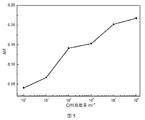
- Figure 5 shows the results of testing different concentrations of Salmonella using photoelectrochemical analysis.
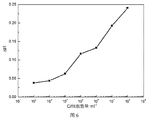
- Figure 6 shows the results of Salmonella detection of different concentrations of Salmonella based on steric effect.
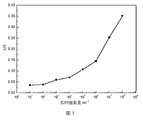
- Figure 7 shows the results of testing for different concentrations of Salmonella by an exciton-plasma-based Salmonella sensor.
- the present invention provides a Salmonella sensor, a preparation method, and a method for detecting the concentration of Salmonella.
- the present invention will be further described in detail below in order to clarify and clarify the objects, technical solutions and effects of the present invention. It is understood that the specific embodiments described herein are merely illustrative of the invention and are not intended to limit the invention.
- the present invention provides a Salmonella sensor for detecting the concentration of Salmonella, as shown in FIG. 1 and FIG. 2, comprising: an electrolytic cell 1, an electrolyte 2 disposed in the electrolytic cell 1, disposed in the electrolytic cell 1 An organic electrochemical transistor 9 therein, and a gate electrode 3 disposed in the electrolytic cell;
- the organic electrochemical transistor 9 includes: a substrate 5, a source electrode 7 and a drain electrode 8 disposed above the substrate 5 And an organic semiconductor thin film layer 6 coated on the substrate 5 and connecting the source electrode 7 and the drain electrode 8;
- the gate electrode 3 is modified with the photoelectrically active semiconductor material 4 as a sensitive functional layer of the sensor; and the photoelectrically active semiconductor is modified
- An antibody for binding to Salmonella is immobilized on the gate electrode 3 of the material.
- the photoelectric active semiconductor material is an organic semiconductor material, an inorganic semiconductor material or a combination of the two; for example, CdS, TiO 2 .
- the substrate is made of glass, a polymer flexible material such as PET or a silicon wafer.
- the source electrode, the drain electrode and the gate electrode are made of a metal material, a metal oxide semiconductor material, or an alloy material; for example, Au, Ag, Pt, Cu, ITO, or the like.
- the organic semiconductor thin film layer is composed of poly(3,4-ethylenedioxythiophene)-polystyrenesulfonic acid ((PEDOT:PSS), polypyrrole, polythiophene, polyaniline, poly At least one of carbazole or a copolymer of two or more of poly(3,4-ethylenedioxythiophene)-polystyrenesulfonic acid, polypyrrole, polythiophene, polyaniline, and polycarbazole.
- PEDOT:PSS poly(3,4-ethylenedioxythiophene)-polystyrenesulfonic acid
- PDOT poly(3,4-ethylenedioxythiophene)-polystyrenesulfonic acid
- PDOT:PSS polypyrrole
- polythiophene polythiophene
- polyaniline poly At least one of carbazole or a copolymer of two or more of poly(3,4-ethylenedioxythiophene)-pol
- the source electrode and the drain electrode have a thickness of 50-500 nm.
- the organic semiconductor thin film layer has a thickness of 10 to 300 nm.
- the source electrode, the drain electrode and the gate electrode are placed in an electrolytic cell containing an electrolyte for detection as an electron donor.
- the organic electrochemical transistor (OECT) of the present invention is an important one of organic thin film transistors (OTFTs), which has low cost, easy preparation, low operating voltage ( ⁇ 1V), good biocompatibility, and easy miniaturization. Can be made into flexible devices and many other advantages. Since OECT has both sensing and signal amplification functions, it has very high sensitivity and low detection limit in biomolecule detection. At the same time, OECT can be fabricated into small-sized devices, which contributes to the miniaturization and integration of the sensor.
- OECT organic thin film transistors
- the invention combines photoelectrochemical (PEC) biosensing technology and organic electrochemical transistor (OECT) perfectly, and is applied to the detection of Salmonella, and develops a Salmonella sensor, which is simple, accurate, sensitive, and easy to miniaturize. Performance, simple equipment required, and a wide range of applications.
- PEC photoelectrochemical
- OECT organic electrochemical transistor
- the embodiment of the invention further provides a preparation method of the Salmonella sensor as described above, comprising the steps of:
- the source electrode and the drain electrode are prepared by one of vacuum thermal evaporation, magnetron sputtering or vapor deposition.
- the method for preparing the organic semiconductor thin film layer is spin coating or inkjet printing; the annealing temperature is 100-250 ° C, the annealing atmosphere is nitrogen, and the time is 20-60 min.
- the Salmonella sensor provided by the embodiment of the invention combines an organic electrochemical transistor (OECT) and a photoelectrochemical (PEC) analysis method, and modifies the gate electrode of the OECT with a photoelectric active material, and fixes the antibody on the gate electrode in the light Under the action, the specific binding of Salmonella to the antibody on the gate electrode will cause a change in the photocurrent on the gate electrode, further causing changes in the relevant electrical parameters (channel current, transfer curve, etc.) in the organic electrochemical transistor.
- the changes in the electrical parameters (channel current, transfer curve, etc.) of the electrochemical transistor of the machine can achieve the purpose of detecting different concentrations of Salmonella.
- the Salmonella sensor sensor of the present invention Since the organic electrochemical transistor has the functions of sensing and signal amplification, the Salmonella sensor sensor of the present invention has extremely high sensitivity and extremely low detection limit, and the device is simple and easy to miniaturize, and can solve the sensitivity in the existing Salmonella detection technology. Low, expensive equipment, and cumbersome sample handling.
- the embodiment of the invention further provides a method for detecting the concentration of Salmonella based on the above-mentioned Salmonella sensor, wherein the method for detecting the concentration of Salmonella comprises:
- the photocurrent on the gate electrode is changed by the combination of the antibody on the gate electrode and Salmonella, causing a change in the channel current of the organic electrochemical transistor, and measuring the change in the channel current of the organic electrochemical transistor. Detection of different concentrations of Salmonella.
- the gate electrode of OECT is modified with an electro-optically active substance, and the antibody is fixed on the gate electrode, and the I ds -T (channel current-time) curve of the measuring device is used to react the gate electrode under the action of illumination.
- the method for detecting the concentration of Salmonella further comprises: modifying (fixing) the gold nanoparticles on the Salmonella.
- Example 1 Salmonella sensor based on steric effect
- the gate electrode is an ITO electrode assembled with cadmium sulfide quantum dots (CdS QDs).
- CdS QDs cadmium sulfide quantum dots
- V p qp 0 t/c i
- q represents the electron charge
- ⁇ represents the hole mobility
- p o represents the initial hole density in the organic semiconductor layer
- W and L represent the width and length of the device channel, respectively
- t represents the thickness of the organic semiconductor film
- C i represents The effective gate capacitance of the OECT device
- V P represents the pinch-off voltage
- V offset represents the compensation voltage
- the compensation voltage is related to the voltage drop at the interface between the gate-electrolyte and the electrolyte-channel.
- the channel current I ds of the organic electrochemical transistor is regulated by the gate voltage V G , it can be seen from the above equation that the channel current I ds decreases as the effective gate voltage increases.
- the step size formed by the "off-on" illumination in Fig. 3 indirectly reflects the magnitude of the photocurrent generated on the gate electrode, and the signal is amplified, so that when the magnitude of the photocurrent generated on the gate electrode changes.
- the size of the step formed by the illumination "off-on" in the I ds- T curve will also change, and the antibody is attached to the gate electrode.
- the antibody specifically binds to Salmonella, the steric effect of Salmonella causes the gate to be The photocurrent of the electrode decreases, and the decrease of photocurrent caused by different concentrations of Salmonella is different, so that different concentrations of Salmonella can be detected.
- Figure 4 is a graph showing changes in electrical signals before and after binding of Salmonella to antibodies at a concentration of 10 8 cells/ml.
- Figure 5 shows the results of testing different concentrations of Salmonella using conventional photoelectrochemical analysis methods with a detection limit of 10 3 cells/ml.
- Figure 6 shows the results of testing the different concentrations of Salmonella by photoelectrochemical sensors based on organic electrochemical transistors with a detection limit of 10 2 cells/ml. It can be seen that the sensitivity of the new sensing technology is higher than that of the conventional photoelectrochemical sensing technology.
- the cleaned glass is adhered to the patterned mask, and the metal electrode is deposited by thermal evaporation to deposit 10 nm respectively. Cr and 100 nm of Au to obtain an Au/Cr/glass electrode, on which a layer of poly(3,4-ethylenedioxythiophene)-polystyrenesulfonic acid doped with dimethyl sulfoxide (DMSO) was spin-coated.
- DMSO dimethyl sulfoxide
- PEDOT:PSS the place where the PEDOT:PSS film is not required to be covered is wiped clean; the annealing is performed at 180 ° C for 1 h in a nitrogen atmosphere, so that the PEDOT:PSS film adheres more firmly to the electrode surface and finally the OECT device is obtained.
- the antibody-immobilized gate electrode was immersed in 1 ml of different concentrations of Salmonella solution (10 mM PBS solution) for 1 h at room temperature for sufficient binding, and then carefully rinsed with 10 mM PBS to remove unbound Salmonella.
- the I ds -T curve was measured under illumination.
- the cleaned glass is adhered to the patterned mask, and the metal electrode is deposited by thermal evaporation to deposit 10 nm respectively. Cr and 100 nm of Au to obtain an Au/Cr/glass electrode, on which a layer of poly(3,4-ethylenedioxythiophene)-polystyrenesulfonic acid doped with dimethyl sulfoxide (DMSO) was spin-coated.
- DMSO dimethyl sulfoxide
- PEDOT:PSS the place where the PEDOT:PSS film is not required to be covered is wiped clean; it is annealed at 180 ° C for 30 min in a nitrogen atmosphere to make the PEDOT:PSS film adhere more firmly to the electrode surface and finally obtain the OECT device.
- Au NPs were carried out by the common NaBH 4 reduction of HAuCl 4 ; 0.6 mL of 0.1 M ice water prepared NaBH 4 was added to a stirred 20 mL 2.5 ⁇ 10 4 M HAuCl 4 solution; Rapidly turning into orange red represents the formation of Au NPs.
- the solution is further stirred in an ice water bath for 10 min, and then stirred at room temperature for 3 h. During this process, the color of the solution gradually turns into wine red; after the stirring, the gold gum solution Store in a refrigerator at 4 ° C for use.
- Immobilization of the antibody on the surface of the CdS QDs modified gate electrode by a coupling reaction between the NH 2 group on the antibody and the COOH group on the CdS QDs; immersing the CdS QDs modified electrode in 20 mg/ml EDC and A solution of 10 mg/ml NHS was applied for 1 h, followed by careful washing with water, and 25 ⁇ L of antibody (2 mg/ml) was dropped on the surface of the electrode and incubated at 4 ° C overnight, and carefully rinsed with 10 mM PBS to remove unfixed antibody. Then, the electrode was blocked with 1 mM MEA (ethanolamine) at 4 ° C for 2 hours, and then carefully rinsed with 10 mM PBS (phosphate buffer), and the I ds -T curve was measured under illumination.
- MEA ethanolamine
- Au NPs (gold nanoparticles) labeling of Salmonella directly mix 10 9 cells of Salmonella with 2 ml of synthesized Au NPs, shake overnight, centrifuge, collect bacteria, add 1 ml of 10 mM PBS and mix well, continue centrifugation and collect, repeat The procedure was repeated twice to remove the unbound Au NPs, and finally the Au NPs-modified Salmonella was diluted with 10 mM PBS to a series of concentrations to be tested.
- the antibody-immobilized gate electrode was immersed in 1 ml of different concentrations of Salmonella solution (10 mM PBS solution) for one hour at room temperature for sufficient binding, then carefully rinsed with 10 mM PBS to remove unbound Salmonella, Ids- T curve was measured under illumination.
- the Salmonella sensor provided by the invention is a novel biosensing technology, which causes a change in the photocurrent of the gate electrode caused by Salmonella, and further causes changes in OECT related electrical parameters (interface potential, effective gate voltage, channel current, etc.). The detection of different concentrations of Salmonella is finally achieved by measuring changes in the OECT channel current.
- the minimum detection limit of the Salmonella sensor using the steric effect is 10 2 cells/ml, and the minimum detection limit of the Salmonella sensor using the exciton-plasma effect is up to 10 cells/ml, which can realize the rapid and simple detection of highly sensitive Salmonella. .
- the invention combines photoelectrochemical biosensing technology with organic electrochemical transistor to develop a novel Salmonella sensing technology. Due to the effect of OECT and sensing and signal amplification, the weak current signal on the gate electrode can be changed. Amplifying, so the sensor has extremely high sensitivity, the sensor of the invention has simple structure and small device size, and all components can be integrated on a small substrate, which is easy to integrate, miniaturize and array, and is suitable for mass production; Low operating voltage of the sensor ( ⁇ 1V), the organic semiconductor thin film layer and the semiconductor material assembled on the gate electrode can be made of biocompatible materials to provide good stability for the sensor; and the equipment required for detection is low in price and easy to operate. The inspector does not need to have too much professional knowledge.
- the invention solves the shortcomings of some current Salmonella detection techniques, such as low sensitivity, expensive equipment, cumbersome sample processing, and high professional knowledge of the inspectors.
- the invention firstly applies the photoelectrochemical biosensing technology based on organic electrochemical transistor to the detection of Salmonella, and is also the first to design a Salmonella sensor based on the exciton-plasma effect.
- Salmonella the sensing technology is in other pathogenic bacteria. There are also great application prospects in the detection and monitoring.
- organic semiconductor thin film layer in the organic electrochemical transistor of the present invention can also be replaced with other inorganic semiconductor thin film materials such as graphene.
- the invention modifies the photoelectric active material on the OECT gate electrode, causes the electrolyte/gate electrode interface potential change under illumination to achieve the purpose of biomolecule detection, and modifies the photoelectric active material on the organic semiconductor thin film layer in the organic electrochemical transistor under illumination
- the change in the electrolyte/channel interface potential can also achieve the purpose of sensing.
- the Salmonella sensor of the present invention has extremely high sensitivity and extremely low detection limit, and the device is simple and easy to miniaturize.
- the invention is based on the detection method of the Salmonella concentration of the Salmonella sensor, and can realize the rapid and simple detection of the highly sensitive Salmonella concentration.
Landscapes
- Health & Medical Sciences (AREA)
- Life Sciences & Earth Sciences (AREA)
- Chemical & Material Sciences (AREA)
- Molecular Biology (AREA)
- Physics & Mathematics (AREA)
- Immunology (AREA)
- Chemical Kinetics & Catalysis (AREA)
- Electrochemistry (AREA)
- Analytical Chemistry (AREA)
- Biochemistry (AREA)
- General Health & Medical Sciences (AREA)
- General Physics & Mathematics (AREA)
- Pathology (AREA)
- Spectroscopy & Molecular Physics (AREA)
- Investigating Or Analyzing Materials By The Use Of Electric Means (AREA)
- Thin Film Transistor (AREA)
Abstract
沙门氏菌传感器、制备方法及沙门氏菌浓度的检测方法,沙门氏菌传感器包括:电解池(1),设置在电解池(1)内的电解液(2),设置在电解池(1)内的有机电化学晶体管(9),及设置在电解池(1)内的栅电极(3);有机电化学晶体管(9)包括:衬底(5),设置在衬底(5)之上的源电极(7)和漏电极(8),及涂覆在衬底(5)之上连接源电极(7)和漏电极(8)的有机半导体薄膜层(6);栅电极(3)上修饰有光电活性半导体材料(4)作为传感器的敏感功能层;修饰有光电活性半导体材料(4)的栅电极(3)上固定有用于与沙门氏菌结合的抗体。沙门氏菌传感器具有极高的灵敏度和极低的检测极限,且设备简单,易微型化。基于沙门氏菌传感器的沙门氏菌浓度的检测方法,可以实现快速、简便的高灵敏沙门氏菌浓度检测。
Description
本发明涉及生物传感技术领域,尤其涉及一种沙门氏菌传感器、制备方法及沙门氏菌浓度的检测方法。
沙门氏菌属于革兰氏阴性菌,为一种肠道杆菌致病菌,是引起食物中毒的重要病原菌,其分布广泛,极易污染水源及各类食物,尤其是禽蛋肉类产品。在各类细菌性的食物中毒中,沙门氏菌引起的食物中毒的案例常年位居前列,近年来,我国沙门氏菌感染事件不断增加,一半以上的细菌性食物中毒是由沙门氏菌引起的,可见沙门氏菌污染已经严重威胁到了人类健康,制约了经济发展,因此,开发简便、准确、快速、灵敏的沙门氏菌检测技术对于保障食品安全和人类健康具有重大意义。
目前,检测沙门氏菌的方法主要有传统标准检测方法、分子生物学方法、免疫学方法、电阻抗法、沙门氏菌显色培养基法等,其中传统标准检测方法、分子生物学方法、免疫学方法为应用最为广泛的三种方法。传统标准检测方法需要预增菌,选择性增菌以及分离等许多复杂繁琐的步骤,全过程至少需要4~7天。显然,传统标准检测方法已无法满足快速检测沙门氏菌的要求。以分子生物学为基础的方法主要有扩增片段长度多态性技术(AFLP)、聚合酶链反应技术(PCR)核酸探针、基因芯片技术等,分子生物学方法检测快速且灵敏度高,但需要昂贵的仪器和熟练的技术人员,且样品的前处理较复杂,因此不适合现场实地的检测和监控。免疫方法包括酶联免疫吸附法(ELISA))、斑点酶联免疫吸附法(Dot-ELISA)、免疫磁性分离技术、免疫荧光标记法等,免疫学方法简便、快速、且灵敏度高,但检测低浓度目标物时易出现假阴性或假阳性的结果,且其结果解读需要一定的专业知识,不便于基层检测。
因此,现有技术还有待于改进和发展。
发明内容
鉴于上述现有技术的不足,本发明的目的在于提供一种沙门氏菌传感器、制
备方法及沙门氏菌浓度的检测方法,从而解决现有的沙门氏菌检测技术灵敏度低,设备昂贵,样品处理过程繁琐的问题。
本发明的技术方案如下:
一种沙门氏菌传感器,用于检测沙门氏菌的浓度,所述沙门氏菌传感器包括:电解池,设置在所述电解池内的电解液,设置在所述电解池内的有机电化学晶体管,及设置在所述电解池内的栅电极;所述有机电化学晶体管包括:衬底,设置在所述衬底之上的源电极和漏电极,及涂覆在衬底之上连接源电极和漏电极的有机半导体薄膜层;所述栅电极上修饰有光电活性半导体材料作为传感器的敏感功能层;修饰有光电活性半导体材料的栅电极上固定有用于与沙门氏菌结合的抗体。
所述的沙门氏菌传感器,其中,所述光电活性半导体材料为有机半导体材料、无机半导体材料或二者的组合。
所述的沙门氏菌传感器,其中,所述衬底是由玻璃、聚合物柔性材料或硅片制成。
所述的沙门氏菌传感器,其中,所述源电极、漏电极及栅电极是由金属材料、金属氧化物半导体材料、合金材料构成。
所述的沙门氏菌传感器,其中,所述有机半导体薄膜层由聚(3,4-乙烯二氧噻吩)-聚苯乙烯磺酸、聚吡咯、聚噻吩、聚苯胺、聚咔唑或者聚(3,4-乙烯二氧噻吩)-聚苯乙烯磺酸、聚吡咯、聚噻吩、聚苯胺、聚咔唑的两种或两种以上的共聚物中的至少一种构成。
所述的沙门氏菌传感器,其中,所述源电极和漏电极的厚度为50-500nm;所述有机半导体薄膜层的厚度为10-300nm。
一种如以上任一项所述的沙门氏菌传感器的制备方法,包括步骤:
A、彻底清洗衬底并干燥,在衬底上制备源电极和漏电极,在源电极和漏电极之间制备有机半导体薄膜层,得到有机电化学晶体管;
B、彻底清洗栅电极并干燥,在栅电极上修饰光电活性半导体材料作为传感器的敏感功能层,在修饰有光电活性半导体材料的栅电极上固定用于与沙门氏菌结合的抗体,得到固定有抗体的修饰后的栅电极;
C、将有机电化学晶体管和固定有抗体的修饰后的栅电极放置于装有电解液的电解池中,制得所述沙门氏菌传感器。
所述的沙门氏菌传感器的制备方法,其中,所述步骤A中,所述的源电极和漏电极是通过真空热蒸镀、磁控溅射或气相沉积中的一种方法制备;制备有机半导体薄膜层的方法为旋涂或喷墨印刷。
一种基于以上所述的沙门氏菌传感器的沙门氏菌浓度的检测方法,所述沙门氏菌浓度的检测方法包括:
在光照条件下,通过栅电极上的抗体与沙门氏菌的结合,使栅电极上的光电流变化,引起有机电化学晶体管的沟道电流的变化,通过测量有机电化学晶体管沟道电流的变化来实现对不同浓度沙门氏菌的检测。
所述的沙门氏菌浓度的检测方法,其中,所述沙门氏菌浓度的检测方法还包括:在沙门氏菌上修饰金纳米颗粒。
有益效果:本发明沙门氏菌传感器具有极高的灵敏度和极低的检测极限,且设备简单,易微型化。本发明基于所述沙门氏菌传感器的沙门氏菌浓度的检测方法,可以实现快速、简便的高灵敏沙门氏菌浓度检测。
图1是本发明沙门氏菌传感器的整体结构示意图。
图2是本发明所述有机电化学晶体管的结构示意图。
图3为光照“关-开”下栅电极修饰有CdS QDs的器件的Ids-T曲线。
图4为沙门氏菌(沙门氏菌浓度为108cells/ml)与抗体结合前后所测的Ids-T曲线(a为CdS QDs修饰的栅电极的Ids-T曲线,b为固定抗体在CdS QDs修饰的栅电极上的Ids-T曲线,c为沙门氏菌与抗体结合后的Ids-T曲线)。
图5为采用光电化学分析方法测试不同浓度沙门氏菌的结果。
图6为基于位阻效应的沙门氏菌传感器测试不同浓度沙门氏菌的结果。
图7为基于激子—等离子体效应的沙门氏菌传感器测试不同浓度沙门氏菌的结果。
本发明提供一种沙门氏菌传感器、制备方法及沙门氏菌浓度的检测方法,为使本发明的目的、技术方案及效果更加清楚、明确,以下对本发明进一步详细说明。应当理解,此处所描述的具体实施例仅仅用以解释本发明,并不用于限定本发明。
本发明提供一种用于检测沙门氏菌的浓度的沙门氏菌传感器,如图1、图2所示,包括:电解池1,设置在所述电解池1内的电解液2,设置在所述电解池1内的有机电化学晶体管9,及设置在所述电解池内的栅电极3;所述有机电化学晶体管9包括:衬底5,设置在所述衬底5之上的源电极7和漏电极8,及涂覆在衬底5之上连接源电极7和漏电极8的有机半导体薄膜层6;所述栅电极3上修饰有光电活性半导体材料4作为传感器的敏感功能层;修饰有光电活性半导体材料的栅电极3上固定有用于与沙门氏菌结合的抗体。
进一步的,本发明实施例中,所述光电活性半导体材料为有机半导体材料、无机半导体材料或二者的组合;例如CdS、TiO2。
进一步的,本发明实施例中,所述衬底是由玻璃、聚合物柔性材料(例如PET)或硅片制成。
进一步的,本发明实施例中,所述源电极、漏电极及栅电极是由金属材料、金属氧化物半导体材料、合金材料构成;例如Au、Ag、Pt、Cu、ITO等。
进一步的,本发明实施例中,所述有机半导体薄膜层由聚(3,4-乙烯二氧噻吩)-聚苯乙烯磺酸((PEDOT:PSS)、聚吡咯、聚噻吩、聚苯胺、聚咔唑或者聚(3,4-乙烯二氧噻吩)-聚苯乙烯磺酸、聚吡咯、聚噻吩、聚苯胺、聚咔唑的两种或两种以上的共聚物中的至少一种构成。
进一步的,本发明实施例中,所述源电极和漏电极的厚度为50-500nm。
进一步的,本发明实施例中,所述有机半导体薄膜层的厚度为10-300nm。
进一步的,本发明实施例中,将源电极、漏电极和栅电极放置于装有电解液的电解池中进行检测,所述电解液用于作为电子给体。
本发明所述有机电化学晶体管(OECT)为有机薄膜晶体管(OTFT)中的其中重要一类,其具有成本低、容易制备、工作电压低(<1V)、生物兼容性好、易微型化、可制成柔性器件等诸多优点。由于OECT同时具有传感和信号放大的功能,因此在生物分子检测中具有非常高的灵敏度和低的检测极限。与此同时,OECT可制备成小尺寸器件,有利于传感器的微型化和可集成性。
本发明将光电化学(PEC)生物传感技术和有机电化学晶体管(OECT)完美结合,并应用于沙门氏菌的检测,开发出一种沙门氏菌传感器,具有简便、准确、高灵敏、易微型化等优异性能,所需设备简单,应用范围广。
本发明实施例还提供了一种如以上所述的沙门氏菌传感器的制备方法,包括步骤:
S100、彻底清洗衬底并干燥,在衬底上制备源电极和漏电极,在源电极和漏电极之间制备有机半导体薄膜层,得到有机电化学晶体管;
S200、彻底清洗栅电极并干燥,在栅电极上修饰光电活性半导体材料作为传感器的敏感功能层,在修饰有光电活性半导体材料的栅电极上固定用于与沙门氏菌结合的抗体,得到固定有抗体的修饰后的栅电极;
S300、将有机电化学晶体管和固定有抗体的修饰后的栅电极放置于装有电解液的电解池中,制得所述沙门氏菌传感器。
优选地,所述步骤S100中,所述的源电极和漏电极是通过真空热蒸镀、磁控溅射或气相沉积中的一种方法制备。
优选地,所述步骤S100中,制备有机半导体薄膜层的方法为旋涂或喷墨印刷;退火温度为100-250℃,退火氛围为氮气,时间为20-60min。
本发明实施例提供的沙门氏菌传感器,将有机电化学晶体管(OECT)和光电化学(PEC)分析方法相结合,用光电活性物质修饰OECT的栅电极,并将抗体固定在栅电极上,在光照的作用下,沙门氏菌与栅电极上的抗体发生特异性结合之后会导致栅电极上光电流发生改变,进一步引起有机电化学晶体管中相关电学参数(沟道电流、转移曲线等)的变化,通过测量有机电化学晶体管相关电学参数(沟道电流、转移曲线等)的变化可达到检测不同浓度沙门氏菌的目的。
由于有机电化学晶体管兼具传感和信号放大的作用,所以本发明沙门氏菌传感器传感器具有极高的灵敏度和极低的检测极限,且设备简单,易微型化,能够解决现有沙门氏菌检测技术中灵敏度低,设备昂贵,样品处理过程繁琐等缺点。
本发明实施例还提供了一种基于以上所述的沙门氏菌传感器的沙门氏菌浓度的检测方法,所述沙门氏菌浓度的检测方法包括:
在光照条件下,通过栅电极上的抗体与沙门氏菌的结合,使栅电极上的光电流变化,引起有机电化学晶体管的沟道电流的变化,通过测量有机电化学晶体管沟道电流的变化来实现对不同浓度沙门氏菌的检测。
具体实施时,用光电活性物质修饰OECT的栅电极,并将抗体固定在栅电极上,在光照的作用下,通过测量器件的Ids-T(沟道电流-时间)曲线来反应栅
电极上光电流的变化,由于栅电极上连接有抗体,当抗体与沙门氏菌发生特异性结合时,沙门氏菌的位阻效应会使得栅电极光电流下降,并且不同浓度沙门氏菌引起光电流的下降值不同,据此可以对不同浓度的沙门氏菌进行检测。
优选地,所述沙门氏菌浓度的检测方法还包括:在沙门氏菌上修饰(固定)金纳米颗粒。
下面以具体实施例对本发明作详细说明:
实施例1基于位阻效应的沙门氏菌传感器
原理:栅电极选用组装有硫化镉量子点(CdS QDs)的ITO电极,在光照条件下,当光的能量大于CdS中电子跃迁所需的能量时,CdS中价带的电子会跃迁至导带,形成电子-空穴对。当导带中的电子注入电极,溶液中电子给体提供电子给价带中的空穴,会形成光电流,该电流的产生会降低电解质/栅电极界面的电位,从而增加施加在OECT器件上的有效栅电压。OECT的沟道电流如以下方程所示:

Vp=qp0t/ci

其中q代表电子电量,μ代表空穴迁移率,po代表有机半导体层中的初始空穴密度,W和L分别代表器件沟道的宽度和长度,t代表有机半导体膜的厚度,Ci代表OECT器件的有效栅电容,VP代表夹断电压, 代表有效栅电压,Voffset代表补偿电压,补偿电压与栅极-电解液、电解液-沟道这两个界面的电压降有关系。
由于有机电化学晶体管的沟道电流Ids受到栅电压VG的调控,由以上方程可以看出,当有效栅电压增大时沟道电流Ids会减小。图3中光照“关-开”(off-on)形成的台阶大小间接反映了栅电极上产生光电流的大小,并且对该信号进行了放大,因此当栅电极上产生的光电流大小改变时,Ids-T曲线中光照“关-开”所形成的台阶大小也会随之改变,在栅电极上连接抗体,当抗体与沙门氏菌发生特异性结合时,由于沙门氏菌的位阻效应会使得栅电极光电流下降,并且不同浓度沙门氏菌引起光电流的下降值不同,据此可以对不同浓度的沙门氏菌进行检测。
图4为浓度为108cells/ml沙门氏菌与抗体结合前后的电学信号变化图。图5为采用传统的光电化学分析方法测试不同浓度沙门氏菌的结果,检测极限为103cells/ml。图6为基于有机电化学晶体管的光电化学传感器测试不同浓度沙门氏菌的结果,检测极限为102cells/ml。由此可见,该新型传感技术的灵敏度要高于传统的光电化学传感技术。
基于位阻效应的沙门氏菌传感器的制备过程
1.制作有机电化学晶体管(OECT)的源电极、漏电极及有机半导体薄膜层:将清洗好的玻璃贴紧在设计好图案的掩模板上,通过热蒸镀沉积金属电极,分别沉积10nm的Cr和100nm的Au以得到Au/Cr/玻璃电极,在该电极上旋涂一层掺有二甲基亚砜(DMSO)的聚(3,4-乙烯二氧噻吩)-聚苯乙烯磺酸(PEDOT:PSS),将不需要覆盖PEDOT:PSS膜的地方擦除干净;在氮气氛围180℃退火1h,使PEDOT:PSS膜更加牢固的附着在电极表面并最终得到了OECT器件。
2.TGA(巯基乙酸)修饰的CdS QDs的合成:在三口烧瓶中加入50mL 0.01M CdCl2溶液,搅拌,通入氮气,升温至40℃后加入250μL TGA,反应30min;在此期间,使用1M的NaOH溶液调节混合液的pH到11;然后,加入5.0mL 0.1M Na2S溶液,氮气氛围下110℃加热,回流4h,用水(体积比1:1)稀释后,保存于4℃冰箱待用。
3.CdS QDs修饰的栅电极的制备:将洗净干燥后的ITO电极依次浸入2%PDDA(聚合物电解质,0.5M NaCl溶液配制)和CdS QDs溶液中各10min,每次浸泡完用水清洗,该过程重复3次,得到所需的多层膜修饰电极,在光照下,测量Ids-T曲线。
4.抗体在CdS QDs修饰的栅电极表面的固定:通过抗体上的NH2基团和CdS QDs上的COOH基团之间的偶联反应进行;将CdS QDs修饰的电极浸入20mg/ml EDC(1-(3-二甲氨基丙基)-3-乙基碳二亚胺盐酸盐)和10mg/ml NHS(N-羟基琥珀酰亚胺)的溶液中1h,随后用水小心冲洗,将25μL抗体(2mg/ml)滴在电极表面并4℃孵化过夜后,使用10mM PBS小心冲洗,以便去除未固定的抗体。然后,使用1mM MEA(乙醇胺)于4℃封闭电极2小时,再用10mM PBS(磷酸盐缓冲液)小心冲洗后,在光照下,测量Ids-T曲线。
5.沙门氏菌与抗体的结合:固定有抗体的栅电极在1ml不同浓度的沙门氏
菌溶液中(10mM PBS溶液配制)室温下浸泡1h以便其充分结合,然后用10mM PBS小心冲洗,除去未结合的沙门氏菌,在光照下,测量Ids-T曲线。
在该实例中,CdS QDs修饰、连接抗体以及和沙门氏菌结合后的栅电极的Ids-T曲线在0.1M抗坏血酸(AA)溶液(0.1M PBS溶液配制)中测量,VG=0V,VDS=0.1V,激发波长为420nm。
实施例2基于激子—等离子体效应的沙门氏菌免疫传感器
原理:在位阻效应的基础上,设计了基于硫化镉量子点(CdS QDs)和金纳米颗粒(Au NPs)之间的激子-等离子体效应的体系来进一步提升传感器的灵敏度,由于CdS QDs的荧光光谱和Au NPs的紫外吸收光谱重叠,光照条件下CdS QDs的荧光可以激发Au NPs发生表面等离子体共振,它们间的相互作用会改变CdS QDs内的激子状态,引起光电流的降低。因此,在沙门氏菌上修饰Au NPs,在栅电极上连接抗体,其发生特异性结合之后会激发激子—等离子效应,导致光电流的降低,在Ids-T曲线上表现为光照“关-开”台阶的减小,根据不同浓度沙门氏菌引起光电流猝灭的效果不同达到检测不同浓度沙门氏菌的效果,图7为基于激子—等离子体效应的沙门氏菌传感器测试不同浓度沙门氏菌的结果,检测极限为10cells/ml,由此可见,该新型传感技术的灵敏度要高于基于位阻效应的沙门氏菌传感器。
基于激子-等离子体效应的沙门氏菌传感器的制备过程
1.制作有机电化学晶体管(OECT)的源电极、漏电极及有机半导体薄膜层:将清洗好的玻璃贴紧在设计好图案的掩模板上,通过热蒸镀沉积金属电极,分别沉积10nm的Cr和100nm的Au以得到Au/Cr/玻璃电极,在该电极上旋涂一层掺有二甲基亚砜(DMSO)的聚(3,4-乙烯二氧噻吩)-聚苯乙烯磺酸(PEDOT:PSS),将不需要覆盖PEDOT:PSS膜的地方擦除干净;在氮气氛围180℃退火30min,使PEDOT:PSS膜更加牢固的附着在电极表面并最终得到了OECT器件。
2.TGA(巯基乙酸)修饰的CdS QDs的合成:在三口烧瓶中加入50mL 0.01M CdCl2溶液,搅拌,通入氮气,升温至40℃后加入250μL TGA,反应30min。在此期间,使用1M的NaOH溶液调节混合液的pH到11。然后,加入5.0mL 0.1M Na2S溶液,氮氛下110℃加热,回流4h,用水(体积比1:1)稀释后,保存于4℃冰箱待用。
3.Au NPs的合成:Au NPs通过常见的NaBH4还原HAuCl4的方法来进行;0.6mL 0.1M冰水配制的NaBH4加入到不停搅拌的20mL 2.5×10⁴M HAuCl4溶液中;溶液迅速变为橘红色代表Au NPs的形成,该溶液继续在冰水浴中搅拌10min,随后在常温条件下搅拌3h,在此过程中,溶液颜色会逐渐变为酒红色;搅拌结束后,金胶溶液保存于4℃冰箱待用。
4.CdS QDs修饰的栅电极的制备:将洗净干燥后的ITO电极依次浸入2%PDDA(聚合物电解质,0.5M NaCl溶液配制)和CdS QDs溶液中各10min,每次浸泡完用水清洗,该过程重复3次,得到所需的多层膜修饰电极,CdS QDs干燥稳定后在光照下测量Ids-T曲线。
5.抗体在CdS QDs修饰的栅电极表面的固定:通过抗体上的NH2基团和CdS QDs上的COOH基团之间的偶联反应进行;将CdS QDs修饰的电极浸入20mg/ml EDC和10mg/ml NHS的溶液中1h,随后用水小心冲洗,将25μL抗体(2mg/ml)滴在电极表面并4℃孵化过夜后,使用10mM PBS小心冲洗,以便去除未固定的抗体。然后,使用1mM MEA(乙醇胺)于4℃封闭电极2小时,再用10mM PBS(磷酸盐缓冲液)小心冲洗后,在光照下,测量Ids-T曲线。
6.Au NPs(金纳米颗粒)对沙门氏菌的标记:将109cells沙门氏菌与2ml所合成的Au NPs直接混合,震荡过夜之后离心,收集细菌,加入1ml 10mM PBS混合均匀之后继续离心收集,重复该过程2遍,起到清洗作用,除去未结合的Au NPs,最后用10mM PBS稀释Au NPs修饰的沙门氏菌成一系列浓度,待测。
7.沙门氏菌与抗体的结合:固定有抗体的栅电极在1ml在不同浓度的沙门氏菌溶液中(10mM PBS溶液配制)室温下浸泡一小时以便其充分结合,然后用10mM PBS小心冲洗,除去未结合的沙门氏菌,在光照下,测量Ids-T曲线。
在该实例中,CdS QDs修饰、连接抗体以及和沙门氏菌结合后的栅电极的Ids-T曲线在0.1M抗坏血酸(AA)溶液(0.1M PBS溶液配制)中测量,VG=0V,VDS=0.1V,激发波长为420nm。
本发明所提供的沙门氏菌传感器是一种新型的生物传感技术,通过沙门氏菌引起栅电极上光电流的变化,进一步引起OECT相关电学参数(界面电势、有效栅电压、沟道电流等)的变化,最终通过测量OECT沟道电流的变化来实现对不同浓度沙门氏菌的检测。本发明利用位阻效应的沙门氏菌传感器的最低检测
极限为102cells/ml,利用激子-等离子体效应的沙门氏菌传感器的最低检测极限可达10cells/ml,可以实现快速简便的高灵敏沙门氏菌实际检测。
本发明将光电化学生物传感技术与有机电化学晶体管相结合,开发出一种新型的沙门氏菌传感技术,由于OECT兼具传感和信号放大的作用,可对栅电极上微弱的电流信号变化进行放大,因此该传感器具有极高的灵敏度,本发明传感器结构简单、器件尺寸小,所有部件都可以集成到一个微小衬底上,易集成化、微型化、阵列化,适合大规模生产;该传感器工作电压低(<1V),有机半导体薄膜层和组装于栅电极上的半导体材料都可选用生物兼容性好的材料,为传感器提供良好的稳定性;并且检测所需设备价格低,操作简单,检测人员无需具备太多专业知识,该发明在一定程度上解决了当前某些沙门氏菌检测技术中灵敏度低,设备昂贵,样品处理过程繁琐,检测人员专业知识要求高等缺点。
本发明首次将基于有机电化学晶体管的光电化学生物传感技术应用于沙门氏菌的检测中,也是首次设计基于激子—等离子体效应的沙门氏菌传感器,除沙门氏菌以外,该传感技术在其他致病细菌的检测和监控中也有很大的应用前景。
另外需要说明的是,本发明有机电化学晶体管中的有机半导体薄膜层也可换成其他无机半导体薄膜材料如石墨烯。本发明是在OECT栅电极上修饰光电活性材料,光照下引起电解质/栅电极界面电位变化来达到生物分子检测目的,而在有机电化学晶体管中的有机半导体薄膜层上修饰光电活性材料,光照下引起电解质/沟道界面电位变化亦可同样达到传感检测目的。
综上所述,本发明沙门氏菌传感器具有极高的灵敏度和极低的检测极限,且设备简单,易微型化。本发明基于所述沙门氏菌传感器的沙门氏菌浓度的检测方法,可以实现快速、简便的高灵敏沙门氏菌浓度检测。
应当理解的是,本发明的应用不限于上述的举例,对本领域普通技术人员来说,可以根据上述说明加以改进或变换,所有这些改进和变换都应属于本发明所附权利要求的保护范围。
Claims (10)
- 一种沙门氏菌传感器,用于检测沙门氏菌的浓度,其特征在于,所述沙门氏菌传感器包括:电解池,设置在所述电解池内的电解液,设置在所述电解池内的有机电化学晶体管,及设置在所述电解池内的栅电极;所述有机电化学晶体管包括:衬底,设置在所述衬底之上的源电极和漏电极,及涂覆在衬底之上连接源电极和漏电极的有机半导体薄膜层;所述栅电极上修饰有光电活性半导体材料作为传感器的敏感功能层;修饰有光电活性半导体材料的栅电极上固定有用于与沙门氏菌结合的抗体。
- 根据权利要求1所述的沙门氏菌传感器,其特征在于,所述光电活性半导体材料为有机半导体材料、无机半导体材料或二者的组合。
- 根据权利要求1所述的沙门氏菌传感器,其特征在于,所述衬底是由玻璃、聚合物柔性材料或硅片制成。
- 根据权利要求1所述的沙门氏菌传感器,其特征在于,所述源电极、漏电极及栅电极是由金属材料、金属氧化物半导体材料、合金材料构成。
- 根据权利要求1所述的沙门氏菌传感器,其特征在于,所述有机半导体薄膜层由聚(3,4-乙烯二氧噻吩)-聚苯乙烯磺酸、聚吡咯、聚噻吩、聚苯胺、聚咔唑或者聚(3,4-乙烯二氧噻吩)-聚苯乙烯磺酸、聚吡咯、聚噻吩、聚苯胺、聚咔唑的两种或两种以上的共聚物中的至少一种构成。
- 根据权利要求1所述的沙门氏菌传感器,其特征在于,所述源电极和漏电极的厚度为50-500nm;所述有机半导体薄膜层的厚度为10-300nm。
- 一种如权利要求1-6任一项所述的沙门氏菌传感器的制备方法,其特征在于,包括步骤:A、彻底清洗衬底并干燥,在衬底上制备源电极和漏电极,在源电极和漏电极之间制备有机半导体薄膜层,得到有机电化学晶体管;B、彻底清洗栅电极并干燥,在栅电极上修饰光电活性半导体材料作为传感器的敏感功能层,在修饰有光电活性半导体材料的栅电极上固定用于与沙门氏菌结合的抗体,得到固定有抗体的修饰后的栅电极;C、将有机电化学晶体管和固定有抗体的修饰后的栅电极放置于装有电解液的电解池中,制得所述沙门氏菌传感器。
- 根据权利要求7所述的沙门氏菌传感器的制备方法,其特征在于,所述步骤A中,所述的源电极和漏电极是通过真空热蒸镀、磁控溅射或气相沉积中的一种方法制备;制备有机半导体薄膜层的方法为旋涂或喷墨印刷。
- 一种基于权利要求1所述的沙门氏菌传感器的沙门氏菌浓度的检测方法,其特征在于,所述沙门氏菌浓度的检测方法包括:在光照条件下,通过栅电极上的抗体与沙门氏菌的结合,使栅电极上的光电流变化,引起有机电化学晶体管的沟道电流的变化,通过测量有机电化学晶体管沟道电流的变化来实现对不同浓度沙门氏菌的检测。
- 根据权利要求9所述的沙门氏菌浓度的检测方法,其特征在于,所述沙门氏菌浓度的检测方法还包括:在沙门氏菌上修饰金纳米颗粒。
Applications Claiming Priority (2)
| Application Number | Priority Date | Filing Date | Title |
|---|---|---|---|
| CN201611054808.3 | 2016-11-25 | ||
| CN201611054808.3A CN106770566B (zh) | 2016-11-25 | 2016-11-25 | 沙门氏菌传感器、制备方法及沙门氏菌浓度的检测方法 |
Publications (1)
| Publication Number | Publication Date |
|---|---|
| WO2018095246A1 true WO2018095246A1 (zh) | 2018-05-31 |
Family
ID=58911338
Family Applications (1)
| Application Number | Title | Priority Date | Filing Date |
|---|---|---|---|
| PCT/CN2017/110984 Ceased WO2018095246A1 (zh) | 2016-11-25 | 2017-11-15 | 沙门氏菌传感器、制备方法及沙门氏菌浓度的检测方法 |
Country Status (2)
| Country | Link |
|---|---|
| CN (1) | CN106770566B (zh) |
| WO (1) | WO2018095246A1 (zh) |
Cited By (5)
| Publication number | Priority date | Publication date | Assignee | Title |
|---|---|---|---|---|
| CN111257560A (zh) * | 2020-04-06 | 2020-06-09 | 东莞正大康地饲料有限公司 | 一种快速检测鱼粉中沙门氏菌的方法 |
| CN111999365A (zh) * | 2020-08-27 | 2020-11-27 | 合肥海关技术中心 | 一种基于dna电化学传感器的食品中沙门氏菌检测方法 |
| CN112816639A (zh) * | 2021-01-06 | 2021-05-18 | 江苏大学 | 一种用于恩诺沙星灵敏检测的光电化学适配体传感器的构建方法 |
| CN113624820A (zh) * | 2021-08-09 | 2021-11-09 | 大连工业大学 | 一种基于Au/CdS/CdIn2S4的光电化学适配体传感器检测沙门氏菌的方法 |
| CN118209608A (zh) * | 2024-01-26 | 2024-06-18 | 江汉大学 | 一种新型有机电化学晶体管及制备方法和应用 |
Families Citing this family (11)
| Publication number | Priority date | Publication date | Assignee | Title |
|---|---|---|---|---|
| CN106770566B (zh) * | 2016-11-25 | 2019-04-16 | 深圳大学 | 沙门氏菌传感器、制备方法及沙门氏菌浓度的检测方法 |
| CN107525833B (zh) * | 2017-07-10 | 2020-07-24 | 深圳大学 | 基于多孔栅电极的淀粉样β-蛋白传感器及其制备方法 |
| CN108205008B (zh) * | 2017-12-28 | 2020-04-21 | 深圳大学 | 一种基于有机光电化学晶体管的毒素传感器及其制备方法 |
| CN110398528B (zh) * | 2019-06-10 | 2022-04-12 | 深圳大学 | 一种基于液栅型igzo薄膜晶体管的抗结核类药物筛选装置及方法 |
| CN110530950B (zh) * | 2019-09-26 | 2021-07-27 | 济南大学 | 基于激子等离子体相互作用高效检测psa的纸基传感器的构建方法 |
| CN112903770B (zh) * | 2019-12-04 | 2022-05-17 | 中国石油化工股份有限公司 | 一种柔性硫化物产生菌菌量测定传感器及间接法测定污水中srb菌量的方法 |
| CN111551717B (zh) * | 2020-04-10 | 2023-04-07 | 深圳大学 | 一种基于有机光电化学晶体管的胃泌素释放肽前体传感器及其制备方法与应用 |
| CN113036042B (zh) * | 2021-03-05 | 2023-05-26 | 天津大学 | 基于有机薄膜场效应晶体管的光电生物化学传感器及其制备方法和应用 |
| CN114113271B (zh) * | 2021-10-20 | 2023-12-15 | 杭州富鼎检测有限公司 | 一种检测农药马拉硫磷的光电化学有机晶体管传感器的制备方法 |
| CN114384134B (zh) * | 2021-12-09 | 2023-08-22 | 江苏大学 | 一种基于氧化锌纳米棒阵列的有机光电化学晶体管传感器的构建方法及其用途 |
| CN118240921B (zh) * | 2024-05-21 | 2024-09-03 | 深圳大学 | 一种靶标循环放大触发的核-卫星纳米组装体系及其制备方法和应用 |
Citations (6)
| Publication number | Priority date | Publication date | Assignee | Title |
|---|---|---|---|---|
| US20060057707A1 (en) * | 2000-10-30 | 2006-03-16 | Sru Biosystmes, Inc. | Optical detection of label-free biomolecular interactions using microreplicated plastic sensor elements |
| CN102735734A (zh) * | 2011-03-29 | 2012-10-17 | 香港理工大学 | 一种非介入式葡萄糖传感器 |
| CN103558270A (zh) * | 2013-10-18 | 2014-02-05 | 海南大学 | 基于有机电化学晶体管的海洋微生物附着传感器及制备方法 |
| CN105190310A (zh) * | 2013-03-11 | 2015-12-23 | 托莱多大学 | 用于体内原位和/或实时靶定分析物的生物感应器装置及其制造与使用方法 |
| CN106770566A (zh) * | 2016-11-25 | 2017-05-31 | 深圳大学 | 沙门氏菌传感器、制备方法及沙门氏菌浓度的检测方法 |
| CN106770587A (zh) * | 2016-11-25 | 2017-05-31 | 深圳大学 | 一种光电化学生物传感器及其制备方法 |
Family Cites Families (2)
| Publication number | Priority date | Publication date | Assignee | Title |
|---|---|---|---|---|
| CN102224279A (zh) * | 2008-10-08 | 2011-10-19 | 麻省理工学院 | 用于水电解和其它电化学技术的催化材料、光电阳极和光电化学电池 |
| CN106018514B (zh) * | 2016-07-05 | 2019-04-05 | 济南大学 | 一种基于铜掺杂纳米光电材料的光电化学己烯雌酚传感器的制备方法 |
-
2016
- 2016-11-25 CN CN201611054808.3A patent/CN106770566B/zh active Active
-
2017
- 2017-11-15 WO PCT/CN2017/110984 patent/WO2018095246A1/zh not_active Ceased
Patent Citations (6)
| Publication number | Priority date | Publication date | Assignee | Title |
|---|---|---|---|---|
| US20060057707A1 (en) * | 2000-10-30 | 2006-03-16 | Sru Biosystmes, Inc. | Optical detection of label-free biomolecular interactions using microreplicated plastic sensor elements |
| CN102735734A (zh) * | 2011-03-29 | 2012-10-17 | 香港理工大学 | 一种非介入式葡萄糖传感器 |
| CN105190310A (zh) * | 2013-03-11 | 2015-12-23 | 托莱多大学 | 用于体内原位和/或实时靶定分析物的生物感应器装置及其制造与使用方法 |
| CN103558270A (zh) * | 2013-10-18 | 2014-02-05 | 海南大学 | 基于有机电化学晶体管的海洋微生物附着传感器及制备方法 |
| CN106770566A (zh) * | 2016-11-25 | 2017-05-31 | 深圳大学 | 沙门氏菌传感器、制备方法及沙门氏菌浓度的检测方法 |
| CN106770587A (zh) * | 2016-11-25 | 2017-05-31 | 深圳大学 | 一种光电化学生物传感器及其制备方法 |
Non-Patent Citations (1)
| Title |
|---|
| WANG, JINGJING: "Studies on the Carcinoembryonic Antigen, Guanine and Phenols Sensors Based on Organic Electrochemical Transistors", HUNAN NORMAL UNIVERSITY MASTER'S DISSERTATION, 15 April 2016 (2016-04-15), pages 5 - 7 , 10 and 11 * |
Cited By (6)
| Publication number | Priority date | Publication date | Assignee | Title |
|---|---|---|---|---|
| CN111257560A (zh) * | 2020-04-06 | 2020-06-09 | 东莞正大康地饲料有限公司 | 一种快速检测鱼粉中沙门氏菌的方法 |
| CN111999365A (zh) * | 2020-08-27 | 2020-11-27 | 合肥海关技术中心 | 一种基于dna电化学传感器的食品中沙门氏菌检测方法 |
| CN112816639A (zh) * | 2021-01-06 | 2021-05-18 | 江苏大学 | 一种用于恩诺沙星灵敏检测的光电化学适配体传感器的构建方法 |
| CN112816639B (zh) * | 2021-01-06 | 2023-04-11 | 江苏大学 | 一种用于恩诺沙星灵敏检测的光电化学适配体传感器的构建方法 |
| CN113624820A (zh) * | 2021-08-09 | 2021-11-09 | 大连工业大学 | 一种基于Au/CdS/CdIn2S4的光电化学适配体传感器检测沙门氏菌的方法 |
| CN118209608A (zh) * | 2024-01-26 | 2024-06-18 | 江汉大学 | 一种新型有机电化学晶体管及制备方法和应用 |
Also Published As
| Publication number | Publication date |
|---|---|
| CN106770566A (zh) | 2017-05-31 |
| CN106770566B (zh) | 2019-04-16 |
Similar Documents
| Publication | Publication Date | Title |
|---|---|---|
| WO2018095246A1 (zh) | 沙门氏菌传感器、制备方法及沙门氏菌浓度的检测方法 | |
| WO2018094779A1 (zh) | 一种光电化学生物传感器及其制备方法 | |
| Sun et al. | Organic thin film transistors‐based biosensors | |
| Magliulo et al. | Label-free C-reactive protein electronic detection with an electrolyte-gated organic field-effect transistor-based immunosensor | |
| Song et al. | Extended solution gate OFET‐based biosensor for label‐free glial fibrillary acidic protein detection with polyethylene glycol‐containing bioreceptor layer | |
| Dos Santos et al. | Label-free ITO-based immunosensor for the detection of very low concentrations of pathogenic bacteria | |
| Nazemi et al. | GaAs/AlGaAs heterostructure based photonic biosensor for rapid detection of Escherichia coli in phosphate buffered saline solution | |
| Helali et al. | Pathogenic Escherichia coli biosensor detection on chicken food samples | |
| JP2013522612A (ja) | 薄膜トランジスタ上のバイオセンサー | |
| WO2019127719A1 (zh) | 一种基于有机光电化学晶体管的毒素传感器及其制备方法 | |
| Choi et al. | Development of Single‐Walled Carbon Nanotube‐Based Biosensor for the Detection of Staphylococcus aureus | |
| Sun et al. | Facile functionalization strategy for ultrasensitive organic protein biochips in multi-biomarker determination | |
| Shirale et al. | Label-free chemiresistive immunosensors for viruses | |
| Bhalla et al. | Dual-mode refractive index and charge sensing to investigate complex surface chemistry on nanostructures | |
| Peng et al. | Interfacial Polymer Engineered Field Effect Transistor Biosensors for Rapid and Efficient Identification of SARS‐CoV‐2 N Antigen | |
| Wang et al. | Organic field-effect transistor-based biosensors with enhanced sensitivity and reliability under illumination for carcinoembryonic antigen bioassay | |
| Wei et al. | Ultra-sensitive and label-free detection of Escherichia coli O157: H7 using graphene-based field effect transistor modified with heat-denatured casein | |
| Hou et al. | Ultrasensitive Detection of SARS‐CoV‑2 by Flexible Metal Oxide Field‐Effect Transistors | |
| Das et al. | Macroporous silicon based simple and efficient trapping platform for electrical detection of Salmonella typhimurium pathogens | |
| Zhou et al. | Electrochemical magnetoimmunosensing approach for the sensitive detection of H9N2 avian influenza virus particles | |
| CN101109749B (zh) | 一种多功能免疫芯片及其制法和在免疫检测中的应用 | |
| CN117825474A (zh) | 一种平板延长栅有机场效应晶体管及其制备方法和应用 | |
| TWI544217B (zh) | 感測器及其製造方法 | |
| Li et al. | A sensitive photoelectrochemical immunoassay based on mesoporous carbon/core–shell quantum dots as donor–acceptor light-harvesting architectures | |
| CN116242999A (zh) | 用于covid-19抗体数字化检测的fet生物传感器 |
Legal Events
| Date | Code | Title | Description |
|---|---|---|---|
| 121 | Ep: the epo has been informed by wipo that ep was designated in this application |
Ref document number: 17872961 Country of ref document: EP Kind code of ref document: A1 |
|
| NENP | Non-entry into the national phase |
Ref country code: DE |
|
| 32PN | Ep: public notification in the ep bulletin as address of the adressee cannot be established |
Free format text: NOTING OF LOSS OF RIGHTS PURSUANT TO RULE 112(1) EPC (EPO FORM 1205A DATED 17/09/2019) |
|
| 122 | Ep: pct application non-entry in european phase |
Ref document number: 17872961 Country of ref document: EP Kind code of ref document: A1 |