WO2018079797A1 - 高品質な3次元培養用培地組成物の製造方法、及び3次元培養用培地組成物の保存安定性の評価方法 - Google Patents
高品質な3次元培養用培地組成物の製造方法、及び3次元培養用培地組成物の保存安定性の評価方法 Download PDFInfo
- Publication number
- WO2018079797A1 WO2018079797A1 PCT/JP2017/039211 JP2017039211W WO2018079797A1 WO 2018079797 A1 WO2018079797 A1 WO 2018079797A1 JP 2017039211 W JP2017039211 W JP 2017039211W WO 2018079797 A1 WO2018079797 A1 WO 2018079797A1
- Authority
- WO
- WIPO (PCT)
- Prior art keywords
- liquid
- medium composition
- specific compound
- gellan gum
- liquid medium
- Prior art date
- Legal status (The legal status is an assumption and is not a legal conclusion. Google has not performed a legal analysis and makes no representation as to the accuracy of the status listed.)
- Ceased
Links
Images
Classifications
-
- C—CHEMISTRY; METALLURGY
- C12—BIOCHEMISTRY; BEER; SPIRITS; WINE; VINEGAR; MICROBIOLOGY; ENZYMOLOGY; MUTATION OR GENETIC ENGINEERING
- C12N—MICROORGANISMS OR ENZYMES; COMPOSITIONS THEREOF; PROPAGATING, PRESERVING, OR MAINTAINING MICROORGANISMS; MUTATION OR GENETIC ENGINEERING; CULTURE MEDIA
- C12N1/00—Microorganisms; Compositions thereof; Processes of propagating, maintaining or preserving microorganisms or compositions thereof; Processes of preparing or isolating a composition containing a microorganism; Culture media therefor
Definitions
- the present invention relates to a method for producing a medium composition for three-dimensional culture.
- the present invention also relates to a method for evaluating the storage stability of a medium composition for three-dimensional culture.
- a specific compound represented by a polymer compound having an anionic functional group such as deacylated gellan gum (DAG) is a tertiary compound dispersed in water by assembling via a divalent metal cation (for example, calcium ion). Form an original network (an irregular structure).
- DAG deacylated gellan gum
- this three-dimensional network functions as a carrier for suspending the cells, and the cells in the medium are trapped in this three-dimensional network and do not sink, so shaking,
- the cells can be cultured (floating stationary culture) while being uniformly dispersed in a floating state without requiring a rotating operation or the like.
- the medium composition including the three-dimensional network is excellent in operability in passages and the like.
- Patent Documents 1 and 2 This medium composition capable of stationary culture has various excellent properties such as enhancing the proliferation activity of various cells, so it can be applied to a wide range of technical fields such as regenerative medicine and mass production of proteins. Is expected.
- the specific compound such as a polymer compound having an anionic functional group is also referred to as a “specific compound”, and a substance such as a divalent metal cation that connects the specific compounds is also referred to as a “linking substance”.
- the originally intended preferable state of the liquid medium composition described in Patent Document 1 is that a structure formed by connecting specific compounds with each other via a connecting substance such as a divalent metal cation is in the liquid medium. In a state of being uniformly dispersed. However, when the liquid medium composition is stored in a stationary state for a long period of time, immediately after the medium composition is produced, the structure is in a good state uniformly dispersed in the medium composition. The present inventors have found a new problem that a medium composition becomes non-uniform by forming a solid gel in a part of the structure, and the originally intended uniform dispersion state may not be maintained. .
- the object of the present invention is to solve the above-mentioned problems, suppress the formation of a solid gel during storage, and provide a structure formed by connecting specific compounds with each other via a connecting substance such as a divalent metal cation.
- An object of the present invention is to provide a method for producing the above-mentioned medium composition capable of maintaining a state of being uniformly dispersed in a liquid medium for a long period of time.
- Another object of the present invention is to provide a long-term liquid medium composition containing a structure formed by connecting specific compounds with each other via a connecting substance such as a divalent metal cation in a uniformly dispersed state.
- the present inventors first worked on acceleration of the stability evaluation of the medium composition. As a result, it has been found that when the temperature during storage is increased to 26 ° C. or higher (for example, 37 ° C.), the formation of a solid gel is accelerated, and the stability of the medium composition during long-term storage can be evaluated quickly.
- a method for producing a liquid medium composition comprising: a first liquid containing a specific compound of the following (i); and a second liquid containing a connecting substance of the following (ii): 25 ° C.
- the liquid medium comprising a step of forming a liquid medium composition that is mixed at a temperature higher than a freezing point and contains a structure in which the specific compound is bound via the connecting substance in a uniformly dispersed state.
- Method for producing the composition (I) a specific compound, which is a polymer compound having an anionic functional group, capable of forming a structure capable of floating a cell or tissue by being linked via a divalent metal cation, (Ii) A linking substance that is a divalent metal cation.
- a specific compound which is a polymer compound having an anionic functional group, capable of forming a structure capable of floating a cell or tissue by being linked via a divalent metal cation
- a linking substance that is a divalent metal cation (I) a specific compound, which is a polymer compound having an anionic functional group, capable of forming a structure capable of floating a cell or tissue by being linked via a divalent metal cation.
- the specific compound of (i) is deacylated gellan gum, and the first liquid is an aqueous solution containing the deacylated gellan gum,
- the linking substance in (ii) is one or both of calcium ions and magnesium ions, and the second liquid is a liquid medium containing one or both of calcium ions and magnesium ions, or A concentrated solution of the liquid medium, [1] The production method according to any one of [4].
- a method for evaluating the storage stability of a liquid medium composition containing a structure in which a specific compound of the following (i) is bound via a linking substance of the following (ii) in a uniformly dispersed state Storing the medium composition at a temperature of 26 ° C. to 50 ° C. for 3 hours or more, and examining whether a solid gel is present in the medium composition after storage: (I) a specific compound, which is a polymer compound having an anionic functional group, capable of forming a structure capable of floating a cell or tissue by being linked via a divalent metal cation, (Ii) A linking substance that is a divalent metal cation.
- the production method of the present invention it is possible to produce a stable medium composition in which the formation of a solid gel during storage is suppressed.
- the structure formed by linking specific compounds via a linking substance such as a divalent metal cation maintains a uniformly dispersed state for a long period of time. be able to.
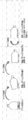
- FIG. 1 is a diagram schematically showing a method for evaluating solid gel formation in a deacylated gellan gum-containing medium.
- the production method of the present invention comprises mixing a first liquid containing the following specific compound (i) with a second liquid containing the following (ii) linking substance.
- a method for producing a liquid medium composition (I) A specific compound which is a polymer compound having an anionic functional group capable of forming a structure capable of suspending cells or tissues by binding via a divalent metal cation. (Ii) A linking substance that is a divalent metal cation.
- the manufacturing method is characterized in that the first liquid and the second liquid are mixed at a temperature of 25 ° C. or lower and above the freezing point. This makes it possible to produce a stable medium composition in which the formation of a solid gel during storage is suppressed.
- a first liquid containing the specific compound (i), a second liquid containing the linking substance (ii), and a liquid medium composition (specific) formed by mixing these liquids A liquid containing a structure in which a compound is bonded through a linking substance in a uniformly dispersed state will be described in detail.
- the first liquid contains, as a specific compound, a polymer compound having an anionic functional group that can form a structure capable of suspending cells or tissues by binding via a divalent metal cation.
- a polymer compound having an anionic functional group that can form a structure capable of suspending cells or tissues by binding via a divalent metal cation.
- the anionic functional group include a carboxy group, a sulfo group, a phosphate group, and salts thereof, and a carboxy group or a salt thereof is preferable.
- the polymer compound used in the present invention may contain one or more selected from the group of anionic functional groups.
- the polymer compound used in the present invention include, but are not particularly limited to, a polysaccharide obtained by polymerizing 10 or more monosaccharides (for example, triose, tetrose, pentose, hexose, heptose, etc.). More preferred is an acidic polysaccharide having an anionic functional group.
- the acidic polysaccharide here is not particularly limited as long as it has an anionic functional group in its structure.
- a polysaccharide having uronic acid for example, glucuronic acid, iduronic acid, galacturonic acid, mannuronic acid is used.
- hyaluronic acid gellan gum, deacylated gellan gum (hereinafter sometimes referred to as DAG), ramzan gum, diyutan gum, xanthan gum, alginic acid, carrageenan, xanthan gum, locust bean gum, hexuronic acid, fucoidan, pectin
- DAG deacylated gellan gum
- Examples include polysaccharides composed of one or more kinds from the group consisting of pectinic acid, pectinic acid, heparan sulfate, heparin, heparitin sulfate, keratosulfate, chondroitin sulfate, dermatan sulfate, rhamnan sulfate and salts thereof.
- the polysaccharide is preferably hyaluronic acid, DAG, Valtan gum, xanthan gum, carrageenan or a salt thereof, more preferably DAG or a salt thereof.
- DAG that has been phosphorylated can also be used.
- the phosphorylation can be performed by a known method.
- the salt herein include salts of alkali metals such as lithium, sodium and potassium, salts of alkaline earth metals such as calcium, barium and magnesium, and salts of aluminum, zinc, copper, iron, ammonium, organic bases and amino acids. Is mentioned.
- polysaccharides and the like preferably have a weight average molecular weight of 10,000 to 50,000,000, more preferably 100,000 to 20,000,000, and still more preferably 1,000,000. 000 to 10,000,000.
- the molecular weight can be measured in pullulan conversion by gel permeation chromatography (GPC).
- a plurality of (preferably two) polysaccharides having the anionic functional group can be used in combination. You may combine the polysaccharide which has an anionic functional group, and the polysaccharide which does not have an anionic functional group.
- the type of combination of polysaccharides is not particularly limited as long as the above structure can be formed in a liquid medium by binding via a divalent metal cation. Preferably, the combination includes at least DAG or a salt thereof. .
- suitable combinations of polysaccharides include DAG or a salt thereof, and polysaccharides other than DAG or a salt thereof (eg, xanthan gum, alginic acid, carrageenan, diutan gum, methylcellulose, locust bean gum or a salt thereof). It is. Specific combinations of polysaccharides include DAG and Ramzan gum, DAG and Valtan gum, DAG and Xanthan gum, DAG and Carrageenan, DAG and Xanthan gum, DAG and locust bean gum, DAG and ⁇ -carrageenan, DAG and sodium alginate, DAG And methyl cellulose, but are not limited thereto.
- Deacylated gellan gum is a linear high chain composed of four sugar molecules, 1-3 linked glucose, 1-4 linked glucuronic acid, 1-4 linked glucose and 1-4 linked rhamnose. It is a molecular polysaccharide.
- R 1 and R 2 are both hydrogen atoms, and n is a polysaccharide represented by an integer of 2 or more.
- the R 1 is a glyceryl group
- R 2 may also include an acetyl group, but the content of acetyl group and glyceryl groups, preferably not more than 10%, more preferably 1% or less.
- the specific compound may be obtained by a chemical synthesis method, but when the specific compound is a natural product, conventional techniques are used from various plants, various animals, and various microorganisms containing the compound. It may be obtained by extraction, separation and purification.
- gellan gum is produced by cultivating production microorganisms in a fermentation medium, recovering mucosa produced outside the cells by a conventional purification method, and drying and crushing the powder to a powder form. Can do. Further, in the case of deacylated gellan gum, it may be recovered after subjecting the mucosa to an alkali treatment to deacylate glyceryl groups and acetyl groups bound to 1-3-bound glucose residues.
- gellan gum producing microorganisms include, but are not limited to, Sphingomonas erodea and microorganisms modified from the genes of the microorganisms.
- deacylated gellan gum commercially available ones such as “KELCOGEL (registered trademark of CP Kelco) CG-LA” manufactured by Sanki Co., Ltd., “Kelco Gel (CPP Kelco manufactured by Saneigen FFI Co., Ltd.) Registered trademark of the company) "or the like.
- “Kelcogel (registered trademark of CPE Kelco) HT” manufactured by San-Ei Gen FFI Co., Ltd. can be used as native gellan gum.
- the first liquid is usually a solution of a specific compound.
- the solvent for the solution is not particularly limited as long as it can dissolve the specific compound, but is usually water or a hydrophilic solvent, preferably water. That is, in a preferred embodiment, the first liquid is an aqueous solution of a specific compound.
- the concentration of the specific compound contained in the first liquid is such that when mixed with the second liquid, the specific compound is suspended in the mixed liquid by binding the specific compound via a divalent metal cation. Can be formed, and the structure is uniformly dispersed in the mixed solution, and the liquid medium composition finally obtained contains the structure to allow suspension culture of cells or tissues. As long as it is, it is not particularly limited. From the concentration of the specific compound in the medium composition capable of culturing cells or tissues in suspension culture and the ratio of the volume of the first liquid to the volume of the medium composition obtained in the final product, It is possible to calculate the concentration of a specific compound in the liquid.
- a first liquid volume V 1 by mixing a second liquid volume V 2, the case of obtaining a culture medium composition of the liquid volume V 1 + V 2
- media composition of the liquid In order to make the concentration of the specific compound in the liquid C% (w / v), the concentration of the specific compound in the first liquid is C ⁇ (V 1 + V 2 ) / V 1 % (w / v). do it.
- the divalent metal cation concentration in the first liquid needs to be lower than the concentration at which the specific compound in the first liquid forms a structure.
- the divalent metal cation include calcium ion, magnesium ion, zinc ion, manganese ion, iron ion, and copper ion.
- calcium ions and magnesium ions contribute to the formation of a structure of a specific compound such as DAG.
- the first liquid may contain factors other than the specific compound and the solvent. Such factors include, but are not limited to, physiologically acceptable buffers, salts, and isotonic agents.
- the first liquid is prepared by adding a specific compound to the solvent (eg, water) and stirring at a temperature at which the specific compound can be dissolved (eg, 60 ° C. or higher, 80 ° C. or higher, 90 ° C. or higher). It can be carried out by dissolving until it becomes transparent.
- a specific compound DAG or the like
- DAG divalent metal cation
- the first liquid is preferably sterilized.
- the sterilization method include, but are not limited to, autoclave and filter sterilization.
- the second liquid contains a divalent metal cation as a linking substance.
- the divalent metal cation include calcium ion, magnesium ion, zinc ion, manganese ion, iron ion, and copper ion.
- the type of the divalent metal cation is such that a specific compound contained in the first liquid can form a structure capable of floating a cell or tissue by binding through the divalent metal cation.
- it is preferably one or both of calcium ion and magnesium ion, and more preferably calcium ion.
- the second liquid is usually a solution of a connecting substance (that is, a divalent metal cation).
- the solvent for the solution is not particularly limited as long as it can dissolve the connecting substance, but is usually water or a hydrophilic solvent, preferably water. That is, in a preferred embodiment, the second liquid is an aqueous solution of a linking substance (that is, a divalent metal cation).
- the second liquid is a mixture of the first liquid and the second liquid, and the divalent metal cation concentration in the liquid medium composition finally obtained is the specific compound in the first liquid.
- An amount of divalent metal cation sufficient to form a body is included.
- the divalent metal cation concentration in the second liquid can be calculated from the divalent metal cation concentration in the finally obtained liquid medium composition and the mixing ratio of the first liquid and the second liquid. it can.
- the second liquid may contain factors other than the linking substance (ie, divalent metal cation) and the solvent.
- factors include media components suitable for culturing intended cells (eg, mammalian pluripotent stem cells).
- the medium components include buffers (carbonate buffer, phosphate buffer, HEPES, etc.), inorganic salts (NaCl, etc.), various amino acids, various vitamins (choline, folic acid, etc.), sugars (glucose, etc.), antioxidants Agents (monothioglycerol, etc.), pyruvic acid, fatty acids, serum, antibiotics, insulin, transferrin, lactoferrin, cholesterol, various cytokines (for example, bFGF, LIF, etc.
- the second liquid is preferably sterilized.
- the sterilization method include, but are not limited to, autoclave and filter sterilization.
- the second liquid is a liquid medium containing a structure-forming concentration of a divalent metal cation (preferably, calcium ions and / or magnesium ions), or is a concentrate of the liquid medium.
- a divalent metal cation preferably, calcium ions and / or magnesium ions
- the first liquid and the second liquid are used.
- the liquid may not be a concentrated liquid but a liquid medium that can be used as it is without being diluted.
- the concentration of the specific compound in the first liquid is relatively low (that is, the amount of the solvent (water) contained in the first liquid is relatively large)
- the first liquid and the second liquid Tend to mix easily and the structure can be preferably dispersed. Therefore, when the concentration of the specific compound in the first liquid is low (when the amount of the solvent (water) is not negligible for the second liquid), the second liquid (liquid medium) is diluted with the first liquid. In view of this, it is preferable that the concentrated liquid be a preferable liquid medium after mixing.
- the second liquid contains, in addition to the divalent metal cation (preferably calcium ions and / or magnesium ions) and water, medium components suitable for culturing the intended cells.
- the range of calcium ion concentration in a commonly used liquid culture medium for cell culture is about 0.1 to 2.0 mM, and the magnesium ion concentration is about 0.1 to 1.0 mM, so it depends on a specific compound such as DAG. It is sufficient for structure formation.
- the concentration of the divalent metal cation (preferably calcium ions and / or magnesium ions) in the second liquid is determined in consideration of the mixing ratio with the first liquid, and in the finally obtained liquid medium composition
- the divalent metal cation concentration is adjusted to be the structure forming concentration. The same applies to other connecting substances.
- the concentration of the medium constituent component suitable for culturing the intended cells in the second liquid is determined in consideration of the mixing ratio with the first liquid, and the medium in the liquid medium composition finally obtained The concentration of the component is adjusted so as to be within a concentration range suitable for culturing the intended cell. For example, a first liquid volume V 1, by mixing a second liquid volume V 2, the case of obtaining a culture medium composition of the liquid volume V 1 + V 2 Finally, media composition of the liquid In order to set the concentration of the divalent metal cation therein to Ci, the concentration of the divalent metal cation in the second liquid may be set to Ci ⁇ (V 1 + V 2 ) / V 2 . The same applies to other connecting substances.
- the liquid medium composition in order to set the concentration of the medium constituent component in the product to Cm, the concentration of the medium constituent component in the second liquid may be Cm ⁇ (V 1 + V 2 ) / V 2 .
- the connecting material in which the specific compound contained in the first liquid is contained in the second liquid by mixing the first liquid and the second liquid by the production method of the present invention.
- the second liquid may not contain some or all of the cell culture medium constituents described above.
- the first liquid and the second liquid are mixed, and the specific compound contained in the first liquid is bound via the connecting substance contained in the second liquid.
- the intended liquid medium composition Can be obtained.
- the volume mixing ratio of the first liquid and the second liquid is such that the volume of the second liquid is, for example, 10 to 9900, preferably 100 to 4900, with respect to the volume 100 of the first liquid.
- 90 mol% or more (preferably 95 mol% or more, more preferably 99% or more, and most preferably) of the specific compound contained in the liquid medium composition produced by the production method of the present invention. 100%) is derived from the first liquid, and is 90 mol% or more (preferably 95 mol% or more, more preferably 99% or more, most preferably) of the divalent metal cation contained in the medium composition. 100%) comes from the second liquid.
- the liquid medium composition obtainable by the production method of the present invention has a specific compound contained in the first liquid via a linking substance (that is, a divalent metal cation) contained in the second liquid. And the structure is uniformly dispersed in the medium composition. When the medium composition is used, cells and tissues are cultured while maintaining a floating state. It is possible.
- a linking substance that is, a divalent metal cation
- the types of organisms from which the cells and tissues to be cultured are derived are not particularly limited and include not only animals (insects, fish, amphibians, reptiles, birds, pancrustaceans, hexapods, mammals, etc.) but also plants. included.
- the cells to be cultured are anchorage-dependent cells.
- the liquid medium composition obtainable by the production method of the present invention it is possible to cultivate anchorage-dependent cells while maintaining a floating state without using a carrier serving as a scaffold.
- floating cells and / or tissues means that cells and / or tissues can contact the bottom surface of the culture vessel but do not adhere (non-adhered). Furthermore, in the present invention, when the cells and / or tissues are allowed to grow, differentiate or maintain, the cells are not subjected to external pressure or vibration to the liquid medium composition, or shaking or rotation in the composition.
- the state in which the tissue is uniformly dispersed in the liquid medium composition and is in a floating state is called “floating stationary”, and culturing cells and / or tissues in this state is “floating stationary culture” "floating stationary culture” " In addition, the period that can be floated in “floating standing” includes 5 minutes or more, 1 hour or more, 24 hours or more, 48 hours or more, 7 days or more, etc. It is not limited to.
- the liquid medium composition obtainable by the production method of the present invention is a suspension of cells and / or tissues at at least one point in the temperature range (eg, 0 to 40 ° C.) in which cells and tissues can be maintained and cultured. It can be left stationary.
- the liquid medium composition obtainable according to the present invention is capable of allowing cells and / or tissues to float in suspension, preferably at at least one point in the temperature range of 25 to 37 ° C, and most preferably at 37 ° C.
- Whether floating suspension is possible or not is determined by, for example, dispersing the cells to be cultured at a concentration of 2 ⁇ 10 4 cells / mL uniformly in the medium composition to be evaluated, and injecting 10 mL into a 15 mL conical tube. Whether the cells are kept in a floating state by standing at a temperature of about 4 ° C. to 10 ° C. for at least 5 minutes (eg, 1 hour, 24 hours, 48 hours, 7 days or more) It can be evaluated by observing the above. If more than 70% of all cells are floating, it can be concluded that the floating state was maintained. Instead of the cells, polystyrene beads (Size 500-600 ⁇ m, manufactured by Polysciences Inc.) may be used for evaluation.
- the viscosity of the liquid medium composition obtainable by the production method of the present invention is not substantially increased by including the structure. “Does not substantially increase the viscosity of the liquid” means that the viscosity of the liquid does not exceed 8 mPa ⁇ s.
- the viscosity of the liquid at this time (that is, the viscosity of the liquid medium composition obtainable by the production method of the present invention) is 8 mPa ⁇ s or less, preferably 4 mPa ⁇ s or less at 37 ° C., More preferably, it is 2 mPa ⁇ s or less.
- the viscosity of the liquid containing the structure is an E-type viscometer (manufactured by Toki Sangyo Co., Ltd., TV-22 viscometer, model: TVE-22L, cone rotor: standard rotor 1 ° 34 ' ⁇ R24) , Rotation speed 100 rpm).
- the concentration of the specific compound in the liquid medium composition obtainable by the production method of the present invention depends on the type of the specific compound, and the specific compound forms the above-described structure in the liquid medium composition, Preferably, it can be set as appropriate as long as the cells and / or tissues can be floated uniformly (preferably allowed to stand still) without substantially increasing the viscosity of the liquid medium.
- concentration of the specific compound in the liquid medium composition depends on the type of the specific compound, and the specific compound forms the above-described structure in the liquid medium composition, Preferably, it can be set as appropriate as long as the cells and / or tissues can be floated uniformly (preferably allowed to stand still) without substantially increasing the viscosity of the liquid medium.
- W / v more preferably 0.01% to 0.05% (w / v), and most preferably 0.01% to 0.03% (w
- xanthan gum 0.001% to 5.0% (w / v), preferably 0.01% to 1.0% (w / v), more preferably 0.05% to 0.5% (w / V), most preferably 0.1% to 0.2% (w / v).
- the total of both compounds is 0.001% to 5.0% (w / v), preferably 0.005% to 1.0% (w / v), More preferably, it is 0.01% to 0.1% (w / v), and most preferably 0.03% to 0.05% (w / v).
- native gellan gum it is 0.05% to 1.0% (w / v), preferably 0.05% to 0.1% (w / v).
- the concentration of the polysaccharide is such that the combination of the polysaccharide forms the above structure in a liquid medium composition, ( Preferably, it can be set as appropriate as long as the cells and / or tissues can be floated uniformly (preferably allowed to stand still) without substantially increasing the viscosity of the liquid medium.
- the concentration of DAG or a salt thereof is 0.005 to 0.02% (w / v), preferably 0.01.
- concentration of polysaccharides other than DAG or a salt thereof is 0.0001-0.4% (w / v), preferably 0.005-0.4. % (W / v), more preferably 0.1 to 0.4% (w / v).
- concentration of polysaccharides other than DAG or a salt thereof is 0.0001-0.4% (w / v), preferably 0.005-0.4. % (W / v), more preferably 0.1 to 0.4% (w / v).
- DAG or a salt thereof 0.005 to 0.02% (preferably 0.01 to 0.02%) (w / v)
- Polysaccharide xanthan gum other than DAG 0.1 to 0.4% (w / v) Sodium alginate: 0.0001 to 0.4% (w / v) (preferably 0.1 to 0.4% (w / v))
- Native gellan gum 0.0001-0.4% (w / v)
- Locato bean gum 0.1-0.4% (w / v)
- Methyl cellulose 0.1 to 0.4% (w / v) (preferably 0.2 to 0.4% (w / v))
- Carrageenan 0.05-0.1% (w / v)
- Valtan gum 0.05-0.1% (w / v)
- the acidic polysaccharide is preferably any one selected from the group consisting of alginic acid, pectin and pectic acid, more preferably alginic acid.
- the salt include alkali metal salts such as lithium, sodium, and potassium; alkaline earth metal salts such as calcium, barium, and magnesium; salts such as aluminum, zinc, copper, and iron; ammonium salts; Salt.
- the acidic polysaccharide or a salt thereof sodium alginate is preferably used.
- the concentration of deacylated gellan gum or a salt thereof in the liquid medium composition obtainable by the production method of the present invention is, for example, 0.002 to 0.01 (w / v)%, preferably 0.
- 0.002 to 0.009 (w / v)%, more preferably 0.003 to 0.009 (w / v)%, and the concentration of the acidic polysaccharide or a salt thereof (eg, sodium alginate) is, for example, 0.004 to 0.1 (w / v)%, preferably 0.004 to 0.02 (w / v)%, more preferably 0.004 to 0.015 (w / v)%, More preferably, it is 0.005 to 0.015 (w / v)%.
- DAG or a salt thereof is used as the specific compound, and calcium ions are used as the linking substance.
- the first liquid is an aqueous solution of DAG or a salt thereof.
- the second liquid is a concentrated liquid medium containing calcium ions.
- the volume mixing ratio of the first liquid and the second liquid is such that the volume (V 2 ) of the second liquid is 10 to 9900 with respect to the volume (V 1 ) 100 of the first liquid, preferably Is 100-4900.
- the DAG concentration in the liquid medium composition obtained as a result of mixing is preferably 0.01% to 0.05% (w / v), most preferably 0.01% to 0.03% (w / v). v).
- the calcium ion concentration in the liquid medium composition obtained as a result of mixing is such a concentration that DAG forms a structure, and is usually about 0.1 to 2.0 mM.
- the concentration of the medium components in the liquid medium composition obtained as a result of the mixing is within a concentration range suitable for culturing the intended cells (eg, mammalian cells).
- the DAG concentration in the first liquid is (V 1 + V 2 ) / V 1 (ie, 110/100 to 10000/100, preferably the DAG concentration in the liquid medium composition obtained as a result of the above-mentioned mixing. Is a concentration obtained by multiplying by 200/100 to 5000/100).
- the calcium ion concentration in the second liquid is (V 1 + V 2 ) / V 2 (ie, 110/10 to 10000/9900), which is the calcium ion concentration in the liquid medium composition obtained as a result of the above mixing.
- the concentration is preferably obtained by multiplying 200/100 to 5000/4900).
- the concentration of the media components of the second liquid is the concentration of the media components of the media composition of the liquid resulting from the mixing of the above, (V 1 + V 2) / V 2 ( i.e., 110/10 Concentration obtained by multiplying by 10000/9900, preferably 200/100 to 5000/4900).
- the liquid medium composition a structure in which DAG is bound via calcium ions is uniformly dispersed and contained, so that cells and / or tissues can be uniformly distributed without substantially increasing the viscosity. It can be floated (preferably left floating).
- the cells and / or tissues are kept in a floating state without any operation such as shaking or rotation that may cause damage or loss of function of the cells or tissues. It can be cultured.
- the culture medium composition when used, the culture medium can be easily replaced during culture, and the cultured cells and / or tissues can be easily recovered.
- the medium composition is used, cells that have been conventionally cultured in a single layer on a plate and adhered to a cell container can be cultured in a floating state. It can be efficiently prepared in large quantities without loss of function.
- the mixed liquid of the first liquid and the second liquid may itself be a medium composition for production, but by adding an additive to the liquid mixture, It may be.
- the production method of the present invention is characterized in that the first liquid and the second liquid are mixed at a temperature of 25 ° C. or lower and above the freezing point.
- a stable medium composition in which formation of a solid gel during storage is suppressed can be produced.
- the lower the mixing temperature (that is, the temperature of the mixed liquid immediately after mixing the first liquid and the second liquid) in the production method of the present invention is preferable because the formation of a solid gel is more strongly suppressed.
- the mixing temperature is usually 25 ° C or lower, preferably 24 ° C or lower, 23 ° C or lower, 22 ° C or lower, 21 ° C or lower, 20 ° C or lower, 19 ° C or lower, 18 ° C or lower, 17 ° C or lower, 16 ° C or lower, 15 ° C. Below, it is 14 degrees C or less, 13 degrees C or less, 12 degrees C or less, 11 degrees C or less, 10 degrees C or less, 9 degrees C or less, 8 degrees C or less, 7 degrees C or less, 6 degrees C or less, 5 degrees C or less, or 4 degrees C or less.
- the mixing temperature is a temperature that exceeds the freezing point of the mixed liquid of the first liquid and the second liquid (that is, the liquid medium composition), and is preferably 0 ° C. or higher. Accordingly, in one embodiment, the mixing temperature is 0 to 25 ° C., preferably 0 to 24 ° C., 0 to 23 ° C., 0 to 22 ° C., 0 to 21 ° C., 0 to 20 ° C., 0 to 19 ° C., 0 to 18 ° C, 0-17 ° C, 0-16 ° C, 0-15 ° C, 0-14 ° C, 0-13 ° C, 0-12 ° C, 0-11 ° C, 0-10 ° C, 0-9 ° C, 0- 8 ° C, 0-7 ° C, 0-6 ° C, 0-5 ° C or 0-4 ° C.
- each of the first liquid and the second liquid is preliminarily cooled to a target mixing temperature, and these are mixed to achieve the above mixing temperature.
- the mixing operation itself may be performed in a temperature-controlled room capable of maintaining the target mixing temperature.
- the procedure for mixing the first liquid and the second liquid is not particularly limited, and the second liquid may be added to the first liquid, and the first liquid may be added to the second liquid.
- the addition of the first liquid to the second liquid can more effectively suppress the formation of a solid gel during storage.
- one of the first liquid and the second liquid preferably the second liquid
- the other liquid preferably the first liquid
- the first liquid and the second liquid are rapidly mixed, and the structure formed by connecting the specific compounds with each other via a connecting substance such as a divalent metal cation is not unevenly distributed locally. It is preferable to mix the first liquid and the second liquid with stirring by an appropriate method so that they can be uniformly dispersed in the medium. Examples of the stirring method include manual stirring such as pipetting, vortexing, and inversion mixing, and stirring using an apparatus such as a magnetic stirrer, mechanical stirrer, homomixer, and homogenizer, but are not limited thereto. .
- the second liquid adjusted to a temperature of 25 ° C. or lower and higher than the freezing point is first stored in the container, and the first liquid adjusted to a temperature of 25 ° C. or lower and higher than the freezing point is stirred in the container.
- the first liquid and the second liquid are mixed at a temperature of 25 ° C. or lower and above the freezing point.
- the structure formed by linking specific compounds via a linking substance such as a divalent metal cation is uniformly dispersed in the liquid medium. Since it is maintained for a long time, formation of a solid gel during storage is suppressed.
- the medium composition produced by the production method of the present invention is stored in a stationary state at 37 ° C. for 3 hours, no solid gel is formed in the medium composition.
- the medium composition produced by the production method of the present invention can maintain a state in which the viscosity is not substantially increased by the structure for a long period of time. While maintaining the operability, the cells can be suspended and cultured for a long period of time.
- the present invention is a liquid containing a structure in which the specific compound (i) is bound via the linking substance (ii) in a uniformly dispersed state.
- a method for evaluating the storage stability of a medium composition wherein the medium composition is stored at a temperature of 26 ° C. to 50 ° C. for 3 hours or more, and whether a solid gel is present in the stored medium composition
- a method is provided that includes examining whether or not.
- the storage stability of a liquid medium composition containing a structure in which a specific compound is bonded through a linking substance in a uniformly dispersed state means that the liquid medium composition is stored when the liquid medium composition is stored. It means the property of the liquid medium composition in which the state in which the structure is uniformly dispersed is stably maintained without forming a solid gel.
- a liquid medium composition for use in evaluation in the evaluation method of the present invention containing a structure in which the specific compound (i) is bound via the linking substance (ii) in a uniformly dispersed state.
- the embodiment is the same as the embodiment described in the above section “1. Method for producing liquid medium composition”.
- the method for producing a liquid medium composition for evaluation in the evaluation method of the present invention is not limited to the production method of the present invention.
- the liquid medium composition contained in the prepared state can also be used for the evaluation method of the present invention.
- a liquid medium composition containing a structure in which the specific compound (i) is bonded through the linking substance (ii) in a uniformly dispersed state is described in WO2014 / 017513, US2014 / 0106348 A1, etc. It can also be manufactured by the method described above.
- liquid medium composition used for evaluation in the evaluation method of the present invention does not contain cells or tissues.
- the evaluation method of the present invention is characterized in that the liquid medium composition to be evaluated is stored at a temperature of 26 ° C. to 50 ° C.
- the storage temperature is preferably 30 ° C. to 42 ° C., more preferably 35 ° C. to 39 ° C., still more preferably 36 ° C. to 38 ° C. (eg, 37 ° C.). .
- the storage period of the liquid medium composition is usually 3 hours or more.
- the longer the storage period the longer the storage stability can be evaluated.
- the storage period is 6 hours or more, 12 hours or more, 24 hours or more, 2 days or more, 7 days or more, 14 days or more, It can be 28 days or more.
- the storage period is less than 60 days, less than 28 days, less than 14 days, less than 7 days, less than 2 days, less than 24 hours, less than 12 hours, or 6 It is also preferable to set it to less than time.
- the liquid medium composition to be evaluated is contained in an appropriate container and stored in an appropriate thermostatic apparatus capable of maintaining a desired storage temperature throughout the storage period.
- the container include, but are not limited to, a petri dish, a flask, a culture bag, a microplate, a bottle generally used for storage of a liquid medium, and the like that are generally used for cell culture.
- the material of the container include, but are not limited to, glass and plastic. Since the formation of solid gel is inhibited when the liquid medium composition is moved, the liquid medium composition is preferably stored in a stationary state.
- the container after storage in which the liquid medium composition is stored is tilted or overturned, and the presence of the solid gel floating on the liquid surface or the boundary surface with the container is examined.
- the container is moved unnecessarily, the solid gel once formed collapses, or the structure in which the specific compound is bonded through the connecting substance is released from the solid gel and dispersed in the medium composition again. Therefore, it is preferable to avoid moving the container unrelated to the evaluation of the presence or absence of the solid gel as much as possible.
- the liquid medium composition to be evaluated contained in an appropriate container is stored in a stationary state for a predetermined period in a thermostatic apparatus maintaining a desired temperature, and after the storage process is completed, the stationary state The container at is tilted or overturned to check for the presence of the solid gel in the medium composition.
- the liquid medium composition to be evaluated is superior in storage stability and has a longer storage time than when the presence of the solid gel is recognized. Even when stored, it is difficult to form a solid gel, and it can be determined that the structure in which the structure in which the specific compound is bonded through the connecting substance is uniformly dispersed is stably maintained.
- the evaluation method of the present invention is an industrial production process of a liquid medium composition containing a structure in which the specific compound (i) is bound via the linking substance (ii) in a uniformly dispersed state.
- Useful for quality control For example, by various methods, a liquid medium composition containing a structure in which the specific compound (i) is bonded through the linking substance (ii) in a uniformly dispersed state is produced.
- the mixing temperature is not limited to a temperature of 25 ° C. or lower and above the freezing point, WO2014 / 017513, US2014 / 0106348 A1, etc. The described methods etc. can be used.
- a liquid medium composition having a volume of more than 100L and more than 1000L per lot can be produced.
- a part of the produced liquid medium composition eg, 1% or less of the total volume
- the remaining medium composition of the same lot is refrigerated (example) , 0-4 ° C).
- one lot of the produced liquid medium composition is dispensed into a plurality of bottles (eg, 100 or more, 1000 or more, 10,000 or more).
- the volume of the liquid medium composition in the bottle may be, for example, 50 to 500 mL, preferably 400 to 500 mL per bottle.
- a part of the bottle (eg, 1 to 10 bottles) is separated as a sample and subjected to the evaluation method of the present invention, and the remaining bottles of the same lot are stored refrigerated (eg, 0 to 4 ° C.).
- a sample bottle is stored as it is at a temperature of 26 ° C. to 50 ° C. for 3 hours or more.
- the liquid medium composition of the same lot as the object to be evaluated is relatively excellent in storage stability and should be stored for a long time.
- the solid gel is difficult to be formed and the structure in which the specific compound is bonded through the linking substance has a property of being stably dispersed.
- the same lot of medium composition (eg, same lot bottle) is shipped to the customer.
- Deacylated gellan gum (KELCOGEL CG-LA, manufactured by Sanki Co., Ltd.) is suspended in sterilized purified water (manufactured by Nipro Pharma) to a predetermined concentration (w / v) and stirred while heating at 90 ° C. The resulting aqueous solution was autoclaved at 121 ° C. for 20 minutes to prepare a deacylated gellan gum aqueous solution. The concentration of the deacylated gellan gum in the aqueous solution was adjusted to 1 to 10 times (usually 2 times) the deacylated gellan gum concentration in the target medium composition.
- a concentrated medium composition having a concentration of 1 to 10 times (usually 2 times) the final concentration of the target medium composition was prepared.
- a 250 mL deacylated gellan gum aqueous solution and a 250 mL concentrated medium composition were prepared.
- the concentrated medium composition or deacylated gellan gum aqueous solution
- the 1L scale filter filtration system 0.2 ⁇ m PES, manufactured by Thermo Fisher
- a deacylated gellan gum aqueous solution or medium composition
- filter filtration was performed in the same manner.
- the concentrated medium composition and the deacylated gellan gum aqueous solution were mixed while manually shaking the bottle so that the liquid inside the bottle below the filter was stirred.
- the filter filtration was completed, the filter was removed, the bottom bottle lid was closed, the mixture was manually stirred for about 1 minute, and the two liquids were mixed to complete the preparation.
- Test Example 2 Construction of a method for evaluating solid gel formation of a deacylated gellan gum-containing medium composition
- generation in the deacylated gellan gum containing medium shown in FIG. 1 was constructed
- 50 mL of a deacylated gellan gum-containing medium composition was added to a 500 mL square medium bottle (manufactured by Thermo Fisher) and stored at 37 ° C. in an incubator for 3 hours or more. Thereafter, the bottle was slowly turned over to 90 degrees, and the presence of the solid gel floating on the liquid surface or the boundary surface with the bottle at the time of the turnover was judged (step 1).
- step 2 Furthermore, by tumbling 90 degrees at another angle, the presence of the solid gel floating on the liquid surface and the boundary surface with the bottle and the presence of the solid gel adhering to the wall surface were determined (step 2).
- the evaluation results for the solid gel formation were determined based on the judgment results in the above two steps. The determination is as follows. Do not approve: Both step 1 and step 2 do not recognize solid gels Accept: Accept solid gels at step 2 Especially accept: Accept solid gels at both step 1 and step 2
- Deacylated gellan gum (KELCOGEL CG-LA, manufactured by Sanki Co., Ltd.) is added to 250 mL of sterilized purified water (manufactured by Nipro Pharma) or ion-exchanged water (Milli-Q water) to 0.075% (w / v). Suspend and dissolve while stirring at 90 ° C., and the resulting aqueous solution is autoclaved at 121 ° C. for 20 minutes to prepare a deacylated gellan gum aqueous solution (0.075% (w / v)). did.
- KELCOGEL CG-LA sterilized purified water
- Milli-Q water ion-exchanged water
- liquid TeSR-E8 basal medium (ST-05940, manufactured by Stem Cell Technologies) 250 mL, powdered DMEM / F12 (12400-024, manufactured by Life Technologies) 3.90 g and sodium bicarbonate (S5761-500G) , Sigma) (0.30 g) was added and stirred to prepare a 2-fold concentrated medium composition (2 ⁇ TeSR / DF).
- the solid gel formation in the deacylated gellan gum-containing medium was evaluated by the method described in Test Example 2.
- Table 1 shows the evaluation results of solid gel formation under each condition. There is no significant difference between the storage temperature and the mixing temperature since the time from mixing the two-fold concentrated medium composition and the deacylated gellan gum aqueous solution to mixing them is very short. It was written.
- Deacylated gellan gum (KELCOGEL CG-LA, manufactured by Sanki Co., Ltd.) is suspended in 250 mL of sterilized purified water (manufactured by Nipro Pharma) to a concentration of 0.075% (w / v) and heated at 90 ° C. The aqueous solution obtained was dissolved by stirring and autoclaved at 121 ° C. for 20 minutes to prepare a deacylated gellan gum aqueous solution (0.075% (w / v)).
- liquid TeSR-E8 basal medium (ST-05940, manufactured by Stem Cell Technologies) 250 mL, powdered DMEM / F12 (12400-024, manufactured by Life Technologies) 3.90 g and sodium bicarbonate (S5761-500G) , Sigma) (0.30 g) was added and stirred to prepare a 2-fold concentrated medium composition (2 ⁇ TeSR / DF).
- the solid gel formation in the deacylated gellan gum-containing medium was evaluated by the method described in Test Example 2.
- Table 2 shows the evaluation results of solid gel formation under each condition.
- the deacylated gellan gum aqueous solution heated to 37 ° C. is first added to the filter system, and then the double concentrated medium composition heated to 37 ° C. is added to the deacylated gellan gum aqueous solution and mixed.
- the degree of solid gel formation was the highest.
- the preparation conditions to minimize the formation of solid gel are to add the refrigerated double concentrated medium composition to the filter filtration system first, and then add the chilled deacylated gellan gum aqueous solution to the double concentrated medium composition. The conditions were added and mixed.
- liquid TeSR-E8 basal medium (ST-05940, manufactured by Stem Cell Technologies) 250 mL, powdered DMEM / F12 (12400-024, manufactured by Life Technologies) 3.90 g and sodium bicarbonate (S5761-500G) , Sigma) (0.30 g) was added and stirred to prepare a 2-fold concentrated medium composition (2 ⁇ TeSR / DF).
- the temperature at which the 2-fold concentrated medium composition and the deacylated gellan gum aqueous solution were stored until immediately before mixing was set to room temperature or 15 ° C.
- filter filtration remove the filter, close the lid of the lower bottle, manually stir for about 1 minute, and mix the two liquids to complete the preparation (0.0375% (w / v) removal) Acylated gellan gum-containing TeSR-E8 / DF).
- the temperature at which the 2-fold concentrated medium composition and the deacylated gellan gum aqueous solution were stored until immediately before mixing was set to room temperature or 15 ° C.
- filter filtration remove the filter, close the lid of the lower bottle, manually stir for about 1 minute, and mix the two liquids to complete the preparation (0.0375% (w / v) removal) Acylated gellan gum-containing TeSR-E8 / DF).
- the solid gel formation in the deacylated gellan gum-containing medium was evaluated by the method described in Test Example 2.
- Table 3 shows the evaluation results of solid gel formation under each condition.
- the production method of the present invention it is possible to produce a stable medium composition in which the formation of a solid gel during storage is suppressed.
- the structure formed by linking specific compounds via a linking substance such as a divalent metal cation maintains a uniformly dispersed state for a long period of time. be able to.
Landscapes
- Health & Medical Sciences (AREA)
- Life Sciences & Earth Sciences (AREA)
- Chemical & Material Sciences (AREA)
- Engineering & Computer Science (AREA)
- Bioinformatics & Cheminformatics (AREA)
- Genetics & Genomics (AREA)
- Organic Chemistry (AREA)
- Zoology (AREA)
- Biotechnology (AREA)
- Wood Science & Technology (AREA)
- Microbiology (AREA)
- Medicinal Chemistry (AREA)
- Biomedical Technology (AREA)
- Virology (AREA)
- Biochemistry (AREA)
- General Engineering & Computer Science (AREA)
- General Health & Medical Sciences (AREA)
- Tropical Medicine & Parasitology (AREA)
- Micro-Organisms Or Cultivation Processes Thereof (AREA)
Abstract
本発明は、液状の培地組成物の製造方法であって、下記(i)の特定化合物を含有する第1の液体と、下記(ii)の連結物質を含有する第2の液体とを、25℃以下且つ凝固点を上回る温度で混合し、前記特定化合物が前記連結物質を介して結びついてなる構造体を均一に分散した状態で含有する液状の培地組成物を形成する工程を含む、前記液状の培地組成物の製造方法を提供する: (i)2価金属カチオンを介して結びつくことにより細胞又は組織を浮遊させることができる構造体を形成することができる、アニオン性の官能基を有する高分子化合物である特定化合物、 (ii)2価金属カチオンである連結物質。
Description
本発明は、3次元培養用培地組成物の製造方法に関するものである。また、本発明は、3次元培養用培地組成物の保存安定性の評価方法に関するものである。
脱アシル化ジェランガム(DAG)等のアニオン性官能基を有する高分子化合物に代表される特定の化合物は、2価金属カチオン(例えばカルシウムイオン)等を介して集合することにより、水中で分散した三次元ネットワーク(不定型な構造体)を形成する。この三次元ネットワークを含む液体培地中で細胞を培養すると、この三次元ネットワークが細胞を浮遊させる担体として機能し、培地中の細胞は、この三次元ネットワークにトラップされ、沈まないため、振とう、回転操作等を要することなく、細胞を浮遊状態で均一に分散させたまま、培養する(浮遊静置培養する)ことが可能となる。また、液体培地の粘度を実質的に高めることなく、上述の三次元ネットワークを形成することが可能なため、該三次元ネットワークを含む培地組成物は、継代等における操作性にも優れている(特許文献1及び2)。この浮遊静置培養可能な培地組成物は、種々の細胞の増殖活性を亢進する等、様々な優れた特性を有しているので、再生医療、タンパク質等の大量生産等幅広い技術分野への応用が期待されている。
以下、アニオン性官能基を有する高分子化合物などといった上記特定の化合物を「特定化合物」ともいい、該特定化合物同士を結びつける2価金属カチオン等の物質を「連結物質」ともいう。
上記特許文献1に記載された液状の培地組成物の本来意図された好ましい状態は、特定化合物同士が2価金属カチオン等の連結物質を介して連結することにより形成された構造体が液体培地中に均一に分散した状態である。しかしながら、該液状の培地組成物を長期間静置状態で保存すると、培地組成物を製造した直後においては、構造体が培地組成物中に均一に分散した良好な状態であったにもかかわらず、構造体の一部が固形のゲルを形成することにより培地組成物が不均一となり、本来意図された均一な分散状態を維持できない場合がある、という新たな課題を本発明者らは見出した。
そこで、本発明者らは、長期保存時における固形ゲル形成の原因を解明しようと試みたが、評価に長時間を要するため、原因究明は難航を極めた。
本発明の目的は、上記の問題を解決し、保存時における固形のゲルの形成が抑制され、特定化合物同士が2価金属カチオン等の連結物質を介して連結することにより形成された構造体が液体培地中に均一に分散した状態を長期間維持することが可能な、上記培地組成物を製造する方法を提供することである。
また、本発明の別の目的は、特定化合物同士が2価金属カチオン等の連結物質を介して連結することにより形成された構造体を均一に分散した状態で含有する液状の培地組成物の長期保存時における安定性(即ち、液状の培地組成物が固形ゲルを形成せずに、前記構造体が、均一に分散された状態が安定に維持される特性)を、迅速に評価する方法を提供することである。
上記課題を解決すべく、本発明者らは、まず上記培地組成物の安定性評価の加速化に取り組んだ。その結果、保存時の温度を26℃以上(例えば37℃)に上昇すると、固形ゲルの形成が加速され、上記培地組成物の長期保存時における安定性を、迅速に評価できることを見出した。
そこで、この加速化した評価方法を用いて、長期保存時における固形ゲル形成の原因を追究したところ、特定化合物を含有する液体と、連結物質を含んだ液体(例、液体培地又はその濃縮物)とを混合する際の温度が、培地組成物の保存安定性に影響しており、この混合温度を低く調整することにより、保存時の固形のゲルの形成を抑制し得ることを見出した。更に、特定化合物を含有する液体に対して、連結物質を含んだ液体を添加するのではなく、連結物質を含んだ液体に対して、特定化合物を含有する液体を添加することにより、保存時における固形のゲルの形成を更に抑制することに成功した。これらの知見に基づき、更に検討を加え、本発明を完成させるに至った。
本発明の主たる構成は、以下のとおりである。
[1]液状の培地組成物の製造方法であって、下記(i)の特定化合物を含有する第1の液体と、下記(ii)の連結物質を含有する第2の液体とを、25℃以下且つ凝固点を上回る温度で混合し、前記特定化合物が前記連結物質を介して結びついてなる構造体を均一に分散した状態で含有する液状の培地組成物を形成する工程を含む、前記液状の培地組成物の製造方法:
(i)2価金属カチオンを介して結びつくことにより細胞又は組織を浮遊させることができる構造体を形成することができる、アニオン性の官能基を有する高分子化合物である特定化合物、
(ii)2価金属カチオンである連結物質。
[2]混合温度が、15℃以下且つ凝固点を上回る、[1]に記載の製造方法。
[3]混合温度が、4℃以下且つ凝固点を上回る、[2]に記載の製造方法。
[4]第2の液体に対して、第1の液体を添加することを含む、[1]~[3]の何れかに記載の製造方法。
[5]前記(i)の特定化合物が脱アシル化ジェランガムであり、第1の液体が該脱アシル化ジェランガムを含有する水溶液であり、
前記(ii)の連結物質が、カルシウムイオンおよびマグネシウムイオンのうちの一方または両方であり、第2の液体が、カルシウムイオンおよびマグネシウムイオンのうちの一方または両方を含有する液体培地であるか、または、該液体培地の濃縮液である、
[1]~[4]の何れかに記載の製造方法。
[6]前記液状の培地組成物中の、脱アシル化ジェランガムの濃度が、0.001%(w/v)~1.0%(w/v)である、[5]に記載の培地組成物の製造方法。
[7]下記(i)の特定化合物が下記(ii)の連結物質を介して結びついてなる構造体を均一に分散した状態で含有する液状の培地組成物の保存安定性の評価方法であって、該培地組成物を26℃~50℃の温度で、3時間以上保管すること、及び保管後の培地組成物中に固形ゲルが存在するか否か調べることを含む、方法:
(i)2価金属カチオンを介して結びつくことにより細胞又は組織を浮遊させることができる構造体を形成することができる、アニオン性の官能基を有する高分子化合物である特定化合物、
(ii)2価金属カチオンである連結物質。
[8]前記培地組成物を静止状態で保管する、[7]に記載の方法。
[9]前記(i)の特定化合物が脱アシル化ジェランガムであり、前記(ii)の連結物質が、カルシウムイオンおよびマグネシウムイオンのうちの一方または両方である、[7]又は[8]に記載の方法。
[1]液状の培地組成物の製造方法であって、下記(i)の特定化合物を含有する第1の液体と、下記(ii)の連結物質を含有する第2の液体とを、25℃以下且つ凝固点を上回る温度で混合し、前記特定化合物が前記連結物質を介して結びついてなる構造体を均一に分散した状態で含有する液状の培地組成物を形成する工程を含む、前記液状の培地組成物の製造方法:
(i)2価金属カチオンを介して結びつくことにより細胞又は組織を浮遊させることができる構造体を形成することができる、アニオン性の官能基を有する高分子化合物である特定化合物、
(ii)2価金属カチオンである連結物質。
[2]混合温度が、15℃以下且つ凝固点を上回る、[1]に記載の製造方法。
[3]混合温度が、4℃以下且つ凝固点を上回る、[2]に記載の製造方法。
[4]第2の液体に対して、第1の液体を添加することを含む、[1]~[3]の何れかに記載の製造方法。
[5]前記(i)の特定化合物が脱アシル化ジェランガムであり、第1の液体が該脱アシル化ジェランガムを含有する水溶液であり、
前記(ii)の連結物質が、カルシウムイオンおよびマグネシウムイオンのうちの一方または両方であり、第2の液体が、カルシウムイオンおよびマグネシウムイオンのうちの一方または両方を含有する液体培地であるか、または、該液体培地の濃縮液である、
[1]~[4]の何れかに記載の製造方法。
[6]前記液状の培地組成物中の、脱アシル化ジェランガムの濃度が、0.001%(w/v)~1.0%(w/v)である、[5]に記載の培地組成物の製造方法。
[7]下記(i)の特定化合物が下記(ii)の連結物質を介して結びついてなる構造体を均一に分散した状態で含有する液状の培地組成物の保存安定性の評価方法であって、該培地組成物を26℃~50℃の温度で、3時間以上保管すること、及び保管後の培地組成物中に固形ゲルが存在するか否か調べることを含む、方法:
(i)2価金属カチオンを介して結びつくことにより細胞又は組織を浮遊させることができる構造体を形成することができる、アニオン性の官能基を有する高分子化合物である特定化合物、
(ii)2価金属カチオンである連結物質。
[8]前記培地組成物を静止状態で保管する、[7]に記載の方法。
[9]前記(i)の特定化合物が脱アシル化ジェランガムであり、前記(ii)の連結物質が、カルシウムイオンおよびマグネシウムイオンのうちの一方または両方である、[7]又は[8]に記載の方法。
本発明の製造方法によれば、保存時における固形のゲルの形成が抑制された、安定な上記培地組成物を製造することができる。本発明の製造方法により製造された培地組成物においては、特定化合物同士が2価金属カチオン等の連結物質を介して連結することにより形成された構造体が均一に分散した状態を長期間維持することができる。
本発明の評価方法によれば、特定化合物同士が2価金属カチオン等の連結物質を介して連結することにより形成された構造体を均一に分散した状態で含有する液状の培地組成物の長期保存時における安定性を、迅速に評価することができる。
1.液状の培地組成物の製造方法
本発明の製造方法は、下記(i)の特定化合物を含有する第1の液体と、下記(ii)の連結物質を含有する第2の液体とを混合して、液状の培地組成物を製造する方法である。
(i)2価金属カチオンを介して結びつくことにより細胞又は組織を浮遊させることができる構造体を形成することができる、アニオン性の官能基を有する高分子化合物である特定化合物。
(ii)2価金属カチオンである連結物質。
当該製造方法は、第1の液体と、第2の液体とを、25℃以下且つ凝固点を上回る温度で混合することを特徴とする。これによって、保存時における固形のゲルの形成が抑制された、安定な培地組成物を製造することができる。
本発明の製造方法は、下記(i)の特定化合物を含有する第1の液体と、下記(ii)の連結物質を含有する第2の液体とを混合して、液状の培地組成物を製造する方法である。
(i)2価金属カチオンを介して結びつくことにより細胞又は組織を浮遊させることができる構造体を形成することができる、アニオン性の官能基を有する高分子化合物である特定化合物。
(ii)2価金属カチオンである連結物質。
当該製造方法は、第1の液体と、第2の液体とを、25℃以下且つ凝固点を上回る温度で混合することを特徴とする。これによって、保存時における固形のゲルの形成が抑制された、安定な培地組成物を製造することができる。
先ず、前記(i)の特定化合物を含有する第1の液体、前記(ii)の連結物質を含有する第2の液体、および、これらの液体の混合によって形成される液状の培地組成物(特定化合物が連結物質を介して結びついてなる構造体を均一に分散した状態で含有する液体)を、詳細に説明する。
〔第1の液体〕
第1の液体は、特定化合物として、2価金属カチオンを介して結びつくことにより細胞又は組織を浮遊させることができる構造体を形成することができる、アニオン性の官能基を有する高分子化合物を含有する。
アニオン性の官能基としては、カルボキシ基、スルホ基、リン酸基及びそれらの塩が挙げられ、カルボキシ基またはその塩が好ましい。本発明に用いられる高分子化合物には、前記アニオン性の官能基の群より選択される1種又は2種以上が含まれていてもよい。
第1の液体は、特定化合物として、2価金属カチオンを介して結びつくことにより細胞又は組織を浮遊させることができる構造体を形成することができる、アニオン性の官能基を有する高分子化合物を含有する。
アニオン性の官能基としては、カルボキシ基、スルホ基、リン酸基及びそれらの塩が挙げられ、カルボキシ基またはその塩が好ましい。本発明に用いられる高分子化合物には、前記アニオン性の官能基の群より選択される1種又は2種以上が含まれていてもよい。
本発明に用いられる高分子化合物の好ましい具体例としては、特に制限されるものではないが、単糖類(例えば、トリオース、テトロース、ペントース、ヘキソース、ヘプトース等)が10個以上重合した多糖類が挙げられ、より好ましくは、アニオン性の官能基を有する酸性多糖類が挙げられる。ここにいう酸性多糖類とは、その構造中にアニオン性の官能基を有すれば特に制限されないが、例えば、ウロン酸(例えば、グルクロン酸、イズロン酸、ガラクツロン酸、マンヌロン酸)を有する多糖類、構造中の一部に硫酸基又はリン酸基を有する多糖類、或いはその両方の構造を持つ多糖類であって、天然から得られる多糖類のみならず、微生物により産生された多糖類、遺伝子工学的に産生された多糖類、或いは酵素を用いて人工的に合成された多糖類も含まれる。より具体的には、ヒアルロン酸、ジェランガム、脱アシル化ジェランガム(以下、DAGという場合もある)、ラムザンガム、ダイユータンガム、キサンタンガム、アルギン酸、カラギーナン、ザンタンガム、ローカストビーンガム、ヘキスロン酸、フコイダン、ペクチン、ペクチン酸、ペクチニン酸、ヘパラン硫酸、ヘパリン、ヘパリチン硫酸、ケラト硫酸、コンドロイチン硫酸、デルマタン硫酸、ラムナン硫酸及びそれらの塩からなる群より1種又は2種以上から構成される多糖類が例示される。多糖類は、好ましくは、ヒアルロン酸、DAG、ダイユータンガム、キサンタンガム、カラギーナン又はそれらの塩であり、より好ましくは、DAG又はその塩である。DAGはリン酸化したものを使用することもできる。当該リン酸化は公知の手法で行うことができる。
ここでいう塩とは、例えば、リチウム、ナトリウム、カリウムといったアルカリ金属の塩、カルシウム、バリウム、マグネシウムといったアルカリ土類金属の塩又はアルミニウム、亜鉛、銅、鉄、アンモニウム、有機塩基及びアミノ酸等の塩が挙げられる。
ここでいう塩とは、例えば、リチウム、ナトリウム、カリウムといったアルカリ金属の塩、カルシウム、バリウム、マグネシウムといったアルカリ土類金属の塩又はアルミニウム、亜鉛、銅、鉄、アンモニウム、有機塩基及びアミノ酸等の塩が挙げられる。
これらの高分子化合物(多糖類等)の重量平均分子量は、好ましくは10,000乃至50,000,000であり、より好ましくは100,000乃至20,000,000、更に好ましくは1,000,000乃至10,000,000である。例えば、当該分子量は、ゲル浸透クロマトグラフィー(GPC)によるプルラン換算で測定できる。
本発明においては、上記アニオン性の官能基を有する多糖類を複数種(好ましくは2種)組み合わせて使用することができる。アニオン性の官能基を有する多糖類とアニオン性の官能基を有さない多糖類とを組み合わせてもよい。多糖類の組み合わせの種類は、2価金属カチオンを介して結びつくことにより上述の構造体を液体培地中に形成することができれば特に限定されないが、好ましくは、当該組合せは少なくともDAG又はその塩を含む。即ち、好適な多糖類の組合せには、DAG又はその塩、及びDAG又はその塩以外の多糖類(例、キサンタンガム、アルギン酸、カラギーナン、ダイユータンガム、メチルセルロース、ローカストビーンガム又はそれらの塩)が含まれる。具体的な多糖類の組み合わせとしては、DAGとラムザンガム、DAGとダイユータンガム、DAGとキサンタンガム、DAGとカラギーナン、DAGとザンタンガム、DAGとローカストビーンガム、DAGとκ-カラギーナン、DAGとアルギン酸ナトリウム、DAGとメチルセルロース等が挙げられるが、これらに限定されない。
脱アシル化ジェランガムとは、1-3結合したグルコース、1-4結合したグルクロン酸、1-4結合したグルコース及び1-4結合したラムノースの4分子の糖を構成単位とする直鎖状の高分子多糖類であり、以下の一般式(I)において、R1、R2が共に水素原子であり、nは2以上の整数で表わされる多糖類である。ただし、R1がグリセリル基を、R2がアセチル基を含んでいてもよいが、アセチル基及びグリセリル基の含有量は、好ましくは10%以下であり、より好ましくは1%以下である。

特定化合物は、化学合成法で得られたものであってもよいが、当該特定化合物が天然物である場合は、当該化合物を含有している各種植物、各種動物、各種微生物から慣用技術を用いて抽出及び分離精製することにより得られたものであってもよい。例えば、ジェランガムは、発酵培地で生産微生物を培養し、菌体外に生産された粘膜物を通常の精製方法にて回収し、乾燥、粉砕等の工程後、粉末状にすることにより製造することができる。また、脱アシル化ジェランガムの場合は、粘膜物を回収する際にアルカリ処理を施し、1-3結合したグルコース残基に結合したグリセリル基とアセチル基を脱アシル化した後に回収すればよい。ジェランガムの生産微生物の例としては、これに限定されるものではないが、スフィンゴモナス・エロディア(Sphingomonas elodea)及び当該微生物の遺伝子を改変した微生物が挙げられる。
脱アシル化ジェランガムの場合、市販のもの、例えば、三晶株式会社製「KELCOGEL(シーピー・ケルコ社の登録商標)CG-LA」、三栄源エフ・エフ・アイ株式会社製「ケルコゲル(シーピー・ケルコ社の登録商標)」等を使用することができる。また、ネイティブ型ジェランガムとして、三栄源エフ・エフ・アイ株式会社製「ケルコゲル(シーピー・ケルコ社の登録商標)HT」等を使用することができる。
脱アシル化ジェランガムの場合、市販のもの、例えば、三晶株式会社製「KELCOGEL(シーピー・ケルコ社の登録商標)CG-LA」、三栄源エフ・エフ・アイ株式会社製「ケルコゲル(シーピー・ケルコ社の登録商標)」等を使用することができる。また、ネイティブ型ジェランガムとして、三栄源エフ・エフ・アイ株式会社製「ケルコゲル(シーピー・ケルコ社の登録商標)HT」等を使用することができる。
第1の液体は、通常、特定化合物の溶液である。当該溶液のための溶媒は、特定化合物を溶解可能なものである限り、特に限定されないが、通常、水又は親水性溶媒であり、好ましくは水である。即ち、好ましい態様において第1の液体は、特定化合物の水溶液である。
第1の液体中に含有される特定化合物の濃度は、第2の液体と混合した際に、混合液中で、特定化合物が2価金属カチオンを介して結びつくことにより細胞又は組織を浮遊させることができる構造体を形成し、且つ該構造体が混合液中に均一に分散し、更に、最終的に得られる液状の培地組成物が、当該構造体を含むことにより細胞又は組織を浮遊培養可能である限り、特に限定されない。下に詳述した、細胞又は組織を浮遊培養可能な培地組成物中の特定化合物の濃度と、最終産物で得られる培地組成物の体積に対する、第1の液体の体積の比率から、第1の液体中の特定化合物の濃度を算出することが可能である。例えば、体積V1の第1の液体と、体積V2の第2の液体とを混合して、体積V1+V2の液状の培地組成物を最終的に得る場合、当該液状の培地組成物中の特定化合物の濃度をC%(w/v)とするためには、第1の液体中の特定化合物の濃度を、C×(V1+V2)/V1%(w/v)とすればよい。
第1の液体中の2価金属カチオン濃度は、第1の液体中の特定化合物が、構造体を形成する濃度を下回る必要がある。2価金属カチオンとしては、カルシウムイオン、マグネシウムイオン、亜鉛イオン、マンガンイオン、鉄イオン、銅イオン等が挙げられる。特に、カルシウムイオンおよびマグネシウムイオンのうちの一方または両方(以下、「カルシウムイオンおよび/またはマグネシウムイオン」とも表現する)が、DAG等の特定化合物の構造体形成に寄与する。
第1の液体には、特定化合物、溶媒以外の因子が含まれていてもよい。該因子としては、生理的に許容可能な緩衝剤、塩、等張剤が挙げられるが、これらに限定されない。
第1の液体の調製は、特定化合物を上記溶媒(例、水)に添加し、当該特定化合物が溶解可能な温度(例えば、60℃以上、80℃以上、90℃以上)にて撹拌し、透明な状態になるまで溶解することにより行うことができる。脱2価金属カチオン処理をした特定化合物(DAG等)を用いると、加熱を要することなく水に溶解するので、溶解操作が容易である。必要であれば、得られた特定化合物の溶液を、脱2価金属カチオン処理に付し、溶液中の2価金属カチオン濃度が構造体形成濃度を下回るようにする。必要に応じて、溶媒中に予め特定化合物以外の因子を加えておいてもよいし、得られた特定化合物の溶液に特定化合物以外の因子を加えてもよい。第1の液体は滅菌処理されていることが好ましい。滅菌処理の方法としては、オートクレーブ、ろ過滅菌等を挙げることができるがこれらに限定されない。
〔第2の液体〕
第2の液体は、連結物質として2価金属カチオンを含有する。2価金属カチオンとしては、カルシウムイオン、マグネシウムイオン、亜鉛イオン、マンガンイオン、鉄イオン、銅イオン等が挙げられる。2価金属カチオンの種類は、第1の液体中に含まれる特定化合物が、当該2価金属カチオンを介して結びつくことにより細胞又は組織を浮遊させることができる構造体を形成することが可能であれば特に限定されないが、好ましくはカルシウムイオンおよびマグネシウムイオンのうちの一方または両方であり、より好ましくはカルシウムイオンである。
第2の液体は、連結物質として2価金属カチオンを含有する。2価金属カチオンとしては、カルシウムイオン、マグネシウムイオン、亜鉛イオン、マンガンイオン、鉄イオン、銅イオン等が挙げられる。2価金属カチオンの種類は、第1の液体中に含まれる特定化合物が、当該2価金属カチオンを介して結びつくことにより細胞又は組織を浮遊させることができる構造体を形成することが可能であれば特に限定されないが、好ましくはカルシウムイオンおよびマグネシウムイオンのうちの一方または両方であり、より好ましくはカルシウムイオンである。
第2の液体は、通常、連結物質(即ち、2価金属カチオン)の溶液である。当該溶液のための溶媒は、連結物質を溶解可能なものである限り、特に限定されないが、通常、水又は親水性溶媒であり、好ましくは水である。即ち、好ましい態様において第2の液体は、連結物質(即ち、2価金属カチオン)の水溶液である。
第2の液体には、第1の液体と第2の液体とを混合し、最終的に得られる液状の培地組成物中の2価金属カチオン濃度が、第1の液体中の特定化合物が構造体を形成するのに十分となる量の2価金属カチオンが含まれる。
第2の液体中の2価金属カチオン濃度は、最終的に得られる液状の培地組成物中の2価金属カチオン濃度と、第1の液体と第2の液体との混合比から算出することができる。
第2の液体中の2価金属カチオン濃度は、最終的に得られる液状の培地組成物中の2価金属カチオン濃度と、第1の液体と第2の液体との混合比から算出することができる。
第2の液体には、連結物質(即ち、2価金属カチオン)、溶媒以外の因子が含まれていてもよい。該因子としては、意図した細胞(例えば、哺乳動物の多能性幹細胞)を培養するのに適した培地構成成分が挙げられる。当該培地構成成分としては、緩衝剤(炭酸緩衝剤、リン酸緩衝剤、HEPES等)、無機塩(NaCl等)、各種アミノ酸、各種ビタミン(コリン、葉酸等)、糖類(グルコース等)、抗酸化剤(モノチオグリセロール等)、ピルビン酸、脂肪酸、血清、抗生物質、インシュリン、トランスフェリン、ラクトフェリン、コレステロール、各種サイトカイン(例えば、哺乳動物の多能性幹細胞を培養する場合には、bFGF、LIF等の未分化維持因子)、各種ホルモン、各種増殖因子、各種細胞外マトリックス等を挙げることができるが、これらに限定されない。第2の液体は滅菌処理されていることが好ましい。滅菌処理の方法としては、オートクレーブ、ろ過滅菌等を挙げることができるがこれらに限定されない。
好ましい態様において、第2の液体は、構造体形成濃度の2価金属カチオン(好ましくは、カルシウムイオンおよび/またはマグネシウムイオン)を含有する液体培地であるか、または、該液体培地の濃縮液である。
本発明によれば、たとえ第1の液体の特定化合物濃度が高くても(即ち、第1の液体に含まれる溶媒(水)の量が少なくても)、第1の液体と第2の液体とを好ましく混合することが可能である。よって、第1の液体の特定化合物濃度が高く、第1の液体が少量である場合には、第1の液体による第2の液体(液体培地)の希釈を無視することができるから、第2の液体は、濃縮液ではなく、薄めずそのまま使用できる液体培地であってよい。
一方、第1の液体の特定化合物濃度が比較的低い方が(即ち、第1の液体に含まれる溶媒(水)の量が比較的多い方が)、第1の液体と第2の液体とは容易に好ましく混ざり合う傾向にあり、構造体は好ましく分散し得る。よって、第1の液体の特定化合物濃度が低い場合(溶媒(水)の量が第2の液体にとって無視できない場合)には、第2の液体(液体培地)は、第1の液体によって希釈されることを考慮して、混合後に好ましい液体培地となるような濃縮液であることが好ましい。
第2の液体は、2価金属カチオン(好ましくは、カルシウムイオンおよび/またはマグネシウムイオン)及び水に加えて、意図した細胞を培養するのに適した培地構成成分を含有する。一般的に使用される細胞培養用液体培地中のカルシウムイオン濃度の範囲は0.1~2.0mM程度、マグネシウムイオン濃度は0.1~1.0mM程度であるので、DAG等の特定化合物による構造体形成に十分である。第2の液体における、2価金属カチオン(好ましくは、カルシウムイオンおよび/またはマグネシウムイオン)の濃度は、第1の液体との混合比を考慮し、最終的に得られる液状の培地組成物中の2価金属カチオン濃度が、構造体形成濃度となるように調整される。他の連結物質についても同様である。また、第2の液体における、意図した細胞を培養するのに適した培地構成成分の濃度は、第1の液体との混合比を考慮し、最終的に得られる液状の培地組成物中の培地構成成分の濃度が、意図した細胞を培養するのに適した濃度範囲内となるように調整される。例えば、体積V1の第1の液体と、体積V2の第2の液体とを混合して、体積V1+V2の液状の培地組成物を最終的に得る場合、当該液状の培地組成物中の2価金属カチオンの濃度をCiとするためには、第2の液体中の2価金属カチオンの濃度を、Ci×(V1+V2)/V2とすればよい。他の連結物質についても同様である。同様に、体積V1の第1の液体と、体積V2の第2の液体とを混合して、体積V1+V2の液状の培地組成物を最終的に得る場合、当該液状の培地組成物中の培地構成成分の濃度をCmとするためには、第2の液体中の培地構成成分の濃度を、Cm×(V1+V2)/V2とすればよい。
本態様においては、本発明の製造方法により、第1の液体と第2の液体を混合することにより、第1の液体に含まれていた特定化合物が第2の液体に含まれていた連結物質を介して結びついてなる構造体を均一に分散した状態で含む、目的とする液状の培地組成物を得ることができる。
本発明によれば、たとえ第1の液体の特定化合物濃度が高くても(即ち、第1の液体に含まれる溶媒(水)の量が少なくても)、第1の液体と第2の液体とを好ましく混合することが可能である。よって、第1の液体の特定化合物濃度が高く、第1の液体が少量である場合には、第1の液体による第2の液体(液体培地)の希釈を無視することができるから、第2の液体は、濃縮液ではなく、薄めずそのまま使用できる液体培地であってよい。
一方、第1の液体の特定化合物濃度が比較的低い方が(即ち、第1の液体に含まれる溶媒(水)の量が比較的多い方が)、第1の液体と第2の液体とは容易に好ましく混ざり合う傾向にあり、構造体は好ましく分散し得る。よって、第1の液体の特定化合物濃度が低い場合(溶媒(水)の量が第2の液体にとって無視できない場合)には、第2の液体(液体培地)は、第1の液体によって希釈されることを考慮して、混合後に好ましい液体培地となるような濃縮液であることが好ましい。
第2の液体は、2価金属カチオン(好ましくは、カルシウムイオンおよび/またはマグネシウムイオン)及び水に加えて、意図した細胞を培養するのに適した培地構成成分を含有する。一般的に使用される細胞培養用液体培地中のカルシウムイオン濃度の範囲は0.1~2.0mM程度、マグネシウムイオン濃度は0.1~1.0mM程度であるので、DAG等の特定化合物による構造体形成に十分である。第2の液体における、2価金属カチオン(好ましくは、カルシウムイオンおよび/またはマグネシウムイオン)の濃度は、第1の液体との混合比を考慮し、最終的に得られる液状の培地組成物中の2価金属カチオン濃度が、構造体形成濃度となるように調整される。他の連結物質についても同様である。また、第2の液体における、意図した細胞を培養するのに適した培地構成成分の濃度は、第1の液体との混合比を考慮し、最終的に得られる液状の培地組成物中の培地構成成分の濃度が、意図した細胞を培養するのに適した濃度範囲内となるように調整される。例えば、体積V1の第1の液体と、体積V2の第2の液体とを混合して、体積V1+V2の液状の培地組成物を最終的に得る場合、当該液状の培地組成物中の2価金属カチオンの濃度をCiとするためには、第2の液体中の2価金属カチオンの濃度を、Ci×(V1+V2)/V2とすればよい。他の連結物質についても同様である。同様に、体積V1の第1の液体と、体積V2の第2の液体とを混合して、体積V1+V2の液状の培地組成物を最終的に得る場合、当該液状の培地組成物中の培地構成成分の濃度をCmとするためには、第2の液体中の培地構成成分の濃度を、Cm×(V1+V2)/V2とすればよい。
本態様においては、本発明の製造方法により、第1の液体と第2の液体を混合することにより、第1の液体に含まれていた特定化合物が第2の液体に含まれていた連結物質を介して結びついてなる構造体を均一に分散した状態で含む、目的とする液状の培地組成物を得ることができる。
尤も、第2の液体には、上述の細胞培養用培地構成成分の一部又は全部が含まれていなくてもよい。その場合、本発明の製造方法において、第1の液体と第2の液体を混合し、第1の液体に含まれていた特定化合物が第2の液体に含まれていた連結物質を介して結びついてなる構造体を均一に分散した状態で含む混合液を得て、当該混合液中に、上記細胞培養用液体培地構成成分の一部又は全部を加えることにより、目的とする液状の培地組成物を得ることができる。
第1の液体と第2の液体の体積混合比は、第1の液体の体積100に対して、第2の液体の体積が、例えば10~9900、好ましくは100~4900である。
好適な態様において、本発明の製造方法により製造される液状の培地組成物中に含有される特定化合物の90モル%以上(好ましくは、95モル%以上、より好ましくは99%以上、最も好ましくは100%)は、第1の液体に由来し、該培地組成物中に含有される2価金属カチオンの90モル%以上(好ましくは、95モル%以上、より好ましくは99%以上、最も好ましくは100%)は、第2の液体に由来する。
〔液状の培地組成物〕
本発明の製造方法により得ることができる液状の培地組成物は、第1の液体に含まれていた特定化合物が第2の液体に含まれていた連結物質(即ち、2価金属カチオン)を介して結びついてなる構造体を含有し、且つ該培地組成物中に該構造体が均一に分散されているので、当該培地組成物を用いると、浮遊状態を維持したまま、細胞や組織を培養することが可能である。
本発明の製造方法により得ることができる液状の培地組成物は、第1の液体に含まれていた特定化合物が第2の液体に含まれていた連結物質(即ち、2価金属カチオン)を介して結びついてなる構造体を含有し、且つ該培地組成物中に該構造体が均一に分散されているので、当該培地組成物を用いると、浮遊状態を維持したまま、細胞や組織を培養することが可能である。
培養の対象となる細胞や組織が由来する生物の種類は、特に限定されず、動物(昆虫、魚類、両生類、爬虫類、鳥類、汎甲殻類、六脚類、哺乳類等)のみならず、植物も含まれる。
一態様において、培養の対象となる細胞は、足場依存性の細胞である。本発明の製造方法により得ることができる液状の培地組成物を用いると、足場依存性の細胞を、足場となる担体を用いることなく、浮遊状態を維持したまま、培養することが可能である。
本発明において、細胞及び/又は組織の浮遊とは、培養容器に対して細胞及び/又は組織が底面に対し接触はし得るが付着しない状態(非接着)であることをいう。更に、本発明において、細胞及び/又は組織を増殖、分化或いは維持させる際、液体の培地組成物に対する外部からの圧力や振動或いは当該組成物中での振とう、回転操作等を伴わずに細胞及び/又は組織が当該液状の培地組成物中で均一に分散しなおかつ浮遊状態にある状態を「浮遊静置」といい、当該状態で細胞及び/又は組織を培養することを「浮遊静置培養」という。また、「浮遊静置」において浮遊させることのできる期間としては、5分以上、1時間以上、24時間以上、48時間以上、7日以上等が含まれるが、浮遊状態を保つ限りこれらの期間に限定されない。
本発明の製造方法により得ることができる液状の培地組成物は、細胞や組織の維持や培養が可能な温度範囲(例えば、0~40℃)の少なくとも1点において、細胞及び/又は組織の浮遊静置が可能である。本発明により得ることができる液状の培地組成物は、好ましくは25~37℃の温度範囲の少なくとも1点において、最も好ましくは37℃において、細胞及び/又は組織の浮遊静置が可能である。
浮遊静置が可能か否かは、例えば、培養対象の細胞を、2×10⁴cells/mLの濃度で、評価対象の培地組成物中に均一に分散させ、15mLコニカルチューブ中に10mL注入し、少なくとも5分以上(例、1時間以上、24時間以上、48時間以上、7日以上)、4℃~10℃程度の温度下で静置し、当該細胞の浮遊状態が維持されるか否かを観察することにより、評価することができる。全細胞のうちの70%以上が浮遊状態の場合、浮遊状態が維持されたと結論できる。細胞に代えて、ポリスチレンビーズ(Size 500-600μm、Polysciences Inc.製)に代替して評価してもよい。
好ましい態様において、本発明の製造方法により得ることができる液状の培地組成物は、上記構造体を含むことによって、その粘度が実質的に高められていない。「液体の粘度を実質的に高めない」とは、液体の粘度が8mPa・sを上回らないことを意味する。この際の当該液体の粘度(すなわち、本発明の製造方法により得ることができる液状の培地組成物の粘度)は、37℃において、8mPa・s以下であり、好ましくは4mPa・s以下であり、より好ましくは2mPa・s以下である。構造体を含む液体の粘度は、37℃条件下でE型粘度計(東機産業株式会社製、TV-22型粘度計、機種:TVE-22L、コーンロータ:標準ロータ 1°34’×R24、回転数100rpm)を用いて測定することができる。
本発明の製造方法により得ることができる液状の培地組成物中の特定化合物の濃度は、特定化合物の種類に依存し、特定化合物が上述の構造体を液状の培地組成物中に形成し、(好ましくは、当該液体培地の粘度を実質的に高めること無く)細胞及び/又は組織を均一に浮遊させる(好ましくは浮遊静置させる)ことのできる範囲で、適宜設定することができる。例えば、DAGの場合、0.001%乃至1.0%(w/v)、好ましくは0.003%乃至0.5%(w/v)、より好ましくは0.005%乃至0.3%(w/v)、更に好ましくは0.01%乃至0.05%(w/v)、最も好ましくは、0.01%乃至0.03%(w/v)である。キサンタンガムの場合、0.001%乃至5.0%(w/v)、好ましくは0.01%乃至1.0%(w/v)、より好ましくは0.05%乃至0.5%(w/v)、最も好ましくは、0.1%乃至0.2%(w/v)である。κ-カラギーナンおよびローカストビーンガム混合系の場合、両化合物の総和として、0.001%乃至5.0%(w/v)、好ましくは0.005%乃至1.0%(w/v)、より好ましくは0.01%乃至0.1%(w/v)、最も好ましくは、0.03%乃至0.05%(w/v)である。ネイティブ型ジェランガムの場合、0.05%乃至1.0%(w/v)、好ましくは、0.05%乃至0.1%(w/v)である。
特定化合物として上記多糖類を複数種(好ましくは2種)組み合わせて使用する場合、当該多糖類の濃度は、当該多糖類の組み合わせが上述の構造体を液状の培地組成物中に形成し、(好ましくは、当該液体培地の粘度を実質的に高めること無く)細胞及び/又は組織を均一に浮遊させる(好ましくは浮遊静置させる)ことのできる範囲で、適宜設定することができる。例えば、DAG又はその塩と、DAG又はその塩以外の多糖類との組合せを用いる場合、DAG又はその塩の濃度としては0.005~0.02%(w/v)、好ましくは0.01~0.02%(w/v)が例示され、DAG又はその塩以外の多糖類の濃度としては、0.0001~0.4%(w/v)、好ましくは0.005~0.4%(w/v)、より好ましくは0.1~0.4%(w/v)が例示される。具体的な濃度範囲の組合せとしては、以下が例示される。
DAG又はその塩:0.005~0.02%(好ましくは0.01~0.02%)(w/v)
DAG以外の多糖類
キサンタンガム:0.1~0.4%(w/v)
アルギン酸ナトリウム:0.0001~0.4%(w/v)(好ましくは、0.1~0.4%(w/v))
ネイティブジェランガム:0.0001~0.4%(w/v)
ローカトビーンガム:0.1~0.4%(w/v)
メチルセルロース:0.1~0.4%(w/v)(好ましくは0.2~0.4%(w/v))
カラギーナン:0.05~0.1%(w/v)
ダイユータンガム:0.05~0.1%(w/v)
DAG又はその塩:0.005~0.02%(好ましくは0.01~0.02%)(w/v)
DAG以外の多糖類
キサンタンガム:0.1~0.4%(w/v)
アルギン酸ナトリウム:0.0001~0.4%(w/v)(好ましくは、0.1~0.4%(w/v))
ネイティブジェランガム:0.0001~0.4%(w/v)
ローカトビーンガム:0.1~0.4%(w/v)
メチルセルロース:0.1~0.4%(w/v)(好ましくは0.2~0.4%(w/v))
カラギーナン:0.05~0.1%(w/v)
ダイユータンガム:0.05~0.1%(w/v)
一態様において、脱アシル化ジェランガム又はその塩と、二価金属カチオン媒体中でランダムコイル状態を維持し、かつ二価金属イオンを介して架橋できる酸性多糖類又はその塩を、組み合わせて、特定化合物として用いる。該酸性多糖類は、好ましくは、アルギン酸、ペクチン及びペクチン酸からなる群から選択されるいずれかであり、より好ましくはアルギン酸である。塩としては、リチウム、ナトリウム、カリウムといったアルカリ金属の塩;カルシウム、バリウム、マグネシウムといったアルカリ土類金属の塩;アルミニウム、亜鉛、銅、鉄等の塩;アンモニウム塩等が挙げられるが、好ましくはナトリウム塩である。該酸性多糖類又はその塩としては、アルギン酸ナトリウムが好適に用いられる。本態様において、本発明の製造方法により得ることができる液状の培地組成物中の脱アシル化ジェランガム又はその塩の濃度は、例えば0.002~0.01(w/v)%、好ましくは0.002~0.009(w/v)%、より好ましくは0.003~0.009(w/v)%であり、前記酸性多糖類又はその塩(例、アルギン酸ナトリウム)の濃度は、例えば、0.004~0.1(w/v)%、好ましくは0.004~0.02(w/v)%、より好ましくは0.004~0.015(w/v)%であり、更に好ましくは0.005~0.015(w/v)%である。
なお該濃度は、以下の式で算出できる。
濃度[%(w/v)]=特定化合物の重量(g)/培地組成物の体積(mL)×100
濃度[%(w/v)]=特定化合物の重量(g)/培地組成物の体積(mL)×100
好ましい態様において、特定化合物としてDAG又はその塩を用い、連結物質としてカルシウムイオンを用いる。第1の液体は、DAG又はその塩の水溶液である。第2の液体は、カルシウムイオンを含有する液体培地の濃縮液である。第1の液体と第2の液体の体積混合比は、上記したとおり、第1の液体の体積(V1)100に対して、第2の液体の体積(V2)が10~9900、好ましくは100~4900である。混合の結果として得られる液状の培地組成物中のDAG濃度は、好ましくは0.01%~0.05%(w/v)、最も好ましくは、0.01%~0.03%(w/v)である。混合の結果として得られる液状の培地組成物中のカルシウムイオン濃度は、DAGが構造体を形成する濃度であり、通常、0.1~2.0mM程度である。混合の結果として得られる液状の培地組成物中の培地構成成分の濃度は、意図した細胞(例、哺乳動物細胞)を培養するのに適した濃度範囲内である。
第1の液体中のDAG濃度は、上述の混合の結果として得られる液状の培地組成物中のDAG濃度に、(V1+V2)/V1(即ち、110/100~10000/100、好ましくは、200/100~5000/100)を乗じて得られる濃度である。
第2の液体中のカルシウムイオン濃度は、上述の混合の結果として得られる液状の培地組成物中のカルシウムイオン濃度に、(V1+V2)/V2(即ち、110/10~10000/9900、好ましくは、200/100~5000/4900)を乗じて得られる濃度である。
第2の液体中の培地構成成分の濃度は、上述の混合の結果として得られる液状の培地組成物中の培地構成成分の濃度に、(V1+V2)/V2(即ち、110/10~10000/9900、好ましくは、200/100~5000/4900)を乗じて得られる濃度である。
該液状の培地組成物には、DAGがカルシウムイオンを介して結びついてなる構造体が均一に分散して含まれることにより、粘度が実質的に高められること無く、細胞及び/又は組織を均一に浮遊させる(好ましくは浮遊静置させる)ことができる。
本発明の製造方法により得られる液状の培地組成物を用いると、細胞や組織の障害や機能喪失を引き起こすリスクのある振とうや回転等の操作を伴わずに細胞及び/又は組織を浮遊状態にて培養することができる。更に、当該培地組成物を用いると、培養の際、容易に培地を交換することができる上に、培養した細胞及び/又は組織を容易に回収することもできる。当該培地組成物を用いると、従来プレート上で単層で、細胞容器に接着した状態での培養を要していた細胞を、浮遊状態にて培養することができるので、接着性の細胞をその機能を損なうことなく効率的に大量に調製することができる。
第1の液体中のDAG濃度は、上述の混合の結果として得られる液状の培地組成物中のDAG濃度に、(V1+V2)/V1(即ち、110/100~10000/100、好ましくは、200/100~5000/100)を乗じて得られる濃度である。
第2の液体中のカルシウムイオン濃度は、上述の混合の結果として得られる液状の培地組成物中のカルシウムイオン濃度に、(V1+V2)/V2(即ち、110/10~10000/9900、好ましくは、200/100~5000/4900)を乗じて得られる濃度である。
第2の液体中の培地構成成分の濃度は、上述の混合の結果として得られる液状の培地組成物中の培地構成成分の濃度に、(V1+V2)/V2(即ち、110/10~10000/9900、好ましくは、200/100~5000/4900)を乗じて得られる濃度である。
該液状の培地組成物には、DAGがカルシウムイオンを介して結びついてなる構造体が均一に分散して含まれることにより、粘度が実質的に高められること無く、細胞及び/又は組織を均一に浮遊させる(好ましくは浮遊静置させる)ことができる。
本発明の製造方法により得られる液状の培地組成物を用いると、細胞や組織の障害や機能喪失を引き起こすリスクのある振とうや回転等の操作を伴わずに細胞及び/又は組織を浮遊状態にて培養することができる。更に、当該培地組成物を用いると、培養の際、容易に培地を交換することができる上に、培養した細胞及び/又は組織を容易に回収することもできる。当該培地組成物を用いると、従来プレート上で単層で、細胞容器に接着した状態での培養を要していた細胞を、浮遊状態にて培養することができるので、接着性の細胞をその機能を損なうことなく効率的に大量に調製することができる。
第1の液体と第2の液体との混合液は、それ自体が、製造目的の培地組成物であってもよいが、該混合液に添加物をさらに加えることで製造目的の培地組成物となるものであってもよい。
次に、本発明の製造方法を詳細に説明する。
本発明の製造方法は、第1の液体と、第2の液体とを、25℃以下且つ凝固点を上回る温度で混合することを特徴とする。このように低温で両液を混合することにより、保存時における固形のゲルの形成が抑制された、安定な培地組成物を製造することができる。本発明の製造方法における混合温度(即ち、第1の液体と第2の液体とを混合した直後の混合液の温度)が低いほど、固形のゲルの形成がより強力に抑制されるので好ましい。混合温度は、通常25℃以下、好ましくは、24℃以下、23℃以下、22℃以下、21℃以下、20℃以下、19℃以下、18℃以下、17℃以下、16℃以下、15℃以下、14℃以下、13℃以下、12℃以下、11℃以下、10℃以下、9℃以下、8℃以下、7℃以下、6℃以下、5℃以下又は4℃以下である。凍結回避のため、混合温度は、第1の液体と第2の液体との混合液(即ち、液状の培地組成物)の凝固点を上回る温度であり、好ましくは0℃以上である。従って、一態様において、混合温度は0~25℃であり、好ましくは0~24℃、0~23℃、0~22℃、0~21℃、0~20℃、0~19℃、0~18℃、0~17℃、0~16℃、0~15℃、0~14℃、0~13℃、0~12℃、0~11℃、0~10℃、0~9℃、0~8℃、0~7℃、0~6℃、0~5℃又は0~4℃である。
本発明の製造方法は、第1の液体と、第2の液体とを、25℃以下且つ凝固点を上回る温度で混合することを特徴とする。このように低温で両液を混合することにより、保存時における固形のゲルの形成が抑制された、安定な培地組成物を製造することができる。本発明の製造方法における混合温度(即ち、第1の液体と第2の液体とを混合した直後の混合液の温度)が低いほど、固形のゲルの形成がより強力に抑制されるので好ましい。混合温度は、通常25℃以下、好ましくは、24℃以下、23℃以下、22℃以下、21℃以下、20℃以下、19℃以下、18℃以下、17℃以下、16℃以下、15℃以下、14℃以下、13℃以下、12℃以下、11℃以下、10℃以下、9℃以下、8℃以下、7℃以下、6℃以下、5℃以下又は4℃以下である。凍結回避のため、混合温度は、第1の液体と第2の液体との混合液(即ち、液状の培地組成物)の凝固点を上回る温度であり、好ましくは0℃以上である。従って、一態様において、混合温度は0~25℃であり、好ましくは0~24℃、0~23℃、0~22℃、0~21℃、0~20℃、0~19℃、0~18℃、0~17℃、0~16℃、0~15℃、0~14℃、0~13℃、0~12℃、0~11℃、0~10℃、0~9℃、0~8℃、0~7℃、0~6℃、0~5℃又は0~4℃である。
例えば、第1の液体及び第2の液体のそれぞれを、目的とする混合温度にまで予め冷却しておき、これらを混合することにより、上記混合温度を達成することができる。適切な恒温装置(例、冷却装置)を用いて、混合前の第1の液体及び第2の液体や、混合液の温度を、目的とする混合温度に維持してもよい。或いは、混合操作自体を、目的とする混合温度に維持可能な恒温室で行ってもよい。
第1の液体と第2の液体とを混合する手順は、特に限定されず、第1の液体に対して第2の液体を添加してもよく、第2の液体に対して第1の液体を添加してもよいが、第2の液体に対して第1の液体を添加することにより、保存時における固形のゲルの形成をより効果的に抑制することができる。例えば、第1の液体と第2の液体のうちのいずれか一方の液体(好ましくは、第2の液体)を先に容器に入れておき、次に他方の液体(好ましくは、第1の液体)を容器内に注入することにより、両者を混合する。
第1の液体と第2の液体が速やかに混合し、特定化合物同士が2価金属カチオン等の連結物質を介して連結することにより形成された構造体が局所に偏在して形成されず、液体培地中に均一に分散し得るように、適切な方法で撹拌しながら、第1の液体と第2の液体を混合するのが好ましい。撹拌の方法としては、ピペッティング、ボルテックス、転倒混和等の手動での撹拌、マグネチックスターラー、メカニカルスターラー、ホモミキサー、ホモジナイザー等の機器を用いた撹拌等を挙げることができるが、これらに限定されない。
例えば、25℃以下且つ凝固点を上回る温度に調整した第2の液体を先に容器に収容し、これを撹拌しながら、25℃以下且つ凝固点を上回る温度に調整した第1の液体を容器内に注入することにより、25℃以下且つ凝固点を上回る温度にて、第1の液体と第2の液体を混合する。容器内の混合液の温度を、適切な恒温装置(例、冷却装置)を用いて、25℃以下且つ凝固点を上回る温度に維持してもよい。
上記の混合操作の結果、均一に分散した、特定化合物が連結物質を介して結びついてなる構造体を含む、液状の培地組成物を得ることができる。本発明の製造方法により製造された培地組成物においては、特定化合物同士が2価金属カチオン等の連結物質を介して連結することにより形成された構造体が液体培地中に均一に分散した状態が長期間維持されるので、保存時における固形のゲルの形成が抑制される。好ましい態様において、本発明の製造方法により製造した培地組成物を、37℃で3時間静止状態で保管した場合に、該培地組成物内に固形のゲルの形成が生じない。その結果、例えば、本発明の製造方法により製造された培地組成物は、前記構造体によって、粘度が実質的に高められていない状態を長期間維持することができるので、継代等における優れた操作性を維持しながら、長期間に亘り、細胞を浮遊静置培養することができる。
2.液状の培地組成物の保存安定性の評価方法
本発明は、前記(i)の特定化合物が前記(ii)の連結物質を介して結びついてなる構造体を均一に分散した状態で含有する液状の培地組成物の保存安定性の評価方法であって、該培地組成物を26℃~50℃の温度で、3時間以上保管すること、及び保管後の培地組成物中に固形ゲルが存在するか否か調べることを含む、方法を提供する。
本発明は、前記(i)の特定化合物が前記(ii)の連結物質を介して結びついてなる構造体を均一に分散した状態で含有する液状の培地組成物の保存安定性の評価方法であって、該培地組成物を26℃~50℃の温度で、3時間以上保管すること、及び保管後の培地組成物中に固形ゲルが存在するか否か調べることを含む、方法を提供する。
本明細書において、特定化合物が連結物質を介して結びついてなる構造体を均一に分散した状態で含有する液状の培地組成物の保存安定性とは、該液状の培地組成物を保存した際に、固形ゲルを形成せずに、前記構造体が均一に分散した状態が安定に維持される、該液状の培地組成物の特性を意味する。
本項における各用語の定義は、特に断りのない限り、上述の「1.液状の培地組成物の製造方法」の項に記載された各用語の定義と同一である。
本発明の評価方法において評価に供される、前記(i)の特定化合物が前記(ii)の連結物質を介して結びついてなる構造体を均一に分散した状態で含有する液状の培地組成物の態様は、特に断りのないかぎり、上述の「1.液状の培地組成物の製造方法」の項に記載された態様と同一である。
本発明の評価方法において評価に供する液状の培地組成物を製造する方法は、前記本発明の製造方法に限られない。例えば、前記第1の液体と、前記第2の液体とを、25℃を上回る温度で混合することにより得られた、前記特定化合物が前記連結物質を介して結びついてなる構造体を均一に分散した状態で含有する液状の培地組成物を、本発明の評価方法に供することもできる。前記(i)の特定化合物が前記(ii)の連結物質を介して結びついてなる構造体を均一に分散した状態で含有する液状の培地組成物は、WO2014/017513、US2014/0106348 A1等に記載された方法で製造することもできる。
一態様において、本発明の評価方法において評価に供する液状の培地組成物は、細胞又は組織を含まない。
本発明の評価方法は、評価対象の液状の培地組成物を、26℃~50℃の温度で保管することを特徴とする。保管温度を26℃以上とすることにより、固形ゲルの形成が加速され、前記液状の培地組成物の長期保存時における安定性を、短期間で評価することができる。50℃を上回る保管温度においても、固形ゲルの形成は加速されるが、培地組成物中に含まれる前記構造体以外の成分が変性してしまうおそれがあるため、保管温度は50℃以下とすることが好ましい。本発明の評価方法における前記液状の培地組成物の保管温度は、好ましくは30℃~42℃、より好ましくは35℃~39℃、更に好ましくは36℃~38℃(例えば、37℃)である。
液状の培地組成物の保管期間は、通常3時間以上である。保管期間が長い程、より長期の保存安定性を評価することができるので、例えば、保管期間を、6時間以上、12時間以上、24時間以上、2日以上、7日以上、14日以上、28日以上等とすることができる。理論上、保管期間の上限値はない。しかしながら、評価に要する期間を短縮する観点から、一態様において、保管期間を、60日未満、28日未満、14日未満、7日未満、2日未満、24時間未満、12時間未満、又は6時間未満等とすることもまた好ましい。
評価に際しては、評価対象の液状の培地組成物を適切な容器に収容し、所望する保管温度を保管期間を通じて維持することができる適切な恒温装置内で保管する。容器としては、細胞の培養に一般的に用いられるシャーレ、フラスコ、培養バック、マイクロプレートや、液体培地の保存に一般的に用いられるボトル等を挙げることができるが、これらに限定されない。容器の材質としては、ガラス、プラスチック等を挙げることができるが、これらに限定されない。液状の培地組成物を動かすと、固形ゲルの形成が阻害されるので、好ましくは、液状の培地組成物を静止状態で保管する。
次に、保管後の培地組成物中に固形ゲルが存在するか否か調べる。固形ゲルの存在は、通常目視により確認する。例えば、液状の培地組成物が収容された保管後の容器を、傾けるか転倒し、その際に液面や容器との境界面に浮かぶ固形ゲルの存在を調べる。容器をむやみに動かすと、一度形成された固形ゲルが崩れたり、前記特定化合物が前記連結物質を介して結びついてなる構造体が固形ゲルから遊離して再び培地組成物中に分散し、固形ゲルの存在を見落としてしまうリスクが高くなるので、固形ゲルの存在の有無の評価とは無関係な容器の移動は出来る限り避けるのが好ましい。好ましい態様において、適切な容器内に収容した評価対象の液状の培地組成物を、所望の温度を維持した恒温装置内で、所定の期間、静止状態で保管し、保管工程完了後、その静止状態にある容器を、傾けるか転倒して、培地組成物中の固形ゲルの存在を調べる。
その結果、培地組成物中に固形ゲルの存在が認められない場合には、固形ゲルの存在を認める場合よりも、評価対象の液状の培地組成物は、保存安定性に優れていて、長期間保存しても、固形ゲルが形成されにくく、前記特定化合物が前記連結物質を介して結びついてなる構造体が均一に分散した状態が安定に維持される特性を有する、と判断することができる。
本発明の評価方法は、前記(i)の特定化合物が前記(ii)の連結物質を介して結びついてなる構造体を均一に分散した状態で含有する液状の培地組成物の工業的生産プロセスにおける品質管理に有用である。例えば、種々の方法で、前記(i)の特定化合物が前記(ii)の連結物質を介して結びついてなる構造体を均一に分散した状態で含有する液状の培地組成物を製造する。例えば、上述の本発明の製造方法や、混合温度が25℃以下且つ凝固点を上回る温度に限られない点を除き、本発明の製造方法と同一の方法、WO2014/017513、US2014/0106348 A1等に記載された方法等を使用できる。工業的生産であれば、1ロットあたり、100L超、1000L超の体積の液状の培地組成物を製造し得る。そして、製造した液状の培地組成物の一部(例、全体積の1%以下)を、サンプルとして採取して、本発明の評価方法に付し、残る同一ロットの培地組成物は冷蔵(例、0~4℃)保存する。例えば、製造した1ロットの液状の培地組成物を、複数のボトル(例、100本以上、1000本以上、10000本以上)に分注する。ボトル中の該液状の培地組成物の体積は、1ボトルあたり、例えば50~500mL、好ましくは400~500mLであり得る。このボトルの一部(例、1~10本)をサンプルとして分離して本発明の評価方法に付し、残る同一ロットのボトルを冷蔵(例、0~4℃)保存する。例えば、サンプルのボトルを、そのまま26℃~50℃の温度で3時間以上保管する。そして、評価対象の培地組成物中に固形ゲルの存在が認められない場合には、評価対象と同一ロットの液状の培地組成物は、比較的保存安定性に優れていて、長期間保存しても、固形ゲルが形成されにくく、前記特定化合物が前記連結物質を介して結びついてなる構造体が均一に分散した状態が安定に維持される特性を有すると判断されるので、冷蔵保存しておいた同一ロットの培地組成物(例、同一ロットのボトル)を、顧客に対して出荷する。
ここで述べられた特許および特許出願明細書を含む全ての刊行物に記載された内容は、ここに引用されたことによって、その全てが明示されたと同程度に本明細書に組み込まれるものである。
以下に本発明の製造方法及び本発明の評価方法の実施例を具体的に述べることで、本発明をさらに詳しく説明するが、本発明はこれらによって限定されるものではない。
(試験例1:フィルター濾過を用いた脱アシル化ジェランガム含有培地組成物の調製法)
脱アシル化ジェランガム(KELCOGEL CG-LA、三晶株式会社製)を所定の濃度(w/v)となるように滅菌精製水(ニプロファーマ社製)に懸濁し、90℃にて加熱しながら撹拌して溶解し、得られた水溶液を121℃で20分オートクレーブ滅菌することにより、脱アシル化ジェランガム水溶液を調製した。該水溶液の脱アシル化ジェランガムの濃度は、目的とする培地組成物中の脱アシル化ジェランガム濃度に対し、1倍~10倍の濃度(通常は2倍)で調製した。
脱アシル化ジェランガム(KELCOGEL CG-LA、三晶株式会社製)を所定の濃度(w/v)となるように滅菌精製水(ニプロファーマ社製)に懸濁し、90℃にて加熱しながら撹拌して溶解し、得られた水溶液を121℃で20分オートクレーブ滅菌することにより、脱アシル化ジェランガム水溶液を調製した。該水溶液の脱アシル化ジェランガムの濃度は、目的とする培地組成物中の脱アシル化ジェランガム濃度に対し、1倍~10倍の濃度(通常は2倍)で調製した。
一方、目的とする培地組成物の最終濃度に対し、1倍~10倍の濃度(通常は2倍)の濃縮培地組成物を調製した。
脱アシル化ジェランガム水溶液250mLおよび濃縮培地組成物250mLを準備した。クリーンベンチ内において、1Lスケールのフィルター濾過システム(0.2μm PES、Thermo Fisher社製)に濃縮培地組成物(または脱アシル化ジェランガム水溶液)を添加しフィルター濾過を行い、システム下部のクリーンなボトルに移した。次に同じフィルター濾過システムに脱アシル化ジェランガム水溶液(または培地組成物)を添加し、同様にフィルター濾過を実施した。濾過時には、フィルター下部のボトル内部の液体が撹拌されるように、該ボトルを手動で振とうしながら、濃縮培地組成物と脱アシル化ジェランガム水溶液とを混合した。フィルター濾過が完了したら、フィルターを取り外して、下部ボトルの蓋を閉めて手動で約1分間撹拌を行い、2液を混合することで、調製を完了した。
(試験例2:脱アシル化ジェランガム含有培地組成物の固形ゲル生成評価法の構築)
図1に示す脱アシル化ジェランガム含有培地中の固形ゲル生成の評価方法を構築した。
脱アシル化ジェランガム含有培地組成物50mLを500mLの角型培地ボトル(Thermo Fisher社製)に添加し、37℃にてインキュベーター内で3時間以上保管した。その後、ボトルをゆっくりと90度に転倒させ、その転倒時に液面やボトルとの境界面に浮かぶ固形ゲルの存在を判断した(ステップ1)。さらに別の角度で90度転倒することで、液面やボトルとの境界面に浮かぶ固形ゲルの存在や壁面に付着する固形ゲルの存在を判断した(ステップ2)。上記した2つのステップでの判断結果を以って固形ゲル生成に対する評価とした。判定は以下のとおりである。
認めない : ステップ1とステップ2の双方とも固形ゲルを認めない
認める : ステップ2で固形ゲルを認める
特に認める : ステップ1とステップ2の双方で固形ゲルを認める
図1に示す脱アシル化ジェランガム含有培地中の固形ゲル生成の評価方法を構築した。
脱アシル化ジェランガム含有培地組成物50mLを500mLの角型培地ボトル(Thermo Fisher社製)に添加し、37℃にてインキュベーター内で3時間以上保管した。その後、ボトルをゆっくりと90度に転倒させ、その転倒時に液面やボトルとの境界面に浮かぶ固形ゲルの存在を判断した(ステップ1)。さらに別の角度で90度転倒することで、液面やボトルとの境界面に浮かぶ固形ゲルの存在や壁面に付着する固形ゲルの存在を判断した(ステップ2)。上記した2つのステップでの判断結果を以って固形ゲル生成に対する評価とした。判定は以下のとおりである。
認めない : ステップ1とステップ2の双方とも固形ゲルを認めない
認める : ステップ2で固形ゲルを認める
特に認める : ステップ1とステップ2の双方で固形ゲルを認める
(試験例3:固形ゲル生成に対する水質及び混合温度の影響)
脱アシル化ジェランガム(KELCOGEL CG-LA、三晶株式会社製)を0.075%(w/v)となるように滅菌精製水(ニプロファーマ社製)あるいはイオン交換水(Milli-Q水)250mLに懸濁し、90℃にて加熱しながら撹拌して溶解し、得られた水溶液を121℃で20分オートクレーブ滅菌することにより、脱アシル化ジェランガム水溶液(0.075%(w/v))を調製した。一方、液体のTeSR-E8 basal medium(ST-05940, Stem Cell Technologies社製)250mLに、粉末のDMEM/F12(12400-024、Life Technologies社製)3.90gと重炭酸水素ナトリウム(S5761-500G,Sigma社製)0.30gを添加し、撹拌することで、2倍濃縮培地組成物を調製した(2xTeSR/DF)。
脱アシル化ジェランガム(KELCOGEL CG-LA、三晶株式会社製)を0.075%(w/v)となるように滅菌精製水(ニプロファーマ社製)あるいはイオン交換水(Milli-Q水)250mLに懸濁し、90℃にて加熱しながら撹拌して溶解し、得られた水溶液を121℃で20分オートクレーブ滅菌することにより、脱アシル化ジェランガム水溶液(0.075%(w/v))を調製した。一方、液体のTeSR-E8 basal medium(ST-05940, Stem Cell Technologies社製)250mLに、粉末のDMEM/F12(12400-024、Life Technologies社製)3.90gと重炭酸水素ナトリウム(S5761-500G,Sigma社製)0.30gを添加し、撹拌することで、2倍濃縮培地組成物を調製した(2xTeSR/DF)。
直前まで冷蔵又は37℃インキュベーター内で保温した2倍濃縮培地組成物(2xTeSR/DF)を、クリーンベンチ内において、1Lスケールのフィルター濾過システム(0.2μm PES、Thermo Fisher社製)を用いて、フィルター濾過を行い、システム下部のクリーンなボトルに移した。次に該フィルター濾過システムのボトル中の2倍濃縮培地組成物へ、直前まで冷蔵又は37℃インキュベーター内で保温した0.075%(w/v)脱アシル化ジェランガム水溶液を、試験例1で記載した方法で撹拌しながら、フィルター濾過することで添加した。上記した2倍濃縮培地組成物と脱アシル化ジェランガム水溶液を混合直前まで保管する温度は、冷蔵又は37℃に統一して設定した。フィルター濾過が完了したら、フィルターを取り外して、下部ボトルの蓋を閉めて手動で約1分間撹拌を行い、2液を混合することで、調製を完了した(0.0375%(w/v)脱アシル化ジェランガム含有TeSR-E8/DF)。
試験例2に記載した方法により、脱アシル化ジェランガム含有培地中の固形ゲル生成を評価した。
各条件での固形ゲル生成の評価結果を表1に示す。2倍濃縮培地組成物と脱アシル化ジェランガム水溶液を保管した状態から、両者を混合するまでの時間は非常に短いため、保管温度と混合温度に、著しい差異はないので、表中では、混合温度と表記した。

その結果、上記した培地組成物と脱アシルジェランガムを直前まで保管する温度が、37℃の時は固形ゲルの形成を認めたが、冷蔵の時は認めなかった。使用した水の種類による固形ゲル形成への影響は認められなかった。
(試験例4:混合温度及び添加順番の比較)
脱アシル化ジェランガム(KELCOGEL CG-LA、三晶株式会社製)を0.075%(w/v)となるように滅菌精製水(ニプロファーマ社製)250mLに懸濁し、90℃にて加熱しながら撹拌して溶解し、得られた水溶液を121℃で20分オートクレーブ滅菌することにより、脱アシル化ジェランガム水溶液(0.075%(w/v))を調製した。一方、液体のTeSR-E8 basal medium(ST-05940, Stem Cell Technologies社製)250mLに、粉末のDMEM/F12(12400-024、Life Technologies社製)3.90gと重炭酸水素ナトリウム(S5761-500G,Sigma社製)0.30gを添加し、撹拌することで、2倍濃縮培地組成物を調製した(2xTeSR/DF)。
脱アシル化ジェランガム(KELCOGEL CG-LA、三晶株式会社製)を0.075%(w/v)となるように滅菌精製水(ニプロファーマ社製)250mLに懸濁し、90℃にて加熱しながら撹拌して溶解し、得られた水溶液を121℃で20分オートクレーブ滅菌することにより、脱アシル化ジェランガム水溶液(0.075%(w/v))を調製した。一方、液体のTeSR-E8 basal medium(ST-05940, Stem Cell Technologies社製)250mLに、粉末のDMEM/F12(12400-024、Life Technologies社製)3.90gと重炭酸水素ナトリウム(S5761-500G,Sigma社製)0.30gを添加し、撹拌することで、2倍濃縮培地組成物を調製した(2xTeSR/DF)。
(1)脱アシル化ジェランガム水溶液を2倍濃縮培地組成物へ添加
直前まで冷蔵又は37℃インキュベーター内で保温した2倍濃縮培地組成物(2xTeSR/DF)を、クリーンベンチ内において、1Lスケールのフィルター濾過システム(0.2μm PES、Thermo Fisher社製)を用いて、フィルター濾過を行い、システム下部のクリーンなボトルに移した。次に該フィルター濾過システムのボトル中の2倍濃縮培地組成物へ、直前まで冷蔵又は37℃インキュベーター内で保温した0.075%(w/v)脱アシル化ジェランガム水溶液を、試験例1で記載した方法で撹拌しながら、フィルター濾過することで添加した。2倍濃縮培地組成物と脱アシル化ジェランガム水溶液を混合直前まで保管する温度は、冷蔵か37℃に統一して設定した。フィルター濾過が完了したら、フィルターを取り外して、下部ボトルの蓋を閉めて手動で約1分間撹拌を行い、2液を混合することで、調製を完了した(0.0375%(w/v)脱アシル化ジェランガム含有TeSR-E8/DF)。
直前まで冷蔵又は37℃インキュベーター内で保温した2倍濃縮培地組成物(2xTeSR/DF)を、クリーンベンチ内において、1Lスケールのフィルター濾過システム(0.2μm PES、Thermo Fisher社製)を用いて、フィルター濾過を行い、システム下部のクリーンなボトルに移した。次に該フィルター濾過システムのボトル中の2倍濃縮培地組成物へ、直前まで冷蔵又は37℃インキュベーター内で保温した0.075%(w/v)脱アシル化ジェランガム水溶液を、試験例1で記載した方法で撹拌しながら、フィルター濾過することで添加した。2倍濃縮培地組成物と脱アシル化ジェランガム水溶液を混合直前まで保管する温度は、冷蔵か37℃に統一して設定した。フィルター濾過が完了したら、フィルターを取り外して、下部ボトルの蓋を閉めて手動で約1分間撹拌を行い、2液を混合することで、調製を完了した(0.0375%(w/v)脱アシル化ジェランガム含有TeSR-E8/DF)。
(2)2倍濃縮培地組成物を脱アシル化ジェランガム水溶液へ添加
直前まで冷蔵又は37℃インキュベーター内で保温した0.075%(w/v)脱アシル化ジェランガム水溶液を、クリーンベンチ内において、1Lスケールのフィルター濾過システム(0.2μm PES、Thermo Fisher社製)を用いて、フィルター濾過を行い、システム下部のクリーンなボトルに移した。次に該フィルター濾過システムのボトル中の0.075%(w/v)脱アシル化ジェランガム水溶液へ、直前まで冷蔵又は37℃インキュベーター内で保温した2倍濃縮培地組成物(2xTeSR/DF)を、試験例1で記載した方法で撹拌しながら、フィルター濾過することで添加した。2倍濃縮培地組成物と脱アシル化ジェランガム水溶液を混合直前まで保管する温度は、冷蔵か37℃に統一して設定した。フィルター濾過が完了したら、フィルターを取り外して、下部ボトルの蓋を閉めて手動で約1分間撹拌を行い、2液を混合することで、調製を完了した(0.0375%(w/v)脱アシル化ジェランガム含有TeSR-E8/DF)。
直前まで冷蔵又は37℃インキュベーター内で保温した0.075%(w/v)脱アシル化ジェランガム水溶液を、クリーンベンチ内において、1Lスケールのフィルター濾過システム(0.2μm PES、Thermo Fisher社製)を用いて、フィルター濾過を行い、システム下部のクリーンなボトルに移した。次に該フィルター濾過システムのボトル中の0.075%(w/v)脱アシル化ジェランガム水溶液へ、直前まで冷蔵又は37℃インキュベーター内で保温した2倍濃縮培地組成物(2xTeSR/DF)を、試験例1で記載した方法で撹拌しながら、フィルター濾過することで添加した。2倍濃縮培地組成物と脱アシル化ジェランガム水溶液を混合直前まで保管する温度は、冷蔵か37℃に統一して設定した。フィルター濾過が完了したら、フィルターを取り外して、下部ボトルの蓋を閉めて手動で約1分間撹拌を行い、2液を混合することで、調製を完了した(0.0375%(w/v)脱アシル化ジェランガム含有TeSR-E8/DF)。
試験例2に記載した方法により、脱アシル化ジェランガム含有培地中の固形ゲル生成を評価した。
各条件での固形ゲル生成の評価結果を表2に示す。
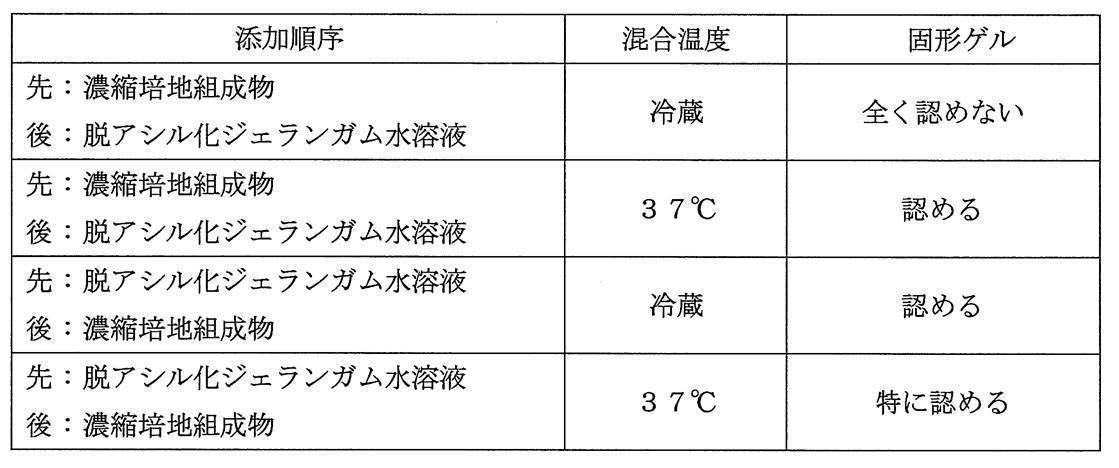
37℃に加温した脱アシル化ジェランガム水溶液を先にフィルター濾過システムへ添加し、次いで、37℃に加温した2倍濃縮培地組成物を脱アシル化ジェランガム水溶液へ添加して混合させる条件において、固形ゲル生成の程度が最も高かった。一方、固形ゲルの生成を最小限にする調製条件は、冷蔵した2倍濃縮培地組成物を先にフィルター濾過システムへ添加し、次いで、冷蔵した脱アシル化ジェランガム水溶液を2倍濃縮培地組成物へ添加して混合させる条件であった。
(試験例5:フィルター濾過法での混合温度の比較)
脱アシル化ジェランガム(KELCOGEL CG-LA、三晶株式会社製)を0.075%(w/v)となるように滅菌精製水(ニプロファーマ社製)250mLに懸濁し、90℃にて加熱しながら撹拌して溶解し、得られた水溶液を121℃で20分オートクレーブ滅菌することにより、脱アシル化ジェランガム水溶液(0.075%(w/v))を調製した。一方、液体のTeSR-E8 basal medium(ST-05940, Stem Cell Technologies社製)250mLに、粉末のDMEM/F12(12400-024、Life Technologies社製)3.90gと重炭酸水素ナトリウム(S5761-500G,Sigma社製)0.30gを添加し、撹拌することで、2倍濃縮培地組成物を調製した(2xTeSR/DF)。
脱アシル化ジェランガム(KELCOGEL CG-LA、三晶株式会社製)を0.075%(w/v)となるように滅菌精製水(ニプロファーマ社製)250mLに懸濁し、90℃にて加熱しながら撹拌して溶解し、得られた水溶液を121℃で20分オートクレーブ滅菌することにより、脱アシル化ジェランガム水溶液(0.075%(w/v))を調製した。一方、液体のTeSR-E8 basal medium(ST-05940, Stem Cell Technologies社製)250mLに、粉末のDMEM/F12(12400-024、Life Technologies社製)3.90gと重炭酸水素ナトリウム(S5761-500G,Sigma社製)0.30gを添加し、撹拌することで、2倍濃縮培地組成物を調製した(2xTeSR/DF)。
(1)脱アシル化ジェランガム水溶液を2倍濃縮培地組成物へ添加
直前まで室温下あるいは15℃恒温槽内で保温した2倍濃縮培地組成物(2xTeSR/DF)を、クリーンベンチ内において、1Lスケールのフィルター濾過システム(0.2μm PES、Thermo Fisher社製)を用いて、フィルター濾過を行い、システム下部のクリーンなボトルに移した。次に該フィルター濾過システムのボトル中の2倍濃縮培地組成物へ、直前まで室温下あるいは15℃恒温槽内で保温した0.075%(w/v)脱アシル化ジェランガム水溶液を、試験例1で記載した方法で撹拌しながら、フィルター濾過することで添加した。2倍濃縮培地組成物と脱アシル化ジェランガム水溶液を混合直前まで保管する温度は、室温か15℃に統一して設定した。フィルター濾過が完了したら、フィルターを取り外して、下部ボトルの蓋を閉めて手動で約1分間撹拌を行い、2液を混合することで、調製を完了した(0.0375%(w/v)脱アシル化ジェランガム含有TeSR-E8/DF)。
直前まで室温下あるいは15℃恒温槽内で保温した2倍濃縮培地組成物(2xTeSR/DF)を、クリーンベンチ内において、1Lスケールのフィルター濾過システム(0.2μm PES、Thermo Fisher社製)を用いて、フィルター濾過を行い、システム下部のクリーンなボトルに移した。次に該フィルター濾過システムのボトル中の2倍濃縮培地組成物へ、直前まで室温下あるいは15℃恒温槽内で保温した0.075%(w/v)脱アシル化ジェランガム水溶液を、試験例1で記載した方法で撹拌しながら、フィルター濾過することで添加した。2倍濃縮培地組成物と脱アシル化ジェランガム水溶液を混合直前まで保管する温度は、室温か15℃に統一して設定した。フィルター濾過が完了したら、フィルターを取り外して、下部ボトルの蓋を閉めて手動で約1分間撹拌を行い、2液を混合することで、調製を完了した(0.0375%(w/v)脱アシル化ジェランガム含有TeSR-E8/DF)。
(2)2倍濃縮培地組成物を脱アシル化ジェランガム水溶液へ添加
直前まで室温下又は15℃恒温槽内で保温した0.075%(w/v)脱アシル化ジェランガム水溶液を、クリーンベンチ内において、1Lスケールのフィルター濾過システム(0.2μm PES、Thermo Fisher社製)を用いて、フィルター濾過を行い、システム下部のクリーンなボトルに移した。次に該フィルター濾過システムのボトル中の0.075%(w/v)脱アシル化ジェランガム水溶液へ、直前まで室温下又は15℃恒温槽内で保温した2倍濃縮培地組成物(2xTeSR/DF)を、試験例1で記載した方法で撹拌しながら、フィルター濾過することで添加した。2倍濃縮培地組成物と脱アシル化ジェランガム水溶液を混合直前まで保管する温度は、室温か15℃に統一して設定した。フィルター濾過が完了したら、フィルターを取り外して、下部ボトルの蓋を閉めて手動で約1分間撹拌を行い、2液を混合することで、調製を完了した(0.0375%(w/v)脱アシル化ジェランガム含有TeSR-E8/DF)。
直前まで室温下又は15℃恒温槽内で保温した0.075%(w/v)脱アシル化ジェランガム水溶液を、クリーンベンチ内において、1Lスケールのフィルター濾過システム(0.2μm PES、Thermo Fisher社製)を用いて、フィルター濾過を行い、システム下部のクリーンなボトルに移した。次に該フィルター濾過システムのボトル中の0.075%(w/v)脱アシル化ジェランガム水溶液へ、直前まで室温下又は15℃恒温槽内で保温した2倍濃縮培地組成物(2xTeSR/DF)を、試験例1で記載した方法で撹拌しながら、フィルター濾過することで添加した。2倍濃縮培地組成物と脱アシル化ジェランガム水溶液を混合直前まで保管する温度は、室温か15℃に統一して設定した。フィルター濾過が完了したら、フィルターを取り外して、下部ボトルの蓋を閉めて手動で約1分間撹拌を行い、2液を混合することで、調製を完了した(0.0375%(w/v)脱アシル化ジェランガム含有TeSR-E8/DF)。
試験例2に記載した方法により、脱アシル化ジェランガム含有培地中の固形ゲル生成を評価した。
各条件での固形ゲル生成の評価結果を表3に示す。
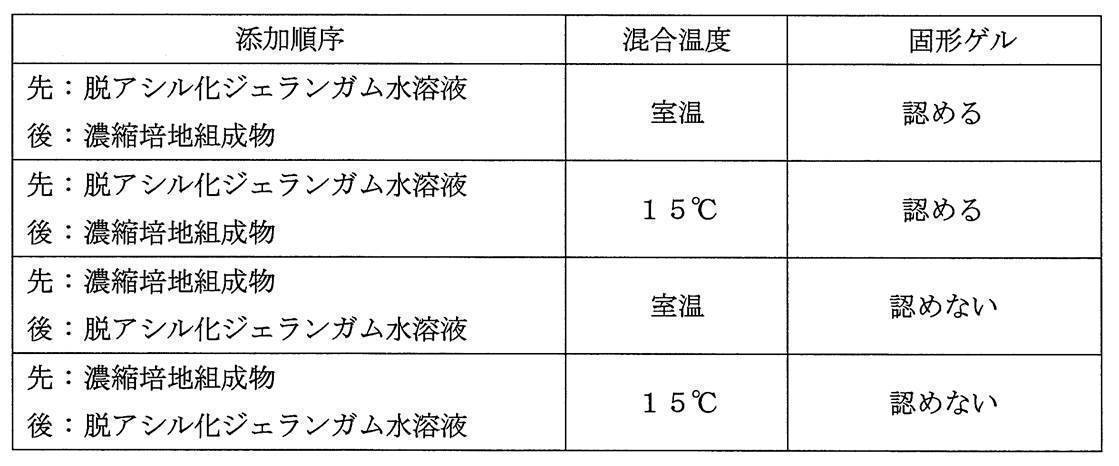
脱アシル化ジェランガム水溶液をフィルター濾過システム中の濃縮培地組成物へ添加して混合した場合、15℃や室温の条件では冷蔵での混合と同様に固形ゲルの生成を認めなかった。一方、濃縮培地組成物をフィルター濾過システム中の脱アシル化ジェランガム水溶液へ添加して混合した場合は、15℃や室温の条件で固形ゲルの生成が認められた。
本発明の製造方法によれば、保存時における固形のゲルの形成が抑制された、安定な上記培地組成物を製造することができる。本発明の製造方法により製造された培地組成物においては、特定化合物同士が2価金属カチオン等の連結物質を介して連結することにより形成された構造体が均一に分散した状態を長期間維持することができる。
本出願は、日本で出願された特願2016-213705(出願日:2016年10月31日)を基礎としており、その内容は本明細書に全て包含されるものである。
Claims (9)
- 液状の培地組成物の製造方法であって、下記(i)の特定化合物を含有する第1の液体と、下記(ii)の連結物質を含有する第2の液体とを、25℃以下且つ凝固点を上回る温度で混合し、前記特定化合物が前記連結物質を介して結びついてなる構造体を均一に分散した状態で含有する液状の培地組成物を形成する工程を含む、前記液状の培地組成物の製造方法:
(i)2価金属カチオンを介して結びつくことにより細胞又は組織を浮遊させることができる構造体を形成することができる、アニオン性の官能基を有する高分子化合物である特定化合物、
(ii)2価金属カチオンである連結物質。 - 混合温度が、15℃以下且つ凝固点を上回る、請求項1に記載の製造方法。
- 混合温度が、4℃以下且つ凝固点を上回る、請求項2に記載の製造方法。
- 第2の液体に対して、第1の液体を添加することを含む、請求項1~3の何れか1項に記載の製造方法。
- 前記(i)の特定化合物が脱アシル化ジェランガムであり、第1の液体が該脱アシル化ジェランガムを含有する水溶液であり、
前記(ii)の連結物質が、カルシウムイオンおよびマグネシウムイオンのうちの一方または両方であり、第2の液体が、カルシウムイオンおよびマグネシウムイオンのうちの一方または両方を含有する液体培地であるか、または、該液体培地の濃縮液である、
請求項1~4の何れか1項に記載の製造方法。 - 前記液状の培地組成物中の、脱アシル化ジェランガムの濃度が、0.001%(w/v)~1.0%(w/v)である、請求項5に記載の培地組成物の製造方法。
- 下記(i)の特定化合物が下記(ii)の連結物質を介して結びついてなる構造体を均一に分散した状態で含有する液状の培地組成物の保存安定性の評価方法であって、該培地組成物を26℃~50℃の温度で、3時間以上保管すること、及び保管後の培地組成物中に固形ゲルが存在するか否か調べることを含む、方法:
(i)2価金属カチオンを介して結びつくことにより細胞又は組織を浮遊させることができる構造体を形成することができる、アニオン性の官能基を有する高分子化合物である特定化合物、
(ii)2価金属カチオンである連結物質。 - 前記培地組成物を静止状態で保管する、請求項7に記載の方法。
- 前記(i)の特定化合物が脱アシル化ジェランガムであり、前記(ii)の連結物質が、カルシウムイオンおよびマグネシウムイオンのうちの一方または両方である、請求項7又は8に記載の方法。
Priority Applications (1)
| Application Number | Priority Date | Filing Date | Title |
|---|---|---|---|
| JP2018547842A JP7010233B2 (ja) | 2016-10-31 | 2017-10-31 | 高品質な3次元培養用培地組成物の製造方法、及び3次元培養用培地組成物の保存安定性の評価方法 |
Applications Claiming Priority (2)
| Application Number | Priority Date | Filing Date | Title |
|---|---|---|---|
| JP2016213705 | 2016-10-31 | ||
| JP2016-213705 | 2016-10-31 |
Publications (1)
| Publication Number | Publication Date |
|---|---|
| WO2018079797A1 true WO2018079797A1 (ja) | 2018-05-03 |
Family
ID=62024967
Family Applications (1)
| Application Number | Title | Priority Date | Filing Date |
|---|---|---|---|
| PCT/JP2017/039211 Ceased WO2018079797A1 (ja) | 2016-10-31 | 2017-10-31 | 高品質な3次元培養用培地組成物の製造方法、及び3次元培養用培地組成物の保存安定性の評価方法 |
Country Status (3)
| Country | Link |
|---|---|
| JP (1) | JP7010233B2 (ja) |
| TW (1) | TW201823449A (ja) |
| WO (1) | WO2018079797A1 (ja) |
Cited By (1)
| Publication number | Priority date | Publication date | Assignee | Title |
|---|---|---|---|---|
| EP3425042A4 (en) * | 2016-03-09 | 2019-01-09 | Nissan Chemical Corporation | CULTURE MEDIUM COMPOSITION FOR SUSPENSION CULTURE WITH SIMPLE CELL RECOVERY AND CELL RECOVERY METHOD |
Citations (3)
| Publication number | Priority date | Publication date | Assignee | Title |
|---|---|---|---|---|
| JPH05130862A (ja) * | 1991-09-20 | 1993-05-28 | Tokimec Inc | 培地の固化方法及び培地固化剤 |
| JPH06141851A (ja) * | 1992-10-30 | 1994-05-24 | Yamato Kubota | 動物組織培養用担体およびこれを用いる動物組織培養方法 |
| WO2014017513A1 (ja) * | 2012-07-24 | 2014-01-30 | 日産化学工業株式会社 | 培地組成物及び当該組成物を用いた細胞又は組織の培養方法 |
-
2017
- 2017-10-31 TW TW106137583A patent/TW201823449A/zh unknown
- 2017-10-31 WO PCT/JP2017/039211 patent/WO2018079797A1/ja not_active Ceased
- 2017-10-31 JP JP2018547842A patent/JP7010233B2/ja active Active
Patent Citations (3)
| Publication number | Priority date | Publication date | Assignee | Title |
|---|---|---|---|---|
| JPH05130862A (ja) * | 1991-09-20 | 1993-05-28 | Tokimec Inc | 培地の固化方法及び培地固化剤 |
| JPH06141851A (ja) * | 1992-10-30 | 1994-05-24 | Yamato Kubota | 動物組織培養用担体およびこれを用いる動物組織培養方法 |
| WO2014017513A1 (ja) * | 2012-07-24 | 2014-01-30 | 日産化学工業株式会社 | 培地組成物及び当該組成物を用いた細胞又は組織の培養方法 |
Cited By (2)
| Publication number | Priority date | Publication date | Assignee | Title |
|---|---|---|---|---|
| EP3425042A4 (en) * | 2016-03-09 | 2019-01-09 | Nissan Chemical Corporation | CULTURE MEDIUM COMPOSITION FOR SUSPENSION CULTURE WITH SIMPLE CELL RECOVERY AND CELL RECOVERY METHOD |
| US11261422B2 (en) | 2016-03-09 | 2022-03-01 | Nissan Chemical Corporation | Culture medium composition for suspension culture allowing easy cell recovery, and cell recovery method |
Also Published As
| Publication number | Publication date |
|---|---|
| TW201823449A (zh) | 2018-07-01 |
| JP7010233B2 (ja) | 2022-01-26 |
| JPWO2018079797A1 (ja) | 2019-09-19 |
Similar Documents
| Publication | Publication Date | Title |
|---|---|---|
| JP6787585B2 (ja) | 細胞の培養方法 | |
| EP3609956B1 (en) | Hydrogel for cell culture and biomedical applications | |
| JP6678997B2 (ja) | 血管平滑筋細胞の培養方法 | |
| JP2025106430A (ja) | 細胞保存材料 | |
| JP2021192643A (ja) | 細胞回収が容易な浮遊培養用培地組成物、及び細胞回収方法 | |
| KR102055490B1 (ko) | 액체 배지 조성물의 제조 방법, 및 이의 제조 장치 및 키트 | |
| JP7028776B2 (ja) | 液状の培地組成物の製造方法およびそれに用いられる製造装置 | |
| JP7010233B2 (ja) | 高品質な3次元培養用培地組成物の製造方法、及び3次元培養用培地組成物の保存安定性の評価方法 | |
| WO2016039391A1 (ja) | 細胞回収に関する方法 | |
| JP6981425B2 (ja) | 粘性の高い無菌の3次元培養用培地組成物の製造方法 | |
| JP6854553B2 (ja) | 粒子の分配方法 | |
| EP4038176A1 (en) | Kit and method for preparation of digestible spheroid stabilizing hydrogels | |
| JP2024122632A (ja) | 器官芽の保存方法 | |
| KR20250172953A (ko) | 조성물 |
Legal Events
| Date | Code | Title | Description |
|---|---|---|---|
| 121 | Ep: the epo has been informed by wipo that ep was designated in this application |
Ref document number: 17865868 Country of ref document: EP Kind code of ref document: A1 |
|
| ENP | Entry into the national phase |
Ref document number: 2018547842 Country of ref document: JP Kind code of ref document: A |
|
| NENP | Non-entry into the national phase |
Ref country code: DE |
|
| 122 | Ep: pct application non-entry in european phase |
Ref document number: 17865868 Country of ref document: EP Kind code of ref document: A1 |