WO2018064868A1 - 一种消息传输的省电方法及相关设备 - Google Patents
一种消息传输的省电方法及相关设备 Download PDFInfo
- Publication number
- WO2018064868A1 WO2018064868A1 PCT/CN2016/113620 CN2016113620W WO2018064868A1 WO 2018064868 A1 WO2018064868 A1 WO 2018064868A1 CN 2016113620 W CN2016113620 W CN 2016113620W WO 2018064868 A1 WO2018064868 A1 WO 2018064868A1
- Authority
- WO
- WIPO (PCT)
- Prior art keywords
- user terminal
- transmission
- indication information
- message
- information
- Prior art date
- Legal status (The legal status is an assumption and is not a legal conclusion. Google has not performed a legal analysis and makes no representation as to the accuracy of the status listed.)
- Ceased
Links
Images
Classifications
-
- H—ELECTRICITY
- H04—ELECTRIC COMMUNICATION TECHNIQUE
- H04L—TRANSMISSION OF DIGITAL INFORMATION, e.g. TELEGRAPHIC COMMUNICATION
- H04L67/00—Network arrangements or protocols for supporting network services or applications
- H04L67/01—Protocols
- H04L67/12—Protocols specially adapted for proprietary or special-purpose networking environments, e.g. medical networks, sensor networks, networks in vehicles or remote metering networks
-
- H—ELECTRICITY
- H04—ELECTRIC COMMUNICATION TECHNIQUE
- H04W—WIRELESS COMMUNICATION NETWORKS
- H04W52/00—Power management, e.g. Transmission Power Control [TPC] or power classes
- H04W52/02—Power saving arrangements
- H04W52/0209—Power saving arrangements in terminal devices
- H04W52/0212—Power saving arrangements in terminal devices managed by the network, e.g. network or access point is leader and terminal is follower
-
- H—ELECTRICITY
- H04—ELECTRIC COMMUNICATION TECHNIQUE
- H04W—WIRELESS COMMUNICATION NETWORKS
- H04W52/00—Power management, e.g. Transmission Power Control [TPC] or power classes
- H04W52/02—Power saving arrangements
- H04W52/0209—Power saving arrangements in terminal devices
- H04W52/0225—Power saving arrangements in terminal devices using monitoring of external events, e.g. the presence of a signal
-
- Y—GENERAL TAGGING OF NEW TECHNOLOGICAL DEVELOPMENTS; GENERAL TAGGING OF CROSS-SECTIONAL TECHNOLOGIES SPANNING OVER SEVERAL SECTIONS OF THE IPC; TECHNICAL SUBJECTS COVERED BY FORMER USPC CROSS-REFERENCE ART COLLECTIONS [XRACs] AND DIGESTS
- Y02—TECHNOLOGIES OR APPLICATIONS FOR MITIGATION OR ADAPTATION AGAINST CLIMATE CHANGE
- Y02D—CLIMATE CHANGE MITIGATION TECHNOLOGIES IN INFORMATION AND COMMUNICATION TECHNOLOGIES [ICT], I.E. INFORMATION AND COMMUNICATION TECHNOLOGIES AIMING AT THE REDUCTION OF THEIR OWN ENERGY USE
- Y02D30/00—Reducing energy consumption in communication networks
- Y02D30/70—Reducing energy consumption in communication networks in wireless communication networks
Definitions
- the present invention relates to the field of wireless network technologies, and in particular, to a power saving method for message transmission and related devices.
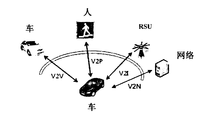
- FIG. 1 provides a schematic diagram of a V2X (Vehicle to Everything) system including V2V (Vehicle to Vehicle) and V2P (Vehicle to Pedestrian). ), V2I (Vehicle to Infrastructure) and V2N (Vehicle to Network), V2X technology allows cars to communicate continuously with all other nearby cars and road infrastructure, such as cars and traffic lights Communication between facilities such as campuses and railway crossings.
- V2X Vehicle to Everything
- V2V Vehicle to Vehicle
- V2P Vehicle to Pedestrian
- V2I Vehicle to Infrastructure
- V2N Vehicle to Network
- the communication device may be an in-vehicle embedded telematics system or a mobile device such as a smart phone.
- V2X technology enables vehicles and vehicles, vehicles and base stations, base stations and base stations to communicate, thus obtaining a series of traffic information such as real-time road conditions, road information, pedestrian information, etc., thereby improving driving safety, reducing congestion, improving traffic efficiency, and providing vehicle For entertainment information, etc.
- V2X communication can be realized based on D2D (Device-to-Device) technology.
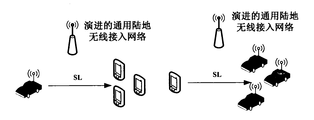
- FIG. 2 is a V2P transmission mode of a D2D SL (Sidelink) based on a PC5 air interface provided by the prior art
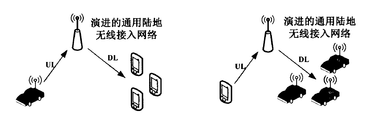
- FIG. 3 is an LTE UL (Uplink, uplink) based on a Uu air interface provided by the prior art.
- Link +DL (Downlink, downlink) V2P transmission mode.
- the existing communication mechanism (including R13 D2D random resource selection and R14 PC5 based V2V sensing idle resources) can be reused without changing the existing 3GPP (3rd Generation Partnership Project) protocol framework and design. Select) to support V2P communication. As shown in FIG.
- one side of the V2P communication is a vehicle terminal (Vehicle UE, V-UE), one side is a Pedestrian UE (P-UE) held by a pedestrian, and the V2P communication may be bidirectional, that is, V-UE. Transmit, P-UE reception, or P-UE transmission, V-UE reception.
- V-UE vehicle terminal
- P-UE Pedestrian UE
- the V2P communication may be bidirectional, that is, V-UE. Transmit, P-UE reception, or P-UE transmission, V-UE reception.
- the battery power of the P-UE is limited, there may be a situation in which the P-UE power consumption is rapidly exhausted, and the V2P message related to the emergency warning of the Internet of Vehicles cannot be satisfied. Therefore, how to reduce the V2P message transmission of the vehicle network Power consumption is an urgent problem to be solved.
- Embodiments of the present invention provide a power saving method for message transmission and related devices.
- the problem that the power consumption of the vehicle network V2P message transmission in the prior art solution is excessively large can be solved.
- a first aspect of the present invention provides a power saving method for message transmission, including:
- the user terminal When the user terminal is in the RRC connection state, the user terminal sends the current running state information of the user terminal to the base station, so that the base station determines, according to the running state information, whether to activate or invalidate the message of the user terminal. Transmitting capability and returning, to the user terminal, radio resource control signaling carrying the transmission indication information;
- Radio resource control signaling that is sent by the base station and carrying the transmission indication information
- the user terminal controls the user terminal to perform message transmission with the vehicle-mounted terminal according to the transmission indication information.
- the controlling the user terminal to perform message transmission with the vehicle-mounted terminal according to the transmission indication information includes:
- the transmission indication information is a message transmission capability for activating the user terminal
- the user terminal starts to send a broadcast message to the in-vehicle terminal
- the transmission indication information is a message transmission capability of the user terminal
- the user terminal stops sending a broadcast message to the vehicle-mounted terminal
- the transmission indication information is a message receiving capability for activating the user terminal
- the user terminal starts to receive a broadcast message sent by the in-vehicle terminal
- the user terminal stops receiving the broadcast message sent by the in-vehicle terminal.
- the running status information includes at least one of geographic location information, motion state information, user activity information, and current remaining power.
- a second aspect of the present invention provides a power saving method for message transmission, including:
- the base station sends the radio resource control signaling carrying the transmission indication information to the user terminal, so that the user terminal controls the user terminal to perform message transmission with the in-vehicle terminal according to the transmission indication information.
- the running status information includes at least one of geographic location information, motion state information, user activity information, and current remaining power.
- a third aspect of the present invention provides a power saving method for message transmission, including:
- the user terminal receives the pre-configured parameters sent by the base station;
- the user terminal When the user terminal is in a radio resource control idle state or a network coverage, the user terminal controls the user terminal to perform message transmission with the in-vehicle terminal according to the pre-configuration parameter.
- the pre-configuration parameter includes the transmission indication information
- the controlling the user terminal to perform message transmission with the vehicle-mounted terminal according to the pre-configuration parameter includes:
- the transmission indication information is a message transmission capability for activating the user terminal
- the user terminal starts to send a broadcast message to the in-vehicle terminal
- the transmission indication information is a message transmission capability of the user terminal
- the user terminal stops sending a broadcast message to the vehicle-mounted terminal
- the transmission indication information is a message receiving capability for activating the user terminal
- the user terminal starts to listen to a pre-configured receiving resource pool
- the user terminal stops listening to the pre-configured receiving resource pool.
- the controlling the user terminal to perform message transmission with the vehicle-mounted terminal according to the transmission indication information includes:
- the user terminal controls the user terminal to perform message transmission with the vehicle-mounted terminal.
- a fourth aspect of the present invention provides a user terminal, including:
- the information sending module is configured to: when the user terminal is in the RRC connection state, send the current running state information of the user terminal to the base station, so that the base station determines, according to the running state information, whether the user terminal is activated or disabled. And transmitting, to the user terminal, radio resource control signaling carrying the transmission indication information;
- the information receiving module is configured to receive the radio resource control signaling that is sent by the base station and that carries the transmission indication information;
- the transmission control module is configured to control the user terminal to perform message transmission with the vehicle-mounted terminal according to the transmission indication information.
- the transmission control module is specifically configured to:
- the broadcast message is stopped from being sent to the vehicle terminal;
- the transmission indication information is a message receiving capability for activating the user terminal, starting to receive a broadcast message sent by the in-vehicle terminal;
- the transmission indication information is a message receiving capability of the user terminal
- the receiving of the broadcast message sent by the in-vehicle terminal is stopped.
- the running status information includes at least one of geographic location information, motion state information, user activity information, and current remaining power.
- a fifth aspect of the present invention provides a base station, including:
- the information receiving module is configured to receive current operating state information of the user terminal sent by the user terminal;
- the information judging module is configured to determine, according to the running state information, whether to activate or invalidate the message transmission capability of the user terminal, and generate corresponding transmission indication information;
- the information sending module is configured to send the radio resource control signaling carrying the transmission indication information to the user terminal, so that the user terminal controls the user terminal to perform message transmission with the in-vehicle terminal according to the transmission indication information.
- the running status information includes at least one of geographic location information, motion state information, user activity information, and current remaining power.
- a sixth aspect of the present invention provides a user terminal, including:
- An information receiving module configured to receive a pre-configured parameter sent by the base station
- a transmission control module configured to: when the user terminal is in a radio resource control idle state or a network coverage, control the user terminal to perform message transmission with the in-vehicle terminal according to the pre-configuration parameter.
- the pre-configuration parameter includes transmission indication information, and the transmission control module is specifically configured to:
- the transmission indication information is a message transmission capability for activating the user terminal
- the user terminal starts to send a broadcast message to the in-vehicle terminal
- the transmission indication information is a message transmission capability of the user terminal
- the user terminal stops sending a broadcast message to the vehicle-mounted terminal
- the transmission indication information is a message receiving capability for activating the user terminal
- the user terminal starts to listen to a pre-configured receiving resource pool
- the user terminal stops listening to the pre-configured receiving resource pool.
- the transmission control module is specifically configured to:
- the user terminal controls the user terminal to perform message transmission with the vehicle-mounted terminal.
- a seventh aspect of the present invention provides a power saving device for message transmission, including an interface circuit, a memory, and a processor, wherein the memory stores a set of program codes, and the processor is configured to call the program code stored in the memory, Used to do the following:
- the current operation state information of the user terminal is sent to the base station, so that the base station determines, according to the operation state information, whether to activate or invalidate the message transmission capability of the user terminal.
- the user terminal returns radio resource control signaling carrying the transmission indication information;
- Radio resource control signaling that carries the transmission indication information
- the user terminal When the user terminal is in the RRC connection state, the user terminal sends the current running state information of the user terminal to the base station, and after receiving the running state information, the base station determines whether to activate according to the running state information. Or invalidating the message transmission capability of the user terminal, and returning, to the user terminal, radio resource control signaling carrying the transmission indication information; the user terminal receiving the radio resource control signaling that is sent by the base station and carrying the transmission indication information And the user terminal controls the user terminal to perform message transmission with the vehicle-mounted terminal according to the transmission indication information.
- the power saving purpose of the P-UE is achieved by controlling and enabling the P-UE to transmit or receive V2P messages.
- Figure 1 provides a schematic diagram of the architecture of a V2X system
- FIG. 2 is a schematic structural diagram of a V2P message transmission manner provided by a prior art solution
- FIG. 3 is a schematic structural diagram of another V2P message transmission manner provided by the prior art solution.
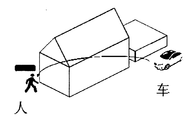
- FIG. 4 is a schematic diagram of a simulation scenario of V2P message transmission according to an embodiment of the present invention.
- FIG. 5 is a schematic diagram of another simulation scenario of V2P message transmission according to an embodiment of the present invention.
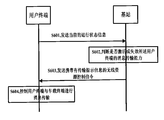
- FIG. 6 is a schematic flowchart of a power saving method for message transmission according to an embodiment of the present invention.
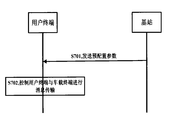
- FIG. 7 is a schematic flowchart of another power saving method for message transmission according to an embodiment of the present disclosure.
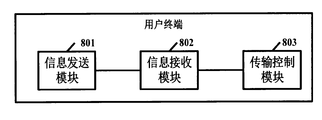
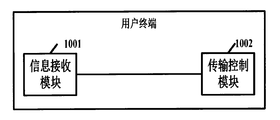
- FIG. 8 is a schematic structural diagram of a user terminal according to an embodiment of the present invention.
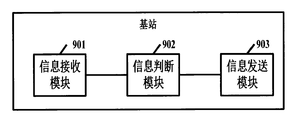
- FIG. 9 is a schematic structural diagram of a base station according to an embodiment of the present disclosure.
- FIG. 10 is a schematic structural diagram of another user terminal according to an embodiment of the present disclosure.
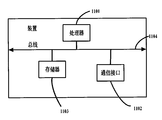
- FIG. 11 is a schematic structural diagram of a power saving device for message transmission according to an embodiment of the present invention.
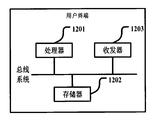
- FIG. 12 is another schematic structural diagram of a user terminal according to an embodiment of the present disclosure.
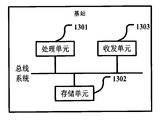
- FIG. 13 is another schematic structural diagram of a base station according to an embodiment of the present invention.
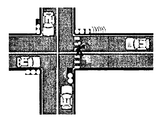
- the P-UE when the P-UE is in a specific geographic location (for example, an intersection, a crosswalk, etc.), the P-UE receives information such as the location, speed, and trajectory of the V-UE external broadcast; as shown in FIG. 5, P- The UE may broadcast its own location, speed, acceleration, trajectory, etc., and the P-UE may also receive based on the user selection (determining whether it is in a dangerous situation according to the indoor or outdoor state, the distance from the V-UE, or the user activity state). Handling the broadcast message sent by the V-UE; the P-UE periodically broadcasts its own location, speed, orientation, and the like, and when the V-UE detects a possible collision risk, the P-UE receives the transmission from the V-UE. Collision hazard warning message. Based on the foregoing three V2P message transmission scenarios, an embodiment of the present invention provides a power saving method for V2P message transmission.
- FIG. 6 is a schematic flowchart diagram of a power saving method for message transmission provided by the present invention. As shown in the figure, the method of the embodiment of the present invention includes:
- the user terminal When the user terminal is in a radio resource control connection state, the user terminal sends the current running state information of the user terminal to the base station.
- the user terminal may send the current running state information of the user terminal to the base station according to the preset period by using the radio resource control signaling, where the running state information includes the geographic location. At least one of information (eg, indoor or outdoor, intersection, crosswalk, etc.), motion status information (speed, trajectory, etc.), user activity information (reading, surfing, listening to music, etc.) and current remaining power, the base station
- the scheduling mode is a mode in which the base station allocates a time-frequency resource to the user terminal
- the resource pool self-selection mode is a mode in which the base station divides the time-frequency resource into multiple resource pools and the user terminal selects the resource pool.
- the geographic location information can be reported by multiplexing the existing RRC IE locationInfo.
- the base station determines, according to the running state information, whether to activate or invalidate the message transmission capability of the user terminal, and generate corresponding transmission indication information.
- the base station may activate the message sending or receiving capability of the user terminal, so that the user terminal can receive or send, because the user may be in danger of colliding with the vehicle. Collision hazard warning message; or, when the user activity information is that the user is surfing the Internet and listening to music, since the current power consumption of the user terminal is large, the base station may invalidate the message sending or receiving capability of the user terminal, thereby achieving power saving; Alternatively, the current remaining power of the user terminal is lower than a preset threshold, so the base station may invalidate the message sending or receiving capability of the user terminal, thereby achieving power saving.
- the base station returns, to the user equipment, radio resource control signaling that carries the transmission indication information.
- the transmission indication information includes a message transmission capability for activating the user terminal or a message transmission capability of the user terminal.
- the user terminal controls the user terminal to perform message transmission with the in-vehicle terminal according to the transmission indication information.
- the user terminal when the transmission indication information is a message sending capability of the user terminal, the user terminal starts to send a broadcast message to the in-vehicle terminal; when the transmission indication information is invalid When the user terminal sends a message to the vehicle terminal, the user terminal stops sending a broadcast message to the vehicle terminal; when the transmission indication information is a message receiving capability for activating the user terminal, the user terminal starts to listen to the SA ( Scheduling Assignment, and receiving a V2P broadcast message sent by the in-vehicle terminal; when the transmission indication information is a message receiving capability of the user terminal, the user terminal stops listening to the SA information and stops receiving The V2P broadcast message sent by the in-vehicle terminal.
- SA Scheduling Assignment
- the user terminal when the transmission indication information is a message sending capability of the user terminal, the user terminal starts to send a broadcast message to the in-vehicle terminal; when the transmission indication information is invalid, the user When the message transmission capability of the terminal is enabled, the user terminal stops sending a broadcast message to the vehicle-mounted terminal; when the transmission indication information is a message receiving capability for activating the user terminal, the user terminal starts to listen to the receiving resource pool, and Receiving a V2P broadcast message sent by the in-vehicle terminal, in order to further save power, the user terminal may only listen to the receiving resource pool associated with the Zone ID (resource pool partition identifier); when the transmission indication information is invalid for the user terminal When the message receiving capability is received, the user terminal stops listening to the receiving resource pool and stops receiving the V2P broadcast message sent by the in-vehicle terminal.
- the Zone ID resource pool partition identifier
- the user terminal when the user terminal is in the RRC connection state, the user terminal sends the current running state information of the user terminal to the base station, and after receiving the running state information, the base station determines, according to the running state information, whether Activating or invalidating the message transmission capability of the user terminal, and returning, to the user terminal, radio resource control signaling carrying the transmission indication information; the user terminal receiving the radio resource control message that is sent by the base station and carrying the transmission indication information And the user terminal controls the user terminal to perform message transmission with the vehicle-mounted terminal according to the transmission indication information.
- the power saving purpose of the P-UE is achieved by controlling and enabling the P-UE to transmit or receive V2P messages.
- FIG. 7 is a schematic flowchart diagram of another power saving method for message transmission provided by the present invention. As shown in the figure, the method of the embodiment of the present invention includes:
- the user equipment receives pre-configuration parameters sent by the base station.
- S702 When the user terminal is in a radio resource control idle state or a network coverage, the user terminal controls, according to the pre-configuration parameter, the user terminal to perform message transmission with the in-vehicle terminal.
- the pre-configuration parameter includes transmission indication information, when the transmission indication information is a message sending capability of the user terminal, the user terminal starts to send a broadcast message to the in-vehicle terminal; or when When the transmission indication information is a message transmission capability of the user terminal, the user terminal stops sending a broadcast message to the vehicle-mounted terminal; when the transmission indication information is a message receiving capability for activating the user terminal, the user The terminal starts to listen to the pre-configured receiving resource pool; when the transmission indication information is the message receiving capability of the user terminal, the user terminal stops listening to the pre-configured receiving resource pool.
- the user terminal controls the user terminal to perform message transmission with the vehicle-mounted terminal.
- the upper layer of the user terminal may be an application layer of the user terminal.
- the user terminal may determine, according to the current running state information, whether to activate or disable the message transmission capability of the user terminal, and then control the user terminal to perform message transmission with the in-vehicle terminal, and the determining method is the same as the foregoing embodiment. The examples will not be described again.
- FIG. 8 is a schematic structural diagram of a user terminal according to the present invention. As shown in the figure, the user terminal of the embodiment of the present invention includes:
- the information sending module 801 is configured to: when the user terminal is in the RRC connection state, send the current running state information of the user terminal to the base station, so that the base station determines, according to the running state information, whether the user is activated or disabled.
- the message transmission capability of the terminal returns a radio resource control signaling carrying the transmission indication information to the user terminal.
- the user terminal may send the current running state information of the user terminal to the base station according to the preset period by using the radio resource control signaling, where the running state information includes the geographic location. At least one of information (eg, indoor or outdoor, intersection, crosswalk, etc.), motion status information (speed, trajectory, etc.), user activity information (reading, surfing, listening to music, etc.) and current remaining power, the base station
- the scheduling mode is a mode in which the base station allocates a time-frequency resource to the user terminal
- the resource pool self-selection mode is a mode in which the base station divides the time-frequency resource into multiple resource pools and the user terminal selects the resource pool.
- the geographic location information can be reported by multiplexing the existing RRC IE locationInfo.
- the base station may activate the message sending or receiving capability of the user terminal, so that the user terminal can receive or send, because the user may be in danger of colliding with the vehicle. Collision hazard warning message; or, when the user activity information is that the user is surfing the Internet and listening to music, since the current power consumption of the user terminal is large, the base station may invalidate the message sending or receiving capability of the user terminal, thereby achieving power saving; Alternatively, the current remaining power of the user terminal is lower than a preset threshold, so the base station may invalidate the message sending or receiving capability of the user terminal, thereby achieving power saving.
- the information receiving module 802 is configured to receive, by the base station, radio resource control signaling that carries the transmission indication information, where the transmission indication information includes activating a message transmission capability of the user terminal or invalidating the user terminal. Message transmission capability.
- the transmission control module 803 is configured to control the user terminal to perform message transmission with the vehicle-mounted terminal according to the transmission indication information.
- the user terminal when the transmission indication information is a message sending capability of the user terminal, the user terminal starts to send a broadcast message to the in-vehicle terminal; when the transmission indication information is invalid When the user terminal sends a message to the vehicle terminal, the user terminal stops sending a broadcast message to the vehicle terminal; when the transmission indication information is a message receiving capability for activating the user terminal, the user terminal starts to listen to the SA ( Scheduling Assignment, and receiving a V2P broadcast message sent by the in-vehicle terminal; when the transmission indication information is a message receiving capability of the user terminal, the user terminal stops listening to the SA information and stops receiving The V2P broadcast message sent by the in-vehicle terminal.
- SA Scheduling Assignment
- the user terminal when the transmission indication information is a message sending capability of the user terminal, the user terminal starts to send a broadcast message to the in-vehicle terminal; when the transmission indication information is invalid, the user When the message transmission capability of the terminal is enabled, the user terminal stops sending a broadcast message to the vehicle-mounted terminal; when the transmission indication information is a message receiving capability for activating the user terminal, the user terminal starts to listen to the receiving resource pool, and Receiving a V2P broadcast message sent by the in-vehicle terminal, in order to further save power, the user terminal may only listen to the receiving resource pool associated with the Zone ID (resource pool partition identifier); when the transmission indication information is invalid for the user terminal When the message receiving capability is received, the user terminal stops listening to the receiving resource pool and stops receiving the V2P broadcast message sent by the in-vehicle terminal.
- the Zone ID resource pool partition identifier
- the user terminal when the user terminal is in the RRC connection state, the user terminal sends the current running state information of the user terminal to the base station, and after receiving the running state information, the base station determines, according to the running state information, whether Activating or invalidating the message transmission capability of the user terminal, and returning, to the user terminal, radio resource control signaling carrying the transmission indication information; the user terminal receiving the radio resource control message that is sent by the base station and carrying the transmission indication information And the user terminal controls the user terminal to perform message transmission with the vehicle-mounted terminal according to the transmission indication information.
- the power saving purpose of the P-UE is achieved by controlling and enabling the P-UE to transmit or receive V2P messages.
- FIG. 9 is a schematic structural diagram of a base station provided by the present invention.
- the base station of the embodiment of the present invention includes:
- the information receiving module 901 is configured to receive current operating state information of the user terminal sent by the user terminal.
- the running status information includes geographic location information (such as indoor or outdoor, crossroads, crosswalks, etc.), motion status information (speed, trajectory, etc.), user activity information (reading, surfing, listening to music, etc.) and current remaining At least one of the power.
- the information determining module 902 is configured to determine, according to the operating state information, whether to activate or invalidate the message transmission capability of the user terminal, and generate corresponding transmission indication information.
- the base station may activate the message sending or receiving capability of the user terminal, so that the user terminal can receive or send, because the user may be in danger of colliding with the vehicle. Collision hazard warning message; or, when the user activity information is that the user is surfing the Internet and listening to music, since the current power consumption of the user terminal is large, the base station may invalidate the message sending or receiving capability of the user terminal, thereby achieving power saving; Alternatively, the current remaining power of the user terminal is lower than a preset threshold, so the base station may invalidate the message sending or receiving capability of the user terminal, thereby achieving power saving.
- the information sending module 903 is configured to send the radio resource control signaling carrying the transmission indication information to the user terminal, so that the user terminal controls the user terminal to perform message transmission with the in-vehicle terminal according to the transmission indication information. .
- the user terminal after the user terminal receives the radio resource control signaling carrying the transmission indication information, in the base station scheduling mode, when the transmission indication information is a message sending capability for activating the user terminal, the user The terminal starts to send a broadcast message to the in-vehicle terminal; when the transmission indication information is a message sending capability of the user terminal, the user terminal stops sending a broadcast message to the in-vehicle terminal; when the transmission indication information is When the message receiving capability of the user terminal is activated, the user terminal starts to listen to SA (Scheduling Assignment) information, and receives a V2P broadcast message sent by the in-vehicle terminal; when the transmission indication information is invalid, the user When the message receiving capability of the terminal is received, the user terminal stops listening to the SA information and stops receiving the V2P broadcast message sent by the in-vehicle terminal.
- SA Stuling Assignment
- the user terminal when the transmission indication information is a message sending capability of the user terminal, the user terminal starts to send a broadcast message to the in-vehicle terminal; when the transmission indication information is invalid, the user When the message transmission capability of the terminal is enabled, the user terminal stops sending a broadcast message to the vehicle-mounted terminal; when the transmission indication information is a message receiving capability for activating the user terminal, the user terminal starts to listen to the receiving resource pool, and Receiving a V2P broadcast message sent by the in-vehicle terminal, in order to further save power, the user terminal may only listen to the receiving resource pool associated with the Zone ID (resource pool partition identifier); when the transmission indication information is invalid for the user terminal When the message receiving capability is received, the user terminal stops listening to the receiving resource pool and stops receiving the V2P broadcast message sent by the in-vehicle terminal.
- the Zone ID resource pool partition identifier
- FIG. 10 is a schematic structural diagram of another user terminal provided by the present invention.
- the device of the embodiment of the present invention includes:
- the information receiving module 101 is configured to receive a pre-configured parameter sent by the base station.
- the transmission control module 102 is configured to, when the user terminal is in a radio resource control idle state or a network coverage, control the user terminal to perform message transmission with the in-vehicle terminal according to the pre-configuration parameter.
- the pre-configuration parameter includes transmission indication information, when the transmission indication information is a message sending capability of the user terminal, the user terminal starts to send a broadcast message to the in-vehicle terminal; or when When the transmission indication information is a message transmission capability of the user terminal, the user terminal stops sending a broadcast message to the vehicle-mounted terminal; when the transmission indication information is a message receiving capability for activating the user terminal, the user The terminal starts to listen to the pre-configured receiving resource pool; when the transmission indication information is the message receiving capability of the user terminal, the user terminal stops listening to the pre-configured receiving resource pool.
- the user terminal controls the user terminal to perform message transmission with the vehicle-mounted terminal.
- the upper layer of the user terminal may be an application layer of the user terminal.
- the user terminal may determine, according to the current running state information, whether to activate or disable the message transmission capability of the user terminal, and then control the user terminal to perform message transmission with the in-vehicle terminal, and the determining method is the same as the foregoing embodiment. The examples will not be described again.
- FIG. 11 is a schematic structural diagram of a power saving device for message transmission according to an embodiment of the present invention.
- the apparatus can include at least one processor 1101, such as a CPU, at least one communication interface 1102, at least one memory 1103, and at least one bus 1104.
- the bus 1104 is used to implement connection communication between these components.
- the communication interface 1102 of the device in the embodiment of the present invention is a wired transmission port, and may also be a wireless device, for example, including an antenna device, for performing signaling or data communication with other node devices.
- the memory 1103 may be a high speed RAM memory or a non-volatile memory such as at least one disk memory.
- the memory 1103 can also optionally be at least one storage device located remotely from the aforementioned processor 1101.
- a set of program codes is stored in the memory 1103, and the processor 1101 is configured to call program code stored in the memory for performing the following operations:
- the current operation state information of the user terminal is sent to the base station, so that the base station determines, according to the operation state information, whether to activate or invalidate the message transmission capability of the user terminal.
- the user terminal returns radio resource control signaling carrying the transmission indication information;
- Radio resource control signaling that carries the transmission indication information
- the processor 1101 is further configured to perform the following operations:
- the transmission indication information is a message transmission capability for activating the user terminal
- the user terminal starts to send a broadcast message to the in-vehicle terminal
- the transmission indication information is a message transmission capability of the user terminal
- the user terminal stops sending a broadcast message to the vehicle-mounted terminal
- the transmission indication information is a message receiving capability for activating the user terminal
- the user terminal starts to receive a broadcast message sent by the in-vehicle terminal
- the user terminal stops receiving the broadcast message sent by the in-vehicle terminal.
- the running status information includes at least one of geographic location information, motion state information, user activity information, and current remaining power.
- the processor 1101 is further configured to perform the following operations:
- the user terminal receives the pre-configured parameters sent by the base station;
- the user terminal When the user terminal is in a radio resource control idle state or a network coverage, the user terminal controls the user terminal to perform message transmission with the in-vehicle terminal according to the pre-configuration parameter.
- the processor 1101 is further configured to perform the following operations:
- the transmission indication information is a message transmission capability for activating the user terminal
- the user terminal starts to send a broadcast message to the in-vehicle terminal
- the transmission indication information is a message transmission capability of the user terminal
- the user terminal stops sending a broadcast message to the vehicle-mounted terminal
- the transmission indication information is a message receiving capability for activating the user terminal
- the user terminal starts to listen to a pre-configured receiving resource pool
- the user terminal stops listening to the pre-configured receiving resource pool.
- the processor 1101 is further configured to perform the following operations:
- the user terminal controls the user terminal to perform message transmission with the vehicle-mounted terminal.
- the user terminals in the embodiments of the present invention may be different types of electronic devices, such as: smart phones, tablet computers, handheld computers, and mobile Internet devices, personal digital assistants, media players, smart TVs, smart watches. , smart glasses, smart bracelets, etc.
- the user terminal in the embodiment of the present invention includes: at least one processor 1201, such as a CPU, at least one memory 1202, and at least one transceiver 1203.
- the processor 1201, the memory 1202, and the transceiver 1203 are connected and communicated through a bus system.
- the memory 1202 may be a high speed RAM memory or a non-volatile memory such as at least one disk memory.
- Program code is stored in the memory 1202, and the processor 1201 can call the program code stored in the memory 1202 to perform related functions through a bus system.
- each module described in FIG. 8 and FIG. 10 is a program code stored in the memory 1202 and executed by the processor 1201 to implement the functions of the respective modules to implement a power saving method for message transmission.
- the multiple instructions executed by the processor 1201 include: when the user terminal is in the RRC connection state, sending the current running state information of the user terminal to the base station, so that the base station is configured according to the operating state. Determining whether the message transmission capability of the user terminal is activated or disabled, and returning, to the user terminal, radio resource control signaling carrying the transmission indication information;
- Radio resource control signaling that carries the transmission indication information
- the controlling the user terminal to perform message transmission with the vehicle-mounted terminal according to the transmission indication information includes:
- the broadcast message is stopped from being sent to the vehicle terminal;
- the transmission indication information is a message receiving capability for activating the user terminal, starting to receive a broadcast message sent by the in-vehicle terminal;
- the transmission indication information is a message receiving capability of the user terminal
- the receiving of the broadcast message sent by the in-vehicle terminal is stopped.
- the operational status information includes at least one of geographic location information, motion state information, user activity information, and current remaining power.
- the multiple instructions executed by the processor 1201 include: receiving pre-configuration parameters sent by the base station; when the user terminal is in a radio resource control idle state or network coverage, according to The pre-configuration parameter controls the user terminal to perform message transmission with the vehicle-mounted terminal.
- the pre-configuration parameter includes transmission indication information
- the controlling the user terminal to perform message transmission with the vehicle-mounted terminal according to the pre-configuration parameter includes:
- the broadcast message is stopped from being sent to the vehicle terminal;
- the transmission indication information is a message receiving capability for activating the user terminal, starting to monitor a pre-configured receiving resource pool;
- the transmission indication information is a message receiving capability of the user terminal
- the monitoring of the pre-configured receiving resource pool is stopped.
- the controlling the user terminal to perform message transmission with the vehicle-mounted terminal according to the transmission indication information includes:
- the user terminal controls the user terminal to perform message transmission with the vehicle-mounted terminal.
- the base station in the embodiment of the present invention includes: at least one processing unit 1301, such as a CPU, at least one storage unit 1302, and at least one transceiver unit 1303.
- the processing unit 1301, the storage unit 1302, and the transceiver unit 1303 are connected and communicated through a bus system.
- the storage unit 1302 may be a high speed RAM memory or a non-volatile memory such as at least one disk storage.
- the program unit 1302 stores program code
- the processing unit 1301 can call the program code stored in the storage unit 1302 to perform related functions through a bus system.
- each module described in FIG. 9 (for example, the information receiving module 901, the information judging module 902, the information transmitting module 903, etc.) is a program code stored in the storage unit 1302, and A power saving method performed by the processing unit 1301 to implement the functions of the respective modules to implement message transmission.
- the multiple instructions executed by the processing unit 1301 include: receiving current running state information of the user terminal sent by the user terminal; determining, according to the running state information, whether to activate or invalidate message transmission of the user terminal. Capturing and generating corresponding transmission indication information; transmitting, to the user terminal, radio resource control signaling carrying the transmission indication information, so that the user terminal controls the user terminal and the vehicle terminal according to the transmission indication information Perform message transmission.
- the operational status information includes at least one of geographic location information, motion state information, user activity information, and current remaining power.
- the program may be stored in a computer readable storage medium, and the storage medium may include: Flash disk, read-only memory (English: Read-Only Memory, abbreviated as: ROM), random accessor (English: Random Access Memory, referred to as: RAM), disk or optical disk.
- ROM Read-Only Memory
- RAM Random Access Memory
Landscapes
- Engineering & Computer Science (AREA)
- Computer Networks & Wireless Communication (AREA)
- Signal Processing (AREA)
- Health & Medical Sciences (AREA)
- Computing Systems (AREA)
- General Health & Medical Sciences (AREA)
- Medical Informatics (AREA)
- Mobile Radio Communication Systems (AREA)
Abstract
本发明实施例公开了一种消息传输的省电方法,包括:当用户终端处于无线资源控制连接状态时,所述用户终端向基站发送所述用户终端当前的运行状态信息,以使所述基站根据所述运行状态信息判断是否激活或失效所述用户终端的消息传输能力并向所述用户终端返回携带有传输指示信息的无线资源控制信令;所述用户终端接收所述基站发送的携带有所述传输指示信息的无线资源控制信令;所述用户终端根据所述传输指示信息,控制所述用户终端与车载终端进行消息传输。本发明实施例还公开了一种消息传输的省电装置。采用本发明实施例,可以减少用户终端传输消息的电量消耗。
Description
本申请要求于2016年10月09日提交中国专利局,申请号为201610882051.0、发明名称为“一种消息传输的省电方法及相关设备”的中国专利申请的优先权,其全部内容通过引用结合在本申请中。
本发明涉及无线网络技术领域,尤其涉及一种消息传输的省电方法及相关设备。
为了提升交通系统的安全性和智能化,智能交通的系统理念逐渐兴起。智能交通可以利用新一代的通信网络和数据处理能力,提高交通系统的整体效率,降低能量损耗,增加运输的安全和便捷。如图1所示,图1提供了一种V2X(Vehicle to Everything,车联网)系统的架构示意图,该V2X系统包括V2V(Vehicle to Vehicle,车车通信)、V2P(Vehicle to Pedestrian,车人通信)、V2I(Vehicle to Infrastructure,车路通信)及V2N(Vehicle to Network,车网通信)等多种方式,V2X技术允许汽车与所有附近其它汽车及道路基础设施进行连续通信,比如,汽车与红绿灯、校区和铁路道口等设施之间通信。通信设备可以是车内嵌入式远程信息处理系统,或者是智能手机等移动设备。V2X技术使得车与车、车与基站、基站与基站之间能够通信,从而获得实时路况、道路信息、行人信息等一系列交通信息,从而提高驾驶安全性、减少拥堵、提高交通效率、提供车载娱乐信息等,基于D2D (Device-to-Device,设备对设备)技术可以实现V2X通信。
图2是现有技术方案提供的一种基于PC5空口的D2D SL(Sidelink,副链路)的V2P传输方式,图3是现有技术方案提供的一种基于Uu空口的LTE UL(Uplink,上行链路)+DL(Downlink,下行链路)的V2P传输方式。在不改变现有3GPP(3rd Generation Partnership Project,第三代合作伙伴计划)协议框架和设计的前提下,可以通过复用现有通信机制(包括R13 D2D随机资源选择和R14 PC5 based V2V sensing空闲资源选择)支持V2P通信。如图2所示,V2P通信的一方是车载终端(Vehicle UE,V-UE),一方是行人所持的用户终端(Pedestrian UE,P-UE),且V2P通信可以是双向的,即V-UE发送、P-UE接收,或者P-UE发送、V-UE接收。但是,由于P-UE的电池电量是有限的,可能出现P-UE电量迅速消耗殆尽无法满足发送或者接收与车联网紧急预警有关的V2P消息的情况,因此,如何减少车联网V2P消息传输的电量消耗,是一个亟待解决的问题。
本发明实施例提供一种消息传输的省电方法及相关设备。可以解决现有技术方案中车联网V2P消息传输的电量消耗过大的问题。
本发明第一方面提供了一种消息传输的省电方法,包括:
当用户终端处于无线资源控制连接状态时,所述用户终端向基站发送所述用户终端当前的运行状态信息,以使所述基站根据所述运行状态信息判断是否激活或失效所述用户终端的消息传输能力并向所述用户终端返回携带有传输指示信息的无线资源控制信令;
所述用户终端接收所述基站发送的携带有所述传输指示信息的无线资源控制信令;
所述用户终端根据所述传输指示信息,控制所述用户终端与车载终端进行消息传输。
其中,所述根据所述传输指示信息,控制所述用户终端与车载终端进行消息传输包括:
当所述传输指示信息为激活所述用户终端的消息发送能力时,所述用户终端向所述车载终端开始发送广播消息;或
当所述传输指示信息为失效所述用户终端的消息发送能力时,所述用户终端向所述车载终端停止发送广播消息;或
当所述传输指示信息为激活所述用户终端的消息接收能力时,所述用户终端开始接收所述车载终端发送的广播消息;或
当所述传输指示信息为失效所述用户终端的消息接收能力时,所述用户终端停止接收所述车载终端发送的广播消息。
其中,所述运行状态信息包括地理位置信息、运动状态信息、用户活动信息以及当前剩余电量中的至少一种。
本发明第二方面提供了一种消息传输的省电方法,包括:
基站接收用户终端发送的所述用户终端当前的运行状态信息;
所述基站根据所述运行状态信息,判断是否激活或失效所述用户终端的消息传输能力,并生成对应的传输指示信息;
所述基站向所述用户终端发送携带有所述传输指示信息的无线资源控制信令,以使所述用户终端根据所述传输指示信息控制所述用户终端与车载终端进行消息传输。
其中,所述运行状态信息包括地理位置信息、运动状态信息、用户活动信息以及当前剩余电量中的至少一种。
本发明第三方面提供了一种消息传输的省电方法,包括:
用户终端接收基站发送的预配置参数;
当所述用户终端处于无线资源控制空闲状态或网络覆盖之外时,所述用户终端根据所述预配置参数,控制所述用户终端与车载终端进行消息传输。
其中,所述预配置参数包含传输指示信息,所述根据所述预配置参数,控制所述用户终端与车载终端进行消息传输包括:
当所述传输指示信息为激活所述用户终端的消息发送能力时,所述用户终端向所述车载终端开始发送广播消息;或
当所述传输指示信息为失效所述用户终端的消息发送能力时,所述用户终端向所述车载终端停止发送广播消息;或
当所述传输指示信息为激活所述用户终端的消息接收能力时,所述用户终端开始监听预配置的接收资源池;或
当所述传输指示信息为失效所述用户终端的消息接收能力时,所述用户终端停止监听预配置的接收资源池。
其中,所述根据所述传输指示信息,控制所述用户终端与车载终端进行消息传输包括:
在所述预配置参数未包含传输指示信息时,由所述用户终端高层控制所述用户终端与车载终端进行消息传输。
相应地,本发明第四方面提供了一种用户终端,包括:
信息发送模块,设置为当用户终端处于无线资源控制连接状态时,向基站发送所述用户终端当前的运行状态信息,以使所述基站根据所述运行状态信息判断是否激活或失效所述用户终端的消息传输能力并向所述用户终端返回携带有传输指示信息的无线资源控制信令;
信息接收模块,设置为接收所述基站发送的携带有所述传输指示信息的无线资源控制信令;
传输控制模块,设置为根据所述传输指示信息,控制所述用户终端与车载终端进行消息传输。
其中,所述传输控制模块具体设置为:
当所述传输指示信息为激活所述用户终端的消息发送能力时,向所述车载终端开始发送广播消息;或
当所述传输指示信息为失效所述用户终端的消息发送能力时,向所述车载终端停止发送广播消息;或
当所述传输指示信息为激活所述用户终端的消息接收能力时,开始接收所述车载终端发送的广播消息;或
当所述传输指示信息为失效所述用户终端的消息接收能力时,停止接收所述车载终端发送的广播消息。
其中,所述运行状态信息包括地理位置信息、运动状态信息、用户活动信息以及当前剩余电量中的至少一种。
相应地,本发明第五方面提供了一种基站,包括:
信息接收模块,设置为接收用户终端发送的所述用户终端当前的运行状态信息;
信息判断模块,设置为根据所述运行状态信息,判断是否激活或失效所述用户终端的消息传输能力,并生成对应的传输指示信息;
信息发送模块,设置为向所述用户终端发送携带有所述传输指示信息的无线资源控制信令,以使所述用户终端根据所述传输指示信息控制所述用户终端与车载终端进行消息传输。
其中,所述运行状态信息包括地理位置信息、运动状态信息、用户活动信息以及当前剩余电量中的至少一种。
相应地,本发明第六方面提供了一种用户终端,包括:
信息接收模块,设置为接收基站发送的预配置参数;
传输控制模块,设置为当所述用户终端处于无线资源控制空闲状态或网络覆盖之外时,根据所述预配置参数,控制所述用户终端与车载终端进行消息传输。
其中,所述预配置参数包含传输指示信息,所述传输控制模块具体设置为:
当所述传输指示信息为激活所述用户终端的消息发送能力时,所述用户终端向所述车载终端开始发送广播消息;或
当所述传输指示信息为失效所述用户终端的消息发送能力时,所述用户终端向所述车载终端停止发送广播消息;或
当所述传输指示信息为激活所述用户终端的消息接收能力时,所述用户终端开始监听预配置的接收资源池;或
当所述传输指示信息为失效所述用户终端的消息接收能力时,所述用户终端停止监听预配置的接收资源池。
其中,所述传输控制模块具体设置为:
在所述预配置参数未包含传输指示信息时,由所述用户终端高层控制所述用户终端与车载终端进行消息传输。
相应地,本发明第七方面提供了一种消息传输的省电装置,包括接口电路、存储器以及处理器,其中,存储器中存储一组程序代码,且处理器用于调用存储器中存储的程序代码,用于执行以下操作:
当用户终端处于无线资源控制连接状态时,向基站发送所述用户终端当前的运行状态信息,以使所述基站根据所述运行状态信息判断是否激活或失效所述用户终端的消息传输能力并向所述用户终端返回携带有传输指示信息的无线资源控制信令;
接收所述基站发送的携带有所述传输指示信息的无线资源控制信令;
根据所述传输指示信息,控制所述用户终端与车载终端进行消息传输。
实施本发明实施例,首先当用户终端处于无线资源控制连接状态时,用户终端向基站发送所述用户终端当前的运行状态信息,基站接收到运行状态信息之后,根据所述运行状态信息判断是否激活或失效所述用户终端的消息传输能力并向所述用户终端返回携带有传输指示信息的无线资源控制信令;用户终端接收所述基站发送的携带有所述传输指示信息的无线资源控制信令;用户终端根据所述传输指示信息,控制所述用户终端与车载终端进行消息传输。通过控制和使能P-UE发送或者接收V2P消息的能力,实现了P-UE的省电目的。
为了更清楚地说明本发明实施例的技术方案,下面将对实施例描述中所需要使用的附图作简单地介绍,显而易见地,下面描述中的附图是本发明的一些实施例,对于本领域普通技术人员来讲,在不付出创造性劳动的前提下,还可以根据这些附图获得其他的附图。
图1提供了一种V2X系统的架构示意图;
图2是现有技术方案提供的一种V2P消息传输方式的结构示意图;
图3是现有技术方案提供的另一种V2P消息传输方式的结构示意图;
图4是本发明实施例提供的一种V2P消息传输的模拟场景示意图;
图5是本发明实施例提供的另一种V2P消息传输的模拟场景示意图;
图6是本发明实施例提供的一种消息传输的省电方法的流程示意图;
图7是本发明实施例提供的另一种消息传输的省电方法的流程示意图;
图8是本发明实施例提供的一种用户终端的结构示意图;
图9是本发明实施例提供的一种基站的结构示意图;
图10是本发明实施例提供的另一种用户终端的结构示意图;
图11是本发明实施例提供的一种消息传输的省电装置的结构示意图;
图12是本发明实施例提供的一种用户终端的另一结构示意图;
图13是本发明实施例提供的一种基站的另一结构示意图。
下面将结合本发明实施例中的附图,对本发明实施例中的技术方案进行清楚、完整地描述,显然,所描述的实施例是本发明一部分实施例,而不是全部的实施例。基于本发明中的实施例,本领域普通技术人员在没有作出创造性劳动前提下所获得的所有其他实施例,都属于本发明保护的范围。
如图4所示,当P-UE处于特定地理位置(例如,十字路口、人行横道等),P-UE接收V-UE对外广播的位置、速度、轨迹等信息;如图5所示,P-UE可以对外广播发送自己的位置、速度、加速度、轨迹等状态,P-UE也可以基于用户选择(根据室内或室外状态、与V-UE的距离或用户活动状态来判断是否处于危险情况)接收处理V-UE发送的广播消息;P-UE周期性地对外广播发送自己的位置、速度、朝向等感知信息,当V-UE检测到可能的碰撞危险时,P-UE接收来自V-UE发送的碰撞危险告警消息。基于上述三种V2P消息传输的场景,本发明实施例提供了一种V2P消息传输的省电方法。
请参考图6,图6是本发明提供的一种消息传输的省电方法的流程示意图。如图所示,本发明实施例的方法包括:
S601,当用户终端处于无线资源控制连接状态时,用户终端向基站发送所述用户终端当前的运行状态信息。
具体实现中,在基站调度模式或者资源池自选模式下,用户终端均可以通过无线资源控制信令按照预设周期向基站发送用户终端当前的运行状态信息,其中,所述运行状态信息包括地理位置信息(如:室内或室外、十字路口、人行横道等)、运动状态信息(速度、轨迹等)、用户活动信息(阅读、上网、听音乐等)以及当前剩余电量中的至少一种,所述基站调度模式为基站向用户终端分配时频资源的方式,所述资源池自选模式为基站将时频资源划分为多个资源池并由用户终端自选资源池的方式。特别的,地理位置信息可以复用现有的RRC IE locationInfo进行上报。
S602,基站根据所述运行状态信息判断是否激活或失效所述用户终端的消息传输能力,并生成对应的传输指示信息。
例如,当地理位置信息为十字路口且运行速度超过预设速度时,由于用户有可能与车辆发生碰撞危险,因此基站可以激活所述用户终端的消息发送或接收能力,从而用户终端可以接收或者发送碰撞危险警告消息;或者,当用户活动信息为用户正在上网、听音乐时,由于用户终端当前的电量消耗大,因此基站可以失效所述用户终端的消息发送或接收能力,从而达到省电作用;或者,用户终端的当前剩余电量低于预设阈值,因此基站可以失效所述用户终端的消息发送或接收能力,从而达到省电作用。
S603,基站向所述用户终端返回携带有传输指示信息的无线资源控制信令。其中,所述传输指示信息包括激活所述用户终端的消息传输能力或失效所述用户终端的消息传输能力。
S604,用户终端根据所述传输指示信息,控制所述用户终端与车载终端进行消息传输。
具体实现中,在基站调度模式下,当所述传输指示信息为激活所述用户终端的消息发送能力时,所述用户终端向所述车载终端开始发送广播消息;当所述传输指示信息为失效所述用户终端的消息发送能力时,所述用户终端向所述车载终端停止发送广播消息;当所述传输指示信息为激活所述用户终端的消息接收能力时,所述用户终端开始监听SA(Scheduling Assignment,调度分配)信息,并接收所述车载终端发送的V2P广播消息;当所述传输指示信息为失效所述用户终端的消息接收能力时,所述用户终端停止监听SA信息,并停止接收所述车载终端发送的V2P广播消息。
在资源池自选模式下,当所述传输指示信息为激活所述用户终端的消息发送能力时,所述用户终端向所述车载终端开始发送广播消息;当所述传输指示信息为失效所述用户终端的消息发送能力时,所述用户终端向所述车载终端停止发送广播消息;当所述传输指示信息为激活所述用户终端的消息接收能力时,所述用户终端开始监听接收资源池,并接收所述车载终端发送的V2P广播消息,为了进一步省电,用户终端可以仅监听与Zone ID(资源池分区标识)相关联的接收资源池;当所述传输指示信息为失效所述用户终端的消息接收能力时,所述用户终端停止监听接收资源池,并停止接收所述车载终端发送的V2P广播消息。
在本发明实施例中,首先当用户终端处于无线资源控制连接状态时,用户终端向基站发送所述用户终端当前的运行状态信息,基站接收到运行状态信息之后,根据所述运行状态信息判断是否激活或失效所述用户终端的消息传输能力并向所述用户终端返回携带有传输指示信息的无线资源控制信令;用户终端接收所述基站发送的携带有所述传输指示信息的无线资源控制信令;用户终端根据所述传输指示信息,控制所述用户终端与车载终端进行消息传输。通过控制和使能P-UE发送或者接收V2P消息的能力,实现了P-UE的省电目的。
请参考图7,图7是本发明提供的另一种消息传输的省电方法的流程示意图。如图所示,本发明实施例的方法包括:
S701,用户终端接收基站发送的预配置参数。
S702,当所述用户终端处于无线资源控制空闲状态或网络覆盖之外时,所述用户终端根据所述预配置参数,控制所述用户终端与车载终端进行消息传输。
具体实现中,所述预配置参数包含传输指示信息,当所述传输指示信息为激活所述用户终端的消息发送能力时,所述用户终端向所述车载终端开始发送广播消息;或当所述传输指示信息为失效所述用户终端的消息发送能力时,所述用户终端向所述车载终端停止发送广播消息;当所述传输指示信息为激活所述用户终端的消息接收能力时,所述用户终端开始监听预配置的接收资源池;当所述传输指示信息为失效所述用户终端的消息接收能力时,所述用户终端停止监听预配置的接收资源池。
可选的,在所述预配置参数未包含传输指示信息时,由所述用户终端高层控制所述用户终端与车载终端进行消息传输。其中,用户终端高层可以为用户终端的应用层。进一步的,用户终端可以根据当前的运行状态信息,判断是否激活或失效所述用户终端的消息传输能力,进而控制所述用户终端与车载终端进行消息传输,判断方法与上述实施例相同,本实施例不再赘述。
请参考图8,图8是本发明提供的一种用户终端的结构示意图。如图所示,本发明实施例的用户终端包括:
信息发送模块801,设置为当用户终端处于无线资源控制连接状态时,向基站发送所述用户终端当前的运行状态信息,以使所述基站根据所述运行状态信息判断是否激活或失效所述用户终端的消息传输能力并向所述用户终端返回携带有传输指示信息的无线资源控制信令。
具体实现中,在基站调度模式或者资源池自选模式下,用户终端均可以通过无线资源控制信令按照预设周期向基站发送用户终端当前的运行状态信息,其中,所述运行状态信息包括地理位置信息(如:室内或室外、十字路口、人行横道等)、运动状态信息(速度、轨迹等)、用户活动信息(阅读、上网、听音乐等)以及当前剩余电量中的至少一种,所述基站调度模式为基站向用户终端分配时频资源的方式,所述资源池自选模式为基站将时频资源划分为多个资源池并由用户终端自选资源池的方式。特别的,地理位置信息可以复用现有的RRC IE locationInfo进行上报。
例如,当地理位置信息为十字路口且运行速度超过预设速度时,由于用户有可能与车辆发生碰撞危险,因此基站可以激活所述用户终端的消息发送或接收能力,从而用户终端可以接收或者发送碰撞危险警告消息;或者,当用户活动信息为用户正在上网、听音乐时,由于用户终端当前的电量消耗大,因此基站可以失效所述用户终端的消息发送或接收能力,从而达到省电作用;或者,用户终端的当前剩余电量低于预设阈值,因此基站可以失效所述用户终端的消息发送或接收能力,从而达到省电作用。
信息接收模块802,设置为接收所述基站发送的携带有所述传输指示信息的无线资源控制信令,其中,所述传输指示信息包括激活所述用户终端的消息传输能力或失效所述用户终端的消息传输能力。
传输控制模块803,设置为根据所述传输指示信息,控制所述用户终端与车载终端进行消息传输。
具体实现中,在基站调度模式下,当所述传输指示信息为激活所述用户终端的消息发送能力时,所述用户终端向所述车载终端开始发送广播消息;当所述传输指示信息为失效所述用户终端的消息发送能力时,所述用户终端向所述车载终端停止发送广播消息;当所述传输指示信息为激活所述用户终端的消息接收能力时,所述用户终端开始监听SA(Scheduling Assignment,调度分配)信息,并接收所述车载终端发送的V2P广播消息;当所述传输指示信息为失效所述用户终端的消息接收能力时,所述用户终端停止监听SA信息,并停止接收所述车载终端发送的V2P广播消息。
在资源池自选模式下,当所述传输指示信息为激活所述用户终端的消息发送能力时,所述用户终端向所述车载终端开始发送广播消息;当所述传输指示信息为失效所述用户终端的消息发送能力时,所述用户终端向所述车载终端停止发送广播消息;当所述传输指示信息为激活所述用户终端的消息接收能力时,所述用户终端开始监听接收资源池,并接收所述车载终端发送的V2P广播消息,为了进一步省电,用户终端可以仅监听与Zone ID(资源池分区标识)相关联的接收资源池;当所述传输指示信息为失效所述用户终端的消息接收能力时,所述用户终端停止监听接收资源池,并停止接收所述车载终端发送的V2P广播消息。
在本发明实施例中,首先当用户终端处于无线资源控制连接状态时,用户终端向基站发送所述用户终端当前的运行状态信息,基站接收到运行状态信息之后,根据所述运行状态信息判断是否激活或失效所述用户终端的消息传输能力并向所述用户终端返回携带有传输指示信息的无线资源控制信令;用户终端接收所述基站发送的携带有所述传输指示信息的无线资源控制信令;用户终端根据所述传输指示信息,控制所述用户终端与车载终端进行消息传输。通过控制和使能P-UE发送或者接收V2P消息的能力,实现了P-UE的省电目的。
如图9所示,图9是本发明提供的一种基站的结构示意图。如图所示,本发明实施例的基站包括:
信息接收模块901,设置为接收用户终端发送的所述用户终端当前的运行状态信息。其中,所述运行状态信息包括地理位置信息(如:室内或室外、十字路口、人行横道等)、运动状态信息(速度、轨迹等)、用户活动信息(阅读、上网、听音乐等)以及当前剩余电量中的至少一种。
信息判断模块902,设置为根据所述运行状态信息,判断是否激活或失效所述用户终端的消息传输能力,并生成对应的传输指示信息。
例如,当地理位置信息为十字路口且运行速度超过预设速度时,由于用户有可能与车辆发生碰撞危险,因此基站可以激活所述用户终端的消息发送或接收能力,从而用户终端可以接收或者发送碰撞危险警告消息;或者,当用户活动信息为用户正在上网、听音乐时,由于用户终端当前的电量消耗大,因此基站可以失效所述用户终端的消息发送或接收能力,从而达到省电作用;或者,用户终端的当前剩余电量低于预设阈值,因此基站可以失效所述用户终端的消息发送或接收能力,从而达到省电作用。
信息发送模块903,设置为向所述用户终端发送携带有所述传输指示信息的无线资源控制信令,以使所述用户终端根据所述传输指示信息控制所述用户终端与车载终端进行消息传输。
具体实现中,用户终端接收到携带有所述传输指示信息的无线资源控制信令之后,在基站调度模式下,当所述传输指示信息为激活所述用户终端的消息发送能力时,所述用户终端向所述车载终端开始发送广播消息;当所述传输指示信息为失效所述用户终端的消息发送能力时,所述用户终端向所述车载终端停止发送广播消息;当所述传输指示信息为激活所述用户终端的消息接收能力时,所述用户终端开始监听SA(Scheduling Assignment,调度分配)信息,并接收所述车载终端发送的V2P广播消息;当所述传输指示信息为失效所述用户终端的消息接收能力时,所述用户终端停止监听SA信息,并停止接收所述车载终端发送的V2P广播消息。
在资源池自选模式下,当所述传输指示信息为激活所述用户终端的消息发送能力时,所述用户终端向所述车载终端开始发送广播消息;当所述传输指示信息为失效所述用户终端的消息发送能力时,所述用户终端向所述车载终端停止发送广播消息;当所述传输指示信息为激活所述用户终端的消息接收能力时,所述用户终端开始监听接收资源池,并接收所述车载终端发送的V2P广播消息,为了进一步省电,用户终端可以仅监听与Zone ID(资源池分区标识)相关联的接收资源池;当所述传输指示信息为失效所述用户终端的消息接收能力时,所述用户终端停止监听接收资源池,并停止接收所述车载终端发送的V2P广播消息。
请参考图10,图10是本发明提供的另一种用户终端的结构示意图。如图所示,本发明实施例的装置包括:
信息接收模块101,设置为接收基站发送的预配置参数。
传输控制模块102,设置为当所述用户终端处于无线资源控制空闲状态或网络覆盖之外时,根据所述预配置参数,控制所述用户终端与车载终端进行消息传输。
具体实现中,所述预配置参数包含传输指示信息,当所述传输指示信息为激活所述用户终端的消息发送能力时,所述用户终端向所述车载终端开始发送广播消息;或当所述传输指示信息为失效所述用户终端的消息发送能力时,所述用户终端向所述车载终端停止发送广播消息;当所述传输指示信息为激活所述用户终端的消息接收能力时,所述用户终端开始监听预配置的接收资源池;当所述传输指示信息为失效所述用户终端的消息接收能力时,所述用户终端停止监听预配置的接收资源池。
可选的,在所述预配置参数未包含传输指示信息时,由所述用户终端高层控制所述用户终端与车载终端进行消息传输。其中,用户终端高层可以为用户终端的应用层。进一步的,用户终端可以根据当前的运行状态信息,判断是否激活或失效所述用户终端的消息传输能力,进而控制所述用户终端与车载终端进行消息传输,判断方法与上述实施例相同,本实施例不再赘述。
请参考图11,图11是本发明实施例提供的一种消息传输的省电装置的结构示意图。如图所示,该装置可以包括:至少一个处理器1101,例如CPU,至少一个通信接口1102,至少一个存储器1103,至少一个总线1104。其中,总线1104用于实现这些组件之间的连接通信。其中,本发明实施例中装置的通信接口1102是有线发送端口,也可以为无线设备,例如包括天线装置,用于与其他节点设备进行信令或数据的通信。存储器1103可以是高速RAM存储器,也可以是非不稳定的存储器(non-volatile memory),例如至少一个磁盘存储器。存储器1103可选的还可以是至少一个位于远离前述处理器1101的存储装置。存储器1103中存储一组程序代码,且处理器1101用于调用存储器中存储的程序代码,用于执行以下操作:
当用户终端处于无线资源控制连接状态时,向基站发送所述用户终端当前的运行状态信息,以使所述基站根据所述运行状态信息判断是否激活或失效所述用户终端的消息传输能力并向所述用户终端返回携带有传输指示信息的无线资源控制信令;
接收所述基站发送的携带有所述传输指示信息的无线资源控制信令;
根据所述传输指示信息,控制所述用户终端与车载终端进行消息传输。
其中,处理器1101还用于执行如下操作步骤:
当所述传输指示信息为激活所述用户终端的消息发送能力时,所述用户终端向所述车载终端开始发送广播消息;或
当所述传输指示信息为失效所述用户终端的消息发送能力时,所述用户终端向所述车载终端停止发送广播消息;或
当所述传输指示信息为激活所述用户终端的消息接收能力时,所述用户终端开始接收所述车载终端发送的广播消息;或
当所述传输指示信息为失效所述用户终端的消息接收能力时,所述用户终端停止接收所述车载终端发送的广播消息。
其中,所述运行状态信息包括地理位置信息、运动状态信息、用户活动信息以及当前剩余电量中的至少一种。
其中,处理器1101还用于执行如下操作步骤:
用户终端接收基站发送的预配置参数;
当所述用户终端处于无线资源控制空闲状态或网络覆盖之外时,所述用户终端根据所述预配置参数,控制所述用户终端与车载终端进行消息传输。
其中,处理器1101还用于执行如下操作步骤:
当所述传输指示信息为激活所述用户终端的消息发送能力时,所述用户终端向所述车载终端开始发送广播消息;或
当所述传输指示信息为失效所述用户终端的消息发送能力时,所述用户终端向所述车载终端停止发送广播消息;或
当所述传输指示信息为激活所述用户终端的消息接收能力时,所述用户终端开始监听预配置的接收资源池;或
当所述传输指示信息为失效所述用户终端的消息接收能力时,所述用户终端停止监听预配置的接收资源池。
其中,处理器1101还用于执行如下操作步骤:
在所述预配置参数未包含传输指示信息时,由所述用户终端高层控制所述用户终端与车载终端进行消息传输。
如图12所示,本发明实施例中的用户终端可以是不同类型的电子设备,例如:智能手机、平板电脑、掌上电脑以及移动互联网设备、个人数字助理、媒体播放器、智能电视、智能手表、智能眼镜、智能手环等。如图12所示,本发明实施例中的用户终端包括:至少一个处理器1201,例如CPU,至少一个存储器1202,至少一个收发器1203。其中,所述处理器1201、存储器1202、收发器1203通过总线系统连接通信。所述存储器1202可以是高速RAM存储器,也可以是非易失性存储器(non-volatile memory),例如至少一个磁盘存储器。
所述存储器1202中存储有程序代码,且所述处理器1201可通过总线系统,调用所述存储器1202中存储的程序代码以执行相关的功能。例如,图8、图10中所述的各个模块(例如,所述信息发送模块801、所述信息接收模块802、所述传输控制模块803、所述信息接收模块101、所述传输控制模块102等)是存储在所述存储器1202中的程序代码,并由所述处理器1201所执行,从而实现所述各个模块的功能以实现消息传输的省电方法。
具体而言,所述处理器1201执行的多个指令包括:当用户终端处于无线资源控制连接状态时,向基站发送所述用户终端当前的运行状态信息,以使所述基站根据所述运行状态信息判断是否激活或失效所述用户终端的消息传输能力并向所述用户终端返回携带有传输指示信息的无线资源控制信令;
接收所述基站发送的携带有所述传输指示信息的无线资源控制信令;
根据所述传输指示信息,控制所述用户终端与车载终端进行消息传输。
根据本发明优选实施例,所述根据所述传输指示信息,控制所述用户终端与车载终端进行消息传输包括:
当所述传输指示信息为激活所述用户终端的消息发送能力时,向所述车载终端开始发送广播消息;或
当所述传输指示信息为失效所述用户终端的消息发送能力时,向所述车载终端停止发送广播消息;或
当所述传输指示信息为激活所述用户终端的消息接收能力时,开始接收所述车载终端发送的广播消息;或
当所述传输指示信息为失效所述用户终端的消息接收能力时,停止接收所述车载终端发送的广播消息。
根据本发明优选实施例,,所述运行状态信息包括地理位置信息、运动状态信息、用户活动信息以及当前剩余电量中的至少一种。
在另一实施例中,具体而言,所述处理器1201执行的多个指令包括:接收基站发送的预配置参数;当所述用户终端处于无线资源控制空闲状态或网络覆盖之外时,根据所述预配置参数,控制所述用户终端与车载终端进行消息传输。
根据本发明优选实施例,所述预配置参数包含传输指示信息,所述根据所述预配置参数,控制所述用户终端与车载终端进行消息传输包括:
当所述传输指示信息为激活所述用户终端的消息发送能力时,向所述车载终端开始发送广播消息;或
当所述传输指示信息为失效所述用户终端的消息发送能力时,向所述车载终端停止发送广播消息;或
当所述传输指示信息为激活所述用户终端的消息接收能力时,开始监听预配置的接收资源池;或
当所述传输指示信息为失效所述用户终端的消息接收能力时,停止监听预配置的接收资源池。
根据本发明优选实施例,所述根据所述传输指示信息,控制所述用户终端与车载终端进行消息传输包括:
在所述预配置参数未包含传输指示信息时,由所述用户终端高层控制所述用户终端与车载终端进行消息传输。
如图13所示,本发明实施例中的基站包括:至少一个处理单元1301,例如CPU,至少一个存储单元1302,至少一个收发单元1303。其中,所述处理单元1301、存储单元1302、收发单元1303通过总线系统连接通信。所述存储单元1302可以是高速RAM存储器,也可以是非易失性存储器(non-volatile memory),例如至少一个磁盘存储器。
所述存储单元1302中存储有程序代码,且所述处理单元1301可通过总线系统,调用所述存储单元1302中存储的程序代码以执行相关的功能。例如,图9中所述的各个模块(例如,所述信息接收模块901、所述信息判断模块902、所述信息发送模块903、等)是存储在所述存储单元1302中的程序代码,并由所述处理单元1301所执行,从而实现所述各个模块的功能以实现消息传输的省电方法。
具体而言,所述处理单元1301执行的多个指令包括:接收用户终端发送的所述用户终端当前的运行状态信息;根据所述运行状态信息,判断是否激活或失效所述用户终端的消息传输能力,并生成对应的传输指示信息;向所述用户终端发送携带有所述传输指示信息的无线资源控制信令,以使所述用户终端根据所述传输指示信息控制所述用户终端与车载终端进行消息传输。
根据本发明优选实施例,所述运行状态信息包括地理位置信息、运动状态信息、用户活动信息以及当前剩余电量中的至少一种。
需要说明的是,对于前述的各个方法实施例,为了简单描述,故将其都表述为一系列的动作组合,但是本领域技术人员应该知悉,本发明并不受所描述的动作顺序的限制,因为依据本发明,某一些步骤可以采用其他顺序或者同时进行。其次,本领域技术人员也应该知悉,说明书中所描述的实施例均属于优选实施例,所涉及的动作和模块并不一定是本发明所必须的。
在上述实施例中,对各个实施例的描述都各有侧重,某个实施例中没有详细描述的部分,可以参见其他实施例的相关描述。
本领域普通技术人员可以理解上述实施例的各种方法中的全部或部分步骤是可以通过程序来指令相关的硬件来完成,该程序可以存储于一计算机可读存储介质中,存储介质可以包括:闪存盘、只读存储器(英文:Read-Only Memory ,简称:ROM)、随机存取器(英文:Random Access Memory,简称:RAM)、磁盘或光盘等。
以上对本发明实施例所提供的内容下载方法及相关设备、系统进行了详细介绍,本文中应用了具体个例对本发明的原理及实施方式进行了阐述,以上实施例的说明只是用于帮助理解本发明的方法及其核心思想;同时,对于本领域的一般技术人员,依据本发明的思想,在具体实施方式及应用范围上均会有改变之处,综上所述,本说明书内容不应理解为对本发明的限制。
Claims (17)
- 一种消息传输的省电方法,其特征在于,所述方法包括:当用户终端处于无线资源控制连接状态时,所述用户终端向基站发送所述用户终端当前的运行状态信息,以使所述基站根据所述运行状态信息判断是否激活或失效所述用户终端的消息传输能力并向所述用户终端返回携带有传输指示信息的无线资源控制信令;所述用户终端接收所述基站发送的携带有所述传输指示信息的无线资源控制信令;所述用户终端根据所述传输指示信息,控制所述用户终端与车载终端进行消息传输。
- 如权利要求1所述的方法,其特征在于,所述根据所述传输指示信息,控制所述用户终端与车载终端进行消息传输包括:当所述传输指示信息为激活所述用户终端的消息发送能力时,所述用户终端向所述车载终端开始发送广播消息;或当所述传输指示信息为失效所述用户终端的消息发送能力时,所述用户终端向所述车载终端停止发送广播消息;或当所述传输指示信息为激活所述用户终端的消息接收能力时,所述用户终端开始接收所述车载终端发送的广播消息;或当所述传输指示信息为失效所述用户终端的消息接收能力时,所述用户终端停止接收所述车载终端发送的广播消息。
- 如权利要求1所述的方法,其特征在于,所述运行状态信息包括地理位置信息、运动状态信息、用户活动信息以及当前剩余电量中的至少一种。
- 一种消息传输的省电方法,其特征在于,所述方法包括:基站接收用户终端发送的所述用户终端当前的运行状态信息;所述基站根据所述运行状态信息,判断是否激活或失效所述用户终端的消息传输能力,并生成对应的传输指示信息;所述基站向所述用户终端发送携带有所述传输指示信息的无线资源控制信令,以使所述用户终端根据所述传输指示信息控制所述用户终端与车载终端进行消息传输。
- 如权利要求4所述的方法,其特征在于,所述运行状态信息包括地理位置信息、运动状态信息、用户活动信息以及当前剩余电量中的至少一种。
- 一种消息传输的省电方法,其特征在于,所述方法包括:用户终端接收基站发送的预配置参数;当所述用户终端处于无线资源控制空闲状态或网络覆盖之外时,所述用户终端根据所述预配置参数,控制所述用户终端与车载终端进行消息传输。
- 如权利要求6所述的方法,其特征在于,所述预配置参数包含传输指示信息,所述根据所述预配置参数,控制所述用户终端与车载终端进行消息传输包括:当所述传输指示信息为激活所述用户终端的消息发送能力时,所述用户终端向所述车载终端开始发送广播消息;或当所述传输指示信息为失效所述用户终端的消息发送能力时,所述用户终端向所述车载终端停止发送广播消息;或当所述传输指示信息为激活所述用户终端的消息接收能力时,所述用户终端开始监听预配置的接收资源池;或当所述传输指示信息为失效所述用户终端的消息接收能力时,所述用户终端停止监听预配置的接收资源池。
- 如权利要求6所述的方法,其特征在于,所述根据所述传输指示信息,控制所述用户终端与车载终端进行消息传输包括:在所述预配置参数未包含传输指示信息时,由所述用户终端高层控制所述用户终端与车载终端进行消息传输。
- 一种用户终端,其特征在于,所述用户终端包括:信息发送模块,设置为当用户终端处于无线资源控制连接状态时,向基站发送所述用户终端当前的运行状态信息,以使所述基站根据所述运行状态信息判断是否激活或失效所述用户终端的消息传输能力并向所述用户终端返回携带有传输指示信息的无线资源控制信令;信息接收模块,设置为接收所述基站发送的携带有所述传输指示信息的无线资源控制信令;传输控制模块,设置为根据所述传输指示信息,控制所述用户终端与车载终端进行消息传输。
- 如权利要求9所述的用户终端,其特征在于,所述传输控制模块具体设置为:当所述传输指示信息为激活所述用户终端的消息发送能力时,向所述车载终端开始发送广播消息;或当所述传输指示信息为失效所述用户终端的消息发送能力时,向所述车载终端停止发送广播消息;或当所述传输指示信息为激活所述用户终端的消息接收能力时,开始接收所述车载终端发送的广播消息;或当所述传输指示信息为失效所述用户终端的消息接收能力时,停止接收所述车载终端发送的广播消息。
- 如权利要求9所述的用户终端,其特征在于,所述运行状态信息包括地理位置信息、运动状态信息、用户活动信息以及当前剩余电量中的至少一种。
- 一种基站,其特征在于,所述基站包括:信息接收模块,设置为接收用户终端发送的所述用户终端当前的运行状态信息;信息判断模块,设置为根据所述运行状态信息,判断是否激活或失效所述用户终端的消息传输能力,并生成对应的传输指示信息;信息发送模块,设置为向所述用户终端发送携带有所述传输指示信息的无线资源控制信令,以使所述用户终端根据所述传输指示信息控制所述用户终端与车载终端进行消息传输。
- 如权利要求12所述的基站,其特征在于,所述运行状态信息包括地理位置信息、运动状态信息、用户活动信息以及当前剩余电量中的至少一种。
- 一种用户终端,其特征在于,所述用户终端包括:信息接收模块,设置为接收基站发送的预配置参数;传输控制模块,设置为当所述用户终端处于无线资源控制空闲状态或网络覆盖之外时,根据所述预配置参数,控制所述用户终端与车载终端进行消息传输。
- 如权利要求14所述的用户终端,其特征在于,所述预配置参数包含传输指示信息,所述传输控制模块具体设置为:当所述传输指示信息为激活所述用户终端的消息发送能力时,所述用户终端向所述车载终端开始发送广播消息;或当所述传输指示信息为失效所述用户终端的消息发送能力时,所述用户终端向所述车载终端停止发送广播消息;或当所述传输指示信息为激活所述用户终端的消息接收能力时,所述用户终端开始监听预配置的接收资源池;或当所述传输指示信息为失效所述用户终端的消息接收能力时,所述用户终端停止监听预配置的接收资源池。
- 如权利要求14所述的用户终端,其特征在于,所述传输控制模块具体设置为:在所述预配置参数未包含传输指示信息时,由所述用户终端高层控制所述用户终端与车载终端进行消息传输。
- 一种消息传输的省电装置,所述装置包括接口电路、存储器以及处理器,其中,存储器中存储一组程序代码,且处理器用于调用存储器中存储的程序代码,用于执行以下操作:当用户终端处于无线资源控制连接状态时,向基站发送所述用户终端当前的运行状态信息,以使所述基站根据所述运行状态信息判断是否激活或失效所述用户终端的消息传输能力并向所述用户终端返回携带有传输指示信息的无线资源控制信令;接收所述基站发送的携带有所述传输指示信息的无线资源控制信令;根据所述传输指示信息,控制所述用户终端与车载终端进行消息传输。
Applications Claiming Priority (2)
| Application Number | Priority Date | Filing Date | Title |
|---|---|---|---|
| CN201610882051.0A CN106358274B (zh) | 2016-10-09 | 2016-10-09 | 一种消息传输的省电方法及相关设备 |
| CN201610882051.0 | 2016-10-09 |
Publications (1)
| Publication Number | Publication Date |
|---|---|
| WO2018064868A1 true WO2018064868A1 (zh) | 2018-04-12 |
Family
ID=57865519
Family Applications (1)
| Application Number | Title | Priority Date | Filing Date |
|---|---|---|---|
| PCT/CN2016/113620 Ceased WO2018064868A1 (zh) | 2016-10-09 | 2016-12-30 | 一种消息传输的省电方法及相关设备 |
Country Status (2)
| Country | Link |
|---|---|
| CN (1) | CN106358274B (zh) |
| WO (1) | WO2018064868A1 (zh) |
Cited By (1)
| Publication number | Priority date | Publication date | Assignee | Title |
|---|---|---|---|---|
| EP4480251A4 (en) * | 2022-02-14 | 2025-12-10 | Ericsson Telefon Ab L M | NETWORK-CONTROLLED OPERATION OF A PORTABLE DEVICE USING AN ACTIVITY STATUS FOR A USER ACTIVITY |
Families Citing this family (4)
| Publication number | Priority date | Publication date | Assignee | Title |
|---|---|---|---|---|
| CN110351838B (zh) * | 2018-04-04 | 2022-04-01 | 大唐移动通信设备有限公司 | 一种业务发送处理方法及终端 |
| CN108924916A (zh) * | 2018-06-22 | 2018-11-30 | 京信通信系统(中国)有限公司 | 窄带通信系统的终端节能方法、装置与系统 |
| CN110635882B (zh) * | 2018-06-25 | 2020-10-02 | 上海朗帛通信技术有限公司 | 一种被用于无线通信的节点中的方法和装置 |
| CN114080009B (zh) * | 2020-08-17 | 2025-02-25 | 维沃移动通信有限公司 | 传输控制方法、装置及相关设备 |
Citations (4)
| Publication number | Priority date | Publication date | Assignee | Title |
|---|---|---|---|---|
| CN102044145A (zh) * | 2009-10-20 | 2011-05-04 | 通用汽车环球科技运作公司 | 车辆与实体通信 |
| CN104768233A (zh) * | 2014-01-03 | 2015-07-08 | 中兴通讯股份有限公司 | 一种d2d通讯方法及终端 |
| CN104933893A (zh) * | 2013-08-02 | 2015-09-23 | 本田技研工业株式会社 | 用于车辆与行人通信的系统和方法 |
| CN105280005A (zh) * | 2014-06-06 | 2016-01-27 | 电信科学技术研究院 | 一种道路安全消息的发送方法及装置 |
Family Cites Families (3)
| Publication number | Priority date | Publication date | Assignee | Title |
|---|---|---|---|---|
| CN101873589B (zh) * | 2009-04-21 | 2016-03-09 | 华为技术有限公司 | 多网接入控制方法、通讯系统以及相关设备 |
| CN105208621A (zh) * | 2015-08-14 | 2015-12-30 | 宇龙计算机通信科技(深圳)有限公司 | 一种通信的方法、终端及基站 |
| CN105050204B (zh) * | 2015-08-14 | 2019-06-11 | 宇龙计算机通信科技(深圳)有限公司 | 一种通信的方法、终端及基站 |
-
2016
- 2016-10-09 CN CN201610882051.0A patent/CN106358274B/zh active Active
- 2016-12-30 WO PCT/CN2016/113620 patent/WO2018064868A1/zh not_active Ceased
Patent Citations (4)
| Publication number | Priority date | Publication date | Assignee | Title |
|---|---|---|---|---|
| CN102044145A (zh) * | 2009-10-20 | 2011-05-04 | 通用汽车环球科技运作公司 | 车辆与实体通信 |
| CN104933893A (zh) * | 2013-08-02 | 2015-09-23 | 本田技研工业株式会社 | 用于车辆与行人通信的系统和方法 |
| CN104768233A (zh) * | 2014-01-03 | 2015-07-08 | 中兴通讯股份有限公司 | 一种d2d通讯方法及终端 |
| CN105280005A (zh) * | 2014-06-06 | 2016-01-27 | 电信科学技术研究院 | 一种道路安全消息的发送方法及装置 |
Non-Patent Citations (2)
| Title |
|---|
| COOLPAD: "Discussion on power saving for P-UE", 3GPP TSG-RAN WG2 MEETING #95 BIS R2-166594, 30 September 2016 (2016-09-30), pages 1 - 3, XP051161780 * |
| NOKIA ET AL.: "Efficient V2P/P2V activation", 3GPP TSG-RAN WG2 MEETING #95 R2-165454, 26 August 2016 (2016-08-26), pages 1 - 3, XP051140975 * |
Cited By (1)
| Publication number | Priority date | Publication date | Assignee | Title |
|---|---|---|---|---|
| EP4480251A4 (en) * | 2022-02-14 | 2025-12-10 | Ericsson Telefon Ab L M | NETWORK-CONTROLLED OPERATION OF A PORTABLE DEVICE USING AN ACTIVITY STATUS FOR A USER ACTIVITY |
Also Published As
| Publication number | Publication date |
|---|---|
| CN106358274A (zh) | 2017-01-25 |
| CN106358274B (zh) | 2020-03-17 |
Similar Documents
| Publication | Publication Date | Title |
|---|---|---|
| WO2015130076A1 (ko) | 단말 간 직접 통신을 지원하는 무선 통신 시스템에서 단말의 전력 감소 방법 및 장치 | |
| WO2018064868A1 (zh) | 一种消息传输的省电方法及相关设备 | |
| JP6700475B2 (ja) | 端末状態の切り替え方法及び装置 | |
| WO2017052078A1 (en) | V2x communication method and apparatus | |
| WO2017196146A1 (ko) | 단말의 전력을 절약하기 위한 방법 및 장치 | |
| WO2017188794A1 (en) | Methods and systems for configuring timers in lte networks | |
| EP2545734A2 (en) | Communication method of a transmission apparatus and a reception apparatus | |
| WO2018164498A1 (ko) | 단말 개시 통신 전용 모드 단말의 연결을 유지시키는 방법 | |
| WO2017135802A1 (en) | Power control method and apparatus in v2x communication | |
| WO2020145726A1 (ko) | Nr v2x에서 bwp 기반의 통신을 수행하는 방법 및 장치 | |
| WO2014059607A1 (zh) | 群组区域管理方法、设备及系统 | |
| WO2014000187A1 (zh) | 参数配置方法及基站、用户设备 | |
| WO2015005714A1 (en) | Method and apparatus for discovering neighbor device in d2d communication network | |
| WO2012053841A2 (en) | Method and apparatus for transmitting and receiving data in wireless access system supporting machine to machine communication | |
| WO2013170448A1 (zh) | 用户设备的非连续接收配置方法、基站及系统 | |
| WO2020204438A1 (ko) | 무선 통신 시스템에서 기준 포인트를 결정하는 방법 및 장치 | |
| EP3659373A1 (en) | Apparatus and method for controlling operation cycle of electronic device in wireless communication system | |
| WO2021020804A1 (ko) | 듀얼 커넥티비티를 지원하는 전자 장치 및 그 동작 방법 | |
| WO2011074826A2 (en) | Apparatus and method for providing an emergency service in a broadband wireless communication system | |
| WO2017161884A1 (zh) | 一种调度信令的配置方法、接收方法和相关设备 | |
| WO2018230941A1 (ko) | 단말의 망 접속 방법 및 이동성 지원과 데이터 전달 방법 및 장치 | |
| WO2022203394A1 (ko) | Drx 동작을 지원하는 통신 시스템에서 하나 이상의 링크들에 대한 자원 센싱 및 선택을 위한 방법 및 장치 | |
| WO2020036429A1 (en) | Method and apparatus for managing pdu session connection | |
| WO2021085892A1 (en) | Method for performing emergency call and electronic device therefor | |
| WO2017164643A1 (en) | Method and system for managing session across multiple electronic devices in network system |
Legal Events
| Date | Code | Title | Description |
|---|---|---|---|
| 121 | Ep: the epo has been informed by wipo that ep was designated in this application |
Ref document number: 16918201 Country of ref document: EP Kind code of ref document: A1 |
|
| NENP | Non-entry into the national phase |
Ref country code: DE |
|
| 122 | Ep: pct application non-entry in european phase |
Ref document number: 16918201 Country of ref document: EP Kind code of ref document: A1 |