WO2017217477A1 - 水性組成物 - Google Patents
水性組成物 Download PDFInfo
- Publication number
- WO2017217477A1 WO2017217477A1 PCT/JP2017/022034 JP2017022034W WO2017217477A1 WO 2017217477 A1 WO2017217477 A1 WO 2017217477A1 JP 2017022034 W JP2017022034 W JP 2017022034W WO 2017217477 A1 WO2017217477 A1 WO 2017217477A1
- Authority
- WO
- WIPO (PCT)
- Prior art keywords
- group
- salt
- solvate
- aqueous composition
- general formula
- Prior art date
- Legal status (The legal status is an assumption and is not a legal conclusion. Google has not performed a legal analysis and makes no representation as to the accuracy of the status listed.)
- Ceased
Links
- 0 CC(CNCCC1)N1S(c1cccc2c1c(*)cnc2)(=O)=O Chemical compound CC(CNCCC1)N1S(c1cccc2c1c(*)cnc2)(=O)=O 0.000 description 2
Classifications
-
- A—HUMAN NECESSITIES
- A61—MEDICAL OR VETERINARY SCIENCE; HYGIENE
- A61K—PREPARATIONS FOR MEDICAL, DENTAL OR TOILETRY PURPOSES
- A61K9/00—Medicinal preparations characterised by special physical form
- A61K9/08—Solutions
-
- A—HUMAN NECESSITIES
- A61—MEDICAL OR VETERINARY SCIENCE; HYGIENE
- A61K—PREPARATIONS FOR MEDICAL, DENTAL OR TOILETRY PURPOSES
- A61K31/00—Medicinal preparations containing organic active ingredients
- A61K31/33—Heterocyclic compounds
- A61K31/395—Heterocyclic compounds having nitrogen as a ring hetero atom, e.g. guanethidine or rifamycins
- A61K31/535—Heterocyclic compounds having nitrogen as a ring hetero atom, e.g. guanethidine or rifamycins having six-membered rings with at least one nitrogen and one oxygen as the ring hetero atoms, e.g. 1,2-oxazines
- A61K31/5375—1,4-Oxazines, e.g. morpholine
- A61K31/5377—1,4-Oxazines, e.g. morpholine not condensed and containing further heterocyclic rings, e.g. timolol
-
- A—HUMAN NECESSITIES
- A61—MEDICAL OR VETERINARY SCIENCE; HYGIENE
- A61K—PREPARATIONS FOR MEDICAL, DENTAL OR TOILETRY PURPOSES
- A61K31/00—Medicinal preparations containing organic active ingredients
- A61K31/33—Heterocyclic compounds
- A61K31/395—Heterocyclic compounds having nitrogen as a ring hetero atom, e.g. guanethidine or rifamycins
- A61K31/55—Heterocyclic compounds having nitrogen as a ring hetero atom, e.g. guanethidine or rifamycins having seven-membered rings, e.g. azelastine, pentylenetetrazole
- A61K31/551—Heterocyclic compounds having nitrogen as a ring hetero atom, e.g. guanethidine or rifamycins having seven-membered rings, e.g. azelastine, pentylenetetrazole having two nitrogen atoms, e.g. dilazep
-
- A—HUMAN NECESSITIES
- A61—MEDICAL OR VETERINARY SCIENCE; HYGIENE
- A61K—PREPARATIONS FOR MEDICAL, DENTAL OR TOILETRY PURPOSES
- A61K47/00—Medicinal preparations characterised by the non-active ingredients used, e.g. carriers or inert additives; Targeting or modifying agents chemically bound to the active ingredient
- A61K47/06—Organic compounds, e.g. natural or synthetic hydrocarbons, polyolefins, mineral oil, petrolatum or ozokerite
- A61K47/16—Organic compounds, e.g. natural or synthetic hydrocarbons, polyolefins, mineral oil, petrolatum or ozokerite containing nitrogen, e.g. nitro-, nitroso-, azo-compounds, nitriles, cyanates
- A61K47/18—Amines; Amides; Ureas; Quaternary ammonium compounds; Amino acids; Oligopeptides having up to five amino acids
-
- A—HUMAN NECESSITIES
- A61—MEDICAL OR VETERINARY SCIENCE; HYGIENE
- A61P—SPECIFIC THERAPEUTIC ACTIVITY OF CHEMICAL COMPOUNDS OR MEDICINAL PREPARATIONS
- A61P27/00—Drugs for disorders of the senses
- A61P27/02—Ophthalmic agents
-
- A—HUMAN NECESSITIES
- A61—MEDICAL OR VETERINARY SCIENCE; HYGIENE
- A61P—SPECIFIC THERAPEUTIC ACTIVITY OF CHEMICAL COMPOUNDS OR MEDICINAL PREPARATIONS
- A61P27/00—Drugs for disorders of the senses
- A61P27/02—Ophthalmic agents
- A61P27/04—Artificial tears; Irrigation solutions
-
- A—HUMAN NECESSITIES
- A61—MEDICAL OR VETERINARY SCIENCE; HYGIENE
- A61P—SPECIFIC THERAPEUTIC ACTIVITY OF CHEMICAL COMPOUNDS OR MEDICINAL PREPARATIONS
- A61P43/00—Drugs for specific purposes, not provided for in groups A61P1/00-A61P41/00
Definitions
- the present invention relates to an aqueous composition and the like.
- Ripasudil (chemical name: 4-fluoro-5- ⁇ [(2S) -2-methyl-1,4-diazepan-1-yl] sulfonyl ⁇ isoquinoline) and the following structural formula:
- Halogenated isoquinoline derivatives such as 4-bromo-5- ⁇ [(2S) -2-methyl-1,4-diazepan-1-yl] sulfonyl ⁇ isoquinoline represented by pharmacological action such as Rho kinase inhibitory action (for example, it has patent documents 1 and 2) and is known to be useful for prevention and treatment of eye diseases. Specifically, for example, it is reported that it is useful for prevention or treatment of ocular hypertension, glaucoma, etc. (for example, Patent Document 3), and as a therapeutic agent for ocular hypertension / glaucoma containing ripaspil as an active ingredient. Granatech (registered trademark) ophthalmic solution 0.4% has been launched in Japan.
- pharmacotherapy for ocular hypertension and glaucoma focuses on lowering intraocular pressure.
- this pharmacotherapy is started with an ophthalmic preparation (eye drops, etc.) related to a single active ingredient.
- ophthalmic preparation eye drops, etc.
- Such ophthalmic agents are used in combination.
- an ophthalmic agent related to a plurality of active ingredients it is desirable to leave an interval of 5 minutes or more from the viewpoint of exhibiting the effect of each active ingredient.
- halogenated isoquinoline derivatives are other active ingredients related to ophthalmic agents marketed in Japan ( ⁇ 1 receptor blockers, ⁇ 2 receptor agonists, ⁇ blockers, carbonic anhydrase inhibitors, prostaglandins).
- Sympathomimetic drugs, parasympathomimetic drugs, calcium antagonists, cholinesterase inhibitors, etc. are unique active ingredients with different mechanisms of action, and from the viewpoint of suppressing adherence reduction, the active ingredients of existing ophthalmic agents It is extremely useful to establish a formulation technique for these combination drugs.
- a formulation technique related to a combination of a halogenated isoquinoline derivative and an active ingredient of an existing ophthalmic agent there has been no specific report on a formulation technique related to a combination of a halogenated isoquinoline derivative and an active ingredient of an existing ophthalmic agent.
- an object of the present invention is to provide a technique for suppressing a decrease in the content of a halogenated isoquinoline derivative in an aqueous composition containing the halogenated isoquinoline derivative and timolol.
- an amino compound represented by arginine, ethylenediamine, histidine, monoethanolamine and lysine is added to an aqueous composition containing a halogenated isoquinoline derivative and timolol.
- a halogenated isoquinoline derivative is suppressed from being reduced, and the present invention has been completed.
- the present invention includes the following components (A), (B) and (C): (A) General formula (1)
- X represents a halogen atom.
- B timolol or a salt thereof or a solvate thereof
- C an amino compound
- the present invention also includes the following components (A) and (B): (A) The compound represented by the general formula (1) or a salt thereof or a solvate thereof; (B) timolol or a salt thereof or a solvate thereof; An aqueous composition containing the following component (C): (C) an amino compound; And a method for stabilizing the compound represented by the general formula (1) or a salt thereof or a solvate thereof in the aqueous composition.
- an aqueous composition that can suppress a decrease in the content of a halogenated isoquinoline derivative in an aqueous composition containing a halogenated isoquinoline derivative and timolol and is excellent in stability.
- halogen atom examples include a fluorine atom, a chlorine atom, and a bromine atom.
- the halogen atom is preferably a fluorine atom or a bromine atom, particularly preferably a fluorine atom.
- the carbon atom constituting the homopiperazine ring substituted with a methyl group is an asymmetric carbon. Therefore, although stereoisomerism occurs, the compound represented by the general formula (1) includes any stereoisomer, and may be a single stereoisomer or a mixture of various stereoisomers in any ratio. .
- the compound whose absolute configuration is S configuration is preferable.
- the salt of the compound represented by the general formula (1) is not particularly limited as long as it is a pharmaceutically acceptable salt.
- the compound represented by the general formula (1) or a salt thereof may be a solvate such as a hydrate or an alcohol solvate, and is preferably a hydrate.
- Ripasudil chemical name: 4-fluoro-5- ⁇ [(2S) -2-methyl-1,4-diazepan-1-yl] sulfonyl ⁇ isoquinoline
- 4-bromo-5- ⁇ [(2S) -2-methyl-1,4-diazepan-1-yl] sulfonyl ⁇ isoquinoline or a salt thereof or a solvate thereof
- Etc a salt thereof or a solvate thereof
- Examples of the compound represented by the general formula (1) or a salt thereof or a solvate thereof include Ripasudil or a salt thereof or a solvate thereof, 4-bromo-5- ⁇ [(2S) -2-methyl- 1,4-diazepan-1-yl] sulfonyl ⁇ isoquinoline or a salt thereof or a solvate thereof is preferable, ripaspil or a salt thereof or a solvate thereof is more preferable, and ripaspil or a hydrochloride thereof or a hydrate thereof Is more preferred and has the following structural formula:
- Ripasudil hydrochloride hydrate represented by the formula (Ripazil monohydrochloride dihydrate) is particularly preferred.
- the compound represented by the general formula (1) or a salt thereof or a solvate thereof is known and can be produced by a known method.
- Ripasudil or a salt thereof or a solvate thereof can be produced by a method described in International Publication No. 1999/020620 Pamphlet, International Publication No. 2006/057397 Pamphlet or the like.
- 4-bromo-5- ⁇ [(2S) -2-methyl-1,4-diazepan-1-yl] sulfonyl ⁇ isoquinoline or a salt thereof or a solvate thereof is disclosed in International Publication No. 2006/115244 pamphlet. It can be produced by the method described.
- the content of the compound represented by the general formula (1) or a salt thereof or a solvate thereof in the aqueous composition is not particularly limited, and is appropriately determined according to the disease applied, the sex, age, symptoms, etc. of the patient.
- 0.01 to 10 w / v in terms of the free form of the compound represented by the general formula (1) with respect to the total volume of the aqueous composition % More preferably 0.1 to 8 w / v%, and particularly preferably 0.25 to 6 w / v%.
- ripaspil or a salt thereof or a solvate thereof is used with respect to the total volume of the aqueous composition. It is preferably contained in a free form in an amount of 0.05 to 5 w / v%, more preferably 0.1 to 3 w / v%, still more preferably 0.1 to 2 w / v%. , 0.25 to 1 w / v% is particularly preferable.
- timolol or a salt thereof or a solvate thereof includes not only timolol but also a pharmaceutically acceptable salt of timolol, further timolol or a pharmaceutically acceptable salt thereof, water, alcohol, etc. And solvates thereof.
- inorganic acid salts such as hydrochloride, a sulfate, nitrate, hydrofluoride, hydrobromide; acetate, tartrate , Lactate, citrate, fumarate, maleate, succinate, methanesulfonate, ethanesulfonate, benzenesulfonate, toluenesulfonate, naphthalenesulfonate, camphorsulfonate, etc.
- the organic acid salt of these is mentioned, and maleate is preferable among them.
- timolol or a salt thereof or a solvate thereof timolol or a salt thereof or a solvate thereof listed in an official document or the like established in a country or a region may be used.
- official documents include Japanese pharmacopoeia, US pharmacopoeia, British pharmacopoeia, European pharmacopoeia, and Chinese pharmacopoeia.
- Timolol or a salt thereof or a solvate thereof includes timolol maleate (chemical name: (2S) -1-[(1,1-Dimethylethyl) amino] -3- (4-morpholin-4-yl-1 2,5-thiadiazol-3-yloxy) propan-2-ol monomaleate), and timolol maleate listed in the Japanese Pharmacopoeia is particularly preferred.
- Timolol or a salt thereof or a solvate thereof is known and may be produced by a known method, or a commercially available product may be used.
- the content of timolol or a salt thereof or a solvate thereof in the aqueous composition is not particularly limited, and may be determined by appropriate examination according to the disease, patient sex, age, symptoms, etc. From the viewpoint of obtaining a pharmacological action, it is preferably contained in an amount of 0.01 to 5 w / v% in terms of the free form of timolol, preferably 0.05 to 1.5 w / v%, based on the total volume of the aqueous composition. More preferably, it is contained in an amount of 0.25 to 0.6 w / v%, still more preferably 0.3 to 0.5 w / v%.
- the mass ratio of the compound represented by the general formula (1) in the aqueous composition or a salt thereof or a solvate thereof and timolol or a salt thereof or a solvate thereof is not particularly limited. From the viewpoint of obtaining stability and pharmacological action, in terms of 1 part by mass in terms of the free form of the compound represented by the general formula (1), timolol or a salt thereof or a solvate thereof is converted to a free form.
- the content is preferably 0.01 to 6 parts by mass, more preferably 0.1 to 4 parts by mass, and particularly preferably 0.5 to 2 parts by mass.
- the compound represented by the general formula (1) or a salt thereof or a solvate thereof is Ripasudil or a salt thereof or a solvate thereof, from the viewpoint of obtaining excellent stability and pharmacological action, it is preferable to contain 0.05 to 5 parts by mass of timolol or a salt thereof or a solvate thereof in terms of the free form with respect to 1 part by mass in terms of the free form of ripaspil. More preferably, it is contained in an amount of 0.6 to 1.5 parts by mass.
- the “amino compound” means one or more selected from the group consisting of compounds having one or more amino groups, salts thereof, and solvates thereof.
- the salt is not particularly limited as long as it is a pharmaceutically acceptable salt.
- inorganic acids such as hydrochloride, sulfate, nitrate, hydrofluoride, hydrobromide, etc.
- Salt acetate, tartrate, lactate, citrate, fumarate, maleate, succinate, methanesulfonate, ethanesulfonate, benzenesulfonate, toluenesulfonate, naphthalenesulfonic acid
- organic acid salts such as salts and camphor sulfonates
- metal salts such as sodium salts, potassium salts, lithium salts, calcium salts, and magnesium salts.
- the amino compound may be a solvate such as a hydrate or an alcohol solvate.
- amino compound for example, one or more selected from the group consisting of an aliphatic amine which may have a substituent and a salt thereof and a solvate thereof, an aromatic amine which may have a substituent And a salt thereof and one or more selected from the group consisting of solvates thereof, one or more compounds selected from the group consisting of a compound having a carbamoyl group which may have a substituent and a salt thereof and solvates thereof The above etc. are mentioned.
- Examples of such a substituent include a carboxyl group, a hydroxyl group, a sulfonic acid group, a guanidino group, a carbamoyl group, a mercapto group, an imidazolyl group, a methylthio group, a phenyl group, an indolyl group, and an ethoxycarbonyl group. 1 type (s) or 2 or more types may be combined and substituted.
- the aliphatic amine which may have a substituent or a salt thereof or a solvate thereof may be an aliphatic primary amine which may have a substituent or a salt thereof or a solvate thereof, a substitution
- Aliphatic primary amine (amino acid) having at least a carboxyl group; Aliphatic primary amine having a hydroxyl group as a substituent, such as trometamol, monoethanolamine; Aliphatic having a sulfonic acid group as a substituent, such as taurine Primary amine; unsubstituted aliphatic primary amine such as ethylenediamine.
- Specific examples of the aliphatic secondary amine or a salt thereof or a solvate thereof which may have a substituent include creatinine and the like.
- aliphatic tertiary amine which may have a substituent or a salt thereof or a solvate thereof include, for example, calcium edetate disodium, sodium edetate hydrate, tetrasodium edetate And aliphatic tertiary amines having a carboxylic acid group as substituents.
- aromatic amine which may have a substituent or a salt thereof or a solvate thereof include ethyl aminobenzoate and the like.
- specific examples of the compound having a carbamoyl group which may have a substituent or a salt thereof, or a solvate thereof include ethylurea, urea, phenprobamate and the like.
- all of these amino compounds are well-known, may be manufactured by a well-known method, and may use a commercial item.
- an aliphatic amine which may have a substituent and a salt thereof from the viewpoint of an action of suppressing a decrease in the content of the compound represented by the general formula (1) or a salt thereof or a solvate thereof And at least one selected from the group consisting of solvates thereof, and optionally substituted aliphatic primary to tertiary (preferably primary) amines and salts thereof, and solvents thereof
- the substituent is a carboxyl group, a hydroxyl group, a sulfonic acid group, a guanidino group, a carbamoyl group, a mercapto group, an imidazolyl group, a methylthio group, and a phenyl group (preferably a carboxyl group).
- a hydroxyl group, a sulfonic acid group, a guanidino group and an imidazolyl group which may have one or more (preferably 1 to 4) selected from the group consisting of 1 to 1 selected from the group consisting of 2 (preferably 2 to 10, particularly preferably 2 to 5) aliphatic primary to tertiary (preferably primary) amines and salts thereof and solvates thereof.
- the content of the amino compound in the aqueous composition is not particularly limited, but from the viewpoint of the action of suppressing the decrease in the content of the compound represented by the general formula (1) or a salt thereof or a solvate thereof,
- the total content is preferably 0.01 to 5 w / v%, more preferably 0.1 to 3 w / v%, and particularly preferably 0.3 to 2 w / v%. .
- the content mass ratio of the compound represented by the general formula (1) or a salt thereof or a solvate thereof and an amino compound in the aqueous composition is not particularly limited, but is represented by the general formula (1).
- the total amount of the amino compound is 0.1% relative to 1 part by mass in terms of the free form of the compound represented by the general formula (1).
- the content is preferably 1 to 10 parts by mass, more preferably 0.5 to 8 parts by mass, and particularly preferably 1 to 4 parts by mass.
- the content of ripaspil or a salt thereof or a solvate thereof is ripaspil or a salt thereof or a solvate thereof
- the content of ripaspil or a salt thereof or a solvate thereof From the viewpoint of the effect of suppressing the decrease, it is preferable to contain 0.3 to 7 parts by mass of the amino compound in total with respect to 1 part by mass of ripaspil or a salt thereof or a solvate thereof in terms of the free form,
- the content is more preferably 0.7 to 5 parts by mass, and particularly preferably 1 to 3 parts by mass.
- the content mass ratio of timolol or a salt thereof or a solvate thereof and an amino compound in the aqueous composition is not particularly limited, but the compound represented by the general formula (1) or a salt thereof or a solvate thereof From the viewpoint of the action of suppressing the decrease in the content of the above, it is preferable to contain 0.05 to 10 parts by mass of the amino compound in total with respect to 1 part by mass in terms of the free form of timolol or a salt thereof or a solvate thereof.
- the content is more preferably 0.1 to 5 parts by mass, and particularly preferably 0.5 to 3 parts by mass.
- the “aqueous composition” means a composition containing at least water, and its properties include liquid (solution or suspension) and semi-solid (ointment), and liquid is preferred.
- water in a composition purified water, water for injection, sterilized purified water, etc. can be used, for example.
- the content of water contained in the aqueous composition is not particularly limited, but is preferably 5% by mass or more, more preferably 20% by mass or more, further preferably 50% by mass or more, still more preferably 90% by mass or more, and more preferably 90 to 99.8% by mass is particularly preferred.
- the aqueous composition can be made into various dosage forms according to known methods described in, for example, the 16th revised Japanese Pharmacopoeia, General Rules for Preparations.
- the dosage form include injections, inhalation solutions, eye drops, eye ointments, ear drops, nasal solutions, enemas, external liquids, sprays, ointments, gels, oral solutions, syrups, etc. Is mentioned.
- ophthalmic agents specifically eye drops and eye ointments are preferable, and eye drops are particularly preferable. preferable.
- the aqueous composition may contain additives used in pharmaceuticals, quasi drugs, and the like.
- additives include, for example, inorganic salts, isotonic agents, chelating agents, stabilizers, pH adjusters, preservatives, antioxidants, thickeners, surfactants, solubilizers, suspensions.
- examples include turbidizers, cooling agents, dispersants, preservatives, oily bases, emulsion bases, water-soluble bases, and the like.
- additives include ascorbic acid, sodium bisulfite, alginic acid, sodium benzoate, benzyl benzoate, fennel oil, ethanol, ethylene / vinyl acetate copolymer, potassium chloride, and calcium chloride hydrate.
- additives include potassium chloride, calcium chloride hydrate, sodium chloride, magnesium chloride, glycerin, acetic acid, potassium acetate, sodium acetate hydrate, tartaric acid, sodium hydroxide, sodium bicarbonate, sodium carbonate hydrate.
- the aqueous composition may further contain other medicinal ingredients depending on the disease to be applied.
- medicinal ingredients include ⁇ 1 receptor blockers including bunazosin such as bunazosin hydrochloride or a salt thereof or a solvate thereof; brimonidine or a salt thereof such as brimonidine tartrate or an solvate thereof; ⁇ 2 receptor agonist containing clonidine or a salt thereof or a solvate thereof; carteolol or a salt thereof such as carteolol hydrochloride or a solvate thereof, nipradilol or a salt thereof or a solvate thereof, betaxolol hydrochloride Such as bexolol or a salt thereof or a solvate thereof, levobunolol or a salt thereof such as levobunolol hydrochloride or a solvate thereof, befnolol or a salt thereof or a solvate thereof, metipranolo
- the pH (25 ° C.) of the aqueous composition is not particularly limited, but is preferably 4 to 9, more preferably 5 to 8.5, and particularly preferably 6 to 8.
- the osmotic pressure ratio with respect to physiological saline is not particularly limited, but is preferably 0.6 to 3, more preferably 0.6 to 2.
- the aqueous composition is preferably contained in a container from the viewpoint of storage stability, portability and the like.
- the form of the container is not particularly limited as long as the aqueous composition can be accommodated, and may be appropriately selected and set according to the dosage form and the like.
- Specific examples of such a container include, for example, an injection container, an inhaler container, a spray container, a bottle container, a tube container, an eye drop container, a nasal drop container, Examples include ear container, bag container and the like.
- these containers may be further packaged by boxes, bags or the like.
- the material (material) of the container is not particularly limited, and may be appropriately selected according to the form of the container. Specific examples include glass, plastic, cellulose, pulp, rubber, metal and the like. From the viewpoint of workability, squeeze property and durability, it is preferably made of plastic.
- the resin of the plastic container is preferably a thermoplastic resin.
- polyolefin resins such as low density polyethylene (including linear low density polyethylene), high density polyethylene, medium density polyethylene, polypropylene, and cyclic polyolefin.
- Polyester resins such as polyethylene terephthalate, polybutylene terephthalate, polyethylene naphthalate, polybutylene naphthalate, poly (1,4-cyclohexylenedimethylene terephthalate); polyphenylene ether resins; polycarbonate resins; polysulfone resins; polyamides Resin, polyvinyl chloride resin, styrene resin and the like, and a mixture thereof (polymer alloy) may be used.
- the applicable disease of the aqueous composition is not particularly limited, and may be appropriately selected according to the pharmacological action of the compound represented by the general formula (1) and timolol. Specifically, for example, based on the Rho kinase inhibitory action and intraocular pressure reducing action of the compound represented by the general formula (1), and based on the ⁇ receptor blocking action and intraocular pressure reducing action of timolol, It can be used as a preventive or therapeutic agent for pressure sickness and glaucoma.
- the intraocular pressure lowering action of the compound represented by the general formula (1) and the intraocular pressure lowering action of timolol are excellent, and an excellent ocular hypertension, glaucoma prevention and / or Alternatively, it is preferable because a therapeutic action can be obtained.
- glaucoma more specifically, for example, primary open-angle glaucoma, normal-tension glaucoma, excessive aqueous production glaucoma, acute closed-angle glaucoma, chronic closed-angle glaucoma, plateau iris syndrome, mixed glaucoma Steroid glaucoma, capsular glaucoma, pigment glaucoma, amyloid glaucoma, neovascular glaucoma, malignant glaucoma and the like.
- a fundus disease (a lesion expressed mainly in the retina and / or choroid. Specifically, based on the action of the compound represented by the general formula (1).
- fundus changes due to hypertension and arteriosclerosis, central retinal artery occlusion, retinal vein occlusion such as central retinal vein occlusion or branch retinal vein occlusion, diabetic retinopathy , Diabetic macular edema, diabetic macular disease, Eales disease, retinal vascular congenital abnormalities such as Coats disease, Hippel's disease (von Hippel disease), pulseless disease, macular disease (central) Central chorioretinopathy, cystoid macular edema, age-related macular degeneration, macular hole, near Visual macular atrophy (myopic macular degeneration), retinal vitreous interface macular degeneration, drug-induced macular degeneration, hereditary macular degeneration, etc.), retinal detach
- the aqueous composition is used as a prophylactic and / or therapeutic agent for eye diseases (preferably diseases selected from ocular hypertension, glaucoma and fundus diseases: particularly preferably diseases selected from ocular hypertension and glaucoma).
- eye diseases preferably diseases selected from ocular hypertension, glaucoma and fundus diseases: particularly preferably diseases selected from ocular hypertension and glaucoma.
- an appropriate amount for example, about 1 drop for eye drops
- X represents a halogen atom.
- B timolol or a salt thereof or a solvate thereof
- C an amino compound
- An aqueous composition containing [2] The aqueous composition according to [1], wherein the compound represented by the general formula (1) is ripaspil. [3] The description according to [1] or [2], wherein the amino compound is at least one selected from the group consisting of an aliphatic amine which may have a substituent, a salt thereof, and a solvate thereof.
- Aqueous composition is at least one selected from the group consisting of an aliphatic amine which may have a substituent, a salt thereof, and a solvate thereof.
- the amino compound is one selected from the group consisting of an aliphatic primary to tertiary (preferably primary) amine which may have a substituent, a salt thereof, and a solvate thereof.
- the aliphatic amine which may have the substituent is selected from the group consisting of a carboxyl group, a hydroxyl group, a sulfonic acid group, a guanidino group, a carbamoyl group, a mercapto group, an imidazolyl group, a methylthio group and a phenyl group.
- the amino compound is aspartic acid, alanine, arginine, epsilon-aminocaproic acid, edetic acid, glycine, glutamine, glutamic acid, cystine, cysteine, histidine, phenylalanine, methionine, lysine, leucine, trometamol, monoethanolamine, taurine
- the amino compound is one or more selected from the group consisting of arginine, epsilon-aminocaproic acid, glutamic acid, taurine, histidine, lysine, trometamol, monoethanolamine, ethylenediamine and salts thereof, and solvates thereof.
- the aqueous composition according to any one of [1] to [9] which is a preventive and / or therapeutic agent for a disease selected from the group consisting of ocular hypertension and glaucoma.
- aqueous composition according to any one of [1] to [10], which contains one or more selected from the group consisting of: [12]
- the aqueous solution according to any one of [1] to [10] further containing at least one member selected from the group consisting of brimonidine, latanoprost, nipradilol, dorzolamide, brinzolamide and salts thereof, and solvates thereof.
- Composition contains one or more selected from the group consisting of: [12]
- the aqueous solution according to any one of [1] to [10] further containing at least one member selected from the group consisting of brimonidine, latanoprost, nipradilol, dorzolamide, brinzolamide and salts thereof, and solvates thereof.
- amino compound is one or more selected from the group consisting of an aliphatic amine which may have a substituent, a salt thereof, and a solvate thereof.
- the amino compound may be one selected from the group consisting of an aliphatic primary to tertiary (preferably primary) amine which may have a substituent, a salt thereof, and a solvate thereof.
- the aliphatic amine which may have the substituent is selected from the group consisting of a carboxyl group, a hydroxyl group, a sulfonic acid group, a guanidino group, a carbamoyl group, a mercapto group, an imidazolyl group, a methylthio group, and a phenyl group.
- the method according to [15] which is an aliphatic primary to tertiary (preferably primary) amine having 1 to 12 carbon atoms which may have one or more substituents.
- the amino compound is aspartic acid, alanine, arginine, epsilon-aminocaproic acid, edetic acid, glycine, glutamine, glutamic acid, cystine, cysteine, histidine, phenylalanine, methionine, lysine, leucine, trometamol, monoethanolamine, taurine
- the amino compound is one or more selected from the group consisting of arginine, epsilon-aminocaproic acid, glutamic acid, taurine, histidine, lysine, trometamol, monoethanolamine, ethylenediamine and salts thereof, and solvates thereof.
- the method according to [13] or [14]. [20] The method according to any one of [13] to [19], wherein the aqueous composition is an ophthalmic agent. [21] The method according to [20], wherein the ophthalmic agent is an eye drop. [22] The method according to any one of [13] to [21], wherein the aqueous composition is a preventive and / or therapeutic agent for a disease selected from the group consisting of ocular hypertension and glaucoma.
- the aqueous composition further comprises an ⁇ 1 receptor blocker, an ⁇ 2 receptor agonist, a ⁇ blocker, a carbonic anhydrase inhibitor, a prostaglandin, a sympathomimetic agent, a parasympathomimetic agent, and a calcium antagonist.
- aqueous composition further contains one or more selected from the group consisting of brimonidine, latanoprost, nipradilol, dorzolamide, brinzolamide and salts thereof, and solvates thereof [13] to [22] Any one of the methods.
- Ripasudil monohydrochloride dihydrate can be produced, for example, by the method described in International Publication No. 2006/057397.
- Repasudil remaining rate (%) concentration of ripaspil after storage / concentration of ripaspil before storage ⁇ 100
- an aqueous composition containing a compound represented by the general formula (1) typified by Ripasudil or a salt thereof or a solvate thereof and timolol or a salt thereof or a solvate thereof is obtained. It has been clarified that the content of the compound represented by the general formula (1) or a salt thereof or a solvate thereof decreases when stored under a high temperature condition for a long time.
- Example 7 when ethylenediamine was changed to monoethanolamine (Example 8), the decrease in the content of ripaspil could be suppressed.
- Aqueous compositions containing the components and amounts shown in Tables 5 to 10 (amount (g) per 100 mL of aqueous composition) can be produced by conventional methods.
- Production Examples 28 to 54 In Production Examples 1 to 27, the same amount of 4-bromo-5- ⁇ [(2S) -2-methyl-1,4-diazepan-1-yl] sulfonyl ⁇ isoquinoline is used instead of ripaspil monohydrochloride dihydrate Can be produced in the usual manner as the aqueous compositions of Production Examples 28 to 54.
- an aqueous composition having excellent stability can be provided and can be suitably used in the pharmaceutical industry and the like.
Landscapes
- Health & Medical Sciences (AREA)
- Chemical & Material Sciences (AREA)
- Life Sciences & Earth Sciences (AREA)
- Veterinary Medicine (AREA)
- Pharmacology & Pharmacy (AREA)
- Public Health (AREA)
- General Health & Medical Sciences (AREA)
- Medicinal Chemistry (AREA)
- Animal Behavior & Ethology (AREA)
- Epidemiology (AREA)
- Engineering & Computer Science (AREA)
- General Chemical & Material Sciences (AREA)
- Chemical Kinetics & Catalysis (AREA)
- Organic Chemistry (AREA)
- Nuclear Medicine, Radiotherapy & Molecular Imaging (AREA)
- Bioinformatics & Cheminformatics (AREA)
- Ophthalmology & Optometry (AREA)
- Proteomics, Peptides & Aminoacids (AREA)
- Oil, Petroleum & Natural Gas (AREA)
- Medicinal Preparation (AREA)
- Pharmaceuticals Containing Other Organic And Inorganic Compounds (AREA)
- Acyclic And Carbocyclic Compounds In Medicinal Compositions (AREA)
Abstract
ハロゲン化イソキノリン誘導体及びチモロールを含有する水性組成物中の、ハロゲン化イソキノリン誘導体の含量低下を抑制する技術の提供。 次の成分(A)、(B)及び(C): (A)一般式(1) [式中、Xはハロゲン原子を示す。] で表される化合物若しくはその塩又はそれらの溶媒和物; (B)チモロール若しくはその塩又はそれらの溶媒和物; (C)アミノ化合物; を含有する、水性組成物。
Description
本発明は、水性組成物等に関する。
以下の構造式:

で表されるリパスジル(化学名:4-フルオロ-5-{[(2S)-2-メチル-1,4-ジアゼパン-1-イル]スルホニル}イソキノリン)や、以下の構造式:

で表される4-ブロモ-5-{[(2S)-2-メチル-1,4-ジアゼパン-1-イル]スルホニル}イソキノリンなどのハロゲン化イソキノリン誘導体は、Rhoキナーゼ阻害作用等の薬理作用(例えば、特許文献1、2)を有し、眼疾患の予防や治療に有用であることが知られている。具体的には例えば、高眼圧症や緑内障等の予防又は治療(例えば、特許文献3)に有用であることが報告されており、また、リパスジルを有効成分とする高眼圧症・緑内障治療剤として、グラナテック(登録商標)点眼液0.4%が日本において上市されるに至っている。
現在のところ、高眼圧症や緑内障に対する薬物治療は、眼圧の下降に主眼が置かれる。通常、この薬物治療は単一の有効成分に係る眼科用剤(点眼剤等)にて開始されるが、眼圧下降効果が不十分の場合には、作用機序が異なる複数の有効成分に係る眼科用剤が併用される。複数の有効成分に係る眼科用剤を併用する場合、各有効成分の効果発揮の観点から、5分以上の間隔を空けることが望ましいとされている。
このような併用による投与回数の増加及び投与間隔の確保に伴う薬物治療に要する時間の長期化は、治療上のコンプライアンス低下につながり、大きな問題となっている。そこで、複数の眼科用剤を併用した場合のアドヒアランス低下抑制の観点から、各有効成分を1つの製剤中に配合した配合剤とすることが行われている。
このような併用による投与回数の増加及び投与間隔の確保に伴う薬物治療に要する時間の長期化は、治療上のコンプライアンス低下につながり、大きな問題となっている。そこで、複数の眼科用剤を併用した場合のアドヒアランス低下抑制の観点から、各有効成分を1つの製剤中に配合した配合剤とすることが行われている。
上述のハロゲン化イソキノリン誘導体は、本邦において上市されている眼科用剤に係る他の有効成分(α1受容体遮断薬、α2受容体作動薬、β遮断薬、炭酸脱水酵素阻害剤、プロスタグランジン類、交感神経作動薬、副交感神経作動薬、カルシウム拮抗薬、コリンエステラーゼ阻害剤等)とは作用機序が異なるユニークな有効成分であり、アドヒアランス低下抑制の観点から、既存の眼科用剤の有効成分との配合剤に関する製剤化技術を確立することは極めて有用である。
しかしながら、現在までに、ハロゲン化イソキノリン誘導体と既存の眼科用剤の有効成分との配合剤に係る製剤化技術について、具体的な報告は無い。
しかしながら、現在までに、ハロゲン化イソキノリン誘導体と既存の眼科用剤の有効成分との配合剤に係る製剤化技術について、具体的な報告は無い。
本発明者らは、高眼圧症や緑内障治療薬として汎用されるβ遮断薬の一種であるチモロールとハロゲン化イソキノリン誘導体との配合剤の開発を企図し、製剤化技術の確立を目指して鋭意検討した。しかるところ、両成分を含有する水性組成物を高温条件下で長期間保存すると、ハロゲン化イソキノリン誘導体の含量が低下することが判明した。
従って、本発明は、ハロゲン化イソキノリン誘導体及びチモロールを含有する水性組成物中の、ハロゲン化イソキノリン誘導体の含量低下を抑制する技術を提供することを課題とする。
従って、本発明は、ハロゲン化イソキノリン誘導体及びチモロールを含有する水性組成物中の、ハロゲン化イソキノリン誘導体の含量低下を抑制する技術を提供することを課題とする。
そこで本発明者らは、前記課題を解決するため鋭意検討したところ、ハロゲン化イソキノリン誘導体及びチモロールを含有する水性組成物に、さらにアルギニン、エチレンジアミン、ヒスチジン、モノエタノールアミン及びリシンに代表されるアミノ化合物を含有せしめることにより、ハロゲン化イソキノリン誘導体の含量低下が抑制されることを見出し、本発明を完成した。
すなわち、本発明は、次の成分(A)、(B)及び(C):
(A)一般式(1)
(A)一般式(1)

[式中、Xはハロゲン原子を示す。]
で表される化合物若しくはその塩又はそれらの溶媒和物;
(B)チモロール若しくはその塩又はそれらの溶媒和物;
(C)アミノ化合物;
を含有する、水性組成物を提供するものである。
で表される化合物若しくはその塩又はそれらの溶媒和物;
(B)チモロール若しくはその塩又はそれらの溶媒和物;
(C)アミノ化合物;
を含有する、水性組成物を提供するものである。
また、本発明は、次の成分(A)及び(B):
(A)前記一般式(1)で表される化合物若しくはその塩又はそれらの溶媒和物;
(B)チモロール若しくはその塩又はそれらの溶媒和物;
を含有する水性組成物に、次の成分(C):
(C)アミノ化合物;
を含有せしめる、水性組成物中の前記一般式(1)で表される化合物若しくはその塩又はそれらの溶媒和物の安定化方法を提供するものである。
(A)前記一般式(1)で表される化合物若しくはその塩又はそれらの溶媒和物;
(B)チモロール若しくはその塩又はそれらの溶媒和物;
を含有する水性組成物に、次の成分(C):
(C)アミノ化合物;
を含有せしめる、水性組成物中の前記一般式(1)で表される化合物若しくはその塩又はそれらの溶媒和物の安定化方法を提供するものである。
本発明によれば、ハロゲン化イソキノリン誘導体及びチモロールを含有する水性組成物中の、ハロゲン化イソキノリン誘導体の含量低下を抑制でき、安定性に優れる水性組成物を提供できる。
<一般式(1)で表される化合物若しくはその塩又はそれらの溶媒和物>
前記一般式(1)において、ハロゲン原子としては、フッ素原子、塩素原子、臭素原子等が挙げられる。前記一般式(1)において、ハロゲン原子としては、フッ素原子、臭素原子が好ましく、フッ素原子が特に好ましい。
また、前記一般式(1)において、メチル基の置換したホモピペラジン環を構成する炭素原子は不斉炭素である。そのため、立体異性が生じるが、一般式(1)で表される化合物にはいずれの立体異性体も包含され、単一の立体異性体でもよく、各種立体異性体の任意の割合の混合物でもよい。前記一般式(1)で表される化合物としては、絶対配置がS配置である化合物が好ましい。
前記一般式(1)において、ハロゲン原子としては、フッ素原子、塩素原子、臭素原子等が挙げられる。前記一般式(1)において、ハロゲン原子としては、フッ素原子、臭素原子が好ましく、フッ素原子が特に好ましい。
また、前記一般式(1)において、メチル基の置換したホモピペラジン環を構成する炭素原子は不斉炭素である。そのため、立体異性が生じるが、一般式(1)で表される化合物にはいずれの立体異性体も包含され、単一の立体異性体でもよく、各種立体異性体の任意の割合の混合物でもよい。前記一般式(1)で表される化合物としては、絶対配置がS配置である化合物が好ましい。
前記一般式(1)で表される化合物の塩としては、薬学上許容される塩であれば特に限定されず、具体的には例えば、塩酸塩、硫酸塩、硝酸塩、フッ化水素酸塩、臭化水素酸塩等の無機酸塩;酢酸塩、酒石酸塩、乳酸塩、クエン酸塩、フマル酸塩、マレイン酸塩、コハク酸塩、メタンスルホン酸塩、エタンスルホン酸塩、ベンゼンスルホン酸塩、トルエンスルホン酸塩、ナフタレンスルホン酸塩、カンファースルホン酸塩等の有機酸塩等が挙げられ、塩酸塩が好ましい。
さらに、前記一般式(1)で表される化合物又はその塩は、水和物やアルコール和物等の溶媒和物であってもよく、水和物であるのが好ましい。
さらに、前記一般式(1)で表される化合物又はその塩は、水和物やアルコール和物等の溶媒和物であってもよく、水和物であるのが好ましい。
前記一般式(1)で表される化合物若しくはその塩又はそれらの溶媒和物としては、具体的には例えば、
リパスジル(化学名:4-フルオロ-5-{[(2S)-2-メチル-1,4-ジアゼパン-1-イル]スルホニル}イソキノリン)若しくはその塩又はそれらの溶媒和物;
4-ブロモ-5-{[(2S)-2-メチル-1,4-ジアゼパン-1-イル]スルホニル}イソキノリン若しくはその塩又はそれらの溶媒和物;
等が挙げられる。
リパスジル(化学名:4-フルオロ-5-{[(2S)-2-メチル-1,4-ジアゼパン-1-イル]スルホニル}イソキノリン)若しくはその塩又はそれらの溶媒和物;
4-ブロモ-5-{[(2S)-2-メチル-1,4-ジアゼパン-1-イル]スルホニル}イソキノリン若しくはその塩又はそれらの溶媒和物;
等が挙げられる。
前記一般式(1)で表される化合物若しくはその塩又はそれらの溶媒和物としては、リパスジル若しくはその塩又はそれらの溶媒和物、4-ブロモ-5-{[(2S)-2-メチル-1,4-ジアゼパン-1-イル]スルホニル}イソキノリン若しくはその塩又はそれらの溶媒和物が好ましく、リパスジル若しくはその塩又はそれらの溶媒和物がより好ましく、リパスジル若しくはその塩酸塩又はそれらの水和物がさらに好ましく、以下の構造式:

で表されるリパスジル塩酸塩水和物(リパスジル1塩酸塩2水和物)が特に好ましい。
前記一般式(1)で表される化合物若しくはその塩又はそれらの溶媒和物は公知であり、公知の方法により製造できる。具体的には例えば、リパスジル若しくはその塩又はそれらの溶媒和物は、国際公開第1999/020620号パンフレット、国際公開第2006/057397号パンフレット記載の方法等により製造することが出来る。また、4-ブロモ-5-{[(2S)-2-メチル-1,4-ジアゼパン-1-イル]スルホニル}イソキノリン若しくはその塩又はそれらの溶媒和物は、国際公開第2006/115244号パンフレット記載の方法等により製造することが出来る。
水性組成物中の前記一般式(1)で表される化合物若しくはその塩又はそれらの溶媒和物の含有量は特に限定されず、適用疾患や患者の性別、年齢、症状等に応じて適宜検討して決定すればよいが、優れた薬理作用を得る観点から、水性組成物全容量に対して、一般式(1)で表される化合物のフリー体に換算して0.01~10w/v%含有するのが好ましく、0.1~8w/v%含有するのがより好ましく、0.25~6w/v%含有するのが特に好ましい。中でも、一般式(1)で表される化合物としてリパスジルを用いる場合においては、優れた薬理作用を得る観点から、水性組成物全容量に対して、リパスジル若しくはその塩又はそれらの溶媒和物を、フリー体に換算して0.05~5w/v%含有するのが好ましく、0.1~3w/v%含有するのがより好ましく、0.1~2w/v%含有するのがさらにより好ましく、0.25~1w/v%含有するのが特に好ましい。
<チモロール若しくはその塩又はそれらの溶媒和物>
本明細書において「チモロール若しくはその塩又はそれらの溶媒和物」には、チモロールのみならず、チモロールの薬学上許容される塩、さらにはチモロールやその薬学上許容される塩と、水やアルコール等との溶媒和物も含まれる。薬学上許容される塩としては、特に限定されないが、具体的には例えば、塩酸塩、硫酸塩、硝酸塩、フッ化水素酸塩、臭化水素酸塩等の無機酸塩;酢酸塩、酒石酸塩、乳酸塩、クエン酸塩、フマル酸塩、マレイン酸塩、コハク酸塩、メタンスルホン酸塩、エタンスルホン酸塩、ベンゼンスルホン酸塩、トルエンスルホン酸塩、ナフタレンスルホン酸塩、カンファースルホン酸塩等の有機酸塩等が挙げられ、中でも、マレイン酸塩が好ましい。なお、チモロール若しくはその塩又はそれらの溶媒和物としては、国や地域等で制定された公定書等に収載されているチモロール若しくはその塩又はそれらの溶媒和物を用いてもよい。こうした公定書としては、例えば、日本薬局方、米国薬局方、英国薬局方、欧州薬局方、中国薬局方等が挙げられる。
本明細書において「チモロール若しくはその塩又はそれらの溶媒和物」には、チモロールのみならず、チモロールの薬学上許容される塩、さらにはチモロールやその薬学上許容される塩と、水やアルコール等との溶媒和物も含まれる。薬学上許容される塩としては、特に限定されないが、具体的には例えば、塩酸塩、硫酸塩、硝酸塩、フッ化水素酸塩、臭化水素酸塩等の無機酸塩;酢酸塩、酒石酸塩、乳酸塩、クエン酸塩、フマル酸塩、マレイン酸塩、コハク酸塩、メタンスルホン酸塩、エタンスルホン酸塩、ベンゼンスルホン酸塩、トルエンスルホン酸塩、ナフタレンスルホン酸塩、カンファースルホン酸塩等の有機酸塩等が挙げられ、中でも、マレイン酸塩が好ましい。なお、チモロール若しくはその塩又はそれらの溶媒和物としては、国や地域等で制定された公定書等に収載されているチモロール若しくはその塩又はそれらの溶媒和物を用いてもよい。こうした公定書としては、例えば、日本薬局方、米国薬局方、英国薬局方、欧州薬局方、中国薬局方等が挙げられる。
チモロール若しくはその塩又はそれらの溶媒和物としては、チモロールマレイン酸塩(化学名:(2S)-1-[(1,1-Dimethylethyl)amino]-3-(4-morpholin-4-yl-1,2,5-thiadiazol-3-yloxy)propan-2-ol monomaleate)が好ましく、日本薬局方に収載のチモロールマレイン酸塩が特に好ましい。
チモロール若しくはその塩又はそれらの溶媒和物は公知であり、公知の方法により製造しても良く、市販品を使用しても良い。
チモロール若しくはその塩又はそれらの溶媒和物は公知であり、公知の方法により製造しても良く、市販品を使用しても良い。
水性組成物中のチモロール若しくはその塩又はそれらの溶媒和物の含有量は特に限定されず、適用疾患や患者の性別、年齢、症状等に応じて適宜検討して決定すればよいが、優れた薬理作用を得る観点から、水性組成物全容量に対して、チモロールのフリー体に換算して0.01~5w/v%含有するのが好ましく、0.05~1.5w/v%含有するのがより好ましく、0.25~0.6w/v%含有するのがさらにより好ましく、0.3~0.5w/v%含有するのが特に好ましい。
また、水性組成物中の前記一般式(1)で表される化合物若しくはその塩又はそれらの溶媒和物とチモロール若しくはその塩又はそれらの溶媒和物の含有質量比率は特に限定されないが、優れた安定性や薬理作用を得る観点から、一般式(1)で表される化合物のフリー体に換算して1質量部に対し、チモロール若しくはその塩又はそれらの溶媒和物をフリー体に換算して0.01~6質量部含有するのが好ましく、0.1~4質量部含有するのがより好ましく、0.5~2質量部含有するのが特に好ましい。中でも、一般式(1)で表される化合物若しくはその塩又はそれらの溶媒和物がリパスジル若しくはその塩又はそれらの溶媒和物である場合においては、優れた安定性や薬理作用を得る観点から、リパスジルのフリー体に換算して1質量部に対し、チモロール若しくはその塩又はそれらの溶媒和物をそのフリー体に換算して0.05~5質量部含有するのが好ましく、0.3~3質量部含有するのがより好ましく、0.6~1.5質量部含有するのが特に好ましい。
また、水性組成物中の前記一般式(1)で表される化合物若しくはその塩又はそれらの溶媒和物とチモロール若しくはその塩又はそれらの溶媒和物の含有質量比率は特に限定されないが、優れた安定性や薬理作用を得る観点から、一般式(1)で表される化合物のフリー体に換算して1質量部に対し、チモロール若しくはその塩又はそれらの溶媒和物をフリー体に換算して0.01~6質量部含有するのが好ましく、0.1~4質量部含有するのがより好ましく、0.5~2質量部含有するのが特に好ましい。中でも、一般式(1)で表される化合物若しくはその塩又はそれらの溶媒和物がリパスジル若しくはその塩又はそれらの溶媒和物である場合においては、優れた安定性や薬理作用を得る観点から、リパスジルのフリー体に換算して1質量部に対し、チモロール若しくはその塩又はそれらの溶媒和物をそのフリー体に換算して0.05~5質量部含有するのが好ましく、0.3~3質量部含有するのがより好ましく、0.6~1.5質量部含有するのが特に好ましい。
<アミノ化合物>
本明細書において「アミノ化合物」とは、1個以上のアミノ基を有する化合物及びその塩並びにそれらの溶媒和物よりなる群から選ばれる1種以上を意味する。ここで、塩としては、薬学上許容される塩であれば特に限定されず、具体的には例えば、塩酸塩、硫酸塩、硝酸塩、フッ化水素酸塩、臭化水素酸塩等の無機酸塩;酢酸塩、酒石酸塩、乳酸塩、クエン酸塩、フマル酸塩、マレイン酸塩、コハク酸塩、メタンスルホン酸塩、エタンスルホン酸塩、ベンゼンスルホン酸塩、トルエンスルホン酸塩、ナフタレンスルホン酸塩、カンファースルホン酸塩等の有機酸塩;ナトリウム塩、カリウム塩、リチウム塩、カルシウム塩、マグネシウム塩等の金属塩等が挙げられる。さらに、アミノ化合物は水和物やアルコール和物等の溶媒和物であってもよい。
本明細書において「アミノ化合物」とは、1個以上のアミノ基を有する化合物及びその塩並びにそれらの溶媒和物よりなる群から選ばれる1種以上を意味する。ここで、塩としては、薬学上許容される塩であれば特に限定されず、具体的には例えば、塩酸塩、硫酸塩、硝酸塩、フッ化水素酸塩、臭化水素酸塩等の無機酸塩;酢酸塩、酒石酸塩、乳酸塩、クエン酸塩、フマル酸塩、マレイン酸塩、コハク酸塩、メタンスルホン酸塩、エタンスルホン酸塩、ベンゼンスルホン酸塩、トルエンスルホン酸塩、ナフタレンスルホン酸塩、カンファースルホン酸塩等の有機酸塩;ナトリウム塩、カリウム塩、リチウム塩、カルシウム塩、マグネシウム塩等の金属塩等が挙げられる。さらに、アミノ化合物は水和物やアルコール和物等の溶媒和物であってもよい。
アミノ化合物としては、例えば、置換基を有していてもよい脂肪族アミン及びその塩並びにそれらの溶媒和物よりなる群から選ばれる1種以上、置換基を有していてもよい芳香族アミン及びその塩並びにそれらの溶媒和物よりなる群から選ばれる1種以上、置換基を有していてもよいカルバモイル基を有する化合物及びその塩並びにそれらの溶媒和物よりなる群から選ばれる1種以上等が挙げられる。なお、斯かる置換基としては、例えば、カルボキシル基、水酸基、スルホン酸基、グアニジノ基、カルバモイル基、メルカプト基、イミダゾリル基、メチルチオ基、フェニル基、インドリル基、エトキシカルボニル基等が挙げられ、これらの1種又は2種以上が組み合わさって置換していてもよい。
置換基を有していてもよい脂肪族アミン若しくはその塩又はそれらの溶媒和物としては、置換基を有していてもよい脂肪族第1級アミン若しくはその塩又はそれらの溶媒和物、置換基を有していてもよい脂肪族第2級アミン若しくはその塩又はそれらの溶媒和物、置換基を有していてもよい脂肪族第3級アミン若しくはその塩又はそれらの溶媒和物が挙げられる。置換基を有していてもよい脂肪族第1級アミン若しくはその塩又はそれらの溶媒和物としては、具体的には例えば、L-アスパラギン酸、L-アスパラギン酸ナトリウム、L-アスパラギン酸カリウム、L-アスパラギン酸マグネシウム、DL-アラニン、L-アラニン、L-アルギニン、L-アルギニン塩酸塩、イプシロン-アミノカプロン酸、グリシン、L-グルタミン、L-グルタミン酸、L-グルタミン酸塩酸塩、L-グルタミン酸カリウム、L-グルタミン酸ナトリウム、L-シスチン、L-システイン、L-システイン塩酸塩水和物、L-ヒスチジン、L-ヒスチジン塩酸塩水和物、L-フェニルアラニン、DL-メチオニン、L-メチオニン、L-リシン、L-リシン塩酸塩、dl-ロイシン、L-ロイシン等の、置換基として少なくともカルボキシル基を有する脂肪族第1級アミン(アミノ酸);トロメタモール、モノエタノールアミン等の、置換基として水酸基を有する脂肪族第1級アミン;タウリン等の、置換基としてスルホン酸基を有する脂肪族第1級アミン;エチレンジアミン等の無置換脂肪族第1級アミン等が挙げられる。置換基を有していてもよい脂肪族第2級アミン若しくはその塩又はそれらの溶媒和物としては、具体的には例えば、クレアチニン等が挙げられる。置換基を有していてもよい脂肪族第3級アミン若しくはその塩又はそれらの溶媒和物としては、具体的には例えば、エデト酸カルシウム二ナトリウム、エデト酸ナトリウム水和物、エデト酸四ナトリウム等の置換基としてカルボン酸基を有する脂肪族第3級アミン等が挙げられる。
また、置換基を有していてもよい芳香族アミン若しくはその塩又はそれらの溶媒和物としては、具体的には例えば、アミノ安息香酸エチル等が挙げられる。
さらに、置換基を有していてもよいカルバモイル基を有する化合物若しくはその塩又はそれらの溶媒和物としては、具体的には例えば、エチル尿素、尿素、フェンプロバメート等が挙げられる。
なお、これらのアミノ化合物はいずれも公知であり、公知の方法により製造しても良く、市販品を使用しても良い。また、アミノ化合物としては、他の成分と塩や錯体を形成したものを用いても良い。
また、置換基を有していてもよい芳香族アミン若しくはその塩又はそれらの溶媒和物としては、具体的には例えば、アミノ安息香酸エチル等が挙げられる。
さらに、置換基を有していてもよいカルバモイル基を有する化合物若しくはその塩又はそれらの溶媒和物としては、具体的には例えば、エチル尿素、尿素、フェンプロバメート等が挙げられる。
なお、これらのアミノ化合物はいずれも公知であり、公知の方法により製造しても良く、市販品を使用しても良い。また、アミノ化合物としては、他の成分と塩や錯体を形成したものを用いても良い。
アミノ化合物としては、前記一般式(1)で表される化合物若しくはその塩又はそれらの溶媒和物の含量低下の抑制作用の観点から、置換基を有していてもよい脂肪族アミン及びその塩並びにそれらの溶媒和物よりなる群から選ばれる1種以上が好ましく、置換基を有していてもよい脂肪族第1~3級(好適には第1級)アミン及びその塩並びにそれらの溶媒和物よりなる群から選ばれる1種以上がより好ましく、置換基としてカルボキシル基、水酸基、スルホン酸基、グアニジノ基、カルバモイル基、メルカプト基、イミダゾリル基、メチルチオ基及びフェニル基(好適にはカルボキシル基、水酸基、スルホン酸基、グアニジノ基及びイミダゾリル基)よりなる群から選ばれる1種以上を(好適には1~4個)有してもよい、炭素数1~12(好適には2~10、特に好適には2~5)の脂肪族第1~3級(好適には第1級)アミン及びその塩並びにそれらの溶媒和物よりなる群から選ばれる1種以上がさらに好ましく、アスパラギン酸、アラニン、アルギニン、イプシロン-アミノカプロン酸、エデト酸、グリシン、グルタミン、グルタミン酸、シスチン、システイン、ヒスチジン、フェニルアラニン、メチオニン、リシン、ロイシン、トロメタモール、モノエタノールアミン、タウリン、エチレンジアミン及びそれらの塩並びにそれらの溶媒和物よりなる群から選ばれる1種以上がさらにより好ましく、アルギニン、イプシロン-アミノカプロン酸、グルタミン酸、タウリン、ヒスチジン、リシン、トロメタモール、モノエタノールアミン、エチレンジアミン及びそれらの塩並びにそれらの溶媒和物よりなる群から選ばれる1種以上が特に好ましい。
水性組成物中のアミノ化合物の含有量は特に限定されないが、前記一般式(1)で表される化合物若しくはその塩又はそれらの溶媒和物の含量低下の抑制作用の観点から、水性組成物全容量に対して、合計で0.01~5w/v%含有するのが好ましく、0.1~3w/v%含有するのがより好ましく、0.3~2w/v%含有するのが特に好ましい。
また、水性組成物中の前記一般式(1)で表される化合物若しくはその塩又はそれらの溶媒和物とアミノ化合物の含有質量比率は特に限定されないが、前記一般式(1)で表される化合物若しくはその塩又はそれらの溶媒和物の含量低下の抑制作用の観点から、一般式(1)で表される化合物のフリー体に換算して1質量部に対し、アミノ化合物を合計で0.1~10質量部含有するのが好ましく、0.5~8質量部含有するのがより好ましく、1~4質量部含有するのが特に好ましい。中でも、一般式(1)で表される化合物若しくはその塩又はそれらの溶媒和物がリパスジル若しくはその塩又はそれらの溶媒和物である場合においては、リパスジル若しくはその塩又はそれらの溶媒和物の含量低下の抑制作用の観点から、リパスジル若しくはその塩又はそれらの溶媒和物をそのフリー体に換算して1質量部に対し、アミノ化合物を合計で0.3~7質量部含有するのが好ましく、0.7~5質量部含有するのがより好ましく、1~3質量部含有するのが特に好ましい。
さらに、水性組成物中のチモロール若しくはその塩又はそれらの溶媒和物とアミノ化合物の含有質量比率は特に限定されないが、前記一般式(1)で表される化合物若しくはその塩又はそれらの溶媒和物の含量低下の抑制作用の観点から、チモロール若しくはその塩又はそれらの溶媒和物のフリー体に換算して1質量部に対し、アミノ化合物を合計で0.05~10質量部含有するのが好ましく、0.1~5質量部含有するのがより好ましく、0.5~3質量部含有するのが特に好ましい。
さらに、水性組成物中のチモロール若しくはその塩又はそれらの溶媒和物とアミノ化合物の含有質量比率は特に限定されないが、前記一般式(1)で表される化合物若しくはその塩又はそれらの溶媒和物の含量低下の抑制作用の観点から、チモロール若しくはその塩又はそれらの溶媒和物のフリー体に換算して1質量部に対し、アミノ化合物を合計で0.05~10質量部含有するのが好ましく、0.1~5質量部含有するのがより好ましく、0.5~3質量部含有するのが特に好ましい。
本明細書において「水性組成物」とは、少なくとも水を含有する組成物を意味し、その性状としては、液状(溶液又は懸濁液)、半固形状(軟膏)が挙げられ、液状が好ましい。なお、組成物中の水としては例えば、精製水、注射用水、滅菌精製水等を用いることができる。
水性組成物に含まれる水の含有量は特に限定されないが、5質量%以上が好ましく、20質量%以上がより好ましく、50質量%以上がさらに好ましく、90質量%以上がさらにより好ましく、90~99.8質量%が特に好ましい。
水性組成物に含まれる水の含有量は特に限定されないが、5質量%以上が好ましく、20質量%以上がより好ましく、50質量%以上がさらに好ましく、90質量%以上がさらにより好ましく、90~99.8質量%が特に好ましい。
水性組成物は、例えば、第十六改正日本薬局方 製剤総則等に記載の公知の方法に従って、種々の剤形とすることができる。剤形としては、例えば、注射剤、吸入液剤、点眼剤、眼軟膏剤、点耳剤、点鼻液剤、注腸剤、外用液剤、スプレー剤、軟膏剤、ゲル剤、経口液剤、シロップ剤等が挙げられる。剤形としては、一般式(1)で表される化合物やチモロールの有する薬理作用を有利に利用する観点から、眼科用剤、具体的には点眼剤、眼軟膏剤が好ましく、点眼剤が特に好ましい。
水性組成物には、剤形に応じて、医薬品や医薬部外品等で利用される添加物を含んでいても良い。このような添加物としては、例えば、無機塩類、等張化剤、キレート剤、安定化剤、pH調節剤、防腐剤、抗酸化剤、粘稠化剤、界面活性剤、可溶化剤、懸濁化剤、清涼化剤、分散剤、保存剤、油性基剤、乳剤性基剤、水溶性基剤等が挙げられる。なお、こうした添加物として、前記の「アミノ化合物」を用いてもよい。
こうした添加物としては、具体的には例えば、アスコルビン酸、亜硫酸水素ナトリウム、アルギン酸、安息香酸ナトリウム、安息香酸ベンジル、ウイキョウ油、エタノール、エチレン・酢酸ビニル共重合体、塩化カリウム、塩化カルシウム水和物、塩化ナトリウム、塩化マグネシウム、塩酸、カルボキシビニルポリマー、乾燥亜硫酸ナトリウム、乾燥炭酸ナトリウム、d-カンフル、dl-カンフル、キシリトール、クエン酸水和物、クエン酸ナトリウム水和物、グリセリン、グルコン酸、クロルヘキシジングルコン酸塩液、クロロブタノール、結晶リン酸二水素ナトリウム、ゲラニオール、コンドロイチン硫酸ナトリウム、酢酸、酢酸カリウム、酢酸ナトリウム水和物、酸化チタン、ジェランガム、ジブチルヒドロキシトルエン、臭化カリウム、臭化べンゾドデシニウム、酒石酸、水酸化ナトリウム、ステアリン酸ポリオキシル45、精製ラノリン、D-ソルビトール、ソルビトール液、炭酸水素ナトリウム、炭酸ナトリウム水和物、チオ硫酸ナトリウム水和物、チメロサール、チロキサポール、デヒドロ酢酸ナトリウム、濃グリセリン、濃縮混合トコフェロール、白色ワセリン、ハッカ水、ハッカ油、濃ベンザルコニウム塩化物液50、パラオキシ安息香酸エチル、パラオキシ安息香酸ブチル、パラオキシ安息香酸プロピル、パラオキシ安息香酸メチル、ヒアルロン酸ナトリウム、人血清アルブミン、ヒドロキシエチルセルロース、ヒドロキシプロピルセルロース、ヒプロメロース、氷酢酸、ピロ亜硫酸ナトリウム、フェニルエチルアルコール、ブドウ糖、プロピレングリコール、ベルガモット油、ベンザルコニウム塩化物、ベンザルコニウム塩化物液、ベンジルアルコール、ベンゼトニウム塩化物、ベンゼトニウム塩化物液、ホウ砂、ホウ酸、ポビドン、ポリオキシエチレン(200)ポリオキシプロピレングリコール(70)、ポリスチレンスルホン酸ナトリウム、ポリソルベート80、ポリオキシエチレン硬化ヒマシ油60、ポリビニルアルコール(部分けん化物)、d-ボルネオール、マクロゴール4000、マクロゴール6000、D-マンニトール、無水クエン酸、無水リン酸一水素ナトリウム、無水リン酸二水素ナトリウム、メタンスルホン酸、メチルセルロース、l-メントール、モノステアリン酸アルミニウム、モノステアリン酸ポリエチレングリコール、ユーカリ油、ヨウ化カリウム、硫酸、硫酸オキシキノリン、流動パラフィン、リュウノウ、リン酸、リン酸水素ナトリウム水和物、リン酸二水素カリウム、リン酸二水素ナトリウム、リン酸二水素ナトリウム一水和物、リン酸二水素ナトリウム二水和物、リンゴ酸、ワセリン等が例示される。
こうした添加物としては、具体的には例えば、アスコルビン酸、亜硫酸水素ナトリウム、アルギン酸、安息香酸ナトリウム、安息香酸ベンジル、ウイキョウ油、エタノール、エチレン・酢酸ビニル共重合体、塩化カリウム、塩化カルシウム水和物、塩化ナトリウム、塩化マグネシウム、塩酸、カルボキシビニルポリマー、乾燥亜硫酸ナトリウム、乾燥炭酸ナトリウム、d-カンフル、dl-カンフル、キシリトール、クエン酸水和物、クエン酸ナトリウム水和物、グリセリン、グルコン酸、クロルヘキシジングルコン酸塩液、クロロブタノール、結晶リン酸二水素ナトリウム、ゲラニオール、コンドロイチン硫酸ナトリウム、酢酸、酢酸カリウム、酢酸ナトリウム水和物、酸化チタン、ジェランガム、ジブチルヒドロキシトルエン、臭化カリウム、臭化べンゾドデシニウム、酒石酸、水酸化ナトリウム、ステアリン酸ポリオキシル45、精製ラノリン、D-ソルビトール、ソルビトール液、炭酸水素ナトリウム、炭酸ナトリウム水和物、チオ硫酸ナトリウム水和物、チメロサール、チロキサポール、デヒドロ酢酸ナトリウム、濃グリセリン、濃縮混合トコフェロール、白色ワセリン、ハッカ水、ハッカ油、濃ベンザルコニウム塩化物液50、パラオキシ安息香酸エチル、パラオキシ安息香酸ブチル、パラオキシ安息香酸プロピル、パラオキシ安息香酸メチル、ヒアルロン酸ナトリウム、人血清アルブミン、ヒドロキシエチルセルロース、ヒドロキシプロピルセルロース、ヒプロメロース、氷酢酸、ピロ亜硫酸ナトリウム、フェニルエチルアルコール、ブドウ糖、プロピレングリコール、ベルガモット油、ベンザルコニウム塩化物、ベンザルコニウム塩化物液、ベンジルアルコール、ベンゼトニウム塩化物、ベンゼトニウム塩化物液、ホウ砂、ホウ酸、ポビドン、ポリオキシエチレン(200)ポリオキシプロピレングリコール(70)、ポリスチレンスルホン酸ナトリウム、ポリソルベート80、ポリオキシエチレン硬化ヒマシ油60、ポリビニルアルコール(部分けん化物)、d-ボルネオール、マクロゴール4000、マクロゴール6000、D-マンニトール、無水クエン酸、無水リン酸一水素ナトリウム、無水リン酸二水素ナトリウム、メタンスルホン酸、メチルセルロース、l-メントール、モノステアリン酸アルミニウム、モノステアリン酸ポリエチレングリコール、ユーカリ油、ヨウ化カリウム、硫酸、硫酸オキシキノリン、流動パラフィン、リュウノウ、リン酸、リン酸水素ナトリウム水和物、リン酸二水素カリウム、リン酸二水素ナトリウム、リン酸二水素ナトリウム一水和物、リン酸二水素ナトリウム二水和物、リンゴ酸、ワセリン等が例示される。
添加物としては、例えば、塩化カリウム、塩化カルシウム水和物、塩化ナトリウム、塩化マグネシウム、グリセリン、酢酸、酢酸カリウム、酢酸ナトリウム水和物、酒石酸、水酸化ナトリウム、炭酸水素ナトリウム、炭酸ナトリウム水和物、濃グリセリン、ヒドロキシエチルセルロース、ヒドロキシプロピルセルロース、ヒプロメロース、ホウ砂、ホウ酸、ポビドン、ポリソルベート80、ポリオキシエチレン硬化ヒマシ油、モノステアリン酸ポリエチレングリコール、ポリビニルアルコール(部分けん化物)、マクロゴール4000、マクロゴール6000、無水クエン酸、無水リン酸一水素ナトリウム、無水リン酸二水素ナトリウム、メチルセルロース、リン酸、リン酸水素ナトリウム水和物、リン酸二水素カリウム、リン酸二水素ナトリウム、リン酸二水素ナトリウム一水和物、リン酸二水素ナトリウム二水和物、ヒアルロン酸ナトリウム、ブドウ糖、l-メントール等が好ましい。
水性組成物は、さらに、上記した以外に、適用疾患等に応じて、他の薬効成分を含んでいても良い。このような薬効成分としては、例えば、ブナゾシン塩酸塩などのブナゾシン若しくはその塩又はそれらの溶媒和物を含むα1受容体遮断薬;ブリモニジン酒石酸塩などのブリモニジン若しくはその塩又はそれらの溶媒和物、アプラクロニジン若しくはその塩又はそれらの溶媒和物を含むα2受容体作動薬;カルテオロール塩酸塩などのカルテオロール若しくはその塩又はそれらの溶媒和物、ニプラジロール若しくはその塩又はそれらの溶媒和物、ベタキソロール塩酸塩などのベタキソロール若しくはその塩又はそれらの溶媒和物、レボブノロール塩酸塩などのレボブノロール若しくはその塩又はそれらの溶媒和物、ベフノロール若しくはその塩又はそれらの溶媒和物、メチプラノロール若しくはその塩又はそれらの溶媒和物を含むβ遮断薬;ドルゾラミド塩酸塩などのドルゾラミド若しくはその塩又はそれらの溶媒和物、ブリンゾラミド若しくはその塩又はそれらの溶媒和物、アセタゾラミド若しくはその塩又はそれらの溶媒和物、ジクロルフェナミド若しくはその塩又はそれらの溶媒和物、メタゾラミド若しくはその塩又はそれらの溶媒和物を含む炭酸脱水酵素阻害剤;イソプロピルウノプロストン若しくはその塩又はそれらの溶媒和物、タフルプロスト若しくはその塩又はそれらの溶媒和物、トラボプロスト若しくはその塩又はそれらの溶媒和物、ビマトプロスト若しくはその塩又はそれらの溶媒和物、ラタノプロスト若しくはその塩又はそれらの溶媒和物、クロプロステノール若しくはその塩又はそれらの溶媒和物、フルプロステノール若しくはその塩又はそれらの溶媒和物を含むプロスタグランジン類;ジピベフリン塩酸塩などのジピベフリン若しくはその塩又はそれらの溶媒和物、エピネフリン、エピネフリンホウ酸塩、エピネフリン塩酸塩などのエピネフリン若しくはその塩又はそれらの溶媒和物を含む交感神経作動薬;ジスチグミン臭化物若しくはその塩又はそれらの溶媒和物、ピロカルピン、ピロカルピン塩酸塩、ピロカルピン硝酸塩などのピロカルピン若しくはその塩又はそれらの溶媒和物、カルバコール若しくはその塩又はそれらの溶媒和物を含む副交感神経作動薬;ロメリジン塩酸塩などのロメリジン若しくはその塩又はそれらの溶媒和物を含むカルシウム拮抗薬;デメカリウム若しくはその塩又はそれらの溶媒和物、エコチオフェート若しくはその塩又はそれらの溶媒和物、フィゾスチグミン若しくはその塩又はそれらの溶媒和物を含むコリンエステラーゼ阻害剤などが挙げられ、これらの1種又は2種以上を配合できる。
他の薬効成分としては、ブリモニジン、ラタノプロスト、ニプラジロール、ドルゾラミド、及びブリンゾラミド並びにそれらの塩よりなる群から選ばれる1種以上が好ましい。
他の薬効成分としては、ブリモニジン、ラタノプロスト、ニプラジロール、ドルゾラミド、及びブリンゾラミド並びにそれらの塩よりなる群から選ばれる1種以上が好ましい。
水性組成物のpH(25℃)は特に限定されないが、4~9が好ましく、5~8.5がより好ましく、6~8が特に好ましい。また、生理食塩水に対する浸透圧比は特に限定されないが、0.6~3が好ましく、0.6~2がより好ましい。
水性組成物は、保存安定性、携帯性等の観点から、容器に収容されるのが好ましい。容器の形態は、水性組成物を収容可能であることを限度として特に限定されず、剤形等に応じて適宜選択、設定すればよい。このような容器の形態としては、具体的には例えば、注射剤用容器、吸入剤用容器、スプレー剤用容器、ボトル状容器、チューブ状容器、点眼剤用容器、点鼻剤用容器、点耳剤用容器、バッグ容器等が挙げられる。また、これらの容器はさらに箱、袋等によって包装されていてもよい。
容器の材質(材料)は特に限定されず、容器の形態に応じて適宜選択すればよい。具体的には例えば、ガラス、プラスチック、セルロース、パルプ、ゴム、金属等が挙げられる。加工性、スクイズ性や耐久性の観点から、プラスチック製であるのが好ましい。プラスチック製容器の樹脂としては、熱可塑性樹脂であるのが好ましく、例えば、低密度ポリエチレン(直鎖状低密度ポリエチレンを含む)、高密度ポリエチレン、中密度ポリエチレン、ポリプロピレン、環状ポリオレフィン等のポリオレフィン系樹脂;ポリエチレンテレフタレート、ポリブチレンテレフタレート、ポリエチレンナフタレート、ポリブチレンナフタレート、ポリ(1,4-シクロヘキシレンジメチレンテレナフタレート)等のポリエステル系樹脂;ポリフェニレンエーテル系樹脂;ポリカーボネート系樹脂;ポリスルホン系樹脂;ポリアミド系樹脂;ポリ塩化ビニル樹脂;スチレン系樹脂などが挙げられ、これらの混合体(ポリマーアロイ)であってもよい。
水性組成物の適用疾患は特に限定されず、前記一般式(1)で表される化合物やチモロールの有する薬理作用等に応じて適宜選択すればよい。
具体的には例えば、一般式(1)で表される化合物の有するRhoキナーゼ阻害作用や眼圧低下作用に基づき、また、チモロールの有するβ受容体遮断作用や眼圧低下作用に基づき、高眼圧症や緑内障の予防又は治療剤として利用できる。この場合、一般式(1)で表される化合物の有する眼圧低下作用とチモロールの有する眼圧低下作用とにより優れた眼圧低下作用が奏され、優れた高眼圧症、緑内障の予防及び/又は治療作用が得られるため、好ましい。ここで、緑内障としては、より詳細には例えば、原発性開放隅角緑内障、正常眼圧緑内障、房水産生過多緑内障、急性閉塞隅角緑内障、慢性閉塞隅角緑内障、plateau iris syndrome、混合型緑内障、ステロイド緑内障、水晶体の嚢性緑内障、色素緑内障、アミロイド緑内障、血管新生緑内障、悪性緑内障などが挙げられる。
具体的には例えば、一般式(1)で表される化合物の有するRhoキナーゼ阻害作用や眼圧低下作用に基づき、また、チモロールの有するβ受容体遮断作用や眼圧低下作用に基づき、高眼圧症や緑内障の予防又は治療剤として利用できる。この場合、一般式(1)で表される化合物の有する眼圧低下作用とチモロールの有する眼圧低下作用とにより優れた眼圧低下作用が奏され、優れた高眼圧症、緑内障の予防及び/又は治療作用が得られるため、好ましい。ここで、緑内障としては、より詳細には例えば、原発性開放隅角緑内障、正常眼圧緑内障、房水産生過多緑内障、急性閉塞隅角緑内障、慢性閉塞隅角緑内障、plateau iris syndrome、混合型緑内障、ステロイド緑内障、水晶体の嚢性緑内障、色素緑内障、アミロイド緑内障、血管新生緑内障、悪性緑内障などが挙げられる。
また、日本国特許第5557408号公報に開示されるように、一般式(1)で表される化合物の有する作用に基づき、眼底疾患(主として網膜及び/又は脈絡膜に発現する病変。具体的には例えば、高血圧と動脈硬化による眼底変化、網膜中心動脈閉塞症、網膜中心静脈閉塞症(central retinal vein occlusion)や網膜静脈分枝閉塞症(branch retinal vein occlusion)等の網膜静脈閉塞症、糖尿病網膜症、糖尿病黄斑浮腫、糖尿病黄斑症、イールズ病(Eales disease)、コーツ病(Coats disease)等の網膜血管先天異常、ヒッペル病(von Hippel disease)、脈なし病(pulseless disease)、黄斑疾患(中心性網脈絡膜症(central serous chorioretinopathy)、嚢胞様黄斑浮腫(cystoid macular edema)、加齢黄斑変性(age-related macular degeneration)、黄斑円孔(macular hole)、近視性黄斑萎縮(myopic macular degeneration)、網膜硝子体界面黄斑変性症、薬物毒性黄斑変性症、遺伝性黄斑変性等)、(裂孔原性、牽引性、滲出性等の)網膜剥離、網膜色素変性症、未熟児網膜症等が挙げられる。)の予防又は治療剤、より好適には糖尿病網膜症、糖尿病黄斑浮腫又は加齢黄斑変性の予防又は治療剤としても利用してもよい。さらに、後発白内障や前嚢収縮等の白内障術後合併症の治療剤、あるいは角膜浮腫の予防又は治療剤として利用してもよい。
なお、水性組成物を眼疾患(好適には、高眼圧症、緑内障及び眼底疾患から選ばれる疾患:特に好適には、高眼圧症、及び緑内障から選ばれる疾患)の予防及び/又は治療剤として利用する場合においては、期待する薬効の程度に応じて、適量(例えば、点眼剤であれば1滴程度)を、1日1~3回程度、好適には1日1~2回程度投与すればよい。
なお、本明細書は、これらに何ら限定されるものではないが、例えば以下の態様の発明を開示する。
[1] 次の成分(A)、(B)及び(C):
(A)一般式(1)
[1] 次の成分(A)、(B)及び(C):
(A)一般式(1)

[式中、Xはハロゲン原子を示す。]
で表される化合物若しくはその塩又はそれらの溶媒和物;
(B)チモロール若しくはその塩又はそれらの溶媒和物;
(C)アミノ化合物;
を含有する、水性組成物。
[2] 前記一般式(1)で表される化合物が、リパスジルである、[1]記載の水性組成物。
[3] 前記アミノ化合物が、置換基を有していてもよい脂肪族アミン及びその塩並びにそれらの溶媒和物よりなる群から選ばれる1種以上である、[1]又は[2]記載の水性組成物。
[4] 前記アミノ化合物が、置換基を有していてもよい脂肪族第1~3級(好適には第1級)アミン及びその塩並びにそれらの溶媒和物よりなる群から選ばれる1種以上である、[1]又は[2]記載の水性組成物。
[5] 前記置換基を有していてもよい脂肪族アミンが、カルボキシル基、水酸基、スルホン酸基、グアニジノ基、カルバモイル基、メルカプト基、イミダゾリル基、メチルチオ基及びフェニル基よりなる群から選ばれる1種以上を置換基として有していてもよい、炭素数1~12の脂肪族第1~3級(好適には第1級)アミンである、[3]記載の水性組成物。
[6] 前記アミノ化合物が、アスパラギン酸、アラニン、アルギニン、イプシロン-アミノカプロン酸、エデト酸、グリシン、グルタミン、グルタミン酸、シスチン、システイン、ヒスチジン、フェニルアラニン、メチオニン、リシン、ロイシン、トロメタモール、モノエタノールアミン、タウリン、エチレンジアミン及びそれらの塩並びにそれらの溶媒和物よりなる群から選ばれる1種以上である、[1]又は[2]記載の水性組成物。
[7] 前記アミノ化合物が、アルギニン、イプシロン-アミノカプロン酸、グルタミン酸、タウリン、ヒスチジン、リシン、トロメタモール、モノエタノールアミン、エチレンジアミン及びそれらの塩並びにそれらの溶媒和物よりなる群から選ばれる1種以上である、[1]又は[2]記載の水性組成物。
[8] 眼科用剤である、[1]~[7]のいずれか記載の水性組成物。
[9] 点眼剤である、[8]記載の水性組成物。
[10] 高眼圧症、及び緑内障よりなる群から選ばれる疾患の予防及び/又は治療剤である、[1]~[9]のいずれか記載の水性組成物。
で表される化合物若しくはその塩又はそれらの溶媒和物;
(B)チモロール若しくはその塩又はそれらの溶媒和物;
(C)アミノ化合物;
を含有する、水性組成物。
[2] 前記一般式(1)で表される化合物が、リパスジルである、[1]記載の水性組成物。
[3] 前記アミノ化合物が、置換基を有していてもよい脂肪族アミン及びその塩並びにそれらの溶媒和物よりなる群から選ばれる1種以上である、[1]又は[2]記載の水性組成物。
[4] 前記アミノ化合物が、置換基を有していてもよい脂肪族第1~3級(好適には第1級)アミン及びその塩並びにそれらの溶媒和物よりなる群から選ばれる1種以上である、[1]又は[2]記載の水性組成物。
[5] 前記置換基を有していてもよい脂肪族アミンが、カルボキシル基、水酸基、スルホン酸基、グアニジノ基、カルバモイル基、メルカプト基、イミダゾリル基、メチルチオ基及びフェニル基よりなる群から選ばれる1種以上を置換基として有していてもよい、炭素数1~12の脂肪族第1~3級(好適には第1級)アミンである、[3]記載の水性組成物。
[6] 前記アミノ化合物が、アスパラギン酸、アラニン、アルギニン、イプシロン-アミノカプロン酸、エデト酸、グリシン、グルタミン、グルタミン酸、シスチン、システイン、ヒスチジン、フェニルアラニン、メチオニン、リシン、ロイシン、トロメタモール、モノエタノールアミン、タウリン、エチレンジアミン及びそれらの塩並びにそれらの溶媒和物よりなる群から選ばれる1種以上である、[1]又は[2]記載の水性組成物。
[7] 前記アミノ化合物が、アルギニン、イプシロン-アミノカプロン酸、グルタミン酸、タウリン、ヒスチジン、リシン、トロメタモール、モノエタノールアミン、エチレンジアミン及びそれらの塩並びにそれらの溶媒和物よりなる群から選ばれる1種以上である、[1]又は[2]記載の水性組成物。
[8] 眼科用剤である、[1]~[7]のいずれか記載の水性組成物。
[9] 点眼剤である、[8]記載の水性組成物。
[10] 高眼圧症、及び緑内障よりなる群から選ばれる疾患の予防及び/又は治療剤である、[1]~[9]のいずれか記載の水性組成物。
[11] さらに、α1受容体遮断薬、α2受容体作動薬、β遮断薬、炭酸脱水酵素阻害剤、プロスタグランジン類、交感神経作動薬、副交感神経作動薬、カルシウム拮抗剤及びコリンエステラーゼ阻害剤よりなる群から選ばれる1種以上を含有する、[1]~[10]のいずれか記載の水性組成物。
[12] さらに、ブリモニジン、ラタノプロスト、ニプラジロール、ドルゾラミド、ブリンゾラミド及びそれらの塩並びにそれらの溶媒和物よりなる群から選ばれる1種以上を含有する、[1]~[10]のいずれか記載の水性組成物。
[12] さらに、ブリモニジン、ラタノプロスト、ニプラジロール、ドルゾラミド、ブリンゾラミド及びそれらの塩並びにそれらの溶媒和物よりなる群から選ばれる1種以上を含有する、[1]~[10]のいずれか記載の水性組成物。
[13] 次の成分(A)及び(B):
(A)前記一般式(1)で表される化合物若しくはその塩又はそれらの溶媒和物;
(B)チモロール若しくはその塩又はそれらの溶媒和物;
を含有する水性組成物に、次の成分(C):
(C)アミノ化合物;
を含有せしめる、水性組成物中の前記一般式(1)で表される化合物若しくはその塩又はそれらの溶媒和物の安定化方法(好適には、含量低下の抑制方法)。
[14] 前記一般式(1)で表される化合物が、リパスジルである、[13]記載の方法。
[15] 前記アミノ化合物が、置換基を有していてもよい脂肪族アミン及びその塩並びにそれらの溶媒和物よりなる群から選ばれる1種以上である、[13]又は[14]記載の方法。
[16] 前記アミノ化合物が、置換基を有していてもよい脂肪族第1~3級(好適には第1級)アミン及びその塩並びにそれらの溶媒和物よりなる群から選ばれる1種以上である、[13]又は[14]記載の方法。
[17] 前記置換基を有していてもよい脂肪族アミンが、カルボキシル基、水酸基、スルホン酸基、グアニジノ基、カルバモイル基、メルカプト基、イミダゾリル基、メチルチオ基及びフェニル基よりなる群から選ばれる1種以上を置換基として有していてもよい、炭素数1~12の脂肪族第1~3級(好適には第1級)アミンである、[15]記載の方法。
[18] 前記アミノ化合物が、アスパラギン酸、アラニン、アルギニン、イプシロン-アミノカプロン酸、エデト酸、グリシン、グルタミン、グルタミン酸、シスチン、システイン、ヒスチジン、フェニルアラニン、メチオニン、リシン、ロイシン、トロメタモール、モノエタノールアミン、タウリン、エチレンジアミン及びそれらの塩並びにそれらの溶媒和物よりなる群から選ばれる1種以上である、[13]又は[14]記載の方法。
[19] 前記アミノ化合物が、アルギニン、イプシロン-アミノカプロン酸、グルタミン酸、タウリン、ヒスチジン、リシン、トロメタモール、モノエタノールアミン、エチレンジアミン及びそれらの塩並びにそれらの溶媒和物よりなる群から選ばれる1種以上である、[13]又は[14]記載の方法。
[20] 前記水性組成物が、眼科用剤である、[13]~[19]のいずれか記載の方法。
[21] 前記眼科用剤が、点眼剤である、[20]記載の方法。
[22] 前記水性組成物が、高眼圧症、及び緑内障よりなる群から選ばれる疾患の予防及び/又は治療剤である、[13]~[21]のいずれか記載の方法。
(A)前記一般式(1)で表される化合物若しくはその塩又はそれらの溶媒和物;
(B)チモロール若しくはその塩又はそれらの溶媒和物;
を含有する水性組成物に、次の成分(C):
(C)アミノ化合物;
を含有せしめる、水性組成物中の前記一般式(1)で表される化合物若しくはその塩又はそれらの溶媒和物の安定化方法(好適には、含量低下の抑制方法)。
[14] 前記一般式(1)で表される化合物が、リパスジルである、[13]記載の方法。
[15] 前記アミノ化合物が、置換基を有していてもよい脂肪族アミン及びその塩並びにそれらの溶媒和物よりなる群から選ばれる1種以上である、[13]又は[14]記載の方法。
[16] 前記アミノ化合物が、置換基を有していてもよい脂肪族第1~3級(好適には第1級)アミン及びその塩並びにそれらの溶媒和物よりなる群から選ばれる1種以上である、[13]又は[14]記載の方法。
[17] 前記置換基を有していてもよい脂肪族アミンが、カルボキシル基、水酸基、スルホン酸基、グアニジノ基、カルバモイル基、メルカプト基、イミダゾリル基、メチルチオ基及びフェニル基よりなる群から選ばれる1種以上を置換基として有していてもよい、炭素数1~12の脂肪族第1~3級(好適には第1級)アミンである、[15]記載の方法。
[18] 前記アミノ化合物が、アスパラギン酸、アラニン、アルギニン、イプシロン-アミノカプロン酸、エデト酸、グリシン、グルタミン、グルタミン酸、シスチン、システイン、ヒスチジン、フェニルアラニン、メチオニン、リシン、ロイシン、トロメタモール、モノエタノールアミン、タウリン、エチレンジアミン及びそれらの塩並びにそれらの溶媒和物よりなる群から選ばれる1種以上である、[13]又は[14]記載の方法。
[19] 前記アミノ化合物が、アルギニン、イプシロン-アミノカプロン酸、グルタミン酸、タウリン、ヒスチジン、リシン、トロメタモール、モノエタノールアミン、エチレンジアミン及びそれらの塩並びにそれらの溶媒和物よりなる群から選ばれる1種以上である、[13]又は[14]記載の方法。
[20] 前記水性組成物が、眼科用剤である、[13]~[19]のいずれか記載の方法。
[21] 前記眼科用剤が、点眼剤である、[20]記載の方法。
[22] 前記水性組成物が、高眼圧症、及び緑内障よりなる群から選ばれる疾患の予防及び/又は治療剤である、[13]~[21]のいずれか記載の方法。
[23] 前記水性組成物が、さらにα1受容体遮断薬、α2受容体作動薬、β遮断薬、炭酸脱水酵素阻害剤、プロスタグランジン類、交感神経作動薬、副交感神経作動薬、カルシウム拮抗剤及びコリンエステラーゼ阻害剤よりなる群から選ばれる1種以上を含有する、[13]~[22]のいずれか記載の方法。
[24] 前記水性組成物が、さらにブリモニジン、ラタノプロスト、ニプラジロール、ドルゾラミド、ブリンゾラミド及びそれらの塩並びにそれらの溶媒和物よりなる群から選ばれる1種以上を含有する、[13]~[22]のいずれか記載の方法。
[24] 前記水性組成物が、さらにブリモニジン、ラタノプロスト、ニプラジロール、ドルゾラミド、ブリンゾラミド及びそれらの塩並びにそれらの溶媒和物よりなる群から選ばれる1種以上を含有する、[13]~[22]のいずれか記載の方法。
次に、実施例を挙げて本発明を更に説明するが、本発明はこれらに何ら限定されるものではない。
なお、以下の試験例において、リパスジル1塩酸塩2水和物は、例えば国際公開第2006/057397号パンフレット記載の方法により製造することが出来る。
なお、以下の試験例において、リパスジル1塩酸塩2水和物は、例えば国際公開第2006/057397号パンフレット記載の方法により製造することが出来る。
[試験例1]保存試験(リパスジルの安定性評価)
水性組成物中にてチモロールと共存させた場合のリパスジルの安定性を評価するため、表1に示す成分及び分量を100mL当たりに含有する、参考例1及び2の水性組成物を常法により調製した。
得られた各水性組成物を60℃で1ヶ月間保存し、保存後のリパスジルの残存率を、以下の通り測定した。
すなわち、保存開始前、及び1ヶ月間保存後の各水性組成物について、HPLC装置を用いて濃度既知のリパスジルとピーク面積を比較することにより、リパスジルの濃度を算出した。得られた各水性組成物のリパスジルの濃度より、以下の式に従い、リパスジルの残存率(%)を算出した。
水性組成物中にてチモロールと共存させた場合のリパスジルの安定性を評価するため、表1に示す成分及び分量を100mL当たりに含有する、参考例1及び2の水性組成物を常法により調製した。
得られた各水性組成物を60℃で1ヶ月間保存し、保存後のリパスジルの残存率を、以下の通り測定した。
すなわち、保存開始前、及び1ヶ月間保存後の各水性組成物について、HPLC装置を用いて濃度既知のリパスジルとピーク面積を比較することにより、リパスジルの濃度を算出した。得られた各水性組成物のリパスジルの濃度より、以下の式に従い、リパスジルの残存率(%)を算出した。
リパスジルの残存率(%)=保存後のリパスジルの濃度/保存開始前のリパスジルの濃度×100
結果を表1に示す。
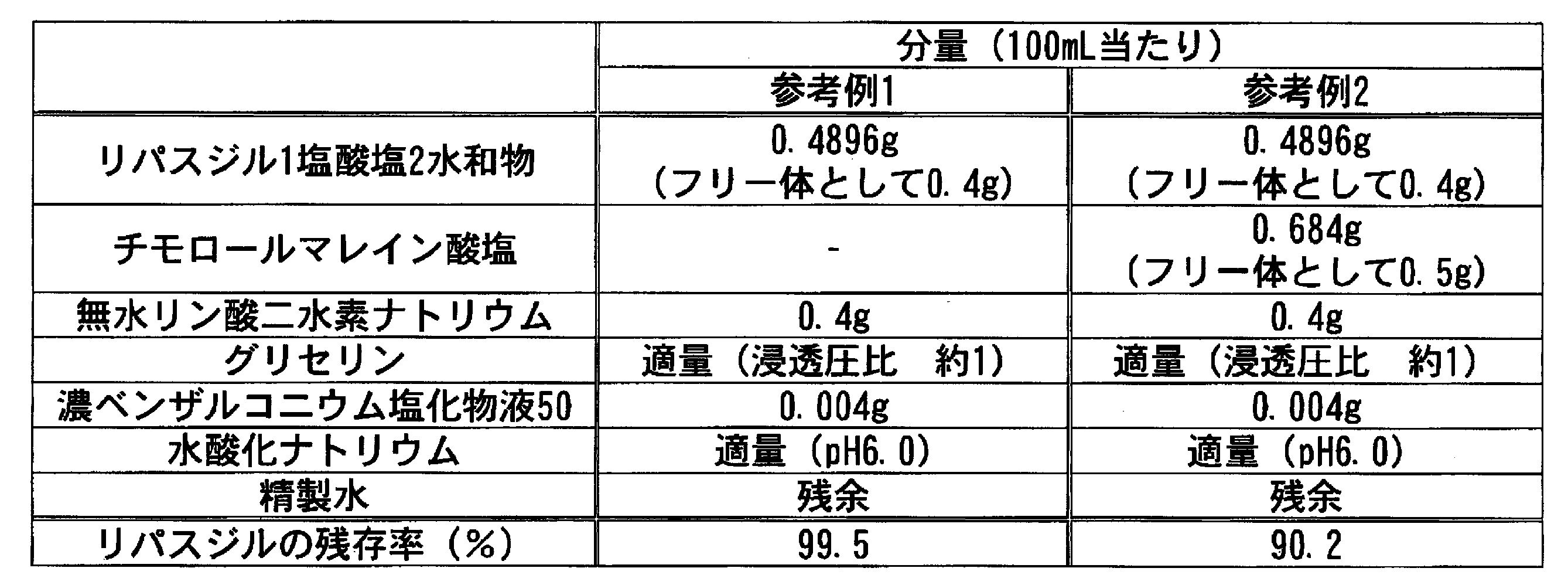
表1記載の結果より、リパスジル及びチモロールを含有する水性組成物(参考例2)を60℃で1ヶ月間保存するとリパスジルの残存率が90%程度となり、含量低下が生じることが判明した。なお、チモロールを含有しない水性組成物(参考例1)では含量低下が生じていないことから、斯かる含量低下は、水性組成物中に、リパスジルとチモロールとを共存させたことに起因することが明らかとなった。
以上の試験結果から、リパスジルに代表される一般式(1)で表される化合物若しくはその塩又はそれらの溶媒和物と、チモロール若しくはその塩又はそれらの溶媒和物とを含有する水性組成物を高温条件下で長期間保存すると、一般式(1)で表される化合物若しくはその塩又はそれらの溶媒和物の含量低下が生じることが明らかとなった。
[試験例2]保存試験(リパスジルの安定性評価 その2)
試験例1で確認された、リパスジルの含量低下を抑制する手段を検討するため、表2に示す成分及び分量を100mL当たりに含有する実施例1~5及び比較例1の水性組成物を常法により調製した。
得られた各種水性組成物を60℃で4週間保存し、保存後のリパスジルの残存率を、試験例1と同様の方法により測定した。
結果を表2に示す。
試験例1で確認された、リパスジルの含量低下を抑制する手段を検討するため、表2に示す成分及び分量を100mL当たりに含有する実施例1~5及び比較例1の水性組成物を常法により調製した。
得られた各種水性組成物を60℃で4週間保存し、保存後のリパスジルの残存率を、試験例1と同様の方法により測定した。
結果を表2に示す。

表2記載の結果より、リパスジル及びチモロールを含有する水性組成物(比較例1)においては、60℃4週間保存後のリパスジルの残存率が91.8%と大きく低下し、含量低下が認められた。一方、リパスジル及びチモロールに加えて、さらにL-アルギニン(実施例1)、エチレンジアミン(実施例2)、L-ヒスチジン(実施例3)、モノエタノールアミン(実施例4)又はL-リシン塩酸塩(実施例5)を含有する水性組成物は、60℃4週間保存後のリパスジルの残存率がいずれも95%を超えており、上記L-アルギニン等に代表されるアミノ化合物を共存させることによってリパスジルの含量低下が抑制されることが明らかとなった。
[試験例3]保存試験(リパスジルの安定性評価 その3)
表3に示す成分及び分量を100mL当たりに含有する実施例6~8の水性組成物を常法により調製した。
得られた各種水性組成物を60℃で4週間保存し、保存後のリパスジルの残存率を、試験例1と同様の方法により測定した。
結果を表3に示す。
表3に示す成分及び分量を100mL当たりに含有する実施例6~8の水性組成物を常法により調製した。
得られた各種水性組成物を60℃で4週間保存し、保存後のリパスジルの残存率を、試験例1と同様の方法により測定した。
結果を表3に示す。
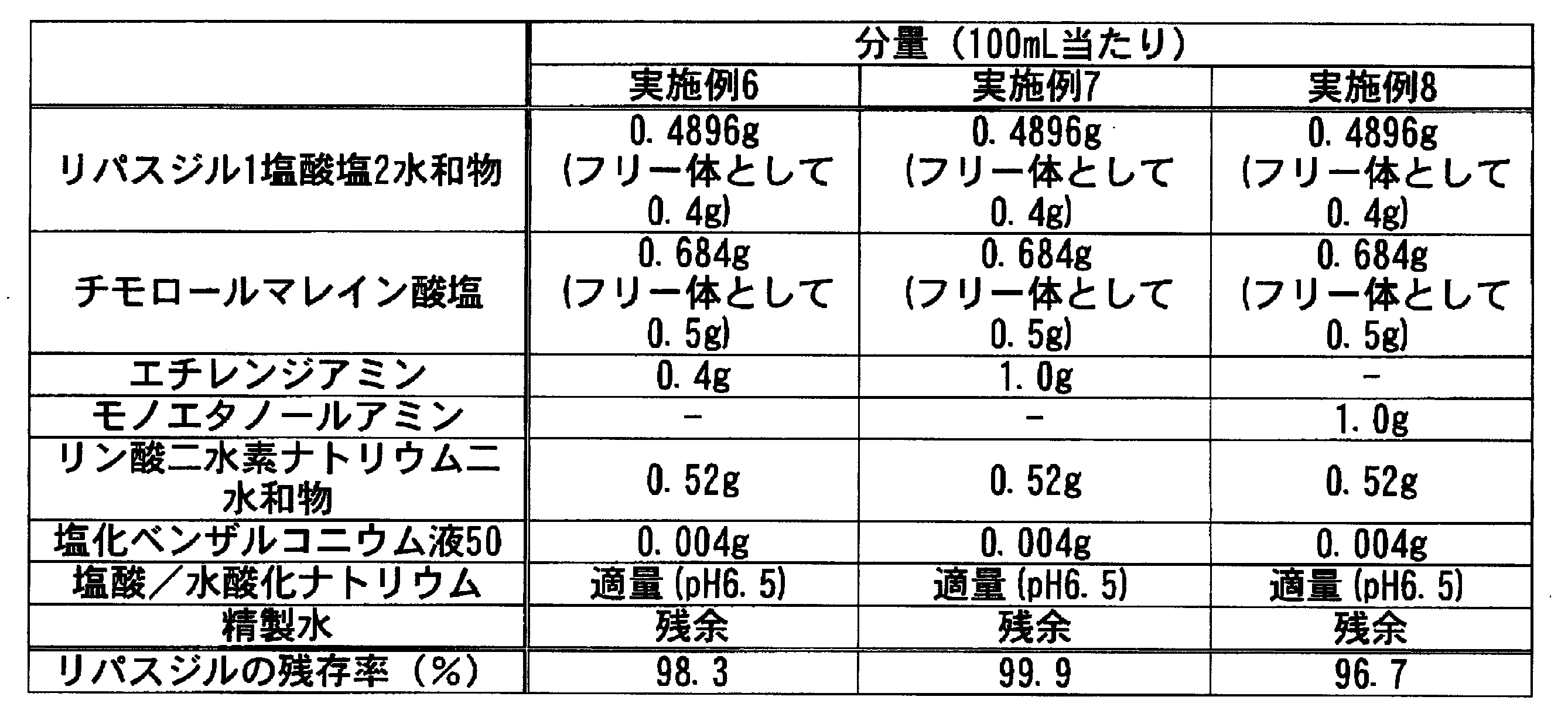
表3記載の実施例6、7の結果より、水性組成物中のアミノ化合物の含有量を大きくすることによってリパスジルの含量低下が更に抑制されることが明らかとなった。
また、実施例7において、エチレンジアミンをモノエタノールアミンに変更した場合(実施例8)も、リパスジルの含量低下を抑制できた。
また、実施例7において、エチレンジアミンをモノエタノールアミンに変更した場合(実施例8)も、リパスジルの含量低下を抑制できた。
[試験例4]保存試験(リパスジルの安定性評価 その4)
表4に示す成分及び分量を100mL当たりに含有する実施例9~13の水性組成物を常法により調製した。
得られた各種水性組成物を60℃で4週間保存し、保存後のリパスジルの残存率を、試験例1と同様の方法により測定した。
結果を表4に示す。
表4に示す成分及び分量を100mL当たりに含有する実施例9~13の水性組成物を常法により調製した。
得られた各種水性組成物を60℃で4週間保存し、保存後のリパスジルの残存率を、試験例1と同様の方法により測定した。
結果を表4に示す。
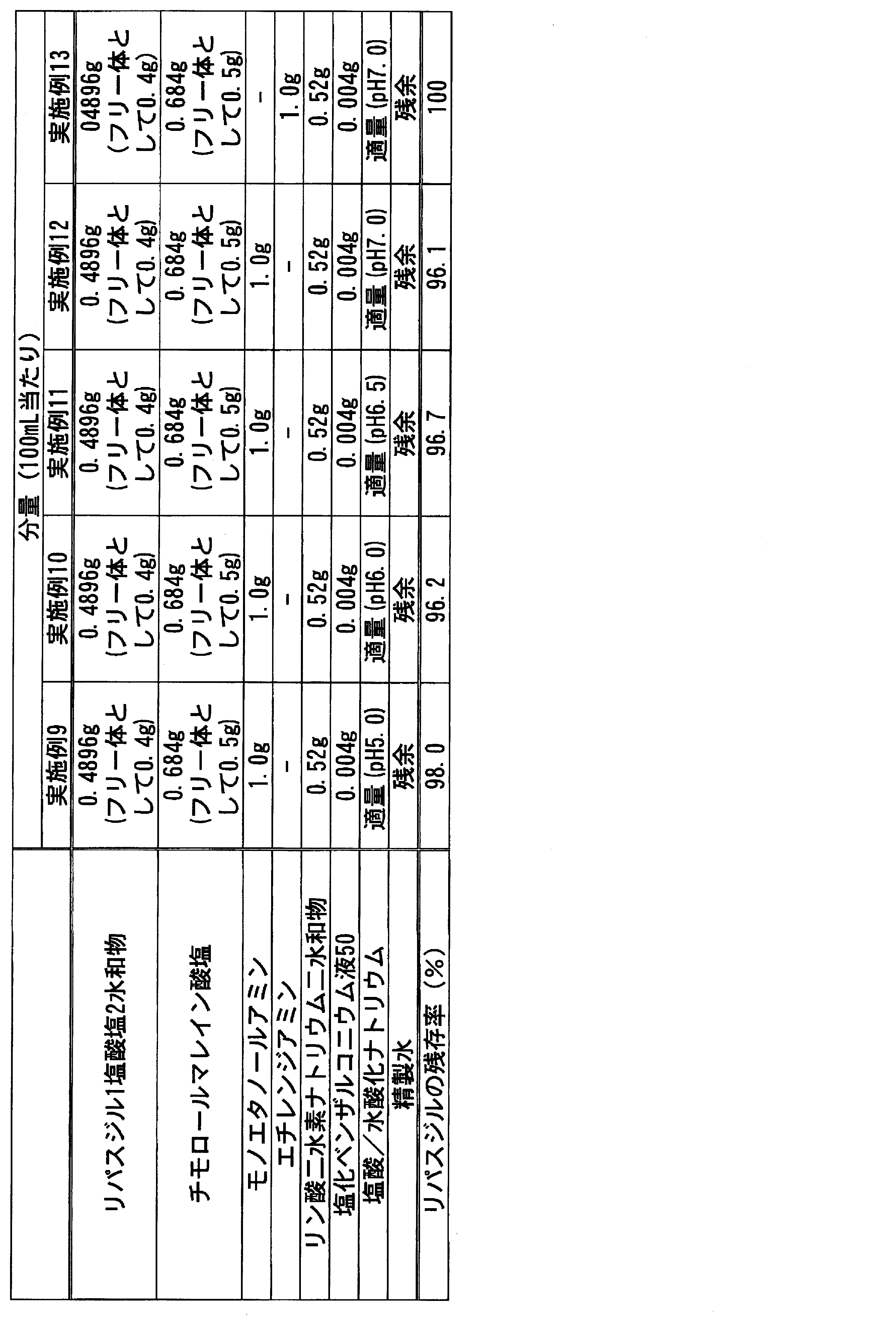
表4記載の結果より、pH5.0(実施例9)~7.0(実施例12、13)の広い範囲に渡って同様にリパスジルの含量低下が抑制されることが明らかとなった。
以上の試験結果から、リパスジルに代表される一般式(1)で表される化合物若しくはその塩又はそれらの溶媒和物、及びチモロール若しくはその塩又はそれらの溶媒和物を含有する水性組成物に、さらにアルギニン、エチレンジアミン、ヒスチジン、モノエタノールアミン及びリシンに代表されるアミノ化合物を含有せしめることにより、一般式(1)で表される化合物若しくはその塩又はそれらの溶媒和物の含量低下を抑制できることが明らかとなった。
[製造例1~27]
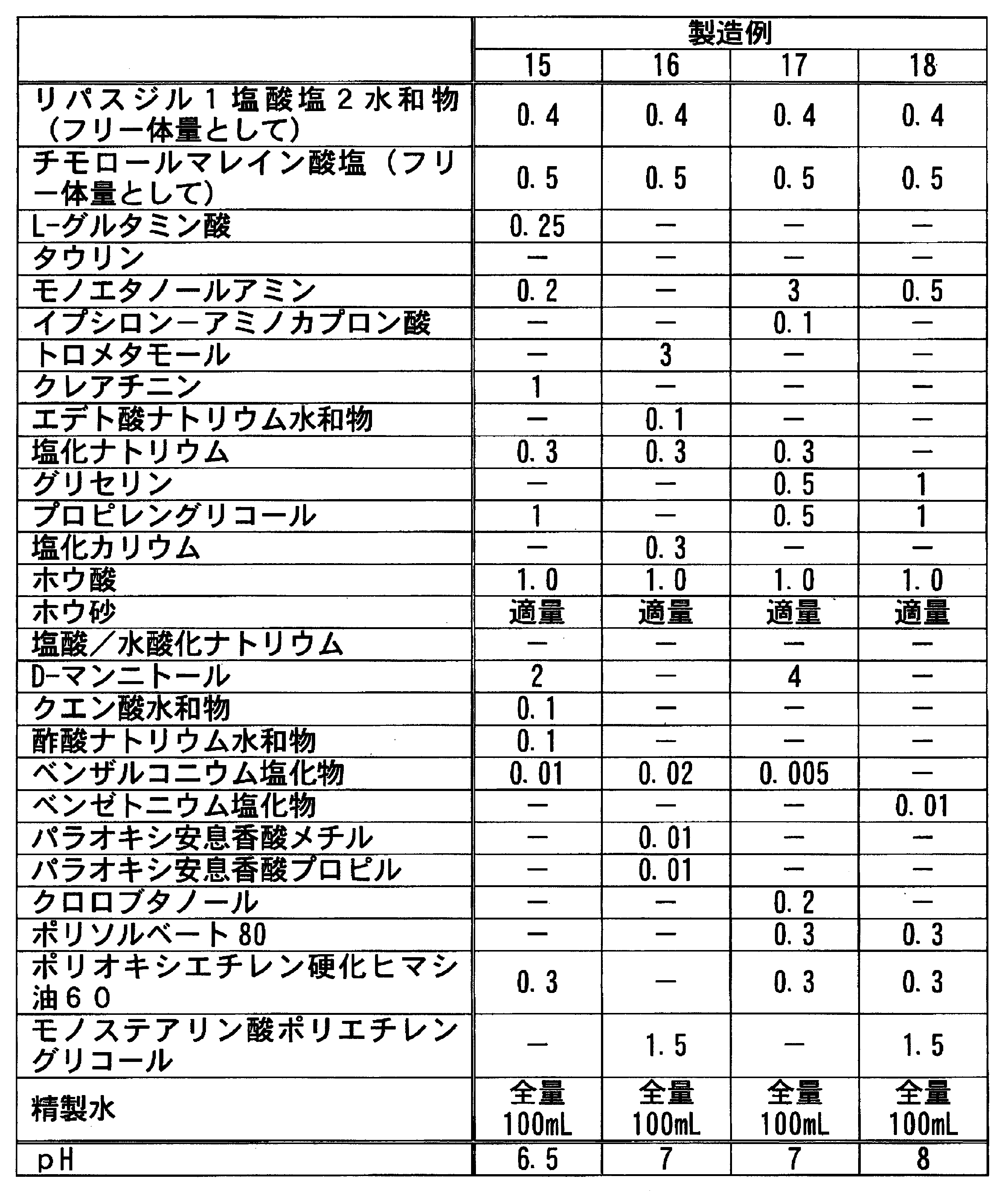
表5~表10に記載の成分及び分量(水性組成物100mL当たりの量(g))を含有する水性組成物を常法により製造できる。
表5~表10に記載の成分及び分量(水性組成物100mL当たりの量(g))を含有する水性組成物を常法により製造できる。




[製造例28~54]
製造例1~27において、リパスジル1塩酸塩2水和物の代わりに同量の4-ブロモ-5-{[(2S)-2-メチル-1,4-ジアゼパン-1-イル]スルホニル}イソキノリンを用いたものを、製造例28~54の水性組成物として、常法により製造できる。
製造例1~27において、リパスジル1塩酸塩2水和物の代わりに同量の4-ブロモ-5-{[(2S)-2-メチル-1,4-ジアゼパン-1-イル]スルホニル}イソキノリンを用いたものを、製造例28~54の水性組成物として、常法により製造できる。
本発明によれば、安定性に優れた水性組成物を提供でき、医薬品産業等において好適に利用できる。
Claims (10)
- 次の成分(A)、(B)及び(C):
(A)一般式(1)

で表される化合物若しくはその塩又はそれらの溶媒和物;
(B)チモロール若しくはその塩又はそれらの溶媒和物;
(C)アミノ化合物;
を含有する、水性組成物。 - 前記一般式(1)で表される化合物が、リパスジルである、請求項1記載の水性組成物。
- 前記アミノ化合物が、置換基を有していてもよい脂肪族アミン、置換基を有していてもよい芳香族アミン、置換基を有していてもよいカルバモイル基を有する化合物及びそれらの塩並びにそれらの溶媒和物よりなる群から選ばれる1種以上である、請求項1又は2記載の水性組成物。
- 前記置換基が、カルボキシル基、水酸基、スルホン酸基、グアニジノ基、カルバモイル基、メルカプト基、イミダゾリル基、メチルチオ基、フェニル基、インドリル基及びエトキシカルボニル基よりなる群から選ばれる1種以上である、請求項3記載の水性組成物。
- 前記アミノ化合物が、カルボキシル基、水酸基、スルホン酸基、グアニジノ基、カルバモイル基、メルカプト基、イミダゾリル基、メチルチオ基及びフェニル基よりなる群から選ばれる1種以上を置換基として有していてもよい、炭素数1~12の脂肪族第1~3級アミンである、請求項1~4のいずれか1項記載の水性組成物。
- 前記アミノ化合物が、アスパラギン酸、アラニン、アルギニン、イプシロン-アミノカプロン酸、エデト酸、グリシン、グルタミン、グルタミン酸、シスチン、システイン、ヒスチジン、フェニルアラニン、メチオニン、リシン、ロイシン、トロメタモール、モノエタノールアミン、タウリン、エチレンジアミン及びそれらの塩並びにそれらの溶媒和物よりなる群から選ばれる1種以上である、請求項1~5のいずれか1項記載の水性組成物。
- 前記アミノ化合物が、アルギニン、イプシロン-アミノカプロン酸、グルタミン酸、タウリン、ヒスチジン、リシン、トロメタモール、モノエタノールアミン、エチレンジアミン及びそれらの塩並びにそれらの溶媒和物よりなる群から選ばれる1種以上である、請求項1~6のいずれか1項記載の水性組成物。
- 高眼圧症、及び緑内障よりなる群から選ばれる疾患の予防及び/又は治療剤である、請求項1~7のいずれか1項記載の水性組成物。
- 次の成分(A)及び(B):
(A)一般式(1)
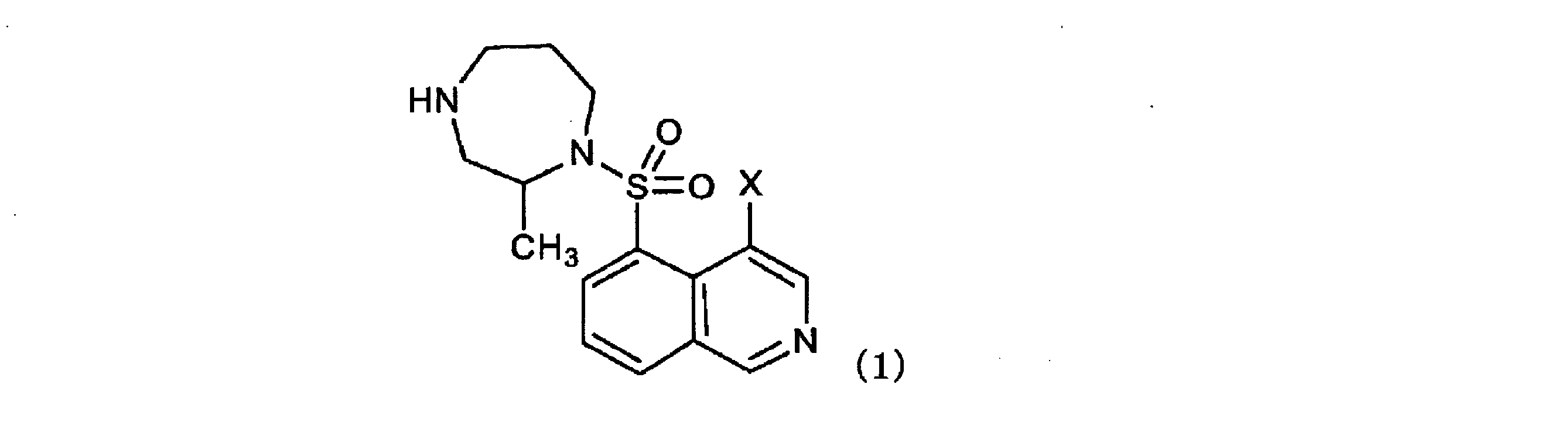
で表される化合物若しくはその塩又はそれらの溶媒和物;
(B)チモロール若しくはその塩又はそれらの溶媒和物;
を含有する水性組成物に、次の成分(C):
(C)アミノ化合物;
を含有せしめる、水性組成物中の前記一般式(1)で表される化合物若しくはその塩又はそれらの溶媒和物の安定化方法。 - 前記一般式(1)で表される化合物が、リパスジルである、請求項9記載の方法。
Priority Applications (1)
| Application Number | Priority Date | Filing Date | Title |
|---|---|---|---|
| JP2017546922A JP6267839B1 (ja) | 2016-06-15 | 2017-06-15 | 水性組成物 |
Applications Claiming Priority (2)
| Application Number | Priority Date | Filing Date | Title |
|---|---|---|---|
| JP2016-119069 | 2016-06-15 | ||
| JP2016119069 | 2016-06-15 |
Publications (1)
| Publication Number | Publication Date |
|---|---|
| WO2017217477A1 true WO2017217477A1 (ja) | 2017-12-21 |
Family
ID=60663759
Family Applications (1)
| Application Number | Title | Priority Date | Filing Date |
|---|---|---|---|
| PCT/JP2017/022034 Ceased WO2017217477A1 (ja) | 2016-06-15 | 2017-06-15 | 水性組成物 |
Country Status (2)
| Country | Link |
|---|---|
| JP (2) | JP6267839B1 (ja) |
| WO (1) | WO2017217477A1 (ja) |
Cited By (1)
| Publication number | Priority date | Publication date | Assignee | Title |
|---|---|---|---|---|
| JP2020200296A (ja) * | 2019-06-13 | 2020-12-17 | 久貴 藤本 | 角膜内皮障害の予防及び/又は治療のための薬剤 |
Citations (1)
| Publication number | Priority date | Publication date | Assignee | Title |
|---|---|---|---|---|
| WO2016047721A1 (ja) * | 2014-09-25 | 2016-03-31 | 興和株式会社 | 医薬製剤 |
Family Cites Families (2)
| Publication number | Priority date | Publication date | Assignee | Title |
|---|---|---|---|---|
| JP2013035802A (ja) * | 2011-08-10 | 2013-02-21 | D Western Therapeutics Institute Inc | 緑内障又は高眼圧症の予防又は治療剤 |
| JP2016113458A (ja) * | 2014-12-12 | 2016-06-23 | 興和株式会社 | 新水性組成物 |
-
2017
- 2017-06-15 WO PCT/JP2017/022034 patent/WO2017217477A1/ja not_active Ceased
- 2017-06-15 JP JP2017546922A patent/JP6267839B1/ja active Active
- 2017-12-22 JP JP2017245677A patent/JP2018080182A/ja active Pending
Patent Citations (1)
| Publication number | Priority date | Publication date | Assignee | Title |
|---|---|---|---|---|
| WO2016047721A1 (ja) * | 2014-09-25 | 2016-03-31 | 興和株式会社 | 医薬製剤 |
Non-Patent Citations (3)
| Title |
|---|
| "Timoptol Tengan'eki 0.25%/Timoptol Tengan'eki 0.5%, Iryoyo Iyakuhin Tenpu Bunsho", PMDA, August 2014 (2014-08-01), pages 1 - 3 * |
| HIDENOBU TANIHARA ET AL.: "Additive Intraocular Pressure- Lowering Effects of the Rho Kinase Inhibitor Ripasudil (K-115) Combined With Timolol or Latanoprost: A Report of 2 Randomized Clinical Trials", JAMA OPHTHALMOLOGY, vol. 133, no. 7, 2015, pages 755 - 761, XP055450634 * |
| KENJI UEDA ET AL.: "0.0015% Tafluprost/0.5% Timolol Haigo Tengan'eki ( DE -111 Tengan'eki) no Seizai Shoho Sekkei to Rat Gannai Ikosei", JOURNAL OF THE EYE, vol. 30, no. 12, 2013, pages 1761 - 6 * |
Cited By (1)
| Publication number | Priority date | Publication date | Assignee | Title |
|---|---|---|---|---|
| JP2020200296A (ja) * | 2019-06-13 | 2020-12-17 | 久貴 藤本 | 角膜内皮障害の予防及び/又は治療のための薬剤 |
Also Published As
| Publication number | Publication date |
|---|---|
| JP2018080182A (ja) | 2018-05-24 |
| JPWO2017217477A1 (ja) | 2018-06-28 |
| JP6267839B1 (ja) | 2018-01-24 |
Similar Documents
| Publication | Publication Date | Title |
|---|---|---|
| JP2023041805A (ja) | 医薬品その5 | |
| US10220043B2 (en) | Aqueous composition | |
| JP2024020404A (ja) | 水性の組成物-肆- | |
| JP2023029543A (ja) | 眼科用組成物 その3 | |
| JP2023062143A (ja) | 水性組成物 | |
| JP5951922B1 (ja) | 水性組成物 | |
| JP2023052791A (ja) | 水性組成物その伍 | |
| WO2016093345A1 (ja) | 組成物 | |
| JP6267839B1 (ja) | 水性組成物 | |
| JP2017226651A (ja) | 水性なる組成物 | |
| JP7137677B2 (ja) | 水性組成物(さん) | |
| JP2017226650A (ja) | 水性的組成物 | |
| JP2022168051A (ja) | 水性組成物 | |
| JP2016113458A (ja) | 新水性組成物 | |
| WO2017217478A1 (ja) | 眼科用組成物 | |
| JP2016113459A (ja) | 水性である組成物 |
Legal Events
| Date | Code | Title | Description |
|---|---|---|---|
| ENP | Entry into the national phase |
Ref document number: 2017546922 Country of ref document: JP Kind code of ref document: A |
|
| 121 | Ep: the epo has been informed by wipo that ep was designated in this application |
Ref document number: 17813372 Country of ref document: EP Kind code of ref document: A1 |
|
| NENP | Non-entry into the national phase |
Ref country code: DE |
|
| 122 | Ep: pct application non-entry in european phase |
Ref document number: 17813372 Country of ref document: EP Kind code of ref document: A1 |