WO2017203586A1 - 運賃判定プログラム、運賃判定方法および運賃判定装置 - Google Patents
運賃判定プログラム、運賃判定方法および運賃判定装置 Download PDFInfo
- Publication number
- WO2017203586A1 WO2017203586A1 PCT/JP2016/065228 JP2016065228W WO2017203586A1 WO 2017203586 A1 WO2017203586 A1 WO 2017203586A1 JP 2016065228 W JP2016065228 W JP 2016065228W WO 2017203586 A1 WO2017203586 A1 WO 2017203586A1
- Authority
- WO
- WIPO (PCT)
- Prior art keywords
- fare
- transportation
- input
- distance
- information
- Prior art date
- Legal status (The legal status is an assumption and is not a legal conclusion. Google has not performed a legal analysis and makes no representation as to the accuracy of the status listed.)
- Ceased
Links
Images





Classifications
-
- G—PHYSICS
- G06—COMPUTING OR CALCULATING; COUNTING
- G06Q—INFORMATION AND COMMUNICATION TECHNOLOGY [ICT] SPECIALLY ADAPTED FOR ADMINISTRATIVE, COMMERCIAL, FINANCIAL, MANAGERIAL OR SUPERVISORY PURPOSES; SYSTEMS OR METHODS SPECIALLY ADAPTED FOR ADMINISTRATIVE, COMMERCIAL, FINANCIAL, MANAGERIAL OR SUPERVISORY PURPOSES, NOT OTHERWISE PROVIDED FOR
- G06Q10/00—Administration; Management
- G06Q10/08—Logistics, e.g. warehousing, loading or distribution; Inventory or stock management
Definitions
- the present invention relates to a fare determination program, a fare determination method, and a fare determination device.
- An object of the present invention is to provide a fare determination program, a fare determination method, and a fare determination device that can determine the validity of a fare.
- the fare determination program causes the computer to execute a process of accepting input of a required time for transportation, a transportation distance to be transported, and a fare.
- the fare determination program causes the computer to execute a process of determining whether or not the input fare is appropriate with reference to a table holding information on the fare according to the required time and the transport distance.
- FIG. 1 is an explanatory diagram illustrating an example of operation support.
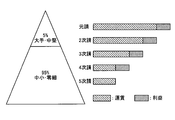
- FIG. 2 is a diagram illustrating an example of a hierarchical structure of the logistics industry.
- FIG. 3 is a diagram illustrating an example of a schematic configuration of the system.
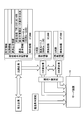
- FIG. 4 is a diagram schematically illustrating a functional configuration of the server apparatus.
- FIG. 5 is a diagram illustrating an example of a data configuration of operation result information.
- FIG. 6 is a diagram illustrating an example of a data configuration of the distance / required time table.
- FIG. 7 is a diagram illustrating an example of a data configuration of the transportation basic contract information.
- FIG. 8 is a diagram illustrating an example of a data configuration of contract information.
- FIG. 9 is a diagram illustrating an example of the data configuration of the carrier information.
- FIG. 1 is an explanatory diagram illustrating an example of operation support.
- FIG. 2 is a diagram illustrating an example of a hierarchical structure of the logistics industry.
- FIG. 3
- FIG. 10 is a diagram illustrating an example of an optimum route.
- FIG. 11 is a diagram illustrating an example of received information.
- FIG. 12 is a diagram illustrating an example of a flow for calculating a standard fare.
- FIG. 13 is a diagram showing a predetermined range based on a standard fare.
- FIG. 14 is a diagram illustrating an example of determining whether the fare is appropriate.
- FIG. 15 is a flowchart illustrating an example of the procedure of the single item update process.
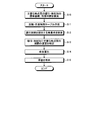
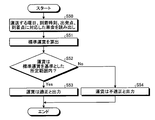
- FIG. 16 is a flowchart illustrating an example of the procedure of the fare determination process.
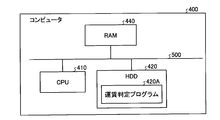
- FIG. 17 is a diagram illustrating an example of a configuration of a computer that executes a fare determination program.
- FIG. 1 is an explanatory diagram illustrating an example of operation support.
- the operation support system 10 is, for example, a cloud system.
- a distribution probe platform that supports the operation of vehicles in the distribution industry is constructed.
- the current position, time, vehicle speed, and the like are transmitted to the operation support system 10 as probe information from an operation monitoring device such as a digital tachograph provided in a business vehicle such as a truck or bus.
- an operation monitoring device such as a digital tachograph provided in a business vehicle such as a truck or bus.
- the operation support system 10 provides various services based on various information such as probe information.
- the operation support system 10 provides an optimum route search service that supports the formulation of a transportation route for a business vehicle using a logistics probe platform.
- the business operator operating the business vehicle formulates a transportation route by using the optimum route search service provided by the operation support system 10.
- the operation support system 10 receives input of conditions for a transportation route such as a departure point, an arrival point, and an arrival time.
- the business operator inputs conditions of the transportation route such as a departure point, an arrival point, and an arrival time to the operation support system 10.
- the operation support system 10 analyzes the probe information with the physical distribution probe platform, and extracts a route according to the condition of the accepted transportation route from the route operated in the past.
- the operation support system 10 presents a route that satisfies a predetermined condition as an optimum route from the extracted routes. For example, the operation support system 10 presents a route that travels for a predetermined time or more and has a short travel time as an optimum route. The driver who drives the business vehicle knows the actual road condition from past experiences and avoids routes that are generally difficult to run. For this reason, a route that has traveled more than a predetermined amount is an appropriate transportation route that avoids an inappropriate route such as a route that is difficult to run or a crowded route. Therefore, the operation support system 10 can present an appropriate transportation route. Note that the predetermined condition for extracting the optimum route can be determined as appropriate. In addition, the operation support system 10 may present the extracted route and select an optimum route.
- the operation support system 10 provides a fare determination service for determining the validity of the fare.
- the operation support system 10 uses the optimum route search service to execute a calculation process of a standard distance and a required arrival time for each day of the week and time between major points throughout the country (FIG. 1 (1)).
- Each major point is, for example, a zone unit (for example, the B zone of the road traffic census) obtained by dividing the municipality into several for the whole country, but is not limited thereto.
- Each major point may be one that divides the whole country for each major area that is the starting point and arriving point of the transportation route.
- each major point may be a unit of a mesh code obtained by dividing a map by a mesh such as a primary mesh, a secondary mesh, a tertiary mesh, or a region mesh, or may be a unit of a map code.
- the operation support system 10 obtains a combination of each of the main points that are separated by a predetermined distance (for example, 200 km) or more as a starting point (O) and an arrival point (D).
- the operation support system 10 searches the optimum route for each day of the week and arrival time from the departure point to the arrival point (O ⁇ D) using the optimum route search service for each obtained combination, and the distance / required time Ask for.
- the operation support system 10 creates a standard distance / required time table storing distances / required times between any two main points for each day of the week and arrival time.
- the operation support system 10 executes a main contractor standard fare calculation process for calculating a standard main contractor fare (FIG. 1 (2)).
- distance / required time / fare optimization processing is performed using the past fare results (FIG. 1 (2) a).
- the operation support system 10 receives operation result information such as a departure point, an arrival place, a day of arrival, an arrival time, and a fare when the business vehicle is operated from a prime contractor operating the business vehicle.
- the operation support system 10 obtains the actual fare traveled between two major points according to the day of the week and the arrival time based on the result information, and calculates information related to the fare.
- the operation support system 10 uses a past fare record at two points of the main contractor to calculate a piece of money for at least one of time and distance as information related to the fare at the two points. Then, in the main contract standard fare calculation process, the standard fare calculation process for each base day / time is performed using information on the fare between two main points by day of the week / arrival time (FIG. 1 (2) b). For example, the operation support system 10 calculates a standard fare between two major points by day of the week and arrival time, using a single price regarding at least one of the time and distance between the two major points by day of the week and arrival time. calculate.
- the operation support system 10 accepts the input of the time required for transportation, the transportation distance, and the fare from the operator. For example, the business operator searches for the optimum route regarding the departure point, arrival point, arrival day of the week, arrival time, and arrival time by using the optimum route search service, and obtains the time required for transportation and the transportation distance. Then, the business operator inputs the fare for the required time and the transportation distance.
- the operation support system 10 receives an input of a required time for transportation, a transportation distance, and a fare from an operator.
- the operation support system 10 determines the validity of the input fare using the standard fare corresponding to the departure point, arrival point, arrival day of arrival, and arrival time.
- FIG. 2 is a diagram illustrating an example of a hierarchical structure of the logistics industry.
- the prime contractor corresponds to, for example, a transport service provider such as a shipper, a major, or a middle-sized courier company, a so-called transport carrier called a mizuya.
- the contractor corresponds to, for example, a small, medium, and small transportation company.
- the operation support system 10 determines the validity of the fare based on whether or not the input fare is included in a predetermined range based on the standard fare.
- the fare of the contractor tends to be lower than the fare of the main contractor. Therefore, the operation support system 10 executes the actual fare management process according to the hierarchical structure (FIG. 1 (3)). For example, with respect to subcontracting, the operation support system 10 makes a predetermined range wider than that of the main contract, and determines whether the input fare is included in the predetermined range.
- the operation support system 10 provides operation information such as a departure point, an arrival point, an arrival day of the week, an arrival time, and a fare when the business vehicle is operated in order to calculate a single fee. Receive.
- an incentive process for giving an incentive to the prime contractor that provides the record information is executed (FIG. 1 (4)). For example, in the operation support system 10, for the prime contractor that provides the performance information, whether the input fare is included in the predetermined range by widening the predetermined range compared to the business operator that does not provide the performance information. Determine.
- the operation support system 10 can determine the validity of the fare. As a result, it is possible to output information on the validity of the objective fare. In addition, the operation support system 10 can realize free competition while ensuring productivity improvement and safety.
- FIG. 3 is a diagram illustrating an example of a schematic configuration of the system.
- the operation support system 10 includes a server device 11 and an operator terminal 12.
- the server device 11 and the operator terminal 12 are connected to the network N so as to be communicable.
- the network N any type of communication such as a mobile communication network such as a mobile phone, the Internet, a LAN (Local Area Network), a VPN (Virtual Private Network), etc., regardless of wired or wireless. A net can be adopted.
- the server device 11 is a computer such as a server computer.
- the server device 11 provides various services including the optimum route search service and the fare determination service described above based on various information such as probe information.
- the server apparatus 11 is described as an example of a single computer, but may be implemented as a computer system using a plurality of computers.
- the server apparatus 11 may be divided and implemented in a plurality of computers for each service and function to be provided.
- the server device 11 corresponds to a fare determination device.
- the business entity terminal 12 is a terminal device such as a personal computer disposed in a business operator who operates a business vehicle such as a truck or a bus.
- a business vehicle such as a truck or a bus.
- the business operator accesses the server device 11 using the business operator terminal 12 and uses various services provided by the server device 11.
- FIG. 4 is a diagram schematically illustrating a functional configuration of the server apparatus.
- the server device 11 illustrated in FIG. 4 includes a communication unit 20, a storage unit 21, and a control unit 22.
- the communication unit 20 is a communication interface that performs wireless communication or wired communication with the network N, for example.
- the storage unit 21 is a storage device such as a hard disk, an SSD (Solid State Drive), or an optical disk.
- the storage unit 21 may be a semiconductor memory capable of rewriting data such as RAM (Random Access Memory), flash memory, NVSRAM (Non Volatile Static Random Access Memory).
- the storage unit 21 stores an OS (Operating System) executed by the control unit 22 and various programs. Furthermore, the storage unit 21 stores various information. For example, the storage unit 21 stores operation result information 30, a distance / required time table 31, transportation basic contract information 32, contract information 33, and transportation company information 34.
- the storage unit 21 may store other various information.
- the operation result information 30 is data that stores various types of information related to the operation results of the business vehicle such as probe information transmitted from the operation monitoring device of the business vehicle.
- FIG. 5 is a diagram illustrating an example of a data configuration of operation result information. As shown in FIG. 5, the operation result information 30 includes items of device ID, business operator ID, date and time, and position. In addition to the above, the operation record information 30 may store various types of information.
- the item of device ID is an area for storing identification information of the operation monitoring apparatus that has transmitted the probe information. For example, a unique device ID (identification) is given to the operation monitoring apparatus as identification information.
- the device ID of the operation monitoring apparatus that has transmitted the probe information is stored in the item of device ID.
- the item of company ID is an area for storing identification information of a company that operates a business vehicle equipped with an operation monitoring device. For example, a unique provider ID is given as identification information to the provider using the service provided by the server device 11.
- a business operator ID of a business operator who operates a business vehicle equipped with a device ID operation monitoring device is stored.
- the date and time item is an area for storing the date and time when various information such as a position is detected by the operation monitoring device.
- the item of position is an area for storing position information indicating the position of the business vehicle detected by the operation monitoring device.
- the position information is information indicating the position in latitude, longitude, etc. by a predetermined geodetic system such as the Japanese geodetic system or the world geodetic system.
- the position information may be other information as long as the position can be specified.
- the position information may be a mesh code obtained by dividing a map, such as a primary mesh, a secondary mesh, a tertiary mesh, or a regional mesh, a B zone code of a road traffic census, or a map code.
- the business vehicle equipped with the operation monitoring device with the device ID “1234567” has the operator ID of the operator of the operation source “0001”, and the position of 8:02 on June 1 is north latitude. 35. XX, East longitude 139. Indicates XX.
- the distance / required time table 31 is data in which the distance / required time between any two main points is stored.
- the distance / required time table 31 is generated for each day of the week / arrival time.
- FIG. 6 is a diagram illustrating an example of a data configuration of the distance / required time table. As shown in FIG. 6, the distance / required time table 31 is provided with an item of a point set as a starting point (O) in the vertical direction and an item of a point set as an arrival point (D) in the horizontal direction. ing.
- the distance / required time table 31 stores the distance and required time of the transportation route from the departure point to the arrival point in an area corresponding to the departure point and the arrival point.
- the distance of the transportation route from the departure point “Aoba Ward in Sendai City” to the arrival point “Chuo Ward in Osaka City” is 860 km, and the required time is 12:30.
- the distance of the transportation route from the departure point “Chuo-ku, Osaka City” to the arrival point “Aoba-ku, Sendai City” is 880 km, and the required time is 12:30.
- the traffic route changes depending on the day of the week and the arrival time, so the appropriate transportation route changes. For this reason, even if the departure point and the arrival point are the same, the distance and the required time change for each day of the week and arrival time.
- the transport basic contract information 32 is data in which various types of information related to the transport contract are stored.
- a prime contractor who receives a request for transportation from a shipper concludes various contracts such as a basic transportation contract with the shipper.
- the basic transportation contract information 32 stores the contents of the basic transportation contract related to the transportation contracted with the shipper.
- FIG. 7 is a diagram illustrating an example of a data configuration of the transportation basic contract information.
- the transport basic contract information 32 includes items of contract ID, shipper, main contract, transport item, arrival target, departure point, arrival point, transport route, distance, time, and contract amount.
- the transport basic contract information 32 may store various types of information.
- the item of contract ID is an area for storing identification information of a transportation basic contract. For example, a unique contract ID is given to the registered transport basic contract as identification information.
- the contract ID of the registered transportation basic contract is stored.
- the item of the shipper is an area for storing the shipper of the package to be transported.
- the item of the main contract is an area for storing the business operator that is the main contract of transportation.
- the item of the transport item is an area for storing the item of the package to be transported.
- the arrival target item is an area for storing the date and time of the target arriving at the arrival point.
- the item of starting point is an area for storing a point as a starting point of transportation.
- the item of arrival point is an area for storing a point to be the arrival point of transportation.
- the item of the transportation route is an area for storing information on the transportation route at the time of transportation.
- the distance is an area for storing a distance when transporting along the transport route.
- the time is an area for storing a time required for transportation along the transportation route.
- the item of contract amount is an area for storing the amount contracted between the shipper and the main contractor for transportation. The data of each item of the shipper, the main contract, the transportation item, the arrival target, the departure point, the arrival point, the transportation route, the distance, the time, and the contract amount is registered and updated as necessary.
- the transport basic contract with the contract ID “0123456” is contracted between the shipper X and the primary contractor A.
- the transport basic contract with the contract ID “0123456” has the transport item “XXX”, the arrival target at the arrival point “July 13 (Wednesday) 6:00”, and the departure point “Aoba, Sendai City” Ward “and the arrival point is” Chuo Ward, Osaka City ".
- the transport basic contract with the contract ID “0123456” indicates that the transport route is “route ⁇ ”, the distance is 850 km, the required time is 12:00, and the contract amount is 97800 yen.
- the contract information 33 is data that stores various information related to transportation when subcontracting transportation for which a transportation basic contract has been contracted.
- the prime contractor requests the contractor to carry out the transportation requested by the shipper.
- the contract information 33 stores information related to the contracted transportation.
- FIG. 8 is a diagram illustrating an example of a data configuration of contract information. As shown in FIG. 8, the contract information 33 includes items of contract ID, hierarchy, business operator, request source, arrival target, transport route, distance, time, and contract amount.
- the contract information 33 may store various information other than the above. For example, the contract information 33 may also store information such as the starting point and arrival point of transportation.
- the item of contract ID is an area for storing the contract ID of the transport basic contract of the subcontracted transport.
- the item of the hierarchy is an area for storing how many levels the subcontractor is.
- the item of business operator is an area for storing a business operator who has subcontracted transportation.
- the item of the request source is an area for storing the business operator who requested the transportation.
- the arrival target item is an area for storing the date and time of the target arriving at the arrival point.
- the item of the transportation route is an area for storing information on the transportation route at the time of transportation.
- the distance is an area for storing a distance when transporting along the transport route.
- the time is an area for storing a time required for transportation along the transportation route.
- the item of contract amount is an area for storing the amount of money contracted for transportation.
- the transportation whose contract ID of the transportation basic contract is “0123456” indicates that the business operator A requested the business operator B as a secondary contract.
- the arrival target to the arrival point is “7/13 (Wednesday) 6:00”
- the transportation route is “Route ⁇ ”
- the distance is 860 km
- the required time is 11 : 50, indicating that the contract amount is 92800 yen.
- Transportation with the contract ID “0123456” of the transportation basic contract indicates that the business operator B requested the business operator C as the third contract.
- the arrival target at the arrival point is “7/13 (Wednesday) 6:00”
- the transportation route is “Route ⁇ ”
- the distance is 860 km
- the required time is 11 : 50, indicating that the contract amount is 87500 yen.
- the hierarchy may be input by the operator.
- the hierarchy is registered by identifying the hierarchical relationship in the system from the business operator stored in the main contract item of the transport basic contract information 32, the business operator of the contract information 33, and the business operator stored in the request source item. May be.
- the transportation company information 34 is data that stores various types of information related to the company that operates the business vehicle.
- FIG. 9 is a diagram illustrating an example of the data configuration of the carrier information. As shown in FIG. 9, the transportation company information 34 includes items of a company and an incentive. In addition, the carrier information 34 may store various information other than the above.
- the item of business operator is an area for storing a business operator operating a business vehicle.
- the item of incentive is an area for storing presence / absence of incentive for the operator. For example, a prime contractor that provides fare performance information is registered as having an incentive.
- the operator A indicates that there is an incentive.
- the business operator B and the business operator C indicate that there is no incentive.
- control unit 22 is a device that controls the entire server apparatus 11.
- an electronic circuit such as a CPU (Central Processing Unit) or MPU (Micro Processing Unit), or an integrated circuit such as an ASIC (Application Specific Integrated Circuit) or FPGA (Field Programmable Gate Array) can be adopted.
- the control unit 22 has an internal memory for storing programs defining various processing procedures and control data, and executes various processes using these.
- the control unit 22 functions as various processing units by operating various programs.
- the control unit 22 includes a route search unit 40, a calculation unit 41, a storage unit 42, a reception unit 43, and an output unit 44.
- the route search unit 40 executes processing related to the optimum route search service. For example, the route search unit 40 receives input of conditions for a transportation route such as a departure point, an arrival point, and an arrival time. The route search unit 40 extracts a route according to the condition of the accepted transportation route from the route operated in the past based on the operation result of the business vehicle such as the probe information stored in the operation result information 30. The route search unit 40 extracts a route that satisfies a predetermined condition from the extracted routes as an optimum route. For example, the route search unit 40 extracts a route that has traveled for a predetermined time or more and has a short travel time as an optimal route. For example, the technique of Japanese Patent Application No. 2016-031483 by the present applicant may be used as a method for searching for a route from the operation results.
- a transportation route such as a departure point, an arrival point, and an arrival time.
- the route search unit 40 extracts a route according to the condition of the accepted transportation route from the route operated in the
- the calculation unit 41 calculates information related to the fare according to the required time and the transportation distance from the result information registered in the operation result information 30 at a predetermined processing timing.
- the processing timing may be a timing for every predetermined period such as a monthly processing timing at the end of the month, or may be a timing instructed by an administrator.
- the calculation unit 41 uses the optimum route search service provided by the route search unit 40 to start one major point as a starting point for each major point in the country, Using the point as the arrival point, find the standard distance and required time for each day of the week and time between the two points. For example, the calculation unit 41 obtains a combination of each of the major points separated by a predetermined distance (for example, 200 km) as a starting point and an arriving point with a linear distance. For each obtained combination, the calculation unit 41 uses the optimum route search service to search for the optimum route for each arrival time by using a fixed time interval for each day of the week to obtain the distance and the required time. The fixed time is, for example, 10 minutes, but is not limited thereto.
- the fixed time may be a time that is considered to cause a change in the optimum route, and may be, for example, 1 hour. That is, the calculation unit 41 obtains distances / required times between major points separated by a predetermined distance or more according to day of the week and arrival time at regular time intervals.
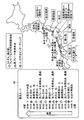
- FIG. 10 is a diagram illustrating an example of an optimum route. For example, when the departure point (O) is Aoba Ward in Sendai City, the arrival point (D) is Chuo Ward in Osaka City, and arrival is 6 o'clock on Wednesday, the transport route 60 is searched by the optimum route search service. The transportation route 60 is assumed to have a distance of 860 km and a required time of 12:00. Then, the calculation unit 41 creates a distance / required time table 31 that stores the distance / required time between any two main points for each day of the week and arrival time.
- the calculation unit 41 obtains the actual fare traveled between major points by day of the week and arrival time from the transport basic contract information 32. For example, the calculation unit 41 identifies the business operator that provides the actual fare information for which there is an incentive item from the transport business operator information 34. The calculation unit 41 reads the information on each transportation basic contract, which is the primary contractor of the carrier providing the actual fare information, from the basic transportation contract information 32 and travels between major points by day of the week and arrival time. Find the actual fare. Note that the calculation unit 41 may obtain only the fares for the most recent period.
- the calculation unit 41 may obtain a fare for an operation in which the arrival date and time is included in the period from the previous processing timing to the current processing timing.
- the calculation unit 41 may obtain a fare for an operation including the arrival date and time within a certain period (for example, three months) from the current processing timing.
- the calculation part 41 calculates
- the calculation unit 41 calculates a time unit and a distance unit as information on the fare.
- the calculation unit 41 calculates the actual fare and the departure / arrival points stored in the distance / required time table 31 for each day / arrival time according to the arrival day (O ⁇ D) from the day of the week, arrival time, and departure point.
- a multiple regression analysis is performed using the distance between them and the required time, and the time unit and the distance unit are calculated.
- the calculation part 41 is already memorize
- the time unit and the distance unit may be calculated in consideration of the time unit and the distance unit.
- Ln is a time unit that is already stored as the nth unit
- Mn is a distance unit.
- the time unit calculated in the (n + 1) th unit calculation is L ⁇ n + 1, and the distance unit is M ⁇ n + 1.
- the calculation unit 41 averages the time unit Ln, the distance unit Mn, the time unit L ⁇ n + 1, and the distance unit M ⁇ n + 1 as shown in the following formula (1).
- N + 1 time hourly metal Ln + 1 and distance metallurgy Mn + 1 are calculated.
- the calculation unit 41 can bring the time unit and the distance unit close to the actual actual value while avoiding sudden fluctuations in the unit and unit.
- the storage unit 42 stores the time unit and distance unit calculated by the calculation unit 41 in the distance / required time table 31. Thereby, for example, in the distance / required time table 31 of FIG. 6, a time unit and a distance unit are stored corresponding to the departure point and the arrival point, respectively.
- the calculation unit 41 may store the day of the week, the arrival time, the time unit for each point, and the distance unit as a separate table.
- the reception unit 43 receives input of various information related to transportation from the main contractor or the contractor.
- the accepting unit 43 accepts an input of the content of a transportation basic contract related to the accepted transportation request from a prime contractor that accepts the transportation request.
- the receiving unit 43 receives input of various types of information related to subcontracted transportation from a contractor subcontracted for transportation.
- FIG. 11 is a diagram illustrating an example of received information. For example, if the primary contractor is requested to transport by the shipper company and has signed a transport contract, the shipper information, primary contractor information, transported item information, arrival target, departure point, arrival point, transport route, distance, time Enter basic transportation contract information such as contract amount.
- a prime contractor searches and inputs a transportation route using an optimal route search service.
- the accepting unit 43 assigns a contract ID to the input transportation basic contract, and stores the content of the accepted transportation basic contract in the transportation basic contract information 32.
- the reception unit 43 notifies the prime contractor of the contract ID assigned to the transport basic contract.
- the main contractor requests the contractor to carry out the transportation requested by the shipper.
- the request for transportation to the contractor may be made via the operation support system 10 or may be made using other means such as e-mail or telephone.
- the prime contractor notifies the contractor of the contract ID of the requested transportation.
- the contractor inputs the contract information such as the contracted transport company, requester, arrival target, transport route, distance, time, contract amount, etc. together with the notified contract ID.
- a contractor searches and inputs a transportation route using an optimal route search service.
- the receiving unit 43 stores the input contract information in the contract information 33.
- the output unit 44 outputs whether or not the input fare is appropriate.
- the output unit 44 refers to the distance / required time table 31 and obtains the time of day, the arrival time, the departure point, and the time unit and distance unit corresponding to the arrival point.
- the output unit 44 calculates a standard fare by multiplying the time required for transportation and the transportation distance by the obtained time unit and distance unit.
- FIG. 12 is a diagram illustrating an example of a flow for calculating a standard fare. In the example of FIG. 12, it is assumed that the departure point is “Aoba Ward in Sendai City”, the arrival point is “Chuo Ward in Osaka City”, and the arrival target at the arrival point is 6:00 on Wednesday.
- the initial simple money is 40 yen / minute for hourly money and 80 yen / km for distance gold.
- the input transport distance is 860 km and the required time is 12:00.
- the time unit and the distance unit are updated will be described. For example, it is assumed that there are two track record information of track record 1 and track record 2 for the departure point “Aoba Ward in Sendai City”, the arrival point “Chuo Ward in Osaka City” and the arrival target at the arrival point is 6:00 on Wednesday.
- the result 1 is that the distance of transportation is 850 km, the required time is 12:00, and the fare is 97600 yen.
- the transportation distance is 860 km, the required time is 11:50, and the fare is 97500 yen.
- the calculation unit 41 calculates time unit money as 38 yen / minute and distance distance money as 82 yen / km from multiple results 1 and 2 by multiple regression analysis. Then, the calculation unit 41 calculates the time and distance singles by averaging the initial time and distance singles and the calculated time and distance singles.
- the storage unit 42 updates the time unit and distance unit to the calculated time unit and distance unit. In the example of FIG.
- the output unit 44 determines whether or not the input fare is included in a predetermined range based on the calculated standard fare. For example, the output unit 44 determines whether or not the input fare is included in a range of ⁇ 3% based on the standard fare for the fare of the main contract from the main contractor without incentive. Further, the output unit 44 determines whether or not the input fare is included in the range of ⁇ 5% with respect to the standard fare for the fare of the main contract from the prime contractor with incentive. The output unit 44 determines whether or not the input fare is included in a range of ⁇ 10% based on the standard fare for the subcontracted fare.
- FIG. 13 is a diagram showing a predetermined range based on a standard fare. In the example of FIG.
- a range of ⁇ 3% based on the standard fare is shown as the standard prime fare.
- a range of ⁇ 5% based on the standard fare is shown as the standard prime contract fare with incentives.
- a range of ⁇ 10% based on the standard fare is shown as the standard allowable fare. For example, when the standard fare is 97600 yen, the standard prime fare is in the range of 94672 yen to 100528 yen.
- Standard prime contract fare with incentives ranges from 92720 yen to 102480 yen.
- Standard allowable fares range from 87840 yen to 107360 yen.
- the standard prime fare When the standard fare is 97740 yen, the standard prime fare is in the range of 94808 yen to 10062 yen.
- the standard prime fare with incentives is in the range of ⁇ 92853 to ⁇ 102627.
- the standard allowable fare is in the range of 87966 yen to 107514 yen.
- the range of the standard prime fare, the standard prime fare with incentive, and the standard permissible fare is an example, and is not limited thereto.
- the output unit 44 may set the standard prime fare in a wider range on the lower price side than the higher price side, such as a range of ⁇ 4% to + 2% relative to the standard fare.
- the range of standard prime fare, standard prime fare with incentive, and standard allowable fare may be settable from the outside.
- FIG. 14 is a diagram illustrating an example of determining whether the fare is appropriate.
- the example of FIG. 14 shows an example of determination when a fare is input as shown in FIG.
- the standard fare is 97600 yen.
- 97800 yen which is the prime contract fare
- 100528 yen which is the standard prime fare. Therefore, the fare is output as appropriate.
- the secondary contract fare of 92800 yen is included in the standard allowable fare of 87840 yen to 107360 yen. Therefore, the fare is output as appropriate.
- the third contract fare of 87500 yen is not included in the standard allowable fare of 87840 yen to 107360 yen. Therefore, the fare is output as inappropriate.
- the server device 11 can determine the validity of the fare. As a result, it is possible to output information on the validity of the objective fare. Thereby, the server apparatus 11 can suppress that an operator's fare is restrained unreasonably low, and can suppress the fall of safety by a fare being restrained unreasonably low. Further, since the server device 11 only provides validity of the fare and does not regulate the range of the fare, the server device 11 does not hinder normal free competition in the logistics industry and does not hinder productivity improvement in the logistics industry. Therefore, the server device 11 can realize free competition while ensuring productivity improvement and safety.
- FIG. 15 is a flowchart illustrating an example of the procedure of the single item update process. This simple money renewal process is executed at a predetermined timing, for example, a monthly process timing at the end of the month.
- the calculation unit 41 uses the optimum route search service to set one major point as a starting point and another major point as an arrival point for each major point in the country.
- the standard distance and required time for each day of the week and time between two points are searched (S10).
- the calculation unit 41 creates a distance / required time table 31 storing the distance / required time between any two main points for each day of the week and arrival time (S11).
- the calculation unit 41 identifies the business operator that provides the fare performance information for which there is an incentive item from the transport business operator information 34 (S12).
- the calculation unit 41 reads out information on each transportation basic contract, which is a prime contractor by the provider providing the actual fare information, from the basic transportation contract information 32, and travels between major points by day of the week and arrival time. The actual fare thus determined is specified (S13).
- the calculation unit 41 calculates a time unit and a distance unit according to the required time and the transportation distance for each major point by day of the week and arrival time (S14).
- the storage unit 42 stores the calculated time unit and distance unit in the distance / required time table 31 (S15), and ends the process.
- FIG. 16 is a flowchart illustrating an example of the procedure of the fare determination process.
- This fare determination process is performed at a predetermined timing, for example, when the basic contract information or contract information is input from the main contractor or contractor, or the basic transport contract information or contract information to be determined is specified. It is executed at the timing when an operation for instructing the start of fare determination is performed.
- the output unit 44 refers to the distance / required time table 31 and reads the day of the week to be transported, the arrival time, the departure point, the time unit corresponding to the arrival point, and the distance unit (S50). .
- the output unit 44 calculates the standard fare by multiplying the time required for transportation and the transportation distance by the obtained time unit and distance unit (S51).
- the output unit 44 determines whether or not the input fare is included in a predetermined range based on the calculated standard fare (S52). For example, the output unit 44 determines whether or not the input fare is included in a range of ⁇ 3% based on the standard fare for the fare of the main contract from the main contractor without incentive. Further, the output unit 44 determines whether or not the input fare is included in the range of ⁇ 5% with respect to the standard fare for the fare of the main contract from the prime contractor with incentive. The output unit 44 determines whether or not the input fare is included in a range of ⁇ 10% based on the standard fare for the subcontracted fare.
- the output unit 44 When the input fare is included in the range based on the standard fare (Yes in S52), the output unit 44 outputs that the fare is appropriate (S53) and ends the process.
- the output unit 44 outputs that the fare is inappropriate (S54) and ends the process.
- the server device 11 accepts input of the time required for transportation, the transportation distance to be transported, and the fare.
- the server device 11 refers to a table that holds information related to the fare according to the required time and the transportation distance, determines whether or not the input fare is appropriate, and outputs it. Thereby, the server apparatus 11 can determine the validity of a fare.
- the server device 11 accepts registration of performance information on required time, transportation distance, and fare when the vehicle is operated.
- the server device 11 stores, in the table, a single money related to at least one of time and distance calculated from the registered performance information as information related to the fare.
- the server device 11 determines whether or not the input fare is included in a predetermined range based on the fare calculated by multiplying the input required time and the transport distance by a single money held in the table. Output. Thereby, the server apparatus 11 can determine the validity of the appropriate range of the input fare.
- the server device 11 is configured so that the operator who is the provider of the record information has a predetermined range wider than the provider who is not the provider of the record information, It is determined whether or not it falls within a predetermined range and output. Thereby, since the server apparatus 11 can give the incentive which provides performance information with respect to the provider which provides performance information, it can collect much performance information from many companies.
- the server device 11 accepts provision of performance information from the prime contractor. Thereby, the server apparatus 11 comes to be able to calculate the standard fare of a main contract accurately. Further, the server device 11 can accurately calculate an appropriate fare for subcontracting based on the standard fare for the main contractor.
- the server device 11 is configured such that the required time for transportation, the transportation distance and the fare for transportation are input for transportation performed by the primary contractor of transportation and input for transportation performed by the subcontractor. It further accepts an input relating to any of the above.
- the server apparatus 11 When the server apparatus 11 is an input for transportation executed by subcontracting, the server apparatus 11 widens the predetermined range and determines whether the input fare is included in the predetermined range as compared with the case of main contracting. In other words, the server device 11 further accepts an input relating to the primary contractor or the subcontractor of transportation. Then, the server device 11 widens the predetermined range for subcontracting compared to the main contracting, and outputs whether or not the input fare is included in the predetermined range.
- Subcontractors have a wide range of fare fluctuations compared to prime contractors. The server apparatus 11 can appropriately determine the validity of the fare for the main contractor and the subcontractor.
- the server device 11 further receives input of the departure point, arrival point, and arrival time of transportation.
- the server device 11 refers to a table that holds information about the departure point and the fare corresponding to the arrival point for each arrival time, and based on the information about the fare corresponding to the departure point and the arrival point for each input arrival time, Judge whether the input fare is appropriate or not and output it. Even if the departure place and the arrival place are the same, the appropriate value of the information relating to the fare such as a single piece of money changes for each arrival time.
- the server apparatus 11 can determine the validity of whether the fare is appropriate according to the departure place, arrival place, and arrival time of transportation.
- the server device 11 inputs actual information such as the actual fare, transport route, arrival day of the week, arrival time, departure point, arrival point, etc. after transportation from the business operator, and based on the input performance information
- the distance unit may be calculated.
- the server device 11 may calculate only one of the time unit and the distance unit.
- the server apparatus 11 may calculate information on fares such as various incidental charges that affect other fares in addition to the hourly fee and the distance fee.
- the server device 11 may set an expiration date for giving an incentive and give an incentive until the expiration date.
- the server apparatus 11 may output the range based on the standard fare used for determining whether the fare is appropriate.
- each component of each illustrated apparatus is functionally conceptual and does not necessarily need to be physically configured as illustrated.
- the specific state of distribution / integration of each device is not limited to that shown in the figure, and all or a part thereof may be functionally or physically distributed or arbitrarily distributed in arbitrary units according to various loads or usage conditions.
- the route search unit 40, the calculation unit 41, the storage unit 42, the reception unit 43, and the output unit 44 may be appropriately integrated.
- the processing of each processing unit may be appropriately separated into a plurality of processing units.
- all or any part of each processing function performed in each processing unit can be realized by a CPU and a program analyzed and executed by the CPU, or can be realized as hardware by wired logic. .
- FIG. 17 is a diagram illustrating an example of a configuration of a computer that executes a fare determination program.
- the computer 400 includes a CPU (Central Processing Unit) 410, an HDD (Hard Disk Drive) 420, and a RAM (Random Access Memory) 440. These units 400 to 440 are connected via a bus 500.
- CPU Central Processing Unit
- HDD Hard Disk Drive
- RAM Random Access Memory
- the HDD 420 stores in advance a fare determination program 420A that performs the same functions as the calculation unit 41, storage unit 42, reception unit 43, and output unit 44 described above. Note that the fare determination program 420A may be separated as appropriate.
- the HDD 420 stores various information.
- the HDD 420 stores various data used for OS and operation support in the same manner as the storage unit 21.
- the CPU 410 reads the fare determination program 420A from the HDD 420 and executes it, thereby executing the same operation as each processing unit of the embodiment. That is, the fare determination program 420A performs the same operations as the calculation unit 41, the storage unit 42, the reception unit 43, and the output unit 44.
- the above-described fare determination program 420A does not necessarily need to be stored in the HDD 420 from the beginning. Further, for example, the fare determination program 420A may be stored in a “portable physical medium” such as a flexible disk (FD), a CD-ROM, a DVD disk, a magneto-optical disk, or an IC card inserted into the computer 400. . Then, the computer 400 may read and execute the program from these.
- the program is stored in “another computer (or server)” connected to the computer 400 via a public line, the Internet, a LAN, a WAN, or the like. Then, the computer 400 may read and execute the program from these.
Landscapes
- Business, Economics & Management (AREA)
- Engineering & Computer Science (AREA)
- Economics (AREA)
- Quality & Reliability (AREA)
- Entrepreneurship & Innovation (AREA)
- Human Resources & Organizations (AREA)
- Marketing (AREA)
- Operations Research (AREA)
- Development Economics (AREA)
- Strategic Management (AREA)
- Tourism & Hospitality (AREA)
- Physics & Mathematics (AREA)
- General Business, Economics & Management (AREA)
- General Physics & Mathematics (AREA)
- Theoretical Computer Science (AREA)
- Management, Administration, Business Operations System, And Electronic Commerce (AREA)
Abstract
受付部(43)は、運送の所要時間と運送する運送距離と運賃との入力を受け付ける。出力部(44)は、所要時間と運送距離とに応じた運賃に関する情報を保持するテーブルを参照し、入力された前記運賃が適正か否かを判定して出力する。
Description
本発明は、運賃判定プログラム、運賃判定方法および運賃判定装置に関する。
従来から、トラック事業者などによる物流業界では、生産性や安全性の向上のための施策がとられてきている。
ところで、物流業界では、様々な要因が運賃に影響を与える。このため、運賃の妥当性を客観的に評価し難い。
一つの側面では、運賃の妥当性を判定できる運賃判定プログラム、運賃判定方法および運賃判定装置を提供することを目的とする。
第1の案では、運賃判定プログラムは、コンピュータに、運送の所要時間と運送する運送距離と運賃との入力を受け付ける処理を実行させる。運賃判定プログラムは、コンピュータに、所要時間と運送距離とに応じた運賃に関する情報を保持するテーブルを参照し、入力された運賃が適正か否かを判定して出力する処理を実行させる。
本発明の一の実施態様によれば、運賃の妥当性を判定できるという効果を奏する。
以下に、本発明にかかる運賃判定プログラム、運賃判定方法および運賃判定装置の実施例を図面に基づいて詳細に説明する。なお、本実施例により、開示技術が限定されるものではない。また、以下に示す実施例は、矛盾を起こさない範囲で適宜組み合わせてもよい。以下では、移動体を車両とした場合を例に説明する。
最初に、実施例1に係る物流業界における車両の運行を支援するシステムの一例を説明する。図1は、運行支援の一例を説明する説明図である。運行支援システム10は、例えば、クラウドシステムである。運行支援システム10には、物流業界における車両の運行を支援する物流プローブプラットフォームが構築されている。
例えば、運行支援システム10には、トラック、バスなどの業務車両に設けられたデジタルタコグラフなどの運行監視装置から、現在位置や時刻、車両の速度などがプローブ情報として送信される。
運行支援システム10は、プローブ情報などの各種の情報に基づき、各種のサービスを提供する。例えば、運行支援システム10は、物流プローブプラットフォームを用いて、業務車両の運送ルートの策定を支援する最適ルート探索サービスを提供する。業務車両を運行する事業者は、運行支援システム10の提供する最適ルート探索サービスを利用して運送ルートを策定する。例えば、運行支援システム10は、出発点、到着点、到着時刻などの運送ルートの条件の入力を受け付ける。事業者は、出発点、到着点、到着時刻などの運送ルートの条件を運行支援システム10に入力する。運行支援システム10は、プローブ情報を物流プローブプラットフォームで解析して、過去に運行されたルートから、受け付けた運送ルートの条件に沿ったルートを抽出する。運行支援システム10は、抽出したルートから、所定の条件を満たしたルートを最適なルートとして提示する。例えば、運行支援システム10は、所定以上走行され、走行時間が短いルートを最適なルートとして提示する。業務車両を運転する運転手は、過去の経験などから実際の道路状況を把握しており、一般的に走り難いルートを避ける。このため、所定以上走行されたルートは、走り難いルートや混雑したルートなどの不適切なルートを避けた適切な運送ルートである。よって、運行支援システム10は、適切な運送ルートを提示できる。なお、最適なルートを抽出する所定の条件は、適宜定めることが可能であるものとする。また、運行支援システム10は、抽出したルートを提示して、最適なルートを選択させてもよい。
また、例えば、運行支援システム10は、運賃の妥当性を判定する運賃判定サービスを提供する。例えば、運行支援システム10は、最適ルート探索サービスを利用して、全国の主要な各地点間の曜日・時刻別の標準距離・到着所要時間の算出処理を実行する(図1(1))。主要な各地点は、例えば、全国を対象に市区町村を幾つかに分割したゾーン単位(例えば、道路交通センサスのBゾーン)とするが、これに限定されるものではない。主要な各地点は、運送ルートの出発点、到着点とされる主要なエリアごとに全国を区切ったものであればよい。例えば、主要な各地点は、1次メッシュ、2次メッシュ、3次メッシュ、地域メッシュなど地図をメッシュで区切ったメッシュコードの単位であってもよく、マップコードの単位であってもよい。例えば、運行支援システム10は、直線距離で所定距離(例えば、200km)以上離れた主要な各地点について、それぞれを出発点(O)、到着点(D)として組み合わせを求める。運行支援システム10は、求めた組み合わせごとに、最適ルート探索サービスを利用して、出発点から到着点(O→D)に対する曜日・到着時刻毎に最適なルートを探索して、距離・所要時間を求める。運行支援システム10は、曜日・到着時刻別に、主要な任意の2地点間の距離・所要時間を格納した標準距離・所要時間テーブルを作成する。
運行支援システム10は、標準的な元請けの運賃を算出する元請標準運賃算出処理を実行する(図1(2))。この元請標準運賃算出処理では、過去の運賃の実績を用いて、距離・所要時間・運賃最適化処理を行う(図1(2)a)。例えば、運行支援システム10は、業務車両を運行する元請事業者から、業務車両を運行した際の出発点、到着地、到着した曜日、到着時刻、運賃などの運行の実績情報を受け付ける。運行支援システム10は、実績情報に基づき、曜日・到着時刻別に、主要な2地点間を走行した実際の運賃を求め、運賃に関する情報を算出する。例えば、運行支援システム10は、元請けの2地点の過去の運賃の実績を用いて、当該2地点の運賃に関する情報として、時間、距離の少なくとも一方に関する単金を算出する。そして、元請標準運賃算出処理では、曜日・到着時刻別の主要な2地点間の運賃に関する情報を用いて、拠点間曜日・時刻別標準運賃算出処理を行う(図1(2)b)。例えば、運行支援システム10は、曜日・到着時刻別の主要な2地点間の時間、距離の少なくとも一方に関する単金を用いて、曜日・到着時刻別の主要な2地点間の標準的な運賃を算出する。
運行支援システム10は、運送の所要時間と運送距離と運賃の入力を事業者から受け付ける。例えば、事業者は、最適ルート探索サービスを利用して、運送を行う出発点、到着点、到着曜日、到着時刻に関する最適なルートを検索し、運送の所要時間、運送距離を求める。そして、事業者は、所要時間、運送距離に対する運賃を入力する。運行支援システム10は、運送の所要時間と運送距離と運賃の入力を事業者から受け付ける。運行支援システム10は、運送を行う出発点、到着点、到着曜日、到着時刻に対応した標準的な運賃を用いて、入力された運賃の妥当性を判定する。
ここで、物流業界は、運送依頼を受け付ける元請事業者と、元請事業者などの上位の事業者から運送の請負を受け付ける2次請け、3次請けなどの請負事業者による階層構造がある。図2は、物流業界の階層構造の一例を示す図である。元請事業者は、例えば、荷主や大手、中堅の宅配会社などの運送サービス事業者、所謂、みず屋と呼ばれる利用運送事業者などが該当する。請負事業者は、例えば、中小、零細な運送事業者が該当する。
物流業界は、階層構造により、上位と下位の事業者間で各種制度・規制の遵守の度合いや、運賃の高低差における格差が拡大している。例えば、図2に示すように元請事業者から5次請けの請負事業者まで階層構造がある場合、上位の事業者は、運賃から利益を差し引いて下位の事業者に運送を依頼するため、運送を請け負う下位の事業者ほど運賃が低下する傾向がある。なお、事業者は、赤字でも運送を請け負うことがある。このため、上位の事業者の運賃は、下位の事業者の運賃よりも必ずしも高いわけではない。一方、需給の調整や運賃の自由競争を確保する為には、元請事業者の存在は経済全体としては有効に機能している。しかしながら、上位と下位の事業者間で格差が拡大した場合、物流の生産性・安全性が低下する虞がある。そこで、制度や規制などによって上位と下位の事業者間で格差を抑制することも考えられる。しかし、制度や規制によって格差を抑制した場合、物流業界の正常な自由競争を阻害する虞があり、好ましくない。
そこで、運行支援システム10では、標準的な運賃を基準とした所定範囲に、入力された運賃が含まれるか否かにより、運賃の妥当性を判定する。ここで、請負事業者の運賃は、元請事業者の運賃よりも低い傾向がある。そこで、運行支援システム10は、階層構造に応じた実勢運賃管理処理を実行する(図1(3))。例えば、運行支援システム10は、下請けについては、元請けに比べて、所定範囲を広くして、入力された運賃が当該所定範囲に含まれるかを判定する。
また、運行支援システム10では、単金を算出するために、元請事業者から、業務車両を運行した際の出発点、到着点、到着曜日、到着時刻、運賃などの運行の実績情報の提供を受ける。運行支援システム10では、実績情報を提供する元請事業者にはインセンティブを付与するインセンティブ処理を実行する(図1(4))。例えば、運行支援システム10は、実績情報を提供する元請事業者については、実績情報の提供しない事業者に比べて、所定範囲を広くして、入力された運賃が当該所定範囲に含まれるかを判定する。
これにより、運行支援システム10は、運賃の妥当性を判定できる。ひいては、客観的な運賃の妥当性に関する情報を出力することができる。また、運行支援システム10は、生産性向上・安全性を担保して自由競争を実現できる。
[システム構成]
次に、図1に示した運行支援システム10を実現するシステム構成の一例を説明する。図3は、システムの概略的な構成の一例を示す図である。図3に示すように、運行支援システム10は、サーバ装置11と、事業者端末12とを有する。サーバ装置11および事業者端末12は、ネットワークNに通信可能に接続されている。かかるネットワークNの一態様としては、有線又は無線を問わず、携帯電話などの移動体通信網、インターネット(Internet)、LAN(Local Area Network)やVPN(Virtual Private Network)などの任意の種類の通信網を採用できる。
次に、図1に示した運行支援システム10を実現するシステム構成の一例を説明する。図3は、システムの概略的な構成の一例を示す図である。図3に示すように、運行支援システム10は、サーバ装置11と、事業者端末12とを有する。サーバ装置11および事業者端末12は、ネットワークNに通信可能に接続されている。かかるネットワークNの一態様としては、有線又は無線を問わず、携帯電話などの移動体通信網、インターネット(Internet)、LAN(Local Area Network)やVPN(Virtual Private Network)などの任意の種類の通信網を採用できる。
サーバ装置11は、サーバコンピュータなどのコンピュータである。サーバ装置11は、プローブ情報などの各種の情報に基づき、上述した最適ルート探索サービス、運賃判定サービスを含む各種のサービスを提供する。なお、本実施例では、サーバ装置11を1台のコンピュータとした場合を例として説明するが、複数台のコンピュータによるコンピュータシステムとして実装してもよい。例えば、サーバ装置11は、提供するサービスや機能ごとに複数のコンピュータに分けて実装してもよい。本実施例では、サーバ装置11が、運賃判定装置に対応する。
事業者端末12は、例えば、トラック、バスなどの業務車両を運行する事業者に配置された、パソコン等の端末装置である。なお、図3の例では、事業者端末12を2台とした場合を例示したが、これに限定されず、事業者端末12を任意の数とすることができる。事業者は、事業者端末12を用いてサーバ装置11にアクセスし、サーバ装置11が提供する各種のサービスを利用する。
[サーバ装置の構成]
次に、サーバ装置11の構成について説明する。図4は、サーバ装置の機能的な構成を概略的に示した図である。図4に示すサーバ装置11は、通信部20と、記憶部21と、制御部22とを有する。
次に、サーバ装置11の構成について説明する。図4は、サーバ装置の機能的な構成を概略的に示した図である。図4に示すサーバ装置11は、通信部20と、記憶部21と、制御部22とを有する。
通信部20は、例えば、ネットワークNとの間で無線通信又は有線通信を行う通信インタフェースである。
記憶部21は、ハードディスク、SSD(Solid State Drive)、光ディスクなどの記憶装置である。なお、記憶部21は、RAM(Random Access Memory)、フラッシュメモリ、NVSRAM(Non Volatile Static Random Access Memory)などのデータを書き換え可能な半導体メモリであってもよい。記憶部21は、制御部22で実行されるOS(Operating System)や、各種プログラムを記憶する。さらに、記憶部21は、各種情報を記憶する。例えば、記憶部21は、運行実績情報30と、距離・所要時間テーブル31と、運送基本契約情報32と、請負情報33と、運送事業者情報34とを記憶する。なお、記憶部21は、その他の各種の情報を記憶してもよい。
運行実績情報30は、業務車両の運行監視装置から送信されたプローブ情報など業務車両の運行実績に関する各種の情報を記憶したデータである。図5は、運行実績情報のデータ構成の一例を示す図である。図5に示すように、運行実績情報30は、機器ID、事業者ID、日時、位置の各項目を有する。なお、運行実績情報30は、上記以外にも各種の情報を記憶してもよい。
機器IDの項目は、プローブ情報を送信した運行監視装置の識別情報を記憶する領域である。運行監視装置には、識別情報として、例えば、ユニークな機器ID(identification)が付与される。機器IDの項目には、プローブ情報を送信した運行監視装置の機器IDが格納される。事業者IDの項目には、運行監視装置が搭載された業務車両を運行する事業者の識別情報を記憶する領域である。サーバ装置11が提供するサービスを利用する事業者には、識別情報として、例えば、ユニークな事業者IDが付与される。事業者IDの項目には、機器IDの運行監視装置が搭載された業務車両を運行する事業者の事業者IDが格納される。日時の項目は、運行監視装置で位置などの各種の情報を検出した日時を記憶する領域である。位置の項目は、運行監視装置で検出された業務車両の位置を示す位置情報を記憶する領域である。本実施例では、位置情報を、日本測地系や世界測地系など所定の測地系により緯度、経度などで位置を示した情報としている。なお、位置情報は、位置を特定できればその他の情報でもよい。例えば、位置情報は、1次メッシュ、2次メッシュ、3次メッシュ、地域メッシュなど地図をメッシュで区切ったメッシュコードや、道路交通センサスのBゾーンのコード、マップコードであってもよい。
図5の例では、機器ID「1234567」の運行監視装置を搭載した業務車両は、運行元の事業者の事業者IDが「0001」であり、6月1日8時2分の位置が北緯35.XX、東経139.XXであることを示す。
図4に戻り、距離・所要時間テーブル31は、主要な任意の2地点間の距離・所要時間を記憶したデータである。距離・所要時間テーブル31は、曜日・到着時刻毎に、生成される。図6は、距離・所要時間テーブルのデータ構成の一例を示す図である。図6に示すように、距離・所要時間テーブル31は、縦方向に出発点(O)とされた地点の項目が設けられ、横方向に到着点(D)とされた地点の項目が設けられている。また、距離・所要時間テーブル31は、出発点と到着点に対応する領域に、出発点から到着点への運送ルートの距離と所要時間が記憶されている。
図6の例では、出発点「仙台市青葉区」から到着点「大阪市中央区」への運送ルートの距離が860kmであり、所要時間が12:30であることを示す。また、出発点「大阪市中央区」から到着点「仙台市青葉区」への運送ルートの距離が880kmであり、所要時間が12:30であることを示す。ここで、出発点と到着点が同じでも、曜日や到着時刻により道路の混雑状況などが変わるため、適切な運送ルートが変化する。このため、出発点と到着点が同じでも、曜日、到着時刻毎に、距離、所要時間が変化する。また、出発点と到着点が入れ替わった場合も、適切な運送ルートが変化する場合がある。このため、図6の例では、「仙台市青葉区」から「大阪市中央区」へ運送する場合と、「大阪市中央区」から「仙台市青葉区」へ運送する場合とで距離が異なっている。
図4に戻り、運送基本契約情報32は、運送の契約に関する各種の情報を記憶したデータである。例えば、荷主から運送の依頼を受けた元請事業者は、荷主と運送基本契約など各種の契約を結ぶ。運送基本契約情報32には、荷主と契約した運送に関する運送基本契約の内容が記憶される。図7は、運送基本契約情報のデータ構成の一例を示す図である。図7に示すように、運送基本契約情報32は、契約ID、荷主、元請、運送品目、到着目標、出発点、到着点、運送ルート、距離、時間、契約金額の各項目を有する。なお、運送基本契約情報32は、上記以外にも各種の情報を記憶してもよい。
契約IDの項目は、運送基本契約の識別情報を記憶する領域である。登録された運送基本契約には、識別情報として、例えば、ユニークな契約IDが付与される。契約IDの項目には、登録された運送基本契約の契約IDが格納される。荷主の項目は、運送する荷物の荷主を記憶する領域である。元請の項目は、運送の元請けとなった事業者を記憶する領域である。運送品目の項目は、運送する荷物の品目を記憶する領域である。到着目標の項目は、到着点に到着する目標の日時を記憶する領域である。出発点の項目は、運送の出発地とする地点を記憶する領域である。到着点の項目は、運送の到着地とする地点を記憶する領域である。運送ルートの項目は、運送する際の運送ルートに関する情報を記憶する領域である。距離は、運送ルートに沿って運送する場合の距離を記憶する領域である。時間は、運送ルートに沿って運送する場合の所要時間を記憶する領域である。契約金額の項目は、運送について荷主と元請事業者間で契約された金額を記憶する領域である。荷主、元請、運送品目、到着目標、出発点、到着点、運送ルート、距離、時間、契約金額の各項目のデータは、必要に応じて登録、更新される。
図7の例では、契約ID「0123456」の運送基本契約は、荷主Xと元請けの事業者Aとの間で契約されたことを示す。また、契約ID「0123456」の運送基本契約は、運送品目が「XXX」であり、到着点への到着目標が「7/13(水) 6:00」であり、出発点が「仙台市青葉区」であり、到着点が「大阪市中央区」であることを示す。契約ID「0123456」の運送基本契約は、運送ルートが「ルートα」であり、距離が850kmであり、所要時間が12:00であり、契約金額が97800円であることを示す。
図4に戻り、請負情報33は、運送基本契約が契約された運送を下請けした際の運送に関する各種の情報を記憶したデータである。例えば、元請事業者は、荷主から運送の依頼を受けた運送を請負事業者に依頼する。請負情報33は、請け負った運送に関する情報が記憶される。図8は、請負情報のデータ構成の一例を示す図である。図8に示すように、請負情報33は、契約ID、階層、事業者、依頼元、到着目標、運送ルート、距離、時間、契約金額の各項目を有する。なお、請負情報33は、上記以外にも各種の情報を記憶してもよい。例えば、請負情報33も、運送の出発点、到着点などの情報を記憶してもよい。
契約IDの項目は、下請けした運送の運送基本契約の契約IDを記憶する領域である。階層の項目は、下請けが何階層目であるかを記憶する領域である。事業者の項目は、運送を下請けした事業者を記憶する領域である。依頼元の項目は、運送を依頼した事業者を記憶する領域である。到着目標の項目は、到着点に到着する目標の日時を記憶する領域である。運送ルートの項目は、運送する際の運送ルートに関する情報を記憶する領域である。距離は、運送ルートに沿って運送する場合の距離を記憶する領域である。時間は、運送ルートに沿って運送する場合の所要時間を記憶する領域である。契約金額の項目は、運送を請け負った金額を記憶する領域である。
図8の例では、運送基本契約の契約IDが「0123456」の運送は、2次請けとして、事業者Aが事業者Bに依頼したことを示す。また、2次請けの運送では、到着点への到着目標が「7/13(水) 6:00」であり、運送ルートが「ルートβ」であり、距離が860kmであり、所要時間が11:50であり、契約金額が92800円であることを示す。運送基本契約の契約IDが「0123456」の運送は、3次請けとして、事業者Bが事業者Cに依頼したことを示す。また、3次請けの運送では、到着点への到着目標が「7/13(水) 6:00」であり、運送ルートが「ルートβ」であり、距離が860kmであり、所要時間が11:50であり、契約金額が87500円であることを示す。なお、階層は、事業者が入力してもよい。また、階層は、運送基本契約情報32の元請の項目に記憶された事業者と、請負情報33の事業者、依頼元の項目に記憶された事業者から階層関係をシステムで特定して登録してもよい。
図4に戻り、運送事業者情報34は、業務車両を運行する事業者に関する各種の情報を記憶したデータである。図9は、運送事業者情報のデータ構成の一例を示す図である。図9に示すように、運送事業者情報34は、事業者、インセンティブの各項目を有する。なお、運送事業者情報34は、上記以外にも各種の情報を記憶してもよい。
事業者の項目は、業務車両を運行する事業者を記憶する領域である。インセンティブの項目は、事業者に対してインセンティブの有無を記憶する領域である。例えば、運賃の実績情報を提供する元請事業者には、インセンティブが有りと登録される。
図9の例では、事業者Aは、インセンティブが有ることを示す。また、事業者Bおよび事業者Cは、インセンティブが無いことを示す。
図4に戻り、制御部22は、サーバ装置11全体を制御するデバイスである。制御部22としては、CPU(Central Processing Unit)、MPU(Micro Processing Unit)等の電子回路や、ASIC(Application Specific Integrated Circuit)、FPGA(Field Programmable Gate Array)等の集積回路を採用できる。制御部22は、各種の処理手順を規定したプログラムや制御データを格納するための内部メモリを有し、これらによって種々の処理を実行する。制御部22は、各種のプログラムが動作することにより各種の処理部として機能する。例えば、制御部22は、ルート検索部40と、算出部41と、格納部42と、受付部43と、出力部44とを有する。
ルート検索部40は、最適ルート探索サービスに関する処理を実行する。例えば、ルート検索部40は、出発点、到着点、到着時刻などの運送ルートの条件の入力を受け付ける。ルート検索部40は、運行実績情報30に記憶されたプローブ情報など業務車両の運行実績に基づいて、過去に運行されたルートから、受け付けた運送ルートの条件に沿ったルートを抽出する。ルート検索部40は、抽出したルートから、所定の条件を満たしたルートを最適なルートとして抽出する。例えば、ルート検索部40は、所定以上走行され、かつ、走行時間が短いルートを最適なルートとして抽出する。運行実績からルートを検索する手法としては、例えば、本出願人による特願2016-031483の技術を用いてもよい。
算出部41は、所定の処理タイミングで、運行実績情報30に登録された実績情報から、所要時間と運送距離に応じた運賃に関する情報を算出する。処理タイミングは、例えば、月末の月次処理のタイミングなど、所定期間ごとのタイミングであってもよく、管理者から指示されたタイミングであってもよい。
例えば、最初に、算出部41は、ルート検索部40が提供する最適ルート探索サービスを利用して、全国の主要な各地点について、主要な1つの地点を出発点とし、主要な他の1つの地点を到着点とし、2地点間の曜日・時刻別の標準距離・所要時間を求める。例えば、算出部41は、直線距離で、所定距離(例えば、200km)以上離れた主要な各地点について、それぞれを出発点、到着点として組み合わせを求める。算出部41は、求めた組み合わせごとに、最適ルート探索サービスを利用して、曜日別に、一定時間間隔を到着時刻として、到着時刻毎に最適なルートを探索し、距離・所要時間を求める。一定時間は、例えば、10分とするが、これに限定されない。一定時間は、最適なルートに変化が生じると考えられる時間であればよく、例えば、1時間としてもよい。すなわち、算出部41は、曜日および一定時間間隔の到着時刻別に、所定距離以上離れた主要な各地点間の距離・所要時間を求める。図10は、最適なルートの一例を示す図である。例えば、出発点(O)を仙台市青葉区とし、到着点(D)を大阪市中央区とし、到着を水曜日の6時とした場合、最適ルート探索サービスにより、運送ルート60が検索される。運送ルート60は、距離が860km、所要時間が12:00であるものとする。そして、算出部41は、曜日・到着時刻別に、主要な任意の2地点間の距離・所要時間を格納した距離・所要時間テーブル31を作成する。
次に、算出部41は、運送基本契約情報32から、曜日・到着時刻別に、主要な各地点間を走行した実際の運賃を求める。例えば、算出部41は、運送事業者情報34から、インセンティブの項目が有りとされた、運賃の実績情報を提供する事業者を特定する。算出部41は、運送基本契約情報32から、運賃の実績情報を提供する事業者が元請けになっている各運送基本契約の情報を読み出し、曜日・到着時刻別に、主要な各地点間を走行した実際の運賃を求める。なお、算出部41は、直近の期間の運賃のみを求めてもよい。例えば、処理タイミングが所定期間ごとのタイミングである場合、算出部41は、前回の処理タイミングから今回の処理タイミングまでの期間に到着日時が含まれる運行の運賃を求めてもよい。また、算出部41は、今回の処理タイミングから一定期間(例えば、3か月)の間に到着日時が含まれる運行の運賃を求めてもよい。
そして、算出部41は、曜日・到着時刻別に主要な各地点間について、所要時間と運送距離に応じた運賃に関する情報を求める。例えば、算出部41は、運賃に関する情報として、時間単金、距離単金を算出する。例えば、算出部41は、曜日、到着時刻、出発点から到着点(O→D)別に、実際の運賃と、曜日・到着時刻別の距離・所要時間テーブル31に記憶された出発点と到着点間の距離、所要時間とを用いて重回帰分析を行い、時間単金、距離単金を算出する。
なお、算出部41は、曜日、到着時刻、地点間別の時間単金、距離単金が既に記憶されている場合、時間単金、距離単金の急激な変動を避けるため、既に記憶されている時間単金、距離単金も加味して時間単金、距離単金を算出してもよい。例えば、既にn回目の単金として記憶された時間単金をLn、距離単金をMnとする。n+1回目の単金の算出において算出された時間単金をL`n+1、距離単金をM`n+1とする。この場合、算出部41は、以下の式(1)に示すように時間単金Ln、距離単金Mnと、時間単金L`n+1、距離単金M`n+1を平均して、n+1回目の時間単金Ln+1、距離単金Mn+1を算出する。
(Ln+1,Mn+1)=((Ln,Mn)+(L`n+1,M`n+1))/2 (1)
これにより、算出部41は、時間単金、距離単金の急激な変動を避けて、時間単金、距離単金を実際の実勢値に近づけることができる。
格納部42は、算出部41により算出された時間単金、距離単金を距離・所要時間テーブル31に格納する。これにより、例えば、図6の距離・所要時間テーブル31には、出発点、到着点に対応してそれぞれ時間単金、距離単金が格納される。なお、算出部41は、曜日、到着時刻、地点間別の時間単金、距離単金を別なテーブルとして記憶させてもよい。
受付部43は、元請事業者や請負事業者から、運送に関する各種の情報の入力を受け付ける。例えば、受付部43は、運送依頼を受け付ける元請事業者から、受け付けた運送依頼に関する運送基本契約の内容の入力を受け付ける。また、受付部43は、運送を下請けした請負事業者から、下請けした運送に関する各種の情報の入力を受け付ける。図11は、受け付ける情報の一例を示す図である。例えば、元請事業者は、荷主企業から運送が依頼され、運送基本契約を結んだ場合、荷主情報、元請情報、運送品目情報、到着目標、出発点、到着点、運送ルート、距離、時間、契約金額などの運送基本契約情報を入力する。なお、運送ルート、距離、時間については、元請事業者が、最適ルート探索サービスを利用して運送ルートを検索して入力する。受付部43は、入力された運送基本契約に対して契約IDを付与し、受け付けた運送基本契約の内容を運送基本契約情報32に格納する。また、受付部43は、運送基本契約に対して付与した契約IDを元請事業者に通知する。元請事業者は、荷主から依頼された運送を請負事業者に依頼する。請負事業者への運送の依頼は、運行支援システム10を介して行ってもよく、メールや電話など他の手段を用いて行ってもよい。請負事業者が依頼された運送を請け負った場合、元請事業者は、依頼した運送の契約IDを請負事業者に通知する。請負事業者は、通知された契約IDと共に、下請けした運送に関する事業者、依頼元、到着目標、運送ルート、距離、時間、契約金額などの請負情報を入力する。なお、運送ルート、距離、時間については、請負事業者が、最適ルート探索サービスを利用して運送ルートを検索して入力する。受付部43は、入力された請負情報を請負情報33に格納する。
出力部44は、入力された運賃が適正か否かを出力する。例えば、出力部44は、距離・所要時間テーブル31を参照して、運送する曜日、到着時刻、出発点、到着点に対応した時間単金、距離単金を求める。出力部44は、運送の所要時間と運送距離に、求めた時間単金、距離単金を乗算して標準の運賃を算出する。図12は、標準の運賃を算出する流れの一例を説明する図である。図12の例では、出発点が「仙台市青葉区」であり、到着点が「大阪市中央区」であり、到着点への到着目標が水曜日の6:00であるものとする。また、初期の単金は、時間単金が40円/分、距離単金が80円/kmであるものとする。また、入力された運送の距離が860kmであり、所要時間が12:00であるものとする。この場合、出力部44は、標準の運賃を97600円(=860×80+12×60×40)と算出する。ここで、例えば、時間単金、距離単金が更新される場合を説明する。例えば、出発点「仙台市青葉区」、到着点「大阪市中央区」、到着点への到着目標が水曜日の6:00について、実績1、実績2の2つの実績情報があるものとする。実績1は、運送の距離が850kmであり、所要時間が12:00であり、運賃が97600円であるものとする。実績2は、運送の距離が860kmであり、所要時間が11:50であり、運賃が97500円であるものとする。この場合、算出部41は、実績1、実績2から重回帰分析により、時間単金を38円/分、距離単金を82円/kmと算出する。そして、算出部41は、初期の時間単金、距離単金と、算出した時間単金、距離単金を平均して時間単金、距離単金を算出する。格納部42は、算出した時間単金、距離単金に時間単金、距離単金を更新する。図12の例では、更新後の時間単金が39円/分(=(40+38)/2)となり、更新後の距離単金が81円/km(=(80+82)/2)となっている。この場合、出力部44は、標準の運賃を97740円(=860×81+12×60×39)と算出する。
出力部44は、算出した標準の運賃を基準とした所定範囲に、入力された運賃が含まれるか否かを判定する。例えば、出力部44は、インセンティブ無しの元請事業者からの元請けの運賃については、標準の運賃を基準とした±3%の範囲に、入力された運賃が含まれるか否かを判定する。また、出力部44は、インセンティブ有り元請事業者からの元請けの運賃については、標準の運賃を基準とした±5%の範囲に、入力された運賃が含まれるか否かを判定する。出力部44は、下請けの運賃については、標準の運賃を基準とした±10%の範囲に、入力された運賃が含まれるか否かを判定する。図13は、標準の運賃を基準とした所定範囲を示す図である。図13の例では、標準の運賃を基準とした±3%の範囲が標準元請運賃として示されている。また、標準の運賃を基準とした±5%の範囲がインセンティブ有り標準元請運賃として示されている。標準の運賃を基準とした±10%の範囲が標準許容運賃として示されている。例えば、標準の運賃が97600円である場合、標準元請運賃は、94672円~100528円の範囲となる。インセンティブ有り標準元請運賃は、92720円~102480円の範囲となる。標準許容運賃は、87840円~107360円の範囲となる。また、標準の運賃が97740円である場合、標準元請運賃は、94808円~100672円の範囲となる。また、インセンティブ有り標準元請運賃は、92853円~102627円の範囲となる。また、標準許容運賃は、87966円~107514円の範囲となる。なお、標準元請運賃、インセンティブ有り標準元請運賃、標準許容運賃とする範囲は、一例であり、これに限定されるものではない。例えば、出力部44は、標準元請運賃を、標準の運賃に対して、-4%~+2%の範囲などと、高い金額側よりも低い金額側を広く範囲を定めてもよい。標準元請運賃、インセンティブ有り標準元請運賃、標準許容運賃とする範囲は、外部から設定可能としてもよい。
出力部44は、入力された運賃が標準の運賃を基準とした範囲に含まれる場合、運賃が適正と出力し、入力された運賃が標準の運賃を基準とした範囲に含まれない場合、運賃が不適正と出力する。図14は、運賃が適正か否かの判定の一例を説明する図である。図14の例は、図10のように運賃が入力された場合の判定の一例を示している。標準の運賃は、97600円とする。例えば、元請けの運賃である97800円は、標準元請運賃である94672円~100528円の範囲に含まれる。よって、運賃が適正と出力される。また、2次請けの運賃である92800円は、標準許容運賃である87840円~107360円の範囲に含まれる。よって、運賃が適正と出力される。一方、3次請けの運賃である87500円は、標準許容運賃である87840円~107360円の範囲に含まれない。よって、運賃が不適正と出力される。
このように、サーバ装置11は、運賃の妥当性を判定できる。ひいては、客観的な運賃の妥当性に関する情報を出力することができる。これにより、サーバ装置11は、事業者の運賃が不当に低く抑えられることを抑制でき、運賃が不当に低く抑えられることによる安全性の低下を抑制できる。また、サーバ装置11は、運賃の妥当性を提供するのみであり、料金の範囲を規制するものではいため、物流業界の正常な自由競争を阻害せず、物流業界の生産性向上を阻害しない。よって、サーバ装置11は、生産性向上・安全性を担保して自由競争を実現できる。
[処理の流れ]
次に、本実施例に係るサーバ装置11が実行する各種の処理の流れを説明する。最初に、サーバ装置11が実行する単金更新処理の流れについて説明する。図15は、単金更新処理の手順の一例を示すフローチャートである。この単金更新処理は、所定のタイミング、例えば、月末の月次処理のタイミングで実行される。
次に、本実施例に係るサーバ装置11が実行する各種の処理の流れを説明する。最初に、サーバ装置11が実行する単金更新処理の流れについて説明する。図15は、単金更新処理の手順の一例を示すフローチャートである。この単金更新処理は、所定のタイミング、例えば、月末の月次処理のタイミングで実行される。
図15に示すように、算出部41は、最適ルート探索サービスを利用して、全国の主要な各地点について、主要な1つ地点を出発点とし、主要な他の1つ地点を到着点とし、2地点間の曜日・時刻別の標準距離・所要時間を検索する(S10)。算出部41は、曜日・到着時刻別に、主要な任意の2地点間の距離・所要時間を格納した距離・所要時間テーブル31を作成する(S11)。
算出部41は、運送事業者情報34から、インセンティブの項目が有りとされた、運賃の実績情報を提供する事業者を特定する(S12)。算出部41は、運送基本契約情報32から、運賃の実績情報を提供する事業者が元請になっている各運送基本契約の情報を読み出し、曜日・到着時刻別に、主要な各地点間を走行した実際の運賃を特定する(S13)。
算出部41は、曜日・到着時刻別に主要な各地点間について、所要時間と運送距離に応じた時間単金、距離単金を算出する(S14)。格納部42は、算出された時間単金、距離単金を距離・所要時間テーブル31に格納し(S15)、処理を終了する。
次に、サーバ装置11が実行する運賃判定処理の流れについて説明する。図16は、運賃判定処理の手順の一例を示すフローチャートである。この運賃判定処理は、所定のタイミング、例えば、元請事業者や請負事業者から運送基本契約情報や請負情報が入力されたタイミングや、判定対象とする運送基本契約情報や請負情報が指定されて運賃判定の開始を指示する操作が行われたタイミングで実行される。
図16に示すように、出力部44は、距離・所要時間テーブル31を参照して、運送する曜日、到着時刻、出発点、到着点に対応した時間単金、距離単金を読み出す(S50)。出力部44は、運送の所要時間と運送距離に、求めた時間単金、距離単金を乗算して標準の運賃を算出する(S51)。
出力部44は、算出した標準の運賃を基準とした所定範囲に、入力された運賃が含まれるか否かを判定する(S52)。例えば、出力部44は、インセンティブ無しの元請事業者からの元請けの運賃については、標準の運賃を基準とした±3%の範囲に、入力された運賃が含まれるか否かを判定する。また、出力部44は、インセンティブ有り元請事業者からの元請けの運賃については、標準の運賃を基準とした±5%の範囲に、入力された運賃が含まれるか否かを判定する。出力部44は、下請けの運賃については、標準の運賃を基準とした±10%の範囲に、入力された運賃が含まれるか否かを判定する。
入力された運賃が標準の運賃を基準とした範囲に含まれる場合(S52肯定)、出力部44は、運賃が適正と出力し(S53)、処理を終了する。
一方、入力された運賃が標準の運賃を基準とした範囲に含まれない場合(S52否定)、出力部44は、運賃が不適正と出力し(S54)、処理を終了する。
[効果]
上述してきたように、本実施例に係るサーバ装置11は、運送の所要時間と運送する運送距離と運賃との入力を受け付ける。サーバ装置11は、所要時間と運送距離とに応じた運賃に関する情報を保持するテーブルを参照し、入力された前記運賃が適正か否かを判定して出力する。これにより、サーバ装置11は、運賃の妥当性を判定できる。
上述してきたように、本実施例に係るサーバ装置11は、運送の所要時間と運送する運送距離と運賃との入力を受け付ける。サーバ装置11は、所要時間と運送距離とに応じた運賃に関する情報を保持するテーブルを参照し、入力された前記運賃が適正か否かを判定して出力する。これにより、サーバ装置11は、運賃の妥当性を判定できる。
また、本実施例に係るサーバ装置11は、車両を運行した際の所要時間と運送距離と運賃との実績情報の登録を受け付ける。サーバ装置11は、登録された実績情報から算出される時間、距離の少なくとも一方に関する単金を運賃に関する情報としてテーブルに格納する。サーバ装置11は、入力された所要時間と運送距離とに、テーブルに保持された単金を乗算して算出された運賃を基準とした所定範囲に、入力された運賃が含まれるか否かを出力する。これにより、サーバ装置11は、入力された運賃の適正な範囲かの妥当性を判定できる。
また、本実施例に係るサーバ装置11は、実績情報の提供元である事業者については、実績情報の提供元ではない事業者に比べて、所定範囲を広くして、入力された運賃が当該所定範囲に含まれるか否かを判定し出力する。これにより、サーバ装置11は、実績情報の提供する事業者に対して実績情報を提供するインセンティブを付与できるため、多くの事業者から実績情報を多く収集できる。
また、本実施例に係るサーバ装置11は、元請事業者から実績情報の提供を受け付ける。これにより、サーバ装置11は、元請の標準的な運賃を精度よく算出できるようになる。また、サーバ装置11は、元請の標準的な運賃を基準として下請けの適正な運賃も精度よく算出できるようになる。
また、本実施例に係るサーバ装置11は、運送の所要時間と運送する運送距離と運賃とが、運送の元請け業者により実行される運送についての入力と下請け業者により実行される運送についての入力とのいずれであるかに関する入力をさらに受け付ける。サーバ装置11は、下請けにより実行される運送についての入力である場合は、元請けである場合に比べて、前記所定範囲を広くして、入力された運賃が当該所定範囲に含まれるか否かを出力するすなわち、サーバ装置11は、運送の元請けか下請けかに関する入力をさらに受け付ける。そして、サーバ装置11は、下請けについては、元請けに比べて、所定範囲を広くして、入力された運賃が当該所定範囲に含まれるか否かを出力する。下請けは元請けと比較して運賃の変動幅が大きい。サーバ装置11は、元請けと下請けについての運賃の妥当性を適切に判定できる。
また、本実施例に係るサーバ装置11は、運送の出発地、到着地、到着時刻の入力をさらに受け付ける。サーバ装置11は、到着時刻別に、出発地および到着地に対応する運賃に関する情報を保持するテーブルを参照し、入力された到着時刻別に、出発地および到着地に対応する運賃に関する情報に基づいて、入力された運賃が適正か否かを判定し出力する。出発地および到着地が同じであっても到着時刻ごとに、単金などの運賃に関する情報の適正値は変化する。サーバ装置11は、運送の出発地、到着地、到着時刻に応じて運賃が適正であるかの妥当性を判定できる。
さて、これまで開示の装置に関する実施例について説明したが、開示の技術は上述した実施例以外にも、種々の異なる形態にて実施されてもよい。そこで、以下では、本発明に含まれる他の実施例を説明する。
例えば、上記実施例では、運送基本契約の運賃を実際の運賃とする場合を例示した。しかしながら、これらに限定されるものではない。例えば、サーバ装置11は、事業者から運送後に、実際の運賃や運送ルート、到着曜日、到着時刻、出発点、到着点などの実績情報を入力させ、入力された実績情報に基づいて時間単金、距離単金を算出してもよい。
また、上記実施例では、運賃に関する情報として、時間単金および距離単金を算出する場合を例示した。しかしながら、これらに限定されるものではない。例えば、サーバ装置11は、時間単金、距離単金の何れか一方のみを算出してもよい。また、サーバ装置11は、時間単金、距離単金以外に、その他の運賃に影響を与える各種の付帯料金などの運賃に関する情報を算出してもよい。
また、上記実施例では、インセンティブ有りの事業者にインセンティブを付与する場合を例示した。しかしながら、これらに限定されるものではない。例えば、サーバ装置11は、インセンティブを付与する有効期限を定め、有効期限まではインセンティブを付与するものとしてもよい。
また、上記実施例では、運賃が適正か否かを出力する場合を例示した。しかしながら、これらに限定されるものではない。例えば、サーバ装置11は、運賃が適正か否かの判定に用いた、標準運賃を基準とした範囲を合わせて出力してもよい。
また、図示した各装置の各構成要素は機能概念的なものであり、必ずしも物理的に図示の如く構成されていることを要しない。すなわち、各装置の分散・統合の具体的状態は図示のものに限られず、その全部又は一部を、各種の負荷や使用状況などに応じて、任意の単位で機能的又は物理的に分散・統合して構成することができる。例えば、ルート検索部40、算出部41、格納部42、受付部43および出力部44の各処理部が適宜統合されてもよい。また、各処理部の処理が適宜複数の処理部の処理に分離されてもよい。さらに、各処理部にて行なわれる各処理機能は、その全部又は任意の一部が、CPU及び該CPUにて解析実行されるプログラムにて実現され、あるいは、ワイヤードロジックによるハードウェアとして実現され得る。
[運賃判定プログラム]
また、上記の実施例で説明した各種の処理は、あらかじめ用意されたプログラムをパーソナルコンピュータやワークステーションなどのコンピュータシステムで実行することによって実現することもできる。そこで、以下では、運行を支援する運賃判定プログラムを実行するコンピュータシステムの一例を説明する。図17は、運賃判定プログラムを実行するコンピュータの構成の一例を示す図である。
また、上記の実施例で説明した各種の処理は、あらかじめ用意されたプログラムをパーソナルコンピュータやワークステーションなどのコンピュータシステムで実行することによって実現することもできる。そこで、以下では、運行を支援する運賃判定プログラムを実行するコンピュータシステムの一例を説明する。図17は、運賃判定プログラムを実行するコンピュータの構成の一例を示す図である。
図17に示すように、コンピュータ400は、CPU(Central Processing Unit)410、HDD(Hard Disk Drive)420、RAM(Random Access Memory)440を有する。これら400~440の各部は、バス500を介して接続される。
HDD420には上記の算出部41、格納部42、受付部43および出力部44と同様の機能を発揮する運賃判定プログラム420Aが予め記憶される。なお、運賃判定プログラム420Aについては、適宜分離してもよい。
また、HDD420は、各種情報を記憶する。例えば、HDD420は、記憶部21と同様に、OSや運行の支援に用いる各種データを記憶する。
そして、CPU410が、運賃判定プログラム420AをHDD420から読み出して実行することで、実施例の各処理部と同様の動作を実行する。すなわち、運賃判定プログラム420Aは、算出部41、格納部42、受付部43および出力部44と同様の動作を実行する。
なお、上記した運賃判定プログラム420Aについては、必ずしも最初からHDD420に記憶させることを要しない。また、例えば、運賃判定プログラム420Aは、コンピュータ400に挿入されるフレキシブルディスク(FD)、CD-ROM、DVDディスク、光磁気ディスク、ICカードなどの「可搬用の物理媒体」に記憶させてもよい。そして、コンピュータ400がこれらからプログラムを読み出して実行するようにしてもよい。
さらには、公衆回線、インターネット、LAN、WANなどを介してコンピュータ400に接続される「他のコンピュータ(又はサーバ)」などにプログラムを記憶させておく。そして、コンピュータ400がこれらからプログラムを読み出して実行するようにしてもよい。
10 運行支援システム
11 サーバ装置
12 事業者端末
20 通信部
21 記憶部
22 制御部
30 運行実績情報
31 距離・所要時間テーブル
32 運送基本契約情報
33 請負情報
34 運送事業者情報
40 ルート検索部
41 算出部
42 格納部
43 受付部
44 出力部
11 サーバ装置
12 事業者端末
20 通信部
21 記憶部
22 制御部
30 運行実績情報
31 距離・所要時間テーブル
32 運送基本契約情報
33 請負情報
34 運送事業者情報
40 ルート検索部
41 算出部
42 格納部
43 受付部
44 出力部
Claims (8)
- 運送の所要時間と運送する運送距離と運賃との入力を受け付け、
所要時間と運送距離とに応じた運賃に関する情報を保持するテーブルを参照し、入力された前記運賃が適正か否かを判定して出力する
処理をコンピュータに実行させることを特徴とする運賃判定プログラム。 - 車両を運行した際の所要時間と運送距離と運賃との実績情報の登録を受け付け、
登録された実績情報から算出される時間、距離の少なくとも一方に関する単金を前記運賃に関する情報として前記テーブルに格納する処理をコンピュータにさらに実行させ、
前記出力する処理は、入力された前記所要時間と前記運送距離とに、前記テーブルに保持された単金を乗算して算出された運賃を基準とした所定範囲に、入力された前記運賃が含まれるか否かを出力する
ことを特徴とする請求項1に記載の運賃判定プログラム。 - 前記出力する処理は、前記実績情報の提供元である事業者については、前記実績情報の提供元ではない事業者に比べて、前記所定範囲を広くして、入力された運賃が当該所定範囲に含まれるか否かを判定し出力する
ことを特徴とする請求項2に記載の運賃判定プログラム。 - 元請事業者から前記実績情報の提供を受け付ける
ことを特徴とする請求項3に記載の運賃判定プログラム。 - 前記入力を受け付ける処理は、前記運送の所要時間と運送する運送距離と運賃とが、運送の元請け業者により実行される運送についての入力と下請け業者により実行される運送についての入力とのいずれであるかに関する入力をさらに受け付け、
前記出力する処理は、下請けにより実行される運送についての入力である場合は、元請けである場合に比べて、前記所定範囲を広くして、入力された運賃が当該所定範囲に含まれるか否かを出力する
ことを特徴とする請求項2に記載の運賃判定プログラム。 - 前記入力を受け付ける処理は、運送の出発地、到着地、到着時刻の入力をさらに受け付け、
前記出力する処理は、到着時刻別に、出発地および到着地に対応する運賃に関する情報を保持するテーブルを参照し、入力された到着時刻別に、出発地および到着地に対応する運賃に関する情報に基づいて、入力された運賃が適正か否かを判定し出力する
ことを特徴とする請求項1に記載の運賃判定プログラム。 - 運送の所要時間と運送する運送距離と運賃との入力を受け付け、
所要時間と運送距離とに応じた運賃に関する情報を保持するテーブルを参照し、入力された前記運賃が適正か否かを判定して出力する
処理をコンピュータが実行することを特徴とする運賃判定方法。 - 運送の所要時間と運送する運送距離と運賃との入力を受け付ける受付部と、
所要時間と運送距離とに応じた運賃に関する情報を保持するテーブルを参照し、入力された前記運賃が適正か否かを判定して出力する出力部と、
を有することを特徴とする運賃判定装置。
Priority Applications (2)
| Application Number | Priority Date | Filing Date | Title |
|---|---|---|---|
| JP2018518834A JP6642707B2 (ja) | 2016-05-23 | 2016-05-23 | 運賃判定プログラム、運賃判定方法および運賃判定装置 |
| PCT/JP2016/065228 WO2017203586A1 (ja) | 2016-05-23 | 2016-05-23 | 運賃判定プログラム、運賃判定方法および運賃判定装置 |
Applications Claiming Priority (1)
| Application Number | Priority Date | Filing Date | Title |
|---|---|---|---|
| PCT/JP2016/065228 WO2017203586A1 (ja) | 2016-05-23 | 2016-05-23 | 運賃判定プログラム、運賃判定方法および運賃判定装置 |
Publications (1)
| Publication Number | Publication Date |
|---|---|
| WO2017203586A1 true WO2017203586A1 (ja) | 2017-11-30 |
Family
ID=60412748
Family Applications (1)
| Application Number | Title | Priority Date | Filing Date |
|---|---|---|---|
| PCT/JP2016/065228 Ceased WO2017203586A1 (ja) | 2016-05-23 | 2016-05-23 | 運賃判定プログラム、運賃判定方法および運賃判定装置 |
Country Status (2)
| Country | Link |
|---|---|
| JP (1) | JP6642707B2 (ja) |
| WO (1) | WO2017203586A1 (ja) |
Citations (1)
| Publication number | Priority date | Publication date | Assignee | Title |
|---|---|---|---|---|
| JP2002049861A (ja) * | 2000-05-26 | 2002-02-15 | Crecia Corp | 貨物の運賃算出方法及び運賃算出システム |
-
2016
- 2016-05-23 WO PCT/JP2016/065228 patent/WO2017203586A1/ja not_active Ceased
- 2016-05-23 JP JP2018518834A patent/JP6642707B2/ja not_active Expired - Fee Related
Patent Citations (1)
| Publication number | Priority date | Publication date | Assignee | Title |
|---|---|---|---|---|
| JP2002049861A (ja) * | 2000-05-26 | 2002-02-15 | Crecia Corp | 貨物の運賃算出方法及び運賃算出システム |
Non-Patent Citations (1)
| Title |
|---|
| SHOICHI AOKI: "Shirimasen dewa Sumasarenai Jissei Unchin", LOGI-BIZ, vol. 3, no. l, 1 April 2003 (2003-04-01), pages 9 - 35 * |
Also Published As
| Publication number | Publication date |
|---|---|
| JP6642707B2 (ja) | 2020-02-12 |
| JPWO2017203586A1 (ja) | 2019-02-28 |
Similar Documents
| Publication | Publication Date | Title |
|---|---|---|
| EP3457086B1 (en) | Congestion avoidance support system and congestion avoidance support method | |
| US10466059B2 (en) | Providing alternative routing options to a rider of a transportation management system | |
| US10628758B2 (en) | Transportation service reservation method, transportation service reservation apparatus, and computer-readable storage medium | |
| US10991063B2 (en) | System and method for optimization of on-demand microtransit | |
| EP3738085A1 (en) | Systems and methods for managing and scheduling ridesharing vehicles | |
| US20220004199A1 (en) | Accounting for driver reaction time when providing driving instructions | |
| US10648826B2 (en) | Providing stop recommendations based on a travel path and transaction data | |
| Schreieck et al. | Improving urban transportation: an open plat-form for digital mobility services | |
| US20170364968A1 (en) | Method and system for cost sharing in a pooled vehicle | |
| US20190017832A1 (en) | Method and apparatus for providing recorded, anonymized routes | |
| JP6180577B1 (ja) | 交通費申請処理装置及び交通費申請処理プログラム | |
| Johnson et al. | “The war for the fare”: how driver compensation affects bus system performance | |
| Gayialis et al. | Developing an advanced cloud-based vehicle routing and scheduling system for urban freight transportation | |
| Metz | The impact of digital navigation on travel behaviour | |
| JPWO2015049801A1 (ja) | 乗客誘導システム、および乗客誘導方法 | |
| Kellner | Insights into the effect of traffic congestion on distribution network characteristics–a numerical analysis based on navigation service data | |
| JP2016206939A (ja) | 情報処理システム、情報処理装置、情報処理方法、情報処理プログラム、端末装置、データ、記憶媒体およびデータ生成方法 | |
| JP7187951B2 (ja) | マッチングプログラム、マッチング方法およびマッチング装置 | |
| Basheer et al. | Investigation of information quality and user response to real-time traffic information under heterogeneous traffic conditions | |
| JP6642707B2 (ja) | 運賃判定プログラム、運賃判定方法および運賃判定装置 | |
| Crudden et al. | An open-source framework to implement kalman filter bus arrival predictions | |
| JP2024092024A (ja) | 混雑状況可視化システム及び混雑状況可視化方法 | |
| EP2811450A1 (en) | Flight-plan generating apparatus | |
| JP7187950B2 (ja) | マッチングプログラム、マッチング方法およびマッチング装置 | |
| JP2016211900A (ja) | 情報処理装置、経路探索方法、交通情報データ、およびコンピュータプログラム |
Legal Events
| Date | Code | Title | Description |
|---|---|---|---|
| ENP | Entry into the national phase |
Ref document number: 2018518834 Country of ref document: JP Kind code of ref document: A |
|
| NENP | Non-entry into the national phase |
Ref country code: DE |
|
| 121 | Ep: the epo has been informed by wipo that ep was designated in this application |
Ref document number: 16903068 Country of ref document: EP Kind code of ref document: A1 |
|
| 122 | Ep: pct application non-entry in european phase |
Ref document number: 16903068 Country of ref document: EP Kind code of ref document: A1 |