WO2017195887A1 - 糖鎖濃縮カラム及び糖鎖濃縮方法 - Google Patents
糖鎖濃縮カラム及び糖鎖濃縮方法 Download PDFInfo
- Publication number
- WO2017195887A1 WO2017195887A1 PCT/JP2017/018037 JP2017018037W WO2017195887A1 WO 2017195887 A1 WO2017195887 A1 WO 2017195887A1 JP 2017018037 W JP2017018037 W JP 2017018037W WO 2017195887 A1 WO2017195887 A1 WO 2017195887A1
- Authority
- WO
- WIPO (PCT)
- Prior art keywords
- column
- concentration
- sugar chain
- layer
- phase extraction
- Prior art date
- Legal status (The legal status is an assumption and is not a legal conclusion. Google has not performed a legal analysis and makes no representation as to the accuracy of the status listed.)
- Ceased
Links
Images




Classifications
-
- B—PERFORMING OPERATIONS; TRANSPORTING
- B01—PHYSICAL OR CHEMICAL PROCESSES OR APPARATUS IN GENERAL
- B01D—SEPARATION
- B01D15/00—Separating processes involving the treatment of liquids with solid sorbents; Apparatus therefor
- B01D15/08—Selective adsorption, e.g. chromatography
- B01D15/26—Selective adsorption, e.g. chromatography characterised by the separation mechanism
- B01D15/30—Partition chromatography
-
- B—PERFORMING OPERATIONS; TRANSPORTING
- B01—PHYSICAL OR CHEMICAL PROCESSES OR APPARATUS IN GENERAL
- B01D—SEPARATION
- B01D15/00—Separating processes involving the treatment of liquids with solid sorbents; Apparatus therefor
- B01D15/08—Selective adsorption, e.g. chromatography
- B01D15/26—Selective adsorption, e.g. chromatography characterised by the separation mechanism
- B01D15/32—Bonded phase chromatography
-
- C—CHEMISTRY; METALLURGY
- C08—ORGANIC MACROMOLECULAR COMPOUNDS; THEIR PREPARATION OR CHEMICAL WORKING-UP; COMPOSITIONS BASED THEREON
- C08B—POLYSACCHARIDES; DERIVATIVES THEREOF
- C08B37/00—Preparation of polysaccharides not provided for in groups C08B1/00 - C08B35/00; Derivatives thereof
-
- G—PHYSICS
- G01—MEASURING; TESTING
- G01N—INVESTIGATING OR ANALYSING MATERIALS BY DETERMINING THEIR CHEMICAL OR PHYSICAL PROPERTIES
- G01N1/00—Sampling; Preparing specimens for investigation
- G01N1/02—Devices for withdrawing samples
- G01N1/10—Devices for withdrawing samples in the liquid or fluent state
-
- G—PHYSICS
- G01—MEASURING; TESTING
- G01N—INVESTIGATING OR ANALYSING MATERIALS BY DETERMINING THEIR CHEMICAL OR PHYSICAL PROPERTIES
- G01N1/00—Sampling; Preparing specimens for investigation
- G01N1/28—Preparing specimens for investigation including physical details of (bio-)chemical methods covered elsewhere, e.g. G01N33/50, C12Q
-
- G—PHYSICS
- G01—MEASURING; TESTING
- G01N—INVESTIGATING OR ANALYSING MATERIALS BY DETERMINING THEIR CHEMICAL OR PHYSICAL PROPERTIES
- G01N30/00—Investigating or analysing materials by separation into components using adsorption, absorption or similar phenomena or using ion-exchange, e.g. chromatography or field flow fractionation
- G01N30/02—Column chromatography
- G01N30/04—Preparation or injection of sample to be analysed
- G01N30/06—Preparation
-
- G—PHYSICS
- G01—MEASURING; TESTING
- G01N—INVESTIGATING OR ANALYSING MATERIALS BY DETERMINING THEIR CHEMICAL OR PHYSICAL PROPERTIES
- G01N30/00—Investigating or analysing materials by separation into components using adsorption, absorption or similar phenomena or using ion-exchange, e.g. chromatography or field flow fractionation
- G01N30/02—Column chromatography
- G01N30/88—Integrated analysis systems specially adapted therefor, not covered by a single one of the groups G01N30/04 - G01N30/86
Definitions
- the present invention relates to a sugar chain concentration column and a sugar chain concentration method using the column.
- glycopeptides When analyzing glycopeptides using mass spectrometry, the ionization efficiency of glycopeptides is low, so the digestion product obtained by digesting a glycoprotein sample with an enzyme such as trypsin, ie, a mixture of peptides and glycopeptides Need to be concentrated.
- an enzyme such as trypsin, ie, a mixture of peptides and glycopeptides Need to be concentrated.
- no method has been known so far that can handle a very small amount of sample and can concentrate the glycopeptide in a very short time.
- Patent Document 1 a method of concentrating a glycopeptide by precipitating the peptide using a hydrophobic substance (Patent Document 1), a method of concentrating the glycopeptide by hydrophilic interaction using an agarose gel ( Non-patent document 1) and a method of concentrating glycopeptides by precipitating glycopeptides using acetone (non-patent document 2) are known.
- Patent Document 1 is an invention relating to simplification and speeding up of concentration of glycopeptides, but even the method described in Patent Document 1 requires at least 4 to 6 hours for concentration of glycopeptides.
- the technique requiring precipitation formation as in Patent Document 1 and Non-Patent Document 2 is difficult to deal with a very small amount of sample.
- Patent Document 1 is a concentration method by a batch method, it is difficult to concentrate by a batch method using a batch method.
- An object of the present invention is to provide a novel means for concentrating sugar chains that can be applied to a very small amount of sample and can concentrate glycopeptides and free sugar chains in a short time.
- the inventors of the present application filled a polymer polyol such as cellulose microcrystals, cellulose fibers, and agarose on a solid phase extraction carrier such as octadecylsilylated silica gel, porous solid carbon material, and styrenedivinylbenzene polymer.
- a solid phase extraction carrier such as octadecylsilylated silica gel, porous solid carbon material, and styrenedivinylbenzene polymer.
- the present invention provides a sugar chain concentration column including a solid phase extraction carrier layer and a polymer polyol layer laminated directly or indirectly thereon on the column.
- the sugar chain-containing sample and the sample dissolution / dilution liquid are added to the sugar chain concentration column of the present invention, and a pressure in a direction from the polymeric polyol layer to the solid-phase extraction carrier layer is applied to the column.
- a column washing solution is added to the column, and pressure is applied to the column in the direction from the polymeric polyol layer to the solid-phase extraction carrier layer to wash the column, thereby removing impurities and removing glycopeptides in the polymeric polyol layer.
- a method for concentrating a glycopeptide or a free sugar chain, comprising an elution step, using a sample lysis / dilution solution, a column washing solution, and a hydrous polar organic solvent as an elution solution.
- the present invention provides a sugar chain concentration kit including the sugar chain concentration column of the present invention.
- a desired glycopeptide or free sugar chain can be concentrated even from a very small sample of about several ng.
- the glycopeptide can be concentrated from a mixture of peptide and glycopeptide, so the time required for the concentration operation, which previously took several hours, can be greatly shortened to several minutes. Concentration in a short time is also possible.
- N-linked sugar chains and O-linked sugar chains can be concentrated using the same sugar chain concentration column. it can.
- sugar chain concentration column of the present invention can also be used for concentration of free sugar chains, and it is a mass spectrometry grade sugar chain in a short time of about several minutes from impurities such as unreacted labeling substances and protein fragments. Can be concentrated.
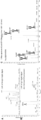
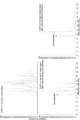
- A-1 is the chromatogram of the digest before concentration
- A-2 is the mass spectrum of the digest retention time from 7.64 to 8.44 minutes before concentration
- B-1 is the chromatogram of the digest after concentration
- B- 2 is the mass spectrum of the peak of the concentrated glycopeptide.
- A is a chromatogram of a digest before digestion
- B is a chromatogram of a sample concentrated with a cellulose microcrystal-carbon multilayer column
- C is a chromatogram of a sample concentrated with a cellulose microcrystal-styrene divinylbenzene multilayer column.
- A is a chromatogram of a digest before digestion
- B is a chromatogram of a sample concentrated on an agarose-octadecyl group-bonded silica gel multilayer column
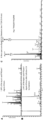
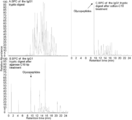
- C is a chromatogram of a sample concentrated on a cotton-octadecyl group-bonded silica gel multilayer column. It is the result of concentrating 2-AB-labeled free sugar chain (derived from transferrin) with a sugar chain concentration column and analyzing the sugar chain by nano liquid chromatography mass spectrometry.
- A is the chromatogram of the labeled free sugar chain after concentration
- B is the mass spectrum of the peak of the concentrated free sugar chain.
- concentration of sugar chains includes both the concentration of glycopeptides having each sugar chain and the concentration of free sugar chains cleaved from glycoproteins or glycopeptides.
- concentration of sugar chains includes both the concentration of glycopeptides having each sugar chain and the concentration of free sugar chains cleaved from glycoproteins or glycopeptides.
- sugar chain both sugar chains and free sugar chains in a form bound to a peptide are included, unless the context clearly does not.
- N-linked sugar chain and “O-linked sugar chain” mean a glycopeptide having an N-linked sugar chain or an O-linked sugar chain.
- the sugar chain concentration column of the present invention contains a solid phase extraction carrier and a polymer polyol laminated directly or indirectly on the carrier inside the column body.
- the tip portion is a region on the elution outlet side (outlet side) of the column, and refers to a half, for example, a third, or a quarter of the entire length of the column main body.
- solid-phase extraction carrier for example, various substances generally recognized as reverse phase resins can be used. Specific examples include octadecylsilylated silica gel (octadecyl group-bonded silica gel) (C18), porous solid carbon material, and at least one functional selected from styrene divinylbenzene, divinylbenzene, N-containing methacrylate, and N-vinylpyrrolidone. Mention may be made of polymers having groups.
- porous solid carbon material a porous material formed of activated carbon or graphite may be used.
- Typical examples of the polymer having at least one functional group selected from styrene divinylbenzene, divinylbenzene, N-containing methacrylate, and N-vinylpyrrolidone include styrene divinylbenzene polymer (polystyrene divinylbenzene), divinylbenzene polymer (poly Divinylbenzene), N-containing methacrylate polymer, and poly (N-vinylpyrrolidone).
- the solid phase extraction carrier layer may be composed of only one type of solid phase extraction carrier, or two or more types may be mixed or separately stacked to form a solid phase extraction carrier layer.
- the shape of the solid phase extraction carrier may be a membrane shape, a bead shape, or another shape.
- Various carriers that are generally recognized and commercially available as carriers for reverse phase chromatography can be preferably used.
- the polymeric polyol is a polymer containing a plurality of alcoholic hydroxyl groups in the molecule, and has one or more alcoholic hydroxyl groups in the monomer unit. Since the alcoholic hydroxyl group of the polymer polyol interacts with the hydroxyl groups that are abundant in the sugar chain, the speed of the glycopeptide passing through the polymer polyol layer is slower than the peptide without the sugar chain. The glycopeptide is selectively concentrated in the polymeric polyol layer. In the case of concentration of free glycans, peptides whose sugar chains are cleaved in the sample before concentration, glycopeptides that remain without being cleaved, excessive amounts of unbound labeling substances used to label free sugar chains, etc.
- the sugar chains are selectively concentrated in the polymer polyol layer.
- a polysaccharide polymer can be preferably used.
- Specific examples of the polymeric polyol corresponding to the polysaccharide polymer include cellulose (for example, cellulose microcrystals and cellulose fibers), agarose (for example, agar, Sepharose resin), dextran (for example, Sephadex resin) and the like.
- the shape is not particularly limited, and may be powder, bead, fiber or the like.
- the polymeric polyol layer may be composed of only one type of polymeric polyol, or two or more types may be mixed or separately layered to form a polymeric polyol layer.
- Cellulose microcrystals which are one of the particularly preferred examples of the polymeric polyol, may be of ordinary chromatographic grade. In general, it is produced by hydrolyzing cellulose having a degree of polymerization of about several hundreds (for example, about 400 to 500), but cellulose microcrystals that are commercially available for chromatography can be preferably used.
- the solid phase extraction carrier layer and the polymer polyol layer may be in direct contact with each other, or an arbitrary layer may be included therebetween.
- the term “directly or indirectly laminated” refers to a state in which a plurality of layers (including any layer) including a solid phase extraction support layer and a polymer polyol layer are laminated or laminated.
- the solid phase extraction carrier layer and the polymeric polyol layer, particularly the solid phase extraction carrier layer may include any desired layer.
- Specific examples of the arbitrary layer include a polytetrafluoroethylene (PTFE) layer.
- PTFE polytetrafluoroethylene
- 3M's Empore Disk (trade name) used as a solid phase extraction carrier in the following examples is a product in which a silica-based or polymer-based adsorbent is fixed to fibrous PTFE (thickness is 0.5 to 0.75). mm), and when a solid phase extraction support layer is formed using this disc, a PTFE layer is formed below or above the solid phase extraction support layer (between the solid phase extraction support layer and the polymer polyol layer). Will be stacked.
- the column of the present invention can be in the shape of an elongated cone such as a micropipette tip.
- the column volume is not particularly limited, but if a solid column extraction carrier and a polymeric polyol are packed in a column body of about several hundreds ⁇ L, for example, 100 ⁇ L to 500 ⁇ L, or 150 ⁇ L to 300 ⁇ L, sugar chains from a small amount of sample can be obtained. It is advantageous for concentration.
- the polymer polyol layer needs a sufficient volume in order to selectively concentrate glycopeptides and free sugar chains by interaction with hydroxyl groups of sugar chains.
- the volume of the polymeric polyol layer is usually about 5 ⁇ L to 50 ⁇ L.
- the volume ratio of the solid phase extraction carrier layer and the polymeric polyol layer may be 1: 12.5 to 160, for example 1: 12.5 to 120, 1: 12.5 to 100, 1: 12.5 to 80, 1:15 to 100, It can be 1: 15-80, 1: 20-100, or 1: 20-80.
- the volume ratio here is the ratio of the volume of each layer in a state of being packed in the column, and is calculated on the basis of the inner wall of the column.
- the weight ratio between the solid-phase extraction carrier layer and the polymeric polyol layer can be about 1: 2 to 30 although it depends on the type of material used in each layer.
- a suitable column or pipette tip is filled with a solid-phase extraction carrier by a known method, and a polymer polyol is layered thereon with an arbitrary layer sandwiched appropriately.
- a polymer polyol is layered thereon with an arbitrary layer sandwiched appropriately.
- Rappsilber, J .; Mann, M .; Ishihama, Y Protocol for micro-purification, enrichment, pre-fraction and storage of peptides for proteomics using StageTips .Nature Protocols 2007, 2, 1896-1906.
- the specific procedure for filling a 200 ⁇ L pipette tip is as follows.
- a disk in which a solid-phase extraction carrier is immobilized on a filter such as porous glass fiber or polytetrafluoroethylene fiber is used.
- Commercially available products such as 3M's Empore Disk (trade name) or Sigma-Aldrich's ENVI-disk (trade name) can be preferably used.
- a disc piece on which a solid phase extraction carrier is immobilized can be fixed to the tip of a 200 ⁇ L pipette tip.
- a chip generally called StageTip STop and Go Extraction Tip
- the solid phase extraction carrier as described above is filled in the tip of the chip having a capacity of about several hundreds ⁇ L
- a commercially available product for example, SPE C-TIP (trade name) from Nichikyo Technos).
- Chips filled with a plurality of solid-phase extraction carriers are also known.
- a chip in which C18 is laminated on a porous graphite resin which is an example of a porous solid carbon material is commercially available.
- the glycopeptide concentration column of the present invention can also be produced using such a chip.
- the polymer polyol washed with a polar solvent such as distilled water or acetonitrile solution is suspended in a polar solvent such as acetonitrile solution if necessary.
- a polar solvent such as acetonitrile solution
- An appropriate amount of the liquid may be injected onto the solid phase extraction carrier layer of the column and centrifuged to remove the liquid portion.
- a hydrous polar organic solvent is used as a sample dissolving / diluting solution, a column washing solution, and an eluent.
- the “hydrous polar organic solvent” is a solvent obtained by mixing a polar organic solvent and water.
- the polar organic solvent is not particularly limited as long as it is miscible with water and has a boiling point of about 70 to 120 ° C.
- selected from acetonitrile and lower alcohols for example, 1-butanol, 2-propanol, ethanol
- Acetonitrile can be preferably used alone.
- the lower alcohols may be used alone or in combination of two or more lower alcohols.
- the concentration of the polar solvent in the hydrous polar organic solvent may be about 75% to 95%.
- the sugar chain concentration column of the present invention can be used for either N-linked sugar chain concentration or O-linked sugar chain concentration. Only the concentration of the polar organic solvent in the hydrous polar organic solvent is changed within the above-mentioned concentration range, and the basic procedure is the same. For example, when an acetonitrile solution is used as a hydrous polar organic solvent, the concentration of N-linked sugar chains is 75% or more and less than 88%, for example, 78% or more and 85% or less. The acetonitrile concentration may be 88% or more and 95% or less.
- the concentration of the lower alcohol (the total concentration when using a plurality of lower alcohols) is about 85 to 92%, for example about 90%, when concentrating N-linked sugar chains. And it is sufficient.
- the concentration of lower alcohol may be appropriately selected in the range of about 75% to 95%, and O-linked sugars are usually used at a concentration higher than that used for concentration of N-linked sugar chains.
- the chains can be desirably concentrated.
- the concentration of the polar solvent in the hydrous polar organic solvent may be about 30 to 95%. More specifically, a water-containing polar organic solvent having a polar solvent concentration of about 75 to 95% can be used for the sample dissolving / diluting solution and the column cleaning solution used in the selective concentration step to the polymer polyol layer. In addition, a water-containing polar organic solvent having a polar solvent concentration of 30 to 80%, for example, about 40 to 60% can be used for the eluate used for elution of free sugar chains.
- the acetonitrile concentration of the sample dissolution / dilution solution and the column washing solution may be about 75 to 95%, for example, about 75 to 85%. It may be about 30 to 80%, for example, about 40 to 60%.
- a lower alcohol solution is used as the hydrous polar organic solvent, it can be appropriately selected within a range of about 40 to 95%.
- each step of the sugar chain concentration method using the sugar chain concentration column of the present invention will be described by taking as an example the case where an acetonitrile solution is used as a hydrous polar organic solvent. Even when different water-containing polar organic solvents are used, the concentration of the polar organic solvent can be slightly changed, but basically the same procedure can be used.
- a glycopeptide-containing sample prepared by digesting a glycoprotein with an appropriate enzyme, and a sample dissolution / dilution solution are added to a sugar chain concentration column.
- the acetonitrile concentration of the sample dissolution / dilution solution is as described above.
- a solution having an acetonitrile concentration of 75% or more and less than 88% is used for concentration of N-linked sugar chains, and an acetonitrile concentration of 88% or more is used for concentration of O-linked sugar chains.
- the glycopeptide-containing sample may be dissolved in the sample lysis / dilution solution and then added to the column, or the glycopeptide-containing sample and the sample lysis / dilution solution may be separately added to the column, and the glycopeptide-containing sample is added to the column. It may be dissolved in the sample dissolution / dilution solution. In the latter case, the sample solution / diluent is first added to the column, and after light in the column is removed by light centrifugation (flushing), the glycopeptide-containing sample may be added to the column.
- a pressure in the direction from the polymeric polyol layer toward the solid-phase extraction carrier layer is applied to the column to hold the glycopeptide in the polymeric polyol layer.
- positive pressure may be applied from the inlet side of the column, or negative pressure may be applied by suction from the outlet side.
- the pressure is applied using a syringe. And the like.
- it is simple and preferable to apply pressure in the direction from the polymeric polyol layer to the solid-phase extraction carrier layer by centrifugation of the column. When using a general desktop centrifuge dedicated to a 200 ⁇ L chip, it may be centrifuged for about 20 seconds.
- the sugar chain concentration column is usually washed by adding an aqueous washing liquid and a washing liquid containing an appropriate concentration of a polar organic solvent (acetonitrile in the example described here) before use.
- the concentration is set according to whether the N-linked sugar chain or the O-linked sugar chain is concentrated.
- the aqueous cleaning liquid is a liquid mainly composed of water, and usually about 0.1% TFA (trifluoroacetic acid) aqueous solution is used.
- Selective concentration step Next, add column wash solution to the column and apply pressure in the same manner as above to wash the column. By this step, contaminants other than the target glycopeptide (such as a peptide having no sugar chain) are removed, and the glycopeptide is selectively concentrated and held in the polymeric polyol layer.
- the acetonitrile concentration of the column washing solution is as described above.
- a solution having an acetonitrile concentration of 75% or more and less than 88% is replaced with a glycopeptide having an O-linked sugar chain.
- a solution having an acetonitrile concentration of 88% to 95% is used.
- the aqueous washing liquid used for this glycopeptide reconcentration step may be the same as the aqueous washing liquid used for column washing before use.
- the centrifugation time may be about the same as the column washing step, or a little longer for about 30 to 40 seconds (this centrifugation process is also possible with alcohol in monomer units like agarose).
- This concentration step may be performed once.
- the glycopeptide concentrated on the solid phase extraction carrier layer is eluted.
- the eluate is added to the column, and pressure in the direction from the polymeric polyol layer to the solid-phase extraction carrier layer is applied to the column to elute the glycopeptide.
- the acetonitrile concentration of the eluate used here is the same as the column washing solution used in the selective concentration step.
- it is easy to elute by applying pressure from the inlet side with a syringe equipped with an appropriate adapter as necessary.
- the eluate may be collected with care. It is sufficient to perform this elution step once, but it may be performed two to three times.
- peptide N-glycosidase F can be used to cleave N-linked sugar chains, and O-glycosidase can be cleaved by treatment with O-glycosidase in combination with fucosidase or sialidase if desired. Good.
- the sugar chain labeling method may be carried out as usual.
- the most common labeling method for free sugar chains is a method of labeling the reducing end of the sugar chain with 2-aminobenzamide (2-AB).
- 2-AB 2-aminobenzamide
- various known labeling substances can be used.
- Various reagents and kits for labeling sugar chains are commercially available.
- the labeled glycan sample may be added to the glycan concentration column by the same procedure as in I-1. And pressure applied to the column.
- the acetonitrile concentration of the sample dissolving / diluting solution is as described above, and may be about 75 to 95%, for example, about 75 to 85%.
- the concentration of acetonitrile in the column washing solution may be the same as that of the sample dissolution / dilution solution, and may be about 75 to 95%, for example, about 75 to 85%.
- a column washing solution is added to the column, and pressure is applied in the same manner as above to wash the column.
- the labeled sugar chain sample contains a large amount of unreacted labeling substance and peptide digestion fragments, but this step removes these impurities other than the target sugar chain, and the polymer polyol layer contains In this way, sugar chains are selectively concentrated and retained.
- this reconcentration step may be omitted as described above.
- a labeling substance having a hydrophobicity comparable to that of 2-AB is used, the reconcentration step is omitted.
- a highly hydrophobic labeling substance for example, Waters GlycoWorks RapidFluor-MS N-Glycan kit
- solid phase extraction is performed in the same manner as I-3.
- Reconcentration of free sugar chains to the carrier layer can be performed.
- the aqueous cleaning liquid used at this time may be the same as in I-3.
- the eluate used for elution of free sugar chains may have an acetonitrile concentration of about 30 to 80%, for example, about 40 to 60%. Others are the same as I-4.
- the kit including the sugar chain concentration column of the present invention can be provided as a sugar chain concentration kit that can be used for both N-linked and O-linked sugar chains and can be used for free sugar chains.
- An appropriate concentration of the hydrous polar organic solvent may be provided in combination.
- an N-linked sugar chain (glycopeptide) concentration kit may be combined with an acetonitrile solution of 75% or more and less than 88%, or an O-linked sugar chain (glycopeptide) may be combined with an acetonitrile solution of 88% or more and 95% or less.
- the free sugar chain concentration kit about 75 to 95%, for example, about 75 to 85% acetonitrile solution and about 30 to 80%, for example, about 40 to 60% acetonitrile solution are used as the sugar chain concentration column of the present invention. Can be provided in combination.
- an N-linked sugar chain (glycopeptide) concentration kit in the case of a hydrous polar organic solvent other than an acetonitrile solution, an N-linked sugar chain (glycopeptide) concentration kit, an O-linked sugar chain (glycopeptide) concentration kit, N It can be provided as a glycopeptide enrichment kit or a free sugar chain enrichment kit that can handle both linked sugar chains and O-linked sugar chains.
- glycopeptide concentration columns 1-1. Preparation of cellulose microcrystal-octadecyl group-bonded silica gel multi-layered column Using octadecylsilylated silica gel (octadecyl group-bonded silica gel) as a solid-phase extraction carrier and cellulose microcrystal as a polymeric polyol, a glycopeptide concentration column was prepared according to the following procedure. did.
- the styrene divinylbenzene chip into which cellulose was dispensed was centrifuged with a desktop centrifuge dedicated to a 200 ⁇ L chip to obtain a chip in which cellulose microcrystals were layered on a solid phase extraction disk of SDB.
- This cellulose microcrystal-styrene divinylbenzene multilayer column was used as a glycopeptide concentration column for concentration of glycopeptides.
- Carbon filling 3M Company Maplewood, MN, USA
- Empor (trade name) is a membrane in which carbon (activated carbon) is fixed with polytetrafluoroethylene.
- the carbon film was cut by pressing (SIGMA-ALDRICH, St. Louis, MS, USA). At this time, the cut carbon film remains inside the syringe needle.
- SPE C-TIP in which agarose was dispensed was centrifuged with a desktop centrifuge dedicated to 200 ⁇ L chip to obtain a chip in which agarose was overlaid on a solid phase extraction disk of octadecyl group-bound silica gel.
- This agarose-octadecyl group-bonded silica gel multilayer column was used as a glycopeptide concentration column for concentration of glycopeptides.
- glycoprotein enzyme digest for sugar chain analysis 2-1. Preparation of glycoprotein enzyme digest for N-linked sugar chain analysis A glycoprotein enzyme digest for N-linked sugar chain analysis was prepared by the following procedure. As glycoproteins, ⁇ 1 acid glycoprotein (derived from human plasma; SIGMA-ALDRICH, St. Louis, MI), fetuin (derived from fetal bovine serum; SIGMA-ALDRICH), transferrin (human; derived from SIGMA-ALDRICH), IgG1 (derived from human myeloma) Wako, Osaka, Japan), ribonuclease B (SIGMA-ALDRICH, St. Louis, MI) was used.
- glycoproteins ⁇ 1 acid glycoprotein (derived from human plasma; SIGMA-ALDRICH, St. Louis, MI), fetuin (derived from fetal bovine serum; SIGMA-ALDRICH), transferrin (human; derived from SIGMA-ALDRICH), IgG1 (derived from human myelom
- each sample ( ⁇ 1 acid glycoprotein, fetuin, transferrin, IgG1, ribonuclease B) 20 ⁇ g trypsin (mass spectrometry grade, Wako) was added and incubated at 36 ° C. for 16 hours to enzymatically digest the glycoprotein.
- trypsin mass spectrometry grade, Wako
- the sample was desalted using Sep-Pak C18 1cc Vac Cartridge (Waters, Milford, Mass.) According to the product manual and dried on a centrifugal evaporator. The desalted sample was redissolved in a 0.1% TFA solution to 2 ⁇ L / ⁇ L.
- glycoprotein enzyme digest for O-linked sugar chain analysis was prepared by the following procedure. Fetuin (derived from fetal bovine serum; SIGMA-ALDRICH) was used as a glycoprotein.
- glycopeptide concentration column 3-1 Concentration of glycopeptides for N-linked sugar chain analysis (1) Glycopeptide concentration column prepared above (cellulose microcrystal-octadecyl group-bonded silica gel multilayer column, cellulose microcrystal-polystyrenedivinylbenzene multilayer column, cellulose microcrystal-porous graphite resin multilayer column, agarose-octadecyl group-bonded silica gel Place 100 ⁇ L of 0.1% TFA solution in a multi-layer column (cotton-octadecyl group-bonded silica gel multi-layer column), set in a table centrifuge dedicated to 200 ⁇ L chip, and let the solution pass through the column (30 seconds, agarose-octadecyl group-bonded silica gel multilayer layer) For the column only 30 minutes), the polymeric polyol (cellulose microcrystal, agarose, or cotton) layer was washed.
- Nano liquid chromatography mass spectrometry of N-linked and O-linked glycans (1) The N-linked sugar chain peptide and the O-linked sugar chain peptide were concentrated, and the dried sample was dissolved in 4 ⁇ L of a 0.1% formic acid aqueous solution.
- FIG. 2 shows the result of analyzing the sugar chain of the tryptic digest sample of IgG1.
- A is a chromatogram of the digest before digestion
- B is a chromatogram of a sample concentrated on a cellulose microcrystal-octadecyl group-bonded silica gel multilayer column (the same applies to FIGS. 3 to 6).
- the peak of glycopeptide that could not be confirmed by A was clearly confirmed by B (GP-A in FIG. 2B).
- C is a mass spectrum of the GP-A peak (retention time: 14.00 to 17.07 minutes), and it was confirmed that N-linked sugar chains were concentrated as expected.
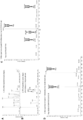
- FIG. 3 shows the result of analyzing the sugar chain of a trypsin digest sample of transferrin.
- Glycopeptide peaks that could not be confirmed by A were clearly confirmed by B after concentration on a cellulose microcrystal-octadecyl group-bonded silica gel multilayer column (GP-A and GP-B in FIG. 3B).
- C, D in Fig. 3 the mass spectrum of the peak of GP-A (retention time 32.57 to 33.23 minutes) and the peak of GP-B (retention time 34.88 to 35.43 minutes), both are N-linked as expected.
- the sugar chain was concentrated.
- FIG. 4 shows the results of sugar chain analysis of fetuin trypsin digested sample. Also in this case, the peak of glycopeptide that could not be confirmed by A before concentration was markedly confirmed by B after concentration on a cellulose microcrystal-octadecyl group-bonded silica gel multilayer column (GP-A, GP- in FIG. 4B). B). According to the mass spectrum (C, D in Fig. 4) of the peak of GP-A (retention time 36.80 to 37.20 minutes) and the peak of GP-B (retention time 40.68 to 41.09 minutes), both are N-linked as expected. The sugar chain was concentrated.
- FIG. 5 shows the result of analyzing the sugar chain of a tryptic digest sample of ⁇ 1 acid glycoprotein. Also in this case, the peak of glycopeptide that could not be confirmed by A before concentration was markedly confirmed by B after concentration on a cellulose microcrystal-octadecyl group-bonded silica gel multilayer column (GP-A, GP- in FIG. 5B). B, GP-C). According to the GP-A peak (retention time 12.35-12.45 minutes) and GP-B peak (retention time 29.74-30.02 minutes) mass spectra (C, D in Fig. 5), both are N-bonded as expected. The sugar chain was concentrated.
- FIG. 6 shows the result of analyzing the sugar chain of a sample obtained by concentrating a glycopeptide derived from ribonuclease B having a high mannose sugar chain using a cellulose microcrystal-octadecyl group-bonded silica gel multilayer column.
- a highly hydrophilic glycopeptide having a high mannose type could also be concentrated so that it could be clearly confirmed by TIC after concentration (Fig. 6, B-1).
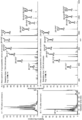
- FIG. 7 shows the results of sugar chain analysis of fetuin trypsin and peptide-N-glycosidase F digested sample. Also in this case, a glycopeptide peak that could not be confirmed by A before concentration was confirmed by B after concentration on a cellulose microcrystal-octadecyl group-bonded silica gel multilayer column (GP-A in FIG. 7B). C is a mass spectrum of the peak of this glycopeptide (retention time: 17.24 to 35.44 minutes), and it was confirmed that O-linked sugar chains were concentrated as expected.
- FIG. 8 shows the result of analyzing the sugar chain of the tryptic digest sample of IgG1.
- A is a chromatogram of a digest before digestion
- B is a chromatogram of a sample concentrated with a cellulose microcrystal-carbon multilayer column
- C is a chromatogram of a sample concentrated with a cellulose microcrystal-styrene divinylbenzene multilayer column. It is. Peaks (Glycopeptides) of glycopeptides (peptides having an N-linked sugar chain) that cannot be confirmed with A were markedly confirmed with B and C.
- FIG. 9 shows the result of analyzing the sugar chain of the tryptic digest sample of IgG1.
- A is the chromatogram of the digest before digestion
- B is the chromatogram of the sample concentrated on the agarose-octadecyl group-bonded silica gel multilayer column
- C is the chromatogram of the sample concentrated on the cotton-octadecyl group-bonded silica gel multilayer column. It is. Peaks (Glycopeptides) of glycopeptides (peptides having an N-linked sugar chain) that cannot be confirmed with A were markedly confirmed with B and C.
- alkylation was stopped by adding 0.25 ⁇ L of 500 mM DTT.
- desalting was performed according to the manual of Zeba (trademark) 0.5 mL spin column which is a gel filtration column. 2 ⁇ g of trypsin / Lys-C mix (Promega) was added thereto and incubated at 37 ° C. for 16 hours to digest IgG1 and transferrin. The digested sample was desalted according to the manual of Oasis HLB 1cc Vac Cartridge, 30 mg Sorbent per Cartridge (Waters), which is a solid phase extraction column, and dried with a centrifugal evaporator.
- the free sugar chain was labeled with 2-aminobenzamide (2-AB) by the following procedure. 6.4 mg of 2-AB (Sigma-Aldrich) and 6.7 mg of sodium cyanoborohydride (Sigma-Aldrich) were measured. 130 ⁇ L of dimethyl sulfoxide and 70 ⁇ L of glacial acetic acid (Alfa Aesar) were mixed, and 100 ⁇ L was added to the measured 2-AB and dissolved. The 2-AB solution was mixed with the measured sodium cyanoborohydride and sufficiently dissolved by sonication with an ultrasonic cleaner. 10 ⁇ L of this solution was added to the dried sample and incubated at 65 ° C. for 25 hours to label the free sugar chain with 2-AB.
- 2-AB 2-aminobenzamide
- Nano liquid chromatography mass spectrometry of concentrated free sugar chains The concentrated 2-AB-labeled sugar chains were subjected to nanoLC / ESI / MS / MS according to the following procedure.
- Nano liquid chromatograph EASY
- a trap column PepMap100 C18 3 ⁇ m, diameter 75 ⁇ m ⁇ length 20 mm; Thermo Scientific, MA, USA
- an analytical column NaHPLC capillary column; Nikkei Technos, Tokyo, Japan
- -nLC 1000; Thermo Scientific is connected to a hybrid quadrupole orbitrap mass spectrometer (Q Exactive; Thermo Scientific), 2 ⁇ L of the dissolved sample is injected into the trap column, desalted, and then the sample is separated on the analytical column.
- FIG. 10 shows an analysis example of 2-AB labeled sugar chain of transferrin. Although peptides that are easier to ionize and more easily observed than sugar chains were observed, the peak of 2-AB-labeled sugar chains could be clearly confirmed in the total ion current chromatogram. Also in the mass spectrum, 2-AB-labeled sugar chains were clearly confirmed as major peaks. Before sugar chain concentration, there is a large excess of unreacted 2-AB compared to 2-AB-labeled sugar chains, which can contaminate nanoLC / ESI / MS / MS and cannot be injected itself. In the sample after -AB sugar chain concentration, since 2-AB was removed, the contamination of nanoLC / ESI / MS / MS could not be confirmed.
- glycopeptides and free sugars can be obtained from a very small amount of sample. It was confirmed that the chain can be concentrated in a short time and a mass spectrometry grade sugar chain concentrated sample can be easily prepared.
Landscapes
- Chemical & Material Sciences (AREA)
- Life Sciences & Earth Sciences (AREA)
- Health & Medical Sciences (AREA)
- Analytical Chemistry (AREA)
- Biochemistry (AREA)
- General Health & Medical Sciences (AREA)
- General Physics & Mathematics (AREA)
- Immunology (AREA)
- Pathology (AREA)
- Physics & Mathematics (AREA)
- Chemical Kinetics & Catalysis (AREA)
- Hydrology & Water Resources (AREA)
- Engineering & Computer Science (AREA)
- Materials Engineering (AREA)
- Molecular Biology (AREA)
- Medicinal Chemistry (AREA)
- Polymers & Plastics (AREA)
- Organic Chemistry (AREA)
- Sampling And Sample Adjustment (AREA)
- Peptides Or Proteins (AREA)
Abstract
微量の試料にも対応でき、短時間で糖ペプチドや遊離糖鎖を濃縮できる新規な糖鎖濃縮手段が開示されている。本発明による糖鎖濃縮カラムは、カラム内に、固相抽出担体層と、その上に直接又は間接的に積層されたポリマー性ポリオール層とを含む。固相抽出担体としてはオクタデシルシリル化シリカゲルなどを、ポリマー性ポリオールとしてはセルロース微結晶などを好ましく用いることができる。当該カラムは、N結合型糖鎖の濃縮、O結合型糖鎖の濃縮、遊離糖鎖の濃縮のいずれにも利用できる。
Description
本発明は、糖鎖濃縮カラム、及び該カラムを用いた糖鎖の濃縮方法に関する。
質量分析を用いて糖ペプチドを分析する場合、糖ペプチドのイオン化部でのイオン化効率が低いため、糖タンパク質試料をトリプシン等の酵素で消化した消化物、すなわち、ペプチドと糖ペプチドの混合物から糖ペプチドを濃縮する必要がある。しかしながら、微量の試料にも対応でき、ごく短時間で糖ペプチドを濃縮できる手法はこれまでに知られていない。
例えば、糖ペプチド濃縮方法としては、疎水性物質を用いてペプチドを沈殿させることで糖ペプチドを濃縮する方法(特許文献1)、アガロースゲルを用いた親水性相互作用で糖ペプチドを濃縮する方法(非特許文献1)、アセトンを用いて糖ペプチドを沈殿させることで糖ペプチドを濃縮する方法(非特許文献2)が知られている。特許文献1は、糖ペプチドの濃縮の簡便化、迅速化に関する発明であるが、特許文献1記載の方法でも、糖ペプチドの濃縮には最低4時間から6時間を要する。また、特許文献1や非特許文献2のような沈殿形成を要する手法は微量の試料に対応しにくい。特許文献1はバッチ法による濃縮法であるが、バッチ法による濃縮も微量の試料に対応することが難しい。
Wada, Y., Tajiri, M., and Yoshida, S. (2004) Hydrophilic affinity isolation and MALDI multiple-stage tandem mass spectrometry of glycopeptides for glycoproteomics. Anal. Chem., 76, 6560-6565.
Takakura, D, Harazono, A. Hashii, N., and Kawasaki, N. (2014) Selective glycopeptide profiling by acetone enrichment and LC/MS. J. Proteomics, 101, 17-30.
本発明は、微量の試料にも対応でき、短時間で糖ペプチドや遊離糖鎖を濃縮できる新規な糖鎖濃縮手段を提供することを目的とする。
本願発明者らは、鋭意研究の結果、オクタデシルシリル化シリカゲルや多孔性固体炭素材料、スチレンジビニルベンゼンポリマー等の固相抽出担体の上にセルロース微結晶やセルロース繊維、アガロース等のポリマー性ポリオールを充填した小型のカラムを用いることにより、数ng程度のごく微量な試料からも糖ペプチドを濃縮できること、従来では数時間かかっていた濃縮操作を大幅に短縮できること、洗浄や溶出に用いる含水極性有機溶媒の濃度を変えることで、同じカラムを用いてN結合型糖鎖の濃縮とO結合型糖鎖の濃縮のいずれにも対応できること、さらには、糖タンパク質・糖ペプチドから切断された遊離の糖鎖もこのカラムで濃縮できることを見出し、本願発明を完成した。
すなわち、本発明は、カラム内に、固相抽出担体層と、その上に直接又は間接的に積層されたポリマー性ポリオール層とを含む、糖鎖濃縮カラムを提供する。
また、本発明は、上記本発明の糖鎖濃縮カラムに糖鎖含有試料及び試料溶解・希釈液を添加し、ポリマー性ポリオール層から固相抽出担体層に向かう方向の圧力をカラムに印加して、糖ペプチド又は遊離糖鎖をポリマー性ポリオール層に保持させる、試料添加工程;
カラム洗浄液をカラムに添加し、ポリマー性ポリオール層から固相抽出担体層に向かう方向の圧力をカラムに印加してカラムを洗浄することにより、夾雑物を除去してポリマー性ポリオール層内に糖ペプチド又は遊離糖鎖を濃縮保持させる、選択的濃縮工程;及び
溶出液をカラムに添加し、ポリマー性ポリオール層から固相抽出担体層に向かう方向の圧力をカラムに印加して糖ペプチドを溶出する、溶出工程
を含む、糖ペプチド又は遊離糖鎖の濃縮方法であって、試料溶解・希釈液、カラム洗浄液、及び溶出液として含水極性有機溶媒を用いる、方法を提供する。
カラム洗浄液をカラムに添加し、ポリマー性ポリオール層から固相抽出担体層に向かう方向の圧力をカラムに印加してカラムを洗浄することにより、夾雑物を除去してポリマー性ポリオール層内に糖ペプチド又は遊離糖鎖を濃縮保持させる、選択的濃縮工程;及び
溶出液をカラムに添加し、ポリマー性ポリオール層から固相抽出担体層に向かう方向の圧力をカラムに印加して糖ペプチドを溶出する、溶出工程
を含む、糖ペプチド又は遊離糖鎖の濃縮方法であって、試料溶解・希釈液、カラム洗浄液、及び溶出液として含水極性有機溶媒を用いる、方法を提供する。
さらに、本発明は、上記本発明の糖鎖濃縮カラムを含む、糖鎖濃縮キットを提供する。
本発明の糖鎖濃縮カラムによれば、数ng程度というごく微量な試料からも所望の糖ペプチドや遊離糖鎖を濃縮することができる。カラムに順次溶液を添加して遠心するというごく単純な操作により、ペプチドと糖ペプチドの混合物から糖ペプチドを濃縮できるので、従来は数時間かかっていた濃縮操作の時間を大幅に短縮でき、数分程度という短時間での濃縮も可能になる。カラムの洗浄・溶出に用いる含水極性有機溶媒の濃度を変更するのみで、同じ構成の糖鎖濃縮カラムを用いて、N結合型糖鎖の濃縮とO結合型糖鎖の濃縮のいずれにも対応できる。また、本発明の糖鎖濃縮カラムは遊離糖鎖の濃縮にも使用可能であり、未反応の標識物質やタンパク質断片などの夾雑物の中から数分程度の短時間で質量分析グレードで糖鎖を濃縮できる。
本発明において、「糖鎖の濃縮」という語には、各糖鎖を有する糖ペプチドの濃縮と、糖タンパク質ないし糖ペプチドから切断された遊離糖鎖の濃縮の両者が包含される。単に「糖鎖」といった場合には、文脈から明らかにそうではない場合を除き、ペプチドに結合した形態にある糖鎖と遊離糖鎖の両者が包含される。「N結合型糖鎖」、「O結合型糖鎖」といった場合には、N結合型糖鎖又はO結合型糖鎖を有する糖ペプチドを意味する。
本発明の糖鎖濃縮カラムは、カラム本体の先端部分の内部に、固相抽出担体と、該担体の上に直接又は間接的に積層したポリマー性ポリオールとを含む。先端部分とは、カラムの溶出口側(アウトレット側)の領域であって、カラム本体全長の2分の1、例えば3分の1、又は4分の1の部分をいう。
固相抽出担体としては、例えば、逆相樹脂として一般に認識されている各種の物質を用いることができる。具体例として、オクタデシルシリル化シリカゲル(オクタデシル基結合シリカゲル)(C18)、多孔性固体炭素材料、並びにスチレンジビニルベンゼン、ジビニルベンゼン、N含有メタクリレート、及びN-ビニルピロリドンから選択される少なくとも1種の官能基を有するポリマーを挙げることができる。
多孔性固体炭素材料としては、活性炭又はグラファイトで形成された多孔性の材料を用いればよい。
スチレンジビニルベンゼン、ジビニルベンゼン、N含有メタクリレート、及びN-ビニルピロリドンから選択される少なくとも1種の官能基を有するポリマーの典型例としては、スチレンジビニルベンゼンポリマー(ポリスチレンジビニルベンゼン)、ジビニルベンゼンポリマー(ポリジビニルベンゼン)、N含有メタクリレートポリマー、ポリ(N-ビニルピロリドン)を挙げることができる。
1種類の固相抽出担体のみで固相抽出担体層を構成してもよいし、2種以上を混合して、又は別々に重層して固相抽出担体層としてもよい。固相抽出担体の形状は、膜状でもビーズ状でもその他の形状でもよい。逆相クロマトグラフィー用の担体などとして一般に認識され市販されている種々のものを好ましく用いることができる。
本発明において、ポリマー性ポリオールとは、分子内に複数のアルコール性ヒドロキシル基を含むポリマーであり、モノマー単位中に1個以上のアルコール性ヒドロキシル基を有する。ポリマー性ポリオールが有するアルコール性ヒドロキシル基が、糖鎖に豊富に存在するヒドロキシル基と相互作用することにより、ポリマー性ポリオール層を通過する糖ペプチドの速度が糖鎖を有しないペプチドよりも遅くなるため、糖ペプチドがポリマー性ポリオール層内に選択的に濃縮される。遊離糖鎖の濃縮の場合、濃縮前の試料中には糖鎖が切断されたペプチド、糖鎖切断されずに残存する糖ペプチド、遊離糖鎖の標識に用いた過剰量の未結合標識物質などの夾雑物が含まれ得るが、ポリマー性ポリオール層を通過する遊離糖鎖の速度はこれらの夾雑物よりも遅くなるので、糖鎖がポリマー性ポリオール層内に選択的に濃縮される。モノマー単位中のアルコール性ヒドロキシル基の数が多いほど、糖ペプチドや遊離糖鎖の選択的濃縮性能がより良好となるため好ましい。ポリマー性ポリオールとしては、例えば多糖高分子を好ましく用いることができる。多糖高分子に該当するポリマー性ポリオールの具体例として、セルロース(例えばセルロース微結晶、セルロース繊維)、アガロース(例えば寒天、Sepharose樹脂)、デキストラン(例えばSephadex樹脂)等を挙げることができる。形状は特に限定されず、粉末状、ビーズ状、繊維状などであってよい。1種類のポリマー性ポリオールのみでポリマー性ポリオール層を構成してもよいし、2種以上を混合して、又は別々に重層してポリマー性ポリオール層としてもよい。
ポリマー性ポリオールの特に好ましい例の1つであるセルロース微結晶は、通常のクロマトグラフィーグレードのものでよい。一般には、重合度が数百程度(例えば400~500程度)のセルロースを加水分解して製造されるが、クロマトグラフィー用のものとして市販されているセルロース微結晶を好ましく用いることができる。
固相抽出担体層とポリマー性ポリオール層は、直接接していてもよいし、間に任意の層を含んでいてもよい。「直接又は間接的に積層された」との語は、固相抽出担体層及びポリマー性ポリオール層を含む複数の層(任意の層を含みうる)が積層ないし重層された状態をいう。固相抽出担体層及びポリマー性ポリオール層、特に固相抽出担体層も、層内に任意の層が含まれていても良い。任意の層の具体例としては、ポリテトラフルオロエチレン(PTFE)層を挙げることができる。数百μL程度の容量のカラムで本発明の糖鎖濃縮カラムを製造する場合、固相抽出担体層とポリマー性ポリオール層との間に0.5mm程度のPTFE層が配置されても問題なく糖鎖を濃縮できることが確認されている。なお、下記実施例で固相抽出担体として用いている3M社のEmpore Disk(商品名)は、繊維状のPTFEにシリカ系またはポリマー系の吸着剤が固定された製品(厚さは0.5~0.75mm)であり、このディスクを用いて固相抽出担体層を形成した場合には、固相抽出担体層の下、又は上(固相抽出担体層とポリマー性ポリオール層との間)にPTFE層が積層されることになる。
本発明のカラムは、マイクロピペットのチップのような細長い円錐形状のものを用いることができる。カラム容量は特に限定されないが、数百μL程度、例えば100μL~500μL、又は150μL~300μL程度の容量のカラム本体に固相抽出担体とポリマー性ポリオールを充填すれば、微量のサンプルからの糖鎖の濃縮に有利である。
ポリマー性ポリオール層は、糖鎖のヒドロキシル基との相互作用によって糖ペプチドや遊離糖鎖を選択的に濃縮するため、十分な体積を必要とする。数百μL程度の容量のカラムで糖鎖濃縮カラムを製造する場合、ポリマー性ポリオール層の体積は通常5μL~50μL程度である。固相抽出担体層とポリマー性ポリオール層の体積比は、1:12.5~160であればよく、例えば1:12.5~120、1:12.5~100、1:12.5~80、1:15~100、1:15~80、1:20~100、又は1:20~80であり得る。ここでいう体積比とは、カラム内に充填された状態での各層の体積の比であり、カラムの内壁基準で算出される。固相抽出担体層とポリマー性ポリオール層の重量比は、各層に使用する材料の種類にもよるが、概ね1:2~30程度であり得る。
本発明の糖鎖濃縮カラムの製造においては、適当なカラムないしはピペットチップに公知の方法で固相抽出担体を充填し、その上に適宜任意の層を挟んでポリマー性ポリオールを重層すればよい。ピペットチップ形状のカラムへの固相抽出担体の充填方法は、例えばRappsilber, J.; Mann, M.; Ishihama, Y; Protocol for micro-purification, enrichment, pre-fraction and storage of peptides for proteomics using StageTips. Nature Protocols 2007, 2, 1896-1906に記載されている。200μLピペットチップに充填する場合の具体的な手順は下記の通りである。
Rappsilberらが開示する方法では、多孔性ガラス繊維やポリテトラフルオロエチレン繊維などのフィルターに固相抽出担体が固定化されたディスクを用いる。3M社のEmpore Disk(商品名)またはSigma-Aldrich社のENVI-disk(商品名)等の市販品を好ましく用いることができる。清浄で硬く、平らな台の上にディスクを置き、先端が平らの17~18ゲージの注射針を垂直に押し当ててディスクを丸く切り取る。この時、切り取られたディスクの断片は注射針の中に入り込む。この操作を2回繰り返し、2つのディスク片を注射針の先端に充填する。その後、ディスク片が充填された注射針を200μLピペットチップの先端まで押し込み、注射針の内径より少し小さい直径の棒を使用して、200μLピペットチップの先端に2つのディスク片を優しく押し込むことで、200μLピペットチップの先端部に固相抽出担体が固定化されたディスク片を固定することができる。
また、上記のような固相抽出担体が数百μL程度の容量のチップ先端部に充填された、一般にStageTip (STop and Go Extraction Tip)と呼ばれるチップも知られており、市販品も存在する(例えば日京テクノス社のSPE C-TIP(商品名))。複数の固相抽出担体を充填したチップも知られており、例えば、多孔性固体炭素材料の一例である多孔性グラファイト樹脂の上にC18を重層したチップが市販されている。そのようなチップを用いて本発明の糖ペプチド濃縮カラムを製造することもできる。
固相抽出担体が充填されたカラムへのポリマー性ポリオールの重層は、必要に応じ蒸留水やアセトニトリル溶液等の極性溶媒で洗浄したポリマー性ポリオールをアセトニトリル溶液等の極性溶媒に懸濁し、この懸濁液をカラムの固相抽出担体層の上に適当量注入し、遠心して液体部分を除去すればよい。
本発明の糖鎖濃縮カラムを用いて糖鎖を濃縮する際には、試料溶解・希釈液、カラム洗浄液及び溶出液として含水極性有機溶媒を用いる。「含水極性有機溶媒」とは、極性有機溶媒と水を混合した溶媒である。極性有機溶媒は、水と混合可能で沸点が70~120℃程度である極性有機溶媒であれば特に限定されず、例えばアセトニトリル、及び低級アルコール(例えば1-ブタノール、2-プロパノール、エタノール)から選択される少なくとも1種を好ましく用いることができる。アセトニトリルは単独でも好ましく使用可能である。低級アルコールは、単独でもよいし、2種以上の低級アルコールを混合して用いても良い。
糖ペプチドを濃縮する場合、含水極性有機溶媒中の極性溶媒の濃度は75%~95%程度でよい。本発明の糖鎖濃縮カラムは、N結合型糖鎖の濃縮、O結合型糖鎖の濃縮のいずれにも利用できる。上記の濃度範囲で含水極性有機溶媒中の極性有機溶媒の濃度を変更するのみであり、基本的な手順は同じである。例えば、含水極性有機溶媒としてアセトニトリル溶液を用いる場合には、N結合型糖鎖の濃縮ではアセトニトリル濃度を75%以上88%未満、例えば78%以上85%以下とし、O結合型糖鎖の濃縮ではアセトニトリル濃度を88%以上95%以下とすればよい。含水極性有機溶媒として低級アルコール溶液を用いる場合には、N結合型糖鎖の濃縮では低級アルコール濃度(複数の低級アルコールを用いる場合はその合計の濃度)を85~92%程度、例えば90%程度とすればよい。例えば、エタノール:水=90:10程度のエタノール溶液や、1-ブタノール:エタノール:水=80:10:10程度の1-ブタノール/エタノール混合溶液を好ましく用いることができる。O結合型糖鎖の濃縮では、低級アルコールの濃度は75%~95%程度の範囲で適宜選択すればよく、通常はN結合型糖鎖の濃縮で用いる濃度よりも高い濃度でO結合型糖鎖を望ましく濃縮できる。
遊離糖鎖を濃縮する場合、含水極性有機溶媒中の極性溶媒の濃度は30~95%程度でよい。より具体的には、試料溶解・希釈液、及びポリマー性ポリオール層への選択的濃縮工程で用いるカラム洗浄液には、極性溶媒濃度が75~95%程度の含水極性有機溶媒を使用することができ、また遊離糖鎖の溶出に用いる溶出液には、極性溶媒濃度が30~80%、例えば40~60%程度の含水極性有機溶媒を使用することができる。例えば、含水極性有機溶媒としてアセトニトリル溶液を用いる場合には、試料溶解・希釈液及びカラム洗浄液のアセトニトリル濃度を75~95%程度、例えば75~85%程度とすればよく、溶出液のアセトニトリル濃度を30~80%程度、例えば40~60%程度とすればよい。含水極性有機溶媒として低級アルコール溶液を用いる場合には、40~95%程度の範囲で適宜選択することができる。
以下、本発明の糖鎖濃縮カラムを用いた糖鎖の濃縮方法の各工程について、アセトニトリル溶液を含水極性有機溶媒として用いた場合を例に説明する。異なる含水極性有機溶媒を用いる場合も、極性有機溶媒の濃度が若干変わり得るが、基本的に同一の手順で実施できる。
I. 糖ペプチドの濃縮
I-1. 試料添加工程
まず、糖タンパク質を適当な酵素で消化して調製した糖ペプチド含有試料、及び試料溶解・希釈液を糖鎖濃縮カラムに添加する。試料溶解・希釈液のアセトニトリル濃度は上記した通りであり、N結合型糖鎖の濃縮ではアセトニトリル濃度が75%以上88%未満の溶液を、O結合型糖鎖の濃縮ではアセトニトリル濃度が88%以上95%以下の溶液を用いる。糖ペプチド含有試料を試料溶解・希釈液中に溶解させてからカラムに添加してもよいし、糖ペプチド含有試料と試料溶解・希釈液を別々にカラムに加え、カラム内で糖ペプチド含有試料を試料溶解・希釈液に溶解させてもよい。後者の場合、まず試料溶解・希釈液をカラムに加え、軽く遠心(フラッシュ)する等してカラム内のエアを取り除いた後、糖ペプチド含有試料をカラムに添加すればよい。
I-1. 試料添加工程
まず、糖タンパク質を適当な酵素で消化して調製した糖ペプチド含有試料、及び試料溶解・希釈液を糖鎖濃縮カラムに添加する。試料溶解・希釈液のアセトニトリル濃度は上記した通りであり、N結合型糖鎖の濃縮ではアセトニトリル濃度が75%以上88%未満の溶液を、O結合型糖鎖の濃縮ではアセトニトリル濃度が88%以上95%以下の溶液を用いる。糖ペプチド含有試料を試料溶解・希釈液中に溶解させてからカラムに添加してもよいし、糖ペプチド含有試料と試料溶解・希釈液を別々にカラムに加え、カラム内で糖ペプチド含有試料を試料溶解・希釈液に溶解させてもよい。後者の場合、まず試料溶解・希釈液をカラムに加え、軽く遠心(フラッシュ)する等してカラム内のエアを取り除いた後、糖ペプチド含有試料をカラムに添加すればよい。
次いで、ポリマー性ポリオール層から固相抽出担体層に向かう方向の圧力をカラムに印加して、糖ペプチドをポリマー性ポリオール層に保持させる。カラムへの圧力の印加では、カラムのインレット側から陽圧をかけてもよいし、アウトレット側から吸引して陰圧をかけてもよく、具体的には、シリンジを用いて圧を加える、遠心する等の方法が挙げられる。特に限定されないが、カラムの遠心によりポリマー性ポリオール層から固相抽出担体層に向かう方向の圧力をかけることが簡便で好ましい。一般的な200μLチップ専用の卓上遠心機を用いる場合、20秒間程度遠心すればよい。ただし、アガロースのようにモノマー単位中のアルコール性ヒドロキシル基が少ないポリマー性ポリオールを用いた濃縮カラムの場合、遠心を長く(例えば20~30分程度)行う必要があり得る。ポリマー性ポリオール層の下に固相抽出担体層が配置されることで、圧力印加により試料がポリマー性ポリオール層を通過するときの線流速が最適化され、糖ペプチドがポリマー性ポリオールに保持される。
なお、糖鎖濃縮カラムは、通常、使用前に水性洗浄液及び適当な濃度の極性有機溶媒(ここで説明する例ではアセトニトリル)を含む洗浄液を添加して洗浄するが、この際のアセトニトリルの濃度も、N結合型糖鎖とO結合型糖鎖のいずれを濃縮するかに応じて、上記した濃度とする。水性洗浄液とは、水を主体とする液体であり、通常は0.1%程度のTFA(トリフルオロ酢酸)水溶液が用いられる。
I-2. 選択的濃縮工程
ついで、カラム洗浄液をカラムに添加し、上記と同様に圧力を印加してカラムを洗浄する。この工程により、目的とする糖ペプチド以外の夾雑物(糖鎖を有しないペプチドなど)が取り除かれ、ポリマー性ポリオール層内に糖ペプチドが選択的に濃縮保持される。カラム洗浄液のアセトニトリル濃度は上記した通りであり、N結合型糖鎖を有する糖ペプチドを濃縮する場合にはアセトニトリル濃度が75%以上88%未満の溶液を、O結合型糖鎖を有する糖ペプチドを濃縮する場合にはアセトニトリル濃度が88%以上95%以下の溶液を用いる。カラム洗浄液を添加後、一般的な200μLチップ専用の卓上遠心機を用いる場合には、20秒間程度遠心すればよい(この遠心処理も、アガロースのようにモノマー単位中のアルコール性ヒドロキシル基が少ないポリマー性ポリオールを用いた濃縮カラムの場合には、20~30分程度など長く行う必要があり得る。)。この選択的濃縮工程は、複数回、例えば2~5回程度実施することが望ましい。
ついで、カラム洗浄液をカラムに添加し、上記と同様に圧力を印加してカラムを洗浄する。この工程により、目的とする糖ペプチド以外の夾雑物(糖鎖を有しないペプチドなど)が取り除かれ、ポリマー性ポリオール層内に糖ペプチドが選択的に濃縮保持される。カラム洗浄液のアセトニトリル濃度は上記した通りであり、N結合型糖鎖を有する糖ペプチドを濃縮する場合にはアセトニトリル濃度が75%以上88%未満の溶液を、O結合型糖鎖を有する糖ペプチドを濃縮する場合にはアセトニトリル濃度が88%以上95%以下の溶液を用いる。カラム洗浄液を添加後、一般的な200μLチップ専用の卓上遠心機を用いる場合には、20秒間程度遠心すればよい(この遠心処理も、アガロースのようにモノマー単位中のアルコール性ヒドロキシル基が少ないポリマー性ポリオールを用いた濃縮カラムの場合には、20~30分程度など長く行う必要があり得る。)。この選択的濃縮工程は、複数回、例えば2~5回程度実施することが望ましい。
I-3. 再濃縮工程
夾雑物を除去した後、水性洗浄液をカラムに添加し、ポリマー性ポリオール層から固相抽出担体層に向かう方向の圧力をカラムに印加する。これにより、糖ペプチドが固相抽出担体層に濃縮される。この糖ペプチド再濃縮工程に用いる水性洗浄液は、使用前のカラム洗浄に用いる水性洗浄液と同様でよい。卓上遠心機を用いてカラムに圧力を加える場合、遠心時間はカラム洗浄工程と同程度か、やや長めに30~40秒間程度としてもよい(この遠心処理も、アガロースのようにモノマー単位中のアルコール性ヒドロキシル基が少ないポリマー性ポリオールを用いた濃縮カラムの場合には、20~30分程度など長く行う必要があり得る。)。この濃縮工程は1回行なえばよい。
夾雑物を除去した後、水性洗浄液をカラムに添加し、ポリマー性ポリオール層から固相抽出担体層に向かう方向の圧力をカラムに印加する。これにより、糖ペプチドが固相抽出担体層に濃縮される。この糖ペプチド再濃縮工程に用いる水性洗浄液は、使用前のカラム洗浄に用いる水性洗浄液と同様でよい。卓上遠心機を用いてカラムに圧力を加える場合、遠心時間はカラム洗浄工程と同程度か、やや長めに30~40秒間程度としてもよい(この遠心処理も、アガロースのようにモノマー単位中のアルコール性ヒドロキシル基が少ないポリマー性ポリオールを用いた濃縮カラムの場合には、20~30分程度など長く行う必要があり得る。)。この濃縮工程は1回行なえばよい。
I-4. 溶出工程
次いで、固相抽出担体層に濃縮した糖ペプチドの溶出を行なう。この溶出工程では、溶出液をカラムに添加し、ポリマー性ポリオール層から固相抽出担体層に向かう方向の圧力をカラムに印加して糖ペプチドを溶出する。ここで用いる溶出液のアセトニトリル濃度は、選択的濃縮工程で用いるカラム洗浄液と同様である。当該溶出工程では、必要に応じ適当なアダプターを付けたシリンジにて、インレット側から圧力をかけて溶出させることが簡便であるが、試料添加工程、選択的濃縮工程及び再濃縮工程と同様に遠心して溶出液の回収を行なってもよい。この溶出工程は1回行えば十分であるが、2回ないし3回行なっても差し支えない。
次いで、固相抽出担体層に濃縮した糖ペプチドの溶出を行なう。この溶出工程では、溶出液をカラムに添加し、ポリマー性ポリオール層から固相抽出担体層に向かう方向の圧力をカラムに印加して糖ペプチドを溶出する。ここで用いる溶出液のアセトニトリル濃度は、選択的濃縮工程で用いるカラム洗浄液と同様である。当該溶出工程では、必要に応じ適当なアダプターを付けたシリンジにて、インレット側から圧力をかけて溶出させることが簡便であるが、試料添加工程、選択的濃縮工程及び再濃縮工程と同様に遠心して溶出液の回収を行なってもよい。この溶出工程は1回行えば十分であるが、2回ないし3回行なっても差し支えない。
II. 遊離糖鎖の濃縮
基本的な手順は糖ペプチドの濃縮と同様である。相違点として、遊離糖鎖の濃縮の場合は再濃縮工程は省略される場合がある点、遊離糖鎖の溶出に用いる極性有機溶媒(ここで説明する例ではアセトニトリル)の濃度が糖ペプチドの溶出よりも低い点が挙げられる。以下、糖ペプチドの濃縮との相違点を中心に説明する。
基本的な手順は糖ペプチドの濃縮と同様である。相違点として、遊離糖鎖の濃縮の場合は再濃縮工程は省略される場合がある点、遊離糖鎖の溶出に用いる極性有機溶媒(ここで説明する例ではアセトニトリル)の濃度が糖ペプチドの溶出よりも低い点が挙げられる。以下、糖ペプチドの濃縮との相違点を中心に説明する。
II-1. 試料添加工程
まずは遊離糖鎖試料の調製について説明する。糖タンパク質を適当な酵素で消化して糖ペプチド含有試料を調製後、糖ペプチドから糖鎖を切断、遊離させる。糖鎖の切断には適当なグリコシダーゼを使用すればよく、必要に応じて2種以上のグリコシダーゼを組み合わせて用いてよい。N結合型糖鎖、O結合型糖鎖のいずれについても、それぞれ幅広く糖鎖を切断する技術が知られており、市販の試薬キット類も存在する。例えば、N結合型糖鎖の切断にはペプチドN-グリコシダーゼFを用いることができ、O結合型糖鎖の切断には、所望によりフコシダーゼやシアリダーゼ等と組み合わせてO-グリコシダーゼでの処理を行なえばよい。
まずは遊離糖鎖試料の調製について説明する。糖タンパク質を適当な酵素で消化して糖ペプチド含有試料を調製後、糖ペプチドから糖鎖を切断、遊離させる。糖鎖の切断には適当なグリコシダーゼを使用すればよく、必要に応じて2種以上のグリコシダーゼを組み合わせて用いてよい。N結合型糖鎖、O結合型糖鎖のいずれについても、それぞれ幅広く糖鎖を切断する技術が知られており、市販の試薬キット類も存在する。例えば、N結合型糖鎖の切断にはペプチドN-グリコシダーゼFを用いることができ、O結合型糖鎖の切断には、所望によりフコシダーゼやシアリダーゼ等と組み合わせてO-グリコシダーゼでの処理を行なえばよい。
次いで、遊離糖鎖を標識する。糖鎖の標識法は常法通りに行えばよい。遊離糖鎖の最も一般的な標識方法として、糖鎖の還元末端を2-アミノベンズアミド(2-AB)標識する方法が挙げられる。その他、各種の公知の標識物質を使用することができる。糖鎖の標識のための試薬やキットが各種市販されている。
標識後の糖鎖試料は、上記I-1.と同様の手順で糖鎖濃縮カラムに添加し、カラムへの圧力印加を行なえばよい。試料溶解・希釈液のアセトニトリル濃度は先に記載した通りであり、75~95%程度、例えば75~85%程度とすればよい。ポリマー性ポリオール層の下に固相抽出担体層が配置されることで、圧力印加により試料がポリマー性ポリオール層を通過するときの線流速が最適化され、遊離糖鎖がポリマー性ポリオールに保持される。
II-2. 選択的濃縮工程
カラム洗浄液のアセトニトリル濃度は試料溶解・希釈液と同様でよく、75~95%程度、例えば75~85%程度とすればよい。カラム洗浄液をカラムに添加して、上記と同様に圧力を印加してカラムを洗浄する。標識後の糖鎖試料には、未反応の標識物質、ペプチド消化断片が多量に含まれているが、この工程により目的とする糖鎖以外のこれらの夾雑物が取り除かれ、ポリマー性ポリオール層内に糖鎖が選択的に濃縮保持される。
カラム洗浄液のアセトニトリル濃度は試料溶解・希釈液と同様でよく、75~95%程度、例えば75~85%程度とすればよい。カラム洗浄液をカラムに添加して、上記と同様に圧力を印加してカラムを洗浄する。標識後の糖鎖試料には、未反応の標識物質、ペプチド消化断片が多量に含まれているが、この工程により目的とする糖鎖以外のこれらの夾雑物が取り除かれ、ポリマー性ポリオール層内に糖鎖が選択的に濃縮保持される。
II-3. 再濃縮工程
遊離糖鎖の濃縮においては、この再濃縮工程は上記した通り省略されることがある。疎水性が2-ABと同程度である標識物質を用いた場合には、再濃縮工程は省略される。疎水性の強い標識物質を用いた標識方法(例えば、Waters社のGlycoWorks RapidFluor-MS N-Glycan kitなど)により遊離糖鎖を標識した場合には、I-3.と同様の手順で固相抽出担体層への遊離糖鎖の再濃縮を実施できる。この際に用いる水性洗浄液もI-3.と同様でよい。
遊離糖鎖の濃縮においては、この再濃縮工程は上記した通り省略されることがある。疎水性が2-ABと同程度である標識物質を用いた場合には、再濃縮工程は省略される。疎水性の強い標識物質を用いた標識方法(例えば、Waters社のGlycoWorks RapidFluor-MS N-Glycan kitなど)により遊離糖鎖を標識した場合には、I-3.と同様の手順で固相抽出担体層への遊離糖鎖の再濃縮を実施できる。この際に用いる水性洗浄液もI-3.と同様でよい。
II-4. 溶出工程
遊離糖鎖の溶出に用いる溶出液は、先に記載した通り、アセトニトリル濃度を30~80%程度、例えば40~60%程度とすればよい。その他はI-4.と同様である。
遊離糖鎖の溶出に用いる溶出液は、先に記載した通り、アセトニトリル濃度を30~80%程度、例えば40~60%程度とすればよい。その他はI-4.と同様である。
本発明の糖鎖濃縮カラムを含むキットは、N結合型糖鎖及びO結合型糖鎖のいずれにも対応でき、遊離糖鎖にも対応できる糖鎖濃縮キットとして提供することができる。適当な濃度の含水極性有機溶媒を組み合わせて提供してもよい。例えば、75%以上88%未満のアセトニトリル溶液を組み合わせてN結合型糖鎖(糖ペプチド)濃縮キットとしてもよいし、88%以上95%以下のアセトニトリル溶液を組み合わせてO結合型糖鎖(糖ペプチド)濃縮キットとしてもよいし、あるいは、75%以上88%未満のアセトニトリル溶液及び88%以上95%以下のアセトニトリル溶液を組み合わせてN結合型糖鎖、O結合型糖鎖の両方に対応可能な糖ペプチド濃縮キットとして提供することもできる。遊離糖鎖濃縮キットの場合には、75~95%程度、例えば75~85%程度のアセトニトリル溶液、及び30~80%程度、例えば40~60%程度のアセトニトリル溶液を本発明の糖鎖濃縮カラムと組み合わせて提供することができる。アセトニトリル溶液以外の含水極性有機溶媒の場合も同様に、適当な濃度の含水極性有機溶媒を組み合わせてN結合型糖鎖(糖ペプチド)濃縮キット、O結合型糖鎖(糖ペプチド)濃縮キット、N結合型糖鎖及びO結合型糖鎖の両方に対応可能な糖ペプチド濃縮キット、あるいは遊離糖鎖濃縮キットとして提供できる。
以下、本発明を実施例に基づきより具体的に説明する。もっとも、本発明は下記実施例に限定されるものではない。
1.各種糖ペプチド濃縮カラムの作製
1-1.セルロース微結晶-オクタデシル基結合シリカゲル重層カラムの作製
固相抽出担体としてオクタデシルシリル化シリカゲル(オクタデシル基結合シリカゲル)を、ポリマー性ポリオールとしてセルロース微結晶を用いて、以下の手順により糖ペプチド濃縮カラムを作製した。
1-1.セルロース微結晶-オクタデシル基結合シリカゲル重層カラムの作製
固相抽出担体としてオクタデシルシリル化シリカゲル(オクタデシル基結合シリカゲル)を、ポリマー性ポリオールとしてセルロース微結晶を用いて、以下の手順により糖ペプチド濃縮カラムを作製した。
(1) セルロース微結晶の洗浄
セルロース微結晶(クロマトグラフィー用;Merck Millipore社、米国MA州Billerica)を50 mLのメディウム瓶に20mL入れ、蒸留水を50 mLとなるまで入れた。メディウム瓶を振り懸濁させた後、10分間静置し、上清を取り除いた。この操作を8回繰り返した。80%アセトニトリル/0.1% TFA溶液をメディウム瓶に50 mLとなるまで入れ、メディウム瓶を振り懸濁させた後、10分間静置し、上清を取り除いた。この操作を3回繰り返した。
セルロース微結晶(クロマトグラフィー用;Merck Millipore社、米国MA州Billerica)を50 mLのメディウム瓶に20mL入れ、蒸留水を50 mLとなるまで入れた。メディウム瓶を振り懸濁させた後、10分間静置し、上清を取り除いた。この操作を8回繰り返した。80%アセトニトリル/0.1% TFA溶液をメディウム瓶に50 mLとなるまで入れ、メディウム瓶を振り懸濁させた後、10分間静置し、上清を取り除いた。この操作を3回繰り返した。
(2) セルロース微結晶の充填
GILSON社(米国WI州Middleton)の連続分注チップDISTRITIPS MINI 1250μLの先端を3mmほどカッターで切断し、80%アセトニトリル/0.1% TFA溶液に懸濁した洗浄済みセルロースを、連続分注器を用いてチップ内に吸入した。30秒ほど静置してセルロース微結晶を連続分注チップの下方に沈殿させた後、25μLずつSPE C-TIP(オクタデシル基結合シリカゲルがポリテトラフルオロエチレンにより先端部に固定化されたチップ、容量200μL)(日京テクノス株式会社、日本国東京)に分注した。セルロースを分注したSPE C-TIPを200μLチップ専用の卓上遠心機で遠心し、オクタデシル基結合シリカゲルの固相抽出ディスクの上にセルロース微結晶が重層されたチップを得た。このセルロース微結晶-オクタデシル基結合シリカゲル重層カラム(オクタデシル基結合シリカゲル層の体積0.000347 cm3、重量0.24 mg;セルロース微結晶層の体積0.025 cm3、重量13.0 mg)を糖ペプチド濃縮カラムとして糖ペプチドの濃縮に用いた。
GILSON社(米国WI州Middleton)の連続分注チップDISTRITIPS MINI 1250μLの先端を3mmほどカッターで切断し、80%アセトニトリル/0.1% TFA溶液に懸濁した洗浄済みセルロースを、連続分注器を用いてチップ内に吸入した。30秒ほど静置してセルロース微結晶を連続分注チップの下方に沈殿させた後、25μLずつSPE C-TIP(オクタデシル基結合シリカゲルがポリテトラフルオロエチレンにより先端部に固定化されたチップ、容量200μL)(日京テクノス株式会社、日本国東京)に分注した。セルロースを分注したSPE C-TIPを200μLチップ専用の卓上遠心機で遠心し、オクタデシル基結合シリカゲルの固相抽出ディスクの上にセルロース微結晶が重層されたチップを得た。このセルロース微結晶-オクタデシル基結合シリカゲル重層カラム(オクタデシル基結合シリカゲル層の体積0.000347 cm3、重量0.24 mg;セルロース微結晶層の体積0.025 cm3、重量13.0 mg)を糖ペプチド濃縮カラムとして糖ペプチドの濃縮に用いた。
1-2.セルロース微結晶-スチレンジビニルベンゼン重層カラムの作製
固相抽出担体としてスチレンジビニルベンゼンポリマーを、ポリマー性ポリオールとしてセルロース微結晶を用いて、以下の手順により糖ペプチド濃縮カラムを作製した。
固相抽出担体としてスチレンジビニルベンゼンポリマーを、ポリマー性ポリオールとしてセルロース微結晶を用いて、以下の手順により糖ペプチド濃縮カラムを作製した。
(1) セルロース微結晶の洗浄
上記1-1.(1)と同じ手順でセルロース微結晶を洗浄した。
上記1-1.(1)と同じ手順でセルロース微結晶を洗浄した。
(2) スチレンジビニルベンゼンポリマーの充填
スチレンジビニルベンゼンポリマー(SDB)がポリテトラフルオロエチレンにより固定化された膜である3M社(米国MN州Maplewood)のエムポア(商品名) ディスク SDB-XCを平らな台に置き、18ゲージのシリンジ針(SIGMA-ALDRICH社、米国MS州St. Louis)を押し付けることでSDB膜を切り取った。このとき、切り取られたSDB膜はシリンジ針の内部にとどまる。シリンジ針を200 μLピペットチップ(深江化成、日本国東京)の先端まで挿入し、内径0.5 mmの棒をシリンジ針に挿入し、シリンジ針内部にとどまっていたSDB膜をシリンジ針から押し出すとともに、200 μLピペットチップの先端に押し付けることでSDB膜を200 μLピペットチップの先端に固定化した。
スチレンジビニルベンゼンポリマー(SDB)がポリテトラフルオロエチレンにより固定化された膜である3M社(米国MN州Maplewood)のエムポア(商品名) ディスク SDB-XCを平らな台に置き、18ゲージのシリンジ針(SIGMA-ALDRICH社、米国MS州St. Louis)を押し付けることでSDB膜を切り取った。このとき、切り取られたSDB膜はシリンジ針の内部にとどまる。シリンジ針を200 μLピペットチップ(深江化成、日本国東京)の先端まで挿入し、内径0.5 mmの棒をシリンジ針に挿入し、シリンジ針内部にとどまっていたSDB膜をシリンジ針から押し出すとともに、200 μLピペットチップの先端に押し付けることでSDB膜を200 μLピペットチップの先端に固定化した。
(3) セルロース微結晶の充填
GILSON社(米国WI州Middleton)の連続分注チップDISTRITIPS MINI 1250μLの先端を3mmほどカッターで切断し、80%アセトニトリル/0.1% TFA溶液に懸濁した洗浄済みセルロースを、連続分注器を用いてチップ内に吸入した。30秒ほど静置してセルロース微結晶を連続分注チップの下方に沈殿させた後、25μLずつスチレンジビニルベンゼンチップに分注した。セルロースを分注したスチレンジビニルベンゼンチップを200μLチップ専用の卓上遠心機で遠心し、SDBの固相抽出ディスクの上にセルロース微結晶が重層されたチップを得た。このセルロース微結晶-スチレンジビニルベンゼン重層カラムを糖ペプチド濃縮カラムとして糖ペプチドの濃縮に用いた。
GILSON社(米国WI州Middleton)の連続分注チップDISTRITIPS MINI 1250μLの先端を3mmほどカッターで切断し、80%アセトニトリル/0.1% TFA溶液に懸濁した洗浄済みセルロースを、連続分注器を用いてチップ内に吸入した。30秒ほど静置してセルロース微結晶を連続分注チップの下方に沈殿させた後、25μLずつスチレンジビニルベンゼンチップに分注した。セルロースを分注したスチレンジビニルベンゼンチップを200μLチップ専用の卓上遠心機で遠心し、SDBの固相抽出ディスクの上にセルロース微結晶が重層されたチップを得た。このセルロース微結晶-スチレンジビニルベンゼン重層カラムを糖ペプチド濃縮カラムとして糖ペプチドの濃縮に用いた。
1-3.セルロース微結晶-カーボン重層カラムの作製
固相抽出担体として多孔性固体炭素材料の一例であるカーボン膜を、ポリマー性ポリオールとしてセルロース微結晶を用いて、以下の手順により糖ペプチド濃縮カラムを作製した。
固相抽出担体として多孔性固体炭素材料の一例であるカーボン膜を、ポリマー性ポリオールとしてセルロース微結晶を用いて、以下の手順により糖ペプチド濃縮カラムを作製した。
(1) セルロース微結晶の洗浄
上記1-1.(1)と同じ手順でセルロース微結晶を洗浄した。
上記1-1.(1)と同じ手順でセルロース微結晶を洗浄した。
(2) カーボンの充填
カーボン(活性炭)がポリテトラフルオロエチレンにより固定化された膜である3M社(米国MN州Maplewood)のエムポア(商品名) カーボンを平らな台に置き、18ゲージのシリンジ針(SIGMA-ALDRICH社、米国MS州St. Louis)を押し付けることでカーボン膜を切り取った。このとき、切り取られたカーボン膜はシリンジ針の内部にとどまる。シリンジ針を200 μLピペットチップ(深江化成、日本国東京)の先端まで挿入し、内径0.5 mmの棒をシリンジ針に挿入し、シリンジ針内部にとどまっていたカーボン膜をシリンジ針から押し出すとともに、200 μLピペットチップの先端に押し付けることでカーボン膜を200 μLピペットチップの先端に固定化した。
カーボン(活性炭)がポリテトラフルオロエチレンにより固定化された膜である3M社(米国MN州Maplewood)のエムポア(商品名) カーボンを平らな台に置き、18ゲージのシリンジ針(SIGMA-ALDRICH社、米国MS州St. Louis)を押し付けることでカーボン膜を切り取った。このとき、切り取られたカーボン膜はシリンジ針の内部にとどまる。シリンジ針を200 μLピペットチップ(深江化成、日本国東京)の先端まで挿入し、内径0.5 mmの棒をシリンジ針に挿入し、シリンジ針内部にとどまっていたカーボン膜をシリンジ針から押し出すとともに、200 μLピペットチップの先端に押し付けることでカーボン膜を200 μLピペットチップの先端に固定化した。
(3) セルロース微結晶の充填
GILSON社(米国WI州Middleton)の連続分注チップDISTRITIPS MINI 1250μLの先端を3mmほどカッターで切断し、80%アセトニトリル/0.1% TFA溶液に懸濁した洗浄済みセルロースを、連続分注器を用いてチップ内に吸入した。30秒ほど静置してセルロース微結晶を連続分注チップの下方に沈殿させた後、25μLずつカーボンチップに分注した。セルロースを分注したカーボンチップを200μLチップ専用の卓上遠心機で遠心し、カーボンの固相抽出ディスクの上にセルロース微結晶が重層されたチップを得た。このセルロース微結晶-カーボン重層カラムを糖ペプチド濃縮カラムとして糖ペプチドの濃縮に用いた。
GILSON社(米国WI州Middleton)の連続分注チップDISTRITIPS MINI 1250μLの先端を3mmほどカッターで切断し、80%アセトニトリル/0.1% TFA溶液に懸濁した洗浄済みセルロースを、連続分注器を用いてチップ内に吸入した。30秒ほど静置してセルロース微結晶を連続分注チップの下方に沈殿させた後、25μLずつカーボンチップに分注した。セルロースを分注したカーボンチップを200μLチップ専用の卓上遠心機で遠心し、カーボンの固相抽出ディスクの上にセルロース微結晶が重層されたチップを得た。このセルロース微結晶-カーボン重層カラムを糖ペプチド濃縮カラムとして糖ペプチドの濃縮に用いた。
1-4.アガロース-オクタデシル基結合シリカゲル重層カラムの作製
固相抽出担体としてオクタデシル基結合シリカゲルを、ポリマー性ポリオールとしてアガロースビーズを用いて、以下の手順により糖ペプチド濃縮カラムを作製した。
固相抽出担体としてオクタデシル基結合シリカゲルを、ポリマー性ポリオールとしてアガロースビーズを用いて、以下の手順により糖ペプチド濃縮カラムを作製した。
(1) アガロースの充填
GILSON社(米国WI州Middleton)の連続分注チップDISTRITIPS MINI 1250μLの先端を3mmほどカッターで切断し、GEヘルスケア社(英国、Little Chalfont)のアガロースビーズであるSepharose CL-4Bを、連続分注器を用いてチップ内に吸入した。30秒ほど静置してアガロースを連続分注チップの下方に沈殿させた後、25μLずつSPE C-TIP(逆相樹脂であるオクタデシル基結合シリカゲルがポリテトラフルオロエチレンにより先端部に固定化されたチップ、容量200μL)(日京テクノス株式会社、日本国東京)に分注した。アガロースを分注したSPE C-TIPを200μLチップ専用の卓上遠心機で遠心し、オクタデシル基結合シリカゲルの固相抽出ディスクの上にアガロースが重層されたチップを得た。このアガロース-オクタデシル基結合シリカゲル重層カラムを糖ペプチド濃縮カラムとして糖ペプチドの濃縮に用いた。
GILSON社(米国WI州Middleton)の連続分注チップDISTRITIPS MINI 1250μLの先端を3mmほどカッターで切断し、GEヘルスケア社(英国、Little Chalfont)のアガロースビーズであるSepharose CL-4Bを、連続分注器を用いてチップ内に吸入した。30秒ほど静置してアガロースを連続分注チップの下方に沈殿させた後、25μLずつSPE C-TIP(逆相樹脂であるオクタデシル基結合シリカゲルがポリテトラフルオロエチレンにより先端部に固定化されたチップ、容量200μL)(日京テクノス株式会社、日本国東京)に分注した。アガロースを分注したSPE C-TIPを200μLチップ専用の卓上遠心機で遠心し、オクタデシル基結合シリカゲルの固相抽出ディスクの上にアガロースが重層されたチップを得た。このアガロース-オクタデシル基結合シリカゲル重層カラムを糖ペプチド濃縮カラムとして糖ペプチドの濃縮に用いた。
1-5.コットン-オクタデシル基結合シリカゲル重層カラムの作製
固相抽出担体としてオクタデシル基結合シリカゲルを、ポリマー性ポリオールとしてセルロース繊維の一例であるコットンを用いて、以下の手順により糖ペプチド濃縮カラムを作製した。
固相抽出担体としてオクタデシル基結合シリカゲルを、ポリマー性ポリオールとしてセルロース繊維の一例であるコットンを用いて、以下の手順により糖ペプチド濃縮カラムを作製した。
(1) コットンの充填
スズラン社(日本国、愛知県)のSカット綿をピンセットでつまみ、米粒大にしてSPE C-TIP(逆相樹脂であるオクタデシル基結合シリカゲルがポリテトラフルオロエチレンにより先端部に固定化されたチップ、容量200μL)(日京テクノス株式会社、日本国東京)に詰めた。得られたコットン-オクタデシル基結合シリカゲル重層カラムを糖ペプチド濃縮カラムとして糖ペプチドの濃縮に用いた。
スズラン社(日本国、愛知県)のSカット綿をピンセットでつまみ、米粒大にしてSPE C-TIP(逆相樹脂であるオクタデシル基結合シリカゲルがポリテトラフルオロエチレンにより先端部に固定化されたチップ、容量200μL)(日京テクノス株式会社、日本国東京)に詰めた。得られたコットン-オクタデシル基結合シリカゲル重層カラムを糖ペプチド濃縮カラムとして糖ペプチドの濃縮に用いた。
2.糖鎖解析のための糖タンパク質酵素消化物の調製
2-1.N結合型糖鎖解析のための糖タンパク質酵素消化物の調製
N結合型糖鎖解析のための糖タンパク質酵素消化物を以下の手順により調製した。糖タンパク質として、α1アシドグリコプロテイン(ヒト血漿由来;SIGMA-ALDRICH、St. Louis、MI)、フェツイン(牛胎児血清由来;SIGMA-ALDRICH)、トランスフェリン(ヒト;SIGMA-ALDRICH)、IgG1(ヒトミエローマ由来;Wako、Osaka、Japan)、リボヌクレアーゼ B(SIGMA-ALDRICH、St. Louis、MI)を用いた。
2-1.N結合型糖鎖解析のための糖タンパク質酵素消化物の調製
N結合型糖鎖解析のための糖タンパク質酵素消化物を以下の手順により調製した。糖タンパク質として、α1アシドグリコプロテイン(ヒト血漿由来;SIGMA-ALDRICH、St. Louis、MI)、フェツイン(牛胎児血清由来;SIGMA-ALDRICH)、トランスフェリン(ヒト;SIGMA-ALDRICH)、IgG1(ヒトミエローマ由来;Wako、Osaka、Japan)、リボヌクレアーゼ B(SIGMA-ALDRICH、St. Louis、MI)を用いた。
(1) 各種糖タンパク質1mgを50μLの5%デオキシコール酸ナトリウムを含む100 mM トリスヒドロキシアミノメタン、pH 7.8に溶解させた。その後1μLの1 Mのジチオスレイトールを加えて65℃で40分間インキュベートし試料を還元した。その後、1 Mのヨードアセトアミドナトリウムを2.4μL加えて40分間室温で遮光してインキュベートしシステインをアルキル化した後、1 Mのジチオスレイトールを0.5μL加えてアルキル化を停止させた。
(2) 上記の還元アルキル化された各種糖タンパク質に450μLの100 mMトリスヒドロキシアミノメタン、pH 7.8を加えて攪拌した後、各試料(α1アシドグリコプロテイン、フェツイン、トランスフェリン、IgG1、リボヌクレアーゼB)に20μgのトリプシン(質量分析グレード、Wako)を加えて36℃で16時間インキュベートし糖タンパク質を酵素消化した。50μLの10% TFA溶液を加えて酵素消化を停止した後、Sep-Pak C18 1cc Vac Cartridge(Waters、Milford、MA)を用いて製品のマニュアルに従って試料を脱塩し、遠心エバポレーターで乾燥させた。脱塩した試料は2μL/μLとなるように0.1% TFA溶液に再溶解した。
2-2.O結合型糖鎖解析のための糖タンパク質、酵素消化物の調製
O結合型糖鎖解析のための糖タンパク質酵素消化物を以下の手順により調製した。糖タンパク質としてフェツイン(牛胎児血清由来;SIGMA-ALDRICH)を用いた。
O結合型糖鎖解析のための糖タンパク質酵素消化物を以下の手順により調製した。糖タンパク質としてフェツイン(牛胎児血清由来;SIGMA-ALDRICH)を用いた。
(1) フェツイン1mgを50μLの7 Mグアニジン塩酸を含む、100 mMトリスヒドロキシアミノメタン、pH 7.8に溶解させた。その後1μLの1 Mのジチオスレイトールを加えて65℃で40分間インキュベートし試料を還元した。その後、1 Mのヨウ化酢酸を2.4μLと、1 Mのトリスヒドロキシアミノメタン溶液、pH 7.8を4.8μLを加えて、40分間室温で遮光してインキュベートしシステインをアルキル化した後、1 Mのジチオスレイトールを0.5μL加えてアルキル化を停止させた。
(2) 上記の還元アルキル化されたフェツインに450μLの100 mMトリスヒドロキシアミノメタン、pH 7.8を加えて攪拌した後、20μgのトリプシン(質量分析グレード、Wako)を加えて36℃で16時間インキュベートし糖タンパク質を酵素消化した。50μLの10% TFA溶液を加えて酵素消化を停止した後、Sep-Pak C18 1cc Vac Cartridge(Waters、Milford、MA)を用いて製品のマニュアルに従って試料を脱塩、遠心エバポレーターで乾燥した後、50μLの100 mMのリン酸ナトリウム緩衝液に溶解し、ペプチド-N-グリコシダーゼ Fを1 U加え、16時間36℃でインキュベートした。50μLの10% TFA溶液を加えて酵素消化を停止した後、Sep-Pak C18 1cc Vac Cartridge(Waters、Milford、MA)を用いて製品のマニュアルに従って試料を脱塩し、遠心エバポレーターで乾燥させた。脱塩した試料は2μL/μLとなるように0.1% TFA溶液に再溶解した。
3.糖ペプチド濃縮カラムを用いた糖ペプチドの濃縮
3-1.N結合型糖鎖解析のための糖ペプチドの濃縮
(1) 上記で製造した糖ペプチド濃縮カラム(セルロース微結晶-オクタデシル基結合シリカゲル重層カラム、セルロース微結晶-ポリスチレンジビニルベンゼン重層カラム、セルロース微結晶-多孔性グラファイト樹脂重層カラム、アガロース-オクタデシル基結合シリカゲル重層カラム、コットン-オクタデシル基結合シリカゲル重層カラム)に100μLの0.1% TFA溶液を入れ、200μLチップ専用の卓上遠心機にセットし、溶液をカラムに通過させ(30秒、アガロース-オクタデシル基結合シリカゲル重層カラムの場合だけ30分)、ポリマー性ポリオール(セルロース微結晶、アガロース、またはコットン)層を洗浄した。
(2) カラムに100μLの80%アセトニトリル/0.1% TFA溶液を入れ、200μLチップ専用の卓上遠心機にセットし、溶液をカラムに通過させ(20秒、アガロース-オクタデシル基結合シリカゲル重層カラムの場合だけ30分)、固相抽出担体層を洗浄した。
(3) カラムに100μLの80%アセトニトリル/0.1% TFA溶液を入れ、200μLチップ専用の卓上遠心機で2秒間遠心し、カラム内のエアを取り除いた。
(4) カラム内の80%アセトニトリル/0.1% TFA溶液に0.5μLの糖タンパク質消化物試料を加え溶解させ、20秒間(アガロース-オクタデシル基結合シリカゲル重層カラムの場合だけ30分)遠心した。
(5) カラムに100μLの80%アセトニトリル/0.1% TFA溶液を加え20秒間(アガロース-オクタデシル基結合シリカゲル重層カラムの場合だけ30分)遠心し、夾雑物を取り除いた。
(6) 上記(5)のステップをさらに2回繰り返した。
(7) カラムに100μLの0.1% TFAを加えて30秒間(アガロース-オクタデシル基結合シリカゲル重層カラムの場合だけ30分)遠心し、固相抽出担体層に糖ペプチドを濃縮させた。
(8) カラムに50μLの80%アセトニトリル/0.1% TFA溶液を加えて、アダプター付きのシリンジで1.5 mLチューブに糖ペプチドを溶出させ、遠心エバポレーターで乾燥した。アガロース-オクタデシル基結合シリカゲル重層カラムの場合は、カラムに50μLの80%アセトニトリル/0.1% TFA溶液を加えて、アダプターを介して1.5 mLチューブにカラムを固定し、30分遠心することで1.5 mLチューブに溶出液を集め、遠心エバポレーターで乾燥した。
3-1.N結合型糖鎖解析のための糖ペプチドの濃縮
(1) 上記で製造した糖ペプチド濃縮カラム(セルロース微結晶-オクタデシル基結合シリカゲル重層カラム、セルロース微結晶-ポリスチレンジビニルベンゼン重層カラム、セルロース微結晶-多孔性グラファイト樹脂重層カラム、アガロース-オクタデシル基結合シリカゲル重層カラム、コットン-オクタデシル基結合シリカゲル重層カラム)に100μLの0.1% TFA溶液を入れ、200μLチップ専用の卓上遠心機にセットし、溶液をカラムに通過させ(30秒、アガロース-オクタデシル基結合シリカゲル重層カラムの場合だけ30分)、ポリマー性ポリオール(セルロース微結晶、アガロース、またはコットン)層を洗浄した。
(2) カラムに100μLの80%アセトニトリル/0.1% TFA溶液を入れ、200μLチップ専用の卓上遠心機にセットし、溶液をカラムに通過させ(20秒、アガロース-オクタデシル基結合シリカゲル重層カラムの場合だけ30分)、固相抽出担体層を洗浄した。
(3) カラムに100μLの80%アセトニトリル/0.1% TFA溶液を入れ、200μLチップ専用の卓上遠心機で2秒間遠心し、カラム内のエアを取り除いた。
(4) カラム内の80%アセトニトリル/0.1% TFA溶液に0.5μLの糖タンパク質消化物試料を加え溶解させ、20秒間(アガロース-オクタデシル基結合シリカゲル重層カラムの場合だけ30分)遠心した。
(5) カラムに100μLの80%アセトニトリル/0.1% TFA溶液を加え20秒間(アガロース-オクタデシル基結合シリカゲル重層カラムの場合だけ30分)遠心し、夾雑物を取り除いた。
(6) 上記(5)のステップをさらに2回繰り返した。
(7) カラムに100μLの0.1% TFAを加えて30秒間(アガロース-オクタデシル基結合シリカゲル重層カラムの場合だけ30分)遠心し、固相抽出担体層に糖ペプチドを濃縮させた。
(8) カラムに50μLの80%アセトニトリル/0.1% TFA溶液を加えて、アダプター付きのシリンジで1.5 mLチューブに糖ペプチドを溶出させ、遠心エバポレーターで乾燥した。アガロース-オクタデシル基結合シリカゲル重層カラムの場合は、カラムに50μLの80%アセトニトリル/0.1% TFA溶液を加えて、アダプターを介して1.5 mLチューブにカラムを固定し、30分遠心することで1.5 mLチューブに溶出液を集め、遠心エバポレーターで乾燥した。
3-2.O結合型糖鎖解析のための糖ペプチドの濃縮
(1) 上記で製造した糖ペプチド濃縮カラム(セルロース微結晶-オクタデシル基結合シリカゲル重層カラム)に100μLの0.1% TFA溶液を入れ、200μLチップ専用の卓上遠心機にセットし、溶液をチップに通過させ(30秒)、セルロース微結晶層を洗浄した。
(2) カラムに100μLの90%アセトニトリル/0.1% TFA溶液を入れ、200μLチップ専用の卓上遠心機にセットし、溶液をカラムに通過させ(20秒)、固相抽出担体層を洗浄した。
(3) カラムに100μLの90%アセトニトリル/0.1% TFA溶液を入れ、200μLチップ専用の卓上遠心機で2秒間遠心し、カラム内のエアを取り除いた。
(4) カラム内の90%アセトニトリル/0.1% TFA溶液に0.5μLの糖タンパク質消化物試料を加え溶解させ、20秒間遠心した。
(5) カラムに100μLの90%アセトニトリル/0.1% TFA溶液を加え20秒間遠心し、夾雑物を取り除いた。
(6) 上記(5)のステップをさらに2回繰り返した。
(7) カラムに100μLの0.1% TFAを加えて30秒間遠心し、固相抽出担体層に糖ペプチドを濃縮させた。
(8) カラムに50μLの90%アセトニトリル/0.1% TFAを加えて、アダプター付きのシリンジで1.5 mLチューブに試料を溶出させ、遠心エバポレーターで乾燥した。
(1) 上記で製造した糖ペプチド濃縮カラム(セルロース微結晶-オクタデシル基結合シリカゲル重層カラム)に100μLの0.1% TFA溶液を入れ、200μLチップ専用の卓上遠心機にセットし、溶液をチップに通過させ(30秒)、セルロース微結晶層を洗浄した。
(2) カラムに100μLの90%アセトニトリル/0.1% TFA溶液を入れ、200μLチップ専用の卓上遠心機にセットし、溶液をカラムに通過させ(20秒)、固相抽出担体層を洗浄した。
(3) カラムに100μLの90%アセトニトリル/0.1% TFA溶液を入れ、200μLチップ専用の卓上遠心機で2秒間遠心し、カラム内のエアを取り除いた。
(4) カラム内の90%アセトニトリル/0.1% TFA溶液に0.5μLの糖タンパク質消化物試料を加え溶解させ、20秒間遠心した。
(5) カラムに100μLの90%アセトニトリル/0.1% TFA溶液を加え20秒間遠心し、夾雑物を取り除いた。
(6) 上記(5)のステップをさらに2回繰り返した。
(7) カラムに100μLの0.1% TFAを加えて30秒間遠心し、固相抽出担体層に糖ペプチドを濃縮させた。
(8) カラムに50μLの90%アセトニトリル/0.1% TFAを加えて、アダプター付きのシリンジで1.5 mLチューブに試料を溶出させ、遠心エバポレーターで乾燥した。
4.N結合型とO結合型糖鎖糖鎖のナノ液体クロマトグラフィー質量分析
(1) N結合型糖鎖ペプチド及びO結合型糖鎖ペプチドを濃縮し、乾燥させた試料を4μLの0.1% ギ酸水溶液に溶解させた。
(1) N結合型糖鎖ペプチド及びO結合型糖鎖ペプチドを濃縮し、乾燥させた試料を4μLの0.1% ギ酸水溶液に溶解させた。
(2) トラップカラム (PepMap100 C18 3μm、直径75μm×長さ20 mm; Thermo Scientific, 米国MA州) と分析カラム (Nano HPLC capillary column; 日京テクノス株式会社、日本国東京) を装着したナノ液体クロマトグラフ (EASY-nLC 1000; Thermo Scientific) をハイブリッド四重極オービトラップ質量分析計 (Q Exactive; Thermo Scientific) に接続し、溶解させた試料2μLをトラップカラムにインジェクション、脱塩した後、分析カラムで試料の分離を行った。試料の分離には、A溶媒に0.1% ギ酸水溶液、B溶媒0.1% ギ酸アセトニトリルを用いて、(i) 0分から60分でB溶媒0%からB溶媒45%のリニアグラジエント、60分から65分でB溶媒45%からB溶媒100%のリニアグラジエント(図2~6)、または、(ii) 0分から20分でB溶媒0%からB溶媒45%のリニアグラジエント、20分から25分でB溶媒45%からB溶媒100%のリニアグラジエント(図7、図8)を用いた。全測定を通じてポジティブイオンモード (印加電圧 2,000 V) で測定した。
図2は、IgG1のトリプシン消化物試料について糖鎖を解析した結果である。Aは濃縮前の消化物のクロマトグラム、Bはセルロース微結晶-オクタデシル基結合シリカゲル重層カラムで濃縮した試料のクロマトグラムである(以下、図3~図6でも同様)。Aでは確認できない糖ペプチドのピークがBでは著明に確認された(図2B中のGP-A)。CはGP-Aのピーク(保持時間14.00~17.07分)のマススペクトルであり、理論値通りのN結合型糖鎖が濃縮されていることが確認された。
図3は、トランスフェリンのトリプシン消化物試料について糖鎖を解析した結果である。Aでは確認できない糖ペプチドのピークが、セルロース微結晶-オクタデシル基結合シリカゲル重層カラムで濃縮後のBでは著明に確認された(図3B中のGP-A、GP-B)。GP-Aのピーク(保持時間32.57~33.23分)及びGP-Bのピーク(保持時間34.88~35.43分)のマススペクトル(図3のC, D)によると、いずれも理論値通りのN結合型糖鎖が濃縮されていた。
図4は、フェツインのトリプシン消化物試料について糖鎖を解析した結果である。この場合も、濃縮前のAでは確認できない糖ペプチドのピークが、セルロース微結晶-オクタデシル基結合シリカゲル重層カラムで濃縮後のBでは著明に確認された(図4B中のGP-A、GP-B)。GP-Aのピーク(保持時間36.80~37.20分)及びGP-Bのピーク(保持時間40.68~41.09分)のマススペクトル(図4のC, D)によると、いずれも理論値通りのN結合型糖鎖が濃縮されていた。
図5は、α1アシドグリコプロテインのトリプシン消化物試料について糖鎖を解析した結果である。この場合も、濃縮前のAでは確認できない糖ペプチドのピークが、セルロース微結晶-オクタデシル基結合シリカゲル重層カラムで濃縮後のBでは著明に確認された(図5B中のGP-A、GP-B、GP-C)。GP-Aのピーク(保持時間12.35~12.45分)及びGP-Bのピーク(保持時間29.74~32.02分)のマススペクトル(図5のC, D)によると、いずれも理論値通りのN結合型糖鎖が濃縮されていた。
図6は、高マンノース型糖鎖を有するリボヌクレアーゼB由来の糖ペプチドをセルロース微結晶-オクタデシル基結合シリカゲル重層カラムで濃縮した試料について、糖鎖を解析した結果である。高マンノース型を有する親水性の高い糖ペプチドも、濃縮後はTICではっきりと確認できるほどに濃縮することができた (図6 B-1).
図7は、フェツインのトリプシン及びペプチド-N-グリコシダーゼ F消化物試料について糖鎖を解析した結果である。この場合も、濃縮前のAでは確認できない糖ペプチドのピークが、セルロース微結晶-オクタデシル基結合シリカゲル重層カラムで濃縮後のBでは確認された(図7B中のGP-A)。Cはこの糖ペプチドのピーク(保持時間17.24~35.44分)のマススペクトルであり、理論値通りのO結合型糖鎖が濃縮されていることが確認された。
図8は、IgG1のトリプシン消化物試料について糖鎖を解析した結果である。Aは濃縮前の消化物のクロマトグラムであり、Bはセルロース微結晶-カーボン重層カラムで濃縮した試料のクロマトグラムであり、Cはセルロース微結晶-スチレンジビニルベンゼン重層カラムで濃縮した試料のクロマトグラムである。Aでは確認できない糖ペプチド(N結合型糖鎖を有するペプチド)のピーク (Glycopeptides) がBとCでは著明に確認された。
図9は、IgG1のトリプシン消化物試料について糖鎖を解析した結果である。Aは濃縮前の消化物のクロマトグラムであり、Bはアガロース-オクタデシル基結合シリカゲル重層カラムで濃縮した試料のクロマトグラムであり、Cはコットン-オクタデシル基結合シリカゲル重層カラムで濃縮した試料のクロマトグラムである。Aでは確認できない糖ペプチド(N結合型糖鎖を有するペプチド)のピーク (Glycopeptides) がBとCでは著明に確認された。
5.糖鎖濃縮カラムを用いた遊離糖鎖の濃縮
5-1.遊離糖鎖試料の調製
50μgのIgG1(ヒトミエローマ由来;Wako、Osaka、Japan)、又はトランスフェリン(ヒト;SIGMA-ALDRICH)を、50μLの8 M 尿素を含む50 mM Tris-HCl、pH 8.0に溶解させた。0.5μLの500 mM ジチオスレイトール (DTT; Wako) を加え、25Cで30分間インキュベートした。その後、1.4μLの500 mM ヨードアセトアミド (Sigma-Aldrich) を加えて25℃で30分間インキュベートすることで、システインをアルキル化した。最後に、0.25μLの500 mM DTTを加えることでアルキル化を停止させた。余剰のDTT、尿素等を除くために、ゲルろ過カラムであるZeba(商標) 0.5 mL spin columnのマニュアルに従って脱塩を行った。そこに、2μgのtrypsin/Lys-C mix (Promega)を加えて37℃で16時間インキュベートすることで、IgG1、トランスフェリンを消化した。消化した試料は、固相抽出カラムであるOasis HLB 1cc Vac Cartridge, 30 mg Sorbent per Cartridge (Waters)のマニュアルに従って脱塩し、遠心エバポレーターで乾燥させた。
5-1.遊離糖鎖試料の調製
50μgのIgG1(ヒトミエローマ由来;Wako、Osaka、Japan)、又はトランスフェリン(ヒト;SIGMA-ALDRICH)を、50μLの8 M 尿素を含む50 mM Tris-HCl、pH 8.0に溶解させた。0.5μLの500 mM ジチオスレイトール (DTT; Wako) を加え、25Cで30分間インキュベートした。その後、1.4μLの500 mM ヨードアセトアミド (Sigma-Aldrich) を加えて25℃で30分間インキュベートすることで、システインをアルキル化した。最後に、0.25μLの500 mM DTTを加えることでアルキル化を停止させた。余剰のDTT、尿素等を除くために、ゲルろ過カラムであるZeba(商標) 0.5 mL spin columnのマニュアルに従って脱塩を行った。そこに、2μgのtrypsin/Lys-C mix (Promega)を加えて37℃で16時間インキュベートすることで、IgG1、トランスフェリンを消化した。消化した試料は、固相抽出カラムであるOasis HLB 1cc Vac Cartridge, 30 mg Sorbent per Cartridge (Waters)のマニュアルに従って脱塩し、遠心エバポレーターで乾燥させた。
乾燥させた試料を10μL 50 mM リン酸ナトリウム (Wako) pH 7.8に溶解させた後、1 U/μLのN-グリコシダーゼF (Roche Life Science)を加え、37℃で16時間インキュベートすることでN結合型糖鎖を遊離させた。この試料を再び遠心エバポレーターで乾燥させた。
遊離糖鎖の2-アミノベンズアミド (2-AB) 標識は以下の手順で行った。6.4 mgの2-AB (Sigma-Aldrich)、6.7 mgのシアノ水素化ホウ素ナトリウム(Sigma-Aldrich)を測りとった。130μLのジメチルスルホキシドと70μLの氷酢酸 (Alfa Aesar)を混合し、100μLを測り取った2-ABに加え溶解させた。その2-AB溶液を測り取ったシアノ水素化ホウ素ナトリウムと混合し、超音波洗浄機でソニケーションすることで十分に溶解させた。本溶液10μLを乾燥させた試料に加え、65℃で25時間インキュベートすることで遊離糖鎖を2-AB標識した。
5-2.遊離糖鎖の濃縮
調製した2-AB標識糖鎖試料には,未反応の2-AB、ペプチド消化断片が多量に含まれている。セルロース微結晶をオクタデシル基結合シリカゲル(C18)に重層した200μLチップ (cellulose-C18 tip) を用いて2-AB標識糖鎖の選択的濃縮を以下の手順で行った。
調製した2-AB標識糖鎖試料には,未反応の2-AB、ペプチド消化断片が多量に含まれている。セルロース微結晶をオクタデシル基結合シリカゲル(C18)に重層した200μLチップ (cellulose-C18 tip) を用いて2-AB標識糖鎖の選択的濃縮を以下の手順で行った。
(1) 50μLの0.1%トリフルオロ酢酸 (TFA; Wako) を含む水をcellulose-C18 tipに入れ、専用の卓上遠心機で20秒遠心し(ポリマー性ポリオール層の洗浄)、次いで、50μLの80%アセトニトリル (ACN; Wako)を含む0.1% TFAを入れて再度20秒間遠心(固相抽出担体層の洗浄)することで、cellulose-C18 tipを初期化した。
(2) 100μLの80% ACN/0.1% TFAをcellulose-C18 tipに入れ、1秒間遠心(カラム内のエアの除去)を行った後、5μLの2-AB標識糖鎖試料(過剰の未反応2-AB、ペプチド消化断片を不純物として含む)をcellulose-C18 tipに入れ、20秒間遠心した。
(3) 100μLの80% ACN/0.1% TFAを加え、20秒遠心する作業を3回繰り返すことで、余剰の2-AB、ペプチド消化断片を除去し、2-AB標識糖鎖を選択的にセルロース微結晶層に濃縮させた。
(4) その後、50μLの50% ACNを加えて、専用のシリンジを用いて1.5 mLのチューブに溶液を回収した。
(5) この濃縮された2-AB標識糖鎖を遠心エバポレーターで乾燥させ、10μLの水に溶解させた。
(2) 100μLの80% ACN/0.1% TFAをcellulose-C18 tipに入れ、1秒間遠心(カラム内のエアの除去)を行った後、5μLの2-AB標識糖鎖試料(過剰の未反応2-AB、ペプチド消化断片を不純物として含む)をcellulose-C18 tipに入れ、20秒間遠心した。
(3) 100μLの80% ACN/0.1% TFAを加え、20秒遠心する作業を3回繰り返すことで、余剰の2-AB、ペプチド消化断片を除去し、2-AB標識糖鎖を選択的にセルロース微結晶層に濃縮させた。
(4) その後、50μLの50% ACNを加えて、専用のシリンジを用いて1.5 mLのチューブに溶液を回収した。
(5) この濃縮された2-AB標識糖鎖を遠心エバポレーターで乾燥させ、10μLの水に溶解させた。
5-3.濃縮遊離糖鎖のナノ液体クロマトグラフィー質量分析
濃縮された2-AB標識糖鎖は以下の手順でnanoLC/ESI/MS/MSを行った。
トラップカラム (PepMap100 C18 3μm、直径75μm×長さ20 mm; Thermo Scientific, 米国MA州) と分析カラム (Nano HPLC capillary column; 日京テクノス株式会社、日本国東京) を装着したナノ液体クロマトグラフ (EASY-nLC 1000; Thermo Scientific) をハイブリッド四重極オービトラップ質量分析計 (Q Exactive; Thermo Scientific) に接続し、溶解させた試料2μLをトラップカラムにインジェクション、脱塩した後、分析カラムで試料の分離を行った。試料の分離には、A溶媒に0.1% ギ酸水溶液、B溶媒0.1% ギ酸ACNを用いて、0分から60分でB溶媒0%からB溶媒45%のリニアグラジエント、60分から65分でB溶媒45%からB溶媒100%のリニアグラジエントを用いた。全測定を通じてポジティブイオンモード (印加電圧 2,000 V) で測定した。
濃縮された2-AB標識糖鎖は以下の手順でnanoLC/ESI/MS/MSを行った。
トラップカラム (PepMap100 C18 3μm、直径75μm×長さ20 mm; Thermo Scientific, 米国MA州) と分析カラム (Nano HPLC capillary column; 日京テクノス株式会社、日本国東京) を装着したナノ液体クロマトグラフ (EASY-nLC 1000; Thermo Scientific) をハイブリッド四重極オービトラップ質量分析計 (Q Exactive; Thermo Scientific) に接続し、溶解させた試料2μLをトラップカラムにインジェクション、脱塩した後、分析カラムで試料の分離を行った。試料の分離には、A溶媒に0.1% ギ酸水溶液、B溶媒0.1% ギ酸ACNを用いて、0分から60分でB溶媒0%からB溶媒45%のリニアグラジエント、60分から65分でB溶媒45%からB溶媒100%のリニアグラジエントを用いた。全測定を通じてポジティブイオンモード (印加電圧 2,000 V) で測定した。
図10はトランスフェリンの2-AB標識糖鎖の分析例を示す。糖鎖よりもイオン化しやすく、大きく観察されやすいペプチドが観察されたものの、2-AB標識された糖鎖のピークがはっきりと全イオン電流クロマトグラムでも確認することができた。マススペクトルでも、メジャーなピークとして2-AB標識された糖鎖がはっきりと確認できた。糖鎖濃縮前では2-AB標識糖鎖と比較して未反応の2-ABが大過剰存在し、nanoLC/ESI/MS/MSを汚染してしまうためにインジェクションすること自体ができないが、2-AB糖鎖濃縮後の試料では2-ABは除去されているためにnanoLC/ESI/MS/MSの汚染も確認できなかった。
以上の通り、N結合型糖鎖及びO結合型糖鎖のいずれの場合でも、また遊離糖鎖の場合でも、本発明による糖鎖濃縮カラムを用いれば、極微量の試料から糖ペプチドや遊離糖鎖を短時間で濃縮し、質量分析グレードの糖鎖濃縮サンプルを簡便に調製できることが確認された。
1 糖鎖濃縮カラム
2 ポリマー性ポリオール層
3 固相抽出担体層
4 遠心機
5 シリンジ
6 アダプター
2 ポリマー性ポリオール層
3 固相抽出担体層
4 遠心機
5 シリンジ
6 アダプター
Claims (17)
- カラム内に、固相抽出担体層と、その上に直接又は間接的に積層されたポリマー性ポリオール層とを含む、糖鎖濃縮カラム。
- 固相抽出担体が少なくとも1種の逆相樹脂である、請求項1記載のカラム。
- 固相抽出担体が、オクタデシルシリル化シリカゲル、多孔性固体炭素材料、並びにスチレンジビニルベンゼン、ジビニルベンゼン、N含有メタクリレート、及びN-ビニルピロリドンから選択される少なくとも1種の官能基を有するポリマーから選択される少なくとも1種である、請求項1又は2記載のカラム。
- 固相抽出担体が、オクタデシルシリル化シリカゲル、多孔性固体炭素材料、スチレンジビニルベンゼンポリマー、ジビニルベンゼンポリマー、N含有メタクリレートポリマー、及びポリ(N-ビニルピロリドン)から選択される少なくとも1種である、請求項3記載のカラム。
- ポリマー性ポリオールが多糖高分子である、請求項1~4のいずれか1項に記載のカラム。
- 多糖高分子が、セルロース、アガロース、及びデキストランから選択される少なくとも1種である、請求項5記載のカラム。
- セルロースがセルロース微結晶又はセルロース繊維である、請求項6記載のカラム。
- 固相抽出担体層とポリマー性ポリオール層の体積比が1:12.5~160である、請求項1~7のいずれか1項に記載のカラム。
- カラム容量が100μL~500μLである、請求項1~8のいずれか1項に記載のカラム。
- ポリマー性ポリオール層の体積が5~50μLである、請求項1~9のいずれか1項に記載のカラム。
- 請求項1~10のいずれか1項に記載の糖鎖濃縮カラムに糖鎖含有試料及び試料溶解・希釈液を添加し、ポリマー性ポリオール層から固相抽出担体層に向かう方向の圧力をカラムに印加して、糖ペプチド又は遊離糖鎖をポリマー性ポリオール層に保持させる、試料添加工程;
カラム洗浄液をカラムに添加し、ポリマー性ポリオール層から固相抽出担体層に向かう方向の圧力をカラムに印加してカラムを洗浄することにより、夾雑物を除去してポリマー性ポリオール層内に糖ペプチド又は遊離糖鎖を濃縮保持させる、選択的濃縮工程;及び
溶出液をカラムに添加し、ポリマー性ポリオール層から固相抽出担体層に向かう方向の圧力をカラムに印加して糖ペプチドを溶出する、溶出工程
を含む、糖ペプチド又は遊離糖鎖の濃縮方法であって、試料溶解・希釈液、カラム洗浄液、及び溶出液として含水極性有機溶媒を用いる、方法。 - 糖ペプチドの濃縮方法であって、前記選択的濃縮工程に次いで、水性洗浄液をカラムに添加し、ポリマー性ポリオール層から固相抽出担体層に向かう方向の圧力をカラムに印加して、糖ペプチドを固相抽出担体層に濃縮する、再濃縮工程が行われる、請求項11記載の方法。
- 含水極性有機溶媒は、極性有機溶媒の濃度が75%~95%である、請求項12記載の方法。
- 遊離糖鎖の濃縮方法であって、試料溶解・希釈液及びカラム洗浄液として用いる含水極性有機溶媒は、極性有機溶媒の濃度が75%~95%であり、溶出液として用いる含水極性有機溶媒は、極性有機溶媒の濃度が40%~60%である、請求項11記載の方法。
- 極性有機溶媒が、アセトニトリル及び低級アルコールから選択される少なくとも1種である、請求項11~14のいずれか1項に記載の方法。
- カラムへの圧力の印加が遠心により行われる、請求項11~15のいずれか1項に記載の方法。
- 請求項1~10のいずれか1項に記載のカラムを含む、糖鎖濃縮キット。
Priority Applications (1)
| Application Number | Priority Date | Filing Date | Title |
|---|---|---|---|
| JP2018517094A JP6849974B2 (ja) | 2016-05-12 | 2017-05-12 | 糖鎖濃縮カラム及び糖鎖濃縮方法 |
Applications Claiming Priority (4)
| Application Number | Priority Date | Filing Date | Title |
|---|---|---|---|
| JP2016-095997 | 2016-05-12 | ||
| JP2016095997 | 2016-05-12 | ||
| JP2016169200 | 2016-08-31 | ||
| JP2016-169200 | 2016-08-31 |
Publications (1)
| Publication Number | Publication Date |
|---|---|
| WO2017195887A1 true WO2017195887A1 (ja) | 2017-11-16 |
Family
ID=60267723
Family Applications (1)
| Application Number | Title | Priority Date | Filing Date |
|---|---|---|---|
| PCT/JP2017/018037 Ceased WO2017195887A1 (ja) | 2016-05-12 | 2017-05-12 | 糖鎖濃縮カラム及び糖鎖濃縮方法 |
Country Status (2)
| Country | Link |
|---|---|
| JP (1) | JP6849974B2 (ja) |
| WO (1) | WO2017195887A1 (ja) |
Cited By (1)
| Publication number | Priority date | Publication date | Assignee | Title |
|---|---|---|---|---|
| WO2020004244A1 (ja) | 2018-06-26 | 2020-01-02 | 富士フイルム和光純薬株式会社 | 膵臓癌の判定用マーカー |
Citations (3)
| Publication number | Priority date | Publication date | Assignee | Title |
|---|---|---|---|---|
| JP2013013407A (ja) * | 2011-06-09 | 2013-01-24 | Jcr Pharmaceuticals Co Ltd | 糖蛋白質の分析法 |
| JP2013142566A (ja) * | 2012-01-10 | 2013-07-22 | Sumitomo Bakelite Co Ltd | 糖鎖試料の調製方法 |
| JP2014510267A (ja) * | 2011-02-10 | 2014-04-24 | レイデン ユニバーシティ メディカル センター | 綿を含む固定相を用いるクロマトグラフィーによりグリカン及び/又は複合糖質を精製するための方法 |
-
2017
- 2017-05-12 WO PCT/JP2017/018037 patent/WO2017195887A1/ja not_active Ceased
- 2017-05-12 JP JP2018517094A patent/JP6849974B2/ja active Active
Patent Citations (3)
| Publication number | Priority date | Publication date | Assignee | Title |
|---|---|---|---|---|
| JP2014510267A (ja) * | 2011-02-10 | 2014-04-24 | レイデン ユニバーシティ メディカル センター | 綿を含む固定相を用いるクロマトグラフィーによりグリカン及び/又は複合糖質を精製するための方法 |
| JP2013013407A (ja) * | 2011-06-09 | 2013-01-24 | Jcr Pharmaceuticals Co Ltd | 糖蛋白質の分析法 |
| JP2013142566A (ja) * | 2012-01-10 | 2013-07-22 | Sumitomo Bakelite Co Ltd | 糖鎖試料の調製方法 |
Non-Patent Citations (6)
| Title |
|---|
| KOSO CHUSHUTSU NO KISO TO ERABIKATA, 30 January 2015 (2015-01-30), pages 11, Retrieved from the Internet <URL:http://wwww.chem-agilent.com/pdf/low_5991-5543JAJP.pdf> [retrieved on 20170724] * |
| RAPPSILBER,J. ET AL.: "Stop and Go Extraction Tips for Matrix-Assisted Laser Desorption/ Ionization, Nanoelectrospray, and LC/MS Sample Pretreatment in Proteomics", ANALYTICAL CHEMISTRY, vol. 75, no. 3, 2003, pages 663 - 670, XP055439282 * |
| SELMAN,M.H.J. ET AL.: "Cotton HILIC SPE Microtips for Microscale Purification and Enrichmentof Glycans and Glycopeptides", ANALYTICAL CHEMISTRY, vol. 83, 2011, pages 2492 - 2499, XP055439288 * |
| SNOVIDA,S.I. ET AL.: "A simple cellulose column procedure for selective enrichment of glycopeptides and characterization by nano LC coupled with electron-transfer and high-energy collisional-dissociation tandem mass spectrometry", CARBOHYDRATE RESEARCH, vol. 345, 2010, pages 792 - 801, XP026984252 * |
| WOHLGEMUTH,J. ET AL.: "Quantitative site- specific analysis of protein glycosylation by LC-MS using different glycopeptide-enrichment strategies", ANALYTICAL BIOCHEMISTRY, vol. 395, 2009, pages 178 - 188, XP026684829 * |
| YASUSHI ISHIHAMA: "Development of Solid Phase Extraction Mini-Columns for Proteome Analysis", BUNSEKI KAGAKU, vol. 57, no. 12, 2008, pages 1011 - 1018, XP055439277 * |
Cited By (1)
| Publication number | Priority date | Publication date | Assignee | Title |
|---|---|---|---|---|
| WO2020004244A1 (ja) | 2018-06-26 | 2020-01-02 | 富士フイルム和光純薬株式会社 | 膵臓癌の判定用マーカー |
Also Published As
| Publication number | Publication date |
|---|---|
| JP6849974B2 (ja) | 2021-03-31 |
| JPWO2017195887A1 (ja) | 2019-03-22 |
Similar Documents
| Publication | Publication Date | Title |
|---|---|---|
| JP7687847B2 (ja) | 標識化グリコシルアミンの迅速調製およびそれを生成するグリコシル化生体分子の分析方法 | |
| TWI902667B (zh) | 醣基化肽之偵測及定量 | |
| Kozlik et al. | Hydrophilic interaction liquid chromatography in the separation of glycopeptides and their isomers | |
| JP5907540B2 (ja) | 綿を含む固定相を用いるクロマトグラフィーによりグリカン及び/又は複合糖質を精製するための方法 | |
| Li et al. | Comprehensive review of MS‐based studies on N‐glycoproteome and N‐glycome of extracellular vesicles | |
| Songsrirote et al. | Development and application of mass spectrometric methods for the analysis of progranulin N-glycosylation | |
| Hendrickx et al. | Recent advances in the application of hydrophilic interaction chromatography for the analysis of biological matrices | |
| JP6849974B2 (ja) | 糖鎖濃縮カラム及び糖鎖濃縮方法 | |
| Strum et al. | Coupling flash liquid chromatography with mass spectrometry for enrichment and isolation of milk oligosaccharides for functional studies | |
| CN105755073B (zh) | 从卵清蛋白中制备n-连接聚糖的高效分离制备及聚糖 | |
| WO2012015028A1 (ja) | 抗体の糖鎖を調製する方法 | |
| CN103512997B (zh) | 一种两维短梯度高效蛋白质组分离鉴定方法 | |
| JP2004537033A (ja) | 荷電化合物の単離方法 | |
| CN111239314A (zh) | 一种几丁寡糖的分离分析方法 | |
| CN107917983A (zh) | 一种快速检测烟气体内代谢标志物的分析方法 | |
| US7968345B2 (en) | Permethylation of oligosaccharides | |
| JP2012189439A (ja) | 糖鎖試料の製造方法 | |
| JP2013224885A (ja) | シアロ糖鎖を含む糖鎖試料を液体クロマトグラフィー質量分析を用いて分析する方法 | |
| Zhang et al. | Recent advancements in sample pretreatment methods for glycoproteomics | |
| JP2013142566A (ja) | 糖鎖試料の調製方法 | |
| JP5502068B2 (ja) | ポリペプチドを単離するための方法 | |
| CA3105821C (en) | Detection and quantification of glycosylated peptides | |
| Liu et al. | Integrated system for extraction, purification, and digestion of membrane proteins | |
| HK40044470A (en) | Detection and quantification of glycosylated peptides | |
| HK40044470B (en) | Detection and quantification of glycosylated peptides |
Legal Events
| Date | Code | Title | Description |
|---|---|---|---|
| DPE2 | Request for preliminary examination filed before expiration of 19th month from priority date (pct application filed from 20040101) | ||
| WWE | Wipo information: entry into national phase |
Ref document number: 2018517094 Country of ref document: JP |
|
| NENP | Non-entry into the national phase |
Ref country code: DE |
|
| 121 | Ep: the epo has been informed by wipo that ep was designated in this application |
Ref document number: 17796245 Country of ref document: EP Kind code of ref document: A1 |
|
| 122 | Ep: pct application non-entry in european phase |
Ref document number: 17796245 Country of ref document: EP Kind code of ref document: A1 |