WO2017155044A1 - 2次変異検出方法、及び2次変異検出キット - Google Patents
2次変異検出方法、及び2次変異検出キット Download PDFInfo
- Publication number
- WO2017155044A1 WO2017155044A1 PCT/JP2017/009501 JP2017009501W WO2017155044A1 WO 2017155044 A1 WO2017155044 A1 WO 2017155044A1 JP 2017009501 W JP2017009501 W JP 2017009501W WO 2017155044 A1 WO2017155044 A1 WO 2017155044A1
- Authority
- WO
- WIPO (PCT)
- Prior art keywords
- ret
- tyrosine kinase
- secondary mutation
- mutation
- vandetanib
- Prior art date
- Legal status (The legal status is an assumption and is not a legal conclusion. Google has not performed a legal analysis and makes no representation as to the accuracy of the status listed.)
- Ceased
Links
Images




Classifications
-
- C—CHEMISTRY; METALLURGY
- C12—BIOCHEMISTRY; BEER; SPIRITS; WINE; VINEGAR; MICROBIOLOGY; ENZYMOLOGY; MUTATION OR GENETIC ENGINEERING
- C12N—MICROORGANISMS OR ENZYMES; COMPOSITIONS THEREOF; PROPAGATING, PRESERVING, OR MAINTAINING MICROORGANISMS; MUTATION OR GENETIC ENGINEERING; CULTURE MEDIA
- C12N15/00—Mutation or genetic engineering; DNA or RNA concerning genetic engineering, vectors, e.g. plasmids, or their isolation, preparation or purification; Use of hosts therefor
-
- C—CHEMISTRY; METALLURGY
- C12—BIOCHEMISTRY; BEER; SPIRITS; WINE; VINEGAR; MICROBIOLOGY; ENZYMOLOGY; MUTATION OR GENETIC ENGINEERING
- C12Q—MEASURING OR TESTING PROCESSES INVOLVING ENZYMES, NUCLEIC ACIDS OR MICROORGANISMS; COMPOSITIONS OR TEST PAPERS THEREFOR; PROCESSES OF PREPARING SUCH COMPOSITIONS; CONDITION-RESPONSIVE CONTROL IN MICROBIOLOGICAL OR ENZYMOLOGICAL PROCESSES
- C12Q1/00—Measuring or testing processes involving enzymes, nucleic acids or microorganisms; Compositions therefor; Processes of preparing such compositions
- C12Q1/68—Measuring or testing processes involving enzymes, nucleic acids or microorganisms; Compositions therefor; Processes of preparing such compositions involving nucleic acids
Definitions
- the present invention relates to a method for detecting a secondary mutation of the RET tyrosine kinase in a sample derived from a patient treated with a RET tyrosine kinase inhibitor, and a secondary mutation detection kit.
- TKI tyrosine kinase inhibitor
- LADC lung adenocarcinoma
- SKI tyrosine kinase inhibitor
- most cancers eventually acquire resistance to targeted therapies and present major limitations to long-term clinical utility.
- Secondary mutations in the target kinase are a major cause of drug resistance. For example, mutations that confer resistance to drugs in ALK and ROS1 kinase sterically hinder TKI binding.
- the T790M mutation in EGFR results in resistance by increasing affinity for ATP.
- RET kinase gene fusion positive lung cancer therapeutic effect by RET inhibitor is expected.
- cancer cells acquire treatment resistance, there is a concern that the duration of the effect will be shortened. For this reason, it is considered that an important issue in treatment is how the molecular mechanism expresses resistance, how to understand it, and how to overcome it.
- the present invention has been made in view of the above circumstances, and is capable of predicting or grasping treatment resistance in RET tyrosine kinase inhibitor treatment, and can impart further treatment selectivity. It is an object to provide a method for detecting a secondary mutation of a kinase and a secondary mutation detection kit.
- a method for detecting a secondary mutation of the RET tyrosine kinase in a sample derived from a patient who has been treated with a RET tyrosine kinase inhibitor comprising the step of detecting the S904F mutation of the RET tyrosine kinase in the sample.
- a method for detecting a secondary mutation comprising:
- a kit for detecting a secondary mutation of the RET tyrosine kinase in a sample derived from a patient treated with a RET tyrosine kinase inhibitor, which encodes an amino acid sequence containing S904F of the RET tyrosine kinase A secondary mutation detection comprising at least one selected from the group consisting of a primer set for amplifying a gene, a probe that specifically hybridizes to the amplification product or mRNA of the gene, and an S904F-specific binding substance kit.
- treatment resistance in RET tyrosine kinase inhibitor treatment can be predicted or grasped, and further treatment selectivity can be imparted.
- FIG. 6 shows the deduction of the interaction between vandetanib and F735 in non-mutated RET and S904F mutant. It is the result of performing in vitro kinase assay by increasing the ATP concentration from 3.125 to 400 nM using the purified RET kinase domain of the S904F mutant and the purified non-mutated RET kinase domain. It is the result of the drug sensitivity test using the in vitro kinase assay and Ba / F3 cell in vandetanib, cabosantinib, ponatinib, lenvatinib, and alectinib.
- the secondary mutation detection kit of the present invention is a kit for detecting a secondary mutation of the RET tyrosine kinase in a sample derived from a patient who has been treated with a RET tyrosine kinase inhibitor, and comprises SRETF of RET tyrosine kinase. At least one selected from the group consisting of a primer set for amplifying a gene encoding an amino acid sequence containing the above, a probe that specifically hybridizes to the amplification product of the gene or mRNA, and an S904F-specific binding substance.
- RET (Rearranged Duration Transfection) tyrosine kinase is also called a RET receptor tyrosine kinase, and is a protein encoded by a gene seated at 10q11.2 in humans.
- the polynucleotide encoding the RET tyrosine kinase protein according to the present invention is not particularly limited as long as it is derived from human. However, the 1217582-1270862th DNA in the genomic sequence specified by Genbank accession number NT — 03985.7 Examples include genes consisting of sequences.
- the RET tyrosine kinase protein according to the present invention is not particularly limited as long as it is derived from a human, and examples thereof include those consisting of an amino acid sequence encoded by the above-described gene.
- the present inventors conducted a transcriptome sequencing of thirty cases of lung adenocarcinoma between kinesin family member 5B (KIF5B) gene and RET receptor tyrosine kinase oncogene (RET gene). In-frame fusion transcripts were identified. This fusion gene was generated by an inversion between the chromosome 10 p11 and q11 regions. This KIF5B-RET gene fusion was detected in 6/319 (2%) of Japanese lung adenocarcinoma, but all of the 6 cases where the gene fusion was detected were known as EGFR mutation, KRAS mutation and ALK fusion. Showed no oncogene-activating mutation.
- KIF5B kinesin family member 5B
- RET gene RET receptor tyrosine kinase oncogene
- this fusion transcript was also present in American lung adenocarcinoma (1/80 (1%)). From these facts, it was revealed that the gene fusion is a responsible mutation (driver mutation) in canceration in a wide variety of races (see Patent Document 1). In thyroid cancer, CCDC6-RET gene fusion has been identified.
- the target RET tyrosine kinase is preferably a RET fusion kinase.
- the patient may be not only a human suffering from cancer but also a human suspected of suffering from cancer.
- the “cancer” to which the method of the present invention is applied is preferably a cancer in which the expression of the RET gene is observed, and more preferably a cancer in which the expression of the fusion gene of the KIF5B gene or CCDC6 gene and the RET gene is observed.
- cancer include skin cancer, lung cancer, colon cancer, stomach cancer, breast cancer, prostate cancer, thyroid cancer, pancreatic cancer, ovarian cancer, spleen cancer, testicular cancer, etc., and lung cancer or thyroid gland Cancer is preferred, non-small cell lung cancer is more preferred, and lung adenocarcinoma is particularly preferred.
- Examples of the patient-derived samples mentioned above include biological samples such as cells, tissues, organs, body fluids (blood, lymph, etc.), digestive fluid, sputum, alveolar / bronchial lavage fluid, urine, stool, etc .; nucleic acids obtained from these biological samples Examples include extracts (genomic DNA extracts, mRNA extracts, cDNA preparations prepared from mRNA extracts, cRNA preparations, etc.) and protein extracts. Further, the sample may be subjected to formalin fixation treatment, alcohol fixation treatment, freezing treatment, or paraffin embedding treatment.
- the RET tyrosine kinase inhibitor used for treatment is preferably a substance that directly inhibits the function of RET tyrosine kinase from the viewpoint that drug resistance is exhibited by a secondary mutation occurring in RET tyrosine kinase. More preferably, it is an ATP antagonist.
- Such inhibitors include 4- (4-bromo-2-fluoroanilino) -6-methoxy-7- (1-methylpiperidin-4-ylmethoxy) quinazoline (generic name: Vandetanib); VEGFR, EGFR and Compound targeting RET), 4- [4- [3- [4-Chloro-3- (trifluoromethyl) phenyl] ureido] phenoxy] -N-methylpyridine-2-carboxamide (generic name: Sorafenib) ); Compounds targeting BRAF, RET, etc.), N- [2- (diethylamino) ethyl] -5-[(Z)-(5-fluoro-2-oxo-1,2-dihydro-3H-indole- 3-Ilidene) methyl] -2,4-dimethyl-1H-pyrrole-3-carboxamide mono [(2S) -2-hydro Xisuccinate] (generic name: sun
- the present inventors have revealed that the 2902 cytosine of the RET tyrosine kinase gene is mutated to thymine in peripheral blood derived from a patient who showed resistance to TKI. .
- This secondary mutation occurred in the RET allele of the recurrent tumor and was confirmed to result in a serine to phenylalanine substitution (S904F) at codon 904.
- S904F serine to phenylalanine substitution
- the secondary mutation detection kit of the present invention is a kit that recognizes S904F of RET tyrosine kinase.
- a primer set for amplifying a gene encoding an amino acid sequence containing S904F of RET tyrosine kinase a probe that specifically hybridizes to the amplification product or mRNA of the gene, and a S904F-specific binding substance. It contains at least one selected from the group.
- the kit of the present invention may comprise a primer set for amplifying a gene encoding an amino acid sequence containing S904F of RET tyrosine kinase.
- the presence or absence of secondary mutation can be evaluated by sequencing the amplification product obtained using such a primer set.
- a plurality of primer sets including a primer set for amplifying other cancer genes or tumor suppressor genes are used to simultaneously amplify a plurality of gene regions by multiplex PCR.
- a multi-item diagnosis including the presence or absence of the S904F mutation may be performed by a sequencer.
- the presence or absence of mutation can also be evaluated by examining the change in the electrophoretic mobility of the amplification product obtained using such a primer set using SSCP (single-chain conformation polymorphism).
- SSCP single-chain conformation polymorphism
- PCR Polymerase Chain Reaction
- LAMP Loop-Mediated Amplificative Amplification
- TRC Translation Reverse-Transcribation Consolidated
- SDA String Displacement Amplification
- TMA Transsc iption Mediated Amplification
- SMAP Stem Amplification Process
- RPA Recombines polymerase amplification
- HDA Helicase-dependent amplification
- the kit of the present invention may include a probe that specifically hybridizes to an amplification product or mRNA of a gene encoding an amino acid sequence containing S904F of RET tyrosine kinase.
- the probe may have various chemical modifications for the purpose of improving stability, specificity during hybridization, and the like.
- the phosphate residue may be substituted with a chemically modified phosphate residue such as phosphorothioate (PS), methylphosphonate, phosphorodithionate, etc.
- at least one part may be comprised with nucleic acid analogs, such as a peptide nucleic acid (PNA).
- PNA peptide nucleic acid
- the probe may be immobilized on a solid phase.
- the solid phase include beads, a plate substrate, and a film.
- the probe may be fixed to the surface of a plate-like substrate to form a microarray.
- RNA is extracted from a cancer tissue sample, labeled with a fluorescent substance, hybridized with the microarray, and RNA bound to the probe on the microarray is detected, so that the RET tyrosine kinase gene is detected in the cancer tissue. Secondary mutations can be detected.
- a primer set for amplifying a gene encoding an amino acid sequence containing S904F of RET tyrosine kinase and a probe that specifically hybridizes to an amplification product of a gene encoding an amino acid sequence containing S904F of RET tyrosine kinase are used.
- the presence or absence of secondary mutation may be quantitatively evaluated by real-time PCR.
- the kit of the present invention may comprise a specific binding substance for the RET tyrosine kinase S904F mutant protein.
- the specific binding substance include antibodies, antibody fragments, aptamers and the like.
- the antibody can be produced, for example, by immunizing an animal such as a mouse with the above S904F mutant protein as an antigen. Alternatively, it can be prepared by screening an antibody library such as a phage library.
- antibody fragments include Fv, Fab, scFv and the like.
- the above antibody or antibody fragment may be polyclonal or monoclonal.
- An aptamer is a substance having a specific binding ability to a labeling substance.
- examples of aptamers include nucleic acid aptamers and peptide aptamers.
- the nucleic acid aptamer having a specific binding ability to the above protein can be selected by, for example, a systematic evolution, of a ligand, a bye, an exponential enrichment (SELEX) method, or the like.
- the peptide aptamer having a specific binding ability to the above-mentioned S904F mutant protein can be selected by, for example, the two-hybrid method using yeast.
- the specific binding substance is not particularly limited as long as it can specifically bind to the above-described S904F mutant protein, and may be a commercially available one.
- the presence of the above-mentioned S904F mutant protein can be detected by immunostaining a sliced specimen of fixed cancer tissue using the above-mentioned specific binding substance.
- the detection of the presence of the protein may be performed by Western blotting, ELISA, or flow cytometry analysis.
- the secondary mutation detection method of the present invention is a method for detecting a secondary mutation of the RET tyrosine kinase in a sample derived from a patient who has been treated with a RET tyrosine kinase inhibitor, wherein the RET tyrosine kinase in the sample is detected.
- a step of detecting an S904F mutation is a method for detecting a secondary mutation of the RET tyrosine kinase in a sample derived from a patient who has been treated with a RET tyrosine kinase inhibitor, wherein the RET tyrosine kinase in the sample.
- the detection step is not particularly limited as long as it detects the S904F mutation of RET tyrosine kinase.
- the S904F mutation can be detected at the gene level or protein level using the secondary mutation detection kit described above. Detection of secondary mutation at the gene level can be performed by RT-PCR, DNA array analysis, Northern blotting, in situ hybridization, and the like. Detection of secondary mutations at the protein level can be performed by immunostaining, ELISA, Western blotting, flow cytometry analysis, and the like.
- Example 1 A 57-year-old Japanese woman (hereinafter referred to as patient) was diagnosed with LADC by mediastinal lymph node metastasis by bronchoscopy and mediastinoscopy. The patient received concurrent chemotherapeutic chemotherapy with cisplatin and vinorelbine and showed a partial response. However, it caused multiple bone metastases after 2 years. This patient received second to sixth chemotherapy consisting of gefitinib, pemetrexed, docetaxel, gemcitabine, and S-1. During the sixth chemotherapy, he developed right cervical lymphadenopathy (see arrow on left in FIG. 1). That is, LADC has recurred after receiving some chemotherapy.
- This patient is based on detection of CCDC6-RET using RT-PCR (reverse transcription-polymerase chain reaction), and is a doctor-led clinical trial LURET (Lung Cancer with RET Realrangement Study 001: clinical trial registered by the inventors). Registered with. Administration of 300 mg vandetanib was started daily, and the tumor size decreased 3 months later (see the middle arrow in FIG. 1), but another cervical lymphadenopathy developed 6 months after the start of administration, and LADC recurred (See right arrow in Fig. 1).
- 2902 cytosine is mutated to thymine only in advanced peripheral blood by sequence analysis using Sanger method in peripheral blood before treatment with vandetanib and genomic DNA and RT-PCR products obtained from advanced peripheral blood It became clear that This mutation occurred in the RET allele of the recurrent tumor and was confirmed to result in a substitution of codon 904 from serine to phenylalanine (S904F) (see FIG. 4).
- Example 2 From the results of crystal structure analysis using a co-crystal of RET kinase formed in a complex with vandetanib, the dynamic structures of non-mutated RET and S904F mutant RET formed in a complex with vandetanib were simulated. Overlapping structures with an average of 2 nanoseconds observed in 50 ns ⁇ 15 simulations focused on F735, S / F904, and vandetanib (see FIG. 5). The results of structural analysis revealed that the glycine rich loop (GRL) in the RET kinase domain, particularly the side chain of phenylalanine 735, controls ATP binding ability.
- GRL glycine rich loop
- FIGS. 6-8 suggested that the RET-S904F mutation was responsible for vandetanib resistance. Moreover, when IC 50 and GI 50 values were measured in in vitro kinase assay and drug sensitivity tests using Ba / F3 cells, the RET-S904F mutant was found not only in vandetanib, but also in cabantinib, ponatinib, lenvatinib, and alectinib Resistance was shown (see FIG. 11).
- the new conformational isomer named Intermediate is characterized by a protrusion toward the drug binding site on the side chain of GRL F735.
- the interaction between vandetanib and F735 in non-mutated RET and S904F mutant was deduced (see FIG. 9).
- the average structure of F735 and vandetanib generated from the simulation of 50 ns ⁇ 15 was represented by a space filling model of thick stick and collie-polling-coltan (see FIG. 9).
- the interatomic distance between the carbon atom ⁇ in F735 and the carbon atom of the methyl group in 7bandetanib is the unmutated, open / closed isomer in the open / closed conformer.
- the S904F mutant in the closed stereoisomer and the S904F mutant in the Intermediate stereoisomer were 14.8 ⁇ 3.88, 13.9 ⁇ 4.0 ⁇ , 5.1 ⁇ 0.9 ⁇ , respectively. .
- the concentration of ATP was increased to 3.125 to 400 nM, and an in vitro kinase assay was performed (see FIG. 10).
- the obtained data was applied to the Michaelis-Menten equation to calculate K m [ATP] .
- the K m [ATP] of the unmutated RET kinase domain was 38.11 ⁇ M, and the K m [ATP] of the RET kinase domain of the S904F mutant was 27.25 ⁇ M.
- the enzymatic kinetics of the non-mutated RET protein and the S904F mutant RET protein and the inhibition constant of vandetanib were calculated (see FIG. 12).
- the purified S904F mutant kinase domain had a lower dissociation constant (Km [ATP] ) and a higher catalytic constant ( Kcat ) for ATP than the non-mutant.
- Km [ATP] dissociation constant
- Kcat catalytic constant
- FIG. 13 shows the free energy ( ⁇ G) in the conformation of RET kinase formed into a complex with vandetanib. From the calculated free binding energy ( ⁇ G), the affinity of vandetanib for the RET kinase domain in the Intermediate conformer isomer (Intermediate in FIG. 13) may be significantly lower than the affinity in the open / closed conformer. It was suggested. This is consistent with the fact that the inhibition constant (Ki) of S904F for vandetanib is higher than that of the non-mutant (see FIG. 12).
- FIG. 14 shows the structural differences between the non-mutant complexed with vandetanib and the S904F mutant by molecular dynamics simulation on a long time scale (1 ⁇ s).
- the average structures of E734, F735, R770, D771, S / F904, pY905, K907, R912, and vandetanib were created by 1 ⁇ s ⁇ 3 simulations and expressed in thick stick.
- Substitution of serine to phenylalanine at residue 904 reduced the flexibility of the activation loop containing R912.
- the kinetic characteristics of this S904F mutant resulted in the formation of hydrogen bonds between E734-R912.
- the Intermediate conformational isomer was generated by an allosteric structural change caused by the S904F mutation that interacts with vandetanib.
- Intermediate conformational isomers are stabilized by this unusual hydrogen bond network.
- the network structure of hydrogen bonds consisting of E734, D771, and R912 is important for the formation of open / closed conformational isomers, and between WT (non-mutant) and S904F mutants. It was shown to be different.
- FIG. 15 shows the standard deviation (RMSF) of fluctuation of the main chain C ⁇ atom in residues 715 to 745 and 900 to 935 of RET complexed with vandetanib.
- the RMSF value was calculated using a molecular dynamic orbit of 1 ⁇ s ⁇ 3.
- the S904F mutation reduced flexibility at residues 733-735 in the glycine rich loop (GRL) in addition to reducing flexibility at residues 910-915 in the activation loop (positions are indicated by arrows). .
- GRL glycine rich loop
- FIG. 14 from the abnormal molecular dynamics characteristics of the S904F mutant, the side chain of F735 adjacent to E734 protrudes, thereby deforming the hydrogen bonding network and reducing the affinity for the drug.
- RET secondary mutations in cancers arising in patients treated with RET TKI have been found for the first time.
- the S904F mutation is a novel mutation related to drug resistance. This mutation creates new conformational isomers that mediate many allosteric effects, destabilize the binding of vandetanib and increase the affinity for ATP. In particular, new conformational isomers are thought to have occurred only when the mutant RET protein interacts with vandetanib.
- the RET mutation found in the present invention causes a structural change only when interacting with the drug, leading to drug resistance it is conceivable that.
- RET tyrosine kinase inhibitors are being actively developed by domestic and foreign pharmaceutical companies, and there are already several FDA approved drugs. In the future, since it is highly likely that a drug capable of overcoming treatment resistance will be found, the present invention is considered to have extremely high industrial utility value.
Landscapes
- Life Sciences & Earth Sciences (AREA)
- Chemical & Material Sciences (AREA)
- Health & Medical Sciences (AREA)
- Engineering & Computer Science (AREA)
- Organic Chemistry (AREA)
- Genetics & Genomics (AREA)
- Zoology (AREA)
- Wood Science & Technology (AREA)
- Bioinformatics & Cheminformatics (AREA)
- Biotechnology (AREA)
- General Engineering & Computer Science (AREA)
- Biophysics (AREA)
- Microbiology (AREA)
- Molecular Biology (AREA)
- Physics & Mathematics (AREA)
- Biochemistry (AREA)
- General Health & Medical Sciences (AREA)
- Biomedical Technology (AREA)
- Proteomics, Peptides & Aminoacids (AREA)
- Plant Pathology (AREA)
- Analytical Chemistry (AREA)
- Immunology (AREA)
- Measuring Or Testing Involving Enzymes Or Micro-Organisms (AREA)
Abstract
本発明は、RETチロシンキナーゼ阻害剤治療における治療抵抗性の予測又は把握をすることができ、更なる治療選択性を付与することができるRETチロシンキナーゼの2次変異の検出方法、及び2次変異検出キットを提供する。本発明の2次変異の検出方法は、RETチロシンキナーゼ阻害剤を用いた治療を受けた患者由来の試料における前記RETチロシンキナーゼの2次変異の検出方法であって、前記試料中のRETチロシンキナーゼのS904F変異を検出する工程を有することを特徴とする。
Description
本発明は、RETチロシンキナーゼ阻害剤を用いた治療を受けた患者由来の試料における前記RETチロシンキナーゼの2次変異の検出方法、及び2次変異検出キットに関する。
チロシンキナーゼ阻害剤(以下、TKIともいう)を用いた遺伝子異常を標的とした治療は、肺腺がん(以下、LADCともいう)に非常に効果的である。しかしながら、大部分のがんは、最終的には標的治療に対する抵抗性を獲得し、長期間の臨床的有用性に対して主な制限を提示している。
標的キナーゼの2次変異は、薬剤に対する抵抗性の主な原因となっている。例えば、ALKやROS1キナーゼにおける薬剤に対する抵抗性を付与する変異は、TKIの結合を立体的に妨害している。
その一方で、EGFRにおけるT790M変異は、ATPに対する親和性を増加させることにより、抵抗性をもたらしている。以前、本発明者等は、1~2%のLADCにおける、RETキナーゼ遺伝子のがん化的融合を同定した(例えば、特許文献1参照)。甲状腺髄様がんの治療のために認可されたバンデタニブといったTKIは、臨床的に有用であるため、上述した融合RETキナーゼに関する研究は、精力的に行われている。
標的キナーゼの2次変異は、薬剤に対する抵抗性の主な原因となっている。例えば、ALKやROS1キナーゼにおける薬剤に対する抵抗性を付与する変異は、TKIの結合を立体的に妨害している。
その一方で、EGFRにおけるT790M変異は、ATPに対する親和性を増加させることにより、抵抗性をもたらしている。以前、本発明者等は、1~2%のLADCにおける、RETキナーゼ遺伝子のがん化的融合を同定した(例えば、特許文献1参照)。甲状腺髄様がんの治療のために認可されたバンデタニブといったTKIは、臨床的に有用であるため、上述した融合RETキナーゼに関する研究は、精力的に行われている。
RETキナーゼ遺伝子融合陽性肺がんでは、RET阻害剤による治療効果が見込まれる。しかしながら、がん細胞が治療抵抗性を獲得すると、その効果の持続期間が短くなるものと懸念される。そのため、どのような分子機構により、抵抗性が発現し、それをいかに把握し、克服するかが治療における重要課題であると考えられる。
本発明は、上記事情に鑑みてなされたものであって、RETチロシンキナーゼ阻害剤治療における治療抵抗性の予測又は把握をすることができ、更なる治療選択性を付与することができる、RETチロシンキナーゼの2次変異の検出方法及び2次変異検出キットを提供することを目的とする。
本発明者らは、上記課題を解決すべく鋭意研究を重ねた結果、RETチロシンキナーゼの2次変異としてS904Fを見出し、本発明を完成するに至った。
即ち、本発明は、以下の態様を含む。
[1]RETチロシンキナーゼ阻害剤を用いた治療を受けた患者由来の試料における前記RETチロシンキナーゼの2次変異の検出方法であって、前記試料中のRETチロシンキナーゼのS904F変異を検出する工程を有することを特徴とする2次変異の検出方法。
[1]RETチロシンキナーゼ阻害剤を用いた治療を受けた患者由来の試料における前記RETチロシンキナーゼの2次変異の検出方法であって、前記試料中のRETチロシンキナーゼのS904F変異を検出する工程を有することを特徴とする2次変異の検出方法。
[2]前記RETチロシンキナーゼは、RET融合キナーゼである前記[1]に記載の2次変異の検出方法。
[3]RETチロシンキナーゼ阻害剤を用いた治療を受けた患者由来の試料における前記RETチロシンキナーゼの2次変異を検出するためのキットであって、RETチロシンキナーゼのS904Fを含むアミノ酸配列をコードする遺伝子を増幅するためのプライマーセット、前記遺伝子の増幅産物又はmRNAに特異的にハイブリダイズするプローブ、及びS904F特異的結合物質からなる群から選ばれる少なくとも一種を含むことを特徴とする2次変異検出キット。
[4]前記RETチロシンキナーゼは、RET融合キナーゼである前記[3]に記載の2次変異検出キット。
本発明によれば、RETチロシンキナーゼ阻害剤治療における治療抵抗性の予測又は把握をすることができ、更なる治療選択性を付与することができる。
<<2次変異検出キット>>
本発明の2次変異検出キットは、RETチロシンキナーゼ阻害剤を用いた治療を受けた患者由来の試料における前記RETチロシンキナーゼの2次変異を検出するためのキットであって、RETチロシンキナーゼのS904Fを含むアミノ酸配列をコードする遺伝子を増幅するためのプライマーセット、前記遺伝子の増幅産物又はmRNAに特異的にハイブリダイズするプローブ、及びS904F特異的結合物質からなる群から選ばれる少なくとも一種を含む。
本発明の2次変異検出キットは、RETチロシンキナーゼ阻害剤を用いた治療を受けた患者由来の試料における前記RETチロシンキナーゼの2次変異を検出するためのキットであって、RETチロシンキナーゼのS904Fを含むアミノ酸配列をコードする遺伝子を増幅するためのプライマーセット、前記遺伝子の増幅産物又はmRNAに特異的にハイブリダイズするプローブ、及びS904F特異的結合物質からなる群から選ばれる少なくとも一種を含む。
RET(Rearranged During Transfection)チロシンキナーゼは、RET受容体型チロシンキナーゼとも称され、ヒトにおいて10q11.2に座乗している遺伝子にコードされているタンパク質である。
本発明に係るRETチロシンキナーゼタンパク質をコードするポリヌクレオチドは、ヒト由来のものであれば、特に限定されないが、Genbankアクセッション番号 NT_033985.7で特定されるゲノムの配列のうち1217582~1270862番目のDNA配列からなる遺伝子が挙げられる。
本発明に係るRETチロシンキナーゼタンパク質は、ヒト由来のものであれば特に限定されないが、上述した遺伝子にコードされるアミノ酸配列からなるものが挙げられる。
本発明に係るRETチロシンキナーゼタンパク質をコードするポリヌクレオチドは、ヒト由来のものであれば、特に限定されないが、Genbankアクセッション番号 NT_033985.7で特定されるゲノムの配列のうち1217582~1270862番目のDNA配列からなる遺伝子が挙げられる。
本発明に係るRETチロシンキナーゼタンパク質は、ヒト由来のものであれば特に限定されないが、上述した遺伝子にコードされるアミノ酸配列からなるものが挙げられる。
本発明者らは、先の出願において、30例の肺腺がんの全トランスクリプトームシークエンシングにより、キネシンファミリーメンバー5B(KIF5B)遺伝子とRET受容体型チロシンキナーゼがん遺伝子(RET遺伝子)とのインフレーム(In-flame)融合転写産物を同定した。この融合遺伝子は第10染色体p11、q11領域間の逆位によって生じるものであった。このKIF5B-RET遺伝子融合は、日本人肺腺がんの6/319(2%)に検出されたが、当該遺伝子融合が検出された6例はいずれもEGFR変異、KRAS変異、ALK融合といった公知のがん遺伝子活性化変異を示さなかった。さらに、この融合転写産物はアメリカ人由来の肺腺がんにおいても存在していた(1/80(1%))。これら事実から、当該遺伝子融合は、広い人種において、がん化における責任変異(ドライバー変異)であることが明らかになった(特許文献1参照)。
また、甲状腺がんにおいては、CCDC6-RET遺伝子融合が同定されている。
また、甲状腺がんにおいては、CCDC6-RET遺伝子融合が同定されている。
このような遺伝子融合は、RETチロシンキナーゼの恒常的な活性化をもたらすものと考えられ、このような活性化が生じている患者においては、RETチロシンキナーゼに対する阻害剤が治療において有効性を示すものと考えられる。
したがって、本発明の2次変異検出キットにおいて、対象とするRETチロシンキナーゼは、RET融合キナーゼであることが好ましい。
本発明において患者とは、がんに罹患しているヒトのみならず、がんに罹患していると疑いのあるヒトであってもよい。本発明の方法を適用する対象となる「がん」としては、RET遺伝子の発現が認められるがんが好ましく、KIF5B遺伝子又はCCDC6遺伝子とRET遺伝子との融合遺伝子の発現が認められるがんがより好ましい。
がんとしては、皮膚がん、肺がん、大腸がん、胃がん、乳がん、前立腺がん、甲状腺がん、膵がん、卵巣がん、脾臓がん、精巣がん等が挙げられ、肺がん又は甲状腺がんが好ましく、非小細胞肺がんがより好ましく、肺腺がんが特に好ましい。
がんとしては、皮膚がん、肺がん、大腸がん、胃がん、乳がん、前立腺がん、甲状腺がん、膵がん、卵巣がん、脾臓がん、精巣がん等が挙げられ、肺がん又は甲状腺がんが好ましく、非小細胞肺がんがより好ましく、肺腺がんが特に好ましい。
上述した患者由来の試料としては、細胞、組織、臓器、体液(血液、リンパ液等)、消化液、喀痰、肺胞・気管支洗浄液、尿、便等の生体試料;これらの生体試料から得られる核酸抽出物(ゲノムDNA抽出物、mRNA抽出物、mRNA抽出物から調製されたcDNA調製物やcRNA調製物等)やタンパク質抽出物が挙げられる。また、係る試料は、ホルマリン固定処理、アルコール固定処理、凍結処理又はパラフィン包埋処理が施してあるものでもよい。
治療に用いられるRETチロシンキナーゼ阻害剤としては、RETチロシンキナーゼに生じる2次変異により、薬剤抵抗性を示されるものであるという観点から、RETチロシンキナーゼの機能を直接的に阻害する物質が好ましく、ATP拮抗阻害剤であることがより好ましい。
係る阻害剤としては、4-(4-ブロモ-2-フルオロアニリノ)-6-メトキシ-7-(1-メチルピペリジン-4-イルメトキシ)キナゾリン(一般名:バンデタニブ(Vandetanib);VEGFR、EGFR及びRETを標的とする化合物)、4-[4-[3-[4-クロロ‐3-(トリフルオロメチル)フェニル]ウレイド]フェノキシ]-N-メチルピリジン-2-カルボアミド(一般名:ソラフェニブ(Sorafenib);BRAF及びRET等を標的とする化合物)、N-[2-(ジエチルアミノ)エチル]-5-[(Z)-(5-フルオロ-2-オキソ-1,2-ジヒドロ-3H-インドール-3-イリデン)メチル]-2,4-ジメチル-1H-ピロール-3-カルボキシアミド モノ[(2S)-2-ヒドロキシサクシネート](一般名:スニチニブ(Sunitinib);PDGFR、VEGFR、RET等を標的とする化合物)、N-(3,3-ジメチルインドリン-6-イル)-2-(ピリジン-4-イルメチルアミノ)ニコチンアミド(一般名:モテサニブ(Motesanib);PDGFR、VEGFR、RET等を標的とする化合物)、XL184/カボザンチニブ(XL184/Cabozantnib;VEGFR、MET、RET等を標的とする化合物)が挙げられる。
係る阻害剤としては、4-(4-ブロモ-2-フルオロアニリノ)-6-メトキシ-7-(1-メチルピペリジン-4-イルメトキシ)キナゾリン(一般名:バンデタニブ(Vandetanib);VEGFR、EGFR及びRETを標的とする化合物)、4-[4-[3-[4-クロロ‐3-(トリフルオロメチル)フェニル]ウレイド]フェノキシ]-N-メチルピリジン-2-カルボアミド(一般名:ソラフェニブ(Sorafenib);BRAF及びRET等を標的とする化合物)、N-[2-(ジエチルアミノ)エチル]-5-[(Z)-(5-フルオロ-2-オキソ-1,2-ジヒドロ-3H-インドール-3-イリデン)メチル]-2,4-ジメチル-1H-ピロール-3-カルボキシアミド モノ[(2S)-2-ヒドロキシサクシネート](一般名:スニチニブ(Sunitinib);PDGFR、VEGFR、RET等を標的とする化合物)、N-(3,3-ジメチルインドリン-6-イル)-2-(ピリジン-4-イルメチルアミノ)ニコチンアミド(一般名:モテサニブ(Motesanib);PDGFR、VEGFR、RET等を標的とする化合物)、XL184/カボザンチニブ(XL184/Cabozantnib;VEGFR、MET、RET等を標的とする化合物)が挙げられる。
実施例において後述するように、本発明者らは、TKIに抵抗性を示した患者由来の末梢血において、RETチロシンキナーゼ遺伝子の2902番目のシトシンがチミンに変異していることが明らかとなった。この2次変異は、再発した腫瘍のRETアレルで生じ、コドン904のセリンからフェニルアラニンへの置換(S904F)をもたらしていることが確認された。更に、RET-S904F変異がTKI抵抗性の原因であることが示唆された。
したがって、本発明の2次変異検出キットは、RETチロシンキナーゼのS904Fを認識するキットである。具体的には、RETチロシンキナーゼのS904Fを含むアミノ酸配列をコードする遺伝子を増幅するためのプライマーセット、前記遺伝子の増幅産物又はmRNAに特異的にハイブリダイズするプローブ、及びS904F特異的結合物質からなる群から選ばれる少なくとも一種を含むものである。
したがって、本発明の2次変異検出キットは、RETチロシンキナーゼのS904Fを認識するキットである。具体的には、RETチロシンキナーゼのS904Fを含むアミノ酸配列をコードする遺伝子を増幅するためのプライマーセット、前記遺伝子の増幅産物又はmRNAに特異的にハイブリダイズするプローブ、及びS904F特異的結合物質からなる群から選ばれる少なくとも一種を含むものである。
(プライマーセット)
本発明のキットは、RETチロシンキナーゼのS904Fを含むアミノ酸配列をコードする遺伝子を増幅するためのプライマーセットを備えていてもよい。
係るプライマーセットを用いて得られた増幅産物をシークエンスすることにより2次変異の有無を評価することができる。また、係るプライマーセット以外に他のがん遺伝子又はがん抑制遺伝子を増幅するためのプライマーセットを含む、複数のプライマーセットを用いて、マルチプレックスPCRにより複数の遺伝子領域を同時に増幅し、次世代シークエンサーによりS904F変異の有無を含む多項目診断を行ってもよい。
また、SSCP(単鎖高次構造多型)を用いて、係るプライマーセットを用いて得られた増幅産物の電気泳動度の変化を調べることにより変異の有無を評価することもできる。 また、係るプライマーセットにおいて、コドン904の2次変異を特異的に認識するプライマーを設けることにより、増幅産物の有無により2次変異の有無を評価することができる。
本発明のキットは、RETチロシンキナーゼのS904Fを含むアミノ酸配列をコードする遺伝子を増幅するためのプライマーセットを備えていてもよい。
係るプライマーセットを用いて得られた増幅産物をシークエンスすることにより2次変異の有無を評価することができる。また、係るプライマーセット以外に他のがん遺伝子又はがん抑制遺伝子を増幅するためのプライマーセットを含む、複数のプライマーセットを用いて、マルチプレックスPCRにより複数の遺伝子領域を同時に増幅し、次世代シークエンサーによりS904F変異の有無を含む多項目診断を行ってもよい。
また、SSCP(単鎖高次構造多型)を用いて、係るプライマーセットを用いて得られた増幅産物の電気泳動度の変化を調べることにより変異の有無を評価することもできる。 また、係るプライマーセットにおいて、コドン904の2次変異を特異的に認識するプライマーを設けることにより、増幅産物の有無により2次変異の有無を評価することができる。
係るプライマーセットを用いた遺伝子増幅方法としては、PCR(Polymerase Chain Reaction)の他に、LAMP(Loop-Mediated Isothermal Amplification)、NASBA(Nucleic Acid Sequence Based Amplification)、ICAN(Isothermal and Chimerical primer-initiated Amplification of Nucleic acids)、TRC(Transcription Reverse-Transcription Concerted)、SDA(Strand Displacement Amplification)、TMA(Transcription Mediated Amplification)、SMAP(SMart Amplification Process)、RPA(Recombines polymerase amplification)、HDA(Helicase-dependent amplification)等が挙げられる。
(プローブ)
本発明のキットは、RETチロシンキナーゼのS904Fを含むアミノ酸配列をコードする遺伝子の増幅産物又はmRNAに特異的にハイブリダイズするプローブを備えていてもよい。
プローブは、安定性やハイブリダイゼーション時の特異性等を向上させる等の目的で、種々の化学修飾を有していてもよい。例えば、ヌクレアーゼ等の加水分解酵素による分解を抑制するために、リン酸残基を、例えば、ホスホロチオエート(PS)、メチルホスホネート、ホスホロジチオネート等の化学修飾リン酸残基に置換してもよい。また、少なくとも一部がペプチド核酸(PNA)等の核酸類似体により構成されていてもよい。
プローブは固相上に固定されていてもよい。固相としては、例えば、ビーズ、板状基板、膜等が挙げられる。
プローブは、例えば、板状基板の表面に固定されてマイクロアレイを形成していてもよい。この場合、例えば、がん組織試料からRNAを抽出して蛍光物質で標識し、マイクロアレイとハイブリダイゼーションさせてマイクロアレイ上のプローブに結合したRNAを検出することにより、がん組織中にRETチロシンキナーゼ遺伝子の2次変異を検出することができる。
本発明のキットは、RETチロシンキナーゼのS904Fを含むアミノ酸配列をコードする遺伝子の増幅産物又はmRNAに特異的にハイブリダイズするプローブを備えていてもよい。
プローブは、安定性やハイブリダイゼーション時の特異性等を向上させる等の目的で、種々の化学修飾を有していてもよい。例えば、ヌクレアーゼ等の加水分解酵素による分解を抑制するために、リン酸残基を、例えば、ホスホロチオエート(PS)、メチルホスホネート、ホスホロジチオネート等の化学修飾リン酸残基に置換してもよい。また、少なくとも一部がペプチド核酸(PNA)等の核酸類似体により構成されていてもよい。
プローブは固相上に固定されていてもよい。固相としては、例えば、ビーズ、板状基板、膜等が挙げられる。
プローブは、例えば、板状基板の表面に固定されてマイクロアレイを形成していてもよい。この場合、例えば、がん組織試料からRNAを抽出して蛍光物質で標識し、マイクロアレイとハイブリダイゼーションさせてマイクロアレイ上のプローブに結合したRNAを検出することにより、がん組織中にRETチロシンキナーゼ遺伝子の2次変異を検出することができる。
また、RETチロシンキナーゼのS904Fを含むアミノ酸配列をコードする遺伝子を増幅するためのプライマーセットと、RETチロシンキナーゼのS904Fを含むアミノ酸配列をコードする遺伝子の増幅産物に特異的にハイブリダイズするプローブを用いて、リアルタイムPCRにより2次変異の有無を定量的に評価してもよい。
(特異的結合物質)
本発明のキットは、RETチロシンキナーゼS904F変異タンパク質に対する特異的結合物質を備えていてもよい。
特異的結合物質としては、例えば、抗体、抗体断片、アプタマー等が挙げられる。抗体は、例えば、マウス等の動物に上記のS904F変異タンパク質を抗原として免疫することにより作製することができる。又は、ファージライブラリー等の抗体ライブラリーのスクリーニング等により作製することができる。また、抗体断片としては、Fv、Fab、scFv等が挙げられる。上記の抗体又は抗体断片は、ポリクローナルであってもよく、モノクローナルであってもよい。
本発明のキットは、RETチロシンキナーゼS904F変異タンパク質に対する特異的結合物質を備えていてもよい。
特異的結合物質としては、例えば、抗体、抗体断片、アプタマー等が挙げられる。抗体は、例えば、マウス等の動物に上記のS904F変異タンパク質を抗原として免疫することにより作製することができる。又は、ファージライブラリー等の抗体ライブラリーのスクリーニング等により作製することができる。また、抗体断片としては、Fv、Fab、scFv等が挙げられる。上記の抗体又は抗体断片は、ポリクローナルであってもよく、モノクローナルであってもよい。
アプタマーとは、標識物質に対する特異的結合能を有する物質である。アプタマーとしては、核酸アプタマー、ペプチドアプタマー等が挙げられる。上記のタンパク質に特異的結合能を有する核酸アプタマーは、例えば、systematic evolution of ligand by exponential enrichment(SELEX)法等により選別することができる。また、上記のS904F変異タンパク質に対する特異的結合能を有するペプチドアプタマーは、例えば酵母を用いたTwo-hybrid法等により選別することができる。
特異的結合物質は、上記のS904F変異タンパク質に特異的に結合することができれば特に制限されず、市販のものであってもよい。
例えば、固定したがん組織の薄切標本を上記の特異的結合物質を用いて免疫染色することにより、上記のS904F変異タンパク質の存在を検出することができる。上記のタンパク質の存在の検出は、ウエスタンブロッティング法により行ってもよいし、ELISA法により行ってもよいし、フローサイトメトリー解析等により行ってもよい。
RETチロシンキナーゼ阻害剤を用いた治療を受けた患者由来の試料において、2次変異としてのS904F変異タンパク質の存在は、TKIに対する治療抵抗性を示唆する。
<<2次変異検出方法>>
本発明の2次変異検出方法は、RETチロシンキナーゼ阻害剤を用いた治療を受けた患者由来の試料における前記RETチロシンキナーゼの2次変異の検出方法であって、前記試料中のRETチロシンキナーゼのS904F変異を検出する工程を有する。
本発明の2次変異検出方法は、RETチロシンキナーゼ阻害剤を用いた治療を受けた患者由来の試料における前記RETチロシンキナーゼの2次変異の検出方法であって、前記試料中のRETチロシンキナーゼのS904F変異を検出する工程を有する。
上記の検出工程は、RETチロシンキナーゼのS904F変異を検出する工程であれば特に限定されない。例えば、上述した2次変異検出キットを用いて遺伝子レベル又はタンパク質レベルでS904F変異を検出することができる。
2次変異の遺伝子レベルでの検出は、RT-PCR、DNAアレイ解析、ノーザンブロッティング、in situハイブリダイゼーション等により行うことができる。また、2次変異のタンパク質レベルでの検出は、免疫染色、ELISA、ウエスタンブロッティング、フローサイトメトリー解析等により行うことができる。
2次変異の遺伝子レベルでの検出は、RT-PCR、DNAアレイ解析、ノーザンブロッティング、in situハイブリダイゼーション等により行うことができる。また、2次変異のタンパク質レベルでの検出は、免疫染色、ELISA、ウエスタンブロッティング、フローサイトメトリー解析等により行うことができる。
以下、実施例により本発明を説明するが、本発明は以下の実施例に限定されるものではない。
[実施例1]
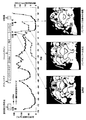
57才の日本人女性(以下、患者という)は、気管支鏡検査及び縦隔鏡検査で縦隔リンパ節転移によりLADCと診断された。この患者は、シスプラチンとビノレルビンの同時放射線化学療法を受け、部分応答を示した。しかしながら、2年後に多発性骨転移を引き起こしていた。この患者は、ゲフィニチブ、ペメトレキセド、ドセタキセル、ジェムシタビン、及びS-1からなる2回目から6回目までの化学療法を受けた。6回目の化学療法の際、右頸部リンパ節症を発症した(図1左、矢印参照)。即ち、いくつかの化学療法を受けた後に、LADCを再発している。
この患者は、RT-PCR(reverse transcription-polymerase chain reaction)を用いたCCDC6-RETの検出に基づき、発明者らによる医師主導臨床試験LURET(Lung Cancer with RET Rearrangement Study;臨床試験登録番号:UMIN000010095)に登録された。
毎日300mgバンデタニブの投与を開始して、3か月後に腫瘍サイズは縮小した(図1真中、矢印参照)ものの、投与開始6か月後に別の頸部リンパ節症を発症し、LADCを再発した(図1右、矢印参照)。
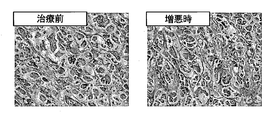
バンデタニブ治療前のリンパ節、及び進行したリンパ節をヘマトキシリン/イオシン染色した生検標本の組織学的解析から、再発した腫瘍は、バンデタニブ治療前の腫瘍と同様の組織学的特徴を有していた(図2参照)。
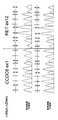
バンデタニブ治療前のリンパ節、及び進行したリンパ節から得られたRT-PCR産物におけるサンガー法を用いたシークエンス解析により、両者は、CCDC6のエクソン1がRETのエクソン15に連結している融合CCDC6-RETの転写産物を有していた(図3参照)。
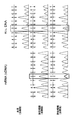
更に、バンデタニブ治療前の末梢血、及び進行した末梢血から得られたゲノムDNA及びRT-PCR産物におけるサンガー法を用いたシークエンス解析により、進行した末梢血にのみ、2902番目のシトシンがチミンに変異していることが明らかとなった。この変異は、再発した腫瘍のRETアレルで生じ、コドン904のセリンからフェニルアラニンへの置換(S904F)をもたらしていることが確認された(図4参照)。
57才の日本人女性(以下、患者という)は、気管支鏡検査及び縦隔鏡検査で縦隔リンパ節転移によりLADCと診断された。この患者は、シスプラチンとビノレルビンの同時放射線化学療法を受け、部分応答を示した。しかしながら、2年後に多発性骨転移を引き起こしていた。この患者は、ゲフィニチブ、ペメトレキセド、ドセタキセル、ジェムシタビン、及びS-1からなる2回目から6回目までの化学療法を受けた。6回目の化学療法の際、右頸部リンパ節症を発症した(図1左、矢印参照)。即ち、いくつかの化学療法を受けた後に、LADCを再発している。
この患者は、RT-PCR(reverse transcription-polymerase chain reaction)を用いたCCDC6-RETの検出に基づき、発明者らによる医師主導臨床試験LURET(Lung Cancer with RET Rearrangement Study;臨床試験登録番号:UMIN000010095)に登録された。
毎日300mgバンデタニブの投与を開始して、3か月後に腫瘍サイズは縮小した(図1真中、矢印参照)ものの、投与開始6か月後に別の頸部リンパ節症を発症し、LADCを再発した(図1右、矢印参照)。
バンデタニブ治療前のリンパ節、及び進行したリンパ節をヘマトキシリン/イオシン染色した生検標本の組織学的解析から、再発した腫瘍は、バンデタニブ治療前の腫瘍と同様の組織学的特徴を有していた(図2参照)。
バンデタニブ治療前のリンパ節、及び進行したリンパ節から得られたRT-PCR産物におけるサンガー法を用いたシークエンス解析により、両者は、CCDC6のエクソン1がRETのエクソン15に連結している融合CCDC6-RETの転写産物を有していた(図3参照)。
更に、バンデタニブ治療前の末梢血、及び進行した末梢血から得られたゲノムDNA及びRT-PCR産物におけるサンガー法を用いたシークエンス解析により、進行した末梢血にのみ、2902番目のシトシンがチミンに変異していることが明らかとなった。この変異は、再発した腫瘍のRETアレルで生じ、コドン904のセリンからフェニルアラニンへの置換(S904F)をもたらしていることが確認された(図4参照)。
[実施例2]
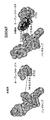
バンデタニブと複合体を形成したRETキナーゼの共結晶を用いた結晶構造解析の結果から、バンデタニブと複合体を形成した非変異RET及びS904F変異RETの動的構造をシミュレートした。50ns×15回のシミュレーションで観察された平均2ナノ秒の構造を重ね合わせ、F735、S/F904、及びバンデタニブに注目した(図5参照)。
構造解析の結果から、RETキナーゼドメインにおけるグリシンリッチループ(GRL)、特にフェニルアラニン735の側鎖が、ATP結合能を制御していることが明らかとなった。このATP結合能の制御は、ATP結合能を有するオープンフォームとATP結合不能のクローズドフォームの2つの選択的な立体構造異性体を形成することにより行われることが明らかとなった。そして、バンデタニブと複合体を形成したRETキナーゼドメインの分子動態シミュレーション結果から、S904F変異体は、新規の立体構造異性体を形成することが示された(図5及び9参照)。
バンデタニブと複合体を形成したRETキナーゼの共結晶を用いた結晶構造解析の結果から、バンデタニブと複合体を形成した非変異RET及びS904F変異RETの動的構造をシミュレートした。50ns×15回のシミュレーションで観察された平均2ナノ秒の構造を重ね合わせ、F735、S/F904、及びバンデタニブに注目した(図5参照)。
構造解析の結果から、RETキナーゼドメインにおけるグリシンリッチループ(GRL)、特にフェニルアラニン735の側鎖が、ATP結合能を制御していることが明らかとなった。このATP結合能の制御は、ATP結合能を有するオープンフォームとATP結合不能のクローズドフォームの2つの選択的な立体構造異性体を形成することにより行われることが明らかとなった。そして、バンデタニブと複合体を形成したRETキナーゼドメインの分子動態シミュレーション結果から、S904F変異体は、新規の立体構造異性体を形成することが示された(図5及び9参照)。
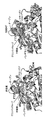
次いで、非変異CCDC6-RETタンパク質全長、又はS904F CCDC6-RETタンパク質全長におけるイムノブロット解析を行った。非変異CCDC6-RET cDNAをコードする発現ベクター、及びS904F CCDC6-RETcDNAをコードする発現ベクターをそれぞれ内在性のRETを発現してないH1299肺がん細胞に導入した。このトランスフェクタントをバンデタニブに暴露した。0、0.1、0.5、1.0、5.0、又は10μMのバンデタニブ処理6時間後のチロシン905及びチロシン1015のリン酸化レベルを決定した(図6参照)。CCDC6-RETタンパク質全量に対するリン酸化CCDC6-RETタンパク質の割合を底に示す(図6参照)。
S904F変異体を強制発現させた培養細胞において、融合CCDC6-RETのチロシン905の自己リン酸化は、高濃度のバンデタニブを添加しても維持されていた。S904FのIC50は、非変異体のIC50より遥かに高く、1μM以上だった(図6参照)。
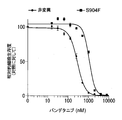
精製したS904F変異体のRETキナーゼドメイン、及び精製した非変異RETキナーゼドメインを用いて、5μMのATPの存在下で30分間、3連で酵素の動態解析を行った(図7参照)。In vitroキナーゼアッセイの結果、S904F変異体のバンデタニブに対するIC50は、608nMであり、非変異体のIC5056nMより10倍以上高かった(図7参照)。
次いで、非変異RETタンパク質全長、又はS904F RETタンパク質全長を安定的に発現するBa/F3細胞のバンデタニブ処置後の生存率を調べた(図8参照)。図8に示されるように、S904F変異体を発現するBa/F3細胞は、WTを発現するBa/F3細胞よりバンデタニブに対して非感受性を示した。
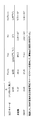
図6~8における結果から、RET-S904F変異がバンデタニブ抵抗性の原因であることが示唆された。また、in vitroキナーゼアッセイやBa/F3細胞を用いた薬剤感受性試験において、IC50、GI50値を測定すると、RET-S904F変異体は、バンデタニブのみならず、カボサンチニブ、ポナチニブ、レンバチニブ、アレクチニブにも抵抗性を示した(図11参照)。
図5に示されるように、Intermediateと命名された新規立体構造異性体は、GRLのF735の側鎖の薬剤結合部位に向けた突出によって特徴づけられている。 次いで、非変異RETとS904F変異体におけるバンデタニブとF735の間の相互作用を演繹した(図9参照)。50ns×15のシミュレーションから生じさせたF735とバンデタニブの平均構造をthick stickとコリー-ポーリング-コルタンの空間充填モデルで表した(図9参照)。15の軌道において観察された全ての構造を用いたところ、F735における炭素原子ζと7バンデタニブにおけるメチル基の炭素原子間の原子間距離は、オープン/クローズド立体構造異性体における非変異体、オープン/クローズド立体構造異性体におけるS904F変異体、及びIntermediate立体構造異性体におけるS904F変異体、それぞれにおいて、14.8±3.8Å、13.9±4.0Å、5.1±0.9Åであった。
次いで、精製したS904F変異体のRETキナーゼドメイン、及び精製した非変異RETキナーゼドメインを用いて、ATPの濃度を3.125~400nMまで上昇させてin vitroキナーゼアッセイを行った(図10参照)。得られたデータをミカエリス-メンテンの方程式にあてはめ、Km[ATP]を算出した。非変異RETキナーゼドメインのKm[ATP]は、38.11μMであり、S904F変異体のRETキナーゼドメインのKm[ATP]は、27.25μMであった。
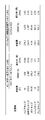
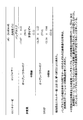
更に、非変異RETタンパク質とS904F変異RETタンパク質の酵素学的動態とバンデタニブの阻害定数を算出した(図12参照)。精製したS904F変異キナーゼドメインは、非変異体よりも、ATPに対してより低い解離定数(Km[ATP])とより高い触媒定数(Kcat)を有していた。S904F変異体におけるATP親和性の増加は、バンデタニブを含む多数のATP拮抗阻害剤に対する抵抗性と一致している(図11参照。)。
更に、非変異RETタンパク質とS904F変異RETタンパク質の酵素学的動態とバンデタニブの阻害定数を算出した(図12参照)。精製したS904F変異キナーゼドメインは、非変異体よりも、ATPに対してより低い解離定数(Km[ATP])とより高い触媒定数(Kcat)を有していた。S904F変異体におけるATP親和性の増加は、バンデタニブを含む多数のATP拮抗阻害剤に対する抵抗性と一致している(図11参照。)。
[実施例3]
図13に、バンデタニブと複合体を形成したRETキナーゼのコンフォメーションにおける自由エネルギー(ΔG)を示す。算出された自由結合エネルギー(ΔG)から、Intermediate立体構造異性体(図13中、Intermediate)におけるRETキナーゼドメインに対するバンデタニブの親和性は、オープン/クローズド立体構造異性体における親和性より顕著に低いことが示唆された。このことは、バンデタニブに対するS904Fの阻害定数(Ki)が非変異体のKiより高いことと一致している(図12参照)。
図13に、バンデタニブと複合体を形成したRETキナーゼのコンフォメーションにおける自由エネルギー(ΔG)を示す。算出された自由結合エネルギー(ΔG)から、Intermediate立体構造異性体(図13中、Intermediate)におけるRETキナーゼドメインに対するバンデタニブの親和性は、オープン/クローズド立体構造異性体における親和性より顕著に低いことが示唆された。このことは、バンデタニブに対するS904Fの阻害定数(Ki)が非変異体のKiより高いことと一致している(図12参照)。
[実施例4]
図14に、ロングタイムスケール(1μs)の分子動態シミュレーションによるバンデタニブと複合体を形成した非変異体とS904F変異体の間の構造的差異を示す。E734、F735、R770、D771、S/F904、pY905、K907、R912、及びバンデタニブの平均構造を1μs×3回のシミュレーションにより創出し、thick stickで表した。904残基におけるセリンからフェニルアラニンへの置換は、R912を含むアクチベーションループの柔軟性を減少させた。このS904F変異体の動力学的特徴は、E734-R912間の水素結合の形成をもたらした。このように、Intermediate立体構造異性体は、バンデタニブと相互作用するS904F変異によって引き起こされたアロステリックな構造変化によって生み出されたことが示された。Intermediate立体構造異性体は、この異常な水素結合ネットワークにより安定化されている。
特に、このシミュレーションによれば、E734、D771、及びR912からなる水素結合のネットワーク構造は、オープン/クローズド立体構造異性体の形成に重要であり、WT(非変異体)とS904F変異体の間で異なっていることが示された。
図14に、ロングタイムスケール(1μs)の分子動態シミュレーションによるバンデタニブと複合体を形成した非変異体とS904F変異体の間の構造的差異を示す。E734、F735、R770、D771、S/F904、pY905、K907、R912、及びバンデタニブの平均構造を1μs×3回のシミュレーションにより創出し、thick stickで表した。904残基におけるセリンからフェニルアラニンへの置換は、R912を含むアクチベーションループの柔軟性を減少させた。このS904F変異体の動力学的特徴は、E734-R912間の水素結合の形成をもたらした。このように、Intermediate立体構造異性体は、バンデタニブと相互作用するS904F変異によって引き起こされたアロステリックな構造変化によって生み出されたことが示された。Intermediate立体構造異性体は、この異常な水素結合ネットワークにより安定化されている。
特に、このシミュレーションによれば、E734、D771、及びR912からなる水素結合のネットワーク構造は、オープン/クローズド立体構造異性体の形成に重要であり、WT(非変異体)とS904F変異体の間で異なっていることが示された。
[実施例5]
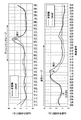
図15に、バンデタニブと複合体を形成したRETの715~745残基と900~935残基における主鎖Cα原子のゆらぎの標準偏差(Root-mean-square fluctuation;RMSF)を示す。RMSF値は、1μs×3の分子動力学的軌道を用いて計算した。S904F変異は、アクチベーションループ(位置は矢で示す)における910~915残基における柔軟性を減少させたことに加えて、グリシンリッチループ(GRL)における733~735残基における柔軟性を減少させた。図14に示されるように、S904F変異体の異常な分子動態の特徴から、E734に隣接するF735の側鎖が突出することにより、水素結合ネットワークが変形し、薬剤に対する親和性が減少している。また、バンデタニブとの共結晶構造を鋳型にして行ったシミュレーション実験では、S904F変異体において、グリシンリッチループや活性型ループ上に相互作用を示す変化が認められ、変異に伴ってキナーゼの安定性に変化が生じていることが示された(図示せず)。一方、ATPとの組み合わせでは変異による変化は認められなかった(図示せず)。
図15に、バンデタニブと複合体を形成したRETの715~745残基と900~935残基における主鎖Cα原子のゆらぎの標準偏差(Root-mean-square fluctuation;RMSF)を示す。RMSF値は、1μs×3の分子動力学的軌道を用いて計算した。S904F変異は、アクチベーションループ(位置は矢で示す)における910~915残基における柔軟性を減少させたことに加えて、グリシンリッチループ(GRL)における733~735残基における柔軟性を減少させた。図14に示されるように、S904F変異体の異常な分子動態の特徴から、E734に隣接するF735の側鎖が突出することにより、水素結合ネットワークが変形し、薬剤に対する親和性が減少している。また、バンデタニブとの共結晶構造を鋳型にして行ったシミュレーション実験では、S904F変異体において、グリシンリッチループや活性型ループ上に相互作用を示す変化が認められ、変異に伴ってキナーゼの安定性に変化が生じていることが示された(図示せず)。一方、ATPとの組み合わせでは変異による変化は認められなかった(図示せず)。
本発明において、RET TKIを処置された患者に生じたがんにおけるRETの2次変異が初めて見いだされた。S904F変異は、薬剤耐性に関連する新規の変異である。この変異は、新たな立体構造異性体を生み出し、係る立体構造異性体は、多くのアロステリック効果を仲介し、バンデタニブの結合を不安定化させ、ATPに対する親和性を増加させている。特に、新規の立体構造異性体は、変異RETタンパク質がバンデタニブと相互作用しているときのみ生じたものと考えられる。
よって、構造変化が薬剤不存在下でも生じている他の薬剤耐性キナーゼと異なり、本発明で見いだされたRET変異は、薬剤と相互作用したときにのみ、構造変化をもたらし、薬剤耐性に導くものと考えられる。
よって、構造変化が薬剤不存在下でも生じている他の薬剤耐性キナーゼと異なり、本発明で見いだされたRET変異は、薬剤と相互作用したときにのみ、構造変化をもたらし、薬剤耐性に導くものと考えられる。
肺がんにおいて、EGFRチロシンキナーゼ遺伝子の治療抵抗性変異を検出し、陽性例に抵抗性を克服する薬剤を投与するという、検査を含めた臨床試験が進行している。このような個別化治療法は、今後多くの分子標的治療において広く行われるものと考えられる。
本発明において見出した2次変異は、複数のRETチロシンキナーゼ阻害剤への治療抵抗性に関わることが推察される。また、甲状腺がんの治療においても、RETチロシンキナーゼ阻害剤が使われることを考慮すると、RETチロシンキナーゼ阻害剤を用いたがん個別化治療において、同様の産業上の展開が見込まれる。RETチロシンキナーゼ阻害剤は、国内外の製薬企業で精力的に開発が進められており、既にFDA承認薬が複数存在する。今後、治療抵抗性を克服できる薬剤が見出される可能性が高いことから、本発明は、産業上の利用価値が極めて高いものと考えられる。
本発明において見出した2次変異は、複数のRETチロシンキナーゼ阻害剤への治療抵抗性に関わることが推察される。また、甲状腺がんの治療においても、RETチロシンキナーゼ阻害剤が使われることを考慮すると、RETチロシンキナーゼ阻害剤を用いたがん個別化治療において、同様の産業上の展開が見込まれる。RETチロシンキナーゼ阻害剤は、国内外の製薬企業で精力的に開発が進められており、既にFDA承認薬が複数存在する。今後、治療抵抗性を克服できる薬剤が見出される可能性が高いことから、本発明は、産業上の利用価値が極めて高いものと考えられる。
Claims (4)
- RETチロシンキナーゼ阻害剤を用いた治療を受けた患者由来の試料における前記RETチロシンキナーゼの2次変異の検出方法であって、
前記試料中のRETチロシンキナーゼのS904F変異を検出する工程を有することを特徴とする2次変異の検出方法。 - 前記RETチロシンキナーゼは、RET融合キナーゼである請求項1に記載の2次変異の検出方法。
- RETチロシンキナーゼ阻害剤を用いた治療を受けた患者由来の試料における前記RETチロシンキナーゼの2次変異を検出するためのキットであって、
RETチロシンキナーゼのS904Fを含むアミノ酸配列をコードする遺伝子を増幅するためのプライマーセット、前記遺伝子の増幅産物又はmRNAに特異的にハイブリダイズするプローブ、及びS904F特異的結合物質からなる群から選ばれる少なくとも一種を含むことを特徴とする2次変異検出キット。 - 前記RETチロシンキナーゼは、RET融合キナーゼである請求項3に記載の2次変異検出キット。
Applications Claiming Priority (2)
| Application Number | Priority Date | Filing Date | Title |
|---|---|---|---|
| JP2016-048319 | 2016-03-11 | ||
| JP2016048319 | 2016-03-11 |
Publications (1)
| Publication Number | Publication Date |
|---|---|
| WO2017155044A1 true WO2017155044A1 (ja) | 2017-09-14 |
Family
ID=59789630
Family Applications (1)
| Application Number | Title | Priority Date | Filing Date |
|---|---|---|---|
| PCT/JP2017/009501 Ceased WO2017155044A1 (ja) | 2016-03-11 | 2017-03-09 | 2次変異検出方法、及び2次変異検出キット |
Country Status (1)
| Country | Link |
|---|---|
| WO (1) | WO2017155044A1 (ja) |
Cited By (2)
| Publication number | Priority date | Publication date | Assignee | Title |
|---|---|---|---|---|
| CN113388680A (zh) * | 2020-03-14 | 2021-09-14 | 复旦大学附属妇产科医院 | 上皮性卵巢癌靶点ret及其在诊断和治疗中的作用 |
| WO2023234222A1 (ja) * | 2022-06-01 | 2023-12-07 | 国立研究開発法人国立がん研究センター | Retキナーゼ阻害剤によるがん治療の有効性を判定する方法 |
-
2017
- 2017-03-09 WO PCT/JP2017/009501 patent/WO2017155044A1/ja not_active Ceased
Non-Patent Citations (7)
| Title |
|---|
| CASELLA, FRANCE SCA ET AL.: "Clinical impact of RET genetic screening of in the management of medullary thyroid carcinoma (MTC) patients: 20 years of experience", EUROPEAN THYROID JOURNAL, vol. 3, no. Suppl 1, 2014, pages 81, ISSN: 2235-0640 * |
| COSCI, B ET AL.: "In silico and in vitro analysis of rare germline allelic variants of RET oncogene associated with medullary thyroid cancer", ENDOCRINE-RELATED CANCER, vol. 18, 2011, pages 603 - 612, XP055421765, ISSN: 1351-0088 * |
| ELISEI, R ET AL.: "Not all new RET mutations show transforming activity when analyzed by in silico and in vitro assays", EUROPEAN THYROID JOURNAL, 2011, pages 98, ISSN: 2235-0640 * |
| ELISEI, ROSSELLA ET AL.: "Not all new RET mutations show transforming activity when analyzed by in silico and in vitro assays", ENDOCRINE SOCIETY, 2011, pages l-718, XP055421730, ISSN: 0163-769X * |
| GEORGE PRIYA DOSS, C. ET AL.: "In silico profiling and structural insights of missense mutations in RET protein kinase domain by molecular dynamics and docking approach", MOL. BIOSYST., vol. 10, 2014, pages 421 - 436, XP055421725, ISSN: 1742-2051 * |
| KNOWLES, PHILLIP P. ET AL.: "Structure and Chemical Inhibition of the RET Tyrosine Kinase Domain", J. BIOL. CHEM., vol. 281, no. 44, 2006, pages 33577 - 33587, XP055421767, ISSN: 1083-351X * |
| MOTONOBU SAITO ET AL.: "Haigan ni Okeru Driver Idenshi no Saishin Chiken", ANNUAL REVIEW KOKYUKI, 30 January 2016 (2016-01-30), pages 50 - 56 * |
Cited By (3)
| Publication number | Priority date | Publication date | Assignee | Title |
|---|---|---|---|---|
| CN113388680A (zh) * | 2020-03-14 | 2021-09-14 | 复旦大学附属妇产科医院 | 上皮性卵巢癌靶点ret及其在诊断和治疗中的作用 |
| CN113388680B (zh) * | 2020-03-14 | 2023-07-04 | 复旦大学附属妇产科医院 | 上皮性卵巢癌靶点ret及其在诊断和治疗中的作用 |
| WO2023234222A1 (ja) * | 2022-06-01 | 2023-12-07 | 国立研究開発法人国立がん研究センター | Retキナーゼ阻害剤によるがん治療の有効性を判定する方法 |
Similar Documents
| Publication | Publication Date | Title |
|---|---|---|
| JP7855659B2 (ja) | 循環腫瘍dnaの個別化された検出を用いる癌検出およびモニタリングの方法 | |
| Wheeler et al. | Molecular features of cancers exhibiting exceptional responses to treatment | |
| JP7256840B2 (ja) | ネオモルフィックsf3b1変異体に関連するスプライスバリアント | |
| Nowak et al. | Detection of mismatch repair deficiency and microsatellite instability in colorectal adenocarcinoma by targeted next-generation sequencing | |
| Collins et al. | Towards precision medicine in the clinic: from biomarker discovery to novel therapeutics | |
| Uzilov et al. | Development and clinical application of an integrative genomic approach to personalized cancer therapy | |
| Crowley et al. | Liquid biopsy: monitoring cancer-genetics in the blood | |
| JP7189401B2 (ja) | インサイチュ増幅により無細胞核酸分子を調製する方法 | |
| Li et al. | Large-Scale screening and molecular characterization of EML4-ALK fusion variants in archival non–small-cell lung cancer tumor specimens using quantitative reverse transcription polymerase chain reaction assays | |
| Spindler et al. | The importance of KRAS mutations and EGF61A> G polymorphism to the effect of cetuximab and irinotecan in metastatic colorectal cancer | |
| JP6254630B2 (ja) | Raf及びmek阻害剤に対する耐性を与えるmek1変異 | |
| US20140134158A1 (en) | Kras mutations and resistance to anti-egfr treatment | |
| JP2017516463A (ja) | Fgfr融合体 | |
| Gang et al. | Strategy to targeting the immune resistance and novel therapy in colorectal cancer | |
| Gallant et al. | Established, emerging and elusive molecular targets in the treatment of lung cancer | |
| WO2016054627A1 (en) | Biomarkers of bruton tyrosine kinase inhibitor resistance | |
| Yang et al. | Programmable One-Pot enzymatic reaction for direct fluorescence detection of Ultralow-Abundance mutations in the DNA duplex | |
| Isaacson et al. | Urothelial carcinoma with an NRF1-BRAF rearrangement and response to targeted therapy | |
| JP7128270B2 (ja) | 免疫療法に対する悪性疾患の応答性を決定するための方法 | |
| JP6858563B2 (ja) | Braf変異検出によるegfr阻害剤の効果予測 | |
| CN107148481A (zh) | 用于确定患有braf‑阳性癌症的患者为braf抑制剂非响应者且为mapk/erk抑制剂响应者的工具和方法 | |
| Li et al. | Molecular profiling reveals the malignant potential in solid pseudopapillary neoplasms of the pancreas | |
| US20220145403A1 (en) | Method of classifying a sample based on determination of fgfr | |
| Pezzuto et al. | What information could the main actors of liquid biopsy provide?—A representative case of non-small cell lung cancer (NSCLC) | |
| US10100366B2 (en) | Methods of detecting cancers sensitive to cabozantinib |
Legal Events
| Date | Code | Title | Description |
|---|---|---|---|
| NENP | Non-entry into the national phase |
Ref country code: DE |
|
| 121 | Ep: the epo has been informed by wipo that ep was designated in this application |
Ref document number: 17763384 Country of ref document: EP Kind code of ref document: A1 |
|
| 122 | Ep: pct application non-entry in european phase |
Ref document number: 17763384 Country of ref document: EP Kind code of ref document: A1 |
|
| NENP | Non-entry into the national phase |
Ref country code: JP |