WO2017126109A1 - 情報管理システム及び情報管理方法 - Google Patents
情報管理システム及び情報管理方法 Download PDFInfo
- Publication number
- WO2017126109A1 WO2017126109A1 PCT/JP2016/051869 JP2016051869W WO2017126109A1 WO 2017126109 A1 WO2017126109 A1 WO 2017126109A1 JP 2016051869 W JP2016051869 W JP 2016051869W WO 2017126109 A1 WO2017126109 A1 WO 2017126109A1
- Authority
- WO
- WIPO (PCT)
- Prior art keywords
- patient
- factor information
- information
- factor
- extracted
- Prior art date
- Legal status (The legal status is an assumption and is not a legal conclusion. Google has not performed a legal analysis and makes no representation as to the accuracy of the status listed.)
- Ceased
Links
Images


Classifications
-
- G—PHYSICS
- G16—INFORMATION AND COMMUNICATION TECHNOLOGY [ICT] SPECIALLY ADAPTED FOR SPECIFIC APPLICATION FIELDS
- G16H—HEALTHCARE INFORMATICS, i.e. INFORMATION AND COMMUNICATION TECHNOLOGY [ICT] SPECIALLY ADAPTED FOR THE HANDLING OR PROCESSING OF MEDICAL OR HEALTHCARE DATA
- G16H10/00—ICT specially adapted for the handling or processing of patient-related medical or healthcare data
- G16H10/60—ICT specially adapted for the handling or processing of patient-related medical or healthcare data for patient-specific data, e.g. for electronic patient records
-
- G—PHYSICS
- G16—INFORMATION AND COMMUNICATION TECHNOLOGY [ICT] SPECIALLY ADAPTED FOR SPECIFIC APPLICATION FIELDS
- G16H—HEALTHCARE INFORMATICS, i.e. INFORMATION AND COMMUNICATION TECHNOLOGY [ICT] SPECIALLY ADAPTED FOR THE HANDLING OR PROCESSING OF MEDICAL OR HEALTHCARE DATA
- G16H70/00—ICT specially adapted for the handling or processing of medical references
- G16H70/60—ICT specially adapted for the handling or processing of medical references relating to pathologies
Definitions
- the present invention relates to an information management system capable of improving the treatment efficiency of a patient, and more particularly to an information management system capable of improving the treatment efficiency of a patient having a psychiatric disorder symptom.
- the patient's personal information, symptoms, test results, etc. can be recorded in electronic medical records for internal medicine and surgery.
- electronic medical records for psychiatric use are basically simple applications of internal medical and surgical electronic medical records, but special items such as records of isolation and restraint, life episodes, etc.
- electronic medical record that includes a free input field in which can be recorded in text (for example, Patent Document 2).
- JP 2000-235577 A Japanese Patent Laid-Open No. 2015-069348
- the present invention has been made to solve the above-described problems, and an object of the present invention is to provide an information management system and an information management method that can greatly improve the treatment efficiency for patients, particularly patients with psychiatric symptoms.
- the present invention provides an information management system and an information management method described in the following section.
- Item 1 An analysis unit that extracts factor information related to the patient's disease from medical record information about the patient; A factor information storage unit that stores the factor information extracted by the analysis unit in association with the patient; A factor information search unit that outputs the factor information corresponding to the patient specified in the search request when receiving a search request; The information management system according to claim 1, wherein the factor information includes at least one factor information related to a life background of the patient and / or at least one factor information related to a living environment after discharge from the patient.
- Item 2. Item 2.
- the psychiatric information management system according to Item 1, wherein the factor information related to the life background includes at least one of information on presence / absence of bullying, presence / absence of abuse, divorce experience, final educational background, and work experience.
- Item 3. A similar case search unit for searching for a case of a patient whose factor information is similar to the patient specified by external input; The similar case search unit extracts the factor information associated with the designated patient from the factor information storage unit, and at least a part of the held factor information matches the extracted factor information.
- Item 3. The information management system according to Item 1 or 2, which extracts factor information of patients.
- the information management system according to Item 3, wherein the similar case search unit extracts, from the stored factor information, other patients whose at least one factor information related to a patient's life background matches the extracted factor information. .
- Item 4. The information according to Item 3, wherein the similar case search unit extracts other patients whose at least one factor information related to the post-discharge living environment matches the extracted factor information among the factor information held. Management system.
- Item 6. Item 6. The information management system according to any one of Items 1 to 5, wherein the factor information storage unit stores the factor information in association with a patient ID of the patient.
- the information management method according to claim 1, wherein the factor information includes at least one factor information relating to a patient's life background and / or at least one factor information relating to a patient's life environment after discharge.
- the factor information associated with the designated patient is extracted from the factor information stored in the factor information storage step, and at least a part of the held factor information is extracted.
- Item 8. The information management method according to Item 7, wherein factor information of another patient that matches the factor information is extracted.
- Item 9. Item 9. The information management method according to Item 7 or 8, wherein, in the factor information storage step, the factor information is stored in association with the patient ID of the patient.
- the present invention it is possible to provide an information management system and an information management method that can greatly improve the treatment efficiency for patients, particularly patients with psychiatric symptoms.
- FIG. 1 It is a schematic diagram which shows the structure of the psychiatric information management system of embodiment of this invention. It is a specific example of factor information. It is a figure explaining the extraction method of factor information. It is a specific example of extraction of factor information by text mining, (a) is text data regarding a certain patient, (b) is factor information extracted from this text data. It is an example of the factor information of a certain patient. It is a list of similar cases. It is a specific example of a screen of a patient's treatment difficulty level, nursing difficulty level, and discharge difficulty level.
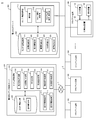
- FIG. 1 is a schematic diagram showing a configuration of a psychiatric information management system 1 according to the present embodiment.
- the psychiatric information management system 1 includes a client terminal 100, an electronic medical record server 200, and a psychiatric data processing server 300.
- the client terminal 100 is a terminal operated by a user such as a doctor or a nurse, and one or a plurality of client terminals 100 are provided in a hospital to which the user belongs.
- the client terminal 100 is configured by, for example, a general-purpose personal computer or a portable terminal such as a tablet, and includes an input device 110, a display device 120, and an information processing device 130.
- the input device 110 includes a keyboard, a mouse, a touch panel, and the like that accept operation input and data input from the user.
- the display device 120 is configured by a liquid crystal monitor or the like, and displays a screen for data input by the input device 110, a screen showing a search result of factor information described later, a result of difficulty, and the like.
- the information processing device 130 includes a CPU, a hard disk device, a memory, and the like (not shown), and performs various information processing and communication processing according to operations from the input device 110 and the like.
- a doctor who has examined a psychiatric patient activates a program for displaying an electronic medical record to display a screen of the electronic medical record on the display device 120, and displays the patient's symptom / disease name via the input device 110. Enter the medical practice given to the patient.
- the input information is transmitted from the client terminal 100 to the electronic medical record server 200 as medical chart information.
- medical record information is classified into medical record data, prescription information data, nursing record data, mental health worker (PSW) record data, and test result data.
- PGW mental health worker
- the medical record data is data such as a patient's symptom / disease name and medical practice performed on the patient, which is input by a doctor at the time of a medical examination through the input device 110.
- the medical record data is usually recorded in an irregular text format, not in a fixed format.
- Prescription record data is information on medicines prescribed to patients.
- the nursing record data is data in which a nurse records the status of sleep disorder or suicide attempt about an inpatient via the input device 110.
- psychiatric nursing record data does not fit in a certain format, and is often recorded in the style of each recorder.
- the PSW record data is data that records the contents heard when receiving a consultation from a patient, such as the patient's life history / environment, the presence / absence of a key person who supports the patient, and the like.
- Test result data is data that records the results of various tests performed on patients. Specifically, the results of various blood tests and X-ray and CT scan images correspond to the test result data.
- the electronic medical record screen can be input in a free format. It has a column.
- the amount of information entered in this input field sometimes becomes enormous as it reaches several tens of pages, and the items described here are important information for determining a treatment method and a nursing method.
- the electronic medical record server 200 is installed in the hospital and is connected to the client terminal 100 so as to be communicable via the LAN 2, for example.
- the connection between the electronic medical record server 200 and the client terminal 100 may be a wired connection or a wireless connection.
- the electronic medical record server 200 includes a medical record information processing unit 210 and a medical record information storage unit 220.
- the medical record information processing unit 210 is a functional block realized by the CPU executing an electronic medical record program stored therein, and includes a medical record information search / reference unit 211, a medical record information update unit 212, and an analysis unit 213. Yes.
- the medical record information storage unit 220 is constituted by, for example, a hard disk device, and stores medical record information related to a psychiatric patient.
- the chart information storage unit 220 stores a medical record database 221, a prescription record database 222, a nursing record database 223, a mental health welfare person (PSW) record database 224, and a test result database 225 as chart information. Yes.
- Each of these databases 221 to 225 is obtained by converting the above-mentioned medical record data, prescription information data, nursing record data, PSW record data, and test result data relating to a patient who has undergone medical examination / treatment in a hospital into a beta base. .
- the chart information search / reference unit 211 has a function of searching and referring to the chart information stored in the chart information storage unit 220 in response to a request from the client terminal 100. Specifically, when the user operates the input device 110 at the client terminal 100, the initial screen of the electronic medical record is displayed on the display device 120 in accordance with the format stored in the storage area of the information processing device 130. Subsequently, when the user designates a patient number or the like on the initial screen, the information processing apparatus 130 transmits a request for referring to the patient's medical record information corresponding to the designated patient number to the electronic medical record server 200.
- the chart information search / reference unit 211 accesses each of the databases 221 to 225 stored in the chart information storage unit 220, searches the chart information of the requested patient, and sends the search result to the client terminal. To 100. As a result, the patient chart information corresponding to the designated patient number is displayed on the display device 120.
- the display device 120 may display all the data of the medical record information collectively, or by switching the screen, each data of the medical record information (medical record data, prescription record data, nursing record data, PSW record data, Inspection result data) may be displayed one by one.
- each data of the medical record information (medical record data, prescription record data, nursing record data, PSW record data, Inspection result data) may be displayed one by one.
- the chart information update unit 212 has a function of updating the chart information stored in the chart information storage unit 220. Specifically, when the chart information is transmitted from the client terminal 100, the chart information update unit 212 receives the chart information and stores it as text data in the chart information storage unit 220 according to the classification of the chart information data. Specifically, the medical record information update unit 212 stores the medical record information, prescription information data, nursing record data, PSW record data, and test result data of the received medical record information, respectively, as a medical record database 221, a prescription record database 222, and a nursing record. The information is added to the recording database 223, the PSW recording database 224, and the inspection result database 225.
- the recorded contents in each of the databases 221 to 225 are given a predetermined electronic medical record tag or electronic medical record code for each recorded content.
- a predetermined electronic medical record tag or electronic medical record code for each recorded content.
- the electronic medical record tag / electronic medical record code By using the electronic medical record tag / electronic medical record code, rapid processing can be performed.
- a search index may be attached.
- the analysis unit 213 has a function of extracting factor information of symptoms of the psychiatric patient from the medical record information stored in the medical record information storage unit 220. Details of the function of the analysis unit 213 will be described later.
- the psychiatric data processing server 300 is installed in, for example, an external organization that manages information related to psychiatric medical care, and is accessible from one or more hospitals affiliated with the external organization.
- the electronic medical record server 200 and the client terminal 100 are communicably connected to the psychiatric data processing server 300 via the LAN 2 and the Internet 3.
- the psychiatric data processing server 300 includes a factor information processing unit 310 and a factor information storage unit 320.
- the factor information processing unit 310 is a functional block realized by the CPU executing a factor information processing program stored therein.
- the factor information acquisition unit 311, the factor information search unit 312, the specific case search unit 313, and the like A case search unit 314, a difficulty level setting unit 315, a best practice (PB) extraction unit 316, a hospitalization period prediction unit 317, and a readmission rate prediction unit 318 are provided. The functions of these units will be described later.
- the factor information storage unit 320 is configured by, for example, a hard disk device, and stores factor information extracted by the analysis unit 213 of the electronic medical record server 200 as a factor information database 321.
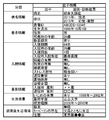
- the factor information is a summary of information related to the illness of the psychiatric patient, and is an element that determines a treatment / nursing method for the patient. A specific example of the factor information is shown in FIG.
- the factor information is information including factors that are items related to the disease such as disease names and symptoms, and the responses and diagnosis results of the patients for each factor.
- the factor information includes information on disease name information, patient information, hospitalization information, drug information, a patient's life background, and a post-discharge living environment.
- information on disease name information, patient information, hospitalization information, and drug information is included as factor information.
- the disease name information is information indicating the patient's disease name and symptoms
- the patient information is information indicating the patient ID, date of birth, sex, age at first onset, tendency to refuse drugs, etc.
- the hospitalization information is the number of days of hospitalization.
- the patient ID may be the same as the patient number in the electronic medical record server, or may be different from the patient number for personal information protection and security. When the patient ID is different from the patient number, it is necessary to store a table showing the correlation between the patient number and the patient ID for each hospital / facility, for example.
- the factor information further includes information on the life background of the patient and the living environment after discharge.
- Factor information on the patient's life background is, for example, whether or not bullying or mistreatment of the patient, the patient's divorce experience, the patient's final education and working experience, etc.
- Factor information on the post-discharge life environment includes, for example, the patient's occupation, The existence of key persons (guardians, etc.) and residences.
- the factor information shown in FIG. 2 is an example, and is not particularly limited as long as it is information related to a disease.
- the factor information on the patient's life background includes the presence or absence of parents' divorce or bereavement, interpersonal problems, the presence or absence of reports / crimes.
- the above-described factor information can be extracted from each of the databases 221 to 225 stored in the chart information storage unit 220 by the analysis unit 213 in FIG. Specifically, the analysis unit 213 extracts factor information such as a disease name, symptom, suicide attempt, and presence / absence of bullying from the medical record database 221, and extracts factor information such as an administered drug from the prescription record database 222. Then, factor information such as sleep disorder, restraint and suicidal intention is extracted from the nursing record database 223, and factor information such as bullying and working experience is extracted from the PSW record database 224.
- factor information such as a disease name, symptom, suicide attempt, and presence / absence of bullying
- factor information such as an administered drug from the prescription record database 222.
- factor information such as sleep disorder, restraint and suicidal intention is extracted from the nursing record database 223, and factor information such as bullying and working experience is extracted from the PSW record database 224.
- the analysis unit 213 extracts factor information from the text data of each of the databases 221 to 225 by using a text mining technique.
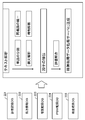
- FIG. 3 is a diagram for explaining a method for extracting factor information by the analysis unit 213.
- the analysis unit 213 first reads the text data of the chart information recorded in each of the databases 221 to 225, analyzes the contents of the text data, and extracts the factor information. This text analysis is also performed for interview records, etc. that are written in free format. Specifically, the text information is divided into words, syntactic analysis is performed, and synonyms are further arranged to extract information related to each factor stored in the dictionary in the system. Furthermore, by extracting the tense from the text information, the occurrence time of the event related to each factor is also extracted. This factor extraction can be executed by a conventionally known text mining technique.
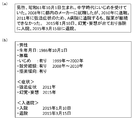
- FIG. 4A shows text data relating to a patient recorded in the medical record database 221
- FIG. 4B shows factor information extracted from the text data.
- the analysis unit 213 encodes the factor information data and transmits it to the psychiatric data processing server 300 together with the patient ID.
- the factor information acquisition unit 311 receives the factor information and stores it in the factor information database 321 in the factor information storage unit 320 in association with the patient ID. Thereby, the factor information database 321 is updated.
- the patient ID may be different from the patient number in the electronic medical record server.
- the actual medical record tag and the electronic medical record code are directly read instead of reading the actual text data. May be converted into a factor information code.
- the extraction of factor information by the analysis unit 213 is first performed by accessing the databases 221 to 225 at the initial setting of the psychiatric information management system 1. After the initial setting, the analysis unit 213 may fetch updated contents of the databases 221 to 225 at regular intervals, or in cooperation with each client terminal 100, new medical record information is stored in the electronic medical record server 200. The factor information may be extracted by activating the analysis unit 213 each time the data is transmitted.
- the factor information database 321 stored in the factor information storage unit 320 can be searched from the outside.
- the factor information search unit 312 when the factor information search unit 312 receives a search request from the outside, the factor information search unit 312 has a function of outputting factor information corresponding to the patient specified by the search request. For example, when searching for factor information of a patient, the user operates the input device 110 on the client terminal 100 accessible to the psychiatric data processing server 300 to specify a patient ID (for example, ABCDE-12345). And make a search request. In response to this, the factor information search unit 312 searches the factor information database 321 for factor information corresponding to the patient ID specified in the search request, and outputs the factor information to the client terminal 100.
- a patient ID for example, ABCDE-12345
- the factor information shown in FIG. 5 is displayed on the display device 120 of the client terminal 100.
- the client terminal 100 converts the patient number into the patient ID, and the psychiatric data processing server 300 Will make an inquiry.
- the psychiatric information management system 1 determines whether a patient's life background has not been databased until now. For this reason, for example, a doctor or a nurse can search for the factor information for each patient ID and display it on the display device 120, so that the patient's condition can be grasped based on the factor information.
- the specific case search unit 313 can search for a specific case from the factor information database 321. Specifically, in the client terminal 100, when the user operates the input device 110, the initial screen of the electronic medical record is displayed on the display device 120, the search button on the initial screen is selected, and factor information is displayed in the search box. input. For example, each factor is arranged in the search box, and the user can input factor information by clicking a factor corresponding to a specific case.
- the factor information that can be entered includes the life background of the patient and the living environment after discharge. For example, if you enter "20s" in the age factor information column, "Yes” in the factor information column for work experience, and "Unemployed” in the factor information column for occupation, you have working experience in your 20s but are currently unemployed. A search for patient information can be performed.
- a search request for a specific case corresponding to the input factor information is transmitted from the client terminal 100 to the psychiatric data processing server 300.
- the specific case search unit 313 refers to the factor information database 321 in response to the search request, extracts a case having the input factor information, and transmits the extracted case information to the client terminal 100. Thereby, the information of the patient's case corresponding to the factor information input in the search box can be displayed on the display device 120.
- FIG. 5 is a specific example of information on a specific case displayed on the display device 120.
- a specific processing procedure by the specific case search unit 313 is as follows.
- the specific case search unit 313 performs code conversion on all factor information that has been input, and stores the factor information database 321.
- the patient IDs linked to all factor information codes that have been input are searched for and extracted.
- the specific case search unit 313 converts the factor information code related to the extracted patient ID into factor information and transmits the factor information code to the client terminal 100.
- cases can be extracted and referred to based on the life background of the patient and the life environment after discharge as described only in the interview record in the free entry field. it can.
- the similar case search unit 314 can search the factor information database 321 for cases of patients whose factor information is similar to the patient specified by external input. Specifically, when the user selects a display portion of “similar case” with the input device 110 in a state where information about a patient is displayed on the display device 120 in the client terminal 100, the patient terminal 100 displays the patient. A search request for cases similar to is sent to the psychiatric data processing server 300. When the similar case search unit 314 receives the search request, the similar case search unit 314 first refers to the factor information database 321 of the factor information storage unit 320 and extracts all factor information associated with the corresponding patient ID. And the similar case search part 314 searches ID of the other patient in which at least one part of the held factor information corresponds with the extracted factor information.
- the similar case search unit 314 extracts the ID of the patient.
- the similar case search unit 314 selects the ID of a patient with a large number of factor information that matches the extracted factor information. You may make it extract.
- the similar case search unit 314 extracts the ID of the corresponding patient, the similar case search unit 314 extracts the factor information of the patient and transmits it to the client terminal 100. As a result, a case of a patient whose factor information is similar to the designated patient is displayed on the display device 120.
- FIG. 6 is a specific example of a list of similar cases displayed on the display device 120. The “best practice” in the rightmost column of the list will be described later.
- the similar case search unit 314 extracts other patients in which at least one factor information related to the life background of the patient matches the extracted factor information among the factor information held. .
- the similar case search part 314 extracts the other patient in which the at least 1 factor information regarding the living environment after discharge of a patient corresponds with the extracted factor information among the held factor information. That is, the factor information on the patient's life background and living environment after discharge is used as a target for detecting similar cases.
- the patient's life background and post-discharge life environment are important factor information in psychiatric treatment / nursing, the information is conventionally input in a free format. It was difficult to search for cases of patients with similar environments. On the other hand, in the present embodiment, it is possible to easily detect a case of a patient whose life background and living environment after discharge are similar, so that it can greatly contribute to the treatment and nursing of the patient.
- the difficulty level setting unit 315 sets various difficulty levels such as treatment difficulty level, nursing difficulty level, discharge difficulty level, and the like for each patient ID. It can be stored in the storage unit 320.
- the difficulty level can be calculated by combining a plurality of predetermined factor information related to the difficulty level.
- a calculation method of the difficulty level by the difficulty level setting unit 315 will be described.
- Difficulty points Ka x A + Kb x B + Kc x C + Kd x D (Ka to Kd: weighting factors)
- Ka to Kd weighting factors
- Nursing difficulty level 4 x presence / absence of restraint + 2 x presence / absence of sleep disorder + 1 x stress tolerance level Difficulty level 3 if 1 is greater than 4, difficulty level 2 if greater than 1 and less than 4 If it is less than that, it can be set to a difficulty level of 1.
- the difficulty level setting unit 315 stores the set difficulty level in the factor information storage unit 320 in association with the patient ID. Thereby, when the user of the client terminal 100 operates the input device 110 and requests information on the difficulty level of a patient, the difficulty level information is transmitted together with the factor information from the psychiatric data processing server 300. Various difficulty levels of the patient are displayed on the display device 120.
- FIG. 7 is a specific example of a screen of the difficulty level of treatment / nursing difficulty / discharge difficulty displayed on the display device 120.
- factor information is also obtained from the input field described in a free format such as interview record as described above, factor information obtained only from the input field, for example, whether the patient is restrained or discharged
- the degree of difficulty can be determined using factor information such as the presence or absence of motivation and the presence or absence of a key person. For this reason, the difficulty level can be accurately determined by finer setting.
- the difficulty level setting unit 315 separately sets at least two difficulty levels among the patient's treatment difficulty level, nursing difficulty level, and discharge difficulty level.
- the PB extraction part 316 can mark (extract) the case where optimal treatment and nursing were implemented as a best practice. Specifically, the PB extraction unit 316 extracts, as a best practice, a case of a patient whose difficulty is higher than a predetermined value and whose hospitalization period is shorter than the predetermined period.
- the number of best practices extracted is not particularly limited.
- the analysis unit 213 of the electronic medical record server 200 extracts factor information from each of the databases 221 to 225 of the medical record information storage unit 220, and the extracted factor information is transmitted to the psychiatric data processing server 300.
- the PB extraction unit 316 refers to the factor information about the hospitalization period, and codes the best practice in the case where the hospitalization period is, for example, less than 90 days and the difficulty level is higher than a predetermined value (difficulty level 3). Give.
- an item “best practice” is displayed as shown in the rightmost column of the list of FIG.
- “ ⁇ ” is displayed in cases corresponding to the best practice in terms of treatment, nursing, and discharge.
- the patient ID is ABCDE-089
- the degree of difficulty is high in all treatment, nursing, and discharge, but the hospitalization period was 66 days, so the best in all treatment, nursing, and discharge.
- Code is given as a practice.
- the patient ID is ABCDE-198
- the degree of difficulty in treatment and nursing is not high, but the degree of difficulty in discharge is high, and the hospitalization period is 81 days.
- Physicians, etc. can more appropriately set the treatment / nursing policy for the patient in charge by referring to the patient's factor information and medical record information in the case corresponding to the best practice from the cases listed as similar cases of the patient in charge. It becomes possible to decide.
- both of the at least two difficulty levels are higher than a predetermined value. It is desirable to extract information on patients whose hospitalization period is shorter and shorter than a predetermined period as a best practice. Thereby, doctors and the like can refer to a more ideal case.
- the hospitalization period estimation part 317 can estimate the hospitalization period of the said patient based on the 1 or several factor information regarding the specific patient extracted from the factor information database 321.
- FIG. This hospitalization period can be calculated by referring to the difficulty level set by the above-described difficulty level setting unit 315 and converting the difficulty level into a hospitalization period using a conversion table. For example, when the set difficulty level is low (difficulty level 1), the hospitalization period prediction unit 317 records the hospitalization period within 30 days in association with the patient ID in the factor information database 321. In the client terminal 100, the predicted hospitalization period associated with the patient ID can be displayed on the display device 120 by a predetermined operation using the input device 110. The hospitalization period predicted in this way can be used for predicting the availability of beds in the hospital.
- factor information related to the patient's life background such as the presence of bullying and working experience, which is important for treatment / nursing in psychiatry Can be used. Therefore, it has become possible to accurately predict the hospitalization period of patients with mental illness, which has been difficult in the past.
- the readmission rate predicting unit 318 can predict the readmission rate of the patient by referring to one or more factor information regarding the discharged patient or the patient scheduled to be discharged.
- the factor information referred to by the readmission rate predicting unit 318 includes at least one factor information related to the living environment after discharge.
- the prognosis of patients with mental illness after discharge is greatly influenced by the living environment after discharge, but the readmission rate predicting unit 318 refers to factor information related to the living environment after discharge, and has been difficult in the past. It is possible to predict the readmission rate of patients with diseases more accurately.
- the psychiatric data processing server 300 shown in FIG. 1 may be provided in a medical institution including the electronic medical record server 200 and the client terminal 100.
- the electronic medical record server 200 may include the factor information processing unit 310 and the factor information storage unit 320 included in the psychiatric data processing server 300.
- one medical institution performs both management of medical chart information and management of factor information.
- the factor information processing unit 310 of the psychiatric data processing server 300 may be provided in the medical record information processing unit 210 of the electronic medical record server 200.
- the client terminal 100 and the electronic medical record server 200 may be integrated into one information processing apparatus.
- the information management system of the present invention improves the treatment efficiency of various patients, particularly patients having mental illness symptoms.
- it can be used in general hospitals, geriatrics and neurology hospitals, care houses, and the like.
- Psychiatric information management system 2 LAN 3 Internet 100 Client terminal 110 Input device 120 Display device 130 Information processing device 200 Electronic medical record server 210 Medical record information processing unit 211 Medical record information search / reference unit 212 Medical record information update unit 213 Analysis unit 220 Medical record information storage unit 221 Medical record database 222 Prescription Record database 223 Nursing record database 224 Mental health worker record database 225 Test result database 300 Psychiatric data processing server 310 Factor information processing unit 311 Factor information acquisition unit 312 Factor information search unit 313 Specific case search unit 314 Similar case search unit 315 Difficulty level setting unit 316 Best practice extraction unit 317 Hospitalization period prediction unit 318 Readmission rate prediction unit 320 Factor information storage unit 321 Factor information database
Landscapes
- Health & Medical Sciences (AREA)
- Engineering & Computer Science (AREA)
- Epidemiology (AREA)
- General Health & Medical Sciences (AREA)
- Medical Informatics (AREA)
- Primary Health Care (AREA)
- Public Health (AREA)
- Medical Treatment And Welfare Office Work (AREA)
Abstract
本発明は、患者、特に精神疾患症状を有する患者に対する治療効率を大幅に向上させる情報管理システムおよび情報管理方法を提供することを目的とする。 精神科用情報管理システム1は、精神疾患症状を有する患者に関するカルテ情報を記憶するカルテ情報記憶部220と、カルテ情報から、患者の疾患に関連する因子情報を抽出する解析部213と、解析部213によって抽出された因子情報を、患者のIDと関連付けて記憶する因子情報記憶部320と、検索要求を受けた場合に、当該検索要求で指定された患者に対応する因子情報を出力する因子情報検索部312と、を備え、因子情報は、患者の生活背景に関する因子情報を含む。
Description
本発明は、患者の治療効率を向上できる情報管理システム、特に、精神疾患症状を有する患者の治療効率を向上できる情報管理システムに関する。
近年、患者の病状、処置、経過などを記録したカルテを電子情報としてデータベースで管理する電子カルテが開発され普及してきている(例えば、特許文献1)。電子カルテの導入によって、それまで紙ベースで蓄積されてきた診療行為記録は電子的に蓄積されるようになった。
内科および外科用の電子カルテには、患者の個人情報、症状、検査結果などが記録可能になっている。また、精神科用の電子カルテとしては、基本的には、内科および外科用の電子カルテを単純に適用したものが用いられることが多いが、隔離や拘束の記録といった特別項目や、生活エピソード等を文章で記録可能な自由入力欄を備えた電子カルテも存在する(例えば、特許文献2)。
精神疾患症状を有する患者の治療においては、内科や外科領域で用いられる検査結果や症状に関する情報だけでなく、自由入力欄に記録される事項も、患者の治療方法・看護方法を正確に判断するための重要な情報となる。しかし、自由入力欄への記載量は、時には数十ページに及ぶほど膨大となる。そのため、医師等は、担当患者の治療方法・看護方法を電子カルテから判断するために、膨大なテキスト情報を読まなければならず、治療効率の低下を招いていた。ここで、精神疾患症状を呈する疾患としては、うつ病、統合失調症、不安障害、薬物・アルコール依存症などとともに、アルツハイマー病などの認知症やパーキンソン病などの中枢神経疾患が含まれるが、それらには限られない。
本発明は、上記問題を解決するためになされたものであって、患者、特に、精神疾患症状を有する患者に対する治療効率を大幅に向上させる情報管理システム及び情報管理方法の提供を目的とする。
上記課題を解決するため、本発明は、下記の項に示す情報管理システムおよび情報管理方法を提供する。
項1.
患者に関するカルテ情報から、前記患者の疾患に関連する因子情報を抽出する解析部と、
前記解析部によって抽出された因子情報を、前記患者と関連付けて記憶する因子情報記憶部と、
検索要求を受けた場合に、当該検索要求で指定された患者に対応する前記因子情報を出力する因子情報検索部と、を備え、
前記因子情報は、患者の生活背景に関する少なくとも一つの因子情報及び/または患者の退院後生活環境に関する少なくとも一つの因子情報を含むことを特徴とする、情報管理システム。
項2.
前記生活背景に関する因子情報は、いじめの有無、虐待の有無、離婚経験、最終学歴および就労経験の少なくともいずれかの情報を含む、項1に記載の精神科用情報管理システム。
項3.
外部入力により指定された患者と前記因子情報が類似する患者の症例を検索する類似症例検索部をさらに備え、
該類似症例検索部は、前記因子情報記憶部から、前記指定された患者と関連付けられた前記因子情報を抽出し、保有している因子情報の少なくとも一部が前記抽出した因子情報と一致する他の患者の因子情報を抽出する、項1または2に記載の情報管理システム。
項4.
前記類似症例検索部は、保有している因子情報のうち、患者の生活背景に関する少なくとも一つの因子情報が前記抽出した因子情報と一致する他の患者を抽出する、項3に記載の情報管理システム。
項5.
前記類似症例検索部は、保有している因子情報のうち、患者の退院後生活環境に関する少なくとも一つの因子情報が前記抽出した因子情報と一致する他の患者を抽出する、項3に記載の情報管理システム。
項6.
前記因子情報記憶部は、前記因子情報を前記患者の患者IDと関連付けて記憶する、項1から5のいずれかに記載の情報管理システム。
項7.
患者に関するカルテ情報から、前記患者の疾患に関連する因子情報を抽出する解析ステップと、
前記解析ステップによって抽出された因子情報を、前記患者と関連付けて記憶する因子情報記憶ステップと、
検索要求を受けた場合に、当該検索要求で指定された患者に対応する前記因子情報を出力する因子情報検索ステップと、を備え、
前記因子情報は、患者の生活背景に関する少なくとも一つの因子情報及び/または患者の退院後生活環境に関する少なくとも一つの因子情報を含むことを特徴とする、情報管理方法。
項8.
外部入力により指定された患者と前記因子情報が類似する患者の症例を検索する類似症例検索ステップをさらに備え、
該類似症例検索ステップでは、前記因子情報記憶ステップによって記憶された因子情報から、前記指定された患者と関連付けられた前記因子情報を抽出し、保有している因子情報の少なくとも一部が前記抽出した因子情報と一致する他の患者の因子情報を抽出する、項7に記載の情報管理方法。
項9.
前記因子情報記憶ステップでは、前記因子情報を前記患者の患者IDと関連付けて記憶する、項7または8に記載の情報管理方法。
項1.
患者に関するカルテ情報から、前記患者の疾患に関連する因子情報を抽出する解析部と、
前記解析部によって抽出された因子情報を、前記患者と関連付けて記憶する因子情報記憶部と、
検索要求を受けた場合に、当該検索要求で指定された患者に対応する前記因子情報を出力する因子情報検索部と、を備え、
前記因子情報は、患者の生活背景に関する少なくとも一つの因子情報及び/または患者の退院後生活環境に関する少なくとも一つの因子情報を含むことを特徴とする、情報管理システム。
項2.
前記生活背景に関する因子情報は、いじめの有無、虐待の有無、離婚経験、最終学歴および就労経験の少なくともいずれかの情報を含む、項1に記載の精神科用情報管理システム。
項3.
外部入力により指定された患者と前記因子情報が類似する患者の症例を検索する類似症例検索部をさらに備え、
該類似症例検索部は、前記因子情報記憶部から、前記指定された患者と関連付けられた前記因子情報を抽出し、保有している因子情報の少なくとも一部が前記抽出した因子情報と一致する他の患者の因子情報を抽出する、項1または2に記載の情報管理システム。
項4.
前記類似症例検索部は、保有している因子情報のうち、患者の生活背景に関する少なくとも一つの因子情報が前記抽出した因子情報と一致する他の患者を抽出する、項3に記載の情報管理システム。
項5.
前記類似症例検索部は、保有している因子情報のうち、患者の退院後生活環境に関する少なくとも一つの因子情報が前記抽出した因子情報と一致する他の患者を抽出する、項3に記載の情報管理システム。
項6.
前記因子情報記憶部は、前記因子情報を前記患者の患者IDと関連付けて記憶する、項1から5のいずれかに記載の情報管理システム。
項7.
患者に関するカルテ情報から、前記患者の疾患に関連する因子情報を抽出する解析ステップと、
前記解析ステップによって抽出された因子情報を、前記患者と関連付けて記憶する因子情報記憶ステップと、
検索要求を受けた場合に、当該検索要求で指定された患者に対応する前記因子情報を出力する因子情報検索ステップと、を備え、
前記因子情報は、患者の生活背景に関する少なくとも一つの因子情報及び/または患者の退院後生活環境に関する少なくとも一つの因子情報を含むことを特徴とする、情報管理方法。
項8.
外部入力により指定された患者と前記因子情報が類似する患者の症例を検索する類似症例検索ステップをさらに備え、
該類似症例検索ステップでは、前記因子情報記憶ステップによって記憶された因子情報から、前記指定された患者と関連付けられた前記因子情報を抽出し、保有している因子情報の少なくとも一部が前記抽出した因子情報と一致する他の患者の因子情報を抽出する、項7に記載の情報管理方法。
項9.
前記因子情報記憶ステップでは、前記因子情報を前記患者の患者IDと関連付けて記憶する、項7または8に記載の情報管理方法。
本発明によれば、患者、特に、精神疾患症状を有する患者に対する治療効率を大幅に向上させる情報管理システム及び情報管理方法を提供することができる。
以下、図面に基づいて、本発明の実施の形態を説明する。なお、本発明は下記実施の形態に限定されるものではない。
(全体構成)
本実施の形態は本発明の情報管理システムを精神科病院に適用した場合の例を示すものである。図1は本実施の形態の精神科用情報管理システム1の構成を示す模式図である。図1において、精神科用情報管理システム1は、クライアント端末100と、電子カルテサーバ200と、精神科用データ処理サーバ300と、を備えている。
本実施の形態は本発明の情報管理システムを精神科病院に適用した場合の例を示すものである。図1は本実施の形態の精神科用情報管理システム1の構成を示す模式図である。図1において、精神科用情報管理システム1は、クライアント端末100と、電子カルテサーバ200と、精神科用データ処理サーバ300と、を備えている。
<クライアント端末>
クライアント端末100は、医師や看護師等のユーザが操作する端末であり、ユーザが所属する病院内に1または複数設けられる。クライアント端末100は、例えば汎用のパーソナルコンピュータ、またはタブレット等の携帯端末で構成され、入力装置110、表示装置120および情報処理装置130を備えている。
クライアント端末100は、医師や看護師等のユーザが操作する端末であり、ユーザが所属する病院内に1または複数設けられる。クライアント端末100は、例えば汎用のパーソナルコンピュータ、またはタブレット等の携帯端末で構成され、入力装置110、表示装置120および情報処理装置130を備えている。
入力装置110は、ユーザからの操作入力およびデータ入力を受け付ける、キーボード、マウス、タッチパネルなどから構成されている。また、表示装置120は、液晶モニターなどから構成されており、入力装置110によるデータ入力のための画面や、後述する因子情報の検索結果や難易度の結果等を示す画面を表示する。情報処理装置130は、図示しないCPU、ハードディスク装置およびメモリ等を備え、入力装置110からの操作等に応じて、各種情報処理や通信処理を行う。
例えば、精神疾患患者の診察を受けた医師は、電子カルテを表示するためのプログラムを起動させることにより、表示装置120に電子カルテの画面を表示させ、入力装置110を介して患者の症状・病名、患者に施した医療行為などを入力する。入力された情報は、カルテ情報として、クライアント端末100から電子カルテサーバ200に送信される。
本実施の形態において、カルテ情報は、診療記録データ、処方情報データ、看護記録データ、精神保健福祉士(PSW)記録データ、検査結果データに分類される。
診療記録データは、医師が入力装置110を介して診察時などに入力する、患者の症状・病名、患者に施した医療行為などのデータである。精神科では、診察やカウンセリングにて患者が話した内容が詳細に記録されることになるが、患者の話す内容は様々あり、発熱や発疹の有無などのような一定の形式には収まらない。このため、精神科の診療記録データは、通常は定型フォーマットではなく、不定形の文章の形態で記録される。
処方記録データは、患者に処方した医薬品の情報である。
看護記録データは、看護師が入力装置110を介して、入院患者についての睡眠障害や自殺企図などの状況を記録したデータである。医師による診療記録データと同様に、精神科の看護記録データも一定の形式に収まるものではないため、記録者それぞれの文体にて記録されることが多い。
PSW記録データは、患者から相談を受けた際に聞き取った内容、例えば、患者の生活歴・生活環境、患者を支持するキーパーソンの存在の有無などを記録したデータである。
検査結果データは、患者に対して行われた様々な検査の結果を記録したデータである。具体的には、各種血液検査の結果や、X線やCTスキャンの画像が、検査結果データに該当する。
なお、精神科領域では、診療・看護・PSW相談の各段階において、患者との面談結果などを細かく記録する必要があるため、電子カルテの画面は、ユーザが自由な形式で入力できるような入力欄を有している。精神科領域では、この入力欄への記載量が時には数十ページに及ぶほど膨大となり、ここに記載される事項が治療方法・看護方法を決めるための重要な情報となる。
<電子カルテサーバ>
電子カルテサーバ200は、上記病院内に設置されており、例えばLAN2を介してクライアント端末100と通信可能に接続されている。電子カルテサーバ200とクライアント端末100との接続は、有線接続であってもよいし、無線接続であってもよい。電子カルテサーバ200は、カルテ情報処理部210およびカルテ情報記憶部220を備えている。
電子カルテサーバ200は、上記病院内に設置されており、例えばLAN2を介してクライアント端末100と通信可能に接続されている。電子カルテサーバ200とクライアント端末100との接続は、有線接続であってもよいし、無線接続であってもよい。電子カルテサーバ200は、カルテ情報処理部210およびカルテ情報記憶部220を備えている。
カルテ情報処理部210は、内部に記憶された電子カルテプログラムをCPUが実行することによって実現される機能ブロックであり、カルテ情報検索・参照部211、カルテ情報更新部212および解析部213を備えている。
カルテ情報記憶部220は、例えばハードディスク装置によって構成されており、精神疾患患者に関するカルテ情報を記憶する。具体的には、カルテ情報記憶部220は、カルテ情報として、診療記録データベース221、処方記録データベース222、看護記録データベース223、精神保健福祉士(PSW)記録データベース224および検査結果データベース225を記憶している。これらの各データベース221~225は、病院で診察・治療を受けた患者に関する上述の診療記録データ、処方情報データ、看護記録データ、PSW記録データおよび検査結果データを、それぞれベータベース化したものである。
カルテ情報検索・参照部211は、クライアント端末100からの要求に応じて、カルテ情報記憶部220に記憶されたカルテ情報を検索・参照する機能を有している。具体的には、クライアント端末100においてユーザが入力装置110を操作することにより、情報処理装置130の記憶領域に記憶されたフォーマットにしたがって、表示装置120に電子カルテの初期画面を表示させる。続いてユーザが、初期画面において患者番号などを指定すると、情報処理装置130は指定された患者番号に対応する患者のカルテ情報を参照する要求を、電子カルテサーバ200に送信する。これに応じて、カルテ情報検索・参照部211は、カルテ情報記憶部220に記憶されている各データベース221~225にアクセスして、要求された患者のカルテ情報を検索し、検索結果をクライアント端末100に送信する。これにより、表示装置120に、指定された患者番号に対応する患者のカルテ情報が表示される。
なお、表示装置120には、カルテ情報の全データをまとめて表示してもよいし、画面を切り替えることによってカルテ情報の各データ(診療記録データ、処方記録データ、看護記録データ、PSW記録データ、検査結果データ)を1つずつ表示してもよい。
カルテ情報更新部212は、カルテ情報記憶部220に記憶されたカルテ情報を更新する機能を有している。具体的には、クライアント端末100からカルテ情報が送信されると、カルテ情報更新部212は、カルテ情報を受信し、カルテ情報のデータの分類に従ってカルテ情報記憶部220にテキストデータとして記憶させる。具体的には、カルテ情報更新部212は、受信したカルテ情報の診療記録データ、処方情報データ、看護記録データ、PSW記録データおよび検査結果データをそれぞれ、診療記録データベース221、処方記録データベース222、看護記録データベース223、PSW記録データベース224および検査結果データベース225に追加する。
なお、各データベース221~225への記録内容については、記録内容毎に所定の電子カルテタグまたは電子カルテコードが付されており、例えば、カルテ情報検索・参照部211による参照・検索の際には、その電子カルテタグ・電子カルテコードを利用することにより、迅速な処理ができるようになっている。なお、ユーザが自由形式で入力した部分については、通常はタグやコードは付されないが、検索インデックスを付すようにしても良い。
解析部213は、カルテ情報記憶部220に記憶されたカルテ情報から、前記精神疾患患者の症状の因子情報を抽出する機能を有する。解析部213の機能の詳細は、後述する。
<精神科用データ処理サーバ>
精神科用データ処理サーバ300は、例えば、精神科医療に関する情報を管理する外部機関に設置されており、当該外部機関と提携する1または複数の病院からアクセス可能となっている。電子カルテサーバ200およびクライアント端末100は、LAN2およびインターネット3を介して、精神科用データ処理サーバ300と通信可能に接続されている。
精神科用データ処理サーバ300は、例えば、精神科医療に関する情報を管理する外部機関に設置されており、当該外部機関と提携する1または複数の病院からアクセス可能となっている。電子カルテサーバ200およびクライアント端末100は、LAN2およびインターネット3を介して、精神科用データ処理サーバ300と通信可能に接続されている。
精神科用データ処理サーバ300は、因子情報処理部310および因子情報記憶部320を備えている。因子情報処理部310は、内部に記憶された因子情報処理プログラムをCPUが実行することによって実現される機能ブロックであり、因子情報取得部311、因子情報検索部312、特定症例検索部313、類似症例検索部314、難易度設定部315、ベストプラクティス(PB)抽出部316、入院期間予測部317および再入院率予測部318を備えている。これらの各部の機能については、後述する。
因子情報記憶部320は、例えばハードディスク装置によって構成されており、電子カルテサーバ200の解析部213によって抽出された因子情報を因子情報データベース321として記憶する。
(因子情報の定義)
因子情報とは、精神疾患患者の疾患に関連する情報の要約であり、患者に対する治療/看護の方法を決定する要素となるものである。因子情報の具体例を図2に示す。因子情報は、病名、症状といった、疾患に関連する項目である因子と、各因子に対する患者の回答・診断結果とからなる情報である。
因子情報とは、精神疾患患者の疾患に関連する情報の要約であり、患者に対する治療/看護の方法を決定する要素となるものである。因子情報の具体例を図2に示す。因子情報は、病名、症状といった、疾患に関連する項目である因子と、各因子に対する患者の回答・診断結果とからなる情報である。
本実施の形態において、因子情報は、病名情報、患者情報、入院情報、薬剤情報、患者の生活背景および退院後生活環境に関する情報を含む。これらの情報のうち、内科や外科の領域においては、因子情報として、病名情報、患者情報、入院情報、薬剤情報に関する情報を含む。病名情報は、患者の病名および症状等を示す情報であり、患者情報は、患者ID、生年月日、性別、初発時の年齢、拒薬傾向などを示す情報であり、入院情報は、入院日数、入院時の年齢、入院回数、入院時入院形態、隔離の有無、拘束の有無、睡眠障害、ストレス耐性、退院意欲、薬物依存、自殺企図などを示す情報であり、薬剤情報は、入院時に服用していた薬剤、退院時に服用していた薬剤などを示す情報である。ここで、患者IDは、電子カルテサーバにおける患者番号と同じものであっても良いし、個人情報保護やセキュリティのために患者番号と異なるものであってもよい。患者IDが患者番号と異なる場合には、例えば各病院・各施設ごとに患者番号と患者IDとの相関を示すテーブルなどを記憶しておく必要がある。
本実施の形態では、因子情報は、患者の生活背景および退院後生活環境に関する情報をさらに含んでいる。患者の生活背景に関する因子情報は、例えば、患者に対するいじめや虐待の有無、患者の離婚経験、患者の最終学歴および就労経験などであり、退院後生活環境に関する因子情報は、例えば、患者の職業、キーパーソン(保護者等)の存在、および住居などである。
なお、図2に示す因子情報は一例であり、疾患に関連する情報であれば、特に限定されない。例えば、患者の生活背景に関する因子情報として、両親の離婚または死別の有無、対人関係の問題、通報・犯罪の有無等が挙げられる。
(精神科用情報管理システムの機能)
以下、本実施の形態の精神科用情報管理システム1において、ユーザが利用可能な機能について説明する。
以下、本実施の形態の精神科用情報管理システム1において、ユーザが利用可能な機能について説明する。
<因子情報の抽出・取得>
本実施の形態では、図1における解析部213によって、上述の因子情報をカルテ情報記憶部220に記憶された各データベース221~225から抽出することができる。具体的には、解析部213は、診療記録データベース221から、病名、症状、自殺企図、いじめの有無などの因子情報を抽出し、処方記録データベース222から、投与した薬剤などの因子情報を抽出し、看護記録データベース223から、睡眠障害、拘束の有無、自殺企図などの因子情報を抽出し、PSW記録データベース224からいじめの有無、就労経験などの因子情報を抽出する。
本実施の形態では、図1における解析部213によって、上述の因子情報をカルテ情報記憶部220に記憶された各データベース221~225から抽出することができる。具体的には、解析部213は、診療記録データベース221から、病名、症状、自殺企図、いじめの有無などの因子情報を抽出し、処方記録データベース222から、投与した薬剤などの因子情報を抽出し、看護記録データベース223から、睡眠障害、拘束の有無、自殺企図などの因子情報を抽出し、PSW記録データベース224からいじめの有無、就労経験などの因子情報を抽出する。
本実施の形態では、解析部213は、テキストマイニングの手法を用いることによって、各データベース221~225のテキストデータから因子情報を抽出する。図3は、解析部213による因子情報の抽出方法を説明する図である。
解析部213は、まず、各データベース221~225に記録されているカルテ情報のテキストデータを読み取り、その内容をテキスト解析して、因子情報を抽出する。このテキスト解析は自由形式にて記載されている面談記録などについても実行される。具体的には、テキスト情報を単語に分割するとともに構文解析を行い、さらに同義語を整理することで、システム内の辞書に収められている各因子に関係のある情報を抽出する。さらに、テキスト情報から時制を抜き出すことにより、各因子に関する事象の発生時期も抽出する。この因子の抽出は、従来から知られているテキストマイニングの手法により実行できる。
テキストマイニングによる因子情報の抽出の具体例を図4に示す。図4(a)は、診療記録データベース221に記録された、ある患者に関するテキストデータであり、図4(b)は、このテキストデータから抽出された因子情報である。他のカルテ情報に対してもテキストマイニングを実行することにより、図2に示すような因子情報が抽出される。
因子情報の抽出が完了すると、解析部213は、因子情報のデータをコード化して、患者IDとともに精神科用データ処理サーバ300に送信する。精神科用データ処理サーバ300では、因子情報取得部311が因子情報を受信して、因子情報記憶部320内の因子情報データベース321に患者IDと関連付けて記憶させる。これにより、因子情報データベース321が更新される。ここで、患者IDは上述したように、電子カルテサーバにおける患者番号とは異なるものであっても良い。
なお、各データベース221~225に記憶されたカルテ情報のうち、電子カルテタグや電子カルテコードが付された情報については、実際のテキストデータを直接読み取るのではなく、電子カルテタグや電子カルテコードを直接的に因子情報コードに変換させても良い。
解析部213による因子情報の抽出は、まず、精神科用情報管理システム1の初期設定時にデータベース221~225にアクセスして行われる。初期設定後は、解析部213が、一定期間毎にデータベース221~225の更新された内容を取り込むようにしても良いし、各クライアント端末100と連携しておき、新しいカルテ情報が電子カルテサーバ200に送信される毎に、解析部213を起動して因子情報を抽出するようにしても良い。
<因子情報の検索・表示>
因子情報記憶部320に記憶された因子情報データベース321は、外部から検索することが可能となっている。本実施の形態では、因子情報検索部312が、外部から検索要求を受けた場合に、当該検索要求で指定された患者に対応する因子情報を出力する機能を有している。例えば、ある患者の因子情報を検索する場合、精神科用データ処理サーバ300にアクセス可能なクライアント端末100において、ユーザが入力装置110を操作して、患者ID(例えば、ABCDE-12345)を指定して検索要求を行う。これに応じて、因子情報検索部312は、因子情報データベース321から、検索要求で指定された患者IDに対応する因子情報を検索して、クライアント端末100に出力する。これにより、当該クライアント端末100の表示装置120に、図5に示す因子情報が表示される。なお、患者IDが電子カルテサーバにおける患者番号と異なる場合には、ユーザが患者番号を指定したときに、クライアント端末100側で、患者番号を患者IDに変換して、精神科用データ処理サーバ300に問い合わせを行うことになる。
因子情報記憶部320に記憶された因子情報データベース321は、外部から検索することが可能となっている。本実施の形態では、因子情報検索部312が、外部から検索要求を受けた場合に、当該検索要求で指定された患者に対応する因子情報を出力する機能を有している。例えば、ある患者の因子情報を検索する場合、精神科用データ処理サーバ300にアクセス可能なクライアント端末100において、ユーザが入力装置110を操作して、患者ID(例えば、ABCDE-12345)を指定して検索要求を行う。これに応じて、因子情報検索部312は、因子情報データベース321から、検索要求で指定された患者IDに対応する因子情報を検索して、クライアント端末100に出力する。これにより、当該クライアント端末100の表示装置120に、図5に示す因子情報が表示される。なお、患者IDが電子カルテサーバにおける患者番号と異なる場合には、ユーザが患者番号を指定したときに、クライアント端末100側で、患者番号を患者IDに変換して、精神科用データ処理サーバ300に問い合わせを行うことになる。
(精神科用情報管理システムの主な特徴)
以上のように、本実施の形態による精神科用情報管理システム1では、患者との面談情報など自由形式で記載されていた情報を、因子情報として抽出してデータベース化することができる。特に、本実施の形態では、前記因子情報に、これまではデータベース化されていなかった、患者の生活背景に関する因子情報が含まれる。このため、例えば、医師や看護師などが患者ID毎の因子情報を検索要求して表示装置120に表示させるだけで、患者の状態をその因子情報に基づき把握することができる。したがって、生活背景に関する因子情報を把握するために、膨大なテキスト情報を読まなければならなかった従来のシステムに比べて、時間および労力を大幅に短縮でき、精神科治療の効率を大幅に向上させることができる。さらには、データベース221~225に別個に登録されていた情報を統合して表示できるため、治療チーム全体での情報共有も容易になる。
以上のように、本実施の形態による精神科用情報管理システム1では、患者との面談情報など自由形式で記載されていた情報を、因子情報として抽出してデータベース化することができる。特に、本実施の形態では、前記因子情報に、これまではデータベース化されていなかった、患者の生活背景に関する因子情報が含まれる。このため、例えば、医師や看護師などが患者ID毎の因子情報を検索要求して表示装置120に表示させるだけで、患者の状態をその因子情報に基づき把握することができる。したがって、生活背景に関する因子情報を把握するために、膨大なテキスト情報を読まなければならなかった従来のシステムに比べて、時間および労力を大幅に短縮でき、精神科治療の効率を大幅に向上させることができる。さらには、データベース221~225に別個に登録されていた情報を統合して表示できるため、治療チーム全体での情報共有も容易になる。
(他の機能)
精神科用情報管理システム1において、ユーザは、上述の機能の他、以下の機能を利用できる。
精神科用情報管理システム1において、ユーザは、上述の機能の他、以下の機能を利用できる。
<特定症例の検索>
また、本実施の形態では、特定症例検索部313によって、因子情報データベース321から特定症例を検索することが可能となっている。具体的には、クライアント端末100において、ユーザが入力装置110を操作することにより、表示装置120に電子カルテの初期画面を表示させ、当該初期画面における検索ボタンを選択して検索ボックスに因子情報を入力する。例えば、検索ボックスには各因子が配列されており、ユーザは特定症例に対応する因子をクリックすることにより、因子情報を入力することができる。
また、本実施の形態では、特定症例検索部313によって、因子情報データベース321から特定症例を検索することが可能となっている。具体的には、クライアント端末100において、ユーザが入力装置110を操作することにより、表示装置120に電子カルテの初期画面を表示させ、当該初期画面における検索ボタンを選択して検索ボックスに因子情報を入力する。例えば、検索ボックスには各因子が配列されており、ユーザは特定症例に対応する因子をクリックすることにより、因子情報を入力することができる。
ここで、入力可能な因子情報には、患者の生活背景や退院後生活環境が含まれる。例えば、年齢の因子情報欄に“20代”、就労経験の因子情報欄に“あり”、職業の因子情報欄に“無職”を入力すれば、20代で就労経験があるが現在は無職の患者の情報の検索を実行することができる。
検索が実行されると、クライアント端末100から、入力された因子情報に対応する特定症例の検索要求が精神科用データ処理サーバ300に送信される。特定症例検索部313は、当該検索要求に応じて、因子情報データベース321を参照して、入力された因子情報を有する症例を抽出し、抽出された症例の情報をクライアント端末100に送信する。これにより、表示装置120に、検索ボックスに入力した因子情報に該当する患者の症例の情報を表示することができる。図5は、表示装置120に表示された特定症例の情報の具体例である。
なお、特定症例検索部313のよる具体的な処理手順は以下の通りである。入力装置110により、検索する因子情報が入力され、検索ボタンがクリックされると、特定症例検索部313は、入力のあった全ての因子情報について、それらをコード変換して、因子情報データベース321を参照し、入力のあった全ての因子情報のコードと結び付けられている患者IDを探索して、抽出する。そして、特定症例検索部313は、抽出した患者IDに関する因子情報コードを因子情報に変換してクライアント端末100に送信する。
このように、精神科用情報管理システム1では、従来、自由入力欄の面談記録にのみ記載されているような患者の生活背景や退院後生活環境に基づいて症例を抽出し、参照することができる。
<類似症例の検索>
また、本実施の形態では、類似症例検索部314が、外部入力により指定された患者と因子情報が類似する患者の症例を、因子情報データベース321から検索することが可能となっている。具体的には、クライアント端末100において、ある患者に関する情報を表示装置120に表示している状態で、ユーザが入力装置110により“類似症例”の表示部分を選択すると、クライアント端末100から、当該患者に類似する症例の検索要求が精神科用データ処理サーバ300に送信される。類似症例検索部314は、当該検索要求を受信すると、まず、因子情報記憶部320の因子情報データベース321を参照して、該当の患者IDと関連付けられている全ての因子情報を抽出する。そして、類似症例検索部314は、保有している因子情報の少なくとも一部が前記抽出した因子情報と一致する他の患者のIDを検索する。
また、本実施の形態では、類似症例検索部314が、外部入力により指定された患者と因子情報が類似する患者の症例を、因子情報データベース321から検索することが可能となっている。具体的には、クライアント端末100において、ある患者に関する情報を表示装置120に表示している状態で、ユーザが入力装置110により“類似症例”の表示部分を選択すると、クライアント端末100から、当該患者に類似する症例の検索要求が精神科用データ処理サーバ300に送信される。類似症例検索部314は、当該検索要求を受信すると、まず、因子情報記憶部320の因子情報データベース321を参照して、該当の患者IDと関連付けられている全ての因子情報を抽出する。そして、類似症例検索部314は、保有している因子情報の少なくとも一部が前記抽出した因子情報と一致する他の患者のIDを検索する。
具体的には、保有している因子情報の全てが前記抽出した因子情報と一致する他の患者が存在する場合、類似症例検索部314は、当該患者のIDを抽出する。一方、保有している因子情報の全てが前記抽出した因子情報と一致する患者が存在しない場合は、類似症例検索部314は、抽出した因子情報と一致する因子情報の数が多い患者のIDを抽出するようにしても良い。類似症例検索部314は、該当する患者のIDを抽出すると、当該患者の因子情報を抽出してクライアント端末100に送信する。これにより、指定された患者と因子情報が類似する患者の症例が、表示装置120に表示される。
図6は、表示装置120に表示された類似症例の一覧の具体例である。なお、当該一覧の右端欄の「ベストプラクティス」については、後述する。
本実施の形態では、類似症例検索部314は、保有している因子情報のうち、患者の生活背景に関する少なくとも一つの因子情報が前記抽出した因子情報と一致する他の患者を抽出することが好ましい。または、類似症例検索部314は、保有している因子情報のうち、患者の退院後生活環境に関する少なくとも一つの因子情報が前記抽出した因子情報と一致する他の患者を抽出することが好ましい。つまり、患者の生活背景や退院後生活環境に関する因子情報を類似症例検出の対象としている。
患者の生活背景や退院後生活環境は、精神科の治療/看護においては重要な因子情報であるが、従来は自由形式で入力された情報であるため、特定の患者と生活背景や退院後生活環境が類似した患者の症例を検索することが困難であった。これに対し、本実施の形態では、生活背景や退院後生活環境が類似する患者の症例を容易に検出することができるため、患者の治療や看護に大きく貢献することができる。
<難易度の設定>
また、本実施の形態では、難易度設定部315によって、患者毎に治療難易度・看護難易度・退院難易度など各種の難易度を設定し、患者ID毎にその各種難易度を、因子情報記憶部320に記憶しておくことができる。難易度は、難易性に関連する所定の複数の因子情報を組み合わせることで算出できる。以下、難易度設定部315による難易度の算出方法について説明する。
また、本実施の形態では、難易度設定部315によって、患者毎に治療難易度・看護難易度・退院難易度など各種の難易度を設定し、患者ID毎にその各種難易度を、因子情報記憶部320に記憶しておくことができる。難易度は、難易性に関連する所定の複数の因子情報を組み合わせることで算出できる。以下、難易度設定部315による難易度の算出方法について説明する。
例えば、因子情報データベース321に記憶されている因子情報の中から因子A,B,C,Dを用いた場合、
難易度ポイント=Ka×A+Kb×B+Kc×C+Kd×D (Ka~Kd:重み付け係数)
により難易度ポイントを算出し、それを複数の閾値と比較することで、難易度を例えば3段階で判定できる。なお、因子A~Dについては、各因子の有り無しに応じて0又は1としたり、程度に応じて得点化することができる。具体的には、看護難易度であれば、例えば以下のように判定できる。まず、看護難易度ポイントを以下の式で算出する。
難易度ポイント=Ka×A+Kb×B+Kc×C+Kd×D (Ka~Kd:重み付け係数)
により難易度ポイントを算出し、それを複数の閾値と比較することで、難易度を例えば3段階で判定できる。なお、因子A~Dについては、各因子の有り無しに応じて0又は1としたり、程度に応じて得点化することができる。具体的には、看護難易度であれば、例えば以下のように判定できる。まず、看護難易度ポイントを以下の式で算出する。
看護難易度ポイント=4×拘束の有無+2×睡眠障害の有無+1×ストレス耐性度
算出された看護難易度ポイントが4より大きければ難易度3、1より大きく4未満であれば難易度2、1未満であれば難易度1という具合に設定できる。
算出された看護難易度ポイントが4より大きければ難易度3、1より大きく4未満であれば難易度2、1未満であれば難易度1という具合に設定できる。
難易度設定部315は、設定した難易度を、患者のIDと関連付けて因子情報記憶部320に記憶させる。これにより、クライアント端末100のユーザが、入力装置110を操作して、ある患者の難易度の情報を要求した場合、精神科用データ処理サーバ300から、因子情報とともに難易度の情報が送信され、当該患者の各種難易度が、表示装置120に表示される。図7は、表示装置120に表示された、ある患者の治療難易度・看護難易度・退院難易度の画面の具体例である。
本実施の形態では、上述のように面談記録など自由形式で記載される入力欄からも因子情報を得ているため、その入力欄からのみ得られる因子情報、例えば、患者の拘束の有無、退院意欲の有無、キーパーソンの存在の有無のような因子情報を用いて難易度を判定できる。このため、よりきめ細かい設定により難易度を正確に判定できる。
なお、難易度設定部315は、患者の治療難易度、看護難易度、退院難易度うちの少なくとも2つの難易度を別個に設定することが好ましい。
<ベストプラクティスの抽出>
また、本実施の形態では、PB抽出部316が、最適な治療や看護が実施されたケースをベストプラクティスとしてマーキング(抽出)することができる。具体的には、PB抽出部316は、難易度が所定値よりも高く、且つ、入院期間が所定期間よりも短い患者のケースをベストプラクティスとして抽出する。ベストプラクティスの抽出件数は、特に限定されない。
また、本実施の形態では、PB抽出部316が、最適な治療や看護が実施されたケースをベストプラクティスとしてマーキング(抽出)することができる。具体的には、PB抽出部316は、難易度が所定値よりも高く、且つ、入院期間が所定期間よりも短い患者のケースをベストプラクティスとして抽出する。ベストプラクティスの抽出件数は、特に限定されない。
本実施の形態では、電子カルテサーバ200の解析部213がカルテ情報記憶部220の各データベース221~225から因子情報を抽出し、精神科用データ処理サーバ300に抽出された因子情報が送信された際に、PB抽出部316が、入院期間についての因子情報を参照し、入院期間が例えば90日未満であって、難易度が所定値(難易度3)よりも高いケースにベストプラクティスのコードを付与する。
これにより、クライアント端末100において、類似症例を検索した場合に、図6の一覧の右端欄に示すように、「ベストプラクティス」の項目が表示される。当該項目では、治療面、看護面、退院面で、ベストプラクティスに該当するケースに「○」印が表示される。具体的には、患者IDがABCDE-089のケースでは、治療面、看護面、退院面すべてにおいて難易度が高いが入院期間が66日であったため、治療面、看護面、退院面すべてにおいてベストプラクティスとしてコードが付与されている。一方、患者IDがABCDE-198のケースでは、治療面、看護面では難易度は高くないが退院面で難易度が高く、入院期間が81日であったため、退院面についてのみベストプラクティスとしてコードが付与されている。医師等は、担当患者の類似症例として挙げられたケースの中から、ベストプラクティスに該当するケースの患者の因子情報やカルテ情報を参照することにより、担当患者に対する治療/看護の方針をより適切に決定することが可能となる。
なお、難易度設定部315が患者の治療難易度、看護難易度、退院難易度のうちの少なくとも2つの難易度を別個に設定した場合に、前記少なくとも2つの難易度のいずれもが所定値よりも高く、且つ、入院期間が所定期間よりも短い患者の情報をベストプラクティスとして抽出することが望ましい。これにより医師等は、より理想的なケースを参照することができる。
<入院期間の予測>
また、本実施の形態では、入院期間予測部317が、因子情報データベース321から抽出した特定の患者に関する1または複数の因子情報に基づいて、当該患者の入院期間を予測することができる。この入院期間は、上述した難易度設定部315が設定した難易度を参照し、その難易度を変換テーブルを用いて入院期間に変換することにより算出できる。例えば、入院期間予測部317は、設定された難易度が低い(難易度1)の場合には、入院期間30日以内として、因子情報データベース321に患者IDと関連付けて記録する。クライアント端末100では、入力装置110を用いた所定の操作により、患者IDに関連付けられた予測入院期間を表示装置120に表示させることができる。このように予測された入院期間は、病院内でのベッドの空き状況の予測などに利用できる。
また、本実施の形態では、入院期間予測部317が、因子情報データベース321から抽出した特定の患者に関する1または複数の因子情報に基づいて、当該患者の入院期間を予測することができる。この入院期間は、上述した難易度設定部315が設定した難易度を参照し、その難易度を変換テーブルを用いて入院期間に変換することにより算出できる。例えば、入院期間予測部317は、設定された難易度が低い(難易度1)の場合には、入院期間30日以内として、因子情報データベース321に患者IDと関連付けて記録する。クライアント端末100では、入力装置110を用いた所定の操作により、患者IDに関連付けられた予測入院期間を表示装置120に表示させることができる。このように予測された入院期間は、病院内でのベッドの空き状況の予測などに利用できる。
本実施の形態では、入院期間の予測のために、内科外科において用いられる因子情報の他、精神科における治療/看護に重要な、いじめの有無、就労経験等の患者の生活背景に関する因子情報を用いることができる。よって、従来では困難であった精神疾患患者の入院期間を、正確に予測することができるようになった。
<再入院率の予測>
また、本実施の形態では、再入院率予測部318が、退院した患者または退院予定の患者に関する1または複数の因子情報を参照して、当該患者の再入院率を予測することができる。再入院率予測部318が参照する因子情報には、退院後生活環境に関する少なくとも一つの因子情報が含まれている。退院後の精神疾患患者の予後は、退院後の生活環境に大きく影響されるが、再入院率予測部318は、退院後生活環境に関する因子情報を参照することにより、従来では困難であった精神疾患患者の再入院率の予測を、より正確に行うことができる。
また、本実施の形態では、再入院率予測部318が、退院した患者または退院予定の患者に関する1または複数の因子情報を参照して、当該患者の再入院率を予測することができる。再入院率予測部318が参照する因子情報には、退院後生活環境に関する少なくとも一つの因子情報が含まれている。退院後の精神疾患患者の予後は、退院後の生活環境に大きく影響されるが、再入院率予測部318は、退院後生活環境に関する因子情報を参照することにより、従来では困難であった精神疾患患者の再入院率の予測を、より正確に行うことができる。
(他の形態)
以上、本発明の実施の形態について説明したが、本発明は上記実施の形態に限定されるものではなく、その趣旨を逸脱しない限りにおいて、種々の変更が可能である。
以上、本発明の実施の形態について説明したが、本発明は上記実施の形態に限定されるものではなく、その趣旨を逸脱しない限りにおいて、種々の変更が可能である。
例えば、図1に示す精神科用データ処理サーバ300を、電子カルテサーバ200およびクライアント端末100を備える医療機関内に設けてもよい。あるいは、精神科用データ処理サーバ300が有する因子情報処理部310および因子情報記憶部320を電子カルテサーバ200が備えてもよい。この場合、カルテ情報の管理および因子情報の管理の両方を、1つの医療機関が行うことになる。
また、精神科用データ処理サーバ300の因子情報処理部310有する機能の一部または全部を、電子カルテサーバ200のカルテ情報処理部210に持たせてもよい。また、小規模な個人の開業医院などでは、クライアント端末100と電子カルテサーバ200とを1台の情報処理装置に統合してもよい。
以上説明した実施の形態では、本発明の情報管理システムを精神科病院に適用した例を示したが、本発明の情報管理システムは、様々な患者、特に精神疾患症状を有する患者の治療効率を向上させるものであり、例えば総合病院、老人科や神経内科病院、ケアハウスなどにおいても利用可能である。
1 精神科用情報管理システム
2 LAN
3 インターネット
100 クライアント端末
110 入力装置
120 表示装置
130 情報処理装置
200 電子カルテサーバ
210 カルテ情報処理部
211 カルテ情報検索・参照部
212 カルテ情報更新部
213 解析部
220 カルテ情報記憶部
221 診療記録データベース
222 処方記録データベース
223 看護記録データベース
224 精神保健福祉士記録データベース
225 検査結果データベース
300 精神科用データ処理サーバ
310 因子情報処理部
311 因子情報取得部
312 因子情報検索部
313 特定症例検索部
314 類似症例検索部
315 難易度設定部
316 ベストプラクティス抽出部
317 入院期間予測部
318 再入院率予測部
320 因子情報記憶部
321 因子情報データベース
2 LAN
3 インターネット
100 クライアント端末
110 入力装置
120 表示装置
130 情報処理装置
200 電子カルテサーバ
210 カルテ情報処理部
211 カルテ情報検索・参照部
212 カルテ情報更新部
213 解析部
220 カルテ情報記憶部
221 診療記録データベース
222 処方記録データベース
223 看護記録データベース
224 精神保健福祉士記録データベース
225 検査結果データベース
300 精神科用データ処理サーバ
310 因子情報処理部
311 因子情報取得部
312 因子情報検索部
313 特定症例検索部
314 類似症例検索部
315 難易度設定部
316 ベストプラクティス抽出部
317 入院期間予測部
318 再入院率予測部
320 因子情報記憶部
321 因子情報データベース
Claims (9)
- 患者に関するカルテ情報から、前記患者の疾患に関連する因子情報を抽出する解析部と、
前記解析部によって抽出された因子情報を、前記患者と関連付けて記憶する因子情報記憶部と、
検索要求を受けた場合に、当該検索要求で指定された患者に対応する前記因子情報を出力する因子情報検索部と、を備え、
前記因子情報は、患者の生活背景に関する少なくとも一つの因子情報及び/または患者の退院後生活環境に関する少なくとも一つの因子情報を含むことを特徴とする、情報管理システム。 - 前記生活背景に関する因子情報は、いじめの有無、虐待の有無、離婚経験、最終学歴および就労経験の少なくともいずれかの情報を含む、請求項1に記載の精神科用情報管理システム。
- 外部入力により指定された患者と前記因子情報が類似する患者の症例を検索する類似症例検索部をさらに備え、
該類似症例検索部は、前記因子情報記憶部から、前記指定された患者と関連付けられた前記因子情報を抽出し、保有している因子情報の少なくとも一部が前記抽出した因子情報と一致する他の患者の因子情報を抽出する、請求項1または2に記載の情報管理システム。 - 前記類似症例検索部は、保有している因子情報のうち、患者の生活背景に関する少なくとも一つの因子情報が前記抽出した因子情報と一致する他の患者を抽出する、請求項3に記載の情報管理システム。
- 前記類似症例検索部は、保有している因子情報のうち、患者の退院後生活環境に関する少なくとも一つの因子情報が前記抽出した因子情報と一致する他の患者を抽出する、請求項3に記載の情報管理システム。
- 前記因子情報記憶部は、前記因子情報を前記患者の患者IDと関連付けて記憶する、請求項1から5のいずれかに記載の情報管理システム。
- 患者に関するカルテ情報から、前記患者の疾患に関連する因子情報を抽出する解析ステップと、
前記解析ステップによって抽出された因子情報を、前記患者と関連付けて記憶する因子情報記憶ステップと、
検索要求を受けた場合に、当該検索要求で指定された患者に対応する前記因子情報を出力する因子情報検索ステップと、を備え、
前記因子情報は、患者の生活背景に関する少なくとも一つの因子情報及び/または患者の退院後生活環境に関する少なくとも一つの因子情報を含むことを特徴とする、情報管理方法。 - 外部入力により指定された患者と前記因子情報が類似する患者の症例を検索する類似症例検索ステップをさらに備え、
該類似症例検索ステップでは、前記因子情報記憶ステップによって記憶された因子情報から、前記指定された患者と関連付けられた前記因子情報を抽出し、保有している因子情報の少なくとも一部が前記抽出した因子情報と一致する他の患者の因子情報を抽出する、請求項7に記載の情報管理方法。 - 前記因子情報記憶ステップでは、前記因子情報を前記患者の患者IDと関連付けて記憶する、請求項7または8に記載の情報管理方法。
Priority Applications (2)
| Application Number | Priority Date | Filing Date | Title |
|---|---|---|---|
| JP2017562404A JP6968704B2 (ja) | 2016-01-22 | 2016-01-22 | 情報管理システム及び情報管理方法 |
| PCT/JP2016/051869 WO2017126109A1 (ja) | 2016-01-22 | 2016-01-22 | 情報管理システム及び情報管理方法 |
Applications Claiming Priority (1)
| Application Number | Priority Date | Filing Date | Title |
|---|---|---|---|
| PCT/JP2016/051869 WO2017126109A1 (ja) | 2016-01-22 | 2016-01-22 | 情報管理システム及び情報管理方法 |
Publications (1)
| Publication Number | Publication Date |
|---|---|
| WO2017126109A1 true WO2017126109A1 (ja) | 2017-07-27 |
Family
ID=59362565
Family Applications (1)
| Application Number | Title | Priority Date | Filing Date |
|---|---|---|---|
| PCT/JP2016/051869 Ceased WO2017126109A1 (ja) | 2016-01-22 | 2016-01-22 | 情報管理システム及び情報管理方法 |
Country Status (2)
| Country | Link |
|---|---|
| JP (1) | JP6968704B2 (ja) |
| WO (1) | WO2017126109A1 (ja) |
Cited By (1)
| Publication number | Priority date | Publication date | Assignee | Title |
|---|---|---|---|---|
| JP2021026358A (ja) * | 2019-07-31 | 2021-02-22 | 都築電気株式会社 | 機械学習を用いた退院日予測方法及び装置 |
Families Citing this family (1)
| Publication number | Priority date | Publication date | Assignee | Title |
|---|---|---|---|---|
| JP7258391B2 (ja) * | 2019-05-08 | 2023-04-17 | 国立研究開発法人産業技術総合研究所 | 児童相談所などにおける情報処理方法及び装置 |
Citations (3)
| Publication number | Priority date | Publication date | Assignee | Title |
|---|---|---|---|---|
| JP2011501845A (ja) * | 2007-10-12 | 2011-01-13 | ペイシェンツライクミー, インコーポレイテッド | 患者のコミュニティのプロファイルに基づく病状および転帰の個人管理ならびに比較 |
| US20110066451A1 (en) * | 2009-09-15 | 2011-03-17 | Samsung Electronics Co., Ltd. | Method and apparatus for providing health management information |
| JP2015170040A (ja) * | 2014-03-05 | 2015-09-28 | キヤノン株式会社 | 情報処理装置、情報処理方法及びプログラム |
-
2016
- 2016-01-22 JP JP2017562404A patent/JP6968704B2/ja active Active
- 2016-01-22 WO PCT/JP2016/051869 patent/WO2017126109A1/ja not_active Ceased
Patent Citations (3)
| Publication number | Priority date | Publication date | Assignee | Title |
|---|---|---|---|---|
| JP2011501845A (ja) * | 2007-10-12 | 2011-01-13 | ペイシェンツライクミー, インコーポレイテッド | 患者のコミュニティのプロファイルに基づく病状および転帰の個人管理ならびに比較 |
| US20110066451A1 (en) * | 2009-09-15 | 2011-03-17 | Samsung Electronics Co., Ltd. | Method and apparatus for providing health management information |
| JP2015170040A (ja) * | 2014-03-05 | 2015-09-28 | キヤノン株式会社 | 情報処理装置、情報処理方法及びプログラム |
Cited By (2)
| Publication number | Priority date | Publication date | Assignee | Title |
|---|---|---|---|---|
| JP2021026358A (ja) * | 2019-07-31 | 2021-02-22 | 都築電気株式会社 | 機械学習を用いた退院日予測方法及び装置 |
| JP7479604B2 (ja) | 2019-07-31 | 2024-05-09 | 都築電気株式会社 | 機械学習を用いた退院日予測方法及び装置 |
Also Published As
| Publication number | Publication date |
|---|---|
| JPWO2017126109A1 (ja) | 2018-11-15 |
| JP6968704B2 (ja) | 2021-11-17 |
Similar Documents
| Publication | Publication Date | Title |
|---|---|---|
| Nemati et al. | An interpretable machine learning model for accurate prediction of sepsis in the ICU | |
| Freer et al. | Social frailty: the importance of social and environmental factors in predicting frailty in older adults | |
| García‐Vivar et al. | Analysis of mental health effects among nurses working during the COVID‐19 pandemic: A systematic review | |
| US10636515B2 (en) | Medical or health information search support apparatus and medical or health information search support system | |
| Alzahrani et al. | Asthma control assessment tools | |
| Heikkilä et al. | Fall rates by specialties and risk factors for falls in acute hospital: a retrospective study | |
| O’Brien et al. | Development, implementation, and evaluation of an in-hospital optimized early warning score for patient deterioration | |
| McKenna et al. | The effectiveness of specialist roles in mental health metabolic monitoring: a retrospective cross-sectional comparison study | |
| JP2007531080A (ja) | 医療情報の電算標準化方法 | |
| JP2005110944A (ja) | 診療支援装置、診療支援方法及び診療支援プログラム | |
| TWI521467B (zh) | Nursing decision support system | |
| JP7315165B2 (ja) | 診断支援システム | |
| JP7119045B2 (ja) | 情報管理システム及び情報管理方法 | |
| JP2018081528A (ja) | 電子カルテシステム | |
| JP6675182B2 (ja) | 複数の医療機関が保有する患者情報を医療情報提示端末に提示するシステム | |
| Akpan et al. | Neurocognitive disorders: importance of early/timely detection in daily clinical practice | |
| Brown et al. | The positive predictive value of an ambulance prealert for stroke and transient ischaemic attack | |
| Suraj et al. | SMART COVID navigator, a clinical decision support tool for COVID-19 treatment: Design and development study | |
| Kilkenny et al. | Comparison of comorbidities of stroke collected in administrative data, surveys, clinical trials and cohort studies | |
| Weiner et al. | Electronic health records: high-quality electronic data for higher-quality clinical research | |
| JP2011138376A (ja) | 診断支援システム | |
| JP6968704B2 (ja) | 情報管理システム及び情報管理方法 | |
| Sathish Kumar et al. | Artificial intelligence based health indicator extraction and disease symptoms identification using medical hypothesis models | |
| Srinivasan et al. | Do socioeconomic disparities exist in postoperative opioid prescription and consumption? | |
| McRae et al. | Cluster-randomized trials: a closer look |
Legal Events
| Date | Code | Title | Description |
|---|---|---|---|
| 121 | Ep: the epo has been informed by wipo that ep was designated in this application |
Ref document number: 16886350 Country of ref document: EP Kind code of ref document: A1 |
|
| WWE | Wipo information: entry into national phase |
Ref document number: 2017562404 Country of ref document: JP |
|
| NENP | Non-entry into the national phase |
Ref country code: DE |
|
| 122 | Ep: pct application non-entry in european phase |
Ref document number: 16886350 Country of ref document: EP Kind code of ref document: A1 |