WO2017051896A1 - 炭酸固定経路の導入による糖質からのポリヒドロキシアルカン酸製造の効率化 - Google Patents
炭酸固定経路の導入による糖質からのポリヒドロキシアルカン酸製造の効率化 Download PDFInfo
- Publication number
- WO2017051896A1 WO2017051896A1 PCT/JP2016/078093 JP2016078093W WO2017051896A1 WO 2017051896 A1 WO2017051896 A1 WO 2017051896A1 JP 2016078093 W JP2016078093 W JP 2016078093W WO 2017051896 A1 WO2017051896 A1 WO 2017051896A1
- Authority
- WO
- WIPO (PCT)
- Prior art keywords
- gene
- nucleic acid
- seq
- base sequence
- sequence represented
- Prior art date
- Legal status (The legal status is an assumption and is not a legal conclusion. Google has not performed a legal analysis and makes no representation as to the accuracy of the status listed.)
- Ceased
Links
Images

Classifications
-
- C—CHEMISTRY; METALLURGY
- C12—BIOCHEMISTRY; BEER; SPIRITS; WINE; VINEGAR; MICROBIOLOGY; ENZYMOLOGY; MUTATION OR GENETIC ENGINEERING
- C12N—MICROORGANISMS OR ENZYMES; COMPOSITIONS THEREOF; PROPAGATING, PRESERVING, OR MAINTAINING MICROORGANISMS; MUTATION OR GENETIC ENGINEERING; CULTURE MEDIA
- C12N15/00—Mutation or genetic engineering; DNA or RNA concerning genetic engineering, vectors, e.g. plasmids, or their isolation, preparation or purification; Use of hosts therefor
- C12N15/09—Recombinant DNA-technology
-
- C—CHEMISTRY; METALLURGY
- C12—BIOCHEMISTRY; BEER; SPIRITS; WINE; VINEGAR; MICROBIOLOGY; ENZYMOLOGY; MUTATION OR GENETIC ENGINEERING
- C12P—FERMENTATION OR ENZYME-USING PROCESSES TO SYNTHESISE A DESIRED CHEMICAL COMPOUND OR COMPOSITION OR TO SEPARATE OPTICAL ISOMERS FROM A RACEMIC MIXTURE
- C12P7/00—Preparation of oxygen-containing organic compounds
- C12P7/40—Preparation of oxygen-containing organic compounds containing a carboxyl group including Peroxycarboxylic acids
- C12P7/42—Hydroxy-carboxylic acids
-
- C—CHEMISTRY; METALLURGY
- C12—BIOCHEMISTRY; BEER; SPIRITS; WINE; VINEGAR; MICROBIOLOGY; ENZYMOLOGY; MUTATION OR GENETIC ENGINEERING
- C12N—MICROORGANISMS OR ENZYMES; COMPOSITIONS THEREOF; PROPAGATING, PRESERVING, OR MAINTAINING MICROORGANISMS; MUTATION OR GENETIC ENGINEERING; CULTURE MEDIA
- C12N9/00—Enzymes; Proenzymes; Compositions thereof; Processes for preparing, activating, inhibiting, separating or purifying enzymes
- C12N9/10—Transferases (2.)
- C12N9/12—Transferases (2.) transferring phosphorus containing groups, e.g. kinases (2.7)
-
- C—CHEMISTRY; METALLURGY
- C12—BIOCHEMISTRY; BEER; SPIRITS; WINE; VINEGAR; MICROBIOLOGY; ENZYMOLOGY; MUTATION OR GENETIC ENGINEERING
- C12N—MICROORGANISMS OR ENZYMES; COMPOSITIONS THEREOF; PROPAGATING, PRESERVING, OR MAINTAINING MICROORGANISMS; MUTATION OR GENETIC ENGINEERING; CULTURE MEDIA
- C12N9/00—Enzymes; Proenzymes; Compositions thereof; Processes for preparing, activating, inhibiting, separating or purifying enzymes
- C12N9/14—Hydrolases (3)
-
- C—CHEMISTRY; METALLURGY
- C12—BIOCHEMISTRY; BEER; SPIRITS; WINE; VINEGAR; MICROBIOLOGY; ENZYMOLOGY; MUTATION OR GENETIC ENGINEERING
- C12N—MICROORGANISMS OR ENZYMES; COMPOSITIONS THEREOF; PROPAGATING, PRESERVING, OR MAINTAINING MICROORGANISMS; MUTATION OR GENETIC ENGINEERING; CULTURE MEDIA
- C12N9/00—Enzymes; Proenzymes; Compositions thereof; Processes for preparing, activating, inhibiting, separating or purifying enzymes
- C12N9/14—Hydrolases (3)
- C12N9/16—Hydrolases (3) acting on ester bonds (3.1)
-
- C—CHEMISTRY; METALLURGY
- C12—BIOCHEMISTRY; BEER; SPIRITS; WINE; VINEGAR; MICROBIOLOGY; ENZYMOLOGY; MUTATION OR GENETIC ENGINEERING
- C12N—MICROORGANISMS OR ENZYMES; COMPOSITIONS THEREOF; PROPAGATING, PRESERVING, OR MAINTAINING MICROORGANISMS; MUTATION OR GENETIC ENGINEERING; CULTURE MEDIA
- C12N9/00—Enzymes; Proenzymes; Compositions thereof; Processes for preparing, activating, inhibiting, separating or purifying enzymes
- C12N9/88—Lyases (4.)
Definitions
- the present invention relates to a method for improving the efficiency of polyhydroxyalkanoic acid production using a saccharide as a basic raw material by introducing a carbonic acid fixation pathway to microorganisms.
- Biomass resources that are carbon neutral do not contribute to an increase in the net atmospheric CO 2 concentration even if a decarboxylation reaction occurs, but the biomass resources are harvested, transported, and pretreated to make microorganisms an available carbon source. Considering the labor and cost of each saccharification process, it is considered wasteful to emit carbon derived from biomass as CO 2 .
- the Calvin Benson circuit (hereinafter referred to as the Calvin circuit) is a carbonic acid fixation pathway possessed by plants, algae, cyanobacteria, many photosynthetic bacteria, and chemically synthesized bacteria, and is one of the most important metabolic pathways on the earth.
- the carbonic acid fixation reaction by the Calvin circuit is shown by the following formula.
- the product, glyceraldehyde-3-P is an intermediate in sugar metabolism and is subsequently metabolized in various ways. 3CO 2 + 9ATP + 6NAD (P) H ⁇ Glyceraldehyde-3-P + 9ADP + 6NAD (P) +
- the productivity of the target substance is improved by applying modifications such as strengthening the biosynthetic metabolic flux of the target substance and blocking the byproduct production pathway.
- modifications such as strengthening the biosynthetic metabolic flux of the target substance and blocking the byproduct production pathway.
- effective alteration sites differ depending on individual biosynthetic metabolism, and carbon of raw material biomass cannot be fully utilized if metabolism includes decarboxylation.
- the yield per unit material of the target substance (carbon yield) is the maximum theoretical yield considering the decarboxylation reaction. That is, existing metabolic engineering attempts to bring the carbon yield of the target product closer to the maximum theoretical yield, and does not consider carbon lost in the decarboxylation reaction accompanying sugar metabolism.
- the present inventors fixed a CO 2 excreted by a decarboxylation reaction in the process of microbial biosynthesis of the microorganism by a Calvin circuit as a strategy that is greatly different from the metabolic modification in the conventional microorganism,
- the purpose was to improve the yield of polyhydroxyalkanoic acid (PHA).
- PHA is a biodegradable biomass plastic in which microorganisms accumulate as a storage material, and is expected to replace petroleum-derived plastic as an environmentally low-load polymer material.
- a typical PHA poly (3-hydroxybutanoic acid) [P (3HB)], condenses two acetyl-CoA molecules generated by carbon source metabolism, and (R) -specific reduction reduces (R) -3HB. -Converted to CoA and then biosynthesized by polymerization with PHA synthase (PhaC).
- PHA production is achieved by introducing a carbon fixation pathway into a microorganism having PHA (for example, P (3HB)) production ability or a recombinant microorganism (for example, recombinant E. coli strain) imparted with the production ability.
- PHA for example, P (3HB)
- a recombinant microorganism for example, recombinant E. coli strain
- the present invention is as follows. [1] (a) a ribulose-1,5-bisphosphate carboxylase / oxygenase (“rubisco”) gene to a microorganism having the ability to produce polyhydroxyalkanoic acid or a recombinant microorganism having the ability to produce polyhydroxyalkanoic acid, (b (1) transformation obtained by introducing an autonomously replicating vector in which a rubisco activator gene and (c) a phospholibrokinase gene are incorporated, or a transformation obtained by introducing the gene into the chromosome of the strain by homologous recombination
- a method for producing polyhydroxyalkanoic acid comprising using the transformant and growing the transformant in a medium containing a carbohydrate as a carbon source.
- transketolase gene In the transformant, (h) transketolase gene, (i) phosphoglycolate phosphatase gene, (j) glyceraldehyde-3-phosphate dehydrogenase gene, (k) 3-phosphoglycerate kinase gene
- transformation into which an autonomously replicating vector into which at least one gene selected from the group consisting of sedheptulose-1,7 / fructose-1,6-bisphosphate aldolase gene is incorporated, or a chromosome of said strain The method according to [1] or [2] above, further comprising transformation of the gene into the gene by homologous recombination.
- the Rubisco gene is -A nucleic acid comprising the base sequence represented by SEQ ID NO: 1; or-hybridizing under stringent conditions with a nucleic acid comprising the base sequence represented by SEQ ID NO: 1, and from ribulose-1,5-bisphosphate to 3
- a nucleic acid encoding, and a phosphoribulokinase gene -A nucleic acid comprising the base sequence represented by SEQ ID NO: 3; or-hybridizing under stringent conditions with a nucleic acid comprising the base sequence represented by SEQ ID NO: 3 and ribulose-5-phosphate to ribulose-1 The method according to any one of [1] to [3] above, comprising a nucleic acid encoding a protein having a catalytic activity to produce 1,5-bisphosphate.
- the LysR type transcription factor gene is -A nucleic acid comprising the base sequence represented by SEQ ID NO: 4; or-having an activity of hybridizing with a nucleic acid comprising the base sequence represented by SEQ ID NO: 4 under stringent conditions and controlling transcription of the rubisco gene.
- a nucleic acid encoding the protein, A putative hydrolase gene belonging to the 3-hydroxyacyl-CoA dehydrogenation oxygen superfamily is -A nucleic acid comprising the base sequence represented by SEQ ID NO: 5; or-a nucleic acid that hybridizes with a nucleic acid comprising the base sequence represented by SEQ ID NO: 5 under stringent conditions and encodes a protein having hydrolytic activity.
- the pentose-5-phosphate-3-epimerase gene is -A nucleic acid comprising the base sequence represented by SEQ ID NO: 6; or-hybridizing under stringent conditions with a nucleic acid comprising the base sequence represented by SEQ ID NO: 6, and from xylulose-5-phosphate to ribulose-5
- a nucleic acid encoding a protein having catalytic activity to produce phosphate, and a sedoheptulose-1,7 / fructose-1,6-bisphosphatase gene -A nucleic acid comprising the base sequence represented by SEQ ID NO: 7; or-hybridizing under stringent conditions with a nucleic acid comprising the base sequence represented by SEQ ID NO: 7, and from sedoheptulose-1,7-bisphosphate to sedoheptulose
- the transketolase gene is -A nucleic acid comprising the base sequence represented by SEQ ID NO: 8; or-hybridizing under stringent conditions with a nucleic acid comprising the base sequence represented by SEQ ID NO: 8 and ribose-5 from sedheptulose-7-phosphate
- the phosphoglycolate phosphatase gene is -A nucleic acid comprising the base sequence represented by SEQ ID NO: 9; or-hybridizing with a nucleic acid comprising the base sequence represented by SEQ ID NO: 9 under stringent conditions and dephosphorylating 2-phosphoglycolic acid
- the glyceraldehyde-3-phosphate dehydrogenase gene is -A nucleic acid comprising the base sequence represented by SEQ ID NO: 10; or-hybridizing under
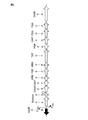
- cbbR CbbR (LysR type transcription regulator); cbbS: ribulose-1,5-bisphosphate carboxylase / oxygenase (“Rubisco”); cbbX: AAA + type Rubisco activator; cbbY: 3-hydroxyacyl-CoA dehydrogenation Putative hydrolase belonging to the oxygen superfamily; cbbE: pentose-5-phosphate-3-epimerase (PPE); cbbF: sedheptulose-1,7 / fructose-1,6-bisphosphatase (FBP); cbbP: phosphoribrobromide Kinase (PRK); cbbT: transketolase (TKT); cbbZ: phosphoglycolate phosphatase (PGP); cbbG: glyceralde
- the outline of the prepared plasmid is shown.
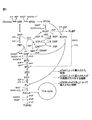
- the sugar metabolism pathway in the recombinant Escherichia coli introduced with the cbb operon and P (3HB) biosynthesis gene is shown.
- G6P glucose-6-phosphate
- F6P fructose-6-phosphate
- FBP fructose-1,6-bisphosphate
- GAP glyceraldehyde-3-phosphate
- DHAP dihydroxyacetone phosphate
- BPG 1 , 3-bisphosphoglyceric acid
- 3PG 3-phosphoglyceric acid
- 2PG 2-phosphoglyceric acid
- PEP phosphoenolpyruvate
- Pyr pyruvate
- AcCoA acetyl-CoA
- 6PGL 6-phosphoglucono-1, 5-lactone
- 6PGA 6-phosphogluconic acid
- KDPG 6-phospho-2-dehydro-3-deoxygluconic acid
- Ru5P ribulose-5-phosphate
- RuBP
- the present invention fixes the carbon excreted by decarboxylation during the process of substance biosynthesis metabolism and fixes it by the Calvin circuit, thereby reusing the yield of PHA as a biopolymer. Is to improve. Specifically, it is as follows. P (3HB) biosynthesis via the Emden-Meyerhof pathway, the major sugar metabolic pathway in many microorganisms, is shown below.
- the present inventors have a recombinant E. coli strain, more specifically, a recombinant Escherichia coli strain to which poly (3-hydroxybutanoic acid) production ability is imparted, having a cupriavidus necatol H16 strain (DSM428).
- the following genes encoding the calvin cycle enzyme and related proteins, the following genes: (a) LysR type transcription regulator gene, (b) ribulose-1,5-bisphosphate carboxylase / oxygenase (“rubisco”) gene, (C) rubisco activator gene, (d) phosphoribulokinase gene, (e) putative hydrolase gene belonging to 3-hydroxyacyl-CoA dehydrogenase superfamily, (f) pentose-5-phosphate-3 An epimerase gene, (g) sedoheptulose 1,7 / fructose-1,6-bisphosphatase gene, (h) transketolase gene, (i) phosphoglycolate phosphatase gene, (j) glyceraldehyde-3-phosphate dehydrogenase gene, (k) 3- (A) to (g) gene groups or (a) to (l) selected from the group consisting of a phosphoglycerate kinase gene and (
- Hosts (microorganisms) used in the method for producing PHA of the present invention include, but are not limited to, microorganisms having PHA-producing ability and recombinant microorganisms imparted with PHA-producing ability. More specifically, typical microorganisms having PHA-producing ability include microorganisms belonging to the genus Cupriavidus, Ralstonia, Alcaligenes, Pseudomonas, and the like.
- a recombinant microorganism imparted with PHA-producing ability typically introduces a PHA biosynthetic gene into a microorganism that does not have PHA biosynthetic ability, such as Escherichia coli or Corynebacterium.
- a recombinant strain imparted with PHA biosynthetic ability, or a wild strain such as a microorganism imparted with the ability to biosynthesize PHA other than P (3HB) by modification of a microorganism that biosynthesizes P (3HB).
- E. coli such as JM109
- a recombinant Escherichia coli strain imparted with P (3HB) biosynthetic ability by introduction of a multicopy plasmid into which a necator-derived P (3HB) biosynthetic gene phaCAB is inserted can be mentioned.
- Polyhydroxyalkanoic acid is a commonly known term, but is not limited thereto, but examples thereof include glycolic acid, lactic acid, 2-hydroxybutanoic acid, 3-hydroxybutanoic acid, and 4-hydroxybutanoic acid.
- the gene for introducing the carbonic acid fixation pathway into the host (microorganism) described above is to improve the production of polyhydroxyalkanoic acid using carbohydrate as a basic raw material, It is not limited.
- the gene used in the present invention is C.I. Use the cbb operon consisting of 13-14 genes encoding the Calvin cycle enzyme and related proteins, each present on chromosome 2 (genome sequence: see AM260480) and megaplasmid (see genome sequence: see AY305378) of necator H16 strain (See FIG. 1).
- cbbR LysR type transcription factor
- cbbL ribulose-1,5- Bisphosphate carboxylase / oxygenase
- rubisco rubisco activator gene
- cbbX phosphoribulokinase gene
- cbbY 3-hydroxy Putative hydrolase gene
- cbbE pentose-5-phosphate-3-epimerase gene
- cbbF pentose-5-phosphate-3-epimerase gene
- cbbF cedoheptulose-1,7 / Fructose-1,6-bisphosphatase gene
- transketolase gene “CbbT” transketolase gene “CbbT”
- cbbZ phosphoglycolate phosphatase gene
- cbbZ glyceraldehyde
- preferable gene combinations include the gene groups (a) to (d).
- the function of each gene is as described later, but the combination of the above four genes is considered essential when a carbonic acid fixation pathway is introduced in recombinant Escherichia coli to exert the desired function and effect.
- the protein encoded by the gene (b) (that is, ribulose-1,5-bisphosphate carboxylase / oxygenase (also referred to as “rubisco”)) is composed of an L subunit and an S subunit. Therefore, the gene may be counted as two.
- Genes (h) to (l) are a group of genes arranged in the latter half of the cbb operon.
- each of the 12 genes includes single-stranded or double-stranded DNA and its RNA complement.
- DNA includes, for example, naturally-derived DNA, recombinant DNA, chemically synthesized DNA, DNA amplified by PCR, and combinations thereof.
- DNA is preferable.
- codons are degenerate and some amino acids have multiple base sequences encoding one amino acid.
- nucleic acid encoding an enzyme encoded by the above gene or such Nucleic acids having any base sequence are included in the scope of the present invention as long as the base sequence of the nucleic acid encodes a nucleic acid that functions to the same extent as a simple enzyme.
- the isolation and identification of the above gene can be performed by ordinary molecular biological techniques. These genes may be used alone or in combination with any of them, and for example, they can be amplified and used using the above-described genomic sequence of chromosome 2 as a template. Those skilled in the art can appropriately prepare primers that can be used to amplify each gene based on the genomic sequence.
- PCR polymerase chain reaction
- LCR ligase chain reaction
- SDA strand displacement reactions
- each gene used in the present invention is typically a base sequence represented by SEQ ID NO: 1 to 12 described in the sequence listing, but as long as the function of each gene is retained, each SEQ ID NO: It may contain or consist of a nucleic acid obtained by hybridizing under stringent conditions with a nucleic acid comprising the base sequence specified by
- under stringent conditions means to hybridize under moderate or high stringent conditions.
- moderately stringent conditions can be easily determined by those skilled in the art based on, for example, the length of DNA.
- Basic conditions are described in Sambrook, J. et al. Are shown in Molecular Cloning, A Laboratory Manual (3rd edition), Cold Spring Harbor Laboratory, 7.42-7.45 (2001).
- High stringency conditions can also be readily determined by one skilled in the art based on, for example, the length of the DNA. Generally, such conditions include hybridization and / or washing at higher temperatures and / or lower salt concentrations than moderately stringent conditions, such as hybridization conditions as described above, and about 68 ° C. Defined with 0.2 ⁇ SSC, 0.1% SDS wash.
- the temperature and wash solution salt concentration can be adjusted as needed according to factors such as the length of the probe.
- Homologous nucleic acids cloned using the nucleic acid amplification reaction or hybridization as described above are at least 30% or more, preferably 50% or more, respectively, with respect to the base sequences described in SEQ ID NOs: 1 to 12, respectively. More preferably 70% or more, still more preferably 90% or more, still more preferably 95% or more, and most preferably 98% or more.
- the percent identity can be determined by visual inspection and mathematical calculation. Alternatively, the percent identity of two nucleic acid sequences is determined by Devereux, J. et al. , Et al. , Nucl. Acids Res. 12: 387 (1984) and determined by comparing sequence information using the GAP computer program (GCG Wisconsin Package, version 10.3) available from the University of Wisconsin Genetics Computer Group (UWGCG). can do.
- Ribulose-1,5-bisphosphate carboxylase / oxygenase gene (“cbbLS” or “L and S”) “Ribulose-1,5-bisphosphate carboxylase / oxygenase” (“Lubisco”) encoded by this gene is a catalyst that generates two molecules of 3-phosphoglycerate from ribulose-1,5-bisphosphate and CO 2. It is an enzyme having activity. The enzyme is composed of 8 L (large) subunits (about 54 kDa) and 8 S (small) subunits (about 16 kDa) hetero-hexamers. According to the present invention, the species of the cbbLS gene encoding it is not particularly limited as long as it has the activity.
- homooctamer to decamer consisting only of L subunits without S subunits are constructed.
- the presence or absence of S subunits and the multimeric structure can be used as long as they have this activity.
- examples of the cbbLS gene used in the present invention include C.I.
- the genome sequence of chromosome 2 of necator H16 strain can be used, and the base sequence (SEQ ID NO: 1) consisting of nucleotides 1560986-156923 in the genome may be used.
- the base sequence encoding the L subunit is located at 1561463-1556223 among the above nucleotides, and the base sequence encoding the S subunit is located at 1560986-1556105 among the above nucleotides.
- Isolation and identification of cbbLS can be performed by ordinary molecular biological techniques.
- a synthetic nucleotide can be designed as a primer based on the base sequence of SEQ ID NO: 1, and the cbbLS gene can be amplified using genomic DNA as a template. Since a DNA fragment of about 1.5 kbp is obtained as a PCR product, for example, these are separated by a method of sieving the DNA fragment by molecular weight such as agarose gel electrophoresis and the nucleic acid is isolated by a conventional method such as a method of cutting out a specific band. It can be isolated.
- (B) Rubisco activator gene (“cbbX” or “X”)
- the “rubisco activator” (or “AAA + type Rubisco activator”) encoded by this gene is a protein having an activity to activate rubisko.
- the species of the cbbX gene encoding it is not particularly limited as long as it has the activity.
- the cbbX gene used in the present invention for example, the C.I.
- the genome sequence of chromosome 2 of necator H16 strain can be used, and the base sequence (SEQ ID NO: 2) consisting of nucleotides 1559870-1560823 in the genome may be used. Isolation and identification of cbbX can be performed by ordinary molecular biological techniques.
- a synthetic nucleotide can be designed as a primer based on the base sequence of SEQ ID NO: 2, and the cbbX gene can be amplified using genomic DNA as a template. Since about 960 bp DNA fragments are obtained as PCR products, for example, these are separated by a method of screening DNA fragments by molecular weight such as agarose gel electrophoresis, and nucleic acids are isolated according to conventional methods such as a method of cutting out a specific band. can do.
- C Phosphoribobrokinase gene
- cbbP or “P”
- Phosphoribbrokinase or “PRK”
- the species of the cbbP gene encoding it is not particularly limited as long as it has the activity.
- examples of the cbbP gene used in the present invention include C.I.
- the genome sequence of chromosome 2 of necator H16 strain can be used, and the base sequence (SEQ ID NO: 3) consisting of nucleotides 1556334-1557212 in the genome may be used.
- cbbP gene can be amplified using, for example, a synthetic nucleotide as a primer based on the base sequence of SEQ ID NO: 3 and using genomic DNA as a template. Since about 880 bp DNA fragments are obtained as PCR products, for example, these are separated by a method of sieving DNA fragments by molecular weight such as agarose gel electrophoresis, and nucleic acids are isolated according to a conventional method such as a method of cutting out a specific band. can do.
- a synthetic nucleotide as a primer based on the base sequence of SEQ ID NO: 3
- genomic DNA as a template. Since about 880 bp DNA fragments are obtained as PCR products, for example, these are separated by a method of sieving DNA fragments by molecular weight such as agarose gel electrophoresis, and nucleic acids are isolated according to a conventional method such as a method of cutting out a specific band. can do.
- the “LysR type transcriptional regulatory factor” (“CbbR”) encoded by this gene is a protein having an activity of controlling the transcription of the Rubisco gene.
- the species of the cbbR gene encoding it is not particularly limited as long as it has the activity.
- the cbbR gene used in the present invention for example, C.I.
- the genome sequence of chromosome 2 (GenBank accession number AM260480) of necator H16 strain can be used, and the base sequence (SEQ ID NO: 4) consisting of nucleotides 19386627-1939568 in the genome may be used.
- cbbR gene can be amplified using, for example, a synthetic nucleotide as a primer based on the base sequence of SEQ ID NO: 4 and genomic DNA as a template. Since a DNA fragment of about 940 bp is obtained as a PCR product, for example, these are separated by a method of screening DNA fragments by molecular weight such as agarose gel electrophoresis, and nucleic acids are isolated according to a conventional method such as a method of cutting out a specific band. can do.
- a synthetic nucleotide as a primer based on the base sequence of SEQ ID NO: 4
- genomic DNA as a template. Since a DNA fragment of about 940 bp is obtained as a PCR product, for example, these are separated by a method of screening DNA fragments by molecular weight such as agarose gel electrophoresis, and nucleic acids are isolated according to a conventional method such as a method of cutting out a specific band. can do.
- the “presumed hydrolase belonging to the 3-hydroxyacyl-CoA dehydrogenase superfamily” encoded by this gene is an enzyme having a certain hydrolytic activity, although the exact function is not specified at present. It is estimated that there is.
- the species of the cbbY gene encoding it is not particularly limited as long as it has a function equivalent to that of the cbbY expression product.
- examples of the cbbY gene used in the present invention include C.I.
- the genome sequence of chromosome 2 of necator H16 strain can be used, and a base sequence (SEQ ID NO: 5) consisting of nucleotides 1559102-1559866 in the genome may be used.
- Isolation and identification of cbbY can be performed by conventional molecular biological techniques. Specifically, the cbbY gene can be amplified using, for example, a synthetic nucleotide as a primer based on the base sequence of SEQ ID NO: 5 and using genomic DNA as a template.
- DNA fragments are obtained as PCR products, for example, these are separated by a method of screening DNA fragments by molecular weight such as agarose gel electrophoresis, and nucleic acids are isolated according to conventional methods such as a method of cutting out a specific band. can do.
- Pentose-5-phosphate-3-epimerase gene (“cbbE” or “E”) “Pentose-5-phosphate-3-epimerase” (or “PPE”) encoded by this gene is an enzyme having a catalytic activity to produce ribulose-5-phosphate from xylulose-5-phosphate.
- the species of the cbbE gene encoding it is not particularly limited as long as it has the activity.
- examples of the cbbE gene used in the present invention include C.I.
- the genome sequence of chromosome 2 of necator H16 strain can be used, and the base sequence (SEQ ID NO: 6) consisting of nucleotides 1558375-1559100 in the genome may be used.
- Isolation and identification of cbbE can be performed by conventional molecular biological techniques. Specifically, the cbbE gene can be amplified using, for example, a synthetic nucleotide as a primer based on the base sequence of SEQ ID NO: 6 and using genomic DNA as a template.
- DNA fragments are obtained as PCR products, for example, these are separated by a method of screening DNA fragments by molecular weight such as agarose gel electrophoresis, and nucleic acids are isolated according to conventional methods such as a method of cutting out a specific band. can do.
- Sedoheptulose-1,7 / fructose-1,6-bisphosphatase gene (“cbbF” or “F”) “Sedheptulose-1,7 / fructose-1,6-bisphosphatase” (or “FBP”) encoded by this gene is a catalyst that produces sedoheptulose-7-phosphate from sedoheptulose-1,7-bisphosphate. It is an enzyme having activity or catalytic activity for producing fructose-1,6-phosphate from fructose-1,6-bisphosphate. According to the present invention, the species of the cbbF gene encoding it is not particularly limited as long as it has the activity.
- examples of the cbbF gene used in the present invention include C.I.
- the genome sequence of chromosome 2 of necator H16 strain can be used, and the base sequence (SEQ ID NO: 7) consisting of nucleotides 1557224 to 1558318 in the genome may be used.
- Isolation and identification of cbbF can be performed by ordinary molecular biological techniques. Specifically, for example, a synthetic nucleotide can be designed as a primer based on the base sequence of SEQ ID NO: 7, and the cbbF gene can be amplified using genomic DNA as a template.
- a DNA fragment of about 1.1 kbp is obtained as a PCR product, for example, these are separated by a method of sieving the DNA fragment by molecular weight such as agarose gel electrophoresis and the nucleic acid is isolated by a conventional method such as a method of cutting out a specific band. Can be isolated.
- cbbT transketolase gene
- the “transketolase” (or “TKT”) encoded by this gene is an enzyme having a catalytic activity to produce ribose-5-phosphate from sedoheptulose-7-phosphate.
- the species of the cbbT gene encoding it is not particularly limited as long as it has the activity.
- examples of the cbbT gene used in the present invention include C.I.
- the genome sequence of chromosome 2 of necator H16 strain can be used, and the nucleotide sequence (SEQ ID NO: 8) consisting of nucleotides 1554281-1556293 in the genome may be used.
- cbbT Isolation and identification of cbbT can be performed by ordinary molecular biological techniques.
- the cbbT gene can be amplified using, for example, a synthetic nucleotide as a primer based on the base sequence of SEQ ID NO: 8 and genomic DNA as a template. Since a DNA fragment of about 2.0 kbp is obtained as a PCR product, for example, these are separated by a method of sieving the DNA fragment by molecular weight such as agarose gel electrophoresis, and the nucleic acid is extracted according to a conventional method such as a method of cutting out a specific band. Can be isolated.
- Phosphoglycolate phosphatase gene (“cbbZ” or “Z”) “Phosphoglycolate phosphatase” (or “PGP”) encoded by this gene is an enzyme having a catalytic activity for dephosphorylating 2-phosphoglycolic acid to produce glycolic acid.
- the species of the cbbZ gene encoding it is not particularly limited as long as it has the activity.
- the cbbZ gene used in the present invention for example, the C.I.
- the genome sequence of chromosome 2 of necator H16 strain can be used, and a base sequence (SEQ ID NO: 9) consisting of nucleotides 1553586-1555481 in the genome may be used.
- cbbZ Isolation and identification of cbbZ can be performed by ordinary molecular biological techniques.
- the cbbZ gene can be amplified using, for example, a synthetic nucleotide as a primer based on the base sequence of SEQ ID NO: 9 and genomic DNA as a template. Since a DNA fragment of about 700 bp is obtained as a PCR product, for example, these are separated by a method of screening DNA fragments by molecular weight such as agarose gel electrophoresis, and nucleic acids are isolated according to a conventional method such as a method of cutting out a specific band. can do.
- Glyceraldehyde-3-phosphate dehydrogenase gene (“cbbG” or “G”) “Glyceraldehyde-3-phosphate dehydrogenase” (or “GAP”) encoded by this gene has a catalytic activity to produce glyceraldehyde-3-phosphate from 1,3-bisphosphoglycerate. It is an enzyme.
- the species of the cbbG gene encoding it is not particularly limited as long as it has the activity.
- examples of the cbbG gene used in the present invention include C.I.
- the genome sequence of chromosome 2 of necator H16 strain can be used, and a base sequence (SEQ ID NO: 10) consisting of nucleotides 1552516-1555326 in the genome may be used.
- Isolation and identification of cbbG can be performed by ordinary molecular biological techniques. Specifically, the cbbG gene can be amplified using, for example, a synthetic nucleotide as a primer based on the base sequence of SEQ ID NO: 10 and using genomic DNA as a template.
- a DNA fragment of about 1.0 kbp is obtained as a PCR product, for example, these are separated by a method of sieving the DNA fragment by molecular weight such as agarose gel electrophoresis and the nucleic acid is extracted according to a conventional method such as a method of cutting out a specific band. It can be isolated.
- cbbK 3-phosphoglycerate kinase gene
- the “3-phosphoglycerate kinase” (or “PGK”) encoded by this gene is an enzyme having a catalytic activity to produce 1,3-bisphosphoglycerate from 3-phosphoglycerate.
- the species of the cbbK gene encoding it is not particularly limited as long as it has the activity.
- examples of the cbbK gene used in the present invention include C.I.
- the genome sequence of chromosome 2 of necator H16 strain can be used, and a base sequence (SEQ ID NO: 11) consisting of nucleotides 1551265-155526 in the genome may be used.
- Isolation and identification of cbbK can be performed by ordinary molecular biological techniques.
- a synthetic nucleotide can be designed as a primer based on the base sequence of SEQ ID NO: 11, and the cbbK gene can be amplified using genomic DNA as a template. Since a DNA fragment of about 1.2 kbp is obtained as a PCR product, for example, these are separated by a method of sieving the DNA fragment by molecular weight such as agarose gel electrophoresis, and the nucleic acid is extracted according to a conventional method such as a method of cutting out a specific band. It can be isolated.
- (L) Sedoheptulose-1,7 / fructose-1,6-bisphosphate aldolase gene (“cbbA” or “A”) “Sedheptulose-1,7 / fructose-1,6-bisphosphate aldolase” (or “FBA”) encoded by this gene is derived from 3-phosphoglycerate, erythrose-4-phosphate and dihydroxyacetone phosphate. It is an enzyme having a catalytic activity for producing cedoheptulose-1,7-bisphosphate, or a catalytic activity for producing fructose-1,6-bisphosphate from glyceraldehyde-3-phosphate and dihydroxyacetone phosphate.
- the species of the cbbA gene encoding it is not particularly limited.
- examples of the cbbA gene used in the present invention include C.I.
- the genome sequence of chromosome 2 of necator H16 strain can be used, and a base sequence (SEQ ID NO: 12) consisting of nucleotides 1550185-1551222 in the genome may be used. Isolation and identification of cbbA can be carried out by ordinary molecular biological techniques.
- the cbbA gene can be amplified using, for example, a synthetic nucleotide as a primer based on the base sequence of SEQ ID NO: 12 and using genomic DNA as a template.
- a DNA fragment of about 1.0 kbp is obtained as a PCR product, for example, these are separated by a method of sieving the DNA fragment by molecular weight such as agarose gel electrophoresis and the nucleic acid is extracted according to a conventional method such as a method of cutting out a specific band. Can be isolated.
- Expression vector (or plasmid vector) A DNA encoding each of the above genes is incorporated into an appropriate expression vector (or plasmid vector), introduced into the above-described host (microorganism), and expressed in the host, whereby a desired enzyme or transcription control factor or An activator can be obtained.
- a vector refers to a single-stranded or double-stranded nucleic acid molecule that can be transfected into a cell and can replicate independently of or in the cell genome.
- the expression vector includes a promoter region that drives DNA expression, and may further include transcriptional and translational control sequences such as a TATA box, a capping sequence, a CAAT sequence, a 3 ′ non-coding region, an enhancer, and the like.
- promoters include bla promoter, cat promoter, lacZ promoter when used in prokaryotic hosts, mouse metallothionein I gene sequence promoter, herpesvirus TK promoter when used in eukaryotic hosts, Examples include SV40 early promoter and yeast glycolytic enzyme gene sequence promoter.
- vectors include, but are not limited to, pBR322, pUC118, pUC119, pSC101, pACYC184, ⁇ gt10, ⁇ gt11, pMAM-neo, pKRC, BPV, vaccinia, SV40, 2-micron, and the like.
- the expression vector preferably has one or more markers so that host cells containing it can be selected.
- the marker those that give nutrition to an auxotrophic host, antibiotic resistance (for example, gentamicin, ampicillin, tetracycline, neomycin, hygromycin, zeocin, etc.), or heavy metal resistance (for example, copper) can be used.
- the vector can be constructed so that the protein of the present invention is secreted and expressed using a signal sequence, or the protein of the present invention is expressed in the form of a fusion protein with another protein. By using a fusion protein, the stability of the protein can be improved or purification can be facilitated.
- the construction of such expression vectors is well known in the art.
- each or any combination of the aforementioned genes that can be used in the method of the present invention is used as an autonomously replicating vector or a vector for homologous recombination.
- An integrated expression vector is provided.
- a method for incorporating a gene into a vector for example, Sambrook, J. et al. Et al., Molecular Cloning, A Laboratory Manual (3rd edition), Cold Spring Harbor Laboratory, 1.1 (2001).
- a commercially available ligation kit for example, manufactured by Toyobo Co., Ltd. can also be used.
- a recombinant microorganism can be produced by incorporating an expression vector into a host cell.
- the host cell may be a prokaryotic cell (eg, E. coli (JM109, etc.), Bacillus subtilis) or a eukaryotic cell (mammalian cell, yeast, insect cell, etc.).
- Introduction (transformation) of an expression vector into a host cell can be performed using a known method. For example, in the case of bacteria (E. coli, Bacillus subtilis, etc.), for example, the method of Cohen et al. (Proc. Natl. Acad. Sci.
- a conjugation transfer method can be used to introduce an expression vector into cells belonging to the genera Cupriavidus, Ralstonia, Alcaligenes, Pseudomonas, etc. (J. Bacteriol., 147: 198 (1981)).
- synthesis of P (3HB) includes, for example, a calbin cycle enzyme in a recombinant Escherichia coli imparted with P (3HB) production ability.
- P (3HB) in the recombinant microorganism for example, E. coli
- a culture for example, a medium
- the recombinant microorganism in order to synthesize the P (3HB), is preferably placed under appropriate culture conditions.
- the culture conditions of the parent strain prior to the cultivation of such recombinant microorganisms and gene recombination may be followed.
- the recombinant strain may be grown in a medium containing carbohydrate as a carbon source.
- a medium in the case of using recombinant Escherichia coli as a host includes an LB medium to which a saccharide that can be assimilated by the Escherichia coli is added and nitrogen sources, inorganic salts, and other organic nutrient sources are restricted.
- PHA is produced and accumulated in cells by culturing the medium at a temperature in the range of 25 ° C. to 37 ° C. and aerobically culturing for 1 to 10 days, and then collected and purified. PHA can be produced.
- sugar as a carbon source
- the supply source is not specifically limited.
- “Sugar” is a polyhydric alcohol having an aldehyde group or a ketone group, and means a monosaccharide, oligosaccharide, oligosaccharide, or sugar derivative. Specific examples of monosaccharides include glucose, galactose, mannose, glucosamine, N-acetylglucosamine, and fructose. Examples of the disaccharide include maltose, isomaltose, lactose, lactosamine, N-acetyllactosamine, cellobiose, melibiose and the like.
- Oligosaccharides include homo-oligomers composed of glucose, galactose, mannose, glucosamine, N-acetylglucosamine, fructose, etc., or two components such as glucose, galactose, mannose, glucosamine, N-acetylglucosamine, fructose, sialic acid Hetero-oligomers composed of the above are mentioned, and examples thereof include maltooligosaccharides, isomaltooligosaccharides, lactoligosaccharides, lactosamine oligosaccharides, N-acetyllactosamine oligosaccharides, cellooligosaccharides, and merbiooligosaccharides.
- polysaccharides include those found in a wide range of organisms such as animals, plants (including seaweed), insects, and microorganisms.
- N-linked sugar chains O-linked sugar chains, glycosaminoglycans, starches Amylose, amylopectin, cellulose, chitin, glycogen, agarose, alginic acid, hyaluronic acid, inulin, glucomannan and the like.
- sugar derivatives include deoxyribose (C 5 H 10 O 4 ) and sulfated polysaccharides.
- glycerin is not a sugar according to the above definition, its metabolism in the cell merges with glucose metabolism and can therefore be regarded as equivalent to a carbohydrate.
- the sugar concentration in the medium is preferably 0.1 to 5%, but can be appropriately adjusted by those skilled in the art.
- a nitrogen source or an inorganic substance may be added to the medium.
- the nitrogen source include ammonia, ammonium chloride, ammonium sulfate, ammonium phosphate and the like, as well as peptone, meat extract, yeast extract, corn steep liquor and the like.
- inorganic substances include monopotassium phosphate, dipotassium phosphate, magnesium phosphate, magnesium sulfate, and sodium chloride.
- Cultivation is usually carried out using shaking culture, and it is preferable to carry out the aerobic conditions at 25 ° C. to 37 ° C. for at least one day after induction of gene expression.
- an antibiotic gentamicin, kanamycin, ampicillin and the like may be added to the medium.
- arabinose, indoleacrylic acid (IAA), isopropyl- ⁇ -D-thiogalactopyranoside (IPTG) or the like can be used as a gene expression inducer.
- IAA indoleacrylic acid
- IPTG isopropyl- ⁇ -D-thiogalactopyranoside
- a person skilled in the art can appropriately select culture conditions and conditions for inducing gene expression that are possible for desired gene expression.
- a gene encoding a calvin cycle enzyme and a related protein (for example, the genes (a) to (l) described above) is introduced into a recombinant Escherichia coli imparted with P (3HB) production ability.
- P (3HB) production ability By doing so, the efficiency of P (3HB) production can be improved.
- efficiency is a term used in a normal sense, and in the context of the present invention, for example, “eliminate waste” is intended. More specifically, the carbon excreted by decarboxylation in the process of biosynthesis metabolism of microorganisms is fixed by the Calvin cycle and reused, and / or by suppressing the production of by-products.
- the PHA production amount is about 1 as compared with a control (for example, when raw material-derived carbon is wastefully discharged as CO 2 or a byproduct and not used). 0.1 times, about 1.2 times, about 1.3 times, about 1.4 times, about 1.5 times, about 1.6 times, about 1.7 times, about 1.8 times, about 1.9 Times, about 2 times, about 3 times, about 4 times, about 5 times or more.
- PCR basically uses KOD Plus DNA polymerase (manufactured by Toyobo Co., Ltd.), and a reaction of 98 ° C. for 20 seconds, 60 ° C. for 20 seconds, and 68 ° C. for 2 minutes and 30 seconds is one cycle. This was performed for 30 cycles, and the temperature conditions were adjusted as necessary.
- T4 polynucleotide kinase manufactured by Toyobo was used for phosphorylating the 5'-end of the DNA fragment.
- Example 1 Introduction of Calvin Circuit into E. coli P (3HB) Production Strain (1) Construction of pNW218Gm By replacing the kana machine resistance gene of the low-copy plasmid pMW218 (GenBank AB005477) for E. coli having pSC101 origin of replication with a gentamicin resistance gene PMW218Gm was prepared. First, the plasmid pJQ200 (Quandt J., Hynes MF; “Versatile suicide vectors whol select direction for gene replacement 1 in 19); The gentamicin resistance gene was amplified by the PCR method using the oligonucleotide of sequence 2 as a primer. The 5′-end of the amplified fragment was phosphorylated.
- Sequence 1 TGCCGGGTGACGCACACCGT (SEQ ID NO: 13)
- Sequence 2 GCATACCGGTACAAGGACAATTAACAGTT (SEQ ID NO: 14)
- the plasmid backbone excluding the kanamycin resistance gene was amplified by the inverse PCR method using pMW218 as a template and oligonucleotides of the following sequences 3 and 4 as primers.
- Sequence 3 CTACCCGCATTAAAGCATATC (SEQ ID NO: 15)
- Sequence 4 GCACACAGCCCCAGCTTGGACG (SEQ ID NO: 16)
- a gentamicin-resistant gene fragment phosphorylated at the 5′-end and a plasmid backbone of pMW218 were ligated with Ligation High ver. 2 (Toyobo Co., Ltd.) was used to transform E. coli DH5 ⁇ strain.
- a clone in which the gentamicin resistance gene was ligated in the same direction as the kanamycin resistance gene in pMW218 was selected to obtain pMW218Gm.
- Sequence 5 TCGCTATTACGCCCAGTCTAGAACGGATGGCTCTCTAATCCAGCCAA (SEQ ID NO: 17)
- Sequence 6 GATTCATTAATGCAGTCTAGTAGTGGGGTTAGTCACGCGAACAACTCCT (SEQ ID NO: 18)
- InFusion HD Cloning Kit / Cloning Enhancer was used to insert the obtained amplified fragment into pMW218Gm.
- the sequences 5 and 6 include a 15 bp terminal sequence obtained by cleaving pMW218 with the restriction enzyme PvuII in advance, and can be ligated with InFusion recombinase.
- the amplified fragment of cbbR-cbbA region was treated with Cloning Enhancer, then mixed with pMW218Gm cleaved with restriction enzyme PvuII, and InFusion reaction was performed according to the protocol attached to the kit.
- Escherichia coli DH5 ⁇ was transformed with the solution after the reaction, and a clone in which the cbbR-cbbA region was correctly inserted was selected from the obtained transformant, and designated as pCbb (see FIG. 2).
- the necator wild-type strain H16 has a phaCAB1 operon encoding PHA synthase (PhaC), ⁇ -ketothiolase (PhaA), and acetoacetyl-CoA reductase (PhaB1) constituting the P (3HB) biosynthesis pathway on the chromosome.
- PhaC PHA synthase
- PhaA ⁇ -ketothiolase
- PhaB1 acetoacetyl-CoA reductase
- pGEM-CAB is a well-known pGEM'-phbCBA (Matsusaki H, Abe H, Taguchi K, Fukui T, Doi Y .: "Biosynthesis of polyhyperoxynebetic phenoxybetyloxybetyloxybetyloxybetyloxybetyloxyb oxyhyboxyb oxyb oxyb oxyb oxyb oxyb oxyb oxyb oxyb oxyb oxyb oxyb oxyb oxyb oxyb oxyb oxyb oxyb oxyb oxyb oxyb oxyb oxyb oxyb oxyb oxyb oxyb oxyb oxyb oxyb oxyb oxyb oxyb oxyb oxyb oxyb oxyb oxyb oxyb oxyb oxyb oxyb oxyb oxyb oxyb oxyb oxyb oxyb oxyb oxyb oxyb oxyb
- Example 2 P (3HB) production by E. coli strain introduced with a Calvin cycle E. coli JM109 / pGEM-CAB / pMW218Gm strain (control), JM109 / pGEM-CAB / pCbb strain, JM109 / pGEM-CAB / pCbb-T2 strain 3 mL of LB medium (10 g / L tryptone, 5 g / L yeast extract, 5 g / L sodium chloride) placed in a test tube was cultured overnight at 37 ° C. at 180 times / min.
- LB medium (10 g / L tryptone, 5 g / L yeast extract, 5 g / L sodium chloride
- 1 mL of the culture solution was inoculated into 100 mL of glucose (2 wt%) added LB medium placed in a 500 mL Sakaguchi flask, and cultured with shaking at 37 ° C., 136 times / min for 72 hours. After completion of the culture, the cells were collected by centrifugation and washed with deionized water. The obtained cells were freeze-dried and the dry cell weight was measured.
- the sugar metabolism was disturbed by the expressed calbin cycle enzyme.
- the P (3HB) production amount is 5.09 g / L and 1.
- the yield increased 8 times, and the carbon yield increased significantly to 0.25. This result was obtained by introducing a part of the cbb operon into recombinant E. coli.
- the overall sugar metabolism was enhanced and the production of by-products was suppressed.
Landscapes
- Chemical & Material Sciences (AREA)
- Engineering & Computer Science (AREA)
- Life Sciences & Earth Sciences (AREA)
- Organic Chemistry (AREA)
- Genetics & Genomics (AREA)
- Wood Science & Technology (AREA)
- Zoology (AREA)
- Health & Medical Sciences (AREA)
- Bioinformatics & Cheminformatics (AREA)
- Biotechnology (AREA)
- General Engineering & Computer Science (AREA)
- Microbiology (AREA)
- Biochemistry (AREA)
- General Health & Medical Sciences (AREA)
- Biomedical Technology (AREA)
- General Chemical & Material Sciences (AREA)
- Chemical Kinetics & Catalysis (AREA)
- Physics & Mathematics (AREA)
- Biophysics (AREA)
- Molecular Biology (AREA)
- Plant Pathology (AREA)
- Micro-Organisms Or Cultivation Processes Thereof (AREA)
- Preparation Of Compounds By Using Micro-Organisms (AREA)
- Polyesters Or Polycarbonates (AREA)
Abstract
微生物の物質生合成代謝では、代謝過程での脱炭酸反応によるCO2排出や副産物の生成のため、バイオマス原料に由来する炭素を完全に利用できていない。CO2として排出された炭素を固定して再利用することができれば、有用物資生産における原料バイオマスの一層の有効利用、炭素収率の向上、ひいては効率的生産による低コスト化が期待できる。本発明は、従来の微生物における代謝改変とは大きく異なる戦略として、PHA生産能を付与した微生物に、C.necator H16株の染色体2に存在するカルビン回路酵素と関連タンパク質(炭酸固定経路)をコードする遺伝子を導入することによって、炭素源として糖質からのポリヒドロキシアルカン酸製造を効率化する方法を提供する。
Description
本発明は、微生物への炭酸固定経路を導入することによって、糖質を基本原料としたポリヒドロキシアルカン酸製造を効率化させる方法に関する。
低炭素で持続可能な社会の構築のための重要技術の1つが、カーボンニュートラルであるバイオマスの有効利用である。プラスチック素材は日本で年間約1,000万トンが生産されているが、そのほとんどが石油を原料としており、カーボンニユートラルなバイオマス資源からのプラスチック生産、すなわちプラスチック素材のバイオベース化が望まれているが、生産コス卜の低減が技術的課題である。
現在、バイオテクノロジーによるバイオマス資源からのバイオポリマーやバイオ基幹物質の生産が盛んに研究開発されているが、微生物変換による物質生産では添加した原料から目的物質を可能な限り高い収率で得ることが重要である。主要なバイオマス資源である多糖類を原料とした微生物変換では多くの場合、糖代謝に伴う脱炭酸反応により炭素収率(原料あたりの収率)が低下する。特に、ピルビン酸からアセチル-CoAへの変換で脱炭酸が生じるため、アセチル-CoAを前駆体とする物質の生産では、六炭糖由来炭素の1/3以上がCO2として排出され、利用できていない。カーボンニュートラルであるバイオマス資源では脱炭酸反応が生じても正味の大気中CO2濃度増加には寄与しないが、バイオマス資源の収穫、輸送集積、微生物が利用可能な炭素源にするための前処理と糖化の各プロセスの手間とコストを考慮すると、バイオマスに由来する炭素がCO2として排出されることは無駄と考えられる。
カルビン・ベンソン回路(以下、カルビン回路)は植物、藻類、ラン藻や多くの光合成細菌、化学合成細菌が有する炭酸固定経路であり、地球上で最も重要な代謝経路の1つである。カルビン回路による炭酸固定反応は以下の式で示される。生成物であるグリセルアルデヒド-3-Pは糖代謝の中間体であり、この後には様々に代謝される。
3CO2+9ATP+6NAD(P)H→グリセルアルデヒド-3-P+9ADP+6NAD(P)+
3CO2+9ATP+6NAD(P)H→グリセルアルデヒド-3-P+9ADP+6NAD(P)+
一般に、エネルギー(ATP)及び還元力(NAD(P)H)を多く消費する代謝経路は、その代謝が必要とされない状況では不活性となるように制御される。カルビン回路はまさにそのような代謝であり、植物やラン藻では光・細胞胞内レドックスバランス・pH・代謝物濃度・活性化酵素などによる複雑かつ厳密な制御により、炭酸固定が不要な条件でのエネルギー・還元力の無駄な消費を防いでいる。これら事実が先入観となり、糖質などの有機物の同化代謝で炭素を容易に獲得できる従属栄養条件でカルビン回路を物質生産に応用する発想はこれまでなかった。
微生物の代謝工学では、目的物質の生合成代謝フラックスの強化や副産物生成経路の遮断といった改変を施すことで目的物質の生産性を向上させる。この場合、有効な改変箇所は個々の生合成代謝によって異なるうえに、脱炭酸反応を含む代謝であれば原料バイオマスの炭素の完全利用はできない。目的物質の原料あたり収率(炭素収率)は脱炭酸反応を考慮した理論収率が最大値となる。すなわち、既存の代謝工学は目的産物の炭素収率を最大理論収率に近づけようとするものであり、糖代謝に伴う脱炭酸反応で失われる炭素については考慮していない。
上記のように、バイオマス原料に由来する炭素が副産物やCO2として排出されることは無駄であるため、副産物の生成を抑制し、かつ、排出されたCO2を再利用することができれば、有用物資生産における原料バイオマスの一層の有効利用、炭素収率の向上、ひいては効率的生産による低コスト化が期待できる。
そこで、本発明者らは、従来の微生物における代謝改変とは大きく異なる戦略として、微生物の物質生合成代謝の過程での脱炭酸反応で排出されたCO2をカルビン回路によって固定し、これを再利用することで、ポリヒドロキシアルカン酸(PHA)の収率を向上させることを目的とした。
PHAは微生物が貯蔵物質として蓄積する生分解性バイオマスプラスチックであり、環境低負荷型の高分子素材として石油由来プラスチックを代替することが期待されている。代表的なPHAであるポリ(3-ヒドロキシブタン酸)[P(3HB)]は、炭素源代謝で生じたアセチル-CoA 2分子が縮合し、(R)-特異的還元で(R)-3HB-CoAに変換され、次いでPHA合成酵素(PhaC)による重合で生合成される。糖代謝中のピルビン酸からアセチル-CoAへの変換は酸化的脱炭酸反応であるため、六炭糖の炭素のうち4個のみがP(3HB)に変換され、2個は利用されずにCO2として放出される。糖代謝中の脱炭酸反応により生じたCO2を同じ微生物細胞内で固定し再利用することができれば、原料バイオマスの一層の有効利用による炭素収率の向上と効率的生産が期待できる。本発明では、PHA(例えば、P(3HB))生産能を有する微生物、又は該生産能を付与した組換え微生物(例えば、組換え大腸菌株)にさらに炭酸固定経路を導入することによって、PHA生産を高効率化する方法を提供する。
すなわち、本発明は、以下の通りである。
[1]ポリヒドロキシアルカン酸生産能を有する微生物、又はポリヒドロキシアルカン酸生産能を付与した組換え微生物に(a)リブロース-1,5-ビスリン酸カルボキシラーゼ/オキシゲナーゼ(「ルビスコ」)遺伝子、(b)ルビスコ活性化因子遺伝子、及び(c)ホスホリブロキナーゼ遺伝子が組み込まれた自律複製ベクターを導入する形質転換、又は前記株の染色体に該遺伝子を相同性組換えで導入する形質転換により取得した形質転換体を用い、炭素源として糖質を含有する培地で形質転換体を増殖させることを含む、ポリヒドロキシアルカン酸を製造する方法。
[2]前記形質転換体において、(d)LysRタイプ転写制御因子遺伝子、(e)3-ヒドロキシアシル-CoA脱水素酸素スーパーファミリーに属する推定加水分解酵素遺伝子、(f)ペントース-5-リン酸-3-エピメラーゼ遺伝子、及び(g)セドヘプツロース-1,7/フルクトース-1,6-ビスホスファターゼ遺伝子からなる群から少なくとも1つ選択される遺伝子が組み込まれた自律複製ベクターを導入する形質転換、又は前記株の染色体に該遺伝子を相同性組換えによって導入する形質転換をさらに含む、上記[1]に記載の方法。
[3]前記形質転換体において、(h)トランスケトラーゼ遺伝子、(i)ホスホグリコール酸ホスファターゼ遺伝子、(j)グリセルアルデヒド-3-リン酸デヒドロゲナーゼ遺伝子、(k)3-ホスホグリセリン酸キナーゼ遺伝子、及び(l)セドヘプツロース-1,7/フルクトース-1,6-ビスリン酸アルドラーゼ遺伝子からなる群から少なくとも1つ選択される遺伝子が組み込まれた自律複製ベクターを導入する形質転換、又は前記株の染色体に該遺伝子を相同性組換えによって導入する形質転換をさらに含む、上記[1]又は[2]に記載の方法。
[4]ルビスコ遺伝子が、
-配列番号1で表される塩基配列を含む核酸;又は
-配列番号1で表される塩基配列を含む核酸とストリンジェントな条件下でハイブリダイズし、かつリブロース-1,5-ビスリン酸から3-ホスホグリセリン酸を生成する触媒活性を有するタンパク質をコードする核酸
を含み、
ルビスコ活性化因子遺伝子が、
-配列番号2で表される塩基配列を含む核酸;又は
-配列番号2で表される塩基配列を含む核酸とストリンジェントな条件下でハイブリダイズし、かつルビスコを活性化する活性を有するタンパク質をコードする核酸
を含み、及び
ホスホリブロキナーゼ遺伝子が、
-配列番号3で表される塩基配列を含む核酸;又は
-配列番号3で表される塩基配列を含む核酸とストリンジェントな条件下でハイブリダイズし、かつリブロース-5-リン酸からリブロース-1,5-ビスリン酸を生成する触媒活性を有するタンパク質をコードする核酸
を含む、上記[1]~[3]のいずれかに記載の方法。
[5]LysRタイプ転写制御因子遺伝子が、
-配列番号4で表される塩基配列を含む核酸;又は
-配列番号4で表される塩基配列を含む核酸とストリンジェントな条件下でハイブリダイズし、かつルビスコ遺伝子の転写を制御する活性を有するタンパク質をコードする核酸
を含み、
3-ヒドロキシアシル-CoA脱水素酸素スーパーファミリーに属する推定加水分解酵素遺伝子が、
-配列番号5で表される塩基配列を含む核酸;又は
-配列番号5で表される塩基配列を含む核酸とストリンジェントな条件下でハイブリダイズし、かつ加水分解活性を有するタンパク質をコードする核酸
を含み、
ペントース-5-リン酸-3-エピメラーゼ遺伝子が、
-配列番号6で表される塩基配列を含む核酸;又は
-配列番号6で表される塩基配列を含む核酸とストリンジェントな条件下でハイブリダイズし、かつキシルロース-5-リン酸からリブロース-5-リン酸を生成する触媒活性を有するタンパク質をコードする核酸
を含み、及び
セドヘプツロース-1,7/フルクトース-1,6-ビスホスファターゼ遺伝子が、
-配列番号7で表される塩基配列を含む核酸;又は
-配列番号7で表される塩基配列を含む核酸とストリンジェントな条件下でハイブリダイズし、かつセドヘプツロース-1,7-ビスリン酸からセドヘプツロース-7-リン酸を生成する触媒活性、又はフルクトース-1,6-ビスリン酸からフルクトース-1,6-リン酸を生成する触媒活性を有するタンパク質をコードする核酸
を含む、上記[2]~[4]のいずれかに記載の方法。
[6]トランスケトラーゼ遺伝子が、
-配列番号8で表される塩基配列を含む核酸;又は
-配列番号8で表される塩基配列を含む核酸とストリンジェントな条件下でハイブリダイズし、かつセドヘプツロース-7-リン酸からリボース-5-リン酸を生成する触媒活性を有するタンパク質をコードする核酸
を含み、
ホスホグリコール酸ホスファターゼ遺伝子が、
-配列番号9で表される塩基配列を含む核酸;又は
-配列番号9で表される塩基配列を含む核酸とストリンジェントな条件下でハイブリダイズし、かつ2-ホスホグリコール酸を脱リン酸化してグリコール酸を生成する触媒活性を有するタンパク質をコードする核酸
を含み、
グリセルアルデヒド-3-リン酸デヒドロゲナーゼ遺伝子が、
-配列番号10で表される塩基配列を含む核酸;又は
-配列番号10で表される塩基配列を含む核酸とストリンジェントな条件下でハイブリダイズし、かつ1,3-ビスホスホグリセリン酸からグリセルアルデヒド-3-リン酸を生成する触媒活性を有するタンパク質をコードする核酸
を含み、
3-ホスホグリセリン酸キナーゼ遺伝子が、
-配列番号11で表される塩基配列を含む核酸;又は
-配列番号11で表される塩基配列を含む核酸とストリンジェントな条件下でハイブリダイズし、かつ
3-ホスホグリセリン酸から1,3-ビスホスホグリセリン酸を生成する触媒活性
を有するタンパク質をコードする核酸
を含み、及び
セドヘプツロース-1,7/フルクトース-1,6-ビスリン酸アルドラーゼ遺伝子が、
-配列番号12で表される塩基配列を含む核酸;又は
-配列番号12で表される塩基配列を含む核酸とストリンジェントな条件下でハイブリダイズし、かつエリトロース-4-リン酸とジヒドロキシアセトンリン酸からセドヘプツロース-1,7-ビスリン酸を生成する触媒活性、又はグリセルアルデヒド-3-リン酸とジヒドロキシアセトンリン酸からフルクトース-1,6-ビスリン酸を生成する触媒活性を有するタンパク質をコードする核酸
を含む、上記[3]~[5]のいずれかに記載の方法。
[7]ポリヒドロキシアルカン酸がポリ(3-ヒドロキシブタン酸)である、上記[1]~[6]のいずれかに記載の方法。
[8]微生物が大腸菌(E.coli)である、上記[1]~[7]のいずれかに記載の方法。
[1]ポリヒドロキシアルカン酸生産能を有する微生物、又はポリヒドロキシアルカン酸生産能を付与した組換え微生物に(a)リブロース-1,5-ビスリン酸カルボキシラーゼ/オキシゲナーゼ(「ルビスコ」)遺伝子、(b)ルビスコ活性化因子遺伝子、及び(c)ホスホリブロキナーゼ遺伝子が組み込まれた自律複製ベクターを導入する形質転換、又は前記株の染色体に該遺伝子を相同性組換えで導入する形質転換により取得した形質転換体を用い、炭素源として糖質を含有する培地で形質転換体を増殖させることを含む、ポリヒドロキシアルカン酸を製造する方法。
[2]前記形質転換体において、(d)LysRタイプ転写制御因子遺伝子、(e)3-ヒドロキシアシル-CoA脱水素酸素スーパーファミリーに属する推定加水分解酵素遺伝子、(f)ペントース-5-リン酸-3-エピメラーゼ遺伝子、及び(g)セドヘプツロース-1,7/フルクトース-1,6-ビスホスファターゼ遺伝子からなる群から少なくとも1つ選択される遺伝子が組み込まれた自律複製ベクターを導入する形質転換、又は前記株の染色体に該遺伝子を相同性組換えによって導入する形質転換をさらに含む、上記[1]に記載の方法。
[3]前記形質転換体において、(h)トランスケトラーゼ遺伝子、(i)ホスホグリコール酸ホスファターゼ遺伝子、(j)グリセルアルデヒド-3-リン酸デヒドロゲナーゼ遺伝子、(k)3-ホスホグリセリン酸キナーゼ遺伝子、及び(l)セドヘプツロース-1,7/フルクトース-1,6-ビスリン酸アルドラーゼ遺伝子からなる群から少なくとも1つ選択される遺伝子が組み込まれた自律複製ベクターを導入する形質転換、又は前記株の染色体に該遺伝子を相同性組換えによって導入する形質転換をさらに含む、上記[1]又は[2]に記載の方法。
[4]ルビスコ遺伝子が、
-配列番号1で表される塩基配列を含む核酸;又は
-配列番号1で表される塩基配列を含む核酸とストリンジェントな条件下でハイブリダイズし、かつリブロース-1,5-ビスリン酸から3-ホスホグリセリン酸を生成する触媒活性を有するタンパク質をコードする核酸
を含み、
ルビスコ活性化因子遺伝子が、
-配列番号2で表される塩基配列を含む核酸;又は
-配列番号2で表される塩基配列を含む核酸とストリンジェントな条件下でハイブリダイズし、かつルビスコを活性化する活性を有するタンパク質をコードする核酸
を含み、及び
ホスホリブロキナーゼ遺伝子が、
-配列番号3で表される塩基配列を含む核酸;又は
-配列番号3で表される塩基配列を含む核酸とストリンジェントな条件下でハイブリダイズし、かつリブロース-5-リン酸からリブロース-1,5-ビスリン酸を生成する触媒活性を有するタンパク質をコードする核酸
を含む、上記[1]~[3]のいずれかに記載の方法。
[5]LysRタイプ転写制御因子遺伝子が、
-配列番号4で表される塩基配列を含む核酸;又は
-配列番号4で表される塩基配列を含む核酸とストリンジェントな条件下でハイブリダイズし、かつルビスコ遺伝子の転写を制御する活性を有するタンパク質をコードする核酸
を含み、
3-ヒドロキシアシル-CoA脱水素酸素スーパーファミリーに属する推定加水分解酵素遺伝子が、
-配列番号5で表される塩基配列を含む核酸;又は
-配列番号5で表される塩基配列を含む核酸とストリンジェントな条件下でハイブリダイズし、かつ加水分解活性を有するタンパク質をコードする核酸
を含み、
ペントース-5-リン酸-3-エピメラーゼ遺伝子が、
-配列番号6で表される塩基配列を含む核酸;又は
-配列番号6で表される塩基配列を含む核酸とストリンジェントな条件下でハイブリダイズし、かつキシルロース-5-リン酸からリブロース-5-リン酸を生成する触媒活性を有するタンパク質をコードする核酸
を含み、及び
セドヘプツロース-1,7/フルクトース-1,6-ビスホスファターゼ遺伝子が、
-配列番号7で表される塩基配列を含む核酸;又は
-配列番号7で表される塩基配列を含む核酸とストリンジェントな条件下でハイブリダイズし、かつセドヘプツロース-1,7-ビスリン酸からセドヘプツロース-7-リン酸を生成する触媒活性、又はフルクトース-1,6-ビスリン酸からフルクトース-1,6-リン酸を生成する触媒活性を有するタンパク質をコードする核酸
を含む、上記[2]~[4]のいずれかに記載の方法。
[6]トランスケトラーゼ遺伝子が、
-配列番号8で表される塩基配列を含む核酸;又は
-配列番号8で表される塩基配列を含む核酸とストリンジェントな条件下でハイブリダイズし、かつセドヘプツロース-7-リン酸からリボース-5-リン酸を生成する触媒活性を有するタンパク質をコードする核酸
を含み、
ホスホグリコール酸ホスファターゼ遺伝子が、
-配列番号9で表される塩基配列を含む核酸;又は
-配列番号9で表される塩基配列を含む核酸とストリンジェントな条件下でハイブリダイズし、かつ2-ホスホグリコール酸を脱リン酸化してグリコール酸を生成する触媒活性を有するタンパク質をコードする核酸
を含み、
グリセルアルデヒド-3-リン酸デヒドロゲナーゼ遺伝子が、
-配列番号10で表される塩基配列を含む核酸;又は
-配列番号10で表される塩基配列を含む核酸とストリンジェントな条件下でハイブリダイズし、かつ1,3-ビスホスホグリセリン酸からグリセルアルデヒド-3-リン酸を生成する触媒活性を有するタンパク質をコードする核酸
を含み、
3-ホスホグリセリン酸キナーゼ遺伝子が、
-配列番号11で表される塩基配列を含む核酸;又は
-配列番号11で表される塩基配列を含む核酸とストリンジェントな条件下でハイブリダイズし、かつ
3-ホスホグリセリン酸から1,3-ビスホスホグリセリン酸を生成する触媒活性
を有するタンパク質をコードする核酸
を含み、及び
セドヘプツロース-1,7/フルクトース-1,6-ビスリン酸アルドラーゼ遺伝子が、
-配列番号12で表される塩基配列を含む核酸;又は
-配列番号12で表される塩基配列を含む核酸とストリンジェントな条件下でハイブリダイズし、かつエリトロース-4-リン酸とジヒドロキシアセトンリン酸からセドヘプツロース-1,7-ビスリン酸を生成する触媒活性、又はグリセルアルデヒド-3-リン酸とジヒドロキシアセトンリン酸からフルクトース-1,6-ビスリン酸を生成する触媒活性を有するタンパク質をコードする核酸
を含む、上記[3]~[5]のいずれかに記載の方法。
[7]ポリヒドロキシアルカン酸がポリ(3-ヒドロキシブタン酸)である、上記[1]~[6]のいずれかに記載の方法。
[8]微生物が大腸菌(E.coli)である、上記[1]~[7]のいずれかに記載の方法。
微生物に炭酸固定経路を導入することによって、糖質を基本原料としてポリヒドロキシアルカン酸製造を効率化させる方法を提供することができる。
以下、本発明の説明のために、好ましい実施形態に関して詳述する。
(1)本発明の代謝改変戦略
上記の通り、本発明は物質生合成代謝の過程の脱炭酸により排出された炭素をカルビン回路によって固定し再利用することで、バイオポリマーであるPHAの収率を向上させるものである。具体的には以下の通りである。多くの微生物での主要な糖代謝経路であるエムデン-マイヤーホフ経路を経由するP(3HB)生合成は以下に示される。
グルコース+2ADP+3NAD+→P(3HB)[モノマー]+2CO2+2ATP+3NADH
一方、カルビン回路により固定された炭素が、グリセルアルデヒド-3-Pを経由してP(3HB)に変換される代謝は以下に示される。
4CO2+14ATP+9NAD(P)H→P(3HB)[モノマー]+14ADP+9NAD(P)+
ここで、NADPHとNADHは等価とし、また好気的環境ではNADH 1分子が2.5~3分子のATPに変換されることを考慮すると、グルコースからのP(3HB)生合成で生じた余剰のATPとNAD(P)Hを用いることで、脱炭酸反応で生じた2分子のCO2のうち、約1分子が固定可能と推測される。例えば、P(3HB)生産能を有する組換え大腸菌にさらにカルビン回路を機能させることによって、1個のCO2を固定し、これにより炭素収率が123%に増加することが期待される(図3参照)。さらにカルビン回路という糖代謝経路が新たに増えることによって、糖代謝そのものが強化される効果や、副産物の生成を抑制する効果も期待できる。
(1)本発明の代謝改変戦略
上記の通り、本発明は物質生合成代謝の過程の脱炭酸により排出された炭素をカルビン回路によって固定し再利用することで、バイオポリマーであるPHAの収率を向上させるものである。具体的には以下の通りである。多くの微生物での主要な糖代謝経路であるエムデン-マイヤーホフ経路を経由するP(3HB)生合成は以下に示される。
グルコース+2ADP+3NAD+→P(3HB)[モノマー]+2CO2+2ATP+3NADH
一方、カルビン回路により固定された炭素が、グリセルアルデヒド-3-Pを経由してP(3HB)に変換される代謝は以下に示される。
4CO2+14ATP+9NAD(P)H→P(3HB)[モノマー]+14ADP+9NAD(P)+
ここで、NADPHとNADHは等価とし、また好気的環境ではNADH 1分子が2.5~3分子のATPに変換されることを考慮すると、グルコースからのP(3HB)生合成で生じた余剰のATPとNAD(P)Hを用いることで、脱炭酸反応で生じた2分子のCO2のうち、約1分子が固定可能と推測される。例えば、P(3HB)生産能を有する組換え大腸菌にさらにカルビン回路を機能させることによって、1個のCO2を固定し、これにより炭素収率が123%に増加することが期待される(図3参照)。さらにカルビン回路という糖代謝経路が新たに増えることによって、糖代謝そのものが強化される効果や、副産物の生成を抑制する効果も期待できる。
本発明者らは、遺伝子組換え大腸菌、より具体的には、ポリ(3-ヒドロキシブタン酸)生産能を付与した組換え大腸菌株に、クプリアヴィダス・ネカトール(Cupriavidus necator)H16株(DSM428)が有するカルビン回路酵素と関連タンパク質をコードする13~14遺伝子のうち、下記遺伝子:(a)LysRタイプ転写制御因子遺伝子、(b)リブロース-1,5-ビスリン酸カルボキシラーゼ/オキシゲナーゼ(「ルビスコ」)遺伝子、(c)ルビスコ活性化因子遺伝子、(d)ホスホリブロキナーゼ遺伝子、(e)3-ヒドロキシアシル-CoA脱水素酸素スーパーファミリーに属する推定加水分解酵素遺伝子、(f)ペントース-5-リン酸-3-エピメラーゼ遺伝子、(g)セドヘプツロース-1,7/フルクトース-1,6-ビスホスファターゼ遺伝子、(h)トランスケトラーゼ遺伝子、(i)ホスホグリコール酸ホスファターゼ遺伝子、(j)グリセルアルデヒド-3-リン酸デヒドロゲナーゼ遺伝子、(k)3-ホスホグリセリン酸キナーゼ遺伝子、及び(l)セドヘプツロース-1,7/フルクトース-1,6-ビスリン酸アルドラーゼ遺伝子からなる群から選択した(a)~(g)の遺伝子群又は(a)~(l)の遺伝子群を組み込み、該大腸菌株に新たに炭酸固定経路を導入することによって、糖質を原料としてPHA製造の効率化に成功した(後述の実施例2参照)。
(2)宿主(微生物)
本発明のPHAを製造する方法に使用される宿主(微生物)としては、限定されないが、PHA生産能を有する微生物、及びPHA生産能を付与した組換え微生物が含まれる。より具体的には、PHA生産能を有する微生物は、典型的には、Cupriavidus(クプリアヴィダス)属、Ralstonia(ラルストニア)属、Alcaligenes(アルカリゲネス)属、Pseudomonas(シュードモナス)属等に属する微生物が挙げられる。また、PHA生産能を付与した組換え微生物は、典型的には、大腸菌(Escherichia coli)、Corynebacterium(コリネバクテリウム)属などのPHA生合成能を有さない微生物にPHA生合成遺伝子を導入することでPHA生合成能を付与した組換え株、あるいは野生株ではP(3HB)を生合成する微生物の改変によりP(3HB)以外のPHAを生合成する能力を付与した微生物などが挙げられる。より典型には、市販の大腸菌(JM109など)にC.necator由来のP(3HB)生合成遺伝子phaCABを挿入した多コピープラスミドの導入によってP(3HB)生合成能を付与した組換え大腸菌株が挙げられる。なお、「ポリヒドロキシアルカン酸」は、一般的に知られている用語であるが、限定されないが、例えば、グリコール酸、乳酸、2-ヒドロキシブタン酸、3-ヒドロキシブタン酸、4-ヒドロキシブタン酸、2-ヒドロキシ-3-メチルブタン酸、2-ヒドロキシ-3,3-ジメチルブタン酸、3-ヒドロキシ-3-メチル-ブタン酸、3-ヒドロキシペンタン酸、4-ヒドロキシペンタン酸、5-ヒドロキシペンタン酸、3-ヒドロキシヘキサン酸、2-ヒドロキシカプロン酸、2-ヒドロキシイソカプロン酸、6-ヒドロキシカプロン酸、3-ヒドロキシプロピオン酸、3-ヒドロキシ-2,2-ジメチルプロピオン酸、3-ヒドロキシヘキサン酸などのヒドロキシアルカン酸をモノマーとする重合体であり、単一種のモノマーからなるホモポリマーと複数種のモノマーからなる共重合体が含まれる。
本発明のPHAを製造する方法に使用される宿主(微生物)としては、限定されないが、PHA生産能を有する微生物、及びPHA生産能を付与した組換え微生物が含まれる。より具体的には、PHA生産能を有する微生物は、典型的には、Cupriavidus(クプリアヴィダス)属、Ralstonia(ラルストニア)属、Alcaligenes(アルカリゲネス)属、Pseudomonas(シュードモナス)属等に属する微生物が挙げられる。また、PHA生産能を付与した組換え微生物は、典型的には、大腸菌(Escherichia coli)、Corynebacterium(コリネバクテリウム)属などのPHA生合成能を有さない微生物にPHA生合成遺伝子を導入することでPHA生合成能を付与した組換え株、あるいは野生株ではP(3HB)を生合成する微生物の改変によりP(3HB)以外のPHAを生合成する能力を付与した微生物などが挙げられる。より典型には、市販の大腸菌(JM109など)にC.necator由来のP(3HB)生合成遺伝子phaCABを挿入した多コピープラスミドの導入によってP(3HB)生合成能を付与した組換え大腸菌株が挙げられる。なお、「ポリヒドロキシアルカン酸」は、一般的に知られている用語であるが、限定されないが、例えば、グリコール酸、乳酸、2-ヒドロキシブタン酸、3-ヒドロキシブタン酸、4-ヒドロキシブタン酸、2-ヒドロキシ-3-メチルブタン酸、2-ヒドロキシ-3,3-ジメチルブタン酸、3-ヒドロキシ-3-メチル-ブタン酸、3-ヒドロキシペンタン酸、4-ヒドロキシペンタン酸、5-ヒドロキシペンタン酸、3-ヒドロキシヘキサン酸、2-ヒドロキシカプロン酸、2-ヒドロキシイソカプロン酸、6-ヒドロキシカプロン酸、3-ヒドロキシプロピオン酸、3-ヒドロキシ-2,2-ジメチルプロピオン酸、3-ヒドロキシヘキサン酸などのヒドロキシアルカン酸をモノマーとする重合体であり、単一種のモノマーからなるホモポリマーと複数種のモノマーからなる共重合体が含まれる。
(3)宿主に組み込まれる遺伝子
上記の宿主(微生物)への炭酸固定経路を導入するための遺伝子は、糖質を基本原料としたポリヒドロキシアルカン酸の製造を効率化させるためのものであれば限定されない。一実施形態では、本発明に使用される遺伝子は、C.necator H16株の染色体2(ゲノム配列:AM260480参照)とメガプラスミド(ゲノム配列:AY305378参照)に1コピーずつ存在する、カルビン回路酵素と関連タンパク質をコードする13~14遺伝子からなるcbbオペロンを用いることができる(図1を参照されたい)。本発明によれば、該cbbオペロンのうち、最下流のcbbB以外の13遺伝子、すなわち、(a)LysRタイプ転写制御因子(CbbR)遺伝子(「cbbR」)、(b)リブロース-1,5-ビスリン酸カルボキシラーゼ/オキシゲナーゼ(「ルビスコ」)遺伝子(「cbbLS」)、(c)ルビスコ活性化因子遺伝子(「cbbX」)、(d)ホスホリブロキナーゼ遺伝子(「cbbY」)、(e)3-ヒドロキシアシル-CoA脱水素酸素スーパーファミリーに属する推定加水分解酵素遺伝子(「cbbE」)、(f)ペントース-5-リン酸-3-エピメラーゼ遺伝子(「cbbF」)、(g)セドヘプツロース-1,7/フルクトース-1,6-ビスホスファターゼ遺伝子(「cbbP」)、(h)トランスケトラーゼ遺伝子(「cbbT」)、(i)ホスホグリコール酸ホスファターゼ遺伝子(「cbbZ」)、(j)グリセルアルデヒド-3-リン酸デヒドロゲナーゼ遺伝子(「cbbG」)、(k)3-ホスホグリセリン酸キナーゼ遺伝子(「cbbK」)、及び(l)セドヘプツロース-1,7/フルクトース-1,6-ビスリン酸アルドラーゼ遺伝子(「cbbA」)のうちの少なくとも1つを用いることができる。
上記の宿主(微生物)への炭酸固定経路を導入するための遺伝子は、糖質を基本原料としたポリヒドロキシアルカン酸の製造を効率化させるためのものであれば限定されない。一実施形態では、本発明に使用される遺伝子は、C.necator H16株の染色体2(ゲノム配列:AM260480参照)とメガプラスミド(ゲノム配列:AY305378参照)に1コピーずつ存在する、カルビン回路酵素と関連タンパク質をコードする13~14遺伝子からなるcbbオペロンを用いることができる(図1を参照されたい)。本発明によれば、該cbbオペロンのうち、最下流のcbbB以外の13遺伝子、すなわち、(a)LysRタイプ転写制御因子(CbbR)遺伝子(「cbbR」)、(b)リブロース-1,5-ビスリン酸カルボキシラーゼ/オキシゲナーゼ(「ルビスコ」)遺伝子(「cbbLS」)、(c)ルビスコ活性化因子遺伝子(「cbbX」)、(d)ホスホリブロキナーゼ遺伝子(「cbbY」)、(e)3-ヒドロキシアシル-CoA脱水素酸素スーパーファミリーに属する推定加水分解酵素遺伝子(「cbbE」)、(f)ペントース-5-リン酸-3-エピメラーゼ遺伝子(「cbbF」)、(g)セドヘプツロース-1,7/フルクトース-1,6-ビスホスファターゼ遺伝子(「cbbP」)、(h)トランスケトラーゼ遺伝子(「cbbT」)、(i)ホスホグリコール酸ホスファターゼ遺伝子(「cbbZ」)、(j)グリセルアルデヒド-3-リン酸デヒドロゲナーゼ遺伝子(「cbbG」)、(k)3-ホスホグリセリン酸キナーゼ遺伝子(「cbbK」)、及び(l)セドヘプツロース-1,7/フルクトース-1,6-ビスリン酸アルドラーゼ遺伝子(「cbbA」)のうちの少なくとも1つを用いることができる。
一態様において、好ましい遺伝子の組み合わせとしては、(a)~(d)の遺伝子群が挙げられる。各遺伝子の機能については後述する通りであるが、組換え大腸菌において炭酸固定経路を導入し、所望の機能及び効果を発揮させる場合は、上記の4つの遺伝子の組み合わせは必須と考えられる。更なる態様としては、上記の4つの遺伝子に加えて、(e)~(g)の遺伝子群から少なくとも1つを選択した遺伝子を導入することが好ましい。より好ましくは(a)~(g)の遺伝子群(cbbオペロンの前半)を導入する態様である。なお、後述するように、遺伝子(b)によってコードされるタンパク質(すなわち、リブロース-1,5-ビスリン酸カルボキシラーゼ/オキシゲナーゼ(「ルビスコ」とも呼ばれる))は、Lサブユニット及びSサブユニットから構成されるため、該遺伝子を2つとカウントしてもよい。
別の態様において、遺伝子の組み合わせとしては、(a)~(d)の遺伝子群に加えて、(e)~(g)の遺伝子群から少なくとも1つを選択した遺伝子を導入することができる。なお、遺伝子(h)~(l)は、cbbオペロンの後半に配置されている遺伝子群である。
上記12個の各遺伝子の具体的な塩基配列及び機能については、後述する通りであるが、塩基配列としては、例えば、C.necator H16株の全塩基配列が決定されていることから、該株の染色体2のゲノム配列(AM260480)に記載された各遺伝子の塩基配列であってもよい。なお、本発明に使用される各遺伝子は、一本鎖又は二本鎖型DNA、及びそのRNA相補体も含む。DNAには、例えば、天然由来のDNA、組換えDNA、化学合成したDNA、PCRによって増幅されたDNA、及びそれらの組み合わせが含まれる。本発明で使用される核酸としてはDNAが好ましい。なお、周知の通り、コドンには縮重があり、1つのアミノ酸をコードする塩基配列が複数存在するアミノ酸もあるが、上記遺伝子によってコードされた酵素等をコードする核酸の塩基配列、又はこのような酵素等と同程度に機能するものをコードする核酸の塩基配列であれば、いずれの塩基配列を有する核酸も本発明の範囲に含まれる。
上記遺伝子の単離及び同定は、通常の分子生物学的手法により行うことができる。これらの遺伝子は、単独で又はいずれかと組み合わせて用いてもよく、例えば、前述の染色体2のゲノム配列を鋳型として増幅し、使用することができる。当業者であれば、各遺伝子を増幅するために使用可能なプライマーは、該ゲノム配列に基づいて適宜調製することができる。ここで、核酸を増幅するための手法としては、例えば、ポリメラーゼ連鎖反応(PCR)(Saiki,R.K.,et al.,Science,230:1350-1354(1985))、ライゲース連鎖反応(LCR)(Wu,D.Y.,et al.,Genomics,4:560-569(1989))、及び転写に基づく増幅(Kwoh,D.Y.,et al.,Proc.Natl.Acad.Sci.USA,86:1173-1177(1989))等の温度循環を必要とする反応、並びに鎖置換反応(SDA)(Walker,G.T.,et al.,Proc.Natl.Acad.Sci.USA,89:392-396(1992);Walker,G.T.,et al.,Nuc.Acids Res.,20:1691-1696(1992))、自己保持配列複製(3SR)(Guatelli,J.C.,et al.,Proc.Natl.Acad.Sci.USA,87:1874-1878(1990))、及びQβレプリカーゼシステム(Lizardi,P.M.,et al.,BioTechnology,6:1197-1202(1988))等の恒温反応を利用することができるが、これらに限定されない。本発明の生産法においては、PCR法を使用することが好ましい。
本発明に使用される各遺伝子は、典型的には、それぞれ、配列表に記載した配列番号1~12で示される塩基配列であるが、各遺伝子の機能が保持される限りにおいて、各配列番号によって特定される塩基配列を含む核酸とストリンジェントな条件下でハイブリダイズして得られる核酸を含む又は該核酸からなるものであってもよい。ここで、本明細書において、「ストリンジェントな条件下」とは、中程度又は高程度なストリンジェントな条件においてハイブリダイズすることを意味する。具体的には、中程度のストリンジェントな条件は、例えば、DNAの長さに基づき、一般の技術を有する当業者によって、容易に決定することが可能である。基本的な条件は、Sambrook,J.ら、Molecular Cloning,A Laboratory Manual(3rd edition),Cold Spring Harbor Laboratory,7.42-7.45(2001)に示されるが、ニトロセルロースフィルターに関し、5×SSC、0.5% SDS、1.0mM EDTA(pH8.0)の前洗浄溶液、約40~50℃での、約50%ホルムアミド、2×SSC~6×SSC(又は約42℃での約50%ホルムアミド中の、スターク溶液(Stark’s solution)などの他の同様のハイブリダイゼーション溶液)のハイブリダイゼーション条件、及び約60℃、0.5×SSC、0.1% SDSの洗浄条件の使用が含まれる。高ストリンジェントな条件もまた、例えばDNAの長さに基づき、当業者によって、容易に決定することが可能である。一般的に、こうした条件は、中程度にストリンジェントな条件よりも高い温度及び/又は低い塩濃度でのハイブリダイゼーション及び/又は洗浄を含み、例えば上記のようなハイブリダイゼーション条件、及び約68℃、0.2×SSC、0.1% SDSの洗浄を伴うと定義される。当業者は、温度及び洗浄溶液塩濃度は、プローブの長さ等の要因に従って、必要に応じて調整可能であることを認識するであろう。
上記のような核酸増幅反応又はハイブリダイゼーション等を使用してクローニングされる相同な核酸は、配列番号1~12にそれぞれ記載の塩基配列に対して、それぞれ、少なくとも30%以上、好ましくは50%以上、より好ましくは70%以上、さらにより好ましくは90%以上、さらになお好ましくは95%以上、最も好ましくは98%以上の同一性を有する。なお、同一性パーセントは、視覚的検査及び数学的計算によって決定することが可能である。あるいは、2つの核酸配列の同一性パーセントは、Devereux,J.,et al.,Nucl.Acids Res.,12:387(1984)に記載され、そしてウィスコンシン大学遺伝学コンピューターグループ(UWGCG)より入手可能なGAPコンピュータープログラム(GCG Wisconsin Package、バージョン10.3)を用いて、配列情報を比較することによって決定することができる。
(4)各遺伝子の特徴付け
(a)リブロース-1,5-ビスリン酸カルボキシラーゼ/オキシゲナーゼ遺伝子(「cbbLS」又は「L及びS」)
本遺伝子によってコードされた「リブロース-1,5-ビスリン酸カルボキシラーゼ/オキシゲナーゼ」(「ルビスコ」)とは、リブロース-1,5-ビスリン酸とCO2から3-ホスホグリセリン酸2分子を生成する触媒活性を有する酵素である。該酵素は、L(ラージ)サブユニット(約54kDa)8個とS(スモール)サブユニット(約16kDa)8個のヘテロ16量体を構成している。本発明によれば、該活性を有する限り、それをコードするcbbLS遺伝子の生物種は特に限定されない。生物種によってはSサブユニットがなくLサブユニットのみからなるホモ8量体~10量体を構成するが、本発明によれば、該活性を有する限り、Sサブユニットの有無や多量体構造には特に限定されない。一実施形態において、本発明に使用されるcbbLS遺伝子として、例えば、上記C.necator H16株の染色体2のゲノム配列を利用することができ、該ゲノム中のヌクレオチド1560986-1562923からなる塩基配列(配列番号1)を用いてもよい。なお、Lサブユニットをコードする塩基配列は、上記ヌクレオチドのうち1561463-1562923に位置し、Sサブユニットをコードする塩基配列は、上記ヌクレオチドのうち1560986-1561405に位置する。
(a)リブロース-1,5-ビスリン酸カルボキシラーゼ/オキシゲナーゼ遺伝子(「cbbLS」又は「L及びS」)
本遺伝子によってコードされた「リブロース-1,5-ビスリン酸カルボキシラーゼ/オキシゲナーゼ」(「ルビスコ」)とは、リブロース-1,5-ビスリン酸とCO2から3-ホスホグリセリン酸2分子を生成する触媒活性を有する酵素である。該酵素は、L(ラージ)サブユニット(約54kDa)8個とS(スモール)サブユニット(約16kDa)8個のヘテロ16量体を構成している。本発明によれば、該活性を有する限り、それをコードするcbbLS遺伝子の生物種は特に限定されない。生物種によってはSサブユニットがなくLサブユニットのみからなるホモ8量体~10量体を構成するが、本発明によれば、該活性を有する限り、Sサブユニットの有無や多量体構造には特に限定されない。一実施形態において、本発明に使用されるcbbLS遺伝子として、例えば、上記C.necator H16株の染色体2のゲノム配列を利用することができ、該ゲノム中のヌクレオチド1560986-1562923からなる塩基配列(配列番号1)を用いてもよい。なお、Lサブユニットをコードする塩基配列は、上記ヌクレオチドのうち1561463-1562923に位置し、Sサブユニットをコードする塩基配列は、上記ヌクレオチドのうち1560986-1561405に位置する。
cbbLSの単離及び同定は、通常の分子生物学的手法により行うことができる。具体的には、cbbLS遺伝子は、例えば、上記配列番号1の塩基配列に基づいてプライマーとして合成ヌクレオチドを設計し、ゲノムDNAを鋳型として増幅することができる。PCR産物として約1.5kbpのDNA断片が得られるので、例えば、これらをアガロースゲル電気泳動等の分子量によりDNA断片を篩い分ける方法で分離し、特定のバンドを切り出す方法等の常法に従って核酸を単離することができる。
(b)ルビスコ活性化因子遺伝子(「cbbX」又は「X」)
本遺伝子によってコードされた「ルビスコ活性化因子」(又は「AAA+タイプRubisco活性化因子」)とは、ルビスコを活性化する活性を有するタンパク質である。本発明によれば、該活性を有する限り、それをコードするcbbX遺伝子の生物種は特に限定されない。一実施形態において、本発明に使用されるcbbX遺伝子として、例えば、上記C.necator H16株の染色体2のゲノム配列を利用することができ、該ゲノム中のヌクレオチド1559870-1560823からなる塩基配列(配列番号2)を用いてもよい。cbbXの単離及び同定は、通常の分子生物学的手法により行うことができる。具体的には、cbbX遺伝子は、例えば、上記配列番号2の塩基配列に基づいてプライマーとして合成ヌクレオチドを設計し、ゲノムDNAを鋳型として増幅することができる。PCR産物として約960bpのDNA断片が得られるので、例えば、これらをアガロースゲル電気泳動等の分子量によりDNA断片を篩い分ける方法で分離し、特定のバンドを切り出す方法等の常法に従って核酸を単離することができる。
本遺伝子によってコードされた「ルビスコ活性化因子」(又は「AAA+タイプRubisco活性化因子」)とは、ルビスコを活性化する活性を有するタンパク質である。本発明によれば、該活性を有する限り、それをコードするcbbX遺伝子の生物種は特に限定されない。一実施形態において、本発明に使用されるcbbX遺伝子として、例えば、上記C.necator H16株の染色体2のゲノム配列を利用することができ、該ゲノム中のヌクレオチド1559870-1560823からなる塩基配列(配列番号2)を用いてもよい。cbbXの単離及び同定は、通常の分子生物学的手法により行うことができる。具体的には、cbbX遺伝子は、例えば、上記配列番号2の塩基配列に基づいてプライマーとして合成ヌクレオチドを設計し、ゲノムDNAを鋳型として増幅することができる。PCR産物として約960bpのDNA断片が得られるので、例えば、これらをアガロースゲル電気泳動等の分子量によりDNA断片を篩い分ける方法で分離し、特定のバンドを切り出す方法等の常法に従って核酸を単離することができる。
(c)ホスホリブロキナーゼ遺伝子(「cbbP」又は「P」)
本遺伝子によってコードされた「ホスホリブロキナーゼ」(又は「PRK」)とは、リブロース-5-リン酸からリブロース-1,5-ビスリン酸を生成する触媒活性を有する酵素である。本発明によれば、該活性を有する限り、それをコードするcbbP遺伝子の生物種は特に限定されない。一実施形態において、本発明に使用されるcbbP遺伝子として、例えば、上記C.necator H16株の染色体2のゲノム配列を利用することができ、該ゲノム中のヌクレオチド1556334-1557212からなる塩基配列(配列番号3)を用いてもよい。cbbPの単離及び同定は、通常の分子生物学的手法により行うことができる。具体的には、cbbP遺伝子は、例えば、上記配列番号3の塩基配列に基づいてプライマーとして合成ヌクレオチドを設計し、ゲノムDNAを鋳型として増幅することができる。PCR産物として約880bpのDNA断片が得られるので、例えば、これらをアガロースゲル電気泳動等の分子量によりDNA断片を篩い分ける方法で分離し、特定のバンドを切り出す方法等の常法に従って核酸を単離することができる。
本遺伝子によってコードされた「ホスホリブロキナーゼ」(又は「PRK」)とは、リブロース-5-リン酸からリブロース-1,5-ビスリン酸を生成する触媒活性を有する酵素である。本発明によれば、該活性を有する限り、それをコードするcbbP遺伝子の生物種は特に限定されない。一実施形態において、本発明に使用されるcbbP遺伝子として、例えば、上記C.necator H16株の染色体2のゲノム配列を利用することができ、該ゲノム中のヌクレオチド1556334-1557212からなる塩基配列(配列番号3)を用いてもよい。cbbPの単離及び同定は、通常の分子生物学的手法により行うことができる。具体的には、cbbP遺伝子は、例えば、上記配列番号3の塩基配列に基づいてプライマーとして合成ヌクレオチドを設計し、ゲノムDNAを鋳型として増幅することができる。PCR産物として約880bpのDNA断片が得られるので、例えば、これらをアガロースゲル電気泳動等の分子量によりDNA断片を篩い分ける方法で分離し、特定のバンドを切り出す方法等の常法に従って核酸を単離することができる。
(d)LysRタイプ転写制御因子遺伝子(「cbbR」又は「R」)
本遺伝子によってコードされた「LysRタイプ転写制御因子」(「CbbR」)とは、ルビスコ遺伝子の転写を制御する活性を有するタンパク質である。本発明によれば、該活性を有する限り、それをコードするcbbR遺伝子の生物種は特に限定されない。一実施形態において、本発明に使用されるcbbR遺伝子として、例えば、C.necator H16株の染色体2のゲノム配列(GenBankアクセッション番号AM260480)を利用することができ、該ゲノム中のヌクレオチド1938627-1939568からなる塩基配列(配列番号4)を用いてもよい。cbbRの単離及び同定は、通常の分子生物学的手法により行うことができる。具体的には、cbbR遺伝子は、例えば、上記配列番号4の塩基配列に基づいてプライマーとして合成ヌクレオチドを設計し、ゲノムDNAを鋳型として増幅することができる。PCR産物として約940bpのDNA断片が得られるので、例えば、これらをアガロースゲル電気泳動等の分子量によりDNA断片を篩い分ける方法で分離し、特定のバンドを切り出す方法等の常法に従って核酸を単離することができる。
本遺伝子によってコードされた「LysRタイプ転写制御因子」(「CbbR」)とは、ルビスコ遺伝子の転写を制御する活性を有するタンパク質である。本発明によれば、該活性を有する限り、それをコードするcbbR遺伝子の生物種は特に限定されない。一実施形態において、本発明に使用されるcbbR遺伝子として、例えば、C.necator H16株の染色体2のゲノム配列(GenBankアクセッション番号AM260480)を利用することができ、該ゲノム中のヌクレオチド1938627-1939568からなる塩基配列(配列番号4)を用いてもよい。cbbRの単離及び同定は、通常の分子生物学的手法により行うことができる。具体的には、cbbR遺伝子は、例えば、上記配列番号4の塩基配列に基づいてプライマーとして合成ヌクレオチドを設計し、ゲノムDNAを鋳型として増幅することができる。PCR産物として約940bpのDNA断片が得られるので、例えば、これらをアガロースゲル電気泳動等の分子量によりDNA断片を篩い分ける方法で分離し、特定のバンドを切り出す方法等の常法に従って核酸を単離することができる。
(e)3-ヒドロキシアシル-CoA脱水素酸素スーパーファミリーに属する推定加水分解酵素遺伝子(「cbbY」又は「Y」)
本遺伝子によってコードされた「3-ヒドロキシアシル-CoA脱水素酸素スーパーファミリーに属する推定加水分解酵素」とは、現時点において正確な機能は特定されていないが、ある種の加水分解活性を有する酵素であると推定されている。本発明によれば、cbbY発現産物と同等の機能を有する限り、それをコードするcbbY遺伝子の生物種は特に限定されない。一実施形態において、本発明に使用されるcbbY遺伝子として、例えば、上記C.necator H16株の染色体2のゲノム配列を利用することができ、該ゲノム中のヌクレオチド1559102-1559866からなる塩基配列(配列番号5)を用いてもよい。cbbYの単離及び同定は、通常の分子生物学的手法により行うことができる。具体的には、cbbY遺伝子は、例えば、上記配列番号5の塩基配列に基づいてプライマーとして合成ヌクレオチドを設計し、ゲノムDNAを鋳型として増幅することができる。PCR産物として約760bpのDNA断片が得られるので、例えば、これらをアガロースゲル電気泳動等の分子量によりDNA断片を篩い分ける方法で分離し、特定のバンドを切り出す方法等の常法に従って核酸を単離することができる。
本遺伝子によってコードされた「3-ヒドロキシアシル-CoA脱水素酸素スーパーファミリーに属する推定加水分解酵素」とは、現時点において正確な機能は特定されていないが、ある種の加水分解活性を有する酵素であると推定されている。本発明によれば、cbbY発現産物と同等の機能を有する限り、それをコードするcbbY遺伝子の生物種は特に限定されない。一実施形態において、本発明に使用されるcbbY遺伝子として、例えば、上記C.necator H16株の染色体2のゲノム配列を利用することができ、該ゲノム中のヌクレオチド1559102-1559866からなる塩基配列(配列番号5)を用いてもよい。cbbYの単離及び同定は、通常の分子生物学的手法により行うことができる。具体的には、cbbY遺伝子は、例えば、上記配列番号5の塩基配列に基づいてプライマーとして合成ヌクレオチドを設計し、ゲノムDNAを鋳型として増幅することができる。PCR産物として約760bpのDNA断片が得られるので、例えば、これらをアガロースゲル電気泳動等の分子量によりDNA断片を篩い分ける方法で分離し、特定のバンドを切り出す方法等の常法に従って核酸を単離することができる。
(f)ペントース-5-リン酸-3-エピメラーゼ遺伝子(「cbbE」又は「E」)
本遺伝子によってコードされた「ペントース-5-リン酸-3-エピメラーゼ」(又は「PPE」)とは、キシルロース-5-リン酸からリブロース-5-リン酸を生成する触媒活性を有する酵素である。本発明によれば、該活性を有する限り、それをコードするcbbE遺伝子の生物種は特に限定されない。一実施形態において、本発明に使用されるcbbE遺伝子として、例えば、上記C.necator H16株の染色体2のゲノム配列を利用することができ、該ゲノム中のヌクレオチド1558375-1559100からなる塩基配列(配列番号6)を用いてもよい。cbbEの単離及び同定は、通常の分子生物学的手法により行うことができる。具体的には、cbbE遺伝子は、例えば、上記配列番号6の塩基配列に基づいてプライマーとして合成ヌクレオチドを設計し、ゲノムDNAを鋳型として増幅することができる。PCR産物として約730bpのDNA断片が得られるので、例えば、これらをアガロースゲル電気泳動等の分子量によりDNA断片を篩い分ける方法で分離し、特定のバンドを切り出す方法等の常法に従って核酸を単離することができる。
本遺伝子によってコードされた「ペントース-5-リン酸-3-エピメラーゼ」(又は「PPE」)とは、キシルロース-5-リン酸からリブロース-5-リン酸を生成する触媒活性を有する酵素である。本発明によれば、該活性を有する限り、それをコードするcbbE遺伝子の生物種は特に限定されない。一実施形態において、本発明に使用されるcbbE遺伝子として、例えば、上記C.necator H16株の染色体2のゲノム配列を利用することができ、該ゲノム中のヌクレオチド1558375-1559100からなる塩基配列(配列番号6)を用いてもよい。cbbEの単離及び同定は、通常の分子生物学的手法により行うことができる。具体的には、cbbE遺伝子は、例えば、上記配列番号6の塩基配列に基づいてプライマーとして合成ヌクレオチドを設計し、ゲノムDNAを鋳型として増幅することができる。PCR産物として約730bpのDNA断片が得られるので、例えば、これらをアガロースゲル電気泳動等の分子量によりDNA断片を篩い分ける方法で分離し、特定のバンドを切り出す方法等の常法に従って核酸を単離することができる。
(g)セドヘプツロース-1,7/フルクトース-1,6-ビスホスファターゼ遺伝子(「cbbF」又は「F」)
本遺伝子によってコードされた「セドヘプツロース-1,7/フルクトース-1,6-ビスホスファターゼ」(又は「FBP」)とは、セドヘプツロース-1,7-ビスリン酸からセドヘプツロース-7-リン酸を生成する触媒活性、又はフルクトース-1,6-ビスリン酸からフルクトース-1,6-リン酸を生成する触媒活性を有する酵素である。本発明によれば、該活性を有する限り、それをコードするcbbF遺伝子の生物種は特に限定されない。一実施形態において、本発明に使用されるcbbF遺伝子として、例えば、上記C.necator H16株の染色体2のゲノム配列を利用することができ、該ゲノム中のヌクレオチド1557224-1558318からなる塩基配列(配列番号7)を用いてもよい。cbbFの単離及び同定は、通常の分子生物学的手法により行うことができる。具体的には、cbbF遺伝子は、例えば、上記配列番号7の塩基配列に基づいてプライマーとして合成ヌクレオチドを設計し、ゲノムDNAを鋳型として増幅することができる。PCR産物として約1.1kbpのDNA断片が得られるので、例えば、これらをアガロースゲル電気泳動等の分子量によりDNA断片を篩い分ける方法で分離し、特定のバンドを切り出す方法等の常法に従って核酸を単離することができる。
本遺伝子によってコードされた「セドヘプツロース-1,7/フルクトース-1,6-ビスホスファターゼ」(又は「FBP」)とは、セドヘプツロース-1,7-ビスリン酸からセドヘプツロース-7-リン酸を生成する触媒活性、又はフルクトース-1,6-ビスリン酸からフルクトース-1,6-リン酸を生成する触媒活性を有する酵素である。本発明によれば、該活性を有する限り、それをコードするcbbF遺伝子の生物種は特に限定されない。一実施形態において、本発明に使用されるcbbF遺伝子として、例えば、上記C.necator H16株の染色体2のゲノム配列を利用することができ、該ゲノム中のヌクレオチド1557224-1558318からなる塩基配列(配列番号7)を用いてもよい。cbbFの単離及び同定は、通常の分子生物学的手法により行うことができる。具体的には、cbbF遺伝子は、例えば、上記配列番号7の塩基配列に基づいてプライマーとして合成ヌクレオチドを設計し、ゲノムDNAを鋳型として増幅することができる。PCR産物として約1.1kbpのDNA断片が得られるので、例えば、これらをアガロースゲル電気泳動等の分子量によりDNA断片を篩い分ける方法で分離し、特定のバンドを切り出す方法等の常法に従って核酸を単離することができる。
(h)トランスケトラーゼ遺伝子(「cbbT」又は「T」)
本遺伝子によってコードされた「トランスケトラーゼ」(又は「TKT」)とは、セドヘプツロース-7-リン酸からリボース-5-リン酸を生成する触媒活性を有する酵素である。本発明によれば、該活性を有する限り、それをコードするcbbT遺伝子の生物種は特に限定されない。一実施形態において、本発明に使用されるcbbT遺伝子として、例えば、上記C.necator H16株の染色体2のゲノム配列を利用することができ、該ゲノム中のヌクレオチド1554281-1556293からなる塩基配列(配列番号8)を用いてもよい。cbbTの単離及び同定は、通常の分子生物学的手法により行うことができる。具体的には、cbbT遺伝子は、例えば、上記配列番号8の塩基配列に基づいてプライマーとして合成ヌクレオチドを設計し、ゲノムDNAを鋳型として増幅することができる。PCR産物として約2.0kbpのDNA断片が得られるので、例えば、これらをアガロースゲル電気泳動等の分子量によりDNA断片を篩い分ける方法で分離し、特定のバンドを切り出す方法等の常法に従って核酸を単離することができる。
本遺伝子によってコードされた「トランスケトラーゼ」(又は「TKT」)とは、セドヘプツロース-7-リン酸からリボース-5-リン酸を生成する触媒活性を有する酵素である。本発明によれば、該活性を有する限り、それをコードするcbbT遺伝子の生物種は特に限定されない。一実施形態において、本発明に使用されるcbbT遺伝子として、例えば、上記C.necator H16株の染色体2のゲノム配列を利用することができ、該ゲノム中のヌクレオチド1554281-1556293からなる塩基配列(配列番号8)を用いてもよい。cbbTの単離及び同定は、通常の分子生物学的手法により行うことができる。具体的には、cbbT遺伝子は、例えば、上記配列番号8の塩基配列に基づいてプライマーとして合成ヌクレオチドを設計し、ゲノムDNAを鋳型として増幅することができる。PCR産物として約2.0kbpのDNA断片が得られるので、例えば、これらをアガロースゲル電気泳動等の分子量によりDNA断片を篩い分ける方法で分離し、特定のバンドを切り出す方法等の常法に従って核酸を単離することができる。
(i)ホスホグリコール酸ホスファターゼ遺伝子(「cbbZ」又は「Z」)
本遺伝子によってコードされた「ホスホグリコール酸ホスファターゼ」(又は「PGP」)とは、2-ホスホグリコール酸を脱リン酸化してグリコール酸を生成する触媒活性を有する酵素である。本発明によれば、該活性を有する限り、それをコードするcbbZ遺伝子の生物種は特に限定されない。一実施形態において、本発明に使用されるcbbZ遺伝子として、例えば、上記C.necator H16株の染色体2のゲノム配列を利用することができ、該ゲノム中のヌクレオチド1553586-1554281からなる塩基配列(配列番号9)を用いてもよい。cbbZの単離及び同定は、通常の分子生物学的手法により行うことができる。具体的には、cbbZ遺伝子は、例えば、上記配列番号9の塩基配列に基づいてプライマーとして合成ヌクレオチドを設計し、ゲノムDNAを鋳型として増幅することができる。PCR産物として約700bpのDNA断片が得られるので、例えば、これらをアガロースゲル電気泳動等の分子量によりDNA断片を篩い分ける方法で分離し、特定のバンドを切り出す方法等の常法に従って核酸を単離することができる。
本遺伝子によってコードされた「ホスホグリコール酸ホスファターゼ」(又は「PGP」)とは、2-ホスホグリコール酸を脱リン酸化してグリコール酸を生成する触媒活性を有する酵素である。本発明によれば、該活性を有する限り、それをコードするcbbZ遺伝子の生物種は特に限定されない。一実施形態において、本発明に使用されるcbbZ遺伝子として、例えば、上記C.necator H16株の染色体2のゲノム配列を利用することができ、該ゲノム中のヌクレオチド1553586-1554281からなる塩基配列(配列番号9)を用いてもよい。cbbZの単離及び同定は、通常の分子生物学的手法により行うことができる。具体的には、cbbZ遺伝子は、例えば、上記配列番号9の塩基配列に基づいてプライマーとして合成ヌクレオチドを設計し、ゲノムDNAを鋳型として増幅することができる。PCR産物として約700bpのDNA断片が得られるので、例えば、これらをアガロースゲル電気泳動等の分子量によりDNA断片を篩い分ける方法で分離し、特定のバンドを切り出す方法等の常法に従って核酸を単離することができる。
(j)グリセルアルデヒド-3-リン酸デヒドロゲナーゼ遺伝子(「cbbG」又は「G」)
本遺伝子によってコードされた「グリセルアルデヒド-3-リン酸デヒドロゲナーゼ」(又は「GAP」)とは、1,3-ビスホスホグリセリン酸からグリセルアルデヒド-3-リン酸を生成する触媒活性を有する酵素である。本発明によれば、該活性を有する限り、それをコードするcbbG遺伝子の生物種は特に限定されない。一実施形態において、本発明に使用されるcbbG遺伝子として、例えば、上記C.necator H16株の染色体2のゲノム配列を利用することができ、該ゲノム中のヌクレオチド1552516-1553526からなる塩基配列(配列番号10)を用いてもよい。cbbGの単離及び同定は、通常の分子生物学的手法により行うことができる。具体的には、cbbG遺伝子は、例えば、上記配列番号10の塩基配列に基づいてプライマーとして合成ヌクレオチドを設計し、ゲノムDNAを鋳型として増幅することができる。PCR産物として約1.0kbpのDNA断片が得られるので、例えば、これらをアガロースゲル電気泳動等の分子量によりDNA断片を篩い分ける方法で分離し、特定のバンドを切り出す方法等の常法に従って核酸を単離することができる。
本遺伝子によってコードされた「グリセルアルデヒド-3-リン酸デヒドロゲナーゼ」(又は「GAP」)とは、1,3-ビスホスホグリセリン酸からグリセルアルデヒド-3-リン酸を生成する触媒活性を有する酵素である。本発明によれば、該活性を有する限り、それをコードするcbbG遺伝子の生物種は特に限定されない。一実施形態において、本発明に使用されるcbbG遺伝子として、例えば、上記C.necator H16株の染色体2のゲノム配列を利用することができ、該ゲノム中のヌクレオチド1552516-1553526からなる塩基配列(配列番号10)を用いてもよい。cbbGの単離及び同定は、通常の分子生物学的手法により行うことができる。具体的には、cbbG遺伝子は、例えば、上記配列番号10の塩基配列に基づいてプライマーとして合成ヌクレオチドを設計し、ゲノムDNAを鋳型として増幅することができる。PCR産物として約1.0kbpのDNA断片が得られるので、例えば、これらをアガロースゲル電気泳動等の分子量によりDNA断片を篩い分ける方法で分離し、特定のバンドを切り出す方法等の常法に従って核酸を単離することができる。
(k)3-ホスホグリセリン酸キナーゼ遺伝子(「cbbK」又は「K」)
本遺伝子によってコードされた「3-ホスホグリセリン酸キナーゼ」(又は「PGK」)とは、3-ホスホグリセリン酸から1,3-ビスホスホグリセリン酸を生成する触媒活性を有する酵素である。本発明によれば、該活性を有する限り、それをコードするcbbK遺伝子の生物種は特に限定されない。一実施形態において、本発明に使用されるcbbK遺伝子として、例えば、上記C.necator H16株の染色体2のゲノム配列を利用することができ、該ゲノム中のヌクレオチド1551265-1552506からなる塩基配列(配列番号11)を用いてもよい。cbbKの単離及び同定は、通常の分子生物学的手法により行うことができる。具体的には、cbbK遺伝子は、例えば、上記配列番号11の塩基配列に基づいてプライマーとして合成ヌクレオチドを設計し、ゲノムDNAを鋳型として増幅することができる。PCR産物として約1.2kbpのDNA断片が得られるので、例えば、これらをアガロースゲル電気泳動等の分子量によりDNA断片を篩い分ける方法で分離し、特定のバンドを切り出す方法等の常法に従って核酸を単離することができる。
本遺伝子によってコードされた「3-ホスホグリセリン酸キナーゼ」(又は「PGK」)とは、3-ホスホグリセリン酸から1,3-ビスホスホグリセリン酸を生成する触媒活性を有する酵素である。本発明によれば、該活性を有する限り、それをコードするcbbK遺伝子の生物種は特に限定されない。一実施形態において、本発明に使用されるcbbK遺伝子として、例えば、上記C.necator H16株の染色体2のゲノム配列を利用することができ、該ゲノム中のヌクレオチド1551265-1552506からなる塩基配列(配列番号11)を用いてもよい。cbbKの単離及び同定は、通常の分子生物学的手法により行うことができる。具体的には、cbbK遺伝子は、例えば、上記配列番号11の塩基配列に基づいてプライマーとして合成ヌクレオチドを設計し、ゲノムDNAを鋳型として増幅することができる。PCR産物として約1.2kbpのDNA断片が得られるので、例えば、これらをアガロースゲル電気泳動等の分子量によりDNA断片を篩い分ける方法で分離し、特定のバンドを切り出す方法等の常法に従って核酸を単離することができる。
(l)セドヘプツロース-1,7/フルクトース-1,6-ビスリン酸アルドラーゼ遺伝子(「cbbA」又は「A」)
本遺伝子によってコードされた「セドヘプツロース-1,7/フルクトース-1,6-ビスリン酸アルドラーゼ」(又は「FBA」)とは、3-ホスホグリセリン酸からエリトロース-4-リン酸とジヒドロキシアセトンリン酸からセドヘプツロース-1,7-ビスリン酸を生成する触媒活性、又はグリセルアルデヒド-3-リン酸とジヒドロキシアセトンリン酸からフルクトース-1,6-ビスリン酸を生成する触媒活性を有する酵素である。本発明によれば、該活性を有する限り、それをコードするcbbA遺伝子の生物種は特に限定されない。一実施形態において、本発明に使用されるcbbA遺伝子として、例えば、上記C.necator H16株の染色体2のゲノム配列を利用することができ、該ゲノム中のヌクレオチド1550185-1551222からなる塩基配列(配列番号12)を用いてもよい。cbbAの単離及び同定は、通常の分子生物学的手法により行うことができる。具体的には、cbbA遺伝子は、例えば、上記配列番号12の塩基配列に基づいてプライマーとして合成ヌクレオチドを設計し、ゲノムDNAを鋳型として増幅することができる。PCR産物として約1.0kbpのDNA断片が得られるので、例えば、これらをアガロースゲル電気泳動等の分子量によりDNA断片を篩い分ける方法で分離し、特定のバンドを切り出す方法等の常法に従って核酸を単離することができる。
本遺伝子によってコードされた「セドヘプツロース-1,7/フルクトース-1,6-ビスリン酸アルドラーゼ」(又は「FBA」)とは、3-ホスホグリセリン酸からエリトロース-4-リン酸とジヒドロキシアセトンリン酸からセドヘプツロース-1,7-ビスリン酸を生成する触媒活性、又はグリセルアルデヒド-3-リン酸とジヒドロキシアセトンリン酸からフルクトース-1,6-ビスリン酸を生成する触媒活性を有する酵素である。本発明によれば、該活性を有する限り、それをコードするcbbA遺伝子の生物種は特に限定されない。一実施形態において、本発明に使用されるcbbA遺伝子として、例えば、上記C.necator H16株の染色体2のゲノム配列を利用することができ、該ゲノム中のヌクレオチド1550185-1551222からなる塩基配列(配列番号12)を用いてもよい。cbbAの単離及び同定は、通常の分子生物学的手法により行うことができる。具体的には、cbbA遺伝子は、例えば、上記配列番号12の塩基配列に基づいてプライマーとして合成ヌクレオチドを設計し、ゲノムDNAを鋳型として増幅することができる。PCR産物として約1.0kbpのDNA断片が得られるので、例えば、これらをアガロースゲル電気泳動等の分子量によりDNA断片を篩い分ける方法で分離し、特定のバンドを切り出す方法等の常法に従って核酸を単離することができる。
(5)発現ベクター(又はプラスミドベクター)
上記の各遺伝子をコードするDNAを適切な発現ベクター(又はプラスミドベクター)中に組み込み、これを上述した宿主(微生物)に導入して、宿主内で発現させることにより所望の酵素又は転写制御因子若しくは活性化因子を得ることができる。
ベクターとは、細胞にトランスフェクトすることができ、細胞ゲノムとは独立して又は細胞ゲノム中で複製し得る一本鎖又は二本鎖の核酸分子を表す。発現ベクターは、DNAの発現を駆動するプロモーター領域を含み、さらに転写及び翻訳の制御配列、例えばTATAボックス、キャッピング配列、CAAT配列、3’非コード領域、エンハンサー等を含んでいてもよい。プロモーターの例としては、原核生物宿主中で用いる場合には、blaプロモーター、catプロモーター、lacZプロモーター、真核生物宿主中で用いる場合には、マウスメタロチオネインI遺伝子配列のプロモーター、ヘルペスウイルスのTKプロモーター、SV40初期プロモーター、酵母解糖系酵素遺伝子配列プロモーター等が挙げられる。ベクターの例には、限定されないが、pBR322、pUC118、pUC119、pSC101、pACYC184、λgtl0、λgt11、pMAM-neo、pKRC、BPV、ワクチニア、SV40、2-ミクロン等が含まれる。
上記の各遺伝子をコードするDNAを適切な発現ベクター(又はプラスミドベクター)中に組み込み、これを上述した宿主(微生物)に導入して、宿主内で発現させることにより所望の酵素又は転写制御因子若しくは活性化因子を得ることができる。
ベクターとは、細胞にトランスフェクトすることができ、細胞ゲノムとは独立して又は細胞ゲノム中で複製し得る一本鎖又は二本鎖の核酸分子を表す。発現ベクターは、DNAの発現を駆動するプロモーター領域を含み、さらに転写及び翻訳の制御配列、例えばTATAボックス、キャッピング配列、CAAT配列、3’非コード領域、エンハンサー等を含んでいてもよい。プロモーターの例としては、原核生物宿主中で用いる場合には、blaプロモーター、catプロモーター、lacZプロモーター、真核生物宿主中で用いる場合には、マウスメタロチオネインI遺伝子配列のプロモーター、ヘルペスウイルスのTKプロモーター、SV40初期プロモーター、酵母解糖系酵素遺伝子配列プロモーター等が挙げられる。ベクターの例には、限定されないが、pBR322、pUC118、pUC119、pSC101、pACYC184、λgtl0、λgt11、pMAM-neo、pKRC、BPV、ワクチニア、SV40、2-ミクロン等が含まれる。
発現ベクターは、これを含有する宿主細胞を選択することができるように、1又はそれ以上のマーカーを有することが好ましい。マーカーとしては、栄養要求性宿主に対する栄養、抗生物質耐性(例えば、ゲンタマイシン、アンピシリン、テトラサイクリン、ネオマイシン、ハイグロマイシン、ゼオシン等)、又は重金属耐性(例えば銅)を与えるものを用いることができる。さらに、シグナル配列を用いて本発明のタンパク質を分泌発現させるように、あるいは、本発明のタンパク質を別のタンパク質との融合タンパク質の形で発現させるように、ベクターを構築することができる。融合タンパク質を用いることにより、タンパク質の安定性を改良し、又は精製を容易にすることができる。そのような発現ベクターの構築は当該技術分野においてよく知られている。
(6)発現ベクターの構築及び組換え微生物の作製
本発明によれば、本発明の方法に使用され得る前述の各遺伝子の各々若しくはいずれかの組み合わせを自律複製ベクター又は相同性組換え用ベクターに組み込んだ発現ベクターが提供される。ここで、ベクターに遺伝子を組み込む方法としては、例えば、Sambrook,J.ら,Molecular Cloning,A Laboratory Manual(3rd edition),Cold Spring Harbor Laboratory,1.1(2001)に記載の方法などが挙げられる。簡便には、市販のライゲーションキット(例えば、トーヨーボー社製等)を用いることもできる。
本発明によれば、本発明の方法に使用され得る前述の各遺伝子の各々若しくはいずれかの組み合わせを自律複製ベクター又は相同性組換え用ベクターに組み込んだ発現ベクターが提供される。ここで、ベクターに遺伝子を組み込む方法としては、例えば、Sambrook,J.ら,Molecular Cloning,A Laboratory Manual(3rd edition),Cold Spring Harbor Laboratory,1.1(2001)に記載の方法などが挙げられる。簡便には、市販のライゲーションキット(例えば、トーヨーボー社製等)を用いることもできる。
一般的に、組換え微生物(形質転換体)は、発現ベクターを宿主細胞に組み込むことによって作製することができる。この場合、上述した通り、宿主細胞として原核細胞(例えば、大腸菌(JM109等)、枯草菌)であっても真核細胞(哺乳類細胞、酵母、昆虫細胞等)であっても使用することができる。発現ベクターの宿主細胞への導入(形質転換)は公知の方法を用いて行うことができる。例えば、細菌(大腸菌、Bacillus subtilis等)の場合は、例えばCohenらの方法(Proc.Natl.Acad.Sci.USA,69:2110(1972))、プロトプラスト法(Mol.Gen.Genet.,168:111(1979))やコンピテント法(J.Mol.Biol.,56:209(1971))、塩化カルシウム法、エレクトロポレーション法等が挙げられる。また、Cupriavidus(クプリアヴィダス)属、Ralstonia(ラルストニア)属、Alcaligenes(アルカリゲネス)属、Pseudomonas(シュードモナス)属等に属する菌体への発現ベクターの導入では、接合伝達法を使用することができる(J.Bacteriol.,147:198(1981))。
(7)組換え微生物によるPHA製造の効率化
本発明によれば、典型例として、P(3HB)の合成は、例えば、P(3HB)生産能を付与した組換え大腸菌内にカルビン回路酵素と関連タンパク質をコードする遺伝子(例えば、上述した遺伝子(a)~(l))を導入することによって、該組換え微生物(例えば、大腸菌)内又は培養物(例えば、培地)中にP(3HB)を生成及び蓄積させ、組換え微生物又は培養物から目的とする該P(3HB)を採取することにより行われる。なお、当業者にも理解されるように、該P(3HB)を合成させるために、上記組換え微生物を適切な培養条件下に置くことが好ましい。このような組換え微生物の培養、遺伝子組換えを行う前の親株の培養条件に従ってもよい。また、本発明の特定の一実施形態において、炭素源として糖質を含有する培地中で組換え株を増殖させてもよい。
本発明によれば、典型例として、P(3HB)の合成は、例えば、P(3HB)生産能を付与した組換え大腸菌内にカルビン回路酵素と関連タンパク質をコードする遺伝子(例えば、上述した遺伝子(a)~(l))を導入することによって、該組換え微生物(例えば、大腸菌)内又は培養物(例えば、培地)中にP(3HB)を生成及び蓄積させ、組換え微生物又は培養物から目的とする該P(3HB)を採取することにより行われる。なお、当業者にも理解されるように、該P(3HB)を合成させるために、上記組換え微生物を適切な培養条件下に置くことが好ましい。このような組換え微生物の培養、遺伝子組換えを行う前の親株の培養条件に従ってもよい。また、本発明の特定の一実施形態において、炭素源として糖質を含有する培地中で組換え株を増殖させてもよい。
一例として、組換え大腸菌を宿主とした場合の培地として、該大腸菌が資化し得る糖質を添加し、窒素源、無機塩類、その他の有機栄養源のいずれかを制限したLB培地が挙げられる。典型的には、培地温度を25℃~37℃の範囲にし、好気的に1~10日培養することにより、PHAを菌体内に生成し蓄積させ、その後、回収・精製することによって所望のPHAを生産することができる。また、糖質を炭素源として用いる場合、使用可能な糖質としては、一般的に市販されている糖質を使用することができ、その供給源は特に限定されない。「糖質」とは、アルデヒド基又はケトン基を持つ多価アルコールであって、単糖、少糖(オリゴ糖)、多糖、糖の誘導体を意味する。具体的には、単糖では、グルコース、ガラクトース、マンノース、グルコサミン、N-アセチルグルコサミン、フルクトースなどが挙げられる。二糖では、マルトース、イソマルトース、ラクトース、ラクトサミン、N-アセチルラクトサミン、セロビオース、メリビオースなどが挙げられる。オリゴ糖としては、グルコース、ガラクトース、マンノース、グルコサミン、N-アセチルグルコサミン、フルクトースなどから構成されるホモオリゴマー、あるいは、グルコース、ガラクトース、マンノース、グルコサミン、N-アセチルグルコサミン、フルクトース、シアル酸などの2成分以上より構成されるヘテロオリゴマーが挙げられ、例えば、マルトオリゴ糖、イソマルトオリゴ糖、ラクトオリゴ糖、ラクトサミンオリゴ糖、N-アセチルラクトサミンオリゴ糖、セロオリゴ糖、メリビオオリゴ糖などが挙げられる。多糖としては、動物、植物(海藻を含む)、昆虫、微生物など広範囲な生物で見いだされているものが挙げられ、例えば、N結合型糖鎖、O結合型糖鎖、グリコサミノグリカン、澱粉、アミロース、アミロペクチン、セルロース、キチン、グリコーゲン、アガロース、アルギン酸、ヒアルロン酸、イヌリン、グルコマンナンなどが挙げられる。糖の誘導体としては、デオキシリボース(C5H10O4)、硫酸化多糖類などが挙げられる。グリセリンは上記の定義によれば糖ではないが、その細胞内での代謝はグルコース代謝に合流するため、糖質と同等とみなすことができる。なお、培地中の糖質の濃度は、0.1~5%が好ましいが、当業者であれば適宜調整することができる。
また、必要であれば、培地中に窒素源や無機物を添加してもよい。窒素源としては、アンモニア、塩化アンモニウム、硫酸アンモニウム、リン酸アンモニウム等のアンモニウム塩の他、ペプトン、肉エキス、酵母エキス、コーンスティープリカー等が挙げられる。無機物としては、例えばリン酸第一カリウム、リン酸第二カリウム、リン酸マグネシウム、硫酸マグネシウム、塩化ナトリウム等が挙げられる。
培養は、通常、振とう培養が用いられ、好気的条件下で、25℃~37℃で遺伝子発現誘導後少なくとも1日以上行うことが好ましい。抗生物質として、ゲンタマイシン、カナマイシン、アンピシリン等を培地に添加してもよい。また、必要であれば、遺伝子発現誘導剤として、アラビノース、インドールアクリル酸(IAA)、イソプロピル-β-D-チオガラクトピラノシド(IPTG)等を使用することができる。当業者であれば、所望の遺伝子発現のために可能な培養条件、遺伝子発現の誘導条件等を適宜選択できる。
本発明によれば、上記の通り、P(3HB)生産能を付与した組換え大腸菌内にカルビン回路酵素と関連タンパク質をコードする遺伝子(例えば、上述した遺伝子(a)~(l))を導入することによって、P(3HB)製造の効率化を図ることができる。ここで、「効率化」とは、通常の意味で使用される用語であり、本発明との関連では、例えば、「無駄を省く」などが意図される。より具体的には、微生物の物質生合成代謝の過程での脱炭酸により排出された炭素をカルビン回路によって固定し、これを再利用すること、および/または副産物の生成を抑制することで、結果として、ポリヒドロキシアルカン酸(PHA)の収率を高めることを意味する。本明細書において、効率化が図れたというときは、PHA生産量は、対照(例えば、原料由来炭素がCO2や副産物として無駄に排出され利用されていない場合など)と比較して、約1.1倍、約1.2倍、約1.3倍、約1.4倍、約1.5倍、約1.6倍、約1.7倍、約1.8倍、約1.9倍、約2倍、約3倍、約4倍、約5倍になる又はそれらを超えている。
以下、本発明を実施例に基づきより具体的に説明する。もっとも、本発明は下記実施例に限定されるものではない。なお、以下の実施例において、PCRは基本的にKOD Plus DNAポリメラーゼ(トーヨーボー社製)を用い、98℃で20秒、60℃で20秒、68℃で2分30秒の反応を1サイクルとしてこれを30サイクル行い、必要に応じて温度条件を適宜、調節した。DNA断片の5’-末端をリン酸化にはT4ポリヌクレオチドキナーゼ(トーヨーボー社製)を用いた。
実施例1:大腸菌P(3HB)生産株へのカルビン回路の導入
(1)pNW218Gmの構築
pSC101複製起点を有する大腸菌用低コピープラスミドpMW218(GenBank AB005477)のカナマシン耐性遺伝子をゲンタマイシン耐性遺伝子に置き換えることにより、pMW218Gmを作製した。まず、プラスミドpJQ200(Quandt J.,Hynes M.F.;“Versatile suicide vectors which allow direct selection for gene replacement in gram-negative bacteria”;Gene 127:15-21(1993))を鋳型、下記の配列1と配列2のオリゴヌクレオチドをプライマーとしたPCR法によって、ゲンタマイシン耐性遺伝子を増幅した。増幅した断片の5’-末端をリン酸化した。
配列1:TGCCGGGTGACGCACACCGT(配列番号13)
配列2:GCATACCGGTACAAGGACAATTAACAGTT(配列番号14)
次に、pMW218を鋳型、下記の配列3と配列4のオリゴヌクレオチドをプライマーとしたインバースPCR法によって、カナマイシン耐性遺伝子を除くプラスミド骨格を増幅した。
配列3:CTACCGCATTAAAGCATATC(配列番号15)
配列4:GCACACAGCCCAGCTTGGAGCG(配列番号16)
5’-末端をリン酸化したゲンタマイシン耐性遺伝子断片と、pMW218のプラスミド骨格をLigation High ver.2(トーヨーボー社製)を用いて連結し、大腸菌DH5α株を形質転換した。ゲンタマイシン耐性遺伝子がpMW218におけるカナマイシン耐性遺伝子と同じ方向に連結されたクローンを選抜し、pMW218Gmを得た。
(1)pNW218Gmの構築
pSC101複製起点を有する大腸菌用低コピープラスミドpMW218(GenBank AB005477)のカナマシン耐性遺伝子をゲンタマイシン耐性遺伝子に置き換えることにより、pMW218Gmを作製した。まず、プラスミドpJQ200(Quandt J.,Hynes M.F.;“Versatile suicide vectors which allow direct selection for gene replacement in gram-negative bacteria”;Gene 127:15-21(1993))を鋳型、下記の配列1と配列2のオリゴヌクレオチドをプライマーとしたPCR法によって、ゲンタマイシン耐性遺伝子を増幅した。増幅した断片の5’-末端をリン酸化した。
配列1:TGCCGGGTGACGCACACCGT(配列番号13)
配列2:GCATACCGGTACAAGGACAATTAACAGTT(配列番号14)
次に、pMW218を鋳型、下記の配列3と配列4のオリゴヌクレオチドをプライマーとしたインバースPCR法によって、カナマイシン耐性遺伝子を除くプラスミド骨格を増幅した。
配列3:CTACCGCATTAAAGCATATC(配列番号15)
配列4:GCACACAGCCCAGCTTGGAGCG(配列番号16)
5’-末端をリン酸化したゲンタマイシン耐性遺伝子断片と、pMW218のプラスミド骨格をLigation High ver.2(トーヨーボー社製)を用いて連結し、大腸菌DH5α株を形質転換した。ゲンタマイシン耐性遺伝子がpMW218におけるカナマイシン耐性遺伝子と同じ方向に連結されたクローンを選抜し、pMW218Gmを得た。
(2)pCbbの構築
C.necator野生株であるH16株のゲノムDNAを鋳型、下記の配列5と配列6のオリゴヌクレオチドをプライマーとしたPCR法によって、染色体2上のcbbオペロン(「cbbcオペロン」)のcbbRからcbbAまでの13.7kbp領域を増幅した。
配列5:TCGCTATTACGCCAGTCTAGAACGGATGGCTCTCTAATCCCAGCCAA(配列番号17)
配列6:GATTCATTAATGCAGTCTAGATTGGGGTTAGTCACGCGAACAACTCCT(配列番号18)
得られた増幅断片のpMW218Gmへの挿入には、InFusion HD Cloning Kit w/Cloning Enhancer(タカラバイオ)を用いた。配列5と配列6には、あらかじめpMW218を制限酵素PvuIIで切断した際の末端15bpの配列を含ませており、InFusionリコンビナーゼにより連結することができる。まず、増幅したcbbR-cbbA領域の断片をCloning Enhancerで処理し、ついで制限酵素PvuIIで切断したpMW218Gmと混合し、キット添付のプロトコールに従ってInFusion反応を行った。反応後の溶液を用いて大腸菌DH5αを形質転換し、得られた形質転換体からcbbR-cbbA領域が正しく挿入されたクローンを選抜し、pCbbとした(図2参照)。
C.necator野生株であるH16株のゲノムDNAを鋳型、下記の配列5と配列6のオリゴヌクレオチドをプライマーとしたPCR法によって、染色体2上のcbbオペロン(「cbbcオペロン」)のcbbRからcbbAまでの13.7kbp領域を増幅した。
配列5:TCGCTATTACGCCAGTCTAGAACGGATGGCTCTCTAATCCCAGCCAA(配列番号17)
配列6:GATTCATTAATGCAGTCTAGATTGGGGTTAGTCACGCGAACAACTCCT(配列番号18)
得られた増幅断片のpMW218Gmへの挿入には、InFusion HD Cloning Kit w/Cloning Enhancer(タカラバイオ)を用いた。配列5と配列6には、あらかじめpMW218を制限酵素PvuIIで切断した際の末端15bpの配列を含ませており、InFusionリコンビナーゼにより連結することができる。まず、増幅したcbbR-cbbA領域の断片をCloning Enhancerで処理し、ついで制限酵素PvuIIで切断したpMW218Gmと混合し、キット添付のプロトコールに従ってInFusion反応を行った。反応後の溶液を用いて大腸菌DH5αを形質転換し、得られた形質転換体からcbbR-cbbA領域が正しく挿入されたクローンを選抜し、pCbbとした(図2参照)。
(3)pCbb-T2の構築
pCbbを鋳型、下記の配列7と配列8のオリゴヌクレオチドをプライマーとしたインバースPCR法によって、cbbcオペロンのcbbTからcbbAまでの領域を除くプラスミド部分の11.5kbp断片を増幅した。
配列7:AGTCGGCGTTTCACGGTCGAGTCCTTACT(配列番号19)
配列8:TCTAGACTGCATTAATGAATCGGCCAA(配列番号20)
得られた増幅断片の5’-末端をリン酸化し、セルフライゲーションさせることによってpCbb-T2を得た(図2参照)。
pCbbを鋳型、下記の配列7と配列8のオリゴヌクレオチドをプライマーとしたインバースPCR法によって、cbbcオペロンのcbbTからcbbAまでの領域を除くプラスミド部分の11.5kbp断片を増幅した。
配列7:AGTCGGCGTTTCACGGTCGAGTCCTTACT(配列番号19)
配列8:TCTAGACTGCATTAATGAATCGGCCAA(配列番号20)
得られた増幅断片の5’-末端をリン酸化し、セルフライゲーションさせることによってpCbb-T2を得た(図2参照)。
(4)カルビン回路を導入したP(3HB)生産用大腸菌株の作製
C.necator野生株であるH16株は、P(3HB)生合成経路を構成するPHA重合酵素(PhaC)、β-ケトチオラーゼ(PhaA)、アセトアセチル-CoA還元酵素(PhaB1)をコードするphaCAB1オペロンを染色体上に有する。また、このphaCAB1オペロンを導入した大腸菌株はP(3HB)生合成能を示すことが知られている。
本発明では、phaCAB1オペロンを含むプラスミドpGEM-CABを保持する大腸菌JM109株を用いた。pGEM-CABは公知のpGEM’-phbCBA(Matsusaki H,Abe H,Taguchi K,Fukui T,Doi Y.:“Biosynthesis of poly(3-hydroxybutyrate-co-3-hydroxyalkanoates)by recombinant bacteria expressing the PHA synthase gene phaC1 from Pseudomonas sp.61-3”Appl Microbiol Biotechnol.53:401-419(2000))を本発明での仕様に際して改名したものである。
この大腸菌JM109/pGEM-CABを宿主とし、塩化カルシウム法によってpCbb又はpCbb-T2を導入した株を作製した。
C.necator野生株であるH16株は、P(3HB)生合成経路を構成するPHA重合酵素(PhaC)、β-ケトチオラーゼ(PhaA)、アセトアセチル-CoA還元酵素(PhaB1)をコードするphaCAB1オペロンを染色体上に有する。また、このphaCAB1オペロンを導入した大腸菌株はP(3HB)生合成能を示すことが知られている。
本発明では、phaCAB1オペロンを含むプラスミドpGEM-CABを保持する大腸菌JM109株を用いた。pGEM-CABは公知のpGEM’-phbCBA(Matsusaki H,Abe H,Taguchi K,Fukui T,Doi Y.:“Biosynthesis of poly(3-hydroxybutyrate-co-3-hydroxyalkanoates)by recombinant bacteria expressing the PHA synthase gene phaC1 from Pseudomonas sp.61-3”Appl Microbiol Biotechnol.53:401-419(2000))を本発明での仕様に際して改名したものである。
この大腸菌JM109/pGEM-CABを宿主とし、塩化カルシウム法によってpCbb又はpCbb-T2を導入した株を作製した。
実施例2:カルビン回路を導入した大腸菌株によるP(3HB)生産
大腸菌JM109/pGEM-CAB/pMW218Gm株(コントロール)、JM109/pGEM-CAB/pCbb株、JM109/pGEM-CAB/pCbb-T2株を試験管に入れた3mLのLB培地(10g/Lトリプトン、5g/L酵母エキス、5g/L塩化ナトリウム)、37℃、180回/分で一夜、振とう培養した。その培養液1mLを、500mL坂口フラスコに入れた100mLのグルコース(2重量%)添加LB培地に植菌し、37℃、136回/分で72時間、振とう培養した。培養終了後に遠心分離によって菌体を回収し、脱イオン水で洗浄した。得られた菌体は凍結乾燥し、乾燥菌体重量を測定した。
大腸菌JM109/pGEM-CAB/pMW218Gm株(コントロール)、JM109/pGEM-CAB/pCbb株、JM109/pGEM-CAB/pCbb-T2株を試験管に入れた3mLのLB培地(10g/Lトリプトン、5g/L酵母エキス、5g/L塩化ナトリウム)、37℃、180回/分で一夜、振とう培養した。その培養液1mLを、500mL坂口フラスコに入れた100mLのグルコース(2重量%)添加LB培地に植菌し、37℃、136回/分で72時間、振とう培養した。培養終了後に遠心分離によって菌体を回収し、脱イオン水で洗浄した。得られた菌体は凍結乾燥し、乾燥菌体重量を測定した。
乾燥菌体10~30mgに2mlの硫酸-メタノール混液(15:85)と2mlのクロロホルムを添加して密栓し、100℃で140分間加熱することにより、菌体内ポリエステル分解物のメチルエステルを得た。これに1mlの蒸留水を添加して激しく攪拌した。静置して二層に分離させた後、下層の有機層を取り出した。有機層0.5mlをキャピラリーガラスクロマトグラフィーにより分析した。ガスクロマトグラフは島津製作所製GC-17A、キャピラリーカラムはGLサイエンス社製InertCap-1(カラム長25m、カラム内径0.25mm、液膜厚0.4μm)を用いた。温度条件は、初発温度100℃から8℃/分の速度で昇温した。検出には水素炎イオン化型検出器を用いた。

C.necator H16株に由来するcbbcオペロンの遺伝子を全く有さない大腸菌JM109/pGEM-CAB/pMW218Gm株(コントロール)では、18.6gのグルコース原料を消費して2.8g/LのP(3HB)を生合成した。cbbcオペロンの13遺伝子を含むプラスミドベクターを導入したJM109/pGEM-CAB/pCbb株ではP(3HB)生合成量が0.12g/Lと大きく低下した。これは多数の遺伝子を含むcbbcオペロンからの遺伝子発現が大腸菌細胞に過大な負荷をかけていることや、発現したカルビン回路酵素によって糖代謝全体が乱されたなどの理由が推測された。一方、カルビン回路に固有な酵素の遺伝子を含む、cbbcオペロンの前半8遺伝子のみを含むJM109/pGEM-CAB/pCbb-T2株では、P(3HB)生産量が5.09g/Lと1.8倍に増加し、炭素収率も0.25と顕著に増加した。この結果はcbbオペロンの一部を導入することで組換えE.coli細胞内でカルビン回路が機能して炭酸固定が生じたことに加えて、糖代謝全体が強化され副産物の生成が抑制された効果と考えられた。
本発明により、遺伝子組換え大腸菌へのカルビン回路酵素の導入によって、糖質を原料としたP(3HB)生産の効率を向上させうることが示された。この代謝改変戦略はP(3HB)に限らず、微生物を用いた糖質原料からの他の有用物質の生産にも有用であることが期待できる。
本明細書に引用する全ての刊行物及び特許文献は、参照により全体として本明細書中に援用される。なお、例示を目的として、本発明の特定の実施形態を本明細書において説明したが、本発明の精神及び範囲から逸脱することなく、種々の改変が行われる場合があることは、当業者に容易に理解されるであろう。
Claims (8)
- ポリヒドロキシアルカン酸生産能を有する微生物、又はポリヒドロキシアルカン酸生産能を付与した組換え微生物に(a)リブロース-1,5-ビスリン酸カルボキシラーゼ/オキシゲナーゼ(「ルビスコ」)遺伝子、(b)ルビスコ活性化因子遺伝子、及び(c)ホスホリブロキナーゼ遺伝子が組み込まれた自律複製ベクターを導入する形質転換、又は前記株の染色体に該遺伝子を相同性組換えで導入する形質転換により取得した形質転換体を用い、炭素源として糖質を含有する培地で形質転換体を増殖させることを含む、ポリヒドロキシアルカン酸を製造する方法。
- 前記形質転換体において、(d)LysRタイプ転写制御因子遺伝子、(e)3-ヒドロキシアシル-CoA脱水素酸素スーパーファミリーに属する推定加水分解酵素遺伝子、(f)ペントース-5-リン酸-3-エピメラーゼ遺伝子、及び(g)セドヘプツロース-1,7/フルクトース-1,6-ビスホスファターゼ遺伝子からなる群から少なくとも1つ選択される遺伝子が組み込まれた自律複製ベクターを導入する形質転換、又は前記株の染色体に該遺伝子を相同性組換えによって導入する形質転換をさらに含む、請求項1に記載の方法。
- 前記形質転換体において、(h)トランスケトラーゼ遺伝子、(i)ホスホグリコール酸ホスファターゼ遺伝子、(j)グリセルアルデヒド-3-リン酸デヒドロゲナーゼ遺伝子、(k)3-ホスホグリセリン酸キナーゼ遺伝子、及び(l)セドヘプツロース-1,7/フルクトース-1,6-ビスリン酸アルドラーゼ遺伝子からなる群から少なくとも1つ選択される遺伝子が組み込まれた自律複製ベクターを導入する形質転換、又は前記株の染色体に該遺伝子を相同性組換えによって導入する形質転換をさらに含む、請求項1又は2に記載の方法。
- ルビスコ遺伝子が、
-配列番号1で表される塩基配列を含む核酸;又は
-配列番号1で表される塩基配列を含む核酸とストリンジェントな条件下でハイブリダイズし、かつリブロース-1,5-ビスリン酸とCO2から3-ホスホグリセリン酸2分子を生成する触媒活性を有するタンパク質をコードする核酸
を含み、
ルビスコ活性化因子遺伝子が、
-配列番号2で表される塩基配列を含む核酸;又は
-配列番号2で表される塩基配列を含む核酸とストリンジェントな条件下でハイブリダイズし、かつルビスコを活性化する活性を有するタンパク質をコードする核酸
を含み、及び
ホスホリブロキナーゼ遺伝子が、
-配列番号3で表される塩基配列を含む核酸;又は
-配列番号3で表される塩基配列を含む核酸とストリンジェントな条件下でハイブリダイズし、かつリブロース-5-リン酸からリブロース-1,5-ビスリン酸を生成する触媒活性を有するタンパク質をコードする核酸
を含む、請求項1~3のいずれか1項に記載の方法。 - LysRタイプ転写制御因子遺伝子が、
-配列番号4で表される塩基配列を含む核酸;又は
-配列番号4で表される塩基配列を含む核酸とストリンジェントな条件下でハイブリダイズし、かつルビスコ遺伝子の転写を制御する活性を有するタンパク質をコードする核酸
を含み、
3-ヒドロキシアシル-CoA脱水素酸素スーパーファミリーに属する推定加水分解酵素遺伝子が、
-配列番号5で表される塩基配列を含む核酸;又は
-配列番号5で表される塩基配列を含む核酸とストリンジェントな条件下でハイブリダイズし、かつ加水分解活性を有するタンパク質をコードする核酸
を含み、
ペントース-5-リン酸-3-エピメラーゼ遺伝子が、
-配列番号6で表される塩基配列を含む核酸;又は
-配列番号6で表される塩基配列を含む核酸とストリンジェントな条件下でハイブリダイズし、かつキシルロース-5-リン酸からリブロース-5-リン酸を生成する触媒活性を有するタンパク質をコードする核酸
を含み、及び
セドヘプツロース-1,7/フルクトース-1,6-ビスホスファターゼ遺伝子が、
-配列番号7で表される塩基配列を含む核酸;又は
-配列番号7で表される塩基配列を含む核酸とストリンジェントな条件下でハイブリダイズし、かつセドヘプツロース-1,7-ビスリン酸からセドヘプツロース-7-リン酸を生成する触媒活性、又はフルクトース-1,6-ビスリン酸からフルクトース-1,6-リン酸を生成する触媒活性を有するタンパク質をコードする核酸
を含む、請求項2~4のいずれか1項に記載の方法。 - トランスケトラーゼ遺伝子が、
-配列番号8で表される塩基配列を含む核酸;又は
-配列番号8で表される塩基配列を含む核酸とストリンジェントな条件下でハイブリダイズし、かつセドヘプツロース-7-リン酸からリボース-5-リン酸を生成する触媒活性を有するタンパク質をコードする核酸
を含み、
ホスホグリコール酸ホスファターゼ遺伝子が、
-配列番号9で表される塩基配列を含む核酸;又は
-配列番号9で表される塩基配列を含む核酸とストリンジェントな条件下でハイブリダイズし、かつ2-ホスホグリコール酸を脱リン酸化してグリコール酸を生成する触媒活性を有するタンパク質をコードする核酸
を含み、
グリセルアルデヒド-3-リン酸デヒドロゲナーゼ遺伝子が、
-配列番号10で表される塩基配列を含む核酸;又は
-配列番号10で表される塩基配列を含む核酸とストリンジェントな条件下でハイブリダイズし、かつ1,3-ビスホスホグリセリン酸からグリセルアルデヒド-3-リン酸を生成する触媒活性を有するタンパク質をコードする核酸
を含み、
3-ホスホグリセリン酸キナーゼ遺伝子が、
-配列番号11で表される塩基配列を含む核酸;又は
-配列番号11で表される塩基配列を含む核酸とストリンジェントな条件下でハイブリダイズし、かつ3-ホスホグリセリン酸から1,3-ビスホスホグリセリン酸を生成する触媒活性を有するタンパク質をコードする核酸
を含み、及び
セドヘプツロース-1,7/フルクトース-1,6-ビスリン酸アルドラーゼ遺伝子が、
-配列番号12で表される塩基配列を含む核酸;又は
-配列番号12で表される塩基配列を含む核酸とストリンジェントな条件下でハイブリダイズし、かつエリトロース-4-リン酸とジヒドロキシアセトンリン酸からセドヘプツロース-1,7-ビスリン酸を生成する触媒活性、又はグリセルアルデヒド-3-リン酸とジヒドロキシアセトンリン酸からフルクトース-1,6-ビスリン酸を生成する触媒活性を有するタンパク質をコードする核酸
を含む、請求項3~5のいずれか1項に記載の方法。 - ポリヒドロキシアルカン酸がポリ(3-ヒドロキシブタン酸)である、請求項1~6のいずれか1項に記載の方法。
- 微生物が大腸菌(E.coli)である、請求項1~7のいずれか1項に記載の方法。
Priority Applications (1)
| Application Number | Priority Date | Filing Date | Title |
|---|---|---|---|
| JP2017540930A JPWO2017051896A1 (ja) | 2015-09-24 | 2016-09-23 | 炭酸固定経路の導入による糖質からのポリヒドロキシアルカン酸製造の効率化 |
Applications Claiming Priority (2)
| Application Number | Priority Date | Filing Date | Title |
|---|---|---|---|
| JP2015-187047 | 2015-09-24 | ||
| JP2015187047 | 2015-09-24 |
Publications (1)
| Publication Number | Publication Date |
|---|---|
| WO2017051896A1 true WO2017051896A1 (ja) | 2017-03-30 |
Family
ID=58386043
Family Applications (1)
| Application Number | Title | Priority Date | Filing Date |
|---|---|---|---|
| PCT/JP2016/078093 Ceased WO2017051896A1 (ja) | 2015-09-24 | 2016-09-23 | 炭酸固定経路の導入による糖質からのポリヒドロキシアルカン酸製造の効率化 |
Country Status (2)
| Country | Link |
|---|---|
| JP (1) | JPWO2017051896A1 (ja) |
| WO (1) | WO2017051896A1 (ja) |
Cited By (1)
| Publication number | Priority date | Publication date | Assignee | Title |
|---|---|---|---|---|
| CN117210446A (zh) * | 2023-03-21 | 2023-12-12 | 北京蓝晶微生物科技有限公司 | 一种重建卡尔文循环提高异养微生物代谢产物产量的方法 |
-
2016
- 2016-09-23 JP JP2017540930A patent/JPWO2017051896A1/ja active Pending
- 2016-09-23 WO PCT/JP2016/078093 patent/WO2017051896A1/ja not_active Ceased
Non-Patent Citations (4)
| Title |
|---|
| BOWIEN B. ET AL.: "Genetics and control of CO2 assimilation in the chemoautotroph Ralstonia eutropha", ARCH MICROBIOL, vol. 178, 2002, pages 85 - 93, XP007904207 * |
| DATABASE NCBI [o] 7 March 2015 (2015-03-07), Database accession no. AM 260480 * |
| RIE SHIMIZU ET AL.: "Calvin Kairo no Shin Kino: Tsusei Dokuritsu Eiyo Saikin Ralstonia eutropha ni Okeru Toshitsu Yurai Datsu Tansan Tanso no Kotei to Poly(3-Hydroxybutanoic acid) Seigosei eno Sairiyo", PROCEEDINGS OF THE ANNUAL MEETING OF JAPAN SOCIETY FOR BIOSCIENCE, BIOTECHNOLOGY, AND AGROCHEMISTRY, 5 March 2015 (2015-03-05), pages 343 * |
| SHIMIZU R. ET AL.: "New Insight into the Role of the Calvin Cycle: Reutilization of CO2 Emitted through Sugar Degradation", SCIENTIFIC REPORTS, vol. 5, no. 11617, 1 July 2015 (2015-07-01), pages 1 - 10, XP055378402 * |
Cited By (1)
| Publication number | Priority date | Publication date | Assignee | Title |
|---|---|---|---|---|
| CN117210446A (zh) * | 2023-03-21 | 2023-12-12 | 北京蓝晶微生物科技有限公司 | 一种重建卡尔文循环提高异养微生物代谢产物产量的方法 |
Also Published As
| Publication number | Publication date |
|---|---|
| JPWO2017051896A1 (ja) | 2018-07-26 |
Similar Documents
| Publication | Publication Date | Title |
|---|---|---|
| Feng et al. | Improved poly-γ-glutamic acid production in Bacillus amyloliquefaciens by modular pathway engineering | |
| Lopes et al. | Polyhydroxyalkanoate biosynthesis and simultaneous remotion of organic inhibitors from sugarcane bagasse hydrolysate by Burkholderia sp. | |
| Jiang et al. | Biosynthetic pathways for 3-hydroxypropionic acid production | |
| Valdehuesa et al. | Recent advances in the metabolic engineering of microorganisms for the production of 3-hydroxypropionic acid as C3 platform chemical | |
| Zhao et al. | Exploiting tandem repetitive promoters for high-level production of 3-hydroxypropionic acid | |
| Zhang et al. | Engineering of Serine-Deamination pathway, Entner-Doudoroff pathway and pyruvate dehydrogenase complex to improve poly (3-hydroxybutyrate) production in Escherichia coli | |
| Tanimura et al. | Ectoine production from lignocellulosic biomass-derived sugars by engineered Halomonas elongata | |
| Dai et al. | Enhanced biosynthesis of D-tagatose from maltodextrin through modular pathway engineering of recombinant Escherichia coli | |
| JP6755515B2 (ja) | 糖質原料からの共重合ポリヒドロキシアルカン酸の製造法 | |
| Jian et al. | Production of polyhydroxyalkanoates by Escherichia coli mutants with defected mixed acid fermentation pathways | |
| An et al. | Rewiring the microbial metabolic network for efficient utilization of mixed carbon sources | |
| Tan et al. | Metabolic engineering of Halomonas bluephagenesis to metabolize xylose for poly-3-hydroxybutyrate production | |
| Hadiati et al. | Engineering of Corynebacterium glutamicum for growth and production of L-ornithine, L-lysine, and lycopene from hexuronic acids | |
| CN103097514A (zh) | 一种用于从蔗糖制备1,3-丙二醇的方法 | |
| Zhang et al. | Metabolic engineering of Halomonas bluephagenesis for high-level mevalonate production from glucose and acetate mixture | |
| Li et al. | Engineering Corynebacterium glutamicum for the efficient production of N-acetylglucosamine | |
| Arifin et al. | Deletion of cscR in Escherichia coli W improves growth and poly-3-hydroxybutyrate (PHB) production from sucrose in fed batch culture | |
| EP2904104B1 (en) | Recombinant microorganisms for producing organic acids | |
| WO2013137277A1 (ja) | 3-ヒドロキシプロピオン酸の製造方法、遺伝子組換え微生物、並びに前記方法を利用したアクリル酸、吸水性樹脂、アクリル酸エステル、およびアクリル酸エステル樹脂の製造方法 | |
| Shi et al. | Isopropanol production using engineered Corynebacterium glutamicum from waste rice straw biomass | |
| Liu et al. | Metabolic engineering of genome-streamlined strain Pseudomonas putida KTU-U27 for medium-chain-length polyhydroxyalkanoate production from xylose and cellobiose | |
| Huang et al. | Systematic engineering of Escherichia coli for efficient production of nicotinamide riboside from nicotinamide and 3-cyanopyridine | |
| Lee et al. | Combination of three methods to reduce glucose metabolic rate for improving N-acetylglucosamine production in Saccharomyces cerevisiae | |
| KR20150027141A (ko) | 메틸 메타크릴레이트의 제조 방법 | |
| Guo et al. | Transporter mining and metabolic engineering of Escherichia coli for high‐level D‐allulose production from D‐fructose by thermo‐swing fermentation |
Legal Events
| Date | Code | Title | Description |
|---|---|---|---|
| 121 | Ep: the epo has been informed by wipo that ep was designated in this application |
Ref document number: 16848684 Country of ref document: EP Kind code of ref document: A1 |
|
| ENP | Entry into the national phase |
Ref document number: 2017540930 Country of ref document: JP Kind code of ref document: A |
|
| NENP | Non-entry into the national phase |
Ref country code: DE |
|
| 122 | Ep: pct application non-entry in european phase |
Ref document number: 16848684 Country of ref document: EP Kind code of ref document: A1 |