WO2017051882A1 - 両親媒性ブロック共重合体、分子集合体及びその製造方法並びにタンパク質の内包剤 - Google Patents
両親媒性ブロック共重合体、分子集合体及びその製造方法並びにタンパク質の内包剤 Download PDFInfo
- Publication number
- WO2017051882A1 WO2017051882A1 PCT/JP2016/078042 JP2016078042W WO2017051882A1 WO 2017051882 A1 WO2017051882 A1 WO 2017051882A1 JP 2016078042 W JP2016078042 W JP 2016078042W WO 2017051882 A1 WO2017051882 A1 WO 2017051882A1
- Authority
- WO
- WIPO (PCT)
- Prior art keywords
- block copolymer
- group
- vesicle
- molecular assembly
- protein
- Prior art date
- Legal status (The legal status is an assumption and is not a legal conclusion. Google has not performed a legal analysis and makes no representation as to the accuracy of the status listed.)
- Ceased
Links
Images









Classifications
-
- A—HUMAN NECESSITIES
- A61—MEDICAL OR VETERINARY SCIENCE; HYGIENE
- A61K—PREPARATIONS FOR MEDICAL, DENTAL OR TOILETRY PURPOSES
- A61K47/00—Medicinal preparations characterised by the non-active ingredients used, e.g. carriers or inert additives; Targeting or modifying agents chemically bound to the active ingredient
- A61K47/30—Macromolecular organic or inorganic compounds, e.g. inorganic polyphosphates
- A61K47/34—Macromolecular compounds obtained otherwise than by reactions only involving carbon-to-carbon unsaturated bonds, e.g. polyesters, polyamino acids, polysiloxanes, polyphosphazines, copolymers of polyalkylene glycol or poloxamers
-
- A—HUMAN NECESSITIES
- A61—MEDICAL OR VETERINARY SCIENCE; HYGIENE
- A61K—PREPARATIONS FOR MEDICAL, DENTAL OR TOILETRY PURPOSES
- A61K47/00—Medicinal preparations characterised by the non-active ingredients used, e.g. carriers or inert additives; Targeting or modifying agents chemically bound to the active ingredient
- A61K47/30—Macromolecular organic or inorganic compounds, e.g. inorganic polyphosphates
- A61K47/36—Polysaccharides; Derivatives thereof, e.g. gums, starch, alginate, dextrin, hyaluronic acid, chitosan, inulin, agar or pectin
-
- C—CHEMISTRY; METALLURGY
- C08—ORGANIC MACROMOLECULAR COMPOUNDS; THEIR PREPARATION OR CHEMICAL WORKING-UP; COMPOSITIONS BASED THEREON
- C08F—MACROMOLECULAR COMPOUNDS OBTAINED BY REACTIONS ONLY INVOLVING CARBON-TO-CARBON UNSATURATED BONDS
- C08F293/00—Macromolecular compounds obtained by polymerisation on to a macromolecule having groups capable of inducing the formation of new polymer chains bound exclusively at one or both ends of the starting macromolecule
-
- C—CHEMISTRY; METALLURGY
- C08—ORGANIC MACROMOLECULAR COMPOUNDS; THEIR PREPARATION OR CHEMICAL WORKING-UP; COMPOSITIONS BASED THEREON
- C08L—COMPOSITIONS OF MACROMOLECULAR COMPOUNDS
- C08L79/00—Compositions of macromolecular compounds obtained by reactions forming in the main chain of the macromolecule a linkage containing nitrogen with or without oxygen or carbon only, not provided for in groups C08L61/00 - C08L77/00
-
- C—CHEMISTRY; METALLURGY
- C08—ORGANIC MACROMOLECULAR COMPOUNDS; THEIR PREPARATION OR CHEMICAL WORKING-UP; COMPOSITIONS BASED THEREON
- C08L—COMPOSITIONS OF MACROMOLECULAR COMPOUNDS
- C08L87/00—Compositions of unspecified macromolecular compounds, obtained otherwise than by polymerisation reactions only involving unsaturated carbon-to-carbon bonds
-
- C—CHEMISTRY; METALLURGY
- C08—ORGANIC MACROMOLECULAR COMPOUNDS; THEIR PREPARATION OR CHEMICAL WORKING-UP; COMPOSITIONS BASED THEREON
- C08L—COMPOSITIONS OF MACROMOLECULAR COMPOUNDS
- C08L89/00—Compositions of proteins; Compositions of derivatives thereof
Definitions
- the present invention relates to an amphiphilic block copolymer, a molecular assembly, a method for producing the same, and a protein inclusion agent.
- Vesicles made of natural phospholipids have been extensively studied for use as artificial cell models and drug delivery system (DDS) nanocarriers.
- DDS drug delivery system
- organelle vesicles that are responsible for the metabolism of unwanted substances, protein synthesis, modification, protein folding and energy production in vivo
- artificial organelles using liposomes have been constructed and produced in vivo.
- Attempts have also been made to use it as a next-generation DDS platform capable of converting unnecessary molecules and producing bioactive substances (Non-Patent Documents 1 and 2).
- Non-patent Document 3 a hollow structure (polymer vesicle) made of a polymer to compensate for these weak points.
- the polymer vesicle has an internal aqueous phase similar to the liposome formed by the phospholipid, and also has the characteristics that the surface of the structure and the properties of the membrane can be easily modified.
- the molecular weight is larger than that of phospholipid, the mechanical strength is strong and stable.
- the structural unit is a synthetic polymer
- the biocompatibility is low, and since the molecular weight is large, the vesicle thickness to be formed is large, so that the substance permeability is extremely low.
- a membrane protein having a substance permeability that mimics the function of a living body is incorporated into a polymer vesicle (Non-Patent Documents 4 and 5), or an example using a functional / stimulus-responsive polymer (Non-Patent Documents 6 to 5).
- High molecular polymers using polyion complex have been developed. However, these constructions require complicated operations and require multi-step synthesis.
- An object of the present invention is to provide an amphiphilic block copolymer.
- Another object of the present invention is to provide a molecular assembly having high biocompatibility, temperature responsiveness and substance permeability, and a method for producing the same. Furthermore, an object of the present invention is to provide a protein inclusion agent.
- the present inventor examined the addition of a substance permeability to the polymer vesicle membrane itself in order to construct a compartmentalized space having a substance permeability with simpler molecules without requiring the incorporation of a membrane protein.
- polypropylene glycol which has a low glass transition point
- the hydrophilic group takes into consideration the balance with the mass of the hydrophobic group and biocompatibility.
- a sugar chain segment having a maltotriose unit was used.
- Such an amphiphilic block copolymer having a PPG segment and a sugar chain segment forms a molecular assembly containing vesicles in water, and its formation can be controlled reversibly by temperature.
- vesicle membranes permeate water, ions, low-molecular substances, but not high-molecular substances such as proteins, and also have bioreactor functions by enzyme encapsulation and molecular chaperone-like functions that help protein refolding. It was.
- the present invention relates to the following amphiphilic block copolymers, molecular assemblies, methods for producing the same, and protein inclusions.
- Item 1 An amphiphilic block copolymer obtained by bonding a polypropylene glycol (PPG) segment (A) and a sugar chain segment (B) via a linker group, wherein the sugar chain segment (B) contains a maltotriose unit.
- An amphiphilic block copolymer comprising an anomeric carbon of maltotriose bonded to a PPG segment (A) via a divalent linker group.
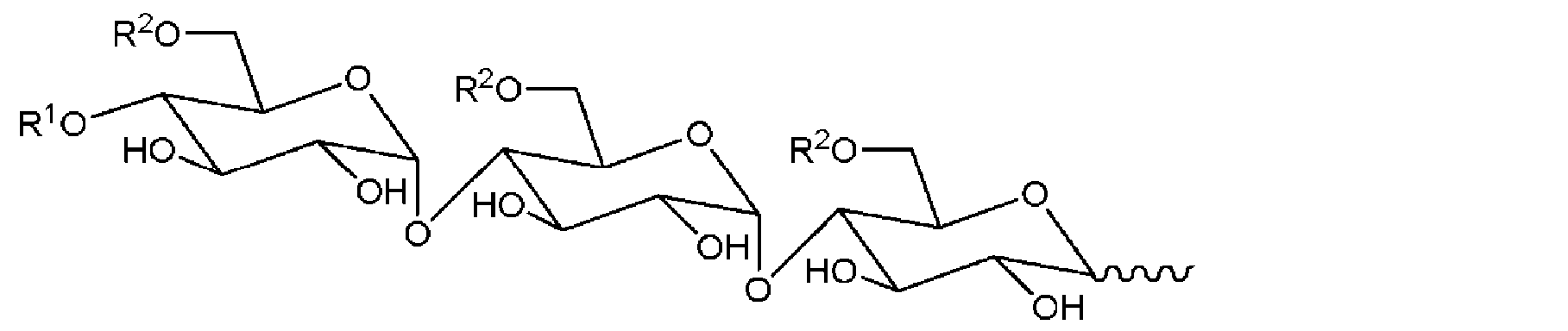
- Formula (I) below An amphiphilic block copolymer obtained by bonding a polypropylene glycol (PPG) segment (A) and a sugar chain segment (B) via a linker group, wherein the sugar chain segment (B) contains a maltotriose unit.
- An amphiphilic block copolymer comprising an anomeric carbon of maltotriose bonded to a PPG segment
- R 1 and R 2 are the same or different and each represents a hydrogen atom or a sugar residue containing at least one glucose.
- Y 1 represents a divalent linker group.
- R represents a hydrogen atom, an alkyl group, An aryl group, an aralkyl group, an alkanoyl group, a hydroxyalkyl group, Y 2 -R 3 , Y 2 represents a divalent linker group, and R 3 represents the following formula
- N1 is 10 to 500.
- Item 2 The amphiphilic block copolymer according to item 1, represented by: Item 3.
- the divalent linker group represented by Y 1 or Y 2 is -NH-,
- Item 3 The amphiphilic block copolymer according to Item 2, which is any one of groups represented by: Item 4.
- Item 4. A molecular assembly composed of at least one amphiphilic block copolymer according to any one of Items 1 to 3.
- Item 5. The molecular assembly according to Item 4, wherein the molecular assembly is a vesicle, a spherical micelle, a rod-like micelle, or a tube structure.
- Item 6. Item 6. The molecular assembly according to Item 5, which includes a protein.
- Item 7. Item 7.
- Item 8. Item 6. The method for producing a molecular assembly according to Item 4 or 5, wherein at least one amphiphilic block copolymer according to any one of Items 1 to 3 is dispersed in water.
- Item 9. Item 6. A protein inclusion agent comprising the molecular assembly according to Item 4 or 5.
- An amphiphilic block copolymer containing a sugar chain segment as a hydrophilic group and a PPG segment as a hydrophobic group forms a molecular assembly in an aqueous solution, and PPG has a lower critical eutectic temperature (LCST) below room temperature. From these results, it was found that the vesicle collapse can be controlled by lowering the temperature of the solution below room temperature. It has also been found that it exhibits low molecular permeability without the need to add membrane proteins. In addition, it was revealed that it was incorporated into the inner aqueous phase of the molecular assembly while maintaining the activity of various enzymes and functioned as an enzyme reaction field. Furthermore, since this polymer is associated by hydrophobic interaction, the present inventors also found a function (artificial chaperone ability) that interacts with a protein in a denatured state and promotes refolding.
- LCST critical eutectic temperature
- the molecular assembly of the present invention is expected to be used for a new DDS carrier that can encapsulate an enzyme while maintaining its activity stably.
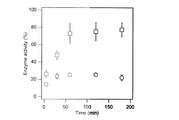
- ⁇ chymotrypsin (without inhibitor); ⁇ : chymotrypsin (with inhibitor); ⁇ : chymotrypsin inclusion M 5 P 2.5 (without inhibitor); ⁇ : chymotrypsin inclusion M 5 P 2.5 (with inhibitor).
- Activity evaluation of ⁇ -galactosidase encapsulated in M 5 P 2.5 ⁇ : ⁇ -galactosidase (without proteinase K); ⁇ : ⁇ -galactosidase inclusion M 5 P 2.5 (with proteinase K); ⁇ : ⁇ -galactosidase (with proteinase K).
- vesicle refers to vesicles, spherical and rod-like micelles, tube structures, and the like.
- a “vesicle” is a vesicle having a closed membrane structure such as a spherical shape, an ellipsoidal shape, or a rod shape, and has a liquid layer inside when present in a liquid.
- the vesicle may be lyophilized.
- the lyophilized vesicle has no internal liquid layer, but the internal liquid layer (aqueous layer) is regenerated by adding the lyophilized vesicle to a liquid such as water.
- the polymer substance is encapsulated inside the vesicle, the polymer substance remains in the membrane constituting the vesicle even after lyophilization, and the vesicle encapsulating the polymer substance is regenerated in water.
- Vesicles can contain macromolecular substances, such as water, ions (Na + , K + , Li + , Ca + , Mg + , Fe 2+ / Fe 3+ cation, Cl ⁇ , Br ⁇ , NO 3 -, anions such as SO 4 2-), the low molecular substances can permeate through the membrane of the vesicle.
- the polymer material is confined within the vesicle.
- the molecular weight threshold that can pass through the vesicle membrane varies depending on the size (size and molecular weight) of the sugar chain segment and PPG of the block copolymer of the present invention, but is usually about 300 to 30000, preferably about 500 to 20000, more preferably.
- the threshold is about 5000.
- the low molecular weight substance include physiologically active substances such as drugs, enzyme substrates, dyes, and fragrances.
- the polymer substance included in the vesicle include proteins, nucleic acids (DNA, RNA, etc.), polysaccharides, etc. Proteins are preferred. Examples of proteins include enzymes, antibodies, antigens, receptors, hormones and the like, and enzymes are preferred.
- the enzyme examples include hydrolase, transferase, oxidoreductase, desorption enzyme, isomerase, and synthetic enzyme.
- the polymer substance contained in the vesicle may be used alone or in combination of two or more. Since the vesicle of the present invention can permeate the substrate of the enzyme, an enzymatic reaction is possible in the vesicle. In addition, since the vesicle of the present invention encapsulating an enzyme has an action of promoting refolding of a protein containing the enzyme, the enzyme activity is maintained for a long time and the enzyme reaction product can be easily separated. As excellent.
- the size of the molecular assembly is about 10 nm to 5 ⁇ m, preferably about 20 nm to 3 ⁇ m, more preferably about 30 nm to 1 ⁇ m, still more preferably about 30 nm to 500 nm, and particularly preferably about 40 nm to 300 nm.
- the block copolymer of the present specification is composed of a hydrophobic PPG segment (A) and a hydrophilic sugar chain segment (B), and (A)-(B) or (B)-(A)-(B ) Type block copolymer is preferably exemplified.
- PPG segment (A) commercially available polypropylene or a derivative thereof may be bonded to the glucose residue of the sugar chain segment via a linker group.
- the PPG segment (A) is bonded to the anomeric carbon of the glucose residue of the sugar chain segment via a linker group, but can also be bonded to the hydroxyl group of a glucose residue other than the anomeric carbon.
- Examples of commercially available or known polypropylene or derivatives thereof include the following.
- n1 represents 10 to 500.
- R b represents a hydrogen atom, an alkyl group or an acyl group.
- the molecular weight of the PPG segment is preferably about 500 to 30000, more preferably about 1000 to 20000, and still more preferably. Is about 2000 to 15000, particularly preferably about 3000 to 10000. Since the molecular weight of the PPG segment is related to the threshold value for the permeation of the substance inside the vesicle, a preferable molecular weight may be selected in relation to the threshold value.
- the molecular weight includes a number average molecular weight.
- the alkyl group has a straight or branched chain having 1 to 6 carbon atoms such as methyl, ethyl, n-propyl, isopropyl, n-butyl, isobutyl, sec-butyl, tert-butyl, n-pentyl, n-hexyl, etc.
- An alkyl group is mentioned.
- aryl group examples include phenyl, naphthyl, fluorenyl, anthryl, biphenylyl, tetrahydronaphthyl, chromanyl, 2,3-dihydro-1,4-dioxanaphthalenyl, indanyl and phenanthryl.
- Aralkyl groups include benzyl, naphthylmethyl, fluorenylmethyl, anthrylmethyl, biphenylylmethyl, tetrahydronaphthylmethyl, chromanylmethyl, 2,3-dihydro-1,4-dioxanaphthalenylmethyl, indanyl Examples include methyl, phenanthrylmethyl, phenethyl, naphthylethyl, fluorenylethyl.
- alkanoyl group examples include formyl, acetyl, propionyl, butyryl, isobutyryl, valeryl, isovaleryl, pivaloyl, lauroyl, myristoyl, palmitoyl, stearoyl and the like.
- Hydroxyalkyl groups include carbons such as hydroxymethyl, hydroxyethyl, hydroxy n-propyl, hydroxyisopropyl, hydroxy n-butyl, hydroxyisobutyl, hydroxy sec-butyl, hydroxy tert-butyl, hydroxy n-pentyl, hydroxy n-hexyl, etc. Examples thereof include a linear or branched hydroxyalkyl group having a number of 1 to 6.
- Acyl groups include C 1-6 alkylcarbonyl, arylcarbonyl, aryl-substituted C 1-4 alkylcarbonyl.
- C 1-6 alkylcarbonyl examples include methylcarbonyl, ethylcarbonyl, n-propylcarbonyl, isopropylcarbonyl, n-butylcarbonyl, isobutylcarbonyl, tert-butylcarbonyl, n-pentylcarbonyl, isopentylcarbonyl, hexylcarbonyl Is mentioned.
- arylcarbonyl examples include phenylcarbonyl, naphthylcarbonyl, fluorenylcarbonyl, anthrylcarbonyl, biphenylylcarbonyl, tetrahydronaphthylcarbonyl, chromancarbonyl, 2,3-dihydro-1,4-dioxanaphthalenyl Examples include carbonyl, indanylcarbonyl and phenanthrylcarbonyl.
- aryl-substituted C 1-4 alkylcarbonyl examples include benzylcarbonyl, naphthylmethylcarbonyl, fluorenylmethylcarbonyl, anthrylmethylcarbonyl, biphenylylmethylcarbonyl, tetrahydronaphthylmethylcarbonyl, chromanylmethylcarbonyl, 2,3 -Dihydro-1,4-dioxanaphthalenylmethylcarbonyl, indanylmethylcarbonyl, phenanthrylmethylcarbonyl, phenethylcarbonyl, naphthylethylcarbonyl, fluorenylethylcarbonyl.
- p is an integer of 1 to 4, preferably 1, 2 or 3, more preferably 1 or 2, especially 1.
- X is O, NR 4 or S, preferably NR 4 .
- R 4 is a hydrogen atom, an acyl group or an alkyl group, preferably a hydrogen atom or an alkyl group.
- the sugar chain segment (B) contains a maltotriose residue, and the anomeric carbon of maltotriose is bonded to the PPG segment (A) via a divalent linker group.
- the sugar chain segment (B) may be a single one, or two or more sugar chain segments (B) may be mixed. Preferred sugar chain segments (B1) and (B2) are shown below.
- n2 is .R 2 in which represents an integer of 2 or more is .R 2a is as defined above shows a sugar residue containing at least one glucose.
- the number of glucose residues in the sugar chain segment is 3 or more, for example, 3 to 100, preferably 3 to 50, more preferably 3 to 30, even more preferably 3 to 20, particularly 3 to 10.
- the sugar chain segment may be composed only of glucose residues, or may contain sugar residues other than glucose. Examples of sugar residues other than glucose include galactose, mannose, and fructose.
- the proportion of glucose in the sugar chain segment is more than 50% in molar ratio, preferably 60% or more, more preferably 70% or more, still more preferably 80% or more, particularly preferably 90% or more, and most preferably 100%. .
- glucose residues such as maltotriose, maltotetraose, maltopentaose, maltohexaose, maltoheptaose, maltooctaose, maltononaose, maltodecaose as raw materials for obtaining sugar chain segments
- the maltooligosaccharide is preferably used.
- a polypropylene glycol residue is bonded to maltooligosaccharide via a linker.
- glycosyltransferase may be further reacted to further add glucose to the 4-position of the end of the maltooligosaccharide or the 6-position of the glucose residue of the maltooligosaccharide.
- examples of such glycosyltransferases include starch synthase and blanching enzyme, and one or more of these can be used in combination.
- the block copolymer of the present invention has sugar chain segments at one or both ends.
- a copolymer having PPG segments at both ends is not included in the block copolymer of the present invention.
- the maltooligosaccharide used as a raw material can be obtained by hydrolyzing starch or cyclodextrin ( ⁇ , ⁇ , ⁇ ) with an acid.
- starch is decomposed by maltooligosaccharide-generating amylase to generate maltooligosaccharides in which glucose such as maltotriose, maltotetraose, maltopentaose, maltohexaose is ⁇ -1.4-linked.
- the divalent linker group that connects the PPG segment and the sugar chain segment is -NH-
- the block copolymer of the present invention can be produced according to the following scheme 1 and scheme 2.
- X represents O, NR 4 or S.
- R 1 , R 2 , R, R b , n1, and p are as defined above.
- compound (2a) is used in an excess amount of 1 mol per 1 mol of compound (1a), and a solvent such as dimethylformamide (DMF), dimethylacetamide, dimethylsulfoxide (DMSO), N-methylpyrrolidone (NMP), etc.
- a solvent such as dimethylformamide (DMF), dimethylacetamide, dimethylsulfoxide (DMSO), N-methylpyrrolidone (NMP), etc.
- the target compound (IA) can be obtained by reacting for 1 to 24 hours from room temperature to the boiling temperature of the solvent.
- Propegylamine is used in an excess amount from 1 mol with respect to compound (3b), and in the presence of N- (3-dimethylaminopropyl) -N'-ethylcarbodiimide hydrochloride (EDC), dichloromethane (DCM), tetrahydrofuran (THF) ) And dimethylformamide (DMF) in a solvent such as dimethylformamide (DMF) at room temperature to the boiling temperature of the solvent for 1 to 24 hours, compound (4b) can be obtained.
- EDC N- (3-dimethylaminopropyl) -N'-ethylcarbodiimide hydrochloride
- DCM dichloromethane
- THF tetrahydrofuran
- DMF dimethylformamide
- compound (4b) can be obtained.
- the target compound (IB) can be obtained by reacting from room temperature to the boiling temperature of the solvent for 1 to 24 hours.
- Example 1 In this study, we tried to give the polymer vesicle membrane itself a substance permeability in order to construct a compartmentalized space with a simple molecule and a substance permeability without requiring the incorporation of membrane proteins.
- PPG which has a low glass transition point
- the hydrophilic group has five glucose groups in consideration of the balance with the mass of the hydrophobic group and biocompatibility.
- a series of maltopentaose was used.
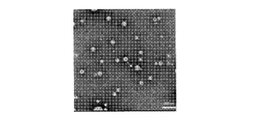
- M 5 P 2.5 vesicles were prepared according to the Direct Hydration method developed by Hubbell et al. The obtained vesicle was subjected to TEM observation and DLS measurement, and a TEM image is shown in the left figure of FIG. 1 and a DLS measurement result is shown in the right figure. From the TEM image, it was found that the vesicles are spherical and have an edged aggregate. From this, it was found that M 5 P 2.5 formed a vesicle structure in an aqueous solution. From the DLS measurement, the particle size was about 120 nm. The PDI was 0.16, indicating that vesicles with relatively uniform particle sizes were formed.
- M 5 P 2.5 in substance permeability M 5 P 2.5 vesicles vesicles encasing an FITC-labeled molecular weight different PEG and bovine serum albumin (BSA), the permeability by examining its release behavior Evaluation was performed.
- BSA molecular weight: 66000
- PEG molecular weight 550 to 5000
- the permeation rate depends on the molecular weight of the encapsulated molecule, and is rapidly released when the molecular weight is 5000 or less. From these results, it was found that M 5 P 2.5 vesicles can selectively permeate low-molecular substances.
- Vesicle function as an enzyme reaction field (4-1) Function of chymotrypsin-encapsulated M 5 P 2.5 vesicle Enzyme was encapsulated in the inner aqueous phase of vesicle composed of M 5 P 2.5, and it was evaluated whether it functions as an enzyme reaction field.
- the encapsulated enzyme was chymotrypsin, a hydrolase, and the substrate was N-benzoyl-l-tyrosine p-nitroanilide.
- chymotrypsin encapsulated in M 5 P 2.5 shows an activity although its reaction rate is slower than that of chymotrypsin in the natural state.
- chymotrypsin encapsulated in vesicles shows similar activity even in the presence of an inhibitor, indicating that the bilayer membrane of vesicles selectively permeates molecules.
- ⁇ -galactosidase encapsulated in M 5 P 2.5 vesicles shows an activity although the reaction rate is slower than that of ⁇ -galactosidase in the natural state.
- ⁇ -galactosidase encapsulated in vesicles is active even in the presence of protein hydrolase (proteinase K) with a large molecular weight, and ⁇ -galactosidase retained in the inner aqueous phase is protected by the bilayer membrane of vesicles. I found out. From the above results, it was found that the ⁇ -galactosidase-encapsulating M 5 P 2.5 vesicle maintained the enzyme activity in an aqueous solution.
- ⁇ -galactosidase-encapsulated TAT-presenting M 5 P 2.5 vesicles were added to HeLa cells and incorporated into the cells. Thereafter, the medium was changed, and the prodrug 5-Fluorouridine-5′-ObD-galactopyranoside (FURG) as a substrate was added. After 24 hours of culture, cytotoxicity was evaluated using cell counting kit-8 (FIG. 6). . From FIG. 6, the addition of only the prodrug (FURG) does not show cytotoxicity, whereas in the presence of ⁇ -galactosidase-encapsulated TAT-presenting M 5 P 2.5 vesicle, the prodrug (FURG) is an anticancer agent (5-FUR).
- FURG 5-Fluorouridine-5′-ObD-galactopyranoside
- the obtained mesylated compound was used in the next reaction without purification.
- the obtained pale yellow oily compound was dissolved in dehydrated DMF (5 mL), NaN 3 (1.3 g, 20.0 mmol) was added, and the mixture was stirred at 45 ° C. for 48 hours. After cooling to room temperature, the reaction solution was added to ultrapure water (50 mL), and the aqueous phase was extracted with ethyl acetate. The organic layer was washed with ultrapure water and brine, dried over magnesium sulfate, filtered through filter paper, and dried under reduced pressure to obtain N3-PPO (12).
- the particle size of the vesicle was measured at 25 ° C. using Malvern zetasizer nano ZSP for the vesicle solution prepared above.
- the prepared solution was allowed to stand for 1 hour, and then purified by dialysis using a MWCO 300 kDa dialysis membrane or Sephadex g-50. 100 ⁇ L of the purified sample and DMSO were mixed with 200 ⁇ L to obtain a sample for calculating the encapsulation rate.
- FIG. 10 shows the obtained SAXS profile. Since there is a high possibility that a vesicle-like structure is formed from a TEM image, the following bilayer model (J. Phys. Chem. B 2007, 111, 10357, J. Phys. Chem. B 1998, 102, 5737), SAXS profile fitting was performed.
- the electron densities (J. Phys. Chem. B 2011, 115, 11318) of the solvent and the hydrophobic layer were 334 to 335 and 330 to 331 e / nm 3 from literature values, respectively.
- fitting was performed considering that the lengths of sugar chain and PPO in full stretch were 2.5 and 10 nm, respectively.
- Example 3 (1) Synthesis of block copolymers with different sugar chains and PPG segments and structural analysis of molecular assemblies Using a method similar to the synthesis scheme of M 5 P 2.5, a series of compounds with different sugar chains and PPG segments were synthesized. (FIG. 12).
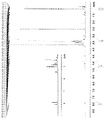
- the obtained compound was identified by 1 H-NMR, and the NMR spectra of the block copolymers (BisM 5 P 2 , M 5 P 1 , M 8 P 2.5 , M 3 P 1 , M 5 P 3.5 ) were shown respectively. It is shown in FIGS.
- M 5 P 1 of M 5 P 1 molecular aggregates are dissolved in PBS buffer to obtain M 5 P 1 molecular assembly solution by slowly returned to room temperature.
- a TEM image of the molecular assembly is shown in FIG.
- M 8 P 2.5 was dissolved in PBS buffer while cooling, and slowly returned to room temperature to obtain a molecular assembly solution.
- a TEM image of the obtained molecular assembly is shown in FIG.
- FIG. 21 shows a TEM image of the obtained molecular assembly.
- Example 4 Synthesis of block copolymers with linear and hyperbranched sugar chains by enzymatic polymerization using M 5 P 2.5 as a sugar chain primer Glycopolymerization with phosphorylase a (GPa) using M 5 P 2.5 as a primer Then, an enzymatic synthesis reaction of a multi-branched sugar chain was performed by synthesizing a linear sugar chain, and further by a tandem enzyme reaction with GPa and glycogen branching enzyme (GBE). In the linear sugar chain polymerization reaction, the final primer concentration is adjusted to 0.5 mM, glucose monophosphate is added at 0.36 mmol, phosphorylase a is added at 0.77 nmol, and the reaction is performed at 37 ° C. in 0.1 M Bis tris buffer.
- GBE glycogen branching enzyme
- the reaction was carried out by adding 1.2 nmol of GBE in addition to the above compounds. 10 ⁇ L was sampled at regular time intervals, free phosphoric acid was quantified, and the progress of polymerization was confirmed. After the reaction, 1 H-NMR measurement was performed to confirm the presence or absence of protons derived from ⁇ 1,6-position anomer. The results are shown in FIG.
Landscapes
- Chemical & Material Sciences (AREA)
- Health & Medical Sciences (AREA)
- Medicinal Chemistry (AREA)
- Chemical Kinetics & Catalysis (AREA)
- Organic Chemistry (AREA)
- Polymers & Plastics (AREA)
- Life Sciences & Earth Sciences (AREA)
- Epidemiology (AREA)
- Animal Behavior & Ethology (AREA)
- General Health & Medical Sciences (AREA)
- Public Health (AREA)
- Veterinary Medicine (AREA)
- Inorganic Chemistry (AREA)
- Pharmacology & Pharmacy (AREA)
- Proteomics, Peptides & Aminoacids (AREA)
- Medicinal Preparation (AREA)
- Medicines That Contain Protein Lipid Enzymes And Other Medicines (AREA)
- Polyethers (AREA)
- Other Resins Obtained By Reactions Not Involving Carbon-To-Carbon Unsaturated Bonds (AREA)
Abstract
本発明は、ポリプロピレングリコール(PPG)セグメント(A)と糖鎖セグメント(B)をリンカー基を介して結合してなる両親媒性ブロック共重合体であって、前記糖鎖セグメント(B)がマルトトリオースユニットを含み、マルトトリオースのアノマー炭素がPPGセグメント(A)と2価のリンカー基を介して結合している、両親媒性ブロック共重合体に関する。
Description
本発明は、両親媒性ブロック共重合体、分子集合体及びその製造方法並びにタンパク質の内包剤に関する。
天然のリン脂質からなるベシクル(リポソーム)は、人工細胞モデルやドラッグデリバリーシステム (DDS)のナノキャリアとしての応用まで幅広く研究されている。また、近年、生体内で不要物質の代謝、タンパク質の合成、修飾、タンパク質の折りたたみやエネルギー産生などを担っているオルガネラ小胞に着目し、リポソームを用いた人工オルガネラを構築し、生体内で産生される不要な分子の変換や生理活性物質の産生を行なえる次世代のDDSプラットフォームとして利用する試みもなされている(非特許文献1、2)。
リン脂質は生体システムに存在する事から生体親和性が高く、そのリポソームはある程度の物質透過能も有する。一方で、力学的強度に弱くかつ希釈条件で不安定であるなどの欠点を有する。そのため近年では、これらの弱点を補うためポリマーからなる中空状構造体(ポリマーベシクル)に注目が集まっている(非特許文献3)。ポリマーベシクルは、リン脂質が形成するリポソームと同様に内水相を持ち、構造体の表面および膜の性質などの改変が容易であるという特徴も併せ持つ。また、リン脂質と比較して分子量が大きいため、力学的強度が強くかつ安定である。一方で、構成単位が合成高分子である場合が多く生体適合性が低く、また、分子量が大きいため形成するベシクル膜厚が大きくなるために物質の透過能が著しく低い。そのため、生体の機能を模倣して物質透過能を持つ膜タンパク質をポリマーベシクルに組み込んだもの(非特許文献4,5)や、機能性・刺激応答性ポリマーを用いた例(非特許文献6~9)、polyion complex を利用した高分子ポリマー(非特許文献10,11)などが開発されている。しかし、これらの構築は煩雑な操作が必要であったり、多段階の合成が必須となる。
Nat. Nanotech. 2007, 2, 3-7, Acc. Chem. Res., 2011, 44 (10), pp 1039
FEBS Lett. 2011, 585, 1699, Nano Lett. 2013, 13, 2875、Nat. Nanotech. 2007, 2, 3-7
Current Opinion in Pharmacology 2014, 18:104
Nano Lett. 2013, 13(6), 2875
Nano Lett., 2005, 5(11), 2220
Adv .Mater., 2009, 21, 2787
Angew. Chem. Int. Ed. 2013, 52, 5070
J. Am. Chem. Soc., 2009, 131, 10557
Angew. Chem. Int. Ed. 2003, 42, 7, 772
Angew. Chem. 2007, 119, 6197
Angew. Chem. Int. Ed. 2009, 48, 329
本発明は、両親媒性ブロック共重合体を提供することを目的とする。
また、本発明は、生体適合性が高く、温度応答性や物質透過性を有する分子集合体及びその製造方法を提供することを目的とする。さらに、本発明は、タンパク質の内包剤を提供することを目的とする。
そこで、本発明者は膜タンパク質の組み込みを必要とせず、よりシンプルな分子で物質透過能を持つ区画化された空間を構築するためにポリマーベシクル膜自身に物質透過能を付与することを検討した。ポリマーの分子設計では、膜の流動性を上げるためにガラス転移点が低いポリプロピレングリコール(PPG)を疎水基として利用し、親水基は、疎水基の質量とのバランスと生体親和性を考慮し、マルトトリオースユニットを有する糖鎖セグメントを用いることとした。このようなPPGセグメントと糖鎖セグメントを有する両親媒性ブロック共重合体は水中でベシクルを含む分子集合体を形成し、その形成は温度により可逆的に制御可能であり、また、分子集合体のベシクル膜は水、イオン、低分子物質などは透過するがタンパク質などの高分子物質は透過しないこと、さらに、酵素内包によるバイオリアクター機能やタンパク質リフォールディングを助ける分子シャペロン様の機能を有することを見出した。
本発明は、以下の両親媒性ブロック共重合体、分子集合体及びその製造方法並びにタンパク質の内包剤に関する。
項1. ポリプロピレングリコール(PPG)セグメント(A)と糖鎖セグメント(B)をリンカー基を介して結合してなる両親媒性ブロック共重合体であって、前記糖鎖セグメント(B)がマルトトリオースユニットを含み、マルトトリオースのアノマー炭素がPPGセグメント(A)と2価のリンカー基を介して結合している、両親媒性ブロック共重合体。
項2. 下記式(I)
項1. ポリプロピレングリコール(PPG)セグメント(A)と糖鎖セグメント(B)をリンカー基を介して結合してなる両親媒性ブロック共重合体であって、前記糖鎖セグメント(B)がマルトトリオースユニットを含み、マルトトリオースのアノマー炭素がPPGセグメント(A)と2価のリンカー基を介して結合している、両親媒性ブロック共重合体。
項2. 下記式(I)

(式中、R1及びR2は、同一又は異なって水素原子又は少なくとも1個のグルコースを含む糖残基を示す。Y1は2価のリンカー基を示す。Rは水素原子、アルキル基、アリール基、アラルキル基、アルカノイル基、ヒドロキシアルキル基、Y2-R3を示し、Y2は2価のリンカー基を示し、R3は下記式

(式中、R1及びR2は、前記に定義されるとおりである。)
で表される基であり、n1は10~500である。)
で表される項1に記載の両親媒性ブロック共重合体。
項3. Y1又はY2で表される2価のリンカー基は、-NH-、下記式
で表される基であり、n1は10~500である。)
で表される項1に記載の両親媒性ブロック共重合体。
項3. Y1又はY2で表される2価のリンカー基は、-NH-、下記式

(式中、XはO,NR4又はSを示す。pは1~4の整数を示す。R4は水素原子、アシル基又はアルキル基を示す。)
で表される基のいずれかである、項2に記載の両親媒性ブロック共重合体。
項4. 項1~3のいずれか1項に記載の少なくとも1種の両親媒性ブロック共重合体から構成される分子集合体。
項5. 前記分子集合体がベシクル、球状ミセル、棒状ミセル、あるいはチューブ構造である項4に記載の分子集合体。
項6. タンパク質を内包する、項5に記載の分子集合体。
項7. 前記タンパク質が酵素である、項6に記載の分子集合体。
項8. 項1~3のいずれか1項に記載の少なくとも1種の両親媒性ブロック共重合体を水中に分散させることを特徴とする、項4又は5に記載の分子集合体の製造方法。
項9. 項4又は5に記載の分子集合体からなる、タンパク質の内包剤。
で表される基のいずれかである、項2に記載の両親媒性ブロック共重合体。
項4. 項1~3のいずれか1項に記載の少なくとも1種の両親媒性ブロック共重合体から構成される分子集合体。
項5. 前記分子集合体がベシクル、球状ミセル、棒状ミセル、あるいはチューブ構造である項4に記載の分子集合体。
項6. タンパク質を内包する、項5に記載の分子集合体。
項7. 前記タンパク質が酵素である、項6に記載の分子集合体。
項8. 項1~3のいずれか1項に記載の少なくとも1種の両親媒性ブロック共重合体を水中に分散させることを特徴とする、項4又は5に記載の分子集合体の製造方法。
項9. 項4又は5に記載の分子集合体からなる、タンパク質の内包剤。
親水基として糖鎖セグメント、疎水基としてPPGセグメントを含む両親媒性ブロック共重合体が、水溶液中で分子集合体を形成すること、PPGが下限臨界共溶温度(LCST)を室温以下の温度で示す事から、溶液の温度を室温以下に下げることによりベシクルの崩壊を制御できる事を見出した。また、膜タンパク質などの添加を必要とせずに、低分子の透過能を示す事も判明した。加えて、種々の酵素の活性を維持したまま分子集合体の内水相へ取り込み、酵素反応場として機能することが明らかとなった。さらに、このポリマーは疎水性相互作用により会合しているため、変性状態にあるタンパク質と相互作用しリフォールディングを促進する機能(人工シャペロン能)も見出した。
以上の事から、本発明の分子集合体は酵素を安定かつ活性を保持したまま内包できる新しいDDSキャリアーへの活用が期待される。
本明細書において、「分子集合体」とは、ベシクル、球状および棒状ミセル、チューブ構造などを指す。また、「ベシクル」とは、球状、楕円体状、棒状などの閉じた膜構造を有する小胞であり、液体中に存在させたときに内部に液層を有するものを指す。ベシクルは、凍結乾燥させたものであってもよい。凍結乾燥ベシクルは内部の液層は存在しないが、凍結乾燥されたベシクルを水などの液体に加えることで内部の液層(水層)が再生される。ベシクル内部に高分子物質を内包した場合、高分子物質は凍結乾燥後にもベシクルを構成する膜の内部に保持された状態になり、水中において高分子物質を内包したベシクルを再生する。
ベシクルは高分子物質を内包することができ、水、イオン(Na+、K+、Li+、Ca+、Mg+、Fe2+/Fe3+などのカチオン、Cl-、Br-、NO3
-,SO4
2-などのアニオン)、低分子物質などはベシクルの膜を透過することができる。高分子物質はベシクルの内部に閉じこめられる。ベシクル膜を通過できる分子量の閾値は、本発明のブロック共重合体の糖鎖セグメントとPPGの大きさ(サイズ、分子量)で異なるが、通常300~30000程度、好ましくは500~20000程度、より好ましくは1000~10000程度、さらに好ましくは1200~8000程度、特に1500~5000程度である。例えばPPGセグメントの分子量が2500程度であり、糖鎖セグメントがマルトペンタオースの(A)-(B)型のブロック共重合体の場合、閾値は5000程度である。低分子物質としては、薬物などの生理活性物質、酵素の基質、色素、香料などが挙げられる。ベシクルに内包される高分子物質としては、タンパク質、核酸(DNA、RNAなど)、多糖などが挙げられ、タンパク質が好ましい。タンパク質としては、酵素、抗体、抗原、受容体、ホルモンなどが挙げられ、酵素が好ましい。酵素としては、加水分解酵素、転移酵素、酸化還元酵素、脱離酵素、異性化酵素、合成酵素などが挙げられる。ベシクルに内包される高分子物質は単独でも2種以上を併用してもよい。本発明のベシクルは、酵素の基質を透過可能であるので、ベシクル内で酵素反応が可能である。また、酵素を内包する本発明のベシクルは、酵素を含むタンパク質のリフォールディングを促進する作用があるため、酵素活性が長時間維持され、かつ、酵素反応産物の分離を容易に行えるので、酵素材料として優れている。
分子集合体のサイズは、10nm~5μm程度、好ましくは20nm~3μm程度、より好ましくは30nm~1μm程度、さらに好ましくは30nm~500nm程度、特に好ましくは40nm~300nm程度である。
分子集合体は、本発明のブロック共重合体をジメトキシポリエチレングリコール(mw=500)に溶融させ、段階的に緩衝液を添加する事、あるいは冷却した本発明のブロック共重合体を冷却した緩衝液に溶かし、昇温する事により得ることができる。
本明細書のブロック共重合体は、疎水性のPPGセグメント(A)と親水性の糖鎖セグメント(B)から構成され、(A)-(B)又は(B)-(A)-(B)タイプのブロック共重合体が好ましく例示される。
PPGセグメント(A)は、市販のポリプロピレン又はその誘導体をリンカー基を介して糖鎖セグメントのグルコース残基に結合すればよい。PPGセグメント(A)は、リンカー基を介して糖鎖セグメントのグルコース残基のアノマー炭素に結合されるが、アノマー炭素以外のグルコース残基の水酸基に結合することもできる。
市販又は公知のポリプロピレン又はその誘導体としては、以下のものが挙げられる。
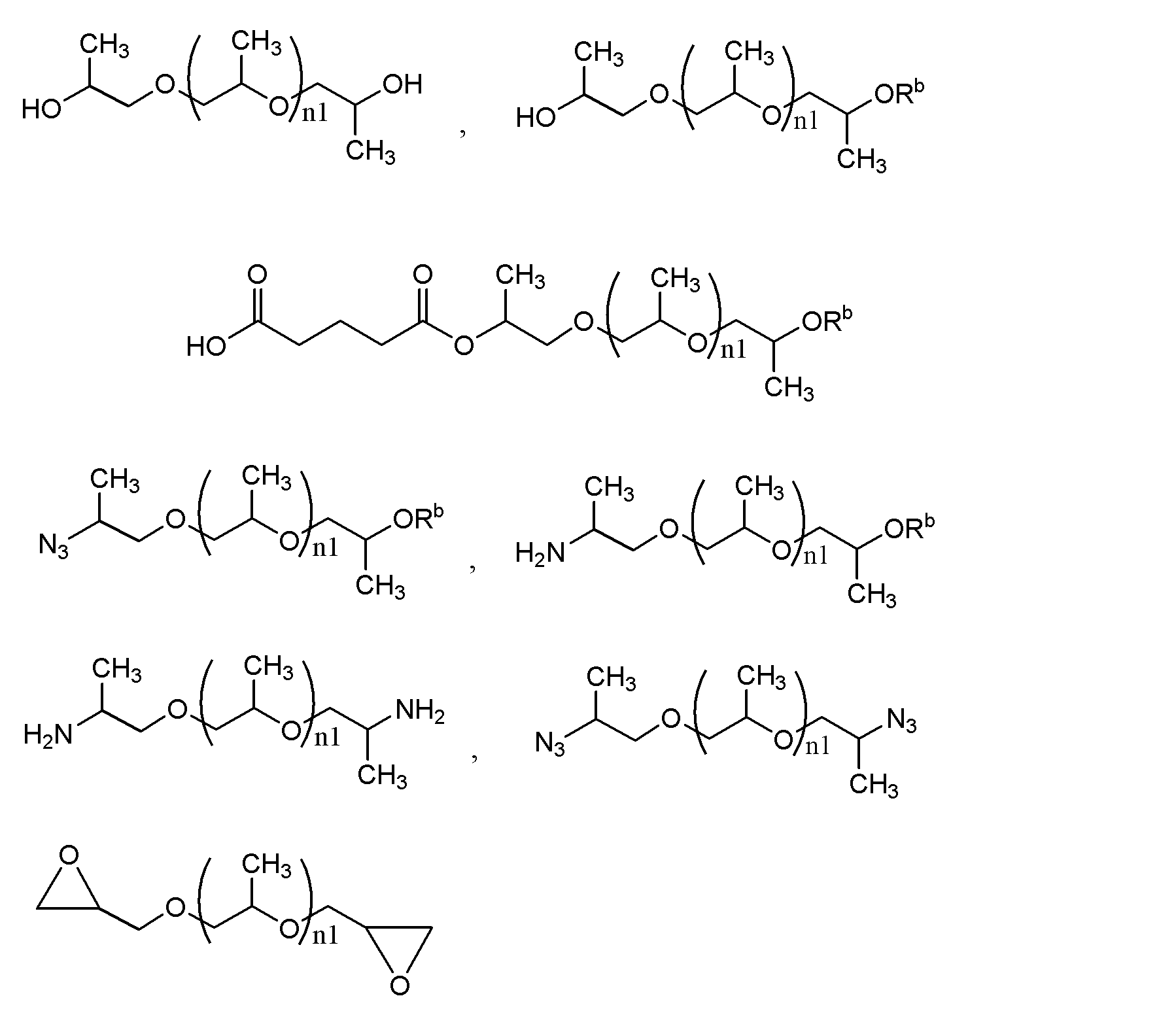
(式中、n1は10~500を示す。Rbは水素原子、アルキル基又はアシル基を示す。) PPGセグメントの分子量は、好ましくは500~30000程度、より好ましくは1000~20000程度、さらに好ましくは2000~15000程度、特に好ましくは3000~10000程度である。PPGセグメントの分子量は、ベシクル内部の物質の透過についての閾値に関係するので、閾値との関係で好ましい分子量を選択すればよい。分子量としては、数平均分子量が挙げられる。
アルキル基としては、メチル、エチル、n-プロピル、イソプロピル、n-ブチル、イソブチル、sec-ブチル、tert-ブチル、n-ペンチル、n-ヘキシルなどの炭素数1~6の直鎖又は分岐を有するアルキル基が挙げられる。
アリール基としては、フェニル、ナフチル、フルオレニル、アントリル、ビフェニリル、テトラヒドロナフチル、クロマニル、2,3-ジヒドロ-1,4-ジオキサナフタレニル、インダニル及びフェナントリルが挙げられる。
アラルキル基としては、ベンジル、ナフチルメチル、フルオレニルメチル、アントリルメチル、ビフェニリルメチル、テトラヒドロナフチルメチル、クロマニルメチル、2,3-ジヒドロ-1,4-ジオキサナフタレニルメチル、インダニルメチル、フェナントリルメチル、フェネチル、ナフチルエチル、フルオレニルエチルが挙げられる。
アルカノイル基としては、ホルミル、アセチル、プロピオニル、ブチリル、イソブチリル、バレリル、イソバレルリ、ピバロイル、ラウロイル、ミリストイル、パルミトイル、ステアロイルなどが挙げられる。
ヒドロキシアルキル基としては、ヒドロキシメチル、ヒドロキシエチル、ヒドロキシn-プロピル、ヒドロキシイソプロピル、ヒドロキシn-ブチル、ヒドロキシイソブチル、ヒドロキシsec-ブチル、ヒドロキシtert-ブチル、ヒドロキシn-ペンチル、ヒドロキシn-ヘキシルなどの炭素数1~6の直鎖又は分岐を有するヒドロキシアルキル基が挙げられる。
アシル基としては、C1-6アルキルカルボニル、アリールカルボニル、アリール置換C1-4アルキルカルボニルが挙げられる。
C1-6アルキルカルボニルの具体例としては、メチルカルボニル、エチルカルボニル、n-プロピルカルボニル、イソプロピルカルボニル、n-ブチルカルボニル、イソブチルカルボニル、tert-ブチルカルボニル、n-ペンチルカルボニル、イソペンチルカルボニル、ヘキシルカルボニルが挙げられる。
アリールカルボニルの具体例としては、フェニルカルボニル、ナフチルカルボニル、フルオレニルカルボニル、アントリルカルボニル、ビフェニリルカルボニル、テトラヒドロナフチルカルボニル、クロマニルカルボニル、2,3-ジヒドロ-1,4-ジオキサナフタレニルカルボニル、インダニルカルボニル及びフェナントリルカルボニルが挙げられる。
アリール置換C1-4アルキルカルボニルの具体例としては、ベンジルカルボニル、ナフチルメチルカルボニル、フルオレニルメチルカルボニル、アントリルメチルカルボニル、ビフェニリルメチルカルボニル、テトラヒドロナフチルメチルカルボニル、クロマニルメチルカルボニル、2,3-ジヒドロ-1,4-ジオキサナフタレニルメチルカルボニル、インダニルメチルカルボニル、フェナントリルメチルカルボニル、フェネチルカルボニル、ナフチルエチルカルボニル、フルオレニルエチルカルボニルが挙げられる。
pは1~4の整数、好ましくは1,2又は3、より好ましくは1又は2,特に1である。
XはO,NR4又はSであり、好ましくはNR4である。
R4は水素原子、アシル基又はアルキル基であり、好ましくは水素原子又はアルキル基である。
pは1~4の整数、好ましくは1,2又は3、より好ましくは1又は2,特に1である。
XはO,NR4又はSであり、好ましくはNR4である。
R4は水素原子、アシル基又はアルキル基であり、好ましくは水素原子又はアルキル基である。
糖鎖セグメント(B)はマルトトリオース残基を含み、マルトトリオースのアノマー炭素が2価のリンカー基を介してPPGセグメント(A)と結合する。
糖鎖セグメント(B)は、単一のものであってもよく、2以上の糖鎖セグメント(B)が混合されていてもよい。好ましい糖鎖セグメント(B1)及び(B2)を以下に示す。
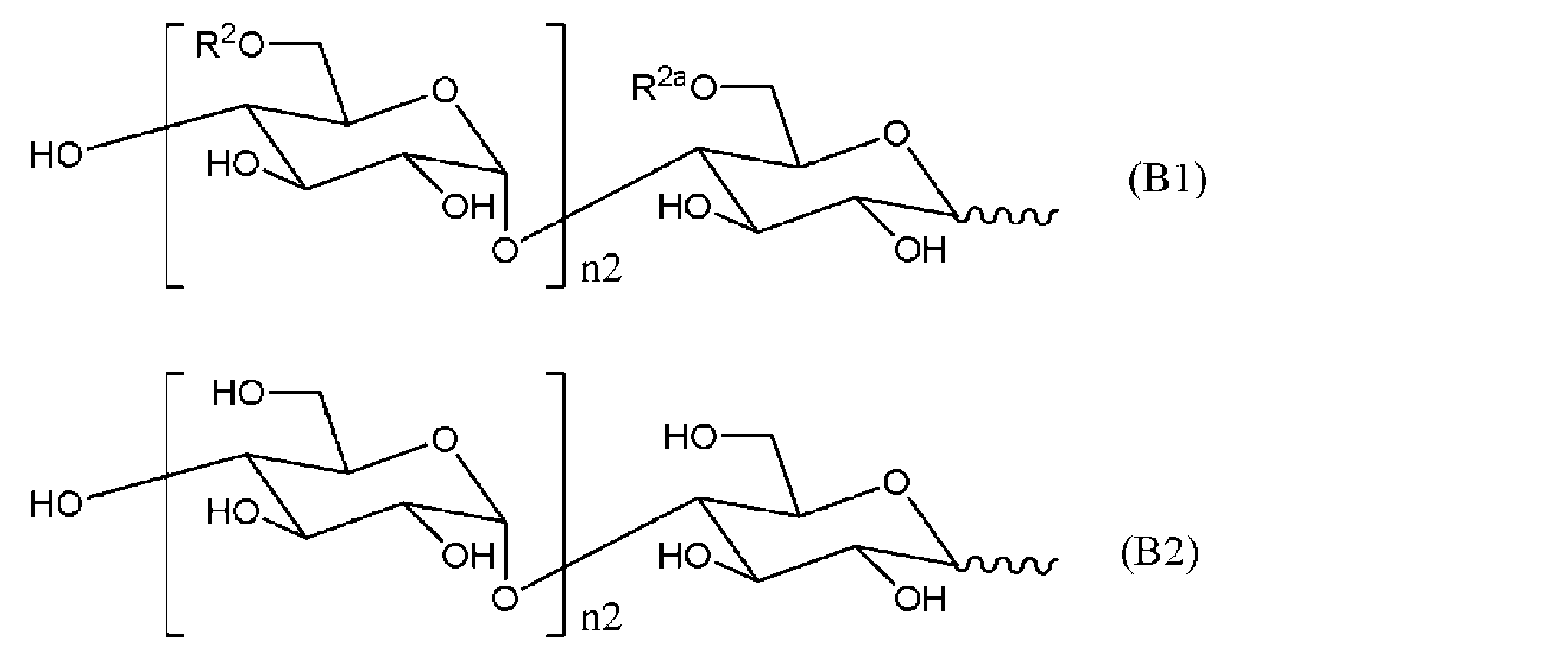
(式中、n2は2以上の整数を示す。R2は前記に定義されたとおりである。R2aは少なくとも1個のグルコースを含む糖残基を示す。)
糖鎖セグメントにおけるグルコース残基の数は3以上、例えば3~100、好ましくは3~50、より好ましくは3~30、さらに好ましくは3~20、特に3~10である。糖鎖セグメントは、グルコース残基のみから構成されていてもよく、グルコース以外の糖残基が含まれていてもよい。グルコース以外の糖残基としては、ガラクトース、マンノース、フルクトースが挙げられる。糖鎖セグメントにおけるグルコースの割合は、モル比で50%超、好ましくは60%以上、より好ましくは70%以上、さらに好ましくは80%以上、特に好ましくは90%以上、最も好ましくは100%である。
糖鎖セグメントにおけるグルコース残基の数は3以上、例えば3~100、好ましくは3~50、より好ましくは3~30、さらに好ましくは3~20、特に3~10である。糖鎖セグメントは、グルコース残基のみから構成されていてもよく、グルコース以外の糖残基が含まれていてもよい。グルコース以外の糖残基としては、ガラクトース、マンノース、フルクトースが挙げられる。糖鎖セグメントにおけるグルコースの割合は、モル比で50%超、好ましくは60%以上、より好ましくは70%以上、さらに好ましくは80%以上、特に好ましくは90%以上、最も好ましくは100%である。
PPGセグメントと糖鎖セグメントの分子量の比は、PPGセグメント/糖鎖セグメント=0.1~50程度、好ましくは0.5~30程度、より好ましくは1~20程度である。
糖鎖セグメントを得るための原料として、マルトトリオース、マルトテトラオース、マルトペンタオース、マルトヘキサオース、マルトヘプタオース、マルトオクタオース、マルトノナオース、マルトデカオースなどのグルコース残基が3個以上のマルトオリゴ糖が好ましく使用される。マルトオリゴ糖にリンカーを介してポリプロピレングリコール残基を結合させる。その後、必要に応じて糖転移酵素をさらに反応させてマルトオリゴ糖の末端の4位もしくはマルトオリゴ糖のグルコース残基の6位にさらにグルコースを付加してもよい。このような糖転移酵素としては、デンプン合成酵素、ブランチング酵素などが挙げられ、これらの1種もしくは2種以上を併用することができる。
本発明のブロック共重合体は、糖鎖セグメントが一方又は両方の端部にある。両端がPPGセグメントの共重合体は、本発明のブロック共重合体には含まれない。
原料となるマルトオリゴ糖は、デンプンもしくはシクロデキストリン(α、β、γ)を酸で加水分解する事で得ることができる。また、デンプンは、マルトオリゴ糖生成アミラーゼにより分解されてマルトトリオース、マルトテトラオース、マルトペンタオース、マルトヘキサオースのようなグルコースがα-1.4-結合したマルトオリゴ糖を生成する。
PPGセグメントと糖鎖セグメントを結合する2価のリンカー基としては、-NH-、

(式中、X,p、R4は前記に定義されるとおりである。)
で表される基が挙げられる。
で表される基が挙げられる。
本発明のブロック共重合体は、以下のスキーム1及びスキーム2に従い製造することができる。
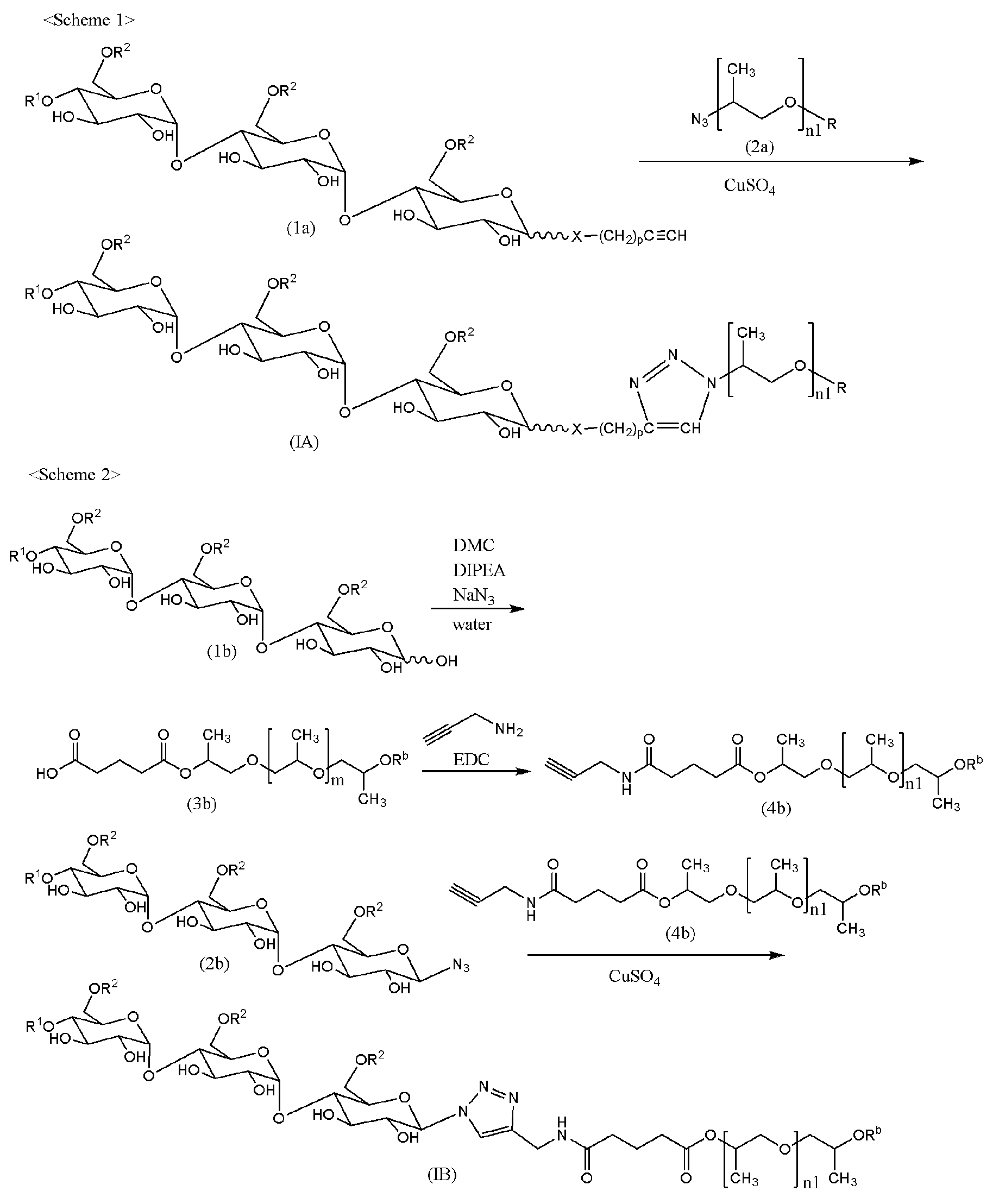
(式中、Xは、O、NR4又はSを示す。R1,R2,R,Rb,n1、pは前記に定義されるとおりである。)
スキーム1において、化合物(1a)1モルに対し化合物(2a)を1モルから過剰量使用し、ジメチルホルムアミド(DMF)、ジメチルアセトアミド、ジメチルスルホキシド(DMSO)、N-メチルピロリドン(NMP)などの溶媒中で触媒量から過剰量のCuSO4の存在下に、室温から溶媒の沸騰する温度下に1~24時間反応させることで目的とする化合物(IA)を得ることができる。
スキーム1において、化合物(1a)1モルに対し化合物(2a)を1モルから過剰量使用し、ジメチルホルムアミド(DMF)、ジメチルアセトアミド、ジメチルスルホキシド(DMSO)、N-メチルピロリドン(NMP)などの溶媒中で触媒量から過剰量のCuSO4の存在下に、室温から溶媒の沸騰する温度下に1~24時間反応させることで目的とする化合物(IA)を得ることができる。
スキーム2において化合物(1b)1モルに対して2-クロロ-4,5-ジヒドロ-1,3-ジメチル-1H-イミダゾリウムクロリド(DMC), ジイソプロピルエチルアミン(DIPEA)、アジ化ナトリウム存在下、超純水中、室温下で撹拌する。反応後、溶媒を除去し、エタノールを加え、生成した沈殿をろ過し除去する。ろ液に超純水を加え、水溶液を酢酸エチルで洗浄後、イオン交換カラムでDIPEAを除去し、凍結乾燥を行い化合物(3b)を得ることができる。
化合物(3b)に対しプロパギルアミンを1モルから過剰量使用し、N-(3-ジメチルアミノプロピル)-N′-エチルカルボジイミド塩酸塩 (EDC)の存在下、ジクロロメタン(DCM), テトラヒドロフラン(THF)、ジメチルホルムアミド(DMF)などの溶媒中で室温から溶媒の沸騰する温度下に1~24時間反応させる事で、化合物(4b)を得る事ができる。
化合物(2b)1モルに対し、化合物(4b)を1モルから過剰量使用しジメチルホルムアミド(DMF)、ジメチルアセトアミド、ジメチルスルホキシド(DMSO)、N-メチルピロリドン(NMP)などの溶媒中で触媒量から過剰量のCuSO4の存在下に、室温から溶媒の沸騰する温度下に1~24時間反応させることで目的とする化合物(IB)を得ることができる。
以下、本発明を実施例を用いてより詳細に説明するが、本発明が実施例に限定されないことはいうまでもない。
実施例1
本研究では膜タンパク質の組み込みを必要とせず、よりシンプルな分子で物質透過能を持つ区画化された空間を構築するためにポリマーベシクル膜自身に物質透過能を付与することを試みた。ポリマーの分子設計では、膜の流動性を上げるためにガラス転移点が低いPPGを疎水基として利用し、親水基は、疎水基の質量とのバランスと生体親和性を考慮し、グルコースが5つ連なったマルトペンタオースを用いることとした。
実施例1
本研究では膜タンパク質の組み込みを必要とせず、よりシンプルな分子で物質透過能を持つ区画化された空間を構築するためにポリマーベシクル膜自身に物質透過能を付与することを試みた。ポリマーの分子設計では、膜の流動性を上げるためにガラス転移点が低いPPGを疎水基として利用し、親水基は、疎水基の質量とのバランスと生体親和性を考慮し、グルコースが5つ連なったマルトペンタオースを用いることとした。
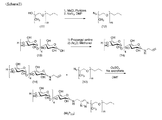
図8に示されるスキーム3に従いマルトペンタオース修飾PPG(M5P2.5)を製造した。
先ず、数平均分子量2500のpoly(propylene glycol) monobutyl ether(PPO, m=14)(11)の水酸基をメシル基に変換し、その後アジ化ナトリウムを処理する事によってアジド基修飾PPO(12)を得た。次いで、アルキン修飾マルトペンタオース(14)とアジド修飾PPO(12)を銅触媒(CuSO4)存在下でHuisgen環化付加反応を行い、目的とするブロック共重合体を得た。修飾率は約90%であった。以後、ブロック共重合体Maltopentaose-b-PPO(m=44)をM5P2.5と略す。
(1) M5P2.5の水溶液中での会合挙動
M5P2.5ベシクルの調製は、Hubbellらの開発したDirect Hydration法に従って行った。得られたベシクルは、TEM観察及びDLS測定を行い、TEM像を図1左図に、DLS測定結果を右図に示す。 TEM像より、ベシクルは球状で、ふちのある会合体であることがわかった。このことから、M5P2.5は水溶液中でベシクル構造体を形成していることがわかった。また、DLS測定から、その粒子径は約120nm程度であった。また、PDIが0.16であり、比較的粒子径の揃ったベシクルを形成している事がわかった。
M5P2.5ベシクルの調製は、Hubbellらの開発したDirect Hydration法に従って行った。得られたベシクルは、TEM観察及びDLS測定を行い、TEM像を図1左図に、DLS測定結果を右図に示す。 TEM像より、ベシクルは球状で、ふちのある会合体であることがわかった。このことから、M5P2.5は水溶液中でベシクル構造体を形成していることがわかった。また、DLS測定から、その粒子径は約120nm程度であった。また、PDIが0.16であり、比較的粒子径の揃ったベシクルを形成している事がわかった。
(2) M5P2.5ベシクルの温度応答性
低分子量(MW1000~3000)のPPGは、5~40℃の温度領域で臨界下限共溶温度(LCST)があり、これらの温度領域で、水溶液中でPPGは溶解する事が知られている。そこで、M5P2.5分子集合体溶液の温度変化を行いながら濁度測定を行ない、濁度の変化から曇点があるか評価を行った。その結果を図2に示す。
図2より降温過程において透過率の増大が見られた。このことからM5P2.5はLCSTを示すことがわかった。一次微分曲線(dTλ/dT)からM5P2.5集合体の曇点は、7℃であった。この事からM5P2.5ベシクルは、7℃以下への冷却によって崩壊させる事が可能である事がわかった。
低分子量(MW1000~3000)のPPGは、5~40℃の温度領域で臨界下限共溶温度(LCST)があり、これらの温度領域で、水溶液中でPPGは溶解する事が知られている。そこで、M5P2.5分子集合体溶液の温度変化を行いながら濁度測定を行ない、濁度の変化から曇点があるか評価を行った。その結果を図2に示す。
図2より降温過程において透過率の増大が見られた。このことからM5P2.5はLCSTを示すことがわかった。一次微分曲線(dTλ/dT)からM5P2.5集合体の曇点は、7℃であった。この事からM5P2.5ベシクルは、7℃以下への冷却によって崩壊させる事が可能である事がわかった。
(3) M5P2.5ベシクルの物質透過能
次にM5P2.5ベシクルにFITCラベル化された分子量の異なるPEG及びウシ血清アルブミン(BSA)を内包させ、その放出挙動を調べることで透過能について評価を行った。結果を図3に示す。
図3より、3時間後では分子量の大きなBSA(分子量:66000)は、ほぼ放出されない。一方で分子量が小さい内包分子(PEG:分子量550~5000)は放出されていることがわかる。また、その透過速度は内包分子の分子量に依存し、分子量が5000以下で速やかに放出される。これらのことから、M5P2.5ベシクルは、低分子の物質の選択的な透過が可能であることがわかった。
次にM5P2.5ベシクルにFITCラベル化された分子量の異なるPEG及びウシ血清アルブミン(BSA)を内包させ、その放出挙動を調べることで透過能について評価を行った。結果を図3に示す。
図3より、3時間後では分子量の大きなBSA(分子量:66000)は、ほぼ放出されない。一方で分子量が小さい内包分子(PEG:分子量550~5000)は放出されていることがわかる。また、その透過速度は内包分子の分子量に依存し、分子量が5000以下で速やかに放出される。これらのことから、M5P2.5ベシクルは、低分子の物質の選択的な透過が可能であることがわかった。
(4) 酵素反応場としてのベシクルの機能
(4-1)キモトリプシン内包M5P2.5ベシクルの機能
M5P2.5からなるベシクルの内水相へ酵素を内包させ、酵素反応場として機能するか評価を行った。内包させた酵素は、加水分解酵素であるキモトリプシン、基質はN-benzoyl-l-tyrosine p-nitroanilideを用いた。また、分子量5000以上のものはベシクル膜の透過が著しく遅いことから、キモトリプシンの阻害剤であるaprotinin(6.5K)を用いて、M5P2.5ベシクルの選択的物質透過能についても評価をおこなった。結果を図4に示す。図4より、M5P2.5へ内包させたキモトリプシンは、天然状態のキモトリプシンに比べ反応速度は遅いものの活性を示している。また、ベシクルへ内包されたキモトリプシンは阻害剤の存在下でも、同程度の活性を示しており、ベシクルの二分子膜は選択的に分子の透過を行っていることもわかる。阻害剤の有無で、反応速度に変化が認められない事から、天然状態のキモトリプシンに比べて反応速度が遅い要因として、基質のベシクル膜への拡散が律速となっていることが考えられる。これらのことからM5P2.5からなるベシクルは、酵素活性を阻害せずに酵素反応場として機能することがわかった。
(4-2)β-ガラクトシダーゼ内包M5P2.5ベシクルの機能
酵素反応場としての有用性を確かめる為に、β-ガラクトシダーゼをM5P2.5ベシクルへ内包させ、上記と同様に活性の評価を行った。図5より、M5P2.5ベシクルへ内包させたβ-ガラクトシダーゼは、天然状態のβ-ガラクトシダーゼに比べ反応速度は遅いものの活性を示している。また、ベシクルへ内包されたβ-ガラクトシダーゼは分子量の大きなタンパク質加水分解酵素(プロテイナーゼK)の存在下でも、活性を示しており、ベシクルの二分子膜により内水相に保持したβ-ガラクトシダーゼが保護されていることがわかった。
上記の結果より、β-ガラクトシダーゼ内包M5P2.5ベシクルは、水溶液中で酵素活性を維持している事が判明した。
(4-3)β-ガラクトシダーゼ内包M5P2.5ベシクルの細胞内での機能
上記結果より、医薬用途を目的として、細胞内での抗癌剤プロドラッグの活性化を試みた。M5P2.5ベシクル細胞への親和性を付与するために、TATペプチドを修飾したPPOを合成し、M5P2.5へ1mol%添加しTATペプチド提示ベシクルを調製した。得られたベシクルのサイズや表面電荷は、M5P2.5ベシクルと同程度で、β-ガラクトシダーゼの内包も可能であった。そこで、HeLa細胞にβ-ガラクトシダーゼ内包TAT提示M5P2.5ベシクルを添加し、細胞内に取り込ませた。その後、培地を交換し、基質であるプロドラッグ5-Fluorouridine-5'-O-b-D-galactopyranoside (FURG)を添加し、24時間培養後にcell counting kit-8を用いて細胞毒性を評価した(図6)。図6よりプロドラッグ(FURG)だけの添加では、細胞毒性を示さないのに対し、β-ガラクトシダーゼ内包TAT提示M5P2.5ベシクルの存在下では、プロドラッグ(FURG)は抗癌剤(5-FUR)と同程度の細胞毒性を示した。このことから、プロドラッグ(FURG)が細胞内に取り込まれた後、β-ガラクトシダーゼ内包TAT提示M5P2.5ベシクルによりプロドラッグが変換され、抗癌剤(5-FUR)となり顕著な細胞毒性を示したと考えられる。以上のことから、β-ガラクトシダーゼ内包ベシクルは、細胞内においても低分子基質の選択的な透過と内包酵素の機能維持を示す事が明らかとなった。
(4-1)キモトリプシン内包M5P2.5ベシクルの機能
M5P2.5からなるベシクルの内水相へ酵素を内包させ、酵素反応場として機能するか評価を行った。内包させた酵素は、加水分解酵素であるキモトリプシン、基質はN-benzoyl-l-tyrosine p-nitroanilideを用いた。また、分子量5000以上のものはベシクル膜の透過が著しく遅いことから、キモトリプシンの阻害剤であるaprotinin(6.5K)を用いて、M5P2.5ベシクルの選択的物質透過能についても評価をおこなった。結果を図4に示す。図4より、M5P2.5へ内包させたキモトリプシンは、天然状態のキモトリプシンに比べ反応速度は遅いものの活性を示している。また、ベシクルへ内包されたキモトリプシンは阻害剤の存在下でも、同程度の活性を示しており、ベシクルの二分子膜は選択的に分子の透過を行っていることもわかる。阻害剤の有無で、反応速度に変化が認められない事から、天然状態のキモトリプシンに比べて反応速度が遅い要因として、基質のベシクル膜への拡散が律速となっていることが考えられる。これらのことからM5P2.5からなるベシクルは、酵素活性を阻害せずに酵素反応場として機能することがわかった。
(4-2)β-ガラクトシダーゼ内包M5P2.5ベシクルの機能
酵素反応場としての有用性を確かめる為に、β-ガラクトシダーゼをM5P2.5ベシクルへ内包させ、上記と同様に活性の評価を行った。図5より、M5P2.5ベシクルへ内包させたβ-ガラクトシダーゼは、天然状態のβ-ガラクトシダーゼに比べ反応速度は遅いものの活性を示している。また、ベシクルへ内包されたβ-ガラクトシダーゼは分子量の大きなタンパク質加水分解酵素(プロテイナーゼK)の存在下でも、活性を示しており、ベシクルの二分子膜により内水相に保持したβ-ガラクトシダーゼが保護されていることがわかった。
上記の結果より、β-ガラクトシダーゼ内包M5P2.5ベシクルは、水溶液中で酵素活性を維持している事が判明した。
(4-3)β-ガラクトシダーゼ内包M5P2.5ベシクルの細胞内での機能
上記結果より、医薬用途を目的として、細胞内での抗癌剤プロドラッグの活性化を試みた。M5P2.5ベシクル細胞への親和性を付与するために、TATペプチドを修飾したPPOを合成し、M5P2.5へ1mol%添加しTATペプチド提示ベシクルを調製した。得られたベシクルのサイズや表面電荷は、M5P2.5ベシクルと同程度で、β-ガラクトシダーゼの内包も可能であった。そこで、HeLa細胞にβ-ガラクトシダーゼ内包TAT提示M5P2.5ベシクルを添加し、細胞内に取り込ませた。その後、培地を交換し、基質であるプロドラッグ5-Fluorouridine-5'-O-b-D-galactopyranoside (FURG)を添加し、24時間培養後にcell counting kit-8を用いて細胞毒性を評価した(図6)。図6よりプロドラッグ(FURG)だけの添加では、細胞毒性を示さないのに対し、β-ガラクトシダーゼ内包TAT提示M5P2.5ベシクルの存在下では、プロドラッグ(FURG)は抗癌剤(5-FUR)と同程度の細胞毒性を示した。このことから、プロドラッグ(FURG)が細胞内に取り込まれた後、β-ガラクトシダーゼ内包TAT提示M5P2.5ベシクルによりプロドラッグが変換され、抗癌剤(5-FUR)となり顕著な細胞毒性を示したと考えられる。以上のことから、β-ガラクトシダーゼ内包ベシクルは、細胞内においても低分子基質の選択的な透過と内包酵素の機能維持を示す事が明らかとなった。
(5) M5P2.5のシャペロン活性
次に生体内オルガネラである小胞体が持つ機能の1つである、変性タンパク質の再生機能が、M5P2.5ベシクルにあるか調べた。用いた酵素は炭酸脱水素酵素(CAB)、基質は、N-benzoyl-l-tyrosine p-nitroanilideを用い、M5P2.5ベシクルとの混合後1時間の活性の評価を行なった。以下の表1に結果を示す。
次に生体内オルガネラである小胞体が持つ機能の1つである、変性タンパク質の再生機能が、M5P2.5ベシクルにあるか調べた。用いた酵素は炭酸脱水素酵素(CAB)、基質は、N-benzoyl-l-tyrosine p-nitroanilideを用い、M5P2.5ベシクルとの混合後1時間の活性の評価を行なった。以下の表1に結果を示す。

表1より、天然状態のCABとM5P2.5ベシクルとを混合した溶液は、ほぼCABの酵素活性を阻害しなかった。また、化学変性したCAB溶液にM5P2.5ベシクルを加えることで活性が約8割まで回復している。一方で、M5P2.5ベシクルを加えなかった系では、その活性が約2割程度までしか回復しなかった。
次に、M5P2.5ベシクルがどの程度の時間で化学変性CABをリフォールディングしているかを、リフォールディング率と時間変化の関係を調べた(図7)。
図7より、混合後1時間足らずでCABの活性が8割程度まで回復していることが分かった。以上のことから、M5P2.5は化学変性したタンパク質のリフォールディングを促進させる、分子シャペロン様の機能を有することがわかった。
図7より、混合後1時間足らずでCABの活性が8割程度まで回復していることが分かった。以上のことから、M5P2.5は化学変性したタンパク質のリフォールディングを促進させる、分子シャペロン様の機能を有することがわかった。
(6)ブロック共重合体の合成法
ブロック共重合体(M5P2.5)の合成法を図8に示す。
N3-PPO(12)の合成
Poly(Propylene glycol) monobutylether(11)(4.98g, 2.0 mmol)を脱水Pyridine(5mL)ヘ溶解させた後、メシルクロライド(0.46g, 4.0 mmol)を加えた。30℃で20時間撹拌した後、50 mLの超純水へ反応液を添加した。水相をDCM(ジクロロメタン)で抽出した後、硫酸マグネシウムで乾燥、ろ紙でろ過後減圧乾燥を行なった。得られたメシル化化合物は、精製する事なく次の反応に用いた。得られた淡黄色のオイル状化合物を脱水DMF(5mL)溶解させ、NaN3(1.3g, 20.0 mmol)を加え、45℃で48時間撹拌した。室温まで冷却後に、反応液を超純水(50mL)ヘ添加し、水相を酢酸エチルで抽出した。有機層を超純水、brineで洗浄後、硫酸マグネシウムで乾燥、ろ紙でろ過後に減圧乾燥を行ない、N3-PPO (12)を得た。
ブロック共重合体(M5P2.5)の合成法を図8に示す。
N3-PPO(12)の合成
Poly(Propylene glycol) monobutylether(11)(4.98g, 2.0 mmol)を脱水Pyridine(5mL)ヘ溶解させた後、メシルクロライド(0.46g, 4.0 mmol)を加えた。30℃で20時間撹拌した後、50 mLの超純水へ反応液を添加した。水相をDCM(ジクロロメタン)で抽出した後、硫酸マグネシウムで乾燥、ろ紙でろ過後減圧乾燥を行なった。得られたメシル化化合物は、精製する事なく次の反応に用いた。得られた淡黄色のオイル状化合物を脱水DMF(5mL)溶解させ、NaN3(1.3g, 20.0 mmol)を加え、45℃で48時間撹拌した。室温まで冷却後に、反応液を超純水(50mL)ヘ添加し、水相を酢酸エチルで抽出した。有機層を超純水、brineで洗浄後、硫酸マグネシウムで乾燥、ろ紙でろ過後に減圧乾燥を行ない、N3-PPO (12)を得た。
アルキン修飾マルトペンタオース(14)の合成
マルトペンタオース(13)(1.0g, 1.22mmol)をプロパギルアミン(1.34g, 24.4mmol)に溶解させ、室温で72時間撹拌した。反応溶液にメタノール10mLを加え、ジクロロメタン溶液100mLに滴下し、白色固体を得た。得られた固体をジクロロメタン/メタノール混合溶液=9:1(100mL)で洗浄した。洗浄した固体を脱水メタノール(100mL)に溶解させ、無水酢酸(7.23g, 96.4mmol)を加え室温で24時間撹拌を行なった。溶媒を除去し、超純水20mLを加え凍結乾燥し、目的化合物(14)を得た。
マルトペンタオース(13)(1.0g, 1.22mmol)をプロパギルアミン(1.34g, 24.4mmol)に溶解させ、室温で72時間撹拌した。反応溶液にメタノール10mLを加え、ジクロロメタン溶液100mLに滴下し、白色固体を得た。得られた固体をジクロロメタン/メタノール混合溶液=9:1(100mL)で洗浄した。洗浄した固体を脱水メタノール(100mL)に溶解させ、無水酢酸(7.23g, 96.4mmol)を加え室温で24時間撹拌を行なった。溶媒を除去し、超純水20mLを加え凍結乾燥し、目的化合物(14)を得た。
M5P2.5の合成
得られたN3-PPO(12)(0.53g, 0.21 mmol)とアルキン修飾マルトペンタオース(13)(0.29g, 0.32mmol)、硫酸銅5水和物(5 mg, 0.02mmol), アスコルビン酸ナトリウム(8mg, 0.04mmol)を脱水DMF(5mL)へ加え、50℃で17時間撹拌した。室温に冷却後, 透析を行なった(spectra por 7 MWCO1000, 25mM EDTA, water、4日)。透析後、凍結乾燥を行ないブロックポリマーM5P2.5を白色粉末として得た。ポリマーは1H-NMRスペクトル測定を行い同定した(図9)。
得られたN3-PPO(12)(0.53g, 0.21 mmol)とアルキン修飾マルトペンタオース(13)(0.29g, 0.32mmol)、硫酸銅5水和物(5 mg, 0.02mmol), アスコルビン酸ナトリウム(8mg, 0.04mmol)を脱水DMF(5mL)へ加え、50℃で17時間撹拌した。室温に冷却後, 透析を行なった(spectra por 7 MWCO1000, 25mM EDTA, water、4日)。透析後、凍結乾燥を行ないブロックポリマーM5P2.5を白色粉末として得た。ポリマーは1H-NMRスペクトル測定を行い同定した(図9)。
(7) M5P2.5ベシクルの調製法とキャラクタリゼーション
ベシクルの調製法
1.5mLのsafe-lock tubeに約5mgのM5P2.5と10倍量(重量比)のPEG dimethoxyether(MW550)を加えたのちに、95℃で20分加熱後、15分室温で冷却した。その後、100μL, 200μL, 約700μLのPBS(4mM, pH=7.4)をMMPの最終濃度が5mg/mlとなるように添加した。また、各緩衝液を添加時に30秒ボルテックスをかけ混和させた。作成後、0.22μmのPVDFフィルターを通し、M5P2.5ベシクル溶液を調製した。
ベシクルの調製法
1.5mLのsafe-lock tubeに約5mgのM5P2.5と10倍量(重量比)のPEG dimethoxyether(MW550)を加えたのちに、95℃で20分加熱後、15分室温で冷却した。その後、100μL, 200μL, 約700μLのPBS(4mM, pH=7.4)をMMPの最終濃度が5mg/mlとなるように添加した。また、各緩衝液を添加時に30秒ボルテックスをかけ混和させた。作成後、0.22μmのPVDFフィルターを通し、M5P2.5ベシクル溶液を調製した。
TEM観察法
エラスチックカーボン支持膜(ELS-C10 STEM, 応研商事)上に、上記で調製したベシクル溶液を5μL滴下した。余分な水分をろ紙で拭き取り1wt %リンタングステン酸溶液をグリッドに滴下した。再度、余分な水分をろ紙で拭き取り、デシケーターで一晩乾燥させた。Hitachi HT-7700を用いてTEM観察を行った。
エラスチックカーボン支持膜(ELS-C10 STEM, 応研商事)上に、上記で調製したベシクル溶液を5μL滴下した。余分な水分をろ紙で拭き取り1wt %リンタングステン酸溶液をグリッドに滴下した。再度、余分な水分をろ紙で拭き取り、デシケーターで一晩乾燥させた。Hitachi HT-7700を用いてTEM観察を行った。
DLS測定法
上記で調製したベシクル溶液をMalvern zetasizer ナノZSPを用いて25℃でベシクルの粒子径測定を行った。
上記で調製したベシクル溶液をMalvern zetasizer ナノZSPを用いて25℃でベシクルの粒子径測定を行った。
(8)PEG内包ベシクルの調製法とPEG放出量の測定法
ベシクルへの物質の内包
1.5 mL safe-lock tube に約 5mg のM5P2.5 と 10 倍量(重量比)の PEG dimethoxyether(MW550)を加えた。95°Cで 20 分加熱後、15 分室温で冷却した後にゲスト分子溶液をM5P2.5の 10wt%となるよう添加し、30 秒ボルテックスをかけ混和させた。 次いで100μL, 200μL, 約700μLのPBS(4mM,pH=7.4)をMMPの最終濃度が5mg/mlとなるように添加した。また、 各緩衝液を添加時に 30 秒ボルテックスをかけ混和させた。作成した溶液を1時間静置後に、MWCO 300kDa の透析膜による透析またはSephadex g-50により精製を行なった。精製後のサンプル100μL と DMSOを200μL と混合し、内包率算出用のサンプルとした。
ベシクルへの物質の内包
1.5 mL safe-lock tube に約 5mg のM5P2.5 と 10 倍量(重量比)の PEG dimethoxyether(MW550)を加えた。95°Cで 20 分加熱後、15 分室温で冷却した後にゲスト分子溶液をM5P2.5の 10wt%となるよう添加し、30 秒ボルテックスをかけ混和させた。 次いで100μL, 200μL, 約700μLのPBS(4mM,pH=7.4)をMMPの最終濃度が5mg/mlとなるように添加した。また、 各緩衝液を添加時に 30 秒ボルテックスをかけ混和させた。作成した溶液を1時間静置後に、MWCO 300kDa の透析膜による透析またはSephadex g-50により精製を行なった。精製後のサンプル100μL と DMSOを200μL と混合し、内包率算出用のサンプルとした。
M5P2.5ベシクルからの放出
精製後の ベシクル溶液(1.0mL)を MWCO 300kDa の透析膜に添加し、20mL の PBS(4mM, pH=7.4)中で透析を行なった。透析時の温度は、25℃とした。一定時間ごとに 48 時間まで透析チューブ内の溶液を 20μL 分取し、40μL の DMSO と混合した。この溶液を UV-Vis 測定しチューブ内に残存している ゲスト分子のUV吸収から放出量を算出した。
精製後の ベシクル溶液(1.0mL)を MWCO 300kDa の透析膜に添加し、20mL の PBS(4mM, pH=7.4)中で透析を行なった。透析時の温度は、25℃とした。一定時間ごとに 48 時間まで透析チューブ内の溶液を 20μL 分取し、40μL の DMSO と混合した。この溶液を UV-Vis 測定しチューブ内に残存している ゲスト分子のUV吸収から放出量を算出した。
(9)chymotrypsin内包M5P2.5ベシクルの調製法と酵素活性測定法
safe-lock tubeに約5mgのM5P2.5と10倍量(重量比)のpolyethylene glycol dimethoxyether(MW 500)を加えた。95℃で20分加熱後、15分室温で冷却した。15mg/mlのchymotrypsinストック溶液を最終濃度がM5P2.5の重量の10wt%となるよう添加し、30秒ボルテックスをかけ混和させた。100μL, 200μL, 約700μLのPBS(4mM, pH=7.4)をM5P2.5の最終濃度が5mg/mlとなるように添加した。また、各緩衝液を添加時に30秒ボルテックスをかけ混和させた。作成した溶液をMWCO300kDaの透析膜を用いて、精製し内包されていないchymotrypsinを除きchymotrypsin内包M5P2.5ベシクル溶液を得た。内包されているα-chymotrypsinの濃度はUV-VisおよびBCAアッセイを行い定量した。
safe-lock tubeに約5mgのM5P2.5と10倍量(重量比)のpolyethylene glycol dimethoxyether(MW 500)を加えた。95℃で20分加熱後、15分室温で冷却した。15mg/mlのchymotrypsinストック溶液を最終濃度がM5P2.5の重量の10wt%となるよう添加し、30秒ボルテックスをかけ混和させた。100μL, 200μL, 約700μLのPBS(4mM, pH=7.4)をM5P2.5の最終濃度が5mg/mlとなるように添加した。また、各緩衝液を添加時に30秒ボルテックスをかけ混和させた。作成した溶液をMWCO300kDaの透析膜を用いて、精製し内包されていないchymotrypsinを除きchymotrypsin内包M5P2.5ベシクル溶液を得た。内包されているα-chymotrypsinの濃度はUV-VisおよびBCAアッセイを行い定量した。
chymotrypsinの酵素活性評価
-阻害剤存在下-
上記で得たchymotrypsin内包M5P2.5溶液を100μL, 基質N-benzoyl-l-tyrosine p-nitroanilide, 阻害剤(aprotinin)20μL(0.81mg/ml stock溶液、最終濃度100μM), PBS 280μL(1×, pH=7.4)を混合した。紫外分光光度計で410nmのp-ニトロフアニリンに由来する吸光度の変化を15分間追跡し、酵素活性を測定した。
-阻害剤存在下-
上記で得たchymotrypsin内包M5P2.5溶液を100μL, 基質N-benzoyl-l-tyrosine p-nitroanilide, 阻害剤(aprotinin)20μL(0.81mg/ml stock溶液、最終濃度100μM), PBS 280μL(1×, pH=7.4)を混合した。紫外分光光度計で410nmのp-ニトロフアニリンに由来する吸光度の変化を15分間追跡し、酵素活性を測定した。
-阻害剤非存在下-
上記で得たchymotrypsin内包M5P2.5溶液を100μL, 基質20μL(0.81mg/ml stock溶液、最終濃度100μM), PBS 260μL(1×, pH=7.4)を混合した。紫外分光光度計で410nmの吸光度の変化を15分間追跡し、酵素活性を測定した。
(10) β-galactosidase内包M5P2.5ベシクルの調製法および酵素活性測定法
β-galactosidaseを内包したM5P2.5ベシクルは、chymotrypsin内包M5P2.5ベシクルと同様の方法で調製した。
上記で得たβ-galactosidase内包M5P2.5溶液([M5P2.5]=5.0mg/ml, [β-galactosidase]=25μg/mL)から60μL, PBS 1936μL, TokyoGreen β-gal溶液(25μg/ml)4μLを混合し、蛍光分光光度計で510nmの蛍光光度の変化を追跡した。
また、細胞内での抗癌剤プロドラッグの活性化は、以下の通り行なった。96穴プレートに前培養したHeLa細胞にβ-galacotsidase内包TAT提示ベシクル([β-galactosidase]=25μg/ml)を添加し、24時間後に培地を除去しPBSで洗浄後、5-Fluorouridine-5'-O-b-D-galactopyranoside (FURG, 100μM)を添加した。さらに、24時間培養後、Cell counting kit-8を10μLを添加し、37℃で2時間インキュベートしたのちプレートリーダーで450nmの吸光度を測定し、細胞毒性の評価を行った。
上記で得たchymotrypsin内包M5P2.5溶液を100μL, 基質20μL(0.81mg/ml stock溶液、最終濃度100μM), PBS 260μL(1×, pH=7.4)を混合した。紫外分光光度計で410nmの吸光度の変化を15分間追跡し、酵素活性を測定した。
(10) β-galactosidase内包M5P2.5ベシクルの調製法および酵素活性測定法
β-galactosidaseを内包したM5P2.5ベシクルは、chymotrypsin内包M5P2.5ベシクルと同様の方法で調製した。
上記で得たβ-galactosidase内包M5P2.5溶液([M5P2.5]=5.0mg/ml, [β-galactosidase]=25μg/mL)から60μL, PBS 1936μL, TokyoGreen β-gal溶液(25μg/ml)4μLを混合し、蛍光分光光度計で510nmの蛍光光度の変化を追跡した。
また、細胞内での抗癌剤プロドラッグの活性化は、以下の通り行なった。96穴プレートに前培養したHeLa細胞にβ-galacotsidase内包TAT提示ベシクル([β-galactosidase]=25μg/ml)を添加し、24時間後に培地を除去しPBSで洗浄後、5-Fluorouridine-5'-O-b-D-galactopyranoside (FURG, 100μM)を添加した。さらに、24時間培養後、Cell counting kit-8を10μLを添加し、37℃で2時間インキュベートしたのちプレートリーダーで450nmの吸光度を測定し、細胞毒性の評価を行った。
(11)シャペロン活性測定法
化学変性タンパク質のリフォールディング
化学変性した炭酸脱水酵素溶液(6mg/ml)から12μL取り、2400μLのポリマー溶液(5.0 mg/ml)又はバッファーで200倍に希釈した。メチルβシクロデキストリンを添加する場合は、ここで117μLの溶液を添加した(CABの終濃度は1.0 μM (0.03mg/ml), ポリマーは1.5mM)。26~28℃、30~40rpmで撹拌させ、リフォールディングを行なった。一定時間ごとにリフォールディング溶液を400 μL分取した。その溶液にpNPA溶液(50 mM アセトニトリル溶液)を11μL添加しpNPAの加水分解速度をUV-Visスペクトルを用いて評価した。(UV-Vis測定:JASCO, V-660, 10mm×2mm cell, 400nmの吸光度の増加を60秒測定し、吸光度の増加分を活性の指標とした)
化学変性タンパク質のリフォールディング
化学変性した炭酸脱水酵素溶液(6mg/ml)から12μL取り、2400μLのポリマー溶液(5.0 mg/ml)又はバッファーで200倍に希釈した。メチルβシクロデキストリンを添加する場合は、ここで117μLの溶液を添加した(CABの終濃度は1.0 μM (0.03mg/ml), ポリマーは1.5mM)。26~28℃、30~40rpmで撹拌させ、リフォールディングを行なった。一定時間ごとにリフォールディング溶液を400 μL分取した。その溶液にpNPA溶液(50 mM アセトニトリル溶液)を11μL添加しpNPAの加水分解速度をUV-Visスペクトルを用いて評価した。(UV-Vis測定:JASCO, V-660, 10mm×2mm cell, 400nmの吸光度の増加を60秒測定し、吸光度の増加分を活性の指標とした)
実施例2
X線小角散乱測定によるM5P2.5ベシクルの構造解析
サンプルおよび実験条件
サンプル:Direct hydrationおよび冷却法により作成したM5P2.5ベシクル(5mg/ml in PBS(1×))
SAXS測定:あいちシンクロトロン光センター BL8S3
カメラ長:2120mm, 波長:0.92Å, 検出器:Rigaku R-axis IV (Imaging plate型)サンプルセル:石英キャピラリー(Hilgenberg, φ=2mm)、照射時間:600秒得られたデータの円環平均はFit 2D, データ解析はIgorのプログラムを用いた。
X線小角散乱測定によるM5P2.5ベシクルの構造解析
サンプルおよび実験条件
サンプル:Direct hydrationおよび冷却法により作成したM5P2.5ベシクル(5mg/ml in PBS(1×))
SAXS測定:あいちシンクロトロン光センター BL8S3
カメラ長:2120mm, 波長:0.92Å, 検出器:Rigaku R-axis IV (Imaging plate型)サンプルセル:石英キャピラリー(Hilgenberg, φ=2mm)、照射時間:600秒得られたデータの円環平均はFit 2D, データ解析はIgorのプログラムを用いた。
測定結果とベシクル構造
図10に得られたSAXSプロファイルを示す。TEM像からベシクル様構造を形成している可能性が高いことから、以下に示す二分子膜モデル(J. Phys. Chem. B 2007, 111, 10357, J. Phys. Chem. B 1998, 102, 5737)によりSAXSプロファイルのフィッティングを行なった。
図10に得られたSAXSプロファイルを示す。TEM像からベシクル様構造を形成している可能性が高いことから、以下に示す二分子膜モデル(J. Phys. Chem. B 2007, 111, 10357, J. Phys. Chem. B 1998, 102, 5737)によりSAXSプロファイルのフィッティングを行なった。
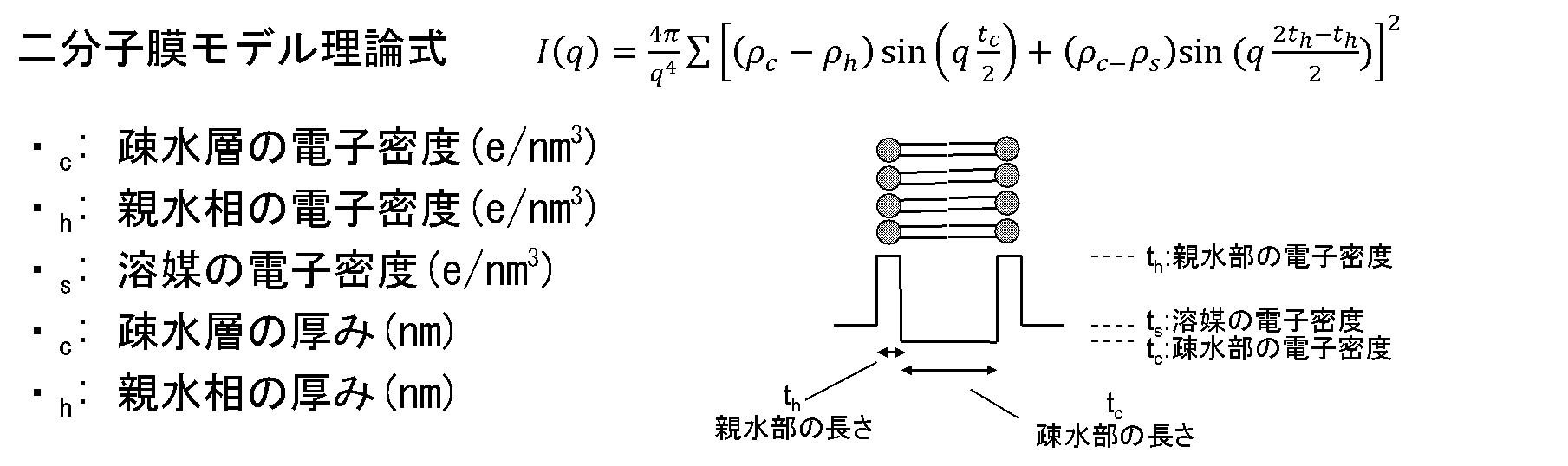
ここで、溶媒および疎水層の電子密度(J. Phys. Chem. B 2011, 115, 11318)は文献値より、それぞれ334~335と330~331e/nm3とした。また、糖鎖およびPPOのフルストレッチでの長さがそれぞれ2.5および10nmであることを考慮してフィッティングをおこなった。加えて、膜の厚みに多少の分布が存在すると考えられることから疎水層の厚みに正規分布があると仮定した。
図10より二分子膜モデルの理論式により実験で得られたSAXSプロファイルが、ほぼフィッティングできることがわかった。このことから、二分子膜構造を形成している事が確認できた。膜の厚みは13.1nmでありTEM観察の結果とほぼ一致することがわかった(図11)。
実施例3
(1)糖鎖およびPPGセグメントの異なるブロック共重合体の合成と分子集合体の構造解析
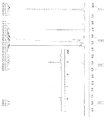
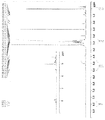
M5P2.5の合成スキームと同様の手法を用いて、糖鎖およびPPGセグメントの異なる一連の化合物を合成した(図12)。以後、PPO(Mn=2000)の両末端がマルトペンタオースで修飾された化合物をBisM5P2、PPO(Mn=1000)の片末端がマルトペンタオースで修飾されたものをM5P1、PPO(Mn=2500)の片末端がマルトオクタオースで修飾されたものをM8P2.5, PPO(Mn=1000)の片末端がマルトトリオースで修飾されたものをM3P1、PPO(Mn=3500)の片末端がマルトペンタオースで修飾された化合物をM5P3.5とする。得られた化合物の同定は1H-NMRより行ない、ブロック共重合体(BisM5P2、M5P1、M8P2.5、M3P1、M5P3.5)のNMRスペクトルをそれぞれ図13~図17に示す。
(1)糖鎖およびPPGセグメントの異なるブロック共重合体の合成と分子集合体の構造解析
M5P2.5の合成スキームと同様の手法を用いて、糖鎖およびPPGセグメントの異なる一連の化合物を合成した(図12)。以後、PPO(Mn=2000)の両末端がマルトペンタオースで修飾された化合物をBisM5P2、PPO(Mn=1000)の片末端がマルトペンタオースで修飾されたものをM5P1、PPO(Mn=2500)の片末端がマルトオクタオースで修飾されたものをM8P2.5, PPO(Mn=1000)の片末端がマルトトリオースで修飾されたものをM3P1、PPO(Mn=3500)の片末端がマルトペンタオースで修飾された化合物をM5P3.5とする。得られた化合物の同定は1H-NMRより行ない、ブロック共重合体(BisM5P2、M5P1、M8P2.5、M3P1、M5P3.5)のNMRスペクトルをそれぞれ図13~図17に示す。
(2)分子集合体の構造解析
上記で得られたブロック共重合体は、水溶液中に分散させ、水溶液中での分子集合体の構造解析をTEMを用いて行なった。以下の図18~22に示すTEM像の解析結果から、ブロック共重合体(M5P1、M8P2.5、M3P1、M5P3.5)は水中において分子集合体としてベシクルを形成することがわかった。
上記で得られたブロック共重合体は、水溶液中に分散させ、水溶液中での分子集合体の構造解析をTEMを用いて行なった。以下の図18~22に示すTEM像の解析結果から、ブロック共重合体(M5P1、M8P2.5、M3P1、M5P3.5)は水中において分子集合体としてベシクルを形成することがわかった。
BisM5P2分子集合体の構造解析
BisM5P2を冷却しながら、PBSバッファーに溶解させゆっくりと室温に戻す事でBisM5P2分子集合体を得た。得られた分子集合体のTEM観察結果を図18に示す。
BisM5P2を冷却しながら、PBSバッファーに溶解させゆっくりと室温に戻す事でBisM5P2分子集合体を得た。得られた分子集合体のTEM観察結果を図18に示す。
図18より直径が10~20nmの球状の粒子が多数観察された。このことから、BisM5P2は、球状のミセルを形成する事がわかった。
M5P1分子集合体の構造解析
M5P1を冷却しながらPBSバッファーに溶解させ、ゆっくりと室温に戻す事でM5P1分子集合体溶液を得た。分子集合体のTEM像を図19に示す。
M5P1を冷却しながらPBSバッファーに溶解させ、ゆっくりと室温に戻す事でM5P1分子集合体溶液を得た。分子集合体のTEM像を図19に示す。
図19より直径が約100nmで、粒子のふちが染色剤により黒く染まった粒子が観察された。このことから、M5P1は、ベシクルを形成している事が考えられる。
M8P2.5分子集合体の構造解析
M8P2.5を冷却しながらPBSバッファーに溶解させ、ゆっくりと室温に戻し分子集合体溶液を得た。得られた分子集合体のTEM像を図20に示す。
M8P2.5を冷却しながらPBSバッファーに溶解させ、ゆっくりと室温に戻し分子集合体溶液を得た。得られた分子集合体のTEM像を図20に示す。
図20より直径が約100~150nmで、ふちが存在する粒子が確認できる。このことから、M8P2.5は、ベシクルを形成している事が考えられる。
M3P1分子集合体の構造解析
M3P1を冷却しながらPBSバッファーに溶解させ、ゆっくりと室温に戻し分子集合体溶液を得た。得られた分子集合体のTEM像を図21に示す。
M3P1を冷却しながらPBSバッファーに溶解させ、ゆっくりと室温に戻し分子集合体溶液を得た。得られた分子集合体のTEM像を図21に示す。
図21より直径が約100nmで、ふちが存在する粒子が確認できる。このことから、M8P2.5は、ベシクルを形成している事が考えられる。
M5P3.5分子集合体の構造解析
M5P3.5を冷却しながらPBSバッファーに溶解させ、ゆっくりと室温に戻し分子集合体溶液を得た。得られた分子集合体のTEM像を図22に示す。
M5P3.5を冷却しながらPBSバッファーに溶解させ、ゆっくりと室温に戻し分子集合体溶液を得た。得られた分子集合体のTEM像を図22に示す。
図22より直径が50から200nmでふちが存在する粒子が確認できる。このことから、M5P3.5は、ベシクルを形成していることが考えられる。
実施例4
M5P2.5を糖鎖プライマーとした酵素重合反応による直鎖および多分岐型糖鎖を有するブロック共重合体の合成
M5P2.5をプライマ-として用いてホスホリラーゼ a(GPa)による糖鎖重合反応で直鎖状糖鎖の合成、さらにGPaとグリコーゲンブランチングエンザイム(GBE)によるタンデム酵素反応で、多分岐型糖鎖の酵素合成反応を行なった。直鎖状糖鎖重合反応では、プライマーの最終濃度が0.5 mMとなるように調製し、グルコース1リン酸を0.36mmol, ホスホリラーゼaを0.77nmol加えて、0.1M Bis tris緩衝液中37℃で行なった。また、分岐型糖鎖重合反応では、上記の化合物に加えGBEを1.2nmol加えて反応を行なった。一定時間毎に10μLずつサンプリングし、遊離リン酸の定量を行い、重合の進行の確認を行った。また、反応終了後に1H-NMR測定を行ないα1,6位アノマー由来のプロトンの有無の確認を行なった。それらの結果を図23に示す。
M5P2.5を糖鎖プライマーとした酵素重合反応による直鎖および多分岐型糖鎖を有するブロック共重合体の合成
M5P2.5をプライマ-として用いてホスホリラーゼ a(GPa)による糖鎖重合反応で直鎖状糖鎖の合成、さらにGPaとグリコーゲンブランチングエンザイム(GBE)によるタンデム酵素反応で、多分岐型糖鎖の酵素合成反応を行なった。直鎖状糖鎖重合反応では、プライマーの最終濃度が0.5 mMとなるように調製し、グルコース1リン酸を0.36mmol, ホスホリラーゼaを0.77nmol加えて、0.1M Bis tris緩衝液中37℃で行なった。また、分岐型糖鎖重合反応では、上記の化合物に加えGBEを1.2nmol加えて反応を行なった。一定時間毎に10μLずつサンプリングし、遊離リン酸の定量を行い、重合の進行の確認を行った。また、反応終了後に1H-NMR測定を行ないα1,6位アノマー由来のプロトンの有無の確認を行なった。それらの結果を図23に示す。
図23の左図より、いずれの反応もグルコース数の増加が観察できる事から、糖鎖重合反応が進行していることが明らかとなった。GPa/GBEのタンデム重合では、GPaのみによるアミロース重合反応に比べて約6倍重合初速度が増加していることがわかる。その要因として、基質が多分岐な糖鎖へと変化し、酵素への被認識能が高まったために反応速度が増加したものと考えられる。図23の右図より4.8ppmにα1,6位アノマー由来のプロトンが確認された事から、GBE/GPaの酵素重合反応では、α(1,4), α(1,6)結合からなる多分岐糖鎖が合成できる事がわかった。
Claims (9)
- ポリプロピレングリコール(PPG)セグメント(A)と糖鎖セグメント(B)をリンカー基を介して結合してなる両親媒性ブロック共重合体であって、前記糖鎖セグメント(B)がマルトトリオースユニットを含み、マルトトリオースのアノマー炭素がPPGセグメント(A)と2価のリンカー基を介して結合している、両親媒性ブロック共重合体。
- 下記式(I)

で表される基であり、n1は10~500である。)
で表される請求項1に記載の両親媒性ブロック共重合体。 - Y1又はY2で表される2価のリンカー基は、-NHR4-、下記式

で表される基のいずれかである、請求項2に記載の両親媒性ブロック共重合体。 - 請求項1~3のいずれか1項に記載の少なくとも1種の両親媒性ブロック共重合体から構成される分子集合体。
- 前記分子集合体がベシクル、球状ミセル、棒状ミセル、あるいはチューブ構造である請求項4に記載の分子集合体。
- タンパク質を内包する、請求項5に記載の分子集合体。
- 前記タンパク質が酵素である、請求項6に記載の分子集合体。
- 請求項1~3のいずれか1項に記載の少なくとも1種の両親媒性ブロック共重合体を水中に分散させることを特徴とする、請求項4又は5に記載の分子集合体の製造方法。
- 請求項4又は5に記載の分子集合体からなる、タンパク質の内包剤。
Priority Applications (1)
| Application Number | Priority Date | Filing Date | Title |
|---|---|---|---|
| JP2017540922A JP6813192B2 (ja) | 2015-09-24 | 2016-09-23 | 両親媒性ブロック共重合体、分子集合体及びその製造方法並びにタンパク質の内包剤 |
Applications Claiming Priority (2)
| Application Number | Priority Date | Filing Date | Title |
|---|---|---|---|
| JP2015-187148 | 2015-09-24 | ||
| JP2015187148 | 2015-09-24 |
Publications (1)
| Publication Number | Publication Date |
|---|---|
| WO2017051882A1 true WO2017051882A1 (ja) | 2017-03-30 |
Family
ID=58386086
Family Applications (1)
| Application Number | Title | Priority Date | Filing Date |
|---|---|---|---|
| PCT/JP2016/078042 Ceased WO2017051882A1 (ja) | 2015-09-24 | 2016-09-23 | 両親媒性ブロック共重合体、分子集合体及びその製造方法並びにタンパク質の内包剤 |
Country Status (2)
| Country | Link |
|---|---|
| JP (1) | JP6813192B2 (ja) |
| WO (1) | WO2017051882A1 (ja) |
Cited By (1)
| Publication number | Priority date | Publication date | Assignee | Title |
|---|---|---|---|---|
| JP2019196416A (ja) * | 2018-05-07 | 2019-11-14 | 国立大学法人東京工業大学 | 人工シャペロン分子及びこれを用いたタンパク質の品質管理法 |
Citations (3)
| Publication number | Priority date | Publication date | Assignee | Title |
|---|---|---|---|---|
| JP2011520841A (ja) * | 2008-05-15 | 2011-07-21 | ビオコムパトイブルエス ユーケー リミテド | 細胞内抗体送達 |
| JP2011527702A (ja) * | 2008-07-09 | 2011-11-04 | ボード オブ リージェンツ オブ ザ ユニバーシティ オブ ネブラスカ | 硬組織に標的化された化学物質送達用の機能的ミセル |
| WO2014130488A1 (en) * | 2013-02-19 | 2014-08-28 | University Of Massachusetts | Functionalized nanoparticles for medical treatments |
Family Cites Families (1)
| Publication number | Priority date | Publication date | Assignee | Title |
|---|---|---|---|---|
| JP5997479B2 (ja) * | 2012-03-30 | 2016-09-28 | 日澱化學株式会社 | 酵素法による糖脂肪酸エステルの合成方法 |
-
2016
- 2016-09-23 JP JP2017540922A patent/JP6813192B2/ja active Active
- 2016-09-23 WO PCT/JP2016/078042 patent/WO2017051882A1/ja not_active Ceased
Patent Citations (3)
| Publication number | Priority date | Publication date | Assignee | Title |
|---|---|---|---|---|
| JP2011520841A (ja) * | 2008-05-15 | 2011-07-21 | ビオコムパトイブルエス ユーケー リミテド | 細胞内抗体送達 |
| JP2011527702A (ja) * | 2008-07-09 | 2011-11-04 | ボード オブ リージェンツ オブ ザ ユニバーシティ オブ ネブラスカ | 硬組織に標的化された化学物質送達用の機能的ミセル |
| WO2014130488A1 (en) * | 2013-02-19 | 2014-08-28 | University Of Massachusetts | Functionalized nanoparticles for medical treatments |
Cited By (2)
| Publication number | Priority date | Publication date | Assignee | Title |
|---|---|---|---|---|
| JP2019196416A (ja) * | 2018-05-07 | 2019-11-14 | 国立大学法人東京工業大学 | 人工シャペロン分子及びこれを用いたタンパク質の品質管理法 |
| JP7296610B2 (ja) | 2018-05-07 | 2023-06-23 | 国立大学法人東京工業大学 | 人工シャペロン分子及びこれを用いたタンパク質の品質管理法 |
Also Published As
| Publication number | Publication date |
|---|---|
| JP6813192B2 (ja) | 2021-01-13 |
| JPWO2017051882A1 (ja) | 2018-07-12 |
Similar Documents
| Publication | Publication Date | Title |
|---|---|---|
| Gogoi et al. | Novel carbon dot coated alginate beads with superior stability, swelling and pH responsive drug delivery | |
| Iglesias et al. | Biodegradable double cross-linked chitosan hydrogels for drug delivery: Impact of chemistry on rheological and pharmacological performance | |
| Kundu et al. | Guar gum benzoate nanoparticle reinforced gelatin films for enhanced thermal insulation, mechanical and antimicrobial properties | |
| CN111848975B (zh) | 磷酸化蛋白质、基于磷酸化蛋白质的胞内递送体系及制备方法与应用 | |
| Perouzel et al. | Synthesis and formulation of neoglycolipids for the functionalization of liposomes and lipoplexes | |
| CN113292608B (zh) | 一种外泌体药物递送系统及其制备方法和应用 | |
| Nishimura et al. | Amylose engineering: phosphorylase‐catalyzed polymerization of functional saccharide primers for glycobiomaterials | |
| Chen et al. | Dual redox-triggered shell-sheddable micelles self-assembled from mPEGylated starch conjugates for rapid drug release | |
| CN101338318A (zh) | 一种聚阳离子转基因载体及其合成方法 | |
| CN102145173A (zh) | 人血清白蛋白复合的疏水改性普鲁兰多糖纳米粒子及制备方法 | |
| CN101402965A (zh) | 一种含纳米金颗粒的非病毒基因载体、制法和应用 | |
| CN101314622A (zh) | 水杨酸-g-壳寡糖接枝物及其合成方法 | |
| Yang et al. | Preparation and application of cyclodextrin immobilized polysaccharides | |
| Engelhardt et al. | Transfection studies with colloidal systems containing highly purified bipolar tetraether lipids from sulfolobus acidocaldarius | |
| Watanabe et al. | PET‐RAFT as a facile strategy for preparing functional lipid–polymer conjugates | |
| JPWO2001034207A1 (ja) | 遺伝子キャリヤー | |
| Arno et al. | Exploiting topology-directed nanoparticle disassembly for triggered drug delivery | |
| WO2001034207A1 (en) | Gene carriers | |
| Li et al. | Self-assembly of carboxymethyl konjac glucomannan-g-poly (ethylene glycol) and (α-cyclodextrin) to biocompatible hollow nanospheres for glucose oxidase encapsulation | |
| CN1318453C (zh) | 荧光标记疏水改性壳寡糖聚合物及制备方法和应用 | |
| CN103665169A (zh) | 三功能肽修饰的基因载体及其制备方法与应用 | |
| JP6813192B2 (ja) | 両親媒性ブロック共重合体、分子集合体及びその製造方法並びにタンパク質の内包剤 | |
| CN120227477A (zh) | 一种外泌体工程化靶向递药系统和制备方法及其应用 | |
| CN104892807A (zh) | 一种表面糖修饰聚合物胶束及其制备方法和应用 | |
| CN102337296A (zh) | 葡聚糖—胍基丁胺聚阳离子转基因载体及其制备方法和应用 |
Legal Events
| Date | Code | Title | Description |
|---|---|---|---|
| 121 | Ep: the epo has been informed by wipo that ep was designated in this application |
Ref document number: 16848670 Country of ref document: EP Kind code of ref document: A1 |
|
| ENP | Entry into the national phase |
Ref document number: 2017540922 Country of ref document: JP Kind code of ref document: A |
|
| NENP | Non-entry into the national phase |
Ref country code: DE |
|
| 122 | Ep: pct application non-entry in european phase |
Ref document number: 16848670 Country of ref document: EP Kind code of ref document: A1 |