WO2016181665A1 - 局側装置、宅側装置の登録方法および光通信システム - Google Patents
局側装置、宅側装置の登録方法および光通信システム Download PDFInfo
- Publication number
- WO2016181665A1 WO2016181665A1 PCT/JP2016/050863 JP2016050863W WO2016181665A1 WO 2016181665 A1 WO2016181665 A1 WO 2016181665A1 JP 2016050863 W JP2016050863 W JP 2016050863W WO 2016181665 A1 WO2016181665 A1 WO 2016181665A1
- Authority
- WO
- WIPO (PCT)
- Prior art keywords
- registration
- side device
- unit
- olt
- throughput
- Prior art date
- Legal status (The legal status is an assumption and is not a legal conclusion. Google has not performed a legal analysis and makes no representation as to the accuracy of the status listed.)
- Ceased
Links
Images


Classifications
-
- H—ELECTRICITY
- H04—ELECTRIC COMMUNICATION TECHNIQUE
- H04L—TRANSMISSION OF DIGITAL INFORMATION, e.g. TELEGRAPHIC COMMUNICATION
- H04L12/00—Data switching networks
- H04L12/28—Data switching networks characterised by path configuration, e.g. LAN [Local Area Networks] or WAN [Wide Area Networks]
- H04L12/44—Star or tree networks
Definitions
- the present invention relates to a station side device, a registration method for a home side device, and an optical communication system.
- the present invention relates to registering a home-side device in a station-side device in a PON (Passive Optical Network) system.
- PON Passive Optical Network
- a PON (Passive Optical Network) system is a type of optical communication system.
- the PON system includes a station side device (Optical Line Terminal: OLT), one or more home side devices (Optical Network Unit: ONU), an optical fiber that transmits an optical signal, and an optical splitter that branches the optical fiber.
- OLT is connected to the ONU by an optical fiber and an optical splitter.
- An optical splitter is installed between the OLT and the ONU. Thereby, a plurality of home-side devices can be connected to one station-side device.
- GE-PON which combines PON technology and Gigabit Ethernet (registered trademark) technology, has been put into practical use.
- One of the functions implemented in the GE-PON is a discovery function.
- Discovery is a function for detecting an ONU connected to the PON interface and connecting the detected ONU to the OLT. Details of the discovery function are disclosed in, for example, Non-Patent Document 1 (IEEE 802.3av “77.3.3 Discovery processing”).
- the OLT When the OLT executes the discovery function, the OLT broadcasts a control frame called a discovery gate (Discovery Gate).
- the ONU that has received the discovery gate transmits a registration request frame (Register Request) after a random delay time (Random delay).
- the OLT sets a time window called a discovery window for discovery and registration of ONUs.
- the OLT When the OLT receives a registration request frame (Register Request) within the time window, the OLT executes a registration process for registering the ONU that transmitted the registration request frame in the OLT. As a result, the ONU can communicate with the OLT via the optical communication network. The state in which the ONU can communicate with the OLT is called “link up”.
- the number of ONUs that can be connected to the PON tends to increase. Therefore, the number of ONUs linked up to the OLT can be increased within one time window.
- the OLT not only accepts a registration request frame from the ONU, but also executes various processes for ONU registration. For this reason, when ONU registration is concentrated, the load of OLT processing tends to increase.
- ONU registration may be concentrated when the PON system is started up. Therefore, the processing load on the OLT tends to increase. When the processing load on the OLT increases, there is a possibility that a problem such as a delay in the OLT processing may occur.
- An object of the present invention is to provide a technique capable of mitigating the concentration of ONU registration in the OLT.
- the station-side device is a station-side device that registers a home-side device on the optical communication network by executing a discovery process.
- the station side device receives the registration request received from the home side device within the time window, a buffer for storing the registration request from the receiving unit, and the registration request based on the registration request output from the buffer.
- a registration processing unit that executes a registration process for registering the transmitted home device, a registration determination unit that determines whether the registration process is successful, and a throughput control unit that controls the throughput of the registration process performed by the registration processing unit.
- the throughput control unit reduces the throughput of the registration process.
- FIG. 1 is a block diagram showing a schematic configuration of an optical communication system according to an embodiment of the present invention. It is a sequence diagram for demonstrating the process which OLT performs in relation to registration of ONU. It is a sequence diagram for demonstrating in more detail the discovery process (MPCP discovery process) performed by OLT. It is the flowchart explaining a series of processes for registering ONU in OLT. 4 is a flowchart for explaining control of throughput of registration processing according to the first embodiment. It is the figure which showed transition of the number of ONUs which wait for registration when the upper limit of the number per unit time of the registration request in which a registration process is performed in a registration process part is maintained.
- MPCP discovery process discovery process
- a station-side device is a station-side device that registers a home-side device on an optical communication network by executing a discovery process.
- the station side device receives a registration request received from the home side device within the time window, a buffer for storing the registration request from the receiving unit according to a queue, and the registration request output from the buffer,
- a registration processing unit that executes a registration process for registering the home device that has transmitted the registration request, a registration determination unit that determines whether the registration process is successful, a throughput control unit that controls the throughput of the registration process performed by the registration processing unit, Is provided.
- the throughput control unit reduces the throughput of the registration process.
- the registration processing unit reduces the throughput of the registration processing. Therefore, it is possible to alleviate the concentration of registration of the home side device in the station side device. Since the load on the registration processing unit can be reduced, processing delay can be prevented.
- the method for retrieving the registration request stored in the buffer is not particularly limited.
- the registration request may be input and output to the buffer in the form of a FIFO (first in first out). “Throughput” can be defined as the number of registration requests processed by the registration processing unit per unit time.
- the throughput control unit lowers the upper limit of the number of registration requests per unit time for which registration processing is performed by the registration processing unit.
- the number of registration requests processed by the registration processing unit per unit time can be reduced. Therefore, the throughput of registration processing in the registration processing unit can be reduced.
- the throughput control unit lowers the input rate of the registration request input from the buffer to the registration processing unit.
- the number of registration requests processed by the registration processing unit per unit time can be reduced. Therefore, the throughput of registration processing in the registration processing unit can be reduced.
- the station side device Registration processing is not executed for registration requests that have not been completed.
- the registration processing unit can finish the registration processing within a predetermined time, it is possible to prevent the processing of the registration processing unit from being delayed.
- the predetermined time can be set as the period of the discovery process.
- the receiving unit accepts the number of registration requests estimated to be completed by the registration processing unit within a predetermined time within the time window.
- the predetermined time can be set as the period of the discovery process.
- the registration method of the home side device is a registration method of the home side device for registering the home side device in the station side device.
- the registration method includes a step of executing a registration process for registering the home device that has received the registration request received from the home device within the time window in response to the discovery gate from the station device and transmitted the registration request; A step of determining success or failure of the registration process, and a step of reducing the throughput of the registration process when it is determined that the registration process has failed or the registration process may fail.
- the home-side apparatus that transmits a registration request in response to a discovery gate, the discovery gate is transmitted, and the registration request is received within the time window.
- a station-side device that registers a home-side device associated with the registration request; and an optical communication network for communication between the station-side device and the home-side device.
- the station side apparatus executes the registration process based on the accepted registration request, and reduces the throughput of the registration process when the registration process fails or when the registration process may fail.
- FIG. 1 is a block diagram showing a schematic configuration of an optical communication system according to an embodiment of the present invention.
- a PON system 100 is an optical communication system according to an embodiment of the present invention.
- the PON system 100 includes a station side device (OLT) 101, a plurality of home side devices (ONUs) 102-1, 102-2,..., 102-n, a PON line 104, and a splitter 105.
- OLT station side device
- ONUs home side devices
- PON line 104 a splitter 105.
- a user terminal 111 is connected to each of the ONUs 102-1 to 102-n.
- the number of user terminals 111 connected to each ONU 102 is not particularly limited.
- a plurality of user terminals may be connected to one ONU.
- the type of the user terminal 111 is not particularly limited.
- the PON line 104 is an optical communication network configured by optical fibers.
- the optical signal transmitted from the OLT 101 passes through the PON line 104 and is branched to the ONUs 102-1 to 102-n by the splitter 105.
- the optical signals transmitted from the ONUs 102-1 to 102-n are converged by the splitter 105 and sent to the OLT 101 through the PON line 104.
- the splitter 105 passively branches or multiplexes the signal from the input signal without particularly requiring external power supply.
- the OLT 101 receives data via the upper network 109 and outputs the data to the PON line 104. According to the physical configuration of the PON, all of the ONUs 102-1 to 102-n can receive the data transmitted from the OLT 101. Therefore, the OLT 101 inserts an identifier LLID (Logical Link ID) that identifies an ONU that should receive the transmission frame in the preamble portion of the transmission frame. Each ONU collates the LLID included in the frame received from the OLT 101 with its own LLID notified from the OLT 101 in advance. When the LLID included in the frame matches its own LLID, the ONU receives the frame. Otherwise, the ONU discards the frame.
- LLID Logical Link ID
- the optical signals transmitted from each ONU are merged at the splitter 105. For this reason, it is necessary to control so that the signals (upstream signals) from the ONUs do not collide after being joined by the splitter 105.
- the OLT 101 calculates the transmission start time and the transmission permission amount of data stored in the buffers in the ONUs 102-1 to 102-n based on the control frames (reports) transmitted from the ONUs 102-1 to 102-n. .
- the OLT 101 transmits the control frame (grant) in which the instruction signal is inserted to the ONUs 102-1 to 102-n via the PON line 104 and the splitter 105.
- the ONU 102-1 receives an uplink information frame from the user terminal 111 via the home network 110.
- the ONU 102-1 temporarily stores the uplink information frame in the buffer.
- the ONU 102-1 notifies the OLT 101 with a report of the length of data in its own buffer at the time designated by the grant.
- the ONU 102-1 receives the grant in which the instruction signal is inserted from the OLT 101, and based on the instruction signal, transmits the data in its own buffer together with the report to the OLT 101.
- the OLT 101 detects an ONU on the PON line 104 by executing a discovery process. Further, the OLT 101 executes a registration process for registering the detected ONU in the OLT 101.
- FIG. 1 shows the configuration of the OLT 101 for executing the discovery process and the registration process.
- the OLT 101 includes an interface unit 10 and a control unit 20.
- the interface unit 10 includes a reception unit 11, buffers 12 and 16, and a transmission unit 17.
- the control unit 20 includes a registration processing unit 21, a registration determination unit 22, and a throughput control unit 23.
- the receiving unit 11 receives a registration request that reaches the receiving unit 11 within the detection time window.
- the registration request reaches the receiving unit 11 via the PON line 104 in the form of an optical signal.
- the receiving unit 11 receives an optical signal and converts the optical signal into an electric signal.
- the buffer 12 temporarily holds the registration request received by the receiving unit 11.
- the receiving unit 11 receives a registration request from each of the plurality of ONUs
- the registration request from each ONU is accumulated in the buffer 12.
- the registration requests form a queue (queue) within the buffer 12.
- data can be input and output in the form of a FIFO. That is, according to the order in which a plurality of registration requests are entered into the buffer 12, the buffer 12 can output the registration requests.
- the registration request input / output method for the buffer 12 is not limited to the FIFO, and other methods may be used.
- the registration processing unit 21 executes a registration process based on the registration request output from the buffer 12.
- the registration process is a process for registering the ONU that has transmitted the registration request in the OLT. Details of the registration process will be described later.
- the registration determination unit 22 determines whether the registration processing by the registration processing unit 21 is successful.
- the registration determination unit 22 outputs the determination result to the throughput control unit 23.
- the throughput control unit 23 controls the throughput of the registration process by the registration process unit 21 according to the determination result of the success or failure of the registration process.
- Throughput can be defined as the number of registration requests that can be processed by the registration processing unit 21 per unit time.
- the buffer 16 temporarily stores a control message for ONU registration transmitted from the registration processing unit 21. Similar to the buffer 12, the buffer 16 outputs a control message for ONU registration in accordance with the FIFO.
- the transmission unit 17 converts an ONU registration control message (electric signal) from the buffer 16 into an optical signal, and sends the optical signal to the PON line 104.
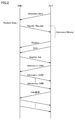
- FIG. 2 is a sequence diagram for explaining processing executed by the OLT in connection with ONU registration.
- the OLT executes a discovery process (MPCP discovery process).
- the discovery process is a process for detecting an ONU connected to the PON interface and connecting it to the OLT.
- the OLT 101 broadcasts a discovery gate frame.
- the ONU receives the discovery gate frame.
- the ONU transmits a registration request (Register Request) frame after a random delay time (Random Delay) has elapsed.
- the registration request frame includes an ONU MAC (Media Access Control) address as a transmission source address.
- the OLT 101 sets a time window for accepting the registration request frame. This time window is called a discovery window.
- the OLT 101 receives the registration request frame that arrives in the discovery window.
- the OLT 101 transmits a registration frame in response to the registration request frame.
- the registration frame includes an ONU (transmission destination) MAC address, a transmission source (OLT) MAC address, and an LLID assigned to the ONU.
- the OLT 101 stores the MAC address of the ONU in association with the LLID.
- the ONU stores the LLID notified from the OLT 101 by the registration frame.
- the OLT 101 transmits a gate frame including information such as a transmission time or a transmission time to the ONU.
- the ONU transmits a reception acknowledgment (Register ACK) frame to the OLT 101.
- a reception acknowledgment (Register ACK) frame
- the OLT 101 executes an OAM (Operations, Administration and Maintenance) discovery process.
- the OLT 101 transmits an Information OAM frame to the linked-up ONU.
- the ONU transmits an Information OAM frame to the OLT 101.
- the OLT 101 executes a process for setting the ONU.
- the OLT 101 transmits a control frame including information for various settings of the ONU to the ONU.
- the ONU receives the control frame and sets the ONU function. Further, the ONU transmits a control frame indicating the completion of the setting to the OLT 101.
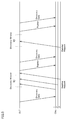
- FIG. 3 is a sequence diagram for explaining in more detail the discovery process (MPCP discovery process) executed by the OLT.
- OLT 101 periodically sends out discovery gate frames. Each time the OLT 101 sends a discovery gate frame, the OLT 101 sets a discovery window (Discovery Window) to accept a registration request (Register Request) from the ONU.
- Discovery Window Discovery Window
- Registered Request Registration request
- the OLT 101 can receive a plurality of registration requests.
- the OLT 101 receives registration requests from two ONUs (1, 2) out of three ONUs within the window W1. For these two ONUs, the OLT 101 sends a registration frame.
- the registration request from the ONU (3) arrives at the OLT 101 after the window W1 is closed, the OLT 101 does not accept this registration request.
- the OLT 101 sends out the discovery gate frame again and opens the window W2.
- the ONU (3) receives this discovery gate frame and transmits a registration request.
- the OLT 101 receives the registration request within the window W2.
- the OLT 101 sends a registration frame to the ONU (3).
- the OLT 101 periodically sends out discovery gate frames to set a discovery window. Even if requests from all ONUs 102 on the PON line 104 may not be accepted at a time, the OLT 101 can register the ONUs 102 on the PON line 104 in a plurality of times.
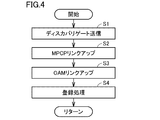
- FIG. 4 is a flowchart illustrating a series of processes for registering an ONU in the OLT. The process shown in FIG. 4 may be executed periodically. Referring to FIG. 4 and FIG. 1, when the process is started, OLT 101 broadcasts a discovery gate to a plurality of ONUs (step S1).
- the OLT 101 executes MPCP link up processing (step S2). Specifically, the OLT 101 executes MPCP processing including MPCP discovery processing. Since the MPCP discovery process is shown in FIG. 2 or FIG. 3, detailed description thereof will not be repeated.
- the OLT 101 executes an OAM link up process (step S3).
- the OLT 101 executes a registration process (step S4).
- the OLT 101 executes the OAM link-up process and registration process shown in FIG.
- the registration request is transmitted in the form of an optical signal. Since the transmission speed of the optical signal is high, a large number of registration requests may reach the OLT 101 within one time window (discovery window).
- an optical signal is converted into an electric signal.
- An electric signal is transmitted between the interface unit 10 and the control unit 20. Furthermore, the control part 20 performs a registration process using the electric signal. Therefore, when the OLT 101 receives many registration requests within one discovery window, the processing of the registration processing unit 21 may be delayed due to many processes to be executed thereafter.
- the throughput control unit 23 reduces the throughput of the registration process by the registration processing unit 21. .
- the concentration of ONU registration in the OLT can be mitigated.
- the throughput control unit 23 lowers the upper limit of the number of registration requests that are registered in the registration processing unit 21 per unit time. .
- the throughput control unit 23 reduces the upper limit of the number of registration requests per unit time for which the registration process is performed in the registration processing unit 21.
- the upper limit of the number of registration requests accepted by the registration processing unit 21 may be reduced.
- the unit time is not particularly limited, but may be determined as the transmission period of the discovery gate.
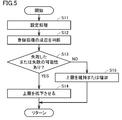
- FIG. 5 is a flowchart for explaining the throughput control of the registration process according to the first embodiment.
- step S4 shown in FIG. 4 the process described below is executed.
- the registration processing unit 21 receives a registration request and executes various settings for the ONU that has transmitted the registration request. For example, the registration processing unit 21 outputs information indicating the result of the registration process to the registration determination unit 22.
- step S12 the registration determination unit 22 determines whether the registration process executed in step S11 is successful.
- the registration determination unit 22 can determine the success or failure of the registration process by receiving information indicating the result of the registration process from the registration processing unit 21.
- step S13 the registration determination unit 22 determines whether the registration process has failed or the registration process may have failed.
- the registration determination unit 22 outputs the determination result to the throughput control unit 23.
- the registration determination unit 22 can determine that the registration process has failed or that the registration process may have failed in the following cases.
- the first case is a case where the registration processing unit 21 generates an error during execution of the registration process.
- the second case is a case where the load (usage rate) of the control unit 20 increases. As the load on the control unit 20 increases, the possibility that the registration process will fail tends to increase. For example, a threshold for the usage rate of the control unit 20 is determined in advance. When the actual usage rate of the control unit 20 exceeds the threshold value, the registration determination unit 22 can determine that the registration process may have failed.
- the third case is when a registration request is not transmitted from the buffer 12 to the registration processing unit 21 within a predetermined time, that is, when a timeout occurs.
- the registration processing unit 21 cannot execute the registration process. Therefore, the registration determination unit 22 can determine that the registration process has failed.
- the fourth case is a case where transmission of a registration request from the buffer 12 to the registration processing unit 21 has failed.
- the registration processing unit 21 cannot execute the registration process in the fourth case.
- the registration determination unit 22 can determine that the registration process has failed.
- step S13 If it is determined in step S13 that the registration process has failed or that the registration process may have failed (YES in step S13), the process proceeds to step S14.
- step S ⁇ b> 14 the throughput control unit 23 reduces the upper limit of the number of registration requests per unit time for which registration processing is performed in the registration processing unit 21.
- the throughput control unit 23 maintains the upper limit of the number of registration requests per unit time for which the registration process is performed in the registration processing unit 21 ( Step S15).
- step S15 the throughput control unit 23 increases the upper limit of the number of registration requests per unit time for which the registration processing is performed in the registration processing unit 21 when the registration processing has succeeded a predetermined number of times. May be.
- the load on the control unit 20 is reduced by lowering the upper limit.
- the upper limit can be increased (for example, returned to the upper limit value before being lowered).
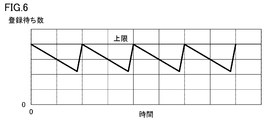
- FIG. 6 is a diagram showing the transition of the number of ONUs waiting for registration when the upper limit of the number of registration requests per unit time for which registration processing is performed in the registration processing unit 21 is maintained.
- FIG. 7 is a diagram showing the transition of the number of ONUs waiting for registration when the upper limit of the number of registration requests per unit time for which registration processing is performed in the registration processing unit 21 is lowered.
- the registration processing unit 21 executes the registration process, the number of registration-waiting ONUs gradually decreases.
- the OLT 101 periodically transmits discovery gates and accepts registration requests that arrive within the discovery window. As a result, the number of registration-waiting ONUs increases.
- the number of ONUs waiting for registration reaches the upper limit value.
- the registration processing unit 21 executes the registration process, the number of ONUs waiting for registration decreases again. The number of ONUs waiting for registration repeats the above transition.
- the number of ONUs waiting for registration immediately before receiving a registration request is at substantially the same level. This means that the control unit 20 tends to be in a high load state.
- the number of ONUs waiting for registration immediately before accepting a registration request can be reduced by gradually lowering the upper limit. Furthermore, a margin can be generated in the processing capability of the control unit 20. Therefore, it is easy to avoid delaying the registration process.
- the interface unit 10 accepts all registration requests that reach the OLT 101 within the discovery window.
- the buffer 12 holds the registration request accepted by the interface unit 10.
- the registration processing unit 21 may not be able to process all the registration requests in the buffer 12 within a predetermined time.
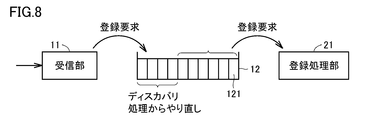
- FIG. 8 is a diagram for explaining a registration request that is accepted by the interface unit 10 but cannot be processed by the registration processing unit 21 within a predetermined time.
- the registration processing unit 21 processes the registration requests 121 stored in the buffer 12 in the order in which they are input to the buffer 12 earlier.
- the “predetermined time” may be a discovery gate transmission period from the OLT 101.
- the interface unit 10 and the control unit 20 redo the registration process of the ONU associated with such a registration request from the discovery process.
- the registration processing unit 21 does not execute registration processing.
- the interface unit 10 and the control unit 20 transmit a control frame (Deregister) for indicating that registration is not performed to an unregistered ONU.
- the interface unit 10 or the control unit 20 may discard or ignore a registration request that cannot be processed within a predetermined time.
- An ONU that is not registered in the OLT 101 can receive a discovery gate from the OLT 101 and transmit a registration request frame again. Therefore, the ONU can be registered in the OLT 101. As a result, it is possible to avoid delaying the registration process in the registration processing unit 21.
- the registration processing unit 21 when the registration processing unit 21 fails in the registration processing or when the registration processing unit 21 may fail the registration processing, the registration processing unit 21 performs the registration processing. Lower the upper limit of the number of registration requests to be executed per unit time. As a result, the number of registration requests for which registration processing should be executed can be reduced. That is, since throughput can be reduced, it is possible to prevent ONU registration from being concentrated. As a result, it is possible to avoid delaying registration processing in the OLT 101.
- the throughput control unit 23 inputs a registration request from the buffer 12 to the registration processing unit 21. Reduce the rate.
- the input rate can be defined as the number of registration requests accepted by the registration processing unit 21 per unit time.
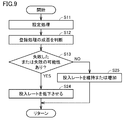
- FIG. 9 is a flowchart for explaining the throughput control of the registration process according to the second embodiment.
- the processes of steps S24 and S25 are executed in place of the processes of steps S14 and S15, respectively. Since the processing of the other steps in the flowchart shown in FIG. 9 is the same as the processing of the corresponding steps shown in FIG. 5, the following description will not be repeated.
- the throughput control unit 23 reduces the input rate of registration requests from the buffer 12 to the registration processing unit 21 (step S24). Specifically, the number of registration requests fetched from the buffer 12 per unit time is reduced. Even when the registration process may fail, the throughput control unit 23 executes the same process. The registration request is taken out from the buffer 12 and then input to the registration processing unit 21. By executing the processing of step S24, the input rate of the registration request from the buffer 12 to the registration processing unit 21 can be reduced.
- the throughput control unit 23 maintains the input rate of the registration request input to the registration processing unit 21 (step S25).
- the throughput control unit 23 may increase the input rate when the registration process has succeeded a predetermined number of times.
- the upper limit of the number of registration requests processed in the registration processing unit 21 per unit time may be maintained. Instead, the upper limit may be reduced as the input rate decreases.
- the interface unit 10 accepts all registration requests that have reached the OLT 101 (interface unit 10) within the time window. If the registration request 121 input to the buffer 12 by the reception unit 11 includes a registration request that cannot be processed within a predetermined time, the interface unit 10 and the control unit 20 register the ONU associated with such a registration request. Redo the process from the discovery process. Since this process is the same as the process shown in FIG. 8, the following description will not be repeated.
- the number of registration requests for which the registration processing unit 21 should execute the registration processing can be reduced.
- the concentration of ONU registration can be prevented.
- the interface unit 10 can restrict acceptance of registration requests that arrive within the discovery window. Specifically, the receiving unit 11 accepts only the number of registration requests that are predicted that the registration processing unit 21 can complete the registration processing before a timeout occurs. In the third embodiment, the upper limit of the number of registration requests to be executed in the registration processing unit 21 per unit time may be fixed or variable.
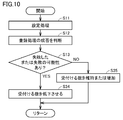
- FIG. 10 is a flowchart for explaining the throughput control of the registration process according to the third embodiment.
- the processes of steps S34 and S35 are executed in place of the processes of steps S14 and S15, respectively. Since the processing of the other steps in the flowchart shown in FIG. 10 is the same as the processing of the corresponding steps shown in FIG. 5, the following description will not be repeated.
- the throughput control unit 23 limits the number of registration requests received by the receiving unit 11 among the registration requests that have arrived in the discovery window (step S34). Even when the registration process may fail, the throughput control unit 23 executes the same process. Thereby, the number of registration requests accepted by the receiving unit 11 is reduced. For example, based on at least one of the usage rate of the control unit 20 and the number of registration request frames stored in the buffer 12, the registration determination unit 22 can determine that the registration process may fail.
- the throughput control unit 23 maintains the number of registration requests that the receiving unit 11 accepts among the registration requests that have arrived in the discovery window (step S13). S35). In step S35, the throughput control unit 23 may increase the number of registration requests accepted by the receiving unit 11 when the registration process has succeeded a predetermined number of times.
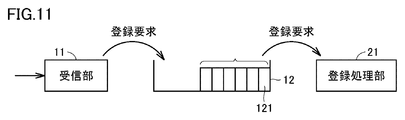
- FIG. 11 is a diagram for explaining the input of a registration request to the buffer 12.
- the number of registration requests 121 received by the receiving unit 11 is limited, whereby the number of registration requests 121 stored in the buffer 12 can be reduced. Therefore, it is possible to reduce the number of registration requests that the registration processing unit 21 should execute registration processing per unit time. Therefore, according to the third embodiment, the concentration of ONU registration can be prevented.
Landscapes
- Engineering & Computer Science (AREA)
- Computer Networks & Wireless Communication (AREA)
- Signal Processing (AREA)
- Small-Scale Networks (AREA)
Abstract
OLTへのONUの登録が集中することを緩和させることが可能な技術を提供する。OLT(101)は、タイムウィンドウ内にONUから到達した登録要求を受け付ける受信部(11)と、受信部(11)からの登録要求を格納するバッファ(12)と、バッファ(12)から出力された登録要求に基づいて、当該登録要求を送信したONUを登録するための登録処理を実行する登録処理部(21)と、登録処理の成否を判定する登録判定部(22)と、登録処理部による登録処理のスループットを制御するスループット制御部(23)とを備える。登録判定部(22)によって、登録処理が失敗した、または登録処理が失敗する可能性があると判定された場合に、スループット制御部(23)は、登録処理のスループットを低下させる。
Description
本発明は、局側装置、宅側装置の登録方法および光通信システムに関する。特に、本発明は、PON(Passive Optical Network)システムにおいて、宅側装置を局側装置に登録することに関する。
PON(Passive Optical Network)システムは、光通信システムの一種である。PONシステムは、局側装置(Optical Line Terminal:OLT)と、1以上の宅側装置(Optical Network Unit:ONU)と、光信号を伝送する光ファイバと、光ファイバを分岐する光スプリッタとを有する。OLTは、光ファイバおよび光スプリッタによってONUに接続される。OLTとONUとの間に光スプリッタが設置される。これによって、1つの局側装置に複数の宅側装置を接続することができる。
PON技術とギガビットイーサネット(登録商標)技術とを融合させたGE-PONが実用化されている。GE-PONに実装される機能のうちの1つがディスカバリ(Discovery)機能である。ディスカバリは、PONインタフェースに接続されたONUを検出して、その検出されたONUをOLTに接続するための機能である。ディスカバリ機能の詳細は、たとえば非特許文献1(IEEE802.3av "77.3.3 Discovery processing")に開示されている。
IEEE802.3av "77.3.3 Discovery processing"
OLTがディスカバリ機能を実行する際には、OLTからディスカバリゲート(Discovery Gate)と呼ばれる制御フレームをブロードキャストで送信する。ディスカバリゲートを受信したONUは、ランダムな遅延時間(Random delay)の後に、登録要求フレーム(Register Request)を送信する。OLTは、ONUの検出および登録のために、ディスカバリ・ウィンドウ(Discovery Window)と呼ばれるタイムウィンドウを設定する。
OLTは、登録要求フレーム(Register Request)をタイムウィンドウ内に受信すると、その登録要求フレームを送信したONUを、OLTの内部に登録するための登録処理を実行する。これにより、ONUは、光通信ネットワークを介してOLTとの間で通信可能となる。ONUがOLTと通信可能な状態になることは「リンクアップ」と呼ばれる。
PON技術の進展に伴い、PONに接続可能なONUの数は増える傾向にある。したがって1つのタイムウィンドウの内に、OLTにリンクアップされるONUの台数が多くなり得る。上記の通り、OLTはONUからの登録要求フレームを受け付けるだけでなく、ONUの登録のための各種の処理を実行する。このために、ONUの登録が集中した場合にはOLTの処理の負荷が高くなりやすい。
一例では、PONシステムの立ち上げ時にONUの登録が集中する可能性がある。したがってOLTの処理負荷が高くなりやすい。OLTの処理負荷が高くなることにより、たとえばOLTの処理が遅延するといった問題が生じる可能性がある。
したがって、ONUの登録によってOLTの処理の負荷が高くなり過ぎることを防ぐためにはOLTへのONUの登録が集中することを緩和する技術が求められる。本発明の目的は、OLTへのONUの登録が集中することを緩和させることが可能な技術を提供することである。
本発明の一態様に係る局側装置は、ディスカバリ処理を実行することにより光通信ネットワーク上の宅側装置を登録する局側装置である。局側装置は、タイムウィンドウ内に宅側装置から到達した登録要求を受け付ける受信部と、受信部からの登録要求を格納するバッファと、バッファから出力された登録要求に基づいて、当該登録要求を送信した宅側装置を登録するための登録処理を実行する登録処理部と、登録処理の成否を判定する登録判定部と、登録処理部による登録処理のスループットを制御するスループット制御部とを備える。登録判定部によって、登録処理が失敗した、または登録処理が失敗する可能性があると判定された場合に、スループット制御部は、登録処理のスループットを低下させる。
上記によれば、局側装置(OLT)への宅側装置(ONU)の登録が集中することを緩和させることが可能になる。
[本発明の実施形態の説明]
最初に本発明の実施態様を列記して説明する。
最初に本発明の実施態様を列記して説明する。
(1)本発明の一態様に係る局側装置は、ディスカバリ処理を実行することにより光通信ネットワーク上の宅側装置を登録する局側装置である。局側装置は、タイムウィンドウ内に宅側装置から到達した登録要求を受け付ける受信部と、受信部からの登録要求を待ち行列に従って格納するバッファと、バッファから出力された登録要求に基づいて、当該登録要求を送信した宅側装置を登録するための登録処理を実行する登録処理部と、登録処理の成否を判定する登録判定部と、登録処理部による登録処理のスループットを制御するスループット制御部とを備える。登録判定部によって、登録処理が失敗した、または登録処理が失敗する可能性があると判定された場合に、スループット制御部は、登録処理のスループットを低下させる。
上記によれば、局側装置(OLT)への宅側装置(ONU)の登録が集中することを緩和させることが可能になる。局側装置において、宅側装置の登録が集中した場合、登録処理部の負荷が高くなる。このため、登録処理が失敗しやすくなる。すなわち、登録処理が失敗する、あるいは、登録処理が失敗する可能性がある。このような場合に登録処理部において登録処理のスループットを低下させる。したがって、局側装置において、宅側装置の登録が集中することを緩和できる。登録処理部の負荷を低下させることができるので、処理の遅延を防ぐことができる。
バッファに格納された登録要求を取り出すための方式は特に限定されない。登録要求はFIFO(先入れ先出し)の形態でバッファに入力および出力されてもよい。「スループット」とは、単位時間当たりに登録処理部が処理する登録要求の数と定義することができる。
(2)好ましくは、スループット制御部は、登録処理部によって登録処理が施される登録要求の単位時間当たりの数の上限を低下させる。
上記によれば、登録処理部によって処理される登録要求の単位時間当たりの数を低下させることができる。したがって、登録処理部における登録処理のスループットを低下させることができる。
(3)好ましくは、スループット制御部は、バッファから登録処理部に投入される登録要求の投入レートを低下させる。
上記によれば、登録処理部によって処理される登録要求の単位時間当たりの数を低下させることができる。したがって、登録処理部における登録処理のスループットを低下させることができる。
(4)好ましくは、タイムウィンドウ内に受信部が受け付けた登録要求のうち、所定時間内に登録処理部において登録処理が完了しなかった登録要求が存在する場合には、局側装置は、登録処理が完了しなかった登録要求に対しては登録処理を実行しない。
上記によれば、登録処理部は所定時間内に登録処理を終わらせることができるので、登録処理部の処理が遅延することを防ぐことができる。ディスカバリ処理が周期的に実行される場合には、たとえば所定時間は、ディスカバリ処理の周期とすることができる。
(5)好ましくは、受信部は、登録処理部が所定時間内に登録処理を完了させると見積もられる数の登録要求をタイムウィンドウ内に受け付ける。
上記によれば、登録処理部における登録処理のスループットを低下させることができる。ディスカバリ処理が周期的に実行される場合には、たとえば所定時間は、ディスカバリ処理の周期とすることができる。
(6)本発明の一態様に係る、宅側装置の登録方法は、局側装置に宅側装置を登録するための宅側装置の登録方法である。登録方法は、局側装置からのディスカバリゲートに応じてタイムウィンドウ内に宅側装置から到達した登録要求を受け付けて登録要求を送信した宅側装置を登録するための登録処理を実行するステップと、登録処理の成否を判定するステップと、登録処理が失敗した、または登録処理が失敗する可能性があると判定された場合に、登録処理のスループットを低下させるステップとを備える。
上記によれば、局側装置への宅側装置の登録が集中することを緩和させることが可能になる。
(7)本発明の一態様に係る光通信システムは、ディスカバリゲートに応じて登録要求を送信する宅側装置と、ディスカバリゲートを送信して、タイムウィンドウ内に登録要求を受け付けて、受け付けられた登録要求に関連付けられた宅側装置を登録する局側装置と、局側装置と宅側装置との間の通信のための光通信ネットワークとを備える。局側装置は、受け付けられた登録要求に基づいて登録処理を実行し、登録処理が失敗した場合、または登録処理が失敗する可能性がある場合に、登録処理のスループットを低下させる。
上記によれば、局側装置への宅側装置の登録が集中することを緩和させることが可能になる。
[本発明の実施形態の詳細]
以下、本発明の実施の形態について図面を用いて説明する。なお、図中同一または相当部分には同一符号を付してその説明は繰り返さない。
以下、本発明の実施の形態について図面を用いて説明する。なお、図中同一または相当部分には同一符号を付してその説明は繰り返さない。
図1は、本発明の実施の形態に係る光通信システムの概略構成を示すブロック図である。図1を参照して、PONシステム100は、本発明の実施の形態に係る光通信システムである。PONシステム100は、局側装置(OLT)101と、複数の宅側装置(ONU)102-1,102-2,・・・,102-nと、PON回線104と、スプリッタ105とを備える。
ONU102-1~102-nの各々にはユーザ端末111が接続される。各ONU102に接続されるユーザ端末111の数は特に限定されるものではない。たとえば1つのONUに複数のユーザ端末が接続されていてもよい。また、ユーザ端末111の種類も特に限定されるものではない。
PON回線104は、光ファイバにより構成された光通信ネットワークである。OLT101から送信された光信号は、PON回線104を通り、スプリッタ105によってONU102-1~102-nへと分岐される。一方、ONU102-1~102-nから送信された光信号は、スプリッタ105によって集束されるとともに、PON回線104を通ってOLT101に送られる。スプリッタ105は、外部からの電源供給を特に必要とすることなく、入力された信号から受動的に信号を分岐または多重する。
OLT101は、上位ネットワーク109を介してデータを受信するとともに、そのデータをPON回線104に出力する。PONの物理的構成によれば、ONU102-1~102-nのすべてが、OLT101から送信されたデータを受信可能である。このためOLT101は、送信フレームのプリアンブル部分に、その送信フレームを受信すべきONUを特定する識別子LLID(Logical Link ID)を挿入する。各ONUは、OLT101から受信したフレームに含まれるLLIDを、予めOLT101から通知された自己のLLIDと照合する。フレームに含まれるLLIDが自己のLLIDに一致する場合には、ONUはそのフレームを受信する。そうでない場合には、ONUは、そのフレームを破棄する。
各ONUから送信される光信号はスプリッタ105において合流する。このため、各ONUからの信号(上り信号)がスプリッタ105で合流した後に衝突しないための制御が必要となる。OLT101は、ONU102-1~102-nから送信された制御フレーム(レポート)に基づいて、ONU102-1~102-n内のバッファに蓄積されているデータの送信開始時刻および送信許可量を演算する。次に、OLT101は、指示信号を挿入した制御フレーム(グラント)を、PON回線104およびスプリッタ105を介してONU102-1~102-nに送信する。
たとえば、ONU102-1は、宅側ネットワーク110を介してユーザ端末111から上り情報フレームを受信する。ONU102-1は、上り情報フレームをバッファに一旦蓄積する。ONU102-1は、グラントによって指定された時刻に、自己のバッファ内のデータの長さをレポートでOLT101に通知する。ONU102-1は、指示信号が挿入されたグラントをOLT101から受信するとともに、その指示信号に基づいて、自己のバッファ内のデータをレポートとともにOLT101に送信する。
OLT101は、ディスカバリ処理を実行することによりPON回線104上のONUを検出する。さらにOLT101は、その検出されたONUをOLT101の内部に登録するための登録処理を実行する。
図1には、ディスカバリ処理および登録処理を実行するためのOLT101の構成が記載される。OLT101は、インタフェース部10と、制御部20とを含む。インタフェース部10は、受信部11と、バッファ12,16と、送信部17とを含む。制御部20は、登録処理部21と、登録判定部22と、スループット制御部23とを含む。
受信部11は、ディカバリタイムウィンドウ内に受信部11に到達した登録要求を受け付ける。登録要求は光信号の形態でPON回線104を介して受信部11に到達する。受信部11は、光信号を受信して、その光信号を電気信号に変換する。
バッファ12は、受信部11が受け付けた登録要求を一時的に保持する。受信部11が、複数のONUの各々からの登録要求を受け付けた場合、各ONUからの登録要求が、バッファ12に蓄積される。複数の登録要求がバッファ12に入力された場合、それらの登録要求は、バッファ12の内部で待ち行列(キュー)を構成する。待ち行列において、データはFIFOの形態で入力および出力されうる。すなわち複数の登録要求がバッファ12に入った順序に従って、バッファ12は、それらの登録要求を出力することができる。なお、バッファ12に対する登録要求の入出力の方式はFIFOに限らず、他の方式が用いられてもよい。
登録処理部21は、バッファ12から出力された登録要求に基づいて、登録処理を実行する。登録処理は、登録要求を送信したONUをOLTに登録するための処理である。登録処理の詳細は後に説明される。
登録判定部22は、登録処理部21による登録処理の成否を判定する。登録判定部22は、その判定結果を、スループット制御部23に出力する。
スループット制御部23は、登録処理の成否の判定結果に応じて、登録処理部21による登録処理のスループットを制御する。スループットとは、単位時間あたりに登録処理部21が処理可能な登録要求の数と定義することができる。
バッファ16は、登録処理部21から送信された、ONU登録用の制御メッセージを一時的に記憶する。バッファ12と同様に、バッファ16は、FIFOに従って、そのONU登録用の制御メッセージを出力する。
送信部17は、バッファ16からのONU登録用の制御メッセージ(電気信号)を光信号に変換して、PON回線104にその光信号を送出する。
図2は、OLTがONUの登録に関連して実行する処理を説明するためのシーケンス図である。図2を参照して、OLTはディスカバリ処理(MPCPディスカバリ処理)を実行する。ディスカバリ処理とは、PONインタフェースに接続されたONUを検出してOLTに接続させるための処理である。
まず、OLT101は、ディスカバリゲート(Discovery Gate)フレームをブロードキャストで送信する。ONUは、ディスカバリゲートフレームを受信する。ディスカバリゲートフレームへの応答のための送信要求を有する場合、ONUは、ランダムな遅延時間(Random Delay)が経過した後に、登録要求(Register Request)フレームを送信する。
登録要求フレームは、ONUのMAC(Media Access Control)アドレスを送信元アドレスとして含む。OLT101は、ディスカバリゲートフレームを送出した後に、登録要求フレームを受け付けるためのタイムウィンドウを設定する。このタイムウィンドウは、ディスカバリウィンドウ(Discovery Window)と呼ばれる。
OLT101は、ディスカバリウィンドウ内に到着した登録要求フレームを受け付ける。OLT101は、その登録要求フレームに応答して、登録(Register)フレームを送信する。登録フレームは、ONU(送信先)のMACアドレスと、送信元(OLT)のMACアドレスと、そのONUに割当てたLLIDとを含む。OLT101は、そのONUのMACアドレスをLLIDに関連付けて記憶する。一方、ONUは、登録フレームによってOLT101から通知されたLLIDを記憶する。
OLT101は、送信時刻あるいは送信時間等の情報を含むゲート(Gate)フレームをONUに対して送信する。ゲートに応答して、ONUは、受信確認(Register ACK)フレームをOLT101に送信する。
次に、OLT101はOAM(Operations,Administration and Maintenance)ディスカバリ処理を実行する。OLT101は、リンクアップされたONUに対してInformation OAMフレームを送信する。応じて、ONUは、OLT101にInformation OAMフレームを送信する。
OAMディスカバリ処理の後、OLT101は、ONUの設定のための処理を実行する。OLT101は、ONUの各種の設定のための情報を含む制御フレームをONUに送信する。ONUは、その制御フレームを受けて、ONUの機能を設定する。さらに、ONUは、その設定の完了を示す制御フレームをOLT101に送信する。
図3は、OLTによって実行されるディスカバリ処理(MPCPディスカバリ処理)をより詳しく説明するためのシーケンス図である。図3を参照して、OLT101は、周期的にディスカバリゲートフレームを送出する。OLT101は、ディスカバリゲートフレームを送出するごとに、ONUからの登録要求(Register Request)を受け付けるためにディスカバリウィンドウ(Discovery Window)を設定する。
1つのディスカバリウィンドウ内で、OLT101は複数の登録要求を受信することができる。図3に示された例では、OLT101は、3つのONUのうちの2つのONU(1,2)からの登録要求をウィンドウW1内で受信する。これら2つのONUに対して、OLT101は登録(Register)フレームを送る。一方、ONU(3)からの登録要求は、ウィンドウW1が閉じた後にOLT101に到着したため、OLT101は、この登録要求を受け付けない。
OLT101は、再度、ディスカバリゲートフレームを送出するとともに、ウィンドウW2を開く。ONU(3)は、このディスカバリゲートフレームを受信して登録要求を送信する。OLT101は、登録要求をウィンドウW2内で受信する。OLT101は登録フレームをONU(3)に送る。
OLT101は、周期的に、ディスカバリゲートフレームを送出して、ディスカバリウィンドウを設定する。PON回線104上のすべてのONU102からの要求を一度では受け付けられない場合があっても、OLT101は、複数回に分けて、PON回線104上のONU102を登録することができる。
図4は、ONUをOLTに登録するための一連の処理を説明したフローチャートである。図4に示された処理は、周期的に実行されてもよい。図4および図1を参照して、処理が開始されると、OLT101は複数のONUに、ディスカバリゲートをブロードキャストで送信する(ステップS1)。
次に、OLT101は、MPCPリンクアップ処理を実行する(ステップS2)。具体的には、OLT101は、MPCPディスカバリ処理を含むMPCP処理を実行する。MPCPディスカバリ処理は、図2あるいは図3に示されているので以後の詳細な説明は繰り返さない。
続いて、OLT101は、OAMリンクアップ処理を実行する(ステップS3)。OAMリンクアップ処理が終了すると、OLT101は、登録処理を実行する(ステップS4)。OLT101は図2に示されたOAMリンクアップ処理および登録処理を実行する。
図1あるいは図3では、図示が複雑になるのを防ぐために、ONUの台数が3である例が示されている。しかしながら、より多くのONUがPON回線104に接続されていることがあり得る。PON回線104では、登録要求は光信号の形態で伝送される。光信号の伝送速度が大きいために、1つのタイムウィンドウ(ディスカバリウィンドウ)内に多数の登録要求がOLT101に届くことが起こり得る。
OLT101の内部では、光信号が電気信号に変換される。電気信号がインタフェース部10と制御部20との間で伝送される。さらに、制御部20は、その電気信号を用いて登録処理を実行する。したがって、1つのディスカバリウィンドウ内で多くの登録要求をOLT101が受け付けた場合、その後に実行すべき多くの処理によって、登録処理部21の処理が遅延する可能性がある。
登録処理部21の処理が遅延することを回避するために、ディスカバリウィンドウを狭くすることが考えられる。しかしながら上述のように、ONUからOLTには光信号が伝送される。光信号の伝送速度が大きいために、ディスカバリウィンドウを狭くしても、多数の登録要求フレームがOLT101に届く可能性がある。
本発明の実施の形態では、登録処理部21における登録処理が失敗した場合、あるいは登録処理の失敗が予測される場合において、スループット制御部23は、登録処理部21による登録処理のスループットを低下させる。スループットを低下させることにより、OLTへのONUの登録が集中することを緩和させることが可能になる。単位時間あたりに処理される登録要求の数が減ることにより、登録処理部21の処理が遅延することを回避することができる。以下に各実施の形態について詳細に説明する。
<実施の形態1>
実施の形態1によれば、登録処理部21において登録処理が失敗した場合、スループット制御部23は、登録処理部21において登録処理が施される登録要求の単位時間当たりの数の上限を低下させる。上限を低下させることにより、登録処理部21が単位時間当たりに処理する登録要求の数を減らすことができる。すなわちスループットを低下させることができる。さらに、登録処理が失敗する可能性がある場合にも、スループット制御部23は、登録処理部21において登録処理が施される登録要求の単位時間当たりの数の上限を低下させる。その上限を低下させるために、登録処理部21が受け付ける登録要求の数の上限を低下させてもよい。単位時間は、特に限定されないが、ディスカバリゲートの送信周期と定められてもよい。
実施の形態1によれば、登録処理部21において登録処理が失敗した場合、スループット制御部23は、登録処理部21において登録処理が施される登録要求の単位時間当たりの数の上限を低下させる。上限を低下させることにより、登録処理部21が単位時間当たりに処理する登録要求の数を減らすことができる。すなわちスループットを低下させることができる。さらに、登録処理が失敗する可能性がある場合にも、スループット制御部23は、登録処理部21において登録処理が施される登録要求の単位時間当たりの数の上限を低下させる。その上限を低下させるために、登録処理部21が受け付ける登録要求の数の上限を低下させてもよい。単位時間は、特に限定されないが、ディスカバリゲートの送信周期と定められてもよい。
図5は、実施の形態1に係る、登録処理のスループットの制御を説明するためのフローチャートである。図4に示されたステップS4において、以下に説明される処理が実行される。
図1および図5を参照して、ステップS11において、登録処理部21は、登録要求を受け付けて、その登録要求を送信したONUについての各種の設定を実行する。たとえば登録処理部21は、登録処理の結果を示す情報を登録判定部22に出力する。
ステップS12において、登録判定部22は、ステップS11において実行された登録処理の成否を判断する。登録判定部22は、登録処理の結果を示す情報を登録処理部21から受け取ることにより、登録処理の成否を判断することができる。
ステップS13において、登録判定部22は、登録処理が失敗した、または登録処理が失敗した可能性があるかどうかを判定する。登録判定部22は、その判定結果をスループット制御部23に出力する。一実施形態によれば、登録判定部22は、以下のような場合に、登録処理が失敗した、または登録処理が失敗した可能性があると判定することができる。
第1の場合は、登録処理部21が登録処理の実行中にエラーを発生させた場合である。
第2の場合は、制御部20の負荷(使用率)が上昇した場合である。制御部20の負荷が上昇することにより、登録処理が失敗する可能性が高くなりやすい。たとえば制御部20の使用率の閾値が予め定められる。制御部20の実際の使用率がその閾値を上回る場合に、登録判定部22は、登録処理が失敗した可能性があると判定することができる。
第2の場合は、制御部20の負荷(使用率)が上昇した場合である。制御部20の負荷が上昇することにより、登録処理が失敗する可能性が高くなりやすい。たとえば制御部20の使用率の閾値が予め定められる。制御部20の実際の使用率がその閾値を上回る場合に、登録判定部22は、登録処理が失敗した可能性があると判定することができる。
第3の場合は、所定時間内に、バッファ12から登録処理部21に登録要求が送信されない場合、すなわちタイムアウトが発生する場合である。この場合、登録処理部21は、登録処理を実行できない。したがって、登録判定部22は、登録処理が失敗したと判定することができる。
第4の場合は、バッファ12から登録処理部21への登録要求の送信が失敗した場合である。第3の場合と同じく、第4の場合にも登録処理部21は、登録処理を実行できない。この場合にも、登録判定部22は、登録処理が失敗したと判定することができる。
ステップS13において、登録処理が失敗した、または登録処理が失敗した可能性があると判定された場合(ステップS13においてYES)、処理はステップS14に進む。ステップS14において、スループット制御部23は、登録処理部21において登録処理が施される登録要求の単位時間当たりの数の上限を低下させる。一方、登録処理が成功したと判定された場合(ステップS13においてNO)、スループット制御部23は、登録処理部21において登録処理が施される登録要求の単位時間当たりの数の上限を維持する(ステップS15)。
あるいは、ステップS15において、スループット制御部23は、登録処理が所定の回数連続して成功した場合に、登録処理部21において登録処理が施される登録要求の単位時間当たりの数の上限を増加させてもよい。たとえば上限を下げることによって制御部20の負荷が低下する。その状態を続けることによって、制御部20の処理能力に余裕が出ることが起こりうる。このような場合には、上限を増加させる(たとえば下げる前の上限の値に戻す)ことができる。
図6は、登録処理部21において登録処理が施される登録要求の単位時間当たりの数の上限を維持した場合における、登録待ちとなるONUの数の推移を示した図である。図7は、登録処理部21において登録処理が施される登録要求の単位時間当たりの数の上限を低下させた場合における、登録待ちとなるONUの数の推移を示した図である。
図6および図7を参照して、登録処理部21が登録処理を実行するうちに、登録待ち状態のONUの数は次第に減少する。OLT101は、周期的にディスカバリゲートを送信して、ディスカバリウィンドウ内に到達した登録要求を受け付ける。これにより、登録待ちONUの数が増加する。インタフェース部10において受け付けられた登録要求の数が、登録処理部21に設定された上限以上である場合には、登録待ちのONUの数が上限値に達する。登録処理部21が登録処理を実行するにつれて、登録待ち状態のONUの数が再び低下する。登録待ちのONUの数は上記のような推移を繰り返す。
制御部20の処理能力が一定であると仮定すると、図6に示されるように、上限が維持される場合には登録要求を受け付ける直前の登録待ちONUの数は、ほぼ同じレベルにある。このことは、制御部20が高い負荷状態となりやすいことを意味する。これに対して図7に示されるように、上限を次第に低下させることによって、登録要求を受け付ける直前の登録待ちONUの数を減らすことができる。さらに、制御部20の処理能力に余裕を生じさせることができる。したがって、登録処理が遅延することを回避しやすくなる。
実施の形態1においては、インタフェース部10は、ディスカバリウィンドウ内にOLT101に到達したすべての登録要求を受け付ける。バッファ12は、インタフェース部10が受け付けた登録要求を保持する。バッファ12に多数の登録要求が蓄積されている場合、登録処理部21が、所定時間内に、バッファ12内のすべての登録要求は処理できない可能性がある。
図8は、インタフェース部10が受け付けたものの登録処理部21が所定時間内に処理できない登録要求を説明するための図である。図8を参照して、登録処理部21は、バッファ12に記憶された登録要求121を、バッファ12に早く入力された順に処理する。バッファ12に蓄積された登録要求の数が多い場合、受信部11がバッファ12に入力した登録要求121の中に、所定時間内に処理できない登録要求が存在しうる。一実施形態では、「所定時間」は、OLT101からのディスカバリゲートの送信の周期とすることができる。
インタフェース部10および制御部20は、そのような登録要求に関連付けられたONUの登録処理を、ディスカバリ処理からやり直す。所定時間内に処理が完了しなかった登録要求に対して、登録処理部21は、登録処理を実行しない。たとえば、インタフェース部10および制御部20は、未登録のONUに対して、登録しないことを示すための制御フレーム(Deregister)を送信する。インタフェース部10あるいは制御部20は、所定時間内に処理できない登録要求を破棄あるいは無視してもよい。OLT101に登録されなかったONUは、OLT101からのディスカバリゲートを受けて、登録要求フレームを再び送信することができる。したがって、ONUはOLT101に登録されることができる。これにより登録処理部21において登録処理が遅延することを回避できる。
以上のように実施の形態1によれば、登録処理部21が登録処理を失敗した、あるいは登録処理部21が登録処理を失敗する可能性がある場合に、登録処理部21は、登録処理を実行すべき登録要求の単位時間当たりの数の上限を低下させる。これにより、登録処理を実行すべき登録要求の数を減らすことができる。すなわちスループットを低下させることができるので、ONUの登録が集中することを防ぐことができる。この結果、OLT101において登録処理が遅延することを回避することができる。
<実施の形態2>
実施の形態2においては、登録処理部21において登録処理が失敗した場合、あるいは登録処理が失敗する可能性がある場合、スループット制御部23は、バッファ12から登録処理部21への登録要求の投入レートを低下させる。投入レートとは、単位時間あたりに登録処理部21が受け付ける登録要求の数と定義することができる。
実施の形態2においては、登録処理部21において登録処理が失敗した場合、あるいは登録処理が失敗する可能性がある場合、スループット制御部23は、バッファ12から登録処理部21への登録要求の投入レートを低下させる。投入レートとは、単位時間あたりに登録処理部21が受け付ける登録要求の数と定義することができる。
図9は、実施の形態2に係る、登録処理のスループットの制御を説明するためのフローチャートである。図5および図9を参照して、実施の形態2に係る、登録処理のスループットの制御は、ステップS14,S15の処理に替えてステップS24,S25の処理がそれぞれ実行される。図9に示されたフローチャートの他のステップの処理は、図5に示された対応するステップの処理と同様であるので以後の説明は繰り返さない。
登録処理が失敗した場合(ステップS13においてYES)、スループット制御部23は、バッファ12から登録処理部21への登録要求の投入レートを低下させる(ステップS24)。具体的には、単位時間あたりにバッファ12から取り出される登録要求の数を減らす。登録処理が失敗する可能性がある場合にも、スループット制御部23は、同様の処理を実行する。登録要求は、バッファ12から取り出された後に、登録処理部21に投入される。ステップS24の処理が実行されることにより、バッファ12から登録処理部21への登録要求の投入レートを低下させることができる。
一方、登録処理が成功したと判定された場合(ステップS13においてNO)、スループット制御部23は、登録処理部21に投入される登録要求の投入レートを維持する(ステップS25)。ステップS25において、スループット制御部23は、登録処理が所定の回数連続して成功した場合に、投入レートを増加させてもよい。
実施の形態2では、登録処理部21において処理される登録要求の単位時間当たりの数の上限が維持されてもよい。代わりに、投入レートの低下に応じて、その上限が低下してもよい。
実施の形態1と同様に、インタフェース部10は、タイムウィンドウ内にOLT101(インタフェース部10)に到達した登録要求をすべて受け付ける。受信部11がバッファ12に入力した登録要求121の中に、所定時間内に処理できない登録要求が存在する場合、インタフェース部10および制御部20は、そのような登録要求に関連付けられたONUの登録処理を、ディスカバリ処理からやり直す。この処理は、図8に示された処理と同様であるので以後の説明は繰り返さない。
実施の形態2によれば、実施の形態1と同様に、登録処理部21が登録処理を実行すべき登録要求の単位時間当たりの数を減らすことができる。これにより、ONUの登録が集中することを防ぐことができる。
<実施の形態3>
実施の形態3において、インタフェース部10は、ディスカバリウィンドウ内に到着した登録要求の受付を制限することができる。具体的には、受信部11は、タイムアウトが発生する前に登録処理部21が登録処理を完了させることができると予測される数の登録要求のみを受け付ける。なお、実施の形態3においては、登録処理部21において、登録処理を実行すべき登録要求の単位時間当たりの数の上限は固定されてもよく可変であってもよい。
実施の形態3において、インタフェース部10は、ディスカバリウィンドウ内に到着した登録要求の受付を制限することができる。具体的には、受信部11は、タイムアウトが発生する前に登録処理部21が登録処理を完了させることができると予測される数の登録要求のみを受け付ける。なお、実施の形態3においては、登録処理部21において、登録処理を実行すべき登録要求の単位時間当たりの数の上限は固定されてもよく可変であってもよい。
図10は、実施の形態3に係る、登録処理のスループットの制御を説明するためのフローチャートである。図5および図10を参照して、実施の形態3に係る、登録処理のスループットの制御は、ステップS14,S15の処理に替えてステップS34,S35の処理がそれぞれ実行される。図10に示されたフローチャートの他のステップの処理は、図5に示された対応するステップの処理と同様であるので以後の説明は繰り返さない。
登録処理が失敗した場合(ステップS13においてYES)、スループット制御部23は、ディスカバリウィンドウ内に到着した登録要求のうち、受信部11が受け付ける登録要求の数を制限する(ステップS34)。登録処理が失敗する可能性がある場合にも、スループット制御部23は、同様の処理を実行する。これにより、受信部11が受け付ける登録要求の数が減少する。たとえば制御部20の使用率、バッファ12に蓄積された登録要求フレームの数の少なくとも1つに基づいて、登録判定部22は、登録処理が失敗する可能性があると判断することができる。
一方、登録処理が成功したと判定された場合(ステップS13においてNO)、スループット制御部23は、ディスカバリウィンドウ内に到着した登録要求のうち、受信部11が受け付ける登録要求の数を維持する(ステップS35)。ステップS35において、スループット制御部23は、登録処理が所定の回数連続して成功した場合に受信部11が受け付ける登録要求の数を増加させてもよい。
図11は、バッファ12への登録要求の入力を説明するための図である。図11を参照して、受信部11が受け付ける登録要求の数が制限されることにより、バッファ12に蓄積される登録要求121の数を減らすことができる。したがって、登録処理部21が登録処理を実行すべき登録要求の単位時間当たりの数を減らすことができる。したがって実施の形態3によればONUの登録が集中することを防ぐことができる。
今回開示された実施の形態はすべての点で例示であって、制限的なものではないと考えられるべきである。本発明の範囲は上記した実施の形態ではなく請求の範囲によって示され、請求の範囲と均等の意味、および範囲内でのすべての変更が含まれることが意図される。
10 インタフェース部、11 受信部、12,16 バッファ、17 送信部、20 制御部、21 登録処理部、22 登録判定部、23 スループット制御部、100 PONシステム、101 局側装置(OLT)、102-1~102-n 宅側装置(ONU)、104 PON回線、105 スプリッタ、109 上位ネットワーク、110 宅側ネットワーク、111 ユーザ端末、121 登録要求、S1~S4,S11~S15,S24,S25,S34,S35 ステップ、W1,W2 ウィンドウ(ディスカバリウィンドウ)。
Claims (7)
- ディスカバリ処理を実行することにより光通信ネットワーク上の宅側装置を登録する局側装置であって、
タイムウィンドウ内に宅側装置から到達した登録要求を受け付ける受信部と、
前記受信部からの前記登録要求を格納するバッファと、
前記バッファから出力された前記登録要求に基づいて、当該登録要求を送信した宅側装置を登録するための登録処理を実行する登録処理部と、
前記登録処理の成否を判定する登録判定部と、
前記登録処理部による前記登録処理のスループットを制御するスループット制御部とを備え、
前記登録判定部によって、前記登録処理が失敗した、または前記登録処理が失敗する可能性があると判定された場合に、前記スループット制御部は、前記登録処理のスループットを低下させる、局側装置。 - 前記スループット制御部は、前記登録処理部によって前記登録処理が施される前記登録要求の単位時間当たりの数の上限を低下させる、請求項1に記載の局側装置。
- 前記スループット制御部は、前記バッファから前記登録処理部に投入される前記登録要求の投入レートを低下させる、請求項1または請求項2に記載の局側装置。
- 前記タイムウィンドウ内に前記受信部が受け付けた登録要求のうち、所定時間内に前記登録処理部において前記登録処理が完了しなかった登録要求が存在する場合には、前記局側装置は、前記所定時間内に前記登録処理が完了しなかった前記登録要求については前記登録処理を実行しない、請求項1から請求項3のいずれか1項に記載の局側装置。
- 前記受信部は、前記登録処理部が所定時間内に前記登録処理を完了させると見積もられる数の登録要求を前記タイムウィンドウ内に受け付ける、請求項1から請求項4のいずれか1項に記載の局側装置。
- 局側装置に宅側装置を登録するための宅側装置の登録方法であって、
局側装置からのディスカバリゲートに応じてタイムウィンドウ内に宅側装置から到達した登録要求を受け付けて前記登録要求を送信した宅側装置を登録するための登録処理を実行するステップと、
前記登録処理の成否を判定するステップと、
前記登録処理が失敗した、または前記登録処理が失敗する可能性があると判定された場合に、前記登録処理のスループットを低下させるステップとを備える、宅側装置の登録方法。 - ディスカバリゲートに応じて登録要求を送信する宅側装置と、
前記ディスカバリゲートを送信して、タイムウィンドウ内に登録要求を受け付けて、受け付けられた登録要求に関連付けられた宅側装置を登録する局側装置と、
前記局側装置と前記宅側装置との間の通信のための光通信ネットワークとを備え、
前記局側装置は、前記受け付けられた登録要求に基づいて前記登録処理を実行し、前記登録処理が失敗した場合、または前記登録処理が失敗する可能性がある場合に、前記登録処理のスループットを低下させる、光通信システム。
Applications Claiming Priority (2)
| Application Number | Priority Date | Filing Date | Title |
|---|---|---|---|
| JP2015099187A JP6350388B2 (ja) | 2015-05-14 | 2015-05-14 | 局側装置、宅側装置の登録方法および光通信システム |
| JP2015-099187 | 2015-05-14 |
Publications (1)
| Publication Number | Publication Date |
|---|---|
| WO2016181665A1 true WO2016181665A1 (ja) | 2016-11-17 |
Family
ID=57248982
Family Applications (1)
| Application Number | Title | Priority Date | Filing Date |
|---|---|---|---|
| PCT/JP2016/050863 Ceased WO2016181665A1 (ja) | 2015-05-14 | 2016-01-13 | 局側装置、宅側装置の登録方法および光通信システム |
Country Status (2)
| Country | Link |
|---|---|
| JP (1) | JP6350388B2 (ja) |
| WO (1) | WO2016181665A1 (ja) |
Cited By (1)
| Publication number | Priority date | Publication date | Assignee | Title |
|---|---|---|---|---|
| WO2022242071A1 (zh) * | 2021-05-18 | 2022-11-24 | 中兴通讯股份有限公司 | 光网络单元注册方法、光线路终端、光网络单元、介质 |
Families Citing this family (1)
| Publication number | Priority date | Publication date | Assignee | Title |
|---|---|---|---|---|
| JP7218597B2 (ja) * | 2019-02-05 | 2023-02-07 | 住友電気工業株式会社 | 局側装置、通信システムおよび通信制御方法 |
Citations (3)
| Publication number | Priority date | Publication date | Assignee | Title |
|---|---|---|---|---|
| JPH05324497A (ja) * | 1992-05-21 | 1993-12-07 | Oki Electric Ind Co Ltd | 実時間データ処理装置 |
| JP2006262129A (ja) * | 2005-03-17 | 2006-09-28 | Kddi Corp | Ponシステムにおける論理リンク確立方法及び光終端装置 |
| JP2014041509A (ja) * | 2012-08-23 | 2014-03-06 | Nippon Telegr & Teleph Corp <Ntt> | 輻輳制御装置 |
Family Cites Families (1)
| Publication number | Priority date | Publication date | Assignee | Title |
|---|---|---|---|---|
| JP4941379B2 (ja) * | 2008-03-28 | 2012-05-30 | 住友電気工業株式会社 | 局側装置、その制御方法およびそのコンピュータ・プログラム |
-
2015
- 2015-05-14 JP JP2015099187A patent/JP6350388B2/ja active Active
-
2016
- 2016-01-13 WO PCT/JP2016/050863 patent/WO2016181665A1/ja not_active Ceased
Patent Citations (3)
| Publication number | Priority date | Publication date | Assignee | Title |
|---|---|---|---|---|
| JPH05324497A (ja) * | 1992-05-21 | 1993-12-07 | Oki Electric Ind Co Ltd | 実時間データ処理装置 |
| JP2006262129A (ja) * | 2005-03-17 | 2006-09-28 | Kddi Corp | Ponシステムにおける論理リンク確立方法及び光終端装置 |
| JP2014041509A (ja) * | 2012-08-23 | 2014-03-06 | Nippon Telegr & Teleph Corp <Ntt> | 輻輳制御装置 |
Cited By (1)
| Publication number | Priority date | Publication date | Assignee | Title |
|---|---|---|---|---|
| WO2022242071A1 (zh) * | 2021-05-18 | 2022-11-24 | 中兴通讯股份有限公司 | 光网络单元注册方法、光线路终端、光网络单元、介质 |
Also Published As
| Publication number | Publication date |
|---|---|
| JP2016219878A (ja) | 2016-12-22 |
| JP6350388B2 (ja) | 2018-07-04 |
Similar Documents
| Publication | Publication Date | Title |
|---|---|---|
| EP2953297B1 (en) | Optical-wireless access system | |
| JP4865908B2 (ja) | 帯域割当方法および受動光通信網システム | |
| US10491323B2 (en) | Data transmission control method, passive optical network equipment, apparatus, and passive optical network | |
| US9693302B2 (en) | Optical wireless access system | |
| US20140376916A1 (en) | Method and Apparatus of Delivering Upstream Data in Ethernet Passive Optical Network Over Coaxial Network | |
| US20130004161A1 (en) | Optical power adjustment method for ethernet passive optical network system, and optical line terminal | |
| JP2017511039A (ja) | 光回線終端/光ネットワークユニット波長調節方法及び装置 | |
| EP4657777A1 (en) | Method for implementing time-sensitive network by means of passive optical network system, device, and medium | |
| US20170005724A1 (en) | Station-side device and pon system | |
| JP6350388B2 (ja) | 局側装置、宅側装置の登録方法および光通信システム | |
| WO2012130022A1 (zh) | 嵌套无源光网络的测距方法及装置 | |
| JP4913876B2 (ja) | 帯域割当装置および帯域割当方法 | |
| JP5578023B2 (ja) | 局側装置、宅側装置、光通信システム、および光通信システムの制御方法 | |
| US12580646B2 (en) | Method and apparatus applied to PON system, system, and storage medium | |
| US12149287B2 (en) | Upbandwidth allocation device and uplink bandwidth allocation method | |
| JP6134247B2 (ja) | 光通信システム、信号送信制御方法及び局側光回線終端装置 | |
| JP6093282B2 (ja) | 光通信システム、通信制御方法及び局側光回線終端装置 | |
| US10396890B2 (en) | Information processing apparatus, method and non-transitory computer-readable storage medium | |
| JP5746003B2 (ja) | 送受信方法 | |
| WO2017098611A1 (ja) | 宅側装置、ponシステムおよび宅側装置の制御方法 | |
| JP4958984B2 (ja) | 帯域割当装置および帯域割当方法 | |
| JP2015082779A (ja) | 光通信システム、信号送信制御方法及び局側光回線終端装置 | |
| JP2015082772A (ja) | 光通信システム、信号送信制御方法及び加入者側光回線終端装置 | |
| US20240413899A1 (en) | Method for managing an operating fault in a laser diode | |
| JP4458431B2 (ja) | 光加入者装置 |
Legal Events
| Date | Code | Title | Description |
|---|---|---|---|
| 121 | Ep: the epo has been informed by wipo that ep was designated in this application |
Ref document number: 16792391 Country of ref document: EP Kind code of ref document: A1 |
|
| NENP | Non-entry into the national phase |
Ref country code: DE |
|
| 122 | Ep: pct application non-entry in european phase |
Ref document number: 16792391 Country of ref document: EP Kind code of ref document: A1 |