WO2016151620A1 - シミュレートシステム、シミュレート方法およびシミュレート用プログラム - Google Patents
シミュレートシステム、シミュレート方法およびシミュレート用プログラム Download PDFInfo
- Publication number
- WO2016151620A1 WO2016151620A1 PCT/JP2015/001628 JP2015001628W WO2016151620A1 WO 2016151620 A1 WO2016151620 A1 WO 2016151620A1 JP 2015001628 W JP2015001628 W JP 2015001628W WO 2016151620 A1 WO2016151620 A1 WO 2016151620A1
- Authority
- WO
- WIPO (PCT)
- Prior art keywords
- estimator
- update
- simulation
- evaluation index
- unit
- Prior art date
- Legal status (The legal status is an assumption and is not a legal conclusion. Google has not performed a legal analysis and makes no representation as to the accuracy of the status listed.)
- Ceased
Links
Images




Classifications
-
- G—PHYSICS
- G05—CONTROLLING; REGULATING
- G05B—CONTROL OR REGULATING SYSTEMS IN GENERAL; FUNCTIONAL ELEMENTS OF SUCH SYSTEMS; MONITORING OR TESTING ARRANGEMENTS FOR SUCH SYSTEMS OR ELEMENTS
- G05B19/00—Program-control systems
- G05B19/02—Program-control systems electric
- G05B19/18—Numerical control [NC], i.e. automatically operating machines, in particular machine tools, e.g. in a manufacturing environment, so as to execute positioning, movement or co-ordinated operations by means of program data in numerical form
- G05B19/406—Numerical control [NC], i.e. automatically operating machines, in particular machine tools, e.g. in a manufacturing environment, so as to execute positioning, movement or co-ordinated operations by means of program data in numerical form characterised by monitoring or safety
-
- G—PHYSICS
- G05—CONTROLLING; REGULATING
- G05B—CONTROL OR REGULATING SYSTEMS IN GENERAL; FUNCTIONAL ELEMENTS OF SUCH SYSTEMS; MONITORING OR TESTING ARRANGEMENTS FOR SUCH SYSTEMS OR ELEMENTS
- G05B17/00—Systems involving the use of models or simulators of said systems
- G05B17/02—Systems involving the use of models or simulators of said systems electric
-
- G—PHYSICS
- G06—COMPUTING OR CALCULATING; COUNTING
- G06N—COMPUTING ARRANGEMENTS BASED ON SPECIFIC COMPUTATIONAL MODELS
- G06N20/00—Machine learning
-
- G—PHYSICS
- G06—COMPUTING OR CALCULATING; COUNTING
- G06Q—INFORMATION AND COMMUNICATION TECHNOLOGY [ICT] SPECIALLY ADAPTED FOR ADMINISTRATIVE, COMMERCIAL, FINANCIAL, MANAGERIAL OR SUPERVISORY PURPOSES; SYSTEMS OR METHODS SPECIALLY ADAPTED FOR ADMINISTRATIVE, COMMERCIAL, FINANCIAL, MANAGERIAL OR SUPERVISORY PURPOSES, NOT OTHERWISE PROVIDED FOR
- G06Q10/00—Administration; Management
- G06Q10/06—Resources, workflows, human or project management; Enterprise or organisation planning; Enterprise or organisation modelling
- G06Q10/063—Operations research, analysis or management
-
- G—PHYSICS
- G06—COMPUTING OR CALCULATING; COUNTING
- G06Q—INFORMATION AND COMMUNICATION TECHNOLOGY [ICT] SPECIALLY ADAPTED FOR ADMINISTRATIVE, COMMERCIAL, FINANCIAL, MANAGERIAL OR SUPERVISORY PURPOSES; SYSTEMS OR METHODS SPECIALLY ADAPTED FOR ADMINISTRATIVE, COMMERCIAL, FINANCIAL, MANAGERIAL OR SUPERVISORY PURPOSES, NOT OTHERWISE PROVIDED FOR
- G06Q50/00—Information and communication technology [ICT] specially adapted for implementation of business processes of specific business sectors, e.g. utilities or tourism
- G06Q50/06—Energy or water supply
-
- G—PHYSICS
- G05—CONTROLLING; REGULATING
- G05B—CONTROL OR REGULATING SYSTEMS IN GENERAL; FUNCTIONAL ELEMENTS OF SUCH SYSTEMS; MONITORING OR TESTING ARRANGEMENTS FOR SUCH SYSTEMS OR ELEMENTS
- G05B2219/00—Program-control systems
- G05B2219/20—Pc systems
- G05B2219/26—Pc applications
- G05B2219/2639—Energy management, use maximum of cheap power, keep peak load low
Definitions
- the present invention relates to a simulation system, a simulation method, and a simulation program for simulating operation using an estimator.
- the estimator is represented by, for example, a function indicating regularity established between the objective variable and the explanatory variable. Therefore, re-learning is performed for an estimator that is determined to improve accuracy by updating, and the estimator generated by re-learning is updated as a new estimator.
- Patent Document 1 describes an apparatus for predicting energy demands of various facilities.
- the apparatus described in Patent Document 1 uses the data acquired on the previous day, the data acquired on the previous day, the data acquired on the previous minute, and the data acquired on the previous minute each time a predetermined period elapses. Update the model.
- an object of the present invention is to provide a simulation system, a simulation method, and a simulation program that can simulate the suitability of rules for updating an estimator.
- the simulation system is based on an estimator learned using actual measurement data up to a past point in time, verification data that is actual measurement data after the temporary point, and whether or not the estimator needs to be updated based on an evaluation index.
- An evaluation means for the predetermined period based on the reception means for receiving the update rule defined in the above, the estimation result calculated by applying the verification data for the predetermined period to the estimator in time series, and the update rule
- simulating means for simulating at least one of the update result of the index and the estimator.
- the computer evaluates the estimator learned using the actual measurement data up to one point in the past, the verification data that is the actual measurement data after the temporary point, and the necessity of updating the estimator.
- An update rule defined based on the index is received, and the estimation for the predetermined period is performed based on the estimation result calculated by applying the verification data of the predetermined period to the estimator in time series and the update rule. Simulating at least one of the evaluation index of the estimator and the update result of the estimator.
- the simulation program allows an estimator learned using actual measurement data up to one point in the past, verification data that is actual measurement data after the temporary point, and whether or not the estimator needs to be updated.
- An acceptance process that accepts an update rule that is defined based on an evaluation index, an estimation result that is calculated by applying verification data of a predetermined period to an estimator in time series, and an update rule, and that predetermined period And executing a simulation process for simulating at least one of the evaluation index of the estimator and the update result of the estimator.
- the technical effect that the suitability of the rule for updating the estimator can be simulated by the technical means described above.
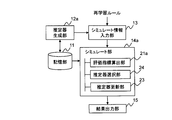
- FIG. FIG. 1 is an explanatory diagram showing a configuration example of a first embodiment of a simulation system according to the present invention.
- the simulation system of the present embodiment includes a storage unit 11, an estimator generation unit 12, a simulation information input unit 13, a simulation unit 14, and a result output unit 15.
- the storage unit 11 stores past actual measurement data used as learning data and data necessary for each process in the simulation system.
- the storage unit 11 is realized by, for example, a magnetic disk device.
- the estimator generation unit 12 uses actual measurement data stored in the storage unit 11 up to one point in the past as learning data, generates an estimator based on a predetermined algorithm, and inputs the estimator to the simulated information input unit 13.
- the estimator generation unit 12 may use all the actual measurement data up to one point in the past as learning data, or only a part of the actual measurement data as learning data.
- the estimator is represented by, for example, a function indicating regularity established between the objective variable and the explanatory variable.
- the algorithm used when generating the estimator is arbitrary.
- the estimator generation unit 12 may generate an estimator based on, for example, FAB (Factorized-asymptotic Bayesian), or may generate an estimator based on a kernel SVM (support vector ⁇ machine), a decision tree, or the like.
- the algorithm used by the estimator generation unit 12 is not limited to one, and the estimator generation unit 12 may generate an estimator by combining a plurality of algorithms.
- the simulated information input unit 13 receives the input of the estimator generated by the estimator generation unit 12.
- the simulated information input unit 13 accepts input of actual measurement data after the learning data used for learning of the estimator.
- the simulation information input unit 13 reads a part or all of the actual measurement data from the storage unit 11 after one past time point.
- a part or all of the actual measurement data after one point in the past used for simulation is referred to as verification data.
- the verification data period is a period during which the simulation unit 14 to be described later performs a simulation process, the period of verification data to be input can also be referred to as a simulation period.
- the simulation information input unit 13 accepts input of update rules for the estimator.
- the update rule is a rule that defines whether or not the estimator needs to be updated based on a predetermined evaluation index.
- the update rule includes a rule for determining whether or not to re-learn the estimator as a pre-update stage, in addition to a rule for determining whether or not to actually update.
- a rule for determining whether or not to re-learn is described as a re-learning rule, and a rule for determining whether or not to actually update the estimator after re-learning. Renewal evaluation rule.
- the re-learning rule is a rule that prescribes whether or not the estimator needs to be re-learned based on a predetermined evaluation index, and the updated evaluation rule includes the evaluation index of the estimator before update and the evaluation index of the estimator after update. It can be said that the rules stipulate the change situation of In the following description, unless otherwise specified, the update rule includes both the relearning rule and the update evaluation rule.
- the update rules include algorithms for re-learning, the period of learning data to be used, the contents of learning data, and the generation of data to be used for learning data The method etc. may be included.
- the simulation unit 14 includes an evaluation index calculation unit 21, an estimator relearning unit 22, and an estimator update unit 23.
- the evaluation index calculation unit 21 calculates a predetermined evaluation index. Specifically, the evaluation index calculation unit 21 calculates the estimation result by applying the verification data to the estimator in time series. Then, the evaluation index calculation unit 21 calculates an evaluation index based on the estimation result.
- the evaluation index calculation unit 21 may calculate an evaluation index used in the update rule, or may calculate a predetermined arbitrary evaluation index.
- the timing for calculating the evaluation index is also arbitrary, and the evaluation index calculation unit 21 may calculate the evaluation index at a timing determined by the update rule, and may calculate the evaluation index periodically or at a predetermined timing. May be.
- the content of the evaluation index is arbitrary.
- Examples of the evaluation index include a period after learning the previous estimator, a period after updating, an increase in learning data, a degree of accuracy deterioration over time, and the number of samples.
- the contents of the evaluation index are not limited to these contents, and may be other contents as long as the index can be used for determining whether the estimator should be updated.
- the evaluation index is not limited to the content calculated from the estimation result.
- the estimator re-learning unit 22 determines whether to re-learn the estimator based on the update rule. Specifically, the estimator relearning unit 22 applies the verification data to the estimator in time series, and based on the estimation results up to the time point for determining whether or not to re-learn (hereinafter referred to as the determination time point). It is determined whether or not the calculated evaluation index meets the relearning rule. When the re-learning rule is satisfied, the estimator re-learning unit 22 re-learns the estimator based on the method specified by the re-learning rule.
- the estimator re-learning unit 22 may re-learn all estimators that conform to the re-learning rules, and some of the estimators that conform to the re-learning rules are estimated based on a predetermined rule. Only the vessel may be relearned.
- the estimator update unit 23 determines whether to update the estimator based on the update rule. Specifically, the estimator update unit 23 identifies a change state between the evaluation index of the estimator before the update and the evaluation index of the estimator after the update, and if the change state matches the update evaluation rule, the estimation The estimator update unit 23 updates the original estimator with the estimator after re-learning. Thereafter, the verification data after the determination time is applied to the updated estimator in time series, and the estimation result is calculated.
- the content of the change situation specified by the update evaluation rule is also arbitrary.
- Examples of the change state include a change in estimation accuracy and a change in the number of samples used in the estimator.
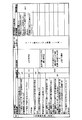
- FIG. 2 is an explanatory diagram showing examples of the evaluation index, the relearning rule, and the update evaluation rule.
- the “relearning determination” column illustrated in FIG. 2 is a component that defines the relearning rule, and the relearning rule indicates the condition of each evaluation index shown in the “evaluation index” column as the “logical structure” column. It shows that it is expressed as a condition combined with the operator shown in.
- the “target selection” column indicates a rule for selecting a target to be re-learned from among estimators that match the re-learning rule.
- the column “How to Create Re-learning Data” indicates a method for generating learning data used for re-learning.
- the “shipping judgment after re-learning” column is a component that defines the update evaluation rule, and the update evaluation rule sets the conditions of each evaluation index shown in the “evaluation index” column to the “logical structure” column. It shows that it is expressed as a condition combined with the operator shown in.
- the estimator update unit 23 holds the update cost of the estimator update count, the time required for the update, and machine resources as a simulation result. Further, the estimator update unit 23 displays, as a simulation result, the change status (for example, the rate of change of estimation accuracy, the number of sample changes, etc.) when the necessity of update is determined, and the evaluation index of the estimator after update. It may be held.
- the simulating unit 14 as a whole is based on the estimation result calculated by applying the verification data of the predetermined period to the estimator in time series and the update rule, and the estimator of the predetermined period. Simulate evaluation index and estimator update results. Note that the simulation unit 14 may simulate only at least one of the evaluation index and the update result.
- the estimator update unit 23 determines whether to update the re-learning estimator.
- the estimator update unit 23 may update the estimator before re-learning as it is without determining whether to update the estimator after re-learning.
- the estimator updating unit 23 can suppress inadvertent updating of the estimator by determining whether or not to update based on the change state of the estimator before relearning and the estimator after relearning, More preferred.
- the result output unit 15 outputs a simulation result. Specifically, the result output unit 15 outputs at least one of the evaluation index of the simulation period and the update result as the simulation result of the update rule.
- the output form of the simulation result is arbitrary.
- the result output unit 15 includes, for example, an evaluation index (for example, an accuracy index such as an average error, an average error rate, and a maximum error rate), a re-learning count, an update count, and an update timing (specific date and time) during the simulation period. ) May be output for each update rule of the estimator. At this time, the result output unit 15 may sort and output the update rules according to the number of times and the value of the evaluation index.
- the result output unit 15 may display a simulation result for each update rule.
- a rule in which a variable threshold value used for the update rule is changed can be given. For example, N in the update rule that “the average error rate per day has deteriorated by N (%) between the last week and before” corresponds to a variable threshold (parameter).
- the result output unit 15 may visualize the simulation result using a graph so that a human can grasp at a glance.
- the result output unit 15 defines a multidimensional space in which either an evaluation index or an index indicating an update result is set for each dimension axis, and plots the simulation result at a corresponding position in the multidimensional space. May be.
- FIG. 3 is an explanatory diagram showing an example of visualizing the simulation result.
- the number of updates is set on the X axis in the two-dimensional space, and the average error rate is set on the Y axis.
- the result output unit 15 may plot each simulation result executed by changing the parameter at a corresponding position on the graph. Further, as illustrated in FIG. 3, the result output unit 15 may output an average of the number of updates and an average of the average error rate when a plurality of simulations are performed with the parameter being variable.
- the result output unit 15 may output simulation results of different learning algorithms.
- the simulating unit 14 may simulate an estimator learned by different learning algorithms, and the result output unit 15 may output a simulation result (evaluation index or the like) for each learning algorithm.
- the result output unit 15 may search not only the simulation result but also the optimum solution from the simulation result and output the search result. Specifically, the result output unit 15 may search for an optimal solution of the simulated evaluation index and the update result, and output an update rule for obtaining the optimal solution.
- Estimator generation unit 12 simulated information input unit 13, simulation unit 14 (more specifically, evaluation index calculation unit 21, estimator relearning unit 22, estimator update unit 23), and results
- the output unit 15 is realized by a CPU of a computer that operates according to a program (simulation program).
- the program is stored in the storage unit 11, and the CPU reads the program, and according to the program, the estimator generation unit 12, the simulation information input unit 13, and the simulation unit 14 (more specifically, evaluation index calculation) Unit 21, estimator re-learning unit 22 and estimator update unit 23) and result output unit 15.
- the result output unit 15 may be realized by dedicated hardware.
- the simulation system according to the present invention may be configured by connecting two or more physically separated devices in a wired or wireless manner.
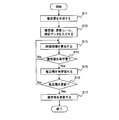
- FIG. 4 is a flowchart showing an operation example of the simulation system of this embodiment.
- the estimator generation unit 12 generates an estimator using the learning data up to one point in the past stored in the storage unit 11 (step S11) and inputs the estimator to the simulated information input unit 13.
- the simulation information input unit 13 receives the generated estimator, update rule, and verification data, and inputs them to the simulation unit 14 (step S12).
- the evaluation index calculation unit 21 calculates an evaluation index of the estimator (step S13).
- the estimator relearning unit 22 determines whether or not to relearn the estimator based on the update rule (step S14). When it is determined that the estimator is not re-learned (No in step S14), the processing after step S13 is repeated for the next determination time point. On the other hand, when it is determined that the estimator is re-learned (Yes in step S14), the estimator re-learning unit 22 re-learns the estimator based on the method specified by the re-learning rule (step S15).
- the estimator update unit 23 determines whether to update the estimator based on the update rule (step S16). When it is determined that the estimator is not updated (No in step S16), the processes after step S13 are repeated for the next determination time point. On the other hand, when it is determined that the estimator is to be updated (Yes in step S16), the estimator update unit 23 updates the original estimator with the estimator after re-learning (step S17).
- the simulating unit 14 includes the estimator learned from the simulated information input unit 13 using the actual measurement data (learning data) up to one point in time, the verification data, Update rules (specifically, relearning rules and evaluation rules) are accepted. Then, based on the estimation result calculated by applying the verification data of the predetermined period to the estimator in time series and the update rule, the simulation unit 14 evaluates the estimator and the estimator for the predetermined period. Simulate at least one of the update results.
- the simulation unit 14 is realized by the evaluation index calculation unit 21, the estimator re-learning unit 22, and the estimator update unit 23. Therefore, the suitability of the rule for updating the estimator can be simulated.
- the storage unit 11 stores actually measured data from January 1, 2014 to December 31, 2014 as learning data for the past year. Assuming that the past point in time is January 31, 2014, the actual measurement data is the learning data from January 1, 2014 to January 31, 2014, and the data from February 1, 2014 to December 31, 2014. It is divided into verification data.
- the estimator generation unit 12 generates an estimator based on the former learning data, and inputs the estimator to the simulated information input unit 13.
- the simulation information input unit 13 receives an input of an update rule to be simulated from an administrator.
- the simulated information input unit 13 may, for example, update rules (hereinafter referred to as update rule R1) that update the estimation formula when the error in the sales quantity exceeds 10% for three consecutive days (hereinafter referred to as update rule R1). When the error exceeds 15% for 3 consecutive days, the update formula is updated (hereinafter referred to as update rule R2), and when the error in the number of sales exceeds 30%, An update rule “update” (hereinafter referred to as update rule R3) is accepted.
- update rule R1 update rules that update the estimation formula when the error in the sales quantity exceeds 10% for three consecutive days
- update rule R2 An update rule “update”
- the simulation unit 14 (more specifically, the evaluation index calculation unit 21, the estimator re-learning unit 22, or the estimator update unit 23) applies the verification data to the generated estimation formula, and follows the input update rule. Simulate. Then, the result output unit 15 outputs the update cost (number of updates) and the average estimation accuracy of the estimator as the simulation result for each update rule.
- the result output unit 15 When the result output unit 15 outputs such a simulation result, what kind of operation result (specifically, update cost and estimation accuracy) can be obtained when the administrator sets what kind of update rule. Can be grasped in advance. Therefore, the administrator can appropriately and easily review the update rule to be set. For example, in the above-described example, the administrator can determine which of the update rules R1 to R3 is more appropriate.
- the simulation information input part 13 demonstrated the case where the update rule prescribed
- a plurality of conditions including variable threshold values (parameters) are described in the column of “evaluation index” in the “relearning determination” column illustrated in FIG.
- the simulation information input unit 13 of the present modification automatically determines a parameter to be tried using a predetermined algorithm. That is, the simulation information input unit 13 specifies an optimum parameter using a predetermined algorithm from among a plurality of update rules including one or more variable threshold values (parameters) as a condition, and uses the specified parameter. Enter the update rule to be defined. *
- the target to be optimized is arbitrary, and for example, the above-described evaluation index (accuracy index or the like) is used.
- an algorithm for determining parameters for example, a genetic algorithm or Bayesian optimization (GaussianussProcess) is used. These algorithms can also be used when there are a plurality of optimization targets.
- the simulation information input unit 13 simulates all variable threshold values (parameters) included in a plurality of conditions by inputting an update rule defined by an optimum parameter from a plurality of update rules. It is possible to simulate more efficiently than in the case of
- Embodiment 2 a second embodiment of the simulation system of the present invention will be described.
- the estimator relearning unit 22 re-learns the estimator based on the evaluation index calculated by the evaluation index calculation unit 21.
- a method for reducing the relearning processing load will be described.
- FIG. 5 is an explanatory diagram showing a configuration example of the second embodiment of the simulation system according to the present invention.
- symbol same as FIG. 1 is attached
- subjected and description is abbreviate
- the simulation system of the present embodiment includes a storage unit 11, an estimator generation unit 12a, a simulation information input unit 13, a simulation unit 14a, and a result output unit 15. That is, the contents of the storage unit 11, the simulated information input unit 13, and the result output unit 15 of this embodiment are the same as those of the first embodiment.
- the estimator generation unit 12a of the present embodiment uses a data group obtained by dividing the actually measured data stored in the storage unit 11 into predetermined sections (hereinafter referred to as section learning data) as learning data.
- An estimator is generated based on the algorithm.
- a plurality of section learning data are generated, and the granularity of the section is arbitrary.
- this section is defined by a start time and a period, and is preferably set to a period used for relearning in actual operation. In addition, this area may overlap.
- the estimator generation unit 12a calculates an evaluation index at each estimation timing (hereinafter referred to as a prediction target) while applying verification data to the generated estimator in time series.
- a prediction target is set at the same granularity as the timing for performing the relearning determination in actual operation, for example, in units of one month.
- the estimator generation unit 12a generates a data set in which the generated estimator and the evaluation result are combined, and stores the data set in the storage unit 11.
- the estimator generation unit 12a may generate a data set including, for example, an estimator learning section, a prediction target, and an evaluation index.
- FIG. 6 is an explanatory diagram showing an example of a data set to be generated.
- the example shown in FIG. 6 indicates that an estimator is generated using the interval learning data of the learning interval w, and a plurality of evaluation indexes for the prediction target after a certain period l of the learning interval are created.
- the simulation unit 14a includes an evaluation index calculation unit 21a, an estimator selection unit 24, and an estimator update unit 23.
- the contents of the estimator update unit 23 are the same as those in the first embodiment.
- the evaluation index calculation unit 21a calculates an evaluation index. Note that the evaluation index calculation unit 21a of the present embodiment extracts, from the storage unit 11, an evaluation index of a prediction target corresponding to the time when the evaluation index is calculated, instead of calculating the evaluation index. Note that, when the evaluation index of the corresponding prediction target is not stored in the storage unit 11, the evaluation index calculation unit 21a may actually calculate the evaluation index.
- the method for calculating the evaluation index is the same as the method for calculating the evaluation index by the evaluation index calculating unit 21 of the first embodiment.
- the estimator selection unit 24 determines whether or not to re-learn the estimator based on the update rule, similarly to the estimator relearning unit 22 of the first embodiment.
- the estimator selection unit 24 extracts an estimator after re-learning from the storage unit 11 based on the update rule when the update rule (re-learning rule) is met.
- the estimator selection unit 24 may extract, from the storage unit 11, an estimator with a matching learning section defined in the update rule, for example. When an appropriate estimator is not stored in the storage unit 11, the estimator selection unit 24 may relearn the estimator in the same manner as the estimator relearning unit 22 of the first embodiment.
- the estimator update unit 23 determines whether to update the estimator based on the update rule, and updates the estimator before re-learning.
- the method for determining whether or not to update the estimator is the same as in the first embodiment. Thereafter, whether or not to re-learn at each prediction target is determined using the evaluation index extracted together with the updated estimator.
- Estimator generation unit 12a simulated information input unit 13, simulation unit 14a (more specifically, evaluation index calculation unit 21a, estimator selection unit 24, estimator update unit 23), and result output
- the unit 15 is realized by a CPU of a computer that operates according to a program (simulation program).
- each of the result output units 15 may be realized by dedicated hardware.
- FIG. 7 is a flowchart showing an operation example of the simulation system of the present embodiment.
- the estimator generation unit 12a generates an estimator using the interval learning data (step S21). In addition, the estimator generation unit 12a calculates an evaluation index in the prediction target of the generated estimator (step S22). And the estimator production
- the evaluation index calculation unit 21a acquires the evaluation index in the prediction target of the estimator from the storage unit 11 (step S24).
- the estimator selection unit 24 determines whether or not to relearn the estimator based on the update rule (step S25). When it is determined that the estimator is not re-learned (No in step S25), the processes after step S24 are repeated for the next prediction target. On the other hand, when it is determined that the estimator is to be re-learned (Yes in step S25), the estimator selection unit 24 acquires the re-learning estimator from the storage unit 11 based on the update rule (step S26).
- the estimator update unit 23 determines whether or not to update the estimator based on the update rule (step S27). When it is determined that the estimator is not updated (No in step S27), the processes after step S24 are repeated for the next prediction target. On the other hand, when it is determined to update the estimator (Yes in step S27), the estimator update unit 23 updates the original estimator with the estimator after re-learning (step S28).
- the estimator generation unit 12a generates an estimator using past measured data as learning data, and the storage unit 11 stores the generated estimator. Specifically, the estimator generation unit 12a generates an estimator by using, as learning data, a data group obtained by dividing measured data into predetermined intervals. Then, the estimator generation unit 12a calculates an evaluation index for each prediction target, generates a data set including the generated estimator and an evaluation index for each prediction target, and stores the data set in the storage unit 11.
- the simulation unit 14a extracts an evaluation index of a prediction target corresponding to a time point at which the evaluation index is calculated from the storage unit 11, and after the re-learning based on the update rule when the extracted evaluation index matches the update rule Are extracted from the storage unit 11 and updated.
- the simulation unit 14a is realized by the evaluation index calculation unit 21a, the estimator selection unit 24, and the estimator update unit 23. Therefore, in addition to the effects of the first embodiment, the cost of relearning can be reduced.
- the estimator generation unit 12a does not store the estimator generated based on the interval learning data and the data set including the evaluation result, or stores only a part of the estimator and the data set. It shall be.
- the evaluation index calculation unit 21a searches the storage unit 11 for a prediction target data set corresponding to the time point at which the evaluation index is calculated.
- the evaluation index calculation unit 21a extracts the data set, and uses the extracted evaluation index as the prediction target evaluation index.
- the evaluation index calculation unit 21a instructs the estimator generation unit 12a to generate a data set including the estimator and the prediction result. Note that the evaluation index calculation unit 21a itself may generate a data set.
- the estimator generation unit 12a receives an instruction to generate a data set from the evaluation index calculation unit 21a, generates an estimator based on a predetermined algorithm, and stores the estimator in the storage unit 11. In addition, the estimator generation unit 12 a calculates an evaluation index of the prediction target using the generated estimator and stores it in the storage unit 11. That is, the process of this modification can be said to be a cache process in the simulation process. Therefore, the storage unit 11 of this modification may be realized by a cache memory, for example.
- the process in which the estimator selection unit 24 determines whether or not to re-learn the estimator, and the estimator update unit 23 updates the original estimator with the estimator after the relearning is the same as in the second embodiment. It is the same.
- the estimator generation unit 12a generates an estimator and an evaluation index when requested by the simulation by the evaluation index calculation unit 21a.
- the time required for learning can be reduced compared to the method of preparing all the estimators and evaluation indices in advance. , Can reduce the required machine cost.
- the estimator generation unit 12a generates all estimators based on the interval learning data, and the estimator generation unit 12a performs the prediction index when requested by simulation by the evaluation index calculation unit 21a. May be generated and stored in the storage unit 11. By doing so, it is possible to reduce the storage capacity for storing the evaluation index while increasing the simulation time.
- the capacity for storing the estimator is not so large.
- the estimation process does not take much time, but the capacity for storing the estimation result increases. Therefore, by selecting these processes according to the learning time and the storage capacity, the suitability of the rule for updating the estimator can be simulated according to the environment.
- FIG. A third embodiment of the simulation system of the present invention will be described.
- a method for evaluating an update rule will be described. That is, by using the simulation system of this embodiment, it is possible to evaluate how much the update rule determined to be optimal has reached the performance limit.
- FIG. 8 is an explanatory diagram showing a configuration example of the third embodiment of the simulation system according to the present invention.
- the simulation system of this embodiment includes a storage unit 11, an estimator generation unit 12, a simulation information input unit 13, a simulation unit 14, a result output unit 15, and a rule evaluation unit 16. . That is, the simulation system of the present embodiment is different from the first embodiment in that it further includes a rule evaluation unit 16. About another structure, it is the same as that of 1st Embodiment.
- the rule evaluation unit 16 evaluates the update rule.
- the rule evaluation unit 16 of the present embodiment evaluates the update rule based on the simulation result. Specifically, the rule evaluation unit 16 evaluates the update rule by comparing the maximum performance that can be obtained in the entire simulation period that is the prediction target section with the performance when the update rule to be evaluated is applied. To do.
- the performance is determined based on an evaluation index of a predetermined estimator, and examples thereof include an accuracy index such as an error and an evaluation index including an index such as cost.
- the setting contents of the performance are arbitrary, and for example, a standard that can be determined as a more suitable estimator from the viewpoint of cost and accuracy may be set.
- the rule evaluation unit 16 calculates the maximum performance that can be obtained in all prediction target sections.
- the method for setting the learning section is arbitrary. For example, when the prediction target is divided for each month, the learning period is set as April, May, and so on.
- the selection of the learning section that maximizes the performance is roughly divided into a case where no restriction is imposed on the update contents and a case where a restriction is placed on the update contents.
- the rule evaluation unit 16 selects a learning section that maximizes performance. And the rule evaluation part 16 calculates the evaluation index which shows a performance for every selected learning area, and calculates the performance of all the learning areas.
- the performance of all the learning sections is referred to as a comprehensive index.
- the rule evaluation unit 16 may calculate, for example, an average performance value for each learning section as the performance of all learning sections. Further, the rule evaluation unit 16 may calculate the comprehensive index based on the data set generated in the second embodiment without calculating the evaluation index individually.
- the rule evaluation unit 16 selects a combination that maximizes the performance within the restriction provided for the entire learning section, on the condition of the update timing, the learning section, and the learning parameter. .
- the rule evaluation unit 16 searches for a combination of the learning interval and other learning parameters at which timing to select a minimum total error index in all the intervals. At this time, the rule evaluation unit 16 searches for a combination that maximizes performance using some combination optimization algorithm.
- the rule evaluation unit 16 may use, for example, FoBa (Forward-Backward greedy algorithm) used for FAB coefficient selection or the like as the combination optimization algorithm.
- FoBa Forward-Backward greedy algorithm
- the update content is limited or not, but the rule evaluation unit 16 may calculate a comprehensive index based on whether or not the learning content is limited.
- the rule evaluation unit 16 may visualize a plurality of evaluation results together. In general, the performance in all prediction target sections improves if conditions such as the update count limit are relaxed. Therefore, the rule evaluation unit 16 may plot the evaluation results on a two-dimensional graph having the number of updates and the comprehensive index as axes, for example. If such an evaluation result is visualized, an administrator can manually determine an appropriate result.
- the visualization method is not limited to a two-dimensional graph.
- the rule evaluation unit 16 may visualize the evaluation result in the (N ⁇ 1) -dimensional aspect on the Nth dimension.
- the rule evaluation unit 16 compares the maximum performance that can be obtained in the entire prediction target section with the performance when the update rule to be evaluated is applied, and determines the update rule. evaluate. Therefore, it becomes possible for a human to determine the suitability of the update rule based on the objective evaluation result.
- the rule evaluation unit 16 evaluates the update rule based on the output of the result output unit 15
- the input to the rule evaluation unit 16 is performed by the result output unit 15. It is not limited to output.
- the rule evaluation unit 16 of the present embodiment evaluates the update rule based on the result of a so-called offline strategy. Therefore, if the evaluation index of the prediction interval can be calculated, the rule evaluation unit 16 may be realized as a single rule evaluation device that inputs the update rule to be evaluated and evaluates the rule.
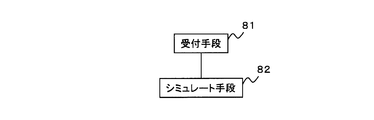
- FIG. 9 is a block diagram showing an outline of a simulation system according to the present invention.
- the simulation system according to the present invention includes an estimator that has been learned using actual measurement data (for example, learning data) up to a point in the past, verification data that is actual measurement data after the temporary point, and update of the estimator.
- Accepting means 81 for example, the simulated information input unit 13 that accepts an update rule (for example, an update rule that includes a re-learning rule and an evaluation rule) that defines whether or not based on an evaluation index, and verification data for a predetermined period Based on the estimation result calculated by applying to the estimator in time series and the update rule, the estimator evaluation index (for example, accuracy index) and the estimator update result (for example, update) for the predetermined period Simulating means 82 (for example, simulating unit 14) for simulating at least one of the number of times and the cost required for updating.
- an update rule for example, an update rule that includes a re-learning rule and an evaluation rule
- Simulating means 82 for example, simulating unit 14 for simulating at least one of the number of times and the cost required for updating.
- Such a configuration can simulate the suitability of rules for updating the estimator.
- the simulation unit 82 may simulate the number of times that the estimator is updated in a predetermined period as the update result of the estimator.
- the simulation unit 82 calculates the estimation result by applying the verification data to the estimator in time series, and when the evaluation index calculated based on the estimation result up to the determination time matches the update rule,
- the estimation result may be calculated by updating the estimator based on the method defined by the update rule and applying the verification data after the determination time point to the updated estimator in time series.
- the simulation system may include output means (for example, a result output unit 15) that outputs at least one of a simulated evaluation index and an update result as a simulation result. Then, the output means may set either an evaluation index or an index representing the update result for each dimension axis in the multidimensional space, and plot the simulation result at a corresponding position in the multidimensional space ( For example, see the graph shown in FIG. With such a configuration, it is possible to help the administrator evaluate the update rule.
- output means for example, a result output unit 15
- the output means may set either an evaluation index or an index representing the update result for each dimension axis in the multidimensional space, and plot the simulation result at a corresponding position in the multidimensional space ( For example, see the graph shown in FIG. With such a configuration, it is possible to help the administrator evaluate the update rule.
- the simulation system may include search means (for example, the estimator update unit 23) for searching for the optimal solution of the simulated evaluation index and update result.
- search means for example, the estimator update unit 23
- the simulation system includes an estimator generation unit (for example, an estimator generation unit 12a) that generates an estimator using past measured data as learning data, and an estimator storage unit that stores the generated estimator.
- an estimator generation unit for example, an estimator generation unit 12a
- the estimator generation means generates an estimator using a data group obtained by dividing the measured data into predetermined intervals as learning data, and each estimation timing while applying the verification data to the generated estimator in time series May be calculated, and a data set including the generated estimator and the evaluation index for each prediction target may be generated and stored in the estimator storage unit.
- the simulation unit 82 extracts a prediction target evaluation index corresponding to the time point at which the evaluation index is calculated from the estimator storage unit, and when the extracted evaluation index matches the update rule, the simulation unit 82
- the re-learning estimator may be extracted from the estimator storage means and updated.
- the simulation system may include rule evaluation means (for example, rule evaluation unit 16) for evaluating the update rule based on the simulation result. Then, the rule evaluation means compares the maximum performance (for example, the comprehensive index) that can be obtained in the entire prediction target section after a past point in time with the performance when the update rule to be evaluated is applied, and the update rule May be evaluated.
- rule evaluation means for example, rule evaluation unit 16
- the maximum performance for example, the comprehensive index
- the accepting unit 81 may accept a plurality of estimators generated using different algorithms, and the simulating unit 82 may simulate each estimator generated using different algorithms.
Landscapes
- Engineering & Computer Science (AREA)
- Business, Economics & Management (AREA)
- General Physics & Mathematics (AREA)
- Physics & Mathematics (AREA)
- Economics (AREA)
- Human Resources & Organizations (AREA)
- Theoretical Computer Science (AREA)
- Strategic Management (AREA)
- Software Systems (AREA)
- Entrepreneurship & Innovation (AREA)
- Marketing (AREA)
- Tourism & Hospitality (AREA)
- General Business, Economics & Management (AREA)
- Health & Medical Sciences (AREA)
- Automation & Control Theory (AREA)
- Computer Vision & Pattern Recognition (AREA)
- Game Theory and Decision Science (AREA)
- Artificial Intelligence (AREA)
- General Health & Medical Sciences (AREA)
- Data Mining & Analysis (AREA)
- Evolutionary Computation (AREA)
- Medical Informatics (AREA)
- Water Supply & Treatment (AREA)
- Computing Systems (AREA)
- General Engineering & Computer Science (AREA)
- Mathematical Physics (AREA)
- Quality & Reliability (AREA)
- Operations Research (AREA)
- Development Economics (AREA)
- Educational Administration (AREA)
- Public Health (AREA)
- Primary Health Care (AREA)
- Manufacturing & Machinery (AREA)
- Human Computer Interaction (AREA)
- Management, Administration, Business Operations System, And Electronic Commerce (AREA)
- Debugging And Monitoring (AREA)
Abstract
Description
図1は、本発明によるシミュレートシステムの第1の実施形態の構成例を示す説明図である。本実施形態のシミュレートシステムは、記憶部11と、推定器生成部12と、シミュレート情報入力部13と、シミュレート部14と、結果出力部15とを備えている。
次に、本発明のシミュレートシステムの第2の実施形態を説明する。第1の実施形態では、評価指標算出部21により算出される評価指標をもとに、推定器再学習部22が推定器を再学習していた。本実施形態では、再学習の処理負荷を軽減させる方法を説明する。
本発明のシミュレートシステムの第3の実施形態を説明する。本実施形態では、更新ルールを評価する方法を説明する。すなわち、本実施形態のシミュレートシステムを用いることで、最適と判断された更新ルールがどの程度性能限界に達しているか評価することが可能になる。
12,12a 推定器生成部
13 シミュレート情報入力部
14,14a シミュレート部
15 結果出力部
16 ルール評価部
21,21a 評価指標算出部
22 推定器再学習部
23 推定器更新部
24 推定器選択部
Claims (12)
- 過去の一時点までの実測データを用いて学習された推定器と、当該一時点以降の実測データである検証データと、推定器の更新要否を評価指標に基づいて規定した更新ルールとを受け付ける受付手段と、
所定期間の前記検証データを推定器へ時系列に適用することにより算出される推定結果と、前記更新ルールとに基づいて、当該所定期間における推定器の評価指標および推定器の更新結果の少なくとも一方をシミュレートするシミュレート手段とを備えた
ことを特徴とするシミュレートシステム。 - シミュレート手段は、推定器の更新結果として、所定期間に推定器が更新される回数をシミュレートする
請求項1記載のシミュレートシステム。 - シミュレート手段は、検証データを推定器へ時系列に適用して推定結果を算出し、判定時点までの推定結果に基づいて算出される評価指標が更新ルールに適合する場合に、当該更新ルールで規定される方法に基づいて推定器を更新し、前記判定時点以降の検証データを更新後の推定器へ時系列に適用して推定結果を算出する
請求項1または請求項2記載のシミュレートシステム。 - シミュレート結果として、シミュレートされた評価指標と更新結果の少なくとも一方を出力する出力手段を備え、
前記出力手段は、多次元空間上の各次元軸に、前記評価指標と更新結果を表わす指標のいずれかを設定し、多次元空間上の対応する位置にシミュレート結果をプロットする
請求項1から請求項3のうちのいずれか1項に記載のシミュレートシステム。 - シミュレートされた評価指標および更新結果の最適解を探索する探索手段を備えた
請求項1から請求項4のうちのいずれか1項に記載のシミュレートシステム。 - 過去の実測データを学習データとして用いて推定器を生成する推定器生成手段と、
生成された推定器を記憶する推定器記憶手段とを備え、
前記推定器生成手段は、前記実測データを予め定めた区間に区切ったデータ群を学習データとして用いて推定器を生成し、生成した推定器へ時系列に検証データを適用する間の各推定タイミングである予測ターゲットの評価指標を算出し、生成された推定器と前記予測ターゲットごとの評価指標を含むデータセットを生成して前記推定器記憶手段に記憶し、
シミュレート手段は、評価指標を算出する時点に対応する予測ターゲットの評価指標を推定器記憶手段から抽出し、抽出した評価指標が更新ルールに適合する場合に、当該更新ルールに基づいて再学習後の推定器を推定器記憶手段から抽出して更新する
請求項1または請求項2記載のシミュレートシステム。 - シミュレート結果に基づいて更新ルールを評価するルール評価手段を備え、
前記ルール評価手段は、過去の一時点以降の予測対象区間全体で獲得し得る最大性能と、評価対象とする更新ルールを適用した場合の性能とを比較して更新ルールを評価する
請求項1から請求項6のうちのいずれか1項に記載のシミュレートシステム。 - 受付手段は、異なるアルゴリズムを用いて生成された複数の推定器を受け付け、
シミュレート手段は、異なるアルゴリズムを用いて生成された推定器ごとにシミュレートする
請求項1から請求項7のうちのいずれか1項に記載のシミュレートシステム。 - コンピュータが、過去の一時点までの実測データを用いて学習された推定器と、当該一時点以降の実測データである検証データと、推定器の更新要否を評価指標に基づいて規定した更新ルールとを受け付け、
前記コンピュータが、所定期間の前記検証データを推定器へ時系列に適用することにより算出される推定結果と、前記更新ルールとに基づいて、当該所定期間における推定器の評価指標および推定器の更新結果の少なくとも一方をシミュレートする
ことを特徴とするシミュレート方法。 - コンピュータが、推定器の更新結果として、所定期間に推定器が更新される回数をシミュレートする
請求項9記載のシミュレート方法。 - コンピュータに、
過去の一時点までの実測データを用いて学習された推定器と、当該一時点以降の実測データである検証データと、推定器の更新要否を評価指標に基づいて規定した更新ルールとを受け付ける受付処理、および、
所定期間の前記検証データを推定器へ時系列に適用することにより算出される推定結果と、前記更新ルールとに基づいて、当該所定期間における推定器の評価指標および推定器の更新結果の少なくとも一方をシミュレートするシミュレート処理
を実行させるためのシミュレート用プログラム。 - コンピュータに、
シミュレート処理で、推定器の更新結果として、所定期間に推定器が更新される回数をシミュレートさせる
請求項11記載のシミュレート用プログラム。
Priority Applications (3)
| Application Number | Priority Date | Filing Date | Title |
|---|---|---|---|
| PCT/JP2015/001628 WO2016151620A1 (ja) | 2015-03-23 | 2015-03-23 | シミュレートシステム、シミュレート方法およびシミュレート用プログラム |
| US15/553,629 US10635078B2 (en) | 2015-03-23 | 2015-03-23 | Simulation system, simulation method, and simulation program |
| JP2017507101A JP6529096B2 (ja) | 2015-03-23 | 2015-03-23 | シミュレートシステム、シミュレート方法およびシミュレート用プログラム |
Applications Claiming Priority (1)
| Application Number | Priority Date | Filing Date | Title |
|---|---|---|---|
| PCT/JP2015/001628 WO2016151620A1 (ja) | 2015-03-23 | 2015-03-23 | シミュレートシステム、シミュレート方法およびシミュレート用プログラム |
Publications (1)
| Publication Number | Publication Date |
|---|---|
| WO2016151620A1 true WO2016151620A1 (ja) | 2016-09-29 |
Family
ID=56977097
Family Applications (1)
| Application Number | Title | Priority Date | Filing Date |
|---|---|---|---|
| PCT/JP2015/001628 Ceased WO2016151620A1 (ja) | 2015-03-23 | 2015-03-23 | シミュレートシステム、シミュレート方法およびシミュレート用プログラム |
Country Status (3)
| Country | Link |
|---|---|
| US (1) | US10635078B2 (ja) |
| JP (1) | JP6529096B2 (ja) |
| WO (1) | WO2016151620A1 (ja) |
Cited By (3)
| Publication number | Priority date | Publication date | Assignee | Title |
|---|---|---|---|---|
| CN114510818A (zh) * | 2021-12-29 | 2022-05-17 | 中国人民解放军63790部队保障部 | 面向航天器试验鉴定的试验用例仿真及验证的方法及装置 |
| CN115905319A (zh) * | 2022-11-16 | 2023-04-04 | 国网山东省电力公司营销服务中心(计量中心) | 一种海量用户电费异常的自动识别方法及系统 |
| JP2024065881A (ja) * | 2022-10-31 | 2024-05-15 | 株式会社日立製作所 | 予測システム、予測方法及び系統管理システム |
Families Citing this family (8)
| Publication number | Priority date | Publication date | Assignee | Title |
|---|---|---|---|---|
| CN114365079B (zh) * | 2019-08-29 | 2025-05-02 | 西门子股份公司 | 作为系统性能模拟的预处理的基于性能的系统配置 |
| US11256521B2 (en) * | 2020-01-27 | 2022-02-22 | Dell Products, L.P. | Systems and methods for evaluating and updating deprecated products |
| CN112766715A (zh) * | 2021-01-15 | 2021-05-07 | 北京瑞风协同科技股份有限公司 | 一种用于仿真评估装备能力的方法及系统 |
| WO2023004593A1 (zh) * | 2021-07-27 | 2023-02-02 | 华为技术有限公司 | 用于对电路进行仿真的方法、介质、程序产品以及电子设备 |
| CN116915643A (zh) * | 2022-04-16 | 2023-10-20 | 瞻博网络公司 | 用于规则评估的机器学习 |
| CN115598993B (zh) * | 2022-09-02 | 2025-09-12 | 上海机电工程研究所 | 半实物仿真红外场景物理效应模拟效果的评估方法和系统 |
| CN116702452A (zh) * | 2023-05-23 | 2023-09-05 | 中国舰船研究设计中心 | 一种无人装备虚实试验评估系统及方法 |
| FR3167460A1 (fr) * | 2024-10-14 | 2026-04-17 | Orange | Procédé de synchronisation d’un jumeau numérique avec un système physique, et dispositif électronique associé |
Citations (3)
| Publication number | Priority date | Publication date | Assignee | Title |
|---|---|---|---|---|
| JP2007004769A (ja) * | 2005-05-25 | 2007-01-11 | Nippon Petroleum Refining Co Ltd | 石油精製プラントのパラメータ予測装置及びパラメータ予測方法 |
| JP2007233944A (ja) * | 2006-03-03 | 2007-09-13 | Vinculum Japan Corp | 商品販売予測システム |
| JP2011253275A (ja) * | 2010-06-01 | 2011-12-15 | Yokogawa Electric Corp | プラントシミュレータ |
Family Cites Families (10)
| Publication number | Priority date | Publication date | Assignee | Title |
|---|---|---|---|---|
| US7072863B1 (en) * | 1999-09-08 | 2006-07-04 | C4Cast.Com, Inc. | Forecasting using interpolation modeling |
| US6947876B1 (en) * | 1999-11-11 | 2005-09-20 | Tokyo Electron Limited | Method for automated system identification |
| US8165853B2 (en) * | 2004-04-16 | 2012-04-24 | Knowledgebase Marketing, Inc. | Dimension reduction in predictive model development |
| US8548777B2 (en) * | 2007-09-28 | 2013-10-01 | Rockwell Automation Technologies, Inc. | Automated recommendations from simulation |
| US8417708B2 (en) * | 2009-02-09 | 2013-04-09 | Xerox Corporation | Average case analysis for efficient spatial data structures |
| JP5195848B2 (ja) * | 2010-08-31 | 2013-05-15 | 株式会社デンソー | 交通状況予測装置 |
| JP2012108748A (ja) * | 2010-11-18 | 2012-06-07 | Sony Corp | データ処理装置、データ処理方法、およびプログラム |
| JP5851105B2 (ja) * | 2011-03-15 | 2016-02-03 | 株式会社東芝 | エネルギー需要予測装置及びプログラム |
| US9047423B2 (en) * | 2012-01-12 | 2015-06-02 | International Business Machines Corporation | Monte-Carlo planning using contextual information |
| RU2600497C2 (ru) * | 2012-06-11 | 2016-10-20 | Лэндмарк Графикс Корпорейшн | Способы и относящиеся к ним системы построения моделей и прогнозирования операционных результатов операции бурения |
-
2015
- 2015-03-23 WO PCT/JP2015/001628 patent/WO2016151620A1/ja not_active Ceased
- 2015-03-23 JP JP2017507101A patent/JP6529096B2/ja active Active
- 2015-03-23 US US15/553,629 patent/US10635078B2/en active Active
Patent Citations (3)
| Publication number | Priority date | Publication date | Assignee | Title |
|---|---|---|---|---|
| JP2007004769A (ja) * | 2005-05-25 | 2007-01-11 | Nippon Petroleum Refining Co Ltd | 石油精製プラントのパラメータ予測装置及びパラメータ予測方法 |
| JP2007233944A (ja) * | 2006-03-03 | 2007-09-13 | Vinculum Japan Corp | 商品販売予測システム |
| JP2011253275A (ja) * | 2010-06-01 | 2011-12-15 | Yokogawa Electric Corp | プラントシミュレータ |
Cited By (4)
| Publication number | Priority date | Publication date | Assignee | Title |
|---|---|---|---|---|
| CN114510818A (zh) * | 2021-12-29 | 2022-05-17 | 中国人民解放军63790部队保障部 | 面向航天器试验鉴定的试验用例仿真及验证的方法及装置 |
| JP2024065881A (ja) * | 2022-10-31 | 2024-05-15 | 株式会社日立製作所 | 予測システム、予測方法及び系統管理システム |
| CN115905319A (zh) * | 2022-11-16 | 2023-04-04 | 国网山东省电力公司营销服务中心(计量中心) | 一种海量用户电费异常的自动识别方法及系统 |
| CN115905319B (zh) * | 2022-11-16 | 2024-04-19 | 国网山东省电力公司营销服务中心(计量中心) | 一种海量用户电费异常的自动识别方法及系统 |
Also Published As
| Publication number | Publication date |
|---|---|
| JPWO2016151620A1 (ja) | 2017-11-30 |
| JP6529096B2 (ja) | 2019-06-12 |
| US10635078B2 (en) | 2020-04-28 |
| US20180052441A1 (en) | 2018-02-22 |
Similar Documents
| Publication | Publication Date | Title |
|---|---|---|
| WO2016151620A1 (ja) | シミュレートシステム、シミュレート方法およびシミュレート用プログラム | |
| JP6708204B2 (ja) | 精度推定モデル生成システムおよび精度推定システム | |
| US11030557B2 (en) | Predicting arrival time of components based on historical receipt data | |
| JP6531821B2 (ja) | 予測モデル更新システム、予測モデル更新方法および予測モデル更新プログラム | |
| US10496436B2 (en) | Method and apparatus for automatically scheduling jobs in computer numerical control machines using machine learning approaches | |
| US20180260726A1 (en) | Analysis apparatus, analysis method, and non-transitory computer readable medium | |
| TWI860230B (zh) | 用於高度共線響應空間中的規範性分析的方法、系統與電腦可讀取媒體 | |
| KR101544457B1 (ko) | 최적 설계 파라미터 탐색을 위한 최적화 방법 | |
| JP7160574B2 (ja) | 処理装置、方法、およびプログラム | |
| JP2018205994A (ja) | 時系列データ分析装置、時系列データ分析方法およびコンピュータプログラム | |
| CN113641525A (zh) | 变量异常修复方法、设备、介质及计算机程序产品 | |
| JP2017058848A (ja) | 情報処理システム、情報処理方法、及び、プログラム | |
| Horn et al. | First investigations on noisy model-based multi-objective optimization | |
| JP7196935B2 (ja) | 演算装置、アクション決定方法、及び制御プログラム | |
| JPWO2014087590A1 (ja) | 最適化装置、最適化方法および最適化プログラム | |
| WO2009142011A1 (ja) | 最小送電損失系統構成の決定装置、方法及びプログラム | |
| JP6947029B2 (ja) | 制御装置、それを使用する情報処理装置、制御方法、並びにコンピュータ・プログラム | |
| Riley et al. | Improving job shop dispatching rules via terminal weighting and adaptive mutation in genetic programming | |
| WO2019012740A1 (en) | DEVICE, SYSTEM AND METHOD FOR EXTRACTING OPERATING RULE | |
| CN105095616A (zh) | 数据分析装置、数据分析方法 | |
| CN119004314A (zh) | 一种多相似度特征融合旋转机械故障预测方法 | |
| JP7489275B2 (ja) | 情報処理装置、情報処理システムおよび情報処理方法 | |
| JP2020052703A (ja) | 学習方法、学習装置及びプログラム | |
| JPWO2019220481A1 (ja) | 判定ルール取得装置、判定ルール取得方法および判定ルール取得プログラム | |
| JP7740510B2 (ja) | モデル分析装置、モデル分析方法、及び、プログラム |
Legal Events
| Date | Code | Title | Description |
|---|---|---|---|
| 121 | Ep: the epo has been informed by wipo that ep was designated in this application |
Ref document number: 15886178 Country of ref document: EP Kind code of ref document: A1 |
|
| ENP | Entry into the national phase |
Ref document number: 2017507101 Country of ref document: JP Kind code of ref document: A |
|
| WWE | Wipo information: entry into national phase |
Ref document number: 15553629 Country of ref document: US |
|
| NENP | Non-entry into the national phase |
Ref country code: DE |
|
| 122 | Ep: pct application non-entry in european phase |
Ref document number: 15886178 Country of ref document: EP Kind code of ref document: A1 |