WO2016148280A1 - 微細セルロース繊維及びその使用 - Google Patents
微細セルロース繊維及びその使用 Download PDFInfo
- Publication number
- WO2016148280A1 WO2016148280A1 PCT/JP2016/058727 JP2016058727W WO2016148280A1 WO 2016148280 A1 WO2016148280 A1 WO 2016148280A1 JP 2016058727 W JP2016058727 W JP 2016058727W WO 2016148280 A1 WO2016148280 A1 WO 2016148280A1
- Authority
- WO
- WIPO (PCT)
- Prior art keywords
- fine cellulose
- tocn
- cellulose fiber
- carboxy group
- peg
- Prior art date
- Legal status (The legal status is an assumption and is not a legal conclusion. Google has not performed a legal analysis and makes no representation as to the accuracy of the status listed.)
- Ceased
Links
- NIHNNTQXNPWCJQ-UHFFFAOYSA-N C1c2ccccc2-c2ccccc12 Chemical compound C1c2ccccc2-c2ccccc12 NIHNNTQXNPWCJQ-UHFFFAOYSA-N 0.000 description 1
- FGOQTOLELWUUQG-UHFFFAOYSA-N CC(C)(CCOC(C)(C)CCCN)OC Chemical compound CC(C)(CCOC(C)(C)CCCN)OC FGOQTOLELWUUQG-UHFFFAOYSA-N 0.000 description 1
- PWGVOCGNHYMDLS-UHFFFAOYSA-N COCCOCCCN Chemical compound COCCOCCCN PWGVOCGNHYMDLS-UHFFFAOYSA-N 0.000 description 1
Images





Classifications
-
- C—CHEMISTRY; METALLURGY
- C08—ORGANIC MACROMOLECULAR COMPOUNDS; THEIR PREPARATION OR CHEMICAL WORKING-UP; COMPOSITIONS BASED THEREON
- C08B—POLYSACCHARIDES; DERIVATIVES THEREOF
- C08B15/00—Preparation of other cellulose derivatives or modified cellulose, e.g. complexes
- C08B15/05—Derivatives containing elements other than carbon, hydrogen, oxygen, halogens or sulfur
- C08B15/06—Derivatives containing elements other than carbon, hydrogen, oxygen, halogens or sulfur containing nitrogen, e.g. carbamates
Definitions
- the present invention relates to fine cellulose fibers and use thereof.
- it is related with the manufacturing method of a fine cellulose fiber, the manufacturing method of a resin composition, a fine cellulose fiber, a resin composition, and a molded object.
- This application is based on provisional application 62 / 135,548 filed in the United States on March 19, 2015 and provisional application 62 / 247,208 filed in the United States on October 28, 2015. Claim the rights and incorporate their content here.
- Cellulose nanofibers are skeletal components of plant cell walls, and are obtained by finely loosening plant fibers to nano size. Cellulose nanofibers are light, have high strength, have characteristics such as being able to be processed into a transparent material, and their application is expected.
- cellulose nanofibers were manufactured with mechanical shear load that consumes a great deal of energy.
- production methods using drugs or enzymes with lower energy consumption have been developed.
- TEMPO 2,2,6,6-tetramethylpiperidine-1-oxyl radical
- TOCN TEMPO-oxidized cellulosic nanofibrils
- the application of a fine cellulose fiber having a carboxy group such as TOCNs is limited because of its low thermal decomposition temperature. While the thermal decomposition temperature of cellulose is about 300 ° C., the thermal decomposition temperature of fine cellulose fibers having a carboxy group is 200 to 220 ° C. (see, for example, Non-Patent Document 1).
- an object of the present invention is to clarify the cause of the low thermal decomposition temperature of fine cellulose fibers having a carboxy group, and to provide a method for producing fine cellulose fibers having a high thermal decomposition temperature.
- the present invention includes the following aspects.
- a method for producing a fine cellulose fiber comprising a step of amidating a carboxy group of a cellulose fiber having a carboxy group or a fine cellulose fiber using a non-volatile or hardly volatile primary amine. .
- the manufacturing method of the resin composition characterized by the above-mentioned.
- a method for producing fine cellulose fibers having a high thermal decomposition temperature can be provided.
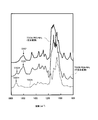
- FIG. 6 is a graph showing representative results of Fourier transform infrared (FTIR) spectrum analysis of a sample in which TOCN is modified with PEG-NH 2 having a molecular weight of 1000 in Experimental Example 1.
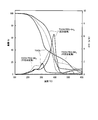
- FIG. In Experiment 2 it is a graph showing representative results of thermogravimetric analysis of the samples was modified TOCN in PEG-NH 2 having a molecular weight of 1000.
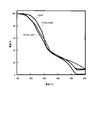
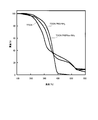
- 10 is a graph showing the results of FTIR spectrum analysis in Experimental Example 3. It is a graph which shows the result of the thermal mass spectrometry in Experimental example 4. It is a graph which shows the result of the thermal mass spectrometry in Experimental example 4.
- 10 is a graph showing the results of thermal mass spectrometry of 3-amino-1-propanol (3AP) and 2- (2-aminoethoxy) ethanol (22AE) in Experimental Example 5.
- 6 is a graph showing the results of thermal mass spectrometry of PEG-NH 2 (molecular weight 2000) and PNIPAm-NH 2 (molecular weight 2500) in Experimental Example 5. It is a graph which shows the result of the thermal mass spectrometry in Experimental example 6.
- 14 is a graph showing the result of calculating the value of -DTG in the thermal mass spectrometry of Experimental Example 6.
- 14 is a graph showing the results of FTIR spectrum analysis in Experimental Example 7. It is a graph which shows the result of the thermal mass spectrometry in Experimental example 7.
- 10 is a graph showing the results of FTIR spectrum analysis in Experimental Example 8.
- 10 is a graph showing the results of thermal mass spectrometry of 2-aminofluorene in Experimental Example 8.
- the present invention comprises a step of amidating a carboxy group of a cellulose fiber or a fine cellulose fiber having a carboxy group using a non-volatile or hardly volatile primary amine.
- a method for producing fine cellulose fibers is provided.
- the inventors have clarified that the cause of the low thermal decomposition temperature of fine cellulose fibers having a carboxy group is the presence of a carboxy group.
- the inventors have also clarified that fine cellulose fibers having a high thermal decomposition temperature can be produced by the production method of the present embodiment.
- the high thermal decomposition temperature means that the thermal stability is improved.
- the amidation of a carboxy group of a cellulose fiber or a fine cellulose fiber having a carboxy group is performed by, for example, mixing a cellulose fiber or a fine cellulose fiber and a primary amine, After forming an ionic bond between them, it can be carried out by heating at about 150 ° C. under normal pressure for 1 to 4 hours. Therefore, the primary amine is preferably a compound that can remain in the reaction system during the amidation reaction. More specifically, the primary amine is non-volatile or hardly volatile and may be any compound that does not volatilize or hardly volatilizes at about 150 ° C. under normal pressure.
- Tmax of the primary amine is 170 ° C. or higher.
- Tmax means a value obtained by adding a negative sign to a differential value of weight change when a target sample is subjected to thermogravimetric analysis ( ⁇ DTG), and representing the temperature on the horizontal axis. The temperature corresponding to the largest peak shall be said. Details will be described later.
- the carboxy group of a cellulose fiber or a fine cellulose fiber tends to be amidated.
- the thermal decomposition temperature of a fine cellulose fiber can be improved by the amidation of the carboxy group of the cellulose fiber which has a carboxy group, or a fine cellulose fiber.
- Examples of the primary amine include a compound having a boiling point of 150 ° C. or higher, a polymer compound having an amino group, and the like. Further, the number of amino groups in one molecule of the primary amine is not particularly limited, and may be, for example, a monoamine, a diamine, or may have three or more amino groups.
- Examples of the polymer compound include polymers, and specific examples include those having an amino group among polyethylene glycol, polyoxyalkylene, polyacrylamide, copolymers thereof, and the like. More specific examples of the primary amine include compounds represented by the following formulas (1) to (4). These may be used individually by 1 type and may be used in combination of 2 or more type.
- n arbitrary positive numbers.
- R 1 independently represents an amino group, a halogen atom or an alkyl having 1 to 3 carbon atoms.
- R 2 represents an alkyl group having 1 to 3 carbon atoms, —NH or ⁇ O, and at least one R 1 is an amino group.
- p is an integer of 2 or more, a plurality of R 1 may be the same or different.
- R 3 represents a hydrogen atom, an amino group, a linear or branched alkyl group having 1 to 6 carbon atoms, a —CH 2 CH (CH 3 ) NH 2 group, or a group represented by the following formula (5 A represents a positive number representing the average number of moles of addition of ethylene oxide, b represents a positive number representing the average number of moles of addition of propylene oxide, and ethylene oxide and propylene oxide are in a random or block form Exists. ]
- R 4 represents a phenyl group, a hydrogen atom, or a linear or branched alkyl group having 1 to 3 carbon atoms
- c and e each represent an average addition mole number of ethylene oxide of 0 to 50
- d and f represent an integer of 0 to 50 representing the average number of moles added of propylene oxide
- g represents 0 or 1
- * represents a bond
- ethylene oxide and propylene oxide are in a random or block form Exists.
- the compound represented by the above formula (1) is methoxypolyethylenepropylamine (PEG-NH 2 ).
- the molecular weight of the compound represented by the above formula (1) may be, for example, about 1000 to 5000.
- the compound represented by the above formula (2) is terminal aminated poly (N-isopropylacrylamide).
- the molecular weight of the compound represented by the above formula (2) may be about 1000 to 5000, for example.
- the compound represented by the above formula (3) examples include 2-aminofluorene described later in Examples. Since the compound represented by the formula (3) is a relatively low molecule, it tends to be easily mixed with cellulose fibers or fine cellulose fibers.
- Specific examples of the compound represented by the above formula (4) include Jeffamine M-2070, Jeffamine M-2005, Jeffamine M-1000, Surfamine B200, Surfamine L100, Surfamine L200, SurfoSure L200, SurfoSureL200, SurfoSureL200, SurfamineL200, SurfamineL200, Surfamine.
- the present invention includes a step of mixing a cellulose fiber or fine cellulose fiber having a carboxy group and a non-volatile or hardly volatile primary amine to obtain a mixture, and melting the mixture and the resin. And a kneading step.
- a method for producing a resin composition is provided.
- the conventional fine cellulose fiber Since the conventional fine cellulose fiber has a low thermal decomposition temperature, it may be decomposed at a melt-kneading temperature with a resin, and a resin composition having desired characteristics may not be obtained. In addition, gas such as carbon dioxide is generated in the process of decomposing fine cellulose fibers, which may hinder the production of the resin composition.
- a resin composition modified by advantageous characteristics of fine cellulose fibers can be produced.
- the manufacturing method of this embodiment will be described in more detail.
- a cellulose fiber or fine cellulose fiber having a carboxy group and a non-volatile or hardly volatile primary amine are mixed to obtain a mixture.
- the carboxy group contained in the cellulose fiber or fine cellulose fiber and the amino group of the primary amine form an ionic bond.
- the carboxy group and the amino group are heated and reacted to form an amide bond.
- the thermal decomposition temperature of the fine cellulose fibers is increased, and the resin can be melted without being decomposed at the melt kneading temperature with the resin.
- the resin composition can be produced efficiently.
- the resin is not particularly limited.
- polycarbonate resin such as polyethylene terephthalate resin, polytrimethylene terephthalate resin, polybutylene terephthalate resin; polystyrene resin, high impact polystyrene resin (HIPS), acrylonitrile-styrene copolymer Styrene such as (AS resin), acrylonitrile-butadiene-styrene copolymer (ABS resin), acrylonitrile-styrene-acrylic rubber copolymer (ASA resin), acrylonitrile-ethylenepropylene rubber-styrene copolymer (AES resin)
- Polyolefin resin such as polyethylene resin and polypropylene resin; polyamide resin; polyimide resin; polyether resin; polyurethane resin; polyphenylene ether resin; Two sulfide resins; polysulfone resins; polymethacrylate resins. These resins may be used alone or in combination of two or more.
- the Tmax of the primary amine is preferably 170 ° C. or higher. Tmax is the same as described above. When the Tmax of the primary amine is 170 ° C. or higher, the thermal decomposition temperature of the fine cellulose fibers tends to be improved.
- the present invention is a fine cellulose fiber in which part or all of the carboxy group is amidated, and the thermal decomposition temperature is higher than that of the fine cellulose fiber having a carboxy group.
- a fine cellulose fiber is provided.
- the fine cellulose fiber of the present embodiment has an improved thermal decomposition temperature and can be easily applied to various applications.
- the fine cellulose fiber of this embodiment may have a thermal decomposition temperature of 250 ° C. or higher, 280 ° C. or higher, or 290 ° C. or higher.
- the ratio of the amide group to the total of the carboxy group and the amide group is preferably 80 mol% or more, preferably 90 mol% or more, and 95 mol% or more. It is particularly preferable that the amount is 100 mol%.
- the amount of carboxy group and amide group in the fine cellulose fiber can be measured by, for example, Fourier transform infrared (FTIR) spectrum analysis.
- the present invention provides a resin composition containing the fine cellulose fiber described above.
- the resin composition of the present embodiment is modified with fine cellulose fibers, and can exhibit excellent characteristics such as improvement in strength and weight reduction, for example.
- the present invention provides a molded article characterized by containing the above resin composition. Since the resin composition which is a material is modified with fine cellulose fibers, the molded body of this embodiment can exhibit excellent characteristics.
- Methoxypolyethyleneglycolpropylamine (PEG-NH 2 , chemical formula: CH 3 O— (CH 2 CH 2 O) with polyethylene glycol (PEG 20H, 2000 g / mol), molecular weight 1000 (10H), 2000 (20H), 5000 (50H) ) N- CH 2 CH 2 CH 2 NH 2 ) was purchased from NOF Corporation.
- Polyethylene glycol (PEG 200H, 2 ⁇ 10 4 g / mol) was purchased from Wako Pure Chemical Industries, Ltd.
- Polyethylene oxide (PEO 10000H, 1 ⁇ 10 6 g / mol) was purchased from Sigma-Aldrich.
- TOCNs TOCNs were prepared by the TEMPO / NaBr / NaClO system using 10 mmol NaClO / g cellulose. Oxidation with TEMPO was performed at pH 10 for 4 hours. After washing with deionized water, cellulose (TOC) oxidized by TEMPO was reduced with NaBH 4 (0.1 g / g of pulp) in water at pH 10 to convert the remaining aldehydes and ketones to hydroxyl groups. . Thereafter, filtration and centrifugation were performed, and the product was sufficiently washed with deionized water.
- NaBH 4 0.1 g / g of pulp
- TOC was measured by conductivity titration, and as a result, it contained 1.56 mmol / g carboxyl group.
- TOC was suspended in 100 mL of water at 0.1% w / w, and homogenized at room temperature and 10,000 rpm for 2 minutes using a double cylinder type homogenizer (model “Histcolon”, Microtech Nichion).
- the suspension was sonicated for 10 minutes at an output of about 70% using a 300 W ultrasonic homogenizer (model “US-300T”, probe tip diameter 26 mm, 19.5 kHz, Nippon Seiki Seisakusho Co., Ltd.). did.
- the mixture was centrifuged at 9000 rpm for 20 minutes, and the non-fibrotic fraction contained in the suspension was removed to obtain a TOCN suspension.
- the modified TOCN suspension was cast in a Petri dish and dried in an oven set at 40 ° C. for 3-4 days to produce a modified TOCN film.
- FTIR Fourier transform infrared
- thermogravimetric analysis (TGA) of the film was carried out using a differential thermal balance (model “TG8120”, Rigaku Corporation). At least 2 mg of film sample was set in a platinum pan. The PEG-NH 2 powder was mixed with potassium bromide and finely crushed to prepare KBr pellets and measured.
- Thermal mass spectrometry was performed under a nitrogen atmosphere at 30 to 600 ° C. and at a heating rate of 2, 5 or 10 ° C./min.
- the conversion of ionic bonds to amide bonds by heating was analyzed by TGA and FTIR spectra.
- the film sample was first heated at 150 ° C. for 2 or 4 hours with TGA under a nitrogen atmosphere. Subsequently, the film that was confirmed to be completely dried was mixed with potassium bromide and finely crushed to produce KBr pellets.
- FIG. 1 is a graph showing representative results of FTIR spectrum analysis of a sample in which TOCN is modified with PEG-NH 2 having a molecular weight of 1000 as an example.
- TOCn shows the results of TOCn unmixed with PEG-NH 2
- TOCN / PEG -NH 2 (complete conversion) is, COOH group is completely COO - shows the results of the samples converted based on
- TOCN / PEG-NH 2 (incomplete conversion) shows the result for a sample with approximately 20-25% of the COOH groups remaining.
- a peak of 1720 cm ⁇ 1 COOH group protonated carboxy group
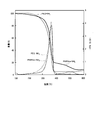
- FIG. 2 is a graph showing representative results of thermal mass spectrometry of a sample in which TOCN is modified with PEG-NH 2 having a molecular weight of 1000 as an example.
- TOCn shows the results of TOCn unmixed with PEG-NH 2
- TOCN / PEG -NH 2 (complete conversion) is
- COOH group is completely COO - shows the results of the samples converted based on
- TOCN / PEG-NH 2 (incomplete conversion) shows the result for a sample with approximately 20-25% of the COOH groups remaining.
- -DTG is a value obtained by adding a negative sign to the differential value of the weight change.
- ⁇ Tmax is the temperature at the peak of DTG.
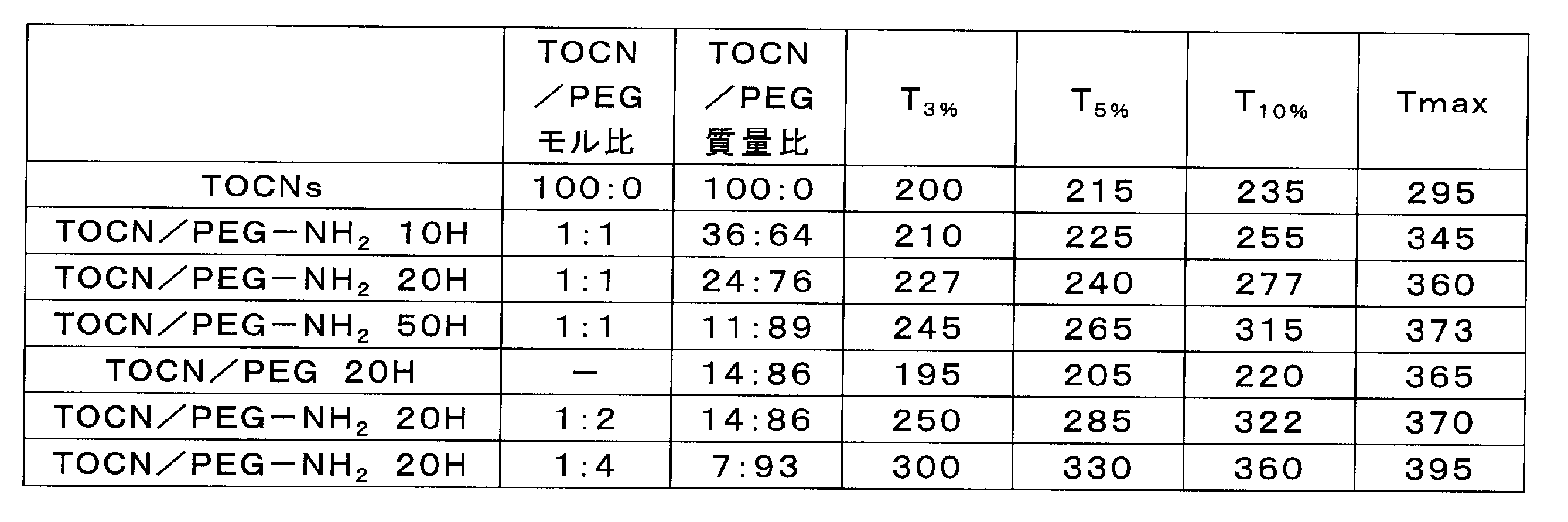
- Table 1 shows the temperature at which the weight of the sample was reduced by 3% (T 3% ), the temperature at which the weight of the sample was reduced by 5% (T 5% ), and the weight of the sample by 10%.
- T 3% the temperature at which the weight of the sample was reduced by 3%
- T 5% the temperature at which the weight of the sample was reduced by 5%
- Tmax values are summarized.
- the thermal decomposition temperature of the sample containing only PEG-NH 2 (10H, 20H, and 50H) was 300 to 350 ° C.
- Example 3 A primary amine was mixed with TOCN so that the molar ratio of COOH: NH 2 was 1: 1, and a film of TOCN was prepared in the same manner as in Experimental Example 1 to examine the formation of ionic bonds.
- Primary amines include 3-amino-1-propanol (3AP, the following formula (6)), 2- (2-aminoethoxy) ethanol (22AE, the following formula (7)), PEG-NH 2 (molecular weight 2000) The following formula (8)) and PNIPAm-NH 2 (molecular weight 2500, the following formula (9)) were used.
- m represents a positive number having a molecular weight of 2000.
- n a positive number with a molecular weight of 2500.
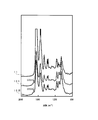
- FIG. 3 is a graph showing the results of FTIR spectrum analysis.
- TOCN is the result of the film of only TOCN
- TOCN / 3AP is the result of the film prepared by mixing TOCN and 3-amino-1-propanol
- TOCN / 22AE is the result of TOCN and 2- (2 -Aminoethoxy)
- the result of the film prepared by mixing ethanol TOCN / PEG-NH 2 is the result of the film prepared by mixing TOCN and PEG-NH 2
- TOCN / PNIPAm-NH 2 is the content of TOCN the result of that produced by mixing PNIPAm-NH 2 film.
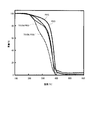
- FIG. 4 shows a TOCN-only film (TOCN), a film prepared by mixing TOCN and 3-amino-1-propanol (TOCN / 3AP), and a mixture of TOCN and 2- (2-aminoethoxy) ethanol. It is a graph which shows the result of the thermal mass spectrometry of the film (TOCN / 22AE) which was made. The heating rate was measured at 2 ° C./min.
- TOCN TOCN-only film
- TOCN / 3AP 3-amino-1-propanol
- 2- (2-aminoethoxy) ethanol It is a graph which shows the result of the thermal mass spectrometry of the film (TOCN / 22AE) which was made. The heating rate was measured at 2 ° C./min.
- TOCN TOCN-only film
- TOCN / PEG-NH 2 TOCN / PEG-NH 2
- TOCN PNIPAm-NH 2
- Example 5 In the same manner as in Experimental Example 2, thermal mass spectrometry of 3-amino-1-propanol, 2- (2-aminoethoxy) ethanol, PEG-NH 2 (molecular weight 2000) and PNIPAm-NH 2 (molecular weight 75.11) was performed. And Tmax was measured.
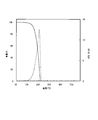
- FIG. 6 is a graph showing the results of thermal mass spectrometry of 3-amino-1-propanol (3AP) and 2- (2-aminoethoxy) ethanol (22AE). The heating rate was measured at 2 ° C./min.
- FIG. 7 is a graph showing the results of thermal mass spectrometry of PEG-NH 2 (molecular weight 2000) and PNIPAm-NH 2 (molecular weight 2500). The heating rate was measured at 2 ° C./min.
- Tmax of 3-amino-1-propanol was about 100 ° C.
- Tmax of 2- (2-aminoethoxy) ethanol was about 160 ° C.
- Tmax of PEG-NH 2 (molecular weight 2000) and PNIPAm-NH 2 (molecular weight 2500) are both about 370 ° C.
- Example 6 Polyethylene glycol having no amino group (PEG 200H, molecular weight 20000) and polyoxyethylene having no amino group (PEO 10000H, molecular weight 1000000) were mixed with TOCN so that the molar ratio was 1: 2, respectively.
- a TOCN film was prepared in the same manner as in Example 1.
- FIG. 8 is a graph showing the results of thermal mass spectrometry.
- FIG. 9 is a graph showing the result of calculating the value of -DTG. 8 and 9, PEG shows the result of PEG 200H only, PEO shows the result of PEO 10000H only, TOCN / PEG shows the result of the film prepared by mixing TOCN and PEG 200H, and TOCN / PEO Indicates the result of a film prepared by mixing TOCN and PEO 10000H. As a result, no improvement in thermal stability was observed in any film. This result indicates that the presence of an amino group is necessary to improve the thermal stability of TOCN.
- FIG. 10 is a graph showing the results of FTIR spectrum analysis. As a result, COOH group peaks were observed in the samples having a COOH: NH 2 molar ratio of 1: 0.25 and 1: 0.5. This result indicates that the ionic bond between the COOH group and the amine is insufficient and the COOH group remains.
- FIG. 11 is a graph showing the results of thermal mass spectrometry.
- the heating rate was measured at 2 ° C./min.
- the peak of -DTG present at around 220 to 230 ° C. decreased. This result shows that it is important to completely ionize the COOH group with the amine in order to improve the thermal stability of TOCN.
- FIG. 12 is a graph showing the results of FTIR spectrum analysis.
- the TOCn / 2AF film before heating
- a portion of the peaks of the COOH groups of 1720 cm -1 is COO of 1600 cm -1 - revealed that shifted to the peak of the group .
- FIG. 13 is a graph showing the results of thermal mass spectrometry of 2-aminofluorene. The heating rate was measured at 2 ° C./min. As a result, it was found that Tmax of 2-aminofluorene was about 232 ° C.
- a method for producing fine cellulose fibers having a high thermal decomposition temperature can be provided.
Landscapes
- Chemical & Material Sciences (AREA)
- Chemical Kinetics & Catalysis (AREA)
- Engineering & Computer Science (AREA)
- Biochemistry (AREA)
- Materials Engineering (AREA)
- Health & Medical Sciences (AREA)
- Life Sciences & Earth Sciences (AREA)
- Medicinal Chemistry (AREA)
- Polymers & Plastics (AREA)
- Organic Chemistry (AREA)
- Polyethers (AREA)
- Other Resins Obtained By Reactions Not Involving Carbon-To-Carbon Unsaturated Bonds (AREA)
- Treatments For Attaching Organic Compounds To Fibrous Goods (AREA)
- Polysaccharides And Polysaccharide Derivatives (AREA)
Abstract
非揮発性又は難揮発性の第1級アミンを用いて、カルボキシ基を有するセルロース繊維又は微細セルロース繊維のカルボキシ基をアミド化させる工程を備えることを特徴とする微細セルロース繊維の製造方法。
Description
本発明は、微細セルロース繊維及びその使用に関する。より詳細には、微細セルロース繊維の製造方法、樹脂組成物の製造方法、微細セルロース繊維、樹脂組成物及び成形体に関する。本願は、2015年3月19日に米国に出願された仮出願第62/135,548号、及び2015年10月28日に米国に出願された仮出願第62/247,208号に基づき優先権を主張し、それらの内容をここに援用する。
セルロースナノファイバー(微細セルロース繊維)は、植物細胞壁の骨格成分であり、植物繊維をナノサイズまで細かくほぐすことにより得られるものである。セルロースナノファイバーは、軽く、高い強度を有しており、透明材料に加工することができる等の特徴を有しており、その応用が期待されている。
当初、セルロースナノファイバーは、多大なエネルギーを消費する機械的なせん断力の負荷により製造されていた。しかしながら、よりエネルギー消費の低い、薬物又は酵素を用いた製造方法が開発されてきた。
現在、セルロースナノファイバーの多くは、2,2,6,6-テトラメチルピペリジン-1-オキシルラジカル(TEMPO)等による酸化処理を含む工程により製造されている。セルロースがTEMPOにより酸化されると、微小繊維の表面のC6位のヒドロキシル基がカルボン酸ナトリウムに変換される。これにより、エネルギー消費の低い穏やかな条件下で、浸透圧や静電気的な反発力等により微小繊維を個々にほぐし、セルロースナノファイバーを得ることができる。この手法により製造されたセルロースナノファイバーはTEMPO-oxidized cellulose nanofibrils(TOCNs)と呼ばれている。
しかしながら、TOCNs等のカルボキシ基を有する微細セルロース繊維は、熱分解温度が低いためにその応用が制限されている。セルロースの熱分解温度が約300℃であるのに対し、カルボキシ基を有する微細セルロース繊維の熱分解温度は200~220℃である(例えば、非特許文献1を参照)。
Tang H., et al., A transparent, hazy, and strong macroscopic ribbon of oriented cellulose nanofibrils bearing poly(ethylene glycol)., Adv. Mater., 27 (12), 2070-2076, 2015.
そこで、本発明は、カルボキシ基を有する微細セルロース繊維の熱分解温度が低い原因を明らかにし、熱分解温度が高い微細セルロース繊維の製造方法を提供することを目的とする。
本発明は以下の態様を含む。
(1)非揮発性又は難揮発性の第1級アミンを用いて、カルボキシ基を有するセルロース繊維又は微細セルロース繊維のカルボキシ基をアミド化させる工程を備えることを特徴とする微細セルロース繊維の製造方法。
(2)前記第1級アミンのTmaxが170℃以上である、(1)に記載の微細セルロース繊維の製造方法。
(3)カルボキシ基を有するセルロース繊維又は微細セルロース繊維と、非揮発性又は難揮発性の第1級アミンとを混合し、混合物を得る工程と、前記混合物及び樹脂を溶融混練する工程と、を備えることを特徴とする樹脂組成物の製造方法。
(4)前記第1級アミンのTmaxが170℃以上である、(3)に記載の樹脂組成物の製造方法。
(5)カルボキシ基の一部又は全部がアミド化されている微細セルロース繊維であって、熱分解温度がカルボキシ基を有する微細セルロース繊維よりも高い温度であることを特徴とする微細セルロース繊維。
(6)熱分解温度が250℃以上である、(5)に記載の微細セルロース繊維。
(7)カルボキシ基及びアミド基の合計に対するアミド基の割合が80モル%以上である、(5)又は(6)に記載の微細セルロース繊維。
(8)(5)~(7)のいずれかに記載の微細セルロース繊維を含有する樹脂組成物。
(9)(8)に記載の樹脂組成物を含有することを特徴とする成形体。
(1)非揮発性又は難揮発性の第1級アミンを用いて、カルボキシ基を有するセルロース繊維又は微細セルロース繊維のカルボキシ基をアミド化させる工程を備えることを特徴とする微細セルロース繊維の製造方法。
(2)前記第1級アミンのTmaxが170℃以上である、(1)に記載の微細セルロース繊維の製造方法。
(3)カルボキシ基を有するセルロース繊維又は微細セルロース繊維と、非揮発性又は難揮発性の第1級アミンとを混合し、混合物を得る工程と、前記混合物及び樹脂を溶融混練する工程と、を備えることを特徴とする樹脂組成物の製造方法。
(4)前記第1級アミンのTmaxが170℃以上である、(3)に記載の樹脂組成物の製造方法。
(5)カルボキシ基の一部又は全部がアミド化されている微細セルロース繊維であって、熱分解温度がカルボキシ基を有する微細セルロース繊維よりも高い温度であることを特徴とする微細セルロース繊維。
(6)熱分解温度が250℃以上である、(5)に記載の微細セルロース繊維。
(7)カルボキシ基及びアミド基の合計に対するアミド基の割合が80モル%以上である、(5)又は(6)に記載の微細セルロース繊維。
(8)(5)~(7)のいずれかに記載の微細セルロース繊維を含有する樹脂組成物。
(9)(8)に記載の樹脂組成物を含有することを特徴とする成形体。
本発明によれば、熱分解温度が高い微細セルロース繊維の製造方法を提供することができる。
[微細セルロース繊維の製造方法]
1実施形態において、本発明は、非揮発性又は難揮発性の第1級アミンを用いて、カルボキシ基を有するセルロース繊維又は微細セルロース繊維のカルボキシ基をアミド化させる工程を備えることを特徴とする微細セルロース繊維の製造方法を提供する。
1実施形態において、本発明は、非揮発性又は難揮発性の第1級アミンを用いて、カルボキシ基を有するセルロース繊維又は微細セルロース繊維のカルボキシ基をアミド化させる工程を備えることを特徴とする微細セルロース繊維の製造方法を提供する。
実施例において後述するように、発明者らは、カルボキシ基を有する微細セルロース繊維の熱分解温度が低い原因が、カルボキシ基の存在にあることを明らかにした。発明者らはまた、本実施形態の製造方法により、熱分解温度が高い微細セルロース繊維を製造することができることを明らかにした。ここで、熱分解温度が高いとは、熱安定性が向上しているといいかえることもできる。
実施例において後述するように、カルボキシ基を有するセルロース繊維又は微細セルロース繊維のカルボキシ基のアミド化は、例えば、セルロース繊維又は微細セルロース繊維と第1級アミンとを混合し、カルボキシ基とアミノ基の間にイオン結合を形成させた後、常圧下、約150℃で1~4時間加熱すること等により行うことができる。したがって、第1級アミンは、アミド化反応中に反応系に留まることができる化合物であることが好ましい。より具体的には、第1級アミンは非揮発性又は難揮発性であり、例えば、常圧下、約150℃で揮発しないか、揮発しにくい化合物であればよい。
上記の第1級アミンのTmaxは170℃以上であることが好ましい。本明細書において、Tmaxとは、対象試料を熱重量分析した場合の重量変化の微分値に負の符号をつけた値(-DTG)を、横軸に温度としたグラフに表した場合に、最も大きなピークに対応する温度をいうものとする。具体的には後述する。
実施例において後述するように、Tmaxが170℃以上である第1級アミンを用いれば、カルボキシ基を有するセルロース繊維又は微細セルロース繊維のカルボキシ基をアミド化しやすい傾向にある。そして、カルボキシ基を有するセルロース繊維又は微細セルロース繊維のカルボキシ基がアミド化されることにより、微細セルロース繊維の熱分解温度を向上させることができる。
第1級アミンとしては、例えば、沸点が150℃以上である化合物、アミノ基を有する高分子化合物等が挙げられる。また、第1級アミン1分子中のアミノ基の数は特に制限されず、例えばモノアミンであってもよく、ジアミンであってもよく、3以上のアミノ基を有していてもよい。高分子化合物としては、例えばポリマーが挙げられ、具体的には、ポリエチレングリコール、ポリオキシアルキレン、ポリアクリルアミド、これらの共重合体等のうち、アミノ基を有するものが挙げられる。より具体的な第1級アミンとしては、例えば、下記式(1)~(4)に示す化合物等が挙げられる。これらは、1種を単独で用いてもよいし、2種以上を組み合わせて用いてもよい。





上記式(1)で表される化合物はメトキシポリエチレンプロピルアミン(PEG-NH2)である。上記式(1)で表される化合物の分子量は、例えば1000~5000程度であってもよい。また、上記式(2)で表される化合物は末端アミノ化ポリ(N-イソプロピルアクリルアミド)である。上記式(2)で表される化合物の分子量は、例えば1000~5000程度であってもよい。
上記式(3)で表される化合物の具体例としては、例えば実施例において後述する2-アミノフルオレン等が挙げられる。上記式(3)で表される化合物は、比較的低分子であるため、セルロース繊維又は微細セルロース繊維と混合しやすい傾向にある。
上記式(4)で表される化合物の具体例としては、HUNTSMAN社製のJeffamine M-2070、Jeffamine M-2005、Jeffamine M-1000、Surfoamine B200、Surfoamine L100、Surfoamine L200、Surfoamine L207,Surfoamine L300、XTJ-501、XTJ-506、XTJ-507、XTJ―508;BASF社製のM3000、Jeffamine ED-900、Jeffamine ED-2003、Jeffamine D-2000、Jeffamine D-4000、XTJ-510、Jeffamine T-3000、JeffamineT-5000、XTJ-502、XTJ-509、XTJ-510等が挙げられる。
[樹脂組成物の製造方法]
1実施形態において、本発明は、カルボキシ基を有するセルロース繊維又は微細セルロース繊維と、非揮発性又は難揮発性の第1級アミンとを混合し、混合物を得る工程と、前記混合物及び樹脂を溶融混練する工程と、を備えることを特徴とする樹脂組成物の製造方法を提供する。
1実施形態において、本発明は、カルボキシ基を有するセルロース繊維又は微細セルロース繊維と、非揮発性又は難揮発性の第1級アミンとを混合し、混合物を得る工程と、前記混合物及び樹脂を溶融混練する工程と、を備えることを特徴とする樹脂組成物の製造方法を提供する。
従来の微細セルロース繊維は熱分解温度が低いため、樹脂との溶融混練温度で分解してしまい、所望の特性を有する樹脂組成物を得ることができない場合があった。また、微細セルロース繊維の分解の過程で二酸化炭素等のガスを発生してしまい、樹脂組成物の製造に支障が生じる場合があった。
これに対し、本実施形態の製造方法によれば、微細セルロース繊維の有利な特性により改質された樹脂組成物を製造することができる。本実施形態の製造方法をより詳細に説明する。まず、カルボキシ基を有するセルロース繊維又は微細セルロース繊維と、非揮発性又は難揮発性の第1級アミンとを混合し、混合物を得る。この過程において、セルロース繊維又は微細セルロース繊維に含まれるカルボキシ基と第1級アミンが有するアミノ基とがイオン結合を形成する。
続いて、上記の混合物及び樹脂を溶融混練する工程において、上記のカルボキシ基とアミノ基が加熱されて反応し、アミド結合を形成する。この結果、微細セルロース繊維の熱分解温度が上昇し、樹脂との溶融混練温度で分解することなく樹脂と溶融することが可能になる。
本実施形態の製造方法によれば、樹脂組成物の製造工程において、同時に微細セルロース繊維の熱分解温度を向上させることができるため、樹脂組成物の製造を効率よく行うことができる。
樹脂としては、特に制限されず、例えば、ポリカーボネート樹脂;ポリエチレンテレフタレート樹脂、ポリトリメチレンテレフタレート樹脂、ポリブチレンテレフタレート樹脂等のポリエステル樹脂;ポリスチレン樹脂、高衝撃ポリスチレン樹脂(HIPS)、アクリロニトリル-スチレン共重合体(AS樹脂)、アクリロニトリル-ブタジエン-スチレン共重合体(ABS樹脂)、アクリロニトリル-スチレン-アクリルゴム共重合体(ASA樹脂)、アクリロニトリル-エチレンプロピレン系ゴム-スチレン共重合体(AES樹脂)等のスチレン系樹脂;ポリエチレン樹脂、ポリプロピレン樹脂等のポリオレフィン樹脂;ポリアミド樹脂;ポリイミド樹脂;ポリエーテル樹脂;ポリウレタン樹脂;ポリフェニレンエーテル樹脂;ポリフェニレンサルファイド樹脂;ポリスルホン樹脂;ポリメタクリレート樹脂等が挙げられる。これらの樹脂は1種を単独で用いてもよく、2種以上を混合して用いてもよい。
本実施形態の製造方法において、第1級アミンのTmaxは170℃以上であることが好ましい。Tmaxについては上述したものと同様である。第1級アミンのTmaxが170℃以上であることにより、微細セルロース繊維の熱分解温度を向上させやすくなる傾向にある。
[微細セルロース繊維]
1実施形態において、本発明は、カルボキシ基の一部又は全部がアミド化されている微細セルロース繊維であって、熱分解温度がカルボキシ基を有する微細セルロース繊維よりも高い温度であることを特徴とする微細セルロース繊維を提供する。
1実施形態において、本発明は、カルボキシ基の一部又は全部がアミド化されている微細セルロース繊維であって、熱分解温度がカルボキシ基を有する微細セルロース繊維よりも高い温度であることを特徴とする微細セルロース繊維を提供する。
本実施形態の微細セルロース繊維は、熱分解温度が向上しているため、様々な用途に応用することが容易である。本実施形態の微細セルロース繊維は、例えば熱分解温度が250℃以上であってもよく、280℃以上であってもよく、290℃以上であってもよい。
また、本実施形態の微細セルロース繊維において、カルボキシ基及びアミド基の合計に対するアミド基の割合は80モル%以上であることが好ましく、90モル%以上であることが好ましく、95モル%以上であることが好ましく、100モル%であることが特に好ましい。微細セルロース繊維中のカルボキシ基及びアミド基の量は、例えば、フーリエ変換赤外(FTIR)スペクトル分析により測定することができる。
[樹脂組成物及び成形体]
1実施形態において、本発明は、上記の微細セルロース繊維を含有する樹脂組成物を提供する。本実施形態の樹脂組成物は微細セルロース繊維により改質されており、例えば強度の向上、軽量化等の優れた特性を示すことができる。
1実施形態において、本発明は、上記の微細セルロース繊維を含有する樹脂組成物を提供する。本実施形態の樹脂組成物は微細セルロース繊維により改質されており、例えば強度の向上、軽量化等の優れた特性を示すことができる。
1実施形態において、本発明は、上記の樹脂組成物を含有することを特徴とする成形体を提供する。本実施形態の成形体は、材料である樹脂組成物が微細セルロース繊維により改質されているため、優れた特性を示すことができる。
次に実施例を示して本発明を更に詳細に説明するが、本発明は以下の実施例に限定されるものではない。
[材料及び方法]
(材料)
一度も乾燥されていない、針葉樹晒しクラフトパルプ(日本製紙株式会社製)を使用した。当該パルプは約90%のセルロース及び約10%のヘミセルロースを含有していた。2,2,6,6-テトラメチルピペリジン-1-オキシルラジカル(TEMPO)、臭化ナトリウム、1.77M次亜塩素酸ナトリウム溶液及び水素化ホウ素ナトリウムは和光純薬工業株式会社より購入した。ポリエチレングリコール(PEG 20H、2000g/mol)、分子量1000(10H)、2000(20H)、5000(50H)のメトキシポリエチレングリコールプロピルアミン(PEG-NH2、化学式:CH3O-(CH2CH2O)n-CH2CH2CH2NH2)は日油株式会社より購入した。ポリエチレングリコール(PEG 200H、2×10⁴g/mol)は和光純薬工業株式会社より購入した。ポリエチレンオキシド(PEO 10000H、1×10⁶g/mol)はシグマアルドリッチ社より購入した。
(材料)
一度も乾燥されていない、針葉樹晒しクラフトパルプ(日本製紙株式会社製)を使用した。当該パルプは約90%のセルロース及び約10%のヘミセルロースを含有していた。2,2,6,6-テトラメチルピペリジン-1-オキシルラジカル(TEMPO)、臭化ナトリウム、1.77M次亜塩素酸ナトリウム溶液及び水素化ホウ素ナトリウムは和光純薬工業株式会社より購入した。ポリエチレングリコール(PEG 20H、2000g/mol)、分子量1000(10H)、2000(20H)、5000(50H)のメトキシポリエチレングリコールプロピルアミン(PEG-NH2、化学式:CH3O-(CH2CH2O)n-CH2CH2CH2NH2)は日油株式会社より購入した。ポリエチレングリコール(PEG 200H、2×10⁴g/mol)は和光純薬工業株式会社より購入した。ポリエチレンオキシド(PEO 10000H、1×10⁶g/mol)はシグマアルドリッチ社より購入した。
(TOCNs)
TOCNsは、セルロース1gあたり10mmolのNaClOを用いたTEMPO/NaBr/NaClO系により調製した。TEMPOによる酸化はpH10で4時間行った。脱イオン水による洗浄後、TEMPOにより酸化されたセルロース(TOC)を、水中、pH10の条件下でNaBH4(パルプ1gあたり0.1g)で還元し、残存したアルデヒド及びケトンをヒドロキシル基に変換した。その後、ろ過及び遠心を行い脱イオン水で十分に洗浄した。
TOCNsは、セルロース1gあたり10mmolのNaClOを用いたTEMPO/NaBr/NaClO系により調製した。TEMPOによる酸化はpH10で4時間行った。脱イオン水による洗浄後、TEMPOにより酸化されたセルロース(TOC)を、水中、pH10の条件下でNaBH4(パルプ1gあたり0.1g)で還元し、残存したアルデヒド及びケトンをヒドロキシル基に変換した。その後、ろ過及び遠心を行い脱イオン水で十分に洗浄した。
得られたTOCを導電率滴定で測定した結果、1.56mmol/gのカルボキシル基を含有していた。TOCを100mLの水に0.1%w/wで懸濁し、ダブルシリンダー型のホモジナイザー(型式「ヒストコロン」、マイクロテック・ニチオン社)を用いて、室温、10000rpmで2分間ホモジナイズした。
続いて、懸濁液を300Wの超音波ホモジナイザー(型式「US-300T」、プローブチップの直径26mm、19.5kHz、株式会社日本精機製作所)を用いて約70%の出力で10分間超音波処理した。
続いて、9000rpmで20分間遠心し、懸濁液に含まれる線維化されなかった画分を除去し、TOCN懸濁液を得た。
続いて、TOCN懸濁液に1M塩酸を添加して30分間撹拌し(pH1以下)、遊離のカルボキシ基を有するTOCNsを得た。
(TOCNsの修飾)
TOCNsへのPEG-NH2のカップリングは、室温で水系溶媒中で実施した。TOCNsのカルボキシ基とPEG-NH2のプロトン化したアミン基との間のイオン結合の形成は、0.1wt%のTOCN懸濁液及びPEG-NH2を異なるカルボキシ基:アミンのモル比、すなわち、1:1、1:2及び1:4で混合することにより実施した。懸濁液は、室温で2時間懸濁した。反応後、洗浄工程は行わなかった。
TOCNsへのPEG-NH2のカップリングは、室温で水系溶媒中で実施した。TOCNsのカルボキシ基とPEG-NH2のプロトン化したアミン基との間のイオン結合の形成は、0.1wt%のTOCN懸濁液及びPEG-NH2を異なるカルボキシ基:アミンのモル比、すなわち、1:1、1:2及び1:4で混合することにより実施した。懸濁液は、室温で2時間懸濁した。反応後、洗浄工程は行わなかった。
(解析)
修飾したTOCN懸濁液をペトリ皿にキャストし、40℃に設定したオーブン中で3~4日乾燥させることにより、修飾したTOCNフィルムを作製した。
修飾したTOCN懸濁液をペトリ皿にキャストし、40℃に設定したオーブン中で3~4日乾燥させることにより、修飾したTOCNフィルムを作製した。
フィルムのフーリエ変換赤外(FTIR)スペクトルは、フーリエ変換赤外分光光度計(型式「FT/IR-6100」、JASCO社)を用いてトランスミッションモード、400~4000cm-1、解像度4cm-1で測定した。
フィルムの熱重量分析(TGA)は、示差熱天秤(型式「TG8120」、株式会社リガク)により実施した。少なくとも2mgのフィルム試料をプラチナパンにセットした。PEG-NH2粉末については、臭化カリウムと混合して細かく破砕してKBrペレットを作製して測定を行った。
熱質量分析は、窒素雰囲気下で30~600℃、加熱レート2、5又は10℃/分で行った。加熱によるイオン結合のアミド結合への変換は、TGA及びFTIRスペクトルにより解析した。フィルムサンプルは、まず、窒素雰囲気下で、TGAを用いて150℃で2又は4時間加熱した。続いて、完全に乾燥したことが確認されたフィルムを臭化カリウムと混合して細かく破砕し、KBrペレットを作製した。
続いて、得られたKBrペレットを用いて、上記の条件下でFTIRスペクトル解析を行った。1試料に付き少なくとも3回の測定を行い再現性を確認した。
[実験例1]
分子量1000(10H)、2000(20H)及び5000(50H)のPEG-NH2を0.1wt%の水系溶媒中に懸濁したTOCN分散液と混合した。カルボキシ基とアミンのモル比を1:1~1:4に変化させた。混合液のpHは、添加したPEG-NH2の量に依存して7~9であった。TOCNの調製に使用した、TEMPOにより酸化されたセルロース(TOC)のカルボキシ基の含有量は、1.56mmol/gであった。2時間撹拌した後、各懸濁液を用いてキャスト法により透明なTOCN/PEG-NH2フィルムを作製した。
分子量1000(10H)、2000(20H)及び5000(50H)のPEG-NH2を0.1wt%の水系溶媒中に懸濁したTOCN分散液と混合した。カルボキシ基とアミンのモル比を1:1~1:4に変化させた。混合液のpHは、添加したPEG-NH2の量に依存して7~9であった。TOCNの調製に使用した、TEMPOにより酸化されたセルロース(TOC)のカルボキシ基の含有量は、1.56mmol/gであった。2時間撹拌した後、各懸濁液を用いてキャスト法により透明なTOCN/PEG-NH2フィルムを作製した。
図1は、一例として、分子量1000のPEG-NH2でTOCNを修飾した試料のFTIRスペクトル分析の代表的な結果を示すグラフである。図1中、TOCNは、PEG-NH2を混合していないTOCNの結果を示し、TOCN/PEG-NH2(完全変換)は、COOH基が完全にCOO-基に変換した試料の結果を示し、TOCN/PEG-NH2(不完全変換)は、約COOH基の20~25%が残存している試料の結果を示す。その結果、図1に示すように、TOCNのFTIRスペクトルには、セルロースのピークに加えて1720cm-1のCOOH基(プロトン化したカルボキシ基)のピークが検出された。
PEG-NH2と混合した結果、TOCNのCOOH基のピークは1600cm-1にシフトした。また、1600cm-1のピークは、COO-基(カルボキシ基)に対応することが明らかとなった。
したがって、TOCNのCOOH基のほぼすべてが、アンモニウム塩型の構造であるCOO-基に変換したことが明らかとなった。これは、TOCNとPEG-NH2との間にイオン結合が形成された結果である。
この結果から、上記の方法により、イオン結合の形成によるTOCNへのPEG-NH2のカップリングが成功したことが確認された。
[実験例2]
続いて、実験例1のTOCN/PEG-NH2フィルム試料の熱重量分析(TGA)を行った。図2は、一例として、分子量1000のPEG-NH2でTOCNを修飾した試料の熱質量分析の代表的な結果を示すグラフである。図2中、TOCNは、PEG-NH2を混合していないTOCNの結果を示し、TOCN/PEG-NH2(完全変換)は、COOH基が完全にCOO-基に変換した試料の結果を示し、TOCN/PEG-NH2(不完全変換)は、約COOH基の20~25%が残存している試料の結果を示す。また、-DTGは、重量変化の微分値に負の符号をつけた値である。-DTGのピークにおける温度をTmaxとする。
続いて、実験例1のTOCN/PEG-NH2フィルム試料の熱重量分析(TGA)を行った。図2は、一例として、分子量1000のPEG-NH2でTOCNを修飾した試料の熱質量分析の代表的な結果を示すグラフである。図2中、TOCNは、PEG-NH2を混合していないTOCNの結果を示し、TOCN/PEG-NH2(完全変換)は、COOH基が完全にCOO-基に変換した試料の結果を示し、TOCN/PEG-NH2(不完全変換)は、約COOH基の20~25%が残存している試料の結果を示す。また、-DTGは、重量変化の微分値に負の符号をつけた値である。-DTGのピークにおける温度をTmaxとする。
また、表1に、解析した各サンプルにおける、試料の重量が3%減少した温度(T3%)、試料の重量が5%減少した温度(T5%)、試料の重量が10%減少した温度(T10%)、及びTmaxの値をまとめた。
その結果、図2及び表1に示すように、TOCNへのPEG-NH2のカップリングはTOCNの熱安定性を向上させた。より具体的には、TOCNへのPEG-NH2のカップリングにより、未修飾のTOCNと比較してTmaxが80~90℃上昇した。また、加熱レート2、5、10℃/分のいずれの条件で実験した場合においても同様の傾向が認められた。
なお、発明者らが実験した結果、PEG-NH2(10H、20H及び50H)のみの試料の熱分解温度は300~350℃であった。
[実験例3]
TOCNに第1級アミンをCOOH:NH2のモル比が1:1となるように混合し、実験例1と同様にしてTOCNのフィルムを作製し、イオン結合の形成を検討した。第1級アミンとしては、3-アミノ-1-プロパノール(3AP、下記式(6))、2-(2-アミノエトキシ)エタノール(22AE、下記式(7))、PEG-NH2(分子量2000、下記式(8))及びPNIPAm-NH2(分子量2500、下記式(9))を使用した。
TOCNに第1級アミンをCOOH:NH2のモル比が1:1となるように混合し、実験例1と同様にしてTOCNのフィルムを作製し、イオン結合の形成を検討した。第1級アミンとしては、3-アミノ-1-プロパノール(3AP、下記式(6))、2-(2-アミノエトキシ)エタノール(22AE、下記式(7))、PEG-NH2(分子量2000、下記式(8))及びPNIPAm-NH2(分子量2500、下記式(9))を使用した。




続いて、実験例1と同様にして、各フィルムのFTIRスペクトル分析を行った。図3は、FTIRスペクトル分析の結果を示すグラフである。図3中、TOCNはTOCNのみのフィルムの結果であり、TOCN/3APはTOCNと3-アミノ-1-プロパノールを混合して作製したフィルムの結果であり、TOCN/22AEはTOCNと2-(2-アミノエトキシ)エタノールを混合して作製したフィルムの結果であり、TOCN/PEG-NH2はTOCNとPEG-NH2を混合して作製したフィルムの結果であり、TOCN/PNIPAm-NH2はTOCNとPNIPAm-NH2を混合して作製したフィルムの結果である。
その結果、図3に示すように、PNIPAm-NH2以外のいずれの第1級アミンを使用した場合においても、TOCNのカルボキシ基とアミンとの間でイオン結合が形成されたことが確認された。なお、PNIPAm-NH2を用いた場合においては、ピークの重なりにより、イオン結合の形成をFTIRスペクトルの結果化から確認することはできなかった。
[実験例4]
実験例3の各フィルムについて、実験例2と同様にして熱質量分析を行った。図4は、TOCNのみのフィルム(TOCN)、TOCNと3-アミノ-1-プロパノールを混合して作製したフィルム(TOCN/3AP)、TOCNと2-(2-アミノエトキシ)エタノールを混合して作製したフィルム(TOCN/22AE)の熱質量分析の結果を示すグラフである。加熱レートは2℃/分で測定した。また、図5は、TOCNのみのフィルム(TOCN)、TOCNとPEG-NH2を混合して作製したフィルム(TOCN/PEG-NH2)、TOCNとPNIPAm-NH2を混合して作製したフィルム(TOCN/PNIPAm-NH2)の熱質量分析の結果を示すグラフである。加熱レートは2℃/分で測定した。
実験例3の各フィルムについて、実験例2と同様にして熱質量分析を行った。図4は、TOCNのみのフィルム(TOCN)、TOCNと3-アミノ-1-プロパノールを混合して作製したフィルム(TOCN/3AP)、TOCNと2-(2-アミノエトキシ)エタノールを混合して作製したフィルム(TOCN/22AE)の熱質量分析の結果を示すグラフである。加熱レートは2℃/分で測定した。また、図5は、TOCNのみのフィルム(TOCN)、TOCNとPEG-NH2を混合して作製したフィルム(TOCN/PEG-NH2)、TOCNとPNIPAm-NH2を混合して作製したフィルム(TOCN/PNIPAm-NH2)の熱質量分析の結果を示すグラフである。加熱レートは2℃/分で測定した。
その結果、第1級アミンとして3-アミノ-1-プロパノール、2-(2-アミノエトキシ)エタノールを用いた場合においては、TOCNの熱安定性の向上は認められなかった。これに対し、第1級アミンとしてPEG-NH2、PNIPAm-NH2を使用した場合においてはTOCNのみのフィルムと比較して熱安定性の向上が認められた。
[実験例5]
実験例2と同様にして、3-アミノ-1-プロパノール、2-(2-アミノエトキシ)エタノール、PEG-NH2(分子量2000)及びPNIPAm-NH2(分子量75.11)の熱質量分析を行い、Tmaxを測定した。図6は、3-アミノ-1-プロパノール(3AP)及び2-(2-アミノエトキシ)エタノール(22AE)の熱質量分析の結果を示すグラフである。加熱レートは2℃/分で測定した。また、図7は、PEG-NH2(分子量2000)及びPNIPAm-NH2(分子量2500)の熱質量分析の結果を示すグラフである。加熱レートは2℃/分で測定した。
実験例2と同様にして、3-アミノ-1-プロパノール、2-(2-アミノエトキシ)エタノール、PEG-NH2(分子量2000)及びPNIPAm-NH2(分子量75.11)の熱質量分析を行い、Tmaxを測定した。図6は、3-アミノ-1-プロパノール(3AP)及び2-(2-アミノエトキシ)エタノール(22AE)の熱質量分析の結果を示すグラフである。加熱レートは2℃/分で測定した。また、図7は、PEG-NH2(分子量2000)及びPNIPAm-NH2(分子量2500)の熱質量分析の結果を示すグラフである。加熱レートは2℃/分で測定した。
その結果、3-アミノ-1-プロパノールのTmaxは約100℃であり、2-(2-アミノエトキシ)エタノールのTmaxは約160℃であることが明らかとなった。また、PEG-NH2(分子量2000)及びPNIPAm-NH2(分子量2500)のTmaxは、いずれも約370℃であることが明らかとなった。
[実験例6]
TOCNに、アミノ基を有しないポリエチレングリコール(PEG 200H、分子量20000)及びアミノ基を有しないポリオキシエチレン(PEO 10000H、分子量1000000)を、モル比がそれぞれ1:2となるように混合し、実験例1と同様にしてTOCNのフィルムを作製した。
TOCNに、アミノ基を有しないポリエチレングリコール(PEG 200H、分子量20000)及びアミノ基を有しないポリオキシエチレン(PEO 10000H、分子量1000000)を、モル比がそれぞれ1:2となるように混合し、実験例1と同様にしてTOCNのフィルムを作製した。
続いて、実験例2と同様にして、PEG 200Hのみ、PEO 10000Hのみ、及び作製した各フィルムの熱質量分析を行った。加熱レートは2℃/分で測定した。
図8は、熱質量分析の結果を示すグラフである。また、図9は、-DTGの値を算出した結果を示すグラフである。図8及び図9中、PEGはPEG 200Hのみの結果を示し、PEOはPEO 10000Hのみの結果を示し、TOCN/PEGはTOCNとPEG 200Hを混合して作製したフィルムの結果を示し、TOCN/PEOはTOCNとPEO 10000Hを混合して作製したフィルムの結果を示す。その結果、いずれのフィルムにおいても熱安定性の向上は認められなかった。この結果は、TOCNの熱安定性を向上させるためにはアミノ基の存在が必要であることを示す。
[実験例7]
TOCNにPNIPAm-NH2(分子量2500)をCOOH:NH2のモル比が1:0.25、1:0.5及び1:1となるように混合し、実験例1と同様にしてTOCNのフィルムを作製し、イオン結合の形成を検討した。
TOCNにPNIPAm-NH2(分子量2500)をCOOH:NH2のモル比が1:0.25、1:0.5及び1:1となるように混合し、実験例1と同様にしてTOCNのフィルムを作製し、イオン結合の形成を検討した。
図10は、FTIRスペクトル分析の結果を示すグラフである。その結果、COOH:NH2のモル比が1:0.25及び1:0.5の試料においては、COOH基のピークが認められた。この結果は、COOH基とアミンとのイオン結合が不十分であり、COOH基が残存していることを示す。
続いて、各フィルムについて、実験例2と同様にして熱質量分析を行った。図11は、熱質量分析の結果を示すグラフである。加熱レートは2℃/分で測定した。その結果、COOHに対するNH2のモル比が上昇するにつれて、220~230℃付近に存在する-DTGのピークが減少することが明らかとなった。この結果は、TOCNの熱安定性を向上させるためには、COOH基を完全にアミンとイオン結合させることが重要であることを示す。
[実験例8]
TOCNに2-アミノフルオレン(2AF)を混合し、水系溶媒の代わりに水:イソプロパノールの1:1(質量比)混合液を使用した点以外は実験例1と同様にしてTOCNのフィルム(TOCN/2AF)を作製した。また、作製したフィルムの一部を窒素雰囲気下、150℃で4時間加熱した。2-アミノフルオレンの化学式を下記式(10)に示す。
TOCNに2-アミノフルオレン(2AF)を混合し、水系溶媒の代わりに水:イソプロパノールの1:1(質量比)混合液を使用した点以外は実験例1と同様にしてTOCNのフィルム(TOCN/2AF)を作製した。また、作製したフィルムの一部を窒素雰囲気下、150℃で4時間加熱した。2-アミノフルオレンの化学式を下記式(10)に示す。

続いて、実験例1と同様にして、TOCNフィルム、TOCN/2AFフィルム(加熱前)及びTOCN/2AFフィルム(加熱後)のFTIRスペクトル分析を行った。図12は、FTIRスペクトル分析の結果を示すグラフである。その結果、図12に示すように、TOCN/2AFフィルム(加熱前)では、1720cm-1のCOOH基のピークの一部が1600cm-1のCOO-基のピークにシフトしたことが明らかとなった。これは、2-アミノフルオレンとの混合により、TOCNのカルボキシ基と2ーアミノフルオレンのアミノ基がイオン結合を形成したことを示す。
更に、TOCN/2AFフィルム(加熱後)では、1600cm-1のCOO-基のピークが1550cm-1及び1650cm-1の2つのピークにシフトしたことが明らかとなった。また、1550cm-1及び1650cm-1のピークは、いずれもアミド結合のピークであることが明らかとなった。この結果は、2-アミノフルオレンをTOCNの熱安定性の向上に使用できることを示す。
[実験例9]
実験例2と同様にして、2-アミノフルオレン(粉末)の熱質量分析を行い、Tmaxを測定した。図13は、2-アミノフルオレンの熱質量分析の結果を示すグラフである。加熱レートは2℃/分で測定した。その結果、2-アミノフルオレンのTmaxは約232℃であることが明らかとなった。
実験例2と同様にして、2-アミノフルオレン(粉末)の熱質量分析を行い、Tmaxを測定した。図13は、2-アミノフルオレンの熱質量分析の結果を示すグラフである。加熱レートは2℃/分で測定した。その結果、2-アミノフルオレンのTmaxは約232℃であることが明らかとなった。
本発明によれば、熱分解温度が高い微細セルロース繊維の製造方法を提供することができる。
Claims (9)
- 非揮発性又は難揮発性の第1級アミンを用いて、カルボキシ基を有するセルロース繊維又は微細セルロース繊維のカルボキシ基をアミド化させる工程を備えることを特徴とする微細セルロース繊維の製造方法。
- 前記第1級アミンのTmaxが170℃以上である、請求項1に記載の微細セルロース繊維の製造方法。
- カルボキシ基を有するセルロース繊維又は微細セルロース繊維と、非揮発性又は難揮発性の第1級アミンとを混合し、混合物を得る工程と、
前記混合物及び樹脂を溶融混練する工程と、
を備えることを特徴とする樹脂組成物の製造方法。 - 前記第1級アミンのTmaxが170℃以上である、請求項3に記載の樹脂組成物の製造方法。
- カルボキシ基の一部又は全部がアミド化されている微細セルロース繊維であって、熱分解温度がカルボキシ基を有する微細セルロース繊維よりも高い温度であることを特徴とする微細セルロース繊維。
- 熱分解温度が250℃以上である、請求項5に記載の微細セルロース繊維。
- カルボキシ基及びアミド基の合計に対するアミド基の割合が80モル%以上である、請求項5又は6に記載の微細セルロース繊維。
- 請求項5~7のいずれか一項に記載の微細セルロース繊維を含有する樹脂組成物。
- 請求項8に記載の樹脂組成物を含有することを特徴とする成形体。
Priority Applications (1)
| Application Number | Priority Date | Filing Date | Title |
|---|---|---|---|
| JP2017506218A JPWO2016148280A1 (ja) | 2015-03-19 | 2016-03-18 | 微細セルロース繊維及びその使用 |
Applications Claiming Priority (4)
| Application Number | Priority Date | Filing Date | Title |
|---|---|---|---|
| US201562135548P | 2015-03-19 | 2015-03-19 | |
| US62/135,548 | 2015-03-19 | ||
| US201562247208P | 2015-10-28 | 2015-10-28 | |
| US62/247,208 | 2015-10-28 |
Publications (1)
| Publication Number | Publication Date |
|---|---|
| WO2016148280A1 true WO2016148280A1 (ja) | 2016-09-22 |
Family
ID=56918838
Family Applications (1)
| Application Number | Title | Priority Date | Filing Date |
|---|---|---|---|
| PCT/JP2016/058727 Ceased WO2016148280A1 (ja) | 2015-03-19 | 2016-03-18 | 微細セルロース繊維及びその使用 |
Country Status (2)
| Country | Link |
|---|---|
| JP (1) | JPWO2016148280A1 (ja) |
| WO (1) | WO2016148280A1 (ja) |
Citations (6)
| Publication number | Priority date | Publication date | Assignee | Title |
|---|---|---|---|---|
| JP2012021081A (ja) * | 2010-07-14 | 2012-02-02 | Univ Of Tokyo | セルロースナノファイバー分散液の製造方法、セルロースナノファイバー分散液、セルロースナノファイバー成形体、及びセルロースナノファイバー複合体 |
| WO2013077354A1 (ja) * | 2011-11-22 | 2013-05-30 | 国立大学法人東京大学 | セルロースナノファイバー分散液とその製造方法、セルロースナノファイバー修飾体、セルロースナノファイバー複合体 |
| WO2013099770A1 (ja) * | 2011-12-28 | 2013-07-04 | 花王株式会社 | ポリエステル樹脂組成物 |
| JP2014125607A (ja) * | 2012-12-27 | 2014-07-07 | Kao Corp | ゴム組成物 |
| JP2015000935A (ja) * | 2013-06-14 | 2015-01-05 | 花王株式会社 | セルロースナノファイバーを含む樹脂組成物の製造方法 |
| JP2015218222A (ja) * | 2014-05-15 | 2015-12-07 | 花王株式会社 | 変性ポリウロン酸又はその塩 |
-
2016
- 2016-03-18 WO PCT/JP2016/058727 patent/WO2016148280A1/ja not_active Ceased
- 2016-03-18 JP JP2017506218A patent/JPWO2016148280A1/ja active Pending
Patent Citations (6)
| Publication number | Priority date | Publication date | Assignee | Title |
|---|---|---|---|---|
| JP2012021081A (ja) * | 2010-07-14 | 2012-02-02 | Univ Of Tokyo | セルロースナノファイバー分散液の製造方法、セルロースナノファイバー分散液、セルロースナノファイバー成形体、及びセルロースナノファイバー複合体 |
| WO2013077354A1 (ja) * | 2011-11-22 | 2013-05-30 | 国立大学法人東京大学 | セルロースナノファイバー分散液とその製造方法、セルロースナノファイバー修飾体、セルロースナノファイバー複合体 |
| WO2013099770A1 (ja) * | 2011-12-28 | 2013-07-04 | 花王株式会社 | ポリエステル樹脂組成物 |
| JP2014125607A (ja) * | 2012-12-27 | 2014-07-07 | Kao Corp | ゴム組成物 |
| JP2015000935A (ja) * | 2013-06-14 | 2015-01-05 | 花王株式会社 | セルロースナノファイバーを含む樹脂組成物の製造方法 |
| JP2015218222A (ja) * | 2014-05-15 | 2015-12-07 | 花王株式会社 | 変性ポリウロン酸又はその塩 |
Non-Patent Citations (8)
Also Published As
| Publication number | Publication date |
|---|---|
| JPWO2016148280A1 (ja) | 2018-01-25 |
Similar Documents
| Publication | Publication Date | Title |
|---|---|---|
| TWI848899B (zh) | 微細纖維素纖維複合體 | |
| TWI686409B (zh) | 微細纖維素纖維複合體 | |
| Hu et al. | One-pot water-based hydrophobic surface modification of cellulose nanocrystals using plant polyphenols | |
| JP5823599B2 (ja) | 微細セルロース繊維複合体 | |
| AU2013318071B2 (en) | Preparation of high molecular weight, functionalized poly(meth) acrylamide polymers by transamidation | |
| TWI791478B (zh) | 纖維素纖維複合體之製造方法及樹脂組合物之製造方法 | |
| KR102824800B1 (ko) | 셀룰로오스 섬유 복합체 | |
| CN106459563A (zh) | 具有潜在增稠趋势的环氧树脂‑环氧固化体系 | |
| JP6239871B2 (ja) | 樹脂組成物及びその製造方法 | |
| Dinari et al. | Synthesis, structural characterization and properties of novel functional poly (ether imide)/titania nanocomposite thin films | |
| Ghaemy et al. | Nanostructured composites of poly (triazole-amide-imide) s and reactive titanium oxide by epoxide functionalization: thermal, mechanical, photophysical and metal ions adsorption properties | |
| CN105037724A (zh) | 一种含炔基超支化聚酰亚胺及其制备方法和应用 | |
| JP7203916B2 (ja) | ゲル膜 | |
| Yao et al. | Synthesis of comb-like poly (ethyleneimine) s and their application in biomimetic silicification | |
| CN115551966A (zh) | 粘接剂组合物 | |
| JP2022001634A (ja) | 増粘剤組成物 | |
| JPWO2016148280A1 (ja) | 微細セルロース繊維及びその使用 | |
| Ahn et al. | Nanocomposite membranes consisting of poly (vinyl chloride) graft copolymer and surface-modified silica nanoparticles | |
| Englert et al. | Microwave-assisted polymer modifications | |
| Li et al. | The effect of copper (II) on the thermal and mechanical properties of poly (vinyl alcohol)/silica hybrid | |
| JP2022092607A (ja) | 改質セルロース繊維の製造方法 | |
| JP2022092606A (ja) | 改質セルロース繊維の製造方法 | |
| JP2022059589A (ja) | 改質セルロース繊維の製造方法 | |
| JP2022069427A (ja) | 改質セルロース繊維の製造方法 | |
| JP2015196767A (ja) | ポリオレフィン水性分散体 |
Legal Events
| Date | Code | Title | Description |
|---|---|---|---|
| 121 | Ep: the epo has been informed by wipo that ep was designated in this application |
Ref document number: 16765109 Country of ref document: EP Kind code of ref document: A1 |
|
| ENP | Entry into the national phase |
Ref document number: 2017506218 Country of ref document: JP Kind code of ref document: A |
|
| NENP | Non-entry into the national phase |
Ref country code: DE |
|
| 122 | Ep: pct application non-entry in european phase |
Ref document number: 16765109 Country of ref document: EP Kind code of ref document: A1 |