WO2016129665A1 - 時刻同期装置、その方法及びプログラム - Google Patents
時刻同期装置、その方法及びプログラム Download PDFInfo
- Publication number
- WO2016129665A1 WO2016129665A1 PCT/JP2016/054091 JP2016054091W WO2016129665A1 WO 2016129665 A1 WO2016129665 A1 WO 2016129665A1 JP 2016054091 W JP2016054091 W JP 2016054091W WO 2016129665 A1 WO2016129665 A1 WO 2016129665A1
- Authority
- WO
- WIPO (PCT)
- Prior art keywords
- time
- navigation satellite
- radio wave
- time synchronization
- unit
- Prior art date
- Legal status (The legal status is an assumption and is not a legal conclusion. Google has not performed a legal analysis and makes no representation as to the accuracy of the status listed.)
- Ceased
Links
Images





Classifications
-
- G—PHYSICS
- G01—MEASURING; TESTING
- G01S—RADIO DIRECTION-FINDING; RADIO NAVIGATION; DETERMINING DISTANCE OR VELOCITY BY USE OF RADIO WAVES; LOCATING OR PRESENCE-DETECTING BY USE OF THE REFLECTION OR RERADIATION OF RADIO WAVES; ANALOGOUS ARRANGEMENTS USING OTHER WAVES
- G01S19/00—Satellite radio beacon positioning systems; Determining position, velocity or attitude using signals transmitted by such systems
- G01S19/01—Satellite radio beacon positioning systems transmitting time-stamped messages, e.g. GPS [Global Positioning System], GLONASS [Global Orbiting Navigation Satellite System] or GALILEO
- G01S19/13—Receivers
- G01S19/14—Receivers specially adapted for specific applications
-
- G—PHYSICS
- G01—MEASURING; TESTING
- G01S—RADIO DIRECTION-FINDING; RADIO NAVIGATION; DETERMINING DISTANCE OR VELOCITY BY USE OF RADIO WAVES; LOCATING OR PRESENCE-DETECTING BY USE OF THE REFLECTION OR RERADIATION OF RADIO WAVES; ANALOGOUS ARRANGEMENTS USING OTHER WAVES
- G01S19/00—Satellite radio beacon positioning systems; Determining position, velocity or attitude using signals transmitted by such systems
- G01S19/01—Satellite radio beacon positioning systems transmitting time-stamped messages, e.g. GPS [Global Positioning System], GLONASS [Global Orbiting Navigation Satellite System] or GALILEO
- G01S19/13—Receivers
- G01S19/34—Power consumption
-
- G—PHYSICS
- G01—MEASURING; TESTING
- G01S—RADIO DIRECTION-FINDING; RADIO NAVIGATION; DETERMINING DISTANCE OR VELOCITY BY USE OF RADIO WAVES; LOCATING OR PRESENCE-DETECTING BY USE OF THE REFLECTION OR RERADIATION OF RADIO WAVES; ANALOGOUS ARRANGEMENTS USING OTHER WAVES
- G01S19/00—Satellite radio beacon positioning systems; Determining position, velocity or attitude using signals transmitted by such systems
- G01S19/38—Determining a navigation solution using signals transmitted by a satellite radio beacon positioning system
- G01S19/39—Determining a navigation solution using signals transmitted by a satellite radio beacon positioning system the satellite radio beacon positioning system transmitting time-stamped messages, e.g. GPS [Global Positioning System], GLONASS [Global Orbiting Navigation Satellite System] or GALILEO
-
- G—PHYSICS
- G04—HOROLOGY
- G04G—ELECTRONIC TIME-PIECES
- G04G3/00—Producing timing pulses
- G04G3/02—Circuits for deriving low frequency timing pulses from pulses of higher frequency
-
- G—PHYSICS
- G04—HOROLOGY
- G04G—ELECTRONIC TIME-PIECES
- G04G5/00—Setting, i.e. correcting or changing, the time-indication
-
- G—PHYSICS
- G04—HOROLOGY
- G04G—ELECTRONIC TIME-PIECES
- G04G7/00—Synchronisation
- G04G7/02—Synchronisation by radio
-
- G—PHYSICS
- G04—HOROLOGY
- G04R—RADIO-CONTROLLED TIME-PIECES
- G04R20/00—Setting the time according to the time information carried or implied by the radio signal
- G04R20/02—Setting the time according to the time information carried or implied by the radio signal the radio signal being sent by a satellite, e.g. GPS
-
- G—PHYSICS
- G04—HOROLOGY
- G04R—RADIO-CONTROLLED TIME-PIECES
- G04R20/00—Setting the time according to the time information carried or implied by the radio signal
- G04R20/02—Setting the time according to the time information carried or implied by the radio signal the radio signal being sent by a satellite, e.g. GPS
- G04R20/04—Tuning or receiving; Circuits therefor
-
- G—PHYSICS
- G04—HOROLOGY
- G04R—RADIO-CONTROLLED TIME-PIECES
- G04R20/00—Setting the time according to the time information carried or implied by the radio signal
- G04R20/02—Setting the time according to the time information carried or implied by the radio signal the radio signal being sent by a satellite, e.g. GPS
- G04R20/06—Decoding time data; Circuits therefor
-
- G—PHYSICS
- G04—HOROLOGY
- G04R—RADIO-CONTROLLED TIME-PIECES
- G04R20/00—Setting the time according to the time information carried or implied by the radio signal
- G04R20/14—Setting the time according to the time information carried or implied by the radio signal the radio signal being a telecommunication standard signal, e.g. GSM
- G04R20/16—Tuning or receiving; Circuits therefor
-
- G—PHYSICS
- G06—COMPUTING OR CALCULATING; COUNTING
- G06F—ELECTRIC DIGITAL DATA PROCESSING
- G06F1/00—Details not covered by groups G06F3/00 - G06F13/00 and G06F21/00
- G06F1/04—Generating or distributing clock signals or signals derived directly therefrom
- G06F1/14—Time supervision arrangements, e.g. real time clock
Definitions
- the present invention relates to a technology for realizing highly accurate time synchronization, and more particularly, to a technology for realizing highly accurate and stable time synchronization even in an environment where a navigation satellite signal of a global navigation satellite system (GNSS) cannot always be captured.
- GNSS global navigation satellite system
- GNSS such as GPS (Global Positioning System) is a means to realize high-accuracy time (phase) synchronization between base stations, which is required in a time-division duplex (TDD) mobile communication system.
- TDD time-division duplex
- GNSS satellites are equipped with high-accuracy clocks synchronized with Coordinated Universal Time (UTC), and transmit navigation satellite signals synchronized with them using radio waves, but at any point on the earth. By receiving the navigation satellite signal of this navigation satellite, time synchronization with UTC is possible.
- UTC Coordinated Universal Time
- the navigation satellite signal from the navigation satellite causes a propagation delay until it reaches the receiving point, at least four navigation satellite signals are received simultaneously to correct the delay time, and the signal reception position 3 It is necessary to specify four parameters (x, y, z, t) of dimension coordinate information (x, y, z) and reception time information (t).
- the orbital period is 1/2 stellar-day satellite orbit
- the navigation satellite signal may not be temporarily received due to a blockage of the line-of-sight space of the navigation satellite signal due to buildings or trees.
- base stations of mobile communication systems tend to be installed at higher density in urban areas where traffic demand is high, but according to a report (see Non-Patent Document 1) that estimates the reception state of navigation satellite signals.
- urban areas Shinjuku sub-center area
- the area where 4 or more navigation satellite signals can always be captured is limited to 13.5% by area (except for the rooftop of buildings, etc.). Therefore, it is a problem to realize highly accurate and stable time synchronization even in an environment where it is difficult to constantly acquire the necessary number of navigation satellite signals and the reception state of the navigation satellite signals is not good. .
- the reception status of the navigation satellite signal ( Holdover (hereinafter referred to as H / O) operation that switches the reference signal (reference signal) to the internal or external high-accuracy clock signal reactively according to the received signal strength, S / N ratio, etc.
- H / O Holdover
- the system clock temporarily stops time synchronization depending on the navigation satellite signal, and maintains the timing (phase) at the time of the dependency synchronization.
- switching to the self-running operation using the internal or external clock signal as a reference signal, and switching to time synchronization with the navigation satellite signal again when the reception state of the navigation satellite signal becomes good This is a method for realizing accurate time synchronization.
- the accuracy of the clock of the system that is, the time synchronization accuracy is affected by the frequency accuracy of the clock signal used at the time of H / O. Becomes larger. For this reason, it is necessary to limit the period during which continuous H / O is performed within a range in which necessary time synchronization accuracy can be maintained (see Non-Patent Documents 2 and 3).
- time synchronization accuracy is affected by the influence of multipath, which receives reflected waves in addition to receiving navigation satellite signals as direct waves (see Non-Patent Document 4). ).
- the following points are mentioned as problems in the method of performing H / O reactively according to the reception state of the navigation satellite signal.
- LOS line-of-sight
- the system is H / O
- the time synchronization accuracy may be deteriorated.
- the present invention has been made in view of the above problems, and information on reception characteristics of navigation satellite signals over time at a certain point (such as navigation satellite orbit information and spatial information around navigation satellite signal antennas and three-dimensional map data).
- information on the navigation satellite signal reception characteristics data measured in advance and the time period (first time period) in which time synchronization is performed using the navigation satellite signals It is characterized by proactively switching to the H / O state by pre-scheduling a time zone (second time zone) for performing / O, based on the frequency accuracy of the clock signal used in H / O, By setting the allowable time of the time zone in which H / O is continuously performed within a time in which the required time synchronization accuracy can be maintained, And it makes it possible to maintain have time synchronization accuracy.
- the method of the present invention makes it possible to realize highly accurate and stable time synchronization even in an environment where the necessary number of navigation satellite signals cannot be temporarily acquired and the reception characteristics of the navigation satellite signals are not good.
- a time synchronization device capable of selecting whether to use time information based on the received radio wave or to perform holdover using a clock signal from an internal or external clock source instead of the time information,
- a schedule of a first time zone in which time synchronization is performed using time information based on the received radio wave and a second time zone in which time synchronization is performed by the holdover is set as the time of the radio wave at the reception point of the radio wave.
- a schedule determination unit that determines according to typical reception characteristics;
- a clock signal selection unit that selectively supplies one of the time information based on the received radio wave and a clock signal from the internal or external clock source to the clock unit;
- a time synchronization device comprising a control unit for controlling the clock signal selection unit.
- the present invention also provides Synchronize with the predetermined standard time of the clock unit that generates a time signal synchronized with the predetermined standard time and outputs it to the outside, receives radio waves including information on the predetermined standard time, A time synchronization method capable of selecting whether to use time information based on the received radio wave or to perform holdover using a clock signal from an internal or external clock source instead of the time information, A schedule of a first time zone in which time synchronization is performed using time information based on the received radio wave and a second time zone in which time synchronization is performed by the holdover is set as the time of the radio wave at the reception point of the radio wave.
- a time synchronization method characterized by including a step of supplying the timepiece unit to the timepiece unit.
- the present invention it is possible to obtain an effect of realizing highly accurate and stable time synchronization even in an environment where the reception state of the navigation satellite signal is not good.
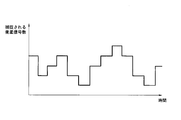
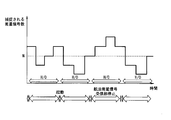
- Explanatory drawing showing an example of information on reception characteristics of navigation satellite signals over time Explanatory drawing which shows an example of the schedule setting in this invention.
- which shows the other example of the schedule setting which implement
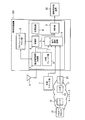
- FIG. 1 shows the overall configuration of a time synchronization system including a time synchronization apparatus as an embodiment of the present invention.
- the time synchronization apparatus 100 includes a navigation satellite signal antenna 1, a navigation satellite signal receiving unit 2, a clock unit 3, a storage circuit 4, a clock signal selection circuit (clock signal selection unit) 5, and an internal clock source 6. , External clock sources 7-1 and 7-2, a scheduling server unit (schedule determining unit) 8, and a control unit 9.
- the navigation satellite signal antenna 1 is an antenna for receiving navigation satellite signals.
- the navigation satellite signal receiving unit 2 is a functional unit that receives a plurality of navigation satellite signals, calculates time information at the reception position, and outputs the time information.
- the clock unit 3 is a functional unit that operates the time of the present time synchronization system.
- the storage circuit 4 is a circuit for storing various data.
- the clock signal selection circuit 5 is a circuit for switching the supply source of the reference signal used by the timepiece unit 3 for time operation.
- the internal clock source 6 and the external clock sources 7-1 and 7-2 are devices that generate clock signals that are arranged inside and outside the device, respectively.
- the number of external clock sources (7) that can be selected by the clock signal selection circuit 5 is not limited to two in the present embodiment, and can be any n (n is any one of 1 to N).
- the scheduling server unit 8 includes a H / O schedule, specifically, a first time zone in which time synchronization is performed using time information based on the received navigation satellite signal, and a second time zone in which time synchronization is performed by H / O. Is a functional unit that generates a schedule including
- the control unit 9 is a functional unit for controlling time synchronization according to the schedule.
- the navigation satellite signal antenna 1 is connected to the navigation satellite signal receiving unit 2 by a coaxial cable or the like, and transmits the received navigation satellite signal.
- the navigation satellite signal receiving unit 2 calculates at least four parameters of three-dimensional coordinate information (x, y, z) and reception time information (t) of the reception position of the signal by simultaneously receiving signals of at least four navigation satellites. Further, the timing of the time information received from the navigation satellite is corrected based on the propagation delay time from the position of the navigation satellite to the reception point.
- the navigation satellite signal receiving unit 2 outputs the time information generated in this manner and synchronized with the navigation satellite to the clock unit 3.
- time information a timing signal in a signal format such as 1 PPS (Pulse Per Second) synchronized with a navigation satellite signal and information on absolute time such as time and seconds (ToD: Time of Day) Time code data in a format such as NMEA (National Marine Electronics Association) 0183 is used.
- the navigation satellite signal receiving unit 2 may be installed inside the device, or a navigation satellite signal receiving device placed outside the device may be used.
- the navigation satellite signal receiving unit 2 can store reception position information calculated by positioning based on the navigation satellite signal. In this case, if it is assumed that the position of the navigation satellite signal antenna 1 is not moved, then time synchronization can be performed if at least one navigation satellite signal is received.
- the clock unit 3 is responsible for the operation of the system time, and generates a predetermined standard time, here a time signal synchronized with the above-described UTC, based on the time information supplied from the navigation satellite signal receiving unit 2.
- the clock unit 3 includes an oscillator and a phase locked loop (PLL) inside, and simultaneously synchronizes timing with the 1PPS signal supplied from the navigation satellite signal receiver 2 at the same time. Then, time information matched with the absolute time by the ToD information supplied from the navigation satellite signal receiving unit 2 is generated. Further, the clock unit 3 plays a role of supplying a time signal to a device 10 (time synchronized device) outside the device that performs time synchronization.
- PLL phase locked loop
- the time information used at this time is the time via a packet communication interface such as Ethernet (registered trademark) using the PTP (Precision Time Protocol) protocol defined by IEEE 1588 version 2 in addition to the above 1PPS / ToD. A case where information is supplied is also assumed.
- the clock unit 3 stops referring to the time information from the navigation satellite signal receiving unit 2 based on the control by the control unit 9.
- the storage circuit 4 is a device for storing and holding data related to the schedule input from the scheduling server unit 8 and other system data.
- the clock signal selection circuit 5 uses the timing signal supplied from the navigation satellite signal receiving unit 2 and the internal clock source 6 or the external clock source 7-1 or 7-2 as a reference signal used by the clock unit 3 for time operation. It is a functional part for switching between supplied clock signals. That is, when the clock unit 3 synchronizes with the navigation satellite signal receiving unit 2, the timing signal supplied from the navigation satellite signal receiving unit 2 is used. When the clock unit 3 is H / O, the internal clock source 6 or the external clock source 7-1 is used. Alternatively, the clock signals supplied from 7-2 are switched to be output to the clock unit 3, respectively.
- the internal clock source 6 and the external clock sources 7-1 and 7-2 are functional units inside or outside the apparatus that generate and output the clock signal, and an oscillator made of crystal, rubidium, cesium or the like is assumed.
- the external clock sources 7-1 and 7-2 are not only connected to the above-mentioned oscillators but also connected to communication interfaces of node devices in a wide area network such as SDH (Synchronous Digital Hierarchy), ATM (Asynchronous Transfer Mode), and Ethernet. Dependent synchronization can also be considered.
- FIG. 2 shows a modification of this embodiment showing such a form.
- an example of using a clock signal from the master clock 13 transmitted via each node 12 of the network 11 is shown. Yes.
- the scheduling server unit 8 is a functional unit for inputting and holding information on the reception characteristics of satellite signals over time, calculating a schedule for performing H / O based on the information, and supplying the schedule to the control unit 9. Details of the operation will be described later.
- control unit 9 controls the operation of the clock signal selection circuit 5 that switches the reference signal used by the clock unit 3 when operating the time. It is a functional part.
- the scheduling server unit 8 acquires information on the reception characteristics of the navigation satellite signal over time at the position where the navigation satellite signal antenna is installed. Information on the reception characteristics of the navigation satellite signal over time is obtained by simulation or actually measured data by receiving the navigation satellite signal.
- Non-Patent Document 6 a method of simulating the number of satellites captured in the LOS environment over time using the orbit information of the navigation satellite and the spatial information of the surrounding environment of the navigation satellite signal antenna.
- the scheduling server unit 8 acquires the necessary orbit information of the navigation satellite and updates it.
- almanac data, ephemeris data, etc. are used as orbit information for navigation satellites. Satellite almanac data and ephemeris data are available in the USCG (United States, Coast, Guard, Navigation Center (URL: http://www.navcen.uscg.gov)) and JAXA (Japan Aerospace, eXploration, Agency (URL: http: // qz- vision.jaxa.jp/USE/)) and other public organizations.
- orbit information of navigation satellites can be obtained from navigation satellite signals.
- the orbit information of the navigation satellite is input from the navigation satellite signal receiving unit 2 to the scheduling server unit 8.
- the acquisition method of the time-dependent reception characteristics of the navigation satellite signal based on the actual measurement data includes a method of measuring the reception characteristics of the navigation satellite signal over time and acquiring the data in advance, or the time-dependent acquisition of the navigation satellite signal obtained by the simulation. There is a method of correcting the reception characteristics with the data of the reception characteristics over time of the measured navigation satellite signals.
- the information on the reception characteristics of the navigation satellite signal over time is given as data over time of the number of signals of the acquired navigation satellite, as shown in FIG.
- This data may be given the identification number of the receivable navigation satellite and coordinate information on the celestial sphere of the navigation satellite centered on the position of the navigation satellite signal antenna 1.
- the scheduling determination procedure in the scheduling server unit 8 is basically based on performing scheduling so as to switch to H / O in a time zone in which a necessary number of navigation satellites cannot be acquired based on the data of the reception characteristics of navigation satellite signals over time.
- the time synchronization accuracy required here is X
- the frequency accuracy of the internal or external clock signal source i used in H / O is Yi.
- the time synchronization accuracy required between base stations of the TD-LTE (Time Division Long Term Evolution) system, which is the TDD LTE (Long Term Evolution) communication system is 1 microsecond (1 ⁇ 10 ⁇ 6 seconds). If the accuracy of the clock signal is 0.1 ppb (parts per billion: 10 -9 ) and the accuracy of the cesium transmitter is 0.01 ppb, the maximum continuous H / O allowable time is When H / O is performed by a vessel, it takes 10 4 seconds, and for a cesium transmitter, 10 5 seconds.
- the scheduling server unit 8 selects the clock signal source i having the required accuracy from the data of the reception characteristics of the navigation satellite signals over time and selects the clock signal source i having the required accuracy according to the length of time during which the required number of satellite signals cannot be captured. Scheduling. The determination of the schedule may be performed automatically, or a part of manual operation may be interposed. FIG. 4 shows an example of schedule setting when H / O is performed when the number of captured navigation satellite signals is less than N.
- the number of navigation satellites to be acquired is usually at least four when starting the time synchronization system, but once the positioning and time synchronization process is completed After that, when the position of the navigation satellite signal antenna 1 is not moved, it is possible to synchronize the time if at least one navigation satellite can be captured by holding the positional information obtained by positioning.
- the position information on the map is specified and automatically generated from the map data, or from the map data based on the address (actually, the corresponding coordinate information) and the floor information (that is, the height information).
- the output position information and the position information acquired by positioning at the installation position of the navigation satellite signal antenna 1 from the outside.
- the navigation satellite signal receiving unit 2 uses the position information to correct the propagation delay based on the position relative to the satellite position. Time synchronization with UTC is possible. Therefore, in this case, if at least one navigation satellite can be acquired, time synchronization is performed depending on the navigation satellite signal. If no satellite can be acquired, an internal or external clock signal source is used as a reference signal. Schedule to do.
- each node 12 constituting the SDH or ATM network 11 When using a network interface as an external clock source as shown in FIG. 2, each node 12 constituting the SDH or ATM network 11 performs subordinate synchronization with an upper node 12 close to the master clock 13. By doing so, the clock signal is transmitted while maintaining the frequency accuracy of the master clock 13.
- a layer 2 switch or the like corresponding to SyncE is used as a subordinate synchronization node (upper node).
- the accuracy of the oscillator of the master clock 13 used by the network 11 is referred to.
- the accuracy is inferior, but when a clock signal from a rubidium oscillator mounted in a more reliable device is used and long time H / O is required It is assumed that the clock source is properly used, such as synchronizing with the clock signal of the master clock by the cesium oscillator by the network interface.
- the present invention is a method of scheduling H / O time in advance and proactively performing H / O.
- H / O is selected for the boundary time zone that changes to a state below a certain number, and the time for performing H / O is increased within a range in which the time synchronization accuracy can be maintained, in other words, constant before and after the boundary time zone.
- Stable time synchronization can be realized by setting a schedule having a sufficient margin by adding this time.
- FIG. 5 shows an example of setting such a schedule.
- Such a margin in the H / O implementation time is expected to be effective even after considering the difference between the reception characteristics of the navigation satellite signal and the actual satellite signal by simulation.
- the navigation satellite signal is not a direct wave in the LOS environment but a signal reflected by a structure around the satellite antenna is received as a reflected wave.
- a propagation delay occurs due to a difference in propagation distance, and an error occurs in time synchronization. For example, when a difference in propagation distance of 300 m occurs, a time synchronization error of about 1 microsecond occurs.
- the time due to the reception of the multipath signal can be determined by previously determining the navigation satellite to be used for time synchronization as a satellite with a high elevation angle by scheduling. High-accuracy time synchronization that avoids deterioration of synchronization accuracy is realized. Selection of the navigation satellite used for time synchronization is realized by referring to the coordinate information on the celestial sphere of the navigation satellite from the information on the reception characteristics of the navigation satellite signal over time.
- the navigation satellite used for time synchronization in the first time zone in which time synchronization is performed using time information based on the received navigation satellite signal is notifies the navigation satellite signal receiving unit 2 of information on the navigation satellite to be used for time synchronization.
- time synchronization by the navigation satellite is performed in the minimum necessary time zone, and H / O is selectively performed in other time zones.
- the navigation satellite signal receiving unit 2 can be temporarily stopped.
- the navigation satellite signal receiving unit 2 may be a navigation satellite signal receiving device placed outside the device, but in that case, the navigation satellite signal receiving device 2 performs a power saving operation by activating the navigation satellite signal receiving device for a necessary time. Can do.
- a system that performs time synchronization based on time information from the clock unit 3 performs a power saving operation.
- a case of power saving operation in which a mobile communication base station starts and stops according to a predetermined schedule according to traffic demand is assumed. In this case, there is a problem that there is no guarantee that the navigation satellite signal can be received at the time when the base station is activated.
- the time synchronization system is set to a time at which time synchronization by the navigation satellite can be performed before the time at which the base station is scheduled to be activated.
- the base station is scheduled even if it is not possible to receive the navigation satellite signal when starting the base station by performing H / O in the time synchronization system until the time when the base station starts after starting.
- Time synchronization can be performed during the startup time.
- FIG. 7 shows an example of such schedule setting.
- All the functional units of the time synchronization system of the present invention may be placed in the same location, or some of them may be placed in different locations.
- the scheduling server unit 8 is installed in a data center or installed on a cloud.
- schedule data is transmitted via a network interface used for an external clock source.
- orbit information of navigation satellites is transmitted via a network interface.
- FIG. 8 shows an example of a flowchart for performing such an operation.
- time synchronization is performed according to the accuracy of the clock signal used in H / O even in an environment where the necessary number of navigation satellite signals cannot be temporarily acquired and the reception environment is not good.
- A Information related to time-dependent reception characteristics of navigation satellite signals (time-dependent simulation data and navigation data of navigation satellite signal reception characteristics based on navigation satellite orbit information, spatial information around navigation satellite signal antennas, and three-dimensional map data)
- the necessary number of navigation satellite signals cannot be received at all times by proactively scheduling H / O on the condition that the required time synchronization accuracy can be maintained based on external information such as actual measurement data of satellite signal reception characteristics) Even in the environment, highly accurate time synchronization can be realized constantly.
- B To realize stable time synchronization by selectively performing proactive H / O in a time zone where the navigation satellite signal is weak, based on information on reception characteristics of the navigation satellite signal over time. Can do.
- the navigation satellite signal is time-synchronized in a time zone in which the navigation satellite signal can be received as a direct wave, that is, in the LOS environment.
- the schedule By presetting the schedule so as to shift to H / O in the time zone, it is possible to suppress the deterioration of the time synchronization accuracy due to the propagation time difference of the reflected wave of the navigation satellite signal.
- D Based on information on the reception characteristics of navigation satellite signals over time, time synchronization with navigation satellite signals is performed in a time zone in which a plurality of spatially distributed navigation satellite signals can be received. By presetting the schedule so as to shift to H / O during this time zone, highly accurate time synchronization can be realized.
- the following effects are also expected in the power saving operation of the apparatus or system for performing time synchronization and the system (base station facility or the like) using the apparatus or system.
- the power saving effect of the time synchronization system is expected by performing the operation that activates the function unit that receives the navigation satellite signal at least only in the time necessary for time synchronization by the navigation satellite.
- G Based on information on the reception characteristics of navigation satellite signals over time, time synchronization is achieved while maintaining the required time synchronization accuracy by activating the navigation satellite signal receiver in advance in a time zone in which GNSS can be used. It becomes possible to realize power saving of the system (base station equipment etc.) to be used.
- the effect of realizing highly accurate and stable time synchronization can be obtained even in an environment where the reception state of the navigation satellite signal is not good.
- Navigation satellite signal antenna 2 Navigation satellite signal receiving unit 3: Clock unit 4: Memory circuit 5: Clock signal selection circuit 6: Internal clock source 7: External clock source 8: Scheduling server unit 9: Control unit 10: Timed Synchronizer 11: Network 12: Node 13: Master clock 100: Time synchronizer
Landscapes
- Engineering & Computer Science (AREA)
- Radar, Positioning & Navigation (AREA)
- Remote Sensing (AREA)
- Physics & Mathematics (AREA)
- General Physics & Mathematics (AREA)
- Computer Networks & Wireless Communication (AREA)
- Theoretical Computer Science (AREA)
- General Engineering & Computer Science (AREA)
- Electric Clocks (AREA)
- Position Fixing By Use Of Radio Waves (AREA)
Abstract
Description
本願は、2015年2月13日に出願された特願2015-026137号に基づき優先権を主張し、その内容をここに援用する。
(1)将来の航法衛星信号の受信状態が不明であるため、H/Oの期間が長時間に及ぶ場合には要求される時刻同期精度を維持することができない場合がある。
(2)航法衛星信号が微弱な状態ではH/Oに頻繁に移行する、即ち時刻同期システムの基準信号が頻繁に切り替わる事態を生じ、システムの動作が不安定になる場合がある。
(3)見通し可能な(Line of Sight:LOS)環境で航法衛星から伝播した信号を直接波として受信する以外に反射波として航法信号を受信するケースがあり、この場合にはシステムはH/Oに切り替わらず、時刻同期精度が却って劣化する場合がある。
(4)モバイル通信システムの基地局の省電力化を目的として、トラフィック需要に応じて基地局の起動・停止をスケジューリングして運用を行う場合、基地局の起動時の航法衛星信号の受信状態が不明であるため、基地局の起動動作に連動させて時刻同期システムを起動することが困難となる場合がある(非特許文献5参照)。
所定の標準的な時刻に同期した時刻信号を生成して外部に出力する時計部の当該所定の標準的な時刻への同期を、前記所定の標準的な時刻に関する情報を含む電波を受信し、当該受信した電波に基づく時刻情報を用いて行うか、前記時刻情報の代わりに内部または外部のクロック源からのクロック信号を用いて行うホールドオーバによって行うかを選択可能な時刻同期装置であって、
前記受信した電波に基づく時刻情報を用いて時刻同期を行う第1の時間帯と、前記ホールドオーバによって時刻同期を行う第2の時間帯とのスケジュールを、前記電波の受信地点における当該電波の経時的な受信特性に従って決定するスケジュール決定部と、
前記受信した電波に基づく時刻情報と、前記内部または外部のクロック源からのクロック信号とのいずれか一方を選択的に前記時計部に供給するクロック信号選択部と、
前記スケジュール決定部で決定されたスケジュールに従い、前記クロック信号選択部を制御する制御部とを具備した
ことを特徴とする時刻同期装置を提案する。
所定の標準的な時刻に同期した時刻信号を生成して外部に出力する時計部の当該所定の標準的な時刻への同期を、前記所定の標準的な時刻に関する情報を含む電波を受信し、当該受信した電波に基づく時刻情報を用いて行うか、前記時刻情報の代わりに内部または外部のクロック源からのクロック信号を用いて行うホールドオーバによって行うかを選択可能な時刻同期方法であって、
前記受信した電波に基づく時刻情報を用いて時刻同期を行う第1の時間帯と、前記ホールドオーバによって時刻同期を行う第2の時間帯とのスケジュールを、前記電波の受信地点における当該電波の経時的な受信特性に従って決定する工程と、
前記決定されたスケジュールに従い、前記第1の時間帯には前記受信した電波に基づく時刻情報を前記時計部に供給し、前記第2の時間帯には前記内部または外部のクロック源からのクロック信号を前記時計部に供給する工程とを含む
ことを特徴とする時刻同期方法も提案する。
航法衛星信号受信部2は複数の航法衛星信号を受信し、受信位置における時刻情報を計算し出力する機能部である。
時計部3は本時刻同期システムの時刻を運用する機能部である。
記憶回路4は各種のデータを記憶するための回路である。
クロック信号選択回路5は時計部3が時刻の運用に使用する基準信号の供給源を切り替えるための回路である。
なお、クロック信号選択回路5が選択可能な外部クロック源(7)の数は、本実施形態の2個に限らず、任意のn個(nは1~Nのいずれか)とすることができる。
スケジューリングサーバ部8はH/Oのスケジュール、詳細には受信した航法衛星信号に基づく時刻情報を用いて時刻同期を行う第1の時間帯と、H/Oによって時刻同期を行う第2の時間帯とを含むスケジュールを生成する機能部である。
制御部9は前記スケジュールに従い時刻同期を制御するための機能部である。
また、時計部3は時刻同期を行う装置外部の装置(被時刻同期装置)10に対して時刻信号を供給する役割を担う。この際に使用される時刻情報としては上記の1PPS/ToDの他にIEEE1588 version2で規定されるPTP(Precision Time Protocol)プロトコルを使用して、Ethernet(登録商標)等のパケット通信インタフェースを介して時刻情報が供給されるケースも想定される。
なお、H/Oの際には時計部3は制御部9による制御に基づき、航法衛星信号受信部2からの時刻情報の参照を停止する。
シミュレーションにより航法衛星信号の経時的な受信特性を得るケースではスケジューリングサーバ部8において必要な航法衛星の軌道情報を取得し最新化する。
図4に、捕捉される航法衛星信号の数がN個を下回った場合にH/Oを行うときのスケジュール設定の一例を示す。
時刻同期に使用する航法衛星の選択は、航法衛星信号の経時的な受信特性に関する情報から航法衛星の天球上の座標情報を参照することにより実現される。
航法衛星信号受信部2は装置の外部に置かれた航法衛星信号受信装置であっても良いが、その場合には航法衛星信号受信装置を必要な時間だけ起動することによって省電力動作を行うことができる。
例えば、スケジューリングサーバ部8をデータセンタに設置したり、クラウド上に設置するといった運用が想定される。その場合、外部クロック源に使用するネットワークインタフェースを経由してスケジュールのデータを伝達するといった運用を行うことも想定される。また、同様に航法衛星の軌道情報をネットワークインタフェースを経由して伝達することも想定される。
より具体的には、以下のような効果が得られる。(A)航法衛星信号の経時的な受信特性に関する情報(航法衛星軌道情報および航法衛星信号アンテナの周辺の空間情報や3次元地図データに基づく、航法衛星信号受信特性の経時的なシミュレーションデータや航法衛星信号受信特性の実測データなどの外部情報)に基づき、要求される時刻同期精度を維持可能な条件でプロアクティブにH/Oをスケジューリングすることによって、必要な数の航法衛星信号を常時受信できない環境であっても、定常的に高精度な時刻同期を実現することができる。
(B)航法衛星信号の経時的な受信特性に関する情報に基づき、航法衛星信号が微弱な時間帯においては選択的にプロアクティブなH/Oを行うことで、安定的な時刻同期を実現することができる。
(C)航法衛星信号の経時的な受信特性に関する情報に基づき、航法衛星信号を直接波として、即ちLOS環境で受信することが可能な時間帯に航法衛星信号による時刻同期を行い、それ以外の時間帯にH/Oに移行するようにスケジュールをプリセットすることで、航法衛星信号の反射波の伝播時間差に起因する時刻同期精度の劣化を抑制することができる。
(D)航法衛星信号の経時的な受信特性に関する情報に基づき、空間的に広範囲に分布した複数の航法衛星信号を受信することが可能な時間帯に航法衛星信号による時刻同期を行い、それ以外の時間帯にH/Oに移行するようにスケジュールをプリセットすることで、高精度な時刻同期を実現することができる。
(E)航法衛星信号アンテナの位置情報を事前に保持しておくことで、捕捉可能な航法衛星信号の数が1つの状態でも航法衛星信号による時刻同期を実現することが可能となり、プロアクティブなH/Oと組み合わせることにより、航法衛星信号により定常的に高精度な時刻同期を実現可能なエリアが拡大する。
(F)航法衛星信号を受信する機能部を航法衛星による時刻同期を行うのに必要な時間においてのみ最低限起動する運用を行うことにより、時刻同期システムの省電力効果が期待される。
(G)航法衛星信号の経時的な受信特性に関する情報に基づき、GNSSを利用可能な時間帯に航法衛星信号の受信装置を前もって起動することで、必要な時刻同期精度を維持しながら時刻同期を利用するシステム(基地局設備等)の省電力化を実現することが可能となる。
2:航法衛星信号受信部
3:時計部
4:記憶回路
5:クロック信号選択回路
6:内部クロック源
7:外部クロック源
8:スケジューリングサーバ部
9:制御部
10:被時刻同期装置
11:ネットワーク
12:ノード
13:マスタークロック
100:時刻同期装置
Claims (8)
- 所定の標準的な時刻に同期した時刻信号を生成して外部に出力する時計部の当該所定の標準的な時刻への同期を、前記所定の標準的な時刻に関する情報を含む電波を受信し、当該受信した電波に基づく時刻情報を用いて行うか、前記時刻情報の代わりに内部または外部のクロック源からのクロック信号を用いて行うホールドオーバによって行うかを選択可能な時刻同期装置であって、
前記受信した電波に基づく時刻情報を用いて時刻同期を行う第1の時間帯と、前記ホールドオーバによって時刻同期を行う第2の時間帯とのスケジュールを、前記電波の受信地点における当該電波の経時的な受信特性に従って決定するスケジュール決定部と、
前記受信した電波に基づく時刻情報と、前記内部または外部のクロック源からのクロック信号とのいずれか一方を選択的に前記時計部に供給するクロック信号選択部と、
前記スケジュール決定部で決定されたスケジュールに従い、前記クロック信号選択部を制御する制御部とを具備した
ことを特徴とする時刻同期装置。 - 前記第2の時間帯の最大の連続した許容時間は、前記時計部において要求される時刻同期の精度を維持可能な時間内とする
ことを特徴とする請求項1に記載の時刻同期装置。 - 前記第2の時間帯においては、前記所定の標準的な時刻に関する情報を含む電波を受信する回路の動作を停止する
ことを特徴とする請求項1に記載の時刻同期装置。 - 前記所定の標準的な時刻に関する情報を含む電波が衛星から送信される電波である場合において、
衛星からの電波が微弱である時間帯、もしくは必要な数の衛星からの電波を受信できない時間帯、もしくは衛星からの直接波による電波を受信できない時間帯を、前記第2の時間帯に決定する
ことを特徴とする請求項1に記載の時刻同期装置。 - 前記衛星からの電波が微弱である時間帯、もしくは必要な数の衛星からの電波を受信できない時間帯、もしくは衛星からの直接波による電波を受信できない時間帯の前後に一定の時間を付加した時間帯を、前記第2の時間帯に決定する
ことを特徴とする請求項4に記載の時刻同期装置。 - 前記所定の標準的な時刻に関する情報を含む電波が衛星から送信される電波である場合において、
前記第1の時間帯の時刻同期に使用する電波を受信すべき衛星として、前記衛星のうちあらかじめスケジューリングされた衛星を選択する
ことを特徴とする請求項1に記載の時刻同期装置。 - 所定の標準的な時刻に同期した時刻信号を生成して外部に出力する時計部の当該所定の標準的な時刻への同期を、前記所定の標準的な時刻に関する情報を含む電波を受信し、当該受信した電波に基づく時刻情報を用いて行うか、前記時刻情報の代わりに内部または外部のクロック源からのクロック信号を用いて行うホールドオーバによって行うかを選択可能な時刻同期方法であって、
前記受信した電波に基づく時刻情報を用いて時刻同期を行う第1の時間帯と、前記ホールドオーバによって時刻同期を行う第2の時間帯とのスケジュールを、前記電波の受信地点における当該電波の経時的な受信特性に従って決定する工程と、
前記決定されたスケジュールに従い、前記第1の時間帯には前記受信した電波に基づく時刻情報を前記時計部に供給し、前記第2の時間帯には前記内部または外部のクロック源からのクロック信号を前記時計部に供給する工程とを含む
ことを特徴とする時刻同期方法。 - コンピュータを、請求項1に記載の時刻同期装置の各部として機能させるためのプログラム。
Priority Applications (2)
| Application Number | Priority Date | Filing Date | Title |
|---|---|---|---|
| US15/543,333 US11150353B2 (en) | 2015-02-13 | 2016-02-12 | Time synchronization device, and method and program therefor |
| JP2016574854A JP6283428B2 (ja) | 2015-02-13 | 2016-02-12 | 時刻同期装置、その方法及びプログラム |
Applications Claiming Priority (2)
| Application Number | Priority Date | Filing Date | Title |
|---|---|---|---|
| JP2015-026137 | 2015-02-13 | ||
| JP2015026137 | 2015-02-13 |
Publications (1)
| Publication Number | Publication Date |
|---|---|
| WO2016129665A1 true WO2016129665A1 (ja) | 2016-08-18 |
Family
ID=56614356
Family Applications (1)
| Application Number | Title | Priority Date | Filing Date |
|---|---|---|---|
| PCT/JP2016/054091 Ceased WO2016129665A1 (ja) | 2015-02-13 | 2016-02-12 | 時刻同期装置、その方法及びプログラム |
Country Status (3)
| Country | Link |
|---|---|
| US (1) | US11150353B2 (ja) |
| JP (1) | JP6283428B2 (ja) |
| WO (1) | WO2016129665A1 (ja) |
Cited By (2)
| Publication number | Priority date | Publication date | Assignee | Title |
|---|---|---|---|---|
| JP7603748B1 (ja) | 2023-06-14 | 2024-12-20 | 西日本電信電話株式会社 | 時刻同期システム、通信システム及び時刻同期方法 |
| WO2025004129A1 (ja) * | 2023-06-26 | 2025-01-02 | 日本電信電話株式会社 | 時刻基準システムおよびその時刻同期制御方法 |
Families Citing this family (24)
| Publication number | Priority date | Publication date | Assignee | Title |
|---|---|---|---|---|
| JP6451666B2 (ja) * | 2016-03-01 | 2019-01-16 | カシオ計算機株式会社 | 通信装置、電子時計、通信方法及びプログラム |
| CN106842898B (zh) * | 2016-12-29 | 2019-02-19 | 西安空间无线电技术研究所 | 一种导航卫星时间双时钟域高精度实时同步调整方法 |
| FR3062538B1 (fr) * | 2017-02-02 | 2020-07-03 | Thales | Procede et systeme pour transporter des signaux dans un systeme satellitaire |
| CN110061794A (zh) * | 2018-01-19 | 2019-07-26 | 深圳市英特瑞半导体科技有限公司 | 一种授时系统以及方法 |
| JP7070387B2 (ja) * | 2018-12-11 | 2022-05-18 | 日本電信電話株式会社 | 時刻比較装置、および、時刻品質監視方法 |
| CN111756593B (zh) * | 2019-03-28 | 2023-01-17 | 北京米文动力科技有限公司 | 时间同步系统的同步精度的自测方法以及测试方法 |
| CN111726190B (zh) * | 2020-06-18 | 2022-10-04 | 四川艾贝斯科技发展有限公司 | 用于路灯控制系统的系统时间校准方法 |
| US11789161B2 (en) | 2020-07-14 | 2023-10-17 | Spirent Communications Plc | Accuracy of a GNSS receiver that has a non-directional antenna |
| US12282101B2 (en) | 2020-07-14 | 2025-04-22 | Spirent Communications Plc | GNSS forecast and line of sight detection |
| US11536855B2 (en) * | 2020-07-14 | 2022-12-27 | Spirent Communications Plc | Path planning using forecasts of obscuration and multipath |
| US12298409B2 (en) | 2020-07-14 | 2025-05-13 | Spirent Communications Plc | GNSS forecast and background obscuration prediction |
| US12265159B2 (en) | 2020-07-14 | 2025-04-01 | Spirent Communications Plc | GNSS forecast impacting receiver startup |
| US12468045B1 (en) | 2020-07-14 | 2025-11-11 | Spirent Communications Plc | Utilizing GNSS risk analysis data for facilitating safe routing of autonomous drones |
| US12292515B2 (en) | 2020-07-14 | 2025-05-06 | Spirent Communications Plc | Generating and distributing GNSS risk analysis data for facilitating safe routing of autonomous drones |
| US12429599B2 (en) | 2020-07-14 | 2025-09-30 | Spirent Communications Plc | GNSS forecast and spoofing/jamming detection |
| US11287531B2 (en) | 2020-07-14 | 2022-03-29 | Spirent Communications, Plc | Architecture for providing forecasts of GNSS obscuration and multipath |
| US11425672B2 (en) * | 2020-11-17 | 2022-08-23 | Huawei Technologies Co., Ltd. | Method, apparatus and system for synchronizing a satellite network |
| CN114916019B (zh) * | 2021-02-08 | 2023-11-21 | 大唐移动通信设备有限公司 | 一种信息处理方法、装置及计算机可读存储介质 |
| US12289695B2 (en) * | 2021-05-04 | 2025-04-29 | Electronics And Telecommunications Research Institute | Method for providing time synchronization service for 5G system external application service |
| US12517264B2 (en) | 2022-09-16 | 2026-01-06 | Spirent Communications Plc | Architecture for providing forecasts of low earth orbit (LEO) satellite obscuration and multipath |
| US12517259B2 (en) | 2022-09-16 | 2026-01-06 | Spirent Communications Plc | Utilizing low earth orbit (LEO) satellite data for obscuration and multipath risk analysis |
| CN115865252B (zh) * | 2022-11-23 | 2023-12-01 | 淮阴工学院 | 一种可设定周期的高精度gnss时间同步方法 |
| CN116185906B (zh) * | 2023-02-28 | 2025-10-17 | 湖南泽天智航电子技术有限公司 | 基于飞腾麒麟平台与cpld的双时统通信方法及系统 |
| CN117930622B (zh) * | 2024-03-25 | 2024-06-11 | 山东师范大学 | 一种无线电控计时系统 |
Citations (7)
| Publication number | Priority date | Publication date | Assignee | Title |
|---|---|---|---|---|
| JP3069983U (ja) * | 1999-12-27 | 2000-07-04 | 株式会社アドバンテスト | 基準時刻・基準周波数発生装置 |
| JP3938085B2 (ja) * | 2003-03-31 | 2007-06-27 | セイコーエプソン株式会社 | 電波修正時計およびその制御方法 |
| JP2010112834A (ja) * | 2008-11-06 | 2010-05-20 | Tokyo Univ Of Science | 変位計測システム、衛星信号受信装置および衛星測位方法 |
| JP2011182099A (ja) * | 2010-02-26 | 2011-09-15 | Nec Corp | 基準信号発生装置及び方法 |
| JP2011208949A (ja) * | 2010-03-26 | 2011-10-20 | Citizen Holdings Co Ltd | 衛星電波腕時計 |
| JP2012202814A (ja) * | 2011-03-25 | 2012-10-22 | Citizen Holdings Co Ltd | 時刻修正機能付きgps時計 |
| JP2012215560A (ja) * | 2011-03-25 | 2012-11-08 | Seiko Epson Corp | 電子時計及び電子時計の制御方法 |
Family Cites Families (7)
| Publication number | Priority date | Publication date | Assignee | Title |
|---|---|---|---|---|
| JP4543480B2 (ja) * | 2000-03-02 | 2010-09-15 | ソニー株式会社 | Gps受信機、およびgps測位方法 |
| JP5251372B2 (ja) * | 2008-09-04 | 2013-07-31 | セイコーエプソン株式会社 | 電子時計 |
| JP5002627B2 (ja) * | 2009-08-25 | 2012-08-15 | 日立オートモティブシステムズ株式会社 | 電源制御装置 |
| US8565169B2 (en) * | 2010-01-12 | 2013-10-22 | Qualcomm Incorporated | Timing synchronization methods and apparatus |
| EP2555062B1 (en) | 2010-03-26 | 2019-12-11 | Citizen Watch Co., Ltd. | Satellite radio-wave watch |
| JP5582045B2 (ja) * | 2011-01-20 | 2014-09-03 | セイコーエプソン株式会社 | 時刻修正装置、時刻修正装置付き計時装置及び時刻修正方法 |
| JP5915030B2 (ja) * | 2011-08-30 | 2016-05-11 | セイコーエプソン株式会社 | 衛星信号受信装置、衛星信号受信方法、および、電子機器 |
-
2016
- 2016-02-12 JP JP2016574854A patent/JP6283428B2/ja active Active
- 2016-02-12 US US15/543,333 patent/US11150353B2/en active Active
- 2016-02-12 WO PCT/JP2016/054091 patent/WO2016129665A1/ja not_active Ceased
Patent Citations (7)
| Publication number | Priority date | Publication date | Assignee | Title |
|---|---|---|---|---|
| JP3069983U (ja) * | 1999-12-27 | 2000-07-04 | 株式会社アドバンテスト | 基準時刻・基準周波数発生装置 |
| JP3938085B2 (ja) * | 2003-03-31 | 2007-06-27 | セイコーエプソン株式会社 | 電波修正時計およびその制御方法 |
| JP2010112834A (ja) * | 2008-11-06 | 2010-05-20 | Tokyo Univ Of Science | 変位計測システム、衛星信号受信装置および衛星測位方法 |
| JP2011182099A (ja) * | 2010-02-26 | 2011-09-15 | Nec Corp | 基準信号発生装置及び方法 |
| JP2011208949A (ja) * | 2010-03-26 | 2011-10-20 | Citizen Holdings Co Ltd | 衛星電波腕時計 |
| JP2012202814A (ja) * | 2011-03-25 | 2012-10-22 | Citizen Holdings Co Ltd | 時刻修正機能付きgps時計 |
| JP2012215560A (ja) * | 2011-03-25 | 2012-11-08 | Seiko Epson Corp | 電子時計及び電子時計の制御方法 |
Cited By (3)
| Publication number | Priority date | Publication date | Assignee | Title |
|---|---|---|---|---|
| JP7603748B1 (ja) | 2023-06-14 | 2024-12-20 | 西日本電信電話株式会社 | 時刻同期システム、通信システム及び時刻同期方法 |
| JP2025000001A (ja) * | 2023-06-14 | 2025-01-06 | 西日本電信電話株式会社 | 時刻同期システム、通信システム及び時刻同期方法 |
| WO2025004129A1 (ja) * | 2023-06-26 | 2025-01-02 | 日本電信電話株式会社 | 時刻基準システムおよびその時刻同期制御方法 |
Also Published As
| Publication number | Publication date |
|---|---|
| JP6283428B2 (ja) | 2018-02-21 |
| US11150353B2 (en) | 2021-10-19 |
| JPWO2016129665A1 (ja) | 2017-08-17 |
| US20170350984A1 (en) | 2017-12-07 |
Similar Documents
| Publication | Publication Date | Title |
|---|---|---|
| JP6283428B2 (ja) | 時刻同期装置、その方法及びプログラム | |
| KR100895175B1 (ko) | 통신 시스템에서 gps 정보를 이용한 시간 동기화 방법및 장치 | |
| KR100876776B1 (ko) | 통신 시스템에서 gps 정보를 이용한 시간 동기화 방법및 장치 | |
| RU2608763C2 (ru) | Усовершенствованные синхронизация по времени и передача значений времени для группировок спутников посредством определения расстояния между спутниками и использования источника точного времени | |
| AU2003221935B2 (en) | Methods and apparatuses for measuring frequency of a basestation in cellular networks using mobile GPS receivers | |
| JP2014137318A (ja) | タイミング信号生成装置、電子機器、移動体、タイミング信号生成方法及び衛星信号受信機の制御方法 | |
| US9762341B2 (en) | Time synchronization system | |
| JP6598218B2 (ja) | 時刻同期装置及び測位装置、その方法並びにプログラム | |
| JP2015068729A (ja) | タイミング信号生成装置、電子機器および移動体 | |
| JP2018141688A (ja) | タイミング信号出力装置、電子機器および移動体 | |
| US11871369B1 (en) | Time module apparatus for use with fixed-beacon time transfer system | |
| CN116584052A (zh) | 用于同步卫星网络的方法、装置和系统 | |
| KR20010051654A (ko) | 타이밍 측정 방법 | |
| JP2020012651A (ja) | 航法衛星システム受信装置、その航法衛星信号処理方法及びプログラム | |
| JP7123624B2 (ja) | 同期信号変換装置 | |
| WO2020054344A1 (ja) | 同期信号変換装置 | |
| RU2585325C1 (ru) | Система синхронизации частоты и шкалы времени удаленных пунктов | |
| CN116113853B (zh) | 使用全球导航卫星系统的时标传播及其应用 | |
| RU166018U1 (ru) | Устройство для синхронизации часов | |
| US20180270774A1 (en) | Timing signal output device and electronic device | |
| JP2023044018A (ja) | 同期信号変換装置 | |
| JPWO2018230227A1 (ja) | タイミング信号生成装置、それを備える電子機器、及びタイミング信号生成方法 | |
| KR101099175B1 (ko) | 이동 단말기 내의 교정 시각 정보 전달방법 | |
| KR101037665B1 (ko) | Gps 시간 동기화 시스템 및 이를 이용한 시간 동기화 방법 | |
| JP2017052306A (ja) | 人工衛星、及び人工衛星の衛星送出信号生成方法 |
Legal Events
| Date | Code | Title | Description |
|---|---|---|---|
| 121 | Ep: the epo has been informed by wipo that ep was designated in this application |
Ref document number: 16749308 Country of ref document: EP Kind code of ref document: A1 |
|
| ENP | Entry into the national phase |
Ref document number: 2016574854 Country of ref document: JP Kind code of ref document: A |
|
| WWE | Wipo information: entry into national phase |
Ref document number: 15543333 Country of ref document: US |
|
| NENP | Non-entry into the national phase |
Ref country code: DE |
|
| 122 | Ep: pct application non-entry in european phase |
Ref document number: 16749308 Country of ref document: EP Kind code of ref document: A1 |