WO2015186308A1 - 経路探索装置、経路探索システム及び信号停止時間補完プログラム製品 - Google Patents
経路探索装置、経路探索システム及び信号停止時間補完プログラム製品 Download PDFInfo
- Publication number
- WO2015186308A1 WO2015186308A1 PCT/JP2015/002619 JP2015002619W WO2015186308A1 WO 2015186308 A1 WO2015186308 A1 WO 2015186308A1 JP 2015002619 W JP2015002619 W JP 2015002619W WO 2015186308 A1 WO2015186308 A1 WO 2015186308A1
- Authority
- WO
- WIPO (PCT)
- Prior art keywords
- stop time
- time information
- intersection
- created
- signalized
- Prior art date
- Legal status (The legal status is an assumption and is not a legal conclusion. Google has not performed a legal analysis and makes no representation as to the accuracy of the status listed.)
- Ceased
Links
Images




Classifications
-
- G—PHYSICS
- G01—MEASURING; TESTING
- G01C—MEASURING DISTANCES, LEVELS OR BEARINGS; SURVEYING; NAVIGATION; GYROSCOPIC INSTRUMENTS; PHOTOGRAMMETRY OR VIDEOGRAMMETRY
- G01C21/00—Navigation; Navigational instruments not provided for in groups G01C1/00 - G01C19/00
- G01C21/26—Navigation; Navigational instruments not provided for in groups G01C1/00 - G01C19/00 specially adapted for navigation in a road network
- G01C21/34—Route searching; Route guidance
-
- G—PHYSICS
- G08—SIGNALLING
- G08G—TRAFFIC CONTROL SYSTEMS
- G08G1/00—Traffic control systems for road vehicles
-
- G—PHYSICS
- G08—SIGNALLING
- G08G—TRAFFIC CONTROL SYSTEMS
- G08G1/00—Traffic control systems for road vehicles
- G08G1/123—Traffic control systems for road vehicles indicating the position of vehicles, e.g. scheduled vehicles; Managing passenger vehicles circulating according to a fixed timetable, e.g. buses, trains, trams
- G08G1/127—Traffic control systems for road vehicles indicating the position of vehicles, e.g. scheduled vehicles; Managing passenger vehicles circulating according to a fixed timetable, e.g. buses, trains, trams to a central station ; Indicators in a central station
- G08G1/13—Traffic control systems for road vehicles indicating the position of vehicles, e.g. scheduled vehicles; Managing passenger vehicles circulating according to a fixed timetable, e.g. buses, trains, trams to a central station ; Indicators in a central station the indicator being in the form of a map
Definitions
- the present disclosure relates to a route search device, a route search system, and a signal stop time supplement program product for searching for a route from a departure place to a destination.
- Patent Document 1 discloses that probe information is collected from a probe car, a stop time at a signalized intersection is calculated based on the collected probe information, and a route is searched.
- Patent Document 2 discloses that a stop time at a signalized intersection is collected from a probe car and a route is searched.
- An object of the present disclosure is to provide a route search device, a route search system, and a signal stop time supplement program product that can search for a route that sufficiently considers a stop time at a signalized intersection.
- the route search unit searches for a route from the departure place to the destination using stop time information created by a vehicle that collects stop times at signalized intersections.
- the route search unit supplements stop time information for signalized intersections for which stop time information is not sufficiently collected and stop time information has been created based on stop time information for other signalized intersections for which stop time information has been created.
- the route is searched using the determined value.
- the number of probe cars that have not actually passed or passed is relatively small, and the stop time information of signalized intersections for which stop time information is not collected and stop time information has not been created is relatively large.
- the route is searched using a value complemented based on stop time information of another signalized intersection that is actually created by passing the probe car.
- the route search unit searches for a route from the departure place to the destination using stop time information created by a vehicle that collects stop times at signalized intersections.
- the route search unit supplemented the stop time information of the time zone where stop time information is not created due to insufficient stop time collection based on the stop time information of the time zone where the stop time information is created Search for a route using the value.
- the number of probe cars that did not actually pass through the signalized intersection or the number of vehicles that passed through was relatively small, and the stop time information of the time zone in which stop time information was not created due to insufficient collection of stop time was relatively
- a route is searched using a value supplemented based on stop time information in a time zone that is actually created by passing many probe cars.
- the route search system 1 is mounted on a probe information collection device 2 mounted on each of a plurality of probe cars (vehicles that collect stop times at signalized intersections), a server (probe center) 3, and the vehicle.
- the navigation device 4 is configured to be communicable with each other via a communication network 5 (including the Internet, a VICS (Vehicle Information and Communication System) (registered trademark) network, and the like).
- the stop time is the time when the vehicle stops at the signalized intersection.
- the probe information collection device 2 collects various information relating to traffic in each place as the probe car travels, and transmits the collected information to the server 3 via the communication network 5 as probe information.
- the server 3 receives and collects probe information from the probe information collection device 2, and creates traffic information based on the collected probe information. Then, the server 3 distributes the created traffic information to the navigation device 4 via the communication network 5.
- “information” is used not only as a countable noun but also as a countable noun.
- the probe information collecting apparatus 2 includes a control circuit 21, a communication device 22, a position specifying device 23, a map data storage device 24 that stores map data, a probe information storage device 25 that stores probe information, and the like.
- the map data stored in the map data storage 24 includes road network data including map matching data, link information and node information for improving the current position (latitude / longitude information) of the vehicle and the identification accuracy of the traveling direction. Etc. are included.
- the control circuit 21 is mainly composed of a microcomputer having a CPU (Central Processing Unit), a ROM (Read Only Memory), a RAM (Random Access Memory), and the like.
- the control circuit 21 performs various processes when the CPU executes a control program stored in the ROM.
- the communication device 22 performs communication with the server 3 via the communication network 5.
- the position specifying unit 23 specifies the current position and the traveling direction of the vehicle based on signals input from a GPS receiver, a gyro sensor, a vehicle speed sensor, and the like.
- the control circuit 21 performs stop time collection processing for collecting stop times at signalized intersections where the probe car has passed, traffic jam information collection processing for collecting traffic jam information on the road on which the probe car is traveling, current position and progress of the identified vehicle.
- a transmission process for transmitting the direction and the collected stop time and traffic jam information as probe information from the communication device 22 to the server 3 via the communication network 5 is performed.
- the server 3 includes a control circuit 31, a communication device 32, a map data storage device 33 that stores map data, a probe information storage device 34 that stores probe information received by the communication device 32 from the probe information collection device 2, A stop time information storage unit 35 for storing stop time information is included.
- the map data stored in the map data storage 33 is more detailed than the map data stored in the map data storage 24 of the probe information collecting device 2 and the map data storage 44 of the navigation device 4 described later. Contains information.
- the stop time information (abbreviated as STI) is information including a value obtained by processing (for example, averaging) the collected stop time.
- the control circuit 31 is mainly composed of a microcomputer having a CPU, ROM, RAM and the like.
- the control circuit 31 performs various processes when the CPU executes a control program (including a signal stop time complementing program) stored in the ROM. Note that some or all of the various processes may be realized by a hardware configuration.
- the communication device 32 communicates with the probe information collection device 2 and the navigation device 4 via the communication network 5.
- the control circuit 31 is a stop time collection process for collecting the stop time at the signal intersection by a collecting unit 31a (also referred to as a collection device or a module), a signal for which stop time information is insufficient and stop time information is not generated.
- an interpolation unit 31b Complementary stop time processing is performed by a supplement device (also referred to as a supplement device or module).
- the signal stop time supplement program can also be provided as a non-transition computer-readable signal stop time supplement program product stored in a storage medium.
- the navigation device 4 stores a control circuit 41, a communication device 42, a position specifying device 43, a map data storage device 44 that stores map data, and stop time information that indicates a stop time for each time zone of a signalized intersection.
- a stop time information storage 45 and the like are included.
- the map data stored in the map data storage 44 also includes map matching data for improving the accuracy of identifying the current position and traveling direction of the vehicle, road network data including link information and node information, and the like. Yes.
- the control circuit 41 is mainly composed of a microcomputer having a CPU, ROM, RAM and the like.
- the control circuit 41 performs various processes when the CPU executes a control program stored in the ROM.
- the communication device 42 communicates with the server 3 via the communication network 5.
- the position specifying device 43 specifies the current position and the traveling direction of the vehicle based on signals input from a GPS receiver, a gyro sensor, a vehicle speed sensor, and the like.
- the control circuit 41 displays a route from the departure point to the destination as a route search unit 41a (route search device or module).
- the route search process to search for is performed.
- the control circuit 41 searches for a route with reference to the stop time information stored in the stop time information storage 45. That is, if there are a plurality of candidates with different stop times at the signalized intersection, the control circuit 41 sets the candidate that passes through the signalized intersection with the shorter stop time as the first candidate (high priority), and signals with a longer stop time. Candidates that pass the intersection are presented to the occupant as second candidates (candidates with lower priority).
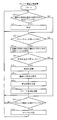
- the control circuit 21 enters an operating state when the probe car ignition switch is turned on and operating power is supplied from the battery, as shown in FIG. Start processing.
- the control circuit 21 monitors whether or not it is the specific timing of the current position and traveling direction of the vehicle (A1), monitors whether or not the probe car has stopped (A2), and is the probe information transmission timing? (A3).
- control circuit 21 determines that the specific timing of the current position and the traveling direction of the vehicle has come, for example, when the probe car has traveled a predetermined distance or a predetermined time has elapsed (A1: YES), the current position and the traveling direction of the vehicle. Is specified by the position specifying unit 23 (A4). That is, the control circuit 21 causes the position specifying unit 23 to periodically specify the current position and the traveling direction of the vehicle.
- the control circuit 21 detects that the vehicle speed of the probe car is 0 km / h and determines that the probe car has stopped (A2: YES), the current position and traveling direction of the latest vehicle specified at that time point And the map data stored in the map data storage unit 24 (A5), and it is determined whether the probe car has stopped at the signalized intersection (A6). That is, when the control circuit 21 determines that the signal intersection exists within a predetermined distance in the traveling direction of the probe car, the control circuit 21 determines that the probe car has stopped at the signal intersection (caused by a red signal at the signal intersection).
- control circuit 21 determines that there is no signalized intersection within a predetermined distance in the traveling direction of the probe car, the control circuit 21 determines that the probe car has stopped at a place other than the signalized intersection (for example, a traffic jam section, an accident section, a construction section, etc.). .
- control circuit 21 determines that the probe car has stopped at the signalized intersection (A6: YES), it stores the time at which the probe car stopped (A7). After that, when the probe car passes the signalized intersection, the control circuit 21 specifies the time when the probe car passed the signalized intersection (A8). The control circuit 21 calculates a time difference between the time when the probe car passes the signalized intersection and the time when the probe car first stops at the signalized intersection, and the probe car stops at the signalized intersection (required before passing). Collected as a stop time indicating the time (A9).
- the control circuit 21 determines the intersection ID that can identify the signalized intersection, the approach direction to the signal intersection of the probe car, the direction of travel from the signal intersection of the probe car (straight, right turn, left turn), and the probe car stops at the signal intersection.
- the time zone and the collected stop time are stored as probe information in the probe information storage unit 25 (A10) (probe information is updated).
- the control circuit 21 repeats the above processing every time the probe car stops at the signalized intersection, thereby classifying the intersection ID, approach direction, traveling direction, time zone, and stop time of the signaled intersection that the probe car has passed. And stored in the probe information storage unit 25.
- the control circuit 21 determines that the probe car has traveled a predetermined distance or that the predetermined time has elapsed and the probe information transmission timing is reached (A3: YES)
- the control circuit 21 stores the probe information in the probe information storage 25 at that time.
- the probe information is read from the probe information storage 25 and transmitted from the communication device 22 to the server 3 via the communication network 5 (A11).
- the control circuit 21 deletes the storage area of the probe information storage unit 25 when the probe information is transmitted to the server 3. That is, the control circuit 21 causes the server 3 to periodically transmit the probe information acquired during the period from the previous transmission timing to the current transmission timing.
- the probe information transmitted from the probe information collection device 2 to the server 3 stores the intersection ID, the approach direction, the traveling direction, the time zone, and the stop time.
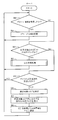
- the control circuit 31 monitors the reception of probe information from the probe information collecting device 2 (B1), monitors whether it is the creation timing of stop time information at the signalized intersection (B2), and the navigation device. The reception of the stop time information request from 4 is monitored (B3).
- the control circuit 31 determines that the probe information has been received from the probe information collection device 2 by the communication device 32 (B1: YES)
- the control circuit 31 stores the received probe information in the probe information storage device 34 (B4).
- the control circuit 31 extracts the intersection ID, the approach direction, the traveling direction, the time zone, and the stop time from the probe information received from the probe information collection device 2, and classifies them and stores them in the probe information storage 34.
- the control circuit 31 determines that it is the timing for creating the stop time information at the signalized intersection (B2: YES), the control circuit 31 proceeds to a stop time information creation process (B5).
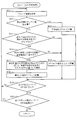
- the control circuit 31 refers to the probe information stored in the probe information storage unit 34 (B11), and performs the approach direction and the traveling direction of the signalized intersection and the time zone as follows.
- the stop time information indicating the stop time is generated.
- the control circuit 31 sets the number of samples of the stop time divided by the approach direction, the traveling direction, and the time zone for the signalized intersection for which the stop time information is to be created to be equal to or greater than the required number of samples (required sample size). It is determined whether or not there is (B12). In this case, the control circuit 31 calculates the required number of samples using a population average interval estimation formula shown below.
- ⁇ is the population mean
- x is the sample mean
- ⁇ is 1-reliability
- n is the number of samples (sample size)
- V is unbiased variance
- t (n ⁇ 1, P) is the degree of freedom n ⁇ . 1 represents the 100P% point on both sides of the t distribution.
- the sample size is designed so that the expected value of the section width is equal to or less than the constant value 2 ⁇ .
- ⁇ is a population standard deviation
- ⁇ () is a gamma function
- ⁇ n ⁇ 1.
- N is increased by 1 with the right side of equation (7) as an initial value, and the minimum n satisfying equation (5) is obtained as the required number of samples. That is, if stop times satisfying the expression (7) are collected, it is possible to create reliable stop time information within the set standard deviation ⁇ .
- the detailed procedure for obtaining the required number of samples is described in “How to Determine Sample Size (Statistics Library) Author: Atsushi Nagata”. The required number of samples may be appropriately determined by the designer using empirical rules.
- control circuit 31 determines that the number of samples of the stop time of the corresponding section is equal to or greater than the required number of samples (the collection of the stop time is sufficient) (B12: YES), for example, at the signal intersection that exceeds the required number of samples.
- An average value of the stop time is calculated, and the calculated average value is stored in the stop time information storage 35 as stop time information (updates the stop time information) (B13). That is, as shown in FIG. 6, the control circuit 31 uses the approach direction and the traveling direction and the time zone for each intersection ID as two-dimensional parameters, and stores the average value in the corresponding section.
- control circuit 31 calculates “20 seconds” as the average value of “stop time” for “straight” in “east” at the signalized intersection with the intersection ID “11”. “20 seconds” is stored.
- FIG. 6 illustrates the case where the time zone is divided in units of one hour, it may be divided in any time unit or may not be divided (one day (24 hours) may be uniform). ).
- the control circuit 31 determines that the number of samples of the stop time of the corresponding category is not equal to or greater than the required number of samples (below the required number of samples, and the stop time is not sufficiently collected) (B12: NO). It is determined whether the stop time information of the corresponding section exists in the stop time information of the adjacent signalized intersection (B14). If the control circuit 31 determines that the stop time information of the corresponding section does not exist in the stop time information of the adjacent signalized intersection (B14: NO), the control circuit 31 stores the stop time information using the preset default value as the stop time information. Store in the device 35 (update the stop time information) (B15).
- the default value is a general value adopted in the navigation device 4, for example, and is a value obtained by quantitatively calculating the possibility of stopping at a red signal when passing a signalized intersection.
- the control circuit 31 determines that the stop time information of the corresponding section exists in the stop time information of the adjacent signalized intersection (B14: YES)
- the control circuit 31 sets the signal intersection as a complement target, and specifies the signal intersection at the complement target.
- the road type of the road that intersects the road and the road type of the road that intersects the specific road at the adjacent signalized intersection are collated to determine whether or not they match (B16). If the control circuit 31 determines that the two do not match (B16: NO), the control circuit 31 also stores a preset default value in the stop time information storage 35 as stop time information (updates the stop time information). ) (B15).
- control circuit 31 determines that the two coincide (B16: YES)
- the control circuit 31 complements the stop time information of the corresponding section of the signal intersection to be complemented based on the stop time information of the corresponding section of the adjacent signal intersection. (B17). Then, the control circuit 31 stores the complemented value as stop time information in the stop time information storage 35 (updates the stop time information) (B18).
- the signalized intersection of the intersection ID “33” is set as a complement target (supplement destination).
- the signalized intersection adjacent to the signalized intersection of the intersection ID “33” is the signalized intersection of the intersection ID “23” on the “prefectural road III”, and the signalized intersections of the intersection IDs “32” and “34” on the “prefectural road B”. It is.
- the control circuit 31 complements the signal intersection with the intersection ID “34”.
- the control circuit 31 intersects “prefectural road III” and “prefectural road B” at the signalized intersection of intersection ID “33” to be complemented, and “prefectural road III” and “national road M” at the signalized intersection of intersection ID “23”. However, since the road type of the road intersecting with “prefectural road III” is the prefectural road and the national road and does not match, the signal intersection with the intersection ID “23” is also excluded from the signal intersection of the complement source. Since the prefectural road II and the prefectural road B intersect at the signalized intersection of the intersection ID “32”, the control circuit 31 matches the prefectural road and the prefectural road. The signalized intersection with the intersection ID “32” is determined as the complementing signal intersection.
- the control circuit 31 determines the signal intersection with the intersection ID “32” as the complementing signal intersection. Then, the control circuit 31 complements the stop time information of the corresponding section of the signalized intersection of the intersection ID “33” based on the stop time information of the corresponding section of the signalized intersection of the intersection ID “32”. If there are a plurality of signal intersections to be complemented, the control circuit 31 may calculate and adopt an average value thereof, or may be the closest to the signal intersection to be complemented (vehicle travel time). The stop time information at the signalized intersection may be preferentially adopted.
- the stop time information of the corresponding section of the signal intersection to be complemented is based on the stop time information of the corresponding section of the adjacent signal intersection. Complement.
- the control circuit 31 determines whether stop time information has been stored for all the sections (B19). When the control circuit 31 determines that the stop time information is not stored for all the sections (B19: NO), the control circuit 31 returns to the above-described step B11 and repeats the steps after the step B11. When it is determined that the stop time information has been stored for all the sections (B19: YES), the control circuit 31 determines whether stop time information has been stored for all signalized intersections for which stop time information is to be created ( B20). If the control circuit 31 determines that stop time information is not stored for all signalized intersections for which stop time information is to be created (B20: NO), the control circuit 31 also returns to the above-described step B11 and performs steps after step B11. Repeat. When the control circuit 31 determines that the stop time information has been stored for all signalized intersections for which stop time information is to be created (B20: YES), the control circuit 31 ends the stop time information creation process and returns.
- the control circuit 31 determines that the stop time information request is received from the navigation device 4 by the communication device 32 (B3: YES), the control circuit 31 specifies the search target area stored in the received stop time information request (B6). ).
- the search target area is a peripheral area including the departure place and the destination.
- the control circuit 31 reads stop time information of signalized intersections existing in the specified search target area from the stop time information storage 35 (B7). Then, the control circuit 31 transmits the traffic information storing the read stop time information from the communication device 32 to the navigation device 4 via the communication network 5 (B8).
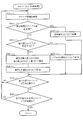
- the control circuit 41 enters an operating state when the ignition switch of the vehicle is turned on and operating power is supplied from the battery, and starts the processing shown in FIG.
- the control circuit 41 monitors whether a route search request has occurred (C1). If the control circuit 41 determines that a route search request has occurred (C1: YES), the control circuit 41 specifies a peripheral area including the departure point and the destination as a search target area (C2).
- the control circuit 41 transmits a stop time information request storing the specified search target area from the communication device 42 to the server 3 via the communication network 5 (C3), and waits for reception of traffic information from the server 3 ( C4).
- control circuit 41 determines that the traffic information is received from the server 3 by the communication device 32 (C4: YES)
- the control circuit 41 specifies the stop time information stored in the received traffic information (C5), and specifies The stop time information is stored in the stop time information storage 45 (C6).
- the control circuit 41 refers to the map data stored in the map data storage 44 and the stop time information stored in the stop time information storage 45 (C7), and determines the route from the departure place to the destination.
- Search (C8) That is, since the stop time information includes a stop time for each time zone for each signalized intersection, the control circuit 41 searches for a route in consideration of the stop time for each time zone for each signalized intersection. In this case, in the server 3, the stop time at the intersection where the probe cars have not actually passed or the number of passed cars is relatively small is determined by the stop time at the intersection where a relatively large number of probe cars have actually passed. Since there is a signal intersection in the search target area that does not actually pass or the number of vehicles that have passed is relatively small, search for a route that fully considers the stop time at the signal intersection. can do.
- the server 3 transmits the traffic information storing the stop time information of the signalized intersection existing in the search target area to the navigation device 4 in response to the reception of the stop time information request from the navigation device 4.
- the traffic information storing the stop time information may be periodically transmitted to the navigation device 4.
- the server 3 predicts the search target area by periodically receiving the current position and the traveling direction of the vehicle from the navigation device 4, and the stop time at the signalized intersection existing in the predicted search target area.
- the traffic information storing the information may be transmitted to the navigation device 4.
- the following effects can be obtained.
- the number of probe cars that have not actually passed or the number of vehicles that have passed through is relatively small, the stop time information of signalized intersections for which stop time information is not sufficiently collected and stop time information has not been created, A route is searched using a value complemented on the basis of stop time information of other signalized intersections created by passing many probe cars.
- the control circuit 31 determines that the number of samples of the stop time of the corresponding section is not equal to or greater than the required number of samples (B12: NO)
- the stop time information of the corresponding section exists in the same area. It is determined whether it exists in the stop time information of (B21).
- the same area here is an area divided into administrative divisions, city centers, suburbs, etc., for example, in units of municipalities.
- the control circuit 31 determines that the stop time information of the corresponding section is present in the stop time information of the signalized intersection existing in the same area (B21: YES), the signalized intersection is set as a complement target, and the signal intersection of the complement target The road type of the roads intersecting with each other and the road type of the roads intersecting at the adjacent signalized intersection are collated to determine whether or not they match (B22). If the control circuit 31 determines that the two do not match (B22: NO), the control circuit 31 also stores a preset default value in the stop time information storage 35 as stop time information (updates the stop time information). ) (B15).
- control circuit 31 determines that the two match (B22: YES)
- the control circuit 31 complements the stop time information of the corresponding section of the signal intersection to be complemented based on the stop time information of the signal intersection existing in the same area. (B23), the complemented value is stored as stop time information in the stop time information storage 35 (stop time information is updated) (B18).
- a signalized intersection with an intersection ID “33” is set as a complement target (a complement destination) in a situation where roads and signalized intersections are attached as shown in FIG.
- Signalized intersections existing in the same area as the signalized intersection with the intersection ID “33” are the intersection IDs “11”, “12”, “21”, “22”, “23”, “31”, “32”, “34”. Is a signalized intersection.
- the control circuit 31 does not collect stop time at the intersections of intersection IDs “21”, “32”, and “34” and has not yet generated stop time information.
- the signal intersections “32” and “34” are excluded from the signal intersections of the complement source.
- the control circuit 31 intersects “prefectural road III” and “prefectural road B” at the signalized intersection of intersection ID “33” to be complemented, and “prefectural road II” and “national road M” at the signalized intersection of intersection ID “22”. However, since the prefectural road III and the national highway M intersect at the signalized intersection with the intersection ID “23” and the road types of the intersecting roads do not match, the signalized intersections with the intersection IDs “22” and “23” are also complemented. Exclude from the original signalized intersection.
- the control circuit 31 intersects “prefectural road I” and “prefectural road A” at the signalized intersection with the intersection ID “11”, and intersects “prefectural road II” and “prefectural road A” at the signalized intersection with the intersection ID “12”.
- the control circuit 31 determines the signal intersections of the intersection IDs “11”, “12”, and “31” as the complementing signal intersection.
- the control circuit 31 converts the stop time information of the corresponding section of the signal intersection of the intersection ID “33” into the stop time information of the corresponding section of the signal intersection of the intersection IDs “11”, “12”, and “31”. Complement based on. If there are a plurality of signal intersections to be complemented as described above, the control circuit 31 may calculate and adopt an average value of them, or may be closest to the signal intersection to be complemented (vehicle movement). The stop time information at the signalized intersection may be preferentially adopted.
- the signal switching control at the signalized intersection is controlled not only at the adjacent signalized intersections described in the first embodiment but also at the signalized intersections existing in the same area. I focused on it.
- the stop time information of the corresponding section of the signalized intersection to be complemented is the stop time of the corresponding section of the signalized intersection existing in the same area. Complement based on information.
- the same operational effects as those of the first embodiment described above can be obtained. That is, even when there is a signalized intersection where the probe car does not actually pass or the number of passed cars is relatively small, a route that sufficiently considers the stop time at the signalized intersection can be searched.
- 1st and 2nd embodiment is the structure which complements the stop time information of the signalized intersection where stop time information is not created based on the stop time information of the signalized intersection where stop time information is created
- the third embodiment is configured to supplement stop time information in a time zone in which stop time information is not created at a specific signalized intersection based on stop time information in a time zone in which stop time information is created.
- the control circuit 31 determines whether stop time information exists in other categories ( B31).
- the control circuit 31 determines that the stop time information exists in another section (B31: YES)
- the control circuit 31 sets the section as a complement target, and uses the stop time information of the complement target section based on the stop time information of the other section.
- the supplemented value is stored in the stop time information storage 35 as the stop time information (updates the stop time information) (B18).
- the control circuit 31 determines the division of “1 o'clock” or “3 o'clock” of “right turn” of “eastward” at the signalized intersection of the intersection ID “11” as the complement source. Then, the control circuit 31 complements the stop time information of “2 o'clock” based on the stop time information of the category “1 o'clock” or “3 o'clock”.
- control circuit 31 may adopt an average value of the stop time information of the “1 o'clock range” and “3 o'clock range”, or may be the same value as any one of the stop time information.
- the average value of stop time information of three or more sections (for example, “0 o'clock”, “1 o'clock”, “3 o'clock”, “4 o'clock”)) May be adopted.
- the following effects can be obtained.
- the number of probe cars that have not actually passed through the signalized intersection or the number of vehicles that have passed through is relatively small, and the time zone in which stop time information is not generated due to insufficient collection of stop time is relatively large.
- the number of probe cars actually search for a route using values supplemented based on stop time information in other time zones created by passing through the signalized intersection. Thereby, even when there is a time zone in which the probe car does not actually pass or the number of passed cars is relatively small, it is possible to search for a route that sufficiently considers the stop time at the signalized intersection.
- the first to third embodiments may be combined.
- road types may be classified including prefectural roads and national roads as well as automobile-only roads and narrow streets.
- the stop time information may be classified by day.
- stop time information can be managed according to traffic trends at signalized intersections. good.
Landscapes
- Engineering & Computer Science (AREA)
- Radar, Positioning & Navigation (AREA)
- Remote Sensing (AREA)
- Physics & Mathematics (AREA)
- General Physics & Mathematics (AREA)
- Automation & Control Theory (AREA)
- Navigation (AREA)
- Traffic Control Systems (AREA)
- Instructional Devices (AREA)
Abstract
経路探索システム(1)において、サーバ(3)は各交差点での停止時間情報を格納した交通情報を、経路探索のためにナビゲーション装置(4)に送信する。プローブカーが実際に通過せずに又は通過した台数が比較的少ない第一の信号交差点と、比較的多くの台数のプローブカーが実際に通過する第二の信号交差点がある。第一の信号交差点でのプローブカーの停止時間の収集が不十分で停止時間情報が作成されておらず、第二信号交差点で作成された停止時間情報に基づいて補完する。
Description
本出願は、2014年6月2日に出願された日本出願番号2014-114279号と、2015年2月18日に出願された日本出願番号2015-29566号に基づくもので、ここにその記載内容を援用する。
本開示は、出発地から目的地までの経路を探索する経路探索装置、経路探索システム及び信号停止時間補完プログラム製品に関する。
従来より、出発地から目的地までの経路を探索する経路探索装置が供されている。特許文献1には、プローブカーからプローブ情報を収集し、その収集したプローブ情報に基づいて信号交差点での停止時間を計算し、経路を探索することが開示されている。特許文献2には、プローブカーから信号交差点での停止時間を収集し、経路を探索することが開示されている。
しかしながら、特許文献1及び2の技術では、停止時間を収集可能な信号交差点はプローブカーが実際に通過した信号交差点に限られる。即ち、プローブカーが実際に通過した信号交差点での停止時間は収集可能であるが、プローブカーが実際に通過していない信号交差点での停止時間は収集不可能である。その結果、特許文献1及び2の技術では、信号交差点での停止時間を十分に考慮した経路を探索できない。又、停止時間を時間帯で区分して管理する場合には、信号交差点での停止時間を収集不可能な時間帯が発生する。即ち、プローブカーが実際に信号交差点を通過した時間帯での停止時間は収集可能であるが、プローブカーが実際に信号交差点を通過していない時間帯での停止時間は収集不可能である。その結果、この場合でも、信号交差点での停止時間を十分に考慮した経路を探索できない。
本開示の目的は、信号交差点での停止時間を十分に考慮した経路を探索することができる経路探索装置、経路探索システム及び信号停止時間補完プログラム製品を提供することにある。
本開示の一つの例によれば、経路探索部は、出発地から目的地までの経路を、信号交差点での停止時間を収集する車両により作成された停止時間情報を用いて探索する。経路探索部は、停止時間の収集が不十分で停止時間情報が作成されていない信号交差点の停止時間情報については、停止時間情報が作成されている他の信号交差点の停止時間情報に基づいて補完された値を用いて経路を探索する。
即ち、プローブカーが実際に通過せずに又は通過した台数が比較的少なく、停止時間の収集が不十分で停止時間情報が作成されていない信号交差点の停止時間情報については、比較的多くの台数のプローブカーが実際に通過して作成された他の信号交差点の停止時間情報に基づいて補完された値を用いて経路を探索する。これにより、プローブカーが実際に通過していない又は通過した台数が比較的少ない信号交差点が存在する場合でも、信号交差点での停止時間を十分に考慮した経路を探索することができる。
本開示のもう一つの例によれば、経路探索部は、出発地から目的地までの経路を、信号交差点での停止時間を収集する車両により作成された停止時間情報を用いて探索する。経路探索部は、停止時間の収集が不十分で停止時間情報が作成されていない時間帯の停止時間情報については、停止時間情報が作成されている時間帯の停止時間情報に基づいて補完された値を用いて経路を探索する。
即ち、プローブカーが実際に信号交差点を通過せずに又は通過した台数が比較的少なく、停止時間の収集が不十分で停止時間情報が作成されていない時間帯の停止時間情報については、比較的多くの台数のプローブカーが実際に通過して作成された時間帯の停止時間情報に基づいて補完された値を用いて経路を探索する。これにより、プローブカーが実際に信号交差点を通過していない又は通過した台数が比較的少ない時間帯が存在する場合でも、信号交差点での停止時間を十分に考慮した経路を探索することができる。
本開示についての上記目的およびその他の目的、特徴や利点は、添付の図面を参照しながら下記の詳細な記述により、より明確になる。
本開示の第1の実施形態の全体構成を示す機能ブロック図
プローブ情報収集装置の処理を示すフローチャート
サーバの処理を示すフローチャート(その1)
サーバの処理を示すフローチャート(その2)
ナビゲーション装置の処理を示すフローチャート
停止時間情報を示す図
停止時間を補完する態様を示す図(その1)
本開示の第2の実施形態を示し、サーバの処理を示すフローチャート
停止時間を補完する態様を示す図(その2)
本開示の第3の実施形態を示し、サーバの処理を示すフローチャート
停止時間を補完する態様を示す図(その3)
(第1の実施形態)
以下、本開示の経路探索装置を、車両に搭載可能なナビゲーション装置に適用した第1の実施形態について図1から図7を参照して説明する。経路探索システム1は、複数のプローブカー(信号交差点での停止時間を収集する車両)の各々に搭載されているプローブ情報収集装置2と、サーバ(プローブセンター)3と、車両に搭載されているナビゲーション装置4とが通信ネットワーク5(インターネット、VICS(Vehicle Information and Communication System)(登録商標)のネットワーク等を含む)を介して通信可能に構成されている。停止時間とは、車両が信号交差点で停止した時間である。プローブ情報収集装置2は、プローブカーが走行することで各地の交通に関する様々な情報を収集し、その収集した情報をプローブ情報として通信ネットワーク5を介してサーバ3に送信する。サーバ3は、プローブ情報収集装置2からプローブ情報を受信して収集し、その収集したプローブ情報に基づいて交通情報を作成する。そして、サーバ3は、その作成した交通情報を通信ネットワーク5を介してナビゲーション装置4に配信する。尚、本開示では、「情報」は不可算名詞のみならず可算名詞としても使用される。
以下、本開示の経路探索装置を、車両に搭載可能なナビゲーション装置に適用した第1の実施形態について図1から図7を参照して説明する。経路探索システム1は、複数のプローブカー(信号交差点での停止時間を収集する車両)の各々に搭載されているプローブ情報収集装置2と、サーバ(プローブセンター)3と、車両に搭載されているナビゲーション装置4とが通信ネットワーク5(インターネット、VICS(Vehicle Information and Communication System)(登録商標)のネットワーク等を含む)を介して通信可能に構成されている。停止時間とは、車両が信号交差点で停止した時間である。プローブ情報収集装置2は、プローブカーが走行することで各地の交通に関する様々な情報を収集し、その収集した情報をプローブ情報として通信ネットワーク5を介してサーバ3に送信する。サーバ3は、プローブ情報収集装置2からプローブ情報を受信して収集し、その収集したプローブ情報に基づいて交通情報を作成する。そして、サーバ3は、その作成した交通情報を通信ネットワーク5を介してナビゲーション装置4に配信する。尚、本開示では、「情報」は不可算名詞のみならず可算名詞としても使用される。
プローブ情報収集装置2は、制御回路21と、通信器22と、位置特定器23と、地図データを記憶する地図データ記憶器24と、プローブ情報を記憶するプローブ情報記憶器25等を有する。地図データ記憶器24に記憶されている地図データには、車両の現在位置(緯度経度情報)及び進行方向の特定精度を向上させるためのマップマッチング用データ、リンク情報やノード情報を含む道路ネットワークデータ等が含まれている。
制御回路21は、CPU(Central Processing Unit)、ROM(Read Only Memory)、RAM(Random Access Memory)等を有するマイクロコンピュータを主体として構成されている。制御回路21は、ROMに記憶されている制御プログラムをCPUが実行することで各種処理を行う。通信器22は、サーバ3との間で通信ネットワーク5を介した通信を行う。位置特定器23は、GPS受信機、ジャイロセンサ、車速センサ等から入力する信号に基づいて車両の現在位置及び進行方向を特定する。制御回路21は、プローブカーが通過した信号交差点での停止時間を収集する停止時間収集処理、プローブカーが走行中の道路の渋滞情報を収集する渋滞情報収集処理、特定した車両の現在位置及び進行方向及び収集した停止時間や渋滞情報をプローブ情報として通信器22から通信ネットワーク5を介してサーバ3に送信させる送信処理等を行う。
サーバ3は、制御回路31と、通信器32と、地図データを記憶する地図データ記憶器33と、プローブ情報収集装置2から通信器32により受信したプローブ情報を記憶するプローブ情報記憶器34と、停止時間情報を記憶する停止時間情報記憶器35等を有する。地図データ記憶器33に記憶されている地図データは、上記したプローブ情報収集装置2の地図データ記憶器24や後述するナビゲーション装置4の地図データ記憶器44に記憶されている地図データよりも詳細な情報を含む。停止時間情報(STIと省略される)とは、収集された停止時間を処理(例えば平均化)した値を含む情報である。
制御回路31は、CPU、ROM、RAM等を有するマイクロコンピュータを主体として構成されている。制御回路31は、ROMに記憶されている制御プログラム(信号停止時間補完プログラムを含む)をCPUが実行することで各種処理を行う。なお、各種処理は、その一部あるいは全部をハードウエアの構成で実現しても良い。通信器32は、プローブ情報収集装置2やナビゲーション装置4との間で通信ネットワーク5を介した通信を行う。制御回路31は、信号交差点での停止時間を収集部31a(収集デバイスあるいはモジュールとも言及される)により収集する停止時間収集処理、停止時間の収集が不十分で停止時間情報が作成されていない信号交差点(第一の信号交差点とも言及される)の停止時間情報を、停止時間情報が作成されている信号交差点(第二の信号交差点とも言及される)の停止時間情報に基づいて補完部31b(補完デバイスあるいはモジュールとも言及される)により補完する停止時間補完処理等を行う。なお、信号停止時間補完プログラムは、非遷移のコンピュータ読みとり可能な、記憶媒体に保管された信号停止時間補完プログラム製品としても提供されることができる。
ナビゲーション装置4は、制御回路41と、通信器42と、位置特定器43と、地図データを記憶する地図データ記憶器44と、信号交差点の時間帯毎の停止時間を示す停止時間情報を記憶する停止時間情報記憶器45等を有する。地図データ記憶器44に記憶されている地図データにも、車両の現在位置及び進行方向の特定精度を向上させるためのマップマッチング用データ、リンク情報やノード情報を含む道路ネットワークデータ等が含まれている。
制御回路41は、CPU、ROM、RAM等を有するマイクロコンピュータを主体として構成されている。制御回路41は、ROMに記憶されている制御プログラムをCPUが実行することで各種処理を行う。通信器42は、サーバ3との間で通信ネットワーク5を介した通信を行う。位置特定器43は、GPS受信機、ジャイロセンサ、車速センサ等から入力する信号に基づいて車両の現在位置及び進行方向を特定する。制御回路41は、乗員(例えば運転者)が出発地及び目的地を設定して経路探索の操作を行うと、出発地から目的地までの経路を、経路探索部41a(経路探索デバイスあるいはモジュールとも言及される)により探索する経路探索処理等を行う。なお、この処理は、その一部あるいは全部をハードウエアの構成で実現しても良い。このとき、制御回路41は、停止時間情報記憶器45に記憶されている停止時間情報を参照して経路を探索する。即ち、制御回路41は、信号交差点での停止時間が異なる複数の候補があれば、停止時間が短い信号交差点を通過する候補を第1候補(優先順位が高い候補)とし、停止時間が長い信号交差点を通過する候補を第2候補(優先順位が低い候補)として乗員に提示する。
次に、上記した構成の作用について、図2から図7も参照して説明する。ここでは、
(1)プローブ情報収集装置2が行う処理
(2)サーバ3が行う処理
(3)ナビゲーション装置4が行う処理
について順次説明する。
(1)プローブ情報収集装置2が行う処理
(2)サーバ3が行う処理
(3)ナビゲーション装置4が行う処理
について順次説明する。
(1)プローブ情報収集装置2が行う処理
プローブ情報収集装置2において、制御回路21は、プローブカーのイグニッションスイッチがオンしてバッテリから動作電力が供給されることで動作状態となり、図2に示す処理を開始する。制御回路21は、車両の現在位置及び進行方向の特定タイミングであるか否かを監視し(A1)、プローブカーが停止したか否かを監視し(A2)、プローブ情報の送信タイミングであるか否かを監視している(A3)。
プローブ情報収集装置2において、制御回路21は、プローブカーのイグニッションスイッチがオンしてバッテリから動作電力が供給されることで動作状態となり、図2に示す処理を開始する。制御回路21は、車両の現在位置及び進行方向の特定タイミングであるか否かを監視し(A1)、プローブカーが停止したか否かを監視し(A2)、プローブ情報の送信タイミングであるか否かを監視している(A3)。
制御回路21は、例えばプローブカーが所定距離を走行した又は所定時間が経過したことで車両の現在位置及び進行方向の特定タイミングになったと判定すると(A1:YES)、車両の現在位置及び進行方向を位置特定器23により特定させる(A4)。即ち、制御回路21は、車両の現在位置及び進行方向を位置特定器23により定期的に特定させる。
制御回路21は、プローブカーの車速が0km/hであることを検知してプローブカーが停止したと判定すると(A2:YES)、その時点で特定されている最新の車両の現在位置及び進行方向と、地図データ記憶器24に記憶されている地図データとを照合し(A5)、プローブカーが信号交差点で停止したか否かを判定する(A6)。即ち、制御回路21は、プローブカーの進行方向の所定距離以内に信号交差点が存在すると判定すると、プローブカーが信号交差点(信号交差点の赤信号が原因)で停止したと判定する。一方、制御回路21は、プローブカーの進行方向の所定距離以内に信号交差点が存在しないと判定すると、プローブカーが信号交差点以外(例えば渋滞区間、事故区間、工事区間等)で停止したと判定する。
制御回路21は、プローブカーが信号交差点で停止したと判定すると(A6:YES)、そのプローブカーが停止した時刻を記憶する(A7)。制御回路21は、これ以降にプローブカーが信号交差点を通過すると、そのプローブカーが信号交差点を通過した時刻を特定する(A8)。制御回路21は、そのプローブカーが信号交差点を通過した時刻から信号交差点で最初に停止した時刻との時間差を計算し、その計算した時間差をプローブカーが信号交差点で停止した(通過するまでに要した)時間を示す停止時間として収集する(A9)。そして、制御回路21は、信号交差点を特定可能な交差点ID、プローブカーの信号交差点への進入方向、プローブカーの信号交差点からの進行方向(直進、右折、左折)、プローブカーが信号交差点で停止した時刻の時間帯、収集した停止時間をプローブ情報としてプローブ情報記憶器25に記憶させる(A10)(プローブ情報を更新する)。制御回路21は、プローブカーが信号交差点で停止する毎に上記した処理を繰返して行うことで、プローブカーが通過した信号交差点の交差点ID、進入方向、進行方向、時間帯、停止時間を区分してプローブ情報記憶器25に記憶させる。
制御回路21は、例えばプローブカーが所定距離を走行した又は所定時間が経過したことでプローブ情報の送信タイミングになったと判定すると(A3:YES)、その時点でプローブ情報記憶器25に記憶されているプローブ情報をプローブ情報記憶器25から読出して通信器22から通信ネットワーク5を介してサーバ3に送信させる(A11)。尚、制御回路21は、プローブ情報をサーバ3に送信させると、プローブ情報記憶器25の記憶領域を消去する。即ち、制御回路21は、前回の送信タイミングから今回の送信タイミングまでの期間内に取得したプローブ情報を定期的にサーバ3に送信させる。尚、プローブ情報収集装置2からサーバ3に送信されるプローブ情報には、上記した交差点ID、進入方向、進行方向、時間帯、停止時間が格納されている。
(2)サーバ3が行う処理
サーバ3は、電源が投入されると、図3及び図4に示す処理を開始する。サーバ3において、制御回路31は、プローブ情報収集装置2からのプローブ情報の受信を監視し(B1)、信号交差点の停止時間情報の作成タイミングであるか否かを監視し(B2)、ナビゲーション装置4からの停止時間情報要求の受信を監視する(B3)。
サーバ3は、電源が投入されると、図3及び図4に示す処理を開始する。サーバ3において、制御回路31は、プローブ情報収集装置2からのプローブ情報の受信を監視し(B1)、信号交差点の停止時間情報の作成タイミングであるか否かを監視し(B2)、ナビゲーション装置4からの停止時間情報要求の受信を監視する(B3)。
制御回路31は、プローブ情報収集装置2からプローブ情報が通信器32により受信されたと判定すると(B1:YES)、その受信されたプローブ情報をプローブ情報記憶器34に記憶させる(B4)。この場合、制御回路31は、プローブ情報収集装置2から受信されたプローブ情報から交差点ID、進入方向、進行方向、時間帯、停止時間を抽出し、それらを区分してプローブ情報記憶器34に記憶させる。
制御回路31は、信号交差点の停止時間情報の作成タイミングになったと判定すると(B2:YES)、停止時間情報作成処理に移行する(B5)。制御回路31は、停止時間情報作成処理に移行すると、プローブ情報記憶器34に記憶されているプローブ情報を参照し(B11)、以下のようにして信号交差点の進入方向及び進行方向と時間帯毎の停止時間を示す停止時間情報を作成する。制御回路31は、停止時間情報の作成対象とする信号交差点について、進入方向、進行方向、時間帯により区分される停止時間のサンプル数が予め規定されている必要サンプル数(必要サンプルサイズ)以上であるか否かを判定する(B12)。この場合、制御回路31は、以下に示す母平均の区間推定式を用いて必要サンプル数を計算する。

このとき区間幅は






制御回路31は、該当する区分の停止時間のサンプル数が必要サンプル数以上である(停止時間の収集が十分である)と判定すると(B12:YES)、例えば必要サンプル数以上の信号交差点での停止時間の平均値を計算し、その計算した平均値を停止時間情報として停止時間情報記憶器35に記憶させる(停止時間情報を更新する)(B13)。即ち、制御回路31は、図6に示すように、交差点ID毎の進入方向及び進行方向と時間帯を2次元のパラメータとし、該当する区分に平均値を記憶させる。制御回路31は、例えば交差点ID「11」の信号交差点における「東向き」の「直進」の「0時台」についての停止時間の平均値を「20秒」と計算すると、該当する区分に「20秒」を記憶させる。尚、図6では時間帯を1時間単位で区切っている場合を例示しているがどのような時間単位で区切っても良いし区切らなくても良い(1日(24時間)で一律としても良い)。
一方、制御回路31は、該当する区分の停止時間のサンプル数が必要サンプル数以上でない(必要サンプル数未満である、停止時間の収集が不十分である)と判定すると(B12:NO)、その該当する区分の停止時間情報が、隣接する信号交差点の停止時間情報に存在するか否かを判定する(B14)。制御回路31は、該当する区分の停止時間情報が、隣接する信号交差点の停止時間情報に存在しないと判定すると(B14:NO)、予め設定されているデフォルト値を停止時間情報として停止時間情報記憶器35に記憶させる(停止時間情報を更新する)(B15)。デフォルト値とは、例えばナビゲーション装置4で採用されている一般的な値であり、信号交差点を通過する際に赤信号で停止する可能性を定量的に計算した値である。
制御回路31は、該当する区分の停止時間情報が、隣接する信号交差点の停止時間情報に存在すると判定すると(B14:YES)、その信号交差点を補完対象とし、その補完対象の信号交差点で特定の道路に交差する道路の道路種別と、その隣接する信号交差点で特定の道路に交差する道路の道路種別とを照合し、両者が一致するか否かを判定する(B16)。制御回路31は、両者が一致しないと判定すると(B16:NO)、この場合も、予め設定されているデフォルト値を停止時間情報として停止時間情報記憶器35に記憶させる(停止時間情報を更新する)(B15)。
一方、制御回路31は、両者が一致する判定すると(B16:YES)、補完対象の信号交差点の該当する区分の停止時間情報を、隣接する信号交差点の該当する区分の停止時間情報に基づいて補完する(B17)。そして、制御回路31は、その補完した値を停止時間情報として停止時間情報記憶器35に記憶させる(停止時間情報を更新する)(B18)。
具体的に、図7に示すように道路(例えば道路種別が県道又は国道)と信号交差点が付設されている状況で、交差点ID「33」の信号交差点を補完対象(補完先)とする場合を説明する。交差点ID「33」の信号交差点に隣接する信号交差点は、「県道III」上では交差点ID「23」の信号交差点であり、「県道B」上では交差点ID「32」、「34」の信号交差点である。この場合、制御回路31は、交差点ID「34」の信号交差点は停止時間の収集が不十分であり停止時間情報を未作成であるので、交差点ID「34」の信号交差点を補完元の信号交差点の対象から除外する。制御回路31は、補完対象の交差点ID「33」の信号交差点では「県道III」と「県道B」が交差し、交差点ID「23」の信号交差点では「県道III」と「国道M」が交差し、「県道III」に対して交差する道路の道路種別が、県道と国道となり、一致しないので、交差点ID「23」の信号交差点も補完元の信号交差点の対象から除外する。制御回路31は、交差点ID「32」の信号交差点では「県道II」と「県道B」が交差し、「県道B」に対して交差する道路の道路種別が、県道と県道で一致するので、交差点ID「32」の信号交差点を補完元の信号交差点として確定する。制御回路31は、このようにして交差点ID「32」の信号交差点を補完元の信号交差点として確定する。そして、制御回路31は、交差点ID「33」の信号交差点の該当する区分の停止時間情報を、交差点ID「32」の信号交差点の該当する区分の停止時間情報に基づいて補完する。尚、制御回路31は、補完先の信号交差点が複数の場合であれば、それらの平均値を計算して採用しても良いし、補完対象の信号交差点に最も距離が近い(車両の移動時間が最短となる)信号交差点の停止時間情報を優先して採用しても良い。
即ち、本開示では、信号交差点における信号切替の制御が、隣接する信号交差点同士で連動制御されている可能性が高いことに着眼した。そして、本開示では、交差する道路の道路種別が一致することを条件として、補完対象の信号交差点の該当する区分の停止時間情報を、隣接する信号交差点の該当する区分の停止時間情報に基づいて補完する。
制御回路31は、全ての区分について停止時間情報を記憶したか否かを判定する(B19)。制御回路31は、全ての区分について停止時間情報を記憶していないと判定すると(B19:NO)、上記したステップB11に戻り、ステップB11以降を繰返して行う。制御回路31は、全ての区分について停止時間情報を記憶したと判定すると(B19:YES)、停止時間情報の作成対象とする全ての信号交差点について停止時間情報を記憶したか否かを判定する(B20)。制御回路31は、停止時間情報の作成対象とする全ての信号交差点について停止時間情報を記憶していないと判定すると(B20:NO)、この場合も、上記したステップB11に戻り、ステップB11以降を繰返して行う。制御回路31は、停止時間情報の作成対象とする全ての信号交差点について停止時間情報を記憶したと判定すると(B20:YES)、停止時間情報作成処理を終了してリターンする。
制御回路31は、ナビゲーション装置4から停止時間情報要求が通信器32により受信されたと判定すると(B3:YES)、その受信された停止時間情報要求に格納されている探索対象エリアを特定する(B6)。探索対象エリアとは、出発地及び目的地を含む周辺のエリアである。制御回路31は、探索対象エリアを特定すると、その特定した探索対象エリア内に存在する信号交差点の停止時間情報を停止時間情報記憶器35から読出す(B7)。そして、制御回路31は、その読出した停止時間情報を格納した交通情報を通信器32から通信ネットワーク5を介してナビゲーション装置4に送信させる(B8)。
(3)ナビゲーション装置4が行う処理
ナビゲーション装置4において、制御回路41は、車両のイグニッションスイッチがオンしてバッテリから動作電力が供給されることで動作状態となり、図5に示す処理を開始する。制御回路41は、経路探索の要求が発生したか否かを監視する(C1)。制御回路41は、経路探索の要求が発生したと判定すると(C1:YES)、出発地及び目的地を含む周辺のエリアを探索対象エリアとして特定する(C2)。制御回路41は、その特定した探索対象エリアを格納した停止時間情報要求を通信器42から通信ネットワーク5を介してサーバ3に送信させ(C3)、サーバ3からの交通情報の受信を待機する(C4)。制御回路41は、サーバ3から交通情報が通信器32により受信されたと判定すると(C4:YES)、その受信された交通情報に格納されている停止時間情報を特定し(C5)、その特定した停止時間情報を停止時間情報記憶器45に記憶させる(C6)。
ナビゲーション装置4において、制御回路41は、車両のイグニッションスイッチがオンしてバッテリから動作電力が供給されることで動作状態となり、図5に示す処理を開始する。制御回路41は、経路探索の要求が発生したか否かを監視する(C1)。制御回路41は、経路探索の要求が発生したと判定すると(C1:YES)、出発地及び目的地を含む周辺のエリアを探索対象エリアとして特定する(C2)。制御回路41は、その特定した探索対象エリアを格納した停止時間情報要求を通信器42から通信ネットワーク5を介してサーバ3に送信させ(C3)、サーバ3からの交通情報の受信を待機する(C4)。制御回路41は、サーバ3から交通情報が通信器32により受信されたと判定すると(C4:YES)、その受信された交通情報に格納されている停止時間情報を特定し(C5)、その特定した停止時間情報を停止時間情報記憶器45に記憶させる(C6)。
そして、制御回路41は、地図データ記憶器44に記憶されている地図データ及び停止時間情報記憶器45に記憶されている停止時間情報を参照し(C7)、出発地から目的地までの経路を探索する(C8)。即ち、制御回路41は、停止時間情報には信号交差点毎の時間帯毎の停止時間が含まれているので、信号交差点毎の時間帯毎の停止時間を考慮して経路を探索する。この場合、サーバ3において、プローブカーが実際に通過していない又は通過した台数が比較的少ない交差点での停止時間を、比較的多くの台数のプローブカーが実際に通過した交差点での停止時間により補完しているので、探索対象エリア内にプローブカーが実際に通過していない又は通過した台数が比較的少ない信号交差点が存在する場合でも、信号交差点での停止時間を十分に考慮した経路を探索することができる。
尚、以上は、サーバ3において、ナビゲーション装置4からの停止時間情報要求の受信を契機とし、探索対象エリア内に存在する信号交差点の停止時間情報を格納した交通情報をナビゲーション装置4に送信する構成を説明したが、停止時間情報を格納した交通情報をナビゲーション装置4に定期的に送信しても良い。その場合、サーバ3において、ナビゲーション装置4から車両の現在位置及び進行方向を定期的に受信することで、探索対象エリアを予測し、その予測した探索対象エリア内に存在する信号交差点での停止時間情報を格納した交通情報をナビゲーション装置4に送信しても良い。
以上に説明したように第1の実施形態によれば、次に示す効果を得ることができる。ナビゲーション装置4において、プローブカーが実際に通過せずに又は通過した台数が比較的少なく、停止時間の収集が不十分で停止時間情報が作成されていない信号交差点の停止時間情報については、比較的多くの台数のプローブカーが実際に通過して作成された他の信号交差点の停止時間情報に基づいて補完された値を用いて経路を探索するようにした。これにより、プローブカーが実際に通過していない又は通過した台数が比較的少ない信号交差点が存在する場合でも、信号交差点での停止時間を十分に考慮した経路を探索することができる。
(第2の実施形態)
次に、本開示の第2の実施形態について、図8及び図9を参照して説明する。尚、上記した第1の実施形態と同一部分については説明を省略し、異なる部分について説明する。第1の実施形態は、補完対象の信号交差点に隣接する信号交差点を補完元の信号交差点とする構成であるが、第2の実施形態は、補完対象の信号交差点と同一エリアに存在する信号交差点を補完元の信号交差点とする構成である。
次に、本開示の第2の実施形態について、図8及び図9を参照して説明する。尚、上記した第1の実施形態と同一部分については説明を省略し、異なる部分について説明する。第1の実施形態は、補完対象の信号交差点に隣接する信号交差点を補完元の信号交差点とする構成であるが、第2の実施形態は、補完対象の信号交差点と同一エリアに存在する信号交差点を補完元の信号交差点とする構成である。
サーバ3において、制御回路31は、該当する区分の停止時間のサンプル数が必要サンプル数以上でないと判定すると(B12:NO)、その該当する区分の停止時間情報が、同一エリアに存在する信号交差点の停止時間情報に存在するか否かを判定する(B21)。ここでいう同一エリアとは、例えば市町村単位の行政区画、都心、郊外等で区分されるエリアである。
制御回路31は、該当する区分の停止時間情報が、同一エリアに存在する信号交差点の停止時間情報に存在すると判定すると(B21:YES)、その信号交差点を補完対象とし、その補完対象の信号交差点で交差する道路同士の道路種別と、その隣接する信号交差点で交差する道路同士の道路種別とを照合し、両者が一致するか否かを判定する(B22)。制御回路31は、両者が一致しないと判定すると(B22:NO)、この場合も、予め設定されているデフォルト値を停止時間情報として停止時間情報記憶器35に記憶させる(停止時間情報を更新する)(B15)。
一方、制御回路31は、両者が一致する判定すると(B22:YES)、補完対象の信号交差点の該当する区分の停止時間情報を、同一エリアに存在する信号交差点の停止時間情報に基づいて補完し(B23)、その補完した値を停止時間情報として停止時間情報記憶器35に記憶させる(停止時間情報を更新する)(B18)。
具体的に、図9に示すように道路と信号交差点が付設されている状況で、交差点ID「33」の信号交差点を補完対象(補完先)とする場合を説明する。交差点ID「33」の信号交差点と同一エリアに存在する信号交差点は、交差点ID「11」、「12」、「21」、「22」、「23」、「31」、「32」、「34」の信号交差点である。この場合、制御回路31は、交差点ID「21」、「32」、「34」の信号交差点は停止時間の収集が不十分であり停止時間情報を未作成であるので、交差点ID「21」、「32」、「34」の信号交差点を補完元の信号交差点の対象から除外する。制御回路31は、補完対象の交差点ID「33」の信号交差点では「県道III」と「県道B」が交差し、交差点ID「22」の信号交差点では「県道II」と「国道M」が交差し、交差点ID「23」の信号交差点では「県道III」と「国道M」が交差し、交差する道路同士の道路種別が一致しないので、交差点ID「22」、「23」の信号交差点も補完元の信号交差点の対象から除外する。制御回路31は、交差点ID「11」の信号交差点では「県道I」と「県道A」が交差し、交差点ID「12」の信号交差点では「県道II」と「県道A」が交差し、交差点ID「31」の信号交差点では「県道I」と「県道B」が交差し、交差する道路同士の道路種別が一致するので、交差点ID「11」、「12」、「31」の信号交差点を補完元の信号交差点として確定する。制御回路31は、このようにして交差点ID「11」、「12」、「31」の信号交差点を補完元の信号交差点として確定する。そして、制御回路31は、交差点ID「33」の信号交差点の該当する区分の停止時間情報を、交差点ID「11」、「12」、「31」の信号交差点の該当する区分の停止時間情報に基づいて補完する。制御回路31は、このように補完先の信号交差点が複数の場合であれば、それらの平均値を計算して採用しても良いし、補完対象の信号交差点に最も距離が近い(車両の移動時間が最短となる)信号交差点の停止時間情報を優先して採用しても良い。
即ち、本開示では、信号交差点における信号切替の制御が、第1の実施形態で説明した隣接する信号交差点同士のみならず、同一エリアに存在する信号交差点同士でも連動制御されている可能性が高いことに着眼した。そして、本開示では、交差する道路同士の道路種別が一致することを条件として、補完対象の信号交差点の該当する区分の停止時間情報を、同一エリアに存在する信号交差点の該当する区分の停止時間情報に基づいて補完する。
以上に説明したように第2の実施形態によれば、上記した第1の実施形態と同様の作用効果を得ることができる。即ち、プローブカーが実際に通過していない又は通過した台数が比較的少ない信号交差点が存在する場合でも、信号交差点での停止時間を十分に考慮した経路を探索することができる。
(第3の実施形態)
次に、本開示の第3の実施形態について、図10及び図11を参照して説明する。尚、上記した第1の実施形態と同一部分については説明を省略し、異なる部分について説明する。第1及び第2の実施形態は、停止時間情報が作成されていない信号交差点の停止時間情報を、停止時間情報が作成されている信号交差点の停止時間情報に基づいて補完する構成であるが、第3の実施形態は、特定の信号交差点における停止時間情報が作成されていない時間帯の停止時間情報を、停止時間情報が作成されている時間帯の停止時間情報に基づいて補完する構成である。
次に、本開示の第3の実施形態について、図10及び図11を参照して説明する。尚、上記した第1の実施形態と同一部分については説明を省略し、異なる部分について説明する。第1及び第2の実施形態は、停止時間情報が作成されていない信号交差点の停止時間情報を、停止時間情報が作成されている信号交差点の停止時間情報に基づいて補完する構成であるが、第3の実施形態は、特定の信号交差点における停止時間情報が作成されていない時間帯の停止時間情報を、停止時間情報が作成されている時間帯の停止時間情報に基づいて補完する構成である。
サーバ3において、制御回路31は、該当する区分の停止時間のサンプル数が必要サンプル数以上でないと判定すると(B12:NO)、他の区分に停止時間情報が存在するか否かを判定する(B31)。制御回路31は、他の区分に停止時間情報が存在すると判定すると(B31:YES)、その区分を補完対象とし、その補完対象の区分の停止時間情報を、他の区分の停止時間情報に基づいて補完し(B32)、その補完した値を停止時間情報として停止時間情報記憶器35に記憶させる(停止時間情報を更新する)(B18)。
具体的に、図11に示すように交差点ID「11」の信号交差点における「東向き」の「右折」の「2時台」の区分を補完対象(補完先)とする場合を説明する。この場合、制御回路31は、例えば交差点ID「11」の信号交差点における「東向き」の「右折」の「1時台」や「3時台」の区分を補完元の区分として確定する。そして、制御回路31は、「2時台」の停止時間情報を、「1時台」又は「3時台」の区分の停止時間情報に基づいて補完する。この場合、制御回路31は、「1時台」と「3時台」の区分の停止時間情報の平均値を採用しても良いし、何れか一方の停止時間情報と同じ値としても良い。又、前後の区分の停止時間情報のみならず、3以上の区分の停止時間情報(例えば「0時台」、「1時台」、「3時台」、「4時台」)の平均値を採用しても良い。
以上に説明したように第3の実施形態によれば、次に示す効果を得ることができる。ナビゲーション装置4において、プローブカーが実際に信号交差点を通過せずに又は通過した台数が比較的少なく、停止時間の収集が不十分で停止時間情報が作成されていない時間帯については、比較的多くの台数のプローブカーが実際に信号交差点を通過して作成された他の時間帯の停止時間情報に基づいて補完された値を用いて経路を探索する。これにより、プローブカーが実際に通過していない又は通過した台数が比較的少ない時間帯が存在する場合でも、信号交差点での停止時間を十分に考慮した経路を探索することができる。
(その他の実施形態)
本開示は、上記した実施形態にのみ限定されるものではなく、以下のように変形又は拡張することができる。
本開示は、上記した実施形態にのみ限定されるものではなく、以下のように変形又は拡張することができる。
第1から第3の実施形態を組み合わせても良い。第1及び第2の実施形態において、道路種別を県道や国道に加えて自動車専用道路や細街路等を含めて区分しても良い。信号交差点の交通量が日(平日、休日、祝日等)により異なることを考慮し、停止時間情報を日別で区分しても良い。又、停止時間情報を日別で区分する信号交差点と、停止時間情報を日別で区分しない信号交差点とを混在する等、信号交差点の交通量の傾向に応じて停止時間情報を管理しても良い。
本開示は、実施例に準拠して記述されたが、本開示は当該実施例や構造に限定されるものではないと理解される。本開示は、様々な変形例や均等範囲内の変形をも包含する。加えて、様々な組み合わせや形態、さらには、それらに一要素のみ、それ以上、あるいはそれ以下、を含む他の組み合わせや形態をも、本開示の範疇や思想範囲に入るものである。
Claims (10)
- 出発地から目的地までの経路を、信号交差点での停止時間を収集する車両により作成された停止時間情報を用いて探索する経路探索部(41a)を備え、
前記経路探索部は、停止時間の収集が不十分で停止時間情報が作成されていない信号交差点の停止時間情報については、停止時間情報が作成されている他の信号交差点の停止時間情報に基づいて補完された値を用いて前記経路を探索する
経路探索装置(4)。 - 請求項1に記載した経路探索装置において、
前記経路探索部は、停止時間のサンプル数が予め規定されている必要サンプル数未満であるときに停止時間の収集が不十分であると判定する
経路探索装置。 - 信号交差点での停止時間を収集する収集部(31a)と、
停止時間の収集が不十分で停止時間情報が作成されていない信号交差点の停止時間情報を、停止時間情報が作成されている他の信号交差点の停止時間情報に基づいて補完する補完部(31b)と、
出発地から目的地までの経路を、停止時間情報が作成されていない信号交差点の停止時間情報については、前記補完部により補完された値を用いて探索する経路探索部(41a)と、を備えた
経路探索システム(1)。 - 請求項3に記載した経路探索システムにおいて、
前記補完部は、前記停止時間情報が作成されていない信号交差点に特定の道路上で隣接する信号交差点の停止時間情報が作成されており、且つ前記停止時間情報が作成されていない信号交差点で前記特定の道路に交差する道路の道路種別と、当該隣接する信号交差点で前記特定の道路に交差する道路の道路種別とが一致する場合に、前記停止時間情報が作成されていない信号交差点の停止時間情報を、当該隣接する信号交差点の停止時間情報に基づいて補完する
経路探索システム。 - 請求項3に記載した経路探索システムにおいて、
前記補完部は、前記停止時間情報が作成されていない信号交差点と同一エリアに存在する信号交差点の停止時間情報が作成されており、且つ前記停止時間情報が作成されていない信号交差点で交差する道路同士の道路種別と、当該同一エリアに存在する信号交差点で交差する道路同士の道路種別とが一致する場合に、前記停止時間情報が作成されていない信号交差点の停止時間情報を、当該同一エリアに存在する信号交差点の停止時間情報に基づいて補完する
経路探索システム。 - サーバ(3)が有するマイクロコンピュータに、
信号交差点での停止時間を収集する手順と、
停止時間に基づいて停止時間情報を作成する手順と、
停止時間情報が作成されていない信号交差点の停止時間情報を、停止時間情報が作成されている他の信号交差点の停止時間情報に基づいて補完する手順と、を実行させるための信号停止時間補完プログラム製品。 - 出発地から目的地までの経路を、信号交差点での停止時間を収集する車両により作成された停止時間情報を用いて探索する経路探索部(41a)を備え、
前記経路探索部は、停止時間の収集が不十分で停止時間情報が作成されていない時間帯については、停止時間情報が作成されている他の時間帯の停止時間情報に基づいて補完された値を用いて前記経路を探索する
経路探索装置(4)。 - 請求項7に記載した経路探索装置において、
前記経路探索部は、停止時間のサンプル数が予め規定されている必要サンプル数未満であるときに停止時間の収集が不十分であると判定する
経路探索装置。 - 信号交差点での停止時間を収集する収集部(31a)と、
停止時間の収集が不十分で停止時間情報が作成されていない時間帯の停止時間情報を、停止時間情報が作成されている他の時間帯の停止時間情報に基づいて補完する補完部(31b)と、
出発地から目的地までの経路を、停止時間情報が作成されていない時間帯の停止時間情報については、前記補完部により補完された値を用いて探索する経路探索部(41a)と、を備えた
経路探索システム(1)。 - サーバ(3)が有するマイクロコンピュータに、
信号交差点での停止時間を収集する手順と、
停止時間に基づいて停止時間情報を作成する手順と、
停止時間情報が作成されていない時間帯の停止時間情報を、停止時間情報が作成されている時間帯の停止時間情報に基づいて補完する手順と、を実行させるための信号停止時間補完プログラム製品。
Applications Claiming Priority (4)
| Application Number | Priority Date | Filing Date | Title |
|---|---|---|---|
| JP2014-114279 | 2014-06-02 | ||
| JP2014114279 | 2014-06-02 | ||
| JP2015-029566 | 2015-02-18 | ||
| JP2015029566A JP2016011944A (ja) | 2014-06-02 | 2015-02-18 | 経路探索装置、経路探索システム及び信号停止時間補完プログラム |
Publications (1)
| Publication Number | Publication Date |
|---|---|
| WO2015186308A1 true WO2015186308A1 (ja) | 2015-12-10 |
Family
ID=54766393
Family Applications (1)
| Application Number | Title | Priority Date | Filing Date |
|---|---|---|---|
| PCT/JP2015/002619 Ceased WO2015186308A1 (ja) | 2014-06-02 | 2015-05-25 | 経路探索装置、経路探索システム及び信号停止時間補完プログラム製品 |
Country Status (2)
| Country | Link |
|---|---|
| JP (1) | JP2016011944A (ja) |
| WO (1) | WO2015186308A1 (ja) |
Citations (3)
| Publication number | Priority date | Publication date | Assignee | Title |
|---|---|---|---|---|
| JP2007248183A (ja) * | 2006-03-15 | 2007-09-27 | Denso Corp | 経路探索装置、ナビゲーション装置および交通情報収集装置 |
| JP2009168576A (ja) * | 2008-01-15 | 2009-07-30 | Xanavi Informatics Corp | ナビゲーション装置と交通情報補完方法 |
| JP2013205177A (ja) * | 2012-03-28 | 2013-10-07 | Denso It Laboratory Inc | 進行方向予測装置、進行方向予測方法及びプログラム |
-
2015
- 2015-02-18 JP JP2015029566A patent/JP2016011944A/ja active Pending
- 2015-05-25 WO PCT/JP2015/002619 patent/WO2015186308A1/ja not_active Ceased
Patent Citations (3)
| Publication number | Priority date | Publication date | Assignee | Title |
|---|---|---|---|---|
| JP2007248183A (ja) * | 2006-03-15 | 2007-09-27 | Denso Corp | 経路探索装置、ナビゲーション装置および交通情報収集装置 |
| JP2009168576A (ja) * | 2008-01-15 | 2009-07-30 | Xanavi Informatics Corp | ナビゲーション装置と交通情報補完方法 |
| JP2013205177A (ja) * | 2012-03-28 | 2013-10-07 | Denso It Laboratory Inc | 進行方向予測装置、進行方向予測方法及びプログラム |
Also Published As
| Publication number | Publication date |
|---|---|
| JP2016011944A (ja) | 2016-01-21 |
Similar Documents
| Publication | Publication Date | Title |
|---|---|---|
| JP5900454B2 (ja) | 車両用車線案内システム及び車両用車線案内方法 | |
| CN107683234B (zh) | 周边环境识别装置以及计算机程序产品 | |
| JP7186241B2 (ja) | 車両の走行支援方法、車両走行支援装置及び自動運転システム | |
| US8694242B2 (en) | Traveling information creating device, traveling information creating method and program | |
| US9727820B2 (en) | Vehicle behavior prediction device and vehicle behavior prediction method, and driving assistance device | |
| US12018952B2 (en) | System and method for vehicle routing using big-data | |
| US8296047B2 (en) | Traffic information processing apparatus, traffic information management server, traffic information management system | |
| US20190295412A1 (en) | Operating Systems for Vehicles | |
| CN107063287A (zh) | 信息处理装置及方法、以及车辆的信息处理装置及方法 | |
| CN102119320A (zh) | 行驶路线评价系统及行驶路线评价程序 | |
| JP2008276286A (ja) | 走行情報収集装置および走行情報の学習方法 | |
| WO2015098280A1 (ja) | 地図データ更新装置 | |
| JP2002298281A (ja) | 交通量予測装置、交通量予測方法、交通情報センターおよび車載ナビゲーションシステム | |
| JP5528723B2 (ja) | 運転評価装置、運転評価システム、運転評価方法 | |
| EP3993453B1 (en) | METHOD, APPARATUS AND COMPUTER PROGRAM PRODUCT FOR ANONYMIZING TRAJECTORIES INCLUDING ENDOGENOUS EVENTS | |
| JP2011038794A (ja) | 経路探索装置、経路探索方法、コンピュータプログラム及び地図データベース | |
| CN105074388A (zh) | 路线检出装置和路线检出系统 | |
| US20220198923A1 (en) | Method, apparatus, and computer program product for determining a split lane traffic pattern | |
| US10665096B2 (en) | Non-transitory storage medium storing image transmission program, image transmission device, and image transmission method | |
| JP2014066655A (ja) | 経路探索装置及び経路探索方法 | |
| EP3905220A1 (en) | Accident index calculation device, information providing device, content selection device, insurance premium setting device, accident index calculation method, and program | |
| JP5807578B2 (ja) | 注意喚起システム、注意喚起プログラム、及び注意喚起方法 | |
| JP5452437B2 (ja) | 経路探索装置 | |
| JP2012014718A (ja) | 交通情報処理装置及び交通情報管理システム | |
| JP2003344074A (ja) | 情報提供システム |
Legal Events
| Date | Code | Title | Description |
|---|---|---|---|
| 121 | Ep: the epo has been informed by wipo that ep was designated in this application |
Ref document number: 15802424 Country of ref document: EP Kind code of ref document: A1 |
|
| NENP | Non-entry into the national phase |
Ref country code: DE |
|
| 122 | Ep: pct application non-entry in european phase |
Ref document number: 15802424 Country of ref document: EP Kind code of ref document: A1 |