WO2015137668A1 - N-(2-하이드록시에틸)-3-(6-(4-(트리플루오로메톡시)페닐아미노)피리미딘-4-일)벤자미드 또는 이의 약학적으로 허용 가능한 염을 유효성분으로 함유하는 당뇨병의 예방 또는 치료용 약학적 조성물 - Google Patents
N-(2-하이드록시에틸)-3-(6-(4-(트리플루오로메톡시)페닐아미노)피리미딘-4-일)벤자미드 또는 이의 약학적으로 허용 가능한 염을 유효성분으로 함유하는 당뇨병의 예방 또는 치료용 약학적 조성물 Download PDFInfo
- Publication number
- WO2015137668A1 WO2015137668A1 PCT/KR2015/002228 KR2015002228W WO2015137668A1 WO 2015137668 A1 WO2015137668 A1 WO 2015137668A1 KR 2015002228 W KR2015002228 W KR 2015002228W WO 2015137668 A1 WO2015137668 A1 WO 2015137668A1
- Authority
- WO
- WIPO (PCT)
- Prior art keywords
- diabetes
- benzamide
- pyrimidin
- hydroxyethyl
- trifluoromethoxy
- Prior art date
- Legal status (The legal status is an assumption and is not a legal conclusion. Google has not performed a legal analysis and makes no representation as to the accuracy of the status listed.)
- Ceased
Links
Images

Classifications
-
- A—HUMAN NECESSITIES
- A61—MEDICAL OR VETERINARY SCIENCE; HYGIENE
- A61K—PREPARATIONS FOR MEDICAL, DENTAL OR TOILETRY PURPOSES
- A61K31/00—Medicinal preparations containing organic active ingredients
- A61K31/33—Heterocyclic compounds
- A61K31/395—Heterocyclic compounds having nitrogen as a ring hetero atom, e.g. guanethidine or rifamycins
- A61K31/495—Heterocyclic compounds having nitrogen as a ring hetero atom, e.g. guanethidine or rifamycins having six-membered rings with two or more nitrogen atoms as the only ring heteroatoms, e.g. piperazine or tetrazines
- A61K31/505—Pyrimidines; Hydrogenated pyrimidines, e.g. trimethoprim
-
- A—HUMAN NECESSITIES
- A61—MEDICAL OR VETERINARY SCIENCE; HYGIENE
- A61P—SPECIFIC THERAPEUTIC ACTIVITY OF CHEMICAL COMPOUNDS OR MEDICINAL PREPARATIONS
- A61P3/00—Drugs for disorders of the metabolism
-
- A—HUMAN NECESSITIES
- A61—MEDICAL OR VETERINARY SCIENCE; HYGIENE
- A61P—SPECIFIC THERAPEUTIC ACTIVITY OF CHEMICAL COMPOUNDS OR MEDICINAL PREPARATIONS
- A61P3/00—Drugs for disorders of the metabolism
- A61P3/08—Drugs for disorders of the metabolism for glucose homeostasis
- A61P3/10—Drugs for disorders of the metabolism for glucose homeostasis for hyperglycaemia, e.g. antidiabetics
-
- A—HUMAN NECESSITIES
- A61—MEDICAL OR VETERINARY SCIENCE; HYGIENE
- A61P—SPECIFIC THERAPEUTIC ACTIVITY OF CHEMICAL COMPOUNDS OR MEDICINAL PREPARATIONS
- A61P31/00—Antiinfectives, i.e. antibiotics, antiseptics, chemotherapeutics
- A61P31/10—Antimycotics
Definitions
- the present invention relates to N- (2-hydroxyethyl) -3- (6- (4- (trifluoromethoxy) phenylamino) pyrimidin-4-yl) benzamide or a pharmaceutically acceptable salt thereof. It relates to a pharmaceutical composition and health functional food for the prevention or treatment of diabetes mellitus (diabetes) containing.
- the in vivo tyrosine kinase signaling pathway is important for cell proliferation, differentiation, metabolism, and cell migration regulation mechanisms, and abnormalities in this pathway are known to be closely related to the development of diseases such as cancer.
- TKI development has been researched and developed in connection with cancer conquest, as imatinib (Gleevec or Glivec), a Bcr-Abl tyrosine kinase inhibitors (TKIs), is known as a breakthrough in the treatment of chronic myelogeneous leukemia (CML).
- CML chronic myelogeneous leukemia
- N- (2-hydroxyethyl) -3- (6- (4- (trifluoromethoxy) phenylamino) pyrimidin-4-yl) benzamide is a non-targeting myristate-binding pocket near the abl kinase domain c-terminal. It is known as a Bcr-Abl inhibitor, an ATP-competitive inhibitor (Mian et al., 2012).
- TKI targets known to date include Abl-related gene (Arg), stem cell factor (SCF) recptor c-Kit, platelet-derived growth factor receptor (PDGFR), discoidin domain receptor 1/2 (DDR1 / 2) and oxidoreductase NQO2 (NADPH dehydrogenase quinone 2) and others (Hantschel et al., 2008).
- Arg Abl-related gene
- SCF stem cell factor
- DDR1 / 2 platelet-derived growth factor receptor
- DDR1 / 2 discoidin domain receptor 1/2
- NADPH dehydrogenase quinone 2 oxidoreductase NQO2
- TKI drugs including Imatinib
- Imatinib have been shown to be excellent therapeutic agents for CML and to inhibit various cancer cell proliferations, including gastrointestinal stromal tumiors (GISTs).
- GISTs gastrointestinal stromal tumiors
- Imatinib administration of Imatinib to CML patients with chronic myeloid leukemia improves diabetes as well as CML
- Studies on the anti-diabetic activity of Imatinib have been shown to protect against streptozotocin-induced diabetes and improve diabetes in db / db mice as well as non-obese diabetic (NOD) mice. (Han et al., 2009).
- TKIs such as Nilotinib, Sunitinib, Dasatinib, Erlotinib, and Fasudil have been reported to improve the type 1 or type 2 diabetes in association with the inhibition of beta-cell apoptosis and insulin resistance. It was recognized that.
- the mechanism of action against the antidiabetic effect of TKI is known to inhibit protein kinase C (PKC) delta activation through Imatinib studies and to inhibit apoptosis of pancreatic beta-cells by blocking the stress-activated protein kinase pathway (Hagerkvist et. al., 2006).
- PKC protein kinase C
- Imatinib, Nilotinib, and Dasatinib which target Bcr-Abl used for CML treatment, are known to be ineffective if there is a point mutation at the ATP binding site of the Abl kinase domain.
- Non-Patent Document 1 Targeting Bcr-Abl by combining allosteric with ATP-binding-site inhibitors. Zhang J. et al., Nature. 2010, 463 (7280): 501-6
- Non-Patent Document 2 A comprehensive target selectivity survey of the BCR-ABL kinase inhibitor INNO-406 by kinase profiling and chemical proteomics in chronic myeloid leukemia cells. Rix U., Leukemia. 2010, 24 (1): 44-50
- Non-Patent Document 3 Allosteric inhibition enhances the efficacy of ABL kinase inhibitors to target unmutated BCR-ABL and BCR-ABL T315I.
- Non-Patent Document 4 Potential utility of small tyrosine inhibitors in the treatment of diabetes. Mokhtari D. et al., Clin Sci (Lond). 2009, 118 (4): 241-7
- Non-Patent Document 5 The Ins and Outs of Bcr-Abl Inhibition. E. Premkumar Reddy et al., Genes & Cancer 3 (5-6) 447-454
- Non-Patent Document 6 Response of prostate cancer during imatinib therapy in a patient with chronic myeloid leukemia. Breccia et al., Haematologica. 2004, 89 (7): ECR20
- Non-Patent Document 7 Effect of the tyrosine kinase inhibitors (sunitinib, sorafenib, dasatinib, and imatinib) on blood glucose levels in diabetic and nondiabetic patients in general clinical practice.
- Non-patent document 8 Imatinib mesylate improves insulin sensitivity and glucose disposal rates in rats fed a high-fat diet. Hagerkvist et al., Clin Sci (Lond). 2008, 114,65-71
- the present invention has been made on the basis of the prior art as described above, the problem to be solved in the present invention is N- (2-hydroxyethyl) -3- (6- (4- (trifluoro) known as GNF-5 It is to provide a pharmaceutical composition for the prevention or treatment of diabetes mellitus (romethoxy) phenylamino) pyrimidin-4-yl) benzamide or a pharmaceutically acceptable salt thereof as an active ingredient.
- N- (2-hydroxyethyl) -3- (6- (4- (trifluoromethoxy) phenylamino) pyrimidin-4-yl) benzamide or a pharmaceutical thereof to provide a dietary supplement for the prevention or improvement of diabetes comprising an acceptable salt.
- the present invention provides N- (2-hydroxyethyl) -3- (6- (4- (trifluoromethoxy) phenylamino) pyrimidin-4-yl) benzamide or its It provides a pharmaceutical composition for the prevention or treatment of diabetes mellitus (diabetes) containing a pharmaceutically acceptable salt as an active ingredient.
- the diabetes is preferably type 1 diabetes or type 2 diabetes.
- Said N- (2-hydroxyethyl) -3- (6- (4- (trifluoromethoxy) phenylamino) pyrimidin-4-yl) benzamide or a pharmaceutically acceptable salt thereof is pancreatic ⁇ -cell It is preferable to suppress the cell death of.
- N- (2-hydroxyethyl) -3- (6- (4- (trifluoromethoxy) phenylamino) pyrimidin-4-yl) benzamide or a pharmaceutically acceptable salt thereof is ROS (reactive oxygen) It is desirable to inhibit the production of species).
- N- (2-hydroxyethyl) -3- (6- (4- (trifluoromethoxy) phenylamino) pyrimidin-4-yl) benzamide or a pharmaceutically acceptable salt thereof inhibits JNK phosphorylation It is desirable to.
- N- (2-hydroxyethyl) -3- (6- (4- (trifluoromethoxy) phenylamino) pyrimidin-4-yl) benzamide or a pharmaceutically acceptable salt thereof may activate PKC ⁇ . It is desirable to suppress.
- N- (2-hydroxyethyl) -3- (6- (4- (trifluoromethoxy) phenylamino) pyrimidin-4-yl) benzamide or a pharmaceutically acceptable salt thereof is selected from caspase-3. It is desirable to inhibit activation.
- the present invention also provides for the prevention of diabetes comprising N- (2-hydroxyethyl) -3- (6- (4- (trifluoromethoxy) phenylamino) pyrimidin-4-yl) benzamide Or provide a dietary supplement for improvement.
- the diabetes is preferably type 1 diabetes or type 2 diabetes.
- N- (2-hydroxyethyl) -3- (6- (4- (trifluoromethoxy) phenylamino) pyrimidin-4-yl) benzamide or a pharmaceutically acceptable salt thereof according to the invention It can be effectively used in the treatment of diabetes mellitus, including type 1 diabetes mellitus and type 2 diabetes mellitus, the compound can also be used as a dietary supplement for the prevention or improvement of diabetes.
- Figure 1 shows the cytotoxicity of GNF-5 (A) and the protective effect of GNF-5 of streptozotocin-treated pancreatic beta cell line INS-1 (B).
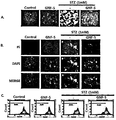
- FIG. 2 shows the inhibitory effect of GNF-5 on the accumulation of ROS in streptozotocin-induced cells.
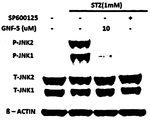
- FIG. 3 shows the inhibitory effect of GNF-5 on streptozotocin-induced JNK activity.
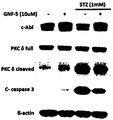
- FIG. 4 shows the inhibitory effect of GNF-5 on streptozotocin-induced PKC ⁇ and caspase-3 activity.
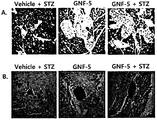
- Figure 5 shows the protective effect of GNF-5 against streptozotocin-induced hyperglycemia through in vivo experiments.
- the inventors of the present invention describe N- (2-hydroxyethyl) -3- (6- (4- (trifluoromethoxy) phenylamino), known as GNF-5, an ATP-noncompetitive allosteric Bcr-Abl kinase inhibitor.
- GNF-5 an ATP-noncompetitive allosteric Bcr-Abl kinase inhibitor.
- the antidiabetic activity of pyrimidin-4-yl) benzamide was confirmed in vitro and in vivo and it was found that GNF-5 could be used for the prevention or treatment of diabetes.
- the present invention relates to N- (2-hydroxyethyl) -3- (6- (4- (trifluoromethoxy) phenylamino) pyrimidin-4-yl) benzamide or a pharmaceutically acceptable salt thereof. It provides a pharmaceutical composition for the prevention or treatment of diabetes (diabetes) containing as an active ingredient.
- the diabetes is preferably type 1 diabetes or type 2 diabetes.
- Said N- (2-hydroxyethyl) -3- (6- (4- (trifluoromethoxy) phenylamino) pyrimidin-4-yl) benzamide or a pharmaceutically acceptable salt thereof is pancreatic ⁇ -cell It is preferable to suppress the cell death of.
- N- (2-hydroxyethyl) -3- (6- (4- (trifluoromethoxy) phenylamino) pyrimidin-4-yl) benzamide or a pharmaceutically acceptable salt thereof is ROS (reactive oxygen) It is desirable to inhibit the production of species).
- N- (2-hydroxyethyl) -3- (6- (4- (trifluoromethoxy) phenylamino) pyrimidin-4-yl) benzamide or a pharmaceutically acceptable salt thereof inhibits JNK phosphorylation It is desirable to.
- N- (2-hydroxyethyl) -3- (6- (4- (trifluoromethoxy) phenylamino) pyrimidin-4-yl) benzamide or a pharmaceutically acceptable salt thereof may activate PKC ⁇ . It is desirable to suppress.
- N- (2-hydroxyethyl) -3- (6- (4- (trifluoromethoxy) phenylamino) pyrimidin-4-yl) benzamide or a pharmaceutically acceptable salt thereof is selected from casepase-3. It is desirable to inhibit activation.
- Acid addition salts formed by free acid are useful.
- Acid addition salts are prepared by conventional methods, for example by dissolving a compound in an excess of aqueous acid solution and precipitating the salt using a water miscible organic solvent such as methanol, ethanol, acetone or acetonitrile. Equal molar amounts of the compound and acid or alcohol (eg, glycol monomethyl ether) in water can be heated and the mixture can then be evaporated to dryness or the precipitated salts can be suction filtered.
- a water miscible organic solvent such as methanol, ethanol, acetone or acetonitrile.
- Equal molar amounts of the compound and acid or alcohol (eg, glycol monomethyl ether) in water can be heated and the mixture can then be evaporated to dryness or the precipitated salts can be suction filtered.
- organic acids and inorganic acids may be used as the free acid, and hydrochloric acid, phosphoric acid, sulfuric acid, nitric acid, tartaric acid, and the like may be used as the inorganic acid, and methanesulfonic acid, p-toluenesulfonic acid, acetic acid, refluoroacetic acid, Citric acid, maleic acid, succinic acid, oxalic acid, benzoic acid, tartaric acid, fumaric acid, manderic acid, propionic acid, citric acid, lactic acid, glycolic acid, gluconic acid, galacturonic acid, glutamic acid, glutaric acid, glucuronic acid, aspartic acid, ascorbic acid , Carbonic acid, vanic acid, hydroiodic acid and the like can be used.
- Bases can also be used to make pharmaceutically acceptable metal salts.
- An alkali metal or alkaline earth metal salt is obtained by, for example, dissolving a compound in an excess alkali metal hydroxide or alkaline earth metal hydroxide solution, filtering the insoluble compound salt, and then evaporating and drying the filtrate.
- the metal salt it is particularly suitable to prepare sodium, potassium or calcium salt, and the corresponding silver salt is obtained by reacting an alkali metal or alkaline earth metal salt with a suitable silver salt (for example, silver nitrate).
- Pharmaceutically acceptable salts of the compounds of the invention include acidic or basic salts which may be present in the compounds of the invention unless otherwise indicated.
- pharmaceutically acceptable salts include sodium, calcium and potassium salts of the hydroxy group
- other pharmaceutically acceptable salts of the amino group include hydrobromide, sulfate, hydrogen sulphate, phosphate, hydrogen phosphate, dihydrogen Phosphate, acetate, succinate, citrate, tartrate, lactate, mandelate, methanesulfonate (mesylate) and p-toluenesulfonate (tosylate) salts. It can be prepared through.
- compositions of the present invention may be formulated in various forms, such as powders, granules, tablets, capsules, suspensions, emulsions, syrups, aerosols, oral formulations, injections of sterile injectable solutions, etc. Can be used.
- Such pharmaceutical compositions may further include carriers, excipients or diluents, and examples of suitable carriers, excipients or diluents that may be included include lactose, dextrose, sucrose, sorbitol, mannitol, xylitol, erythritol, maltitol, Starch, acacia rubber, alginate, gelatin, calcium phosphate, calcium silicate, cellulose, methyl cellulose, amorphous cellulose, polyvinyl pyrrolidone, water, methylhydroxybenzoate, propylhydroxybenzoate, talc, magnesium stearate and mineral oil Etc. can be mentioned.
- the pharmaceutical composition of the present invention may further include a filler, an anticoagulant, a lubricant, a humectant, a perfume, an emulsifier, a preservative, and the like.
- solid preparations for oral administration include tablets, pills, powders, granules, capsules and the like, which solid preparations comprise at least one excipient such as starch, calcium carbonate, Sucrose, lactose, gelatin and the like are mixed and formulated.
- excipient such as starch, calcium carbonate, Sucrose, lactose, gelatin and the like
- lubricants such as magnesium stearate, talc and the like may also be used in addition to simple excipients.
- oral liquid preparations may be exemplified by suspensions, solvents, emulsions, syrups, and the like, and various excipients, for example, wetting agents, sweeteners, Fragrances, preservatives and the like.
- the preparation for parenteral administration may include sterile aqueous solutions, non-aqueous solvents, suspensions, emulsions, lyophilizers, suppositories and the like.
- Non-aqueous solvents and suspending agents may include propylene glycol, polyethylene glycol, vegetable oils such as olive oil, injectable esters such as ethyl oleate, and the like.
- injectables may include conventional additives such as solubilizers, isotonic agents, suspending agents, emulsifiers, stabilizers, preservatives, and the like.
- the pharmaceutical composition of the present invention is administered in a pharmaceutically effective amount.
- pharmaceutically effective amount means an amount sufficient to treat a disease at a reasonable benefit / risk ratio applicable to medical treatment
- an effective dose level means the type, severity, activity of the drug, Sensitivity to drug, time of administration, route of administration and rate of release, duration of treatment, factors including concurrent use of drugs, and other factors well known in the medical arts.
- the pharmaceutical compositions of the present invention may be administered as individual therapeutic agents or in combination with other therapeutic agents, may be administered sequentially or simultaneously with conventional therapeutic agents, and may be administered as single or multiple doses. Taking all of the above factors into consideration, it is important to administer an amount that can obtain the maximum effect in a minimum amount without side effects, which can be easily determined by those skilled in the art.
- the effective amount of the compound in the pharmaceutical composition of the present invention may vary depending on the age, sex and weight of the patient, and generally 1 to 5,000 mg, preferably 100 to 3,000 mg per kg body weight daily or It can be administered every other day or divided into 1 to 3 times a day.
- the dosage may be increased or decreased depending on the route of administration, the severity of the disease, sex, weight, age, etc., and the above dosage does not limit the scope of the present invention in any way.
- composition of the present invention can be administered to a subject through various routes. All modes of administration can be expected, for example by oral, rectal or intravenous, intramuscular, subcutaneous, intrauterine dural or intracerebroventricular injection.
- administration means providing a patient with any substance by any suitable method, wherein the route of administration of the pharmaceutical composition of the present invention is oral or parenteral via all common routes as long as the target tissue can be reached. Oral administration.
- the composition of the present invention may be administered using any device capable of delivering an active ingredient to a target cell.
- Subject in the present invention is not particularly limited, but includes, for example, humans, monkeys, cattle, horses, sheep, pigs, chickens, turkeys, quails, cats, dogs, mice, rats, rabbits or guinea pigs. And preferably mammals, and more preferably humans.
- the present invention also provides for the prevention of diabetes comprising N- (2-hydroxyethyl) -3- (6- (4- (trifluoromethoxy) phenylamino) pyrimidin-4-yl) benzamide Or provide a dietary supplement for improvement.
- the diabetes is preferably type 1 diabetes or type 2 diabetes.
- the dietary supplement containing the compound of the present invention includes, for example, various foods, beverages, gums, teas, vitamin complexes, and the like. It may also be added to foods or beverages for the purpose of preventing diabetic diseases. At this time, the amount of the compound in food or beverage may be added in 0.01 to 15% by weight of the total weight of the food, beverages may be added in a ratio of 0.02 to 5g, preferably 0.3 to 1g based on 100ml.
- Health functional food of the present invention includes the form of tablets, capsules, pills, liquids and the like.
- the dietary supplement of the present invention is not particularly limited to other ingredients containing the above-mentioned preferred ratios of the compound, and may contain various flavors or natural carbohydrates as additional ingredients, such as conventional foods or drinks.
- natural carbohydrates include monosaccharides such as glucose, fructose and the like; Disaccharides such as maltose, sucrose and the like; And conventional sugars such as polysaccharides such as dextrin, cyclodextrin, and sugar alcohols such as xylitol, sorbitol, and erythritol.
- the proportion of said natural carbohydrates is generally about 1 to 20 g, preferably about 5 to 12 g per 100 ml of the composition of the present invention.
- the compounds of the present invention include various nutrients, vitamins, minerals (electrolytes), flavors such as synthetic flavors and natural flavors, coloring and neutralizing agents (such as cheese and chocolate), pectic acid and salts thereof, alginic acid and its Salts, organic acids, protective colloidal thickeners, pH adjusters, stabilizers, preservatives, glycerin, alcohols, carbonation agents used in carbonated drinks and the like.
- the compounds of the present invention may contain fruit flesh for the production of natural fruit juices and fruit juice beverages and vegetable beverages. These components can be used independently or in combination. The proportion of such additives is not so critical but is usually selected in the range of 0 to about 20 parts by weight per 100 parts by weight of the compound of the present invention.
- INS-1 cells a mouse insulinoma cell line, were cultured in RPMI 1640 (Giboco-BRL, Grand Island, NY) medium in 10% fetal bovine serum, 1 mM pyruvate, 10 mM HEPES, 50 mM 2-mercaptoethanol, Culture was performed using 100 units / mL penicillin and 100 ⁇ g / mL streptomycin. Culture conditions were 5% CO2, 37 °C, INS-1 cells used in this experiment was used for the passage number of 20 to 30 times.
- the cultured 4 ⁇ 10 6 cells were washed three times with ice-cold PBS, followed by lysis buffer (137 mM NaCl, 15 mM EGTA, 1 mM sodium orthovanadate, 15 mM MgCl 2, 0.1% Triton X-100, 25 mM PMSF, 2.5 ⁇ g / ml proteinase inhibitor E-64, pH 7.2), crushed with an ultrasonic grinder, and then reacted for 30 minutes at 4 °C and centrifuged at 14,000 rpm for 20 minutes to recover the supernatant.
- lysis buffer 137 mM NaCl, 15 mM EGTA, 1 mM sodium orthovanadate, 15 mM MgCl 2, 0.1% Triton X-100, 25 mM PMSF, 2.5 ⁇ g / ml proteinase inhibitor E-64, pH 7.2
- the same amount of protein was separated by 7.5% sodium dodecyl sulfate-polyacrylamide gel electrophoresis (SDS-PAGE), and the protein was then electrotransfered to the Immobilon-P membrane.
- the membrane was reacted for 1 hour in a blocking solution (TBS solution containing 3% Nonfat milk and 0.1% Tween 20) in order to block nonspecific binding of the antibody, followed by adding the antibody to the protein to be confirmed for 1 to 2 hours. Reacted for a while. It was then washed three times for 10 minutes with a TBST solution containing 0.1% Tween 20 and then reacted with a secondary antibody. Subsequently, the protein was identified on the X-ray film (Kodak, USA) after the reaction with the ECL system.
- FACS analysis was performed as follows. The cells to be analyzed were allowed to stand for 1 hour under 67% ethanol at 4 ° C. to fix the cells first. The fixed cells (1 ⁇ 10 6) were washed twice with PBS solution, suspended in 250 ml of 12.5 mg of RNase (contained in 1.12% sodium citrate buffer, pH 8.45) solution and reacted at 37 ° C. for 30 minutes. 250 ml of propidium iodide (PI, 50 mg / ml) was added to the RNase-treated cells and allowed to react for 20 minutes. Stained cells were analyzed by relative DNA amounts with a FACScan flow cytometer.
- PI propidium iodide
- Apoptosis protection of GNF-5 against streptozotocin treatment in INS-1 cells was assayed by its ability to inhibit mitochondrial cytochrome c release.
- Each cell treated with control, streptozotocin, streptozotocin + GNF-5, streptozotocin + Imatinib was washed twice with cold PBS and suspended in CE1 buffer (Qproteome cell compartment Kit (Qiagen) at 4 ° C. After the reaction was completed, the reaction solution was centrifuged at 1,000 g (4 ° C.) for 10 minutes, and the supernatant was recovered by cytoplasmic fraction.
- mice were fed with GNF-5 (60 mg / kg) and non-feeding groups with streptozotocin 150 mg / kg in single doses of C57BL / 6, and then in each pancreatic section.
- the protective activity of beta cell islet was measured by immunostaining chemistry.
- PBS, GNF-5 and Imatinib were administered at 150 mg / kg of streptozotocin at 2 hours after the first day gavage at 60 mg / kg / day. Thereafter, gavage was performed at 60 mg / kg / day conditions for 13 days.
- gavage was performed at 60 mg / kg / day conditions for 13 days.
- the pancreas was isolated from C57BL / 6 mice, fixed (10% formalin solution in PBS), and a block was made of Paraffin. Pancreatic section After removing paraffin from paraffin block, it was reacted with anti-insulin (H86) (Santa Cruz Biotechnology, USA) antibody overnight at 4 ° C.
- Antibody complexes were detected using the streptavidin-peroxidase reaction kit from Chromogen (ABC kit, Vector Labs, Burlingame, California, USA) and 3,3'-diaminobenzidine. H & E staining was performed with tissue quality control.
- GNF-5 protects rat pancreatic ⁇ -cell
- GNF-5 is an ATP-competitive, unlike Imatinib, Nilotinib and Dasatinib as allosteric Bcr-Abl kinase inhibitors.
- Antidiabetic activity of GNF-5 was assayed using rat pancreatic ⁇ -cell line (Ins-1) cells.
- FIG. 1 First, as a result of measuring the cytotoxicity of GNF-5 against INS-1 cells, as shown in FIG. 1, treatment with GNF-5 at 20 ⁇ M concentration for 48 hours did not affect cell proliferation (FIG. A). On the contrary, it was confirmed that 50% or more of GNF-5 10 ⁇ M was protected against apoptosis induced by streptozotocin 1 mM treatment (FIG. 1B).
- Streptozotocin is a potent DNA alkylating agent known to act as a free radical donor in the pancreas (Larsen and Grude, 1978; Newsholme et al., 2007).
- ROS are generated by streptozotocin, and the generated ROS attack pancreatic ⁇ -cell to induce ⁇ -cell apoptosis and cause diabetes. It is known.
- Apoptosis is a mechanism in which cells are killed when cells are exposed to external stress, followed by cell membrane deformation, mitochondria depolarization, proteolysis, chromosome condensation and DNA fragmentation.
- apoptosis signaling systems are known as mitogen-activated protein kinase family (MAPK) and protein kinase C (PKC).
- MAPK mitogen-activated protein kinase family
- PKC protein kinase C
- Phosphorylation of Bcr-Abl is known to induce activation of stress-activated protein kinase (JNK and p38MAP-kinases), thereby activating caspase-9, leading to apoptosis, and to inhibit phosphorylation of nonreceptor protein kinase c-Abl.
- Imatinib has also been reported to have antidiabetic activity by inhibiting JNK phosphorylation in stress-activated protein kinase, thereby protecting apoptosis of pancreatic ⁇ -cells (Hagerkvist et al., 2006).
- the effect of the ATP independent Bcr-Abl kinase inhibitor GNF-5 on the JNK pathway was investigated. As shown in FIG. 3, when INS-1 cells were treated with 1 mM of streptozotocin (STZ) for 8 hours, total JNK-1 and JNK-2 showed little change but phosphorylation of JNK-1 and -2 was induced rapidly. .
- GNF-5 inhibits JNK phosphorylation and PKC ⁇ activation against oxidative stress produced by streptozotocin treatment in INS-1 cells, resulting in pancreatic ⁇ -cell cells. It was confirmed to inhibit death.
- GNF-5 60 mg / kg dissolved in PBS was gavaged in C57BL / 6J mice, and 2 hours after gavage, streptozotocin was administered at 150 mg / kg to induce diabetes.
- anti-diabetic activity was compared with a group of gavage of the same amount of PBS and Imatinib instead of GNF-5 as negative and positive controls, respectively.
- pancreatic islet section of each mouse was isolated and stained with hematoxylin-eosin (H & E) (FIG. 5A), and the destruction of pancreatic islets by streptozotocin and the protective activity of GNF-5 against insulin. It was confirmed by immunochemical staining.
- GNF-5 an ATP non-competitive Bcr-Abl kinase, inhibits pancreatic ⁇ -cell apoptosis by inhibiting JNK phosphorylation and PKC ⁇ activation induced by oxidative stress.
- the protective action of pancreatic ⁇ -cells from apoptosis has an excellent effect on diabetes induced by streptozotocin treatment, namely type 1 diabetes.
Landscapes
- Health & Medical Sciences (AREA)
- Medicinal Chemistry (AREA)
- Diabetes (AREA)
- Veterinary Medicine (AREA)
- Public Health (AREA)
- General Health & Medical Sciences (AREA)
- Animal Behavior & Ethology (AREA)
- Life Sciences & Earth Sciences (AREA)
- Pharmacology & Pharmacy (AREA)
- Chemical & Material Sciences (AREA)
- Nuclear Medicine, Radiotherapy & Molecular Imaging (AREA)
- General Chemical & Material Sciences (AREA)
- Chemical Kinetics & Catalysis (AREA)
- Organic Chemistry (AREA)
- Engineering & Computer Science (AREA)
- Hematology (AREA)
- Bioinformatics & Cheminformatics (AREA)
- Obesity (AREA)
- Endocrinology (AREA)
- Emergency Medicine (AREA)
- Communicable Diseases (AREA)
- Oncology (AREA)
- Epidemiology (AREA)
- Pharmaceuticals Containing Other Organic And Inorganic Compounds (AREA)
Abstract
본 발명은 N-(2-하이드록시에틸)-3-(6-(4-(트리플루오로메톡시)페닐아미노)피리미딘-4-일)벤자미드 또는 이의 약학적으로 허용 가능한 염을 유효성분으로 함유하는 당뇨병(diabetes)의 예방 또는 치료용 약학적 조성물 및 건강기능식품에 관한 것이다. 본 발명에 따른 N-(2-하이드록시에틸)-3-(6-(4-(트리플루오로메톡시)페닐아미노)피리미딘-4-일)벤자미드 또는 이의 약학적으로 허용 가능한 염은 제 1형 당뇨병 및 제 2형 당뇨병을 포함한 당뇨병의 치료에 효과적으로 사용될 수 있으며, 상기 화합물은 당뇨병의 예방 또는 개선용 건강기능식품의 용도로서도 사용될 수도 있다.
Description
본 발명은 N-(2-하이드록시에틸)-3-(6-(4-(트리플루오로메톡시)페닐아미노)피리미딘-4-일)벤자미드 또는 이의 약학적으로 허용 가능한 염을 유효성분으로 함유하는 당뇨병(diabetes)의 예방 또는 치료용 약학적 조성물 및 건강기능식품에 관한 것이다.
생체 내 티로신 키나아제 신호 경로(tyrosine kinase signaling pathway)는 세포 증식, 분화, 신진 대사, 세포 이동 조절 기전에 중요하며, 이 경로의 이상은 암과 같은 질환의 발생과 밀접한 관계가 있는 것으로 알려져 있다.
특히, Chronic myelogeneous leukemia(CML) 치료에 있어 Bcr-Abl tyrosine kinase inhibitors(TKIs)인 imatinib(Gleevec 또는 Glivec)가 획기적인 치료제로 알려지면서 TKI 개발은 암 정복과 관련하여 다양하게 연구개발되었다.
GNF-5로 알려진 N-(2-hydroxyethyl)-3-(6-(4-(trifluoromethoxy)phenylamino)pyrimidin-4-yl)benzamide는 Abl kinase domain c-terminal 근처의 myristate-binding pocket을 타겟팅하는 non-ATP-competitive inhibitors인 Bcr-Abl inhibitor로 알려져 있다(Mian et al., 2012). TKI의 대표적인 약물로는 Imatinib, Nilotinib과 Dasatinib 등이 있으며, Imatinib을 중심으로 알려진 이들 TKI의 작용기전은 Bcr-Abl kinase와 결합하여 Bcr-Abl oncoprotein의 자가인산화와 기질인산화를 억제한다고 알려져 있다(Mokhtari and Welsh, 2010). 현재까지 알려진 TKI 타겟으로는 Arg(Abl-related gene), SCF(stem cell factor) recptor c-Kit, PDGFR(platelet-derived growth factor receptor), DDR1/2(discoidin domain receptor 1/2) 및 oxidoreductase NQO2(NADPH dehydrogenase quinone 2) 등이 보고되었다(Hantschel et al., 2008).
Imatinib를 포함하는 대부분의 TKI 약물은 CML의 치료제로 탁월할 뿐 아니라 gastrointestinal stromal tumiors(GISTs)를 비롯하여 다양한 암세포 증식을 억제하는 것으로 확인되었다. 특히, CML 환자 중 제 2형 당뇨병을 수반하는 chronic myeloid leukemia 환자에 Imatinib를 투여하였을 때 CML뿐 만 아니라 당뇨도 개선된다는 연구 보고(Breccia et al., 2004; Veneri et al., 2005) 이 후에 TKI의 항당뇨 활성에 주목하게 되었다. Imatinib의 항당뇨 활성에 대한 연구 보고에 따르면, 스트렙토조토신(STZ)으로 유도한 당뇨에 대한 보호활성, NOD(non-obese diabetic) mice 뿐만 아니라 db/db mice에서의 당뇨 개선 등이 확인되어 보고되었다(Han et al., 2009).
이후, Nilotinib, Sunitinib, Dasatinib, Erlotinib 와 Fasudil와 같은 TKI에서도 제 1형 당뇨 또는 제 2형 당뇨의 개선이 beta-cell의 세포사멸 억제 및 insulin resistance 감소와 연관이 있다고 보고되어 TKI가 당뇨 치료에도 탁월하다고 인식하게 되었다. TKI의 항당뇨 효과에 대한 작용기전은 Imatinib 연구를 통하여 protein kinase C(PKC) delta 활성화 억제와, stress-activated protein kinase 경로 차단을 통해 pancreatic beta-cell의 세포사멸을 억제하는 것으로 알려져 있다(Hagerkvist et al., 2006).
그러나, CML 치료에 사용되는 Bcr-Abl을 타겟하는 Imatinib, Nilotinib 및 Dasatinib 등은 Abl 키나아제 도메인의 ATP 결합부위에 점돌연변이가 있으면 작용하지 못하는 것으로 알려져 있다.
[선행기술문헌]
[비특허문헌]
(비특허문헌 1) Targeting Bcr-Abl by combining allosteric with ATP-binding-site inhibitors. Zhang J. et al., Nature. 2010, 463(7280):501-6
(비특허문헌 2) A comprehensive target selectivity survey of the BCR-ABL kinase inhibitor INNO-406 by kinase profiling and chemical proteomics in chronic myeloid leukemia cells. Rix U., Leukemia. 2010, 24(1):44-50
(비특허문헌 3) Allosteric inhibition enhances the efficacy of ABL kinase inhibitors to target unmutated BCR-ABL and BCR-ABL T315I. Afsar Ali Mian et al., BMC Cancer 2012, 12:411
(비특허문헌 4) Potential utility of small tyrosine inhibitors in the treatment of diabetes. Mokhtari D. et al., Clin Sci(Lond). 2009, 118(4):241-7
(비특허문헌 5) The Ins and Outs of Bcr-Abl Inhibition. E. Premkumar Reddy et al., Genes & Cancer 3(5-6) 447-454
(비특허문헌 6) Response of prostate cancer during imatinib therapy in a patient with chronic myeloid leukemia. Breccia et al., Haematologica. 2004, 89(7):ECR20
(비특허문헌 7) Effect of the tyrosine kinase inhibitors (sunitinib, sorafenib, dasatinib, and imatinib) on blood glucose levels in diabetic and nondiabetic patients in general clinical practice. Nicole M Agostino et al., J Oncol Pharm Pract. 2011, 197-202
(비특허문헌 8) Imatinib mesylate improves insulin sensitivity and glucose disposal rates in rats fed a high-fat diet. Hagerkvist et al., Clin Sci(Lond). 2008, 114,65-71
본 발명은 상기와 같은 종래 기술을 근거로 하여 안출된 것으로서, 본 발명에서 해결하고자 하는 과제는 GNF-5로 알려진 N-(2-하이드록시에틸)-3-(6-(4-(트리플루오로메톡시)페닐아미노)피리미딘-4-일)벤자미드 또는 이의 약학적으로 허용 가능한 염을 유효성분으로 함유하는 당뇨병(diabetes)의 예방 또는 치료용 약학적 조성물을 제공하고자 하는 것이다.
본 발명에서 해결하고자 하는 또 다른 과제는 N-(2-하이드록시에틸)-3-(6-(4-(트리플루오로메톡시)페닐아미노)피리미딘-4-일)벤자미드 또는 이의 약학적으로 허용 가능한 염을 포함하는 당뇨병의 예방 또는 개선용 건강기능식품을 제공하고자 하는 것이다.
상기와 같은 과제를 해결하기 위하여, 본 발명은 N-(2-하이드록시에틸)-3-(6-(4-(트리플루오로메톡시)페닐아미노)피리미딘-4-일)벤자미드 또는 이의 약학적으로 허용 가능한 염을 유효성분으로 함유하는 당뇨병(diabetes)의 예방 또는 치료용 약학적 조성물을 제공한다.
상기 당뇨병은 제 1형 당뇨병(type 1 diabetes) 또는 제 2형 당뇨병(type 2 diabetes)인 것이 바람직하다.
상기 N-(2-하이드록시에틸)-3-(6-(4-(트리플루오로메톡시)페닐아미노)피리미딘-4-일)벤자미드 또는 이의 약학적으로 허용 가능한 염은 췌장 β-세포의 세포사멸을 억제하는 것이 바람직하다.
상기 N-(2-하이드록시에틸)-3-(6-(4-(트리플루오로메톡시)페닐아미노)피리미딘-4-일)벤자미드 또는 이의 약학적으로 허용 가능한 염은 ROS(reactive oxygen species)의 생성을 억제하는 것이 바람직하다.
상기 N-(2-하이드록시에틸)-3-(6-(4-(트리플루오로메톡시)페닐아미노)피리미딘-4-일)벤자미드 또는 이의 약학적으로 허용 가능한 염은 JNK 인산화를 억제하는 것이 바람직하다.
상기 N-(2-하이드록시에틸)-3-(6-(4-(트리플루오로메톡시)페닐아미노)피리미딘-4-일)벤자미드 또는 이의 약학적으로 허용 가능한 염은 PKCδ의 활성화를 억제하는 것이 바람직하다.
상기 N-(2-하이드록시에틸)-3-(6-(4-(트리플루오로메톡시)페닐아미노)피리미딘-4-일)벤자미드 또는 이의 약학적으로 허용 가능한 염은 caspase-3의 활성화를 억제하는 것이 바람직하다.
또한, 본 발명은 N-(2-하이드록시에틸)-3-(6-(4-(트리플루오로메톡시)페닐아미노)피리미딘-4-일)벤자미드를 포함하는 당뇨병(diabetes)의 예방 또는 개선용 건강기능식품을 제공한다.
상기 당뇨병은 제 1형 당뇨병(type 1 diabetes) 또는 제 2형 당뇨병(type 2 diabetes)인 것이 바람직하다.
본 발명에 따른 N-(2-하이드록시에틸)-3-(6-(4-(트리플루오로메톡시)페닐아미노)피리미딘-4-일)벤자미드 또는 이의 약학적으로 허용 가능한 염은 제 1형 당뇨병 및 제 2형 당뇨병을 포함한 당뇨병의 치료에 효과적으로 사용될 수 있으며, 상기 화합물은 당뇨병의 예방 또는 개선용 건강기능식품의 용도로서도 사용될 수도 있다.
도 1은 GNF-5의 세포 독성(A) 및 스트렙토조토신이 처리된 pancreatic beta cell line INS-1의 GNF-5에 의한 보호 효과(B)를 나타낸 것이다.
도 2는 스트렙토조토신으로 유도된 세포 내 ROS의 축적에 대한 GNF-5의 저해 효과를 나타낸 것이다.
도 3은 스트렙토조토신으로 유도된 JNK 활성에 대한 GNF-5의 저해 효과를 나타낸 것이다.
도 4는 스트렙토조토신으로 유도된 PKCδ 및 caspase-3 활성에 대한 GNF-5의 저해 효과를 나타낸 것이다.
도 5는 in vivo 실험을 통한 스트렙토조토신으로 유도된 hyperglycemia에 대한 GNF-5의 보호 효과를 나타낸 것이다.
이하, 본 발명을 상세하게 설명한다.
본 발명의 발명자들은 ATP-비경쟁적인 알로스테릭 Bcr-Abl 키나아제 저해제인 GNF-5로 알려진 N-(2-하이드록시에틸)-3-(6-(4-(트리플루오로메톡시)페닐아미노)피리미딘-4-일)벤자미드의 항당뇨 활성을 in vitro와 in vivo에서 확인하고, GNF-5가 당뇨병의 예방 또는 치료 용도로 사용될 수 있음을 밝혔다.
따라서, 본 발명은 N-(2-하이드록시에틸)-3-(6-(4-(트리플루오로메톡시)페닐아미노)피리미딘-4-일)벤자미드 또는 이의 약학적으로 허용 가능한 염을 유효성분으로 함유하는 당뇨병(diabetes)의 예방 또는 치료용 약학적 조성물을 제공한다.
상기 당뇨병은 제 1형 당뇨병(type 1 diabetes) 또는 제 2형 당뇨병(type 2 diabetes)인 것이 바람직하다.
상기 N-(2-하이드록시에틸)-3-(6-(4-(트리플루오로메톡시)페닐아미노)피리미딘-4-일)벤자미드 또는 이의 약학적으로 허용 가능한 염은 췌장 β-세포의 세포사멸을 억제하는 것이 바람직하다.
상기 N-(2-하이드록시에틸)-3-(6-(4-(트리플루오로메톡시)페닐아미노)피리미딘-4-일)벤자미드 또는 이의 약학적으로 허용 가능한 염은 ROS(reactive oxygen species)의 생성을 억제하는 것이 바람직하다.
상기 N-(2-하이드록시에틸)-3-(6-(4-(트리플루오로메톡시)페닐아미노)피리미딘-4-일)벤자미드 또는 이의 약학적으로 허용 가능한 염은 JNK 인산화를 억제하는 것이 바람직하다.
상기 N-(2-하이드록시에틸)-3-(6-(4-(트리플루오로메톡시)페닐아미노)피리미딘-4-일)벤자미드 또는 이의 약학적으로 허용 가능한 염은 PKCδ의 활성화를 억제하는 것이 바람직하다.
상기 N-(2-하이드록시에틸)-3-(6-(4-(트리플루오로메톡시)페닐아미노)피리미딘-4-일)벤자미드 또는 이의 약학적으로 허용 가능한 염은 casepase-3의 활성화를 억제하는 것이 바람직하다.
본 발명의 화합물의 약학적으로 허용 가능한 염으로는 유리산(free acid)에 의해 형성된 산부가염이 유용하다. 산부가염은 통상의 방법, 예를 들면 화합물을 과량의 산 수용액에 용해시키고, 이 염을 메탄올, 에탄올, 아세톤 또는 아세토니트릴과 같은 수혼화성 유기 용매를 사용하여 침전시켜서 제조한다. 동일한 몰량의 화합물 및 물 중의 산 또는 알코올(예, 글리콜 모노메틸에테르)을 가열하고, 이어서 상기 혼합물을 증발시켜서 건조시키거나, 또는 석출된 염을 흡인 여과시킬 수 있다.
이때, 유리산으로는 유기산과 무기산을 사용할 수 있으며, 무기산으로는 염산, 인산, 황산, 질산, 주석산 등을 사용할 수 있고, 유기산으로는 메탄술폰산, p-톨루엔술폰산, 아세트산, 리플루오로아세트산, 시트르산, 말레인산, 숙신산, 옥살산, 벤조산, 타르타르산, 푸마르산, 만데르산, 프로피온산, 구연산, 젖산, 글리콜산, 글루콘산, 갈락투론산, 글루탐산, 글루타르산, 글루쿠론산, 아스파르트산, 아스코르빈산, 카본산, 바닐릭산 및 히드로 아이오딕산 등을 사용할 수 있다.
또한, 염기를 사용하여 약학적으로 허용 가능한 금속염을 만들 수도 있다. 알칼리 금속 또는 알칼리토 금속염은, 예를 들면 화합물을 과량의 알칼리 금속 수산화물 또는 알칼리토 금속 수산화물 용액 중에 용해하고, 비용해 화합물염을 여과한 후 여액을 증발, 건조시켜 얻는다. 이때, 금속염으로서는 특히 나트륨, 칼륨 또는 칼슘염을 제조하는 것이 제약상 적합하며, 또한 이에 대응하는 은염은 알칼리 금속 또는 알칼리토 금속염을 적당한 은염(예, 질산은)과 반응시켜 얻는다.
본 발명의 화합물의 약학적으로 허용 가능한 염은 달리 지시되지 않는 한 본 발명의 화합물에 존재할 수 있는 산성 또는 염기성의 염을 포함한다. 예를 들면, 약학적으로 허용 가능한 염으로는 히드록시기의 나트륨, 칼슘 및 칼륨염이 포함되며, 아미노기의 기타 약학적으로 허용 가능한 염으로는 하이드로브로마이드, 황산염, 수소 황산염, 인산염, 수소 인산염, 이수소 인산염, 아세테이트, 숙시네이트, 시트레이트, 타르트레이트, 락테이트, 만델레이트, 메탄설포네이트(메실레이트) 및 p-톨루엔설포네이트(토실레이트) 염이 있으며, 당업계에서 알려진 염의 제조방법이나 제조과정을 통하여 제조될 수 있다.
본 발명의 약학적 조성물은 각각의 사용 목적에 맞게 통상의 방법에 따라 산제, 과립제, 정제, 캡슐제, 현탁제, 에멀젼, 시럽, 에어로졸 등의 경구 제형, 멸균 주사용액의 주사제 등 다양한 형태로 제형화하여 사용할 수 있다.
이러한 약학적 조성물에는 추가적으로 담체, 부형제 또는 희석제 등이 더 포함될 수 있으며, 포함될 수 있는 적합한 담체, 부형제 또는 희석제의 예로는 락토오스, 덱스트로오스, 수크로오스, 솔비톨, 만니톨, 자일리톨, 에리쓰리톨, 말티톨, 전분, 아카시아 고무, 알지네이트, 젤라틴, 칼슘 포스페이트, 칼슘 실리케이트, 셀룰로스, 메틸 셀룰로스, 비정질 셀룰로스, 폴리비닐 피롤리돈, 물, 메틸하이드록시벤조에이트, 프로필하이드록시벤조에이트, 탈크, 마그네슘 스테아레이트 및 광물유 등을 들 수 있다. 또한, 본 발명의 약학적 조성물은 충전제, 항응집제, 윤활제, 습윤제, 향료, 유화제, 방부제 등을 추가로 더 포함할 수도 있다.
바람직한 구체예로서, 경구 투여를 위한 고형 제제에는 정제, 환제, 산제, 과립제, 캡슐제 등이 포함되며, 이러한 고형 제제는 상기 약학적 조성물에 적어도 하나 이상의 부형제, 예를 들면, 전분, 탄산칼슘, 수크로오스, 락토오스, 젤라틴 등을 혼합하여 제형화한다. 또한, 단순한 부형제 이외에 마그네슘 스테아레이트, 탈크 등과 같은 윤활제가 사용될 수도 있다.
바람직한 구체예로서, 경구용 액상 제제로는 현탁제, 내용액제, 유제, 시럽제 등이 예시될 수 있으며, 흔히 사용되는 단순 희석제인 물, 액체 파라핀 이외에 여러 가지 부형제, 예를 들면, 습윤제, 감미제, 방향제, 보존제 등이 포함될 수 있다.
바람직한 구체예로서, 비경구 투여를 위한 제제에는 멸균된 수용액제, 비수성용제, 현탁제, 유제, 동결건조제, 좌제 등을 예시할 수 있다. 비수성용제, 현탁제에는 프로필렌글리콜, 폴리에틸렌글리콜, 올리브 오일과 같은 식물성 기름, 에틸올레이트와 같은 주사 가능한 에스테르 등이 포함될 수 있다. 주사제에는 용해제, 등장화제, 현탁화제, 유화제, 안정화제, 방부제 등과 같은 종래의 첨가제가 포함될 수 있다.
본 발명의 약학적 조성물은 약제학적으로 유효한 양으로 투여한다. 본 발명에서, "약제학적으로 유효한 양"은 의학적 치료에 적용 가능한 합리적인 수혜/위험 비율로 질환을 치료하기에 충분한 양을 의미하며, 유효 용량 수준은 환자의 질환의 종류, 중증도, 약물의 활성, 약물에 대한 민감도, 투여 시간, 투여 경로 및 배출 비율, 치료 기간, 동시 사용되는 약물을 포함한 요소 및 기타 의학 분야에 잘 알려진 요소에 따라 결정될 수 있다. 본 발명의 약학적 조성물은 개별 치료제로 투여하거나 다른 치료제와 병용하여 투여될 수 있고, 종래의 치료제와 순차적으로 또는 동시에 투여될 수 있으며, 단일 또는 다중 투여될 수 있다. 상기한 요소들을 모두 고려하여 부작용 없이 최소한의 양으로 최대 효과를 얻을 수 있는 양을 투여하는 것이 중요하며, 이는 당업자에 의해 용이하게 결정될 수 있다.
바람직한 구체예로서, 본 발명의 약학적 조성물에서 화합물의 유효량은 환자의 나이, 성별, 체중에 따라 달라질 수 있으며, 일반적으로는 체중 ㎏ 당 1 내지 5,000mg, 바람직하게는 100 내지 3,000mg을 매일 또는 격일 투여하거나 1일 1 내지 3회로 나누어 투여할 수 있다. 그러나, 투여 경로, 질병의 중증도, 성별, 체중, 연령 등에 따라서 증감될 수 있으므로 상기 투여량이 어떠한 방법으로도 본 발명의 범위를 한정하는 것은 아니다.
본 발명의 약학적 조성물은 다양한 경로를 통하여 대상에 투여될 수 있다. 투여의 모든 방식은 예상될 수 있는데, 예를 들면, 경구, 직장 또는 정맥, 근육, 피하, 자궁내 경막 또는 뇌혈관내 (intracerebroventricular) 주사에 의해 투여될 수 있다.
본 발명에서 "투여"는 임의의 적절한 방법으로 환자에게 소정의 물질을 제공하는 것을 의미하며, 본 발명의 약학적 조성물의 투여 경로는 목적 조직에 도달할 수 있는 한 일반적인 모든 경로를 통하여 경구 또는 비경구 투여될 수 있다. 또한, 본 발명의 조성물은 유효성분을 표적 세포로 전달할 수 있는 임의의 장치를 이용해 투여될 수도 있다.
본 발명에서 "대상"은, 특별히 한정되는 것은 아니지만, 예를 들어, 인간, 원숭이, 소, 말, 양, 돼지, 닭, 칠면조, 메추라기, 고양이, 개, 마우스, 쥐, 토끼 또는 기니아 피그를 포함하고, 바람직하게는 포유류, 보다 바람직하게는 인간을 의미한다.
또한, 본 발명은 N-(2-하이드록시에틸)-3-(6-(4-(트리플루오로메톡시)페닐아미노)피리미딘-4-일)벤자미드를 포함하는 당뇨병(diabetes)의 예방 또는 개선용 건강기능식품을 제공한다.
상기 당뇨병은 제 1형 당뇨병(type 1 diabetes) 또는 제 2형 당뇨병(type 2 diabetes)인 것이 바람직하다.
본 발명의 화합물을 함유하는 건강기능식품은 예를 들어, 각종 식품류, 음료, 껌, 차, 비타민 복합제 등이 있다. 또한, 당뇨성 질환의 예방 효과를 목적으로 식품류 또는 음료에 첨가될 수도 있다. 이때, 식품류 또는 음료 중의 상기 화합물의 양은 전체 식품류 중량의 0.01 내지 15중량%로 가할 수 있으며, 음료는 100㎖를 기준으로 0.02 내지 5g, 바람직하게는 0.3 내지 1g의 비율로 가할 수 있다.
본 발명의 건강기능식품은 정제, 캡슐제, 환제, 액제 등의 형태를 포함한다.
본 발명의 건강기능식품은 지시된 바람직한 비율의 상기 화합물을 함유하는 외의 다른 성분에는 특별한 제한이 없으며 통상의 식품류 또는 음료와 같이 여러 가지 향미제 또는 천연 탄수화물 등을 추가 성분으로서 함유할 수 있다. 상술한 천연 탄수화물의 예는 모노사카라이드, 예를 들어, 포도당, 과당 등; 디사카라이드, 예를 들어 말토스, 슈크로스 등; 및 폴리사카라이드, 예를 들어 덱스트린, 시클로덱스트린 등과 같은 통상적인 당, 및 자일리톨, 소르비톨, 에리트리톨 등의 당알콜일 수 있다. 상술한 것 이외의 향미제로서 천연 향미제 및 합성 향미제를 유리하게 사용할 수도 있다. 상기 천연 탄수화물의 비율은 본 발명의 조성물 100㎖당 일반적으로 약 1 내지 20g, 바람직하게는 약 5 내지 12g이다.
상기 외에 본 발명의 화합물은 여러 가지 영양제, 비타민, 광물(전해질), 합성 풍미제 및 천연 풍미제 등의 풍미제, 착색제 및 중진제(치즈, 초콜릿 등), 펙트산 및 그의 염, 알긴산 및 그의 염, 유기산, 보호성 콜로이드 증점제, pH 조절제, 안정화제, 방부제, 글리세린, 알코올, 탄산음료에 사용되는 탄산화제 등을 함유할 수도 있다. 그 밖에 본 발명의 화합물은 천연 과일 쥬스 및 과일 쥬스 음료 및 야채 음료의 제조를 위한 과육을 함유할 수 있다. 이러한 성분은 독립적으로 또는 조합하여 사용할 수 있다. 이러한 첨가제의 비율은 그렇게 중요하진 않지만 본 발명의 화합물 100중량부 당 0 내지 약 20중량부의 범위에서 선택되는 것이 일반적이다.
이하에서는, 실시예를 통하여 본 발명을 더욱 상세하게 설명한다.
[실시예]
1. 재료 및 방법
1.1. 세포 배양
쥐의 인슐린종 세포주인 INS-1 세포는 RPMI 1640 (Giboco-BRL, Grand Island, NY) 배지에 10% 소태아혈청 (fetal bovine serum), 1 mM pyruvate, 10 mM HEPES, 50 mM 2-mercaptoethanol, 100 units/mL penicillin, 100 μg/mL streptomycin을 사용하여 배양하였다. 배양 조건은 5 % CO2, 37 ℃였으며, 본 실험에 사용한 INS-1 세포는 계대 회수가 20에서 30 번 사이의 것을 사용하였다.
1.2. INS-1 세포 증식에 대한 GNF-5의 세포독성 검정
GNF-5의 INS-1 세포성장에 대한 영향은 WST-1 cell viability assay kit(Dojindo Laboratories, Kumamoto, Japan)를 이용하여 검정하였다.
1.3. 웨스턴 블롯 분석법 (Western blot analysis)
배양된 4 x 10⁶ 세포를 ice-cold PBS로 3 회 세척한 후, 세포 용해 완충용액 (lysis buffer: 137 mM NaCl, 15 mM EGTA, 1 mM sodium orthovanadate, 15 mM MgCl2, 0.1% Triton X-100, 25 mM PMSF, 2.5 μg/ml proteinase inhibitor E-64, pH 7.2)에 현탁하고 초음파 분쇄기로 파쇄한 다음, 4 ℃에서 30 분간 반응시키고 14,000 rpm에서 20 분간 원심 분리하여 상층액을 회수하였다. 동일한 양의 단백질을 7.5 % sodium dodecyl sulfate-polyacrylamide gel electrophoresis (SDS-PAGE)로 분리시킨 후, 단백질을 Immobilon-P 멤브레인에 전기전달 (electrotransfer)하였다. 이 멤브레인을 항체의 비특이적 결합을 차단하기 위하여 블로킹 용액 (3 % Nonfat milk와 0.1 % Tween 20을 함유한 TBS 용액)에서 1 시간 동안 반응시킨 후, 확인하고자 하는 단백질에 대한 항체를 가하여 1 내지 2 시간 동안 반응시켰다. 이어서 0.1 % Tween 20을 함유한 TBST 용액으로 10 분씩 3 회 세척한 다음, 2차 항체로 반응시켰다. 이어서 ECL system으로 반응 시킨 후에 X-ray film (Kodak, USA) 상에서 단백질을 확인하였다.
1.4. Mitochondrial membrane potential 측정법
FACS 분석은 다음과 같이 실시하였다. 분석할 세포를 67 % ethanol, 4 ℃ 조건하에서 1 시간 방치하여 세포를 먼저 고정하였다. 고정한 세포 (1 x 10⁶)는 PBS 용액으로 2 회 세척한 후 12.5 mg 의 RNase (1.12% sodium citrate buffer (pH 8.45) 내에 함유됨) 용액 250 ml 에 현탁하여 37 ℃에서 30 분간 반응하였다. RNase 처리한 세포에 250 ml의 propidium iodide (PI, 50 mg/ml)을 가해 20 분간 반응시켰다. 염색된 세포는 FACScan flow cytometer로 상대적인 DNA 양으로 분석하였다.
1.5. Mitochondrial cytochrome c release 검정
INS-1 세포에서 스트렙토조토신 처리에 대한 GNF-5의 세포사멸보호 기능을 mitochondrial cytochrome c release 억제능으로 검정하였다. 대조구, 스트렙토조토신 처리구, 스트렙토조토신 + GNF-5, 스트렙토조토신 + Imatinib로 처리한 각 세포를 cold PBS로 2 회 세척한 다음 CE1 buffer (Qproteome cell compartment Kit (Qiagen)에 현탁하여 4 ℃ 에서 10 분간 방치하였다. 반응이 끝난 후 1,000 g (4 ℃)에서 10 분간 원심분리하여 상등액을 세포질분획으로 회수하여 mitochondrial cytochrome c release 유무를 확인하였다.
1.6. In vivo 실험을 통한 췌장 베타세포 보호활성 검정
동물실험의 경우 마우스(C57BL/6)에 GNF-5(60 mg/kg)를 먹인 그룹과 먹이지 않은 그룹에 스트렙토조토신 150 mg/kg로 단 회 투여로 당뇨를 유발시킨 후 각각의 pancreatic section에 있어서의 beta cell islet의 보호활성을 면역염색화학법로 측정하였다.
1.7. 췌장조직의 면역염색
PBS, GNF-5와 Imatinib를 60 mg/kg/day로 첫날 gavage 한 후 2시간 때 스트렙토조토신을 150 mg/kg로 투여하였다. 이 후 13 일간 60 mg/kg/day 조건으로 gavage하였다. 면역염색 분석을 위하여 C57BL/6 mouse로부터 췌장을 분리하여 고정하고(10 % formalin solution in PBS) Paraffin으로 block를 만들었다. Pancreatic section 파라핀 블록의 파라핀을 제거한 후 anti-insulin (H86)(Santa Cruz Biotechnology, USA) 항체로 4 ℃에서 하룻밤 반응시켰다. Antibody complex의 검출은 Chromogen (ABC kit, Vector Labs, Burlingame, California, USA)의 streptavidin-peroxidase reaction kit 과 3,3'-diaminobenzidine을 사용하였다. H&E staining을 tissue quality control로 실시하였다.
1.8. 통계처리
본 실험의 데이터는 적어도 3회 반복하였으며 테이터 값은 평균±표준편차 값으로 표시하였다. 통계는 Student's t-test로 분석하였고. p<0.05를 통계적으로 유의한 값으로 하였다.
2. 결과 및 고찰
2.1. GNF-5의 rat pancreatic β-cell 보호작용
GNF-5는 알로스테릭 Bcr-Abl 키나아제 저해제로서 Imatinib, Nilotinib 및 Dasatinib와 달리 ATP-비경쟁적이다. GNF-5의 항당뇨 활성을 rat pancreatic β-cell line(Ins-1) 세포를 이용하여 검정하였다. 먼저, GNF-5의 INS-1 세포에 대한 세포독성을 측정한 결과, 도 1에 나타난 바와 같이, GNF-5 20 μM 농도에서 48 시간 처리하여도 세포증식에는 전혀 영향을 주지 않았다(도 1의 A). 이에 반해 스트렙토조토신 1mM 처리에 의해 유도되는 세포사멸에 대해서는 GNF-5 10 μM 농도에서 50 % 이상 보호됨을 확인하였다(도 1의 B).
2.2. GNF-5의 ROS(reactive oxygen species) 생성에 대한 영향
생체의 대사를 통해 활성산소가 생성되며 이 활성산소는 불안정하여 주변 세포의 DNA와 단백질에 작용하여 변이나 변성을 유발하여 세포손상을 일으켜 세포 사멸을 유도한다. 스트렙토조토신은 강력한 DNA alkylating agent로 췌장에 free radical donor로 작용하는 것으로 알려져 있다(Larsen and Grude, 1978; Newsholme et al., 2007). 즉, 스트렙토조토신 처리에 의해 유발되는 당뇨 모델은 스트렙토조토신에 의해 ROS가 생성되고, 생성된 ROS가 pancreatic β-cell를 공격하여 β-cell 세포사멸을 유도하여 인슐린 결핍상태로 만들어 당뇨를 유발한다고 알려져 있다. 따라서, INS-1 세포를 스트렙토조토신으로부터 보호하는 GNF-5의 세포보호활성이 스트렙토조토신에 의해 유도되는 ROS 생성을 저해하는 것과 연관 있는지를 DHCF-DA의 fluorescent form인 DCF 생성에 대한 저해 활성으로 조사하였다. 도 2의 A와 같이, 스트렙토조토신 처리에 의하여 생성되는 ROS를 100 %로 하였을 때 GNF-5를 1시간 전처리하고 스트렙토조토신을 처리하였을 때 ROS 생성이 78.4 % 저해됨을 확인하였다. 이와 같은 GNF-5의 ROS 생성 저해는 DNA fragmentation 억제와 연관 있음을 PI 와 DAPI 염색으로 확인할 수 있었으며(도 2의 B), 이때 세포의 mitochondrial membrane potential 변화도 억제됨을 DiO6 염색으로 확인할 수 있었다(도 2의 C).
2.3. GNF-5의 stress-activated protein kinase(SAPK)에 대한 영향
Apoptosis는 세포가 외부로부터 스트레스에 노출되면 plasma membrane의 변형에 이어 세포 수축, mitochondria depolarization, 단백질 분해, 염색체 응축 및 DNA 단편화가 일어나면서 세포가 사멸하는 기구이다. 이와 같은 세포사멸 신호전달계로는 mitogen-activated protein kinase family(MAPK)와 protein kinase C(PKC)가 알려져 있다. Bcr-Abl의 인산화는 stress-activated protein kinase (JNK와 p38MAP-kinases)의 활성화를 유도하여 caspase-9을 활성화시켜 세포사멸을 유도한다고 알려져 있으며, nonreceptor protein kinase c-Abl의 인산화를 억제하는 것으로 알려진 Imatinib도 stress-activated protein kinase 중 JNK 인산화를 저해시켜 pancreatic β-cell의 세포사멸을 보호하여 항당뇨 활성을 가진다고 보고되었다 (Hagerkvist et al., 2006). ATP 비의존성 Bcr-Abl 키나아제 저해제 GNF-5의 JNK 경로에 대한 영향을 조사하였다. 도 3에서 보는 것과 같이, INS-1 세포를 스트렙토조토신 (STZ) 1 mM로 8 시간 처리하면 total JNK-1과 JNK-2의 변화는 거의 없으나 JNK-1과 -2의 인산화는 급격히 유도되었다. 그러나, 이와 같은 JNK의 활성화는 GNF-5와 JNK inhibitor인 SP600125을 각각 10 μM로 1 시간 전처리하면 상당히 억제되었다. 이 결과는 GNF-5도 Imatinib처럼 JNK 인산화를 억제하여 췌장 베타세포의 세포사멸을 저해함을 알 수 있었다.
2.4. GNF-5의 protein kinase C delta 활성화에 대한 영향
세포가 genotoxic stress를 받으면 그 손상 정도에 따라 세포생존과 사멸을 결정하여 회복되든지 세포사를 통해 제거된다. 현재까지 아직 이에 대한 완전한 기전은 알려져 있지 않으나 apoprotic cell death에 protein kinase C δ isoform이 c-Abl의 인산화에 의해 활성화되고, 이어 활성화된 caspase-3에 의해 cleavage된 PKCδ가 핵 내로 이동하여 apoptosis를 유도한다고 보고되었다(Ghayur et al., 1996). 따라서, INS-1 세포에 스트렙토조토신 처리에 따른 PKCδ cleavage와 caspase-3의 변화를 조사한 결과 도 4에서와 같이 스트렙토조토신 1 mM로 8 시간 처리하였을 때 cleaved PKCδ와 caspase-3가 활성화되었으며, 이들의 활성화는 10 μM의 GNF-5 처리에 의해 저해됨을 알았다.
이상의 연구 결과를 종합해 보면, GNF-5는 INS-1 세포에 있어 스트렙토조토신 처리에 의해 생성되는 oxidative stress에 의한 세포 사멸에 대하여 JNK의 인산화와 PKCδ의 활성화를 억제하여 pancreatic β-cell의 세포사멸을 억제하는 것으로 확인되었다.
2.5. In vivo 실험을 통한 GNF-5에 의한 항당뇨 활성 검정
In vitro 실험 결과, GNF-5는 스트렙토조토신에 의한 genotoxic stress에 대하여 JNK 활성화, PKCδ와 caspase-3 활성화를 억제하여 INS-1 세포의 세포사멸을 저해하는 것으로 확인되었다. 따라서, 이와 같은 pancreatic β-세포의 산화적 스트레스 보호활성과 연관하여 항당뇨 활성을 C57BL/6J mice를 이용하여 in vivo 실험을 행하였다.
먼저, C57BL/6J mice에 PBS에 녹인 GNF-5(60 mg/kg)를 gavage하고, gavage 2시간 후에 스트렙토조토신을 150 mg/kg으로 투여하여 당뇨를 유발하였다. 같은 방법으로 GNF-5 대신 동일량의 PBS와 Imatinib를 gavage한 group를 각각 음성과 양성 대조군으로 하여 항당뇨 활성을 비교 조사하였다.
첫 gavage 후 14 일간 매일 동일양의 PBS, GNF-5 및 Iamtinib를 1회 gavage하였다. 14 일째 각 마우스의 췌장 부분(pancreatic islet section)을 분리하여 hematoxylin-eosin (H&E)염색하였고(도 5의 A), 스트렙토조토신에 의한 pancreatic islets의 파괴와 GNF-5의 보호활성을 인슐린에 대한 면역화학염색법으로 확인하였다.
도 5의 B에서 보는 바와 같이, Vehicle + 스트렙토조토신에 의해서는 pancreatic islets의 손상이 심한데 반해, GNF-5 처리군은 스트렙토조토신 처리에 따른 베타세포 파괴로부터 많이 보호됨을 확인하였다.
이상의 연구 결과를 요약하면, ATP 비경쟁적인 Bcr-Abl 키나아제인 GNF-5는 oxidative stress에 의해 유도되는 JNK의 인산화와 PKCδ 활성화를 억제하여 pancreatic β-cell의 세포사멸을 억제하는 것으로 확인되었으며, 이와 같은 pancreatic β-cell의 세포사멸로부터의 보호 작용은 스트렙토조토신 처리로 유발되는 당뇨, 즉 제 1형 당뇨에 대해 탁월한 효과가 있음을 알 수 있다.
[이 발명을 지원한 국가연구개발사업]
[과제고유번호] A111345
[부처명] 보건복지부
[연구관리 전문기관] 한국보건산업진흥원
[연구사업명] 보건의료연구개발사업-선도형특성화사업단(비수도권)
[연구과제명] PDC 활성물질을 이용한 당뇨병-비만 치료제 개발
[기여율] 1/1
[주관기관] 경북대학교병원
[연구기간] 2012.10.01~2016.03.31
Claims (9)
- N-(2-하이드록시에틸)-3-(6-(4-(트리플루오로메톡시)페닐아미노)피리미딘-4-일)벤자미드 또는 이의 약학적으로 허용 가능한 염을 유효성분으로 함유하는 당뇨병(diabetes)의 예방 또는 치료용 약학적 조성물.
- 제 1항에 있어서, 상기 당뇨병은 제 1형 당뇨병(type 1 diabetes) 또는 제 2형 당뇨병(type 2 diabetes)인 것을 특징으로 하는 약학적 조성물.
- 제 1항에 있어서, 상기 N-(2-하이드록시에틸)-3-(6-(4-(트리플루오로메톡시)페닐아미노)피리미딘-4-일)벤자미드 또는 이의 약학적으로 허용 가능한 염은 췌장 β-세포의 세포사멸을 억제하는 것을 특징으로 하는 약학적 조성물.
- 제 1항에 있어서, 상기 N-(2-하이드록시에틸)-3-(6-(4-(트리플루오로메톡시)페닐아미노)피리미딘-4-일)벤자미드 또는 이의 약학적으로 허용 가능한 염은 ROS(reactive oxygen species)의 생성을 억제하는 것을 특징으로 하는 약학적 조성물.
- 제 1항에 있어서, 상기 N-(2-하이드록시에틸)-3-(6-(4-(트리플루오로메톡시)페닐아미노)피리미딘-4-일)벤자미드 또는 이의 약학적으로 허용 가능한 염은 JNK 인산화를 억제하는 것을 특징으로 하는 약학적 조성물.
- 제 1항에 있어서, 상기 N-(2-하이드록시에틸)-3-(6-(4-(트리플루오로메톡시)페닐아미노)피리미딘-4-일)벤자미드 또는 이의 약학적으로 허용 가능한 염은 PKCδ의 활성화를 억제하는 것을 특징으로 하는 약학적 조성물.
- 제 1항에 있어서, 상기 N-(2-하이드록시에틸)-3-(6-(4-(트리플루오로메톡시)페닐아미노)피리미딘-4-일)벤자미드 또는 이의 약학적으로 허용 가능한 염은 caaspase-3의 활성화를 억제하는 것을 특징으로 하는 약학적 조성물.
- N-(2-하이드록시에틸)-3-(6-(4-(트리플루오로메톡시)페닐아미노)피리미딘-4-일)벤자미드를 포함하는 당뇨병(diabetes)의 예방 또는 개선용 건강기능식품.
- 제 8항에 있어서, 상기 당뇨병은 제 1형 당뇨병(type 1 diabetes) 또는 제 2형 당뇨병(type 2 diabetes)인 것을 특징으로 하는 건강기능식품.
Applications Claiming Priority (2)
| Application Number | Priority Date | Filing Date | Title |
|---|---|---|---|
| KR1020140028397A KR101602203B1 (ko) | 2014-03-11 | 2014-03-11 | N(2하이드록시에틸)3(6(4(트리플루오로메톡시)페닐아미노)피리미딘-4-일)벤자미드 또는 이의 약학적으로 허용 가능한 염을 유효성분으로 함유하는 당뇨병의 예방 또는 치료용 약학적 조성물 |
| KR10-2014-0028397 | 2014-03-11 |
Publications (1)
| Publication Number | Publication Date |
|---|---|
| WO2015137668A1 true WO2015137668A1 (ko) | 2015-09-17 |
Family
ID=54072048
Family Applications (1)
| Application Number | Title | Priority Date | Filing Date |
|---|---|---|---|
| PCT/KR2015/002228 Ceased WO2015137668A1 (ko) | 2014-03-11 | 2015-03-09 | N-(2-하이드록시에틸)-3-(6-(4-(트리플루오로메톡시)페닐아미노)피리미딘-4-일)벤자미드 또는 이의 약학적으로 허용 가능한 염을 유효성분으로 함유하는 당뇨병의 예방 또는 치료용 약학적 조성물 |
Country Status (2)
| Country | Link |
|---|---|
| KR (1) | KR101602203B1 (ko) |
| WO (1) | WO2015137668A1 (ko) |
Citations (1)
| Publication number | Priority date | Publication date | Assignee | Title |
|---|---|---|---|---|
| KR20010023695A (ko) * | 1997-09-05 | 2001-03-26 | 그레이엄 브레레톤, 레슬리 에드워즈 | 단백질 티로신 키나제 및 단백질 세린/트레오닌 키나제억제제로서의 치환된 옥신돌 유도체 |
Family Cites Families (2)
| Publication number | Priority date | Publication date | Assignee | Title |
|---|---|---|---|---|
| KR100378373B1 (ko) * | 2001-05-02 | 2003-03-29 | 삼성전자주식회사 | 파장분할 다중화된 광신호의 감시 방법 및 장치 |
| US20050014753A1 (en) * | 2003-04-04 | 2005-01-20 | Irm Llc | Novel compounds and compositions as protein kinase inhibitors |
-
2014
- 2014-03-11 KR KR1020140028397A patent/KR101602203B1/ko not_active Expired - Fee Related
-
2015
- 2015-03-09 WO PCT/KR2015/002228 patent/WO2015137668A1/ko not_active Ceased
Patent Citations (1)
| Publication number | Priority date | Publication date | Assignee | Title |
|---|---|---|---|---|
| KR20010023695A (ko) * | 1997-09-05 | 2001-03-26 | 그레이엄 브레레톤, 레슬리 에드워즈 | 단백질 티로신 키나제 및 단백질 세린/트레오닌 키나제억제제로서의 치환된 옥신돌 유도체 |
Non-Patent Citations (3)
| Title |
|---|
| M. BRECCIA ET AL.: "Imatinib Mesylate May Improve Fasting Blood Glucose in Diabetic PhChronic Myelogenous Leukemia Patients Responsive to Treatment", JOURNAL OF CLINICAL ONCOLOGY, vol. 22, no. 22, 15 November 2004 (2004-11-15), pages 4653 - 4655, XP055223892 * |
| MATEUSZ KOPTYRA ET AL.: "BCR/ABL kinase induces self-mutagenesis via reactive oxygen species to encode imatinib resistance", BLOOD, vol. 108, no. 1, 1 July 2006 (2006-07-01), pages 319 - 327 * |
| XIANMING DENG ET AL.: "Expanding the Diversity of Allosteric Bcr-Abl Inhibitors", J. MED. CHEM., vol. 53, 9 September 2010 (2010-09-09), pages 6934 - 6946, XP055170665 * |
Also Published As
| Publication number | Publication date |
|---|---|
| KR101602203B1 (ko) | 2016-03-11 |
| KR20150106196A (ko) | 2015-09-21 |
Similar Documents
| Publication | Publication Date | Title |
|---|---|---|
| US20080031894A1 (en) | Beta acid based protein kinase modulation cancer treatment | |
| US20080248131A1 (en) | Protein Kinase Modulation by Hops and Acacia Products | |
| JP2009541325A5 (ko) | ||
| WO2012008788A2 (ko) | 세린을 유효성분으로 함유하는 지방간 질환의 예방 및 치료용 조성물 및 이의 용도 {composition for the prevention and treatment of fatty liver diseases containing serine as an active ingredient and the use thereof} | |
| CA3214191A1 (en) | Fungal compound compositions and methods for modulating inflammation | |
| WO2017183902A1 (ko) | 인진, 지유 및 울금 추출물 및 항바이러스제를 유효성분으로 포함하는 간질환 예방 또는 치료용 조성물 | |
| US20100242139A1 (en) | Xenohormesis based compositions and methods | |
| WO2011008052A2 (ko) | 콜포신 다로페이트를 포함하는 골 질환의 예방 또는 치료용 조성물 | |
| WO2014051359A1 (ko) | 네퍼린을 유효성분으로 포함하는 간암 예방 또는 치료용 약제학적 조성물 | |
| KR102535840B1 (ko) | 2,3,5-치환된 싸이오펜 화합물의 위장관기질종양 예방, 개선 또는 치료 용도 | |
| KR101666605B1 (ko) | TNP(N2-(m-Trifluorobenzyl), N6-(p-nitrobenzyl)purine)를 유효성분으로 함유하는 아세트아미노펜 유래 간 독성 예방 및 치료용 조성물 | |
| WO2015034169A1 (ko) | 3-(6-(4-(트리플루오로메톡시)페닐아미노)피리미딘-4-일)벤자미드 또는 이의 약학적으로 허용 가능한 염을 유효성분으로 함유하는 당뇨병의 예방 또는 치료용 약학적 조성물 | |
| KR101602203B1 (ko) | N(2하이드록시에틸)3(6(4(트리플루오로메톡시)페닐아미노)피리미딘-4-일)벤자미드 또는 이의 약학적으로 허용 가능한 염을 유효성분으로 함유하는 당뇨병의 예방 또는 치료용 약학적 조성물 | |
| WO2017104887A1 (ko) | PDKs 억제제를 유효성분으로 함유하는 알러지성 질환의 예방 또는 치료용 약학적 조성물 | |
| WO2015167246A1 (ko) | Ampk 억제기능에 기반한 뇌졸중 치료용 약학적 조성물 및 방법 | |
| US20240374616A1 (en) | Use of terpenoids in the treatment of mastocytoma | |
| KR20220015673A (ko) | 2,3,5-치환된 싸이오펜 화합물의 비만세포증 예방, 개선 또는 치료 용도 | |
| CN104147006A (zh) | 盐酸去亚甲基小檗碱在制备预防和/或治疗异烟肼致药源性肝损伤药物中的应用 | |
| KR102549327B1 (ko) | 저분화 화합물의 조합을 유효성분으로 포함하는 뇌종양의 예방 또는 치료용 조성물 | |
| KR20190015942A (ko) | 골 질환 예방 또는 치료용 화합물 및 이의 용도 | |
| WO2026038757A1 (ko) | 소목 추출물 및 오시머티닙을 포함하는 3세대 egfr tki 내성 폐암의 치료용 조성물 | |
| Zoologia | Effect of propolis on the healing of ethanol-and acetic acid-induced chronic gastric ulcer in rats | |
| KR100954103B1 (ko) | 항염증 및 면역억제 효과를 갖는 하이드로퀴논 유도체 화합물 및 이를 함유하는 약학적 조성물 | |
| WO2026038752A1 (ko) | 프로토사파닌 b 및 오시머티닙을 포함하는 폐암의 예방 또는 치료용 조성물 | |
| WO2012161358A1 (ko) | 테르펜락톤이 강화된 은행엽 추출물을 함유하는 주의력 결핍 과잉 행동 장애(adhd)의 예방 또는 치료용 약학 조성물 |
Legal Events
| Date | Code | Title | Description |
|---|---|---|---|
| 121 | Ep: the epo has been informed by wipo that ep was designated in this application |
Ref document number: 15762205 Country of ref document: EP Kind code of ref document: A1 |
|
| NENP | Non-entry into the national phase |
Ref country code: DE |
|
| 122 | Ep: pct application non-entry in european phase |
Ref document number: 15762205 Country of ref document: EP Kind code of ref document: A1 |