WO2015129349A1 - 情報端末装置および制御プログラム - Google Patents
情報端末装置および制御プログラム Download PDFInfo
- Publication number
- WO2015129349A1 WO2015129349A1 PCT/JP2015/051702 JP2015051702W WO2015129349A1 WO 2015129349 A1 WO2015129349 A1 WO 2015129349A1 JP 2015051702 W JP2015051702 W JP 2015051702W WO 2015129349 A1 WO2015129349 A1 WO 2015129349A1
- Authority
- WO
- WIPO (PCT)
- Prior art keywords
- terminal device
- information terminal
- unit
- lock
- application
- Prior art date
- Legal status (The legal status is an assumption and is not a legal conclusion. Google has not performed a legal analysis and makes no representation as to the accuracy of the status listed.)
- Ceased
Links
Images


Classifications
-
- G—PHYSICS
- G06—COMPUTING OR CALCULATING; COUNTING
- G06F—ELECTRIC DIGITAL DATA PROCESSING
- G06F3/00—Input arrangements for transferring data to be processed into a form capable of being handled by the computer; Output arrangements for transferring data from processing unit to output unit, e.g. interface arrangements
- G06F3/16—Sound input; Sound output
- G06F3/165—Management of the audio stream, e.g. setting of volume, audio stream path
-
- G—PHYSICS
- G06—COMPUTING OR CALCULATING; COUNTING
- G06F—ELECTRIC DIGITAL DATA PROCESSING
- G06F3/00—Input arrangements for transferring data to be processed into a form capable of being handled by the computer; Output arrangements for transferring data from processing unit to output unit, e.g. interface arrangements
- G06F3/01—Input arrangements or combined input and output arrangements for interaction between user and computer
- G06F3/02—Input arrangements using manually operated switches, e.g. using keyboards or dials
- G06F3/0227—Cooperation and interconnection of the input arrangement with other functional units of a computer
-
- H—ELECTRICITY
- H04—ELECTRIC COMMUNICATION TECHNIQUE
- H04M—TELEPHONIC COMMUNICATION
- H04M1/00—Substation equipment, e.g. for use by subscribers
- H04M1/66—Substation equipment, e.g. for use by subscribers with means for preventing unauthorised or fraudulent calling
- H04M1/667—Preventing unauthorised calls from a telephone set
- H04M1/67—Preventing unauthorised calls from a telephone set by electronic means
-
- G—PHYSICS
- G06—COMPUTING OR CALCULATING; COUNTING
- G06F—ELECTRIC DIGITAL DATA PROCESSING
- G06F2203/00—Indexing scheme relating to G06F3/00 - G06F3/048
- G06F2203/041—Indexing scheme relating to G06F3/041 - G06F3/045
- G06F2203/04106—Multi-sensing digitiser, i.e. digitiser using at least two different sensing technologies simultaneously or alternatively, e.g. for detecting pen and finger, for saving power or for improving position detection
Definitions
- the present invention relates to an information terminal device and a control program for controlling operation lock on an application being executed.
- Information terminal devices such as smartphones and tablet terminals have a problem of operating based on unintended contact of the user with an input unit such as a touch panel.
- an input unit such as a touch panel.
- various techniques for preventing such malfunctions from occurring by using a grip sensor have been proposed.
- Patent Document 1 in an imaging apparatus such as a single-lens reflex camera that operates a plurality of operation members configured by touch sensors while being held by a user's hand, an operation on a side farther than a side closer to the grip unit A technique for increasing the touch detection sensitivity of a member is described.
- the present invention has been made in view of the above problems, and an object thereof is to prevent an operation unintended by the user from being performed without complicating the operation of an application running on the information terminal device. is there.
- the information terminal device can be held by a user, can set a lock of an operation for a running application, and receives a predetermined input
- a release unit that releases the lock is provided. I have.
- Embodiment 1 of this invention It is a functional block diagram of the information terminal device which concerns on Embodiment 1 of this invention. It is a flowchart of the information terminal device which concerns on Embodiment 1 of this invention. It is a figure which shows volume change operation with respect to the information terminal device which concerns on each embodiment of this invention. It is a functional block diagram of the information terminal device which concerns on Embodiment 2 of this invention. It is a flowchart of the information terminal device which concerns on Embodiment 2 of this invention.
- Embodiment 1 Hereinafter, embodiments of the present invention will be described with reference to FIGS. 1 to 3.
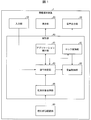
- FIG. 1 is a functional block diagram of an information terminal device 1 according to Embodiment 1 of the present invention.
- the information terminal device 1 includes an input unit 10, a display unit 20, a voice output unit 30, a control unit 40, and a gripping state recognition unit 50.
- the input unit 10 is disposed at a predetermined part of the information terminal device 1, and the input unit 10 is pressed or touched by the finger or stylus is converted into a signal and output to the control unit 40.
- an electrostatic induction method As a method for converting a touch such as a finger or a stylus into a signal, an electrostatic induction method, a resistance film method, an optical method, or the like is used. Note that the touch is an operation including at least one of proximity to and contact with a specific target.
- the display unit 20 receives display image information from the control unit 40 and displays it on the display screen.
- the display unit 20 includes a display element such as an LCD (Liquid Crystal Display) or an EL (Electroluminescence) display, and a driver circuit that drives the display element based on received image data.
- the display unit 20 switches between a lighting state and a light-off state based on the control of the control unit 40.
- the lit state and the unlit state of the display unit 20 indicate that, for example, in the case of an LCD, the backlight is turned on and unlit, and in the case of an EL display, the EL element itself is It shows turning on and off.
- the audio output unit 30 outputs audio based on the signal output from the control unit 40.
- the audio output unit 30 may be a flat speaker that vibrates the surface of the information terminal device 1, and may include an amplifier circuit and a D / A (Digital / Analog) converter.
- the gripping state recognition unit 50 is a sensor that detects contact with the surface of the information terminal device 1.
- the gripping state recognition unit 50 transmits the detected contact information on the surface of the information terminal device 1 to the control unit 40.
- the control unit 40 includes an application execution unit 41, a lock control unit 42, an operation determination unit 43 (release unit), a volume control unit 44, and a gripping state acquisition unit 45 (detection unit).
- the application execution unit 41 displays an image on the display unit 20 and outputs audio to the audio output unit 30 by executing a music reproduction application, a moving image reproduction application, and the like.
- the lock control unit 42 holds information on whether or not an operation lock for a predetermined application is set, and outputs the information in response to an inquiry from each unit different from the lock control unit 42 included in the control unit 40. .
- the lock control unit 42 controls locking of an operation (hereinafter referred to as a volume changing operation) for changing the volume of sound reproduced in a predetermined application executed by the application execution unit 41.
- the operation determination unit 43 determines whether or not a volume change operation has been performed based on a signal from the input unit 10, and instructs the volume control unit 44 according to the determination result. In addition, the operation determination unit 43 detects gripping by the user of the information terminal device 1 in a state where the sound is played by the application being executed in the information terminal device 1 and the volume change operation lock is set. If this happens, unlock the volume change operation. Detailed processing will be described later.
- the volume control unit 44 changes the volume of the audio reproduced by the audio output unit 30 based on an instruction from the operation determination unit 43 when the lock is not set for the volume change operation. Specifically, when a volume change instruction is received from the operation determination unit 43, the lock control unit 42 is inquired whether the volume change operation is locked. If the response to the inquiry is that the lock is not set for the volume changing operation, the volume control unit 44 changes the volume. Thereby, when the lock is set for the volume changing operation, the volume of the sound reproduced by the sound output unit 30 is not changed.
- the gripping state acquisition unit 45 determines whether or not the information terminal device 1 is gripped based on a signal output from the gripping state recognition unit 50 and notifies the result of the determination. The determination may be performed in response to an inquiry from each unit included in the control unit 40, or may be performed in accordance with a signal output from the gripping state recognition unit 50.
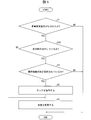
- FIG. 2 is a flowchart showing a flow of processing relating to lock control in the information terminal device 1 that outputs a sound by executing a predetermined application.
- the operation determination unit 43 determines whether or not a volume change operation has been performed based on a signal output from the input unit 10 (S1). If the volume change operation has not been performed (NO in S1), the process shown in the flowchart (hereinafter referred to as the present process) is terminated.
- the operation determination unit 43 inquires of the lock control unit 42 whether or not the volume change operation is locked. Based on the inquiry from the operation determination unit 43, the lock control unit 42 determines whether or not the volume change operation is locked (S2), and outputs the result of the determination to the operation determination unit 43.
- the operation determination unit 43 causes the volume control unit 44 to change the volume of the sound reproduced in a predetermined application (S5).
- the operation determination unit 43 inquires of the gripping state acquisition unit 45 whether or not the information terminal device is gripped.
- the gripping state acquisition unit 45 that has received the inquiry from the operation determination unit 43 determines whether or not the information terminal device 1 is gripped based on the information output from the gripping state recognition unit 50 (S3). The result is output to the operation determination unit 43. If the information terminal device 1 is not gripped (NO in S3), this process is terminated.
- the operation determination unit 43 causes the lock control unit 42 to unlock the volume change operation (S4), and causes the volume control unit 44 to perform a predetermined application.
- the volume of the reproduced voice is changed (S5), and the process is terminated.
- the information terminal device 1 may be configured to repeatedly execute the present process from the process illustrated in S1 after the present process is completed.
- the volume change operation is unlocked.
- rock of volume change operation continues until a user hold
- the user can unlock the operation by holding the information terminal device without performing an operation such as pressing a specific button. That is, it is possible to prevent an operation unintended by the user from being performed on an application running on the information terminal device without complicating the operation.
- the user can change the volume while confirming the operation result with the output voice.
- the volume changing operation an operation related to sound reproduced by an application executed in the information terminal device 1, for example, a music selection operation may be performed.
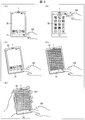
- FIG. 3A and 3B are diagrams showing that the user is performing a volume changing operation.
- FIG. 3A shows that the sound volume changing operation is performed by the user's hand 100 touching the input unit 10.
- FIG. 3B shows that a volume changing operation is performed when the user's hand 100 presses the input unit 10.
- the information terminal device 1 has a configuration in which the volume change operation is performed by touch, the operation is complicated for the sound reproduced by the application running on the information terminal device. Therefore, it is possible to prevent a volume change based on a touch unintended by the user, for example, unintentionally touching the information terminal device 1 in a bag or pocket.
- the installation location and configuration of the input unit 10 in the information terminal device 1 are not limited to the installation location and configuration of the input unit 20 shown in (A) and (B) of FIG. That is, the input unit 10 may be installed on the same surface as the display surface of the information terminal device 1, or a surface different from the display surface of the information terminal device 1, for example, the side surface or the back surface of the housing of the information terminal device 1, It may be installed in. Further, as described above, the input unit 10 may be a so-called hardware key that detects pressing, or may be configured by various sensors that detect touch.
- the lock is again set for the volume changing operation.
- the information terminal device 1 may be configured as described above. According to said structure, when holding
- FIGS. 3C to 3E are diagrams showing a sound volume changing operation in the present embodiment.
- FIG. 3C illustrates that the volume changing operation similar to that in FIG. 3A is performed in a state where the display unit 20 is lit and the volume changing operation is unlocked. ing. In this case, the volume of the sound output from the information terminal device 1A is changed.
- FIG. 3D shows a state in which the display unit 20 is turned off from the state shown in FIG. In this case, the volume change operation is locked when the display unit 20 is turned off, and even if the user performs the volume change operation, the volume output by the information terminal device 1A is not changed.
- FIG. 3 shows that the information terminal device 1 is grasped and the sound volume changing operation is performed in the state shown in (D) of FIG. In this case, the lock set for the volume change operation is released, and the volume output by the information terminal device 1A is changed.
- control unit 40A is included instead of the control unit 40.
- the control unit 40A includes a lock control unit 42A and an operation determination unit 43A instead of the lock control unit 42 and the operation determination unit 43, and further includes a lighting state acquisition unit 46A.
- the difference between the lock control unit 42 and the lock control unit 42A is that when the notification that the display unit 20 is turned off is received from the lighting state acquisition unit 46A, the lock is set for the volume change operation. Thereby, when the display unit 20 is turned off, the lock is set for the volume changing operation.
- the lighting state acquisition unit 46A acquires a lighting state indicating whether the display unit 20 is turned on or turned off. In addition, when the display unit 20 is turned off, the lighting state acquisition unit 46A notifies the lock control unit 42 to that effect.
- the difference between the operation determination unit 43 and the operation determination unit 43A is that the display unit 20 is turned off in the lighting state acquisition unit 46A instead of inquiring of the lock control unit 42 whether or not the volume change operation is locked. Inquire whether or not. Specific processing will be described with reference to FIG. Further, the operation determination unit 43A does not light the display unit 20 when unlocking the volume change operation.
- FIG. 5 is a flowchart showing a flow of processing related to lock control in the information terminal device 1A that outputs voice by executing a predetermined application. The difference between FIG. 2 and FIG. 5 is that the process shown in S2A is performed instead of the process shown in S2.
- the operation determination unit 43 inquires of the lighting state acquisition unit 46A whether the display unit 20 is turned off. Based on the inquiry from the operation determination unit 43, the lighting state acquisition unit 46A determines whether or not the display unit 20 is turned off (S2A), and outputs the determination result to the operation determination unit 43.
- the display unit 20 is turned off (YES in S2A)
- the process shown in S3 is executed. If the display unit 20 is not turned off (NO in S2A), that is, if the display unit 20 is turned on, the process shown in S5 is executed.
- the user when the display unit 20 is turned off, the user holds the information terminal device 1A after the volume change operation lock is set for the sound output by the running application. Even when the lock is released, the state where the display unit 20 is turned off is maintained. Thereby, the power consumption in the information terminal device when the user performs the above operation can be suppressed.
- the display unit 20 may be a touch panel, and the information terminal device 1A may be configured so that input is not possible in the off state.
- the touch sensor of the display unit 20 may be integrated with the input unit 10 or may be provided independently from the input unit 10.
- control blocks (particularly the control units 40 and 40A) of the information terminal devices 1 and 1A may be realized by a logic circuit (hardware) formed in an integrated circuit (IC chip) or the like, or a CPU (Central Processing Unit). It may be realized by software using
- the information terminal device 1 or 1A includes a CPU that executes instructions of a program that is software that realizes each function, and a ROM (Read Only Memory) or a storage device (these are referred to as “recording media”), a RAM (Random Access Memory) for expanding the program, and the like.
- a computer or CPU
- the recording medium a “non-temporary tangible medium” such as a tape, a disk, a card, a semiconductor memory, a programmable logic circuit, or the like can be used.
- the program may be supplied to the computer via an arbitrary transmission medium (such as a communication network or a broadcast wave) that can transmit the program.
- a transmission medium such as a communication network or a broadcast wave
- the present invention can also be realized in the form of a data signal embedded in a carrier wave in which the program is embodied by electronic transmission.
- the information terminal device (1, 1A) can be held by the user, can set a lock of an operation for the application being executed, and receives a predetermined input Only in the information terminal device that releases the lock, when the lock of the operation of the application being executed is set and the gripping by the user of the information terminal device is detected, the release unit that releases the lock (operation Determination unit 43, 43A).
- the operation lock on the application being executed is released.
- the operation lock on the application being executed continues until the user grips the information terminal device, so that the user's unintended operation on the application being executed can be prevented.
- the user can unlock the operation by holding the information terminal device without performing an operation such as pressing a specific button. That is, it is possible to prevent an operation unintended by the user from being performed on an application running on the information terminal device without complicating the operation.
- the operation for the application being executed indicates an operation related to processing performed by the application being executed.
- the operation for the application being executed may be an operation for increasing or decreasing the sound volume when sound is played by the application.
- the operation lock for the application being executed is set when the display unit (20) included in the information terminal device is turned off, and the release is performed.
- the unit may release the lock while maintaining the display unit turned off.
- the operation for releasing the lock by the release unit may be an operation related to a sound output by the application being executed.
- the user can perform the above operation while confirming the operation result by the output voice.
- the operation related to the sound output by the running application may be, for example, an operation for increasing or decreasing the volume of the sound, or an operation for selecting the sound to be reproduced by the application.
- the operation of releasing the lock by the release unit is an operation based on a touch on the input unit (10) included in the information terminal device. Also good.
- the information terminal device may be realized by a computer.
- information for realizing the information terminal device by the computer by operating the computer as each unit included in the information terminal device.
- a control program for the terminal device and a computer-readable recording medium on which the control program is recorded also fall within the scope of the present invention.
- the present invention can be used for information terminal devices such as smartphones and tablet terminals that can be held by a user.
Landscapes
- Engineering & Computer Science (AREA)
- Theoretical Computer Science (AREA)
- General Engineering & Computer Science (AREA)
- Human Computer Interaction (AREA)
- Physics & Mathematics (AREA)
- General Physics & Mathematics (AREA)
- Computer Security & Cryptography (AREA)
- Multimedia (AREA)
- Audiology, Speech & Language Pathology (AREA)
- General Health & Medical Sciences (AREA)
- Health & Medical Sciences (AREA)
- Signal Processing (AREA)
- Telephone Function (AREA)
- User Interface Of Digital Computer (AREA)
- Stored Programmes (AREA)
Abstract
本発明に係る情報端末装置(1)において実行中のアプリケーションの操作がロックされた状態で、当該情報端末装置のユーザによる把持が検出された場合、上記ロックを解除する操作判定部(43)を備える。これにより、操作を煩雑にすることなく、実行中のアプリケーションについてユーザの意図しない操作が行われることを防ぐという効果を奏する。
Description
本発明は、実行中のアプリケーションに対する操作のロックを制御する情報端末装置および制御プログラムに関する。
スマートフォンやタブレット型端末などの情報端末装置には、タッチパネル等の入力部へのユーザの意図しない接触に基づいて動作してしまうという問題がある。従来から、そのような問題に対して、グリップセンサを用いて誤動作の発生を防ぐための様々な技術が提案されている。例えば、特許文献1には、ユーザが手で持った状態で、タッチセンサで構成された複数の操作部材を操作する一眼レフカメラなどの撮像装置において、グリップ部より近い側よりも遠い側の操作部材のタッチ検出感度を高くする技術が記載されている。
しかしながら、上述のような従来技術は、情報端末装置においてアプリケーションが動作しているか否かについて考慮されていないため、動作するアプリケーションについてユーザの意図しない操作が行われることを防ぐことはできないという問題がある。一方、上記アプリケーションに対する操作をロックした場合、ユーザが当該操作を行う場合、ロックを解除する操作、例えば特定のボタンを押下する操作、を行う必要が生じ、操作が煩雑になるという問題が生じる。
本発明は、上記問題点を鑑みてなされたものであって、その目的は、情報端末装置において動作するアプリケーションについて操作を煩雑にすることなく、ユーザの意図しない操作が行われることを防ぐことにある。
上記の課題を解決するために、本発明に係る情報端末装置は、ユーザによる把持が可能であり、実行中のアプリケーションに対する操作のロックを設定することが可能であり、所定の入力を受け付けた場合にのみ、上記ロックを解除する情報端末装置において、実行中のアプリケーションの操作のロックが設定された状態で、当該情報端末装置のユーザによる把持が検出された場合、上記ロックを解除する解除部を備えている。
本発明の一態様によれば、操作を煩雑にすることなく、情報端末装置において実行中のアプリケーションについてユーザの意図しない操作が行われることを防ぐことができるという効果を奏する。
〔実施形態1〕
以下、本発明の実施の形態について、図1~3に基づいて説明すれば、以下の通りである。
以下、本発明の実施の形態について、図1~3に基づいて説明すれば、以下の通りである。
〔1.情報端末装置1の構成〕
まず、図1に基づいて情報端末装置1の構成を説明する。図1は本発明の実施形態1に係る情報端末装置1の機能ブロック図である。図1に示す通り、情報端末装置1は、入力部10、表示部20、音声出力部30、制御部40、把持状態認識部50を含んでいる。入力部10は、情報端末装置1の所定の部位に配置されており、入力部10の押下や、指やスタイラスなどによる入力部10へのタッチを信号へ変換し、制御部40へ出力する。指やスタイラスなどのタッチを信号へ変換する方式は静電誘導式、抵抗膜式、光学式などが用いられる。なお、タッチとは、特定の対象への近接及び接触の少なくともいずれか一方を含む操作である。
まず、図1に基づいて情報端末装置1の構成を説明する。図1は本発明の実施形態1に係る情報端末装置1の機能ブロック図である。図1に示す通り、情報端末装置1は、入力部10、表示部20、音声出力部30、制御部40、把持状態認識部50を含んでいる。入力部10は、情報端末装置1の所定の部位に配置されており、入力部10の押下や、指やスタイラスなどによる入力部10へのタッチを信号へ変換し、制御部40へ出力する。指やスタイラスなどのタッチを信号へ変換する方式は静電誘導式、抵抗膜式、光学式などが用いられる。なお、タッチとは、特定の対象への近接及び接触の少なくともいずれか一方を含む操作である。
表示部20は、制御部40から表示画像の情報を受信し、表示画面に表示する。表示部20は、LCD(Liquid Crystal Display)、EL(Electroluminescence)ディスプレイなどの表示素子と、受信した画像データに基づいて表示素子を駆動するドライバ回路とを備える構成である。また、表示部20は、制御部40の制御に基づいて点灯状態、消灯状態を切り替える。ここで、表示部20の点灯状態、消灯状態とは、例えばLCDの場合であれば、バックライトを点灯状態、消灯状体にすることを示し、ELディスプレイの場合であれば、EL素子自体を点灯状態、消灯状態にすることを示している。
音声出力部30は、制御部40から出力される信号に基づき、音声を出力する。音声出力部30は、情報端末装置1の表面を振動させる平面スピーカーであってもよく、また増幅回路やD/A(Digital/Analog)コンバータを備えていてもよい。
把持状態認識部50は、情報端末装置1の表面への接触を検知するセンサである。把持状態認識部50は、検知した情報端末装置1の表面への接触の情報を制御部40へ送信する。
制御部40は、図1に示す通り、アプリケーション実行部41、ロック制御部42、操作判定部43(解除部)、音量制御部44、把持状態取得部45(検出部)を含んでいる。アプリケーション実行部41は、音楽再生アプリケーションや動画再生アプリケーションなどを実行することにより、表示部20へ画像を表示させ、また、音声出力部30へ音声を出力させる。
ロック制御部42は、所定のアプリケーションに対する操作のロックが設定されているか否かの情報を保持し、制御部40に含まれるロック制御部42とは異なる各部の問い合わせに応じて当該情報を出力する。特に、本実施形態においては、ロック制御部42は、アプリケーション実行部41が実行する所定のアプリケーションにおいて再生される音声の音量を変更する操作(以下、音量変更操作と表す)のロックを制御する。
操作判定部43は、入力部10からの信号に基づき、音量変更操作がなされたか否かを判定し、当該判定の結果に応じて音量制御部44へ指示を行う。また、操作判定部43は、情報端末装置1において実行中のアプリケーションによって音声が再生されており、かつ、音量変更操作のロックが設定された状態で、情報端末装置1のユーザによる把持が検出された場合、音量変更操作のロックを解除する。詳細な処理については後述する。
音量制御部44は、音量変更操作についてロックが設定されていない場合に、操作判定部43の指示に基づき、音声出力部30が再生する音声の音量を変更する。具体的には、操作判定部43から音量変更の指示を受けた場合、ロック制御部42に音量変更操作がロックされているか否かを問い合わせる。その問い合わせに対する応答が、音量変更操作についてロックが設定されていない旨であった場合、音量制御部44は音量を変更する。これにより、音量変更操作についてロックが設定されている場合は、音声出力部30が再生する音声の音量が変更されない。
把持状態取得部45は、把持状態認識部50から出力される信号に基づき、情報端末装置1が把持されているか否かを判定し、当該判定の結果を通知する。当該判定は、制御部40に含まれる各部からの問い合わせに応じて行ってもよいし、把持状態認識部50から出力される信号に応じて行ってもよい。
〔2.情報端末装置1におけるロック制御に関する処理の流れ〕
次に情報端末装置1における処理の流れについて、図2に基づき説明する。図2は、所定のアプリケーションを実行することによって音声を出力している情報端末装置1におけるロック制御に関する処理の流れを示すフローチャートである。
次に情報端末装置1における処理の流れについて、図2に基づき説明する。図2は、所定のアプリケーションを実行することによって音声を出力している情報端末装置1におけるロック制御に関する処理の流れを示すフローチャートである。
まず、操作判定部43は、入力部10が出力する信号に基づいて、音量変更操作がなされたか否かを判定する(S1)。音量変更操作がなされなかった場合(S1でNO)、本フローチャートに示す処理(以下、本処理と表す)を終了する。
一方、音量変更操作がなされた場合(S1でYES)、操作判定部43は、音量変更操作がロックされているか否かをロック制御部42へ問い合わせる。ロック制御部42は、操作判定部43の問い合わせに基づき、音量変更操作がロックされているか否かを判定し(S2)、当該判定の結果を操作判定部43へ出力する。
音量変更操作がロックされていなかった場合(S2でNO)、操作判定部43は、音量制御部44に、所定のアプリケーションにおいて再生される音声の音量を変更させる(S5)。一方、音量変更操作がロックされていた場合(S2でYES)、操作判定部43は、情報端末装置が把持されているか否かを、把持状態取得部45へ問い合わせる。操作判定部43からの問い合わせを受けた把持状態取得部45は、把持状態認識部50の出力する情報に基づき、情報端末装置1が把持されているか否かを判定し(S3)、当該判定の結果を操作判定部43へ出力する。情報端末装置1が把持されていなかった場合(S3でNO)、本処理を終了する。
一方、情報端末装置1が把持されていた場合(S3でYES)、操作判定部43は、ロック制御部42へ音量変更操作のロックを解除させ(S4)、音量制御部44に所定のアプリケーションにおいて再生される音声の音量を変更させ(S5)、処理を終了する。
なお、本処理を終了した後に、再度S1に示す処理から繰り返し本処理を実行するように、情報端末装置1を構成してもよい。
上記の処理により、音量変更操作がロックされている状態で、情報端末装置1が把持されている場合に、音量変更操作のロックが解除される。これにより、音量変更操作のロックが、ユーザが情報端末装置を把持するまで持続するため、実行中のアプリケーションに対するユーザの意図しない操作を防ぐことができる。また、ユーザは、特定のボタンを押下する等の操作を行うことなく、情報端末装置を把持することで、当該操作に対するロックを解除することができる。すなわち、情報端末装置において動作するアプリケーションについて、操作を煩雑にすることなく、ユーザの意図しない操作が行われることを防ぐことができる。
また、ユーザは出力される音声によって操作の結果を確認しながら、音量変更操作を行うことができる。なお、音量変更操作に替えて、情報端末装置1において実行されるアプリケーションが再生する音声に関する操作、例えば選曲操作など、であってもよい。
〔3.情報端末装置1における音量変更操作〕
図3に基づき、情報端末装置1における音量変更操作について説明する。図3の(A)および(B)は共にユーザが音量変更操作を行っていることを示す図である。図3の(A)は、入力部10に対するユーザの手100によるタッチによって、音量変更操作が行われていることを示している。また、図3の(B)は、入力部10をユーザの手100が押下することによって、音量変更操作が行われていることを示している。特に、図3の(A)に示すように、音量変更操作がタッチによって行われる構成を情報端末装置1がとる場合、情報端末装置において動作するアプリケーションによって再生される音声について、操作を煩雑にすることなく、ユーザの意図しないタッチ、例えばカバンやポケットの中の情報端末装置1に意図せず触れることなど、に基づく音量変更が行われることを防ぐことができる。
図3に基づき、情報端末装置1における音量変更操作について説明する。図3の(A)および(B)は共にユーザが音量変更操作を行っていることを示す図である。図3の(A)は、入力部10に対するユーザの手100によるタッチによって、音量変更操作が行われていることを示している。また、図3の(B)は、入力部10をユーザの手100が押下することによって、音量変更操作が行われていることを示している。特に、図3の(A)に示すように、音量変更操作がタッチによって行われる構成を情報端末装置1がとる場合、情報端末装置において動作するアプリケーションによって再生される音声について、操作を煩雑にすることなく、ユーザの意図しないタッチ、例えばカバンやポケットの中の情報端末装置1に意図せず触れることなど、に基づく音量変更が行われることを防ぐことができる。
なお、入力部10の情報端末装置1における設置個所および構成は、図3の(A)および(B)に示す入力部20の設置個所および構成に限られない。すなわち、入力部10は、情報端末装置1の表示面と同一面に設置されていてもよいし、情報端末装置1の表示面と異なる面、例えば情報端末装置1の筐体の側面や背面、に設置されていてもよい。また、上述の通り、入力部10は、押下を検出するいわゆるハードウェアキーであってもよいし、タッチを検出する種々のセンサによって構成されていてもよい。
〔変形例〕
上記実施形態において、S5に示す処理が行われた時点、または、S5に示す処理が行われた後に情報端末装置1の把持が解除された時点において、音量変更操作に対してロックが再度設定されるように情報端末装置1を構成してもよい。上記の構成によれば、情報端末装置1の把持が解除された場合に、ユーザの意図しない音量変更が行われることを防ぐことができる。
上記実施形態において、S5に示す処理が行われた時点、または、S5に示す処理が行われた後に情報端末装置1の把持が解除された時点において、音量変更操作に対してロックが再度設定されるように情報端末装置1を構成してもよい。上記の構成によれば、情報端末装置1の把持が解除された場合に、ユーザの意図しない音量変更が行われることを防ぐことができる。
〔実施形態2〕
本発明の他の実施形態について、図3~図5に基づいて説明すれば、以下のとおりである。なお、説明の便宜上、前記実施形態にて説明した部材と同じ機能を有する部材については、同じ符号を付記し、その説明を省略する。
本発明の他の実施形態について、図3~図5に基づいて説明すれば、以下のとおりである。なお、説明の便宜上、前記実施形態にて説明した部材と同じ機能を有する部材については、同じ符号を付記し、その説明を省略する。
〔1.情報端末装置1Aにおける音量変更操作のロック制御の概要〕
まず、本実施形態に係る情報端末装置1Aにおける音量変更操作のロックの制御の概要について図3の(C)~(E)に基づいて説明する。図3の(C)~(E)は、本実施形態における音量変更操作を示す図である。
まず、本実施形態に係る情報端末装置1Aにおける音量変更操作のロックの制御の概要について図3の(C)~(E)に基づいて説明する。図3の(C)~(E)は、本実施形態における音量変更操作を示す図である。
図3の(C)は、表示部20が点灯しており、音量変更操作のロックが解除されている状態において、図3の(A)と同様の音量変更操作が行われていることを示している。この場合、情報端末装置1Aの出力する音声の音量が変更される。
また、図3の(D)は、図3の(C)に示す状態から、表示部20が消灯された状態を示している。この場合、表示部20の消灯に伴って音量変更操作にロックが設定され、音量変更操作をユーザが行ったとしても、情報端末装置1Aの出力する音量が変更されない。
また、図3の(E)は、図3の(D)に示す状態において、情報端末装置1が把持され、かつ、音量変更操作が行われていることを示している。この場合、音量変更操作に設定されたロックが解除され、情報端末装置1Aの出力する音量が変更される。
〔2.情報端末装置1Aの構成および処理の流れ〕
情報端末装置1と、情報端末装置1Aとの差異は、制御部40に替えて制御部40Aを含むことである。また、制御部40Aは、ロック制御部42、操作判定部43に替えてロック制御部42A及び操作判定部43Aを含み、さらに点灯状態取得部46Aを含む。
情報端末装置1と、情報端末装置1Aとの差異は、制御部40に替えて制御部40Aを含むことである。また、制御部40Aは、ロック制御部42、操作判定部43に替えてロック制御部42A及び操作判定部43Aを含み、さらに点灯状態取得部46Aを含む。
ロック制御部42とロック制御部42Aとの差異は、点灯状態取得部46Aから表示部20が消灯されたことの通知を受けた場合、音量変更操作にロックを設定することである。これにより、表示部20が消灯された場合、音量変更操作にロックが設定される。
点灯状態取得部46Aは、表示部20が点灯されている状態であるか、消灯されている状態であるかを示す点灯状態を取得するものである。また、点灯状態取得部46Aは、表示部20が消灯された場合、その旨をロック制御部42へ通知する。
操作判定部43と操作判定部43Aとの差異は、音量変更操作がロックされているか否かをロック制御部42へ問い合わせることに替えて、点灯状態取得部46Aに表示部20が消灯しているか否かを問い合わせることである。具体的な処理について、図5に基づき説明する。また、操作判定部43Aは、音量変更操作のロックを解除する場合に、表示部20を点灯させない。
図5は、所定のアプリケーションを実行することによって音声を出力している情報端末装置1Aにおけるロック制御に関する処理の流れを示すフローチャートである。図2と図5の差異はS2に示す処理に替えて、S2Aに示す処理が行われることにある。
具体的には、音量変更操作がなされた場合(S1でYES)、操作判定部43は、表示部20が消灯されているか否かを点灯状態取得部46Aへ問い合わせる。点灯状態取得部46Aは、操作判定部43の問い合わせに基づき、表示部20が消灯されているか否かを判定し(S2A)、当該判定の結果を操作判定部43へ出力する。表示部20が消灯されている場合(S2AでYES)、S3に示す処理が実行される。また、表示部20が消灯されていなかった場合(S2AでNO)、すなわち表示部20が点灯していた場合、S5に示す処理が実行される。
上記の処理によれば、表示部20が消灯された時点において、実行中のアプリケーションによって出力されている音声に対する音量変更操作のロックが設定された後に、ユーザが情報端末装置1Aを把持することで、当該ロックを解除した場合でも、上記表示部20が消灯されている状態が維持される。これにより、ユーザが上記操作を行う際の情報端末装置における消費電力を抑えることができる。
なお、表示部20はタッチパネルであってもよく、消灯状態の場合に入力できないように情報端末装置1Aを構成してもよい。また、表示部20がタッチパネルである場合、表示部20のタッチセンサは、入力部10と一体となっていてもよいし、入力部10から独立して設けられていてもよい。
〔実施形態3〕
情報端末装置1、1Aの制御ブロック(特に制御部40、40A)は、集積回路(ICチップ)等に形成された論理回路(ハードウェア)によって実現してもよいし、CPU(Central Processing Unit)を用いてソフトウェアによって実現してもよい。
情報端末装置1、1Aの制御ブロック(特に制御部40、40A)は、集積回路(ICチップ)等に形成された論理回路(ハードウェア)によって実現してもよいし、CPU(Central Processing Unit)を用いてソフトウェアによって実現してもよい。
後者の場合、情報端末装置1、1Aは、各機能を実現するソフトウェアであるプログラムの命令を実行するCPU、上記プログラムおよび各種データがコンピュータ(またはCPU)で読み取り可能に記録されたROM(Read Only Memory)または記憶装置(これらを「記録媒体」と称する)、上記プログラムを展開するRAM(Random Access Memory)などを備えている。そして、コンピュータ(またはCPU)が上記プログラムを上記記録媒体から読み取って実行することにより、本発明の目的が達成される。上記記録媒体としては、「一時的でない有形の媒体」、例えば、テープ、ディスク、カード、半導体メモリ、プログラマブルな論理回路などを用いることができる。また、上記プログラムは、該プログラムを伝送可能な任意の伝送媒体(通信ネットワークや放送波等)を介して上記コンピュータに供給されてもよい。なお、本発明は、上記プログラムが電子的な伝送によって具現化された、搬送波に埋め込まれたデータ信号の形態でも実現され得る。
〔まとめ〕
本発明の態様1に係る情報端末装置(1、1A)は、ユーザによる把持が可能であり、実行中のアプリケーションに対する操作のロックを設定することが可能であり、所定の入力を受け付けた場合にのみ、上記ロックを解除する情報端末装置において、実行中のアプリケーションの操作のロックが設定された状態で、当該情報端末装置のユーザによる把持が検出された場合、上記ロックを解除する解除部(操作判定部43、43A)を備えている。
本発明の態様1に係る情報端末装置(1、1A)は、ユーザによる把持が可能であり、実行中のアプリケーションに対する操作のロックを設定することが可能であり、所定の入力を受け付けた場合にのみ、上記ロックを解除する情報端末装置において、実行中のアプリケーションの操作のロックが設定された状態で、当該情報端末装置のユーザによる把持が検出された場合、上記ロックを解除する解除部(操作判定部43、43A)を備えている。
上記の構成によれば、実行中のアプリケーションの操作のロックが設定された状態で、情報端末装置が把持された場合に、実行中のアプリケーションに対する操作のロックが解除される。これにより、実行中のアプリケーションに対する操作のロックが、ユーザが情報端末装置を把持するまで持続するため、実行中のアプリケーションに対するユーザの意図しない操作を防ぐことができる。また、ユーザは、特定のボタンを押下する等の操作を行うことなく、情報端末装置を把持することで、当該操作に対するロックを解除することができる。すなわち、情報端末装置において動作するアプリケーションについて、操作を煩雑にすることなく、ユーザの意図しない操作が行われることを防ぐことができる。なお、実行中のアプリケーションに対する操作とは、実行中のアプリケーションが行っている処理に関する操作を示す。例えば、実行中のアプリケーションに対する操作は、アプリケーションによって音声が再生されている場合における、音声の音量を増減させる操作であってもよい。
本発明の態様2に係る情報端末装置は、上記態様1において、上記実行中のアプリケーションに対する操作のロックは、上記情報端末装置の備える表示部(20)が消灯された時点において設定され、上記解除部は、上記表示部が消灯した状態を維持したまま、上記ロックを解除してもよい。
上記の構成によれば、上記表示部が消灯された時点において、実行中のアプリケーションに対する操作のロックが設定された後に、ユーザが情報端末装置を把持することで、当該ロックを解除した場合でも、上記表示部が消灯されている状態が維持される。これにより、ユーザが上記操作を行う際の情報端末装置における消費電力を抑えることができる。
本発明の態様3に係る情報端末装置は、上記態様1または2において、上記解除部がロックを解除する操作は、上記実行中のアプリケーションによって出力される音声に関する操作であってもよい。
上記の構成によれば、ユーザは出力される音声によって操作の結果を確認しながら、上記操作を行うことができる。なお、実行中のアプリケーションによって出力される音声に関する操作は、例えば、当該音声の音量を増減させる操作であってもよいし、当該アプリケーションが再生する音声を選択する操作であってもよい。
本発明の態様4に係る情報端末装置は、上記態様1から3において、上記解除部がロックを解除する操作は、上記情報端末装置が備える入力部(10)へのタッチに基づく操作であってもよい。
上記の構成によれば、情報端末装置において動作するアプリケーションについて、操作を煩雑にすることなく、ユーザの意図しないタッチに基づく操作が行われることを防ぐことができる。
本発明の各態様に係る情報端末装置は、コンピュータによって実現してもよく、この場合には、コンピュータを上記情報端末装置が備える各部として動作させることにより上記情報端末装置をコンピュータにて実現させる情報端末装置の制御プログラム、およびそれを記録したコンピュータ読み取り可能な記録媒体も、本発明の範疇に入る。
本発明は上述した各実施形態に限定されるものではなく、請求項に示した範囲で種々の変更が可能であり、異なる実施形態にそれぞれ開示された技術的手段を適宜組み合わせて得られる実施形態についても本発明の技術的範囲に含まれる。さらに、各実施形態にそれぞれ開示された技術的手段を組み合わせることにより、新しい技術的特徴を形成することができる。
本発明は、ユーザによって把持することのできるスマートフォンやタブレット型端末などの情報端末装置に利用することができる。
1、1A 情報端末装置
10 入力部
20 表示部
43、43A 操作判定部(解除部)
10 入力部
20 表示部
43、43A 操作判定部(解除部)
Claims (5)
- ユーザによる把持が可能であり、実行中のアプリケーションに対する操作のロックを設定することが可能であり、所定の入力を受け付けた場合にのみ、上記ロックを解除する情報端末装置において、
実行中のアプリケーションの操作のロックが設定された状態で、当該情報端末装置のユーザによる把持が検出された場合、上記ロックを解除する解除部を備えることを特徴とする情報端末装置。 - 上記実行中のアプリケーションに対する操作のロックは、上記情報端末装置の備える表示部が消灯された時点において設定され、
上記解除部は、上記表示部が消灯した状態を維持したまま、上記ロックを解除することを特徴とすることを特徴とする請求項1に記載の情報端末装置。 - 上記解除部がロックを解除する上記アプリケーションに対する上記操作は、上記実行中のアプリケーションによって出力される音声に関する操作であることを特徴とする請求項1または2に記載の情報端末装置。
- 上記解除部がロックを解除する上記アプリケーションに対する上記操作は、上記情報端末装置が備える入力部へのタッチによる操作であることを特徴とする請求項1から3のいずれか1項に記載の情報端末装置。
- 請求項1から4のいずれか1項に記載の情報端末装置としてコンピュータを機能させるための制御プログラムであって、コンピュータを上記解除部として機能させるための制御プログラム。
Priority Applications (2)
| Application Number | Priority Date | Filing Date | Title |
|---|---|---|---|
| CN201580006808.3A CN105940369A (zh) | 2014-02-27 | 2015-01-22 | 信息终端装置和控制程序 |
| US15/114,491 US20160349902A1 (en) | 2014-02-27 | 2015-01-22 | Information-terminal device |
Applications Claiming Priority (2)
| Application Number | Priority Date | Filing Date | Title |
|---|---|---|---|
| JP2014037326A JP6195799B2 (ja) | 2014-02-27 | 2014-02-27 | 情報端末装置および制御プログラム |
| JP2014-037326 | 2014-02-27 |
Publications (1)
| Publication Number | Publication Date |
|---|---|
| WO2015129349A1 true WO2015129349A1 (ja) | 2015-09-03 |
Family
ID=54008678
Family Applications (1)
| Application Number | Title | Priority Date | Filing Date |
|---|---|---|---|
| PCT/JP2015/051702 Ceased WO2015129349A1 (ja) | 2014-02-27 | 2015-01-22 | 情報端末装置および制御プログラム |
Country Status (4)
| Country | Link |
|---|---|
| US (1) | US20160349902A1 (ja) |
| JP (1) | JP6195799B2 (ja) |
| CN (1) | CN105940369A (ja) |
| WO (1) | WO2015129349A1 (ja) |
Families Citing this family (1)
| Publication number | Priority date | Publication date | Assignee | Title |
|---|---|---|---|---|
| US20200228898A1 (en) * | 2019-01-14 | 2020-07-16 | Google Llc | Phase-shifting actuator driving signals and panel audio loudspeakers using the same |
Citations (2)
| Publication number | Priority date | Publication date | Assignee | Title |
|---|---|---|---|---|
| JP2013097400A (ja) * | 2011-10-27 | 2013-05-20 | Sharp Corp | 携帯情報端末 |
| JP2014154954A (ja) * | 2013-02-06 | 2014-08-25 | Fujitsu Mobile Communications Ltd | 携帯装置、プログラムおよび判定方法 |
Family Cites Families (9)
| Publication number | Priority date | Publication date | Assignee | Title |
|---|---|---|---|---|
| US8988359B2 (en) * | 2007-06-19 | 2015-03-24 | Nokia Corporation | Moving buttons |
| KR101808625B1 (ko) * | 2010-11-23 | 2018-01-18 | 엘지전자 주식회사 | 콘텐츠 제어 장치 및 그 방법 |
| CN102393805A (zh) * | 2011-10-24 | 2012-03-28 | 中兴通讯股份有限公司 | 终端锁屏界面的操作方法及装置、终端 |
| CN102387257B (zh) * | 2011-11-22 | 2016-08-31 | 南京中兴软件有限责任公司 | 移动终端及其屏幕解锁界面生成方法 |
| CN102566911A (zh) * | 2011-12-15 | 2012-07-11 | 广东步步高电子工业有限公司 | 移动终端设备的解锁装置与方法 |
| US8988386B2 (en) * | 2012-01-27 | 2015-03-24 | Sony Corporation | Sensor managed apparatus, method and computer program product |
| CN102761660A (zh) * | 2012-06-12 | 2012-10-31 | 中兴通讯股份有限公司 | 移动终端锁定方法及装置 |
| JP6063734B2 (ja) * | 2012-12-25 | 2017-01-18 | 京セラ株式会社 | 携帯端末装置、ロック解除方法およびプログラム |
| CN103543948A (zh) * | 2013-10-30 | 2014-01-29 | 西安乾易企业管理咨询有限公司 | 移动终端及其人机交互方法 |
-
2014
- 2014-02-27 JP JP2014037326A patent/JP6195799B2/ja not_active Expired - Fee Related
-
2015
- 2015-01-22 CN CN201580006808.3A patent/CN105940369A/zh active Pending
- 2015-01-22 WO PCT/JP2015/051702 patent/WO2015129349A1/ja not_active Ceased
- 2015-01-22 US US15/114,491 patent/US20160349902A1/en not_active Abandoned
Patent Citations (2)
| Publication number | Priority date | Publication date | Assignee | Title |
|---|---|---|---|---|
| JP2013097400A (ja) * | 2011-10-27 | 2013-05-20 | Sharp Corp | 携帯情報端末 |
| JP2014154954A (ja) * | 2013-02-06 | 2014-08-25 | Fujitsu Mobile Communications Ltd | 携帯装置、プログラムおよび判定方法 |
Also Published As
| Publication number | Publication date |
|---|---|
| CN105940369A (zh) | 2016-09-14 |
| JP6195799B2 (ja) | 2017-09-13 |
| US20160349902A1 (en) | 2016-12-01 |
| JP2015162119A (ja) | 2015-09-07 |
Similar Documents
| Publication | Publication Date | Title |
|---|---|---|
| KR102090750B1 (ko) | 지문 인식을 위한 전자 장치 및 방법 | |
| TWI506527B (zh) | 攜帶式電子裝置中之使用者輸入的動態解譯 | |
| US20110126094A1 (en) | Method of modifying commands on a touch screen user interface | |
| TW201606551A (zh) | 用於解鎖另一裝置之認證裝置 | |
| CN103716530B (zh) | 用于控制相机的方法和移动装置 | |
| CN110908582A (zh) | 一种控制方法、触控笔及电子组件 | |
| US20130029731A1 (en) | Portable device, control program and control method of the portable device | |
| CN105164625A (zh) | 数字装置及其控制方法 | |
| CN102770833B (zh) | 电子设备 | |
| WO2014057975A1 (ja) | 携帯電子機器、その制御方法及びプログラム | |
| US20150033122A1 (en) | System and method for processing touch input | |
| JP6062519B1 (ja) | 電子機器及び電子機器の動作方法 | |
| JP6195799B2 (ja) | 情報端末装置および制御プログラム | |
| CA2932267C (en) | Binding of an apparatus to a computing device | |
| US20150042589A1 (en) | Method and electronic device for wireless connection | |
| JP6467963B2 (ja) | 表示装置、表示制御方法及びプログラム | |
| CN110633045B (zh) | 一种数据处理方法及电子设备 | |
| WO2015002298A1 (ja) | 携帯端末 | |
| JP6616379B2 (ja) | 電子機器 | |
| JP2014075759A (ja) | 情報処理装置、およびプログラム | |
| JP6871846B2 (ja) | 電子機器および制御方法 | |
| US9536526B2 (en) | Electronic device with speaker identification, method and storage medium | |
| CN103106023B (zh) | 用于控制便携式终端中的显示尺寸的装置和方法 | |
| KR101522141B1 (ko) | 스마트 기기 및 이를 제어하는 방법 | |
| KR101627411B1 (ko) | 스마트 기기 및 이를 제어하는 방법 |
Legal Events
| Date | Code | Title | Description |
|---|---|---|---|
| 121 | Ep: the epo has been informed by wipo that ep was designated in this application |
Ref document number: 15754748 Country of ref document: EP Kind code of ref document: A1 |
|
| WWE | Wipo information: entry into national phase |
Ref document number: 15114491 Country of ref document: US |
|
| NENP | Non-entry into the national phase |
Ref country code: DE |
|
| 122 | Ep: pct application non-entry in european phase |
Ref document number: 15754748 Country of ref document: EP Kind code of ref document: A1 |