WO2015129306A1 - 通信端末装置、および通信システム - Google Patents
通信端末装置、および通信システム Download PDFInfo
- Publication number
- WO2015129306A1 WO2015129306A1 PCT/JP2015/050609 JP2015050609W WO2015129306A1 WO 2015129306 A1 WO2015129306 A1 WO 2015129306A1 JP 2015050609 W JP2015050609 W JP 2015050609W WO 2015129306 A1 WO2015129306 A1 WO 2015129306A1
- Authority
- WO
- WIPO (PCT)
- Prior art keywords
- communication terminal
- terminal device
- communication
- base station
- information
- Prior art date
- Legal status (The legal status is an assumption and is not a legal conclusion. Google has not performed a legal analysis and makes no representation as to the accuracy of the status listed.)
- Ceased
Links
Images






Classifications
-
- H—ELECTRICITY
- H04—ELECTRIC COMMUNICATION TECHNIQUE
- H04W—WIRELESS COMMUNICATION NETWORKS
- H04W88/00—Devices specially adapted for wireless communication networks, e.g. terminals, base stations or access point devices
- H04W88/02—Terminal devices
- H04W88/04—Terminal devices adapted for relaying to or from another terminal or user
-
- H—ELECTRICITY
- H04—ELECTRIC COMMUNICATION TECHNIQUE
- H04M—TELEPHONIC COMMUNICATION
- H04M1/00—Substation equipment, e.g. for use by subscribers
- H04M1/72—Mobile telephones; Cordless telephones, i.e. devices for establishing wireless links to base stations without route selection
- H04M1/724—User interfaces specially adapted for cordless or mobile telephones
- H04M1/72403—User interfaces specially adapted for cordless or mobile telephones with means for local support of applications that increase the functionality
- H04M1/72409—User interfaces specially adapted for cordless or mobile telephones with means for local support of applications that increase the functionality by interfacing with external accessories
- H04M1/72412—User interfaces specially adapted for cordless or mobile telephones with means for local support of applications that increase the functionality by interfacing with external accessories using two-way short-range wireless interfaces
Definitions
- the present invention relates to a communication terminal device capable of direct communication with another communication terminal device without using a base station, and a communication system.
- Bluetooth registered trademark
- D2D Device-to-Device
- Patent Document 1 discloses a multi-hop wireless communication method in which a plurality of wireless terminals relay and transmit transmission packets based on route information transmitted and received between each other. Has been.
- the wireless terminal that controls the D2D communication cannot maintain the communication due to a decrease in the remaining battery level, the D2D communication between other wireless terminals is also affected. It will be.
- the present invention has been made to solve the above problems, and can stably maintain direct communication between communication terminal apparatuses without increasing traffic between the communication terminal apparatuses.
- An object of the present invention is to provide a communication terminal device and a communication system.
- a communication terminal device capable of direct communication with a plurality of other communication terminal devices without using a base station.
- a communication terminal device includes a receiving unit that receives control information for controlling direct communication from a base station, a transmitting unit that transmits control information received by the receiving unit to a plurality of other communication terminal devices, and a communication terminal device.
- a notification receiving unit that receives from the base station a notification that the alternative communication terminal device has been selected. The transmission unit stops transmission of control information to a plurality of other communication terminal devices when the notification is received by the notification reception unit.
- direct communication between communication terminal devices can be stably maintained without increasing traffic between the communication terminal devices.
- FIG. 1 is a schematic diagram showing an overall configuration of a communication system according to a first embodiment.
- FIG. 7 is a sequence diagram showing an operation of the communication system according to the first embodiment.
- 3 is a block diagram showing a hardware configuration of a communication terminal apparatus according to Embodiment 1.
- FIG. 3 is a block diagram showing a hardware configuration of a base station according to Embodiment 1.
- FIG. 3 is a functional block diagram of a communication terminal apparatus and a base station according to the first embodiment.
- 6 is a flowchart showing an example of a processing procedure as a communication control device of the communication terminal device according to the first embodiment.
- FIG. 6 is a functional block diagram of a communication terminal device according to a second embodiment.
- FIG. 6 is a flowchart showing an example of a processing procedure as an alternative communication terminal device of a communication terminal device according to a second embodiment.
- 10 is a user interface screen according to the second embodiment.
- 10 is a flowchart showing a modification of the processing procedure as an alternative communication terminal device of the communication terminal device according to the second embodiment.
- FIG. 11 is a schematic diagram showing an overall configuration of a communication system according to a third embodiment.
- FIG. 11 is a sequence diagram showing an operation outline of a communication system according to the third embodiment. It is a figure which shows the information table according to Embodiment 3. It is a figure which shows the information table according to Embodiment 3. It is a figure which shows the information table according to Embodiment 3. It is a figure which shows the information table according to Embodiment 3.
- the communication terminal device may be another information communication device such as a personal computer, PND (Personal Navigation Device), PDA (Personal Data Assistance) or the like.
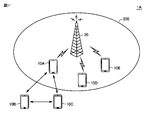
- FIG. 1 is a schematic diagram showing an overall configuration of a communication system 1 according to the first embodiment.
- the communication system 1 includes communication terminal apparatuses 10A to 10D and a base station 20.
- communication terminal apparatus 10 For ease of explanation, in the following, when a configuration or function common to each of the communication terminal apparatuses 10A to 10D is described, they are also collectively referred to as “communication terminal apparatus 10”.
- the base station 20 executes, for example, an operation according to LTE (Long Term Evolution) in a radio communication access technology (RAT) standardized in 3GPP (Third Generation Partnership Project).
- LTE Long Term Evolution
- RAT radio communication access technology
- the communication terminal apparatuses 10A to 10D are UEs (User Equipment) that perform wireless communication in accordance with a radio access technology such as LTE. Further, the communication terminal devices 10A to 10D are configured to be able to communicate with other communication terminal devices via (via) the base station 20, and without (without going through) the base station 20. It is configured to be capable of direct communication (D2D communication) with other communication terminal devices.
- UEs User Equipment
- LTE Long Term Evolution
- D2D communication direct communication
- the communication terminal devices 10A and 10D exist in the communication area 200 of the base station 20, and can wirelessly communicate with the base station 20 using a wireless communication network.
- the communication terminal apparatuses 10B and 10C exist outside the communication area 200, they cannot communicate with the base station 20.
- the base station 20 controls direct communication between the communication terminal apparatuses 10A to 10D using a frequency band used in a wireless communication network managed by a communication carrier. Specifically, the base station 20 transmits control information for controlling direct communication between the communication terminal devices 10A to 10D without going through the base station 20 to the communication terminal device 10A existing in the communication area 200. .
- the control information includes permission information for permitting direct communication using a wireless communication network and communication environment setting information necessary for the direct communication.
- the setting information includes radio resource information such as a frequency band allowed for direct communication, and radio field intensity of a radio signal.
- the communication terminal device 10A transmits the control information received from the base station 20 to the communication terminal devices 10B and 10C that do not exist in the communication area 200. This enables direct communication between the communication terminal devices 10B and 10C. That is, the communication terminal device 10A functions as a communication control device for controlling direct communication between the communication terminal devices 10B and 10C.
- the communication terminal device 10D existing in the communication area 200 periodically transmits state information indicating the state of the own device to the base station 20.
- the communication terminal apparatus 10 ⁇ / b> A may also periodically transmit the state information to the base station 20.
- the state information includes the remaining battery level and the moving speed of the communication terminal device.
- communication terminal apparatus 10D (and 10A) may transmit identification information (telephone number, mail address, etc.) of its own terminal to base station 20 together with state information.
- the base station 20 receives state information from one or more communication terminal apparatuses 10 existing in the communication area 200. Then, the base station 20 selects a communication terminal device that functions as a communication control device from the one or more communication terminal devices. Specifically, the base station 20 selects a communication terminal device with the largest remaining battery level as the communication control device among the one or more communication terminal devices. Alternatively, the base station 20 selects the communication terminal device having the slowest moving speed among the one or more communication terminal devices as the communication control device.
- the base station 20 may, for example, replace the remaining battery level with the communication terminal device 10A.
- the communication terminal device 10D having a large amount is selected as a communication control device.
- the communication terminal device 10D selected by the base station 20 functions as a communication control device instead of the communication terminal device 10A, and transmits control information to the communication terminal devices 10B and 10C.
- the communication terminal apparatuses 10A to 10D are not present in the communication area 200. However, the communication terminal apparatuses 10B and 10C may be present in the communication area 200.
- FIG. 2 is a sequence diagram showing an outline of operation of communication system 1 according to the first embodiment. As described above, it is assumed that the communication terminal devices 10A and 10D existing in the communication area 200 regularly transmit the remaining battery level, the moving speed, and the identification information as the state information.
- base station 20 (“base station” in FIG. 2) transmits control information for directly controlling communication via a wireless communication network to communication terminal device 10A (“terminal A” in FIG. ]) (Step S10).
- 10 A of communication terminal devices will transmit the response with respect to the said reception to the base station 20, if control information is received (step S12).
- the communication terminal device 10A transmits control information to the communication terminal device 10B (“terminal B” in FIG. 2) that can communicate directly (step S14).
- the communication terminal device 10B transmits a response to the reception to the communication terminal device 10A (step S16).
- the communication terminal device 10A transmits the response received from the communication terminal device 10B to the base station 20 (step S17).
- the communication terminal device 10A transmits control information to the communication terminal device 10C (“terminal C” in FIG. 2) capable of direct communication (step S18).
- the communication terminal device 10C transmits a response to the reception to the communication terminal device 10A (step S20).
- the communication terminal device 10A transmits the response received from the communication terminal device 10C to the base station 20 (step S21).
- Communication terminal device 10A may execute a series of processes in steps S14, S16, and S17 and a series of processes in steps S18, S20, and S21 in parallel.
- the base station 20 When the base station 20 permits direct communication (D2D communication) between the communication terminal apparatuses 10B and 10C, the base station 20 transmits an instruction to permit the D2D communication to the communication terminal apparatus 10A (step S22). When receiving the permission instruction, communication terminal apparatus 10A notifies communication terminal apparatuses 10B and 10C that D2D communication is permitted (steps S23 and S24).
- communication terminal apparatus 10A searches for communication terminal apparatuses 10B and 10C as other communication terminal apparatuses that can directly communicate with the terminal itself. Specifically, communication terminal apparatus 10A directly communicates with communication terminal apparatus 10A based on the radio field intensity of a radio signal transmitted from another communication terminal apparatus or the reach of a radio signal transmitted by communication terminal apparatus 10A. Search for other communication terminal devices capable of communication. For example, the communication terminal apparatus 10A can uniquely identify another communication terminal apparatus based on identification information such as a telephone number and a mail address.
- the communication terminal devices 10B and 10C perform transmission / reception of various data (moving images, applications, etc.) by direct communication (D2D communication) not via the base station 20 based on the received control information (step S25). Thereby, the direct communication between the communication terminal devices 10B and 10C is established.
- D2D communication direct communication
- the communication terminal apparatus 10A determines that the remaining battery level of its own apparatus is less than a predetermined reference value and communication with the communication terminal apparatuses 10B and 10C cannot be continued as a communication control apparatus
- the base station 20 is notified that it cannot continue (step S26). Specifically, the communication terminal device 10A notifies the base station 20 that the remaining battery level has been reduced and control information transmission to the communication terminal devices 10B and 10C cannot be continued.
- the base station 20 When the base station 20 receives the notification from the communication terminal device 10A, the base station 20 selects the communication terminal device 10D from the communication terminal devices existing in the communication area 200 as an alternative communication terminal device of the communication terminal device 10A. The base station 20 notifies the communication terminal apparatus 10A that the communication terminal apparatus 10D has been selected as the communication control apparatus (change of the communication control apparatus) (step S27).
- the base station 20 instructs the communication terminal device 10D to operate as a communication control device (step S28). At this time, the base station 20 transmits control information together with the instruction. Alternatively, the base station 20 may be configured to periodically transmit control information to communication terminal devices existing in the communication area 200.
- the communication terminal device 10D transmits a response to the reception to the base station 20 (step S29).
- Communication terminal device 10D transmits control information to communication terminal device 10B capable of direct communication (step S30).
- the communication terminal device 10B transmits a response to the reception to the communication terminal device 10D (step S32).
- the communication terminal device 10D transmits the response received from the communication terminal device 10B to the base station 20 (step S33).
- the communication terminal apparatus 10D transmits control information to the communication terminal apparatus 10C capable of direct communication (step S34).
- the communication terminal device 10C transmits a response to the reception to the communication terminal device 10D (step S36).
- the communication terminal device 10D transmits the response received from the communication terminal device 10C to the base station 20 (step S37).
- the base station 20 When the base station 20 permits direct communication (D2D communication) between the communication terminal apparatuses 10B and 10C, the base station 20 transmits an instruction to permit the D2D communication to the communication terminal apparatus 10D (step S38).
- communication terminal apparatus 10D When receiving the permission instruction, communication terminal apparatus 10D notifies communication terminal apparatuses 10B and 10C that D2D communication is permitted (steps S39 and S40).
- the communication terminal apparatuses 10B and 10C perform transmission / reception of various data by direct communication not via the base station 20 based on the received control information (step S41). Thereby, the direct communication between the communication terminal devices 10B and 10C is established.
- the base station 20 transmits an instruction to permit D2D communication between the communication terminal apparatuses 10B and 10C, but is not limited thereto.
- the D2D communication permission information may be included in the control information that the base station 20 transmits to the communication terminal device 10A.
- the communication terminal device 10A can permit D2D communication between the communication terminal devices 10B and 10C based on the D2D communication permission information included in the received control information.
- communication terminal apparatus 10A transmits control information including D2D communication permission information to communication terminal apparatuses 10B and 10C, respectively, in steps S14 and S18. Therefore, in this case, the processes of steps S17, S21 to S24 and steps S33, S37 to S40 are unnecessary.
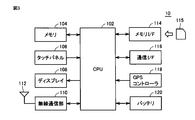
- FIG. 3 is a block diagram showing a hardware configuration of communication terminal apparatus 10 according to the first embodiment.
- communication terminal apparatus 10 includes, as main components, CPU (Central Processing Unit) 102, memory 104, touch panel 106, display 108, wireless communication unit 110, memory interface (I / O). F) 114, a communication interface (I / F) 116, a GPS (Global Positioning System) controller 118, and a battery 120.
- CPU Central Processing Unit
- memory 104 volatile and non-volatile memory
- touch panel 106 volatile and non-volatile touch panel
- display 108 includes, as main components, as main components, memory 104, touch panel 106, display 108, wireless communication unit 110, memory interface (I / O).
- F memory interface
- I / F communication interface
- GPS Global Positioning System
- the CPU 102 reads out and executes the program stored in the memory 104 to control the operation of each unit of the communication terminal device 10. More specifically, the CPU 102 implements each process (step) of the communication terminal device 10 to be described later by executing the program.
- the memory 104 is realized by a RAM (Random Access Memory), a ROM (Read-Only Memory), a flash memory, or the like.
- the memory 104 stores a program executed by the CPU 102 or data used by the CPU 102.
- the touch panel 106 is provided on a display 108 having a function as a display unit, and is, for example, a capacitance type.
- the touch panel 106 detects a touch operation on the touch panel 106 by an external object every predetermined time, and inputs touch coordinates to the CPU 102.
- the wireless communication unit 110 connects to a wireless communication network via the communication antenna 112 and transmits and receives signals for wireless communication.
- the communication terminal device 10 can perform communication with other communication terminal devices via the base station 20 using a wireless communication network such as LTE (Long Term Evolution), for example. Direct communication with other communication terminal devices can be executed without going through the station 20.
- LTE Long Term Evolution
- the memory interface (I / F) 114 reads data from the external storage medium 115.
- the CPU 102 reads data from the memory 104 and stores the data in an external storage medium 115 via the memory interface 114.
- the storage medium 115 may be a CD (Compact Disc), a DVD (Digital Versatile Disk), a BD (Blu-ray (registered trademark) Disc), a USB (Universal Serial Bus) memory, an SD (Secure Digital) memory card, or the like.
- a medium for storing the program in a nonvolatile manner can be mentioned.
- the communication interface (I / F) 116 exchanges various data with an external device, and is realized by an adapter, a connector, or the like.
- the communication method may be, for example, wireless communication using Bluetooth (registered trademark), wireless LAN (Local Area Network), or wired communication using USB (Universal Serial Bus). .
- the GPS controller 118 receives a GPS signal or a position signal (positioning signal) from the base station, and acquires position information of the communication terminal device 10.
- the GPS controller 118 inputs the acquired position information of the communication terminal device 10 to the CPU 102.
- the battery 120 is a chargeable / dischargeable power storage element, and typically includes a secondary battery such as a lithium ion battery or a nickel metal hydride battery.
- the communication terminal device 10 may include a button for receiving an instruction from the user, a microphone for receiving an utterance to the communication terminal device 10, and a speaker for outputting sound.
- FIG. 4 is a block diagram showing a hardware configuration of base station 20 according to the first embodiment.
- base station 20 includes, as main components, CPU 202 for executing various processes, memory 204 for storing programs executed by CPU 202, data, and the like, and a wireless communication network.
- Wireless communication unit 206 for transmitting / receiving various data to / from devices in communication area 200 and communication interface (I / F) 208 for communicating with other base stations.
- FIG. 5 is a functional block diagram of communication terminal apparatus 10 and base station 20 according to the first embodiment.
- communication terminal device 10 has, as its main functional configuration, control information receiving unit 150, control information transmitting unit 152, remaining battery level detecting unit 154, speed detecting unit 156, and determining unit 158. And a status transmission unit 160 and a notification reception unit 162. These functions are mainly realized by the CPU 102 of the communication terminal device 10 executing a program stored in the memory 104 and giving a command to the components of the communication terminal device 10.
- the CPU 102 has a function as a control unit that controls the overall operation of the communication terminal device 10. Note that some or all of these functional configurations may be realized by hardware.
- the control information receiving unit 150 receives control information for controlling direct communication from the base station 20 (a control information transmitting unit 250 described later) via the wireless communication unit 110.
- the control information transmitting unit 152 transmits the control information received by the control information receiving unit 150 to a plurality of other communication terminal devices (communication terminal devices 10B and 10C in the present embodiment).
- the remaining battery level detection unit 154 monitors the battery 120 and detects the remaining battery level of the communication terminal device 10.
- the speed detection unit 156 detects the moving speed of the communication terminal device 10 based on the position information acquired via the GPS controller 118. Specifically, the speed detection unit 156 detects the moving speed from the time change of the position of the communication terminal device 10. The speed detection unit 156 may detect the moving speed using a speed sensor or an acceleration sensor (not shown).
- the determination unit 158 determines whether or not transmission of control information by the control information transmission unit 152 can be continued based on a predetermined determination criterion and the state of the communication terminal device 10. In other words, the determination unit 158 determines whether or not the communication terminal device 10 has a margin so that direct communication between a plurality of other communication terminal devices can be controlled as a communication control device.
- the determination unit 158 determines that the remaining battery level detected by the remaining battery level detection unit 154 is less than a predetermined reference remaining level (for example, the ratio of the remaining battery level to the fully charged amount is less than 20%). In this case, it is determined that transmission of control information cannot be continued. Alternatively, the determination unit 158 determines that the transmission of the control information cannot be continued when the moving speed detected by the speed detection unit 156 is equal to or higher than a predetermined reference speed (for example, 100 km / h or higher). To do. Note that the reference remaining amount and the reference speed may be appropriately set by a user or the like.
- the status transmission unit 160 transmits status information indicating the status of the communication terminal device 10 to the base station 20. Specifically, the state transmitting unit 160 periodically transmits the detected remaining battery level (and moving speed) to the base station 20 as state information. The frequency of transmitting the state information may be determined in advance or may be set by the user. Further, in another aspect, when the determination unit 158 determines that transmission of control information cannot be continued, the state transmission unit 160 further notifies the base station 20 that the transmission cannot be continued.
- the notification receiving unit 162 selects the alternative communication terminal device (communication terminal device 10D in this embodiment) that transmits control information instead of the communication terminal device 10 (in this embodiment, the communication terminal device 10A). A notification to that effect is received from the base station 20 (a notification unit 256 described later).
- the control information transmitting unit 152 stops transmission of control information to a plurality of other communication terminal devices when the notification receiving unit 162 receives a notification that an alternative communication terminal device has been selected.
- base station 20 includes a control information transmission unit 250, a status reception unit 252, a terminal selection unit 254, and a notification unit 256 as its main functional configuration. These functions are mainly realized by the CPU 202 of the base station 20 executing a program stored in the memory 204 and giving a command to the components of the base station 20. Note that some or all of these functional configurations may be realized by hardware.
- the control information transmission unit 250 transmits control information for directly controlling communication to the communication terminal device 10. Note that the control information transmission unit 250 may transmit the control information to all communication terminal devices existing in the communication area 200.
- the status receiving unit 252 receives status information transmitted from the communication terminal device 10 (status transmitting unit 160). Further, the state receiving unit 252 receives the identification information of the communication terminal device 10 transmitted together with (or separately from) the state information, and stores the state information and the identification information in the memory 204 in association with each other. Further, in another aspect, the state receiving unit 252 receives a notification that transmission of control information cannot be continued from the communication terminal device 10 functioning as a communication control device.
- the terminal selection unit 254 selects an alternative communication terminal device from the one or more communication terminal devices based on the state information received from the one or more communication terminal devices existing in the communication area 200. Specifically, the terminal selection unit 254 performs the selection when the state reception unit 252 receives a notification that transmission of control information cannot be continued. The terminal selection unit 254 selects a communication terminal device having the largest remaining battery capacity as the alternative communication terminal device among the one or more communication terminal devices. Or the terminal selection part 254 selects the communication terminal device with the slowest moving speed as an alternative communication terminal device among the one or more communication terminal devices.
- the notification unit 256 notifies the communication terminal device 10 that the alternative communication terminal device has been selected by the terminal selection unit 254. Further, the notification unit 256 instructs the alternative communication terminal device to transmit the control information to a plurality of other communication terminal devices.
- FIG. 6 is a flowchart showing an example of a processing procedure of communication terminal apparatus 10 functioning as a communication control apparatus according to the first embodiment. The following steps are realized by the CPU 102 of the communication terminal device 10 executing a program stored in the memory 104.
- CPU 102 detects the remaining battery level via battery 120 (step S50). Based on the detected remaining battery level, CPU 102 determines whether its own device can continue communication with communication terminal devices 10B and 10C as a communication control device (step S52). If it is determined that the communication can be continued (YES in step S52), CPU 102 repeats the processing from step S50.
- step S52 when it is determined that the communication cannot be continued (NO in step S52), the CPU 102 cannot communicate with the base station 20 via the wireless communication unit 110 because the remaining battery level is low. The base station 20 is notified of this (step S56).
- the CPU 102 determines whether or not a notification (communication control device change notification) indicating that the alternative communication terminal device 10D has been selected as the communication control device has been received from the base station 20 (step S58). If the notification has not been received (NO in step S58), CPU 102 repeats the process of step S58. On the other hand, when the notification is received (YES in step S58), CPU 102 stops transmission of control information to communication terminal apparatuses 10B and 10C, and ends communication as a communication control terminal ( Step S60). Then, the CPU 102 ends the process.
- a notification communication control device change notification
- the communication control device since the state of the communication terminal device functioning as the communication control device can be grasped on the base station side, the communication control device is instructed to perform other communication according to the instruction on the base station side according to the state. It is possible to switch to a terminal device. As a result, direct communication between a plurality of other communication terminal devices controlled by the communication control device can be stably maintained.
- the communication terminal device since the communication terminal device does not need to exchange state information with other communication terminal devices, traffic can be reduced accordingly. Furthermore, since it is not necessary to manage the status information of other communication terminal devices, the load is reduced.
- FIG. 7 is a functional block diagram of communication terminal apparatus 10 according to the second embodiment. Specifically, FIG. 7 shows communication terminal apparatus 10 (selected in this embodiment as communication terminal apparatus 10D) that is instructed to operate as a communication control apparatus (in this embodiment, communication terminal apparatus 10D). The functional block diagram of is shown.
- communication terminal apparatus 10 has, as its main functional configuration, control information receiving unit 150, control information transmitting unit 152, remaining battery level detecting unit 154, speed detecting unit 156, and state transmitting unit. 160, an instruction receiving unit 170, and an instruction determining unit 172. These functions are mainly realized by the CPU 102 of the communication terminal device 10 executing a program stored in the memory 104 and giving a command to the components of the communication terminal device 10. Note that some or all of these functional configurations may be realized by hardware.
- control information receiving unit 150 The functions of the control information receiving unit 150, the control information transmitting unit 152, the remaining battery level detecting unit 154, the speed detecting unit 156, and the state transmitting unit 160 are the same as those described with reference to FIG. Will not repeat.
- the instruction receiving unit 170 receives from the base station 20 an instruction to transmit control information to a plurality of other communication terminal apparatuses (communication terminal apparatuses 10B and 10C in the present embodiment). That is, the instruction receiving unit 170 from the base station 20 to operate as the communication control apparatus instead of the communication terminal apparatus 10 (in this embodiment, the communication terminal apparatus 10A) currently operating as the communication control apparatus. Instructed.
- the base station 20 sends the transmission instruction to the alternative communication terminal device selected from the one or more communication terminal devices based on the status information received from the one or more communication terminal devices existing in the communication area 200. Send.
- the instruction determining unit 172 determines whether to follow the transmission instruction from the base station 20 based on a predetermined determination criterion. Specifically, the instruction determination unit 172 receives an instruction to permit transmission of control information to a plurality of other communication terminal apparatuses from the user of the communication terminal apparatus 10 (communication terminal apparatus 10D in the present embodiment). If it is determined that the transmission instruction is to be followed. The instruction determination unit 172 receives an instruction from the user via the touch panel 106 (or a button, a speaker, or the like).
- the instruction determination unit 172 follows the transmission instruction regardless of whether there is a permission instruction from the user. You may decide not to. Alternatively, when the movement speed detected by the speed detection unit 156 is equal to or higher than a predetermined reference speed, the instruction determination unit 172 does not follow the transmission instruction regardless of whether there is a permission instruction from the user. You may judge.
- the control information transmitting unit 152 transmits the control information to a plurality of other communication terminal devices when the instruction determining unit 172 determines that the transmission instruction is to be followed.
- FIG. 8 is a flowchart showing an example of a processing procedure as an alternative communication terminal device of communication terminal device 10 (here, communication terminal device 10D) according to the second embodiment. The following steps are realized by the CPU 102 of the communication terminal device 10 executing a program stored in the memory 104.
- CPU 102 determines whether or not an operation instruction as a communication control device has been received from base station 20 (step S70).
- the operation instruction as the communication control apparatus includes an instruction to transmit control information to the communication terminal apparatuses 10B and 10C.
- CPU102 repeats the process of step S70, when the said operation instruction is not received (in step S70 NO).
- CPU 102 when CPU 102 receives the operation instruction (hereinafter also simply referred to as “operation instruction”) (YES in step S70), CPU 102 follows the operation instruction to the user of communication terminal device 10D. A user interface screen requesting permission is displayed (step S72).
- operation instruction hereinafter also simply referred to as “operation instruction”.
- FIG. 9 shows a user interface screen 500 according to the second embodiment.
- user interface screen 500 includes a word 502 “Do you permit to operate as a communication control device?”, YES button 504, and NO button 506.
- CPU 102 determines whether to follow the operation instruction based on the input from the user (step S74). Specifically, the CPU 102 determines that the operation instruction is to be followed when an input of the YES button 504 is accepted from the user, and determines that the operation instruction is not obeyed when the input of the NO button 506 is accepted from the user.
- step S74 When the operation instruction is to be followed (YES in step S74), the CPU 102 notifies the base station 20 that the operation instruction is to be followed (step S76), and ends the process.
- communication terminal apparatus 10D starts transmission of control information to communication terminal apparatuses 10B and 10C as a communication control apparatus (see, for example, step 30 in FIG. 2).
- the CPU 102 does not follow the operation instruction (NO in step S74), it notifies the base station 20 that it does not follow the operation instruction (step S78), and ends the process.
- the communication terminal device 10D does not operate as a communication control device and maintains an operation as a normal communication terminal device.
- FIG. 10 is a flowchart showing a modified example of the processing procedure as an alternative communication terminal device of communication terminal device 10 (here, communication terminal device 10D) according to the second embodiment.
- step S80 is the same as the process of step S70, and therefore detailed description thereof will not be repeated.
- the CPU 102 can operate itself (communication terminal apparatus 10D) as a communication control apparatus (follow the operation instruction). It is determined whether or not it is possible (step S81).
- the CPU 102 determines that the device can operate as a communication control device, and the remaining battery level is less than the reference remaining amount. In this case, it is determined that it is impossible to operate as a communication control device.
- the CPU 102 determines that the device can operate as a communication control device when the movement speed of the own device is less than the reference speed, and as the communication control device when the movement speed is equal to or higher than the reference speed. Judge that it is impossible to operate.
- step S81 If it is impossible for the device itself to operate as a communication control device (NO in step S81), the CPU 102 notifies the base station 20 that the operation instruction is not followed (step S88). ), The process is terminated. In this case, the communication terminal device 10D does not operate as a communication control device and maintains an operation as a normal communication terminal device.
- step S81 If the device itself is in a state where it can operate as a communication control device (YES in step S81), CPU 102 executes the processing in step S82 and subsequent steps. Since the processes of steps S82 to S88 are the same as the processes of steps S72 to S78 in FIG. 8, detailed description thereof will not be repeated.
- the communication terminal device when receiving an operation instruction as a communication control device from a base station, the communication terminal device confirms with the user whether or not to permit operation as a communication control device. Therefore, it is possible to prevent the communication terminal device from operating as a communication control device without user recognition.
- the base station 20 (terminal selection unit 254), based on the state information received from one or more communication terminal apparatuses existing in the communication area 200, includes the one or more communication terminal apparatuses.
- the selection of an alternative communication terminal device to be operated as a communication control device has been described.
- base station 20 (terminal selection part 254) is a communication terminal device with the most remaining battery power among the one or more communication terminal devices, or a communication terminal device with the slowest moving speed among the one or more communication terminal devices.
- the configuration for selecting as an alternative communication terminal device has been described.
- Embodiment 3 describes another mode of a selection method used when the base station 20 selects an alternative communication terminal device.
- FIG. 11 is a schematic diagram showing an overall configuration of a communication system 1A according to the third embodiment.
- Communication system 1 according to the first embodiment has only one communication terminal device (communication terminal device 10D) in communication area 200 (not a plurality) other than communication terminal device 10A operating as a communication control device. It also included existing configurations.
- the communication system 1A according to the third embodiment in addition to the communication terminal device 10A operating as the communication control device, at least a plurality of communication terminal devices (communication terminal devices 10D and 10D) in the communication area 200 (not one). 10E). Therefore, the communication system 1A in FIG. 11 has a communication terminal device 10E added to the communication system 1 in FIG.
- the communication terminal device 10E has the same functions and configurations as the communication terminal devices 10A to 10D.
- FIG. 12 is a sequence diagram showing an outline of operation of communication system 1A according to the third embodiment.
- the communication terminal devices 10A, 10D, and 10E existing in the communication area 200 regularly transmit state information.
- steps S10 to S26 is the same as that described in FIG. 2, and therefore detailed description thereof will not be repeated.
- the base station 20 When the base station 20 receives a notification from the communication terminal device 10A that communication with the communication terminal devices 10B and 10C cannot be continued (step S26), the base station 20 operates as a communication control device instead of the communication terminal device 10A. Processing for selecting an alternative communication terminal device is executed (step S26A).
- the base station 20 selects an alternative communication terminal device from the communication terminal devices 10D and 10E existing in the communication area 200, in addition to the communication terminal device 10A. A specific selection method will be described later. Here, it is assumed that the base station 20 selects the communication terminal device 10D as an alternative communication terminal device.
- steps S27 to S41 Since the processing in steps S27 to S41 is the same as that described in FIG. 2, detailed description thereof will not be repeated.
- FIG. 13 shows information table 600 according to the third embodiment.
- information table 600 includes battery remaining amount, moving speed, and relative position information for each of communication terminal apparatuses 10D and 10E. These three pieces of information are used as indices when the base station 20 (terminal selection unit 254) selects an alternative communication terminal device.
- the relative position is information indicating a relative position with respect to a communication terminal device (in this embodiment, communication terminal device 10B or 10C) that performs D2D communication.
- the base station 20 calculates the relative position based on the position information transmitted from the communication terminal apparatus 10D (and 10E) and the position information of the communication terminal apparatus 10B.
- the base station 20 acquires the position information directly from the communication terminal apparatus 10B.
- the base station 20 uses, for example, the location information of the communication terminal device 10B via the communication terminal device 10A operating as the communication control device. To get.
- the communication terminal device 10D is present at a position 10 km away from the communication terminal device 10B, and the communication terminal device 10E is present at a position 5 km away from the communication terminal device 10B.
- the relative position may be a relative position with respect to the communication terminal apparatus 10C instead of the communication terminal apparatus 10B.
- the information table 600 includes reference information corresponding to each remaining battery level, moving speed, and relative position.
- the reference information corresponding to the remaining battery level is information indicating a criterion “the remaining battery level is 50% or more”.
- the reference information corresponding to the moving speed is information indicating a reference that “the moving speed is within 10 km / h”.
- the reference information corresponding to the relative position is information indicating a reference of “within 15 km from the communication terminal device that performs D2D communication”.
- terminal selection unit 254 For each of two or more communication terminal devices (here, communication terminal devices 10D and 10E) existing in communication area 200, terminal selection unit 254 includes the remaining battery level, movement speed, and relative position of the communication terminal device. The number of information satisfying the corresponding standard (the number of sufficiency) is calculated. Specifically, in communication terminal device 10D, terminal selection unit 254 calculates the sufficiency number as three because all the information on the remaining battery level, the moving speed, and the relative position satisfy the corresponding standards. Moreover, in the communication terminal device 10E, the terminal selection unit 254 calculates the number of suffices as two because the remaining battery level and the relative position satisfy the corresponding standards (the moving speed does not satisfy the reference).
- the terminal selection part 254 selects communication terminal apparatus 10D with many fulfillment numbers among communication terminal apparatus 10D and 10E as an alternative communication terminal apparatus.
- the terminal selection unit 254 selects the communication terminal device with the most sufficient number as the alternative communication terminal device.
- the terminal selection unit 254 selects an alternative communication terminal device. You may not.
- FIG. 14 shows information table 700 according to the third embodiment.
- information table 700 includes a remaining battery level, a moving speed, and a relative position for each of communication terminal apparatuses 10D and 10E. Also, different priorities are set for these three pieces of information. In the example of FIG. 14, priority levels “high”, “medium”, and “low” are set for the remaining battery level, the moving speed, and the relative position, respectively.
- the terminal selection unit 254 uses the highest priority information (here, the remaining battery level) in each of two or more communication terminal devices (here, the communication terminal devices 10D and 10E) existing in the communication area of the base station. Based on this, an alternative communication terminal device is selected from the two or more communication terminal devices. Specifically, since the remaining battery level (80%) of the communication terminal device 10D is greater than the remaining battery level (50%) of the communication terminal device 10E, the terminal selection unit 254 replaces the communication terminal device 10D. Select as communication terminal device.
- the moving speed When the moving speed is set as the highest priority information, the moving speed (0 km / h) of the communication terminal device 10D is more than the moving speed (20 km / h) of the communication terminal device 10E. Since it is small, the terminal selection part 254 selects communication terminal device 10D as an alternative communication terminal device.
- the communication terminal device 10E When the relative position is set as the highest priority information, the communication terminal device 10E is located closer to the communication terminal device that performs D2D communication than the communication terminal device 10D. Therefore, the terminal selection unit 254 selects the communication terminal device 10E as an alternative communication terminal device.
- the terminal selection unit 254 may select an alternative communication terminal device by comparing information on the remaining battery level, the moving speed, and the relative position in order of priority.
- the remaining battery level, the moving speed, and the relative position are set in descending order of priority. Therefore, terminal selection unit 254 first compares the remaining battery levels of both communication terminal apparatuses 10D and 10E. When both the remaining battery levels are equal, the terminal selection unit 254 compares the moving speeds of the communication terminal devices 10D and 10E. When both moving speeds are equal, the terminal selection unit 254 compares the relative positions of the communication terminal devices 10D and 10E. When both relative positions are equivalent, the terminal selection part 254 selects either one at random, for example.
- the terminal selection unit 254 may execute a combination of the selection methods (part 1) and (part 2). For example, when the communication terminal devices 10D and 10E have the same number of suffices, the terminal selection unit 254 cannot select an alternative communication terminal device using the selection method (part 1). Therefore, if the terminal selection unit 254 uses the selection method (part 1) and determines that the number of fulfillment of each of the two or more communication terminal devices is the same, the terminal selection unit 254 uses the selection method (part 2), An alternative communication terminal device may be selected from the two or more communication terminal devices based on information having the highest priority in each of the two or more communication terminal devices.
- FIG. 15 shows information table 800 according to the third embodiment.
- information table 800 shows remaining battery level, moving speed and relative position for each of communication terminal apparatuses 10D and 10E, and reference information corresponding to each remaining battery level, moving speed and relative position. Including.
- priority levels “high”, “medium”, and “low” are set for the remaining battery level, the moving speed, and the relative position, respectively.
- the points are weighted according to the priority, and are 3 points, 2 points, and 1 point in descending order of priority.
- the terminal selection unit 254 determines, for each of the communication terminal devices 10D and 10E, whether each of the remaining battery level, the moving speed, and the relative position in the communication terminal device satisfies a corresponding standard. Specifically, terminal selection unit 254 determines in communication terminal device 10D that all the information on the remaining battery level, the moving speed, and the relative position satisfy the corresponding standards. In addition, in communication terminal device 10E, terminal selection unit 254 determines that the remaining battery level and the relative position satisfy corresponding standards.
- the terminal selection unit 254 determines the communication terminal devices 10D and 10E based on the respective remaining battery levels, movement speeds, and relative positions that satisfy the corresponding criteria in the communication terminal devices 10D and 10E.
- An alternative communication terminal device is selected from the list. Specifically, for the communication terminal device 10D, the terminal selection unit 254 has a score “3” corresponding to the priority of the remaining battery level, a score “2” corresponding to the priority of the moving speed, and the relative position. A total value “6” obtained by adding the score “1” corresponding to the priority is calculated. For the communication terminal device 10E, the terminal selection unit 254 adds a total value “4” obtained by adding the score “3” corresponding to the priority of the remaining battery level and the score “1” corresponding to the priority of the relative position. calculate.
- the terminal selection unit 254 selects the communication terminal device 10D having a large total value from the communication terminal devices 10D and 10E as an alternative communication terminal device.
- the score may be weighted according to the priority, and may be 1 point, 2 points, 3 points in descending order of priority.
- the terminal selection unit 254 selects a communication terminal device having a small total value as an alternative communication terminal device.
- the state information only needs to include at least one of the battery remaining amount, the moving speed, and the relative position. That is, the state information may be configured to include only one piece of information (for example, remaining battery level) or to include two pieces of information (for example, remaining battery level and moving speed). In this case, the base station 20 uses the one or two pieces of information to select an alternative communication terminal apparatus by the selection method as described above.
- the base station 20 when the base station 20 instructs the communication terminal apparatus 10D to operate as a communication control apparatus (step S28 in FIG. 12), the base station 20 receives a notification that the operation instruction is not followed from the communication terminal apparatus 10D. Sometimes (see step S78 in FIG. 8), the communication terminal device 10E may be selected. Alternatively, the base station 20 may cancel the change of the communication control device itself when the selection conditions described above are not met.
- the base station uses the information on at least two of the battery remaining amount, the moving speed, and the relative position to select an alternative communication terminal device from among a plurality of communication terminal devices existing in the communication area. select. Therefore, the base station can select a suitable alternative communication terminal device comprehensively.
- the base station determines that the transmission of the control information cannot be continued when the remaining battery level transmitted from the communication terminal device is less than a predetermined reference remaining level.
- the base station determines that the transmission of the control information cannot be continued when the moving speed transmitted from the communication terminal apparatus is equal to or higher than a predetermined reference speed. Then, the base station selects an alternative communication terminal device from one or more communication terminal devices existing in the communication area.
- the base station may detect the moving speed of the communication terminal device based on position information transmitted from the communication terminal device.
- the state information may include terminal performance information including communication performance information and hardware performance information of the communication terminal device.
- the communication performance information is, for example, information indicating an LTE category
- the hardware performance information is, for example, information indicating CPU performance (clock frequency, number of cores, etc.).
- the base station selects a communication terminal device with higher communication performance (LTE category is higher) as an alternative communication terminal device, and has higher hardware performance (high CPU performance).
- the alternative communication terminal device is selected with priority.
- a program that causes a computer to function and execute control as described in the above flowchart.
- a program is recorded on a non-temporary computer-readable recording medium such as a flexible disk attached to the computer, a CD-ROM (Compact Disk Read Only Memory), a ROM, a RAM, and a memory card as a program product. It can also be provided.
- the program can be provided by being recorded on a recording medium such as a hard disk built in the computer.
- a program can also be provided by downloading via a network.
- the program may be a program module that is provided as a part of an operating system (OS) of a computer and that calls necessary modules in a predetermined arrangement at a predetermined timing to execute processing.
- OS operating system
- the program itself does not include the module, and the process is executed in cooperation with the OS.
- a program that does not include such a module can also be included in the program according to the present embodiment.
- the program according to the present embodiment may be provided by being incorporated in a part of another program. Even in this case, the program itself does not include the module included in the other program, and the process is executed in cooperation with the other program. A program incorporated in such another program can also be included in the program according to the present embodiment.
- the configuration illustrated as the above-described embodiment is an example of the configuration of the present invention, and can be combined with another known technique, and a part of the configuration is omitted without departing from the gist of the present invention. It is also possible to change the configuration.
- 1, 1A communication system 10 communication terminal device, 20 base station, 102, 202 CPU, 104, 204 memory, 106 touch panel, 108 display, 110, 206 wireless communication unit, 112 communication antenna, 114 memory interface, 115 storage medium, 118 GPS controller, 120 battery, 150 control information receiving unit, 152,250 control information transmitting unit, 154 battery remaining amount detecting unit, 156 speed detecting unit, 158 judging unit, 160 status transmitting unit, 162 notification receiving unit, 170 instruction reception Part, 172 instruction determination part, 200 communication area, 252 status reception part, 254 terminal selection part, 256 notification part.
Landscapes
- Engineering & Computer Science (AREA)
- Computer Networks & Wireless Communication (AREA)
- Signal Processing (AREA)
- Human Computer Interaction (AREA)
- Mobile Radio Communication Systems (AREA)
- Telephone Function (AREA)
Abstract
通信端末装置間のトラヒックを増加させることなく、通信端末装置間での直接通信を安定的に維持することが可能な通信端末装置を提供する。複数の他の通信端末装置との間で基地局を介さない直接通信が可能な通信端末装置は、直接通信を制御するための制御情報を基地局から受信する受信部と、受信された制御情報を複数の他の通信端末装置に送信する送信部と、通信端末装置の状態情報を基地局に送信する状態送信部と、基地局の通信エリア内に存在する1以上の通信端末装置から送信された状態情報に基づいて、1以上の通信端末装置の中から通信端末装置の代わりとなる代替通信端末装置が基地局によって選択された場合に、その選択された旨の通知を基地局から受信する通知受信部とを備える。送信部は、当該通知が受信された場合に、制御情報の送信を停止する。
Description
本発明は、他の通信端末装置との間で基地局を介さない直接通信が可能な通信端末装置、および通信システムに関する。
近年、無線基地局およびアクセスポイントを経由することなく、複数の無線通信端末装置が直接、無線通信を実行する無線通信方式、いわゆるDevice-to-Device(D2D)通信として、Bluetooth(登録商標)、あるいは無線LANのアドホックモードが知られている。
たとえば、特開2005-295310号公報(特許文献1)には、複数の無線端末が、相互に送受信される経路情報に基づいて伝送パケットを相互に中継伝送するマルチホップ方式の無線通信方法が開示されている。
ところで、近年では、通信事業者が提供する無線通信網を用いてD2D通信を実現することも検討されている。たとえば、無線基地局の通信エリア(カバレッジ)内に存在する無線端末が、複数の他の無線端末間における当該D2D通信を制御するケースが考えられている。
しかしながら、このようなケースの場合には、D2D通信を制御する無線端末が、電池残量等の低下により通信を維持できなくなると、他の無線端末間でのD2D通信にも影響を与えてしまうことになる。
本発明は、上記のような問題点を解決するためになされたものであって、通信端末装置間のトラヒックを増加させることなく、通信端末装置間での直接通信を安定的に維持することが可能な通信端末装置、および通信システムを提供することを目的とする。
ある実施の形態に従うと、複数の他の通信端末装置との間で基地局を介さない直接通信が可能な通信端末装置が提供される。通信端末装置は、直接通信を制御するための制御情報を基地局から受信する受信部と、受信部により受信された制御情報を複数の他の通信端末装置に送信する送信部と、通信端末装置の状態を示す状態情報を基地局に送信する状態送信部と、基地局の通信エリア内に存在する1以上の通信端末装置から送信された状態情報に基づいて、1以上の通信端末装置の中から通信端末装置の代わりに制御情報を送信する代替通信端末装置が基地局によって選択された場合に、代替通信端末装置が選択された旨の通知を基地局から受信する通知受信部とを備える。送信部は、通知受信部により通知が受信された場合に、複数の他の通信端末装置への制御情報の送信を停止する。
本発明によれば、通信端末装置間のトラヒックを増加させることなく、通信端末装置間での直接通信を安定的に維持することが可能となる。
以下、図面を参照しつつ、本発明の実施の形態について説明する。以下の説明では、同一の部品には同一の符号を付してある。それらの名称および機能も同じである。したがって、それらについての詳細な説明は繰り返さない。また、以下では、スマートフォンを「通信端末装置」の代表例として説明を行なう。ただし、通信端末装置は、パーソナルコンピュータや、PND(Personal Navigation Device)、PDA(Personal Data Assistance)などのような、他の情報通信機器であってもよい。
[実施の形態1]
<システム概要>
(全体構成)
実施の形態1に従う通信システム1のシステム概要について説明する。図1は、実施の形態1に従う通信システム1の全体構成を示す概略図である。
<システム概要>
(全体構成)
実施の形態1に従う通信システム1のシステム概要について説明する。図1は、実施の形態1に従う通信システム1の全体構成を示す概略図である。
図1を参照して、通信システム1は、通信端末装置10A~10Dと、基地局20とを含む。なお、説明の容易化のために、以下では、通信端末装置10A~10Dの各々に共通の構成や機能を説明する際には、それらを「通信端末装置10」とも総称する。
基地局20は、たとえば、3GPP(Third Generation Partnership Project)において標準化されている無線通信アクセス技術(RAT:Radio Access Technology)のうち、LTE(Long Term Evolution)に従った動作を実行する。
通信端末装置10A~10Dは、LTEなどの無線アクセス技術に従った無線通信を実行するUE(User Equipment)である。また、通信端末装置10A~10Dは、基地局20を介して(経由して)他の通信端末装置と通信可能に構成されており、かつ、基地局20を介さずに(経由せずに)他の通信端末装置と直接通信(D2D通信)可能に構成されている。
本実施の形態では、通信端末装置10Aおよび10Dは、基地局20の通信エリア200内に存在しており、無線通信網を利用して基地局20との無線通信が可能である。一方、通信端末装置10Bおよび10Cは、通信エリア200外に存在しているため、基地局20と通信することはできない。
基地局20は、通信端末装置10A~10D間における、通信事業者が管轄する無線通信網において用いられる周波数帯域を用いた直接通信を制御する。具体的には、基地局20は、基地局20を介さずに通信端末装置10A~10D間の直接通信を制御するための制御情報を、通信エリア200内に存在する通信端末装置10Aに送信する。
制御情報は、無線通信網を利用した直接通信を許可するための許可情報、および当該直接通信に必要となる通信環境の設定情報を含む。たとえば、設定情報は、直接通信で許容される周波数帯などの無線リソース情報、無線信号の電波強度を含む。
そして、通信端末装置10Aは、基地局20から受信した制御情報を、通信エリア200内に存在しない通信端末装置10Bおよび10Cに送信する。これにより、通信端末装置10Bおよび10C間での直接通信が可能となる。すなわち、通信端末装置10Aは、通信端末装置10Bおよび10C間の直接通信を制御するための通信制御装置として機能する。
また、通信エリア200内に存在する通信端末装置10Dは、定期的に自装置の状態を示す状態情報を基地局20に送信する。なお、通信端末装置10Aも定期的に状態情報を基地局20に送信してもよい。状態情報は、通信端末装置の電池残量および移動速度を含む。また、通信端末装置10D(および10A)は、自端末の識別情報(電話番号、メールアドレスなど)を状態情報とともに基地局20に送信してもよい。
基地局20は、通信エリア200内に存在する1以上の通信端末装置10から状態情報を受信する。そして、基地局20は、当該1以上の通信端末装置の中から通信制御装置として機能させる通信端末装置を選択する。具体的には、基地局20は、通信制御装置として、当該1以上の通信端末装置のうち電池残量が最も多い通信端末装置を選択する。または、基地局20は、通信制御装置として、当該1以上の通信端末装置のうち移動速度が最も遅い通信端末装置を選択する。
そのため、図1中において、通信制御装置として機能している通信端末装置10Aの電池残量が一定量以上少なくなった場合には、基地局20は、たとえば、通信端末装置10Aの代わりに電池残量の多い通信端末装置10Dを通信制御装置として選択する。そして、基地局20に選択された通信端末装置10Dは、通信端末装置10Aの代わりに通信制御装置として機能し、通信端末装置10Bおよび10Cに制御情報を送信する。
上記のように、通信システム1では、基地局20からの制御情報に基づいて、通信端末装置10A~10D間の直接通信が許可される。なお、上記では、通信端末装置10Bおよび10Cは、通信エリア200内に存在しない場合について説明したが、通信端末装置10Bおよび10Cが通信エリア200内に存在する場合であってもよい。
(動作概要)
図2は、実施の形態1に従う通信システム1の動作概要を示すシーケンス図である。なお、上述したように、通信エリア200内に存在する通信端末装置10Aおよび10Dは、定期的に状態情報としての電池残量、移動速度および識別情報を送信しているものとする。
図2は、実施の形態1に従う通信システム1の動作概要を示すシーケンス図である。なお、上述したように、通信エリア200内に存在する通信端末装置10Aおよび10Dは、定期的に状態情報としての電池残量、移動速度および識別情報を送信しているものとする。
図2を参照して、基地局20(図2中の「基地局」)は、無線通信網を介して直接通信を制御するための制御情報を通信端末装置10A(図2中の「端末A」)に送信する(ステップS10)。通信端末装置10Aは、制御情報を受信すると、当該受信に対するレスポンスを基地局20に送信する(ステップS12)。
通信端末装置10Aは、直接通信可能な通信端末装置10B(図2中の「端末B」)に制御情報を送信する(ステップS14)。通信端末装置10Bは、制御情報を受信すると、当該受信に対するレスポンスを通信端末装置10Aに送信する(ステップS16)。通信端末装置10Aは、通信端末装置10Bから受信したレスポンスを基地局20に送信する(ステップS17)。
また、通信端末装置10Aは、直接通信可能な通信端末装置10C(図2中の「端末C」)に制御情報を送信する(ステップS18)。通信端末装置10Cは、制御情報を受信すると、当該受信に対するレスポンスを通信端末装置10Aに送信する(ステップS20)。通信端末装置10Aは、通信端末装置10Cから受信したレスポンスを基地局20に送信する(ステップS21)。なお、通信端末装置10Aは、ステップS14,S16,S17の一連の処理と、ステップS18,S20,S21の一連の処理とを並行して実行してもよい。
基地局20は、通信端末装置10Bおよび10Cの間での直接通信(D2D通信)を許可する場合に、通信端末装置10Aに対して当該D2D通信を許可する指示を送信する(ステップS22)。通信端末装置10Aは、その許可指示を受信すると、通信端末装置10Bおよび10CにD2D通信を許可する旨を通知する(ステップS23,S24)。
本実施の形態では、通信端末装置10Aは、自端末と直接通信が実行可能な他の通信端末装置として、通信端末装置10Bおよび10Cを検索する。具体的には、通信端末装置10Aは、他の通信端末装置から送信される無線信号の電波強度、または通信端末装置10Aが送信する無線信号が到達する範囲に基づいて、通信端末装置10Aと直接通信が可能な他の通信端末装置を検索する。たとえば、通信端末装置10Aは、電話番号、メールアドレスなどの識別情報に基づいて、他の通信端末装置を一意に識別することができる。
そして、通信端末装置10Bおよび10Cは、受信した制御情報に基づいて、基地局20を介さない直接通信(D2D通信)による各種データ(動画、アプリケーションなど)の送受信を行なう(ステップS25)。これにより、通信端末装置10Bおよび10C間の直接通信が確立する。
次に、通信端末装置10Aは、自装置の電池残量が予め定められた基準値未満となり、通信制御装置として、通信端末装置10Bおよび10Cとの通信が継続不能であると判断した場合、当該継続不能であることを基地局20に通知する(ステップS26)。具体的には、通信端末装置10Aは、電池残量が低下して、通信端末装置10Bおよび10Cに対する制御情報の送信を継続することができない状態になったことを基地局20に通知する。
基地局20は、通信端末装置10Aから当該通知を受信すると、通信端末装置10Aの代替通信端末装置として、通信エリア200内に存在する通信端末装置の中から通信端末装置10Dを選択する。基地局20は、通信制御装置として通信端末装置10Dが選択されたこと(通信制御装置の変更)を通信端末装置10Aに通知する(ステップS27)。
基地局20は、通信制御装置として動作するように通信端末装置10Dに指示する(ステップS28)。このとき、基地局20は、当該指示とともに制御情報を送信する。または、基地局20は、通信エリア200内に存在する通信端末装置に定期的に制御情報を送信するように構成されていてもよい。
次に、通信端末装置10Dは、基地局20から制御情報を受信すると、当該受信に対するレスポンスを基地局20に送信する(ステップS29)。通信端末装置10Dは、直接通信可能な通信端末装置10Bに制御情報を送信する(ステップS30)。通信端末装置10Bは、制御情報を受信すると、当該受信に対するレスポンスを通信端末装置10Dに送信する(ステップS32)。通信端末装置10Dは、通信端末装置10Bから受信したレスポンスを基地局20に送信する(ステップS33)。
また、通信端末装置10Dは、直接通信可能な通信端末装置10Cに制御情報を送信する(ステップS34)。通信端末装置10Cは、制御情報を受信すると、当該受信に対するレスポンスを通信端末装置10Dに送信する(ステップS36)。通信端末装置10Dは、通信端末装置10Cから受信したレスポンスを基地局20に送信する(ステップS37)。
基地局20は、通信端末装置10Bおよび10Cの間での直接通信(D2D通信)を許可する場合に、通信端末装置10Dに対して当該D2D通信を許可する指示を送信する(ステップS38)。通信端末装置10Dは、その許可指示を受信すると、通信端末装置10Bおよび10CにD2D通信を許可する旨を通知する(ステップS39,S40)。
そして、通信端末装置10Bおよび10Cは、受信した制御情報に基づいて、基地局20を介さない直接通信による各種データの送受信を行なう(ステップS41)。これにより、通信端末装置10Bおよび10C間の直接通信が確立する。
上記のシーケンスでは、基地局20が通信端末装置10Bおよび10C間でのD2D通信を許可する指示を送信しているが、これに限られない。たとえば、基地局20が通信端末装置10Aに対して送信する制御情報にD2D通信許可情報を含めておいてもよい。この場合、通信端末装置10Aは、受信した制御情報に含まれるD2D通信許可情報に基づいて通信端末装置10Bおよび10C間でのD2D通信を許可可能である。具体的には、通信端末装置10Aは、ステップS14およびステップS18で、それぞれ通信端末装置10Bおよび10CにD2D通信許可情報を含む制御情報を送信する。そのため、この場合にはステップS17,S21~S24およびステップS33,S37~S40の処理は不要である。
<ハードウェア構成>
(通信端末装置10)
図3は、実施の形態1に従う通信端末装置10のハードウェア構成を示すブロック図である。図3を参照して、通信端末装置10は、主たる構成要素として、CPU(Central Processing Unit)102と、メモリ104と、タッチパネル106と、ディスプレイ108と、無線通信部110と、メモリインターフェイス(I/F)114と、通信インターフェイス(I/F)116と、GPS(Global Positioning System)コントローラ118と、バッテリ120とを含む。
(通信端末装置10)
図3は、実施の形態1に従う通信端末装置10のハードウェア構成を示すブロック図である。図3を参照して、通信端末装置10は、主たる構成要素として、CPU(Central Processing Unit)102と、メモリ104と、タッチパネル106と、ディスプレイ108と、無線通信部110と、メモリインターフェイス(I/F)114と、通信インターフェイス(I/F)116と、GPS(Global Positioning System)コントローラ118と、バッテリ120とを含む。
CPU102は、メモリ104に記憶されたプログラムを読み出して実行することで、通信端末装置10の各部の動作を制御する。より詳細にはCPU102は、当該プログラムを実行することによって、後述する通信端末装置10の処理(ステップ)の各々を実現する。
メモリ104は、RAM(Random Access Memory)、ROM(Read-Only Memory)、フラッシュメモリなどによって実現される。メモリ104は、CPU102によって実行されるプログラム、またはCPU102によって用いられるデータなどを記憶する。
タッチパネル106は、表示部としての機能を有するディスプレイ108上に設けられており、たとえば、静電容量方式タイプである。タッチパネル106は、所定時間毎に外部物体によるタッチパネル106へのタッチ操作を検知し、タッチ座標をCPU102に入力する。
無線通信部110は、通信アンテナ112を介して無線通信網に接続し無線通信のための信号を送受信する。これにより、通信端末装置10は、たとえば、LTE(Long Term Evolution)などの無線通信網を利用して、基地局20を介して他の通信端末装置と通信を実行することができ、また、基地局20を介さずに他の通信端末装置と直接通信を実行することができる。
メモリインターフェイス(I/F)114は、外部の記憶媒体115からデータを読み出す。CPU102は、メモリ104からデータを読み出して、メモリインターフェイス114を介して当該データを外部の記憶媒体115に格納する。なお、記憶媒体115としては、CD(Compact Disc)、DVD(Digital Versatile Disk)、BD(Blu-ray(登録商標) Disc)、USB(Universal Serial Bus)メモリ、SD(Secure Digital)メモリカードなどの不揮発的にプログラムを格納する媒体が挙げられる。
通信インターフェイス(I/F)116は、外部装置との間で各種データをやり取りするものであり、アダプタやコネクタなどによって実現される。なお、通信方式としては、たとえば、Bluetooth(登録商標)、無線LAN(Local Area Network)などによる無線通信であってもよいし、USB(Universal Serial Bus)などを利用した有線通信であってもよい。
GPSコントローラ118は、GPS信号または基地局からの位置信号(測位信号)を受信して通信端末装置10の位置情報を取得する。GPSコントローラ118は、取得した通信端末装置10の位置情報をCPU102に入力する。
バッテリ120は、充放電可能な電力貯蔵要素であり、代表的にはリチウムイオン電池やニッケル水素電池などの二次電池で構成される。
なお、通信端末装置10は、ユーザからの指示を受け付けるためのボタン、通信端末装置10に対する発話を受け付けるマイク、音声を出力するためのスピーカを含んでいてもよい。
(基地局20)
図4は、実施の形態1に従う基地局20のハードウェア構成を示すブロック図である。図4を参照して、基地局20は、主たる構成要素として、各種処理を実行するためのCPU202と、CPU202によって実行されるプログラム、データなどを格納するためのメモリ204と、無線通信網を介して通信エリア200内の装置と各種データを送受信するための無線通信部206と、他の基地局間と通信するための通信インターフェイス(I/F)208とを含む。
図4は、実施の形態1に従う基地局20のハードウェア構成を示すブロック図である。図4を参照して、基地局20は、主たる構成要素として、各種処理を実行するためのCPU202と、CPU202によって実行されるプログラム、データなどを格納するためのメモリ204と、無線通信網を介して通信エリア200内の装置と各種データを送受信するための無線通信部206と、他の基地局間と通信するための通信インターフェイス(I/F)208とを含む。
<機能構成>
図5を参照して、通信システム1に含まれる通信端末装置10および基地局20の機能構成について説明する。図5は、実施の形態1に従う通信端末装置10および基地局20の機能ブロック図である。
図5を参照して、通信システム1に含まれる通信端末装置10および基地局20の機能構成について説明する。図5は、実施の形態1に従う通信端末装置10および基地局20の機能ブロック図である。
(通信端末装置10)
図5を参照して、通信端末装置10は、その主たる機能構成として、制御情報受信部150と、制御情報送信部152と、電池残量検出部154と、速度検出部156と、判断部158と、状態送信部160と、通知受信部162とを含む。これらの機能は、主に、通信端末装置10のCPU102がメモリ104に格納されたプログラムを実行し、通信端末装置10の構成要素へ指令を与えることなどによって実現される。CPU102は、通信端末装置10の動作全体を制御する制御部としての機能を有する。なお、これらの機能構成の一部または全部はハードウェアで実現されていてもよい。
図5を参照して、通信端末装置10は、その主たる機能構成として、制御情報受信部150と、制御情報送信部152と、電池残量検出部154と、速度検出部156と、判断部158と、状態送信部160と、通知受信部162とを含む。これらの機能は、主に、通信端末装置10のCPU102がメモリ104に格納されたプログラムを実行し、通信端末装置10の構成要素へ指令を与えることなどによって実現される。CPU102は、通信端末装置10の動作全体を制御する制御部としての機能を有する。なお、これらの機能構成の一部または全部はハードウェアで実現されていてもよい。
制御情報受信部150は、無線通信部110を介して、直接通信を制御するための制御情報を基地局20(後述する制御情報送信部250)から受信する。
制御情報送信部152は、制御情報受信部150により受信された制御情報を複数の他の通信端末装置(本実施の形態では、通信端末装置10Bおよび10C)に送信する。
電池残量検出部154は、バッテリ120を監視するとともに通信端末装置10の電池残量を検出する。
速度検出部156は、GPSコントローラ118を介して取得される位置情報に基づいて、通信端末装置10の移動速度を検出する。具体的には、速度検出部156は、通信端末装置10の位置の時間変化から移動速度を検出する。なお、速度検出部156は、図示しない速度センサや加速度センサを用いて移動速度を検出してもよい。
判断部158は、予め定められた判断基準と通信端末装置10の状態とに基づいて、制御情報送信部152による制御情報の送信が継続可能か否かを判断する。換言すると、判断部158は、通信制御装置として複数の他の通信端末装置間の直接通信を制御できるほど、通信端末装置10が余裕のある状態か否かを判断する。
具体的には、判断部158は、電池残量検出部154により検出された電池残量が予め定められた基準残量未満(たとえば、満充電量に対する電池残量の割合が20%未満)の場合に、制御情報の送信が継続不能であると判断する。または、判断部158は、速度検出部156により検出された移動速度が予め定められた基準速度以上(たとえば、100km/h以上)になった場合に、制御情報の送信が継続不能であると判断する。なお、基準残量および基準速度は、ユーザなどにより適宜設定されるものであってもよい。
状態送信部160は、通信端末装置10の状態を示す状態情報を基地局20に送信する。具体的には、状態送信部160は、定期的に、状態情報として、検出された電池残量(および移動速度)を基地局20に送信する。状態情報を送信する頻度は、予め定められていてもよいし、ユーザによって設定される場合であってもよい。また、状態送信部160は、別の局面では、判断部158により制御情報の送信が継続不能であると判断された場合に、当該継続不能であることを基地局20にさらに通知する。
通知受信部162は、通信端末装置10(本実施の形態では、通信端末装置10A)の代わりに制御情報を送信する代替通信端末装置(本実施の形態では、通信端末装置10D)が選択された旨の通知を基地局20(後述する通知部256)から受信する。
制御情報送信部152は、通知受信部162により代替通信端末装置が選択された旨の通知が受信された場合に、複数の他の通信端末装置への制御情報の送信を停止する。
(基地局20)
図5を参照して、基地局20は、その主たる機能構成として、制御情報送信部250と、状態受信部252と、端末選択部254と、通知部256とを含む。これらの機能は、主に、基地局20のCPU202がメモリ204に格納されたプログラムを実行し、基地局20の構成要素へ指令を与えることなどによって実現される。なお、これらの機能構成の一部または全部はハードウェアで実現されていてもよい。
図5を参照して、基地局20は、その主たる機能構成として、制御情報送信部250と、状態受信部252と、端末選択部254と、通知部256とを含む。これらの機能は、主に、基地局20のCPU202がメモリ204に格納されたプログラムを実行し、基地局20の構成要素へ指令を与えることなどによって実現される。なお、これらの機能構成の一部または全部はハードウェアで実現されていてもよい。
制御情報送信部250は、直接通信を制御するための制御情報を通信端末装置10に送信する。なお、制御情報送信部250は、通信エリア200内に存在する全ての通信端末装置に当該制御情報を送信してもよい。
状態受信部252は、通信端末装置10(状態送信部160)から送信される状態情報を受信する。また、状態受信部252は、状態情報とともに(あるいは別途)送信される通信端末装置10の識別情報を受信し、状態情報と識別情報とを関連付けてメモリ204に記憶する。また、状態受信部252は、別の局面では、通信制御装置として機能している通信端末装置10から、制御情報の送信が継続不能である旨の通知を受信する。
端末選択部254は、通信エリア200内に存在する1以上の通信端末装置から受信した状態情報に基づいて、当該1以上の通信端末装置の中から代替通信端末装置を選択する。具体的には、端末選択部254は、状態受信部252により制御情報の送信が継続不能である旨の通知が受信された場合に当該選択を行なう。端末選択部254は、当該1以上の通信端末装置のうち電池残量が最も多い通信端末装置を代替通信端末装置として選択する。あるいは、端末選択部254は、当該1以上の通信端末装置のうち移動速度が最も遅い通信端末装置を代替通信端末装置として選択する。
通知部256は、端末選択部254により代替通信端末装置が選択された旨を通信端末装置10に通知する。また、通知部256は、制御情報を複数の他の通信端末装置に送信するように代替通信端末装置に指示する。
<処理手順>
図6は、実施の形態1に従う通信制御装置として機能する通信端末装置10の処理手順の一例を示すフローチャートである。以下の各ステップは、通信端末装置10のCPU102がメモリ104に格納されたプログラムを実行することによって実現される。
図6は、実施の形態1に従う通信制御装置として機能する通信端末装置10の処理手順の一例を示すフローチャートである。以下の各ステップは、通信端末装置10のCPU102がメモリ104に格納されたプログラムを実行することによって実現される。
図6を参照して、CPU102は、バッテリ120を介して電池残量を検出する(ステップS50)。CPU102は、検出された電池残量に基づいて、自装置が通信制御装置として通信端末装置10Bおよび10Cとの通信を継続可能か否かを判断する(ステップS52)。当該通信が継続可能と判断した場合には(ステップS52においてYES)、CPU102はステップS50からの処理を繰り返す。
これに対して、当該通信が継続不能と判断した場合には(ステップS52においてNO)、CPU102は、無線通信部110を介して、基地局20に電池残量が低下して通信が継続不能である旨を基地局20に通知する(ステップS56)。
次に、CPU102は、通信制御装置として代替の通信端末装置10Dが選択された旨の通知(通信制御装置の変更通知)を基地局20から受信したか否かを判断する(ステップS58)。当該通知を受信していない場合には(ステップS58においてNO)、CPU102はステップS58の処理を繰り返す。これに対して、当該通知を受信した場合には(ステップS58においてYES)、CPU102は、通信端末装置10Bおよび10Cへの制御情報の送信を停止して、通信制御端末としての通信を終了する(ステップS60)。そして、CPU102は処理を終了する。
<実施の形態の効果>
実施の形態1によると、通信制御装置として機能している通信端末装置の状態を基地局側で把握することができるため、その状態に応じて基地局側の指示により通信制御装置を他の通信端末装置に切り替えることができる。これにより、通信制御装置が制御している複数の他の通信端末装置間での直接通信を安定的に維持することができる。
実施の形態1によると、通信制御装置として機能している通信端末装置の状態を基地局側で把握することができるため、その状態に応じて基地局側の指示により通信制御装置を他の通信端末装置に切り替えることができる。これにより、通信制御装置が制御している複数の他の通信端末装置間での直接通信を安定的に維持することができる。
また、実施の形態1によると、通信端末装置は、他の通信端末装置との間で状態情報をやり取りする必要がないため、その分だけトラヒックを減少させることができる。さらに、他の通信端末装置の状態情報を管理する必要もないため負荷が軽くなる。
[実施の形態2]
上述した実施の形態1では、通信端末装置10Dは、基地局20から通信端末装置10Aの代わりに通信制御装置として動作するように指示された場合に(図2中のステップS28参照)、当該指示に従って通信制御装置としての動作を開始する構成について説明した。実施の形態2では、通信端末装置10Dが、予め定められた判断基準に基づいて当該指示に従うか否かを判断し、当該指示に従うと判断した場合に通信制御装置としての動作を開始する構成について説明する。
上述した実施の形態1では、通信端末装置10Dは、基地局20から通信端末装置10Aの代わりに通信制御装置として動作するように指示された場合に(図2中のステップS28参照)、当該指示に従って通信制御装置としての動作を開始する構成について説明した。実施の形態2では、通信端末装置10Dが、予め定められた判断基準に基づいて当該指示に従うか否かを判断し、当該指示に従うと判断した場合に通信制御装置としての動作を開始する構成について説明する。
<機能構成>
図7は、実施の形態2に従う通信端末装置10の機能ブロック図である。具体的には、図7は、通信制御装置として動作するように指示される(基地局20に代替通信端末装置として選択された)通信端末装置10(本実施の形態では、通信端末装置10D)の機能ブロック図を示している。
図7は、実施の形態2に従う通信端末装置10の機能ブロック図である。具体的には、図7は、通信制御装置として動作するように指示される(基地局20に代替通信端末装置として選択された)通信端末装置10(本実施の形態では、通信端末装置10D)の機能ブロック図を示している。
図7を参照して、通信端末装置10は、その主たる機能構成として、制御情報受信部150と、制御情報送信部152と、電池残量検出部154と、速度検出部156と、状態送信部160と、指示受信部170と、指示判断部172とを含む。これらの機能は、主に、通信端末装置10のCPU102がメモリ104に格納されたプログラムを実行し、通信端末装置10の構成要素へ指令を与えることなどによって実現される。なお、これらの機能構成の一部または全部はハードウェアで実現されていてもよい。
制御情報受信部150、制御情報送信部152、電池残量検出部154、速度検出部156および状態送信部160の機能は、図5で説明したそれらの機能と同じであるため、その詳細な説明は繰り返さない。
指示受信部170は、複数の他の通信端末装置(本実施の形態では、通信端末装置10Bおよび10C)への制御情報の送信指示を基地局20から受信する。すなわち、指示受信部170は、現在、通信制御装置として動作している通信端末装置10(本実施の形態では、通信端末装置10A)の代わりに当該通信制御装置として動作するように基地局20から指示される。
なお、基地局20は、通信エリア200内に存在する1以上の通信端末装置から受信した状態情報に基づいて、当該1以上の通信端末装置の中から選択した代替通信端末装置に、当該送信指示を送信する。
指示判断部172は、指示受信部170により当該送信指示が受信された場合に、予め定められた判断基準に基づいて、基地局20からの当該送信指示に従うか否かを判断する。具体的には、指示判断部172は、複数の他の通信端末装置に制御情報を送信することを許可する指示を通信端末装置10(本実施の形態では、通信端末装置10D)のユーザから受け付けた場合に、当該送信指示に従うと判断する。指示判断部172は、タッチパネル106(またはボタン、スピーカなど)を介してユーザからの指示を受け付ける。
また、指示判断部172は、電池残量検出部154により検出された電池残量が予め定められた基準残量未満の場合には、ユーザからの許可指示の有無に関わらず当該送信指示に従わないと判断してもよい。あるいは、指示判断部172は、速度検出部156により検出された移動速度が予め定められた基準速度以上になった場合には、ユーザからの許可指示の有無に関わらず当該送信指示に従わないと判断してもよい。
なお、制御情報送信部152は、指示判断部172により当該送信指示に従うと判断された場合に、制御情報を複数の他の通信端末装置に送信する。
<処理手順>
図8は、実施の形態2に従う通信端末装置10(ここでは、通信端末装置10D)の代替通信端末装置としての処理手順の一例を示すフローチャートである。以下の各ステップは、通信端末装置10のCPU102がメモリ104に格納されたプログラムを実行することによって実現される。
図8は、実施の形態2に従う通信端末装置10(ここでは、通信端末装置10D)の代替通信端末装置としての処理手順の一例を示すフローチャートである。以下の各ステップは、通信端末装置10のCPU102がメモリ104に格納されたプログラムを実行することによって実現される。
図8を参照して、CPU102は、基地局20から通信制御装置としての動作指示を受信したか否かを判断する(ステップS70)。ここで、通信制御装置としての動作指示とは、通信端末装置10Bおよび10Cへの制御情報の送信指示を含む。CPU102は、当該動作指示を受信していない場合には(ステップS70においてNO)、ステップS70の処理を繰り返す。
これに対して、CPU102は、当該動作指示(以下、単に「動作指示」ともいう)を受信した場合には(ステップS70においてYES)、通信端末装置10Dのユーザに対して動作指示に従うことについての許可を求めるユーザインターフェイス画面を表示する(ステップS72)。
図9は、実施の形態2に従うユーザインターフェイス画面500である。図9を参照して、ユーザインターフェイス画面500は、「通信制御装置として動作することを許可しますか」といった文言502と、YESボタン504と、NOボタン506とを含む。
再び、図8を参照して、CPU102は、ユーザからの入力に基づいて、動作指示に従うか否かを判断する(ステップS74)。具体的には、CPU102は、ユーザからYESボタン504の入力を受け付けた場合には動作指示に従うと判断し、ユーザからNOボタン506の入力を受け付けた場合には動作指示に従わないと判断する。
CPU102は、動作指示に従う場合には(ステップS74においてYES)、基地局20に動作指示に従う旨を通知して(ステップS76)、処理を終了する。この場合、通信端末装置10Dは、通信制御装置として通信端末装置10Bおよび10Cへの制御情報の送信を開始する(たとえば、図2中のステップ30参照)。
これに対して、CPU102は、動作指示に従わない場合には(ステップS74においてNO)、基地局20に動作指示に従わない旨を通知して(ステップS78)、処理を終了する。この場合、通信端末装置10Dは、通信制御装置として動作せず、通常の通信端末装置としての動作を維持する。
(変形例)
図10は、実施の形態2に従う通信端末装置10(ここでは、通信端末装置10D)の代替通信端末装置としての処理手順の変形例を示すフローチャートである。
図10は、実施の形態2に従う通信端末装置10(ここでは、通信端末装置10D)の代替通信端末装置としての処理手順の変形例を示すフローチャートである。
図10を参照して、ステップS80の処理は、ステップS70の処理と同じであるためその詳細な説明は繰り返さない。CPU102は、通信制御装置としての動作指示を基地局20から受信した場合には(ステップS80においてYES)、自装置(通信端末装置10D)が通信制御装置として動作することが可能(動作指示に従うことが可能)な状態か否かを判断する(ステップS81)。
具体的には、CPU102は、自装置の電池残量が基準残量以上の場合には、通信制御装置として動作することが可能な状態であると判断し、電池残量が基準残量未満の場合には通信制御装置として動作することが不可能な状態であると判断する。または、CPU102は、自装置の移動速度が基準速度未満の場合には、通信制御装置として動作することが可能な状態であると判断し、移動速度が基準速度以上の場合には通信制御装置として動作することが不可能な状態であると判断する。
自装置が通信制御装置として動作することが不可能な状態である場合には(ステップS81においてNO)、CPU102は、基地局20に対して動作指示に従わない旨の通知をして(ステップS88)、処理を終了する。この場合、通信端末装置10Dは、通信制御装置として動作せず、通常の通信端末装置としての動作を維持する。
自装置が通信制御装置として動作することが可能な状態である場合には(ステップS81においてYES)、CPU102はステップS82以降の処理を実行する。ステップS82~S88の処理は、それぞれ図8中のステップS72~S78の処理と同じであるためその詳細な説明は繰り返さない。
<実施の形態の効果>
実施の形態2によると、通信端末装置は、基地局から通信制御装置としての動作指示を受け付けた場合には、通信制御装置として動作することを許可するか否かをユーザに確認する。そのため、通信端末装置が、ユーザの認識のないまま通信制御装置として動作してしまうのを防ぐことができる。
実施の形態2によると、通信端末装置は、基地局から通信制御装置としての動作指示を受け付けた場合には、通信制御装置として動作することを許可するか否かをユーザに確認する。そのため、通信端末装置が、ユーザの認識のないまま通信制御装置として動作してしまうのを防ぐことができる。
[実施の形態3]
上述した実施の形態1では、基地局20(端末選択部254)は、通信エリア200内に存在する1以上の通信端末装置から受信した状態情報に基づいて、当該1以上の通信端末装置の中から通信制御装置として動作させるための代替通信端末装置を選択することについて説明した。そして、基地局20(端末選択部254)は、当該1以上の通信端末装置のうち電池残量が最も多い通信端末装置、または当該1以上の通信端末装置のうち移動速度が最も遅い通信端末装置を代替通信端末装置として選択する構成について説明した。
上述した実施の形態1では、基地局20(端末選択部254)は、通信エリア200内に存在する1以上の通信端末装置から受信した状態情報に基づいて、当該1以上の通信端末装置の中から通信制御装置として動作させるための代替通信端末装置を選択することについて説明した。そして、基地局20(端末選択部254)は、当該1以上の通信端末装置のうち電池残量が最も多い通信端末装置、または当該1以上の通信端末装置のうち移動速度が最も遅い通信端末装置を代替通信端末装置として選択する構成について説明した。
実施の形態3では、基地局20が、代替通信端末装置を選択するときの選択方式の他の形態について説明する。
<システム概要>
(全体構成)
図11は、実施の形態3に従う通信システム1Aの全体構成を示す概略図である。なお、実施の形態1に従う通信システム1は、通信制御装置として動作している通信端末装置10A以外に、通信エリア200内に(複数ではなく)1つのみ通信端末装置(通信端末装置10D)が存在する構成も含んでいた。しかし、実施の形態3に従う通信システム1Aは、通信制御装置として動作している通信端末装置10A以外に、通信エリア200内に(1つではなく)少なくとも複数の通信端末装置(通信端末装置10Dおよび10E)を含む。そこで、図11中の通信システム1Aは、図1中の通信システム1に通信端末装置10Eを追加している。通信端末装置10Eは、通信端末装置10A~10Dと同じ機能および構成を有する。
(全体構成)
図11は、実施の形態3に従う通信システム1Aの全体構成を示す概略図である。なお、実施の形態1に従う通信システム1は、通信制御装置として動作している通信端末装置10A以外に、通信エリア200内に(複数ではなく)1つのみ通信端末装置(通信端末装置10D)が存在する構成も含んでいた。しかし、実施の形態3に従う通信システム1Aは、通信制御装置として動作している通信端末装置10A以外に、通信エリア200内に(1つではなく)少なくとも複数の通信端末装置(通信端末装置10Dおよび10E)を含む。そこで、図11中の通信システム1Aは、図1中の通信システム1に通信端末装置10Eを追加している。通信端末装置10Eは、通信端末装置10A~10Dと同じ機能および構成を有する。
(動作概要)
図12は、実施の形態3に従う通信システム1Aの動作概要を示すシーケンス図である。なお、通信エリア200内に存在する通信端末装置10A,10D,10Eは、定期的に状態情報を送信しているものとする。
図12は、実施の形態3に従う通信システム1Aの動作概要を示すシーケンス図である。なお、通信エリア200内に存在する通信端末装置10A,10D,10Eは、定期的に状態情報を送信しているものとする。
図12を参照して、ステップS10~S26の処理は、図2で説明した内容と同じであるため、その詳細な説明は繰り返さない。
基地局20は、通信端末装置10Bおよび10Cとの通信が継続不能である旨の通知を通信端末装置10Aから受信すると(ステップS26)、通信端末装置10Aの代わりに通信制御装置として動作してもらう代替通信端末装置を選択するための処理を実行する(ステップS26A)。図12の例では、基地局20は、通信端末装置10A以外に、通信エリア200内に存在する通信端末装置10D,10Eの中から代替通信端末装置を選択する。具体的な選択方式については後述する。ここでは、基地局20が通信端末装置10Dを代替通信端末装置として選択したものとする。
ステップS27~S41の処理は、図2で説明した内容と同じであるため、その詳細な説明は繰り返さない。
<選択方式>
次に、基地局20の代替通信端末装置の選択方式について説明する。以下に示す内容は、主に基地局20の端末選択部254の機能により実現される。なお、通信端末装置10Dおよび10Eは、状態情報として、自装置の電池残量、移動速度および位置情報を基地局20に送信しているものとする。
次に、基地局20の代替通信端末装置の選択方式について説明する。以下に示す内容は、主に基地局20の端末選択部254の機能により実現される。なお、通信端末装置10Dおよび10Eは、状態情報として、自装置の電池残量、移動速度および位置情報を基地局20に送信しているものとする。
(その1)
図13は、実施の形態3に従う情報テーブル600を示す図である。図13を参照して、情報テーブル600は、通信端末装置10Dおよび10Eの各々についての電池残量、移動速度および相対位置情報を含む。これら3つの情報は、基地局20(端末選択部254)が代替通信端末装置を選択するときの指標として用いられる。
図13は、実施の形態3に従う情報テーブル600を示す図である。図13を参照して、情報テーブル600は、通信端末装置10Dおよび10Eの各々についての電池残量、移動速度および相対位置情報を含む。これら3つの情報は、基地局20(端末選択部254)が代替通信端末装置を選択するときの指標として用いられる。
相対位置は、D2D通信を実行する通信端末装置(本実施の形態では、通信端末装置10Bまたは10C)に対する相対的な位置を示す情報である。基地局20は、通信端末装置10D(および10E)から送信される位置情報と、通信端末装置10Bの位置情報とに基づいて相対位置を算出する。
基地局20は、通信端末装置10Bが通信エリア200内に存在している場合には、通信端末装置10Bから直接、その位置情報を取得する。一方、基地局20は、通信端末装置10Bが通信エリア200外に存在している場合には、たとえば、通信制御装置として動作している通信端末装置10Aを介して、通信端末装置10Bの位置情報を取得する。
図13の例では、通信端末装置10Dが、通信端末装置10Bから10km離れた位置に存在しており、通信端末装置10Eが、通信端末装置10Bから5km離れた位置に存在していることを示している。なお、相対位置は、通信端末装置10Bではなく通信端末装置10Cに対する相対的な位置であってもよい。
また、情報テーブル600は、電池残量、移動速度および相対位置ごとに対応する基準情報を含む。具体的には、電池残量に対応する基準情報は、「電池残量が50%以上」という基準を示す情報である。移動速度に対応する基準情報は、「移動速度が10km/h以内」という基準を示す情報である。相対位置に対応する基準情報は、「D2D通信を実行する通信端末装置から15km以内」という基準を示す情報である。
端末選択部254は、通信エリア200内に存在する2以上の通信端末装置(ここでは、通信端末装置10Dおよび10E)の各々について、当該通信端末装置における電池残量、移動速度および相対位置のうち、対応する基準を満たす情報の数(充足数)を算出する。具体的には、端末選択部254は、通信端末装置10Dにおいては、電池残量、移動速度および相対位置のすべての情報がそれぞれ対応する基準を満たしているため、充足数を3つと算出する。また、端末選択部254は、通信端末装置10Eにおいては、電池残量および相対位置がそれぞれ対応する基準を満たしているため(移動速度は基準を満たしていない)、充足数を2つと算出する。
そして、端末選択部254は、通信端末装置10Dおよび10Eのうち充足数が多い通信端末装置10Dを代替通信端末装置として選択する。
通信端末装置10Dおよび10E以外に代替通信端末装置の候補となる通信端末装置が存在する場合には、端末選択部254は、充足数が最も多い通信端末装置を代替通信端末装置として選択する。
また、上記において、通信エリア200内に存在する2以上の通信端末装置のいずれも充足数が所定数(たとえば、1つ)以下の場合には、端末選択部254は、代替通信端末装置を選択しない場合であってもよい。
(その2)
図14は、実施の形態3に従う情報テーブル700を示す図である。図14を参照して、情報テーブル700は、通信端末装置10Dおよび10Eの各々についての電池残量、移動速度および相対位置を含む。また、これらの3つの情報には、それぞれ異なる優先度が設定されている。図14の例では、電池残量、移動速度および相対位置にそれぞれ優先度「高」、「中」、「低」が設定されている。
図14は、実施の形態3に従う情報テーブル700を示す図である。図14を参照して、情報テーブル700は、通信端末装置10Dおよび10Eの各々についての電池残量、移動速度および相対位置を含む。また、これらの3つの情報には、それぞれ異なる優先度が設定されている。図14の例では、電池残量、移動速度および相対位置にそれぞれ優先度「高」、「中」、「低」が設定されている。
端末選択部254は、基地局の通信エリア内に存在する2以上の通信端末装置(ここでは、通信端末装置10Dおよび10E)の各々における最も優先度が高い情報(ここでは、電池残量)に基づいて、当該2以上の通信端末装置の中から代替通信端末装置を選択する。具体的には、通信端末装置10Dの電池残量(80%)の方が、通信端末装置10Eの電池残量(50%)よりも多いため、端末選択部254は、通信端末装置10Dを代替通信端末装置として選択する。
また、最も優先度が高い情報として移動速度が設定されている場合には、通信端末装置10Dの移動速度(0km/h)の方が、通信端末装置10Eの移動速度(20km/h)よりも小さいため、端末選択部254は、通信端末装置10Dを代替通信端末装置として選択する。また、最も優先度が高い情報として相対位置が設定されている場合には、通信端末装置10Eの方が、通信端末装置10DよりもD2D通信を実行する通信端末装置に近い位置に存在しているため、端末選択部254は、通信端末装置10Eを代替通信端末装置として選択する。
なお、端末選択部254は、電池残量、移動速度および相対位置の各々の情報を優先度順に比較することにより、代替通信端末装置を選択してもよい。図14の例では、優先度が高い順に電池残量、移動速度、相対位置と設定されている。そのため、端末選択部254は、まず、通信端末装置10Dおよび10Eの両方の電池残量を比較する。両方の電池残量が同等である場合には、端末選択部254は、通信端末装置10Dおよび10Eの移動速度を比較する。両方の移動速度が同等である場合には、端末選択部254は、通信端末装置10Dおよび10Eの相対位置を比較する。両方の相対位置が同等である場合には、端末選択部254は、たとえば、どちらか一方をランダムに選択する。
両方の電池残量が同等とは、これらの差が所定残量範囲(1%未満など)に収まっていることを含む。両方の移動速度が同等とは、これらの差が所定移動速度(1km/h未満など)に収まっていることを含む。両方の相対位置が同等とは、両者の位置間の距離が所定距離範囲(10mなど)に収まっていることを含む。
また、端末選択部254は、選択方式(その1)および(その2)を組み合わせて実行してもよい。たとえば、端末選択部254は、通信端末装置10Dおよび10Eのそれぞれの充足数が同一である場合には、選択方式(その1)では代替通信端末装置を選択することができない。そこで、端末選択部254は、選択方式(その1)を用いて、2以上の通信端末装置のそれぞれの充足数が同一であると判断した場合には、選択方式(その2)を用いて、当該2以上の通信端末装置の各々における最も優先度が高い情報に基づいて、当該2以上の通信端末装置の中から代替通信端末装置を選択してもよい。
(その3)
図15は、実施の形態3に従う情報テーブル800を示す図である。図15を参照して、情報テーブル800は、通信端末装置10Dおよび10Eの各々についての電池残量、移動速度および相対位置と、電池残量、移動速度および相対位置ごとに対応する基準情報とを含む。また、電池残量、移動速度および相対位置には、それぞれ優先度「高」、「中」、「低」が設定されている。さらに、優先度に応じて点数が重み付けされており、優先度が高い順に3点、2点、1点となっている。
図15は、実施の形態3に従う情報テーブル800を示す図である。図15を参照して、情報テーブル800は、通信端末装置10Dおよび10Eの各々についての電池残量、移動速度および相対位置と、電池残量、移動速度および相対位置ごとに対応する基準情報とを含む。また、電池残量、移動速度および相対位置には、それぞれ優先度「高」、「中」、「低」が設定されている。さらに、優先度に応じて点数が重み付けされており、優先度が高い順に3点、2点、1点となっている。
端末選択部254は、通信端末装置10Dおよび10Eの各々について、当該通信端末装置における電池残量、移動速度および相対位置の各々が、対応する基準を満たすか否かを判断する。具体的には、端末選択部254は、通信端末装置10Dにおいては、電池残量、移動速度および相対位置のすべての情報がそれぞれ対応する基準を満たしていると判断する。また、端末選択部254は、通信端末装置10Eにおいては、電池残量および相対位置がそれぞれ対応する基準を満たしていると判断する。
次に、端末選択部254は、通信端末装置10Dおよび10Eの各々における、対応する基準を満たしている電池残量、移動速度および相対位置の各々の優先度に基づいて、通信端末装置10Dおよび10Eの中から代替通信端末装置を選択する。具体的には、端末選択部254は、通信端末装置10Dについては、電池残量の優先度に対応する点数「3」と、移動速度の優先度に対応する点数「2」と、相対位置の優先度に対応する点数「1」とを加算した合計値「6」を算出する。端末選択部254は、通信端末装置10Eについては、電池残量の優先度に対応する点数「3」と、相対位置の優先度に対応する点数「1」とを加算した合計値「4」を算出する。
そして、端末選択部254は、通信端末装置10Dおよび10Eのうち当該合計値が大きい通信端末装置10Dを代替通信端末装置として選択する。
なお、点数は、優先度に応じて重み付けされていればよく、優先度が高い順に1点、2点、3点としてもよい。この場合には、端末選択部254は、合計値が小さい通信端末装置を代替通信端末装置として選択する。
<その他>
状態情報は、電池残量、移動速度および相対位置のうちの少なくとも1つの情報を含んでいればよい。すなわち、状態情報は、1つの情報(たとえば、電池残量)のみを含む構成、または2つの情報(たとえば、電池残量および移動速度)を含む構成であってもよい。この場合、基地局20は、これら1つまたは2つの情報を用いて、上述したような選択方式により代替通信端末装置を選択する。
状態情報は、電池残量、移動速度および相対位置のうちの少なくとも1つの情報を含んでいればよい。すなわち、状態情報は、1つの情報(たとえば、電池残量)のみを含む構成、または2つの情報(たとえば、電池残量および移動速度)を含む構成であってもよい。この場合、基地局20は、これら1つまたは2つの情報を用いて、上述したような選択方式により代替通信端末装置を選択する。
上記において、基地局20は、通信制御装置として動作するように通信端末装置10Dに指示した場合に(図12中のステップS28)、通信端末装置10Dから動作指示に従わない旨の通知を受けたときには(図8中のステップS78参照)、通信端末装置10Eを選択してもよい。または、基地局20は、上述した選択条件に合わない場合には通信制御装置の変更自体を取りやめる場合であってもよい。
<実施の形態の効果>
実施の形態3によると、基地局は、電池残量、移動速度および相対位置のうちの少なくとも2つの情報を用いて、通信エリア内に存在する複数の通信端末装置の中から代替通信端末装置を選択する。そのため、基地局は、総合的に適切な代替通信端末装置を選択することができる。
実施の形態3によると、基地局は、電池残量、移動速度および相対位置のうちの少なくとも2つの情報を用いて、通信エリア内に存在する複数の通信端末装置の中から代替通信端末装置を選択する。そのため、基地局は、総合的に適切な代替通信端末装置を選択することができる。
[その他の実施の形態]
上述した実施の形態では、通信制御装置として機能している通信端末装置が、通信制御装置として他の通信端末装置への制御情報の送信が継続不能である旨を基地局に通知する場合について説明したが、これに限られない。たとえば、通信端末装置から状態情報のみを送信し、基地局側で継続可能か否かを判断する場合であってもよい。
上述した実施の形態では、通信制御装置として機能している通信端末装置が、通信制御装置として他の通信端末装置への制御情報の送信が継続不能である旨を基地局に通知する場合について説明したが、これに限られない。たとえば、通信端末装置から状態情報のみを送信し、基地局側で継続可能か否かを判断する場合であってもよい。
この場合には、基地局は、通信端末装置から送信された電池残量が、予め定められた基準残量未満の場合に、制御情報の送信が継続不能であると判断する。または、基地局は、通信端末装置から送信された移動速度が、予め定められた基準速度以上になった場合に、制御情報の送信が継続不能であると判断する。そして、基地局は、通信エリア内に存在する1以上の通信端末装置の中から代替通信端末装置を選択する。
また、上述した実施の形態では、通信端末装置が自装置の移動速度を検出する場合について説明したが、これに限られない。たとえば、通信端末装置から送信される位置情報などに基づいて、基地局側で通信端末装置の移動速度を検出する構成であってもよい。
また、上述した実施の形態では、状態情報の具体例として、電池残量、移動速度、位置情報を挙げたが、これら以外の情報を含んでいてもよい。たとえば、状態情報は、通信端末装置の通信性能情報やハードウェア性能情報を含む端末性能情報を含んでいてもよい。通信性能情報とは、たとえば、LTEのカテゴリを示す情報であり、ハードウェア性能情報とは、たとえば、CPUの性能(クロック周波数、コア数など)を示す情報である。この場合には、基地局は、通信性能が高い(LTEのカテゴリが高い)通信端末装置ほど優先して代替通信端末装置として選択し、ハードウェア性能が高い(CPUの性能が高い)通信端末装置ほど優先して代替通信端末装置として選択する。
なお、コンピュータを機能させて、上述のフローチャートで説明したような制御を実行させるプログラムを提供することもできる。このようなプログラムは、コンピュータに付属するフレキシブルディスク、CD-ROM(Compact Disk Read Only Memory)、ROM、RAMおよびメモリカードなどの一時的でないコンピュータ読取り可能な記録媒体にて記録させて、プログラム製品として提供することもできる。あるいは、コンピュータに内蔵するハードディスクなどの記録媒体にて記録させて、プログラムを提供することもできる。また、ネットワークを介したダウンロードによって、プログラムを提供することもできる。
プログラムは、コンピュータのオペレーティングシステム(OS)の一部として提供されるプログラムモジュールのうち、必要なモジュールを所定の配列で所定のタイミングで呼出して処理を実行させるものであってもよい。その場合、プログラム自体には上記モジュールが含まれずOSと協働して処理が実行される。このようなモジュールを含まないプログラムも、本実施の形態にかかるプログラムに含まれ得る。
また、本実施の形態にかかるプログラムは他のプログラムの一部に組込まれて提供されるものであってもよい。その場合にも、プログラム自体には上記他のプログラムに含まれるモジュールが含まれず、他のプログラムと協働して処理が実行される。このような他のプログラムに組込まれたプログラムも、本実施の形態にかかるプログラムに含まれ得る。
上述の実施の形態として例示した構成は、本発明の構成の一例であり、別の公知の技術と組み合わせることも可能であるし、本発明の要旨を逸脱しない範囲で、一部を省略する等、変更して構成することも可能である。
また、上述した実施の形態において、他の実施の形態で説明した処理や構成を適宜採用して実施する場合であってもよい。
今回開示された実施の形態はすべての点で例示であって制限的なものではないと考えられるべきである。本発明の範囲は、上記した説明ではなく、請求の範囲によって示され、請求の範囲と均等の意味および範囲内でのすべての変更が含まれることが意図される。
1,1A 通信システム、10 通信端末装置、20 基地局、102,202 CPU、104,204 メモリ、106 タッチパネル、108 ディスプレイ、110,206 無線通信部、112 通信アンテナ、114 メモリインターフェイス、115 記憶媒体、118 GPSコントローラ、120 バッテリ、150 制御情報受信部、152,250 制御情報送信部、154 電池残量検出部、156 速度検出部、158 判断部、160 状態送信部、162 通知受信部、170 指示受信部、172 指示判断部、200 通信エリア、252 状態受信部、254 端末選択部、256 通知部。
Claims (10)
- 複数の他の通信端末装置との間で基地局を介さない直接通信が可能な通信端末装置であって、
前記直接通信を制御するための制御情報を前記基地局から受信する受信部と、
前記受信部により受信された前記制御情報を前記複数の他の通信端末装置に送信する送信部と、
前記通信端末装置の状態を示す状態情報を前記基地局に送信する状態送信部と、
前記基地局の通信エリア内に存在する1以上の通信端末装置から送信された前記状態情報に基づいて、前記1以上の通信端末装置の中から前記通信端末装置の代わりに前記制御情報を送信する代替通信端末装置が前記基地局によって選択された場合に、前記代替通信端末装置が選択された旨の通知を前記基地局から受信する通知受信部とを備え、
前記送信部は、前記通知受信部により前記通知が受信された場合に、前記複数の他の通信端末装置への前記制御情報の送信を停止する、通信端末装置。 - 予め定められた判断基準と前記通信端末装置の状態情報とに基づいて、前記送信部による前記制御情報の送信が継続可能か否かを判断する判断部をさらに備え、
前記状態送信部は、前記送信部による前記制御情報の送信が継続不能である場合に、前記継続不能であることを前記基地局にさらに通知する、請求項1に記載の通信端末装置。 - 前記状態情報は、前記通信端末装置の電池残量を含み、
前記通信端末装置は、
前記電池残量を検出する残量検出部をさらに備え、
前記判断部は、前記検出された電池残量が予め定められた基準残量未満になった場合に、前記送信部による前記制御情報の送信が継続不能であると判断する、請求項2に記載の通信端末装置。 - 前記状態情報は、前記通信端末装置の移動速度を含み、
前記通信端末装置は、
前記移動速度を検出する速度検出部をさらに備え、
前記判断部は、前記検出された移動速度が予め定められた基準速度以上になった場合に、前記送信部による前記制御情報の送信が継続不能であると判断する、請求項2に記載の通信端末装置。 - 通信システムであって、
基地局と、
複数の他の通信端末装置との間で前記基地局を介さない直接通信が可能な通信端末装置とを備え、
前記通信端末装置は、
前記直接通信を制御するための制御情報を前記基地局から受信する受信部と、
前記受信部により受信された前記制御情報を前記複数の他の通信端末装置に送信する送信部と、
前記通信端末装置の状態を示す状態情報を前記基地局に送信する状態送信部とを含み、
前記基地局は、
前記制御情報を前記通信端末装置に送信する情報送信部と、
前記通信端末装置から送信される前記状態情報を受信する状態受信部と、
前記基地局の通信エリア内に存在する1以上の通信端末装置から受信した前記状態情報に基づいて、前記1以上の通信端末装置の中から前記通信端末装置の代わりに前記制御情報を送信する代替通信端末装置を選択する端末選択部と、
前記端末選択部により前記代替通信端末装置が選択された旨を前記通信端末装置に通知する通知部とを含み、
前記通信端末装置は、
前記代替通信端末装置が選択された旨の通知を受信する通知受信部をさらに含み、
前記送信部は、前記通知受信部により前記通知が受信された場合に、前記複数の他の通信端末装置への前記制御情報の送信を停止する、通信システム。 - 前記1以上の通信端末装置の数は、2以上であり、
前記状態情報は、前記通信端末装置の電池残量、移動速度および位置情報のうちの少なくとも1つの情報を含み、
前記基地局は、
前記少なくとも1つの情報ごとに、対応する基準を記憶する記憶部をさらに備え、
前記端末選択部は、
前記基地局の通信エリア内に存在する2以上の通信端末装置の各々について、当該通信端末装置における前記少なくとも1つの情報のうち対応する前記基準を満たす情報の数を算出し、
前記2以上の通信端末装置のうち前記算出された数が最も多い通信端末装置を前記代替通信端末装置として選択する、請求項5に記載の通信システム。 - 前記1以上の通信端末装置の数は、2以上であり、
前記状態情報は、前記通信端末装置の電池残量、移動速度および位置情報のうち少なくとも1つの情報を含み、
前記少なくとも1つの情報には、それぞれ異なる優先度が設定されており、
前記端末選択部は、前記基地局の通信エリア内に存在する2以上の通信端末装置の各々における、前記少なくとも1つの情報のうち最も優先度が高い情報に基づいて、前記2以上の通信端末装置の中から前記代替通信端末装置を選択する、請求項5に記載の通信システム。 - 前記1以上の通信端末装置の数は、2以上であり、
前記状態情報は、前記通信端末装置の電池残量、移動速度および位置情報のうちの少なくとも1つの情報を含み、
前記少なくとも1つの情報には、それぞれ異なる優先度が設定されており、
前記基地局は、
前記少なくとも1つの情報ごとに、対応する基準を記憶する記憶部をさらに備え、
前記端末選択部は、
前記基地局の通信エリア内に存在する2以上の通信端末装置の各々について、当該通信端末装置における前記少なくとも1つの情報の各々が対応する前記基準を満たすか否かを判断し、
前記2以上の通信端末装置の各々における、対応する前記基準を満たしている前記少なくとも1つの情報の各優先度に基づいて、前記2以上の通信端末装置の中から前記代替通信端末装置を選択する、請求項5に記載の通信システム。 - 複数の他の通信端末装置との間で基地局を介さない直接通信が可能な通信端末装置であって、
前記直接通信を制御するための制御情報を前記基地局から受信する受信部と、
前記複数の他の通信端末装置への前記制御情報の送信指示を前記基地局から受信する指示受信部と、
前記送信指示が受信された場合に、予め定められた判断基準に基づいて、前記基地局による前記送信指示に従うか否かを判断する指示判断部と、
前記指示判断部により前記送信指示に従うと判断された場合に、前記制御情報を前記複数の他の通信端末装置に送信する送信部とを備える、通信端末装置。 - 前記指示判断部は、前記複数の他の通信端末装置に前記制御情報を送信することを許可する指示を前記通信端末装置のユーザから受け付けた場合に、前記送信指示に従うと判断する、請求項9に記載の通信端末装置。
Applications Claiming Priority (4)
| Application Number | Priority Date | Filing Date | Title |
|---|---|---|---|
| JP2014035596 | 2014-02-26 | ||
| JP2014-035596 | 2014-02-26 | ||
| JP2014-180337 | 2014-09-04 | ||
| JP2014180337A JP2015180036A (ja) | 2014-02-26 | 2014-09-04 | 通信端末装置、および通信システム |
Publications (1)
| Publication Number | Publication Date |
|---|---|
| WO2015129306A1 true WO2015129306A1 (ja) | 2015-09-03 |
Family
ID=54008636
Family Applications (1)
| Application Number | Title | Priority Date | Filing Date |
|---|---|---|---|
| PCT/JP2015/050609 Ceased WO2015129306A1 (ja) | 2014-02-26 | 2015-01-13 | 通信端末装置、および通信システム |
Country Status (2)
| Country | Link |
|---|---|
| JP (1) | JP2015180036A (ja) |
| WO (1) | WO2015129306A1 (ja) |
Cited By (1)
| Publication number | Priority date | Publication date | Assignee | Title |
|---|---|---|---|---|
| JP2024506541A (ja) * | 2021-02-03 | 2024-02-14 | インターデイジタル パテント ホールディングス インコーポレイテッド | ブロックチェーンオフライン動作管理のための方法 |
Families Citing this family (1)
| Publication number | Priority date | Publication date | Assignee | Title |
|---|---|---|---|---|
| JP7194647B2 (ja) * | 2019-06-05 | 2022-12-22 | 本田技研工業株式会社 | 制御装置、プログラム、及び制御方法 |
Citations (3)
| Publication number | Priority date | Publication date | Assignee | Title |
|---|---|---|---|---|
| JPH11146030A (ja) * | 1997-11-07 | 1999-05-28 | Nec Corp | 無線会議システムの仮親決定方式 |
| WO2005034434A1 (ja) * | 2003-10-03 | 2005-04-14 | Sharp Kabushiki Kaisha | 通信装置、その装置の動作モード起動方法、通信方法、通信システム、プログラム、および、そのプログラムを記録した記録媒体 |
| JP2013240010A (ja) * | 2012-05-17 | 2013-11-28 | Sumitomo Electric Ind Ltd | 無線通信システム、無線通信装置および通信制御方法 |
-
2014
- 2014-09-04 JP JP2014180337A patent/JP2015180036A/ja active Pending
-
2015
- 2015-01-13 WO PCT/JP2015/050609 patent/WO2015129306A1/ja not_active Ceased
Patent Citations (3)
| Publication number | Priority date | Publication date | Assignee | Title |
|---|---|---|---|---|
| JPH11146030A (ja) * | 1997-11-07 | 1999-05-28 | Nec Corp | 無線会議システムの仮親決定方式 |
| WO2005034434A1 (ja) * | 2003-10-03 | 2005-04-14 | Sharp Kabushiki Kaisha | 通信装置、その装置の動作モード起動方法、通信方法、通信システム、プログラム、および、そのプログラムを記録した記録媒体 |
| JP2013240010A (ja) * | 2012-05-17 | 2013-11-28 | Sumitomo Electric Ind Ltd | 無線通信システム、無線通信装置および通信制御方法 |
Non-Patent Citations (2)
| Title |
|---|
| KYOCERA: "Resource allocation schemes for D2D communication", 3GPP TSG-RAN WG2 #84, R2-134311, November 2013 (2013-11-01), pages 1 - 11, XP050737039 * |
| NOKIA, NSN: "UE based D2D synchronization scheme", 3GPP TSG-RAN WG1 MEETING #74BIS, R1- 134536, October 2013 (2013-10-01), XP050717639 * |
Cited By (2)
| Publication number | Priority date | Publication date | Assignee | Title |
|---|---|---|---|---|
| JP2024506541A (ja) * | 2021-02-03 | 2024-02-14 | インターデイジタル パテント ホールディングス インコーポレイテッド | ブロックチェーンオフライン動作管理のための方法 |
| US12519665B2 (en) | 2021-02-03 | 2026-01-06 | Interdigital Patent Holdings, Inc. | Methods for blockchain offline operations management |
Also Published As
| Publication number | Publication date |
|---|---|
| JP2015180036A (ja) | 2015-10-08 |
Similar Documents
| Publication | Publication Date | Title |
|---|---|---|
| JP6453445B2 (ja) | 複数デバイスのセンササブシステム合同最適化 | |
| US9380536B2 (en) | Enhanced device selection algorithm for device-to-device (D2D) communication | |
| US20040162109A1 (en) | Mobile communication terminal device | |
| KR20190025600A (ko) | 무선 오디오 출력 디바이스 | |
| US11622319B2 (en) | Electronic device for providing AP list and method for operating electronic device | |
| KR20210041989A (ko) | 탐색을 수행하는 전자 장치 및 그 동작 방법 | |
| JP2014021550A (ja) | サーバ、通信端末、安否情報処理方法及び安否情報処理プログラム | |
| JP6034843B2 (ja) | プログラム、無線端末、情報収集装置及び情報収集システム | |
| US10009816B2 (en) | Communication apparatus, method of controlling the same, and communication system | |
| JP5976259B2 (ja) | 無線通信システム及び通信方法 | |
| JP2015162734A (ja) | 携帯端末装置 | |
| JP2016225710A (ja) | 管理装置、端末装置、管理方法、チャネルのスキャン方法、プログラム | |
| WO2015129306A1 (ja) | 通信端末装置、および通信システム | |
| EP3065469B1 (en) | Peer-to-peer network connectivity in a mobile environment | |
| US10057756B2 (en) | Terminal detection method and communication device | |
| US20180132090A1 (en) | Information processing apparatus and control method therefor, portable terminal and control method therefor, and service providing system | |
| US10057874B2 (en) | Communication apparatus, control method of communication apparatus, and non-transitory computer-readable storage medium | |
| JP6452463B2 (ja) | 通信システム、及び、通信機 | |
| US20220061126A1 (en) | Method for connecting to network and electronic device performing same | |
| JP2021034981A (ja) | 通信機器、通信システム、制御方法、及びプログラム | |
| JP2015115753A (ja) | 通信端末 | |
| WO2015129305A1 (ja) | 携帯端末装置 | |
| CN120077546A (zh) | 改进的无线电池充电 | |
| JP7662480B2 (ja) | 携帯端末 | |
| JP2023141283A (ja) | 無線通信装置、および無線通信方法 |
Legal Events
| Date | Code | Title | Description |
|---|---|---|---|
| 121 | Ep: the epo has been informed by wipo that ep was designated in this application |
Ref document number: 15754645 Country of ref document: EP Kind code of ref document: A1 |
|
| NENP | Non-entry into the national phase |
Ref country code: DE |
|
| 122 | Ep: pct application non-entry in european phase |
Ref document number: 15754645 Country of ref document: EP Kind code of ref document: A1 |