WO2015118934A1 - 通信システム、および情報処理方法 - Google Patents
通信システム、および情報処理方法 Download PDFInfo
- Publication number
- WO2015118934A1 WO2015118934A1 PCT/JP2015/051296 JP2015051296W WO2015118934A1 WO 2015118934 A1 WO2015118934 A1 WO 2015118934A1 JP 2015051296 W JP2015051296 W JP 2015051296W WO 2015118934 A1 WO2015118934 A1 WO 2015118934A1
- Authority
- WO
- WIPO (PCT)
- Prior art keywords
- identification information
- server device
- user
- smartphone
- hems controller
- Prior art date
- Legal status (The legal status is an assumption and is not a legal conclusion. Google has not performed a legal analysis and makes no representation as to the accuracy of the status listed.)
- Ceased
Links
Images





Classifications
-
- H—ELECTRICITY
- H04—ELECTRIC COMMUNICATION TECHNIQUE
- H04L—TRANSMISSION OF DIGITAL INFORMATION, e.g. TELEGRAPHIC COMMUNICATION
- H04L63/00—Network architectures or network communication protocols for network security
- H04L63/08—Network architectures or network communication protocols for network security for authentication of entities
- H04L63/0876—Network architectures or network communication protocols for network security for authentication of entities based on the identity of the terminal or configuration, e.g. MAC address, hardware or software configuration or device fingerprint
-
- G—PHYSICS
- G06—COMPUTING OR CALCULATING; COUNTING
- G06F—ELECTRIC DIGITAL DATA PROCESSING
- G06F21/00—Security arrangements for protecting computers, components thereof, programs or data against unauthorised activity
- G06F21/30—Authentication, i.e. establishing the identity or authorisation of security principals
- G06F21/44—Program or device authentication
Definitions
- the present invention relates to a communication system and an information processing method.
- Patent Document 1 the “identification information confirmation method” disclosed in Patent Document 1 is as follows.
- the user terminal transmits user authentication information to the server device storing the user identification information.
- the server device succeeds in authenticating the user using the authentication information transmitted from the user terminal, the server device generates first information (information corresponding to a cookie in HTTP communication) that establishes a predetermined relationship with the user identification information. Then, the generated first information is transmitted to the user terminal.
- the user terminal requests input from the user.
- the user terminal transmits the input identification information and the first information stored in association with the identification name of the server device to the server device.
- the server device determines that the received identification information is not properly input unless a predetermined relationship is established between the identification information transmitted from the user terminal and the first information.
- an electronic device as a user terminal does not have an input device with a high degree of input freedom such as a touch panel or a numeric keypad and a display device such as an LCD.
- a HEMS (Home Energy Management System) controller that functions as a relay to home appliances can be cited.
- the present invention has been made in view of the above-described problems, and an object thereof is to provide a communication system and an information processing method capable of registering an electronic device in a server device by a specific user. It is in.
- a communication system includes a server device and a terminal device that can access the server device by authentication using information for identifying a user.
- the terminal device transmits the first identification information to the server device using the first communication line based on the reception of the input of the first identification information after the authentication.
- the server device receives second identification information specific to the electronic device transmitted from the electronic device using the second communication line.
- the server device determines whether or not the first identification information matches a part of the second identification information based on the reception of the first identification information and the second identification information.
- the server device registers the electronic device in association with information for identifying the user on condition that the first identification information matches a part of the second identification information.
- the server device associates the second identification information or the third identification information unique to the electronic device generated from the second identification information based on a predetermined rule with the information for identifying the user. To register the electronic device.
- the server device can communicate with one or more other electronic devices other than the electronic device using the second communication line.
- the server device receives a command for controlling the home appliance from the terminal device, the second identification information or the third identification information associated with the information for identifying the user among the plurality of electronic devices.
- a command is transmitted to the electronic device specified by.
- the server device transmits the second identification information to the terminal device when it is determined that the first identification information matches a part of the second identification information.
- the terminal device outputs the second identification information to the display of the terminal device.
- the terminal device transmits a predetermined signal to the server device based on receiving a predetermined input in a state where the second identification information is displayed on the display.
- the server device stores the second identification information or the third identification information and information for identifying the user in association with each other on the condition that a predetermined signal has been received.
- the server device receives the first identification information on the condition that the first identification information is received on the condition that the second identification information is received in a first period until a predetermined time elapses. It is determined whether or not it matches a part of the second identification information.
- the information processing method is executed in a communication system including a server device and a terminal device that can access the server device by authentication using information for identifying a user.
- the information processing method includes a step of transmitting the first identification information to the server device using the first communication line based on the fact that the terminal device accepts the input of the first identification information after the authentication, and the server A step in which the device receives second identification information unique to the electronic device transmitted from the electronic device using the second communication line; and a server device receives the first identification information and the second identification information. And determining whether or not the first identification information matches a part of the second identification information, and the server device determines that the first identification information is the second identification information. And registering the electronic device in association with information for identifying the user on the condition that it matches the part.
- an electronic device can be registered in a server device by a specific user.
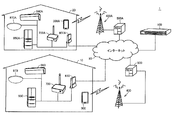
- FIG. 1 is a diagram for explaining a schematic configuration of a communication system 1.
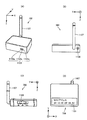
- FIG. 2 is a diagram illustrating an appearance of a HEMS controller 700.
- FIG. FIG. 3 is a diagram illustrating a processing flow in the communication system 1.
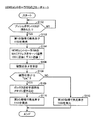
- 10 is a flowchart for explaining a flow of processing in smartphone 300.
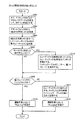
- 5 is a flowchart for explaining a flow of processing of a HEMS controller 700.
- FIG. 4 is a flowchart for explaining details of exclusive processing performed for transmitting an acknowledgment ⁇ in sequence SQ4 of FIG. 3.
- FIG. FIG. 4 is a flowchart for explaining details of processing performed for transmitting an acknowledgment ⁇ in sequence SQ12 of FIG. 3.
- FIG. It is a figure for demonstrating schematic structure of the database 113 which the server apparatus 100 has memorize
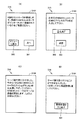
- FIG. 4 is a diagram for illustrating a user interface of smartphone 300.
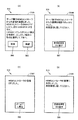
- FIG. 4 is a diagram for illustrating a user interface of smartphone 300.
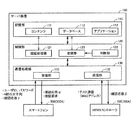
- FIG. 3 is a functional block diagram for explaining a functional configuration of a server apparatus 100.
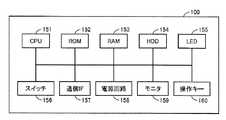
- FIG. 2 is a diagram illustrating a typical example of a hardware configuration of a server apparatus 100.
- FIG. 2 is a block diagram of a HEMS controller 700.
- FIG. 2 is a diagram illustrating a hardware configuration of a smartphone 300.
- FIG. It is a flowchart for demonstrating the flow of the process which the server apparatus 100 performs regularly.
- 6 is a flowchart for explaining a flow of processing executed when server apparatus 100 receives confirmation response ⁇ from smartphone 300.
- FIG. 1 is a diagram for explaining a schematic configuration of the communication system 1.
- a communication system 1 includes a server device 100, a plurality of smartphones 300, 300A, a plurality of base station devices 400, 400A, a plurality of MMEs (Mobility Management Entity) 500, 500A, Broadband routers 600 and 600A, a plurality of HEMS controllers 700 and 700A, and a plurality of nodes 950, 950A, 960, 960A, 970, and 970A are provided.
- MMEs Mobility Management Entity
- a “node” is a communication device (IP compatible device) having an IP address.
- the nodes include personal computers, printers, NAS (network storage), tablet terminals, AV (Audio Visual) devices, white goods, and the like.
- Some or all of the plurality of nodes 950, 950A, 960, 960A, 970, 970A are “ECHONETLite nodes”.
- a plurality of nodes 950, 950A, 960 , 960A, 970, and 970A are ECHONET Lite nodes.
- FIG. 1 shows a case where the nodes 950 and 950A are refrigerators, the nodes 960 and 960A are air conditioners, and the nodes 970 and 970A are lighting fixtures.
- a smartphone 300, an MME 500, a broadband router 600, a HEMS controller 700, and a plurality of nodes 950, 960, and 970 are arranged.
- a smartphone 300A, an MME 500A, a broadband router 600A, a HEMS controller 700A, and a plurality of nodes 950A, 960A, and 970A are arranged.
- only two buildings 10 and 20 are shown to simplify the description, but the present invention is not limited to this. That is, there is no particular limitation as long as each of the two or more buildings has a HEMS controller.
- the broadband router 600 includes at least a wired LAN, and the HEMS controller 700 is connected to the broadband router 600 by a wired LAN.
- the broadband router 600 includes a wireless LAN, and the plurality of nodes 950, 960, and 970 are connected to the broadband router 600 via the wireless LAN. Alternatively, they may be connected by a wired LAN.
- the HEMS controller 700 finds an ECHONET Lite node existing in the subnet hanging from the broadband router 600, and maintains and manages the node list in the latest state.
- the HEMS controller 700 can communicate with a plurality of nodes 950, 960, and 970.
- the HEMS controller 700A is connected to the broadband router 600A by a wired LAN.
- the broadband router 600A includes a wireless LAN, and the plurality of nodes 950A, 960A, and 970A are connected to the broadband router 600A via the wireless LAN. Alternatively, they may be connected by a wired LAN.
- the HEMS controller 700A finds an ECHONET Lite node existing in the subnet hanging from the broadband router 600A, and maintains and manages the node list in the latest state.
- the HEMS controller 700A can communicate with a plurality of nodes 950A, 960A, and 970A.
- the broadband routers 600 and 600A are connected to the Internet.
- Smartphones 300 and 300A can be connected to the Internet 90 using a 3G (Generation) line, an LTE (Long Term Evolution) line, or the like.
- 3G Generation
- LTE Long Term Evolution
- Smartphones 300 and 300A are not necessarily in the building 10 and the building 20, respectively (because they are mobile devices). It can also be connected from outside.
- the HEMS controller 700 and the smartphone 300 communicate with the server apparatus 100 through different communication lines.
- the HEMS controller 700A and the smartphone 300A communicate with the server apparatus 100 through different communication lines.
- the HEMS controller 700 and the smartphone 300 may or may not communicate directly.
- HEMS controller 700 the smartphone 300, and the server device 100.
- the HEMS controller 700 is registered in the server device 100 by a user of the smartphone 300 will be described below. More specifically, a case where a user who starts using the HEMS controller 700 registers the HEMS controller 700 in the server device 100 using the smartphone 300 will be described.
- FIG. 2 is a diagram showing the appearance of the HEMS controller 700.
- FIG. 2A is a perspective view of the HEMS controller 700.
- FIG. 2B is a side view of the HEMS controller 700.
- FIG. 2C is an enlarged view of a main part of the other side surface of the HEMS controller 700.
- FIG. 2D is a rear view of the HEMS controller 700.
- the HEMS controller 700 includes a light emitting element 1103 and an antenna 1107.
- the light emitting element 1103 is configured by three LEDs (Light Emitting103Diode) 1103a, 1103b, and 1103c for displaying the operation state of the HEMS controller 700 and the like.
- LED 1103a is a light emitting element (power LED) for indicating whether the power of the HEMS controller 700 is on or off.
- An LED 1103 a indicates a communication status with the server apparatus 100, and an LED 1103 b indicates a light emitting element (router LED) for displaying a communication status with the broadband router 600.
- the description of the LED 1103c is omitted because it is not related to the present invention.
- the HEMS controller 700 further includes a push button 1108 on the surface opposite to the surface on which the light emitting element 1103 is provided.
- the HEMS controller 700 starts communication with the server apparatus 100 by pressing and holding the push button 1108 for 5 seconds or longer.
- the MAC address 1191 of the HEMS controller 700 is written (printed) on the back surface of the HEMS controller 700.
- the MAC address of the HEMS controller 700 is “00: 12: 0E: EF: 24: AF” as an example.
- HEMS controller 700A has the same configuration as HEMS controller 700, the description thereof will not be repeated here. However, a MAC address different from the MAC address of the HEMS controller 700 is described on the back surface of the HEMS controller 700A.
- a MAC address is used as an example of identification information that satisfies all the following conditions (i) to (iii).
- (Ii) A label with the corresponding number is affixed to the reverse side.
- the identification information is not limited to the MAC address, but may be other information.
- FIG. 3 is a diagram showing the flow of processing in the communication system 1. Specifically, FIG. 3 is a sequence chart showing the flow of data processing among the smartphone 300, the HEMS controller 700, and the server device 100.
- the smartphone 300 can access the server device 100 by authentication using information for identifying the user (hereinafter referred to as “user ID”) and a preset password (that is, the login state). ).
- the user of the smartphone 300 can confirm and visually confirm the MAC address (see FIG. 2D) written on the back surface of the HEMS controller 700.
- smartphone 300 accepts user input of the last four digits of the MAC address of HEMS controller 700 (a sequence of numbers and letters in hexadecimal notation).
- sequence SQ ⁇ b> 2 the input character string (lower four-digit character string) is transmitted to server device 100.
- the smartphone 300 transmits “24AF” to the server device 100 as a lower four-digit character string.
- server apparatus 100 transmits confirmation response ⁇ to smartphone 300. Specifically, the server device 100 confirms whether or not test communication of the same character string as the lower four-digit character string received from the smartphone 300 is received.
- test communication of the same character string is not accepted, “Accepted” is notified to the smartphone 300 as the confirmation response ⁇ . If the test communication of the same character string has already been received, “Rejected” is notified to the smartphone 300 as the confirmation response ⁇ .
- the server apparatus 100 performs exclusive control with the lower four-digit character string. That is, two or more test communications for the same character string are not accepted at the same time.
- the smartphone 300A (FIG. 1) operated by another user happens to have the last four digits of the MAC address of the smartphone 300 coincidentally (“24AF”), and the server device 100 receives the character string “ If “24AF” is received, “Rejected” is notified as the confirmation response ⁇ to the smartphone 300. When “Rejected” is notified, SQ6 and subsequent steps are not performed.
- a mutex may be prepared for each character string (or after the character string is converted into a numerical value).
- the hash table is searched using the character string (or numeric value) as a key to check whether the corresponding value exists.
- the server apparatus 100 When the server apparatus 100 notifies “Accepted” as the confirmation response ⁇ , the server apparatus 100 shifts to a test communication acceptance period.
- the test communication acceptance period is a maximum of one minute. Note that the server device 100 immediately ends the test communication acceptance period when the process according to the sequence SQ12 described later is performed.
- the user operates the push button 1108 of the HEMS controller 700 to start test communication.
- the HEMS controller 700 transmits data including the MAC address of the HEMS controller 700 in the text to the server apparatus 100.
- the HEMS controller 700 stores a connection destination address to the server device 100 in advance.
- the server apparatus 100 transmits a confirmation response ⁇ to the HEMS controller 700 in response to the test communication.
- the server apparatus 100 looks at the last four digits of the MAC address received from the HEMS controller 700 by test communication, and determines whether there is a test communication acceptance period that matches the last four digits. If there is a match, the server apparatus 100 notifies the HEMS controller 700 of “OK” as the confirmation response ⁇ . If there is no match, the server apparatus 100 notifies the HEMS controller 700 of “NG” as the confirmation response ⁇ . When “NG” is returned as the confirmation response ⁇ , SQ16 and subsequent steps are not performed.
- the smartphone 300 periodically polls the server device 100 based on the reception of the confirmation response ⁇ from the server device 100.
- the server apparatus 100 sends a confirmation request for all the digits of the MAC address of the HEMS controller 700 to the smartphone 300 in sequence SQ16 (“Received”). Specifically, the server apparatus 100 requests the user of the smartphone 300 to confirm whether the HEMS controller 700 is correct.
- the smartphone 300 transmits a confirmation response ⁇ as to whether or not the MAC address is correct from the user to the server apparatus 100. If the user determines that the MAC address is correct, the smartphone 300 notifies the server apparatus 100 of “OK” as the confirmation response ⁇ . If the user determines that the MAC address is incorrect, the smartphone 300 notifies the server apparatus 100 of “NG” as the confirmation response ⁇ .
- the server device 100 When the server device 100 receives a notification of “OK” as the confirmation response ⁇ , the server device 100 registers the HEMS controller 700 in the server device 100 in association with the user ID of the user of the smartphone 300 (that is, the user ID used for authentication). .
- the server apparatus 100 When the server apparatus 100 receives a notification of “NG” as the confirmation response ⁇ , the server apparatus 100 does not register the HEMS controller 700 and the user ID in association with each other.
- the HEMS controller 700 can be registered in the server device 100 by a specific user (user of the smartphone 300).
- a specific user user of the smartphone 300.
- the processing flow of the smartphone 300, the HEMS controller 700, and the server device 100 will be individually described with reference to FIGS.
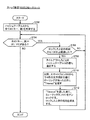
- FIG. 4 is a flowchart for explaining the flow of processing in the smartphone 300.
- the process of the smartphone 300 may be realized by a general browser mounted on the smartphone 300 or may be realized as a dedicated application. Preferably, it is realized in the former form, and the content 111 in the server device 100 is displayed by a browser.
- the user of the smartphone 300 inputs the address (URL: Uniform Resource Locator) of the server device 100 described in the instruction manual of the HEMS controller 700 into the URL input unit of the browser.
- a QR code registered trademark
- the address of the server device 100 is input by scanning it.
- step S ⁇ b> 2 smartphone 300 logs in to server device 100 by an operation using a user ID and a password by a user of smartphone 300.
- the smartphone 300 selects from the menu on the top screen and selects “Register HEMS Controller”.
- step S ⁇ b> 4 the smartphone 300 accepts input of the last four digits of the MAC address of the HEMS controller 700.
- step S ⁇ b> 6 the smartphone 300 transmits the received lower four-digit character string to the server device 100.
- step S ⁇ b> 8 the smartphone 300 determines whether “Accepted” has been received as the confirmation response ⁇ from the server device 100.
- smartphone 300 If it is determined that “Accepted” has been received (YES in step S8), smartphone 300 starts polling in step S10. If it is determined that “Accepted” has not been received (NO in step S8), smartphone 300 determines whether “Rejected” has been received as a confirmation response in step S22. If it is determined that “Rejected” has been received (YES in step S22), smartphone 300 displays an error display screen (screen 3194 in FIG. 9D). If it is determined that “Rejected” has not been received (NO in step S22), smartphone 300 advances the process to step S8.
- step S ⁇ b> 12 the smartphone 300 receives a confirmation request for the MAC address of the HEMS controller 700 from the server device 100.
- step S14 the smartphone 300 ends polling.
- step S16 the smartphone 300 displays a confirmation button (confirmation button 395 in FIG. 10A) and a cancel button (cancel button 396 in FIG. 10A).
- step S18 the smartphone 300 determines whether the confirmation button has been selected. If it is determined that the confirmation button has been selected (YES in step S18), smartphone 300 transmits “OK” to server apparatus 100 as confirmation response ⁇ in step S20. If it is determined that the confirmation button has not been selected (NO in step S18), smartphone 300 determines whether or not the cancel button has been selected in step S24.
- smartphone 300 transmits “NG” as confirmation response ⁇ to server apparatus 100 in step S26. If smartphone 300 determines that the cancel button has not been selected (NO in step S24), the process proceeds to step S18.
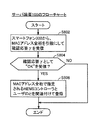
- FIG. 5 is a flowchart for explaining the flow of processing of the HEMS controller 700.
- HEMS controller 700 determines whether or not push button 1108 of HEMS controller 700 has been pressed for 5 seconds or more. If the HEMS controller 700 determines that the push button 1108 has been pressed for 5 seconds or longer, the HEMS controller 700 causes the light emitting element 1103 to emit light in the first mode in step S103.
- the 0th mode for example, a mode in which the LED 1103a blinks normally (for example, ON and OFF are repeated at intervals of 500 ms) can be cited.
- step S104 the HEMS controller 700 transmits the MAC address of the HEMS controller 700 to the server apparatus 100 (test communication).
- step S106 the HEMS controller 700 receives the confirmation response ⁇ .
- step S108 the HEMS controller 700 determines whether or not the confirmation response ⁇ is “OK”. If the HEMS controller 700 determines that “OK” (YES in step S108), the light emitting element 1103 is caused to emit light in the second mode in step S110. If HEMS controller 700 determines that it is not “OK” (NO in step S108), it causes the light emitting element to emit light in the third mode in step S112.
- the HEMS controller 700 determines that it is “OK”
- the HEMS controller 700 receives the box ID from the server device 100, and writes the received box ID into the nonvolatile memory.
- the first mode for example, a mode in which the LED 1103a is turned on for 5 seconds (continuous lighting) and then the LED 1103a is turned off for 2 seconds.
- a second mode there is a mode in which the LED 1103a is blinked at high speed for 5 seconds (for example, repeatedly turned on and off at intervals of 250 ms), and then the LED 1103a is turned off for 2 seconds.
- the LED 1103a is continuously turned on after the light is turned off for 2 seconds.
- the server apparatus 100 notifies the HEMS controller 700 of “NG” as the confirmation response ⁇ when the MAC address transmitted by the HEMS controller 700 in step S104 cannot be received within the test communication reception period.
- FIG. 6 is a flowchart for explaining the details of the exclusion process performed to transmit the confirmation response ⁇ in the sequence SQ4 of FIG.
- server apparatus 100 receives a user ID and a password from smartphone 300, and sets smartphone 300 in a login state.
- the server apparatus 100 determines that it is locked (YES in step S508), it returns “Rejected” as the confirmation response ⁇ to the smartphone 300 in step S510 (sequence SQ4 in FIG. 3).
- FIG. 7 is a flowchart for explaining details of processing performed to transmit the confirmation response ⁇ in the sequence SQ12 of FIG. That is, FIG. 7 is a flowchart for explaining the flow of processing executed by server apparatus 100 when test communication is received from HEMS controller 700 in sequence SQ6.
- server apparatus 100 determines that the lock is not in progress (NO in step S608), the process proceeds to step S618. If server apparatus 100 determines that the lock is in progress (YES in step S608), it returns “OK” as confirmation response ⁇ to HEMS controller 700 in step S610 (sequence SQ12 in FIG. 3). Also, “OK” is returned to the HEMS controller 700, and at the same time, a box ID is generated and transmitted.
- step S612 the server apparatus 100 adds to the hash table A that the test communication has been received.
- step S ⁇ b> 614 the server device 100 returns “Received” to the smartphone 300 when polling is performed from the smartphone 300 with the lower four-digit character string as an argument.
- all digits of the MAC address of the HEMS controller are transmitted to the smartphone 300 simultaneously with returning to “Received”.
- the polling is performed at intervals of 5 seconds, for example.
- FIG. 15 is a flowchart for explaining the flow of processing (routine) that the server apparatus 100 periodically executes.
- the server device 100 executes the process every 100 ms, for example.
- step S ⁇ b> 702 server apparatus 100 reads and lists all data “(key, value)” included in hash table A from hash table A. Thereafter, the server apparatus 100 repeats the processes of steps S704, S706, S708, and S710.
- step S706 the server device 100 determines whether or not one minute or more has elapsed since the time of locking. If it is determined that server device 100 does not (NO in step S704), the process (one routine) is terminated.
- step S706 If it is determined that one minute or more has not elapsed (NO in step S706), the server apparatus 100 returns the process to step S704. If it is determined that one minute or more has elapsed (NO in step S706), server apparatus 100 adds the time-out to the value of hash table A in step S708. In step S ⁇ b> 710, the server device 100 thereafter returns “Timeout” to the smartphone 300 when polling is performed from the smartphone 300 using the lower four-digit character string as an argument. Note that the server device 100 returns “Waiting” to the smartphone 300 if the test communication has not been received from the HEMS controller 700 and one minute has not elapsed.
- FIG. 16 is a flowchart for explaining a flow when the server apparatus 100 receives the confirmation response ⁇ from the smartphone 300.
- step S ⁇ b> 804 the server apparatus 100 receives the confirmation response ⁇ from the smartphone 300 using all digits of the MAC address as an argument. If it is determined that “OK” has not been received (NO in step S804), server apparatus 100 ends the series of processes. If it is determined that “OK” has been received (YES in step S804), server apparatus 100 registers the HEMS controller specified by all the digits of the MAC address in association with the user ID in step 806.
- FIG. 8 is a diagram for explaining a schematic configuration of the database 113 stored in the server apparatus 100.
- the database 113 is a database for registering the HEMS controller 700 in the server device 100.
- the server apparatus 100 manages the HEMS controller using the database 113.
- the database 113 stores a MAC address, a box ID, and a user ID in association with each other.
- server device 100 acquires the MAC address of the HEMS controller by test communication (sequence SQ6 in FIG. 3).
- the server apparatus 100 stores the MAC address “00120EEF24AF”, the box ID, and the user ID “9a54m87p23” used for logging in to the server apparatus 100 in association with the HEMS controller 700.
- FIG. 9 and 10 are diagrams for explaining a user interface of the smartphone 300.
- FIG. 9 and 10 are diagrams for explaining a user interface of the smartphone 300.
- FIG. 9A shows a screen 3191 displayed on the touch screen 319 when the user selects the “HEMS controller registration” menu.
- Screen 3191 includes a button 390 for accepting an input for returning to the menu, and a button 391 for accepting an input for proceeding to the next process.
- FIG. 9B shows a screen 3192 after the user has already entered the 4-digit character string “24AF” in the input box 392. That is, immediately after the transition from the screen 3191 in FIG. 9A to the screen 3192 shown in FIG. 9B, a 4-digit character string is not input in the input box 381.
- the smartphone 300 further displays a software keyboard when the input box 392 is activated.
- the user can input a 4-digit character string into the input box 392 using the software keyboard.
- the smartphone 300 transmits the input 4-digit character string to the server device 100.
- the smartphone 300 transmits the input 4-digit character string to the server device 100, and then changes the screen from the screen 3192 in FIG. 9B to the screen 3193 in FIG. 9C or the screen 3194 in FIG. 9D. Transition to.
- the smartphone 300 transitions to the screen 3193 in FIG.
- the smartphone 300 receives “Rejected” as the confirmation response ⁇
- the smartphone 300 transitions to a screen 3194 in FIG.
- the smartphone 300 When the smartphone 300 receives “Accepted” as the confirmation response ⁇ , the smartphone 300 starts polling the server device 100 as described above.
- the server device 100 returns a Waiting response, a Received response, or a Timeout response as a polling response.
- the smartphone 300 displays the screen 3193 of FIG. 9C while not receiving the confirmation request for the MAC address of the HEMS controller from the server device 100 and 1 minute has passed (Waiting response) (polling). Continue).
- the smartphone 300 When the smartphone 300 receives the confirmation request for the MAC address of the HEMS controller from the server device 100 (Received response), the screen displayed on the touch screen 319 is changed from the screen 3193 in FIG. 9C to FIG. 10A. A transition is made to a screen 3195 shown. If the smartphone 300 does not receive a confirmation request for the MAC address of the HEMS controller from the server device 100 even after one minute has elapsed after receiving “Accepted” as the confirmation response ⁇ (Timeout response), FIG. A transition is made from the screen 3193 to a screen 3196 shown in FIG.
- the smartphone 300 displays the screen 3194 in FIG. 9D. To the screen 3191 in FIG.
- FIG. 10A is a diagram showing a screen that is displayed based on the reception of a MAC address confirmation request (sequence SQ16 in FIG. 3) of HEMS controller 700 from server apparatus 100.
- smartphone 300 displays a comment, confirmation button 395, and cancel button 396 on touch screen 319. Thereby, the smartphone 300 can cause the user to confirm whether or not the MAC address included in the comment displayed on the screen 3195 matches the MAC address on the back surface of the HEMS controller 700.
- the smartphone 300 When the confirmation button 395 is selected by the user based on the match between the MAC addresses, the smartphone 300 notifies the server apparatus 100 of “OK” as the confirmation response ⁇ and displays the screen in FIG. ) To the screen 3197 in FIG. In this case, the server apparatus 100 registers the HEMS controller 700 in association with the user ID. Specifically, as shown in the database 113, No. 2, the MAC address of the HEMS controller 700, the box ID, and the user ID are registered in association with each other.
- the smartphone 300 When the cancel button 396 is selected by the user based on the fact that the MAC addresses do not match, the smartphone 300 notifies the server device 100 of “NG” as the confirmation response ⁇ and displays the screen in FIG. The screen 3195 changes to the screen 3198 in FIG. In this case, the server apparatus 100 does not register the HEMS controller 700 in association with the user ID.
- the smartphone 300 displays the screen 3196 in FIG. 10B.
- the smartphone 300 displays the screen 3196 in FIG. 10D.
- the smartphone 300 displays the screen 3196 in FIG. 10D.
- the smartphone 300 displays the screen from the screen 3197 in FIG. Transition to a menu screen (not shown).
- the user can surely succeed in registering the smartphone 300 and the HEMS controller 700 on the server device 100 by performing the registration procedure along the respective screens in FIGS. 9 and 10.
- the server device 100 first has a step of executing exclusive control with the lower 4 digits of the MAC address. If the lower 4 digits of the MAC address have already been accepted by another user, the server apparatus 100 returns “Rejected” and waits for a while before re-registering. As long as the lower 4 digits of the MAC address are different, the server apparatus 100 side can simultaneously accept from a plurality of users.
- a step of allowing the user to confirm all the digits of the MAC address of the HEMS controller 700 is provided. This is because the test communication may be started by operating the HEMS controller 700A suddenly due to an erroneous operation by a third party during the test communication. In this case, all the digits of the MAC address displayed in FIG. 10A may be different from the user's HEMS controller 700. The user can cancel the registration if it is not correct after confirming all displayed digits of the MAC address. In that case, the user is asked to register again.
- the above-described processing is effective because the present system is a system in which the smartphone 300 and the HEMS controller 700 communicate with the server apparatus 100 via different communication lines. This is because, with such a system, there is a high possibility that another user's smartphone 300 or the HEMS controller 700 performs test communication at the same timing. If the smartphone 300 and the HEMS controller 700 are in the same home and exist in the same network as WiFi connection, it is not necessary to consider another user, and the HEMS controller 700 is searched directly from the smartphone. It is easy to register.
- FIG. 11 is a functional block diagram for explaining a functional configuration of the server apparatus 100.
- server apparatus 100 includes a storage unit 110, a control unit 120, and a communication processing unit 130.
- the storage unit 110 stores content 111, an application 112, and a database 113 (FIG. 8).
- the control unit 120 includes an authentication processing unit 121, a determination unit 122, and a registration unit 123.
- the communication processing unit 130 includes a reception unit 131 and a transmission unit 132.
- the content 111 is displayed on the browser of the smartphone 300 or 300A. Specifically, the content 111 is content displayed on the smartphones 300 and 300 ⁇ / b> A in a state where the smartphones 300 and 300 ⁇ / b> A log in to the server device 100.
- the application 112 is an application for the server apparatus 100 to communicate with the HEMS controllers 700 and 700A.
- the communication processing unit 130 is a communication interface for communicating with the smartphones 300 and 300A and the HEMS controllers 700 and 700A.
- the receiving unit 131 receives a user ID and password, a 4-digit character string, and a confirmation response ⁇ from the smartphones 300 and 300A.
- the reception unit 131 receives test communication from the HEMS controllers 700 and 700A.
- the transmission unit 132 transmits a confirmation response ⁇ and a confirmation request for the MAC address of the HEMS controller to the smartphones 300 and 300A.
- the transmission part 132 transmits confirmation response (beta) with respect to HEMS controllers 700 and 700A.
- the communication system 1 includes the server device 100 and smartphones 300 and 300A that can access the server device 100 by authentication using a user ID.
- the authentication processing unit 121 of the server device 100 performs authentication (personal authentication) using a user ID and a password.
- the smartphone 300 receives the input of the 4-digit character string (first identification information) after the authentication, and uses the 3G or LTE line (first communication line) to convert the 4-digit character string. It transmits to the server apparatus 100.
- the receiving unit 131 of the server apparatus 100 receives a MAC address (second identification information) unique to the HEMS controller 700 transmitted from the HEMS controller 700 using a communication line (second communication line) using a broadband router. Receive.
- a MAC address second identification information
- the determination unit 122 of the server device 100 determines that the four-digit character string received from the smartphone 300 is the last four digits of the MAC address received from the HEMS controller 700. Determine whether they match. More specifically, the determination unit 122 determines whether or not the first identification information matches a character string of a predetermined digit in the media access control address.
- the registration unit 123 of the server device 100 associates the HEMS controller 700 with the user ID on condition that the four-digit character string received from the smartphone 300 matches the last four digits of the MAC address received from the HEMS controller 700. sign up. Specifically, the server device 100 updates the database 113.
- the HEMS controller 700 can be registered in the server device 100 by a specific user (a user of the smartphone 300 that owns the user ID that has been authenticated).
- each digit of the 4-digit character string is expressed in hexadecimal. Therefore, by performing exclusive control using a 4-digit character string, theoretically, 65536 HEMS controllers that are the fourth power of 16 can be received by the server apparatus 100 in the same time zone.
- the server device 100 registers the HEMS controller 700 by associating the MAC address with the user ID.
- the server device 100 registers the HEMS controller 700 by associating the identification information unique to the HEMS controller 700 generated from the MAC address based on a predetermined rule with the user ID. Also good.
- the HEMS controller 700 may be registered by associating identification information that satisfies all the above-described three conditions (i) to (iii), which is not related to the MAC address, with the user ID.
- An example of the predetermined rule is a rule for replacing “:” in the MAC address “:”.
- the server apparatus 100 can communicate with the HEMS controller 700A other than the HEMS controller 700 using a communication line (second communication line) using a broadband router.
- the control unit 120 is associated with the user ID of the HEMS controllers 700 and 700 ⁇ / b> A using the transmission unit 132.
- the command is transmitted to the HEMS controller specified by the MAC address.
- the user of the smartphone 300 can transmit a command to the HEMS 700.
- the determination unit 122 determines whether or not the 4-digit character string matches the last 4 digits of the MAC address on the condition that the MAC address is received from the HEMS controller 700 in FIG.
- the user must perform operation which sends a MAC address from the HEMS controller 700 so that the server apparatus 100 can receive a MAC address in a 1st period. For this reason, time given to one registration operation by one user can be restricted. Therefore, many users can perform registration processing per unit time (for example, 1 hour, 24 hours) as compared with the case where the time is not limited.
- the determining unit 122 receives the same character string.
- the server apparatus 100 can prevent the registration processing of a plurality of HEMS controllers having the same MAC address in the last four digits from being executed in parallel.
- the transmission unit 132 transmits the MAC address to the smartphone 300.
- the smartphone 300 outputs the MAC address sent from the server device 100 to the display of the smartphone 300 (display 3991 in FIG. 14).
- the smartphone 300 displays “OK” (predetermined signal) as the confirmation response ⁇ based on the confirmation button 395 being selected (a predetermined input is accepted) with the MAC address displayed on the display.
- the server device 100 is notified.
- the registration unit 123 of the server apparatus 100 stores the MAC address and the user ID in association with each other on the condition that “OK” is received as the confirmation response ⁇ . According to said structure, the possibility that the unintended HEMS controller will be registered in relation to a user ID can be reduced.
- FIG. 12 is a diagram illustrating a typical example of the hardware configuration of the server apparatus 100.
- server apparatus 100 includes, as main components, CPU 151 that executes a program, ROM 152 that stores data in a nonvolatile manner, data generated by execution of the program by CPU 151, or an input device (see FIG. 12).
- RAM 153 for volatile storage of data input via the HDD
- 154 for storing data in a nonvolatile manner
- Each component is connected to each other by a data bus.
- the power supply circuit 158 is a circuit that steps down the voltage of the commercial power received via the outlet and supplies power to each part of the server apparatus 100.
- the switch 156 is a main power switch for switching whether or not to supply power to the power circuit 158 and other various push button switches.
- the monitor 159 is a device for displaying various data.
- the communication IF 157 performs processing for transmitting data to the HEMS controller 700 and processing for receiving data transmitted from the HEMS controller 700, processing for transmitting data to the smartphone 300, and processing for receiving data transmitted from the smartphone 300.
- the LED 155 is various display lamps that indicate the operating state of the server apparatus 100.
- the LED 155 represents an on / off state of the main power supply of the server apparatus 100, a read / write state to the HDD 154, and the like.
- the operation key 160 is a key (keyboard) used for the user of the server apparatus 100 to input data to the server apparatus 100.
- the processing in the server device 100 is realized by each hardware and software executed by the CPU 151.
- Such software may be stored in the HDD 154 in advance.
- the software may be stored in other storage media and distributed as a program product.
- the software may be provided as a program product that can be downloaded by an information provider connected to the so-called Internet.
- Such software is read from the storage medium by the reading device or downloaded via the communication IF 157 or the like and then temporarily stored in the HDD 154.
- the software is read from the HDD 154 by the CPU 151 and stored in the RAM 153 in the form of an executable program.
- CPU 151 executes the program.
- Each component constituting the server apparatus 100 shown in the figure is a general one. Therefore, it can be said that the essential part of the present invention is the RAM 153, the HDD 154, software stored in a storage medium, or software downloadable via a network. Since the operation of each hardware of server device 100 is well known, detailed description will not be repeated.
- the recording medium is not limited to a DVD-RAM, and a fixed program is supported such as a semiconductor memory such as a DVD-ROM, CD-ROM, FD, hard disk, magnetic tape, cassette tape, optical disk, EEPROM, flash ROM, etc. It may be a medium to be used.
- the recording medium is a non-temporary medium that can be read by the computer.
- the program here includes not only a program directly executable by the CPU but also a program in a source program format, a compressed program, an encrypted program, and the like.
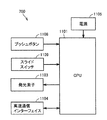
- FIG. 13 is a block diagram of the HEMS controller 700.
- the HEMS controller 700 includes a CPU 1101, a light emitting element 1103, a high-speed communication interface 1104, a power source 1105, a push button 1108, a slide switch 1109, and a reset switch (not shown).
- the high-speed communication interface 1104 is an interface for performing communication with the broadband router 600 using Ethernet (registered trademark).
- a power source 1105 supplies power to the CPU 1101.
- the CPU 1101 is connected to a light emitting element 1103, a high-speed communication interface 1104, a power source 1105, a push button 1108, and a slide switch 1109.
- the CPU 1101 controls the overall operation of the HEMS controller 700.
- the CPU 1101 receives input from the push button 1108 and the slide switch 1109. In addition, the CPU 1101 issues an output instruction to the light emitting element 1103.
- FIG. 14 is a diagram illustrating a hardware configuration of the smartphone 300.
- the smartphone 300 includes an antenna 311, an RF (Radio Frequency) circuit 312, a baseband circuit 313, a GPS receiver 314, an application processor 315 that executes a program, and a ROM (Read Only Memory). ) 316, a RAM (Random Access Memory) 317, a NAND flash memory 318, a touch screen 319, a camera 320, a microphone 321, a speaker 322, and an operation key 323 for receiving an instruction from the user, A communication IF (Interface) 324, an IC (Integrated Circuit) card reader / writer 325, and a power supply unit 326 are provided.
- the touch screen 319 includes a display 3991 and a touch panel 3992.
- the GPS receiver 314 includes an antenna 541, an RF circuit 542, and a baseband circuit 543.
- the GPS receiver 314 receives a GPS satellite signal using the antenna 541. Further, the GPS receiver 314 outputs processing results (that is, current location information) in the RF circuit 312 and the baseband circuit 543 to the application processor 315.
- the current location information is information indicating latitude, longitude, and altitude.
- the antenna 311, the RF circuit 312, and the baseband circuit 313 are used for wireless communication with other mobile terminals, fixed telephones, and PCs (Personal Computers) via a base station. Specifically, the antenna 311, the RF circuit 312, and the baseband circuit 313 are used for the smartphone 300 to perform communication using a mobile phone network.
- the flash memory 318 is a non-volatile semiconductor memory.
- the flash memory 318 volatilely stores various programs such as various programs for controlling the smartphone 300, data generated by the smartphone 300, and data acquired from an external device of the smartphone 300.
- the components 313 to 326 are connected to each other by a data bus.
- a memory card 3151 is attached to the IC card reader / writer 325.
- the processing in the smartphone 300 is realized by software executed by each hardware and the application processor 315.
- Such software may be stored in advance in the flash memory 318.
- the software may be stored in a memory card 3151 or other storage medium and distributed as a program product.
- the software may be provided as a program product that can be downloaded by an information provider connected to the so-called Internet.
- Such software is read from the storage medium by an IC card reader / writer 325 or other reading device, or downloaded via the antenna 311, the RF circuit 312, the baseband circuit 313, or the communication IF 324.
- the software is read from the flash memory 318 by the application processor 315 and further stored in the flash memory 318 in the form of an executable program.
- the application processor 315 executes the program.
- Each component which comprises the smart phone 300 shown by the same figure is a general thing. Therefore, it can be said that an essential part of the present invention is software stored in the flash memory 318, the memory card 3151 or other storage medium, or software that can be downloaded via a network. In addition, since the operation
- the recording medium is not limited to DVD-ROM, CD-ROM, FD, and hard disk, but is fixed such as semiconductor memory such as magnetic tape, cassette tape, optical disk, optical card, mask ROM, EPROM, EEPROM, and flash ROM.
- a medium carrying a program may be used.
- the recording medium is a non-temporary medium that can be read by the computer.
- the program here includes not only a program directly executable by the CPU but also a program in a source program format, a compressed program, an encrypted program, and the like.
- the server device 100 receives the first identification information received from the smartphone 300 and the second identification information received from the HEMS controller 700, so that the first identification information is the second identification information.
- the configuration is such that the HEMS controller 700 is registered in association with the user ID on the condition that the first identification information matches with a part of the second identification information. That's fine.
- the server apparatus 100 determines whether or not the first identification information matches a character string of a predetermined digit in the MAC address. It may be configured to determine.
- the predetermined number of digits may be the number of digits other than the last four digits.
- the predetermined two digits may be the lower 2 digits, the lower 3 digits, the upper 2 digits, the upper 3 digits, the upper 4 digits, or the like.
- the predetermined digit By making the predetermined digit a small digit, the burden of the user's input operation can be reduced.
- the predetermined digit is a large digit, many HEMS controllers can be registered in the server apparatus 100 in the same time zone. It is preferable that the predetermined digit is determined in consideration of the number of users.
- the server device 100 registers the HEMS controller by associating the MAC address with the user ID.
- the present invention is not limited to this.
- the process of registering the HEMS controller in the server apparatus 100 has been described.
- the registration target is not limited to the HEMS controller.
- the present invention can also be applied to a configuration in which an electronic device having a communication function is registered in the server apparatus 100.
- the position is not particularly limited as long as the position is visible in the housing of the HEMS controller 700.
- the second identification information is a media access control address.
- the server device determines whether or not the first identification information matches a character string of a predetermined digit in the media access control address.
- the predetermined digits are the last 2 digits, the last 3 digits, or the last 4 digits.
- the third identification information is generated by the server device based on the server device receiving the media access control address from the electronic device.
- the media access control address is printed on the casing of the electronic device.
- the electronic device is a controller in the home energy management system.
- the server device performs user authentication using information for identifying the user transmitted from the terminal device. After the authentication, the server device receives the first identification information sent from the terminal device using the first communication line, and the electronic device sent from the electronic device to the electronic device using the second communication line. Whether receiving means for receiving unique second identification information, and first identification information and second identification information, the first identification information matches a part of the second identification information. Determination means for determining whether or not, and registration means for registering the electronic device in association with information for identifying the user on condition that the first identification information matches a part of the second identification information. .
- the information processing method is executed in a server device that performs user authentication using information for identifying a user sent from a terminal device.
- a step of receiving first identification information sent from the terminal device using the first communication line and a second communication line sent from the electronic device are received.
- the program controls the server device that performs user authentication using information for identifying the user sent from the terminal device. After authentication, the program receives the first identification information sent from the terminal device using the first communication line, and the electronic device sent from the electronic device using the second communication line.
- the program receives the second identification information unique to the device and the first identification information and the second identification information, whether the first identification information matches a part of the second identification information Determining whether or not, and registering the electronic device in association with information for identifying the user on condition that the first identification information matches a part of the second identification information.
Landscapes
- Engineering & Computer Science (AREA)
- Computer Security & Cryptography (AREA)
- General Engineering & Computer Science (AREA)
- Computer Hardware Design (AREA)
- Theoretical Computer Science (AREA)
- Computer Networks & Wireless Communication (AREA)
- Computing Systems (AREA)
- Signal Processing (AREA)
- Power Engineering (AREA)
- Software Systems (AREA)
- Physics & Mathematics (AREA)
- General Physics & Mathematics (AREA)
- Telephonic Communication Services (AREA)
Abstract
サーバ装置と、ユーザを識別するための情報を用いた認証によって前記サーバ装置にアクセス可能となる端末装置とを備えた通信システムであって、前記端末装置は、前記認証の後に第1の識別情報の入力を受け付けたことに基づき、第1の通信回線を用いて前記第1の識別情報を前記サーバ装置に送信し、前記サーバ装置は、電子機器から、第2の通信回線を用いて送られてきた前記電子機器に固有の第2の識別情報を受信し、前記第1の識別情報と前記第2の識別情報とを受信したことに基づき、前記第1の識別情報が前記第2の識別情報の一部と一致するか否かを判断し、前記第1の識別情報が前記第2の識別情報の一部と一致したことを条件に、前記電子機器を前記ユーザを識別するための情報に関連付けて登録する、通信システム。
Description
本発明は、通信システム、および情報処理方法に関する。
従来、ユーザを識別するための情報(識別情報)が正当に入力されたかどうかを判断することが行なわれている。たとえば、特許文献1に開示された“識別情報の確認方法”は、以下のとおりである。
利用者端末は、利用者の識別情報を記憶しているサーバ装置へ、利用者の認証情報を送信する。サーバ装置は、利用者端末から送信された認証情報による利用者の認証に成功すると、利用者の識別情報と所定の関係が成立する第1情報(HTTP通信におけるクッキーに相当する情報)を生成して、当該生成された第1情報を利用者端末へ送信する。利用者端末は、利用者に入力を要求する。利用者端末は、入力された識別情報と、サーバ装置の識別名と関連付けて記憶されている第1情報とを、サーバ装置へ送信する。サーバ装置は、利用者端末から送信された識別情報と、第1情報とに、所定の関係が成立していなければ、受信された識別情報は正当に入力されていないと判断する。
しかしながら、利用者端末としての電子機器が、タッチパネルまたはテンキーといった入力の自由度が高い入力装置と、LCD等の表示装置とを有していない場合もある。たとえば、このような電子機器として、家電等への中継器として機能するHEMS(Home Energy Management System)コントローラが挙げられる。このような電子機器では、電子機器が特定の利用者によって操作されていることを困難である。
本願発明は、上記の問題点に鑑みなされたものであって、その目的は、特定の利用者によって電子機器をサーバ装置に登録することが可能な、通信システム、および情報処理方法を提供することにある。
本発明のある局面に従うと、通信システムは、サーバ装置と、ユーザを識別するための情報を用いた認証によってサーバ装置にアクセス可能となる端末装置とを備える。端末装置は、認証の後に第1の識別情報の入力を受け付けたことに基づき、第1の通信回線を用いて第1の識別情報をサーバ装置に送信する。サーバ装置は、電子機器から、第2の通信回線を用いて送られてきた電子機器に固有の第2の識別情報を受信する。サーバ装置は、第1の識別情報と第2の識別情報とを受信したことに基づき、第1の識別情報が第2の識別情報の一部と一致するか否かを判断する。サーバ装置は、第1の識別情報が第2の識別情報の一部と一致したことを条件に、電子機器をユーザを識別するための情報に関連付けて登録する。
好ましくは、サーバ装置は、第2の識別情報または予め定められた規則に基づき第2の識別情報から生成された電子機器に固有の第3の識別情報を、ユーザを識別するための情報に関連付けることにより、電子機器を登録する。
好ましくは、サーバ装置は、電子機器以外の1つ以上の他の電子機器と、第2の通信回線を用いて通信可能である。サーバ装置は、端末装置から家電を制御するための指令を受信した場合には、複数の電子機器のうち、ユーザを識別するための情報に関連付けられた第2の識別情報または第3の識別情報により特定される電子機器に対して、指令を送信する。
好ましくは、サーバ装置は、第1の識別情報が第2の識別情報の一部と一致すると判断された場合、第2の識別情報を端末装置に送信する。端末装置は、第2の識別情報を端末装置のディスプレイに出力する。端末装置は、第2の識別情報がディスプレイに表示された状態で予め定められた入力を受け付けたことに基づき、予め定められた信号をサーバ装置に送信する。サーバ装置は、予め定められた信号を受信したことを条件に、第2の識別情報または第3の識別情報と、ユーザを識別するための情報とを関連付けて記憶する。
好ましくは、サーバ装置は、第1の識別情報を受け付けてから予め定められた時間が経過するまでの第1の期間において第2の識別情報を受信したことを条件に、第1の識別情報が第2の識別情報の一部と一致するか否かを判断する。
本発明の他の局面に従うと、情報処理方法は、サーバ装置と、ユーザを識別するための情報を用いた認証によってサーバ装置にアクセス可能となる端末装置とを備えた通信システムにおいて実行される。情報処理方法は、端末装置が、認証の後に第1の識別情報の入力を受け付けたことに基づき、第1の通信回線を用いて、第1の識別情報をサーバ装置に送信するステップと、サーバ装置が、電子機器から、第2の通信回線を用いて送られてきた電子機器に固有の第2の識別情報を受信するステップと、サーバ装置が、第1の識別情報と第2の識別情報とを受信したことに基づき、第1の識別情報が第2の識別情報の一部と一致するか否かを判断するステップと、サーバ装置が、第1の識別情報が第2の識別情報の一部と一致したことを条件に、電子機器をユーザを識別するための情報に関連付けて登録するステップとを備える。
本発明によれば、特定の利用者によって電子機器をサーバ装置に登録することが可能となる。
以下、図面を参照しつつ、本発明の各実施の形態に係る通信システムについて説明する。また、以下の説明では、同一の部材には同一の参照符号を付してある。それらの名称および機能も同じである。したがって、それらについての詳細な説明は繰り返さない。
<A.通信システムの概要>
(a1.全体構成)
図1は、通信システム1の概略構成を説明するための図である。図1を参照して、通信システム1は、サーバ装置100と、複数のスマートフォン300,300Aと、複数の基地局装置400,400Aと、複数のMME(Mobility Management Entity)500,500Aと、複数のブロードバンドルータ600,600Aと、複数のHEMSコントローラ700,700Aと、複数のノード950,950A,960,960A,970,970Aとを備える。
(a1.全体構成)
図1は、通信システム1の概略構成を説明するための図である。図1を参照して、通信システム1は、サーバ装置100と、複数のスマートフォン300,300Aと、複数の基地局装置400,400Aと、複数のMME(Mobility Management Entity)500,500Aと、複数のブロードバンドルータ600,600Aと、複数のHEMSコントローラ700,700Aと、複数のノード950,950A,960,960A,970,970Aとを備える。
「ノード」とは、IPアドレスを持つ通信機器(IP対応機器)である。一般的には、ノードは、パソコン、プリンタ、NAS(ネットワークストレージ)、タブレット端末、AV(Audio Visual)機器、白物家電などが挙げられる。複数のノード950,950A,960,960A,970,970Aのうちいくつかまたは全部が、「ECHONETLiteノード」である。本実施の形態では、複数のノード950,950A,960
,960A,970,970Aの全てがECHONET Liteノードであるとする。
なお、図1では、ノード950,950Aが冷蔵庫、ノード960,960Aがエアーコンディショナ、ノード970,970Aが照明器具である場合を示している。
,960A,970,970Aの全てがECHONET Liteノードであるとする。
なお、図1では、ノード950,950Aが冷蔵庫、ノード960,960Aがエアーコンディショナ、ノード970,970Aが照明器具である場合を示している。
建屋10には、スマートフォン300と、MME500と、ブロードバンドルータ600と、HEMSコントローラ700と、複数のノード950,960,970とが配置されている。また、建屋20には、スマートフォン300Aと、MME500Aと、ブロードバンドルータ600Aと、HEMSコントローラ700Aと、複数のノード950A,960A,970Aとが配置されている。なお、本実施の形態では、説明を簡略化するために2つの建屋10,20のみを示しているが、これに限定されるものではない。つまり、2つ以上の建屋の各々にHEMSコントローラが備えられている構成であれば、特に限定されない。
ブロードバンドルータ600は有線LANを少なくとも備え、HEMSコントローラ700は、有線LANによりブロードバンドルータ600に接続されている。望ましくは、ブロードバンドルータ600は無線LANを備え、複数のノード950,960,970は無線LANによりブロードバンドルータ600に接続されている。あるいは、有線LANで接続されていてもよい。HEMSコントローラ700は、ブロードバンドルータ600にぶら下がっているサブネットに存在するECHONET Liteノードを発見してノードリストを最新状態に維持・管理する。HEMSコントローラ700は、複数のノード950,960,970との間で相互に通信できる。
同様に、HEMSコントローラ700Aは、有線LANによりブロードバンドルータ600Aに接続されている。望ましくは、ブロードバンドルータ600Aは無線LANを備え、複数のノード950A,960A,970Aは無線LANによりブロードバンドルータ600Aに接続されている。あるいは、有線LANで接続されていてもよい。HEMSコントローラ700Aは、ブロードバンドルータ600Aにぶら下がっているサブネットに存在するECHONET Liteノードを発見してノードリストを最新状態に維持・管理する。HEMSコントローラ700Aは、複数のノード950A,960A,970Aとの間で相互に通信できる。
ブロードバンドルータ600,600Aは、インターネットに接続されている。
スマートフォン300,300Aは、3G(Generation)回線またはLTE(Long Term Evolution)回線等を用いて、インターネット90に接続可能である。スマートフォン300は、建屋10に位置する場合には、基地局装置400およびMME500を介して、インターネット90に接続される。また、スマートフォン300Aは、建屋20に位置する場合には、基地局装置400AおよびMME500Aを介して、インターネット90に接続される。スマートフォン300、300Aは(モバイル機器であるため)それぞれ建屋10、建屋20の中にあるとは限らない。外出先から接続されることもありえる。
スマートフォン300,300Aは、3G(Generation)回線またはLTE(Long Term Evolution)回線等を用いて、インターネット90に接続可能である。スマートフォン300は、建屋10に位置する場合には、基地局装置400およびMME500を介して、インターネット90に接続される。また、スマートフォン300Aは、建屋20に位置する場合には、基地局装置400AおよびMME500Aを介して、インターネット90に接続される。スマートフォン300、300Aは(モバイル機器であるため)それぞれ建屋10、建屋20の中にあるとは限らない。外出先から接続されることもありえる。
以上のように、HEMSコントローラ700とスマートフォン300とは、互いに異なる通信回線により、サーバ装置100と通信する。同様に、HEMSコントローラ700Aとスマートフォン300Aとは、互いに異なる通信回線により、サーバ装置100と通信する。HEMSコントローラ700とスマートフォン300とは直接通信しないし、しなくてよい。
以下では、説明の便宜上、特に、HEMSコントローラ700と、スマートフォン300と、サーバ装置100とに着目した説明を行なう。特に、以下では、スマートフォン300のユーザによって、HEMSコントローラ700をサーバ装置100に登録する場合について説明する。より詳しくは、HEMSコントローラ700の利用を開始するユーザが、スマートフォン300を用いて、HEMSコントローラ700をサーバ装置100に登録する場合について説明する。
(a2.HEMSコントローラ700の外観)
図2は、HEMSコントローラ700の外観を表した図である。図2(A)は、HEMSコントローラ700の斜視図である。図2(B)は、HEMSコントローラ700の側面図である。図2(C)は、HEMSコントローラ700の他の側面の要部拡大図である。図2(D)は、HEMSコントローラ700の裏面図である。
図2は、HEMSコントローラ700の外観を表した図である。図2(A)は、HEMSコントローラ700の斜視図である。図2(B)は、HEMSコントローラ700の側面図である。図2(C)は、HEMSコントローラ700の他の側面の要部拡大図である。図2(D)は、HEMSコントローラ700の裏面図である。
図2(A)を参照して、HEMSコントローラ700は、発光素子1103と、アンテナ1107とを備える。発光素子1103は、HEMSコントローラ700の動作状態等を表示するための3つのLED(Light Emitting Diode)1103a,1103b,1103cにより構成される。
LED1103aは、HEMSコントローラ700の電源がオンおよびオフのいずれかの状態を示すための発光素子(電源LED)である。また、LED1103aは、サーバ装置100との通信状況を示すLED1103bは、ブロードバンドルータ600との通信状態を表示するための発光素子(ルータLED)である。LED1103cは本発明には関係ないので説明を省略する。
図2(B)を参照して、HEMSコントローラ700は、発光素子1103が設けられた表面とは反対側の表面に、プッシュボタン1108をさらに備える。プッシュボタン1108を5秒以上長押しすることにより、HEMSコントローラ700は、サーバ装置100との通信を開始する。
図2(D)を参照して、HEMSコントローラ700の裏面には、HEMSコントローラ700のMACアドレス1191が記載(印字)されている。なお、以下では、HEMSコントローラ700のMACアドレスが、“00:12:0E:EF:24:AF”である場合を例に挙げて説明する。
なお、HEMSコントローラ700AもHEMSコントローラ700と同様の構成を有するため、ここでは説明を繰り返さない。ただし、HEMSコントローラ700Aの裏面には、HEMSコントローラ700のMACアドレスと異なるMACアドレスが記載されている。
なお、本発明の実施例では、以下の(i)~(iii)の全ての条件を満たす識別情報の一例として、MACアドレスを使用している。
(i)HEMSコントローラを一意に識別できる番号である。
(ii)裏面などに当該番号のラベルが貼付されている。
(iii)ソフトウェアから取得可能である(不揮発性メモリに記録されている)。
(i)HEMSコントローラを一意に識別できる番号である。
(ii)裏面などに当該番号のラベルが貼付されている。
(iii)ソフトウェアから取得可能である(不揮発性メモリに記録されている)。
上記の3つの条件(i)~(iii)を全て満たすものであれば識別情報は、MACアドレスに限らず、他のものであってもよい。
<B.通信システムにおける情報処理>
(b1.通信システム1における処理の流れ)
図3は、通信システム1における処理の流れを表した図である。具体的には、図3は、スマートフォン300とHEMSコントローラ700とサーバ装置100との間におけるデータ処理の流れを表したシーケンスチャートである。なお、以下では、ユーザを識別するための情報(以下、「ユーザID」と称する)と事前に設定されたパスワードとを用いた認証によって、スマートフォン300がサーバ装置100にアクセス可能(つまり、ログイン状態)となっているものとして説明する。また、スマートフォン300のユーザは、HEMSコントローラ700の裏面に記載されたMACアドレス(図2(D)参照)を確認視認できるものとする。
(b1.通信システム1における処理の流れ)
図3は、通信システム1における処理の流れを表した図である。具体的には、図3は、スマートフォン300とHEMSコントローラ700とサーバ装置100との間におけるデータ処理の流れを表したシーケンスチャートである。なお、以下では、ユーザを識別するための情報(以下、「ユーザID」と称する)と事前に設定されたパスワードとを用いた認証によって、スマートフォン300がサーバ装置100にアクセス可能(つまり、ログイン状態)となっているものとして説明する。また、スマートフォン300のユーザは、HEMSコントローラ700の裏面に記載されたMACアドレス(図2(D)参照)を確認視認できるものとする。
図3を参照して、スマートフォン300は、HEMSコントローラ700のMACアドレスの下4桁の文字列(16進数表記における数字および英文字の並び)のユーザ入力を受付ける。シーケンスSQ2において、入力された文字列(下4桁の文字列)をサーバ装置100に送信する。例えば、HEMSコントローラ700のMACアドレスが“00:12:0E:EF:24:AF”であるとすると、スマートフォン300は、下4桁の文字列として“24AF”をサーバ装置100に送信する。
シーケンスSQ4において、サーバ装置100は、確認応答αをスマートフォン300に送信する。具体的には、サーバ装置100は、スマートフォン300から受信した下4桁の文字列と同じ文字列のテスト通信を受付しているかどうかを確認する。
同じ文字列のテスト通信を受付していなければ確認応答αとして“Accepted”をスマートフォン300に通知する。同じ文字列のテスト通信をすでに受付していれば確認応答αとして“Rejected”をスマートフォン300に通知する。サーバ装置100は、下4桁の文字列で排他制御を行なう。つまり、同じ文字列のテスト通信の受付は同時に2つ以上行わないようにする。
例えば、別のユーザが操作しているスマートフォン300A(図1)が、たまたまスマートフォン300のMACアドレスと下4桁が一致して(“24AF”)、かつ、サーバ装置100がスマートフォン300Aから文字列“24AF”を受信していた場合、スマートフォン300への確認応答αとしては“Rejected”を通知する。“Rejected”が通知されたときは、SQ6以降は実施されない。
サーバ装置100の排他制御については、文字列ごと(または文字列を数値に変換してから)にミューテックスを用意すればよい。キーを文字列(または数値)に、値をミューテックスにしたハッシュテーブルを用意する。文字列(または数値)をキーしてハッシュテーブルを検索して、それに対応する値が存在するかを調べる。
サーバ装置100は、確認応答αとして“Accepted”を通知すると、テスト通信の受付期間に移行する。テスト通信の受付期間は、最大1分間とする。なお、サーバ装置100は、後述するシーケンスSQ12による処理を行なった場合には、テスト通信の受付期間を即座に終了する。
次に、ユーザはHEMSコントローラ700のプッシュボタン1108を操作してテスト通信を開始させる。具体的には、HEMSコントローラ700は、HEMSコントローラ700のMACアドレスを本文に含むデータをサーバ装置100に送信する。なお、HEMSコントローラ700には、サーバ装置100への接続先アドレスが予め記憶されている。
シーケンスSQ12において、サーバ装置100は、テスト通信に対して確認応答βをHEMSコントローラ700に送信する。
具体的には、サーバ装置100は、テスト通信によりHEMSコントローラ700から受信したMACアドレスの下4桁を見て、その下4桁に合致するテスト通信の受付期間があるかどうかを判断する。合致するものがあれば、サーバ装置100は確認応答βとして“OK”をHEMSコントローラ700に通知する。合致するものがなければ、サーバ装置100は確認応答βとして“NG”をHEMSコントローラ700に通知する。確認応答βとして“NG”を返した場合、SQ16以降は実施されない。
シーケンスSQ8,SQ10,SQ14に示すように、スマートフォン300は、確認応答αをサーバ装置100から受信したことに基づき、サーバ装置100に対してポーリングを定期的に実行する。サーバ装置100は、確認応答βとして“OK”を通知すると、シーケンスSQ16において、スマートフォン300に対して、HEMSコントローラ700のMACアドレス全桁の確認要求を送る(“Received”)。具体的には、サーバ装置100は、HEMSコントローラ700が正しいか否かの確認を、スマートフォン300のユーザに求める。
シーケンスSQ18において、スマートフォン300は、ユーザからMACアドレスが正しいか否かについての確認応答γをサーバ装置100に送信する。ユーザがMACアドレスを正しいと判断すれば、スマートフォン300は、確認応答γとして“OK”をサーバ装置100に通知する。ユーザがMACアドレスを誤っていると判断すれば、スマートフォン300は、確認応答γとして“NG”をサーバ装置100に通知する。
サーバ装置100は、確認応答γとして“OK”の通知を受けると、HEMSコントローラ700を、スマートフォン300のユーザのユーザID(つまり、認証に用いたユーザID)と関連付けて、サーバ装置100に登録する。
サーバ装置100は、確認応答γとして“NG”の通知を受けると、HEMSコントローラ700とユーザIDとを関連づけて登録しない。
以上のような一連の処理により、特定の利用者(スマートフォン300のユーザ)によってHEMSコントローラ700をサーバ装置100に登録することが可能となる。以下、スマートフォン300、HEMSコントローラ700、およびサーバ装置100の処理の流れを、図4~図7に基づいて個別に説明する。
(b2.スマートフォン300における処理の流れ)
図4は、スマートフォン300における処理の流れを説明するためのフローチャートである。スマートフォン300の処理は、スマートフォン300上に搭載されている一般的なブラウザで実現してもよいし、専用のアプリケーションとして実現してもよい。望ましくは、前者の形態で実現しておき、サーバ装置100におけるコンテンツ111をブラウザで表示するものとする。
図4は、スマートフォン300における処理の流れを説明するためのフローチャートである。スマートフォン300の処理は、スマートフォン300上に搭載されている一般的なブラウザで実現してもよいし、専用のアプリケーションとして実現してもよい。望ましくは、前者の形態で実現しておき、サーバ装置100におけるコンテンツ111をブラウザで表示するものとする。
なお、前者の場合、スマートフォン300のユーザは、HEMSコントローラ700の取扱説明書などに記載されているサーバ装置100のアドレス(URL:Uniform Resource Locator)をブラウザのURL入力部に入力する。あるいは、取扱説明書などにQRコード(登録商標)が印字されていて、それをスキャンすることによりサーバ装置100のアドレスを入力する。図4のフローチャートの各ステップは、スマートフォン300とサーバ装置100との連携で実現する。
図4を参照して、ステップS2において、スマートフォン300は、スマートフォン300のユーザによる、ユーザIDおよびパスワードを用いた操作により、サーバ装置100にログインする。
スマートフォン300は、トップ画面のメニューより選択して、「HEMSコントローラの登録」を選択する。ステップS4において、スマートフォン300は、HEMSコントローラ700のMACアドレスの下4桁の入力を受け付ける。ステップS6において、スマートフォン300は、受け付けた下4桁の文字列をサーバ装置100に送信する。ステップS8において、スマートフォン300は、サーバ装置100から確認応答αとして、“Accepted”を受信したか否かを判断する。
スマートフォン300は、“Accepted”を受信したと判断された場合(ステップS8においてYES)、ステップS10においてポーリングを開始する。スマートフォン300は、“Accepted”を受信していないと判断された場合(ステップS8においてNO)、ステップS22において確認応答として“Rejected”を受信したか否かを判断する。スマートフォン300は、“Rejected”を受信したと判断された場合(ステップS22においてYES)、エラー表示の画面(図9(D)の画面3194)を表示する。スマートフォン300は、“Rejected”を受信していないと判断された場合(ステップS22においてNO)、処理をステップS8に進める。
ステップS12において、スマートフォン300は、HEMSコントローラ700のMACアドレスの確認要求をサーバ装置100から受信する。ステップS14において、スマートフォン300は、ポーリングを終了する。ステップS16において、スマートフォン300は、確認ボタン(図10(A)の確認ボタン395)および取消ボタン(図10(A)の取消ボタン396)を表示する。 ステップS18において、スマートフォン300は、確認ボタンが選択されたか否かを判断する。スマートフォン300は、確認ボタンが選択されたと判断された場合(ステップS18においてYES)、ステップS20において、確認応答γとして“OK”をサーバ装置100に送信する。スマートフォン300は、確認ボタンが選択されていないと判断された場合(ステップS18においてNO)、ステップS24において、取消ボタンが選択されたか否かを判断する。
スマートフォン300は、取消ボタンが選択されたと判断された場合(ステップS24においてYES)、ステップS26において、確認応答γとして“NG”をサーバ装置100に送信する。スマートフォン300は、取消ボタンが選択されていないと判断した場合(ステップS24においてNO)、処理をステップS18に進める。
(b3.HEMSコントローラ700における処理の流れ)
図5は、HEMSコントローラ700の処理の流れを説明するためのフローチャートである。図5を参照して、ステップS102において、HEMSコントローラ700は、HEMSコントローラ700のプッシュボタン1108が5秒以上押されたか否かを判断する。HEMSコントローラ700は、プッシュボタン1108が5秒以上押されたと判断すれば、ステップS103において、第1の態様で発光素子1103を発光させる。第0の態様としては、たとえば、LED1103aを普通点滅(たとえば、500msの間隔でオンとオフとを繰り返す)態様が挙げられる。
図5は、HEMSコントローラ700の処理の流れを説明するためのフローチャートである。図5を参照して、ステップS102において、HEMSコントローラ700は、HEMSコントローラ700のプッシュボタン1108が5秒以上押されたか否かを判断する。HEMSコントローラ700は、プッシュボタン1108が5秒以上押されたと判断すれば、ステップS103において、第1の態様で発光素子1103を発光させる。第0の態様としては、たとえば、LED1103aを普通点滅(たとえば、500msの間隔でオンとオフとを繰り返す)態様が挙げられる。
ステップS104において、HEMSコントローラ700は、HEMSコントローラ700のMACアドレスをサーバ装置100に送信する(テスト通信)。
ステップS106において、HEMSコントローラ700は、確認応答βを受信する。ステップS108において、HEMSコントローラ700は、確認応答βが“OK”であるか否かを判断する。HEMSコントローラ700は、“OK”であると判断した場合(ステップS108においてYES)、ステップS110において、第2の態様で発光素子1103を発光させる。HEMSコントローラ700は、“OK”でないと判断した場合(ステップS108においてNO)、ステップS112において、第3の態様で発光素子を発光させる。
HEMSコントローラ700は、“OK”であると判断した場合、サーバ装置100からボックスIDを受信するので、受信した当該ボックスIDを不揮発性メモリに書込みする。
第1の態様としては、たとえば、LED1103aを5秒間点灯(連続点灯)させた後、LED1103aを2秒間消灯させる態様が挙げられる。第2の態様としては、LED1103aを5秒間高速点滅(たとえば、250msの間隔でオンとオフとを繰り返す)させた後、LED1103aを2秒間消灯させる態様が挙げられる。なお、第1の態様および第2の態様のいずれの場合にも、上記2秒間の消灯の後、LED1103aを連続点灯させ続ける。
なお、サーバ装置100は、HEMSコントローラ700がステップS104において送信したMACアドレスをテスト通信の受付期間内に受信できなかった場合には、確認応答βとして“NG”をHEMSコントローラ700に通知する。
(b4.サーバ装置100における処理の流れ)
図6は、図3のシーケンスSQ4において確認応答αを送信するために行われる排他処理の詳細を説明するためのフローチャートである。図6を参照して、ステップS501において、サーバ装置100は、ユーザIDおよびパスワードをスマートフォン300から受信し、スマートフォン300をログイン状態とする。
図6は、図3のシーケンスSQ4において確認応答αを送信するために行われる排他処理の詳細を説明するためのフローチャートである。図6を参照して、ステップS501において、サーバ装置100は、ユーザIDおよびパスワードをスマートフォン300から受信し、スマートフォン300をログイン状態とする。
ステップS502において、サーバ装置100は、スマートフォン300から4桁の文字列(=K1)を受信する(図3のシーケンスSQ2に対応)。ステップS504において、サーバ装置100は、受信した4桁の文字列(=K1)をキーにして予め記憶しておいたハッシュテーブルAから値(ミューテックス)を取得する。なお、ハッシュテーブルAは、「(キー,値)=(文字列,ミューテックス)」の関係で示されるデータを複数含んで構成される。
ステップS506において、サーバ装置100は、キー(K1)に対応した値がハッシュテーブルAに存在するか否かを判断する。サーバ装置100は、存在しないと判断した場合(ステップS506においてYES)、ステップS512において、まず、ミューテックスを新規作成(=V1)する。次いで、サーバ装置100は、当該新規作成されたミューテックスの初期値はアンロック状態とする。さらに、サーバ装置100は、ハッシュテーブルAに新しいデータ“(キー,値)=(K1,V1)”を追加し、処理をステップS508に進める。サーバ装置100は、存在すると判断した場合(ステップS506においてNO)、ステップS508において、値(ミューテックス)(=V1)がロック中か否かを判断する。
サーバ装置100は、ロック中であると判断した場合(ステップS508においてYES)、ステップS510において、確認応答αとして“Rejected”をスマートフォン300に返す(図3のシーケンスSQ4)。サーバ装置100は、ロック中でないと判断した場合(ステップS508においてNO)、ステップS514において、まず、ミューテックス(=V1)をロックする。さらに、サーバ装置100は、ロックしたときの時刻もハッシュテーブルAの値に含めて記憶する。ステップS516において、サーバ装置100は、確認応答αとして“Accepted”をサーバ装置100に返す(図3のシーケンスSQ4)。
図7は、図3のシーケンスSQ12において確認応答βを送信するために行われる処理の詳細を説明するためのフローチャートである。つまり、図7は、シーケンスSQ6においてHEMSコントローラ700からテスト通信を受信したときにサーバ装置100で実行される処理の流れを説明するためのフローチャートである。
図7を参照して、ステップS602において、サーバ装置100は、HEMSコントローラ700からMACアドレス(=M1)を受信する(図3のシーケンスSQ6に対応)。さらに、サーバ装置100は、MACアドレスの下4桁の文字列(=K1)を生成する。ステップS604において、サーバ装置100は、4桁の文字列(=K1)をキーにして、ハッシュテーブルAから値(ミューテックス)を取得する。
ステップS606において、サーバ装置100は、キー(=K1)に対応した値がハッシュテーブルAに存在するか否かを判断する。サーバ装置100は、存在しないと判断した場合(ステップS606においてYES)、ステップS618において、確認応答βとして“NG”をHEMSコントローラ700に返す(図3のシーケンスSQ12)。サーバ装置100は、存在すると判断された場合(ステップS606においてNO)、ステップS608において、値(ミューテックス)(=V1)がロック中か否かを判断する。
サーバ装置100は、ロック中でないと判断した場合(ステップS608においてNO)、処理をステップS618に進める。サーバ装置100は、ロック中であると判断した場合(ステップS608においてYES)、ステップS610において、確認応答βとして“OK”をHEMSコントローラ700に返す(図3のシーケンスSQ12)。また、HEMSコントローラ700に”OK”を返すと同時に、ボックスIDを生成して送信する。
ステップS612において、サーバ装置100は、テスト通信を受信したことをハッシュテーブルAに追記する。ステップS614において、サーバ装置100は、以降、スマートフォン300から下4桁の文字列を引数にポーリングがあったとき、スマートフォン300に対して“Received”を返す。また、スマートフォン300に“Received”へ返すと同時に、HEMSコントローラのMACアドレスの全桁を送信する。なお、当該ポーリングは、たとえば5秒間隔で行なわれる。ステップS616において、サーバ装置100は、スマートフォン300に対して“Received”を返した後に、ミューテックス(=V1)をアンロックする。さらに、サーバ装置100は、ロックしたときの時刻をハッシュテーブルAから消去する。
図15は、サーバ装置100が定期的に実行する処理(ルーチン)の流れを説明するためのフローチャートである。サーバ装置100は、たとえば100ms毎に当該処理を実行する。図15を参照して、ステップS702において、サーバ装置100は、ハッシュテーブルAから、当該ハッシュテーブルAに含まれる全てのデータ“(キー,値)”を読み出して、列挙する。その後、サーバ装置100は、ステップS704,S706,S708,S710の処理を繰り返す。
ステップS704において、サーバ装置100は、列挙した複数のデータにおいて、次のデータ“(キー,値)=(K1,V1)”が存在するか否かを判断する。
サーバ装置100は、あると判断された場合(ステップS704においてYES)、ステップS706において、ロックしたときの時刻から1分以上経過したか否かを判断する。サーバ装置100は、ないと判断された場合(ステップS704においてNO)、処理(1回のルーチン)を終了する。
サーバ装置100は、1分以上経過していないと判断された場合(ステップS706においてNO)、処理をステップS704に戻る。サーバ装置100は、1分以上経過したと判断された場合(ステップS706においてNO)、ステップS708において、タイムアウトしたことをハッシュテーブルAの値に追記する。ステップS710において、サーバ装置100は、以降、スマートフォン300から下4桁の文字列を引数にポーリングがあったときに、スマートフォン300に対して、“Timeout”を返す。なお、サーバ装置100は、HEMSコントローラ700からテスト通信を受信していない、かつ、1分を経過していなければ、スマートフォン300に対して“Waiting”を返す。
ステップS712において、サーバ装置100は、スマートフォン300に対して“Timeout”を返した後に、ミューテックス(=V1)をアンロックする。さらに、サーバ装置100は、ロックしたときの時刻をハッシュテーブルAから消去する。
図16は、サーバ装置100がスマートフォン300から確認応答γを受信したときの流れを説明するためのフローチャートである。サーバ装置100は、ステップS804において、スマートフォン300からMACアドレス全桁を引数にして確認応答γを受信する。サーバ装置100は、“OK”を受信していないと判断された(ステップS804においてNO)場合、一連の処理を終了する。サーバ装置100は、“OK”を受信していると判断された場合(ステップS804においてYES)場合、ステップ806にてMACアドレス全桁で指定されるHEMSコントローラをユーザIDを関連付けて登録する。
(b5.データベース)
図8は、サーバ装置100が記憶しているデータベース113の概略構成を説明するための図である。データベース113は、HEMSコントローラ700をサーバ装置100に登録するためのデータベースである。サーバ装置100は、データベース113を用いてHEMSコントローラを管理する。
図8は、サーバ装置100が記憶しているデータベース113の概略構成を説明するための図である。データベース113は、HEMSコントローラ700をサーバ装置100に登録するためのデータベースである。サーバ装置100は、データベース113を用いてHEMSコントローラを管理する。
図8を参照して、データベース113は、MACアドレスと、ボックスIDと、ユーザIDとを関連付けて記憶している。なお、サーバ装置100は、上述したように、当該HEMSコントローラのMACアドレスをテスト通信により取得する(図3のシーケンスSQ6)。
サーバ装置100は、HEMSコントローラ700に関しては、MACアドレス“00120EEF24AF”と、ボックスIDと、サーバ装置100へのログインに用いたユーザID“9a54m87p23”とを関連付けて記憶する。
(b6.スマートフォン300のユーザインターフェイス)
図9および図10は、スマートフォン300のユーザインターフェイスを説明するための図である。
図9および図10は、スマートフォン300のユーザインターフェイスを説明するための図である。
図9(A)は、「HEMSコントローラの登録」というメニューをユーザが選択した場合にタッチスクリーン319に表示される画面3191を表した図である。画面3191は、メニューに戻るための入力を受け付けるボタン390と、次の処理に進むための入力を受け付けるボタン391とを含む。
ユーザが、ボタン391を選択すると、スマートフォン300は、タッチスクリーン319に表示される画面を、図9(A)の画面3191から図9(B)に示す画面3192に遷移させる。ただし、図9(B)は、入力ボックス392にユーザが4桁の文字列“24AF”を既に入力した後の画面3192を表している。つまり、図9(A)の画面3191から図9(B)に示す画面3192への遷移直後には、入力ボックス381には4桁の文字列は入力されていない。
スマートフォン300は、入力ボックス392をアクティブな状態にすると、ソフトウェアキーボードをさらに表示する。ユーザは、当該ソフトウェアキーボードを用いて4桁の文字列を入力ボックス392に入力できる。 ユーザが、画面3192において送信ボタン393を選択すると、スマートフォン300は、入力された4桁の文字列をサーバ装置100に送信する。スマートフォン300は、入力された4桁の文字列をサーバ装置100に送信した後、画面を図9(B)の画面3192から、図9(C)の画面3193または図9(D)の画面3194に遷移させる。具体的には、スマートフォン300は、確認応答αとして“Accepted”を受信すると、図9(C)の画面3193に遷移する。スマートフォン300は、確認応答αとして“Rejected”を受信すると、図9(D)の画面3194に遷移する。
スマートフォン300は、確認応答αとして“Accepted”を受信すると、上述したように、サーバ装置100へポーリングを開始する。サーバ装置100は、ポーリングの応答として、Waiting応答、Received応答、Timeout応答、のいずれかを返す。スマートフォン300は、HEMSコントローラのMACアドレスの確認要求をサーバ装置100から受信していない、かつ、1分経過していない間は(Waiting応答)、図9(C)の画面3193を表示する(ポーリングを継続する)。
スマートフォン300は、HEMSコントローラのMACアドレスの確認要求をサーバ装置100から受信する(Received応答)と、タッチスクリーン319に表示される画面を、図9(C)の画面3193から図10(A)に示す画面3195に遷移させる。スマートフォン300は、確認応答αとして“Accepted”を受信した後、1分経過しても、HEMSコントローラのMACアドレスの確認要求をサーバ装置100から受信できない場合(Timeout応答)、図9(C)の画面3193から図10(B)に示す画面3196に遷移させる。
なお、図9(D)の画面3194がタッチスクリーン319に表示されている状態で、ユーザが登録処置をやり直すためのボタン394を選択すると、スマートフォン300は、画面を図9(D)の画面3194から図9(A)の画面3191に遷移させる。
図10(A)は、サーバ装置100からHEMSコントローラ700のMACアドレスの確認要求(図3のシーケンスSQ16)を受け付けたことに基づき表示される画面を表した図である。
図10(A)を参照して、スマートフォン300は、タッチスクリーン319に、コメントと、確認ボタン395と、取消ボタン396とを表示する。これにより、スマートフォン300は、画面3195に表示されたコメントに含まれるMACアドレスが、HEMSコントローラ700の裏面のMACアドレスと一致しているか否かを、ユーザに確認させることができる。
当該MACアドレス同士が一致していることに基づいて確認ボタン395がユーザによって選択された場合、スマートフォン300は、サーバ装置100に確認応答γとして“OK”を通知するとともに、画面を図10(A)の画面3195から図10(C)の画面3197に遷移する。この場合には、サーバ装置100は、HEMSコントローラ700をユーザIDに対応付けて登録する。詳しくは、データベース113に示したように、No.2で示したように、HEMSコントローラ700のMACアドレスと、ボックスIDと、ユーザIDとを関連付けて登録する。
上記MACアドレス同士が一致していないことに基づき取消ボタン396がユーザによって選択された場合、スマートフォン300は、サーバ装置100に確認応答γとして“NG”を通知するとともに、画面を図10(A)の画面3195から図10(D)の画面3198に遷移する。この場合には、サーバ装置100は、HEMSコントローラ700をユーザIDに対応付けて登録することは行なわない。
なお、図10(B)の画面3196がタッチスクリーン319に表示されている状態で、ユーザが登録処置をやり直すためのボタン397を選択すると、スマートフォン300は、画面を図10(B)の画面3196から図9(A)の画面3191に遷移させる。また、図10(D)の画面3198がタッチスクリーン319に表示されている状態で、ユーザが登録処置をやり直すためのボタン399を選択すると、スマートフォン300は、画面を図10(D)の画面3196から図9(A)の画面3191に遷移させる。さらに、図10(C)の画面3197がタッチスクリーン319に表示されている状態で、ユーザがメニューに戻るためのボタン398を選択すると、スマートフォン300は、画面を図10(C)の画面3197から図示しないメニュー画面に遷移させる。
ユーザは、図9および図10に各画面に沿って登録の手順を実施することにより、サーバ装置100上においてスマートフォン300とHEMSコントローラ700との登録を、確実に成功させることができる。
上述したように、まずサーバ装置100側はMACアドレス下位4桁で排他制御を実行するステップを設けた。サーバ装置100側はMACアドレス下位4桁がすでに他の利用者によって受付けされていれば”Rejected”を返してしばらく待ってから再度登録をやり直すようにさせる。サーバ装置100側はMACアドレス下位4桁が異なっている限り複数の利用者からの同時の受付けを可能である。
また、最後に図10(A)に示したように、ユーザにHEMSコントローラ700のMACアドレス全桁を確認させるというステップとを設けている。これは、テスト通信の期間中に第三者の誤操作によりいきなり、HEMSコントローラ700Aを操作してテスト通信を始めることがありえるからである。この場合、図10(A)に表示されるMACアドレス全桁は、ユーザのHEMSコントローラ700とは別のものが表示される可能性がある。ユーザは、表示されているMACアドレス全桁を確認の上、万が一正しくない場合は登録をキャンセルすることができる。その場合、再度登録をやり直すようにさせる。
なお、上記のような処理が有効であるのは、本システムがスマートフォン300とHEMSコントローラ700とは互いに異なる通信回線により、サーバ装置100と通信するシステムであるからである。このようなシステムであれば、別のユーザのスマートフォン300やHEMSコントローラ700が同じタイミングでテスト通信を行う可能性が高いからである。もし、スマートフォン300とHEMSコントローラ700とが同一宅内にあってWiFi接続のように同一ネットワークに存在する仕組みであれば、別ユーザのことは考慮しなくてよく、スマートフォンから直接HEMSコントローラ700を探索して登録することは容易である。
<C.機能的構成>
図11は、サーバ装置100の機能的構成を説明するための機能ブロック図である。図11を参照して、サーバ装置100は、記憶部110と、制御部120と、通信処理部130とを備えている。記憶部110は、コンテンツ111と、アプリケーション112と、データベース113(図8)とを記憶している。制御部120は、認証処理部121と、判断部122と、登録部123とを備える。通信処理部130は、受信部131と、送信部132とを備える。
図11は、サーバ装置100の機能的構成を説明するための機能ブロック図である。図11を参照して、サーバ装置100は、記憶部110と、制御部120と、通信処理部130とを備えている。記憶部110は、コンテンツ111と、アプリケーション112と、データベース113(図8)とを記憶している。制御部120は、認証処理部121と、判断部122と、登録部123とを備える。通信処理部130は、受信部131と、送信部132とを備える。
コンテンツ111は、スマートフォン300,300Aのブラウザで表示される。具体的には、コンテンツ111は、スマートフォン300,300Aがサーバ装置100にログインした状態において、スマートフォン300,300Aに表示されるコンテンツである。アプリケーション112は、サーバ装置100がHEMSコントローラ700,700Aと通信するためのアプリケーションである。
通信処理部130は、スマートフォン300,300AおよびHEMSコントローラ700,700Aと通信するための通信インターフェイスである。受信部131は、スマートフォン300,300Aから、ユーザIDおよびパスワードと、4桁の文字列と、確認応答γとを受信する。また、受信部131は、HEMSコントローラ700,700Aから、テスト通信を受信する。送信部132は、スマートフォン300,300Aに対して、確認応答αと、HEMSコントローラのMACアドレスの確認要求を送信する。また、送信部132は、HEMSコントローラ700,700Aに対して、確認応答βを送信する。
以下、通信システム1で実行される処理について、図11に基づいて説明する。
(1)通信システム1は、サーバ装置100と、ユーザID用いた認証によってサーバ装置100にアクセス可能となるスマートフォン300,300Aとを備えている。
(1)通信システム1は、サーバ装置100と、ユーザID用いた認証によってサーバ装置100にアクセス可能となるスマートフォン300,300Aとを備えている。
サーバ装置100の認証処理部121は、ユーザIDおよびパスワードを用いた認証(個人認証)を行なう。スマートフォン300は、上記認証の後に4桁の文字列(第1の識別情報)の入力を受け付けたことに基づき、3GまたはLTE回線(第1の通信回線)を用いて上記4桁の文字列をサーバ装置100に送信する。
サーバ装置100の受信部131は、HEMSコントローラ700から、ブロードバンドルータを利用する通信回線(第2の通信回線)を用いて送られてきたHEMSコントローラ700に固有のMACアドレス(第2の識別情報)を受信する。
サーバ装置100の判断部122は、4桁の文字列とMACアドレスとを受信したことに基づき、スマートフォン300から受信した4桁の文字列が、HEMSコントローラ700から受信したMACアドレスの下4桁と一致するか否かを判断する。より詳しくは、判断部122は、前記第1の識別情報が前記メディア・アクセス・コントロール・アドレスにおける予め定められた桁の文字列と一致するか否かを判断する。
サーバ装置100の登録部123は、スマートフォン300から受信した4桁の文字列が、HEMSコントローラ700から受信したMACアドレスの下4桁と一致したことを条件に、HEMSコントローラ700をユーザIDに関連付けて登録する。具体的には、サーバ装置100は、データベース113を更新する。
上記の構成によれば、特定のユーザ(上記の認証がなされたユーザIDを所有するスマートフォン300のユーザ)によってHEMSコントローラ700をサーバ装置100に登録することが可能となる。
ところで、4桁の文字列の各桁は、16進数表記である。したがって、4桁の文字列を用いて排他制御をすることにより、理論的には、同じ時間帯に、16の4乗である65536個のHEMSコントローラをサーバ装置100に受け付け可能となる。
(2)また、サーバ装置100は、MACアドレスを、ユーザIDに関連付けることにより、HEMSコントローラ700を登録する。これに限定されず、サーバ装置100は、たとえば、予め定められた規則に基づきMACアドレスから生成されたHEMSコントローラ700に固有の識別情報を、ユーザIDに関連付けることにより、HEMSコントローラ700を登録してもよい。さらには、MACアドレスとは関連性のない、上述した3つの条件(i)~(iii)を全て満たす識別情報を、ユーザIDに関連付けることにより、HEMSコントローラ700を登録してもよい。なお、上記予め定められた規則の一例としては、MACアドレスの「:」を「-」に置換する規則が挙げられる。
(3)さらに、サーバ装置100は、HEMSコントローラ700以外のHEMSコントローラ700Aと、ブロードバンドルータを利用する通信回線(第2の通信回線)を用いて通信可能である。サーバ装置100の受信部131がスマートフォン300から家電を制御するための指令を受信した場合には、制御部120は、送信部132を用いて、HEMSコントローラ700,700AのうちユーザIDに関連付けられたMACアドレスにより特定されるHEMSコントローラに対して、上記前記指令を送信する。上記の登録によって、スマートフォン300のユーザは、HEMS700に対して指令を送信することができる。
(4)また、サーバ装置100の受信部131が、スマートフォン300から4桁の文字列を受け付けてから予め定められた時間(本実施の形態では、1分)が経過するまでの第1の期間においてHEMSコントローラ700からMACアドレスを受信したことを条件に、判断部122は、4桁の文字列がMACアドレスの下4桁と一致するか否かを判断する。上記の構成によれば、ユーザは、第1の期間においてサーバ装置100がMACアドレスを受信できるように、HEMSコントローラ700からMACアドレスを送る操作を行なわなければならない。このため、一人のユーザによる1回の登録操作に与えられる時間を制限できる。それゆえ、時間を制限しない場合に比べて、単位時間(たとえば、1時間、24時間)当たりにおいて、数多くのユーザが登録処理を行なうことができる。
(5)さらに、サーバ装置100の受信部131が、スマートフォン300から送られてきた4桁の文字列と同じ文字列をスマートフォン300Aから受け付けた場合、判断部122は、当該同じ文字列を受け付けてから予め定められた時間(1分)が経過するまでの第2の期間においては、スマートフォン300から送信されてきた4桁の文字列を用いた判断(つまり、4桁の文字列がMACアドレスの下4桁と一致しているか否かの判断)は行なわない。つまり、サーバ装置100は、排他制御を行なう。このような構成により、サーバ装置100は、下4桁が同じMACアドレスの複数のHEMSコントローラの登録処理が並行して実行させることを防止できる。
(6)また、サーバ装置100は、4桁の文字列がMACアドレスの下4桁と一致すると判断した場合、送信部132によって当該MACアドレスをスマートフォン300に送信する。スマートフォン300は、サーバ装置100から送られてきたMACアドレスをスマートフォン300のディスプレイ(図14のディスプレイ3991)に出力する。スマートフォン300は、MACアドレスがディスプレイに表示された状態で確認ボタン395が選択された(予め定められた入力を受け付けた)ことに基づき、確認応答γとして“OK”(予め定められた信号)をサーバ装置100に通知する。サーバ装置100の登録部123は、確認応答γとして“OK”を受信したことを条件に、MACアドレスとユーザIDとを関連付けて記憶する。上記の構成によれば、意図しないHEMSコントローラが、ユーザIDに関連付けて登録されてしまう可能性を低減することができる。
<D.ハードウェア構成>
(d1.サーバ装置100)
図12は、サーバ装置100のハードウェア構成の典型例を表した図である。図12を参照して、サーバ装置100は、主たる構成要素として、プログラムを実行するCPU151と、データを不揮発的に格納するROM152と、CPU151によるプログラムの実行により生成されたデータ、又は入力装置(図示せず)を介して入力されたデータを揮発的に格納するRAM153と、データを不揮発的に格納するHDD154と、LED155と、スイッチ156と、通信IF(Interface)157と、電源回路158と、モニタ159と、操作キー160とを含む。各構成要素は、相互にデータバスによって接続されている。
(d1.サーバ装置100)
図12は、サーバ装置100のハードウェア構成の典型例を表した図である。図12を参照して、サーバ装置100は、主たる構成要素として、プログラムを実行するCPU151と、データを不揮発的に格納するROM152と、CPU151によるプログラムの実行により生成されたデータ、又は入力装置(図示せず)を介して入力されたデータを揮発的に格納するRAM153と、データを不揮発的に格納するHDD154と、LED155と、スイッチ156と、通信IF(Interface)157と、電源回路158と、モニタ159と、操作キー160とを含む。各構成要素は、相互にデータバスによって接続されている。
電源回路158は、コンセントを介して受信した商用電源の電圧を降圧し、サーバ装置100の各部に電源供給を行なう回路である。スイッチ156は、電源回路158に給電を行なうか否かを切替えるための主電源用のスイッチ、およびその他の各種の押しボタンスイッチである。モニタ159は、各種のデータを表示するためのデバイスである。
通信IF157は、HEMSコントローラ700に対するデータの送信処理およびHEMSコントローラ700から送信されたデータの受信処理、並びに、スマートフォン300に対するデータの送信処理およびスマートフォン300から送信されたデータの受信処理を行なう。
LED155は、サーバ装置100の動作状態を表す各種の表示ランプである。たとえば、LED155は、サーバ装置100の主電源のオンまたはオフ状態、およびHDD154への読み出しまたは書き込み状態等を表す。操作キー160は、サーバ装置100のユーザがサーバ装置100へデータを入力するための用いるキー(キーボード)である。
サーバ装置100における処理は、各ハードウェアおよびCPU151により実行されるソフトウェアによって実現される。このようなソフトウェアは、HDD154に予め記憶されている場合がある。また、ソフトウェアは、その他の記憶媒体に格納されて、プログラムプロダクトとして流通している場合もある。あるいは、ソフトウェアは、いわゆるインターネットに接続されている情報提供事業者によってダウンロード可能なプログラムプロダクトとして提供される場合もある。このようなソフトウェアは、読取装置によりその記憶媒体から読み取られて、あるいは、通信IF157等を介してダウンロードされた後、HDD154に一旦格納される。そのソフトウェアは、CPU151によってHDD154から読み出され、RAM153に実行可能なプログラムの形式で格納される。CPU151は、そのプログラムを実行する。
同図に示されるサーバ装置100を構成する各構成要素は、一般的なものである。したがって、本発明の本質的な部分は、RAM153、HDD154、記憶媒体に格納されたソフトウェア、あるいはネットワークを介してダウンロード可能なソフトウェアであるともいえる。なお、サーバ装置100の各ハードウェアの動作は周知であるので、詳細な説明は繰り返さない。
なお、記録媒体としては、DVD-RAMに限られず、DVD-ROM、CD-ROM、FD、ハードディスク、磁気テープ、カセットテープ、光ディスク、EEPROM、フラッシュROMなどの半導体メモリ等の固定的にプログラムを担持する媒体でもよい。また、記録媒体は、当該プログラム等をコンピュータが読取可能な一時的でない媒体である。また、ここでいうプログラムとは、CPUにより直接実行可能なプログラムだけでなく、ソースプログラム形式のプログラム、圧縮処理されたプログラム、暗号化されたプログラム等を含む。
(d2.HEMSコントローラ700)
図13は、HEMSコントローラ700のブロック図である。図13を参照して、HEMSコントローラ700は、CPU1101と、発光素子1103と、高速通信インターフェイス1104と、電源1105と、プッシュボタン1108と、スライドスイッチ1109と、図示しないリセットスイッチとを備える。
図13は、HEMSコントローラ700のブロック図である。図13を参照して、HEMSコントローラ700は、CPU1101と、発光素子1103と、高速通信インターフェイス1104と、電源1105と、プッシュボタン1108と、スライドスイッチ1109と、図示しないリセットスイッチとを備える。
高速通信インターフェイス1104は、ブロードバンドルータ600との間でEthernet(登録商標)を用いた通信を行なうためのインターフェイスである。電源1105は、CPU1101に電力を供給する。
CPU1101は、発光素子1103と、高速通信インターフェイス1104と、電源1105と、プッシュボタン1108と、スライドスイッチ1109とに接続されている。CPU1101は、HEMSコントローラ700の全体的な動作を制御する。CPU1101は、プッシュボタン1108およびスライドスイッチ1109からの入力を受け付ける。また、CPU1101は、発光素子1103に出力指示を出す。
(d3.スマートフォン300)
図14は、スマートフォン300のハードウェア構成を表した図である。図14を参照して、スマートフォン300は、アンテナ311と、RF(Radio Frequency)回路312と、ベースバンド回路313と、GPS受信機314と、プログラムを実行するアプリケーションプロセッサ315と、ROM(Read Only Memory)316と、RAM(Random Access Memory)317と、NAND型のフラッシュメモリ318と、タッチスクリーン319と、カメラ320と、マイク321と、スピーカ322と、ユーザによる指示の入力を受ける操作キー323と、通信IF(Interface)324と、IC(Integrated Circuit)カードリーダライタ325と、電源ユニット326とを備える。タッチスクリーン319は、ディスプレイ3991とタッチパネル3992とを含んで構成される。
図14は、スマートフォン300のハードウェア構成を表した図である。図14を参照して、スマートフォン300は、アンテナ311と、RF(Radio Frequency)回路312と、ベースバンド回路313と、GPS受信機314と、プログラムを実行するアプリケーションプロセッサ315と、ROM(Read Only Memory)316と、RAM(Random Access Memory)317と、NAND型のフラッシュメモリ318と、タッチスクリーン319と、カメラ320と、マイク321と、スピーカ322と、ユーザによる指示の入力を受ける操作キー323と、通信IF(Interface)324と、IC(Integrated Circuit)カードリーダライタ325と、電源ユニット326とを備える。タッチスクリーン319は、ディスプレイ3991とタッチパネル3992とを含んで構成される。
GPS受信機314は、アンテナ541と、RF回路542と、ベースバンド回路543とを含む。GPS受信機314は、アンテナ541を用いてGPS衛星の信号を受信する。さらに、GPS受信機314は、RF回路312およびベースバンド回路543における処理の結果(つまり、現在地情報)を、アプリケーションプロセッサ315に出力する。なお、現在地情報は、緯度、経度、および高度を示した情報である。
アンテナ311、RF回路312、およびベースバンド回路313は、基地局を介した、他の移動体端末、固定電話、およびPC(Personal Computer)との間における無線通信に用いられる。詳しくは、アンテナ311、RF回路312、およびベースバンド回路313は、スマートフォン300が携帯電話網を用いた通信を行なうために用いられる。
フラッシュメモリ318は、不揮発性の半導体メモリである。フラッシュメモリ318は、スマートフォン300を制御するための各種のプログラム、並びに、スマートフォン300が生成したデータ、スマートフォン300の外部装置から取得したデータ等の各種データを揮発的に格納する。
各構成要素313~326は、相互にデータバスによって接続されている。ICカードリーダライタ325には、メモリカード3151が装着される。
スマートフォン300における処理は、各ハードウェアおよびアプリケーションプロセッサ315により実行されるソフトウェアによって実現される。このようなソフトウェアは、フラッシュメモリ318に予め記憶されている場合がある。また、ソフトウェアは、メモリカード3151その他の記憶媒体に格納されて、プログラムプロダクトとして流通している場合もある。あるいは、ソフトウェアは、いわゆるインターネットに接続されている情報提供事業者によってダウンロード可能なプログラムプロダクトとして提供される場合もある。このようなソフトウェアは、ICカードリーダライタ325その他の読取装置によりその記憶媒体から読み取られて、あるいは、アンテナ311、RF回路312、およびベースバンド回路313、または通信IF324を介してダウンロードされた後、フラッシュメモリ318に一旦格納される。そのソフトウェアは、アプリケーションプロセッサ315によってフラッシュメモリ318から読み出され、さらにフラッシュメモリ318に実行可能なプログラムの形式で格納される。アプリケーションプロセッサ315は、そのプログラムを実行する。
同図に示されるスマートフォン300を構成する各構成要素は、一般的なものである。したがって、本発明の本質的な部分は、フラッシュメモリ318、メモリカード3151その他の記憶媒体に格納されたソフトウェア、あるいはネットワークを介してダウンロード可能なソフトウェアであるともいえる。なお、スマートフォン300の各ハードウェアの動作は周知であるので、詳細な説明は繰り返さない。
なお、記録媒体としては、DVD-ROM、CD-ROM、FD、ハードディスクに限られず、磁気テープ、カセットテープ、光ディスク、光カード、マスクROM、EPROM、EEPROM、フラッシュROMなどの半導体メモリ等の固定的にプログラムを担持する媒体でもよい。また、記録媒体は、当該プログラム等をコンピュータが読取可能な一時的でない媒体である。また、ここでいうプログラムとは、CPUにより直接実行可能なプログラムだけでなく、ソースプログラム形式のプログラム、圧縮処理されたプログラム、暗号化されたプログラム等を含む。
<E.変形例>
(1)上記においては、スマートフォン300から受信した4桁の文字列が、HEMSコントローラ700から受信したMACアドレスの下4桁と一致するか否かを判断する構成を例に挙げて説明したが、これに限定されるものではない。
(1)上記においては、スマートフォン300から受信した4桁の文字列が、HEMSコントローラ700から受信したMACアドレスの下4桁と一致するか否かを判断する構成を例に挙げて説明したが、これに限定されるものではない。
すなわち、サーバ装置100は、スマートフォン300から受信した第1の識別情報と、HEMSコントローラ700から受信した第2の識別情報とを受信したことに基づき、第1の識別情報が第2の識別情報の一部と一致するか否かを判断し、当該第1の識別情報が当該第2の識別情報の一部と一致したことを条件に、HEMSコントローラ700をユーザIDに関連付けて登録する構成であればよい。
(2)サーバ装置100は、第2の識別情報が上述したようにMACアドレスである場合には、第1の識別情報が当該MACアドレスにおける予め定められた桁の文字列と一致するか否かを判断するように構成してもよい。予め定められた桁は、下4桁以外の桁数であってもよい。たとえば、予め定められた桁として、下2桁、下3桁、上2桁、上3桁、上4桁等とすることができる。予め定められた桁を小さい桁とすることにより、ユーザの入力操作の負担を軽減できる。一方、予め定められた桁を大きな桁とすると、同一の時間帯に多くのHEMSコントローラをサーバ装置100に登録することができるようになる。予め定められた桁は、ユーザの数を想定した上で、決定されることが好ましい。
(3)上記においては、サーバ装置100は、MACアドレスをユーザIDに関連付けることによりHEMSコントローラを登録したが、上述したように、これに限定されるものではない。
(4)また、上記においてはHEMSコントローラをサーバ装置100に登録する処理について説明したが、登録対象はHEMSコントローラに限定されるものではない。通信機能を有する電子機器をサーバ装置100に登録させる構成にも適用できる。
(5)上記においては、HEMSコントローラ700の裏面にMACアドレスが記載されている例を挙げて説明したが、HEMSコントローラ700の筐体における視認可能な位置であれば特に限定されない。
<F.付記>
(1)第2の識別情報は、メディア・アクセス・コントロール・アドレスである。
(1)第2の識別情報は、メディア・アクセス・コントロール・アドレスである。
(2)サーバ装置は、第1の識別情報がメディア・アクセス・コントロール・アドレスにおける予め定められた桁の文字列と一致するか否かを判断する。
(3)予め定められた桁は、下2桁、下3桁、または下4桁である。
(4)サーバ装置は、他の端末装置から第1の識別情報と同じ識別情報を受け付けた場合、当該同じ識別情報を受け付けてから予め定められた時間が経過するまでの第2の期間においては、端末装置から送信されてきた第1の識別情報を用いた判断は行なわない。
(4)サーバ装置は、他の端末装置から第1の識別情報と同じ識別情報を受け付けた場合、当該同じ識別情報を受け付けてから予め定められた時間が経過するまでの第2の期間においては、端末装置から送信されてきた第1の識別情報を用いた判断は行なわない。
(5)第3の識別情報は、サーバ装置が電子機器からメディア・アクセス・コントロール・アドレスを受信したことに基づき、サーバ装置にて生成される。
(6)電子機器の筐体には、メディア・アクセス・コントロール・アドレスが印字されている。
(7)電子機器は、家庭用エネルギー管理システムにおけるコントローラである。 (8)サーバ装置は、端末装置から送られてきたユーザを識別するための情報を用いてユーザ認証を行なう。サーバ装置は、認証の後に、端末装置から第1の通信回線を用いて送られてきた第1の識別情報を受信し、電子機器から第2の通信回線を用いて送られてきた電子機器に固有の第2の識別情報を受信する受信手段と、第1の識別情報と第2の識別情報とを受信した場合、第1の識別情報が第2の識別情報の一部と一致するか否かを判断する判断手段と、第1の識別情報が第2の識別情報の一部と一致したことを条件に、電子機器をユーザを識別するための情報に関連付けて登録する登録手段とを備える。
(9)情報処理方法は、端末装置から送られてきたユーザを識別するための情報を用いてユーザ認証を行なうサーバ装置において実行される。情報処理方法は、認証の後に、端末装置から第1の通信回線を用いて送られてきた第1の識別情報を受信するステップと、電子機器から、第2の通信回線を用いて送られてきた電子機器に固有の第2の識別情報を受信するステップと、第1の識別情報と第2の識別情報とを受信した場合、第1の識別情報が第2の識別情報の一部と一致するか否かを判断するステップと、第1の識別情報が第2の識別情報の一部と一致したことを条件に、電子機器をユーザを識別するための情報に関連付けて登録するステップとを備える。
(10)プログラムは、端末装置から送られてきたユーザを識別するための情報を用いてユーザ認証を行なうサーバ装置を制御する。プログラムは、認証の後に、端末装置から第1の通信回線を用いて送られてきた第1の識別情報を受信するステップと、電子機器から、第2の通信回線を用いて送られてきた電子機器に固有の第2の識別情報を受信するステップと、第1の識別情報と第2の識別情報とを受信した場合、第1の識別情報が第2の識別情報の一部と一致するか否かを判断するステップと、第1の識別情報が第2の識別情報の一部と一致したことを条件に、電子機器をユーザを識別するための情報に関連付けて登録するステップとを、サーバ装置のプロセッサに実行させる。
今回開示された実施の形態は例示であって、上記内容のみに制限されるものではない。本発明の範囲は特許請求の範囲によって示され、特許請求の範囲と均等の意味および範囲内でのすべての変更が含まれることが意図される。
1,1A 通信システム、10,20 建屋、950,950,950A,960,960A,970,970A ノード、90 インターネット、100 サーバ装置、110 記憶部、111 コンテンツ、112 アプリケーション、113 データベース、120 制御部、121 認証処理部、122 判断部、123 登録部、130 通信処理部、131 受信部、132 送信部、151,1101 CPU、300,300A スマートフォン、315 アプリケーションプロセッサ、318 フラッシュメモリ、319 タッチスクリーン、392 入力ボックス、393 送信ボタン、395 確認ボタン、396 取消ボタン、400,400A 基地局装置、500,500A MME、600,600A ブロードバンドルータ、700,700A コントローラ、1103 発光素子、1104 高速通信インターフェイス1105 電源、1108 プッシュボタン、1109 スライドスイッチ、1191 MACアドレス、3991 ディスプレイ、3992 タッチパネル。
Claims (6)
- サーバ装置と、ユーザを識別するための情報を用いた認証によって前記サーバ装置にアクセス可能となる端末装置とを備えた通信システムであって、
前記端末装置は、前記認証の後に第1の識別情報の入力を受け付けたことに基づき、第1の通信回線を用いて前記第1の識別情報を前記サーバ装置に送信し、
前記サーバ装置は、
電子機器から、第2の通信回線を用いて送られてきた前記電子機器に固有の第2の識別情報を受信し、
前記第1の識別情報と前記第2の識別情報とを受信したことに基づき、前記第1の識別情報が前記第2の識別情報の一部と一致するか否かを判断し、
前記第1の識別情報が前記第2の識別情報の一部と一致したことを条件に、前記電子機器を前記ユーザを識別するための情報に関連付けて登録する、通信システム。 - 前記サーバ装置は、前記第2の識別情報または予め定められた規則に基づき前記第2の識別情報から生成された前記電子機器に固有の第3の識別情報を、前記ユーザを識別するための情報に関連付けることにより、前記電子機器を登録する、請求項1に記載の通信システム。
- 前記サーバ装置は、前記電子機器以外の1つ以上の他の電子機器と、前記第2の通信回線を用いて通信可能であり、
前記サーバ装置は、前記端末装置から家電を制御するための指令を受信した場合には、前記複数の電子機器のうち、前記ユーザを識別するための情報に関連付けられた前記第2の識別情報または前記第3の識別情報により特定される電子機器に対して、前記指令を送信する、請求項2に記載の通信システム。 - 前記サーバ装置は、前記第1の識別情報が前記第2の識別情報の一部と一致すると判断された場合、前記第2の識別情報を前記端末装置に送信し、
前記端末装置は、
前記第2の識別情報を前記端末装置のディスプレイに出力し、
前記第2の識別情報が前記ディスプレイに表示された状態で予め定められた入力を受け付けたことに基づき、予め定められた信号を前記サーバ装置に送信し、
前記サーバ装置は、前記予め定められた信号を受信したことを条件に、前記第2の識別情報または前記第3の識別情報と、前記ユーザを識別するための情報とを関連付けて記憶する、請求項2または3に記載の通信システム。 - 前記サーバ装置は、前記第1の識別情報を受け付けてから予め定められた時間が経過するまでの第1の期間において前記第2の識別情報を受信したことを条件に、前記第1の識別情報が前記第2の識別情報の一部と一致するか否かを判断する、請求項1から4のいずれか1項に記載の通信システム。
- サーバ装置と、ユーザを識別するための情報を用いた認証によって前記サーバ装置にアクセス可能となる端末装置とを備えた通信システムにおける情報処理方法であって、
前記端末装置が、前記認証の後に第1の識別情報の入力を受け付けたことに基づき、第1の通信回線を用いて、前記第1の識別情報を前記サーバ装置に送信するステップと、
前記サーバ装置が、電子機器から、第2の通信回線を用いて送られてきた前記電子機器に固有の第2の識別情報を受信するステップと、
前記サーバ装置が、前記第1の識別情報と前記第2の識別情報とを受信したことに基づき、前記第1の識別情報が前記第2の識別情報の一部と一致するか否かを判断するステップと、
前記サーバ装置が、前記第1の識別情報が前記第2の識別情報の一部と一致したことを条件に、前記電子機器を前記ユーザを識別するための情報に関連付けて登録するステップとを備える、情報処理方法。
Priority Applications (1)
| Application Number | Priority Date | Filing Date | Title |
|---|---|---|---|
| US15/115,970 US20170171198A1 (en) | 2014-02-04 | 2015-01-20 | Communication system and information processing method |
Applications Claiming Priority (2)
| Application Number | Priority Date | Filing Date | Title |
|---|---|---|---|
| JP2014-019843 | 2014-02-04 | ||
| JP2014019843A JP6104191B2 (ja) | 2014-02-04 | 2014-02-04 | 通信システム、および情報処理方法 |
Publications (1)
| Publication Number | Publication Date |
|---|---|
| WO2015118934A1 true WO2015118934A1 (ja) | 2015-08-13 |
Family
ID=53777741
Family Applications (1)
| Application Number | Title | Priority Date | Filing Date |
|---|---|---|---|
| PCT/JP2015/051296 Ceased WO2015118934A1 (ja) | 2014-02-04 | 2015-01-20 | 通信システム、および情報処理方法 |
Country Status (3)
| Country | Link |
|---|---|
| US (1) | US20170171198A1 (ja) |
| JP (1) | JP6104191B2 (ja) |
| WO (1) | WO2015118934A1 (ja) |
Cited By (1)
| Publication number | Priority date | Publication date | Assignee | Title |
|---|---|---|---|---|
| WO2018186157A1 (ja) | 2017-04-03 | 2018-10-11 | パナソニックIpマネジメント株式会社 | 遠隔制御システム、サーバ装置、端末装置、電気機器の登録方法、および、プログラム |
Families Citing this family (6)
| Publication number | Priority date | Publication date | Assignee | Title |
|---|---|---|---|---|
| US10491598B2 (en) | 2016-06-30 | 2019-11-26 | Amazon Technologies, Inc. | Multi-factor authentication to access services |
| JP2018142764A (ja) * | 2017-02-27 | 2018-09-13 | セイコーエプソン株式会社 | 表示システム、表示装置、及び、表示装置の制御方法 |
| CN207148815U (zh) | 2017-08-15 | 2018-03-27 | 阿里巴巴集团控股有限公司 | 智能播报设备 |
| CN110177093A (zh) * | 2019-05-22 | 2019-08-27 | 上海上湖信息技术有限公司 | 一种进行身份识别的设备、用于识别的设备及识别方法 |
| JP2022091466A (ja) * | 2020-12-09 | 2022-06-21 | 株式会社Valuecare | 情報送信システム |
| CN113032019A (zh) * | 2021-02-01 | 2021-06-25 | 大圣科技股份有限公司 | 基于多因子的安卓设备识别方法、装置及存储介质 |
Citations (2)
| Publication number | Priority date | Publication date | Assignee | Title |
|---|---|---|---|---|
| JPH03250823A (ja) * | 1990-02-28 | 1991-11-08 | Sony Corp | コードレステレホン |
| JP2007304683A (ja) * | 2006-05-09 | 2007-11-22 | Matsushita Electric Ind Co Ltd | サーバー、コントローラおよびそのプログラム |
-
2014
- 2014-02-04 JP JP2014019843A patent/JP6104191B2/ja active Active
-
2015
- 2015-01-20 WO PCT/JP2015/051296 patent/WO2015118934A1/ja not_active Ceased
- 2015-01-20 US US15/115,970 patent/US20170171198A1/en not_active Abandoned
Patent Citations (2)
| Publication number | Priority date | Publication date | Assignee | Title |
|---|---|---|---|---|
| JPH03250823A (ja) * | 1990-02-28 | 1991-11-08 | Sony Corp | コードレステレホン |
| JP2007304683A (ja) * | 2006-05-09 | 2007-11-22 | Matsushita Electric Ind Co Ltd | サーバー、コントローラおよびそのプログラム |
Cited By (2)
| Publication number | Priority date | Publication date | Assignee | Title |
|---|---|---|---|---|
| WO2018186157A1 (ja) | 2017-04-03 | 2018-10-11 | パナソニックIpマネジメント株式会社 | 遠隔制御システム、サーバ装置、端末装置、電気機器の登録方法、および、プログラム |
| US11038882B2 (en) | 2017-04-03 | 2021-06-15 | Panasonic Intellectual Property Management Co., Ltd. | Remote control system, server device, terminal device, electrical apparatus registration method, and program |
Also Published As
| Publication number | Publication date |
|---|---|
| US20170171198A1 (en) | 2017-06-15 |
| JP2015148853A (ja) | 2015-08-20 |
| JP6104191B2 (ja) | 2017-03-29 |
Similar Documents
| Publication | Publication Date | Title |
|---|---|---|
| JP6104191B2 (ja) | 通信システム、および情報処理方法 | |
| US11133944B2 (en) | Home appliance, network connection system for home appliance and network connection method of home appliance | |
| EP3086506B1 (en) | Apparatus and method for registering home device in server in home network system | |
| CN105230039B (zh) | 室内控制器以及远程控制系统 | |
| JP6296324B2 (ja) | 登録サーバのプログラム、情報機器、情報機器のプログラム、及びネットワークシステム | |
| JP5030681B2 (ja) | 機器設定装置、ネットワーク機器、機器名設定方法および機器名設定プログラム | |
| US20120284413A1 (en) | Communication control system, server device, communication device and method of controlling communication | |
| US9538375B2 (en) | Method for configuring wireless connection settings, wireless communications apparatus, and display method | |
| CN104488302B (zh) | 无线连接认证方法以及服务器 | |
| US10524299B1 (en) | Peer-to-peer configuration | |
| US20120166010A1 (en) | Devices and methods for appliance usage scheduling and control using on-line calendar services with open api | |
| CN106507687A (zh) | 认证方法 | |
| CN110875864B (zh) | 远程操作装置以及存储介质 | |
| CN106897750B (zh) | 改进的物理访问控制系统 | |
| JP6380522B2 (ja) | 電子機器制御システム、電子機器制御システムの動作方法、サーバ、サーバの動作方法及びプログラム | |
| JP2016095740A (ja) | ゲートウェイ装置、通信システム、情報変更制御方法および情報変更制御プログラム | |
| JP2018018170A (ja) | 認証システム | |
| JP2010114727A (ja) | ペアリング装置、システム、方法、及びプログラム | |
| JP2014186553A (ja) | 通信機器 | |
| JP2021152832A (ja) | 制御装置、制御システム、制御方法、および、プログラム | |
| JP7591537B2 (ja) | 家電連携装置、家電連携システム、および、家電連携方法 | |
| CN105511899A (zh) | 电子装置与其信息更新控制模块 | |
| JP2019086853A (ja) | 登録方法、登録システム側の登録制御方法、プログラム、管理装置及び登録システム | |
| JP6547894B1 (ja) | 情報処理装置、端末装置、情報処理システム、および情報処理プログラム | |
| JP2018085123A (ja) | 登録サーバのプログラム、情報機器、情報機器のプログラム、及びネットワークシステム |
Legal Events
| Date | Code | Title | Description |
|---|---|---|---|
| 121 | Ep: the epo has been informed by wipo that ep was designated in this application |
Ref document number: 15746243 Country of ref document: EP Kind code of ref document: A1 |
|
| WWE | Wipo information: entry into national phase |
Ref document number: 15115970 Country of ref document: US |
|
| NENP | Non-entry into the national phase |
Ref country code: DE |
|
| 122 | Ep: pct application non-entry in european phase |
Ref document number: 15746243 Country of ref document: EP Kind code of ref document: A1 |