WO2015049804A1 - 検索プログラム、検索方法および検索装置 - Google Patents
検索プログラム、検索方法および検索装置 Download PDFInfo
- Publication number
- WO2015049804A1 WO2015049804A1 PCT/JP2013/077171 JP2013077171W WO2015049804A1 WO 2015049804 A1 WO2015049804 A1 WO 2015049804A1 JP 2013077171 W JP2013077171 W JP 2013077171W WO 2015049804 A1 WO2015049804 A1 WO 2015049804A1
- Authority
- WO
- WIPO (PCT)
- Prior art keywords
- information
- search
- user
- key
- patient
- Prior art date
- Legal status (The legal status is an assumption and is not a legal conclusion. Google has not performed a legal analysis and makes no representation as to the accuracy of the status listed.)
- Ceased
Links
Images





Classifications
-
- G—PHYSICS
- G16—INFORMATION AND COMMUNICATION TECHNOLOGY [ICT] SPECIALLY ADAPTED FOR SPECIFIC APPLICATION FIELDS
- G16H—HEALTHCARE INFORMATICS, i.e. INFORMATION AND COMMUNICATION TECHNOLOGY [ICT] SPECIALLY ADAPTED FOR THE HANDLING OR PROCESSING OF MEDICAL OR HEALTHCARE DATA
- G16H10/00—ICT specially adapted for the handling or processing of patient-related medical or healthcare data
- G16H10/60—ICT specially adapted for the handling or processing of patient-related medical or healthcare data for patient-specific data, e.g. for electronic patient records
-
- G—PHYSICS
- G06—COMPUTING OR CALCULATING; COUNTING
- G06F—ELECTRIC DIGITAL DATA PROCESSING
- G06F16/00—Information retrieval; Database structures therefor; File system structures therefor
- G06F16/20—Information retrieval; Database structures therefor; File system structures therefor of structured data, e.g. relational data
- G06F16/22—Indexing; Data structures therefor; Storage structures
-
- G—PHYSICS
- G06—COMPUTING OR CALCULATING; COUNTING
- G06F—ELECTRIC DIGITAL DATA PROCESSING
- G06F16/00—Information retrieval; Database structures therefor; File system structures therefor
- G06F16/20—Information retrieval; Database structures therefor; File system structures therefor of structured data, e.g. relational data
- G06F16/24—Querying
- G06F16/242—Query formulation
- G06F16/2433—Query languages
- G06F16/2445—Data retrieval commands; View definitions
-
- G—PHYSICS
- G06—COMPUTING OR CALCULATING; COUNTING
- G06F—ELECTRIC DIGITAL DATA PROCESSING
- G06F16/00—Information retrieval; Database structures therefor; File system structures therefor
- G06F16/20—Information retrieval; Database structures therefor; File system structures therefor of structured data, e.g. relational data
- G06F16/28—Databases characterised by their database models, e.g. relational or object models
- G06F16/284—Relational databases
Definitions
- the present invention relates to a search program and the like.
- an SQL Structured Query Language
- SQL Structured Query Language
- a SQL command designating the corresponding item is issued.
- An object of the present invention is to provide a search program, a search method, and a search apparatus that can acquire desired information from a database.
- the computer executes the following processing.
- the computer reads information identifying the user and the content of the action performed on the user or the information of the content of the action performed by the user and the date / time information from the database.
- the computer performs a process of generating a data string obtained by combining information for identifying a user and details of an action performed on the user or information on an action performed by the user and date and time information. For multiple data records stored in.
- the computer stores the generated plurality of data strings in the storage unit.
- the computer receives a specification of information for identifying the user, a search target period, and information on the content of the user's action, the data sequence corresponding to the specification from the plurality of data sequences stored in the storage unit Search for.
- desired information can be acquired from a database.
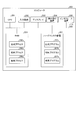
- FIG. 1 is a functional block diagram illustrating the configuration of the search device according to the present embodiment.
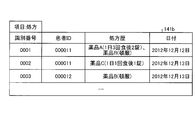
- FIG. 2 is a diagram (1) illustrating an example of a data structure of the first electronic medical chart information.
- FIG. 3 is a diagram (2) illustrating an example of a data structure of the first electronic medical chart information.
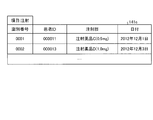
- FIG. 4 is a diagram (3) illustrating an example of a data structure of the first electronic medical chart information.
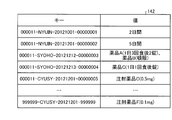
- FIG. 5 is a diagram illustrating an example of a data structure of the second electronic medical chart information.
- FIG. 6 is a diagram illustrating an example of the data structure of the key pattern definition information.
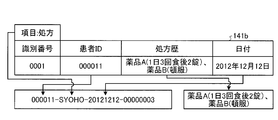
- FIG. 7 is a diagram for explaining an example of processing of the generation unit.
- FIG. 8 is a diagram for explaining an example of a search key generated by the search unit.
- FIG. 1 is a functional block diagram illustrating the configuration of the search device according to the present embodiment.
- FIG. 2 is a diagram (1) illustrating an example of a data structure of the first electronic medical chart information.
- FIG. 9 is a flowchart illustrating a processing procedure in which the search device generates the second electronic medical record information.
- FIG. 10 is a flowchart illustrating a processing procedure in which the search device searches.
- FIG. 11 is a diagram illustrating an example of a computer that executes a search program.
- FIG. 1 is a functional block diagram illustrating the configuration of the search device according to the present embodiment.
- the search device 100 includes a communication unit 110, an input unit 120, a display unit 130, a storage unit 140, and a control unit 150.
- the communication unit 110 is a processing unit that performs data communication with other external devices via a network.
- the communication unit 110 corresponds to a communication device.
- the input unit 120 is an input device for inputting various types of information.
- the input unit 120 corresponds to a keyboard, a mouse, a touch panel, or the like.
- the display unit 130 is a display device that displays information output from the control unit 150.
- the display unit 130 corresponds to a monitor, a liquid crystal display, or the like.
- the storage unit 140 includes first electronic medical record information 141, second electronic medical record information 142, and key pattern definition information 143.
- the storage unit 140 corresponds to a storage device such as a semiconductor memory element such as a RAM (Random Access Memory), a ROM (Read Only Memory), and a flash memory (Flash Memory).
- the first electronic medical chart information 141 includes information on the disease that the patient suffered, the patient's medical chart, and the medical practice performed on the patient.
- medical practice includes prescription, treatment, surgery, examination, injection, blood transfusion, and the like.
- the first electronic medical record information 141 includes tables 141a to 141c shown in FIGS.
- the first electronic medical chart information 141 may include tables other than the tables 141a to 141c shown in FIGS.
- the table 141a in FIG. 2 will be described.
- the table 141a holds information regarding the patient's medical chart.
- “card” is set.
- the table 141a associates identification numbers, patient IDs, hospital discharge histories, and dates.
- the identification number is information for uniquely identifying each record in the table 141a.
- Patient ID is information that uniquely identifies a patient.
- the entrance / exit history indicates, for example, a history of a period during which the patient was hospitalized.
- the date corresponds, for example, to the date of the first day when the patient is hospitalized.
- the table 141b in FIG. 3 will be described.
- the table 141b holds information related to prescription performed on the patient. “Prescription” is set in the item of the table 141b.
- the table 141b associates an identification number, a patient ID, a prescription history, and a date.
- the identification number is information for uniquely identifying each record in the table 141b.
- the patient ID is information that uniquely identifies a patient.
- the prescription history indicates a history of prescription performed on the patient.
- the date indicates the date prescribed to the patient.
- the table 141c in FIG. 4 will be described.
- the table 141c holds information related to the injection performed on the patient. “Injection” is set in the item of the table 141c.
- the table 141c associates an identification number, a patient ID, an injection history, and a date.
- the identification number is information for uniquely identifying each record in the table 141c.
- the patient ID is information that uniquely identifies a patient.
- the injection history indicates a history of injections performed on the patient.
- the date indicates the date on which the patient was injected.
- the second electronic medical record information 142 is data generated based on the first electronic medical record information 141 and the key pattern definition information 143.
- FIG. 5 is a diagram illustrating an example of a data structure of the second electronic medical chart information.
- the second electronic medical chart information 142 includes a key and a value.
- the key is divided into a first part, a second part, a third part, and a fourth part by a hyphen “-”. For example, for the key “000011-NYUIN-20121001-0000001”, the first part corresponds to “000011”.
- the second part corresponds to “NYUIN”.
- the third part corresponds to “20121001”.
- the fourth part corresponds to “0000001”. How to set the key and how to set the value corresponding to the key are defined by the key pattern definition information 143.
- the key pattern definition information 143 is information that defines how the key of the second electronic medical chart information 142 is generated.
- FIG. 6 is a diagram illustrating an example of the data structure of the key pattern definition information. As shown in FIG. 6, the key pattern definition information 143 associates items, first parts, second parts, third parts, fourth parts, and values.
- the item identifies each table of the first electronic medical chart information 141.
- the item “medical record” indicates the table 141a
- the item “prescription” indicates the table 141b
- the item “injection” indicates the table 141c.
- the number associated with the key is “prescription history”. For example, when a key and a value are generated from the record in the first row of the table 141b based on the key pattern definition information 143, the key is “000011-SYOHO-20121212-0000003” and the value is “medicine A (three times a day). 2 tablets after meal), drug B (medication) ".
- the control unit 150 includes a generation unit 151, a storage unit 152, and a search unit 153.
- the control unit 150 corresponds to, for example, an integrated device such as an application specific integrated circuit (ASIC) or a field programmable gate array (FPGA).
- the control unit 150 corresponds to an electronic circuit such as a CPU (Central Processing Unit) or an MPU (Micro Processing Unit).
- the generating unit 151 is a processing unit that generates a key and a value of the second electronic medical record information 142 based on the first electronic medical record information 141 and the key pattern definition information 143.
- the generation unit 151 outputs the generated key / value pair to the storage unit 152.
- the generation unit 151 refers to the first electronic medical record information 141 and selects a table included in the first electronic medical record information 141.
- the generation unit 151 compares the item of the selected table with the record of the key pattern definition information 143 corresponding to the item, and generates a key.
- FIG. 7 is a diagram for explaining an example of processing of the generation unit.
- the item of the table 141b is “prescription”. Therefore, the generation unit 151 sets a key and a value based on the record corresponding to the item “prescription” of the key pattern definition information 143. Specifically, the generation unit 151 sets “000011” in the first part of the key, “SYOHO” in the second part, “20121212” in the third part, and “00000003” in the fourth part, for example.
- the generation unit 151 generates the values “drug A (two tablets after meals three times a day), drug B (same dose)”.
- the generation unit 151 outputs the generated combination of key and value to the storage unit 152.
- the generation unit 151 generates a key and a value for each record in each table included in the first electronic medical record information 141, and outputs the generated combination of the key and value to the storage unit 152.
- the generation unit 151 When the first electronic medical record information 141 is updated, the generation unit 151 generates difference information between the first electronic medical record information before the update and the first electronic medical record information after the update, and the generated difference Based on the information, a key and a value are generated for the updated record.
- the storage unit 152 is a processing unit that acquires a combination of a key and a value from the generation unit 151 and stores the acquired combination of a key and a value in the second electronic medical record information 142.
- the search unit 153 When the search unit 153 receives a search condition from the input unit 120, the search unit 153 generates a search key, compares the search key with the second electronic medical record information 142, and searches for a key and a value corresponding to the search key. Part. For example, the user operates the input unit 120 to input search conditions. The search unit 153 generates a search key using a correspondence table in which a given search condition is associated with a search key generated based on the search condition.
- FIG. 8 is a diagram for explaining an example of a search key generated by the search unit.
- a search key 10 a is a search key generated when a patient ID “000011” and an item “library” are designated as search conditions.
- the search unit 153 converts the keys included in “000011-NYUIN-00000000-00000000” to “000011-NYUIN-99999999-99999999” and the values associated with the keys to the second electronic Search from the chart information 142.
- the search unit 153 uses a key whose first part is “000011” and whose second part is “NYUIN” and a value associated with the key to the second electronic medical record information 142. Search from. With the search key 10a, information related to the medical record of the patient ID “000011” can be searched from the second electronic medical record information 142.
- the search key 10b is a search key that is generated when the patient ID “000011”, the item “library”, and the year “2010” are designated as search conditions.
- the search unit 153 uses the search key 10b to change the key included in “000011-NYUIN-20100000-00000000” to “000011-NYUIN-20109999-99999999” and the value associated with the key to the second electronic Search from the chart information 142. That is, by using the search key 10b, the search unit 153 uses a key in which the first part is “000011”, the second part is “NYUIN”, and the first four digits of the third part are “2010”.
- the second electronic medical record information 142 is searched for a value associated with.
- information on the medical chart of the patient ID “000011” in 2010 can be searched from the second electronic medical chart information 142.
- the search key 10c is a search key generated when the patient ID “000011”, the item “library”, and the year and month “September 2010” are specified as search conditions.
- the search unit 153 uses the search key 10c to change the key included in “000011-NYUIN-20100900-00000000” to “000011-NYUIN-20109999-99999999” and the value associated with the key to the second electronic Search from the chart information 142. That is, by using the search key 10c, the search unit 153 uses a key in which the first part is “000011”, the second part is “NYUIN”, and the first six digits of the third part are “201009”.
- the second electronic medical record information 142 is searched for a value associated with. By using the search key 10c, information on the medical record of the patient ID “000011” in September 2010 can be searched from the second electronic medical record information 142.
- the search key 10d is a search key generated when the patient ID “000011” is designated.
- the search unit 153 uses the search key 10d to change the key included in “000011-AAAAA-00000000-00000000” to “000011-ZZZZZ-99999999-99999999” and the value associated with the key to the second electronic Search from the chart information 142. That is, the search unit 153 searches the second electronic medical record information 142 for a key whose first part is “000011” and a value associated with the key. With the search key 10d, all information related to the patient ID “000011” can be searched from the second electronic medical chart information 142.
- the search key 10e is a search key that is generated when the date “December 1, 2012” and the item “prescription” are specified as search conditions.
- the search unit 153 converts the keys included in “999999-SYOHO-20121201-00000000” to “999999-SYOHO-20121201-99999999” and the values associated with the keys to the second electronic Search from the chart information 142. That is, the search unit 153 searches the second electronic medical record information 142 for a key whose second part is “SYOHO” and whose third part is “20121201” and a value associated with the key.
- the search key 10e it is possible to search for information on drugs prescribed on December 1, 2012 for all patients.
- the search unit 153 generates a search key as described above, searches for a key and a value corresponding to the search key, and then outputs a search result to the display unit 130. Note that the search unit 153 may execute various tabulation processes on the search results and output the execution results of the tabulation process to the display unit 130.
- FIG. 9 is a flowchart illustrating a processing procedure in which the search device generates the second electronic medical record information.
- the search device 100 executes the process in FIG. 9 when the first electronic medical record information 141 is updated.
- the search device 100 refers to the first electronic medical record information 141 (step S101), and acquires the difference data of the first electronic medical record information 141 (step S102).
- step S102 the search device 100 obtains difference data by taking a difference between the first electronic medical record information 141 before update and the first electronic medical record information 141 after update.
- the search device 100 ends the process.
- the search device 100 creates a key and a value based on the key pattern definition information 143 (step S104).
- the search device 100 associates the key with the value and stores them in the second electronic medical record information 142 (step S105).
- FIG. 10 is a flowchart showing a processing procedure for the search device to search.
- the search device 100 executes the process of FIG. 10 when a search condition parameter is acquired from the input unit 120.
- the search device 100 acquires a search condition parameter (step S ⁇ b> 201).
- the search condition parameters include, for example, a search keyword, date, patient ID, and the like.
- the search keyword corresponds to the above-mentioned item “medical record, prescription, injection, etc.”.
- the search device 100 generates a search key based on the search condition parameters (step S202).
- the search device 100 compares the search key with the second electronic medical record information 142 and acquires corresponding records at once (step S203).
- the search device 100 executes a counting process (step S204) and outputs a counting result (step S205).
- the search device 100 reads out information about the treatment ID and date and time performed on the patient ID and the patient from the first electronic medical record information 141, generates a key, and stores the generated key in the second electronic medical record information 142. Then, when receiving the search condition, the search device 100 searches the second electronic medical record information 142 for data corresponding to the search condition. For this reason, according to the search device 100, desired information can be acquired. Further, even when there are a plurality of types of periods to be searched, it is possible to acquire patient information corresponding to each period simply by changing the period of the search condition.
- the search apparatus 100 when the search condition is received, the search apparatus 100 generates a search key from the search condition, compares the generated search key with the second electronic medical record information 142, and extracts a record corresponding to the search key. . For this reason, the user can search for desired information only by designating a search condition without creating a complicated command statement.
- the search device 100 generates a key and a value based on the first electronic medical record information 141 and registers the generated key and value in the second electronic medical record information 142. It is not limited to.
- the search device 100 may store information related to company employees in the storage unit 140, generate keys and values from the information related to company employees, and store them in a table.
- the information regarding the company employee corresponds to, for example, information that associates the information that identifies the company employee, the entry / exit record of the company employee, and the date and time.
- the generation unit 151 may generate a key by combining information for identifying a company employee, date and time, and entry / exit records.
- the management apparatus 100 may store the first electronic medical record information 141 and the second medical record information 142 in separate databases.
- the search device 100 described above may store the first electronic medical record information 141 and the second electronic medical record information 142 in the HBase.
- the HBase function is used, even when the first and second electronic medical record information 141 and 142 are distributed and stored in a plurality of storage devices, the first and second electronic medical record information 141 are stored as information stored in a single storage device. , 142 can be handled.
- FIG. 11 is a diagram illustrating an example of a computer that executes a search program.
- the computer 200 includes a CPU 201 that executes various arithmetic processes, an input device 202 that receives data input from a user, and a display 203.
- the computer 200 also includes a reading device 204 that reads a program and the like from a storage medium, and an interface device 205 that exchanges data with other computers via a network.
- the computer 200 also includes a RAM 206 that temporarily stores various information and a hard disk device 207.
- the devices 201 to 207 are connected to the bus 208.
- the hard disk device 207 has a generation program 207a, a storage program 207b, and a search program 207c.
- the CPU 201 reads out each program 207 a to 207 c and develops it in the RAM 206.
- the generation program 207a functions as a generation process 206a.
- the storage program 207b functions as a storage process 206b.
- the search program 207c functions as a search process 206c.
- the generation process 206a corresponds to the generation unit 151.
- the storage process 206 b corresponds to the storage unit 152.
- the search process 206 c corresponds to the search unit 153.
- each program is stored in a “portable physical medium” such as a flexible disk (FD), a CD-ROM, a DVD disk, a magneto-optical disk, and an IC card inserted into the computer 200. Then, the computer 200 may read and execute each of the programs 207a to 207c from these.
- a “portable physical medium” such as a flexible disk (FD), a CD-ROM, a DVD disk, a magneto-optical disk, and an IC card inserted into the computer 200.
- the computer 200 may read and execute each of the programs 207a to 207c from these.
Landscapes
- Engineering & Computer Science (AREA)
- Theoretical Computer Science (AREA)
- Databases & Information Systems (AREA)
- Physics & Mathematics (AREA)
- Data Mining & Analysis (AREA)
- General Engineering & Computer Science (AREA)
- General Physics & Mathematics (AREA)
- Epidemiology (AREA)
- Health & Medical Sciences (AREA)
- General Health & Medical Sciences (AREA)
- Medical Informatics (AREA)
- Primary Health Care (AREA)
- Public Health (AREA)
- Software Systems (AREA)
- Mathematical Physics (AREA)
- Computational Linguistics (AREA)
- Medical Treatment And Welfare Office Work (AREA)
Abstract
検索装置(100)は、第1電子カルテ情報(141)から、患者IDと患者に対して行った治療内容および治療日時の情報を読み出してキーおよび値を生成し、生成したキーと値とを対応付けて第2電子カルテ情報(142)に格納する。検索装置(100)は、検索条件を受け付けると、検索条件から検索キーを生成し、検索キーと第2電子カルテ情報(142)のキーとを比較して、検索キーに対応するレコードを検索し、検索結果を出力する。
Description
本発明は、検索プログラム等に関する。
近年、医者に患者の情報を知らせるべく、患者の過去の情報を複数の項目に並べて時系列に表示させる仕組みが考えられている。患者の過去の情報を時系列で表示する場合には、患者の情報をデータベースから読み出す処理を行う。
例えば、データベースが既存のリレーショナルデータベース形式で患者の情報を格納している場合には、患者の情報をデータベースから読み出すために、SQL(Structured Query Language)命令を使用する。SQLでは、抽出したい項目毎に、該当項目を指定したSQL命令を発行する。
しかしながら、上述した従来技術では、データベースから所望の情報を取得することができないという問題がある。
SQLでは、項目毎に、該当項目を指定して患者の情報を抽出するため、処理そのものに時間を要する。このため、例えば、患者の過去の情報を複数の項目に並べて時系列に表示させる場合には、表示依頼を行ってから検索結果が表示されるまでに、多くの時間を要する。
また、時間軸を「全期間」、「10年間」、「1年間」、「月間」のように切り替えて表示させたい場合には、期間毎に、データベース検索を行うことになり、更なる時間を要する。
一つの側面では、データベースから所望の情報を取得することができる検索プログラム、検索方法および検索装置を提供することを目的とする。
第1の案では、コンピュータに下記の処理を実行させる。コンピュータは、データベースから、利用者を識別する情報と利用者に対して行ったアクションの内容または利用者が行ったアクションの内容の情報と日時情報とを読み出す。コンピュータは、利用者を識別する情報と利用者に対して行ったアクションの内容または利用者が行ったアクションの内容の情報と日時情報とを結合して得られるデータ列を生成する処理を前記データベースに格納された複数のデータレコードについて行う。コンピュータは、生成した複数のデータ列を記憶部に格納する。コンピュータは、利用者を識別する情報と検索対象期間と利用者のアクションの内容の情報との指定を受け付けると、前記記憶部に記憶した前記複数のデータ列の中から該指定に該当するデータ列を検索する。
本発明の1実施態様によれば、データベースから所望の情報を取得することができる。
以下に、本発明にかかる検索プログラム、検索方法および検索装置の実施例を図面に基づいて詳細に説明する。なお、この実施例によりこの発明が限定されるものではない。
本実施例に係る検索装置の構成について説明する。図1は、本実施例に係る検索装置の構成を示す機能ブロック図である。図1に示すように、この検索装置100は、通信部110と、入力部120と、表示部130と、記憶部140と、制御部150とを有する。
通信部110は、ネットワークを介して他の外部装置とデータ通信を行う処理部である。通信部110は、通信装置に対応する。
入力部120は、各種の情報を入力する入力装置である。例えば、入力部120は、キーボードやマウス、タッチパネル等に対応する。
表示部130は、制御部150から出力される情報を表示する表示装置である。例えば、表示部130は、モニタや液晶ディスプレイ等に対応する。
記憶部140は、第1電子カルテ情報141、第2電子カルテ情報142、キーパターン定義情報143を有する。記憶部140は、例えば、RAM(Random Access Memory)、ROM(Read Only Memory)、フラッシュメモリ(Flash Memory)などの半導体メモリ素子などの記憶装置に対応する。
第1電子カルテ情報141は、患者が患った病気、患者のカルテ、患者に対して行った医療行為に関する情報を有する。例えば、医療行為には、処方、処置、手術、検査、注射、輸血等が含まれる。
図2~図4は、第1電子カルテ情報のデータ構造の一例を示す図である。例えば、第1電子カルテ情報141は、図2~図4に示すテーブル141a~141cを有する。なお、第1電子カルテ情報141は、図2~図4に示すテーブル141a~141c以外のテーブルを有していても良い。
図2のテーブル141aについて説明する。テーブル141aは、患者のカルテに関する情報を保持する。テーブル141aの項目には「カルテ」が設定される。テーブル141aは、識別番号と、患者IDと、入退院歴と、日付とを対応付ける。識別番号は、テーブル141aの各レコードを一意に識別する情報である。患者ID(Identification)は、患者を一意に識別する情報である。入退院歴は、例えば、患者が入院していた期間の履歴を示す。日付は、例えば、患者が入院した初日の日付に対応する。
図3のテーブル141bについて説明する。テーブル141bは、患者に対して行った処方に関する情報を保持する。テーブル141bの項目には「処方」が設定される。テーブル141bは、識別番号と、患者IDと、処方歴と、日付とを対応付ける。識別番号は、テーブル141bの各レコードを一意に識別する情報である。患者IDは、患者を一意に識別する情報である。処方歴は、患者に対しておこなった処方の履歴を示す。日付は、患者に処方した日付を示す。
図4のテーブル141cについて説明する。テーブル141cは、患者に対して行った注射に関する情報を保持する。テーブル141cの項目には「注射」が設定される。テーブル141cは、識別番号と、患者IDと、注射歴と、日付とを対応付ける。識別番号は、テーブル141cの各レコードを一意に識別する情報である。患者IDは、患者を一意に識別する情報である。注射歴は、患者に対して行った注射の履歴を示す。日付は、患者に注射した日付を示す。
図1の説明に戻る。第2電子カルテ情報142は、第1電子カルテ情報141およびキーパターン定義情報143を基に生成されるデータである。図5は、第2電子カルテ情報のデータ構造の一例を示す図である。図5に示すように、この第2電子カルテ情報142は、キーと、値とを有する。キーは、ハイフン「‐」によって、第1部分、第2部分、第3部分、第4部分に分けられる。例えば、キー「000011-NYUIN-20121001-0000001」について、第1部分は「000011」に対応する。第2部分は「NYUIN」に対応する。第3部分は「20121001」に対応する。第4部分は「0000001」に対応する。キーをどのように設定するのか、およびキーに対応する値をどのように設定するのかは、キーパターン定義情報143によって定義される。
キーパターン定義情報143は、第2電子カルテ情報142のキーをどのように生成するのかを定義した情報である。図6は、キーパターン定義情報のデータ構造の一例を示す図である。図6に示すように、このキーパターン定義情報143は、項目と、第1部分と、第2部分と、第3部分と、第4部分と、値とを対応付ける。
図6において、項目は、第1電子カルテ情報141の各テーブルを識別するものである。例えば、項目「カルテ」はテーブル141aを示し、項目「処方」はテーブル141bを示し、項目「注射」はテーブル141cを示す。
図6において、項目「カルテ」についてキーを生成する場合には、キーの第1部分に「患者ID」、第2部分に「NYUIN」、第3部分に「日付」、第4部分に「昇順に番号を付与」となり、該キーに対応付けられる値は「入退院歴」となる。例えば、キーパターン定義情報143に基づいて、テーブル141aの1行目のレコードからキーおよび値を生成すると、キーは「000011-NYUIN-20121001-0000001」となり、値は「2日間」となる。なお、「昇順に番号を付与」については、例えば、初期値を「0000000」とし、キーを生成する度に、1を加算した値を第4部分に設定するものとする。
図6において、項目「処方」についてキーを作成する場合には、キーの第1部分に「患者ID」、第2部分に「SYOHO」、第3部分に「日付」、第4部分に「昇順に番号を付与」となり、該キーに対応付けられる値は「処方歴」となる。例えば、キーパターン定義情報143に基づいて、テーブル141bの1行目のレコードからキーおよび値を生成すると、キーは「000011-SYOHO-20121212-0000003」となり、値は「薬品A(1日3回食後2錠)、薬品B(頓服)」となる。
図6において、項目「注射」についてキーを作成する場合には、キーの第1部分に「患者ID」、第2部分に「CYUSY」、第3部分に「日付」、第4部分に「昇順に番号を付与」となり、該キーに対応付けられる値は「注射歴」となる。例えば、キーパターン定義情報143に基づいて、テーブル141cの1行目のレコードからキーおよび値を生成すると、キーは「000011-CYUSY-20121201-00000005」となり、値は「注射薬品C(0.5mg)」となる。
制御部150は、生成部151と、格納部152と、検索部153を有する。制御部150は、例えば、ASIC(Application Specific Integrated Circuit)や、FPGA(Field Programmable Gate Array)などの集積装置に対応する。また、制御部150は、例えば、CPU(Central Processing Unit)やMPU(Micro Processing Unit)等の電子回路に対応する。
生成部151は、第1電子カルテ情報141およびキーパターン定義情報143を基にして、第2電子カルテ情報142のキーと値を生成する処理部である。生成部151は、生成したキーと値との組みを格納部152に出力する。
生成部151の処理の一例について説明する。生成部151は、第1電子カルテ情報141を参照し、第1電子カルテ情報141に含まれるテーブルを選択する。生成部151は、選択したテーブルの項目と、該項目に対応するキーパターン定義情報143のレコードとを比較して、キーを生成する。
図7は、生成部の処理の一例を説明するための図である。図7では一例として、テーブル141bの識別番号「0001」に対応するレコードのキーおよび値を生成する場合について説明する。テーブル141bの項目は「処方」である。このため、生成部151は、キーパターン定義情報143の項目「処方」に対応するレコードを基にして、キーと値を設定する。具体的に、生成部151は、キーの第1部分に「000011」、第2部分に「SYOHO」、第3部分に「20121212」を設定し、第4部分に例えば「00000003」を設定する。また、生成部151は、値「薬品A(1日3回食後2錠)、薬品B(頓服)」を生成する。生成部151は、生成したキーと値との組みを、格納部152に出力する。
生成部151は、第1電子カルテ情報141に含まれる各テーブルの各レコードについて、キーおよび値を生成し、生成したキーと値との組みを格納部152に出力する。なお、生成部151は、第1電子カルテ情報141が更新された場合には、更新前の第1電子カルテ情報と、更新後の第1電子カルテ情報との差分情報を生成し、生成した差分情報を基にして、更新されたレコードについて、キーと値とを生成する。
格納部152は、生成部151からキーと値との組みを取得し、取得したキーと値との組みを、第2電子カルテ情報142に格納する処理部である。
検索部153は、入力部120から検索条件を受け付けた場合に、検索キーを生成し、検索キーと第2電子カルテ情報142とを比較して、検索キーに対応するキーおよび値を検索する処理部である。例えば、利用者は、入力部120を操作して、検索条件を入力する。検索部153は、与えられた検索条件と、該検索条件によって生成される検索キーとを対応付けた対応テーブルを用いて、検索キーを生成するものとする。
検索部153が生成する検索キーの一例について説明する。図8は、検索部が生成する検索キーの一例を説明するための図である。図8において、検索キー10aは、患者ID「000011」と項目「カルテ」とが検索条件として指定された場合に生成される検索キーである。検索部153は、検索キー10aを用いることで、「000011-NYUIN-00000000-00000000」~「000011-NYUIN-99999999-99999999」に含まれるキーと、該キーに対応付けられる値を、第2電子カルテ情報142から検索する。すなわち、検索部153は、検索キー10aを用いる事で、第1部分が「000011」となり、第2部分が「NYUIN」となるキーおよび該キーに対応付けられる値を、第2電子カルテ情報142から検索する。検索キー10aによって、患者ID「000011」のカルテに関する情報を、第2電子カルテ情報142から検索することができる。
検索キー10bは、患者ID「000011」と項目「カルテ」と年「2010年」とが検索条件として指定された場合に生成される検索キーである。検索部153は、検索キー10bを用いることで、「000011-NYUIN-20100000-00000000」~「000011-NYUIN-20109999-99999999」に含まれるキーと、該キーに対応付けられる値を、第2電子カルテ情報142から検索する。すなわち、検索部153は、検索キー10bを用いることで、第1部分が「000011」となり、第2部分が「NYUIN」となり、第3部分の先頭4桁が「2010」となるキーおよび該キーに対応付けられる値を、第2電子カルテ情報142から検索する。検索キー10bによって、患者ID「000011」の2010年におけるカルテに関する情報を、第2電子カルテ情報142から検索することができる。
検索キー10cは、患者ID「000011」と項目「カルテ」と年月「2010年9月」とが検索条件として指定された場合に生成される検索キーである。検索部153は、検索キー10cを用いることで、「000011-NYUIN-20100900-00000000」~「000011-NYUIN-20109999-99999999」に含まれるキーと、該キーに対応付けられる値を、第2電子カルテ情報142から検索する。すなわち、検索部153は、検索キー10cを用いることで、第1部分が「000011」となり、第2部分が「NYUIN」となり、第3部分の先頭6桁が「201009」となるキーおよび該キーに対応付けられる値を、第2電子カルテ情報142から検索する。検索キー10cによって、患者ID「000011」の2010年9月におけるカルテに関する情報を、第2電子カルテ情報142から検索することができる。
検索キー10dは、患者ID「000011」が指定された場合に生成される検索キーである。検索部153は、検索キー10dを用いることで、「000011-AAAAA-00000000-00000000」~「000011-ZZZZZ-99999999-99999999」に含まれるキーと、該キーに対応付けられる値を、第2電子カルテ情報142から検索する。すなわち、検索部153は、第1部分が「000011」となるキーおよび該キーに対応付けられる値を、第2電子カルテ情報142から検索する。検索キー10dによって、患者ID「000011」に関する全情報を、第2電子カルテ情報142から検索することができる。
検索キー10eは、年月日「2012年12月1日」と項目「処方」とが検索条件として指定された場合に生成される検索キーである。検索部153は、検索キー10eを用いることで、「999999-SYOHO-20121201-00000000」~「999999-SYOHO-20121201-99999999」に含まれるキーと、該キーに対応付けられる値を、第2電子カルテ情報142から検索する。すなわち、検索部153は、第2部分が「SYOHO」となり、第3部分が「20121201」となるキーおよび該キーに対応付けられる値を、第2電子カルテ情報142から検索する。検索キー10eによって、全患者の2012年12月1日に処方された薬の情報を検索することができる。
検索部153は、上記のように検索キーを生成し、検索キーに対応するキーおよび値を検索した後に、検索結果を表示部130に出力する。なお、検索部153は、検索結果に対して各種の集計処理を実行し、集計処理の実行結果を、表示部130に出力しても良い。
次に、本実施例に係る検索装置100の処理手順の一例について説明する。図9は、検索装置が第2電子カルテ情報を生成する処理手順を示すフローチャートである。例えば、検索装置100は、第1電子カルテ情報141が更新された場合に図9の処理を実行する。
図9に示すように、検索装置100は、第1電子カルテ情報141を参照し(ステップS101)、第1電子カルテ情報141の差分データを取得する(ステップS102)。ステップS102において、検索装置100は、更新前の第1電子カルテ情報141と、更新後の第1電子カルテ情報141との差分をとって、差分データを取得する。検索装置100は、差分データにデータが存在しない場合には(ステップS103,No)、処理を終了する。
一方、検索装置100は、差分データにデータが存在する場合には(ステップS103,Yes)、キーパターン定義情報143を基にして、キーと値とを作成する(ステップS104)。検索装置100は、キーと値とを対応付けて第2電子カルテ情報142に格納する(ステップS105)。
図10は、検索装置が検索する処理手順を示すフローチャートである。例えば、検索装置100は、入力部120から検索条件のパラメータを取得した場合に図10の処理を実行する。
図10に示すように、検索装置100は、検索条件のパラメータを取得する(ステップS201)。ステップS201において、検索条件のパラメータとして、例えば、検索キーワード、日付、患者IDなどが含まれる。検索キーワードは、上記の項目「カルテ、処方、注射等」に対応する。
検索装置100は、検索条件のパラメータを基にして、検索キーを生成する(ステップS202)。検索装置100は、検索キーと第2電子カルテ情報142とを比較して、該当レコードを一括取得する(ステップS203)。
検索装置100は、集計処理を実行し(ステップS204)、集計結果を出力する(ステップS205)。
次に、本実施例に係る検索装置100の効果について説明する。検索装置100は、第1電子カルテ情報141から、患者IDと患者に対して行った治療内容及び日時の情報を読み出してキーを生成し、生成したキーを第2電子カルテ情報142に格納する。そして、検索装置100は、検索条件を受け付けると、検索条件に該当するデータを、第2電子カルテ情報142から検索する。このため、検索装置100によれば、所望の情報を取得することができる。また、検索対象となる期間が複数種類となる場合でも、検索条件の期間を変更するだけで、各期間に対応する患者の情報を取得することができる。
また、検索装置100は、検索条件を受け付けた場合に、検索条件から検索キーを生成し、生成した検索キーと第2電子カルテ情報142とを比較して、検索キーに対応するレコードを抽出する。このため、利用者は、複雑な命令文を作成することなく、検索条件を指定するだけで、所望の情報を検索することができる。
ところで、上述した実施例において検索装置100は、第1電子カルテ情報141を基にして、キーおよび値を生成し、生成したキーおよび値を第2電子カルテ情報142に登録していたが、これに限定されるものではない。例えば、検索装置100は、会社員に関する情報を、記憶部140に記憶し、この会社員に関する情報からキーと値とを生成して、テーブルに格納しても良い。ここで、会社員に関する情報は、例えば、会社員を識別する情報と、会社員の入退室記録と日時とを対応付けた情報に対応する。例えば、生成部151は、会社員を識別する情報と、日時と、入退室記録とを組み合わせて、キーを生成しても良い。
また、上述した検索装置100では、記憶部140に第1電子カルテ情報141、第2電子カルテ情報142を同一の記憶部140に記憶する場合について説明したが、これに限定されるものではない。例えば、管理装置100は、第1電子カルテ情報141、第2カルテ情報142をそれぞれ別々のデータベースに格納しても良い。
更に、上述した検索装置100は、第1電子カルテ情報141および第2電子カルテ情報142を、HBaseに格納しても良い。HBaseの機能を利用すると、第1,2電子カルテ情報141,142を複数の記憶装置に分散させて記憶した場合でも、単一の記憶装置に記憶された情報として第1,2電子カルテ情報141,142を取り扱うことができる。
次に、上記実施例に示した検索装置100と同様の機能を実現する検索プログラムを実行するコンピュータの一例について説明する。図11は、検索プログラムを実行するコンピュータの一例を示す図である。
図11に示すように、コンピュータ200は、各種演算処理を実行するCPU201と、ユーザからのデータの入力を受け付ける入力装置202と、ディスプレイ203を有する。また、コンピュータ200は、記憶媒体からプログラム等を読取る読み取り装置204と、ネットワークを介して他のコンピュータとの間でデータの授受を行うインタフェース装置205とを有する。また、コンピュータ200は、各種情報を一時記憶するRAM206と、ハードディスク装置207を有する。そして、各装置201~207は、バス208に接続される。
ハードディスク装置207は、生成プログラム207a、格納プログラム207b、検索プログラム207cを有する。CPU201は、各プログラム207a~207cを読み出してRAM206に展開する。
生成プログラム207aは、生成プロセス206aとして機能する。格納プログラム207bは、格納プロセス206bとして機能する。検索プログラム207cは、検索プロセス206cとして機能する。
例えば、生成プロセス206aは、生成部151に対応する。格納プロセス206bは、格納部152に対応する。検索プロセス206cは、検索部153に対応する。
なお、各プログラム207a~207cについては、必ずしも最初からハードディスク装置207に記憶させておかなくても良い。例えば、コンピュータ200に挿入されるフレキシブルディスク(FD)、CD-ROM、DVDディスク、光磁気ディスク、ICカードなどの「可搬用の物理媒体」に各プログラムを記憶させておく。そして、コンピュータ200がこれらから各プログラム207a~207cを読み出して実行するようにしてもよい。
100 検索装置
151 生成部
152 格納部
153 検索部
151 生成部
152 格納部
153 検索部
Claims (5)
- コンピュータに、
データベースから、利用者を識別する情報と利用者に対して行ったアクションの内容または利用者が行ったアクションの内容の情報と日時情報とを読み出して、利用者を識別する情報と利用者に対して行ったアクションの内容または利用者が行ったアクションの内容の情報と日時情報とを結合して得られるデータ列を生成する処理を前記データベースに格納された複数のデータレコードについて行い、
生成した複数のデータ列を記憶部に格納し、
利用者を識別する情報と検索対象期間と利用者のアクションの内容の情報との指定を受け付けると、前記記憶部に格納した前記複数のデータ列の中から前記指定に該当するデータ列を検索する
処理をコンピュータに実行させることを特徴とする検索プログラム。 - 前記データ列を生成する処理は、データベースから患者を識別する情報と該患者に関する治療内容の情報と治療日時の情報とを読み出して、患者を識別する情報と該患者に関する治療内容の情報と治療日時の情報とを結合して得られるデータ列を生成し、前記データ列を検索する処理は、患者を識別する情報と検索対象期間と患者に関する治療内容の情報との指定を受け付けると、記憶部に格納した前記複数のデータ列の中から前記指定に該当するデータ列を検索することを特徴とする請求項1に記載の検索プログラム。
- 前記データ列を検索する処理は、患者を識別する情報と検索対象期間と患者に関する治療内容の情報を基にして検索キーを生成し、生成した検索キーと記憶部に格納されたデータ列とを基にして、前記指定に該当するデータ列を検索することを特徴とする請求項2に記載の検索プログラム。
- コンピュータが実行する検索方法であって、
データベースから、利用者を識別する情報と利用者に対して行ったアクションの内容または利用者が行ったアクションの内容の情報と日時情報とを読み出して、利用者を識別する情報と利用者に対して行ったアクションの内容または利用者が行ったアクションの内容の情報と日時情報とを結合して得られるデータ列を生成する処理を前記データベースに格納された複数のデータレコードについて行い、
生成した複数のデータ列を記憶部に格納し、
利用者を識別する情報と検索対象期間と利用者のアクションの内容の情報との指定を受け付けると、前記記憶部に格納した前記複数のデータ列の中から前記指定に該当するデータ列を検索する
処理を実行することを特徴とする検索方法。 - データベースから、利用者を識別する情報と利用者に対して行ったアクションの内容または利用者が行ったアクションの内容の情報と日時情報とを読み出して、利用者を識別する情報と利用者に対して行ったアクションの内容または利用者が行ったアクションの内容の情報と日時情報とを結合して得られるデータ列を生成する処理を前記データベースに格納された複数のデータレコードについて行う生成部と、
前記生成部が生成した複数のデータ列を記憶部に格納する格納部と、
利用者を識別する情報と検索対象期間と利用者のアクションの内容の情報との指定を受け付けると、前記記憶部に記憶した前記複数のデータ列の中から該指定に該当するデータ列を検索する検索部と
を有することを特徴とする検索装置。
Priority Applications (3)
| Application Number | Priority Date | Filing Date | Title |
|---|---|---|---|
| JP2015540357A JP6237778B2 (ja) | 2013-10-04 | 2013-10-04 | 検索プログラム、検索方法および検索装置 |
| PCT/JP2013/077171 WO2015049804A1 (ja) | 2013-10-04 | 2013-10-04 | 検索プログラム、検索方法および検索装置 |
| US15/080,124 US20160203274A1 (en) | 2013-10-04 | 2016-03-24 | Non-transitory computer-readable recording medium, retrieval method, and retrieval apparatus |
Applications Claiming Priority (1)
| Application Number | Priority Date | Filing Date | Title |
|---|---|---|---|
| PCT/JP2013/077171 WO2015049804A1 (ja) | 2013-10-04 | 2013-10-04 | 検索プログラム、検索方法および検索装置 |
Related Child Applications (1)
| Application Number | Title | Priority Date | Filing Date |
|---|---|---|---|
| US15/080,124 Continuation US20160203274A1 (en) | 2013-10-04 | 2016-03-24 | Non-transitory computer-readable recording medium, retrieval method, and retrieval apparatus |
Publications (1)
| Publication Number | Publication Date |
|---|---|
| WO2015049804A1 true WO2015049804A1 (ja) | 2015-04-09 |
Family
ID=52778411
Family Applications (1)
| Application Number | Title | Priority Date | Filing Date |
|---|---|---|---|
| PCT/JP2013/077171 Ceased WO2015049804A1 (ja) | 2013-10-04 | 2013-10-04 | 検索プログラム、検索方法および検索装置 |
Country Status (3)
| Country | Link |
|---|---|
| US (1) | US20160203274A1 (ja) |
| JP (1) | JP6237778B2 (ja) |
| WO (1) | WO2015049804A1 (ja) |
Citations (3)
| Publication number | Priority date | Publication date | Assignee | Title |
|---|---|---|---|---|
| JPH10154090A (ja) * | 1996-11-22 | 1998-06-09 | Mitsubishi Electric Corp | データ管理システム |
| WO2012127986A1 (ja) * | 2011-03-18 | 2012-09-27 | 日本電気株式会社 | 情報検索システム、情報検索方法および情報検索プログラム |
| JP2012212327A (ja) * | 2011-03-31 | 2012-11-01 | Fujitsu Ltd | 検索プログラム、検索サーバ装置及び検索方法 |
Family Cites Families (7)
| Publication number | Priority date | Publication date | Assignee | Title |
|---|---|---|---|---|
| JPH0285927A (ja) * | 1988-09-22 | 1990-03-27 | Hitachi Vlsi Eng Corp | 記憶装置 |
| JPH11102363A (ja) * | 1997-09-26 | 1999-04-13 | Sharp Corp | データ管理システム及び記録媒体 |
| US20040078236A1 (en) * | 1999-10-30 | 2004-04-22 | Medtamic Holdings | Storage and access of aggregate patient data for analysis |
| JP2002169715A (ja) * | 2000-11-30 | 2002-06-14 | Toppan Printing Co Ltd | データファイル名生成システム |
| JP2003006209A (ja) * | 2001-06-20 | 2003-01-10 | Yoshihide Kamata | 医薬品の識別記号のデータベース検索システム |
| WO2003021480A1 (en) * | 2001-09-04 | 2003-03-13 | International Limited | Database management system |
| US20100076786A1 (en) * | 2008-08-06 | 2010-03-25 | H.Lee Moffitt Cancer Center And Research Institute, Inc. | Computer System and Computer-Implemented Method for Providing Personalized Health Information for Multiple Patients and Caregivers |
-
2013
- 2013-10-04 JP JP2015540357A patent/JP6237778B2/ja not_active Expired - Fee Related
- 2013-10-04 WO PCT/JP2013/077171 patent/WO2015049804A1/ja not_active Ceased
-
2016
- 2016-03-24 US US15/080,124 patent/US20160203274A1/en not_active Abandoned
Patent Citations (3)
| Publication number | Priority date | Publication date | Assignee | Title |
|---|---|---|---|---|
| JPH10154090A (ja) * | 1996-11-22 | 1998-06-09 | Mitsubishi Electric Corp | データ管理システム |
| WO2012127986A1 (ja) * | 2011-03-18 | 2012-09-27 | 日本電気株式会社 | 情報検索システム、情報検索方法および情報検索プログラム |
| JP2012212327A (ja) * | 2011-03-31 | 2012-11-01 | Fujitsu Ltd | 検索プログラム、検索サーバ装置及び検索方法 |
Also Published As
| Publication number | Publication date |
|---|---|
| JPWO2015049804A1 (ja) | 2017-03-09 |
| US20160203274A1 (en) | 2016-07-14 |
| JP6237778B2 (ja) | 2017-11-29 |
Similar Documents
| Publication | Publication Date | Title |
|---|---|---|
| CN108986879B (zh) | 药品推荐方法、装置、计算机设备和存储介质 | |
| US10521433B2 (en) | Domain specific language to query medical data | |
| EP2989563B1 (en) | Database management system | |
| US20090125540A1 (en) | Method for executing federated database queries using aliased keys | |
| Lyman et al. | The development of health care data warehouses to support data mining | |
| US20090112794A1 (en) | Aliased keys for federated database queries | |
| US20160070751A1 (en) | Database management system | |
| Huser et al. | Desiderata for healthcare integrated data repositories based on architectural comparison of three public repositories | |
| JP6741321B1 (ja) | 薬剤例検索装置、薬剤例検索方法及び薬剤例検索プログラム | |
| Aoki et al. | Searching the literature: four simple steps. | |
| CN106557646A (zh) | 记录介质、应用程序激活控制方法和信息处理设备 | |
| JP6237778B2 (ja) | 検索プログラム、検索方法および検索装置 | |
| KR20140036941A (ko) | 건강 기록의 패턴 검색에 대한 쿼리 생성 방법 | |
| JP2015094988A (ja) | データ構造、データ生成装置、その方法及びプログラム | |
| US20170212990A1 (en) | System and method for optimizing electronic medical terminology post-coordination coding | |
| US9916419B2 (en) | Processing electronic documents | |
| Lohani et al. | Reduction of medication errors while prescribing using evidence based treatment | |
| US11495337B1 (en) | Computing system for full textual search of a patient record | |
| JP6642929B2 (ja) | 診療データ管理システム及び診療データ管理プログラム | |
| JP5550759B1 (ja) | 医薬品添加物確認装置及び医薬品添加物確認プログラム | |
| JP2015207276A (ja) | 医薬品選択支援装置、医薬品選択支援方法、及び該装置で実行することが可能なコンピュータプログラム | |
| JP2015201093A (ja) | 診療支援システム | |
| US9607053B2 (en) | Methods and systems for searching and displaying a plurality of entities within an interactive user interface | |
| CN106066929B (zh) | 一种基于元网络的临床医学对象组织方法 | |
| Vatian et al. | Using associative links for storing personalized medical information |
Legal Events
| Date | Code | Title | Description |
|---|---|---|---|
| 121 | Ep: the epo has been informed by wipo that ep was designated in this application |
Ref document number: 13895002 Country of ref document: EP Kind code of ref document: A1 |
|
| ENP | Entry into the national phase |
Ref document number: 2015540357 Country of ref document: JP Kind code of ref document: A |
|
| NENP | Non-entry into the national phase |
Ref country code: DE |
|
| 122 | Ep: pct application non-entry in european phase |
Ref document number: 13895002 Country of ref document: EP Kind code of ref document: A1 |