WO2015041317A1 - 情報処理装置、情報処理システム、情報処理方法、情報処理プログラムおよび端末装置 - Google Patents
情報処理装置、情報処理システム、情報処理方法、情報処理プログラムおよび端末装置 Download PDFInfo
- Publication number
- WO2015041317A1 WO2015041317A1 PCT/JP2014/074834 JP2014074834W WO2015041317A1 WO 2015041317 A1 WO2015041317 A1 WO 2015041317A1 JP 2014074834 W JP2014074834 W JP 2014074834W WO 2015041317 A1 WO2015041317 A1 WO 2015041317A1
- Authority
- WO
- WIPO (PCT)
- Prior art keywords
- content
- information
- user
- similar
- users
- Prior art date
- Legal status (The legal status is an assumption and is not a legal conclusion. Google has not performed a legal analysis and makes no representation as to the accuracy of the status listed.)
- Ceased
Links
Images












Classifications
-
- G—PHYSICS
- G06—COMPUTING OR CALCULATING; COUNTING
- G06Q—INFORMATION AND COMMUNICATION TECHNOLOGY [ICT] SPECIALLY ADAPTED FOR ADMINISTRATIVE, COMMERCIAL, FINANCIAL, MANAGERIAL OR SUPERVISORY PURPOSES; SYSTEMS OR METHODS SPECIALLY ADAPTED FOR ADMINISTRATIVE, COMMERCIAL, FINANCIAL, MANAGERIAL OR SUPERVISORY PURPOSES, NOT OTHERWISE PROVIDED FOR
- G06Q30/00—Commerce
- G06Q30/02—Marketing; Price estimation or determination; Fundraising
- G06Q30/0201—Market modelling; Market analysis; Collecting market data
Definitions
- the present invention relates to an information processing device, an information processing system, an information processing method, an information processing program, and a terminal device.
- Patent Document 1 proposes a recommendation information generation device.
- the recommendation information generation apparatus of Patent Literature 1 includes a user feature vector calculation unit, a content category evaluation value calculation unit, a proper noun extraction unit, and a content prediction calculation unit.
- the user feature vector calculation unit calculates a user feature vector based on history content indicating content browsed by the user.
- the content category evaluation value calculation unit calculates a predicted value indicating the similarity between the user feature vector and the feature vector of the distribution target content.
- the proper noun extraction unit extracts a set of proper nouns from the history content, and calculates the similarity between the proper noun type user feature vector generated based on the extracted proper noun and the content feature vector of the content to be distributed To do.
- the content prediction calculation unit calculates an update prediction value based on the prediction value and the similarity, and generates and distributes content determined based on the calculated update prediction value as recommendation information.
- Patent Document 2 proposes a recommendation information generation apparatus.
- the recommendation information generation apparatus of Patent Literature 2 includes a history collection unit, a user history management DB, a situation similarity calculation unit, a history ranking unit, a user feature vector calculation unit, and a content rearrangement unit.
- the history collection unit obtains situation information where the user is placed.
- the user history management DB stores the acquired situation information as history information.
- the situation similarity calculation unit is configured such that between the situation indicated by the acquired situation information and the situation indicated by the history information stored in the past. Calculate the similarity of.
- the history ranking unit rearranges the history information based on the similarity.
- the user feature vector calculation unit calculates a user feature vector representing the user's feature based on the sorted order of the history information.
- the content rearrangement unit calculates recommendation information for the user based on the calculated user feature vector. Is generated.
- Patent Literature 1 and Patent Literature 2 even if the techniques described in Patent Literature 1 and Patent Literature 2 are used, even if the content browsed by a certain user is content browsed by a plurality of similar users having similar preferences to the user, the content is old. If the content is mined, has become a hot topic in the past, or has seasonality, the content to be mined becomes widespread and may be presented even if it is not related to the user's current preferences There is sex. Thus, there is a possibility that information that matches the user's preference cannot be presented.
- One embodiment of the present invention has been made in view of the above points, and is an information processing device, an information processing system, an information processing method, an information processing program, and a terminal device capable of presenting information that meets user preferences. I will provide a.
- the first aspect of the present invention refers to the preference information indicating the preference of each item between the target user and other users, and is the similarity between the target user and the other users.
- a similar user extraction unit that calculates a similarity and extracts similar users similar to the target user based on the calculated similarity between users, and content that the similar user extracted by the similar user extraction unit likes
- An information processing apparatus including a content extraction unit for extraction.
- the information processing apparatus further includes a preference information filtering processing unit that filters the preference information by date and time information, and the similar user extraction unit is configured to filter the preference information filtered by the preference information filtering processing unit.
- the similarity between users may be calculated with reference to FIG.
- the information processing apparatus may further include a content filtering processing unit that filters the content extracted by the content extraction unit based on date and time information, and extracts presentation content to be presented to the target user. Good.
- a preference information filtering processing unit that filters the preference information by date information, and the content extracted by the content extraction unit is filtered by the date information, and the target user
- a content filtering processing unit for extracting presentation content to be presented to The similar user extraction unit may calculate the similarity between users with reference to the preference information filtered by the preference information filtering processing unit.
- the preference information is history information including at least one of the content browsing history and the content posting history including at least one of a question and an answer, and the date and time.
- the information may be at least one of date / time information when the content is browsed and date / time information posted.
- the preference information may be a purchase history of an article, and the date / time information may be date / time information when the content is purchased.
- the first aspect of the present invention further includes a keyword extraction unit that extracts a keyword from the content extracted by the content extraction unit, and the date and time information is stored in the keyword extracted by the keyword extraction unit. Date and time information associated in advance may be used.
- a second aspect of the present invention is an information processing system including a storage device, an information processing device, and a terminal device, wherein the storage device is an article of each of the target user and other users.
- the information processing device refers to the preference information, calculates a similarity between users that is a similarity between the target user and the other users, A similar user extraction unit that extracts similar users similar to the target user based on the calculated similarity degree between users, and a content extraction unit that extracts the content that the similar user extracted by the similar user extraction unit likes
- the terminal device is an information processing system including a display unit that displays the content extracted by the content extraction unit.
- the third aspect of the present invention refers to the preference information indicating the preference of each item between the target user and other users, and is the degree of similarity between the target user and the other users.
- a similarity is calculated, a similar user similar to the target user is extracted based on the calculated similarity between users, and content that the extracted similar user likes is extracted.
- the target user and the other user are referred to the computer of the information processing apparatus with reference to the preference information indicating the preference for each article of the target user and the other user.
- the similarity between the users which is the similarity between the two, is calculated, the similar user similar to the target user is extracted based on the calculated similarity between the users, and the similar user extracted by the similar user extraction unit likes
- This is a non-transitory computer-readable recording medium in which a program for extracting content is recorded.
- a fifth aspect of the present invention includes a transmission unit that transmits a request from a target user, and a display unit that displays content received as a response to the request, and the content is filtered by date and time information.
- the preference information that is the similarity between the target user and the other user, with reference to the preference information indicating the preference for each article of the target user and the other user.
- This is a terminal device that is extracted as content that a similar user who is similar to the target user likes.
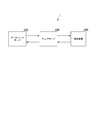
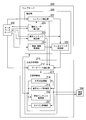
- FIG. 1 is a schematic diagram illustrating an example of a configuration of an information processing system 1 according to the first embodiment of the present invention.
- the information processing system 1 includes a database server 100 (hereinafter sometimes referred to as “storage device”), a web server (hereinafter sometimes referred to as “information processing device”) 200, and a terminal device 300.
- the information processing system 1 may include a plurality of terminal devices 300.
- the information processing system 1 presents content that one or more similar users prefer to a user who uses the terminal device 300 (hereinafter, also referred to as “target user”).
- the similar user is a user whose preference for an article (for example, content) is similar to the target user.
- the articles are not only tangible objects such as clothes, cars, books, but also contents such as music, movies, animations, television programs, video games, software, web pages, contents in web pages (for example, web pages) Intangibles such as questions above, answers on web pages, evaluations of goods or services on web pages).
- an article is content, more specifically, a question on a web page. That is, the information processing system 1 presents the content in the web page preferred by one or more similar users who have similar preferences for questions on the web page to the target user.
- the content includes questions on web pages (including bulletin boards, social network services, blogs, mini-blogs, etc.), answers to the questions, comments, information on articles (eg, books) (eg, product names, Detailed information of a product), a search object (for example, a web page), or any combination thereof.
- a case will be described as an example where the content is mainly data indicating a question on a web page, an answer to the question, or a combination thereof.
- a similar user whose preference is similar to the target user (hereinafter also referred to as “similar user”) is, for example, a user who has a tendency to view the same question as the target user.
- the preference information indicating the user's preference includes content (for example, question) browsing history, content posting history, content reply history, article (for example, book) purchase history, content poster's age, content The user's favorite gender, the user's favorite list, the user's wish list, the user's hobbies, the user's worries, and so on.
- content for example, question
- content posting history for example, content posting history
- content reply history for example, article
- content for example, book
- the database server 100 stores, for example, question information, classification information, user information, browsing information, answer information, and resource data.
- the question information is information related to the question posted by each user.
- the classification information is information related to the classification corresponding to each content (for example, a question).
- User information is information about each user.
- the browsing information is information regarding browsing of each question by the user, for example, browsing information indicating a browsing history.
- the answer information is information related to an answer posted by the user for each question, and indicates, for example, an answer history.
- the resource data is data necessary for inserting display data written in a predetermined language by inserting data as materials such as questions and answers into a web page, and displaying the configured display data.
- the predetermined language is a markup language such as HTML (Hyper Text Markup Language).
- Question information, browsing information, user information, and the like are stored in the database server 100 as a table. An example of data stored in the database server 100 will be described later.
- the web server 200 has a calculation function, an access control function, and a web application function that generates display data (for example, HTML data) to be transmitted to the terminal device 300.
- the web server 200 extracts information requested by the information request data from the database server 100 according to the information request data received from the terminal device 300.
- the web server 200 generates request result data indicating the extracted information, and transmits the generated request result data to the terminal device 300.
- the terminal device 300 receives display data from the web server 200 and displays an image of the web page corresponding to the received display data. In addition, the terminal device 300 transmits information request data representing a request for information to the web server 200 to the web server 200. The terminal device 300 receives request result data indicating the requested information from the web server 200 as a response to the information request data. Then, the terminal device 300 displays the request result represented by the received request result data as an image, for example.
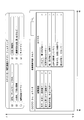
- FIG. 2 is a schematic diagram illustrating an example of an image displayed on the terminal device 300 according to the first embodiment of the present invention.
- FIG. 2 an image showing a content including a set of questions and responses concerning medical health is shown.
- the upper window in FIG. 2 has the title “By Category / Browsing History Category Filtering”. This window indicates that the target user can select whether to display available content by category or whether to display content according to a browsing history category (described later).
- the terminal device 300 detects an operation instructing selection of a check box indicated by ⁇ , and selects a category (for example, “internal medicine, allergy, metabo,%) Indicated on the right side thereof. .
- a check mark superimposed on a check box indicated by a square indicates that the category shown on the right is selected.
- “all categories”, “internal medicine, allergy, metabolic syndrome,...”, “Pediatrics, child rearing, ...”, “surgery, neurology, ...”, “General health consultation (medicine / symptoms, etc.),” is automatically selected.
- the lower window in FIG. 2 has the title “Medical Health Consultation Q & A”.
- an input field (search window) for receiving the name of the target user “XXX” and a character string (keyword) used for the search are displayed.
- search button is displayed on the right side of the input field.
- the target user requests to search for a question including a character string input in the input field by, for example, instructing a search by operating a search button.
- the right-pointing ⁇ mark displayed at the right end of each column of “browsing history” and “recommendation” indicates that the question and the full text of the answer to that question are displayed when an operation indicating the position is detected. It shows that.
- first display mode the terminal device 300 displays the questions posted by all users.
- the display mode is the second display mode
- the terminal device 300 displays a question posted by a similar user.
- FIG. 3 is a schematic block diagram illustrating an example of the configuration of the database server 100 according to the first embodiment of the present invention.
- the database server 100 includes a database 110 (hereinafter also referred to as a “storage unit”), a communication unit 120 and a CPU (Central Processing Unit) 130.
- the database 110 and the communication unit 120 are mutually connected to the CPU 130 via a bus (bus line).
- bus bus line
- a table T1 (also referred to as an item table in FIG. 4) storing question information
- a table T2 (also referred to as FIG. 5, user table) in which user information is stored
- T3 (FIG. 6, category table) is stored.
- the database 110 further stores, for example, a table T4 (FIG. 7, also referred to as a browsing history table) storing browsing information and a table T5 (FIG. 8, answer history table) storing response information.
- the database 110 further stores resource data.
- the communication unit 120 communicates with the web server 200.
- the communication unit 120 receives data representing a data acquisition command (for example, an SQL (Structured Query Language) statement) from the web server 200. Then, the communication unit 120 outputs the received data acquisition command to the CPU 130. On the other hand, the communication unit 120 transmits the data acquired from the database 110 by the CPU 130 in response to the data acquisition command to the web server 200.
- a data acquisition command for example, an SQL (Structured Query Language) statement
- the CPU 130 acquires data from the database 110 based on the data acquisition command received by the communication unit 120. Then, the CPU 130 transmits the acquired data to the web server 200 via the communication unit 120.
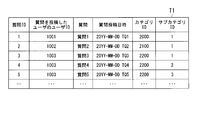
- FIG. 4 is a schematic diagram illustrating an example of the question information stored in the database server 100 according to the first embodiment of the present invention.
- the question information is stored in the table T1.
- the table T1 is formed from a set in which a question ID (identifier), a user ID (questioner ID) of a user who posted a question, a question, a question posting date, a category ID, and a subcategory ID are associated with each other.
- the question ID is identification information for identifying each question, and is, for example, a numerical value unique to each question.
- the user ID of the user who posted the question is identification information for identifying the user who posted the question identified by the question ID, and is, for example, a numerical value unique to each user.
- the question is a character string indicating the content of the question identified by the question ID.
- the question posting date and time is the date and time when the user posted the content of the question.
- the category ID is identification information representing the classification assigned to the question, and is a numerical value unique to each classification, for example.
- the subcategory ID is a subcategory that is an auxiliary classification obtained by further subdividing the category (classification), and is identification information for identifying the subcategory assigned to the question.
- the subcategory ID is a numerical value unique to each subcategory, for example.
- the content of the question identified by the question ID “1” is “Question 1”, and the user ID of the user who posted the “Question 1” is “1001”.
- the question posting date and time when the user posted the “question 1” is “20YY-MM-DD TQ1”.
- “20YY” of the posting date / time represents the year
- “MM” represents the month
- “DD” represents the day
- “TQ1” represents the time.
- the category ID of the category assigned to “question 1” identified by the question ID “1” and the category ID of the subcategory are “2000” and “1”, respectively.
- FIG. 5 is a schematic diagram illustrating an example of user information stored in the database server 100 according to the first embodiment of the present invention.
- user information is stored in a table T2.
- the table T2 is formed from a set in which a user ID, a user name, sex, and age are associated.
- the user ID is identification information for identifying the user as described above, and is a numerical value unique to each user, for example.
- the user name is the name of the user identified by the user ID.
- the gender is the gender of the user identified by the user ID.
- the age is the age of the user identified by the user ID.
- the user name, gender, and age of the user identified by the user ID “1001” are “xxx Taro”, “male”, and “25” years old, respectively.
- FIG. 6 is a schematic diagram illustrating an example of classification information stored in the database server 100 according to the first embodiment of the present invention.
- the classification information is stored in the table T3.
- the table T3 is formed from a set in which a category ID, a category name, a subcategory ID, and a subcategory name are associated.
- the category ID is identification information representing a category as described above.
- the category name is the name of the category identified by the category ID.
- the subcategory ID is identification information for identifying the subcategory as described above.
- the subcategory name is the name of the subcategory identified by the subcategory ID.
- the category name that is the name of the category identified by the category ID “2000” is “internal medicine”.
- the category ID “2000” is associated with the subcategory ID “1”, and the subcategory name of the subcategory identified by the subcategory ID “1” is “cardiology internal medicine”.
- the category name that is the name of the category identified by the category ID “2100” is “surgery”.
- the category ID “2100” is associated with the subcategory ID “1”, and the subcategory name of the subcategory identified by the subcategory ID “1” is “orthopedic”.
- the category name that is the name of the category identified by the category ID “2200” is “otolaryngology”.
- the category ID “2200” is associated with the subcategory IDs “1”, “2”, and “3”, and the subcategory names of the subcategories identified by the subcategory IDs “1”, “2”, and “3” are “ Ear, nose, and throat.
- the classification information indicates information indicating a category that is a classification of each question in a certain hierarchy, and at least one of the categories is associated with information indicating a subcategory that is a classification classified in a lower hierarchy. It has been.
- the classification information shown in the table T3 is information indicating a two-layer classification. Note that the classification information may be information indicating a classification of more than two hierarchies. Further, the classification information may be information indicating the classification of one layer, for example, information in which the subcategory ID and the subcategory name are omitted in the table T3.
- FIG. 7 is a schematic diagram illustrating an example of browsing information stored in the database server 100 according to the first embodiment of the present invention.
- the browsing information is stored in the table T4.
- the table T4 is formed from a set in which the question ID, the user ID (viewer ID) of the browsing user, and the browsing date are associated.
- the question ID is identification information for identifying a question as described above.
- the user ID of the user who browsed is a user ID that identifies the user who viewed the question.
- the browsing date and time is the date and time when the user browsed the question.
- browsing the question includes browsing the answer corresponding to the question unless otherwise specified.
- the user ID of the user who browsed the question for the question ID “1” is “1001”
- the browsing date and time when the user browsed the question is “20YY-MM-DD TB1”.
- “20YY” of the viewing date / time represents the year
- “MM” represents the month
- “DD” represents the day
- “TB1” represents the time.
- a set of “1001” and “20YY-MM-DD TB2” is set as a set of the user ID and the viewing date / time.
- a pair of “1003” and “20YY-MM-DD TB5” is associated with a pair of “1004” and “20YY-MM-DD TB7” as shown in the eighth line. ing.
- one question ID or one or a plurality of sets of browsing date and time may be associated with one question ID.
- FIG. 8 is a schematic diagram illustrating an example of answer information stored in the database server 100 according to the first embodiment of the present invention.
- the answer information is stored in the table T5.
- the table T5 is formed from a set in which the question ID, the user ID of the respondent (answerer ID), the answer, and the answer posting date / time are associated with each other.
- the question ID is a question ID that identifies a question to be answered.
- the user ID of the respondent is a user ID that identifies the user who is the respondent who posted the answer.
- the answer is a character string indicating the content of the answer.
- the answer posting date and time is the date and time when the respondent posted the answer.
- the user ID of the respondent who posted the answer to the question ID “1” is “1003”
- the answer is “answer 1”
- the date and time is “20YY-MM-DD TA1”.
- “20YY” in the answer posting date represents the year
- “MM” represents the month
- “DD” represents the day
- “TA1” represents the time.
- “answer 1” and “answer 2” are associated with the question identified by the question ID “1”
- “answer 3” is associated with the question identified by the question ID “2”.
- one or a plurality of answers may be associated with one question.
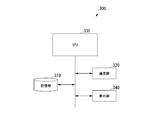
- FIG. 9 is a schematic block diagram illustrating an example of the configuration of the terminal device 300 according to the first embodiment of the present invention.
- the terminal device 300 includes a storage unit 310, a communication unit 320, a CPU 330, and a display unit 340.
- the storage unit 310, the communication unit 320, and the display unit 340 are mutually connected to the CPU 330 via a bus (bus line).
- the storage unit 310 stores various programs that the CPU 330 reads and executes.
- the communication unit 320 communicates with the web server 200. For example, the communication unit 320 transmits information request data to the web server 200 according to the control of the CPU 330. Then, the communication unit 320 receives the request result data transmitted by the web server 200 as a response to the transmission of the information request data. For example, to search for a question related to a certain keyword (for example, heart disease), the user presses the search button after inputting the character string of the keyword in the input field. In this case, the information request data represents requesting a question related to the character string. The communication unit 320 receives, for example, HTML data representing a list of questions related to the character string from the web server 200 as request result data corresponding to the information request data. Then, the communication unit 320 outputs the received request result data to the CPU 330.
- a certain keyword for example, heart disease
- the CPU 330 executes various processes by reading the program from the storage unit 310. For example, the CPU 330 causes the display unit 340 to display the question list by outputting image data representing a list of questions included in the request result data input from the communication unit 320 to the display unit 340.
- FIG. 10 is a schematic block diagram showing an example of the configuration of the web server 200 according to the first embodiment of the present invention.
- the web server 200 includes an input / output control unit 210 and an extraction unit 220.
- the input / output control unit 210 includes a response control unit 211 and a database reading unit 212.
- the response control unit 211 includes a character string acquisition unit 214, a display mode acquisition unit 215, a specific content acquisition unit 216, and a category acquisition unit 217.
- the extraction unit 220 includes a similar user extraction unit 221, a content extraction unit 222, a similar content extraction unit 223, a season / period acquisition unit 224, and a filtering processing unit 225.
- the response control unit 211 receives information request data from the terminal device 300 and outputs the received information request data to the extraction unit 220. Further, the response control unit 211 outputs the request result data input from the database reading unit 212 to the terminal device 300.
- the character string acquisition unit 214 acquires a character string input by the target user from the terminal device 300.
- the character string acquisition unit 214 outputs the acquired character string to the content extraction unit 222 of the extraction unit 220 described later.
- the display mode acquisition unit 215 acquires display mode data representing the display mode selected by the target user from the terminal device 300.
- the display mode acquisition unit 215 outputs the acquired display mode data to the content extraction unit 222 of the extraction unit 220 described later.
- the specific content acquisition unit 216 acquires, for example, a specific question selected by the user from the presentation candidate questions as the content extracted by the content extraction unit 222 described later.
- the presentation candidate question is a question that is a candidate to be presented to the target user.
- the specific content acquisition unit 216 outputs the acquired specific question to the similar content extraction unit 223 of the extraction unit 220 described later.
- the category acquisition unit 217 acquires category data representing the category selected by the target user from the terminal device 300.
- the category acquisition unit 217 outputs the acquired category data to the content extraction unit 222 of the extraction unit 220 described later.
- the category acquisition unit 217 extracts the acquired category data from the content of the extraction unit 220 described later.
- the database reading unit 212 reads resource data from the database 110 of the database server 100.
- the database reading unit 212 generates request result data by inserting the extraction result data input from the extraction unit 220 described later into the read resource data. Then, the database reading unit 212 outputs the generated request result data to the response control unit 211.
- the extraction unit 220 extracts content from the content stored in the database 110 of the database server 100 based on a predetermined standard. For example, the extraction unit 220 determines a similar user whose preference for the article is similar to that of the target user, and extracts content (for example, a question) viewed by the similar user determined in this way. When extracting the content, the extraction unit 220 preferentially extracts the content stored in the database 110 of the database server 100, for example, the content having a larger number of browsing by similar users.
- the similar user extraction unit 221 extracts similar users with similar preferences for the target user and the article.
- the similar user extraction unit 221 uses, for example, the target user and other scores as scores that increase as the number of contents (for example, questions) that the target user and other users browse in common (hereinafter, the number of common browsing) increases.
- the similarity between users which is a similarity with a user is calculated.
- the similar user extraction unit 221 calculates the degree of similarity between users using, for example, Expression (1).
- the maximum degree of similarity between users is 1 and the minimum value is 0.
- the similar user extraction unit 221 calculates the similarity between users for each of the users other than the target user.
- the similar user extraction unit 221 sets other users other than the target user included in the top N ranks (N is a predetermined integer of 1 or more, for example, 5) as the similar users, with the calculated high similarity between users. Extract.
- the similar user extraction unit 221 outputs the calculated degree of similarity between users and information indicating the extracted similar user to the content extraction unit 222.
- the content extraction unit 222 extracts content from the database 110 of the database server 100 based on the similarity between users calculated by the similar user extraction unit 221.
- the content extraction unit 222 extracts, for example, content (for example, a question) viewed by a similar user extracted by the similar user extraction unit 221 from the database 110 of the database server 100, and content that the target user has already viewed from the extracted content. Is excluded. That is, the content extraction unit 222 extracts content obtained by excluding content that has already been viewed by the target user from content that has been viewed by similar users. Thereby, the information processing system 1 can present to the target user content excluding the content preferred by the target user among the content preferred by the similar user. For this reason, the target user can find the content being searched for more quickly.
- the content extraction unit 222 sums up the similarities between the users of the plurality of similar users for the content, and the total number is calculated for the content. Calculated as a recommendation score (also referred to as a recommendation score).
- the recommendation score is a score indicating the degree of recommendation of the content to the target user, that is, the degree of presentation prior to the target user. Then, the content extraction unit 222 extracts the content in descending order of the recommendation score, narrows down the extracted content to a predetermined number, and arranges the extracted content in descending order of the recommendation score.
- the content extraction unit 222 uses, for each content viewed by a plurality of similar users extracted by the similar user extraction unit 221, the target of the content using the similarity between users of the plurality of similar users who browsed the content. A recommendation score representing the degree of recommendation to the user is calculated. Then, the content extraction unit 222 extracts content based on the calculated recommendation score.
- the content extraction unit 222 searches for content including the character string acquired by the character string acquisition unit 214 from all the contents. Extract the searched content.
- the content extraction unit 222 includes the character string acquired by the character string acquisition unit 214 from the content already viewed by a similar user. Search the content and extract the searched content.
- the content extraction unit 222 outputs extraction result data representing the extracted content to the database reading unit 212 and the filtering processing unit 225. Thereby, the content classified into the category selected by the target user according to the operation is displayed on the terminal device 300.
- the similar content extraction unit 223 extracts similar content similar to the specific content (for example, a question) acquired by the specific content acquisition unit 216. Specifically, for example, the similar content extraction unit 223 sets a set of users who have already browsed specific content (hereinafter also referred to as a first question) and content different from the content (hereinafter referred to as a second question). The number of users that overlap with a set of users who have already browsed (also referred to as a user overlap number) is calculated. And the similar content extraction part 223 calculates the similarity of the 2nd question with respect to a 1st question based on the calculated user duplication number, for example.
- the similar content extraction unit 223 calculates the similarity of each content with respect to the specific content by calculating the similarity with respect to content other than the second question. Then, the similar content extraction unit 223 extracts, for example, the top M contents (M is a predetermined integer equal to or greater than 1) having a high degree of similarity of the calculated content.
- the similar content extraction unit 223 further extracts content classified into the category indicated by the category data input from the category acquisition unit 217 from the extracted content.
- the similar content extraction unit 223 outputs extraction result data representing the extracted content to the database reading unit 212. Thereby, the content classified into the category selected by the target user according to the operation is displayed on the terminal device 300.
- the season / period acquisition unit 224 identifies, as preference information, the question ID that the target user has browsed among the browsing information stored in the database 110 of the database server 100, and extracts the question corresponding to the identified question ID from the question information. To do. Then, the season / period acquisition unit 224 extracts the question posting date / time when the extracted question was posted from the question information, refers to the definition information described later, and determines the season of the period to which the question posting date / time belongs to the season information. As specified.
- the season / period acquisition unit 224 specifies the question ID for the question viewed by the target user from the browsing information stored in the database 110 of the database server 100 as preference information, An answer corresponding to the identified question ID is extracted from the answer information. Then, the season / period acquisition unit 224 extracts the answer posting date / time when the answer to the question was posted from the question information, refers to the definition information described later, and determines the season of the period to which the answer posting date / time belongs to the season information As specified.
- the filtering processing unit 225 extracts (filters) content from the content (for example, a question) input by the content extraction unit 222 and the similar content extraction unit 223 based on the season information input by the season / period acquisition unit 224. To do. Specifically, the filtering processing unit 225, when the question posting date / time and the answer posting date / time among the plurality of input contents indicate that the posting was made during the season indicated by the season information, the question posting The questions posted on the day and the answers posted on the date of posting the answers are extracted, and the questions and answers other than the extracted questions and answers are excluded.
- the filtering processing unit 225 is posted at the posting date when the posting date of the content among the plurality of input contents indicates that the posting was made during the season indicated by the season information. Extract content and exclude content other than the extracted content. Then, the filtering processing unit 225 calculates the above-described recommendation score (recommendation score) for each of the extracted contents, and arranges a predetermined number of questions in descending order of the calculated recommendation score. The filtering processing unit 225 outputs the arranged contents to the database reading unit 212 as extraction result data.
- recommendation score recommendation score
- FIG. 11 is a hardware configuration diagram illustrating an example of a hardware configuration of the web server 200 according to the first embodiment of the present invention.
- the web server 200 includes a CPU 201, a storage medium 202, a drive unit 203, an input unit 204, an output unit 205, a ROM 206 (Read Only Memory), a RAM 207 (Random Access Memory), and an auxiliary storage.
- the CPU 201, the drive unit 203, the input unit 204, the output unit 205, the ROM 206, the RAM 207, the auxiliary storage unit 208, and the communication unit 209 are connected to each other via a bus (bus line).
- the CPU201 reads a program and various data, and controls the web server 200.
- the storage medium 202 is a portable storage medium such as a magneto-optical disk, a flexible disk, or a flash memory, and stores, for example, various data.
- the drive unit 203 is, for example, a reading device or a reading / writing device for the storage medium 202.
- the input unit 204 is an input device such as a mouse or a keyboard.
- the output unit 205 is an output device such as a display unit or a speaker.
- the ROM 206 is a storage medium that stores a program, for example.
- the RAM 207 is a storage medium that temporarily stores various data and programs, for example.
- the auxiliary storage unit 208 is a storage medium such as a hard disk drive or a flash memory, and stores, for example, various data.
- the communication unit 209 has a communication interface and is connected to the network NW by wire or wireless.
- the program read by the CPU 201 is an example stored in the ROM 206, but may be stored in the storage medium 202 or the auxiliary storage unit 208, or the program downloaded from the network NW may be stored in the storage medium 202, the auxiliary storage unit 208, or the like. May be stored.
- the various data read by the CPU 201 is an example stored in the storage medium 202 or the auxiliary storage unit 208, but may be stored in the ROM 206 or may be various data downloaded from the network NW.
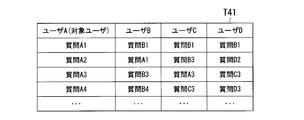
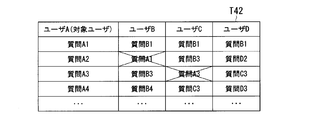
- FIGS. 12A and 12B are schematic diagrams illustrating an example of a question viewed by a target user and a similar user according to the first embodiment of the present invention.
- FIG. 12A shows a table T41 showing a list of questions viewed by each user.
- the table T41 has item columns for user A, user B, user C, and user D.
- user A is the target user.
- User B, user C, and user D are all similar users.
- the content extraction unit 222 excludes the question that the user A (target user) has already viewed from the questions that the user B, user C, and user D have already viewed. Specifically, the “question A1” viewed by the user B is also viewed by the user A (target user), so the “question A1” viewed by the user B is excluded. Similarly, “question A3” viewed by user C is excluded. In the table T42 illustrated in FIG. 12B, among the questions in the table T41, a cross is given on the question excluded by the content extraction unit 222.
- the content extraction unit 222 determines the similarity between the user A and the user B RAB and the user A and the user C of the user C.
- the content extraction unit 222 includes the user-to-user similarity R AB between the user A and the user B and the user-to-user similarity R between the user A and the user C.
- the content extraction unit 222 performs the similarity between the users A and C between the users RAC and the similarity between the users A and D between the users.
- the content extraction unit 222 are arranged in the order of “question B1”, “question B3”, “question C3”, and “question D3”. Thereby, the terminal device 300 displays “Question B1”, “Question B3”, “Question C3”, and “Question D3” in that order.
- the content extraction unit 222 are arranged in the order of “Question B1”, “Question B3”, “Question D3”, and “Question C3”. Thereby, the terminal device 300 displays “Question B1”, “Question B3”, “Question D3”, and “Question C3” in that order.
- the content extraction unit 222 increases the recommendation score as the number of similar users viewed among the content viewed by similar users increases. Further, the content extraction unit 222 increases the recommendation score for the content browsed by similar users as the sum of the similarities between the similar user who browsed the content and the target user increases. Thereby, among the contents browsed by similar users, it is possible to preferentially present the contents viewed by many similar users having high inter-user similarity with the target user. As a result, the information processing system 1 can increase the probability of presenting the content that the target user is looking for, so that the target user can quickly and easily find the content that the target user is looking for. As a result, it is possible to quickly and easily know what the target user wants to know from the presented content, so that user satisfaction can be improved. Moreover, since the information processing system 1 presents content excluding content that has already been browsed by the target user, the target user can find the content that the user is looking for earlier.
- FIG. 13 is an explanatory diagram illustrating an example of the degree of similarity of the question 3 with respect to the question 2 according to the first embodiment of the present invention.
- the line segment connecting the user name (for example, user A) and the question name (for example, “question 1”) is viewed by the user shown at one end of the question shown at the other end. Represents that. Specifically, “Question 1” is browsed by the user A. “Question 2” is viewed by user A, user B, and user C. “Question 3” is browsed by user C and user D. “Question 4” is browsed by user B. “Question 5” is browsed by user A.
- an example of the similarity (content similarity) of each question with respect to “question 2” is shown immediately below the question name.
- N 1 is the number of users who viewed the question with respect to “Question 2” (in this example, 3).
- N 2 is the number of users who viewed the question with respect to “Question 3” (in this example, 2).
- N 3 is the overlapping number of users of “Question 2” and “Question 3” (2 in this example).
- the similarity V means that the larger the value, the higher the similarity between questions.
- the similar content extraction part 223 can make the similarity between questions high, so that there are many users who browsed repeatedly between questions.
- FIG. 14 is a schematic diagram illustrating an example of definition information according to the first embodiment of the present invention.
- the table TT5 is an example of definition information.
- Table TT5 is No. , Season and period items. No. Is an identification number assigned to each season and period.
- the seasons are, for example, the four seasons of “spring”, “summer”, “autumn”, and “winter”.
- the period represents a period corresponding to the season. For example, if “spring”, the period “March 1 to June 30” corresponds.
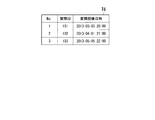
- FIG. 15 is a schematic diagram illustrating an example of a viewing history of the target user according to the first embodiment of the present invention.
- the table T6 is an example of a browsing history of the user A who is the target user, for example.
- Table T6 is No. , Question ID and question posting date and time. No. Represents the order when the user A browses the question corresponding to the question ID. For example, in the example of the second row, it represents that the user A browsed the question corresponding to the question ID “101”, and the posting date / time when the question was posted is the question posting date / time “2013-03-03 20:00”. It represents that.
- the posting date and time when the question corresponding to the question ID “102” is posted is the question posting date and time “2013-04-01 21:00”, and the question corresponding to the question ID “103” is posted.
- the posting date and time is the question posting date and time “2013-05-05 22:00”. That is, any of the questions viewed by the user A corresponds to the period “March 1 to June 30” whose question posting date and time is shown in the table TT5, and the period “March 1 to June 30” is displayed. Corresponds to the season "spring”.
- FIG. 16A to FIG. 16C are schematic views showing examples of browsing histories of similar users according to the first embodiment of the present invention.
- a table T7 illustrated in FIG. 16A is an example of a browsing history of the user B who is a similar user.
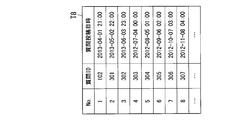
- table T8 shown to FIG. 16B is an example of the browsing history of the user C who is a similar user, for example.
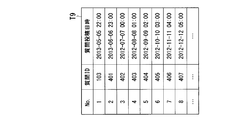
- table T9 shown to FIG. 16C is an example of the browsing history of the user D who is a similar user, for example.
- Each of the tables T7, T8, T9 is No. , Question ID and question posting date and time. Since each item string is the same as that in the table T6, description thereof is omitted.
- the example of the second row of the table T7 indicates that the user B browsed the question corresponding to the question ID “101”, and the posting date / time when the question was posted is the question posting date / time “2013-03-03 20:00”. ".
- the third row of the table T7 it is indicated that the user B has browsed the question corresponding to the question ID, and that the posting date and time when the question is posted is the question posting date and time. Yes.
- the example of the second row of the table T8 indicates that the user C has browsed the question corresponding to the question ID “102”, and the posting date and time when the question is posted is the question posting date and time “2013-04-01 21 : 00 ”. Also, in other rows such as the third row of the table T8, it indicates that the user C has browsed the question corresponding to the question ID, and that the posting date and time when the question is posted is the question posting date and time. Yes.
- the example of the second row of the table T9 indicates that the user D has browsed the question corresponding to the question ID “103”, and the posting date and time when the question is posted is the question posting date and time “2013-05-05 22”. : 00 ”.
- the third row of the table T9 it indicates that the user D has browsed the question corresponding to the question ID, and that the posting date and time when the question is posted is the question posting date and time. Yes.
- the browsing history of similar users is associated with identification information of content browsed by each similar user and date / time information such as posting date / time when the content is posted. It has been.
- FIG. 17A to FIG. 17C are schematic diagrams showing examples of browsing histories of similar users subjected to filtering processing according to the first embodiment of the present invention.
- a table T10 illustrated in FIG. 17A is an example of a browsing history that has been filtered by the user B who is a similar user.
- table T11 shown to FIG. 17B is an example of the browsing history by which the filtering process of the user C who is a similar user was carried out, for example.
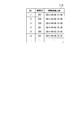
- table T12 shown to FIG. 17C is an example of the browsing history by which the user D who is a similar user was filtered.
- Each of the tables T10, T11, T12 is No. , Question ID and question posting date and time. Since each item string is the same as the tables T7, T8, and T9, description thereof is omitted.
- the season / period acquisition unit 224 and the filtering processing unit 225 are based on the browsing history of the user A who is the target user, the browsing histories of the users B, C, and D which are similar users, and the definition information. 222, filtering processing is performed on the plurality of contents input by the similar content extraction unit 223, and the contents to be presented to the target user are extracted. Specifically, the season / period acquisition unit 224 extracts the question posting date and time of each question viewed by the user A from the browsing history (table T6) of the user A, and the extracted question posting date and time is defined information (table TT5). ) And the season (for example, spring) associated with the period corresponding to the question posting date and time is extracted.
- the filtering process part 225 extracts the content corresponding to the extracted season from the browsing history (table T7, T8, T9) of a similar user.
- the table T10 includes a period “3” of the definition information (table TT5) corresponding to the season “spring” extracted from the user B browsing history (table T6) by the filtering processing unit 225 from the user B browsing history (table T7). It is generated by extracting a question having a question posting date and time corresponding to “Month 1st to June 30th”.
- the filtering processing unit 225 selects a question corresponding to the period of the definition information (table TT5) corresponding to the season extracted from the browsing history (table T6) of the user A from the browsing history (table T8) of the user C.
- the history information is extracted as in the table T11 by extracting the question of the posting date.
- the filtering process part 225 is the question posting date and time corresponding to the period of the definition information (table TT5) corresponding to the season extracted from the browsing history (table T6) of the user A from the browsing history (table T9) of the user D.
- the history information is extracted as in the table T12 by extracting the questions.
- FIG. 18 is a schematic diagram illustrating an example of recommendation information according to the first embodiment of the present invention.
- the table T13 is an example of recommendation information presented to the target user.
- Table T13 is No. , Question ID and question posting date and time. Since each item string is the same as the tables T10, T11, and T12, description thereof is omitted.
- the filtering processing unit 225 generates recommendation information by rearranging the history extracted from the browsing history of each similar user as in the tables T10, T11, and T12, for example, in descending order of the recommendation score. Specifically, the filtering processing unit 225 excludes questions that have already been browsed by the target user from the browsing history of each extracted similar user. Then, the filtering processing unit 225 calculates a recommendation score for each browsing history question other than the excluded questions, sorts the browsing history of similar users in descending order of the calculated recommendation score, and stores the table T13. Generate recommendations like this.
- the filtering processing unit 225 sorts the browsing histories extracted from the browsing histories of each similar user as in the tables T10, T11, and T12, for example, in descending order of recommended scores. Recommendation information may be generated without excluding questions that have already been viewed by the target user.
- the filtering processing unit 225 sorts the browsing history from the browsing history extracted from each similar user like the tables T10, T11, and T12 in order from the latest posting date of the question.
- the recommendation information may be generated without excluding the questions already viewed by the target user.
- the filtering processing unit 225 sorts the browsing histories extracted from the browsing histories of the similar users as in the tables T10, T11, and T12 in order from the latest posting date of the question, and has already been viewed by the target user.
- the recommended information may be generated by excluding the asked questions.
- the filtering processing unit 225 has described the case where the recommendation information is generated by rearranging the recommendation scores in descending order.
- the present invention is not limited to this.
- the browsing histories extracted from the browsing histories of the similar users as in the tables T10, T11, and T12 the browsing history of the similar users having the largest number of extracted browsing histories, and the second extracted browsing history.
- a predetermined number of browsing histories may be extracted from the browsing histories of each similar user in the order of similar users with many extracted browsing histories, and recommendation information may be generated.
- the predetermined number is different for each similar user in stages according to the order of similar users having many extracted browsing histories, for example, 3 for the similar user B, 2 for the similar user C, and 2 for the similar user D. May be 1 or the same number for all similar users.
- the filtering processing unit 225 may extract all the browsing histories and generate recommendation information.
- the filtering processing unit 225 includes the browsing history that each similar user has recently viewed among the browsing histories extracted from the browsing history of each similar user as in the tables T10, T11, and T12. For example, a predetermined number of browsing histories are extracted in descending order of the value in the item string of each identification information (No.) in the tables T10, T11, T12, and the extracted browsing histories are stored in the tables T10, T11, T12. As described above, recommendation information may be generated by rearranging browsing histories in the order of similar users having a large number of browsing histories extracted from browsing histories of similar users.
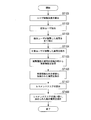
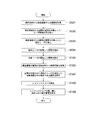
- FIG. 19 is a flowchart showing an example of information processing in the web server 200 according to the first embodiment of the present invention.
- the similar user extraction unit 221 calculates the similarity between users between the target user and each of the other users. Then, it progresses to step ST102.
- the similar user extraction unit 221 extracts the top N users having the similarities between users as similar users. Then, it progresses to step ST103.
- the content extraction unit 222 extracts all questions viewed by similar users. Then, it progresses to step ST104.
- step ST104 the content extraction unit 222 excludes questions already viewed by the target user from all the questions browsed by the similar users extracted in step ST103. Then, it progresses to step ST105.
- step ST105 the season / period acquisition unit 224 acquires the season information related to the question viewed by the target user based on the question posting date and the definition information of the question viewed by the target user. Then, it progresses to step ST106.
- step ST106 the filtering processing unit 225 excludes questions posted in seasons other than the season information acquired in step ST105 from the questions extracted in step ST103. Then, it progresses to step ST107.
- step ST107 the filtering processing unit 225 calculates a recommendation score (recommendation score) for each of the questions left out in step ST106. Then, it progresses to step ST108.
- step ST108 the filtering processing unit 225 extracts a predetermined number of questions in the descending order of recommendation score (recommendation score), and causes the terminal device 300 to present the extracted questions. Thereafter, the processing according to FIG. 19 ends.
- the information processing apparatus refers to the preference information indicating the preference for each article between the target user and other users, and the target user and the other users.
- a similar user extraction unit 22 that calculates a similarity between users, which is a similarity with a user, and extracts similar users similar to the target user based on the calculated similarity between users, and a similarity extracted by the similar user extraction unit
- a content extraction unit 222 that extracts content that the user likes. More specifically, the information processing apparatus (web server 200) refers to the preference information indicating the preference for each article between the target user and other users, and indicates the similarity between the target user and other users.
- a similar user extraction unit 221 that calculates a similarity between users and extracts a similar user similar to the target user based on the calculated similarity between users, and a content that the similar user extracted by the similar user extraction unit 221 likes.
- the information processing apparatus can extract content that has recently become a topic or seasonal content from the posting time of content viewed by a plurality of similar users who have similar preferences to a certain user. Information that matches the current preference of the user can be presented.
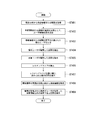
- FIG. 20 is a flowchart illustrating an example of information processing in the web server 200 according to the second embodiment of the present invention.
- the similar user extraction unit 221 calculates the similarity between users between the target user and each of the other users. Then, it progresses to step ST202.
- the similar user extracting unit 221 extracts the top N users having the similarities between users as similar users. Then, it progresses to step ST203.
- the content extraction unit 222 extracts all questions viewed by similar users. Then, it progresses to step ST204.
- the content extraction unit 222 excludes questions already viewed by the target user from all the questions browsed by the similar users extracted in step ST203. Then, it progresses to step ST205.
- step ST205 the filtering processing unit 225 calculates a recommendation score (recommendation score) for each of the questions left in step ST206. Then, it progresses to step ST206.
- step ST206 the filtering processing unit 225 extracts a predetermined number of questions in descending order of recommendation score (recommendation score). Then, it progresses to step ST207.
- step ST207 the season / period acquisition unit 224 acquires the season information related to the question viewed by the target user based on the question posting date and definition information of the question viewed by the target user. Then, it progresses to step ST208.
- step ST208 the filtering processing unit 225 excludes questions posted in seasons other than the season information acquired in step ST207 from the questions extracted in step ST103, and causes the terminal device 300 to present the remaining questions. Thereafter, the information processing according to FIG. 20 ends.
- the information processing apparatus refers to the preference information indicating the preference of each article between the target user and other users, and the target user and other users.
- a similar user extraction unit 221 that calculates a similarity between users, which is a similarity with a user, and extracts similar users similar to the target user based on the calculated similarity between users, and a similar user extraction unit 221
- a content extraction unit 222 that extracts content preferred by similar users, and a content filtering processing unit (filtering processing unit) that filters the content extracted by the content extraction unit 222 with date and time information and extracts presentation content to be presented to the target user 225).
- FIG. 21 is a schematic diagram illustrating an example of an image displayed on the terminal device 300 according to the third embodiment of the present invention.
- the upper window in FIG. 21 is a recommendation switching window having the title “recommendation switching”. This window allows the user to select date and time information such as whether to extract recommended information by "period”, whether to extract by "keyword”, or whether to extract by "season” Indicates.
- the terminal device 300 detects, for example, that radio buttons are arranged corresponding to “period”, “keyword”, and “season” and are selected by the radio buttons, and are displayed on the right side thereof.
- the recommended information is extracted based on the seasonal information, for example, the keyword information corresponding to “keyword”.
- the lower window in FIG. 21 has the title “Medical Health Consultation Q & A”.
- the name of the target user “XXX” and an input field (search window) for receiving a character string used for the search are displayed.
- search window is displayed on the right side of the input field.
- the target user requests to search for a question including a character string input in the input field by, for example, instructing a search by operating a search button.
- the right-pointing ⁇ mark displayed at the right end of each column of “browsing history” and “recommendation” indicates that the question and the full text of the answer to that question are displayed when an operation indicating the position is detected.
- a question sentence access history mode first display mode
- a question sentence recommendation mode second display mode
- the configuration of the web server 200a according to the third embodiment of the present invention will be described with the aid of the configuration of the web server 200 according to the first embodiment shown in FIG.
- the web server 200 in FIG. 10 is replaced with the web server 200a
- the extraction unit 220 is replaced with the extraction unit 220a
- the season / period acquisition unit 224 is replaced with the season / period acquisition unit 224a
- filtering processing is performed.
- the unit 225 will be described as the filtering processing unit 225a.
- the web server 200a includes an input / output control unit 210 and an extraction unit 220a.
- the input / output control unit 210 includes a response control unit 211 and a database reading unit 212.
- the response control unit 211a includes a character string acquisition unit 214, a display mode acquisition unit 215, a specific content acquisition unit 216, and a category acquisition unit 217.
- the extraction unit 220a includes a similar user extraction unit 221, a content extraction unit 222, a similar content extraction unit 223, a season / period acquisition unit 224a, and a filtering processing unit 225a.
- the processing of the extraction unit 220a is different. Since the other configuration is the same as that of the first embodiment, the same reference numerals are attached and description thereof is omitted, and different portions in the third embodiment will be mainly described.
- the season / period acquisition unit 224a has the same function as the season / period acquisition unit 224 (FIG. 10), but differs from the season / period acquisition unit 224 in the following points.
- the season / period acquisition unit 224a keyword extraction unit extracts the question posting date and time when the extracted question is posted from the question information, refers to the definition information described later, and determines the season of the period to which the question posting date belongs. , Get as season information.
- the season / period acquisition unit 224a acquires keyword information representing a keyword corresponding to the acquired season information with reference to the definition information.
- the season / period acquisition unit 224a outputs the acquired season information and keyword information to the filtering processing unit 225a.
- the season / period acquisition unit 224a extracts the answer posting date / time when the answer to the question is posted from the question information, and refers to the definition information to be described later. Get the season of the period to which it belongs as seasonal information. Then, the season / period acquisition unit 224a acquires keyword information representing a keyword corresponding to the acquired season information with reference to the definition information. Then, the season / period acquisition unit 224a outputs the acquired season information and keyword information to the filtering processing unit 225a.
- the filtering processing unit 225a has the same function as the filtering processing unit 225 (FIG. 10), but differs from the filtering processing unit 225 in the following points. Based on the season information input from the season / period acquisition unit 224a, the filtering processing unit 225a extracts, as the first content, the content for which the posted date of the extracted content corresponds to the season information. Then, based on the keyword information input from the season / period acquisition unit 224a, the filtering processing unit 225a searches the extracted first content for content including the keyword represented by the keyword information, and narrows down the content range. The filtering processing unit 225a outputs the searched content to the database reading unit 212 as extraction result data.
- FIG. 22 is a schematic diagram illustrating an example of definition information according to the third embodiment of the present invention.
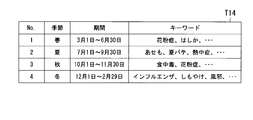
- the table T14 is an example of definition information.
- Table T14 is No. , Season and period keyword columns. No. Is an identification number assigned to each season.
- the seasons are, for example, the four seasons of “spring”, “summer”, “autumn”, and “winter”.
- the period represents a period corresponding to the season. For example, if “spring”, the period “March 1 to June 30” corresponds.
- the keyword is a keyword (also referred to as a trend) that is characteristic in each season, for example, a keyword that represents an epidemic or symptom for each season.
- the information processing apparatus refers to the preference information indicating the preference of each article between the target user and the other user, and the target user and the other user.
- a similar user extraction unit 221 that calculates a similarity between users, which is a similarity with a user, and extracts similar users similar to the target user based on the calculated similarity between users, and a similar user extraction unit 221
- a content extraction unit 222 that extracts content preferred by similar users, and a content filtering processing unit (filtering processing unit) that filters the content extracted by the content extraction unit 222 with date and time information and extracts presentation content to be presented to the target user 225a).
- the information processing apparatus corresponds to the date / time information from recently browsed content or seasonal content from content viewed by a plurality of similar users who have similar preferences to a certain user. Information that matches the current preference of a user can be presented.
- the configuration of the web server 200b according to the fourth embodiment of the present invention will be described with the aid of the configuration of the web server 200 according to the first embodiment shown in FIG.
- the web server 200 in FIG. 10 is replaced with the web server 200b
- the extraction unit 220 is replaced with the extraction unit 220b
- the season / period acquisition unit 224 is replaced with the season / period acquisition unit 224b
- filtering processing is performed.
- the unit 225 will be described as the filtering processing unit 225b.
- the web server 200b includes an input / output control unit 210 and an extraction unit 220b.
- the input / output control unit 210 includes a response control unit 211 and a database reading unit 212.
- the response control unit 211b includes a character string acquisition unit 214, a display mode acquisition unit 215, a specific content acquisition unit 216, and a category acquisition unit 217.
- the extraction unit 220b includes a similar user extraction unit 221, a content extraction unit 222, a similar content extraction unit 223, a season / period acquisition unit 224b, and a filtering processing unit 225b.
- the processing of the extraction unit 220b is different. Since the other configuration is the same as that of the first embodiment, the same reference numerals are given and description thereof is omitted, and different portions in the fourth embodiment will be mainly described.
- the season / period acquisition unit 224b has the same function as the season / period acquisition unit 224 (FIG. 10), but differs from the season / period acquisition unit 224 in the following points.
- the season / period acquisition unit 224b extracts the question posting date and time when the extracted question was posted from the question information, and acquires the month of the period to which the question posting date and time belongs as the period information with reference to definition information described later. To do. Then, the season / period acquisition unit 224b outputs the acquired period information to the filtering processing unit 225b.
- the season / period acquisition unit 224b extracts the answer posting date and time when the answer to the question is posted from the question information, and refers to the definition information described later, and the answer posting date and time The month of the period to which is belongs is acquired as period information. Then, the season / period acquisition unit 224b outputs the acquired period information to the filtering processing unit 225b.
- the filtering processing unit 225b has the same function as the filtering processing unit 225 (FIG. 10), but differs from the filtering processing unit 225 in the following points. Based on the period information input from the season / period acquisition unit 224b, the filtering processing unit 225b extracts content corresponding to the month in which the posted date of the extracted content represents the period information.
- FIG. 23 is a schematic diagram illustrating an example of definition information according to the fourth embodiment of the present invention.
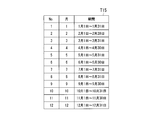
- the table T15 is an example of definition information.
- Table T15 is No. , Month, and period keyword items. No. Is an identification number assigned to each month.
- the month represents the month corresponding to each period from January to December, for example.
- the period represents a period corresponding to each month. For example, in the case of January, the period “January 1 to January 31” corresponds to the period.
- the information processing apparatus refers to the preference information indicating the preference of each article between the target user and the other user, and the target user and the other user.
- a similar user extraction unit 221 that calculates a similarity between users, which is a similarity with a user, and extracts similar users similar to the target user based on the calculated similarity between users, and a similar user extraction unit 221
- a content extraction unit 222 that extracts content preferred by similar users, and a content filtering processing unit (filtering processing unit) that filters the content extracted by the content extraction unit 222 with date and time information and extracts presentation content to be presented to the target user 225b).
- the information processing apparatus (web server 200b) associates content that has recently become a topic or content with seasonality from content browsed by a plurality of similar users who have similar preferences with a user. Can be extracted every month, and information suitable for a user's current preference can be presented.
- the unit 225 will be described as the filtering processing unit 225c.
- the web server 200c includes an input / output control unit 210 and an extraction unit 220c.
- the input / output control unit 210 includes a response control unit 211 and a database reading unit 212.
- the response control unit 211a includes a character string acquisition unit 214, a display mode acquisition unit 215, a specific content acquisition unit 216, and a category acquisition unit 217.
- the extraction unit 220c includes a similar user extraction unit 221, a content extraction unit 222, a similar content extraction unit 223, a season / period acquisition unit 224c, and a filtering processing unit 225c.
- the season / period acquisition unit 224c has the same function as the season / period acquisition unit 224 (FIG. 10), but differs from the season / period acquisition unit 224 in the following points.
- the season / period acquisition unit 224c extracts the question posting date and time when the extracted question was posted from the question information, and refers to the definition information as shown in FIG. , Get as period information.
- the season / period acquisition unit 224c extracts the question posting date and time when the extracted question was posted from the question information, and refers to the definition information as shown in FIG. Get the season as season information. Then, the season / period acquisition unit 224c outputs the acquired period information and season information to the filtering processing unit 225c.
- the season / period acquisition unit 224c extracts the answer posting date and time when the answer to the question was posted from the question information, and refers to the definition information as shown in FIG.
- the month of the period to which the answer posting date / time belongs is acquired as period information.
- the season / period acquisition unit 224c extracts the answer posting date / time from the question information, refers to the definition information as shown in FIG. 14, and sets the season of the period to which the question posting date / time belongs as the season information. get.
- the season / period acquisition unit 224c outputs the acquired period information and season information to the filtering processing unit 225c.
- the filtering processing unit 225c has the same function as the filtering processing unit 225 (FIG. 10), but differs from the filtering processing unit 225 in the following points. First, based on the period information input from the season / period acquisition unit 224c, the filtering processing unit 225c extracts the content whose posting date of the extracted content corresponds to the period information. When the extracted content is smaller than the predetermined number, the filtering processing unit 225c, based on the season information input from the season / period acquisition unit 224c, the posting date of the extracted content corresponds to the season information. Extract content. In this way, the filtering processing unit 225c extracts the content by changing the filtering period according to the number of contents to be extracted.
- the information processing apparatus refers to the preference information indicating the preference of each article between the target user and the other user, and the target user and the other user.
- a similar user extraction unit 221 that calculates a similarity between users, which is a similarity with a user, and extracts similar users similar to the target user based on the calculated similarity between users, and a similar user extraction unit 221
- a content extraction unit 222 that extracts content preferred by similar users, and a content filtering processing unit (filtering processing unit) that filters the content extracted by the content extraction unit 222 with date and time information and extracts presentation content to be presented to the target user 225c).
- the information processing apparatus associates content that has recently become a topic or seasonal content with content associated with a period from a plurality of similar users who have similar preferences with a certain user. Even if the number of extracted contents is smaller than a predetermined number by extracting the contents every season when the number of extracted contents is small and the number of extracted contents is small, a certain user Information that matches the current preferences of
- FIG. 24 is a schematic block diagram showing an example of the configuration of the web server 200d according to the sixth embodiment of the present invention.
- the web server 200d includes an input / output control unit 210 and an extraction unit 220d.
- the input / output control unit 210 includes a response control unit 211a and a database reading unit 212.
- the response control unit 211a includes a character string acquisition unit 214, a display mode acquisition unit 215, a specific content acquisition unit 216, and a category acquisition unit 217.
- the extraction unit 220d includes a similar user extraction unit 221, a content extraction unit 222, a similar content extraction unit 223, a season / period acquisition unit 224d, and a filtering processing unit 225d.
- the season / period acquisition unit 224d includes a season / period acquisition unit 2241d from the current time and a browsing history season / period acquisition unit 2242d.
- the filtering processing unit 225d includes a history filtering processing unit 2251d and an extraction result filtering processing unit 2252d.
- the season / period acquisition unit 2241d from the current time acquires information representing the current date and time via a built-in clock or network built in the web server 200d.
- the season / period acquisition unit 2241d from the current time refers to the definition information as shown in FIG. 14 and specifies and acquires the season to which the current date belongs as season information.
- the season / period acquisition unit 2241d from the current time refers to the definition information as shown in FIG. 14 to identify and acquire the period to which the current date belongs as period information. For example, if the current date / time is May 1, 2013, the season / period acquisition unit 2241d from the current time is “spring” in FIG. 14 and the period to which the current date / time belongs is In FIG. 14, “March 1 to June 30”. Note that the season / period acquisition unit 2241d from the current time may acquire the period information subdivided according to the time information included in the current date and time with reference to the definition information that defines the time.
- the history filtering processing unit 2251d extracts (filters) content from the database 110 of the database server 100 based on the season information or period information acquired by the season / period acquisition unit 2241d from the current time.
- the history filtering processing unit 2251d is the season or period information in which the question posting date / time and the answer posting date / time are represented by the season information among a plurality of contents (for example, questions) stored in the database 110 of the database server 100.
- contents for example, questions
- the similar user extraction unit 221 selects the target user based on the season represented by the season information acquired by the season / period acquisition unit 2241d from the current time or the period represented by the period information and the content information input from the history filtering processing unit 2251d. And similar users with similar preferences for articles. Specifically, the similar user extraction unit 221 extracts other users than the target user who posted or browsed the content information posted in the season represented by the season information or the period represented by the period information. The similar user extraction unit 221 calculates the similarity between users, which is the similarity between the target user and each of the other users in the season represented by the season information or the period represented by the period information. Specifically, the similar user extraction unit 221 calculates the similarity between users using, for example, the above-described equation (1). Based on the calculated similarity between users, the similar user extraction unit 221 extracts other top N users (N is a predetermined number of integers) with high similarity between users as similar users.
- the similar content extraction unit 223 extracts similar content similar to the specific content (for example, a question) acquired by the specific content acquisition unit 216 based on the content information input from the history filtering processing unit 2251d.
- the similar content extraction unit 223 includes a set of users who have already browsed a specific content (hereinafter, also referred to as a first question) included in the content information among the specific content, and the content.
- the number of users that overlap with a set of users who have already browsed another content (hereinafter also referred to as a second question) is calculated (hereinafter referred to as a user overlap number).
- the similar content extraction part 223 calculates the similarity of the 2nd question with respect to a 1st question based on the calculated user duplication number, for example. For example, the similar content extraction unit 223 calculates the similarity of each content with respect to the specific content by calculating the similarity with respect to content other than the second question. Then, the similar content extraction unit 223 extracts, for example, the top M contents (M is a predetermined integer equal to or greater than 1) having a high degree of similarity of the calculated content.
- the content extraction unit 222 extracts the content viewed by the similar user extracted by the similar user extraction unit 221 from the database 110 of the database server 100. Specifically, the content extraction unit 222 extracts content (for example, a question) viewed by the similar user extracted by the similar user extraction unit 221 from the database 110 of the database server 100, and the target user has already browsed from the extracted content. Excluded content That is, the content extraction unit 222 extracts content obtained by excluding content that has already been viewed by the target user from content that has been viewed by similar users.
- content for example, a question
- the browsing history season / period acquisition unit 2242d acquires the question posting date and the answer posting date and time of the question of the browsing history of the content browsed by the target user. Then, the browsing history season / period acquisition unit 2242d refers to the definition information as illustrated in FIG. 14 and acquires, as history period information, a season or period corresponding to the acquired question posting date / time and answer posting date / time.
- the extraction result filtering processing unit 2252d is based on the season information or period information acquired by the browsing history season / period acquisition unit 2242d from the contents (for example, questions) input by the content extraction unit 222 and the similar content extraction unit 223. To extract (filter) content.
- the filtering result processing unit 2252d of the extraction result includes the season or period information represented by the season information represented by the history period information acquired by the browsing history season / period acquisition unit 2242d among the plurality of input contents. When it is shown that it was posted in the period, the question posted on the question posting date and the answer posted on the answer posting date are extracted, and the question and answer other than the extracted question and answer are excluded.
- FIG. 25 is a flowchart showing an example of information processing in the web server 200d according to the sixth embodiment of the present invention.
- the season / period acquisition unit 2241d from the current time acquires information representing the current date and time
- the season to which the current date and time represented by the information representing the current date and time belongs is represented by season information or information representing the current date and time.
- the period to which the current date belongs is specified and acquired as period information.
- the history filtering processing unit 2251d extracts (filters) content from the database 110 of the database server 100 based on the season information or period information acquired by the season / period acquisition unit 2241d from the current time.
- the similar user extraction unit 221 calculates the similarity between users between the target user and each of the other users. Then, it progresses to step ST303.
- step ST303 the similar user extracting unit 221 extracts the top N users having the similarities between users as similar users. Then, it progresses to step ST304.
- step ST304 the content extraction unit 222 extracts all questions viewed by similar users. Then, it progresses to step ST305.
- step ST305 the content extraction unit 222 excludes questions already viewed by the target user from all the questions browsed by the similar users extracted in step ST304. Then, it progresses to step ST306.
- step ST306 the browsing history season / period acquisition unit 2242d acquires the history period information of the content viewed by the target user from the browsing history of the content browsed by the target user. Then, it progresses to step ST307.
- step ST307 the filtering processing unit 2252d of the extraction result asks the question posted from the content input by the content extracting unit 222 and the similar content extracting unit 223 during the season indicated by the season information or the period information specified by the user. And answers are extracted, and questions and answers posted outside the period indicated by the season or period information indicated by the season information specified by the user are excluded. Then, it progresses to step ST308.
- step ST308 the extraction result filtering processing unit 2252d calculates a recommendation score (recommendation score) for each of the questions and answers that are left out in step ST307. Then, it progresses to step ST309.
- step ST309 the extraction result filtering processing unit 2252d extracts a predetermined number of questions and answers in descending order of recommendation score (recommendation score), and causes the terminal device 300 to present the extracted questions and answers. Thereafter, the information processing according to FIG. 25 ends.
- the information processing apparatus performs the preference information filtering process of filtering the preference information indicating the preference of each article between the target user and other users by the date / time information.
- Section (history filtering processing unit 2251d) and the preference information filtered by the preference information filtering processing unit (history filtering processing unit 2251d) the similarity between users, which is the degree of similarity between the target user and other users, is determined.
- a similar user extraction unit 221 that calculates and extracts similar users similar to the target user based on the calculated similarity between users, and a content extraction unit that extracts content preferred by similar users extracted by the similar user extraction unit 221 222.
- the information processing apparatus allows the content that has recently become a topic or the seasonality from the content viewed by a plurality of similar users who have similar preferences to a certain user filtered by the season information or the period information. You can extract content with
- the information processing apparatus includes a preference information filtering processing unit (history filtering processing unit 2251d) that filters the preference information indicating the preference of the articles of the target user and other users by date information, Referring to the preference information filtered by the information filtering processor (history filtering processor 2251d), an inter-user similarity that is the similarity between the target user and another user is calculated, and based on the calculated inter-user similarity
- the similar user extraction unit 221 that extracts similar users similar to the target user
- the content extraction unit 222 that extracts the content preferred by the similar user extracted by the similar user extraction unit 221, and the content extraction unit 222 Filter content by date and time information
- grayed includes content filtering processing unit which extracts the provided content to be presented to the target user (the filtering processing unit 2252d extraction results), the.
- the information processing apparatus allows the content that has recently become a topic or the seasonality from the content viewed by a plurality of similar users who have similar preferences to a certain user filtered by the season information or the period information. It is possible to extract a certain content, and to present information that matches the user's current preference for filtering the extraction result by season information or period information.
- FIG. 26 is a flowchart showing an example of information processing in the web server 200d according to the seventh embodiment of the present invention.
- the season / period acquisition unit 2241d from the current time acquires information representing the current date and time, and the season information or information representing the current date and time represents the season to which the current date and time represented by the information representing the current date and time belongs.
- the period to which the current date belongs is specified and acquired as period information.
- the history filtering processing unit 2251d extracts (filters) content from the database 110 of the database server 100 based on the season information or period information acquired by the season / period acquisition unit 2241d from the current time.
- the similar user extraction unit 221 calculates the similarity between users between the target user and each of the other users. Then, it progresses to step ST403.
- step ST403 the similar user extracting unit 221 extracts the top N users having the similarities between users as similar users. Then, it progresses to step ST404.
- step ST404 the content extraction unit 222 extracts all questions viewed by similar users. Then, it progresses to step ST405.
- step ST405 the content extraction unit 222 excludes questions already viewed by the target user from all the questions browsed by the similar users extracted in step ST404. Then, it progresses to step ST406.
- step ST406 the extraction result filtering processing unit 2252d calculates a recommendation score (recommendation score) for each of the questions and answers that are left out in step ST405. Then, it progresses to step ST407.
- step ST407 the extraction result filtering processing unit 2252d extracts a predetermined number of questions and answers in descending order of recommendation score (recommendation score), and causes the terminal device 300 to present the extracted questions and answers. Then, it progresses to step ST408.
- step ST408 the browsing history season / period acquisition unit 2242d acquires the history period information of the content viewed by the target user from the browsing history of the content browsed by the target user. Then, it progresses to step ST409.
- step ST409 the filtering processing unit 2252d of the extraction result asks the question posted from the content input by the content extraction unit 222 and the similar content extraction unit 223 during the season indicated by the season information or the period information specified by the user. And answers are extracted, and questions and answers posted outside the period indicated by the season or period information indicated by the season information specified by the user are excluded. Thereafter, the information processing according to FIG. 26 ends.
- the information processing apparatus performs the preference information filtering process of filtering the preference information indicating the preference of each article between the target user and the other users by the date / time information.
- Section (history filtering processing unit 2251d) and the preference information filtered by the preference information filtering processing unit (history filtering processing unit 2251d) the similarity between users, which is the degree of similarity between the target user and other users, is determined.
- a similar user extraction unit 221 that calculates and extracts similar users similar to the target user based on the calculated similarity between users, and a content extraction unit that extracts content preferred by similar users extracted by the similar user extraction unit 221 222.
- the information processing apparatus allows the content that has recently become a topic or the seasonality from the content viewed by a plurality of similar users who have similar preferences to a certain user filtered by the season information or the period information. You can extract content with
- the information processing apparatus includes a preference information filtering processing unit (history filtering processing unit 2251d) that filters the preference information indicating the preference of the articles of the target user and other users by date information, Referring to the preference information filtered by the information filtering processor (history filtering processor 2251d), an inter-user similarity that is the similarity between the target user and another user is calculated, and based on the calculated inter-user similarity
- the similar user extraction unit 221 that extracts similar users similar to the target user
- the content extraction unit 222 that extracts the content preferred by the similar user extracted by the similar user extraction unit 221, and the content extraction unit 222 Filter content by date and time information
- grayed includes content filtering processing unit which extracts the provided content to be presented to the target user (the filtering processing unit 2252d extraction results), the.
- the information processing apparatus allows the content that has recently become a topic or the seasonality from the content viewed by a plurality of similar users who have similar preferences to a certain user filtered by the season information or the period information. Some content can be extracted, and information suitable for a user's current preference can be presented.
- the specific content acquisition unit 216 may acquire specific content selected by the target user from all the contents stored in the database server 100.
- the similar user extraction unit 221 compares the calculated similarity between users with a predetermined threshold value, and is not a target user whose inter-user similarity is larger than the threshold value. Other users may be extracted as similar users.
- the content extraction unit 222 for example, the character string acquired by the character string acquisition unit 214 from the content already viewed by the similar user extracted by the similar user extraction unit 221. May be searched, and the searched content may be extracted.
- the content extraction unit 222 may further extract content classified into the category represented by the category data input from the category acquisition unit 217 from the extracted content. .
- the category data input from the category acquisition unit 217 represents a target user's preference information category (for example, a browsing history category)
- the content extraction unit 222 does not perform a process of further extracting content from the extracted content.
- the filtering processing units 225, 225a, 225b, and 225c To the filtering processing units 225, 225a, 225b, and 225c.
- the content extraction unit 222 may store preference information (for example, browsing information) stored in the database 110. ) From the target user may be extracted. When the number of dependences (for example, the number of browsing) indicated by the extracted preference information is less than a predetermined frequency, the content extraction unit 222 may output the extracted content to the filtering processing units 225, 225a, 225b, and 225c. In other cases, the content extraction unit 222 may output data indicating the extracted content to the database reading unit 212 as extraction result data.
- preference information for example, browsing information stored in the database 110.
- the frequency is less than a predetermined frequency
- a predetermined threshold for example, 10
- the last reliance date for example, the browsing date
- a predetermined elapsed time threshold for example, one month.
- the information that the target user relies on (accesses) is less reliable as preference information indicating the preference of the target user for the article. That is, when the reliability as the preference information is sufficient, the extracted content is output to the database reading unit 212, and when the reliability is low, the extracted content is output to the filtering processing unit 225.
- the content extraction unit 222 depends on other users other than the target user (for example, You may calculate the total number of dependence (for example, also called the total number of browsing, the number of hits) for every content which is the total number of dependences browsed.
- the target user uses the web server 200 for the first time.
- the content extraction unit 222 extracts a predetermined number of contents in descending order of the total number of dependences, and outputs extraction result data indicating the extracted content to the database reading unit 212.
- the category data input from the category acquisition unit 217 represents the preference information category (for example, browsing history category) of the target user
- the similar content extraction unit 223 may be output to the filtering processing unit 225 without performing further extraction processing from the extracted content.
- the similar content extraction unit 223 stores the preference information (for example, browsing) stored in the database 110.
- Information of the target user may be extracted from the information.
- the similar content extraction unit 223 may output the extracted content to the filtering processing unit 225.
- the similar content extraction unit 223 may output data indicating the extracted content to the database reading unit 212 as extraction result data.
- the filtering processing units 225, 225a, 225b, and 225c calculate a recommendation score for each of the extracted contents, and a predetermined number of contents in descending order of the recommendation score. It may be extracted.
- the filtering processing units 225, 225a, 225b, and 225c may calculate a recommendation score for each of the extracted contents, and may extract content that is higher than a predetermined recommendation score in descending order of the recommendation score.
- the web servers 200c and 200d may not include the extraction result filtering processing unit 2252d.
- processing relating to a question is mainly described as an example of content, but the present invention is not limited to this. If it is a content, it is not restricted to a question, For example, contribution and an answer may be sufficient. Moreover, although the case where the dependence (access) to the content is mainly browsing has been described, the present invention is not limited to this, and may be, for example, a post or an answer. Moreover, although the process which mainly concerns browsing information was demonstrated as preference information, if it is the information which shows the preference of articles
- the similar user extraction unit 221 calculates the similarity between users based on the preference information indicating the preference of the target user and other users for the content.
- a similar user similar to the target user may be extracted based on the similarity between users.
- an example of the preference information indicating the preference for the content is the number of questions viewed.
- the similar user extraction unit 221 determines the number of articles commonly used by the target user and other users ⁇ 2 / (total number of contents preferred by the target user + total number of contents preferred by other users. ) May be calculated as the similarity between users.
- the similar user extraction part 221 can extract the user with close preference with respect to a content as a similar user.
- the content extraction unit 222 may extract the content preferred by the similar user extracted by the similar user extraction unit 221 as the presentation candidate content that is a candidate to be presented to the target user.
- the content which the similar user with a similar preference with respect to a target user likes can be shown to a target user, the content which a target user likes can be found easily.
- the content extraction unit 222 prefers similar user-preferred content for each similar user-preferred content that is a content preferred by a similar user extracted by the similar user extraction unit 221.
- the recommendation score indicating the recommendation degree to the target user of the similar user preference content is calculated with reference to the similarity between users between the similar user and the target user, and based on each of the calculated recommendation scores Presentation candidate content may be determined.
- the content extraction unit 222 may extract, as the presentation candidate content, content excluding content preferred by the target user from content preferred by similar users.
- the content extraction unit 222 has been described by taking as an example the case where the question viewed by the target user even once is excluded from the presentation candidate questions. However, the target user is determined in advance.
- the browsed question may be excluded from the presentation candidate questions for the threshold number of times (for example, 3 times) or more.
- the content extraction unit 222 may exclude questions that similar users have past in the past for a predetermined period (for example, one year) from the present from the presentation candidate questions. Good.
- the content extraction unit 222 mainly extracts questions browsed by similar users in the past has been described as an example.
- the content extraction unit 222 may extract, for example, any of content previously browsed by similar users, posted content, and answered content, any combination thereof, or all of them.
- the similar content extraction unit 223 may extract similar content similar to the specific content acquired by the specific content acquisition unit 216.
- the information processing systems 1, 1 a, 1 b, 1 c, 1 d, 1 e, and 1 f can present content similar to the specific content selected by the target user to the target user. Find content quickly and easily.
- the similar content extraction unit 223 refers to the number of users who prefer the specific content and the number of users who prefer each of the presentation candidate contents, and the specific content and the presentation candidate content. The content similarity with each may be calculated, and similar content may be extracted based on the calculated content similarity.
- the similar content extraction part 223 can make the content similarity between the content high, so that there are many users who overlap and like between specific content and presentation candidate content.
- the similar content extraction unit 223 considers that the higher the content similarity is, the more similar the content is. For example, content with the highest content similarity M (M is an integer greater than a predetermined 0) is set as similar content. Can be extracted. As a result, the similar content extraction unit 223 can extract similar content with high accuracy.
- the similar content extraction unit 223 may extract, for example, content whose content similarity is higher than a predetermined content similarity criterion as similar content.
- first to seventh embodiments described above may be combined with other embodiments, for example, the first embodiment and the third embodiment may be combined.
- date and time information is seasonal information, keyword information, and period information
- time information representing time, period information representing day, and year are represented.
- Date / time information relating to time, period, etc., such as period information may be included.
- keyword information is a keyword related to the season has been shown, it may be a keyword related to time, a period, etc., such as a keyword related to time, a keyword indicating day, and a keyword indicating month.
- the information processing systems 1, 1a, 1b, 1c, 1d, 1e, and 1f may include a plurality of web servers 200, 200a, 200b, 200c, and 200d. . These web servers 200, 200a, 200b, 200c, and 200d may perform their respective processes in a distributed manner.
- the web servers 200, 200a, 200b, 200c, and 200d in the first to seventh embodiments described above may be realized by a computer.
- the program for realizing the control function may be recorded on a computer-readable recording medium, and the program recorded on the recording medium may be read by a computer system and executed.
- the “computer system” herein is a computer system built in the web servers 200, 200a, 200b, 200c, and 200d, and includes hardware such as an OS (Operating System) and peripheral devices.
- the “computer system” includes a homepage providing environment (or display environment) if a WWW (World Wide Web) system is used.
- Computer-readable recording medium means a portable disk such as a flexible disk, a magneto-optical disk, a ROM (Read-only Memory), a writable nonvolatile memory such as a flash memory, or a CD (Compact Disc) -ROM.
- a storage device such as a medium or a hard disk built in a computer system.
- the “computer-readable recording medium” is a medium that dynamically holds a program for a short time, such as a communication line when transmitting a program via a network such as the Internet or a communication line such as a telephone line,
- a volatile memory for example, DRAM (Dynamic Random Access Memory)
- DRAM Dynamic Random Access Memory
- the program may be a program for realizing a part of the above-described functions, and may be a program that can realize the above-described functions in combination with a program already recorded in a computer system.
- the program may be transmitted from a computer system storing the program in a storage device or the like to another computer system via a transmission medium or by a transmission wave in the transmission medium.
- the “transmission medium” for transmitting the program refers to a medium having a function of transmitting information, such as a network (communication network) such as the Internet or a communication line (communication line) such as a telephone line.
- the program may be for realizing a part of the functions described above. Furthermore, what can implement
- a part or all of the web servers 200, 200a, 200b, 200c, and 200d in the first to seventh embodiments described above may be realized as an integrated circuit such as an LSI (Large Scale Integration).
- LSI Large Scale Integration
- Each functional block of the web servers 200, 200a, 200b, 200c, and 200d may be individually made into a processor, or a part or all of them may be integrated into a processor.
- the method of circuit integration is not limited to LSI, and may be realized by a dedicated circuit or a general-purpose processor. Further, in the case where an integrated circuit technology that replaces LSI appears due to progress in semiconductor technology, an integrated circuit based on the technology may be used.
- first to seventh embodiments of the present invention have been described in detail with reference to the drawings, the specific configuration is not limited to the first to seventh embodiments.
- the configurations in the first to seventh embodiments, combinations thereof, and the like are examples, and the addition, omission, replacement, and other modifications of the configurations are possible without departing from the spirit of the present invention. .
- the present invention is not limited by the first to seventh embodiments.
- a similar user extraction unit that calculates a similarity between users, which is a similarity between the target user and the other user, and extracts a similar user similar to the target user based on the calculated similarity between the users;
- An information processing apparatus comprising: a content extraction unit that extracts content that the similar user extracted by the similar user extraction unit likes.
- An information processing apparatus comprising: a content filtering processing unit that filters the content extracted by a content extraction unit by date information and extracts a presentation content to be presented to the target user.
- a similar user extraction unit that calculates a similarity between users, which is a similarity between the target user and the other user, and extracts a similar user similar to the target user based on the calculated similarity between the users;
- a content extraction unit that extracts the content that the similar user likes that is extracted by the similar user extraction unit, and the presented content that is presented to the target user by filtering the content extracted by the content extraction unit by date information
- a content filtering processing unit for extracting The information processing apparatus characterized by.
- the preference information indicating the preference for the article is history information including at least one of a browsing history of content including at least one of a question and an answer or a posting history of the content, and the date and time information includes content
- the information processing apparatus according to any one of (Appendix 1) to (Appendix 3), wherein the information is at least one of date and time information browsed and date and time information posted.
- the preference information indicating the preference for the article is purchase history of the article, and the date / time information is date / time information when the content is purchased (Appendix 1) to (Appendix 3)
- the information processing apparatus according to any one of claims.
- a similar user extraction unit that calculates a similarity between users, which is a similarity between the target user and the other user, and extracts a similar user similar to the target user based on the calculated similarity between the users;
- An information processing system comprising: a content extraction unit that extracts content that the similar user extracted by the similar user extraction unit likes.
- An information processing system comprising: a content filtering processing unit that filters the content extracted by a content extraction unit with date and time information and extracts presentation content to be presented to the target user.
- a similar user extraction unit that calculates a similarity between users, which is a similarity between the target user and the other user, and extracts a similar user similar to the target user based on the calculated similarity between the users;
- a content extraction unit that extracts the content that the similar user likes that is extracted by the similar user extraction unit, and the presented content that is presented to the target user by filtering the content extracted by the content extraction unit by date information
- a content filtering processing unit for extracting The information processing system characterized in that.
- An information processing method comprising: a content filtering processing step of filtering the content extracted in the content extraction step by date information and extracting a presentation content to be presented to the target user.
- the preference information filtering process step which filters the preference information which shows the preference with respect to each goods of a target user and another user by the date information on the computer of information processing apparatus, and the said preference information filtering process step
- the similarity between the users which is the similarity between the target user and the other user
- similar users similar to the target user are extracted based on the calculated similarity between the users
- the preference information filtering process step which filters the preference information which shows the preference with respect to each goods of an object user and another user by the date information on the computer of information processing apparatus, and the said preference information filtering process step
- the similarity between the users which is the similarity between the target user and the other user
- similar users similar to the target user are extracted based on the calculated similarity between the users
- the similar user extraction step, the content extraction step for extracting the content that the similar user extracted by the similar user extraction step, the content extracted by the content extraction step is filtered by date information, Present to target users
- the information processing program for executing a content filtering processing step of extracting the provided content that, a.
- One embodiment of the present invention can be applied to an information processing device, an information processing system, an information processing method, an information processing program, a terminal device, and the like that are required to present information that matches a user's preference.
Landscapes
- Business, Economics & Management (AREA)
- Strategic Management (AREA)
- Engineering & Computer Science (AREA)
- Accounting & Taxation (AREA)
- Development Economics (AREA)
- Finance (AREA)
- Entrepreneurship & Innovation (AREA)
- Game Theory and Decision Science (AREA)
- Data Mining & Analysis (AREA)
- Economics (AREA)
- Marketing (AREA)
- Physics & Mathematics (AREA)
- General Business, Economics & Management (AREA)
- General Physics & Mathematics (AREA)
- Theoretical Computer Science (AREA)
- Information Retrieval, Db Structures And Fs Structures Therefor (AREA)
- Management, Administration, Business Operations System, And Electronic Commerce (AREA)
Abstract
情報処理装置は、対象ユーザと他のユーザとのそれぞれの物品に対する嗜好を示す嗜好情報を参照して、対象ユーザと他のユーザとの類似度であるユーザ間類似度を算出し、算出したユーザ間類似度に基づいて対象ユーザに類似する類似ユーザを抽出する類似ユーザ抽出部と、類似ユーザ抽出部により抽出された類似ユーザが嗜好するコンテンツを抽出するコンテンツ抽出部と、を備える。
Description
本発明は、情報処理装置、情報処理システム、情報処理方法、情報処理プログラムおよび端末装置に関する。
本願は、2013年9月20日に、日本に出願された特願2013-195842号に基づき優先権を主張し、その内容をここに援用する。
本願は、2013年9月20日に、日本に出願された特願2013-195842号に基づき優先権を主張し、その内容をここに援用する。
情報収集において、最近、ユーザの質問に対してそれに詳しい人が、その質問に回答するサイトであって、インターネットに接続された質問回答サイトが利用されている。このような質問回答サイトでは、大量の質問が投稿されているため、ユーザが、その中から探している質問を探し出すことが困難である場合がある。そこで、ユーザの嗜好に応じた質問を探し出して提示するマイニングシステムが提案されている。
例えば、特許文献1では、レコメンド情報生成装置が、提案されている。特許文献1のレコメンド情報生成装置は、ユーザ特徴ベクトル計算部、コンテンツカテゴリ評価値計算部、固有名詞抽出部、コンテンツ予測計算部を備える。
ユーザ特徴ベクトル計算部は、ユーザが閲覧したコンテンツを示す履歴コンテンツに基づいて、ユーザ特徴ベクトルを計算する。コンテンツカテゴリ評価値計算部は、ユーザ特徴ベクトルと、配信対象コンテンツの特徴ベクトルと、の類似度を示す予測値を計算する。固有名詞抽出部は、履歴コンテンツから固有名詞の集合を抽出し、抽出された固有名詞に基づいて生成された固有名詞型ユーザ特徴ベクトルと、配信対象コンテンツのコンテンツ特徴ベクトルと、の類似度を計算する。コンテンツ予測計算部は、予測値および類似度に基づいて、更新予測値を計算し、計算された更新予測値に基づいて定められたコンテンツをレコメンド情報として生成して配信する。
ユーザ特徴ベクトル計算部は、ユーザが閲覧したコンテンツを示す履歴コンテンツに基づいて、ユーザ特徴ベクトルを計算する。コンテンツカテゴリ評価値計算部は、ユーザ特徴ベクトルと、配信対象コンテンツの特徴ベクトルと、の類似度を示す予測値を計算する。固有名詞抽出部は、履歴コンテンツから固有名詞の集合を抽出し、抽出された固有名詞に基づいて生成された固有名詞型ユーザ特徴ベクトルと、配信対象コンテンツのコンテンツ特徴ベクトルと、の類似度を計算する。コンテンツ予測計算部は、予測値および類似度に基づいて、更新予測値を計算し、計算された更新予測値に基づいて定められたコンテンツをレコメンド情報として生成して配信する。
また、特許文献2では、レコメンド情報生成装置について提案されている。特許文献2のレコメンド情報生成装置は、履歴収集部、ユーザ履歴管理DB、状況類似度計算部、履歴ランキング部、ユーザ特徴ベクトル計算部、コンテンツ並び替え部を備える。
履歴収集部は、ユーザがおかれている状況情報を取得する。ユーザ履歴管理DBは、取得された状況情報を履歴情報として記憶する状況類似度計算部は、取得された状況情報で示される状況と、過去において記憶された履歴情報で示される状況と、の間の類似度を計算する。履歴ランキング部は、類似度に基づいて、履歴情報を並び替える。ユーザ特徴ベクトル計算部は、並び替えられた履歴情報の並び順に基づいて、ユーザの特徴を表すユーザ特徴ベクトルを計算するコンテンツ並び替え部は、計算されたユーザ特徴ベクトルに基づいて、ユーザに対するレコメンド情報を生成する。
履歴収集部は、ユーザがおかれている状況情報を取得する。ユーザ履歴管理DBは、取得された状況情報を履歴情報として記憶する状況類似度計算部は、取得された状況情報で示される状況と、過去において記憶された履歴情報で示される状況と、の間の類似度を計算する。履歴ランキング部は、類似度に基づいて、履歴情報を並び替える。ユーザ特徴ベクトル計算部は、並び替えられた履歴情報の並び順に基づいて、ユーザの特徴を表すユーザ特徴ベクトルを計算するコンテンツ並び替え部は、計算されたユーザ特徴ベクトルに基づいて、ユーザに対するレコメンド情報を生成する。
しかしながら、特許文献1、特許文献2に記載の技術を用いても、あるユーザが閲覧するコンテンツが、そのユーザと嗜好が類似する複数の類似ユーザが閲覧したコンテンツであってもコンテンツが古いものであったり、過去に話題になったものであったり、季節性のあるものであったりする場合、マイニングするコンテンツが広範囲となり、そのユーザの現在の嗜好とは関係のないものまで提示してしまう可能性がある。このように、ユーザの嗜好に合った情報を提示することができない可能性がある。
本発明の一態様は、上記の点に鑑みてなされたものであり、ユーザの嗜好に合った情報を提示することができる情報処理装置、情報処理システム、情報処理方法、情報処理プログラムおよび端末装置を提供する。
(1) 本発明の第1の態様は、対象ユーザと他のユーザとのそれぞれの物品に対する嗜好を示す嗜好情報を参照して、前記対象ユーザと前記他のユーザとの類似度であるユーザ間類似度を算出し、算出した前記ユーザ間類似度に基づいて前記対象ユーザに類似する類似ユーザを抽出する類似ユーザ抽出部と、前記類似ユーザ抽出部により抽出された前記類似ユーザが嗜好するコンテンツを抽出するコンテンツ抽出部と、を備える情報処理装置である。
(2) 本発明の第1の態様において、前記嗜好情報を日時情報によりフィルタリングする嗜好情報フィルタリング処理部を更に備え、前記類似ユーザ抽出部は、前記嗜好情報フィルタリング処理部によりフィルタリングされた前記嗜好情報を参照して、前記ユーザ間類似度を算出してもよい。
(3) 本発明の第1の態様において、前記コンテンツ抽出部により抽出された前記コンテンツを日時情報によりフィルタリングして、前記対象ユーザに提示する提示コンテンツを抽出するコンテンツフィルタリング処理部を更に備えてもよい。
(4) 本発明の第1の態様において、前記嗜好情報を日時情報によりフィルタリングする嗜好情報フィルタリング処理部と、前記コンテンツ抽出部により抽出された前記コンテンツを前記日時情報によりフィルタリングして、前記対象ユーザに提示する提示コンテンツを抽出するコンテンツフィルタリング処理部と、
を更に備え、前記類似ユーザ抽出部は、前記嗜好情報フィルタリング処理部によりフィルタリングされた前記嗜好情報を参照して、前記ユーザ間類似度を算出してもよい。
を更に備え、前記類似ユーザ抽出部は、前記嗜好情報フィルタリング処理部によりフィルタリングされた前記嗜好情報を参照して、前記ユーザ間類似度を算出してもよい。
(5) 本発明の第1の態様において、前記嗜好情報は、質問または回答の少なくともいずれかを含む前記コンテンツの閲覧履歴および前記コンテンツの投稿履歴の少なくともいずれかを含む履歴情報であり、前記日時情報は、前記コンテンツが閲覧された日時情報および投稿された日時情報の少なくとも一方であってもよい。
(6) 本発明の第1の態様において、前記嗜好情報は、物品の購入履歴であり、前記日時情報は、前記コンテンツが購入された日時情報であってもよい。
(7) 本発明の第1の態様は、前記コンテンツ抽出部により抽出された前記コンテンツからキーワードを抽出するキーワード抽出部をさらに備え、前記日時情報は、前記キーワード抽出部により抽出された前記キーワードに予め対応付けられた日時情報であってもよい。
(8) 本発明の第2の態様は、記憶装置と、情報処理装置と、端末装置と、を備える情報処理システムであって、前記記憶装置は、対象ユーザと他のユーザとのそれぞれの物品に対する嗜好を示す嗜好情報を記憶する記憶部を備え、前記情報処理装置は、前記嗜好情報を参照して、前記対象ユーザと前記他のユーザとの類似度であるユーザ間類似度を算出し、算出した前記ユーザ間類似度に基づいて前記対象ユーザに類似する類似ユーザを抽出する類似ユーザ抽出部と、前記類似ユーザ抽出部により抽出された前記類似ユーザが嗜好するコンテンツを抽出するコンテンツ抽出部と、前記端末装置は、前記コンテンツ抽出部が抽出した前記コンテンツを表示する表示部を備える情報処理システムである。
(9) 本発明の第3の態様は、対象ユーザと他のユーザとのそれぞれの物品に対する嗜好を示す嗜好情報を参照して、前記対象ユーザと前記他のユーザとの類似度であるユーザ間類似度を算出し、算出した前記ユーザ間類似度に基づいて前記対象ユーザに類似する類似ユーザを抽出し、抽出された前記類似ユーザが嗜好するコンテンツを抽出する情報処理方法である。
(10) 本発明の第4の態様は、情報処理装置のコンピュータに、対象ユーザと他のユーザとのそれぞれの物品に対する嗜好を示す嗜好情報を参照して、前記対象ユーザと前記他のユーザとの類似度であるユーザ間類似度を算出し、算出した前記ユーザ間類似度に基づいて前記対象ユーザに類似する類似ユーザを抽出させ、前記類似ユーザ抽出部により抽出された前記類似ユーザが嗜好するコンテンツを抽出させるプログラムを記録した非一時的なコンピュータ読み取り可能な記録媒体である。
(11) 本発明の第5の態様は、対象ユーザからの要求を送信する送信部と、前記要求に対する応答として受信したコンテンツを表示する表示部と、を備え、前記コンテンツは、日時情報によりフィルタリングされた嗜好情報であって、前記対象ユーザと他のユーザとのそれぞれの物品に対する嗜好を示す嗜好情報を参照して、前記対象ユーザと前記他のユーザとの類似度であるユーザ間類似度に基づいて前記対象ユーザに類似する類似ユーザが嗜好するコンテンツとして抽出されている端末装置である。
本発明の一態様によれば、ユーザの嗜好に合った情報を提示することができる。
(第1の実施形態)
以下、図面を参照しながら本発明の第1の実施形態について詳しく説明する。
図1は、本発明の第1の実施形態に係る情報処理システム1の構成の一例を示す概略図である。
情報処理システム1は、データベースサーバ100(以下で、「記憶装置」と言うことがある。)、ウェブサーバ(以下で、「情報処理装置」と言うことがある。)200および端末装置300を備える。なお、情報処理システム1は、端末装置300を複数備えてもよい。
以下、図面を参照しながら本発明の第1の実施形態について詳しく説明する。
図1は、本発明の第1の実施形態に係る情報処理システム1の構成の一例を示す概略図である。
情報処理システム1は、データベースサーバ100(以下で、「記憶装置」と言うことがある。)、ウェブサーバ(以下で、「情報処理装置」と言うことがある。)200および端末装置300を備える。なお、情報処理システム1は、端末装置300を複数備えてもよい。
情報処理システム1は、端末装置300を使用するユーザ(以下、「対象ユーザ」ということがある。)に対して、一人以上の類似ユーザが嗜好するコンテンツを提示する。類似ユーザとは、物品(例えば、コンテンツ)に対する嗜好が対象ユーザに類似するユーザである。ここで、物品は、例えば、衣服、車、本などの有体物だけでなく、音楽、映画、アニメーション、テレビ番組、ビデオゲーム、ソフトウェア、ウェブページなどのコンテンツ、ウェブページ内のコンテンツ(例えば、ウェブページ上での質問、ウェブページ上での回答、ウェブページ上での物品またはサービスに対する評価)などの無体物を含む。第1の実施形態では、主に、物品がコンテンツである場合、より具体的にはウェブページ上での質問である場合を例にとって説明する。すなわち、情報処理システム1は、対象ユーザにウェブページ上での質問に対する嗜好が類似する一人以上の類似ユーザが嗜好するウェブページ内のコンテンツを提示する。
また、コンテンツは、ウェブページ(例えば、掲示板、ソーシャルネットワークサービス、ブログ、ミニブログなども含む)上での質問、その質問に対する回答、コメント、物品(例えば、本)に関する情報(例えば、商品名、商品の詳細情報)、検索対象物(例えば、ウェブページ)、または、これらの任意の組み合わせである。第1の実施形態では、コンテンツが、主に、ウェブページ上での質問、その質問に対する回答、または、それらの組み合わせを示すデータである場合を例にとって説明する。第1の実施形態において、対象ユーザに嗜好が類似する類似ユーザ(以下、「類似ユーザ」ともいう)とは、一例として、対象ユーザと同じ質問を閲覧する傾向を有するユーザである。
また、ユーザの嗜好を示す嗜好情報は、コンテンツ(例えば、質問)の閲覧履歴、コンテンツの投稿履歴、コンテンツへの回答履歴、物品(例えば、本)の購買履歴、コンテンツの投稿者の年齢、コンテンツの投稿者の性別、ユーザのお気に入りの物のリスト、ユーザの欲しい物のリスト、ユーザの趣味、ユーザの悩み事、などである。第1の実施形態では、嗜好情報が主に質問の閲覧履歴である場合を例にとって説明する。
データベースサーバ100には、例えば、質問情報、分類情報、ユーザ情報、閲覧情報、回答情報、およびリソースデータが記憶されている。質問情報は、ユーザがそれぞれ投稿した質問に関する情報である。分類情報は、各コンテンツ(例えば、質問)に対応する分類に関する情報である。ユーザ情報は、各ユーザに関する情報である。閲覧情報は、ユーザによる各質問の閲覧に関する情報であり、例えば、閲覧履歴を示す閲覧情報がある。
回答情報は、ユーザが各質問に対して投稿した回答に関する情報であり、例えば、回答履歴を示す。リソースデータは、質問および回答等の素材となるデータをウェブページに挿入して所定の言語で表記された表示データを構成し、構成した表示データを表示する際に必要なデータである。所定の言語とは、例えば、HTML(HyperText Markup Language:エイチティーエムエル)などのマークアップ言語である。質問情報、閲覧情報、ユーザ情報などは、データベースサーバ100にテーブルとして記憶されている。データベースサーバ100に記憶するデータの例については後述する。
回答情報は、ユーザが各質問に対して投稿した回答に関する情報であり、例えば、回答履歴を示す。リソースデータは、質問および回答等の素材となるデータをウェブページに挿入して所定の言語で表記された表示データを構成し、構成した表示データを表示する際に必要なデータである。所定の言語とは、例えば、HTML(HyperText Markup Language:エイチティーエムエル)などのマークアップ言語である。質問情報、閲覧情報、ユーザ情報などは、データベースサーバ100にテーブルとして記憶されている。データベースサーバ100に記憶するデータの例については後述する。
ウェブサーバ200は、演算の機能と、アクセス制御機能と、端末装置300に送信する表示データ(例えば、HTMLデータ)を生成するウェブアプリケーション機能と、を有する。ウェブサーバ200は、端末装置300から受信した情報要求データに応じて、データベースサーバ100から情報要求データにて要求された情報を抽出する。ウェブサーバ200は、抽出した情報を示す要求結果データを生成し、生成した要求結果データを端末装置300に送信する。
端末装置300は、表示データをウェブサーバ200から受信し、受信した表示データに応じたウェブページの画像を表示する。また、端末装置300は、ウェブサーバ200に情報を要求することを表す情報要求データを、ウェブサーバ200に送信する。端末装置300は、その情報要求データの応答としてウェブサーバ200から、要求された情報を示す要求結果データを受信する。そして、端末装置300は、受信した要求結果データが表す要求結果を、例えば、画像で表示する。
次に、端末装置300に表示される画像の例について説明する。
図2は、本発明の第1の実施形態に係る端末装置300に表示される画像の一例を示す概略図である。
図2では、医療健康に関する質問と応答の組からなるコンテンツを示す画像が示されている。図2の上段のウィンドウは、「カテゴリ別/閲覧履歴カテゴリ フィルタリング」という表題を有する。このウィンドウは、利用可能なコンテンツを、カテゴリ別に表示するか否か、閲覧履歴カテゴリ(後述)に応じたコンテンツを表示するか否か、を対象ユーザが選択可能であることを示す。端末装置300は、□印で示されるチェックボックスの選択を指示する操作を検出し、その右隣に示されているカテゴリ(例えば、「内科、アレルギー、メタボ、・・・」など)を選択する。□印で示されるチェックボックスに重畳しているチェックマークは、その右隣に示されているカテゴリが選択されていることを示す。この例では、「全カテゴリ」が選択されたことにより、「内科、アレルギー、メタボ、・・・」、「小児科、子供の養育、・・・」、「外科、神経科、・・・」、「健康相談全般(薬・症状など)、・・・」が自動で選択される。
図2は、本発明の第1の実施形態に係る端末装置300に表示される画像の一例を示す概略図である。
図2では、医療健康に関する質問と応答の組からなるコンテンツを示す画像が示されている。図2の上段のウィンドウは、「カテゴリ別/閲覧履歴カテゴリ フィルタリング」という表題を有する。このウィンドウは、利用可能なコンテンツを、カテゴリ別に表示するか否か、閲覧履歴カテゴリ(後述)に応じたコンテンツを表示するか否か、を対象ユーザが選択可能であることを示す。端末装置300は、□印で示されるチェックボックスの選択を指示する操作を検出し、その右隣に示されているカテゴリ(例えば、「内科、アレルギー、メタボ、・・・」など)を選択する。□印で示されるチェックボックスに重畳しているチェックマークは、その右隣に示されているカテゴリが選択されていることを示す。この例では、「全カテゴリ」が選択されたことにより、「内科、アレルギー、メタボ、・・・」、「小児科、子供の養育、・・・」、「外科、神経科、・・・」、「健康相談全般(薬・症状など)、・・・」が自動で選択される。
図2の下段のウィンドウは、「医療健康相談Q&A」という表題を有する。このウィンドウの左上端、右上端には、それぞれ対象ユーザの氏名「○○○○」、検索に用いる文字列(キーワード)を受け付ける入力欄(検索窓)がそれぞれ表示されている。入力欄の右隣には、例えば、検索ボタンが表示されている。対象ユーザは、例えば、検索ボタンの操作により検索を指示することで、入力欄に入力された文字列を含む質問を検索することを要求する。
このウィンドウの左下には、「閲覧履歴」として対象ユーザが閲覧した各質問の冒頭部分が3件分、一覧表示されている。「閲覧履歴」は、対象ユーザの嗜好を示す嗜好情報の一つである。
このウィンドウの右下には、「おすすめ」情報として、各質問の冒頭部分が6件分、一覧表示されている。
このウィンドウの右下には、「おすすめ」情報として、各質問の冒頭部分が6件分、一覧表示されている。
ここで、「閲覧履歴」、「おすすめ」の各列の右端に表示されている右向きの△印は、その位置を指示する操作を検出したとき、その質問とその質問に対する回答の全文が表示されることを示す。
また、「おすすめ」を表示する表示モードとしては、質問文アクセス履歴モード(第1表示モード)と質問文レコメンドモード(第2表示モード)の二つがある。表示モードが第1表示モードである場合、端末装置300は、全てのユーザが投稿した質問を表示する。一方、表示モードが第2表示モードである場合、端末装置300は、類似ユーザが投稿した質問を表示する。
また、「おすすめ」を表示する表示モードとしては、質問文アクセス履歴モード(第1表示モード)と質問文レコメンドモード(第2表示モード)の二つがある。表示モードが第1表示モードである場合、端末装置300は、全てのユーザが投稿した質問を表示する。一方、表示モードが第2表示モードである場合、端末装置300は、類似ユーザが投稿した質問を表示する。
図3は、本発明の第1の実施形態に係るデータベースサーバ100の構成の一例を示す概略ブロック図である。
データベースサーバ100は、データベース110(以下で、「記憶部」と言うことがある。)、通信部120およびCPU(Central Processing Unit:中央演算処理装置)130を備える。データベース110と通信部120とは、バス(母線)を介してCPU130と相互に接続されている。
データベースサーバ100は、データベース110(以下で、「記憶部」と言うことがある。)、通信部120およびCPU(Central Processing Unit:中央演算処理装置)130を備える。データベース110と通信部120とは、バス(母線)を介してCPU130と相互に接続されている。
データベース110には、例えば、質問情報が格納されたテーブルT1(図4、アイテムテーブルともいう)、ユーザ情報が格納されたテーブルT2(図5、ユーザテーブルともいう)および分類情報が格納されたテーブルT3(図6、カテゴリテーブル)が記憶されている。データベース110には、例えば、閲覧情報が格納されたテーブルT4(図7、閲覧履歴テーブルともいう)と回答情報が格納されたテーブルT5(図8、回答履歴テーブル)がさらに記憶されている。データベース110には、さらにリソースデータが記憶されている。
通信部120は、ウェブサーバ200と通信を行う。通信部120は、ウェブサーバ200からデータ取得命令(例えば、SQL(Structured Query Language:エスキューエル)文)を表すデータを受信する。そして、通信部120は、受信したデータ取得命令をCPU130に出力する。他方、通信部120は、データ取得命令に応じてCPU130がデータベース110から取得したデータを、ウェブサーバ200に送信する。
CPU130は、通信部120が受信したデータ取得命令に基づいて、データベース110からデータを取得する。そして、CPU130は、取得したデータを、通信部120を介してウェブサーバ200に送信する。
図4は、本発明の第1の実施形態に係るデータベースサーバ100に記憶されている質問情報の一例を示す概略図である。
図4において、質問情報は、テーブルT1に格納されている。テーブルT1は、質問ID(Identifier:識別子)、質問を投稿したユーザのユーザID(質問者ID)、質問、質問投稿日時、カテゴリIDおよびサブカテゴリIDが対応付けられた組から形成される。質問IDは、各質問をそれぞれ識別する識別情報であって、例えば、質問ごとに固有の数値である。質問を投稿したユーザのユーザIDは、その質問IDで識別される質問を投稿したユーザを識別する識別情報であって、例えば、ユーザごとに固有の数値である。質問は、その質問IDで識別される質問の内容を示す文字列である。質問投稿日時は、その質問の内容をユーザが投稿した日時である。カテゴリIDは、その質問に割り当てられた分類を表す識別情報であって、例えば、分類ごとに固有の数値である。
サブカテゴリIDは、カテゴリ(分類)をさらに細分化した補助分類であるサブカテゴリであって、その質問に割り当てられたサブカテゴリを識別する識別情報である。サブカテゴリIDは、例えば、サブカテゴリごとに固有の数値である。
図4において、質問情報は、テーブルT1に格納されている。テーブルT1は、質問ID(Identifier:識別子)、質問を投稿したユーザのユーザID(質問者ID)、質問、質問投稿日時、カテゴリIDおよびサブカテゴリIDが対応付けられた組から形成される。質問IDは、各質問をそれぞれ識別する識別情報であって、例えば、質問ごとに固有の数値である。質問を投稿したユーザのユーザIDは、その質問IDで識別される質問を投稿したユーザを識別する識別情報であって、例えば、ユーザごとに固有の数値である。質問は、その質問IDで識別される質問の内容を示す文字列である。質問投稿日時は、その質問の内容をユーザが投稿した日時である。カテゴリIDは、その質問に割り当てられた分類を表す識別情報であって、例えば、分類ごとに固有の数値である。
サブカテゴリIDは、カテゴリ(分類)をさらに細分化した補助分類であるサブカテゴリであって、その質問に割り当てられたサブカテゴリを識別する識別情報である。サブカテゴリIDは、例えば、サブカテゴリごとに固有の数値である。
テーブルT1の第2行に示す例では、質問ID「1」で識別される質問の内容が「質問1」であり、その「質問1」を投稿したユーザのユーザIDは「1001」であり、そのユーザがその「質問1」を投稿した質問投稿日時が「20YY-MM-DD TQ1」である。ここで、投稿日時の「20YY」は年を表し、「MM」は月を表し、「DD」は日を表し、「TQ1」は時間を表す。また、質問ID「1」で識別される「質問1」に割り当てられたカテゴリのカテゴリID、サブカテゴリのカテゴリIDは、それぞれ「2000」、「1」である。
図5は、本発明の第1の実施形態に係るデータベースサーバ100に記憶されるユーザ情報の一例を示す概略図である。
図5において、ユーザ情報は、テーブルT2に格納されている。テーブルT2は、ユーザID、ユーザ名、性別および年齢が対応付けられた組から形成される。ユーザIDは、上述のようにユーザを識別する識別情報であって、例えば、ユーザごとに固有の数値である。ユーザ名は、そのユーザIDで識別されるユーザの氏名である。性別は、そのユーザIDで識別されるユーザの性別である。年齢は、そのユーザIDで識別されるユーザの年齢である。
テーブルT2の第2行に示す例では、ユーザID「1001」で識別されるユーザのユーザ名、性別、年齢は、それぞれ「○○太郎」、「男性」、「25」歳である。
図5において、ユーザ情報は、テーブルT2に格納されている。テーブルT2は、ユーザID、ユーザ名、性別および年齢が対応付けられた組から形成される。ユーザIDは、上述のようにユーザを識別する識別情報であって、例えば、ユーザごとに固有の数値である。ユーザ名は、そのユーザIDで識別されるユーザの氏名である。性別は、そのユーザIDで識別されるユーザの性別である。年齢は、そのユーザIDで識別されるユーザの年齢である。
テーブルT2の第2行に示す例では、ユーザID「1001」で識別されるユーザのユーザ名、性別、年齢は、それぞれ「○○太郎」、「男性」、「25」歳である。
図6は、本発明の第1の実施形態に係るデータベースサーバ100に記憶されている分類情報の一例を示す概略図である。
図6において、分類情報は、テーブルT3に格納されている。テーブルT3は、カテゴリID、カテゴリ名、サブカテゴリIDおよびサブカテゴリ名が対応付けられた組から形成される。カテゴリIDは、上述のようにカテゴリを表す識別情報である。カテゴリ名は、そのカテゴリIDで識別されるカテゴリの名称である。サブカテゴリIDは、上述のようにサブカテゴリを識別する識別情報である。サブカテゴリ名は、そのサブカテゴリIDで識別されるサブカテゴリの名称である。
図6において、分類情報は、テーブルT3に格納されている。テーブルT3は、カテゴリID、カテゴリ名、サブカテゴリIDおよびサブカテゴリ名が対応付けられた組から形成される。カテゴリIDは、上述のようにカテゴリを表す識別情報である。カテゴリ名は、そのカテゴリIDで識別されるカテゴリの名称である。サブカテゴリIDは、上述のようにサブカテゴリを識別する識別情報である。サブカテゴリ名は、そのサブカテゴリIDで識別されるサブカテゴリの名称である。
テーブルT3の第2行に示す例において、カテゴリID「2000」で識別されるカテゴリの名称であるカテゴリ名は、「内科」である。カテゴリID「2000」は、サブカテゴリID「1」と対応付けられ、サブカテゴリID「1」で識別されるサブカテゴリのサブカテゴリ名は、「循環器内科」である。
テーブルT3の第3行に示す例において、カテゴリID「2100」で識別されるカテゴリの名称であるカテゴリ名は、「外科」である。カテゴリID「2100」は、サブカテゴリID「1」と対応付けられ、サブカテゴリID「1」で識別されるサブカテゴリのサブカテゴリ名は、「整形外科」である。
テーブルT3の第4~6行に示す例において、カテゴリID「2200」で識別されるカテゴリの名称であるカテゴリ名は、「耳鼻咽頭科」である。カテゴリID「2200」は、サブカテゴリID「1」、「2」、「3」と対応付けられ、サブカテゴリID「1」、「2」、「3」で識別されるサブカテゴリのサブカテゴリ名は、それぞれ「耳」、「鼻」、「喉」である。
テーブルT3の第3行に示す例において、カテゴリID「2100」で識別されるカテゴリの名称であるカテゴリ名は、「外科」である。カテゴリID「2100」は、サブカテゴリID「1」と対応付けられ、サブカテゴリID「1」で識別されるサブカテゴリのサブカテゴリ名は、「整形外科」である。
テーブルT3の第4~6行に示す例において、カテゴリID「2200」で識別されるカテゴリの名称であるカテゴリ名は、「耳鼻咽頭科」である。カテゴリID「2200」は、サブカテゴリID「1」、「2」、「3」と対応付けられ、サブカテゴリID「1」、「2」、「3」で識別されるサブカテゴリのサブカテゴリ名は、それぞれ「耳」、「鼻」、「喉」である。
このように、分類情報は、ある階層において各質問の分類であるカテゴリを示す情報を示し、そのうちの少なくとも一つのカテゴリが、より下位の階層において細分化した分類であるサブカテゴリを示す情報と対応付けられている。テーブルT3に示す分類情報は、2階層の分類を示す情報である。
なお、分類情報は、2階層よりも多い階層の分類を示す情報であってもよい。また、分類情報は、1階層の分類を示す情報、例えば、テーブルT3において、サブカテゴリIDおよびサブカテゴリ名が省略された情報であってもよい。
なお、分類情報は、2階層よりも多い階層の分類を示す情報であってもよい。また、分類情報は、1階層の分類を示す情報、例えば、テーブルT3において、サブカテゴリIDおよびサブカテゴリ名が省略された情報であってもよい。
図7は、本発明の第1の実施形態に係るデータベースサーバ100に記憶されている閲覧情報の一例を示す概略図である。
図7において、閲覧情報は、テーブルT4に格納されている。テーブルT4は、質問ID、閲覧したユーザのユーザID(閲覧者ID)および閲覧日時が対応付けられた組から形成される。質問IDは、上述のように質問を識別する識別情報である。閲覧したユーザのユーザIDは、その質問を閲覧したユーザを識別するユーザIDである。閲覧日時は、その質問をそのユーザが閲覧した日時である。その質問に対応する回答がある場合、特に断らない限り、質問を閲覧することには、その質問に対応する回答を閲覧することも含まれる。
図7において、閲覧情報は、テーブルT4に格納されている。テーブルT4は、質問ID、閲覧したユーザのユーザID(閲覧者ID)および閲覧日時が対応付けられた組から形成される。質問IDは、上述のように質問を識別する識別情報である。閲覧したユーザのユーザIDは、その質問を閲覧したユーザを識別するユーザIDである。閲覧日時は、その質問をそのユーザが閲覧した日時である。その質問に対応する回答がある場合、特に断らない限り、質問を閲覧することには、その質問に対応する回答を閲覧することも含まれる。
テーブルT4の第2行に示す例では、質問ID「1」に対する質問を閲覧したユーザのユーザIDは「1001」であり、そのユーザがその質問を閲覧した閲覧日時は「20YY-MM-DD TB1」である。ここで、閲覧日時の「20YY」は年を表し、「MM」は月を表し、「DD」は日を表し、「TB1」は時間を表す。テーブルT4では、第3行に示すように、質問ID「2」で識別される質問に対してユーザIDと閲覧日時の組として、「1001」と「20YY-MM-DD TB2」との組、第6行に示すように「1003」と「20YY-MM-DD TB5」との組、第8行に示すように「1004」と「20YY-MM-DD TB7」との組、が対応付けられている。このように、閲覧情報は、一つの質問IDに対してユーザIDと閲覧日時の一つまたは複数の組が対応付けられてもよい。
図8は、本発明の第1の実施形態に係るデータベースサーバ100に記憶されている回答情報の一例を示す概略図である。
図8において、回答情報は、テーブルT5に格納されている。テーブルT5は、質問ID、回答者のユーザID(回答者ID)、回答および回答投稿日時が対応付けられた組から形成される。質問IDは、回答対象となる質問を識別する質問IDである。回答者のユーザIDは、その回答を投稿した回答者であるユーザを識別するユーザIDである。回答は、その回答の内容を示す文字列である。回答投稿日時は、その回答を回答者が投稿した日時である。
図8において、回答情報は、テーブルT5に格納されている。テーブルT5は、質問ID、回答者のユーザID(回答者ID)、回答および回答投稿日時が対応付けられた組から形成される。質問IDは、回答対象となる質問を識別する質問IDである。回答者のユーザIDは、その回答を投稿した回答者であるユーザを識別するユーザIDである。回答は、その回答の内容を示す文字列である。回答投稿日時は、その回答を回答者が投稿した日時である。
テーブルT5の第2行に示す例では、質問ID「1」に対する回答を投稿した回答者のユーザIDは「1003」であり、その回答が「回答1」であり、その回答を投稿した回答投稿日時は「20YY-MM-DD TA1」である。ここで、回答投稿日時の「20YY」は年を表し、「MM」は月を表し、「DD」は日を表し、「TA1」は時間を表す。また、質問ID「1」で識別される質問に対して「回答1」、「回答2」が対応付けられ、質問ID「2」で識別される質問に対して「回答3」が対応付けられている。
このように、回答情報は、一つの質問に対して一つまたは複数の回答が対応付けられていてもよい。
このように、回答情報は、一つの質問に対して一つまたは複数の回答が対応付けられていてもよい。
図9は、本発明の第1の実施形態に係る端末装置300の構成の一例を示す概略ブロック図である。
端末装置300は、記憶部310、通信部320、CPU330および表示部340を備える。記憶部310、通信部320および表示部340は、バス(母線)を介してCPU330と相互に接続されている。
記憶部310には、CPU330が読み出して実行する各種のプログラムが記憶されている。
端末装置300は、記憶部310、通信部320、CPU330および表示部340を備える。記憶部310、通信部320および表示部340は、バス(母線)を介してCPU330と相互に接続されている。
記憶部310には、CPU330が読み出して実行する各種のプログラムが記憶されている。
通信部320は、ウェブサーバ200との通信を行う。例えば、通信部320は、CPU330の制御に従って、情報要求データをウェブサーバ200に送信する。そして、通信部320は、情報要求データを送信したことの応答として、ウェブサーバ200が送信した要求結果データを受信する。例えば、あるキーワード(例えば、心臓疾患)に関連する質問を検索しようして、ユーザは、そのキーワードの文字列を入力欄に入力した後に検索ボタンを押下する。この場合、情報要求データは、その文字列に関連する質問を要求することを表す。通信部320は、例えば、その情報要求データに応じた要求結果データとして、その文字列に関連する質問の一覧を表すHTMLデータをウェブサーバ200から受信する。そして、通信部320は、受信した要求結果データをCPU330に出力する。
CPU330は、記憶部310からプログラムを読み出すことにより、各種の処理を実行する。例えば、CPU330は、通信部320から入力された要求結果データに含まれる質問の一覧を表す画像データを表示部340に出力することで、その質問の一覧を表示部340に表示させる。
図10は、本発明の第1の実施形態に係るウェブサーバ200の構成の一例を示す概略ブロック図である。
ウェブサーバ200は、入出力制御部210と、抽出部220と、を備える。入出力制御部210は、応答制御部211と、データベース読出部212と、を備える。応答制御部211は、文字列取得部214と、表示モード取得部215と、特定コンテンツ取得部216と、カテゴリ取得部217と、を備える。抽出部220は、類似ユーザ抽出部221と、コンテンツ抽出部222と、類似コンテンツ抽出部223と、季節・期間取得部224と、フィルタリング処理部225と、を備える。
ウェブサーバ200は、入出力制御部210と、抽出部220と、を備える。入出力制御部210は、応答制御部211と、データベース読出部212と、を備える。応答制御部211は、文字列取得部214と、表示モード取得部215と、特定コンテンツ取得部216と、カテゴリ取得部217と、を備える。抽出部220は、類似ユーザ抽出部221と、コンテンツ抽出部222と、類似コンテンツ抽出部223と、季節・期間取得部224と、フィルタリング処理部225と、を備える。
応答制御部211は、端末装置300から情報要求データを受信し、受信した情報要求データを抽出部220に出力する。また、応答制御部211は、データベース読出部212から入力された要求結果データを端末装置300に出力する。
以下で、より詳細に応答制御部211の処理について説明する。
文字列取得部214は、対象ユーザが入力した文字列を端末装置300から取得する。
文字列取得部214は、取得した文字列を、後述する抽出部220のコンテンツ抽出部222に出力する。
表示モード取得部215は、対象ユーザが選択した表示モードを表す表示モードデータを、端末装置300から取得する。表示モード取得部215は、取得した表示モードデータを、後述する抽出部220のコンテンツ抽出部222に出力する。
文字列取得部214は、対象ユーザが入力した文字列を端末装置300から取得する。
文字列取得部214は、取得した文字列を、後述する抽出部220のコンテンツ抽出部222に出力する。
表示モード取得部215は、対象ユーザが選択した表示モードを表す表示モードデータを、端末装置300から取得する。表示モード取得部215は、取得した表示モードデータを、後述する抽出部220のコンテンツ抽出部222に出力する。
特定コンテンツ取得部216は、例えば、後述するコンテンツ抽出部222が抽出したコンテンツとして、例えば、提示候補質問からユーザが選択した特定の質問を取得する。
提示候補質問は、対象ユーザへ提示する候補となる質問である。また、特定コンテンツ取得部216は、例えば、取得した特定の質問を、後述する抽出部220の類似コンテンツ抽出部223に出力する。
提示候補質問は、対象ユーザへ提示する候補となる質問である。また、特定コンテンツ取得部216は、例えば、取得した特定の質問を、後述する抽出部220の類似コンテンツ抽出部223に出力する。
カテゴリ取得部217は、対象ユーザが選択したカテゴリを表すカテゴリデータを端末装置300から取得する。カテゴリ取得部217は、取得したカテゴリデータを、後述する抽出部220のコンテンツ抽出部222に出力する。対象ユーザが選択したカテゴリが対象ユーザの嗜好情報に係るカテゴリ(嗜好情報カテゴリ、例えば、閲覧履歴カテゴリ)を表す場合、カテゴリ取得部217は、取得したカテゴリデータを、後述する抽出部220のコンテンツ抽出部222および類似コンテンツ抽出部223に出力する。
データベース読出部212は、データベースサーバ100のデータベース110からリソースデータを読み出す。データベース読出部212は、読み出したリソースデータに、後述する抽出部220から入力された抽出結果データを挿入して要求結果データを生成する。そして、データベース読出部212は、生成した要求結果データを応答制御部211に出力する。
抽出部220は、データベースサーバ100のデータベース110に記憶されているコンテンツから所定の基準に基づいて、コンテンツを抽出する。抽出部220は、例えば、物品に対する嗜好が対象ユーザと類似する類似ユーザを定め、このようにして定めた類似ユーザが閲覧したコンテンツ(例えば、質問)を抽出する。抽出部220は、コンテンツを抽出する際に、データベースサーバ100のデータベース110が記憶するコンテンツから、例えば、類似ユーザの閲覧数が多いコンテンツほど優先して抽出する。
以下で、より詳細に抽出部220の処理について説明する。
類似ユーザ抽出部221は、対象ユーザと物品に対する嗜好が類似する類似ユーザとを抽出する。類似ユーザ抽出部221は、例えば、対象ユーザと他のユーザとが共通して閲覧したコンテンツ(例えば、質問)の数(以下、共通閲覧数)が多いほど大きくなるスコアとして、対象ユーザと他のユーザとの類似度であるユーザ間類似度を算出する。具体的には、類似ユーザ抽出部221は、ユーザ間類似度を、例えば、式(1)により算出する。
類似ユーザ抽出部221は、対象ユーザと物品に対する嗜好が類似する類似ユーザとを抽出する。類似ユーザ抽出部221は、例えば、対象ユーザと他のユーザとが共通して閲覧したコンテンツ(例えば、質問)の数(以下、共通閲覧数)が多いほど大きくなるスコアとして、対象ユーザと他のユーザとの類似度であるユーザ間類似度を算出する。具体的には、類似ユーザ抽出部221は、ユーザ間類似度を、例えば、式(1)により算出する。
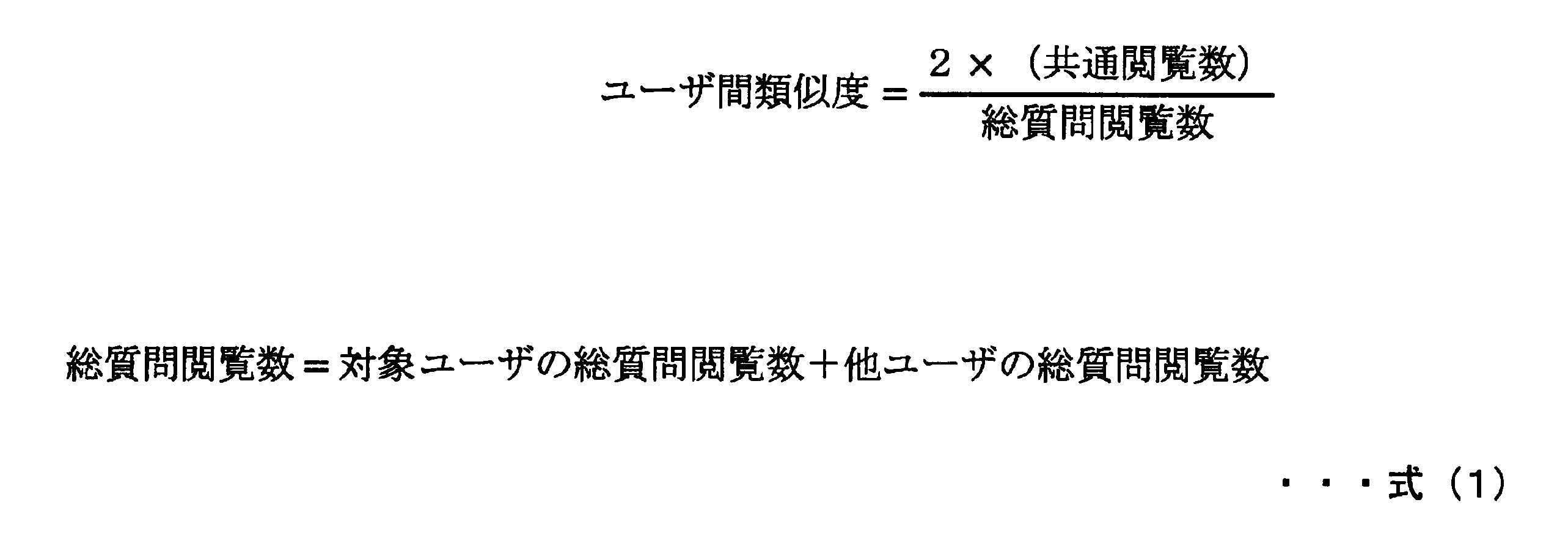
このユーザ間類似度は、最大値が1であり、最小値が0である。類似ユーザ抽出部221は、ユーザ間類似度を、対象ユーザ以外の他のユーザのそれぞれについて算出する。類似ユーザ抽出部221は、算出したユーザ間類似度が高い上位N位(Nは、1以上の予め定められた整数、例えば、5)に含まれる対象ユーザ以外の他のユーザを、類似ユーザとして抽出する。類似ユーザ抽出部221は、算出したユーザ間類似度と抽出した類似ユーザを表す情報とを、コンテンツ抽出部222に出力する。
コンテンツ抽出部222は、類似ユーザ抽出部221が算出したユーザ間類似度に基づいて、データベースサーバ100のデータベース110からコンテンツを抽出する。コンテンツ抽出部222は、例えば、類似ユーザ抽出部221が抽出した類似ユーザが閲覧したコンテンツ(例えば、質問)を、データベースサーバ100のデータベース110から抽出し、抽出したコンテンツから対象ユーザが既に閲覧したコンテンツを除外する。すなわち、コンテンツ抽出部222は、類似ユーザが閲覧したコンテンツから対象ユーザが既に閲覧したコンテンツを除外したコンテンツを抽出する。
これにより、情報処理システム1は、類似ユーザが嗜好するコンテンツのうち対象ユーザが嗜好するコンテンツを除外したコンテンツを対象ユーザへ提示することができる。このため、対象ユーザは、探しているコンテンツをより早く見つけることができる。
これにより、情報処理システム1は、類似ユーザが嗜好するコンテンツのうち対象ユーザが嗜好するコンテンツを除外したコンテンツを対象ユーザへ提示することができる。このため、対象ユーザは、探しているコンテンツをより早く見つけることができる。
同一のコンテンツが複数の類似ユーザで閲覧される場合には、コンテンツ抽出部222は、例えば、そのコンテンツについて、それらの複数の類似ユーザのユーザ間類似度を合計し、合計した数をそのコンテンツの推薦スコア(レコメンドスコアともいう)として算出する。推薦スコアは、そのコンテンツの対象ユーザへのお勧め度、すなわち対象ユーザに優先して提示する度合いを示すスコアである。そして、コンテンツ抽出部222は、推薦スコアが高い順にコンテンツを抽出し、抽出したコンテンツを予め決められた数に絞り込み、かつ、推薦スコアが高い順に配列する。
つまり、コンテンツ抽出部222は、類似ユーザ抽出部221が抽出した複数の類似ユーザが閲覧したそれぞれのコンテンツについて、そのコンテンツを閲覧した複数の類似ユーザのユーザ間類似度を用いて、そのコンテンツの対象ユーザへのお勧め度を表す推薦スコアを算出する。そして、コンテンツ抽出部222は、算出した推薦スコアに基づいてコンテンツを抽出する。
また、コンテンツ抽出部222は、表示モード取得部215から入力された表示モードデータが第1表示モードを表す場合、全てのコンテンツから文字列取得部214が取得した文字列が含まれるコンテンツを検索し、検索したコンテンツを抽出する。一方、コンテンツ抽出部222は、表示モード取得部215から入力された表示モードデータが第2表示モードを表す場合、類似ユーザが既に閲覧したコンテンツから文字列取得部214が取得した文字列が含まれるコンテンツを検索し、検索したコンテンツを抽出する。
コンテンツ抽出部222は、抽出したコンテンツを表す抽出結果データをデータベース読出部212およびフィルタリング処理部225に出力する。
これにより、対象ユーザが操作に応じて選択したカテゴリに分類されるコンテンツが端末装置300に表示される。
コンテンツ抽出部222は、抽出したコンテンツを表す抽出結果データをデータベース読出部212およびフィルタリング処理部225に出力する。
これにより、対象ユーザが操作に応じて選択したカテゴリに分類されるコンテンツが端末装置300に表示される。
類似コンテンツ抽出部223は、特定コンテンツ取得部216が取得した特定のコンテンツ(例えば、質問)に類似する類似コンテンツを抽出する。具体的には、例えば、類似コンテンツ抽出部223は、特定のコンテンツ(以下、第1の質問ともいう)を既に閲覧したユーザの集合と、そのコンテンツとは別のコンテンツ(以下、第2の質問ともいう)を既に閲覧したユーザの集合と、で重複するユーザの数(以下、ユーザ重複数という)を算出する。そして、類似コンテンツ抽出部223は、例えば、算出したユーザ重複数に基づいて、第1の質問に対する第2の質問の類似度を算出する。類似コンテンツ抽出部223は、例えば、この類似度を、第2の質問以外の他のコンテンツについても算出することで、特定のコンテンツに対する各コンテンツの類似度を算出する。そして、類似コンテンツ抽出部223は、例えば、算出したコンテンツの類似度が高い上位M個(Mは、1以上の予め定められた整数)のコンテンツを抽出する。
また、類似コンテンツ抽出部223は、抽出したコンテンツから、カテゴリ取得部217から入力されたカテゴリデータが示すカテゴリに分類されるコンテンツを、さらに抽出する。類似コンテンツ抽出部223は、抽出したコンテンツを表す抽出結果データを、データベース読出部212に出力する。
これにより、対象ユーザが操作に応じて選択したカテゴリに分類されるコンテンツが端末装置300に表示される。
これにより、対象ユーザが操作に応じて選択したカテゴリに分類されるコンテンツが端末装置300に表示される。
季節・期間取得部224は、嗜好情報として、データベースサーバ100のデータベース110に記憶された閲覧情報のうち対象ユーザが閲覧した質問IDを特定し、特定した質問IDに対応する質問を質問情報から抽出する。そして、季節・期間取得部224は、抽出した質問が投稿された質問投稿日時を、質問情報から抽出し、後述する定義情報を参照して、その質問投稿日時が属する期間の季節を、季節情報として特定する。
また、抽出した質問に対する回答がある場合、季節・期間取得部224は、嗜好情報として、データベースサーバ100のデータベース110に記憶された閲覧情報のうち対象ユーザが閲覧した質問に対する質問IDを特定し、特定した質問IDに対応する回答を、回答情報から抽出する。そして、季節・期間取得部224は、質問に対する回答が投稿された回答投稿日時を、質問情報から抽出し、後述する定義情報を参照して、その回答投稿日時が属する期間の季節を、季節情報として特定する。
また、抽出した質問に対する回答がある場合、季節・期間取得部224は、嗜好情報として、データベースサーバ100のデータベース110に記憶された閲覧情報のうち対象ユーザが閲覧した質問に対する質問IDを特定し、特定した質問IDに対応する回答を、回答情報から抽出する。そして、季節・期間取得部224は、質問に対する回答が投稿された回答投稿日時を、質問情報から抽出し、後述する定義情報を参照して、その回答投稿日時が属する期間の季節を、季節情報として特定する。
フィルタリング処理部225は、コンテンツ抽出部222および類似コンテンツ抽出部223により入力されたコンテンツ(例えば、質問)から、季節・期間取得部224により入力された季節情報に基づいて、コンテンツを抽出(フィルタリング)する。具体的には、フィルタリング処理部225は、入力された複数のコンテンツのうち、質問投稿日時および回答投稿日時が、季節情報が表す季節の期間に投稿されていたことを表す場合に、その質問投稿日時に投稿された質問およびその回答投稿日時に投稿された回答を抽出し、抽出した質問および回答以外の質問および回答を除外する。
このように、フィルタリング処理部225は、入力された複数のコンテンツのうち、コンテンツの投稿日時が、季節情報が表す季節の期間に投稿されていたことを表す場合に、その投稿日時に投稿されたコンテンツを抽出し、抽出したコンテンツ以外を除外する。
そして、フィルタリング処理部225は、抽出したコンテンツのそれぞれに対して、上述の推薦スコア(レコメンドスコア)を算出し、算出したレコメンドスコアの高い順に、予め決められた数の質問を配列する。
フィルタリング処理部225は、配列したコンテンツを、抽出結果データとしてデータベース読出部212に出力する。
そして、フィルタリング処理部225は、抽出したコンテンツのそれぞれに対して、上述の推薦スコア(レコメンドスコア)を算出し、算出したレコメンドスコアの高い順に、予め決められた数の質問を配列する。
フィルタリング処理部225は、配列したコンテンツを、抽出結果データとしてデータベース読出部212に出力する。
図11は、本発明の第1の実施形態に係るウェブサーバ200のハードウェア構成の一例を示すハードウェア構成図である。
ウェブサーバ200は、CPU201と、記憶媒体202と、ドライブ部203と、入力部204と、出力部205と、ROM206(Read Only Memory:ロム)と、RAM207(Random Acccess Memory:ラム)と、補助記憶部208と、通信部209と、を備える。
CPU201と、ドライブ部203と、入力部204と、出力部205と、ROM206と、RAM207と、補助記憶部208と、通信部209とは、バス(母線)を介して相互に接続される。
ウェブサーバ200は、CPU201と、記憶媒体202と、ドライブ部203と、入力部204と、出力部205と、ROM206(Read Only Memory:ロム)と、RAM207(Random Acccess Memory:ラム)と、補助記憶部208と、通信部209と、を備える。
CPU201と、ドライブ部203と、入力部204と、出力部205と、ROM206と、RAM207と、補助記憶部208と、通信部209とは、バス(母線)を介して相互に接続される。
CPU201は、プログラム、各種データを読み出して、ウェブサーバ200を制御する。記憶媒体202は、例えば、光磁気ディスク、フレキシブルディスク、フラッシュメモリなどの可搬記憶媒体であり、例えば、各種データを記憶する。ドライブ部203は、例えば、記憶媒体202の読み出し装置または読み書き装置である。入力部204は、例えば、マウス、キーボードなどの入力装置である。出力部205は、例えば、表示部、スピーカなどの出力装置である。ROM206は、例えば、プログラムを記憶する記憶媒体である。RAM207は、例えば、各種データ、プログラムを一時的に記憶する記憶媒体である。補助記憶部208は、ハードディスクドライブ、フラッシュメモリなどの記憶媒体であり、例えば、各種データを記憶する。通信部209は、通信インタフェースを有し、有線または無線によりネットワークNWに接続される。
CPU201が読み出すプログラムは、ROM206に記憶されている一例を示したが、記憶媒体202や補助記憶部208に記憶されてもよいし、ネットワークNWからダウンロードしたプログラムを記憶媒体202や補助記憶部208などに記憶させてもよい。CPU201が読み出す各種データは、記憶媒体202や補助記憶部208に記憶される一例を示したが、ROM206に記憶されてもよいし、ネットワークNWからダウンロードした各種データであってもよい。
次に、図12A及び図12Bを用いてコンテンツ抽出部222における推薦スコアの算出処理について説明する。
図12A及び図12Bは、本発明の第1の実施形態に係る対象ユーザと類似ユーザが閲覧した質問の一例を示す概略図である。
図12Aは、各ユーザが閲覧した質問の一覧を示すテーブルT41を示す。テーブルT41は、ユーザA、ユーザB、ユーザC、ユーザDの各項目列を有する。ユーザA、ユーザB、ユーザC、ユーザDうち、ユーザAが対象ユーザである。ユーザB、ユーザCおよびユーザDは、いずれも類似ユーザである。
図12A及び図12Bは、本発明の第1の実施形態に係る対象ユーザと類似ユーザが閲覧した質問の一例を示す概略図である。
図12Aは、各ユーザが閲覧した質問の一覧を示すテーブルT41を示す。テーブルT41は、ユーザA、ユーザB、ユーザC、ユーザDの各項目列を有する。ユーザA、ユーザB、ユーザC、ユーザDうち、ユーザAが対象ユーザである。ユーザB、ユーザCおよびユーザDは、いずれも類似ユーザである。
この条件で、コンテンツ抽出部222は、例えば、ユーザB、ユーザC、ユーザDが既に閲覧した質問からユーザA(対象ユーザ)が既に閲覧した質問を除外する。具体的には、ユーザBが閲覧した「質問A1」は、ユーザA(対象ユーザ)も閲覧しているため、ユーザBが閲覧した「質問A1」は除外される。同様にして、ユーザCが閲覧した「質問A3」は除外される。
図12Bに示すテーブルT42では、テーブルT41における質問のうち、コンテンツ抽出部222が除外した質問の上に×印が付与されている。
図12Bに示すテーブルT42では、テーブルT41における質問のうち、コンテンツ抽出部222が除外した質問の上に×印が付与されている。
ここで、「質問B1」をユーザB、ユーザCおよびユーザDが閲覧しているため、コンテンツ抽出部222は、ユーザAとユーザBのユーザ間類似度RABと、ユーザAとユーザCのユーザ間類似度RACと、ユーザAとユーザDのユーザ間類似度RADとを加算した値を、「質問B1」についての推薦スコアSB1(=RAB+RAC+RAD)として算出する。また、「質問B3」をユーザBおよびユーザCが閲覧しているため、コンテンツ抽出部222は、ユーザAとユーザBのユーザ間類似度RABと、ユーザAとユーザCのユーザ間類似度RACとを加算した値を、「質問B3」についての推薦スコアSB3(=RAB+RAC)として算出する。
同様に、「質問C3」をユーザCおよびユーザDが閲覧しているため、コンテンツ抽出部222は、ユーザAとユーザCのユーザ間類似度RACと、ユーザAとユーザDのユーザ間類似度RADとを加算した値を、「質問C3」についての推薦スコアSC3(=RAC+RAD)として算出する。また、「質問D3」をユーザDが閲覧しているため、コンテンツ抽出部222は、ユーザAとユーザDのユーザ間類似度RADを、「質問D3」についての推薦スコアSD3(=RAD)として算出する。
「質問B3」についての推薦スコアSB3(=RAB+RAC)が「質問C3」についての推薦スコアSC3(=RAC+RAD)より大きい(SB3>SC3)場合、コンテンツ抽出部222は、「質問B1」、「質問B3」、「質問C3」、「質問D3」の順に配列する。これにより、端末装置300は、「質問B1」、「質問B3」、「質問C3」、「質問D3」を、その順序で表示する。
一方、「質問D3」についての推薦スコアSD3(=RAD)より「質問C3」についての推薦スコアSC3(=RAC+RAD)が小さい(SD3<SC3)場合、コンテンツ抽出部222は、「質問B1」、「質問B3」、「質問D3」、「質問C3」の順に配列する。これにより、端末装置300は、「質問B1」、「質問B3」、「質問D3」、「質問C3」を、その順序で表示する。
一方、「質問D3」についての推薦スコアSD3(=RAD)より「質問C3」についての推薦スコアSC3(=RAC+RAD)が小さい(SD3<SC3)場合、コンテンツ抽出部222は、「質問B1」、「質問B3」、「質問D3」、「質問C3」の順に配列する。これにより、端末装置300は、「質問B1」、「質問B3」、「質問D3」、「質問C3」を、その順序で表示する。
このように、コンテンツ抽出部222は、類似ユーザが閲覧したコンテンツのうち、閲覧した類似ユーザの数が多いほど推薦スコアを大きくする。また、コンテンツ抽出部222は、類似ユーザ同士で閲覧したコンテンツについて、そのコンテンツを閲覧した類似ユーザと対象ユーザとのユーザ間類似度の和が大きいほど推薦スコアを大きくする。これにより、類似ユーザが閲覧したコンテンツのうち、対象ユーザとのユーザ間類似度が高い類似ユーザが多く閲覧したコンテンツほど優先して提示することができる。これにより、情報処理システム1は、対象ユーザが探しているコンテンツを提示する確率を高めることができるので、対象ユーザは、自分が探しているコンテンツを早く、かつ容易に見つけることができる。その結果、提示されたコンテンツにより、対象ユーザが知りたい事を、早く、かつ容易に知ることができるので、ユーザの満足度を向上させることができる。
また、情報処理システム1は、対象ユーザが既に閲覧したコンテンツを除いたコンテンツを提示するので、対象ユーザは探しているコンテンツをより早く見つけることができる。
また、情報処理システム1は、対象ユーザが既に閲覧したコンテンツを除いたコンテンツを提示するので、対象ユーザは探しているコンテンツをより早く見つけることができる。
次に、図13を用いて類似コンテンツ抽出部223が行う処理を説明する。
図13は、本発明の第1の実施形態に係る質問2に対する質問3の類似度の一例を説明する説明図である。
図13において、ユーザ名(例えば、ユーザA)と質問名(例えば、「質問1」)との間を結ぶ線分は、その一端に示されているユーザがその他端に示される質問を閲覧したことを表している。具体的には、「質問1」は、ユーザAに閲覧されている。「質問2」は、ユーザA、ユーザB、ユーザCに閲覧されている。「質問3」は、ユーザC、ユーザDに閲覧されている。「質問4」は、ユーザBに閲覧されている。「質問5」は、ユーザAに閲覧されている。また、図13において、「質問2」に対する各質問の類似度(コンテンツの類似度)の例が、その質問名の直下に示されている。
図13は、本発明の第1の実施形態に係る質問2に対する質問3の類似度の一例を説明する説明図である。
図13において、ユーザ名(例えば、ユーザA)と質問名(例えば、「質問1」)との間を結ぶ線分は、その一端に示されているユーザがその他端に示される質問を閲覧したことを表している。具体的には、「質問1」は、ユーザAに閲覧されている。「質問2」は、ユーザA、ユーザB、ユーザCに閲覧されている。「質問3」は、ユーザC、ユーザDに閲覧されている。「質問4」は、ユーザBに閲覧されている。「質問5」は、ユーザAに閲覧されている。また、図13において、「質問2」に対する各質問の類似度(コンテンツの類似度)の例が、その質問名の直下に示されている。
図13では、類似コンテンツ抽出部223は、例えば、類似度Vの計算式、V=N3×2/(N1+N2)に従って、「質問2」に対する「質問3」の類似度Vを、0.8(=2×2/(3+2))と算出する。ここで、N1は、「質問2」に対して、その質問を閲覧したユーザの数(この例では、3)である。N2は、「質問3」に対して、その質問を閲覧したユーザの数(この例では、2)である。N3は、「質問2」と「質問3」とのユーザの重複数(この例では、2)である。ここで、類似度Vは、その値が大きいほど、質問間の類似度が高いことを意味する。これにより、類似コンテンツ抽出部223は、質問間で重複して閲覧したユーザが多いほど、質問間の類似度を高くすることができる。
次に、図14から図18を用いて、コンテンツ抽出部222、季節・期間取得部224およびフィルタリング処理部225が行う処理について説明する。
図14は、本発明の第1の実施形態に係る定義情報の一例を示す概略図である。
テーブルTT5は、定義情報の一例である。テーブルTT5は、No.、季節、期間の各項目列を有する。No.は、各季節、期間に割り当てられた識別番号である。また、季節は、例えば、「春」、「夏」、「秋」、「冬」の四季である。また、期間は、季節に該当する期間を表し、例えば、「春」であれば、期間「3月1日~6月30日」が対応することを表している。
図14は、本発明の第1の実施形態に係る定義情報の一例を示す概略図である。
テーブルTT5は、定義情報の一例である。テーブルTT5は、No.、季節、期間の各項目列を有する。No.は、各季節、期間に割り当てられた識別番号である。また、季節は、例えば、「春」、「夏」、「秋」、「冬」の四季である。また、期間は、季節に該当する期間を表し、例えば、「春」であれば、期間「3月1日~6月30日」が対応することを表している。
図15は、本発明の第1の実施形態に係る対象ユーザの閲覧履歴の一例を示す概略図である。
テーブルT6は、例えば、対象ユーザであるユーザAの閲覧履歴の一例である。テーブルT6は、No.、質問ID、質問投稿日時の各項目列を有する。No.は、質問IDに対応する質問をユーザAが閲覧したときの順序を表す。例えば、第2行の例では、ユーザAが質問ID「101」に対応する質問を閲覧したことを表し、その質問が投稿された投稿日時が質問投稿日時「2013-03-03 20:00」であることを表している。
この例では、質問ID「102」に対応する質問が投稿された投稿日時が、質問投稿日時「2013-04-01 21:00」であり、質問ID「103」に対応する質問が投稿された投稿日時が、質問投稿日時「2013-05-05 22:00」であることを表している。
つまり、ユーザAが閲覧した質問のいずれも、質問投稿日時がテーブルTT5に示す期間「3月1日~6月30日」に対応し、その期間「3月1日~6月30日」が季節「春」に対応する。
テーブルT6は、例えば、対象ユーザであるユーザAの閲覧履歴の一例である。テーブルT6は、No.、質問ID、質問投稿日時の各項目列を有する。No.は、質問IDに対応する質問をユーザAが閲覧したときの順序を表す。例えば、第2行の例では、ユーザAが質問ID「101」に対応する質問を閲覧したことを表し、その質問が投稿された投稿日時が質問投稿日時「2013-03-03 20:00」であることを表している。
この例では、質問ID「102」に対応する質問が投稿された投稿日時が、質問投稿日時「2013-04-01 21:00」であり、質問ID「103」に対応する質問が投稿された投稿日時が、質問投稿日時「2013-05-05 22:00」であることを表している。
つまり、ユーザAが閲覧した質問のいずれも、質問投稿日時がテーブルTT5に示す期間「3月1日~6月30日」に対応し、その期間「3月1日~6月30日」が季節「春」に対応する。
図16A~図16Cは、本発明の第1の実施形態に係る類似ユーザの閲覧履歴の一例を示す概略図である。
図16Aに示すテーブルT7は、例えば、類似ユーザであるユーザBの閲覧履歴の一例である。また、図16Bに示すテーブルT8は、例えば、類似ユーザであるユーザCの閲覧履歴の一例である。また、図16Cに示すテーブルT9は、例えば、類似ユーザであるユーザDの閲覧履歴の一例である。
テーブルT7、T8、T9のそれぞれは、No.、質問ID、質問投稿日時の各項目列を有する。各項目列は、テーブルT6と同様であるので説明は省略する。
図16Aに示すテーブルT7は、例えば、類似ユーザであるユーザBの閲覧履歴の一例である。また、図16Bに示すテーブルT8は、例えば、類似ユーザであるユーザCの閲覧履歴の一例である。また、図16Cに示すテーブルT9は、例えば、類似ユーザであるユーザDの閲覧履歴の一例である。
テーブルT7、T8、T9のそれぞれは、No.、質問ID、質問投稿日時の各項目列を有する。各項目列は、テーブルT6と同様であるので説明は省略する。
テーブルT7の第2行の例では、ユーザBが質問ID「101」に対応する質問を閲覧したことを表し、その質問が投稿された投稿日時が質問投稿日時「2013-03-03 20:00」であることを表している。また、テーブルT7の第3行などの他の行においても、ユーザBが質問IDに対応する質問を閲覧したことを表し、その質問が投稿された投稿日時が質問投稿日時であることを表している。
また、テーブルT8の第2行の例では、ユーザCが質問ID「102」に対応する質問を閲覧したことを表し、その質問が投稿された投稿日時が質問投稿日時「2013-04-01 21:00」であることを表している。また、テーブルT8の第3行などの他の行においても、ユーザCが質問IDに対応する質問を閲覧したことを表し、その質問が投稿された投稿日時が質問投稿日時であることを表している。
また、テーブルT9の第2行の例では、ユーザDが質問ID「103」に対応する質問を閲覧したことを表し、その質問が投稿された投稿日時が質問投稿日時「2013-05-05 22:00」であることを表している。また、テーブルT9の第3行などの他の行においても、ユーザDが質問IDに対応する質問を閲覧したことを表し、その質問が投稿された投稿日時が質問投稿日時であることを表している。
このように、類似ユーザの閲覧履歴は、テーブルT7、T8、T9に示すように、各類似ユーザが閲覧したコンテンツの識別情報と、そのコンテンツが投稿された投稿日時などの日時情報とが対応付けられている。
図17A~図17Cは、本発明の第1の実施形態に係るフィルタリング処理された類似ユーザの閲覧履歴の一例を示す概略図である。
図17Aに示すテーブルT10は、例えば、類似ユーザであるユーザBのフィルタリング処理された閲覧履歴の一例である。また、図17Bに示すテーブルT11は、例えば、類似ユーザであるユーザCのフィルタリング処理された閲覧履歴の一例である。また、図17Cに示すテーブルT12は、例えば、類似ユーザであるユーザDのフィルタリング処理された閲覧履歴の一例である。
テーブルT10、T11、T12のそれぞれは、No.、質問ID、質問投稿日時の各項目列を有する。各項目列は、テーブルT7、T8、T9と同様であるので説明は省略する。
図17Aに示すテーブルT10は、例えば、類似ユーザであるユーザBのフィルタリング処理された閲覧履歴の一例である。また、図17Bに示すテーブルT11は、例えば、類似ユーザであるユーザCのフィルタリング処理された閲覧履歴の一例である。また、図17Cに示すテーブルT12は、例えば、類似ユーザであるユーザDのフィルタリング処理された閲覧履歴の一例である。
テーブルT10、T11、T12のそれぞれは、No.、質問ID、質問投稿日時の各項目列を有する。各項目列は、テーブルT7、T8、T9と同様であるので説明は省略する。
季節・期間取得部224およびフィルタリング処理部225は、対象ユーザであるユーザAの閲覧履歴と、類似ユーザであるユーザB、C、Dの各閲覧履歴と、定義情報とに基づいて、コンテンツ抽出部222、類似コンテンツ抽出部223により入力された複数のコンテンツに対してフィルタリング処理を行い、対象ユーザに提示するコンテンツを抽出する。
具体的には、季節・期間取得部224は、ユーザAが閲覧した各質問の質問投稿日時を、ユーザAの閲覧履歴(テーブルT6)から抽出し、抽出した質問投稿日時が定義情報(テーブルTT5)におけるどの期間に該当するかを判定し、質問投稿日時が該当する期間に対応付けられた季節(例えば、春)を抽出する。
具体的には、季節・期間取得部224は、ユーザAが閲覧した各質問の質問投稿日時を、ユーザAの閲覧履歴(テーブルT6)から抽出し、抽出した質問投稿日時が定義情報(テーブルTT5)におけるどの期間に該当するかを判定し、質問投稿日時が該当する期間に対応付けられた季節(例えば、春)を抽出する。
そして、フィルタリング処理部225は、抽出した季節に対応するコンテンツを、類似ユーザの閲覧履歴(テーブルT7、T8、T9)から抽出する。テーブルT10は、フィルタリング処理部225がユーザBの閲覧履歴(テーブルT7)から、ユーザAの閲覧履歴(テーブルT6)から抽出された季節「春」に対応する定義情報(テーブルTT5)の期間「3月1日~6月30日」に該当する質問投稿日時の質問を抽出することにより生成される。
同様にして、フィルタリング処理部225は、ユーザCの閲覧履歴(テーブルT8)から、ユーザAの閲覧履歴(テーブルT6)から抽出された季節に対応する定義情報(テーブルTT5)の期間に該当する質問投稿日時の質問を抽出することによりテーブルT11のように、履歴情報を抽出する。また、フィルタリング処理部225は、ユーザDの閲覧履歴(テーブルT9)から、ユーザAの閲覧履歴(テーブルT6)から抽出された季節に対応する定義情報(テーブルTT5)の期間に該当する質問投稿日時の質問を抽出することによりテーブルT12のように、履歴情報を抽出する。
図18は、本発明の第1の実施形態に係るお薦め情報の一例を示す概略図である。
テーブルT13は、対象ユーザに提示するお薦め情報の一例である。テーブルT13は、No.、質問ID、質問投稿日時の各項目列を有する。各項目列は、テーブルT10、T11、T12と同様であるので説明は省略する。
フィルタリング処理部225は、テーブルT10、T11、T12のように各類似ユーザの閲覧履歴から抽出された履歴を、例えば、お薦めスコアが高い順に並び替えて、お薦め情報を生成する。具体的には、フィルタリング処理部225は、抽出した各類似ユーザの閲覧履歴のうち、既に対象ユーザに閲覧された質問を除外する。そして、フィルタリング処理部225は、除外された質問以外の各閲覧履歴の質問に対して、お薦めスコアを算出し、算出したお薦めスコアが高い順に、類似ユーザの閲覧履歴を並び替えて、テーブルT13のようなお薦め情報を生成する。
テーブルT13は、対象ユーザに提示するお薦め情報の一例である。テーブルT13は、No.、質問ID、質問投稿日時の各項目列を有する。各項目列は、テーブルT10、T11、T12と同様であるので説明は省略する。
フィルタリング処理部225は、テーブルT10、T11、T12のように各類似ユーザの閲覧履歴から抽出された履歴を、例えば、お薦めスコアが高い順に並び替えて、お薦め情報を生成する。具体的には、フィルタリング処理部225は、抽出した各類似ユーザの閲覧履歴のうち、既に対象ユーザに閲覧された質問を除外する。そして、フィルタリング処理部225は、除外された質問以外の各閲覧履歴の質問に対して、お薦めスコアを算出し、算出したお薦めスコアが高い順に、類似ユーザの閲覧履歴を並び替えて、テーブルT13のようなお薦め情報を生成する。
なお、第1の実施形態において、フィルタリング処理部225は、テーブルT10、T11、T12のように各類似ユーザの閲覧履歴から抽出された閲覧履歴のうち、例えば、お薦めスコアが高い順に並び替えて、既に対象ユーザに閲覧された質問を除外することなくお薦め情報を生成してもよい。
なお、第1の実施形態において、フィルタリング処理部225は、テーブルT10、T11、T12のように各類似ユーザの閲覧履歴から抽出された閲覧履歴のうち、質問の投稿日時が新しいものから順に並び替えて、既に対象ユーザに閲覧された質問を除外することなくお薦め情報を生成してもよい。
また、フィルタリング処理部225は、テーブルT10、T11、T12のように各類似ユーザの閲覧履歴から抽出された閲覧履歴のうち、質問の投稿日時が新しいものから順に並び替えて、既に対象ユーザに閲覧された質問を除外して薦め情報を生成してもよい。
また、フィルタリング処理部225は、テーブルT10、T11、T12のように各類似ユーザの閲覧履歴から抽出された閲覧履歴のうち、質問の投稿日時が新しいものから順に並び替えて、既に対象ユーザに閲覧された質問を除外して薦め情報を生成してもよい。
なお、第1の実施形態において、フィルタリング処理部225は、お薦めスコアが高い順に並び替えてお薦め情報を生成する場合について説明したが、これに限られるものではない。例えば、テーブルT10、T11、T12のように各類似ユーザの閲覧履歴から抽出された閲覧履歴のうち、抽出された閲覧履歴の数が多い類似ユーザの閲覧履歴、2番目に抽出された閲覧履歴が多い類似ユーザの閲覧履歴のように、抽出された閲覧履歴が多い類似ユーザの順序で、各類似ユーザの閲覧履歴から所定の数の閲覧履歴を抽出してお薦め情報を生成してもよい。このとき、その所定の数は、抽出された閲覧履歴が多い類似ユーザの順序に応じた段階的な各類似ユーザで異なる数、例えば、類似ユーザBは3、類似ユーザCは2、類似ユーザDは1のようにしてもよいし、類似ユーザの全てにおいて同じ数であってもよい。この場合、ある類似ユーザにおいて、抽出された閲覧履歴が所定の数以下である場合、フィルタリング処理部225は、その閲覧履歴を全て抽出してお薦め情報を生成すればよい。
なお、第1の実施形態において、フィルタリング処理部225は、テーブルT10、T11、T12のように各類似ユーザの閲覧履歴から抽出された閲覧履歴のうち、各類似ユーザが直近で閲覧した閲覧履歴、例えば、テーブルT10、T11、T12における各識別情報(No.)の項目列における値が大きいものから順に、所定の数の閲覧履歴を抽出し、抽出された閲覧履歴を、テーブルT10、T11、T12のように各類似ユーザの閲覧履歴から抽出された閲覧履歴の数が多い類似ユーザの順序で、閲覧履歴を並び替えて、お薦め情報を生成してもよい。
次に、第1の実施形態に係るウェブサーバ200が行う情報処理の例について説明する。
図19は、本発明の第1の実施形態に係るウェブサーバ200における情報処理の一例を示すフローチャートである。
ステップST101において、類似ユーザ抽出部221は、対象ユーザと他のユーザそれぞれとのユーザ間類似度を算出する。その後、ステップST102に進む。
ステップST102において、類似ユーザ抽出部221は、ユーザ間類似度の上位N人のユーザを類似ユーザとして抽出する。その後、ステップST103に進む。
ステップST103において、コンテンツ抽出部222は、類似ユーザが閲覧した質問を全て抽出する。その後、ステップST104に進む。
ステップST104において、コンテンツ抽出部222は、ステップST103において抽出した類似ユーザが閲覧した全質問のうち、対象ユーザが既に閲覧した質問を除外する。その後、ステップST105に進む。
図19は、本発明の第1の実施形態に係るウェブサーバ200における情報処理の一例を示すフローチャートである。
ステップST101において、類似ユーザ抽出部221は、対象ユーザと他のユーザそれぞれとのユーザ間類似度を算出する。その後、ステップST102に進む。
ステップST102において、類似ユーザ抽出部221は、ユーザ間類似度の上位N人のユーザを類似ユーザとして抽出する。その後、ステップST103に進む。
ステップST103において、コンテンツ抽出部222は、類似ユーザが閲覧した質問を全て抽出する。その後、ステップST104に進む。
ステップST104において、コンテンツ抽出部222は、ステップST103において抽出した類似ユーザが閲覧した全質問のうち、対象ユーザが既に閲覧した質問を除外する。その後、ステップST105に進む。
ステップST105において、季節・期間取得部224は、対象ユーザが閲覧した質問の質問投稿日時と定義情報とに基づいて、対象ユーザが閲覧した質問に係る季節情報を取得する。その後、ステップST106に進む。
ステップST106において、フィルタリング処理部225は、ステップST103において抽出した質問から、ステップST105において取得した季節情報以外の季節に投稿された質問を除外する。その後、ステップST107に進む。
ステップST107において、フィルタリング処理部225は、ステップST106で除外されて残った質問それぞれについて、推薦スコア(レコメンドスコア)を算出する。
その後、ステップST108に進む。
ステップST108において、フィルタリング処理部225は、推薦スコア(レコメンドスコア)の高い順に、予め決められた数の質問を抽出し、端末装置300に提示させる。その後、図19に係る処理を終了する。
ステップST106において、フィルタリング処理部225は、ステップST103において抽出した質問から、ステップST105において取得した季節情報以外の季節に投稿された質問を除外する。その後、ステップST107に進む。
ステップST107において、フィルタリング処理部225は、ステップST106で除外されて残った質問それぞれについて、推薦スコア(レコメンドスコア)を算出する。
その後、ステップST108に進む。
ステップST108において、フィルタリング処理部225は、推薦スコア(レコメンドスコア)の高い順に、予め決められた数の質問を抽出し、端末装置300に提示させる。その後、図19に係る処理を終了する。
このように、第1の実施形態によれば、情報処理装置(ウェブサーバ200)は、対象ユーザと他のユーザとのそれぞれの物品に対する嗜好を示す嗜好情報を参照して、対象ユーザと他のユーザとの類似度であるユーザ間類似度を算出し、算出したユーザ間類似度に基づいて対象ユーザに類似する類似ユーザを抽出する類似ユーザ抽出部22と、類似ユーザ抽出部により抽出された類似ユーザが嗜好するコンテンツを抽出するコンテンツ抽出部222と、を備える。
より具体的には、情報処理装置(ウェブサーバ200)は、対象ユーザと他のユーザとのそれぞれの物品に対する嗜好を示す嗜好情報を参照して、対象ユーザと他のユーザとの類似度であるユーザ間類似度を算出し、算出したユーザ間類似度に基づいて対象ユーザに類似する類似ユーザを抽出する類似ユーザ抽出部221と、類似ユーザ抽出部221により抽出された類似ユーザが嗜好するコンテンツを抽出するコンテンツ抽出部222と、コンテンツ抽出部222により抽出されたコンテンツを日時情報によりフィルタリングして、対象ユーザに提示する提示コンテンツを抽出するコンテンツフィルタリング処理部(フィルタリング処理部225)と、を備える。
より具体的には、情報処理装置(ウェブサーバ200)は、対象ユーザと他のユーザとのそれぞれの物品に対する嗜好を示す嗜好情報を参照して、対象ユーザと他のユーザとの類似度であるユーザ間類似度を算出し、算出したユーザ間類似度に基づいて対象ユーザに類似する類似ユーザを抽出する類似ユーザ抽出部221と、類似ユーザ抽出部221により抽出された類似ユーザが嗜好するコンテンツを抽出するコンテンツ抽出部222と、コンテンツ抽出部222により抽出されたコンテンツを日時情報によりフィルタリングして、対象ユーザに提示する提示コンテンツを抽出するコンテンツフィルタリング処理部(フィルタリング処理部225)と、を備える。
これにより、情報処理装置(ウェブサーバ200)は、あるユーザと嗜好が類似する複数の類似ユーザが閲覧したコンテンツの投稿時間から、最近話題になっているコンテンツや、季節性のあるコンテンツを抽出でき、そのユーザの現在の嗜好に合った情報を提示することができる。
(第2の実施形態)
以下、図面を参照しながら本発明の第2の実施形態について詳しく説明する。
第2の実施形態に係る情報処理システム1aが、第1の実施形態に係る情報処理システム1と同様である点については、説明を省略する。また、第1の実施形態に係るデータベースサーバ100、ウェブサーバ200、端末装置300が、第1の実施形態に係るデータベースサーバ100、ウェブサーバ200、端末装置300と同様である点については、説明を省略する。
以下、図面を参照しながら本発明の第2の実施形態について詳しく説明する。
第2の実施形態に係る情報処理システム1aが、第1の実施形態に係る情報処理システム1と同様である点については、説明を省略する。また、第1の実施形態に係るデータベースサーバ100、ウェブサーバ200、端末装置300が、第1の実施形態に係るデータベースサーバ100、ウェブサーバ200、端末装置300と同様である点については、説明を省略する。
図20は、本発明の第2の実施形態に係るウェブサーバ200における情報処理の一例を示すフローチャートである。
ステップST201において、類似ユーザ抽出部221は、対象ユーザと他のユーザそれぞれとのユーザ間類似度を算出する。その後、ステップST202に進む。
ステップST202において、類似ユーザ抽出部221は、ユーザ間類似度の上位N人のユーザを類似ユーザとして抽出する。その後、ステップST203に進む。
ステップST203において、コンテンツ抽出部222は、類似ユーザが閲覧した質問を全て抽出する。その後、ステップST204に進む。
ステップST204において、コンテンツ抽出部222は、ステップST203において抽出した類似ユーザが閲覧した全質問のうち、対象ユーザが既に閲覧した質問を除外する。その後、ステップST205に進む。
ステップST201において、類似ユーザ抽出部221は、対象ユーザと他のユーザそれぞれとのユーザ間類似度を算出する。その後、ステップST202に進む。
ステップST202において、類似ユーザ抽出部221は、ユーザ間類似度の上位N人のユーザを類似ユーザとして抽出する。その後、ステップST203に進む。
ステップST203において、コンテンツ抽出部222は、類似ユーザが閲覧した質問を全て抽出する。その後、ステップST204に進む。
ステップST204において、コンテンツ抽出部222は、ステップST203において抽出した類似ユーザが閲覧した全質問のうち、対象ユーザが既に閲覧した質問を除外する。その後、ステップST205に進む。
ステップST205において、フィルタリング処理部225は、ステップST206で除外されて残った質問それぞれについて、推薦スコア(レコメンドスコア)を算出する。
その後、ステップST206に進む。
ステップST206において、フィルタリング処理部225は、推薦スコア(レコメンドスコア)の高い順に、予め決められた数の質問を抽出する。その後、ステップST207に進む。
ステップST207において、季節・期間取得部224は、対象ユーザが閲覧した質問の質問投稿日時と定義情報とに基づいて、対象ユーザが閲覧した質問に係る季節情報を取得する。その後、ステップST208に進む。
ステップST208において、フィルタリング処理部225は、ステップST103において抽出した質問から、ステップST207において取得した季節情報以外の季節に投稿された質問を除外し、残った質問を、端末装置300に提示させる。その後、図20に係る情報処理を終了する。
その後、ステップST206に進む。
ステップST206において、フィルタリング処理部225は、推薦スコア(レコメンドスコア)の高い順に、予め決められた数の質問を抽出する。その後、ステップST207に進む。
ステップST207において、季節・期間取得部224は、対象ユーザが閲覧した質問の質問投稿日時と定義情報とに基づいて、対象ユーザが閲覧した質問に係る季節情報を取得する。その後、ステップST208に進む。
ステップST208において、フィルタリング処理部225は、ステップST103において抽出した質問から、ステップST207において取得した季節情報以外の季節に投稿された質問を除外し、残った質問を、端末装置300に提示させる。その後、図20に係る情報処理を終了する。
このように、第2の実施形態によれば、情報処理装置(ウェブサーバ200)は、対象ユーザと他のユーザとのそれぞれの物品に対する嗜好を示す嗜好情報を参照して、対象ユーザと他のユーザとの類似度であるユーザ間類似度を算出し、算出したユーザ間類似度に基づいて対象ユーザに類似する類似ユーザを抽出する類似ユーザ抽出部221と、類似ユーザ抽出部221により抽出された類似ユーザが嗜好するコンテンツを抽出するコンテンツ抽出部222と、コンテンツ抽出部222により抽出されたコンテンツを日時情報によりフィルタリングして、対象ユーザに提示する提示コンテンツを抽出するコンテンツフィルタリング処理部(フィルタリング処理部225)と、を備える。
これにより、第2の実施形態では、第1の実施形態と同様の効果を得ることができる。
これにより、第2の実施形態では、第1の実施形態と同様の効果を得ることができる。
(第3の実施形態)
以下、図面を参照しながら本発明の第3の実施形態について詳しく説明する。
第3の実施形態に係る情報処理システム1bが、第1の実施形態に係る情報処理システム1と同様である点については、説明を省略する。また、第3の実施形態に係るデータベースサーバ100、端末装置300が、第1の実施形態に係るデータベースサーバ100、端末装置300と同様である点については、説明を省略する。
以下、図面を参照しながら本発明の第3の実施形態について詳しく説明する。
第3の実施形態に係る情報処理システム1bが、第1の実施形態に係る情報処理システム1と同様である点については、説明を省略する。また、第3の実施形態に係るデータベースサーバ100、端末装置300が、第1の実施形態に係るデータベースサーバ100、端末装置300と同様である点については、説明を省略する。
図21は、本発明の第3の実施形態に係る端末装置300に表示される画像の一例を示す概略図である。
図21の上段のウィンドウは、「おすすめ切り替え」という表題を有するおすすめ切り替えウィンドウである。このウィンドウは、お薦め情報を、「期間」により抽出するか否か、「キーワード」により抽出するか否か、「季節」により抽出するか否か、などの日時情報をユーザが選択可能であることを示す。この例では、端末装置300は、例えば、ラジオボタンが「期間」、「キーワード」、「季節」に対応して配置され、そのラジオボタンにより選択されたことを検出し、その右隣に示されている時季情報、例えば、「キーワード」に対応するキーワード情報により、お薦め情報を抽出する。
図21の上段のウィンドウは、「おすすめ切り替え」という表題を有するおすすめ切り替えウィンドウである。このウィンドウは、お薦め情報を、「期間」により抽出するか否か、「キーワード」により抽出するか否か、「季節」により抽出するか否か、などの日時情報をユーザが選択可能であることを示す。この例では、端末装置300は、例えば、ラジオボタンが「期間」、「キーワード」、「季節」に対応して配置され、そのラジオボタンにより選択されたことを検出し、その右隣に示されている時季情報、例えば、「キーワード」に対応するキーワード情報により、お薦め情報を抽出する。
図21の下段のウィンドウは、「医療健康相談Q&A」という表題を有する。このウィンドウの左上端、右上端には、それぞれ対象ユーザの氏名「○○○○」、検索に用いる文字列を受け付ける入力欄(検索窓)がそれぞれ表示されている。入力欄の右隣には、例えば、検索ボタンが表示されている。対象ユーザは、例えば、検索ボタンの操作により検索を指示することで、入力欄に入力された文字列を含む質問を検索することを要求する。
このウィンドウの左下には、「閲覧履歴」として対象ユーザが閲覧した各質問の冒頭部分が3件分、一覧表示されている。「閲覧履歴」は、対象ユーザの嗜好を示す嗜好情報の一つである。
このウィンドウの右下には、「おすすめ」情報として、後述するキーワードを含む各質問の冒頭部分が6件分、一覧表示されている。
このウィンドウの右下には、「おすすめ」情報として、後述するキーワードを含む各質問の冒頭部分が6件分、一覧表示されている。
ここで、「閲覧履歴」、「おすすめ」の各列の右端に表示されている右向きの△印は、その位置を指示する操作を検出したとき、その質問とその質問に対する回答の全文が表示されることを示す。
また、「おすすめ」を表示する表示モードとしては、質問文アクセス履歴モード(第1表示モード)と質問文レコメンドモード(第2表示モード)の二つがある。表示モードが第1表示モードである場合、端末装置300は、全てのユーザが投稿した質問を表示する。一方、表示モードが第2表示モードである場合、端末装置300は、類似ユーザが投稿した質問だけを表示する。
また、「おすすめ」を表示する表示モードとしては、質問文アクセス履歴モード(第1表示モード)と質問文レコメンドモード(第2表示モード)の二つがある。表示モードが第1表示モードである場合、端末装置300は、全てのユーザが投稿した質問を表示する。一方、表示モードが第2表示モードである場合、端末装置300は、類似ユーザが投稿した質問だけを表示する。
本発明の第3の実施形態に係るウェブサーバ200aの構成を、図10に係る第1の実施形態に係るウェブサーバ200の構成を援用して説明する。なお、第3の実施形態では、図10のウェブサーバ200をウェブサーバ200aと読み替え、抽出部220を抽出部220aと読み替え、季節・期間取得部224を季節・期間取得部224aと読み替え、フィルタリング処理部225をフィルタリング処理部225aと読み替えて説明する。
ウェブサーバ200aは、入出力制御部210と、抽出部220aと、を備える。入出力制御部210は、応答制御部211と、データベース読出部212と、を備える。応答制御部211aは、文字列取得部214と、表示モード取得部215と、特定コンテンツ取得部216と、カテゴリ取得部217と、を備える。抽出部220aは、類似ユーザ抽出部221と、コンテンツ抽出部222と、類似コンテンツ抽出部223と、季節・期間取得部224aと、フィルタリング処理部225aと、を備える。
第3の実施形態に係るウェブサーバ200aと第1の実施形態に係るウェブサーバ200とを比較すると、抽出部220aの処理が異なる。それ以外の構成は、第1の実施形態と同様であるため、同一の符号を付して説明を省略し、第3の実施形態で異なる部分を中心に説明する。
季節・期間取得部224aは、季節・期間取得部224(図10)と同様の機能を有するが、次の点で季節・期間取得部224と異なる。
季節・期間取得部224a(キーワード抽出部)は、抽出した質問が投稿された質問投稿日時を、質問情報から抽出し、後述する定義情報を参照して、その質問投稿日時が属する期間の季節を、季節情報として取得する。そして、季節・期間取得部224aは、取得した季節情報に対応するキーワードを表すキーワード情報を、定義情報を参照して取得する。そして、季節・期間取得部224aは、取得した季節情報とキーワード情報とを、フィルタリング処理部225aに出力する。
季節・期間取得部224a(キーワード抽出部)は、抽出した質問が投稿された質問投稿日時を、質問情報から抽出し、後述する定義情報を参照して、その質問投稿日時が属する期間の季節を、季節情報として取得する。そして、季節・期間取得部224aは、取得した季節情報に対応するキーワードを表すキーワード情報を、定義情報を参照して取得する。そして、季節・期間取得部224aは、取得した季節情報とキーワード情報とを、フィルタリング処理部225aに出力する。
また、抽出した質問に対する回答がある場合、季節・期間取得部224aは、質問に対する回答が投稿された回答投稿日時を、質問情報から抽出し、後述する定義情報を参照して、その回答投稿日時が属する期間の季節を、季節情報として取得する。そして、季節・期間取得部224aは、取得した季節情報に対応するキーワードを表すキーワード情報を、定義情報を参照して取得する。そして、季節・期間取得部224aは、取得した季節情報とキーワード情報とを、フィルタリング処理部225aに出力する。
フィルタリング処理部225aは、フィルタリング処理部225(図10)と同様の機能を有するが、次の点でフィルタリング処理部225と異なる。
フィルタリング処理部225aは、季節・期間取得部224aから入力された季節情報に基づいて、抽出されたコンテンツの投稿日時が、その季節情報に該当するコンテンツを、第1コンテンツとして抽出する。そして、フィルタリング処理部225aは、季節・期間取得部224aから入力されたキーワード情報に基づいて、抽出した第1コンテンツから、キーワード情報が表すキーワードが含まれるコンテンツを検索し、コンテンツの範囲を絞り込む。
フィルタリング処理部225aは、検索したコンテンツを抽出結果データとしてデータベース読出部212に出力する。
フィルタリング処理部225aは、季節・期間取得部224aから入力された季節情報に基づいて、抽出されたコンテンツの投稿日時が、その季節情報に該当するコンテンツを、第1コンテンツとして抽出する。そして、フィルタリング処理部225aは、季節・期間取得部224aから入力されたキーワード情報に基づいて、抽出した第1コンテンツから、キーワード情報が表すキーワードが含まれるコンテンツを検索し、コンテンツの範囲を絞り込む。
フィルタリング処理部225aは、検索したコンテンツを抽出結果データとしてデータベース読出部212に出力する。
図22は、本発明の第3の実施形態に係る定義情報の一例を示す概略図である。
テーブルT14は、定義情報の一例である。テーブルT14は、No.、季節、期間キーワードの各項目列を有する。No.は、各季節に割り当てられた識別番号である。また、季節は、例えば、「春」、「夏」、「秋」、「冬」の四季である。また、期間は、季節に該当する期間を表し、例えば、「春」であれば、期間「3月1日~6月30日」が対応することを表している。また、キーワードは、各季節で特徴的なキーワード(トレンドとも称する)であり、例えば、季節ごとの流行病や症状を表すキーワードである。
テーブルT14は、定義情報の一例である。テーブルT14は、No.、季節、期間キーワードの各項目列を有する。No.は、各季節に割り当てられた識別番号である。また、季節は、例えば、「春」、「夏」、「秋」、「冬」の四季である。また、期間は、季節に該当する期間を表し、例えば、「春」であれば、期間「3月1日~6月30日」が対応することを表している。また、キーワードは、各季節で特徴的なキーワード(トレンドとも称する)であり、例えば、季節ごとの流行病や症状を表すキーワードである。
このように、第3の実施形態によれば、情報処理装置(ウェブサーバ200a)は、対象ユーザと他のユーザとのそれぞれの物品に対する嗜好を示す嗜好情報を参照して、対象ユーザと他のユーザとの類似度であるユーザ間類似度を算出し、算出したユーザ間類似度に基づいて対象ユーザに類似する類似ユーザを抽出する類似ユーザ抽出部221と、類似ユーザ抽出部221により抽出された類似ユーザが嗜好するコンテンツを抽出するコンテンツ抽出部222と、コンテンツ抽出部222により抽出されたコンテンツを日時情報によりフィルタリングして、対象ユーザに提示する提示コンテンツを抽出するコンテンツフィルタリング処理部(フィルタリング処理部225a)と、を備える。
これにより、情報処理装置(ウェブサーバ200a)は、あるユーザと嗜好が類似する複数の類似ユーザが閲覧したコンテンツから、最近話題になっているコンテンツや、季節性のあるコンテンツを、日時情報に対応するキーワードから抽出でき、あるユーザの現在の嗜好に合った情報を提示することができる。
(第4の実施形態)
以下、図面を参照しながら本発明の第4の実施形態について詳しく説明する。
第4の実施形態に係る情報処理システム1cが、第1の実施形態に係る情報処理システム1と同様である点については、説明を省略する。また、第4の実施形態に係るデータベースサーバ100、端末装置300が、第1の実施形態に係るデータベースサーバ100、端末装置300と同様である点については、説明を省略する。
以下、図面を参照しながら本発明の第4の実施形態について詳しく説明する。
第4の実施形態に係る情報処理システム1cが、第1の実施形態に係る情報処理システム1と同様である点については、説明を省略する。また、第4の実施形態に係るデータベースサーバ100、端末装置300が、第1の実施形態に係るデータベースサーバ100、端末装置300と同様である点については、説明を省略する。
本発明の第4の実施形態に係るウェブサーバ200bの構成を、図10に係る第1の実施形態に係るウェブサーバ200の構成を援用して説明する。なお、第4の実施形態では、図10のウェブサーバ200をウェブサーバ200bと読み替え、抽出部220を抽出部220bと読み替え、季節・期間取得部224を季節・期間取得部224bと読み替え、フィルタリング処理部225をフィルタリング処理部225bと読み替えて説明する。
ウェブサーバ200bは、入出力制御部210と、抽出部220bと、を備える。入出力制御部210は、応答制御部211と、データベース読出部212と、を備える。応答制御部211bは、文字列取得部214と、表示モード取得部215と、特定コンテンツ取得部216と、カテゴリ取得部217と、を備える。抽出部220bは、類似ユーザ抽出部221と、コンテンツ抽出部222と、類似コンテンツ抽出部223と、季節・期間取得部224bと、フィルタリング処理部225bと、を備える。
第4の実施形態に係るウェブサーバ200bと第1の実施形態に係るウェブサーバ200とを比較すると、抽出部220bの処理が異なる。それ以外の構成は、第1の実施形態と同様であるため、同一の符号を付して説明を省略し、第4の実施形態で異なる部分を中心に説明する。
季節・期間取得部224bは、季節・期間取得部224(図10)と同様の機能を有するが、次の点で季節・期間取得部224と異なる。
季節・期間取得部224bは、抽出した質問が投稿された質問投稿日時を、質問情報から抽出し、後述する定義情報を参照して、その質問投稿日時が属する期間の月を、期間情報として取得する。そして、季節・期間取得部224bは、取得した期間情報を、フィルタリング処理部225bに出力する。
季節・期間取得部224bは、抽出した質問が投稿された質問投稿日時を、質問情報から抽出し、後述する定義情報を参照して、その質問投稿日時が属する期間の月を、期間情報として取得する。そして、季節・期間取得部224bは、取得した期間情報を、フィルタリング処理部225bに出力する。
また、抽出した質問に対する回答がある場合、季節・期間取得部224bは、質問に対する回答が投稿された回答投稿日時を、質問情報から抽出し、後述する定義情報を参照して、その回答投稿日時が属する期間の月を、期間情報として取得する。そして、季節・期間取得部224bは、取得した期間情報を、フィルタリング処理部225bに出力する。
フィルタリング処理部225bは、フィルタリング処理部225(図10)と同様の機能を有するが、次の点でフィルタリング処理部225と異なる。
フィルタリング処理部225bは、季節・期間取得部224bから入力された期間情報に基づいて、抽出されたコンテンツの投稿日時が、その期間情報が表す月に該当するコンテンツを抽出する。
フィルタリング処理部225bは、季節・期間取得部224bから入力された期間情報に基づいて、抽出されたコンテンツの投稿日時が、その期間情報が表す月に該当するコンテンツを抽出する。
図23は、本発明の第4の実施形態に係る定義情報の一例を示す概略図である。
テーブルT15は、定義情報の一例である。テーブルT15は、No.、月、期間キーワードの各項目列を有する。No.は、各月に割り当てられた識別番号である。また、月は、例えば、1月から12月までの各期間に対応する月を表している。また、期間は、月ごとに該当する期間を表し、例えば、1月であれば、期間「1月1日~1月31日」が対応することを表している。
テーブルT15は、定義情報の一例である。テーブルT15は、No.、月、期間キーワードの各項目列を有する。No.は、各月に割り当てられた識別番号である。また、月は、例えば、1月から12月までの各期間に対応する月を表している。また、期間は、月ごとに該当する期間を表し、例えば、1月であれば、期間「1月1日~1月31日」が対応することを表している。
このように、第4の実施形態によれば、情報処理装置(ウェブサーバ200b)は、対象ユーザと他のユーザとのそれぞれの物品に対する嗜好を示す嗜好情報を参照して、対象ユーザと他のユーザとの類似度であるユーザ間類似度を算出し、算出したユーザ間類似度に基づいて対象ユーザに類似する類似ユーザを抽出する類似ユーザ抽出部221と、類似ユーザ抽出部221により抽出された類似ユーザが嗜好するコンテンツを抽出するコンテンツ抽出部222と、コンテンツ抽出部222により抽出されたコンテンツを日時情報によりフィルタリングして、対象ユーザに提示する提示コンテンツを抽出するコンテンツフィルタリング処理部(フィルタリング処理部225b)と、を備える。
これにより、情報処理装置(ウェブサーバ200b)は、あるユーザと嗜好が類似する複数の類似ユーザが閲覧したコンテンツから、最近話題になっているコンテンツや、季節性のあるコンテンツを、期間が対応付けられた月ごとに抽出でき、あるユーザの現在の嗜好に合った情報を提示することができる。
(第5の実施形態)
以下、図面を参照しながら本発明の第5の実施形態について詳しく説明する。
第5の実施形態に係る情報処理システム1dが、第1の実施形態に係る情報処理システム1と同様である点については、説明を省略する。また、第5の実施形態に係るデータベースサーバ100、端末装置300が、第1の実施形態に係るデータベースサーバ100、端末装置300と同様である点については、説明を省略する。
本発明の第5の実施形態に係るウェブサーバ200cの構成を、図10に係る第1の実施形態に係るウェブサーバ200の構成を援用して説明する。なお、第5の実施形態では、図10のウェブサーバ200をウェブサーバ200cと読み替え、抽出部220を抽出部220cと読み替え、季節・期間取得部224を季節・期間取得部224cと読み替え、フィルタリング処理部225をフィルタリング処理部225cと読み替えて説明する。
以下、図面を参照しながら本発明の第5の実施形態について詳しく説明する。
第5の実施形態に係る情報処理システム1dが、第1の実施形態に係る情報処理システム1と同様である点については、説明を省略する。また、第5の実施形態に係るデータベースサーバ100、端末装置300が、第1の実施形態に係るデータベースサーバ100、端末装置300と同様である点については、説明を省略する。
本発明の第5の実施形態に係るウェブサーバ200cの構成を、図10に係る第1の実施形態に係るウェブサーバ200の構成を援用して説明する。なお、第5の実施形態では、図10のウェブサーバ200をウェブサーバ200cと読み替え、抽出部220を抽出部220cと読み替え、季節・期間取得部224を季節・期間取得部224cと読み替え、フィルタリング処理部225をフィルタリング処理部225cと読み替えて説明する。
ウェブサーバ200cは、入出力制御部210と、抽出部220cと、を備える。入出力制御部210は、応答制御部211と、データベース読出部212と、を備える。応答制御部211aは、文字列取得部214と、表示モード取得部215と、特定コンテンツ取得部216と、カテゴリ取得部217と、を備える。抽出部220cは、類似ユーザ抽出部221と、コンテンツ抽出部222と、類似コンテンツ抽出部223と、季節・期間取得部224cと、フィルタリング処理部225cと、を備える。
第5の実施形態に係るウェブサーバ200cと第1の実施形態に係るウェブサーバ200とを比較すると、抽出部220c、フィルタリング処理部225cの処理が異なる。それ以外の構成は、第1の実施形態と同様であるため、同一の符号を付して説明を省略し、第5の実施形態で異なる部分を中心に説明する。
季節・期間取得部224cは、季節・期間取得部224(図10)と同様の機能を有するが、次の点で季節・期間取得部224と異なる。
季節・期間取得部224cは、抽出した質問が投稿された質問投稿日時を、質問情報から抽出し、図23に示したような定義情報を参照して、その質問投稿日時が属する期間の月を、期間情報として取得する。また、季節・期間取得部224cは、抽出した質問が投稿された質問投稿日時を、質問情報から抽出し、図14に示したような定義情報を参照して、その質問投稿日時が属する期間の季節を、季節情報として取得する。そして、季節・期間取得部224cは、取得した期間情報および季節情報を、フィルタリング処理部225cに出力する。
季節・期間取得部224cは、抽出した質問が投稿された質問投稿日時を、質問情報から抽出し、図23に示したような定義情報を参照して、その質問投稿日時が属する期間の月を、期間情報として取得する。また、季節・期間取得部224cは、抽出した質問が投稿された質問投稿日時を、質問情報から抽出し、図14に示したような定義情報を参照して、その質問投稿日時が属する期間の季節を、季節情報として取得する。そして、季節・期間取得部224cは、取得した期間情報および季節情報を、フィルタリング処理部225cに出力する。
また、抽出した質問に対する回答がある場合、季節・期間取得部224cは、質問に対する回答が投稿された回答投稿日時を、質問情報から抽出し、図23に示したような定義情報を参照して、その回答投稿日時が属する期間の月を、期間情報として取得する。また、季節・期間取得部224cは、その回答投稿日時を、質問情報から抽出し、図14に示したような定義情報を参照して、その質問投稿日時が属する期間の季節を、季節情報として取得する。そして、季節・期間取得部224cは、取得した期間情報および季節情報を、フィルタリング処理部225cに出力する。
フィルタリング処理部225cは、フィルタリング処理部225(図10)と同様の機能を有するが、次の点でフィルタリング処理部225と異なる。
フィルタリング処理部225cは、まず、季節・期間取得部224cから入力された期間情報に基づいて、抽出されたコンテンツの投稿日時が、その期間情報に該当するコンテンツを抽出する。フィルタリング処理部225cは、抽出したコンテンツが予め決められた数より少ない場合、季節・期間取得部224cから入力された季節情報に基づいて、抽出されたコンテンツの投稿日時が、その季節情報に該当するコンテンツを抽出する。
このように、フィルタリング処理部225cは、抽出するコンテンツの数に応じて、フィルタリングする期間を変更して、コンテンツを抽出する。
フィルタリング処理部225cは、まず、季節・期間取得部224cから入力された期間情報に基づいて、抽出されたコンテンツの投稿日時が、その期間情報に該当するコンテンツを抽出する。フィルタリング処理部225cは、抽出したコンテンツが予め決められた数より少ない場合、季節・期間取得部224cから入力された季節情報に基づいて、抽出されたコンテンツの投稿日時が、その季節情報に該当するコンテンツを抽出する。
このように、フィルタリング処理部225cは、抽出するコンテンツの数に応じて、フィルタリングする期間を変更して、コンテンツを抽出する。
このように、第5の実施形態によれば、情報処理装置(ウェブサーバ200c)は、対象ユーザと他のユーザとのそれぞれの物品に対する嗜好を示す嗜好情報を参照して、対象ユーザと他のユーザとの類似度であるユーザ間類似度を算出し、算出したユーザ間類似度に基づいて対象ユーザに類似する類似ユーザを抽出する類似ユーザ抽出部221と、類似ユーザ抽出部221により抽出された類似ユーザが嗜好するコンテンツを抽出するコンテンツ抽出部222と、コンテンツ抽出部222により抽出されたコンテンツを日時情報によりフィルタリングして、対象ユーザに提示する提示コンテンツを抽出するコンテンツフィルタリング処理部(フィルタリング処理部225c)と、を備える。
これにより、情報処理装置(ウェブサーバ200c)は、あるユーザと嗜好が類似する複数の類似ユーザが閲覧したコンテンツから、最近話題になっているコンテンツや、季節性のあるコンテンツを、期間が対応付けられた月ごとに抽出し、抽出されるコンテンツ数が少ない場合に、季節ごとにコンテンツを抽出することで、抽出されるコンテンツの数が予め定められた数より少ない場合であっても、あるユーザの現在の嗜好に合った情報を提示することができる。
(第6の実施形態)
以下、図面を参照しながら本発明の第6の実施形態について詳しく説明する。
第6の実施形態に係る情報処理システム1eが、第1の実施形態に係る情報処理システム1と同様である点については、説明を省略する。また、第6の実施形態に係るデータベースサーバ100、端末装置300が、第1の実施形態に係るデータベースサーバ100、端末装置300と同様である点については、説明を省略する。
以下、図面を参照しながら本発明の第6の実施形態について詳しく説明する。
第6の実施形態に係る情報処理システム1eが、第1の実施形態に係る情報処理システム1と同様である点については、説明を省略する。また、第6の実施形態に係るデータベースサーバ100、端末装置300が、第1の実施形態に係るデータベースサーバ100、端末装置300と同様である点については、説明を省略する。
図24は、本発明の第6の実施形態に係るウェブサーバ200dの構成の一例を示す概略ブロック図である。
ウェブサーバ200dは、入出力制御部210と、抽出部220dと、を備える。入出力制御部210は、応答制御部211aと、データベース読出部212と、を備える。応答制御部211aは、文字列取得部214と、表示モード取得部215と、特定コンテンツ取得部216と、カテゴリ取得部217と、を備える。抽出部220dは、類似ユーザ抽出部221と、コンテンツ抽出部222と、類似コンテンツ抽出部223と、季節・期間取得部224dと、フィルタリング処理部225dと、を備える。季節・期間取得部224dは、現在時刻からの季節・期間取得部2241dと、閲覧履歴の季節・期間取得部2242dと、を備える。フィルタリング処理部225dは、履歴フィルタリング処理部2251dと、抽出結果のフィルタリング処理部2252dと、を備える。
ウェブサーバ200dは、入出力制御部210と、抽出部220dと、を備える。入出力制御部210は、応答制御部211aと、データベース読出部212と、を備える。応答制御部211aは、文字列取得部214と、表示モード取得部215と、特定コンテンツ取得部216と、カテゴリ取得部217と、を備える。抽出部220dは、類似ユーザ抽出部221と、コンテンツ抽出部222と、類似コンテンツ抽出部223と、季節・期間取得部224dと、フィルタリング処理部225dと、を備える。季節・期間取得部224dは、現在時刻からの季節・期間取得部2241dと、閲覧履歴の季節・期間取得部2242dと、を備える。フィルタリング処理部225dは、履歴フィルタリング処理部2251dと、抽出結果のフィルタリング処理部2252dと、を備える。
第6の実施形態に係るウェブサーバ200dと第1の実施形態に係るウェブサーバ200とを比較すると、季節・期間取得部224d、フィルタリング処理部225dの処理が異なる。それ以外の構成は、第1の実施形態と同様であるため、同一の符号を付して説明を省略し、第6の実施形態で異なる部分を中心に説明する。
現在時刻からの季節・期間取得部2241dは、現在日時を表す情報をウェブサーバ200dに内蔵する内蔵時計またはネットワークを介して取得する。現在時刻からの季節・期間取得部2241dは、図14に示したような定義情報を参照して、現在日時が属する季節を季節情報として特定して、取得する。または、現在時刻からの季節・期間取得部2241dは、図14に示したような定義情報を参照して、その現在日時が属する期間を期間情報として特定し、取得する。例えば、現在時刻からの季節・期間取得部2241dは、現在日時が2013年5月1日である場合、その現在日時が属する季節は図14において「春」であり、その現在日時が属する期間は図14において「3月1日から6月30日」である。なお、現在時刻からの季節・期間取得部2241dは、時刻を定義する定義情報を参照し、現在日時に含まれる時刻情報に応じて細分化した期間情報を取得してもよい。
履歴フィルタリング処理部2251dは、現在時刻からの季節・期間取得部2241dが取得した季節情報または期間情報に基づいて、データベースサーバ100のデータベース110からコンテンツを抽出(フィルタリング)する。具体的には、履歴フィルタリング処理部2251dは、データベースサーバ100のデータベース110が記憶する複数のコンテンツ(例えば、質問)のうち、質問投稿日時および回答投稿日時が、季節情報が表す季節、または期間情報が表す期間に投稿されていたことを表す場合に、その質問投稿日時に投稿された質問およびその回答投稿日時に投稿された回答を抽出し、抽出した質問および回答以外の質問および回答を除外する。履歴フィルタリング処理部2251dは、抽出した質問および回答を表すコンテンツ情報を類似コンテンツ抽出部223および類似ユーザ抽出部221に出力する。
類似ユーザ抽出部221は、現在時刻からの季節・期間取得部2241dが取得した季節情報が表す季節または期間情報が表す期間と履歴フィルタリング処理部2251dから入力されたコンテンツ情報とに基づいて、対象ユーザと物品に対する嗜好が類似する類似ユーザを抽出する。具体的には、類似ユーザ抽出部221は、季節情報が表す季節または期間情報が表す期間に投稿されたコンテンツ情報を投稿または閲覧した対象ユーザ以外の他のユーザを抽出する。類似ユーザ抽出部221は、季節情報が表す季節または期間情報が表す期間における対象ユーザと他のユーザのそれぞれとの類似度であるユーザ間類似度を算出する。具体的には、類似ユーザ抽出部221は、ユーザ間類似度を、例えば、上述の式(1)により算出する。類似ユーザ抽出部221は、算出したユーザ間類似度に基づいて、ユーザ間類似度が高い上位N人(Nは整数の所定の数)の他のユーザを類似ユーザとして抽出する。
類似コンテンツ抽出部223は、履歴フィルタリング処理部2251dから入力されたコンテンツ情報に基づいて、特定コンテンツ取得部216が取得した特定のコンテンツ(例えば、質問)に類似する類似コンテンツを抽出する。具体的には、例えば、類似コンテンツ抽出部223は、特定のコンテンツのうち、コンテンツ情報に含まれる特定コンテンツ(以下、第1の質問ともいう)を既に閲覧したユーザの集合と、そのコンテンツとは別のコンテンツ(以下、第2の質問ともいう)を既に閲覧したユーザの集合と、で重複するユーザの数(以下、ユーザ重複数という)を算出する。そして、類似コンテンツ抽出部223は、例えば、算出したユーザ重複数に基づいて、第1の質問に対する第2の質問の類似度を算出する。類似コンテンツ抽出部223は、例えば、この類似度を、第2の質問以外の他のコンテンツについても算出することで、特定のコンテンツに対する各コンテンツの類似度を算出する。そして、類似コンテンツ抽出部223は、例えば、算出したコンテンツの類似度が高い上位M個(Mは、1以上の予め定められた整数)のコンテンツを抽出する。
コンテンツ抽出部222は、類似ユーザ抽出部221が抽出した類似ユーザが閲覧したコンテンツを、データベースサーバ100のデータベース110から抽出する。具体的には、コンテンツ抽出部222は、類似ユーザ抽出部221が抽出した類似ユーザが閲覧したコンテンツ(例えば、質問)をデータベースサーバ100のデータベース110から抽出し、抽出したコンテンツから対象ユーザが既に閲覧したコンテンツを除外する。すなわち、コンテンツ抽出部222は、類似ユーザが閲覧したコンテンツから対象ユーザが既に閲覧したコンテンツを除外したコンテンツを抽出する。
閲覧履歴の季節・期間取得部2242dは、対象ユーザが閲覧したコンテンツの閲覧履歴の質問の質問投稿日時および回答の回答投稿日時を取得する。そして、閲覧履歴の季節・期間取得部2242dは、図14に示したような定義情報を参照して、取得した質問投稿日時および回答投稿日時が該当する季節または期間を履歴期間情報として取得する。
抽出結果のフィルタリング処理部2252dは、コンテンツ抽出部222、類似コンテンツ抽出部223により入力されたコンテンツ(例えば、質問)から、閲覧履歴の季節・期間取得部2242dが取得した季節情報または期間情報に基づいて、コンテンツを抽出(フィルタリング)する。具体的には、抽出結果のフィルタリング処理部2252dは、入力された複数のコンテンツのうち、閲覧履歴の季節・期間取得部2242dが取得した履歴期間情報が、季節情報が表す季節または期間情報が表す期間に投稿されていたことを表す場合に、その質問投稿日時に投稿された質問およびその回答投稿日時に投稿された回答を抽出し、抽出した質問および回答以外の質問および回答を除外する。
図25は、本発明の第6の実施形態に係るウェブサーバ200dにおける情報処理の一例を示すフローチャートである。
ステップST301において、現在時刻からの季節・期間取得部2241dは、現在日時を表す情報を取得し、その現在日時を表す情報が表す現在日時が属する季節を季節情報またはその現在日時を表す情報が表す現在日時が属する期間を期間情報として特定し、取得する。その後、ステップST302に進む。
ステップST302において、履歴フィルタリング処理部2251dは、現在時刻からの季節・期間取得部2241dが取得した季節情報または期間情報に基づいて、データベースサーバ100のデータベース110からコンテンツを抽出(フィルタリング)する。
また、類似ユーザ抽出部221は、対象ユーザと他のユーザのそれぞれとのユーザ間類似度を算出する。その後、ステップST303に進む。
ステップST301において、現在時刻からの季節・期間取得部2241dは、現在日時を表す情報を取得し、その現在日時を表す情報が表す現在日時が属する季節を季節情報またはその現在日時を表す情報が表す現在日時が属する期間を期間情報として特定し、取得する。その後、ステップST302に進む。
ステップST302において、履歴フィルタリング処理部2251dは、現在時刻からの季節・期間取得部2241dが取得した季節情報または期間情報に基づいて、データベースサーバ100のデータベース110からコンテンツを抽出(フィルタリング)する。
また、類似ユーザ抽出部221は、対象ユーザと他のユーザのそれぞれとのユーザ間類似度を算出する。その後、ステップST303に進む。
ステップST303において、類似ユーザ抽出部221は、ユーザ間類似度の上位N人のユーザを類似ユーザとして抽出する。その後、ステップST304に進む。
ステップST304において、コンテンツ抽出部222は、類似ユーザが閲覧した質問を全て抽出する。その後、ステップST305に進む。
ステップST305において、コンテンツ抽出部222は、ステップST304において抽出した類似ユーザが閲覧した全質問のうち、対象ユーザが既に閲覧した質問を除外する。その後、ステップST306に進む。
ステップST304において、コンテンツ抽出部222は、類似ユーザが閲覧した質問を全て抽出する。その後、ステップST305に進む。
ステップST305において、コンテンツ抽出部222は、ステップST304において抽出した類似ユーザが閲覧した全質問のうち、対象ユーザが既に閲覧した質問を除外する。その後、ステップST306に進む。
ステップST306において、閲覧履歴の季節・期間取得部2242dは、対象ユーザが閲覧したコンテンツの閲覧履歴から、対象ユーザが閲覧したコンテンツの履歴期間情報を取得する。その後、ステップST307に進む。
ステップST307において、抽出結果のフィルタリング処理部2252dは、コンテンツ抽出部222、類似コンテンツ抽出部223により入力されたコンテンツから、ユーザが指定した季節情報が表す季節または期間情報が表す期間に投稿された質問および回答を抽出し、ユーザが指定した季節情報が表す季節または期間情報が表す期間以外に投稿された質問および回答を除外する。その後、ステップST308に進む。
ステップST307において、抽出結果のフィルタリング処理部2252dは、コンテンツ抽出部222、類似コンテンツ抽出部223により入力されたコンテンツから、ユーザが指定した季節情報が表す季節または期間情報が表す期間に投稿された質問および回答を抽出し、ユーザが指定した季節情報が表す季節または期間情報が表す期間以外に投稿された質問および回答を除外する。その後、ステップST308に進む。
ステップST308において、抽出結果のフィルタリング処理部2252dは、ステップST307で除外されて残った質問および回答のそれぞれについて、推薦スコア(レコメンドスコア)を算出する。その後、ステップST309に進む。
ステップST309において、抽出結果のフィルタリング処理部2252dは、推薦スコア(レコメンドスコア)の高い順に、予め決められた数の質問および回答を抽出し、抽出した質問および回答を端末装置300に提示させる。その後、図25に係る情報処理を終了する。
ステップST309において、抽出結果のフィルタリング処理部2252dは、推薦スコア(レコメンドスコア)の高い順に、予め決められた数の質問および回答を抽出し、抽出した質問および回答を端末装置300に提示させる。その後、図25に係る情報処理を終了する。
このように、第6の実施形態によれば、情報処理装置(ウェブサーバ200d)は、対象ユーザと他のユーザとのそれぞれの物品に対する嗜好を示す嗜好情報を日時情報によりフィルタリングする嗜好情報フィルタリング処理部(履歴フィルタリング処理部2251d)と、嗜好情報フィルタリング処理部(履歴フィルタリング処理部2251d)によりフィルタリングされた嗜好情報を参照して、対象ユーザと他のユーザとの類似度であるユーザ間類似度を算出し、算出したユーザ間類似度に基づいて対象ユーザに類似する類似ユーザを抽出する類似ユーザ抽出部221と、類似ユーザ抽出部221により抽出された類似ユーザが嗜好するコンテンツを抽出するコンテンツ抽出部222と、を備える。
これにより、情報処理装置(ウェブサーバ200d)は、季節情報または期間情報によりフィルタリングされたあるユーザと嗜好が類似する複数の類似ユーザが閲覧したコンテンツから、最近話題になっているコンテンツや、季節性のあるコンテンツを抽出できる。
これにより、情報処理装置(ウェブサーバ200d)は、季節情報または期間情報によりフィルタリングされたあるユーザと嗜好が類似する複数の類似ユーザが閲覧したコンテンツから、最近話題になっているコンテンツや、季節性のあるコンテンツを抽出できる。
また、情報処理装置(ウェブサーバ200d)は、対象ユーザと他のユーザとのそれぞれの物品に対する嗜好を示す嗜好情報を日時情報によりフィルタリングする嗜好情報フィルタリング処理部(履歴フィルタリング処理部2251d)と、嗜好情報フィルタリング処理部(履歴フィルタリング処理部2251d)によりフィルタリングされた嗜好情報を参照して、対象ユーザと他のユーザとの類似度であるユーザ間類似度を算出し、算出したユーザ間類似度に基づいて対象ユーザに類似する類似ユーザを抽出する類似ユーザ抽出部221と、類似ユーザ抽出部221により抽出された類似ユーザが嗜好するコンテンツを抽出するコンテンツ抽出部222と、コンテンツ抽出部222により抽出されたコンテンツを日時情報によりフィルタリングして、対象ユーザに提示する提示コンテンツを抽出するコンテンツフィルタリング処理部(抽出結果のフィルタリング処理部2252d)と、を備える。
これにより、情報処理装置(ウェブサーバ200d)は、季節情報または期間情報によりフィルタリングされたあるユーザと嗜好が類似する複数の類似ユーザが閲覧したコンテンツから、最近話題になっているコンテンツや、季節性のあるコンテンツを抽出でき、抽出結果をさらに季節情報または期間情報によりフィルタリングすることであるユーザの現在の嗜好に合った情報を提示することができる。
これにより、情報処理装置(ウェブサーバ200d)は、季節情報または期間情報によりフィルタリングされたあるユーザと嗜好が類似する複数の類似ユーザが閲覧したコンテンツから、最近話題になっているコンテンツや、季節性のあるコンテンツを抽出でき、抽出結果をさらに季節情報または期間情報によりフィルタリングすることであるユーザの現在の嗜好に合った情報を提示することができる。
(第7の実施形態)
以下、図面を参照しながら本発明の第7の実施形態について詳しく説明する。
第7の実施形態に係る情報処理システム1fが、第1の実施形態に係る情報処理システム1と同様である点については、説明を省略する。また、第7の実施形態に係るデータベースサーバ100、端末装置300が、第1の実施形態に係るデータベースサーバ100、端末装置300と同様である点については、説明を省略する。
本発明の第7の実施形態に係るウェブサーバ200dの構成を、図24に係る第6の実施形態に係るウェブサーバ200dの構成を援用して説明する。なお、第7の実施形態に係るウェブサーバ200dの構成が、第6の実施形態に係るウェブサーバ200dと同様である点については、説明を省略する。
以下、図面を参照しながら本発明の第7の実施形態について詳しく説明する。
第7の実施形態に係る情報処理システム1fが、第1の実施形態に係る情報処理システム1と同様である点については、説明を省略する。また、第7の実施形態に係るデータベースサーバ100、端末装置300が、第1の実施形態に係るデータベースサーバ100、端末装置300と同様である点については、説明を省略する。
本発明の第7の実施形態に係るウェブサーバ200dの構成を、図24に係る第6の実施形態に係るウェブサーバ200dの構成を援用して説明する。なお、第7の実施形態に係るウェブサーバ200dの構成が、第6の実施形態に係るウェブサーバ200dと同様である点については、説明を省略する。
図26は、本発明の第7の実施形態に係るウェブサーバ200dにおける情報処理の一例を示すフローチャートである。
ステップST401において、現在時刻からの季節・期間取得部2241dは、現在日時を表す情報を取得し、その現在日時を表す情報が表す現在日時が属する季節を季節情報またはその現在日時を表す情報が表す現在日時が属する期間を期間情報として特定し、取得する。その後、ステップST402に進む。
ステップST402において、履歴フィルタリング処理部2251dは、現在時刻からの季節・期間取得部2241dが取得した季節情報または期間情報に基づいて、データベースサーバ100のデータベース110からコンテンツを抽出(フィルタリング)する。
また、類似ユーザ抽出部221は、対象ユーザと他のユーザそれぞれとのユーザ間類似度を算出する。その後、ステップST403に進む。
ステップST401において、現在時刻からの季節・期間取得部2241dは、現在日時を表す情報を取得し、その現在日時を表す情報が表す現在日時が属する季節を季節情報またはその現在日時を表す情報が表す現在日時が属する期間を期間情報として特定し、取得する。その後、ステップST402に進む。
ステップST402において、履歴フィルタリング処理部2251dは、現在時刻からの季節・期間取得部2241dが取得した季節情報または期間情報に基づいて、データベースサーバ100のデータベース110からコンテンツを抽出(フィルタリング)する。
また、類似ユーザ抽出部221は、対象ユーザと他のユーザそれぞれとのユーザ間類似度を算出する。その後、ステップST403に進む。
ステップST403において、類似ユーザ抽出部221は、ユーザ間類似度の上位N人のユーザを類似ユーザとして抽出する。その後、ステップST404に進む。
ステップST404において、コンテンツ抽出部222は、類似ユーザが閲覧した質問を全て抽出する。その後、ステップST405に進む。
ステップST405において、コンテンツ抽出部222は、ステップST404において抽出した類似ユーザが閲覧した全質問のうち、対象ユーザが既に閲覧した質問を除外する。その後、ステップST406に進む。
ステップST404において、コンテンツ抽出部222は、類似ユーザが閲覧した質問を全て抽出する。その後、ステップST405に進む。
ステップST405において、コンテンツ抽出部222は、ステップST404において抽出した類似ユーザが閲覧した全質問のうち、対象ユーザが既に閲覧した質問を除外する。その後、ステップST406に進む。
ステップST406において、抽出結果のフィルタリング処理部2252dは、ステップST405で除外されて残った質問および回答のそれぞれについて、推薦スコア(レコメンドスコア)を算出する。その後、ステップST407に進む。
ステップST407において、抽出結果のフィルタリング処理部2252dは、推薦スコア(レコメンドスコア)の高い順に、予め決められた数の質問および回答を抽出し、抽出した質問および回答を端末装置300に提示させる。その後、ステップST408に進む。
ステップST408において、閲覧履歴の季節・期間取得部2242dは、対象ユーザが閲覧したコンテンツの閲覧履歴から、対象ユーザが閲覧したコンテンツの履歴期間情報を取得する。その後、ステップST409に進む。
ステップST407において、抽出結果のフィルタリング処理部2252dは、推薦スコア(レコメンドスコア)の高い順に、予め決められた数の質問および回答を抽出し、抽出した質問および回答を端末装置300に提示させる。その後、ステップST408に進む。
ステップST408において、閲覧履歴の季節・期間取得部2242dは、対象ユーザが閲覧したコンテンツの閲覧履歴から、対象ユーザが閲覧したコンテンツの履歴期間情報を取得する。その後、ステップST409に進む。
ステップST409において、抽出結果のフィルタリング処理部2252dは、コンテンツ抽出部222、類似コンテンツ抽出部223により入力されたコンテンツから、ユーザが指定した季節情報が表す季節または期間情報が表す期間に投稿された質問および回答を抽出し、ユーザが指定した季節情報が表す季節または期間情報が表す期間以外に投稿された質問および回答を除外する。その後、図26に係る情報処理を終了する。
このように、第7の実施形態によれば、情報処理装置(ウェブサーバ200d)は、対象ユーザと他のユーザとのそれぞれの物品に対する嗜好を示す嗜好情報を日時情報によりフィルタリングする嗜好情報フィルタリング処理部(履歴フィルタリング処理部2251d)と、嗜好情報フィルタリング処理部(履歴フィルタリング処理部2251d)によりフィルタリングされた嗜好情報を参照して、対象ユーザと他のユーザとの類似度であるユーザ間類似度を算出し、算出したユーザ間類似度に基づいて対象ユーザに類似する類似ユーザを抽出する類似ユーザ抽出部221と、類似ユーザ抽出部221により抽出された類似ユーザが嗜好するコンテンツを抽出するコンテンツ抽出部222と、を備える。
これにより、情報処理装置(ウェブサーバ200d)は、季節情報または期間情報によりフィルタリングされたあるユーザと嗜好が類似する複数の類似ユーザが閲覧したコンテンツから、最近話題になっているコンテンツや、季節性のあるコンテンツを抽出できる。
これにより、情報処理装置(ウェブサーバ200d)は、季節情報または期間情報によりフィルタリングされたあるユーザと嗜好が類似する複数の類似ユーザが閲覧したコンテンツから、最近話題になっているコンテンツや、季節性のあるコンテンツを抽出できる。
また、情報処理装置(ウェブサーバ200d)は、対象ユーザと他のユーザとのそれぞれの物品に対する嗜好を示す嗜好情報を日時情報によりフィルタリングする嗜好情報フィルタリング処理部(履歴フィルタリング処理部2251d)と、嗜好情報フィルタリング処理部(履歴フィルタリング処理部2251d)によりフィルタリングされた嗜好情報を参照して、対象ユーザと他のユーザとの類似度であるユーザ間類似度を算出し、算出したユーザ間類似度に基づいて対象ユーザに類似する類似ユーザを抽出する類似ユーザ抽出部221と、類似ユーザ抽出部221により抽出された類似ユーザが嗜好するコンテンツを抽出するコンテンツ抽出部222と、コンテンツ抽出部222により抽出されたコンテンツを日時情報によりフィルタリングして、対象ユーザに提示する提示コンテンツを抽出するコンテンツフィルタリング処理部(抽出結果のフィルタリング処理部2252d)と、を備える。
これにより、情報処理装置(ウェブサーバ200d)は、季節情報または期間情報によりフィルタリングされたあるユーザと嗜好が類似する複数の類似ユーザが閲覧したコンテンツから、最近話題になっているコンテンツや、季節性のあるコンテンツを抽出でき、あるユーザの現在の嗜好に合った情報を提示することができる。
これにより、情報処理装置(ウェブサーバ200d)は、季節情報または期間情報によりフィルタリングされたあるユーザと嗜好が類似する複数の類似ユーザが閲覧したコンテンツから、最近話題になっているコンテンツや、季節性のあるコンテンツを抽出でき、あるユーザの現在の嗜好に合った情報を提示することができる。
なお、上述した第1~第7の実施形態において、特定コンテンツ取得部216は、データベースサーバ100に記憶されている全てのコンテンツから対象ユーザが選択した特定のコンテンツを取得してもよい。
なお、上述した第1~第7の実施形態において、類似ユーザ抽出部221は、算出したユーザ間類似度と予め定められた閾値とを比較し、ユーザ間類似度が閾値よりも大きい対象ユーザ以外の他のユーザを、類似ユーザとして抽出してもよい。
なお、上述した第1~第7の実施形態において、類似ユーザ抽出部221は、算出したユーザ間類似度と予め定められた閾値とを比較し、ユーザ間類似度が閾値よりも大きい対象ユーザ以外の他のユーザを、類似ユーザとして抽出してもよい。
なお、上述した第1~第7の実施形態において、コンテンツ抽出部222は、例えば、類似ユーザ抽出部221が抽出した類似ユーザが既に閲覧したコンテンツの中から文字列取得部214が取得した文字列が含まれるコンテンツを検索し、検索したコンテンツを抽出してもよい。
なお、上述した第1~第7の実施形態において、コンテンツ抽出部222は、抽出したコンテンツから、カテゴリ取得部217から入力されたカテゴリデータが表すカテゴリに分類されるコンテンツをさらに抽出してもよい。この場合、カテゴリ取得部217から入力されたカテゴリデータが対象ユーザの嗜好情報カテゴリ(例えば、閲覧履歴カテゴリ)を表すときには、コンテンツ抽出部222は、抽出したコンテンツからさらにコンテンツを抽出する処理を行わずにフィルタリング処理部225、225a、225b、225cに出力する。
なお、上述した第1~第7の実施形態において、コンテンツ抽出部222は、抽出したコンテンツから、カテゴリ取得部217から入力されたカテゴリデータが表すカテゴリに分類されるコンテンツをさらに抽出してもよい。この場合、カテゴリ取得部217から入力されたカテゴリデータが対象ユーザの嗜好情報カテゴリ(例えば、閲覧履歴カテゴリ)を表すときには、コンテンツ抽出部222は、抽出したコンテンツからさらにコンテンツを抽出する処理を行わずにフィルタリング処理部225、225a、225b、225cに出力する。
なお、上述した第1~第7の実施形態において、カテゴリ取得部217からカテゴリデータが入力されない場合であっても、コンテンツ抽出部222は、データベース110に記憶されている嗜好情報(例えば、閲覧情報)から対象ユーザの嗜好情報を抽出してもよい。抽出した嗜好情報が示す依拠数(例えば、閲覧数)が所定の頻度よりも少ない場合、コンテンツ抽出部222は、抽出したコンテンツをフィルタリング処理部225、225a、225b、225cに出力してもよい。コンテンツ抽出部222は、それ以外の場合、抽出したコンテンツを示すデータを抽出結果データとしてデータベース読出部212に出力すればよい。
ここで、所定の頻度よりも少ない場合とは、例えば、依拠数(例えば、閲覧数)が予め定めた依拠数の閾値(例えば、10)よりも少ない場合、最後の依拠日時(例えば、閲覧日時)からの経過時間が予め定めた経過時間の閾値(例えば、1か月)よりも長い場合、である。このような場合は、対象ユーザが依拠(アクセス)した情報が対象ユーザの物品に対する嗜好を示す嗜好情報として信頼性が低い。すなわち、嗜好情報としての信頼性が十分である場合には、抽出したコンテンツがデータベース読出部212に出力され、信頼性が低い場合には、フィルタリング処理部225に出力される。
なお、上述した第1~第7の実施形態において、対象ユーザの依拠数(例えば、閲覧数)が0件である場合、コンテンツ抽出部222は、対象ユーザ以外の他のユーザが依拠(例えば、閲覧)した依拠数の総数である総依拠数(例えば、総閲覧数、ヒット数ともいう)をコンテンツごとに算出してもよい。そのような場合には、例えば、対象ユーザがウェブサーバ200を初めて利用する場合が該当する。コンテンツ抽出部222は、総依拠数が大きい順に、予め決められた数のコンテンツを抽出し、抽出したコンテンツを示す抽出結果データをデータベース読出部212に出力する。
なお、上述した第1~第7の実施形態において、カテゴリ取得部217から入力されたカテゴリデータが対象ユーザの嗜好情報カテゴリ(例えば、閲覧履歴カテゴリ)を表す場合には、類似コンテンツ抽出部223は、抽出したコンテンツからさらに抽出する処理を行わずにフィルタリング処理部225に出力してもよい。
なお、上述した第1~第7の実施形態において、カテゴリ取得部217からカテゴリデータが入力されない場合であっても、類似コンテンツ抽出部223は、データベース110に記憶されている嗜好情報(例えば、閲覧情報)から対象ユーザの依拠情報を抽出してもよい。この場合、抽出した情報が示す依拠数(例えば、閲覧数)が所定の頻度より少ないとき、類似コンテンツ抽出部223は、抽出したコンテンツをフィルタリング処理部225に出力すればよい。また、抽出した情報が示す依拠数(例えば、閲覧数)が所定の頻度より多いとき、類似コンテンツ抽出部223は、抽出したコンテンツを示すデータを抽出結果データとしてデータベース読出部212に出力すればよい。
これにより、対象ユーザの物品に対する嗜好を示す嗜好情報としての信頼性が十分である場合には、抽出したコンテンツがデータベース読出部212に出力され、信頼性が低い場合には、フィルタリング処理部225に出力される。
これにより、対象ユーザの物品に対する嗜好を示す嗜好情報としての信頼性が十分である場合には、抽出したコンテンツがデータベース読出部212に出力され、信頼性が低い場合には、フィルタリング処理部225に出力される。
なお、上述した第1~第7の実施形態において、フィルタリング処理部225、225a、225b、225cは、抽出したコンテンツのそれぞれについて推薦スコアを算出し、推薦スコアが高い順に予め定めた数のコンテンツを抽出してもよい。また、フィルタリング処理部225、225a、225b、225cは、抽出したコンテンツのそれぞれについて推薦スコアを算出し、推薦スコアが高い順に予め定めた推薦スコアよりも高いコンテンツを抽出してもよい。
なお、上述した第6の実施形態および第7の実施形態において、ウェブサーバ200c、200dは、抽出結果のフィルタリング処理部2252dを備えなくてもよい。
なお、上述した第6の実施形態および第7の実施形態において、ウェブサーバ200c、200dは、抽出結果のフィルタリング処理部2252dを備えなくてもよい。
なお、上述した第1~第7の実施形態において、コンテンツの一例として主に質問に係る処理について説明したが、本発明はこれに限ったものではない。コンテンツであれば、質問に限られず、例えば、投稿、回答であってもよい。また、そのコンテンツへの依拠(アクセス)が、主に閲覧である場合について説明したが、これには限られず、例えば、投稿、回答であってもよい。また、嗜好情報として、主に閲覧情報に係る処理について説明したが、物品(例えば、コンテンツ)の嗜好を示す情報であれば、閲覧情報に限られず、例えば、投稿情報、回答情報、その他の情報のいずれか、それらのうちの任意の組み合わせ、またはそれらの全てであってもよい。
なお、上述した第1~第7の実施形態において、類似ユーザ抽出部221は、対象ユーザと他のユーザのコンテンツに対する嗜好を示す嗜好情報に基づいて、ユーザ間類似度を算出し、その算出したユーザ間類似度に基づいて対象ユーザに類似する類似ユーザを抽出してもよい。
ここで、コンテンツに対する嗜好を示す嗜好情報の一例が、質問の閲覧数である。具体的には、例えば、類似ユーザ抽出部221は、対象ユーザと他のユーザとが共通に嗜好する物品数×2/(対象ユーザが嗜好する総コンテンツ数+他のユーザが嗜好する総コンテンツ数)を、ユーザ間類似度として算出してもよい。これにより、類似ユーザ抽出部221は、コンテンツに対する嗜好が近いユーザを、類似ユーザとして抽出することができる。
ここで、コンテンツに対する嗜好を示す嗜好情報の一例が、質問の閲覧数である。具体的には、例えば、類似ユーザ抽出部221は、対象ユーザと他のユーザとが共通に嗜好する物品数×2/(対象ユーザが嗜好する総コンテンツ数+他のユーザが嗜好する総コンテンツ数)を、ユーザ間類似度として算出してもよい。これにより、類似ユーザ抽出部221は、コンテンツに対する嗜好が近いユーザを、類似ユーザとして抽出することができる。
その場合、コンテンツ抽出部222は、類似ユーザ抽出部221が抽出した類似ユーザが嗜好するコンテンツを対象ユーザへ提示する候補である提示候補コンテンツとして抽出してもよい。これにより、対象ユーザとコンテンツに対する嗜好が近い類似ユーザが嗜好するコンテンツを対象ユーザへ提示することができるので、対象ユーザが嗜好するコンテンツを容易に見つけることができる。
なお、上述した第1~第7の実施形態において、コンテンツ抽出部222は、類似ユーザ抽出部221が抽出した類似ユーザが嗜好するコンテンツである類似ユーザ嗜好コンテンツそれぞれについて、その類似ユーザ嗜好コンテンツを嗜好する類似ユーザと対象ユーザ間との間のユーザ間類似度を参照して、その類似ユーザ嗜好コンテンツの対象ユーザへのお勧め度を示す推薦スコアを算出し、その算出した推薦スコアそれぞれに基づいて提示候補コンテンツを決定してもよい。その際、コンテンツ抽出部222は、類似ユーザが嗜好するコンテンツのうち対象ユーザが嗜好するコンテンツを除外したコンテンツを、提示候補コンテンツとして抽出してもよい。
また、上述した第1~第7の実施形態において、コンテンツ抽出部222は、対象ユーザが1回でも閲覧した質問を提示候補質問から除外する場合を例にとって説明したが、対象ユーザが予め決められた閾値回数(例えば、3回)以上、閲覧した質問を提示候補質問から除外してもよい。
なお、上述した第1~第7の実施形態において、コンテンツ抽出部222は、現在から予め決められた期間(例えば、1年)以上過去に類似ユーザがした質問を提示候補質問から除外してもよい。
なお、上述した第1~第7の実施形態において、コンテンツ抽出部222は、現在から予め決められた期間(例えば、1年)以上過去に類似ユーザがした質問を提示候補質問から除外してもよい。
なお、上述した第1~第7の実施形態において、コンテンツ抽出部222が、主に類似ユーザが過去に閲覧した質問を抽出する場合を例にとって説明したが、これに限ったものではない。コンテンツ抽出部222は、例えば、類似ユーザが過去に閲覧したコンテンツ、投稿したコンテンツ、回答したコンテンツのいずれか、それらのうちの任意の組み合わせ、またはそれらの全てを抽出してもよい。
また、上述した第1~第7の実施形態において、類似コンテンツ抽出部223は、特定コンテンツ取得部216が取得した特定のコンテンツに類似する類似コンテンツを抽出してもよい。
これにより、情報処理システム1、1a、1b、1c、1d、1e、1fは、対象ユーザが選択した特定のコンテンツに類似するコンテンツを、対象ユーザに提示することができるので、対象ユーザが嗜好するコンテンツを早く容易に見つけることができる。その際、類似コンテンツ抽出部223は、例えば、特定のコンテンツを嗜好しているユーザの数と、提示候補コンテンツそれぞれを嗜好しているユーザの数とを参照して、特定のコンテンツと提示候補コンテンツそれぞれとのコンテンツ類似度を算出し、その算出したコンテンツ類似度に基づいて類似コンテンツを抽出してもよい。
これにより、情報処理システム1、1a、1b、1c、1d、1e、1fは、対象ユーザが選択した特定のコンテンツに類似するコンテンツを、対象ユーザに提示することができるので、対象ユーザが嗜好するコンテンツを早く容易に見つけることができる。その際、類似コンテンツ抽出部223は、例えば、特定のコンテンツを嗜好しているユーザの数と、提示候補コンテンツそれぞれを嗜好しているユーザの数とを参照して、特定のコンテンツと提示候補コンテンツそれぞれとのコンテンツ類似度を算出し、その算出したコンテンツ類似度に基づいて類似コンテンツを抽出してもよい。
これにより、類似コンテンツ抽出部223は、特定のコンテンツと提示候補コンテンツとの間で重複して嗜好するユーザが多いほど、そのコンテンツ間のコンテンツ類似度を高くすることができる。類似コンテンツ抽出部223は、このコンテンツ類似度が高いほど類似したコンテンツであるとみなして、例えば、コンテンツ類似度上位M(Mは、予め定めた0よりも大きい整数)個のコンテンツを類似コンテンツとして抽出することができる。
その結果、類似コンテンツ抽出部223は、類似コンテンツを精度良く抽出することができる。
その結果、類似コンテンツ抽出部223は、類似コンテンツを精度良く抽出することができる。
なお、上述した第1~第7の実施形態において、類似コンテンツ抽出部223は、例えば、コンテンツ類似度が予め決められたコンテンツ類似度の基準よりも高いコンテンツを類似コンテンツとして抽出してもよい。
なお、上述した第1~第7の実施形態において、他の実施形態と組み合わせてもよく、例えば、第1の実施形態と第3の実施形態とを組み合わせてもよい。
なお、上述した第1~第7の実施形態において、日時情報が季節情報、キーワード情報、期間情報である場合の一例を示したが、時間を表す時間情報、日を表す期間情報、年を表す期間情報などのような時間や期間などに関する日時情報を含んでもよい。また、キーワード情報が季節に関するキーワードである場合の一例を示したが、時間に関するキーワードや、日を表すキーワード、月を表すキーワードのように時間や期間などに関するキーワードであってもよい。
なお、上述した第1~第7の実施形態において、日時情報が季節情報、キーワード情報、期間情報である場合の一例を示したが、時間を表す時間情報、日を表す期間情報、年を表す期間情報などのような時間や期間などに関する日時情報を含んでもよい。また、キーワード情報が季節に関するキーワードである場合の一例を示したが、時間に関するキーワードや、日を表すキーワード、月を表すキーワードのように時間や期間などに関するキーワードであってもよい。
なお、上述した第1~第7の実施形態において、情報処理システム1、1a、1b、1c、1d、1e、1fは、複数のウェブサーバ200、200a、200b、200c、200dを備えてもよい。これらのウェブサーバ200、200a、200b、200c、200dは、それらの各処理を分散して行ってもよい。
なお、上述した第1~第7の実施形態におけるウェブサーバ200、200a、200b、200c、200dの一部、または全部をコンピュータで実現するようにしても良い。その場合、この制御機能を実現するためのプログラムをコンピュータ読み取り可能な記録媒体に記録して、この記録媒体に記録されたプログラムをコンピュータシステムに読み込ませ、実行することによって実現しても良い。なお、ここでいう「コンピュータシステム」とは、ウェブサーバ200、200a、200b、200c、200dに内蔵されたコンピュータシステムであって、OS(Operating System)や周辺機器等のハードウェアを含む。また、「コンピュータシステム」は、WWW(World Wide Web)システムを利用している場合であれば、ホームページ提供環境(あるいは表示環境)も含む。
また、「コンピュータ読み取り可能な記録媒体」とは、フレキシブルディスク、光磁気ディスク、ROM(Read-only Memory)、フラッシュメモリ等の書き込み可能な不揮発性メモリ、CD(Compact Disc)-ROM等の可搬媒体、コンピュータシステムに内蔵されるハードディスク等の記憶装置のことをいう。さらに「コンピュータ読み取り可能な記録媒体」とは、インターネット等のネットワークや電話回線等の通信回線を介してプログラムを送信する場合の通信線のように、短時間、動的にプログラムを保持するもの、その場合のサーバやクライアントとなるコンピュータシステム内部の揮発性メモリ(例えばDRAM(Dynamic Random Access Memory))のように、一定時間プログラムを保持しているものも含んでも良い。
また上記プログラムは、前述した機能の一部を実現するためのものであっても良く、さらに前述した機能をコンピュータシステムにすでに記録されているプログラムとの組み合わせで実現できるものであっても良い。また、上記プログラムは、このプログラムを記憶装置等に格納したコンピュータシステムから、伝送媒体を介して、あるいは、伝送媒体中の伝送波により他のコンピュータシステムに伝送されてもよい。ここで、プログラムを伝送する「伝送媒体」は、インターネット等のネットワーク(通信網)や電話回線等の通信回線(通信線)のように情報を伝送する機能を有する媒体のことをいう。また、上記プログラムは、前述した機能の一部を実現するためのものであってもよい。さらに、前述した機能をコンピュータシステムにすでに記録されているプログラムとの組み合わせで実現できるもの、いわゆる差分ファイル(差分プログラム)であってもよい。
また、上述した第1~第7の実施形態におけるウェブサーバ200、200a、200b、200c、200dの一部、または全部を、LSI(Large Scale Integration)等の集積回路として実現しても良い。ウェブサーバ200、200a、200b、200c、200dの各機能ブロックは個別にプロセッサ化してもよいし、一部、または全部を集積してプロセッサ化しても良い。また、集積回路化の手法はLSIに限らず専用回路、または汎用プロセッサで実現しても良い。また、半導体技術の進歩によりLSIに代替する集積回路化の技術が出現した場合、その技術による集積回路を用いても良い。
以上、本発明の第1~第7の実施形態について図面を参照して詳述したが、具体的な構成は第1~第7の実施形態に限られるものではない。第1~第7の実施形態における各構成、および、それらの組み合わせ等は一例であり、本発明の趣旨から逸脱しない範囲内で、構成の付加、省略、置換、およびその他の変更が可能である。また、本発明は、第1~第7の実施形態によって限定されることはない。
(付記1)対象ユーザと他のユーザとのそれぞれの物品に対する嗜好を示す嗜好情報を日時情報によりフィルタリングする嗜好情報フィルタリング処理部と、前記嗜好情報フィルタリング処理部によりフィルタリングされた嗜好情報を参照して、前記対象ユーザと前記他のユーザとの類似度であるユーザ間類似度を算出し、算出した前記ユーザ間類似度に基づいて前記対象ユーザに類似する類似ユーザを抽出する類似ユーザ抽出部と、前記類似ユーザ抽出部により抽出された前記類似ユーザが嗜好するコンテンツを抽出するコンテンツ抽出部と、を備えることを特徴とする情報処理装置。
(付記2)対象ユーザと他のユーザとのそれぞれの物品に対する嗜好を示す嗜好情報を参照して、前記対象ユーザと前記他のユーザとの類似度であるユーザ間類似度を算出し、算出した前記ユーザ間類似度に基づいて前記対象ユーザに類似する類似ユーザを抽出する類似ユーザ抽出部と、前記類似ユーザ抽出部により抽出された前記類似ユーザが嗜好するコンテンツを抽出するコンテンツ抽出部と、前記コンテンツ抽出部により抽出された前記コンテンツを日時情報によりフィルタリングして、前記対象ユーザに提示する提示コンテンツを抽出するコンテンツフィルタリング処理部と、を備えることを特徴とする情報処理装置。
(付記3)対象ユーザと他のユーザとのそれぞれの物品に対する嗜好を示す嗜好情報を日時情報によりフィルタリングする嗜好情報フィルタリング処理部と、前記嗜好情報フィルタリング処理部によりフィルタリングされた嗜好情報を参照して、前記対象ユーザと前記他のユーザとの類似度であるユーザ間類似度を算出し、算出した前記ユーザ間類似度に基づいて前記対象ユーザに類似する類似ユーザを抽出する類似ユーザ抽出部と、前記類似ユーザ抽出部により抽出された前記類似ユーザが嗜好するコンテンツを抽出するコンテンツ抽出部と、前記コンテンツ抽出部により抽出された前記コンテンツを日時情報によりフィルタリングして、前記対象ユーザに提示する提示コンテンツを抽出するコンテンツフィルタリング処理部と、を備えることを特徴とする情報処理装置。
(付記4)前記物品に対する嗜好を示す嗜好情報は、質問または回答の少なくともいずれかを含むコンテンツの閲覧履歴または前記コンテンツの投稿履歴の少なくともいずれかを含む履歴情報であり、前記日時情報は、コンテンツが閲覧された日時情報または投稿された日時情報の少なくとも一方であることを特徴とする(付記1)から(付記3)のいずれか一項に記載の情報処理装置。
(付記5)前記物品に対する嗜好を示す嗜好情報は、物品の購入履歴であり、前記日時情報は、コンテンツが購入された日時情報であることを特徴とする(付記1)から(付記3)のいずれか一項に記載の情報処理装置。
(付記6)前記コンテンツ抽出部により抽出された前記コンテンツからキーワードを抽出するキーワード抽出部をさらに備え、前記日時情報は、前記キーワード抽出部により抽出された前記キーワードに予め対応付けられた日時情報であることを特徴とする(付記1)から(付記3)のいずれか一項に記載の情報処理装置。
(付記7)対象ユーザと他のユーザとのそれぞれの物品に対する嗜好を示す嗜好情報を日時情報によりフィルタリングする嗜好情報フィルタリング処理部と、前記嗜好情報フィルタリング処理部によりフィルタリングされた嗜好情報を参照して、前記対象ユーザと前記他のユーザとの類似度であるユーザ間類似度を算出し、算出した前記ユーザ間類似度に基づいて前記対象ユーザに類似する類似ユーザを抽出する類似ユーザ抽出部と、前記類似ユーザ抽出部により抽出された前記類似ユーザが嗜好するコンテンツを抽出するコンテンツ抽出部と、を備えることを特徴とする情報処理システム。
(付記8)対象ユーザと他のユーザとのそれぞれの物品に対する嗜好を示す嗜好情報を参照して、前記対象ユーザと前記他のユーザとの類似度であるユーザ間類似度を算出し、算出した前記ユーザ間類似度に基づいて前記対象ユーザに類似する類似ユーザを抽出する類似ユーザ抽出部と、前記類似ユーザ抽出部により抽出された前記類似ユーザが嗜好するコンテンツを抽出するコンテンツ抽出部と、前記コンテンツ抽出部により抽出された前記コンテンツを日時情報によりフィルタリングして、前記対象ユーザに提示する提示コンテンツを抽出するコンテンツフィルタリング処理部と、を備えることを特徴とする情報処理システム。
(付記9)対象ユーザと他のユーザとのそれぞれの物品に対する嗜好を示す嗜好情報を日時情報によりフィルタリングする嗜好情報フィルタリング処理部と、前記嗜好情報フィルタリング処理部によりフィルタリングされた嗜好情報を参照して、前記対象ユーザと前記他のユーザとの類似度であるユーザ間類似度を算出し、算出した前記ユーザ間類似度に基づいて前記対象ユーザに類似する類似ユーザを抽出する類似ユーザ抽出部と、前記類似ユーザ抽出部により抽出された前記類似ユーザが嗜好するコンテンツを抽出するコンテンツ抽出部と、前記コンテンツ抽出部により抽出された前記コンテンツを日時情報によりフィルタリングして、前記対象ユーザに提示する提示コンテンツを抽出するコンテンツフィルタリング処理部と、を備えることを特徴とする情報処理システム。
(付記10)対象ユーザと他のユーザとのそれぞれの物品に対する嗜好を示す嗜好情報を日時情報によりフィルタリングする嗜好情報フィルタリング処理過程と、前記嗜好情報フィルタリング処理過程によりフィルタリングされた嗜好情報を参照して、前記対象ユーザと前記他のユーザとの類似度であるユーザ間類似度を算出し、算出した前記ユーザ間類似度に基づいて前記対象ユーザに類似する類似ユーザを抽出する類似ユーザ抽出過程と、前記類似ユーザ抽出過程により抽出された前記類似ユーザが嗜好するコンテンツを抽出するコンテンツ抽出過程と、を有することを特徴とする情報処理方法。
(付記11)対象ユーザと他のユーザとのそれぞれの物品に対する嗜好を示す嗜好情報を参照して、前記対象ユーザと前記他のユーザとの類似度であるユーザ間類似度を算出し、算出した前記ユーザ間類似度に基づいて前記対象ユーザに類似する類似ユーザを抽出する類似ユーザ抽出過程と、前記類似ユーザ抽出過程により抽出された前記類似ユーザが嗜好するコンテンツを抽出するコンテンツ抽出過程と、前記コンテンツ抽出過程により抽出された前記コンテンツを日時情報によりフィルタリングして、前記対象ユーザに提示する提示コンテンツを抽出するコンテンツフィルタリング処理過程と、を備えることを特徴とする情報処理方法。
(付記12)対象ユーザと他のユーザとのそれぞれの物品に対する嗜好を示す嗜好情報を日時情報によりフィルタリングする嗜好情報フィルタリング処理過程と、前記嗜好情報フィルタリング処理過程によりフィルタリングされた嗜好情報を参照して、前記対象ユーザと前記他のユーザとの類似度であるユーザ間類似度を算出し、算出した前記ユーザ間類似度に基づいて前記対象ユーザに類似する類似ユーザを抽出する類似ユーザ抽出過程と、前記類似ユーザ抽出過程により抽出された前記類似ユーザが嗜好するコンテンツを抽出するコンテンツ抽出過程と、前記コンテンツ抽出過程により抽出された前記コンテンツを日時情報によりフィルタリングして、前記対象ユーザに提示する提示コンテンツを抽出するコンテンツフィルタリング処理過程と、を備えることを特徴とする情報処理方法。
(付記13)情報処理装置のコンピュータに、対象ユーザと他のユーザとのそれぞれの物品に対する嗜好を示す嗜好情報を日時情報によりフィルタリングする嗜好情報フィルタリング処理ステップと、前記嗜好情報フィルタリング処理ステップによりフィルタリングされた嗜好情報を参照して、前記対象ユーザと前記他のユーザとの類似度であるユーザ間類似度を算出し、算出した前記ユーザ間類似度に基づいて前記対象ユーザに類似する類似ユーザを抽出する類似ユーザ抽出ステップと、前記類似ユーザ抽出ステップにより抽出された前記類似ユーザが嗜好するコンテンツを抽出するコンテンツ抽出ステップと、を実行させるための情報処理プログラム。
(付記14)情報処理装置のコンピュータに、対象ユーザと他のユーザとのそれぞれの物品に対する嗜好を示す嗜好情報を参照して、前記対象ユーザと前記他のユーザとの類似度であるユーザ間類似度を算出し、算出した前記ユーザ間類似度に基づいて前記対象ユーザに類似する類似ユーザを抽出する類似ユーザ抽出ステップと、前記類似ユーザ抽出ステップにより抽出された前記類似ユーザが嗜好するコンテンツを抽出するコンテンツ抽出ステップと、前記コンテンツ抽出ステップにより抽出された前記コンテンツを日時情報によりフィルタリングして、前記対象ユーザに提示する提示コンテンツを抽出するコンテンツフィルタリング処理ステップと、を実行させるための情報処理プログラム。
(付記15)情報処理装置のコンピュータに、対象ユーザと他のユーザとのそれぞれの物品に対する嗜好を示す嗜好情報を日時情報によりフィルタリングする嗜好情報フィルタリング処理ステップと、前記嗜好情報フィルタリング処理ステップによりフィルタリングされた嗜好情報を参照して、前記対象ユーザと前記他のユーザとの類似度であるユーザ間類似度を算出し、算出した前記ユーザ間類似度に基づいて前記対象ユーザに類似する類似ユーザを抽出する類似ユーザ抽出ステップと、前記類似ユーザ抽出ステップにより抽出された前記類似ユーザが嗜好するコンテンツを抽出するコンテンツ抽出ステップと、前記コンテンツ抽出ステップにより抽出された前記コンテンツを日時情報によりフィルタリングして、前記対象ユーザに提示する提示コンテンツを抽出するコンテンツフィルタリング処理ステップと、を実行させるための情報処理プログラム。
本発明の一態様は、ユーザの嗜好に合った情報を提示することが必要な情報処理装置、情報処理システム、情報処理方法、情報処理プログラムおよび端末装置などに適用することができる。
1、1a、1b、1c、1d、1e、1f・・・情報処理システム、100・・・データベースサーバ、110・・・データベース、120・・・通信部、130・・・CPU、200、200a、200b、200c、200d・・・ウェブサーバ(情報処理装置)、201・・・CPU、202・・・記憶媒体、203・・・ドライブ部、204・・・入力部、205・・・出力部、206・・・ROM、207・・・RAM、208・・・補助記憶部、209・・・通信部、210・・・入出力制御部、211、211a、211b・・・応答制御部、212・・・データベース読出部、214・・・文字列取得部、215・・・表示モード取得部、216・・・特定コンテンツ取得部、217・・・カテゴリ取得部、220、220a、220b、220c、220d・・・抽出部、221・・・類似ユーザ抽出部、222・・・コンテンツ抽出部、223・・・類似コンテンツ抽出部、224、224a、224b、224c、224d・・・季節・期間取得部、225、225a、225b、225c、225d・・・フィルタリング処理部、2241d・・・現在時刻からの季節・期間取得部、2242d・・・閲覧履歴の季節・期間取得部、2251d・・・履歴フィルタリング処理部(嗜好情報フィルタリング処理部)、2252d・・・抽出結果のフィルタリング処理部(コンテンツフィルタリング処理部)、300・・・端末装置、310・・・記憶部、320・・・通信部、330・・・CPU、340・・・表示部
Claims (11)
- 対象ユーザと他のユーザとのそれぞれの物品に対する嗜好を示す嗜好情報を参照して、前記対象ユーザと前記他のユーザとの類似度であるユーザ間類似度を算出し、算出した前記ユーザ間類似度に基づいて前記対象ユーザに類似する類似ユーザを抽出する類似ユーザ抽出部と、
前記類似ユーザ抽出部により抽出された前記類似ユーザが嗜好するコンテンツを抽出するコンテンツ抽出部と、
を備える情報処理装置。 - 前記嗜好情報を日時情報によりフィルタリングする嗜好情報フィルタリング処理部を更に備え、
前記類似ユーザ抽出部は、前記嗜好情報フィルタリング処理部によりフィルタリングされた前記嗜好情報を参照して、前記ユーザ間類似度を算出する 請求項1に記載の情報処理装置。 - 前記コンテンツ抽出部により抽出された前記コンテンツを日時情報によりフィルタリングして、前記対象ユーザに提示する提示コンテンツを抽出するコンテンツフィルタリング処理部を更に備える
請求項1に記載の情報処理装置。 - 前記嗜好情報を日時情報によりフィルタリングする嗜好情報フィルタリング処理部と、
前記コンテンツ抽出部により抽出された前記コンテンツを前記日時情報によりフィルタリングして、前記対象ユーザに提示する提示コンテンツを抽出するコンテンツフィルタリング処理部と、
を更に備え、
前記類似ユーザ抽出部は、前記嗜好情報フィルタリング処理部によりフィルタリングされた前記嗜好情報を参照して、前記ユーザ間類似度を算出する
請求項1に記載の情報処理装置。 - 前記嗜好情報は、質問または回答の少なくともいずれかを含む前記コンテンツの閲覧履歴および前記コンテンツの投稿履歴の少なくともいずれかを含む履歴情報であり、
前記日時情報は、前記コンテンツが閲覧された日時情報および投稿された日時情報の少なくとも一方である請求項1に記載の情報処理装置。 - 前記嗜好情報は、物品の購入履歴であり、
前記日時情報は、前記コンテンツが購入された日時情報である請求項1に記載の情報処理装置。 - 前記コンテンツ抽出部により抽出された前記コンテンツからキーワードを抽出するキーワード抽出部
をさらに備え、
前記日時情報は、前記キーワード抽出部により抽出された前記キーワードに予め対応付けられた日時情報である請求項1に記載の情報処理装置。 - 記憶装置と、情報処理装置と、端末装置と、を備える情報処理システムであって、
前記記憶装置は、対象ユーザと他のユーザとのそれぞれの物品に対する嗜好を示す嗜好情報を記憶する記憶部を備え、
前記情報処理装置は、
前記嗜好情報を参照して、前記対象ユーザと前記他のユーザとの類似度であるユーザ間類似度を算出し、算出した前記ユーザ間類似度に基づいて前記対象ユーザに類似する類似ユーザを抽出する類似ユーザ抽出部と、
前記類似ユーザ抽出部により抽出された前記類似ユーザが嗜好するコンテンツを抽出するコンテンツ抽出部と、
前記端末装置は、前記コンテンツ抽出部が抽出した前記コンテンツを表示する表示部を備える
情報処理システム。 - 対象ユーザと他のユーザとのそれぞれの物品に対する嗜好を示す嗜好情報を参照して、前記対象ユーザと前記他のユーザとの類似度であるユーザ間類似度を算出し、算出した前記ユーザ間類似度に基づいて前記対象ユーザに類似する類似ユーザを抽出し、
抽出された前記類似ユーザが嗜好するコンテンツを抽出する
情報処理方法。 - 情報処理装置のコンピュータに、
対象ユーザと他のユーザとのそれぞれの物品に対する嗜好を示す嗜好情報を参照して、前記対象ユーザと前記他のユーザとの類似度であるユーザ間類似度を算出し、算出した前記ユーザ間類似度に基づいて前記対象ユーザに類似する類似ユーザを抽出させ、
前記類似ユーザ抽出部により抽出された前記類似ユーザが嗜好するコンテンツを抽出させる
プログラムを記録した非一時的なコンピュータ読み取り可能な記録媒体。 - 対象ユーザからの要求を送信する送信部と、
前記要求に対する応答として受信したコンテンツを表示する表示部と、
を備え、
前記コンテンツは、日時情報によりフィルタリングされた嗜好情報であって、前記対象ユーザと他のユーザとのそれぞれの物品に対する嗜好を示す嗜好情報を参照して、前記対象ユーザと前記他のユーザとの類似度であるユーザ間類似度に基づいて前記対象ユーザに類似する類似ユーザが嗜好するコンテンツとして抽出されている端末装置。
Applications Claiming Priority (2)
| Application Number | Priority Date | Filing Date | Title |
|---|---|---|---|
| JP2013-195842 | 2013-09-20 | ||
| JP2013195842A JP2015060547A (ja) | 2013-09-20 | 2013-09-20 | 情報処理装置、情報処理システム、情報処理方法、情報処理プログラムおよび端末装置 |
Publications (1)
| Publication Number | Publication Date |
|---|---|
| WO2015041317A1 true WO2015041317A1 (ja) | 2015-03-26 |
Family
ID=52688964
Family Applications (1)
| Application Number | Title | Priority Date | Filing Date |
|---|---|---|---|
| PCT/JP2014/074834 Ceased WO2015041317A1 (ja) | 2013-09-20 | 2014-09-19 | 情報処理装置、情報処理システム、情報処理方法、情報処理プログラムおよび端末装置 |
Country Status (2)
| Country | Link |
|---|---|
| JP (1) | JP2015060547A (ja) |
| WO (1) | WO2015041317A1 (ja) |
Cited By (1)
| Publication number | Priority date | Publication date | Assignee | Title |
|---|---|---|---|---|
| CN112434140A (zh) * | 2020-11-10 | 2021-03-02 | 杭州博联智能科技股份有限公司 | 一种答复信息处理方法及系统 |
Families Citing this family (1)
| Publication number | Priority date | Publication date | Assignee | Title |
|---|---|---|---|---|
| JP7314381B1 (ja) | 2022-09-13 | 2023-07-25 | ヤフー株式会社 | レコメンド装置、レコメンド方法、およびプログラム |
Citations (8)
| Publication number | Priority date | Publication date | Assignee | Title |
|---|---|---|---|---|
| JP2003203093A (ja) * | 2003-01-24 | 2003-07-18 | Kuikku:Kk | テキストフィルタリング方法 |
| JP2004234687A (ja) * | 2004-04-02 | 2004-08-19 | Nec Corp | 情報提供システムおよび情報提供方法 |
| JP2005346494A (ja) * | 2004-06-03 | 2005-12-15 | Sony Corp | コンテンツ共有システム及びコンテンツ重要度判定方法 |
| JP2008146355A (ja) * | 2006-12-11 | 2008-06-26 | Lealcom Kk | 情報配信システム、情報配信装置及び情報配信方法 |
| WO2011136128A1 (ja) * | 2010-04-28 | 2011-11-03 | 株式会社Jvcケンウッド | アイテム選択装置、アイテム選択方法、およびアイテム選択用プログラム |
| JP2012118572A (ja) * | 2010-11-29 | 2012-06-21 | Nec Corp | コンテンツ推薦システム、コンテンツ推薦装置、推薦方式制御方法、及び推薦方式制御プログラム |
| JP2012177575A (ja) * | 2011-02-25 | 2012-09-13 | Pioneer Electronic Corp | 情報提供装置、情報提供方法、情報提供プログラムおよび情報提供プログラムを格納した記録媒体 |
| JP2013117830A (ja) * | 2011-12-02 | 2013-06-13 | Kddi Corp | レコメンド装置、レコメンドシステム、レコメンド方法およびプログラム |
-
2013
- 2013-09-20 JP JP2013195842A patent/JP2015060547A/ja active Pending
-
2014
- 2014-09-19 WO PCT/JP2014/074834 patent/WO2015041317A1/ja not_active Ceased
Patent Citations (8)
| Publication number | Priority date | Publication date | Assignee | Title |
|---|---|---|---|---|
| JP2003203093A (ja) * | 2003-01-24 | 2003-07-18 | Kuikku:Kk | テキストフィルタリング方法 |
| JP2004234687A (ja) * | 2004-04-02 | 2004-08-19 | Nec Corp | 情報提供システムおよび情報提供方法 |
| JP2005346494A (ja) * | 2004-06-03 | 2005-12-15 | Sony Corp | コンテンツ共有システム及びコンテンツ重要度判定方法 |
| JP2008146355A (ja) * | 2006-12-11 | 2008-06-26 | Lealcom Kk | 情報配信システム、情報配信装置及び情報配信方法 |
| WO2011136128A1 (ja) * | 2010-04-28 | 2011-11-03 | 株式会社Jvcケンウッド | アイテム選択装置、アイテム選択方法、およびアイテム選択用プログラム |
| JP2012118572A (ja) * | 2010-11-29 | 2012-06-21 | Nec Corp | コンテンツ推薦システム、コンテンツ推薦装置、推薦方式制御方法、及び推薦方式制御プログラム |
| JP2012177575A (ja) * | 2011-02-25 | 2012-09-13 | Pioneer Electronic Corp | 情報提供装置、情報提供方法、情報提供プログラムおよび情報提供プログラムを格納した記録媒体 |
| JP2013117830A (ja) * | 2011-12-02 | 2013-06-13 | Kddi Corp | レコメンド装置、レコメンドシステム、レコメンド方法およびプログラム |
Cited By (2)
| Publication number | Priority date | Publication date | Assignee | Title |
|---|---|---|---|---|
| CN112434140A (zh) * | 2020-11-10 | 2021-03-02 | 杭州博联智能科技股份有限公司 | 一种答复信息处理方法及系统 |
| CN112434140B (zh) * | 2020-11-10 | 2024-02-09 | 杭州博联智能科技股份有限公司 | 一种答复信息处理方法及系统 |
Also Published As
| Publication number | Publication date |
|---|---|
| JP2015060547A (ja) | 2015-03-30 |
Similar Documents
| Publication | Publication Date | Title |
|---|---|---|
| JP6397704B2 (ja) | 情報処理装置、情報処理システム、情報処理方法及びプログラム | |
| JP6622227B2 (ja) | ユーザ関係データユーザ関係データの結合に基づく検索 | |
| US10110544B2 (en) | Method and system for classifying a question | |
| US20170098013A1 (en) | Method and system for entity extraction and disambiguation | |
| US20130036121A1 (en) | System and method for recommending blog | |
| JP5620604B1 (ja) | ネット上での検索結果のランキングシステム | |
| JP2014137757A (ja) | 情報処理システム、情報処理装置、情報処理方法及びプログラム | |
| JP2008251008A (ja) | 露出用広告情報を提供する方法及びそのシステム | |
| JP6728178B2 (ja) | 検索データを処理するための方法及び装置 | |
| JP4939637B2 (ja) | 情報提供装置、情報提供方法、プログラム、ならびに、情報記録媒体 | |
| JP2014238804A (ja) | 情報処理装置、情報処理システム、情報処理方法及び情報処理プログラム | |
| JP6422544B1 (ja) | 情報処理装置、情報処理方法および情報処理プログラム | |
| TWI507902B (zh) | A retrieval system, a retrieval condition setting device, a control method of a search condition setting device, a computer program product, and an information memory medium | |
| WO2015041317A1 (ja) | 情報処理装置、情報処理システム、情報処理方法、情報処理プログラムおよび端末装置 | |
| JP6568284B1 (ja) | 提供装置、提供方法及び提供プログラム | |
| KR20130026575A (ko) | 연령과 성별에 따른 관심사를 기반으로 블로그를 추천하는 시스템 및 방법 | |
| JP5034279B2 (ja) | 属性推定プログラムおよび属性情報提供システム | |
| CN106919589A (zh) | 用户问题分析方法和装置 | |
| JP6188226B2 (ja) | 関連語抽出装置、及びプログラム | |
| CN108319613A (zh) | 一种网页信息归类的方法及设备 | |
| WO2025156629A1 (zh) | 信息搜索方法、装置、存储介质及计算机设备 | |
| US8510289B1 (en) | Systems and methods for detecting commercial queries | |
| WO2014083895A1 (ja) | 情報処理システム | |
| JP6421146B2 (ja) | 情報処理システム、情報処理装置、プログラム | |
| JP2014132502A (ja) | 情報処理システム |
Legal Events
| Date | Code | Title | Description |
|---|---|---|---|
| 121 | Ep: the epo has been informed by wipo that ep was designated in this application |
Ref document number: 14846182 Country of ref document: EP Kind code of ref document: A1 |
|
| NENP | Non-entry into the national phase |
Ref country code: DE |
|
| 122 | Ep: pct application non-entry in european phase |
Ref document number: 14846182 Country of ref document: EP Kind code of ref document: A1 |