WO2015025938A1 - 末端にアシルオキシ基を有するアルケン化合物の製造方法 - Google Patents
末端にアシルオキシ基を有するアルケン化合物の製造方法 Download PDFInfo
- Publication number
- WO2015025938A1 WO2015025938A1 PCT/JP2014/071955 JP2014071955W WO2015025938A1 WO 2015025938 A1 WO2015025938 A1 WO 2015025938A1 JP 2014071955 W JP2014071955 W JP 2014071955W WO 2015025938 A1 WO2015025938 A1 WO 2015025938A1
- Authority
- WO
- WIPO (PCT)
- Prior art keywords
- group
- carbon atoms
- heterocyclic
- groups
- alkyl
- Prior art date
- Legal status (The legal status is an assumption and is not a legal conclusion. Google has not performed a legal analysis and makes no representation as to the accuracy of the status listed.)
- Ceased
Links
Classifications
-
- C—CHEMISTRY; METALLURGY
- C07—ORGANIC CHEMISTRY
- C07C—ACYCLIC OR CARBOCYCLIC COMPOUNDS
- C07C67/00—Preparation of carboxylic acid esters
- C07C67/28—Preparation of carboxylic acid esters by modifying the hydroxylic moiety of the ester, such modification not being an introduction of an ester group
- C07C67/293—Preparation of carboxylic acid esters by modifying the hydroxylic moiety of the ester, such modification not being an introduction of an ester group by isomerisation; by change of size of the carbon skeleton
-
- C—CHEMISTRY; METALLURGY
- C07—ORGANIC CHEMISTRY
- C07C—ACYCLIC OR CARBOCYCLIC COMPOUNDS
- C07C67/00—Preparation of carboxylic acid esters
- C07C67/30—Preparation of carboxylic acid esters by modifying the acid moiety of the ester, such modification not being an introduction of an ester group
- C07C67/333—Preparation of carboxylic acid esters by modifying the acid moiety of the ester, such modification not being an introduction of an ester group by isomerisation; by change of size of the carbon skeleton
- C07C67/343—Preparation of carboxylic acid esters by modifying the acid moiety of the ester, such modification not being an introduction of an ester group by isomerisation; by change of size of the carbon skeleton by increase in the number of carbon atoms
Definitions
- the present invention relates to a method for producing pharmaceuticals, agricultural chemicals, functional materials, cosmetics, various chemicals, or alkene compounds having acyloxy groups useful as raw materials or synthetic intermediates thereof.
- Alkene compounds having a hydroxyl group are known to be obtained, for example, by subjecting lactol to a Wittig reaction (International Publication No. 2007/045741; Helvetica Chemie Acta 60, 1161-1174 (1997) and Tetrahedron. 45, 7247-7262 (1989)).
- This lactol can be obtained by a method of reducing lactone using a reducing agent such as diisobutylaluminum hydride, but this method is uneconomical because the reducing agent is very expensive and involves complicated steps.
- the produced lactol is unstable and its hydrophilicity is very high, so that isolation and production are often very difficult. Further, there is a problem that water used for the hydration reaction remains and causes a decrease in the yield of the Wittig reaction to be performed under water-free conditions.
- the present inventors have intensively studied to find a method by which an alkene compound having a hydroxyl group can be easily obtained by acid / base hydrolysis.
- the present invention is a method for producing an alkene compound having an acyloxy group, which is useful as a pharmaceutical product, agricultural chemical, functional material, cosmetic product, various chemical products, or a raw material or a synthetic intermediate thereof, with a simple number of steps and at a lower cost.
- the purpose is to provide.
- acylated lactol can be synthesized from cyclic enol ether at a low cost, without impurities such as water, and in a simple process.
- an acylated lactol can be produced by reacting with an Wittig reagent or a Wittig-Horner reagent in the presence of a basic substance to produce an alkene compound having an acyloxy group at the terminal where the acyl group is held. It came to be completed.
- the present invention relates to the following.
- R 1 is a hydrocarbon group that may have a substituent, or a heterocyclic group that may have a substituent
- R 2 and R 3 are each independently a hydrocarbon group, a heterocyclic group, an ester group, a sulfonic acid ester group, an ether group, a thioether group, a nitrile group, an acyl group, a formyl group, a carboxyl group, an amino group, a halogen, and A group selected from the group consisting of hydrogen (provided that groups other than halogen and hydrogen in the group may each have a substituent), or R 2 and R 3 together with the carbon atom to which they are attached form a ring. )
- R 4 is a hydrocarbon group that may have a substituent or a heterocyclic group that may have a substituent.
- the present invention is a simpler and less expensive process for producing alkene compounds having an acyloxy group at the terminal, useful as pharmaceuticals, agricultural chemicals, functional materials, cosmetics, various chemicals, or raw materials or synthetic intermediates thereof. This method is industrially advantageous.
- n is an integer of 0 to 20
- Ph represents a phenyl group
- X represents a halogen, mesylate or tosylate
- R 1 has a substituent.
- R 2 and R 3 is independently a hydrocarbon group, a heterocyclic group, an ester group, a sulfonate group, A group consisting of an ether group, a thioether group, a nitrile group, an acyl group, a formyl group, a carboxyl group, an amino group, halogen and hydrogen (provided that groups other than halogen and hydrogen in the above group may have a substituent, respectively)
- R 2 and R 3 together with the carbon atom to which they are bonded form a ring
- R 4 is a carbon atom that may have a substituent. Even if it has a hydrogen group or a substituent It is have a heterocyclic group.
- n represents an integer of 0 to 20, preferably 1 to 10, more preferably 2 to 5, and most preferably 2 to 3.
- R 1 is a hydrocarbon group or a heterocyclic group, preferably an alkyl group having 1 to 20 carbon atoms, an alkenyl group having 1 to 20 carbon atoms, or an alkynyl group having 1 to 20 carbon atoms.
- a 3- to 8-membered alicyclic group, an aryl group having 6 to 14 carbon atoms, an aralkyl group having 7 to 20 carbon atoms, and a heterocyclic group having 2 to 14 carbon atoms and containing at least one heteroatom More preferably selected from alkyl groups having 1 to 20 carbon atoms, alkenyl groups having 1 to 20 carbon atoms, alkynyl groups having 1 to 20 carbon atoms, and aryl groups having 6 to 14 carbon atoms. Most preferably an alkyl group having 1 to 20 carbon atoms or an aryl group having 6 to 14 carbon atoms.
- the alkyl group having 1 to 20 carbon atoms represented by R 1 in the general formula (1) is preferably an alkyl group having 1 to 10 carbon atoms, and particularly preferably an alkyl group having 1 to 4 carbon atoms. preferable. Specifically, methyl group, ethyl group, n-propyl group, isopropyl group, n-butyl group, isobutyl group, sec-butyl group, tert-butyl group, n-pentyl group, isopentyl group, neopentyl group, hexyl group , Heptyl group, octyl group, nonyl group, decyl group, and the like, such as methyl group, ethyl group, n-propyl group, isopropyl group, n-butyl group, isobutyl group, sec-butyl group, tert-butyl.
- the alkenyl group having 1 to 20 carbon atoms represented by R 1 in the general formula (1) is preferably an alkenyl group having 1 to 10 carbon atoms, particularly preferably an alkenyl group having 1 to 4 carbon atoms. preferable. Specifically, ethenyl group, propenyl group, n-butenyl group, isobutenyl group, sec-butenyl group, 3-methylbut-2-enyl group, n-pentenyl group, hexenyl group, heptenyl group, octenyl group, nonenyl group, A decenyl group etc.
- the alkynyl group having 1 to 20 carbon atoms represented by R 1 in the general formula (1) is preferably an alkynyl group having 1 to 10 carbon atoms, and particularly preferably an alkynyl group having 1 to 4 carbon atoms. preferable.
- Specific examples include ethynyl group, propynyl group, n-butynyl group, isobutynyl group, 3-methylbutynyl group, n-pentynyl group, hexynyl group, heptynyl group, octynyl group, nonynyl group, decynyl group and the like.
- An ethynyl group, a propynyl group, an n-butynyl group, and an isobutynyl group are particularly preferable.
- the 3- to 8-membered alicyclic group represented by R 1 in the general formula (1) is preferably a 3- to 7-membered alicyclic group, and preferably a 5- to 6-membered alicyclic group. Particularly preferred is a group. Specific examples include a cyclopropyl group, a cyclobutyl group, a cyclopentyl group, a cyclohexyl group, a cycloheptyl group, a cyclooctyl group, and the like, and a cyclopentyl group and a cyclohexyl group are particularly preferable.
- the aryl group having 6 to 14 carbon atoms represented by R 1 in the general formula (1) includes an aromatic monocyclic group, aromatic polycyclic group or aromatic condensed cyclic group having 6 to 14 carbon atoms.
- a group or an aromatic fused cyclic group is particularly preferred.
- a phenyl group, a naphthyl group, an anthryl group, a phenanthryl group, an indenyl group and the like can be exemplified.
- metallocenyl groups such as a ferrocenyl group can also be exemplified, and a phenyl group is most preferable.
- the aralkyl group having 7 to 20 carbon atoms represented by R 1 in the general formula (1) is preferably an aralkyl group having 7 to 14 carbon atoms, and particularly preferably an aralkyl group having 7 to 10 carbon atoms. preferable. Specific examples include a benzyl group, a 1-phenylethyl group, a 2-phenylethyl group, and the like.
- the heterocyclic group represented by R 1 in the general formula (1) is preferably a heterocyclic group having 2 to 14 carbon atoms and containing at least one heteroatom, and having 2 to 10 carbon atoms and at least 1 heteroatom.
- a heterocyclic group containing 1 or more hetero atoms is more preferred, and a heterocyclic group containing 2 to 6 carbon atoms and containing at least one hetero atom is particularly preferred.
- Examples of the heterocyclic group having 2 to 14 carbon atoms and at least one heteroatom represented by R 1 in the general formula (1) include 2 to 14 carbon atoms and at least one heteroatom. And an aliphatic heterocyclic group and an aromatic heterocyclic group having 2 to 14 carbon atoms and containing at least one heteroatom.
- Examples of the aliphatic heterocyclic group having 2 to 14 carbon atoms and containing at least one heteroatom include monocyclic 3- to 18-membered rings having 2 to 14 carbon atoms and containing at least one heteroatom such as a nitrogen atom.
- An aliphatic heterocyclic group such as a ring, polycyclic or condensed ring is preferable, and an aliphatic heterocyclic ring such as a 5- to 8-membered monocyclic, polycyclic or condensed ring containing 1 to 3 heteroatoms
- the group is particularly preferred. More preferred examples of the aliphatic heterocyclic group include 5- or 6-membered monocyclic aliphatic heterocyclic groups.
- hetero atom examples include a nitrogen atom, an oxygen atom, and a sulfur atom.
- aliphatic heterocyclic group include 2-oxopyrrolidyl group, piperidyl group, piperazinyl group, morpholino group, tetrahydrofuryl group, tetrahydropyranyl group, tetrahydrothienyl group and the like.
- examples of the aromatic heterocyclic group having 2 to 14 carbon atoms and containing at least one heteroatom include 5 to 18-membered monocyclic rings having 2 to 14 carbon atoms and containing at least one heteroatom, Aromatic heterocyclic groups such as polycyclic or condensed ring are preferred, and aromatic heterocyclic groups such as 5- to 8-membered monocyclic, polycyclic or condensed ring containing 1 to 3 heteroatoms are particularly preferable.
- More preferable examples of the aromatic heterocyclic group include a 5- or 6-membered monocyclic aromatic heterocyclic (heteroaryl) group.
- the hetero atom include a nitrogen atom, an oxygen atom, and a sulfur atom.
- aromatic heterocyclic group examples include furyl, thienyl, pyridyl, pyridyl, pyrazinyl, pyradazinyl, imidazolyl, oxazoyl, thiazoyl, benzofuryl, benzothienyl, quinolyl, and isoquinolyl.
- examples thereof include a group, a quinoxalinyl group, a phthalazinyl group, a quinazolinyl group, a naphthyridinyl group, a cinnolinyl group, a benzoimidazoline group, a benzoxazolyl group, and a benzothiazolyl group.
- the hydrocarbon group or heterocyclic group represented by R 1 in the general formula (1) preferably the above-described alkyl group, alkenyl group, alkynyl group, alicyclic group, aryl group, aralkyl group, and
- Each of the heterocyclic groups is one or more substituents such as alkyl group, aryl group, araalkyl group, alicyclic group, halogen atom, hydroxyl group, alkoxy group, tri-substituted organosilyl group, acyl group, acyloxy group, substituted It may be substituted with one or more substituents selected from amino groups, heterocyclic groups, nitro groups and the like.
- the alkyl group as a substituent is preferably an alkyl group having 1 to 6 carbon atoms, and particularly preferably an alkyl group having 1 to 4 carbon atoms. Specific examples include a methyl group, an ethyl group, an n-propyl group, an isopropyl group, a sec-butyl group, a tert-butyl group, a pentyl group, and a hexyl group.
- the aryl group as a substituent is preferably an aryl group having 6 to 14 carbon atoms, and particularly preferably an aryl group having 6 to 12 carbon atoms.
- aralkyl group as a substituent is preferably an aralkyl group having 7 to 12 carbon atoms, and particularly preferably an aralkyl group having 7 to 10 carbon atoms.
- Specific examples include benzyl group, 1-phenylethyl group, 2-phenylethyl group, ⁇ -naphthylmethyl group, ⁇ -naphthylmethyl group and the like.
- the alicyclic group as a substituent is preferably an alicyclic group having 5 to 8 carbon atoms, and particularly preferably an alicyclic group having 5 to 6 carbon atoms. Specific examples include a cyclopentyl group, a cyclohexyl group, a methylcyclohexyl group, a cycloheptyl group, and a cyclooctyl group.
- halogen atom examples include a fluorine atom, a chlorine atom, a bromine atom or an iodine atom.
- the alkoxy group as a substituent is preferably an alkoxy group having 1 to 4 carbon atoms, and particularly preferably an alkoxy group having 1 to 3 carbon atoms. Specific examples include a methoxy group, an ethoxy group, an n-propoxy group, an isopropoxy group, an n-butoxy group, an isobutoxy group, a sec-butoxy group, and a tert-butoxy group.
- the tri-substituted organosilyl group containing an alkyl group moiety as a substituent is preferably a tri-substituted organosilyl group containing an alkyl group part having 1 to 8 carbon atoms, and a tri-substituted organo group containing an alkyl group part having 1 to 6 carbon atoms.
- a silyl group is particularly preferred.
- trimethylsilyl group triethylsilyl group, triisopropylsilyl group, dimethylisopropylsilyl group, diethylisopropylsilyl group, dimethyl (2,3-dimethyl-2-butyl) silyl group, tert-butyldimethylsilyl group or dimethyl
- examples include a trialkylsilyl group such as a hexylsilyl group.
- the acyl group as a substituent is preferably an acyl group having 1 to 8 carbon atoms, particularly preferably an acyl group having 2 to 7 carbon atoms. Specific examples include an acetyl group, a propylonyl group, an n-butyroyl group, an isobutyroyl group, and a benzoyl group.
- the acyloxy group as a substituent is preferably an acyloxy group having 1 to 8 carbon atoms, and particularly preferably an acyloxy group having 1 to 7 carbon atoms. Specific examples include formyloxy group, acyloxy group, propionyloxy group, n-butyroyloxy group, isobutyroyloxy group, benzoyloxy group and the like.
- the substituted amino group as a substituent is preferably a substituted amino group containing an alkyl group having 1 to 12 carbon atoms, and particularly preferably a substituted amino group containing an alkyl group having 1 to 8 carbon atoms.
- the substituted amino group may be a cyclic group. Specifically, a dialkylamino group in which an alkyl group having 1 to 12 carbon atoms such as a diethylamino group, a diisopropylamino group, or a piperidyl group is separated may be mentioned.
- the heterocyclic group as a substituent is preferably a heterocyclic group having 2 to 14 carbon atoms and containing at least one heteroatom, and a heterocyclic group containing 2 to 10 carbon atoms and containing at least one heteroatom. Particularly preferred.
- the heterocyclic group having 2 to 14 carbon atoms and containing at least one heteroatom as the substituent include, for example, an aliphatic heterocyclic group having 2 to 14 carbon atoms and containing at least one heteroatom and the number of carbon atoms And aromatic heterocyclic groups containing 2 to 14 heteroatoms.
- Examples of the aliphatic heterocyclic group having 2 to 14 carbon atoms and containing at least one heteroatom include monocyclic 3- to 18-membered rings having 2 to 14 carbon atoms and containing at least one heteroatom such as a nitrogen atom.
- An aliphatic heterocyclic group such as a ring, polycyclic or condensed ring is preferable, and an aliphatic heterocyclic ring such as a 5- to 8-membered monocyclic, polycyclic or condensed ring containing 1 to 3 heteroatoms
- the group is particularly preferred. More preferred examples of the aliphatic heterocyclic group include 5- or 6-membered monocyclic aliphatic heterocyclic groups.
- hetero atom examples include a nitrogen atom, an oxygen atom, and a sulfur atom.
- aliphatic heterocyclic group include 2-oxopyrrolidyl group, piperidyl group, piperazinyl group, morpholino group, tetrahydrofuryl group, tetrahydropyranyl group, tetrahydrothienyl group and the like.
- examples of the aromatic heterocyclic group having 2 to 14 carbon atoms and containing at least one heteroatom include 5 to 18-membered monocyclic rings having 2 to 14 carbon atoms and containing at least one heteroatom, Aromatic heterocyclic groups such as polycyclic or condensed ring are preferred, and aromatic heterocyclic groups such as 5- to 8-membered monocyclic, polycyclic or condensed ring containing 1 to 3 heteroatoms are particularly preferable.
- More preferable examples of the aromatic heterocyclic group include a 5- or 6-membered monocyclic aromatic heterocyclic (heteroaryl) group.
- the hetero atom include a nitrogen atom, an oxygen atom, and a sulfur atom.
- aromatic heterocyclic group examples include furyl, thienyl, pyridyl, pyridyl, pyrazinyl, pyradazinyl, imidazolyl, oxazoyl, thiazoyl, benzofuryl, benzothienyl, quinolyl, and isoquinolyl.
- examples thereof include a group, a quinoxalinyl group, a phthalazinyl group, a quinazolinyl group, a naphthyridinyl group, a cinnolinyl group, a benzoimidazoline group, a benzoxazolyl group, and a benzothiazolyl group.
- R 2 and R 3 are each independently a hydrocarbon group, heterocyclic group, ester group, sulfonate group, ether group, thioether group, nitrile group, acyl group, formyl group.
- each group other than halogen and hydrogen in the group may have a substituent.
- R 2 and R 3 are each independently an alkyl group having 1 to 20 carbon atoms, an alkenyl group having 1 to 20 carbon atoms, or an alkynyl group having 1 to 20 carbon atoms.
- R 2 and R 3 are each independently selected from the group consisting of an alkyl group having 1 to 3 carbon atoms, an alkenyl group having 1 to 5 carbon atoms, and hydrogen. More preferably, one of R 2 and R 3 is hydrogen, and one of them is an alkyl group having 1 to 3 carbon atoms or an alkenyl group having 1 to 5 carbon atoms. R 2 and R 3 may be combined with the carbon atom to which they are bonded to form a ring, and preferably together with the carbon atom to which they are bonded, cycloalkyl or A heterocycle may be formed.
- the alkyl group having 1 to 20 carbon atoms represented by R 2 and R 3 in the general formula (1) may be selected from groups defined as an alkyl group having 1 to 20 carbon atoms represented by R 1. it can.
- the alkenyl group having 1 to 20 carbon atoms represented by R 2 and R 3 in the general formula (1) may be selected from the groups defined as the alkenyl group having 1 to 20 carbon atoms represented by R 1. it can.
- the alkynyl group having 1 to 20 carbon atoms represented by R 2 and R 3 in the general formula (1) may be selected from the groups defined as the alkynyl group having 1 to 20 carbon atoms represented by R 1. it can.
- Examples of the 3- to 8-membered alicyclic group represented by R 2 and R 3 in the general formula (1) include those defined as the 3- to 8-membered alicyclic group represented by R 1. You can choose.
- the aryl group having 6 to 14 carbon atoms represented by R 2 and R 3 in the general formula (1) may be selected from the groups defined as the aryl group having 6 to 14 carbon atoms represented by R 1. it can.
- the aralkyl group having 7 to 20 carbon atoms represented by R 2 and R 3 in the general formula (1) may be selected from groups defined as an aralkyl group having 7 to 20 carbon atoms represented by R 1. it can.
- the heterocyclic group having 2 to 14 carbon atoms represented by R 2 and R 3 in the general formula (1) and containing at least one hetero atom includes a hetero atom having 2 to 14 carbon atoms represented by R 1.
- the ester group represented by R 2 and R 3 in the general formula (1) is a group selected from a methoxycarbonyl group, an ethoxycarbonyl group, a formyloxy group, an acetoxy group, and a benzoyloxy group.
- a group selected from groups is preferred.
- Examples of the sulfonate group represented by R 2 and R 3 in the general formula (1) include a methanesulfonate group, a benzenesulfonate group, a p-toluenesulfonate group, a 10-camphorsulfonate group, It is a group selected from fluorosulfonic acid esters, and is preferably a group selected from methanesulfonic acid ester groups and p-toluenesulfonic acid ester groups.
- the ether group represented by R 2 and R 3 in the general formula (1) is selected from a methoxy group, an ethoxy group, a propoxy group, an isopropoxy group, a butoxy group, a pentyloxy group, a phenoxy group, and a benzyloxy group. And is preferably a group selected from a methoxy group, an ethoxy group, a phenoxy group, and a benzyloxy group.
- the thioether group represented by R 2 and R 3 in the general formula (1) is selected from methylthioether group, ethylthioether group, isopropylthioether group, butylthioether group, pentylthioether group, phenylthioether group, and benzylthioether group.
- Examples of the aliphatic acyl group having 2 to 14 carbon atoms represented by R 2 and R 3 in the general formula (1) include an acetyl group, a propionyl group, a butyryl group, an isobutyryl group, a valeryl group, an isovaleryl group, a pivaloyl group, and a hexanoyl group.
- It is preferably a group selected from octanoyl group, lauroyl group, acryloyl group, methacryloyl group, chloroformyl group, pyrvoyl group, oxalo group, methoxyallyl group, ethoxyallyl group, cyclohexylcarbonyl group, etc., acetyl group, propionyl
- a group selected from a group and a cyclohexylcarbonyl group is particularly preferable.
- the aromatic acyl group having 7 to 14 carbon atoms represented by R 2 and R 3 in the general formula (1) is a group selected from benzoyl group, phthaloyl group, isophthaloyl group, toluoyl group, cinnamoyl group, naphthoyl group, etc. And is particularly preferably a group selected from a benzoyl group and a naphthoyl group.
- hydrocarbon group, heterocyclic group, ester group, sulfonate group, ether group, thioether group, nitrile group, acyl group, formyl group represented by R 2 and R 3 in the above general formula (1) is represented by R 2 and R 3 in the above general formula (1).
- Each of the carboxyl group and amino group is one or more substituents such as an alkyl group, an aryl group, an araalkyl group, an alicyclic group, a halogen atom, a hydroxyl group, an alkoxy group, a tri-substituted organosilyl group, an acyl group, an acyloxy group, It may be substituted with one or more substituents selected from a substituted amino group, heterocyclic group, nitro group and the like. As the substituent, the same groups as those described above can be selected.
- R 2 and R 3 together with the carbon atom to which they are attached form a cycloalkyl, it is preferably a 3-12 membered cycloalkyl, particularly preferably a 5-8 membered cycloalkyl.
- Cycloalkyl include cyclopropane, cyclobutane, cyclopentane, cyclohexane, cyclopentane, cyclooctane, cyclononane, cyclodecane, cycloundecane, and cyclododecane.
- R 2 and R 3 together with the carbon atom to which they are bonded form a heterocyclic ring, it is preferably a heterocyclic ring having 2 to 14 carbon atoms and containing at least one heteroatom. And particularly preferably a heterocyclic ring having 2 to 10 carbon atoms and containing at least one heteroatom.
- the heterocyclic ring include an aliphatic heterocyclic group having 2 to 14 carbon atoms and containing at least one heteroatom, and an aromatic heterocyclic group containing 2 to 14 carbon atoms and containing at least one heteroatom. Can be mentioned.
- R 2 and R 3 together with the carbon atom to which they are bonded form an aliphatic heterocyclic group having 2 to 14 carbon atoms and containing at least one heteroatom, 2 to 14 and preferably a hetero atom, for example, a 3 to 18-membered monocyclic, polycyclic or condensed cyclic heterocyclic group containing at least one nitrogen atom, and 1 to 3 heteroatoms.
- a 5- to 8-membered monocyclic, polycyclic, or condensed aliphatic heterocyclic group containing is particularly preferable. More preferred examples of the aliphatic heterocyclic group include 5- or 6-membered monocyclic aliphatic heterocyclic groups.
- hetero atom examples include a nitrogen atom, an oxygen atom, and a sulfur atom.
- aliphatic heterocyclic group include 2-oxopyrrolidyl group, piperidyl group, piperazinyl group, morpholino group, tetrahydrofuryl group, tetrahydropyranyl group, tetrahydrothienyl group and the like.
- R 2 and R 3 together with the carbon atom to which they are bonded form an aromatic heterocyclic group having 2 to 14 carbon atoms and containing at least one heteroatom
- a 5- to 18-membered monocyclic, polycyclic, or condensed aromatic heterocyclic group having 2 to 14 carbon atoms and containing at least one heteroatom is preferred, and containing 1 to 3 heteroatoms.
- a 5- to 8-membered monocyclic, polycyclic or condensed heterocyclic group is particularly preferred.
- More preferred examples of the aromatic heterocyclic group having 2 to 14 carbon atoms and containing at least one heteroatom include a 5- or 6-membered monocyclic aromatic heterocyclic (heteroaryl) group.
- hetero atom examples include a nitrogen atom, an oxygen atom, and a sulfur atom.
- aromatic heterocyclic group examples include furyl, thienyl, pyridyl, pyridyl, pyrazinyl, pyradazinyl, imidazolyl, oxazoyl, thiazoyl, benzofuryl, benzothienyl, quinolyl, and isoquinolyl.
- Examples thereof include a group, a quinoxalinyl group, a phthalazinyl group, a quinazolinyl group, a naphthyridinyl group, a cinnolinyl group, a benzoimidazoline group, a benzoxazolyl group, and a benzothiazolyl group.
- a method for obtaining the compound represented by the general formula (2) (acylated lactol) is not particularly limited, and a known method can be appropriately selected. For example, Journal of Medicinal Chemistry, 49 (8), 2579. -2592; 2006), (Synlett, (6), 789-790; 2001), or (Journal of Organic Chemistry, 50 (20), 3849-59; 1985) without impurities such as water. Can be obtained inexpensively.
- Ph represents a phenyl group
- X represents halogen, mesylate or tosylate, and preferably represents halogen.
- the halogen include a fluorine atom, a chlorine atom, a bromine atom, and an iodine atom, and a chlorine atom and a bromine atom are preferable.
- the method using the compound represented by the general formula (1) obtained by the production method of the present invention is not particularly limited.
- the alkene compound having a hydroxyl group after deacylation by hydrolysis. Can be obtained.
- R 4 is a hydrocarbon group or a heterocyclic group, preferably an alkyl group having 1 to 20 carbon atoms, an alkenyl group having 1 to 20 carbon atoms, or an alkynyl group having 1 to 20 carbon atoms.
- the alkyl group having 1 to 20 carbon atoms represented by R 4 in the general formula (5) can be selected from the groups defined as the alkyl group having 1 to 20 carbon atoms represented by R 1 .
- the alkenyl group having 1 to 20 carbon atoms represented by R 4 in the general formula (5) can be selected from groups defined as alkenyl groups having 1 to 20 carbon atoms represented by R 1 .
- the alkynyl group having 1 to 20 carbon atoms represented by R 4 in the general formula (5) can be selected from the groups defined as the alkynyl group having 1 to 20 carbon atoms represented by R 1 .
- the 3- to 8-membered alicyclic group represented by R 4 in the general formula (5) is selected from the groups defined as the 3- to 8-membered alicyclic group represented by R 1. Can do.
- the aryl group having 6 to 14 carbon atoms represented by R 4 in the general formula (5) can be selected from the groups defined as the aryl group having 6 to 14 carbon atoms represented by R 1 .
- the aralkyl group having 7 to 20 carbon atoms represented by R 4 in the general formula (5) can be selected from groups defined as an aralkyl group having 7 to 20 carbon atoms represented by R 1 .
- heterocyclic group having 2 to 14 carbon atoms and at least one heteroatom represented by R 4 in the general formula (5) examples include 2 to 14 carbon atoms represented by R 1 and at least 1 heteroatom. It can be selected from the groups defined as containing heterocyclic groups.
- the hydrocarbon group or heterocyclic group represented by R 4 in the general formula (5) preferably the above-described alkyl group, alkenyl group, alkynyl group, alicyclic group, aryl group, aralkyl group, and
- Each of the heterocyclic groups is one or more substituents such as alkyl group, aryl group, araalkyl group, alicyclic group, halogen atom, hydroxyl group, alkoxy group, tri-substituted organosilyl group, acyl group, acyloxy group, substituted It may be substituted with one or more substituents selected from amino groups, heterocyclic groups, nitro groups and the like.
- the same groups as those described above can be selected.
- Preferred basic substances used in this reaction include, for example, metal alkoxides such as potassium ethoxide and potassium t-butoxide, metal hydrides such as sodium hydride and potassium hydride, metal carbonates such as sodium carbonate and potassium carbonate, etc. Is mentioned. Among them, sodium hydride, potassium tert-butoxide, potassium carbonate, and the like are more preferable because of their versatility and high reaction selectivity and yield. These acidic substances can be used alone or in combination of two or more, but a method of using one kind is preferred.
- the amount of the basic substance used in this reaction is preferably about 1.0 to 20.0 mol, preferably about 1.1 to 5.0 mol, per 1 mol of compound (1). However, it is not limited to this range.
- This reaction can be carried out in an organic solvent.
- organic solvent organic solvents that do not adversely affect the production method of the present invention are used.
- aromatic hydrocarbons such as toluene, benzene, and chlorobenzene
- aliphatic esters such as ethyl acetate, propyl acetate, and butyl acetate.
- Ether compounds such as diethyl ether, diisopropyl ether and tetrahydrofuran, aprotic polar solvents such as acetonitrile and propylene carbonate, halogen hydrocarbons such as dichloromethane and dichloroethane, alcohol solvents such as methanol, ethanol and isopropanol .
- aprotic polar solvents such as acetonitrile and propylene carbonate
- halogen hydrocarbons such as dichloromethane and dichloroethane
- alcohol solvents such as methanol, ethanol and isopropanol .
- aromatic hydrocarbons, ethers, aprotic polar solvents and the like are preferable, and among them, toluene and tetrahydrofuran are more preferable because of their high versatility and high yield.
- the amount of these solvents to be used is not particularly limited, but is in the range of 1 to 50 times, preferably 5 to 15 times the volume of the compound (1).
- the mixing ratio of the compound (1) to the reagent selected from the Wittig reagent (2), the Wittig reagent (3) and the Wittig-Horner reagent (4) is 1 mol of the compound (1).
- the amount of the reagent is preferably about 0.5 to 20.0 mol, and preferably about 0.8 to 5.0 mol, but is not limited to this range. ⁇ Reaction temperature of the production method>
- the reaction temperature is in the range of about ⁇ 78 ° C. to 100 ° C., preferably about ⁇ 20 to 60 ° C.
- the reaction is carried out for about 0.1 to 10 hours, preferably 0.2 to 10 hours while maintaining the above temperature. By doing so, the Wittig reaction can be performed smoothly.
- GC quantitative instrument GC-4000 (manufactured by GL Sciences Inc.)
- Proton nuclear magnetic resonance 1 H-NMR
- Equipment Oxford 300 MHz FT-NMR (300 MHz) (manufactured by Varian)
- External reference material Tetramethylsilane
- Example 1 Synthesis of (Z) -hepten-5-yl-acetate
- a three-way cock, stirrer bar, dropping funnel and thermometer were attached to a 100 mL four-necked reaction flask, and the inside was purged with nitrogen. Under a nitrogen stream, 3.72 g (10.0 mmol) of ethyltriphenylphosphine bromide and 37 ml of dehydrated tetrahydrofuran were sequentially added to the reaction flask, and 1.12 g (10.0 mmol) of t-butoxypotassium was further added and mixed. The mixture was stirred for 30 minutes while cooling to 5 ° C.
- Example 2 Synthesis of (Z) -hexen-4-yl-benzoate A 200 mL four-necked reaction flask was equipped with a three-way cock, stirrer bar, dropping funnel and thermometer, and the inside was purged with nitrogen. Under a nitrogen stream, 18.61 g (50.0 mmol) of ethyltriphenylphosphine bromide and 100 ml of dehydrated tetrahydrofuran were sequentially added to the reaction flask, and 5.61 g (50.0 mmol) of t-butoxypotassium was further added and mixed. The mixture was stirred for 30 minutes while cooling to 5 ° C.
- Example 3 Synthesis of (Z) -hexen-4-yl-pivalate> A 200 mL four-necked reaction flask was equipped with a three-way cock, stirrer bar, dropping funnel and thermometer, and the inside was purged with nitrogen. Under a nitrogen stream, 18.61 g (50.0 mmol) of ethyltriphenylphosphine bromide and 100 ml of dehydrated tetrahydrofuran were sequentially added to the reaction flask, and 5.60 g (50.0 mmol) of t-butoxypotassium was further added and mixed. The mixture was stirred for 30 minutes while being cooled to 5 ° C.
- Example 4 Synthesis of (4Z, 7Z) -decadiene-4,7-yl-acetate A three-way cock, a stirrer bar, a dropping funnel and a thermometer were attached to a 50 mL four-necked reaction flask, and the inside was purged with nitrogen. Under a nitrogen stream, 4.25 g (10.0 mmol) of (Z) -hexen-3-yl-triphenylphosphine bromide and 6.5 ml of dehydrated toluene were sequentially added to the reaction flask and mixed. The mixture was cooled under ice cooling.
- pharmaceuticals, agricultural chemicals, functional materials, cosmetics, various chemicals, or alkene compounds having an acyloxy group at the terminal are simple, have fewer steps, and are less expensive. Can be manufactured.
Landscapes
- Chemical & Material Sciences (AREA)
- Organic Chemistry (AREA)
- Organic Low-Molecular-Weight Compounds And Preparation Thereof (AREA)
Abstract
アシル化されたラクトールを、塩基性物質の存在下でウィッティヒ試薬、またはウィッティヒ-ホーナー試薬と反応させる工程を含む、下記一般式(1)で表される化合物の製造方法(n、R1、R2およびR3は明細書で定義される)に関する。
Description
本発明は、医薬品、農薬、機能性材料、香粧品、各種化学品、または、その原料や合成中間体として有用なアシルオキシ基を有するアルケン化合物の製造方法に関するものである。
ヒドロキシル基を有するアルケン化合物は、例えば、ラクトールをウィッティヒ(wittig)反応に供することで得られること知られている(国際公開第2007/045741号、Helvetica Chemie Acta 60,1161-1174(1997)およびTetrahedron 45,7247-7262(1989)参照)。このラクトールは、ラクトンを水素化ジイソブチルアルミニウム等の還元剤を用いて還元する方法で得られるが、この方法では還元剤が非常に高価であり、煩雑な工程を含むため非経済的である。また、ラクトールを環状エノールエーテルの水和反応により得る方法では、生成されたラクトールが不安定であり、その親水性が非常に高いため単離生成が非常に困難であることが多い。さらには、水和反応に用いた水が残留し、禁水条件で行うべきウィッティヒ反応の収率低下の原因となること等が問題点として挙げられる。
上述の問題点を鑑みて、本発明者は鋭意検討により、酸・塩基加水分解にて容易にヒドロキシル基を有するアルケン化合物が得られる方法を見出した。
本発明は、医薬品、農薬、機能性材料、香粧品、各種化学品、またはその原料や合成中間体として有用なアシルオキシ基を有するアルケン化合物を、簡単で工程数が少なく、より安価に製造する方法を提供することを目的とする。
本発明は、医薬品、農薬、機能性材料、香粧品、各種化学品、またはその原料や合成中間体として有用なアシルオキシ基を有するアルケン化合物を、簡単で工程数が少なく、より安価に製造する方法を提供することを目的とする。
本発明者らは、アシル化したラクトールが、環状エノールエーテルから安価かつ水等の不純物を含有せずかつ簡単な工程で合成できる点に注目した。そこでアシル化したラクトールを塩基性物質の存在下にてウィッティヒ試薬またはウィッティヒ-ホーナー試薬と反応させることにより、アシル基が保持された末端にアシルオキシ基を有するアルケン化合物を製造できることを見出し、本発明を完成するに至った。
すなわち、本発明は、以下に関するものである。
下記一般式(1)で表される化合物の製造方法であって、
下記一般式(1)で表される化合物の製造方法であって、

式(1)
(式中、
nは0~20の整数であり、
R1は、置換基を有してもよい炭化水素基、または、置換基を有してもよい複素環基であり、
R2およびR3は夫々独立して、炭化水素基、複素環基、エステル基、スルホン酸エステル基、エーテル基、チオエーテル基、ニトリル基、アシル基、ホルミル基、カルボキシル基、アミノ基、ハロゲンおよび水素からなる群(但し、前記群におけるハロゲンおよび水素以外の基は夫々、置換基を有してもよい)から選択される基であるか、または、
R2およびR3は、これらが結合している炭素原子と一緒になって、環を形成する。) 塩基性物質の存在下で、
下記一般式(2)で表される化合物を、
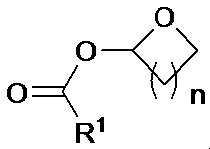
式(2)
(式中、R1およびnの定義は前記と同義である。)
下記一般式(3)で表されるウィッティヒ試薬、
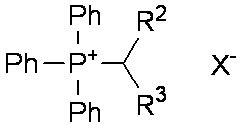
式(3)
(式中、
Phはフェニル基を表し、
Xはハロゲン、メシレートまたはトシレートを表し、
R2およびR3の定義は前記と同義である。)、
下記一般式(4)で表されるウィッティヒ試薬、および、
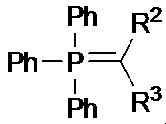
式(4)
(式中、R2、R3およびPhの定義は前記と同義である。)
下記一般式(5)で表されるウィッティヒ-ホーナー試薬
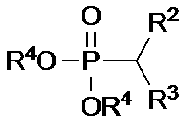
式(5)
(式中、R2およびR3の定義は前記と同義であり、
R4は、置換基を有してもよい炭化水素基、または、置換基を有してもよい複素環基である。)
から選択される少なくとも1種の試薬と反応させる工程を含む、製造方法。
本発明は、医薬品、農薬、機能性材料、香粧品、各種化学品、またはその原料や合成中間体として有用な末端にアシルオキシ基を有するアルケン化合物を、簡単で工程数が少なく、より安価に製造する方法であって、工業的に有利なものである。
以下、本発明について詳細に説明する。
ここで“重量%”及び“重量部”は、それぞれ“質量%”及び“質量部”と同義である。
ここで“重量%”及び“重量部”は、それぞれ“質量%”及び“質量部”と同義である。
<本発明のウィッティヒ反応またはウィッティヒ-ホーナー反応>
本発明の一般式(1)で表される化合物の製造方法における反応、すなわち、アシル化されたラクトールのウィッティヒ反応またはウィッティヒ-ホーナー反応では、下記化学式に示されるように、塩基性物質の存在下で、一般式(2)で表される化合物(アシル化されたラクトール)を、一般式(3)で表されるウィッティヒ試薬、一般式(4)で表されるウィッティヒ試薬、および、一般式(5)で表されるウィッティヒ-ホーナー試薬から選択される少なくとも1種の試薬と反応させる。
本発明の一般式(1)で表される化合物の製造方法における反応、すなわち、アシル化されたラクトールのウィッティヒ反応またはウィッティヒ-ホーナー反応では、下記化学式に示されるように、塩基性物質の存在下で、一般式(2)で表される化合物(アシル化されたラクトール)を、一般式(3)で表されるウィッティヒ試薬、一般式(4)で表されるウィッティヒ試薬、および、一般式(5)で表されるウィッティヒ-ホーナー試薬から選択される少なくとも1種の試薬と反応させる。

ここで、一般式(1)~(5)において、nは0~20の整数であり、Phはフェニル基を表し、Xはハロゲン、メシレートまたはトシレートを表し、R1は、置換基を有してもよい炭化水素基、または、置換基を有してもよい複素環基であり、R2およびR3は夫々独立して、炭化水素基、複素環基、エステル基、スルホン酸エステル基、エーテル基、チオエーテル基、ニトリル基、アシル基、ホルミル基、カルボキシル基、アミノ基、ハロゲンおよび水素からなる群(但し、前記群におけるハロゲンおよび水素以外の基は夫々、置換基を有してもよい)から選択される基であるか、または、R2およびR3は、これらが結合している炭素原子と一緒になって環を形成し、R4は、置換基を有してもよい炭化水素基、または、置換基を有してもよい複素環基である。
一般式(1)~(5)で表される化合物については、以下に詳述する。
<一般式(1)で表される化合物(生成物)>
一般式(1)~(5)で表される化合物については、以下に詳述する。
<一般式(1)で表される化合物(生成物)>
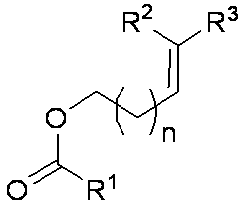
(1)
一般式(1)中、nは0~20の整数を指すが、1~10が好ましく、2~5がさらに好ましく、2~3が最も好ましい。
一般式(1)中、R1は、炭化水素基または複素環基であり、好ましくは、炭素数1~20のアルキル基、炭素数1~20のアルケニル基、炭素数1~20のアルキニル基、3~8員環の脂環式基、炭素数6~14のアリール基、炭素数7~20のアラルキル基、および、炭素数2~14でヘテロ原子を少なくとも1個含んでいる複素環基から選択される基であり、より好ましくは炭素数1~20のアルキル基、炭素数1~20のアルケニル基、炭素数1~20のアルキニル基、炭素数6~14のアリール基から選択される基であり、最も好ましくは、炭素数1~20のアルキル基または炭素数6~14のアリール基である。
一般式(1)中、R1は、炭化水素基または複素環基であり、好ましくは、炭素数1~20のアルキル基、炭素数1~20のアルケニル基、炭素数1~20のアルキニル基、3~8員環の脂環式基、炭素数6~14のアリール基、炭素数7~20のアラルキル基、および、炭素数2~14でヘテロ原子を少なくとも1個含んでいる複素環基から選択される基であり、より好ましくは炭素数1~20のアルキル基、炭素数1~20のアルケニル基、炭素数1~20のアルキニル基、炭素数6~14のアリール基から選択される基であり、最も好ましくは、炭素数1~20のアルキル基または炭素数6~14のアリール基である。
一般式(1)のR1で表される炭素数1~20のアルキル基としては、炭素数1~10のアルキル基であることが好ましく、炭素数1~4のアルキル基であることが特に好ましい。具体的には、メチル基、エチル基、n-プロピル基、イソプロピル基、n-ブチル基、イソブチル基、sec-ブチル基、tert-ブチル基、n-ペンチル基、イソペンチル基、ネオペンチル基、ヘキシル基、ヘプチル基、オクチル基、ノニル基、デシル基等を例示することができ、メチル基、エチル基、n-プロピル基、イソプロピル基、n-ブチル基、イソブチル基、sec-ブチル基、tert-ブチル基が特に好ましい。
一般式(1)のR1で表される炭素数1~20のアルケニル基としては、炭素数1~10のアルケニル基であることが好ましく、炭素数1~4のアルケニル基であることが特に好ましい。具体的には、エテニル基、プロペニル基、n-ブテニル基、イソブテニル基、sec-ブテニル基、3-メチルブタ-2-エニル基、n-ペンテニル基、ヘキセニル基、ヘプテニル基、オクテニル基、ノネニル基、デセニル基等を例示することができ、エテニル基、プロペニル基、n-ブテニル基、イソブテニル基が特に好ましい。
一般式(1)のR1で表される炭素数1~20のアルキニル基としては、炭素数1~10のアルキニル基であることが好ましく、炭素数1~4のアルキニル基であることが特に好ましい。具体的には、エチニル基、プロピニル基、n-ブチニル基、イソブチニル基、3-メチルブチニル基、n-ペンチニル基、ヘキシニル基、ヘプチニル基、オクチニル基、ノニニル基、デシニル基等を例示することができ、エチニル基、プロピニル基、n-ブチニル基、イソブチニル基が特に好ましい。
一般式(1)のR1で表される炭素数1~20のアルケニル基としては、炭素数1~10のアルケニル基であることが好ましく、炭素数1~4のアルケニル基であることが特に好ましい。具体的には、エテニル基、プロペニル基、n-ブテニル基、イソブテニル基、sec-ブテニル基、3-メチルブタ-2-エニル基、n-ペンテニル基、ヘキセニル基、ヘプテニル基、オクテニル基、ノネニル基、デセニル基等を例示することができ、エテニル基、プロペニル基、n-ブテニル基、イソブテニル基が特に好ましい。
一般式(1)のR1で表される炭素数1~20のアルキニル基としては、炭素数1~10のアルキニル基であることが好ましく、炭素数1~4のアルキニル基であることが特に好ましい。具体的には、エチニル基、プロピニル基、n-ブチニル基、イソブチニル基、3-メチルブチニル基、n-ペンチニル基、ヘキシニル基、ヘプチニル基、オクチニル基、ノニニル基、デシニル基等を例示することができ、エチニル基、プロピニル基、n-ブチニル基、イソブチニル基が特に好ましい。
一般式(1)のR1で表される3~8員環の脂環式基としては、3~7員環の脂環式基であることが好ましく、5~6員環の脂環式基であることが特に好ましい。具体的には、シクロプロピル基、シクロブチル基、シクロペンチル基、シクロヘキシル基、シクロヘプチル基、シクロオクチル基等を例示することができ、シクロペンチル基、シクロヘキシル基が特に好ましい。
一般式(1)のR1で表される炭素数6~14のアリール基としては、炭素数6~14の芳香族単環式基、芳香族多環式基または芳香族縮合環式基が挙げられ、炭素数6~12の芳香族単環式基、芳香族多環式基または芳香族縮合環式基が好ましく、炭素数6~10の芳香族単環式基、芳香族多環式基または芳香族縮合環式基が特に好ましい。具体的には、フェニル基、ナフチル基、アントリル基、フェナントリル基、インデニル基等を例示することができる。さらに、フェロセニル基等のメタロセニル基も例示することができ、フェニル基であることが最も好ましい。
一般式(1)のR1で表される炭素数7~20のアラルキル基としては、炭素数7~14のアラルキル基であることが好ましく、炭素数7~10のアラルキル基であることが特に好ましい。具体的には、ベンジル基、1-フェニルエチル基、2-フェニルエチル基等を例示することができる。
一般式(1)のR1で表される炭素数6~14のアリール基としては、炭素数6~14の芳香族単環式基、芳香族多環式基または芳香族縮合環式基が挙げられ、炭素数6~12の芳香族単環式基、芳香族多環式基または芳香族縮合環式基が好ましく、炭素数6~10の芳香族単環式基、芳香族多環式基または芳香族縮合環式基が特に好ましい。具体的には、フェニル基、ナフチル基、アントリル基、フェナントリル基、インデニル基等を例示することができる。さらに、フェロセニル基等のメタロセニル基も例示することができ、フェニル基であることが最も好ましい。
一般式(1)のR1で表される炭素数7~20のアラルキル基としては、炭素数7~14のアラルキル基であることが好ましく、炭素数7~10のアラルキル基であることが特に好ましい。具体的には、ベンジル基、1-フェニルエチル基、2-フェニルエチル基等を例示することができる。
一般式(1)のR1で表される複素環基としては、炭素数2~14でヘテロ原子を少なくとも1個含んでいる複素環基が好ましく、炭素数2~10でヘテロ原子を少なくとも1個含んでいる複素環基がより好ましく、炭素数2~6でヘテロ原子を少なくとも1個含んでいる複素環基が特に好ましい。一般式(1)のR1で表される炭素数2~14でヘテロ原子を少なくとも1個含んでいる複素環基としては、例えば、炭素数2~14でヘテロ原子を少なくとも1個含んでいる脂肪族複素環基及び炭素数2~14でヘテロ原子を少なくとも1個含んでいる芳香族複素環基が挙げられる。
炭素数2~14でヘテロ原子を少なくとも1個含んでいる脂肪族複素環基としては、炭素数2~14で、ヘテロ原子、例えば窒素原子を少なくとも1個含んでいる3~18員環の単環、多環または縮合環式等の脂肪族複素環基が好ましく、ヘテロ原子を1~3個を含んでいる5~8員環の単環、多環または縮合環式等の脂肪族複素環基が特に好ましい。当該脂肪族複素環基のさらに好ましい例としては、5または6員の単環の脂肪族複素環基が挙げられる。ヘテロ原子としては、窒素原子、酸素原子、硫黄原子等が挙げられる。
当該脂肪族複素環基の具体例としては、例えば、2-オキソピロリジル基、ピペリジル基、ピペラジニル基、モルホリノ基、テトラヒドロフリル基、テトラヒドロピラニル基、テトラヒドロチエニル基等が挙げられる。
炭素数2~14でヘテロ原子を少なくとも1個含んでいる脂肪族複素環基としては、炭素数2~14で、ヘテロ原子、例えば窒素原子を少なくとも1個含んでいる3~18員環の単環、多環または縮合環式等の脂肪族複素環基が好ましく、ヘテロ原子を1~3個を含んでいる5~8員環の単環、多環または縮合環式等の脂肪族複素環基が特に好ましい。当該脂肪族複素環基のさらに好ましい例としては、5または6員の単環の脂肪族複素環基が挙げられる。ヘテロ原子としては、窒素原子、酸素原子、硫黄原子等が挙げられる。
当該脂肪族複素環基の具体例としては、例えば、2-オキソピロリジル基、ピペリジル基、ピペラジニル基、モルホリノ基、テトラヒドロフリル基、テトラヒドロピラニル基、テトラヒドロチエニル基等が挙げられる。
一方、炭素数2~14でヘテロ原子を少なくとも1個含んでいる芳香族複素環基としては、炭素数2~14で、ヘテロ原子を少なくとも1個含んでいる5~18員環の単環、多環または縮合環式等の芳香族複素環基が好ましく、ヘテロ原子を1~3個含んでいる5~8員環の単環、多環または縮合環式等の芳香族複素環基が特に好ましい。当該芳香族複素環基のさらに好ましい例としては、5または6員の単環の芳香族複素環(ヘテロアリール)基等が挙げられる。ヘテロ原子としては窒素原子、酸素原子、硫黄原子等が挙げられる。
当該芳香族複素環基の具体例としては、フリル基、チエニル基、ピリジル基、ピリニジル基、ピラジニル基、ピラダジニル基、イミダゾイル基、オキサゾイル基、チアゾイル基、ベンゾフリル基、ベンゾチエニル基、キノリル基、イソキノリル基、キノキサリニル基、フタラジニル基、キナゾリニル基、ナフチリジニル基、シンノリニル基、ベンゾイミダゾリン基、ベンゾオキサゾリル基、ベンゾチアゾリル基等を例示することができる。
当該芳香族複素環基の具体例としては、フリル基、チエニル基、ピリジル基、ピリニジル基、ピラジニル基、ピラダジニル基、イミダゾイル基、オキサゾイル基、チアゾイル基、ベンゾフリル基、ベンゾチエニル基、キノリル基、イソキノリル基、キノキサリニル基、フタラジニル基、キナゾリニル基、ナフチリジニル基、シンノリニル基、ベンゾイミダゾリン基、ベンゾオキサゾリル基、ベンゾチアゾリル基等を例示することができる。
ここで、前記一般式(1)のR1で表される炭化水素基または複素環基、好ましくは、上述したアルキル基、アルケニル基、アルキニル基、脂環式基、アリール基、アラルキル基、および、複素環基は夫々、1以上の置換基、例えば、アルキル基、アリール基、アラアルキル基、脂環式基、ハロゲン原子、水酸基、アルコキシ基、トリ置換オルガノシリル基、アシル基、アシルオキシ基、置換アミノ基、複素環基およびニトロ基等から選択される1以上の置換基で置換されてもよい。
ここで置換基としてのアルキル基としては、炭素数1~6のアルキル基であることが好ましく、炭素数1~4のアルキル基であることが特に好ましい。具体的には、メチル基、エチル基、n-プロピル基、イソプロピル基、sec-ブチル基、tert-ブチル基、ペンチル基及びヘキシル基などが挙げられる。
置換基としてのアリール基としては、炭素数6~14のアリール基であることが好ましく、炭素数6~12のアリール基であることが特に好ましい。具体的には、フェニル基、α-ナフチル基、β-ナフチル基、アントリル基、フェナントリル基またはビフェニル基などが挙げられる。
置換基としてのアラルキル基としては、炭素数7~12のアラルキル基であることが好ましく、炭素数7~10のアラルキル基であることが特に好ましい。具体的には、ベンジル基、1-フェニルエチル基、2-フェニルエチル基、α-ナフチルメチル基またはβ-ナフチルメチル基などが挙げられる。
置換基としての脂環式基としては、炭素数5~8の脂環式基であることが好ましく、炭素数5~6の脂環式基であることが特に好ましい。具体的には、シクロペンチル基、シクロヘキシル基、メチルシクロヘキシル基、シクロヘプチル基またはシクロオクチル基などが挙げられる。
置換基としてのアリール基としては、炭素数6~14のアリール基であることが好ましく、炭素数6~12のアリール基であることが特に好ましい。具体的には、フェニル基、α-ナフチル基、β-ナフチル基、アントリル基、フェナントリル基またはビフェニル基などが挙げられる。
置換基としてのアラルキル基としては、炭素数7~12のアラルキル基であることが好ましく、炭素数7~10のアラルキル基であることが特に好ましい。具体的には、ベンジル基、1-フェニルエチル基、2-フェニルエチル基、α-ナフチルメチル基またはβ-ナフチルメチル基などが挙げられる。
置換基としての脂環式基としては、炭素数5~8の脂環式基であることが好ましく、炭素数5~6の脂環式基であることが特に好ましい。具体的には、シクロペンチル基、シクロヘキシル基、メチルシクロヘキシル基、シクロヘプチル基またはシクロオクチル基などが挙げられる。
置換基としてのハロゲン原子としては、フッ素原子、塩素原子、臭素原子またはヨウ素原子などが挙げられる。
置換基としてのアルコキシ基としては、炭素数1~4のアルコキシ基であることが好ましく、炭素数1~3のアルコキシ基であることが特に好ましい。具体的には、メトキシ基、エトキシ基、n-プロポキシ基、イソプロポキシ基、n-ブトキシ基、イソブトキシ基、sec-ブトキシ基またはtert-ブトキシ基などが挙げられる。
置換基としてのアルキル基部分を含むトリ置換オルガノシリル基としては、炭素数1~8のアルキル基部分を含むトリ置換オルガノシリル基が好ましく、炭素数1~6のアルキル基部分を含むトリ置換オルガノシリル基が特に好ましい。具体的には、トリメチルシリル基、トリエチルシリル基、トリイソプロピルシリル基、ジメチルイソプロピルシリル基、ジエチルイソプロピルシリル基、ジメチル(2,3-ジメチル-2-ブチル)シリル基、tert-ブチルジメチルシリル基またはジメチルヘキシルシリル基などの、トリアルキルシリル基などが挙げられる。
置換基としてのアルコキシ基としては、炭素数1~4のアルコキシ基であることが好ましく、炭素数1~3のアルコキシ基であることが特に好ましい。具体的には、メトキシ基、エトキシ基、n-プロポキシ基、イソプロポキシ基、n-ブトキシ基、イソブトキシ基、sec-ブトキシ基またはtert-ブトキシ基などが挙げられる。
置換基としてのアルキル基部分を含むトリ置換オルガノシリル基としては、炭素数1~8のアルキル基部分を含むトリ置換オルガノシリル基が好ましく、炭素数1~6のアルキル基部分を含むトリ置換オルガノシリル基が特に好ましい。具体的には、トリメチルシリル基、トリエチルシリル基、トリイソプロピルシリル基、ジメチルイソプロピルシリル基、ジエチルイソプロピルシリル基、ジメチル(2,3-ジメチル-2-ブチル)シリル基、tert-ブチルジメチルシリル基またはジメチルヘキシルシリル基などの、トリアルキルシリル基などが挙げられる。
置換基としてのアシル基としては、炭素数1~8のアシル基であることが好ましく、炭素数2~7のアシル基であることが特に好ましい。具体的には、アセチル基、プロピロニル基、n-ブチロイル基、イソブチロイル基、ベンゾイル基などが挙げられる。
置換基としてのアシルオキシ基としては、炭素数1~8のアシルオキシ基であることが好ましく、炭素数1~7のアシルオキシ基であることが特に好ましい。具体的には、ホルミルオキシ基、アシルオキシ基、プロピオニルオキシ基、n-ブチロイルオキシ基、イソブチロイルオキシ基、ベンゾイルオキシ基などが挙げられる。
置換基としての置換アミノ基としては、炭素数1~12のアルキル基を含む置換アミノ基であることが好ましく、炭素数1~8のアルキル基を含む置換アミノ基であることが特に好ましい。また、当該置換アミノ基は、環状基であってもよい。具体的には、ジエチルアミノ基、ジイソプロピルアミノ基、ピペリジル基などの炭素数1~12のアルキル基が離間したジアルキルアミノ基が挙げられる。
置換基としてのアシルオキシ基としては、炭素数1~8のアシルオキシ基であることが好ましく、炭素数1~7のアシルオキシ基であることが特に好ましい。具体的には、ホルミルオキシ基、アシルオキシ基、プロピオニルオキシ基、n-ブチロイルオキシ基、イソブチロイルオキシ基、ベンゾイルオキシ基などが挙げられる。
置換基としての置換アミノ基としては、炭素数1~12のアルキル基を含む置換アミノ基であることが好ましく、炭素数1~8のアルキル基を含む置換アミノ基であることが特に好ましい。また、当該置換アミノ基は、環状基であってもよい。具体的には、ジエチルアミノ基、ジイソプロピルアミノ基、ピペリジル基などの炭素数1~12のアルキル基が離間したジアルキルアミノ基が挙げられる。
置換基としての複素環基としては、炭素数2~14でヘテロ原子を少なくとも1個含んでいる複素環基が好ましく、炭素数2~10でヘテロ原子を少なくとも1個含んでいる複素環基が特に好ましい。置換基としての炭素数2~14でヘテロ原子を少なくとも1個含んでいる複素環基としては、例えば、炭素数2~14でヘテロ原子を少なくとも1個含んでいる脂肪族複素環基及び炭素数2~14でヘテロ原子を少なくとも1個含んでいる芳香族複素環基が挙げられる。
炭素数2~14でヘテロ原子を少なくとも1個含んでいる脂肪族複素環基としては、炭素数2~14で、ヘテロ原子、例えば窒素原子を少なくとも1個含んでいる3~18員環の単環、多環または縮合環式等の脂肪族複素環基が好ましく、ヘテロ原子を1~3個を含んでいる5~8員環の単環、多環または縮合環式等の脂肪族複素環基が特に好ましい。当該脂肪族複素環基のさらに好ましい例としては、5または6員の単環の脂肪族複素環基が挙げられる。ヘテロ原子としては、窒素原子、酸素原子、硫黄原子等が挙げられる。
当該脂肪族複素環基の具体例としては、例えば、2-オキソピロリジル基、ピペリジル基、ピペラジニル基、モルホリノ基、テトラヒドロフリル基、テトラヒドロピラニル基、テトラヒドロチエニル基等が挙げられる。
炭素数2~14でヘテロ原子を少なくとも1個含んでいる脂肪族複素環基としては、炭素数2~14で、ヘテロ原子、例えば窒素原子を少なくとも1個含んでいる3~18員環の単環、多環または縮合環式等の脂肪族複素環基が好ましく、ヘテロ原子を1~3個を含んでいる5~8員環の単環、多環または縮合環式等の脂肪族複素環基が特に好ましい。当該脂肪族複素環基のさらに好ましい例としては、5または6員の単環の脂肪族複素環基が挙げられる。ヘテロ原子としては、窒素原子、酸素原子、硫黄原子等が挙げられる。
当該脂肪族複素環基の具体例としては、例えば、2-オキソピロリジル基、ピペリジル基、ピペラジニル基、モルホリノ基、テトラヒドロフリル基、テトラヒドロピラニル基、テトラヒドロチエニル基等が挙げられる。
一方、炭素数2~14でヘテロ原子を少なくとも1個含んでいる芳香族複素環基としては、炭素数2~14で、ヘテロ原子を少なくとも1個含んでいる5~18員環の単環、多環または縮合環式等の芳香族複素環基が好ましく、ヘテロ原子を1~3個含んでいる5~8員環の単環、多環または縮合環式等の芳香族複素環基が特に好ましい。当該芳香族複素環基のさらに好ましい例としては、5または6員の単環の芳香族複素環(ヘテロアリール)基等が挙げられる。ヘテロ原子としては窒素原子、酸素原子、硫黄原子等が挙げられる。
当該芳香族複素環基の具体例としては、フリル基、チエニル基、ピリジル基、ピリニジル基、ピラジニル基、ピラダジニル基、イミダゾイル基、オキサゾイル基、チアゾイル基、ベンゾフリル基、ベンゾチエニル基、キノリル基、イソキノリル基、キノキサリニル基、フタラジニル基、キナゾリニル基、ナフチリジニル基、シンノリニル基、ベンゾイミダゾリン基、ベンゾオキサゾリル基、ベンゾチアゾリル基等を例示することができる。
当該芳香族複素環基の具体例としては、フリル基、チエニル基、ピリジル基、ピリニジル基、ピラジニル基、ピラダジニル基、イミダゾイル基、オキサゾイル基、チアゾイル基、ベンゾフリル基、ベンゾチエニル基、キノリル基、イソキノリル基、キノキサリニル基、フタラジニル基、キナゾリニル基、ナフチリジニル基、シンノリニル基、ベンゾイミダゾリン基、ベンゾオキサゾリル基、ベンゾチアゾリル基等を例示することができる。
また、一般式(1)中、R2およびR3は夫々独立して、炭化水素基、複素環基、エステル基、スルホン酸エステル基、エーテル基、チオエーテル基、ニトリル基、アシル基、ホルミル基、カルボキシル基、アミノ基、ハロゲンおよび水素からなる群から選択される基である。但し、当該群におけるハロゲンおよび水素以外の基は夫々、置換基を有してもよい。また、より好ましくは、一般式(1)中、R2およびR3は夫々独立して、炭素数1~20のアルキル基、炭素数1~20のアルケニル基、炭素数1~20のアルキニル基、3~8員環の脂環式基、炭素数6~14のアリール基、炭素数7~20のアラルキル基、炭素数2~14でヘテロ原子を少なくとも1個含んでいる複素環基、メトキシカルボニル基、エトキシカルボニル基、ホルミルオキシ基、アセトキシ基、ベンゾイルオキシ基から選択されるエステル基、メタンスルホン酸エステル基、ベンゼンスルホン酸エステル基、p-トルエンスルホン酸エステル基、10-カンファースルホン酸エステル基、フルオロスルホン酸エステルから選択されるスルホン酸エステル基、メトキシ基、エトキシ基、プロポキシ基、イソプロポキシ基、ブトキシ基、ペンチルオキシ基、フェノキシ基、ベンジルオキシ基から選択される基であり、メトキシ基、エトキシ基、フェノキシ基、ベンジルオキシ基から選択されるエーテル基、メチルチオエーテル基、エチルチオエーテル基、イソプロピルチオエーテル基、ブチルチオエーテル基、ペンチルチオエーテル基、フェニルチオエーテル基、ベンジルチオエーテル基から選択されるチオエーテル基、ニトリル基、炭素数7~14の芳香族アシル基、炭素数2~14の脂肪族アシル基、ホルミル基、カルボキシル基、アミノ基、ハロゲンおよび水素からなる群から選択される基である。
また、さらに好ましくは、一般式(1)中、R2およびR3は夫々独立して、炭素数1~3のアルキル基、炭素数1~5のアルケニル基、および水素からなる群から選択される基であり、さらに好ましくは、R2およびR3のいずれかが水素であってもう一方が炭素数1~3のアルキル基または炭素数1~5のアルケニル基である。
また、R2およびR3は、これらが結合している炭素原子と一緒になって環を形成してもよく、好ましくは、これらが結合している炭素原子と一緒になって、シクロアルキルもしくは複素環を形成してもよい。
また、さらに好ましくは、一般式(1)中、R2およびR3は夫々独立して、炭素数1~3のアルキル基、炭素数1~5のアルケニル基、および水素からなる群から選択される基であり、さらに好ましくは、R2およびR3のいずれかが水素であってもう一方が炭素数1~3のアルキル基または炭素数1~5のアルケニル基である。
また、R2およびR3は、これらが結合している炭素原子と一緒になって環を形成してもよく、好ましくは、これらが結合している炭素原子と一緒になって、シクロアルキルもしくは複素環を形成してもよい。
一般式(1)のR2およびR3で表される炭素数1~20のアルキル基としては、R1で表される炭素数1~20のアルキル基として定義された基から選択することができる。
一般式(1)のR2およびR3で表される炭素数1~20のアルケニル基としては、R1で表される炭素数1~20のアルケニル基として定義された基から選択することができる。
一般式(1)のR2およびR3で表される炭素数1~20のアルキニル基としては、R1で表される炭素数1~20のアルキニル基として定義された基から選択することができる。
一般式(1)のR2およびR3で表される3~8員環の脂環式基としては、R1で表される3~8員環の脂環式基として定義された基から選択することができる。
一般式(1)のR2およびR3で表される炭素数6~14のアリール基としては、R1で表される炭素数6~14のアリール基として定義された基から選択することができる。
一般式(1)のR2およびR3で表される炭素数7~20のアラルキル基としては、R1で表される炭素数7~20のアラルキル基として定義された基から選択することができる。
一般式(1)のR2およびR3で表される炭素数2~14でヘテロ原子を少なくとも1個含んでいる複素環基としては、R1で表される炭素数2~14でヘテロ原子を少なくとも1個含んでいる複素環基として定義された基から選択することができる。
一般式(1)のR2およびR3で表される炭素数1~20のアルケニル基としては、R1で表される炭素数1~20のアルケニル基として定義された基から選択することができる。
一般式(1)のR2およびR3で表される炭素数1~20のアルキニル基としては、R1で表される炭素数1~20のアルキニル基として定義された基から選択することができる。
一般式(1)のR2およびR3で表される3~8員環の脂環式基としては、R1で表される3~8員環の脂環式基として定義された基から選択することができる。
一般式(1)のR2およびR3で表される炭素数6~14のアリール基としては、R1で表される炭素数6~14のアリール基として定義された基から選択することができる。
一般式(1)のR2およびR3で表される炭素数7~20のアラルキル基としては、R1で表される炭素数7~20のアラルキル基として定義された基から選択することができる。
一般式(1)のR2およびR3で表される炭素数2~14でヘテロ原子を少なくとも1個含んでいる複素環基としては、R1で表される炭素数2~14でヘテロ原子を少なくとも1個含んでいる複素環基として定義された基から選択することができる。
一般式(1)のR2およびR3で表されるエステル基は、メトキシカルボニル基、エトキシカルボニル基、ホルミルオキシ基、アセトキシ基、ベンゾイルオキシ基から選択される基であり、エトキシカルボニル基、アセトキシ基から選択される基であることが好ましい。
一般式(1)のR2およびR3で表されるスルホン酸エステル基としては、メタンスルホン酸エステル基、ベンゼンスルホン酸エステル基、p-トルエンスルホン酸エステル基、10-カンファースルホン酸エステル基、フルオロスルホン酸エステルから選択される基であり、メタンスルホン酸エステル基、p-トルエンスルホン酸エステル基から選択される基であることが好ましい。
一般式(1)のR2およびR3で表されるエーテル基としては、メトキシ基、エトキシ基、プロポキシ基、イソプロポキシ基、ブトキシ基、ペンチルオキシ基、フェノキシ基、ベンジルオキシ基から選択される基であり、メトキシ基、エトキシ基、フェノキシ基、ベンジルオキシ基から選択される基であることが好ましい。
一般式(1)のR2およびR3で表されるチオエーテル基としては、メチルチオエーテル基、エチルチオエーテル基、イソプロピルチオエーテル基、ブチルチオエーテル基、ペンチルチオエーテル基、フェニルチオエーテル基、ベンジルチオエーテル基から選択される基であり、メチルチオエーテル基、エチルチオエーテル基、フェニルチオエーテル基、ベンジルチオエーテル基から選択される基であることが好ましい。
一般式(1)のR2およびR3で表される炭素数2~14の脂肪族アシル基としてはアセチル基、プロピオニル基、ブチリル基、イソブチリル基、バレリル基、イソバレリル基、ピバロイル基、ヘキサノイル基、オクタノイル基、ラウロイル基、アクリロイル基、メタクリロイル基、クロロホルミル基、ピルボイル基、オキザロ基、メトキシアリル基、エトキシアリル基、シクロヘキシルカルボニル基等から選択される基であることが好ましく、アセチル基、プロピオニル基、シクロヘキシルカルボニル基から選択される基であることが特に好ましい。
一般式(1)のR2およびR3で表される炭素数7~14の芳香族アシル基としてはベンゾイル基、フタロイル基、イソフタロイル基、トルオイル基、シンナモイル基、ナフトイル基等から選択される基であることが好ましく、ベンゾイル基、ナフトイル基から選択される基であることが特に好ましい。
また、上述した前記一般式(1)のR2およびR3で表される炭化水素基、複素環基、エステル基、スルホン酸エステル基、エーテル基、チオエーテル基、ニトリル基、アシル基、ホルミル基、カルボキシル基、アミノ基は夫々、1以上の置換基、たとえばアルキル基、アリール基、アラアルキル基、脂環式基、ハロゲン原子、水酸基、アルコキシ基、トリ置換オルガノシリル基、アシル基、アシルオキシ基、置換アミノ基、複素環基、ニトロ基等から選択される1以上の置換基で置換されてもよい。当該置換基は、上述した基と同様のものを選択することができる。
また、R2およびR3が、これらが結合している炭素原子と一緒になって、シクロアルキルを形成する場合、好ましくは3~12員のシクロアルキルであり、特に好ましくは5~8員のシクロアルキルである。具体的には、シクロプロパン、シクロブタン、シクロペンタン、シクロヘキサン、シクロペンタン、シクロオクタン、シクロノナン、シクロデカン、シクロウンデカン、シクロドデカン等を例示することができる。
また、R2およびR3が、これらが結合している炭素原子と一緒になって、複素環を形成する場合、好ましくは炭素数2~14でヘテロ原子を少なくとも1個含んでいる複素環であり、特に好ましくは炭素数2~10でヘテロ原子を少なくとも1個含んでいる複素環である。当該複素環としては、例えば、炭素数2~14でヘテロ原子を少なくとも1個含んでいる脂肪族複素環基及び炭素数2~14でヘテロ原子を少なくとも1個含んでいる芳香族複素環基が挙げられる。
R2およびR3が、これらが結合している炭素原子と一緒になって、炭素数2~14でヘテロ原子を少なくとも1個含んでいる脂肪族複素環基を形成する場合には、炭素数2~14で、ヘテロ原子、例えば窒素原子を少なくとも1個含んでいる3~18員環の単環、多環または縮合環式等の脂肪族複素環基が好ましく、ヘテロ原子を1~3個を含んでいる5~8員環の単環、多環または縮合環式等の脂肪族複素環基が特に好ましい。当該脂肪族複素環基のさらに好ましい例としては、5または6員の単環の脂肪族複素環基が挙げられる。ヘテロ原子としては、窒素原子、酸素原子、硫黄原子等が挙げられる。
当該脂肪族複素環基の具体例としては、例えば、2-オキソピロリジル基、ピペリジル基、ピペラジニル基、モルホリノ基、テトラヒドロフリル基、テトラヒドロピラニル基、テトラヒドロチエニル基等が挙げられる。
また、R2およびR3が、これらが結合している炭素原子と一緒になって、複素環を形成する場合、好ましくは炭素数2~14でヘテロ原子を少なくとも1個含んでいる複素環であり、特に好ましくは炭素数2~10でヘテロ原子を少なくとも1個含んでいる複素環である。当該複素環としては、例えば、炭素数2~14でヘテロ原子を少なくとも1個含んでいる脂肪族複素環基及び炭素数2~14でヘテロ原子を少なくとも1個含んでいる芳香族複素環基が挙げられる。
R2およびR3が、これらが結合している炭素原子と一緒になって、炭素数2~14でヘテロ原子を少なくとも1個含んでいる脂肪族複素環基を形成する場合には、炭素数2~14で、ヘテロ原子、例えば窒素原子を少なくとも1個含んでいる3~18員環の単環、多環または縮合環式等の脂肪族複素環基が好ましく、ヘテロ原子を1~3個を含んでいる5~8員環の単環、多環または縮合環式等の脂肪族複素環基が特に好ましい。当該脂肪族複素環基のさらに好ましい例としては、5または6員の単環の脂肪族複素環基が挙げられる。ヘテロ原子としては、窒素原子、酸素原子、硫黄原子等が挙げられる。
当該脂肪族複素環基の具体例としては、例えば、2-オキソピロリジル基、ピペリジル基、ピペラジニル基、モルホリノ基、テトラヒドロフリル基、テトラヒドロピラニル基、テトラヒドロチエニル基等が挙げられる。
一方、R2およびR3が、これらが結合している炭素原子と一緒になって、炭素数2~14でヘテロ原子を少なくとも1個含んでいる芳香族複素環基を形成する場合には、炭素数2~14で、ヘテロ原子を少なくとも1個含んでいる5~18員環の単環、多環または縮合環式等の芳香族複素環基が好ましく、ヘテロ原子を1~3個含んでいる5~8員環の単環、多環または縮合環式等の芳香族複素環基が特に好ましい。炭素数2~14でヘテロ原子を少なくとも1個含んでいる芳香族複素環基のさらに好ましい例としては、5または6員の単環の芳香族複素環(ヘテロアリール)基等が挙げられる。ヘテロ原子としては窒素原子、酸素原子、硫黄原子等が挙げられる。
当該芳香族複素環基の具体例としては、フリル基、チエニル基、ピリジル基、ピリニジル基、ピラジニル基、ピラダジニル基、イミダゾイル基、オキサゾイル基、チアゾイル基、ベンゾフリル基、ベンゾチエニル基、キノリル基、イソキノリル基、キノキサリニル基、フタラジニル基、キナゾリニル基、ナフチリジニル基、シンノリニル基、ベンゾイミダゾリン基、ベンゾオキサゾリル基、ベンゾチアゾリル基等を例示することができる。
<一般式(2)で表される化合物(原料であるアシル化されたラクトール)>
当該芳香族複素環基の具体例としては、フリル基、チエニル基、ピリジル基、ピリニジル基、ピラジニル基、ピラダジニル基、イミダゾイル基、オキサゾイル基、チアゾイル基、ベンゾフリル基、ベンゾチエニル基、キノリル基、イソキノリル基、キノキサリニル基、フタラジニル基、キナゾリニル基、ナフチリジニル基、シンノリニル基、ベンゾイミダゾリン基、ベンゾオキサゾリル基、ベンゾチアゾリル基等を例示することができる。
<一般式(2)で表される化合物(原料であるアシル化されたラクトール)>
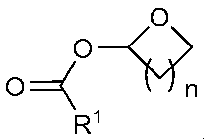
(2)
式(2)中、R1およびnの定義は前記と同義である。
一般式(2)で表される化合物(アシル化されたラクトール)を取得する方法は、特に限定されず、適宜公知の方法を選択できるが、たとえば、Journal of Medicinal Chemistry, 49(8), 2579-2592; 2006)、(Synlett, (6), 789-790; 2001)、または(Journal of Organic Chemistry, 50(20), 3849-59; 1985に記載の方法によって水等の不純物を含有せずに安価に得ることができる。
<一般式(3)および(4)で表されるウィッティヒ試薬>
<一般式(3)および(4)で表されるウィッティヒ試薬>
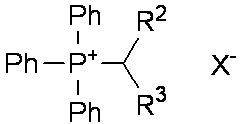
(3)

(4)
一般式(3)および(4)中、Phはフェニル基を表し、Xはハロゲン、メシレートまたはトシレートを表し、好ましくは、ハロゲンを表す。当該ハロゲンとしては、フッ素原子、塩素原子、臭素原子またはヨウ素原子などが挙げられ、塩素原子、臭素原子であることが好ましい。
なお、本発明の製造方法で得られた一般式(1)で表される化合物を利用する方法に関しては、特に限定はされないが、たとえば加水分解によって脱アシル化を行い、ヒドロキシル基を有するアルケン化合物を得ることができる。
<一般式(5)で表されるウィッティヒ-ホーナー試薬>

(5)
一般式(5)中、R2およびR3の定義は前記と同義である。
一般式(5)中、R4は、炭化水素基または複素環基であり、好ましくは、炭素数1~20のアルキル基、炭素数1~20のアルケニル基、炭素数1~20のアルキニル基、3~8員環の脂環式基、炭素数6~14のアリール基、炭素数7~20のアラルキル基、および、炭素数2~14でヘテロ原子を少なくとも1個含んでいる複素環基から選択される基であり、より好ましくは炭素数1~20のアルキル基から選択される基であり、最も好ましくは、炭素数2~3のアルキル基である。
なお、本発明の製造方法で得られた一般式(1)で表される化合物を利用する方法に関しては、特に限定はされないが、たとえば加水分解によって脱アシル化を行い、ヒドロキシル基を有するアルケン化合物を得ることができる。
<一般式(5)で表されるウィッティヒ-ホーナー試薬>
(5)
一般式(5)中、R2およびR3の定義は前記と同義である。
一般式(5)中、R4は、炭化水素基または複素環基であり、好ましくは、炭素数1~20のアルキル基、炭素数1~20のアルケニル基、炭素数1~20のアルキニル基、3~8員環の脂環式基、炭素数6~14のアリール基、炭素数7~20のアラルキル基、および、炭素数2~14でヘテロ原子を少なくとも1個含んでいる複素環基から選択される基であり、より好ましくは炭素数1~20のアルキル基から選択される基であり、最も好ましくは、炭素数2~3のアルキル基である。
一般式(5)のR4で表される炭素数1~20のアルキル基としては、R1で表される炭素数1~20のアルキル基として定義された基から選択することができる。
一般式(5)のR4で表される炭素数1~20のアルケニル基としては、R1で表される炭素数1~20のアルケニル基として定義された基から選択することができる。
一般式(5)のR4で表される炭素数1~20のアルキニル基としては、R1で表される炭素数1~20のアルキニル基として定義された基から選択することができる。
一般式(5)のR4で表される3~8員環の脂環式基としては、R1で表される3~8員環の脂環式基として定義された基から選択することができる。
一般式(5)のR4で表される炭素数6~14のアリール基としては、R1で表される炭素数6~14のアリール基として定義された基から選択することができる。
一般式(5)のR4で表される炭素数7~20のアラルキル基としては、R1で表される炭素数7~20のアラルキル基として定義された基から選択することができる。
一般式(5)のR4で表される炭素数2~14でヘテロ原子を少なくとも1個含んでいる複素環基としては、R1で表される炭素数2~14でヘテロ原子を少なくとも1個含んでいる複素環基として定義された基から選択することができる。
一般式(5)のR4で表される炭素数1~20のアルケニル基としては、R1で表される炭素数1~20のアルケニル基として定義された基から選択することができる。
一般式(5)のR4で表される炭素数1~20のアルキニル基としては、R1で表される炭素数1~20のアルキニル基として定義された基から選択することができる。
一般式(5)のR4で表される3~8員環の脂環式基としては、R1で表される3~8員環の脂環式基として定義された基から選択することができる。
一般式(5)のR4で表される炭素数6~14のアリール基としては、R1で表される炭素数6~14のアリール基として定義された基から選択することができる。
一般式(5)のR4で表される炭素数7~20のアラルキル基としては、R1で表される炭素数7~20のアラルキル基として定義された基から選択することができる。
一般式(5)のR4で表される炭素数2~14でヘテロ原子を少なくとも1個含んでいる複素環基としては、R1で表される炭素数2~14でヘテロ原子を少なくとも1個含んでいる複素環基として定義された基から選択することができる。
ここで、前記一般式(5)のR4で表される炭化水素基または複素環基、好ましくは、上述したアルキル基、アルケニル基、アルキニル基、脂環式基、アリール基、アラルキル基、および、複素環基は夫々、1以上の置換基、例えば、アルキル基、アリール基、アラアルキル基、脂環式基、ハロゲン原子、水酸基、アルコキシ基、トリ置換オルガノシリル基、アシル基、アシルオキシ基、置換アミノ基、複素環基およびニトロ基等から選択される1以上の置換基で置換されてもよい。当該置換基は、上述した基と同様のものを選択することができる。
<製造方法における塩基性物質>
本反応に用いる好ましい塩基性物質としては、例えば、カリウムエトキシド、カリウム t-ブトキシド等の金属アルコキシド、水素化ナトリウム、水素化カリウム等の金属水素化物、炭酸ナトリウム、炭酸カリウム等の金属炭酸塩等が挙げられる。そのうちでも、水素化ナトリウム、カリウム-t-ブトキシド、炭酸カリウムなどが、汎用性があり、反応の選択性及び収率が高いことからより好ましい。これらの酸性物質は1種または2種以上使用することもできるが、1種を使用する方法が好ましい。
本反応に用いる好ましい塩基性物質としては、例えば、カリウムエトキシド、カリウム t-ブトキシド等の金属アルコキシド、水素化ナトリウム、水素化カリウム等の金属水素化物、炭酸ナトリウム、炭酸カリウム等の金属炭酸塩等が挙げられる。そのうちでも、水素化ナトリウム、カリウム-t-ブトキシド、炭酸カリウムなどが、汎用性があり、反応の選択性及び収率が高いことからより好ましい。これらの酸性物質は1種または2種以上使用することもできるが、1種を使用する方法が好ましい。
また、本反応に用いられる塩基性物質の量は、化合物(1)1モルに対して好ましくは約1.0~20.0モル程度であることが好ましく、1.1~5.0モル程度が好ましいが、この範囲に限定されるものではない。
<製造方法で用いる溶媒>
本反応は、有機溶媒中で行うことができる。有機溶媒としては、本発明の製造方法に悪影響を及ぼさない有機溶媒が用いられ、例えば、トルエン、ベンゼン、クロロベンゼン等の芳香族炭化水素類、酢酸エチル、酢酸プロピル、酢酸ブチル等の脂肪族エステル類、ジエチルエーテル、ジイソプロピルエーテル、テトラヒドロフラン等のエーテル化合物、アセトニトリル、プロピレンカーボネート等の非プロトン性極性溶媒類、ジクロロメタン、ジクロロエタン等のハロゲン炭化水素類、メタノール、エタノール、イソプロパノール等のアルコール系溶媒などが挙げられる。
これらは単独で用いても、また二種以上の混合溶液として用いてもよい。溶媒として好ましくは芳香族炭化水素類、エーテル類、非プロトン性極性溶媒類などであり、そのうちでも、トルエン、テトラヒドロフランが、汎用性および収率が高いことからより好ましい。
本反応は、有機溶媒中で行うことができる。有機溶媒としては、本発明の製造方法に悪影響を及ぼさない有機溶媒が用いられ、例えば、トルエン、ベンゼン、クロロベンゼン等の芳香族炭化水素類、酢酸エチル、酢酸プロピル、酢酸ブチル等の脂肪族エステル類、ジエチルエーテル、ジイソプロピルエーテル、テトラヒドロフラン等のエーテル化合物、アセトニトリル、プロピレンカーボネート等の非プロトン性極性溶媒類、ジクロロメタン、ジクロロエタン等のハロゲン炭化水素類、メタノール、エタノール、イソプロパノール等のアルコール系溶媒などが挙げられる。
これらは単独で用いても、また二種以上の混合溶液として用いてもよい。溶媒として好ましくは芳香族炭化水素類、エーテル類、非プロトン性極性溶媒類などであり、そのうちでも、トルエン、テトラヒドロフランが、汎用性および収率が高いことからより好ましい。
また、これらの溶媒の使用量は、特に制限はないが、化合物(1)に対して、1~50倍容量、好ましくは5~15倍容量の範囲である。
本発明において、化合物(1)と、ウィッティヒ試薬(2)、ウィッティヒ試薬(3)およびウィッティヒ-ホーナー試薬(4)から選択される試薬との混合割合は、化合物(1)1モルに対して、当該試薬が0.5~20.0モル程度であることが好ましく、0.8~5.0モル程度が好ましいが、この範囲に限定されるものではない。
<製造方法の反応温度>
本発明において、化合物(1)と、ウィッティヒ試薬(2)、ウィッティヒ試薬(3)およびウィッティヒ-ホーナー試薬(4)から選択される試薬との混合割合は、化合物(1)1モルに対して、当該試薬が0.5~20.0モル程度であることが好ましく、0.8~5.0モル程度が好ましいが、この範囲に限定されるものではない。
<製造方法の反応温度>
反応温度は、-78℃~100℃程度、好ましくは-20~60℃程度の範囲が採用され、前記の温度を保ちながら約0.1~10時間、好ましくは0.2~10時間で反応させることによって、ウィッティヒ反応を円滑に行うことができる。
<得られた生成物の精製方法>
得られた一般式(1)で表される化合物の精製方法としては、上記の反応によって得られた反応液から、反応終了後、トリフェニルホスフィンオキシドおよび未反応のウィッティヒ試薬をろ過等の操作により除去した後、溶媒を減圧下留去し、得られた残留物を、減圧蒸留で精製する方法、シリカゲルカラムクロマトグラフィーで精製する方法、再結晶法により精製する方法などを採用することができる。
以下に実施例を挙げ、本発明を詳細に説明するが、本発明はこれらの実施例によってなんら限定されるものではない。
得られた一般式(1)で表される化合物の精製方法としては、上記の反応によって得られた反応液から、反応終了後、トリフェニルホスフィンオキシドおよび未反応のウィッティヒ試薬をろ過等の操作により除去した後、溶媒を減圧下留去し、得られた残留物を、減圧蒸留で精製する方法、シリカゲルカラムクロマトグラフィーで精製する方法、再結晶法により精製する方法などを採用することができる。
以下に実施例を挙げ、本発明を詳細に説明するが、本発明はこれらの実施例によってなんら限定されるものではない。
本実施例中の分析には、次の分析機器を用いて行った。
GC定量
機器:GC-4000(ジーエルサイエンス株式会社製)
カラム:RTX-1(長さ30m×内径0.25mm、液相膜厚0.25μm)
プロトン核磁気共鳴(1H-NMR)
機器:Oxford 300MHz FT-NMR(300MHz)(バリアン社製)
外部標準物質:テトラメチルシラン
GC定量
機器:GC-4000(ジーエルサイエンス株式会社製)
カラム:RTX-1(長さ30m×内径0.25mm、液相膜厚0.25μm)
プロトン核磁気共鳴(1H-NMR)
機器:Oxford 300MHz FT-NMR(300MHz)(バリアン社製)
外部標準物質:テトラメチルシラン
<実施例1:(Z)-ヘプテン-5-イル-アセテートの合成>
100mL四ツ口反応フラスコに三方コック、スターラーバー、滴下漏斗及び温度計を取り付け、内部を窒素置換した。この反応フラスコに、窒素気流下にてエチルトリフェニルホスフィンブロミド3.72g(10.0mmol)および脱水テトラヒドロフラン37mlを順次加え、さらにt-ブトキシカリウム1.12g(10.0mmol)を加えて混合した。この混合物を氷冷下にて5℃に冷却したまま30分攪拌したのち、テトラヒドロ-2H-ピラン-2-イル-アセテート 1.44g(10.0mmol)を滴下漏斗に仕込み、5℃に冷却したたままの混合物に30分かけて滴下した。滴下終了後、この混合物を5℃に冷却したまま30分攪拌したのち、エバポレーターにて濃縮を行い、この濃縮物にジエチルエーテル10ml、n-ヘキサン30mlを加え、析出したトリフェニルホスフィンオキシドをろ過し、ろ液をエバポレーターにて濃縮した。
濃縮物をシリカゲルクロマトグラフィー(展開溶媒;ヘキサン:酢酸エチル=50:1)にて精製を行い、(Z)-ヘプテン-5-イル-アセテート0.75g(4.80mmol,収率48%)を得た。
1H-NMR(300MHz,CDCl3):σ=1.37-1.42(2H,m),1.60-1.69(2H,m),1.62(3H,d,J=6.6),1.97-2.11(2H,m),2.07(3H,s),4.07(2H,t,J=6.6),5.35-5.52(2H,m)
100mL四ツ口反応フラスコに三方コック、スターラーバー、滴下漏斗及び温度計を取り付け、内部を窒素置換した。この反応フラスコに、窒素気流下にてエチルトリフェニルホスフィンブロミド3.72g(10.0mmol)および脱水テトラヒドロフラン37mlを順次加え、さらにt-ブトキシカリウム1.12g(10.0mmol)を加えて混合した。この混合物を氷冷下にて5℃に冷却したまま30分攪拌したのち、テトラヒドロ-2H-ピラン-2-イル-アセテート 1.44g(10.0mmol)を滴下漏斗に仕込み、5℃に冷却したたままの混合物に30分かけて滴下した。滴下終了後、この混合物を5℃に冷却したまま30分攪拌したのち、エバポレーターにて濃縮を行い、この濃縮物にジエチルエーテル10ml、n-ヘキサン30mlを加え、析出したトリフェニルホスフィンオキシドをろ過し、ろ液をエバポレーターにて濃縮した。
濃縮物をシリカゲルクロマトグラフィー(展開溶媒;ヘキサン:酢酸エチル=50:1)にて精製を行い、(Z)-ヘプテン-5-イル-アセテート0.75g(4.80mmol,収率48%)を得た。
1H-NMR(300MHz,CDCl3):σ=1.37-1.42(2H,m),1.60-1.69(2H,m),1.62(3H,d,J=6.6),1.97-2.11(2H,m),2.07(3H,s),4.07(2H,t,J=6.6),5.35-5.52(2H,m)
<実施例2:(Z)-へキセン-4-イル-ベンゾエートの合成>
200mL四ツ口反応フラスコに三方コック、スターラーバー、滴下漏斗及び温度計を取り付け、内部を窒素置換した。この反応フラスコに、窒素気流下にてエチルトリフェニルホスフィンブロミド18.61g(50.0mmol)および脱水テトラヒドロフラン100mlを順次加え、さらにt-ブトキシカリウム5.61g(50.0mmol)を加えて混合した。この混合物を、氷冷下にて5℃に冷却したまま30分攪拌したのち、テトラヒドロフラン-2-イル-ベンゾエート 3.84g(20.0mmol)を滴下漏斗に仕込み、5℃に冷却したままの混合物に30分かけて滴下した。滴下終了後、この混合物を5℃に冷却したまま30分攪拌したのち、エバポレーターにて濃縮を行い、この濃縮物にジエチルエーテル30ml、n-ヘキサン90mlを加え、析出したトリフェニルホスフィンオキシドをろ過し、ろ液をエバポレーターにて濃縮した。濃縮物をシリカゲルクロマトグラフィー(展開溶媒;ヘキサン:酢酸エチル=40:1)にて精製を行い(Z)-へキセン-4-イル-ベンゾエート2.26g(11.06mmol,収率55%)を得た。
1H-NMR(300MHz,CDCl3):σ=1.37-1.42(2H,m),1.60-1.69(2H,m),1.62(3H,d,J=6.6),1.97-2.11(2H,m),4.23(2H,t,J=6.6),5.25-5.60(2H,m),7.45(2H,t,J=8.0),7.57(1H,t,J=7.2),8.06(2H,d,J=8.0)
200mL四ツ口反応フラスコに三方コック、スターラーバー、滴下漏斗及び温度計を取り付け、内部を窒素置換した。この反応フラスコに、窒素気流下にてエチルトリフェニルホスフィンブロミド18.61g(50.0mmol)および脱水テトラヒドロフラン100mlを順次加え、さらにt-ブトキシカリウム5.61g(50.0mmol)を加えて混合した。この混合物を、氷冷下にて5℃に冷却したまま30分攪拌したのち、テトラヒドロフラン-2-イル-ベンゾエート 3.84g(20.0mmol)を滴下漏斗に仕込み、5℃に冷却したままの混合物に30分かけて滴下した。滴下終了後、この混合物を5℃に冷却したまま30分攪拌したのち、エバポレーターにて濃縮を行い、この濃縮物にジエチルエーテル30ml、n-ヘキサン90mlを加え、析出したトリフェニルホスフィンオキシドをろ過し、ろ液をエバポレーターにて濃縮した。濃縮物をシリカゲルクロマトグラフィー(展開溶媒;ヘキサン:酢酸エチル=40:1)にて精製を行い(Z)-へキセン-4-イル-ベンゾエート2.26g(11.06mmol,収率55%)を得た。
1H-NMR(300MHz,CDCl3):σ=1.37-1.42(2H,m),1.60-1.69(2H,m),1.62(3H,d,J=6.6),1.97-2.11(2H,m),4.23(2H,t,J=6.6),5.25-5.60(2H,m),7.45(2H,t,J=8.0),7.57(1H,t,J=7.2),8.06(2H,d,J=8.0)
<実施例3:(Z)-へキセン-4-イル-ピバレートの合成>
200mL四ツ口反応フラスコに三方コック、スターラーバー、滴下漏斗及び温度計を取り付け、内部を窒素置換した。この反応フラスコに、窒素気流下にてエチルトリフェニルホスフィンブロミド18.61g(50.0mmol)および脱水テトラヒドロフラン100mlを順次加え、さらにt-ブトキシカリウム5.60g(50.0mmol)を加えて混合した。この混合物を、氷冷下にて5℃に冷却したまま30分攪拌したのち、テトラヒドロフラン-2-イル-ピバレート 3.44g(20.0mmol)を滴下漏斗に仕込み、5℃に冷却したままの混合物に30分かけて滴下した。滴下終了後、この混合物を5℃に冷却したまま30分攪拌したのち、エバポレーターにて濃縮を行い、この濃縮物にジエチルエーテル30ml、n-ヘキサン90mlを加え、析出したトリフェニルホスフィンオキシドをろ過し、ろ液をエバポレーターにて濃縮した。濃縮物をシリカゲルクロマトグラフィー(展開溶媒;ヘキサン:酢酸エチル=40:1)にて精製を行い(Z)-へキセン-4-イル-ピバレート2.13g(11.56mmol,収率58%)を得た。
1H-NMR(300MHz,CDCl3):σ=1.24(9H,s),1.37-1.42(2H,m),1.60-1.69(2H,m),1.62(3H,d,J=6.6),1.97-2.11(2H,m),4.09(2H,t,J=6.6),5.35-5.52(2H,m)
200mL四ツ口反応フラスコに三方コック、スターラーバー、滴下漏斗及び温度計を取り付け、内部を窒素置換した。この反応フラスコに、窒素気流下にてエチルトリフェニルホスフィンブロミド18.61g(50.0mmol)および脱水テトラヒドロフラン100mlを順次加え、さらにt-ブトキシカリウム5.60g(50.0mmol)を加えて混合した。この混合物を、氷冷下にて5℃に冷却したまま30分攪拌したのち、テトラヒドロフラン-2-イル-ピバレート 3.44g(20.0mmol)を滴下漏斗に仕込み、5℃に冷却したままの混合物に30分かけて滴下した。滴下終了後、この混合物を5℃に冷却したまま30分攪拌したのち、エバポレーターにて濃縮を行い、この濃縮物にジエチルエーテル30ml、n-ヘキサン90mlを加え、析出したトリフェニルホスフィンオキシドをろ過し、ろ液をエバポレーターにて濃縮した。濃縮物をシリカゲルクロマトグラフィー(展開溶媒;ヘキサン:酢酸エチル=40:1)にて精製を行い(Z)-へキセン-4-イル-ピバレート2.13g(11.56mmol,収率58%)を得た。
1H-NMR(300MHz,CDCl3):σ=1.24(9H,s),1.37-1.42(2H,m),1.60-1.69(2H,m),1.62(3H,d,J=6.6),1.97-2.11(2H,m),4.09(2H,t,J=6.6),5.35-5.52(2H,m)
<実施例4:(4Z,7Z)-デカジエン-4,7-イル-アセテートの合成>
50mL四ツ口反応フラスコに三方コック、スターラーバー、滴下漏斗及び温度計を取り付け、内部を窒素置換した。この反応フラスコに、窒素気流下にて(Z)-ヘキセン-3-イル-トリフェニルホスフィンブロミド4.25g(10.0mmol)および脱水トルエン6.5mlを順次加えて混合した。この混合物を氷冷下にて冷却した。脱水トルエン6.5mlに溶解させたt-ブトキシカリウム1.68g(15.0mmol)を滴下漏斗に仕込み氷冷下におかれた混合物に40分かけて滴下した。この混合物を氷冷下にて1時間攪拌した。テトラヒドロフラン-2-イル-アセテート 1.30g(10.0mmol)を滴下漏斗に仕込み、5℃に冷却した該混合物に30分かけて滴下したのち、すぐに希硫酸で中和後、トルエンにて抽出を行った。得られた有機層をエバポレーターにて濃縮し、粗成生物5.42gを得た。シリカゲルクロマトグラフィー(展開溶媒;ヘキサン:酢酸エチル=40:1)にて精製を行い(4Z,7Z)-デカジエン-4,7-イル-アセテート1.16g(5.90mmol,収率59%)を得た。
1H-NMR(300MHz,CDCl3):σ=0.96(3H,t,J=7.5),1.64(2H,tt,J=6.5,6.6,7.0,7.5),2.07(3H,s),2.10(4H,m),2.77(2H,dd,J=5.1,5.7),3.64(2H,m),5.37(4H,m)
50mL四ツ口反応フラスコに三方コック、スターラーバー、滴下漏斗及び温度計を取り付け、内部を窒素置換した。この反応フラスコに、窒素気流下にて(Z)-ヘキセン-3-イル-トリフェニルホスフィンブロミド4.25g(10.0mmol)および脱水トルエン6.5mlを順次加えて混合した。この混合物を氷冷下にて冷却した。脱水トルエン6.5mlに溶解させたt-ブトキシカリウム1.68g(15.0mmol)を滴下漏斗に仕込み氷冷下におかれた混合物に40分かけて滴下した。この混合物を氷冷下にて1時間攪拌した。テトラヒドロフラン-2-イル-アセテート 1.30g(10.0mmol)を滴下漏斗に仕込み、5℃に冷却した該混合物に30分かけて滴下したのち、すぐに希硫酸で中和後、トルエンにて抽出を行った。得られた有機層をエバポレーターにて濃縮し、粗成生物5.42gを得た。シリカゲルクロマトグラフィー(展開溶媒;ヘキサン:酢酸エチル=40:1)にて精製を行い(4Z,7Z)-デカジエン-4,7-イル-アセテート1.16g(5.90mmol,収率59%)を得た。
1H-NMR(300MHz,CDCl3):σ=0.96(3H,t,J=7.5),1.64(2H,tt,J=6.5,6.6,7.0,7.5),2.07(3H,s),2.10(4H,m),2.77(2H,dd,J=5.1,5.7),3.64(2H,m),5.37(4H,m)
<実施例5:(E)-エチル-6-アセトキシ-2-へキセノエートの合成>
50mL四ツ口反応フラスコに三方コック、スターラーバー、滴下漏斗及び温度計を取り付け、内部を窒素置換した。この反応フラスコに、窒素気流下にて5℃に冷却した脱水テトラヒドロフラン10mlおよび水素化ナトリウム0.48g(12.0mmol)を順次加えて混合した後、ジエチルホスホノ酢酸エチル2.46g(11.0mmol)を滴下漏斗に仕込み、5℃に冷却したままの混合物に10分かけて滴下した。この混合物を氷冷下にて10分攪拌したのち、テトラヒドロフラン-2-イル-アセテート 1.30g(10.0mmol)を滴下漏斗に仕込み、5℃に冷却した該混合物に10分かけて滴下した。冷却を停止し、室温まで昇温し、室温にて3時間反応させた(静止させた)のち、この混合物に飽和塩化アンモニウム水を10ml加え、ヘプタン10mlで抽出した。有機層を濃縮して得られた粗生成物を、シリカゲルクロマトグラフィー(展開溶媒;ヘキサン:酢酸エチル=20:1)にて精製し、(E)-エチル-6-アセトキシ-2-へキセノエート 0.82g(4.10mmol,収率41%)を得た。
1H-NMR(300MHz,CDCl3):σ=1.29(3H,t,J=7.5),1.80(2H,m), 2.04(3H,s),2.29(2H,q,J=7.5),4.09(2H,t,J=6.6),4.19(2H,t,J=6.3),5.85(1H,d,J=15.6),6.95(1H,ddd,J=6.9,2.1,6.9)
50mL四ツ口反応フラスコに三方コック、スターラーバー、滴下漏斗及び温度計を取り付け、内部を窒素置換した。この反応フラスコに、窒素気流下にて5℃に冷却した脱水テトラヒドロフラン10mlおよび水素化ナトリウム0.48g(12.0mmol)を順次加えて混合した後、ジエチルホスホノ酢酸エチル2.46g(11.0mmol)を滴下漏斗に仕込み、5℃に冷却したままの混合物に10分かけて滴下した。この混合物を氷冷下にて10分攪拌したのち、テトラヒドロフラン-2-イル-アセテート 1.30g(10.0mmol)を滴下漏斗に仕込み、5℃に冷却した該混合物に10分かけて滴下した。冷却を停止し、室温まで昇温し、室温にて3時間反応させた(静止させた)のち、この混合物に飽和塩化アンモニウム水を10ml加え、ヘプタン10mlで抽出した。有機層を濃縮して得られた粗生成物を、シリカゲルクロマトグラフィー(展開溶媒;ヘキサン:酢酸エチル=20:1)にて精製し、(E)-エチル-6-アセトキシ-2-へキセノエート 0.82g(4.10mmol,収率41%)を得た。
1H-NMR(300MHz,CDCl3):σ=1.29(3H,t,J=7.5),1.80(2H,m), 2.04(3H,s),2.29(2H,q,J=7.5),4.09(2H,t,J=6.6),4.19(2H,t,J=6.3),5.85(1H,d,J=15.6),6.95(1H,ddd,J=6.9,2.1,6.9)
<実施例6:(Z)-へキセン-4-イル-アセテートの合成>
200mL四ツ口反応フラスコに三方コック、スターラーバー、滴下漏斗及び温度計を取り付け、内部を窒素置換した。この反応フラスコに、窒素気流下にてエチルトリフェニルホスフィンブロミド18.61g(50.0mmol)および脱水トルエン65mlを順次加え、さらにt-ブトキシカリウム5.61g(50.0mmol)を加えて混合した。この混合物を、氷冷下にて5℃に冷却したまま30分攪拌したのち、テトラヒドロフラン-2-イル-アセテート 2.60g(20.0mmol)を滴下漏斗に仕込み、5℃に冷却したままの混合物に30分かけて滴下した。滴下終了後、この混合物を5℃に冷却したまま30分攪拌したのち、エバポレーターにて濃縮を行い、この濃縮物にジエチルエーテル30ml、n-ヘキサン90mlを加え、析出したトリフェニルホスフィンオキシドをろ過し、ろ液をエバポレーターにて濃縮した。濃縮物をシリカゲルクロマトグラフィー(展開溶媒;ヘキサン:酢酸エチル=40:1)にて精製を行い(Z)-へキセン-4-イル-アセテート1.70g(11.95mmol,収率60%)を得た。
1H-NMR(300MHz,CDCl3):σ=1.52-1.82(5H,m),1.97-2.25(2H,m),2.07(3H,s),4.05(2H,t,J=6.6),5.25-5.60(2H,m)
200mL四ツ口反応フラスコに三方コック、スターラーバー、滴下漏斗及び温度計を取り付け、内部を窒素置換した。この反応フラスコに、窒素気流下にてエチルトリフェニルホスフィンブロミド18.61g(50.0mmol)および脱水トルエン65mlを順次加え、さらにt-ブトキシカリウム5.61g(50.0mmol)を加えて混合した。この混合物を、氷冷下にて5℃に冷却したまま30分攪拌したのち、テトラヒドロフラン-2-イル-アセテート 2.60g(20.0mmol)を滴下漏斗に仕込み、5℃に冷却したままの混合物に30分かけて滴下した。滴下終了後、この混合物を5℃に冷却したまま30分攪拌したのち、エバポレーターにて濃縮を行い、この濃縮物にジエチルエーテル30ml、n-ヘキサン90mlを加え、析出したトリフェニルホスフィンオキシドをろ過し、ろ液をエバポレーターにて濃縮した。濃縮物をシリカゲルクロマトグラフィー(展開溶媒;ヘキサン:酢酸エチル=40:1)にて精製を行い(Z)-へキセン-4-イル-アセテート1.70g(11.95mmol,収率60%)を得た。
1H-NMR(300MHz,CDCl3):σ=1.52-1.82(5H,m),1.97-2.25(2H,m),2.07(3H,s),4.05(2H,t,J=6.6),5.25-5.60(2H,m)
本発明によれば、医薬品、農薬、機能性材料、香粧品、各種化学品、またはその原料や合成中間体として有用な末端にアシルオキシ基を有するアルケン化合物を、簡単で工程数が少なく、より安価に製造することができる。
Claims (2)
- 下記一般式(1)で表される化合物の製造方法であって、
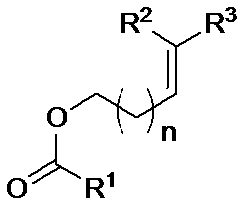
式(1)
(式中、
nは0~20の整数であり、
R1は、置換基を有してもよい炭化水素基、または、置換基を有してもよい複素環基であり、
R2およびR3は夫々独立して、炭化水素基、複素環基、エステル基、スルホン酸エステル基、エーテル基、チオエーテル基、ニトリル基、アシル基、ホルミル基、カルボキシル基、アミノ基、ハロゲンおよび水素からなる群(但し、前記群におけるハロゲンおよび水素以外の基は夫々、置換基を有してもよい)から選択される基であるか、または、
R2およびR3は、これらが結合している炭素原子と一緒になって、環を形成する。) 塩基性物質の存在下で、
下記一般式(2)で表される化合物を、
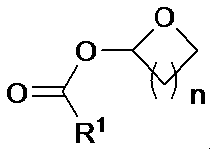
式(2)
(式中、R1およびnの定義は前記と同義である。)
下記一般式(3)で表されるウィッティヒ試薬、

式(3)
(式中、
Phはフェニル基を表し、
Xはハロゲン、メシレートまたはトシレートを表し、
R2およびR3の定義は前記と同義である。)、
下記一般式(4)で表されるウィッティヒ試薬、および、
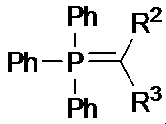
式(4)
(式中、R2、R3およびPhの定義は前記と同義である。)
下記一般式(5)で表されるウィッティヒ-ホーナー試薬
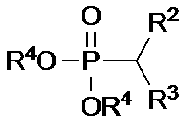
式(5)
(式中、R2およびR3の定義は前記と同義であり、
R4は、置換基を有してもよい炭化水素基、または、置換基を有してもよい複素環基である。)
から選択される少なくとも1種の試薬と反応させる工程を含む、製造方法。 - R1が、炭素数1~20のアルキル基、炭素数1~20のアルケニル基、炭素数1~20のアルキニル基、3~8員環の脂環式基、炭素数6~14のアリール基、炭素数2~14でヘテロ原子を少なくとも1個含んでいる複素環基、および、炭素数7~20のアラルキル基(但し、前記アルキル基、前記アルケニル基、前記アルキニル基、前記脂環式基、前記アリール基、前記複素環基、および、前記アラルキル基は夫々、炭素数1~6のアルキル基、炭素数6~14のアリール基、炭素数7~12のアラアルキル基、炭素数5~8の脂環式基、ハロゲン原子、水酸基、炭素数1~4のアルコキシ基、炭素数1~6のアルキル基部分を含むトリ置換オルガノシリル基、炭素数1~8のアシル基、炭素数1~8のアシルオキシ基、炭素数1~12のアルキル基を含む置換アミノ基、炭素数2~14でヘテロ原子を少なくとも1個含んでいる複素環基およびニトロ基から選択される1以上の置換基で置換されてもよい)からなる群から選択され、
R2およびR3が夫々独立して、炭素数1~20のアルキル基、炭素数1~20のアルケニル基、炭素数1~20のアルキニル基、3~8員環の脂環式基、炭素数6~14のアリール基、炭素数7~20のアラルキル基、炭素数2~14でヘテロ原子を少なくとも1個含んでいる複素環基、メトキシカルボニル基、エトキシカルボニル基、ホルミルオキシ基、アセトキシ基、ベンゾイルオキシ基から選択されるエステル基、メタンスルホン酸エステル基、ベンゼンスルホン酸エステル基、p-トルエンスルホン酸エステル基、10-カンファースルホン酸エステル基、フルオロスルホン酸エステルから選択されるスルホン酸エステル基、メトキシ基、エトキシ基、プロポキシ基、イソプロポキシ基、ブトキシ基、ペンチルオキシ基、フェノキシ基、ベンジルオキシ基から選択されるエーテル基、メチルチオエーテル基、エチルチオエーテル基、イソプロピルチオエーテル基、ブチルチオエーテル基、ペンチルチオエーテル基、フェニルチオエーテル基、ベンジルチオエーテル基から選択されるチオエーテル基、ニトリル基、炭素数7~14の芳香族アシル基、炭素数2~14の脂肪族アシル基、ホルミル基、カルボキシル基、アミノ基、ハロゲンおよび水素からなる群から選択される(但し、前記群におけるハロゲンおよび水素以外の基は夫々、炭素数1~6のアルキル基、炭素数6~14のアリール基、炭素数7~12のアラアルキル基、炭素数5~8の脂環式基、ハロゲン原子、水酸基、炭素数1~4のアルコキシ基、炭素数1~6のアルキル基部分を含むトリ置換オルガノシリル基、炭素数1~8のアシル基、炭素数1~8のアシルオキシ基、炭素数1~12のアルキル基を含む置換アミノ基、炭素数2~14でヘテロ原子を少なくとも1個含んでいる複素環基およびニトロ基から選択される1以上の置換基で置換されてもよい)か、または、
R2およびR3が、これらが結合している炭素原子と一緒になって、3~12員のシクロアルキル、もしくは、炭素数2~14でヘテロ原子を少なくとも1個含んでいる複素環を形成し、
R4が、炭素数1~20のアルキル基、炭素数1~20のアルケニル基、炭素数1~20のアルキニル基、3~8員環の脂環式基、炭素数6~14のアリール基、炭素数7~20のアラルキル基、および、炭素数2~14でヘテロ原子を少なくとも1個含んでいる複素環基(但し、前記アルキル基、前記アルケニル基、前記アルキニル基、前記脂環式基、前記アリール基、前記アラルキル基、および、前記複素環基は夫々、炭素数1~6のアルキル基、炭素数6~14のアリール基、炭素数7~12のアラアルキル基、炭素数5~8の脂環式基、ハロゲン原子、水酸基、炭素数1~4のアルコキシ基、炭素数1~6のアルキル基部分を含むトリ置換オルガノシリル基、炭素数1~8のアシル基、炭素数1~8のアシルオキシ基、炭素数1~12のアルキル基を含む置換アミノ基、炭素数2~14でヘテロ原子を少なくとも1個含んでいる複素環基およびニトロ基から選択される1以上の置換基で置換されてもよい)からなる群から選択される、
請求項1に記載の製造方法。
Applications Claiming Priority (2)
| Application Number | Priority Date | Filing Date | Title |
|---|---|---|---|
| JP2013-173317 | 2013-08-23 | ||
| JP2013173317A JP2015040202A (ja) | 2013-08-23 | 2013-08-23 | 末端にアシルオキシ基を有するアルケン化合物の製造方法 |
Publications (1)
| Publication Number | Publication Date |
|---|---|
| WO2015025938A1 true WO2015025938A1 (ja) | 2015-02-26 |
Family
ID=52483709
Family Applications (1)
| Application Number | Title | Priority Date | Filing Date |
|---|---|---|---|
| PCT/JP2014/071955 Ceased WO2015025938A1 (ja) | 2013-08-23 | 2014-08-22 | 末端にアシルオキシ基を有するアルケン化合物の製造方法 |
Country Status (2)
| Country | Link |
|---|---|
| JP (1) | JP2015040202A (ja) |
| WO (1) | WO2015025938A1 (ja) |
Citations (1)
| Publication number | Priority date | Publication date | Assignee | Title |
|---|---|---|---|---|
| JP2009512665A (ja) * | 2005-10-21 | 2009-03-26 | ピエール、ファブレ、デルモ‐コスメティーク | 不飽和脂肪族ヒドロキシ酸の新規な製造方法 |
-
2013
- 2013-08-23 JP JP2013173317A patent/JP2015040202A/ja active Pending
-
2014
- 2014-08-22 WO PCT/JP2014/071955 patent/WO2015025938A1/ja not_active Ceased
Patent Citations (1)
| Publication number | Priority date | Publication date | Assignee | Title |
|---|---|---|---|---|
| JP2009512665A (ja) * | 2005-10-21 | 2009-03-26 | ピエール、ファブレ、デルモ‐コスメティーク | 不飽和脂肪族ヒドロキシ酸の新規な製造方法 |
Non-Patent Citations (6)
| Title |
|---|
| JIKKEN KAGAKU KOZA 26, 1990, pages 332 - 334 * |
| KRUSE, C. G. ET AL., TETRAHEDRON LETTERS, vol. 20, 1976, pages 1725 - 1728 * |
| NOMURA, H. ET AL., CHEMICAL & PHARMACEUTICAL BULLETIN, vol. 27, no. 4, 1979, pages 899 - 906 * |
| PERKOWSKI, A. J. ET AL., JOURNAL OF THE AMERICAN CHEMICAL SOCIETY, vol. 135, July 2013 (2013-07-01), pages 10334 - 10337 * |
| SCHREGENBERGER, C. ET AL., LIEBIGS ANNALEN DER CHEMIE, vol. 12, 1986, pages 2081 - 2103 * |
| WANG, M. ET AL., TETRAHEDRON LETTERS, vol. 49, 2008, pages 141 - 144 * |
Also Published As
| Publication number | Publication date |
|---|---|
| JP2015040202A (ja) | 2015-03-02 |
Similar Documents
| Publication | Publication Date | Title |
|---|---|---|
| US8658837B2 (en) | Intermediates for the synthesis of benzindene prostaglandins and preparations thereof | |
| US5110987A (en) | Method of preparing sphingosine derivatives | |
| HU225294B1 (en) | Oxazoline derivatives for synthesis of sidechain-bearing taxanes and preparation thereof | |
| US12606509B2 (en) | Catalytic cannabigerol processes and precursors | |
| US20190023727A1 (en) | Method for preparing 3-((2s, 5s)-4-methylene-5-(3-oxopropyl)tetrahydrofurane-2-yl) propanol derivative, and intermediate therefor | |
| EP1201647B1 (en) | Process for producing 4-cyano-4oxobutanoate and 4-cyano-3-hydroxybutanoate | |
| WO2016161826A1 (zh) | 一种4-异丙氨基-1-丁醇的制备方法 | |
| Yamada et al. | Reaction of perfluorocyclopentene with various carbon nucleophiles—heteroaromatic lithium reagents, enolate and phosphonium ylide | |
| WO2015025938A1 (ja) | 末端にアシルオキシ基を有するアルケン化合物の製造方法 | |
| EP4101833B1 (en) | Processes for preparing a (1,2-dimethyl-3-methylenecyclopentyl)acetate compound and (1,2-dimethyl-3-methylenecyclopentyl)acetaldehyde | |
| JP5192856B2 (ja) | オセルタミビル及びその類縁化合物の製造方法 | |
| CN106467464B (zh) | (e)-2-异丙基-5-甲基-3,5-己二烯酸酯化合物及其生产方法及其应用 | |
| US20050159611A1 (en) | Process for producing shogaols and intermediates for the synthesis thereof | |
| CN110590621B (zh) | 一种铜催化端炔合成1,2-双(芳基磺酰基)乙烯衍生物的方法 | |
| JPWO2018220888A1 (ja) | Pge1コアブロック誘導体およびその製造方法 | |
| FR2879601A1 (fr) | Nouveaux composes derives d'acide phenyl-boronique et leur procede de preparation | |
| JPH07316106A (ja) | シス−1−アミノインダン−2−オールの製造方法 | |
| JP3634874B2 (ja) | トリフルオロメチルアセチレン誘導体、その製造方法およびその中間体の製造方法 | |
| JP6205530B2 (ja) | パクリタキセル及びドセタキセルの側鎖前駆体の製造方法 | |
| JP2000063321A (ja) | 光学純度の高い長鎖β−ヒドロキシカルボン酸の製造方法 | |
| JPS6210494B2 (ja) | ||
| KR20230154213A (ko) | 알킬-4-옥소테트라히드로푸란-2-카르복실레이트의 제조 방법 | |
| JP3918468B2 (ja) | 3,3−ビス(アルコキシカルボニル−メチルチオ)プロピオニトリル及びその製造方法 | |
| KR100519715B1 (ko) | 알렌올로부터 2-할로-1,3-다이엔의 제조방법 | |
| JP2016074606A (ja) | 3,4,5−トリカフェオイルキナ酸の製造方法 |
Legal Events
| Date | Code | Title | Description |
|---|---|---|---|
| 121 | Ep: the epo has been informed by wipo that ep was designated in this application |
Ref document number: 14837344 Country of ref document: EP Kind code of ref document: A1 |
|
| NENP | Non-entry into the national phase |
Ref country code: DE |
|
| 122 | Ep: pct application non-entry in european phase |
Ref document number: 14837344 Country of ref document: EP Kind code of ref document: A1 |