WO2015020068A1 - リン酸エステルポリマー誘導体、及び分散剤 - Google Patents
リン酸エステルポリマー誘導体、及び分散剤 Download PDFInfo
- Publication number
- WO2015020068A1 WO2015020068A1 PCT/JP2014/070654 JP2014070654W WO2015020068A1 WO 2015020068 A1 WO2015020068 A1 WO 2015020068A1 JP 2014070654 W JP2014070654 W JP 2014070654W WO 2015020068 A1 WO2015020068 A1 WO 2015020068A1
- Authority
- WO
- WIPO (PCT)
- Prior art keywords
- ester polymer
- phosphate ester
- polymer derivative
- group
- reaction
- Prior art date
- Legal status (The legal status is an assumption and is not a legal conclusion. Google has not performed a legal analysis and makes no representation as to the accuracy of the status listed.)
- Ceased
Links
Images






Classifications
-
- A—HUMAN NECESSITIES
- A61—MEDICAL OR VETERINARY SCIENCE; HYGIENE
- A61K—PREPARATIONS FOR MEDICAL, DENTAL OR TOILETRY PURPOSES
- A61K9/00—Medicinal preparations characterised by special physical form
- A61K9/10—Dispersions; Emulsions
- A61K9/107—Emulsions ; Emulsion preconcentrates; Micelles
-
- A—HUMAN NECESSITIES
- A61—MEDICAL OR VETERINARY SCIENCE; HYGIENE
- A61K—PREPARATIONS FOR MEDICAL, DENTAL OR TOILETRY PURPOSES
- A61K47/00—Medicinal preparations characterised by the non-active ingredients used, e.g. carriers or inert additives; Targeting or modifying agents chemically bound to the active ingredient
- A61K47/06—Organic compounds, e.g. natural or synthetic hydrocarbons, polyolefins, mineral oil, petrolatum or ozokerite
- A61K47/24—Organic compounds, e.g. natural or synthetic hydrocarbons, polyolefins, mineral oil, petrolatum or ozokerite containing atoms other than carbon, hydrogen, oxygen, halogen, nitrogen or sulfur, e.g. cyclomethicone or phospholipids
-
- A—HUMAN NECESSITIES
- A61—MEDICAL OR VETERINARY SCIENCE; HYGIENE
- A61K—PREPARATIONS FOR MEDICAL, DENTAL OR TOILETRY PURPOSES
- A61K47/00—Medicinal preparations characterised by the non-active ingredients used, e.g. carriers or inert additives; Targeting or modifying agents chemically bound to the active ingredient
- A61K47/30—Macromolecular organic or inorganic compounds, e.g. inorganic polyphosphates
- A61K47/34—Macromolecular compounds obtained otherwise than by reactions only involving carbon-to-carbon unsaturated bonds, e.g. polyesters, polyamino acids, polysiloxanes, polyphosphazines, copolymers of polyalkylene glycol or poloxamers
-
- C—CHEMISTRY; METALLURGY
- C08—ORGANIC MACROMOLECULAR COMPOUNDS; THEIR PREPARATION OR CHEMICAL WORKING-UP; COMPOSITIONS BASED THEREON
- C08G—MACROMOLECULAR COMPOUNDS OBTAINED OTHERWISE THAN BY REACTIONS ONLY INVOLVING UNSATURATED CARBON-TO-CARBON BONDS
- C08G65/00—Macromolecular compounds obtained by reactions forming an ether link in the main chain of the macromolecule
- C08G65/02—Macromolecular compounds obtained by reactions forming an ether link in the main chain of the macromolecule from cyclic ethers by opening of the heterocyclic ring
- C08G65/32—Polymers modified by chemical after-treatment
- C08G65/329—Polymers modified by chemical after-treatment with organic compounds
- C08G65/331—Polymers modified by chemical after-treatment with organic compounds containing oxygen
- C08G65/332—Polymers modified by chemical after-treatment with organic compounds containing oxygen containing carboxyl groups, or halides, or esters thereof
- C08G65/3322—Polymers modified by chemical after-treatment with organic compounds containing oxygen containing carboxyl groups, or halides, or esters thereof acyclic
-
- C—CHEMISTRY; METALLURGY
- C08—ORGANIC MACROMOLECULAR COMPOUNDS; THEIR PREPARATION OR CHEMICAL WORKING-UP; COMPOSITIONS BASED THEREON
- C08G—MACROMOLECULAR COMPOUNDS OBTAINED OTHERWISE THAN BY REACTIONS ONLY INVOLVING UNSATURATED CARBON-TO-CARBON BONDS
- C08G65/00—Macromolecular compounds obtained by reactions forming an ether link in the main chain of the macromolecule
- C08G65/02—Macromolecular compounds obtained by reactions forming an ether link in the main chain of the macromolecule from cyclic ethers by opening of the heterocyclic ring
- C08G65/32—Polymers modified by chemical after-treatment
- C08G65/329—Polymers modified by chemical after-treatment with organic compounds
- C08G65/335—Polymers modified by chemical after-treatment with organic compounds containing phosphorus
-
- C—CHEMISTRY; METALLURGY
- C08—ORGANIC MACROMOLECULAR COMPOUNDS; THEIR PREPARATION OR CHEMICAL WORKING-UP; COMPOSITIONS BASED THEREON
- C08G—MACROMOLECULAR COMPOUNDS OBTAINED OTHERWISE THAN BY REACTIONS ONLY INVOLVING UNSATURATED CARBON-TO-CARBON BONDS
- C08G65/00—Macromolecular compounds obtained by reactions forming an ether link in the main chain of the macromolecule
- C08G65/02—Macromolecular compounds obtained by reactions forming an ether link in the main chain of the macromolecule from cyclic ethers by opening of the heterocyclic ring
- C08G65/32—Polymers modified by chemical after-treatment
- C08G65/329—Polymers modified by chemical after-treatment with organic compounds
- C08G65/335—Polymers modified by chemical after-treatment with organic compounds containing phosphorus
- C08G65/3353—Polymers modified by chemical after-treatment with organic compounds containing phosphorus containing oxygen in addition to phosphorus
Definitions
- the present invention relates to a phosphate ester polymer derivative and a dispersant.
- DDS Drug Delivery System
- micelle structures with a hydrophobic moiety on the inside are formed by self-association of amphiphilic molecules in which hydrophobic side chains such as alcohol are introduced into hydrophilic polymers such as poly (ethylene glycol) (PEG) in water. It is expected that the drug is encapsulated in the inner core of the micelle and selectively delivered to the target site during the self-association by utilizing the formation of.
- hydrophobic side chains such as alcohol
- hydrophilic polymers such as poly (ethylene glycol) (PEG) in water.
- a biodegradable polymer containing a poly (ethylene glycol) block and a biodegradable polyester block see, for example, JP-T-2004-525194
- a polylactic acid block and a poly (ethylene glycol) block See, for example, JP-T-2012-509318
- poly (ethylene glycol) phosphoric acid polyester derivatives for example, J. Polym. Sci .: Part A; Polym. Chem., Vol. 45, 1349-1363 (2007) (hereinafter also referred to as J. Polym. Sci literature) and phosphorylated alkylene glycol polymer derivatives have been proposed (for example, see JP 2011-127078 A).
- poly (ethylene glycol) and its derivatives that are generally used as dispersants may not be sufficiently biodegradable.
- JP-T-2004-525194 and the above-mentioned J.P. Polym. Sci. It has been difficult to control the compounds described in the literature to exhibit the desired biodegradability.
- the compounds described in JP-T-2012-509318 have a biodegradability, but it is difficult to obtain a desired dispersibility. Thus, it has been difficult for conventional compounds to satisfy dispersibility and controllable biodegradability.
- the phosphorylated alkylene glycol polymer derivative described in JP-A-2011-127078 has biodegradability and is useful as a dispersant, but further improvement of biodegradability is required.
- An object of the present invention is to provide a phosphoric acid ester polymer derivative that is excellent in biodegradability and that can easily control biodegradability and is useful as a dispersing agent. Dispersion using the phosphoric acid ester polymer It is an object to provide an agent.
- a phosphate ester polymer derivative having a structure represented by the following general formula (I) is provided.
- R 1 represents an alkyl group having 1 to 30 carbon atoms, an alkenyl group having 2 to 30 carbon atoms, or an alkynyl group having 2 to 30 carbon atoms
- R 2 represents a hydrogen atom or An alkyl group having 1 to 2 carbon atoms
- n represents an integer of 2 to 23
- m represents an integer of 1 to 3
- a phosphate ester polymer derivative according to the first aspect, wherein m in the general formula (I) is 1, is provided.
- a phosphate ester polymer derivative according to the first or second aspect wherein R 2 in the general formula (I) is a methyl group.
- a phosphate ester polymer derivative according to any one of the first to third aspects, wherein both ends of the phosphate ester polymer derivative are —OR 3 (R 3 represents an alkyl group having 1 to 3 carbon atoms).
- a phosphate polymer derivative according to the fourth aspect, wherein R 3 is a methyl group, is provided.
- Dispersants comprising a phosphate ester polymer derivative according to any one of the first to fifth aspects are provided.
- a pharmaceutical composition comprising a dispersant according to the sixth aspect is provided.
- a pharmaceutical composition according to the seventh aspect which is an anticancer agent, is provided.
- a phosphate ester polymer derivative that is excellent in biodegradability, can be easily controlled, and is useful as a dispersant. Moreover, the dispersing agent using the phosphate ester polymer derivative can be provided.
- 3 is a 1 H-NMR spectrum of a phosphate ester polymer derivative (C18-350) according to the present embodiment.
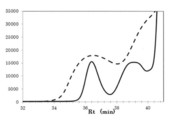
- 3 is a GPC chart of a phosphate ester polymer derivative (C18-350) according to the present embodiment.
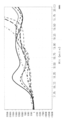
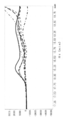
- 5 is a GPC chart of a degradation test at pH 7.4 of a phosphate ester polymer derivative (C12-350) according to the present embodiment.
- 5 is a GPC chart of a degradation test at pH 7.4 of a phosphate ester polymer derivative (C12-350) according to the present embodiment.
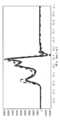
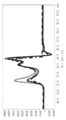
- 3 is a GPC chart of a degradation test at pH 7.4 of a phosphate ester polymer derivative (C18-350) according to the present embodiment.
- 3 is a GPC chart of a degradation test at pH 7.4 of a phosphate ester polymer derivative (C18-350) according to the present embodiment.
- 6 is a GPC chart of a degradation test at pH 5.6 of a phosphate ester polymer derivative (C12-350) according to the present embodiment.
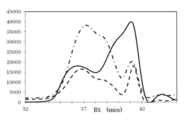
- 6 is a GPC chart of a degradation test at pH 5.6 of a phosphate ester polymer derivative (C12-350) according to the present embodiment. It is a GPC chart of the decomposition
- 6 is a GPC chart of a decomposition test at pH 7.4 of a phosphate ester polymer derivative (C18-350) according to the present embodiment (different synthesis route).
- 6 is a GPC chart of a decomposition test at pH 5.6 of a phosphate ester polymer derivative (C18-350) (synthesized by the synthesis route of Scheme 4) according to the present embodiment.
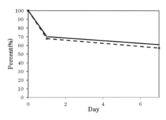
- 6 is a GPC chart of a decomposition test at pH 5.6 of a phosphate ester polymer derivative (C18-350) (synthesized by the synthesis route of Scheme 4) according to the present embodiment. It is a figure which shows the content rate in pH5.6 and pH7.4 of the phosphate ester polymer derivative which concerns on this embodiment.
- the phosphate ester polymer derivative of the present invention has a structure represented by the following general formula (I). For this reason, it is excellent in biodegradability, can control biodegradability easily, and is useful as a dispersing agent. The reason is not clear, but it is thought as follows.
- the phosphate ester polymer derivative having the structure represented by the general formula (I) is a structural unit derived from 2-hydroxyalkanoic acid located between a structure derived from phosphoric acid and a structural unit derived from poly (ethylene glycol) [ Since it has —C ( ⁇ O) —CHR 2 —O—], it has an ester bond derived from a carboxylic acid. Since the ester bond derived from carboxylic acid is more susceptible to hydrolysis than the ester bond derived from phosphoric acid, the phosphate ester polymer derivative having the structure represented by the general formula (I) is considered to be excellent in biodegradability.
- the degree of polymerization (m) of the structural unit derived from 2-hydroxyalkanoic acid represents the number of structural units, that is, the number of ester bonds derived from carboxylic acid. Therefore, since the number of ester bonds derived from carboxylic acid to be hydrolyzed increases as the value of m increases, the phosphate ester polymer derivative is considered to be easily hydrolyzed. On the other hand, since the substituent represented by R 2 of the structural unit derived from 2-hydroxyalkanoic acid is present at the ⁇ -position with respect to the carbon atom forming the ester bond derived from carboxylic acid, the ester bond derived from carboxylic acid is hydrolyzed. Can be a steric hindrance to the reaction product.
- the substituent represented by R 2 is more sterically hindered as it is bulky, and the phosphate ester polymer derivative is difficult to hydrolyze. Therefore, the selection of the kind of the substituent represented by the values and R 2 of m, is considered possible to easily control the biodegradability of the phosphoric acid ester polymer derivative.
- the phosphate ester polymer derivative having the structure represented by the general formula (I) is a parent.
- the phosphate polymer derivative having the structure represented by the general formula (I) is excellent in biodegradability, can easily control biodegradability, and is useful as a dispersant. .
- R 1 represents an alkyl group having 1 to 30 carbon atoms, an alkenyl group having 2 to 30 carbon atoms, or an alkynyl group having 2 to 30 carbon atoms
- R 2 represents a hydrogen atom or a carbon atom.
- An alkyl group having a number of 1 or more and 2 or less is represented, n represents an integer of 2 or more and 23 or less, and m represents an integer of 1 or more and 3 or less.
- the alkyl group having 1 to 30 carbon atoms may be linear or branched.
- Examples of the alkyl group having 1 to 30 carbon atoms include a methyl group, an ethyl group, a propyl group, an isopropyl group, a butyl group, a hexyl group, an octyl group, an ethylhexyl group, a dodecanyl group, an octadecyl group, and a behenyl group. it can.
- the alkyl group having 1 to 30 carbon atoms may further have a substituent.
- substituents examples include cyclic saturated aliphatic groups such as a cyclohexyl group, and aromatic groups such as a phenyl group, a naphthyl group, an anthranyl group, a pyridyl group, a benzyl group, a phenethyl group, a naphthylmethyl group, and a pyridylmethyl group. be able to.
- the alkenyl group having 2 to 30 carbon atoms may be linear or branched.
- Examples of the alkenyl group having 2 to 30 carbon atoms include vinyl group, allyl group, isopropenyl group, butenyl group, hexenyl group, cyclohexenyl group, octenyl group, and cholesterol residue.
- the alkenyl group having 2 to 30 carbon atoms may further have a substituent.
- substituents examples include cyclic saturated aliphatic groups such as a cyclohexyl group, and aromatic groups such as a phenyl group, a naphthyl group, an anthranyl group, a pyridyl group, a benzyl group, a phenethyl group, a naphthylmethyl group, and a pyridylmethyl group. be able to.
- the alkynyl group having 2 to 30 carbon atoms may be linear or branched. Examples of the alkynyl group having 2 to 30 carbon atoms include ethynyl group, propargyl group, 1-butyn-3-yl group, 1-butyn-3-methyl-3-yl group and the like. The alkynyl group having 2 to 30 carbon atoms may further have a substituent.
- substituents examples include cyclic saturated aliphatic groups such as a cyclohexyl group, and aromatic groups such as a phenyl group, a naphthyl group, an anthranyl group, a pyridyl group, a benzyl group, a phenethyl group, a naphthylmethyl group, and a pyridylmethyl group. be able to.
- R 1 is preferably an alkyl group having 2 to 30 carbon atoms or an alkenyl group having 2 to 30 carbon atoms, and is an alkyl group having 2 to 24 carbon atoms or a cholesterol residue.
- R 1 is preferably an alkyl group having 8 to 18 carbon atoms or a cholesterol residue.
- an alkyl group having 8 to 18 carbon atoms or a cholesterol residue is more preferable, and an alkyl group having 8 to 18 carbon atoms is still more preferable.
- R 1 represents a hydrogen atom
- the hydrophobicity of the phosphate ester polymer derivative is not sufficient to form a micelle, and therefore, a water-insoluble or poorly water-soluble compound may not be dispersed.
- R 1 represents an alkyl group having more than 30 carbon atoms
- the hydrophobicity is improved, but the phosphate ester polymer derivative is associated with a structure different from that of a micelle in which a water-insoluble or poorly water-soluble compound is dispersed. Or, a poorly water-soluble compound may not be stably dispersed.
- the phosphate ester polymer derivative is improved in hydrophobicity, more stable micelles are formed, and the dispersibility of a water-insoluble or poorly water-soluble compound is improved. Excellent.
- the critical micelle concentration of the phosphate ester polymer derivative is lowered, more stable micelles are formed, and the dispersibility in water-insoluble or hardly water-soluble compounds is reduced. Will be improved.
- the size of the micelle formed by the phosphate ester polymer derivative can be controlled by appropriately selecting the substituent represented by R 1 .
- R 1 the substituent represented by R 1 .
- a linear alkyl group having 12 carbon atoms is selected as R 1 .
- micelles having a volume average particle size of 200 nm to 400 nm are formed.
- an alkyl group having more than 12 carbon atoms micelles having a larger volume average particle diameter can be formed, and by selecting an alkyl group having less than 12 carbon atoms, the volume average particle diameter can be further increased. Small micelles can be formed.
- micelles phosphoric acid ester polymer derivative is formed, since the alkyl groups represented by hydrophobic R 1 is inside, the hydrophilic polymer backbone is disposed on the outside, it is represented by R 1 It can be considered that the micelle diameter formed changes depending on the size of the substituent.
- R 2 represents a hydrogen atom or an alkyl group having 1 to 2 carbon atoms, and an alkyl group having 1 carbon atom (methyl group) is preferable from the viewpoint of biodegradability and hydrophobicity.
- R 2 becomes a steric hindrance so that the ester bond is difficult to hydrolyze, and the hydrophobicity becomes too high and the dispersibility may be lowered.
- N represents an integer of 2 to 23, preferably 5 to 23, more preferably 9 to 23, from the viewpoint of dispersibility.
- n is less than 2
- the hydrophilicity is lowered and it becomes difficult to form micelles, and the dispersibility may be lowered.
- n exceeds 23
- hydrophilicity may increase and it may become difficult to form a micelle.
- M represents an integer of 1 or more and 3 or less, preferably 1 or more and 3 or less, more preferably 1 or more and 2 or less from the viewpoint of biodegradability.
- m exceeds 3, the phosphate polymer derivative is easily crystallized.
- the number of carbon atoms of the substituent represented by R 1 is preferably within a predetermined numerical range depending on the value of n from the viewpoint of dispersibility. This is considered to be due to the following reason. A balance between hydrophobicity and hydrophilicity in one molecule of the phosphate ester polymer derivative is required to form micelles for dispersing a water-insoluble or poorly water-soluble compound. Specifically, when n is 2 or more and 9 or less, R 1 preferably represents a substituent having 8 to 16 carbon atoms. When n is 9 or more and 23 or less, R 1 preferably represents a substituent having 12 to 30 carbon atoms. Thus, in the present invention, by appropriately selecting the values of the number and n carbon atoms of the substituents represented by R 1, it is possible to control the dispersibility of the phosphoric acid ester polymer derivative to a desired aspect.
- the substituent represented by R 2 is preferably a predetermined substituent depending on the value of m from the viewpoint of biodegradability. This is considered to be due to the following reasons.
- m represents the degree of polymerization of the structural unit derived from 2-hydroxyalkanoic acid, that is, the number of ester bonds derived from carboxylic acid. Accordingly, when the value of m increases, the number of ester bonds derived from the carboxylic acid to be hydrolyzed increases, so that the phosphate ester polymer derivative is easily hydrolyzed.
- the ester bond derived from carboxylic acid is hydrolyzed.
- R 2 preferably represents 1 substituent.
- R 2 preferably represents an alkyl group having 1 carbon atom (methyl group).
- R 1 represents an alkyl group having 8 to 18 carbon atoms
- R 2 Represents an alkyl group having 1 carbon atom (methyl group)
- n represents an integer of 5 to 23
- m is preferably a combination of 1 to 2
- R 1 is an alkyl having 12 to 18 carbon atoms.
- R 2 represents an alkyl group having 1 carbon atom (methyl group)
- n represents an integer of 9 or more and 23 or less
- m represents a combination that represents 1.
- Examples of the terminal group of the phosphate ester polymer derivative of the present invention include —OR 3 .
- R 3 is an alkyl group having 1 to 3 carbon atoms. When the number of carbon atoms exceeds 3, the hydrophobicity becomes too high to form micelles, and the dispersibility may be lowered.
- a water-insoluble or poorly water-soluble drug is encapsulated in the micelle formed by the phosphate ester polymer derivative of the present invention and administered, if the number of carbons exceeds 3, the body is easily recognized by the body as a foreign substance. It becomes easy to be discharged.
- the phosphate ester polymer derivative having a structure represented by the general formula (I) having —OR 3 as a terminal group is specifically represented by the general formula (II).
- R 1, R 2, n and m are R in the general formula (I) 1, the same meaning as R 2, n and m.
- R 3 represents an alkyl group having 1 to 3 carbon atoms.
- R 1 represents an alkyl group having 8 to 18 carbon atoms
- R 2 represents an alkyl group having 1 carbon atom (methyl group)
- R 3 represents an alkyl group having 1 carbon atom (methyl group)
- n represents an integer of 5 to 23
- m is an integer of 1 to 3
- R 1 represents an alkyl group having 12 to 18 carbon atoms
- R 2 represents an alkyl group having 1 carbon atom (methyl group)
- R 3 represents an alkyl group having 1 carbon atom (methyl group).
- N represents an integer of 9 or more and 23 or less
- m is more preferably a combination representing 1.
- the number average molecular weight (Mn) can be 500 or more and 2500 or less, preferably 500 or more and 2000 or less, and more preferably 500 or more and 1500 or less.
- Mw / Mn is represented by Mw / Mn (Mw is a weight average molecular weight), and Mw / Mn is preferably 1.2 or more and 2.0 or less, more preferably 1.2 or more and 1.5 or less. preferable.
- the number average molecular weight (Mn) and the weight average molecular weight (Mw) are values calculated as follows. That is, the phosphate ester polymer derivative is dissolved in tetrahydrofuran (THF) and injected into a gel filtration chromatographic system to which a gel filtration column (2 Shodex KF-804x) is connected.
- THF tetrahydrofuran
- the particle diameter of the micelle formed by the phosphate ester polymer derivative of the present invention is preferably 50 nm to 250 nm, and more preferably 50 nm to 200 nm. If it is larger than 200 nm, it is difficult to carry the drug contained in the micelle to the target such as a tumor tissue. If it is smaller than 40 nm, the micelle carries the drug not only to the target but also to a tissue other than the target. It is difficult to carry.
- the particle diameter of the micelle is a value measured as follows.
- a micelle aqueous solution (10 mg / mL) was placed in an electrophoretic light scattering device (ELSZ; Otsuka Electronics) at a measurement temperature of 37 ° C., and light scattering measurement was performed to obtain the micelle particle size.
- ELSZ electrophoretic light scattering device
- the phosphate ester polymer derivative of the present invention can be suitably used, for example, as a dispersant for a water-insoluble or poorly water-soluble compound.
- a dispersant for a water-insoluble or poorly water-soluble compound since it is difficult to be recognized by the living body, has biodegradability, and its decomposition product is highly safe, it is suitably used not only as a dispersant for industrial use but also as a dispersant for pharmaceuticals, cosmetics, foods, etc. be able to.
- the production method of the phosphate ester polymer derivative shown in Scheme 1 will be described below by sequentially describing the elementary reactions in this production method.
- the starting material (1a) and the starting material (2a) are subjected to a condensation reaction to obtain an intermediate (3a) (first step).
- R 2 in the starting material (2a) has the same meaning as R 2 in the phosphate ester polymeric derivative represented by the above general formula (I).
- Examples of the starting material (1a) include methoxypolyethylene glycol.
- Examples of the starting material (2a) include ethyl lactate and methyl glycolate.
- polyethylene glycol having both OH groups at both ends may be used. However, alkoxylation is performed in any of the steps described later.
- condensation reaction between the starting material (1a) and the starting material (2a) a commonly used condensation reaction can be used without particular limitation. Specific examples include a method in which the starting material (1a) and the starting material (2a) are heated in the absence of a solvent or in a suitable solvent.
- the heating temperature and heating time can be appropriately selected according to the raw materials used for the reaction. Specifically, it can be 6 hours or more at 80 ° C. or more, preferably 5 hours or more at 100 ° C. or more, and more preferably 3 hours or more at 120 ° C. or more.
- the reaction between the starting material (1a) and the starting material (2a) can be performed under a plurality of heating temperatures and heating time conditions.
- the condensation reaction between the starting material (1a) and the starting material (2a) may be performed under normal pressure or under reduced pressure.
- the starting material (1a) and the starting material (2a) are condensed by heating under normal pressure and then further heated under reduced pressure (preferably 0.67 kPa or less) for condensation. It is preferable to carry out the reaction.
- the condensation reaction of the starting material (1a) and the starting material (2a) can be carried out without a solvent, but a solvent may be used if necessary.
- a solvent which can be used for the said reaction.
- examples thereof include hydrocarbons such as hexane, octane and decane, and aromatic hydrocarbons such as toluene, xylene and mesitylene.
- a catalyst may be used as necessary.
- the catalyst normally used for transesterification can be selected suitably, and can be used.
- the catalyst include metal alkoxide (MOR 6 ).
- M in the metal alkoxide represents a metal atom
- R 6 represents an alkyl group having 1 to 3 carbon atoms.
- M include sodium and potassium.
- R 6 include a methyl group and an ethyl group.
- the metal alkoxide include sodium methoxide.
- the obtained intermediate (3a) and phosphite are reacted to obtain a phosphorylated polymer (intermediate (4a)) (second step).
- examples of the phosphite include dialkyl phosphite.
- R 5 in the dialkyl phosphite of Scheme 1 represents an alkyl group having 1 to 2 carbon atoms. Examples of R 5 include a methyl group.
- the condensation reaction of intermediate (3a) and dialkyl phosphite a commonly used condensation reaction can be used without any particular limitation.
- the intermediate (3a) and the dialkyl phosphite can be heated without solvent or in a suitable solvent.
- the heating temperature can be appropriately selected according to the raw material used for the reaction. Specifically, the temperature can be 100 ° C. or higher, preferably 130 ° C. or higher, and more preferably 135 ° C. or higher and 3 hours or longer.
- the heating time can be 10 minutes or longer.
- the condensation reaction between the intermediate (3a) and the phosphite can be performed under conditions of a plurality of heating temperatures and heating times.
- the condensation reaction between the intermediate (3a) and the phosphite may be performed under normal pressure or under reduced pressure. Can be reacted.
- the condensation reaction between the intermediate (3a) and the phosphite is heated and condensed under normal pressure, and further heated under reduced pressure (preferably 0.67 kPa or less).
- the condensation reaction is preferably performed.
- the condensation reaction between the intermediate (3a) and the phosphite can be carried out without a solvent, but a solvent may be used if necessary.
- a solvent which can be used for the said reaction.
- examples thereof include hydrocarbons such as hexane, octane and decane, and aromatic hydrocarbons such as toluene, xylene and mesitylene.
- halogenating agent in the present invention a commonly used halogenating agent is used without particular limitation as long as it is a halogenating agent capable of selectively halogenating the phosphorylated polymer (intermediate (4a)) as shown in Scheme 1. be able to.
- Specific examples include thionyl chloride, thionyl bromide, phosphorus oxychloride, oxalyl chloride, phosphorus trichloride, phosphorus pentachloride, and isocyanuric acid halides.
- Bromotrichloromethane or the like can also be used in combination with a base.
- a halide of isocyanuric acid as a halogenating agent.
- the isocyanuric acid halide include dichloroisocyanuric acid and its salt, trichloroisocyanuric acid, dibromoisocyanuric acid and its salt, and tribromoisocyanuric acid. From dichloroisocyanuric acid and its salt, and trichloroisocyanuric acid It is more preferable to use at least one selected.
- the halogenating agent can be used in an amount of 1/30 molar equivalent or more and 3 molar equivalents or less and 1/18 molar equivalent or more and 2 molar equivalents or less with respect to 1 mol of phosphorous acid residue contained in the phosphorylated polymer. It is preferable.
- trichloroisocyanuric acid a trivalent halogenating agent
- 1/10 mol of trichloroisocyanuric acid is used per 1 mol of phosphorous acid residue contained in the phosphorylated polymer. It can be used in an amount of 1 to 1 molar equivalent, preferably 1/6 to 2/3 molar equivalent.
- the halogenation reaction of the phosphorylated polymer can be performed in a solvent.
- the solvent that can be used for the halogenation reaction is not particularly limited as long as it is a solvent that can dissolve the phosphorylated polymer and is stable to the halogenating agent.
- aromatic hydrocarbons such as benzene, toluene and xylene, halogenated hydrocarbons such as dichloromethane, chloroform and carbon tetrachloride, chain structures such as diethyl ether, dioxane, tetrahydrofuran and 1,2-dimethoxyethane Or cyclic ethers, ketones such as acetone, methyl isobutyl ketone, cyclohexanone, amides such as dimethylformamide, dimethylacetamide, 1,3-dimethyl-2-imidazolidinone, and nitriles such as acetonitrile. .
- the reaction temperature and reaction time in the halogenation reaction of the phosphorylated polymer can be appropriately selected according to the halogenating agent used. Specifically, for example, a temperature range from 0 ° C. to 100 ° C. can be a reaction temperature, and a range from 1 hour to 48 hours can be a reaction time.
- a halide of isocyanuric acid as a halogenating agent, a desired halide of a polyalkylene glycol ester polymer of phosphite can be obtained in a short time and in a high yield without requiring heating. it can.
- Reaction is performed by adding R 1 OH to the obtained solution of the intermediate (5a) to obtain a mixture of products (6a) (fourth step).
- R 1 OH should be appropriately selected according to the desired phosphate ester polymer derivative represented by the general formula (I).
- Can do Specifically, for example, alcohol, alkenol, or alkynol corresponding to R 1 in the general formula (I) can be used.
- the alcohol include methanol, ethanol, butanol, octanol, decanol, dodecanol, tetradecanol, hexadecanol, octadecanol, and eicosanol.
- alkenols include propenol, hexenol, nonenol, and heptadecenol.
- alkynol include butynol, heptynol, and pentadecinol.
- the amount of R 1 OH added in the reaction of the phosphorylated polymer halide (intermediate (5a)) is not particularly limited and may be appropriately selected as necessary.
- 1 mol equivalent or more of R 1 OH can be used per 1 mol of the halogenated phosphoric acid residue contained in the halide (intermediate (5a)) of the phosphorylated polymer, and 3 mol equivalent or more. Is preferred.
- the reaction temperature and reaction time in the reaction of the phosphorylated polymer halide can be appropriately selected depending on the R 1 OH used. Specifically, for example, a temperature range from 0 ° C. to 100 ° C. can be a reaction temperature, and a range from 1 hour to 48 hours can be a reaction time.
- the halogenation reaction and the R 1 OH reaction may be carried out independently and sequentially, or the halogenation reaction and the R 1 OH reaction may be carried out simultaneously.
- the method for producing a phosphate ester polymer derivative of the present invention can further include other treatments as necessary.
- Specific examples include purification treatment of phosphate ester polymer derivatives.
- a purification method usually used as a polymer purification method can be used without particular limitation.
- Specific examples include a reprecipitation method using an organic solvent or the like, a gel filtration method, a dialysis method, and the like.
- the phosphate ester polymer derivative having the structure represented by the general formula (I) is produced, for example, according to the following scheme 2.
- Scheme 2 end groups show a method of manufacturing a phosphoric acid ester polymer derivative is OR 3.
- the R 1 OH can be appropriately selected according to the target phosphate ester polymer derivative having the structure represented by the general formula (I).
- alcohol, alkenol, or alkynol corresponding to R 1 in the general formula (I) can be used.
- the alcohol include methanol, ethanol, butanol, octanol, decanol, dodecanol, tetradecanol, hexadecanol, octadecanol, and eicosanol.
- alkenols include propenol, hexenol, nonenol, and heptadecenol.
- alkynol include butynol, heptynol, and pentadecinol.
- the reaction of phosphoryl halide (starting material (1b)) with R 1 OH can be carried out without a solvent, but a solvent may be used if necessary.
- a solvent which can be used for the said reaction.
- examples thereof include hydrocarbons such as hexane, octane and decane, and aromatic hydrocarbons such as toluene, xylene and mesitylene.
- the reaction temperature and reaction time in the reaction of phosphoryl halide (starting material (1b)) with R 1 OH can be appropriately selected according to the R 1 OH used. Specifically, for example, a temperature range from 0 ° C. to 100 ° C. can be a reaction temperature, and a range from 1 hour to 48 hours can be a reaction time.
- the obtained intermediate (2b) and the reaction product (3b) are subjected to a phosphoric esterification reaction to obtain a product (4b).
- the reactant (3b) is synthesized by the same method as the intermediate (3a) shown in Scheme 1.
- reaction material (3b) in phosphoric acid esterification reaction of an intermediate body (2b) there is no restriction
- 2 mol or more of the reactant (3b) can be used with respect to 2 mol of the halogenated phosphoric acid residue contained in the intermediate (2b), and it is preferably 3 mol or more.
- the phosphate esterification reaction of the intermediate (2b) can be carried out without a solvent, but a solvent may be used if necessary.
- a solvent which can be used for the said reaction.
- examples thereof include hydrocarbons such as hexane, octane and decane, and aromatic hydrocarbons such as toluene, xylene and mesitylene.
- the reaction temperature and reaction time in the phosphoric esterification reaction can be appropriately selected according to the intermediate (2a) and the reactant (3b). Specifically, for example, a temperature range from 0 ° C. to 100 ° C. can be a reaction temperature, and a range from 1 hour to 48 hours can be a reaction time.
- phosphate ester polymer derivative of the present invention in addition to the reaction with R 1 OH and the condensation reaction shown in Scheme 2, other treatments may be carried out as necessary, as in the production method shown in Scheme 1. Further can be included. Specific examples include purification treatment of phosphate ester polymer derivatives. As the purification treatment, a purification method usually used as a polymer purification method can be used without particular limitation. Specific examples include a reprecipitation method using an organic solvent and the like, a reduced pressure treatment for removing unreacted substances and an organic solvent, a gel filtration method, a dialysis method, and the like.
- Example 1 -Synthesis of octadecyl-di (methoxypolyethylene glycol 350-lactic acid ester) phosphate-
- the synthesis of octadecyl-di (methoxypolyethylene glycol 350-lactate ester) phosphate is shown in Scheme 3.
- 350 represents the molecular weight of methoxypolyethylene glycol (hereinafter sometimes referred to as “MePEG350”) which is a starting material.
- MePEG350 manufactured by SIGMA-ALDRICH
- ethyl lactate manufactured by WAKO
- EL ethyl lactate
- TCIA trichloroisocyanuric acid
- a chlorinated phosphorylated polymer (2.0 g) was obtained by adding 5 g of octadecanol to the resulting chlorinated phosphorylated polymer (2.0 g), and an alkoxy reaction was performed to form octadecyl-di (MePEG350-lactic acid ester)-
- a solution of phosphate (C18-350) was obtained, and the resulting solution of C18-350 was filtered to remove TCIA by-products, reprecipitation into hexane, and stirring of alcohol and chloroform to remove excess TCIA. Removal of 1.4 g of C18-350 was obtained (third and fourth steps: yield 55%).
- 18 in C18-350 represents the number of carbon atoms of the substituent represented by R 1
- 350 represents the molecular weight of MePEG used for the synthesis of the phosphate ester polymer derivative.
- the obtained C18-350 was identified by structural analysis by 1 H-NMR measurement described later and molecular weight analysis by gel filtration chromatography (GPC).
- FIG. 2 shows the C18-350 GPC chart (solid line) obtained.
- a GPEG chart broken line
- Table 1 summarizes the peak retention time (min) (Rt (min)) in the GPC chart.
- the peak at a retention time of 18.291 minutes was detected earlier than the peak at a retention time of 19.396 minutes derived from MePEG350, and the number average molecular weight of the target C18-350 was also the number average molecular weight. Since it is close to the theoretical value of C18-350, it was judged as a peak derived from C18-350. The purity was estimated to be about 60% from the peak area. The impurity was suggested to be unreacted MePEG from the peak position.
- Table 2 shows the yield of each step in the synthesis of C18-350. The reason why the yield of the first step is as low as 43% may be that NaOMe caused a self-condensation reaction between EL molecules and a side reaction forming a homopolymer.
- Example 2 to Example 10 Synthesis of alkoxy-di (methoxypolyethylene glycol 350-lactic acid ester) phosphate-
- methanol, ethanol, butanol, octanol, decanol, dodecanol, tetradecanol, hexadecanol, and eicosanol were used instead of octadecanol, respectively, from methoxypolyethylene glycol having a molecular weight of 350.
- the synthesized phosphate ester polymer derivatives C1-350, C2-350, C4-350, C8-350, C10-350, C12-350, C14-350, C16-350, and C20-350 were prepared.
- the target phosphate ester polymer derivative was synthesized by structural analysis by NMR measurement and molecular weight analysis by GPC.
- Example 11 to 14> Synthesis of alkoxy-di (MePEG750-lactic acid ester) phosphate- Phosphate ester polymer derivatives C12-750, C16-750, C16-750, and C20-750 were prepared in the same manner as in Examples 1 to 10 except that the molecular weight 350 of methoxypolyethylene glycol was changed to 750.
- the target phosphate ester polymer derivative was synthesized by structural analysis by NMR measurement and molecular weight analysis by GPC.
- the micelle particles adhering to the wall surface were dropped by irradiating with ultrasonic waves, filtered through a 0.2 ⁇ m filter (DISPOSABLE SYRING FILTER UNIT 0.20 ⁇ m (DISMIC-25cs), manufactured by Toyo Roshi Kaisha, Ltd.), and in the obtained filtrate The particle diameter of the micelle particles formed on was measured.
- phosphate ester polymer derivatives containing Sudan III prepared with 10 mg, 20 mg, 30 mg, 50 mg, and 100 mg phosphate ester polymer derivatives to measure the critical micelle concentration (CMC)
- CMC critical micelle concentration
- the absorbance of the aqueous solution was measured by an ultraviolet-visible spectrophotometer (UV-VIS MULTIPURPOSE SPECTROTOPOMETER (MPS-2450), manufactured by Shimadzu Corporation) to obtain CMC.
- UV-VIS MULTIPURPOSE SPECTROTOPOMETER MPS-2450
- the particle diameter of the micelle was measured for each concentration.
- the micelles were formed into nanoparticles (particles) due to insufficient hydrophobicity to form micelles and the cohesive force of the phosphate ester polymer derivative was less likely to work. It was judged that the diameter did not become 20 nm or more and 200 nm or less. Regarding C20-350, it was judged that the phosphoric acid ester polymer derivative had high hydrophobicity and the phosphoric acid ester polymer derivative had a strong cohesive force, resulting in a small size (particle size of 20 nm or less).
- C12-350, C14-350, C16-350, and C18-350 were found to be monodispersed in water and form micelles of a size that can be expected to have an EPR effect from the obtained particle diameter.
- the particle size of micelles decreased as the hydrophobicity increased. This is thought to be due to the increased hydrophobicity and the stronger interaction with Sudan III, resulting in the formation of micelle particles encapsulating Sudan III.
- the CMC values were almost the same for C14-350 and C16-350. This suggests that the larger the hydrophobicity of the phosphate ester polymer derivative, the easier it is to form micelles.
- the aqueous solution of a phosphate ester polymer derivative synthesized from MePEG having a molecular weight of 750 was monodispersed in C16-750, C18-750, and C20-750, but the particle size was (199.7 ⁇ 96.96) in C16-750. 3) nm, (188.2 ⁇ 92.1) nm for C18-750, and (161.8 ⁇ 84.1) nm for C20-750, all having a wide particle size distribution, and formed from these phosphate ester polymer derivatives. It was found that all the micelle particles are less susceptible to the EPR effect.
- the injection amount of the test solution is 50 ⁇ L
- the temperature is 40 ° C.
- the column is KF-804 (manufactured by Showa Denko KK)
- the flow rate of mobile phase (THF) is 1.0 mL / min, 30 min.
- the ratio of the peak area of the molecular weight corresponding to the phosphate ester polymer derivative was defined as the content of the phosphate ester polymer derivative.
- MePEG is an unreacted product in the synthesis of a phosphate ester polymer derivative after 0 days from the synthesis, and an unreacted product and a phosphate ester polymer derivative in the synthesis of a phosphate ester polymer derivative after 1 day from the synthesis.
- the decomposition product of is shown. This decomposition product was obtained by hydrolysis of a phosphate ester polymer derivative, and shows that hydrolysis has occurred at the ester bond derived from carboxylic acid in the lactic acid (2-hydroxycarboxylic acid) skeleton.
- FIGS. 3 and 4 show CPC charts of C12-350.
- FIG. 3 is an enlarged view of a portion surrounded by a square ( ⁇ ) in FIG.
- FIG. 5 and FIG. 6 show C18-350 GPC charts.
- FIG. 6 is an enlarged view of a portion surrounded by a square ( ⁇ ) in FIG. 3 to 6, the solid line indicates the GPC chart after the lapse of 0 days, the broken line indicates the GPC chart after the lapse of 1 day, the double line indicates the GPC chart after the lapse of 3 days, and the dashed line indicates the GPC after the lapse of 7 days.
- a long broken line shows a GPC chart after 14 days
- a double broken line shows a GPC chart after 21 days
- a double-dashed line GPC chart shows a GPC chart after 28 days.
- the content of the phosphate ester polymer derivative was calculated from the peak areas in the charts of FIGS.
- the content of C12-350 is shown in Table 5, and the content of C18-350 is shown in Table 6.
- Day indicates the number of days since the phosphate ester polymer derivative was dissolved in the phosphate buffer at pH 7.4, Ma indicates the molecular weight of the phosphate ester polymer derivative, and Pta ( min) indicates the retention time (minutes) of the phosphate ester polymer derivative, and Pa (%) indicates the content of the phosphate ester polymer derivative.
- Mb represents the molecular weight of the decomposition product, Rtb (min) represents the retention time (minute) of the decomposition product, and Pb (%) represents the content of the decomposition product.
- the obtained test solution was subjected to molecular weight measurement by GPC.
- the measurement conditions were a sample injection volume of 50 ⁇ L, a temperature of 40 ° C., a column of KF-804 (manufactured by Showa Denko KK), and a mobile phase (THF) flow rate of 0.5 mL / min, 60 min.
- the content rate of the phosphate ester polymer derivative was calculated in the same manner as in the degradation test using gel filtration chromatography (GPC) under neutral conditions (pH 7.4).
- FIGS. 7 and 8 show CPC charts of C12-350.
- FIG. 8 is an enlarged view of a portion surrounded by a square ( ⁇ ) in FIG. 7 to 8, the solid line indicates the GPC chart after the lapse of 0 days, the broken line indicates the GPC chart after the lapse of 1 day, the double line indicates the GPC chart after the lapse of 3 days, and the dashed line indicates the GPC after the lapse of 7 days.
- a chart is shown, a long broken line shows a GPC chart after 14 days, a double broken line shows a GPC chart after 21 days, and a double-dashed line shows a GPC chart after 28 days.
- the content of the phosphate ester polymer derivative was calculated from the peak areas in the charts of FIGS. Table 7 shows the content of C12-350.
- Day indicates the number of days since the phosphate ester polymer derivative was dissolved in an acetic acid buffer solution at pH 5.6
- Ma indicates the molecular weight of the phosphate ester polymer derivative
- Pta (min) indicates the phosphate ester polymer derivative.
- Pa (%) represents the content of the phosphate ester polymer derivative.
- Mb represents the molecular weight of the decomposition product
- Rtb (min) represents the retention time (minute) of the decomposition product
- Pb (%) represents the content of the decomposition product.
- control substance represented by the general formula (III) was prepared as follows. Polyoxyethylene hydrogen phosphate (intermediate 1c) was synthesized by a polymerization reaction of polyethylene glycol (PEG) and dimethyl phosphite (see Macromol. Rapid Commun. 26, 471-476 (2005) for the preparation method). . Thereafter, the obtained intermediate (1c) was methoxylated and halogenated in the same manner as in the above scheme 1, and a control substance C12 was obtained by alkoxy reaction with dodecanol. As in Example 1, structural analysis by NMR measurement and molecular weight analysis by GPC confirmed that the target control substance was synthesized. The control substance does not have an ester bond derived from carboxylic acid.
- the measurement conditions were an injection volume of a test solution of 50 ⁇ L, a temperature of 40 ° C., a column of KF-804 (manufactured by Showa Denko KK), and a mobile phase (THF) flow rate of 0.5 mL / min, 60 min.
- the content of the control substance was calculated in the same manner as in the degradation test using gel filtration chromatography (GPC) under neutral conditions (pH 7.4). Further, a control substance containing no structural unit derived from 2-hydroxyalkanoic acid at pH 5.6, except that a phosphate buffer (0.2 M) at pH 7.4 was used instead of the acetate buffer at pH 5.6.
- GPC gel filtration chromatography
- a phosphate buffer (0.2 M) at pH 7.4 was used instead of the acetate buffer at pH 5.6.
- the degradation test using GPC as a control substance not containing a structural unit derived from 2-hydroxyalkanoic acid was conducted.
- FIGS. FIG. 9 shows a GPC chart at pH 5.6
- FIG. 10 shows a GPC chart at pH 7.4.
- the solid line indicates the GPC chart after the lapse of 0 days
- the broken line indicates the GPC chart after the lapse of 10 days
- the double line indicates the GPC chart after the lapse of 20 days
- the alternate long and short dash line indicates the GPC after 30 days A chart is shown.
- the molecular weight and retention time of the control substance were obtained from the charts of FIGS. 9 to 10 (see Table 8).
- M 5.6 indicates the molecular weight at pH 5.6
- Rt 5.6 (min) indicates the retention time (minute) in the degradation test at pH 5.6
- M 5.6 indicates pH 5. 6 indicates a molecular weight
- Rt 5.6 (min) indicates a retention time (minute) in a decomposition test at pH 5.6.
- phosphoryl chloride and alcohol were reacted.
- the alcohol was dodecanol.
- the amounts charged were 3.1 g (2.0 ⁇ 10 ⁇ 2 mol) of phosphoryl chloride and 2.5 g (1.3 ⁇ 10 ⁇ 2 mol) of dodecanol.
- vacuum treatment (0.67 kPa) was performed at 40 ° C. for 5 hours to remove unreacted phosphoryl chloride and generated hydrochloric acid.
- Example 21 In the results obtained by NMR, there was no difference between the phosphate ester polymer derivatives obtained in Example 1 and Example 21.
- the result obtained by GPC is shown in FIG. The solid line is Example 1, and the broken line is Example 21.
- the phosphate ester polymer derivative (product in Example 1) obtained by the synthetic route of Scheme 1 has a double peak
- the phosphate ester polymer derivative (Example 21) obtained by the synthetic route of Scheme 4 has a double peak. It was found that the product in (1) had a single peak and was synthesized with a higher purity than the product in Example 1.
- the solid line indicates the GPC chart after 0 days
- the broken line indicates the GPC chart after 1 day
- the alternate long and short dash line indicates the GPC chart after 7 days.
- Day represents the number of days in which the phosphate ester polymer derivative was dissolved in a phosphate buffer solution at pH 7.4
- Mn represents the number average molecular weight
- Mw represents the weight average molecular weight
- Rt (min) Indicates a retention time (min)
- Pa (%) indicates the content of the phosphate ester polymer derivative.
- a number average molecular weight (Mn) and a weight average molecular weight (Mw) were determined from the obtained chromatogram, and a molecular weight distribution (Mw / Mn) was calculated.
- combined with the synthetic pathway shown in the scheme 4 was done.
- Day represents the number of days in which the phosphate ester polymer derivative was dissolved in a phosphate buffer solution at pH 5.6
- Mn represents the number average molecular weight
- Mw represents the weight average molecular weight
- Rt (min) Indicates a retention time (min)
- Pa (%) indicates the content of the phosphate ester polymer derivative.
- the graph of the content rate of the phosphate ester polymer derivative computed by the area ratio in neutral conditions (pH 7.4) and acidic conditions (pH 5.6) is shown in FIG.
- the solid line indicates the content of pH 7.4
- the broken line indicates the content of the phosphate ester polymer derivative at pH 5.6.
- the content rate of the phosphoric acid ester polymer derivative is indicated with the content rate at 0 days after synthesis as 100%. Both showed a certain degradability.
- the degradation rate was slightly faster under acidic conditions. This is thought to be due to nucleophilic attack on the carbon atom of the ester bond derived from carboxylic acid in the presence of acid.
- the degradation rate was increased at pH 5.6. This is thought to be due to the improved purity.
Landscapes
- Chemical & Material Sciences (AREA)
- Health & Medical Sciences (AREA)
- Medicinal Chemistry (AREA)
- Life Sciences & Earth Sciences (AREA)
- General Chemical & Material Sciences (AREA)
- Chemical Kinetics & Catalysis (AREA)
- Animal Behavior & Ethology (AREA)
- Veterinary Medicine (AREA)
- Organic Chemistry (AREA)
- Public Health (AREA)
- Pharmacology & Pharmacy (AREA)
- Epidemiology (AREA)
- Polymers & Plastics (AREA)
- General Health & Medical Sciences (AREA)
- Inorganic Chemistry (AREA)
- Proteomics, Peptides & Aminoacids (AREA)
- Dispersion Chemistry (AREA)
- Biophysics (AREA)
- Molecular Biology (AREA)
- Engineering & Computer Science (AREA)
- Oil, Petroleum & Natural Gas (AREA)
- Medicinal Preparation (AREA)
- Other Resins Obtained By Reactions Not Involving Carbon-To-Carbon Unsaturated Bonds (AREA)
- Polyethers (AREA)
Abstract
下記一般式(I)で表される構造を有するリン酸エステルポリマー誘導体。但し、一般式(I)中、R1は炭素数1以上30以下のアルキル基、炭素数2以上30以下のアルケニル基、又は炭素数2以上30以下のアルキニル基を表し、R2は水素原子又は炭素数1以上2以下のアルキル基を表し、nは2以上23以下の整数を表し、mは1以上3以下の整数を表わす。
Description
本発明は、リン酸エステルポリマー誘導体、及び分散剤に関する。
身体の中における薬物の体内動態を制御し、選択的に必要な量の薬物を作用部位に送り込むことにより、薬物治療の最適化を目指す薬物輸送システム(Drug Delivery System (DDS))の一つであるターゲティングの研究が現在盛んに行われている。ターゲティングには薬物分子だけでなく、薬物分子を腫瘍組織などの標的まで運ぶ役割を果たす分子又は粒子が用いられる。これらの分子又は粒子は、担体又はキャリアと呼ばれ、疎水性と親水性の構造を併せ持ち疎水性部分が会合することにより生じるミセルや球殻状に閉じた膜構造を有する。
ところで、腫瘍組織では正常組織と比べ、大きな隙間(数百nm)が形成されるため、血管の透過性が亢進している。この隙間に入る大きさの分子又は粒子が選択的にがん細胞に取り込まれることがわかってきた。また、腫瘍組織では、リンパ管が未発達であり、一度取り込まれた分子又は粒子は滞留しやすくなっている。この腫瘍組織で起こる現象をEPR効果(Enhanced Permeability and Retention Effect)といい 、これを利用してミセルに内包した抗がん剤を腫瘍組織に選択的に送達させることが検討されている。
ミセル製剤については、ポリ(エチレングリコール)(PEG)などの親水性のポリマーにアルコールなどの疎水性側鎖を導入した両親媒性分子が水中で自己会合することにより疎水部分を内側にしてミセル構造を形成することを利用して、自己会合する際に薬物をミセルの内核に内包させて標的部位に選択的に送達させることが期待されている。
ミセル製剤については、ポリ(エチレングリコール)(PEG)などの親水性のポリマーにアルコールなどの疎水性側鎖を導入した両親媒性分子が水中で自己会合することにより疎水部分を内側にしてミセル構造を形成することを利用して、自己会合する際に薬物をミセルの内核に内包させて標的部位に選択的に送達させることが期待されている。
具値的には、ポリ(エチレングリコール)ブロックと生分解性ポリエステルブロックとを含む生分解性重合体(例えば、特表2004-525194号公報参照)、ポリ乳酸ブロックとポリ(エチレングリコール)ブロックとを含む共重合体(例えば、特表2012-509318号公報参照)、ポリ(エチレングリコール)のリン酸ポリエステル誘導体(例えば、J.Polym. Sci.:Part A;Polym. Chem.,Vol.45,1349-1363(2007)(以下、J.Polym.Sci文献ともいう)参照)、リン酸化アルキレングリコールポリマー誘導体が提案されている(例えば、特開2011-127078号公報参照)。
しかしながら、分散剤として、一般的に使用されているポリ(エチレングリコール)及びその誘導体では生分解性が充分とは言い難い場合があった。また、特表2004-525194号公報及び前記J.Polym. Sci.文献に記載の化合物では、所望の生分解性を示すように制御することは困難であった。一方、特表2012-509318号公報に記載の化合物は、生分解性を示すものの 、所望の分散性を得られ難かった。このように、従来の化合物では、分散性と制御可能な生分解性とを満足することは困難であった。また、特開2011-127078号公報に記載のリン酸化アルキレングリコールポリマー誘導体は、生分解性を有し、分散剤として有用であるものの 、さらなる生分解性の向上が要求されている。
本発明は、生分解性に優れ、かつ生分解性を容易に制御することができ、分散剤として有用なリン酸エステルポリマー誘導体を提供することを課題とし、そのリン酸エステルポリマーを用いた分散剤を提供することを課題とする。
前記課題を解決するための具体的手段は以下の通りである。
本発明の第1の観点により、
下記一般式(I)で表される構造を有するリン酸エステルポリマー誘導体が提供される。
本発明の第1の観点により、
下記一般式(I)で表される構造を有するリン酸エステルポリマー誘導体が提供される。

(一般式(I)中、R1は炭素数1以上30以下のアルキル基、炭素数2以上30以下のアルケニル基、又は炭素数2以上30以下のアルキニル基を表し、R2は水素原子又は炭素数1以上2以下のアルキル基を表し、nは2以上23以下の整数を表し、mは1以上3以下の整数を表わす)
本発明の第2の観点により、
前記一般式(I)におけるmが1である、第1の観点によるリン酸エステルポリマー誘導体が提供される。
前記一般式(I)におけるmが1である、第1の観点によるリン酸エステルポリマー誘導体が提供される。
本発明の第3の観点により、
前記一般式(I)におけるR2がメチル基である、第1または第2の観点によるリン酸エステルポリマー誘導体が提供される。
前記一般式(I)におけるR2がメチル基である、第1または第2の観点によるリン酸エステルポリマー誘導体が提供される。
本発明の第4の観点により、
前記リン酸エステルポリマー誘導体の両末端が-OR3(R3は炭素数1以上3以下のアルキル基を表す)である、第1~第3のいずれか観点によるリン酸エステルポリマー誘導体が提供される。
前記リン酸エステルポリマー誘導体の両末端が-OR3(R3は炭素数1以上3以下のアルキル基を表す)である、第1~第3のいずれか観点によるリン酸エステルポリマー誘導体が提供される。
本発明の第5の観点により、
前記R3がメチル基である、第4の観点によるリン酸エステルポリマー誘導体が提供される。
前記R3がメチル基である、第4の観点によるリン酸エステルポリマー誘導体が提供される。
本発明の第6の観点により、
第1~第5のいずれか観点によるリン酸エステルポリマー誘導体を含む分散剤が提供される。
第1~第5のいずれか観点によるリン酸エステルポリマー誘導体を含む分散剤が提供される。
本発明の第7の観点により、
第6の観点による分散剤を含む医薬組成物が提供される。
本発明の第8の観点により、
抗癌剤である、第7の観点による医薬組成物が提供される。
第6の観点による分散剤を含む医薬組成物が提供される。
本発明の第8の観点により、
抗癌剤である、第7の観点による医薬組成物が提供される。
本発明によれば、生分解性に優れ、かつ生分解性を容易に制御することができ、分散剤として有用なリン酸エステルポリマー誘導体を提供することができる。また、そのリン酸エステルポリマー誘導体を用いた分散剤を提供することができる。
<リン酸エステルポリマー誘導体>
本発明のリン酸エステルポリマー誘導体は、下記一般式(I)で表される構造を有する。このため、生分解性に優れ、かつ生分解性を容易に制御することができ、分散剤として有用である。
その理由は定かではないが、以下のように考えられる。
本発明のリン酸エステルポリマー誘導体は、下記一般式(I)で表される構造を有する。このため、生分解性に優れ、かつ生分解性を容易に制御することができ、分散剤として有用である。
その理由は定かではないが、以下のように考えられる。
一般式(I)で表される構造を有するリン酸エステルポリマー誘導体は、リン酸由来の構造とポリ(エチレングリコール)由来の構造単位との間に位置する2-ヒドロキシアルカン酸由来の構造単位[-C(=O)-CHR2-O-]を有するため、カルボン酸由来のエステル結合を有する。カルボン酸由来のエステル結合はリン酸由来のエステル結合に比べ加水分解を生じ易いため、一般式(I)で表される構造を有するリン酸エステルポリマー誘導体は生分解性に優れると考えられる。
また、2-ヒドロキシアルカン酸由来の構造単位の重合度(m)は構造単位の数、すなわちカルボン酸由来のエステル結合の数を表す。よって、mの値が大きくなると加水分解するカルボン酸由来のエステル結合の数が多くなるため、リン酸エステルポリマー誘導体は加水分解し易くなると考えられる。一方、2-ヒドロキシアルカン酸由来の構造単位のR2で表わされる置換基は、カルボン酸由来のエステル結合を形成する炭素原子に対しβ位に存在するため、カルボン酸由来のエステル結合を加水分解させる反応物に対して立体障害となり得る。すなわちR2で表わされる置換基はかさ高いほど立体障害となり易く、リン酸エステルポリマー誘導体は加水分解し難くなると考えられる。よって、mの値とR2が表す置換基の種類との選択により、リン酸エステルポリマー誘導体の生分解性を制御し易くすることができると考えられる。
一方、ポリ(エチレングリコール)由来の構造は親水性であり、かつR1が表すアルキル基は疎水性であるために、一般式(I)で表される構造を有するリン酸エステルポリマー誘導体は両親媒性を有し、水不溶性又は水難溶性の化合物、すなわち疎水性の化合物、を内包するミセルを形成するため、分散させ易いと考えられる。
以上から、一般式(I)で表される構造を有するリン酸エステルポリマー誘導体は、生分解性に優れ、かつ生分解性を容易に制御することができ、分散剤として有用であると考えられる。
また、2-ヒドロキシアルカン酸由来の構造単位の重合度(m)は構造単位の数、すなわちカルボン酸由来のエステル結合の数を表す。よって、mの値が大きくなると加水分解するカルボン酸由来のエステル結合の数が多くなるため、リン酸エステルポリマー誘導体は加水分解し易くなると考えられる。一方、2-ヒドロキシアルカン酸由来の構造単位のR2で表わされる置換基は、カルボン酸由来のエステル結合を形成する炭素原子に対しβ位に存在するため、カルボン酸由来のエステル結合を加水分解させる反応物に対して立体障害となり得る。すなわちR2で表わされる置換基はかさ高いほど立体障害となり易く、リン酸エステルポリマー誘導体は加水分解し難くなると考えられる。よって、mの値とR2が表す置換基の種類との選択により、リン酸エステルポリマー誘導体の生分解性を制御し易くすることができると考えられる。
一方、ポリ(エチレングリコール)由来の構造は親水性であり、かつR1が表すアルキル基は疎水性であるために、一般式(I)で表される構造を有するリン酸エステルポリマー誘導体は両親媒性を有し、水不溶性又は水難溶性の化合物、すなわち疎水性の化合物、を内包するミセルを形成するため、分散させ易いと考えられる。
以上から、一般式(I)で表される構造を有するリン酸エステルポリマー誘導体は、生分解性に優れ、かつ生分解性を容易に制御することができ、分散剤として有用であると考えられる。
以下、一般式(I)で表される構造を有するリン酸エステルポリマー誘導体の詳細について説明する。
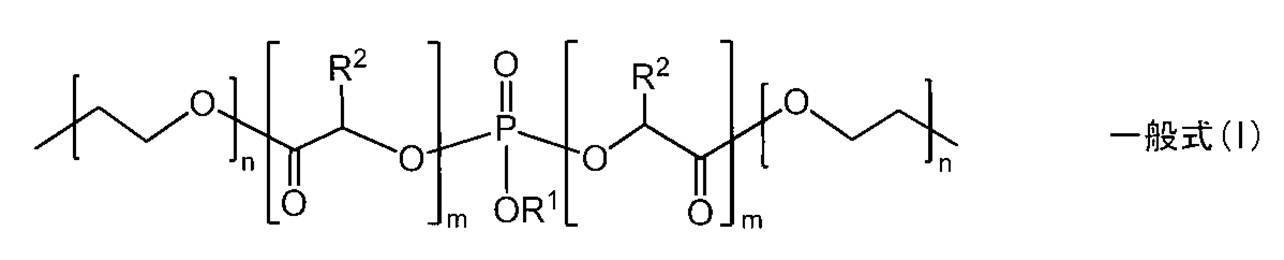
一般式(I)中、R1は炭素数1以上30以下のアルキル基、炭素数2以上30以下のアルケニル基、又は炭素数2以上30以下のアルキニル基を表し、R2は水素原子又は炭素数1以上2以下のアルキル基を表し、nは2以上23以下の整数を表し、mは1以上3以下の整数を表す。
前記炭素数1以上30以下のアルキル基は、直鎖状であっても、分岐鎖状であってもよい。前記炭素数1以上30以下のアルキル基としては、メチル基、エチル基、プロピル基、イソプロピル基、ブチル基、ヘキシル基、オクチル基、エチルヘキシル基、ドデカニル基、オクタデシル基、ベヘニル基等を挙げることができる。
前記炭素数1以上30以下のアルキル基は、さらに置換基を有していてもよい。この置換基としては、シクロヘキシル基等の環状の飽和脂肪族基、及びフェニル基、ナフチル基、アントラニル基、ピリジル基、ベンジル基、フェネチル基、ナフチルメチル基、ピリジルメチル基等の芳香族基を挙げることができる。
前記炭素数1以上30以下のアルキル基は、さらに置換基を有していてもよい。この置換基としては、シクロヘキシル基等の環状の飽和脂肪族基、及びフェニル基、ナフチル基、アントラニル基、ピリジル基、ベンジル基、フェネチル基、ナフチルメチル基、ピリジルメチル基等の芳香族基を挙げることができる。
前記炭素数2以上30以下のアルケニル基は、直鎖状であっても、分岐鎖状であってもよい。炭素数2以上30以下のアルケニル基としては、ビニル基、アリル基、イソプロペニル基、ブテニル基、ヘキセニル基、シクロヘキセニル基、オクテニル基、コレステロール残基等を挙げることができる。
前記炭素数2以上30以下のアルケニル基は、さらに置換基を有していてもよい。この置換基としては、シクロヘキシル基等の環状の飽和脂肪族基、及びフェニル基、ナフチル基、アントラニル基、ピリジル基、ベンジル基、フェネチル基、ナフチルメチル基、ピリジルメチル基等の芳香族基を挙げることができる。
前記炭素数2以上30以下のアルケニル基は、さらに置換基を有していてもよい。この置換基としては、シクロヘキシル基等の環状の飽和脂肪族基、及びフェニル基、ナフチル基、アントラニル基、ピリジル基、ベンジル基、フェネチル基、ナフチルメチル基、ピリジルメチル基等の芳香族基を挙げることができる。
前記炭素数2以上30以下のアルキニル基は、直鎖状であっても、分岐鎖状であってもよい。前記炭素数2以上30以下のアルキニル基としては、エチニル基、プロパルギル基、1-ブチン-3-イル基、1-ブチン-3-メチル-3-イル基等を挙げることができる。
前記炭素数2以上30以下のアルキニル基は、さらに置換基を有していてもよい。この置換基としては、シクロヘキシル基等の環状の飽和脂肪族基、及びフェニル基、ナフチル基、アントラニル基、ピリジル基、ベンジル基、フェネチル基、ナフチルメチル基、ピリジルメチル基等の芳香族基を挙げることができる。
前記炭素数2以上30以下のアルキニル基は、さらに置換基を有していてもよい。この置換基としては、シクロヘキシル基等の環状の飽和脂肪族基、及びフェニル基、ナフチル基、アントラニル基、ピリジル基、ベンジル基、フェネチル基、ナフチルメチル基、ピリジルメチル基等の芳香族基を挙げることができる。
R1は、分散性の観点から、炭素数2以上30以下のアルキル基又は炭素数2以上30以下アルケニル基であることが好ましく、炭素数2以上24以下のアルキル基又はコレステロール残基であることがより好ましく、炭素数8以上18以下のアルキル基又はコレステロール残基であることがより好ましく、炭素数8以上18以下のアルキル基であることが更に好ましい。
ここで、R1が水素原子を表す場合、リン酸エステルポリマー誘導体の疎水性がミセルを構成するには十分でないため、水不溶性又は水難溶性の化合物を分散できない場合がある。またR1が炭素数30を超えるアルキル基を表す場合、疎水性が向上するものの 、リン酸エステルポリマー誘導体が水不溶性又は水難溶性の化合物を分散させるミセルとは異なる構造に会合するため、水不溶性又は水難溶性の化合物を安定に分散できない場合がある。R1で表わされるアルキル基の炭素数を1以上30以下とすることで、リン酸エステルポリマー誘導体は、疎水性が向上しより安定なミセルが形成され水不溶性又は水難溶性の化合物の分散性に優れる。
また本発明においては、R1の炭素数を8以上とすることで、リン酸エステルポリマー誘導体の臨界ミセル濃度が低下し、より安定なミセルが形成され、水不溶性又は水難溶性の化合物に対する分散性がより向上する。
さらに本発明においては、リン酸エステルポリマー誘導体によって形成されるミセルの大きさを、R1で表される置換基を適宜選択することによって制御することができる。具体的には例えば、R1として炭素数12の直鎖アルキル基を選択した場合、体積平均粒径が200nm以上400nm以下のミセルが形成される。
また炭素数が12より多いアルキル基を選択することで、体積平均粒子径がより大きいミセルを形成することができ、炭素数が12より少ないアルキル基を選択することで、体積平均粒子径がより小さいミセルを形成することができる。これは例えば、リン酸エステルポリマー誘導体が形成するミセルは、疎水性のR1で表されるアルキル基等が内側に、親水性のポリマー主鎖が外側に配置されるため、R1で表される置換基の大きさに応じて形成されるミセル径が変化するためと考えることができる。
また炭素数が12より多いアルキル基を選択することで、体積平均粒子径がより大きいミセルを形成することができ、炭素数が12より少ないアルキル基を選択することで、体積平均粒子径がより小さいミセルを形成することができる。これは例えば、リン酸エステルポリマー誘導体が形成するミセルは、疎水性のR1で表されるアルキル基等が内側に、親水性のポリマー主鎖が外側に配置されるため、R1で表される置換基の大きさに応じて形成されるミセル径が変化するためと考えることができる。
R2は水素原子又は炭素数1以上2以下のアルキル基を表し、生分解性及び疎水性の観点から、炭素数1のアルキル基(メチル基)が好ましい。炭素数が2を超えると、R2が立体障害となるためエステル結合が加水分解し難くなり、疎水性が高くなりすぎ分散性が低下する場合がある。
nは、2以上23以下の整数を表し、分散性の観点から、5以上23以下であることが好ましく、9以上23以下であることがより好ましい。nが2未満であると、親水性が低下しミセルを形成し難くなり、分散性が低下する場合がある。またnが23を超えると、親水性が増加しミセルを形成し難くなる場合がある。
mは1以上3以下の整数を表し、生分解性の観点から、1以上3以下が好ましく、1以上2以下がより好ましい。mが3を超えると、リン酸エステルポリマー誘導体が結晶化し易くなる。
R1で表わされる置換基の炭素数は、分散性の観点から、nの値により所定の数値範囲内であることがよい。これは、次に示す理由によると考えられる。リン酸エステルポリマー誘導体1分子内の疎水性と親水性とのバランスが、水不溶性又は水難溶性の化合物を分散させるためのミセルを形成するために要求される。具体的には、nが2以上9以下である場合、R1は炭素数8以上16以下の置換基を表すことが好ましい。またnが9以上23以下である場合、R1は炭素数12以上30以下の置換基を表すことが好ましい。
このように、本発明では、R1で表わされる置換基の炭素数及びnの値を適宜選択することで、リン酸エステルポリマー誘導体の分散性を所望の態様に制御することができる。
このように、本発明では、R1で表わされる置換基の炭素数及びnの値を適宜選択することで、リン酸エステルポリマー誘導体の分散性を所望の態様に制御することができる。
R2で表される置換基は、生分解性の観点から、mの値により所定の置換基であることがよい。これは次に示す理由によると考えられる。mは2-ヒドロキシアルカン酸由来の構造単位の重合度、すなわちカルボン酸由来のエステル結合の数を表す。よって、mの値が大きくなると加水分解するカルボン酸由来のエステル結合の数が多くなるため、リン酸エステルポリマー誘導体は加水分解し易くなる。一方、2-ヒドロキシアルカン酸由来の構造単位のR2の表す置換基は、カルボン酸由来のエステル結合を形成する炭素原子に対しβ位に存在するため、カルボン酸由来のエステル結合を加水分解させる反応物に対して立体障害となり得る。すなわちR2で表わされる置換基はかさ高いほど立体障害となり易く、リン酸エステルポリマー誘導体は加水分解し難くなる。具体的には、mが2である場合、R2は1の置換基を表すことが好ましい。また、mが1である場合、R2は炭素数1のアルキル基(メチル基)を表すことが好ましい。
このように、本発明では、R2で表わされる置換基及びmの値を適宜選択することで、リン酸エステルポリマー誘導体の生分解性を所望の態様に制御することができる。
このように、本発明では、R2で表わされる置換基及びmの値を適宜選択することで、リン酸エステルポリマー誘導体の生分解性を所望の態様に制御することができる。
一般式(I)で表される構造を有するリン酸エステルポリマー誘導体中のR1、R2、n、mの組み合わせとしては、R1は炭素数8以上18以下のアルキル基を表し、R2は炭素数1のアルキル基(メチル基)を表し、nは5以上23以下の整数を表し、mは1以上2以下の整数を表す組み合わせが好ましく、R1は炭素数12以上18以下のアルキル基を表し、R2は炭素数1のアルキル基(メチル基)を表し、nは9以上23以下の整数を表し、mは1を表す組み合わせがより好ましい。
本発明のリン酸エステルポリマー誘導体の末端基としては、-OR3を挙げることができる。R3は炭素数1以上3以下のアルキル基である。炭素数が3を超えると、ミセルを形成するには疎水性が高くなりすぎ、分散性が低下する場合がある。また、例えば、水不溶性又は水難溶性の薬物を本発明のリン酸エステルポリマー誘導体が形成するミセルに内包させて投薬する場合、炭素数が3を超えると、体内で生体認識され易くなり異物として体外へ排出され易くなる。
-OR3を末端基として有する、一般式(I)で表される構造を有するリン酸エステルポリマー誘導体は、具体的には一般式(II)で表される。
-OR3を末端基として有する、一般式(I)で表される構造を有するリン酸エステルポリマー誘導体は、具体的には一般式(II)で表される。
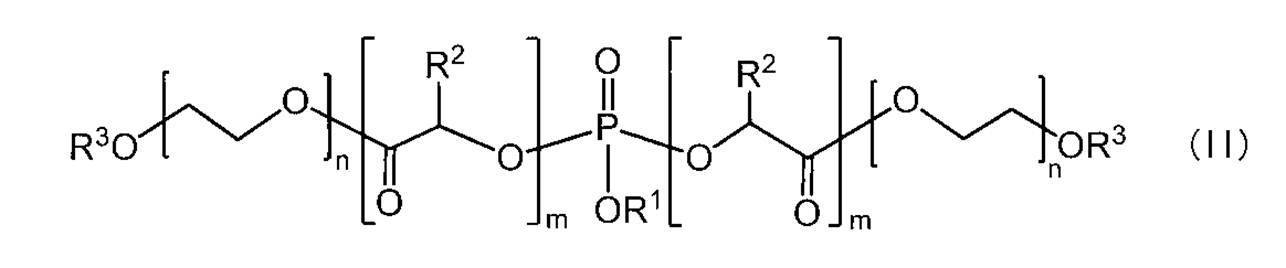
一般式(II)中、R1、R2、n及びmは、一般式(I)中のR1、R2、n及びmと同義である。R3は炭素数1以上3以下のアルキル基を表す。
一般式(II)で表されるリン酸エステルポリマー誘導体中のR1、R2、R3、n、及びmの組み合わせとしては、R1は炭素数8以上18以下のアルキル基を表し、R2は炭素数1のアルキル基(メチル基)を表し、R3は炭素数1のアルキル基(メチル基)を表し、nは5以上23以下の整数を表し、mは1以上3以下の整数を表す組み合わせが好ましく、R1は炭素数12以上18以下のアルキル基を表し、R2は炭素数1のアルキル基(メチル基)を表し、R3は炭素数1のアルキル基(メチル基)を表し、nは9以上23以下の整数を表し、mは1を表す組み合わせがより好ましい。
本発明のリン酸エステルポリマー誘導体の分子量としては、特に制限はなく、目的に応じて適宜選択することができる。例えば、数平均分子量(Mn)として500以上2500以下とすることができ、500以上2000以下であることが好ましく、500以上1500以下であることがより好ましい。
本発明のリン酸エステルポリマー誘導体の分子量分布としては、特に制限はなく、目的に応じて適宜選択することができる。例えば、分子量分布はMw/Mn(Mwは重量平均分子量)で表され、Mw/Mn=1.2以上2.0以下であることが好ましく、1.2以上1.5以下であることがより好ましい。
ここで、数平均分子量(Mn)及び重量平均分子量(Mw)は、次のようにして算出された値である。すなわち、リン酸エステルポリマー誘導体をテトラヒドロフラン(THF)に溶解し、ゲルろ過カラム(Shodex KF-804x2本)を接続したゲルろ過クロマトシステムに注入する。
本発明のリン酸エステルポリマー誘導体の分子量分布としては、特に制限はなく、目的に応じて適宜選択することができる。例えば、分子量分布はMw/Mn(Mwは重量平均分子量)で表され、Mw/Mn=1.2以上2.0以下であることが好ましく、1.2以上1.5以下であることがより好ましい。
ここで、数平均分子量(Mn)及び重量平均分子量(Mw)は、次のようにして算出された値である。すなわち、リン酸エステルポリマー誘導体をテトラヒドロフラン(THF)に溶解し、ゲルろ過カラム(Shodex KF-804x2本)を接続したゲルろ過クロマトシステムに注入する。
本発明のリン酸エステルポリマー誘導体が形成するミセルの粒子径は、50nm以上250nm以下が好ましく、50nm以上200nm以下がより好ましい。200nmより大きいと、ミセルが内包する薬物を腫瘍組織などの標的に運び難く、40nmより小さいと、ミセルが標的だけでなく標的以外の組織に薬物を運ぶことになり、標的に選択的に薬物を運び難い。
ここで、ミセルの粒子径は次にようにして測定された値である。すなわち、測定温度を37℃としてミセル水溶液(10mg/mL)を電気泳動光散乱装置(ELSZ;大塚電子)に入れ、光散乱測定を行いミセル粒径を求める。
ここで、ミセルの粒子径は次にようにして測定された値である。すなわち、測定温度を37℃としてミセル水溶液(10mg/mL)を電気泳動光散乱装置(ELSZ;大塚電子)に入れ、光散乱測定を行いミセル粒径を求める。
本発明のリン酸エステルポリマー誘導体は、例えば、水不溶性又は水難溶性の化合物の分散剤として好適に用いることができる。また、生体認識され難く、生分解性を有し、その分解生成物も安全性が高いことから、工業用途の分散剤のみならず、医薬品、化粧品、食品等に用いられる分散剤として好適に用いることができる。
<リン酸エステルポリマー誘導体の製造方法>
一般式(I)で表される構造を有するリン酸エステルポリマー誘導体の製造方法の一例について説明する。一般式(I)で表される構造を有するリン酸エステルポリマー誘導体は、例えば、以下のスキーム1に従って製造される。なお、スキーム1は、末端基がOR3であるリン酸エステルポリマー誘導体の製造方法を示す。
一般式(I)で表される構造を有するリン酸エステルポリマー誘導体の製造方法の一例について説明する。一般式(I)で表される構造を有するリン酸エステルポリマー誘導体は、例えば、以下のスキーム1に従って製造される。なお、スキーム1は、末端基がOR3であるリン酸エステルポリマー誘導体の製造方法を示す。
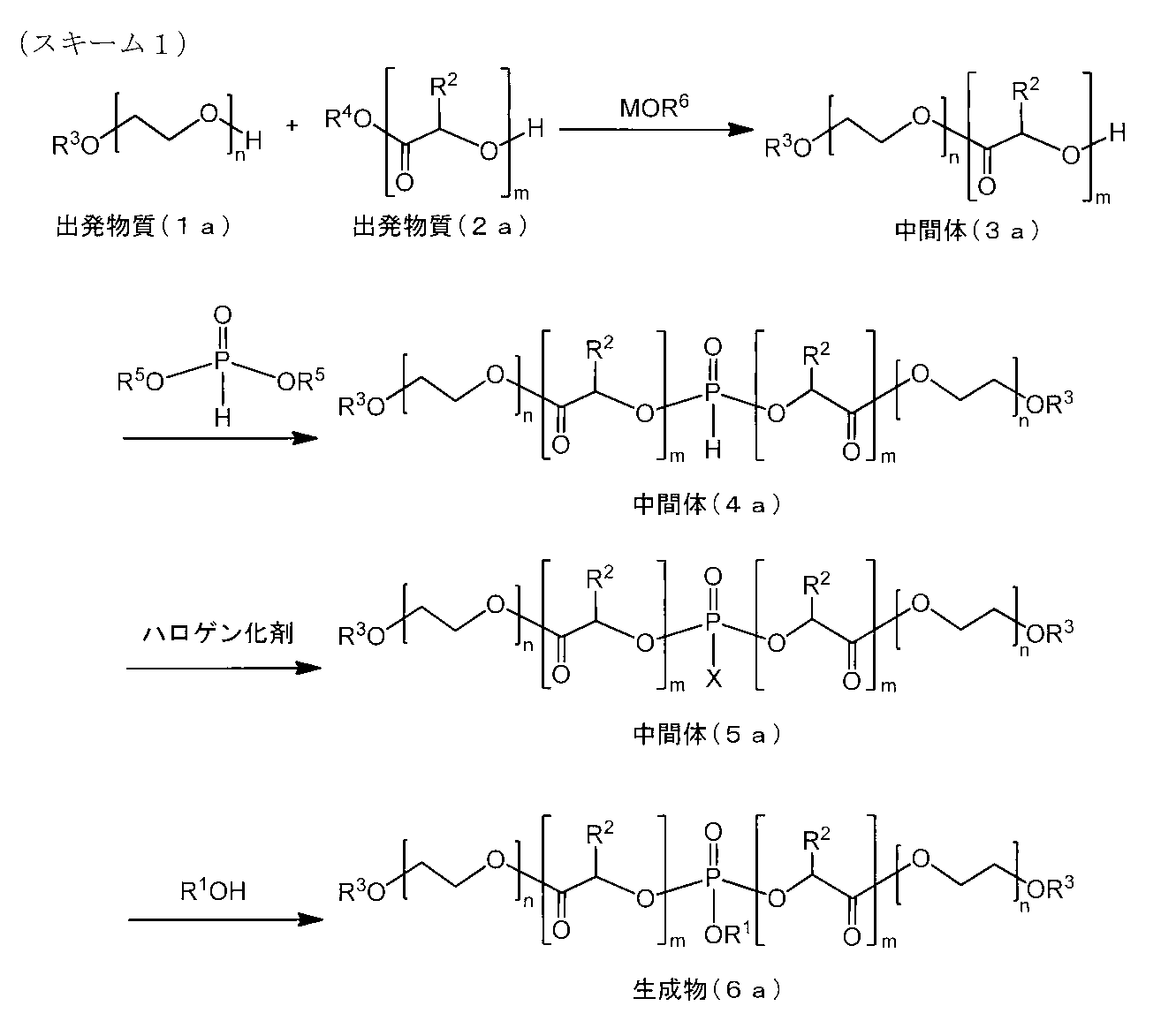
スキーム1に示すリン酸エステルポリマー誘導体の製造方法を、この製造方法における素反応を順に述べることで以下説明する。
出発物質(1a)と出発物質(2a)とを縮合反応させ、中間体(3a)を得る(第1ステップ)。
ここで、出発物質(2a)中のR2は上記一般式(I)で表されるリン酸エステルポリマー誘導体中のR2と同義である。出発物質(1a)としては、例えば、メトキシポリエチレングリコールを挙げることができる。出発物質(2a)としては、例えば、乳酸エチル、グリコール酸メチルを挙げることができる。
なお、出発物質(1a)としては、両末端がOH基であるポリエチレングリコールを用いてもよい。但し、後述するいずれかのステップにおいて、アルコキシ化処理を行う。
出発物質(1a)と出発物質(2a)とを縮合反応させ、中間体(3a)を得る(第1ステップ)。
ここで、出発物質(2a)中のR2は上記一般式(I)で表されるリン酸エステルポリマー誘導体中のR2と同義である。出発物質(1a)としては、例えば、メトキシポリエチレングリコールを挙げることができる。出発物質(2a)としては、例えば、乳酸エチル、グリコール酸メチルを挙げることができる。
なお、出発物質(1a)としては、両末端がOH基であるポリエチレングリコールを用いてもよい。但し、後述するいずれかのステップにおいて、アルコキシ化処理を行う。
出発物質(1a)と出発物質(2a)との縮合反応は、通常用いられる縮合反応を特に制限なく用いることができる。具体的には、出発物質(1a)及び出発物質(2a)を無溶媒あるいは適当な溶媒中で、加熱する方法を挙げることができる。
加熱温度及び加熱時間は反応に用いる原料に応じて適宜選択することができる。具体的には、80℃以上で6時間以上とすることができ、100℃以上で5時間以上であることが好ましく、120℃以上で3時間以上であることがより好ましい。また、出発物質(1a)と出発物質(2a)との反応では、複数の加熱温度及び加熱時間の条件下で行うことができる。
加熱温度及び加熱時間は反応に用いる原料に応じて適宜選択することができる。具体的には、80℃以上で6時間以上とすることができ、100℃以上で5時間以上であることが好ましく、120℃以上で3時間以上であることがより好ましい。また、出発物質(1a)と出発物質(2a)との反応では、複数の加熱温度及び加熱時間の条件下で行うことができる。
また、出発物質(1a)と出発物質(2a)との縮合反応は、常圧下で行っても、減圧下で行ってもよい。本発明においては、製造効率の観点から、常圧下で出発物質(1a)及び出発物質(2a)を加熱して縮合した後、さらに減圧下(好ましくは、0.67kPa以下)で加熱して縮合反応を行なうことが好ましい。
出発物質(1a)と出発物質(2a)との縮合反応は、無溶媒で行うことができるが、必要に応じて溶媒を用いてもよい。前記反応に用いることができる溶媒としては特に制限はない。例えば、ヘキサン、オクタン、デカン等の炭化水素類、トルエン、キシレン、メシチレン等の芳香族炭化水素類などを挙げることができる。
また出発物質(1a)と出発物質(2a)との縮合反応においては、必要に応じて触媒を用いてもよい。前記触媒としては、エステル交換反応に通常用いられる触媒を適宜選択して用いることができる。触媒としては、例えば、金属アルコキシド(MOR6)を挙げることができる。金属アルコキシド中のMは金属原子を表し、R6は炭素数1以上3以下のアルキル基を表す。Mとしては、例えば、ナトリウム、カリウムを挙げることができる。R6としては、例えば、メチル基、エチル基を挙げることができる。金属アルコキシドとしては、例えば、ナトリウムメトキシドを挙げることができる。
また出発物質(1a)と出発物質(2a)との縮合反応においては、必要に応じて触媒を用いてもよい。前記触媒としては、エステル交換反応に通常用いられる触媒を適宜選択して用いることができる。触媒としては、例えば、金属アルコキシド(MOR6)を挙げることができる。金属アルコキシド中のMは金属原子を表し、R6は炭素数1以上3以下のアルキル基を表す。Mとしては、例えば、ナトリウム、カリウムを挙げることができる。R6としては、例えば、メチル基、エチル基を挙げることができる。金属アルコキシドとしては、例えば、ナトリウムメトキシドを挙げることができる。
得られた中間体(3a)と亜リン酸エステルとを反応させ、リン酸化ポリマー(中間体(4a))を得る(第2ステップ)。
ここで、亜リン酸エステルとしては、例えば、亜リン酸ジアルキルを挙げることができる。スキーム1の亜リン酸ジアルキル中のR5は炭素数1以上2以下のアルキル基を表す。R5としては、例えば、メチル基を挙げることができる。
ここで、亜リン酸エステルとしては、例えば、亜リン酸ジアルキルを挙げることができる。スキーム1の亜リン酸ジアルキル中のR5は炭素数1以上2以下のアルキル基を表す。R5としては、例えば、メチル基を挙げることができる。
中間体(3a)と亜リン酸ジアルキルとの縮合反応は、通常用いられる縮合反応を特に制限なく用いることができる。具体的には、中間体(3a)及び亜リン酸ジアルキルを無溶媒あるいは適当な溶媒中で、加熱する方法を挙げることができる。
加熱温度は反応に用いる原料に応じて適宜選択することができる。具体的には、100℃以上とすることができ、130℃以上であることが好ましく、135℃以上で3時間以上であることがより好ましい。加熱時間としては、10分以上とすることができる。また、中間体(3a)と亜リン酸エステルとの縮合反応では、複数の加熱温度及び加熱時間の条件下で行うことができる。
加熱温度は反応に用いる原料に応じて適宜選択することができる。具体的には、100℃以上とすることができ、130℃以上であることが好ましく、135℃以上で3時間以上であることがより好ましい。加熱時間としては、10分以上とすることができる。また、中間体(3a)と亜リン酸エステルとの縮合反応では、複数の加熱温度及び加熱時間の条件下で行うことができる。
また、中間体(3a)と亜リン酸エステルとの縮合反応は、常圧下で行っても、減圧下で行ってもよい。反応させることができる。本発明においては、製造効率の観点から、常圧下で中間体(3a)と亜リン酸エステルとの縮合反応を加熱して縮合した後、さらに減圧下(好ましくは、0.67kPa以下)で加熱して縮合反応を行なうことが好ましい。
中間体(3a)と亜リン酸エステルとの縮合反応は、無溶媒で行うことができるが、必要に応じて溶媒を用いてもよい。前記反応に用いることができる溶媒としては特に制限はない。例えば、ヘキサン、オクタン、デカン等の炭化水素類、トルエン、キシレン、メシチレン等の芳香族炭化水素類などを挙げることができる。
得られたリン酸化ポリマー(中間体(4a))を溶媒に溶解後、ハロゲン化剤を加え、数時間(例えば、4時間)かけてハロゲン化反応を行い、リン酸化ポリマーのハロゲン化物(中間体(5a))の溶液を得る(第3ステップ)。ここで、中間体(5a)中のXはハロゲン原子を示す。
本発明におけるハロゲン化剤としては、スキーム1で示すようにリン酸化ポリマー(中間体(4a))を選択的にハロゲン化できるハロゲン化剤であれば、通常用いられるハロゲン化剤を特に制限なく用いることができる。具体的には、塩化チオニル、臭化チオニル、オキシ塩化リン、オキサリルクロリド、三塩化リン、五塩化リン、イソシアヌル酸のハロゲン化物等を挙げることができる。またブロモトリクロロメタン等を塩基と組み合わせて用いることもできる。
中でも、反応特異性と反応速度の観点から、イソシアヌル酸のハロゲン化物をハロゲン化剤として用いることが好ましい。イソシアヌル酸のハロゲン化物としては、ジクロロイソシアヌル酸及びその塩、トリクロロイソシアヌル酸、ジブロモイソシアヌル酸及びその塩、ならびにトリブロモイソシアヌル酸等を挙げることができ、ジクロロイソシアヌル酸及びその塩、ならびにトリクロロイソシアヌル酸から選ばれる少なくとも1種を用いることがより好ましい。
リン酸化ポリマー(中間体(4a))のハロゲン化反応におけるハロゲン化剤の添加量は特に制限はなく、必要に応じて適宜選択することができる。例えば、リン酸化ポリマーに含まれる亜リン酸残基1モルに対して、ハロゲン化剤を1/30モル当量以上3モル当量以下用いることができ、1/18モル当量以上2モル当量以下であることが好ましい。
具体的には例えば、ハロゲン化剤としてトリクロロイソシアヌル酸(3価のハロゲン化剤)を用いる場合、リン酸化ポリマーに含まれる亜リン酸残基1モルに対して、トリクロロイソシアヌル酸を1/10モル当量以上1モル当量以下用いることができ、1/6モル当量以上2/3モル当量以下用いることが好ましい。
具体的には例えば、ハロゲン化剤としてトリクロロイソシアヌル酸(3価のハロゲン化剤)を用いる場合、リン酸化ポリマーに含まれる亜リン酸残基1モルに対して、トリクロロイソシアヌル酸を1/10モル当量以上1モル当量以下用いることができ、1/6モル当量以上2/3モル当量以下用いることが好ましい。
前記リン酸化ポリマーのハロゲン化反応は溶媒中で行うことができる。前記ハロゲン化反応に用いることができる溶媒としては、リン酸化ポリマーを溶解可能で、ハロゲン化剤に対して安定な溶媒であれば特に制限はない。具体的には、ベンゼン、トルエン、キシレン等の芳香族炭化水素類、ジクロロメタン、クロロホルム、四塩化炭素等のハロゲン化炭化水素類、ジエチルエーテル、ジオキサン、テトラヒドロフラン、1,2-ジメトキシエタン等の鎖状又は環状エーテル類、アセトン、メチルイソブチルケトン、シクロヘキサノン等のケトン類、ジメチルホルムアミド、ジメチルアセトアミド、1,3-ジメチル-2-イミダゾリジノン等のアミド類、アセトニトリル等のニトリル類などを挙げることができる。
前記リン酸化ポリマーのハロゲン化反応における反応温度及び反応時間は、用いるハロゲン化剤に応じて適宜選択することができる。具体的には例えば、0℃以上100℃以下の温度範囲を反応温度、1時間以上48時間以下の範囲を反応時間とすることができる。
本発明においては、ハロゲン化剤としてイソシアヌル酸のハロゲン化物を用いることで、加熱を要することなく、短時間かつ高収率で、所望の亜リン酸ポリアルキレングリコールエステルポリマーのハロゲン化物を得ることができる。
本発明においては、ハロゲン化剤としてイソシアヌル酸のハロゲン化物を用いることで、加熱を要することなく、短時間かつ高収率で、所望の亜リン酸ポリアルキレングリコールエステルポリマーのハロゲン化物を得ることができる。
得られた中間体(5a)の溶液にR1OHを加えて反応を行い、生成物(6a)の混合物を得る(第4ステップ)。
前記R1OH(R1は一般式(I)中のR1と同義である。)は、目的とする前記一般式(I)で表されるリン酸エステルポリマー誘導体に応じて適宜選択することができる。具体的には例えば、前記一般式(I)におけるR1に対応するアルコール、アルケノール、又はアルキノールを用いることができる。
アルコールとしては、例えば、メタノール、エタノール、ブタノール、オクタノール、デカノール、ドデカノール、テトラデカノール、ヘキサデカノール、オクタデカノール、エイコサノールを挙げることができる。
アルケノールとしては、例えば、プロぺノール、ヘキセノール、ノネノール、へプタデセノールを挙げることができる。
アルキノールとしては、例えば、ブチノール、ヘプチノール、ペンタデシノールを挙げることができる。
アルコールとしては、例えば、メタノール、エタノール、ブタノール、オクタノール、デカノール、ドデカノール、テトラデカノール、ヘキサデカノール、オクタデカノール、エイコサノールを挙げることができる。
アルケノールとしては、例えば、プロぺノール、ヘキセノール、ノネノール、へプタデセノールを挙げることができる。
アルキノールとしては、例えば、ブチノール、ヘプチノール、ペンタデシノールを挙げることができる。
リン酸化ポリマーのハロゲン化物(中間体(5a))の反応における前記R1OHの添加量としては特に制限はなく、必要に応じて適宜選択することができる。例えば、リン酸化ポリマーのハロゲン化物(中間体(5a))に含まれるハロゲン化リン酸残基1モルに対して、R1OHを1モル当量以上用いることができ、3モル当量以上であることが好ましい。
前記リン酸化ポリマーのハロゲン化物(中間体(5a))の反応における反応温度及び反応時間は、用いるR1OHに応じて適宜選択することができる。具体的には例えば、0℃以上100℃以下の温度範囲を反応温度、1時間以上48時間以下の範囲を反応時間とすることができる。
本発明において前記ハロゲン化反応と前記R1OHとの反応は、それぞれ独立して順次行なってもよく、また前記ハロゲン化反応と前記R1OHとの反応を同時に行なってもよい。本発明においては、製造効率の観点から、前記ハロゲン化反応と前記R1OHとの反応をそれぞれ独立して順次行なうことが好ましい。
本発明のリン酸エステルポリマー誘導体の製造方法は、スキーム1で示した2つの縮合反応、ハロゲン化反応、R1OHとの反応に加えて、必要に応じてその他の処理をさらに含むことができる。具体的には、リン酸エステルポリマー誘導体の精製処理等を挙げることができる。
前記精製処理としては、ポリマーの精製方法として通常用いられる精製方法を特に制限なく用いることができる。具体的には例えば、有機溶剤等を用いる再沈殿法、ゲルろ過法、透析法などを挙げることができる。
前記精製処理としては、ポリマーの精製方法として通常用いられる精製方法を特に制限なく用いることができる。具体的には例えば、有機溶剤等を用いる再沈殿法、ゲルろ過法、透析法などを挙げることができる。
一般式(I)で表される構造を有するリン酸エステルポリマー誘導体の製造方法の他の一例について説明する。一般式(I)で表される構造を有するリン酸エステルポリマー誘導体は、例えば、以下のスキーム2に従って製造される。なお、スキーム2は、末端基がOR3であるリン酸エステルポリマー誘導体の製造方法を示す。
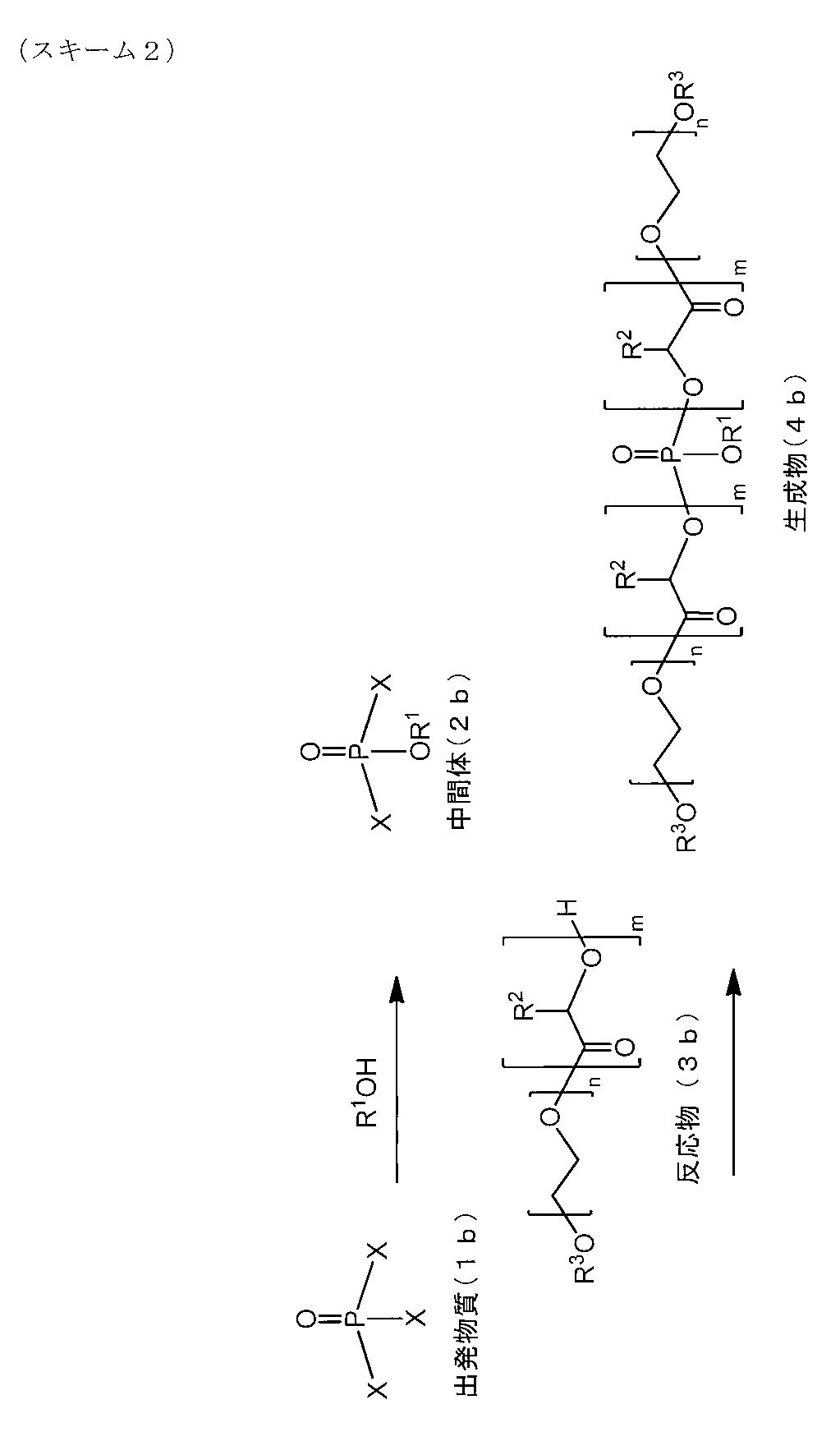
スキーム2に示すリン酸エステルポリマー誘導体の製造方法を、この製造方法における素反応を順に述べることで以下説明する。ハロゲン化ホスホリル(出発物質(1b))とR1OHとで反応を行い、中間体(2b)を得る。ここで、出発物質(1b)中のXはハロゲン原子を示す。
前記R1OHは、目的とする前記一般式(I)で表される構造を有するリン酸エステルポリマー誘導体に応じて適宜選択することができる。具体的には例えば、前記一般式(I)におけるR1に対応するアルコール、アルケノール、又はアルキノールを用いることができる。
アルコールとしては、例えば、メタノール、エタノール、ブタノール、オクタノール、デカノール、ドデカノール、テトラデカノール、ヘキサデカノール、オクタデカノール、エイコサノールを挙げることができる。
アルケノールとしては、例えば、プロぺノール、ヘキセノール、ノネノール、へプタデセノールを挙げることができる。
アルキノールとしては、例えば、ブチノール、ヘプチノール、ペンタデシノールを挙げることができる。
アルコールとしては、例えば、メタノール、エタノール、ブタノール、オクタノール、デカノール、ドデカノール、テトラデカノール、ヘキサデカノール、オクタデカノール、エイコサノールを挙げることができる。
アルケノールとしては、例えば、プロぺノール、ヘキセノール、ノネノール、へプタデセノールを挙げることができる。
アルキノールとしては、例えば、ブチノール、ヘプチノール、ペンタデシノールを挙げることができる。
ハロゲン化ホスホリル(出発物質(1b))の反応における前記R1OHの添加量としては特に制限はなく、必要に応じて適宜選択することができる。例えば、ハロゲン化ホスホリル(出発物質(1b))に含まれるハロゲン化リン酸残基1モルに対して、R1OHを1モル以上用いることができ、3モル以上であることが好ましい。
ハロゲン化ホスホリル(出発物質(1b))のR1OHとの反応は、無溶媒で行うことができるが、必要に応じて溶媒を用いてもよい。前記反応に用いることができる溶媒としては特に制限はない。例えば、ヘキサン、オクタン、デカン等の炭化水素類、トルエン、キシレン、メシチレン等の芳香族炭化水素類などを挙げることができる。
前記ハロゲン化ホスホリル(出発物質(1b))のR1OHとの反応における反応温度及び反応時間は、用いるR1OHに応じて適宜選択することができる。具体的には例えば、0℃以上100℃以下の温度範囲を反応温度、1時間以上48時間以下の範囲を反応時間とすることができる。
得られた中間体(2b)と反応物(3b)とをリン酸エステル化反応させ、生成物(4b)を得る。
ここで、反応物(3b)は、スキーム1で示した中間体(3a)と同じ方法で合成する。
ここで、反応物(3b)は、スキーム1で示した中間体(3a)と同じ方法で合成する。
中間体(2b)のリン酸エステル化反応における前記反応物(3b)の添加量としては特に制限はなく、必要に応じて適宜選択することができる。例えば、中間体(2b)に含まれるハロゲン化リン酸残基2モルに対して、反応物(3b)を2モル以上用いることができ、3モル以上であることが好ましい。
中間体(2b)のリン酸エステル化反応は、無溶媒で行うことができるが、必要に応じて溶媒を用いてもよい。前記反応に用いることができる溶媒としては特に制限はない。例えば、ヘキサン、オクタン、デカン等の炭化水素類、トルエン、キシレン、メシチレン等の芳香族炭化水素類などを挙げることができる。
前記リン酸エステル化反応における反応温度及び反応時間は、中間体(2a)と反応物(3b)に応じて適宜選択することができる。具体的には例えば、0℃以上100℃以下の温度範囲を反応温度、1時間以上48時間以下の範囲を反応時間とすることができる。
本発明のリン酸エステルポリマー誘導体の製造方法は、スキーム1で示した製造方法と同様に、スキーム2で示したR1OHとの反応、縮合反応に加えて、必要に応じてその他の処理をさらに含むことができる。具体的には、リン酸エステルポリマー誘導体の精製処理等を挙げることができる。
前記精製処理としては、ポリマーの精製方法として通常用いられる精製方法を特に制限なく用いることができる。具体的には例えば、有機溶剤等を用いる再沈殿法、未反応物や有機溶媒等を除去する減圧処理、ゲルろ過法、透析法などを挙げることができる。
前記精製処理としては、ポリマーの精製方法として通常用いられる精製方法を特に制限なく用いることができる。具体的には例えば、有機溶剤等を用いる再沈殿法、未反応物や有機溶媒等を除去する減圧処理、ゲルろ過法、透析法などを挙げることができる。
以下、本発明を実施例により具体的に説明するが、本発明はこれらの実施例に限定されるものではない。尚、特に断りのない限り、「%」は質量基準である。
<実施例1>
-オクタデシル-ジ(メトキシポリエチレングリコール350-乳酸エステル)ホスフェートの合成-
オクタデシル-ジ(メトキシポリエチレングリコール350-乳酸エステル)ホスフェートの合成をスキーム3に示す。ここで、350は出発物質であるメトキシポリエチレングリコール(以下、「MePEG350」と称することがある)の分子量を表す。
-オクタデシル-ジ(メトキシポリエチレングリコール350-乳酸エステル)ホスフェートの合成-
オクタデシル-ジ(メトキシポリエチレングリコール350-乳酸エステル)ホスフェートの合成をスキーム3に示す。ここで、350は出発物質であるメトキシポリエチレングリコール(以下、「MePEG350」と称することがある)の分子量を表す。

MePEG350(SIGMA-ALDRICH製)30gと乳酸エチル(WAKO製)(以下「EL」と称することがある)20gに、ナトリウムメトキシド(WAKO製)0.1gを触媒として加え、100℃に加熱し3時間、次いで120℃に加熱して3時間、さらに減圧下(0.67kPa)120℃で2時間反応を行い、乳酸エステル(MePEG350-乳酸エステル)を得た(第1ステップ:収率43%)。
得られた乳酸エステル10gを亜リン酸ジメチル(SIGMA-ALDRICH製)3.5gと、135℃に加熱し5時間、次いで減圧下(0.67kPa)160℃に加熱して5時間、さらに減圧下(0.67kPa)180℃で15分間反応させ、リン酸化ポリマー(ジ(MePEG350-乳酸エステル)リン酸エステル)10.5gを得た(第2ステップ:収率81%)。
得られたリン酸化ポリマー2gに対し、アセトニトリル20mLを加え、溶解させた後、トリクロロイソシアヌル酸(SIGMA-ALDRICH製)(以下、「TCIA]と称することがある)を0.2g加え、4時間塩素化反応を行い塩素化リン酸化ポリマー2.0gを得た。得られた塩素化リン酸化ポリマー2.0gにオクタデカノールを5g加え、アルコキシ反応を行い、オクタデシル-ジ(MePEG350-乳酸エステル)-ホスフェート(C18-350)の溶液を得た。得られたC18-350の溶液をフィルターろ過し、TCIAの副生成物を取り除き、ヘキサンへの再沈殿、及びアルコール、クロロホルム撹拌により、余剰のTCIAを取り除き、C18-350 1.4gを得た(第3、第4ステップ:収率55%)。ここで、C18-350の18はR1の表す置換基の炭素数を表し、350はリン酸エステルポリマー誘導体の合成に用いたMePEGの分子量を表す。
得られた乳酸エステル10gを亜リン酸ジメチル(SIGMA-ALDRICH製)3.5gと、135℃に加熱し5時間、次いで減圧下(0.67kPa)160℃に加熱して5時間、さらに減圧下(0.67kPa)180℃で15分間反応させ、リン酸化ポリマー(ジ(MePEG350-乳酸エステル)リン酸エステル)10.5gを得た(第2ステップ:収率81%)。
得られたリン酸化ポリマー2gに対し、アセトニトリル20mLを加え、溶解させた後、トリクロロイソシアヌル酸(SIGMA-ALDRICH製)(以下、「TCIA]と称することがある)を0.2g加え、4時間塩素化反応を行い塩素化リン酸化ポリマー2.0gを得た。得られた塩素化リン酸化ポリマー2.0gにオクタデカノールを5g加え、アルコキシ反応を行い、オクタデシル-ジ(MePEG350-乳酸エステル)-ホスフェート(C18-350)の溶液を得た。得られたC18-350の溶液をフィルターろ過し、TCIAの副生成物を取り除き、ヘキサンへの再沈殿、及びアルコール、クロロホルム撹拌により、余剰のTCIAを取り除き、C18-350 1.4gを得た(第3、第4ステップ:収率55%)。ここで、C18-350の18はR1の表す置換基の炭素数を表し、350はリン酸エステルポリマー誘導体の合成に用いたMePEGの分子量を表す。
得られたC18-350の同定は、後述する1H-NMR測定による構造解析及びゲルろ過クロマトグラフィー(GPC)による分子量分析により行った。
得られたC18-350の1H-NMRスペクトルを図1に示す。
得られた1H-NMRスペクトルのピークが、C18-350に由来のピークであると帰属した。このため、目的とするC18-350が合成されたと判断した。
また、図2に得られたC18-350のGPCチャート(実線)を示す。ここで、併せて、MePEGのGPCチャート(破線)も示す。表1にGPCチャートにおけるピークの保持時間(分)(Rt(min))をまとめた。
得られた1H-NMRスペクトルのピークが、C18-350に由来のピークであると帰属した。このため、目的とするC18-350が合成されたと判断した。
また、図2に得られたC18-350のGPCチャート(実線)を示す。ここで、併せて、MePEGのGPCチャート(破線)も示す。表1にGPCチャートにおけるピークの保持時間(分)(Rt(min))をまとめた。

GPCにおける、保持時間18.291分でのピークは、MePEG350に由来の保持時間19.396分でのピークに比べ、早く検出されており、数平均分子量も目的とするC18-350の数平均分子量の理論値に近いことから、C18-350由来のピークと判断した。
また、ピーク面積から純度は約60%と推定した。不純物は、ピーク位置から未反応のMePEGであることが示唆された。ここで、表2にC18-350の合成における各ステップの収率を示す。第1ステップの収率が43%と低いのは、NaOMeにより、EL分子間で自己縮合反応が起こり、ホモポリマーを形成する副反応が起こったことが考えられる。
また、ピーク面積から純度は約60%と推定した。不純物は、ピーク位置から未反応のMePEGであることが示唆された。ここで、表2にC18-350の合成における各ステップの収率を示す。第1ステップの収率が43%と低いのは、NaOMeにより、EL分子間で自己縮合反応が起こり、ホモポリマーを形成する副反応が起こったことが考えられる。

上記NMR測定による構造解析及びGPCによる分子量分析の結果から、目的とするC18-350が合成されたと判断した。
<実施例2~実施例10>
-アルコキシ-ジ(メトキシポリエチレングリコール350-乳酸エステル)ホスフェートの合成-
オクタデカノールの代わりに、メタノール、エタノール、ブタノール、オクタノール、デカノール、ドデカノール、テトラデカノール、ヘキサデカノール、及びエイコサノールをそれぞれ使用する以外は実施例1と同様にして、分子量350のメトキシポリエチレングリコールから合成したリン酸エステルポリマー誘導体C1-350、C2-350、C4-350、C8-350、C10-350、C12-350、C14-350、C16-350、及びC20-350を作製した。
実施例1と同様にNMR測定による構造解析及びGPCによる分子量分析により、目的とするリン酸エステルポリマー誘導体が合成されていることを確認した。
-アルコキシ-ジ(メトキシポリエチレングリコール350-乳酸エステル)ホスフェートの合成-
オクタデカノールの代わりに、メタノール、エタノール、ブタノール、オクタノール、デカノール、ドデカノール、テトラデカノール、ヘキサデカノール、及びエイコサノールをそれぞれ使用する以外は実施例1と同様にして、分子量350のメトキシポリエチレングリコールから合成したリン酸エステルポリマー誘導体C1-350、C2-350、C4-350、C8-350、C10-350、C12-350、C14-350、C16-350、及びC20-350を作製した。
実施例1と同様にNMR測定による構造解析及びGPCによる分子量分析により、目的とするリン酸エステルポリマー誘導体が合成されていることを確認した。
<実施例11~14>
-アルコキシ-ジ(MePEG750-乳酸エステル)ホスフェートの合成-
メトキシポリエチレングリコールの分子量350を750にした以外は実施例1~10と同様にして、リン酸エステルポリマー誘導体C12-750、C16-750、C16-750、及びC20-750を作製した。
実施例1と同様にNMR測定による構造解析及びGPCによる分子量分析により、目的とするリン酸エステルポリマー誘導体が合成されていることを確認した。
-アルコキシ-ジ(MePEG750-乳酸エステル)ホスフェートの合成-
メトキシポリエチレングリコールの分子量350を750にした以外は実施例1~10と同様にして、リン酸エステルポリマー誘導体C12-750、C16-750、C16-750、及びC20-750を作製した。
実施例1と同様にNMR測定による構造解析及びGPCによる分子量分析により、目的とするリン酸エステルポリマー誘導体が合成されていることを確認した。
-スダンIIIを用いたリン酸エステルポリマー誘導体の分散性の評価-
得られたリン酸エステルポリマー誘導体C1-350~C20-350、C12-750~C20-750それぞれ100mgに精製水10mLを加え、溶解させた後に、スダンIII(関東化学社製)10mgを加え、30分撹拌した。その後、超音波照射し壁面に付着したミセル粒子を落とし、0.2μmのフィルター(DISPOSABLE SYRINGE FILTER UNIT 0.20μm(DISMIC-25cs)、東洋濾紙株式会社社製)によりろ過し、得られたろ液中に形成されたミセル粒子の粒子径を測定した。また、水に単分散したものについては、臨界ミセル濃度(CMC)を測定するために、リン酸エステルポリマー誘導体を10mg、20mg、30mg、50mg、100mgで調製 したスダンIIIを含むリン酸エステルポリマー誘導体水溶液の吸光度を紫外可視分光光度計(UV-VIS MULTIPURPOSE SPECTROPHOTOMETER(MPS-2450)、株式会社島津製作所社製)測定して、CMCを求めた。また、各濃度についてミセルの粒子径を測定した。
得られたリン酸エステルポリマー誘導体C1-350~C20-350、C12-750~C20-750それぞれ100mgに精製水10mLを加え、溶解させた後に、スダンIII(関東化学社製)10mgを加え、30分撹拌した。その後、超音波照射し壁面に付着したミセル粒子を落とし、0.2μmのフィルター(DISPOSABLE SYRINGE FILTER UNIT 0.20μm(DISMIC-25cs)、東洋濾紙株式会社社製)によりろ過し、得られたろ液中に形成されたミセル粒子の粒子径を測定した。また、水に単分散したものについては、臨界ミセル濃度(CMC)を測定するために、リン酸エステルポリマー誘導体を10mg、20mg、30mg、50mg、100mgで調製 したスダンIIIを含むリン酸エステルポリマー誘導体水溶液の吸光度を紫外可視分光光度計(UV-VIS MULTIPURPOSE SPECTROPHOTOMETER(MPS-2450)、株式会社島津製作所社製)測定して、CMCを求めた。また、各濃度についてミセルの粒子径を測定した。
上記測定の結果、MePEG350から合成されたリン酸エステルポリマー誘導体水溶液では、C1-350、C2-350、C4-350については、スダンIIIは可溶化されず、スダンIIIの着色が認められず、0.20μmのフィルター(DISPOSABLE SYRINGE FILTER UNIT 0.20μm(DISMIC-25cs)、東洋濾紙株式会社製)によりろ過して得られたろ液は透明であった。C8-350、C10-350、C20-350については、スダンIIIは可溶化されたものの (スダンIIIの着色は認められたものの )、粒子径測定の結果、C20-350が凝集していることがわかった。この結果から、C8-350、C10-350については、ミセルを形成するには、疎水性が足りず、リン酸エステルポリマー誘導体に凝集力が働きにくく なったことで、ミセル粒子がナノ粒子(粒子径20nm以上200nm以下)にならなかったものと判断した。また、C20-350については、リン酸エステルポリマー誘導体の疎水性が高くなり、リン酸エステルポリマー誘導体に凝集力が強く働き、小さいサイズ(粒子径20nm以下)になってしまったものと判断した。
C12-350、C14-350、C16-350、C18-350については、水に単分散し、得られた粒子径からEPR効果が期待できるサイズのミセルを形成していることがわかった。大まかな傾向として、疎水性が大きくなるに従いミセルの粒子径が小さくなることがわかった。これは、疎水性が高まることで、スダンIIIとの相互作用が強くなり、スダンIIIを内包したミセル粒子が形成されたものと考えられます。
CMC値については、C14-350とC16-350とでほぼ同じ値となった。このことから、リン酸エステルポリマー誘導体の疎水性を大きくするほど、ミセルを形成しやすくなるということが示唆された。
CMC値については、C14-350とC16-350とでほぼ同じ値となった。このことから、リン酸エステルポリマー誘導体の疎水性を大きくするほど、ミセルを形成しやすくなるということが示唆された。
分子量750のMePEGから合成されたリン酸エステルポリマー誘導体水溶液では、C16-750、C18-750、C20-750では単分散となったが、粒子径は、C16-750では(199.7±96.3)nm、C18-750では(178.2±92.1)nm、C20-750では(161.8±84.1)nmとなりすべて粒度分布が広く、これらのリン酸エステルポリマー誘導体で形成される全てのミセル粒子がEPR効果を受け難いことがわかった。MePEGの分子量が大きくなり、親水性が大きくなることで、水中でのMePEGの安定性が高くなるため、逆にミセルを形成しにくく なり、このような結果になったと判断した。
これらの測定結果のうち、C12-350~C18-350がスダンIIIを内包したミセル粒子の粒子径を表3にまとめ、C12-350~C18-350がスダンIIIを内包したミセル粒子の吸光度(Abs.)を表4にまとめた。
これらの測定結果のうち、C12-350~C18-350がスダンIIIを内包したミセル粒子の粒子径を表3にまとめ、C12-350~C18-350がスダンIIIを内包したミセル粒子の吸光度(Abs.)を表4にまとめた。


-中性条件(pH7.4)下でのゲルろ過クロマトグラフィー(GPC)を用いた分解試験-
水に単分散したリン酸エステルポリマー誘導体C12-350、C18-350及びC12-750にpH7.4のリン酸緩衝液を加え、37℃で撹拌し、所定日数後(0日後、1日後、3日後、7日後、14日後、21日後、28日後)のサンプルの一部を採取し、2日間凍結乾燥させ、テトラヒドロフラン(THF)に溶解し、試液を調製 した。得られた試液をGPCにより、分子量測定を行った。測定条件はC12-350及びC18-350のときは、試液の注入量50μL、温度40℃、カラムはKF-804(昭和電工株式会社製)、移動相(THF)の流速1.0mL/min、30minで行い、C12-750のときは、試液の注入量50μL、温度40℃、カラムはKF-804(昭和電工株式会社製)、移動相(THF)の流速0.5mL/min、60minで行った。
リン酸エステルポリマー誘導体に相当する分子量のピーク面積の割合をリン酸エステルポリマー誘導体の含有率とした。そして、クロマトグラムにおけるリン酸エステルポリマー誘導体に相当するピーク面積の割合とMePEGに相当するピーク面積の割合の合計を100%とした。ここで、MePEGは、合成から0日経過後ではリン酸エステルポリマー誘導体の合成における未反応物を、合成から1日以降経過後ではリン酸エステルポリマー誘導体の合成における未反応物及びリン酸エステルポリマー誘導体の分解物を示す。この分解物は、リン酸エステルポリマー誘導体の加水分解により得られたものであり、乳酸(2-ヒドロキシカルボン酸)骨格におけるカルボン酸由来のエステル結合で加水分解が生じていることを示す。
水に単分散したリン酸エステルポリマー誘導体C12-350、C18-350及びC12-750にpH7.4のリン酸緩衝液を加え、37℃で撹拌し、所定日数後(0日後、1日後、3日後、7日後、14日後、21日後、28日後)のサンプルの一部を採取し、2日間凍結乾燥させ、テトラヒドロフラン(THF)に溶解し、試液を調製 した。得られた試液をGPCにより、分子量測定を行った。測定条件はC12-350及びC18-350のときは、試液の注入量50μL、温度40℃、カラムはKF-804(昭和電工株式会社製)、移動相(THF)の流速1.0mL/min、30minで行い、C12-750のときは、試液の注入量50μL、温度40℃、カラムはKF-804(昭和電工株式会社製)、移動相(THF)の流速0.5mL/min、60minで行った。
リン酸エステルポリマー誘導体に相当する分子量のピーク面積の割合をリン酸エステルポリマー誘導体の含有率とした。そして、クロマトグラムにおけるリン酸エステルポリマー誘導体に相当するピーク面積の割合とMePEGに相当するピーク面積の割合の合計を100%とした。ここで、MePEGは、合成から0日経過後ではリン酸エステルポリマー誘導体の合成における未反応物を、合成から1日以降経過後ではリン酸エステルポリマー誘導体の合成における未反応物及びリン酸エステルポリマー誘導体の分解物を示す。この分解物は、リン酸エステルポリマー誘導体の加水分解により得られたものであり、乳酸(2-ヒドロキシカルボン酸)骨格におけるカルボン酸由来のエステル結合で加水分解が生じていることを示す。
上記測定の結果のうち、C12-350及びC18-350について、図3~図6に示す。図3及び図4にC12-350のGPCチャートを示す。図3は図2中の四角(□)で囲まれた部分の拡大図である。
図5及び図6にC18-350のGPCチャートを示す。図6は図5中の四角(□)で囲まれた部分の拡大図である。図3~図6において、実線は0日経過後のGPCチャートを示し、破線は1日経過後のGPCチャートを示し、二重線は3日経過後のGPCチャートを示し、一点鎖線は7日経過後のGPCチャートを示し、長破線は14日経過後のGPCチャートを示し、二重破線は21日経過後のGPCチャートを示し、二重一点鎖線のGPCチャートは28日経過後のGPCチャートを示す。
図3~図6のチャートのピーク面積からリン酸エステルポリマー誘導体の含有率を算出した。C12-350の含有率を表5に示し、C18-350の含有率を表6に示す。
ここで、表5及び表6において、Dayはリン酸エステルポリマー誘導体をpH7.4のリン酸緩衝液に溶解してからの日数を示し、Maはリン酸エステルポリマー誘導体の分子量を示し、Pta(min)はリン酸エステルポリマー誘導体の保持時間(分)を示し、Pa(%)はリン酸エステルポリマー誘導体の含有率を示す。また、表5及び表6において、Mbは分解物の分子量を示し、Rtb(min)は分解物の保持時間(分)を示し、Pb(%)は分解物の含有率を示す。
図5及び図6にC18-350のGPCチャートを示す。図6は図5中の四角(□)で囲まれた部分の拡大図である。図3~図6において、実線は0日経過後のGPCチャートを示し、破線は1日経過後のGPCチャートを示し、二重線は3日経過後のGPCチャートを示し、一点鎖線は7日経過後のGPCチャートを示し、長破線は14日経過後のGPCチャートを示し、二重破線は21日経過後のGPCチャートを示し、二重一点鎖線のGPCチャートは28日経過後のGPCチャートを示す。
図3~図6のチャートのピーク面積からリン酸エステルポリマー誘導体の含有率を算出した。C12-350の含有率を表5に示し、C18-350の含有率を表6に示す。
ここで、表5及び表6において、Dayはリン酸エステルポリマー誘導体をpH7.4のリン酸緩衝液に溶解してからの日数を示し、Maはリン酸エステルポリマー誘導体の分子量を示し、Pta(min)はリン酸エステルポリマー誘導体の保持時間(分)を示し、Pa(%)はリン酸エステルポリマー誘導体の含有率を示す。また、表5及び表6において、Mbは分解物の分子量を示し、Rtb(min)は分解物の保持時間(分)を示し、Pb(%)は分解物の含有率を示す。


14日目以降はピークが出にくく なり、分子量にも300~400ほどの誤差が認められた。リン酸エステルポリマー誘導体のピーク及び分解物のピークであることは疑いなく、C12-350、C18-350ともに経日的にリン酸エステルポリマー誘導体の含有率が減少していくことが分かった。このことから、リン酸エステルポリマー誘導体の乳酸(2-ヒドロキシアルカン酸)由来の骨格導入による分解性促進が認められた。つまり、リン酸エステルポリマー誘導体中のカルボン酸由来のエステル結合が加水分解していることが認められた。
-酸性条件下(pH5.6)でのゲルろ過クロマトグラフィー(GPC)を用いた分解試験-
リン酸エステルポリマー誘導体C12-350 200mgにあらかじめ調製したpH5.6の酢酸緩衝液(0.1M)を加え、37℃で撹拌し、所定日数後(0日後、1日後、3日後、7日後、14日後、21日後、28日後)にサンプルの一部を採取し、2日間凍結乾燥させた。凍結乾燥させて得たサンプル30mgをTHF 1mLに溶解し、0.45μmのフィルター(DISPOSABLE SYRINGE FILTER UNIT 0.45μm、日本ポール株式会社製)により、ろ過して試液を調製 した。得られた試液をGPCにより、分子量測定を行った。測定条件は試液の注入量50μL、温度40℃、カラムはKF-804(昭和電工株式会社製)、移動相(THF)の流速0.5mL/min、60minとしました。中性条件(pH7.4)下でのゲルろ過クロマトグラフィー(GPC)を用いた分解試験と同様の方法で、リン酸エステルポリマー誘導体の含有率を算出した。
リン酸エステルポリマー誘導体C12-350 200mgにあらかじめ調製したpH5.6の酢酸緩衝液(0.1M)を加え、37℃で撹拌し、所定日数後(0日後、1日後、3日後、7日後、14日後、21日後、28日後)にサンプルの一部を採取し、2日間凍結乾燥させた。凍結乾燥させて得たサンプル30mgをTHF 1mLに溶解し、0.45μmのフィルター(DISPOSABLE SYRINGE FILTER UNIT 0.45μm、日本ポール株式会社製)により、ろ過して試液を調製 した。得られた試液をGPCにより、分子量測定を行った。測定条件は試液の注入量50μL、温度40℃、カラムはKF-804(昭和電工株式会社製)、移動相(THF)の流速0.5mL/min、60minとしました。中性条件(pH7.4)下でのゲルろ過クロマトグラフィー(GPC)を用いた分解試験と同様の方法で、リン酸エステルポリマー誘導体の含有率を算出した。
上記測定の結果を図7~図8に示す。図7及び図8にC12-350のGPCチャートを示す。図8は図7中の四角(□)で囲まれた部分の拡大図である。
図7~図8において、実線は0日経過後のGPCチャートを示し、破線は1日経過後のGPCチャートを示し、二重線は3日経過後のGPCチャートを示し、一点鎖線は7日経過後のGPCチャートを示し、長破線は14日経過後のGPCチャートを示し、二重破線は21日経過後のGPCチャートを示し、二重一点鎖線は28日経過後のGPCチャートを示す。
図7~図8のチャートのピーク面積からリン酸エステルポリマー誘導体の含有率を算出した。C12-350の含有率を表7に示す。ここで、Dayはリン酸エステルポリマー誘導体をpH5.6の酢酸緩衝液に溶解してからの日数を示し、Maはリン酸エステルポリマー誘導体の分子量を示し、Pta(min)はリン酸エステルポリマー誘導体の保持時間(分)を示し、Pa(%)はリン酸エステルポリマー誘導体の含有率を示す。また、表7において、Mbは分解物の分子量を示し、Rtb(min)は分解物の保持時間(分)を示し、Pb(%)は分解物の含有率を示す。
図7~図8において、実線は0日経過後のGPCチャートを示し、破線は1日経過後のGPCチャートを示し、二重線は3日経過後のGPCチャートを示し、一点鎖線は7日経過後のGPCチャートを示し、長破線は14日経過後のGPCチャートを示し、二重破線は21日経過後のGPCチャートを示し、二重一点鎖線は28日経過後のGPCチャートを示す。
図7~図8のチャートのピーク面積からリン酸エステルポリマー誘導体の含有率を算出した。C12-350の含有率を表7に示す。ここで、Dayはリン酸エステルポリマー誘導体をpH5.6の酢酸緩衝液に溶解してからの日数を示し、Maはリン酸エステルポリマー誘導体の分子量を示し、Pta(min)はリン酸エステルポリマー誘導体の保持時間(分)を示し、Pa(%)はリン酸エステルポリマー誘導体の含有率を示す。また、表7において、Mbは分解物の分子量を示し、Rtb(min)は分解物の保持時間(分)を示し、Pb(%)は分解物の含有率を示す。
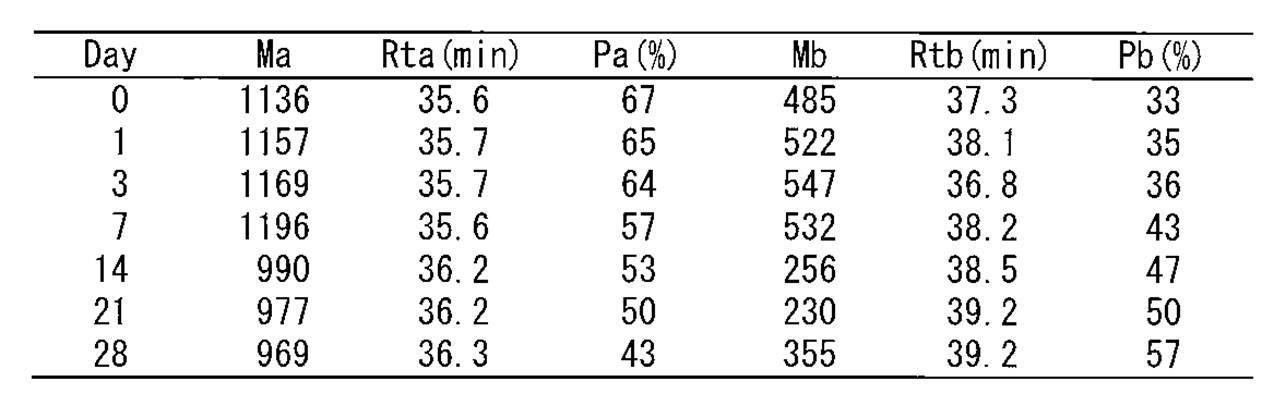
中性条件(pH7.4)のときよりも分解速度はかなり遅くなったが、7日経過後から徐々にリン酸エステルポリマー誘導体のピークが減少していき、分解が進行したと判断した。表7に示すリン酸エステルポリマー誘導体の含有率の変化をみる限り、28日経過以降も分解は継続していくと考えられる。
<比較例1>
-対照物質の合成-
一般式(III)で表す対照物質を、次に示すように作製した。ポリエチレングリコール(PEG)と亜リン酸ジメチルとの重合反応によりポリオキシエチレン ハイドロジェン ホスフェート(中間体1c)を合成した(作製方法は、Macromol.Rapid Commun.26,471-476(2005)を参照)。その後、得られた中間体(1c)をメトキシ化し上記スキーム1と同様にハロゲン化し、ドデカノールによるアルコキシ反応により対照物質C12を得た。実施例1と同様にNMR測定による構造解析及びGPCによる分子量分析により、目的とする対照物質が合成されていることを確認した。
対照物質はカルボン酸由来のエステル結合を有さない。
-対照物質の合成-
一般式(III)で表す対照物質を、次に示すように作製した。ポリエチレングリコール(PEG)と亜リン酸ジメチルとの重合反応によりポリオキシエチレン ハイドロジェン ホスフェート(中間体1c)を合成した(作製方法は、Macromol.Rapid Commun.26,471-476(2005)を参照)。その後、得られた中間体(1c)をメトキシ化し上記スキーム1と同様にハロゲン化し、ドデカノールによるアルコキシ反応により対照物質C12を得た。実施例1と同様にNMR測定による構造解析及びGPCによる分子量分析により、目的とする対照物質が合成されていることを確認した。
対照物質はカルボン酸由来のエステル結合を有さない。
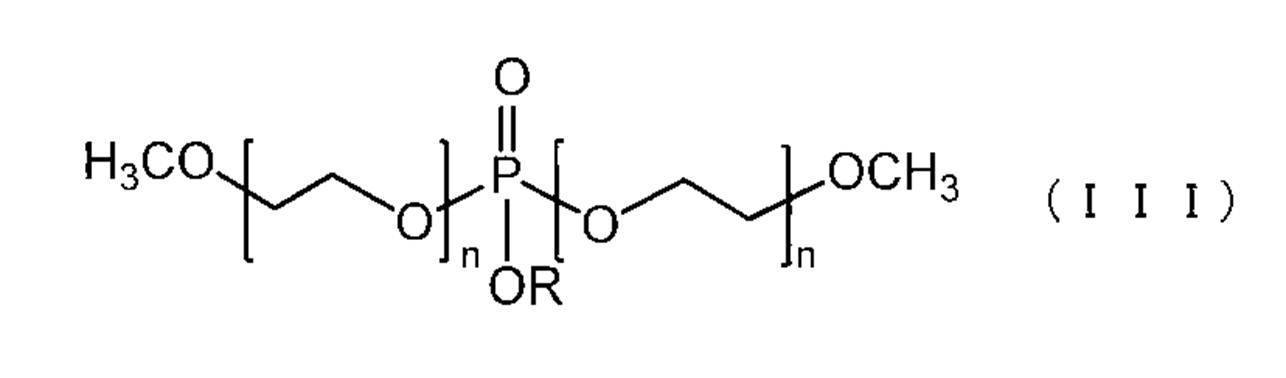
-2-ヒドロキシアルカン酸由来の構造単位を含まない対照物質のGPCを用いた分解試験-
対照物質C12 200mgにあらかじめ調製したpH5.6の酢酸緩衝液(0.1M)を加え、37℃で撹拌し、所定日数後(0日後、1日後、10日後、20日後、30日後)にサンプルの一部を採取し、2日間凍結乾燥させた。凍結乾燥させて得たサンプル30mgをTHF 1mLに溶解し、0.45μmのフィルター(DISPOSABLE SYRINGE FILTER UNIT 0.45μm、日本ポール株式会社製)により、ろ過して得られた試液をGPCにより、分子量測定を行った。測定条件は試液の注入量50μL、温度40℃、カラムはKF-804(昭和電工株式会社製)、移動相(THF)の流速0.5mL/min、60minとした。中性条件(pH7.4)下でのゲルろ過クロマトグラフィー(GPC)を用いた分解試験と同様の方法で、対照物質の含有率を算出した。
また、pH5.6の酢酸緩衝液の代わりにpH7.4のリン酸緩衝液(0.2M)を用いた以外は、pH5.6における2-ヒドロキシアルカン酸由来の構造単位を含まない対照物質のGPCを用いた分解試験と同様にして、2-ヒドロキシアルカン酸由来の構造単位を含まない対照物質のGPCを用いた分解試験を行った。
対照物質C12 200mgにあらかじめ調製したpH5.6の酢酸緩衝液(0.1M)を加え、37℃で撹拌し、所定日数後(0日後、1日後、10日後、20日後、30日後)にサンプルの一部を採取し、2日間凍結乾燥させた。凍結乾燥させて得たサンプル30mgをTHF 1mLに溶解し、0.45μmのフィルター(DISPOSABLE SYRINGE FILTER UNIT 0.45μm、日本ポール株式会社製)により、ろ過して得られた試液をGPCにより、分子量測定を行った。測定条件は試液の注入量50μL、温度40℃、カラムはKF-804(昭和電工株式会社製)、移動相(THF)の流速0.5mL/min、60minとした。中性条件(pH7.4)下でのゲルろ過クロマトグラフィー(GPC)を用いた分解試験と同様の方法で、対照物質の含有率を算出した。
また、pH5.6の酢酸緩衝液の代わりにpH7.4のリン酸緩衝液(0.2M)を用いた以外は、pH5.6における2-ヒドロキシアルカン酸由来の構造単位を含まない対照物質のGPCを用いた分解試験と同様にして、2-ヒドロキシアルカン酸由来の構造単位を含まない対照物質のGPCを用いた分解試験を行った。
上記測定の結果を図9~図10に示す。図9にpH5.6でのGPCチャートを示し、図10にpH7.4でのGPCチャートを示す。図9~図10において、実線は0日経過後のGPCチャートを示し、破線は10日経過後のGPCチャートを示し、二重線は20日経過後のGPCチャートを示し、一点鎖線は30日経過後のGPCチャートを示す。
図9~図10のチャートから対照物質の分子量及び保持時間を得た(表8参照)。ここで、表8において、M5.6はpH5.6における分子量を示し、Rt5.6(min)はpH5.6における分解試験における保持時間(分)を示し、M5.6はpH5.6における分子量を示し、Rt5.6(min)はpH5.6における分解試験における保持時間(分)を示す。
図9~図10のチャートから対照物質の分子量及び保持時間を得た(表8参照)。ここで、表8において、M5.6はpH5.6における分子量を示し、Rt5.6(min)はpH5.6における分解試験における保持時間(分)を示し、M5.6はpH5.6における分子量を示し、Rt5.6(min)はpH5.6における分解試験における保持時間(分)を示す。
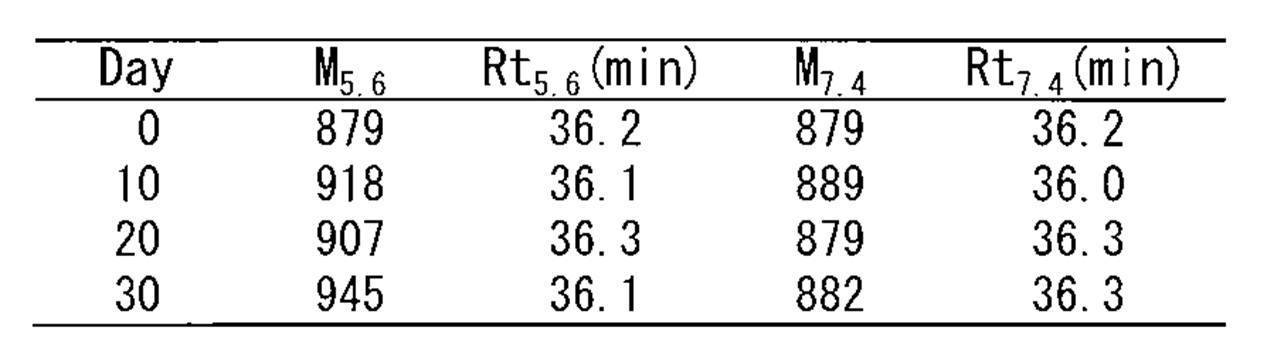
図9及び図10の全てのピークにほとんど変化は見られず、分解は進行し難いことが示唆された。このことから、2-ヒドロキシアルカン酸由来の骨格の導入が分解性の向上につながっていると判断した。
<実施例21>
-純度向上を目指した別合成経路でのリン酸エステルポリマー誘導体の合成-
スキーム3で示した合成経路で得られるリン酸エステルポリマー誘導体は純度が低いことが分った。そこで、他の合成経路でのリン酸エステルポリマー誘導体の合成を検討した。
スキーム3の乳酸エステルの合成に関してはスキーム3と同じである。純度が低いのはスキーム3の亜リン酸ジメチルとの反応性が低いことが原因であると考え、塩化ホスホリルを用いて反応を進めることを検討した。検討した合成経路をスキーム4に示す。
-純度向上を目指した別合成経路でのリン酸エステルポリマー誘導体の合成-
スキーム3で示した合成経路で得られるリン酸エステルポリマー誘導体は純度が低いことが分った。そこで、他の合成経路でのリン酸エステルポリマー誘導体の合成を検討した。
スキーム3の乳酸エステルの合成に関してはスキーム3と同じである。純度が低いのはスキーム3の亜リン酸ジメチルとの反応性が低いことが原因であると考え、塩化ホスホリルを用いて反応を進めることを検討した。検討した合成経路をスキーム4に示す。

まず、塩化ホスホリルとアルコールを反応させた。アルコールはドデカノールで行った。仕込み量は塩化ホスホリル3.1g(2.0×10⁻² mol)、ドデカノール2.5g(1.3×10⁻²mol)であった。常温(25℃)で4時間反応させた後40℃で真空処理(0.67kPa)を5時間行い、未反応塩化ホスホリルと生成した塩酸を除去した。
次に、得られた生成物1.15g(3.8×10⁻³ mol)と乳酸エステル3.21g(7.6×10⁻³ mol)を反応させ、目的のリン酸エステルポリマー誘導体(C12-350)を合成した。70℃で15時間反応させた後、真空処理(0.67kPa)を5時間行い、生成した塩酸を除去した。その後、NMR、GPCで実施例1と同様に同定の評価を行った。なお、測定に用いた試料は、合成から0日経過後のものを用いた。
次に、得られた生成物1.15g(3.8×10⁻³ mol)と乳酸エステル3.21g(7.6×10⁻³ mol)を反応させ、目的のリン酸エステルポリマー誘導体(C12-350)を合成した。70℃で15時間反応させた後、真空処理(0.67kPa)を5時間行い、生成した塩酸を除去した。その後、NMR、GPCで実施例1と同様に同定の評価を行った。なお、測定に用いた試料は、合成から0日経過後のものを用いた。
NMRで得られた結果において、実施例1及び実施例21で得られたリン酸エステルポリマー誘導体とで差は見られなかった。
GPCで得られた結果を図11に示す。実線が実施例1であり、破線が実施例21である。スキーム1の合成経路で得られたリン酸エステルポリマー誘導体(実施例1での生成物)がダブルピークであるのに対し、スキーム4の合成経路で得られたリン酸エステルポリマー誘導体(実施例21での生成物)はシングルピークであり、実施例1での生成物に比べ、純度が高く合成されたことが分かった。
GPCで得られた結果を図11に示す。実線が実施例1であり、破線が実施例21である。スキーム1の合成経路で得られたリン酸エステルポリマー誘導体(実施例1での生成物)がダブルピークであるのに対し、スキーム4の合成経路で得られたリン酸エステルポリマー誘導体(実施例21での生成物)はシングルピークであり、実施例1での生成物に比べ、純度が高く合成されたことが分かった。
-スキーム4で示す合成経路により合成されたリン酸エステルポリマー誘導体の分解試験-
スキーム4で示す合成経路により合成されたリン酸エステルポリマー誘導体のpH7.4における分解試験を行った。リン酸エステルポリマー誘導体40mgに対し、pH7.4のリン酸緩衝液4mLを加え、所定日数後(0日後、1日後、7日後)サンプルを取り出し、2日間の凍結乾燥後GPCによる分子量測定により分解性を検討した。スキーム4で示す合成経路により合成されたリン酸エステルポリマー誘導体の含有率及びその分解物の含有率を算出した。
スキーム4で示す合成経路により合成されたリン酸エステルポリマー誘導体のpH7.4における分解試験を行った。リン酸エステルポリマー誘導体40mgに対し、pH7.4のリン酸緩衝液4mLを加え、所定日数後(0日後、1日後、7日後)サンプルを取り出し、2日間の凍結乾燥後GPCによる分子量測定により分解性を検討した。スキーム4で示す合成経路により合成されたリン酸エステルポリマー誘導体の含有率及びその分解物の含有率を算出した。
pH7.4での分解試験の結果を図12及び表9に示す。ここで、図12において、実線は0日後のGPCチャートを示し、破線は1日経過後のGPCチャートを示し、一点鎖線は7日経過後のGPCチャートを示す。また、表9において、DayはpH7.4のリン酸緩衝液にリン酸エステルポリマー誘導体を溶解させた日数を示し、Mnは数平均分子量を示し、Mwは重量平均分子量を示し、Rt(min)は保持時間(分)を示し、Pa(%)はリン酸エステルポリマー誘導体の含有率を示す。

得られたクロマトグラムから数平均分子量(Mn)及び重量平均分子量(Mw)を求め、分子量分布(Mw/Mn)を算出した。得られたリン酸エステルポリマー誘導体(Day=0日)の数平均分子量(Mn)は793、重量平均分子量(Mw)は892で分子量分布(Mw/Mn)1.12は、上述の好ましい範囲の数値となった。
また、スキーム4で示す合成経路により合成されたリン酸エステルポリマー誘導体のpH5.6における分解試験を行った。上記pH7.4のリン酸緩衝液の代わりにpH5.6の酢酸緩衝液を用いた以外は、スキーム4で示す合成経路により合成されたリン酸エステルポリマー誘導体のpH7.4における分解試験と同様にして分解試験を行い、スキーム4で示す合成経路により合成されたリン酸エステルポリマー誘導体の含有率及びその分解物の含有率を算出した。
pH5.6での分解試験の結果を図13及び表10に示す。ここで、ここで、図13において、実線は0日後のGPCチャートを示し、破線は1日経過後のGPCチャートを示し、一点鎖線は7日経過後のGPCチャートを示す。また、表10において、DayはpH5.6のリン酸緩衝液にリン酸エステルポリマー誘導体を溶解させた日数を示し、Mnは数平均分子量を示し、Mwは重量平均分子量を示し、Rt(min)は保持時間(分)を示し、Pa(%)はリン酸エステルポリマー誘導体の含有率を示す。
また、スキーム4で示す合成経路により合成されたリン酸エステルポリマー誘導体のpH5.6における分解試験を行った。上記pH7.4のリン酸緩衝液の代わりにpH5.6の酢酸緩衝液を用いた以外は、スキーム4で示す合成経路により合成されたリン酸エステルポリマー誘導体のpH7.4における分解試験と同様にして分解試験を行い、スキーム4で示す合成経路により合成されたリン酸エステルポリマー誘導体の含有率及びその分解物の含有率を算出した。
pH5.6での分解試験の結果を図13及び表10に示す。ここで、ここで、図13において、実線は0日後のGPCチャートを示し、破線は1日経過後のGPCチャートを示し、一点鎖線は7日経過後のGPCチャートを示す。また、表10において、DayはpH5.6のリン酸緩衝液にリン酸エステルポリマー誘導体を溶解させた日数を示し、Mnは数平均分子量を示し、Mwは重量平均分子量を示し、Rt(min)は保持時間(分)を示し、Pa(%)はリン酸エステルポリマー誘導体の含有率を示す。
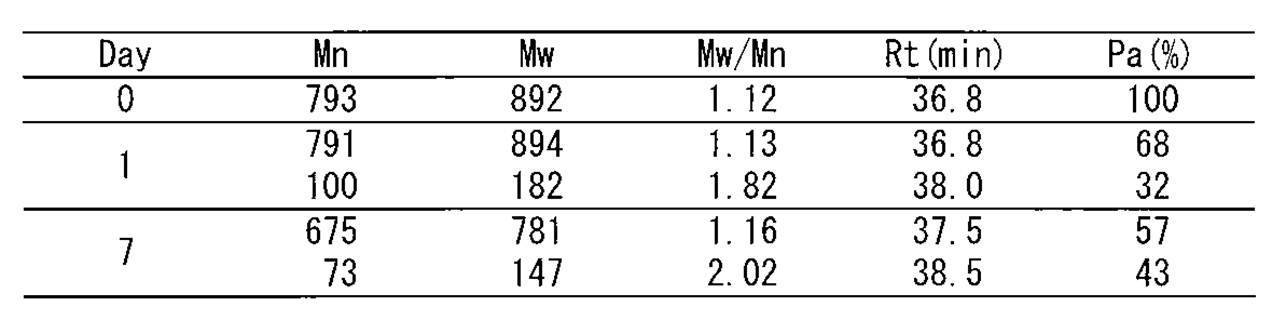
また、中性条件下(pH7.4)及び酸性条件下(pH5.6)における面積比で算出したリン酸エステルポリマー誘導体の含有率のグラフを図14に示す。ここで、図14において、実線はpH7.4の含有率を示し、破線はpH5.6でのリン酸エステルポリマー誘導体の含有率を示す。ここで、リン酸エステルポリマー誘導体の含有率は、合成から0日後の時点での含有率を100%として表示してある。
両者ともに一定の分解性を示した。酸性条件下の方がやや分解速度が速い結果となった。酸存在下におけるカルボン酸由来のエステル結合の炭素原子への求核攻撃によるものと考えられる。スキーム3で得たリン酸エステルポリマー誘導体の分解試験の結果と比較するとpH5.6のときの分解速度が上がっていることが分かった。これは、純度が向上したことによるものであると考えられる。
両者ともに一定の分解性を示した。酸性条件下の方がやや分解速度が速い結果となった。酸存在下におけるカルボン酸由来のエステル結合の炭素原子への求核攻撃によるものと考えられる。スキーム3で得たリン酸エステルポリマー誘導体の分解試験の結果と比較するとpH5.6のときの分解速度が上がっていることが分かった。これは、純度が向上したことによるものであると考えられる。
2013年8月6日に出願された日本国特許出願2013-163542号の開示は、その全体が参照により本明細書に取り込まれる。
本明細書に記載された全ての文献、特許出願、および技術規格は、個々の文献、特許出願、および技術規格が参照により取り込まれることが具体的かつ個々に記された場合と同程度に、本明細書中に参照により取り込まれる。
本明細書に記載された全ての文献、特許出願、および技術規格は、個々の文献、特許出願、および技術規格が参照により取り込まれることが具体的かつ個々に記された場合と同程度に、本明細書中に参照により取り込まれる。
Claims (6)
- 下記一般式(I)で表される構造を有するリン酸エステルポリマー誘導体。
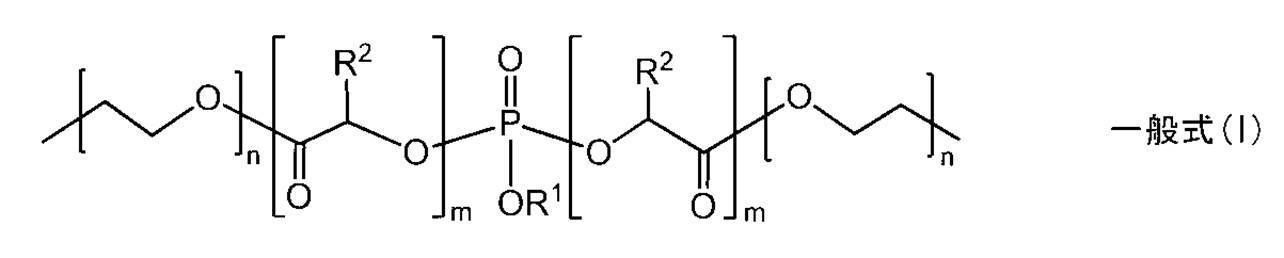
(一般式(I)中、R1は炭素数1以上30以下のアルキル基、炭素数2以上30以下のアルケニル基、又は炭素数2以上30以下のアルキニル基を表し、R2は水素原子又は炭素数1以上2以下のアルキル基を表し、nは2以上23以下の整数を表し、mは1以上3以下の整数を表わす) - 前記一般式(I)におけるmが1である請求項1に記載のリン酸エステルポリマー誘導体。
- 前記一般式(I)におけるR2がメチル基である請求項1又は請求項2に記載のリン酸エステルポリマー誘導体。
- 前記リン酸エステルポリマー誘導体の両末端が-OR3(R3は炭素数1以上3以下のアルキル基を表す)である請求項1~請求項3のいずれか1項に記載のリン酸エステルポリマー誘導体。
- 前記R3がメチル基である請求項4に記載のリン酸エステルポリマー誘導体。
- 請求項1~請求項5のいずれか1項に記載のリン酸エステルポリマー誘導体を含む分散剤。
Applications Claiming Priority (2)
| Application Number | Priority Date | Filing Date | Title |
|---|---|---|---|
| JP2013-163542 | 2013-08-06 | ||
| JP2013163542A JP2015030837A (ja) | 2013-08-06 | 2013-08-06 | リン酸エステルポリマー誘導体、及び分散剤 |
Publications (1)
| Publication Number | Publication Date |
|---|---|
| WO2015020068A1 true WO2015020068A1 (ja) | 2015-02-12 |
Family
ID=52461399
Family Applications (1)
| Application Number | Title | Priority Date | Filing Date |
|---|---|---|---|
| PCT/JP2014/070654 Ceased WO2015020068A1 (ja) | 2013-08-06 | 2014-08-05 | リン酸エステルポリマー誘導体、及び分散剤 |
Country Status (2)
| Country | Link |
|---|---|
| JP (1) | JP2015030837A (ja) |
| WO (1) | WO2015020068A1 (ja) |
Cited By (2)
| Publication number | Priority date | Publication date | Assignee | Title |
|---|---|---|---|---|
| CN117263978A (zh) * | 2023-10-18 | 2023-12-22 | 常州大学 | 一种生物基双功能塑料添加剂及其制备方法和应用 |
| CN119431767A (zh) * | 2023-08-01 | 2025-02-14 | 宁德时代新能源科技股份有限公司 | 聚合物、其制备方法、正极极片、二次电池、用电装置 |
Families Citing this family (1)
| Publication number | Priority date | Publication date | Assignee | Title |
|---|---|---|---|---|
| JP7460117B2 (ja) * | 2020-02-07 | 2024-04-02 | 丸菱油化工業株式会社 | ホスホン酸エステルの製造方法 |
Citations (6)
| Publication number | Priority date | Publication date | Assignee | Title |
|---|---|---|---|---|
| JPS5849393A (ja) * | 1981-07-20 | 1983-03-23 | リビツド・スペシヤルテイズ・インコ−ポレイテツド | 合成りん脂質化合物とその製造方法 |
| JP2002363278A (ja) * | 2001-03-02 | 2002-12-18 | Nof Corp | ポリアルキレンオキシド修飾リン脂質およびその製造方法 |
| JP2008516056A (ja) * | 2004-10-08 | 2008-05-15 | アルザ コーポレイション | リポポリマーコンジュゲート |
| JP2009051928A (ja) * | 2007-08-27 | 2009-03-12 | Univ Kansai | 温度応答性を有するポリホスフェート化合物及びその製造方法 |
| JP2009132907A (ja) * | 2007-11-07 | 2009-06-18 | Jsr Corp | 水添共役ジエン系重合ゴムの製造方法、水添共役ジエン系重合ゴム、及びその組成物、並びにゴム成形品 |
| JP2011127078A (ja) * | 2009-12-21 | 2011-06-30 | Tokyo Univ Of Science | リン酸化アルキレングリコールポリマー誘導体およびその製造方法 |
-
2013
- 2013-08-06 JP JP2013163542A patent/JP2015030837A/ja active Pending
-
2014
- 2014-08-05 WO PCT/JP2014/070654 patent/WO2015020068A1/ja not_active Ceased
Patent Citations (6)
| Publication number | Priority date | Publication date | Assignee | Title |
|---|---|---|---|---|
| JPS5849393A (ja) * | 1981-07-20 | 1983-03-23 | リビツド・スペシヤルテイズ・インコ−ポレイテツド | 合成りん脂質化合物とその製造方法 |
| JP2002363278A (ja) * | 2001-03-02 | 2002-12-18 | Nof Corp | ポリアルキレンオキシド修飾リン脂質およびその製造方法 |
| JP2008516056A (ja) * | 2004-10-08 | 2008-05-15 | アルザ コーポレイション | リポポリマーコンジュゲート |
| JP2009051928A (ja) * | 2007-08-27 | 2009-03-12 | Univ Kansai | 温度応答性を有するポリホスフェート化合物及びその製造方法 |
| JP2009132907A (ja) * | 2007-11-07 | 2009-06-18 | Jsr Corp | 水添共役ジエン系重合ゴムの製造方法、水添共役ジエン系重合ゴム、及びその組成物、並びにゴム成形品 |
| JP2011127078A (ja) * | 2009-12-21 | 2011-06-30 | Tokyo Univ Of Science | リン酸化アルキレングリコールポリマー誘導体およびその製造方法 |
Cited By (2)
| Publication number | Priority date | Publication date | Assignee | Title |
|---|---|---|---|---|
| CN119431767A (zh) * | 2023-08-01 | 2025-02-14 | 宁德时代新能源科技股份有限公司 | 聚合物、其制备方法、正极极片、二次电池、用电装置 |
| CN117263978A (zh) * | 2023-10-18 | 2023-12-22 | 常州大学 | 一种生物基双功能塑料添加剂及其制备方法和应用 |
Also Published As
| Publication number | Publication date |
|---|---|
| JP2015030837A (ja) | 2015-02-16 |
Similar Documents
| Publication | Publication Date | Title |
|---|---|---|
| Clement et al. | Metal-free strategies for the synthesis of functional and well-defined polyphosphoesters | |
| JP6624603B2 (ja) | 抗菌性のカチオン性ポリカーボネート | |
| CN1085690C (zh) | 一端为糖基,另一端为不同官能基的聚氧乙烯及其制造方法 | |
| Andrianov et al. | Synthesis, properties, and biological activity of poly [di (sodium carboxylatoethylphenoxy) phosphazene] | |
| JPWO1996033233A1 (ja) | ヘテロテレケリックブロックコポリマーおよびその製造方法 | |
| JP7708728B2 (ja) | カチオン性粘液酸ポリマー系デリバリーシステム | |
| Hu et al. | Core cross-linked polyphosphoester micelles with folate-targeted and acid-cleavable features for pH-triggered drug delivery | |
| JPWO1996032434A1 (ja) | 片末端に糖、他末端に異なる官能基を有するポリエチレンオキシド及びその製造方法 | |
| KR19990007861A (ko) | 헤테로테레케릭 블록 공중합체 및 이의 제조방법 | |
| Cheng et al. | Facile synthesis of acid-labile polymers with pendent ortho esters | |
| WO2004039869A1 (ja) | カンプトテシン類の高分子誘導体 | |
| KR101849142B1 (ko) | 블록 공중합체의 제조방법 | |
| KR102078806B1 (ko) | 신규한 양이온성 폴리포스파젠 화합물, 폴리포스파젠-약물 컨쥬게이트 화합물 및 그 제조 방법 | |
| WO2009157279A1 (ja) | シスプラチン配位化合物の液体組成物 | |
| WO2015020068A1 (ja) | リン酸エステルポリマー誘導体、及び分散剤 | |
| Lundberg et al. | Linear dendritic polymeric amphiphiles with intrinsic biocompatibility: synthesis and characterization to fabrication of micelles and honeycomb membranes | |
| EP2640422B1 (en) | Polymeric conjugates of active principles, their process of preparation and their polymeric intermediates | |
| EP3202803B1 (en) | Poly(ethylene glycol)-b-poly(halomethylstyrene) and derivatives thereof, and production process therefor | |
| Yilmaz et al. | Core cross-linked micelles of polyphosphoester containing amphiphilic block copolymers as drug nanocarriers | |
| JP5692839B2 (ja) | 可溶化剤、分散剤、およびリン酸化アルキレングリコールポリマー誘導体の製造方法 | |
| JP3092531B2 (ja) | コハク酸イミジル基置換ポリオキシアルキレン誘導体の製造方法 | |
| CN110305301B (zh) | 一种两亲性的树枝化含糖共聚物及其合成方法 | |
| JP4314229B2 (ja) | 温度感応性及び生体適合性を有する両親媒性環状ホスファゼン三量体及びその製造方法 | |
| JP2015096567A (ja) | 細胞間情報伝達分子産生信号誘発機能高分子及びその合成方法 | |
| JP2015131914A (ja) | リン酸化ポリマー誘導体、及び分散剤 |
Legal Events
| Date | Code | Title | Description |
|---|---|---|---|
| 121 | Ep: the epo has been informed by wipo that ep was designated in this application |
Ref document number: 14834647 Country of ref document: EP Kind code of ref document: A1 |
|
| NENP | Non-entry into the national phase |
Ref country code: DE |
|
| 122 | Ep: pct application non-entry in european phase |
Ref document number: 14834647 Country of ref document: EP Kind code of ref document: A1 |