WO2014188686A1 - 無線接続認証方法及びサーバ - Google Patents
無線接続認証方法及びサーバ Download PDFInfo
- Publication number
- WO2014188686A1 WO2014188686A1 PCT/JP2014/002579 JP2014002579W WO2014188686A1 WO 2014188686 A1 WO2014188686 A1 WO 2014188686A1 JP 2014002579 W JP2014002579 W JP 2014002579W WO 2014188686 A1 WO2014188686 A1 WO 2014188686A1
- Authority
- WO
- WIPO (PCT)
- Prior art keywords
- access point
- wireless
- wireless communication
- message
- code
- Prior art date
- Legal status (The legal status is an assumption and is not a legal conclusion. Google has not performed a legal analysis and makes no representation as to the accuracy of the status listed.)
- Ceased
Links
Images











Classifications
-
- H—ELECTRICITY
- H04—ELECTRIC COMMUNICATION TECHNIQUE
- H04W—WIRELESS COMMUNICATION NETWORKS
- H04W12/00—Security arrangements; Authentication; Protecting privacy or anonymity
- H04W12/06—Authentication
-
- H—ELECTRICITY
- H04—ELECTRIC COMMUNICATION TECHNIQUE
- H04W—WIRELESS COMMUNICATION NETWORKS
- H04W48/00—Access restriction; Network selection; Access point selection
- H04W48/20—Selecting an access point
-
- H—ELECTRICITY
- H04—ELECTRIC COMMUNICATION TECHNIQUE
- H04W—WIRELESS COMMUNICATION NETWORKS
- H04W12/00—Security arrangements; Authentication; Protecting privacy or anonymity
- H04W12/60—Context-dependent security
- H04W12/69—Identity-dependent
- H04W12/73—Access point logical identity
-
- H—ELECTRICITY
- H04—ELECTRIC COMMUNICATION TECHNIQUE
- H04W—WIRELESS COMMUNICATION NETWORKS
- H04W84/00—Network topologies
- H04W84/02—Hierarchically pre-organised networks, e.g. paging networks, cellular networks, WLAN [Wireless Local Area Network] or WLL [Wireless Local Loop]
- H04W84/10—Small scale networks; Flat hierarchical networks
- H04W84/12—WLAN [Wireless Local Area Networks]
Definitions
- the present invention relates to a wireless connection authentication method and a server.
- a user When using a wireless LAN, a user needs to set wireless parameters such as a network identifier (ESSID), a frequency channel, an encryption method, an encryption key, an authentication method, and an authentication key for the wireless communication device. Since these setting operations are complicated, there is a method for automatically setting wireless parameters between terminals (see, for example, Patent Document 1).
- ESSID network identifier
- Patent Document 1 a method for automatically setting wireless parameters between terminals.
- an object of the present invention is to provide a wireless connection authentication method in which a user can perform wireless connection authentication with a simple operation.
- a wireless connection authentication method is a wireless connection authentication method in a server that performs wireless connection authentication for establishing communication between a first wireless communication apparatus and a wireless access point, and the first wireless communication
- a determination step of determining the same wireless access point as a connection destination access point that is a connection destination wireless access point of the first wireless communication device, the connection destination access point, and the first access point An authentication processing step for performing processing for performing wireless connection authentication with the wireless communication device.
- a wireless connection authentication method is a wireless connection authentication method for performing wireless connection authentication between a first wireless communication apparatus and a wireless access point, wherein the first wireless communication apparatus includes a first message. Transmitting a first message to the first wireless access point, and a second message including first access point information indicating that the first wireless access point that has received the first message indicates the first wireless access point. A second message transmission step of transmitting to the server; and a second wireless communication device that has already completed wireless connection authentication with a second wireless access point that is the same as or different from the first wireless access point, A third message transmitting step for transmitting to the wireless access point; and the second message receiving the third message.
- a fourth message transmission step in which the access point transmits a fourth message including second access point information indicating the second wireless access point to the server; and the server indicates the first message indicated by the first access point information.
- a determination step of determining the same wireless access point as a connection destination access point that is a connection destination wireless access point of the first wireless communication device; and the connection destination access point and the first wireless communication device are wirelessly connected
- an authentication step for performing authentication is performed.
- the present invention can provide a wireless connection authentication method in which a user can perform wireless connection authentication with a simple operation.
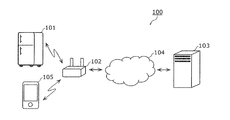
- FIG. 1 is a diagram illustrating a configuration example of a communication system according to the first embodiment.
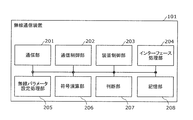
- FIG. 2 is a block diagram illustrating a configuration example of the wireless communication apparatus according to the first embodiment.
- FIG. 3 is a block diagram illustrating a configuration example of an access point in the first embodiment.
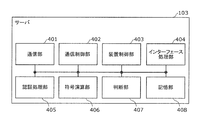
- FIG. 4 is a block diagram illustrating a configuration example of the server in the first embodiment.
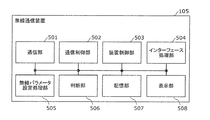
- FIG. 5 is a block diagram illustrating a configuration example of a wireless communication apparatus that has already established communication with an access point in the first embodiment.
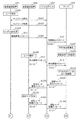
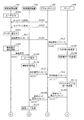
- FIG. 6 is a sequence diagram of account authentication processing in the first embodiment.
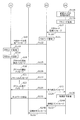
- FIG. 7 is a sequence diagram of account authentication processing in the first embodiment.
- FIG. 8 is a diagram for explaining an operation example for a network connection request in the first embodiment.
- FIG. 1 is a diagram illustrating a configuration example of a communication system according to the first embodiment.
- FIG. 2 is a block diagram illustrating a configuration example of the wireless communication apparatus according to the first embodiment.
- FIG. 9 is a diagram illustrating an example of information stored in the wireless communication device according to the first embodiment.
- FIG. 10 is a diagram illustrating a configuration example of a connection request message according to the first embodiment.
- FIG. 11 is a diagram illustrating a configuration example of a connection request message in the first embodiment.
- FIG. 12 is a diagram illustrating a state in which the connection request message is transmitted in the first embodiment.
- FIG. 13 is a diagram illustrating an example of information stored in the server according to the first embodiment.
- FIG. 14 is a diagram for describing an operation example for a network participation confirmation request in the first embodiment.
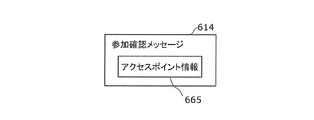
- FIG. 15 is a diagram illustrating a configuration example of a participation confirmation message in the first embodiment.
- FIG. 16 is a diagram illustrating an example of an authentication code input operation according to the first embodiment.
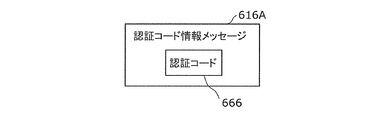
- FIG. 17 is a diagram illustrating a configuration example of an authentication code information message in the first embodiment.
- FIG. 18 is a diagram illustrating a configuration example of a PIN code information message in the first embodiment.
- FIG. 19 is a diagram illustrating a display example when the wireless connection authentication in the first embodiment is completed.
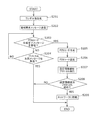
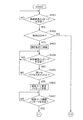
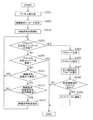
- FIG. 20 is a flowchart showing processing of the wireless communication apparatus in the first embodiment.
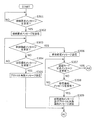
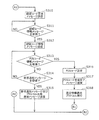
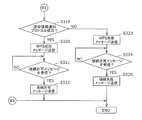
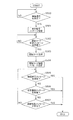
- FIG. 21 is a flowchart showing access point processing in the first embodiment.
- FIG. 22 is a flowchart showing access point processing in the first embodiment.
- FIG. 23 is a flowchart showing access point processing in the first embodiment.
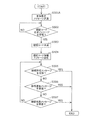
- FIG. 24 is a flowchart showing the processing of the server in the first embodiment.
- FIG. 25 is a flowchart showing the processing of the server in the first embodiment.
- FIG. 25 is a flowchart showing the processing of the server in the first embodiment.
- FIG. 26 is a flowchart showing processing of the wireless communication apparatus that has already established communication with the access point in the first embodiment.
- FIG. 27 is a sequence diagram of account authentication processing according to the second embodiment.
- FIG. 28 is a sequence diagram of account authentication processing according to the second embodiment.
- FIG. 29 is a flowchart showing access point processing in the second embodiment.
- FIG. 30 is a flowchart illustrating access point processing according to the second embodiment.
- FIG. 31 is a flowchart showing access point processing in the second embodiment.
- FIG. 32 is a flowchart showing the processing of the server in the second embodiment.
- FIG. 33 is a flowchart showing processing of the server in the second embodiment.
- FIG. 34 is a flowchart showing processing of the wireless communication apparatus that has already established communication with the access point in the second embodiment.
- FIG. 35 is a block diagram illustrating a configuration example of a wireless communication device according to the third embodiment.
- FIG. 36 is a sequence diagram of account authentication processing according to the third embodiment.
- FIG. 37 is a sequence diagram of account authentication processing according to the third embodiment.
- FIG. 38 is a flowchart illustrating processing of the wireless communication device according to the third embodiment.
- FIG. 39 is a flowchart showing processing of the wireless communication apparatus that has already established communication with the access point in the third embodiment.
- FIG. 40 is a flowchart illustrating processing of the server in the embodiment.
- Wi-Fi Protected Setup As a method for automatically setting wireless parameters, there is a wireless parameter automatic setting method called Wi-Fi Protected Setup (WPS) defined by an organization called Wi-Fi Alliance.
- WPS Wi-Fi Protected Setup
- a wireless parameter is provided from a registrar to an enrollee using a registration protocol.
- the registrar is a device that manages wireless parameters and provides the wireless parameters to the enrollee.
- An enrollee is a device that accepts wireless parameters provided by a registrar.
- An EAP packet is a packet that can be communicated between a registrar and an enrollee without encryption and authentication.
- a wireless communication device searches for a network formed by an access point and temporarily participates in the network.
- the ESSID and the frequency channel in the access point and the wireless communication device match, but the encryption key and the authentication key do not match, so normal data communication using encryption and authentication cannot be performed. .
- the access point and the wireless communication device transmit and receive messages using EAP packets according to the registration protocol.
- the wireless parameter is provided from the access point to the wireless communication apparatus.
- the wireless communication apparatus can perform data communication using encryption and authentication with the access point by newly setting the provided wireless parameter.
- the setting method provided by WPS includes a push button method and a PIN (Personal Identification Number) code method.
- the wireless parameter can be set automatically.
- the wireless communication device is set to another access point. And may be connected unintentionally.
- the wireless communication device is not connected to other access points unintentionally, but the user needs to select an access point and set a PIN code, which is troublesome for the user. is there.
- Patent Literature 1 a user transmits a connection request to a desired access point, and the access point that has received the connection request transmits the user account of the user who transmitted the connection request to the account management server.
- the account management server manages user accounts, generates a PIN code by authenticating the user, and gives a communication permission to the wireless communication apparatus by giving the PIN code to the access point.
- the account management server generates the PIN code, so that the user can perform wireless connection setting without setting the PIN code.
- the user needs to select a desired access point from access points existing in the network, which is a burden on the user.
- a wireless communication device that is newly connected to an access point is authenticated using a wireless communication device that is already connected to the access point.
- the wireless parameters of the wireless communication apparatus and the access point can be set without the user selecting the access point. Therefore, user operability can be improved.
- a wireless connection authentication method is a wireless connection authentication method in a server that performs wireless connection authentication for establishing communication between a first wireless communication apparatus and a wireless access point, and the first wireless communication
- a determination step of determining the same wireless access point as a connection destination access point that is a connection destination wireless access point of the first wireless communication device, the connection destination access point and the first access point An authentication processing step for performing processing for performing wireless connection authentication with the wireless communication device.
- the user only needs to perform an operation for causing the first wireless communication apparatus to transmit the first message and an operation for causing the second wireless communication apparatus to transmit the third message.
- the user can perform wireless connection authentication with a simple operation.
- the wireless connection authentication method further includes a third reception step of receiving a first code unique to the first wireless communication device from the second wireless communication device, and the authentication processing step includes the first code.
- a second code generation step of generating a second code used for wireless connection authentication between the first wireless communication apparatus and the connection destination access point, and transmitting the second code to the connection destination access point A transmission step.
- each of the first message and the second message further includes a third code
- the second code is generated using the first code and the third code. May be.
- a wireless connection authentication method is a wireless connection authentication method for performing wireless connection authentication between a first wireless communication apparatus and a wireless access point, wherein the first wireless communication apparatus includes a first message. Transmitting a first message to the first wireless access point, and a second message including first access point information indicating that the first wireless access point that has received the first message indicates the first wireless access point. A second message transmission step of transmitting to the server; and a second wireless communication device that has already completed wireless connection authentication with a second wireless access point that is the same as or different from the first wireless access point, A third message transmitting step for transmitting to the wireless access point; and the second message receiving the third message.
- a fourth message transmission step in which the access point transmits a fourth message including second access point information indicating the second wireless access point to the server; and the server indicates the first message indicated by the first access point information.
- a determination step of determining the same wireless access point as a connection destination access point that is a connection destination wireless access point of the first wireless communication device; and the connection destination access point and the first wireless communication device are wirelessly connected
- an authentication step for performing authentication is performed.
- the user only needs to perform an operation for causing the first wireless communication apparatus to transmit the first message and an operation for causing the second wireless communication apparatus to transmit the third message.
- the user can perform wireless connection authentication with a simple operation.
- the wireless connection authentication method further includes an acquisition step in which the second wireless communication apparatus acquires a first code unique to the first wireless communication apparatus in response to a user operation, and the second wireless communication apparatus A first code transmission step of transmitting the first code to the server; and the server is used for wireless connection authentication between the first wireless communication device and the connection destination access point using the first code.
- the wireless connection authentication method further includes a generation step in which the first wireless communication apparatus generates a fifth code, and each of the first message and the second message further includes the fifth code.
- the second code generation step the second code is generated using the first code and the fifth code
- the fourth code generation step the third code and the fifth code are used.
- a fourth code may be generated.
- the third message transmission step may be performed after the first message transmission step.
- the wireless connection authentication method further includes a wireless signal transmission step in which the first wireless communication device transmits a wireless signal after the first message transmission step, and in the third message transmission step, the first message transmission step includes the first message transmission step.
- the second wireless communication device may transmit the third message to the second wireless access point.
- the first message transmission step may be performed after the third message transmission step.
- a server is a server that performs wireless connection authentication for establishing communication between a first wireless communication device and a wireless access point, and is a first information transmitted from the first wireless communication device.
- a first receiver that receives a second message that is transmitted by the first wireless access point according to one message and includes first access point information indicating the first wireless access point; and a first receiver that is the same as or different from the first wireless access point Second access point information indicating the second wireless access point transmitted by the second wireless access point in accordance with the third message transmitted from the second wireless communication apparatus that has already established communication with the two wireless access points.
- a second receiver that receives the fourth message including the first wireless access point indicated by the first access point information.
- the wireless access point is determined as a connection destination access point that is a connection destination wireless access point of the first wireless communication device, and wireless connection authentication between the connection destination access point and the first wireless communication device is performed.
- An authentication processing unit that performs processing for performing the processing.
- the user only needs to perform an operation for causing the first wireless communication apparatus to transmit the first message and an operation for causing the second wireless communication apparatus to transmit the third message.
- the user can perform wireless connection authentication with a simple operation.
- FIG. 1 is a diagram illustrating an example of a configuration of a typical communication system 100 according to the present embodiment.
- the communication system 100 includes wireless communication devices 101 and 105, an access point 102, a server 103, and the Internet 104.
- the wireless communication device 101 is a communication device having a wireless LAN communication function and a WPS function, for example, a personal computer or a home appliance having a wireless communication function.
- the access point 102 has a wireless LAN and WPS function.
- the server 103 has a function of managing an account (such as an ID and an authentication code) of a wireless communication device, and a function of authenticating the wireless communication device and giving communication permission to the wireless communication device.
- the Internet 104 is a communication network that can be connected to computers all over the world.
- the wireless communication device 105 is a communication device that has already established a connection with the access point 102 by a wired LAN or a wireless LAN, and is, for example, a personal computer, a mobile phone, a smartphone, or a tablet terminal.
- a wireless LAN wireless local area network
- the access point 102 and the server 103 are connected via the Internet 104.
- the wireless communication device 101 and the wireless communication device 105 are connected to an infrastructure mode wireless network constructed by the access point 102.
- the wireless communication apparatus 105 has already established a connection with the access point 102 and is permitted to connect to the Internet 104 using encryption.
- the wireless communication device 101 and the access point 102 each set a PIN code. Then, the wireless communication apparatus 101 starts a wireless parameter automatic setting application. Then, the matching of the PIN codes held between the wireless communication apparatus 101 and the access point 102 is confirmed by the setting information notification protocol. Thereby, the wireless communication apparatus 101 can acquire a wireless parameter. That is, the PIN code is code information used for wireless parameter setting processing, or code information used for determining whether or not wireless parameters may be provided in the wireless parameter setting processing.
- the wireless communication apparatus 101 and the access point 102 can transmit and receive various messages using the setting information notification protocol without encryption and authentication of the wireless LAN. Accordingly, the wireless communication apparatus 101 can communicate with only the access point 102 until the authentication is successful. Communication between the wireless communication apparatus 101 and the server 103 is performed by the access point 102 transferring a message. The wireless communication apparatus 101 can connect to the Internet 104 only when authentication with the server 103 is successful.
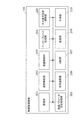
- FIG. 2 is a block diagram illustrating an example of the configuration of the wireless communication apparatus 101 according to the present embodiment.
- the wireless communication apparatus 101 illustrated in FIG. 2 includes a communication unit 201, a communication control unit 202, a device control unit 203, an interface processing unit 204, a wireless parameter setting processing unit 205, a code calculation unit 206, and a determination unit 207. And a storage unit 208.
- the communication unit 201 performs wireless communication.
- the communication control unit 202 controls the communication unit 201.
- the device control unit 203 controls the overall operation of the wireless communication device 101.
- the interface processing unit 204 controls various interfaces.
- the wireless parameter setting processing unit 205 performs wireless parameter setting processing using a setting information notification protocol.
- the code calculation unit 206 calculates various signals and hash values.
- the determination unit 207 determines various processes.
- the storage unit 208 stores wireless parameters, account information, IDs, authentication codes, and the like.
- FIG. 3 is a block diagram showing an example of the configuration of the access point 102 in the present embodiment.
- 3 includes a communication unit 301, a communication control unit 302, a device control unit 303, an interface processing unit 304, a wireless parameter setting processing unit 305, a determination unit 306, and a storage unit 307. Prepare.
- the communication unit 301 performs wireless communication.
- the communication control unit 302 controls the communication unit 301.
- the device control unit 303 controls the operation of the entire device (access point 102).
- the interface processing unit 304 controls various interfaces.
- the wireless parameter setting processing unit 305 performs wireless parameter setting processing by a setting information notification protocol.
- the determination unit 306 determines various processes.
- the storage unit 307 stores wireless parameters, account information, a server IP (Internet Protocol) address, and the like.
- FIG. 4 is a block diagram showing an example of the configuration of the server 103 in the present embodiment.
- 4 includes a communication unit 401, a communication control unit 402, a device control unit 403, an interface processing unit 404, an authentication processing unit 405, a code calculation unit 406, a determination unit 407, and a storage unit. 408.
- the communication unit 401 performs communication.
- the communication control unit 402 controls the communication unit 401.
- the device control unit 403 controls the operation of the entire device (server 103).
- the interface processing unit 404 controls various interfaces.
- the authentication processing unit 405 performs various authentication processes.
- the code calculation unit 406 calculates various signals and hash values.
- the determination unit 407 determines various processes.
- the storage unit 408 stores wireless parameters, account information, an authentication code, and the like.
- FIG. 5 is a block diagram showing an example of the configuration of the wireless communication apparatus 105 that has already established a connection with the access point 102 in this embodiment.
- 2 includes a communication unit 501, a communication control unit 502, a device control unit 503, an interface processing unit 504, a wireless parameter setting processing unit 505, a determination unit 506, and a storage unit 507. And a display unit 508.
- the communication unit 501 performs wireless communication.
- the communication control unit 502 controls the communication unit 501.
- the device control unit 503 controls the overall operation of the wireless communication device 105.
- the interface processing unit 504 controls various interfaces.
- a wireless parameter setting processing unit 505 performs wireless parameter setting processing by a setting information notification protocol.
- the determination unit 506 determines various processes.
- the storage unit 507 stores wireless parameters, account information, and the like.
- the display unit 508 performs various displays.
- 6 and 7 are sequence diagrams showing an account authentication sequence in the present embodiment.
- FIG. 8 is a diagram illustrating an example of a user operation.
- the user presses an operation button 651 that is provided in the wireless communication apparatus 101 (for example, a refrigerator) for performing network connection.
- the wireless parameter automatic setting application is activated.
- the wireless communication device 101 searches for a nearby wireless network (S102). Next, the wireless communication device 101 sequentially selects a plurality of searched wireless networks and participates in the selected wireless network. In this example, the wireless network of the access point 102 is selected, and the wireless communication apparatus 101 joins the wireless network of the access point 102 (S103). However, at this point, no common encryption key, authentication key, or the like is set for the wireless communication apparatus 101 and the access point 102. Therefore, the wireless communication apparatus 101 is in a state where it can communicate with the access point 102 only by a specific signal (such as a broadcast signal and an EAP packet) in the wireless network of the access point 102, and performs normal data communication using encryption and authentication. It is not possible.
- various messages are transmitted and received between the wireless communication apparatus 101 and the access point 102 using EAP packets.
- the wireless communication device 101 generates a random value (S104).
- the wireless communication apparatus 101 transmits a connection request message 611 including a random value and an ID to the access point 102 (S105).
- FIG. 9 is a diagram illustrating an example of information stored in the storage unit 208 included in the wireless communication apparatus 101. As illustrated in FIG. 9, the storage unit 208 stores an ID 661 and an authentication code 662.
- ID 661 is an identifier for identifying the wireless communication apparatus 101, and is, for example, a model number, a serial number, or a combination thereof of the wireless communication apparatus 101.
- the ID 661 may be an arbitrary number or combination of characters.
- the authentication code 662 is an identifier for identifying the wireless communication apparatus 101, and is, for example, a model number, a serial number, or a combination thereof of the wireless communication apparatus 101.
- the authentication code 662 may be an arbitrary number or combination of characters.
- the ID 661 and the authentication code 662 are individually described here, only one of the ID 661 and the authentication code 662 may be used. In other words, the ID 661 and the authentication code 662 may be the same code (identifier).
- FIG. 10 is a diagram illustrating a configuration example of the connection request message 611.
- the connection request message 611 is a message for the wireless communication apparatus 101 to request the server 103 to connect to the network.
- the connection request message 611 is a message for the wireless communication apparatus 101 to request the server 103 to connect to the access point 102.
- the connection request message 611 includes the ID 661 stored in the storage unit 208 and the random value 663 generated in step S104.
- connection request message 611 includes information other than the above as necessary (for example, information indicating the type of the message and information indicating the transmission source and destination of the message). Is not shown. Further, the point that these pieces of information are included is the same in various messages described later.
- the access point 102 When the access point 102 receives the connection request message 611, the access point 102 generates the connection request message 612 by adding the access point information 664 to the received connection request message 611, and transmits the generated connection request message 612 to the server 103. (S106).
- FIG. 11 is a diagram illustrating a configuration example of the connection request message 612.
- the connection request message 612 includes an ID 661 and a random value 663 included in the connection request message 611, and access point information 664.
- the access point information 664 is information indicating the access point that is the transmission source of the connection request message 612. Therefore, in this example, the access point information 664 indicates the access point 102.
- the wireless communication apparatus 101 may generate the connection request message 611 including the access point information 664.
- the access point information 664 indicates an access point to which the connection request message 611 is transmitted.
- the server 103 When the server 103 receives the connection request message 612, the server 103 checks the validity of the ID 661 included in the received connection request message 612 (S107), and when the ID 661 is valid, the wireless communication apparatus 101 having the received ID 661. Are registered as terminals having a connection request to the access point 102 (S108).
- steps S103 and S105 are performed for each of the plurality of access points.
- the server 103 receives a plurality of connection request messages 612 via different access points. For example, as shown in FIG. 12, when there are an access point 102 (AP1) and an access point 102A (AP2) near the wireless communication apparatus 101, a connection request message 612 via the access point 102 and an access point The connection request message 612 via 102A is received by the server 103.
- AP1 access point 102
- AP2A access point 102A
- information (ID 671, random value 672, and access point information 673) corresponding to the two connection request messages 612 is registered in the server 103 as shown in FIG.
- the access points indicated by the access point information 673 are different.
- the ID 671 and the random value 672 of the two connection request messages 612 are the same, but at least one of them may be different.
- FIG. 14 is a diagram illustrating an example of a user operation.
- the user selects an operation menu 652 for confirming network participation in the wireless communication apparatus 105 (for example, a smartphone). Thereby, the participation registration application is activated.
- the wireless communication apparatus 105 transmits a participation confirmation message 613 to the access point 102 (S110).
- the access point 102 receives the participation confirmation message 613
- the access point 102 generates the participation confirmation message 614 by adding the access point information 665 to the participation confirmation message 613, and transmits the generated participation confirmation message 614 to the server 103 (S111). ).
- FIG. 15 is a diagram illustrating a configuration example of the participation confirmation message 614.
- the participation confirmation message 614 includes access point information 665.
- the access point information 665 is information indicating the access point of the transmission source of the participation confirmation message 614. Therefore, in this example, the access point information 665 indicates the access point 102.
- the wireless communication apparatus 105 may generate the participation confirmation message 613 including the access point information 665.
- the access point information 665 indicates an access point to which the participation confirmation message 613 is transmitted.
- the access point information 665 indicates the access point 102 with which the wireless communication apparatus 105 has already established communication.
- the access point information 665 indicates the access point 102 to which the wireless communication apparatus 101 is connected.
- the server 103 When the server 103 receives the participation confirmation message 614, the server 103 confirms whether there is a terminal that has a connection request to the access point 102. Specifically, the server 103 checks whether there is access point information 673 indicating the same access point as the access point indicated by the access point information 665 included in the participation confirmation message 614 (S112).
- the server 103 uses the AP1 (access point) indicated by the access point information 665. 102) is determined as the connection destination of the wireless communication apparatus 101.
- the server 103 transmits an authentication code request message 615A to the access point 102 determined as the connection destination (S113).
- the access point 102 receives the authentication code request message 615A
- the access point 102 transmits the authentication code request message 615B to the wireless communication apparatus 105 (S114).
- the wireless communication device 105 When the wireless communication device 105 receives the authentication code request message 615B, the wireless communication device 105 generates an authentication code according to a user operation or the like (S115). For example, as shown in FIG. 16, the user inputs an authentication code into the input menu 653.
- the input authentication code is a number or a character string unique to the wireless communication apparatus 101 and is the same as the authentication code 662 stored in the storage unit 208 of the wireless communication apparatus 101.
- the user confirms an authentication code described in a housing of the wireless communication device 101 (for example, home appliance) or an instruction manual, and inputs the authentication code to the input menu 653.
- the user may photograph a barcode or a two-dimensional barcode described in a case of the wireless communication device 101 or an instruction manual with the wireless communication device 105 (for example, a smartphone). Thereby, the wireless communication apparatus 105 can acquire the authentication code.
- FIG. 17 is a diagram illustrating a configuration example of the authentication code information message 616A. As shown in FIG. 17, the authentication code information message 616A includes the authentication code 666 generated in step S115.
- the access point 102 When the access point 102 receives the authentication code information message 616A, the access point 102 transmits an authentication code information message 616B including the authentication code 666 included in the authentication code information message 616A to the server 103 (S117).
- the configuration example of the authentication code information message 616B is the same as the configuration example of the authentication code information message 616A shown in FIG.
- the server 103 checks the validity of the authentication code 666 included in the received authentication code information message 616B (S118). When the authentication code 666 is valid, the server 103 includes the PIN code for setting the wireless parameter of the wireless communication apparatus 101 that is a terminal that has a connection request to the access point 102 in the connection request message 612. It generates using the random value 663 and the authentication code 666 included in the authentication code information message 616B (S119).
- the server 103 transmits a PIN code information message 617 including the generated PIN code 667 to the access point 102 (S120).
- the access point 102 activates the wireless parameter automatic setting application and sets the added PIN code 667 in the wireless parameter automatic setting application (S121).
- the access point 102 transmits a PIN code generation completion message to the wireless communication apparatus 101 (S122).
- the wireless communication apparatus 101 When receiving the PIN code generation completion message 618, the wireless communication apparatus 101 generates a PIN code using the random value generated in step S104 and the authentication code 662 stored in the storage unit 208 (S123). . Next, the wireless communication apparatus 101 sets the generated PIN code in the wireless parameter automatic setting application (S124). Next, the wireless communication apparatus 101 transmits a protocol start request message 619 to the access point 102 to start the setting information notification protocol (S125).
- the access point 102 When the access point 102 receives the protocol start request message 619 from the wireless communication apparatus 101, the access point 102 transmits the protocol start message 620 to the wireless communication apparatus 101 (S126). Then, the wireless communication apparatus 101 and the access point 102 exchange protocol messages 621 according to the WPS registration protocol (S127).
- the wireless communication apparatus 101 and the access point 102 only when both the wireless communication apparatus 101 and the access point 102 confirm that the PIN code set in the wireless communication apparatus 101 matches the PIN code set in the access point 102, the access point 102. Are transmitted to the wireless communication apparatus 101, and the transmitted wireless parameters are set in the wireless communication apparatus 101.
- the access point 102 transmits a protocol end message 622 to the wireless communication apparatus 101 (S128), and transmits a WPS success message 623 to the server 103 (S129).
- the server 103 receives the WPS success message 623, the server 103 performs processing for permitting the wireless communication apparatus 101 to connect to the Internet (S130).
- the wireless communication apparatus 101 When the wireless communication apparatus 101 receives the protocol end message 622, the wireless communication apparatus 101 once leaves the network and uses the parameters acquired from the access point 102 to connect to the wireless network of the access point 102 again (S131).
- the wireless communication apparatus 101 is set with an encryption key, an authentication key, and the like common to the access point 102. Therefore, the wireless communication apparatus 101 can perform normal data communication using encryption and authentication.
- the server 103 transmits the connection permission message 624A to the access point 102 after performing the process of permitting the connection (S132).
- the access point 102 transmits the connection permission message 624B to the wireless communication apparatus 105 (S133).
- the wireless communication device 105 receives the connection permission message 624B, for example, the wireless communication device 105 displays a message 654 indicating that wireless connection authentication between the wireless communication device 101 and the access point 102 is completed as shown in FIG.
- the communication system 100 performs wireless connection authentication between the wireless communication apparatus 101 and the access point 102.
- the wireless communication apparatus 101 transmits a connection request message 611 to the first wireless access point (access point 102 or access point 102A) (S105).
- the access point 102 (or access point 102A) that has received the connection request message 611 transmits a connection request message 612 including access point information 664 indicating the first wireless access point to the server 103 (S106).
- the wireless communication apparatus 105 that has already completed wireless connection authentication with the second wireless access point (access point 102) that is the same as or different from the first wireless access point transmits a participation confirmation message 613 to the second wireless access point. (S110).
- the second wireless access point that has received the participation confirmation message 613 transmits a participation confirmation message 614 including access point information 665 indicating the second wireless access point to the server 103 (S111).
- the server 103 compares the first wireless access point indicated by the access point information 664 with the second wireless access point indicated by the access point information 665, and as a result, the first wireless access point and the second wireless access point are compared.
- the same wireless access point is determined as a connection destination access point that is a connection destination wireless access point of the wireless communication apparatus 101 (S112).
- connection destination access point and the wireless communication apparatus 101 perform wireless connection authentication (S125 to S128).
- the server 103 transmits the participation confirmation message 613 transmitted from the wireless communication apparatus 105. Accordingly, the connection target wireless access point of the wireless communication apparatus 101 can be appropriately determined using the access point information 665 transmitted by the connection target wireless access point (access point 102).
- the user only needs to perform an operation for causing the wireless communication apparatus 101 to transmit the connection request message 611 and an operation for causing the wireless communication apparatus 105 to transmit the participation confirmation message 613.
- the user presses an operation button 651 provided on the wireless communication device 101 (refrigerator) as shown in FIG. 8, and then, as shown in FIG. 14, the operation menu 652 is displayed on the wireless communication device 105 (smartphone). Only a simple operation of selecting is required.
- the wireless connection authentication method according to the present embodiment allows the user to perform wireless connection authentication with a simple operation.
- the wireless communication device for example, home appliance
- the access point may be arranged apart from each other.
- buttons and the like provided on the access point cannot be easily operated.
- a user's own smartphone may be operated, so that the user's trouble can be reduced.
- the radio parameters of a terminal that is newly connected to the network are set using a terminal that has already established a connection with a desired access point.
- the server 103 determines whether information indicating the same access point is included in a message transmitted from a terminal newly connected to the network and a terminal that has already established a connection with a desired access point. To do. Thereby, even when there are a plurality of access points capable of performing wireless communication, it is possible to prevent connection to an unintended access point. Further, since the user does not need to select an access point, user operability is improved.
- the wireless communication device 105 acquires an authentication code 666 (first code) unique to the wireless communication device 101 in response to a user operation (S115).
- the wireless communication device 105 transmits an authentication code 666 to the server 103 (S116 and S117).
- the wireless communication apparatus 105 transmits an authentication code information message 616A (616B) including the authentication code 666 to the server 103 via the access point 102.
- the server 103 uses the authentication code 666 to generate a PIN code 667 (second code) used for wireless connection authentication between the wireless communication apparatus 101 and the connection destination access point (access point 102) (S119). Next, the server 103 transmits the PIN code 667 to the access point 102 (S120).
- a PIN code 667 second code used for wireless connection authentication between the wireless communication apparatus 101 and the connection destination access point (access point 102) (S119).
- the server 103 transmits the PIN code 667 to the access point 102 (S120).
- the wireless communication apparatus 101 generates a PIN code (fourth code) using the same authentication code 662 (third code) as the authentication code 666 (S123).
- the wireless communication apparatus 101 and the access point 102 authenticate the wireless connection with the wireless communication apparatus 101 and the access point 102 according to whether the authentication code 662 and the authentication code generated by the wireless communication apparatus 101 are the same. (S125 to S128).
- the same PIN code can be set safely and automatically in the wireless communication device 101 and the access point 102 in the wireless LAN.
- two PIN codes are generated using the authentication code 662 held by the wireless communication apparatus 101 and the authentication code 666 input by the user to the wireless communication apparatus 105. Can be prevented from being mistakenly authenticated.
- each of the connection request messages 611 and 612 further includes a random value 663.
- the server 103 generates a PIN code 667 using the authentication code 666 and the random value 663 (S119).
- the wireless communication apparatus 101 generates an authentication code using the authentication code 662 and the random value 663 (S123).
- the set PIN code is generated using the random value and the authentication code, a different PIN code is generated for each setting. Thereby, safety can be improved. Further, since the authentication code is communicated only on the encrypted network, the security is high.
- the wireless communication device 101 for example, home appliance
- the wireless communication device 105 for example, a smartphone
- FIG. 20 is a flowchart showing processing of the wireless communication apparatus 101 in the present embodiment. This process is started when the wireless communication apparatus 101 is connected to a wireless network constructed by the access point 102. At this point, no common encryption key, authentication key, or the like is set for the wireless communication apparatus 101 and the access point 102. Therefore, the wireless communication apparatus 101 can communicate with the access point 102 only with a specific signal (such as a broadcast signal and an EAP packet) in the wireless network of the access point 102, and performs normal data communication using encryption and authentication. Can't do it. Here, various messages are transmitted and received between the wireless communication apparatus 101 and the access point 102 using EAP packets.
- a specific signal such as a broadcast signal and an EAP packet
- the wireless communication apparatus 101 generates a random value 663 necessary for generating a PIN code (S201). Then, the wireless communication apparatus 101 transmits a connection request message 611 including the random value 663 and the ID 661 to the access point 102 (S202). After transmitting the connection request message 611, the wireless communication apparatus 101 waits until a PIN code generation completion message 618 is received from the access point 102 or a protocol failure message is received (S203 and S204). If the wireless communication apparatus 101 receives a protocol failure message (YES in S204), the wireless communication apparatus 101 ends this process.
- the wireless communication apparatus 101 when the wireless communication apparatus 101 receives the PIN code generation completion message 618 (YES in S203), the wireless communication apparatus 101 generates a PIN code using the authentication code 662 (password) and the previously generated random value 663 (S205).
- the method for generating the PIN code may be any method such as a method using a cryptographic algorithm or a hash algorithm.
- the wireless communication device 101 After generating the PIN code, the wireless communication device 101 sets the PIN code in the wireless parameter automatic setting application (S206). Then, the wireless communication apparatus 101 executes the setting information notification protocol using the set PIN code (S207). In the setting information notification protocol, the enrollee and the registrar authenticate each other's legitimacy by determining whether or not their PIN codes match. Therefore, the enrollee can acquire wireless parameters from a registrar having the same PIN code.
- the wireless communication apparatus 101 determines whether or not the setting information notification protocol has succeeded after the setting information notification protocol has ended (S208).
- the success of the setting information notification protocol indicates that acquisition of the wireless parameter from the registrar holding the PIN code that matches the enrollee PIN code has been completed. If the setting information notification protocol has failed (NO in S208), the wireless communication apparatus 101 ends this process.
- the wireless communication device 101 connects to the wireless network constructed by the access point 102 using the acquired wireless parameters (S209).
- the wireless communication apparatus 101 is set with an encryption key, an authentication key, and the like that are common to the access point 102.
- the wireless communication apparatus 101 can perform normal data communication using encryption and authentication.
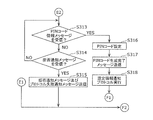
- FIG. 21, FIG. 22 and FIG. 23 are flowcharts showing processing of the access point 102 in the present embodiment.
- This process is started when the wireless communication apparatus 101 that requests execution of wireless parameter automatic setting participates in the wireless network constructed by the access point 102.
- no common encryption key, authentication key, or the like is set for the wireless communication apparatus 101 and the access point 102. Therefore, the wireless communication apparatus 101 can communicate with the access point 102 only with a specific signal (such as a broadcast signal and an EAP packet) in the wireless network of the access point 102, and performs normal data communication using encryption and authentication. Can't do it.
- various messages are transmitted and received between the wireless communication apparatus 101 and the access point 102 using EAP packets.
- the access point 102 waits to receive a connection request message 611 from the wireless communication apparatus 101 (S301).
- the access point 102 receives the connection request message 611 from the wireless communication apparatus 101 (YES in S301)
- the access point 102 receives the random value 663 and ID 661 included in the connection request message 611, and the access point information 664 indicating the access point 102.
- the connection request message 612 including this is transmitted to the server 103 (S302).
- the access point 102 After transmitting the connection request message 612, the access point 102 receives a participation confirmation message 613 from the wireless communication apparatus 105 that has already established a connection with the access point 102 or until it receives a rejection notification message from the server 103. Wait (S303 and S304).
- the access point 102 When the access point 102 receives the rejection notification message (YES in S304), the access point 102 transmits a protocol failure message to the wireless communication device 101 (S305), and ends this process.
- the wireless communication device 105 and the access point 102 since a common encryption key and authentication key are set in the wireless communication device 105 and the access point 102, the wireless communication device 105 and the access point 102 perform normal data communication using encryption and authentication. be able to.
- the access point 102 When the access point 102 receives the participation confirmation message 613 from the wireless communication apparatus 105 (YES in S303), the access point 102 transmits a participation confirmation message 614 including access point information 665 indicating the access point 102 to the server 103 (S306). After transmitting the participation confirmation message 614, the access point 102 waits until an authentication code request message 615A is received from the server 103 or a rejection notification message is received (S307 and S308). When the access point 102 receives the rejection notification message (YES in S308), the access point 102 transmits a protocol failure message to the wireless communication device 101, transmits a rejection notification message to the wireless communication device 105 (S309), and ends this processing. .
- the access point 102 When the access point 102 receives the authentication code request message 615A (YES in S307), the access point 102 transmits the authentication code request message 615B to the wireless communication device 105 (S310). After transmitting the authentication code request message 615B, the access point 102 waits until receiving an authentication code information message 616A including the authentication code 666 from the wireless communication apparatus 105 (S311).
- the authentication code 666 is a number or a character string unique to the wireless communication apparatus 101.
- the access point 102 When the access point 102 receives the authentication code information message 616A (YES in S311), the access point 102 transmits an authentication code information message 616B including the authentication code 666 included in the authentication code information message 616A to the server 103 (S312). After transmitting the authentication code information message 616B, the access point 102 waits until a PIN code information message 617 is received from the server 103 or a rejection notification message is received (S313 and S314). When the access point 102 receives the rejection notification message (YES in S314), the access point 102 transmits a protocol failure message to the wireless communication device 101, transmits a rejection notification message to the wireless communication device 105 (S315), and ends this processing. .
- the access point 102 when the access point 102 receives the PIN code information message 617 (YES in S313), the access point 102 sets the PIN code 667 included in the PIN code information message 617 in the wireless parameter automatic setting application (S316). Then, the access point 102 transmits a PIN code generation completion message 618 to the wireless communication apparatus 101 (S317). Next, the access point 102 executes a setting information notification protocol with the wireless communication apparatus 101 using the set PIN code 667 (S318).
- the access point 102 determines whether the setting information notification protocol is successful (S319).
- the success of the setting information notification protocol indicates a case where the PIN code held by the registrar matches the PIN code held by the enrollee and the provision of wireless parameters from the registrar to the enrollee is completed.
- the access point 102 transmits a WPS success message 623 to the server 103 (S320).
- the access point 102 waits until a connection permission message 624A is received from the server 103 (S321).
- the access point 102 receives the connection permission message 624A (YES in S321)
- the access point 102 transmits the connection permission message 624B to the wireless communication device 105 (S322), and ends this process.
- the access point 102 transmits a WPS failure message to the server 103 (S323). After transmitting the WPS failure message, the access point 102 waits until a connection failure message is received from the server 103 (S324). When the access point 102 receives the connection failure message (YES in S324), the access point 102 transmits the connection failure message to the wireless communication device 105 (S325), and ends this process.
- FIG. 24 and 25 are flowcharts showing the processing of the server 103 in this embodiment.
- the server 103 waits for reception of a connection request message 612 from the access point 102 (S401).
- the server 103 receives the connection request message from the access point 102 (YES in S401)
- the server 103 checks whether or not the ID 661 included in the connection request message 612 is a valid ID (S402).
- the server 103 refers to the account management information stored in the storage unit 408, and determines that the received ID 661 is valid if the ID registered in advance as the valid ID matches the received ID 661.
- the server 103 transmits a rejection notification message to the access point 102 (S416), and ends this process.
- the server 103 registers the ID 661 of the wireless communication apparatus 101 that has transmitted the connection request message 611 (S403).
- the server 103 waits until a participation confirmation message 614 is received from the access point 102 (S404).
- the server 103 receives the participation confirmation message 614 (YES in S404)
- the access point indicated by the access point information 665 included in the participation confirmation message 614 is indicated by the access point information 664 included in the connection request message 612. It is confirmed whether it is the same as the access point (S405).
- the server 103 waits until receiving a participation confirmation message 614 from the access point 102 (S404). On the other hand, if the access points are the same, that is, if the participation confirmation message 614 has been transmitted from the access point 102 (YES in S405), the server 103 transmits an authentication code request message 615A to the access point 102 (S406).
- the server 103 waits until the authentication code information message 616B is received from the access point 102 (S407).
- the authentication code 666 included in the authentication code information message 616B is an authentication code associated with the ID for which the connection request has been made. It is confirmed whether or not (S408).
- the server 103 refers to the account management information stored in the storage unit 408, and if the authentication code associated with the ID in advance matches the received authentication code 666, the received authentication code 666 is valid. to decide.
- the authentication code is a code unique to the wireless communication apparatus 101, the validity of the wireless communication apparatus 105 can be confirmed by this processing.
- the server 103 transmits a rejection notification message to the access point 102 (S416), and the process ends.
- the server 103 uses the random value 663 included in the connection request message 612 and the authentication code 666 included in the authentication code information message 616B to use the PIN code. 667 is generated (S409).
- the server 103 transmits a PIN code information message 617 including the generated PIN code 667 to the access point 102 (S410). After transmitting the PIN code information message 617, the server 103 waits for reception of a WPS success message 623 from the access point 102 or reception of a WPS failure message (S411 and S412).
- the server 103 When the server 103 receives the WPS success message 623 (YES in S411), the server 103 performs processing for permitting the wireless communication device 101 to connect to the Internet 104 (S414). Next, the server 103 transmits a connection permission message 624A to the access point 102 (S415), and ends this process. If the server 103 receives a WPS failure message (YES in S412), the server 103 transmits a connection failure message to the access point 102 (S413), and ends this process.
- FIG. 26 is a flowchart showing processing of the wireless communication apparatus 105 in the present embodiment. Note that a common encryption key, authentication key, and the like are already set in the wireless communication device 105 and the access point 102. Therefore, the wireless communication apparatus 105 can perform normal data communication using encryption and authentication in the wireless network of the access point 102.
- the wireless communication apparatus 105 transmits a participation confirmation message 613 to the access point 102 (S501), and waits to receive an authentication code request message 615B from the access point 102 (S502).
- the wireless communication device 105 When the wireless communication device 105 receives the authentication code request message 615B (YES in S502), the wireless communication device 105 generates an authentication code 666 in accordance with a user operation or the like (S503).
- the authentication code 666 is a number or a character string unique to the wireless communication apparatus 101.
- the wireless communication apparatus 105 transmits an authentication code information message 616A including the generated authentication code 666 to the access point 102 (S504).
- the wireless communication apparatus 105 After transmitting the authentication code information message 616A, the wireless communication apparatus 105 waits to receive a connection permission message 624B, a rejection notification message, or a connection failure message from the access point 102 (S505, S506). And S507). When the wireless communication apparatus 105 receives the connection permission message 624B, the rejection notification message, or the connection failure message from the access point 102 (YES in S505, YES in S506, or YES in S507), this process is performed. Exit.
- the outline of the configuration of the communication system 100 in the present embodiment and the outline of the configuration of the wireless communication apparatus 101, the access point 102, the server 103, and the wireless communication apparatus 105 that has already established communication with the access point 102 are as follows. These are the same as those of the first embodiment described with reference to FIGS. 1 to 5 and will not be described.
- 27 and 28 are sequence diagrams showing the account authentication sequence in the present embodiment.
- the same processes as those already described are denoted by the same reference numerals, and redundant description may be omitted.
- a participation registration application is activated in response to a user operation or the like (S109).
- the wireless communication device 105 transmits a participation request message 613A to the access point 102 (S110A).
- the access point 102 receives the participation request message 613A
- the access point 102 generates the participation request message 614A by adding the access point information 665 to the participation request message 613A, and transmits the generated participation request message 614A to the server 103 ( S111A).
- the configuration of the participation request message 614A is the same as the configuration of the participation confirmation message 614 shown in FIG. 15, for example.
- the server 103 transmits an authentication code request message 615A to the access point 102 (S113). Note that the processing in steps S113 to S117 is the same as the processing described with reference to FIG.
- the server 103 When the server 103 receives the authentication code information message 616B from the access point 102, the server 103 checks the validity of the authentication code 666 included in the received authentication code information message 616B (S118). If the authentication code 666 is valid, The server 103 registers the wireless communication apparatus 101 having the ID linked to the received authentication code 666 as a terminal having a connection request to the access point 102 (S108A). Next, in the wireless communication apparatus 101, a wireless parameter automatic setting application is activated by a user operation or the like (S101). Note that the processing in steps S101 to S106 is the same as the processing described with reference to FIG.
- the server 103 checks whether there is a terminal that has a connection request to the access point 102. Specifically, the server 103 determines whether or not the access point indicated by the access point information 665 included in the participation confirmation message 614 and the access point indicated by the access point information 664 included in the connection request message 612 are the same. (S112). When the terminal exists (when the access points indicated by the access point information 665 and 664 are the same), the server 103 confirms the validity of the ID 661 included in the received connection request message 612 (S107).
- the authentication code 666 included in the message 616B is generated (S119). Note that the subsequent processing (S120 to S133) is the same as the processing described in FIG.
- the wireless communication device 105 makes a wireless network participation request by registering in advance a wireless communication device that newly joins the wireless network.
- the wireless parameters can be set quickly.
- FIGS. 29, 30, and 31 are flowcharts showing the processing of the access point 102 in the present embodiment.
- the access point 102 waits to receive a participation request message 613A from the wireless communication device 105 (S303A).
- the access point 102 transmits a participation request message 614A including the access point information 665 indicating the access point 102 to the server 103 (S306A).
- the access point 102 After transmitting the participation request message 614A, the access point 102 waits to receive the authentication code request message 615A from the server 103 (S307). When the access point 102 receives the authentication code request message 615A (YES in S307), the access point 102 transmits the authentication code request message 615B to the wireless communication apparatus 105 (S310). Note that the processing in steps S310 to S312 is the same as the processing described in FIG.
- the access point 102 After transmitting the authentication code information message 616B, the access point 102 waits until a rejection notification message is received from the server 103 or a connection request message 611 is received from the wireless communication apparatus 101 (S304 and S301). When the access point 102 receives the rejection notification message (YES in S304), the access point 102 transmits the rejection notification message to the wireless communication device 105 (S305A), and ends this process.
- connection request message 611 when the access point 102 receives the connection request message 611 from the wireless communication apparatus 101 (YES in S301), the access point information 664 indicating the random value 663 and ID 661 included in the connection request message 611, and the access point 102.
- a connection request message 612 including the above is transmitted to the server 103 (S302).
- the subsequent processing (S313 to S325) is the same as the processing described with reference to FIGS. 22 and 23, and the description thereof is omitted.
- FIG. 32 and 33 are flowcharts showing the processing of the server 103 in this embodiment.
- the server 103 waits to receive a participation request message 614A from the access point 102 (S404A).
- the server 103 receives the participation request message 614A from the access point 102 (YES in S404A)
- the server 103 transmits an authentication code request message 615A to the access point 102 (S406). Note that the processing in steps S406 to S407 is the same as the processing described with reference to FIG.
- the server 103 When the server 103 receives the authentication code information message 616B (YES in S407), the server 103 checks whether or not the authentication code 666 added to the authentication code information message 616B is a valid authentication code (S408). For example, the server 103 refers to the account management information stored in the storage unit 408, and receives if the authentication code associated with the ID registered in advance as a valid ID matches the received authentication code 666. The authentication code is valid.
- the server 103 transmits a rejection notification message to the access point 102 (S416), and the process ends.
- the server 103 registers the ID of the wireless communication device linked to the authentication code 666 (S403A).
- the server 103 After registering the ID of the wireless communication device, the server 103 waits to receive a connection request message 612 from the access point 102 (S401). When the server 103 receives the connection request message 612 (YES in S401), the access point indicated by the access point information 664 included in the connection request message 612 is indicated by the access point information 665 included in the participation request message 614A. It is confirmed whether it is the same as the access point (S405).
- the server 103 waits until receiving the connection request message 612 from the access point 102 (S401).
- the server 103 checks whether or not the ID 661 included in the connection request message 612 is a valid ID (S402). ).
- the server 103 refers to the account management information stored in the storage unit 408, and determines that the received ID 661 is valid if the ID registered in advance as the valid ID matches the received ID 661.
- the server 103 transmits a rejection notification message to the access point 102 (S416), and ends this process.
- the server 103 uses the random value 663 included in the connection request message 612 and the authentication code 666 included in the authentication code information message 616B to use the PIN code. 667 is generated (S409). Note that the subsequent processing (S410 to S415) is the same as the processing described with reference to FIG.
- FIG. 34 is a flowchart showing processing of wireless communication apparatus 105 in the present embodiment.
- the wireless communication apparatus 105 transmits a participation request message 613A to the access point 102 (S501A). Note that the subsequent processing (S502 to S507) is the same as the processing described with reference to FIG.
- wireless communication apparatus 101 transmits a wireless signal after transmitting connection request message 611.
- the wireless communication device 105 receives a wireless signal transmitted from the wireless communication device 101, the wireless communication device 105 transmits a participation confirmation message 613. Thereby, it is possible to prevent the participation confirmation message 613 from being erroneously transmitted.
- FIGS. FIG. 4 and FIG. 5 are the same as those in the first embodiment, and a description thereof will be omitted.
- FIG. 35 is a block diagram illustrating an example of the configuration of the wireless communication apparatus 101 according to the present embodiment.
- a wireless communication apparatus 101 shown in FIG. 35 includes an output signal strength control unit 209 and a time measuring unit 210 in addition to the configuration shown in FIG.
- the output signal strength control unit 209 controls the output strength of the radio signal.
- the timer unit 210 manages timer processing and time.
- FIG. 36 and 37 are sequence diagrams showing an account authentication sequence in the present embodiment. Note that the processing in steps S101 to S108 is the same as the processing described with reference to FIG.
- the wireless communication apparatus 101 After transmitting the connection request message 611 to the access point 102, the wireless communication apparatus 101 starts transmitting a wireless signal (beacon) (S141). The wireless communication apparatus 101 gradually increases the transmission strength of the wireless signal until the PIN code generation completion message 618 is received.
- the wireless communication device 105 receives a wireless signal from the wireless communication device 101 after the participation registration application is activated by a user operation or the like. (S143).
- the wireless communication device 105 transmits a participation confirmation message 613 to the access point 102 (S110).
- the subsequent processing (S111 to S133) is the same as the processing described with reference to FIGS. 6 and 7, and description thereof is omitted.
- the wireless communication apparatus 101 transmits a connection request message 611 to a first wireless access point (for example, the access point 102 or 102A), and then transmits a wireless signal (S142).
- a first wireless access point for example, the access point 102 or 102A
- the wireless communication device 105 transmits a participation confirmation message 613 to the second wireless access point (access point 102) (S110).
- the participation confirmation message is not transmitted until the wireless communication apparatus 105 that has already established a connection with the access point 102 receives a wireless signal transmitted from the wireless communication apparatus 101 that newly participates in the wireless network.
- the participation confirmation message 613 it is possible to prevent the participation confirmation message 613 from being erroneously transmitted from a user who is away from the wireless communication apparatus 101 that requests new registration.
- steps S201 and S202 are the same as the processing described with reference to FIG.
- the wireless communication apparatus 101 After transmitting the connection request message 611, the wireless communication apparatus 101 starts transmitting a wireless signal (beacon) (S210).
- the wireless communication apparatus 101 determines whether or not the PIN code generation completion message 618 has been received from the access point 102 after starting the transmission of the wireless signal (S203). If the wireless communication apparatus 101 has not received the PIN code generation completion message 618 (NO in S203), the wireless communication apparatus 101 determines whether a protocol failure message has been received from the access point 102 (S204). If the wireless communication apparatus 101 receives a protocol failure message (YES in S204), the wireless communication apparatus 101 ends this process.
- the wireless communication device 101 determines whether or not the transmission output strength of the current wireless signal is the upper limit value (S211). If the transmission output intensity is the upper limit value (YES in S211), the wireless communication apparatus 101 returns to step S203. If the transmission output intensity is not the upper limit value (NO in S211), the wireless communication apparatus 101 determines whether or not a predetermined time has elapsed since the transmission output intensity of the wireless signal was changed (S212). If the certain time has not elapsed (NO in S212), the wireless communication apparatus 101 returns to step S203. If the predetermined time has elapsed (YES in S212), the wireless communication apparatus 101 increases the transmission output intensity of the wireless signal (S213), and returns to step S203.
- the wireless communication apparatus 101 when the wireless communication apparatus 101 receives the PIN code generation completion message 618 from the access point 102 (YES in S203), the wireless communication apparatus 101 generates a PIN code using the authentication code 662 and the random value 663 (S205). Note that the processing in steps S206 to S209 is the same as the processing described with reference to FIG.
- the processing procedure when the access point 102 executes the setting information communication protocol in the present embodiment is the same as that in the first embodiment described with reference to FIGS. 21, 22, and 23, and the description thereof is omitted.
- the processing procedure of the server 103 that performs authentication is the same as that in the first embodiment described with reference to FIGS. .
- FIG. 39 is a flowchart showing processing of wireless communication apparatus 105 in the present embodiment. Note that a common encryption key, authentication key, and the like are already set in the wireless communication device 105 and the access point 102. Therefore, the wireless communication apparatus 105 can perform normal data communication using encryption and authentication in the wireless network of the access point 102.
- the wireless communication device 105 waits until a wireless signal is received from the wireless communication device 101 (S510).
- the wireless communication apparatus 105 receives a wireless signal from the wireless communication apparatus 101 (YES in S510)
- the wireless communication apparatus 105 transmits a participation confirmation message 613 to the access point 102 (S501).
- the subsequent processing (S502 to S507) is the same as the processing described with reference to FIG.
- server 103 As described above in Embodiments 1 to 3, server 103 according to the present embodiment establishes communication between the first wireless communication device (wireless communication device 101) and the wireless access point (access point 102). For this purpose, the server 103 performs wireless connection authentication, and performs the processing shown in FIG.
- the first receiving unit included in the server 103 receives first access point information (access point) indicating a first wireless access point (for example, the access point 102 or 102A) from the first wireless communication device (wireless communication device 101).
- Information 664) is received (S601).
- the first receiving unit receives the second message (connection request message 612) including the first access point information (access point information 664).
- the second message (connection request message 612) is a first wireless access point (for example, the access point 102 or the access point 102) according to the first message (connection request message 611) transmitted from the first wireless communication device (wireless communication device 101).
- 102A is the transmitted message.
- the second receiving unit included in the server 103 has already established communication with a second wireless access point (access point 102) that is the same as or different from the first wireless access point (access point 102 or 102A).
- Second access point information (access point information 665) indicating the second wireless access point (access point 102) is received from the wireless communication device (wireless communication device 105) (S602).
- the second receiving unit receives the fourth message (participation confirmation message 614 or participation request message 614A) including the second access point information.
- the fourth message (participation confirmation message 614 or participation request message 614A) is sent in accordance with the third message (participation confirmation message 613 or participation request message 613A) transmitted from the second wireless communication apparatus (wireless communication apparatus 105).
- 2 is a message transmitted by the wireless access point (access point 102).
- step S602 may be performed after step S601, or as described in the second embodiment, step S601 may be performed after step S602.
- the determination unit included in the server 103 compares the first wireless access point indicated by the first access point information with the second wireless access point indicated by the second access point information (S603). Then, when the first wireless access point and the second wireless access point are the same wireless access point (YES in S603), the determination unit selects the same wireless access point as the connection destination of the first wireless communication device. A connection destination access point which is a wireless access point is determined (S604).
- the authentication processing unit included in the server 103 performs processing for performing wireless connection authentication between the connection destination access point and the first wireless communication device (S605).
- the authentication processing unit performs the processes of steps S406 to S416 shown in FIGS.
- the first receiving unit and the second receiving unit are realized by, for example, the communication unit 401 and the communication control unit 402 shown in FIG.
- the determination unit is realized by, for example, the determination unit 407 illustrated in FIG.
- the authentication processing unit is realized by, for example, the authentication processing unit 405 illustrated in FIG.
- the server 103 can perform the second wireless communication device.
- the connection target wireless access point (access point 102) according to the third message transmitted from the (wireless communication device 105)
- the connection target wireless access point of the first wireless communication device is determined. Can be determined.
- the user only needs to perform an operation for causing the first wireless communication apparatus to transmit the first message and an operation for causing the second wireless communication apparatus to transmit the third message.
- the user can perform wireless connection authentication with a simple operation.
- the server 103 receives a first code (authentication code 666) unique to the first wireless communication device from the second wireless communication device.
- the server 103 uses the first code to generate a second code (PIN code 667) used for wireless connection authentication between the first wireless communication apparatus and the connection destination access point.
- the server 103 transmits the second code to the connection destination access point.
- each of the first message and the second message further includes a third code (random value 663).
- the server 103 generates the second code using the first code and the third code.
- the third code is not limited to the random value 663 and may be an arbitrary code. Thereby, it is possible to prevent an unintended device from being erroneously authenticated.
- an IEEE 802.11 wireless LAN has been described as an example.
- the present embodiment may be applied to other communication methods such as wireless USB or Bluetooth (registered trademark).
- the present invention is realized as a wireless communication device, an access point, or a server included in the communication system. May be. Further, the present invention may be realized as a wireless connection authentication method in a communication system, a wireless communication device, an access point, or a server.
- each component may be configured by dedicated hardware or may be realized by executing a software program suitable for each component.
- Each component may be realized by a program execution unit such as a CPU or a processor reading and executing a software program recorded on a recording medium such as a hard disk or a semiconductor memory.
- the software that realizes the server of each of the above embodiments is a program as follows.
- this program is a program for causing a computer to execute a wireless connection authentication method in a server that performs wireless connection authentication for establishing communication between the first wireless communication device and the wireless access point.
- the program receives a second message including first access point information indicating the first wireless access point, which is transmitted from the first wireless access point according to the first message transmitted from the first wireless communication device to the computer.
- the second wireless access point according to a first reception step and a third message transmitted from a second wireless communication device that has already established communication with a second wireless access point that is the same as or different from the first wireless access point.
- the same wireless access point is connected to the wireless access point to which the first wireless communication device is connected.
- a determination step of determining as a destination access point and an authentication processing step of performing processing for performing wireless connection authentication between the connection destination access point and the first wireless communication device are executed.
- the present invention may be the above program or a non-transitory computer-readable recording medium on which the above program is recorded.
- the program can be distributed via a transmission medium such as the Internet.
- division of functional blocks in the block diagram is an example, and a plurality of functional blocks can be realized as one functional block, a single functional block can be divided into a plurality of functions, or some functions can be transferred to other functional blocks. May be.
- functions of a plurality of functional blocks having similar functions may be processed in parallel or time-division by a single hardware or software.
- the order in which the steps included in the above processes are executed is for illustrating the present invention specifically, and may be an order other than the above as long as the same result can be obtained. . Also, some of the above steps may be executed simultaneously (in parallel) with other steps.
- the communication system according to one or more aspects has been described based on the embodiment.
- the present invention is not limited to this embodiment. Unless it deviates from the gist of the present invention, various modifications conceived by those skilled in the art have been made in this embodiment, and forms constructed by combining components in different embodiments are also within the scope of one or more aspects. May be included.
- the present invention is useful as a wireless LAN simple connection method and the like.
- the present invention can also be applied to uses such as connection of a public wireless LAN.
Landscapes
- Engineering & Computer Science (AREA)
- Computer Security & Cryptography (AREA)
- Computer Networks & Wireless Communication (AREA)
- Signal Processing (AREA)
- Mobile Radio Communication Systems (AREA)
Abstract
Description
本発明者は、「背景技術」の欄において記載した、無線認証接続方法に関し、以下の問題が生じることを見出した。
図1は、本実施の形態における代表的な通信システム100の構成の一例を示す図である。この通信システム100は、無線通信装置101及び105と、アクセスポイント102と、サーバ103と、インターネット104とを含む。
次に図面を参照しながら実施の形態2を詳細に説明する。上記実施の形態1では、ユーザにより、無線通信装置101の操作が行われた後、既にアクセスポイント102と通信を確立している無線通信装置105の操作が行われた。本実施の形態では、ユーザにより、無線通信装置105の操作が行われた後に、無線通信装置101の操作が行われる。
次に図面を参照しながら実施の形態3を詳細に説明する。本実施の形態では、上記実施の形態1の変形例を説明する。本実施の形態では、無線通信装置101は、接続要求メッセージ611を送信した後に、無線信号を送信する。そして、無線通信装置105は、無線通信装置101から送信される無線信号を受信した場合に、参加確認メッセージ613を送信する。これにより、参加確認メッセージ613が誤って送信されることを防止できる。
101、105 無線通信装置
102、102A アクセスポイント
103 サーバ
104 インターネット
201、301、401、501 通信部
202、302、402、502 通信制御部
203、303、403、503 装置制御部
204、304、404、504 インターフェース処理部
205、305、505 無線パラメータ設定処理部
206、406 符号演算部
207、306、407、506 判断部
208、307、408、507 記憶部
209 出力信号強度制御部
210 計時部
405 認証処理部
508 表示部
611、612 接続要求メッセージ
613、614 参加確認メッセージ
613A、614A 参加要求メッセージ
615A、615B 認証コード要求メッセージ
616A、616B 認証コード情報メッセージ
617 PINコード情報メッセージ
618 PINコード生成完了メッセージ
619 プロトコル開始要求メッセージ
620 プロトコル開始メッセージ
621 プロトコルメッセージ
622 プロトコル終了メッセージ
623 WPS成功メッセージ
624A、624B 接続許可メッセージ
651 操作ボタン
652 操作メニュー
653 入力メニュー
654 メッセージ
661、671 ID
662、666 認証コード
663、672 ランダム値
664、665、673 アクセスポイント情報
667 PINコード
Claims (11)
- 第1無線通信装置と無線アクセスポイントとの通信を確立するための無線接続認証を行うサーバにおける無線接続認証方法であって、
前記第1無線通信装置から送信された第1メッセージに従い第1無線アクセスポイントが送信した、前記第1無線アクセスポイントを示す第1アクセスポイント情報を含む第2メッセージを受信する第1受信ステップと、
前記第1無線アクセスポイントと同一又は異なる第2無線アクセスポイントと既に通信が確立している第2無線通信装置から送信された第3メッセージに従い、前記第2無線アクセスポイントが送信した、前記第2無線アクセスポイントを示す第2アクセスポイント情報を含む第4メッセージを受信する第2受信ステップと、
前記第1アクセスポイント情報で示される前記第1無線アクセスポイントと、前記第2アクセスポイント情報で示される前記第2無線アクセスポイントとを比較し、前記第1無線アクセスポイントと前記第2無線アクセスポイントとが同一の無線アクセスポイントである場合、当該同一の無線アクセスポイントを、前記第1無線通信装置の接続先の無線アクセスポイントである接続先アクセスポイントに決定する決定ステップと、
前記接続先アクセスポイントと前記第1無線通信装置との無線接続認証を行うための処理を行う認証処理ステップとを含む
無線接続認証方法。 - 前記無線接続認証方法は、さらに、
前記第2無線通信装置から前記第1無線通信装置に固有の第1コードを受信する第3受信ステップを含み、
前記認証処理ステップは、
前記第1コードを用いて、前記第1無線通信装置と前記接続先アクセスポイントとの無線接続認証に用いられる第2コードを生成する第2コード生成ステップと、
前記第2コードを前記接続先アクセスポイントに送信する送信ステップとを含む
請求項1記載の無線接続認証方法。 - 前記第1メッセージ及び前記第2メッセージの各々は、さらに、第3コードを含み、
前記第2コード生成ステップでは、前記第1コード及び前記第3コードを用いて前記第2コードを生成する
請求項2記載の無線接続認証方法。 - 第1無線通信装置と無線アクセスポイントとの無線接続認証を行う無線接続認証方法であって、
前記第1無線通信装置が、第1メッセージを第1無線アクセスポイントに送信する第1メッセージ送信ステップと、
前記第1メッセージを受信した前記第1無線アクセスポイントが、前記第1無線アクセスポイントを示す第1アクセスポイント情報を含む第2メッセージをサーバに送信する第2メッセージ送信ステップと、
前記第1無線アクセスポイントと同一又は異なる第2無線アクセスポイントと無線接続認証が既に完了している第2無線通信装置が、第3メッセージを前記第2無線アクセスポイントに送信する第3メッセージ送信ステップと、
前記第3メッセージを受信した前記第2無線アクセスポイントが、前記第2無線アクセスポイントを示す第2アクセスポイント情報を含む第4メッセージを前記サーバに送信する第4メッセージ送信ステップと、
前記サーバが、前記第1アクセスポイント情報で示される前記第1無線アクセスポイントと、前記第2アクセスポイント情報で示される前記第2無線アクセスポイントとを比較し、前記第1無線アクセスポイントと前記第2無線アクセスポイントとが同一の無線アクセスポイントである場合、当該同一の無線アクセスポイントを、前記第1無線通信装置の接続先の無線アクセスポイントである接続先アクセスポイントに決定する決定ステップと、
前記接続先アクセスポイントと前記第1無線通信装置とが無線接続認証を行う認証ステップとを含む
無線接続認証方法。 - 前記無線接続認証方法は、さらに、
ユーザ操作に応じて、前記第2無線通信装置が前記第1無線通信装置に固有の第1コードを取得する取得ステップと、
前記第2無線通信装置が、前記第1コードを前記サーバに送信する第1コード送信ステップと、
前記サーバが、前記第1コードを用いて、前記第1無線通信装置と前記接続先アクセスポイントとの無線接続認証に用いられる第2コードを生成する第2コード生成ステップと、
前記サーバが、前記第2コードを前記接続先アクセスポイントに送信する送信ステップと、
前記第1無線通信装置が、前記第1コードと同一の第3コードを用いて第4コードを生成する第4コード生成ステップとを含み、
前記認証ステップでは、前記第1無線通信装置及び前記接続先アクセスポイントが、前記第2コードと前記第4コードとが同一であるか否かに応じて、前記第1無線通信装置及び前記接続先アクセスポイントとの無線接続認証を行う
請求項4記載の無線接続認証方法。 - 前記無線接続認証方法は、さらに、
前記第1無線通信装置が第5コードを生成する生成ステップを含み、
前記第1メッセージ及び前記第2メッセージの各々は、さらに、前記第5コードを含み、
前記第2コード生成ステップでは、前記第1コード及び前記第5コードを用いて前記第2コードを生成し、
前記第4コード生成ステップでは、前記第3コード及び前記第5コードを用いて前記第4コードを生成する
請求項5記載の無線接続認証方法。 - 前記第3メッセージ送信ステップは、前記第1メッセージ送信ステップの後に行われる
請求項4~6のいずれか1項に記載の無線接続認証方法。 - 前記無線接続認証方法は、さらに、
前記第1メッセージ送信ステップの後に、前記第1無線通信装置が、無線信号を送信する無線信号送信ステップを含み、
前記第3メッセージ送信ステップでは、前記第2無線通信装置が前記無線信号を受信した場合に、前記第2無線通信装置が、前記第3メッセージを前記第2無線アクセスポイントに送信する
請求項7記載の無線接続認証方法。 - 前記第1メッセージ送信ステップは、前記第3メッセージ送信ステップの後に行われる
請求項4~6のいずれか1項に記載の無線接続認証方法。 - 第1無線通信装置と無線アクセスポイントとの通信を確立するための無線接続認証を行うサーバであって、
前記第1無線通信装置から送信された第1メッセージに従い第1無線アクセスポイントが送信した、前記第1無線アクセスポイントを示す第1アクセスポイント情報を含む第2メッセージを受信する第1受信部と、
前記第1無線アクセスポイントと同一又は異なる第2無線アクセスポイントと既に通信が確立している第2無線通信装置から送信された第3メッセージに従い、前記第2無線アクセスポイントが送信した、前記第2無線アクセスポイントを示す第2アクセスポイント情報を含む第4メッセージを受信する第2受信部と、
前記第1アクセスポイント情報で示される前記第1無線アクセスポイントと、前記第2アクセスポイント情報で示される前記第2無線アクセスポイントとを比較し、前記第1無線アクセスポイントと前記第2無線アクセスポイントとが同一の無線アクセスポイントである場合、当該同一の無線アクセスポイントを、前記第1無線通信装置の接続先の無線アクセスポイントである接続先アクセスポイントに決定する決定部と、
前記接続先アクセスポイントと前記第1無線通信装置との無線接続認証を行うための処理を行う認証処理部とを備える
サーバ。 - 請求項1記載の無線接続認証方法をコンピュータに実行させるための
プログラム。
Priority Applications (3)
| Application Number | Priority Date | Filing Date | Title |
|---|---|---|---|
| US14/415,361 US9832640B2 (en) | 2013-05-22 | 2014-05-16 | Wireless connection authentication method and server |
| CN201480001902.5A CN104488302B (zh) | 2013-05-22 | 2014-05-16 | 无线连接认证方法以及服务器 |
| JP2014547212A JP6244310B2 (ja) | 2013-05-22 | 2014-05-16 | 無線接続認証方法及びサーバ |
Applications Claiming Priority (2)
| Application Number | Priority Date | Filing Date | Title |
|---|---|---|---|
| JP2013107711 | 2013-05-22 | ||
| JP2013-107711 | 2013-05-22 |
Publications (1)
| Publication Number | Publication Date |
|---|---|
| WO2014188686A1 true WO2014188686A1 (ja) | 2014-11-27 |
Family
ID=51933254
Family Applications (1)
| Application Number | Title | Priority Date | Filing Date |
|---|---|---|---|
| PCT/JP2014/002579 Ceased WO2014188686A1 (ja) | 2013-05-22 | 2014-05-16 | 無線接続認証方法及びサーバ |
Country Status (4)
| Country | Link |
|---|---|
| US (1) | US9832640B2 (ja) |
| JP (1) | JP6244310B2 (ja) |
| CN (1) | CN104488302B (ja) |
| WO (1) | WO2014188686A1 (ja) |
Cited By (1)
| Publication number | Priority date | Publication date | Assignee | Title |
|---|---|---|---|---|
| WO2020059584A1 (ja) * | 2018-09-18 | 2020-03-26 | パナソニックIpマネジメント株式会社 | 制御方法 |
Families Citing this family (9)
| Publication number | Priority date | Publication date | Assignee | Title |
|---|---|---|---|---|
| JP6390126B2 (ja) * | 2014-03-14 | 2018-09-19 | 株式会社リコー | 情報処理システム、情報処理装置、情報処理方法、及びプログラム |
| US10466914B2 (en) * | 2015-08-31 | 2019-11-05 | Pure Storage, Inc. | Verifying authorized access in a dispersed storage network |
| WO2017051937A1 (ko) * | 2015-09-22 | 2017-03-30 | (주) 이스트몹 | P2p 파일 전송 시스템, 방법 및 프로그램 |
| US10320766B2 (en) * | 2015-11-17 | 2019-06-11 | Google Llc | Wireless network access |
| CN105979567B (zh) * | 2016-05-13 | 2017-07-28 | 上海连尚网络科技有限公司 | 确定无线接入点的接入信息的方法及设备、系统 |
| CN105933905B (zh) * | 2016-07-11 | 2017-12-22 | 上海掌门科技有限公司 | 一种实现无线接入点连接认证的方法与设备 |
| CN107995154A (zh) * | 2016-10-26 | 2018-05-04 | 九阳股份有限公司 | 一种智能家电配网安全控制方法 |
| CN106789462B (zh) * | 2016-12-15 | 2021-10-08 | 九阳股份有限公司 | 一种智能家电入网安全控制方法 |
| JP2025005665A (ja) * | 2023-06-28 | 2025-01-17 | キヤノン株式会社 | 通信システムおよび情報処理装置 |
Citations (3)
| Publication number | Priority date | Publication date | Assignee | Title |
|---|---|---|---|---|
| JP2009253380A (ja) * | 2008-04-01 | 2009-10-29 | Canon Inc | ユーザ認証方法、無線通信装置、基地局、及びアカウント管理装置 |
| JP2010056916A (ja) * | 2008-08-28 | 2010-03-11 | Canon Inc | 通信装置、通信装置の制御方法、プログラム |
| JP2012186516A (ja) * | 2011-03-03 | 2012-09-27 | Silex Technology Inc | 無線lan機器設定システム |
Family Cites Families (25)
| Publication number | Priority date | Publication date | Assignee | Title |
|---|---|---|---|---|
| EP1398934B1 (en) * | 2002-09-16 | 2008-01-02 | Telefonaktiebolaget LM Ericsson (publ) | Secure access to a subscription module |
| US8532304B2 (en) * | 2005-04-04 | 2013-09-10 | Nokia Corporation | Administration of wireless local area networks |
| CN1875908A (zh) * | 2005-06-08 | 2006-12-13 | 上海雷硕医疗器械有限公司 | 一种防止儿童误服药物的药品容器 |
| TW200729892A (en) * | 2005-11-16 | 2007-08-01 | Nokia Corp | System and method for establishing bearer-independent and secure connections |
| JP4929040B2 (ja) * | 2007-05-10 | 2012-05-09 | キヤノン株式会社 | 通信装置及び通信方法 |
| CA2692083C (en) * | 2007-06-26 | 2017-06-06 | G3-Vision Limited | Authentication system and method |
| JP4613969B2 (ja) * | 2008-03-03 | 2011-01-19 | ソニー株式会社 | 通信装置、及び通信方法 |
| US8625552B2 (en) * | 2008-12-31 | 2014-01-07 | Microsoft Corporation | Wireless provisioning a device for a network using a soft access point |
| KR101015665B1 (ko) * | 2009-03-16 | 2011-02-22 | 삼성전자주식회사 | 이동 통신 단말과 액세스 포인트 간에 연결 방법 및 시스템 |
| JP2010219754A (ja) * | 2009-03-16 | 2010-09-30 | Kddi Corp | 無線通信システム、端末、アクセスポイント、アクセス権付与方法 |
| JP2011061574A (ja) | 2009-09-11 | 2011-03-24 | Brother Industries Ltd | 無線通信装置と無線通信システム |
| KR20130082073A (ko) | 2010-05-05 | 2013-07-18 | 에스엠에스씨 홀딩스 에스에이알엘 | Wi-fi 설정 및 구성을 위한 방법들 및 시스템들 |
| JP5135445B2 (ja) * | 2011-01-11 | 2013-02-06 | 株式会社バッファロー | 無線lanシステム、通信装置、設定情報を共有する方法 |
| JP6154098B2 (ja) | 2011-03-08 | 2017-06-28 | ソニー株式会社 | 無線通信装置、無線通信方法、及び無線通信システム |
| US9167508B2 (en) | 2011-03-08 | 2015-10-20 | Sony Corporation | Wireless communication apparatus, wireless communication method, and wireless communication system for providing improved wireless communication |
| JP5647964B2 (ja) | 2011-09-29 | 2015-01-07 | Kddi株式会社 | 親の無線端末に従属する子の無線端末のアクセスを規制する無線ルータ、プログラム及びアクセス方法 |
| WO2013114434A1 (ja) | 2012-01-31 | 2013-08-08 | パナソニック株式会社 | 端末装置、無線ネットワークシステム、及び、アクセスポイントに端末装置を接続する方法 |
| US9143402B2 (en) * | 2012-02-24 | 2015-09-22 | Qualcomm Incorporated | Sensor based configuration and control of network devices |
| CN104247554A (zh) * | 2012-03-28 | 2014-12-24 | 索尼公司 | 信息处理装置、信息处理方法以及程序 |
| JP5963528B2 (ja) | 2012-05-07 | 2016-08-03 | キヤノン株式会社 | 通信装置およびその制御方法 |
| JP6009242B2 (ja) | 2012-06-26 | 2016-10-19 | Kddi株式会社 | ユーザ所有のアクセスポイントに第三者の無線端末を接続させる認証方法、アクセスポイント及びプログラム |
| WO2014144601A1 (en) * | 2013-03-15 | 2014-09-18 | Master Lock Company | Networked security system |
| US9167427B2 (en) * | 2013-03-15 | 2015-10-20 | Alcatel Lucent | Method of providing user equipment with access to a network and a network configured to provide access to the user equipment |
| JP5639680B2 (ja) | 2013-04-05 | 2014-12-10 | 任天堂株式会社 | 情報処理システム、情報処理装置、および情報処理プログラム |
| US20140328334A1 (en) * | 2013-05-03 | 2014-11-06 | Gainspan Corporation | Provisioning a wireless device for secure communication using an access point designed with push-button mode of wps (wi-fi protected setup) |
-
2014
- 2014-05-16 CN CN201480001902.5A patent/CN104488302B/zh not_active Expired - Fee Related
- 2014-05-16 JP JP2014547212A patent/JP6244310B2/ja not_active Expired - Fee Related
- 2014-05-16 US US14/415,361 patent/US9832640B2/en not_active Expired - Fee Related
- 2014-05-16 WO PCT/JP2014/002579 patent/WO2014188686A1/ja not_active Ceased
Patent Citations (3)
| Publication number | Priority date | Publication date | Assignee | Title |
|---|---|---|---|---|
| JP2009253380A (ja) * | 2008-04-01 | 2009-10-29 | Canon Inc | ユーザ認証方法、無線通信装置、基地局、及びアカウント管理装置 |
| JP2010056916A (ja) * | 2008-08-28 | 2010-03-11 | Canon Inc | 通信装置、通信装置の制御方法、プログラム |
| JP2012186516A (ja) * | 2011-03-03 | 2012-09-27 | Silex Technology Inc | 無線lan機器設定システム |
Cited By (3)
| Publication number | Priority date | Publication date | Assignee | Title |
|---|---|---|---|---|
| WO2020059584A1 (ja) * | 2018-09-18 | 2020-03-26 | パナソニックIpマネジメント株式会社 | 制御方法 |
| KR20210058743A (ko) * | 2018-09-18 | 2021-05-24 | 파나소닉 아이피 매니지먼트 가부시키가이샤 | 제어 방법 |
| KR102765556B1 (ko) | 2018-09-18 | 2025-02-07 | 파나소닉 아이피 매니지먼트 가부시키가이샤 | 제어 방법 |
Also Published As
| Publication number | Publication date |
|---|---|
| CN104488302A (zh) | 2015-04-01 |
| JPWO2014188686A1 (ja) | 2017-02-23 |
| CN104488302B (zh) | 2018-07-17 |
| US20150172923A1 (en) | 2015-06-18 |
| JP6244310B2 (ja) | 2017-12-06 |
| US9832640B2 (en) | 2017-11-28 |
Similar Documents
| Publication | Publication Date | Title |
|---|---|---|
| JP6244310B2 (ja) | 無線接続認証方法及びサーバ | |
| US10976971B2 (en) | Establishing wireless connection, by using terminal device, after determining which of external device or terminal device that communication device is to establish connection | |
| JP5524157B2 (ja) | プローブを使用する2つの装置間のセキュアなワイヤレスリンク | |
| KR102060547B1 (ko) | 무선 통신 시스템에서 무선 기기 등록 방법 및 장치 | |
| JP5844004B2 (ja) | モバイルデバイスを使用して、別のデバイスのワイヤレスネットワークへの接続を可能にすること | |
| EP2963959B1 (en) | Method, configuration device, and wireless device for establishing connection between devices | |
| JP5736987B2 (ja) | 無線通信装置 | |
| JP2017046337A (ja) | 無線接続を自動的に確立する方法、同方法を用いるモノのインターネット用のゲートウェイ装置及びクライアント装置 | |
| CN112205013B (zh) | 用于无线通信切换的设备 | |
| JP6866191B2 (ja) | 通信装置、通信制御方法およびプログラム | |
| US9538375B2 (en) | Method for configuring wireless connection settings, wireless communications apparatus, and display method | |
| WO2014086252A1 (zh) | 关联设备的方法、装置及系统 | |
| JP7394784B2 (ja) | 他のデバイスとのワイヤレス通信用のデバイス | |
| EP2993933A1 (en) | Wireless terminal configuration method, apparatus and wireless terminal | |
| JP2017163244A (ja) | 情報処理システム、情報処理装置、情報処理方法、情報処理プログラム | |
| JP2021158494A (ja) | 通信システム、電子デバイス、およびプログラム | |
| JP5659046B2 (ja) | 無線通信端末および無線通信方法 | |
| JP2018033004A (ja) | 情報処理装置、その制御方法、及びプログラム | |
| JP2018007148A (ja) | 無線通信システムおよび無線通信装置 | |
| JP2021013073A (ja) | 通信装置と通信装置のためのコンピュータプログラム | |
| JP2017183890A (ja) | 通信システム、通信装置及び通信方法 | |
| US20190182668A1 (en) | Information processing apparatus, method of controlling the same, and program | |
| JP5791409B2 (ja) | 無線通信接続方法及びアクセスポイント | |
| JP2018026722A (ja) | 通信装置、通信方法、及びプログラム | |
| JP5738790B2 (ja) | 無線通信端末、無線通信システム、無線セットアップ方法、およびプログラム |
Legal Events
| Date | Code | Title | Description |
|---|---|---|---|
| ENP | Entry into the national phase |
Ref document number: 2014547212 Country of ref document: JP Kind code of ref document: A |
|
| 121 | Ep: the epo has been informed by wipo that ep was designated in this application |
Ref document number: 14800800 Country of ref document: EP Kind code of ref document: A1 |
|
| WWE | Wipo information: entry into national phase |
Ref document number: 14415361 Country of ref document: US |
|
| NENP | Non-entry into the national phase |
Ref country code: DE |
|
| 122 | Ep: pct application non-entry in european phase |
Ref document number: 14800800 Country of ref document: EP Kind code of ref document: A1 |