WO2014163012A1 - 両末端封止ポリ乳酸コーティングおよびその製造方法 - Google Patents
両末端封止ポリ乳酸コーティングおよびその製造方法 Download PDFInfo
- Publication number
- WO2014163012A1 WO2014163012A1 PCT/JP2014/059222 JP2014059222W WO2014163012A1 WO 2014163012 A1 WO2014163012 A1 WO 2014163012A1 JP 2014059222 W JP2014059222 W JP 2014059222W WO 2014163012 A1 WO2014163012 A1 WO 2014163012A1
- Authority
- WO
- WIPO (PCT)
- Prior art keywords
- group
- polymer
- capped
- lactic acid
- carbon atoms
- Prior art date
- Legal status (The legal status is an assumption and is not a legal conclusion. Google has not performed a legal analysis and makes no representation as to the accuracy of the status listed.)
- Ceased
Links
- 0 CC(C)([N+](C)[O-])O[C@@](N)[N+](C(C)(C)O*N*)[O-] Chemical compound CC(C)([N+](C)[O-])O[C@@](N)[N+](C(C)(C)O*N*)[O-] 0.000 description 1
Images





Classifications
-
- C—CHEMISTRY; METALLURGY
- C08—ORGANIC MACROMOLECULAR COMPOUNDS; THEIR PREPARATION OR CHEMICAL WORKING-UP; COMPOSITIONS BASED THEREON
- C08G—MACROMOLECULAR COMPOUNDS OBTAINED OTHERWISE THAN BY REACTIONS ONLY INVOLVING UNSATURATED CARBON-TO-CARBON BONDS
- C08G63/00—Macromolecular compounds obtained by reactions forming a carboxylic ester link in the main chain of the macromolecule
- C08G63/02—Polyesters derived from hydroxycarboxylic acids or from polycarboxylic acids and polyhydroxy compounds
- C08G63/06—Polyesters derived from hydroxycarboxylic acids or from polycarboxylic acids and polyhydroxy compounds derived from hydroxycarboxylic acids
- C08G63/08—Lactones or lactides
-
- C—CHEMISTRY; METALLURGY
- C09—DYES; PAINTS; POLISHES; NATURAL RESINS; ADHESIVES; COMPOSITIONS NOT OTHERWISE PROVIDED FOR; APPLICATIONS OF MATERIALS NOT OTHERWISE PROVIDED FOR
- C09D—COATING COMPOSITIONS, e.g. PAINTS, VARNISHES OR LACQUERS; FILLING PASTES; CHEMICAL PAINT OR INK REMOVERS; INKS; CORRECTING FLUIDS; WOODSTAINS; PASTES OR SOLIDS FOR COLOURING OR PRINTING; USE OF MATERIALS THEREFOR
- C09D167/00—Coating compositions based on polyesters obtained by reactions forming a carboxylic ester link in the main chain; Coating compositions based on derivatives of such polymers
- C09D167/04—Polyesters derived from hydroxycarboxylic acids, e.g. lactones
Definitions
- the present invention relates to a coating using polylactic acid sealed at both ends and a method for producing the same.
- a biodegradable polymer is a polymer material with a low environmental impact, but generally its heat resistance and mechanical strength are generally inferior to those of general-purpose synthetic polymers. Further, it is important to improve the mechanical strength.
- 4HCA 4-hydroxycinnamic acid
- DAA 3,4-dihydroxycinnamic acid
- T m melting point
- T 10 -320 ° C. thermal decomposition temperature
- PHA Polylactic acid
- main chain structure of the polymer it was necessary to focus on the main chain structure of the polymer and to design the molecule from the monomer structure.
- the monomer structure is often limited in many cases using compounds derived from natural products.
- Polylactic acid (PLA) which is the subject of the present invention, is one of the most studied biodegradable polymers, but its thermal characteristics and mechanical properties are maintained while maintaining the monomer structure (main chain structure of the polymer). Attempts have been made to improve the mechanical strength.
- stereocomplexation that improves the melting point (T m ) is possible by mixing equal amounts of poly (L-lactic acid) (PLLA) and poly (D-lactic acid) (PDLA) (Non-patent Document 2). It is important to make effective use of stereocomplex.
- various polymer structures such as a branched structure (Non-Patent Document 3), an arm structure (Non-Patent Document 4), and a stereo block structure (Non-Patent Document 5) have been reported.
- the thermal decomposition temperature (T 10 ) is improved by modifying the terminal structure of the polymer instead of the polymer main chain structure.
- T 10 thermal decomposition temperature
- amino groups and chloro groups Non-Patent Document 6
- cases where calcium is included Non-Patent Document 7
- cases where an acetyl group is introduced Non-Patent Document 8
- the compound used was not a compound derived from a natural product, but was the result of the influence of the remaining polymerization catalyst.
- Non-patent Document 9 Recently, research has been reported in which both ends of polylactic acid are sealed with a natural product-derived compound to improve heat resistance while maintaining a low environmental load.
- the hydroxyl group of polylactic acid is modified with DACA, and the carboxyl group is blocked by using benzyl alcohol as a polymerization initiator.
- T 10 to 359 ° C. the thermal decomposition temperature
- T m to 224 ° C. the high melting point
- An object of the present invention is to provide a coating with polylactic acid having both ends sealed and a method for producing the same, which has not been provided so far.
- the present invention relates to a coating comprising a stereocomplex polymer comprising at least an end-capped L-lactic acid polymer and an end-capped D-lactic acid polymer.
- a coating with both ends capped polylactic acid that has not been provided so far, particularly a both ends capped polylactic acid stereocomplex polymer having excellent heat resistance and a method for producing the same.
- the figure which shows a X-ray-diffraction-method (XRD) analysis result The figure which shows an infrared absorption (FT-IR) spectrum.
- FT-IR infrared absorption
- the figure which shows a DSC measurement result The figure which shows a DSC measurement result.
- the figure which shows an ultraviolet absorption spectrum The figure which shows an ultraviolet absorption spectrum.
- XRD X-ray-diffraction-method analysis result.
- TGA The figure which shows a DSC measurement result.
- the end-capped L-lactic acid polymer is an aromatic group-containing compound containing a functional group in which a hydroxyl group (—OH) and a carboxyl group (—COOH), which are terminal functional groups of the L-lactic acid polymer, react with these groups. It means what is made to react.
- the end-capped D-lactic acid polymer is an aromatic group containing a functional group in which a hydroxyl group (—OH) and a carboxyl group (—COOH), which are terminal functional groups of the D-lactic acid polymer, react with these groups. It means what is made to react with the containing compound.
- Ar 1 is an aryl group such as a phenyl group, a naphthyl group, a biphenyl group, a phenanthrene group, a perylene group, a pyrene group, an anthracene group, a tetracene group, a pentacene group, preferably a phenyl group, a naphthyl group, and more preferably.
- the aryl group may have one or more substituents such as an alkyl group having 1 to 3 carbon atoms, an ester group, an amide group, an ether group, an acetoxy group.
- R 1 is a single bond, an alkylene group which may have a double bond having 1 to 5 carbon atoms, for example, Preferably It is.
- R 1 is a single bond, it represents a structure in which a carbonyl group is directly bonded to an aryl group.
- Ar 2 is an aryl group, or the following formula: It is group represented by these.
- the aryl group represents, for example, a phenyl group, a naphthyl group, a biphenyl group, a phenanthrene group, a perylene group, a pyrene group, an anthracene group, a tetracene group, a pentacene group, preferably a phenyl group, a naphthyl group, and more preferably a phenyl group.
- the aryl group may have one or more substituents such as an alkyl group having 1 to 3 carbon atoms, an ester group, an amide group, and an ether group.
- R 5 is a single bond or an alkylene group which may have a double bond having 1 to 5 carbon atoms, for example, Preferably It is.
- R 6 is a hydrogen atom or an alkyl group having 1 to 3 carbon atoms, preferably a methyl group, an ethyl group, particularly an ethyl group.
- R 2 is a single bond, an alkylene group having 1 to 5 carbon atoms, preferably a methylene group, an ethylene group, a propylene group, more preferably a methylene group, or a divalent aromatic group such as a phenylene group, It represents a naphthylene group, preferably a phenylene group.
- R 2 is a single bond, it represents a structure in which a carbonyl group is directly bonded to an aryl group.
- the divalent aromatic group may have one or more substituents such as an alkyl group having 1 to 3 carbon atoms, an ester group, an amide group, and an ether.
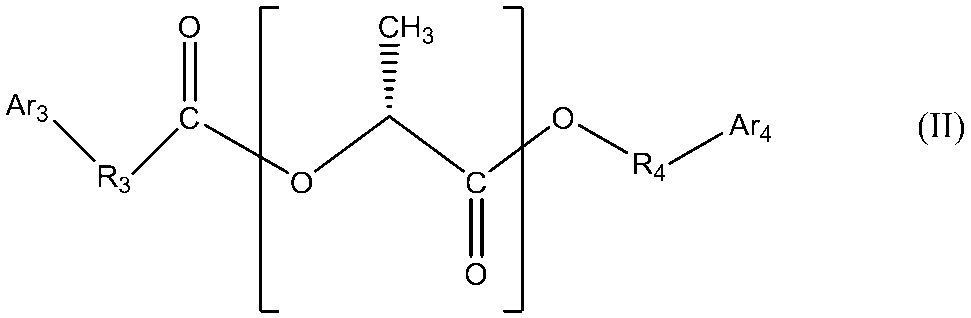
- Ar 3 in formula (II) has the same meaning as Ar 1 in formula (I).
- Ar 4 has the same meaning as Ar 2 in the above formula (I).
- R 3 has the same meaning as R 1 in formula (I).
- R 4 has the same meaning as R 2 in formula (I).
- the reactivity of the double bond is used to make the lactic acid polymer
- the stereocomplex coatings obtained from them can be chemically modified. For example, by irradiating with ultraviolet rays after forming the stereocomplex, the crosslinking reaction can be carried out without impairing the stereostructure and thermal properties of the stereocomplex coating. In this case, further improvement in hardness and chemical resistance of the stereocomplex coating can be expected.
- the molecular weights of the end-capped L-lactic acid polymer and the end-capped D-lactic acid polymer used in the present invention are only required to have a molecular weight capable of forming a complex.
- the number average molecular weight is 1000. 2,000,000, preferably 2,000 to 1100000.
- the number average molecular weight has shown the value measured by the gel permeation chromatography (GPC) method.
- the end-capped L-lactic acid polymer and the end-capped D-lactic acid polymer are functional groups that react hydroxyl groups (—OH) and carboxyl groups (—COOH), which are terminal functional groups of the L-lactic acid polymer, with these groups. It is manufactured by making it react with the aromatic group containing compound containing. Groups that react with hydroxyl groups (—OH) are carboxyl groups, hydroxyl groups, and the like. The group that reacts with the carboxyl group (—COOH) is an amino group, a hydroxyl group, or the like.
- Ar 2 —R 2 substituent can be introduced by using various alcohols as a polymerization initiator. Examples include benzyl alcohol and naphthyl alcohol.
- the end-capped L-lactic acid polymer represented by the general formula (I) is obtained by polymerizing L-lactide using Ar 2 —R 2 —OH (Ar 2 and R 2 are as defined above) as an initiator.
- the L-lactic acid polymer may be Ar 1 -R 1 -COCl (Ar 1 and R 1 are as defined above).
- the compounds used for such synthesis are available from various markets.
- Substituent to be introduced to the carboxyl terminus of the polylactic acid is introduced by the initiator, the alcohol terminus Ar 1 -R 1 -COOH to can be the use of Ar 1 -R 1 -COCl acylated obtained efficiently.
- the end-capped D-lactic acid polymer represented by the general formula (II) can be carried out in the same manner as the synthesis of the end-capped L-lactic acid polymer.
- the coating of the present invention is applied on the substrate in units of microliters or less of either polymer solution of either end-capped L-lactic acid polymer or end-capped D-lactic acid polymer, followed by Then, it can be formed by applying a solution containing one polymer applied to the application part and the other polymer forming a stereo complex in units of microliters or less.
- an end-capped L-lactic acid polymer is used as “one polymer”, the “other polymer” becomes an end-capped D-lactic acid polymer.
- the “one polymer” and the “other polymer” do not have to be in a stereocomplex relationship with each other; It may also be a composition comprising a plurality of different polymers and the desired compound. In that case, the merit other than the merit related to the formation of the stereo complex and the merit derived from the composition can be enjoyed.
- stereo complex means an interpolymer complex formed by steric conformation between polymer chains based on van der Waals interaction, which is a relatively weak interaction.
- a polymer solution containing one polymer and a solution containing the other polymer that forms a stereocomplex with the one polymer are prepared separately.
- the concentration of the “polymer solution” is diluted according to the purpose up to the saturated dissolution concentration in the solvent. If the concentration is too high, there is a problem of clogging the nozzle head when the polymer solution is applied. If the concentration is too low, it takes time to obtain a target amount of the stereo complex. Specifically, it is 1 m ⁇ g / mL to 5 mg / mL, preferably 0.1 mg / mL to 1 mg / mL, more preferably 0.4 mg / mL to 0.6 mg / mL.
- the solvent constituting the “polymer solution” may be any solvent that dissolves the polymer having the above concentration, and the boiling point at normal pressure is 30 ° C. or higher, preferably 50 ° C. or higher, and the upper limit is 120 ° C. or lower, preferably Solvents in the range of 100 ° C. or lower are preferred.
- a solvent chloroform, acetonitrile, water, ethanol, dimethylformamide, a mixed solvent thereof such as an acetonitrile / water mixed solvent, an ethanol / water mixed solvent, and a dimethylformamide / water mixed solvent can be used. If the boiling point is too high, it takes time to evaporate the polymer droplets applied to the substrate. If the boiling point is too low, the polymer precipitates in the nozzle before coating, resulting in the problem of poor coating.
- the above “polymer solution” is applied on the substrate in microliter units or less (hereinafter referred to as “first application”).
- “In microliter units or less” means “in an amount in the range of 1 microliter or less”.
- the first coating amount is 1 microliter or less, preferably in the range of 1 picoliter to 10 nanoliters, and more preferably in the range of 5 to 50 picoliters.
- materials that are not affected by the solvent dissolving the polymer such as glass substrates, polyethylene, polystyrene, polypropylene, polycarbonate, polyethylene terephthalate, polydimethylsiloxane, Examples include polyolefin, acrylic resin, fluorine resin, and silicone resin.
- Application may be performed in a normal temperature and normal pressure environment by dropping, spraying, discharging, spraying, spraying, or the like, a droplet of microliter unit or less.
- they are ejection, injection, and spraying, more preferably ejection or spraying, particularly preferably ejection.
- An ink jet system can be used as an apparatus capable of performing such application. By using an inkjet system, coating can be performed in a short time, and various stereo complex coatings can be achieved by adjusting the ejection program.
- a desired amount can be applied within a range of 1 microliter or less.
- 0.01 ⁇ m liter can be applied (first application) by discharging 1000 drops.
- a solution containing the one polymer and the other polymer that forms a stereo complex is applied to the application portion in microliter units or less (hereinafter referred to as “second application”).
- the second application is performed after the solution applied in the first time evaporates and the polymer present in the solution is deposited on the substrate or in the state where the solution is present. It is preferable to evaporate the solvent after the first application and perform the next application at as short a time interval as possible.
- the time is appropriately set depending on the application amount of the solution, the type of solvent, and the environmental temperature. In addition, the environment of application
- the solvent contained in the solution is removed to form a stereocomplex polymer of end-capped L-lactic acid polymer and end-capped D-lactic acid polymer.
- the solvent can be removed by natural drying at normal temperature and normal pressure. If necessary, heating may be applied.
- first application and second application are one cycle
- a thicker and more stereocomplex polymer can be coated easily and in a short time by repeating this cycle.
- the cycle interval is not particularly limited, and the shorter the interval, the better.
- a coating of a desired amount of the stereocomplex polymer can be formed at an arbitrary position.
- Stereocomplex polymers can be patterned, printed and coated. The thin film and coating film thus formed on the substrate are referred to as “coating” in the present invention.
- a polymer solution containing either one of the end-capped L-lactic acid polymer or the end-capped D-lactic acid polymer is applied on the substrate in units of microliters or less, and subsequently, the application part has the A method for producing, coating, or printing a stereocomplex polymer coating, characterized in that a solution containing one polymer and another polymer that forms a stereocomplex is applied in units of microliters or less and the above steps are repeated.
- a method is provided.
- stereocomplex crystals are formed preferentially over homopolymer crystals, and the crystallinity thereof is increased.
- the crystal structure is analyzed by X-ray diffraction, and a coating composed only of stereocomplex crystals can be obtained.
- the formation rate and film thickness of the stereocomplex coating constructed on the substrate can be controlled by the concentration of the polymer solution, the temperature of the substrate, the discharge speed / amount, the type of solvent, and the like.
- the coating containing a stereocomplex polymer formed using at least the end-capped L-lactic acid polymer and the end-capped D-lactic acid polymer of the present invention has a high melting point and a high thermal decomposition temperature.
- “having a high melting point and a high thermal decomposition temperature” means having a temperature higher than the melting point and the thermal decomposition temperature of the L-lactic acid polymer or D-lactic acid polymer before end-capping. is doing.
- L-lactic acid polymer or D-lactic acid polymer has a melting point and thermal decomposition temperature depending on its molecular weight (50 ° C. to 180 ° C.) (reference deJong et al.
- a stereocomplex polymer formed by using D-lactic acid polymer can have a melting point as high as (230 ° C.) and a thermal decomposition temperature as high as (350 ° C.). If the end groups of the end-capped L-lactic acid polymer and the end-capped D-lactic acid polymer contain a photopolymerizable functional group, they should be cross-linked to achieve a higher melting point and higher thermal decomposability. Can do.
- the chemical structures of the above-synthesized DACA-PLLAb2 and DACA-PDLAb2 were confirmed from 1 H NMR and infrared absorption spectra.
- the number average molecular weights were estimated to be 11400 and 9600, respectively, by size exclusion chromatography.
- the volume per droplet corresponded to about 20pL.
- the interval for alternately discharging each polymer solution was set to 1 second.
- the discharge conditions were set to 1000 Hz, 10,000 drops, 10 cycles, discharge voltage 16 V, and coating samples shown in Table 2 were obtained on a substrate (glass substrate).
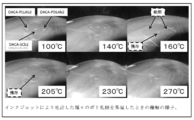
- FIG. 3 shows a photograph of a thin film discharged and coated on a glass substrate by inkjet in the order of DACA-PLLAb2 (left), DACA-PLLAb2 / DACA-PDLAb2 stereocomplex (center), and DACA-PDLAb2 (right).
- the temperature was raised from 100 ° C. to 270 ° C., photographs were taken at each temperature, and the melting temperature was observed.
- dissolution of DACA-PLLAb2 and DACA-PDLAb2 was observed at around 160 ° C., whereas it was maintained up to about 230 ° C. in the stereo complex. In either case, even if the temperature was raised to 270 ° C., it remained on the substrate without being decomposed.
- CA-PLLAF and CA-PDLAF Caffeic acid (CA) and ethyl ferrate (EFT) were introduced at both ends to synthesize PLLAF, PLDLF, CA-PLLAF, and CA-PDLAF.
- CA Caffeic acid
- EFT ethyl ferrate
- D-lactide was polymerized to obtain one-end-capped poly-D lactic acid (PDLAF 1 ).
- PLLAF 1 modification of the OH terminal of poly L lactic acid was performed.
- CC Cinnamoyl chloride
- CC caffeineic acid chloride
- PLLAF 1 and PDLAF 1 synthesized above were confirmed from 1 H NMR and infrared absorption spectra. Moreover, the number average molecular weight was estimated to be 23000 and 110,000, respectively, by gel permeation chromatography (polystyrene standard).
- PLLAF 1 , PDLAF 1 , PLLAF 2 , PDLAF 2 , CA-PLLAF 1 , CA-PDLAF 1 , CA-PLLAF 2 , and CA-PDLAF 2 synthesized in the same manner as above are summarized in Table 4 below.
- Tm represents a melting point (° C.). The measurement was performed by DSC measurement (differential scanning calorimetry measurement). “T 10 ” represents a thermal decomposition temperature (° C.) with a weight loss of 10%. The measurement was performed by (TGA measurement). “-” Indicates that measurement is in progress.
- FIG. 5 shows DSC measurement results of the CA-PLLAF 2 and CA-PDLAF 2 stereocomplexes.
- the stereo complex of CA-PLLAF 2 and CA-PDLAF 2 has a melting point improved by about 50 ° C. compared to that of CA-PLLAF 2 or CA-PDLAF 2 alone, which does not form a complex. Yes. It can be seen that the heat resistance is improved by making the stereo complex.
- the stereocomplex of CA-PLLAF 2 and CA-PDLAF 2 was irradiated with ultraviolet rays.
- the coating formed above using an inkjet device was used.
- Ultraviolet rays were irradiated by SAN-EI ELECTRIC, SUPERCURE-352S UV LIGHTSOURCE.
- the absorption spectrum of each ultraviolet ray (230-430 nm) of the stereo complex was measured with an ultraviolet-visible-near-infrared spectrophotometer (Chemical Co., Ltd., V-670). The results are shown in FIG.
- the ultraviolet (230-430 nm) absorption spectrum of the stereocomplex of CA-PLLAF 2 and CA-PDLAF 1 was measured with an ultraviolet-visible near-infrared spectrophotometer (Chemical Co., Ltd., V-670). The results are shown in FIG.
- FIG. 6 and FIG. 7 show that the absorption at 280 nm based on the double bond existing in the stereocomplex is reduced by the ultraviolet irradiation, so that the double bond undergoes a crosslinking reaction. That is, it was confirmed that the double bond existing in the stereocomplex can chemically modify the stereocomplex.
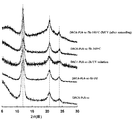
- FIG. 9 shows the result of (XRD) analysis
- FIG. 10 shows the result of analyzing the thermal decomposition temperature by TGA
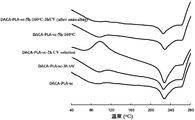
- FIG. 11 shows the result of DSC measurement.
- DACA-PLA-sc indicates a DACA-SCb1 sample.
- DACA-PLA-sc-3h UV indicates a sample obtained by irradiating the DACA-SCb1 sample with a chloroform solution and then irradiating with UV light for 3 hours.
- DACA-PLA-sc-2h UV solution indicates a sample irradiated with UV for 2 hours after the above-mentioned DACA-SCb1 sample was dissolved in a dichloromethane solution.
- DACA-PLA-sc-5h-160 ° C.” indicates a sample prepared by heat-dissolving at 160 ° C. for 5 hours.
- DACA-PLA-sc-5h-160 ° C.-3 hUV (after annealing) indicates a sample obtained by irradiating UV light for 3 hours on a sample prepared by heat melting at 160 ° C. for 5 hours.
- the stereocomplex body of the present invention maintained the structure of the complex body and the thermal characteristics even when chemically modified (crosslinked) by ultraviolet irradiation. That is, it shows that a double bond in the stereocomplex can be used as a chemical modification reactive group without destroying (maintaining) the structure and thermal characteristics of the stereocomplex.
- the heat sterilization temperature can be up to about 200 ° C., it is useful as a biomaterial.
- it can be used as a heat-resistant biodegradable polymer material and further as a material for sustained drug release by coating stents and nanoparticles.
Landscapes
- Chemical & Material Sciences (AREA)
- Chemical Kinetics & Catalysis (AREA)
- Organic Chemistry (AREA)
- Engineering & Computer Science (AREA)
- Materials Engineering (AREA)
- Wood Science & Technology (AREA)
- Life Sciences & Earth Sciences (AREA)
- Health & Medical Sciences (AREA)
- Medicinal Chemistry (AREA)
- Polymers & Plastics (AREA)
- Polyesters Or Polycarbonates (AREA)
- Paints Or Removers (AREA)
- Biological Depolymerization Polymers (AREA)
- Compositions Of Macromolecular Compounds (AREA)
Abstract
今までに提供されたことのなかった、両末端封止ポリ乳酸によるコーティングおよびその製造方法を提供すること。 少なくとも末端封止L-乳酸ポリマーおよび末端封止D-乳酸ポリマーからなるステレオコンプレックスポリマーを含むコーティングおよびその製造方法。
Description
本発明は、両末端封止ポリ乳酸によるコーティングおよびその製造方法に関する。
生分解性高分子は環境負荷の低い高分子材料であるが、通常、汎用の合成高分子と比べると一般的にその耐熱性や機械的強度が劣るため、生分解性高分子の熱的特性および機械的強度を向上させる高性能化は重要である。例えば、芳香環を有する天然由来化合物 4-ヒドロキシケイ皮酸(4HCA) や3,4-ジヒドロキシケイ皮酸 (DACA)をモノマーとした場合、高い耐熱性(融点Tm ~260℃、熱分解温度T10~320℃)を示すことが知られている(非特許文献1)。
従来では、この例のように高分子物性を改良するためには主に高分子の主鎖構造に着眼し、モノマー構造から分子設計する必要があった。しかし天然物由来の化合物を原料とする多くの場合、モノマー構造は限定される。本発明の対象としているポリ乳酸(PLA)はもっとも研究されている生分解性高分子の一つであるが、モノマー構造(高分子の主鎖構造)を保ったまま、その熱的特性・機械的強度を改良する試みがなされている。
特に、融点(Tm)を向上させるステレオコンプレックス化は、ポリ(L-乳酸) (PLLA)およびポリ(D-乳酸) (PDLA)の等量混合によって可能であり(非特許文献2)、いかにステレオコンプレックス化を効果的に引き出すかが重要となる。例えば、枝分かれ構造(非特許文献3)や、アーム構造(非特許文献4)、ステレオブロック構造(非特許文献5)などの種々の高分子構造が報告されている。
一方、高分子主鎖構造ではなく高分子の末端構造を修飾すると、熱分解温度(T10)が改良される報告がなされている。例えば、アミノ基およびクロロ基(非特許文献6)や、カルシウムを含む場合(非特許文献7)、アセチル基を導入した場合(非特許文献8)などが知られているが、いずれも修飾に用いられている化合物は天然物由来の化合物ではなく、残存している重合触媒が影響した結果であった。
最近、ポリ乳酸の両末端を天然物由来化合物によって封止することで、低い環境負荷を保ったまま、耐熱性を向上させる研究が報告された(非特許文献9)。この報告では、ポリ乳酸のヒドロキシル基をDACAで修飾し、重合開始剤にベンジルアルコールを用いることでカルボキシル基を封じている。これをPLLAおよびPDLAに適用し、ステレオコンプレックス化させることで、高い融点(Tm ~224℃)と同時に熱分解温度(T10~359℃)の改良を達成している。したがって全て天然物由来の化合物を用いた低環境負荷材料によって、高性能化を達成したと言える。
しかしながら、既存の技術では当該ステレオコンプレックス化を行なうためには、PLLAおよびPDLAのアセトニトリル溶液の調製と、これらを混合することでステレオコンプレックス化させるため、塊状(粉末状)で回収する必要があった。そのためこれを薄膜として基板表面をコーティングすることが困難であり、いかに他の材料表面を当該材料によってコーティングするかが課題であった。
Kaneko, T.; Tran, H. T.; Shi, D. J.; Akashi, M. Nat. Mater. 2006, 5, 966.
Ikada, Y.; Jamshidi, K.; Tsuji, H.; Hyon, S. H. Macromolecules 1987, 20, 904.
Ouchi, T.; Ichimura, S.; Ohya, Y. Polymer 2006, 47, 429.
Shao, J.; Sun, J.; Bian, X.; Cui, Y.; Li, G.; Chen, X. J. Phys. Chem. B 2012, 116, 9983.
Fukushima, K.; Kimura, Y. Polym. Int. 2006, 55, 626.
Lee, S. H.; Kim, S. H.; Han, Y. K.; Kim, Y. H. J. Polym. Sci. Part A: Polym. Chem. 2001, 39, 973.
Fan, Y.; Nishida, H.; Hoshihara, S.; Shirai, Y.; Tokiwa, Y.; Endo, T. Polym. Degr. Stab. 2003, 79, 547.
Fan, Y.; Nishida, H.; Shirai, Y.; Tokiwa, Y.; Endo, T. Polym. Degr. Stab. 2004, 86, 197.
Ajiro, H.; Hsiao, Y. J.; Tran, H. T.; Fujiwara, T.; Akashi, M. Chem. Commun. 2012, 48, 8478.
本発明は、今までに提供されたことのなかった、両末端封止ポリ乳酸によるコーティングおよびその製造方法を提供することを目的とする。
すなわち、本発明は、少なくとも末端封止L-乳酸ポリマーおよび末端封止D-乳酸ポリマーからなるステレオコンプレックスポリマーを含むコーティングに関する。
今までに提供されたことのなかった、両末端封止ポリ乳酸によるコーティング、特に耐熱性に優れた両末端封止ポリ乳酸ステレオコンプレックスポリマーおよびその製造方法を提供する。
末端封止L-乳酸ポリマーとは、L-乳酸ポリマーの末端官能基であるヒドロキシル基(-OH)およびカルボキシル基(-COOH)がそれらの基と反応する官能基を含む芳香族基含有化合物と反応させられてなるものを意味している。
同様に、末端封止D-乳酸ポリマーとは、D-乳酸ポリマーの末端官能基であるヒドロキシル基(-OH)およびカルボキシル基(-COOH)がそれらの基と反応する官能基を含む芳香族基含有化合物と反応させられてなるものを意味している。
末端封止L-乳酸ポリマーの一例が下記式(I)で表される。

式(I)中、Ar1はアリール基、例えばフェニル基、ナフチル基、ビフェニル基、フェナントレン基、ペリレン基、ピレン基、アントラセン基、テトラセン基、ペンタセン基、好ましくはフェニル基、ナフチル基、より好ましくはフェニル基を表す。アリール基は、炭素数1~3のアルキル基、エステル基、アミド基、エーテル基、アセトキシ基等の置換基を1以上有していてもよい。
式(I)中、R1は単結合、炭素数1~5の2重結合を有していてもよいアルキレン基、例えば

好ましくは
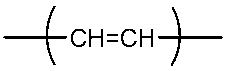
である。R1が単結合の時は、カルボニル基がアリール基に直接結合した構造を表す。
式(I)中、Ar2はアリール基、または下記式:
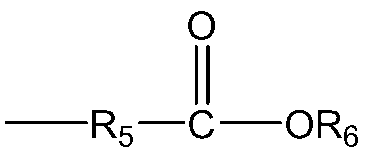
で表される基である。
で表される基である。
アリール基としては、例えばフェニル基、ナフチル基、ビフェニル基、フェナントレン基、ペリレン基、ピレン基、アントラセン基、テトラセン基、ペンタセン基、好ましくはフェニル基、ナフチル基、より好ましくはフェニル基を表す。アリール基は、炭素数1~3のアルキル基、エステル基、アミド基、エーテル基等の置換基を1以上有していてもよい。
上記式中、R5は単結合、炭素数1~5の2重結合を有していてもよいアルキレン基、例えば

好ましくは
である。
R6は、水素原子または炭素数1~3のアルキル基、好ましくはメチル基、エチル基、特にエチル基である。
R6は、水素原子または炭素数1~3のアルキル基、好ましくはメチル基、エチル基、特にエチル基である。
式(I)中、R2は単結合、炭素数1~5のアルキレン基、好ましくはメチレン基、エチレン基、プロピレン基、より好ましくはメチレン基、または2価の芳香族基、例えばフェニレン基、ナフチレン基、好ましくはフェニレン基を表す。R2が単結合の時は、カルボニル基がアリール基に直接結合した構造を表す。また、2価の芳香族基は、置換基、例えば、炭素数1~3のアルキル基、エステル基、アミド基、エーテル等の置換基を1以上有していてもよい。
末端封止D-乳酸ポリマーの一例が下記式(II)で表される。

式(II)中Ar3は、上記式(I)中のAr1と同義である。式(II)中Ar4は、上記式(I)中のAr2と同義である。式(II)中R3は、上記式(I)中のR1と同義である。式(II)中R4は、上記式(I)中のR2と同義である。
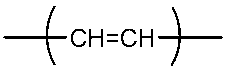
末端封止L-乳酸ポリマー、末端封止D-乳酸ポリマーの末端封止構造中、-CH=CH-構造を含む場合は、その二重結合の反応性を利用して、それらの乳酸ポリマー、それらから得られるステレオコンプレックスコーティングを化学修飾することができる。例えば、ステレオコンプレックスを形成後に紫外線を照射することにより、そのステレオコンプレックスコーティングの立体構造、熱的特性を損なうことなく架橋反応を行うことができる。この場合、ステレオコンプレックスコーティングのさらなる硬度の向上、耐薬品性の向上等が期待できる。
本発明で使用する末端封止L-乳酸ポリマー、末端封止D-乳酸ポリマーの分子量は、コンプレックスを形成することができる程度の分子量を有していればよく、具体的には数平均分子量1000~2000000、好ましくは2000~1100000である。なお、本発明において数平均分子量は、ゲル浸透クロマトグラフィー(GPC)法により測定した値を示している。
末端封止L-乳酸ポリマーおよび末端封止D-乳酸ポリマーは、L-乳酸ポリマーの末端官能基であるヒドロキシル基(-OH)およびカルボキシル基(-COOH)を、それらの基と反応する官能基を含む芳香族基含有化合物と反応させることにより製造される。ヒドロキシル基(-OH)と反応する基は、カルボキシル基、ヒドロキシル基、等である。カルボキシル基(-COOH)と反応する基は、アミノ基、ヒドロキシル基、等である。また、重合開始剤として種々のアルコール類を用いることでAr2-R2置換基を導入することができる。例えばベンジルアルコール、ナフチルアルコール等がある。
例えば、一般式(I)で表される末端封止L-乳酸ポリマーは、Ar2-R2-OH(Ar2、R2は上記と同義)を開始剤としてL-ラクチドを重合させたのちに、L-乳酸ポリマーを、Ar1-R1-COCl(Ar1、R1は上記と同義)ればよい。このような合成に使用する化合物は、種々市場から入手可能である。
ポリ乳酸のカルボキシル末端に導入する置換基は開始剤により導入し、アルコール末端はAr1-R1-COOHをアシル化したAr1-R1-COClを用いると効率的に得ることができる。
一般式(II)で表される末端封止D-乳酸ポリマーは、上記末端封止L-乳酸ポリマーの合成と同様に行うことができる。
本発明のコーティング、特にステレオコンプレックスポリマーのコーティングは、末端封止L-乳酸ポリマーまたは末端封止D-乳酸ポリマーのどちらか一のポリマー溶液をマイクロリットル以下の単位で基材上に塗布し、続いて該塗布部に塗布した一のポリマーとステレオコンプレックスを形成するもう一方のポリマーを含む溶液をマイクロリットル以下の単位で塗布することにより形成することができる。「一のポリマー」として、末端封止L-乳酸ポリマーを使用したとき、「もう一方のポリマー」は、末端封止D-乳酸ポリマーとなる。ステレオコンプレックスポリマーのコーティングを目的としない場合は、「一のポリマー」および「もう一方のポリマー」は、お互いにステレオコンプレックスを形成する関係にあるポリマーである必要はなく、その両者は同一種類のポリマーであってもよく、また複数種の異なるポリマーおよび所望の化合物を含む組成物であってよい。その場合、ステレオコンプレックス形成に係るメリット以外のメリットおよびその組成物由来のメリットを享受することができる。
ステレオコンプレックスポリマーコーティングの製法について以下に説明する。
本発明において「ステレオコンプレックス」とは、比較的弱い相互作用であるファンデルワールス相互作用を基にした高分子鎖間の立体的な構造適合により形成される高分子間コンプレックスを意味している。
本発明におけるステレオコンプレックスポリマーのコーティングの製造方法においては、一のポリマーを含むポリマー溶液と、該一のポリマーとステレオコンプレックスを形成するもう一方のポリマーを含む溶液を別々に用意する。
「ポリマー溶液」の濃度は、溶媒に対する飽和溶解濃度を上限に、目的に応じて、希釈して用いる。その濃度が高すぎると、ポリマー溶液塗布時に、ノズルのヘッドが詰まる問題があり、その濃度が低すぎると目的量のステレオコンプレックスを得るのに時間を要する。具体的には1mμg/mL~5 mg/mL、好ましくは0.1mg/mL~1mg/mL、より好ましくは0.4mg/mL~0.6mg/mLである。
「ポリマー溶液」を構成する溶媒は、上記濃度のポリマーを溶解する溶媒であればよく、常圧での沸点として、下限が30℃以上、好ましくは50℃以上、上限が120℃以下、好ましくは100℃以下の範囲にある溶媒が好ましい。そのような溶媒として、クロロホルム、アセトニトリル、水、エタノール、ジメチルホルムアミド、それらの混合溶媒、例えばアセトニトリル/水混合溶媒、エタノール/水混合溶媒、ジメチルホルムアミド/水混合溶媒を用いることができる。その沸点が高すぎると、基材に塗布されたポリマー液滴の蒸発に時間がかかり、その沸点が低すぎると、塗布前にノズル内でポリマーが析出し、塗布不良の問題が生じる。
上記「ポリマー溶液」を、マイクロリットル単位以下で基材上に塗布するようにする(以下、「1回目の塗布」という)。「マイクロリットル単位以下で」とは、「1マイクロリットル以下の範囲の量で」ということを意味する。本製造方法では、ポリマーを小さい体積に閉じ込めた状態で相互作用させるために、効率的で早くステレオコンプレックスを形成することが可能である。このため、溶液量としては、少ない方が好ましいが、少なすぎると塗布量の正確な制御が難しく、バラツキの原因になる。したがって、1回目の塗布量は1マイクロリットル以下、好ましくは1ピコリットル~10ナノリットルの範囲であり、さらに好ましくは5~50ピコリットルの範囲である。
ポリマー溶液を塗布する基材としては、ポリマーを溶解している溶媒による影響(溶解、腐食等)を受けない材料、例えば、ガラス基板、ポリエチレン、ポリスチレン、ポリプロピレン、ポリカーボネート、ポリエチレンテレフタレート、ポリジメチルシロキサン、ポリオレフィン、アクリル樹脂、フッ素樹脂、シリコーン樹脂等が挙げられる。
塗布は、常温、常圧環境下で行なえばよく、マイクロリットル単位以下の液滴を滴下、吹き付け、吐出、噴射、噴霧等することにより行う。好ましくは、吐出、噴射、噴霧であり、より好ましくは吐出または噴霧、特に好ましくは吐出により行う。そのような塗布を行える装置としては、インクジェットシステムを利用することができる。インクジェットシステムを使用することにより、短時間でコーティングすることができ、また吐出プログラムを調節することにより多様なステレオコンプレックスコーティングが可能となる。
1回の吐出を、例えば数十ピコリットル単位、数十ナノリットル単位の少量で行なう場合は、吐出滴数を制御することにより、一回目の塗布量が1マイクロリットル以下の範囲で所望の量を塗布することができる。例えば、1回の吐出量が20plのノズルを使用する場合、1000滴を吐出すれば0.01μmリットルを塗布(1回目の塗布)することができる。
上記塗布に続いて、該塗布部に、該一のポリマーとステレオコンプレックスを形成するもう一方のポリマーを含む溶液をマイクロリットル単位以下で塗布する(以下、「2回目の塗布」という)。2回目の塗布は、1回目に塗布した溶液が蒸発し溶液中に存在したポリマーが基材上に析出した後、または溶液が存在している状態でおこなわれる。1回目の塗布後に、溶媒を蒸発させ、できるだけ短い時間間隔で次の塗布を行うことが好ましい。その時間は、溶液の塗布量、溶媒の種類、環境温度に依存し適宜設定される。なお、この時の塗布の環境も常温、常圧環境下で行えばよい。
2回目の塗布に使用する「ポリマー溶液」、「マイクロリットル単位以下で」、「塗布」という意味は、1回目の塗布のところで説明したそれらの意味と同様の意味で使用している。
上記1回目、2回目の塗布後、溶液に含まれていた溶媒を除去することにより、末端封止L-乳酸ポリマーと末端封止D-乳酸ポリマーのステレオコンプレックスポリマーが形成される。溶媒の除去は、常温、常圧で自然乾燥により行える。必要により、加熱を加えてもよい。
上記「1回目の塗布」および「2回目の塗布」を1サイクルとすると、このサイクルを繰り返すことにより、より厚く、またより多くのステレオコンプレックスポリマーを簡便かつ短時間でコーティングすることができることになる。サイクル間隔は特に限定されず、その間隔が短いほど好ましい。このサイクルを繰り返すことにより、任意の位置に所望量のステレオコンプレックスポリマーのコーティングを形成することができる。ステレオコンプレックスポリマーで、パターニング、印刷、コーティングすることができる。そのようにして基材上に形成された薄膜、被膜を、本発明では「コーティング」というものとする。
ここに、末端封止L-乳酸ポリマーまたは末端封止D-乳酸ポリマーのどちらか一のポリマーを含むポリマー溶液をマイクロリットル以下の単位で基材上に塗布し、続いて該塗布部に、該一のポリマーとステレオコンプレックスを形成するもう一方のポリマーを含む溶液をマイクロリットル以下の単位で塗布し、以上の工程を繰り返すことを特徴とする、ステレオコンプレックスポリマーコーティングの製造方法、コーティング方法、または印刷方法が提供される。
本発明の製造方法では、ホモポリマーの結晶よりもステレオコンプレックス結晶が優先的に形成され、その結晶化度が高くなる。本発明ではX線回折より結晶構造を解析しており、ステレオコンプレックス結晶のみからな成るコーティングを得ることができる。
基材上に構築するステレオコンプレックスコーティングの形成率、膜厚などは、ポリマー溶液の濃度、基材の温度、吐出速度・量、および溶媒の種類等によって制御することが可能である。
本発明の少なくとも末端封止L-乳酸ポリマーおよび末端封止D-乳酸ポリマーを使用して形成されてなるステレオコンプレックスポリマーを含むコーティングは、高融点、高い熱分解温度を有する。本発明において、「高融点、高い熱分解温度を有する」とは、末端封止される前のL-乳酸ポリマーまたはD-乳酸ポリマーが有する融点、熱分解温度よりも高い温度を有することを意味している。L-乳酸ポリマーまたはD-乳酸ポリマーが有する融点、熱分解温度は、その分子量により融点(50℃~180℃)(文献 deJong et al. Macromolecules31,6397pp(1998))、熱分解温度(230℃~240℃)(文献 Tran Han Thi et al. Chem. Commun.3918pp(2008))と幅広く存在する。末端封止L-乳酸ポリマーおよび/または末端封止D-乳酸ポリマーを使用して形成されてなるステレオコンプレックスポリマーを含むコーティングの融点、熱分解温度を、ポリマーの分子量、末端封止に使用する化合物を選択することにより種々調整可能である。例えば、数平均分子量(8000程度)のD-,L-乳酸ポリマーの両末端を(ベンジルアルコールおよび3,4-ジアセトキシケイ皮酸)で封止した末端封止L-乳酸ポリマーおよび末端封止D-乳酸ポリマーを使用して形成されてなるステレオコンプレックスポリマーは、その融点を(230℃)程度まで、また熱分解温度を(350℃)まで高めることができる。末端封止L-乳酸ポリマーおよび末端封止D-乳酸ポリマーの末端基中に、光重合性官能基を含んでいる場合は、両者を架橋させることにより、さらに高融点、高熱分解性とすることができる。
DACA-PLLAbおよびDACA-PDLAbの合成
非特許文献9(Ajiro, H.; Hsiao, Y. J.; Tran, H. T.; Fujiwara, T.; Akashi, M. Chem. Commn. 2012, 48, 8478.)に従って合成した。
非特許文献9(Ajiro, H.; Hsiao, Y. J.; Tran, H. T.; Fujiwara, T.; Akashi, M. Chem. Commn. 2012, 48, 8478.)に従って合成した。
すなわち、L-ラクチド2gと2mLのトルエンとを窒素雰囲気下で丸底フラスコに導入した。ここに重合触媒としてオクチル酸スズ28mgと、末端封止のために開始剤としてベンジルアルコール36μLを導入し、120℃で2時間反応させた。生成物はクロロホルムに溶解させてメタノール中に再沈を繰り返すことで精製した。一般式Ar2がフェニル、R2がメチレンの片末端封止ポリL乳酸(PLLAb2)を得た。同様にしてD-ラクチドを重合することにより片末端封止ポリD乳酸(PDLAb2)を得た。
次に3,4-ヒドロキシケイ皮酸10gを無水ピリジン20mLに窒素雰囲気渦中で溶解させ、0℃に保った。30分後、30mLの無水酢酸を加えて0℃のまま30分撹拌し、その後130℃まで加熱して5時間反応させた。溶媒は留去しトルエン中から再結晶することで、3,4-ジアセトキシケイ皮酸を50%の収率で得た
最後にポリL乳酸のOH末端の修飾を行なった。3,4-ジアセトキシケイ皮酸0.264gを0.6mLのジクロロメタンに溶解させ、塩化チオニル0.5mLとジメチルホルムアミド0.79μLを加え60℃で7時間反応させた。これをそのままPLLAb2、0.525gのジクロロメタン溶液1.875mLと0.094mLのピリジンの混合溶液へ導入し、0℃で1.5時間反応させた。その後、反応溶液を24時間室温で撹拌させた。最後に0.1規定の塩酸水で繰り返し洗浄し、エタノール中へ再沈させることで両末端封止ポリL乳酸(DACA-PLLAb2)を得た。同様にして両末端封止ポリD乳酸(DACA-PDLAb2)を得た。
次に3,4-ヒドロキシケイ皮酸10gを無水ピリジン20mLに窒素雰囲気渦中で溶解させ、0℃に保った。30分後、30mLの無水酢酸を加えて0℃のまま30分撹拌し、その後130℃まで加熱して5時間反応させた。溶媒は留去しトルエン中から再結晶することで、3,4-ジアセトキシケイ皮酸を50%の収率で得た
最後にポリL乳酸のOH末端の修飾を行なった。3,4-ジアセトキシケイ皮酸0.264gを0.6mLのジクロロメタンに溶解させ、塩化チオニル0.5mLとジメチルホルムアミド0.79μLを加え60℃で7時間反応させた。これをそのままPLLAb2、0.525gのジクロロメタン溶液1.875mLと0.094mLのピリジンの混合溶液へ導入し、0℃で1.5時間反応させた。その後、反応溶液を24時間室温で撹拌させた。最後に0.1規定の塩酸水で繰り返し洗浄し、エタノール中へ再沈させることで両末端封止ポリL乳酸(DACA-PLLAb2)を得た。同様にして両末端封止ポリD乳酸(DACA-PDLAb2)を得た。
上記で合成したDACA-PLLAb2およびDACA-PDLAb2は1H NMRおよび赤外吸収スペクトルから化学構造を確認した。また、サイズ排除クロマトグラフィーにより数平均分子量をそれぞれ11400および9600と見積もった。
上記と同様に合成したPLLAb、PDLAb、合成したDACA-PLLAbおよびDACA-PDLAbを下記表1にまとめた。

ステレオコンプレックス(SC)の合成
表1のD体およびL体を使用し、下記表2の組み合わせでD体およびL体を、それぞれ0.5mg/mLの濃度でクロロホルム溶液を調製し、インクジェット装置(クラスターテクノロジー社製)のインクジェットカートリッジPiezoelectric print head (PulseInjector登録商標)に装填した。なお、インクジェットカートリッジの吐出口は直径25μmのものを使用した。
表1のD体およびL体を使用し、下記表2の組み合わせでD体およびL体を、それぞれ0.5mg/mLの濃度でクロロホルム溶液を調製し、インクジェット装置(クラスターテクノロジー社製)のインクジェットカートリッジPiezoelectric print head (PulseInjector登録商標)に装填した。なお、インクジェットカートリッジの吐出口は直径25μmのものを使用した。
二軸電動位置制御とUSBカメラによって液滴の吐出状態を観察したところ、一滴あたりの体積は約20pLに相当した。室温(20度)の状態で1秒待つと、吐出された高分子溶液のクロロホルム溶媒は乾燥することが確認されたので、各高分子溶液を交互に吐出する間隔は1秒と設定した。吐出条件を1000Hz, 10,000滴、10サイクル、吐出電圧 16 Vと設定し、基板(ガラス基板)上に表2に示すコーティングのサンプルを得た。
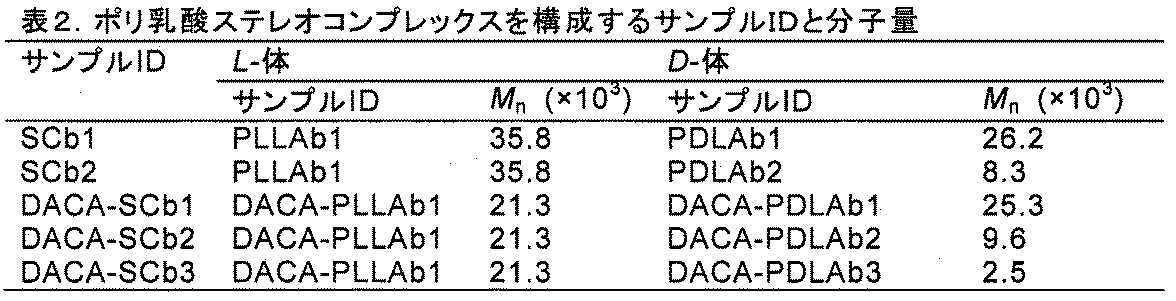
表2におけるステレオコンプレックスをX線回折法(XRD)分析した結果を図1に示す。
いずれのサンプルからもステレオコンプレックスに特徴的な2θ=12°にピークを示し、両末端を封止したPLLAおよびPDLAを用いて耐熱性が向上するステレオコンプレックス構造が形成されることを確認した。
いずれのサンプルからもステレオコンプレックスに特徴的な2θ=12°にピークを示し、両末端を封止したPLLAおよびPDLAを用いて耐熱性が向上するステレオコンプレックス構造が形成されることを確認した。
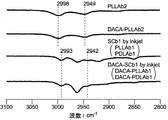
上記表2で得られたサンプルについて、FT-IRスペクトルを測定した。比較として、単純にPLLAおよびDACA-PLLAのクロロホルム溶液からのキャストコーティングも測定した。結果を図2に示す。
PLLAb2やDACA-PLLAb2では2998 cm-1(C-Has)および2949cm-1(C-Hs)に観測される振動が、インクジェット法によるステレオコンプレックス化によりメチル基カルボニル基の相互作用(-CH3…O=C<)に基づき、それぞれ2993 cm-1および2942 cm-1へのシフトが観測された。さらに908 cm-1のピークシフトも観測され、ステレオコンプレックス構造が確認できた(Zhang, J. et al. J. Mol. Struct. 735 (2005)249-257pp。)
熱的特性について観察を行なった。図3にDACA-PLLAb2(左)、DACA-PLLAb2/DACA-PDLAb2ステレオコンプレックス(中央)、DACA-PDLAb2(右)の順にガラス基板上へインクジェットによって吐出コーティングした薄膜の写真を示す。これを100℃から270℃まで昇温させてゆき、各温度において写真をとり、融解温度を観察した。三か所にコーティングされた薄膜について、DACA-PLLAb2およびDACA-PDLAb2が160℃付近で溶解が観測されたのに対して、ステレオコンプレックスでは230℃程度まで保たれていた。なお、いずれも270℃まで昇温しても基板上に分解せず残存していた。
以上とから両末端封止されたポリ乳酸は、ステレオコンプレックス化により耐熱性が向上した材料で基盤を覆うことが可能であることが示された。
[参考文献:Sarasua, J.-R.; Rodriguez, N. L.; Arraiza, A. L.; Meaurio, E., Macromolecules 2005, 38, (20), 8362-8371.およびZhang, J.; Duan, Y.; Sato, H.; Tsuji, H.; Noda, I.; Yan, S.; Ozaki, Y.. Macromolecules 2005, 38, (19), 8012-8021.]
[参考文献:Sarasua, J.-R.; Rodriguez, N. L.; Arraiza, A. L.; Meaurio, E., Macromolecules 2005, 38, (20), 8362-8371.およびZhang, J.; Duan, Y.; Sato, H.; Tsuji, H.; Noda, I.; Yan, S.; Ozaki, Y.. Macromolecules 2005, 38, (19), 8012-8021.]
アルミ基板コーティング
DACA-PLLAb2(Mn=11400), DACA-PDLAb2(Mn=9600)を使用し、0.5mg/mLの濃度でクロロホルム溶液を調製し、ステレオコンプレックス(SC)の合成で使用したインクジェット装置(クラスターテクノロジー社製)を使用し様々な吐出条件により異なる基板(アルミニウム基板(直径5mm程度))に吐出しコーティングを試みた。その時の吐出条件を表3に示す。
DACA-PLLAb2(Mn=11400), DACA-PDLAb2(Mn=9600)を使用し、0.5mg/mLの濃度でクロロホルム溶液を調製し、ステレオコンプレックス(SC)の合成で使用したインクジェット装置(クラスターテクノロジー社製)を使用し様々な吐出条件により異なる基板(アルミニウム基板(直径5mm程度))に吐出しコーティングを試みた。その時の吐出条件を表3に示す。

いずれも直径5mm程度の円形状アルミニウム基板に正確に吐出が確認されたことから、従来の交互浸漬法と比べて定点性が高く耐熱性をコーティングすることが可能であることが示された。
CA-PLLAFおよびCA-PDLAFの合成
両末端にカフェ酸(CA)およびエチルフェルレイト(EFT)を導入し、PLLAF、PLDLFおよびCA-PLLAF、CA-PDLAFを合成した。
両末端にカフェ酸(CA)およびエチルフェルレイト(EFT)を導入し、PLLAF、PLDLFおよびCA-PLLAF、CA-PDLAFを合成した。

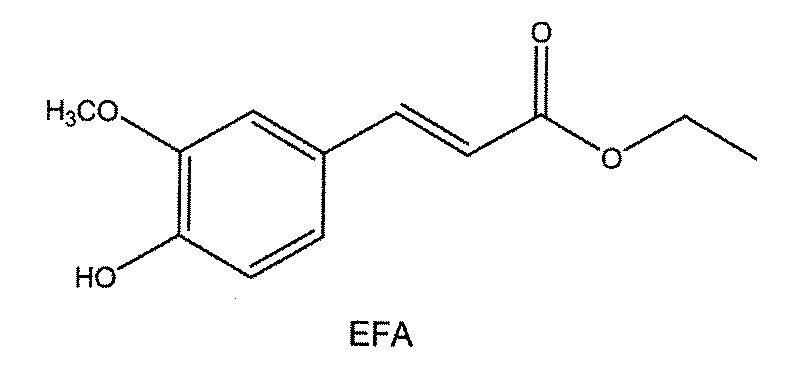
L-ラクチド10gと10mLのトルエンとを窒素雰囲気下で丸底フラスコに導入した。ここに重合触媒としてオクチル酸スズ140mgと、末端封止のために開始剤としてEFA246.9mgまたは61.7mgを導入し、120℃で2時間反応させた。生成物はクロロホルムに溶解させてメタノール中に再沈を繰り返すことで精製した。一般式Ar2がR5が-C=C-、R6がエチルの片末端封止ポリL乳酸(PLLAF1)を得た。同様にしてD-ラクチドを重合することにより片末端封止ポリD乳酸(PDLAF1)を得た。
次にポリL乳酸のOH末端の修飾を行なった。3 gのPLLAF1 (0.13mmol)を二口フラスコに入れ、30 mlのDCMを溶解させ、0 oCで14 mlのピリジン(175 mmol)30分撹拌し、この温度で87 mgのCC(Cinnamoyl chloride)(カフェ酸クロライド)(0.52 mmol;PLLAF1 : CC = 1 : 4 mol/mol)を入れ、1時間半撹拌した。次に、室温で24時間反応を行った。反応終了後、溶媒を完全に蒸発させ、THFに溶解させ、1 lのpH 3のHCl溶液を用いて2回洗浄した。そして、未反応のCAまたはCCを取り除くために、ジクロロメタン中に溶解した生成物をメタノールにより再沈殿させ(2回)、吸引濾過で目的の物質(CA-PLLAF1)を回収し、24時間減圧乾燥を行った。
同様にして両末端封止ポリD乳酸(CA-PDLAF1)を得た。
次にポリL乳酸のOH末端の修飾を行なった。3 gのPLLAF1 (0.13mmol)を二口フラスコに入れ、30 mlのDCMを溶解させ、0 oCで14 mlのピリジン(175 mmol)30分撹拌し、この温度で87 mgのCC(Cinnamoyl chloride)(カフェ酸クロライド)(0.52 mmol;PLLAF1 : CC = 1 : 4 mol/mol)を入れ、1時間半撹拌した。次に、室温で24時間反応を行った。反応終了後、溶媒を完全に蒸発させ、THFに溶解させ、1 lのpH 3のHCl溶液を用いて2回洗浄した。そして、未反応のCAまたはCCを取り除くために、ジクロロメタン中に溶解した生成物をメタノールにより再沈殿させ(2回)、吸引濾過で目的の物質(CA-PLLAF1)を回収し、24時間減圧乾燥を行った。
同様にして両末端封止ポリD乳酸(CA-PDLAF1)を得た。
上記で合成したPLLAF1およびPDLAF1は1H NMRおよび赤外吸収スペクトルから化学構造を確認した。また、ゲル透過クロマトグラフィー(ポリスチレン標準)により数平均分子量をそれぞれ23000および110000と見積もった。
上記と同様に合成したPLLAF1、PDLAF1、PLLAF2、PDLAF2、CA-PLLAF1、CA-PDLAF1、CA-PLLAF2、CA-PDLAF2を下記表4にまとめた。

表4中、「Tm」は、融点(℃)表している。測定はDSC測定(示差走査熱量計測定)することにより測定した。
「T10」は、重量減少10%の熱分解温度(℃)表している。測定は(TGA測定)することにより測定した。
また、「-」は、測定中であることを示している。
ステレオコンプレックス(SC)の合成
表4のD体およびL体を使用し、下記表5の組み合わせでD体およびL体を、それぞれ4mg/mLの濃度でクロロホルム溶液を調製し、それぞれ6mL溶液とり、ガラス製シャーレに入れた後、室温24時間乾燥させることで得た。
表4のD体およびL体を使用し、下記表5の組み合わせでD体およびL体を、それぞれ4mg/mLの濃度でクロロホルム溶液を調製し、それぞれ6mL溶液とり、ガラス製シャーレに入れた後、室温24時間乾燥させることで得た。

ステレオコンプレックス(SC)の同定
上記で得られたステレオコンプレックス(sc)の同定は熱的測定(DSC測定)することにより行った。
上記で得られたステレオコンプレックス(sc)の同定は熱的測定(DSC測定)することにより行った。
ステレオコンプレックス(SC)の熱的測定(DSC測定)
CA-PLLAF2、CA-PDLAF2、CA-PLLAF1およびCA-PDLAF1のDSC測定結果を図4に示す。
CA-PLLAF2、CA-PDLAF2、CA-PLLAF1およびCA-PDLAF1のDSC測定結果を図4に示す。
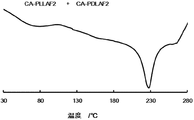
CA-PLLAF2、CA-PDLAF2のステレオコンプレックスのDSC測定結果を図5に示す。
CA-PLLAF2またはCA-PDLAF2単独の融点である170℃付近(図4)から、図5では融点が230℃まで向上している。このことは、CA-PLLAF2とCA-PDLAF2のステレオコンプレックスが形成されていることを示している。
図4および図5から、CA-PLLAF2とCA-PDLAF2のステレオコンプレックスは、コンプレックスを形成していないCA-PLLAF2またはCA-PDLAF2単独のものに比べて融点が約50℃向上している。ステレオコンプレックス化で耐熱性が向上していることがわかる。
紫外線照射によるステレオコンプレックス体の化学的修飾性
CA-PLLAF2とCA-PDLAF2とのステレオコンプレックスに、紫外線を照射した。
サンプルとして上記でインクジェット装置を使用して形成したコーティングを使用した。
紫外線は、株式会社 三永電機製作所SAN-EI ELECTRIC、SUPERCURE-352S UV LIGHTSOURCEにより照射した。
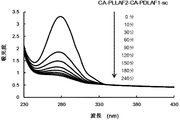
ステレオコンプレックスの紫外線(230~430nm)の各時間ごとの吸収スペクトルを紫外可視近赤外分光光度計((株)システック, V-670)により測定した。結果を図6に示す。
CA-PLLAF2とCA-PDLAF2とのステレオコンプレックスに、紫外線を照射した。
サンプルとして上記でインクジェット装置を使用して形成したコーティングを使用した。
紫外線は、株式会社 三永電機製作所SAN-EI ELECTRIC、SUPERCURE-352S UV LIGHTSOURCEにより照射した。
ステレオコンプレックスの紫外線(230~430nm)の各時間ごとの吸収スペクトルを紫外可視近赤外分光光度計((株)システック, V-670)により測定した。結果を図6に示す。
同様に、CA-PLLAF2とCA-PDLAF1とのステレオコンプレックスの紫外線(230~430nm)の吸収スペクトルを紫外可視近赤外分光光度計((株)システック, V-670)により測定した。結果を図7に示す。
図6および図7から、ステレオコンプレックス中に存在する二重結合に基づく280nmの吸収が、紫外線照射により減少していることから、該二重結合が架橋反応していることがわかる。すなわち、ステレオコンプレックス中に存在する二重結合は、ステレオコンプレックス体を化学的に修飾できることが確かめられた。
同様に、DACA-PLLAb1とDACA-PLLAb1とのステレオコンプレックス(表2のDACA-SCb1)を種々の条件下で紫外線照射したものの赤外吸収(FT-IR)スペクトルを図8に、X線回折法(XRD)分析した結果を図9に、熱分解温度をTGAによって分析した結果を図10に、DSC測定した結果を図11に示す。
図8~図11中、「DACA-PLA-sc」は、DACA-SCb1サンプルを示す。
「DACA-PLA-sc-3h UV」は、上記DACA-SCb1サンプルをクロロホルム溶液によってキャストフィルムを作製した後、UV光を三時間照射したサンプルを示す。
「DACA-PLA-sc-2h UV solution」は、上記DACA-SCb1サンプルをジクロロメタン溶液に溶解した後に2時間UV照射したサンプルを示す。
「DACA-PLA-sc-5h-160℃」は、160℃で5時間熱溶解させてフィルムを作製したサンプルを示す。
「DACA-PLA-sc-5h-160℃-3hUV (after annealing」は、160℃で5時間熱溶解させてフィルムを作製したサンプルに3時間UV光を照射したサンプルを示す。
「DACA-PLA-sc-3h UV」は、上記DACA-SCb1サンプルをクロロホルム溶液によってキャストフィルムを作製した後、UV光を三時間照射したサンプルを示す。
「DACA-PLA-sc-2h UV solution」は、上記DACA-SCb1サンプルをジクロロメタン溶液に溶解した後に2時間UV照射したサンプルを示す。
「DACA-PLA-sc-5h-160℃」は、160℃で5時間熱溶解させてフィルムを作製したサンプルを示す。
「DACA-PLA-sc-5h-160℃-3hUV (after annealing」は、160℃で5時間熱溶解させてフィルムを作製したサンプルに3時間UV光を照射したサンプルを示す。
図8から、ポリマー主鎖のカルボニル基のピークに変化が認められないことから、UV光の照射に関わらず安定な構造を有していることが分かる。
図9から、UV光の照射に関わらず、ステレオコンプレックスの結晶構造に変化がなく、安定性が高いことが分かる。
図10から、熱分解温度に変化がなく、UV照射に関わらず、熱安定性を保っていることが分かる。
図11から、融点に変化がなく、UV照射に関わらず、熱安定性を保っていることが分かる。
図9から、UV光の照射に関わらず、ステレオコンプレックスの結晶構造に変化がなく、安定性が高いことが分かる。
図10から、熱分解温度に変化がなく、UV照射に関わらず、熱安定性を保っていることが分かる。
図11から、融点に変化がなく、UV照射に関わらず、熱安定性を保っていることが分かる。
図8~図11から、本発明のステレオコンプレックス体は、紫外線照射により化学的修飾(架橋)を施しても、そのコンプレックス体の構造が維持され、また熱特性も維持されることが分かった。すなわち、ステレオコンプレックスの構造、熱特性を破壊することなく(維持しつつ)、ステレオコンプレックス中の二重結合を化学修飾反応基として使用することができることを示している。
熱殺菌温度が200℃付近まで可能となることから、バイオマテリアルとしての利用が有用である。例えば、ステントのコーティング、ナノ粒子のコーティングにより、耐熱性生分解性高分子材料として、さらには薬物徐放材料の素材として利用できる。
Claims (6)
- 少なくとも末端封止L-乳酸ポリマーおよび末端封止D-乳酸ポリマーからなるステレオコンプレックスポリマーを含むコーティング。
- 末端封止L-乳酸ポリマーが、下記式(I):

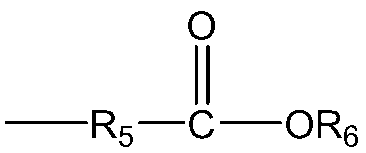
で表される基(式中、R5は単結合、炭素数1~5の2重結合を有していてもよいアルキレン基をあらわす;R6は、水素原子または炭素数1~3のアルキル基を表す)
を表す;R2は単結合、炭素数1~5の2重結合を有していてもよいアルキレン基、または2価の置換基を有していてもよい芳香族基を表す)。
で表され、数平均分子量1000~200000である、請求項1に記載のコーティング。 - 末端封止D-乳酸ポリマーが、下記式(II):


を表す;R4は単結合、炭素数1~5の2重結合を有していてもよいアルキレン基、または2価の置換基を有していてもよい芳香族基を表す)。
で表され、数平均分子量1000~200000である、請求項1または2に記載のコーティング。 - 末端封止L-乳酸ポリマーまたは末端封止D-乳酸ポリマーのどちらか一のポリマーを含むポリマー溶液をマイクロリットル以下の単位で基材上に塗布し、続いて該塗布部に、該一のポリマーとステレオコンプレックスを形成するもう一方のポリマーを含む溶液をマイクロリットル以下の単位で塗布し、以上の工程を繰り返すことを特徴とする、請求項1記載のコーティングの製造方法。
- 末端封止L-乳酸ポリマーが、下記式(I):


を表す;R2は単結合、炭素数1~5の2重結合を有していてもよいアルキレン基、または2価の置換基を有していてもよい芳香族基を表す)。
で表され、数平均分子量1000~200000である、請求項4に記載の製造方法。 - 末端封止D-乳酸ポリマーが、下記式(II):

で表される基(式中、R5は単結合、炭素数1~5の2重結合を有していてもよいアルキレン基をあらわす;R6は、水素原子または炭素数1~3のアルキル基を表す)
を表す;R4は単結合、炭素数1~5の2重結合を有していてもよいアルキレン基、または2価の置換基を有していてもよい芳香族基を表すを表す)。
で表され、数平均分子量1000~200000である、請求項4または5に記載の製造方法。
Priority Applications (1)
| Application Number | Priority Date | Filing Date | Title |
|---|---|---|---|
| JP2015510059A JP6329132B2 (ja) | 2013-04-05 | 2014-03-28 | 両末端封止ポリ乳酸コーティングおよびその製造方法 |
Applications Claiming Priority (2)
| Application Number | Priority Date | Filing Date | Title |
|---|---|---|---|
| JP2013-079141 | 2013-04-05 | ||
| JP2013079141 | 2013-04-05 |
Publications (1)
| Publication Number | Publication Date |
|---|---|
| WO2014163012A1 true WO2014163012A1 (ja) | 2014-10-09 |
Family
ID=51658308
Family Applications (1)
| Application Number | Title | Priority Date | Filing Date |
|---|---|---|---|
| PCT/JP2014/059222 Ceased WO2014163012A1 (ja) | 2013-04-05 | 2014-03-28 | 両末端封止ポリ乳酸コーティングおよびその製造方法 |
Country Status (2)
| Country | Link |
|---|---|
| JP (1) | JP6329132B2 (ja) |
| WO (1) | WO2014163012A1 (ja) |
Family Cites Families (1)
| Publication number | Priority date | Publication date | Assignee | Title |
|---|---|---|---|---|
| JP6089178B2 (ja) * | 2012-01-20 | 2017-03-08 | 国立大学法人 奈良先端科学技術大学院大学 | コンプレックスポリマーの製造方法 |
-
2014
- 2014-03-28 WO PCT/JP2014/059222 patent/WO2014163012A1/ja not_active Ceased
- 2014-03-28 JP JP2015510059A patent/JP6329132B2/ja active Active
Non-Patent Citations (2)
| Title |
|---|
| HIROHARU AJIRO ET AL.: "A stereocomplex of poly(lactide)s with chain end modification: simultaneous resistances to melting and thermal decomposition", CHEM. COMM., vol. 48, 2012, pages 8478 - 8480 * |
| HIROHARU AJIRO ET AL.: "Rapid Fabrication of Polylactide Stereocomplex Using Layer-by-Layer Deposition by Inkjet Printing", ANGEWANDTE CHEMIE, vol. 124, 2012, pages 5589 - 5592 * |
Also Published As
| Publication number | Publication date |
|---|---|
| JP6329132B2 (ja) | 2018-05-23 |
| JPWO2014163012A1 (ja) | 2017-02-16 |
Similar Documents
| Publication | Publication Date | Title |
|---|---|---|
| Brzezinski et al. | Unusual thermal properties of polylactides and polylactide stereocomplexes containing polylactide-functionalized multi-walled carbon nanotubes | |
| Liénard et al. | Cyclic polymers: Advances in their synthesis, properties, and biomedical applications | |
| Brzezinski et al. | Supramolecular polylactides by the cooperative interaction of the end groups and stereocomplexation | |
| Van Benthem | Novel hyperbranched resins for coating applications | |
| Takizawa et al. | Molecularly defined (L)‐lactic acid oligomers and polymers: Synthesis and characterization | |
| Goffin et al. | New organic–inorganic nanohybrids via ring opening polymerization of (di) lactones initiated by functionalized polyhedral oligomeric silsesquioxane | |
| BR112017028598B1 (pt) | Composições de poliuretano livres de isocianato e uso das referidas composições | |
| US9567422B2 (en) | Acetoacetoxy and enamine compounds and coatings therefrom | |
| Ozkose et al. | In-situ preparation of poly (2-ethyl-2-oxazoline)/clay nanocomposites via living cationic ring-opening polymerization | |
| JP6862357B2 (ja) | ポリマー組成物 | |
| Zhou et al. | Effect of chain length on polymer stereocomplexation: a quantitative study | |
| WO2010110460A1 (ja) | ラクチド・ε-カプロラクトン共重合体の製造方法 | |
| JP6862358B2 (ja) | ポリマー組成物 | |
| NZ754070A (en) | Aqueous polymer composition | |
| Brown et al. | Pegylated polybenzoxazine networks with increased thermal stability from miscible blends of tosylated poly (ethylene glycol) and a benzoxazine monomer | |
| KR20190020792A (ko) | 생물분해성 폴리에스테르 블록을 포함하는 나노구조화된 블록 코폴리머 필름 | |
| WO2006125965A1 (en) | Novel surface active polymeric systems | |
| Yuan et al. | Synthesis and characterization of star polylactide by ring-opening polymerization of L-lactic acid O-carboxyanhydride | |
| JP6329132B2 (ja) | 両末端封止ポリ乳酸コーティングおよびその製造方法 | |
| Gardella et al. | On stereocomplexed polylactide materials as support for PAMAM dendrimers: synthesis and properties | |
| JP6807336B2 (ja) | 改良された異相ポリプロピレン | |
| US8853330B2 (en) | Hybrid polymers | |
| Christ et al. | Poly (THF-co-cyano ethylene oxide): cyano ethylene oxide (CEO) copolymerization with THF leading to multifunctional and water-soluble polyTHF polyelectrolytes | |
| Nisha et al. | Chiral poly (l-lactic acid) driven helical self-assembly of oligo (p-phenylenevinylene) | |
| Jahandideh et al. | Facile synthesis and characterization of activated star-shaped itaconic acid based thermosetting resins |
Legal Events
| Date | Code | Title | Description |
|---|---|---|---|
| 121 | Ep: the epo has been informed by wipo that ep was designated in this application |
Ref document number: 14778856 Country of ref document: EP Kind code of ref document: A1 |
|
| ENP | Entry into the national phase |
Ref document number: 2015510059 Country of ref document: JP Kind code of ref document: A |
|
| NENP | Non-entry into the national phase |
Ref country code: DE |
|
| 122 | Ep: pct application non-entry in european phase |
Ref document number: 14778856 Country of ref document: EP Kind code of ref document: A1 |