WO2014123153A1 - アルミナ焼結体、砥粒、砥石、研磨布、及びアルミナ焼結体の製造方法 - Google Patents
アルミナ焼結体、砥粒、砥石、研磨布、及びアルミナ焼結体の製造方法 Download PDFInfo
- Publication number
- WO2014123153A1 WO2014123153A1 PCT/JP2014/052666 JP2014052666W WO2014123153A1 WO 2014123153 A1 WO2014123153 A1 WO 2014123153A1 JP 2014052666 W JP2014052666 W JP 2014052666W WO 2014123153 A1 WO2014123153 A1 WO 2014123153A1
- Authority
- WO
- WIPO (PCT)
- Prior art keywords
- sintered body
- alumina sintered
- alumina
- abrasive grains
- porosity
- Prior art date
- Legal status (The legal status is an assumption and is not a legal conclusion. Google has not performed a legal analysis and makes no representation as to the accuracy of the status listed.)
- Ceased
Links
Images


Classifications
-
- C—CHEMISTRY; METALLURGY
- C09—DYES; PAINTS; POLISHES; NATURAL RESINS; ADHESIVES; COMPOSITIONS NOT OTHERWISE PROVIDED FOR; APPLICATIONS OF MATERIALS NOT OTHERWISE PROVIDED FOR
- C09K—MATERIALS FOR MISCELLANEOUS APPLICATIONS, NOT PROVIDED FOR ELSEWHERE
- C09K3/00—Materials not provided for elsewhere
- C09K3/14—Anti-slip materials; Abrasives
- C09K3/1409—Abrasive particles per se
-
- B—PERFORMING OPERATIONS; TRANSPORTING
- B24—GRINDING; POLISHING
- B24D—TOOLS FOR GRINDING, BUFFING OR SHARPENING
- B24D3/00—Physical features of abrasive bodies, or sheets, e.g. abrasive surfaces of special nature; Abrasive bodies or sheets characterised by their constituents
-
- C—CHEMISTRY; METALLURGY
- C04—CEMENTS; CONCRETE; ARTIFICIAL STONE; CERAMICS; REFRACTORIES
- C04B—LIME, MAGNESIA; SLAG; CEMENTS; COMPOSITIONS THEREOF, e.g. MORTARS, CONCRETE OR LIKE BUILDING MATERIALS; ARTIFICIAL STONE; CERAMICS; REFRACTORIES; TREATMENT OF NATURAL STONE
- C04B35/00—Shaped ceramic products characterised by their composition; Ceramics compositions; Processing powders of inorganic compounds preparatory to the manufacturing of ceramic products
- C04B35/01—Shaped ceramic products characterised by their composition; Ceramics compositions; Processing powders of inorganic compounds preparatory to the manufacturing of ceramic products based on oxide ceramics
- C04B35/10—Shaped ceramic products characterised by their composition; Ceramics compositions; Processing powders of inorganic compounds preparatory to the manufacturing of ceramic products based on oxide ceramics based on aluminium oxide
- C04B35/111—Fine ceramics
-
- C—CHEMISTRY; METALLURGY
- C04—CEMENTS; CONCRETE; ARTIFICIAL STONE; CERAMICS; REFRACTORIES
- C04B—LIME, MAGNESIA; SLAG; CEMENTS; COMPOSITIONS THEREOF, e.g. MORTARS, CONCRETE OR LIKE BUILDING MATERIALS; ARTIFICIAL STONE; CERAMICS; REFRACTORIES; TREATMENT OF NATURAL STONE
- C04B35/00—Shaped ceramic products characterised by their composition; Ceramics compositions; Processing powders of inorganic compounds preparatory to the manufacturing of ceramic products
- C04B35/01—Shaped ceramic products characterised by their composition; Ceramics compositions; Processing powders of inorganic compounds preparatory to the manufacturing of ceramic products based on oxide ceramics
- C04B35/10—Shaped ceramic products characterised by their composition; Ceramics compositions; Processing powders of inorganic compounds preparatory to the manufacturing of ceramic products based on oxide ceramics based on aluminium oxide
- C04B35/111—Fine ceramics
- C04B35/115—Translucent or transparent products
-
- C—CHEMISTRY; METALLURGY
- C04—CEMENTS; CONCRETE; ARTIFICIAL STONE; CERAMICS; REFRACTORIES
- C04B—LIME, MAGNESIA; SLAG; CEMENTS; COMPOSITIONS THEREOF, e.g. MORTARS, CONCRETE OR LIKE BUILDING MATERIALS; ARTIFICIAL STONE; CERAMICS; REFRACTORIES; TREATMENT OF NATURAL STONE
- C04B35/00—Shaped ceramic products characterised by their composition; Ceramics compositions; Processing powders of inorganic compounds preparatory to the manufacturing of ceramic products
- C04B35/622—Forming processes; Processing powders of inorganic compounds preparatory to the manufacturing of ceramic products
- C04B35/64—Burning or sintering processes
-
- C—CHEMISTRY; METALLURGY
- C04—CEMENTS; CONCRETE; ARTIFICIAL STONE; CERAMICS; REFRACTORIES
- C04B—LIME, MAGNESIA; SLAG; CEMENTS; COMPOSITIONS THEREOF, e.g. MORTARS, CONCRETE OR LIKE BUILDING MATERIALS; ARTIFICIAL STONE; CERAMICS; REFRACTORIES; TREATMENT OF NATURAL STONE
- C04B38/00—Porous mortars, concrete, artificial stone or ceramic ware; Preparation thereof
-
- C—CHEMISTRY; METALLURGY
- C04—CEMENTS; CONCRETE; ARTIFICIAL STONE; CERAMICS; REFRACTORIES
- C04B—LIME, MAGNESIA; SLAG; CEMENTS; COMPOSITIONS THEREOF, e.g. MORTARS, CONCRETE OR LIKE BUILDING MATERIALS; ARTIFICIAL STONE; CERAMICS; REFRACTORIES; TREATMENT OF NATURAL STONE
- C04B2235/00—Aspects relating to ceramic starting mixtures or sintered ceramic products
- C04B2235/02—Composition of constituents of the starting material or of secondary phases of the final product
- C04B2235/30—Constituents and secondary phases not being of a fibrous nature
- C04B2235/32—Metal oxides, mixed metal oxides, or oxide-forming salts thereof, e.g. carbonates, nitrates, (oxy)hydroxides, chlorides
- C04B2235/3201—Alkali metal oxides or oxide-forming salts thereof
-
- C—CHEMISTRY; METALLURGY
- C04—CEMENTS; CONCRETE; ARTIFICIAL STONE; CERAMICS; REFRACTORIES
- C04B—LIME, MAGNESIA; SLAG; CEMENTS; COMPOSITIONS THEREOF, e.g. MORTARS, CONCRETE OR LIKE BUILDING MATERIALS; ARTIFICIAL STONE; CERAMICS; REFRACTORIES; TREATMENT OF NATURAL STONE
- C04B2235/00—Aspects relating to ceramic starting mixtures or sintered ceramic products
- C04B2235/02—Composition of constituents of the starting material or of secondary phases of the final product
- C04B2235/30—Constituents and secondary phases not being of a fibrous nature
- C04B2235/32—Metal oxides, mixed metal oxides, or oxide-forming salts thereof, e.g. carbonates, nitrates, (oxy)hydroxides, chlorides
- C04B2235/3217—Aluminum oxide or oxide forming salts thereof, e.g. bauxite, alpha-alumina
- C04B2235/3218—Aluminium (oxy)hydroxides, e.g. boehmite, gibbsite, alumina sol
-
- C—CHEMISTRY; METALLURGY
- C04—CEMENTS; CONCRETE; ARTIFICIAL STONE; CERAMICS; REFRACTORIES
- C04B—LIME, MAGNESIA; SLAG; CEMENTS; COMPOSITIONS THEREOF, e.g. MORTARS, CONCRETE OR LIKE BUILDING MATERIALS; ARTIFICIAL STONE; CERAMICS; REFRACTORIES; TREATMENT OF NATURAL STONE
- C04B2235/00—Aspects relating to ceramic starting mixtures or sintered ceramic products
- C04B2235/02—Composition of constituents of the starting material or of secondary phases of the final product
- C04B2235/30—Constituents and secondary phases not being of a fibrous nature
- C04B2235/32—Metal oxides, mixed metal oxides, or oxide-forming salts thereof, e.g. carbonates, nitrates, (oxy)hydroxides, chlorides
- C04B2235/327—Iron group oxides, their mixed metal oxides, or oxide-forming salts thereof
- C04B2235/3272—Iron oxides or oxide forming salts thereof, e.g. hematite, magnetite
-
- C—CHEMISTRY; METALLURGY
- C04—CEMENTS; CONCRETE; ARTIFICIAL STONE; CERAMICS; REFRACTORIES
- C04B—LIME, MAGNESIA; SLAG; CEMENTS; COMPOSITIONS THEREOF, e.g. MORTARS, CONCRETE OR LIKE BUILDING MATERIALS; ARTIFICIAL STONE; CERAMICS; REFRACTORIES; TREATMENT OF NATURAL STONE
- C04B2235/00—Aspects relating to ceramic starting mixtures or sintered ceramic products
- C04B2235/02—Composition of constituents of the starting material or of secondary phases of the final product
- C04B2235/30—Constituents and secondary phases not being of a fibrous nature
- C04B2235/34—Non-metal oxides, non-metal mixed oxides, or salts thereof that form the non-metal oxides upon heating, e.g. carbonates, nitrates, (oxy)hydroxides, chlorides
- C04B2235/3418—Silicon oxide, silicic acids or oxide forming salts thereof, e.g. silica sol, fused silica, silica fume, cristobalite, quartz or flint
-
- C—CHEMISTRY; METALLURGY
- C04—CEMENTS; CONCRETE; ARTIFICIAL STONE; CERAMICS; REFRACTORIES
- C04B—LIME, MAGNESIA; SLAG; CEMENTS; COMPOSITIONS THEREOF, e.g. MORTARS, CONCRETE OR LIKE BUILDING MATERIALS; ARTIFICIAL STONE; CERAMICS; REFRACTORIES; TREATMENT OF NATURAL STONE
- C04B2235/00—Aspects relating to ceramic starting mixtures or sintered ceramic products
- C04B2235/02—Composition of constituents of the starting material or of secondary phases of the final product
- C04B2235/50—Constituents or additives of the starting mixture chosen for their shape or used because of their shape or their physical appearance
- C04B2235/54—Particle size related information
- C04B2235/5418—Particle size related information expressed by the size of the particles or aggregates thereof
- C04B2235/5436—Particle size related information expressed by the size of the particles or aggregates thereof micrometer sized, i.e. from 1 to 100 micron
-
- C—CHEMISTRY; METALLURGY
- C04—CEMENTS; CONCRETE; ARTIFICIAL STONE; CERAMICS; REFRACTORIES
- C04B—LIME, MAGNESIA; SLAG; CEMENTS; COMPOSITIONS THEREOF, e.g. MORTARS, CONCRETE OR LIKE BUILDING MATERIALS; ARTIFICIAL STONE; CERAMICS; REFRACTORIES; TREATMENT OF NATURAL STONE
- C04B2235/00—Aspects relating to ceramic starting mixtures or sintered ceramic products
- C04B2235/02—Composition of constituents of the starting material or of secondary phases of the final product
- C04B2235/50—Constituents or additives of the starting mixture chosen for their shape or used because of their shape or their physical appearance
- C04B2235/54—Particle size related information
- C04B2235/5418—Particle size related information expressed by the size of the particles or aggregates thereof
- C04B2235/5445—Particle size related information expressed by the size of the particles or aggregates thereof submicron sized, i.e. from 0,1 to 1 micron
-
- C—CHEMISTRY; METALLURGY
- C04—CEMENTS; CONCRETE; ARTIFICIAL STONE; CERAMICS; REFRACTORIES
- C04B—LIME, MAGNESIA; SLAG; CEMENTS; COMPOSITIONS THEREOF, e.g. MORTARS, CONCRETE OR LIKE BUILDING MATERIALS; ARTIFICIAL STONE; CERAMICS; REFRACTORIES; TREATMENT OF NATURAL STONE
- C04B2235/00—Aspects relating to ceramic starting mixtures or sintered ceramic products
- C04B2235/02—Composition of constituents of the starting material or of secondary phases of the final product
- C04B2235/50—Constituents or additives of the starting mixture chosen for their shape or used because of their shape or their physical appearance
- C04B2235/54—Particle size related information
- C04B2235/5463—Particle size distributions
Definitions
- the present invention relates to an alumina sintered body, abrasive grains made of the alumina sintered body, a grindstone using the abrasive grains, a polishing cloth, and a method for producing the alumina sintered body.
- Alumina sintered bodies are used in various industrial fields by taking advantage of their characteristics such as high hardness, high strength, high heat resistance, high wear resistance, and high chemical resistance.
- it is used as a raw material (abrasive grain) for heavy grinding wheels in the steel industry.
- abrasive cloth is used for grinding and polishing of steel and stainless steel, welding bead removal and deburring, and a high amount of grinding (amount of work material cut) is required.
- abrasive cloth is used for grinding and polishing of steel and stainless steel, welding bead removal and deburring, and a high amount of grinding (amount of work material cut) is required.
- abrasive grains that are highly friable.
- Alumina sintered bodies are not sufficiently friable in grinding under a light load such as an abrasive cloth, and the power required for grinding increases.
- Patent Document 1 abrasive grains produced using a sol-gel method can be cited as abrasive grains rich in friability.
- Patent Document 2 there is a method for forming defects and gaps in a crystal structure by laser irradiation as a method for improving the crushability of abrasive grains.
- Patent Document 3 there is a method of forming microcracks inside the abrasive grains by rapidly cooling the heated abrasive grains.
- a method for producing a porous alumina sintered body includes a method in which aluminum hydroxide is added to alumina as a raw material and subjected to a firing treatment. ing.
- Patent Document 1 The sol-gel abrasive grains of Patent Document 1 are not easy to manufacture and have the disadvantage of being expensive.
- the number of manufacturing steps is increased by performing laser irradiation, and the manufacturing cost is greatly increased.
- the relationship between the amount of microcracks formed and the crushability is not disclosed, and the crushability suitable for the target grinding method and work material cannot be obtained.
- Patent Document 4 there is no description that a porous alumina sintered body is used for abrasive grains, and naturally, the friability of the sintered body is not disclosed. Further, when this porous alumina sintered body is used as abrasive grains, the firing temperature is low and the porosity is too high, so that sufficient hardness as abrasive grains cannot be obtained.
- the present invention has been made under such circumstances, and has excellent crushability and low grinding power, an alumina sintered body, abrasive grains made of the alumina sintered body, a grindstone using the abrasive grains, polishing It aims at providing the manufacturing method of cloth and an alumina sintered compact.
- the present inventors pay attention to controlling the porosity of the alumina sintered body and imparting arbitrary friability, and further imparting the porosity. Attention was focused on aluminum hydroxide as an additive. The present invention has been completed based on such findings.
- alumina sintered body obtained by sintering a mixture containing alumina and aluminum hydroxide and having a porosity of 6 to 35% by volume and a Vickers hardness of 4 GPa or more.
- the alumina sintered body according to [1] obtained by sintering a mixture containing 10 to 99% by mass of alumina and 1 to 90% by mass of aluminum hydroxide.
- Abrasive grains comprising the alumina sintered body according to [1] or [2].
- a grindstone having a layer of abrasive grains according to [3] on its working surface.
- a method for producing an alumina sintered body having the following steps (1) to (3) having a porosity of 6 to 30% and a Vickers hardness of 4 GPa or more. Step (1): Step of preparing a mixture in which alumina and aluminum hydroxide are blended Step (2): Step of molding the mixture obtained in Step (1) Step (3): Molding obtained by Step (2) [7] The method for producing an alumina sintered body according to [6], further comprising the following step (4).
- Step (4) Step of pulverizing the alumina sintered body obtained in Step (3) [8]
- the following steps (1), (2), (3) ′ and (4) ′ are included, and the porosity is 6
- Step (1) Step of preparing a mixture in which alumina and aluminum hydroxide are blended
- Step (2) Step of molding the mixture obtained in Step (1)
- Step (3) ' Obtained in Step (2)
- Step (4) ′ for pulverizing after the alumina compact is dried Step for obtaining an alumina sintered body by firing the pulverized product obtained in step (3) ′
- an alumina sintered body having excellent crushability and low grinding power abrasive grains made of the alumina sintered body, a grindstone using the abrasive grains, a polishing cloth, and a method for producing the alumina sintered body Can be provided.
- the alumina sintered body of the present invention is obtained by sintering a mixture containing alumina and aluminum hydroxide, and has a porosity of 6 to 35% by volume and a Vickers hardness of 4 GPa or more. By having such a configuration, an alumina sintered body having excellent crushability and low grinding power can be obtained.
- each configuration of the present invention will be described in detail.
- the alumina sintered body of the present invention has a porosity of 6 to 35% by volume.
- the porosity is 6% by volume or more, an alumina sintered body having high crushability can be obtained.
- the value of the C coefficient, which is an index of friability increases as the porosity increases, and it can be confirmed that the friability is improved by introducing the pores.
- the porosity in the case of producing alumina alone is 5.5% by volume, a porosity of 6% by volume or more is necessary to obtain sufficient improvement in friability.
- the porosity of 7 volume% or more is preferable, and the porosity of 11 volume% or more is more preferable.
- the porosity When the porosity is 35% by volume or less, the Vickers hardness necessary for grinding can be easily maintained. However, as the porosity increases, the value of Vickers hardness decreases and the grinding performance also decreases. Therefore, the porosity is preferably 31% by volume or less, and more preferably 24% by volume or less.
- the method for measuring the porosity is according to the method described in Examples. Moreover, the porosity can be obtained in the above numerical range by adjusting the content of aluminum hydroxide described later and the firing temperature.
- the alumina sintered body of the present invention has a Vickers hardness of 4 GPa or more.
- the above Vickers hardness of the work material is necessary. Therefore, the alumina sintered body has the above-mentioned porosity and the Vickers hardness is 4 GPa or more. It is possible to grind a general carbon steel having about 4 GPa.
- the Vickers hardness is preferably 6 GPa or more because the Vickers hardness of general stainless steel is about 6 GPa.
- the upper limit of Vickers hardness is not particularly limited, but is, for example, 22 GPa or less, and preferably 19 GPa or less.
- the measuring method of Vickers hardness is according to the method described in the examples. Moreover, said Vickers hardness is obtained by adjusting a porosity suitably.
- the alumina used in the present invention is a raw material for forming a main crystal phase composed of corundum crystals in the obtained alumina sintered body, it is preferably of high purity, such as alumina formed by the Bayer method, etc. Is preferably used.
- the purity of alumina is preferably 97% by mass or more, more preferably 99% by mass or more in terms of oxide.
- the content of sodium contained in alumina is preferably 1% by mass or less, more preferably 0.5% by mass or less, in terms of oxide (Na 2 O).
- the content of each of other substances is preferably 0.05% by mass or less, and more preferably 0.01% by mass or less, in terms of oxide.
- the form of alumina examples include powder, slurry, and aqueous solution.
- a raw material of powder it is preferable to use a raw material of powder from the viewpoint of ease of handling during work.
- the cumulative mass 50% diameter (d 50 ) of the alumina powder is preferably 3 ⁇ m or less and more preferably 1 ⁇ m or less in order to obtain a homogeneous mixed powder.
- the lower limit value of the 50% cumulative mass diameter (d 50 ) is not particularly limited, but is, for example, 0.01 ⁇ m or more.
- the cumulative mass 50% diameter (d 50 ) of various powders can be measured by a laser diffraction method.
- Aluminum hydroxide is used for the alumina sintered body of the present invention. Since aluminum hydroxide changes to alumina by firing, it is not necessary to consider the influence of impurities. Further, since the shrinkage rate during firing is larger than that of alumina, pores are formed in the alumina sintered body due to the difference in shrinkage rate. Since the purity of aluminum hydroxide is preferably about the same as that of alumina after firing, the purity is preferably about the same as that of alumina.
- the form of aluminum hydroxide the same form as that of aluminum can be used. If the cumulative mass 50% diameter (d 50 ) of aluminum hydroxide is small, pores are less likely to be formed due to the shrinkage of alumina when fired, and a larger value is preferable in terms of cost.
- the cumulative mass 50% diameter (d 50 ) of aluminum hydroxide is preferably 0.1 to 100 ⁇ m, more preferably 3 to 100 ⁇ m, still more preferably 5 to 80 ⁇ m, and still more preferably 6 ⁇ 60 ⁇ m.
- the amount of alumina in the mixture to be fired is preferably 10 to 99% by mass, more preferably 20 to 99% by mass, still more preferably 30 to 99% by mass, and even more preferably 45 to 90% by mass with respect to the entire mixture.
- the amount of aluminum hydroxide in the mixture is preferably 1 to 90% by mass, more preferably 1 to 80% by mass, still more preferably 1 to 70% by mass, and even more preferably 10 to 55% by mass, based on the entire mixture. preferable. By setting it as such a range, it becomes easy to obtain a moderate porosity.
- the method for producing the alumina sintered body is not particularly limited, but for example, it preferably has the following steps (1) to (3).
- Step (4) Step of pulverizing the alumina sintered body obtained in the step (3)
- the manufacturing method of an alumina sintered compact has following process (1) (2) (3) '(4)', for example.
- Step (1) Step of preparing a mixture in which alumina and aluminum hydroxide are blended
- Step (2) Step of molding the mixture obtained in Step (1)
- Step (3) ' Obtained in Step (2)
- a known molding means is used, and for example, it can be molded into an arbitrary shape by a die press, cold isostatic pressing, cast molding, injection molding, extrusion molding or the like.
- the molded body obtained in the step (2) is sintered.
- sintering a known sintering method is used.
- sintering is performed by various sintering methods such as a hot press method, a normal pressure firing method, a gas pressure firing method, and a microwave heating firing method.
- the sintering temperature is preferably 1400 ° C. or higher and 1800 ° C. or lower, more preferably 1600 ° C. or higher and 1800 ° C. or lower.
- step (4) the alumina sintered body obtained in step (3) is pulverized.
- a known pulverization means is used for the pulverization.
- step (3) ' the alumina molded body obtained in step (2) is dried and then pulverized.
- the pulverization method the same pulverization method as in the above step (4) can be used.
- the drying can be performed, for example, at about 100 ° C. for 2 hours or more under atmospheric pressure and normal pressure.
- step (4) ' the pulverized product obtained in step (3)' is fired to obtain an alumina sintered body. Sintering can be performed by the same method as in the above step (3).
- the alumina sintered body of the present invention has excellent crushability, for example, grinding, cutting and polishing tools such as abrasives, cutting materials and abrasives, and further as abrasive grains for abrasive cloths in the steel industry. Is preferred.
- the abrasive grain of the present invention comprises the alumina sintered body of the present invention.
- Arbitrary abrasive grains can be obtained by crushing the molded body or crushing the sintered body.
- the alumina sintered body of the present invention can be obtained, for example, by sequentially performing a pulverization process, a kneading process, a forming process, a drying process, and a sintering process.
- the grindstone of the present invention has the layer of the abrasive grains of the present invention on the working surface.
- the grindstone of the present invention has, for example, a base metal and a layer containing abrasive grains provided on the working surface of the base metal.
- the layer containing abrasive grains is obtained by fixing the abrasive grains to the working surface.
- Examples of the method for fixing the abrasive grains to the working surface in the grindstone of the present invention include adhesion by resin bond, vitrified bond, metal bond, and electrodeposition.
- the resin bond has good sharpness but low durability.
- the vitrified bond has a good sharpness and good wear resistance, but internal stress is generated in the abrasive grains, and the abrasive grains are likely to crack or chip. Electrodeposition has a large degree of freedom in shape and good sharpness.
- a method for fixing the abrasive grains is selected according to the application.
- the base metal material include steel, stainless alloy, and aluminum alloy.
- a powder of a binder (resin bond) such as a phenol resin or a polyimide resin and the abrasive grain of the present invention are mixed, or the binder is used as an abrasive grain.
- a powder of a binder (resin bond) such as a phenol resin or a polyimide resin and the abrasive grain of the present invention are mixed, or the binder is used as an abrasive grain.
- the abrasive cloth of the present invention has the layer of the abrasive grains of the present invention on the working surface.
- the polishing cloth of the present invention has, for example, a base material and a layer containing abrasive grains provided on the working surface of the base material.
- the layer containing abrasive grains is obtained by fixing the abrasive grains to the working surface of the substrate.
- Examples of the method for fixing the abrasive grains on the working surface of the polishing cloth of the present invention include synthetic resin adhesives such as phenol resin and epoxy resin, and natural adhesives such as glue. Naturally produced adhesives are flexible, but have poor heat and water resistance and are not suitable for wet work.
- synthetic resin adhesives are excellent in heat resistance and water resistance, and are suitable for use at high speeds and high loads.
- the substrate include cotton cloth, synthetic cloth, PET (polyethylene terephthalate), and non-woven cloth.
- Porosity (volume%) (1-particle bulk specific gravity / true specific gravity) ⁇ 100
- the C coefficient was measured by a method based on a test method (ball mill method) of toughness of JIS R6128-1975 artificial grinding material. That is, about 250 g of the sample was sieved for 10 minutes by a low tap tester using a standard sieve defined in JIS R6001-1987. The total amount of the sample remaining in the third stage was further sieved for 10 minutes, and 50 g of the sample remaining on the third stage was again used as a test sample. This sample was ball milled by a method defined in JIS R6128-1975. The ground sample was sieved for 5 minutes using a standard sieve, and the weight of the sample remaining on the fourth stage was measured to obtain R (X).
- a test method ball mill method of toughness of JIS R6128-1975 artificial grinding material. That is, about 250 g of the sample was sieved for 10 minutes by a low tap tester using a standard sieve defined in JIS R6001-1987. The total amount of the sample remaining in the third stage was further sieved for 10
- aluminum hydroxide powder As the aluminum hydroxide powder, four types of aluminum hydroxides A to D were used. Each cumulative mass 50% diameter (d 50 ) and chemical composition are as shown in Table 2.
- Examples 1 to 13, Comparative Examples 1 and 2 Various powders were obtained by mixing the alumina powder of Production Example 1 having a cumulative mass 50% diameter (d 50 ) of 0.7 ⁇ m and the aluminum hydroxide powder in the proportions shown in Table 3. After adding pure water to these various mixtures and kneading them using a kneader, various molded bodies were prepared using an extruder. Thereafter, the various molded bodies were held in an electric furnace (atmosphere) at 1670 ° C. for 1 hour and fired to obtain various alumina sintered bodies. These were tested (evaluated) as described above. The results are shown in Table 3, and the chemical components are shown in Table 4.
- FIG. 1 is a plot of porosity and Vickers hardness against the amount of aluminum hydroxide added based on the results of Examples 1 to 13 (A to D each indicate the type of aluminum hydroxide), and FIG. 15 is a plot of grinding power against the amount of aluminum hydroxide added, FIG. 3 is a plot of porosity, C coefficient and Vickers hardness based on the results of Examples 1 to 7, and FIG. 5 shows an SEM image of the alumina sintered body of FIG. 5, and FIG. In the alumina sintered body of the example, an increase in porosity was confirmed by an increase in the amount of aluminum hydroxide added.
- the alumina sintered body of the present invention is excellent in crushability and has a small grinding power, it is used as an abrasive grain, a grindstone, or a polishing cloth.
Landscapes
- Chemical & Material Sciences (AREA)
- Engineering & Computer Science (AREA)
- Ceramic Engineering (AREA)
- Materials Engineering (AREA)
- Organic Chemistry (AREA)
- Manufacturing & Machinery (AREA)
- Structural Engineering (AREA)
- Inorganic Chemistry (AREA)
- Mechanical Engineering (AREA)
- Polishing Bodies And Polishing Tools (AREA)
- Compositions Of Oxide Ceramics (AREA)
- Porous Artificial Stone Or Porous Ceramic Products (AREA)
Abstract
破砕性に優れ、研削動力の小さいアルミナ焼結体、当該アルミナ焼結体からなる砥粒、当該砥粒を用いてなる砥石、研磨布、及びアルミナ焼結体の製造方法を提供する。 アルミナ及び水酸化アルミニウムを配合した混合物を焼結して得られる、気孔率が6~35体積%、ビッカース硬度が4GPa以上のアルミナ焼結体、該アルミナ焼結体からなる砥粒、当該砥粒を用いてなる砥石、研磨布、及びアルミナ焼結体の製造方法。
Description
本発明は、アルミナ焼結体、当該アルミナ焼結体からなる砥粒、当該砥粒を用いてなる砥石、研磨布、及びアルミナ焼結体の製造方法に関する。
アルミナ焼結体は、高硬度、高強度、高耐熱性、高耐摩耗性及び高耐薬品性等に優れるという特徴を活かして様々な産業分野で使用されている。特に、鉄鋼産業における重研削砥石の原料(砥粒)として使用されている。
また鉄鋼やステンレスの研削・研磨や、溶接ビード除去やバリ取りに研磨布が用いられており、高い研削量(被削材が削られた量)が求められている。高い研削量を実現するためには、砥粒自体の破砕量を大きくし、常に新しい刃面が現れるようにする必要がある。そのため、破砕性に富んだ砥粒が求められている。アルミナ焼結体は、研磨布のような軽負荷における研削では、破砕性が十分ではなく、研削に必要な動力が大きくなる。
特許文献1に示すように、破砕性に富んだ砥粒としてゾル‐ゲル法を用いて製造される砥粒が挙げられる。
特許文献2に示されているように、砥粒の破砕性を向上させる方法としてレーザー照射により結晶組織内に欠陥、隙間を形成する方法がある。
その他、特許文献3に示されているように、加熱した砥粒を急速冷却することにより、砥粒内部にマイクロクラックを形成する方法がある。
特許文献2に示されているように、砥粒の破砕性を向上させる方法としてレーザー照射により結晶組織内に欠陥、隙間を形成する方法がある。
その他、特許文献3に示されているように、加熱した砥粒を急速冷却することにより、砥粒内部にマイクロクラックを形成する方法がある。
また、砥粒に関する記述は無いものの、特許文献4に示されているように、多孔質なアルミナ焼結体の製造方法として原料のアルミナに水酸化アルミニウムを添加して焼成処理する方法が挙げられている。
特許文献1のゾル‐ゲル砥粒は製法が簡便でなく、また、そのため高価であるという欠点がある。
特許文献2の方法は、レーザー照射を行なうことで製造工程を増やし、製造コストが大きく増加する。
特許文献3の方法では、マイクロクラックの形成量と破砕性の関係に関しては開示されておらず、目的の研削方法、被削材に適した破砕性を得ることができない。
特許文献4では、多孔質なアルミナ焼結体を砥粒に使用する旨の記載はなく、更に、当然に当該焼結体の破砕性については開示されていない。また、この多孔質なアルミナ焼結体を砥粒として用いた場合、焼成温度が低く、気孔率が大きすぎるため、砥粒として十分な硬度が得られない。
特許文献2の方法は、レーザー照射を行なうことで製造工程を増やし、製造コストが大きく増加する。
特許文献3の方法では、マイクロクラックの形成量と破砕性の関係に関しては開示されておらず、目的の研削方法、被削材に適した破砕性を得ることができない。
特許文献4では、多孔質なアルミナ焼結体を砥粒に使用する旨の記載はなく、更に、当然に当該焼結体の破砕性については開示されていない。また、この多孔質なアルミナ焼結体を砥粒として用いた場合、焼成温度が低く、気孔率が大きすぎるため、砥粒として十分な硬度が得られない。
本発明は、このような状況下になされたものであり、破砕性に優れ、研削動力の小さいアルミナ焼結体、当該アルミナ焼結体からなる砥粒、当該砥粒を用いてなる砥石、研磨布、及びアルミナ焼結体の製造方法を提供することを目的とするものである。
本発明者らは、上記目的を達成するために鋭意研究を重ねた結果、アルミナ焼結体の気孔率を制御し任意の破砕性を付与することに着目し、更に当該気孔率を付与するための添加物として水酸化アルミニウムに着目した。本発明は、かかる知見に基づいて完成したものである。
すなわち、本発明は下記の[1]~[8]のとおりである。
[1]アルミナ及び水酸化アルミニウムを配合した混合物を焼結して得られる、気孔率が6~35体積%、ビッカース硬度が4GPa以上のアルミナ焼結体。
[2]アルミナを10~99質量%、水酸化アルミニウムを1~90質量%で配合した混合物を焼結して得られる[1]に記載のアルミナ焼結体。
[3][1]又は[2]に記載のアルミナ焼結体からなる砥粒。
[4][3]に記載の砥粒の層を作用面に有する砥石。
[5][3]に記載の砥粒の層を作用面に有する研磨布。
[6]下記工程(1)~(3)を有する、気孔率が6~30%、ビッカース硬度が4GPa以上のアルミナ焼結体の製造方法。
工程(1):アルミナ及び水酸化アルミニウムを配合した混合物を調製する工程
工程(2):工程(1)で得られた混合物を成形する工程
工程(3):工程(2)により得られた成形体を焼成しアルミナ焼結体を得る工程
[7]更に、下記工程(4)を有する、[6]に記載のアルミナ焼結体の製造方法。
工程(4):工程(3)により得られたアルミナ焼結体を粉砕する工程
[8]下記工程(1)、(2)、(3)’、(4)’を有する、気孔率が6~30%、ビッカース硬度が4GPa以上のアルミナ焼結体の製造方法。
工程(1):アルミナ及び水酸化アルミニウムを配合した混合物を調製する工程
工程(2):工程(1)で得られた混合物を成形する工程
工程(3)’:工程(2)で得られたアルミナの成形体を乾燥させた後に、粉砕する工程
工程(4)’:工程(3)’で得られた粉砕物を焼成しアルミナ焼結体を得る工程
[1]アルミナ及び水酸化アルミニウムを配合した混合物を焼結して得られる、気孔率が6~35体積%、ビッカース硬度が4GPa以上のアルミナ焼結体。
[2]アルミナを10~99質量%、水酸化アルミニウムを1~90質量%で配合した混合物を焼結して得られる[1]に記載のアルミナ焼結体。
[3][1]又は[2]に記載のアルミナ焼結体からなる砥粒。
[4][3]に記載の砥粒の層を作用面に有する砥石。
[5][3]に記載の砥粒の層を作用面に有する研磨布。
[6]下記工程(1)~(3)を有する、気孔率が6~30%、ビッカース硬度が4GPa以上のアルミナ焼結体の製造方法。
工程(1):アルミナ及び水酸化アルミニウムを配合した混合物を調製する工程
工程(2):工程(1)で得られた混合物を成形する工程
工程(3):工程(2)により得られた成形体を焼成しアルミナ焼結体を得る工程
[7]更に、下記工程(4)を有する、[6]に記載のアルミナ焼結体の製造方法。
工程(4):工程(3)により得られたアルミナ焼結体を粉砕する工程
[8]下記工程(1)、(2)、(3)’、(4)’を有する、気孔率が6~30%、ビッカース硬度が4GPa以上のアルミナ焼結体の製造方法。
工程(1):アルミナ及び水酸化アルミニウムを配合した混合物を調製する工程
工程(2):工程(1)で得られた混合物を成形する工程
工程(3)’:工程(2)で得られたアルミナの成形体を乾燥させた後に、粉砕する工程
工程(4)’:工程(3)’で得られた粉砕物を焼成しアルミナ焼結体を得る工程
本発明によれば、破砕性に優れ、研削動力の小さいアルミナ焼結体、当該アルミナ焼結体からなる砥粒、当該砥粒を用いてなる砥石、研磨布、及びアルミナ焼結体の製造方法を提供することができる。
本発明のアルミナ焼結体は、アルミナ及び水酸化アルミニウムを配合した混合物を焼結して得られ、気孔率が6~35体積%、ビッカース硬度が4GPa以上である。このような構成を有することで、破砕性に優れ、研削動力の小さいアルミナ焼結体が得られる。
以下本発明の各構成について詳細に説明する。
以下本発明の各構成について詳細に説明する。
[アルミナ焼結体]
本発明のアルミナ焼結体は、気孔率が6~35体積%である。
気孔率が6体積%以上であることで、高い破砕性を有するアルミナ焼結体を得ることができる。破砕性の指標となるC係数の値は、図3に示すように気孔率の増加に伴い増加し、気孔の導入による破砕性の向上が確認できる。アルミナ単味で製造した場合の気孔率は5.5体積%であるため、十分な破砕性の向上を得るためには気孔率6体積%以上が必要である。さらに破砕性の向上を図る場合は、気孔率7体積%以上が好ましく、気孔率11体積%以上がより好ましい。
気孔率が35体積%以下であることで、研削に必要なビッカース硬度を保ちやすくすることができる。しかし、気孔率の上昇に伴い、ビッカース硬度の値は減少し、研削性能も低下する。そのため、気孔率は31体積%以下が好ましく、24体積%以下がより好ましい。
気孔率の測定方法は、実施例に記載の方法による。
また、気孔率は、後述する水酸化アルミニウムの含有量や、焼成温度を調整することで、上記数値範囲のものを得ることができる。
本発明のアルミナ焼結体は、気孔率が6~35体積%である。
気孔率が6体積%以上であることで、高い破砕性を有するアルミナ焼結体を得ることができる。破砕性の指標となるC係数の値は、図3に示すように気孔率の増加に伴い増加し、気孔の導入による破砕性の向上が確認できる。アルミナ単味で製造した場合の気孔率は5.5体積%であるため、十分な破砕性の向上を得るためには気孔率6体積%以上が必要である。さらに破砕性の向上を図る場合は、気孔率7体積%以上が好ましく、気孔率11体積%以上がより好ましい。
気孔率が35体積%以下であることで、研削に必要なビッカース硬度を保ちやすくすることができる。しかし、気孔率の上昇に伴い、ビッカース硬度の値は減少し、研削性能も低下する。そのため、気孔率は31体積%以下が好ましく、24体積%以下がより好ましい。
気孔率の測定方法は、実施例に記載の方法による。
また、気孔率は、後述する水酸化アルミニウムの含有量や、焼成温度を調整することで、上記数値範囲のものを得ることができる。
本発明のアルミナ焼結体は、ビッカース硬度が4GPa以上である。被削材を研削するためには、被削材の以上のビッカース硬度が必要であるため、アルミナ焼結体は、前述の気孔率を有し、ビッカース硬度が4GPa以上であることで、ビッカース硬度が4GPa程度である一般的な炭素鋼を研削することができる。
ビッカース硬度は、一般的なステンレス鋼のビッカース硬度が6GPa程度であることから、6GPa以上が好ましい。またビッカース硬度の上限は、特に限定されないが、例えば、22GPa以下であり、好ましくは19GPa以下である。
ビッカース硬度の測定方法は実施例に記載の方法による。また上記のビッカース硬度は、気孔率を適宜調整することで得られる。
ビッカース硬度は、一般的なステンレス鋼のビッカース硬度が6GPa程度であることから、6GPa以上が好ましい。またビッカース硬度の上限は、特に限定されないが、例えば、22GPa以下であり、好ましくは19GPa以下である。
ビッカース硬度の測定方法は実施例に記載の方法による。また上記のビッカース硬度は、気孔率を適宜調整することで得られる。
<アルミナ>
本発明において用いられるアルミナは、得られるアルミナ焼結体において、コランダム結晶からなる主結晶相を形成するための原料であることから、高純度のものが好ましく、例えばバイヤー法で形成されたアルミナ等を用いるのが好ましい。
アルミナの純度は、酸化物換算で97質量%以上が好ましく、99質量%以上がより好ましい。
またアルミナ中に含まれるナトリウムの含有量は、酸化物換算(Na2O)で、1質量%以下が好ましく、0.5質量%以下がより好ましい。
またその他の物質のそれぞれの含有量は、酸化物換算で、0.05質量%以下が好ましく、0.01質量%以下がより好ましい。
本発明において用いられるアルミナは、得られるアルミナ焼結体において、コランダム結晶からなる主結晶相を形成するための原料であることから、高純度のものが好ましく、例えばバイヤー法で形成されたアルミナ等を用いるのが好ましい。
アルミナの純度は、酸化物換算で97質量%以上が好ましく、99質量%以上がより好ましい。
またアルミナ中に含まれるナトリウムの含有量は、酸化物換算(Na2O)で、1質量%以下が好ましく、0.5質量%以下がより好ましい。
またその他の物質のそれぞれの含有量は、酸化物換算で、0.05質量%以下が好ましく、0.01質量%以下がより好ましい。
アルミナの形態としては、粉末、スラリー、水溶液等が挙げられるが、本発明においては、作業時のハンドリングのし易さ等の観点から、粉末の原料を用いるのが好ましい。
粉末原料を用いる場合、アルミナ粉末の累積質量50%径(d50)は、均質な混合粉末を得るために、3μm以下であることが好ましく、1μm以下であることがより好ましい。
累積質量50%径(d50)の下限値は、特に限定されないが、例えば0.01μm以上である。
ここで、各種粉末の累積質量50%径(d50)は、レーザー回折法により測定することができる。
粉末原料を用いる場合、アルミナ粉末の累積質量50%径(d50)は、均質な混合粉末を得るために、3μm以下であることが好ましく、1μm以下であることがより好ましい。
累積質量50%径(d50)の下限値は、特に限定されないが、例えば0.01μm以上である。
ここで、各種粉末の累積質量50%径(d50)は、レーザー回折法により測定することができる。
<水酸化アルミニウム>
本発明のアルミナ焼結体には、水酸化アルミニウムが用いられる。水酸化アルミニウムは、焼成することによりアルミナに変化するため、不純物の影響を考慮する必要がない。またアルミナと比べ焼成時の収縮率が大きいため、この収縮率の差によりアルミナ焼結体に気孔が形成される。
水酸化アルミニウムの純度は、焼成後にアルミナと同程度の純度になることが好ましいため、アルミナと同程度の純度であることが好ましい。
本発明のアルミナ焼結体には、水酸化アルミニウムが用いられる。水酸化アルミニウムは、焼成することによりアルミナに変化するため、不純物の影響を考慮する必要がない。またアルミナと比べ焼成時の収縮率が大きいため、この収縮率の差によりアルミナ焼結体に気孔が形成される。
水酸化アルミニウムの純度は、焼成後にアルミナと同程度の純度になることが好ましいため、アルミナと同程度の純度であることが好ましい。
水酸化アルミニウムの形態としては、アルミニウムの形態と同様のものが使用できる。
水酸化アルミニウムの累積質量50%径(d50)は、値が小さいと焼成した際のアルミナの収縮により気孔が形成され難くなるため、値が大きい方がコスト面で優位であり好ましい。
粉末原料を用いる場合、水酸化アルミニウムの累積質量50%径(d50)は、好ましくは0.1~100μmであり、より好ましくは3~100μm、更に好ましくは5~80μm、より更に好ましくは6~60μmである。
水酸化アルミニウムの累積質量50%径(d50)は、値が小さいと焼成した際のアルミナの収縮により気孔が形成され難くなるため、値が大きい方がコスト面で優位であり好ましい。
粉末原料を用いる場合、水酸化アルミニウムの累積質量50%径(d50)は、好ましくは0.1~100μmであり、より好ましくは3~100μm、更に好ましくは5~80μm、より更に好ましくは6~60μmである。
焼成する混合物におけるアルミナの配合量は、混合物全体に対して、10~99質量%が好ましく、20~99質量%がより好ましく、30~99質量%が更に好ましく、45~90質量%が更により好ましい。
混合物における水酸化アルミニウムの配合量は、混合物全体に対して、1~90質量%が好ましく、1~80質量%がより好ましく、1~70質量%が更に好ましく、10~55質量%が更により好ましい。このような範囲とすることで、適度な気孔率を得やすくなる。
混合物における水酸化アルミニウムの配合量は、混合物全体に対して、1~90質量%が好ましく、1~80質量%がより好ましく、1~70質量%が更に好ましく、10~55質量%が更により好ましい。このような範囲とすることで、適度な気孔率を得やすくなる。
[製造方法]
アルミナ焼結体の製造方法は、特に限定されないが、例えば、下記工程(1)~(3)を有することが好ましい。
工程(1):アルミナ及び水酸化アルミニウムを配合した混合物を調製する工程
工程(2):工程(1)で得られた混合物を成形する工程
工程(3):工程(2)により得られた成形体を焼成しアルミナ焼結体を得る工程
アルミナ焼結体の製造方法は、特に限定されないが、例えば、下記工程(1)~(3)を有することが好ましい。
工程(1):アルミナ及び水酸化アルミニウムを配合した混合物を調製する工程
工程(2):工程(1)で得られた混合物を成形する工程
工程(3):工程(2)により得られた成形体を焼成しアルミナ焼結体を得る工程
上記製造方法は、粉末状のアルミナ焼結体を得るために、必要に応じて下記工程(4)を有していてもよい。
工程(4):工程(3)により得られたアルミナ焼結体を粉砕する工程
工程(4):工程(3)により得られたアルミナ焼結体を粉砕する工程
また、アルミナ焼結体の製造方法は、例えば、下記工程(1)(2)(3)’(4)’を有することが好ましい。
工程(1):アルミナ及び水酸化アルミニウムを配合した混合物を調製する工程
工程(2):工程(1)で得られた混合物を成形する工程
工程(3)’:工程(2)で得られたアルミナの成形体を乾燥させた後に、粉砕する工程
工程(4)’:工程(3)’で得られた粉砕物を焼成しアルミナ焼結体を得る工程
工程(1):アルミナ及び水酸化アルミニウムを配合した混合物を調製する工程
工程(2):工程(1)で得られた混合物を成形する工程
工程(3)’:工程(2)で得られたアルミナの成形体を乾燥させた後に、粉砕する工程
工程(4)’:工程(3)’で得られた粉砕物を焼成しアルミナ焼結体を得る工程
工程(1)の原料の混合に際しては、公知の混合手段が用いられ、例えば容器回転式、機械撹拌式、流動撹拌式、無撹拌式、高速せん断・衝撃式等により混合する。
工程(2)の成形に際しては、公知の成形手段が用いられ、例えば、金型プレス、冷間静水圧プレス、鋳込成形、射出成形、押出し成形等により任意の形状に成形することができる。
工程(3)では、工程(2)で得られた成形体を焼結する。また、焼結に際しては、公知の焼結法が用いられ、例えば、ホットプレス法、常圧焼成法、ガス加圧焼成法、マイクロ波加熱焼成法等、種々の焼結手法によって焼結する。
焼結温度は、好ましくは1400℃以上1800℃以下であり、より好ましくは1600℃越え1800℃以下である。
焼結温度は、好ましくは1400℃以上1800℃以下であり、より好ましくは1600℃越え1800℃以下である。
また、工程(4)では、工程(3)により得られたアルミナ焼結体を粉砕する。粉砕に際しては公知の粉砕手段が用いられ、例えば、ボールミル、ロッドミル、振動ミル、高圧粉砕ロール等により任意の大きさに粉砕する。
工程(3)’では、工程(2)で得られたアルミナの成形体を乾燥させた後に、粉砕する。粉砕方法は、上記工程(4)と同様の粉砕方法を用いることができる。また、乾燥は、例えば、大気雰囲気下、常圧で、約100℃にて、2時間以上で行なうことができる。
工程(4)’では、工程(3)’で得られた粉砕物を焼成しアルミナ焼結体を得る。焼結は、上記工程(3)と同様の方法で行なうことができる。
[用途]
本発明のアルミナ焼結体は、優れた破砕性を有しており、例えば研削材、切削材、研磨材等の研削・切削・研磨等の工具、さらには鉄鋼産業における研磨布の砥粒として好適である。
本発明のアルミナ焼結体は、優れた破砕性を有しており、例えば研削材、切削材、研磨材等の研削・切削・研磨等の工具、さらには鉄鋼産業における研磨布の砥粒として好適である。
<砥粒>
本発明の砥粒は、本発明のアルミナ焼結体からなる。
成形体の解砕や、焼結体の解砕により任意の砥粒を得ることができる。本発明のアルミナ焼結体は、上述の通り、例えば、粉砕処理、混練処理、成形処理、乾燥処理、焼結処理を順次施すことで得られる。
本発明の砥粒は、本発明のアルミナ焼結体からなる。
成形体の解砕や、焼結体の解砕により任意の砥粒を得ることができる。本発明のアルミナ焼結体は、上述の通り、例えば、粉砕処理、混練処理、成形処理、乾燥処理、焼結処理を順次施すことで得られる。
<砥石>
本発明の砥石は、本発明の砥粒の層を作用面に有するものである。本発明の砥石は、例えば、台金と、前記台金の作用面に設けられた砥粒を含有する層と、を有する。
砥粒を含有する層は、作用面に砥粒を固定することで得られる。本発明の砥石における砥粒の作用面への固定方法としては、レジンボンド、ビトリファイドボンド、メタルボンドによる接着や、電着等が挙げられる。
上記レジンボンドは、切れ味は良好であるが、耐久性が低い。上記ビトリファイドボンドは、切れ味がよく、耐摩耗性も良好であるが、砥粒に内部応力が発生し、砥粒が割れたり、欠けたりしやすくなる。電着は、形状の自由度が大きく、切れ味も良好である。以上に鑑み、砥石においては、その用途に応じて砥粒の固定方法が選択される。
また、台金の材質としては、例えば、スチール、ステンレス合金、アルミニウム合金等が挙げられる。
本発明の砥石は、本発明の砥粒の層を作用面に有するものである。本発明の砥石は、例えば、台金と、前記台金の作用面に設けられた砥粒を含有する層と、を有する。
砥粒を含有する層は、作用面に砥粒を固定することで得られる。本発明の砥石における砥粒の作用面への固定方法としては、レジンボンド、ビトリファイドボンド、メタルボンドによる接着や、電着等が挙げられる。
上記レジンボンドは、切れ味は良好であるが、耐久性が低い。上記ビトリファイドボンドは、切れ味がよく、耐摩耗性も良好であるが、砥粒に内部応力が発生し、砥粒が割れたり、欠けたりしやすくなる。電着は、形状の自由度が大きく、切れ味も良好である。以上に鑑み、砥石においては、その用途に応じて砥粒の固定方法が選択される。
また、台金の材質としては、例えば、スチール、ステンレス合金、アルミニウム合金等が挙げられる。
砥石の製造方法としては、例えば、レジンボンド砥石の場合、フェノール樹脂、ポリイミド樹脂等の結合剤(レジンボンド)の粉末と本発明の砥粒とを混合し、又は、前記結合剤を砥粒にコーティングし、金型に充填してプレス成形する方法、或いは、エポキシ樹脂、不飽和ポリエステル樹脂等の液状の結合剤(レジンボンド)と砥粒を混合し、型に流し込んで硬化させる方法により、台金の作用面に砥粒の層を有する砥石が得られる。
本発明の砥石の形状については、特に制限はなく、砥石の用途に応じて、ストレート型やカップ型等の形状から適宜選択すればよい。
本発明の砥石の形状については、特に制限はなく、砥石の用途に応じて、ストレート型やカップ型等の形状から適宜選択すればよい。
<研磨布>
本発明の研磨布は、本発明の砥粒の層を作用面に有するものである。本発明の研磨布は、例えば、基材と、前記基材の作用面に設けられた砥粒を含有する層と、を有する。
砥粒を含有する層は、前記基材の作用面に砥粒を固定することで得られる。本発明の研磨布における砥粒の作用面への固定方法としては、フェノール樹脂やエポキシ樹脂等の合成樹脂接着剤や、膠等の天然産接着剤が挙げられる。天然産接着剤は柔軟性に富むが、耐熱性・耐水性に乏しく、湿式での作業に適さない。これに対し合成樹脂接着剤は耐熱性・耐水性に優れ、高速、高荷重での使用に適する。
また、基材としては、綿布、合繊布、PET(ポリエチレンテレフタレート)、不繊布等が挙げられる。本発明の研磨布の材料の種類については特に制限はなく、研磨布の用途に応じて適宜選択すればよい。
本発明の研磨布は、本発明の砥粒の層を作用面に有するものである。本発明の研磨布は、例えば、基材と、前記基材の作用面に設けられた砥粒を含有する層と、を有する。
砥粒を含有する層は、前記基材の作用面に砥粒を固定することで得られる。本発明の研磨布における砥粒の作用面への固定方法としては、フェノール樹脂やエポキシ樹脂等の合成樹脂接着剤や、膠等の天然産接着剤が挙げられる。天然産接着剤は柔軟性に富むが、耐熱性・耐水性に乏しく、湿式での作業に適さない。これに対し合成樹脂接着剤は耐熱性・耐水性に優れ、高速、高荷重での使用に適する。
また、基材としては、綿布、合繊布、PET(ポリエチレンテレフタレート)、不繊布等が挙げられる。本発明の研磨布の材料の種類については特に制限はなく、研磨布の用途に応じて適宜選択すればよい。
次に本発明を実施例によりさらに詳細に説明するが、本発明はこれらの例によってなんら限定されるものではない。
なお、各例における諸特性は以下に示す方法に従って求めた。
なお、各例における諸特性は以下に示す方法に従って求めた。
(1)原料粉末の累積質量50%径(d50)測定
原料粉末の累積質量50%径(d50)は、レーザー回折法(日機装(株)製 マイクロトラック HRA)により測定した。
原料粉末の累積質量50%径(d50)は、レーザー回折法(日機装(株)製 マイクロトラック HRA)により測定した。
(2)アルミナ焼結体の気孔率の測定
気孔率は以下の式により算出した。
気孔率(体積%)=(1-粒子嵩比重/真比重)×100
気孔率は以下の式により算出した。
気孔率(体積%)=(1-粒子嵩比重/真比重)×100
(3)アルミナ焼結体の嵩比重の測定
嵩比重は以下の方法により測定した。アルミナ焼結体を粉砕し粉末状にした後、砥粒50gを秤量し、水に十分浸漬させた後、表面に付着した水分を拭き取った。その後、ビュレット等の液体の体積を測定できる容器の中に水を入れ、その中に砥粒を投入することにより、水の体積変化量から以下の式により算出した。
粒子嵩比重 = 水の体積変化量/50
嵩比重は以下の方法により測定した。アルミナ焼結体を粉砕し粉末状にした後、砥粒50gを秤量し、水に十分浸漬させた後、表面に付着した水分を拭き取った。その後、ビュレット等の液体の体積を測定できる容器の中に水を入れ、その中に砥粒を投入することにより、水の体積変化量から以下の式により算出した。
粒子嵩比重 = 水の体積変化量/50
(4)アルミナ焼結体の真比重の測定
アルミナ焼結体を粉砕し粉末状にした後、装置としてmicromeritics社製、機種名「AccuPyc II 1340」を用い、その粉末の真比重を測定した。
アルミナ焼結体を粉砕し粉末状にした後、装置としてmicromeritics社製、機種名「AccuPyc II 1340」を用い、その粉末の真比重を測定した。
(5)アルミナ焼結体のビッカース硬度の測定
装置として(株)アカシ製、機種名「MVK-VL、Hardness Tester」を用い、測定は、荷重0.98 N、圧子の打ち込み時間10秒の条件とし、15点の測定値の平均値をビッカース硬度とした。
装置として(株)アカシ製、機種名「MVK-VL、Hardness Tester」を用い、測定は、荷重0.98 N、圧子の打ち込み時間10秒の条件とし、15点の測定値の平均値をビッカース硬度とした。
(6)アルミナ焼結体のC係数の測定
C係数は、JIS R6128-1975人造研削材の靭性の試験方法(ボールミル法)に準拠した方法によって測定した。即ち、試料約250gをJIS R6001-1987に規定される標準篩を用いて、ロータップ試験機によって10分間篩分けた。3段目に留まった試料の全量を更に10分間篩分け、再び3段目の篩に留まった試料50gを供試試料とした。この試料をJIS R6128-1975に規定される方法でボールミル粉砕した。粉砕試料を標準篩を用いて5分間篩分け、4段目に留まった試料の重量を測り、R(X)とした。また、標準試料としてJIS R6128-1975に規定される黒色炭化けい素質研削材の#24約250gをJIS R6001-1987に規定される標準篩を用いて、ロータップ試験機によって10分間篩分けた。3段目に留まった試料の全量を更に10分間篩分け、再び3段目の篩に留まった試料100gを供試試料とした。この試料をJIS R6128-1975に規定される方法でボールミル粉砕した。粉砕試料を標準篩を用いて5分間篩分け、4段目に留まった試料の重量を測り、R(S)とし、次式によりC係数を算出した。
C係数=log(50/R(X))/log(100/R(S))
上記靱性により破砕特性を評価した。
C係数は、JIS R6128-1975人造研削材の靭性の試験方法(ボールミル法)に準拠した方法によって測定した。即ち、試料約250gをJIS R6001-1987に規定される標準篩を用いて、ロータップ試験機によって10分間篩分けた。3段目に留まった試料の全量を更に10分間篩分け、再び3段目の篩に留まった試料50gを供試試料とした。この試料をJIS R6128-1975に規定される方法でボールミル粉砕した。粉砕試料を標準篩を用いて5分間篩分け、4段目に留まった試料の重量を測り、R(X)とした。また、標準試料としてJIS R6128-1975に規定される黒色炭化けい素質研削材の#24約250gをJIS R6001-1987に規定される標準篩を用いて、ロータップ試験機によって10分間篩分けた。3段目に留まった試料の全量を更に10分間篩分け、再び3段目の篩に留まった試料100gを供試試料とした。この試料をJIS R6128-1975に規定される方法でボールミル粉砕した。粉砕試料を標準篩を用いて5分間篩分け、4段目に留まった試料の重量を測り、R(S)とし、次式によりC係数を算出した。
C係数=log(50/R(X))/log(100/R(S))
上記靱性により破砕特性を評価した。
(7)研削動力の測定
砥粒とビトリファイドボンド、バインダーを2:1:1の割合(体積比)で混合して砥石を作製した。軽負荷における研削を行うため、装置として(株)岡本工作機械製作所製、機種名「PSG-63AN」を用い、作製した砥石により被削材(S45C)を、砥石周速度1800m/分、加工物速度15m/分、切込み量10μm、総切込み量10mmの条件で研削した。その際、必要であった装置の動力を研削動力とした。
砥粒とビトリファイドボンド、バインダーを2:1:1の割合(体積比)で混合して砥石を作製した。軽負荷における研削を行うため、装置として(株)岡本工作機械製作所製、機種名「PSG-63AN」を用い、作製した砥石により被削材(S45C)を、砥石周速度1800m/分、加工物速度15m/分、切込み量10μm、総切込み量10mmの条件で研削した。その際、必要であった装置の動力を研削動力とした。
(8)化学成分の測定
装置としてSII Nano Technology社製、機種名「SII SPS3500 DD」を用い化学成分を測定した。
装置としてSII Nano Technology社製、機種名「SII SPS3500 DD」を用い化学成分を測定した。
(製造例1)
下記組成を有するアルミナ粉末(累積質量50%径(d50)は57μm)を、累積質量50%径(d50)が0.7μmとなるまで粉砕した。化学成分は表1に示す通りである。
下記組成を有するアルミナ粉末(累積質量50%径(d50)は57μm)を、累積質量50%径(d50)が0.7μmとなるまで粉砕した。化学成分は表1に示す通りである。

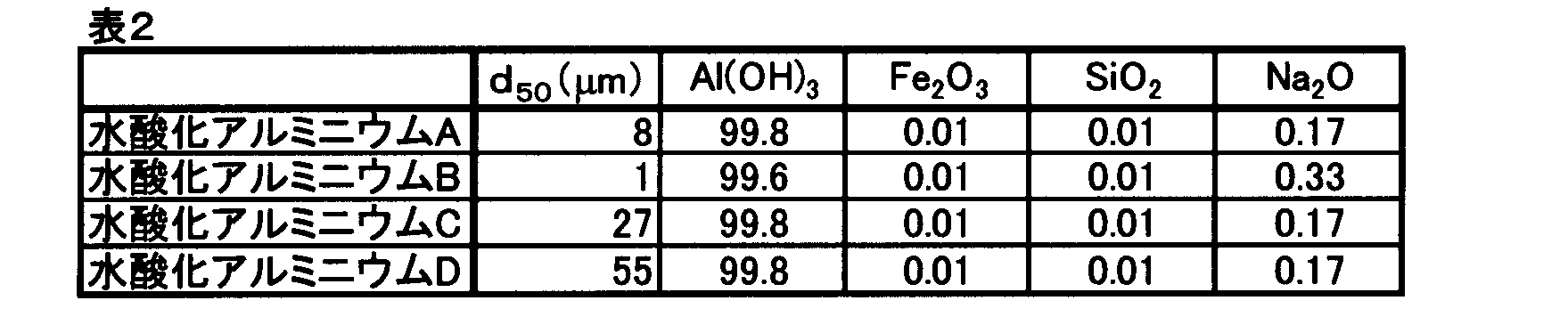
水酸化アルミニウム粉末は、水酸化アルミニウムA~Dの4種類を使用した。それぞれの累積質量50%径(d50)と化学成分は表2に示す通りである。
(実施例1~13、比較例1~2)
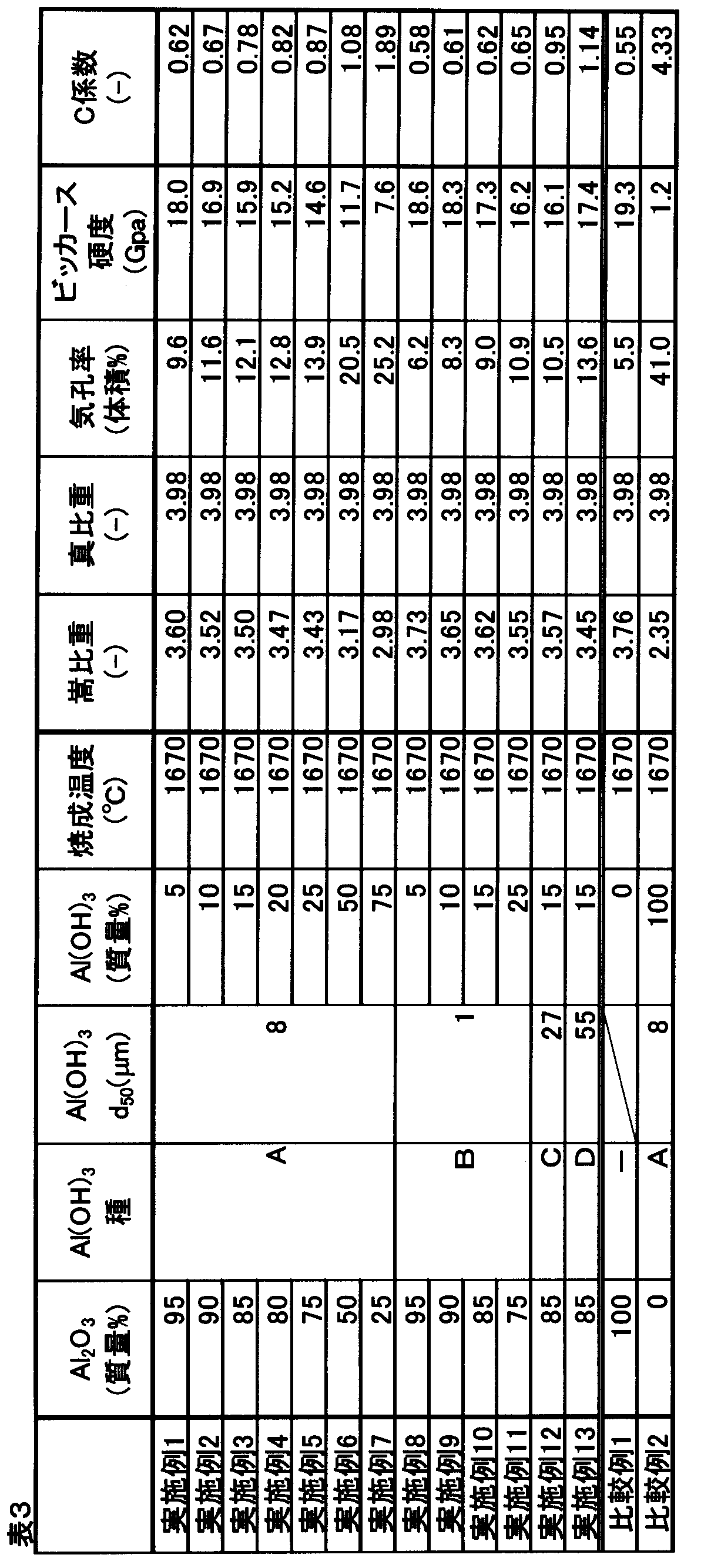
累積質量50%径(d50)0.7μmの製造例1のアルミナ粉末と、上記水酸化アルミニウム粉末とを、表3に示す割合で混合して各種混合物を得た。この各種混合物に純水を加えニーダーを用いて混練した後、押出成形機を用いて各種成形体を作製した。その後、この各種成形体を、電気炉(大気雰囲気)にて1670℃で1時間保持し焼成することにより各種アルミナ焼結体を得た。これらについて、既述のような試験(評価)を行った。結果を表3に、化学成分を表4に示す。
累積質量50%径(d50)0.7μmの製造例1のアルミナ粉末と、上記水酸化アルミニウム粉末とを、表3に示す割合で混合して各種混合物を得た。この各種混合物に純水を加えニーダーを用いて混練した後、押出成形機を用いて各種成形体を作製した。その後、この各種成形体を、電気炉(大気雰囲気)にて1670℃で1時間保持し焼成することにより各種アルミナ焼結体を得た。これらについて、既述のような試験(評価)を行った。結果を表3に、化学成分を表4に示す。
(実施例14~15、比較例3)
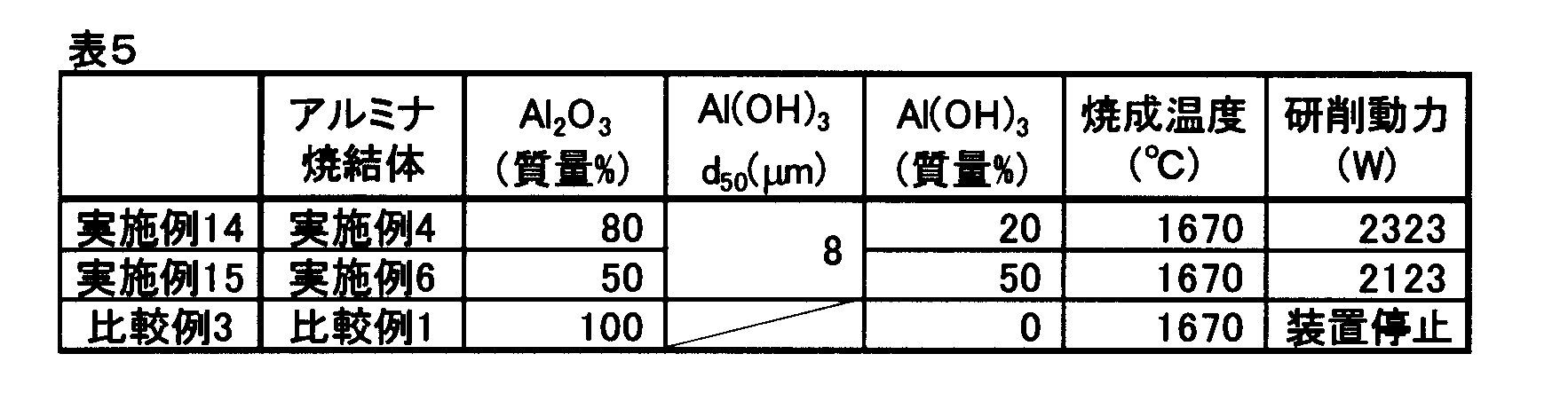
表5に示すアルミナ焼結体を用いて、研削動力の試験を行なった。研削動力の測定結果を表5に示す。
表5に示すアルミナ焼結体を用いて、研削動力の試験を行なった。研削動力の測定結果を表5に示す。
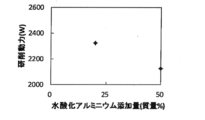
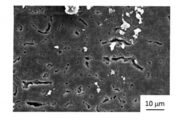
図1に実施例1~13の結果に基づく、水酸化アルミニウムの添加量に対する気孔率、ビッカース硬度のプロット(A~Dはそれぞれ水酸化アルミニウムの種類を示す。)を、図2に実施例14、15の結果に基づく、水酸化アルミニウムの添加量に対する研削動力のプロットを、図3に実施例1~7の結果に基づく、気孔率に対するC係数、ビッカース硬度のプロットを、図4に実施例5のアルミナ焼結体のSEM画像を、図5に比較例1のアルミナ焼結体のSEM画像を示す。
実施例のアルミナ焼結体において、水酸化アルミニウムの添加量の増加により、気孔率の増加が確認された。またいずれの粒度の水酸化アルミニウムを添加したアルミナ焼結体で、気孔率の増加、ビッカース硬度の減少が確認された。また図4、5に示すように比較例1のアルミナ焼結体は実施例1~13のアルミナ焼結体で確認されている気孔と同様の形状の気孔が形成されていないことが確認された。
実施例14、15と比較例3の研削動力を比較すると、水酸化アルミニウムを添加していない比較例3では、研削動力が装置の上限を超え、装置が停止したため、研削試験を実施することが出来なかった。これに対し実施例14、15では、水酸化アルミニウムの添加量の増加に伴い、研削動力が減少することが確認された。いずれの実施例も、比較例1と比べてC係数の値の増加が確認された。
実施例のアルミナ焼結体において、水酸化アルミニウムの添加量の増加により、気孔率の増加が確認された。またいずれの粒度の水酸化アルミニウムを添加したアルミナ焼結体で、気孔率の増加、ビッカース硬度の減少が確認された。また図4、5に示すように比較例1のアルミナ焼結体は実施例1~13のアルミナ焼結体で確認されている気孔と同様の形状の気孔が形成されていないことが確認された。
実施例14、15と比較例3の研削動力を比較すると、水酸化アルミニウムを添加していない比較例3では、研削動力が装置の上限を超え、装置が停止したため、研削試験を実施することが出来なかった。これに対し実施例14、15では、水酸化アルミニウムの添加量の増加に伴い、研削動力が減少することが確認された。いずれの実施例も、比較例1と比べてC係数の値の増加が確認された。

本発明のアルミナ焼結体は、破砕性に優れ、研削動力が小さいため、砥粒、砥石、研磨布として利用される。
Claims (8)
- アルミナ及び水酸化アルミニウムを配合した混合物を焼結して得られる、気孔率が6~35体積%、ビッカース硬度が4GPa以上のアルミナ焼結体。
- アルミナを10~99質量%、水酸化アルミニウムを1~90質量%で配合した混合物を焼結して得られる請求項1に記載のアルミナ焼結体。
- 請求項1又は2に記載のアルミナ焼結体からなる砥粒。
- 請求項3に記載の砥粒の層を作用面に有する砥石。
- 請求項3に記載の砥粒の層を作用面に有する研磨布。
- 下記工程(1)~(3)を有する、気孔率が6~30%、ビッカース硬度が4GPa以上のアルミナ焼結体の製造方法。
工程(1):アルミナ及び水酸化アルミニウムを配合した混合物を調製する工程
工程(2):工程(1)で得られた混合物を成形する工程
工程(3):工程(2)により得られた成形体を焼成しアルミナ焼結体を得る工程 - 更に、下記工程(4)を有する、請求項6に記載のアルミナ焼結体の製造方法。
工程(4):工程(3)により得られたアルミナ焼結体を粉砕する工程 - 下記工程(1)、(2)、(3)’、(4)’を有する、気孔率が6~30%、ビッカース硬度が4GPa以上のアルミナ焼結体の製造方法。
工程(1):アルミナ及び水酸化アルミニウムを配合した混合物を調製する工程
工程(2):工程(1)で得られた混合物を成形する工程
工程(3)’:工程(2)で得られたアルミナの成形体を乾燥させた後に、粉砕する工程
工程(4)’:工程(3)’で得られた粉砕物を焼成しアルミナ焼結体を得る工程
Priority Applications (1)
| Application Number | Priority Date | Filing Date | Title |
|---|---|---|---|
| JP2014560783A JP6367122B2 (ja) | 2013-02-08 | 2014-02-05 | アルミナ焼結体、砥粒、砥石、研磨布、及びアルミナ焼結体の製造方法 |
Applications Claiming Priority (2)
| Application Number | Priority Date | Filing Date | Title |
|---|---|---|---|
| JP2013-023469 | 2013-02-08 | ||
| JP2013023469 | 2013-02-08 |
Publications (1)
| Publication Number | Publication Date |
|---|---|
| WO2014123153A1 true WO2014123153A1 (ja) | 2014-08-14 |
Family
ID=51299745
Family Applications (1)
| Application Number | Title | Priority Date | Filing Date |
|---|---|---|---|
| PCT/JP2014/052666 Ceased WO2014123153A1 (ja) | 2013-02-08 | 2014-02-05 | アルミナ焼結体、砥粒、砥石、研磨布、及びアルミナ焼結体の製造方法 |
Country Status (2)
| Country | Link |
|---|---|
| JP (1) | JP6367122B2 (ja) |
| WO (1) | WO2014123153A1 (ja) |
Cited By (2)
| Publication number | Priority date | Publication date | Assignee | Title |
|---|---|---|---|---|
| JP2016075562A (ja) * | 2014-10-06 | 2016-05-12 | 大日本印刷株式会社 | 力学量センサおよび力学量測定装置 |
| JP2018089702A (ja) * | 2018-02-28 | 2018-06-14 | 三星ダイヤモンド工業株式会社 | レーザ加工装置及びレーザ加工方法 |
Citations (9)
| Publication number | Priority date | Publication date | Assignee | Title |
|---|---|---|---|---|
| JPS61250084A (ja) * | 1985-04-30 | 1986-11-07 | Kureha Chem Ind Co Ltd | 磁気研磨用の複合砥粒粒子およびその製造法 |
| JPH0138629B2 (ja) * | 1984-03-05 | 1989-08-15 | Tamotsu Idota | |
| JPH05194026A (ja) * | 1991-06-21 | 1993-08-03 | Lonza Ag | α−酸化アルミニウム系の、とくに研摩材に用いる焼結材料の製造方法 |
| JPH06136353A (ja) * | 1992-10-23 | 1994-05-17 | Nippon Kenmazai Kogyo Kk | セラミック砥粒及びその製造方法並びに研磨製品 |
| JPH09310765A (ja) * | 1996-05-22 | 1997-12-02 | Kyocera Corp | セラミック製摺動装置 |
| US5893935A (en) * | 1997-01-09 | 1999-04-13 | Minnesota Mining And Manufacturing Company | Method for making abrasive grain using impregnation, and abrasive articles |
| JPH11322433A (ja) * | 1998-05-15 | 1999-11-24 | Osamu Yamamoto | 窒化硼素含有複合セラミックス焼結体の製造方法及び同焼結体 |
| JP2001219099A (ja) * | 2000-02-14 | 2001-08-14 | Taiheiyo Cement Corp | セラミックスノズル |
| JP2002068854A (ja) * | 2000-08-30 | 2002-03-08 | National Institute Of Advanced Industrial & Technology | アルミナ多孔体及びその製造方法 |
-
2014
- 2014-02-05 JP JP2014560783A patent/JP6367122B2/ja not_active Expired - Fee Related
- 2014-02-05 WO PCT/JP2014/052666 patent/WO2014123153A1/ja not_active Ceased
Patent Citations (9)
| Publication number | Priority date | Publication date | Assignee | Title |
|---|---|---|---|---|
| JPH0138629B2 (ja) * | 1984-03-05 | 1989-08-15 | Tamotsu Idota | |
| JPS61250084A (ja) * | 1985-04-30 | 1986-11-07 | Kureha Chem Ind Co Ltd | 磁気研磨用の複合砥粒粒子およびその製造法 |
| JPH05194026A (ja) * | 1991-06-21 | 1993-08-03 | Lonza Ag | α−酸化アルミニウム系の、とくに研摩材に用いる焼結材料の製造方法 |
| JPH06136353A (ja) * | 1992-10-23 | 1994-05-17 | Nippon Kenmazai Kogyo Kk | セラミック砥粒及びその製造方法並びに研磨製品 |
| JPH09310765A (ja) * | 1996-05-22 | 1997-12-02 | Kyocera Corp | セラミック製摺動装置 |
| US5893935A (en) * | 1997-01-09 | 1999-04-13 | Minnesota Mining And Manufacturing Company | Method for making abrasive grain using impregnation, and abrasive articles |
| JPH11322433A (ja) * | 1998-05-15 | 1999-11-24 | Osamu Yamamoto | 窒化硼素含有複合セラミックス焼結体の製造方法及び同焼結体 |
| JP2001219099A (ja) * | 2000-02-14 | 2001-08-14 | Taiheiyo Cement Corp | セラミックスノズル |
| JP2002068854A (ja) * | 2000-08-30 | 2002-03-08 | National Institute Of Advanced Industrial & Technology | アルミナ多孔体及びその製造方法 |
Non-Patent Citations (1)
| Title |
|---|
| HUANG, ZHIJIAN ET AL.: "Micro-ha Kanetsu ni yoru Ceramics Shoketsu no Kenkyu", THE JAPAN INSTITUTE OF METALS HOKURIKU SHIN'ETSU SHIBU THE IRON AND STEEL INSTITUTE OF JAPAN HOKURIKU SHIN'ETSU SHIBU HEISEI 19 NENDO RENGO KOENKAI GAIYOSHU, 1 December 2007 (2007-12-01), pages 98 * |
Cited By (2)
| Publication number | Priority date | Publication date | Assignee | Title |
|---|---|---|---|---|
| JP2016075562A (ja) * | 2014-10-06 | 2016-05-12 | 大日本印刷株式会社 | 力学量センサおよび力学量測定装置 |
| JP2018089702A (ja) * | 2018-02-28 | 2018-06-14 | 三星ダイヤモンド工業株式会社 | レーザ加工装置及びレーザ加工方法 |
Also Published As
| Publication number | Publication date |
|---|---|
| JPWO2014123153A1 (ja) | 2017-02-02 |
| JP6367122B2 (ja) | 2018-08-01 |
Similar Documents
| Publication | Publication Date | Title |
|---|---|---|
| CN101870091B (zh) | 一种陶瓷结合剂超细金刚石砂轮制备方法 | |
| TW461845B (en) | Abrasive tools for grinding electronic components | |
| CN102348535B (zh) | 包含具有改进形状的熔凝的氧化锆氧化铝颗粒的磨料物品 | |
| CN111002235B (zh) | 一种新型聚合磨料的制备方法 | |
| CA2463137C (en) | Porous abrasive tool and method for making the same | |
| CN104149037B (zh) | 一种树脂陶瓷结合剂金刚石砂轮 | |
| US20150344758A1 (en) | Abrasive grain with controlled aspect ratio and thickness | |
| CN101905446B (zh) | 树脂精磨砂轮制作方法 | |
| CN104114666B (zh) | 研磨制品及其形成方法 | |
| CN103709993B (zh) | 一种自锐性金刚石磨料及其制备方法 | |
| CN101913122A (zh) | 一种陶瓷结合剂超硬磨具的制备方法 | |
| CN104149038B (zh) | 一种陶瓷结合剂金刚石砂轮 | |
| KR20150002836A (ko) | 결합된 연마 물품 및 생성 방법 | |
| WO1990008744A1 (fr) | Ceramique d'oxyde d'aluminium, matiere abrasive et leur production | |
| CN106220149A (zh) | 超精密加工及超精密测量仪器用陶瓷导轨及其制备方法 | |
| KR102184303B1 (ko) | 전기용융 알루미나 입자, 전기용융 알루미나 입자의 제조방법, 숫돌 및 연마포지 | |
| MX2013010958A (es) | Articulo abrasivo para operaciones de molienda a alta velocidad. | |
| CN116460756B (zh) | 一种晶圆减薄用陶瓷基金刚石磨轮及制备方法和应用 | |
| CA3184679A1 (en) | Bonded abrasive article and method of making the same | |
| JP6367122B2 (ja) | アルミナ焼結体、砥粒、砥石、研磨布、及びアルミナ焼結体の製造方法 | |
| CN113462358A (zh) | 一种超硬耐磨的聚合磨料生产工艺 | |
| Zhang et al. | Improvement of thermal stability of diamond by adding Ti powder during sintering of diamond/borosilicate glass composites | |
| KR102179722B1 (ko) | 전융 알루미나립, 전융 알루미나립의 제조 방법, 숫돌 및 연마포지 | |
| JP2022023879A (ja) | 研磨品とその形成方法 | |
| JP2002283244A (ja) | 仕上げ用砥石及びその製造方法 |
Legal Events
| Date | Code | Title | Description |
|---|---|---|---|
| 121 | Ep: the epo has been informed by wipo that ep was designated in this application |
Ref document number: 14749665 Country of ref document: EP Kind code of ref document: A1 |
|
| ENP | Entry into the national phase |
Ref document number: 2014560783 Country of ref document: JP Kind code of ref document: A |
|
| NENP | Non-entry into the national phase |
Ref country code: DE |
|
| 122 | Ep: pct application non-entry in european phase |
Ref document number: 14749665 Country of ref document: EP Kind code of ref document: A1 |