WO2014077133A1 - フッ素系樹脂フィルム、その製造方法、及び太陽電池モジュール - Google Patents
フッ素系樹脂フィルム、その製造方法、及び太陽電池モジュール Download PDFInfo
- Publication number
- WO2014077133A1 WO2014077133A1 PCT/JP2013/079440 JP2013079440W WO2014077133A1 WO 2014077133 A1 WO2014077133 A1 WO 2014077133A1 JP 2013079440 W JP2013079440 W JP 2013079440W WO 2014077133 A1 WO2014077133 A1 WO 2014077133A1
- Authority
- WO
- WIPO (PCT)
- Prior art keywords
- resin
- film
- mass
- temperature
- fluororesin
- Prior art date
- Legal status (The legal status is an assumption and is not a legal conclusion. Google has not performed a legal analysis and makes no representation as to the accuracy of the status listed.)
- Ceased
Links
Images


Classifications
-
- C—CHEMISTRY; METALLURGY
- C08—ORGANIC MACROMOLECULAR COMPOUNDS; THEIR PREPARATION OR CHEMICAL WORKING-UP; COMPOSITIONS BASED THEREON
- C08J—WORKING-UP; GENERAL PROCESSES OF COMPOUNDING; AFTER-TREATMENT NOT COVERED BY SUBCLASSES C08B, C08C, C08F, C08G or C08H
- C08J5/00—Manufacture of articles or shaped materials containing macromolecular substances
- C08J5/18—Manufacture of films or sheets
-
- C—CHEMISTRY; METALLURGY
- C08—ORGANIC MACROMOLECULAR COMPOUNDS; THEIR PREPARATION OR CHEMICAL WORKING-UP; COMPOSITIONS BASED THEREON
- C08K—Use of inorganic or non-macromolecular organic substances as compounding ingredients
- C08K3/00—Use of inorganic substances as compounding ingredients
- C08K3/18—Oxygen-containing compounds, e.g. metal carbonyls
- C08K3/20—Oxides; Hydroxides
- C08K3/22—Oxides; Hydroxides of metals
-
- C—CHEMISTRY; METALLURGY
- C08—ORGANIC MACROMOLECULAR COMPOUNDS; THEIR PREPARATION OR CHEMICAL WORKING-UP; COMPOSITIONS BASED THEREON
- C08K—Use of inorganic or non-macromolecular organic substances as compounding ingredients
- C08K5/00—Use of organic ingredients
- C08K5/0008—Organic ingredients according to more than one of the "one dot" groups of C08K5/01 - C08K5/59
- C08K5/005—Stabilisers against oxidation, heat, light, ozone
-
- C—CHEMISTRY; METALLURGY
- C08—ORGANIC MACROMOLECULAR COMPOUNDS; THEIR PREPARATION OR CHEMICAL WORKING-UP; COMPOSITIONS BASED THEREON
- C08L—COMPOSITIONS OF MACROMOLECULAR COMPOUNDS
- C08L27/00—Compositions of homopolymers or copolymers of compounds having one or more unsaturated aliphatic radicals, each having only one carbon-to-carbon double bond, and at least one being terminated by a halogen; Compositions of derivatives of such polymers
- C08L27/02—Compositions of homopolymers or copolymers of compounds having one or more unsaturated aliphatic radicals, each having only one carbon-to-carbon double bond, and at least one being terminated by a halogen; Compositions of derivatives of such polymers not modified by chemical after-treatment
- C08L27/12—Compositions of homopolymers or copolymers of compounds having one or more unsaturated aliphatic radicals, each having only one carbon-to-carbon double bond, and at least one being terminated by a halogen; Compositions of derivatives of such polymers not modified by chemical after-treatment containing fluorine atoms
- C08L27/16—Homopolymers or copolymers or vinylidene fluoride
-
- C—CHEMISTRY; METALLURGY
- C08—ORGANIC MACROMOLECULAR COMPOUNDS; THEIR PREPARATION OR CHEMICAL WORKING-UP; COMPOSITIONS BASED THEREON
- C08L—COMPOSITIONS OF MACROMOLECULAR COMPOUNDS
- C08L33/00—Compositions of homopolymers or copolymers of compounds having one or more unsaturated aliphatic radicals, each having only one carbon-to-carbon double bond, and only one being terminated by only one carboxyl radical, or of salts, anhydrides, esters, amides, imides or nitriles thereof; Compositions of derivatives of such polymers
- C08L33/04—Homopolymers or copolymers of esters
- C08L33/06—Homopolymers or copolymers of esters of esters containing only carbon, hydrogen and oxygen, which oxygen atoms are present only as part of the carboxyl radical
- C08L33/10—Homopolymers or copolymers of methacrylic acid esters
- C08L33/12—Homopolymers or copolymers of methyl methacrylate
-
- C—CHEMISTRY; METALLURGY
- C08—ORGANIC MACROMOLECULAR COMPOUNDS; THEIR PREPARATION OR CHEMICAL WORKING-UP; COMPOSITIONS BASED THEREON
- C08J—WORKING-UP; GENERAL PROCESSES OF COMPOUNDING; AFTER-TREATMENT NOT COVERED BY SUBCLASSES C08B, C08C, C08F, C08G or C08H
- C08J2327/00—Characterised by the use of homopolymers or copolymers of compounds having one or more unsaturated aliphatic radicals, each having only one carbon-to-carbon double bond, and at least one being terminated by a halogen; Derivatives of such polymers
- C08J2327/02—Characterised by the use of homopolymers or copolymers of compounds having one or more unsaturated aliphatic radicals, each having only one carbon-to-carbon double bond, and at least one being terminated by a halogen; Derivatives of such polymers not modified by chemical after-treatment
- C08J2327/12—Characterised by the use of homopolymers or copolymers of compounds having one or more unsaturated aliphatic radicals, each having only one carbon-to-carbon double bond, and at least one being terminated by a halogen; Derivatives of such polymers not modified by chemical after-treatment containing fluorine atoms
- C08J2327/16—Homopolymers or copolymers of vinylidene fluoride
-
- C—CHEMISTRY; METALLURGY
- C08—ORGANIC MACROMOLECULAR COMPOUNDS; THEIR PREPARATION OR CHEMICAL WORKING-UP; COMPOSITIONS BASED THEREON
- C08K—Use of inorganic or non-macromolecular organic substances as compounding ingredients
- C08K3/00—Use of inorganic substances as compounding ingredients
- C08K3/18—Oxygen-containing compounds, e.g. metal carbonyls
- C08K3/20—Oxides; Hydroxides
- C08K3/22—Oxides; Hydroxides of metals
- C08K2003/2237—Oxides; Hydroxides of metals of titanium
- C08K2003/2241—Titanium dioxide
Definitions
- the present invention relates to a novel fluororesin film, a method for producing the same, a solar cell back surface protection sheet formed using the fluororesin film, and a solar cell module provided with the solar cell back surface protection sheet.
- Fluorine-based resin films are widely used in fields that require long-term durability because of their excellent weather resistance, heat resistance, contamination resistance, chemical resistance, solvent resistance, and the like.
- a film mainly composed of vinylidene fluoride resin takes advantage of the cost benefits of thinning, and various surface protection materials such as materials for interior and exterior of buildings, container surface materials that have been required to have chemical resistance and organic solvent resistance, It is widely used for front and back materials of solar cells, fuel cell members and the like.
- Patent Documents 1 and 2 it has been widely used as a solar cell back surface protection sheet.
- Patent Document 3 That is, by forming a film by extrusion and then reheating at a temperature of 100 ° C.
- the type I crystal structure ( ⁇ crystal) and the type II crystal structure ( ⁇ crystal) obtained from the absorbance of the infrared absorption spectrum in the film ) was controlled so that the ratio of the type II crystal component was 90 to 100%, where 100 was a total of 100), to obtain a fluororesin film having a low yellowing degree.
- the present invention has been made in view of the above circumstances, and an object of the present invention is to provide a fluororesin film that further improves long-term durability, particularly yellowing resistance, compared to conventional films. Another object of the present invention is to provide a method for producing the fluororesin film, a solar cell back surface protection sheet using the fluororesin film, and a solar cell module provided with the solar cell back surface protection sheet. To do.
- Patent Document 3 the ratio of the ⁇ crystal obtained from the absorption intensity by the infrared absorption spectrum in the film is controlled to be high, but the value of the ⁇ crystal ratio obtained by such a method is somewhat high. As a result, it has been found that the difference in crystal structure may not be sufficiently reflected. Therefore, as a result of studying further indicators for the crystal structure of the resin, the present inventors found that a crystal structure difference that could not be distinguished from the absorption intensity by the infrared absorption spectrum was determined by a heat flux differential scanning calorimetry method. By analyzing the DSC curve, it was found that it could be clearly identified.
- the present inventors set the cooling temperature in extrusion molding to a range of 85 to 120 ° C. Then, it was unexpectedly found that a fluororesin film having further improved long-term durability, particularly yellowing resistance, can be obtained.
- a fluororesin composition comprising a polyvinylidene fluoride resin as a main component is extruded and cooled at a cooling temperature set in the range of 85 to 120 ° C. And a DSC curve obtained when heated from room temperature to 200 ° C. at a heating rate of 10 ° C./min by a heat flux differential scanning calorimetry method.
- An endothermic peak (inherent peak) unique to vinylidene-based resins and one or more endothermic peaks on the low temperature side of the inherent peak are provided.
- the extrusion molding method is not limited to a specific method as long as the cooling condition after the resin extrusion has a significant effect on the crystallization of the resin.
- the studied method is the T-die molding method, and therefore the T-die molding method is preferred.
- the extruded resin is cooled by one or a plurality of cooling rolls.
- the temperature in the first cooling roll that first cools the extruded resin is the cooling in the present invention.
- the temperature is maintained at a constant temperature in the range of 85-120 ° C.
- the film is formed by extruding the fluororesin composition containing the polyvinylidene fluoride resin as a main component by setting the cooling temperature at the time of extrusion molding to 85 to 120 ° C.
- the DSC curve first run obtained by heat flux differential scanning calorimetry under specific conditions, there is an endothermic peak (inherent peak) unique to polyvinylidene fluoride resin in the range of 150 to 190 ° C.
- a novel film having one or more endothermic peaks on the low temperature side is obtained.
- the film is also a film having an ⁇ crystal ratio of 80% or more determined by the following formula (1).
- the said fluororesin composition is a resin composition which contains a polyvinylidene fluoride resin as a main component
- what kind of resin generally contained in a fluororesin, addition An agent or the like may be included.
- “comprising polyvinylidene fluoride resin as a main component” means that the resin composition contains polyvinylidene fluoride resin as a resin component in an amount of 50% by mass or more, preferably 60% by mass or more.
- the case where only the polyvinylidene fluoride resin is used that is, the case where the polyvinylidene fluoride resin is 100% by mass is also included.
- the fluororesin composition contains only a polyvinylidene fluoride resin as a resin component.
- a polymethyl methacrylate resin excellent in compatibility with the polyvinylidene fluoride resin is blended, mixed, and extruded.
- the resin composition to be extruded includes a polyvinylidene fluoride resin of 50 to 95% by mass, preferably 60 to 95% by mass, and a polymethyl methacrylate resin of 5 to 50% by mass, preferably 5 to 40% by mass. Containing.
- the fluorine resin composition may contain various additives in addition to the resin component, but it is preferable to contain titanium oxide or an ultraviolet absorber for the purpose of shielding ultraviolet rays.
- titanium oxide or an ultraviolet absorber for the purpose of shielding ultraviolet rays.
- 5 to 40 parts by mass of titanium oxide is added to 100 parts by mass of the resin composition, and the ultraviolet absorber is 0.1 to 5 parts by mass, preferably 0.3 to 100 parts by mass of the resin composition. ⁇ 5 parts by weight are added.
- the fluororesin film preferably has a thickness in the range of 10 to 50 ⁇ m.
- a step of extruding a molten resin comprising a fluororesin composition comprising a polyvinylidene fluoride resin as a main component into a film, and 85 to 120 of the extruded film resin At a cooling temperature in the range of ° C., preferably by a cooling roll set at such a cooling temperature, and from a room temperature at a temperature rising rate of 10 ° C./min by a heat flux differential scanning calorimetry. In the DSC curve (first run) obtained when heated to 200 ° C., an endothermic peak (inherent peak) unique to the polyvinylidene fluoride resin in the range of 150 to 190 ° C.
- the fluorine-based resin composition has a polyvinylidene fluoride resin of 50 to 95% by mass, preferably 60 to 95% by mass, and a polymethyl methacrylate resin of 5 to 50% by mass, preferably 5 to 5% by mass. 40% by mass.
- the fluorine-based resin composition preferably contains 5 to 40 parts by mass of titanium oxide or 0.1 to 5 parts by mass of an ultraviolet absorber with respect to 100 parts by mass of the total resin components.
- the fluororesin film preferably has a thickness in the range of 10 to 50 ⁇ m.
- a solar cell back surface protective sheet formed of the fluororesin film and a solar cell module formed using the solar cell back surface protective sheet.
- the fluororesin film according to the present invention is formed from a fluororesin comprising a vinylidene fluoride resin as a main component, it has excellent weather resistance, heat resistance, contamination resistance, chemical resistance, and solvent resistance. Since the resin film has mechanical properties and secondary workability and has a specific peak pattern in the heat flux differential scanning calorimetry, it is excellent in long-term durability, particularly yellowing resistance. Moreover, the protection sheet for solar cell back surface and solar cell module formed using the fluorine resin film according to the present invention are also excellent in long-term durability, particularly yellowing resistance.
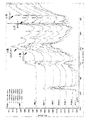
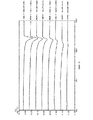
- Heat flux differential performed on the fluororesin film formed in Example 1 (cooling roll temperature: 85 ° C), Example 2 (cooling roll temperature: 100 ° C) and Example 3 (cooling roll temperature: 120 ° C). It is a graph which shows the DSC curve obtained by scanning calorimetry. A graph in which the ⁇ crystal ratio obtained by infrared absorption spectrum analysis and the ⁇ b value obtained by the moist heat resistance test are plotted with respect to the cooling temperature of the cooling roll in T-die molding, and the influence of the cooling temperature on the yellowing phenomenon of the film is represented. . Films produced by changing the cooling temperature between 45-75 ° C. are Comparative Examples 3-6, and films produced by changing the cooling temperature between 85-120 ° C. are Examples 11-14.
- the fluorine resin film according to an embodiment of the present invention is formed by extrusion molding from a fluorine resin composition containing a polyvinylidene fluoride resin as a main component.
- the fluororesin composition is a resin composition comprising a polyvinylidene fluoride resin as a main component, it may contain any resin, additive, etc. that are generally contained in a fluororesin.
- “comprising polyvinylidene fluoride resin as a main component” means that the resin composition contains polyvinylidene fluoride resin as a resin component in an amount of 50% by mass or more, preferably 60% by mass or more.
- the case where only the polyvinylidene fluoride resin is used that is, the case where the polyvinylidene fluoride resin is 100% by mass is also included.
- Polyvinylidene fluoride-based resin is a crystalline resin having a vinylidene fluoride monomer as a main component and having various crystal structures such as ⁇ -type, ⁇ -type, and ⁇ -type.
- a polymer or a copolymer of a monomer copolymerizable with vinylidene fluoride examples include a vinylidene fluoride-tetrafluoroethylene-hexafluoropropylene copolymer and a vinylidene fluoride-hexafluoropropylene copolymer.
- a homopolymer of vinylidene fluoride is used.
- the fluororesin composition may contain a resin component other than the polyvinylidene fluoride resin, but the resin component is excellent in compatibility with the vinylidene fluoride resin and has an extrusion temperature during film extrusion molding.
- a methacrylic ester resin is preferable because it can improve the workability by lowering, and can improve the adhesion when laminated with other materials.
- the methacrylic ester resin includes a methyl methacrylate homopolymer (polymethyl methacrylate), a predetermined amount (for example, 50 mol% or more) of a methyl methacrylate monomer as a constituent unit, and an acrylic ester or methacrylic ester.
- Examples thereof include a copolymer containing a predetermined amount of methacrylic acid ester other than methyl acid, for example, less than 50 mol%, and a mixture of two or more of these polymers.
- the acrylate ester include methyl acrylate, ethyl acrylate, propyl acrylate, and butyl acrylate
- methacrylic acid esters other than methyl methacrylate include ethyl methacrylate and propyl methacrylate. it can.
- the copolymer is not limited to a random copolymer.
- a graft copolymer or the like is used, and a copolymer obtained by graft polymerization of a monomer mainly composed of methyl methacrylate on an acrylic saturated crosslinked rubber is also preferably used.
- a particularly preferred methacrylic ester resin is a polymethyl methacrylate resin.
- the fluororesin composition contains only a polyvinylidene fluoride resin as a resin component.
- the fluororesin composition contains a polyvinylidene fluoride resin and a polymethyl methacrylate resin as resin components.
- the content of the polymethyl methacrylate resin is arbitrary as long as the polyvinylidene fluoride resin is the main component.
- the fluorine resin composition contains the polyvinylidene fluoride resins 50 to 95.
- the polymethyl methacrylate resin contains 5 to 50% by mass, preferably 60 to 95% by mass, and 5 to 50% by mass, preferably 5 to 40% by mass.
- the fluororesin composition contains at least one of a pigment and an ultraviolet absorber for imparting an ultraviolet shielding effect.
- a pigment when the film is intended to protect the base substrate, there may be a case where a pigment is not added, but even in that case, an ultraviolet absorber is added.
- various base materials such as ultraviolet rays reach various base materials and the vinylidene fluoride resin film does not deteriorate. This is because the adhesive or the like used for laminating with the base material is deteriorated and may cause a problem of peeling from the polyvinylidene fluoride resin film.
- the pigment to be used is not particularly limited and may be any inorganic pigment, organic pigment, pearl pigment, etc., but from the viewpoint of weather resistance, oxides and complex oxide inorganic pigments are preferably used.
- titanium oxide is preferable.
- the addition amount of the pigment, particularly titanium oxide is 5 to 40 parts by mass, preferably 10 to 30 parts by mass with respect to 100 parts by mass of the resin. When the addition amount is less than 5 parts by mass, it cannot be uniformly dispersed in the film, and partial color unevenness may occur. On the other hand, when it exceeds 40 mass parts, the dispersibility to a fluororesin will fall remarkably and an external appearance defect may be caused.
- the ultraviolet absorber is not particularly limited as long as it is compatible with the vinylidene fluoride resin, and for example, benzotriazole, oxalic acid, benzophenone, hindered amine, and many other types can be used.
- a high molecular weight type ultraviolet absorber having a molecular weight of 300 or more is suitably used in order to minimize volatilization when used as a manufacturing process or film.
- the addition amount of the ultraviolet absorber is 0.1 to 5 parts by mass, preferably 0.3 to 5 parts by mass with respect to 100 parts by mass of the resin.
- the film of the present invention includes stabilizers, dispersants, antioxidants, matting agents, surfactants, antistatic agents, silica, alumina, etc., depending on the application used. It is also possible to add various additives such as fillers, fluorine-based surface modifiers and processing aids as long as their dispersibility is not impaired.
- a resin and an additive are mixed in advance and melt-kneaded using a commonly used single-screw extruder.
- the method can be adopted.
- a high kneading type twin screw extruder or by premixing at a high temperature using a high speed rotary mixer and then melt kneading with a single screw extruder, A film having a good dispersion state and excellent appearance quality can be obtained.
- the film thickness of the fluororesin film of the present invention is preferably 50 ⁇ m or less, more preferably 10 to 30 ⁇ m. If it is less than 10 ⁇ m, the handling property is remarkably lowered, and sufficient durability performance may not be obtained. On the other hand, when it exceeds 50 ⁇ m, it is disadvantageous in terms of cost such as an increase in raw material cost.
- the film of the present invention may be used as a surface layer, and an acrylic resin layer or a blend of a vinylidene fluoride resin and an acrylic resin may be laminated as a back layer to form a film having two or more layers.
- the fluororesin film can be extrusion-molded by a method of forming a film using a T-type die or a method of forming a film using an inflation die, but in the present invention, it is manufactured using a T-type die.
- a film forming method is preferably employed.
- Extrusion conditions are not particularly limited, and conditions conventionally used for forming a vinylidene fluoride resin film can be used.
- the cooling temperature after extrusion is 85 to 120 ° C. It is necessary to set the temperature within the range of preferably 90 to 120 ° C., more preferably 100 to 120 ° C.
- the high-temperature resin extruded from the T-shaped die is cooled and solidified by a metal cooling roll disposed under the T-shaped die, and the metal
- the temperature of the cooling roll is set in the range of 85 to 120 ° C, preferably 90 to 120 ° C, more preferably 100 to 120 ° C.
- the temperature of the first cooling roll is 85 to 120 ° C., preferably 90 to 120 ° C., more preferably 100 to 120. It is set in the range of ° C.
- a metal cooling roll and a rubber roll are usually arranged in pairs under the T-die, but the presence or absence of the rubber roll and the set temperature of the rubber roll are arbitrary.
- the cooling temperature is set to less than 85 ° C., a film having desired long-term durability, particularly yellowing resistance cannot be obtained.
- the cooling temperature is set higher than 120 ° C., the film cannot be successfully formed due to poor peeling from the roll.
- the raw material may be supplied by using a resin composition prepared by melt-kneading each raw material in advance, but each raw material is directly supplied to a single-screw or twin-screw extruder and usually 150 to 260 ° C.
- the film can be formed by melting at a temperature of 1 mm and extruding through a T-die for film.
- the fluororesin film obtained by extruding the fluororesin composition described above under the above-described conditions becomes a film having an ⁇ crystal ratio of 80% or more determined by the formula (1), but is determined by the formula (1).
- the crystal ratio exceeds a certain value, it becomes saturated and does not reflect the change in the crystal structure of the film.
- state change can be grasped by analysis using a heat flux differential scanning calorimetry.
- fluororesin films are heated from room temperature to 200 ° C. at a rate of temperature increase of 10 ° C./min by the heat flux differential scanning calorimetry regardless of whether the cooling temperature is set in the range of 85 to 120 ° C.
- the fluororesin film according to the present invention formed by setting the cooling temperature in the range of 85 to 120 ° C. includes one or more ⁇ crystals on the low temperature side of the endothermic peak inherent in the polyvinylidene fluoride resin.
- An endothermic peak temperature derived from is observed. As the endothermic peak on the low temperature side becomes more prominent, the proportion of ⁇ crystals increases and the long-term durability of the film, particularly yellowing resistance, is improved.
- the hue b value immediately after film production is about ⁇ 2.5 to ⁇ 0.5, but it does not significantly turn yellow even after the moisture and heat resistance test described later.
- the ⁇ b value before and after the test is suppressed to 2 or less.
- the endothermic peak seen on the low temperature side of the endothermic peak inherent to the polyvinylidene fluoride resin is always derived from the ⁇ crystal.
- an endothermic peak may be seen on the low temperature side of the endothermic peak inherent to the polyvinylidene fluoride resin.
- this endothermic peak is not an endothermic peak derived from the ⁇ crystal but an endothermic peak derived from the ⁇ crystal, and this can be confirmed by, for example, an X-ray diffraction method. Therefore, the fluororesin film showing a desired DSC curve formed under the conditions within the scope of the present invention has superior weather resistance compared to the fluororesin film formed under conditions outside the scope of the present invention. In particular, it has yellowing resistance.
- the present invention will be described more specifically with reference to examples, but the present invention is not limited to these examples.
- the raw material used in the Example and the evaluation method of the characteristic of each sample of the produced film are as follows.
- Vinylidene fluoride resin Kyner K720 (manufactured by Arkema), crystalline polymer, fluorine content of about 59%, melting point of about 170 ° C., polyvinylidene fluoride resin, MFR (condition: 230 ° C., 3.8 kg load) 5 to 29 (g / 10min)
- Methacrylic ester resin Acrypet IR-S404 (Mitsubishi Rayon Co., Ltd.), methacrylic ester resin containing rubber components of butyl acrylate (n-BA) and butyl methacrylate (BMA), MFR (condition: 230 ° C, 37.3 N) 7.8 (g / 10 min) Titanium oxide: Taipure R960 (manufactured by DuPont), (particle size: about 0.35 ⁇ m, pure titanium content: about 89%)
- the infrared absorption spectrum was measured by NICOLET 380 FT-IR (manufactured by Thermo Fisher Scientific).
- the characteristic absorption of the ⁇ -type crystal of the polyvinylidene fluoride resin is at a wave number of 840 cm ⁇ 1
- the characteristic absorption of the ⁇ -type crystal is at the wave number of 765 cm ⁇ 1 .
- the ⁇ crystal ratio was calculated from each peak intensity using the following formula (1) (Tatsumi Hanada, Satoshi Ando, crystallization of polyvinylidene fluoride in a polyvinylidene fluoride / polyvinyl acetate / polyethyl methacrylate blend system), Tokyo Kasei (See Gakuin University Bulletin, July 1992, No. 32, pages 5-12).
- (2) Hue after heat and humidity resistance test The moisture and heat resistance test was performed using a pressure cooker SPY-4016 (manufactured by Alp) as a testing machine.
- the film sample bonded with EVA was measured for color difference on the bonding surface with EVA using a colorimetric color difference meter ZE-2000 manufactured by Nippon Denshoku Industries Co., Ltd.
- the endurance test was carried out. Temperature: 125 ° C Humidity: 100% Pressure: 2.3 atm Time: 50hr
- the color difference measurement of the bonding surface of the film with EVA was performed again, and ⁇ b values before and after the test were calculated.
- the evaluation criterion was that the ⁇ b value was 2 or less and yellowing was small.
- UV transmittance The UV transmittance at a wavelength of 340 nm of the film was measured using a Hitachi spectrophotometer U-3310 (manufactured by Hitachi High-Tech Fielding Co., Ltd.).
- Heat flux differential scanning calorimetry Measurement was performed under the following conditions using a differential scanning calorimeter DSC3100SA (manufactured by Bruker AXS). Temperature: Room temperature ⁇ 200 ° C Rate of temperature increase: 10 ° C./min Sample mass: 1.5 mg (5)
- X-ray diffraction Measurement was performed under the following conditions using an X-ray diffractometer Ultima IV (Rigaku).
- X-ray source Cu sealed tube
- Applied voltage / current 40 kV / 40 mA
- Detector High-speed detector D / teX Ultra
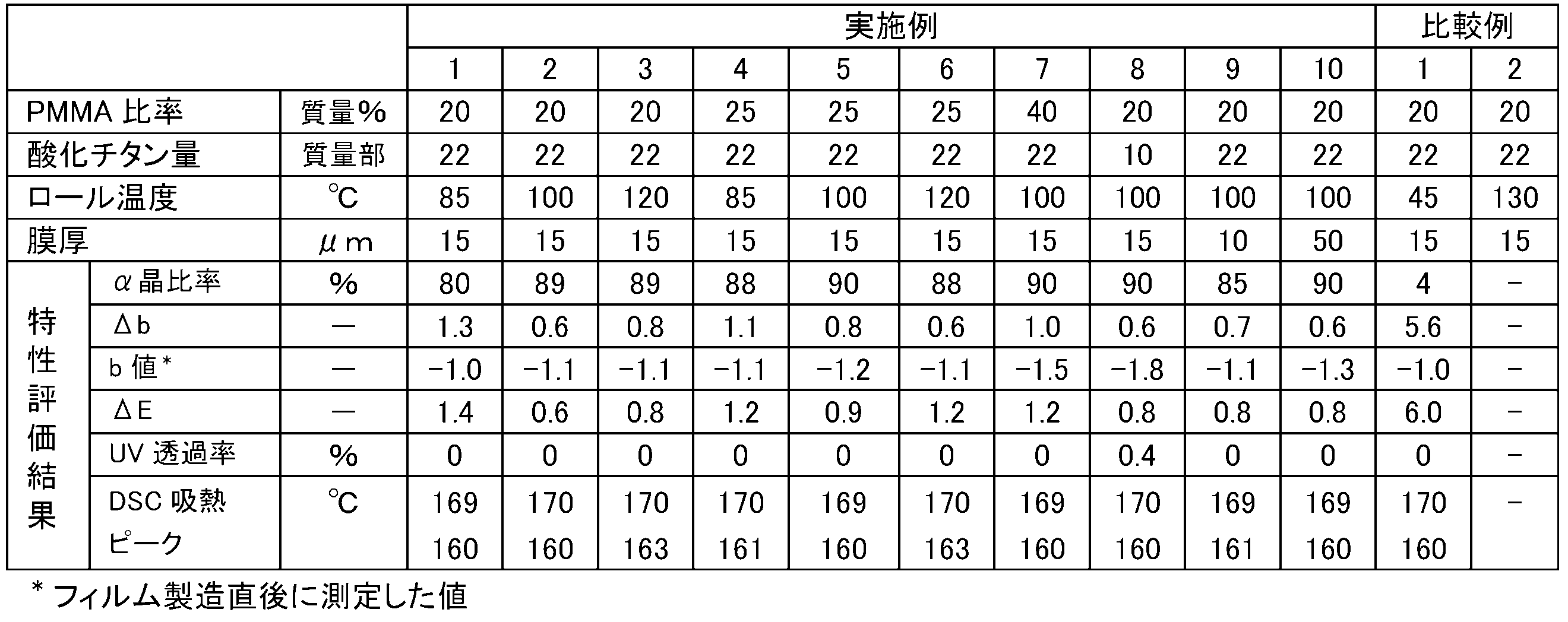
- Examples 1 to 10 and Comparative Examples 1 and 2 The PMMA ratio shown in Table 1 for vinylidene fluoride resin, polymethyl methacrylate resin, and titanium oxide (mass% of polymethyl methacrylate resin relative to 100 mass% in total of vinylidene fluoride resin and polymethyl methacrylate resin) And the amount of titanium oxide (mass part of titanium oxide with respect to 100 parts by mass of resin), put into a ⁇ 65 mm single screw extruder, kneaded, and then extruded from the extruder through a T-die at an extrusion temperature of 240 ° C.
- the film was formed by cooling and solidifying through a first cooling roll set to the cooling temperature shown in No.
- FIG. 1 shows DSC curves obtained by heat flux differential scanning calorimetry for the films according to representative Examples 1 to 3.
- Comparative Example 2 the film did not peel smoothly from the cooling roll, and a film that could be used for property evaluation could not be produced.
- the films according to Examples 1 to 10 have an endothermic peak on the low temperature side of the intrinsic peak in addition to a high ⁇ crystal ratio, and the color difference ⁇ b after the wet heat resistance test is a sufficiently small value.
- the yellowing resistance is excellent.
- Comparative Example 1 it can be seen that the ⁇ crystal ratio is low and the yellowing resistance is deteriorated.
- the endothermic peak is seen also in the comparative example 1, it turned out that this peak is a peak derived from (beta) crystal
- the ⁇ crystal ratio is low when the cooling temperature is low, and as a result, the yellowing phenomenon becomes remarkable.
- the ⁇ crystal ratio increases as the cooling temperature increases until the cooling temperature reaches 80 ° C. It can be seen that although the phenomenon is not sufficiently reduced, it is gradually reduced. However, it can be seen that when the cooling temperature reaches about 85 ° C., the ⁇ crystal ratio reaches a saturated state and does not increase any more, but the yellowing phenomenon is still gradually reduced. That is, it can be understood from this experimental result that there is a limit to the method for reducing the yellowing phenomenon based on the analysis by the ⁇ crystal ratio based on the infrared absorption spectrum analysis.
Landscapes
- Chemical & Material Sciences (AREA)
- Health & Medical Sciences (AREA)
- Chemical Kinetics & Catalysis (AREA)
- Medicinal Chemistry (AREA)
- Polymers & Plastics (AREA)
- Organic Chemistry (AREA)
- Engineering & Computer Science (AREA)
- Manufacturing & Machinery (AREA)
- Materials Engineering (AREA)
- Manufacture Of Macromolecular Shaped Articles (AREA)
- Compositions Of Macromolecular Compounds (AREA)
- Extrusion Moulding Of Plastics Or The Like (AREA)
Abstract
Description
また、本発明は、前記フッ素系樹脂フィルムを製造する方法、前記フッ素系樹脂フィルムを用いた太陽電池裏面保護シート、並びに該太陽電池裏面保護シートを備えた太陽電池モジュールを提供することも目的とする。
このように押出成形時の冷却温度を85~120℃に設定して、ポリフッ化ビニリデン系樹脂を主成分として含んでなるフッ素系樹脂組成物を押出成形してフィルムを形成すると、上述のような特定の条件下で熱流束示差走査熱量測定法により得たDSC曲線(first run)において、150~190℃の範囲にポリフッ化ビニリデン系樹脂に固有の吸熱ピーク(固有ピーク)があり、該固有ピークの低温側に1つ以上の吸熱ピークが見られる新規フィルムが得られる。
該フィルムは、次の(1)式によって定まるα晶比率が80%以上であるフィルムでもある。

また、上記フッ素系樹脂フィルムは、膜厚が10~50μmの範囲内のものであることが好ましい。
かかる製造方法においても、製造されるフッ素系樹脂フィルムは、(1)式によって定まるα晶比率が80%以上でもある。また、上記フッ素系樹脂組成物は、好ましい実施態様では、ポリフッ化ビニリデン系樹脂50~95質量%、好ましくは60~95質量%と、ポリメタクリル酸メチル樹脂5~50質量%、好ましくは5~40質量%とを含有する。更に、フッ素系樹脂組成物には、好ましくは、樹脂成分合計100質量部に対して、酸化チタンが5~40質量部、又は紫外線吸収剤が0.1~5質量部含有させられる。また、上記フッ素系樹脂フィルムは、膜厚が10~50μmの範囲内とされるのが好ましい。
フッ素系樹脂組成物は、ポリフッ化ビニリデン系樹脂を主成分として含んでなる樹脂組成物であれば、フッ素系樹脂に一般的に含有させられる如何なる樹脂、添加剤等を含んでいてもよい。ここで、「ポリフッ化ビニリデン系樹脂を主成分として含んでなる」とは、樹脂組成物中にポリフッ化ビニリデン系樹脂が樹脂成分として50質量%以上、好ましくは60質量%以上含まれることを意味し、ポリフッ化ビニリデン系樹脂のみの場合、つまりポリフッ化ビニリデン系樹脂が100質量%である場合も包含する。
また、「ポリフッ化ビニリデン系樹脂」とは、フッ化ビニリデン単量体を主成分とし、α型、β型、γ型などの様々な結晶構造を示す結晶性樹脂であり、フッ化ビニリデンの単独重合体もしくはフッ化ビニリデンと共重合可能な単量体との共重合体をいう。共重合体としては、例えばフッ化ビニリデン-テトラフルオロエチレン-ヘキサフルオロプロピレン系共重合体、フッ化ビニリデン-ヘキサフルオロプロピレン系共重合体などがある。好ましくは、フッ化ビニリデンの単独重合体が使用される。
フッ素系樹脂フィルムは、一般に、T型ダイスを用いて製膜する方法や、インフレーションダイスを用いて製膜する方法で押出成形することができるが、本発明においては、T型ダイスを用いて製膜する方法が好適に採用される。押出条件は特に限定されるものではなく、フッ化ビニリデン系樹脂フィルムを形成するのに常套的に用いられている条件を使用できるが、本発明においては、押出後の冷却温度を85~120℃、好ましくは90~120℃、より好ましくは100~120℃の範囲に設定する必要がある。すなわち、Tダイ成形機を用いて製膜する場合、T型ダイスから押し出された高温の樹脂は、T型ダイス下に配された金属冷却ロールによって冷却固化されてフィルムとされるが、その金属冷却ロールの温度が85~120℃、好ましくは90~120℃、より好ましくは100~120℃の範囲に設定される。尚、押出成形機に複数の冷却ロールが配設されている場合は、最初の冷却ロール(第一冷却ロール)の温度が85~120℃、好ましくは90~120℃、より好ましくは100~120℃の範囲に設定される。またT型ダイス下に金属冷却ロールとゴムロールが対で配設されているのが通例であるが、ゴムロールの使用の有無やゴムロールの設定温度は任意である。上記冷却温度が85℃未満に設定されていると、所望の長期耐久性、特に耐黄変性を有するフィルムが得られない。一方、上記冷却温度が120℃よりも高く設定されている場合には、ロールからの剥離不良によりフィルムがうまく製膜できない。
上述のフッ素系樹脂組成物を上述の条件下で押出成形したフッ素系樹脂フィルムは、前記(1)式によって定まるα晶比率が80%以上であるフィルムとなるが、(1)式によって定まるα晶比率は一定数値を超えると飽和状態となり、フィルムの結晶構造変化を反映しなくなる。しかし、かかる状態変化は、熱流束示差走査熱量測定法を使用した分析により、把握できる。すなわち、フッ素系樹脂フィルムでは、冷却温度を85~120℃の範囲に設定するか否かにかかわらず、熱流束示差走査熱量測定法により10℃/分の昇温速度で室温から200℃まで加熱したときに得られるDSC曲線(first run)において、170℃付近にポリフッ化ビニリデン系樹脂に固有の吸熱ピークがみられる。しかし、冷却温度を85~120℃の範囲に設定して製膜した本発明に係るフッ素系樹脂フィルムには、前記ポリフッ化ビニリデン系樹脂に固有の吸熱ピークの低温側に1つ以上のα晶に由来する吸熱ピーク温度がみられる。そして、この低温側の吸熱ピークが顕著になればなるほど、α晶の割合が増大しており、フィルムの長期耐久性、特に耐黄変性が改善される。例えば、本発明に係るフッ素系樹脂フィルムでは、フィルム製造直後の色相b値は、-2.5~-0.5程度であるが、後述する耐湿熱性試験後においても有意に黄変することはなく、試験前後のΔb値は2以下に抑えられる。
尚、本発明の条件下で形成したフッ素系樹脂フィルムでは、ポリフッ化ビニリデン系樹脂に固有の吸熱ピークの低温側にみられる吸熱ピークは常にα晶に由来するものであるが、本発明の冷却温度範囲以外の温度範囲等、本発明の条件以外の条件でフィルムを形成した場合、ポリフッ化ビニリデン系樹脂に固有の吸熱ピークの低温側に吸熱ピークがみられる場合がある。しかし、かかる吸熱ピークはα晶由来の吸熱ピークではなく、β晶由来の吸熱ピークであり、そのことは例えばX線回折法により確認可能である。よって、本発明の範囲内の条件で形成される所望のDSC曲線を示すフッ素系樹脂フィルムは、本発明の範囲外の条件下で形成されたフッ素系樹脂フィルムに比して、優れた耐候性、特に耐黄変性を有する。
・フッ化ビニリデン樹脂:カイナーK720(アルケマ社製),結晶性ポリマーでフッ素含有量約59%、融点約170℃のポリフッ化ビニリデン系樹脂,MFR(条件:230℃、3.8kg加重)5~29(g/10min)
・メタクリル酸エステル系樹脂:アクリペットIR-S404(三菱レーヨン社製),アクリル酸ブチル(n-BA)とメタクリル酸ブチル(BMA)のゴム成分を含むメクリル酸エステル系樹脂,MFR(条件:230℃、37.3N)7.8(g/10min)
・酸化チタン:タイピュアR960(デュポン社製),(粒子径:約0.35μm、純チタン分:約89%)
(1)α晶比率
NICOLET380 FT-IR(サーモフィッシャーサイエンティフィック社製)によって赤外線吸収スペクトルの測定を行った。赤外線吸収スペクトルにおけるポリフッ化ビニリデン系樹脂のβ型結晶の特性吸収は波数840cm-1にあり、α型結晶の特性吸収は波数765cm-1に存在するため、α晶比率は、得られたスペクトルの各ピーク強度から以下の(1)式を用いてα晶比率を算出した(花田朋美、安藤穰、ポリフッ化ビニリデンとポリ酢酸ビニル及びポリエチルメタクリレートブレンド系におけるポリフッ化ビニリデンの結晶化」、東京家政学院大学紀要、1992年7月、No.32、5-12頁を参照)。

耐湿熱性試験は、試験機としてプレッシャークッカーSPY-4016(アルプ社製)を用いて行った。EVAと貼り合せたフィルムサンプルを、日本電色工業社製の測色色差計ZE-2000を使用してそのEVAとの貼り合せ面の色差測定を行なった後、試験機に投入し、下記条件で耐久試験を実施した。
温度:125℃
湿度:100%
圧力:2.3atm
時間:50hr
試験後、フィルムのEVAとの貼り合せ面の色差測定を再び行ない、試験前後のΔb値を算出した。評価基準は、Δb値が2以下で黄変が少ないと判断した。
(3)UV透過率
日立分光光度計U-3310(日立ハイテクフィールディング株式会社製)を用いてフィルムの波長340nmにおけるUV透過率を測定した。
(4)熱流束示差走査熱量測定
示差走査熱量測定装置DSC3100SA(ブルカー・エイエックスエス社製)を用いて下記条件下で測定を行った。
温度:室温→200℃
昇温速度:10℃/分
サンプル質量:1.5mg
(5)X線回折
X線回折装置Ultima IV(リガク社)を用いて下記条件下で測定を行った。
X線源:Cu封入管
印加電圧/電流:40kV/40mA
検出器:高速検出器D/teX Ultra
フッ化ビニリデン系樹脂、ポリメタクリル酸メチル樹脂、酸化チタンを、表1に示すPMMA比率(フッ化ビニリデン系樹脂とポリメタクリル酸メチル樹脂との合計100質量%に対するポリメタクリル酸メチル樹脂の質量%)及び酸化チタン量(樹脂100質量部に対する酸化チタンの質量部)に調整して、φ65mm単軸押出機に投入して混練後、同押出機から押出温度240℃でT型ダイスを通して押出しし、表1に示す冷却温度に設定された第一冷却ロールを通して、冷却固化させてフィルム成形し、表1に示す厚みの実施例1~10及び比較例1~2に係るフィルムを得た。
作製されたフィルムについて、前述の評価方法に従って、α晶比率、耐湿熱性試験後の色相、UV透過率、熱流束示差走査熱量を評価した。結果を表1に併せて示す。また、代表的な実施例1~3に係るフィルムについて、熱流束示差走査熱量測定により得られたDSC曲線を図1に示す。尚、比較例2では、冷却ロールからフィルムが円滑に剥離せず、特性評価に供しうるフィルムは作製できなかった。
フィルムの黄変現象に対する金属冷却ロールの設定温度の影響を調べるために、PMMA比率25%、酸化チタン量22質量部とし、金属冷却ロールの設定冷却温度を、45℃、55℃、65℃、75℃、85℃、100℃、110℃、120℃と変化させて、比較例3~6及び実施例11~14に係るフッ素系樹脂フィルムを作製した。得られたフィルムについてα晶比率を求めると共に、Δb値を測定した。結果を図2に示す。
図2から、冷却温度が低いとα晶比率が低く、その結果、黄変現象が顕著となるが、冷却温度が80℃までは冷却温度が高くなるとα晶比率も増大していき、黄変現象は十分には低減されないものの、徐々に低減されていくことが分かる。しかし、冷却温度が85℃程度に達すると、α晶比率が飽和状態に達してそれ以上増大していかないが、黄変現象は尚も徐々に低減されていくことが分かる。すなわち、この実験結果から、赤外線吸収スペクトル分析に基づくα晶比率による解析に基づく黄変現象の低減化手法には限界があったことが理解される。
フッ素系樹脂フィルムの結晶構造に対するPMMA比率の影響を調べるために、金属冷却ロールの設定温度を85℃、酸化チタン量を22質量部とし、PMMA比率を0質量%から10質量%、20質量%、30質量%、40質量%、50質量%、60質量%、70質量%と増加させて、実施例15~19及び比較例7~8に係るフッ素系樹脂フィルムを作製した。得られたフッ素系樹脂フィルムの結晶構造を、赤外線吸収スペクトル法、X線回折法、熱流束示差走査熱量測定法によって分析した。結果を図3~5に示す。図3の赤外線吸収スペクトル法による分析結果から、PMMA比率の増加に伴い、α晶、β晶由来のピークが小さくなっていることが分かる。また図4のX線回折法による分析結果から、PMMA比率が50質量%を越えると、PVDFの結晶化が抑制されることが分かる。更に、図5の熱流束示差走査熱量測定法による分析の結果から、PMMA比率が増加するにつれて、融点Tmが約170℃(PMMA比率:0質量%)から次第に減少していることが分かる。また、PMMA比率が50質量%を越えると、固有の吸熱ピーク強度が弱くなり、PVDFとPMMAが相溶していることが分かる。
Claims (8)
- ポリフッ化ビニリデン系樹脂を主成分として含んでなるフッ素系樹脂組成物が押出成形され、85~120℃の範囲に設定された冷却温度で冷却されて形成され、かつ熱流束示差走査熱量測定法により、10℃/分の昇温速度で室温から200℃まで加熱したときに得られるDSC曲線(first run)において、150~190℃の範囲にあるポリフッ化ビニリデン系樹脂に固有の吸熱ピーク(固有ピーク)と、該固有ピークの低温側に1つ以上の吸熱ピークを有することを特徴とするフッ素系樹脂フィルム。
-

- フッ素系樹脂組成物が、50~95質量%のポリフッ化ビニリデン系樹脂と、5~50質量%のポリメタクリル酸メチル樹脂を、樹脂成分として含有してなる請求項1又は2に記載のフッ素系樹脂フィルム。
- フッ素系樹脂組成物が、樹脂成分合計100質量部に対して、酸化チタンを5~40質量部、又は紫外線吸収剤を0.1~5質量部含有する請求項3に記載のフッ素系樹脂フィルム。
- 膜厚が10~50μmの範囲内であることを特徴とする請求項1から4の何れか一項に記載のフッ素系樹脂フィルム。
- ポリフッ化ビニリデン系樹脂を主成分として含んでなるフッ素系樹脂組成物からなる溶融樹脂をフィルム状に押出しする工程と、押出されたフィルム状樹脂を85~120℃の範囲の冷却温度で冷却する工程を具備し、熱流束示差走査熱量測定法により、10℃/分の昇温速度で室温から200℃まで加熱したときに得られるDSC曲線(first run)において、150~190℃の範囲にあるポリフッ化ビニリデン系樹脂に固有の吸熱ピーク(固有ピーク)と、該固有ピークの低温側に1つ以上の吸熱ピークを有するフッ素系樹脂フィルムを製造する方法。
- 請求項1から5の何れか一項に記載のフッ素系樹脂フィルムにより形成される太陽電池裏面用保護シート。
- 請求項7に記載の太陽電池裏面用保護シートを用いて形成される太陽電池モジュール。
Priority Applications (3)
| Application Number | Priority Date | Filing Date | Title |
|---|---|---|---|
| CN201380059896.4A CN104812810B (zh) | 2012-11-15 | 2013-10-30 | 氟系树脂膜、其制造方法及太阳能电池组件 |
| JP2014546934A JP6310858B2 (ja) | 2012-11-15 | 2013-10-30 | フッ素系樹脂フィルム、その製造方法、及び太陽電池モジュール |
| KR1020157015701A KR102181433B1 (ko) | 2012-11-15 | 2013-10-30 | 불소계 수지 필름, 그 제조 방법 및 태양전지 모듈 |
Applications Claiming Priority (2)
| Application Number | Priority Date | Filing Date | Title |
|---|---|---|---|
| JP2012-251620 | 2012-11-15 | ||
| JP2012251620 | 2012-11-15 |
Publications (1)
| Publication Number | Publication Date |
|---|---|
| WO2014077133A1 true WO2014077133A1 (ja) | 2014-05-22 |
Family
ID=50731051
Family Applications (1)
| Application Number | Title | Priority Date | Filing Date |
|---|---|---|---|
| PCT/JP2013/079440 Ceased WO2014077133A1 (ja) | 2012-11-15 | 2013-10-30 | フッ素系樹脂フィルム、その製造方法、及び太陽電池モジュール |
Country Status (4)
| Country | Link |
|---|---|
| JP (1) | JP6310858B2 (ja) |
| KR (1) | KR102181433B1 (ja) |
| CN (1) | CN104812810B (ja) |
| WO (1) | WO2014077133A1 (ja) |
Cited By (4)
| Publication number | Priority date | Publication date | Assignee | Title |
|---|---|---|---|---|
| WO2015133399A1 (ja) * | 2014-03-04 | 2015-09-11 | 株式会社クレハ | フッ素系樹脂フィルム、その製造方法、積層体及び太陽電池モジュール用バックシート |
| WO2017208883A1 (ja) * | 2016-05-30 | 2017-12-07 | 住友化学株式会社 | 樹脂積層体、表示装置及び偏光板 |
| JP7656764B1 (ja) | 2024-09-09 | 2025-04-03 | 大日本印刷株式会社 | 太陽電池モジュール用の封止材シート、太陽電池モジュール及び封止材シートの製造方法 |
| JP7762270B1 (ja) | 2024-09-09 | 2025-10-29 | 大日本印刷株式会社 | 太陽電池モジュール用の封止材シート及び太陽電池モジュール |
Families Citing this family (1)
| Publication number | Priority date | Publication date | Assignee | Title |
|---|---|---|---|---|
| CN108051136A (zh) * | 2017-12-08 | 2018-05-18 | 马鞍山合力仪表有限责任公司 | 一种隔膜式压力表用隔离膜片的制备方法 |
Citations (4)
| Publication number | Priority date | Publication date | Assignee | Title |
|---|---|---|---|---|
| JPS63501644A (ja) * | 1985-10-03 | 1988-06-23 | ミネソタ マイニング アンド マニユフアクチユアリング カンパニ− | 結晶性フッ化ビニリデン |
| JP2006273980A (ja) * | 2005-03-29 | 2006-10-12 | Denki Kagaku Kogyo Kk | フッ化ビニリデン系樹脂フィルムおよび製造方法 |
| JP2012149152A (ja) * | 2011-01-18 | 2012-08-09 | Kureha Corp | ポリフッ化ビニリデン樹脂組成物、着色樹脂フィルム、及び太陽電池モジュール用バックシート |
| WO2012172876A1 (ja) * | 2011-06-15 | 2012-12-20 | 株式会社クレハ | ポリフッ化ビニリデン樹脂フィルム、多層フィルム、及び太陽電池モジュール用バックシート、並びに、フィルムの製造方法 |
Family Cites Families (5)
| Publication number | Priority date | Publication date | Assignee | Title |
|---|---|---|---|---|
| JP5125012B2 (ja) | 2006-07-25 | 2013-01-23 | 凸版印刷株式会社 | 太陽電池裏面封止用シート |
| CN101661962B (zh) * | 2008-08-29 | 2012-05-09 | 苏州中来光伏新材股份有限公司 | 一种具有高粘结性的太阳能电池背膜及加工工艺 |
| JP5763548B2 (ja) * | 2009-11-30 | 2015-08-12 | 電気化学工業株式会社 | ポリフッ化ビニリデン系樹脂組成物、フィルム、バックシート及び太陽電池モジュール |
| JP5415247B2 (ja) | 2009-12-17 | 2014-02-12 | 電気化学工業株式会社 | 太陽電池用表面保護シート |
| CN102167836B (zh) * | 2011-03-01 | 2012-11-14 | 宜兴市高拓高分子材料有限公司 | 一种聚偏氟乙烯薄膜的制备方法 |
-
2013
- 2013-10-30 JP JP2014546934A patent/JP6310858B2/ja active Active
- 2013-10-30 KR KR1020157015701A patent/KR102181433B1/ko active Active
- 2013-10-30 WO PCT/JP2013/079440 patent/WO2014077133A1/ja not_active Ceased
- 2013-10-30 CN CN201380059896.4A patent/CN104812810B/zh not_active Expired - Fee Related
Patent Citations (4)
| Publication number | Priority date | Publication date | Assignee | Title |
|---|---|---|---|---|
| JPS63501644A (ja) * | 1985-10-03 | 1988-06-23 | ミネソタ マイニング アンド マニユフアクチユアリング カンパニ− | 結晶性フッ化ビニリデン |
| JP2006273980A (ja) * | 2005-03-29 | 2006-10-12 | Denki Kagaku Kogyo Kk | フッ化ビニリデン系樹脂フィルムおよび製造方法 |
| JP2012149152A (ja) * | 2011-01-18 | 2012-08-09 | Kureha Corp | ポリフッ化ビニリデン樹脂組成物、着色樹脂フィルム、及び太陽電池モジュール用バックシート |
| WO2012172876A1 (ja) * | 2011-06-15 | 2012-12-20 | 株式会社クレハ | ポリフッ化ビニリデン樹脂フィルム、多層フィルム、及び太陽電池モジュール用バックシート、並びに、フィルムの製造方法 |
Cited By (10)
| Publication number | Priority date | Publication date | Assignee | Title |
|---|---|---|---|---|
| WO2015133399A1 (ja) * | 2014-03-04 | 2015-09-11 | 株式会社クレハ | フッ素系樹脂フィルム、その製造方法、積層体及び太陽電池モジュール用バックシート |
| WO2017208883A1 (ja) * | 2016-05-30 | 2017-12-07 | 住友化学株式会社 | 樹脂積層体、表示装置及び偏光板 |
| JP2017213726A (ja) * | 2016-05-30 | 2017-12-07 | 住友化学株式会社 | 樹脂積層体、表示装置及び偏光板 |
| JP7656764B1 (ja) | 2024-09-09 | 2025-04-03 | 大日本印刷株式会社 | 太陽電池モジュール用の封止材シート、太陽電池モジュール及び封止材シートの製造方法 |
| JP7762270B1 (ja) | 2024-09-09 | 2025-10-29 | 大日本印刷株式会社 | 太陽電池モジュール用の封止材シート及び太陽電池モジュール |
| JP2026050051A (ja) * | 2024-09-09 | 2026-03-19 | 大日本印刷株式会社 | 太陽電池モジュール用の封止材シート、太陽電池モジュール及び封止材シートの製造方法 |
| JP2026050310A (ja) * | 2024-09-09 | 2026-03-19 | 大日本印刷株式会社 | 太陽電池モジュール用の封止材シート、太陽電池モジュール及び封止材シートの製造方法 |
| JP2026050309A (ja) * | 2024-09-09 | 2026-03-19 | 大日本印刷株式会社 | 太陽電池モジュール用の封止材シート、太陽電池モジュール及び封止材シートの製造方法 |
| JP2026050208A (ja) * | 2024-09-09 | 2026-03-19 | 大日本印刷株式会社 | 太陽電池モジュール用の封止材シート及び太陽電池モジュール |
| JP2026050311A (ja) * | 2024-09-09 | 2026-03-19 | 大日本印刷株式会社 | 太陽電池モジュール用の封止材シート、太陽電池モジュール及び封止材シートの製造方法 |
Also Published As
| Publication number | Publication date |
|---|---|
| KR20150085024A (ko) | 2015-07-22 |
| JPWO2014077133A1 (ja) | 2017-01-05 |
| KR102181433B1 (ko) | 2020-11-23 |
| CN104812810A (zh) | 2015-07-29 |
| CN104812810B (zh) | 2018-07-10 |
| JP6310858B2 (ja) | 2018-04-11 |
Similar Documents
| Publication | Publication Date | Title |
|---|---|---|
| CN102666715B (zh) | 聚偏氟乙烯系树脂组合物、薄膜、背板及太阳能电池组件 | |
| KR101659280B1 (ko) | 불화비닐리덴계 수지필름 | |
| KR101804609B1 (ko) | 플루오로중합체 조성물 | |
| JP6310858B2 (ja) | フッ素系樹脂フィルム、その製造方法、及び太陽電池モジュール | |
| JP5937075B2 (ja) | フッ化ビニリデン系樹脂組成物、樹脂フィルム、太陽電池用バックシート及び太陽電池モジュール | |
| KR20140026604A (ko) | 폴리불화비닐리덴 수지 필름, 다층 필름, 및 태양 전지 모듈용 백 시트, 및 필름의 제조 방법 | |
| JP7232770B2 (ja) | フッ化ビニリデン系樹脂多層フィルム | |
| JP2013545831A (ja) | 太陽光発電用途のためのフルオロポリマー系フィルム | |
| EP2703446B1 (en) | Vinylidene fluoride-based resin film, solar cell back sheet, and solar cell module | |
| CN103153615B (zh) | 多层组件 | |
| WO2014057933A1 (ja) | フッ化ビニリデン系樹脂組成物、樹脂フィルム、太陽電池用バックシート及び太陽電池モジュール | |
| TWI550010B (zh) | 氟系樹脂薄膜及太陽能電池模組 | |
| KR101275850B1 (ko) | 단층 PVdF 필름 및 이의 제조방법 | |
| CN103102621B (zh) | 氟系树脂薄膜及太阳能电池组件 | |
| KR101399422B1 (ko) | 단층 PVdF 필름 및 이의 제조방법 | |
| JP2006273980A (ja) | フッ化ビニリデン系樹脂フィルムおよび製造方法 | |
| JP2015093894A (ja) | 太陽電池裏面用保護シート、その製造方法および太陽電池モジュール | |
| KR20130051891A (ko) | 불소계 수지 필름 및 태양전지 모듈 |
Legal Events
| Date | Code | Title | Description |
|---|---|---|---|
| 121 | Ep: the epo has been informed by wipo that ep was designated in this application |
Ref document number: 13854294 Country of ref document: EP Kind code of ref document: A1 |
|
| ENP | Entry into the national phase |
Ref document number: 2014546934 Country of ref document: JP Kind code of ref document: A |
|
| NENP | Non-entry into the national phase |
Ref country code: DE |
|
| ENP | Entry into the national phase |
Ref document number: 20157015701 Country of ref document: KR Kind code of ref document: A |
|
| 122 | Ep: pct application non-entry in european phase |
Ref document number: 13854294 Country of ref document: EP Kind code of ref document: A1 |