WO2014057586A1 - 表示装置及び表示方法 - Google Patents
表示装置及び表示方法 Download PDFInfo
- Publication number
- WO2014057586A1 WO2014057586A1 PCT/JP2012/076532 JP2012076532W WO2014057586A1 WO 2014057586 A1 WO2014057586 A1 WO 2014057586A1 JP 2012076532 W JP2012076532 W JP 2012076532W WO 2014057586 A1 WO2014057586 A1 WO 2014057586A1
- Authority
- WO
- WIPO (PCT)
- Prior art keywords
- display
- video signal
- unit
- input video
- monochrome
- Prior art date
- Legal status (The legal status is an assumption and is not a legal conclusion. Google has not performed a legal analysis and makes no representation as to the accuracy of the status listed.)
- Ceased
Links
Images

Classifications
-
- H—ELECTRICITY
- H04—ELECTRIC COMMUNICATION TECHNIQUE
- H04N—PICTORIAL COMMUNICATION, e.g. TELEVISION
- H04N7/00—Television systems
- H04N7/025—Systems for the transmission of digital non-picture data, e.g. of text during the active part of a television frame
-
- G—PHYSICS
- G09—EDUCATION; CRYPTOGRAPHY; DISPLAY; ADVERTISING; SEALS
- G09G—ARRANGEMENTS OR CIRCUITS FOR CONTROL OF INDICATING DEVICES USING STATIC MEANS TO PRESENT VARIABLE INFORMATION
- G09G5/00—Control arrangements or circuits for visual indicators common to cathode-ray tube indicators and other visual indicators
-
- G—PHYSICS
- G09—EDUCATION; CRYPTOGRAPHY; DISPLAY; ADVERTISING; SEALS
- G09G—ARRANGEMENTS OR CIRCUITS FOR CONTROL OF INDICATING DEVICES USING STATIC MEANS TO PRESENT VARIABLE INFORMATION
- G09G5/00—Control arrangements or circuits for visual indicators common to cathode-ray tube indicators and other visual indicators
- G09G5/02—Control arrangements or circuits for visual indicators common to cathode-ray tube indicators and other visual indicators characterised by the way in which colour is displayed
-
- H—ELECTRICITY
- H04—ELECTRIC COMMUNICATION TECHNIQUE
- H04N—PICTORIAL COMMUNICATION, e.g. TELEVISION
- H04N9/00—Details of colour television systems
- H04N9/64—Circuits for processing colour signals
-
- G—PHYSICS
- G09—EDUCATION; CRYPTOGRAPHY; DISPLAY; ADVERTISING; SEALS
- G09G—ARRANGEMENTS OR CIRCUITS FOR CONTROL OF INDICATING DEVICES USING STATIC MEANS TO PRESENT VARIABLE INFORMATION
- G09G2320/00—Control of display operating conditions
- G09G2320/06—Adjustment of display parameters
- G09G2320/0613—The adjustment depending on the type of the information to be displayed
-
- G—PHYSICS
- G09—EDUCATION; CRYPTOGRAPHY; DISPLAY; ADVERTISING; SEALS
- G09G—ARRANGEMENTS OR CIRCUITS FOR CONTROL OF INDICATING DEVICES USING STATIC MEANS TO PRESENT VARIABLE INFORMATION
- G09G2320/00—Control of display operating conditions
- G09G2320/08—Arrangements within a display terminal for setting, manually or automatically, display parameters of the display terminal
-
- G—PHYSICS
- G09—EDUCATION; CRYPTOGRAPHY; DISPLAY; ADVERTISING; SEALS
- G09G—ARRANGEMENTS OR CIRCUITS FOR CONTROL OF INDICATING DEVICES USING STATIC MEANS TO PRESENT VARIABLE INFORMATION
- G09G2340/00—Aspects of display data processing
- G09G2340/04—Changes in size, position or resolution of an image
- G09G2340/0492—Change of orientation of the displayed image, e.g. upside-down, mirrored
-
- G—PHYSICS
- G09—EDUCATION; CRYPTOGRAPHY; DISPLAY; ADVERTISING; SEALS
- G09G—ARRANGEMENTS OR CIRCUITS FOR CONTROL OF INDICATING DEVICES USING STATIC MEANS TO PRESENT VARIABLE INFORMATION
- G09G2340/00—Aspects of display data processing
- G09G2340/08—Monochrome to colour transformation
-
- G—PHYSICS
- G09—EDUCATION; CRYPTOGRAPHY; DISPLAY; ADVERTISING; SEALS
- G09G—ARRANGEMENTS OR CIRCUITS FOR CONTROL OF INDICATING DEVICES USING STATIC MEANS TO PRESENT VARIABLE INFORMATION
- G09G2380/00—Specific applications
- G09G2380/08—Biomedical applications
-
- G—PHYSICS
- G09—EDUCATION; CRYPTOGRAPHY; DISPLAY; ADVERTISING; SEALS
- G09G—ARRANGEMENTS OR CIRCUITS FOR CONTROL OF INDICATING DEVICES USING STATIC MEANS TO PRESENT VARIABLE INFORMATION
- G09G5/00—Control arrangements or circuits for visual indicators common to cathode-ray tube indicators and other visual indicators
- G09G5/02—Control arrangements or circuits for visual indicators common to cathode-ray tube indicators and other visual indicators characterised by the way in which colour is displayed
- G09G5/028—Circuits for converting colour display signals into monochrome display signals
Definitions
- the present invention relates to a display device and a display method for displaying various images.
- a display device that can correspond to a normal mode, a newspaper mode, a DICOM (Digital Imaging and COmmunication in Medicine) mode, and the like and displays various images.
- the normal mode is a mode for naturally displaying a normal color image.
- the newspaper mode is a mode in which newspaper characters are displayed in the same manner as a newspaper page.
- the DICOM mode is a mode for faithfully displaying an X-ray image or the like. In the DICOM mode, for example, as disclosed in Patent Document 1, the gray scale is determined so that the shadow of the X-ray image can be reproduced faithfully.
- an object of the present invention is to provide a display device and a display method capable of appropriately setting a mode according to the content of an input video signal and optimally displaying various input video signals. .
- the display device is determined as a display unit and a determination unit that determines whether the content of the video based on the input video signal is monochrome or color. And a control unit that sets a display mode according to the result and displays an image corresponding to the input video signal on the display unit in the display mode.
- the determination unit determines whether the content of the video based on the input video signal is monochrome or color, and the control unit determines Setting a display mode according to the result, and displaying an image corresponding to the input video signal in the display mode.
- the content of the input video signal is determined, and the display mode is set according to the determined content of the input video signal.
- an optimal image can be displayed on a display part according to each mode, without a user performing manual operation.
- FIG. 1 is a schematic block diagram of a configuration of a display device according to a first embodiment of the present invention. It is explanatory drawing of the display image of each mode. It is a flowchart which shows the process of the control part in the display apparatus which concerns on the 1st Embodiment of this invention. It is a schematic block diagram of a structure of the display apparatus which concerns on the 2nd Embodiment of this invention. It is a flowchart which shows the process of the control part in the display apparatus which concerns on the 2nd Embodiment of this invention.
- FIG. 1 shows a schematic block diagram of a configuration of a display device according to the first embodiment of the present invention.
- the display apparatus according to the first embodiment of the present invention includes an input unit 1, a video signal processing unit 2, a LUT (Look Up Table) 3, a drive unit 4, a display panel ( Display unit) 5, monochrome determination unit 6, text determination unit 7, control unit 8, and storage unit 9.
- the input unit 1 includes a video signal input path selection circuit and a circuit necessary for video signal input. Further, the input unit 1 includes an A / D (Analog to Digital) converter when the input video signal is an analog signal, for example, and includes a receiving circuit when the input video signal is a digital signal.
- a / D Analog to Digital
- the video signal processing unit 2 includes a circuit that performs necessary processing for displaying the input video signal.
- the video signal processing unit 2 includes a circuit that performs brightness adjustment, scaling, and the like.
- the LUT 3 stores a table for performing processing suitable for various image display modes (display modes). Data for performing processing suitable for each display mode is stored in the storage unit 9.
- As the image display mode a display mode according to color display, a display mode according to monochrome, a display mode for displaying text, and the like can be set.
- a display mode corresponding to the display of the color image can be used, and more specifically, a normal mode that reproduces a normal color image naturally can be used. it can.
- the display mode according to monochrome can be, for example, a display mode according to display of a monochrome image. More specifically, DICOM (Digital Imaging and which can reproduce a monochrome image for medical use in a faithful gray scale can be used. COmmunication (in Medicine) mode can be used.
- a display mode for displaying text for example, a display mode for displaying characters on a monochrome image can be used. More specifically, for example, a newspaper mode for displaying newspaper characters in the same manner as a newspaper page is used. be able to.
- the drive unit 4 includes a driver and the like for driving the display panel 5.
- the display panel 5 is, for example, a liquid crystal panel or an organic EL (Electro Luminescence), and displays an image.
- the housing that supports the display panel 5 has a rotatable configuration, and may be arranged vertically depending on the application.
- the drive unit 4 may include an LUT 3.
- the monochrome determination unit 6 determines whether the input video signal is color or monochrome.
- the monochrome determination unit 6 takes, for example, a difference between R (red) and G (green) data and a difference between B (blue) and G (green) data for a predetermined region of the image, and uses this difference as an absolute value. It can be realized by a configuration that determines whether the image is monochrome or color by comparing the accumulated addition value with a threshold value.
- the absolute value of the difference between the R and G data and the difference between the B and G data is cumulatively added, and the cumulative added value is compared with the threshold value. If it exceeds the value, it can be determined as color, and if the cumulative addition value is smaller than the threshold value, it can be determined as monochrome. If such a method is adopted, there is an advantage that subsequent processing becomes unnecessary if it is determined as color.
- the cumulative addition is not necessarily performed for all the pixels. For example, by performing the cumulative addition every 8 dots or the like, the amount of calculation can be reduced and the processing speed can be increased. Note that the configuration of the monochrome determination unit 6 is not limited to such a configuration.
- the text determination unit 7 determines whether the input image is text or graphic.
- the text determination unit 7 takes, for example, a difference between data values of adjacent pixels for an image in a predetermined range, converts the data value into an absolute value, and cumulatively adds the result.
- This can be realized by a configuration that determines whether there is a graphic or not. That is, in the case of a text image, there are many areas composed of black characters or the like on a white background, and the absolute value of the difference value between adjacent pixels is a relatively large value. On the other hand, in the case of a graphic image, the data value hardly changes suddenly between adjacent pixels, and changes gradually in many areas. Therefore, the cumulative addition value of the difference values of adjacent pixels is A relatively small value.
- the absolute value of the difference value of adjacent pixels in a predetermined range is cumulatively added, and this cumulative added value is compared with a threshold value.
- the cumulative added value is larger than the threshold value, it can be determined as a text image.
- the value is smaller than the threshold value, it can be determined as a graphic image.
- the text determination unit 7 determines whether the text or the graphic is based on the difference in data value between adjacent pixels. It is good also as a structure which determines whether it is a graphic.
- the text determination unit 7 may be configured to divide an image of a predetermined region into a plurality of frequency regions and determine whether the image is text or graphics.
- a text image has many low-frequency components and high-frequency components and few intermediate-frequency components.
- the graphic image the image changes gently over the entire region, and includes a lot of intermediate region components. Therefore, it is possible to determine whether the image is text or graphic by dividing the image into a plurality of frequency regions and analyzing each frequency component.
- the control unit 8 controls each unit described above. Further, the control unit 8 sets a mode according to the determination results of the monochrome determination unit 6 and the text determination unit 7 and transfers data corresponding to each mode to the LUT 3.
- FIG. 1 a video signal input to the input unit 1 is sent from the input unit 1 to the video signal processing unit 2 and also sent to the monochrome determination unit 6.
- the output of the monochrome determination unit 6 is sent to the text determination unit 7.
- the monochrome determination unit 6 determines whether the input video signal is color or monochrome, and sends this determination output to the control unit 8.
- the control unit 8 determines whether or not the input video signal is color based on the determination output of the monochrome determination unit 6.
- the control unit 8 reads the data for the normal mode from the storage unit 9 and reads the LUT 3. Forward to.
- the control unit 8 further determines whether the input image is text or graphic based on the determination output of the text determination unit 7, and determines that the input image is text.
- the newspaper mode data is read from the storage unit 9, and when it is determined to be a graphic, the DICOM mode data is read from the storage unit 9 and transferred to the LUT 3 respectively.
- the input video signal from the input unit 1 is subjected to processing such as brightness adjustment and scaling in the video signal processing unit 2 and then sent to the LUT 3.
- the normal mode data is transferred to the LUT 3 when the input video signal is in color
- the newspaper mode data is transferred when the input video signal is a monochrome text image.
- data for the DICOM mode is transferred.
- the LUT 3 processes the output signal of the video signal processing unit 2 according to the transferred table data. For example, when the input video signal is in color, normal mode data is set in the LUT 3, and processing is performed by the LUT 3 so that a normal color image is naturally reproduced with respect to the video signal.
- the LUT 3 is processed so that the white color temperature of the display screen is set to a set value close to the color temperature of newspaper.
- the DICOM mode data is transferred to the LUT 3 and gradation characteristics are given to the video signal so that the gray scale can be reproduced faithfully. In the DICOM mode, the gray scale reproducibility is strictly standardized.
- the output signal of the LUT 3 is sent to the display panel 5 via the drive unit 4.
- an image based on the input video signal is optimally displayed on the display panel 5 in accordance with the content of the input video signal.
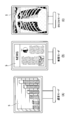
- FIG. 2A when the input video signal is in color, data in the normal mode is transferred to the LUT 3 and a color image is displayed on the display panel 5 with natural brightness.
- FIG. 2B when the input video signal is a monochrome text image, newspaper mode data is transferred to the LUT 3, and characters are displayed on the display panel 5 in a state close to that of newspaper.
- FIG. 2C when the input video signal is monochrome and a graphic image, the DICOM mode data is transferred to the LUT 3, and an image with a shadow that is faithful to the X-ray imaging screen is displayed on the display panel. 5 is displayed.
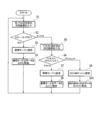
- FIG. 3 is a flowchart showing processing of the control unit 8 in the display device according to the first embodiment of the present invention.
- the control unit 8 inputs the determination result of the monochrome determination unit 6 (step S1), and determines whether the input video signal is color or monochrome from the determination result of the monochrome determination unit 6 (step S1). S2).
- step S2 When it is determined in step S2 that the input video signal is color, the control unit 8 sets the normal mode (step S3), reads the normal mode data from the storage unit 9, and transfers the data to the LUT 3. (Step S4).
- step S2 When it is determined in step S2 that the input video signal is monochrome, the control unit 8 inputs the determination result of the text determination unit 7 (step S5), and the input image is determined based on the determination result of the text determination unit 7. Is a text or a graphic (step S6).
- step S6 When it is determined in step S6 that the input image is text, the control unit 8 sets the newspaper mode (step S7), reads newspaper mode data from the storage unit 9, and transfers the data to the LUT 3 (step S8). . If it is determined in step S6 that the input image is a graphic, the control unit 8 sets the DICOM mode (step S9), reads the data for the DICOM mode from the storage unit 9, and transfers it to the LUT 3 (step S9). S10).
- the display mode is set according to the content of the input video signal, and data is transferred to the LUT 3 according to each mode.
- an optimal image can be displayed on the display panel 5 according to each mode. That is, when the input video signal is color, normal mode data is transferred to the LUT 3 and a natural color image is displayed on the display panel 5.
- the input video signal is a monochrome text image
- newspaper mode data is transferred to the LUT 3 and characters are displayed on the display panel 5 in the same state as the newspaper page.
- the LUT 3 is set to the DICOM mode, and an X-ray image is displayed on the display panel 5 faithfully.
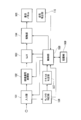
- FIG. 4 shows a schematic block diagram of a configuration of a display device according to the second embodiment of the present invention.
- the display device according to the second exemplary embodiment of the present invention includes an input unit 101, a video signal processing unit 102, an LUT 103, a drive unit 104, a display panel 105, and a monochrome determination unit 106.
- the input unit 101, the video signal processing unit 102, the LUT 103, the drive unit 104, the display panel 105, the monochrome determination unit 106, the text determination unit 107, the control unit 108, and the storage unit 109 are the input unit 1 in the first embodiment described above.
- the casing that supports the display panel 105 has a rotatable configuration, and the display panel 105 can be arranged in a horizontal type and a vertical type depending on the application.
- the posture detection unit 110 detects the posture (arrangement direction) of the display panel 105.
- an acceleration sensor, a mechanical switch, or the like can be used as the posture detection unit 110.
- the detection output of the posture detection unit 110 is sent to the control unit 108.
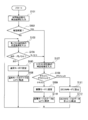
- FIG. 5 is a flowchart showing the processing of the control unit 108 in the second embodiment of the present invention.
- the control unit 108 inputs the detection result of the posture detection unit 110 (step S ⁇ b> 101), and determines whether or not it is a vertical arrangement based on the detection result of the posture detection unit 110 (step S ⁇ b> 102).
- the control unit 8 inputs the determination result of the monochrome determination unit 106 (step S103), and the input video signal is color based on the determination result of the monochrome determination unit 106.
- monochrome step S104.
- step S104 If it is determined in step S104 that the input video signal is color, the control unit 108 sets the normal mode (step S105), reads the normal mode data from the storage unit 109, and transfers the data to the LUT 103. (Step S106).
- step S102 If it is determined in step S102 that the layout is vertical, or if it is determined in step S104 that the input video signal is monochrome, the control unit 108 inputs the determination result of the text determination unit 107 ( In step S107, it is determined from the determination result of the text determination unit 107 whether the input image is text or graphic (step S108).
- step S108 If it is determined in step S108 that the input image is text, the control unit 108 sets the newspaper mode (step S109), reads the newspaper mode data from the storage unit 109, and transfers the data to the LUT 103 (step S110). . If it is determined in step S108 that the input image is a graphic, the control unit 108 sets the DICOM mode (step S111), reads the data for the DICOM mode from the storage unit 109, and transfers the data to the LUT 103 (step S111). S112).
- the posture detection unit 110 that detects the posture of the display panel 105 is provided, from the arrangement direction of the display panel 105 detected by the posture detection unit 110. Whether a color image or a monochrome image can be immediately determined.
- the monochrome determination unit 106 can be omitted.
- the mode is set by using both the determination of color or monochrome and the determination of text or graphic for the determination for switching the mode.
- the mode may be set using either monochrome determination or text / graphic determination.
- the color mode and the monochrome mode may be set using only the determination of color or monochrome.
- the text mode and the graphic mode may be set using only the determination of text or graphic.
- signal determination is always performed and mode switching is performed in real time.
- hysteresis is provided in the mode transition condition, for example, the condition for switching for a certain period of time continues.
- the mode may be changed only when it is done. In this way, it is possible to prevent the mode from switching frequently.
- the program for realizing the function of the control unit in FIG. 1 is recorded on a computer-readable recording medium, and the program recorded on the recording medium is read into the computer system and executed to execute processing. Also good.
- the “computer system” includes an OS and hardware such as peripheral devices.
- the “computer system” includes a homepage providing environment (or display environment) if a WWW system is used.
- the “computer-readable recording medium” refers to a storage device such as a flexible medium, a magneto-optical disk, a portable medium such as a ROM or a CD-ROM, and a hard disk incorporated in a computer system.
- the “computer-readable recording medium” includes a medium that holds a program for a certain period of time, such as a volatile memory inside a computer system serving as a server or a client.
- the program may be a program for realizing a part of the functions described above, and may be a program capable of realizing the functions described above in combination with a program already recorded in a computer system. Further, the above program may be stored in a predetermined server, and the program may be distributed (downloaded or the like) via a communication line in response to a request from another device.
- Appendix 1 A display unit, a determination unit that determines whether the content of the video based on the input video signal is monochrome or color, and a display mode according to the determined result is set, and the input video signal A control unit that causes the display unit to display a corresponding image in the display mode.
- the control unit causes the display unit to display an image corresponding to the input video signal in a display mode corresponding to color display,
- the supplementary note 1 wherein when the content of the video based on the input video signal is monochrome, an image corresponding to the input video signal is displayed on the display unit in a display mode corresponding to monochrome display. Display device.
- the determination unit determines whether the content of the video based on the input video signal is text or graphic, and the control unit When the content of the video based on the input video signal is a graphic, an image corresponding to the input video signal is displayed on the display unit in a display mode corresponding to the graphic, and the input video signal is displayed.
- the display device wherein when the content of the video based on the text is text, an image corresponding to the input video signal is displayed on the display unit in a display mode corresponding to the text.
- the display unit further includes a detection unit that detects the orientation of the display unit, and the control unit has a direction in which a long side of the screen of the display unit is parallel to a vertical direction based on the detected orientation of the display unit
- the control unit has a direction in which a long side of the screen of the display unit is parallel to a vertical direction based on the detected orientation of the display unit
- an image corresponding to the input video signal is displayed on the display unit in a display mode corresponding to monochrome
- the long side of the screen of the display unit is oriented parallel to the horizontal direction
- Appendix 5 The display device according to appendix 3, wherein the display mode corresponding to the text includes a newspaper mode in which a monochrome text image is displayed in the same manner as a newspaper page.
- Appendix 6 The display device according to appendix 3, wherein the display mode corresponding to the graphic includes a DICOM mode that faithfully displays a medical graphic image.
- Appendix 7 The display device according to appendix 1, wherein the determination unit determines whether the content of the input video signal is monochrome or color based on a data value of each color.
- Appendix 8 The display device according to appendix 3, wherein the determination unit determines whether the data is text or graphic based on a difference in data values between adjacent pixels.
- Appendix 9 The display device according to appendix 3, wherein the determination unit analyzes a frequency component of an input video signal to determine whether the input video signal is text or graphic.
- the determination unit determines whether the content of the video based on the input video signal is monochrome or color, and the control unit sets a display mode according to the determined result, and is input Displaying an image corresponding to the video signal in the display mode.
Landscapes
- Engineering & Computer Science (AREA)
- Physics & Mathematics (AREA)
- Computer Hardware Design (AREA)
- General Physics & Mathematics (AREA)
- Theoretical Computer Science (AREA)
- Multimedia (AREA)
- Signal Processing (AREA)
- Controls And Circuits For Display Device (AREA)
- Control Of Indicators Other Than Cathode Ray Tubes (AREA)
Description
本発明は、各種の画像の表示を行う表示装置及び表示方法に関する。
表示モードとして、通常モード、新聞モード、DICOM(Digital Imaging and COmmunication in Medicine)モード等に対応でき、各種の画像を表示できる表示装置が知られている。ここで、通常モードは、通常のカラー画像を自然に表示するモードである。新聞モードは、新聞の文字を新聞の紙面と同様に表示するモードである。DICOMモードは、X線撮影画像等を忠実に表示するモードである。DICOMモードでは、例えば特許文献1に示されるように、X線画像の陰影が忠実に再生できるように、グレイスケールが定められている。
上記の表示装置では、各種の画像を適切に表示することができる。しかしながら、このような表示装置では、ユーザーが表示画像によって各モードを手動で切り替える必要がある。このため、操作性が良好でないという課題がある。
本発明は、上述の課題に鑑み、入力映像信号の内容に応じて、モードを適切に設定でき、各種の入力映像信号を最適に表示できる、表示装置及び表示方法を提供することを目的とする。
上述の課題に鑑み、本発明に係る一態様として、表示装置は、表示部と、入力される映像信号に基づく映像の内容がモノクロであるかカラーであるかを判定する判定部と、判定された結果に応じた表示モードを設定し、前記入力される映像信号に対応する画像を前記表示モードで前記表示部に表示させる制御部と、を有する。
また、本発明に係る一態様として、表示方法は、判定部が、入力される映像信号に基づく映像の内容がモノクロであるかカラーであるかを判定する工程と、制御部が、判定された結果に応じた表示モードを設定し、前記入力される映像信号に対応する画像を前記表示モードで表示させる工程と、を含む。
本発明によれば、入力映像信号の内容を判定し、判定された入力映像信号の内容に応じて、表示モードが設定される。これにより、ユーザーが手動で操作を行うことなく、各モードに応じて最適な画像が表示部に表示できる。
以下、本発明の実施の形態について図面を参照しながら説明する。
[第1の実施の形態]
図1に本発明の第1の実施形態に係る表示装置の構成の概略ブロック図を示す。図1に示すように、本発明の第1の実施形態に係る表示装置は、入力部1と、映像信号処理部2と、LUT(Look Up Table)3と、駆動部4と、表示パネル(表示部)5と、モノクロ判定部6と、テキスト判定部7と、制御部8と、記憶部9とを備えている。
[第1の実施の形態]
図1に本発明の第1の実施形態に係る表示装置の構成の概略ブロック図を示す。図1に示すように、本発明の第1の実施形態に係る表示装置は、入力部1と、映像信号処理部2と、LUT(Look Up Table)3と、駆動部4と、表示パネル(表示部)5と、モノクロ判定部6と、テキスト判定部7と、制御部8と、記憶部9とを備えている。
入力部1は、映像信号の入力経路の選択回路や映像信号の入力に必要な回路から構成されている。さらに、入力部1は、入力映像信号が例えばアナログ信号の場合には、A/D(Analog to Digital)コンバータを含み、また、入力映像信号がデジタル信号の場合には、受信回路を含む。
映像信号処理部2は、入力映像信号を表示するための必要な処理を行う回路を含む。例えば、映像信号処理部2は、明るさの調整やスケーリング等を行う回路を含む。
LUT3は、各種画像表示モード(表示モード)に適した処理を行うテーブルを格納している。各表示モードに適した処理を行うためのデータは、記憶部9に記憶されている。画像表示モードとしては、カラー表示に応じた表示モードと、モノクロに応じた表示モードと、テキストを表示する表示モード等が設定可能である。
カラー表示に応じた表示モードとは、例えば、カラー画像の表示に応じた表示モードを用いることができ、より具体的には、通常のカラー画像を自然に再生するような通常モードを用いることができる。モノクロに応じた表示モードとは、例えば、モノクロ画像の表示に応じた表示モードを用いることができ、より具体的には、医療用のモノクロ画像を忠実なグレイスケールで再生できるDICOM(Digital Imaging and COmmunication in Medicine)モードを用いることができる。テキストを表示する表示モードとは、例えば、モノクロ画像に文字を表示する表示モードを用いることができ、より具体的には、例えば、新聞の文字を新聞の紙面と同様に表示する新聞モードを用いることができる。
駆動部4は、表示パネル5を駆動するドライバ等を含む。表示パネル5は、例えば液晶パネルや有機EL(Electro Luminescence)等であり、画像の表示を行う。表示パネル5を支える筐体は回転可能な構成を有しており、用途によっては縦型に配置されることがある。なお、駆動部4は、LUT3を含んでいてもよい。
モノクロ判定部6は、入力映像信号がカラーであるかモノクロであるかを判定する。モノクロ判定部6は、例えば、画像の所定の領域について、R(赤)とG(緑)のデータの差分及びB(青)とG(緑)のデータの差分を取り、この差分を絶対値化して累積加算し、この累積加算値としきい値とを比較することで、モノクロであるかカラーであるかを判定するような構成により実現できる。すなわち、モノクロの場合、各ピクセルのR、G、Bの値は同じであるため、画像の所定の領域についてRとGのデータの差分及びBとGのデータの差分を累積加算しても、ノイズ等の影響以外では累積加算値は増加しない。これに対して、カラー信号の場合は、各ピクセルのR、G、Bの値は異なるため、画像の所定の領域についてRとGのデータの差分及びBとGのデータの差分を累積加算すると、比較的早くしきい値に達する。したがって、画像の所定の領域について、RとGのデータの差分及びBとGのデータの差分の絶対値を累積加算し、この累積加算値としきい値とを比較し、累積加算値がしきい値を超えれば、カラーと判定でき、累積加算値がしきい値より小さければ、モノクロと判定できる。このような手法を採れば、カラーと判定すると以後の処理は不要となるという利点がある。累積加算は、必ずしもすべてのピクセルについて行う必要はなく、例えば8ドット毎等に行うことで、演算量を削減でき、処理を高速化することができる。なお、モノクロ判定部6の構成は、このような構成に限定されるものではない。
テキスト判定部7は、入力画像がテキストであるかグラフィックであるかを判定する。テキスト判定部7は、例えば、所定の範囲の画像について隣接するピクセル間のデータ値の差分を取って絶対値化して累積加算し、この累積加算値としきい値とを比較することで、テキストであるかグラフィックであるかを判定するような構成により実現できる。すなわち、テキスト画像の場合は、白地に黒文字等で構成されている領域が多く、隣接ピクセルの差分値の絶対値は比較的大きな値となる。これに対して、グラフィック画像の場合は、隣接するピクセル間でデータ値が急激に変化することは比較的少なく、多くの領域ではなだらかに変化するため、隣接するピクセルの差分値の累積加算値は比較的小さな値となる。したがって、所定の範囲について隣接するピクセルの差分値の絶対値を累積加算し、この累積加算値としきい値と比較し、累積加算値がしきい値より大きいときはテキスト画像と判定でき、累積加算値がしきい値より小さいときはグラフィック画像と判定できる。
上述の例では、テキスト判定部7は、隣接するピクセル間のデータ値の差分を用いてテキストであるかグラフィックであるかを判定しているが、他の方法を使用して、テキストであるかグラフィックであるかを判定するような構成としてもよい。例えば、テキスト判定部7は、所定領域の画像を複数の周波数領域に分割して、テキストであるかグラフィックであるかを判定するような構成としてもよい。一般にテキスト画像では低域成分と高域成分が多く、中間域成分が少ない。これに対して、グラフィック画像では全域に渡って画像がなだらかに変化しており、中間域成分を多く含んでいる。したがって、画像を複数の周波数領域に分割し、各周波数成分を解析することによって、テキストであるかグラフィックであるかを判定することができる。
制御部8は、上述の各部を制御する。また、制御部8は、モノクロ判定部6及びテキスト判定部7での判定結果に応じてモードを設定し、各モードに応じたデータをLUT3に転送する。
次に、本発明の第1の実施形態に係る表示装置の動作について説明する。図1において、入力部1に入力された映像信号は、入力部1から映像信号処理部2に送られると共に、モノクロ判定部6に送られる。モノクロ判定部6の出力がテキスト判定部7に送られる。
モノクロ判定部6は、入力映像信号がカラーであるかモノクロであるかを判定し、この判定出力を制御部8に送る。制御部8は、モノクロ判定部6の判定出力により、入力映像信号がカラーであるか否かを判定し、カラーであると判定したときは、記憶部9から通常モード用のデータを読み出し、LUT3へ転送する。入力映像信号がモノクロであると判定された場合には、制御部8は、さらにテキスト判定部7の判定出力により、入力画像がテキストであるかグラフィックであるかを判定し、テキストであると判定したときは、新聞モード用のデータを記憶部9から読み出し、グラフィックであると判定したときは、DICOMモード用のデータを記憶部9から読み出し、それぞれLUT3へ転送する。
一方、入力部1からの入力映像信号は、映像信号処理部2で、例えば明るさの調整やスケーリング等の処理が行われた後、LUT3に送られる。上述のように、LUT3には、入力映像信号がカラーである場合には、通常モード用のデータが転送され、入力映像信号がモノクロのテキスト画像の場合には、新聞モード用のデータが転送され、入力映像信号がモノクロのグラフィック画像の場合には、DICOMモード用のデータが転送されている。
LUT3は、映像信号処理部2の出力信号に対して、転送されたテーブルのデータに応じて、処理を行う。例えば、入力映像信号がカラーである場合には、LUT3には通常モードのデータが設定され、LUT3により、映像信号に対して通常のカラー画像が自然に再生されるように処理が行われる。また、入力映像信号がモノクロでテキスト画像である場合には、LUT3には表示画面の白色色温度が新聞紙の色温度に近い設定値とするような処理が行われる。また、入力映像信号がモノクロでグラフィック画像の場合には、LUT3にはDICOMモードのデータが転送され、グレイスケールが忠実に再生できるように、映像信号に対して階調特性が与えられる。なお、DICOMモードでは、グレイスケールの再現性について厳格に規格化されている。
LUT3の出力信号は、駆動部4を介して、表示パネル5に送られる。これにより、表示パネル5には、入力映像信号の内容に応じて、入力映像信号に基づく画像が最適に表示される。例えば、図2(A)に示すように、入力映像信号がカラーである場合には、LUT3に通常モードのデータが転送され、自然な明るさでカラー画像が表示パネル5に表示される。また、図2(B)に示すように、入力映像信号がモノクロでテキスト画像である場合には、LUT3に新聞モードのデータが転送され、新聞紙と近い状態で文字が表示パネル5に表示される。また、図2(C)に示すように、入力映像信号がモノクロでグラフィック画像の場合には、LUT3にDICOMモードのデータが転送され、X線撮影画面に対して忠実な陰影の画像が表示パネル5に表示される。
図3は、本発明の第1の実施形態に係る表示装置における制御部8の処理を示すフローチャートである。図3において、制御部8は、モノクロ判定部6の判定結果を入力し(ステップS1)、モノクロ判定部6の判定結果から、入力映像信号がカラーであるかモノクロであるかを判定する(ステップS2)。
ステップS2で、入力映像信号がカラーであると判定された場合には、制御部8は、通常モードに設定し(ステップS3)、記憶部9から通常モード用のデータを読み出し、LUT3へ転送する(ステップS4)。
ステップS2で、入力映像信号がモノクロであると判定された場合には、制御部8は、テキスト判定部7の判定結果を入力し(ステップS5)、テキスト判定部7の判定結果から、入力画像がテキストであるかグラフィックであるかを判定する(ステップS6)。
ステップS6で、入力画像がテキストと判定されたときは、制御部8は、新聞モードに設定し(ステップS7)、新聞モード用のデータを記憶部9から読み出し、LUT3へ転送する(ステップS8)。ステップS6で、入力画像がグラフィックであると判定されたときは、制御部8は、DICOMモードに設定し(ステップS9)、DICOMモード用のデータを記憶部9から読み出し、LUT3へ転送する(ステップS10)。
以上説明したように、本発明の第1の実施形態に係る表示装置では、入力映像信号の内容に応じて、表示モードが設定され、各モードに応じてデータがLUT3に転送される。これにより、各モードに応じて最適な画像が表示パネル5に表示できる。すなわち、入力映像信号がカラーである場合には、LUT3に通常モードのデータが転送され、自然なカラー画像が表示パネル5に表示される。また、入力映像信号がモノクロでテキスト画像である場合には、LUT3に新聞モードのデータが転送され、新聞の紙面と同様な状態で表示パネル5に文字が表示される。また、入力映像信号がモノクロでグラフィック画像の場合には、LUT3がDICOMモードに設定され、X線撮影画像等が忠実に表示パネル5に表示される。
[第2の実施の形態]
次に、本発明の第2の実施形態について説明する。図4に本発明の第2の実施形態に係る表示装置の構成の概略ブロック図を示す。図4に示すように、本発明の第2の実施形態に係る表示装置は、入力部101と、映像信号処理部102と、LUT103と、駆動部104と、表示パネル105と、モノクロ判定部106と、テキスト判定部107と、制御部108と、記憶部109と、姿勢検出部110とを備えている。
次に、本発明の第2の実施形態について説明する。図4に本発明の第2の実施形態に係る表示装置の構成の概略ブロック図を示す。図4に示すように、本発明の第2の実施形態に係る表示装置は、入力部101と、映像信号処理部102と、LUT103と、駆動部104と、表示パネル105と、モノクロ判定部106と、テキスト判定部107と、制御部108と、記憶部109と、姿勢検出部110とを備えている。
入力部101、映像信号処理部102、LUT103、駆動部104、表示パネル105、モノクロ判定部106、テキスト判定部107、制御部108、記憶部109は、前述の第1の実施形態における入力部1、映像信号処理部2、LUT3、駆動部4、表示パネル5、モノクロ判定部6、テキスト判定部7、制御部8、記憶部9と同様である。
この実施形態では、表示パネル105を支える筐体は回転可能な構成を有しており、表示パネル105は、用途に応じて、横型と縦型とに配置できる。姿勢検出部110は、表示パネル105の姿勢(配置方向)を検出する。姿勢検出部110としては、加速度センサーや機械式のスイッチ等が使用可能である。姿勢検出部110の検出出力は、制御部108に送られる。
図2に示したように、新聞のテキストを表示するときや(図2(B))、X線の撮影画面を表示するときには(図2(C))、表示パネルが縦型に配置されることが多い。そこで、この実施形態では、姿勢検出部110の検出出力から表示パネル105が縦型に配置されていることが検出されると、モノクロ判定部106の判定値にかかわらず、モノクロであると判定するようにしている。
図5は、本発明の第2の実施形態における制御部108の処理を示すフローチャートである。図5において、制御部108は、姿勢検出部110の検出結果を入力し(ステップS101)、姿勢検出部110の検出結果により、縦型配置であるか否かを判定する(ステップS102)。縦型配置ではない場合には(ステップS102 No)、制御部8は、モノクロ判定部106の判定結果を入力し(ステップS103)、モノクロ判定部106の判定結果から、入力映像信号がカラーであるかモノクロであるかを判定する(ステップS104)。
ステップS104で、入力映像信号がカラーであると判定された場合には、制御部108は、通常モードに設定し(ステップS105)、記憶部109から通常モード用のデータを読み出し、LUT103へ転送する(ステップS106)。
ステップS102で縦型配置であると判定された場合、又は、ステップS104で入力映像信号がモノクロであると判定された場合には、制御部108は、テキスト判定部107の判定結果を入力し(ステップS107)、テキスト判定部107の判定結果から、入力画像がテキストであるかグラフィックであるかを判定する(ステップS108)。
ステップS108で、入力画像がテキストと判定されたときは、制御部108は、新聞モードに設定し(ステップS109)、新聞モード用のデータを記憶部109から読み出し、LUT103へ転送する(ステップS110)。ステップS108で、入力画像がグラフィックであると判定されたときは、制御部108は、DICOMモードに設定し(ステップS111)、DICOMモード用のデータを記憶部109から読み出し、LUT103へ転送する(ステップS112)。
以上説明したように、本発明の第2の実施形態では、表示パネル105の姿勢を検出する姿勢検出部110が設けられているので、姿勢検出部110で検出される表示パネル105の配置方向から、カラー画像かモノクロ画像かを直ちに判定できる。
なお、上述の例では、姿勢検出部110の検出出力により、縦型配置ではない場合に、さらに、モノクロ判定部106の判定出力により、モノクロであるかカラーであるかを判定しているが、姿勢検出部110の検出出力により、縦型配置ではない場合には、カラーであると判定してもよい。このような構成とした場合には、モノクロ判定部106を省略できる。
上述の第1及び第2の実施形態では、モードの切り替えのための判定に、カラーかモノクロかの判定と、テキストかグラフィックかの判定の両方を用いてモードを設定しているが、カラーかモノクロかの判定又はテキストかグラフィックかの判定の一方を用いてモードを設定してもよい。例えば、カラーかモノクロかの判定だけを用いて、カラーモードとモノクロモードとに設定するようにしてもよい。また、例えば、テキストかグラフィックかの判定だけを用いて、テキストモードとグラフィックモードとに設定するようにしてもよい。
また、上述の第1及び第2の実施形態では、信号の判定を常時行い、リアルタイムにモード切り替えを行うようにしているが、モードの遷移条件にヒステリシスを設け、例えば一定時間切り替えの条件が継続した場合にのみ、モードを遷移するようにしてもよい。このようにすると、モードが頻繁に切り替わるのを防ぐことができる。
また、図1における制御部の機能を実現するためのプログラムをコンピュータ読み取り可能な記録媒体に記録して、この記録媒体に記録されたプログラムをコンピュータシステムに読み込ませ、実行することにより処理を行ってもよい。なお、ここでいう「コンピュータシステム」とは、OSや周辺機器等のハードウェアを含むものとする。
また、「コンピュータシステム」は、WWWシステムを利用している場合であれば、ホームページ提供環境(あるいは表示環境)も含むものとする。
また、「コンピュータ読み取り可能な記録媒体」とは、フレキシブルディスク、光磁気ディスク、ROM、CD-ROM等の可搬媒体、コンピュータシステムに内蔵されるハードディスク等の記憶装置のことをいう。さらに「コンピュータ読み取り可能な記録媒体」とは、サーバやクライアントとなるコンピュータシステム内部の揮発性メモリのように、一定時間プログラムを保持しているものを含むものとする。また上記プログラムは、前述した機能の一部を実現するためのものであっても良く、さらに前述した機能をコンピュータシステムにすでに記録されているプログラムとの組み合わせで実現できるものであってもよい。また、上記のプログラムを所定のサーバに記憶させておき、他の装置からの要求に応じて、当該プログラムを、通信回線を介して配信(ダウンロード等)させるようにしてもよい。
また、「コンピュータ読み取り可能な記録媒体」とは、フレキシブルディスク、光磁気ディスク、ROM、CD-ROM等の可搬媒体、コンピュータシステムに内蔵されるハードディスク等の記憶装置のことをいう。さらに「コンピュータ読み取り可能な記録媒体」とは、サーバやクライアントとなるコンピュータシステム内部の揮発性メモリのように、一定時間プログラムを保持しているものを含むものとする。また上記プログラムは、前述した機能の一部を実現するためのものであっても良く、さらに前述した機能をコンピュータシステムにすでに記録されているプログラムとの組み合わせで実現できるものであってもよい。また、上記のプログラムを所定のサーバに記憶させておき、他の装置からの要求に応じて、当該プログラムを、通信回線を介して配信(ダウンロード等)させるようにしてもよい。
以上、本発明の実施形態について図面を参照して詳述してきたが、具体的な構成はこの実施形態に限られるものではなく、この発明の要旨を逸脱しない範囲の設計変更等も含まれる。
上記の実施形態の一部又は全部は、以下の付記のようにも記載され得るが、以下には限られない。
(付記1)
表示部と、入力される映像信号に基づく映像の内容がモノクロであるかカラーであるかを判定する判定部と、判定された結果に応じた表示モードを設定し、前記入力される映像信号に対応する画像を前記表示モードで前記表示部に表示させる制御部と、を有する表示装置。
表示部と、入力される映像信号に基づく映像の内容がモノクロであるかカラーであるかを判定する判定部と、判定された結果に応じた表示モードを設定し、前記入力される映像信号に対応する画像を前記表示モードで前記表示部に表示させる制御部と、を有する表示装置。
(付記2)
前記制御部は、前記入力される映像信号に基づく映像の内容がカラーである場合には、カラー表示に応じた表示モードによって前記入力される映像信号に対応する画像を前記表示部に表示させ、前記入力される映像信号に基づく映像の内容がモノクロである場合には、モノクロ表示に応じた表示モードによって前記入力される映像信号に対応する画像を前記表示部に表示させる、付記1に記載の表示装置。
前記制御部は、前記入力される映像信号に基づく映像の内容がカラーである場合には、カラー表示に応じた表示モードによって前記入力される映像信号に対応する画像を前記表示部に表示させ、前記入力される映像信号に基づく映像の内容がモノクロである場合には、モノクロ表示に応じた表示モードによって前記入力される映像信号に対応する画像を前記表示部に表示させる、付記1に記載の表示装置。
(付記3)
前記判定部は、前記入力される映像信号がモノクロである場合には、前記入力される映像信号に基づく映像の内容がテキストであるかグラフィックであるかをさらに判定し、前記制御部は、前記入力される映像信号に基づく映像の内容がグラフィックである場合には、グラフィックに応じた表示モードによって前記入力される映像信号に対応する画像を前記表示部に表示させ、前記入力される映像信号に基づく映像の内容がテキストである場合には、テキストに応じた表示モードによって前記入力される映像信号に対応する画像を前記表示部に表示させる、付記2に記載の表示装置。
前記判定部は、前記入力される映像信号がモノクロである場合には、前記入力される映像信号に基づく映像の内容がテキストであるかグラフィックであるかをさらに判定し、前記制御部は、前記入力される映像信号に基づく映像の内容がグラフィックである場合には、グラフィックに応じた表示モードによって前記入力される映像信号に対応する画像を前記表示部に表示させ、前記入力される映像信号に基づく映像の内容がテキストである場合には、テキストに応じた表示モードによって前記入力される映像信号に対応する画像を前記表示部に表示させる、付記2に記載の表示装置。
(付記4)
表示部の姿勢を検出する検出部をさらに有し、前記制御部は、前記検出された前記表示部の姿勢に基づいて、前記表示部の画面の長辺が垂直方向に平行な向きである場合には、モノクロに応じた表示モードによって前記入力される映像信号に対応する画像を前記表示部に表示させ、前記表示部の画面の長辺が水平方向に平行な向きである場合には、カラー表示に応じた表示モードによって前記入力される映像信号に対応する画像を前記表示部に表示させる、付記1に記載の表示装置。
表示部の姿勢を検出する検出部をさらに有し、前記制御部は、前記検出された前記表示部の姿勢に基づいて、前記表示部の画面の長辺が垂直方向に平行な向きである場合には、モノクロに応じた表示モードによって前記入力される映像信号に対応する画像を前記表示部に表示させ、前記表示部の画面の長辺が水平方向に平行な向きである場合には、カラー表示に応じた表示モードによって前記入力される映像信号に対応する画像を前記表示部に表示させる、付記1に記載の表示装置。
(付記5)
前記テキストに応じた表示モードは、モノクロのテキスト画像を新聞の紙面と同様に表示する新聞モードを含む、付記3に記載の表示装置。
前記テキストに応じた表示モードは、モノクロのテキスト画像を新聞の紙面と同様に表示する新聞モードを含む、付記3に記載の表示装置。
(付記6)
前記グラフィックに応じた表示モードは、医療用のグラフィック画像を忠実に表示するDICOMモードを含む、付記3に記載の表示装置。
前記グラフィックに応じた表示モードは、医療用のグラフィック画像を忠実に表示するDICOMモードを含む、付記3に記載の表示装置。
(付記7)
前記判定部は、各色のデータ値に基づいて、入力映像信号の内容がモノクロであるかカラーであるかを判定する、付記1に記載の表示装置。
前記判定部は、各色のデータ値に基づいて、入力映像信号の内容がモノクロであるかカラーであるかを判定する、付記1に記載の表示装置。
(付記8)
前記判定部は、隣接するピクセル間のデータ値の差分に基づいて、テキストであるかグラフィックであるかを判定する、付記3に記載の表示装置。
前記判定部は、隣接するピクセル間のデータ値の差分に基づいて、テキストであるかグラフィックであるかを判定する、付記3に記載の表示装置。
(付記9)
前記判定部は、入力映像信号の周波数成分を解析して、テキストであるかグラフィックであるかを判定する、付記3に記載の表示装置。
前記判定部は、入力映像信号の周波数成分を解析して、テキストであるかグラフィックであるかを判定する、付記3に記載の表示装置。
(付記10)
判定部が、入力される映像信号に基づく映像の内容がモノクロであるかカラーであるかを判定する工程と、制御部が、判定された結果に応じた表示モードを設定し、前記入力される映像信号に対応する画像を前記表示モードで表示させる工程と、を含む表示方法。
判定部が、入力される映像信号に基づく映像の内容がモノクロであるかカラーであるかを判定する工程と、制御部が、判定された結果に応じた表示モードを設定し、前記入力される映像信号に対応する画像を前記表示モードで表示させる工程と、を含む表示方法。
1,101 入力部
2,102 映像信号処理部
3,103 LUT
4,104 駆動部
5,105 表示パネル
6,106 モノクロ判定部
7,107 テキスト判定部
8,108 制御部
9,109 記憶部
110 姿勢検出部
2,102 映像信号処理部
3,103 LUT
4,104 駆動部
5,105 表示パネル
6,106 モノクロ判定部
7,107 テキスト判定部
8,108 制御部
9,109 記憶部
110 姿勢検出部
Claims (5)
- 表示部と、
入力される映像信号に基づく映像の内容がモノクロであるかカラーであるかを判定する判定部と、
判定された結果に応じた表示モードを設定し、前記入力される映像信号に対応する画像を前記表示モードで前記表示部に表示させる制御部と、
を有する表示装置。 - 前記制御部は、前記入力される映像信号に基づく映像の内容がカラーである場合には、カラー表示に応じた表示モードによって前記入力される映像信号に対応する画像を前記表示部に表示させ、
前記入力される映像信号に基づく映像の内容がモノクロである場合には、モノクロ表示に応じた表示モードによって前記入力される映像信号に対応する画像を前記表示部に表示させる、
請求項1に記載の表示装置。 - 前記判定部は、前記入力される映像信号がモノクロである場合には、前記入力される映像信号に基づく映像の内容がテキストであるかグラフィックであるかをさらに判定し、
前記制御部は、前記入力される映像信号に基づく映像の内容がグラフィックである場合には、グラフィックに応じた表示モードによって前記入力される映像信号に対応する画像を前記表示部に表示させ、前記入力される映像信号に基づく映像の内容がテキストである場合には、テキストに応じた表示モードによって前記入力される映像信号に対応する画像を前記表示部に表示させる、
請求項2に記載の表示装置。 - 表示部の姿勢を検出する検出部をさらに有し、
前記制御部は、前記検出された前記表示部の姿勢に基づいて、前記表示部の画面の長辺が垂直方向に平行な向きである場合には、モノクロに応じた表示モードによって前記入力される映像信号に対応する画像を前記表示部に表示させ、前記表示部の画面の長辺が水平方向に平行な向きである場合には、カラー表示に応じた表示モードによって前記入力される映像信号に対応する画像を前記表示部に表示させる、
請求項1に記載の表示装置。 - 判定部が、入力される映像信号に基づく映像の内容がモノクロであるかカラーであるかを判定する工程と、
制御部が、判定された結果に応じた表示モードを設定し、前記入力される映像信号に対応する画像を前記表示モードで表示させる工程と、
を含む表示方法。
Priority Applications (2)
| Application Number | Priority Date | Filing Date | Title |
|---|---|---|---|
| US14/433,019 US9591259B2 (en) | 2012-10-12 | 2012-10-12 | Display device and display method |
| PCT/JP2012/076532 WO2014057586A1 (ja) | 2012-10-12 | 2012-10-12 | 表示装置及び表示方法 |
Applications Claiming Priority (1)
| Application Number | Priority Date | Filing Date | Title |
|---|---|---|---|
| PCT/JP2012/076532 WO2014057586A1 (ja) | 2012-10-12 | 2012-10-12 | 表示装置及び表示方法 |
Publications (1)
| Publication Number | Publication Date |
|---|---|
| WO2014057586A1 true WO2014057586A1 (ja) | 2014-04-17 |
Family
ID=50477071
Family Applications (1)
| Application Number | Title | Priority Date | Filing Date |
|---|---|---|---|
| PCT/JP2012/076532 Ceased WO2014057586A1 (ja) | 2012-10-12 | 2012-10-12 | 表示装置及び表示方法 |
Country Status (2)
| Country | Link |
|---|---|
| US (1) | US9591259B2 (ja) |
| WO (1) | WO2014057586A1 (ja) |
Cited By (3)
| Publication number | Priority date | Publication date | Assignee | Title |
|---|---|---|---|---|
| CN104243880A (zh) * | 2014-09-02 | 2014-12-24 | 苏州佳世达电通有限公司 | 一种显示参数的设置方法以及投影装置 |
| WO2016151944A1 (ja) * | 2015-03-23 | 2016-09-29 | 株式会社Jvcケンウッド | 画像補正装置、画像補正方法及び画像補正プログラム |
| WO2019234825A1 (ja) * | 2018-06-05 | 2019-12-12 | Eizo株式会社 | 画像処理装置及び画像処理プログラム |
Families Citing this family (2)
| Publication number | Priority date | Publication date | Assignee | Title |
|---|---|---|---|---|
| US9179184B1 (en) * | 2014-06-20 | 2015-11-03 | Google Inc. | Methods, systems, and media for detecting a presentation of media content on a display device |
| CN112289277A (zh) * | 2020-10-27 | 2021-01-29 | 上海熙业信息科技有限公司 | 一种移动医疗电子设备屏幕亮度调节系统及方法 |
Citations (5)
| Publication number | Priority date | Publication date | Assignee | Title |
|---|---|---|---|---|
| JPH02162395A (ja) * | 1988-12-16 | 1990-06-21 | Canon Inc | 表示制御方式 |
| JP2000330542A (ja) * | 1999-05-21 | 2000-11-30 | Mitsubishi Electric Corp | 表示装置及び表示装置の制御方法 |
| JP2004240108A (ja) * | 2003-02-05 | 2004-08-26 | Fuji Photo Film Co Ltd | 画像表示装置 |
| JP2006126528A (ja) * | 2004-10-29 | 2006-05-18 | Totoku Electric Co Ltd | 表示画質制御方法および表示装置 |
| WO2012132050A1 (ja) * | 2011-03-31 | 2012-10-04 | 株式会社ナナオ | 表示装置、画像処理装置、画像領域検出方法及びコンピュータプログラム |
Family Cites Families (6)
| Publication number | Priority date | Publication date | Assignee | Title |
|---|---|---|---|---|
| US2811578A (en) * | 1954-04-05 | 1957-10-29 | Bell Telephone Labor Inc | Television band width reducing system |
| US6760133B1 (en) * | 1989-08-02 | 2004-07-06 | Canon Kabushiki Kaisha | Color image processing apparatus capable of detecting a color or monochromatic image |
| JP2872285B2 (ja) * | 1989-08-02 | 1999-03-17 | キヤノン株式会社 | 画像処理装置及び画像処理方法 |
| JP2004159986A (ja) | 2002-11-14 | 2004-06-10 | Fuji Photo Film Co Ltd | 液晶表示装置 |
| JP2010183456A (ja) * | 2009-02-06 | 2010-08-19 | Sharp Corp | 画像処理装置、画像読取処理装置、画像形成装置、画像処理方法、画像処理プログラム、記録媒体 |
| TWI425488B (zh) * | 2009-11-03 | 2014-02-01 | Nuvoton Technology Corp | 場序顯示器的驅動器及其驅動方法 |
-
2012
- 2012-10-12 WO PCT/JP2012/076532 patent/WO2014057586A1/ja not_active Ceased
- 2012-10-12 US US14/433,019 patent/US9591259B2/en active Active
Patent Citations (5)
| Publication number | Priority date | Publication date | Assignee | Title |
|---|---|---|---|---|
| JPH02162395A (ja) * | 1988-12-16 | 1990-06-21 | Canon Inc | 表示制御方式 |
| JP2000330542A (ja) * | 1999-05-21 | 2000-11-30 | Mitsubishi Electric Corp | 表示装置及び表示装置の制御方法 |
| JP2004240108A (ja) * | 2003-02-05 | 2004-08-26 | Fuji Photo Film Co Ltd | 画像表示装置 |
| JP2006126528A (ja) * | 2004-10-29 | 2006-05-18 | Totoku Electric Co Ltd | 表示画質制御方法および表示装置 |
| WO2012132050A1 (ja) * | 2011-03-31 | 2012-10-04 | 株式会社ナナオ | 表示装置、画像処理装置、画像領域検出方法及びコンピュータプログラム |
Cited By (5)
| Publication number | Priority date | Publication date | Assignee | Title |
|---|---|---|---|---|
| CN104243880A (zh) * | 2014-09-02 | 2014-12-24 | 苏州佳世达电通有限公司 | 一种显示参数的设置方法以及投影装置 |
| WO2016151944A1 (ja) * | 2015-03-23 | 2016-09-29 | 株式会社Jvcケンウッド | 画像補正装置、画像補正方法及び画像補正プログラム |
| JP2016180787A (ja) * | 2015-03-23 | 2016-10-13 | 株式会社Jvcケンウッド | 画像補正装置、画像補正方法及び画像補正プログラム |
| WO2019234825A1 (ja) * | 2018-06-05 | 2019-12-12 | Eizo株式会社 | 画像処理装置及び画像処理プログラム |
| US11276367B2 (en) | 2018-06-05 | 2022-03-15 | Eizo Corporation | Image processing device and an image processing program |
Also Published As
| Publication number | Publication date |
|---|---|
| US20150244974A1 (en) | 2015-08-27 |
| US9591259B2 (en) | 2017-03-07 |
Similar Documents
| Publication | Publication Date | Title |
|---|---|---|
| US10733963B2 (en) | Information processing apparatus and image processing method | |
| TW201013632A (en) | Display apparatus, method of driving display apparatus, drive-use integrated circuit, driving method employed by drive-use integrated circuit, and signal processing method | |
| JP5089783B2 (ja) | 画像処理装置及びその制御方法 | |
| WO2014057586A1 (ja) | 表示装置及び表示方法 | |
| WO2011080963A1 (ja) | 表示装置 | |
| WO2018025466A1 (ja) | 画像処理装置、及び画像処理方法 | |
| US20190289217A1 (en) | Display apparatus, control method thereof, and non-transitory computer readable medium | |
| JP6779695B2 (ja) | 画像処理装置及びその制御方法、表示装置 | |
| US7619619B2 (en) | Information processing apparatus and display control method | |
| CN112382225A (zh) | 透明显示装置的光线自适应调节方法、装置及显示系统 | |
| JP4626534B2 (ja) | 画像処理装置およびその方法、プログラム、記録媒体 | |
| US12118963B2 (en) | Display controller and image display method | |
| JP4292113B2 (ja) | 画像処理装置及び画像処理方法 | |
| JPWO2019087403A1 (ja) | 画像処理装置、画像処理方法、及び画像処理プログラム | |
| KR20190017290A (ko) | 디스플레이 장치와 그 휘도 제어방법 | |
| WO2018163628A1 (ja) | 情報処理装置、及び情報処理方法 | |
| JP2011205347A (ja) | 画像表示装置およびプログラム | |
| JP4626533B2 (ja) | 画像処理装置およびその方法、プログラム、記録媒体 | |
| WO2014061124A1 (ja) | ディスプレイ装置、及び画像表示方法 | |
| JP2005084540A (ja) | 液晶表示制御装置および液晶表示装置 | |
| JP2008197437A (ja) | 画像表示装置 | |
| JP2011203438A (ja) | 画像表示装置およびプログラム | |
| US20070153024A1 (en) | Multi-mode pixelated displays | |
| JP2020005171A (ja) | 画像処理装置、画像処理方法、及びプログラム | |
| KR100771635B1 (ko) | 색 현시 모델에 기반한 평판 디스플레이의 고화질 색 재현방법 및 장치 |
Legal Events
| Date | Code | Title | Description |
|---|---|---|---|
| 121 | Ep: the epo has been informed by wipo that ep was designated in this application |
Ref document number: 12886302 Country of ref document: EP Kind code of ref document: A1 |
|
| WWE | Wipo information: entry into national phase |
Ref document number: 14433019 Country of ref document: US |
|
| NENP | Non-entry into the national phase |
Ref country code: DE |
|
| 122 | Ep: pct application non-entry in european phase |
Ref document number: 12886302 Country of ref document: EP Kind code of ref document: A1 |
|
| NENP | Non-entry into the national phase |
Ref country code: JP |