WO2013147404A1 - Dapg 가수분해효소 유전자의 형질전환 식물 선별 마커로서의 용도 - Google Patents
Dapg 가수분해효소 유전자의 형질전환 식물 선별 마커로서의 용도 Download PDFInfo
- Publication number
- WO2013147404A1 WO2013147404A1 PCT/KR2013/000092 KR2013000092W WO2013147404A1 WO 2013147404 A1 WO2013147404 A1 WO 2013147404A1 KR 2013000092 W KR2013000092 W KR 2013000092W WO 2013147404 A1 WO2013147404 A1 WO 2013147404A1
- Authority
- WO
- WIPO (PCT)
- Prior art keywords
- dapg
- plant
- gene
- phlg
- vector
- Prior art date
- Legal status (The legal status is an assumption and is not a legal conclusion. Google has not performed a legal analysis and makes no representation as to the accuracy of the status listed.)
- Ceased
Links
Images

Classifications
-
- C—CHEMISTRY; METALLURGY
- C12—BIOCHEMISTRY; BEER; SPIRITS; WINE; VINEGAR; MICROBIOLOGY; ENZYMOLOGY; MUTATION OR GENETIC ENGINEERING
- C12Q—MEASURING OR TESTING PROCESSES INVOLVING ENZYMES, NUCLEIC ACIDS OR MICROORGANISMS; COMPOSITIONS OR TEST PAPERS THEREFOR; PROCESSES OF PREPARING SUCH COMPOSITIONS; CONDITION-RESPONSIVE CONTROL IN MICROBIOLOGICAL OR ENZYMOLOGICAL PROCESSES
- C12Q1/00—Measuring or testing processes involving enzymes, nucleic acids or microorganisms; Compositions therefor; Processes of preparing such compositions
- C12Q1/68—Measuring or testing processes involving enzymes, nucleic acids or microorganisms; Compositions therefor; Processes of preparing such compositions involving nucleic acids
- C12Q1/6897—Measuring or testing processes involving enzymes, nucleic acids or microorganisms; Compositions therefor; Processes of preparing such compositions involving nucleic acids involving reporter genes operably linked to promoters
-
- A—HUMAN NECESSITIES
- A01—AGRICULTURE; FORESTRY; ANIMAL HUSBANDRY; HUNTING; TRAPPING; FISHING
- A01H—NEW PLANTS OR NON-TRANSGENIC PROCESSES FOR OBTAINING THEM; PLANT REPRODUCTION BY TISSUE CULTURE TECHNIQUES
- A01H6/00—Angiosperms, i.e. flowering plants, characterised by their botanic taxonomy
- A01H6/46—Gramineae or Poaceae, e.g. ryegrass, rice, wheat or maize
- A01H6/4636—Oryza sp. [rice]
-
- C—CHEMISTRY; METALLURGY
- C12—BIOCHEMISTRY; BEER; SPIRITS; WINE; VINEGAR; MICROBIOLOGY; ENZYMOLOGY; MUTATION OR GENETIC ENGINEERING
- C12N—MICROORGANISMS OR ENZYMES; COMPOSITIONS THEREOF; PROPAGATING, PRESERVING, OR MAINTAINING MICROORGANISMS; MUTATION OR GENETIC ENGINEERING; CULTURE MEDIA
- C12N15/00—Mutation or genetic engineering; DNA or RNA concerning genetic engineering, vectors, e.g. plasmids, or their isolation, preparation or purification; Use of hosts therefor
- C12N15/09—Recombinant DNA-technology
- C12N15/63—Introduction of foreign genetic material using vectors; Vectors; Use of hosts therefor; Regulation of expression
- C12N15/79—Vectors or expression systems specially adapted for eukaryotic hosts
- C12N15/82—Vectors or expression systems specially adapted for eukaryotic hosts for plant cells, e.g. plant artificial chromosomes (PACs)
- C12N15/8201—Methods for introducing genetic material into plant cells, e.g. DNA, RNA, stable or transient incorporation, tissue culture methods adapted for transformation
-
- C—CHEMISTRY; METALLURGY
- C12—BIOCHEMISTRY; BEER; SPIRITS; WINE; VINEGAR; MICROBIOLOGY; ENZYMOLOGY; MUTATION OR GENETIC ENGINEERING
- C12N—MICROORGANISMS OR ENZYMES; COMPOSITIONS THEREOF; PROPAGATING, PRESERVING, OR MAINTAINING MICROORGANISMS; MUTATION OR GENETIC ENGINEERING; CULTURE MEDIA
- C12N9/00—Enzymes; Proenzymes; Compositions thereof; Processes for preparing, activating, inhibiting, separating or purifying enzymes
- C12N9/14—Hydrolases (3)
Definitions
- the present invention relates to the use of DAPG (2,4-diacetylphloroglucinol) hydrolase gene ( phlG ) as a transgenic plant selection marker, specifically, a marker for transgenic plant selection comprising the phlG gene, a recombinant comprising the marker
- DAPG 2,4-diacetylphloroglucinol hydrolase gene
- DAPG 2,4-diacetylphloroglucinol
- DAPG is a phenolic compound, one of Pseudomonas antibiotics that has been studied extensively in the past.
- DAPG is known to be highly toxic to bacteria, fungi, nematodes, as well as to plants (Broadbent, D., et al. 1976. C-Acetylphloroglucinols from Pseudomonas fluorescens. Phytochemistry 15: 1785; Keel, et al.
- DAPG is produced by several fluorescent Pseudomonas species isolated from various soils and has the ability to control more than one type of soil-derived disease (Paulsen, et al. 2005. Complete genome sequence of the plant commensal Pseudomonas fluorescens Pf-5. Nat.
- DAPG can also function as a signal for inducing systemic plant resistance to pathogens (Iavicoli, A., et al. 2003. Induced systemic resistance in Arabidopsis thaliana in response to root inoculation with Pseudomonas fluorescens CHA0.Mol.Plant-Microbe Interact. 16: 851-858).
- DAPG Several Pseudomonas species, including P. fluorescens CHA0, have been identified for chromosomal sites for biosynthesis of DAPG (Schnider-Keel, et al. 2000. Autoinduction of 2,4-diacetylphloroglucinol biosynthesis in the biocontrol agent Pseudomonas fluorescens CHA0 and repression by the bacterial metabolites salicylate and pyoluteorin.J. Bacteriol. 182: 1215-1225).
- the DAPG locus contains four biosynthetic genes, phlABCD , transcribed into a single operon, which are required for the synthesis of DAPG.
- the phlE gene is located downstream of the phlABCD operon and encodes a putative transmembrane permease that appears to be associated with DPAG resistance (Abbas, et al. 2004.
- the putative permease PhlE of Pseudomonas fluorescens F113 has a role in 2,4-diacetylphloroglucinol resistance and in general stress tolerance.Microbiology 150: 244-2450).
- the variously transcribed phlF genes are located next to phlA and encode the path-specific transcription inhibitors of the DAPG biosynthetic operon.
- DAPG acts as a signal to separate PhlF from the phlA promoter and thus induce its biosynthesis (Abbas, et al. 2002; Haas, D., and C. Keel. 2003. Regulation of antibiotic production in root-colonizing Pseudomonas spp. And relevance for biological control of plant disease.Annu. Rev. Phytopathol. 41: 117-153; Schnider-Keel, et al. 2000).
- phlG is another gene in the DAPG biosynthetic locus of P. fluorescens CHA0, which exists between the phlF gene and the phlH gene (Schnider-Keel, et al. 2000).
- phlG has been reported to encode an enzyme that catalyzes the process of converting DAPG, a potential antibiotic, to MAPG with low toxicity with high substrate specificity (Melanie Bottiglieri and Christoph Keel.Characterization of PhlG, a Hydrolase That Specifically Degrades the Antifungal Compound 2) , 4-Diacetylphloroglucinol in the Biocontrol Agent Pseudomonas fluorescens CHA0. Appl Environ Microbiol. 2006 January; 72 (1): 418-427).
- the present inventors while searching for a new marker capable of selecting a transgenic plant, found the use of the phlG gene encoding DAPG and its hydrolase as a marker for transgenic plant selection and comparing it with conventional selection methods. Through experiments, the present invention has been completed.
- Another object of the present invention is to provide a marker comprising a phlG gene, an expression vector comprising the same, and a transgenic plant.
- Another object of the present invention is to provide a method for selecting and producing a transgenic plant using the system.
- the present invention provides a marker for selecting a transformed plant comprising a DAPG (2,4-diacetylphloroglucinol) hydrolase gene ( phlG ) represented by the nucleotide sequence of SEQ ID NO: 1.
- the present invention also provides a recombinant plant expression vector comprising a marker gene for selecting a transformed plant according to the present invention.
- the present invention also provides a transgenic plant transformed with the vector according to the present invention.
- the present invention comprises the steps of transforming plant cells with the vector according to the present invention; And culturing the transformed plant cells in a DAPG-containing medium.
- determine whether the insertion of the phlG gene by carrying out after separating the DNA from the plants growing in the containing DAPG medium, PCR using a primer set capable of detecting phlG gene specifically to It may further comprise the step of.
- RT-PCR reverse using a primer set that can specifically detect the phlG gene Transcriptase Polymerase Chain Reaction
- RT-PCR reverse using a primer set that can specifically detect the phlG gene Transcriptase Polymerase Chain Reaction
- the primer set capable of specifically detecting the phlG gene may be a primer set of SEQ ID NO: 2 and SEQ ID NO: 3.
- the present invention comprises the steps of transforming plant cells with the vector according to the present invention; Culturing the transformed plant cells in DAPG containing medium; And it provides a method for producing a transformed plant comprising the step of regenerating the transformed plant from plant cells proliferate in the DAPG containing medium.
- the transgenic plant selection system using the genetic marker of the present invention is less contaminated during the selection process than the conventional transformant selection system using antibiotics, and the seed of the non-transformant in DAPG medium does not germinate. It takes less time and is an easy way to use it.
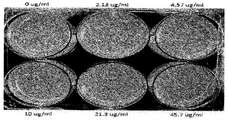
- 1 is a photograph showing the toxicity of DAPG to plants, showing the change in germination and growth of Arabidopsis with the concentration of DAPG contained in the medium.
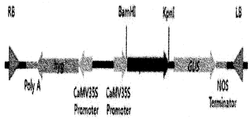
- FIG. 2 is a diagram illustrating the structure of a pCAMBIA1301-phlG vector in which a phlG gene is inserted into a pCAMBIA1301 vector as a plant transformation vector according to an embodiment of the present invention.
- FIG 3 shows the selection of transformants transformed with the vector of the present invention.
- the plants indicated by the arrows were selected as transformants.
- the left side shows a baby pole that is resistant to antibiotics (hygromycin).
- the present invention relates to the use of the DAPG (2,4-diacetylphloroglucinol) hydrolase gene ( phlG ) represented by SEQ ID NO: 1 as a marker for selecting a transgenic plant.
- the phlG gene may be represented by the base sequence of SEQ ID NO: 1, it will be apparent to those skilled in the art that variants of the sequence are also included within the scope of the present invention.
- the term “variant” refers to a nucleotide sequence having a function equivalent to or similar to that of the nucleotide sequence of SEQ ID NO: 1, although the nucleotide sequence is changed.
- the phlG gene may comprise a base sequence having at least 70%, more preferably at least 80%, more preferably at least 90%, most preferably at least 95% homology with the nucleotide sequence of SEQ ID NO: 1 Can be.
- “% sequence homology” to the polynucleotide is identified by comparing the two optimally arranged sequences with the comparison region, wherein a portion of the polynucleotide sequence in the comparison region is the reference sequence for the optimal alignment of the two sequences (additional Or do not include deletion) or addition or deletion (gap).
- the present invention provides a recombinant plant expression vector comprising the phlG gene.
- the vector may be the pCAMBIA1301-phlG vector described in FIG. 2, but is not limited thereto.
- recombinant refers to a cell expressing a heterologous nucleic acid, expressing the nucleic acid, or expressing a protein encoded by a peptide, heterologous peptide, or heterologous nucleic acid.
- the recombinant cell transformed with the vector may express a gene or a gene fragment which is not expressed in the natural form of the cell in one of the sense and antisense forms.
- recombinant cells may express genes expressed in cells in a natural state, but the genes are modified and reintroduced into cells by artificial means.
- Vector refers to DNA fragment (s), nucleic acid molecules that are delivered into a cell.
- Vectors can replicate DNA and be reproduced independently in host cells. "Delivers” can often be used interchangeably with “vectors.”
- An "expression vector” refers to a recombinant DNA molecule comprising a coding sequence of interest and an appropriate nucleic acid sequence necessary to express a coding sequence operably linked in a particular host organism. Promoters, enhancers, termination signals and polyadenylation signals available in eukaryotic cells are known.
- the vector may comprise a nucleic acid sequence encoding a signal peptide, which allows for the export of the expressed protein.
- the nucleic acid sequence encoding the signal peptide is preferably bound directly to 5 'of the heterologous gene to be expressed.
- the vector may be an integrative yeast plasmid (YIp) and an extrachromosomal plasmid vector (YP), but is preferably a plant expression vector.
- Ti-plasmid vectors which, when present in a suitable host such as Agrobacterium tumerfaciens, can transfer part of themselves, the so-called T-region, into plant cells.
- a suitable host such as Agrobacterium tumerfaciens
- Another type of Ti-plasmid vector (see EP 0 116 718 B1) is used to transfer hybrid DNA sequences to protoplasts from which current plant cells or new plants can be produced that properly insert hybrid DNA into the plant's genome. have.
- a particularly preferred form of the Ti-plasmid vector is the so-called binary vector as claimed in EP 0 120 516 B1 and US Pat. No. 4,940,838.
- viral vectors such as those that can be derived from double stranded plant viruses (eg CaMV) and single stranded viruses, gemini viruses, etc.
- CaMV double stranded plant viruses
- gemini viruses single stranded viruses
- it may be selected from an incomplete plant viral vector.
- the use of such vectors can be advantageous especially when it is difficult to properly transform a plant host.
- the expression vector will preferably comprise one or more selectable markers.
- the marker is typically a nucleic acid sequence having properties that can be selected by a chemical method, which corresponds to all genes capable of distinguishing transformed cells from non-transformed cells. Examples include herbicide resistance genes such as glyphosate or phosphinothricin, antibiotic resistance genes such as kanamycin, G418, bleomycin, hygromycin, and chloramphenicol. It is not limited to this.
- the promoter of the plant expression vector may be, but is not limited to, CaMV 35S, actin, ubiquitin, pEMU, MAS or histone promoter.
- the term “promoter” refers to a region of DNA upstream from a structural gene and refers to a DNA molecule to which an RNA polymerase binds to initiate transcription.
- a "plant promoter” is a promoter capable of initiating transcription in plant cells.
- a “constitutive promoter” is a promoter that is active under most environmental conditions and developmental conditions or cell differentiation. Constitutive promoters may be preferred in the present invention because selection of the transformants may be made by various tissues at various stages. Thus, the constitutive promoter does not limit the possibility of selection.
- the terminator may use a conventional terminator, and examples thereof include nopaline synthase (NOS), rice ⁇ -amylase RAmy1 A terminator, phaseoline terminator, agrobacterium tumefaciens (ocrobacterium tumefaciens) Terminator of the Fine (Octopine) gene, etc., but is not limited thereto.
- NOS nopaline synthase
- rice ⁇ -amylase RAmy1 A terminator phaseoline terminator
- agrobacterium tumefaciens ocrobacterium tumefaciens
- Terminator of the Fine (Octopine) gene etc.
- the present invention provides a plant transformed with the recombinant vector according to the present invention.
- the plant according to the present invention expresses DAPG hydrolase.
- the present invention also provides a seed of the plant.
- the plant is not limited, for example, tobacco, eggplant, tobacco, pepper, tomato, burdock, garland chrysanthemum, lettuce, bellflower, spinach, chard, sweet potato, celery, carrots, buttercups, parsley, cabbage, cabbage, mustard, watermelon, melon, Cucumber pumpkin, gourd, strawberry, soybeans, green beans, kidney beans and peas may be a dicotyledonous plant characterized in that selected from, but is preferably Arabidopsis.
- Plant transformation refers to any method of transferring DNA to a plant. Such transformation methods do not necessarily have a period of regeneration and / or tissue culture. Transformation of plant species is now common for plant species, including dicotyledonous plants as well as monocotyledonous quantum.
- any transformation method can be used to introduce hybrid DNA according to the invention into suitable progenitor cells.
- Method is calcium / polyethylene glycol method for protoplasts (Krens, FA et al., 1982, Nature 296, 72-74; Negrutiu I. et al., June 1987, Plant Mol. Biol. 8, 363-373), protoplasts Electroporation (Shillito RD et al., 1985 Bio / Technol. 3, 1099-1102), microscopic injection into plant elements (Crossway A. et al., 1986, Mol. Gen. Genet.
- Agrobacterium tumulopasis DNA or RNA-coated particle bombardment (Klein TM et al., 1987, Nature 327, 70), invasion of plants or transformation of mature pollen or vesicles And may be appropriately selected from infection with (incomplete) virus (EP 0 301 316) in en mediated gene transfer.
- Preferred methods according to the invention include Agrobacterium mediated DNA delivery. Especially preferred is the use of the so-called binary vector technology as described in EP A 120 516 and US Pat. No. 4,940,838.
- the present invention provides a method for selecting a transgenic plant using the marker gene of the present invention. After transforming a plant cell with a recombinant plant expression vector containing a phlG gene, and then culturing the transformed plant cell in a DAPG-containing medium, the transformed plant cell into which the expression vector is normally inserted expresses the DAPG hydrolase. And can degrade the DAPG in the medium, so that it can survive in the DAPG containing medium.
- plant cells not transformed with the expression vector do not produce DAPG degrading enzymes and thus cannot survive in DAPG containing medium. In this way, the DAPG degrading enzyme can be utilized as a selection marker that can select whether to transform the plant.
- the method comprises the steps of transforming plant cells with the recombinant plant expression vector; And culturing the transformed plant cells in DAPG containing medium.
- the method of transforming plant cells is as described above, and there is no limitation on the "plant cells” used for the transformation of plants, for example, culture cells, culture tissues, culture organs or whole plants are included. The cell should be one whose growth is inhibited by DAPG.
- the "tissue” refers to tissues of differentiated or undifferentiated plants, such as, but not limited to, roots, stems, leaves, pollen, seeds, cancer tissues and various types of cells used in culture, ie single cells, protoplasts. (protoplast), shoots and callus tissue.
- the plant tissue may be in planta or in an organ culture, tissue culture or cell culture.
- the DAPG-containing medium may be made by adding DAPG to a conventional culture medium used in the art according to the type of plant.
- the concentration of DAPG may be administered in an amount that can be efficiently selected according to the type of plant, but is not limited thereto. In one embodiment of the present invention, 10, 20, 30, 40, 50, 60, It may be added at a concentration of 70, 80, 90, or 100 ⁇ g / mL.
- the screening method of the phlG gene by separating the DNA from the plant growing in the DAPG-containing medium, PCR using a primer set that can specifically detect the phlG gene may further include checking whether the insertion is performed.
- the primer set can be used for PCR, nested PCR or micro PCR applications.
- the PCR reaction is carried out simultaneously with a known primer set with a first PCR primer set or after the first PCR with a first PCR primer, and the second PCR is performed by reacting the virus detection primer to a PCR product. can do.
- a primer set capable of specifically detecting the phlG gene may be a primer set of SEQ ID NO: 2 and SEQ ID NO: 3.
- PCR is, as is well known in the art, generally, 1) obtaining a crude extract by treating a sample to separate target DNA molecules; 2) adding an aqueous solution comprising enzyme, buffer, dNTP, and oligonucleotide primer; 3) thermal cycling the reaction mixture (eg, 90 ° C.-96 ° C., 72 ° C. and 37 ° C.-55 ° C.), and 4) detecting the amplified DNA.
- the PCR may be performed in a polypropylene tube, 96-well plate or silicon-based micro PCR chip. By performing PCR using a silicon-based micro PCR chip, the PCR reaction can be shortened to 30 minutes or less.
- the silicon-based micro PCR chip may include, for example, a silicon substrate including one side of a PCR reaction chamber manufactured by silicon etching, and another side of the silicon substrate including a heater for heating the PCR reaction chamber; And it may be that the inlet and the outlet is formed to include a glass substrate bonded to each other.
- the PCR may be performed using each primer at a concentration of 0.2 ⁇ M to 1 ⁇ M and template DNA of 0.01 pg to 1 ⁇ g.
- the PCR is denatured 1 second to 30 seconds (86 °C to 97 °C) and annealing 1 second to 30 seconds (50 °C to 70 °C), elongation 1 second to 30 seconds (60 °C to 2 temperature thermocycling conditions of 3 ° C thermocycling conditions, or at the same time for 1 to 30 seconds of denaturation (86 ° C to 97 ° C) and annealing and stretching (50 ° C to 70 ° C) for 5 seconds to 30 seconds It may be carried out under the reaction conditions.
- PCR may be performed by a conventional thermal block PCR device or a micro polymerase chain reaction device (Micro PCR), but is not limited thereto.
- the method of the present invention not only detects the marker of the present invention using one set of PCR primers, but also performs multiple PCR (Multiplex polymerase Chain Reaction) using two or more sets of PCR primers at a time. Can be detected quickly and accurately.
- the PCR reaction conditions employed in the detection method of the present invention may be carried out by adopting or partially modifying the conventional PCR reaction conditions according to the type of PCR such as nested PCR, multiple PCR, micro PCR, single PCR, and the like. Those skilled in the art fall within a category that can be easily predicted.
- the method isolates RNA from a plant growing in the DAPG-containing medium to produce its cDNA, and then uses RT- using a primer set capable of specifically detecting the phlG gene.
- the method may further include checking whether the phlG gene is expressed by performing Reverse Transcriptase Polymerase Chain Reaction (PCR).
- PCR Reverse Transcriptase Polymerase Chain Reaction
- the RT-PCR may be performed using a PCR instrument (ABI 2400) by a method commonly used in the art.
- the template concentration is 2 ⁇ g / 20 ⁇ l
- the reverse transcription reaction for converting the RNA sample to cDNA using 60 ⁇ l of the reaction solution is performed for 60 minutes (42 ° C.), followed by modification for 20 seconds. (95 ° C.), annealing 40 seconds (65 ° C.), and elongation 60 seconds (72 ° C.) may be performed 50 times under thermocycling conditions.
- PCR results can be carried out by conventional PCR detection means, such as electrophoresis.
- the present invention provides a method for producing a transgenic plant using the marker gene.
- the method comprises the steps of transforming plant cells with the vector; Culturing the transformed plant cells in DAPG containing medium; And regenerating the transformed plant from plant cells proliferating in the DAPG containing medium.
- Genomic DNA of Pseudomonas fluorescens CHA0 strain was isolated using a commercially available DNA separation purification kit.
- the phlG gene was amplified from the genomic DNA using a polymerase chain reaction (PCR).
- the primers used are as follows.
- phlG R 5'-TCA GGC CGC GGG GGT GCC GAA-3 '(SEQ ID NO: 3).
- PCR reaction conditions were performed 30 times in 95 degreeC, 30 second, 60 degreeC, 30 second, 72 degreeC, and 1 minute after initial denaturation at 95 degreeC for 5 minutes. Finally, gene amplification was terminated by reacting at 72 ° C for 10 minutes.
- the amplified phlG gene was inserted into the cloning vector pBlueSkriptII.
- phlG the gene inserted into the vector pBlueSkriptII It was verified that the P. fluorescens CHA0 the same nucleotide sequence and 100% through a sequenced (sequencing).
- a pCAMBIA1301-phlG vector was prepared using a commercially available plant transformation vector pCAMBIA1301 (FIG. 2).
- pCAMBIA1301 vector and phlG -inserted pBlueSkriptII- phlG vector were digested with BamHI and KpnI restriction enzymes, and then pCAMG gene was digested using T4 DNA ligase. Introduced.
- the plant was transformed by introducing the pCAMBIA1301-phlG vector prepared above into Agrobacterium tumefaciens GV3101.
- the seeds in MS medium to which DAPG concentrations of 10, 20, 30, 40, 50, 60, 70, 80, 90, and 100 ⁇ g / mL were added, respectively. Germination and growth of were observed. The control did not germinate and grow above 20 ⁇ g / mL, but the transformants were able to germinate and grow normally even in relatively high concentrations of DAPG medium.
- Genomic DNA is isolated by sampling the flanks of plants selected as transformants using DAPG-added medium, and then inserting the genes by PCR using the phlG gene specific primers of SEQ ID NO: 2 and SEQ ID NO: 3 It was confirmed.
- PCR reaction conditions were initially modified at 95 ° C. for 5 minutes, followed by 30 times at 95 ° C., 30 seconds, 60 ° C., 30 seconds, 72 ° C. and 1 minute, and finally reacted at 72 ° C. for 10 minutes.
- PCR reaction products were confirmed by electrophoresis on agarose gel.
Landscapes
- Health & Medical Sciences (AREA)
- Life Sciences & Earth Sciences (AREA)
- Chemical & Material Sciences (AREA)
- Genetics & Genomics (AREA)
- Organic Chemistry (AREA)
- Engineering & Computer Science (AREA)
- Zoology (AREA)
- Wood Science & Technology (AREA)
- Bioinformatics & Cheminformatics (AREA)
- Biotechnology (AREA)
- General Engineering & Computer Science (AREA)
- Biochemistry (AREA)
- Molecular Biology (AREA)
- Microbiology (AREA)
- General Health & Medical Sciences (AREA)
- Biomedical Technology (AREA)
- Proteomics, Peptides & Aminoacids (AREA)
- Biophysics (AREA)
- Physics & Mathematics (AREA)
- Immunology (AREA)
- Analytical Chemistry (AREA)
- Medicinal Chemistry (AREA)
- Botany (AREA)
- Developmental Biology & Embryology (AREA)
- Environmental Sciences (AREA)
- Physiology (AREA)
- Natural Medicines & Medicinal Plants (AREA)
- Cell Biology (AREA)
- Plant Pathology (AREA)
- Micro-Organisms Or Cultivation Processes Thereof (AREA)
- Measuring Or Testing Involving Enzymes Or Micro-Organisms (AREA)
- Breeding Of Plants And Reproduction By Means Of Culturing (AREA)
Abstract
본 발명은 DAPG (2,4-diacetylphloroglucinol) 가수분해효소 유전자(phlG)의 형질전환 식물 선별 마커로서의 용도에 관한 것으로서, 구체적으로 phlG 유전자를 포함하는 형질전환 식물 선별용 마커, 상기 마커를 포함하는 재조합 식물 발현 벡터, 상기 벡터로 형질전환된 식물, 및 상기 벡터를 이용한 형질전환 식물 선별 방법 등에 관한 것이다. 본 발명의 유전자 마커를 이용한 형질전환 식물 선별 시스템은, 기존의 항생제를 이용한 형질전환체 선별 시스템에 비하여 선별 과정에서 오염이 적고, DAPG 배지에서 비-형질전환체의 종자는 발아하지 않기 때문에 선별에 더 짧은 시간이 소모되며 손쉽게 이용할 수 있는 효과가 있다.
Description
본 발명은 DAPG (2,4-diacetylphloroglucinol) 가수분해효소 유전자(phlG)의 형질전환 식물 선별 마커로서의 용도에 관한 것으로서, 구체적으로 phlG 유전자를 포함하는 형질전환 식물 선별용 마커, 상기 마커를 포함하는 재조합 식물 발현 벡터, 상기 벡터로 형질전환된 식물 및 상기 벡터를 이용한 형질전환 식물 선별 방법에 관한 것이다.
DAPG (2,4-diacetylphloroglucinol)는 페놀 화합물의 일종으로서, 과거에서부터 상당히 광범위하게 연구가 이루어져 온 슈도모나스(Pseudomonas) 항생제 중의 하나이다. DAPG는 박테리아, 곰팡이, 선충 뿐만 아니라 식물에 이르기까지 상당히 광범위하게 독성을 나타내는 것으로 알려져 있다(Broadbent, D., et al. 1976. C-Acetylphloroglucinols from Pseudomonas fluorescens. Phytochemistry 15:1785; Keel, et al. 1990. Pseudomonads as antagonists of plant pathogens in the rhizosphere: role of the antibiotic 2,4-diacetylphloroglucinol in the suppression of black root rot of tobacco. Symbiosis 9:327-341; Keel, et al. 1992. Suppression of root diseases by Pseudomonas fluorescens CHA0: importance of the bacterial secondary metabolite 2,4-diacetylphloroglucinol. Mol. Plant-Microbe Interact. 5:4-13; Reddi, et al. 1969. Pseudomonas fluorescens strain 26-o, a producer of phytotoxic substances. Mikrobiologiya 38:909-913; 및 Thomashow, et al. 1995. Current concepts in the use of introduced bacteria for biological disease control, p. 187-235. In G. Stacey and N. Keen (ed.), Plant-microbe interactions, vol. 1. Chapman & Hall, New York, N.Y). DAPG는 다양한 토양에서 분리된 여러 형광 슈도모나스 종들에 의해 생산되며, 한 종류 이상의 토양 유래 질병들을 조절하는 능력을 가지고 있다(Paulsen, et al. 2005. Complete genome sequence of the plant commensal Pseudomonas fluorescens Pf-5. Nat. Biotechnol. 23:873-878). 또한 직접적인 항미생물 활성 이외에도, DAPG는 병원체에 대한 식물의 전신 저항성(systemic plant resistance)을 유도하는 신호로 기능할 수 있다(Iavicoli, A., et al. 2003. Induced systemic resistance in Arabidopsis thaliana in response to root inoculation with Pseudomonas fluorescens CHA0. Mol. Plant-Microbe Interact. 16:851-858).
P. fluorescens CHA0를 포함한 여러 슈도모나스 종들에서 DAPG의 생합성에 필요한 염색체 부위가 발견되었다(Schnider-Keel, et al. 2000. Autoinduction of 2,4-diacetylphloroglucinol biosynthesis in the biocontrol agent Pseudomonas fluorescens CHA0 and repression by the bacterial metabolites salicylate and pyoluteorin. J. Bacteriol. 182:1215-1225). DAPG 유전자좌(locus)는 단일 오페론으로 전사되는 4개의 생합성 유전자 phlABCD 를 포함하며, 이들은 DAPG의 합성에 필요하다. phlE 유전자는 phlABCD 오페론의 바로 아래(downstream)에 위치하며, DPAG 저항성과 관련이 있어 보이는 막 관통 투과효소(putative transmembrane permease)를 암호화한다(Abbas, et al. 2004. The putative permease PhlE of Pseudomonas fluorescens F113 has a role in 2,4-diacetylphloroglucinol resistance and in general stress tolerance. Microbiology 150:244-2450). 다양하게 전사되는 phlF 유전자는 phlA 옆에 위치하며, DAPG 생합성 오페론의 경로-특이적(pathway-specific) 전사 억제인자를 암호화한다. DAPG는 PhlF를 phlA 프로모터로부터 분리시키는 신호로 작용하며, 그에 따라 그 생합성을 스스로 유발한다(Abbas, et al. 2002; Haas, D., and C. Keel. 2003. Regulation of antibiotic production in root-colonizing Pseudomonas spp. and relevance for biological control of plant disease. Annu. Rev. Phytopathol. 41:117-153; Schnider-Keel, et al. 2000). phlG는 P. fluorescens CHA0의 DAPG 생합성 유전자좌 내에 있는 또 다른 유전자로서, phlF 유전자와 phlH 유전자 사이에 존재한다(Schnider-Keel, et al. 2000). phlG는 높은 기질 특이성으로 잠재적인 항생제인 DAPG를 독성이 약한 MAPG로 전환하는 과정을 촉매하는 효소를 암호화하는 것으로 보고되었다(Melanie Bottiglieri and Christoph Keel. Characterization of PhlG, a Hydrolase That Specifically Degrades the Antifungal Compound 2,4-Diacetylphloroglucinol in the Biocontrol Agent Pseudomonas fluorescens CHA0. Appl Environ Microbiol. 2006 January; 72(1): 418-427).
한편, 종래 형질전환 식물을 선별하는데 이용된 대부분의 마커 유전자는 박테리아로부터 분리되었으며, 이들은 항생제 또는 제초제 등의 활성을 나타내는 물질의 독성을 분해하는 효소를 암호화한다. 그러나 독성 화학 물질을 이용하는 종래의 선별 시스템에 대해서는 비교적 고가의 화합물을 이용하여야할 뿐 아니라, 병원체에 내성을 부여할 위험성, 오염 등 여러 문제가 제기되었다.
이에 본 발명자들은 형질전환 식물을 선별할 수 있는 새로운 마커를 모색하던 중, DAPG와 그 가수분해 효소를 암호화하는 phlG 유전자의 형질전환 식물 선별용 마커로서의 용도를 발견하고 종래의 선별방법들과의 비교실험을 통해 본 발명을 완성하게 되었다.
본 발명의 목적은 DAPG (2,4-diacetylphloroglucinol) 및 DAPG 가수분해효소 유전자(phlG)를 이용하여 식물의 형질전환 여부를 식별할 수 있는 시스템을 제공하는 것이다.
또한 본 발명의 다른 목적은 phlG 유전자를 포함하는 마커, 이를 포함하는 발현 벡터, 형질전환 식물을 제공하는 것을 목적으로 한다.
또한, 본 발명의 다른 목적은 상기 시스템을 이용하여 형질전환 식물을 선별 및 제조하는 방법을 제공하는 것이다.
상기한 목적을 달성하기 위하여 본 발명은 서열번호 1의 염기서열로 표시되는 DAPG (2,4-diacetylphloroglucinol) 가수분해효소 유전자(phlG)를 포함하는 형질전환 식물 선별용 마커를 제공한다.
또한, 본 발명은 상기 본 발명에 따른 형질전환 식물 선별용 마커 유전자를 포함하는 재조합 식물 발현 벡터를 제공한다.
또한, 본 발명은 상기 본 발명에 따른 벡터로 형질전환시킨 형질전환 식물을 제공한다.
또한, 본 발명은 상기 본 발명에 따른 벡터로 식물 세포를 형질전환시키는 단계; 및 상기 형질전환시킨 식물 세포를 DAPG 함유 배지에서 배양하는 단계를 포함하는, 형질전환 식물의 선별방법을 제공한다.
본 발명의 일실시예에 있어서, 상기 DAPG 함유 배지에서 성장하는 식물로부터 DNA를 분리한 후, phlG 유전자를 특이적으로 검출할 수 있는 프라이머 세트를 사용하여 PCR을 수행함으로써 phlG 유전자의 삽입 여부를 확인하는 단계를 추가적으로 포함할 수 있다.
본 발명의 일실시예에 있어서, 상기 DAPG 함유 배지에서 성장하는 식물로부터 RNA를 분리하여 그것의 cDNA를 제작한 후, phlG 유전자를 특이적으로 검출할 수 있는 프라이머 세트를 사용하여 RT-PCR (Reverse Transcriptase Polymerase Chain Reaction)을 수행함으로써 phlG 유전자의 발현 여부를 확인하는 단계를 추가적으로 포함할 수 있다.
본 발명의 일실시예에 있어서, 상기 phlG 유전자를 특이적으로 검출할 수 있는 프라이머 세트는 서열번호 2 및 서열번호 3의 프라이머 세트일 수 있다.
또한, 본 발명은, 본 발명에 따른 상기 벡터로 식물 세포를 형질전환시키는 단계; 상기 형질전환시킨 식물 세포를 DAPG 함유 배지에서 배양하는 단계; 및 상기 DAPG 함유 배지에서 증식가능한 식물 세포로부터 형질전환 식물을 재분화하는 단계를 포함하는 형질전환 식물의 제조방법을 제공한다.
본 발명의 유전자 마커를 이용한 형질전환 식물 선별 시스템은, 기존의 항생제를 이용한 형질전환체 선별 시스템에 비하여 선별 과정에서 오염이 적고, DAPG 배지에서 비-형질전환체의 종자는 발아하지 않기 때문에 선별에 더 짧은 시간이 소모되며, 손쉽게 이용할 수 있는 방법이다.
도 1은 식물에 대한 DAPG의 독성을 나타내는 것으로서, 배지에 함유된 DAPG의 농도에 따른 애기장대의 발아 및 생육의 변화를 보여주는 사진이다.
도 2는 본 발명의 일실시예에 따른 식물 형질 전환용 벡터로서 pCAMBIA1301 벡터에 phlG 유전자를 삽입한 pCAMBIA1301-phlG 벡터의 구조를 나타낸 그림이다.
도 3은 본 발명의 벡터로 형질전환된 형질전환체의 선별을 보여준다. 화살표로 표시한 식물이 형질전환체로 선별된 것이다. 좌측은 항생물질(하이그로마이신)에 저항성을 보이는 애기장대를 나타낸다.
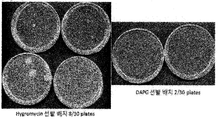
도 4는 본 발명의 형질전환 식물 선별방법의 오염 정도를 실험한 결과이다. 기존의 항생제(Kanamycin) 배지의 경우 총 30개의 배지 중 8개가 오염된 반면, 본 발명에 따른 DAPG 첨가 배지의 경우 총 30개 중 2개만이 오염되었다.
본 발명은 서열번호 1로 표시되는 DAPG (2,4-diacetylphloroglucinol) 가수분해효소 유전자(phlG)의 형질전환 식물 선별용 마커로서의 용도에 관한 것이다. 바람직하게 상기 phlG 유전자는 서열번호 1의 염기서열로 표시될 수 있으나, 상기 서열의 변이체도 본 발명의 범위 내에 포함됨은 당업자에게 자명할 것이다. 여기에서 '변이체'라 함은 염기서열은 변화되지만, 서열번호 1의 염기서열과 동등하거나 유사한 기능을 갖는 염기서열을 의미한다. 구체적으로, phlG 유전자는 서열번호 1의 염기 서열과 70% 이상, 더욱 바람직하게는 80% 이상, 더욱 바람직하게는 90% 이상, 가장 바람직하게는 95% 이상의 서열 상동성을 갖는 염기 서열을 포함할 수 있다. 여기에서 폴리뉴클레오티드에 대한 "서열 상동성의 %"는 두 개의 최적으로 배열된 서열과 비교 영역을 비교함으로써 확인되며, 비교 영역에서의 폴리뉴클레오티드 서열의 일부는 두 서열의 최적 배열에 대한 참고 서열(추가 또는 삭제를 포함하지 않음)에 비해 추가 또는 삭제(gap)를 포함할 수 있다.
다른 양태로서, 본 발명은 상기 phlG 유전자를 포함하는 재조합 식물 발현 벡터를 제공한다. 본 발명의 일실시예에 있어서, 상기 벡터는 도 2에 기재된 pCAMBIA1301-phlG 벡터일 수 있으나, 이에 제한되는 것은 아니다.
여기에서 "재조합"은 세포가 이종의 핵산을 복제하거나, 상기 핵산을 발현하거나 또는 펩티드, 이종의 펩티드 또는 이종의 핵산에 의해 암호화된 단백질을 발현하는 것을 지칭하는 것이다. 상기 벡터로 형질전환된 재조합 세포는 상기 세포의 자연 형태에서는 발현되지 않는 유전자 또는 유전자 절편을, 센스 또는 안티센스 형태 중 하나로 발현할 수 있다. 또한 재조합 세포는 자연 상태의 세포에서 발현되는 유전자를 발현할 수 있으나 상기 유전자는 변형된 것으로서 인위적인 수단에 의해 세포 내 재도입된 것이다. 여기에서 "벡터"는 세포 내로 전달하는 DNA 단편(들), 핵산 분자를 지칭한다. 벡터는 DNA를 복제시키고, 숙주세포에서 독립적으로 재생산될 수 있다. "전달체"는 흔히 "벡터"와 호환하여 사용될 수 있다. "발현 벡터"는 목적한 코딩 서열과, 특정 숙주 생물에서 작동가능하게 연결된 코딩 서열을 발현하는데 필수적인 적정 핵산 서열을 포함하는 재조합 DNA 분자를 의미한다. 진핵세포에서 이용가능한 프로모터, 인핸서, 종결신호 및 폴리아데닐레이션 신호는 공지되어 있다. 상기 벡터는 신호 펩타이드를 코딩하는 핵산 서열을 포함할 수 있으며, 이것은 발현된 단백질의 배출(export)을 가능하게 한다. 여기에서 신호 펩타이드를 코딩하는 핵산 서열은 발현되는 이형 유전자의 5'에 직접적으로 결합되는 것이 바람직하다. 많은 진핵 세포 단백질의 분비 및 변형에 있어서, 폴리펩타이드를 분비 기구(secretion apparatus) 속으로 배출하기(steer) 위해서는 N-말단에 신호 서열을 가지는 단백질 서열과의 융합이 필요하다. 상기 벡터는 조합 효모 플라스미드(YIp : integrative yeast plasmid) 및 염색체외 플라스미드 벡터(extrachromosomal plasmid vector)가 모두 가능하나, 식물 발현 벡터인 것이 바람직하다.
식물 발현 벡터의 바람직한 예는 아그로박테리움 투머파시엔스와 같은 적당한 숙주에 존재할 때 그 자체의 일부, 소위 T-영역을 식물 세포로 전이시킬 수 있는 Ti-플라스미드 벡터이다. 다른 유형의 Ti-플라스미드 벡터(EP 0 116 718 B1호 참조)는 현재 식물 세포, 또는 잡종 DNA를 식물의 게놈 내에 적당하게 삽입시키는 새로운 식물이 생산될 수 있는 원형질체로 잡종 DNA 서열을 전이시키는데 이용되고 있다. Ti-플라스미드 벡터의 특히 바람직한 형태는 EP 0 120 516 B1호 및 미국 특허 제4,940,838호에 청구된 바와 같은 소위 바이너리(binary) 벡터이다. 본 발명에 따른 DNA를 식물 숙주에 도입시키는데 이용될 수 있는 다른 적합한 벡터는 이중 가닥 식물 바이러스(예를 들면, CaMV) 및 단일 가닥 바이러스, 게미니 바이러스 등으로부터 유래될 수 있는 것과 같은 바이러스 벡터, 예를 들면 비완전성 식물 바이러스 벡터로부터 선택될 수 있다. 그러한 벡터의 사용은 특히 식물 숙주를 적당하게 형질전환하는 것이 어려울 때 유리할 수 있다.
발현 벡터는 바람직하게는 하나 이상의 선택성 마커를 포함할 것이다. 상기 마커는 통상적으로 화학적인 방법으로 선택될 수 있는 특성을 갖는 핵산 서열로, 형질전환된 세포를 비형질전환 세포로부터 구별할 수 있는 모든 유전자가 이에 해당된다. 그 예로는 글리포세이트(glyphosate) 또는 포스피노트리신과 같은 제초제 저항성 유전자, 카나마이신(Kanamycin), G418, 블레오마이신(Bleomycin), 하이그로마이신(hygromycin), 클로람페니콜(chloramphenicol)과 같은 항생제 내성 유전자가 있으나, 이에 한정되는 것은 아니다.
본 발명의 일실시예에 있어서, 식물 발현 벡터의 프로모터는 CaMV 35S, 액틴, 유비퀴틴, pEMU, MAS 또는 히스톤 프로모터일 수 있으나, 이에 제한되지 않는다. "프로모터"란 용어는 구조 유전자로부터의 DNA 업스트림의 영역을 의미하며 전사를 개시하기 위하여 RNA 폴리머라아제가 결합하는 DNA 분자를 말한다. "식물 프로모터"는 식물 세포에서 전사를 개시할 수 있는 프로모터이다. "구성적 (constitutive) 프로모터"는 대부분의 환경 조건 및 발달 상태 또는 세포 분화하에서 활성이 있는 프로모터이다. 형질전환체의 선택이 각종 단계에서 각종 조직에 의해서 이루어질 수 있기 때문에 구성적 프로모터가 본 발명에서 바람직할 수 있다. 따라서, 구성적 프로모터는 선택 가능성을 제한하지 않는다. 상기 터미네이터는, 통상의 터미네이터를 사용할 수 있으며, 그 예로는 노팔린 신타아제(NOS), 벼 α-아밀라아제 RAmy1 A 터미네이터, 파세올린(phaseoline) 터미네이터, 아그로박테리움 투메파시엔스(agrobacterium tumefaciens)의 옥토파인(Octopine) 유전자의 터미네이터 등이 있으나, 이에 한정되는 것은 아니다. 터미네이터의 필요성에 관하여, 그러한 영역이 식물 세포에서의 전사의 확실성 및 효율을 증가시키는 것으로 일반적으로 알고 있다. 그러므로, 터미네이터의 사용은 본 발명의 내용에서 매우 바람직하다.
또 다른 양태로서, 본 발명은 본 발명에 따른 재조합 벡터로 형질전환된 식물체를 제공한다. 본 발명에 따른 상기 식물체는 DAPG 가수분해 효소를 발현한다. 또한, 본 발명은 상기 식물체의 종자를 제공한다.
상기 식물에는 제한이 없으며, 예컨대 담배, 가지, 담배, 고추, 토마토, 우엉, 쑥갓, 상추, 도라지, 시금치, 근대, 고구마, 샐러리, 당근, 미나리, 파슬리, 배추, 양배추, 갓무, 수박, 참외, 오이 호박, 박, 딸기, 대두, 녹두, 강낭콩 및 완두 중에서 선택되는 것을 특징으로 하는 쌍자엽 식물일 수 있으나, 바람직하게는 애기장대이다. 식물의 형질전환은 DNA를 식물에 전이시키는 임의의 방법을 의미한다. 그러한 형질전환 방법은 반드시 재생 및 (또는) 조직 배양 기간을 가질 필요는 없다. 식물 종의 형질전환은 이제는 쌍자엽 식물뿐만 아니라 단자엽 식물양자를 포함한 식물 종에 대해 일반적이다. 원칙적으로, 임의의 형질전환 방법은 본 발명에 따른 잡종 DNA를 적당한 선조 세포로 도입시키는데 이용될 수 있다. 방법은 원형질체에 대한 칼슘/폴리에틸렌 글리콜 방법(Krens, F.A. et al., 1982, Nature 296, 72-74; Negrutiu I. et al., June 1987, Plant Mol. Biol. 8, 363-373), 원형질체의 전기천공법(Shillito R.D. et al., 1985 Bio/Technol. 3, 1099-1102), 식물 요소로의 현미주사법(Crossway A. et al., 1986, Mol. Gen. Genet. 202, 179-185), 각종 식물 요소의 (DNA 또는 RNA-코팅된) 입자충격법(Klein T.M. et al., 1987, Nature 327, 70), 식물의 침윤 또는 성숙 화분 또는 소포자의 형질전환에 의한 아그로박테리움 투머파시엔스 매개된 유전자 전이에서 (비완전성) 바이러스에 의한 감염(EP 0 301 316호) 등 으로부터 적당하게 선택될 수 있다. 본 발명에 따른 바람직한 방법은 아그로박테리움 매개된 DNA 전달을 포함한다. 특히 바람직한 것은 EP A 120 516호 및 미국 특허 제4,940,838호에 기재된 바와 같은 소위 이원 벡터 기술을 이용하는 것이다.
또 다른 양태로서, 본 발명은 본 발명의 마커 유전자를 이용하여 형질전환 식물을 선별하는 방법을 제공한다. phlG 유전자를 포함하는 재조합 식물 발현 벡터로 식물 세포를 형질전환시킨 후, 상기 형질전환시킨 식물 세포를 DAPG 함유 배지에서 배양하면, 상기 발현 벡터가 정상적으로 삽입된 형질전환 식물 세포는 DAPG 가수분해 효소가 발현되어 배지 중의 DAPG를 분해할 수 있으므로 DAPG 함유 배지에서 생존할 수 있다. 그러나, 상기 발현 벡터로 형질전환되지 않은 식물 세포는 DAPG 분해 효소를 생성하지 못하므로 DAPG 함유 배지에서 생존할 수 없게 된다. 이러한 방식으로, DAPG 분해 효소는 식물의 형질전환 여부를 선별할 수 있는 선별 마커(selection marker)로 활용될 수 있다.
구체적으로, 상기 방법은 상기 재조합 식물 발현 벡터로 식물 세포를 형질전환시키는 단계; 및 상기 형질전환시킨 식물 세포를 DAPG 함유 배지에서 배양하는 단계를 포함한다. 먼저, 식물 세포의 형질전환 방법은 상술한 바와 같으며, 식물의 형질전환에 이용되는 "식물 세포"에는 제한이 없으며, 예컨대 배양 세포, 배양 조직, 배양기관 또는 전체 식물이 모두 포함되나, 상기 식물 세포는 DAPG에 의해 생장이 억제되는 것이어야 한다. 상기 "조직"은 분화된 또는 미분화된 식물의 조직, 예를 들면 이에 한정되진 않으나, 뿌리, 줄기, 잎, 꽃가루, 종자, 암 조직 및 배양에 이용되는 다양한 형태의 세포들, 즉 단일 세포, 원형질체(protoplast), 싹 및 캘러스 조직을 포함한다. 식물 조직은 인 플란타(in planta)이거나 기관 배양, 조직 배양 또는 세포 배양 상태일 수 있다. 상기 형질전환시킨 식물 세포를 DAPG 함유 배지에서 배양하는 단계에 있어서, 상기 DAPG 함유 배지는 식물의 종류에 따라 당업계에서 사용되는 통상의 배양 배지에 DAPG를 첨가하여 만들 수 있다. DAPG의 첨가 농도는 식물의 종류에 따라 효율적으로 선별할 수 있는 양만큼 투여될 수 있으며, 이에 제한되는 것은 아니나, 본 발명의 일실시예에 있어서, 10, 20, 30, 40, 50, 60, 70, 80, 90, 또는 100μg/mL 의 농도로 첨가될 수 있다.
본 발명의 일실시예에 있어서, 상기 선별 방법은 상기 DAPG 함유 배지에서 성장하는 식물로부터 DNA를 분리한 후, phlG 유전자를 특이적으로 검출할 수 있는 프라이머 세트를 사용하여 PCR을 수행함으로써 phlG 유전자의 삽입 여부를 확인하는 단계를 추가적으로 포함할 수 있다.
상기 프라이머 세트는 PCR, nested PCR 또는 마이크로 PCR 용도 등으로 사용가능하다. 상기 nested PCR로 사용되는 경우 1차 PCR 프라이머 세트로 공지의 프라이머 세트와 동시에 PCR 반응시키거나 또는 1차 PCR 프라이머로 1차 PCR 후, PCR 산물에 상기 바이러스 검출용 프라이머를 반응시켜 2차 PCR을 실시할 수 있다. 이에 제한되는 것은 아니나, 본 발명의 일실시예에 있어서, 상기 phlG 유전자를 특이적으로 검출할 수 있는 프라이머 세트는 서열번호 2 및 서열번호 3의 프라이머 세트가 사용될 수 있다.
본 발명에 있어서, PCR이란 당업계에서 잘 알려져 있는 바와 같이, 일반적으로, 1) 표적 DNA 분자를 분리하기 위하여 시료를 처리하여 조추출물을 얻는 단계; 2) 효소, 버퍼, dNTP, 및 올리고뉴클레오티드 프라이머를 포함하는 수성 용액을 첨가하는 단계; 3) 상기 반응 혼합물을 열순환(thermal cycling)(예를 들면, 90 ℃-96 ℃, 72 ℃ 및 37 ℃-55 ℃)하는 단계 및 4) 증폭 DNA를 검출하는 단계를 거친다. 본 발명에 있어서, 상기 PCR은 폴리프로필렌 튜브, 96-웰 플레이트 또는 실리콘-기초 마이크로 PCR 칩에서 수행될 수 있다. 실리콘-기초 마이크로 PCR 칩을 이용하여 PCR을 수행함으로써, PCR 반응을 시간을 30분 이내로 단축할 수 있다. 상기 실리콘-기초 마이크로 PCR칩은, 예를 들면, 일면에는 실리콘 식각법으로 제작된 PCR 반응 챔버를 포함하고, 다른 일면에는 상기 PCR 반응 챔버를 가열하기 위한 가열기를 포함하는 실리콘 기판; 및 입구 및 출구가 형성되어 서로 접합된 유리기판을 포함하는 것일 수 있다. 본 발명의 일실시예에 있어서, 상기 PCR은 0.2 μM 내지 1 μM 농도의 각 프라이머와 0.01 pg 내지 1 ㎍의 주형 DNA를 사용하여 수행될 수 있다. 본 발명의 일실시예에 있어서, 상기 PCR은 변성 1초 내지 30초 (86 ℃ 내지 97℃) 및 어닐링 1초 내지 30초 (50 ℃ 내지 70℃), 신장 1초 내지 30초 (60 ℃ 내지 72℃)의 3 온도의 열순환 조건이나, 변성 1초 내지 30초 (86 ℃ 내지 97℃)와 어닐링 및 신장 (50 ℃ 내지 70℃)을 동시에 5초 내지 30초 동안 수행하는 2 온도 열순환 반응 조건에서 수행되는 것일 수 있다. PCR은 통상적인 열 블록 중합효소연쇄반응(Thermal Block PCR) 기기 또는 마이크로 중합효소연쇄반응(Micro PCR) 기기로 실시될 수 있으나, 이에 한정되는 것은 아니다. 본 발명의 방법은 1종의 PCR 프라이머 세트를 이용하여 본 발명의 마커를 검출할 수 있을 뿐만 아니라, 2종 이상의 PCR 프라이머 세트를 이용하여 다중 PCR(Multiplex polymerase Chain Reaction)을 수행함으로써, 한 번에 신속 정확하게 검출할 수 있다. 본 발명의 검출방법에서 채택되는 PCR 반응조건은, PCR의 종류 예컨대 nested PCR, 다중 PCR, 마이크로 PCR, 단일 PCR 등에 따라 통상의 PCR 반응조건을 채택하거나 일부 변형하여 실시할 수 있으며, 이는 본원발명이 속하는 기술분야의 당업자라면 용이하게 예측할 수 있는 범주에 해당된다.
본 발명의 일실시예에 있어서, 상기 방법은 상기 DAPG 함유 배지에서 성장하는 식물로부터 RNA를 분리하여 그것의 cDNA를 제작한 후, phlG 유전자를 특이적으로 검출할 수 있는 프라이머 세트를 사용하여 RT-PCR (Reverse Transcriptase Polymerase Chain Reaction)을 수행함으로써 phlG 유전자의 발현 여부를 확인하는 단계를 추가적으로 포함할 수 있다.
상기 RT-PCR은 당업계에서 통상적으로 사용되는 방법으로 PCR 기기(ABI 2400)를 사용하여 수행할 수 있다. 이에 제한되는 것은 아니나, 예를 들어, 주형 농도는 2㎍/ 20㎕으로, 반응액 25㎕를 사용하여 RNA 시료를 cDNA로 전환하는 역전사 반응을 60분 (42 ℃) 수행한 후에, 변성 20초 (95 ℃), 어닐링 40초 (65 ℃) 및 신장 60초 (72 ℃)의 열순환 조건에서 50회 수행하는 방법 등을 사용할 수 있다. PCR 결과는 통상적인 PCR 검출 수단, 예컨대 전기영동 등의 방법으로 실시될 수 있다.
또 다른 양태로서 본 발명은 상기 마커 유전자를 이용하여 형질전환 식물을 제조하는 방법을 제공한다. 상기 방법은, 상기 벡터로 식물 세포를 형질전환시키는 단계; 상기 형질전환시킨 식물 세포를 DAPG 함유 배지에서 배양하는 단계; 및 상기 DAPG 함유 배지에서 증식 가능한 식물 세포로부터 형질전환 식물을 재분화하는 단계를 포함한다. 상기 형질전환 및 형질전환 식물을 재분화하는 방법에는 제한이 없으며, 식물의 종류에 따라 당업계에 공지되어 있는 방법을 적절히 활용할 수 있다.
이하, 본 발명을 실시예에 의해 상세히 설명한다. 단, 하기 실시예는 본 발명을 예시하는 것일 뿐, 본 발명의 내용이 하기 실시예에 한정되는 것은 아니다.
<실시예 1>
DAPG 농도에 따른 애기장대의 감수성 확인
애기장대의 DAPG에 대한 독성을 평가하기 위하여, 표면 소독된 애기장대 종자를 식물배양 배지인 MS 고체 배지에 파종하였다. MS 배지에는 각각 0, 2.13, 4.57, 10, 21.3, 및 45.7 μg/mL의 DAPG를 첨가하였다. 종자 파종 10일 후, 발아율을 기준으로 DAPG의 독성 농도를 평가하였다(도 1).
<실시예 2>
phlG
유전자의 분리
상용화되어 있는 DNA 분리 정제 키트를 이용하여 Pseudomonas fluorescens CHA0 균주의 게놈(genomic) DNA를 분리하였다. 게놈 DNA로부터 중합효소 연쇄반응(polymerase chain reaction, PCR)을 이용하여 phlG 유전자를 증폭하였다. 사용한 프라이머는 다음과 같다.
phlG F : 5'-ATG GAA GCG CGC AAC ATG ACT-3' (서열번호 2),
phlG R : 5'-TCA GGC CGC GGG GGT GCC GAA-3' (서열번호 3).
PCR 반응 조건은, 95℃에서 5분간 최초 변성을 실시한 후, 95℃, 30초, 60℃, 30초, 72℃, 1분으로 30회 실시하였다. 최종적으로 72℃에서 10분간 반응시킴으로써, 유전자 증폭을 종료하였다.
증폭된 phlG 유전자를 클로닝 벡터인 pBlueSkriptII에 삽입하였다. pBlueSkriptII 벡터에 삽입된 phlG 유전자는 시퀀싱(sequencing)을 통하여 P. fluorescens CHA0 염기서열과 100% 동일함을 확인하였다.
<실시예 3>
phlG
유전자 발현을 위한 식물 형질전환용 벡터 및 형질전환 식물의 제작
<3-1> 식물 형질전환용 발현 벡터의 제작 및 형질전환
본 발명에 따른 식물의 형질전환용 벡터를 제작하기 위하여, 상용화된 식물 형질전환용 벡터인 pCAMBIA1301을 이용하여 pCAMBIA1301-phlG 벡터를 제작하였다(도 2). pCAMBIA1301-phlG 벡터를 제작하기 위하여, pCAMBIA1301 벡터와 상기 phlG 가 삽입된 pBlueSkriptII-phlG 벡터에 BamHI 및 KpnI 제한효소를 처리하여 절단한 뒤, T4 DNA 리가아제(ligase)를 사용하여 절단된 phlG 유전자를 pCAMBIA1301에 도입하였다.
위와 같이 제작된 pCAMBIA1301-phlG 벡터를 Agrobacterium tumefaciens GV3101에 도입하여 식물의 형질전환을 실시하였다.
<3-2> DAPG를 이용한 형질전환체의 선별
애기장대 형질전환체에서 수확한 종자를 표면 소독한 뒤, DAPG (25μg/mL - 50μg/mL)가 첨가된 MS 배지에 파종한 후, 9일째 발아 및 성장하는 개체를 형질전환체로 선별하였다(도 3). 항생제인 하이그로마이신을 사용하여 선별할 경우 약 14일 정도의 기간이 소요되는 것과 비교하여, DAPG를 이용한 선별방법은 상대적으로 단기간 내에 선별이 가능한 장점이 있었다. 또한, 항생제인 카나마이신을 사용한 경우 총 30개의 배지 중 8개의 배지에서 오염이 발생하였으나, DAPG를 사용한 경우 2개의 배지에서만 오염이 발생하였다(도 4).
*한편, DAPG 농도에 따른 형질전환체의 내성을 분석하기 위하여, 각각 10, 20, 30, 40, 50, 60, 70, 80, 90, 및 100μg/mL 농도의 DAPG를 첨가한 MS 배지에서 종자의 발아 및 생육 정도를 관찰하였다. 대조구는 20μg/mL 이상에서 발아 및 생육하지 못하였으나 형질전환체는 상대적으로 고농도의 DAPG 배지에서도 정상적인 발아와 생육이 가능하였다.
<3-3> 형질전환체의
phlG
유전자 도입 및 발현 분석
DAPG를 첨가한 배지를 이용하여 형질전환체로 선별된 식물체의 옆편을 채취하여 게놈(genomic) DNA를 분리한 후, 상기 서열번호 2 및 서열번호 3의 phlG 유전자 특이적 프라이머를 사용하여 PCR로 유전자 삽입여부를 확인하였다. PCR 반응 조건은, 95℃에서 5분간 최초 변성을 실시한 후, 95℃, 30초, 60℃, 30초, 72℃, 1분으로 30회 실시하고, 최종적으로 72℃에서 10분간 반응시켰다. PCR 반응산물은 아가로오스 젤에서 전기영동하여 확인하였다.
추가적으로, 상기 선별된 형질전환체들에서 phlG 유전자의 발현을 확인하기 위하여, 역전사 중합효소연쇄반응(Reverse Transcriptase Polymerase Chain Reaction, RT-PCR)을 실시하였다. 우선 DAPG 배지에서 발아 생육한 애기장대에서 절편을 채취하여 RNA를 분리하였다. 분리정제된 RNA로부터 cDNA를 제작한 후, phlG 특이적 프라이머를 사용하여 95℃, 30초; 60℃, 30초; 72℃, 1분의 30회 조건으로 PCR을 수행하여 phlG 유전자의 발현을 확인하였다.
이제까지 본 발명에 대하여 그 바람직한 실시예들을 중심으로 살펴보았다. 본 발명이 속하는 기술 분야에서 통상의 지식을 가진 자는 본 발명이 본 발명의 본질적인 특성에서 벗어나지 않는 범위에서 변형된 형태로 구현될 수 있음을 이해할 수 있을 것이다. 그러므로 개시된 실시예들은 한정적인 관점이 아니라 설명적인 관점에서 고려되어야 한다. 본 발명의 범위는 전술한 설명이 아니라 특허청구범위에 나타나 있으며, 그와 동등한 범위 내에 있는 모든 차이점은 본 발명에 포함된 것으로 해석되어야 할 것이다.
서열목록 전자파일 첨부
Claims (8)
- 서열번호 1의 염기서열로 표시되는 DAPG (2,4-diacetylphloroglucinol) 가수분해효소 유전자(phlG)를 포함하는 형질전환 식물 선별용 마커.
- 제1항의 마커 유전자를 포함하는 재조합 식물 발현 벡터.
- 제2항의 벡터로 형질전환시킨 형질전환 식물.
- 제2항의 벡터로 식물 세포를 형질전환시키는 단계; 및상기 형질전환시킨 식물 세포를 DAPG 함유 배지에서 배양하는 단계를 포함하는, 형질전환 식물의 선별방법.
- 제4항에 있어서,상기 DAPG 함유 배지에서 성장하는 식물로부터 DNA를 분리한 후, phlG 유전자를 특이적으로 검출할 수 있는 프라이머 세트를 사용하여 PCR을 수행함으로써 phlG 유전자의 삽입 여부를 확인하는 단계를 추가적으로 포함하는 것을 특징으로 하는 형질전환 식물의 선별방법.
- 제4항에 있어서,상기 DAPG 함유 배지에서 성장하는 식물로부터 RNA를 분리하여 그것의 cDNA를 제작한 후, phlG 유전자를 특이적으로 검출할 수 있는 프라이머 세트를 사용하여 RT-PCR (Reverse Transcriptase Polymerase Chain Reaction)을 수행함으로써 phlG 유전자의 발현 여부를 확인하는 단계를 추가적으로 포함하는 것을 특징으로 하는 형질전환 식물의 선별방법.
- 제5항 또는 제6항에 있어서,상기 phlG 유전자를 특이적으로 검출할 수 있는 프라이머 세트는 서열번호 2 및 서열번호 3의 프라이머 세트인 것을 특징으로 하는 형질전환 식물의 선별방법.
- 제2항의 벡터로 식물 세포를 형질전환시키는 단계;상기 형질전환시킨 식물 세포를 DAPG 함유 배지에서 배양하는 단계; 및상기 DAPG 함유 배지에서 증식가능한 식물 세포로부터 형질전환 식물을 재분화하는 단계를 포함하는 형질전환 식물의 제조방법.
Applications Claiming Priority (2)
| Application Number | Priority Date | Filing Date | Title |
|---|---|---|---|
| KR10-2012-0030376 | 2012-03-26 | ||
| KR1020120030376A KR101586526B1 (ko) | 2012-03-26 | 2012-03-26 | Dapg 가수분해효소 유전자의 형질전환 식물 선별 마커로서의 용도 |
Publications (1)
| Publication Number | Publication Date |
|---|---|
| WO2013147404A1 true WO2013147404A1 (ko) | 2013-10-03 |
Family
ID=49260615
Family Applications (1)
| Application Number | Title | Priority Date | Filing Date |
|---|---|---|---|
| PCT/KR2013/000092 Ceased WO2013147404A1 (ko) | 2012-03-26 | 2013-01-07 | Dapg 가수분해효소 유전자의 형질전환 식물 선별 마커로서의 용도 |
Country Status (2)
| Country | Link |
|---|---|
| KR (1) | KR101586526B1 (ko) |
| WO (1) | WO2013147404A1 (ko) |
Citations (3)
| Publication number | Priority date | Publication date | Assignee | Title |
|---|---|---|---|---|
| JP2008546419A (ja) * | 2005-06-28 | 2008-12-25 | 浙江大学 | 稲のベンタゾン及びスルホニルウレア系除草剤耐性遺伝子cyp81a6 |
| KR20090050189A (ko) * | 2007-11-15 | 2009-05-20 | 한국생명공학연구원 | 톡소플라빈 분해 효소를 선별 마커로 이용한 형질전환 감자식물체 제조 |
| US20090170093A1 (en) * | 2005-12-08 | 2009-07-02 | Entelechon Gmbh | Selection marker system and method for screening a choline tolerant plant cell |
-
2012
- 2012-03-26 KR KR1020120030376A patent/KR101586526B1/ko not_active Expired - Fee Related
-
2013
- 2013-01-07 WO PCT/KR2013/000092 patent/WO2013147404A1/ko not_active Ceased
Patent Citations (3)
| Publication number | Priority date | Publication date | Assignee | Title |
|---|---|---|---|---|
| JP2008546419A (ja) * | 2005-06-28 | 2008-12-25 | 浙江大学 | 稲のベンタゾン及びスルホニルウレア系除草剤耐性遺伝子cyp81a6 |
| US20090170093A1 (en) * | 2005-12-08 | 2009-07-02 | Entelechon Gmbh | Selection marker system and method for screening a choline tolerant plant cell |
| KR20090050189A (ko) * | 2007-11-15 | 2009-05-20 | 한국생명공학연구원 | 톡소플라빈 분해 효소를 선별 마커로 이용한 형질전환 감자식물체 제조 |
Non-Patent Citations (1)
| Title |
|---|
| BOTTIGLIGLIERI, MELANIE ET AL.: "Characterization ofPhIG, a hydrolase that specifically degrades the antifungal compound 2,4 diacetylphloroglucinol in the biocontrol agent pseudomonas fluorescens CHAO", APPLIED AND ENVIRONMENTAL MICROBIOLOGY, vol. 72, no. 1, January 2006 (2006-01-01), pages 418 - 427 * |
Also Published As
| Publication number | Publication date |
|---|---|
| KR20130108727A (ko) | 2013-10-07 |
| KR101586526B1 (ko) | 2016-01-20 |
Similar Documents
| Publication | Publication Date | Title |
|---|---|---|
| AU2016225872B2 (en) | Strains of Agrobacterium modified to increase plant transformation frequency | |
| EP0159418B1 (en) | A process for the incorporation of foreign dna into the genome of monocotyledonous plants | |
| CN102958349B (zh) | 用于在玉米中增强玉米大斑病抗性的组合物和方法 | |
| US8129512B2 (en) | Methods of identifying and creating rubisco large subunit variants with improved rubisco activity, compositions and methods of use thereof | |
| MX2008002615A (es) | Metodos y composiciones para la expresion de un polinucleotido de interes. | |
| BRPI0713039A2 (pt) | molécula de ácido nucléico e polipeptìdeo isolados, vetor, célula hospedeira, planta e semente transgênicas e métodos para produzir um polipeptìdeo com atividade de resistência a herbicidas, para conferir resistência a um herbicida em uma planta e para gerar um polinucleotìdeo variante de um polinucleotìdeo parental grg33, grg35, grg37, grg38, grg39, ou grgr50. | |
| CN104498502A (zh) | 玉米中与丝黑穗病抗性相关联的基因座 | |
| AU2016350610A1 (en) | Methods and compositions of improved plant transformation | |
| CN117904143A (zh) | 陆地棉GhDIR1基因、其编码蛋白及其表达载体和应用 | |
| Lievre et al. | Genetic transformation of the medicinal plant Ruta graveolens L. by an Agrobacterium tumefaciens-mediated method | |
| US20240417703A1 (en) | Error prone dna polymerase for organelle mutation | |
| CN101883572A (zh) | 高粱铝耐受基因SbMATE | |
| CN101061228B (zh) | 异戊烯基转移酶序列及其使用方法 | |
| US8334428B2 (en) | Backbone-free low transgene copy transgenic plants | |
| KR100917574B1 (ko) | 톡소플라빈 분해 효소를 선별 마커로 이용한 형질전환 감자식물체 제조 | |
| CN101410524A (zh) | 表达目标多核苷酸的方法和组合物 | |
| EP3472189A1 (en) | Plant promoter and 3' utr for transgene expression | |
| KR101586526B1 (ko) | Dapg 가수분해효소 유전자의 형질전환 식물 선별 마커로서의 용도 | |
| WO2011049334A2 (ko) | 식물병에 대해 저항성을 증진시키는 OsLRP 유전자 및 이의 용도 | |
| KR101104905B1 (ko) | 식물 형질전환 선발 마커로서의 내염성 유전자 및 이의 용도 | |
| WO2011031006A2 (ko) | CryIAc 유전자로 형질전환된 배추좀나방 저항성 양배추 및 이의 제조 방법 | |
| WO2012030072A2 (ko) | 보리 expb1 유전자 유래 뿌리털 특이적 발현 프로모터 및 이의 용도 | |
| CN119082145A (zh) | 陆地棉GhPUB21基因及其在调控植物抗黄萎病中的用途 | |
| KR101684917B1 (ko) | 애기장대 유래의 dewax 유전자를 이용한 식물병 저항성이 조절된 형질전환 식물체의 제조방법 및 그에 따른 식물체 | |
| CN116234816A (zh) | 用于在玉蜀黍中增强对北方叶枯病的抗性的组合物和方法 |
Legal Events
| Date | Code | Title | Description |
|---|---|---|---|
| 121 | Ep: the epo has been informed by wipo that ep was designated in this application |
Ref document number: 13770265 Country of ref document: EP Kind code of ref document: A1 |
|
| NENP | Non-entry into the national phase |
Ref country code: DE |
|
| 122 | Ep: pct application non-entry in european phase |
Ref document number: 13770265 Country of ref document: EP Kind code of ref document: A1 |