WO2013147100A1 - 酵素複合体 - Google Patents
酵素複合体 Download PDFInfo
- Publication number
- WO2013147100A1 WO2013147100A1 PCT/JP2013/059411 JP2013059411W WO2013147100A1 WO 2013147100 A1 WO2013147100 A1 WO 2013147100A1 JP 2013059411 W JP2013059411 W JP 2013059411W WO 2013147100 A1 WO2013147100 A1 WO 2013147100A1
- Authority
- WO
- WIPO (PCT)
- Prior art keywords
- enzyme
- magnetic
- magnetic field
- solution
- magnetic particles
- Prior art date
- Legal status (The legal status is an assumption and is not a legal conclusion. Google has not performed a legal analysis and makes no representation as to the accuracy of the status listed.)
- Ceased
Links
Images




Classifications
-
- A—HUMAN NECESSITIES
- A61—MEDICAL OR VETERINARY SCIENCE; HYGIENE
- A61B—DIAGNOSIS; SURGERY; IDENTIFICATION
- A61B1/00—Instruments for performing medical examinations of the interior of cavities or tubes of the body by visual or photographical inspection, e.g. endoscopes; Illuminating arrangements therefor
- A61B1/12—Instruments for performing medical examinations of the interior of cavities or tubes of the body by visual or photographical inspection, e.g. endoscopes; Illuminating arrangements therefor with cooling or rinsing arrangements
-
- C—CHEMISTRY; METALLURGY
- C12—BIOCHEMISTRY; BEER; SPIRITS; WINE; VINEGAR; MICROBIOLOGY; ENZYMOLOGY; MUTATION OR GENETIC ENGINEERING
- C12N—MICROORGANISMS OR ENZYMES; COMPOSITIONS THEREOF; PROPAGATING, PRESERVING, OR MAINTAINING MICROORGANISMS; MUTATION OR GENETIC ENGINEERING; CULTURE MEDIA
- C12N11/00—Carrier-bound or immobilised enzymes; Carrier-bound or immobilised microbial cells; Preparation thereof
- C12N11/02—Enzymes or microbial cells immobilised on or in an organic carrier
-
- A—HUMAN NECESSITIES
- A61—MEDICAL OR VETERINARY SCIENCE; HYGIENE
- A61L—METHODS OR APPARATUS FOR STERILISING MATERIALS OR OBJECTS IN GENERAL; DISINFECTION, STERILISATION OR DEODORISATION OF AIR; CHEMICAL ASPECTS OF BANDAGES, DRESSINGS, ABSORBENT PADS OR SURGICAL ARTICLES; MATERIALS FOR BANDAGES, DRESSINGS, ABSORBENT PADS OR SURGICAL ARTICLES
- A61L2103/00—Materials or objects being the target of disinfection or sterilisation
- A61L2103/15—Laboratory, medical or dentistry appliances, e.g. catheters or sharps
-
- A—HUMAN NECESSITIES
- A61—MEDICAL OR VETERINARY SCIENCE; HYGIENE
- A61M—DEVICES FOR INTRODUCING MEDIA INTO, OR ONTO, THE BODY; DEVICES FOR TRANSDUCING BODY MEDIA OR FOR TAKING MEDIA FROM THE BODY; DEVICES FOR PRODUCING OR ENDING SLEEP OR STUPOR
- A61M25/00—Catheters; Hollow probes
- A61M2025/0019—Cleaning catheters or the like, e.g. for reuse of the device, for avoiding replacement
Definitions
- the present invention relates to an enzyme complex, and more particularly to a complex of an enzyme that expresses a function by heat and magnetic particles.
- thermophilic bacterium-derived enzymes that are activated in a high temperature region are attracting attention particularly in the medical field, biotechnology field, environmental field, and the like.
- an enzyme derived from a thermophilic bacterium has a high optimum reaction temperature, the reaction temperature must be increased, and when used in a biological system, sufficient attention must be paid to its safety.
- the protein hybrid material is a complex in which a protein and a substance other than the protein, for example, a synthetic polymer are chemically bound.
- This protein hybrid material is mainly used for controlling the protein function, and as the material for controlling the protein function, a fine particle material mainly utilizing nanotechnology is used (for example, see Non-Patent Document 1). .
- Non-patent document 2 The field that attracts attention is the control of protein function by external stimuli, and the method of controlling the “place”, “time”, and “strength” where the protein exhibits its function by the external environment such as heat and light. It is.
- a magnetic hybrid material that is hybridized using a protein and a protein such as an enzyme or a physiologically active substance has been attracting attention as a material that can be easily used to control the function of the protein by external response due to its magnetic properties.
- the ferritic magnetite fine particles are used as a drug carrier, and the induction of the drug to the affected area is magnetically controlled from the outside (for example, see Non-Patent Document 3).
- the present invention uses a hybrid material in which magnetic particles and an enzyme are combined, and further controls the function of enzyme activity of a new magnetic particle by utilizing a heat generation phenomenon caused by applying magnetic energy. Objective.
- the present inventors have intensively studied to solve the above problems. As a result, the present inventors have found that an enzyme complex in which an enzyme derived from a thermophilic bacterium and magnetic particles are bound can activate the enzyme even in a low temperature environment by applying magnetic energy.
- the present invention is achieved by the following (1) to (8).
- a method for activating the enzyme of the enzyme complex according to any one of (1) to (4) above A method for activating an enzyme, wherein the enzyme is activated by applying magnetic energy to a solution in which the enzyme complex is dissolved.
- a cleaning device for a medical instrument comprising the enzyme complex according to any one of (1) to (4) above and a magnetism generator.
- the cleaning device for a medical instrument according to (7), wherein the medical instrument is at least one selected from the group consisting of an endoscopic surgical instrument, an invasive surgical instrument, and a suction catheter.
- the surface temperature of the magnetic particles is increased, and the temperature in the vicinity of the magnetic particles is increased to the optimum temperature of the enzyme, so that the overall temperature of the solution is not increased.
- Both can activate an enzyme derived from a thermophilic bacterium bound to the surface of magnetic particles. Therefore, it can be effectively used for cleaning malignant proteins such as abnormal prions attached to instruments that cannot be subjected to high temperatures, such as endoscopic surgical instruments.
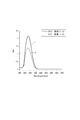
- FIG. 1 is a graph showing the results of a calibration curve measurement of a substrate decomposition reaction.
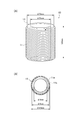
- 2A is a perspective view of the magnetism generator (coil)
- FIG. 2B is a cross-sectional view of the coil wire material of FIG. 2A.
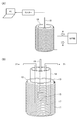
- FIG. 3A is a schematic diagram of a Therma-Max (registered trademark) exothermic evaluation experimental apparatus
- FIG. 3B is a diagram showing a heat generation material applied to the magnetic generator of the exothermic evaluation experimental apparatus of FIG. It is a perspective view which shows the usage pattern inserted and used.
- FIG. 4 is a graph showing heat generation characteristics at each magnetic field strength of Thermo-Max (registered trademark).
- FIG. 5A is a schematic diagram of a Thermo-Max (registered trademark) exothermic evaluation experimental apparatus in low-temperature measurement
- FIG. 5B is a diagram of a magnetic generator of the exothermic evaluation experimental apparatus in FIG. It is a perspective view which shows the usage pattern which inserts a heat insulating material and circulates and uses water.
- FIG. 6 is a graph showing the measurement results of the enzyme activity of Tk-subtilisin / Therma-Max (registered trademark) LC Carboxylic acid complex at 4 ° C.
- FIG. 7 is a graph showing the measurement results of the enzyme activity of Tk-subtilisin / Therma-Max (registered trademark) LC Carboxylic acid complex at 25 ° C.
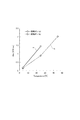
- FIG. 8 is a graph showing the measurement results of enzyme activity of Tk-subtilisin / Therma-Max (registered trademark) LC Carboxylic acid complex at each temperature.
- the enzyme complex of the present invention is obtained from magnetic particles and an enzyme derived from a thermophilic bacterium, and has a temperature responsive function.
- the enzyme complex of the present invention may contain components other than the magnetic particles and the enzyme derived from thermophilic bacteria, as long as the effects of the present invention are not significantly impaired.
- the magnetic particles used in the present invention may be particles composed of iron oxide or ferrite, and are composed of iron oxide, ferrite, or magnetite and other inorganic substances and organic substances such as particles produced from polyhydric alcohol and magnetite. Particles may be used.
- the magnetic particles can be produced, for example, by the method disclosed in Japanese Patent Publication No. 2002-517085. That is, an aqueous solution containing an iron (II) salt or an iron (II) salt and a metal (II) salt is placed in an oxidation state necessary for forming a magnetic oxide, and the pH of the aqueous solution is maintained at 7 or more. Thus, iron oxide or ferrite magnetic particles are formed. It can also be produced by mixing an aqueous solution containing a metal (II) salt and an aqueous solution containing an iron (III) salt under alkaline conditions.
- the magnetic particles can be produced from polyhydric alcohol and magnetite.
- the polyhydric alcohol can be used without particular limitation as long as it is an alcohol structure having at least two hydroxyl groups in the structural unit and capable of binding to iron ions.
- dextran, polyvinyl alcohol, mannitol, sorbitol, cyclodextrin and the like can be mentioned.
- Japanese Patent Application Laid-Open No. 2005-082538 discloses a method for producing magnetic particles using dextran, which can also be produced by this method.
- the compound which has an epoxy group and forms a polyhydric alcohol structure after ring-opening like a glycidyl methacrylate polymer can also be used.
- the average particle size of the particles before aggregation by applying magnetic energy is 1 to 1000 nm, and in order to have good heat generation characteristics. More preferably, it is 1 to 500 nm.
- the average particle size of the particles is more preferably 3 to 200 nm, and particularly preferably 5 to 50 nm.
- heat can be generated satisfactorily in an alternating magnetic field of 100 kHz to 1 MHz when the average particle size is about 15 to 20 nm.
- a particle size / particle size distribution measuring device Zeta Sizer Nano ZS, manufactured by Malvern
- a transmission electron microscope Hitachi Transmission Electron Microscope HT7700, manufactured by Hitachi High-Technologies Corporation.
- These magnetic particles may form aggregates in the solution.
- Examples of commercially available magnetic particles that can be used in the present invention include Dynabeads (registered trademark), nanomag (registered trademark), deStars (trade name), MACS (registered trademark), and the like.
- the magnetic particle is modified with a polymer or the like from the viewpoint of protecting the particle from the external environment or functionalizing the particle surface.
- a polymer or the like from the viewpoint of protecting the particle from the external environment or functionalizing the particle surface.
- various functional materials such as polymers such as PVA and dextran, and inorganic materials such as silica are used.
- magnétique particles examples include, for example, “Therma-Max (registered trademark)” (hereinafter sometimes referred to as “Thermamax”), “Therma-Max” (registered trademark) of JNC Corporation. (Trademark) LC Carboxylic acid “(hereinafter sometimes referred to as” TM-LC ").
- TM-LC LC Carboxylic acid
- NIPAM N-isopropylacrylamide
- thermomax simply indicates magnetic particles
- thermalamax solution and “thermamax undiluted solution” indicate that the magnetic particles contain a buffer or the like.
- the NIPAM aqueous polymer solution can control the temperature at which it dissolves and precipitates (lower critical solution temperature) depending on the degree of polymerization of the polymer, and has a lower critical solution temperature around 32 ° C. However, at a temperature higher than this, it aggregates and can be easily recovered magnetically. Therefore, the thermamax reversibly changes between both agglomerated and dispersed states at a solution temperature of 32 ° C. due to NIPAM coating the particle surface. Therefore, in a dispersion state of less than 32 ° C. where the particles are uniformly dispersed in the solution, magnetic separation is not easy, but when the solution temperature is raised to 32 ° C. or more, the magnetic particles begin to form aggregates, and magnetic separation Easy to do.
- the functionalized magnetic particles can be made into a desired form such as agglomeration by applying a stimulus, applying an external stimulus to the functionalized magnetic particle (stimulus responsive magnetic particle)
- a desired form such as agglomeration by applying a stimulus
- an external stimulus to the functionalized magnetic particle (stimulus responsive magnetic particle)
- Examples of the stimulus applied to the stimulus-responsive magnetic particles include temperature change, pH change, light change, ionic strength change, and the like.
- the conditions for each stimulus may be adjusted as appropriate.
- thermophilic bacterium used in the present invention has an enzyme activity value that changes with temperature, has an activity in a high temperature region of 65 ° C. or higher, and is equilibrium, kinetic, or its high temperature. It has the characteristic of being stabilized in both.
- thermophile examples include protease, amylase, cellulase, esterase, DNA polymerase, nuclease, peroxidase and the like as general names. Specific examples include TK-subtilisin, Tk-SP, Tk-GK, and Tk-RNaseH.
- the enzyme complex of the present invention is produced by combining the magnetic particles and the enzyme derived from the thermophile.
- a method for producing the enzyme complex of the present invention a method for binding the magnetic particles and the enzyme may be appropriately selected depending on the form of the surface of the magnetic particles. Examples of the binding method include a direct method in which an enzyme is directly bound to the surface of the magnetic particle and an indirect binding method in which the enzyme is bound to the surface of the magnetic particle through an organic polymer that coats the surface of the magnetic material.
- the enzyme is directly adsorbed on the magnetic particles.
- a method in which the enzyme adsorbed on the surface of the magnetic particles is cross-linked with glutaraldehyde to coat the surface of the magnetic particles is cross-linked with glutaraldehyde to coat the surface of the magnetic particles.
- the indirect binding method is a method of binding magnetic particles and an enzyme through an organic polymer coated on the magnetic particles.
- a polymerization reaction is performed on the particle surface or the organic polymer is bonded.
- Typical examples are coatings with dextran or methacrylic acid polymers.
- a usual chemical modification means is used.
- binding to an enzyme complex by an aminosilanized surface or a surface having a carboxyl group activated by carbodiimide is known. These reactions are considered to be milder than the direct binding method, and tend to retain the activity of the bound enzyme as compared to the enzyme prepared by the direct method.
- Carbodiimide is a dehydration condensing agent that causes a dehydration condensation reaction between a carboxyl group and an amino group or a hydroxyl group. By this reaction, an acid amide or ester bond is formed.
- the enzyme complex of the present invention thus produced has a temperature responsive function.
- the temperature responsive function generates heat due to the magnetic energy accumulated in the magnetic particles due to a delay in the magnetization response to the fluctuating magnetic field, and the enzyme fixed to the magnetic particles is heated by the heat generation of the magnetic particles, thereby expressing the enzyme activity. That means.
- Magnetic generator A method for imparting magnetic energy to the enzyme complex is not particularly limited, and for example, a magnetic field, an electromagnetic wave, a permanent magnet, or the like can be used. Among these, it is preferable to form a magnetic field using a magnetic generator that generates magnetism with an alternating current because it is easy to handle and the intensity of magnetic force can be easily changed.
- the conditions of the magnetic field to be added may be appropriately selected according to the type of enzyme used.
- the magnetic field strength is preferably 0.1 to 2,000 Oe, and preferably 1 to 1, 000 Oe is more preferable, and 3 to 500 Oe is more preferable.
- the emitted-heat amount of a magnetic particle is controllable.
- the frequency is preferably 1,000 to 15,000,000 Hz, more preferably 10,000 to 3,000,000 Hz, and further preferably 100,000 to 1,000,000 Hz. preferable. By setting it as the above range, the influence of dielectric heating can be reduced and only the magnetic particles can generate heat.
- the magnetic particles of the enzyme complex By applying magnetic energy from the outside of the solution to the solution in which the enzyme complex of the present invention described above is dissolved, the magnetic particles of the enzyme complex generate heat. The solution temperature rises. When the temperature rises to the optimum temperature of the enzyme, the enzyme function is expressed. Therefore, the activity of an enzyme having a temperature responsive function can be increased without increasing the temperature of the entire solution. Therefore, for example, the enzyme complex of the present invention can be used even in situations where use in a high temperature region is restricted.
- a cleaning instrument for a medical instrument can be provided by including the enzyme complex of the present invention and a magnetic generator.
- Endoscopic surgical instruments are susceptible to adhesion of malignant proteins such as denatured prions, but are difficult to disinfect at high temperatures due to the material of the instruments.
- Tk-subtilisin an enzyme derived from thermophile, is an enzyme that degrades prions
- the endoscopic surgical instrument can be washed with a magnetic generator using the enzyme complex of the present invention to which Tk-subtilisin is immobilized. Since the activity of Tk-subtilisin can be increased without increasing the temperature of the washing solution, the denatured prion can be reliably decomposed and removed.
- examples of medical instruments include invasive surgical instruments such as scalpels, scissors, and forceps, instruments that are inserted into the body, such as suction catheters, and resin surgical instruments. can do.
- the purified water used in the present invention is ultrapure water having a specific resistance of 18 M ⁇ ⁇ cm or more purified by Direct-Q (trade name) manufactured by Millipore.
- TM-LC activation step using 1-ethyl-3- (3-dimethylaminopropyl) carbodiimide hydrochloride (hereinafter EDC) / N-hydroxysuccinimide (hereinafter NHS) 1) 500 ⁇ l TM-LC was dispensed into a microtube, and 19.5 ⁇ l of 4M NaCl aqueous solution was added and mixed.
- EDC 1-ethyl-3- (3-dimethylaminopropyl) carbodiimide hydrochloride
- NHS N-hydroxysuccinimide
- Step 2) After the mixed solution is placed in a thermostatic bath and heated for one minute, the microtube is converted into a magnetic separation device (permanent magnet (neodymium magnet, ⁇ 30 ⁇ 10 mm (round shape), magnetization direction: thickness direction, surface magnetic flux density: 445 mT)). ) was allowed to stand for 1 minute, and TM-LC aggregates were magnetically separated to remove the supernatant.
- Step 3) 500 ⁇ l of 25 mM MES buffer (in 50 mM NaCl, pH 4.75) (hereinafter referred to as Activation Buffer) was added and dispersed in an ice bath.
- Step 4) The same operation as in step 2 was performed.
- Step 5 300 ⁇ l of Activation Buffer was added to the microtube and dispersed in an ice bath.
- Step 7) The same operation as in Step 2 was performed to remove unreacted EDC / NHS.
- Step 8) 300 ⁇ l of 10 mM acetate buffer (in 50 mM NaCl, pH 5.0) (hereinafter referred to as “Binding Buffer”) was added and dispersed in an ice bath.
- Step 12 500 ⁇ l of 50 mM Tris-HCl buffer (pH 7.5) (hereinafter referred to as “Reaction Stop Buffer”) was added to stop unreacted activating groups. After dispersing in an ice bath, rotary mixing was performed at 4 ° C. for 30 minutes. Step 13) The same operation as in step 2 was performed. Step 14) 50 mM acetate buffer (pH 5.0) (hereinafter referred to as acetate buffer) was added and dispersed in an ice bath. Step 15) Steps 13 and 14 were repeated twice more. Step 16) The Tk-subtilisin / TM-LC complex solution was stored in a refrigerator in 500 ⁇ l of the above-mentioned acetate buffer.
- Reaction Stop Buffer 50 mM Tris-HCl buffer
- the amount of iron oxide particles in the Thermamax stock solution and the Tk-satilysin / TM-LC complex solution was evaluated by the amount of iron atoms contained in each solution. The results are shown in Table 1.
- the thermamax stock solution which had iron particles of 4 mg / ml as the Fe concentration, was 1.38 mg as the Fe concentration in the Tk-subtilisin / TM-LC complex solution after immobilization. / Ml of iron particles. From this, it was found that the Tk-subtilisin / TM-LC complex solution had about 35% iron particles relative to the Thermamax stock solution.
- Tk-subtilisin (Quantitative analysis of Tk-subtilisin in Tk-subtilisin / TM-LC complex) The amount of Tk-subtilisin immobilized on the magnetic particles was calculated by the difference method.
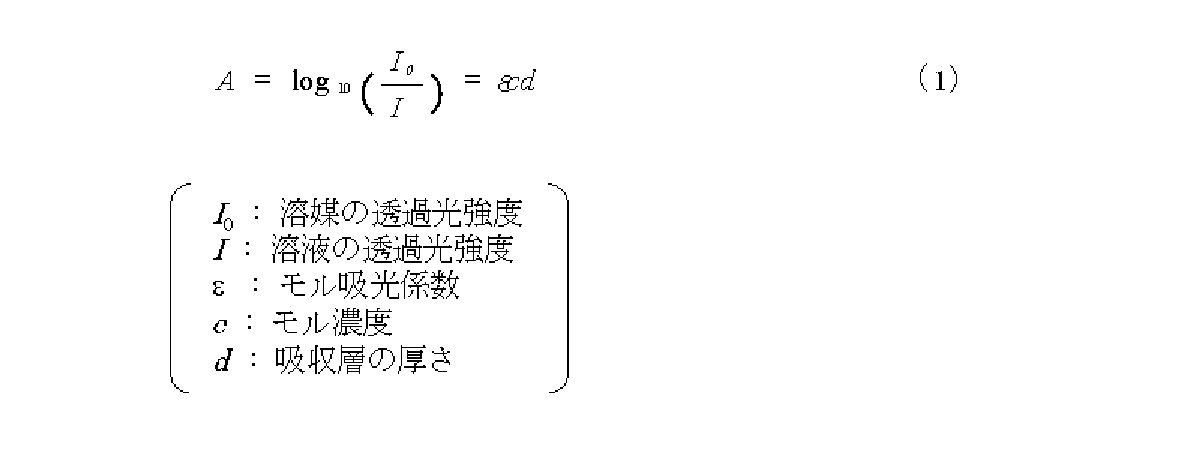
- Azocasein was used as a substrate molecule that reacts with the enzyme. Azocasein is decomposed by an enzyme to release a compound containing an azo group. Since the compound containing an azo group has absorption at 440 nm, the absorbance can be quantified by measuring with a UV-vis spectrophotometer (model number V-650, manufactured by JASCO Corporation). Absorbance measurement with a UV-vis spectrophotometer was performed by making light incident on the sample solution, measuring the transmitted light intensity I, and calculating the absorbance A from the following formula (1).
- the extinction coefficient of p-nitroanilide generated from the substrate N-succinyl-AAPF-p-nitroanilide is 8900 M ⁇ 1 cm ⁇ 1 , and the measurement was performed with a cell length of 1 cm.
- the concentration of immobilized Tk-subtilisin was calculated by taking the difference between the enzyme concentration results calculated in Table 2. The results are shown in Table 3 below.
- the enzyme concentration in the Tk-satilysin solution was 107.5 ⁇ g / ml, but the enzyme concentration in the Tk-satilysin supernatant solution after immobilization was 5.0 ⁇ g / ml. From this, it was confirmed that 95.3% of the enzyme concentration of the stock solution of Tk-subtilisin charged at the time of immobilization was immobilized on the surface of Thermomax. From the particle concentration obtained from the ICP measurement in Table 3, the enzyme amount per particle weight was 3.6 ⁇ g / mg.
- N-succinyl-AAPF-p-nitroanilide was used as a substrate for enzyme activity measurement. As shown in the following formula (A), N-succinyl-AAPF-p-nitroanilide has a peptide bond hydrolyzed by a protease to produce p-nitroaniline.
- the degradation substance was quantified by measuring the absorbance of this p-nitroaniline.
- the degradation of the substrate N-succinyl-AAPF-p-nitroanilide was performed using Tk-satilysin, and the absorbance at 410 nm was plotted to calculate the amount of p-nitroaniline produced from the Lambert-Beer law equation. .
- the enzyme activity was evaluated using an evaluation index called unit (U). In the present invention, one unit is defined as the amount of enzyme that produces 1 ⁇ mol of p-nitroanilide per minute.
- the activity retention rate in Table 5 indicates how much activity is retained by comparing the immobilized enzyme with a free enzyme. This was calculated by dividing the immobilized enzyme activity value (U) by the free enzyme activity value (U). From Table 5, an average of about 46% activity is retained. Although this value differs depending on the structure of the enzyme and the content of the amino group, the enzyme immobilization rate is different from that of the conventional carbodiimide method.
- the enzyme activity (specific activity) per 1 mg of enzyme was calculated.
- the value at the time of a substrate excess in which the absorbance does not change even when the substrate concentration is increased is used. In this measurement, it can be considered that the absorbance does not increase from the substrate concentration of 5 mM. Therefore, the specific activity of the immobilized enzyme was calculated from the enzyme activity value (U) at this time. The results are shown in Table 6.
- Therma-Max (registered trademark, manufactured by JNC Corporation) was used as the magnetic particles, and an AC magnetic field application test was performed in order to evaluate the heat generation behavior of thermamax by the AC magnetic field.
- a magnetic generator 10 (manufactured by Samway Corporation) shown in FIGS. 2 (A) and 2 (B) was used.
- the magnetic generator 10 is configured by winding a coil 11 around the outer periphery of an inner cylinder 13.
- the coil 11 for generating a high-frequency magnetic field is composed of a copper pipe (coil wire) 11a provided with an insulating coating 11b having an inner diameter of 3 mm, an outer diameter of 4 mm, and a thickness of 0.25 mm.
- the inner cylinder 13 of the coil 11 is made of Teflon (registered trademark), has an inner diameter of 58 mm, an outer diameter of 70 mm, and a height of 120 mm.
- the number of turns of the coil 11 is 23 turns.
- the magnetic field intensity handled in the present invention is expressed as an effective value (Oe-rms). Further, during the measurement, cooling water controlled at 20 ° C. was passed through the copper pipe of the coil 11 in order to suppress the heat generation of the coil 11.
- High frequency power supply (model T162-6024AHE, manufactured by Samway Corporation) This is a variable frequency type high frequency power source, and has a frequency band of 100 to 1999 kHz and a maximum output of 1000 W / 50 ⁇ .
- Matching box (Samway Corporation) A coil and a capacitor are built in, and their inductance and capacitance are designed to be variable in conjunction with the attached lever. By adjusting those levers, the resonance point of the experimental coil can be found.
- Chiller for matching box (model TBG045 A A, manufactured by ADVANTEC)
- Optical fiber type thermometer (Model Reflex-4, manufactured by Neooptix) The measurable temperature range is -80 to 250 degrees. The resolution is 0.1 degree.
- Oscilloscope (model TDS1000B, manufactured by Tektronix) This was used to measure the current value flowing through the high frequency coil.
- Rogowski coil (model Pearson, manufactured by Electronics) When measuring the alternating magnetic field, this coil is used to detect the current flowing in the experimental coil. The electromotive force generated in the Rogowski coil is detected by an oscilloscope, and the converted current value is displayed.
- thermox functions as a magnetic heating element
- Step 1) 1 ml of the Thermamax solution 17 having a particle concentration of 2 mg / ml is placed in the Eppendorf tube 15.
- Step 2) The optical fiber thermometer 19 is put in the middle of the thermax solution 17, the Eppendorf tube 15 is insulated with the foamed polystyrene (heat insulating material) 18, and placed at the center of the high frequency magnetic field generating coil.
- Step 3) Monitor the increase in the solution temperature at 1 MHz at each magnetic field strength for 1000 s.
- FIG. 4 shows the experimental results of evaluating heat generation in the heat insulating state using thermamax.
- the applied magnetic field strength was 30, 40, and 50 Oe
- the horizontal axis represents time
- the vertical axis represents the rising temperature ⁇ T (° C.).
- thermax solution showed a temperature increase of about 5.5 ° C. in 1000 seconds at 50 Oe and about 4.5 ° C. at 40 Oe ((( a), (b)).
- the intensity of the alternating magnetic field was set to 30 Oe, it was found that the heat generation of the magnetic particles by the alternating magnetic field and the heat radiation in the entire system were balanced, and the temperature rise was hardly observed ((c) in FIG. 4). . Therefore, from this result, it was found that by applying an AC magnetic field having an appropriate strength to the therma max, the solution temperature could not be increased and energy could be applied only in the vicinity of the particles.
- the average particle size of thermamax immediately after application were measured.
- the average particle diameter is a value measured by an apparatus (Zeta Sizer Nano ZS, manufactured by Malvern) based on a dynamic light scattering method (abbreviation of DLS: Dynamic Light Scattering). The application method of the alternating magnetic field at 20 ° C.
- This solution was heated using an aluminum block thermostatic bath (MG-2200) so as to be constant at 4 ° C., 25 ° C., 45 ° C., and 65 ° C., and reacted for 10 min. Thereafter, 100 ⁇ l of 5 wt% acetic acid aqueous solution was added to stop the enzyme reaction, and the magnetic particles were completely removed by passing twice through a magnetic separation column (MS Columns, manufactured by Miltenyi Biotech). The absorbance change (410 nm) of the supernatant solution was measured and evaluated using a UV-vis spectrophotometer (V-650, manufactured by JASCO Corporation).
- V-650 UV-vis spectrophotometer
- FIG. 6 shows changes in enzyme activity at 4 ° C. when the alternating magnetic field is turned on / off.
- FIG. 7 shows changes in enzyme activity at 25 ° C. when the alternating magnetic field is turned on and off.
Landscapes
- Health & Medical Sciences (AREA)
- Life Sciences & Earth Sciences (AREA)
- Engineering & Computer Science (AREA)
- Surgery (AREA)
- General Health & Medical Sciences (AREA)
- Bioinformatics & Cheminformatics (AREA)
- Genetics & Genomics (AREA)
- Biomedical Technology (AREA)
- Wood Science & Technology (AREA)
- Zoology (AREA)
- Chemical & Material Sciences (AREA)
- Organic Chemistry (AREA)
- Biophysics (AREA)
- Biotechnology (AREA)
- Biochemistry (AREA)
- Physics & Mathematics (AREA)
- Microbiology (AREA)
- Nuclear Medicine, Radiotherapy & Molecular Imaging (AREA)
- Optics & Photonics (AREA)
- Pathology (AREA)
- Radiology & Medical Imaging (AREA)
- General Engineering & Computer Science (AREA)
- Heart & Thoracic Surgery (AREA)
- Medical Informatics (AREA)
- Molecular Biology (AREA)
- Animal Behavior & Ethology (AREA)
- Public Health (AREA)
- Veterinary Medicine (AREA)
- Enzymes And Modification Thereof (AREA)
- Compositions Of Macromolecular Compounds (AREA)
- Apparatus Associated With Microorganisms And Enzymes (AREA)
Abstract
本発明は、磁性粒子と酵素を結合させたハイブリッド材料を用い、さらに外部磁場のオン、オフによる発熱現象を利用することで新たな磁性粒子の酵素活性の機能を制御することを目的とする。磁性粒子と好熱菌由来の酵素とからなり、温度応答性機能を持つ酵素複合体とする。
Description
本発明は、酵素複合体に関し、より詳しくは、熱により機能を発現する酵素と磁性粒子との複合体に関する。
近年、タンパク質を対象とする研究が理学、農学、医学、薬学、工学、情報科学にまたがる多くの分野で行われている。中でも、高温領域で活性化される好熱菌由来の酵素は、特に医療分野、バイオテクノロジー分野、環境分野などで注目されている。しかしながら、好熱菌由来の酵素は反応至適温度が高いため、反応温度を高くしなければならず、生体系に用いる場合には、その安全性に十分な留意が必要となる。
一方、タンパク質にバイオマテリアルを結合させたタンパク質ハイブリッド材料が種々提案されている。タンパク質ハイブリッド材料とは、主にタンパク質とタンパク質以外の物質、例えば合成高分子などを化学的に結合させた複合体のことである。このタンパク質ハイブリッド材料は、主に、タンパク質機能を制御するために用いられており、タンパク質機能を制御する材料としては主にナノテクノロジーを活用した微粒子材料が用いられる(例えば、非特許文献1参照)。
また、近年の機器分析の発展により、サブミクロン粒子の構造や特性を正確に把握することが可能となったことから、種々の目的に応じたタンパク質ハイブリッド微粒子の開発が進められている(例えば、非特許文献2参照)。
その中でも注目を集めている分野が外部刺激によるタンパク質機能の制御であり、熱や光などの外部環境により、タンパク質が機能を発現する“場所”、“時間”、“強さ”をコントロールする方法である。中でも酵素、生理活性物質などのタンパク質と磁性体を用いてハイブリッド化した磁性体ハイブリッド材料は、その磁気特性から外部応答によるタンパク質の機能制御が利用しやすい材料として注目されている。例えば、フェリ磁性体のマグネタイト微粒子をドラッグキャリアーとして用い、薬剤の患部への誘導を外部から磁気的に制御する研究がある(例えば、非特許文献3参照)。
その中でも注目を集めている分野が外部刺激によるタンパク質機能の制御であり、熱や光などの外部環境により、タンパク質が機能を発現する“場所”、“時間”、“強さ”をコントロールする方法である。中でも酵素、生理活性物質などのタンパク質と磁性体を用いてハイブリッド化した磁性体ハイブリッド材料は、その磁気特性から外部応答によるタンパク質の機能制御が利用しやすい材料として注目されている。例えば、フェリ磁性体のマグネタイト微粒子をドラッグキャリアーとして用い、薬剤の患部への誘導を外部から磁気的に制御する研究がある(例えば、非特許文献3参照)。
Dunnill, P. and Lilly, M.D.著、「Purification of enzyme using magnetic bio-affinity materials」、Biotechnol. Bioeng., 16、P.987-990、1974
川口春馬著、「バイオアフィニティ微粒子」、SEN’I GAKKAISHI(繊維と工業)、Vol.60、No.7、2004
Akihiko Kondo, Noriyuki Ohnishi著、「Development of Thermo-Responsive Magnetic Nano-Particles and Their Application to Biotechnology」、PHARM TECH JAPAN、Vol.19、No.10(2003)、P.1753-1762
上記したように、タンパク質の磁性体ハイブリッド材料において、種々の応用が期待されており、磁性粒子を用いた新たな酵素活性の機能制御技術が望まれている。
そこで、本発明は、磁性粒子と酵素とを結合させたハイブリッド材料を用い、さらに磁力のエネルギーを付与することによる発熱現象を利用することで新たな磁性粒子の酵素活性の機能を制御することを目的とする。
そこで、本発明は、磁性粒子と酵素とを結合させたハイブリッド材料を用い、さらに磁力のエネルギーを付与することによる発熱現象を利用することで新たな磁性粒子の酵素活性の機能を制御することを目的とする。
本発明者らは上記課題を解決するため、鋭意検討した。その結果、好熱菌由来の酵素と磁性粒子とを結合させた酵素複合体が、磁力のエネルギーの付与により低温環境下においても酵素を活性化させることができることを見出した。
すなわち、本発明は下記の(1)~(8)により達成される。
(1)磁性粒子と好熱菌由来の酵素とから得られ、温度応答性機能を持つ、酵素複合体。
(2)前記磁性粒子が、カルボキシル基を有する有機高分子で被覆されており、前記カルボキシル基と前記酵素のアミノ基または水酸基とが結合して得られる、上記(1)に記載の酵素複合体。
(3)前記磁性粒子が、1~1000nmの平均粒径の磁性粒子である、上記(1)または上記(2)に記載の酵素複合体。
(4)前記磁性粒子が、刺激を付与することにより凝集する刺激応答性磁性粒子である、上記(1)~(3)のいずれか1項に記載の酵素複合体。
(5)上記(1)~(4)のいずれか1項に記載の酵素複合体の酵素を活性化する方法であって、
前記酵素複合体を溶解させた溶液に、磁力のエネルギーを付与することにより前記酵素を活性化させる、酵素の活性化方法。
(6)前記磁力のエネルギーが、磁場および電磁波からなる群から選択される少なくとも1つである、上記(5)に記載の酵素の活性化方法。
(7)上記(1)~(4)のいずれか1項に記載の酵素複合体と、磁気発生装置とを備える、医療器具の洗浄装置。
(8)前記医療器具が、内視鏡手術器具、侵襲性手術器具および吸引カテーテルからなる群から選択される少なくとも1つである、上記(7)に記載の医療器具の洗浄装置。
(1)磁性粒子と好熱菌由来の酵素とから得られ、温度応答性機能を持つ、酵素複合体。
(2)前記磁性粒子が、カルボキシル基を有する有機高分子で被覆されており、前記カルボキシル基と前記酵素のアミノ基または水酸基とが結合して得られる、上記(1)に記載の酵素複合体。
(3)前記磁性粒子が、1~1000nmの平均粒径の磁性粒子である、上記(1)または上記(2)に記載の酵素複合体。
(4)前記磁性粒子が、刺激を付与することにより凝集する刺激応答性磁性粒子である、上記(1)~(3)のいずれか1項に記載の酵素複合体。
(5)上記(1)~(4)のいずれか1項に記載の酵素複合体の酵素を活性化する方法であって、
前記酵素複合体を溶解させた溶液に、磁力のエネルギーを付与することにより前記酵素を活性化させる、酵素の活性化方法。
(6)前記磁力のエネルギーが、磁場および電磁波からなる群から選択される少なくとも1つである、上記(5)に記載の酵素の活性化方法。
(7)上記(1)~(4)のいずれか1項に記載の酵素複合体と、磁気発生装置とを備える、医療器具の洗浄装置。
(8)前記医療器具が、内視鏡手術器具、侵襲性手術器具および吸引カテーテルからなる群から選択される少なくとも1つである、上記(7)に記載の医療器具の洗浄装置。
本発明によれば、酵素複合体に磁力のエネルギーを付与することで、磁性粒子の表面温度が上がり、磁性粒子近傍の温度が酵素の至適温度まで高くなるので、溶液の全体温度を上げずとも磁性粒子表面に結合した好熱菌由来の酵素を活性化することができる。
したがって、高温に処することのできない器具、例えば、内視鏡手術器具等に付着した異常プリオン等の悪性タンパク質の洗浄などに効果的に用いることができる。
したがって、高温に処することのできない器具、例えば、内視鏡手術器具等に付着した異常プリオン等の悪性タンパク質の洗浄などに効果的に用いることができる。
本発明の酵素複合体は、磁性粒子と好熱菌由来の酵素とから得られ、温度応答性機能を持つものである。本発明の酵素複合体は、本発明の効果を著しく損なうことがない限り、磁性粒子および好熱菌由来の酵素以外の成分を含んでいてもよい。
(磁性粒子)
本発明に用いられる磁性粒子は、酸化鉄、またはフェライトからなる粒子でもよく、例えば多価アルコールとマグネタイトから製造した粒子のように、酸化鉄、フェライト、またはマグネタイトとその他の無機物、有機物とからなる粒子でもよい。
磁性粒子は、例えば、日本国特表2002-517085号公報等に開示された方法によって製造することができる。すなわち、鉄(II)塩、または鉄(II)塩及び金属(II)塩を含有する水溶液を、磁性酸化物の形成のために必要な酸化状態下に置き、水溶液のpHを7以上に維持して、酸化鉄、またはフェライト磁性体粒子を形成する方法である。また、金属(II)塩を含有する水溶液と鉄(III)塩を含有する水溶液をアルカリ性条件下で混合することによっても製造することができる。
本発明に用いられる磁性粒子は、酸化鉄、またはフェライトからなる粒子でもよく、例えば多価アルコールとマグネタイトから製造した粒子のように、酸化鉄、フェライト、またはマグネタイトとその他の無機物、有機物とからなる粒子でもよい。
磁性粒子は、例えば、日本国特表2002-517085号公報等に開示された方法によって製造することができる。すなわち、鉄(II)塩、または鉄(II)塩及び金属(II)塩を含有する水溶液を、磁性酸化物の形成のために必要な酸化状態下に置き、水溶液のpHを7以上に維持して、酸化鉄、またはフェライト磁性体粒子を形成する方法である。また、金属(II)塩を含有する水溶液と鉄(III)塩を含有する水溶液をアルカリ性条件下で混合することによっても製造することができる。
あるいは、磁性粒子は、多価アルコールとマグネタイトから製造することもできる。この多価アルコールは、構成単位に水酸基を少なくとも2個有し、鉄イオンと結合可能なアルコール構造体であれば、特に制限なく使用することができる。例えば、デキストラン、ポリビニルアルコール、マンニトール、ソルビトール、シクロデキストリンなどが挙げられる。例えば、日本国特開2005-082538号公報に、デキストランを用いた磁性粒子の製造方法が開示されており、この方法によって製造することもできる。また、グリシジルメタクリレート重合体のように、エポキシ基を有し、開環後多価アルコール構造体を形成する化合物も使用できる。
磁性粒子が、良好な分散性を有するためには、磁力のエネルギーを付与して凝集させる前の粒子の平均粒径が、1~1000nmであることが好ましく、良好な発熱特性を有するためには、1~500nmであることがより好ましい。特に、磁性粒子と酵素との反応性の向上および発熱効率の観点から、粒子の平均粒径が、3~200nmであることが更に好ましく、5~50nmが特に好ましい。具体的には、磁性粒子がマグネタイトからなる粒子の場合、15~20nm程度の平均粒径であると、100kHz~1MHzの交流磁場中において、良好に発熱させることができる。このような粒子径測定を行える機器としては、粒子径・粒度分布測定装置(Zeta Sizer Nano ZS、Malvern社製)や、透過型電子顕微鏡(日立透過電子顕微鏡 HT7700、株式会社日立ハイテクノロジーズ製)が挙げられる。また、これらの磁性粒子は溶液中で凝集体を形成していてもよい。
本発明において使用できる磁性粒子の市販品としては、例えば、Dynabeads(登録商標)、nanomag(登録商標)、deStars(商品名)、MACS(登録商標)などが挙げられる。
本発明において使用できる磁性粒子の市販品としては、例えば、Dynabeads(登録商標)、nanomag(登録商標)、deStars(商品名)、MACS(登録商標)などが挙げられる。
また、磁性粒子は、外部環境から粒子を守るため、あるいは粒子表面を機能化するためなどの観点から、粒子表面に高分子などが修飾されていることが好ましい。使用する保護剤としては、PVAやデキストラン等の高分子や、シリカなどの無機材料といった様々な機能性材料が使用される。
粒子表面が保護され機能化された磁性粒子の例として、例えば、JNC株式会社の「Therma-Max(登録商標)」(以下、「サーママックス」という場合がある。)、「Therma-Max(登録商標) LC Carboxylic acid」(以下、「TM-LC」という場合がある。)等が挙げられる。「Therma-Max(登録商標)」は、酸化鉄磁性粒子表面にN-イソプロピルアクリルアミド(以下、「NIPAM」という場合がある。)のポリマーが修飾されている。
本明細書において、単に「サーママックス」という場合は、磁性粒子を示しており、「サーママックス溶液」、「サーママックス原液」という場合は、磁性粒子にバッファー等を含んでいることを示している。
NIPAMのポリマー水溶液はポリマーの重合度により溶解・析出する温度(下限臨界共溶温度)を制御することができ、32℃前後に下限臨界共溶温度を有し、この温度未満では水に分散するが、これ以上の温度では凝集し容易に磁気で回収できるようになる。
したがって、サーママックスは、その粒子表面を被覆しているNIPAMにより、溶液温度32℃を境として凝集と分散の両状態の間で可逆的に変化する。そのため、粒子が均一に溶液中に分散している32℃未満の分散状態では、磁気分離は容易ではないが、溶液温度を32℃以上にすると磁性粒子は凝集塊を形成し始め、磁気分離が容易に可能となる。
本明細書において、単に「サーママックス」という場合は、磁性粒子を示しており、「サーママックス溶液」、「サーママックス原液」という場合は、磁性粒子にバッファー等を含んでいることを示している。
NIPAMのポリマー水溶液はポリマーの重合度により溶解・析出する温度(下限臨界共溶温度)を制御することができ、32℃前後に下限臨界共溶温度を有し、この温度未満では水に分散するが、これ以上の温度では凝集し容易に磁気で回収できるようになる。
したがって、サーママックスは、その粒子表面を被覆しているNIPAMにより、溶液温度32℃を境として凝集と分散の両状態の間で可逆的に変化する。そのため、粒子が均一に溶液中に分散している32℃未満の分散状態では、磁気分離は容易ではないが、溶液温度を32℃以上にすると磁性粒子は凝集塊を形成し始め、磁気分離が容易に可能となる。
このように機能化された磁性粒子は、刺激を付与することにより凝集等の所望の形態とすることができるので、機能化された磁性粒子(刺激応答性磁性粒子)に外部刺激を付与することで、粒子の分散性を保ちながら酵素複合体の作製及び精製の効率を飛躍的に高めることができる。
この刺激応答性磁性粒子に付与する刺激としては、例えば、温度変化、pH変化、光変化、イオン強度変化等が挙げられ、各刺激の条件は適宜調整すればよい。
(好熱菌由来の酵素)
本発明に用いられる好熱菌由来の酵素は、温度変化により酵素活性値が変化するものであり、65℃以上の高温領域で活性を有し、高温において平衡論的、速度論的、あるいはその両方で安定化しているという特徴を有するものである。
本発明に用いられる好熱菌由来の酵素は、温度変化により酵素活性値が変化するものであり、65℃以上の高温領域で活性を有し、高温において平衡論的、速度論的、あるいはその両方で安定化しているという特徴を有するものである。
好熱菌由来の酵素としては、例えば、一般名であれば、プロテアーゼ、アミラーゼ、セルラーゼ、エステラーゼ、DNAポリメラーゼ、ヌクレアーゼ、ペルオキシダーゼ等が挙げられる。具体的には、TK-サチライシン、Tk-SP、Tk-GK、Tk-RNaseH等が挙げられる。
(磁性粒子と好熱菌由来の酵素との結合方法)
本発明の酵素複合体は、上記磁性粒子と上記好熱菌由来の酵素とを結合させて作製される。
本発明の酵素複合体を作製する方法としては、磁性粒子の表面の形態によって、磁性粒子と酵素との結合方法を適宜選択すればよい。結合方法としては、例えば、磁性粒子表面に酵素を直接結合させる直接法と、磁性体表面を被覆する有機高分子を介して磁性粒子表面に酵素を結合させる間接結合法が挙げられる。
本発明の酵素複合体は、上記磁性粒子と上記好熱菌由来の酵素とを結合させて作製される。
本発明の酵素複合体を作製する方法としては、磁性粒子の表面の形態によって、磁性粒子と酵素との結合方法を適宜選択すればよい。結合方法としては、例えば、磁性粒子表面に酵素を直接結合させる直接法と、磁性体表面を被覆する有機高分子を介して磁性粒子表面に酵素を結合させる間接結合法が挙げられる。
直接法は、磁性粒子に直接的に酵素を吸着させるものである。例えば、磁性粒子表面に吸着させた酵素をグルタルアルデヒドによってクロスリンクさせ、磁性粒子表面を被覆させる方法などが挙げられる。
間接結合法は、磁性粒子に被覆した有機高分子を介して磁性粒子と酵素とを結合させる手法である。有機高分子を被覆させるには、粒子表面で重合反応を行わせるか、あるいは有機高分子を結合させる2種類の方法がある。代表的なものには、デキストランやメタクリル酸ポリマーでの被覆がある。被覆された磁性体を酵素と結合するには通常の化学修飾の手段を用いる。一般的にはアミノシラン化した表面や、カルボジイミドで活性化されたカルボキシル基を持つ表面による酵素複合体との結合が知られている。これらの反応は直接結合法より温和な処理であるとされており、直接法で作製した酵素に比べて、結合した酵素の活性を保持しやすい。
本発明において、カルボジイミドを用いた縮合反応によって、サーママックスの表面に被覆されたカルボキシル基を有する有機高分子中のカルボキシル基に酵素を固定化させることが好ましい。カルボジイミドは、カルボキシル基とアミノ基または水酸基との間で脱水縮合反応を行わせる脱水縮合剤である。この反応により、酸アミドやエステル結合が形成される。
(温度応答性機能)
このように作製された本発明の酵素複合体は温度応答性機能を有する。温度応答性機能とは、変動磁場に対する磁化応答の遅れにより磁性粒子に蓄積される磁力のエネルギーによって発熱し、磁性粒子の発熱により磁気粒子に固定された酵素が高温化され、酵素活性が発現することをいう。
このように作製された本発明の酵素複合体は温度応答性機能を有する。温度応答性機能とは、変動磁場に対する磁化応答の遅れにより磁性粒子に蓄積される磁力のエネルギーによって発熱し、磁性粒子の発熱により磁気粒子に固定された酵素が高温化され、酵素活性が発現することをいう。
(磁気発生装置)
酵素複合体に磁力のエネルギーを付与する方法としては、特に限定されないが、例えば、磁場、電磁波、永久磁石等を利用することができる。中でも、取扱いが容易であり、磁力のエネルギーの強さを容易に変化させることができるという点から、交流電流によって磁気を発生させる磁気発生装置を用いて磁場を形成させることが好ましい。
酵素複合体に磁力のエネルギーを付与する方法としては、特に限定されないが、例えば、磁場、電磁波、永久磁石等を利用することができる。中でも、取扱いが容易であり、磁力のエネルギーの強さを容易に変化させることができるという点から、交流電流によって磁気を発生させる磁気発生装置を用いて磁場を形成させることが好ましい。
交流磁場を用いる場合は、付加する磁場の条件は、使用する酵素の種類に応じて適宜選択すればよいが、例えば、磁場強度0.1~2,000Oeとするのが好ましく、1~1,000Oeとするのがより好ましく、3~500Oeとするのがさらに好ましい。上記範囲とすることで、磁性粒子の発熱量を制御することができる。また、周波数は、1,000~15,000,000Hzとするのが好ましく、10,000~3,000,000Hzとするのがより好ましく、100,000~1,000,000Hzとするのがさらに好ましい。上記範囲とすることで誘電加熱の影響を低減し、磁性粒子のみを発熱させることができる。
上記で説明した本発明の酵素複合体を溶解した溶液に、溶液の外部から磁力のエネルギーを与えることにより、酵素複合体の磁性粒子が発熱するため、この磁性粒子に固定された酵素の近傍の溶液温度が上昇する。酵素の至適温度にまで温度が上昇すると、酵素機能が発現する。したがって、溶液全体の温度を上昇させることなく、温度応答性機能を持つ酵素の活性を上げることができる。したがって、例えば、高温領域での使用が制限される状況においても本発明の酵素複合体を用いることができる。
例えば、本発明の酵素複合体と磁気発生装置とを備えて医療器具用の洗浄器具とすることができる。
内視鏡手術器具は、変性プリオン等の悪性タンパク質などが付着しやすいが、器具の材質上、高温消毒がしにくい。好熱菌由来の酵素であるTk-サチライシンはプリオンを分解する酵素であるため、Tk-サチライシンを固定した本発明の酵素複合体を用いて、磁気発生装置により内視鏡手術器具を洗浄すれば、洗浄液の温度を上げずともTk-サチライシンの活性を高めることができるので、確実に変性プリオンを分解・除去することができる。
内視鏡手術器具は、変性プリオン等の悪性タンパク質などが付着しやすいが、器具の材質上、高温消毒がしにくい。好熱菌由来の酵素であるTk-サチライシンはプリオンを分解する酵素であるため、Tk-サチライシンを固定した本発明の酵素複合体を用いて、磁気発生装置により内視鏡手術器具を洗浄すれば、洗浄液の温度を上げずともTk-サチライシンの活性を高めることができるので、確実に変性プリオンを分解・除去することができる。
なお、医療用器具としては、上記した内視鏡手術器具のほか、メス、鋏、鉗子などの侵襲性手術器具、吸引カテーテルなどの体内に挿入して使用する器具および樹脂製手術器具などを例示することができる。
次に、実施例により本発明をさらに詳細に説明するが、本発明はこれらの例によってなんら限定されるものではない。
なお、本発明で用いた精製水は、Millipore製Direct-Q(商品名)で精製された比抵抗18MΩ・cm以上の超純水である。
なお、本発明で用いた精製水は、Millipore製Direct-Q(商品名)で精製された比抵抗18MΩ・cm以上の超純水である。
<酵素複合体:Tk-サチライシン・TM-LC複合体の合成>
磁性粒子としてTherma-Max(登録商標) LC Carboxylic acid(JNC株式会社製)を用い、酵素としてTk-サチライシンを用いて、以下のプロトコルに従って酵素複合体を作製した。
〔1〕1-エチル-3-(3-ジメチルアミノプロピル)カルボジイミドヒドロクロリド(以下、EDC)/N-ヒドロキシスクシイミド(以下、NHS)を用いたTM-LCの活性化
工程1)500μlのTM-LCをマイクロチューブに分注し、4M NaCl水溶液を19.5μl加え混合した。
工程2)混合液を恒温槽に入れ一分間加温した後、マイクロチューブを磁気分離装置(永久磁石(ネオジム磁石,φ30×10mm(丸型),磁化方向:厚み方向,表面磁束密度:445mT))に一分間静置し、TM-LCの凝集塊を磁気分離して上澄を除いた。
工程3)25mM MESバッファー(in 50mM NaCl、pH4.75)(以下、Activation Bufferという)を500μl加え、氷浴中で分散させた。
工程4)工程2と同じ操作を行った。
工程5)マイクロチューブにActivation Bufferを300μl加え、氷浴中で分散させた。
工程6)EDC2mgとNHS4mgを200μlのActivation Bufferに溶解させた。この調整液を工程5の溶液と混合し、1.5時間室温(約25℃)で回転混合させた。
工程7)工程2と同じ操作を行い、未反応のEDC/NHSを除いた。
工程8)10mMアセテートバッファー(in 50mM NaCl、pH5.0)(以下、Binding Bufferという)を300μl加え、氷浴中で分散させた。
工程9)工程7、工程8の操作をさらに2回行った。
〔2〕活性化TM-LCへのTk-サチライシンの固定化
工程10)工程9の操作の後、粒子に0.1mg/mlのTk-サチライシン溶液300μl(in 50mM 酢酸バッファー、pH5.0)を加え、氷浴中で分散させた後、4℃で3時間回転混合を行った。
工程11)工程2と同じ操作を行い、未反応のTk-サチライシンを除いた。なお、この磁気分離後の上澄は後のタンパク質定量のために保存した。
工程12)50mM Tris-HClバッファー(pH7.5)(以下、Reaction Stop Bufferという)を500μl加え、未反応の活性化基を反応停止させた。氷浴中で分散させた後、4℃で30分間回転混合を行った。
工程13)工程2と同じ操作を行った。
工程14)50mM 酢酸バッファー(pH5.0)(以下、酢酸バッファーという)を加え、氷浴中で分散させた。
工程15)工程13、工程14の操作をさらに2回繰り返した。
工程16)上記の酢酸バッファー500μlの中で、Tk-サチライシン・TM-LC複合体溶液を冷蔵庫で保存した。
磁性粒子としてTherma-Max(登録商標) LC Carboxylic acid(JNC株式会社製)を用い、酵素としてTk-サチライシンを用いて、以下のプロトコルに従って酵素複合体を作製した。
〔1〕1-エチル-3-(3-ジメチルアミノプロピル)カルボジイミドヒドロクロリド(以下、EDC)/N-ヒドロキシスクシイミド(以下、NHS)を用いたTM-LCの活性化
工程1)500μlのTM-LCをマイクロチューブに分注し、4M NaCl水溶液を19.5μl加え混合した。
工程2)混合液を恒温槽に入れ一分間加温した後、マイクロチューブを磁気分離装置(永久磁石(ネオジム磁石,φ30×10mm(丸型),磁化方向:厚み方向,表面磁束密度:445mT))に一分間静置し、TM-LCの凝集塊を磁気分離して上澄を除いた。
工程3)25mM MESバッファー(in 50mM NaCl、pH4.75)(以下、Activation Bufferという)を500μl加え、氷浴中で分散させた。
工程4)工程2と同じ操作を行った。
工程5)マイクロチューブにActivation Bufferを300μl加え、氷浴中で分散させた。
工程6)EDC2mgとNHS4mgを200μlのActivation Bufferに溶解させた。この調整液を工程5の溶液と混合し、1.5時間室温(約25℃)で回転混合させた。
工程7)工程2と同じ操作を行い、未反応のEDC/NHSを除いた。
工程8)10mMアセテートバッファー(in 50mM NaCl、pH5.0)(以下、Binding Bufferという)を300μl加え、氷浴中で分散させた。
工程9)工程7、工程8の操作をさらに2回行った。
〔2〕活性化TM-LCへのTk-サチライシンの固定化
工程10)工程9の操作の後、粒子に0.1mg/mlのTk-サチライシン溶液300μl(in 50mM 酢酸バッファー、pH5.0)を加え、氷浴中で分散させた後、4℃で3時間回転混合を行った。
工程11)工程2と同じ操作を行い、未反応のTk-サチライシンを除いた。なお、この磁気分離後の上澄は後のタンパク質定量のために保存した。
工程12)50mM Tris-HClバッファー(pH7.5)(以下、Reaction Stop Bufferという)を500μl加え、未反応の活性化基を反応停止させた。氷浴中で分散させた後、4℃で30分間回転混合を行った。
工程13)工程2と同じ操作を行った。
工程14)50mM 酢酸バッファー(pH5.0)(以下、酢酸バッファーという)を加え、氷浴中で分散させた。
工程15)工程13、工程14の操作をさらに2回繰り返した。
工程16)上記の酢酸バッファー500μlの中で、Tk-サチライシン・TM-LC複合体溶液を冷蔵庫で保存した。
<酵素複合体の評価>
合成したTk-サチライシン・TM-LC複合体について、ICP測定によるTk-サチライシン・TM-LC複合体溶液中の酸化鉄濃度、差分法によるTk-サチライシンの酵素量の定量、そしてTk-サチライシン・TM-LC複合体溶液のアゾカゼイン法による酵素活性の3つの指標を測定した。この3つの測定値から、Tk-サチライシン・TM-LC複合体溶液中での、
i. 粒子当りの酵素の質量(酵素の質量/粒子の質量)、
ii. 酵素当りの酵素活性値(酵素活性/酵素の質量)、
iii. 粒子当りの酵素活性値(酵素活性/粒子の質量)
を算出し、Tk-サチュライシン・TM-LC複合体溶液の評価を行った。
合成したTk-サチライシン・TM-LC複合体について、ICP測定によるTk-サチライシン・TM-LC複合体溶液中の酸化鉄濃度、差分法によるTk-サチライシンの酵素量の定量、そしてTk-サチライシン・TM-LC複合体溶液のアゾカゼイン法による酵素活性の3つの指標を測定した。この3つの測定値から、Tk-サチライシン・TM-LC複合体溶液中での、
i. 粒子当りの酵素の質量(酵素の質量/粒子の質量)、
ii. 酵素当りの酵素活性値(酵素活性/酵素の質量)、
iii. 粒子当りの酵素活性値(酵素活性/粒子の質量)
を算出し、Tk-サチュライシン・TM-LC複合体溶液の評価を行った。
(ICP発光分析)
まず、Fe2+の標準溶液を希釈したもの(0、5、20ppm)で検量線を作成し、それを基にTk-サチライシン・TM-LC複合体中の鉄の含有率を決定した。
まず、Fe2+の標準溶液を希釈したもの(0、5、20ppm)で検量線を作成し、それを基にTk-サチライシン・TM-LC複合体中の鉄の含有率を決定した。
サーママックス原液及びTk-サチライシン・TM-LC複合体溶液中の酸化鉄粒子量は、それぞれの液中に含まれる鉄原子量により評価した。その結果を表1に示す。

表1の結果より、サーママックス原液において、Fe濃度として4mg/mlの鉄粒子を有していたものが、固定化後のTk-サチライシン・TM-LC複合体溶液において、Fe濃度として1.38mg/mlの鉄粒子を有していた。このことから、Tk-サチライシン・TM-LC複合体溶液において、サーママックス原液に対して約35%の鉄粒子を有していることがわかった。
(Tk-サチライシン・TM-LC複合体中のTk-サチライシンの定量分析)
磁性粒子に固定化したTk-サチライシンの担持量を差分法により算出した。酵素と反応する基質分子として、アゾカゼインを用いた。アゾカゼインは酵素により分解され、アゾ基を含む化合物が遊離される。このアゾ基を含む化合物は440nmに吸収を持つため、その吸光度をUV-vis分光光度計(型番V-650、日本分光社製)で測定することで定量できる。
UV-vis分光光度計での吸光度測定は試料溶液に光を入射し、透過光強度Iを測定し以下の式(1)より吸光度Aを算出した。
磁性粒子に固定化したTk-サチライシンの担持量を差分法により算出した。酵素と反応する基質分子として、アゾカゼインを用いた。アゾカゼインは酵素により分解され、アゾ基を含む化合物が遊離される。このアゾ基を含む化合物は440nmに吸収を持つため、その吸光度をUV-vis分光光度計(型番V-650、日本分光社製)で測定することで定量できる。
UV-vis分光光度計での吸光度測定は試料溶液に光を入射し、透過光強度Iを測定し以下の式(1)より吸光度Aを算出した。
なお、基質N-スクシニル-AAPF-p-ニトロアニリドから生成されるp-ニトロアニリドの吸光係数は8900M-1cm-1であり、セル長1cmで測定を行ったので、モル濃度cは、
c=A440/εd=A440/8900
で算出した。
c=A440/εd=A440/8900
で算出した。
上澄に残ったTk-サチライシン濃度を定量的に評価するため、アゾカゼインを基質とした各Tk-サチライシン濃度におけるTk-サチライシンの酵素分解反応の測定を行い、作成した検量線を図1に示す。
図1の結果から、測定濃度間においては、Tk-サチライシンに比例してアゾカゼインの基質分解反応が生じ、分解生成物由来の440nm付近に見られるピークが増大していることがわかる。そこで、酵素固定化反応時に用いたTk-サチライシン溶液の原液と、反応終了後に回収したTk-サチライシン上澄溶液の二つの溶液でも、同様のアゾカゼインの基質分解反応実験を行い、その吸光度から溶液中のTk-サチライシン濃度を算出した。その結果を以下の表2に示す。
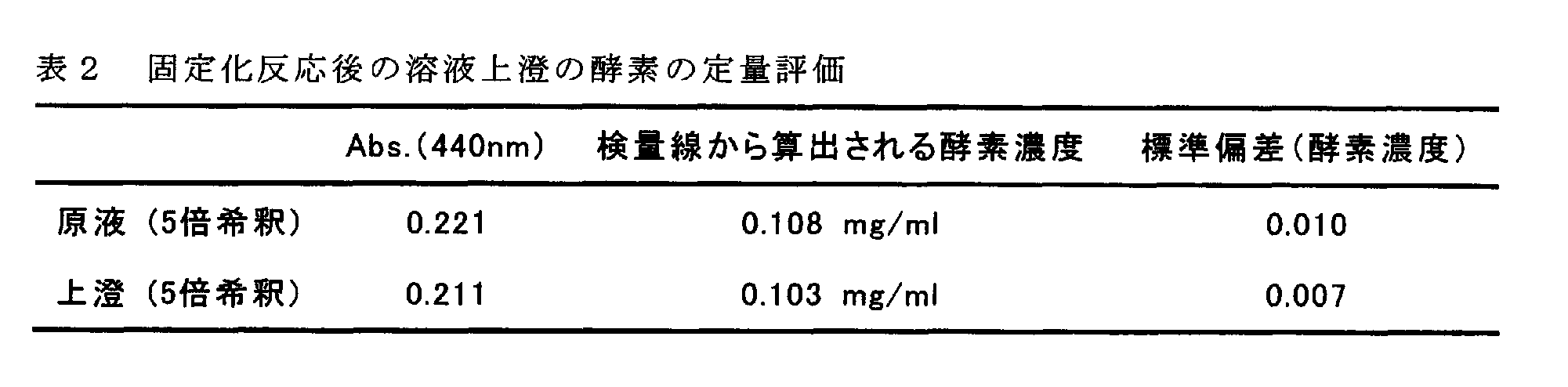
表2で算出された酵素濃度結果の差分を取ることによって、固定化されたTk-サチライシン濃度を算出した。その結果を以下の表3に示す。

表3の結果より、Tk-サチライシン溶液において、酵素濃度が107.5μg/mlであったものが、固定化後のTk-サチライシン上澄溶液において、酵素濃度が5.0μg/mlであった。このことから、固定化の際に投入したTk-サチライシンの原液の酵素濃度の95.3%がサーママックスの表面に固定化されたことが確認された。表3のICP測定より得られた粒子濃度から、粒子の重量あたりの酵素量は、3.6μg/mgであった。
(酵素活性分析)
次に磁性粒子に固定化されていないフリーのTk-サチライシンの酵素活性の測定と固定時との比較を行った。酵素活性測定には基質としてN-スクシニル-AAPF-p-ニトロアニリドを用いた。N-スクシニル-AAPF-p-ニトロアニリドは、下記式(A)に示すように、プロテアーゼによってペプチド結合が加水分解され、p-ニトロアニリンを生成する。
(式A)
次に磁性粒子に固定化されていないフリーのTk-サチライシンの酵素活性の測定と固定時との比較を行った。酵素活性測定には基質としてN-スクシニル-AAPF-p-ニトロアニリドを用いた。N-スクシニル-AAPF-p-ニトロアニリドは、下記式(A)に示すように、プロテアーゼによってペプチド結合が加水分解され、p-ニトロアニリンを生成する。
(式A)

このp-ニトロアニリンの吸光度を測定することにより、分解物質の定量を行った。Tk-サチライシンを用いて基質N-スクシニル-AAPF-p-ニトロアニリドの分解反応を行い、410nmの吸光度をプロットすることで、Lambert-beerの法則式から、p-ニトロアニリンの生成量を算出した。なお、酵素活性はユニット(U)という評価指標を用いて評価した。本発明において、1ユニットは1分間に1μmolのp-ニトロアニリドを生成する酵素量として定義している。
具体的な実験操作としては、0~5mMのN-スクシニル-AAPF-p-ニトロアニリド溶液を95μlずつ用意し、そのそれぞれに酵素濃度0.010mg/mlのTk-サチライシン・TM-LC複合体溶液5μlをそれぞれ添加し、20℃で5分間酵素反応を行った。その後、10μlの5重量%酢酸水溶液を添加して酵素反応を停止させ、磁気分離カラム(MS Columns、ミルテニーバイオテク(株)製)に二回溶液を通した後、上澄溶液中の波長410nmでの吸光度変化をUV-vis分光光度計(VARIAN、CARY50Probe)を用いて測定を行い、8900M-1cm-1の吸光係数を用いてN-スクシニル-AAPF-p-ニトロアニリドから生成されるp-ニトロアニリドの量として算出した。
具体的な実験操作としては、0~5mMのN-スクシニル-AAPF-p-ニトロアニリド溶液を95μlずつ用意し、そのそれぞれに酵素濃度0.010mg/mlのTk-サチライシン・TM-LC複合体溶液5μlをそれぞれ添加し、20℃で5分間酵素反応を行った。その後、10μlの5重量%酢酸水溶液を添加して酵素反応を停止させ、磁気分離カラム(MS Columns、ミルテニーバイオテク(株)製)に二回溶液を通した後、上澄溶液中の波長410nmでの吸光度変化をUV-vis分光光度計(VARIAN、CARY50Probe)を用いて測定を行い、8900M-1cm-1の吸光係数を用いてN-スクシニル-AAPF-p-ニトロアニリドから生成されるp-ニトロアニリドの量として算出した。
また、固定化酵素の酵素濃度と同じ0.010mg/mlに調整したフリーのTk-サチライシンを用いて同様の実験を行った。得られた410nmの吸光度から酵素活性値(ユニット)を算出し、それぞれ値を比較することで、活性を保持している酵素の割合を評価した。
各基質濃度における、各410nmでの吸収スペクトル結果より、酵素活性指標であるユニットを算出し、酵素複合体に固定化された酵素がどの程度活性を維持しているのかを表4、表5に示す。
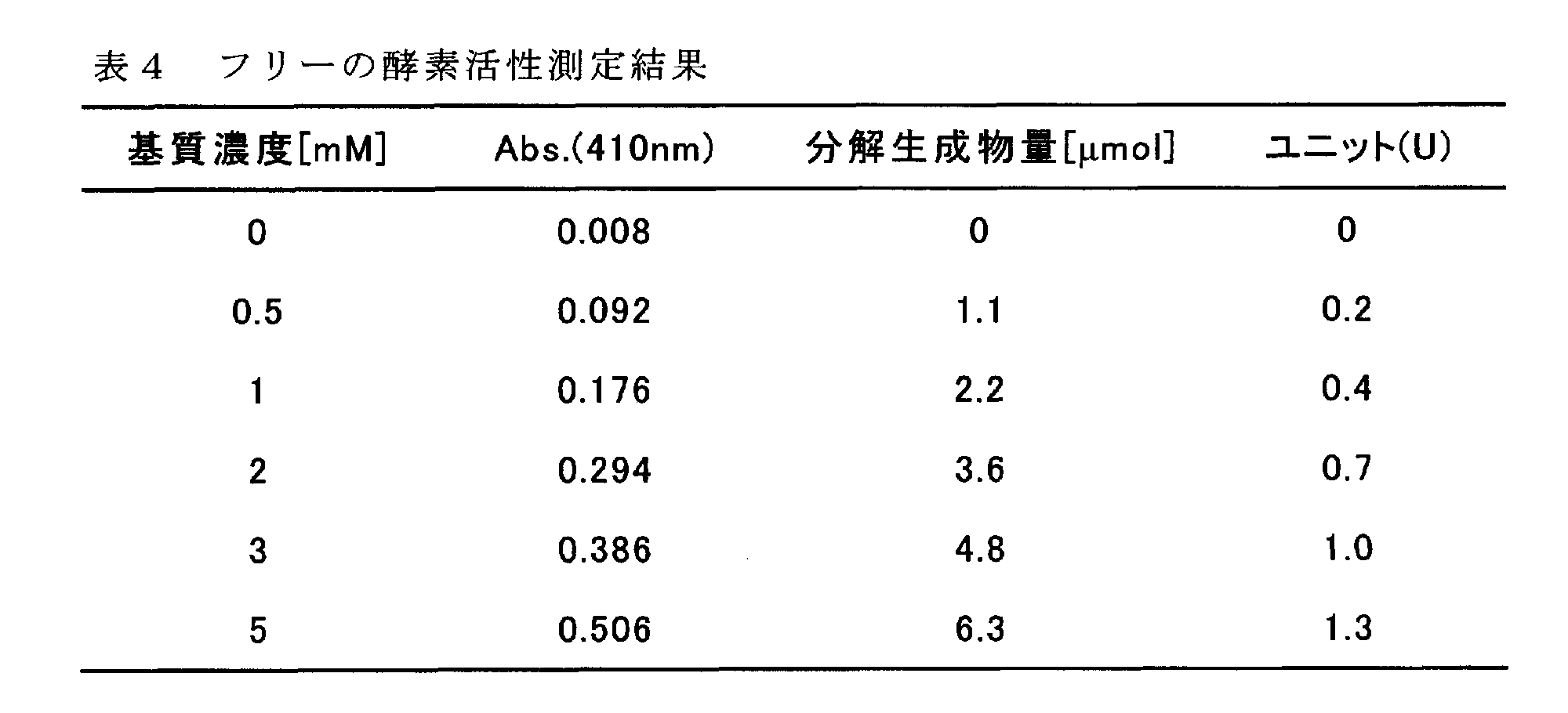

表5の活性保持率とは、固定化酵素とフリーの酵素とを比較し、どの程度の活性が保持されているかを表したものである。これは固定化酵素の活性値(U)をフリーの酵素活性値(U)で割ることにより算出した。表5より、平均して約46%の活性が保持されている。この値は酵素の構造や、アミノ基の含有量によっても酵素の固定化率は異なるが、従来のカルボジイミド法による酵素固定化量と比べ同程度の値となった。
以上の結果より、実施例のTk-サチライシン・TM-LC複合体溶液中に含まれる酵素量は、
(粒子濃度)×(体積)=0.010mg/ml×5μl=0.05μg=5×10-5mg
であることを踏まえ、酵素量1mgあたりの酵素活性(比活性)を算出した。通常酵素の比活性を算出する場合は、基質濃度を増やしても吸光度が変化しない基質大過剰の際の値を用いる。今回の測定では基質濃度5mMから吸光度の上昇が見られないとみなせる。よってこの時の酵素活性値(U)から本固定化酵素の比活性を算出した。その結果を表6に示す。
(粒子濃度)×(体積)=0.010mg/ml×5μl=0.05μg=5×10-5mg
であることを踏まえ、酵素量1mgあたりの酵素活性(比活性)を算出した。通常酵素の比活性を算出する場合は、基質濃度を増やしても吸光度が変化しない基質大過剰の際の値を用いる。今回の測定では基質濃度5mMから吸光度の上昇が見られないとみなせる。よってこの時の酵素活性値(U)から本固定化酵素の比活性を算出した。その結果を表6に示す。
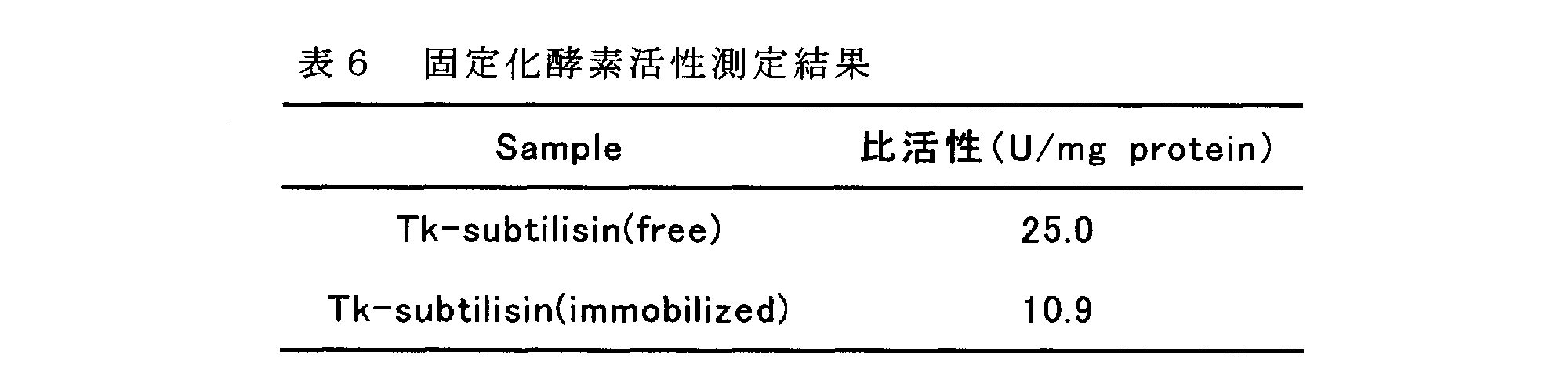
表6の結果より、磁性粒子と結合していないフリーの酵素重量あたりの酵素活性値と比較しても、それ程遜色ない値を示しているといえる。
<磁性粒子の交流磁場による発熱評価>
磁性粒子としてTherma-Max(登録商標、JNC株式会社製)を用い、交流磁場によるサーママックスの発熱挙動を評価するために、交流磁場印加試験を行った。
磁性粒子としてTherma-Max(登録商標、JNC株式会社製)を用い、交流磁場によるサーママックスの発熱挙動を評価するために、交流磁場印加試験を行った。
(高周波磁気発生装置)
〔磁気発生装置〕
図2(A)および図2(B)に示す磁気発生装置10(株式会社サムウエイ製)を用いた。磁気発生装置10は、内筒13の外周にコイル11を巻きつけて構成される。高周波磁場発生用のコイル11は、内径3mm、外径4mmで厚さ0.25mmの絶縁被覆11bを施した銅パイプ(コイル線材)11aで構成されている。コイル11の内筒13はテフロン(登録商標)製であり、内径58mm、外径70mm、高さ120mmであり、コイル11の巻き数は23ターンである。本発明で扱う磁場強度は、実効値(Oe-rms)で表記する。また、測定中はコイル11の発熱を抑制するためにコイル11の銅パイプ中には20℃に制御された冷却水を流した。
〔磁気発生装置〕
図2(A)および図2(B)に示す磁気発生装置10(株式会社サムウエイ製)を用いた。磁気発生装置10は、内筒13の外周にコイル11を巻きつけて構成される。高周波磁場発生用のコイル11は、内径3mm、外径4mmで厚さ0.25mmの絶縁被覆11bを施した銅パイプ(コイル線材)11aで構成されている。コイル11の内筒13はテフロン(登録商標)製であり、内径58mm、外径70mm、高さ120mmであり、コイル11の巻き数は23ターンである。本発明で扱う磁場強度は、実効値(Oe-rms)で表記する。また、測定中はコイル11の発熱を抑制するためにコイル11の銅パイプ中には20℃に制御された冷却水を流した。
〔その他の実験機器の説明〕
(1)高周波電源(型式T162-6024AHE、株式会社サムウエイ製)
周波数可変型の高周波電源であり、周波数帯域は100~1999kHz、最大出力1000W/50Ωである。
(2)マッチングボックス(株式会社サムウエイ)
コイルとコンデンサーが内蔵されており、それらのインダクタンスとキャパシタンスが付属のレバーに連動して可変となるように設計されている。それらのレバーを調節することで、実験用のコイルの共振点を見つけることができる。
(3)マッチングボックス用のチラー(型式TBG045 A A、ADVANTEC社製)
(4)光ファイバー式温度計(型式Reflex-4、Neoptix社製)
測定可能温度領域は、-80度~250度。分解能は、0.1度である。
(5)オシロスコープ(型式TDS1000B、Tektronix社製)
高周波コイルに流れる電流値を測定するために用いた。
(6)ロゴスキーコイル(型式Pearson、Electronics社製)
交流磁界の測定の際、実験用コイルに流れる電流を検出するためのコイルであり、このロゴスキーコイルに発生する起電力をオシロスコープで検出し、換算された電流値が表示される。
(1)高周波電源(型式T162-6024AHE、株式会社サムウエイ製)
周波数可変型の高周波電源であり、周波数帯域は100~1999kHz、最大出力1000W/50Ωである。
(2)マッチングボックス(株式会社サムウエイ)
コイルとコンデンサーが内蔵されており、それらのインダクタンスとキャパシタンスが付属のレバーに連動して可変となるように設計されている。それらのレバーを調節することで、実験用のコイルの共振点を見つけることができる。
(3)マッチングボックス用のチラー(型式TBG045 A A、ADVANTEC社製)
(4)光ファイバー式温度計(型式Reflex-4、Neoptix社製)
測定可能温度領域は、-80度~250度。分解能は、0.1度である。
(5)オシロスコープ(型式TDS1000B、Tektronix社製)
高周波コイルに流れる電流値を測定するために用いた。
(6)ロゴスキーコイル(型式Pearson、Electronics社製)
交流磁界の測定の際、実験用コイルに流れる電流を検出するためのコイルであり、このロゴスキーコイルに発生する起電力をオシロスコープで検出し、換算された電流値が表示される。
(Therma-Maxを用いた断熱状態での発熱評価実験)
サーママックスが磁気発熱体として機能するかを検証するために、図3(A)および図3(B)に示す発熱評価実験装置を用いて、断熱状態における発熱を評価する実験を行った。
以下に実験手順について説明する。
サーママックスが磁気発熱体として機能するかを検証するために、図3(A)および図3(B)に示す発熱評価実験装置を用いて、断熱状態における発熱を評価する実験を行った。
以下に実験手順について説明する。
〔実験手順〕
工程1)エッペンドルフチューブ15に粒子濃度2mg/mlのサーママックス溶液17を1ml入れる。
工程2)光ファイバー温度計19をサーママックス溶液17の中ほどまで入れ、エッペンドルフチューブ15を発砲スチロール(断熱材)18で断熱し、高周波磁場発生コイルの中心に設置する。
工程3)1MHz、各磁場強度における溶液温度の上昇を1000sモニタリングする。
工程1)エッペンドルフチューブ15に粒子濃度2mg/mlのサーママックス溶液17を1ml入れる。
工程2)光ファイバー温度計19をサーママックス溶液17の中ほどまで入れ、エッペンドルフチューブ15を発砲スチロール(断熱材)18で断熱し、高周波磁場発生コイルの中心に設置する。
工程3)1MHz、各磁場強度における溶液温度の上昇を1000sモニタリングする。
(サーママックスの交流磁場による発熱特性評価)
サーママックスを用い断熱状態で発熱を評価した実験結果を図4に示す。印加した磁場強度は30、40、および50Oeで行い、横軸は時間、縦軸は上昇温度ΔT(℃)として示した。
サーママックスを用い断熱状態で発熱を評価した実験結果を図4に示す。印加した磁場強度は30、40、および50Oeで行い、横軸は時間、縦軸は上昇温度ΔT(℃)として示した。
図4に示された実験結果より、50Oeではサーママックス溶液が1000秒間で約5.5℃程度、40Oeでは約4.5℃程度の温度上昇を示していることがわかった(図4の(a)、(b))。
また、交流磁場の強度を30Oeにすると、交流磁場による磁性粒子の発熱と、系全体での放熱とのバランスがとれ、温度上昇がほとんどみられないことがわかった(図4の(c))。したがって本結果から、適切な強度の交流磁場をサーママックスに印加することにより、溶液温度は上昇させず、粒子近傍のみエネルギーを付与できることがわかった。
また、交流磁場の強度を30Oeにすると、交流磁場による磁性粒子の発熱と、系全体での放熱とのバランスがとれ、温度上昇がほとんどみられないことがわかった(図4の(c))。したがって本結果から、適切な強度の交流磁場をサーママックスに印加することにより、溶液温度は上昇させず、粒子近傍のみエネルギーを付与できることがわかった。
(粒子表面の有機高分子の交流磁場による熱応答性評価)
交流磁場印加時にNIPAMのポリマーが熱応答し、サーママックスが凝集しているかを検証するため、低温3℃と室温付近の20℃で、磁場強度26Oeの交流磁場を印加し、印加前のサーママックスの平均粒径と、印加直後のサーママックスの平均粒径を測定した。
なお、本発明において、平均粒径は、動的光散乱法(DLS:Dynamic Light Scatteringの略)に基づく装置(Zeta Sizer Nano ZS、Malvern社製)で測定した値である。20℃での交流磁場の印加方法は上記〔実験手順〕に準じて行った。また、低温(3℃)時の交流磁場の印加は、図5(A)および図5(B)に示すように、発熱評価実験装置の磁気発生装置10内に4℃の水21を循環させる系を用いた。結果を表7に示す。
交流磁場印加時にNIPAMのポリマーが熱応答し、サーママックスが凝集しているかを検証するため、低温3℃と室温付近の20℃で、磁場強度26Oeの交流磁場を印加し、印加前のサーママックスの平均粒径と、印加直後のサーママックスの平均粒径を測定した。
なお、本発明において、平均粒径は、動的光散乱法(DLS:Dynamic Light Scatteringの略)に基づく装置(Zeta Sizer Nano ZS、Malvern社製)で測定した値である。20℃での交流磁場の印加方法は上記〔実験手順〕に準じて行った。また、低温(3℃)時の交流磁場の印加は、図5(A)および図5(B)に示すように、発熱評価実験装置の磁気発生装置10内に4℃の水21を循環させる系を用いた。結果を表7に示す。
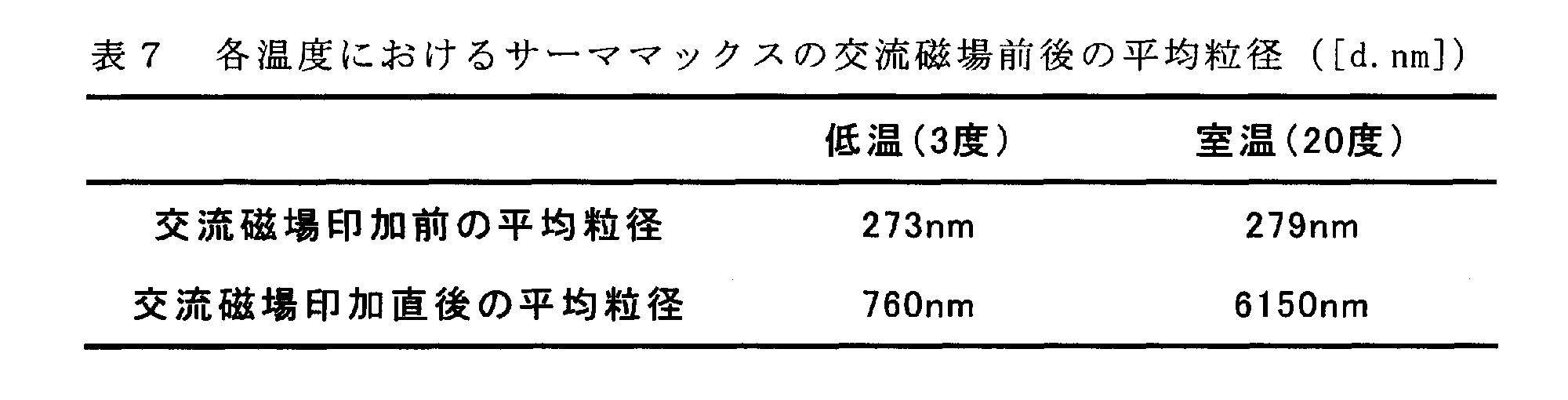
表7の結果より、交流磁場印加によっても、外部温度の上昇時にみられたような粒子凝集が見られた。これらの結果から、交流磁場印加の際に生じる酸化鉄の発熱現象により、粒子表面のNIPAMのポリマーが熱応答し、凝集を引き起こすことが確認された。つまり、交流磁場のオン、オフにより、磁気粒子に固定した酵素にエネルギーを付与し、酵素活性を制御できることがわかった。
<固定化酵素の交流磁場による活性評価>
交流磁場印加による固定化酵素の活性への影響を調べるため、以下の実験を行った。
交流磁場印加による固定化酵素の活性への影響を調べるため、以下の実験を行った。
(温度変化による固定化酵素の酵素活性への影響)
各温度におけるTk-サチライシン・TM-LC複合体の測定を行い、外部温度による酵素活性値の変化を測定した。
まず初めに、N-スクシニル-AAPF-p-ニトロアニリドをDMSOで希釈し、200mMに調整した基質溶液10μlを、終濃度1mMとなるよう酵素活性用バッファー823μl(50mM Tris-HCl、pH8.0、1mM CaCl2)と、Tk-サチライシン・TM-LC複合体溶液166μlを加え全量1mlとした。この溶液を4℃と25℃、45℃、65℃に一定となるようアルミブロック恒温槽(MG-2200)を用いてそれぞれ加温し、10min反応させた。その後、100μlの5重量%酢酸水溶液を添加して酵素反応を停止させ、磁気分離カラム(MS Columns、ミルテニーバイオテク(株)製)を二回通し磁性粒子を完全に除去した。この上澄溶液の吸光度変化(410nm)をUV-vis分光光度計(V-650、日本分光(株)製)を用いて測定を行い評価した。
各温度におけるTk-サチライシン・TM-LC複合体の測定を行い、外部温度による酵素活性値の変化を測定した。
まず初めに、N-スクシニル-AAPF-p-ニトロアニリドをDMSOで希釈し、200mMに調整した基質溶液10μlを、終濃度1mMとなるよう酵素活性用バッファー823μl(50mM Tris-HCl、pH8.0、1mM CaCl2)と、Tk-サチライシン・TM-LC複合体溶液166μlを加え全量1mlとした。この溶液を4℃と25℃、45℃、65℃に一定となるようアルミブロック恒温槽(MG-2200)を用いてそれぞれ加温し、10min反応させた。その後、100μlの5重量%酢酸水溶液を添加して酵素反応を停止させ、磁気分離カラム(MS Columns、ミルテニーバイオテク(株)製)を二回通し磁性粒子を完全に除去した。この上澄溶液の吸光度変化(410nm)をUV-vis分光光度計(V-650、日本分光(株)製)を用いて測定を行い評価した。
また、基質であるN-スクシニル-AAPF-p-ニトロアニリドと、サーママックスのどちらも低波長領域で吸収を持つために、400nm以下の波長領域の評価が困難である。そのため、コントロールとして、市販のサーママックス溶液に基質N-スクシニル-AAPF-p-ニトロアニリドを加えたサンプルを用意し、このスペクトルをバックグラウンドとして差し引くことで評価を行った。以下にこのバックグラウンド測定の詳細を述べる。
N-スクシニル-AAPF-p-ニトロアニリドをDMSOで希釈し、200mMに調整した基質溶液10μlを、終濃度1mMとなるよう酵素活性用バッファー823μl(50mM Tris-HCl、pH8.0、1mM CaCl2)と、市販のサーママックス(原液、4mg/ml)66μlを加え全量1mlとした。そしてこの溶液を溶液温度25℃、磁場強度40Oe、1MHzで交流磁場を10分間印加した。なおその他の交流磁場の条件は、上記と同じに設定した。その後、100μlの5重量%酢酸水溶液を添加して酵素反応を停止させ、磁性カラムに二回溶液を通した後、波長410nmでの吸光変化をUV-vis分光光度計(CARY50 Probe、VARIAN社製)を用いて測定を行い評価した。
N-スクシニル-AAPF-p-ニトロアニリドをDMSOで希釈し、200mMに調整した基質溶液10μlを、終濃度1mMとなるよう酵素活性用バッファー823μl(50mM Tris-HCl、pH8.0、1mM CaCl2)と、市販のサーママックス(原液、4mg/ml)66μlを加え全量1mlとした。そしてこの溶液を溶液温度25℃、磁場強度40Oe、1MHzで交流磁場を10分間印加した。なおその他の交流磁場の条件は、上記と同じに設定した。その後、100μlの5重量%酢酸水溶液を添加して酵素反応を停止させ、磁性カラムに二回溶液を通した後、波長410nmでの吸光変化をUV-vis分光光度計(CARY50 Probe、VARIAN社製)を用いて測定を行い評価した。
(溶液温度4℃での交流磁場印加による固定化酵素活性への影響評価)
図5(A)および図5(B)に示した冷却系のシステムを使用し、溶液温度4℃での交流磁場印加による固定化酵素活性への影響を評価した。サンプルは上記(温度変化による固定化酵素の酵素活性への影響)と同様に調製した酵素固定化酵素溶液1mlを使用し、4℃、磁場強度40Oe、1MHzで交流磁場を10分間印加した。なおその他の交流磁場の条件は、上記と同様に行った。交流磁場印加後、100μlの5重量%酢酸水溶液を添加して酵素反応を停止させ、磁気分離カラム(MS Columns、ミルテニーバイオテク(株)製)に二回溶液を通した後、波長410nmでの吸光変化をUV-vis分光光度計(CARY50 Probe、VARIAN製)を用いて測定を行い評価した。そして、得られた結果を(温度変化による固定化酵素の酵素活性への影響)での4℃における結果と比較した。交流磁場のオン、オフによる4℃での酵素活性変化を図6に示す。
図5(A)および図5(B)に示した冷却系のシステムを使用し、溶液温度4℃での交流磁場印加による固定化酵素活性への影響を評価した。サンプルは上記(温度変化による固定化酵素の酵素活性への影響)と同様に調製した酵素固定化酵素溶液1mlを使用し、4℃、磁場強度40Oe、1MHzで交流磁場を10分間印加した。なおその他の交流磁場の条件は、上記と同様に行った。交流磁場印加後、100μlの5重量%酢酸水溶液を添加して酵素反応を停止させ、磁気分離カラム(MS Columns、ミルテニーバイオテク(株)製)に二回溶液を通した後、波長410nmでの吸光変化をUV-vis分光光度計(CARY50 Probe、VARIAN製)を用いて測定を行い評価した。そして、得られた結果を(温度変化による固定化酵素の酵素活性への影響)での4℃における結果と比較した。交流磁場のオン、オフによる4℃での酵素活性変化を図6に示す。
波長410nmでの吸光度で両者を比較したところ、溶液温度4℃において、基質分解生成物であるp-ニトロアニリンの生成量は、交流磁場を与えないもの(図6の(b))に比べて交流磁場を印加したもの(図6の(a))が約1.2倍増加することが確認された。
この結果より、低温度(4℃)領域において交流磁場による酵素機能の活性化が示され、活性増加が約1.2倍となることがわかった。
この結果より、低温度(4℃)領域において交流磁場による酵素機能の活性化が示され、活性増加が約1.2倍となることがわかった。
(溶液温度25℃での交流磁場印加による固定化酵素活性への影響評価)
同様に、上記(温度変化による固定化酵素の酵素活性への影響)で調製した溶液について、溶液温度25℃での交流磁場印加による固定化酵素活性への影響を評価した。25℃で磁場強度40Oeの交流磁場を10分間印加した。交流磁場印加後、100μlの5重量%酢酸水溶液を添加して酵素反応を停止させ、磁気分離カラム(MS Columns、ミルテニーバイオテク(株)製)に二回溶液を通した後、波長410nmでの吸光変化をUV-vis分光光度計(CARY50 Probe、VARIAN社製)を用いて測定を行い評価した。そして、得られた結果を上記(温度変化による固定化酵素の酵素活性への影響)での25℃における結果と比較した。交流磁場のオン、オフによる25℃での酵素活性変化を図7に示す。
同様に、上記(温度変化による固定化酵素の酵素活性への影響)で調製した溶液について、溶液温度25℃での交流磁場印加による固定化酵素活性への影響を評価した。25℃で磁場強度40Oeの交流磁場を10分間印加した。交流磁場印加後、100μlの5重量%酢酸水溶液を添加して酵素反応を停止させ、磁気分離カラム(MS Columns、ミルテニーバイオテク(株)製)に二回溶液を通した後、波長410nmでの吸光変化をUV-vis分光光度計(CARY50 Probe、VARIAN社製)を用いて測定を行い評価した。そして、得られた結果を上記(温度変化による固定化酵素の酵素活性への影響)での25℃における結果と比較した。交流磁場のオン、オフによる25℃での酵素活性変化を図7に示す。
波長410nmでの吸光度で両者を比較したところ、溶液温度25℃において、基質分解生成物であるp-ニトロアニリンの生成量は、交流磁場を与えないもの(図7の(b))に比べて交流磁場を印加したもの(図7の(a))が約1.6倍増加することが確認された。
この結果より、交流磁場印加により、固定化酵素近傍が温度上昇し、有意な差が見られたと考えられる。
この結果より、交流磁場印加により、固定化酵素近傍が温度上昇し、有意な差が見られたと考えられる。
(交流磁場印加のオン、オフによる固定化酵素活性の評価)
上記(溶液温度4℃での交流磁場印加による固定化酵素活性への影響評価)および上記(溶液温度25℃での交流磁場印加による固定化酵素活性への影響評価)で得られた結果から、交流磁場による酵素近傍の温度上昇がそれぞれどの程度もたらされているのか、交流磁場を印加せず測定した活性測定と比較することにより検証を行った。交流磁場を印加せずに測定した結果は上記(温度変化による固定化酵素の酵素活性への影響)で行った固定化酵素の酵素活性測定を使用し、交流磁場を印加したものは上記(溶液温度4℃での交流磁場印加による固定化酵素活性への影響評価)および上記(溶液温度25℃での交流磁場印加による固定化酵素活性への影響評価)で行った4℃と25℃のものを使用し評価した。その結果を図8に示す。
上記(溶液温度4℃での交流磁場印加による固定化酵素活性への影響評価)および上記(溶液温度25℃での交流磁場印加による固定化酵素活性への影響評価)で得られた結果から、交流磁場による酵素近傍の温度上昇がそれぞれどの程度もたらされているのか、交流磁場を印加せず測定した活性測定と比較することにより検証を行った。交流磁場を印加せずに測定した結果は上記(温度変化による固定化酵素の酵素活性への影響)で行った固定化酵素の酵素活性測定を使用し、交流磁場を印加したものは上記(溶液温度4℃での交流磁場印加による固定化酵素活性への影響評価)および上記(溶液温度25℃での交流磁場印加による固定化酵素活性への影響評価)で行った4℃と25℃のものを使用し評価した。その結果を図8に示す。
図8の結果から、交流磁場を与えないもの(図8の(b))に比べて交流磁場を印加したもの(図8の(a))が酵素活性が高くなることが分かり、4℃時では、磁場有の酵素活性の結果は、無磁場時と比べ1.2倍程度であったが、これは無磁場時の約5℃での酵素活性値に相当することがわかった。一方で25℃時では、磁場有の酵素活性値は、無磁場時と比べ1.6倍を示しており、これは無磁場時より10℃高い35℃での酵素活性に相当することがわかった。したがって、より高温度域で交流磁場を印加することにより、磁場応答性の良い機能発現を得ることが確認された。
本発明を詳細にまた特定の実施形態を参照して説明したが、本発明の精神と範囲を逸脱することなく様々な変更や修正を加えることができることは当業者にとって明らかである。本出願は、2012年3月30日出願の日本特許出願(特願2012-082980)に基づくものであり、その内容はここに参照として取り込まれる。
10 磁気発生装置
11 コイル
13 内筒
15 エッペンドルフチューブ
17 サーママックス溶液
18 断熱材
19 光ファイバー温度計
11 コイル
13 内筒
15 エッペンドルフチューブ
17 サーママックス溶液
18 断熱材
19 光ファイバー温度計
Claims (8)
- 磁性粒子と好熱菌由来の酵素とから得られ、温度応答性機能を持つ、酵素複合体。
- 前記磁性粒子が、カルボキシル基を有する有機高分子で被覆されており、前記カルボキシル基と前記酵素のアミノ基または水酸基とが結合して得られる、請求項1に記載の酵素複合体。
- 前記磁性粒子が、1~1000nmの平均粒径の磁性粒子である、請求項1または請求項2に記載の酵素複合体。
- 前記磁性粒子が、刺激を付与することにより凝集する刺激応答性磁性粒子である、請求項1~3のいずれか1項に記載の酵素複合体。
- 請求項1~4のいずれか1項に記載の酵素複合体の酵素を活性化する方法であって、
前記酵素複合体を溶解させた溶液に、磁力のエネルギーを付与することにより前記酵素を活性化させる、酵素の活性化方法。 - 前記磁力のエネルギーが、磁場および電磁波からなる群から選択される少なくとも1つである、請求項5に記載の酵素の活性化方法。
- 請求項1~4のいずれか1項に記載の酵素複合体と、磁気発生装置とを備える、医療器具の洗浄装置。
- 前記医療器具が、内視鏡手術器具、侵襲性手術器具および吸引カテーテルからなる群から選択される少なくとも1つである、請求項7に記載の医療器具の洗浄装置。
Applications Claiming Priority (2)
| Application Number | Priority Date | Filing Date | Title |
|---|---|---|---|
| JP2012-082980 | 2012-03-30 | ||
| JP2012082980A JP5867248B2 (ja) | 2012-03-30 | 2012-03-30 | 酵素複合体 |
Publications (1)
| Publication Number | Publication Date |
|---|---|
| WO2013147100A1 true WO2013147100A1 (ja) | 2013-10-03 |
Family
ID=49260343
Family Applications (1)
| Application Number | Title | Priority Date | Filing Date |
|---|---|---|---|
| PCT/JP2013/059411 Ceased WO2013147100A1 (ja) | 2012-03-30 | 2013-03-28 | 酵素複合体 |
Country Status (2)
| Country | Link |
|---|---|
| JP (1) | JP5867248B2 (ja) |
| WO (1) | WO2013147100A1 (ja) |
Cited By (1)
| Publication number | Priority date | Publication date | Assignee | Title |
|---|---|---|---|---|
| CN113354066A (zh) * | 2021-01-12 | 2021-09-07 | 南京富磁仪器设备有限公司 | 一种用于污水处理的磁热填料及其磁感应热发生装置 |
Citations (1)
| Publication number | Priority date | Publication date | Assignee | Title |
|---|---|---|---|---|
| JP2010151528A (ja) * | 2008-12-24 | 2010-07-08 | Chisso Corp | チオール基を有する刺激応答性磁性微粒子及びその利用 |
Family Cites Families (2)
| Publication number | Priority date | Publication date | Assignee | Title |
|---|---|---|---|---|
| JP5145526B2 (ja) * | 2008-05-19 | 2013-02-20 | 国立大学法人大阪大学 | 刺激応答性貴金属・磁性微粒子複合体 |
| JP5326443B2 (ja) * | 2008-09-05 | 2013-10-30 | Jnc株式会社 | 凍結乾燥可能な温度応答性磁性微粒子 |
-
2012
- 2012-03-30 JP JP2012082980A patent/JP5867248B2/ja not_active Expired - Fee Related
-
2013
- 2013-03-28 WO PCT/JP2013/059411 patent/WO2013147100A1/ja not_active Ceased
Patent Citations (1)
| Publication number | Priority date | Publication date | Assignee | Title |
|---|---|---|---|---|
| JP2010151528A (ja) * | 2008-12-24 | 2010-07-08 | Chisso Corp | チオール基を有する刺激応答性磁性微粒子及びその利用 |
Non-Patent Citations (6)
| Title |
|---|
| AKIHIKO KONDO ET AL.: "Thermo-Responsive Magnetic Nanoparticles for Biomedical Applications", KOBUNSHI, vol. 60, no. 6, 2011, pages 378 - 381 * |
| CHEN YH. ET AL.: "Preparation of magnetic nanoparticles and their use for immobilization of C-terminally lysine-tagged Bacillus sp. TS-23 a-amylase", APPL.BIOCHEM.BIOTECHNOL., vol. 166, no. 7, April 2012 (2012-04-01), pages 1711 - 1722 * |
| HUANG CL. ET AL.: "Preparation of carboxylated magnetic particles for the efficient immobilization of C-terminally lysine-tagged Bacillus stearothermophilus aminopeptidase II", J.IND.MICROBIOL.BIOTECHNOL., vol. 37, no. 7, July 2010 (2010-07-01), pages 717 - 725, XP019809543 * |
| KOICHI NAGAOKA: "Netsu Otosei Jisei Nano Ryushi 'Therma-Max' no Bio Ryoiki eno Oyo", JETI, vol. 55, no. 13, 2007, pages 35 - 37 * |
| SONG C. ET AL.: "Preparation and characterization of a thermostable enzyme (Mn-SOD) immobilized on supermagnetic nanoparticles", APPL.MICROBIOL. BIOTECHNOL., vol. 96, no. 1, October 2012 (2012-10-01), pages 123 - 132, XP035107821, DOI: doi:10.1007/s00253-011-3835-9 * |
| TOSHIHIRO SHIKAKURA ET AL.: "Jisei Nano Ryushi ni yoru Yudo Kanetsu o Mochiita Koso Kassei no ON/OFF Seigyo ni Kansuru Shinki Gijutsu", DAI 64 KAI ABSTRACTS OF THE ANNUAL MEETING OF THE SOCIETY FOR BIOTECHNOLOGY, 25 September 2012 (2012-09-25), JAPAN, pages 193 * |
Cited By (1)
| Publication number | Priority date | Publication date | Assignee | Title |
|---|---|---|---|---|
| CN113354066A (zh) * | 2021-01-12 | 2021-09-07 | 南京富磁仪器设备有限公司 | 一种用于污水处理的磁热填料及其磁感应热发生装置 |
Also Published As
| Publication number | Publication date |
|---|---|
| JP2013213099A (ja) | 2013-10-17 |
| JP5867248B2 (ja) | 2016-02-24 |
Similar Documents
| Publication | Publication Date | Title |
|---|---|---|
| Shaterabadi et al. | Correlation between effects of the particle size and magnetic field strength on the magnetic hyperthermia efficiency of dextran-coated magnetite nanoparticles | |
| Sadat et al. | Effect of spatial confinement on magnetic hyperthermia via dipolar interactions in Fe3O4 nanoparticles for biomedical applications | |
| Nayeem et al. | Silica coating of iron oxide magnetic nanoparticles by reverse microemulsion method and their functionalization with cationic polymer P (NIPAm-co-AMPTMA) for antibacterial vancomycin immobilization | |
| Ebrahiminezhad et al. | Preparation of novel magnetic fluorescent nanoparticles using amino acids | |
| Nosrati et al. | Green and one‐pot surface coating of iron oxide magnetic nanoparticles with natural amino acids and biocompatibility investigation | |
| Amiri et al. | Protein corona affects the relaxivity and MRI contrast efficiency of magnetic nanoparticles | |
| González-Fernández et al. | Magnetic nanoparticles for power absorption: Optimizing size, shape and magnetic properties | |
| Al-Harbi et al. | Functionalized iron oxide nanoparticles: synthesis through ultrasonic-assisted co-precipitation and performance as hyperthermic agents for biomedical applications | |
| Costo et al. | Ultrasmall iron oxide nanoparticles for biomedical applications: improving the colloidal and magnetic properties | |
| Ebrahiminezhad et al. | Impact of amino-acid coating on the synthesis and characteristics of iron-oxide nanoparticles (IONs) | |
| Esmaeili et al. | Dendrimer functionalized magnetic nanoparticles as a promising platform for localized hyperthermia and magnetic resonance imaging diagnosis | |
| Regmi et al. | Hyperthermia controlled rapid drug release from thermosensitive magnetic microgels | |
| Tomitaka et al. | Heat dissipation and magnetic properties of surface-coated Fe3O4 nanoparticles for biomedical applications | |
| Wakamatsu et al. | Preparation and characterization of temperature-responsive magnetite nanoparticles conjugated with N-isopropylacrylamide-based functional copolymer | |
| Villanueva et al. | Hyperthermia HeLa cell treatment with silica-coated manganese oxide nanoparticles | |
| Yan et al. | Growth mechanism of nanostructured superparamagnetic rods obtained by electrostatic co-assembly | |
| Chan et al. | Magnetically guided theranostics: optimizing magnetic resonance imaging with sandwich-like kaolinite-based iron/platinum nanoparticles for magnetic fluid hyperthermia and chemotherapy | |
| JP2010504381A (ja) | ナノ複合材料及び強磁性流体といった磁性ナノ粒子又はポリマーを含む材料系ならびにその用途 | |
| Xiao et al. | Fabricating high-performance T 2-weighted contrast agents via adjusting composition and size of nanomagnetic iron oxide | |
| Mol et al. | Radio frequency plasma assisted surface modification of Fe3O4 nanoparticles using polyaniline/polypyrrole for bioimaging and magnetic hyperthermia applications | |
| Liu et al. | First observation of physically capturing and maneuvering bacteria using magnetic clays | |
| Ternent et al. | Heparin-stabilised iron oxide for MR applications: A relaxometric study | |
| Laurenti et al. | Synthesis of thermosensitive microgels with a tunable magnetic core | |
| Lemal et al. | Simple and fast evaluation of relaxation parameters of magnetic nanoparticles | |
| Balan et al. | Biotinylated chitosan-based SPIONs with potential in blood-contacting applications |
Legal Events
| Date | Code | Title | Description |
|---|---|---|---|
| 121 | Ep: the epo has been informed by wipo that ep was designated in this application |
Ref document number: 13768323 Country of ref document: EP Kind code of ref document: A1 |
|
| NENP | Non-entry into the national phase |
Ref country code: DE |
|
| 122 | Ep: pct application non-entry in european phase |
Ref document number: 13768323 Country of ref document: EP Kind code of ref document: A1 |