WO2013062076A1 - 移動通信方法及び移動局 - Google Patents
移動通信方法及び移動局 Download PDFInfo
- Publication number
- WO2013062076A1 WO2013062076A1 PCT/JP2012/077692 JP2012077692W WO2013062076A1 WO 2013062076 A1 WO2013062076 A1 WO 2013062076A1 JP 2012077692 W JP2012077692 W JP 2012077692W WO 2013062076 A1 WO2013062076 A1 WO 2013062076A1
- Authority
- WO
- WIPO (PCT)
- Prior art keywords
- band
- uplink
- mobile station
- information
- earfcn
- Prior art date
- Legal status (The legal status is an assumption and is not a legal conclusion. Google has not performed a legal analysis and makes no representation as to the accuracy of the status listed.)
- Ceased
Links
Images




Classifications
-
- H—ELECTRICITY
- H04—ELECTRIC COMMUNICATION TECHNIQUE
- H04W—WIRELESS COMMUNICATION NETWORKS
- H04W72/00—Local resource management
- H04W72/20—Control channels or signalling for resource management
- H04W72/23—Control channels or signalling for resource management in the downlink direction of a wireless link, i.e. towards a terminal
Definitions
- the present invention relates to a mobile communication method and a mobile station.
- the radio base station eNB In the LTE (Long Term Evolution) method, the radio base station eNB notifies the mobile station UE of the band (band) supported by the radio base station eNB via SIB1 (System Information Block 1). The “FreqBandInd (Band Indicator)” is notified.
- the mobile station UE is configured to be able to perform connection processing only in a band that has passed the authentication test.
- the radio base station eNB when the radio base station eNB notifies the mobile station UE of a band that is different from the band that has passed the authentication test, the mobile station UE is configured not to perform connection processing in the notified band.
- the radio base station eNB reports “Equivalent Band Ind” (Equivalent Band Indicator) for notifying the global band in addition to the existing “Frek Band Ind” via SIB1. Is being considered.
- the mobile station UE can perform connection processing in a band (eg, band 26) specified by “EquivalentBandInd” in addition to a band (eg, band 19) specified by “FreqBandInd”. It is configured.
- the carrier frequency in the uplink and the carrier frequency in the downlink in each band are “UL EARFCN (Uplink E-UTRA Absolute Radio Channel Number)” and “DL EARFCN (DownlinkA-UTR TRAU). (Frequency Channel Number) ”.
- the radio base station eNB supports a band supported by the radio base station eNB via the SIB2.
- the “UL EARFCN” for identifying the carrier frequency in the uplink is notified.
- the present invention has been made in view of the above-described problem, and the mobile station UE calculates the “UL EARFCN” without broadcasting the “UL EARFCN” for the band identified by “EquivalentBandInd”. It is an object of the present invention to provide a mobile communication method and a mobile station that can be used.
- a first feature of the present invention is a mobile communication method, in which a mobile station receives first band information for identifying a first band and second band information for identifying a second band via first broadcast information.
- Calculating the carrier frequency in the uplink using frequency identification information in the uplink for the band and the mobile station uses the second band information and the carrier frequency in the uplink to And a step of calculating frequency identification information in the uplink.
- a second feature of the present invention is a mobile station including a receiving unit and a calculating unit, wherein the receiving unit specifies first band information and second band for identifying a first band via first broadcast information.
- the second band information for identifying the first band is acquired, and the frequency identification information in the uplink for the first band is acquired via the second broadcast information, and the calculation unit is configured to acquire the first band.
- the carrier frequency in the uplink is calculated using the information and the frequency identification information in the uplink for the first band, and the calculation unit is configured to calculate the second band information and the carrier frequency in the uplink.
- the gist of the present invention is to calculate the frequency identification information in the uplink for the second band.
- FIG. 1 is an overall configuration diagram of a mobile communication system according to a first embodiment of the present invention.
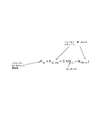
- FIG. 2 is a diagram illustrating an example of a band used in the mobile communication system according to the first embodiment of the present invention.
- FIG. 3 is a functional block diagram of the mobile station according to the first embodiment of the present invention.
- FIG. 4 is a flowchart showing the operation of the mobile station according to the first embodiment of the present invention.
- FIG. 5 is a diagram illustrating a calculation formula used in calculation processing in the mobile station according to the first embodiment of the present invention.
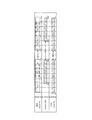
- FIG. 6 is a table showing parameters used in calculation processing in the mobile station according to the first embodiment of the present invention.
- the mobile communication system is compatible with the LTE Release 11 scheme, and includes a radio base station eNB and a mobile station UE as shown in FIG.
- band 18/19 is used in Japan and band 5 is used in the United States.
- a band is specified using a band number (number) corresponding to the LTE system, but the present invention specifies a band using a W-CDMA system band number (Roman numeral). It can also be applied to.
- the band 18 (first band) has a bandwidth of 15 Mz from 815 MHz to 830 MHz and a bandwidth of 15 Mz from 860 MHz to 875 MHz.
- the band 19 (first band) has a bandwidth of 15 Mz from 830 MHz to 845 MHz and a bandwidth of 15 Mz from 875 MHz to 890 MHz.
- band 5 (first band) has a bandwidth of 25 Mz from 824 MHz to 849 MHz and a bandwidth of 25 Mz from 869 MHz to 894 MHz.
- Bands 5/18/19 are all existing bands used in LTE Release 8-10. Further, as shown in FIG. 2, the band 5 and the band 18/19 are configured to overlap.
- the band 26 (second band) is a global band that is being studied for use in a wide range.
- a wide band is defined in order to consider frequency allocation in many regions, and a bandwidth of 35 Mz from 814 MHz to 849 MHz. And a bandwidth of 35 Mz from 859 MHz to 894 MHz.
- the band 26 and the band 5/18/19 are configured to overlap.
- the mobile station UE includes a reception unit 11, a calculation unit 12, and a control 13, as shown in FIG.
- the receiving unit 11 is configured to receive broadcast information (for example, SIB1 and SIB2) transmitted in the standby cell.
- broadcast information for example, SIB1 and SIB2
- the receiving unit 11 is configured to acquire “UL EARFCN” for the band 19 via the SIB2.
- the carrier frequency F UL in the uplink is a carrier frequency in the band 19, that is, in the band 26.
- the “UL EARFCN” for the band 26 also identifies the carrier frequency F UL in the uplink, similarly to the “UL EARFCN” for the band 19.
- the control unit 13 uses the uplink carrier frequency F UL calculated by the calculation unit 12 to perform various signals. Is configured to send.
- control unit 13 is configured to identify the carrier frequency F UL in the uplink by using “UL EARFCN” for the band 19 and “UL EARFCN” for the band 26.
- step S102 when the “UL EARCN” for the band 19 is broadcast via the SIB2 in the standby cell, the mobile station UE acquires the “UL EARFCN” for the band 19.
- the mobile station UE calculates the carrier frequency F UL in the uplink using the calculation formula shown in FIG.
- N UL is “UL EARFCN” for the band 19
- F UL_low and “F Offs-UL ” are parameters uniquely determined for each band based on the table shown in FIG. 6. is there.
- the mobile station UE substitutes “UL EARFCN” for band 19 in “N UL ” in the calculation formula shown in FIG. 5, and sets “830” in “F UL_low ” and “F Offs-UL ”, respectively. And “24000” is substituted to calculate the carrier frequency F UL in the uplink.
- the mobile station UE calculates “UL EARFCN” for the band 26 using the calculation formula shown in FIG.
- the mobile station UE substitutes the carrier frequency F UL in the uplink for “F UL ” in the calculation formula shown in FIG. 5, and corresponds to the band 26 for “F UL_low ” and “F Offs-UL ”
- F UL — low the carrier frequency
- F Offs-UL the carrier frequency
- the first feature of the present embodiment is a mobile communication method, in which the mobile station UE specifies a band 19 (first band) via SIB1 (first broadcast information) “FreqBandInd (first band information). ) ”And“ EquivalentBandInd (second band information) ”specifying the band 26 (second band), and the mobile station UE performs“ UL ”for the band 19 via SIB2 (second broadcast information).
- the mobile station UE uses the above “Equivalent BandInd” and the carrier frequency in the uplink.
- the second feature of the present embodiment is a mobile station UE including a receiving unit 11 and a calculating unit 12, and the receiving unit 11 specifies “FreqBandInd” that specifies the band 19 and the band 26 via SIB1.
- the operations of the radio base station BS and the mobile station UE described above may be implemented by hardware, may be implemented by a software module executed by a processor, or may be implemented by a combination of both. .
- Software modules include RAM (Random Access Memory), flash memory, ROM (Read Only Memory), EPROM (Erasable Programmable ROM), EEPROM (Electronically Erasable and Programmable, Removable ROM, and Hard Disk). Alternatively, it may be provided in an arbitrary format storage medium such as a CD-ROM.
- the storage medium is connected to the processor so that the processor can read and write information from and to the storage medium. Further, such a storage medium may be integrated in the processor. Such a storage medium and processor may be provided in the ASIC. Such an ASIC may be provided in the radio base station BS and the mobile station UE. Further, the storage medium and the processor may be provided in the radio base station BS and the mobile station UE as discrete components.
- the mobile station UE can calculate the “UL EARFCN” without broadcasting the “UL EARFCN” for the band identified by “Equivalent BandInd”.
- a method and a mobile station can be provided.
- eNB radio base station UE ... mobile station 11 ... receiving unit 12 ... calculating unit 13 ... control unit
Landscapes
- Engineering & Computer Science (AREA)
- Computer Networks & Wireless Communication (AREA)
- Signal Processing (AREA)
- Mobile Radio Communication Systems (AREA)
- Telephone Function (AREA)
Abstract
「EquivalentBandInd」によって識別されるバンド用の「UL EARFCN」を報知することなく、移動局UEにおいて、かかる「UL EARFCN」を算出する。本発明に係る移動通信方法は、移動局UEが、SIB1を介して、バンド19を特定する「FreqBandInd」及びバンド26を特定する「EquivalentBandInd」を取得し、SIB2を介して、バンド19用の「UL EARFCN」を取得し、上述の「FreqBandInd」及びバンド19用の「UL EARFCN」を用いて、上りリンクにおけるキャリア周波数FULを算出し、上述の「EquivalentBandInd」及び上りリンクにおけるキャリア周波数FULを用いて、バンド26内の「UL EARFCN」を算出する工程を有する。
Description
本発明は、移動通信方法及び移動局に関する。
LTE(Long Term Evolution)方式では、無線基地局eNBは、SIB1(System Information Block 1)を介して、移動局UEに対して、無線基地局eNBがサポートしているバンド(Band、帯域)を通知する「FreqBandInd(Band Indicator)」を通知するように構成されている。
一方、移動局UEは、認証試験に合格したバンドのみで接続処理を行うことができるように構成されている。
すなわち、移動局UEは、無線基地局eNBによって、認証試験に合格したバンドと異なるバンドが通知された場合には、通知されたバンドにて接続処理を行うことができないように構成されている。
3GPP TS25.101
3GPP TS36.101
3GPP寄書 R4-113310、「LS on Signalling of additional frequency band indicators」
ここで、LTEのRelease-11方式では、無線基地局eNBが、SIB1を介して、既存の「FreqBandInd」に加えて、グローバルバンドを通知するための「EquivalentBandInd(Equivalent Band Indicator)」を報知することが検討されている。
かかる場合、移動局UEは、「FreqBandInd」によって特定されるバンド(例えば、バンド19)に加えて、「EquivalentBandInd」によって特定されるバンド(例えば、バンド26)で接続処理を行うことができるように構成されている。
また、LTE方式では、各バンド内の上りリンクにおけるキャリア周波数及び下りリンクにおけるキャリア周波数は、それぞれ「UL EARFCN(Uplink E-UTRA Absolute Radio Frequency Channel Number)」及び「DL EARFCN(Downlink E-UTRA Absolute Radio Frequency Channel Number)」によって識別されるように構成されている。
なお、LTE方式では、同一のキャリア周波数であっても、バンドが異なれば、かかるキャリア周波数を識別する「UL EARFCN」或いは「DL EARFCN」は異なるものとなるように規定されている。
LTE方式では、上述の非特許文献2に規定されている「Tx Rx separation」が適用されていない場合には、無線基地局eNBは、SIB2を介して、無線基地局eNBがサポートしているバンド内で、上りリンクにおけるキャリア周波数を識別する「UL EARFCN」を通知するように構成されている。
したがって、LTE方式では、上述の非特許文献2に規定されている「Tx Rx separation」が適用されていない場合で、かつ、「EquivalentBandInd」を通知する場合には、無線基地局eNBは、SIB2を介して、上述の「UL EARFCN」に加えて、「EquivalentBandInd」によって識別されるバンド内で、上りリンクにおけるキャリア周波数を識別する「UL EARFCN」を通知しなければならないという問題点があった。
そこで、本発明は、上述の課題に鑑みてなされたものであり、「EquivalentBandInd」によって識別されるバンド用の「UL EARFCN」を報知することなく、移動局UEにおいて、かかる「UL EARFCN」を算出することができる移動通信方法及び移動局を提供することを目的とする。
本発明の第1の特徴は、移動通信方法であって、移動局が、第1報知情報を介して、第1バンドを特定する第1バンド情報及び第2バンドを特定する第2バンド情報を取得する工程と、前記移動局が、第2報知情報を介して、前記第1バンド用の上りリンクにおける周波数識別情報を取得する工程と、前記移動局が、前記第1バンド情報及び前記第1バンド用の上りリンクにおける周波数識別情報を用いて、上りリンクにおけるキャリア周波数を算出する工程と、前記移動局が、前記第2バンド情報及び前記上りリンクにおけるキャリア周波数を用いて、前記第2バンド用の上りリンクにおける周波数識別情報を算出する工程とを有することを要旨とする。
本発明の第2の特徴は、受信部及び算出部を具備する移動局であって、前記受信部は、第1報知情報を介して、第1バンドを特定する第1バンド情報及び第2バンドを特定する第2バンド情報を取得し、第2報知情報を介して、該第1バンド用の上りリンクにおける周波数識別情報を取得するように構成されており、前記算出部は、前記第1バンド情報及び前記第1バンド用の上りリンクにおける周波数識別情報を用いて、上りリンクにおけるキャリア周波数を算出するように構成されており、前記算出部は、前記第2バンド情報及び前記上りリンクにおけるキャリア周波数を用いて、前記第2バンド用の上りリンクにおける周波数識別情報を算出するように構成されていることを要旨とする。
(本発明の第1の実施形態に係る移動通信システム)
図1乃至図6を参照して、本発明の第1の実施形態に係る移動通信システムについて説明する。本実施形態を説明するための全図において、同一機能を有するものは同一符号を用い、繰り返しの説明は省略する。
図1乃至図6を参照して、本発明の第1の実施形態に係る移動通信システムについて説明する。本実施形態を説明するための全図において、同一機能を有するものは同一符号を用い、繰り返しの説明は省略する。
本実施形態に係る移動通信システムは、LTEのRelease11方式に対応しており、図1に示すように、無線基地局eNB及び移動局UEを具備している。
また、本実施形態に係る移動通信システムでは、上述の「Tx Rx separation」が適用されていないものとする。
例えば、本実施形態に係る移動通信システムにおいて、図2に示すように、日本国内で、バンド18/19が用いられ、米国国内で、バンド5が用いられることを想定する。
なお、本明細書では、LTE方式に対応するバンド番号(数字)を用いてバンドを特定することにするが、本発明は、W-CDMA方式のバンド番号(ローマ数字)を用いてバンドを特定する場合にも適用することができる。
ここで、バンド18(第1バンド)は、815MHzから830MHzまでの15Mzのバンド幅及び860MHzから875MHzまでの15Mzのバンド幅を有するものであることが想定されている。
また、バンド19(第1バンド)は、830MHzから845MHzまでの15Mzのバンド幅及び875MHzから890MHzまでの15Mzのバンド幅を有するものであることが想定されている。
さらに、バンド5(第1バンド)は、824MHzから849MHzまでの25Mzのバンド幅及び869MHzから894MHzまでの25Mzのバンド幅を有するものであることが想定されている。
なお、バンド5/18/19は、いずれも、LTEのRelease8~10方式で用いられていた既存のバンドである。また、図2に示すように、バンド5及びバンド18/19は、重複するように構成されている。
一方、バンド26(第2バンド)は、広範囲で利用が検討されているグローバルバンドであり、多くの地域の周波数割り当てを考慮するために広い帯域が定義され、814MHzから849MHzまでの35Mzのバンド幅及び859MHzから894MHzまでの35Mzのバンド幅を有するものであることが想定されている。
なお、図2に示すように、バンド26及びバンド5/18/19は、重複するように構成されている。
本実施形態に係る移動局UEは、図3に示すように、受信部11と、算出部12と、制御13とを具備している。
受信部11は、待ち受けセルにおいて送信されている報知情報(例えば、SIB1やSIB2)を受信するように構成されている。
例えば、受信部11は、SIB1を介して、待ち受けセルにおいてサポートされているバンド19を特定する「FreqBandInd(=バンド19)」を受信するように構成されている。
また、受信部11は、SIB1を介して、待ち受けセルにおいてサポートされているバンド5を包含するグローバルバンドであるバンド26を特定する「EquivalentBandInd(=バンド26)」を取得するように構成されている。
さらに、受信部11は、SIB2を介して、バンド19用の「UL EARFCN」を取得するように構成されている。
算出部12は、「FreqBandInd(=バンド19)」及びバンド19用の「UL EARFCN」を用いて、上りリンクにおけるキャリア周波数FULを算出するように構成されている。具体的な算出方法については、図4乃至図6を参照して後述する。
ここで、上りリンクにおけるキャリア周波数FULは、バンド19内、すなわち、バンド26内のキャリア周波数である。
また、算出部12は、「EquivalentBandInd(=バンド26)」及び上りリンクにおけるキャリア周波数FULを用いて、バンド26用の「UL EARFCN」を算出するように構成されている。具体的な算出方法については、図4乃至図6を参照して後述する。
ここで、バンド26用の「UL EARFCN」も、バンド19用の「UL EARFCN」と同様に、上りリンクにおけるキャリア周波数FULを識別するものである。
制御部13は、受信部11によって受信された「FreqBandInd(=バンド19)」によって識別されるバンド19或いは受信部11によって受信された「EquivalentBandInd(=バンド26)」によって識別されるバンド26にて接続処理を行うことができるように構成されている。
具体的には、制御部13は、移動局UEと無線基地局eNBとの間でRRCコネクションが確立された後に、算出部12によって算出された上りリンクにおけるキャリア周波数FULを用いて、各種信号を送信するように構成されている。
また、制御部13は、バンド19用の「UL EARFCN」及びバンド26用の「UL EARFCN」を用いて、上りリンクにおけるキャリア周波数FULを識別するように構成されている。
以下、図4乃至図6を参照して、本実施形態に係る移動局UEにおける算出処理の動作の一例について説明する。
図4に示すように、ステップS101において、移動局UEは、待ち受けセルにおいて、SIB1を介して、待ち受けセルにおいてサポートされているバンド19を特定する「FreqBandInd(=バンド19)」を受信すると共に、待ち受けセルにおいてサポートされているバンド5を包含するグローバルバンドであるバンド26を特定する「EquivalentBandInd(=バンド26)」を取得する。
ステップS102において、移動局UEは、待ち受けセルにおいて、SIB2を介して、バンド19用の「UL EARFCN」が報知されている場合、かかるバンド19用の「UL EARFCN」を取得する。
ステップS103において、移動局UEは、「FreqBandInd(=バンド19)」及びバンド19用の「UL EARFCN」を用いて、上りリンクにおけるキャリア周波数FULを算出する。
具体的には、移動局UEは、図5に示す計算式を用いて、上りリンクにおけるキャリア周波数FULを算出する。
ここで、「NUL」は、バンド19用の「UL EARFCN」であり、「FUL_low」及び「FOffs-UL」は、図6に示すテーブルに基づいて、バンド毎に一意に決まるパラメータである。
なお、図6に示すテーブルによれば、バンド19に対応する「FUL_low」及び「FOffs-UL」は、それぞれ「830」及び「24000」である。
すなわち、移動局UEは、図5に示す計算式において、「NUL」に、バンド19用の「UL EARFCN」を代入し、「FUL_low」及び「FOffs-UL」に、それぞれ「830」及び「24000」を代入することによって、上りリンクにおけるキャリア周波数FULを算出する。
ステップS104において、移動局UEは、ステップS103において算出した上りリンクにおけるキャリア周波数FUL及び「EquivalentBandInd(=バンド26)」に基づいて、バンド26用の「UL EARFCN」を算出する。
具体的には、移動局UEは、図5に示す計算式を用いて、バンド26用の「UL EARFCN」を算出する。
すなわち、移動局UEは、図5に示す計算式において、「FUL」に、上りリンクにおけるキャリア周波数FULを代入し、「FUL_low」及び「FOffs-UL」に、バンド26に対応する「FUL_low」及び「FOffs-UL」を代入することによって、「NUL」、すなわち、バンド26用の「UL EARFCN」を算出する。
本発明の第1の実施形態に係る移動通信システムによれば、無線基地局eNBが、「FreqBandInd(=バンド19)」によって識別されるバンド19用の「UL EARFCN」を報知するだけで、「EquivalentBandInd(=バンド26)」によって識別されるバンド26用の「UL EARFCN」を報知しなくても、移動局UEは、バンド26用の「UL EARFCN」を算出することができるので、無線リソースの浪費を回避することができる。
以上に述べた本実施形態の特徴は、以下のように表現されていてもよい。
本実施形態の第1の特徴は、移動通信方法であって、移動局UEが、SIB1(第1報知情報)を介して、バンド19(第1バンド)を特定する「FreqBandInd(第1バンド情報)」及びバンド26(第2バンド)を特定する「EquivalentBandInd(第2バンド情報)」を取得する工程と、移動局UEが、SIB2(第2報知情報)を介して、バンド19用の「UL EARFCN(上りリンクにおける周波数識別情報)」を取得する工程と、移動局UEが、上述の「FreqBandInd」及びバンド19用の「UL EARFCN」を用いて、上りリンクにおけるキャリア周波数を算出する工程と、移動局UEが、上述の「EquivalentBandInd」及び上りリンクにおけるキャリア周波数を用いて、バンド26用の「UL EARFCN」を算出する工程とを有することを要旨とする。
本実施形態の第2の特徴は、受信部11及び算出部12を具備する移動局UEであって、受信部11は、SIB1を介して、バンド19を特定する「FreqBandInd」及びバンド26を特定する「EquivalentBandInd」を取得し、SIB2を介して、バンド19用の「UL EARFCN」を取得するように構成されており、算出部12は、「FreqBandInd(=バンド19)」及びバンド19用の「UL EARFCN」を用いて、上りリンクにおけるキャリア周波数を算出するように構成されており、算出部12は、「EquivalentBandInd(=バンド26)」及び上りリンクにおけるキャリア周波数を用いて、バンド26用の「UL EARFCN」を算出するように構成されていることを要旨とする。
なお、上述の無線基地局BS及び移動局UEの動作は、ハードウェアによって実施されてもよいし、プロセッサによって実行されるソフトウェアモジュールによって実施されてもよいし、両者の組み合わせによって実施されてもよい。
ソフトウェアモジュールは、RAM(Random Access Memory)や、フラッシュメモリや、ROM(Read Only Memory)や、EPROM(Erasable Programmable ROM)や、EEPROM(Electronically Erasable and Programmable ROM)や、レジスタや、ハードディスクや、リムーバブルディスクや、CD-ROMといった任意形式の記憶媒体内に設けられていてもよい。
かかる記憶媒体は、プロセッサが当該記憶媒体に情報を読み書きできるように、当該プロセッサに接続されている。また、かかる記憶媒体は、プロセッサに集積されていてもよい。また、かかる記憶媒体及びプロセッサは、ASIC内に設けられていてもよい。かかるASICは、無線基地局BS及び移動局UE内に設けられていてもよい。また、かかる記憶媒体及びプロセッサは、ディスクリートコンポーネントとして無線基地局BS及び移動局UE内に設けられていてもよい。
以上、上述の実施形態を用いて本発明について詳細に説明したが、当業者にとっては、本発明が本明細書中に説明した実施形態に限定されるものではないということは明らかである。本発明は、請求の範囲の記載により定まる本発明の趣旨及び範囲を逸脱することなく修正及び変更態様として実施することができる。従って、本明細書の記載は、例示説明を目的とするものであり、本発明に対して何ら制限的な意味を有するものではない。
なお、日本国特許出願第2011-236488号(2011年10月27日出願)の全内容が、参照により、本願明細書に組み込まれている。
以上説明したように、本発明によれば、「EquivalentBandInd」によって識別されるバンド用の「UL EARFCN」を報知することなく、移動局UEにおいて、かかる「UL EARFCN」を算出することができる移動通信方法及び移動局を提供することができる。
eNB…無線基地局
UE…移動局
11…受信部
12…算出部
13…制御部
UE…移動局
11…受信部
12…算出部
13…制御部
Claims (2)
- 移動局が、第1報知情報を介して、第1バンドを特定する第1バンド情報及び第2バンドを特定する第2バンド情報を取得する工程と、
前記移動局が、第2報知情報を介して、前記第1バンド用の上りリンクにおける周波数識別情報を取得する工程と、
前記移動局が、前記第1バンド情報及び前記第1バンド用の上りリンクにおける周波数識別情報を用いて、上りリンクにおけるキャリア周波数を算出する工程と、
前記移動局が、前記第2バンド情報及び前記上りリンクにおけるキャリア周波数を用いて、前記第2バンド用の上りリンクにおける周波数識別情報を算出する工程とを有することを特徴とする移動通信方法。 - 受信部及び算出部を具備する移動局であって、
前記受信部は、第1報知情報を介して、第1バンドを特定する第1バンド情報及び第2バンドを特定する第2バンド情報を取得し、第2報知情報を介して、該第1バンド用の上りリンクにおける周波数識別情報を取得するように構成されており、
前記算出部は、前記第1バンド情報及び前記第1バンド用の上りリンクにおける周波数識別情報を用いて、上りリンクにおけるキャリア周波数を算出するように構成されており、
前記算出部は、前記第2バンド情報及び前記上りリンクにおけるキャリア周波数を用いて、前記第2バンド用の上りリンクにおける周波数識別情報を算出するように構成されていることを特徴とする移動局。
Applications Claiming Priority (2)
| Application Number | Priority Date | Filing Date | Title |
|---|---|---|---|
| JP2011236488A JP2013098591A (ja) | 2011-10-27 | 2011-10-27 | 移動通信方法及び移動局 |
| JP2011-236488 | 2011-10-27 |
Publications (1)
| Publication Number | Publication Date |
|---|---|
| WO2013062076A1 true WO2013062076A1 (ja) | 2013-05-02 |
Family
ID=48167901
Family Applications (1)
| Application Number | Title | Priority Date | Filing Date |
|---|---|---|---|
| PCT/JP2012/077692 Ceased WO2013062076A1 (ja) | 2011-10-27 | 2012-10-26 | 移動通信方法及び移動局 |
Country Status (2)
| Country | Link |
|---|---|
| JP (1) | JP2013098591A (ja) |
| WO (1) | WO2013062076A1 (ja) |
Cited By (1)
| Publication number | Priority date | Publication date | Assignee | Title |
|---|---|---|---|---|
| WO2018201368A1 (en) * | 2017-05-04 | 2018-11-08 | Zte Corporation | System and method for using broadcast signals |
Citations (1)
| Publication number | Priority date | Publication date | Assignee | Title |
|---|---|---|---|---|
| WO2010118382A1 (en) * | 2009-04-10 | 2010-10-14 | Qualcomm Incorporated | Method and apparatus for supporting user equipments on different system bandwidths |
-
2011
- 2011-10-27 JP JP2011236488A patent/JP2013098591A/ja active Pending
-
2012
- 2012-10-26 WO PCT/JP2012/077692 patent/WO2013062076A1/ja not_active Ceased
Patent Citations (1)
| Publication number | Priority date | Publication date | Assignee | Title |
|---|---|---|---|---|
| WO2010118382A1 (en) * | 2009-04-10 | 2010-10-14 | Qualcomm Incorporated | Method and apparatus for supporting user equipments on different system bandwidths |
Non-Patent Citations (3)
| Title |
|---|
| "User Equipment (UE) radio transmission and reception", 3GPP TS 36.101 V10.4.0, 3GPP, vol. 09, 2011, pages 23 - 25 * |
| ERICSSON: "Multiple frequency band indicators per cell", 3GPP TSG-RAN WG2 #75, TDOC R2-114299, 3GPP, 26 August 2011 (2011-08-26), pages 1 - 5 * |
| NTT DOCOMO, INC.: "Analysis of RRC functions for supporting equivalent bands", 3GPP TSG-RAN WG2 #76, R2-115746, 3GPP, 10 November 2011 (2011-11-10), pages 1 - 7 * |
Cited By (1)
| Publication number | Priority date | Publication date | Assignee | Title |
|---|---|---|---|---|
| WO2018201368A1 (en) * | 2017-05-04 | 2018-11-08 | Zte Corporation | System and method for using broadcast signals |
Also Published As
| Publication number | Publication date |
|---|---|
| JP2013098591A (ja) | 2013-05-20 |
Similar Documents
| Publication | Publication Date | Title |
|---|---|---|
| US11582749B2 (en) | Cell discovery in a wireless network using an unlicensed radio frequency spectrum band | |
| US20200008130A1 (en) | Network Node, Wireless Device and Methods therein in a Communications Network | |
| WO2020029067A1 (en) | User equipment, base station and wireless communication method | |
| JP2019165508A (ja) | ユーザ装置のサービングセルにおける隣接セルの付加的にサポートされる周波数帯域に関連した情報の取得 | |
| WO2014181821A1 (ja) | 移動通信システム | |
| US20160135056A1 (en) | Device of Handling Measurement Signal on Unlicensed Carrier | |
| RU2759592C1 (ru) | Способ и устройство для приема информации и компьютерочитаемый носитель | |
| US9148887B2 (en) | Mobile communication method, radio base station, and mobile station | |
| US8514740B2 (en) | Mobile communication system | |
| US9055480B2 (en) | Mobile communication method and radio base station | |
| US9078261B2 (en) | Mobile communication method and mobile station | |
| US20140269601A1 (en) | Mobile communication method and radio base station | |
| US20160050650A1 (en) | Method for allocating network resource, method for connecting to target device in network, base station, and terminal device | |
| US11523397B2 (en) | Information transmission method, network device, and terminal device | |
| JP5947638B2 (ja) | 移動通信方法、無線基地局及び移動局 | |
| WO2013062076A1 (ja) | 移動通信方法及び移動局 | |
| JP5483621B2 (ja) | 移動通信方法 | |
| JP5816563B2 (ja) | 移動通信方法及び無線基地局 | |
| US9456391B2 (en) | Radio base station | |
| US20160227399A1 (en) | Mobile station and radio base station | |
| HK40013550A (en) | Method and device for receiving information, and computer-readable medium | |
| HK40013550B (en) | Method and device for receiving information, and computer-readable medium | |
| WO2013115252A1 (ja) | 移動通信方法、無線基地局及び移動局 | |
| WO2014156969A1 (ja) | 移動局及び無線基地局 |
Legal Events
| Date | Code | Title | Description |
|---|---|---|---|
| 121 | Ep: the epo has been informed by wipo that ep was designated in this application |
Ref document number: 12844215 Country of ref document: EP Kind code of ref document: A1 |
|
| NENP | Non-entry into the national phase |
Ref country code: DE |
|
| 122 | Ep: pct application non-entry in european phase |
Ref document number: 12844215 Country of ref document: EP Kind code of ref document: A1 |