WO2012176881A1 - キャンドル用ワックス組成物及びキャンドル - Google Patents
キャンドル用ワックス組成物及びキャンドル Download PDFInfo
- Publication number
- WO2012176881A1 WO2012176881A1 PCT/JP2012/065998 JP2012065998W WO2012176881A1 WO 2012176881 A1 WO2012176881 A1 WO 2012176881A1 JP 2012065998 W JP2012065998 W JP 2012065998W WO 2012176881 A1 WO2012176881 A1 WO 2012176881A1
- Authority
- WO
- WIPO (PCT)
- Prior art keywords
- component
- group
- wax
- candle
- wax composition
- Prior art date
- Legal status (The legal status is an assumption and is not a legal conclusion. Google has not performed a legal analysis and makes no representation as to the accuracy of the status listed.)
- Ceased
Links
Images




Classifications
-
- C—CHEMISTRY; METALLURGY
- C11—ANIMAL OR VEGETABLE OILS, FATS, FATTY SUBSTANCES OR WAXES; FATTY ACIDS THEREFROM; DETERGENTS; CANDLES
- C11C—FATTY ACIDS FROM FATS, OILS OR WAXES; CANDLES; FATS, OILS OR FATTY ACIDS BY CHEMICAL MODIFICATION OF FATS, OILS, OR FATTY ACIDS OBTAINED THEREFROM
- C11C5/00—Candles
- C11C5/002—Ingredients
-
- C—CHEMISTRY; METALLURGY
- C08—ORGANIC MACROMOLECULAR COMPOUNDS; THEIR PREPARATION OR CHEMICAL WORKING-UP; COMPOSITIONS BASED THEREON
- C08L—COMPOSITIONS OF MACROMOLECULAR COMPOUNDS
- C08L91/00—Compositions of oils, fats or waxes; Compositions of derivatives thereof
- C08L91/06—Waxes
Definitions
- the present invention relates to a wax composition for candles, and a candle having the wax composition and a combustion wick.
- the aroma candle is characterized by expressing an effect such as a relaxing effect by aroma while burning.
- Most waxes contain a fragrance so that the fragrance is diffused together with the wax during combustion (see Patent Documents 1 to 3).
- vegetable wax has the characteristics that it has less oil smoke compared to synthetic wax system, can diffuse the original fragrance sufficiently, and has less odor when extinguishing the flame. Recently, it has been favored and used. Furthermore, the appearance has been improved by adding liquid oil at normal temperature to wax (see Patent Documents 4 to 6).
- JP 7-48591 A Japanese Patent Laid-Open No. 9-188893 JP 2000-239694 A U.S. Pat. No. 4,224,204 US Pat. No. 6,776,808 US Patent Application Publication No. 2008/0092434
- the fragrance of the fragrance does not last long, and as soon as it is used (ignited), the fragrance fades away, making it impossible to increase the feeling of use, or the fragrance gradually fades during combustion due to the influence of additives.
- vegetable wax when vegetable wax is used, there is a problem that cracking is likely to occur and it is difficult to mold alone, and a method of improving by mixing with petroleum wax is known. There exists a problem that the said characteristic of itself reduces.
- the method of improving the appearance by adding liquid oil at normal temperature to wax generates oil bleed, so that it is difficult to apply the method to pillar candles and the like.
- an object of the present invention is to provide a wax composition for candles which is less likely to crack even when any wax is used, has high moldability, and has excellent burning sustainability, fragrance diffusibility and surface glossiness, and the wax composition.
- An object of the present invention is to provide a candle having a good appearance and having a small number of oil bleed.
- the present inventors have mixed wax with a specific higher ⁇ -olefin-based (co) polymer at a specific ratio, so that cracking hardly occurs and moldability is high.
- the present invention has been completed by finding that it has excellent burning sustainability, perfume diffusibility and surface glossiness, and that there is little oil bleed when it is made into a candle. Furthermore, by using a wax composition for candles in which a dye or pigment is added to a wax and a specific higher ⁇ -olefin-based (co) polymer, a stable pattern can be obtained even if the candle production conditions differ. The present inventors have found that the candle has a good appearance and completed the present invention.
- the content ratio of the component (A) to the component (B) [component (A): component (B)] is 81:19 to 99.99: 0.01 by mass ratio.
- Wax composition for candles. [2] The wax composition for candles according to the above [1], wherein the component (B) has the following characteristics (1) to (3). (1) The viscosity at 100 ° C.
- the wax composition for candles of the present invention is highly resistant to cracking and has high moldability. Moreover, since the wax composition for candles of the present invention is excellent in burning sustainability and perfume diffusibility, it is useful for aroma candles by containing perfume. In particular, when a vegetable wax is contained, the flammability is also excellent. Furthermore, the candle using the wax composition for candles of the present invention is excellent in the gloss of the candle surface on the side where the flame is lit, and does not impair the mood created by the candle. In addition, since the candle is provided with a pattern such as a floral pattern, snowflakes, snowflakes, stars, etc., the appearance is good, and the effect is that the melting point of the component (B) is 10 ° C. or lower than the component (A). Sometimes even more pronounced. Moreover, since there is little oil bleeding and a fragrance
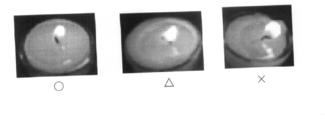
- Example 8 It is a photograph which shows the state (however, the state put into the 15 ml glass tube) of the candle obtained in Example 8.
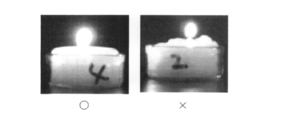
- FIG. It is a photograph which shows the state of the candle obtained in Example 9.
- FIG. It is a photograph which shows the state of the candle obtained in Example 10.
- FIG. It is a photograph which shows the state (however, the state put into a 15 ml glass tube) of the candle obtained in Reference Example 1.
- the candle wax composition of the present invention comprises: A wax composition for candles comprising (A) a wax and (B) a homopolymer or copolymer obtained using a higher ⁇ -olefin having 10 or more carbon atoms and having side chain crystallinity, A wax composition in which the content ratio of the component A) to the component (B) [component (A): component (B)] is 81:19 to 99.99: 0.01 by mass ratio.
- a wax composition for candles comprising (A) a wax and (B) a homopolymer or copolymer obtained using a higher ⁇ -olefin having 10 or more carbon atoms and having side chain crystallinity
- a wax composition in which the content ratio of the component A) to the component (B) [component (A): component (B)] is 81:19 to 99.99: 0.01 by mass ratio.
- As the wax of the component (A) a known wax used for coating the burning core of the candle can be used, and a solid at 25
- wax examples include animal waxes, vegetable waxes, mineral waxes, petroleum waxes, and synthetic waxes.
- animal waxes include beeswax, spermaceti, china wax (insect white wax), shellac wax, and lanolin (wool wax).
- vegetable wax examples include carnauba palm oil wax, cucumber palm oil wax, jojoba seed oil, candelilla wax, esparto wax, wood wax, soybean oil, white yam, jasmine plant oil, rice wax and rice bran oil.
- mineral wax examples include ozokerite, montan, and peat.
- petroleum waxes include paraffin wax and microcrystalline wax.
- Synthetic waxes include, for example, polyethylene wax, polypropylene wax, copolymer waxes such as ethylene / propylene / hexene / vinyl acetate, acrylic acid, hydrocarbon waxes such as Fischer-Tropsch wax and polymethylene wax, and synthetic amide waxes.
- the wax vegetable wax is preferable from the viewpoints of less oily smoke, sufficient diffusion of the original fragrance, less odor when extinguishing the flame, and sustainability of combustion. From the viewpoint of excellent moldability and low cost, petroleum wax is preferable.
- the component (B) preferably has side chain crystallinity and the following characteristics (1) to (3).
- the viscosity at 100 ° C. by a B-type viscometer is 10 to 10,000 mPa ⁇ s.
- the melting point obtained by a differential scanning calorimeter (DSC) is one, the melting point is in the range of 20 to 100 ° C., and the half-value width of the endothermic peak obtained when measuring the melting point is 10 ° C. or less. .
- Stereoregularity index value M2 is 75 mol% or less.
- “having crystallinity” means that a melting point as defined above is observed.
- side chain crystallinity means that the polymer has crystallinity at a site that becomes a side chain of a polymer other than a carbon-carbon double bond site that becomes a main chain. It has high crystallinity and is hard and has characteristics such as causing a solid-liquid phase change instantly and absorbing heat from the surroundings when it melts, and also has good thermal stability.
- the measurement method using a B-type viscometer is as follows.
- Measuring instrument Brookfield, LVDV-I (DV One Plus) for low viscosity
- Spindle Dedicated spindle No. 18 (SC4-18)
- Measuring method Set the sample at a predetermined temperature, and after the temperature is stable (within ⁇ 0.2 ° C.), heat for 10 minutes, immerse the spindle for 6 minutes, and measure the viscosity. With respect to the characteristic (1), the viscosity at 100 ° C.
- measured by a B-type viscometer is preferably 10 to 1,000 mPa ⁇ s, more preferably 10 to 500 mPa ⁇ s, and more preferably, from the viewpoint of fluidity and thus moldability. Is 30 to 500 mPa ⁇ s, more preferably 30 to 500 mPa ⁇ s, still more preferably 30 to 270 mPa ⁇ s, and particularly preferably 30 to 230 mPa ⁇ s.
- a differential scanning calorimeter (DSC) is used, and 10 mg of a sample is held at 190 ° C. for 5 minutes in a nitrogen atmosphere and then lowered to ⁇ 10 ° C. at 5 ° C./min.
- the melting point (Tm-B) is defined as the peak top temperature of the melting endotherm curve obtained by maintaining the temperature at ⁇ 10 ° C. for 5 minutes and then increasing the temperature to 190 ° C. at 10 ° C./min.
- the melting point (Tm-B) of the component (B) is preferably 20 to 80 ° C., more preferably 25 to 80 ° C., further preferably 30 to 80 ° C., and particularly preferably 30 to 65 ° C.
- the melting point (Tm-B) of the component (B) is preferably 20 to 55 ° C. from the viewpoint of the appearance of the candle. More preferably, it is 20 to 50 ° C., more preferably 25 to 50 ° C., further preferably 25 to 45 ° C., and particularly preferably 25 to 40 ° C. Further, in this case, the melting point (Tm ⁇ A) obtained by the differential scanning calorimeter (DSC) of the component (A) and the differential scanning calorific value of the component (B) in the same manner as the melting point (Tm ⁇ B) described above. It is preferable that the melting point (Tm-B) determined by the total (DSC) satisfies the relationship of the following formula (i). (Tm ⁇ A) ⁇ (Tm ⁇ B) +10 (i)
- the half-value width of the endothermic peak obtained upon measurement of the melting point of the component (B) is preferably 1 to 9 ° C., more preferably 1 to 7 ° C. from the viewpoint of crystal uniformity of the component (B).
- the temperature is preferably 2 to 7 ° C.
- a small half-value width indicates that the endothermic peak is sharp, that is, the melting behavior is rapid. In this case, problems such as storage stability and stickiness are suppressed by the low-temperature melting component.
- the half width is preferably 10 ° C. or less from the viewpoint of the appearance of the candle.
- the half-value width is 10 ° C. or less, so that the overlapping of the solidification temperatures of the component (A) and the component (B) is reduced, resulting in a uniform pattern. It is done.
- the full width at half maximum in this specification is an index representing the extent of the chevron shape of the endothermic peak obtained when measuring the melting point of the component (B), and the full width at half maximum (FWHM, Full Width at Half Maximum). ) Means.
- the stereoregularity index value M2 is a 13 C-NMR spectrum performed under the following apparatus and conditions, and is a methylene group (—CH 2 —
- the stereoregularity index value M2 is obtained by utilizing the fact that the carbon in the structure is split and observed reflecting the difference in stereoregularity.
- Apparatus “EX-400” (manufactured by JEOL Ltd.) Measurement temperature: 130 ° C Pulse width: 45 ° Integration frequency: 1,000 times Solvent: Mixed solvent of 1,2,4-trichlorobenzene and heavy benzene [90:10 (volume ratio)] Six large absorption peaks based on the mixed solvent are observed at 127 to 135 ppm. Among these peaks, the fourth peak value from the low magnetic field side is set to 131.1 ppm, which is used as a reference for chemical shift. At this time, an absorption peak based on carbon in the side chain ⁇ -position methylene group (—CH 2 —) is observed in the vicinity of 34 to 37 ppm.
- the stereoregularity index value M2 (mol%) is obtained using the following equation.
- M2 [(integral intensity of 36.2 to 35.3 ppm) / (integral intensity of 36.2 to 34.5 ppm)] ⁇ 100
- Apparatus “JNM-EX400 type 13 C-NMR” (manufactured by JEOL Ltd.)
- Method Proton complete decoupling method Concentration: 220 mg / ml
- Solvent Mixed solvent of 1,2,4-trichlorobenzene and heavy benzene [90:10 (volume ratio)] Temperature: 130 ° C.
- Pulse width 45 ° Pulse repetition time: 4 seconds Integration: 10,000 times This stereoregularity index value M2 Asakura, M .; Demura, Y .; This is obtained in accordance with the method proposed in “Macromolecules, 24, 2334 (1991)” reported by Nishiyama.
- the stereoregularity index value M2 is preferably 5 to 70 mol%, more preferably 10 to 70 mol%, more preferably 20 to 70 mol%, still more preferably 30 to 70 mol%, Particularly preferred is 40 to 70 mol%.
- the component (B) preferably satisfies the following property (4) from the viewpoint of influence on combustibility (flame size).
- the acid value measured according to the total acid value measuring method described in JIS K2501 (1980) is 5 mgKOH / g or less.
- the acid value is more preferably 3 mgKOH / g or less, further preferably 1 mgKOH / g or less, and particularly preferably substantially 0 mgKOH / g.
- the “higher ⁇ -olefin having 10 or more carbon atoms” is preferably a higher ⁇ -olefin having 10 to 40 carbon atoms, more preferably a higher ⁇ -olefin having 10 to 30 carbon atoms, and a higher ⁇ -olefin having 15 to 30 carbon atoms.
- -More preferred are olefins, and higher ⁇ -olefins having 18 to 25 carbon atoms are particularly preferred.
- Examples of higher ⁇ -olefins having 10 or more carbon atoms include 1-decene, 1-undecene, 1-dodecene, 1-tridecene, 1-tetradecene, 1-pentadecene, 1-hexadecene, 1-heptadecene, 1-octadecene, Examples thereof include 1-nonadecene, 1-eicosene, 1-docosene, 1-tetracocene, hexacocene, octacocene and triacontene.
- the component (B) used in the present invention is not particularly limited as long as it is obtained using such a higher ⁇ -olefin having 10 or more carbon atoms, and one or more higher ⁇ -olefins having 10 or more carbon atoms are used. May be obtained by polymerization or copolymerization, or may be obtained by copolymerization of one or more higher ⁇ -olefins having 10 or more carbon atoms and one or more other olefins. .
- the other olefin is, for example, ethylene or an ⁇ -olefin having less than 10 carbon atoms.
- the use ratio of the higher ⁇ -olefin having 10 or more carbon atoms and the other olefin is preferably such that the use amount of the higher ⁇ -olefin having 10 or more carbon atoms is 80 mol% or more with respect to the total amount thereof. More preferably, it is 90 mol% or more, More preferably, it is 95 mol% or more, It is especially preferable that it is substantially 100 mol%.
- a homopolymer or copolymer obtained using a higher ⁇ -olefin having 10 or more carbon atoms and having side chain crystallinity [hereinafter sometimes referred to as a crystalline higher ⁇ -olefin (co) polymer. ]
- a crystalline higher ⁇ -olefin (co) polymer can be produced using the metallocene catalyst shown below, and among them, it is particularly preferable to use a C 2 symmetric and C 1 symmetric transition metal compound capable of synthesizing an isotactic polymer.
- a transition metal compound represented by the following general formula (I) (a) a transition metal compound represented by the following general formula (I), and (b) a compound that can react with the transition metal compound of the component (a) or a derivative thereof to form an ionic complex [ (B-1)] and aluminoxane [(b-2)] are polymerized in the presence of a polymerization catalyst containing at least one component selected from one or more higher ⁇ -olefins having 10 or more carbon atoms.
- a copolymerization method, or a method of copolymerizing one or more higher ⁇ -olefins having 10 or more carbon atoms with one or more other olefins (a) a transition metal compound represented by the following general formula (I), and (b) a compound that can react with the transition metal compound of the component (a) or a derivative thereof to form an ionic complex [ (B-1)] and aluminoxane [(b-2)] are polymerized in
- M represents a metal element of Groups 3 to 10 or a lanthanoid series of the periodic table.
- E 1 and E 2 respectively represent a substituted cyclopentadienyl group, an indenyl group, a substituted indenyl group, a heterocyclopentadienyl group, a substituted heterocyclopentadienyl group, an amide group (—N ⁇ ), a phosphine group (— P ⁇ ), hydrocarbon group [>CR-,> C ⁇ ] and silicon-containing group [>SiR-,> Si ⁇ ] (where R is hydrogen, a hydrocarbon group having 1 to 20 carbon atoms, or a heteroatom-containing group) And a cross-linked structure is formed via A 1 and A 2 , and they may be the same as or different from each other.
- X represents a ⁇ -bonding ligand, and when there are a plurality of Xs, the plurality of Xs may be the same or different, and may be cross-linked with other X, E 1 , E 2 or Y.
- substitution refers to, for example, a hydrogen atom, a hydrocarbon group having 1 to 20 carbon atoms (preferably 1 to 10 carbon atoms, more preferably 1 to 5 carbon atoms), a silicon-containing group, or a heteroatom-containing group.
- Y represents a Lewis base
- the plurality of Y may be the same or different, and may be cross-linked with other Y, E 1 , E 2 or X.
- a 1 and A 2 are divalent bridging groups for linking two ligands, and are a hydrocarbon group having 1 to 20 carbon atoms, a halogen-containing hydrocarbon group having 1 to 20 carbon atoms, a silicon-containing group, Germanium-containing group, tin-containing group, —O—, —CO—, —S—, —SO 2 —, —Se—, —NR 1 —, —PR 1 —, —P (O) R 1 —, —BR 1 -or -AlR 1 -is shown.
- R 1 represents a hydrogen atom, a halogen atom, a hydrocarbon group having 1 to 20 carbon atoms, or a halogen-containing hydrocarbon group having 1 to 20 carbon atoms, which may be the same or different from each other.
- q represents an integer of 1 to 5 and represents [(valence of M) ⁇ 2], and r represents an integer of 0 to 3.
- Examples of M include titanium, zirconium, hafnium, yttrium, vanadium, chromium, manganese, nickel, cobalt, palladium, and lanthanoid metals.
- a metal element belonging to Group 4 of the periodic table is preferable, and among these, titanium, zirconium, and hafnium are more preferable.
- E 1 and E 2 substituted cyclopentadienyl group, indenyl group, substituted indenyl group.
- X include a halogen atom, a hydrocarbon group having 1 to 20 carbon atoms, an alkoxy group having 1 to 20 carbon atoms, an aryloxy group having 6 to 20 carbon atoms, an amide group having 1 to 20 carbon atoms, carbon Examples thereof include a silicon-containing group having 1 to 20 carbon atoms, a phosphide group having 1 to 20 carbon atoms, a sulfide group having 1 to 20 carbon atoms, and an acyl group having 1 to 20 carbon atoms. Among these, a halogen atom is preferable.
- Specific examples of the Lewis base represented by Y include amines, ethers, phosphines, thioethers, and the like.
- a 1 and A 2 are divalent bridging groups that bind two ligands.
- bridging groups include those represented by the general formula: (D is carbon, silicon or tin, R 2 and R 3 are each a hydrogen atom or a hydrocarbon group having 1 to 20 carbon atoms, which may be the same as or different from each other, and are bonded to each other to form a ring structure.
- E represents an integer of 1 to 4) The thing represented by is mentioned.
- an ethylene group, an isopropylidene group, and a dimethylsilylene group are preferable.
- the transition metal compound which makes the ligand the double bridge type biscyclopentadienyl derivative represented by these is preferable.
- M, A 1 , A 2 , q and r are the same as those in the general formula (I).
- X 1 represents a ⁇ -bonding ligand, and when plural X 1, a plurality of X 1 may be the same or different, may be crosslinked with other X 1 or Y 1.
- Specific examples of X 1 include the same ones as exemplified in the description of X in the general formula (I), and preferred ones are also the same.
- Y 1 represents a Lewis base, if Y 1 is plural, Y 1 may be the same or different, may be crosslinked with other Y 1 or X 1.
- R 4 to R 9 each independently represents a hydrogen atom, a halogen atom, a hydrocarbon group having 1 to 20 carbon atoms, a halogen-containing hydrocarbon group having 1 to 20 carbon atoms, a silicon-containing group or a heteroatom-containing group. , At least one of them must not be a hydrogen atom.
- R 4 to R 9 may be the same or different from each other, and adjacent groups may be bonded to each other to form a ring. Among these, it is preferable that R 6 and R 7 form a ring and R 8 and R 9 form a ring.
- R 4 and R 5 are preferably a group containing a heteroatom such as oxygen, halogen or silicon from the viewpoint of increasing the polymerization activity.
- the transition metal compound having the double-bridged biscyclopentadienyl derivative as a ligand preferably contains silicon in the bridging group between the ligands.
- Specific examples of the transition metal compound represented by the general formula (I) include (1,2′-ethylene) (2,1′-ethylene) -bis (indenyl) zirconium dichloride, (1,2′-methylene).
- (1,1 '-) (2,2'-) may be (1,2'-) (2,1'-) or (1,2 '-) (2 , 1'-) may be (1, 1'-) (2, 2'-).
- any compound that can react with the transition metal compound of the component (a) to form an ionic complex can be used.
- those represented by the following general formulas (III) and (IV) can be preferably used.
- L 1 is a Lewis base
- [Z] ⁇ is a non-coordinating anion [Z 1 ] ⁇ and [Z 2 ] ⁇
- [Z 1 ] ⁇ is a plurality of An anion in which a group is bonded to an element, that is, [M 1 G 1 G 2 ... G f ] ⁇ (where M 1 is an element of Group 5 to 15 of the periodic table, preferably 13 to 15 of the periodic table.
- G 1 to G f each independently represent a hydrogen atom, a halogen atom, an alkyl group having 1 to 20 carbon atoms, a dialkylamino group having 2 to 40 carbon atoms, an alkoxy group having 1 to 20 carbon atoms, An aryl group having 6 to 20 carbon atoms, an aryloxy group having 6 to 20 carbon atoms, an alkylaryl group having 7 to 40 carbon atoms, an arylalkyl group having 7 to 40 carbon atoms, and a halogen-substituted hydrocarbon group having 1 to 20 carbon atoms , An acyloxy group having 1 to 20 carbon atoms, an organic metalloid group, or a heteroatom having 2 to 20 carbon atoms Represents a hydrocarbon group, and two or more of G 1 to G f may form a ring, and f represents an integer of ((valence of central metal M 1 ) +1).
- [Z 2 ] ⁇ is a Bronsted acid alone or a conjugate base of a combination of Bronsted acid and Lewis acid having a logarithm (pKa) of the reciprocal of the acid dissociation constant of ⁇ 10 or less, or an acid generally defined as a super strong acid
- pKa logarithm
- a Lewis base may be coordinated.
- R 10 represents a hydrogen atom, an alkyl group having 1 to 20 carbon atoms, an aryl group having 6 to 20 carbon atoms, an alkylaryl group or an arylalkyl group, and R 11 and R 12 are each independently a cyclopenta A dienyl group, a substituted cyclopentadienyl group, an indenyl group or a fluorenyl group; R 13 represents an alkyl group having 1 to 20 carbon atoms, an aryl group, an alkylaryl group or an arylalkyl group.
- R 14 represents a macrocyclic ligand such as tetraphenylporphyrin or phthalocyanine.
- k is an integer of 1 to 3 in terms of ionic valences of [L 1 -R 10 ] and [L 2 ], a is an integer of 1 or more, and b is (k ⁇ a).
- M 2 includes elements in groups 1 to 3, 11 to 13, and 17 of the periodic table, and M 3 represents elements in groups 7 to 12 of the periodic table.
- L 1 examples include ammonia, methylamine, aniline, dimethylamine, diethylamine, N-methylaniline, diphenylamine, N, N-dimethylaniline, trimethylamine, triethylamine, tri-n-butylamine, methyldiphenylamine, amines such as p-bromo-N, N-dimethylaniline and p-nitro-N, N-dimethylaniline; nitrogen-containing heterocyclic compounds such as pyridine; phosphines such as triethylphosphine, triphenylphosphine and diphenylphosphine; Examples include thioethers such as tetrahydrothiophene; esters such as ethyl benzoate; nitriles such as acetonitrile and benzonitrile.
- R 10 include hydrogen, methyl group, ethyl group, benzyl group, trityl group and the like.
- R 11 and R 12 include a cyclopentadienyl group, a methylcyclopentadienyl group, an ethylcyclopentadienyl group, and a pentamethylcyclopentadienyl group.
- R 13 include a phenyl group, a p-tolyl group, and a p-methoxyphenyl group.
- R 14 include tetraphenylporphyrin, phthalocyanine, allyl, methallyl and the like.
- M 2 include Li, Na, K, Ag, Cu, Br, I, I 3 and the like.
- M 3 include Mn, Fe, Co, Ni, Zn and the like.
- M 1 include B, Al, Si, P, As, Sb, etc. B and Al.
- G 1 and G 2 to G f include a dialkylamino group substituted with an alkyl group having 1 to 5 carbon atoms such as a dimethylamino group and a diethylamino group; a methoxy group, an ethoxy group, an n-butoxy group, An alkoxy group having 1 to 6 carbon atoms such as a phenoxy group or an aryloxy group having 6 to 10 carbon atoms; methyl group, ethyl group, n-propyl group, isopropyl group, n-butyl group, isobutyl group, n-octyl group, an alkyl group having 1 to 20 carbon atoms such as n-eicosyl group; an aryl group having 6 to 20 carbon
- non-coordinating anions that is, Bronsted acids having a pKa of ⁇ 10 or less or a conjugate base [Z 2 ] ⁇ of a combination of Bronsted acids and Lewis acids
- trifluoromethanesulfonic acid anions CF 3 SO 3 ) ⁇
- bis (trifluoromethanesulfonyl) methyl anion bis (trifluoromethanesulfonyl) benzyl anion, bis (trifluoromethanesulfonyl) amide
- perchlorate anion (ClO 4 ) ⁇ trifluoroacetate anion (CF 3 CO 2 ) ⁇ , hexafluoroantimony anion (SbF 6 ) ⁇
- fluorosulfonate anion (FSO 3 ) ⁇ chlorosulfonate anion (ClSO 3 ) ⁇
- fluorosulfonate anion / 5-antimony fluoride F
- ionic compound that reacts with the transition metal compound of the component (a) to form an ionic complex include triethylammonium tetraphenylborate, tetraphenylboric acid.
- Tri-n-butylammonium trimethylammonium tetraphenylborate, tetraethylammonium tetraphenylborate, methyl (tri-n-butyl) ammonium tetraphenylborate, benzyl (tri-n-butyl) ammonium tetraphenylborate, dimethyldiphenyl tetraphenylborate Ammonium, triphenyl (methyl) ammonium tetraphenylborate, trimethylanilinium tetraphenylborate, methylpyridinium tetraphenylborate, benzylpyridinium tetraphenylborate, tetraphenylboron Methyl (2-cyanopyridinium), tetrakis (pentafluorophenyl) triethylammonium borate, tetrakis (pentafluorophenyl) tri-n
- R 15 represents a hydrocarbon group such as an alkyl group, alkenyl group, aryl group or arylalkyl group having 1 to 20 carbon atoms, preferably 1 to 12 carbon atoms or a halogen atom, and w represents an average degree of polymerization. Usually, it is an integer of 2 to 50, preferably 2 to 40. Note that each R 15 may be the same or different.
- R 15 and w are the same as those in the general formula (V).
- the cyclic aluminoxane shown by these is mentioned.
- Examples of the method for producing the aluminoxane include a method in which an alkylaluminum is brought into contact with a condensing agent such as water, but the means thereof is not particularly limited and may be reacted according to a known method.
- a method in which an organoaluminum compound is dissolved in an organic solvent and brought into contact with water a method in which an organoaluminum compound is initially added during polymerization, and water is added later, a metal
- a method of reacting water adsorbed on salt or the like with water adsorbed on inorganic or organic materials with an organoaluminum compound a method of reacting a tetraalkyldialuminoxane with a trialkylaluminum and further reacting with water.
- the aluminoxane may be insoluble in toluene. These aluminoxanes may be used alone or in combination of two or more.
- the use ratio of the component (a) to the component (b) is preferably 10: 1 to 1: 100, more preferably 2 when the compound (b-1) is used as the component (b).
- the range of: 1 to 1:10 is desirable, and if it is within the above range, the catalyst cost per unit mass polymer does not become so high and is practical.
- the compound (b-2) is used, the molar ratio is preferably in the range of 1: 1 to 1: 1,000,000, more preferably 1:10 to 1: 10,000. If it exists in this range, the catalyst cost per unit mass polymer will not become so high, and it is practical.
- one type of compound (b-1) and compound (b-2) may be used alone, or two or more types may be used in combination.
- the polymerization catalyst for producing the crystalline higher ⁇ -olefin (co) polymer can use an organoaluminum compound as the component (c).
- an organoaluminum compound of component (c) the general formula (VII) R 16 v AlJ 3-v (VII) (Wherein R 16 represents an alkyl group having 1 to 10 carbon atoms, and J represents a hydrogen atom, an alkoxy group having 1 to 20 carbon atoms, an aryl group having 6 to 20 carbon atoms, or a halogen atom. v is an integer of 1 to 3.) The compound shown by these is used.
- Examples of the alkyl group having 1 to 10 carbon atoms represented by R 16 include those having 1 to 5 carbon atoms such as methyl group, ethyl group, n-propyl group, isopropyl group, n-butyl group, isobutyl group and t-butyl group.
- An alkyl group is preferred.
- Examples of the alkoxy group having 1 to 20 carbon atoms represented by J include a methoxy group, an ethoxy group, an n-propoxy group, an isopropoxy group, and an n-butoxy group, and an alkoxy group having 1 to 10 carbon atoms is preferable.
- An alkoxy group of 1 to 5 is more preferable.
- Examples of the aryl group having 6 to 20 carbon atoms represented by J include a phenyl group, a naphthyl group, and an anthryl group, and an aryl group having 6 to 10 carbon atoms is preferable.
- Examples of the halogen atom represented by J include a fluorine atom, a chlorine atom, a bromine atom, and an iodine atom.
- v is preferably 3.
- the compound represented by the general formula (VII) include trimethylaluminum, triethylaluminum, triisopropylaluminum, triisobutylaluminum, dimethylaluminum chloride, diethylaluminum chloride, methylaluminum dichloride, ethylaluminum dichloride, dimethylaluminum fluoride. , Diisobutylaluminum hydride, diethylaluminum hydride, ethylaluminum sesquichloride and the like. Among these, triisobutylaluminum is preferable. These organoaluminum compounds may be used individually by 1 type, and may use 2 or more types together.
- the use ratio of the component (a) to the component (c) is preferably 1: 1 to 1: 10,000, more preferably 1: 5 to 1: 2,000, and still more preferably 1:10 in molar ratio. A range of ⁇ 1: 1,000 is desirable.
- the component (c) the polymerization activity per transition metal can be improved, but if it is too much, the organoaluminum compound is wasted and a large amount remains in the polymer, which is not preferable.
- at least one catalyst component can be supported on a suitable carrier and used.
- the type of the carrier is not particularly limited, and any of inorganic oxide carriers, other inorganic carriers, and organic carriers can be used. In particular, inorganic oxide carriers or other inorganic carriers are preferable.
- the polymerization method is not particularly limited, and any of slurry polymerization method, gas phase polymerization method, bulk polymerization method, solution polymerization method, suspension polymerization method, bulk polymerization method, etc. Although a method may be used, a solution polymerization method and a bulk polymerization method are particularly preferable.
- the polymerization temperature is usually ⁇ 100 to 250 ° C., preferably ⁇ 50 to 200 ° C., more preferably 0 to 150 ° C.
- the polymerization time is usually preferably 5 minutes to 10 hours, and the reaction pressure is usually preferably normal pressure to 20 MPa (gauge), more preferably normal pressure to 10 MPa (gauge).
- the pressure is usually from normal pressure to 5 MPa (gauge), preferably from normal pressure to 3 MPa (gauge), more preferably from normal pressure to 2 MPa (gauge).
- a polymerization solvent for example, aromatic hydrocarbons such as benzene, toluene, xylene, and ethylbenzene, alicyclic hydrocarbons such as cyclopentane, cyclohexane, and methylcyclohexane, and aliphatic hydrocarbons such as pentane, hexane, heptane, and octane , Halogenated hydrocarbons such as chloroform and dichloromethane can be used. These solvents may be used alone or in combination of two or more. A monomer such as ⁇ -olefin may be used as a solvent. Depending on the polymerization method, it can be carried out without solvent.
- aromatic hydrocarbons such as benzene, toluene, xylene, and ethylbenzene
- alicyclic hydrocarbons such as cyclopentane, cyclohexane, and methylcyclohexane
- prepolymerization can be performed using the polymerization catalyst.
- the prepolymerization can be performed, for example, by bringing a small amount of ⁇ -olefin into contact with the solid catalyst component, but the method is not particularly limited, and a known method can be used.
- the ⁇ -olefin used in the prepolymerization is not particularly limited, and examples thereof include those similar to those exemplified above, for example, ethylene, ⁇ -olefin having 3 to 20 carbon atoms, or a mixture thereof. It is advantageous to use the same ⁇ -olefin as the higher ⁇ -olefin or other ⁇ -olefin used in the reaction.
- the prepolymerization temperature is usually ⁇ 20 to 200 ° C., preferably ⁇ 10 to 130 ° C., more preferably 0 to 80 ° C.
- an aliphatic hydrocarbon, aromatic hydrocarbon, monomer or the like can be used as a solvent. Of these, aliphatic hydrocarbons are particularly preferred. Moreover, you may perform prepolymerization without a solvent.
- the intrinsic viscosity [ ⁇ ] (measured in 135 ° C.
- the method for adjusting the molecular weight of the polymer includes selection of the type of each catalyst component, the amount used, the polymerization temperature, and polymerization in the presence of hydrogen. An inert gas such as nitrogen may be present.
- the homopolymer or copolymer thus obtained has a comb structure rather than a hyperbranch structure, and therefore has side chain crystallinity.
- the content ratio of the component (A) and the component (B) in the candle wax composition of the present invention is from 81:19 to 99.99: 0.01 in terms of mass ratio from the viewpoint of combustion sustainability and moldability. There must be. From this viewpoint, the content ratio of the component (A) and the component (B) in the candle wax composition of the present invention is preferably a mass ratio of 85:15 to 99.9: 0.1, more preferably 87: 13-99.9: 0.1. From the viewpoint of combustibility, it is particularly preferably 90:10 to 99.9: 0.1, and most preferably 95: 5 to 99.9: 0.1.
- the candle composition for candles of the present invention may further contain a fragrance as the component (C), whereby a wax composition useful as an aroma candle can be obtained.
- a fragrance useful as an aroma candle can be obtained.
- the perfume ingredient is not particularly limited, but for example, limonene, lemon oil, orange oil, bitter orange oil, sweet orange oil, grapefruit oil, bergamot oil, mandarin oil, lime oil, citral, n-octanal (Aldehyde C-8), n-nonenal (aldehyde C-9), decanal (aldehyde C-10), undecanal (aldehyde C-11), ⁇ -damascon, ⁇ -damascon, ⁇ -damascon, ⁇ -damascon, Citrus flavors such as ⁇ -terpineol; cis-3-hexenol, galvanum oil, star anise oil, sage oil, violet leaf oil, rosemary oil, basil oil, lavandin oil, lavender oil, laurel oil, cassis base 345, Styraryl acetate, cis-3-hexenyl acetate, sali Green perfumes such as cis-3-hexenyl
- the content thereof is preferably 0.1 to 30 parts by mass with respect to 100 parts by mass of the total amount of the components (A) and (B).
- the amount is preferably 0.5 to 20 parts by mass, more preferably 1 to 15 parts by mass, and particularly preferably 3 to 10 parts by mass.
- the wax composition for candles of the present invention further contains a dye or pigment as the component (D). can do.
- a dye or pigment can be used to color the candle, and examples of the dye include oil-based dyes, aqueous dyes, and oil dyes.
- the pigment may be an inorganic pigment or an organic pigment, and crayon is preferably used.
- the wax composition for candles contains a dye or pigment, the content thereof is preferably 0.01 to 20 parts by mass, more preferably 100 parts by mass of the total amount of component (A) and component (B). Is 0.05 to 20 parts by mass, more preferably 0.05 to 10 parts by mass, and particularly preferably 0.1 to 10 parts by mass.
- the melting point (Tm-B) of the component (B) is 20 to 55 ° C. (more preferably 20 to 50 ° C., more preferably 25 to 50 ° C., further preferably 25 to 45 ° C., particularly preferably 25 to 40 ° C.), the candle has a pattern of flowers, snowflakes, snowflakes, stars, etc. Since it is imparted, the appearance is further improved. The effect becomes more prominent when the melting point of the component (B) is 10 ° C. or higher (preferably 13 ° C. or higher, more preferably 15 ° C. or higher, more preferably 20 ° C. or higher) lower than the component (A).
- the melting point (Tm-B) of the component (B) is significantly lower than the melting point of the component (A), so that when the candle is produced, the component (A) is solidified and the component (B) is in a liquid state Via. Since the component (B) condenses when solidified, a void is formed between the component (A) and the component (B), and the void looks like the pattern, so that the appearance is improved.
- oil is added to the composition for the purpose of improving the appearance, but in this case, an oil bleeding problem may occur. However, according to the present invention, the addition of the oil is not denied, but the appearance can be improved without adding the oil, so that the problem of oil bleeding can be avoided.
- oil is a liquid at normal temperature, and there is no restriction
- the wax composition for candles of the present invention comprises, in addition to the above-mentioned components (A) and (B), furthermore, in addition to the components (C) and (D), known components used for constituting candle wax.
- examples of such components include surfactants, oily components, powders, antioxidants, cosmetic components, preservatives, water-soluble polymers, ultraviolet absorbers, aqueous components, gelling agents, oil-soluble resins, chelating agents, Examples include medicinal ingredients, but are not limited thereto. By adding such components, it can be expected that effects such as an improvement in appearance (hue, pattern, shape), a relaxation effect, environmental compatibility, and the like are exhibited.
- surfactant examples include nonionic surfactants, anionic surfactants, and amphoteric surfactants.
- Nonionic surfactants include, for example, glycerin fatty acid esters and alkylene glycol adducts thereof, polyglycerin fatty acid ester alkylene glycol adducts, propylene glycol fatty acid esters and alkylene glycol adducts, sorbitan fatty acid esters and alkylene glycol adducts thereof.
- Fatty acid ester of sorbitol and its alkylene glycol adduct Fatty acid ester of sorbitol and its alkylene glycol adduct, polyalkylene glycol fatty acid ester, sucrose fatty acid ester, polyoxyalkylene alkyl ether, glycerin alkyl ether, polyoxyethylene alkyl phenyl ether, polyoxyethylene hydrogenated castor oil, alkylene glycol of lanolin Adduct, polyoxyalkylene-modified silicone, polyoxyalkylene alkyl co-modified silico Emissions, and the like.
- anionic surfactant examples include fatty acids such as stearic acid and lauric acid and their inorganic and organic salts, alkylbenzene sulfates, alkyl sulfonates, ⁇ -olefin sulfonates, dialkyl sulfosuccinates, ⁇ - Sulfonated fatty acid salt, acylmethyl taurate, N-methyl-N-alkyl taurate, polyoxyethylene alkyl ether sulfate, polyoxyethylene alkyl phenyl ether sulfate, alkyl phosphate, polyoxyethylene alkyl ether phosphate, poly Examples thereof include oxyethylene alkylphenyl ether phosphates, N-acyl amino acid salts, N-acyl-N-alkyl amino acid salts, o-alkyl substituted malates, and alkyl sulfosuccinates.
- fatty acids such as stearic acid and lauric acid and their inorgan
- amphoteric surfactants include amino acid type and betaine type carboxylic acid types, sulfate ester types, sulfonic acid types, and phosphate ester types, and those that are safe for the human body can be used.
- Oil component ⁇ examples include liquid saturated hydrocarbons such as liquid paraffin, fats and oils such as owl, olive oil, castor oil, mink oil and macadamian nut oil, waxes such as beeswax, carnauba wax, candelilla and gay wax, stearic acid , Fatty acids such as lauric acid, myristic acid, behenic acid, isostearic acid, oleic acid, higher alcohols such as stearyl alcohol, cetyl alcohol, lauryl alcohol, oleyl alcohol, isostearyl alcohol, behenyl alcohol, dimethylpolysiloxane, methylphenylpoly Siloxane, Decamethylcyclopentasiloxane, Octamethylcyclotetrasiloxane, Polyether-modified Organopolysiloxane, Polyoxyalkylene, Alkylmethyl Polysiloxane, Methyl Polysiro Sun copolymers, silicone
- the powder is not particularly limited by a spherical shape, a plate shape, a needle-like shape, a foggy shape, a fine particle, a particle size such as a pigment grade, a particle structure such as a porous or non-porous material, and the like.
- Examples include glitter powders, organic powders, pigment powders, metal powders, and composite powders.
- white inorganic pigments such as titanium oxide, zinc oxide, cerium oxide and barium sulfate, colored inorganic pigments such as iron oxide, carbon black, chromium oxide, chromium hydroxide, bitumen and ultramarine, talc, muscovite, gold Mica, red mica, biotite, synthetic mica, sericite (sericite), synthetic sericite, kaolin, silicon carbide, bentonite, smectite, aluminum oxide, magnesium oxide, zirconium oxide, antimony oxide, diatomaceous earth, aluminum silicate , Magnesium Metasilicate, Calcium Silicate, Barium Silicate, Magnesium Silicate, Calcium Carbonate, Magnesium Carbonate, Hydroxyapatite, Boron Nitride Powder, Titanium Dioxide Coated Mica, Titanium Dioxide Coated Bismuth Oxychloride, Iron Oxide Mica titanium, bitumen treated mica titanium, mosquito Bright powder such as min-treated mica titanium, bismuth
- Natural organic powder red 201, red 202, red 205, red 226, red 228, orange 203, orange 204, blue 404, yellow 401, etc., organic pigment powder, red 3 , Red 104, red 106, orange 205, yellow 4, yellow 5, green 3, blue 1, etc.
- Organic pigment powder such as barium or aluminum lake or metal powder such as aluminum powder, gold powder, silver powder, fine titanium oxide coated mica titanium, fine zinc oxide coated mica titanium, barium sulfate coated mica titanium, titanium dioxide containing silicon dioxide
- composite powders such as zinc oxide-containing silicon dioxide, polyethylene terephthalate / aluminum / epoxy laminated powder, polyethylene terephthalate / polyolefin laminated film powder, and lamellar agent of polyethylene terephthalate / polymethyl methacrylate laminated film powder.
- antioxidant examples include ⁇ -tocopherol and ascorbic acid.
- Beauty ingredients examples include vitamins, amino acids, anti-inflammatory agents and the like.
- Preservative examples include p-oxybenzoic acid ester and phenoxyethanol.
- Water-soluble polymer- Examples of water-soluble polymers include natural products such as guar gum, sodium chondroitin sulfate, hyaluronic acid, gum arabic, and carrageenan, semi-synthetic products such as methylcellulose, hydroxyethylcellulose, and carboxymethylcellulose, and synthetic systems such as carboxyvinyl polymer. Can be mentioned.
- the manufacturing method of a well-known candle can be utilized.
- the wax composition for candles of the present invention is melted at 50 to 100 ° C. and stirred and mixed, and then by a molding method, dipping method, rolling method, pressing method, etc., preferably at 40 ° C. or less, using a combustion core. More preferably, the candle can be produced by cooling to 0 to 40 ° C., more preferably 10 to 40 ° C.
- the present invention also provides a candle having the candle wax composition thus obtained and a combustion wick.
- the candle of the present invention preferably has a penetration (unit: 10 ⁇ 1 mm) of 1 to 9 measured according to the following method from the viewpoint of suppressing cracking and increasing moldability, and preferably 1 to 4. More preferably, it is more preferably 1 to 3, more preferably 1 to 2.5, and particularly preferably 1.5 to 2.5. (Measurement method of penetration) In accordance with JIS K2235, the length (mm) that the needle has entered when the needle is inserted for 5 seconds at a load of 100 g at 25 ° C. is measured, and the value 10 times that value is defined as the “needle penetration”.
- Synthesis Example 1 Synthesis of 2-chlorodimethylsilylindene Under a nitrogen stream, 50 ml of THF (tetrahydrofuran) and 2.5 g (41 mmol) of magnesium were added to a 1 L three-necked flask. 1 ml was added and stirred for 30 minutes to activate the magnesium. After stirring, the solvent was extracted and 50 ml of THF was newly added. A solution of 5.0 g (25.6 mmol) of 2-bromoindene in THF (200 ml) was added dropwise thereto over 2 hours.
- THF tetrahydrofuran
- lithium salt (6.97 mmol) of (1,2′-dimethylsilylene) (2,1′-dimethylsilylene) bis (indene) was dissolved in 50 ml of THF, and 2.1 ml of iodomethyltrimethylsilane at room temperature ( 14.2 mmol) was slowly added dropwise and stirred for 12 hours.
- the solvent was distilled off, and 50 ml of ether was added, followed by washing with a saturated ammonium chloride solution.
- TMS represents a trimethylsilyl group.
- ⁇ Production Example 2 Production of higher ⁇ -olefin copolymer 2 having side chain crystallinity An ⁇ -olefin mixture having a carbon number of 20, 22, and 24 [42:37:21 (molar ratio) was added to a heat-dried 1 L autoclave.
- ⁇ Production Example 4 Production of higher ⁇ -olefin homopolymer 4 having side chain crystallinity
- synthesis example (1,1′-SiMe 2 SiMe 2 ) (2,2′-SiMe 2 ) bis (indenyl) zirconium dichloride 1 ⁇ mol obtained in 4 and dimethylanilinium tetrakispentafluorophenylborate [component (b-1)] 4 ⁇ mol
- 0.05 MPa of hydrogen was further introduced, and polymerization was performed at a polymerization temperature of 90 ° C.
- the ber 103, the ber 260, and the ber 343 all have a hyper-branch structure.
- ⁇ After 10 minutes, the size of the flame is almost the same as the initial level of ignition, and even after 30 minutes, it is not likely to disappear at all. ⁇ : After 10 minutes, the size of the flame is similar to that at the beginning of ignition, and after 30 minutes, the flame is small, but the state of the flame is stable. X: The flame has already become small after 15 minutes, and it is in a state where it is likely to disappear.
- the smaller the value, the smaller the roughness and the surface gloss. (Appearance evaluation method) The candle was visually observed and evaluated according to the following evaluation criteria. The state of the candle obtained in each example is shown in FIGS. ⁇ : The candle has a pattern (mottled pattern). X: The candle has no pattern.
- the candles obtained by the present invention are less prone to cracking, have high moldability, are excellent in burning sustainability and perfume diffusibility, and are excellent in surface gloss.
- vegetable wax was utilized as (A) component, it was excellent also in combustibility.
- the candles obtained in Examples 7 to 10 to which a pigment has been added have an excellent appearance.
- the external appearance of a candle can be made favorable, without adding liquid oil at normal temperature.
- none of the comparative examples satisfies all of moldability, burning sustainability, perfume diffusivity, surface glossiness and appearance, and there remains a problem in using as a candle.
- Comparative Examples 7 and 8 have a high penetration, because (1) the ber 103 and the ber 206 also contain low molecular weight components because of the wide molecular weight distribution, and ( 2) Since the ber 103 and the ber 206 have a hyperbranch structure and a high acid value, it is considered that the compatibility with the paraffin wax is insufficient, and thus there is a poor dispersion and a soft part exists. I guess that.
- a degreased paper was laid on an aluminum pan (aluminum frying pan), and a cylindrical molded product was placed thereon and kept at 35 ° C. for 24 hours.
- the oil bleed amount (unit: g) was measured by subtracting the weight of the cylindrical molded product before heating from the weight of the subsequent degreased paper. The smaller the value, the less oil bleed, that is, the better the property of keeping the fragrance inside the candle.
- the state of the surface of the candle left at 35 ° C. for 2 days was visually observed and evaluated according to the following evaluation criteria. ⁇ : No change on the surface.
- X Oil droplets are observed on the surface. (appearance) The candle was visually observed and evaluated according to the following evaluation criteria.
- FIGS. ⁇ The state of the candle obtained in each example is shown in FIGS. ⁇ : The candle has a pattern (mottled pattern).
- X The candle has no pattern. (Pattern stability) When the temperature for solidification is changed to 35 ° C. and a candle is produced, “ ⁇ ” is used when a pattern is formed in the same manner as when it is cooled to 20 ° C. and solidified, and “X” is displayed when no pattern is formed. " When it is ⁇ , the pattern expression does not depend on the production conditions, and it can be said that the pattern expression is highly stable.
- the candle obtained by the present invention is excellent in fragrance diffusibility, has a small amount of oil bleed, has a high fragrance sustainability, and does not impair the appearance, and further exhibits a pattern, particularly manufactured. It can be seen that the pattern can be presented stably without depending on the conditions. Comparing Example 11 with Comparative Example 18 and Example 12 with Comparative Example 19, it can be seen that Comparative Examples 18 and 19 are inferior in fragrance diffusibility and at the same time have a large amount of oil bleed. Further, when Example 13 and Comparative Example 20 are compared, the amount of oil bleed in Comparative Example 20 is slightly inferior, but oil droplets are observed on the surface of the candle left at 35 ° C. for 2 days. It turns out that the appearance of is damaged.
- the wax composition of the present invention is highly resistant to cracking and has high moldability. Furthermore, since it is excellent in burning sustainability, perfume diffusibility, and surface glossiness, has an excellent appearance when made into a candle, and has a small amount of oil bleed, it is useful for candles. Furthermore, the wax composition of the present invention is useful for an aroma candle by containing a fragrance, and further a dye or a pigment.
Landscapes
- Chemical & Material Sciences (AREA)
- Oil, Petroleum & Natural Gas (AREA)
- Chemical Kinetics & Catalysis (AREA)
- Organic Chemistry (AREA)
- Health & Medical Sciences (AREA)
- Medicinal Chemistry (AREA)
- Polymers & Plastics (AREA)
- General Chemical & Material Sciences (AREA)
- Life Sciences & Earth Sciences (AREA)
- Engineering & Computer Science (AREA)
- Wood Science & Technology (AREA)
- Compositions Of Macromolecular Compounds (AREA)
Abstract
任意のワックスを用いてもひび割れが起こりにくくて成形性が高く、燃焼持続性、香料拡散性及び表面光沢性に優れ、さらにはキャンドルとしたときに外観に優れ、オイルブリードの少ないキャンドル用ワックス組成物、及び該ワックス組成物と燃焼芯とを有するキャンドルを提供する。具体的には、(A)ワックス及び(B)側鎖結晶性を有する、炭素数10以上の高級α-オレフィンを用いて得られる単独重合体又は共重合体を含有するキャンドル用ワックス組成物であって、前記(A)成分と(B)成分との含有比率[(A)成分:(B)成分]が、質量比で、81:19~99.99:0.01であることを特徴とするキャンドル用ワックス組成物、及び該ワックス組成物と燃焼芯とを有するキャンドルを提供する。
Description
本発明は、キャンドル用ワックス組成物、及び該ワックス組成物と燃焼芯とを有するキャンドルに関する。
アロマキャンドルは、燃焼しながら芳香させることでリラックス効果などの作用を発現させることを特徴とする。蝋に香料を含有させることにより、燃焼時に蝋と共に香料を蒸発して拡散されるようにしたものがほとんどである(特許文献1~3参照)。
蝋の主成分として用いられるワックスの中でも、植物性ワックスは、合成ワックス系と比べて油煙が少なく、香料本来の香りを十分に拡散でき、炎を消した時の匂いも少ないという特性を有するため、近年、好まれて使用されている。
さらに、従来はワックスに常温で液体のオイルを添加することで外観を改良してきた(特許文献4~6参照)。
蝋の主成分として用いられるワックスの中でも、植物性ワックスは、合成ワックス系と比べて油煙が少なく、香料本来の香りを十分に拡散でき、炎を消した時の匂いも少ないという特性を有するため、近年、好まれて使用されている。
さらに、従来はワックスに常温で液体のオイルを添加することで外観を改良してきた(特許文献4~6参照)。
従来のキャンドルでは香料の香りの持続性がなく、使用(着火)するとすぐに香りが薄らいでしまい、使用感を高めることができなかったり、添加剤の影響により燃焼中に香りが徐々に薄らいだりするという問題があった。また、植物性ワックスを用いた場合は、ひび割れが起こりやすく、単独での成形が難しいという問題があり、石油系ワックスと混合して用いることによって改善する方法が知られているが、植物性ワックス自体の前記特性が低減するという問題がある。
また、ワックスに常温で液体のオイルを添加することによる外観改良方法は、オイルのブリードが発生するため、ピラーキャンドルなどにその方法を適用することが難しい。オイルブリードを抑制するために添加剤を用いることがあるが、外観の改善及びオイルブリードの抑制を両立し得るその他の方法の開発も望まれている。
そこで、本発明の課題は、任意のワックスを用いてもひび割れが起こりにくく、成形性が高く、燃焼持続性、香料拡散性及び表面光沢性に優れたキャンドル用ワックス組成物、及び該ワックス組成物と燃焼芯とを有する外観に優れ、かつオイルブリードが少ないキャンドルを提供することにある。
また、ワックスに常温で液体のオイルを添加することによる外観改良方法は、オイルのブリードが発生するため、ピラーキャンドルなどにその方法を適用することが難しい。オイルブリードを抑制するために添加剤を用いることがあるが、外観の改善及びオイルブリードの抑制を両立し得るその他の方法の開発も望まれている。
そこで、本発明の課題は、任意のワックスを用いてもひび割れが起こりにくく、成形性が高く、燃焼持続性、香料拡散性及び表面光沢性に優れたキャンドル用ワックス組成物、及び該ワックス組成物と燃焼芯とを有する外観に優れ、かつオイルブリードが少ないキャンドルを提供することにある。
本発明者等は、上記課題について鋭意検討を行った結果、ワックスと、特定の高級α-オレフィン系(共)重合体とを特定比率で混合することにより、ひび割れが起こりにくくて成形性が高く、燃焼持続性、香料拡散性及び表面光沢性に優れており、かつキャンドルとしたときにオイルブリードが少ないことを見出し、本発明を完成するに至った。さらに、ワックスと、特定の高級α-オレフィン系(共)重合体に、染料又は顔料を添加したキャンドル用ワックス組成物を用いることにより、キャンドル製造条件が異なったとしても安定的に模様を呈し、外観が良好なキャンドルとなることを見出し、本発明を完成するに至った。
すなわち、本発明は下記[1]~[9]に関する。
[1](A)ワックス及び
(B)側鎖結晶性を有する、炭素数10以上の高級α-オレフィンを用いて得られる単独重合体又は共重合体
を含有するキャンドル用ワックス組成物であって、前記(A)成分と(B)成分との含有比率[(A)成分:(B)成分]が、質量比で、81:19~99.99:0.01であることを特徴とするキャンドル用ワックス組成物。
[2]前記(B)成分が、下記特性(1)~(3)を有するものである、上記[1]に記載のキャンドル用ワックス組成物。
(1)B型粘度計による100℃での粘度が10~10,000mPa・sである。
(2)示差走査熱量計(DSC)により求められる融点が1つであり、該融点が20~100℃の範囲にあり、かかる融点の測定に際して得られる吸熱ピークの半値幅が10℃以下である。
(3)立体規則性指標値M2が75モル%以下である。
[3]さらに、(C)香料を含有する、上記[1]又は[2]に記載のキャンドル用ワックス組成物。
[4]さらに、(D)染料又は顔料を含有する、上記[1]~[3]のいずれかに記載のキャンドル用ワックス組成物。
[5]前記(D)成分の含有量が、前記(A)成分及び(B)成分の合計100質量部に対して0.01~20質量部である、上記[4]に記載のキャンドル用ワックス組成物。
[6]前記(A)成分の示差走査熱量計(DSC)により求められる融点(Tm-A)と、前記(B)成分の示差走査熱量計(DSC)により求められる融点(Tm-B)が下記式(i)の関係を満たす、上記[4]又は[5]に記載のキャンドル用ワックス組成物。
(Tm-A)≧(Tm-B)+10 (i)
[7]前記特性(2)において、融点が20~55℃の範囲である、上記[4]~[6]のいずれかに記載のキャンドル用ワックス組成物。
[8]前記(A)成分が、石油系ワックス又は植物性ワックスである、上記[1]~[7]に記載のキャンドル用ワックス組成物。
[9]上記[1]~[8]のいずれかに記載のワックス組成物と燃焼芯とを有するキャンドル。
[1](A)ワックス及び
(B)側鎖結晶性を有する、炭素数10以上の高級α-オレフィンを用いて得られる単独重合体又は共重合体
を含有するキャンドル用ワックス組成物であって、前記(A)成分と(B)成分との含有比率[(A)成分:(B)成分]が、質量比で、81:19~99.99:0.01であることを特徴とするキャンドル用ワックス組成物。
[2]前記(B)成分が、下記特性(1)~(3)を有するものである、上記[1]に記載のキャンドル用ワックス組成物。
(1)B型粘度計による100℃での粘度が10~10,000mPa・sである。
(2)示差走査熱量計(DSC)により求められる融点が1つであり、該融点が20~100℃の範囲にあり、かかる融点の測定に際して得られる吸熱ピークの半値幅が10℃以下である。
(3)立体規則性指標値M2が75モル%以下である。
[3]さらに、(C)香料を含有する、上記[1]又は[2]に記載のキャンドル用ワックス組成物。
[4]さらに、(D)染料又は顔料を含有する、上記[1]~[3]のいずれかに記載のキャンドル用ワックス組成物。
[5]前記(D)成分の含有量が、前記(A)成分及び(B)成分の合計100質量部に対して0.01~20質量部である、上記[4]に記載のキャンドル用ワックス組成物。
[6]前記(A)成分の示差走査熱量計(DSC)により求められる融点(Tm-A)と、前記(B)成分の示差走査熱量計(DSC)により求められる融点(Tm-B)が下記式(i)の関係を満たす、上記[4]又は[5]に記載のキャンドル用ワックス組成物。
(Tm-A)≧(Tm-B)+10 (i)
[7]前記特性(2)において、融点が20~55℃の範囲である、上記[4]~[6]のいずれかに記載のキャンドル用ワックス組成物。
[8]前記(A)成分が、石油系ワックス又は植物性ワックスである、上記[1]~[7]に記載のキャンドル用ワックス組成物。
[9]上記[1]~[8]のいずれかに記載のワックス組成物と燃焼芯とを有するキャンドル。
本発明のキャンドル用ワックス組成物は、ひび割れが起こりにくくて成形性が高い。また、本発明のキャンドル用ワックス組成物は、燃焼持続性及び香料拡散性に優れているため、香料を含有させることにより、アロマキャンドル用として有用である。特に植物性ワックスを含有した場合には、燃焼性にも優れる。
さらに、本発明のキャンドル用ワックス組成物を用いたキャンドルは、炎を灯している側のキャンドル表面の光沢にも優れており、キャンドルによってかもし出されるムードを損なわない。加えて、キャンドルに花柄、雪片、雪の結晶、星などの模様が付与されるために外観が良好となり、当該効果は、(B)成分の融点が(A)成分よりも10℃以上低いときに一層顕著となる。また、オイルブリードが少なく、香料が漏れ出さないため、香料持続性が高い。そして、たとえキャンドル製造条件が異なったとしても、安定的に模様を呈するという性質も併せ持つ。
さらに、本発明のキャンドル用ワックス組成物を用いたキャンドルは、炎を灯している側のキャンドル表面の光沢にも優れており、キャンドルによってかもし出されるムードを損なわない。加えて、キャンドルに花柄、雪片、雪の結晶、星などの模様が付与されるために外観が良好となり、当該効果は、(B)成分の融点が(A)成分よりも10℃以上低いときに一層顕著となる。また、オイルブリードが少なく、香料が漏れ出さないため、香料持続性が高い。そして、たとえキャンドル製造条件が異なったとしても、安定的に模様を呈するという性質も併せ持つ。
[キャンドル用ワックス組成物]
本発明のキャンドル用ワックス組成物は、
(A)ワックス及び
(B)側鎖結晶性を有する、炭素数10以上の高級α-オレフィンを用いて得られる単独重合体又は共重合体
を含有するキャンドル用ワックス組成物であって、前記(A)成分と(B)成分との含有比率[(A)成分:(B)成分]が、質量比で、81:19~99.99:0.01であるワックス組成物である。
〔(A)ワックス〕
(A)成分のワックスとしては、キャンドルの燃焼芯を被覆するのに用いられる公知のワックスを用いることができ、25℃にて固体状のものが実用的である。ワックスとしては、例えば動物性ワックス、植物性ワックス、鉱物ワックス、石油系ワックス、合成ワックスなどが挙げられる。
動物性ワックスとしては、例えば蜜蝋、鯨蝋、シナ蝋(虫白蝋)、シェラックワックス及びラノリン(羊毛蝋)などが挙げられる。
植物性ワックスとしては、例えば、カルナウバヤシ油ワックス、ウリクリヤシ油ワックス、ホホバ種子油、カンデリラワックス、エスパルトワックス、木蝋、大豆油、シロヤマモモ、ジャスミン属植物油、ライスワックス及び米糠油などが挙げられる。
鉱物ワックスとしては、例えば、オゾケライト、モンタン及び泥炭などが挙げられる。
石油系ワックスとしては、例えば、パラフィンワックス及びマイクロクリスタリンワックスなどが挙げられる。
合成ワックスとしては、例えば、ポリエチレンワックス、ポリプロピレンワックス、エチレン・プロピレン・ヘキセン・酢酸ビニル、アクリル酸などの共重合体ワックス、フィッシャートロプッシュワックス、ポリメチレンワックスなどの炭化水素ワックス、合成アマイドワックスなどが挙げられる。
これらの中でも、ワックスとしては、油煙が少なく、香料本来の香りを十分に拡散でき、炎を消した時の匂いも少ないという観点及び燃焼持続性などの観点からは、植物性ワックスが好ましく、また、成形性に優れて安価であるという観点からは、石油系ワックスが好ましい。
本発明のキャンドル用ワックス組成物は、
(A)ワックス及び
(B)側鎖結晶性を有する、炭素数10以上の高級α-オレフィンを用いて得られる単独重合体又は共重合体
を含有するキャンドル用ワックス組成物であって、前記(A)成分と(B)成分との含有比率[(A)成分:(B)成分]が、質量比で、81:19~99.99:0.01であるワックス組成物である。
〔(A)ワックス〕
(A)成分のワックスとしては、キャンドルの燃焼芯を被覆するのに用いられる公知のワックスを用いることができ、25℃にて固体状のものが実用的である。ワックスとしては、例えば動物性ワックス、植物性ワックス、鉱物ワックス、石油系ワックス、合成ワックスなどが挙げられる。
動物性ワックスとしては、例えば蜜蝋、鯨蝋、シナ蝋(虫白蝋)、シェラックワックス及びラノリン(羊毛蝋)などが挙げられる。
植物性ワックスとしては、例えば、カルナウバヤシ油ワックス、ウリクリヤシ油ワックス、ホホバ種子油、カンデリラワックス、エスパルトワックス、木蝋、大豆油、シロヤマモモ、ジャスミン属植物油、ライスワックス及び米糠油などが挙げられる。
鉱物ワックスとしては、例えば、オゾケライト、モンタン及び泥炭などが挙げられる。
石油系ワックスとしては、例えば、パラフィンワックス及びマイクロクリスタリンワックスなどが挙げられる。
合成ワックスとしては、例えば、ポリエチレンワックス、ポリプロピレンワックス、エチレン・プロピレン・ヘキセン・酢酸ビニル、アクリル酸などの共重合体ワックス、フィッシャートロプッシュワックス、ポリメチレンワックスなどの炭化水素ワックス、合成アマイドワックスなどが挙げられる。
これらの中でも、ワックスとしては、油煙が少なく、香料本来の香りを十分に拡散でき、炎を消した時の匂いも少ないという観点及び燃焼持続性などの観点からは、植物性ワックスが好ましく、また、成形性に優れて安価であるという観点からは、石油系ワックスが好ましい。
〔(B)側鎖結晶性を有する、炭素数10以上の高級α-オレフィンを用いて得られる単独重合体又は共重合体〕
(B)成分は側鎖結晶性を有し、かつ下記特性(1)~(3)を有することが好ましい。
(1)B型粘度計による100℃での粘度が10~10,000mPa・sである。
(2)示差走査熱量計(DSC)により求められる融点が1つであり、該融点が20~100℃の範囲にあり、かかる融点の測定に際して得られる吸熱ピークの半値幅が10℃以下である。
(3)立体規則性指標値M2が75モル%以下である。
本発明において、「結晶性を有する」とは、上記のように定義される融点が観測されることをいう。また、「側鎖結晶性」とは、主鎖となる炭素-炭素二重結合部位以外の、いわゆる重合体の側鎖となる部位に結晶性を有することを意味し、このような重合体は、結晶性が高くて硬く、固体-液体の相変化を瞬時に起こしたり、その溶融時に周囲から熱を吸収して蓄熱するなどの特徴を有し、さらに熱安定性が良好である。
(B)成分は側鎖結晶性を有し、かつ下記特性(1)~(3)を有することが好ましい。
(1)B型粘度計による100℃での粘度が10~10,000mPa・sである。
(2)示差走査熱量計(DSC)により求められる融点が1つであり、該融点が20~100℃の範囲にあり、かかる融点の測定に際して得られる吸熱ピークの半値幅が10℃以下である。
(3)立体規則性指標値M2が75モル%以下である。
本発明において、「結晶性を有する」とは、上記のように定義される融点が観測されることをいう。また、「側鎖結晶性」とは、主鎖となる炭素-炭素二重結合部位以外の、いわゆる重合体の側鎖となる部位に結晶性を有することを意味し、このような重合体は、結晶性が高くて硬く、固体-液体の相変化を瞬時に起こしたり、その溶融時に周囲から熱を吸収して蓄熱するなどの特徴を有し、さらに熱安定性が良好である。
前記特性(1)において、B型粘度計を用いた測定方法は、以下の通りである。
測定機器:ブルックフィールド社製、LVDV-I(DVワンプラス)低粘度用
スピンドル:専用スピンドル18番(SC4-18)
測定方法:試料を所定の温度に設定し、温度が安定(±0.2℃以内)後、10分間加熱後スピンドルを6分間浸漬し、粘度を測定する。
前記特性(1)について、B型粘度計による100℃での粘度は、流動性、ひいては成形性の観点から、好ましくは10~1,000mPa・s、より好ましくは10~500mPa・s、より好ましくは30~500mPa・s、より好ましくは30~500mPa・s、さらに好ましくは30~270mPa・s、特に好ましくは30~230mPa・sである。
測定機器:ブルックフィールド社製、LVDV-I(DVワンプラス)低粘度用
スピンドル:専用スピンドル18番(SC4-18)
測定方法:試料を所定の温度に設定し、温度が安定(±0.2℃以内)後、10分間加熱後スピンドルを6分間浸漬し、粘度を測定する。
前記特性(1)について、B型粘度計による100℃での粘度は、流動性、ひいては成形性の観点から、好ましくは10~1,000mPa・s、より好ましくは10~500mPa・s、より好ましくは30~500mPa・s、より好ましくは30~500mPa・s、さらに好ましくは30~270mPa・s、特に好ましくは30~230mPa・sである。
また、前記特性(2)において、本発明では、示差走査型熱量計(DSC)を用い、試料10mgを窒素雰囲気下190℃で5分間保持した後、-10℃まで5℃/分で降温させ、-10℃で5分間保持した後、190℃まで10℃/分で昇温させることにより得られた融解吸熱カーブのピークトップ温度を融点(Tm-B)とする。(B)成分の融点(Tm-B)は、好ましくは20~80℃、より好ましくは25~80℃、さらに好ましくは30~80℃、特に好ましくは30~65℃である。特に、本発明のキャンドル用ワックス組成物が後述する(D)染料又は顔料を含有する場合、キャンドルの外観の観点から、(B)成分の融点(Tm-B)は、好ましくは20~55℃、より好ましくは20~50℃、より好ましくは25~50℃、さらに好ましくは25~45℃、特に好ましくは25~40℃である。さらにこの場合、上記した融点(Tm-B)と同様の方法で前記(A)成分の示差走査熱量計(DSC)により求められる融点(Tm-A)と、前記(B)成分の示差走査熱量計(DSC)により求められる融点(Tm-B)が下記式(i)の関係を満たすことが好ましい。
(Tm-A)≧(Tm-B)+10 (i)
(Tm-A)≧(Tm-B)+10 (i)
また、前記(B)成分の融点の測定に際して得られる吸熱ピークの半値幅は、(B)成分の結晶の均一性の観点から、好ましくは1~9℃、より好ましくは1~7℃、さらに好ましくは2~7℃である。半値幅が小さいことは吸熱ピークがシャープ、つまり融解挙動が急速であることを示し、この場合、低温融解成分等により保管安定性やベタツキ等の課題の発生が抑制される。特に、本発明のキャンドル用ワックス組成物が後述する(D)染料又は顔料を含有する場合、キャンドルの外観の観点からも半値幅が10℃以下であることが好ましい。キャンドル用ワックス組成物を固化させてキャンドルを製造する際、半値幅が10℃以下であることにより、(A)成分と(B)成分の固化温度の重なりが少なくなり、均一な模様になると考えられる。
ここで、本明細書中の半値幅とは、前記(B)成分の融点の測定に際して得られる吸熱ピークの山形形状の広がりの程度を表す指標であり、半値全幅(FWHM、Full Width at Half Maximum)のことを意味する。
ここで、本明細書中の半値幅とは、前記(B)成分の融点の測定に際して得られる吸熱ピークの山形形状の広がりの程度を表す指標であり、半値全幅(FWHM、Full Width at Half Maximum)のことを意味する。
(立体規則性指標値M2の測定方法)
前記特性(3)について、立体規則性指標値M2は、以下の装置及び条件にて行なう13C-NMRスペクトルで、高級α-オレフィンに由来する、側鎖α位のメチレン基(-CH2-)中の炭素が立体規則性の違いを反映して分裂して観測されることを利用して立体規則性指標値M2を求める。
装置:「EX-400」(日本電子株式会社製)
測定温度:130℃
パルス幅:45°
積算回数:1,000回
溶媒:1,2,4-トリクロロベンゼンと重ベンゼン[90:10(容量比)]の混合溶媒
混合溶媒に基づく大きな吸収ピークが、127~135ppmに6本見られる。このピークのうち、低磁場側から4本目のピーク値を131.1ppmとし、化学シフトの基準とする。このとき側鎖α位のメチレン基(-CH2-)中の炭素に基づく吸収ピークが34~37ppm付近に観測される。そこで、以下の式を用いて立体規則性指標値M2(モル%)を求める。
M2=〔(36.2~35.3ppmの積分強度)/(36.2~34.5ppmの積分強度)〕×100
ここで、上記13C核磁気共鳴スペクトルの測定は、下記の装置及び条件にて行ったものである。
装置:「JNM-EX400型13C-NMR」(日本電子株式会社製)
方法:プロトン完全デカップリング法
濃度:220mg/ml
溶媒:1,2,4-トリクロロベンゼンと重ベンゼン[90:10(容量比)]の混合溶媒
温度:130℃
パルス幅:45°
パルス繰り返し時間:4秒
積算:10,000回
なお、この立体規則性指標値M2は、T.Asakura,M.Demura,Y.Nishiyamaにより報告された「Macromolecules,24,2334(1991年)」で提案された方法に準拠して求めたものである。
前記特性(3)について、立体規則性指標値M2は、以下の装置及び条件にて行なう13C-NMRスペクトルで、高級α-オレフィンに由来する、側鎖α位のメチレン基(-CH2-)中の炭素が立体規則性の違いを反映して分裂して観測されることを利用して立体規則性指標値M2を求める。
装置:「EX-400」(日本電子株式会社製)
測定温度:130℃
パルス幅:45°
積算回数:1,000回
溶媒:1,2,4-トリクロロベンゼンと重ベンゼン[90:10(容量比)]の混合溶媒
混合溶媒に基づく大きな吸収ピークが、127~135ppmに6本見られる。このピークのうち、低磁場側から4本目のピーク値を131.1ppmとし、化学シフトの基準とする。このとき側鎖α位のメチレン基(-CH2-)中の炭素に基づく吸収ピークが34~37ppm付近に観測される。そこで、以下の式を用いて立体規則性指標値M2(モル%)を求める。
M2=〔(36.2~35.3ppmの積分強度)/(36.2~34.5ppmの積分強度)〕×100
ここで、上記13C核磁気共鳴スペクトルの測定は、下記の装置及び条件にて行ったものである。
装置:「JNM-EX400型13C-NMR」(日本電子株式会社製)
方法:プロトン完全デカップリング法
濃度:220mg/ml
溶媒:1,2,4-トリクロロベンゼンと重ベンゼン[90:10(容量比)]の混合溶媒
温度:130℃
パルス幅:45°
パルス繰り返し時間:4秒
積算:10,000回
なお、この立体規則性指標値M2は、T.Asakura,M.Demura,Y.Nishiyamaにより報告された「Macromolecules,24,2334(1991年)」で提案された方法に準拠して求めたものである。
前記特性(3)について、立体規則性指標値M2は、好ましくは5~70モル%、より好ましくは10~70モル%、より好ましくは20~70モル%、さらに好ましくは30~70モル%、特に好ましくは40~70モル%である。
(B)成分は、燃焼性(炎の大きさ)への影響の観点から、さらに下記特性(4)を満たしていることが好ましい。
(4)JIS K2501(1980年)に記載の全酸価測定法に従って測定した酸価が5mgKOH/g以下である。
上記酸価は、3mgKOH/g以下がより好ましく、1mgKOH/g以下がさらに好ましく、実質的に0mgKOH/gであることが特に好ましい。
(4)JIS K2501(1980年)に記載の全酸価測定法に従って測定した酸価が5mgKOH/g以下である。
上記酸価は、3mgKOH/g以下がより好ましく、1mgKOH/g以下がさらに好ましく、実質的に0mgKOH/gであることが特に好ましい。
前記「炭素数10以上の高級α-オレフィン」としては、炭素数10~40の高級α-オレフィンが好ましく、炭素数10~30の高級α-オレフィンがより好ましく、炭素数15~30の高級α-オレフィンがさらに好ましく、炭素数18~25の高級α-オレフィンが特に好ましい。炭素数10以上の高級α-オレフィンとしては、例えば、1-デセン、1-ウンデセン、1-ドデセン、1-トリデセン、1-テトラデセン、1-ペンタデセン、1-ヘキサデセン、1-ヘプタデセン、1-オクタデセン、1-ノナデセン、1-エイコセン、1-ドコセン、1-テトラコセン、ヘキサコセン、オクタコセン、トリアコンテンなどが挙げられる。
本発明で使用する(B)成分は、かかる炭素数10以上の高級α-オレフィンを用いて得られるものであれば特に制限はなく、炭素数10以上の高級α-オレフィン1種又は2種以上を重合又は共重合させて得られるものであってもよいし、炭素数10以上の高級α-オレフィン1種以上と他のオレフィン1種以上とを共重合させて得られるものであってもよい。なお、前記他のオレフィンとは、例えば、エチレンや炭素数10未満のα-オレフィンである。炭素数10以上の高級α-オレフィンと他のオレフィンとの使用比率は、それらの合計量に対して、炭素数10以上の高級α-オレフィンの使用量が80モル%以上であることが好ましく、90モル%以上であることがより好ましく、95モル%以上であることがさらに好ましく、実質的に100モル%であることが特に好ましい。
本発明で使用する(B)成分は、かかる炭素数10以上の高級α-オレフィンを用いて得られるものであれば特に制限はなく、炭素数10以上の高級α-オレフィン1種又は2種以上を重合又は共重合させて得られるものであってもよいし、炭素数10以上の高級α-オレフィン1種以上と他のオレフィン1種以上とを共重合させて得られるものであってもよい。なお、前記他のオレフィンとは、例えば、エチレンや炭素数10未満のα-オレフィンである。炭素数10以上の高級α-オレフィンと他のオレフィンとの使用比率は、それらの合計量に対して、炭素数10以上の高級α-オレフィンの使用量が80モル%以上であることが好ましく、90モル%以上であることがより好ましく、95モル%以上であることがさらに好ましく、実質的に100モル%であることが特に好ましい。
側鎖結晶性を有する、炭素数10以上の高級α-オレフィンを用いて得られる単独重合体又は共重合体[以下、結晶性高級α-オレフィン(共)重合体と称することがある。]は、以下に示すメタロセン系触媒を用いて製造することができ、その中でも特に、アイソタクチックポリマーを合成できる、C2対称及び、C1対称の遷移金属化合物を用いることが好ましい。
即ち、(a)下記一般式(I)で表される遷移金属化合物、並びに(b)該(a)成分の遷移金属化合物又はその派生物と反応してイオン性の錯体を形成し得る化合物[(b-1)]及びアルミノキサン[(b-2)]から選ばれる少なくとも1種の成分を含有する重合用触媒の存在下、炭素数10以上の高級α-オレフィン1種又は2種以上を重合又は共重合させる方法、又は炭素数10以上の高級α-オレフィン1種以上と前記他のオレフィン1種以上とを共重合させる方法である。
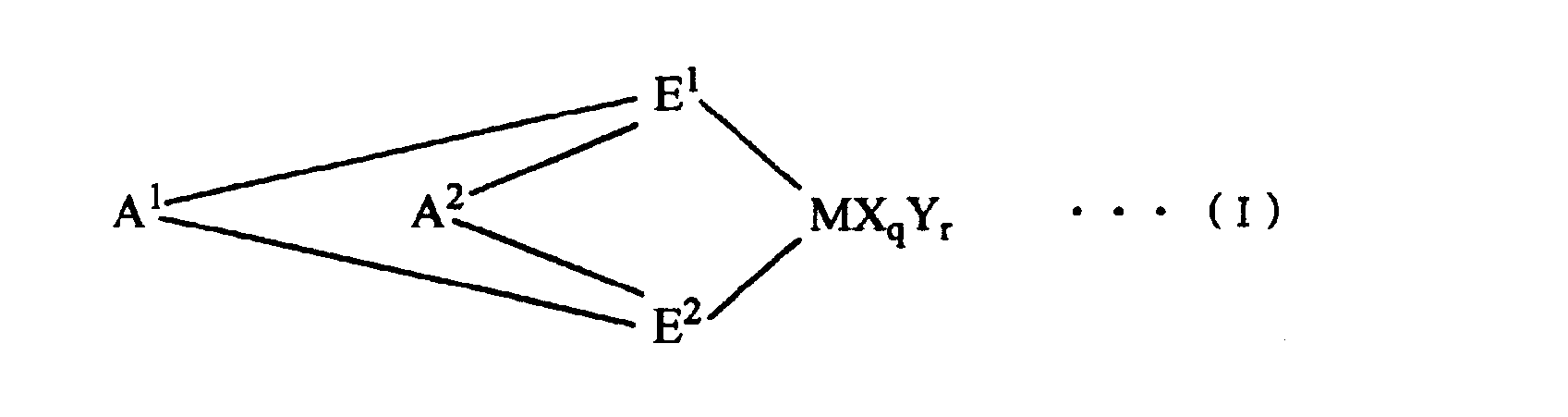
即ち、(a)下記一般式(I)で表される遷移金属化合物、並びに(b)該(a)成分の遷移金属化合物又はその派生物と反応してイオン性の錯体を形成し得る化合物[(b-1)]及びアルミノキサン[(b-2)]から選ばれる少なくとも1種の成分を含有する重合用触媒の存在下、炭素数10以上の高級α-オレフィン1種又は2種以上を重合又は共重合させる方法、又は炭素数10以上の高級α-オレフィン1種以上と前記他のオレフィン1種以上とを共重合させる方法である。
一般式(I)中、Mは、周期律表第3~10族又はランタノイド系列の金属元素を示す。E1及びE2は、それぞれ、置換シクロペンタジエニル基、インデニル基、置換インデニル基、ヘテロシクロペンタジエニル基、置換ヘテロシクロペンタジエニル基、アミド基(-N<)、ホスフィン基(-P<)、炭化水素基〔>CR-、>C<〕及び珪素含有基〔>SiR-、>Si<〕(但し、Rは水素又は炭素数1~20の炭化水素基あるいはヘテロ原子含有基である)の中から選ばれる配位子であって、A1及びA2を介して架橋構造を形成しており、又それらは互いに同一でも異なっていてもよい。Xは、σ結合性の配位子を示し、Xが複数ある場合、複数のXは同じでも異なっていてもよく、他のX、E1、E2又はYと架橋していてもよい。なお、上記「置換」とは、例えば、水素原子、炭素数1~20(好ましくは炭素数1~10、より好ましくは炭素数1~5)の炭化水素基、ケイ素含有基又はヘテロ原子含有基などの置換基で置換されていることを示す。
Yはルイス塩基を示し、Yが複数ある場合、複数のYは同じでも異なっていてもよく、他のY、E1、E2又はXと架橋していてもよい。A1及びA2は、二つの配位子を結合する二価の架橋基であって、炭素数1~20の炭化水素基、炭素数1~20のハロゲン含有炭化水素基、珪素含有基、ゲルマニウム含有基、スズ含有基、-O-、-CO-、-S-、-SO2-、-Se-、-NR1-、-PR1-、-P(O)R1-、-BR1-又は-AlR1-を示す。該R1は、水素原子、ハロゲン原子、炭素数1~20の炭化水素基又は炭素数1~20のハロゲン含有炭化水素基を示し、それらは互いに同一でも異なっていてもよい。qは、1~5の整数で〔(Mの原子価)-2〕を示し、rは、0~3の整数を示す。
Yはルイス塩基を示し、Yが複数ある場合、複数のYは同じでも異なっていてもよく、他のY、E1、E2又はXと架橋していてもよい。A1及びA2は、二つの配位子を結合する二価の架橋基であって、炭素数1~20の炭化水素基、炭素数1~20のハロゲン含有炭化水素基、珪素含有基、ゲルマニウム含有基、スズ含有基、-O-、-CO-、-S-、-SO2-、-Se-、-NR1-、-PR1-、-P(O)R1-、-BR1-又は-AlR1-を示す。該R1は、水素原子、ハロゲン原子、炭素数1~20の炭化水素基又は炭素数1~20のハロゲン含有炭化水素基を示し、それらは互いに同一でも異なっていてもよい。qは、1~5の整数で〔(Mの原子価)-2〕を示し、rは、0~3の整数を示す。
前記Mとしては、例えばチタン、ジルコニウム、ハフニウム、イットリウム、バナジウム、クロム、マンガン、ニッケル、コバルト、パラジウム及びランタノイド系金属などが挙げられる。これらの中でも、重合活性などの観点から、周期律表第4族の金属元素が好ましく、中でも、チタン、ジルコニウム、ハフニウムがより好ましい。
前記E1及びE2としては、置換シクロペンタジエニル基、インデニル基、置換インデニル基が好ましい。
前記E1及びE2としては、置換シクロペンタジエニル基、インデニル基、置換インデニル基が好ましい。
前記Xの具体例としては、ハロゲン原子、炭素数1~20の炭化水素基、炭素数1~20のアルコキシ基、炭素数6~20のアリールオキシ基、炭素数1~20のアミド基、炭素数1~20の珪素含有基、炭素数1~20のホスフィド基、炭素数1~20のスルフィド基、炭素数1~20のアシル基などが挙げられる。これらの中でも、ハロゲン原子が好ましい。
前記Yが示すルイス塩基の具体例としては、アミン類、エーテル類、ホスフィン類、チオエーテル類などが挙げられる。
前記Yが示すルイス塩基の具体例としては、アミン類、エーテル類、ホスフィン類、チオエーテル類などが挙げられる。
次に、A1及びA2は二つの配位子を結合する二価の架橋基であって、このような架橋基としては、例えば、一般式
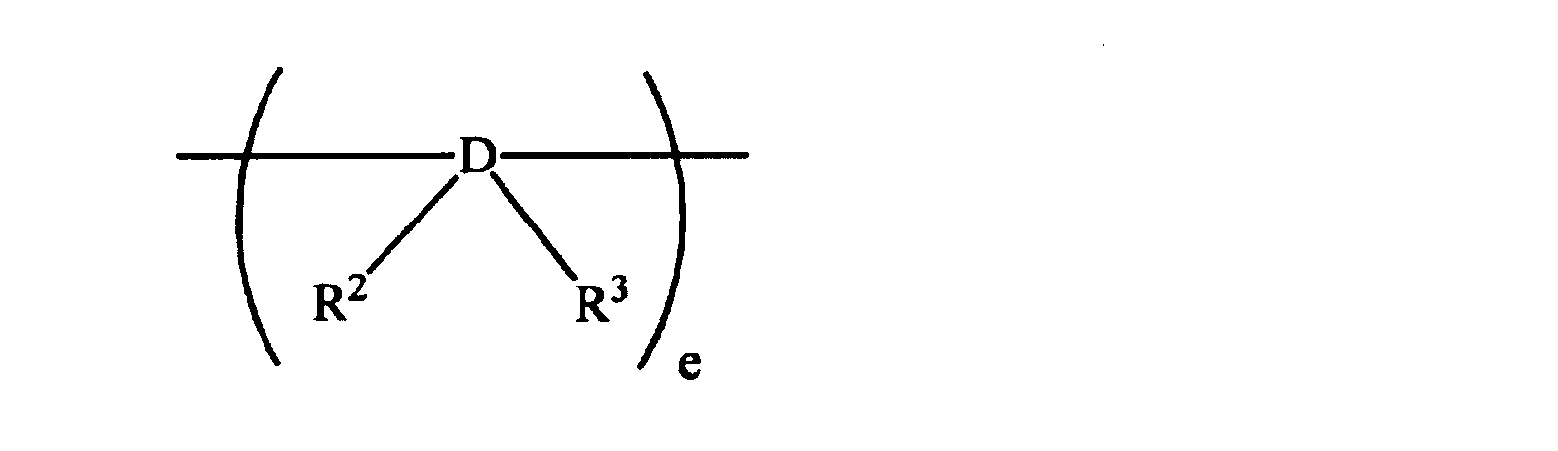
(Dは炭素、ケイ素又はスズ、R2及びR3はそれぞれ水素原子又は炭素数1~20の炭化水素基で、それらは互いに同一でも異なっていてもよく、又互いに結合して環構造を形成していてもよい。eは1~4の整数を示す。)
で表されるものが挙げられる。該架橋基の具体例としては、メチレン基、エチレン基、エチリデン基、プロピリデン基、イソプロピリデン基、シクロヘキシリデン基、1,2-シクロヘキシレン基、ビニリデン基(CH2=C=)、ジメチルシリレン基、ジフェニルシリレン基、メチルフェニルシリレン基、ジメチルゲルミレン基、ジメチルスタニレン基、テトラメチルジシリレン基、ジフェニルジシリレン基などが挙げられる。これらの中でも、エチレン基、イソプロピリデン基、ジメチルシリレン基が好ましい。
で表されるものが挙げられる。該架橋基の具体例としては、メチレン基、エチレン基、エチリデン基、プロピリデン基、イソプロピリデン基、シクロヘキシリデン基、1,2-シクロヘキシレン基、ビニリデン基(CH2=C=)、ジメチルシリレン基、ジフェニルシリレン基、メチルフェニルシリレン基、ジメチルゲルミレン基、ジメチルスタニレン基、テトラメチルジシリレン基、ジフェニルジシリレン基などが挙げられる。これらの中でも、エチレン基、イソプロピリデン基、ジメチルシリレン基が好ましい。
このような一般式(I)で表される遷移金属化合物の中では、一般式(II)
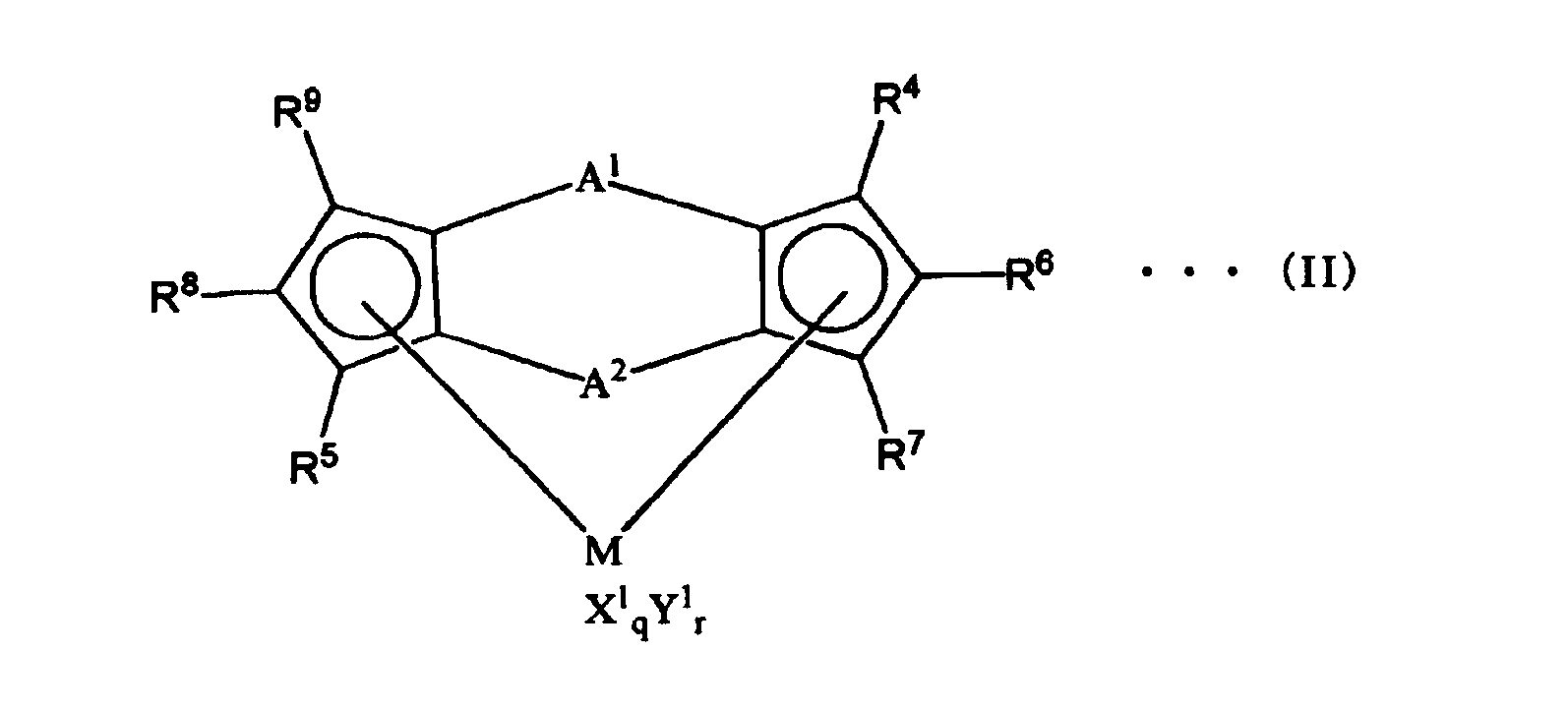
で表される二重架橋型ビスシクロペンタジエニル誘導体を配位子とする遷移金属化合物が好ましい。
上記一般式(II)において、M、A1、A2、q及びrは、一般式(I)中のものと同じである。
X1はσ結合性の配位子を示し、X1が複数ある場合、複数のX1は同じでも異なっていてもよく、他のX1又はY1と架橋していてもよい。このX1の具体例としては、一般式(I)中のXの説明で例示したものと同じものを挙げることができ、好ましいものも同じである。
Y1はルイス塩基を示し、Y1が複数ある場合、複数のY1は同じでも異なっていてもよく、他のY1又はX1と架橋していてもよい。このY1の具体例としては、一般式(I)中のYの説明で例示したものと同じものが挙げられる。
R4~R9は、それぞれ独立に、水素原子、ハロゲン原子、炭素数1~20の炭化水素基、炭素数1~20のハロゲン含有炭化水素基、珪素含有基又はヘテロ原子含有基を示すが、それらのうちの少なくとも一つは水素原子ではない必要がある。
また、R4~R9は互いに同一でも異なっていてもよく、隣接する基同士が互いに結合して環を形成していてもよい。
中でも、R6とR7が環を形成していること及びR8とR9が環を形成していることが好ましい。
R4及びR5としては、重合活性が高くなる観点から、酸素、ハロゲン、珪素などのヘテロ原子を含有する基であることが好ましい。
上記一般式(II)において、M、A1、A2、q及びrは、一般式(I)中のものと同じである。
X1はσ結合性の配位子を示し、X1が複数ある場合、複数のX1は同じでも異なっていてもよく、他のX1又はY1と架橋していてもよい。このX1の具体例としては、一般式(I)中のXの説明で例示したものと同じものを挙げることができ、好ましいものも同じである。
Y1はルイス塩基を示し、Y1が複数ある場合、複数のY1は同じでも異なっていてもよく、他のY1又はX1と架橋していてもよい。このY1の具体例としては、一般式(I)中のYの説明で例示したものと同じものが挙げられる。
R4~R9は、それぞれ独立に、水素原子、ハロゲン原子、炭素数1~20の炭化水素基、炭素数1~20のハロゲン含有炭化水素基、珪素含有基又はヘテロ原子含有基を示すが、それらのうちの少なくとも一つは水素原子ではない必要がある。
また、R4~R9は互いに同一でも異なっていてもよく、隣接する基同士が互いに結合して環を形成していてもよい。
中でも、R6とR7が環を形成していること及びR8とR9が環を形成していることが好ましい。
R4及びR5としては、重合活性が高くなる観点から、酸素、ハロゲン、珪素などのヘテロ原子を含有する基であることが好ましい。
この二重架橋型ビスシクロペンタジエニル誘導体を配位子とする遷移金属化合物は、配位子間の架橋基にケイ素を含むものが好ましい。
一般式(I)で表される遷移金属化合物の具体例としては、(1,2’-エチレン)(2,1’-エチレン)-ビス(インデニル)ジルコニウムジクロリド、(1,2’-メチレン)(2,1’-メチレン)-ビス(インデニル)ジルコニウムジクロリド、(1,2’-イソプロピリデン)(2,1’-イソプロピリデン)-ビス(インデニル)ジルコニウムジクロリド、(1,2’-エチレン)(2,1’-エチレン)-ビス(3-メチルインデニル)ジルコニウムジクロリド、(1,2’-エチレン)(2,1’-エチレン)-ビス(4,5-ベンゾインデニル)ジルコニウムジクロリド、(1,2’-エチレン)(2,1’-エチレン)-ビス(4-イソプロピルインデニル)ジルコニウムジクロリド、(1,2’-エチレン)(2,1’-エチレン)-ビス(5,6-ジメチルインデニル)ジルコニウムジクロリド、(1,2’-エチレン)(2,1’-エチレン)-ビス(4,7-ジイソプロピルインデニル)ジルコニウムジクロリド、(1,2’-エチレン)(2,1’-エチレン)-ビス(4-フェニルインデニル)ジルコニウムジクロリド、(1,2’-エチレン)(2,1’-エチレン)-ビス(3-メチル-4-イソプロピルインデニル)ジルコニウムジクロリド、(1,2’-エチレン)(2,1’-エチレン)-ビス(5,6-ベンゾインデニル)ジルコニウムジクロリド、(1,2’-エチレン)(2,1’-イソプロピリデン)-ビス(インデニル)ジルコニウムジクロリド、(1,2’-メチレン)(2,1’-エチレン)-ビス(インデニル)ジルコニウムジクロリド、(1,2’-メチレン)(2,1’-イソプロピリデン)-ビス(インデニル)ジルコニウムジクロリド、(1,2’-ジメチルシリレン)(2,1’-ジメチルシリレン)ビス(インデニル)ジルコニウムジクロリド、(1,2’-ジメチルシリレン)(2,1’-ジメチルシリレン)ビス(3-メチルインデニル)ジルコニウムジクロリド、(1,2’-ジメチルシリレン)(2,1’-ジメチルシリレン)ビス(3-n-ブチルインデニル)ジルコニウムジクロリド、(1,2’-ジメチルシリレン)(2,1’-ジメチルシリレン)ビス(3-イソプロピルインデニル)ジルコニウムジクロリド、(1,2’-ジメチルシリレン)(2,1’-ジメチルシリレン)ビス(3-トリメチルシリルメチルインデニル)ジルコニウムジクロリド、(1,2’-ジメチルシリレン)(2,1’-ジメチルシリレン)ビス(3-フェニルインデニル)ジルコニウムジクロリド、(1,2’-ジメチルシリレン)(2,1’-ジメチルシリレン)ビス(4,5-ベンゾインデニル)ジルコニウムジクロリド、(1,2’-ジメチルシリレン)(2,1’-ジメチルシリレン)ビス(4-イソプロピルインデニル)ジルコニウムジクロリド、(1,2’-ジメチルシリレン)(2,1’-ジメチルシリレン)ビス(5,6-ジメチルインデニル)ジルコニウムジクロリド、(1,2’-ジメチルシリレン)(2,1’-ジメチルシリレン)ビス(4,7-ジイソプロピルインデニル)ジルコニウムジクロリド、(1,2’-ジメチルシリレン)(2,1’-ジメチルシリレン)ビス(4-フェニルインデニル)ジルコニウムジクロリド、(1,2’-ジメチルシリレン)(2,1’-ジメチルシリレン)ビス(3-メチル-4-イソプロピルインデニル)ジルコニウムジクロリド、(1,2’-ジメチルシリレン)(2,1’-ジメチルシリレン)ビス(5,6-ベンゾインデニル)ジルコニウムジクロリド、
一般式(I)で表される遷移金属化合物の具体例としては、(1,2’-エチレン)(2,1’-エチレン)-ビス(インデニル)ジルコニウムジクロリド、(1,2’-メチレン)(2,1’-メチレン)-ビス(インデニル)ジルコニウムジクロリド、(1,2’-イソプロピリデン)(2,1’-イソプロピリデン)-ビス(インデニル)ジルコニウムジクロリド、(1,2’-エチレン)(2,1’-エチレン)-ビス(3-メチルインデニル)ジルコニウムジクロリド、(1,2’-エチレン)(2,1’-エチレン)-ビス(4,5-ベンゾインデニル)ジルコニウムジクロリド、(1,2’-エチレン)(2,1’-エチレン)-ビス(4-イソプロピルインデニル)ジルコニウムジクロリド、(1,2’-エチレン)(2,1’-エチレン)-ビス(5,6-ジメチルインデニル)ジルコニウムジクロリド、(1,2’-エチレン)(2,1’-エチレン)-ビス(4,7-ジイソプロピルインデニル)ジルコニウムジクロリド、(1,2’-エチレン)(2,1’-エチレン)-ビス(4-フェニルインデニル)ジルコニウムジクロリド、(1,2’-エチレン)(2,1’-エチレン)-ビス(3-メチル-4-イソプロピルインデニル)ジルコニウムジクロリド、(1,2’-エチレン)(2,1’-エチレン)-ビス(5,6-ベンゾインデニル)ジルコニウムジクロリド、(1,2’-エチレン)(2,1’-イソプロピリデン)-ビス(インデニル)ジルコニウムジクロリド、(1,2’-メチレン)(2,1’-エチレン)-ビス(インデニル)ジルコニウムジクロリド、(1,2’-メチレン)(2,1’-イソプロピリデン)-ビス(インデニル)ジルコニウムジクロリド、(1,2’-ジメチルシリレン)(2,1’-ジメチルシリレン)ビス(インデニル)ジルコニウムジクロリド、(1,2’-ジメチルシリレン)(2,1’-ジメチルシリレン)ビス(3-メチルインデニル)ジルコニウムジクロリド、(1,2’-ジメチルシリレン)(2,1’-ジメチルシリレン)ビス(3-n-ブチルインデニル)ジルコニウムジクロリド、(1,2’-ジメチルシリレン)(2,1’-ジメチルシリレン)ビス(3-イソプロピルインデニル)ジルコニウムジクロリド、(1,2’-ジメチルシリレン)(2,1’-ジメチルシリレン)ビス(3-トリメチルシリルメチルインデニル)ジルコニウムジクロリド、(1,2’-ジメチルシリレン)(2,1’-ジメチルシリレン)ビス(3-フェニルインデニル)ジルコニウムジクロリド、(1,2’-ジメチルシリレン)(2,1’-ジメチルシリレン)ビス(4,5-ベンゾインデニル)ジルコニウムジクロリド、(1,2’-ジメチルシリレン)(2,1’-ジメチルシリレン)ビス(4-イソプロピルインデニル)ジルコニウムジクロリド、(1,2’-ジメチルシリレン)(2,1’-ジメチルシリレン)ビス(5,6-ジメチルインデニル)ジルコニウムジクロリド、(1,2’-ジメチルシリレン)(2,1’-ジメチルシリレン)ビス(4,7-ジイソプロピルインデニル)ジルコニウムジクロリド、(1,2’-ジメチルシリレン)(2,1’-ジメチルシリレン)ビス(4-フェニルインデニル)ジルコニウムジクロリド、(1,2’-ジメチルシリレン)(2,1’-ジメチルシリレン)ビス(3-メチル-4-イソプロピルインデニル)ジルコニウムジクロリド、(1,2’-ジメチルシリレン)(2,1’-ジメチルシリレン)ビス(5,6-ベンゾインデニル)ジルコニウムジクロリド、
(1,2’-ジメチルシリレン)(2,1’-イソプロピリデン)-ビス(インデニル)ジルコニウムジクロリド、(1,2’-ジメチルシリレン)(2,1’-イソプロピリデン)-ビス(3-メチルインデニル)ジルコニウムジクロリド、(1,2’-ジメチルシリレン)(2,1’-イソプロピリデン)-ビス(3-イソプロピルインデニル)ジルコニウムジクロリド、(1,2’-ジメチルシリレン)(2,1’-イソプロピリデン)-ビス(3-n-ブチルインデニル)ジルコニウムジクロリド、(1,2’-ジメチルシリレン)(2,1’-イソプロピリデン)-ビス(3-トリメチルシリルメチルインデニル)ジルコニウムジクロリド、(1,2’-ジメチルシリレン)(2,1’-イソプロピリデン)-ビス(3-トリメチルシリルインデニル)ジルコニウムジクロリド、(1,2’-ジメチルシリレン)(2,1’-イソプロピリデン)-ビス(3-フェニルインデニル)ジルコニウムジクロリド、(1,2’-ジメチルシリレン)(2,1’-メチレン)-ビス(インデニル)ジルコニウムジクロリド、(1,2’-ジメチルシリレン)(2,1’-メチレン)-ビス(3-メチルインデニル)ジルコニウムジクロリド、(1,2’-ジメチルシリレン)(2,1’-メチレン)-ビス(3-イソプロピルインデニル)ジルコニウムジクロリド、(1,2’-ジメチルシリレン)(2,1’-メチレン)-ビス(3-n-ブチルインデニル)ジルコニウムジクロリド、(1,2’-ジメチルシリレン)(2,1’-メチレン)-ビス(3-トリメチルシリルメチルインデニル)ジルコニウムジクロリド、(1,2’-ジメチルシリレン)(2,1’-メチレン)-ビス(3-トリメチルシリルインデニル)ジルコニウムジクロリド、(1,2’-ジフェニルシリレン)(2,1’-メチレン)-ビス(インデニル)ジルコニウムジクロリド、(1,2’-ジフェニルシリレン)(2,1’-メチレン)-ビス(3-メチルインデニル)ジルコニウムジクロリド、(1,2’-ジフェニルシリレン)(2,1’-メチレン)-ビス(3-イソプロピルインデニル)ジルコニウムジクロリド、(1,2’-ジフェニルシリレン)(2,1’-メチレン)-ビス(3-n-ブチルインデニル)ジルコニウムジクロリド、(1,2’-ジフェニルシリレン)(2,1’-メチレン)-ビス(3-トリメチルシリルメチルインデニル)ジルコニウムジクロリド、(1,2’-ジフェニルシリレン)(2,1’-メチレン)-ビス(3-トリメチルシリルインデニル)ジルコニウムジクロリド、(1,2’-ジメチルシリレン)(2,1’-ジメチルシリレン)(3-メチルシクロペンタジエニル)(3’-メチルシクロペンタジエニル)ジルコニウムジクロリド、(1,2’-ジメチルシリレン)(2,1’-イソプロピリデン)(3-メチルシクロペンタジエニル)(3’-メチルシクロペンタジエニル)ジルコニウムジクロリド、(1,2’-ジメチルシリレン)(2,1’-エチレン)(3-メチルシクロペンタジエニル)(3’-メチルシクロペンタジエニル)ジルコニウムジクロリド、(1,2’-エチレン)(2,1’-メチレン)(3-メチルシクロペンタジエニル)(3’-メチルシクロペンタジエニル)ジルコニウムジクロリド、
(1,1’-ジメチルシリレン)(2,2’-ジメチルシリレン)ビスインデニルジルコニウムジクロリド、(1,1’-ジフェニルシリレン)(2,2’-ジメチルシリレン)ビスインデニルジルコニウムジクロリド、(1,1’-ジメチルシリレン)(2,2’-ジメチルシリレン)ビスインデニルジルコニウムジクロリド、(1,1’-ジイソプロピルシリレン)(2,2’-ジメチルシリレン)ビスインデニルジルコニウムジクロリド、(1,1’-ジメチルシリレン)(2,2’-ジイソプロピルシリレン)ビスインデニルジルコニウムジクロリド、(1,1’-ジメチルシリレンインデニル)(2,2’-ジメチルシリレン-3-トリメチルシリルインデニル)ジルコニウムジクロリド、(1,1’-ジフェニルシリレンインデニル)(2,2’-ジフェニルシリレン-3-トリメチルシリルインデニル)ジルコニウムジクロリド、(1,1’-ジフェニルシリレンインデニル)(2,2’-ジメチルシリレン-3-トリメチルシリルインデニル)ジルコニウムジクロリド、
(1,1’-ジメチルシリレン)(2,2’-ジメチルシリレン)(インデニル)(3-トリメチルシリルインデニル)ジルコニウムジクロリド、(1,1’-ジフェニルシリレン)(2,2’-ジフェニルシリレン)(インデニル)(3-トリメチルシリルインデニル)ジルコニウムジクロリド、(1,1’-ジフェニルシリレン)(2,2’-ジメチルシリレン)(インデニル)(3-トリメチルシリルインデニル)ジルコニウムジクロリド、(1,1’-ジメチルシリレン)(2,2’-ジフェニルシリレン)(インデニル)(3-トリメチルシリルインデニル)ジルコニウムジクロリド、(1,1’-ジイソプロピルシリレン)(2,2’-ジメチルシリレン)(インデニル)(3-トリメチルシリルインデニル)ジルコニウムジクロリド、(1,1’-ジメチルシリレン)(2,2’-ジイソプロピルシリレン)(インデニル)(3-トリメチルシリルインデニル)ジルコニウムジクロリド、(1,1’-エチレン)(2,2’-テトラメチルジシリレン)-ビス(インデニル)ジルコニウムジクロリド、(1,1’-テトラメチルジシリレン)(2,2’-エチレン)-ビス(インデニル)ジルコニウムジクロリド、(1,1’-テトラメチルエチレン)(2,2’-テトラメチルジシリレン)-ビス(インデニル)ジルコニウムジクロリド、(1,1’-テトラメチルジシリレン)(2,2’-テトラメチルエチレン)-ビス(インデニル)ジルコニウムジクロリド、(1,1’-ジメチリシリレンメチレン)(2,2’-エチレン)-ビス(3-メチルインデニル)ジルコニウムジクロリド、(1,1’-エチレン)(2,2’-ジメチリシリレンメチレン)-ビス(3-メチルインデニル)ジルコニウムジクロリドなど及びこれらの化合物におけるジルコニウムをチタン又はハフニウムに置換したものを挙げることができるが、特にこれらに限定されるものではない。
また、他の族又はランタノイド系列の金属元素の類似化合物であってもよい。
また、上記化合物において、(1,1’-)(2,2’-)が(1,2’-)(2,1’-)であってもよく、(1,2’-)(2,1’-)が(1,1’-)(2,2’-)であってもよい。
また、他の族又はランタノイド系列の金属元素の類似化合物であってもよい。
また、上記化合物において、(1,1’-)(2,2’-)が(1,2’-)(2,1’-)であってもよく、(1,2’-)(2,1’-)が(1,1’-)(2,2’-)であってもよい。
次に、(b)成分のうちの(b-1)成分としては、上記(a)成分の遷移金属化合物と反応して、イオン性の錯体を形成し得る化合物であれば、いずれのものでも使用できるが、次の一般式(III)、(IV)で表されるものを好適に使用することができる。
(〔L1-R10〕k+)a(〔Z〕-)b ・・・(III)
(〔L2〕k+)a(〔Z〕-)b ・・・(IV)
(但し、L2はM2、R11R12M3、R13 3C又はR14M3である。)
上記一般(III)、(IV)中、L1はルイス塩基、〔Z〕-は、非配位性アニオン〔Z1〕-及び〔Z2〕-、ここで〔Z1〕-は複数の基が元素に結合したアニオン、即ち〔M1G1G2・・・Gf〕-(ここで、M1は、周期律表第5~15族元素、好ましくは周期律表第13~15族元素を示す。G1~Gfは、それぞれ独立に、水素原子、ハロゲン原子、炭素数1~20のアルキル基、炭素数2~40のジアルキルアミノ基、炭素数1~20のアルコキシ基、炭素数6~20のアリール基、炭素数6~20のアリールオキシ基、炭素数7~40のアルキルアリール基、炭素数7~40のアリールアルキル基、炭素数1~20のハロゲン置換炭化水素基、炭素数1~20のアシルオキシ基、有機メタロイド基、又は炭素数2~20のヘテロ原子含有炭化水素基を示す。G1~Gfのうち2つ以上が環を形成していてもよい。fは、〔(中心金属M1の原子価)+1〕の整数を示す。)を示す。〔Z2〕-は、酸解離定数の逆数の対数(pKa)が-10以下のブレンステッド酸単独又はブレンステッド酸及びルイス酸の組合せの共役塩基、あるいは一般的に超強酸と定義される酸の共役塩基を示す。また、ルイス塩基が配位していてもよい。また、R10は、水素原子、炭素数1~20のアルキル基、炭素数6~20のアリール基、アルキルアリール基又はアリールアルキル基を示し、R11及びR12は、それぞれ独立に、シクロペンタジエニル基、置換シクロペンタジエニル基、インデニル基又はフルオレニル基を示す。R13は、炭素数1~20のアルキル基、アリール基、アルキルアリール基又はアリールアルキル基を示す。R14は、テトラフェニルポルフィリン、フタロシアニンなどの大環状配位子を示す。kは、〔L1-R10〕、〔L2〕のイオン価数で1~3の整数であり、aは、1以上の整数、bは、(k×a)である。M2は、周期律表第1~3、11~13、17族元素を含むものであり、M3は、周期律表第7~12族元素を示す。
(〔L1-R10〕k+)a(〔Z〕-)b ・・・(III)
(〔L2〕k+)a(〔Z〕-)b ・・・(IV)
(但し、L2はM2、R11R12M3、R13 3C又はR14M3である。)
上記一般(III)、(IV)中、L1はルイス塩基、〔Z〕-は、非配位性アニオン〔Z1〕-及び〔Z2〕-、ここで〔Z1〕-は複数の基が元素に結合したアニオン、即ち〔M1G1G2・・・Gf〕-(ここで、M1は、周期律表第5~15族元素、好ましくは周期律表第13~15族元素を示す。G1~Gfは、それぞれ独立に、水素原子、ハロゲン原子、炭素数1~20のアルキル基、炭素数2~40のジアルキルアミノ基、炭素数1~20のアルコキシ基、炭素数6~20のアリール基、炭素数6~20のアリールオキシ基、炭素数7~40のアルキルアリール基、炭素数7~40のアリールアルキル基、炭素数1~20のハロゲン置換炭化水素基、炭素数1~20のアシルオキシ基、有機メタロイド基、又は炭素数2~20のヘテロ原子含有炭化水素基を示す。G1~Gfのうち2つ以上が環を形成していてもよい。fは、〔(中心金属M1の原子価)+1〕の整数を示す。)を示す。〔Z2〕-は、酸解離定数の逆数の対数(pKa)が-10以下のブレンステッド酸単独又はブレンステッド酸及びルイス酸の組合せの共役塩基、あるいは一般的に超強酸と定義される酸の共役塩基を示す。また、ルイス塩基が配位していてもよい。また、R10は、水素原子、炭素数1~20のアルキル基、炭素数6~20のアリール基、アルキルアリール基又はアリールアルキル基を示し、R11及びR12は、それぞれ独立に、シクロペンタジエニル基、置換シクロペンタジエニル基、インデニル基又はフルオレニル基を示す。R13は、炭素数1~20のアルキル基、アリール基、アルキルアリール基又はアリールアルキル基を示す。R14は、テトラフェニルポルフィリン、フタロシアニンなどの大環状配位子を示す。kは、〔L1-R10〕、〔L2〕のイオン価数で1~3の整数であり、aは、1以上の整数、bは、(k×a)である。M2は、周期律表第1~3、11~13、17族元素を含むものであり、M3は、周期律表第7~12族元素を示す。
ここで、L1の具体例としては、アンモニア、メチルアミン、アニリン、ジメチルアミン、ジエチルアミン、N-メチルアニリン、ジフェニルアミン、N,N-ジメチルアニリン、トリメチルアミン、トリエチルアミン、トリ-n-ブチルアミン、メチルジフェニルアミン、p-ブロモ-N,N-ジメチルアニリン、p-ニトロ-N,N-ジメチルアニリンなどのアミン類;ピリジンなどの含窒素複素環式化合物;トリエチルホスフィン、トリフェニルホスフィン、ジフェニルホスフィンなどのホスフィン類;テトラヒドロチオフェンなどのチオエーテル類;安息香酸エチルなどのエステル類;アセトニトリル、ベンゾニトリルなどのニトリル類などが挙げられる。
R10の具体例としては、水素、メチル基、エチル基、ベンジル基、トリチル基などが挙げられる。R11、R12の具体例としては、シクロペンタジエニル基、メチルシクロペンタジエニル基、エチルシクロペンタジエニル基、ペンタメチルシクロペンタジエニル基などが挙げられる。
R13の具体例としては、フェニル基、p-トリル基、p-メトキシフェニル基などが挙げられる。R14の具体例としては、テトラフェニルポルフィリン、フタロシアニン、アリル、メタリルなどが挙げられる。
また、M2の具体例としては、Li、Na、K、Ag、Cu、Br、I、I3などが挙げられる。M3の具体例としては、Mn、Fe、Co、Ni、Znなどが挙げられる。
R13の具体例としては、フェニル基、p-トリル基、p-メトキシフェニル基などが挙げられる。R14の具体例としては、テトラフェニルポルフィリン、フタロシアニン、アリル、メタリルなどが挙げられる。
また、M2の具体例としては、Li、Na、K、Ag、Cu、Br、I、I3などが挙げられる。M3の具体例としては、Mn、Fe、Co、Ni、Znなどが挙げられる。
また、〔Z1〕-、即ち〔M1G1G2・・・Gf〕において、M1の具体例としては、B、Al、Si、P、As、Sbなどが挙げられ、好ましくはB、Alである。
また、G1、G2~Gfの具体例としては、ジメチルアミノ基、ジエチルアミノ基などの炭素数1~5のアルキル基が置換したジアルキルアミノ基;メトキシ基、エトキシ基、n-ブトキシ基、フェノキシ基などの炭素数1~6のアルコキシ基又は炭素数6~10のアリールオキシ基;メチル基、エチル基、n-プロピル基、イソプロピル基、n-ブチル基、イソブチル基、n-オクチル基、n-エイコシル基などの炭素数1~20のアルキル基;フェニル基、p-トリル基、4-t-ブチルフェニル基、3,5-ジメチルフェニル基などの炭素数6~20のアリール基;ベンジル基;フッ素原子、塩素原子、臭素原子、ヨウ素原子などのハロゲン原子;p-フルオロフェニル基、3,5-ジフルオロフェニル基、ペンタクロロフェニル基、3,4,5-トリフルオロフェニル基、ペンタフルオロフェニル基、3,5-ビス(トリフルオロメチル)フェニル基、ビス(トリメチルシリル)メチル基などのヘテロ原子含有炭化水素基;ペンタメチルアンチモン基、トリメチルシリル基、トリメチルゲルミル基、ジフェニルアルシン基、ジシクロヘキシルアンチモン基、ジフェニル硼素などの有機メタロイド基などが挙げられる。
また、G1、G2~Gfの具体例としては、ジメチルアミノ基、ジエチルアミノ基などの炭素数1~5のアルキル基が置換したジアルキルアミノ基;メトキシ基、エトキシ基、n-ブトキシ基、フェノキシ基などの炭素数1~6のアルコキシ基又は炭素数6~10のアリールオキシ基;メチル基、エチル基、n-プロピル基、イソプロピル基、n-ブチル基、イソブチル基、n-オクチル基、n-エイコシル基などの炭素数1~20のアルキル基;フェニル基、p-トリル基、4-t-ブチルフェニル基、3,5-ジメチルフェニル基などの炭素数6~20のアリール基;ベンジル基;フッ素原子、塩素原子、臭素原子、ヨウ素原子などのハロゲン原子;p-フルオロフェニル基、3,5-ジフルオロフェニル基、ペンタクロロフェニル基、3,4,5-トリフルオロフェニル基、ペンタフルオロフェニル基、3,5-ビス(トリフルオロメチル)フェニル基、ビス(トリメチルシリル)メチル基などのヘテロ原子含有炭化水素基;ペンタメチルアンチモン基、トリメチルシリル基、トリメチルゲルミル基、ジフェニルアルシン基、ジシクロヘキシルアンチモン基、ジフェニル硼素などの有機メタロイド基などが挙げられる。
また、非配位性のアニオン、即ちpKaが-10以下のブレンステッド酸単独又はブレンステッド酸及びルイス酸の組合せの共役塩基〔Z2〕-の具体例としては、トリフルオロメタンスルホン酸アニオン(CF3SO3)-、ビス(トリフルオロメタンスルホニル)メチルアニオン、ビス(トリフルオロメタンスルホニル)ベンジルアニオン、ビス(トリフルオロメタンスルホニル)アミド、過塩素酸アニオン(ClO4)-、トリフルオロ酢酸アニオン(CF3CO2)-、ヘキサフルオロアンチモンアニオン(SbF6)-、フルオロスルホン酸アニオン(FSO3)-、クロロスルホン酸アニオン(ClSO3)-、フルオロスルホン酸アニオン/5-フッ化アンチモン(FSO3/SbF5)-、フルオロスルホン酸アニオン/5-フッ化砒素(FSO3/AsF5)-、トリフルオロメタンスルホン酸/5-フッ化アンチモン(CF3SO3/SbF5)-などが挙げられる。
このような前記(a)成分の遷移金属化合物と反応してイオン性の錯体を形成するイオン性化合物、即ち(b-1)成分化合物の具体例としては、テトラフェニル硼酸トリエチルアンモニウム、テトラフェニル硼酸トリ-n-ブチルアンモニウム、テトラフェニル硼酸トリメチルアンモニウム、テトラフェニル硼酸テトラエチルアンモニウム、テトラフェニル硼酸メチル(トリ-n-ブチル)アンモニウム、テトラフェニル硼酸ベンジル(トリ-n-ブチル)アンモニウム、テトラフェニル硼酸ジメチルジフェニルアンモニウム、テトラフェニル硼酸トリフェニル(メチル)アンモニウム、テトラフェニル硼酸トリメチルアニリニウム、テトラフェニル硼酸メチルピリジニウム、テトラフェニル硼酸ベンジルピリジニウム、テトラフェニル硼酸メチル(2-シアノピリジニウム)、テトラキス(ペンタフルオロフェニル)硼酸トリエチルアンモニウム、テトラキス(ペンタフルオロフェニル)硼酸トリ-n-ブチルアンモニウム、テトラキス(ペンタフルオロフェニル)硼酸トリフェニルアンモニウム、テトラキス(ペンタフルオロフェニル)硼酸テトラ-n-ブチルアンモニウム、テトラキス(ペンタフルオロフェニル)硼酸テトラエチルアンモニウム、テトラキス(ペンタフルオロフェニル)硼酸ベンジル(トリ-n-ブチル)アンモニウム、テトラキス(ペンタフルオロフェニル)硼酸メチルジフェニルアンモニウム、テトラキス(ペンタフルオロフェニル)硼酸トリフェニル(メチル)アンモニウム、テトラキス(ペンタフルオロフェニル)硼酸メチルアニリニウム、テトラキス(ペンタフルオロフェニル)硼酸ジメチルアニリニウム、テトラキス(ペンタフルオロフェニル)硼酸トリメチルアニリニウム、テトラキス(ペンタフルオロフェニル)硼酸メチルピリジニウム、テトラキス(ペンタフルオロフェニル)硼酸ベンジルピリジニウム、テトラキス(ペンタフルオロフェニル)硼酸メチル(2-シアノピリジニウム)、テトラキス(ペンタフルオロフェニル)硼酸ベンジル(2-シアノピリジニウム),テトラキス(ペンタフルオロフェニル)硼酸メチル(4-シアノピリジニウム)、テトラキス(ペンタフルオロフェニル)硼酸トリフェニルホスホニウム、テトラキス〔ビス(3,5-ジトリフルオロメチル)フェニル〕硼酸ジメチルアニリニウム、テトラフェニル硼酸フェロセニウム,テトラフェニル硼酸銀、テトラフェニル硼酸トリチル、テトラフェニル硼酸テトラフェニルポルフィリンマンガン、テトラキス(ペンタフルオロフェニル)硼酸フェロセニウム,テトラキス(ペンタフルオロフェニル)硼酸(1,1’-ジメチルフェロセニウム)、テトラキス(ペンタフルオロフェニル)硼酸デカメチルフェロセニウム,テトラキス(ペンタフルオロフェニル)硼酸銀、テトラキス(ペンタフルオロフェニル)硼酸トリチル、テトラキス(ペンタフルオロフェニル)硼酸リチウム、テトラキス(ペンタフルオロフェニル)硼酸ナトリウム、テトラキス(ペンタフルオロフェニル)硼酸テトラフェニルポルフィリンマンガン、テトラフルオロ硼酸銀、ヘキサフルオロ燐酸銀、ヘキサフルオロ砒素酸銀、過塩素酸銀、トリフルオロ酢酸銀、トリフルオロメタンスルホン酸銀などが挙げられる。
(b-1)は1種を単独で用いてもよいし、2種以上を併用してもよい。
(b-1)は1種を単独で用いてもよいし、2種以上を併用してもよい。
一方、(b-2)成分のアルミノキサンとしては、下記一般式(V)
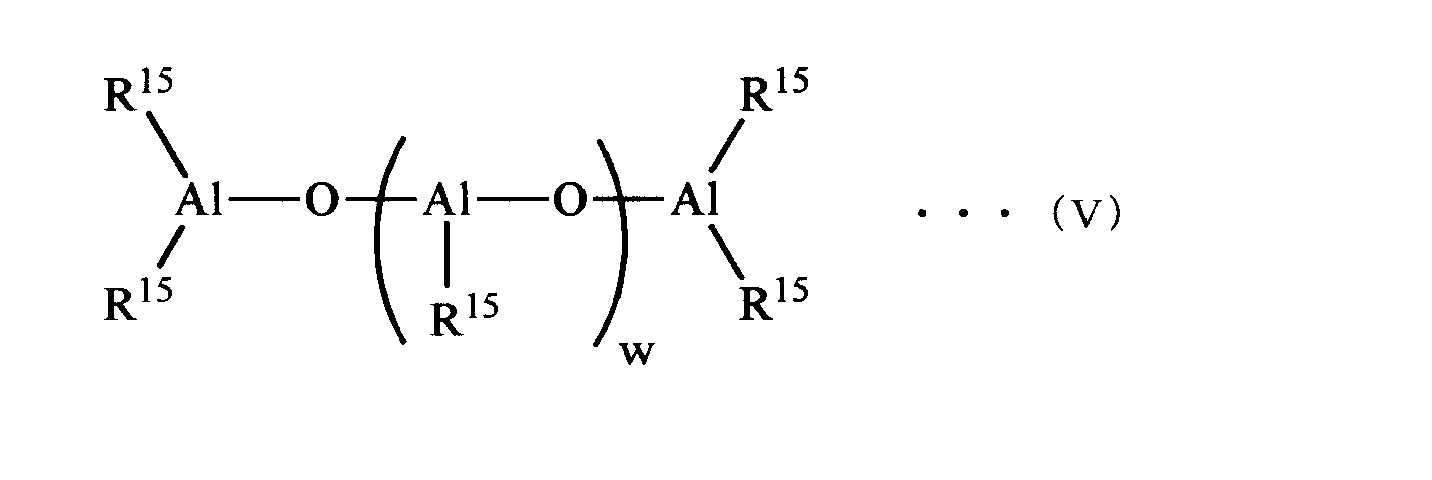
(式中、R15は炭素数1~20、好ましくは1~12のアルキル基、アルケニル基、アリール基、アリールアルキル基などの炭化水素基あるいはハロゲン原子を示し、wは平均重合度を示し、通常2~50、好ましくは2~40の整数である。尚、各R15は同じでも異なっていてもよい。)
で示される鎖状アルミノキサン、及び下記一般式(VI)
で示される鎖状アルミノキサン、及び下記一般式(VI)
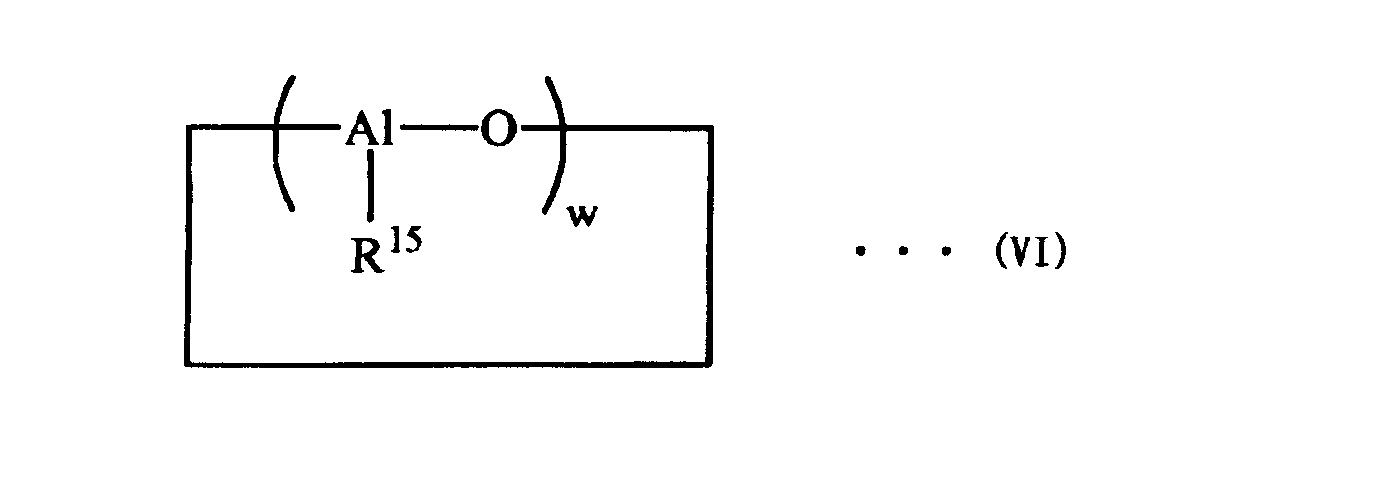
(式中、R15及びwは前記一般式(V)におけるものと同じである。)
で示される環状アルミノキサンが挙げられる。
で示される環状アルミノキサンが挙げられる。
前記アルミノキサンの製造法としては、アルキルアルミニウムと水などの縮合剤とを接触させる方法が挙げられるが、その手段については特に限定はなく、公知の方法に準じて反応させればよい。
例えば、(i)有機アルミニウム化合物を有機溶剤に溶解しておき、これを水と接触させる方法、(ii)重合時に当初有機アルミニウム化合物を加えておき、後に水を添加する方法、(iii)金属塩などに含有されている結晶水、無機物や有機物への吸着水を有機アルミニウム化合物と反応させる方法、(iv)テトラアルキルジアルミノキサンにトリアルキルアルミニウムを反応させ、さらに水を反応させる方法などがある。
なお、アルミノキサンとしては、トルエン不溶性のものであってもよい。
これらのアルミノキサンは1種を単独で用いてもよいし、2種以上を併用してもよい。
例えば、(i)有機アルミニウム化合物を有機溶剤に溶解しておき、これを水と接触させる方法、(ii)重合時に当初有機アルミニウム化合物を加えておき、後に水を添加する方法、(iii)金属塩などに含有されている結晶水、無機物や有機物への吸着水を有機アルミニウム化合物と反応させる方法、(iv)テトラアルキルジアルミノキサンにトリアルキルアルミニウムを反応させ、さらに水を反応させる方法などがある。
なお、アルミノキサンとしては、トルエン不溶性のものであってもよい。
これらのアルミノキサンは1種を単独で用いてもよいし、2種以上を併用してもよい。
(a)成分と(b)成分との使用割合は、(b)成分として(b-1)化合物を用いた場合には、モル比で好ましくは10:1~1:100、より好ましくは2:1~1:10の範囲が望ましく、上記範囲にあれば、単位質量ポリマー当りの触媒コストがあまり高くならず、実用的である。
また、(b-2)化合物を用いた場合には、モル比で好ましくは1:1~1:1,000,000、より好ましくは1:10~1:10,000の範囲が望ましい。
この範囲にあれば、単位質量ポリマー当りの触媒コストがあまり高くならず、実用的である。
また、(b)成分としては、(b-1)化合物及び(b-2)化合物の中から、1種を単独で用いてもよいし、2種以上を併用してもよい。
また、(b-2)化合物を用いた場合には、モル比で好ましくは1:1~1:1,000,000、より好ましくは1:10~1:10,000の範囲が望ましい。
この範囲にあれば、単位質量ポリマー当りの触媒コストがあまり高くならず、実用的である。
また、(b)成分としては、(b-1)化合物及び(b-2)化合物の中から、1種を単独で用いてもよいし、2種以上を併用してもよい。
また、結晶性高級α-オレフィン(共)重合体を製造する際の重合用触媒は、上記(a)成分及び(b)成分に加えて、(c)成分として有機アルミニウム化合物を用いることができる。
ここで、(c)成分の有機アルミニウム化合物としては、一般式(VII)
R16 vAlJ3-v ・・・(VII)
(式中、R16は、炭素数1~10のアルキル基を示し、Jは、水素原子、炭素数1~20のアルコキシ基、炭素数6~20のアリール基又はハロゲン原子を示す。また、vは、1~3の整数である。)
で示される化合物が用いられる。
R16が示す炭素数1~10のアルキル基としては、例えばメチル基、エチル基、n-プロピル基、イソプロピル基、n-ブチル基、イソブチル基、t-ブチル基などの炭素数1~5のアルキル基が好ましく挙げられる。Jが示す炭素数1~20のアルコキシ基としては、メトキシ基、エトキシ基、n-プロポキシ基、イソプロポキシ基、n-ブトキシ基などが挙げられ、炭素数1~10のアルコキシ基が好ましく、炭素数1~5のアルコキシ基がより好ましい。Jが示す炭素数6~20のアリール基としては、例えばフェニル基、ナフチル基、アントリル基などが挙げられ、炭素数6~10のアリール基が好ましい。Jが示すハロゲン原子としては、例えばフッ素原子、塩素原子、臭素原子、ヨウ素原子などが挙げられる。vは3が好ましい。
前記一般式(VII)で示される化合物の具体例としては、トリメチルアルミニウム、トリエチルアルミニウム、トリイソプロピルアルミニウム、トリイソブチルアルミニウム、ジメチルアルミニウムクロリド、ジエチルアルミニウムクロリド、メチルアルミニウムジクロリド、エチルアルミニウムジクロリド、ジメチルアルミニウムフルオリド、ジイソブチルアルミニウムヒドリド、ジエチルアルミニウムヒドリド、エチルアルミニウムセスキクロリドなどが挙げられる。これらの中でも、トリイソブチルアルミニウムが好ましい。
これらの有機アルミニウム化合物は、1種を単独で用いてもよいし、2種以上を併用してもよい。
ここで、(c)成分の有機アルミニウム化合物としては、一般式(VII)
R16 vAlJ3-v ・・・(VII)
(式中、R16は、炭素数1~10のアルキル基を示し、Jは、水素原子、炭素数1~20のアルコキシ基、炭素数6~20のアリール基又はハロゲン原子を示す。また、vは、1~3の整数である。)
で示される化合物が用いられる。
R16が示す炭素数1~10のアルキル基としては、例えばメチル基、エチル基、n-プロピル基、イソプロピル基、n-ブチル基、イソブチル基、t-ブチル基などの炭素数1~5のアルキル基が好ましく挙げられる。Jが示す炭素数1~20のアルコキシ基としては、メトキシ基、エトキシ基、n-プロポキシ基、イソプロポキシ基、n-ブトキシ基などが挙げられ、炭素数1~10のアルコキシ基が好ましく、炭素数1~5のアルコキシ基がより好ましい。Jが示す炭素数6~20のアリール基としては、例えばフェニル基、ナフチル基、アントリル基などが挙げられ、炭素数6~10のアリール基が好ましい。Jが示すハロゲン原子としては、例えばフッ素原子、塩素原子、臭素原子、ヨウ素原子などが挙げられる。vは3が好ましい。
前記一般式(VII)で示される化合物の具体例としては、トリメチルアルミニウム、トリエチルアルミニウム、トリイソプロピルアルミニウム、トリイソブチルアルミニウム、ジメチルアルミニウムクロリド、ジエチルアルミニウムクロリド、メチルアルミニウムジクロリド、エチルアルミニウムジクロリド、ジメチルアルミニウムフルオリド、ジイソブチルアルミニウムヒドリド、ジエチルアルミニウムヒドリド、エチルアルミニウムセスキクロリドなどが挙げられる。これらの中でも、トリイソブチルアルミニウムが好ましい。
これらの有機アルミニウム化合物は、1種を単独で用いてもよいし、2種以上を併用してもよい。
前記(a)成分と(c)成分との使用割合は、モル比で好ましくは1:1~1:10,000、より好ましくは1:5~1:2,000、さらに好ましくは1:10~1:1,000の範囲が望ましい。
該(c)成分を用いることにより、遷移金属当たりの重合活性を向上させることができるが、あまり多いと有機アルミニウム化合物が無駄になると共に、重合体中に多量に残存し、好ましくない。
結晶性高級α-オレフィン(共)重合体の製造においては、触媒成分の少なくとも一種を適当な担体に担持して用いることができる。
該担体の種類については特に制限はなく、無機酸化物担体、それ以外の無機担体及び有機担体のいずれも用いることができるが、特に無機酸化物担体あるいはそれ以外の無機担体が好ましい。
該(c)成分を用いることにより、遷移金属当たりの重合活性を向上させることができるが、あまり多いと有機アルミニウム化合物が無駄になると共に、重合体中に多量に残存し、好ましくない。
結晶性高級α-オレフィン(共)重合体の製造においては、触媒成分の少なくとも一種を適当な担体に担持して用いることができる。
該担体の種類については特に制限はなく、無機酸化物担体、それ以外の無機担体及び有機担体のいずれも用いることができるが、特に無機酸化物担体あるいはそれ以外の無機担体が好ましい。
結晶性高級α-オレフィン(共)重合体において、重合方法は特に制限されず、スラリー重合法、気相重合法、塊状重合法、溶液重合法、懸濁重合法、バルク重合法などのいずれの方法を用いてもよいが、溶液重合法、バルク重合法が特に好ましい。
重合条件については、重合温度は通常-100~250℃、好ましくは-50~200℃、より好ましくは0~150℃である。
重合時間は、通常、好ましくは5分~10時間、反応圧力は、通常、好ましくは常圧~20MPa(gauge)、より好ましくは常圧~10MPa(gauge)である。
重合条件については、重合温度は通常-100~250℃、好ましくは-50~200℃、より好ましくは0~150℃である。
重合時間は、通常、好ましくは5分~10時間、反応圧力は、通常、好ましくは常圧~20MPa(gauge)、より好ましくは常圧~10MPa(gauge)である。
結晶性高級α-オレフィン(共)重合体の製造方法において、水素を添加すると重合活性が向上するので好ましい。水素を用いる場合は、通常、常圧~5MPa(gauge)、好ましくは常圧~3MPa(gauge)、さらに好ましくは常圧~2MPa(gauge)である。
重合溶媒を用いる場合、例えば、ベンゼン、トルエン、キシレン、エチルベンゼンなどの芳香族炭化水素、シクロペンタン、シクロヘキサン、メチルシクロヘキサンなどの脂環式炭化水素、ペンタン、ヘキサン、ヘプタン、オクタンなどの脂肪族炭化水素、クロロホルム、ジクロロメタンなどのハロゲン化炭化水素などを用いることができる。これらの溶媒は1種を単独で用いてもよく、2種以上を併用してもよい。また、α-オレフィンなどのモノマーを溶媒として用いてもよい。なお、重合方法によっては無溶媒で行うことができる。
重合溶媒を用いる場合、例えば、ベンゼン、トルエン、キシレン、エチルベンゼンなどの芳香族炭化水素、シクロペンタン、シクロヘキサン、メチルシクロヘキサンなどの脂環式炭化水素、ペンタン、ヘキサン、ヘプタン、オクタンなどの脂肪族炭化水素、クロロホルム、ジクロロメタンなどのハロゲン化炭化水素などを用いることができる。これらの溶媒は1種を単独で用いてもよく、2種以上を併用してもよい。また、α-オレフィンなどのモノマーを溶媒として用いてもよい。なお、重合方法によっては無溶媒で行うことができる。
重合に際しては、前記重合用触媒を用いて予備重合を行うことができる。予備重合は、固体触媒成分に、例えば、少量のα-オレフィンを接触させることにより行うことができるが、その方法に特に制限はなく、公知の方法を用いることができる。
予備重合に用いるα-オレフィンについては特に制限はなく、前記に例示したものと同様のもの、例えば、エチレン、炭素数3~20のα-オレフィン、あるいはこれらの混合物などが挙げられるが、該重合反応において用いる高級α-オレフィン又はその他のα-オレフィンと同じα-オレフィンを用いることが有利である。
予備重合に用いるα-オレフィンについては特に制限はなく、前記に例示したものと同様のもの、例えば、エチレン、炭素数3~20のα-オレフィン、あるいはこれらの混合物などが挙げられるが、該重合反応において用いる高級α-オレフィン又はその他のα-オレフィンと同じα-オレフィンを用いることが有利である。
予備重合温度は、通常-20~200℃、好ましくは-10~130℃、より好ましくは0~80℃である。
予備重合においては、溶媒として、脂肪族炭化水素、芳香族炭化水素、モノマーなどを用いることができる。これらの中で特に好ましいのは脂肪族炭化水素である。
また、予備重合は無溶媒で行ってもよい。
予備重合においては、予備重合生成物の極限粘度〔η〕(135℃デカリン中で測定)が0.1デシリットル/g以上、触媒中の遷移金属成分1ミリモル当たりに対する予備重合生成物の量が1~10,000g、特に10~1,000gとなるように条件を調整することが望ましい。
また、重合体の分子量の調節方法としては、各触媒成分の種類、使用量、重合温度の選択、さらには水素存在下での重合などがある。窒素などの不活性ガスを存在させてもよい。
こうして得られる単独重合体又は共重合体は、ハイパーブランチ構造ではなく、くし型構造をしており、そのために側鎖結晶性を有している。
予備重合においては、溶媒として、脂肪族炭化水素、芳香族炭化水素、モノマーなどを用いることができる。これらの中で特に好ましいのは脂肪族炭化水素である。
また、予備重合は無溶媒で行ってもよい。
予備重合においては、予備重合生成物の極限粘度〔η〕(135℃デカリン中で測定)が0.1デシリットル/g以上、触媒中の遷移金属成分1ミリモル当たりに対する予備重合生成物の量が1~10,000g、特に10~1,000gとなるように条件を調整することが望ましい。
また、重合体の分子量の調節方法としては、各触媒成分の種類、使用量、重合温度の選択、さらには水素存在下での重合などがある。窒素などの不活性ガスを存在させてもよい。
こうして得られる単独重合体又は共重合体は、ハイパーブランチ構造ではなく、くし型構造をしており、そのために側鎖結晶性を有している。
本発明のキャンドル用ワックス組成物における(A)成分と(B)成分の含有比率は、燃焼持続性及び成形性等の観点から、質量比で、81:19~99.99:0.01である必要がある。この観点から、本発明のキャンドル用ワックス組成物における(A)成分と(B)成分の含有比率は、質量比で、好ましくは85:15~99.9:0.1、より好ましくは87:13~99.9:0.1である。また、燃焼性の観点から、特に好ましくは、90:10~99.9:0.1、最も好ましくは95:5~99.9:0.1である。
〔(C)香料〕
本発明のキャンドル用ワックス組成物に、前記(A)成分及び(B)成分の他に、さらに(C)成分として香料を含有させることにより、アロマキャンドルとして有用なワックス組成物とすることができる。
香料の香調としては、シトラス系、グリーン系、フルーティ系、フローラル系、ムスキー系、スパイシー系、ウッディー系、スウィート系等が挙げられ、これらをさらに発展させたシトラスグリーン系やグリーンハーバル系、グリーンフローラル系などとすることもできる。
その香料成分としては、特に限定されるものではないが、例えば、リモネン、レモン油、オレンジ油、ビターオレンジ油、スイートオレンジ油、グレープフルーツ油、ベルガモット油、マンダリン油、ライム油、シトラール、n-オクタナール(アルデヒドC-8)、n-ノネナール(アルデヒドC-9)、デカナール(アルデヒドC-10)、ウンデカナール(アルデヒドC-11)、α-ダマスコン、β-ダマスコン、γ-ダマスコン、δ-ダマスコン、α-テルピネオール等のシトラス系の香料;シス-3-ヘキセノール、ガルバナム油、スターアニス油、セージ油、バイオレットリーフ油、ローズマリー油、バジル油、ラバンジン油、ラベンダー油、ローレル油、カシスベース345、酢酸スチラリル、酢酸シス-3-ヘキセニル、サリチル酸シス-3-ヘキセニル、5-メチル-3-ヘプタノンオキシム、ローズオキサイド等のグリーン系香料;γ-ウンデカラクトン、α-ダマスコン、β-ダマスコン、γ-ダマスコン、δ-ダマスコン、γ-デカラクトン、γ-ドデカラクトン、ラズベリーケトン等のフルーティ系香料;ローズ油、ジャスミンアブソリュート、リナロール、エチルリナロール、酢酸ゲラニル、酢酸ベンジル、シクラメンアルデヒド、イランイラン油、カミツレ油、ゼラニウム油、タジェート油、ネロリ油、酢酸ベンジル、イソイースーパー、クマリン、ヘリオトロピン、オリス油、パチュリ油、α-アミルシンナミックアルデヒド、シトロネロール、ゲラニオール、ジヒドロジャスモン酸メチル(=ヘディオン)、ヒドロキシシトロネラール、4(3)-(4-ヒドロキシ-4-メチルペンチル)-3-シクロヘキセン-1-カルボキシアルデヒド(=リラール)、β-フェニルエチルアルコール、p-tert-ブチル-α-メチルヒドロシンナミックアルデヒド(=リリアール)、α-ヘキシルシンナミックアルデヒド、メチルイソオイゲノール、メチルヨノン、α-ヨノン、β-ヨノン等のフローラル系香料などが挙げられる。これらは1種を単独で使用してもよいし、2種以上を併用してもよい。
(C)成分をキャンドル用ワックス組成物に含有させる場合、その含有量は、(A)成分及び(B)成分の合計量100質量部に対して、好ましくは0.1~30質量部、より好ましくは0.5~20質量部、さらに好ましくは1~15質量部、特に好ましくは3~10質量部である。
本発明のキャンドル用ワックス組成物に、前記(A)成分及び(B)成分の他に、さらに(C)成分として香料を含有させることにより、アロマキャンドルとして有用なワックス組成物とすることができる。
香料の香調としては、シトラス系、グリーン系、フルーティ系、フローラル系、ムスキー系、スパイシー系、ウッディー系、スウィート系等が挙げられ、これらをさらに発展させたシトラスグリーン系やグリーンハーバル系、グリーンフローラル系などとすることもできる。
その香料成分としては、特に限定されるものではないが、例えば、リモネン、レモン油、オレンジ油、ビターオレンジ油、スイートオレンジ油、グレープフルーツ油、ベルガモット油、マンダリン油、ライム油、シトラール、n-オクタナール(アルデヒドC-8)、n-ノネナール(アルデヒドC-9)、デカナール(アルデヒドC-10)、ウンデカナール(アルデヒドC-11)、α-ダマスコン、β-ダマスコン、γ-ダマスコン、δ-ダマスコン、α-テルピネオール等のシトラス系の香料;シス-3-ヘキセノール、ガルバナム油、スターアニス油、セージ油、バイオレットリーフ油、ローズマリー油、バジル油、ラバンジン油、ラベンダー油、ローレル油、カシスベース345、酢酸スチラリル、酢酸シス-3-ヘキセニル、サリチル酸シス-3-ヘキセニル、5-メチル-3-ヘプタノンオキシム、ローズオキサイド等のグリーン系香料;γ-ウンデカラクトン、α-ダマスコン、β-ダマスコン、γ-ダマスコン、δ-ダマスコン、γ-デカラクトン、γ-ドデカラクトン、ラズベリーケトン等のフルーティ系香料;ローズ油、ジャスミンアブソリュート、リナロール、エチルリナロール、酢酸ゲラニル、酢酸ベンジル、シクラメンアルデヒド、イランイラン油、カミツレ油、ゼラニウム油、タジェート油、ネロリ油、酢酸ベンジル、イソイースーパー、クマリン、ヘリオトロピン、オリス油、パチュリ油、α-アミルシンナミックアルデヒド、シトロネロール、ゲラニオール、ジヒドロジャスモン酸メチル(=ヘディオン)、ヒドロキシシトロネラール、4(3)-(4-ヒドロキシ-4-メチルペンチル)-3-シクロヘキセン-1-カルボキシアルデヒド(=リラール)、β-フェニルエチルアルコール、p-tert-ブチル-α-メチルヒドロシンナミックアルデヒド(=リリアール)、α-ヘキシルシンナミックアルデヒド、メチルイソオイゲノール、メチルヨノン、α-ヨノン、β-ヨノン等のフローラル系香料などが挙げられる。これらは1種を単独で使用してもよいし、2種以上を併用してもよい。
(C)成分をキャンドル用ワックス組成物に含有させる場合、その含有量は、(A)成分及び(B)成分の合計量100質量部に対して、好ましくは0.1~30質量部、より好ましくは0.5~20質量部、さらに好ましくは1~15質量部、特に好ましくは3~10質量部である。
〔(D)染料又は顔料〕
本発明のキャンドル用ワックス組成物に、前記(A)成分及び(B)成分の他に、さらに(D)成分として染料又は顔料を含有させることにより、外観のよいキャンドルとして有用なワックス組成物とすることができる。
キャンドルを着色するために染料又は顔料を用いることができ、染料としては、例えば油性染料、水性染料、オイル染料等が挙げられる。顔料としては、無機顔料でもよいし、有機顔料でもよく、クレヨン等が好ましく用いられる。キャンドル用ワックス組成物に染料又は顔料を含有させる場合、その含有量は、(A)成分及び(B)成分の合計量100質量部に対して、好ましくは0.01~20質量部、より好ましくは0.05~20質量部、さらに好ましくは0.05~10質量部、特に好ましくは0.1~10質量部である。
なお、前述したとおり、本発明のキャンドル用ワックス組成物に染料又は顔料を含有させる場合は、前記特性(2)において、(B)成分の融点(Tm-B)が20~55℃(より好ましくは20~50℃、より好ましくは25~50℃、さらに好ましくは25~45℃、特に好ましくは25~40℃)であると、キャンドルに花柄、雪片、雪の結晶、星などの模様が付与されるため、外観が一層良好となる。当該効果は、(B)成分の融点が(A)成分よりも10℃以上(好ましくは13℃以上、より好ましくは15℃以上、さらに好ましくは20℃以上)低いときに一層顕著となる。この理由は次のように推測される。(B)成分の融点(Tm-B)が(A)成分の融点より大幅に低いことにより、キャンドルを製造する際に(A)成分が固化し、(B)成分が液状となっている状態を経由する。(B)成分は、固化する際に凝縮するため、(A)成分と(B)成分との間に空隙が生じ、その空隙が前記模様の様に見えるため、外観が良好になる。
一般的には、外観を良好にする目的で、組成物にオイルを添加することが行なわれるが、その場合にはオイルブリードの問題が生じ得る。しかし、本発明によれば、該オイルの添加を否定するわけではないが、オイルを添加しなくても外観を良好にすることができるため、オイルブリードの問題を回避することができる。なお、オイルとは、常温にて液状のものであり、キャンドル用ワックス組成物に用いられるオイルとしては、特に制限はなく、例えば後述する油性成分等が挙げられる。
本発明のキャンドル用ワックス組成物に、前記(A)成分及び(B)成分の他に、さらに(D)成分として染料又は顔料を含有させることにより、外観のよいキャンドルとして有用なワックス組成物とすることができる。
キャンドルを着色するために染料又は顔料を用いることができ、染料としては、例えば油性染料、水性染料、オイル染料等が挙げられる。顔料としては、無機顔料でもよいし、有機顔料でもよく、クレヨン等が好ましく用いられる。キャンドル用ワックス組成物に染料又は顔料を含有させる場合、その含有量は、(A)成分及び(B)成分の合計量100質量部に対して、好ましくは0.01~20質量部、より好ましくは0.05~20質量部、さらに好ましくは0.05~10質量部、特に好ましくは0.1~10質量部である。
なお、前述したとおり、本発明のキャンドル用ワックス組成物に染料又は顔料を含有させる場合は、前記特性(2)において、(B)成分の融点(Tm-B)が20~55℃(より好ましくは20~50℃、より好ましくは25~50℃、さらに好ましくは25~45℃、特に好ましくは25~40℃)であると、キャンドルに花柄、雪片、雪の結晶、星などの模様が付与されるため、外観が一層良好となる。当該効果は、(B)成分の融点が(A)成分よりも10℃以上(好ましくは13℃以上、より好ましくは15℃以上、さらに好ましくは20℃以上)低いときに一層顕著となる。この理由は次のように推測される。(B)成分の融点(Tm-B)が(A)成分の融点より大幅に低いことにより、キャンドルを製造する際に(A)成分が固化し、(B)成分が液状となっている状態を経由する。(B)成分は、固化する際に凝縮するため、(A)成分と(B)成分との間に空隙が生じ、その空隙が前記模様の様に見えるため、外観が良好になる。
一般的には、外観を良好にする目的で、組成物にオイルを添加することが行なわれるが、その場合にはオイルブリードの問題が生じ得る。しかし、本発明によれば、該オイルの添加を否定するわけではないが、オイルを添加しなくても外観を良好にすることができるため、オイルブリードの問題を回避することができる。なお、オイルとは、常温にて液状のものであり、キャンドル用ワックス組成物に用いられるオイルとしては、特に制限はなく、例えば後述する油性成分等が挙げられる。
〔その他の成分〕
本発明のキャンドル用ワックス組成物は、前記(A)成分及び(B)成分、さらには(C)成分や(D)成分の他に、キャンドルの蝋を構成するのに用いられる公知の成分を含有していてもよい。かかる成分としては、例えば、界面活性剤、油性成分、粉体、酸化防止剤、美容成分、防腐剤、水溶性高分子、紫外線吸収剤、水性成分、ゲル化剤、油溶性樹脂、キレート剤、薬効成分などが挙げられるが、特にこれらに制限されるものではない。このような成分を添加することで、例えば見た目(色相、模様、形)の改善効果、リラックス効果、環境対応性などの効果を発現させることが期待できる。
~界面活性剤~
界面活性剤としては、ノニオン性界面活性剤、アニオン性界面活性剤、両性界面活性剤等が挙げられる。
ノニオン性界面活性剤としては、例えば、グリセリン脂肪酸エステル及びそのアルキレングリコール付加物、ポリグリセリン脂肪酸エステルのアルキレングリコール付加物、プロピレングリコール脂肪酸エステル及びそのアルキレングリコール付加物、ソルビタン脂肪酸エステル及びそのアルキレングリコール付加物、ソルビトールの脂肪酸エステル及びそのアルキレングリコール付加物、ポリアルキレングリコール脂肪酸エステル、蔗糖脂肪酸エステル、ポリオキシアルキレンアルキルエーテル、グリセリンアルキルエーテル、ポリオキシエチレンアルキルフェニルエーテル、ポリオキシエチレン硬化ヒマシ油、ラノリンのアルキレングリコール付加物、ポリオキシアルキレン変性シリコーン、ポリオキシアルキレンアルキル共変性シリコーン等が挙げられる。
アニオン性界面活性剤としては、例えば、ステアリン酸、ラウリン酸のような脂肪酸及びそれらの無機及び有機塩、アルキルベンゼン硫酸塩、アルキルスルホン酸塩、α-オレフィンスルホン酸塩、ジアルキルスルホコハク酸塩、α-スルホン化脂肪酸塩、アシルメチルタウリン塩、N-メチル-N-アルキルタウリン塩、ポリオキシエチレンアルキルエーテル硫酸塩、ポリオキシエチレンアルキルフェニルエーテル硫酸塩、アルキル燐酸塩、ポリオキシエチレンアルキルエーテル燐酸塩、ポリオキシエチレンアルキルフェニルエーテル燐酸塩、N-アシルアミノ酸塩、N-アシル-N-アルキルアミノ酸塩、ο-アルキル置換リンゴ酸塩、アルキルスルホコハク酸塩等が挙げられる。
両性界面活性剤としては、アミノ酸タイプやベタインタイプのカルボン酸型、硫酸エステル型、スルホン酸型、リン酸エステル型のものがあり、人体に対して安全とされるものが使用できる。例えば、大豆リン脂質、N,N-ジメチル-N-アルキル-N-カルボキシルメチルアンモニウムベタイン、N,N-ジアルキルアミノアルキレンカルボン酸、N,N,N-トリアルキル-N-スルフォアルキレンアンモニウムベタイン、N,N-ジアルキル-N,N-ビス(ポリオキシエチレン硫酸)アンモニウムベタイン、2-アルキル-1-ヒドロキシエチル-1-カルボキシメチルイミダゾリニウムベタイン等が挙げられる。
本発明のキャンドル用ワックス組成物は、前記(A)成分及び(B)成分、さらには(C)成分や(D)成分の他に、キャンドルの蝋を構成するのに用いられる公知の成分を含有していてもよい。かかる成分としては、例えば、界面活性剤、油性成分、粉体、酸化防止剤、美容成分、防腐剤、水溶性高分子、紫外線吸収剤、水性成分、ゲル化剤、油溶性樹脂、キレート剤、薬効成分などが挙げられるが、特にこれらに制限されるものではない。このような成分を添加することで、例えば見た目(色相、模様、形)の改善効果、リラックス効果、環境対応性などの効果を発現させることが期待できる。
~界面活性剤~
界面活性剤としては、ノニオン性界面活性剤、アニオン性界面活性剤、両性界面活性剤等が挙げられる。
ノニオン性界面活性剤としては、例えば、グリセリン脂肪酸エステル及びそのアルキレングリコール付加物、ポリグリセリン脂肪酸エステルのアルキレングリコール付加物、プロピレングリコール脂肪酸エステル及びそのアルキレングリコール付加物、ソルビタン脂肪酸エステル及びそのアルキレングリコール付加物、ソルビトールの脂肪酸エステル及びそのアルキレングリコール付加物、ポリアルキレングリコール脂肪酸エステル、蔗糖脂肪酸エステル、ポリオキシアルキレンアルキルエーテル、グリセリンアルキルエーテル、ポリオキシエチレンアルキルフェニルエーテル、ポリオキシエチレン硬化ヒマシ油、ラノリンのアルキレングリコール付加物、ポリオキシアルキレン変性シリコーン、ポリオキシアルキレンアルキル共変性シリコーン等が挙げられる。
アニオン性界面活性剤としては、例えば、ステアリン酸、ラウリン酸のような脂肪酸及びそれらの無機及び有機塩、アルキルベンゼン硫酸塩、アルキルスルホン酸塩、α-オレフィンスルホン酸塩、ジアルキルスルホコハク酸塩、α-スルホン化脂肪酸塩、アシルメチルタウリン塩、N-メチル-N-アルキルタウリン塩、ポリオキシエチレンアルキルエーテル硫酸塩、ポリオキシエチレンアルキルフェニルエーテル硫酸塩、アルキル燐酸塩、ポリオキシエチレンアルキルエーテル燐酸塩、ポリオキシエチレンアルキルフェニルエーテル燐酸塩、N-アシルアミノ酸塩、N-アシル-N-アルキルアミノ酸塩、ο-アルキル置換リンゴ酸塩、アルキルスルホコハク酸塩等が挙げられる。
両性界面活性剤としては、アミノ酸タイプやベタインタイプのカルボン酸型、硫酸エステル型、スルホン酸型、リン酸エステル型のものがあり、人体に対して安全とされるものが使用できる。例えば、大豆リン脂質、N,N-ジメチル-N-アルキル-N-カルボキシルメチルアンモニウムベタイン、N,N-ジアルキルアミノアルキレンカルボン酸、N,N,N-トリアルキル-N-スルフォアルキレンアンモニウムベタイン、N,N-ジアルキル-N,N-ビス(ポリオキシエチレン硫酸)アンモニウムベタイン、2-アルキル-1-ヒドロキシエチル-1-カルボキシメチルイミダゾリニウムベタイン等が挙げられる。
~油性成分~
油性成分としては、例えば、流動パラフィン等の液状飽和炭化水素類、モクロウ、オリーブ油、ヒマシ油、ミンク油、マカデミアンナッツ油等の油脂類、ミツロウ、カルナウバロウ、キャンデリラ、ゲイロウ等のロウ類、ステアリン酸、ラウリン酸、ミリスチン酸、ベヘン酸、イソステアリン酸、オレイン酸等の脂肪酸類、ステアリルアルコール、セチルアルコール、ラウリルアルコール、オレイルアルコール、イソステアリルアルコール、ベヘニルアルコール等の高級アルコール類、ジメチルポリシロキサン、メチルフェニルポリシロキサン、デカメチルシクロペンタシロキサン、オクタメチルシクロテトラシロキサン、ポリエーテル変性オルガノポリシロキサン、ポリオキシアルキレン・アルキルメチルポリシロキサン・メチルポリシロキサン共重合体、アルコキシ変性ポリシロキサン、フッ素変性オルガノポリシロキサン等のシリコーン類、パーフルオロデカン、パーフルオロオクタン、パーフルオロポリエーテル等のフッ素系油類、ラノリン脂肪酸イソプロピル、ラノリンアルコール等のラノリン誘導体類等が挙げられる。
油性成分としては、例えば、流動パラフィン等の液状飽和炭化水素類、モクロウ、オリーブ油、ヒマシ油、ミンク油、マカデミアンナッツ油等の油脂類、ミツロウ、カルナウバロウ、キャンデリラ、ゲイロウ等のロウ類、ステアリン酸、ラウリン酸、ミリスチン酸、ベヘン酸、イソステアリン酸、オレイン酸等の脂肪酸類、ステアリルアルコール、セチルアルコール、ラウリルアルコール、オレイルアルコール、イソステアリルアルコール、ベヘニルアルコール等の高級アルコール類、ジメチルポリシロキサン、メチルフェニルポリシロキサン、デカメチルシクロペンタシロキサン、オクタメチルシクロテトラシロキサン、ポリエーテル変性オルガノポリシロキサン、ポリオキシアルキレン・アルキルメチルポリシロキサン・メチルポリシロキサン共重合体、アルコキシ変性ポリシロキサン、フッ素変性オルガノポリシロキサン等のシリコーン類、パーフルオロデカン、パーフルオロオクタン、パーフルオロポリエーテル等のフッ素系油類、ラノリン脂肪酸イソプロピル、ラノリンアルコール等のラノリン誘導体類等が挙げられる。
~粉体~
粉体としては、球状、板状、針状等の形状、煙霧状、微粒子、顔料級等の粒子径、多孔質、無孔質等の粒子構造等により特に限定されず、無機粉体類、光輝性粉体類、有機粉体類、色素粉体類、金属粉体類、複合粉体類等が挙げられる。
具体的には、酸化チタン、酸化亜鉛、酸化セリウム、硫酸バリウム等の白色無機顔料、酸化鉄、カーボンブラック、酸化クロム、水酸化クロム、紺青、群青等の有色無機顔料、タルク、白雲母、金雲母、紅雲母、黒雲母、合成雲母、絹雲母(セリサイト)、合成セリサイト、カオリン、炭化珪素、ベントナイト、スメクタイト、酸化アルミニウム、酸化マグネシウム、酸化ジルコニウム、酸化アンチモン、珪ソウ土、ケイ酸アルミニウム、メタケイ酸アルミニウムマグネシウム、ケイ酸カルシウム、ケイ酸バリウム、ケイ酸マグネシウム、炭酸カルシウム、炭酸マグネシウム、ヒドロキシアパタイト、窒化ホウ素等の白色体質粉体、二酸化チタン被覆雲母、二酸化チタン被覆オキシ塩化ビスマス、酸化鉄雲母チタン、紺青処理雲母チタン、カルミン処理雲母チタン、オキシ塩化ビスマス、魚鱗箔等の光輝性粉体、ポリアミド系樹脂、ポリエチレン系樹脂、ポリアクリル系樹脂、ポリエステル系樹脂、フッ素系樹脂、セルロース系樹脂、ポリスチレン系樹脂、スチレン-アクリル共重合体等のコポリマー樹脂、ポリプロピレン系樹脂、シリコーン樹脂、ウレタン樹脂等の有機高分子樹脂粉体、ステアリン酸亜鉛、N-アシルリジン等の有機低分子性粉体、澱粉、シルク粉末、セルロース粉末等の天然有機粉体、赤色201号、赤色202号、赤色205号、赤色226号、赤色228号、橙色203号、橙色204号、青色404号、黄色401号等の有機顔料粉体、赤色3号、赤色104号、赤色106号、橙色205号、黄色4号、黄色5号、緑色3号、青色1号等のジルコニウム、バリウム又はアルミニウムレーキ等の有機顔料粉体あるいはさらにアルミニウム粉、金粉、銀粉等の金属粉体、微粒子酸化チタン被覆雲母チタン、微粒子酸化亜鉛被覆雲母チタン、硫酸バリウム被覆雲母チタン、酸化チタン含有二酸化珪素、酸化亜鉛含有二酸化珪素等の複合粉体、ポリエチレンテレフタレート・アルミニウム・エポキシ積層末、ポリエチレンテレフタレート・ポリオレフィン積層フィルム末、ポリエチレンテレフタレート・ポリメチルメタクリレート積層フィルム末のラメ剤等が挙げられる。
粉体としては、球状、板状、針状等の形状、煙霧状、微粒子、顔料級等の粒子径、多孔質、無孔質等の粒子構造等により特に限定されず、無機粉体類、光輝性粉体類、有機粉体類、色素粉体類、金属粉体類、複合粉体類等が挙げられる。
具体的には、酸化チタン、酸化亜鉛、酸化セリウム、硫酸バリウム等の白色無機顔料、酸化鉄、カーボンブラック、酸化クロム、水酸化クロム、紺青、群青等の有色無機顔料、タルク、白雲母、金雲母、紅雲母、黒雲母、合成雲母、絹雲母(セリサイト)、合成セリサイト、カオリン、炭化珪素、ベントナイト、スメクタイト、酸化アルミニウム、酸化マグネシウム、酸化ジルコニウム、酸化アンチモン、珪ソウ土、ケイ酸アルミニウム、メタケイ酸アルミニウムマグネシウム、ケイ酸カルシウム、ケイ酸バリウム、ケイ酸マグネシウム、炭酸カルシウム、炭酸マグネシウム、ヒドロキシアパタイト、窒化ホウ素等の白色体質粉体、二酸化チタン被覆雲母、二酸化チタン被覆オキシ塩化ビスマス、酸化鉄雲母チタン、紺青処理雲母チタン、カルミン処理雲母チタン、オキシ塩化ビスマス、魚鱗箔等の光輝性粉体、ポリアミド系樹脂、ポリエチレン系樹脂、ポリアクリル系樹脂、ポリエステル系樹脂、フッ素系樹脂、セルロース系樹脂、ポリスチレン系樹脂、スチレン-アクリル共重合体等のコポリマー樹脂、ポリプロピレン系樹脂、シリコーン樹脂、ウレタン樹脂等の有機高分子樹脂粉体、ステアリン酸亜鉛、N-アシルリジン等の有機低分子性粉体、澱粉、シルク粉末、セルロース粉末等の天然有機粉体、赤色201号、赤色202号、赤色205号、赤色226号、赤色228号、橙色203号、橙色204号、青色404号、黄色401号等の有機顔料粉体、赤色3号、赤色104号、赤色106号、橙色205号、黄色4号、黄色5号、緑色3号、青色1号等のジルコニウム、バリウム又はアルミニウムレーキ等の有機顔料粉体あるいはさらにアルミニウム粉、金粉、銀粉等の金属粉体、微粒子酸化チタン被覆雲母チタン、微粒子酸化亜鉛被覆雲母チタン、硫酸バリウム被覆雲母チタン、酸化チタン含有二酸化珪素、酸化亜鉛含有二酸化珪素等の複合粉体、ポリエチレンテレフタレート・アルミニウム・エポキシ積層末、ポリエチレンテレフタレート・ポリオレフィン積層フィルム末、ポリエチレンテレフタレート・ポリメチルメタクリレート積層フィルム末のラメ剤等が挙げられる。
~酸化防止剤~
酸化防止剤としては、例えばα-トコフェロール、アスコルビン酸等が挙げられる。
~美容成分~
美容成分としては、例えばビタミン類、アミノ酸類、消炎剤などが挙げられる。
~防腐剤~
防腐剤としては、例えばp-オキシ安息香酸エステル、フェノキシエタノール等が挙げられる。
~水溶性高分子~
水溶性高分子としては、例えばグアーガム、コンドロイチン硫酸ナトリウム、ヒアルロン酸、アラビアガム、カラギーナン等の天然系のもの、メチルセルロース、ヒドロキシエチルセルロース、カルボキシメチルセルロース等の半合成系のもの、カルボキシビニルポリマー等の合成系のものが挙げられる。
酸化防止剤としては、例えばα-トコフェロール、アスコルビン酸等が挙げられる。
~美容成分~
美容成分としては、例えばビタミン類、アミノ酸類、消炎剤などが挙げられる。
~防腐剤~
防腐剤としては、例えばp-オキシ安息香酸エステル、フェノキシエタノール等が挙げられる。
~水溶性高分子~
水溶性高分子としては、例えばグアーガム、コンドロイチン硫酸ナトリウム、ヒアルロン酸、アラビアガム、カラギーナン等の天然系のもの、メチルセルロース、ヒドロキシエチルセルロース、カルボキシメチルセルロース等の半合成系のもの、カルボキシビニルポリマー等の合成系のものが挙げられる。
(キャンドルの製造方法)
本発明のキャンドル用ワックス組成物を用いたキャンドルの製造方法に特に制限はなく、公知のキャンドルの製造方法を利用できる。例えば、本発明のキャンドル用ワックス組成物を50~100℃で溶融して撹拌混合した後、燃焼芯を用いて、モールディング法、ディッピング法、ローリング法、プレス法等によって、好ましくは40℃以下、より好ましくは0~40℃、さらに好ましくは10~40℃に冷却することによりキャンドルを製造することができる。本発明は、こうして得られるキャンドル用ワックス組成物と燃焼芯とを有するキャンドルをも提供する。
本発明のキャンドルは、ひび割れを抑制して成形性を高くする観点から、下記方法に従って測定した針入度[単位:10-1mm]が、1~9であることが好ましく、1~4であることがより好ましく、1~3であることがより好ましく、1~2.5であることがさらに好ましく、1.5~2.5であることが特に好ましい。
(針入度の測定方法)
JIS K2235に準拠して、25℃にて荷重100gで5秒間針を差し込んだときの針の進入した長さ(mm)を測定し、その10倍の値を「針入度」とする。
本発明のキャンドル用ワックス組成物を用いたキャンドルの製造方法に特に制限はなく、公知のキャンドルの製造方法を利用できる。例えば、本発明のキャンドル用ワックス組成物を50~100℃で溶融して撹拌混合した後、燃焼芯を用いて、モールディング法、ディッピング法、ローリング法、プレス法等によって、好ましくは40℃以下、より好ましくは0~40℃、さらに好ましくは10~40℃に冷却することによりキャンドルを製造することができる。本発明は、こうして得られるキャンドル用ワックス組成物と燃焼芯とを有するキャンドルをも提供する。
本発明のキャンドルは、ひび割れを抑制して成形性を高くする観点から、下記方法に従って測定した針入度[単位:10-1mm]が、1~9であることが好ましく、1~4であることがより好ましく、1~3であることがより好ましく、1~2.5であることがさらに好ましく、1.5~2.5であることが特に好ましい。
(針入度の測定方法)
JIS K2235に準拠して、25℃にて荷重100gで5秒間針を差し込んだときの針の進入した長さ(mm)を測定し、その10倍の値を「針入度」とする。
以下に実施例により本発明を更に具体的に説明するが、本発明はこれらの例によってなんら限定されるものではない。
<合成例1>2-クロロジメチルシリルインデンの合成
窒素気流下、1Lの三つ口フラスコにTHF(テトラヒドロフラン)50mlとマグネシウム2.5g(41mmol)を加え、ここに1,2-ジブロモエタン0.1mlを加えて30分間攪拌し、マグネシウムを活性化した。
攪拌後、溶媒を抜き出し、新たにTHF50mlを添加した。
ここに2-ブロモインデン5.0g(25.6mmol)のTHF(200ml)溶液を2時間かけて滴下した。
滴下終了後、室温において2時間攪拌した後、-78℃に冷却し、ジクロロジメチルシラン3.1ml(25.6mmol)のTHF(100ml)溶液を1時間かけて滴下し、15時間攪拌した後、溶媒を留去した。
残渣をヘキサン200mlで抽出した後、溶媒を留去することにより、2-クロロジメチルシリルインデン6.6g(24.2mmol、収率94%)を得た。
窒素気流下、1Lの三つ口フラスコにTHF(テトラヒドロフラン)50mlとマグネシウム2.5g(41mmol)を加え、ここに1,2-ジブロモエタン0.1mlを加えて30分間攪拌し、マグネシウムを活性化した。
攪拌後、溶媒を抜き出し、新たにTHF50mlを添加した。
ここに2-ブロモインデン5.0g(25.6mmol)のTHF(200ml)溶液を2時間かけて滴下した。
滴下終了後、室温において2時間攪拌した後、-78℃に冷却し、ジクロロジメチルシラン3.1ml(25.6mmol)のTHF(100ml)溶液を1時間かけて滴下し、15時間攪拌した後、溶媒を留去した。
残渣をヘキサン200mlで抽出した後、溶媒を留去することにより、2-クロロジメチルシリルインデン6.6g(24.2mmol、収率94%)を得た。
<合成例2>(1,2’-ジメチルシリレン)(2,1’-ジメチルシリレン)-ビス(インデン)の合成
窒素気流下、1Lの三つ口フラスコにTHF400mlと合成例1で得た2-クロロジメチルシリルインデン8gを加え、-78℃に冷却した。この溶液へ、LiN(SiMe3)2のTHF溶液(1.0mol/L)を38.5ml(38.5mmol)滴下した。
室温において15時間攪拌した後、溶媒を留去し、ヘキサン300mlで抽出した。溶媒を留去することにより、(1,2’-ジメチルシリレン)(2,1’-ジメチルシリレン)-ビス(インデン)2.0g(6.4mmol、収率33.4%)を得た。
窒素気流下、1Lの三つ口フラスコにTHF400mlと合成例1で得た2-クロロジメチルシリルインデン8gを加え、-78℃に冷却した。この溶液へ、LiN(SiMe3)2のTHF溶液(1.0mol/L)を38.5ml(38.5mmol)滴下した。
室温において15時間攪拌した後、溶媒を留去し、ヘキサン300mlで抽出した。溶媒を留去することにより、(1,2’-ジメチルシリレン)(2,1’-ジメチルシリレン)-ビス(インデン)2.0g(6.4mmol、収率33.4%)を得た。
<合成例3>(1,2’-ジメチルシリレン)(2,1’-ジメチルシリレン)ビス(3-トリメチルシリルメチルインデニル)ジルコニウムジクロリドの合成
窒素気流下、200mlのシュレンク瓶に、合成例2で得た(1,2’-ジメチルシリレン)(2,1’-ジメチルシリレン)ビス(インデン)2.5g(7.2mmol)とエーテル100mlを加えた。
-78℃に冷却しn-ブチルリチウム(n-BuLi)のヘキサン溶液(1.6M)を9.0ml(14.8mmol)加えた後、室温で12時間攪拌した。
溶媒を留去し、得られた固体をヘキサン20mlで洗浄し減圧乾燥することによりリチウム塩を白色固体として定量的に得た。
シュレンク瓶中、(1,2’-ジメチルシリレン)(2,1’-ジメチルシリレン)ビス(インデン)のリチウム塩(6.97mmol)をTHF50mlに溶解し、室温でヨードメチルトリメチルシラン2.1ml(14.2mmol)をゆっくりと滴下し12時間攪拌した。
溶媒を留去し、エーテル50ml加えて飽和塩化アンモニウム溶液で洗浄した。
分液後、有機相を乾燥し、溶媒を除去することにより(1,2’-ジメチルシリレン)(2,1’-ジメチルシリレン)ビス(3-トリメチルシリルメチルインデン)3.04g(5.9mmol、収率84%)を得た。
次に、窒素気流下においてシュレンク瓶に、上記で得られた(1,2’-ジメチルシリレン)(2,1’-ジメチルシリレン)ビス(3-トリメチルシリルメチルインデン)3.04g(5.9mmol)とエーテル50mlを加えた。
-78℃に冷却し、n-ブチルリチウム(n-BuLi)のヘキサン溶液(1.6M)7.4ml(11.8mmol)を加えた後、室温で12時間攪拌した。
溶媒を留去し、得られた固体をヘキサン40mlで洗浄することによりリチウム塩をエーテル付加体として3.06gを得た。
窒素気流下、上記で得られたリチウム塩3.06gをトルエン50mlに懸濁させた。-78℃に冷却し、ここへ予め-78℃に冷却した四塩化ジルコニウム1.2g(5.1mmol)のトルエン(20ml)懸濁液を滴下した。滴下後、室温で6時間攪拌した。
反応溶液の溶媒を留去後、得られた残渣をジクロロメタンにより再結晶化することにより、下記構造を有する(1,2’-ジメチルシリレン)(2,1’-ジメチルシリレン)ビス(3-トリメチルシリルメチルインデニル)ジルコニウムジクロリドの黄色微結晶0.9g(1.33mmol、収率26%)を得た。
窒素気流下、200mlのシュレンク瓶に、合成例2で得た(1,2’-ジメチルシリレン)(2,1’-ジメチルシリレン)ビス(インデン)2.5g(7.2mmol)とエーテル100mlを加えた。
-78℃に冷却しn-ブチルリチウム(n-BuLi)のヘキサン溶液(1.6M)を9.0ml(14.8mmol)加えた後、室温で12時間攪拌した。
溶媒を留去し、得られた固体をヘキサン20mlで洗浄し減圧乾燥することによりリチウム塩を白色固体として定量的に得た。
シュレンク瓶中、(1,2’-ジメチルシリレン)(2,1’-ジメチルシリレン)ビス(インデン)のリチウム塩(6.97mmol)をTHF50mlに溶解し、室温でヨードメチルトリメチルシラン2.1ml(14.2mmol)をゆっくりと滴下し12時間攪拌した。
溶媒を留去し、エーテル50ml加えて飽和塩化アンモニウム溶液で洗浄した。
分液後、有機相を乾燥し、溶媒を除去することにより(1,2’-ジメチルシリレン)(2,1’-ジメチルシリレン)ビス(3-トリメチルシリルメチルインデン)3.04g(5.9mmol、収率84%)を得た。
次に、窒素気流下においてシュレンク瓶に、上記で得られた(1,2’-ジメチルシリレン)(2,1’-ジメチルシリレン)ビス(3-トリメチルシリルメチルインデン)3.04g(5.9mmol)とエーテル50mlを加えた。
-78℃に冷却し、n-ブチルリチウム(n-BuLi)のヘキサン溶液(1.6M)7.4ml(11.8mmol)を加えた後、室温で12時間攪拌した。
溶媒を留去し、得られた固体をヘキサン40mlで洗浄することによりリチウム塩をエーテル付加体として3.06gを得た。
窒素気流下、上記で得られたリチウム塩3.06gをトルエン50mlに懸濁させた。-78℃に冷却し、ここへ予め-78℃に冷却した四塩化ジルコニウム1.2g(5.1mmol)のトルエン(20ml)懸濁液を滴下した。滴下後、室温で6時間攪拌した。
反応溶液の溶媒を留去後、得られた残渣をジクロロメタンにより再結晶化することにより、下記構造を有する(1,2’-ジメチルシリレン)(2,1’-ジメチルシリレン)ビス(3-トリメチルシリルメチルインデニル)ジルコニウムジクロリドの黄色微結晶0.9g(1.33mmol、収率26%)を得た。
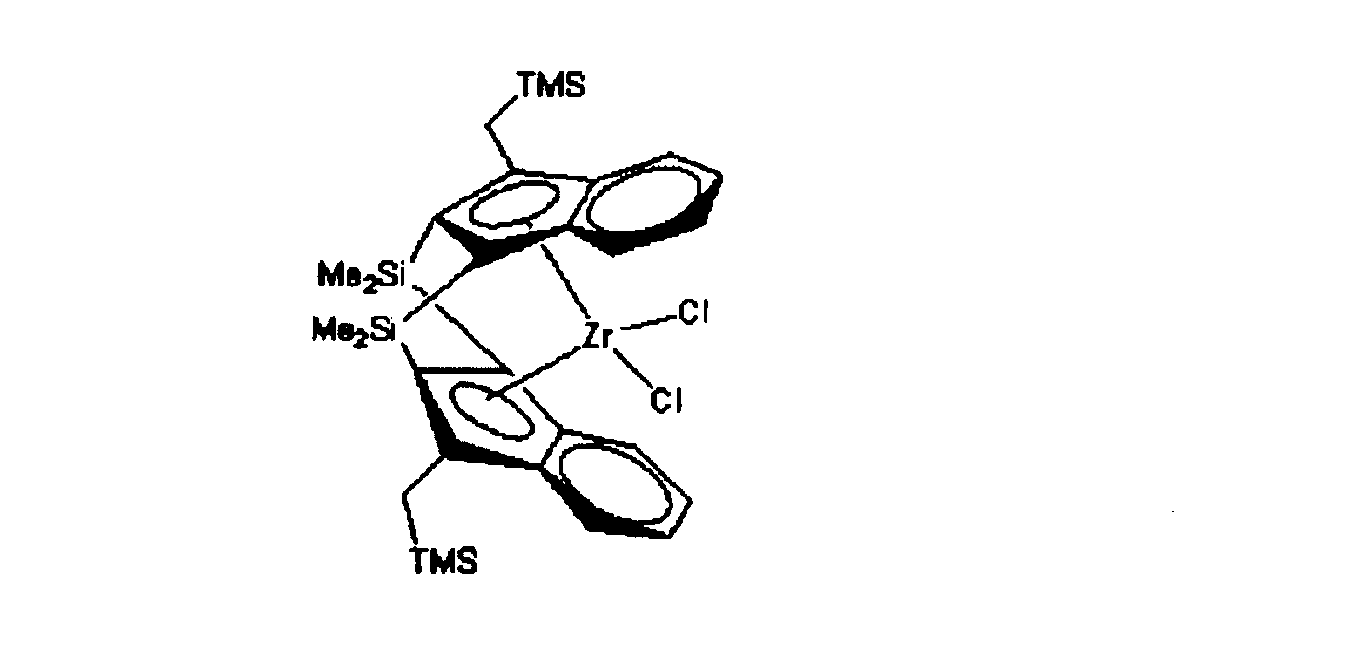
<合成例4>(1,1’-SiMe2SiMe2)(2,2’-SiMe2)ビス(インデニル)ジルコニウムジクロライドの合成
窒素気流下、300mlの三つ口フラスコにマグネシウム2.5gとテトラヒドロフラン(THF)100ml投入し、ヨウ素一片(約5mg)を添加した。ここへTHF40mlに溶解した2-ブロモインデン5.0g(25.6mmol)を滴下漏斗より滴下した。滴下終了後、さらに室温で2時間攪拌した後、ジクロロジメチルシラン1.5ml(12.4mmol)を滴下した。滴下終了後、室温で終夜攪拌した後、THFを留去し、残渣をヘキサン50mlで抽出すると淡黄色油状物としてビス(インデニル)ジメチルシランが2.68g(収率73%)で得られた。
これをエーテル30mlに溶解し、-78℃でn-ブチルリチウム(n-BuLi)のn-ヘキサン溶液(1.52mol/L)12.2mlを加えた。室温で終夜攪拌した後、上澄みをろ別し、得られた白色固体をヘキサンで洗浄した後、減圧乾燥することによりジリチウム塩が得られた。この塩をTHF30mlに溶解し、1,2-ジクロロテトラメチルジシラン1.1mlを滴下した。室温で3時間攪拌した後、溶媒を除去し、残渣をヘキサン30mlで抽出した。ろ別後溶媒を留去すると(1,1’-SiMe2SiMe2)(2,2’-SiMe2)ビス(インデン)が2.42g得られた。
これをエーテル30mlに溶解し、-78℃でn-BuLiのn-ヘキサン溶液(1.52mol/L)7.9mlを滴下した。室温で終夜攪拌した後、上澄みをろ別し、得られた白色沈殿を減圧乾燥することによりジリチウム塩を2.01g得た。この塩をトルエン10mlに懸濁させ、-78℃でトルエン10mlに懸濁させた四塩化ジルコニウム0.96g(4.1mmol)を添加した。
室温で終夜攪拌した後、上澄みをろ別し、1/3にまで濃縮して-20℃に冷却して保存することにより、下記構造を有する(1,1’-SiMe2SiMe2)(2,2’-SiMe2)ビス(インデン)の黄色の粉末が析出した(収率23%)。
窒素気流下、300mlの三つ口フラスコにマグネシウム2.5gとテトラヒドロフラン(THF)100ml投入し、ヨウ素一片(約5mg)を添加した。ここへTHF40mlに溶解した2-ブロモインデン5.0g(25.6mmol)を滴下漏斗より滴下した。滴下終了後、さらに室温で2時間攪拌した後、ジクロロジメチルシラン1.5ml(12.4mmol)を滴下した。滴下終了後、室温で終夜攪拌した後、THFを留去し、残渣をヘキサン50mlで抽出すると淡黄色油状物としてビス(インデニル)ジメチルシランが2.68g(収率73%)で得られた。
これをエーテル30mlに溶解し、-78℃でn-ブチルリチウム(n-BuLi)のn-ヘキサン溶液(1.52mol/L)12.2mlを加えた。室温で終夜攪拌した後、上澄みをろ別し、得られた白色固体をヘキサンで洗浄した後、減圧乾燥することによりジリチウム塩が得られた。この塩をTHF30mlに溶解し、1,2-ジクロロテトラメチルジシラン1.1mlを滴下した。室温で3時間攪拌した後、溶媒を除去し、残渣をヘキサン30mlで抽出した。ろ別後溶媒を留去すると(1,1’-SiMe2SiMe2)(2,2’-SiMe2)ビス(インデン)が2.42g得られた。
これをエーテル30mlに溶解し、-78℃でn-BuLiのn-ヘキサン溶液(1.52mol/L)7.9mlを滴下した。室温で終夜攪拌した後、上澄みをろ別し、得られた白色沈殿を減圧乾燥することによりジリチウム塩を2.01g得た。この塩をトルエン10mlに懸濁させ、-78℃でトルエン10mlに懸濁させた四塩化ジルコニウム0.96g(4.1mmol)を添加した。
室温で終夜攪拌した後、上澄みをろ別し、1/3にまで濃縮して-20℃に冷却して保存することにより、下記構造を有する(1,1’-SiMe2SiMe2)(2,2’-SiMe2)ビス(インデン)の黄色の粉末が析出した(収率23%)。

<製造例1>側鎖結晶性を有する高級α-オレフィン単独重合体1の製造
加熱乾燥した1Lのオートクレーブに、1-オクタデセン(C18)400ml、トリイソブチルアルミニウム[(c)成分]1mmol、合成例3で得た(1,2’-ジメチルシリレン)(2,1’-ジメチルシリレン)ビス(3-トリメチルシリルメチルインデニル)ジルコニウムジクロリド[(a)成分]1μmol、ジメチルアニリニウムテトラキスペンタフルオロフェニルボレート[(b-1)成分]4μmolを加え、さらに水素0.1MPa導入し、重合温度112℃にて60分間重合した。
重合反応終了後、減圧下、加熱乾燥することにより、側鎖結晶性を有する高級α-オレフィン単独重合体[以下、結晶性高級α-オレフィン単独重合体1と称する。]を221g得た。
加熱乾燥した1Lのオートクレーブに、1-オクタデセン(C18)400ml、トリイソブチルアルミニウム[(c)成分]1mmol、合成例3で得た(1,2’-ジメチルシリレン)(2,1’-ジメチルシリレン)ビス(3-トリメチルシリルメチルインデニル)ジルコニウムジクロリド[(a)成分]1μmol、ジメチルアニリニウムテトラキスペンタフルオロフェニルボレート[(b-1)成分]4μmolを加え、さらに水素0.1MPa導入し、重合温度112℃にて60分間重合した。
重合反応終了後、減圧下、加熱乾燥することにより、側鎖結晶性を有する高級α-オレフィン単独重合体[以下、結晶性高級α-オレフィン単独重合体1と称する。]を221g得た。
<製造例2>側鎖結晶性を有する高級α-オレフィン共重合体2の製造
加熱乾燥した1Lのオートクレーブに、炭素数20、22、24のα-オレフィン混合物[42:37:21(モル比)]400ml、トリイソブチルアルミニウム[(c)成分]1mmol、合成例3で得た(1,2’-ジメチルシリレン)(2,1’-ジメチルシリレン)ビス(3-トリメチルシリルメチルインデニル)ジルコニウムジクロリド[(a)成分]1μmol、ジメチルアニリニウムテトラキスペンタフルオロフェニルボレート[(b-1)成分]4μmolを加え、さらに水素0.1MPa導入し、重合温度100℃にて60分間重合した。
重合反応終了後、減圧下、加熱乾燥することにより、側鎖結晶性を有する高級α-オレフィン共重合体[以下、結晶性高級α-オレフィン共重合体2と称する。]を205g得た。
加熱乾燥した1Lのオートクレーブに、炭素数20、22、24のα-オレフィン混合物[42:37:21(モル比)]400ml、トリイソブチルアルミニウム[(c)成分]1mmol、合成例3で得た(1,2’-ジメチルシリレン)(2,1’-ジメチルシリレン)ビス(3-トリメチルシリルメチルインデニル)ジルコニウムジクロリド[(a)成分]1μmol、ジメチルアニリニウムテトラキスペンタフルオロフェニルボレート[(b-1)成分]4μmolを加え、さらに水素0.1MPa導入し、重合温度100℃にて60分間重合した。
重合反応終了後、減圧下、加熱乾燥することにより、側鎖結晶性を有する高級α-オレフィン共重合体[以下、結晶性高級α-オレフィン共重合体2と称する。]を205g得た。
<製造例3>側鎖結晶性を有する高級α-オレフィン共重合体3の製造
加熱乾燥した1Lのオートクレーブに、1-ヘキサデセン(C16)280ml、1-オクタデセン(C18)120ml、トリイソブチルアルミニウム[(c)成分]1mmol、合成例3で得た(1,2’-ジメチルシリレン)(2,1’-ジメチルシリレン)ビス(3-トリメチルシリルメチルインデニル)ジルコニウムジクロリド[(a)成分]を1μmol、ジメチルアニリニウムテトラキスペンタフルオロフェニルボレート[(b-1)成分]を4μmol加え、さらに水素0.1MPa導入し、重合温度105℃にて60分間重合した。
重合反応終了後、減圧下、加熱乾燥することにより、側鎖結晶性を有する高級α-オレフィン共重合体[以下、結晶性高級α-オレフィン共重合体3と称する。]を196g得た。
加熱乾燥した1Lのオートクレーブに、1-ヘキサデセン(C16)280ml、1-オクタデセン(C18)120ml、トリイソブチルアルミニウム[(c)成分]1mmol、合成例3で得た(1,2’-ジメチルシリレン)(2,1’-ジメチルシリレン)ビス(3-トリメチルシリルメチルインデニル)ジルコニウムジクロリド[(a)成分]を1μmol、ジメチルアニリニウムテトラキスペンタフルオロフェニルボレート[(b-1)成分]を4μmol加え、さらに水素0.1MPa導入し、重合温度105℃にて60分間重合した。
重合反応終了後、減圧下、加熱乾燥することにより、側鎖結晶性を有する高級α-オレフィン共重合体[以下、結晶性高級α-オレフィン共重合体3と称する。]を196g得た。
<製造例4>側鎖結晶性を有する高級α-オレフィン単独重合体4の製造
加熱乾燥した1Lのオートクレーブに、1-オクタデセン(C18)400ml、トリイソブチルアルミニウム[(c)成分]1mmol、合成例4で得た(1,1’-SiMe2SiMe2)(2,2’-SiMe2)ビス(インデニル)ジルコニウムジクロライド1μmol、ジメチルアニリニウムテトラキスペンタフルオロフェニルボレート[(b-1)成分]を4μmol加え、さらに水素0.05MPa導入し、重合温度90℃にて60分間重合した。
重合反応終了後、減圧下、加熱乾燥することにより、側鎖結晶性を有する高級α-オレフィン単独重合体[以下、結晶性高級α-オレフィン単独重合体4と称する。]を212g得た。
加熱乾燥した1Lのオートクレーブに、1-オクタデセン(C18)400ml、トリイソブチルアルミニウム[(c)成分]1mmol、合成例4で得た(1,1’-SiMe2SiMe2)(2,2’-SiMe2)ビス(インデニル)ジルコニウムジクロライド1μmol、ジメチルアニリニウムテトラキスペンタフルオロフェニルボレート[(b-1)成分]を4μmol加え、さらに水素0.05MPa導入し、重合温度90℃にて60分間重合した。
重合反応終了後、減圧下、加熱乾燥することにより、側鎖結晶性を有する高級α-オレフィン単独重合体[以下、結晶性高級α-オレフィン単独重合体4と称する。]を212g得た。
実施例で用いる結晶性高級α-オレフィン単独重合体1、結晶性高級α-オレフィン共重合体2、結晶性高級α-オレフィン共重合体3及び結晶性高級α-オレフィン単独重合体4、並びに比較例で用いる「バイバー103」(ベーカーペトロライト社製)、「バイバー260」(ベーカーペトロライト社製)及び「バイバー343」(ベーカーペトロライト社製)が有する特性について、下記表1にまとめた。
なお、バイバー103、バイバー260、バイバー343は、いずれもハイパーブランチ構造である。
なお、バイバー103、バイバー260、バイバー343は、いずれもハイパーブランチ構造である。

<実施例1~10、比較例1~17、参考例1>
表2~4に記載の配合比(単位:質量部)にて、顔料を除く各成分を85℃で溶融して撹拌混合し、次いで顔料を用いる場合には同温度で顔料を添加して完全に混合した。こうして得られた混合物を、予め燃焼芯を配置した20mlガラス製カップに流し込んだ後、室温(20℃)で固化させることによってキャンドルを製造した。
下記方法に従って、各キャンドルの成形性、燃焼性(炎の大きさ)、燃焼持続性、香料拡散性、表面光沢性及び外観について評価した。結果を表2~4に示す。
なお、燃焼性、燃焼持続性、香料拡散性、表面光沢性の評価に際し、燃焼の様子を示す写真を図1~図4に示す。また、外観の評価に際し、各例で得たキャンドルの様子を示す写真を図5~9に示す。
表2~4に記載の配合比(単位:質量部)にて、顔料を除く各成分を85℃で溶融して撹拌混合し、次いで顔料を用いる場合には同温度で顔料を添加して完全に混合した。こうして得られた混合物を、予め燃焼芯を配置した20mlガラス製カップに流し込んだ後、室温(20℃)で固化させることによってキャンドルを製造した。
下記方法に従って、各キャンドルの成形性、燃焼性(炎の大きさ)、燃焼持続性、香料拡散性、表面光沢性及び外観について評価した。結果を表2~4に示す。
なお、燃焼性、燃焼持続性、香料拡散性、表面光沢性の評価に際し、燃焼の様子を示す写真を図1~図4に示す。また、外観の評価に際し、各例で得たキャンドルの様子を示す写真を図5~9に示す。
(成形性の評価方法)
JIS K2235に準拠して、25℃にて荷重100gで5秒間針を差し込んだときの針の進入した長さ(mm)を測定し、その10倍の値を「針入度」として求めた。該針入度により、下記評価基準に従って成形性を評価した。
○:針入度が9以下で硬く、ひび割れしにくい。
△:針入度が9を超えて15以下で、手で触ると若干脆く感じる。
×:針入度が15を超えており、脆い。
(燃焼性の評価方法)
比較例11で製造したキャンドルによる炎の大きさを基準として、下記評価基準に従って、燃焼性を評価した。また、各評価における炎の大きさを図1に示す。
○:比較例11の場合と同程度の大きな炎である。
△:比較例11の場合よりも一回り小さめ(70~50%)の炎である。
×:比較例11の場合よりも大幅に小さい炎である。
(燃焼持続性の評価方法)
キャンドルに着火してからの炎の経時変化を調査し、下記評価基準に従って燃焼持続性を評価した。また、各評価における炎の経時変化を図2に示す。
○:10分後も炎の大きさが着火初期と同程度であり、30分後でもまだ全く消えそうにない状態である。
△:10分後も炎の大きさが着火初期と同程度であり、30分後には炎が小さくなっているが、炎の状態は安定している。
×:15分後には既に炎が小さくなっており、今にも消えそうな状態である。
JIS K2235に準拠して、25℃にて荷重100gで5秒間針を差し込んだときの針の進入した長さ(mm)を測定し、その10倍の値を「針入度」として求めた。該針入度により、下記評価基準に従って成形性を評価した。
○:針入度が9以下で硬く、ひび割れしにくい。
△:針入度が9を超えて15以下で、手で触ると若干脆く感じる。
×:針入度が15を超えており、脆い。
(燃焼性の評価方法)
比較例11で製造したキャンドルによる炎の大きさを基準として、下記評価基準に従って、燃焼性を評価した。また、各評価における炎の大きさを図1に示す。
○:比較例11の場合と同程度の大きな炎である。
△:比較例11の場合よりも一回り小さめ(70~50%)の炎である。
×:比較例11の場合よりも大幅に小さい炎である。
(燃焼持続性の評価方法)
キャンドルに着火してからの炎の経時変化を調査し、下記評価基準に従って燃焼持続性を評価した。また、各評価における炎の経時変化を図2に示す。
○:10分後も炎の大きさが着火初期と同程度であり、30分後でもまだ全く消えそうにない状態である。
△:10分後も炎の大きさが着火初期と同程度であり、30分後には炎が小さくなっているが、炎の状態は安定している。
×:15分後には既に炎が小さくなっており、今にも消えそうな状態である。
(香料拡散性の評価方法)
着火してから20分後のキャンドル表面(炎のある側であり、上表面。)の液面の広がり具体を調査し、香料拡散性の指標とした。香料拡散性は、下記評価基準に従って行なった。なお、液面(融解部位)の広がりが良好であれば、香料の拡散性も良好であることを意味する。また、各評価におけるキャンドル表面の液面の広がり具合を図3に示す。
○:液面が表面一杯に広がっている。
△:液面は横には広がっていないが、融解が下方向に進行している。
×:あまり液面が広がっていない。
(表面光沢性の評価方法1)
成形後~着火直後のキャンドル表面(燃焼芯が見えている側であり、上表面。)の状態を調査し、表面光沢性の指標とした。表面光沢性の評価は、下記評価基準に従って行なった。また、各評価におけるキャンドル表面の状態を図4(着火直後のキャンドルの写真)に示す。
○:キャンドル表面が滑らかである。
×:キャンドル表面に凹凸がある。
(表面光沢性の評価方法2;Ra、Rz)
成形後のキャンドルの表面粗さ[算出平均粗さ(Ra;Arithmetic Mean Deviation of the Profile)及び最大高さ粗さ(Rz;Maximum Height of the Profile)](単位:μm)をレーザースキャニングマイクロスコープ「走査型共焦点顕微鏡 H1200」(レーザーテック株式会社製)で測定した。数値が小さいほど、粗さが小さく、表面光沢性があることを示す。
(外観の評価方法)
キャンドルを目視し、下記評価基準に従って評価した。また、各例で得たキャンドルの状態を図5~9に示す。
○:キャンドルが模様(まだら模様)を呈している。
×:キャンドルが模様を呈していない。
着火してから20分後のキャンドル表面(炎のある側であり、上表面。)の液面の広がり具体を調査し、香料拡散性の指標とした。香料拡散性は、下記評価基準に従って行なった。なお、液面(融解部位)の広がりが良好であれば、香料の拡散性も良好であることを意味する。また、各評価におけるキャンドル表面の液面の広がり具合を図3に示す。
○:液面が表面一杯に広がっている。
△:液面は横には広がっていないが、融解が下方向に進行している。
×:あまり液面が広がっていない。
(表面光沢性の評価方法1)
成形後~着火直後のキャンドル表面(燃焼芯が見えている側であり、上表面。)の状態を調査し、表面光沢性の指標とした。表面光沢性の評価は、下記評価基準に従って行なった。また、各評価におけるキャンドル表面の状態を図4(着火直後のキャンドルの写真)に示す。
○:キャンドル表面が滑らかである。
×:キャンドル表面に凹凸がある。
(表面光沢性の評価方法2;Ra、Rz)
成形後のキャンドルの表面粗さ[算出平均粗さ(Ra;Arithmetic Mean Deviation of the Profile)及び最大高さ粗さ(Rz;Maximum Height of the Profile)](単位:μm)をレーザースキャニングマイクロスコープ「走査型共焦点顕微鏡 H1200」(レーザーテック株式会社製)で測定した。数値が小さいほど、粗さが小さく、表面光沢性があることを示す。
(外観の評価方法)
キャンドルを目視し、下記評価基準に従って評価した。また、各例で得たキャンドルの状態を図5~9に示す。
○:キャンドルが模様(まだら模様)を呈している。
×:キャンドルが模様を呈していない。
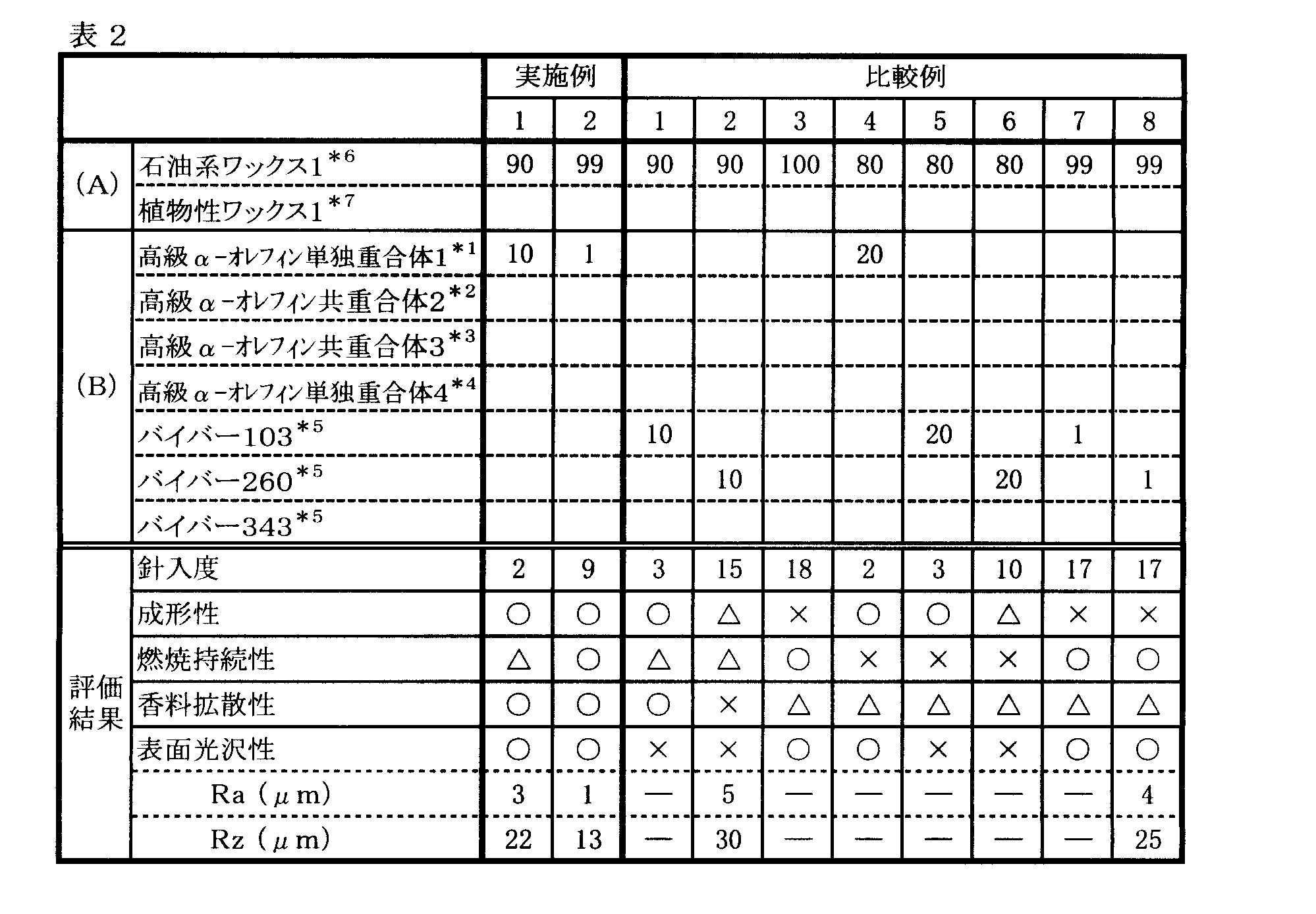


表2~4中の注釈の説明。
*1:製造例1で得た結晶性高級α-オレフィン単独重合体1
*2:製造例2で得た結晶性高級α-オレフィン共重合体2
*3:製造例3で得た結晶性高級α-オレフィン共重合体3
*4:製造例4で得た結晶性高級α-オレフィン単独重合体4
*5:ベーカーペトロライト社製
*6:「パラフィン155」、パラフィンワックス、日本精蝋株式会社製、融点68℃
*7:「大豆ワックス」、融点55℃
*8:キャンドルが割れたため、測定不可能であった。
*9:「パラフィン145」、パラフィンワックス、日本精蝋株式会社製、融点62℃
*10:クレヨン
*11:流動パラフィン(特級)、純正化学株式会社製
*1:製造例1で得た結晶性高級α-オレフィン単独重合体1
*2:製造例2で得た結晶性高級α-オレフィン共重合体2
*3:製造例3で得た結晶性高級α-オレフィン共重合体3
*4:製造例4で得た結晶性高級α-オレフィン単独重合体4
*5:ベーカーペトロライト社製
*6:「パラフィン155」、パラフィンワックス、日本精蝋株式会社製、融点68℃
*7:「大豆ワックス」、融点55℃
*8:キャンドルが割れたため、測定不可能であった。
*9:「パラフィン145」、パラフィンワックス、日本精蝋株式会社製、融点62℃
*10:クレヨン
*11:流動パラフィン(特級)、純正化学株式会社製
表2~4より、本発明により得られるキャンドルは、ひび割れが起こりにくくて成形性が高く、燃焼持続性及び香料拡散性に優れており、かつ表面光沢性にも優れていることがわかる。なお、(A)成分として植物性ワックスを利用した場合は、燃焼性にも優れていた。さらに、顔料を添加した実施例7~10で得られたキャンドルは、優れた外観を有する。また、常温で液体のオイルを添加することなく、キャンドルの外観を良好にできることがわかる。
一方、比較例では、成形性、燃焼持続性、香料拡散性及び表面光沢性並びに外観の全てを満足するものはなく、キャンドルとして使用するには課題が残る。特に、比較例7及び8では、針入度が高くなっているが、これは、(1)バイバー103及びバイバー206が、分子量分布が広いために低分子量成分も含有しているため、及び(2)バイバー103及びバイバー206はハイパーブランチ構造であり、かつ酸価が高いため、パラフィンワックスとの相溶性が不十分であると考えられ、そのために分散不良となって柔らかい部分が存在しているのではないかと推測する。
一方、比較例では、成形性、燃焼持続性、香料拡散性及び表面光沢性並びに外観の全てを満足するものはなく、キャンドルとして使用するには課題が残る。特に、比較例7及び8では、針入度が高くなっているが、これは、(1)バイバー103及びバイバー206が、分子量分布が広いために低分子量成分も含有しているため、及び(2)バイバー103及びバイバー206はハイパーブランチ構造であり、かつ酸価が高いため、パラフィンワックスとの相溶性が不十分であると考えられ、そのために分散不良となって柔らかい部分が存在しているのではないかと推測する。
<実施例11~14、比較例18~20> 香料を含有するキャンドル
表5に記載の配合比(単位:質量部)にて、85℃で溶融して撹拌混合し、予め燃焼芯を配置した60mlガラス製カップに流し込んだ後、室温(20℃)で固化させることによって、香料を含有するキャンドルを製造した。
下記方法に従って、各キャンドルの香料拡散性、オイルブリード量、外観及び模様の安定性について評価した。結果を表5に示す。
表5に記載の配合比(単位:質量部)にて、85℃で溶融して撹拌混合し、予め燃焼芯を配置した60mlガラス製カップに流し込んだ後、室温(20℃)で固化させることによって、香料を含有するキャンドルを製造した。
下記方法に従って、各キャンドルの香料拡散性、オイルブリード量、外観及び模様の安定性について評価した。結果を表5に示す。
(香料拡散性)
500mlの集気びんにキャンドルを入れ、1分間保持した。その後、蓋を開けて、匂いの強さを下記評価基準に従って評価した。
香料3%品を基準にして、強い「5」、やや強い「4」、同等の強さ「3」、やや弱い「2」、弱い「1」として評価を行った。評価値が大きいほど、香料拡散性が大きいことを示す。
なお、評価は、健全性評価がなされた男女各5名ずつの10名で実施し、その平均値を示した。
(オイルブリード量、35℃で放置後の表面の様子)
キャンドルから、直径2.5cm、高さ1cmの円柱成形物を作製した。アルミパン(アルミニウム製のフライパン)の上に脂取り紙を敷き、その上に円柱成形物を置いて、35℃で24時間保持した。その後の脂取り紙の重量から、加熱する前の円柱成形物の重量を引くことによって、オイルブリード量(単位:g)を測定した。値が小さいほど、オイルブリードが少ない、つまり、香料をキャンドル内部に閉じ込めておく性質に優れていることを示す。
さらに、別途、35℃にて2日放置したキャンドルの表面の様子を目視で観察し、下記評価基準に従って評価した。
○:表面に変化なし。
×:表面にオイル液滴が観察される。
(外観)
キャンドルを目視し、下記評価基準に従って評価した。また、各例で得たキャンドルの状態を図5~9に示す。
○:キャンドルが模様(まだら模様)を呈している。
×:キャンドルが模様を呈していない。
(模様発現の安定性)
固化させる温度を35℃に変更してキャンドルを作製した場合に、20℃に冷却して固化させた場合と同様に模様を呈する場合には「○」、模様を呈さなかった場合には「×」とした。○であると、模様発現が製造条件に依存せず、模様発現の安定性が高いと言える。
500mlの集気びんにキャンドルを入れ、1分間保持した。その後、蓋を開けて、匂いの強さを下記評価基準に従って評価した。
香料3%品を基準にして、強い「5」、やや強い「4」、同等の強さ「3」、やや弱い「2」、弱い「1」として評価を行った。評価値が大きいほど、香料拡散性が大きいことを示す。
なお、評価は、健全性評価がなされた男女各5名ずつの10名で実施し、その平均値を示した。
(オイルブリード量、35℃で放置後の表面の様子)
キャンドルから、直径2.5cm、高さ1cmの円柱成形物を作製した。アルミパン(アルミニウム製のフライパン)の上に脂取り紙を敷き、その上に円柱成形物を置いて、35℃で24時間保持した。その後の脂取り紙の重量から、加熱する前の円柱成形物の重量を引くことによって、オイルブリード量(単位:g)を測定した。値が小さいほど、オイルブリードが少ない、つまり、香料をキャンドル内部に閉じ込めておく性質に優れていることを示す。
さらに、別途、35℃にて2日放置したキャンドルの表面の様子を目視で観察し、下記評価基準に従って評価した。
○:表面に変化なし。
×:表面にオイル液滴が観察される。
(外観)
キャンドルを目視し、下記評価基準に従って評価した。また、各例で得たキャンドルの状態を図5~9に示す。
○:キャンドルが模様(まだら模様)を呈している。
×:キャンドルが模様を呈していない。
(模様発現の安定性)
固化させる温度を35℃に変更してキャンドルを作製した場合に、20℃に冷却して固化させた場合と同様に模様を呈する場合には「○」、模様を呈さなかった場合には「×」とした。○であると、模様発現が製造条件に依存せず、模様発現の安定性が高いと言える。
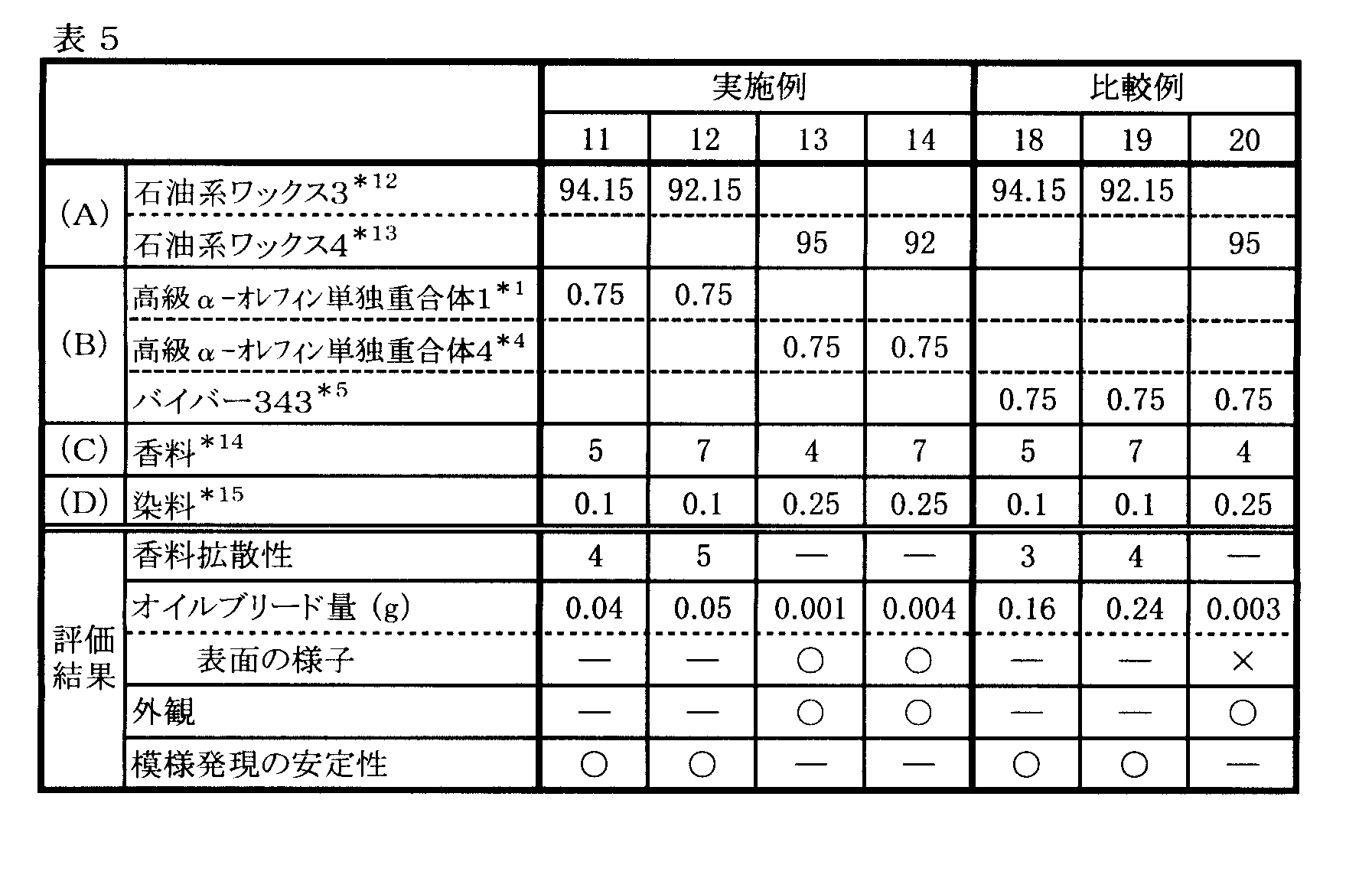
表5中の注釈の説明。
*1:製造例1で得た結晶性高級α-オレフィン単独重合体1
*4:製造例4で得た結晶性高級α-オレフィン単独重合体4
*5:ベーカーペトロライト社製
*12:「HP310」、パラフィンワックス、Exxon Mobil社製、融点52℃
*13:パラフィンワックス135、日本精蝋株式会社製、融点57℃
*14:「フルーティーブレンド N90048」、Airabella社製
*15:油性染料
*1:製造例1で得た結晶性高級α-オレフィン単独重合体1
*4:製造例4で得た結晶性高級α-オレフィン単独重合体4
*5:ベーカーペトロライト社製
*12:「HP310」、パラフィンワックス、Exxon Mobil社製、融点52℃
*13:パラフィンワックス135、日本精蝋株式会社製、融点57℃
*14:「フルーティーブレンド N90048」、Airabella社製
*15:油性染料
表5より、本発明により得られるキャンドルは、香料拡散性に優れており、オイルブリード量が少ないことより、香料持続性が高く、かつ外観を損ねないと言え、さらに、模様を呈する、特に製造条件に依存せずに安定的に模様を呈することができることが分かる。
実施例11と比較例18、実施例12と比較例19とを比べると、比較例18及び19では、香料拡散性が劣っており、同時にオイルブリード量が多いことが分かる。また、実施例13と比較例20を比べると、比較例20では、オイルブリード量は少々劣る程度であるが、35℃にて2日間放置したキャンドルの表面にはオイル液滴が観察され、表面の外観を損ねることが分かった。
実施例11と比較例18、実施例12と比較例19とを比べると、比較例18及び19では、香料拡散性が劣っており、同時にオイルブリード量が多いことが分かる。また、実施例13と比較例20を比べると、比較例20では、オイルブリード量は少々劣る程度であるが、35℃にて2日間放置したキャンドルの表面にはオイル液滴が観察され、表面の外観を損ねることが分かった。
本発明のワックス組成物は、ひび割れが起こりにくくて成形性が高い。さらに、燃焼持続性、香料拡散性及び表面光沢性に優れており、かつキャンドルとしたときの外観に優れ、オイルブリード量が少ないため、キャンドル用として有用である。さらに、本発明のワックス組成物は、香料、さらには染料又は顔料を含有させることにより、アロマキャンドル用として有用である。
Claims (9)
- (A)ワックス及び
(B)側鎖結晶性を有する、炭素数10以上の高級α-オレフィンを用いて得られる単独重合体又は共重合体
を含有するキャンドル用ワックス組成物であって、前記(A)成分と(B)成分との含有比率[(A)成分:(B)成分]が、質量比で、81:19~99.99:0.01であることを特徴とするキャンドル用ワックス組成物。 - 前記(B)成分が、下記特性(1)~(3)を有するものである、請求項1に記載のキャンドル用ワックス組成物。
(1)B型粘度計による100℃での粘度が10~10,000mPa・sである。
(2)示差走査熱量計(DSC)により求められる融点が1つであり、該融点が20~100℃の範囲にあり、かかる融点の測定に際して得られる吸熱ピークの半値幅が10℃以下である。
(3)立体規則性指標値M2が75モル%以下である。 - さらに、(C)香料を含有する、請求項1又は2に記載のキャンドル用ワックス組成物。
- さらに、(D)染料又は顔料を含有する、請求項1~3のいずれかに記載のキャンドル用ワックス組成物。
- 前記(D)成分の含有量が、前記(A)成分及び(B)成分の合計100質量部に対して0.01~20質量部である、請求項4に記載のキャンドル用ワックス組成物。
- 前記(A)成分の示差走査熱量計(DSC)により求められる融点(Tm-A)と、前記(B)成分の示差走査熱量計(DSC)により求められる融点(Tm-B)が下記式(i)の関係を満たす、請求項4又は5に記載のキャンドル用ワックス組成物。
(Tm-A)≧(Tm-B)+10 (i) - 前記特性(2)において、融点が20~55℃の範囲である、請求項4~6のいずれかに記載のキャンドル用ワックス組成物。
- 前記(A)成分が、石油系ワックス又は植物性ワックスである、請求項1~7に記載のキャンドル用ワックス組成物。
- 請求項1~8のいずれかに記載のワックス組成物と燃焼芯とを有するキャンドル。
Applications Claiming Priority (4)
| Application Number | Priority Date | Filing Date | Title |
|---|---|---|---|
| JP2011138876 | 2011-06-22 | ||
| JP2011-138876 | 2011-06-22 | ||
| JP2011-184876 | 2011-08-26 | ||
| JP2011184876 | 2011-08-26 |
Publications (1)
| Publication Number | Publication Date |
|---|---|
| WO2012176881A1 true WO2012176881A1 (ja) | 2012-12-27 |
Family
ID=47422709
Family Applications (1)
| Application Number | Title | Priority Date | Filing Date |
|---|---|---|---|
| PCT/JP2012/065998 Ceased WO2012176881A1 (ja) | 2011-06-22 | 2012-06-22 | キャンドル用ワックス組成物及びキャンドル |
Country Status (1)
| Country | Link |
|---|---|
| WO (1) | WO2012176881A1 (ja) |
Cited By (3)
| Publication number | Priority date | Publication date | Assignee | Title |
|---|---|---|---|---|
| CN113425880A (zh) * | 2021-04-29 | 2021-09-24 | 河北古城香业集团股份有限公司 | 一种环保型无烟燃香及制备方法 |
| US20220178761A1 (en) * | 2020-12-08 | 2022-06-09 | Temptime Corporation | Time-temperature exposure indicator with delayed threshold response |
| US12540863B2 (en) | 2022-07-18 | 2026-02-03 | Zebra Technologies Corporation | Capacitance-based temperature sensor with delay |
Citations (2)
| Publication number | Priority date | Publication date | Assignee | Title |
|---|---|---|---|---|
| JP2002508436A (ja) * | 1997-12-17 | 2002-03-19 | エス.シー. ジョンソン アンド サン、インコーポレイテッド | エアフレッシュナ先細状蝋燭製品 |
| JP2002527559A (ja) * | 1998-10-12 | 2002-08-27 | クラリアント・インターナシヨナル・リミテツド | 着色、成形された固形ワックス物品 |
-
2012
- 2012-06-22 WO PCT/JP2012/065998 patent/WO2012176881A1/ja not_active Ceased
Patent Citations (2)
| Publication number | Priority date | Publication date | Assignee | Title |
|---|---|---|---|---|
| JP2002508436A (ja) * | 1997-12-17 | 2002-03-19 | エス.シー. ジョンソン アンド サン、インコーポレイテッド | エアフレッシュナ先細状蝋燭製品 |
| JP2002527559A (ja) * | 1998-10-12 | 2002-08-27 | クラリアント・インターナシヨナル・リミテツド | 着色、成形された固形ワックス物品 |
Cited By (4)
| Publication number | Priority date | Publication date | Assignee | Title |
|---|---|---|---|---|
| US20220178761A1 (en) * | 2020-12-08 | 2022-06-09 | Temptime Corporation | Time-temperature exposure indicator with delayed threshold response |
| US12140480B2 (en) * | 2020-12-08 | 2024-11-12 | Temptime Corporation | Time-temperature exposure indicator with delayed threshold response |
| CN113425880A (zh) * | 2021-04-29 | 2021-09-24 | 河北古城香业集团股份有限公司 | 一种环保型无烟燃香及制备方法 |
| US12540863B2 (en) | 2022-07-18 | 2026-02-03 | Zebra Technologies Corporation | Capacitance-based temperature sensor with delay |
Similar Documents
| Publication | Publication Date | Title |
|---|---|---|
| TWI237645B (en) | Process for producing a polymer of an alpha-olefin and lubricant | |
| US9777205B2 (en) | Thermal grease based on hyperbranched olefinic fluid | |
| JP4427669B2 (ja) | 潤滑油用粘度調整剤および潤滑油組成物 | |
| JP6618891B2 (ja) | エチレン/α−オレフィン共重合体および潤滑油 | |
| WO2000060032A1 (en) | Viscosity regulator for lubricating oil and lubricating oil composition | |
| JP4359807B2 (ja) | 潤滑油用粘度調整剤および潤滑油組成物 | |
| CN102712710A (zh) | α-链烯烃(共)聚合物、氢化α-链烯烃(共)聚合物及含有它们的润滑油组合物 | |
| JP6496533B2 (ja) | 水分散体組成物 | |
| JP6326337B2 (ja) | 工業ギア用潤滑油組成物 | |
| JPWO2006028169A1 (ja) | 潤滑油用粘度調整剤、潤滑油用添加剤組成物および潤滑油組成物 | |
| WO2012176881A1 (ja) | キャンドル用ワックス組成物及びキャンドル | |
| CN106414470A (zh) | 作为聚合催化剂的第iva族金属的甲硅烷基二(六甲基茚基)络合物 | |
| WO2008047878A1 (fr) | Copolymère, modificateur de viscosité d'huile lubrifiante et composition d'huile lubrifiante | |
| JP7645911B2 (ja) | 水分散体組成物、当該水分散体組成物の製造方法およびエチレン・α-オレフィン共重合体酸変性物 | |
| TW201114779A (en) | A-Olefin ologimer and method for producing same | |
| JP2008266523A (ja) | メタロセン錯体を用いた環状オレフィン付加重合体の製造法 | |
| EP1961776B1 (en) | Highly crystalline higher alpha-olefin polymer and process for production thereof | |
| JP6326339B2 (ja) | 作動油用潤滑油組成物 | |
| JPWO2022154126A5 (ja) | ||
| WO2018193894A1 (ja) | ポリプロピレン系樹脂組成物、ペレット、及び成形体 | |
| JP4540963B2 (ja) | 潤滑油用粘度調整剤および潤滑油組成物 | |
| JP2009029983A (ja) | 粘度調整剤 | |
| JP5815457B2 (ja) | 化粧料 | |
| JP7555525B1 (ja) | 水系潤滑剤組成物 | |
| JP2007046017A (ja) | ワックス組成物 |
Legal Events
| Date | Code | Title | Description |
|---|---|---|---|
| 121 | Ep: the epo has been informed by wipo that ep was designated in this application |
Ref document number: 12802839 Country of ref document: EP Kind code of ref document: A1 |
|
| NENP | Non-entry into the national phase |
Ref country code: DE |
|
| 122 | Ep: pct application non-entry in european phase |
Ref document number: 12802839 Country of ref document: EP Kind code of ref document: A1 |
|
| NENP | Non-entry into the national phase |
Ref country code: JP |