WO2012169541A1 - Trpv3活性化剤 - Google Patents
Trpv3活性化剤 Download PDFInfo
- Publication number
- WO2012169541A1 WO2012169541A1 PCT/JP2012/064579 JP2012064579W WO2012169541A1 WO 2012169541 A1 WO2012169541 A1 WO 2012169541A1 JP 2012064579 W JP2012064579 W JP 2012064579W WO 2012169541 A1 WO2012169541 A1 WO 2012169541A1
- Authority
- WO
- WIPO (PCT)
- Prior art keywords
- group
- formula
- trpv3
- carbon atoms
- hydrogen atom
- Prior art date
- Legal status (The legal status is an assumption and is not a legal conclusion. Google has not performed a legal analysis and makes no representation as to the accuracy of the status listed.)
- Ceased
Links
- 0 CC(C)(C)c(cc(*)cc1)c1O Chemical compound CC(C)(C)c(cc(*)cc1)c1O 0.000 description 4
Classifications
-
- A—HUMAN NECESSITIES
- A61—MEDICAL OR VETERINARY SCIENCE; HYGIENE
- A61K—PREPARATIONS FOR MEDICAL, DENTAL OR TOILETRY PURPOSES
- A61K31/00—Medicinal preparations containing organic active ingredients
- A61K31/045—Hydroxy compounds, e.g. alcohols; Salts thereof, e.g. alcoholates
- A61K31/05—Phenols
-
- A—HUMAN NECESSITIES
- A23—FOODS OR FOODSTUFFS; TREATMENT THEREOF, NOT COVERED BY OTHER CLASSES
- A23L—FOODS, FOODSTUFFS OR NON-ALCOHOLIC BEVERAGES, NOT OTHERWISE PROVIDED FOR; PREPARATION OR TREATMENT THEREOF
- A23L33/00—Modifying nutritive qualities of foods; Dietetic products; Preparation or treatment thereof
- A23L33/10—Modifying nutritive qualities of foods; Dietetic products; Preparation or treatment thereof using additives
-
- A—HUMAN NECESSITIES
- A61—MEDICAL OR VETERINARY SCIENCE; HYGIENE
- A61K—PREPARATIONS FOR MEDICAL, DENTAL OR TOILETRY PURPOSES
- A61K8/00—Cosmetics or similar toiletry preparations
- A61K8/18—Cosmetics or similar toiletry preparations characterised by the composition
- A61K8/30—Cosmetics or similar toiletry preparations characterised by the composition containing organic compounds
- A61K8/33—Cosmetics or similar toiletry preparations characterised by the composition containing organic compounds containing oxygen
- A61K8/34—Alcohols
- A61K8/347—Phenols
-
- A—HUMAN NECESSITIES
- A61—MEDICAL OR VETERINARY SCIENCE; HYGIENE
- A61P—SPECIFIC THERAPEUTIC ACTIVITY OF CHEMICAL COMPOUNDS OR MEDICINAL PREPARATIONS
- A61P17/00—Drugs for dermatological disorders
-
- A—HUMAN NECESSITIES
- A61—MEDICAL OR VETERINARY SCIENCE; HYGIENE
- A61P—SPECIFIC THERAPEUTIC ACTIVITY OF CHEMICAL COMPOUNDS OR MEDICINAL PREPARATIONS
- A61P43/00—Drugs for specific purposes, not provided for in groups A61P1/00-A61P41/00
-
- A—HUMAN NECESSITIES
- A61—MEDICAL OR VETERINARY SCIENCE; HYGIENE
- A61Q—SPECIFIC USE OF COSMETICS OR SIMILAR TOILETRY PREPARATIONS
- A61Q19/00—Preparations for care of the skin
Definitions
- the present invention relates to a TRPV3 activator and a warming agent.
- Sense is generated when external stimuli are converted into electrical signals and transmitted to the brain through nerve cells.
- a receptor that senses the external stimulus is necessary.
- a capsaicin receptor (TRPV1) was identified in 1997 as a receptor that senses temperature sensation (Non-patent Document 1).
- TRPV1 was activated by thermal stimulation at 43 ° C. or more in addition to capsaicin, and thus was expected to be a temperature sensory receptor. Furthermore, since TRPV1-deficient mice show only a dull response to thermal stimulation, it has been confirmed that TRPV1 functions as a heat receptor (Non-patent Document 2).
- TRPV1 activation temperature of 43 ° C. is a temperature that causes pain in the living body
- capsaicin which is a chemical ligand
- an analgesic substance TRPV1 is a pain receptor. It is considered to function as a body (Non-patent Document 3).
- TRPV3 is an ion channel belonging to the same TRP (Transient Receptor Potential) family as TRPV1, and is a temperature receptor identified in 2002 (Non-patent Document 4). Since this receptor has an activation threshold in the range of 30 ° C., it is expected to be a receptor having a warm temperature rather than pain. Furthermore, analysis using TRPV3-deficient mice has confirmed that TRPV3 is involved in temperature acceptance in the skin (Non-Patent Document 5).
- TRPV3 is known to be activated by plant-derived components such as camphor, which is a component of hinoki cypress, and thymol and carvacrol, which are components of thyme and oregano (Non-Patent Document 6).
- camphor which is a component of hinoki cypress
- thymol and carvacrol which are components of thyme and oregano
- Non-Patent Document 7 compounds that activate TRPV3 have been searched (Non-Patent Document 7), and it has been disclosed that terpenes such as carvacrol exhibit TRPV3 activation ability.
- terpenes such as carvacrol exhibit TRPV3 activation ability.
- its ability to activate TRPV3 cannot be said to be sufficient, and a search for further substances that activate TRPV3 is required.
- xantolizole is a kind of sesquiterpene, which is a typical constituent of curcuma xanthoriza, a turmeric genus plant.
- xanthorizole antibacterial action
- Non-Patent Documents 8 and 9 uterine contraction action
- Non-Patent Document 10 apoptosis-inducing action
- Non-Patent Document 11 apoptosis-inducing action
- papilloma inhibitory action Non-Patent Document 12
- An inhibitory action on toxicity induced by anticancer agents Non-Patent Documents 13 and 14
- an inhibitory action on cancer metastasis Non-Patent Document 15
- the present invention relates to the following (1) to (8).
- R represents a hydrogen atom, an alkyl group having 1 to 4 carbon atoms or an alkenyl group having 2 to 4 carbon atoms.
- R 1 represents a group —CH (CH 3 ) CH 2 CH 2 CH ⁇ C (CH 3 ) 2 or the group —CH (CH 3 ) CH 2 CH 2 CH 2 CH (CH 3 ) 2 is shown.
- a TRPV3 activator comprising an alkylphenol derivative represented by the formula: (2) The following formula (A1) or (B1):
- R represents a hydrogen atom, an alkyl group having 1 to 4 carbon atoms or an alkenyl group having 2 to 4 carbon atoms.
- R 1 represents a group —CH (CH 3 ) CH 2 CH 2 CH ⁇ C (CH 3 ) 2 or the group —CH (CH 3 ) CH 2 CH 2 CH 2 CH (CH 3 ) 2 is shown.
- the warming agent which uses the alkylphenol derivative represented by these as an active ingredient.
- R represents a hydrogen atom, an alkyl group having 1 to 4 carbon atoms or an alkenyl group having 2 to 4 carbon atoms.
- R 1 represents a group —CH (CH 3 ) CH 2 CH 2 CH ⁇ C (CH 3 ) 2 or the group —CH (CH 3 ) CH 2 CH 2 CH 2 CH (CH 3 ) 2 is shown.
- a method for imparting warmth characterized in that an alkylphenol derivative represented by the formula: (4) The following formula (A1) or (B1) for producing a TRPV3 activator: [In the formula (A1), R represents a hydrogen atom, an alkyl group having 1 to 4 carbon atoms or an alkenyl group having 2 to 4 carbon atoms. In the formula (B1), R 1 represents a group —CH (CH 3 ) CH 2 CH 2 CH ⁇ C (CH 3 ) 2 or the group —CH (CH 3 ) CH 2 CH 2 CH 2 CH (CH 3 ) 2 is shown.
- R represents a hydrogen atom, an alkyl group having 1 to 4 carbon atoms or an alkenyl group having 2 to 4 carbon atoms.
- R 1 represents a group —CH (CH 3 ) CH 2 CH 2 CH ⁇ C (CH 3 ) 2 or the group —CH (CH 3 ) CH 2 CH 2 CH 2 CH (CH 3 ) 2 is shown.
- R represents a hydrogen atom, an alkyl group having 1 to 4 carbon atoms or an alkenyl group having 2 to 4 carbon atoms.
- R 1 represents a group —CH (CH 3 ) CH 2 CH 2 CH ⁇ C (CH 3 ) 2 or the group —CH (CH 3 ) CH 2 CH 2 CH 2 CH (CH 3 ) 2 is shown.
- An alkylphenol derivative represented by: (7) The following formula (A1) or (B1) for use in imparting warmth: [In the formula (A1), R represents a hydrogen atom, an alkyl group having 1 to 4 carbon atoms or an alkenyl group having 2 to 4 carbon atoms. In the formula (B1), R 1 represents a group —CH (CH 3 ) CH 2 CH 2 CH ⁇ C (CH 3 ) 2 or the group —CH (CH 3 ) CH 2 CH 2 CH 2 CH (CH 3 ) 2 is shown.
- the present invention relates to the provision of a TRPV3 activator capable of imparting a warm feeling and a warm feeling imparting method using the same.
- the present inventors make the user feel as a warm feeling, that is, as a material for imparting a warm feeling. I found it useful.
- alkylphenol derivative of the present invention When the alkylphenol derivative of the present invention is blended with, for example, cosmetics, bath preparations, foods, pharmaceuticals or quasi drugs, it is safe and simple without pain when the user takes and applies it. You can feel the warmth.
- the TRPV3 activation of the present invention refers to activating TRPV3 which is a receptor, that is, exhibiting agonist activity with respect to the TRPV3 receptor.
- the TRPV3 receptor is activated by the TRPV3 receptor agonist activity, and the user perceives it as a warm feeling. Therefore, when the TRPV3 activator and warming agent of the present invention are blended in cosmetics, bath preparations, foods, pharmaceuticals, oral compositions, etc., when the user takes and applies them, it is painful. You can feel the warmth without accompanying.
- the alkyl group having 1 to 4 carbon atoms represented by R may be linear or branched, and may be a methyl group or an ethyl group. , N-propyl group, isopropyl group, n-butyl group, sec-butyl group, isobutyl group, tert-butyl group, etc., preferably methyl group or ethyl group.
- the alkenyl group having 2 to 4 carbon atoms represented by R may be either linear or branched, for example, vinyl group, allyl Group, 2-butenyl group, 2-methyl-2-propenyl group and the like.
- Suitable 2-alkylphenol derivatives in the present invention include ot-butylphenol, 2-t-butyl-p-cresol, and 2-t-butyl-4-ethylphenol. From the viewpoint of TRPV3 activity, 2- t-Butyl-p-cresol or 2-t-butyl-4-ethylphenol is more preferred.
- the alkylphenol derivative represented by the formula (A1) of the present invention can be chemically synthesized according to a known method or a method analogous thereto.
- 2-t-butyl-p-cresol is L.P. Lucia et al. Org. Chem. , 1999, 64, 8812-8815.
- M.M. Jones et al. Org. Chem. , 2001, 66, 3435-3441, and 2,4-di-t-butylphenol is obtained from Yamamoto et al.
- alkylphenol derivatives represented by the formula (B1) of the present invention a compound in which R 1 is a —CH (CH 3 ) CH 2 CH 2 CH ⁇ C (CH 3 ) 2 group is xanthrazole.
- the compound in which R 1 is —CH (CH 3 ) CH 2 CH 2 CH 2 CH (CH 3 ) 2 is dihydroxanthorizole.
- the alkylphenol derivative represented by the formula (B1) of the present invention has an asymmetric carbon atom and therefore has an optical isomer. In the present invention, any of R-form, S-form and a mixture thereof may be used.
- xantrisol is preferable from the viewpoint of TRPV3 activity, and (R)-( ⁇ )-xanthorizole represented by the following formula is particularly preferable.
- any of the alkylphenol derivatives represented by the formula (B1) of the present invention is a known compound, and can be chemically synthesized according to a known method or a method analogous thereto.
- xantolizole has been disclosed by T.W. According to the method of Ehara et al. (Chem. Pharma. Bull., 2007, 55 (9), 1361-1364.) I. It can be produced by the method of Agillar et al. (Rev. Soc. Quim. Mex., 2001, 45 (2), 56-59.).
- Xanthorizole is also described in R.I. The method of Horst et al.
- (R)-( ⁇ )-xanthorizole can be isolated by extraction, fractionation, and purification from kuryu-kon, for example, as shown in Production Example 1.
- the alkylphenol derivative obtained as described above can be further purified by a usual purification means such as a recrystallization method or column chromatography, if necessary.
- the alkylphenol derivative according to the present invention has a TRPV3 activating action as shown in Examples below, the user can feel warmth when applying them. That is, the alkylphenol derivative of the present invention can be a TRPV3 activator or a warming agent, and can be used to produce a TRPV3 activator or a warming agent.
- the TRPV3 activator or warming agent may itself be a pharmaceutical, food, cosmetic, quasi-drug, or the like for activating or imparting warmth to TRPV3, or the pharmaceutical, food, cosmetic. Further, it may be a material or a preparation used by being blended in a quasi drug.
- the TRPV3 activator or warming agent may be one using the alkylphenol derivative of the present invention alone, or starch, protein, fiber, carbohydrate, lipid, fatty acid, vitamin, mineral, flavor, Even if it is a composition combined with additives and excipients used in pharmaceuticals, quasi drugs, cosmetics, foods, such as coloring agents, sweeteners, seasonings, preservatives, preservatives, and antioxidants Good. Also, their form is not particularly limited, and can be prepared in any form such as a solution, suspension, syrup, powder, granule, particle and the like.
- dosage forms of pharmaceuticals and quasi-drugs are tablets, capsules, granules, powders, syrups, intravenous injections, intramuscular injections, suppositories, inhalants, percutaneous absorption agents, eye drops, dots Nose, poultices, poultices, ointments, lotions, creams, oral preparations (dentifrices, liquid dentifrices, mouthwashes, gum massage creams, oral ointments, gargle tablets, troches, throat lozenges, etc.) Any of these may be used, and the administration form may be any of oral administration (internal use) and parenteral administration (external use, injection).
- the “quasi-drug” means that the action on the human body is relaxed, has no pharmaceutical effect, and is not a mechanical device (Article 2 Paragraph 2 of the Japanese Pharmaceutical Affairs Law). Examples of suitable products include medicinal cosmetics and bath agents.
- the food may be any of candy, gum, tablet, capsule, various beverages and the like.
- any of skin external preparations, cleaning agents, makeup cosmetics, scalp and hair cosmetics, bath preparations, etc. may be used. Depending on the method of use, they may be lotions, emulsions, gels, creams, ointments. It can be provided in various dosage forms such as agents, powders and granules.
- the blending amount of the alkylphenol derivative in the preparation when the TRPV3 activator or warming agent of the present invention is blended and used in the above pharmaceuticals, foods, cosmetics, and quasi drugs is particularly suitable as long as it has a sufficient warming effect.
- it is 0.01 ppm or more, preferably 1 ppm or more, and 500,000 ppm or less, preferably 100,000 ppm or less for internal preparations (oral medicines, foods, oral compositions, etc.).
- the content is 0.01% by mass or more, preferably 0.1% by mass or more, and 20% by mass or less, preferably 10% by mass or less.
- the TRPV3 receptor is activated by applying (taking, applying, etc.) the compound to a human (user), whereby the user feels warmth. It is characterized by making it sense.
- the method for imparting warmth is not particularly limited as long as the user can feel warmth with the alkylphenol derivative of the present invention.
- the TRPV3 activator or warming agent may be applied directly. Alternatively, it may be applied in the form of being contained in other pharmaceuticals, foods, cosmetics or quasi drugs.
- R represents a hydrogen atom, an alkyl group having 1 to 4 carbon atoms or an alkenyl group having 2 to 4 carbon atoms.
- R 1 represents a group —CH (CH 3 ) CH 2 CH 2 CH ⁇ C (CH 3 ) 2 or the group —CH (CH 3 ) CH 2 CH 2 CH 2 CH (CH 3 ) 2 is shown.
- a TRPV3 activator comprising an alkylphenol derivative represented by the formula: ⁇ 2> The following formula (A1) or (B1):
- R represents a hydrogen atom, an alkyl group or an alkenyl group having 2 to 4 carbon atoms having 1 to 4 carbon atoms
- R 1 is a group -CH (CH 3) CH 2 CH 2 CH ⁇ C (CH 3 ) 2 or the group —CH (CH 3 ) CH 2 CH 2 CH 2 CH (CH 3 ) 2 is shown.
- the warming agent which uses the alkylphenol derivative represented by these as an active ingredient.
- R represents a hydrogen atom, an alkyl group having 1 to 4 carbon atoms or an alkenyl group having 2 to 4 carbon atoms.
- R 1 represents a group —CH (CH 3 ) CH 2 CH 2 CH ⁇ C (CH 3 ) 2 or the group —CH (CH 3 ) CH 2 CH 2 CH 2 CH (CH 3 ) 2 is shown.
- a method for imparting warmth characterized in that an alkylphenol derivative represented by the formula: ⁇ 4>
- R represents a hydrogen atom, an alkyl group having 1 to 4 carbon atoms or an alkenyl group having 2 to 4 carbon atoms.
- R 1 represents a group —CH (CH 3 ) CH 2 CH 2 CH ⁇ C (CH 3 ) 2 or the group —CH (CH 3 ) CH 2 CH 2 CH 2 CH (CH 3 ) 2 is shown.
- R represents a hydrogen atom, an alkyl group having 1 to 4 carbon atoms or an alkenyl group having 2 to 4 carbon atoms.
- R 1 represents a group —CH (CH 3 ) CH 2 CH 2 CH ⁇ C (CH 3 ) 2 or the group —CH (CH 3 ) CH 2 CH 2 CH 2 CH (CH 3 ) 2 is shown.
- R represents a hydrogen atom, an alkyl group having 1 to 4 carbon atoms or an alkenyl group having 2 to 4 carbon atoms.
- R 1 represents a group —CH (CH 3 ) CH 2 CH 2 CH ⁇ C (CH 3 ) 2 or the group —CH (CH 3 ) CH 2 CH 2 CH 2 CH (CH 3 ) 2 is shown.
- R represents a hydrogen atom, an alkyl group having 1 to 4 carbon atoms or an alkenyl group having 2 to 4 carbon atoms.
- R 1 represents a group —CH (CH 3 ) CH 2 CH 2 CH ⁇ C (CH 3 ) 2 or the group —CH (CH 3 ) CH 2 CH 2 CH 2 CH (CH 3 ) 2 is shown.
- An alkylphenol derivative represented by: ⁇ 8> The following formula (A1) or (B1): [In the formula (A1), R represents a hydrogen atom, an alkyl group having 1 to 4 carbon atoms or an alkenyl group having 2 to 4 carbon atoms. In the formula (B1), R 1 represents a group —CH (CH 3 ) CH 2 CH 2 CH ⁇ C (CH 3 ) 2 or the group —CH (CH 3 ) CH 2 CH 2 CH 2 CH (CH 3 ) 2 is shown.
- Example A1 Test sample preparation example
- 2-t-butyl-p-cresol 2-t-butyl-p-cresol (manufactured by Tokyo Chemical Industry Co., Ltd., B0910) was dissolved in ethanol to prepare a test sample.
- Example A2 Evaluation of TRPV3 activity (1) Production of human TRPV3 stable expression strain: In order to produce a human TRPV3 stable expression HEK293 cell line, the human TRPV3 gene was cloned. The full-length human TRPV3 gene was amplified by RT-PCR using total RNA extracted from human epidermal keratinocytes (Kurabo) as a template.
- the obtained PCR product was cloned into the entry vector pENTR-D / TOPO (Invitrogen), then subcloned into pcDNA3.2-V5 / DEST (Invitrogen), and HEK293 using Lipofectamine 2000 (Invitrogen). Cells were transduced. Transduced cells were selected by growing in DMEM medium containing 450 ⁇ g / ml G-418 (Promega). Since HEK293 cells do not express endogenous TRPV3, they can be used as a control for the TRPV3 transduced strain.
- TRPV3 activity transduced into HEK293 cells was measured using fluorescent calcium imaging.
- the cultured TRPV3-expressing cells are seeded (30,000 cells / well) in a 96-well plate (manufactured by BD Falcon) coated with poly-D-lysine, incubated at 37 ° C. overnight, and then the culture solution is removed.
- Fluo4-AM (2 ⁇ g / ml; manufactured by Dojindo) dissolved in Ringer's solution was added and incubated at 37 ° C. for 30 to 60 minutes.
- the 96-well plate is set in a fluorescence plate reader (FDSS3000; manufactured by Hamamatsu Photonics), and the fluorescence image by Fluo4 when excited at an excitation wavelength of 480 nm in a state where the temperature inside the apparatus is 25 ° C. is detected wavelength. Detection was performed with a CCD camera at 520 nm. The measurement is performed every second for 4 minutes, and 15 seconds after the start of the measurement, the test sample prepared above (final concentration 100 ⁇ M) is added by a dispenser with a built-in FDSS 3000, and the activity of TRPV3 is evaluated by the change in fluorescence intensity. .
- FDSS3000 fluorescence plate reader
- TRPV3 activity was obtained by subtracting autofluorescence from the following formula.
- Fluorescence intensity (F sub ) minus autofluorescence Fluorescence intensity of TRPV3-expressing cells (F V3 )-Fluorescence intensity of HEK293 cells (F HEK )
- the TRPV3 activation action by 2-alkylphenol and its derivatives was evaluated using the peak of the fluorescence intensity ratio after addition of the test sample.
- Table 1 shows the TRPV3 activation strength measured by the evaluation method described in Example 2 using each test sample obtained in Example A1 at a concentration of 100 ⁇ M.
- surface is a relative value when the activation intensity
- Example B1 Test sample preparation (1) Preparation of ( ⁇ )-xanthorizole:
- Example B2 Evaluation of TRPV3 activity (1) Preparation of human TRPV3 stable expression strain: In order to produce a human TRPV3 stable expression HEK293 cell line, the human TRPV3 gene was cloned. The full-length human TRPV3 gene was amplified by RT-PCR using total RNA extracted from human epidermal keratinocytes (Kurabo) as a template.
- the obtained PCR product was cloned into the entry vector pENTR-D / TOPO (Invitrogen), then subcloned into pcDNA3.2-V5 / DEST (Invitrogen), and HEK293 using Lipofectamine 2000 (Invitrogen). Cells were transduced. Transduced cells were selected by growing in DMEM medium containing 450 ⁇ g / ml G-418 (Promega). Since HEK293 cells do not express endogenous TRPV3, they can be used as a control for the TRPV3 transduced strain.
- TRPV3 activity transduced into HEK293 cells was measured using fluorescent calcium imaging.
- the cultured TRPV3-expressing cells are seeded (30,000 cells / well) in a 96-well plate (manufactured by BD Falcon) coated with poly-D-lysine, incubated at 37 ° C. overnight, and then the culture solution is removed.
- Fluo4-AM (2 ⁇ g / ml; manufactured by Dojindo) dissolved in Ringer's solution was added and incubated at 37 ° C. for 30 to 60 minutes.
- the 96-well plate is set in a fluorescence plate reader (FDSS3000; manufactured by Hamamatsu Photonics), and the fluorescence image by Fluo4 when excited at an excitation wavelength of 480 nm in a state where the temperature inside the apparatus is 25 ° C. is detected wavelength. Detection was performed with a CCD camera at 520 nm. The measurement is performed every second for 4 minutes, and 15 seconds after the start of the measurement, the test sample prepared above (final concentration 100 ⁇ M) is added by a dispenser with a built-in FDSS 3000, and the activity of TRPV3 is evaluated by the change in fluorescence intensity. .
- FDSS3000 fluorescence plate reader
- TRPV3 activity was obtained by subtracting autofluorescence from the following formula.
- Fluorescence intensity (F sub ) minus autofluorescence Fluorescence intensity of TRPV3-expressing cells (F V3 )-Fluorescence intensity of HEK293 cells (F HEK )
- the TRPV3 activating action by xantolizole and its derivatives was evaluated using the peak of the fluorescence intensity ratio after addition of the test sample.
- Table 2 shows the TRPV3 activation strength for each test sample.
- carbachol known to activate TRPV3 was used, and TRPV3 activation intensity by other test samples was calculated with TRPV3 activation by carvacrol being 1.00.
Landscapes
- Health & Medical Sciences (AREA)
- Life Sciences & Earth Sciences (AREA)
- Veterinary Medicine (AREA)
- Public Health (AREA)
- General Health & Medical Sciences (AREA)
- Animal Behavior & Ethology (AREA)
- Chemical & Material Sciences (AREA)
- Medicinal Chemistry (AREA)
- Pharmacology & Pharmacy (AREA)
- Epidemiology (AREA)
- Engineering & Computer Science (AREA)
- Nuclear Medicine, Radiotherapy & Molecular Imaging (AREA)
- General Chemical & Material Sciences (AREA)
- Chemical Kinetics & Catalysis (AREA)
- Bioinformatics & Cheminformatics (AREA)
- Dermatology (AREA)
- Organic Chemistry (AREA)
- Emergency Medicine (AREA)
- Birds (AREA)
- Mycology (AREA)
- Nutrition Science (AREA)
- Food Science & Technology (AREA)
- Polymers & Plastics (AREA)
- Acyclic And Carbocyclic Compounds In Medicinal Compositions (AREA)
Abstract
化粧料、医薬品又は口腔用組成物に対して温感を付与するためのTRPV3活性化剤、及びそれを用いた温感付与方法の提供。 下記式(A1)又は(B1)で表されるアルキルフェノール誘導体を有効成分とするTRPV3活性化剤〔式(A1)中、Rは水素原子、炭素数1~4のアルキル基又は炭素数2~4のアルケニル基を示し、式(B1)中、R1は基-CH(CH3)CH2CH2CH=C(CH3)2又は基-CH(CH3)CH2CH2CH2CH(CH3)2を示す。〕。
Description
本発明は、TRPV3活性化剤及び温感剤に関する。
感覚は、外部から受けた刺激が電気信号に変換され、神経細胞を通じて脳に伝達されることで生じる。外部刺激を電子信号に変換するには、その外部刺激を感知する受容体の存在が必要である。かかる受容体のうち、温度感覚を感知する受容体としてカプサイシン受容体(TRPV1)が、1997年に同定された(非特許文献1)。TRPV1は、カプサイシンのほかに43℃以上の熱刺激で活性化されることから、温度感覚の受容体であると予想されていた。更に、TRPV1欠損マウスが熱刺激に対して鈍い反応しか示さないことから、TRPV1が熱受容体として機能することが確認されている(非特許文献2)。
しかしながら、TRPV1の活性化温度である43℃は生体に痛みを生じさせる温度であること、更に化学リガンドであるカプサイシンは温感物質であると同時に発痛物質であることから、TRPV1は痛みの受容体として機能すると考えられている(非特許文献3)。
TRPV3は、TRPV1と同じTRP(Transient Receptor Potential)ファミリーに属するイオンチャネルであり、2002年に同定された温度受容体である(非特許文献4)。この受容体は活性化閾値が30℃台であることから、痛みではなく温かい温度の受容体であると予想されている。更に、TRPV3欠損マウスを用いた解析から、TRPV3が皮膚での温度受容に関与することが確認されている(非特許文献5)。
TRPV3は、ヒノキの樹精の含有成分であるカンファーや、タイムやオレガノの含有成分であるチモールやカルバクロールなどの植物由来成分により活性化されることが知られている(非特許文献6)。
過去において、TRPV3を活性化する化合物の探索が行われ(非特許文献7)、カルバクロール等のテルペン類がTRPV3活性化能を示すことが開示されている。しかしながら、そのTRPV3活性化能は十分なものとはいえず、TRPV3を活性化する更なる物質の探索が求められている。
また、キサントリゾールは、ウコン属植物のクルクマ・キサントリーザの代表的な構成成分であるセスキテルペンの一種である。キサントリゾールの薬理作用として、抗菌作用(非特許文献8及び9)、子宮収縮作用(非特許文献10)、アポトーシス誘導作用(非特許文献11)、乳頭腫抑制作用(非特許文献12)、抗癌剤で誘発される毒性の抑制作用(非特許文献13及び14)、癌転移抑制作用(非特許文献15)が知られている。
しかしながら、キサントリゾール及びその類縁体にTRPV3活性作用や温感作用があることは、これまで知られていない。
Nature 389,816-824,1997
Science 288,306-313,2000
総研大ジャーナル 10,40-45,2006
Science 296,2046-2049,2002
Science 307,1468-1472,2005
British Journal of pharmacology 151,530-540,2007
British.J.Pharmacol.,151,530-540,2007
Hwang,J.K.ら,Fitoterapia:71:321-323(2000);
Hwang,J.K.ら,Planta Medica:66:196-197(2000)
H.Ponce-Monterら,Phytother.Res.13,202(1999)
N.Ismailら,Anticancer Res.25,2221(2005)
W.Y.Chungら;Carcinogenesis 28,1224(2007)
Kim,S.H.ら,Toxicology and Applied Pharmacology:196:346-355(2004)
Kim S.H.ら,Food and Chemical Toxicology,:43:117-122(2005)
Choi,M.A.ら,Biochem.Biophys.Res.Commun:326:210-217(2005)
本発明は、以下の(1)~(8)に係るものである。
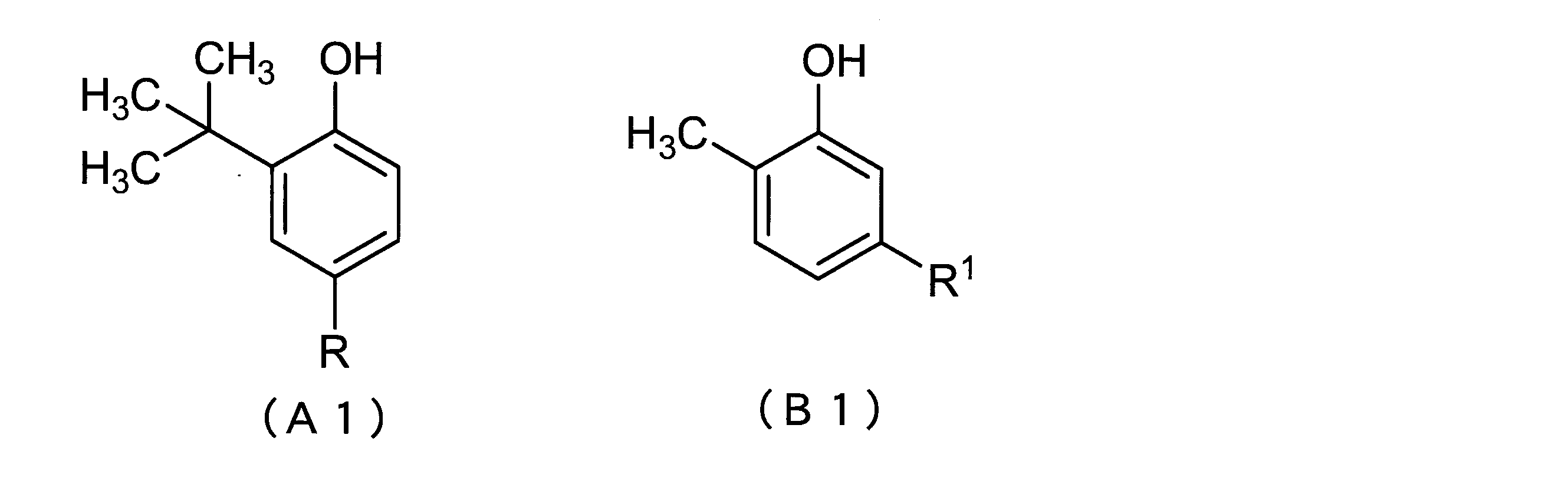
(1)下記式(A1)又は(B1):
(1)下記式(A1)又は(B1):
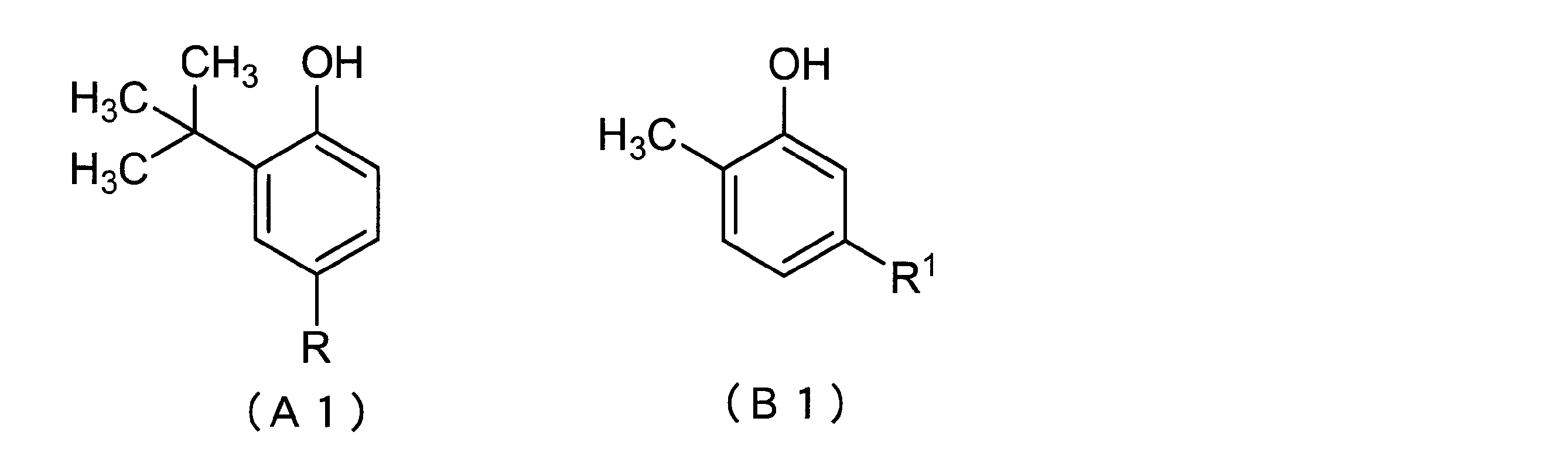
〔式(A1)中、Rは水素原子、炭素数1~4のアルキル基又は炭素数2~4のアルケニル基を示し、式(B1)中、R1は基-CH(CH3)CH2CH2CH=C(CH3)2又は基-CH(CH3)CH2CH2CH2CH(CH3)2を示す。〕
で表されるアルキルフェノール誘導体を有効成分とするTRPV3活性化剤。
(2)下記式(A1)又は(B1):
で表されるアルキルフェノール誘導体を有効成分とするTRPV3活性化剤。
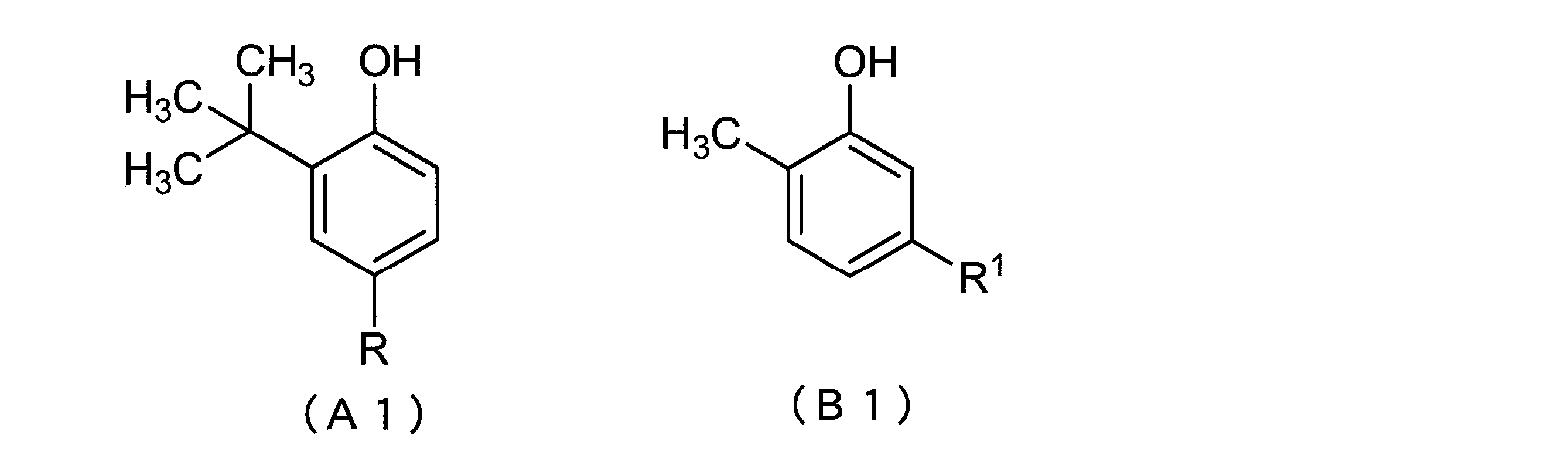
(2)下記式(A1)又は(B1):
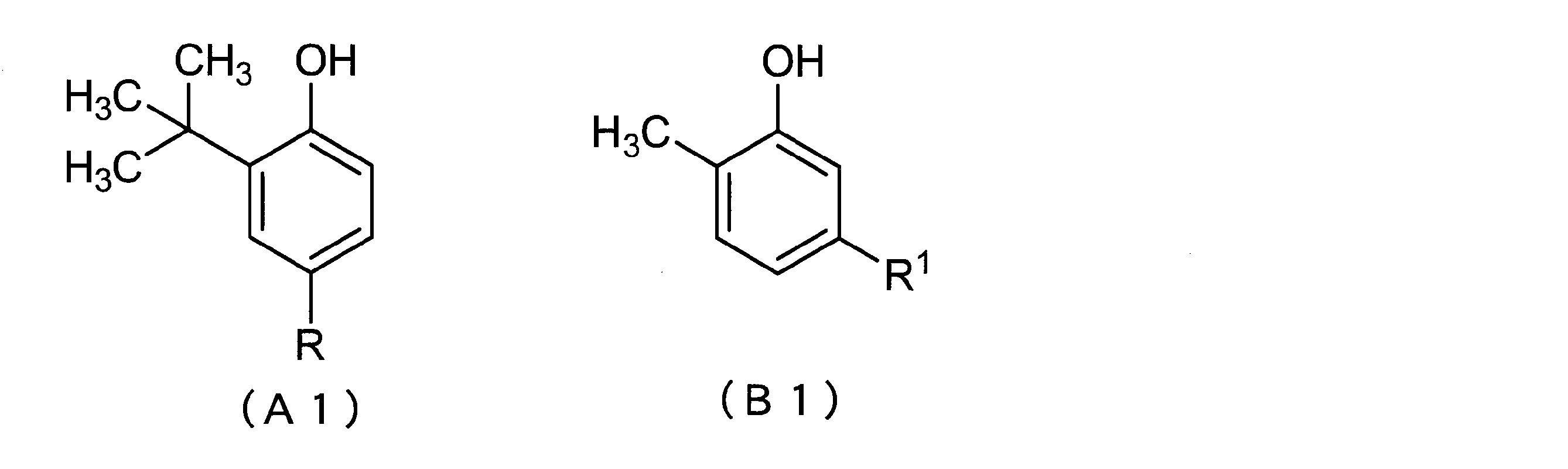
〔式(A1)中、Rは水素原子、炭素数1~4のアルキル基又は炭素数2~4のアルケニル基を示し、式(B1)中、R1は基-CH(CH3)CH2CH2CH=C(CH3)2又は基-CH(CH3)CH2CH2CH2CH(CH3)2を示す。〕
で表されるアルキルフェノール誘導体を有効成分とする温感剤。
(3)下記式(A1)又は(B1):
で表されるアルキルフェノール誘導体を有効成分とする温感剤。
(3)下記式(A1)又は(B1):

〔式(A1)中、Rは水素原子、炭素数1~4のアルキル基又は炭素数2~4のアルケニル基を示し、式(B1)中、R1は基-CH(CH3)CH2CH2CH=C(CH3)2又は基-CH(CH3)CH2CH2CH2CH(CH3)2を示す。〕
で表されるアルキルフェノール誘導体をヒトに適用することを特徴とする温感付与方法。
(4)TRPV3活性化剤を製造するための、下記式(A1)又は(B1):

〔式(A1)中、Rは水素原子、炭素数1~4のアルキル基又は炭素数2~4のアルケニル基を示し、式(B1)中、R1は基-CH(CH3)CH2CH2CH=C(CH3)2又は基-CH(CH3)CH2CH2CH2CH(CH3)2を示す。〕
で表されるアルキルフェノール誘導体の使用。
(5)温感剤を製造するための、下記式(A1)又は(B1):
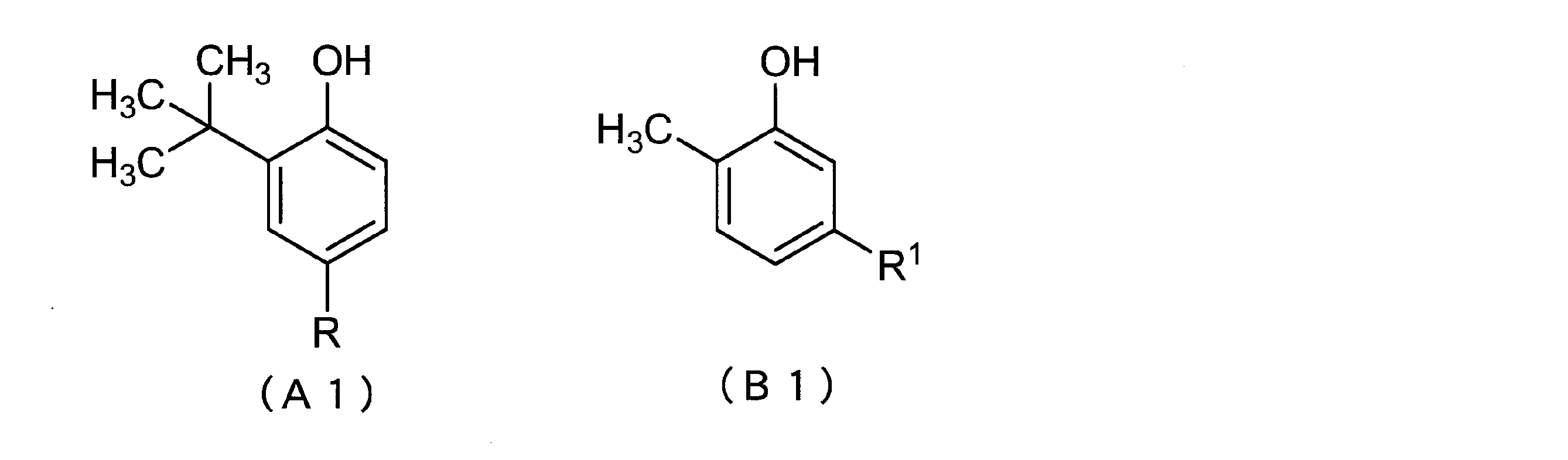
〔式(A1)中、Rは水素原子、炭素数1~4のアルキル基又は炭素数2~4のアルケニル基を示し、式(B1)中、R1は基-CH(CH3)CH2CH2CH=C(CH3)2又は基-CH(CH3)CH2CH2CH2CH(CH3)2を示す。〕
で表されるアルキルフェノール誘導体の使用。
(6)TRPV3活性化に使用するための、下記式(A1)又は(B1):
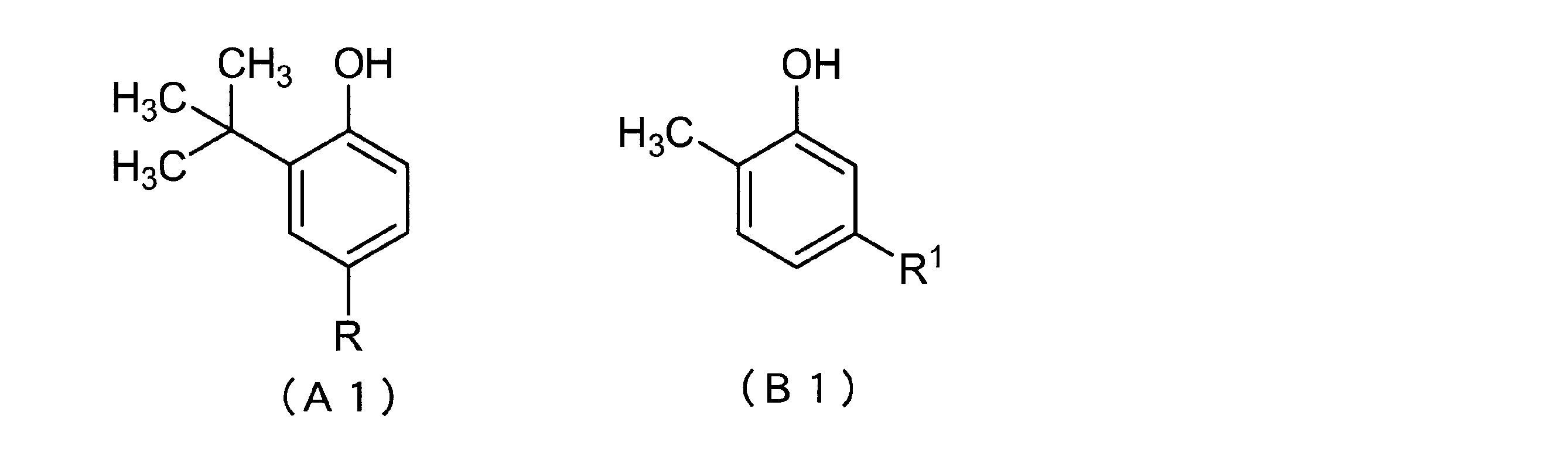
〔式(A1)中、Rは水素原子、炭素数1~4のアルキル基又は炭素数2~4のアルケニル基を示し、式(B1)中、R1は基-CH(CH3)CH2CH2CH=C(CH3)2又は基-CH(CH3)CH2CH2CH2CH(CH3)2を示す。〕
で表されるアルキルフェノール誘導体。
(7)温感付与に使用するための、下記式(A1)又は(B1):
〔式(A1)中、Rは水素原子、炭素数1~4のアルキル基又は炭素数2~4のアルケニル基を示し、式(B1)中、R1は基-CH(CH3)CH2CH2CH=C(CH3)2又は基-CH(CH3)CH2CH2CH2CH(CH3)2を示す。〕
で表されるアルキルフェノール誘導体。
(8)下記式(A1)又は(B1):

〔式(A1)中、Rは水素原子、炭素数1~4のアルキル基又は炭素数2~4のアルケニル基を示し、式(B1)中、R1は基-CH(CH3)CH2CH2CH=C(CH3)2又は基-CH(CH3)CH2CH2CH2CH(CH3)2を示す。〕
で表されるアルキルフェノール誘導体をヒトに適用することを特徴とするTRPV3活性化方法。
で表されるアルキルフェノール誘導体をヒトに適用することを特徴とする温感付与方法。
(4)TRPV3活性化剤を製造するための、下記式(A1)又は(B1):
で表されるアルキルフェノール誘導体の使用。
(5)温感剤を製造するための、下記式(A1)又は(B1):
で表されるアルキルフェノール誘導体の使用。
(6)TRPV3活性化に使用するための、下記式(A1)又は(B1):
で表されるアルキルフェノール誘導体。
(7)温感付与に使用するための、下記式(A1)又は(B1):
で表されるアルキルフェノール誘導体。
(8)下記式(A1)又は(B1):
で表されるアルキルフェノール誘導体をヒトに適用することを特徴とするTRPV3活性化方法。
本発明は、温感を付与できるTRPV3活性化剤、及びそれを用いた温感付与方法の提供に関する。
本発明者らは、下記式(A1)又は(B1)で表されるアルキルフェノール誘導体が、TRPV3を活性化する結果、その使用者に温感として感じさせる、すなわち温感を付与するための素材として有用であることを見出した。
本発明のアルキルフェノール誘導体を、例えば化粧品、浴剤、食品、医薬品又は医薬部外品等に配合することにより、それを使用者が服用、塗布した場合に、痛みを伴うことなく、安全かつ簡便に温感を感受しうる。
本発明のTRPV3活性化とは、受容体であるTRPV3を活性化すること、すなわちTRPV3受容体に対してアゴニスト活性を示すことを云う。当該TRPV3受容体アゴニスト活性によりTRPV3受容体が活性化され、それを使用者が温感として感受する。
したがって、本発明のTRPV3活性化剤及び温感剤は、化粧料、浴剤、食品、医薬品又は口腔用組成物等に配合されることにより、それを使用者が服用、塗布した場合に、痛みを伴うことなく温感を感受することができる。
したがって、本発明のTRPV3活性化剤及び温感剤は、化粧料、浴剤、食品、医薬品又は口腔用組成物等に配合されることにより、それを使用者が服用、塗布した場合に、痛みを伴うことなく温感を感受することができる。
本発明の式(A1)で表されるアルキルフェノール誘導体のうち、Rで示される炭素数1~4のアルキル基としては、直鎖状又は分岐状の何れであってもよく、メチル基、エチル基、n-プロピル基、イソプロピル基、n-ブチル基、sec-ブチル基、イソブチル基、tert-ブチル基等が挙げられ、好ましくはメチル基又はエチル基である。
本発明の式(A1)で表されるアルキルフェノール誘導体のうち、Rで示される炭素数2~4のアルケニル基としては、直鎖状又は分岐状の何れであってもよく、例えばビニル基、アリル基、2-ブテニル基、2-メチル-2-プロペニル基等が挙げられる。本発明における好適な2-アルキルフェノール誘導体としては、o-t-ブチルフェノール、2-t-ブチル-p-クレゾール、2-t-ブチル-4-エチルフェノールが挙げられ、TRPV3活性の点から、2-t-ブチル-p-クレゾール又は2-t-ブチル-4-エチルフェノールがより好ましい。
本発明の式(A1)で表されるアルキルフェノール誘導体は、公知の方法又はこれに準じる方法に従い化学合成することができる。例えば、2-t-ブチル-p-クレゾールはL.Luciaら、J.Org.Chem.,1999,64,8812-8815の方法に従い合成でき、o-t-ブチルフェノールはR.M.Jonesら、J.Org.Chem.,2001,66,3435-3441の方法に従い合成でき、2,4-ジ-t-ブチルフェノールはM.Yamamotoら、特開平5-294865号の方法に従い合成でき、2-t-ブチル-4-エチルフェノールはA.Takeshitaら、特開昭63-130543号の方法に従い合成できる。
本発明の式(B1)で表されるアルキルフェノール誘導体のうち、R1が-CH(CH3)CH2CH2CH=C(CH3)2基である化合物はキサントリゾール(Xanthorrhizol)であり、一方、R1が-CH(CH3)CH2CH2CH2CH(CH3)2基である化合物はジヒドロキサントリゾールである。
本発明の式(B1)で表されるアルキルフェノール誘導体は、不斉炭素原子を有するために光学異性体が存在するが、本発明では、R体、S体及びそれらの混合物の何れでもよい。
本発明の式(B1)で表されるアルキルフェノール誘導体のうち、TRPV3活性の点から、好ましくはキサントリゾールであり、特に下記式で示される(R)-(-)-キサントリゾールが好ましい。
本発明の式(B1)で表されるアルキルフェノール誘導体は、不斉炭素原子を有するために光学異性体が存在するが、本発明では、R体、S体及びそれらの混合物の何れでもよい。
本発明の式(B1)で表されるアルキルフェノール誘導体のうち、TRPV3活性の点から、好ましくはキサントリゾールであり、特に下記式で示される(R)-(-)-キサントリゾールが好ましい。

本発明の式(B1)で表されるアルキルフェノール誘導体は何れも公知化合物であり、公知の方法又はこれに準じる方法に従い化学合成することができる。例えば、キサントリゾールは、T.Eharaらの方法(Chem.Pharma.Bull.,2007,55(9),1361-1364.)により、ジヒドロキサントリゾールは、M.I.Aguilarらの方法(Rev.Soc.Quim.Mex.,2001,45(2),56-59.)により製造することができる。
また、キサントリゾールは、R.Horstらの方法(Zeitschrift fuer Naturforschung,Teil B:Anorganische Chemie,Organische Chemie,Biochemie,Biophysik,Biologie 1970,25(9),995-998.)により、ウコン属(Curcuma属)植物より得ることができる。また、(R)-(-)-キサントリゾールについては、例えば、製造例1に示すように、クスリウコンから抽出、分画、精製することにより単離することができる。
また、キサントリゾールは、R.Horstらの方法(Zeitschrift fuer Naturforschung,Teil B:Anorganische Chemie,Organische Chemie,Biochemie,Biophysik,Biologie 1970,25(9),995-998.)により、ウコン属(Curcuma属)植物より得ることができる。また、(R)-(-)-キサントリゾールについては、例えば、製造例1に示すように、クスリウコンから抽出、分画、精製することにより単離することができる。
上記のようにして得られたアルキルフェノール誘導体は、更に必要に応じて再結晶法、カラムクロマトグラフィーなどの通常の精製手段を用いて精製することができる。
本発明に係るアルキルフェノール誘導体は、後記実施例に示すように、TRPV3活性化作用を有することから、使用者がそれらを適用した際に温感を感受させることができる。すなわち、本発明のアルキルフェノール誘導体は、TRPV3活性化剤又は温感剤となり得、また、TRPV3活性化剤又は温感剤を製造するために使用することができる。
当該TRPV3活性化剤又は温感剤は、それ自体、TRPV3の活性化又は温感付与のための、医薬品、食品、化粧品、医薬品部外品等であってもよく、又は当該医薬品、食品、化粧品、医薬部外品等に配合して使用される素材又は製剤であってもよい。当該TRPV3活性化剤又は温感剤は、本発明のアルキルフェノール誘導体を単独で用いたものであってもよく、あるいは澱粉質、タンパク質、繊維質、糖質、脂質、脂肪酸、ビタミン、ミネラル、香料、着色料、甘味料、調味料、防腐剤、保存料、酸化防止剤などの、医薬品、医薬部外品、化粧品、食品に用いられる添加剤や賦形剤等と組み合わせた組成物であってもよい。またそれらの形態も特に限定されず、例えば溶液、懸濁液、シロップ、粉末、顆粒、粒子など、任意の形態に調製しうる。
ここで、医薬品及び医薬部外品の剤形は、錠剤、カプセル剤、顆粒剤、散剤、シロップ剤、静脈内注射、筋肉注射剤、坐剤、吸入剤、経皮吸収剤、点眼剤、点鼻剤、湿布剤、パップ剤、軟膏、ローション、クリーム、口腔用製剤(歯磨剤、液状歯磨剤、洗口液、歯肉マッサージクリーム、口腔用軟膏、うがい用錠剤、トローチ、のど飴等)等の何れでもよく、投与形態も、経口投与(内用)、非経口投与(外用、注射)の何れであってもよい。
尚、「医薬部外品」とは、人体に対する作用が緩和なものであり、医薬品の効能は併せ持たず、機械器具でないもの(日本国薬事法第2条2項)を意味し、本発明に適するものとして、例えば、薬用化粧品類、浴用剤等が挙げられる。
尚、「医薬部外品」とは、人体に対する作用が緩和なものであり、医薬品の効能は併せ持たず、機械器具でないもの(日本国薬事法第2条2項)を意味し、本発明に適するものとして、例えば、薬用化粧品類、浴用剤等が挙げられる。
食品としては、キャンディ、ガム、タブレット、カプセル、各種飲料等の何れであってもよい。
化粧品としては、皮膚外用剤、洗浄剤、メイクアップ化粧料、頭皮頭髪用化粧料、入浴剤等の何れであってもよく、それらは使用方法に応じて、ローション、乳液、ゲル、クリーム、軟膏剤、粉末、顆粒等の種々の剤型で提供できる。
上記医薬品、食品、化粧品、医薬部外品に本発明のTRPV3活性化剤又は温感剤を配合して用いる場合の製剤中のアルキルフェノール誘導体の配合量は、十分な温感付与効果を有する限り特に限定されないが、内用製剤(経口医薬品、食品、口腔用組成物等)では0.01ppm以上、好ましくは1ppm以上、そして500000ppm以下、好ましくは100000ppm以下とするのがよい。また、外用製剤(非経口医薬品、化粧料等)では0.01質量%以上、好ましくは0.1質量%以上、そして20質量%以下、好ましくは10質量%以下とするのがよい。
本発明のアルキルフェノール誘導体を用いて温感を付与する方法は、当該化合物をヒト(使用者)に適用(服用、塗布等)することによりTRPV3受容体を活性化し、それにより使用者が温感を感受させることを特徴とする。当該温感付与方法は、本発明のアルキルフェノール誘導体によって使用者が温感を感受し得る態様であれば特に限定されず、例えば当該TRPV3活性化剤又は温感剤を直接適用する形態であってもよく、或いは他の医薬品、食品、化粧品又は医薬部外品に含有させた形で適用する形態であってもよい。
上述した実施形態に関し、本発明においては以下の態様が開示される。
<1>下記式(A1)又は(B1):
<1>下記式(A1)又は(B1):

〔式(A1)中、Rは水素原子、炭素数1~4のアルキル基又は炭素数2~4のアルケニル基を示し、式(B1)中、R1は基-CH(CH3)CH2CH2CH=C(CH3)2又は基-CH(CH3)CH2CH2CH2CH(CH3)2を示す。〕
で表されるアルキルフェノール誘導体を有効成分とするTRPV3活性化剤。
<2>下記式(A1)又は(B1):
で表されるアルキルフェノール誘導体を有効成分とするTRPV3活性化剤。
<2>下記式(A1)又は(B1):
〔式(A1)中、Rは水素原子、炭素数1~4のアルキル基又は炭素数2~4のアルケニル基を示し、式(B1)中、R1は基-CH(CH3)CH2CH2CH=C(CH3)2又は基-CH(CH3)CH2CH2CH2CH(CH3)2を示す。〕
で表されるアルキルフェノール誘導体を有効成分とする温感剤。
<3>下記式(A1)又は(B1):
で表されるアルキルフェノール誘導体を有効成分とする温感剤。
<3>下記式(A1)又は(B1):

〔式(A1)中、Rは水素原子、炭素数1~4のアルキル基又は炭素数2~4のアルケニル基を示し、式(B1)中、R1は基-CH(CH3)CH2CH2CH=C(CH3)2又は基-CH(CH3)CH2CH2CH2CH(CH3)2を示す。〕
で表されるアルキルフェノール誘導体をヒトに適用することを特徴とする温感付与方法。
<4>TRPV3活性化剤を製造するための、下記式(A1)又は(B1):

〔式(A1)中、Rは水素原子、炭素数1~4のアルキル基又は炭素数2~4のアルケニル基を示し、式(B1)中、R1は基-CH(CH3)CH2CH2CH=C(CH3)2又は基-CH(CH3)CH2CH2CH2CH(CH3)2を示す。〕
で表されるアルキルフェノール誘導体の使用。
<5>温感剤を製造するための、下記式(A1)又は(B1):

〔式(A1)中、Rは水素原子、炭素数1~4のアルキル基又は炭素数2~4のアルケニル基を示し、式(B1)中、R1は基-CH(CH3)CH2CH2CH=C(CH3)2又は基-CH(CH3)CH2CH2CH2CH(CH3)2を示す。〕
で表されるアルキルフェノール誘導体の使用。
<6>TRPV3活性化に使用するための、下記式(A1)又は(B1):
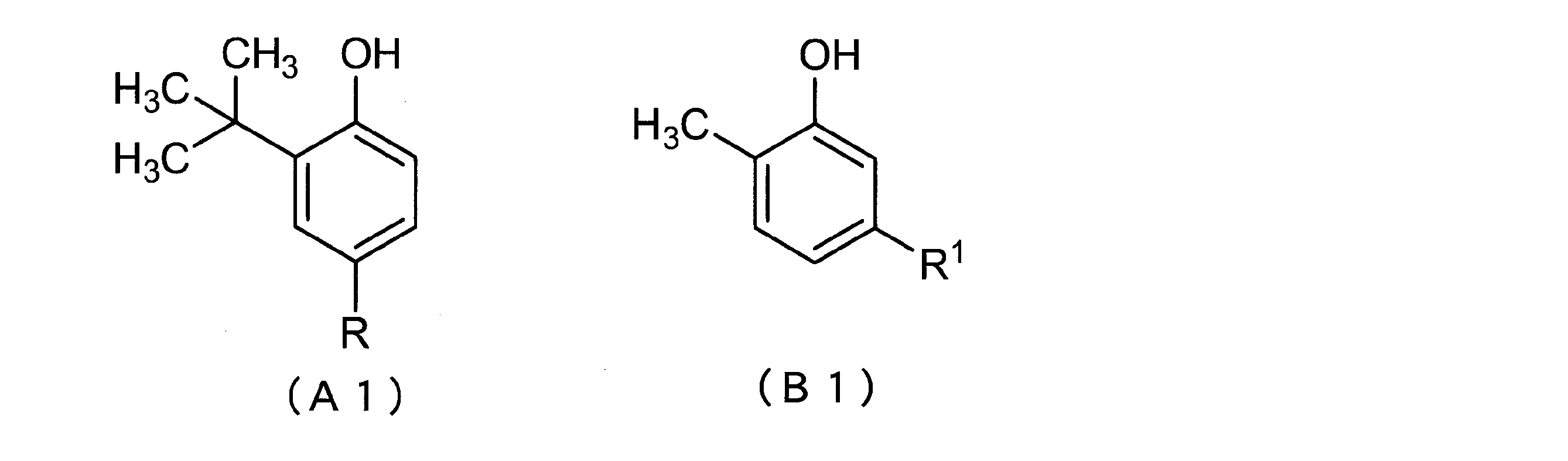
〔式(A1)中、Rは水素原子、炭素数1~4のアルキル基又は炭素数2~4のアルケニル基を示し、式(B1)中、R1は基-CH(CH3)CH2CH2CH=C(CH3)2又は基-CH(CH3)CH2CH2CH2CH(CH3)2を示す。〕
で表されるアルキルフェノール誘導体。
<7>温感付与に使用するための、下記式(A1)又は(B1):

〔式(A1)中、Rは水素原子、炭素数1~4のアルキル基又は炭素数2~4のアルケニル基を示し、式(B1)中、R1は基-CH(CH3)CH2CH2CH=C(CH3)2又は基-CH(CH3)CH2CH2CH2CH(CH3)2を示す。〕
で表されるアルキルフェノール誘導体。
<8>下記式(A1)又は(B1):

〔式(A1)中、Rは水素原子、炭素数1~4のアルキル基又は炭素数2~4のアルケニル基を示し、式(B1)中、R1は基-CH(CH3)CH2CH2CH=C(CH3)2又は基-CH(CH3)CH2CH2CH2CH(CH3)2を示す。〕
で表されるアルキルフェノール誘導体をヒトに適用することを特徴とするTRPV3活性化方法。
<9> <1>のTRPV3活性化剤又は<2>の温感剤を含む内用製剤であって、アルキルフェノール誘導体を1ppm以上100000ppm以下含有する製剤。
<10> <1>のTRPV3活性化剤又は<2>の温感剤を含む外用製剤であって、アルキルフェノール誘導体を0.1質量%以上10質量%以下含有する製剤。
で表されるアルキルフェノール誘導体をヒトに適用することを特徴とする温感付与方法。
<4>TRPV3活性化剤を製造するための、下記式(A1)又は(B1):
で表されるアルキルフェノール誘導体の使用。
<5>温感剤を製造するための、下記式(A1)又は(B1):
で表されるアルキルフェノール誘導体の使用。
<6>TRPV3活性化に使用するための、下記式(A1)又は(B1):
で表されるアルキルフェノール誘導体。
<7>温感付与に使用するための、下記式(A1)又は(B1):
で表されるアルキルフェノール誘導体。
<8>下記式(A1)又は(B1):
で表されるアルキルフェノール誘導体をヒトに適用することを特徴とするTRPV3活性化方法。
<9> <1>のTRPV3活性化剤又は<2>の温感剤を含む内用製剤であって、アルキルフェノール誘導体を1ppm以上100000ppm以下含有する製剤。
<10> <1>のTRPV3活性化剤又は<2>の温感剤を含む外用製剤であって、アルキルフェノール誘導体を0.1質量%以上10質量%以下含有する製剤。
実施例A1:試験サンプル調製例
(1)2-t-ブチル-p-クレゾール:
2-t-ブチル-p-クレゾール(東京化成工業株式会社製、B0910)をエタノールに溶解させ、供試サンプルとした。
2-t-ブチル-p-クレゾール(東京化成工業株式会社製、B0910)をエタノールに溶解させ、供試サンプルとした。
(2)o-t-ブチルフェノール:
o-t-ブチルフェノール(和光純薬工業株式会社製、021-04552)をエタノールに溶解させ、供試サンプルとした。
o-t-ブチルフェノール(和光純薬工業株式会社製、021-04552)をエタノールに溶解させ、供試サンプルとした。
(3)2,4-ジ-t-ブチルフェノール:
2,4-ジ-t-ブチルフェノール(東京化成工業株式会社製、D0229)をエタノールに溶解させ、供試サンプルとした。
2,4-ジ-t-ブチルフェノール(東京化成工業株式会社製、D0229)をエタノールに溶解させ、供試サンプルとした。
(4)2-t-ブチル-4-エチルフェノール:
2-t-ブチル-4-エチルフェノール(東京化成工業株式会社製、B1810)をエタノールに溶解させ、供試サンプルとした。
2-t-ブチル-4-エチルフェノール(東京化成工業株式会社製、B1810)をエタノールに溶解させ、供試サンプルとした。
実施例A2:TRPV3活性の評価
(1)ヒトTRPV3安定発現株の作製:
ヒトTRPV3安定発現HEK293細胞株を作製するため、ヒトTRPV3遺伝子のクローニングを行った。全長ヒトTRPV3遺伝子は、ヒト表皮角化細胞(クラボウ社製)より抽出した全RNAを鋳型とし、RT-PCR法を用いて増幅した。
(1)ヒトTRPV3安定発現株の作製:
ヒトTRPV3安定発現HEK293細胞株を作製するため、ヒトTRPV3遺伝子のクローニングを行った。全長ヒトTRPV3遺伝子は、ヒト表皮角化細胞(クラボウ社製)より抽出した全RNAを鋳型とし、RT-PCR法を用いて増幅した。
得られたPCR産物をエントリーベクターpENTR-D/TOPO(インビトロジェン社製)へクローニングした後、pcDNA3.2-V5/DEST(インビトロジェン社製)へサブクローニングし、リポフェクトアミン2000(インビトロジェン社製)によりHEK293細胞へ形質導入した。形質導入された細胞を、450μg/mlのG-418(プロメガ社製)を含有するDMEM培地中で増殖させることにより選抜した。HEK293細胞は、内在性TRPV3を発現しないため、TRPV3形質導入株に対する対照(コントロール)として使用できる。
(2)カルシウムイメージング:
蛍光カルシウムイメージング法を用いて、HEK293細胞へ形質導入したTRPV3活性の測定を行った。まず、培養したTRPV3発現細胞をポリ-D-リジンコートされた96ウェルプレート(BDファルコン社製)へ播種(30,000細胞/ウェル)し、37℃で一晩インキュベートした後、培養液を除去し、リンガー液に溶解させたFluo4-AM(2μg/ml;同仁化学社製)を添加し、37℃で30~60分間インキュベートした。その後、96ウェルプレートを蛍光プレートリーダー(FDSS3000;浜松ホトニクス社製)にセットし、装置庫内温度を25℃にした状態で、励起波長480nmで励起させたときのFluo4による蛍光イメージを、検出波長520nmにてCCDカメラで検出した。測定は1秒毎に4分間行い、測定開始15秒後に、FDSS3000内蔵の分注器により、上記で調製した試験サンプル(終濃度100μM)を添加し、蛍光強度の変化によりTRPV3の活性を評価した。
蛍光カルシウムイメージング法を用いて、HEK293細胞へ形質導入したTRPV3活性の測定を行った。まず、培養したTRPV3発現細胞をポリ-D-リジンコートされた96ウェルプレート(BDファルコン社製)へ播種(30,000細胞/ウェル)し、37℃で一晩インキュベートした後、培養液を除去し、リンガー液に溶解させたFluo4-AM(2μg/ml;同仁化学社製)を添加し、37℃で30~60分間インキュベートした。その後、96ウェルプレートを蛍光プレートリーダー(FDSS3000;浜松ホトニクス社製)にセットし、装置庫内温度を25℃にした状態で、励起波長480nmで励起させたときのFluo4による蛍光イメージを、検出波長520nmにてCCDカメラで検出した。測定は1秒毎に4分間行い、測定開始15秒後に、FDSS3000内蔵の分注器により、上記で調製した試験サンプル(終濃度100μM)を添加し、蛍光強度の変化によりTRPV3の活性を評価した。
(3)TRPV3活性化の評価:
TRPV3活性は、試験サンプルによる自家蛍光の影響を排除するため、下記の式で自家蛍光分を差し引いた。
自家蛍光を差し引いた蛍光強度(Fsub)=
TRPV3発現細胞の蛍光強度(FV3)-HEK293細胞の蛍光強度(FHEK)
また、2-アルキルフェノール及びその誘導体によるTRPV3活性化作用は、試験サンプル添加後の蛍光強度比のピークを用いて評価した。下記の式を用いて蛍光強度比を算出した。
蛍光強度比=各時点のFsub/測定開始時のFsub
各処理群あたり2ウェルで評価を行い、その平均値を用いた。
TRPV3活性は、試験サンプルによる自家蛍光の影響を排除するため、下記の式で自家蛍光分を差し引いた。
自家蛍光を差し引いた蛍光強度(Fsub)=
TRPV3発現細胞の蛍光強度(FV3)-HEK293細胞の蛍光強度(FHEK)
また、2-アルキルフェノール及びその誘導体によるTRPV3活性化作用は、試験サンプル添加後の蛍光強度比のピークを用いて評価した。下記の式を用いて蛍光強度比を算出した。
蛍光強度比=各時点のFsub/測定開始時のFsub
各処理群あたり2ウェルで評価を行い、その平均値を用いた。
(4)アルキルフェノール誘導体のTRPV3活性化作用:
上記実施例A1で得られた各試験サンプルを100μMの濃度で用い、実施例2に記載の評価方法により測定したTRPV3活性化強度を、表1に示す。なお、表の数値は、コントロールであるカルバクロールによる活性化強度を1とした場合の相対値である。
上記実施例A1で得られた各試験サンプルを100μMの濃度で用い、実施例2に記載の評価方法により測定したTRPV3活性化強度を、表1に示す。なお、表の数値は、コントロールであるカルバクロールによる活性化強度を1とした場合の相対値である。
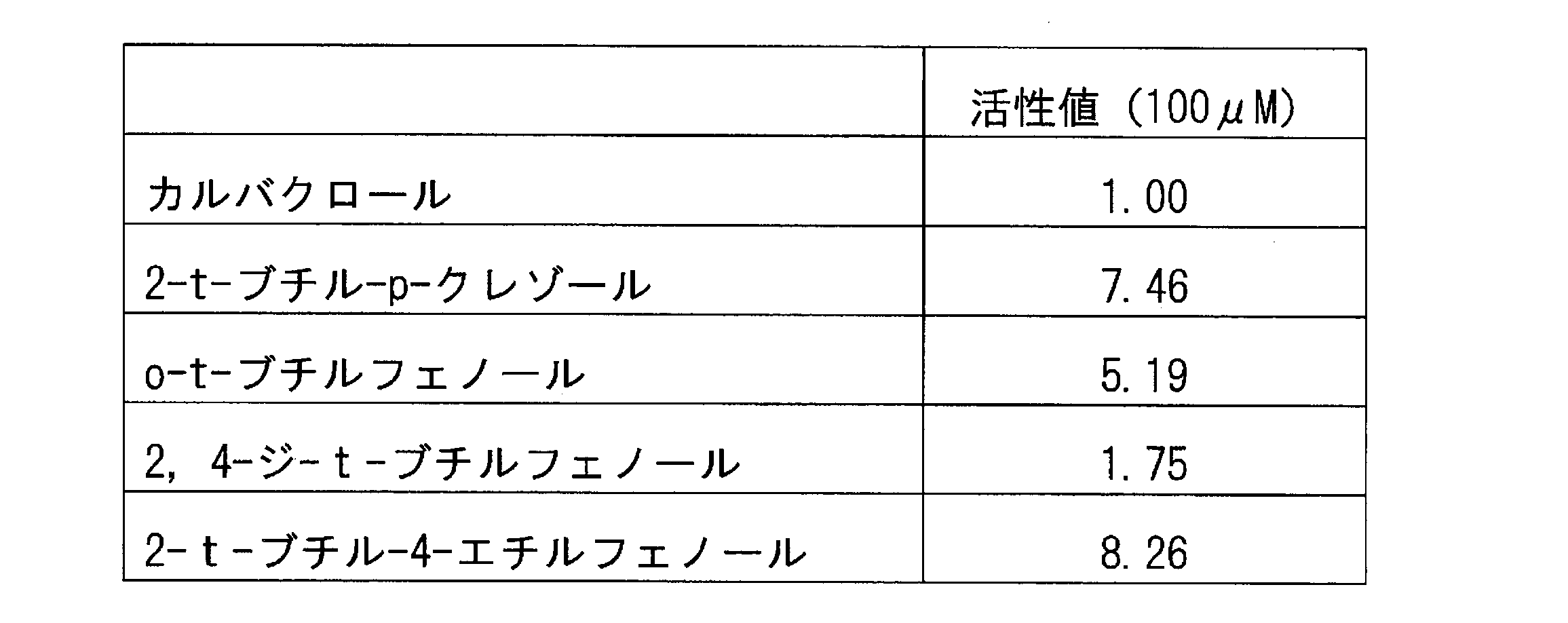
以上より、2-t-ブチル-p-クレゾール、o-t-ブチルフェノール、及び2-t-ブチル-4-エチルフェノールは、公知のTRPV3活性化剤であるカルバクロールと比較し、顕著に高いTRPV3活性化作用を示した。
実施例B1:試験サンプル調製
(1)(-)-キサントリゾールの調製:
(1)(-)-キサントリゾールの調製:
クスリウコン(Curcuma xanthorrhiza)の根茎160gに、50vol%エタノール1.6Lを加え、室温、7日間浸漬抽出後、濾過して抽出液を得た。抽出液を減圧乾燥し、抽出物(16.8g)を得た。この抽出物を50vol%エタノールに溶解後、ODS分取HPLC(60%アセトニトリル-0.1%TFA水溶液を移動相とする)を用いて精製し、(-)-キサントリゾール(121mg)を得た。これをエタノールに溶解させ、供試サンプルとした。
(2)(-)-ジヒドロキサントリゾールの調製:
(-)-キサントリゾール(64.2mg)を酢酸エチル(5mL)に溶解し、10%パラジウム炭素(64mg)を加え、室温、水素雰囲気下で1時間攪拌した後、セライト濾過した。濾液を減圧乾燥してシリカゲルクロマトグラフィで精製し、(-)-ジヒドロキサントリゾール(61.5mg)を得た。これをエタノールに溶解させ、供試サンプルとした。
(-)-キサントリゾール(64.2mg)を酢酸エチル(5mL)に溶解し、10%パラジウム炭素(64mg)を加え、室温、水素雰囲気下で1時間攪拌した後、セライト濾過した。濾液を減圧乾燥してシリカゲルクロマトグラフィで精製し、(-)-ジヒドロキサントリゾール(61.5mg)を得た。これをエタノールに溶解させ、供試サンプルとした。
実施例B2:TRPV3活性の評価
(1)ヒトTRPV3安定発現株の作製:
ヒトTRPV3安定発現HEK293細胞株を作製するため、ヒトTRPV3遺伝子のクローニングを行った。全長ヒトTRPV3遺伝子は、ヒト表皮角化細胞(クラボウ社製)より抽出した全RNAを鋳型とし、RT-PCR法を用いて増幅した。
(1)ヒトTRPV3安定発現株の作製:
ヒトTRPV3安定発現HEK293細胞株を作製するため、ヒトTRPV3遺伝子のクローニングを行った。全長ヒトTRPV3遺伝子は、ヒト表皮角化細胞(クラボウ社製)より抽出した全RNAを鋳型とし、RT-PCR法を用いて増幅した。
得られたPCR産物をエントリーベクターpENTR-D/TOPO(インビトロジェン社製)へクローニングした後、pcDNA3.2-V5/DEST(インビトロジェン社製)へサブクローニングし、リポフェクトアミン2000(インビトロジェン社製)によりHEK293細胞へ形質導入した。形質導入された細胞を、450μg/mlのG-418(プロメガ社製)を含有するDMEM培地中で増殖させることにより選抜した。HEK293細胞は、内在性TRPV3を発現しないため、TRPV3形質導入株に対する対照(コントロール)として使用できる。
(2)カルシウムイメージング:
蛍光カルシウムイメージング法を用いて、HEK293細胞へ形質導入したTRPV3活性の測定を行った。まず、培養したTRPV3発現細胞をポリ-D-リジンコートされた96ウェルプレート(BDファルコン社製)へ播種(30,000細胞/ウェル)し、37℃で一晩インキュベートした後、培養液を除去し、リンガー液に溶解させたFluo4-AM(2μg/ml;同仁化学社製)を添加し、37℃で30~60分間インキュベートした。その後、96ウェルプレートを蛍光プレートリーダー(FDSS3000;浜松ホトニクス社製)にセットし、装置庫内温度を25℃にした状態で、励起波長480nmで励起させたときのFluo4による蛍光イメージを、検出波長520nmにてCCDカメラで検出した。測定は1秒毎に4分間行い、測定開始15秒後に、FDSS3000内蔵の分注器により、上記で調製した試験サンプル(終濃度100μM)を添加し、蛍光強度の変化によりTRPV3の活性を評価した。
蛍光カルシウムイメージング法を用いて、HEK293細胞へ形質導入したTRPV3活性の測定を行った。まず、培養したTRPV3発現細胞をポリ-D-リジンコートされた96ウェルプレート(BDファルコン社製)へ播種(30,000細胞/ウェル)し、37℃で一晩インキュベートした後、培養液を除去し、リンガー液に溶解させたFluo4-AM(2μg/ml;同仁化学社製)を添加し、37℃で30~60分間インキュベートした。その後、96ウェルプレートを蛍光プレートリーダー(FDSS3000;浜松ホトニクス社製)にセットし、装置庫内温度を25℃にした状態で、励起波長480nmで励起させたときのFluo4による蛍光イメージを、検出波長520nmにてCCDカメラで検出した。測定は1秒毎に4分間行い、測定開始15秒後に、FDSS3000内蔵の分注器により、上記で調製した試験サンプル(終濃度100μM)を添加し、蛍光強度の変化によりTRPV3の活性を評価した。
(3)TRPV3活性化の評価:
TRPV3活性は、試験サンプルによる自家蛍光の影響を排除するため、下記の式で自家蛍光分を差し引いた。
自家蛍光を差し引いた蛍光強度(Fsub)=
TRPV3発現細胞の蛍光強度(FV3)-HEK293細胞の蛍光強度(FHEK)
また、キサントリゾール及びその誘導体によるTRPV3活性化作用は、試験サンプル添加後の蛍光強度比のピークを用いて評価した。下記の式を用いて蛍光強度比を算出した。
蛍光強度比=各時点のFsub/測定開始時のFsub
各処理群あたり2ウェルで評価を行い、その平均値を用いた。
TRPV3活性は、試験サンプルによる自家蛍光の影響を排除するため、下記の式で自家蛍光分を差し引いた。
自家蛍光を差し引いた蛍光強度(Fsub)=
TRPV3発現細胞の蛍光強度(FV3)-HEK293細胞の蛍光強度(FHEK)
また、キサントリゾール及びその誘導体によるTRPV3活性化作用は、試験サンプル添加後の蛍光強度比のピークを用いて評価した。下記の式を用いて蛍光強度比を算出した。
蛍光強度比=各時点のFsub/測定開始時のFsub
各処理群あたり2ウェルで評価を行い、その平均値を用いた。
(4)アルキルフェノール誘導体のTRPV3活性化作用:
各試験サンプルによるTRPV3活性化強度を表2に示す。なお、コントロールとして、TRPV3を活性することが知られているカルバクロールを用い、また、カルバクロールによるTRPV3活性化を1.00として、他の試験サンプルによるTRPV3活性化強度を算出した。
各試験サンプルによるTRPV3活性化強度を表2に示す。なお、コントロールとして、TRPV3を活性することが知られているカルバクロールを用い、また、カルバクロールによるTRPV3活性化を1.00として、他の試験サンプルによるTRPV3活性化強度を算出した。
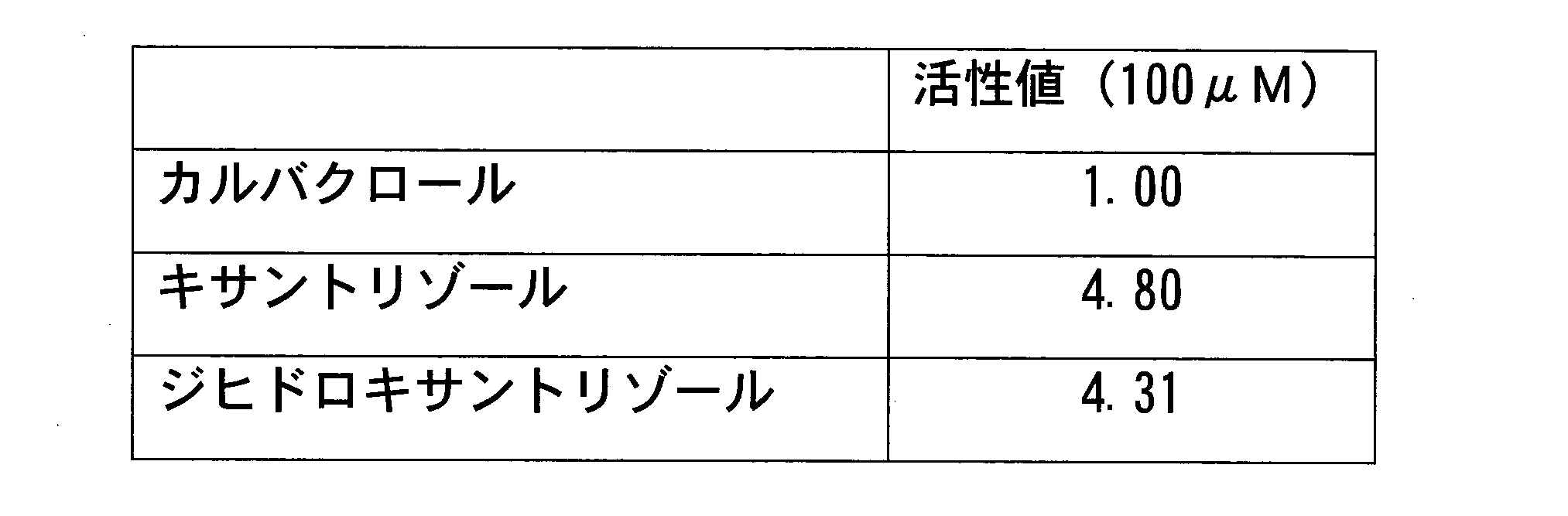
上記のとおり調製されたキサントリゾール及びジヒドロキサントリゾールは、カルバクロールと比較し、顕著にTRPV3を活性化することが示された。
Claims (8)
- 下記式(A1)又は(B1):

で表されるアルキルフェノール誘導体を有効成分とするTRPV3活性化剤。 - 下記式(A1)又は(B1):
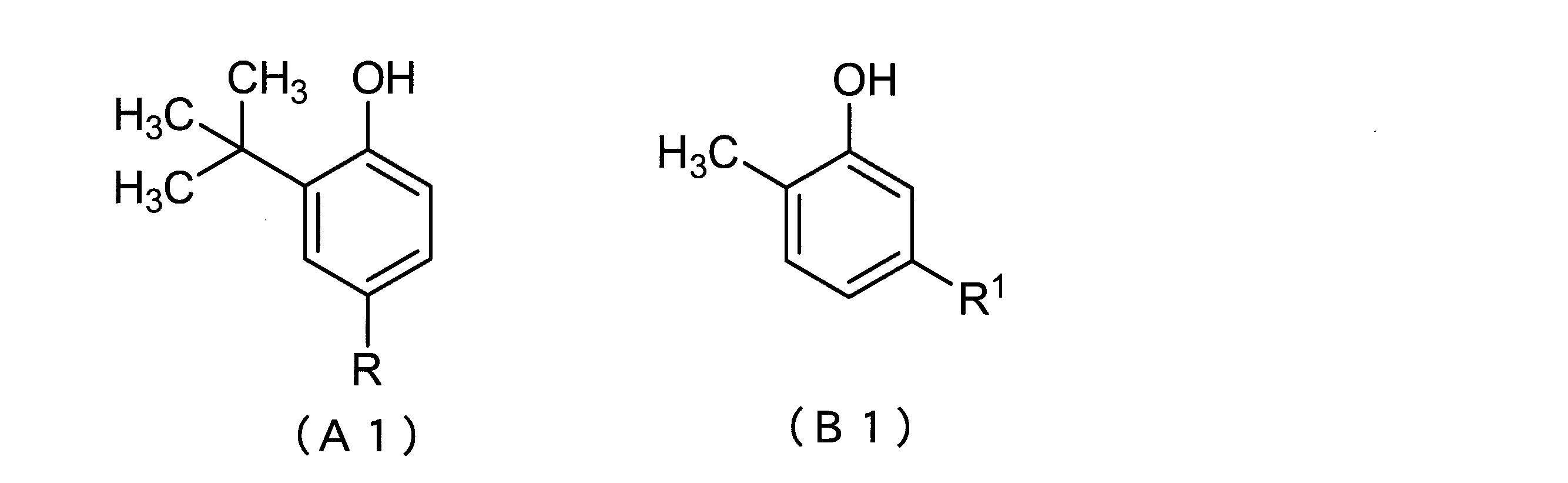
で表されるアルキルフェノール誘導体を有効成分とする温感剤。 - 下記式(A1)又は(B1):
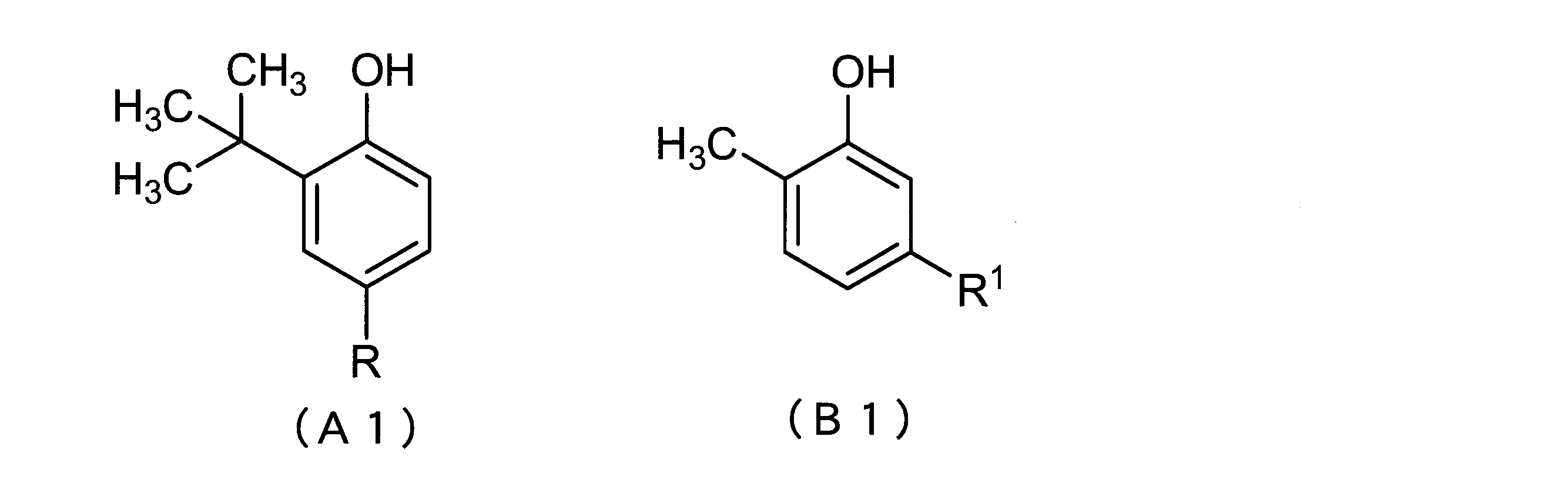
で表されるアルキルフェノール誘導体をヒトに適用することを特徴とする温感付与方法。 - TRPV3活性化剤を製造するための、下記式(A1)又は(B1):
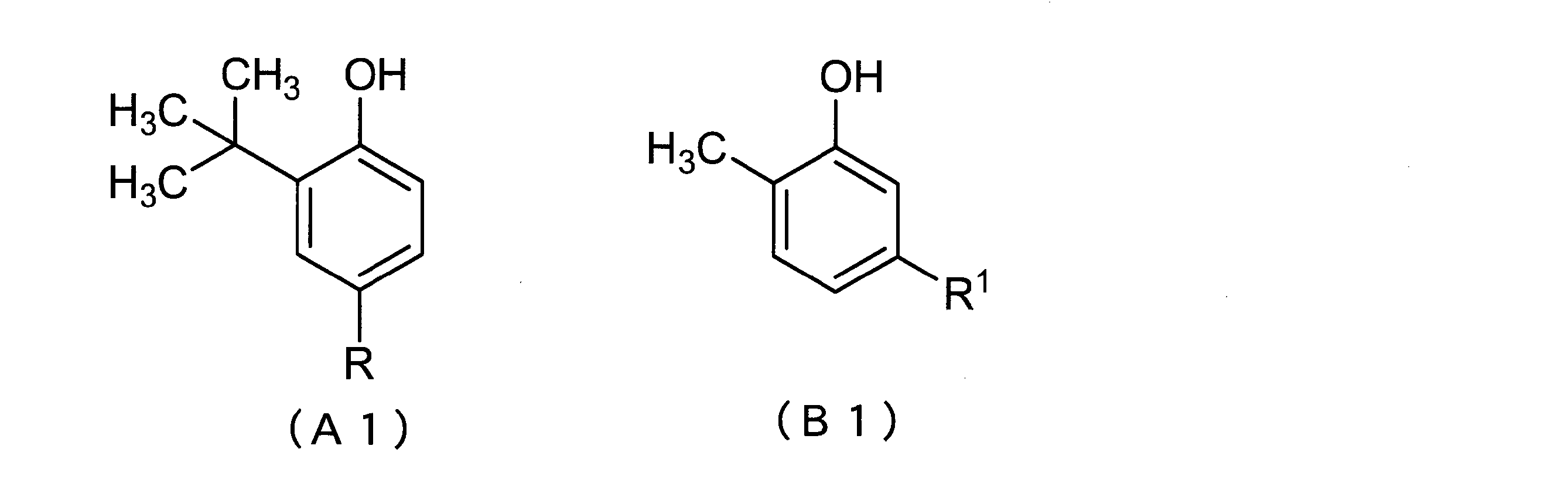
で表されるアルキルフェノール誘導体の使用。 - 温感剤を製造するための、下記式(A1)又は(B1):
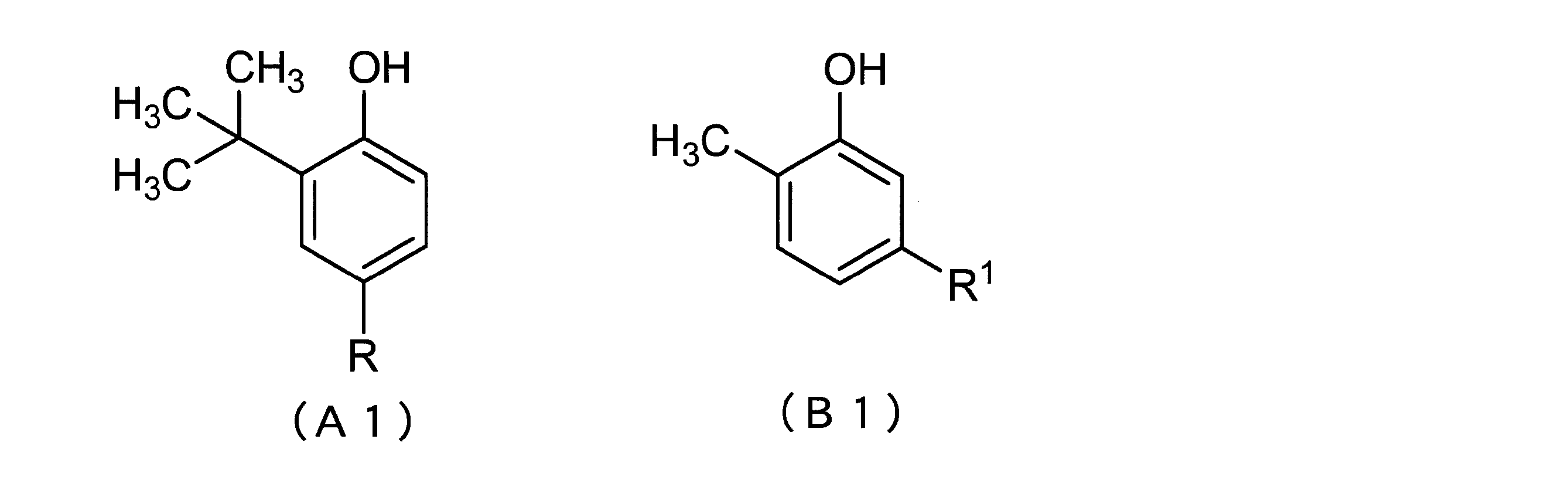
で表されるアルキルフェノール誘導体の使用。 - TRPV3活性化に使用するための、下記式(A1)又は(B1):
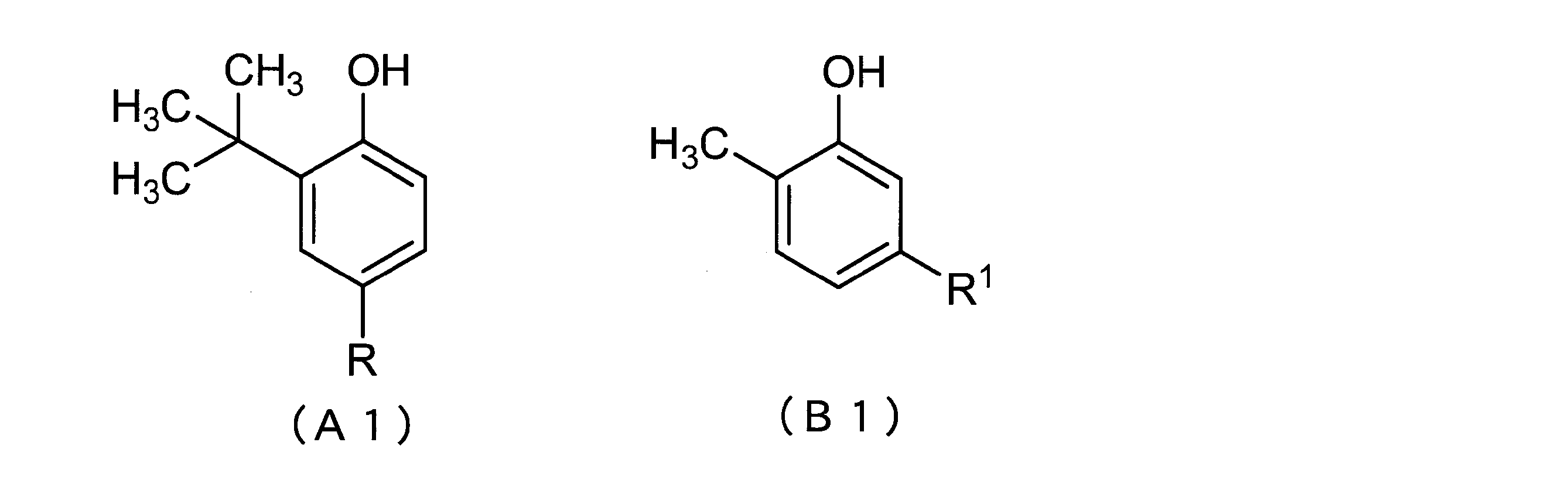
で表されるアルキルフェノール誘導体。 - 温感付与に使用するための、下記式(A1)又は(B1):
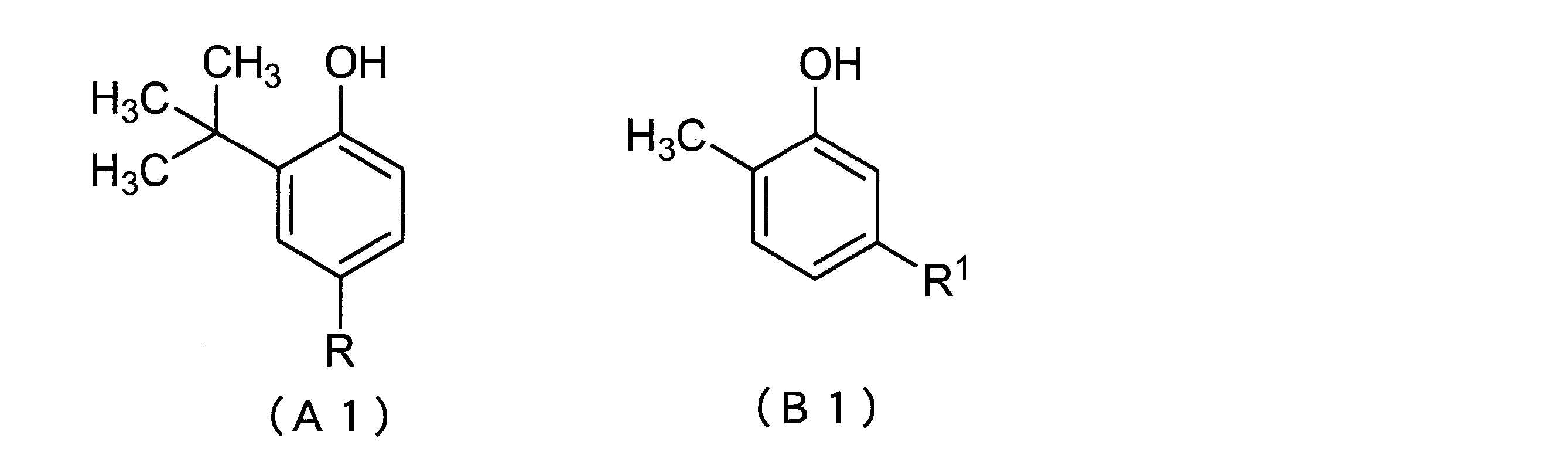
で表されるアルキルフェノール誘導体。 - 下記式(A1)又は(B1):
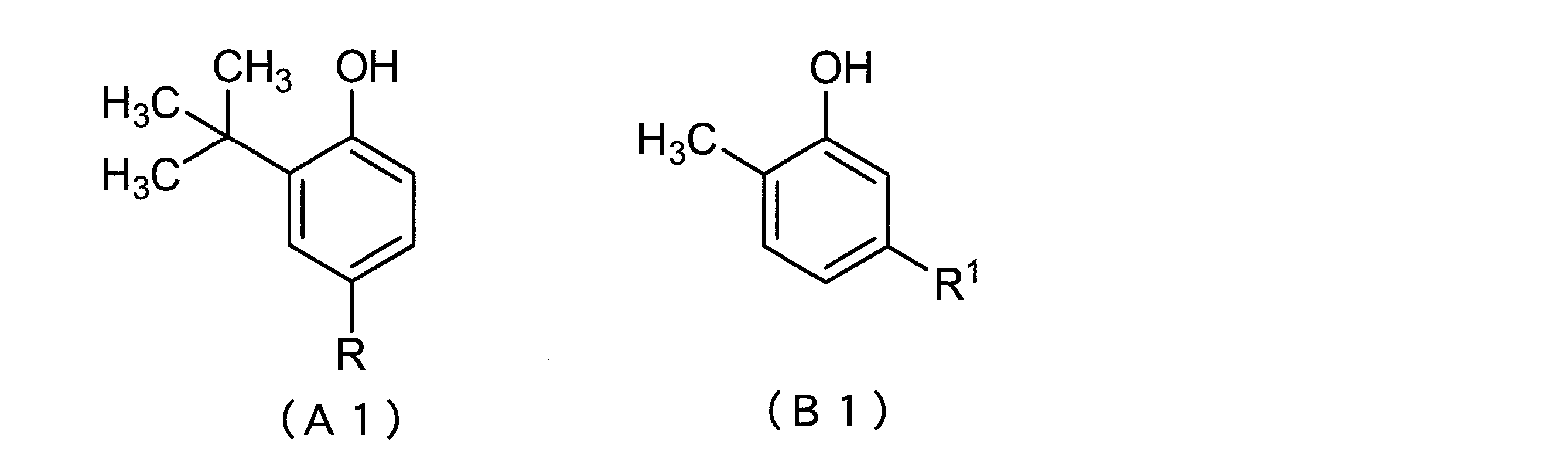
で表されるアルキルフェノール誘導体をヒトに適用することを特徴とするTRPV3活性化方法。
Applications Claiming Priority (4)
| Application Number | Priority Date | Filing Date | Title |
|---|---|---|---|
| JP2011-128924 | 2011-06-09 | ||
| JP2011128924 | 2011-06-09 | ||
| JP2011128914 | 2011-06-09 | ||
| JP2011-128914 | 2011-06-09 |
Publications (1)
| Publication Number | Publication Date |
|---|---|
| WO2012169541A1 true WO2012169541A1 (ja) | 2012-12-13 |
Family
ID=47296100
Family Applications (1)
| Application Number | Title | Priority Date | Filing Date |
|---|---|---|---|
| PCT/JP2012/064579 Ceased WO2012169541A1 (ja) | 2011-06-09 | 2012-06-06 | Trpv3活性化剤 |
Country Status (1)
| Country | Link |
|---|---|
| WO (1) | WO2012169541A1 (ja) |
Cited By (2)
| Publication number | Priority date | Publication date | Assignee | Title |
|---|---|---|---|---|
| JP2013014563A (ja) * | 2011-07-06 | 2013-01-24 | Kao Corp | Trpv3活性化剤 |
| KR102190372B1 (ko) | 2019-07-01 | 2020-12-14 | 산요 케미컬 라보라토리스 말레이시아 에스디엔. 비에이치디. | 잔소리졸의 조제 방법 |
Citations (1)
| Publication number | Priority date | Publication date | Assignee | Title |
|---|---|---|---|---|
| JPH0648943A (ja) * | 1991-02-22 | 1994-02-22 | Univ Colorado Found Inc | I型糖尿病治療薬 |
-
2012
- 2012-06-06 WO PCT/JP2012/064579 patent/WO2012169541A1/ja not_active Ceased
Patent Citations (1)
| Publication number | Priority date | Publication date | Assignee | Title |
|---|---|---|---|---|
| JPH0648943A (ja) * | 1991-02-22 | 1994-02-22 | Univ Colorado Found Inc | I型糖尿病治療薬 |
Non-Patent Citations (2)
| Title |
|---|
| A K VOGT-EISELE ET AL.: "Monoterpenoid agonists of TRPV3", BRITISH JOURNAL OF PHARMACOLOGY, vol. 151, 2007, pages 530 - 540 * |
| J.K. HWANG ET AL.: "Antibacterial activity of xanthorrhizol from Curcuma xanthorrhiza against oral pathogens", FITOTERAPIA, vol. 71, 2000, pages 321 - 323 * |
Cited By (2)
| Publication number | Priority date | Publication date | Assignee | Title |
|---|---|---|---|---|
| JP2013014563A (ja) * | 2011-07-06 | 2013-01-24 | Kao Corp | Trpv3活性化剤 |
| KR102190372B1 (ko) | 2019-07-01 | 2020-12-14 | 산요 케미컬 라보라토리스 말레이시아 에스디엔. 비에이치디. | 잔소리졸의 조제 방법 |
Similar Documents
| Publication | Publication Date | Title |
|---|---|---|
| KR20130090796A (ko) | 피부 및/또는 모발 라이트닝 활성성분으로서의 사이클로헥실 카바메이트 화합물 | |
| US20200009208A1 (en) | Composition for prevention and treatment of muscular diseases or for improvement of muscle function containing 3,5-dicaffeoylquinic acid or chrysanthemum extract | |
| KR20130023233A (ko) | 시계 유전자 Bmal의 발현 조절제 | |
| AU2012208626B2 (en) | Monoterpene derivatives of chalcone or dihydrochalcone and their use as depigmenting agents | |
| CN101827576B (zh) | 潘多汀衍生物或包含所述潘多汀衍生物的蓬莪萃取物的新用途 | |
| KR20160056268A (ko) | 구아바 추출물 또는 이의 분획물을 유효성분으로 함유하는 피부미백 또는 항염증용 조성물 | |
| JP5927047B2 (ja) | Trpv3活性化剤 | |
| JP2011178735A (ja) | グリセリルアスコルビン酸とアスコルビン酸及び/又はアスコルビン酸誘導体を含有する組成物 | |
| JP5927048B2 (ja) | Trpv3活性化剤 | |
| JP2007523127A (ja) | (2−ヒドロキシフェニル)アルコールの使用及びこれらの化合物を含有する化粧用又は治療用配合物 | |
| JP2012153617A (ja) | 冷感増強剤 | |
| JP2015107925A (ja) | ムスカリン受容体活性化剤及び唾液分泌促進剤 | |
| JP5717958B2 (ja) | セラミド産生促進剤、並びに該セラミド産生促進剤を用いた医薬品組成物、皮膚外用剤、化粧料組成物、及び化粧料 | |
| JP5820642B2 (ja) | Trpv3活性化剤 | |
| JP5546807B2 (ja) | Pparリガンド剤 | |
| JP5946510B2 (ja) | メラニン生成抑制剤、化粧料、及びメラニン生成抑制剤の製造方法 | |
| Kennedy et al. | Leishmanicidal and reversal multidrug resistance constituents from Aeonium lindleyi | |
| WO2013161821A1 (ja) | Cgrp応答性促進剤 | |
| JP5916999B2 (ja) | Trpv3活性化剤 | |
| WO2014010657A1 (ja) | ニクズク加工処理物及びその製造方法 | |
| JP2013053159A (ja) | (2z,8z)―メトリカリア酸メチルエステルを有効成分として含む皮膚美白用組成物 | |
| EP3197458A1 (fr) | Utilisation dermocosmetique ou pharmaceutique d'une composition contenant au moins un inhibiteur de certaines cytokines chimio-attractantes | |
| JP6076832B2 (ja) | メントール誘導体、並びにこれを用いた冷感剤、trpm8活性化剤、冷感付与方法及びtrpm8活性化方法 | |
| CN110698328B (zh) | 二氢白藜芦醇或其芪类衍生物和/或化学变体作为抗微生物剂的使用方法 | |
| US20140336135A1 (en) | Novel use of rhododendrin |
Legal Events
| Date | Code | Title | Description |
|---|---|---|---|
| 121 | Ep: the epo has been informed by wipo that ep was designated in this application |
Ref document number: 12796810 Country of ref document: EP Kind code of ref document: A1 |
|
| NENP | Non-entry into the national phase |
Ref country code: DE |
|
| 122 | Ep: pct application non-entry in european phase |
Ref document number: 12796810 Country of ref document: EP Kind code of ref document: A1 |