WO2012137694A1 - 含カルコゲン縮合多環式化合物の製造方法 - Google Patents
含カルコゲン縮合多環式化合物の製造方法 Download PDFInfo
- Publication number
- WO2012137694A1 WO2012137694A1 PCT/JP2012/058789 JP2012058789W WO2012137694A1 WO 2012137694 A1 WO2012137694 A1 WO 2012137694A1 JP 2012058789 W JP2012058789 W JP 2012058789W WO 2012137694 A1 WO2012137694 A1 WO 2012137694A1
- Authority
- WO
- WIPO (PCT)
- Prior art keywords
- group
- carbon atoms
- formula
- atom
- compound
- Prior art date
- Legal status (The legal status is an assumption and is not a legal conclusion. Google has not performed a legal analysis and makes no representation as to the accuracy of the status listed.)
- Ceased
Links
- RLQXKYDHVAQZRR-UHFFFAOYSA-N C1=CC=[Ar]C=C1 Chemical compound C1=CC=[Ar]C=C1 RLQXKYDHVAQZRR-UHFFFAOYSA-N 0.000 description 1
- 0 CC(*C(*)=C1*)=C(*2)C1=C(*)C2=C1*c2c(*)c(O)c(*)c(*)c2*1 Chemical compound CC(*C(*)=C1*)=C(*2)C1=C(*)C2=C1*c2c(*)c(O)c(*)c(*)c2*1 0.000 description 1
- ADFMXCXKXKFVIX-UHFFFAOYSA-N CS(c(c(S(C)=O)c([s]1)[BrH]C)c1Br)=O Chemical compound CS(c(c(S(C)=O)c([s]1)[BrH]C)c1Br)=O ADFMXCXKXKFVIX-UHFFFAOYSA-N 0.000 description 1
- LCTMUKRQVFWKTD-UHFFFAOYSA-N CSc1c[s]cc1SC Chemical compound CSc1c[s]cc1SC LCTMUKRQVFWKTD-UHFFFAOYSA-N 0.000 description 1
- SXPRVMIZFRCAGC-UHFFFAOYSA-N Cc(c(F)c(c(F)c1F)F)c1F Chemical compound Cc(c(F)c(c(F)c1F)F)c1F SXPRVMIZFRCAGC-UHFFFAOYSA-N 0.000 description 1
Classifications
-
- C—CHEMISTRY; METALLURGY
- C07—ORGANIC CHEMISTRY
- C07D—HETEROCYCLIC COMPOUNDS
- C07D495/00—Heterocyclic compounds containing in the condensed system at least one hetero ring having sulfur atoms as the only ring hetero atoms
- C07D495/12—Heterocyclic compounds containing in the condensed system at least one hetero ring having sulfur atoms as the only ring hetero atoms in which the condensed system contains three hetero rings
- C07D495/14—Ortho-condensed systems
Definitions
- the present invention relates to a process for producing a chalcogen-containing fused polycyclic compound.
- US2007 / 117793 proposes a chalcogen-containing condensed polycyclic compound, which includes a condensed polycyclic compound containing a disulfide bond as a transition metal catalyst.
- a production process is described in which it is heated at about 200 ° C. in the presence.
- a method for producing a chalcogen-containing condensed polycyclic compound under lower mild reaction conditions is required.
- the present invention provides a method for producing a chalcogen-containing polycyclic compound under mild reaction conditions. That is, the present invention provides the formula (1a)
- the aromatic heterocyclic compound represented by the formula [Aromatic heterocyclic compound (1a)] is reacted with N-halocarboxylic acid amide in the presence of water or alcohol to give a compound of formula (2a)
- an aromatic compound represented by the formula [Aromatic compound (3)] A step of obtaining a compound [compound (4)] represented by formula (5) and reacting the compound (4) with an acid
- a method for producing a chalcogen-containing polycyclic compound (5) comprising the step of obtaining a chalcogen-containing polycyclic compound [chalcogen-containing polycyclic compound (5)] shown in FIG.
- R 1 represents an alkyl group having 1 to 20 carbon atoms
- Z 1 independently represents a sulfur atom or a selenium atom
- Z 2 represents an oxygen atom, a sulfur atom or a selenium atom
- R 11 , R 12 , R 13 and R 14 are each independently a hydrogen atom, an alkyl group having 1 to 30 carbon atoms which may have a substituent, or 1 to carbon atoms which may have a substituent.
- the aromatic heterocyclic compound (2a) can be obtained by reacting the aromatic heterocyclic compound (1a) with N-halocarboxylic acid amide in the presence of water or alcohol.
- R in the aromatic heterocyclic compound (1a) 1 Represents an alkyl group having 1 to 20 carbon atoms.
- Z in the aromatic heterocyclic compound (1a) 1 Each independently represents a sulfur atom or a selenium atom.
- Z 1 Is preferably a sulfur atom.
- Z 2 Represents an oxygen atom, a sulfur atom or a selenium atom.
- Z 2 Is preferably an oxygen atom or a sulfur atom, more preferably a sulfur atom.
- the N-halocarboxylic acid amide used is A compound having a partial structure represented by, for example, N-haloacetamide such as N-chloroacetamide, N-bromoacetamide, N-iodoacetamide, N-chlorosuccinimide, N-bromosuccinimide, N-iodosuccinimide, etc.
- N-halophthalimide such as N-halosuccinimide, N-chlorophthalimide, N-bromophthalimide, N-iodophthalimide, 1,3-dichloro-5,5-dimethylhydantoin, 1,3-dibromo-5,5-dimethyl 1,3-dihalohydantoins such as hydantoin and 1,3-diiodo-5,5-dimethylhydantoin can be mentioned.
- N-halocarboxylic amides are N-chlorosuccinimide, N-bromosuccinimide, N-iodosuccinimide, N-chlorophthalimide, N-bromophthalimide and N-iodophthalimide, and more preferred N-halocarboxylic amides are N -Bromosuccinimide.
- the amount of N-halocarboxylic acid amide used is usually 0.5 to 15 moles, preferably 0.7 to 10 moles, more preferably 1 mole of the aromatic heterocyclic compound (1a). Is a ratio of 1 to 8 moles.
- the N-halocarboxylic acid amide may be charged at once, or may be charged in a plurality of times according to the progress of the reaction.
- the reaction between the aromatic heterocyclic compound (1a) and the N-halocarboxylic acid amide is carried out in the presence of water or alcohol.
- the reaction is usually performed in a solvent, and water or alcohol may be added to the solvent before the start of the reaction or may be added to the solvent after the start of the reaction.
- the amount of water or alcohol added is usually 1 to 1/200 times by weight, preferably 1/2 to 1/150 times by weight, more preferably 1/5 to 1/100 times by weight of the solvent.
- the alcohol include methanol, ethanol, isopropyl alcohol, and n-butyl alcohol.
- the solvent include aliphatic hydrocarbons such as pentane, hexane and heptane, aromatic hydrocarbons such as toluene and xylene, halogenated carbonization such as methylene chloride, chloroform, 1,2-dichloroethane and 1,2-dichloropropane.
- ethers such as hydrogen, diethyl ether, tetrahydrofuran, 1,4-dioxane, cyclopentyl methyl ether, and mixtures thereof.
- the amount of the solvent to be used is generally 1 to 500 times by weight, preferably 2 to 300 times by weight, more preferably 5 to 200 times by weight with respect to the aromatic heterocyclic compound (1a).
- the reaction temperature is usually ⁇ 78 ° C. to the boiling point of the solvent, preferably ⁇ 40 ° C. to the boiling point of the solvent, more preferably 0 ° C. to the boiling point of the solvent.
- the reaction time can range from 1 minute to 96 hours.
- the aromatic heterocyclic compound (2a) can be obtained by performing a general post-treatment and, if necessary, purifying by distillation, recrystallization, silica gel chromatography or the like.
- Specific examples of the aromatic heterocyclic compound (1a) include the following compounds:
- Specific examples of the aromatic heterocyclic compound (2a) include the following compounds: Is mentioned.
- the condensation reaction between the aromatic heterocyclic compound (2a) and the aromatic compound (3) will be described. First, the aromatic compound (3) will be described in detail.
- R in compound (3) 11 , R 12 , R 13 And R 14 Each independently represents a hydrogen atom, an optionally substituted alkyl group having 1 to 30 carbon atoms, an optionally substituted alkoxy group having 1 to 30 carbon atoms, or an optionally substituted carbon group having 6 to 30 carbon atoms.
- alkyl group having 1 to 30 carbon atoms in the “optionally substituted alkyl group having 1 to 30 carbon atoms” represented by the formula may be any of linear, branched, and cyclic. Specific examples of the alkyl group having 1 to 30 carbon atoms include methyl group, ethyl group, n-propyl group, isopropyl group, n-butyl group, s-butyl group, t-butyl group, n-pentyl group, and neopentyl group.
- Examples of the substituent of the “optionally substituted alkyl group having 1 to 30 carbon atoms” include a halogen atom and an alkoxy group having 1 to 30 carbon atoms.
- Examples of the halogen atom include a fluorine atom, a chlorine atom, and a bromine atom.
- Examples of the alkoxy group having 1 to 30 carbon atoms include methoxy group, ethoxy group, n-propoxy group, n-butoxy group, n-pentyloxy group, n-hexyloxy group, n-heptyloxy group, and n-octyloxy group.
- N-nonyloxy group N-nonyloxy group, n-decyloxy group, n-undecyloxy group, n-dodecyloxy group, n-tridecyloxy group, n-tetradecyloxy group, n-pentadecyloxy group, n-hexadecyloxy group Group, n-heptadecyloxy group, n-octadecyloxy group, n-nonadecyloxy group, n-icosyloxy group, n-henicosyloxy group, n-docosyloxy group, n-tricosyloxy group, n-tetracosyl group Oxy group, n-pentacosyloxy group, n-hexacosyloxy group, n-heptacosyloxy group, n-octacosyloxy group Group, n-nonacosyloxy group, n-triacon
- the substituent that the “optionally substituted alkyl group having 1 to 30 carbon atoms” has is preferably a fluorine atom.
- the fluorine-substituted alkyl group having 1 to 30 carbon atoms include a perfluorohexyl group, a perfluorooctyl group, a perfluorodecyl group, a perfluorododecyl group, and a perfluorotridecyl group.
- alkoxy group having 1 to 30 carbon atoms in the “optionally substituted alkoxy group having 1 to 30 carbon atoms” represented by the formula, for example, methoxy group, ethoxy group, n-propoxy group, n-butoxy Group, n-pentyloxy group, n-hexyloxy group, n-heptyloxy group, n-octyloxy group, n-nonyloxy group, n-decyloxy group, n-undecyloxy group, n-dodecyloxy group, n -Tridecyloxy group, n-tetradecyloxy group, n-pentadecyloxy group, n-hexadecyloxy group, n-heptadecyloxy group, n-octadecyloxy group, n-nonadecyloxy group
- Examples of the substituent of the “optionally substituted alkoxy group having 1 to 30 carbon atoms” include halogen atoms such as fluorine atom, chlorine atom and bromine atom, alkoxy group having 1 to 30 carbon atoms, and 6 to 6 carbon atoms. Examples thereof include 30 aryl groups, 7 to 30 aralkyl groups, 4 to 30 heteroaryl groups, and 5 to 30 heteroaralkyl groups.
- the hydrogen atom contained in the substituent may be replaced with a fluorine atom.
- Examples of the aryl group having 6 to 30 carbon atoms include a phenyl group, a 1-naphthyl group, and a 2-naphthyl group.
- n1 represents an integer of 1 to 14
- n2 and n3 represent integers of 1 to 10.
- the heteroaryl group having 4 to 30 carbon atoms means a group in which at least one carbon atom contained in the aromatic ring of the aryl group is replaced by a hetero atom such as a nitrogen atom, an oxygen atom, a sulfur atom, or a selenium atom.
- examples include a thienyl group and a benzo [b] furyl group.
- a thienyl group, a thiazolyl group, a thieno [3,2-b] thienyl group, a benzo [b] thienyl group, and a benzo [b] furyl group are preferable.
- the heteroaralkyl group having 5 to 30 carbon atoms means a group in which at least one of carbon atoms contained in the aromatic ring of the aralkyl group is replaced with a hetero atom such as a nitrogen atom, an oxygen atom, a sulfur atom, or a selenium atom.
- a hetero atom such as a nitrogen atom, an oxygen atom, a sulfur atom, or a selenium atom.
- the formula The group represented by these can be mentioned.
- n4 represents an integer of 1 to 26
- n5 represents an integer of 1 to 24
- n6 represents an integer of 1 to 22. More preferably, the formula The group represented by these can be mentioned.
- n4 represents an integer of 1 to 26
- n5 represents an integer of 1 to 24, and n6 represents an integer of 1 to 22.
- the substituent that the “optionally substituted alkoxy group having 1 to 30 carbon atoms” has is preferably a fluorine atom.
- the substituted alkoxy group having 1 to 30 carbon atoms include a perfluorohexyloxy group, a perfluorooctyloxy group, a perfluorodecyloxy group, a perfluorododecyloxy group, a perfluorotridecyloxy group, and a methoxyethoxyethoxy group.
- the “aryl group” of the “optionally substituted aryl group having 6 to 30 carbon atoms” represented by the formula is preferably monocyclic or bicyclic, more preferably a phenyl group, 1-naphthyl group, A 2-naphthyl group is mentioned.
- substituent of the “optionally substituted aryl group having 6 to 30 carbon atoms” include halogen atoms such as a fluorine atom, a chlorine atom, and a bromine atom, for example, an alkyl group having 1 to 20 carbon atoms, C1-C20 alkoxy group, C6-C20 aryl group, C7-C20 aralkyl group, C4-C20 heteroaryl group, and C5-C20 heteroaralkyl group Can do.
- the hydrogen atom contained in the substituent may be replaced with a fluorine atom.
- Examples of the aryl group having 6 to 20 carbon atoms include a phenyl group, 1-naphthyl group, and 2-naphthyl group.
- Examples of the substituted aryl group having 6 to 20 carbon atoms include perfluorophenyl. be able to.
- Examples of the alkyl group having 1 to 20 carbon atoms include methyl group, ethyl group, propyl group, n-butyl group, n-pentyl group, n-hexyl group, n-heptyl group, n-octyl group, and n-nonyl.
- n-decyl group n-undecyl group, n-dodecyl group, n-tridecyl group, n-tetradecyl group, n-pentadecyl group, n-hexadecyl group, n-heptadecyl group, n-octadecyl group, n-nonadecyl group Group, n-icosyl group, n-henicosyl group, n-docosyl group, n-tricosyl group, n-tetracosyl group, n-pentacosyl group, n-hexacosyl group, n-heptacosyl group, n-octacosyl group, n-nonacosyl group Group, and n-triacontyl group.
- R 11 , R 12 , R 13 And R 14 As the substituent of the “optionally substituted aralkyl group having 7 to 30 carbon atoms” represented by the following, for example, a halogen atom such as a fluorine atom, a chlorine atom or a bromine atom, an alkyl group having 1 to 20 carbon atoms, Examples thereof include an alkoxy group having 1 to 20 carbon atoms, an aralkyl group having 7 to 20 carbon atoms, a heteroaryl group having 4 to 20 carbon atoms, and a heteroaralkyl group having 5 to 20 carbon atoms.
- a halogen atom such as a fluorine atom, a chlorine atom or a bromine atom
- an alkyl group having 1 to 20 carbon atoms Examples thereof include an alkoxy group having 1 to 20 carbon atoms, an aralkyl group having 7 to 20 carbon atoms, a heteroaryl group having 4 to 20 carbon atoms, and a
- the hydrogen atom contained in the substituent alkyl group, alkoxy group, aralkyl group, heteroaryl group or heteroaralkyl group may be replaced by a fluorine atom.
- the substituent of the “optionally substituted aralkyl group having 7 to 30 carbon atoms” is preferably a fluorine atom.
- Examples of the “optionally substituted aralkyl group having 7 to 30 carbon atoms” include, for example, the formula (Wherein n1 represents an integer of 1 to 24, and n2 and n3 represent an integer of 1 to 20), or an aralkyl group having 7 to 30 carbon atoms, or a formula (Wherein n4 and n5 represent an integer of 1 to 24, and n6 represents an integer of 1 to 23), and an aralkyl group having a substituent of 7 to 30 carbon atoms.
- R 11 , R 12 , R 13 And R 14 As the “optionally substituted heteroaryl group having 4 to 30 carbon atoms” represented by, for example, thienyl group, furyl group, thiazolyl group, thieno [3,2-b] thienyl group, fluoro [3, 2-b] furyl group, thieno [3,2-b] furyl group, benzo [b] thienyl group, benzo [b] furyl group.
- Preferred heteroaryl groups include thienyl group, thiazolyl group, thieno [3,2-b] thienyl group, benzo [b] thienyl group, benzo [b] furyl group.
- the group represented by is preferable.
- Examples of the substituent of the “optionally substituted heteroaryl group having 4 to 30 carbon atoms” include a halogen atom such as a fluorine atom, a chlorine atom and a bromine atom, an alkyl group having 1 to 20 carbon atoms, and 1 carbon atom. Examples thereof include an alkoxy group having 20 to 20 carbon atoms, an aryl group having 6 to 20 carbon atoms, an aralkyl group having 7 to 20 carbon atoms, a heteroaryl group having 4 to 30 carbon atoms, and a heteroaralkyl group having 5 to 30 carbon atoms.
- the hydrogen atom contained in the substituent may be replaced with a fluorine atom.
- Examples of the “optionally substituted heteroaryl group having 4 to 30 carbon atoms” include 2-thienyl group, 2-thieno [3,2-b] thienyl group, 2-benzo [b] thienyl group, 5-fluoro -2-thienyl group, 5-hexyl-2-thienyl, 4-hexyloxy-2-thienyl group, and the like.
- Examples of the substituent of the “optionally substituted heteroaralkyl group having 5 to 30 carbon atoms” include, for example, a halogen atom such as a fluorine atom, a chlorine atom and a bromine atom, an alkyl group having 1 to 20 carbon atoms, and a carbon number of 1 Examples thereof include an alkoxy group having 20 to 20 carbon atoms, an aralkyl group having 7 to 30 carbon atoms, a heteroaryl group having 4 to 30 carbon atoms, and a heteroaralkyl group having 5 to 20 carbon atoms.
- the hydrogen atom contained in the substituent may be replaced with a fluorine atom.
- a fluorine atom is preferable.
- the “optionally substituted heteroaralkyl group having 5 to 30 carbon atoms” include, for example, The group represented by these can be mentioned.
- n4 represents an integer of 1 to 26
- n5 represents an integer of 1 to 24, and
- n6 represents an integer of 1 to 22.
- R 11 , R 12 , R 13 And R 14 Formula -Si (R 2 ) 3 Is preferably a trialkylsilyl group having 3 to 30 carbon atoms which may have a fluorine atom, wherein the trialkylsilyl group is bonded to a silicon atom.
- the trialkylsilyl group substituted with a fluorine atom means a group in which part or all of the hydrogen atoms in the alkyl group bonded to the silicon atom are replaced with fluorine atoms.
- trialkylsilyl group examples include a trimethylsilyl group, a triethylsilyl group, a tri (isopropyl) silyl group, a t-butyldimethylsilyl group, a dimethylhexylsilyl group, and a dimethyldodecylsilyl group.
- X in the aromatic compound (3) 2 Represents a leaving group.
- X 2 May be any leaving group that allows the condensation reaction of the aromatic compound (3) and the aromatic heterocyclic compound (2a) to proceed. Is preferred.
- R 10 Each independently represents a hydroxyl group, an alkyl group having 1 to 10 carbon atoms, an alkoxy group having 1 to 10 carbon atoms or an aryloxy group having 6 to 20 carbon atoms; 10 May be the same or different, and two R 10 May combine to form a ring structure together with the boron atom.
- R 10 Examples of the alkyl group having 1 to 10 carbon atoms represented by the formula: methyl group, ethyl group, n-propyl group, isopropyl group, n-butyl group, sec-butyl group, tert-butyl group, n-pentyl group Linear, branched, such as neopentyl group, cyclopentyl group, n-hexyl group, cyclohexyl group, n-heptyl group, n-octyl group, n-nonyl group, n-decyl group, and 1,2-dimethylpropyl group
- a linear or cyclic alkyl group is exemplified.
- R 10 Examples of the aryloxy group having 6 to 20 carbon atoms represented by the formula include a phenoxy group, a 1-naphthoxy group, and a 2-naphthoxy group.
- a ring structure with a boron atom preferred examples include 1,3,2-dioxaborolane ring, 4,4,5,5-tetramethyl-1,3,2-dioxaborolane ring, Examples include 5-dimethyl-1,3,2-dioxaborinane ring, 1,3,2-benzodioxaborol ring, and 9-borabicyclo3,3,1-nonane ring.
- the leaving group in addition to the group represented by the formula (6), the formulas (7), (8) and (9) And a leaving group as represented respectively.
- R 20 Each independently represents an alkyl group having 1 to 10 carbon atoms, for example, methyl group, ethyl group, n-propyl group, i-propyl group, n-butyl group, sec-butyl group, tert-butyl group, n -Pentyl group, cyclopentyl group, n-hexyl group, cyclohexyl group, n-octyl group, and n-decyl group are mentioned.
- R in formula (7) 20 May be different from each other, but are preferably the same.
- X 3 Represents a halogen atom, and examples thereof include a fluorine atom, a chlorine atom, a bromine atom, and an iodine atom. A bromine atom and an iodine atom are preferable.
- X 4 represents a halogen atom, and examples thereof include a fluorine atom, a chlorine atom, a bromine atom, and an iodine atom. A bromine atom and an iodine atom are preferable.
- a compound having a group represented by the formula (6) as a leaving group can be produced by a conventional method. For example, 4th edition Experimental Chemistry Course 24 Organic Synthesis VI (The Chemical Society of Japan) Hen) can be manufactured by the method described on page 80.
- a compound having a group represented by the formula (7) as a leaving group can be produced by a conventional method.
- 4th edition Experimental Chemistry Course 24 Organic Synthesis VI (The Chemical Society of Japan) Ed.) Can be produced by the method described on page 189.
- a compound having a group represented by the formula (8) as a leaving group can be produced by a conventional method.
- 4th edition Experimental Chemistry Course 24 Organic Synthesis VI (The Chemical Society of Japan) Volume) and can be produced by the method described on page 43.
- a compound having a group represented by the formula (9) as a leaving group can be produced by a conventional method.
- 4th edition Experimental Chemistry Course 25 Organic Synthesis VII (The Chemical Society of Japan) Volume) and can be manufactured by the method described on page 401.
- Examples of the aromatic compound (3) include compounds represented by numbers (3-1) to (3-280) in Table 1.
- the wavy line in Table 1 means a bond.
- Specific examples of preferred aromatic compound (3) include numbers (3-1), (3-2), (3-3), (3-6), (3-8), (3-11), ( 3-13), (3-15), (3-16), (3-17), (3-20), (3-21), (3-24), (3-26), (3- 29), (3-32), (3-42), (3-43), (3-44), (3-45), (3-46), (3-47), (3-48) , (3-49), (3-50), (3-51), (3-52), (3-54), (3-56), (3-57), (3-59), ( 3-60), (3-61), (3-62), (3-63), (3-64), (3-65), (3-66), (3-67), (3- 68), (3-69), (3-70), (3-71), (3-72), (3-73), (3 74), (3-75), (3-76), (3-77), (3-78), (3-79), (3-80), (3-81), (3-83)
- More preferred examples are numbers (3-1), (3-2), (3-3), (3-6), (3-42), (3-43), (3-44), (3 -45), (3-46), (3-47), (3-48), (3-49), (3-50), (3-51), (3-52), (3-54 ), (3-56), (3-57), (3-59), (3-64), (3-73), (3-78), (3-80), (3-92), (3-95), (3-101), (3-103), (3-104), (3-105), (3-107), (3-109), (3-110), (3 -112), (3-114), (3-124), (3-128), (3-129), (3-156), (3-196), (3-197), (3-269) ), (3-272), (3-274) and (3-276) It is in those represented.
- this condensation reaction can be easily performed in a solution in the presence of a transition metal catalyst and a base, for example, in a temperature range of about 0 ° C. to 150 ° C. Can be advanced.
- the transition metal catalyst used in the condensation reaction include a palladium catalyst or a nickel catalyst.
- the palladium catalyst a commercially available catalyst may be used, or a catalyst prepared by bringing a palladium compound and a phosphine compound into contact with each other in advance may be used. May be prepared in.
- the palladium catalyst examples include tetrakis (triphenylphosphine) palladium (0), bis (acetate) bis (triphenylphosphine) palladium (II), bis [1,2-bis (diphenylphosphino) ethane] palladium (0 ), [1,2-bis (diphenylphosphino) ethane] dichloropalladium (II), dibromobis (triphenylphosphine) palladium (II), dichlorobis (dimethylphenylphosphine) palladium (II), dichlorobis (methyldiphenylphosphine) palladium (II), dichlorobis (tricyclohexylphosphine) palladium (II), dichlorobis (triethylphosphine) palladium (II), dichlorobis (triphenylphosphine) palladium (II), dichlorobi [Tris (2-methylphenyl)
- the palladium compound examples include tris (dibenzylideneacetone) dipalladium (0), tris (dibenzylideneacetone) dipalladium (0) ⁇ chloroform adduct, palladium (II) acetate, palladium (II) chloride, (bicyclo [2.2.1] Hepta-2,5-diene) dichloropalladium (II), (2,2′-bipyridyl) dichloropalladium (II), bis (acetonitrile) chloronitropalladium (II), bis (benzonitrile ) Dichloropalladium (II), bis (acetonitrile) dichloropalladium (II), dichloro (1,5-cyclooctadiene) palladium (II), dichloro (ethylenediamine) palladium (II), dichloro (N, N, N ′, N′-tetramethylenediamine) palladium (II), di Lor
- phosphine compound examples include triphenylphosphine, tris (2-methylphenyl) phosphine, tris (3-methylphenyl) phosphine, tris (4-methylphenyl) phosphine, tris (pentafluorophenyl) phosphine, tris (4- Fluorophenyl) phosphine, tris (2-methoxyphenyl) phosphine, tris (3-methoxyphenyl) phosphine, tris (4-methoxyphenyl) phosphine, tris (2,4,6-trimethylphenyl) phosphine, tri (3-chlorophenyl) ) Phosphine, tri (4-chlorophenyl) phosphine, tri-n-butylphosphine, tri-tert-butylphosphine, tricyclohexylpho
- the amount of the phosphine compound used is usually 0.5 to 10 moles per mole of the palladium compound, preferably 1 Is the ratio of Le to 5 mol.
- the nickel catalyst used in this condensation reaction include dichlorobis (1,1′-diphenylphosphinoferrocenyl) nickel (II), dichlorobis (diphenylphosphino) nickel (II), dichloronickel (II), and dichloride.
- An example is iodonickel (II).
- the amount of the transition metal catalyst used is, for example, 0.0005 mol to 0.5 mol in terms of metal with respect to 1 mol of the aromatic compound (3). This condensation reaction is preferably performed in a solvent.
- the solvent examples include aromatic hydrocarbons such as benzene, toluene, and xylene; ethers such as diethyl ether, tetrahydrofuran, 1,4-dioxane, tert-butyl methyl ether, and ethylene glycol dimethyl ether; N, N-dimethylformamide Amides such as N, N-dimethylacetamide; dimethyl sulfoxide; N-methylpyrrolidone; 1,3-dimethyl-2-imidazolidinone; and water.
- a reaction solvent may be used independently and may be used in mixture of 2 or more types. The solvent is preferably used after deaeration.
- reaction solvent a method such as nitrogen bubbling.
- the amount of the reaction solvent to be used is, for example, 0.5 to 200 times by weight, preferably 2 to 100 times by weight, with respect to the aromatic heterocyclic compound (2a). This condensation reaction is preferably performed in the presence of a base.
- Examples of the base include lithium hydroxide, sodium hydroxide, potassium hydroxide, thallium hydroxide, barium hydroxide, lithium methoxide, sodium methoxide, potassium methoxide, lithium ethoxide, sodium ethoxide, potassium ethoxide, Examples include sodium-tert-butoxide, potassium-tert-butoxide, lithium carbonate, sodium carbonate, potassium carbonate, thallium carbonate, cesium carbonate, sodium bicarbonate, potassium bicarbonate, sodium phosphate and potassium phosphate.
- the usage-amount of a base is a ratio of at least 0.5 mol with respect to 1 mol of aromatic compounds (3), Preferably, it is a ratio of at least 1 mol.
- This condensation reaction may be performed in the presence of a phase transfer catalyst.
- the phase transfer catalyst include quaternary ammonium salts such as tetraalkyl ammonium halide, tetraalkyl ammonium hydrogen sulfate and tetraalkyl ammonium hydroxide, preferably tetra-n-butyl ammonium halide and An example is benzyltriethyl ammonium halide.
- the reaction atmosphere can be performed in the air, it is preferably performed under an inert gas such as nitrogen and argon in order to prevent deterioration of the catalyst used.
- the reaction temperature of the condensation reaction include a range of 0 ° C to 150 ° C.
- Examples of the reaction time of the condensation reaction include a range of 1 minute to 96 hours. After completion of the condensation reaction, for example, the obtained reaction mixture and an aqueous ammonium chloride solution are mixed, and if necessary, an extraction process is performed by adding an organic solvent insoluble in water, and the obtained organic layer is concentrated and necessary.
- the compound (4) can be obtained by performing purification means such as column chromatography, distillation, recrystallization, and recycle gel permeation chromatography. Examples of the compound (4) include compounds represented by numbers (4-1) to (4-445) in Table 2 and compounds represented by numbers (4-446) to (4-452) described later. Can do. The wavy line in Table 2 means a bond.
- Preferred specific examples of compound (4) are the numbers (4-1), (4-2), (4-3), (4-5), (4-6), (4-8), (4- 10), (4-16), (4-17), (4-18), (4-24), (4-28), (4-31), (4-35), (4-37) , (4-41), (4-42), (4-49), (4-51), (4-52), (4-56), (4-57), (4-58), ( 4-68), (4-73), (4-81), (4-82), (4-83), (4-84), (4-85), (4-86), (4- 87), (4-88), (4-89), (4-90), (4-91), (4-93), (4-94), (4-95), (4-96) , (4-98), (4-101), (4-103), (4-107), (4-108), (4 110), (4-112), (4-113), (4-114), (4-122), (4-127), (4-137), (4-140), (4-142) , (4-148), (4-150), (4-159), (4-160), (4-161), (4-166), (4-167), (4-177),
- More preferable examples are numbers (4-1), (4-2), (4-5), (4-6), (4-17), (4-18), (4-35), (4 -37), (4-81), (4-82), (4-83), (4-84), (4-85), (4-86), (4-87), (4-89) ), (4-90), (4-93), (4-96), (4-98), (4-103), (4-112), (4-140), (4-142), (4-148), (4-150), (4-159), (4-167), (4-177), (4-178), (4-181), (4-184), (4 -202), (4-203), (4-207), (4-223), (4-225), (4-230), (4-239), (4-298), (4-299) ), (4-300), (4-302), (4 308), (4-325), (4-327), (4-331), (4-332), (4-375), (4-376), (4-380), (4-381) , (4-399), (4-437), (4-439) and (4-441).
- the chalcogen-containing condensed polycyclic compound (5) can be obtained by reacting the compound (4) with an acid.
- the acid include trifluoromethanesulfonic acid, methanesulfonic acid, sulfuric acid, phosphoric acid, a mixture of phosphoric acid and diphosphorus pentoxide, and hydrochloric acid.
- Preferred examples are trifluoromethanesulfonic acid, methanesulfonic acid, sulfuric acid and hydrochloric acid.
- the acid to be used may be diluted with water if necessary.
- the compound (4) is directly added to the acid or diluted in a solvent such as chloroform and charged in a reaction vessel, and the reaction is carried out by stirring at about -20 ° C to 100 ° C for about 1 minute to 48 hours.
- a dehydrating agent such as diphosphorus pentoxide may be present.
- the reaction mixture may be mixed with water and the precipitated solid may be filtered, or after mixing with water, a solvent may be added as necessary, and the organic layer may be separated and concentrated. good.
- the chalcogen-containing polycyclic compound (5) can be purified by ordinary purification means such as column chromatography, distillation, recrystallization, and recycle gel permeation chromatography.
- the chalcogen-containing polycyclic compound (5) can also be obtained by reacting the compound (4) with an acid and then subjecting the resulting onium cation intermediate to a base treatment.
- a base such as an organic base such as pyridine or triethylamine is added to the onium cation intermediate obtained in the presence of a solvent, and the mixture is stirred at a temperature from 50 ° C. to the boiling point of the solvent, for example, for 1 minute to 48 hours. To do.
- chalcogen-containing polycyclic compound (5) Can be obtained.
- Examples of the chalcogen-containing condensed polycyclic compound (5) include compounds represented by numbers (5-1) to (5-452) in Table 3. The wavy line in Table 3 means a bond.
- preferable chalcogen-containing fused polycyclic compound (5) include numbers (5-1), (5-2), (5-3), (5-5), (5-6), (5- 8), (5-10), (5-35), (5-37), (5-41), (5-42), (5-49), (5-51), (5-52) , (5-56), (5-57), (5-58), (5-68), (5-73), (5-81), (5-82), (5-83), ( 5-84), (5-85), (5-86), (5-87), (5-88), (5-89), (5-90), (5-91), (5- 93), (5-94), (5-95), (5-96), (5-98), (5-101), (5-103), (5-107), (5-108) , (5-110), (5-112), (5-113), (5-114), ( -177), (5-178), (5-181), (5-184), (5-186), (5-202), (5-203), (5-207), (5-212) ), (5-213), (5-223), (5-225), (5-228), (5-230), (5-239), (5-(2-
- More preferred examples are numbers (5-1), (5-2), (5-5), (5-6), (5-35), (5-37), (5-81), (5 -82), (5-83), (5-84), (5-85), (5-86), (5-87), (5-89), (5-90), (5-93) ), (5-96), (5-98), (5-103), (5-112), (5-177), (5-178), (5-181), (5-184), (5-202), (5-203), (5-207), (5-223), (5-225), (5-230), (5-239), (5-298), (5 -299), (5-300), (5-302), (5-325), (5-327), (5-331), (5-332), (5-375), (5-376) ), (5-380), (5-381) and It is represented by (5-399).
- the obtained crude product was purified with a silica gel column (developing solvent: chloroform-ethyl acetate) to obtain 0.73 g of 2,5-dibromo-3,4-dimethylsulfinylthiophene.
- reaction solution A part of the reaction solution was taken, treated with a saturated aqueous sodium carbonate solution, and the organic layer was subjected to GC analysis. As a result, formation of 2,5-dibromo-3,4-dimethylsulfinylthiophene was confirmed.
- the resulting mixture is bubbled with nitrogen at room temperature, PdCl 2 (dppf) (0.09 g, 0.01 mmol) is added, and the mixture is further heated to 80 ° C. and stirred for 16 hours.
- an aqueous ammonium chloride solution is added to separate it into an organic layer and an aqueous layer.
- the aqueous layer is extracted with THF and mixed with the organic layer.
- the combined organic layers are washed with water, saturated aqueous sodium chloride solution, then dried over magnesium sulfate and concentrated to give the crude product.
- the production method of the present invention makes it possible to produce a chalcogen-containing condensed polycyclic compound useful for organic semiconductor materials and the like under mild conditions.
Landscapes
- Chemical & Material Sciences (AREA)
- Organic Chemistry (AREA)
- Heterocyclic Carbon Compounds Containing A Hetero Ring Having Oxygen Or Sulfur (AREA)
- Electroluminescent Light Sources (AREA)
Abstract
式(1a)で表される芳香族複素環化合物とN-ハロカルボン酸アミドとを水又はアルコールの存在下で反応させて、式(2a)で表される芳香族複素環化合物を得る工程を含む製造方法により、含カルコゲン縮合多環式化合物(5)を温和な反応条件で製造することができる。
Description
本発明は、含カルコゲン縮合多環式化合物の製造方法に関する。
有機薄膜トランジスタ等の有機エレクトロニクス分野において有用な有機半導体材料として、US2007/117973において含カルコゲン縮合多環式化合物が提案されており、そこには、ジスルフィド結合を含む縮合多環式化合物を遷移金属触媒の存在下、約200℃で加熱する製造方法が記載されている。
しかし、工業的な観点から、より低い温和な反応条件で含カルコゲン縮合多環式化合物を製造する方法が求められている。
しかし、工業的な観点から、より低い温和な反応条件で含カルコゲン縮合多環式化合物を製造する方法が求められている。
本発明は、含カルコゲン縮合多環式化合物を温和な反応条件で製造する方法を提供する。
即ち、本発明は、式(1a)
 で表される芳香族複素環化合物[芳香族複素環化合物(1a)]とN−ハロカルボン酸アミドとを水又はアルコールの存在下で反応させて、式(2a)
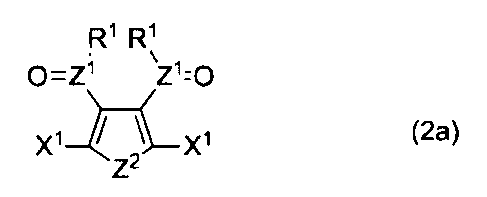 で表される芳香族複素環化合物[芳香族複素環化合物(2a)]を得る工程、
芳香族複素環化合物(2a)と式(3)
 で表される芳香族化合物[芳香族化合物(3)]とを反応させて、式(4)
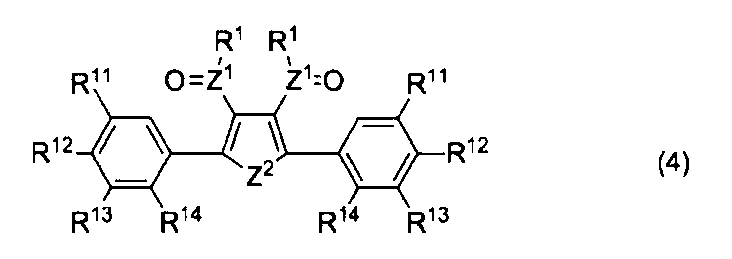 で示される化合物[化合物(4)]を得る工程及び
化合物(4)と酸とを反応させて、式(5)
 で示される含カルコゲン縮合多環式化合物[含カルコゲン縮合多環式化合物(5)]を得る工程を含む、含カルコゲン縮合多環式化合物(5)の製造方法を提供する。
ここで、各式中、R1は炭素数1~20のアルキル基を示し、Z1はそれぞれ独立に、硫黄原子又はセレン原子を示し、Z2は酸素原子、硫黄原子又はセレン原子を示す。R11、R12、R13及びR14はそれぞれ独立に、水素原子、置換基を有していてもよい炭素数1~30のアルキル基、置換基を有していてもよい炭素数1~30のアルコキシ基、置換基を有していてもよい炭素数6~30のアリール基、置換基を有していてもよい炭素数7~30のアラルキル基、置換基を有していてもよい炭素数5~30のヘテロアラルキル基、置換基を有していてもよい炭素数4~30のヘテロアリール基、又は、式 −Si(R2)3(R2はそれぞれ独立に、置換基を有していてもよい炭素数1~30のアルキル基又は置換基を有していてもよい炭素数6~30のアリール基を示す。)で表される置換シリル基を示す。X1はハロゲン原子を示し、X2は脱離基を示す。
即ち、本発明は、式(1a)
芳香族複素環化合物(2a)と式(3)
化合物(4)と酸とを反応させて、式(5)
ここで、各式中、R1は炭素数1~20のアルキル基を示し、Z1はそれぞれ独立に、硫黄原子又はセレン原子を示し、Z2は酸素原子、硫黄原子又はセレン原子を示す。R11、R12、R13及びR14はそれぞれ独立に、水素原子、置換基を有していてもよい炭素数1~30のアルキル基、置換基を有していてもよい炭素数1~30のアルコキシ基、置換基を有していてもよい炭素数6~30のアリール基、置換基を有していてもよい炭素数7~30のアラルキル基、置換基を有していてもよい炭素数5~30のヘテロアラルキル基、置換基を有していてもよい炭素数4~30のヘテロアリール基、又は、式 −Si(R2)3(R2はそれぞれ独立に、置換基を有していてもよい炭素数1~30のアルキル基又は置換基を有していてもよい炭素数6~30のアリール基を示す。)で表される置換シリル基を示す。X1はハロゲン原子を示し、X2は脱離基を示す。
以下、本発明の好適な実施態様について詳細に説明する。
芳香族複素環化合物(2a)は、芳香族複素環化合物(1a)とN−ハロカルボン酸アミドとを水又はアルコールの存在下で反応させることにより得ることができる。
まず、芳香族複素環化合物(1a)について説明する。芳香族複素環化合物(1a)におけるR1は、炭素数1~20のアルキル基を示す。具体的には、メチル基、エチル基、n−プロピル基、イソプロピル基、n−ブチル基、sec−ブチル基、t−ブチル基、n−ペンチル基、ネオペンチル基、n−ヘキシル基、2−エチルヘキシル基、n−ヘプチル基、n−オクチル基、2−ヘキシルオクチル基、n−ノニル基、n−デシル基、2−ヘキシルデシル基、n−ウンデシル基、n−ドデシル基、n−トリデシル基、n−テトラデシル基、n−ペンタデシル基、n−ヘキサデシル基、n−ヘプタデシル基、n−オクタデシル基、n−ノナデシル基、及びn−イコシル基が挙げられる。好ましくはメチル基、エチル基、n−プロピル基、イソプロピル基、n−ブチル基、sec−ブチル基、t−ブチル基、n−ペンチル基、シクロペンチル基、n−ヘキシル基、シクロヘキシル基、n−ヘプチル基、n−オクチル基、n−ノニル基及びn−デシル基が挙げられる。さらに好ましくはメチル基、エチル基、n−プロピル基、n−ブチル基、n−ペンチル基、及びn−ヘキシル基が挙げられ、特に好ましくはメチル基、エチル基、n−プロピル基、及びn−ブチル基が挙げられる。
芳香族複素環化合物(1a)におけるZ1はそれぞれ独立に、硫黄原子又はセレン原子を示す。Z1は好ましくは硫黄原子である。Z2は酸素原子、硫黄原子又はセレン原子を示す。Z2は好ましくは、酸素原子又は硫黄原子であり、より好ましくは硫黄原子である。
芳香族複素環化合物(1a)とN−ハロカルボン酸アミドとを反応させて芳香族複素環化合物(2a)を製造する方法において、使用されるN−ハロカルボン酸アミドとは、式
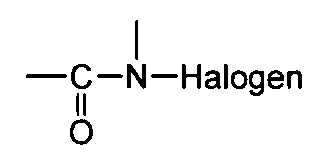 で示される部分構造を有する化合物であり、例えば、N−クロロアセトアミド、N−ブロモアセトアミド、N−ヨードアセトアミドなどのN−ハロアセトアミド、N−クロロスクシンイミド、N−ブロモスクシンイミド、N−ヨードスクシンイミドなどのN−ハロスクシンイミド、N−クロロフタルイミド、N−ブロモフタルイミド、N−ヨードフタルイミドなどのN−ハロフタルイミド、1,3−ジクロロ−5,5−ジメチルヒダントイン、1,3−ジブロモ−5,5−ジメチルヒダントイン、1,3−ジヨード−5,5−ジメチルヒダントインなどの1,3−ジハロヒダントインが挙げられる。好ましいN−ハロカルボン酸アミドは、N−クロロスクシンイミド、N−ブロモスクシンイミド、N−ヨードスクシンイミド、N−クロロフタルイミド、N−ブロモフタルイミド及びN−ヨードフタルイミドであり、より好ましいN−ハロカルボン酸アミドは、N−ブロモスクシンイミドである。
N−ハロカルボン酸アミドの使用量は、芳香族複素環化合物(1a)1モルに対し、通常、0.5モルから15モルの割合、好ましくは、0.7モルから10モルの割合、さらに好ましくは1モルから8モルの割合である。N−ハロカルボン酸アミドの使用量が少なすぎると反応が完結せず、使用量が多すぎると副反応が進行することがある。
N−ハロカルボン酸アミドは一度に仕込んでもよいし、反応の進行度合いに合わせて複数回に分けて仕込んでも良い。
芳香族複素環化合物(1a)とN−ハロカルボン酸アミドとの反応は、水又はアルコールの存在下で行う。該反応は、通常、溶媒中で行われ、水又はアルコールは、反応開始前に溶媒に添加してもよいし、反応開始後に溶媒に添加してもよい。水又はアルコールの添加量は、溶媒に対し、通常1~1/200重量倍、好ましくは1/2~1/150重量倍、さらに好ましくは1/5~1/100重量倍である。アルコールとしては、メタノール、エタノール、イソプロピルアルコール、n−ブチルアルコール等が挙げられる。
溶媒としては、例えば、ペンタン、ヘキサン、ヘプタン等の脂肪族炭化水素、トルエン、キシレン等の芳香族炭化水素、塩化メチレン、クロロホルム、1,2−ジクロロエタン、1,2−ジクロロプロパン等のハロゲン化炭化水素、ジエチルエーテル、テトラヒドロフラン、1,4−ジオキサン,シクロペンチルメチルエーテル等のエーテル及びこれらの混合物が挙げられる。また、水又はアルコールを溶媒として用いてもよい。
溶媒の使用量は、芳香族複素環化合物(1a)に対し、通常、1~500重量倍、好ましくは2~300重量倍、さらに好ましくは5~200重量倍である。反応温度は、通常、−78℃~溶媒の沸点、好ましくは、−40℃から溶媒の沸点、さらに好ましくは0℃~溶媒の沸点である。反応時間は1分間~96時間の範囲を挙げることができる。反応終了後は一般的な後処理をし、必要に応じて、蒸留、再結晶、シリカゲルクロマトグラフィー等の精製することで芳香族複素環化合物(2a)を得ることができる。
芳香族複素環化合物(1a)の具体例としては以下の化合物
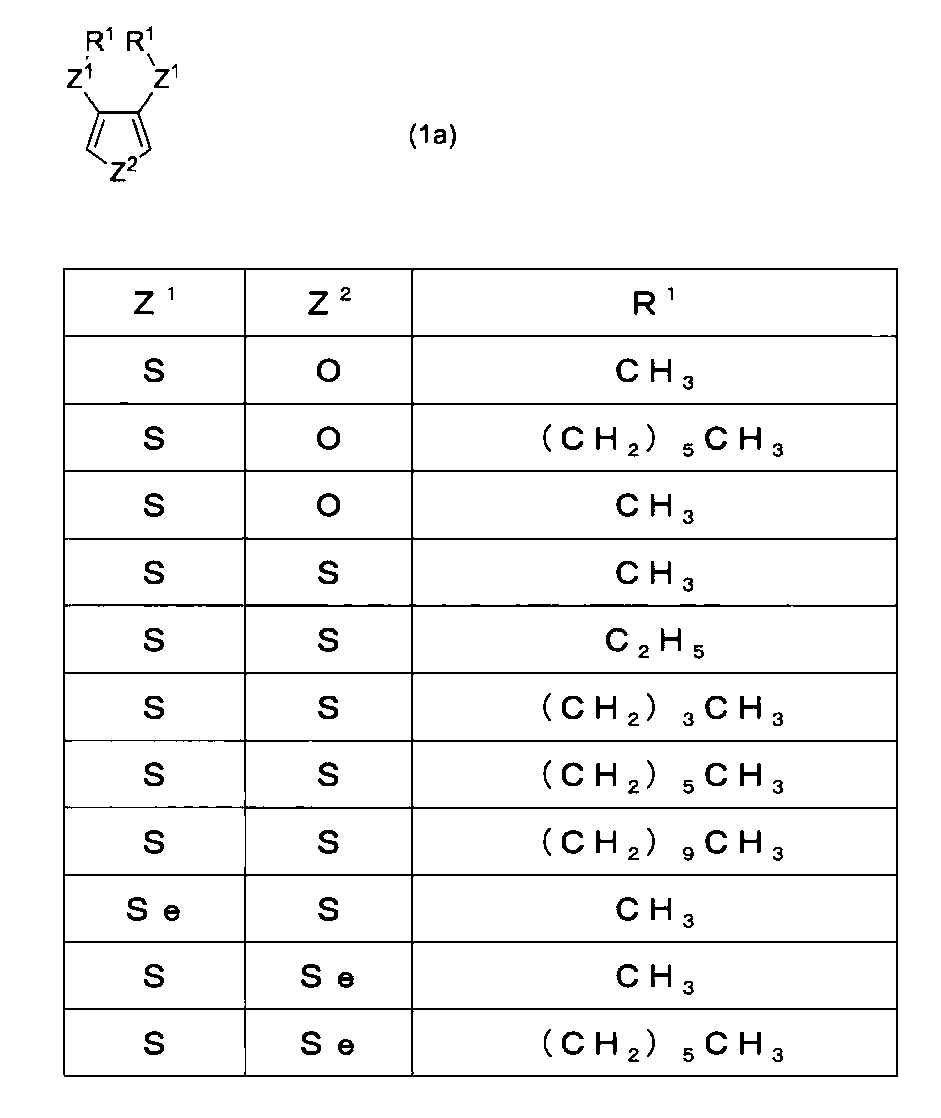 が挙げられ、芳香族複素環化合物(2a)の具体例としては以下の化合物
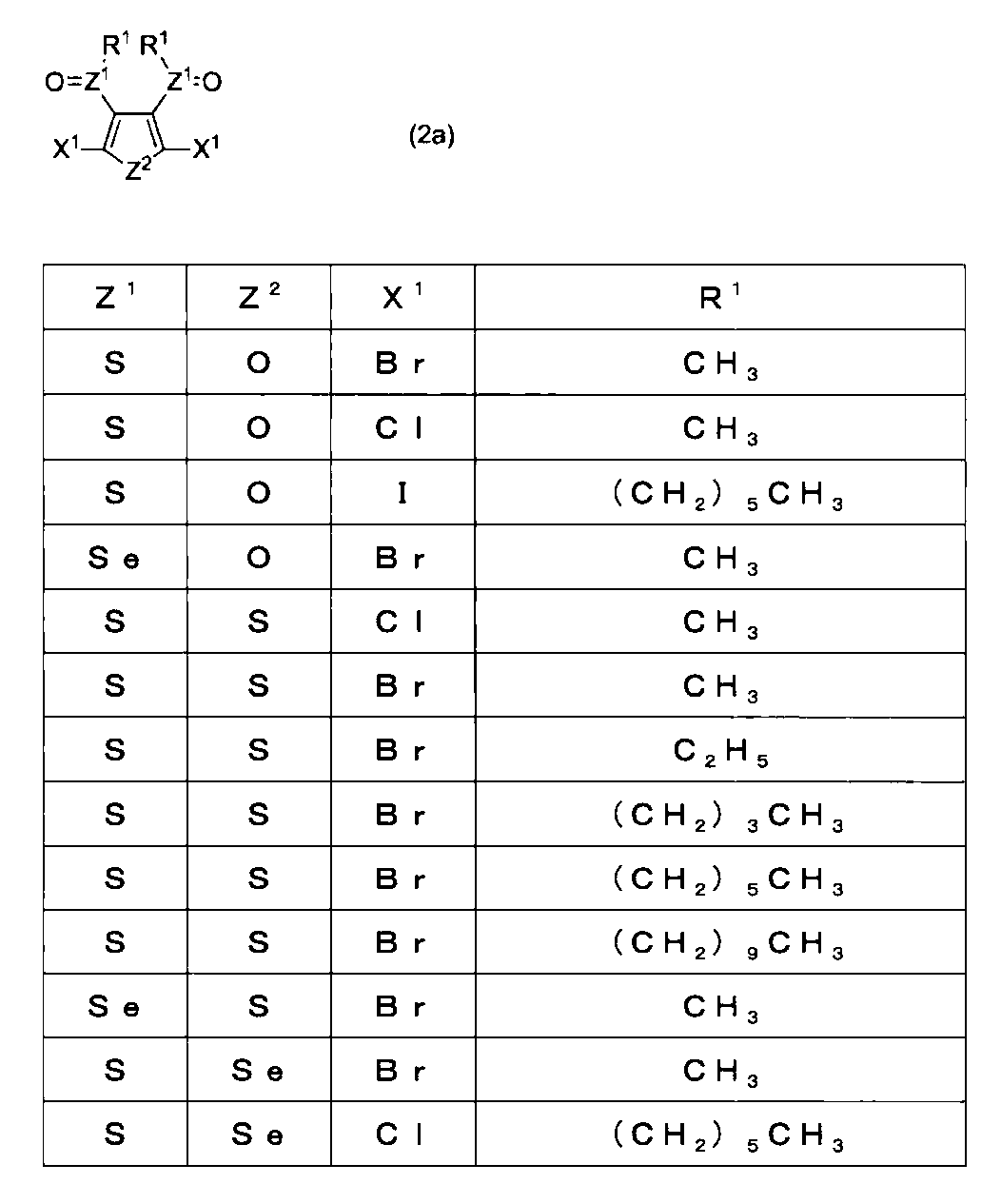 が挙げられる。
続いて、芳香族複素環化合物(2a)と芳香族化合物(3)との縮合反応について説明する。
まず、芳香族化合物(3)について詳述する。
化合物(3)におけるR11、R12、R13及びR14はそれぞれ独立に、水素原子、置換されていてもよい炭素数1~30のアルキル基、置換されていてもよい炭素数1~30のアルコキシ基、置換されていてもよい炭素数6~30のアリール基、置換されていてもよい炭素数7~30のアラルキル基、置換されていてもよい炭素数5~30のヘテロアラルキル基、置換されていてもよい炭素数4~30のヘテロアリール基、又は、−Si(R2)3(R2はそれぞれ独立に、置換されていてもよい炭素数1~30のアルキル基又は置換されていてもよい炭素数6~30のアリール基を示す。)で表される置換シリル基を示す。
R11、R12、R13及びR14で表される「置換されていてもよい炭素数1~30のアルキル基」における「炭素数1~30のアルキル基」は、直鎖、分枝鎖、環状のいずれでもよい。炭素数1~30のアルキル基の具体例としては、メチル基、エチル基、n−プロピル基、イソプロピル基、n−ブチル基、s−ブチル基、t−ブチル基、n−ペンチル基、ネオペンチル基、n−ヘキシル基、2−エチルヘキシル基、n−ヘプチル基、n−オクチル基、2−ヘキシルオクチル基、n−ノニル基、n−デシル基、2−ヘキシルデシル基、n−ウンデシル基、n−ドデシル基、n−トリデシル基、n−テトラデシル基、n−ペンタデシル基、n−ヘキサデシル基、n−ヘプタデシル基、n−オクタデシル基、n−ノナデシル基、n−イコシル基、n−ヘンイコシル基、n−ドコシル基、n−トリコシル基、n−テトラコシル基、n−ペンタコシル基、n−ヘキサコシル基、n−ヘプタコシル基、n−オクタコシル基、n−ノナコシル基、n−トリアコンチル基、シクロペンチル基、シクロヘキシル基、及びシクロヘプチル基等が挙げられ、好ましくは、メチル基、エチル基、n−プロピル基、イソプロピル基、n−ブチル基、s−ブチル基、t−ブチル基、n−ペンチル基、ネオペンチル基、n−ヘキシル基、2−エチルヘキシル基、n−ヘプチル基、n−オクチル基、n−ノニル基、n−デシル基、2−ヘキシルデシル基、n−ウンデシル基、n−ドデシル基、n−トリデシル基、n−テトラデシル基、n−ペンタデシル基、n−ヘキサデシル基、n−ヘプタデシル基、n−オクタデシル基、n−ノナデシル基、n−イコシル基が挙げられ、より好ましくはメチル基、エチル基、n−プロピル基、n−ブチル基、n−ペンチル基、n−ヘキシル基、シクロヘキシル基、2−エチルヘキシル基、n−ヘプチル基、n−オクチル基、n−ノニル基、n−デシル基、n−ウンデシル基、n−ドデシル基、n−トリデシル基、2−ヘキシルオクチル基、n−テトラデシル基、n−ペンタデシル基、n−ヘキサデシル基、シクロヘキシル基、及びシクロヘプチル基等の炭素数1~16のアルキル基が挙げられる。
「置換されていてもよい炭素数1~30のアルキル基」が有する置換基としては、ハロゲン原子、炭素数1~30のアルコキシ基等を挙げることができる。ハロゲン原子としては、フッ素原子、塩素原子、臭素原子等が挙げられる。炭素数1~30のアルコキシ基としては、メトキシ基、エトキシ基、n−プロポキシ基、n−ブトキシ基、n−ペンチルオキシ基、n−ヘキシルオキシ基、n−ヘプチルオキシ基、n−オクチルオキシ基、n−ノニルオキシ基、n−デシルオキシ基、n−ウンデシルオキシ基、n−ドデシルオキシ基、n−トリデシルオキシ基、n−テトラデシルオキシ基、n−ペンタデシルオキシ基、n−ヘキサデシルオキシ基、n−ヘプタデシルオキシ基、n−オクタデシルオキシ基、n−ノナデシルオキシ基、n−イコシルオキシ基、n−ヘンイコシルオキシ基、n−ドコシルオキシ基、n−トリコシルオキシ基、n−テトラコシルオキシ基、n−ペンタコシルオキシ基、n−ヘキサコシルオキシ基、n−ヘプタコシルオキシ基、n−オクタコシルオキシ基、n−ノナコシルオキシ基、及びn−トリアコンチルオキシ基等が挙げられる。
「置換されていてもよい炭素数1~30のアルキル基」が有する置換基としては、フッ素原子が好ましい。フッ素置換された炭素数1~30のアルキル基としては、例えば、パーフルオロヘキシル基、パーフルオロオクチル基、パーフルオロデシル基、パーフルオロドデシル基、及びパーフルオロトリデシル基が挙げられる。
R11、R12、R13及びR14で表される「置換されていてもよい炭素数1~30のアルコキシ基」における「炭素数1~30のアルコキシ基」としては、例えば、メトキシ基、エトキシ基、n−プロポキシ基、n−ブトキシ基、n−ペンチルオキシ基、n−ヘキシルオキシ基、n−ヘプチルオキシ基、n−オクチルオキシ基、n−ノニルオキシ基、n−デシルオキシ基、n−ウンデシルオキシ基、n−ドデシルオキシ基、n−トリデシルオキシ基、n−テトラデシルオキシ基、n−ペンタデシルオキシ基、n−ヘキサデシルオキシ基、n−ヘプタデシルオキシ基、n−オクタデシルオキシ基、n−ノナデシルオキシ基、n−イコシルオキシ基、n−ヘンイコシルオキシ基、n−ドコシルオキシ基、n−トリコシルオキシ基、n−テトラコシルオキシ基、n−ペンタコシルオキシ基、n−ヘキサコシルオキシ基、n−ヘプタコシルオキシ基、n−オクタコシルオキシ基、n−ノナコシルオキシ基、及びn−トリアコンチルオキシ基を挙げることができる。好ましくは、メトキシ基、エトキシ基、n−プロポキシ基、n−ブトキシ基、n−ペンチルオキシ基、n−ヘキシルオキシ基、n−ヘプチルオキシ基、n−オクチルオキシ基、n−ノニルオキシ基、n−デシルオキシ基、n−ウンデシルオキシ基、n−ドデシルオキシ基、n−トリデシルオキシ基、n−テトラデシルオキシ基、n−ペンタデシルオキシ基、n−ヘキサデシルオキシ基、n−ヘプタデシルオキシ基、n−オクタデシルオキシ基、n−ノナデシルオキシ基、及びn−イコシルオキシ基等の炭素数1~20のアルコキシ基が挙げられる。
「置換されていてもよい炭素数1~30のアルコキシ基」の置換基としては、例えば、フッ素原子、塩素原子、臭素原子等のハロゲン原子、炭素数1~30のアルコキシ基、炭素数6~30のアリール基、炭素数7~30のアラルキル基、炭素数4~30のヘテロアリール基、及び炭素数5~30のヘテロアラルキル基を挙げることができる。置換基に含まれる水素原子はフッ素原子に置き換わっていてもよい。炭素数6~30のアリール基としては、フェニル基、1−ナフチル基、2−ナフチル基等を挙げることができる。炭素数7~30のアラルキル基としては、式
 で表される基が挙げられる。ここで、n1は1~14の整数を示し、n2及びn3は1~10の整数を示す。炭素数4~30のヘテロアリール基とは、アリール基の芳香環に含まれる炭素原子の少なくとも1つが、窒素原子、酸素原子、硫黄原子、及びセレン原子等の複素原子に置き換えられた基を意味し、例えば、チエニル基、フリル基、チアゾリル基、チエノ[3,2−b]チエニル基、フロロ[3,2−b]フリル基、チエノ[3,2−b]フリル基、ベンゾ[b]チエニル基、ベンゾ[b]フリル基等が挙げられる。ヘテロアリール基としては、チエニル基、チアゾリル基、チエノ[3,2−b]チエニル基、ベンゾ[b]チエニル基、ベンゾ[b]フリル基が好ましい。炭素数5~30のヘテロアラルキル基とは、アラルキル基の芳香環に含まれる炭素原子の少なくとも1つが、窒素原子、酸素原子、硫黄原子、セレン原子等の複素原子に置き換えられた基を意味し、ヘテロアラルキル基としては、例えば、式
 で表される基を挙げることができる。ここで、n4は1~26の整数を示し、n5は1~24の整数を示し、n6は1~22の整数を示す。さらに好ましくは、式
 で表される基を挙げることができる。ここで、n4は1~26の整数を示し、n5は1~24の整数を示し、n6は1~22の整数を示す。
「置換されていてもよい炭素数1~30のアルコキシ基」が有する置換基としては、フッ素原子が好ましい。置換された炭素数1~30のアルコキシ基としては、例えば、パーフルオロヘキシルオキシ基、パーフルオロオクチルオキシ基、パーフルオロデシルオキシ基、パーフルオロドデシルオキシ基、パーフルオロトリデシルオキシ基、メトキシエトキシエトキシ基が挙げられる。
R11、R12、R13及びR14で表される「置換されていてもよい炭素数6~30のアリール基」の「アリール基」としては、好ましくは単環又は二環であり、より好ましくは、フェニル基、1−ナフチル基、2−ナフチル基が挙げられる。
「置換基されていてもよい炭素数6~30のアリール基」の置換基としては、例えば、フッ素原子、塩素原子、及び臭素原子等のハロゲン原子、例えば、炭素数1~20のアルキル基、炭素数1~20のアルコキシ基、炭素数6~20のアリール基、炭素数7~20のアラルキル基、炭素数4~20のヘテロアリール基、及び炭素数5~20のヘテロアラルキル基を挙げることができる。置換基に含まれる水素原子はフッ素原子に置き換わっていてもよい。炭素数6~20のアリール基としては、例えば、フェニル基、1−ナフチル基、2−ナフチル基が挙げられ、置換された炭素数6~20のアリール基としては、例えば、パーフルオロフェニルを挙げることができる。炭素数1~20のアルキル基としては、例えば、メチル基、エチル基、プロピル基、n−ブチル基、n−ペンチル基、n−ヘキシル基、n−ヘプチル基、n−オクチル基、n−ノニル基、n−デシル基、n−ウンデシル基、n−ドデシル基、n−トリデシル基、n−テトラデシル基、n−ペンタデシル基、n−ヘキサデシル基、n−ヘプタデシル基、n−オクタデシル基、n−ノナデシル基、n−イコシル基、n−ヘンイコシル基、n−ドコシル基、n−トリコシル基、n−テトラコシル基、n−ペンタコシル基、n−ヘキサコシル基、n−ヘプタコシル基、n−オクタコシル基、n−ノナコシル基、及びn−トリアコンチル基が挙げられる。
R11、R12、R13及びR14で表される「置換されていてもよい炭素数7~30のアラルキル基」の置換基としては、例えば、フッ素原子、塩素原子、臭素原子等のハロゲン原子、炭素数1~20のアルキル基、炭素数1~20のアルコキシ基、炭素数7~20のアラルキル基、炭素数4~20のヘテロアリール基、炭素数5~20のヘテロアラルキル基を挙げることができる。置換基のアルキル基、アルコキシ基、アラルキル基、ヘテロアリール基、ヘテロアラルキル基に含まれる水素原子はフッ素原子に置き換わっていてもよい。
「置換されていてもよい炭素数7~30のアラルキル基」の置換基としては、フッ素原子が好ましい。
「置換されていてもよい炭素数7~30のアラルキル基」としては、例えば、式
 (n1は1~24の整数を示し、n2及びn3は1~20の整数を示す。)で表される炭素数7~30のアラルキル基、又は式
 (n4及びn5は1~24の整数を示し、n6は1~23の整数を示す。)で表される炭素数7~30の置換基を有するアラルキル基が挙げられる。
R11、R12、R13及びR14で表される「置換されていてもよい炭素数4~30のヘテロアリール基」としては、例えば、チエニル基、フリル基、チアゾリル基、チエノ[3,2−b]チエニル基、フロロ[3,2−b]フリル基、チエノ[3,2−b]フリル基、ベンゾ[b]チエニル基、ベンゾ[b]フリル基が挙げられる。好ましいヘテロアリール基としては、チエニル基、チアゾリル基、チエノ[3,2−b]チエニル基、ベンゾ[b]チエニル基、ベンゾ[b]フリル基が挙げられ、特に、式
 で表わされる基が好ましい。
「置換されていてもよい炭素数4~30のヘテロアリール基」の置換基としては、例えば、フッ素原子、塩素原子、臭素原子等のハロゲン原子、炭素数1~20のアルキル基、炭素数1~20のアルコキシ基、炭素数6~20のアリール基、炭素数7~20のアラルキル基、炭素数4~30のヘテロアリール基、炭素数5~30のヘテロアラルキル基を挙げることができる。置換基に含まれる水素原子はフッ素原子に置き換わっていてもよい。
「置換されていてもよい炭素数4~30のヘテロアリール基」としては、2−チエニル基、2−チエノ[3,2−b]チエニル基、2−ベンゾ[b]チエニル基、5−フルオロ−2−チエニル基、5−ヘキシル−2−チエニル、4−ヘキシルオキシ−2−チエニル基等を挙げることができる。
「置換されていてもよい炭素数5~30のヘテロアラルキル基」の置換基としては、例えば、フッ素原子、塩素原子、臭素原子等のハロゲン原子、炭素数1~20のアルキル基、炭素数1~20のアルコキシ基、炭素数7~30のアラルキル基、炭素数4~30のヘテロアリール基、炭素数5~20のヘテロアラルキル基を挙げることができる。置換基に含まれる水素原子はフッ素原子に置き換わっていてもよい。
「置換されていてもよい炭素数5~30のヘテロアラルキル基」の置換基としては、フッ素原子が好ましい。「置換基を有していてもよい炭素数5~30のヘテロアラルキル基」としては、例えば、式
 で表される基を挙げることができる。ここで、n4は1~26の整数を示し、n5は1~24の整数を示し、n6は1~22の整数を示す。
R11、R12、R13及びR14で表される式 −Si(R2)3で示される置換シリル基は、好ましくは、フッ素原子を有していてもよい炭素数3~30のトリアルキルシリル基であり、ここで、トリアルキルシリル基は、ケイ素原子に結合している3つのアルキル基の炭素数の合計が3~30であるシリル基である。よって、ケイ素原子に結合しているアルキル基1個の炭素数の最大は28であり、フッ素原子で置換されていてもよい炭素数1~30のアルキル基である。そして、フッ素原子で置換されているトリアルキルシリル基としては、ケイ素原子に結合しているアルキル基にある水素原子の一部又は全部がフッ素原子に置き換わった基であることを意味する。当該トリアルキルシリル基の具体例としては、トリメチルシリル基、トリエチルシリル基、トリ(イソプロピル)シリル基、t−ブチルジメチルシリル基、ジメチルヘキシルシリル基、及びジメチルドデシルシリル基が挙げられる。
芳香族化合物(3)におけるX2は脱離基を示す。X2は芳香族化合物(3)と芳香族複素環化合物(2a)との縮合反応が進行し得るような脱離基であればよく、例えば、式(6)
 で表される基が好適である。
式(6)中、R10はそれぞれ独立に水酸基、炭素数1~10のアルキル基、炭素数1~10のアルコキシ基又は炭素数6~20のアリールオキシ基を示し、R10は同一でも異なっていてもよく、2つのR10が結合してホウ素原子とともに環構造を形成していてもよい。
R10で表される炭素数1~10のアルキル基としては、例えば、メチル基、エチル基、n−プロピル基、イソプロピル基、n−ブチル基、sec−ブチル基、tert−ブチル基、n−ペンチル基、ネオペンチル基、シクロペンチル基、n−ヘキシル基、シクロヘキシル基、n−ヘプチル基、n−オクチル基、n−ノニル基、n−デシル基、及び1,2−ジメチルプロピル基等の直鎖状、分岐鎖状又は環状のアルキル基が挙げられる。R10で表される炭素数1~10のアルコキシ基としては、例えば、メトキシ基、エトキシ基、n−プロポキシ基、n−ブトキシ基、及びn−ヘキサノキシ基が挙げられる。R10で表される炭素数6~20のアリールオキシ基としては、例えば、フェノキシ基、1−ナフトキシ基、及び2−ナフトキシ基が挙げられる。
2つのR10が結合してホウ素原子とともに環構造を形成する場合、好ましい例としては、1,3,2−ジオキサボロラン環、4,4,5,5−テトラメチル−1,3,2−ジオキサボロラン環、5,5−ジメチル−1,3,2−ジオキサボリナン環、1,3,2−ベンゾジオキサボロール環、及び9−ボラビシクロ3,3,1−ノナン環が挙げられる。
脱離基の具体例としては、式(6)で表される基以外にも、式(7)、(8)及び(9)
 でそれぞれ表されるような脱離基が挙げられる。
式(7)において、R20は、それぞれ独立に炭素数1~10のアルキル基を示し、例えば、メチル基、エチル基、n−プロピル基、i−プロピル基、n−ブチル基、sec−ブチル基、tert−ブチル基、n−ペンチル基、シクロペンチル基、n−ヘキシル基、シクロヘキシル基、n−オクチル基、及びn−デシル基が挙げられる。好ましくは、メチル基、エチル基、n−プロピル基、n−ブチル基、及びn−ヘキシル基であり、さらに好ましくは、メチル基、エチル基、n−プロピル基、及びn−ブチル基である。式(7)中のR20はそれぞれ異なっていてもよいが、同一であることが好ましい。
式(8)において、X3は、ハロゲン原子を示し、例えば、フッ素原子、塩素原子、臭素原子、及びヨウ素原子が挙げられる。好ましくは臭素原子、ヨウ素原子である。
式(9)において、X4は、ハロゲン原子を示し、例えば、フッ素原子、塩素原子、臭素原子、及びヨウ素原子が挙げられる。好ましくは臭素原子、ヨウ素原子である。
芳香族化合物(3)において、脱離基として式(6)で表される基を持つ化合物は常法により製造することができ、例えば、第4版実験化学講座24有機合成VI(日本化学会編)80ページに記載の方法で製造することができる。
芳香族化合物(3)において、脱離基として式(7)で表される基を持つ化合物は常法により製造することができ、例えば、第4版実験化学講座24有機合成VI(日本化学会編)189ページに記載の方法で製造することができる。
芳香族化合物(3)において、脱離基として式(8)で表される基を持つ化合物は常法により製造することができ、例えば、第4版実験化学講座24有機合成VI(日本化学会編)43ページに記載の方法で製造することができる。
芳香族化合物(3)において、脱離基として式(9)で表される基を持つ化合物は常法により製造することができ、例えば、第4版実験化学講座25有機合成VII(日本化学会編)401ページに記載の方法で製造することができる。
芳香族化合物(3)としては、例えば、表1において番号(3−1)~(3−280)で示される化合物を挙げることができる。

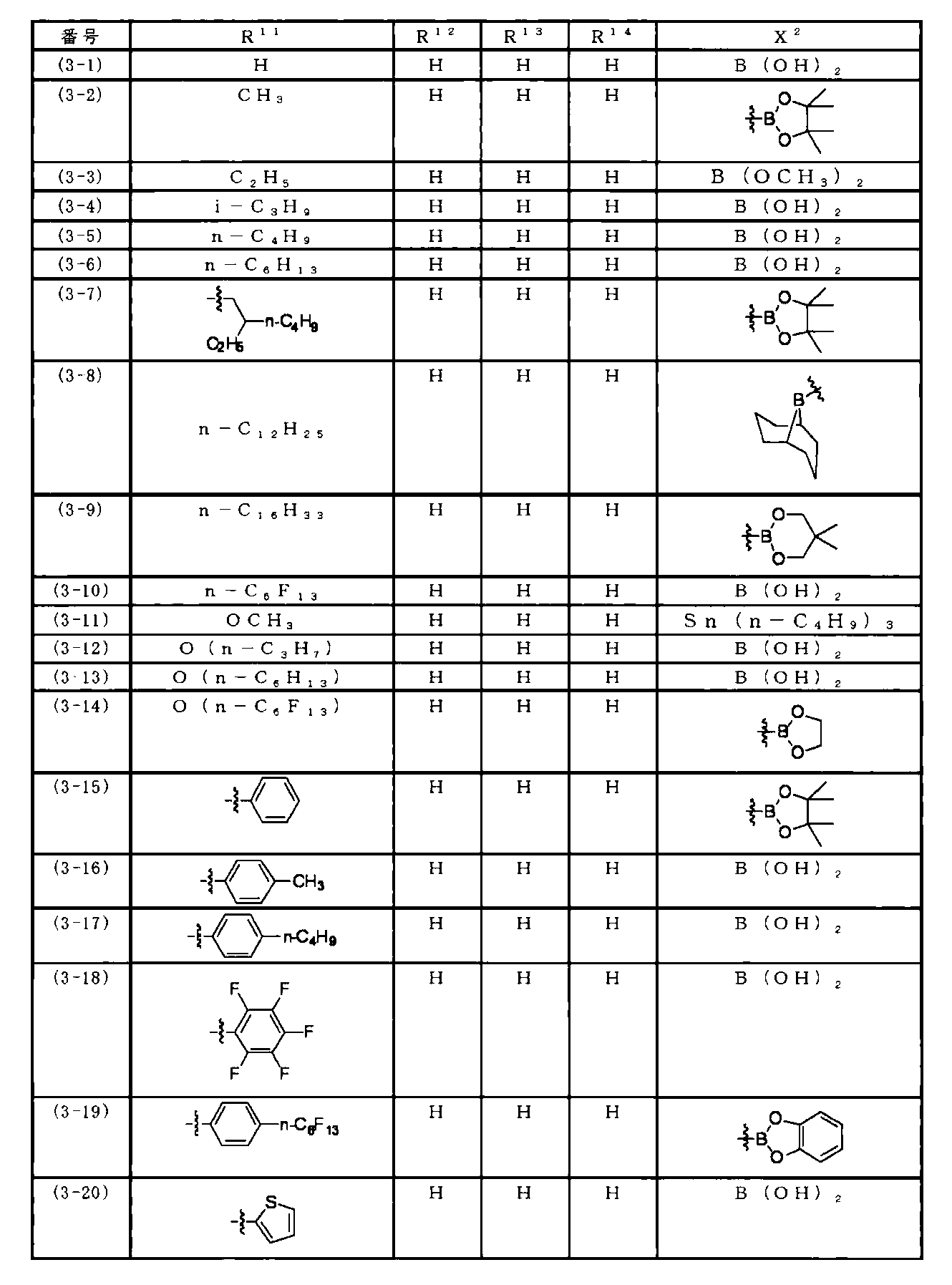
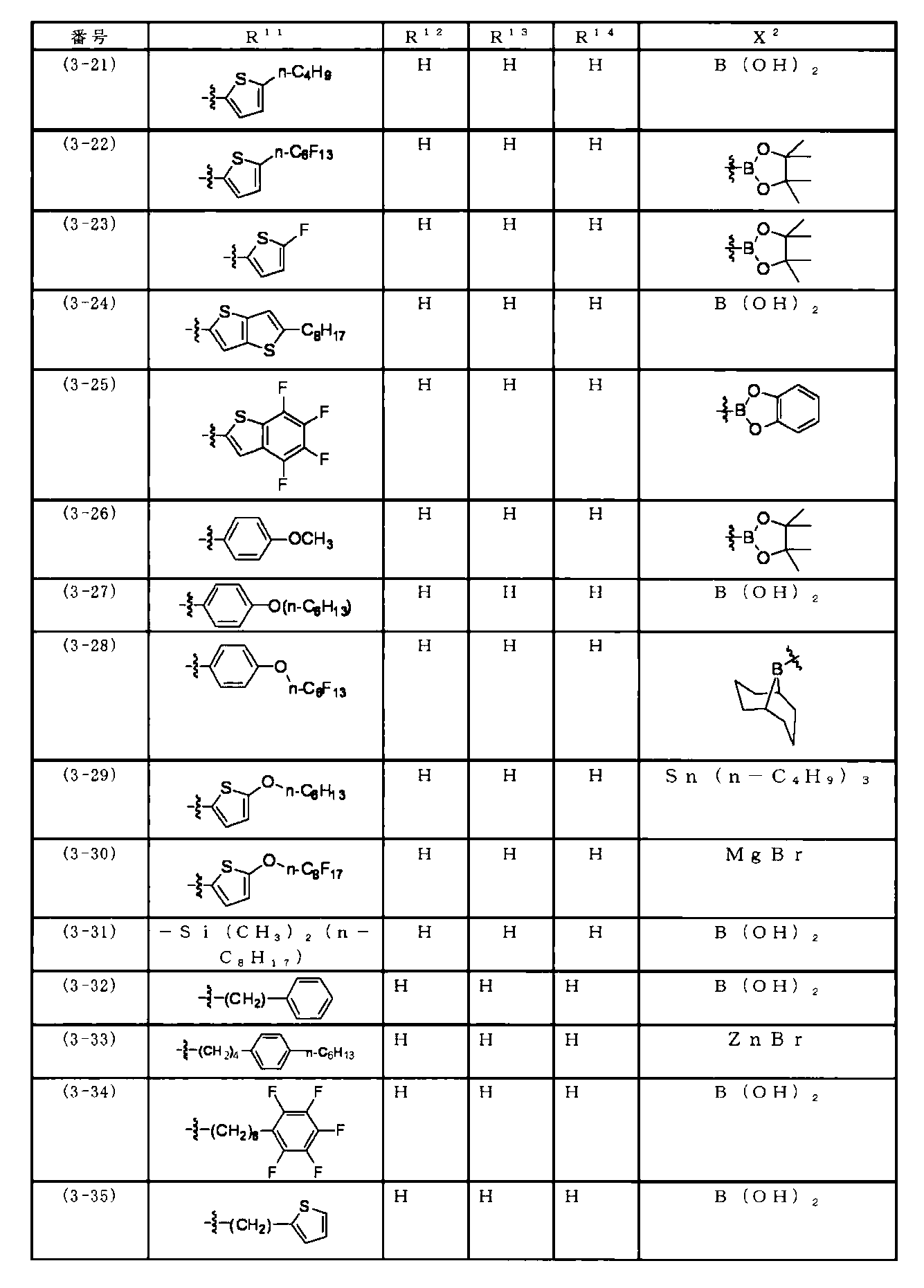
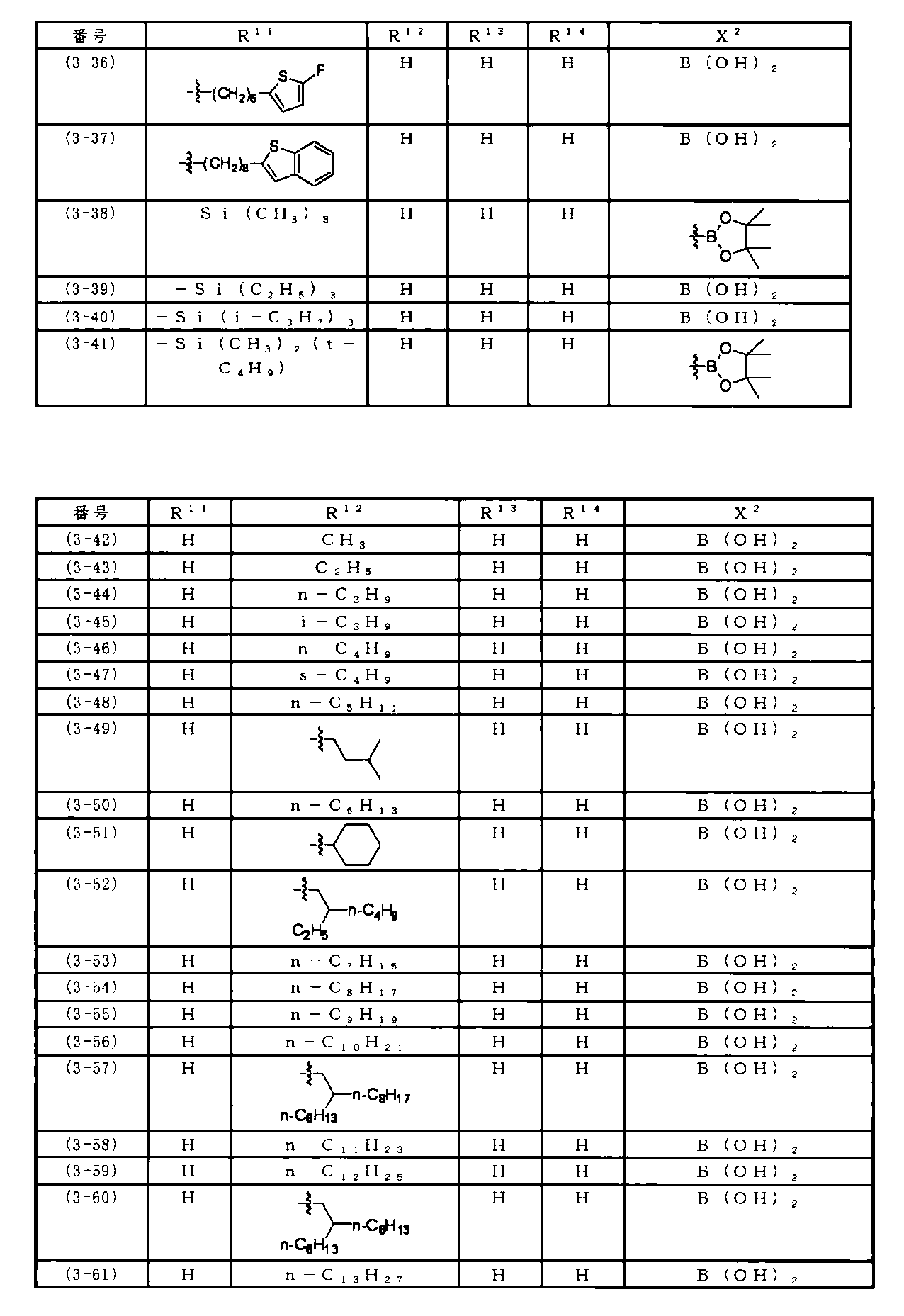


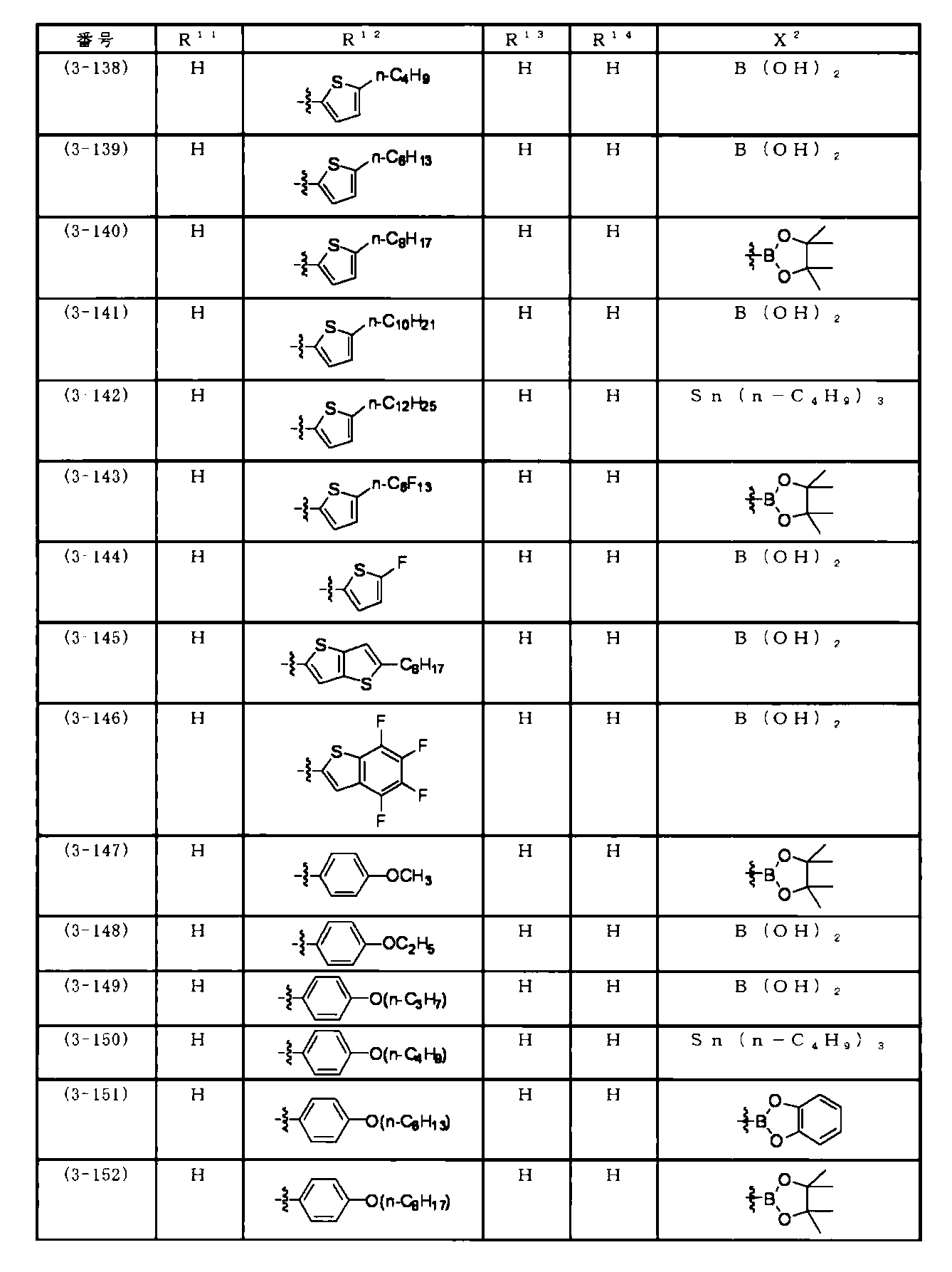

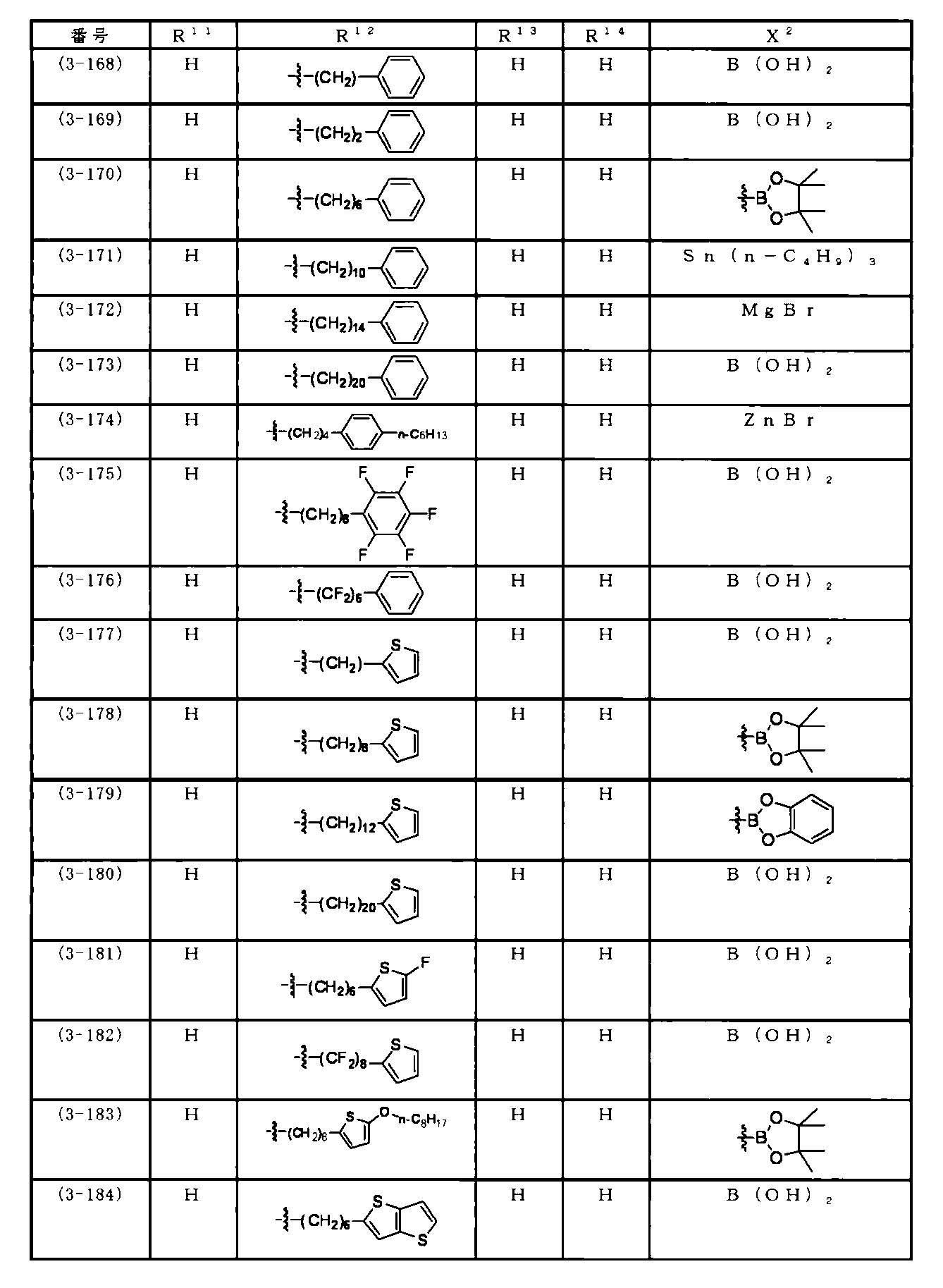

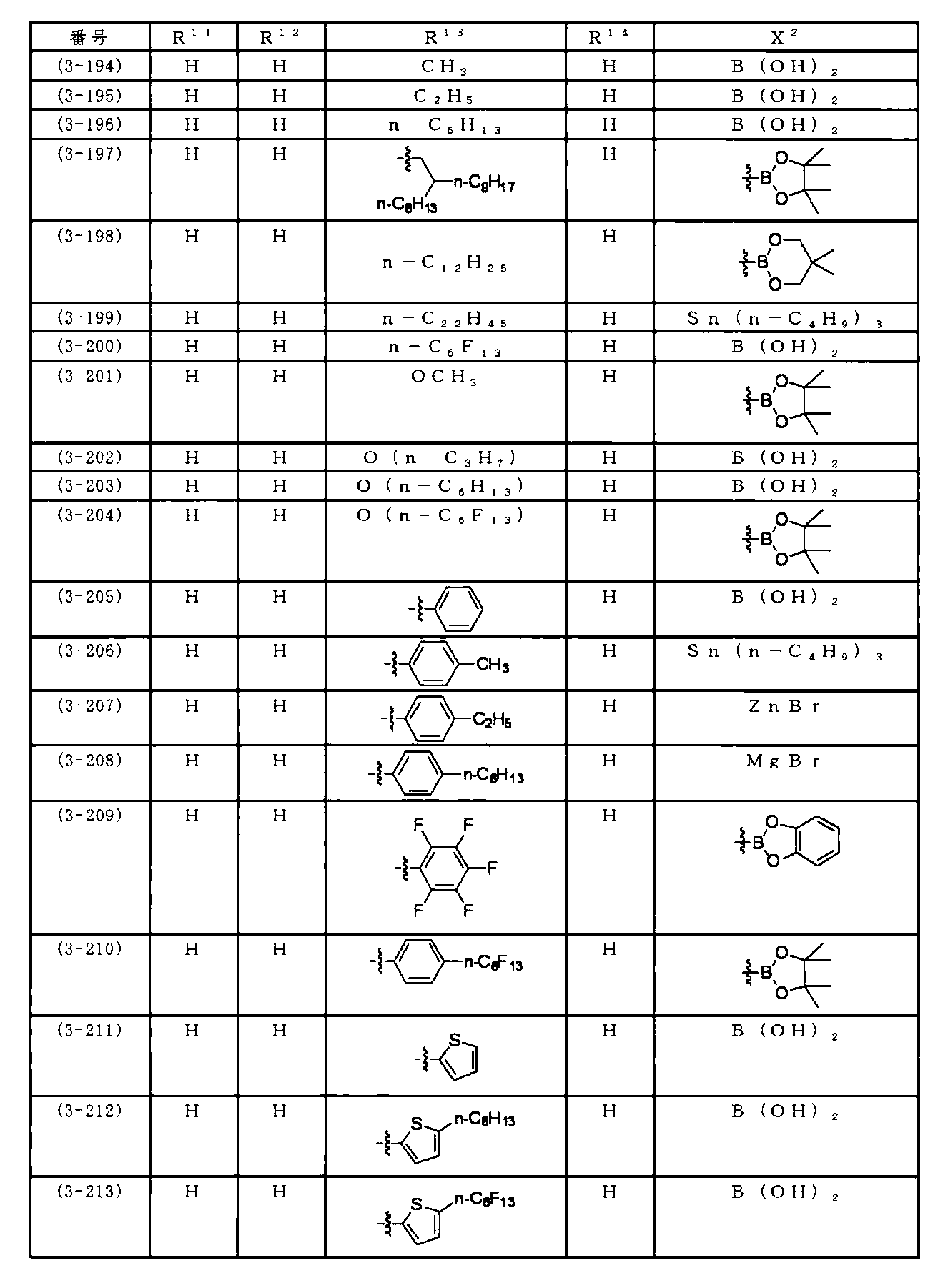


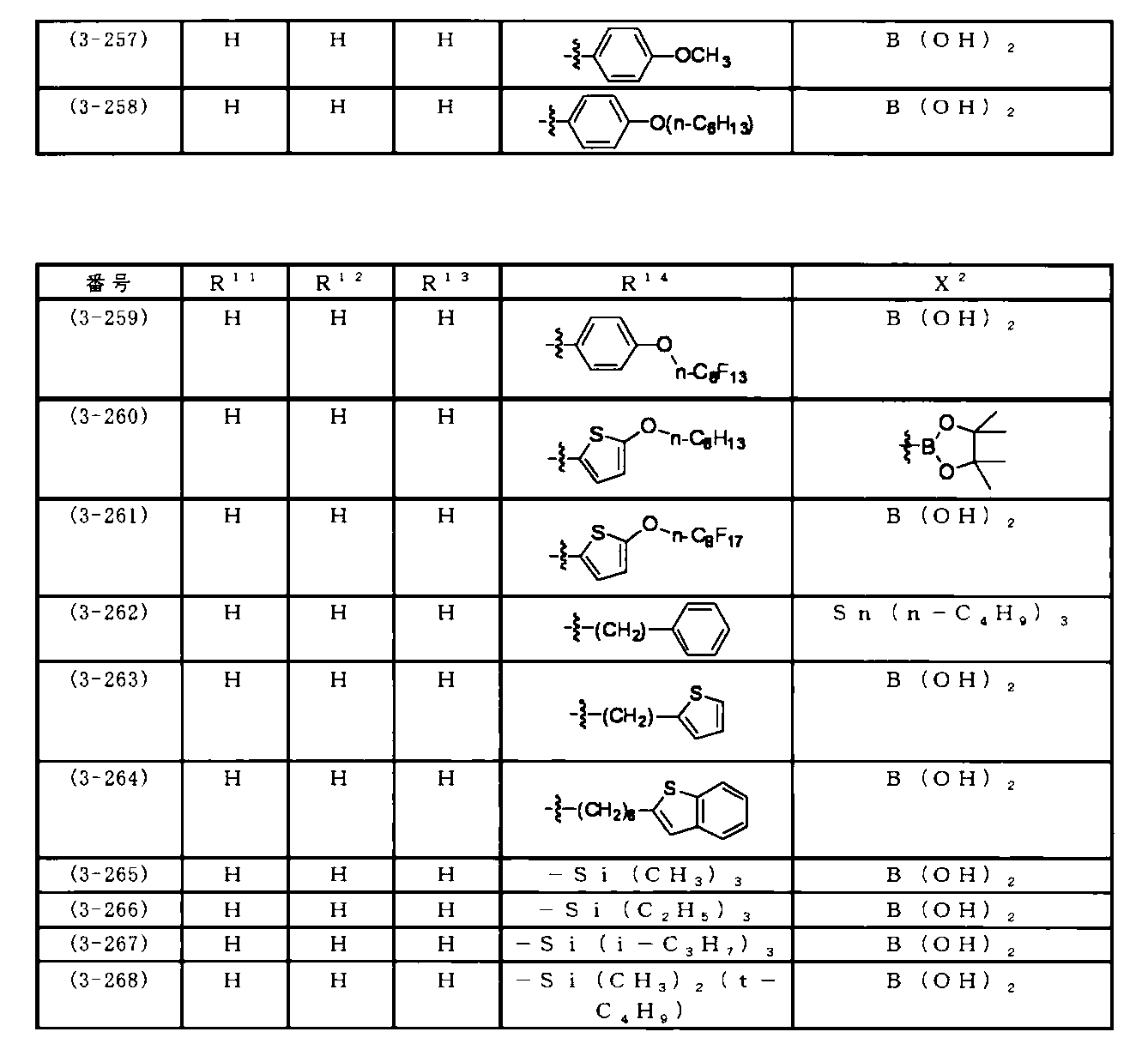
 表1中の波線は結合手を意味する。
好ましい芳香族化合物(3)の具体例は、番号(3−1)、(3−2)、(3−3)、(3−6)、(3−8)、(3−11)、(3−13)、(3−15)、(3−16)、(3−17)、(3−20)、(3−21)、(3−24)、(3−26)、(3−29)、(3−32)、(3−42)、(3−43)、(3−44)、(3−45)、(3−46)、(3−47)、(3−48)、(3−49)、(3−50)、(3−51)、(3−52)、(3−54)、(3−56)、(3−57)、(3−59)、(3−60)、(3−61)、(3−62)、(3−63)、(3−64)、(3−65)、(3−66)、(3−67)、(3−68)、(3−69)、(3−70)、(3−71)、(3−72)、(3−73)、(3−74)、(3−75)、(3−76)、(3−77)、(3−78)、(3−79)、(3−80)、(3−81)、(3−83)、(3−84)、(3−85)、(3−86)、(3−87)、(3−88)、(3−92)、(3−95)、(3−96)、(3−97)、(3−98)、(3−99)、(3−100)、(3−101)、(3−103)、(3−104)、(3−105)、(3−107)、(3−109)、(3−110)、(3−112)、(3−114)、(3−124)、(3−128)、(3−129)、(3−134)、(3−135)、(3−137)、(3−138)、(3−139)、(3−143)、(3−147)、(3−149)、(3−151)、(3−156)、(3−159)、(3−164)、(3−169)、(3−177)、(3−196)、(3−197)、(3−198)、(3−201)、(3−203)、(3−205)、(3−207)、(3−208)、(3−210)、(3−219)、(3−225)、(3−228)、(3−234)、(3−235)、(3−237)、(3−239)、(3−246)、(3−249)、(3−251)、(3−253)、(3−259)、(3−269)、(3−270)、(3−271)、(3−272)、(3−274)、(3−276)、(3−278)及び(3−280)で表されるものである。
より好ましい例は、番号(3−1)、(3−2)、(3−3)、(3−6)、(3−42)、(3−43)、(3−44)、(3−45)、(3−46)、(3−47)、(3−48)、(3−49)、(3−50)、(3−51)、(3−52)、(3−54)、(3−56)、(3−57)、(3−59)、(3−64)、(3−73)、(3−78)、(3−80)、(3−92)、(3−95)、(3−101)、(3−103)、(3−104)、(3−105)、(3−107)、(3−109)、(3−110)、(3−112)、(3−114)、(3−124)、(3−128)、(3−129)、(3−156)、(3−196)、(3−197)、(3−269)、(3−272)、(3−274)及び(3−276)で表されるものである。
芳香族化合物(3)のX2が、式(6)で表される基の場合、本縮合反応は、例えば、遷移金属触媒及び塩基の存在下、例えば、0℃~150℃程度の温度範囲内で、溶液中で容易に反応を進行させることができる。
本縮合反応で用いられる遷移金属触媒としては、例えば、パラジウム触媒又はニッケル触媒が挙げられる。パラジウム触媒としては、市販されているものを用いてもよいし、予めパラジウム化合物とホスフィン化合物を接触させて調製したものを用いてもよいし、パラジウム化合物とホスフィン化合物を、本縮合反応の反応系中で調製してもよい。
パラジウム触媒としては、例えば、テトラキス(トリフェニルホスフィン)パラジウム(0)、ビス(アセテート)ビス(トリフェニルホスフィン)パラジウム(II)、ビス[1,2−ビス(ジフェニルホスフィノ)エタン]パラジウム(0)、[1,2−ビス(ジフェニルホスフィノ)エタン]ジクロロパラジウム(II)、ジブロモビス(トリフェニルホスフィン)パラジウム(II)、ジクロロビス(ジメチルフェニルホスフィン)パラジウム(II)、ジクロロビス(メチルジフェニルホスフィン)パラジウム(II)、ジクロロビス(トリシクロヘキシルホスフィン)パラジウム(II)、ジクロロビス(トリエチルホスフィン)パラジウム(II)、ジクロロビス(トリフェニルホスフィン)パラジウム(II)、ジクロロビス[トリス(2−メチルフェニル)ホスフィン]パラジウム(II)、テトラキス(メチルジフェニルホスフィン)パラジウム(0)、テトラキス(トリシクロヘキシルホスフィン)パラジウム(0)及びジクロロビス(1,1’−ジフェニルホスフィノフェロセニル)パラジウム(II)が挙げられる。
パラジウム化合物としては、例えば、トリス(ジベンシリデンアセトン)ジパラジウム(0)、トリス(ジベンジリデンアセトン)ジパラジウム(0)・クロロホルム付加体、酢酸パラジウム(II)、塩化パラジウム(II)、(ビシクロ[2.2.1]ヘプタ−2,5−ジエン)ジクロロパラジウム(II)、(2,2’−ビピリジル)ジクロロパラジウム(II)、ビス(アセトニトリル)クロロニトロパラジウム(II)、ビス(ベンゾニトリル)ジクロロパラジウム(II)、ビス(アセトニトリル)ジクロロパラジウム(II)、ジクロロ(1,5−シクロオクタジエン)パラジウム(II)、ジクロロ(エチレンジアミン)パラジウム(II)、ジクロロ(N,N,N’,N’−テトラメチレンジアミン)パラジウム(II)、ジクロロ(1,10−フェナントロリン)パラジウム(II)、パラジウム(II)アセチルアセトナート、臭化パラジウム(II)、パラジウム(II)ヘキサフルオロアセチルアセトナート、ヨウ化パラジウム(II)、硝酸パラジウム(II)、硫酸パラジウム(II)及びトリフルオロ酢酸パラジウム(II)が挙げられ、好ましくは、酢酸パラジウム(II)、塩化パラジウム(II)及びトリス(ジベンジリデンアセトン)ジパラジウム(0)が挙げられる。かかるパラジウム化合物は、市販されているものを用いることができる。
ホスフィン化合物としては、例えば、トリフェニルホスフィン、トリス(2−メチルフェニル)ホスフィン、トリス(3−メチルフェニル)ホスフィン、トリス(4−メチルフェニル)ホスフィン、トリス(ペンタフルオロフェニル)ホスフィン、トリス(4−フルオロフェニル)ホスフィン、トリス(2−メトキシフェニル)ホスフィン、トリス(3−メトキシフェニル)ホスフィン、トリス(4−メトキシフェニル)ホスフィン、トリス(2,4,6−トリメチルフェニル)ホスフィン、トリ(3−クロロフェニル)ホスフィン、トリ(4−クロロフェニル)ホスフィン、トリ−n−ブチルホスフィン、トリ−tert−ブチルホスフィン、トリシクロヘキシルホスフィン、1,2−ジフェニルホスフィノエタン、1,3−ジフェニルホスフィノプロパン、1,4−ジフェニルホスフィノブタン、1,2−ジシクロヘキシルホスフィノエタン、1,3−ジシクロヘキシルホスフィノプロパン、1,4−ジシクロヘキシルホスフィノブタン、1,2−ジメチルホスフィノエタン、1,3−ジメチルホスフィノプロパン、1,4−ジメチルホスフィノブタン、1,2−ジエチルホスフィノエタン、1,3−ジエチルホスフィノプロパン、1,4−ジエチルホスフィノブタン、1,2−ジイソプロピルホスフィノエタン、1,3−ジイソプロピルホスフィノプロパン、1,4−ジイソプロピルホスフィノブタン、トリ−2−フリルホスフィン、2−(ジシクロヘキシルホスフィノ)ビフェニル、2−(ジ−tert−ブチルホスフィノ)ビフェニル、2−ジ−tert−ブチルホスフィノ−2’−メチルビフェニル、2−(ジシクロヘキシルホスフィノ−2’−6’−ジメトキシ、1,1’−ビフェニル、2−(ジシクロヘキシルホスフィノ)−2’−(N,N−ジメチルアミノ)ビフェニル、2−ジシクロヘキシルホスフィノ−2’−メチル−ビフェニル、2−(ジシクロヘキシルホスフィノ)−2’,4’,6’−トリ−イソプロピル1,1’−ビフェニル、1,1’−ビス(ジフェニルホスフィノ)フェロセン及び1,1’−ビス(ジ−イソプロピルホスフィノ)フェロセンが挙げられる。かかるホスフィン化合物としては、市販されているものを用いてもよいし公知の方法に従って製造したものを用いてもよい。ホスフィン化合物の使用量はパラジウム化合物1モルに対して、通常、0.5モル~10モルの割合であり、好ましくは1モル~5モルの割合である。
本縮合反応で用いられるニッケル触媒としては、例えば、ジクロロビス(1,1’−ジフェニルホスフィノフェロセニル)ニッケル(II)、ジクロロビス(ジフェニルホスフィノ)ニッケル(II)、ジクロロニッケル(II)及びジヨードニッケル(II)が挙げられる。
遷移金属触媒の使用量は芳香族化合物(3)1モルに対して、金属換算で、例えば、0.0005モル~0.5モルの割合である。
本縮合反応は、溶媒中で行うことが好ましい。溶媒としては、例えば、ベンゼン、トルエン、及びキシレン等の芳香族炭化水素;ジエチルエーテル、テトラヒドロフラン、1,4−ジオキサン、tert−ブチルメチルエーテル、及びエチレングリコールジメチルエーテル等のエーテル;N,N−ジメチルホルムアミド、N,N−ジメチルアセトアミド等のアミド;ジメチルスルホキシド;N−メチルピロリドン;1,3−ジメチル−2−イミダゾリジノン;及び水が挙げられる。反応溶媒は単独で用いてもよいし2種以上を混合して用いてもよい。溶媒は脱気して用いることが好ましい。また、反応で用いる化合物の一部又は全てを反応溶媒に溶解又は懸濁させてから、窒素バブリング等の方法で脱気してもよい。反応溶媒の使用量は、芳香族複素環化合物(2a)に対して、例えば、0.5重量倍~200重量倍であり、好ましくは2重量倍~100重量倍である。
本縮合反応は、塩基の存在下で行うことが好ましい。塩基としては、例えば、水酸化リチウム、水酸化ナトリウム、水酸化カリウム、水酸化タリウム、水酸化バリウム、リチウムメトキシド、ナトリウムメトキシド、カリウムメトキシド、リチウムエトキシド、ナトリウムエトキシド、カリウムエトキシド、ナトリウム−tert−ブトキシド、カリウム−tert−ブトキシド、炭酸リチウム、炭酸ナトリウム、炭酸カリウム、炭酸タリウム、炭酸セシウム、炭酸水素ナトリウム、炭酸水素カリウム、リン酸ナトリウム及びリン酸カリウムが挙げられる。塩基の使用量は、芳香族化合物(3)1モルに対して、少なくとも0.5モルの割合、好ましくは、少なくとも1モルの割合である。
本縮合反応は、相間移動触媒の存在下に行ってもよい。相間移動触媒としては、例えば、テトラアルキルハロゲン化アンモニウム、テトラアルキル硫酸水素アンモニウム及びテトラアルキル水酸化アンモニウム等の第4級アンモニウム塩を挙げることができ、好ましくは、テトラ−n−ブチルハロゲン化アンモニウム及びベンジルトリエチルハロゲン化アンモニウムが挙げられる。反応の雰囲気は大気下でも可能であるが、用いる触媒の劣化を防ぐため、窒素及びアルゴン等の不活性ガス下で行うことが好ましい。
本縮合反応の反応温度は、例えば、0℃~150℃の範囲を挙げることができる。本縮合反応の反応時間は、例えば、1分~96時間の範囲を挙げることができる。本縮合反応終了後、例えば、得られた反応混合物と塩化アンモニウム水溶液とを混合し、必要に応じて水に不溶の有機溶媒を加えて抽出処理をし、得られた有機層を濃縮し、必要に応じてカラムクロマトグラフィー、蒸留、再結晶、リサイクルゲルパーミネーションクロマトグラフィー等の精製手段を行うことで、化合物(4)を得ることができる。
化合物(4)としては、例えば、表2において番号(4−1)~(4−445)で示される化合物及び後述の番号(4−446)~(4−452)で示される化合物を挙げることができる。

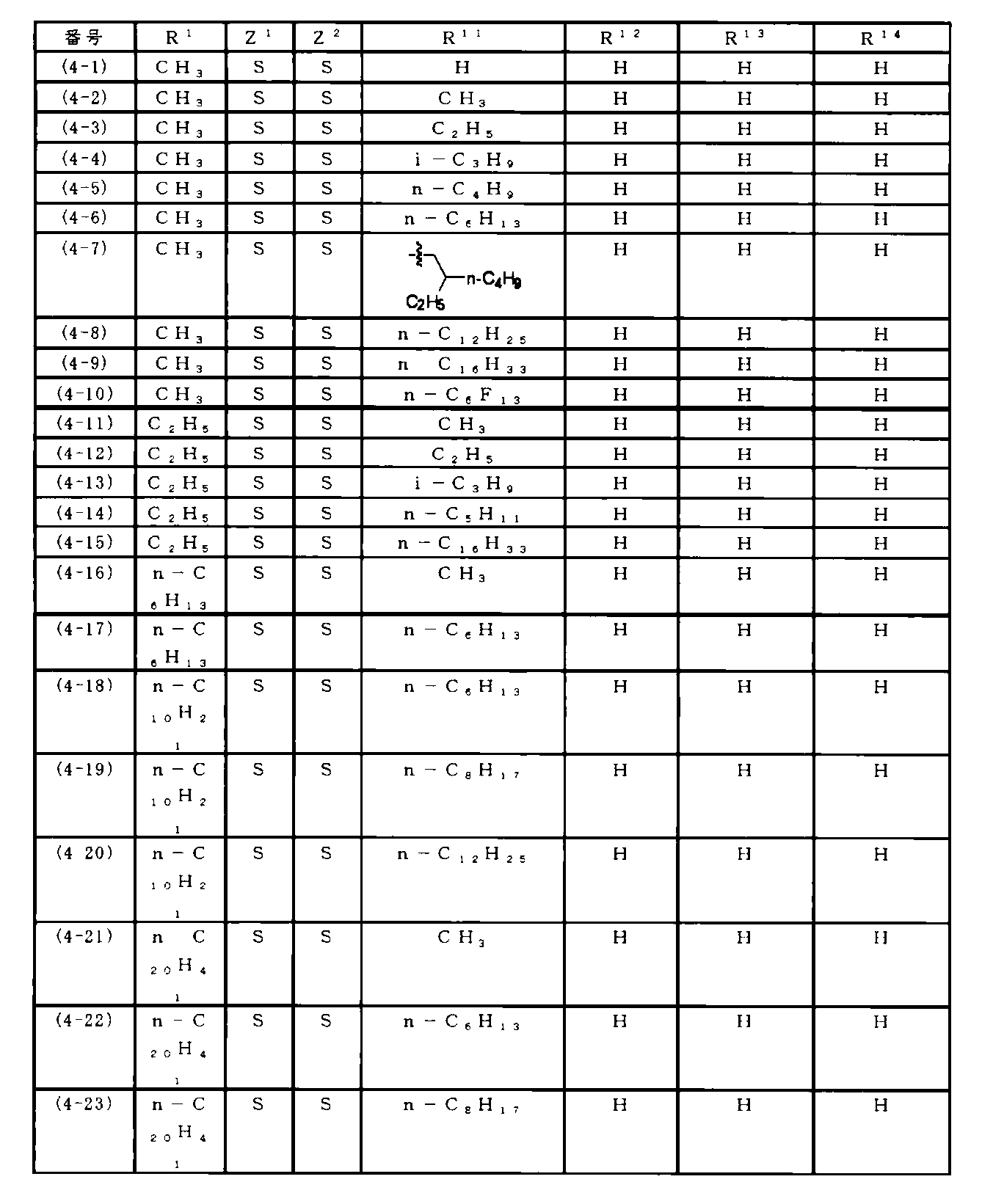
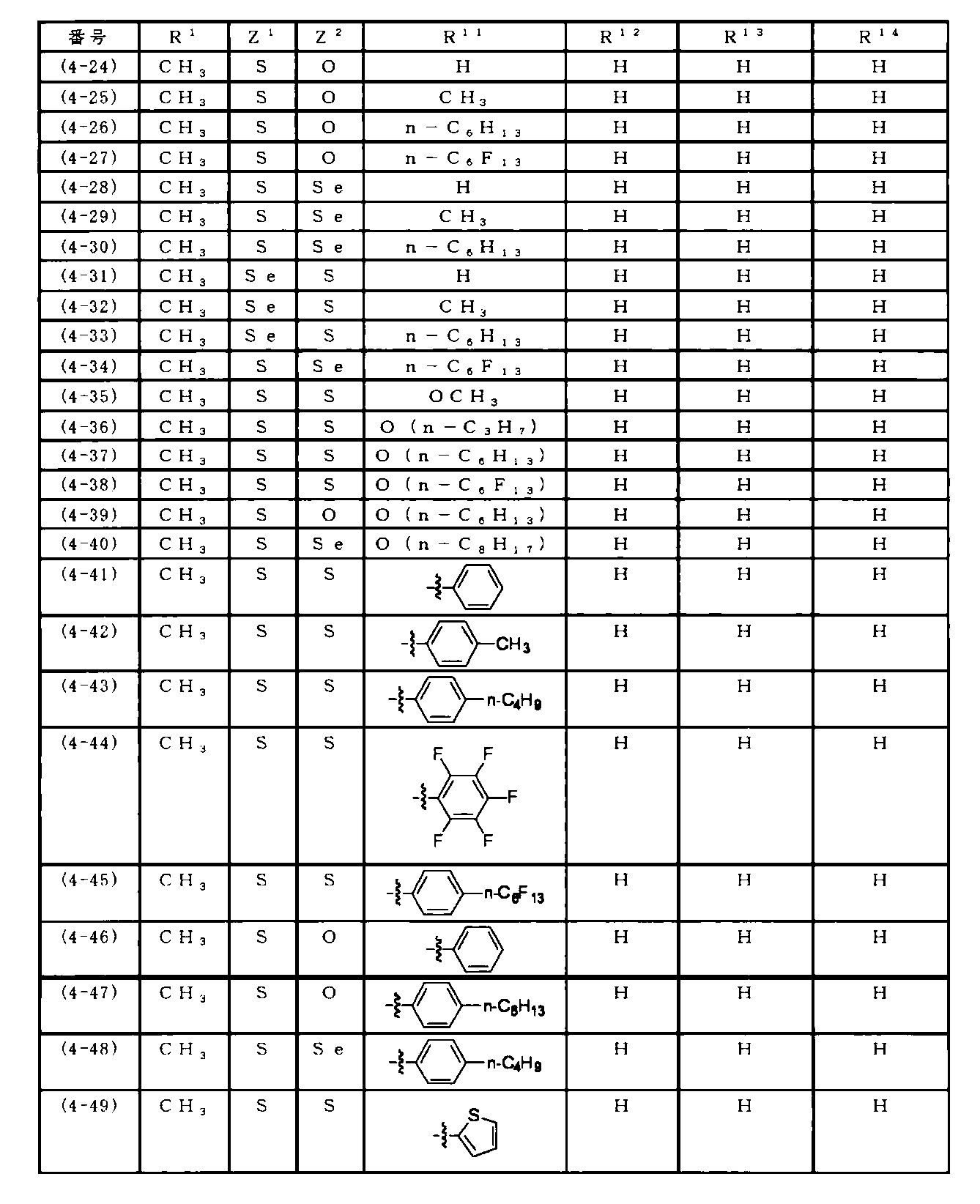
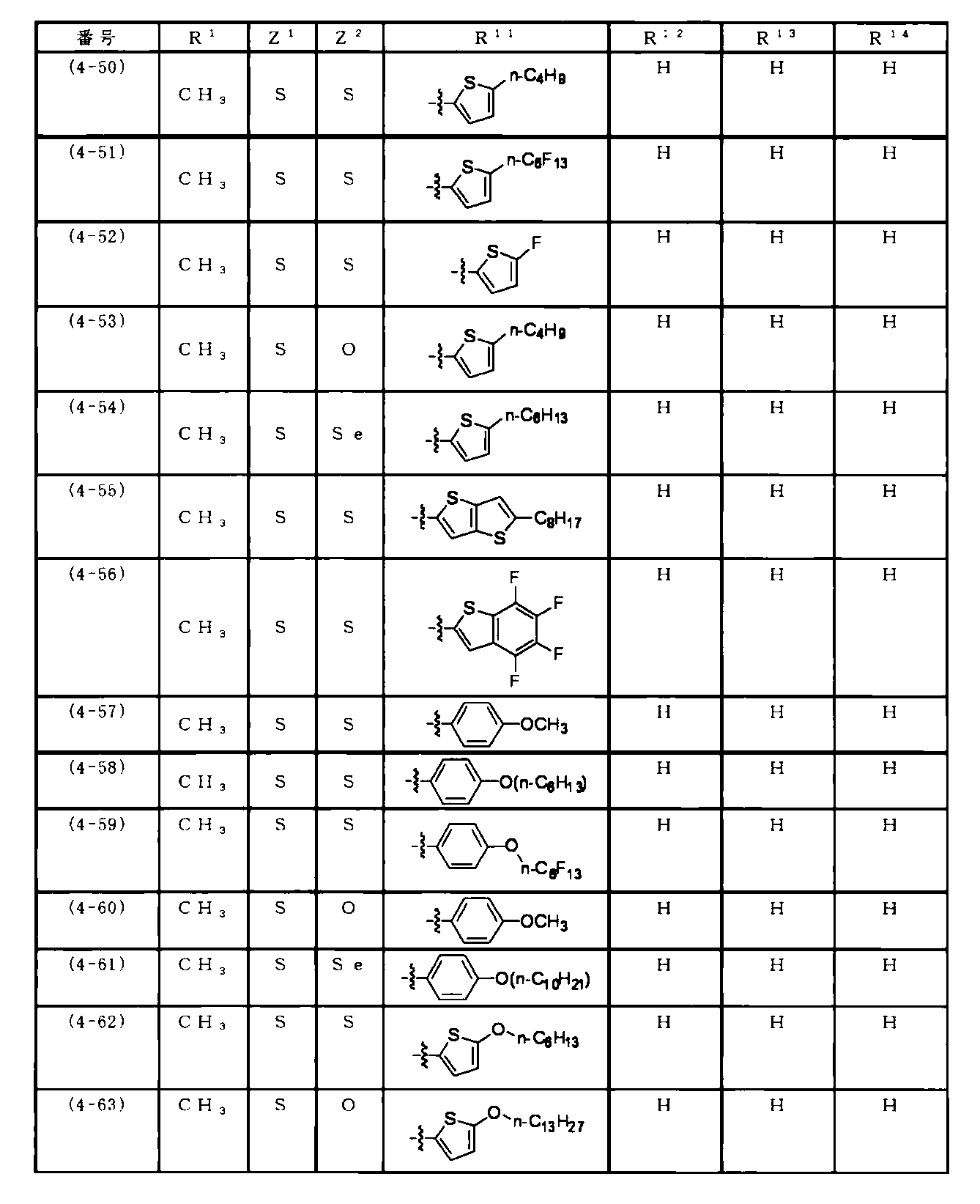

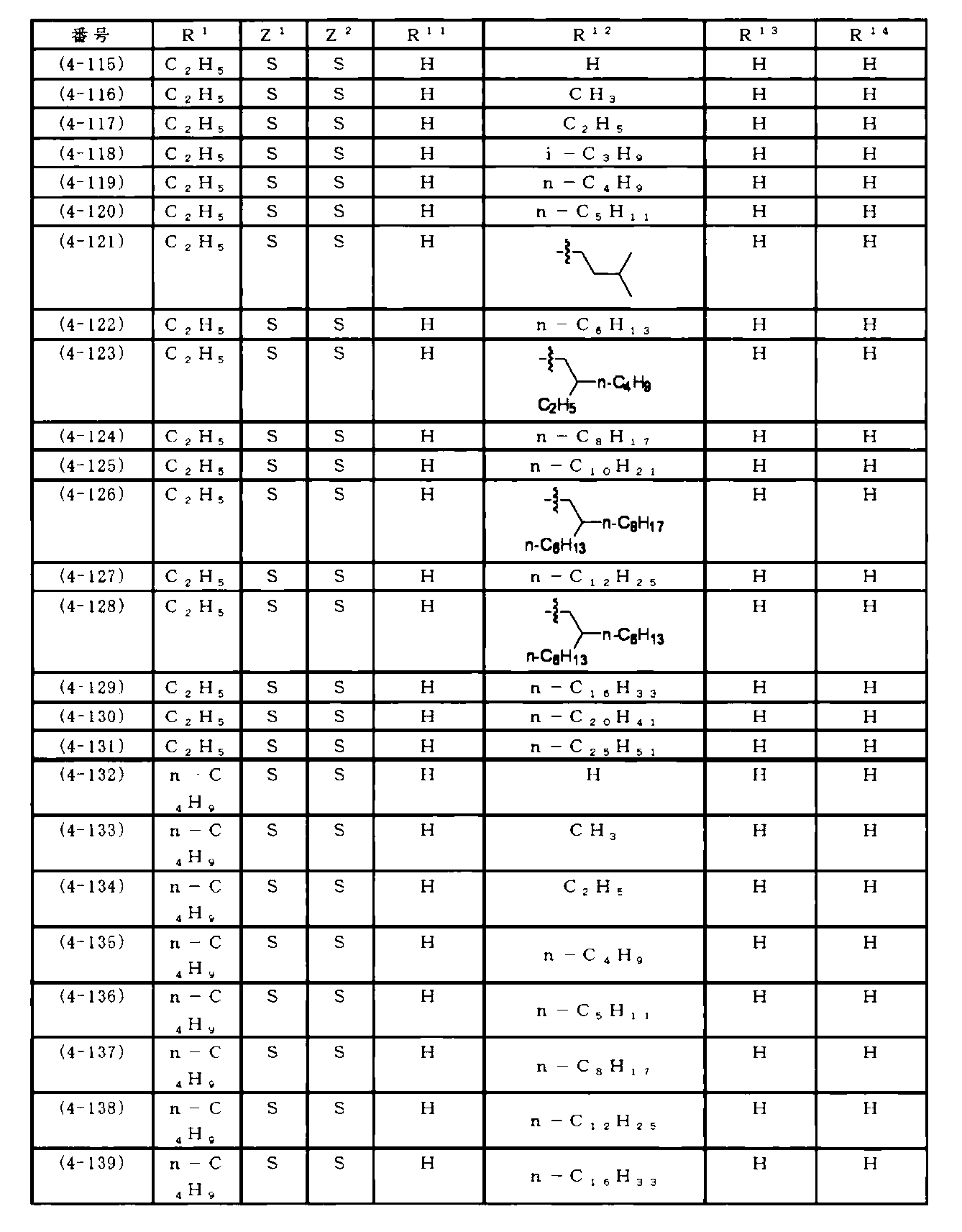

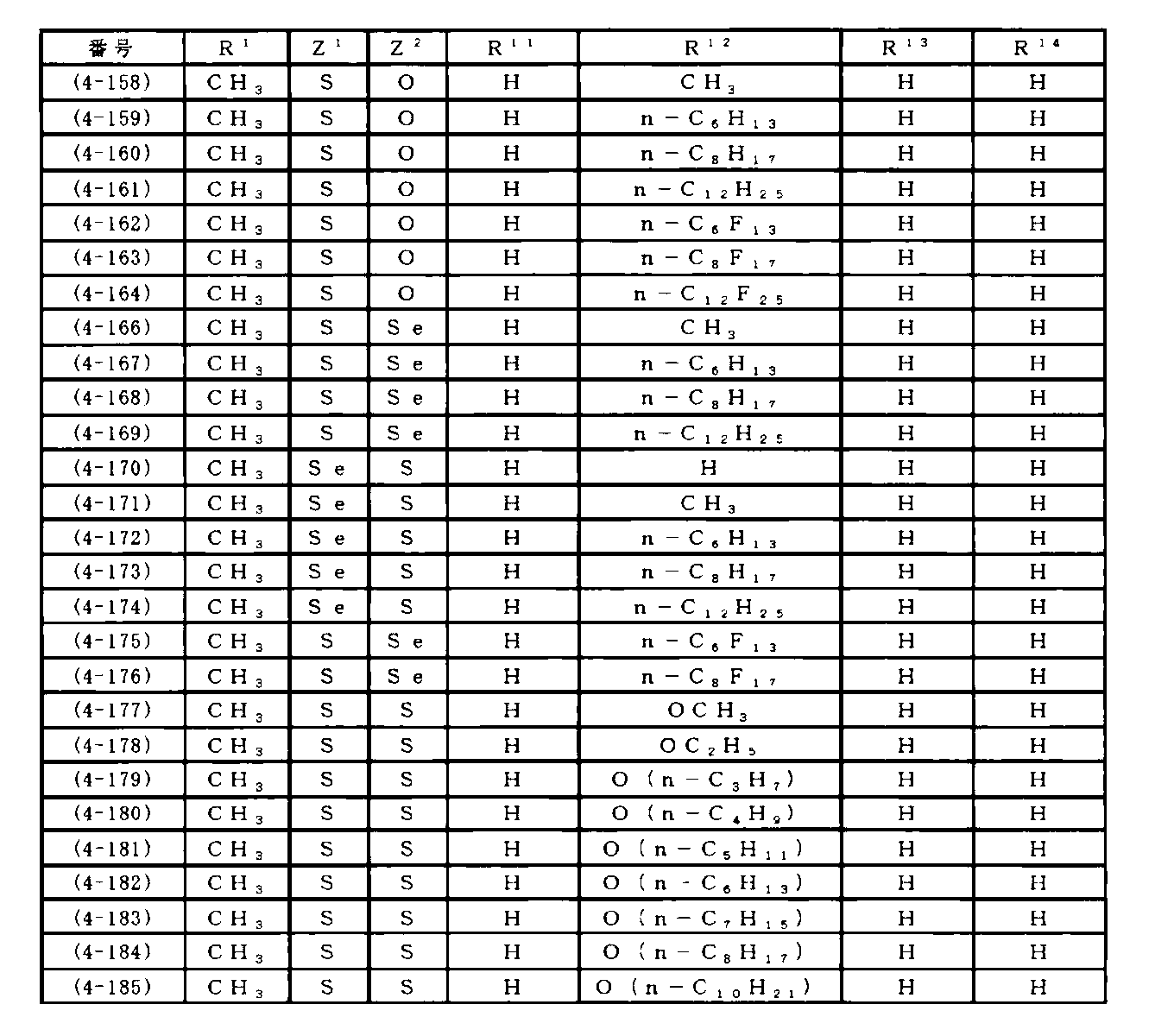


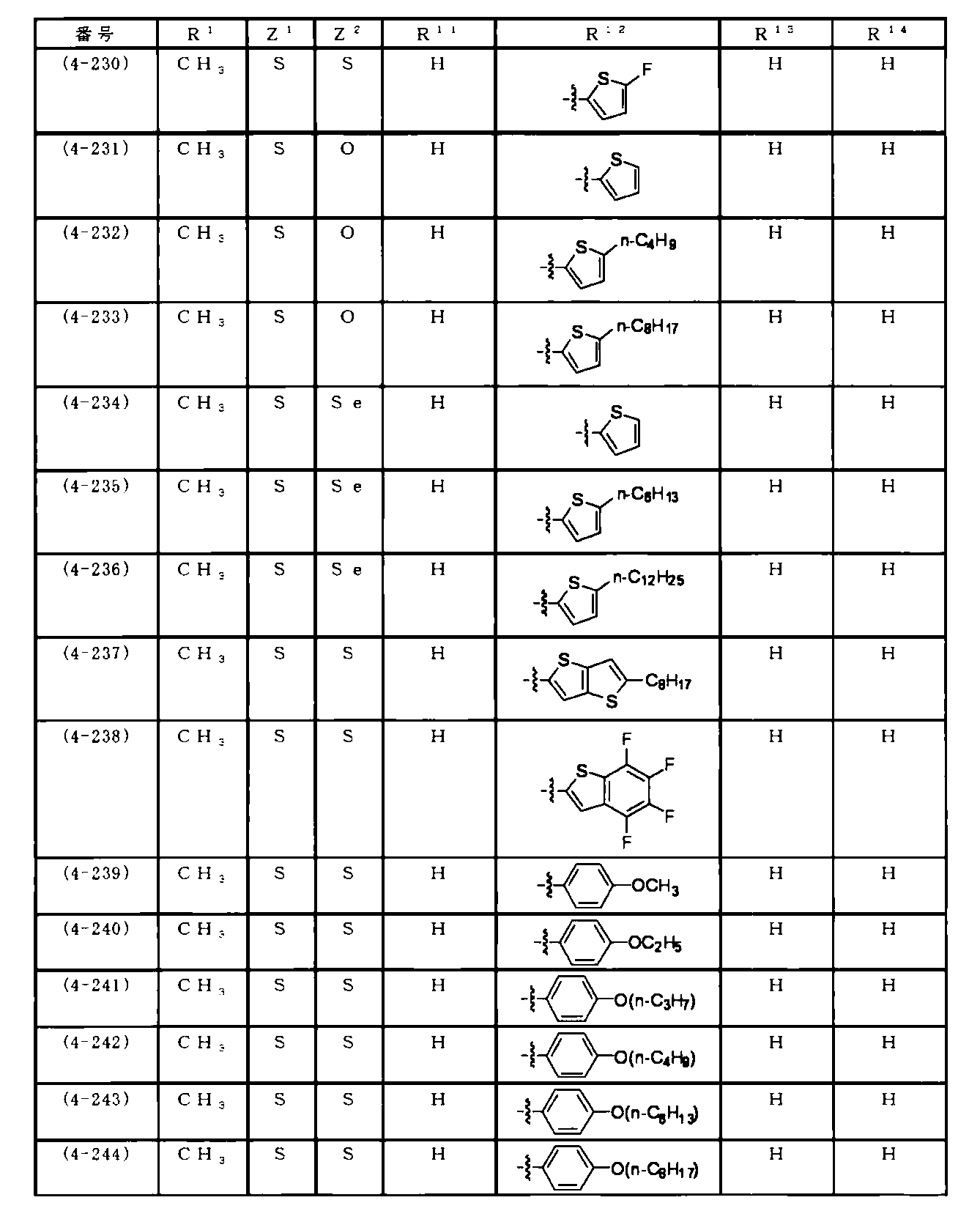


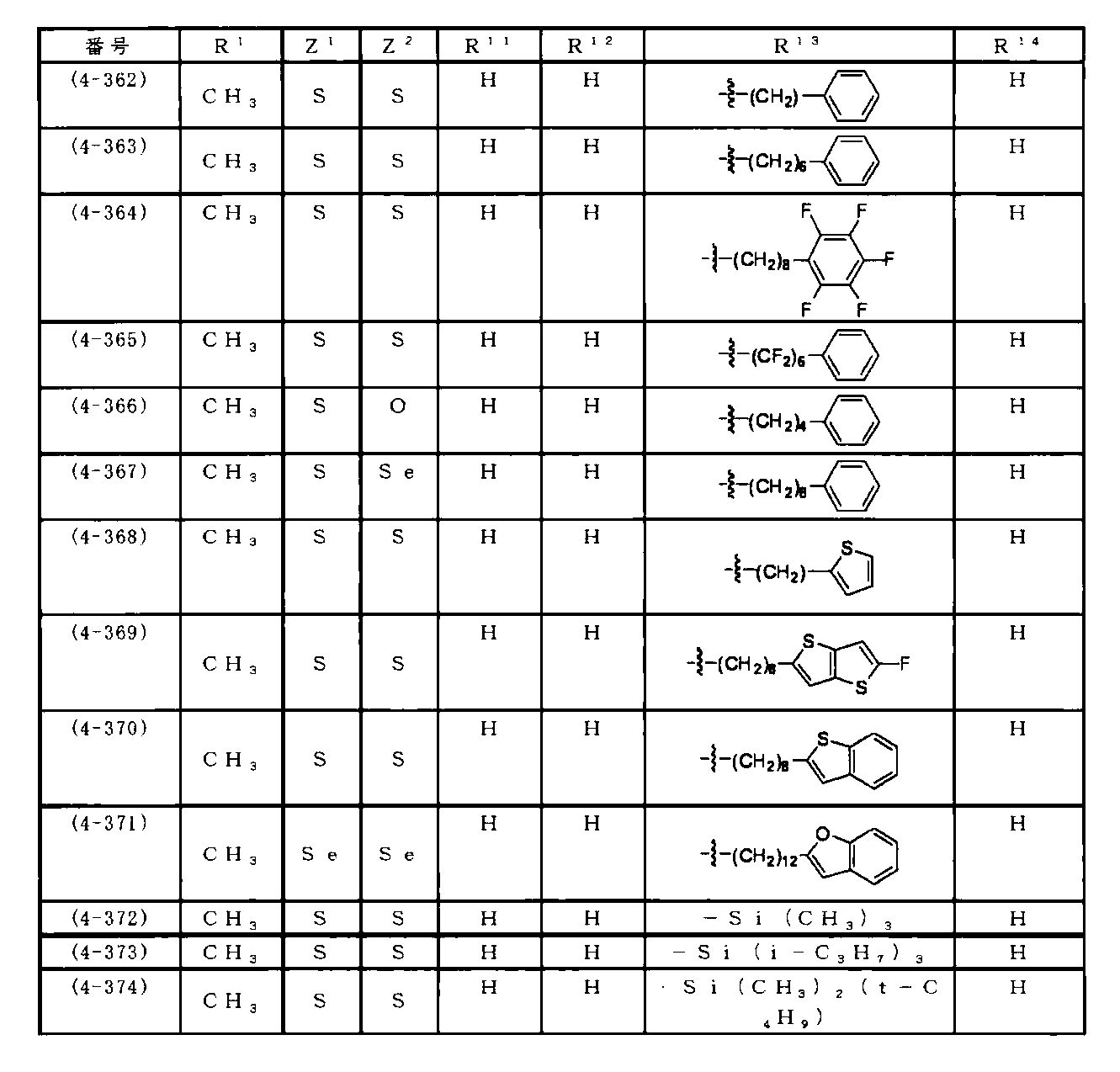
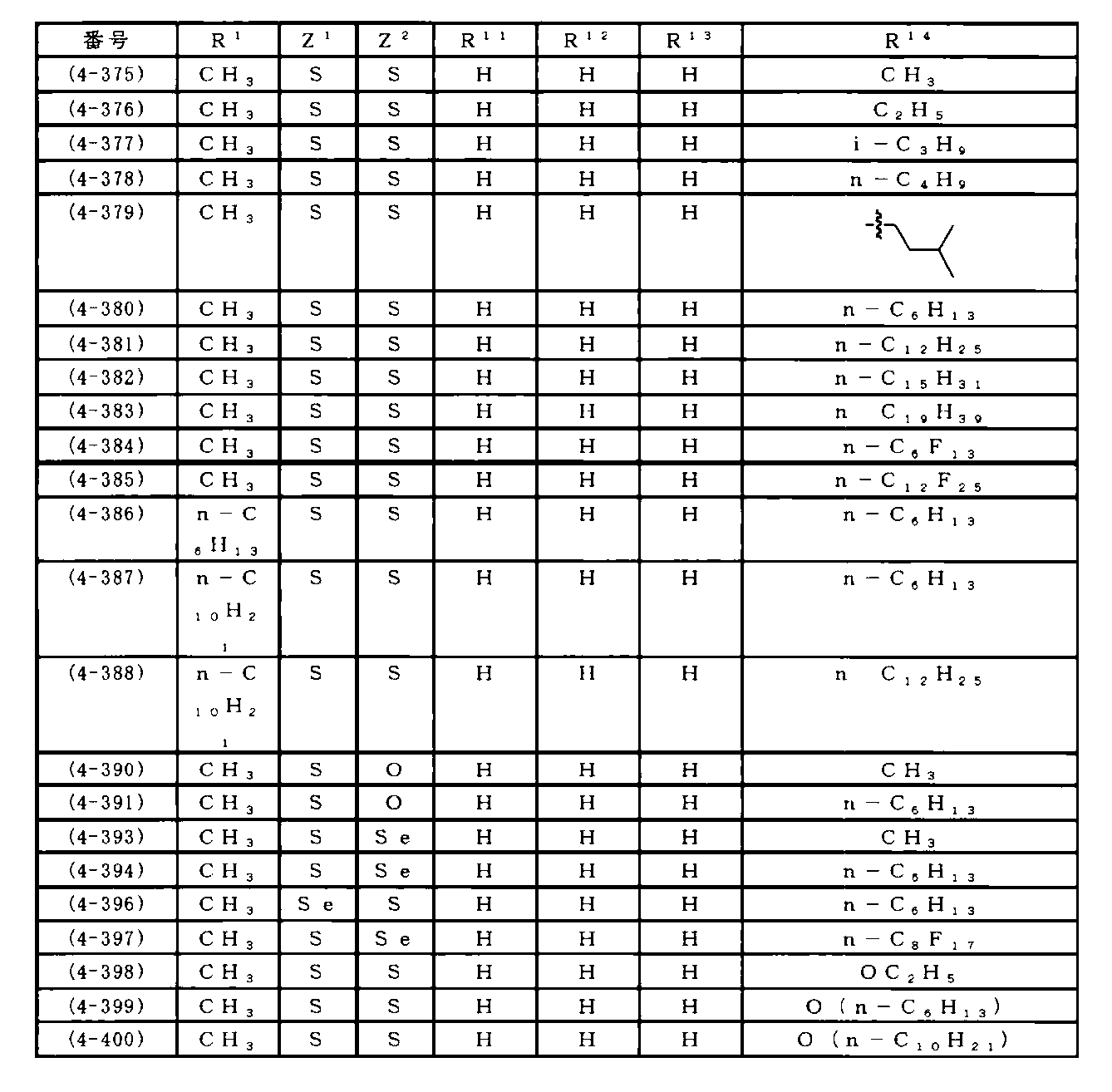
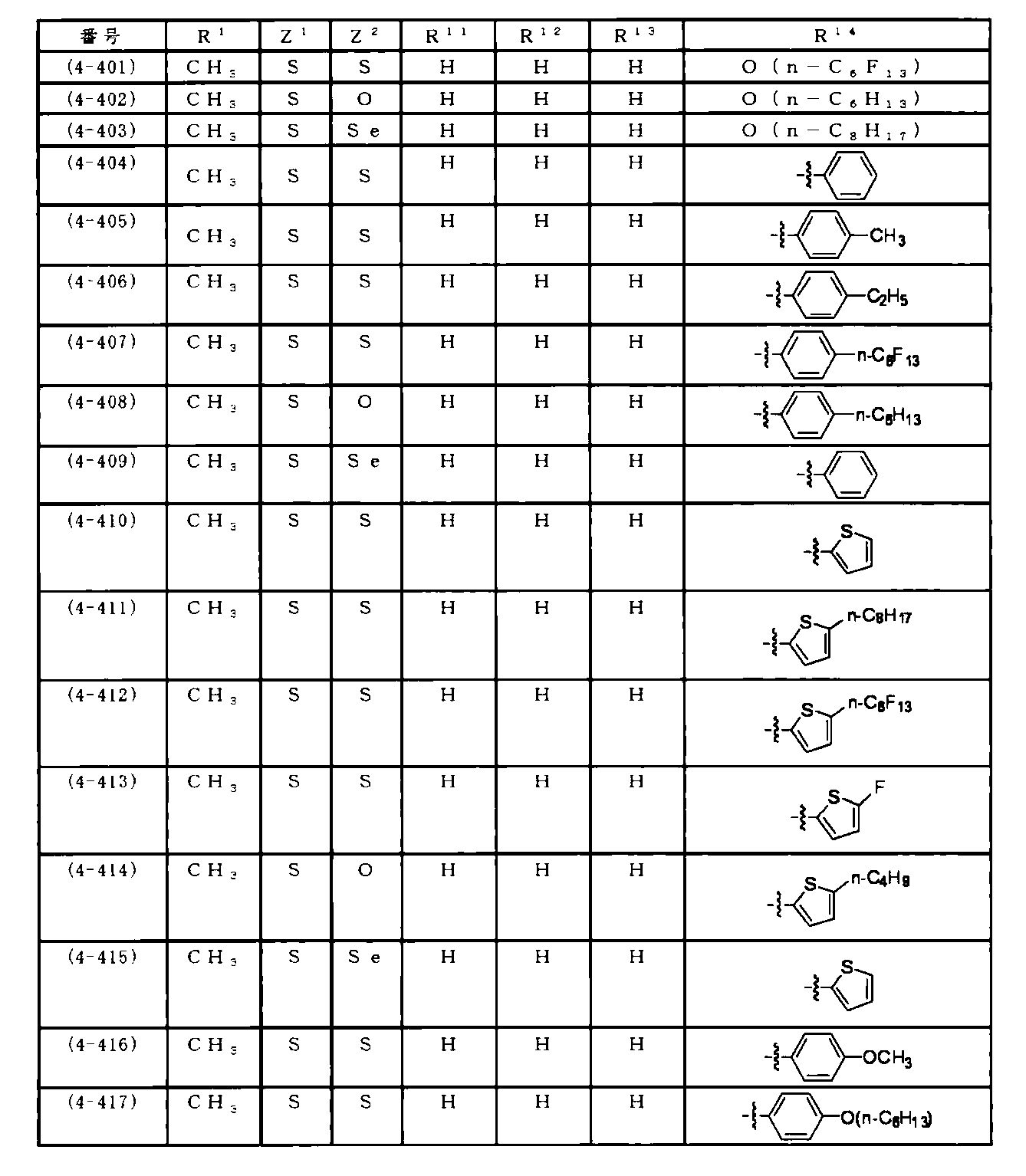
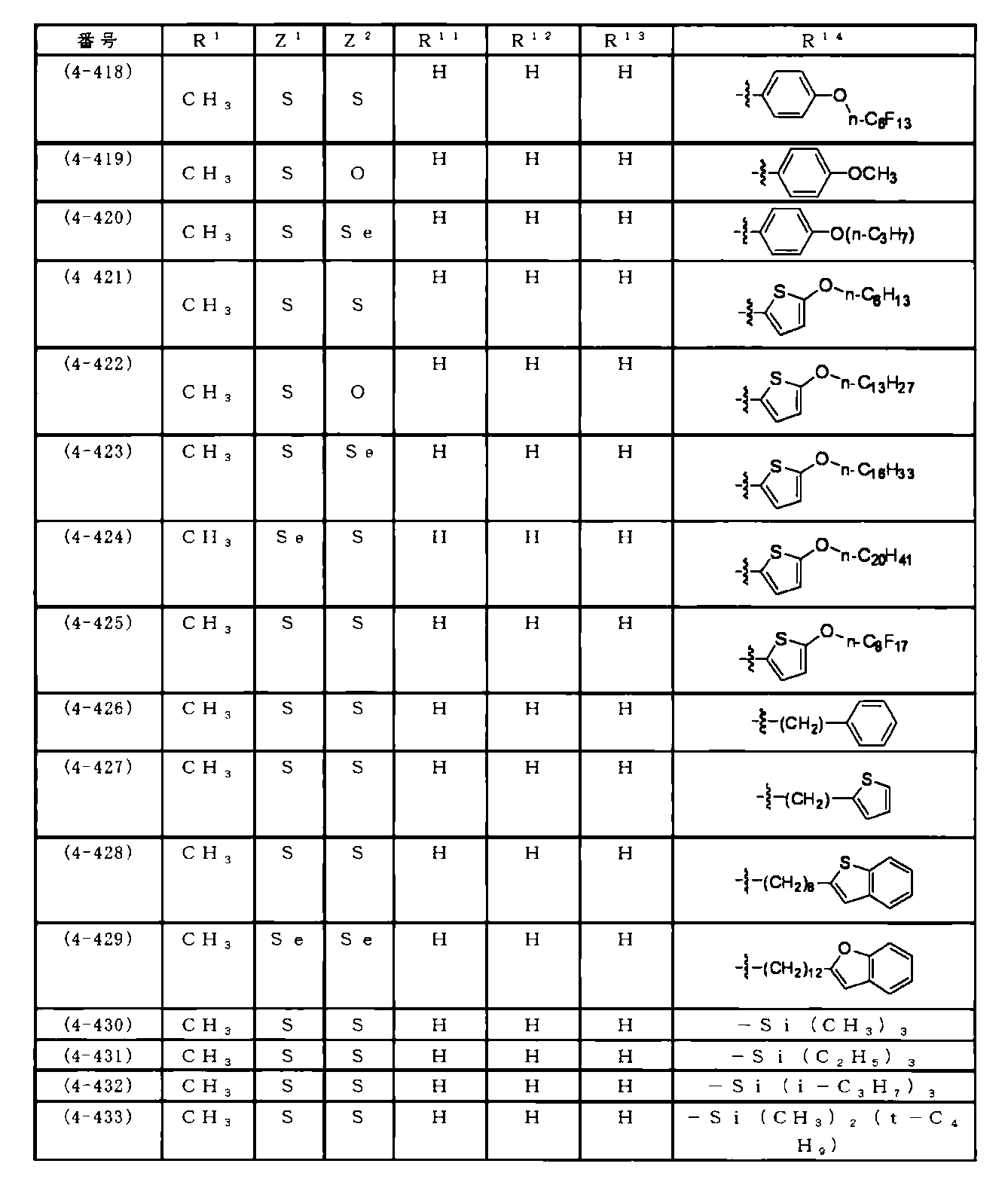
 表2中の波線は結合手を意味する。
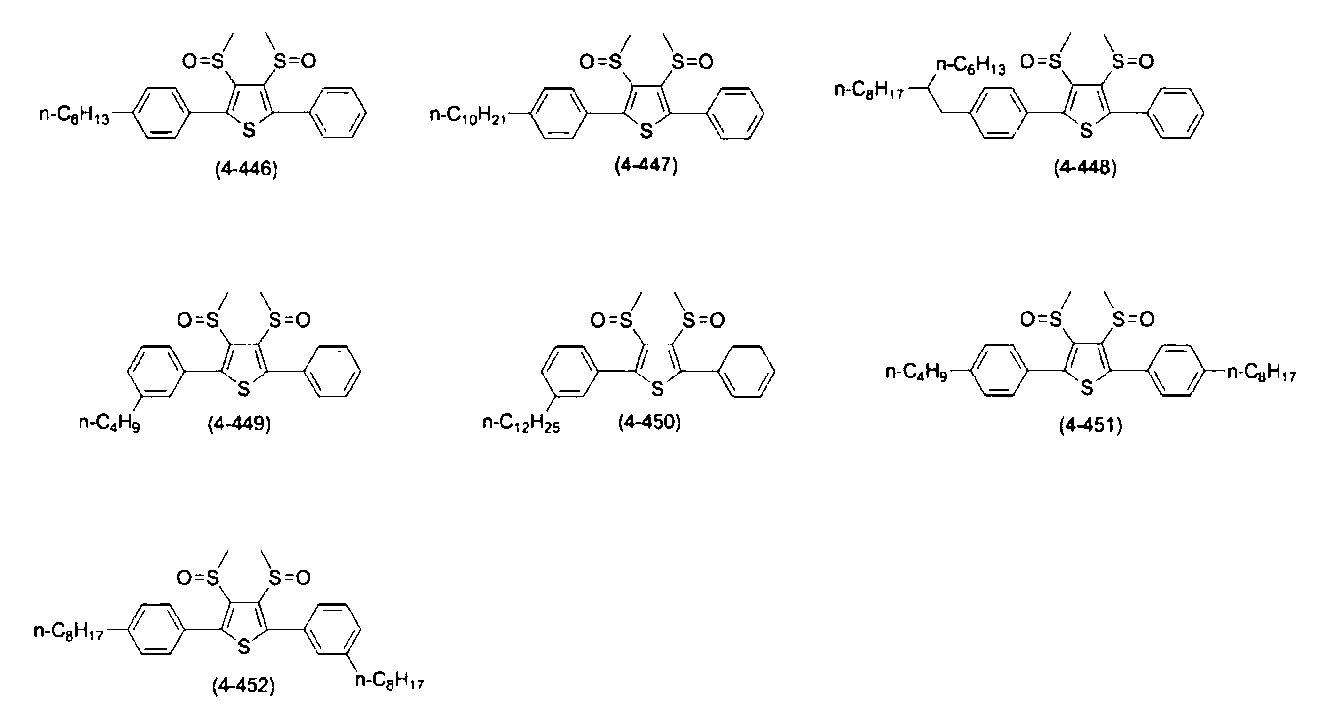 化合物(4)の好ましい具体例は、番号(4−1)、(4−2)、(4−3)、(4−5)、(4−6)、(4−8)、(4−10)、(4−16)、(4−17)、(4−18)、(4−24)、(4−28)、(4−31)、(4−35)、(4−37)、(4−41)、(4−42)、(4−49)、(4−51)、(4−52)、(4−56)、(4−57)、(4−58)、(4−68)、(4−73)、(4−81)、(4−82)、(4−83)、(4−84)、(4−85)、(4−86)、(4−87)、(4−88)、(4−89)、(4−90)、(4−91)、(4−93)、(4−94)、(4−95)、(4−96)、(4−98)、(4−101)、(4−103)、(4−107)、(4−108)、(4−110)、(4−112)、(4−113)、(4−114)、(4−122)、(4−127)、(4−137)、(4−140)、(4−142)、(4−148)、(4−150)、(4−159)、(4−160)、(4−161)、(4−166)、(4−167)、(4−177)、(4−178)、(4−181)、(4−184)、(4−186)、(4−202)、(4−203)、(4−207)、(4−212)、(4−213)、(4−223)、(4−225)、(4−228)、(4−230)、(4−239)、(4−243)、(4−246)、(4−248)、(4−257)、(4−260)、,(4−269)、(4−271)、(4−279)、(4−291)、(4−298)、(4−299)、(4−300)、(4−302)、(4−308)、(4−314)、(4−320)、(4−321)、(4−325)、(4−327)、(4−331)、(4−332)、(4−334)、(4−341)、(4−344)、(4−350)、(4−362)、(4−375)、(4−376)、(4−380)、(4−381)、(4−390)、(4−393)、(4−394)、(4−398)、(4−399)、(4−404)、(4−410)、(4−416)、(4−434)、(4−435)、(4−436)、(4−437)、(4−439)、(4−441)、(4−442)、(4−443)及び(4−445)で表されるものである。
より好ましい例は、番号(4−1)、(4−2)、(4−5)、(4−6)、(4−17)、(4−18)、(4−35)、(4−37)、(4−81)、(4−82)、(4−83)、(4−84)、(4−85)、(4−86)、(4−87)、(4−89)、(4−90)、(4−93)、(4−96)、(4−98)、(4−103)、(4−112)、(4−140)、(4−142)、(4−148)、(4−150)、(4−159)、(4−167)、(4−177)、(4−178)、(4−181)、(4−184)、(4−202)、(4−203)、(4−207)、(4−223)、(4−225)、(4−230)、(4−239)、(4−298)、(4−299)、(4−300)、(4−302)、(4−308)、(4−325)、(4−327)、(4−331)、(4−332)、(4−375)、(4−376)、(4−380)、(4−381)、(4−399)、(4−437)、(4−439)及び(4−441)で表されるものである。
含カルコゲン縮合多環式化合物(5)は、化合物(4)と酸とを反応させることで得ることができる。酸の具体例としては、トリフルオロメタンスルホン酸、メタンスルホン酸、硫酸、燐酸、燐酸と五酸化二燐との混合物及び塩酸が挙げられる。好ましい例は、トリフルオロメタンスルホン酸、メタンスルホン酸、硫酸及び塩酸である。用いる酸は必要に応じて、水などで希釈して使用してもよい。
酸に化合物(4)をそのまま又はクロロホルム等の溶媒に希釈して反応容器内に仕込み、−20℃~100℃程度で1分~48時間程度攪拌して反応を行う。この際、五酸化二燐等の脱水剤を存在させてもよい。反応終了後、例えば、反応混合物を水と混合し、析出した固体を濾過しても良いし、水と混合した後、必要に応じて溶媒を加え、有機層を分液し、濃縮しても良い。必要によりカラムクロマトグラフィー、蒸留、再結晶、リサイクルゲルパーミネーションクロマトグラフィー等の通常の精製手段により、含カルコゲン縮合多環式化合物(5)を精製できる。
また、化合物(4)と酸とを反応させた後、生成するオニウムカチオン中間体を塩基処理することでも含カルコゲン縮合多環式化合物(5)を得ることができる。この場合、化合物(4)と酸との反応後、水と混合し、析出した固体を濾過して得たオニウムカチオン中間体、又は、水と混合した後、溶媒を加え有機層を分液して得たオニウムカチオン中間体に、必要に応じて溶媒の存在下、ピリジン、トリエチルアミン等の有機塩基などの塩基を加え、50℃から溶媒の沸点までの温度で、例えば、1分間~48時間攪拌する。その後、一般的な後処理を行い、必要に応じてカラムクロマトグラフィー、蒸留、再結晶、リサイクルゲルパーミネーションクロマトグラフィー等の通常の精製手段を行うことで、含カルコゲン縮合多環式化合物(5)を得ることができる。
含カルコゲン縮合多環式化合物(5)としては、例えば、表3において番号(5−1)~(5−452)で示される化合物を挙げることができる。


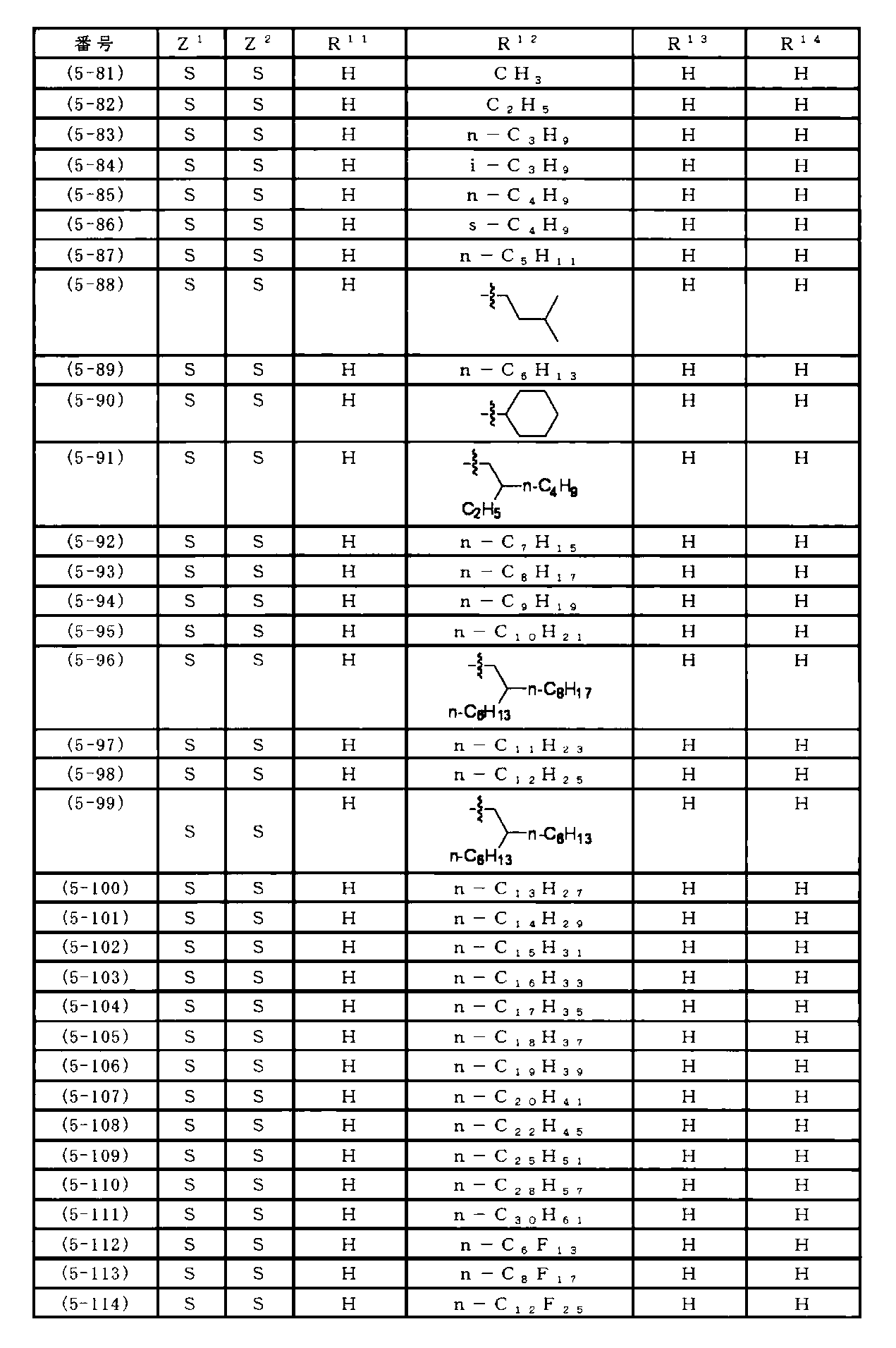
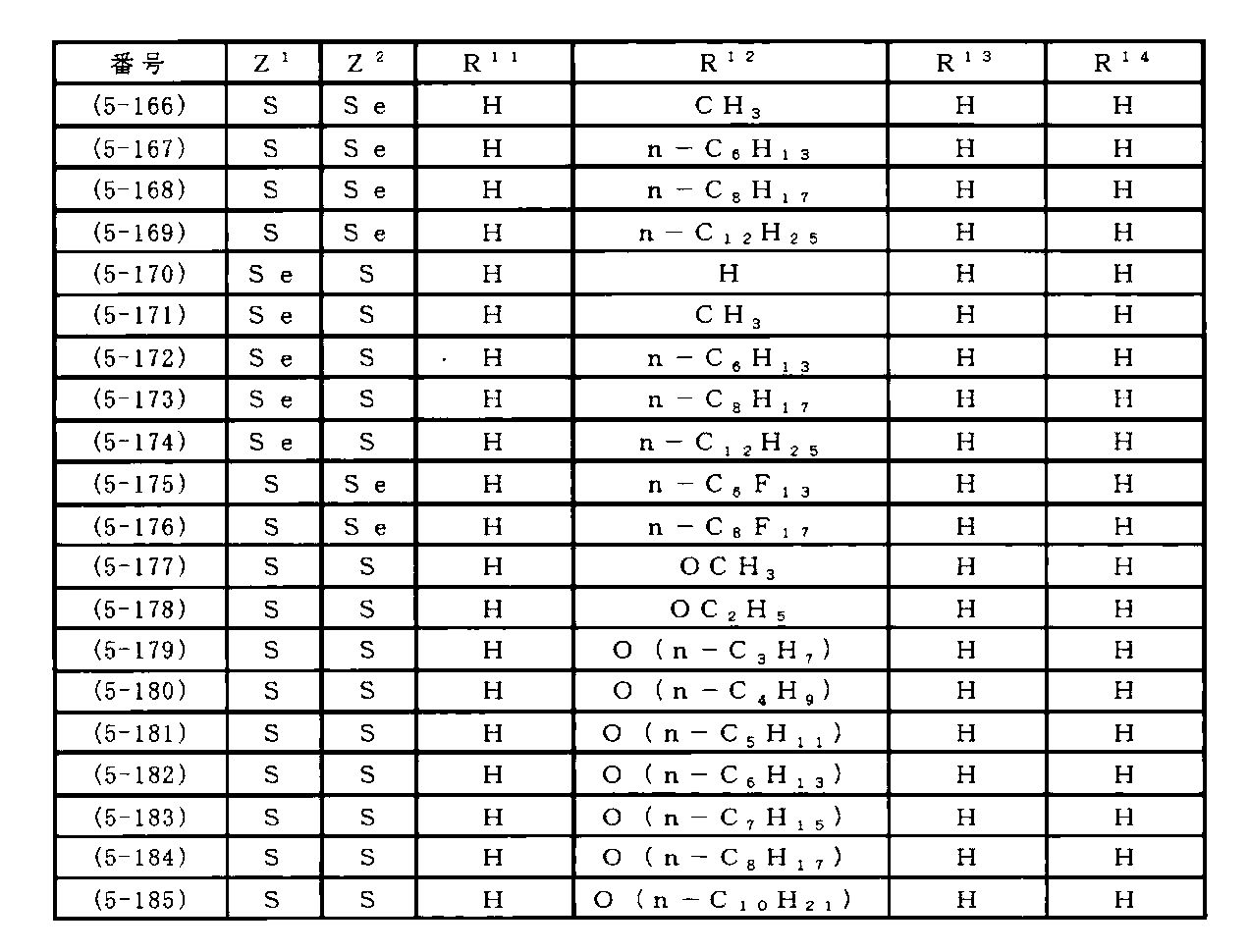

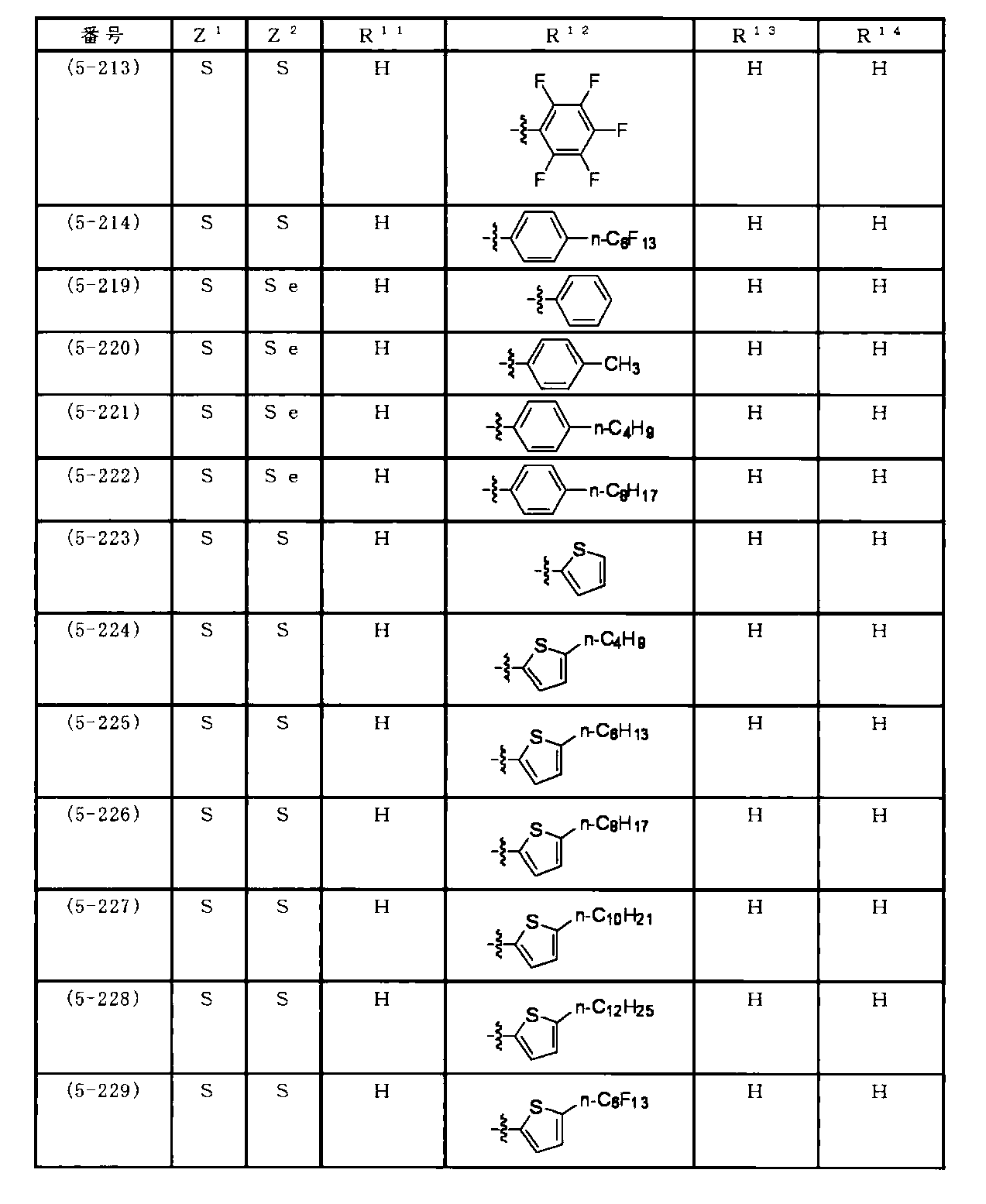

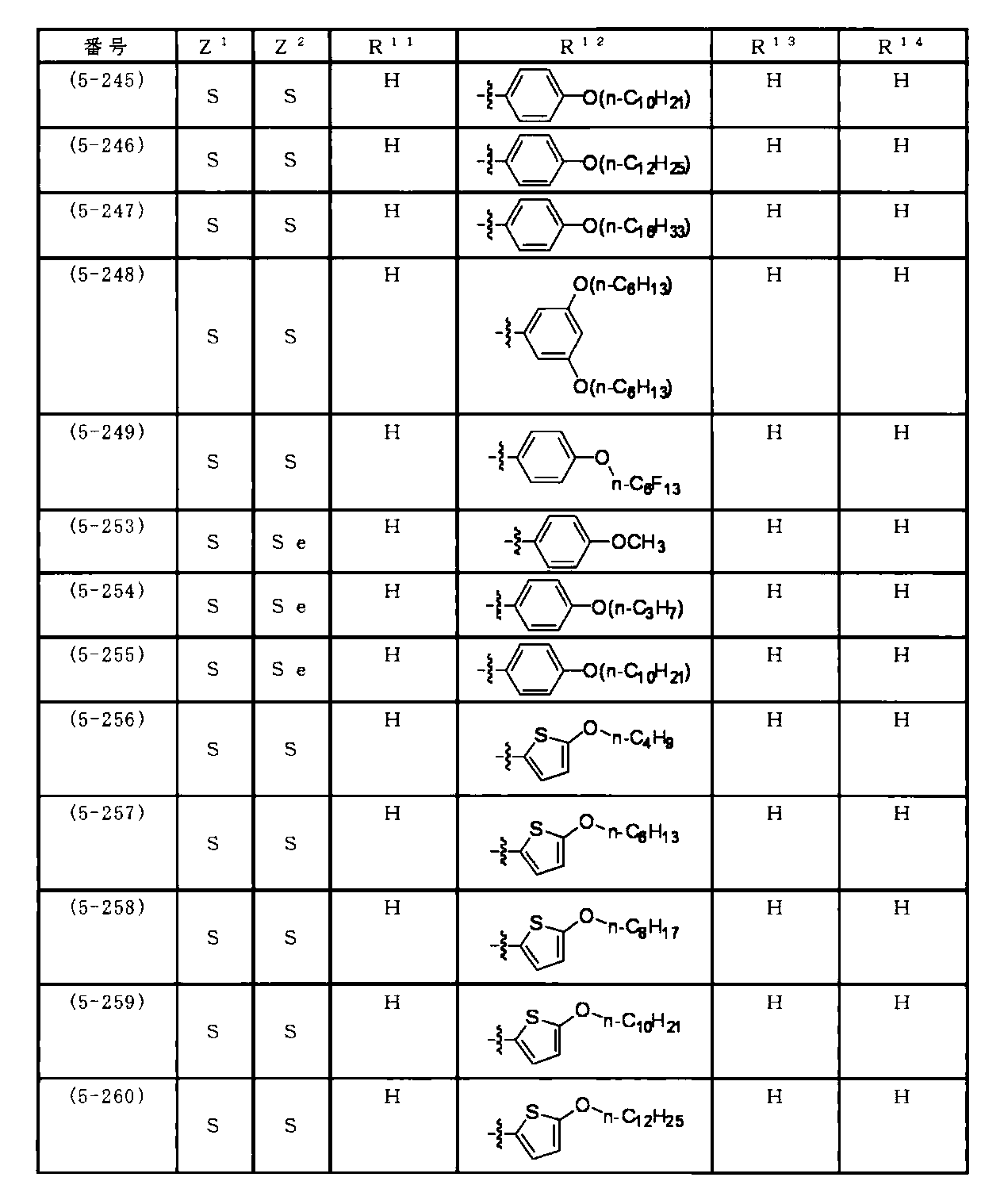

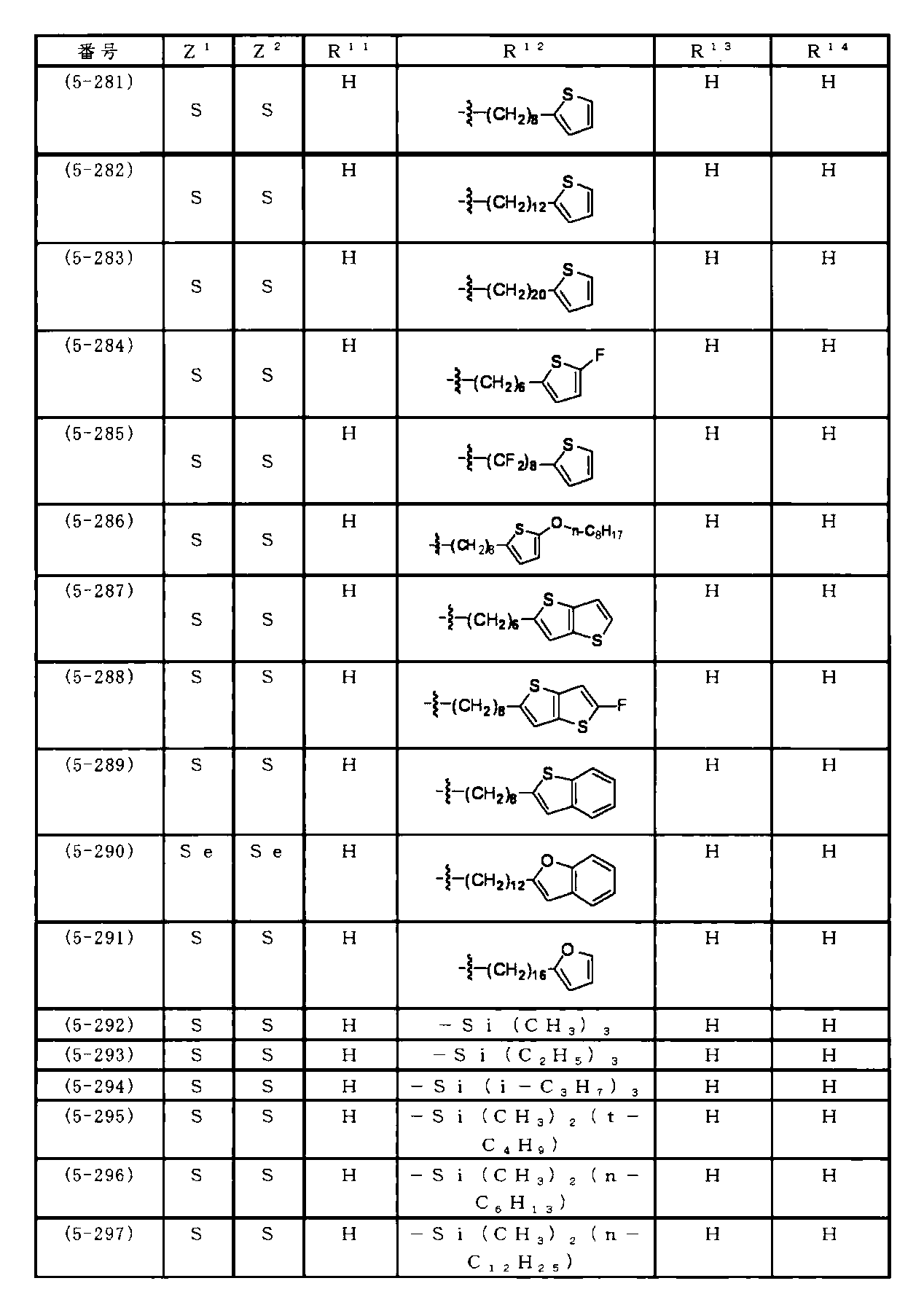
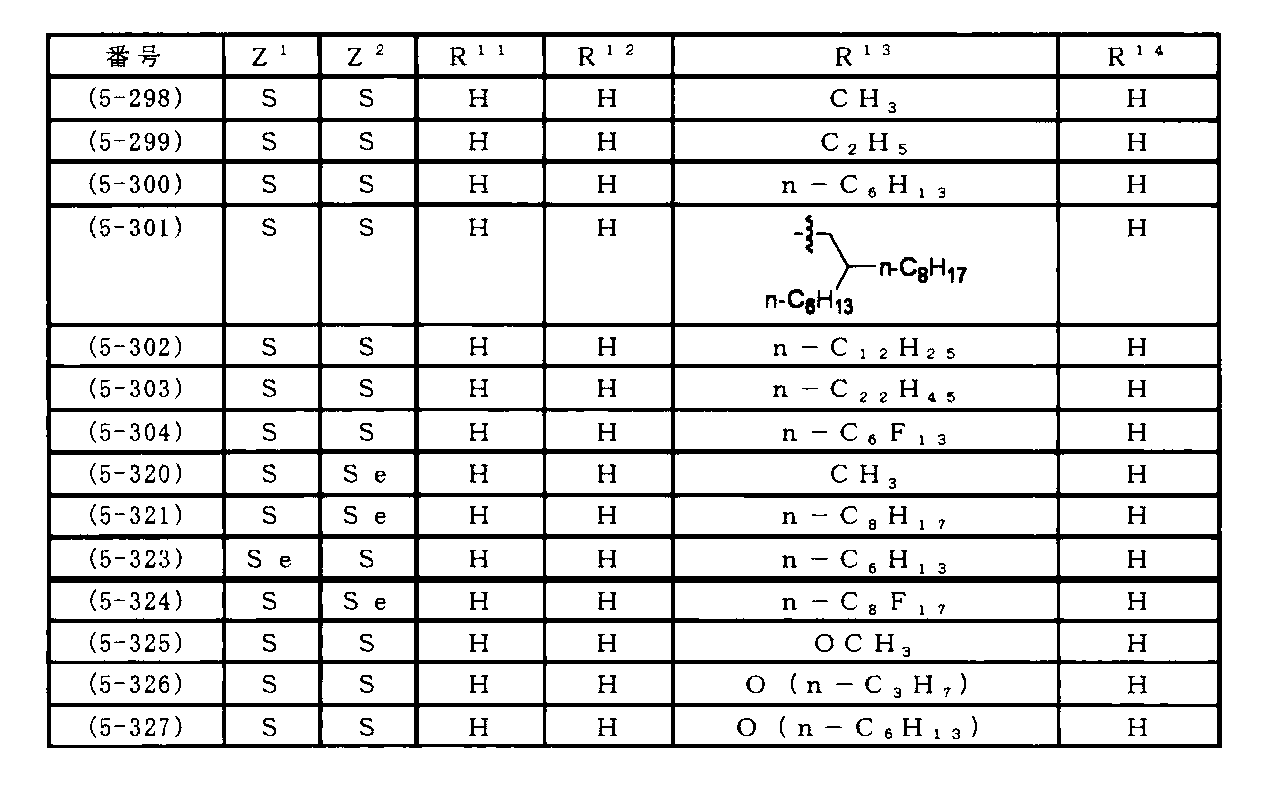


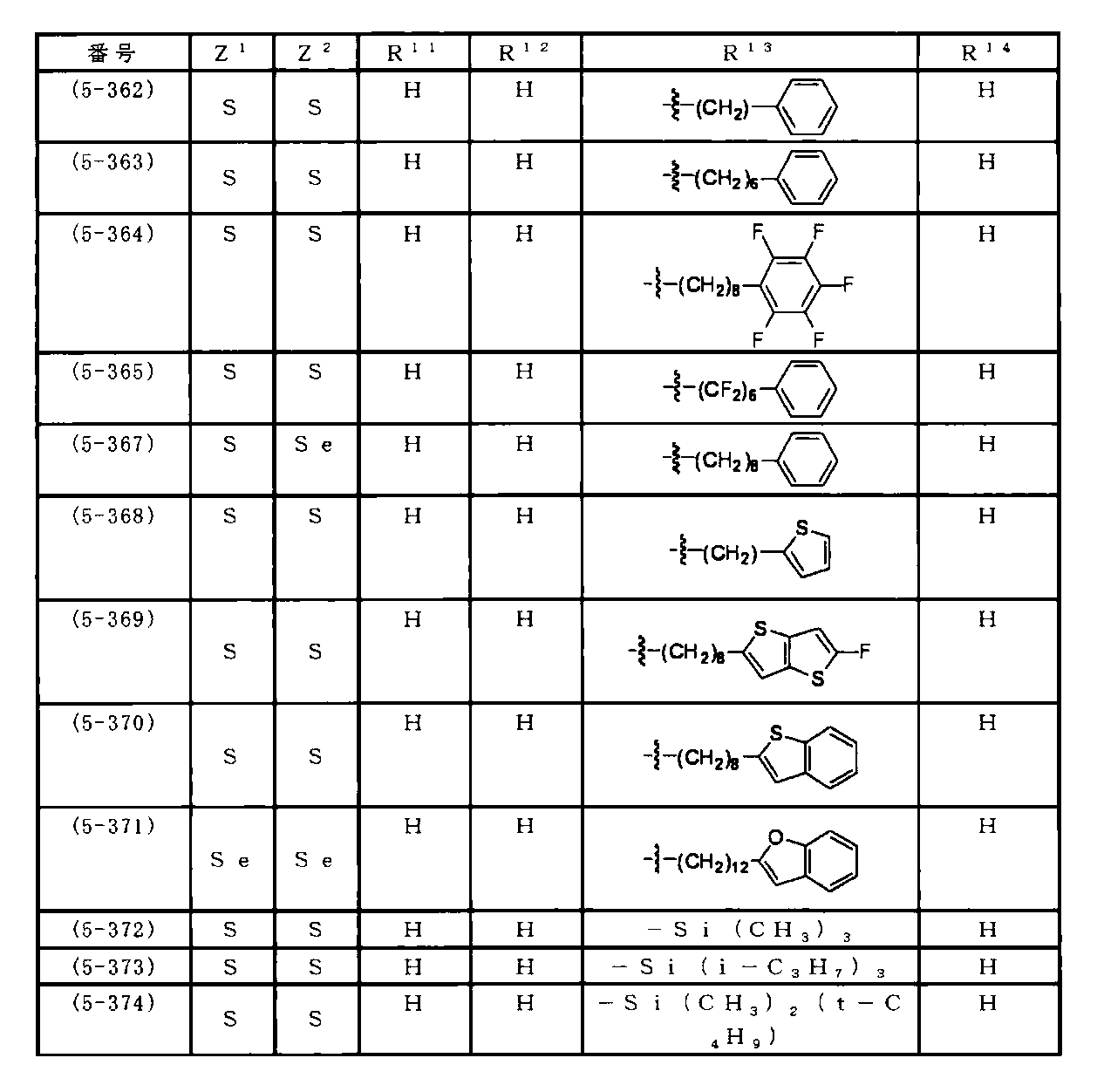

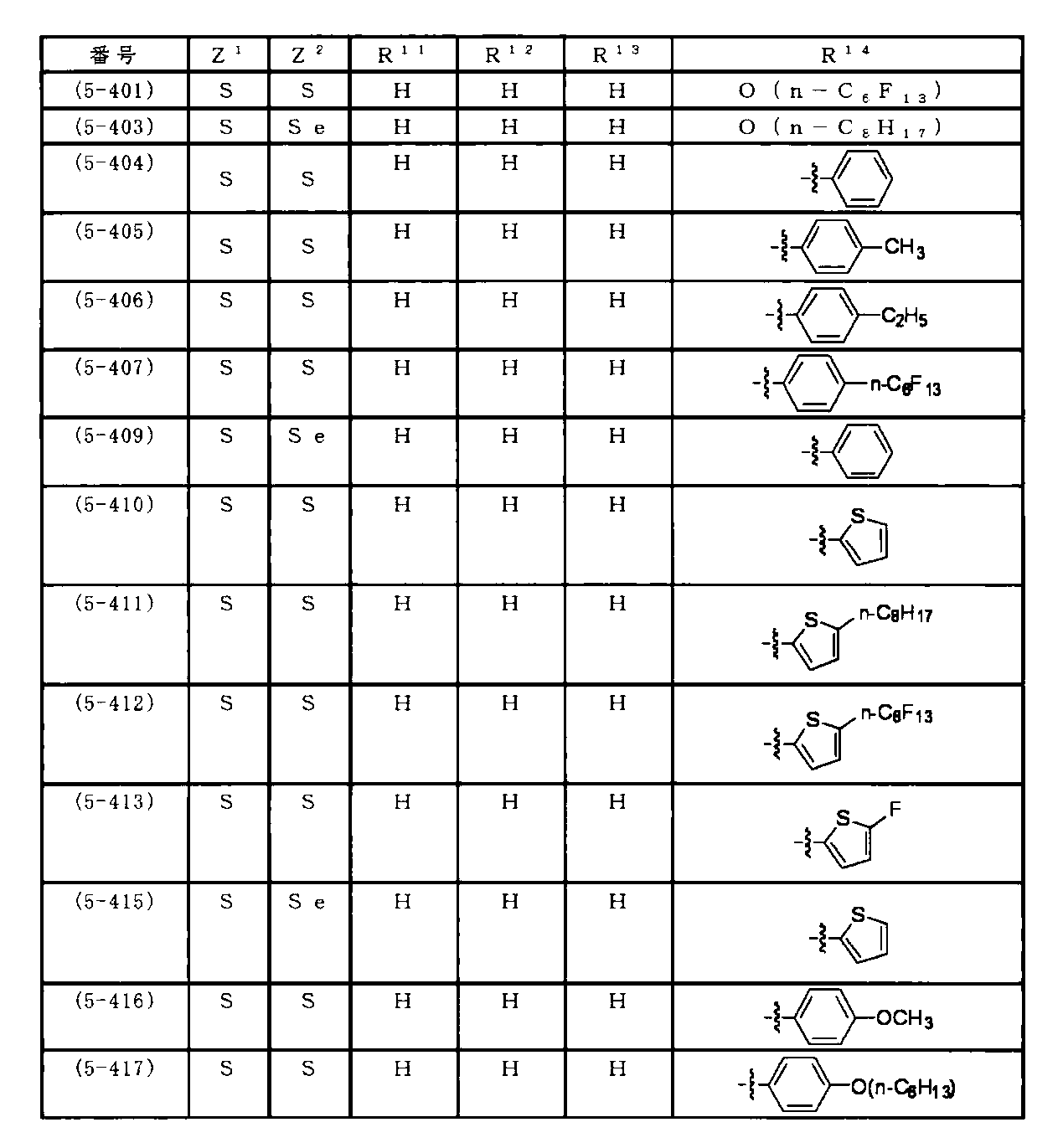

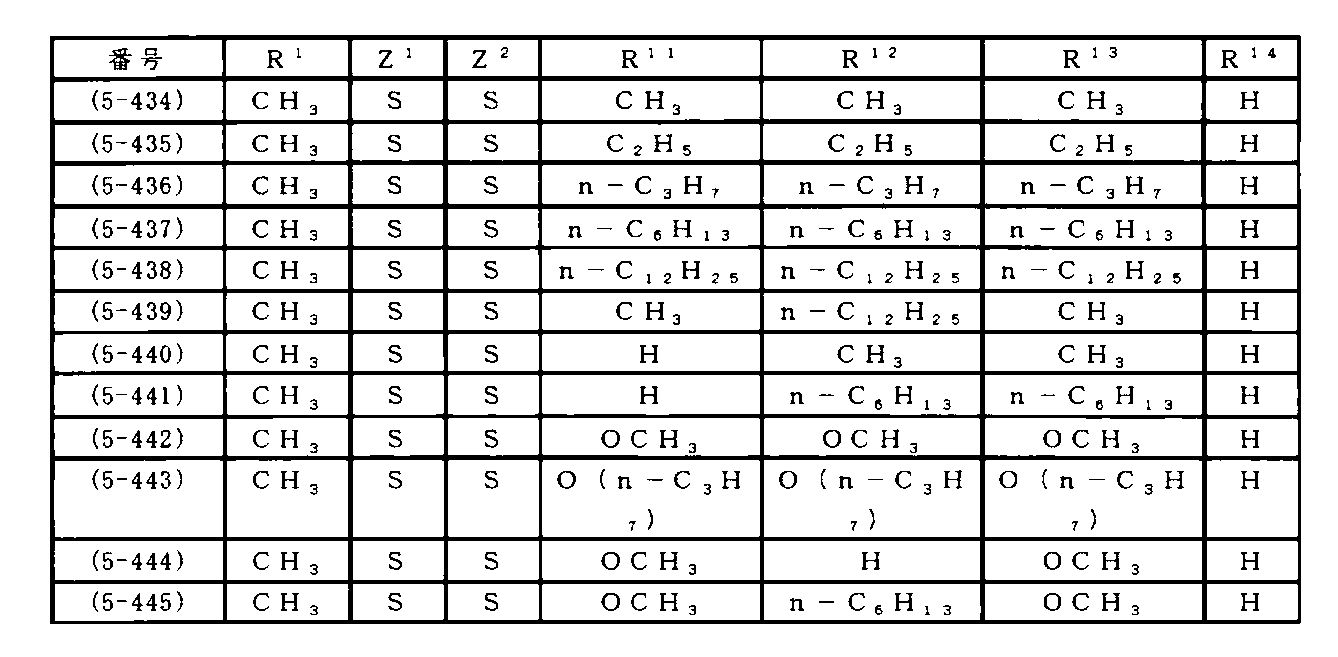 表3中の波線は結合手を意味する。
 好ましい含カルコゲン縮合多環式化合物(5)の具体例は、番号(5−1)、(5−2)、(5−3)、(5−5)、(5−6)、(5−8)、(5−10)、(5−35)、(5−37)、(5−41)、(5−42)、(5−49)、(5−51)、(5−52)、(5−56)、(5−57)、(5−58)、(5−68)、(5−73)、(5−81)、(5−82)、(5−83)、(5−84)、(5−85)、(5−86)、(5−87)、(5−88)、(5−89)、(5−90)、(5−91)、(5−93)、(5−94)、(5−95)、(5−96)、(5−98)、(5−101)、(5−103)、(5−107)、(5−108)、(5−110)、(5−112)、(5−113)、(5−114)、(5−177)、(5−178)、(5−181)、(5−184)、(5−186)、(5−202)、(5−203)、(5−207)、(5−212)、(5−213)、(5−223)、(5−225)、(5−228)、(5−230)、(5−239)、(5−243)、(5−246)、(5−248)、(5−257)、(5−260)、(5−269)、(5−271)、(5−279)、(5−291)、(5−298)、(5−299)、(5−300)、(5−302)、(5−325)、(5−327)、(5−331)、(5−332)、(5−334)、(5−341)、(5−344)、(5−350)、(5−362)、(5−375)、(5−376)、(5−380)、(5−381)、(5−398)、(5−399)、(5−404)、(5−410)及び(5−416)で表されるものである。
より好ましい例は、番号(5−1)、(5−2)、(5−5)、(5−6)、(5−35)、(5−37)、(5−81)、(5−82)、(5−83)、(5−84)、(5−85)、(5−86)、(5−87)、(5−89)、(5−90)、(5−93)、(5−96)、(5−98)、(5−103)、(5−112)、(5−177)、(5−178)、(5−181)、(5−184)、(5−202)、(5−203)、(5−207)、(5−223)、(5−225)、(5−230)、(5−239)、(5−298)、(5−299)、(5−300)、(5−302)、(5−325)、(5−327)、(5−331)、(5−332)、(5−375)、(5−376)、(5−380)、(5−381)及び(5−399)で表されるものである。
芳香族複素環化合物(2a)は、芳香族複素環化合物(1a)とN−ハロカルボン酸アミドとを水又はアルコールの存在下で反応させることにより得ることができる。
まず、芳香族複素環化合物(1a)について説明する。芳香族複素環化合物(1a)におけるR1は、炭素数1~20のアルキル基を示す。具体的には、メチル基、エチル基、n−プロピル基、イソプロピル基、n−ブチル基、sec−ブチル基、t−ブチル基、n−ペンチル基、ネオペンチル基、n−ヘキシル基、2−エチルヘキシル基、n−ヘプチル基、n−オクチル基、2−ヘキシルオクチル基、n−ノニル基、n−デシル基、2−ヘキシルデシル基、n−ウンデシル基、n−ドデシル基、n−トリデシル基、n−テトラデシル基、n−ペンタデシル基、n−ヘキサデシル基、n−ヘプタデシル基、n−オクタデシル基、n−ノナデシル基、及びn−イコシル基が挙げられる。好ましくはメチル基、エチル基、n−プロピル基、イソプロピル基、n−ブチル基、sec−ブチル基、t−ブチル基、n−ペンチル基、シクロペンチル基、n−ヘキシル基、シクロヘキシル基、n−ヘプチル基、n−オクチル基、n−ノニル基及びn−デシル基が挙げられる。さらに好ましくはメチル基、エチル基、n−プロピル基、n−ブチル基、n−ペンチル基、及びn−ヘキシル基が挙げられ、特に好ましくはメチル基、エチル基、n−プロピル基、及びn−ブチル基が挙げられる。
芳香族複素環化合物(1a)におけるZ1はそれぞれ独立に、硫黄原子又はセレン原子を示す。Z1は好ましくは硫黄原子である。Z2は酸素原子、硫黄原子又はセレン原子を示す。Z2は好ましくは、酸素原子又は硫黄原子であり、より好ましくは硫黄原子である。
芳香族複素環化合物(1a)とN−ハロカルボン酸アミドとを反応させて芳香族複素環化合物(2a)を製造する方法において、使用されるN−ハロカルボン酸アミドとは、式
N−ハロカルボン酸アミドの使用量は、芳香族複素環化合物(1a)1モルに対し、通常、0.5モルから15モルの割合、好ましくは、0.7モルから10モルの割合、さらに好ましくは1モルから8モルの割合である。N−ハロカルボン酸アミドの使用量が少なすぎると反応が完結せず、使用量が多すぎると副反応が進行することがある。
N−ハロカルボン酸アミドは一度に仕込んでもよいし、反応の進行度合いに合わせて複数回に分けて仕込んでも良い。
芳香族複素環化合物(1a)とN−ハロカルボン酸アミドとの反応は、水又はアルコールの存在下で行う。該反応は、通常、溶媒中で行われ、水又はアルコールは、反応開始前に溶媒に添加してもよいし、反応開始後に溶媒に添加してもよい。水又はアルコールの添加量は、溶媒に対し、通常1~1/200重量倍、好ましくは1/2~1/150重量倍、さらに好ましくは1/5~1/100重量倍である。アルコールとしては、メタノール、エタノール、イソプロピルアルコール、n−ブチルアルコール等が挙げられる。
溶媒としては、例えば、ペンタン、ヘキサン、ヘプタン等の脂肪族炭化水素、トルエン、キシレン等の芳香族炭化水素、塩化メチレン、クロロホルム、1,2−ジクロロエタン、1,2−ジクロロプロパン等のハロゲン化炭化水素、ジエチルエーテル、テトラヒドロフラン、1,4−ジオキサン,シクロペンチルメチルエーテル等のエーテル及びこれらの混合物が挙げられる。また、水又はアルコールを溶媒として用いてもよい。
溶媒の使用量は、芳香族複素環化合物(1a)に対し、通常、1~500重量倍、好ましくは2~300重量倍、さらに好ましくは5~200重量倍である。反応温度は、通常、−78℃~溶媒の沸点、好ましくは、−40℃から溶媒の沸点、さらに好ましくは0℃~溶媒の沸点である。反応時間は1分間~96時間の範囲を挙げることができる。反応終了後は一般的な後処理をし、必要に応じて、蒸留、再結晶、シリカゲルクロマトグラフィー等の精製することで芳香族複素環化合物(2a)を得ることができる。
芳香族複素環化合物(1a)の具体例としては以下の化合物
続いて、芳香族複素環化合物(2a)と芳香族化合物(3)との縮合反応について説明する。
まず、芳香族化合物(3)について詳述する。
化合物(3)におけるR11、R12、R13及びR14はそれぞれ独立に、水素原子、置換されていてもよい炭素数1~30のアルキル基、置換されていてもよい炭素数1~30のアルコキシ基、置換されていてもよい炭素数6~30のアリール基、置換されていてもよい炭素数7~30のアラルキル基、置換されていてもよい炭素数5~30のヘテロアラルキル基、置換されていてもよい炭素数4~30のヘテロアリール基、又は、−Si(R2)3(R2はそれぞれ独立に、置換されていてもよい炭素数1~30のアルキル基又は置換されていてもよい炭素数6~30のアリール基を示す。)で表される置換シリル基を示す。
R11、R12、R13及びR14で表される「置換されていてもよい炭素数1~30のアルキル基」における「炭素数1~30のアルキル基」は、直鎖、分枝鎖、環状のいずれでもよい。炭素数1~30のアルキル基の具体例としては、メチル基、エチル基、n−プロピル基、イソプロピル基、n−ブチル基、s−ブチル基、t−ブチル基、n−ペンチル基、ネオペンチル基、n−ヘキシル基、2−エチルヘキシル基、n−ヘプチル基、n−オクチル基、2−ヘキシルオクチル基、n−ノニル基、n−デシル基、2−ヘキシルデシル基、n−ウンデシル基、n−ドデシル基、n−トリデシル基、n−テトラデシル基、n−ペンタデシル基、n−ヘキサデシル基、n−ヘプタデシル基、n−オクタデシル基、n−ノナデシル基、n−イコシル基、n−ヘンイコシル基、n−ドコシル基、n−トリコシル基、n−テトラコシル基、n−ペンタコシル基、n−ヘキサコシル基、n−ヘプタコシル基、n−オクタコシル基、n−ノナコシル基、n−トリアコンチル基、シクロペンチル基、シクロヘキシル基、及びシクロヘプチル基等が挙げられ、好ましくは、メチル基、エチル基、n−プロピル基、イソプロピル基、n−ブチル基、s−ブチル基、t−ブチル基、n−ペンチル基、ネオペンチル基、n−ヘキシル基、2−エチルヘキシル基、n−ヘプチル基、n−オクチル基、n−ノニル基、n−デシル基、2−ヘキシルデシル基、n−ウンデシル基、n−ドデシル基、n−トリデシル基、n−テトラデシル基、n−ペンタデシル基、n−ヘキサデシル基、n−ヘプタデシル基、n−オクタデシル基、n−ノナデシル基、n−イコシル基が挙げられ、より好ましくはメチル基、エチル基、n−プロピル基、n−ブチル基、n−ペンチル基、n−ヘキシル基、シクロヘキシル基、2−エチルヘキシル基、n−ヘプチル基、n−オクチル基、n−ノニル基、n−デシル基、n−ウンデシル基、n−ドデシル基、n−トリデシル基、2−ヘキシルオクチル基、n−テトラデシル基、n−ペンタデシル基、n−ヘキサデシル基、シクロヘキシル基、及びシクロヘプチル基等の炭素数1~16のアルキル基が挙げられる。
「置換されていてもよい炭素数1~30のアルキル基」が有する置換基としては、ハロゲン原子、炭素数1~30のアルコキシ基等を挙げることができる。ハロゲン原子としては、フッ素原子、塩素原子、臭素原子等が挙げられる。炭素数1~30のアルコキシ基としては、メトキシ基、エトキシ基、n−プロポキシ基、n−ブトキシ基、n−ペンチルオキシ基、n−ヘキシルオキシ基、n−ヘプチルオキシ基、n−オクチルオキシ基、n−ノニルオキシ基、n−デシルオキシ基、n−ウンデシルオキシ基、n−ドデシルオキシ基、n−トリデシルオキシ基、n−テトラデシルオキシ基、n−ペンタデシルオキシ基、n−ヘキサデシルオキシ基、n−ヘプタデシルオキシ基、n−オクタデシルオキシ基、n−ノナデシルオキシ基、n−イコシルオキシ基、n−ヘンイコシルオキシ基、n−ドコシルオキシ基、n−トリコシルオキシ基、n−テトラコシルオキシ基、n−ペンタコシルオキシ基、n−ヘキサコシルオキシ基、n−ヘプタコシルオキシ基、n−オクタコシルオキシ基、n−ノナコシルオキシ基、及びn−トリアコンチルオキシ基等が挙げられる。
「置換されていてもよい炭素数1~30のアルキル基」が有する置換基としては、フッ素原子が好ましい。フッ素置換された炭素数1~30のアルキル基としては、例えば、パーフルオロヘキシル基、パーフルオロオクチル基、パーフルオロデシル基、パーフルオロドデシル基、及びパーフルオロトリデシル基が挙げられる。
R11、R12、R13及びR14で表される「置換されていてもよい炭素数1~30のアルコキシ基」における「炭素数1~30のアルコキシ基」としては、例えば、メトキシ基、エトキシ基、n−プロポキシ基、n−ブトキシ基、n−ペンチルオキシ基、n−ヘキシルオキシ基、n−ヘプチルオキシ基、n−オクチルオキシ基、n−ノニルオキシ基、n−デシルオキシ基、n−ウンデシルオキシ基、n−ドデシルオキシ基、n−トリデシルオキシ基、n−テトラデシルオキシ基、n−ペンタデシルオキシ基、n−ヘキサデシルオキシ基、n−ヘプタデシルオキシ基、n−オクタデシルオキシ基、n−ノナデシルオキシ基、n−イコシルオキシ基、n−ヘンイコシルオキシ基、n−ドコシルオキシ基、n−トリコシルオキシ基、n−テトラコシルオキシ基、n−ペンタコシルオキシ基、n−ヘキサコシルオキシ基、n−ヘプタコシルオキシ基、n−オクタコシルオキシ基、n−ノナコシルオキシ基、及びn−トリアコンチルオキシ基を挙げることができる。好ましくは、メトキシ基、エトキシ基、n−プロポキシ基、n−ブトキシ基、n−ペンチルオキシ基、n−ヘキシルオキシ基、n−ヘプチルオキシ基、n−オクチルオキシ基、n−ノニルオキシ基、n−デシルオキシ基、n−ウンデシルオキシ基、n−ドデシルオキシ基、n−トリデシルオキシ基、n−テトラデシルオキシ基、n−ペンタデシルオキシ基、n−ヘキサデシルオキシ基、n−ヘプタデシルオキシ基、n−オクタデシルオキシ基、n−ノナデシルオキシ基、及びn−イコシルオキシ基等の炭素数1~20のアルコキシ基が挙げられる。
「置換されていてもよい炭素数1~30のアルコキシ基」の置換基としては、例えば、フッ素原子、塩素原子、臭素原子等のハロゲン原子、炭素数1~30のアルコキシ基、炭素数6~30のアリール基、炭素数7~30のアラルキル基、炭素数4~30のヘテロアリール基、及び炭素数5~30のヘテロアラルキル基を挙げることができる。置換基に含まれる水素原子はフッ素原子に置き換わっていてもよい。炭素数6~30のアリール基としては、フェニル基、1−ナフチル基、2−ナフチル基等を挙げることができる。炭素数7~30のアラルキル基としては、式
「置換されていてもよい炭素数1~30のアルコキシ基」が有する置換基としては、フッ素原子が好ましい。置換された炭素数1~30のアルコキシ基としては、例えば、パーフルオロヘキシルオキシ基、パーフルオロオクチルオキシ基、パーフルオロデシルオキシ基、パーフルオロドデシルオキシ基、パーフルオロトリデシルオキシ基、メトキシエトキシエトキシ基が挙げられる。
R11、R12、R13及びR14で表される「置換されていてもよい炭素数6~30のアリール基」の「アリール基」としては、好ましくは単環又は二環であり、より好ましくは、フェニル基、1−ナフチル基、2−ナフチル基が挙げられる。
「置換基されていてもよい炭素数6~30のアリール基」の置換基としては、例えば、フッ素原子、塩素原子、及び臭素原子等のハロゲン原子、例えば、炭素数1~20のアルキル基、炭素数1~20のアルコキシ基、炭素数6~20のアリール基、炭素数7~20のアラルキル基、炭素数4~20のヘテロアリール基、及び炭素数5~20のヘテロアラルキル基を挙げることができる。置換基に含まれる水素原子はフッ素原子に置き換わっていてもよい。炭素数6~20のアリール基としては、例えば、フェニル基、1−ナフチル基、2−ナフチル基が挙げられ、置換された炭素数6~20のアリール基としては、例えば、パーフルオロフェニルを挙げることができる。炭素数1~20のアルキル基としては、例えば、メチル基、エチル基、プロピル基、n−ブチル基、n−ペンチル基、n−ヘキシル基、n−ヘプチル基、n−オクチル基、n−ノニル基、n−デシル基、n−ウンデシル基、n−ドデシル基、n−トリデシル基、n−テトラデシル基、n−ペンタデシル基、n−ヘキサデシル基、n−ヘプタデシル基、n−オクタデシル基、n−ノナデシル基、n−イコシル基、n−ヘンイコシル基、n−ドコシル基、n−トリコシル基、n−テトラコシル基、n−ペンタコシル基、n−ヘキサコシル基、n−ヘプタコシル基、n−オクタコシル基、n−ノナコシル基、及びn−トリアコンチル基が挙げられる。
R11、R12、R13及びR14で表される「置換されていてもよい炭素数7~30のアラルキル基」の置換基としては、例えば、フッ素原子、塩素原子、臭素原子等のハロゲン原子、炭素数1~20のアルキル基、炭素数1~20のアルコキシ基、炭素数7~20のアラルキル基、炭素数4~20のヘテロアリール基、炭素数5~20のヘテロアラルキル基を挙げることができる。置換基のアルキル基、アルコキシ基、アラルキル基、ヘテロアリール基、ヘテロアラルキル基に含まれる水素原子はフッ素原子に置き換わっていてもよい。
「置換されていてもよい炭素数7~30のアラルキル基」の置換基としては、フッ素原子が好ましい。
「置換されていてもよい炭素数7~30のアラルキル基」としては、例えば、式
R11、R12、R13及びR14で表される「置換されていてもよい炭素数4~30のヘテロアリール基」としては、例えば、チエニル基、フリル基、チアゾリル基、チエノ[3,2−b]チエニル基、フロロ[3,2−b]フリル基、チエノ[3,2−b]フリル基、ベンゾ[b]チエニル基、ベンゾ[b]フリル基が挙げられる。好ましいヘテロアリール基としては、チエニル基、チアゾリル基、チエノ[3,2−b]チエニル基、ベンゾ[b]チエニル基、ベンゾ[b]フリル基が挙げられ、特に、式
「置換されていてもよい炭素数4~30のヘテロアリール基」の置換基としては、例えば、フッ素原子、塩素原子、臭素原子等のハロゲン原子、炭素数1~20のアルキル基、炭素数1~20のアルコキシ基、炭素数6~20のアリール基、炭素数7~20のアラルキル基、炭素数4~30のヘテロアリール基、炭素数5~30のヘテロアラルキル基を挙げることができる。置換基に含まれる水素原子はフッ素原子に置き換わっていてもよい。
「置換されていてもよい炭素数4~30のヘテロアリール基」としては、2−チエニル基、2−チエノ[3,2−b]チエニル基、2−ベンゾ[b]チエニル基、5−フルオロ−2−チエニル基、5−ヘキシル−2−チエニル、4−ヘキシルオキシ−2−チエニル基等を挙げることができる。
「置換されていてもよい炭素数5~30のヘテロアラルキル基」の置換基としては、例えば、フッ素原子、塩素原子、臭素原子等のハロゲン原子、炭素数1~20のアルキル基、炭素数1~20のアルコキシ基、炭素数7~30のアラルキル基、炭素数4~30のヘテロアリール基、炭素数5~20のヘテロアラルキル基を挙げることができる。置換基に含まれる水素原子はフッ素原子に置き換わっていてもよい。
「置換されていてもよい炭素数5~30のヘテロアラルキル基」の置換基としては、フッ素原子が好ましい。「置換基を有していてもよい炭素数5~30のヘテロアラルキル基」としては、例えば、式
R11、R12、R13及びR14で表される式 −Si(R2)3で示される置換シリル基は、好ましくは、フッ素原子を有していてもよい炭素数3~30のトリアルキルシリル基であり、ここで、トリアルキルシリル基は、ケイ素原子に結合している3つのアルキル基の炭素数の合計が3~30であるシリル基である。よって、ケイ素原子に結合しているアルキル基1個の炭素数の最大は28であり、フッ素原子で置換されていてもよい炭素数1~30のアルキル基である。そして、フッ素原子で置換されているトリアルキルシリル基としては、ケイ素原子に結合しているアルキル基にある水素原子の一部又は全部がフッ素原子に置き換わった基であることを意味する。当該トリアルキルシリル基の具体例としては、トリメチルシリル基、トリエチルシリル基、トリ(イソプロピル)シリル基、t−ブチルジメチルシリル基、ジメチルヘキシルシリル基、及びジメチルドデシルシリル基が挙げられる。
芳香族化合物(3)におけるX2は脱離基を示す。X2は芳香族化合物(3)と芳香族複素環化合物(2a)との縮合反応が進行し得るような脱離基であればよく、例えば、式(6)
式(6)中、R10はそれぞれ独立に水酸基、炭素数1~10のアルキル基、炭素数1~10のアルコキシ基又は炭素数6~20のアリールオキシ基を示し、R10は同一でも異なっていてもよく、2つのR10が結合してホウ素原子とともに環構造を形成していてもよい。
R10で表される炭素数1~10のアルキル基としては、例えば、メチル基、エチル基、n−プロピル基、イソプロピル基、n−ブチル基、sec−ブチル基、tert−ブチル基、n−ペンチル基、ネオペンチル基、シクロペンチル基、n−ヘキシル基、シクロヘキシル基、n−ヘプチル基、n−オクチル基、n−ノニル基、n−デシル基、及び1,2−ジメチルプロピル基等の直鎖状、分岐鎖状又は環状のアルキル基が挙げられる。R10で表される炭素数1~10のアルコキシ基としては、例えば、メトキシ基、エトキシ基、n−プロポキシ基、n−ブトキシ基、及びn−ヘキサノキシ基が挙げられる。R10で表される炭素数6~20のアリールオキシ基としては、例えば、フェノキシ基、1−ナフトキシ基、及び2−ナフトキシ基が挙げられる。
2つのR10が結合してホウ素原子とともに環構造を形成する場合、好ましい例としては、1,3,2−ジオキサボロラン環、4,4,5,5−テトラメチル−1,3,2−ジオキサボロラン環、5,5−ジメチル−1,3,2−ジオキサボリナン環、1,3,2−ベンゾジオキサボロール環、及び9−ボラビシクロ3,3,1−ノナン環が挙げられる。
脱離基の具体例としては、式(6)で表される基以外にも、式(7)、(8)及び(9)
式(7)において、R20は、それぞれ独立に炭素数1~10のアルキル基を示し、例えば、メチル基、エチル基、n−プロピル基、i−プロピル基、n−ブチル基、sec−ブチル基、tert−ブチル基、n−ペンチル基、シクロペンチル基、n−ヘキシル基、シクロヘキシル基、n−オクチル基、及びn−デシル基が挙げられる。好ましくは、メチル基、エチル基、n−プロピル基、n−ブチル基、及びn−ヘキシル基であり、さらに好ましくは、メチル基、エチル基、n−プロピル基、及びn−ブチル基である。式(7)中のR20はそれぞれ異なっていてもよいが、同一であることが好ましい。
式(8)において、X3は、ハロゲン原子を示し、例えば、フッ素原子、塩素原子、臭素原子、及びヨウ素原子が挙げられる。好ましくは臭素原子、ヨウ素原子である。
式(9)において、X4は、ハロゲン原子を示し、例えば、フッ素原子、塩素原子、臭素原子、及びヨウ素原子が挙げられる。好ましくは臭素原子、ヨウ素原子である。
芳香族化合物(3)において、脱離基として式(6)で表される基を持つ化合物は常法により製造することができ、例えば、第4版実験化学講座24有機合成VI(日本化学会編)80ページに記載の方法で製造することができる。
芳香族化合物(3)において、脱離基として式(7)で表される基を持つ化合物は常法により製造することができ、例えば、第4版実験化学講座24有機合成VI(日本化学会編)189ページに記載の方法で製造することができる。
芳香族化合物(3)において、脱離基として式(8)で表される基を持つ化合物は常法により製造することができ、例えば、第4版実験化学講座24有機合成VI(日本化学会編)43ページに記載の方法で製造することができる。
芳香族化合物(3)において、脱離基として式(9)で表される基を持つ化合物は常法により製造することができ、例えば、第4版実験化学講座25有機合成VII(日本化学会編)401ページに記載の方法で製造することができる。
芳香族化合物(3)としては、例えば、表1において番号(3−1)~(3−280)で示される化合物を挙げることができる。
好ましい芳香族化合物(3)の具体例は、番号(3−1)、(3−2)、(3−3)、(3−6)、(3−8)、(3−11)、(3−13)、(3−15)、(3−16)、(3−17)、(3−20)、(3−21)、(3−24)、(3−26)、(3−29)、(3−32)、(3−42)、(3−43)、(3−44)、(3−45)、(3−46)、(3−47)、(3−48)、(3−49)、(3−50)、(3−51)、(3−52)、(3−54)、(3−56)、(3−57)、(3−59)、(3−60)、(3−61)、(3−62)、(3−63)、(3−64)、(3−65)、(3−66)、(3−67)、(3−68)、(3−69)、(3−70)、(3−71)、(3−72)、(3−73)、(3−74)、(3−75)、(3−76)、(3−77)、(3−78)、(3−79)、(3−80)、(3−81)、(3−83)、(3−84)、(3−85)、(3−86)、(3−87)、(3−88)、(3−92)、(3−95)、(3−96)、(3−97)、(3−98)、(3−99)、(3−100)、(3−101)、(3−103)、(3−104)、(3−105)、(3−107)、(3−109)、(3−110)、(3−112)、(3−114)、(3−124)、(3−128)、(3−129)、(3−134)、(3−135)、(3−137)、(3−138)、(3−139)、(3−143)、(3−147)、(3−149)、(3−151)、(3−156)、(3−159)、(3−164)、(3−169)、(3−177)、(3−196)、(3−197)、(3−198)、(3−201)、(3−203)、(3−205)、(3−207)、(3−208)、(3−210)、(3−219)、(3−225)、(3−228)、(3−234)、(3−235)、(3−237)、(3−239)、(3−246)、(3−249)、(3−251)、(3−253)、(3−259)、(3−269)、(3−270)、(3−271)、(3−272)、(3−274)、(3−276)、(3−278)及び(3−280)で表されるものである。
より好ましい例は、番号(3−1)、(3−2)、(3−3)、(3−6)、(3−42)、(3−43)、(3−44)、(3−45)、(3−46)、(3−47)、(3−48)、(3−49)、(3−50)、(3−51)、(3−52)、(3−54)、(3−56)、(3−57)、(3−59)、(3−64)、(3−73)、(3−78)、(3−80)、(3−92)、(3−95)、(3−101)、(3−103)、(3−104)、(3−105)、(3−107)、(3−109)、(3−110)、(3−112)、(3−114)、(3−124)、(3−128)、(3−129)、(3−156)、(3−196)、(3−197)、(3−269)、(3−272)、(3−274)及び(3−276)で表されるものである。
芳香族化合物(3)のX2が、式(6)で表される基の場合、本縮合反応は、例えば、遷移金属触媒及び塩基の存在下、例えば、0℃~150℃程度の温度範囲内で、溶液中で容易に反応を進行させることができる。
本縮合反応で用いられる遷移金属触媒としては、例えば、パラジウム触媒又はニッケル触媒が挙げられる。パラジウム触媒としては、市販されているものを用いてもよいし、予めパラジウム化合物とホスフィン化合物を接触させて調製したものを用いてもよいし、パラジウム化合物とホスフィン化合物を、本縮合反応の反応系中で調製してもよい。
パラジウム触媒としては、例えば、テトラキス(トリフェニルホスフィン)パラジウム(0)、ビス(アセテート)ビス(トリフェニルホスフィン)パラジウム(II)、ビス[1,2−ビス(ジフェニルホスフィノ)エタン]パラジウム(0)、[1,2−ビス(ジフェニルホスフィノ)エタン]ジクロロパラジウム(II)、ジブロモビス(トリフェニルホスフィン)パラジウム(II)、ジクロロビス(ジメチルフェニルホスフィン)パラジウム(II)、ジクロロビス(メチルジフェニルホスフィン)パラジウム(II)、ジクロロビス(トリシクロヘキシルホスフィン)パラジウム(II)、ジクロロビス(トリエチルホスフィン)パラジウム(II)、ジクロロビス(トリフェニルホスフィン)パラジウム(II)、ジクロロビス[トリス(2−メチルフェニル)ホスフィン]パラジウム(II)、テトラキス(メチルジフェニルホスフィン)パラジウム(0)、テトラキス(トリシクロヘキシルホスフィン)パラジウム(0)及びジクロロビス(1,1’−ジフェニルホスフィノフェロセニル)パラジウム(II)が挙げられる。
パラジウム化合物としては、例えば、トリス(ジベンシリデンアセトン)ジパラジウム(0)、トリス(ジベンジリデンアセトン)ジパラジウム(0)・クロロホルム付加体、酢酸パラジウム(II)、塩化パラジウム(II)、(ビシクロ[2.2.1]ヘプタ−2,5−ジエン)ジクロロパラジウム(II)、(2,2’−ビピリジル)ジクロロパラジウム(II)、ビス(アセトニトリル)クロロニトロパラジウム(II)、ビス(ベンゾニトリル)ジクロロパラジウム(II)、ビス(アセトニトリル)ジクロロパラジウム(II)、ジクロロ(1,5−シクロオクタジエン)パラジウム(II)、ジクロロ(エチレンジアミン)パラジウム(II)、ジクロロ(N,N,N’,N’−テトラメチレンジアミン)パラジウム(II)、ジクロロ(1,10−フェナントロリン)パラジウム(II)、パラジウム(II)アセチルアセトナート、臭化パラジウム(II)、パラジウム(II)ヘキサフルオロアセチルアセトナート、ヨウ化パラジウム(II)、硝酸パラジウム(II)、硫酸パラジウム(II)及びトリフルオロ酢酸パラジウム(II)が挙げられ、好ましくは、酢酸パラジウム(II)、塩化パラジウム(II)及びトリス(ジベンジリデンアセトン)ジパラジウム(0)が挙げられる。かかるパラジウム化合物は、市販されているものを用いることができる。
ホスフィン化合物としては、例えば、トリフェニルホスフィン、トリス(2−メチルフェニル)ホスフィン、トリス(3−メチルフェニル)ホスフィン、トリス(4−メチルフェニル)ホスフィン、トリス(ペンタフルオロフェニル)ホスフィン、トリス(4−フルオロフェニル)ホスフィン、トリス(2−メトキシフェニル)ホスフィン、トリス(3−メトキシフェニル)ホスフィン、トリス(4−メトキシフェニル)ホスフィン、トリス(2,4,6−トリメチルフェニル)ホスフィン、トリ(3−クロロフェニル)ホスフィン、トリ(4−クロロフェニル)ホスフィン、トリ−n−ブチルホスフィン、トリ−tert−ブチルホスフィン、トリシクロヘキシルホスフィン、1,2−ジフェニルホスフィノエタン、1,3−ジフェニルホスフィノプロパン、1,4−ジフェニルホスフィノブタン、1,2−ジシクロヘキシルホスフィノエタン、1,3−ジシクロヘキシルホスフィノプロパン、1,4−ジシクロヘキシルホスフィノブタン、1,2−ジメチルホスフィノエタン、1,3−ジメチルホスフィノプロパン、1,4−ジメチルホスフィノブタン、1,2−ジエチルホスフィノエタン、1,3−ジエチルホスフィノプロパン、1,4−ジエチルホスフィノブタン、1,2−ジイソプロピルホスフィノエタン、1,3−ジイソプロピルホスフィノプロパン、1,4−ジイソプロピルホスフィノブタン、トリ−2−フリルホスフィン、2−(ジシクロヘキシルホスフィノ)ビフェニル、2−(ジ−tert−ブチルホスフィノ)ビフェニル、2−ジ−tert−ブチルホスフィノ−2’−メチルビフェニル、2−(ジシクロヘキシルホスフィノ−2’−6’−ジメトキシ、1,1’−ビフェニル、2−(ジシクロヘキシルホスフィノ)−2’−(N,N−ジメチルアミノ)ビフェニル、2−ジシクロヘキシルホスフィノ−2’−メチル−ビフェニル、2−(ジシクロヘキシルホスフィノ)−2’,4’,6’−トリ−イソプロピル1,1’−ビフェニル、1,1’−ビス(ジフェニルホスフィノ)フェロセン及び1,1’−ビス(ジ−イソプロピルホスフィノ)フェロセンが挙げられる。かかるホスフィン化合物としては、市販されているものを用いてもよいし公知の方法に従って製造したものを用いてもよい。ホスフィン化合物の使用量はパラジウム化合物1モルに対して、通常、0.5モル~10モルの割合であり、好ましくは1モル~5モルの割合である。
本縮合反応で用いられるニッケル触媒としては、例えば、ジクロロビス(1,1’−ジフェニルホスフィノフェロセニル)ニッケル(II)、ジクロロビス(ジフェニルホスフィノ)ニッケル(II)、ジクロロニッケル(II)及びジヨードニッケル(II)が挙げられる。
遷移金属触媒の使用量は芳香族化合物(3)1モルに対して、金属換算で、例えば、0.0005モル~0.5モルの割合である。
本縮合反応は、溶媒中で行うことが好ましい。溶媒としては、例えば、ベンゼン、トルエン、及びキシレン等の芳香族炭化水素;ジエチルエーテル、テトラヒドロフラン、1,4−ジオキサン、tert−ブチルメチルエーテル、及びエチレングリコールジメチルエーテル等のエーテル;N,N−ジメチルホルムアミド、N,N−ジメチルアセトアミド等のアミド;ジメチルスルホキシド;N−メチルピロリドン;1,3−ジメチル−2−イミダゾリジノン;及び水が挙げられる。反応溶媒は単独で用いてもよいし2種以上を混合して用いてもよい。溶媒は脱気して用いることが好ましい。また、反応で用いる化合物の一部又は全てを反応溶媒に溶解又は懸濁させてから、窒素バブリング等の方法で脱気してもよい。反応溶媒の使用量は、芳香族複素環化合物(2a)に対して、例えば、0.5重量倍~200重量倍であり、好ましくは2重量倍~100重量倍である。
本縮合反応は、塩基の存在下で行うことが好ましい。塩基としては、例えば、水酸化リチウム、水酸化ナトリウム、水酸化カリウム、水酸化タリウム、水酸化バリウム、リチウムメトキシド、ナトリウムメトキシド、カリウムメトキシド、リチウムエトキシド、ナトリウムエトキシド、カリウムエトキシド、ナトリウム−tert−ブトキシド、カリウム−tert−ブトキシド、炭酸リチウム、炭酸ナトリウム、炭酸カリウム、炭酸タリウム、炭酸セシウム、炭酸水素ナトリウム、炭酸水素カリウム、リン酸ナトリウム及びリン酸カリウムが挙げられる。塩基の使用量は、芳香族化合物(3)1モルに対して、少なくとも0.5モルの割合、好ましくは、少なくとも1モルの割合である。
本縮合反応は、相間移動触媒の存在下に行ってもよい。相間移動触媒としては、例えば、テトラアルキルハロゲン化アンモニウム、テトラアルキル硫酸水素アンモニウム及びテトラアルキル水酸化アンモニウム等の第4級アンモニウム塩を挙げることができ、好ましくは、テトラ−n−ブチルハロゲン化アンモニウム及びベンジルトリエチルハロゲン化アンモニウムが挙げられる。反応の雰囲気は大気下でも可能であるが、用いる触媒の劣化を防ぐため、窒素及びアルゴン等の不活性ガス下で行うことが好ましい。
本縮合反応の反応温度は、例えば、0℃~150℃の範囲を挙げることができる。本縮合反応の反応時間は、例えば、1分~96時間の範囲を挙げることができる。本縮合反応終了後、例えば、得られた反応混合物と塩化アンモニウム水溶液とを混合し、必要に応じて水に不溶の有機溶媒を加えて抽出処理をし、得られた有機層を濃縮し、必要に応じてカラムクロマトグラフィー、蒸留、再結晶、リサイクルゲルパーミネーションクロマトグラフィー等の精製手段を行うことで、化合物(4)を得ることができる。
化合物(4)としては、例えば、表2において番号(4−1)~(4−445)で示される化合物及び後述の番号(4−446)~(4−452)で示される化合物を挙げることができる。
より好ましい例は、番号(4−1)、(4−2)、(4−5)、(4−6)、(4−17)、(4−18)、(4−35)、(4−37)、(4−81)、(4−82)、(4−83)、(4−84)、(4−85)、(4−86)、(4−87)、(4−89)、(4−90)、(4−93)、(4−96)、(4−98)、(4−103)、(4−112)、(4−140)、(4−142)、(4−148)、(4−150)、(4−159)、(4−167)、(4−177)、(4−178)、(4−181)、(4−184)、(4−202)、(4−203)、(4−207)、(4−223)、(4−225)、(4−230)、(4−239)、(4−298)、(4−299)、(4−300)、(4−302)、(4−308)、(4−325)、(4−327)、(4−331)、(4−332)、(4−375)、(4−376)、(4−380)、(4−381)、(4−399)、(4−437)、(4−439)及び(4−441)で表されるものである。
含カルコゲン縮合多環式化合物(5)は、化合物(4)と酸とを反応させることで得ることができる。酸の具体例としては、トリフルオロメタンスルホン酸、メタンスルホン酸、硫酸、燐酸、燐酸と五酸化二燐との混合物及び塩酸が挙げられる。好ましい例は、トリフルオロメタンスルホン酸、メタンスルホン酸、硫酸及び塩酸である。用いる酸は必要に応じて、水などで希釈して使用してもよい。
酸に化合物(4)をそのまま又はクロロホルム等の溶媒に希釈して反応容器内に仕込み、−20℃~100℃程度で1分~48時間程度攪拌して反応を行う。この際、五酸化二燐等の脱水剤を存在させてもよい。反応終了後、例えば、反応混合物を水と混合し、析出した固体を濾過しても良いし、水と混合した後、必要に応じて溶媒を加え、有機層を分液し、濃縮しても良い。必要によりカラムクロマトグラフィー、蒸留、再結晶、リサイクルゲルパーミネーションクロマトグラフィー等の通常の精製手段により、含カルコゲン縮合多環式化合物(5)を精製できる。
また、化合物(4)と酸とを反応させた後、生成するオニウムカチオン中間体を塩基処理することでも含カルコゲン縮合多環式化合物(5)を得ることができる。この場合、化合物(4)と酸との反応後、水と混合し、析出した固体を濾過して得たオニウムカチオン中間体、又は、水と混合した後、溶媒を加え有機層を分液して得たオニウムカチオン中間体に、必要に応じて溶媒の存在下、ピリジン、トリエチルアミン等の有機塩基などの塩基を加え、50℃から溶媒の沸点までの温度で、例えば、1分間~48時間攪拌する。その後、一般的な後処理を行い、必要に応じてカラムクロマトグラフィー、蒸留、再結晶、リサイクルゲルパーミネーションクロマトグラフィー等の通常の精製手段を行うことで、含カルコゲン縮合多環式化合物(5)を得ることができる。
含カルコゲン縮合多環式化合物(5)としては、例えば、表3において番号(5−1)~(5−452)で示される化合物を挙げることができる。
より好ましい例は、番号(5−1)、(5−2)、(5−5)、(5−6)、(5−35)、(5−37)、(5−81)、(5−82)、(5−83)、(5−84)、(5−85)、(5−86)、(5−87)、(5−89)、(5−90)、(5−93)、(5−96)、(5−98)、(5−103)、(5−112)、(5−177)、(5−178)、(5−181)、(5−184)、(5−202)、(5−203)、(5−207)、(5−223)、(5−225)、(5−230)、(5−239)、(5−298)、(5−299)、(5−300)、(5−302)、(5−325)、(5−327)、(5−331)、(5−332)、(5−375)、(5−376)、(5−380)、(5−381)及び(5−399)で表されるものである。
以下、実施例を挙げて本発明をさらに具体的に説明する。
<2,5−ジブロモ−3,4−ジメチルスルフィニルチオフェンの合成1>
 室温下、3,4−ジメチルスルファニルチオフェン(2.50g、14.2mmol)のジオキサン(267mL)溶液にN−ブロモスクシンイミド(3.85g、21.6mmol)を加え、6時間撹拌した。その後、さらにN−ブロモスクシンイミド(0.96g、5.39mmol)を追加し、2時間攪拌した。この反応液に水(115mL)及びN−ブロモスクシンイミド(3.85g、21.6mmol)を追加し、同温度にて2時間攪拌した。その後、さらにN−ブロモスクシンイミド(3.85g、21.6mmol)を追加し、4時間30分攪拌した。反応終了後、この反応混合物を飽和炭酸ナトリウム水溶液(150mL)に加え、酢酸エチルで有機層を抽出した。水、飽和食塩水で洗浄し、硫酸マグネシウムで乾燥後、エバポレーターにて溶媒を留去した。得られた粗生成物をシリカゲルカラム(展開溶媒:クロロホルム−酢酸エチル)にて精製することで、2,5−ジブロモ−3,4−ジメチルスルフィニルチオフェンを0.73g得た。(収率14%)
1H−NMR(CDCl3、δppm):3.21(s,2.4H)、3.09(s,3.6H)
<2,5−ジブロモ−3,4−ジメチルスルフィニルチオフェンの合成2>
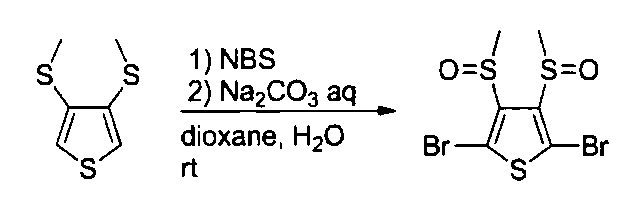 室温下、3,4−ジメチルスルファニルチオフェン(83mg、0.47mmol)のジオキサン(11.6mL)及び水(5.0mL)溶液にN−ブロモスクシンイミド(336mg、1.89mmol)を加え、4時間40分撹拌した。その後、さらにN−ブロモスクシンイミド(168mg、0.95mmol)を追加し、2時間攪拌した。この反応液の一部を取り、飽和炭酸ナトリウム水溶液により処理、有機層をGC分析したところ、2,5−ジブロモ−3,4−ジメチルスルフィニルチオフェンの生成が確認された。
<2,5−ビス(4−n−ヘキシルフェニル)−3,4−ジメチルスルフィニルチオフェンの合成>
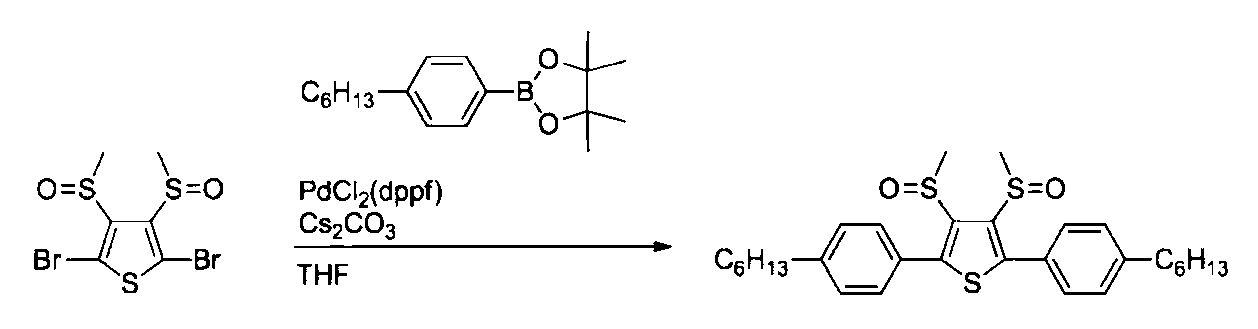 2,5−ジブロモ−3,4−ジメチルスルフィニルチオフェン(0.08g、0.2mmol)をTHF9mLに溶解し、得られる溶解液に4−n−ヘキシル−1−(4,4,5,5−テトラメチル−1,3,2−ジオキサボロラン−2−イル)ベンゼン(0.17g、0.6mmol)、及び炭酸セシウム水溶液(2.0M、2.9mL)を加える。得られる混合液を室温にて窒素でバブリングし、PdCl2(dppf)(0.09g、0.01mmol)を加え、さらに、80℃まで昇温して16時間撹拌する。得られる反応液を室温まで冷却後、塩化アンモニウム水溶液を加え、有機層及び水層に分離する。水層はTHFで抽出し、有機層と混合する。混合される有機層を水、飽和塩化ナトリウム水溶液で洗浄し、次いで硫酸マグネシウムで乾燥し、濃縮して粗生成物を得る。得られる粗生成物を、薄層クロマトグラフィーを用いて分取することによって、以下のスペクトルを有する2,5−ビス(4’−n−ヘキシルフェニル)−3,4−ジメチルスルフィニルチオフェンを得る。
1H−NMR(CDCl3、δppm):7.45(d,J=8.1Hz,2.5H)、7.36(d,J=8.1Hz,1.5H)、7.28−7.24(m,4H)、3.28(s、2.3H)、3.09(s、3.7H)、2.70−2.63(m,4H)、1.70−1.53(m,4H)、1.42−1.28(m,12H)、0.92−0.87(m,6H)
ビス(5−ヘキシルベンゾ[4,5]チエノ)[3,2−c:2’,3’−e]チオフェンの合成
 2,5−ビス(4’−n−ヘキシルフェニル)−3,4−ジメチルスルフィニルチオフェン(0.30g、0.6mmol)、及びP2O5(0.03g、0.2mmol)をトリフルオロメタンスルホン酸10.3mLに溶解させ反応液を得る。該溶解液を50℃まで昇温し、同温度にて3時間撹拌し、続いて室温まで冷却し、反応液を得る。反応液を水103mLに加え、析出した固体を濾過する。得られる固体を水で洗浄後、ピリジン90mLに溶解して得られる溶液を加熱し、還流下に10時間撹拌する。溶液を室温まで冷却し、水及びクロロホルムを加える。得られる有機層と水層とを分離し、有機層を硫酸マグネシウムで乾燥、濃縮して粗生成物を得る。得られる粗生成物をシリカゲルカラム及びゲルパーミネーションクロマトグラフィーを用いて精製することによって、以下のスペクトルを有するビス(5−ヘキシルベンゾ[4,5]チエノ)[3,2−c:2’,3’−e]チオフェンを得る。
1H−NMR(CDCl3、δppm):7.65(d,J=7.3Hz,2H)、7.57(d,J=1.0Hz,2H)、7.19(dd,J=7.3,1.0Hz,2H)、2.73(t,J=7.0Hz,4H)、1.73−1.63(m,4H)、1.40−1.29(m,12H)、0.90(t,J=6.8Hz,6H)
<2,5−ジブロモ−3,4−ジメチルスルフィニルチオフェンの合成1>
1H−NMR(CDCl3、δppm):3.21(s,2.4H)、3.09(s,3.6H)
<2,5−ジブロモ−3,4−ジメチルスルフィニルチオフェンの合成2>
<2,5−ビス(4−n−ヘキシルフェニル)−3,4−ジメチルスルフィニルチオフェンの合成>
1H−NMR(CDCl3、δppm):7.45(d,J=8.1Hz,2.5H)、7.36(d,J=8.1Hz,1.5H)、7.28−7.24(m,4H)、3.28(s、2.3H)、3.09(s、3.7H)、2.70−2.63(m,4H)、1.70−1.53(m,4H)、1.42−1.28(m,12H)、0.92−0.87(m,6H)
ビス(5−ヘキシルベンゾ[4,5]チエノ)[3,2−c:2’,3’−e]チオフェンの合成
1H−NMR(CDCl3、δppm):7.65(d,J=7.3Hz,2H)、7.57(d,J=1.0Hz,2H)、7.19(dd,J=7.3,1.0Hz,2H)、2.73(t,J=7.0Hz,4H)、1.73−1.63(m,4H)、1.40−1.29(m,12H)、0.90(t,J=6.8Hz,6H)
本発明の製造方法により、有機半導体材料等に有用な含カルコゲン縮合多環式化合物を、温和な条件で製造できる。
Claims (6)
- 式(1a)
で表される芳香族複素環化合物(1a)とN−ハロカルボン酸アミドとを水又はアルコール存在下で反応させて、式(2a)
で表される芳香族複素環化合物(2a)を得る工程、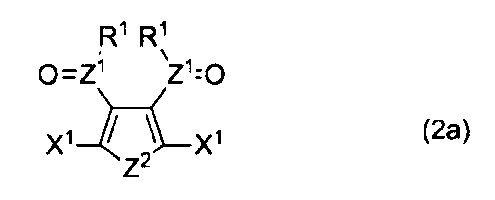
芳香族複素環化合物(2a)と式(3)
で表される芳香族化合物(3)とを反応させて、式(4)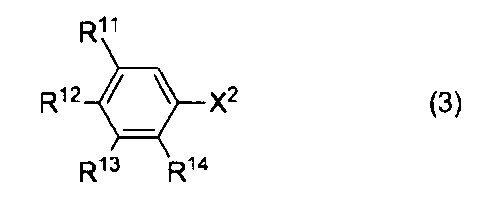
で示される化合物(4)を得る工程及び
化合物(4)と酸とを反応させて、式(5)
で示される含カルコゲン縮合多環式化合物(5)を得る工程を含む、含カルコゲン縮合多環式化合物(5)の製造方法。
(各式中、R1は炭素数1~20のアルキル基を示し、Z1はそれぞれ独立に、硫黄原子又はセレン原子を示し、Z2は酸素原子、硫黄原子又はセレン原子を示す。R11、R12、R13及びR14はそれぞれ独立に、水素原子、置換されていてもよい炭素数1~30のアルキル基、置換されていてもよい炭素数1~30のアルコキシ基、置換されていてもよい炭素数6~30のアリール基、置換されていてもよい炭素数7~30のアラルキル基、置換されていてもよい炭素数4~30のヘテロアリール基、置換されていてもよい炭素数5~30のヘテロアラルキル基、又は、式−Si(R2)3(R2はそれぞれ独立に、置換されていてもよい炭素数1~30のアルキル基又は置換されていてもよい炭素数6~30のアリール基を示す。)で表される置換シリル基を示す。X1はハロゲン原子を示し、X2は脱離基を示す。) - Z1及びZ2がいずれも硫黄原子である請求項1に記載の方法。
- N−ハロカルボン酸アミドがN−ハロスクシンイミドである請求項1に記載の方法。
- 式(1a)
で表される芳香族複素環化合物(1a)とN−ハロカルボン酸アミドとを水又はアルコール存在下で反応させる式(2a)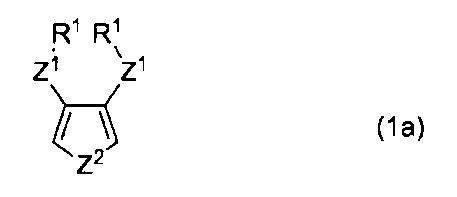
で表される芳香族複素環化合物(2a)の製造方法。
(各式中、R1は炭素数1~20のアルキル基を示し、Z1はそれぞれ独立に、硫黄原子又はセレン原子を示し、Z2は酸素原子、硫黄原子又はセレン原子を示し、X1はハロゲン原子を示す。) - Z1及びZ2がいずれも硫黄原子である請求項4に記載の方法。
- N−ハロカルボン酸アミドがN−ハロスクシンイミドである請求項4に記載の方法。
Applications Claiming Priority (2)
| Application Number | Priority Date | Filing Date | Title |
|---|---|---|---|
| JP2011082536A JP5708161B2 (ja) | 2011-04-04 | 2011-04-04 | 含カルコゲン縮合多環式化合物の製造方法 |
| JP2011-082536 | 2011-04-04 |
Publications (1)
| Publication Number | Publication Date |
|---|---|
| WO2012137694A1 true WO2012137694A1 (ja) | 2012-10-11 |
Family
ID=46969094
Family Applications (1)
| Application Number | Title | Priority Date | Filing Date |
|---|---|---|---|
| PCT/JP2012/058789 Ceased WO2012137694A1 (ja) | 2011-04-04 | 2012-03-27 | 含カルコゲン縮合多環式化合物の製造方法 |
Country Status (3)
| Country | Link |
|---|---|
| JP (1) | JP5708161B2 (ja) |
| TW (1) | TW201245173A (ja) |
| WO (1) | WO2012137694A1 (ja) |
Citations (2)
| Publication number | Priority date | Publication date | Assignee | Title |
|---|---|---|---|---|
| WO2010061176A1 (en) * | 2008-11-28 | 2010-06-03 | Cambridge Display Technology Limited | Organic semiconductors |
| WO2012046818A1 (ja) * | 2010-10-07 | 2012-04-12 | 住友化学株式会社 | 含カルコゲン縮合多環式化合物の製造方法 |
Family Cites Families (1)
| Publication number | Priority date | Publication date | Assignee | Title |
|---|---|---|---|---|
| US20110053916A1 (en) * | 2009-08-14 | 2011-03-03 | Vertex Pharmaceuticals Incorporated | Pyrimidine compounds as tuberculosis inhibitors |
-
2011
- 2011-04-04 JP JP2011082536A patent/JP5708161B2/ja not_active Expired - Fee Related
-
2012
- 2012-03-27 WO PCT/JP2012/058789 patent/WO2012137694A1/ja not_active Ceased
- 2012-03-30 TW TW101111332A patent/TW201245173A/zh unknown
Patent Citations (2)
| Publication number | Priority date | Publication date | Assignee | Title |
|---|---|---|---|---|
| WO2010061176A1 (en) * | 2008-11-28 | 2010-06-03 | Cambridge Display Technology Limited | Organic semiconductors |
| WO2012046818A1 (ja) * | 2010-10-07 | 2012-04-12 | 住友化学株式会社 | 含カルコゲン縮合多環式化合物の製造方法 |
Non-Patent Citations (3)
| Title |
|---|
| DU,C. ET AL.: "Asymmetrical Fluorene[2,3-b] benzo[d]thiophene Derivatives: Synthesis, Solid-State Structures, and Application in Solution-Processable Organic Light-Emitting Diodes", CHEMISTRY--A EUROPEAN JOURNAL, vol. 15, no. 33, 2009, pages 8275 - 8282 * |
| GAO,P. ET AL.: "Heteroheptacenes with Fused Thiophene and Pyrrole Rings", CHEMISTRY--A EUROPEAN JOURNAL, vol. 16, no. 17, 2010, pages 5119 - 5128 * |
| JIKKEN KAGAKU KOZA 17 YUKI KAGOBUTSU NO GOSEI V -SANKA HANNO, 2004, pages 384 - 386 * |
Also Published As
| Publication number | Publication date |
|---|---|
| JP5708161B2 (ja) | 2015-04-30 |
| TW201245173A (en) | 2012-11-16 |
| JP2012219015A (ja) | 2012-11-12 |
Similar Documents
| Publication | Publication Date | Title |
|---|---|---|
| Ivanova et al. | Donor‐Acceptor Cyclopropanes in the Synthesis of Carbocycles | |
| US10446765B2 (en) | Heterocyclic compound and organic light emitting element using same | |
| ES3056885T3 (en) | Process for the prepration of 7-(4,7-diazaspiro[2.5]octan-7-yl)-2-(2,8-dimethylimidazo[1,2-b]pyridazin-6-yl)pyrido[1,2-a]pyrimidin-4-one derivatives | |
| US20050288522A1 (en) | Process for preparing pentacene derivatives | |
| CN103576454B (zh) | 着色固化性树脂组合物 | |
| ES2895922T3 (es) | Compuesto para componentes electrónicos orgánicos fotoactivos y componente electrónico orgánico fotoactivo que contiene el compuesto | |
| KR20100117068A (ko) | 유기 반도체 재료 | |
| US20070054915A1 (en) | p38 MAP kinase inhibitors and methods for using the same | |
| ES2665093T3 (es) | Nuevos procedimiento de preparación de imidazoles 4-sustituidos | |
| BRPI0714573A2 (pt) | processo para preparar um composto, e, composto | |
| PL176526B1 (pl) | Pirolopirymidyny jako związki o działaniu antagonistów czynnika uwalniającego kortykotropinę | |
| BRPI0613639A2 (pt) | composto, composição farmacêutica, uso do composto, e, processo para produzir um composto | |
| KR102738747B1 (ko) | 헤테로고리 화합물, 이를 포함하는 유기 발광 소자 및 유기물층 형성용 조성물 | |
| JP5708161B2 (ja) | 含カルコゲン縮合多環式化合物の製造方法 | |
| ES2577184T3 (es) | Derivado de benciloxipirimidina, insecticida agrícola/hortícola que comprende el derivado y método para su uso | |
| KR20200061058A (ko) | 비스플루오로술포닐 이미드 알칼리 금속염의 제조방법 및 이에 의해 제조된 비스플루오로술포닐 이미드 알칼리 금속염 | |
| EP1903045A1 (en) | Pyrazolopyrimidine derivative | |
| JP5735831B2 (ja) | 含カルコゲン縮合多環式化合物の製造方法 | |
| US20200339560A1 (en) | Process for the preparation of disubstituted diaryloxybenzoheterodiazole compounds | |
| AU2019266197B2 (en) | Endoparasitic depsipeptides | |
| CN107501153A (zh) | 一种2‑(2,2,2‑三氟乙基)‑3‑芳基‑2h‑氮杂丙烯啶化合物的制备方法 | |
| KR102938860B1 (ko) | 유기전기소자용 화합물을 포함하는 유기전기소자 및 그 전자 장치 | |
| CN116410107B (zh) | 一种含有对称结构的环状1,3-二酮二亚胺化合物及其合成方法与应用 | |
| TWI728485B (zh) | 離子液體催化劑 | |
| Monroy-Flores et al. | Regioselective Functionalization and Diels–Alder Cycloadditions of Exocyclic Dienes in Five-membered Heterocycles |
Legal Events
| Date | Code | Title | Description |
|---|---|---|---|
| 121 | Ep: the epo has been informed by wipo that ep was designated in this application |
Ref document number: 12768446 Country of ref document: EP Kind code of ref document: A1 |
|
| NENP | Non-entry into the national phase |
Ref country code: DE |
|
| 122 | Ep: pct application non-entry in european phase |
Ref document number: 12768446 Country of ref document: EP Kind code of ref document: A1 |