WO2012133295A1 - 造影剤を含む生体吸収性癒着防止材 - Google Patents
造影剤を含む生体吸収性癒着防止材 Download PDFInfo
- Publication number
- WO2012133295A1 WO2012133295A1 PCT/JP2012/057737 JP2012057737W WO2012133295A1 WO 2012133295 A1 WO2012133295 A1 WO 2012133295A1 JP 2012057737 W JP2012057737 W JP 2012057737W WO 2012133295 A1 WO2012133295 A1 WO 2012133295A1
- Authority
- WO
- WIPO (PCT)
- Prior art keywords
- contrast agent
- bioabsorbable
- layer
- adhesion
- particularly limited
- Prior art date
- Legal status (The legal status is an assumption and is not a legal conclusion. Google has not performed a legal analysis and makes no representation as to the accuracy of the status listed.)
- Ceased
Links
Images

Classifications
-
- A—HUMAN NECESSITIES
- A61—MEDICAL OR VETERINARY SCIENCE; HYGIENE
- A61K—PREPARATIONS FOR MEDICAL, DENTAL OR TOILETRY PURPOSES
- A61K49/00—Preparations for testing in vivo
- A61K49/04—X-ray contrast preparations
- A61K49/0404—X-ray contrast preparations containing barium sulfate
-
- A—HUMAN NECESSITIES
- A61—MEDICAL OR VETERINARY SCIENCE; HYGIENE
- A61K—PREPARATIONS FOR MEDICAL, DENTAL OR TOILETRY PURPOSES
- A61K49/00—Preparations for testing in vivo
- A61K49/04—X-ray contrast preparations
- A61K49/0433—X-ray contrast preparations containing an organic halogenated X-ray contrast-enhancing agent
- A61K49/0447—Physical forms of mixtures of two different X-ray contrast-enhancing agents, containing at least one X-ray contrast-enhancing agent which is a halogenated organic compound
-
- A—HUMAN NECESSITIES
- A61—MEDICAL OR VETERINARY SCIENCE; HYGIENE
- A61L—METHODS OR APPARATUS FOR STERILISING MATERIALS OR OBJECTS IN GENERAL; DISINFECTION, STERILISATION OR DEODORISATION OF AIR; CHEMICAL ASPECTS OF BANDAGES, DRESSINGS, ABSORBENT PADS OR SURGICAL ARTICLES; MATERIALS FOR BANDAGES, DRESSINGS, ABSORBENT PADS OR SURGICAL ARTICLES
- A61L31/00—Materials for other surgical articles, e.g. stents, stent-grafts, shunts, surgical drapes, guide wires, materials for adhesion prevention, occluding devices, surgical gloves, tissue fixation devices
- A61L31/04—Macromolecular materials
- A61L31/06—Macromolecular materials obtained otherwise than by reactions only involving carbon-to-carbon unsaturated bonds
-
- A—HUMAN NECESSITIES
- A61—MEDICAL OR VETERINARY SCIENCE; HYGIENE
- A61L—METHODS OR APPARATUS FOR STERILISING MATERIALS OR OBJECTS IN GENERAL; DISINFECTION, STERILISATION OR DEODORISATION OF AIR; CHEMICAL ASPECTS OF BANDAGES, DRESSINGS, ABSORBENT PADS OR SURGICAL ARTICLES; MATERIALS FOR BANDAGES, DRESSINGS, ABSORBENT PADS OR SURGICAL ARTICLES
- A61L31/00—Materials for other surgical articles, e.g. stents, stent-grafts, shunts, surgical drapes, guide wires, materials for adhesion prevention, occluding devices, surgical gloves, tissue fixation devices
- A61L31/14—Materials characterised by their function or physical properties, e.g. injectable or lubricating compositions, shape-memory materials, surface modified materials
- A61L31/148—Materials at least partially resorbable by the body
-
- A—HUMAN NECESSITIES
- A61—MEDICAL OR VETERINARY SCIENCE; HYGIENE
- A61L—METHODS OR APPARATUS FOR STERILISING MATERIALS OR OBJECTS IN GENERAL; DISINFECTION, STERILISATION OR DEODORISATION OF AIR; CHEMICAL ASPECTS OF BANDAGES, DRESSINGS, ABSORBENT PADS OR SURGICAL ARTICLES; MATERIALS FOR BANDAGES, DRESSINGS, ABSORBENT PADS OR SURGICAL ARTICLES
- A61L31/00—Materials for other surgical articles, e.g. stents, stent-grafts, shunts, surgical drapes, guide wires, materials for adhesion prevention, occluding devices, surgical gloves, tissue fixation devices
- A61L31/14—Materials characterised by their function or physical properties, e.g. injectable or lubricating compositions, shape-memory materials, surface modified materials
- A61L31/18—Materials at least partially X-ray or laser opaque
-
- A—HUMAN NECESSITIES
- A61—MEDICAL OR VETERINARY SCIENCE; HYGIENE
- A61P—SPECIFIC THERAPEUTIC ACTIVITY OF CHEMICAL COMPOUNDS OR MEDICINAL PREPARATIONS
- A61P41/00—Drugs used in surgical methods, e.g. surgery adjuvants for preventing adhesion or for vitreum substitution
Definitions
- the present invention relates to a bioabsorbable adhesion preventing material containing a contrast agent.
- an adhesion preventing material that physically separates the affected area from the surrounding tissue is used.
- the adhesion preventing material is decomposed and absorbed by a living body after exhibiting the above-described adhesion preventing function within a predetermined period.
- materials exhibiting such decomposition and absorption properties for example, polymers and copolymers containing lactide, caprolactone, and the like as constituent monomers are used (Patent Document 1).
- the fixation in the living body may be released or may be damaged due to decomposition before the predetermined period elapses.
- the state of the anti-adhesion material in the living body has no means other than confirming by incising the patient, and this confirmation process is very painful for the patient and is a great effort for the doctor.
- an object of the present invention is to provide a new adhesion preventing material capable of confirming the state of the adhesion preventing material without making an incision after the adhesion preventing material is implanted in a patient's body.
- the bioabsorbable antiadhesive material of the present invention is a bioabsorbable antiadhesive material formed from a bioabsorbable material, wherein the bioabsorbable material contains a contrast agent.
- the bioabsorbable anti-adhesion material of the present invention contains a contrast agent, it can be detected from outside the body, for example. For this reason, according to the bioabsorbable anti-adhesion material of the present invention, for example, the arrangement state can be confirmed without incising the patient. Thus, the present invention is extremely useful in the medical field.
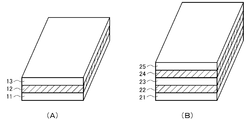
- FIG. 1A and 1B are schematic perspective views showing a configuration example of the bioabsorbable adhesion preventing material of the present invention.
- FIG. 2 is a photomicrograph showing a cross section of the bioabsorbable anti-adhesion material of Example 1.
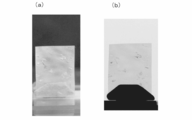
- FIG. 3 is a photograph showing the contrast ability of the contrast agent-containing laminated film of Example 1.
- the bioabsorbable adhesion preventing material of the present invention is an adhesion preventing material formed from a bioabsorbable material, and the bioabsorbable material contains a contrast agent.
- the bioabsorbable anti-adhesion material of the present invention is not particularly limited as long as the bioabsorbable material contains the contrast agent, and other configurations and shapes are not particularly limited.
- the bioabsorbable adhesion-preventing material of the present invention may contain, for example, the contrast agent in a part thereof or the contrast agent in the whole.
- the contrast agent is not particularly limited, and can be appropriately selected according to, for example, the type of diagnostic imaging method.
- the diagnostic imaging method is not particularly limited, and examples thereof include an X-ray diagnostic imaging method, a nuclear magnetic resonance imaging (MRI) diagnostic method, and the like.
- one type of contrast agent may be used, or two or more types may be used in combination.
- two or more contrast agents for X-ray image diagnosis may be used in combination
- two or more contrast agents for MRI diagnosis may be used in combination
- a contrast agent for X-ray image diagnosis may be used in combination
- a contrast agent for X-ray image diagnosis may be used in combination
- a contrast medium for MRI diagnosis may be used in combination.
- the contrast agent is not particularly limited. Examples include iodo contrast agents such as iodoxamic acid and iodinated poppy oil fatty acid ethyl ester, and barium sulfate. Barium sulfate is preferred. These contrast agents are suitable for detection by the X-ray diagnostic imaging method, for example.
- the contrast agent may be any one kind or two or more kinds, and the combination and ratio thereof are not particularly limited and can be set as appropriate.
- examples of the contrast agent include paramagnetic metals and compounds containing the paramagnetic metals.
- the metal is suitable for detection by MRI image diagnosis, for example.
- examples of the metal include those that exhibit contrast by interaction with nearby nuclei.
- Examples of the nearby nuclei include hydrogen nuclei.
- Specific examples of the metal include gadolinium and iron.
- examples of the iron include superparamagnetic iron oxide.
- Examples of the compound containing metal include ammonium iron citrate.
- the contrast agent may be, for example, any one type or two or more types, and the combination and ratio thereof are not particularly limited and can be set as appropriate.
- the concentration of the contrast agent in the bioabsorbable material is not particularly limited, and can be appropriately set according to the type of the contrast agent, for example.
- the layer containing the contrast agent of the bioabsorbable anti-adhesion material for example, 10 to 50% by weight, preferably 30 to 40% by weight.
- the bioabsorbable material preferably contains a bioabsorbable polymer, for example.
- the bioabsorbable polymer is not particularly limited.
- the molecular weight of the bioabsorbable polymer is not particularly limited, and is, for example, 5,000 to 2,000,000, preferably 10,000 to 1,500,000, and more preferably 100,000. ⁇ 1,000,000.
- the bioabsorbable polymer may be, for example, a homopolymer or a copolymer.
- the copolymer may be, for example, a random polymer, a block polymer, a graft polymer, or the like.
- the bioabsorbable polymer is not particularly limited, and examples thereof include aliphatic polyester, polyvinyl alcohol, polyethylene glycol, polycarbonate, polyamide, and the like, and preferably aliphatic polyester.
- the monomer constituting the bioabsorbable polymer is not particularly limited, and examples thereof include lactic acid, lactide, lactone, glycolide, glycolic acid, trimethylene carbonate, ethylene oxide, and paradioxanone.
- the homopolymer can be synthesized, for example, from any monomer, or the copolymer can be synthesized, for example, by a combination thereof.
- the bioabsorbable polymer is a copolymer, the combination of the monomers and the ratio thereof are not particularly limited.
- Examples of the combination of the monomers include lactide and lactone, glycolide and lactone, and preferably lactide and lactone.
- the lactide is not particularly limited, and for example, L-lactide, D-lactide and a mixture thereof (D, L-lactide) can be used.
- the lactide may be synthesized from lactic acid, for example.
- the lactic acid is not particularly limited, and for example, L-lactic acid, D-lactic acid and mixtures thereof (D, L-lactic acid) can be used.
- Examples of the lactone include butyrolactone, valerolactone, caprolactone, and the like, and caprolactone is preferable. Specific examples of the lactone include ⁇ -butyrolactone, ⁇ -valerolactone, and ⁇ -caprolactone.
- the bioabsorbable polymer may be a natural polymer such as collagen, hyaluronic acid, elastin, chitosan, chitin, chondroitin sulfate, or cellulose.
- the natural polymer is not particularly limited, and may be, for example, an extract from a living tissue or cell, a product of a transformant, or a synthetic product.
- the natural polymer may be, for example, a product obtained by further modifying or derivatizing the extract, product or synthetic product.
- the bioabsorbable polymer may be, for example, any one of the aforementioned polymers, or may include two or more types, and the combination and ratio thereof are not particularly limited and can be set as appropriate.
- the bioabsorbable material may contain, for example, other components in addition to the above-described contrast agent and bioabsorbable polymer.
- the other components are not particularly limited, and examples thereof include hydroxyapatite and titanium.
- the shape of the bioabsorbable adhesion preventing material is not particularly limited, and for example, a sheet shape and a tubular shape are preferable, and a sheet shape is more preferable.
- the bioabsorbable adhesion preventing material may be, for example, a single layer or a laminate, and preferably a laminate.
- the laminate may be, for example, a laminate of the layer containing the contrast agent (contrast agent-containing layer), or a layer containing the contrast agent and a layer not containing the contrast agent (contrast agent-free layer).
- a laminated body may be sufficient.
- the contrast agent-containing layer is specifically a layer of the bioabsorbable polymer containing a contrast agent
- the contrast agent-free layer is specifically the bioabsorbable polymer not containing a contrast agent. Layer.
- the contrast agent-containing layer and the contrast agent-free layer may be, for example, porous or non-porous, respectively, and preferably non-porous.
- the number of layers is not limited.
- the lower limit of the number of layers is, for example, 2 layers, preferably 3 layers, more preferably 5 layers, and the upper limit is, for example, 10 layers, 9 layers, preferably 7 layers. is there.
- the range of the number of layers is, for example, 2 to 10 layers, preferably 3 to 7 layers, and more preferably 5 to 7 layers.
- the laminate may be, for example, a laminate having the same composition and / or shape, or a laminate having layers having different compositions and / or shapes.
- the type and concentration of the contrast agent contained in each layer, the type and concentration of the bioabsorbable polymer, and other compositions are not particularly limited.
- the concentration of the contrast agent in the contrast agent-containing layer is not particularly limited, and is, for example, 10 to 50% by weight, preferably 30 to 40% by weight.
- the contrast agent-free layer include a layer that does not substantially contain a contrast agent.
- a layer that does not substantially contain a contrast agent is, for example, a layer that does not contain a contrast agent, or a layer in which a contrast agent cannot be detected even if a contrast agent is contained (a layer in which the contrast agent concentration is below the detection limit), Examples thereof include a layer having a concentration that does not function as a contrast agent.
- the configuration of the laminate is not particularly limited.
- the bioabsorbable anti-adhesion material is, for example, in the case of a sheet, the lowermost layer and the uppermost layer in the stacking direction are the contrast agent-free layer, and the middle layer located between the lowermost layer and the uppermost layer (Also referred to as an intervening layer) preferably includes the contrast agent-containing layer.
- the number of intermediate layers between the lowermost layer and the uppermost layer is not particularly limited, and when it has a plurality of intermediate layers, for example, at least one layer may be the contrast agent-containing layer.
- the lowermost layer is, for example, the outermost layer on the side in contact with the application site (affected site), and the uppermost layer is, for example, the outermost layer on the side opposite to the lowermost layer.
- the contrast agent-free layer is superior in strength to the contrast agent-containing layer, for example.
- the physical strength of the adhesion preventing material can be further improved. For this reason, for example, the influence of decomposition of the adhesion preventing material due to erosion of the body tissue or body fluid can be delayed. As a result, the shape of the adhesion preventing material can be maintained for a longer period of time, for example.
- the contrast agent-containing layer is disposed between the lowermost layer and the uppermost layer, for example, decomposition of the contrast agent-containing layer due to erosion of the body fluid can be suppressed. Thereby, for example, the contrast of the adhesion preventing material can be maintained for a longer period.
- the laminate examples include a configuration in which two contrast agent-free layers are laminated via the contrast agent-containing layer. Specifically, as shown in FIG. 1A, the laminate has a three-layer structure, the lowermost layer 11 and the uppermost layer 13 are the contrast agent-free layers, and the middle layer 12 is the A contrast agent-containing layer is preferred.
- the laminate includes, for example, a structure in which the contrast agent-containing layer and the contrast agent-free layer are alternately laminated one by one, and the lowermost layer and the uppermost layer include the contrast agent.
- a non-containing layer is preferred.
- the number of stacked layers is not particularly limited, and for example, a five-layer structure or a seven-layer structure is preferable.
- An example of the laminate having a five-layer structure is shown in FIG.
- This laminated body has a structure in which the contrast agent-containing layers 22 and 24 and the contrast agent-free layers 21, 23, and 25 are alternately stacked one by one.
- the lowermost layer 21 and the uppermost layer 25 Is the contrast agent-free layer.
- the concentration of the contrast agent in each contrast agent-containing layer is not particularly limited. However, it may be a different concentration.
- the laminate is, for example, in the order from the lowest layer to the uppermost layer: first layer (contrast medium-free layer) -second layer (contrast medium-containing layer) -third layer (contrast medium-free layer) -4th layer (contrast medium-containing layer)-5th layer (contrast medium-free layer)-6th layer (contrast medium-containing layer)-7th layer (contrast medium-free layer)
- the contrast agent concentrations in the fourth layer and the sixth layer may be the same or different, for example.
- each contrast agent concentration in the second layer and the sixth layer may be lower or higher than the contrast agent concentration in the fourth layer.
- the contrast agent concentration in the fourth layer is high, for example, higher contrast can be maintained for a relatively long period of time.
- the contrast agent concentrations in the second layer and the sixth layer are high, for example, the difference in contrast between the second layer and the sixth layer becomes large before and after the decomposition. For this reason, the progress degree of decomposition
- the method of using the bioabsorbable antiadhesive material in vivo is not particularly limited.
- the adhesion preventing material may be used as it is in the form of a sheet, or may be used in the form of being wound into a cylindrical shape. The latter is preferable when used for tendons, nerves, fallopian tubes, and the like.
- the living body is not particularly limited, and examples thereof include mammals.
- the mammal is not particularly limited, and examples thereof include humans, monkeys, dogs, cats, horses, cows, sheep, goats, pigs, mice, rats, rabbits, and hamsters.
- the method for producing the bioabsorbable anti-adhesion material of the present invention is not particularly limited, and a known method can be adopted except that a contrast agent is used.
- a method for producing a laminate including the contrast agent-containing layer and the contrast agent-free layer will be described below. The following method is an example, and the present invention is not limited to this.
- the solvent is preferably one that can dissolve the bioabsorbable polymer, for example, dichloromethane, chloroform, 1,4-dioxane, acetone, toluene, benzene, methyl ethyl ketone, dimethyl carbonate, dimethylformamide, hexafluoroisopropanol, and the like.
- organic solvents such as water and aqueous solvents such as water.
- the solvent may be, for example, any one kind or a mixed solvent of two or more kinds.
- the solvent may be, for example, a mixed solvent of the organic solvent and the aqueous solvent.
- the ratio of the solvent to be combined is not particularly limited.
- the concentration of the bioabsorbable polymer in the polymer liquid is not particularly limited, and is, for example, 1 to 10 w / v%, preferably 3 to 7 w / v%.
- the contrast agent is added to the polymer solution to prepare a contrast agent-containing polymer solution.
- the ratio of the contrast agent to 100% by weight of the bioabsorbable polymer is not particularly limited, and is, for example, 10 to 50% by weight, preferably 30 to 40% by weight.
- a sheet-like base material is prepared.
- the sheet-like base material include a silicon sheet.
- size of the said base material is not restrict
- the base material is first immersed in a polymer solution not containing the contrast agent.
- the immersion time is not particularly limited, and is, for example, 1 to 10 seconds, preferably 1 to 5 seconds.
- the immersion temperature is not particularly limited, and is, for example, 4 to 50 ° C., preferably 10 to 40 ° C., and more preferably 20 to 30 ° C.
- the substrate is pulled up from the polymer solution and dried. Thereby, the contrast agent-free layer is formed on the surface of the substrate.
- the drying time is not particularly limited, and is, for example, 10 to 60 minutes, preferably 20 to 40 minutes.
- the drying temperature is not particularly limited, and is, for example, 4 to 50 ° C., preferably 10 to 40 ° C., and more preferably 20 to 30 ° C.
- the dipping and drying steps may be performed once, or may be repeated several times until a desired thickness is obtained.
- the thickness of the contrast agent-free layer is not particularly limited, and is, for example, 10 to 100 ⁇ m.
- the base material on which the contrast agent-free layer is formed is immersed in the contrast agent-containing polymer solution.
- the immersion time is not particularly limited, and is, for example, 1 to 10 seconds, preferably 1 to 5 seconds.
- the immersion temperature is not particularly limited, and is, for example, 4 to 50 ° C., preferably 10 to 40 ° C., and more preferably 20 to 30 ° C.
- the substrate is pulled up from the polymer solution and dried. Thereby, the contrast agent-containing layer is formed on the contrast agent-free layer.
- the drying time is not particularly limited, and is, for example, 10 to 60 minutes, preferably 20 to 40 minutes.
- the drying temperature is not particularly limited, and is, for example, 4 to 50 ° C., preferably 10 to 40 ° C., and more preferably 20 to 30 ° C.
- the dipping and drying steps may be performed once, or may be repeated several times until a desired thickness is obtained.
- the thickness of the contrast agent-containing layer is not particularly limited and is, for example, 10 to 100 ⁇ m.
- the base material is again immersed in a polymer solution not containing the contrast agent, and the contrast agent-free layer is formed in the same manner.
- a laminate having a three-layer structure of a contrast agent-free layer-a contrast agent-containing layer-a contrast agent-free layer can be formed.
- the bioabsorbable adhesion prevention material of this invention is obtained by peeling the said laminated body from the said base material.
- count and order of the formation process of the said contrast agent non-containing layer and the said contrast agent content layer are not restrict
- the thickness of the adhesion preventing material is not particularly limited, and is, for example, 50 to 400 ⁇ m.
- the method for producing the bioabsorbable anti-adhesion material of the present invention includes, for example, a method using a heat press.
- the contrast agent-free layer is formed into a sheet by, for example, hot pressing the bioabsorbable polymer
- the contrast agent-containing layer is formed into a sheet by, for example, hot-pressing a mixture of the bioabsorbable polymer and the contrast agent.
- the said anti-adhesion material can be formed by laminating
- examples of the method for producing the bioabsorbable anti-adhesion material of the present invention include a method using a casting method.
- the contrast agent-free layer is produced, for example, as follows. First, the bioabsorbable polymer and a solvent are mixed to prepare a polymer solution.
- the solvent is not particularly limited, and examples thereof are the same as described above.
- the concentration of the bioabsorbable polymer in the polymer liquid is not particularly limited, and is, for example, 1 to 10 w / v%, preferably 3 to 7 w / v%.
- the polymer solution is poured into a mold and the solvent is volatilized to form the bioabsorbable polymer into a sheet.
- the said contrast agent content layer mixes the said bioabsorbable polymer and the said contrast agent, and also mixes the said mixture and a solvent, for example, and prepares a contrast agent containing polymer liquid.
- the solvent is not particularly limited, and examples thereof are the same as described above.
- the concentration of the bioabsorbable polymer in the contrast agent-containing polymer liquid is not particularly limited, and is the same as that of the bioabsorbable polymer liquid.
- the ratio of the contrast agent to 100% by weight of the bioabsorbable polymer is not particularly limited, and is, for example, 10 to 50% by weight, preferably 30 to 40% by weight.
- the said contrast agent containing polymer liquid is poured into a casting_mold
- the said anti-adhesion material can be formed by laminating
- the bioabsorbable anti-adhesion material of the present invention can be produced by using, for example, the hot press method and the casting method in combination.
- one of the contrast agent-free layer and the contrast agent-containing layer is produced by a hot press method and the other is produced by a cast method, and the obtained sheet-like contrast agent-free layer and the contrast agent-containing layer are obtained. And may be laminated by hot pressing.
- the bioabsorbable anti-adhesion material of the present invention may further contain a reinforcing material, for example.
- a reinforcing material for example.
- the bioabsorbable anti-adhesion material of the present invention can further improve the physical strength of the entire anti-adhesion material, for example, without impairing its decomposability.
- the type of the reinforcing material is not particularly limited, and is preferably formed from a bioabsorbable material, for example.
- the bioabsorbable material is not particularly limited and is as described above.
- the shape of the reinforcing material is not particularly limited, and for example, a mesh-like sheet is preferable.
- the position of the reinforcing material is not particularly limited, and is preferably included in the contrast agent-containing layer, for example.
- the arrangement method of the reinforcing material is not particularly limited.
- the mesh sheet is prepared in advance as a reinforcing material, and the sheet is disposed on the base material or a contrast agent-free layer formed on the base material.
- the said base material is immersed in a contrast agent containing polymer liquid, maintaining the state which has arrange
- the contrast agent-containing polymer liquid penetrates into the gaps of the mesh of the sheet.
- the contrast agent-containing layer containing the reinforcing material can be formed by performing a drying process in the same manner as described above.
- the bioabsorbable anti-adhesion material may be produced by, for example, producing a long laminate and then cutting it to a desired length, or directly producing an adhesion prevention material having a desired length.
- the bioabsorbable adhesion preventing material of the present invention is not limited to the above-described immersion molding method, heat press method, and cast method, and may be molded using a method such as extrusion molding or injection molding.
- the manufacturing method of the said bioabsorbable adhesion prevention material may further include other processes, such as a sterilization process, for example.
- the bioabsorbable adhesion preventing material may be subjected to a surface modification treatment on at least one of the lower surface (exposed surface of the lowermost layer) and the upper surface (exposed surface of the uppermost layer), for example.
- the surface modification treatment is not particularly limited, and examples thereof include hydrophilic treatment and hydrophobic treatment.
- the hydrophilic treatment and the hydrophobic treatment are not particularly limited, and conventionally known methods can be employed.
- the bioabsorbable anti-adhesion material can be used, for example, disposed in the living body.
- the arrangement method is not particularly limited, and can be appropriately set according to a target site.
- the bioabsorbable adhesion preventing material may be sutured together with tissue in the living body. By the suturing, for example, the bioabsorbable anti-adhesion material can be more reliably fixed to the tissue in the living body.
- the bioabsorbable anti-adhesion material can be easily applied to, for example, a complicated and narrow tissue, and may be disposed at a target site using an endoscope or the like.
- the adhesion preventing method of the present invention comprises a step of arranging the bioabsorbable adhesion preventing material of the present invention in a living body, and detecting the contrast agent in the living body at a desired time, thereby It is characterized by confirming.
- the method of the present invention can be said to be a method for confirming the bioabsorbable anti-adhesion material of the present invention, for example. According to the confirmation step, the shape, remaining rate, and the like of the bioabsorbable adhesion preventing material can be confirmed by detecting the contrast agent.
- the medical device of the present invention includes the bioabsorbable adhesion preventing material of the present invention.
- the medical device may include, for example, an endoscope in addition to the bioabsorbable adhesion preventing material of the present invention.
- Example 1 A sheet-like bioabsorbable anti-adhesion material containing barium sulfate as a contrast agent was prepared.
- a copolymer of L-lactide and ⁇ -caprolactone (hereinafter also referred to as “P (LA / CL)”) was used as a bioabsorbable polymer.
- the P (LA / CL) had a molecular weight of 360,000 and an L-lactide content of 69 mol%.
- the P (LA / CL) was hot-pressed at 150 ° C. for 15 minutes to produce a non-porous film-like contrast agent-free layer 1.
- the thickness of the contrast agent-free layer 1 was 120 ⁇ m.
- the P (LA / CL) and barium sulfate were mixed at a weight ratio of 100: 40.
- the said mixture was mixed with dichloromethane so that it might become 3.5 w / v%, and the contrast agent containing polymer liquid was prepared.
- the said mixture was formed into a film by the casting method using the said contrast agent containing polymer liquid.
- the casting method was performed by pouring the contrast agent-containing polymer solution into a mold and volatilizing the dichloromethane. As a result, a non-porous film-like contrast agent-containing layer was produced.
- the thickness of the contrast agent-containing layer 2 was 30 ⁇ m.
- the contrast agent-free layer 1, the contrast agent-containing layer 2, the contrast agent-free layer 1, the contrast agent-containing layer 2, and the contrast agent-free layer 1 are laminated in this order, and a five-layer structure
- the laminated film was hot pressed at 130 ° C. for 2 minutes. In this way, a sheet-like bioabsorbable adhesion-preventing material was produced in which the contrast agent-free layer and the contrast agent-containing layer were alternately laminated (hereinafter also referred to as “contrast agent-containing laminated film”). ).
- the contrast agent-containing laminated film had a thickness of 240 ⁇ m.
- FIG. 2 is a photograph showing the result of cross-sectional observation ( ⁇ 200) of the contrast agent-containing laminated film.
- the contrast agent-containing laminated film is a laminate of all five layers in which the contrast agent-free layer and the contrast agent-containing layer are alternately laminated in order from the lowest layer. It could be confirmed.
- FIG. 3A is a photograph taken under normal conditions (natural conditions)
- FIG. 3B is a photograph taken with X-ray CT.
- FIG.3 (b) the shape of the said contrast agent containing laminated
- the bioabsorbable anti-adhesion material of the present invention contains a contrast agent, for example, detection from outside the living body is possible. For this reason, according to the bioabsorbable anti-adhesion material of the present invention, for example, the arrangement state can be confirmed without incising the patient. Thus, the present invention is extremely useful in the medical field.
Landscapes
- Health & Medical Sciences (AREA)
- Life Sciences & Earth Sciences (AREA)
- Animal Behavior & Ethology (AREA)
- General Health & Medical Sciences (AREA)
- Public Health (AREA)
- Veterinary Medicine (AREA)
- Epidemiology (AREA)
- Surgery (AREA)
- Heart & Thoracic Surgery (AREA)
- Vascular Medicine (AREA)
- Chemical & Material Sciences (AREA)
- Chemical Kinetics & Catalysis (AREA)
- Engineering & Computer Science (AREA)
- Bioinformatics & Cheminformatics (AREA)
- Physics & Mathematics (AREA)
- Optics & Photonics (AREA)
- General Chemical & Material Sciences (AREA)
- Medicinal Chemistry (AREA)
- Nuclear Medicine, Radiotherapy & Molecular Imaging (AREA)
- Organic Chemistry (AREA)
- Pharmacology & Pharmacy (AREA)
- Materials For Medical Uses (AREA)
- Medicines Containing Antibodies Or Antigens For Use As Internal Diagnostic Agents (AREA)
- Compositions Of Macromolecular Compounds (AREA)
- Biological Depolymerization Polymers (AREA)
Abstract
患者を切開することなく、その配置状態を確認可能な生体吸収性癒着防止材を提供する。 本発明の生体吸収性癒着防止材は、生体吸収性材料から形成された生体吸収性癒着防止材であって、前記生体吸収性材料が、造影剤を含む。本発明の生体吸収性癒着防止材は、造影剤を含むことから、例えば、生体外からの検出が可能である。このため、本発明の生体吸収性癒着防止材によれば、例えば、患者を切開することなく、その配置状態を確認可能である。
Description
本発明は、造影剤を含む生体吸収性癒着防止材に関する。
臨床分野において、生体組織の癒着を防止するために、患部とその周辺組織とを物理的に隔離する癒着防止材が使用されている。他方、前記癒着防止材は、所定の期間内に前述のような癒着防止の機能を発揮した後、分解されて生体に吸収されることが望ましい。このような分解吸収性の性質を示す材料としては、例えば、ラクチドおよびカプロラクトン等を構成モノマーとする重合体および共重合体等が使用されている(特許文献1)。
しかしながら、前記癒着防止材を生体内に埋入後、前記所定期間を経過するまでに、生体内での固定が解除されたり、分解によって破損するおそれがある。しかしながら、生体内における前記癒着防止材の状態は、患者を切開して確認する以外に手段がなく、この確認処理は、患者にとって大きな苦痛を伴うものであり、医師にとっても大きな労力となる。
そこで、本発明は、前記癒着防止材を患者の体内に埋入した後、切開することなく、前記癒着防止材の状態を確認することが可能な新たな癒着防止材の提供を目的とする。
本発明の生体吸収性癒着防止材は、生体吸収性材料から形成された生体吸収性癒着防止材であって、前記生体吸収性材料が、造影剤を含むことを特徴とする。
本発明の生体吸収性癒着防止材は、造影剤を含むことから、例えば、生体外からの検出が可能である。このため、本発明の生体吸収性癒着防止材によれば、例えば、患者を切開することなく、その配置状態を確認可能である。このように、本発明は、医療分野において極めて有用である。
本発明の生体吸収性癒着防止材は、前述のように、生体吸収性材料から形成された癒着防止材であって、前記生体吸収性材料が、造影剤を含むことを特徴とする。
本発明の生体吸収性癒着防止材は、前記生体吸収性材料が、前記造影剤を含んでいればよく、その他の構成や形状等は、特に制限されない。本発明の生体吸収性癒着防止材は、例えば、その一部に前記造影剤が含まれてもよいし、全体に前記造影剤が含まれてもよい。
前記造影剤は、特に制限されず、例えば、画像診断法の種類に応じて適宜選択できる。前記画像診断法は、特に制限されず、例えば、X線画像診断法、核磁気共鳴画像(MRI:Magnetic Resonance Imaging)診断法等があげられる。前記造影剤は、例えば、1種類でもよいし、2種類以上を併用してもよい。後者の場合、例えば、X線画像診断用の造影剤を2種類以上併用してもよいし、MRI診断用の造影剤を2種類以上併用してもよいし、X線画像診断用の造影剤とMRI診断用の造影剤とを併用してもよい。
前記造影剤は、特に制限されず、例えば、アミドトリゾ酸、イオキサグル酸、イオキシラン、イオタラム酸、イオトロクス酸メグルミン、イオトロラン、イオパノ酸、イオパミドール、イオプロミド、イオヘキソール、イオメプロール、イオポダートナトリウム、メトリゾ酸、ヨーダミド、ヨードキサム酸、ヨード化ケシ油脂肪酸エチルエステル等のヨード造影剤、硫酸バリウム等があげられ、好ましくは、硫酸バリウムである。これらの造影剤は、例えば、前記X線画像診断法による検出に適している。前記造影剤は、例えば、いずれか1種類でもよいし、2種類以上を含んでもよく、その組み合わせや割合は、特に制限されず、適宜設定可能である。
前記造影剤は、これらの他に、例えば、常磁性を示す金属、または前記常磁性を示す金属を含む化合物があげられる。前記金属は、例えば、MRI画像診断による検出に適している。前記金属は、例えば、近傍の原子核との相互作用により造影性を示すものがあげられる。前記近傍の原子核は、例えば、水素原子核があげられる。前記金属の具体例は、ガドリニウム、鉄があげられる。前記鉄は、例えば、超常磁性酸化鉄等があげられる。前記金属を含む化合物は、例えば、クエン酸鉄アンモニウム等があげられる。前記造影剤は、例えば、いずれか1種類でもよいし、2種類以上を含んでもよく、その組み合わせや割合は、特に制限されず、適宜設定できる。
前記生体吸収性材料における前記造影剤の濃度は、特に制限されず、例えば、造影剤の種類に応じて適宜設定できる。前記生体吸収性癒着防止材の前記造影剤を含む層において、例えば、10~50重量%、好ましくは、30~40重量%である。
前記生体吸収性材料は、例えば、生体吸収性ポリマーを含むのが好ましい。前記生体吸収性ポリマーは、特に制限されない。
前記生体吸収性ポリマーの分子量は、特に制限されず、例えば、5,000~2,000,000であり、好ましくは、10,000~1,500,000であり、より好ましくは、100,000~1,000,000である。前記生体吸収性ポリマーは、例えば、ホモポリマーでも、コポリマーでもよい。前記コポリマーは、例えば、ランダムポリマー、ブロックポリマー、グラフトポリマー等でもよい。
前記生体吸収性ポリマーは、特に制限されず、例えば、脂肪族ポリエステル、ポリビニルアルコール、ポリエチレングリコール、ポリカーボネート、ポリアミド等があげられ、好ましくは、脂肪族ポリエステルである。前記生体吸収性ポリマーを構成するモノマーは、特に制限されず、例えば、乳酸、ラクチド、ラクトン、グリコリド、グリコール酸、トリメチレンカーボネート、エチレンオキサイド、パラジオキサノン等があげられる。前記ホモポリマーは、例えば、いずれかのモノマーから合成でき、または、前記コポリマーは、例えば、これらの組み合わせにより合成できる。前記生体吸収性ポリマーがコポリマーの場合、前記モノマーの組み合わせおよびそれらの割合は、特に制限されない。前記モノマーの組み合わせは、例えば、ラクチドとラクトン、グリコリドとラクトン等があげられ、好ましくは、ラクチドとラクトンである。前記ラクチドは、特に制限されず、例えば、L-ラクチド、D-ラクチドおよびそれらの混合物(D,L-ラクチド)を使用できる。前記ラクチドは、例えば、乳酸から合成してもよい。前記乳酸は、特に制限されず、例えば、L-乳酸、D-乳酸およびそれらの混合物(D,L-乳酸)を使用できる。前記ラクトンは、例えば、ブチロラクトン、バレロラクトン、カプロラクトン等があげられ、カプロラクトンが好ましい。前記ラクトンは、具体的には、例えば、γ-ブチロラクトン、δ-バレロラクトン、ε-カプロラクトン等があげられる。
前記生体吸収性ポリマーは、例えば、コラーゲン、ヒアルロン酸、エラスチン、キトサン、キチン、コンドロイチン硫酸、セルロース等の天然高分子でもよい。前記天然高分子は、特に制限されず、例えば、生体の組織や細胞等からの抽出物でもよいし、形質転換体による産生物でもよいし、合成物でもよい。前記天然高分子は、例えば、前記抽出物、産生物または合成物を、さらに、修飾または誘導体化したものでもよい。
前記生体吸収性ポリマーは、例えば、前述のポリマーのうち、いずれか1種類でもよいし、2種類以上を含んでもよく、その組み合わせおよび割合は、特に制限されず、適宜設定可能である。
前記生体吸収性材料は、前述の造影剤および生体吸収性ポリマー以外に、例えば、他の成分を含んでもよい。前記他の成分は、特に制限されず、例えば、ヒドロキシアパタイト、チタン等があげられる。
前記生体吸収性癒着防止材の形状は、特に制限されず、例えば、シート状、管状が好ましく、より好ましくはシート状である。
前記生体吸収性癒着防止材は、例えば、単層体でもよいし、積層体でもよく、好ましくは、積層体である。前記積層体は、例えば、前記造影剤を含む層(造影剤含有層)の積層体でもよいし、前記造影剤を含む層と、前記造影剤を含まない層(造影剤非含有層)との積層体でもよい。前記造影剤含有層は、具体的には、造影剤を含有する前記生体吸収性ポリマーの層であり、前記造影剤非含有層は、具体的には、造影剤を含有しない前記生体吸収性ポリマーの層である。前記造影剤含有層および前記造影剤非含有層は、例えば、それぞれ、多孔性でもよいし、非多孔性でもよく、好ましくは非多孔性である。
前記生体吸収性癒着防止材が前記積層体の場合、その層数は何ら制限されない。前記層数の下限は、例えば、2層であり、好ましくは、3層であり、より好ましくは、5層であり、上限は、例えば、10層、9層であり、好ましくは、7層である。前記層数の範囲は、例えば、2~10層であり、好ましくは、3~7層であり、より好ましくは、5~7層である。
また、前記積層体は、例えば、組成および/または形状等が同じ層の積層体でもよいし、組成および/または形状等が異なる層の積層体でもよい。後者の場合、例えば、各層に含まれる造影剤の種類および濃度、生体吸収性ポリマーの種類および濃度、その他の組成も、特に制限されない。
前記積層体が、前記造影剤含有層と前記造影剤非含有層とを含む場合、各層の数および積層順は特に制限されない。前記造影剤含有層における前記造影剤の濃度は、特に制限されず、例えば、10~50重量%、好ましくは、30~40重量%である。前記造影剤非含有層は、例えば、実質的に造影剤を含まない層があげられる。実質的に造影剤を含まない層とは、例えば、造影剤を含まない層、または、造影剤が含まれる場合でも、造影剤が検出できない層(造影剤濃度が検出限界以下である層)、造影剤としての機能を奏さない程度の濃度である層等があげられる。
前記積層体の構成は、特に制限されない。前記生体吸収性癒着防止材は、例えば、シート状の場合、積層方向の最下層と最上層とが、前記造影剤非含有層であり、前記最下層と前記最上層との間に位置する中層(介在層ともいう)が、前記造影剤含有層を含むことが好ましい。前記最下層と前記最上層との間における中層の層数は、特に制限されず、複数の中層を有する場合、例えば、少なくとも一層が、前記造影剤含有層であればよい。前記最下層は、例えば、適用部位(患部)に接触する側の最外層であり、前記最上層は、例えば、前記最下層とは反対側の最外層である。前記造影剤非含有層は、例えば、前記造影剤含有層より強度に優れる。そこで、このように、例えば、体内の組織と接触する最下層および最上層を前記造影剤非含有層とすれば、前記癒着防止材の物理的強度をさらに向上できる。このため、例えば、前記体内の組織または体液の浸食による、癒着防止材の分解の影響を遅延できる。これによって、前記癒着防止材の形状を、例えば、より長期間、維持可能である。また、前記最下層と前記最上層との間に、前記造影剤含有層を配置すれば、例えば、前記体液の浸食による前記造影剤含有層の分解を抑制できる。これによって、例えば、前記癒着防止材の造影性を、より長期間維持できる。
前記積層体は、例えば、前記造影剤含有層を介して、2層の造影剤非含有層が積層された構成があげられる。具体的には、図1(A)に示すように、前記積層体が、3層構造であり、最下層11と最上層13とが、前記造影剤非含有層であり、中層12が、前記造影剤含有層であることが好ましい。
また、前記積層体は、例えば、前記造影剤含有層と前記造影剤非含有層とが、1層ずつ交互に積層された構造があげられ、その最下層とその最上層とが、前記造影剤非含有層であることが好ましい。前記積層体の積層数は、特に制限されず、例えば、5層構造または7層構造が好ましい。5層構造の前記積層体の一例を、図1(B)に示す。この積層体は、前記造影剤含有層22、24と前記造影剤非含有層21、23、25とが、1層ずつ交互に積層された構造であり、その最下層21とその最上層25とが、前記造影剤非含有層である。
このように、前記造影剤含有層と前記造影剤非含有層とが交互に積層された積層体の場合、各造影剤含有層における造影剤の濃度は、特に制限されず、例えば、全て同じ濃度でもよいし、異なる濃度でもよい。具体例として、前記積層体が、例えば、最下層から最上層の順に、第1層(造影剤非含有層)-第2層(造影剤含有層)-第3層(造影剤非含有層)-第4層(造影剤含有層)-第5層(造影剤非含有層)-第6層(造影剤含有層)-第7層(造影剤非含有層)となる場合、前記第2層、第4層および第6層における造影剤濃度は、例えば、同じでもよいし、異なっていてもよい。前記造影剤濃度が異なる場合、例えば、前記第2層および第6層における各造影剤濃度は、前記第4層における造影剤濃度よりも、低くてもよいし、高くてもよい。前者の場合、前記第4層における造影剤濃度が高いため、例えば、比較的長期間、より高い造影性を維持できる。また、後者の場合、前記第2層および第6層における各造影剤濃度が高いため、例えば、前記第2層および第6層の分解前後で、造影性の差が大きくなる。このため、より容易に、癒着防止材の分解の進行程度を確認できる。
前記生体吸収性癒着防止材の生体内における使用方法は、特に制限されない。前記癒着防止材は、例えば、そのままシート状の形態で使用してもよいし、筒状に捲回した形態で使用してもよい。後者は、例えば、腱、神経、卵管等に使用する場合に、好ましい。前記生体は、特に制限されず、例えば、哺乳動物等があげられる。前記哺乳動物は、特に制限されず、例えば、ヒト、サル、イヌ、ネコ、ウマ、ウシ、ヒツジ、ヤギ、ブタ、マウス、ラット、ウサギ、ハムスター等があげられる。
本発明の生体吸収性癒着防止材の製造方法は、特に制限されず、造影剤を使用する以外は、公知の方法を採用できる。本発明の生体吸収性癒着防止材の一例として、前記造影剤含有層と前記造影剤非含有層とを含む積層体を製造する方法を、以下に示す。なお、以下の方法は、一例であり、本発明はこれに制限されない。
まず、前記生体吸収性ポリマーと溶媒とを混合して、ポリマー液を調製する。前記溶媒は、例えば、前記生体吸収性ポリマーを溶解可能であるものが好ましく、例えば、ジクロロメタン、クロロホルム、1,4-ジオキサン、アセトン、トルエン、ベンゼン、メチルエチルケトン、ジメチルカーボネート、ジメチルホルムアミド、ヘキサフルオロイソプロパノール等の有機溶媒、水等の水系溶媒があげられる。前記溶媒は、例えば、いずれか1種類でもよいし、2種類以上の混合溶媒でもよい。また、前記溶媒は、例えば、前記有機溶媒と前記水系溶媒との混合溶媒でもよい。前記混合溶媒において、組み合わせる溶媒の割合は、特に制限されない。前記ポリマー液における前記生体吸収性ポリマーの濃度は、特に制限されず、例えば、1~10w/v%であり、好ましくは、3~7w/v%である。
そして、前記ポリマー液に前記造影剤を添加して、造影剤含有ポリマー液を調製する。前記造影剤含有ポリマー液において、前記生体吸収性ポリマー100重量%に対する前記造影剤の割合は、特に制限されず、例えば、10~50重量%、好ましくは、30~40重量%である。
つぎに、シート状の基材を準備する。前記シート状の基材は、例えば、シリコンシートがあげられる。前記基材の大きさは、特に制限されず、例えば、製造する癒着防止材の大きさに応じて適宜設定できる。
さらに、前記基材を、まず、前記造影剤を含まないポリマー液中に浸漬する。前記浸漬時間は、特に制限されず、例えば、1~10秒間であり、好ましくは、1~5秒間である。前記浸漬温度は、特に制限されず、例えば、4~50℃であり、好ましくは、10~40℃であり、より好ましくは、20~30℃である。前記浸漬後、前記基材を、前記ポリマー液から引き上げて、乾燥する。これにより、前記基材の表面上に、前記造影剤非含有層が形成される。前記乾燥時間は、特に制限されず、例えば、10~60分間であり、好ましくは、20~40分間である。前記乾燥温度は、特に制限されず、例えば、4~50℃であり、好ましくは、10~40℃であり、より好ましくは、20~30℃である。前記浸漬および乾燥の工程は、例えば、1回でもよいし、所望の厚みとなるまで、数回繰り返してもよい。前記造影剤非含有層の厚みは、特に制限されず、例えば、10~100μmである。
続いて、前記造影剤非含有層を形成した基材を、前記造影剤含有ポリマー液中に浸漬する。前記浸漬時間は、特に制限されず、例えば、1~10秒間であり、好ましくは、1~5秒間である。前記浸漬温度は、特に制限されず、例えば、4~50℃であり、好ましくは、10~40℃であり、より好ましくは、20~30℃である。前記浸漬後、前記基材を、前記ポリマー液から引き上げて、乾燥する。これにより、前記造影剤非含有層上に、前記造影剤含有層が形成される。前記乾燥時間は、特に制限されず、例えば、10~60分間であり、好ましくは、20~40分間である。前記乾燥温度は、特に制限されず、例えば、4~50℃であり、好ましくは、10~40℃であり、より好ましくは、20~30℃である。前記浸漬および乾燥の工程は、例えば、1回でもよいし、所望の厚みとなるまで、数回繰り返してもよい。前記造影剤含有層の厚みは、特に制限されず、例えば、10~100μmである。
そして、再度、前記基材を、前記造影剤を含まないポリマー液に浸漬し、同様にして、前記造影剤非含有層を形成する。これによって、造影剤非含有層-造影剤含有層-造影剤非含有層という3層構造の積層体が形成できる。そして、前記積層体を、前記基材から剥離することにより、本発明の生体吸収性癒着防止材が得られる。前記造影剤非含有層および前記造影剤含有層の形成工程の回数および順序は、何ら制限されず、所望の癒着防止材の構成に応じて適宜決定できる。前記癒着防止材の厚みは、特に制限されず、例えば、50~400μmである。
本発明の生体吸収性癒着防止材の製造方法は、この他に、例えば、熱プレスを利用する方法もあげられる。前記造影剤非含有層は、例えば、前記生体吸収性ポリマーを熱プレスしてシート化し、前記造影剤含有層は、例えば、前記生体吸収性ポリマーと造影剤との混合物を熱プレスしてシート化する。そして、得られたシート状の前記造影剤非含有層と前記造影剤含有層とを積層し、さらに、熱プレスすることで、前記癒着防止材を形成できる。
また、本発明の生体吸収性癒着防止材の製造方法は、例えば、キャスト法を利用する方法もあげられる。前記造影剤非含有層は、具体的には、例えば、以下のように作製する。まず、前記生体吸収性ポリマーと溶媒とを混合して、ポリマー液を調製する。前記溶媒は、特に制限されず、前述と同様のものがあげられる。前記ポリマー液における前記生体吸収性ポリマーの濃度は、特に制限されず、例えば、1~10w/v%であり、好ましくは、3~7w/v%である。つぎに、前記ポリマー液を、鋳型に流し入れ、前記溶媒を揮発させることで、前記生体吸収性ポリマーをシート化する。また、前記造影剤含有層は、例えば、前記生体吸収性ポリマーと前記造影剤とを混合し、さらに、前記混合物と溶媒とを混合して、造影剤含有ポリマー液を調製する。前記溶媒は、特に制限されず、前述と同様のものがあげられる。前記造影剤含有ポリマー液における前記生体吸収性ポリマーの濃度は、特に制限されず、前記生体吸収性ポリマー液と同様である。また、前記生体吸収性ポリマー100重量%に対する前記造影剤の割合は、特に制限されず、例えば、10~50重量%、好ましくは、30~40重量%である。そして、前記造影剤含有ポリマー液を、鋳型に流し入れ、前記溶媒を揮発させることで、前記混合物をシート化する。そして、得られたシート状の前記造影剤非含有層と前記造影剤含有層とを積層し、さらに、熱プレスすることで、前記癒着防止材を形成できる。
また、本発明の生体吸収性癒着防止材は、例えば、前記熱プレス法と前記キャスト法とを併用して製造することもできる。例えば、前記造影剤非含有層および前記造影剤含有層の一方を熱プレス法で作製し、他方をキャスト法で作製し、得られたシート状の前記造影剤非含有層と前記造影剤含有層とを熱プレスで積層してもよい。具体例として、例えば、前記造影剤非含有層を前記熱プレスで作製し、前記造影剤含有層をキャスト法で作製する組合せがあげられる。
本発明の生体吸収性癒着防止材は、例えば、さらに、補強材を含んでもよい。前記補強材を備えることによって、本発明の生体吸収性癒着防止材は、例えば、その分解性を損なうことなく、前記癒着防止材全体の物理的強度を、さらに向上できる。
前記補強材の種類は、特に制限されず、例えば、生体吸収性材料から形成されていることが好ましい。前記生体吸収性材料は、特に制限されず、前述のとおりである。前記補強材の形状は、特に制限されず、例えば、メッシュ状のシートが好ましい。本発明の生体吸収性癒着防止材において、前記補強材の位置は、特に制限されず、例えば、前記造影剤含有層に内包されていることが好ましい。前記造影剤含有層に前記補強材を内包することによって、例えば、前記体液の浸食による前記造影剤含有層の分解を、さらに抑制できる。このため、例えば、本発明の生体吸収性癒着防止材の造影性を、より長期間維持できる。
前記補強材の配置方法は、特に制限されない。例えば、予め、前記メッシュ状のシートを補強材として準備し、前記基材上または、前記基材上に形成された造影剤非含有層の上に、前記シートを配置する。そして、前記シートを配置した状態を維持したまま、前記基材を、造影剤含有ポリマー液中に浸漬する。これによって、前記シートのメッシュの間隙に前記造影剤含有ポリマー液が浸透する。浸漬後、前述と同様にして、乾燥処理を施すことによって、前記補強材を内包する前記造影剤含有層を形成できる。
前記生体吸収性癒着防止材は、例えば、長い積層体を作製後、所望の長さに切断して製造してもよいし、所望の長さの癒着防止材を直接製造してもよい。なお、本発明の生体吸収性癒着防止材は、前述の浸漬成型法、熱プレス法、キャスト法に限られず、例えば、押出成型、射出成型等の方法を用いて成型してもよい。また、前記生体吸収性癒着防止材の製造方法は、例えば、さらに、滅菌工程等の他の工程を含んでもよい。
前記生体吸収性癒着防止材は、例えば、その下面(前記最下層の露出表面)および上面(前記最上層の露出表面)の少なくとも一方に、表面改質処理を施してもよい。前記表面改質処理は、特に制限されず、例えば、親水化処理および疎水化処理等があげられる。前記親水化処理および前記疎水化処理は、特に制限されず、従来公知の方法を採用できる。
前記生体吸収性癒着防止材は、例えば、生体内に配置して使用できる。前記配置方法は、特に制限されず、目的の部位に応じて適宜設定できる。前記生体吸収性癒着防止材は、例えば、生体内の組織と共に縫合してもよい。前記縫合により、例えば、前記生体吸収性癒着防止材を、さらに確実に、生体内の組織に固定できる。また、前記生体吸収性癒着防止材は、例えば、複雑で狭小な組織への適用が容易であることから、内視鏡等を用いて、目的部位に配置してもよい。
本発明の癒着防止方法は、生体に、前記本発明の生体吸収性癒着防止材を配置する工程と、所望の時点に、前記生体における造影剤を検出することにより、前記生体吸収性癒着防止材を確認することを特徴とする。本発明の方法は、例えば、本発明の生体吸収性癒着防止材の確認方法ともいえる。前記確認工程によれば、前記造影剤の検出により、前記生体吸収性癒着防止材の形状、残存率等を確認できる。
本発明の医療用デバイスは、本発明の生体吸収性癒着防止材を含むことを特徴とする。前記医療用デバイスは、本発明の生体吸収性癒着防止材以外に、例えば、内視鏡等を含んでもよい。
つぎに、本発明の実施例について説明する。ただし、本発明は、下記実施例により制限されない。
(実施例1)
造影剤として硫酸バリウムを含むシート状の生体吸収性癒着防止材を作製した。
造影剤として硫酸バリウムを含むシート状の生体吸収性癒着防止材を作製した。
(1)生体吸収性癒着防止材の作製
生体吸収性ポリマーとして、L-ラクチドとε-カプロラクトンとのコポリマー(以下、「P(LA/CL)」ともいう。)を使用した。前記P(LA/CL)は、分子量が360,000であり、L-ラクチド含有率が69モル%であった。前記P(LA/CL)を、150℃で15分間熱プレスし、非多孔性フィルム状の造影剤非含有層1を作製した。前記造影剤非含有層1の厚みは、120μmとした。
生体吸収性ポリマーとして、L-ラクチドとε-カプロラクトンとのコポリマー(以下、「P(LA/CL)」ともいう。)を使用した。前記P(LA/CL)は、分子量が360,000であり、L-ラクチド含有率が69モル%であった。前記P(LA/CL)を、150℃で15分間熱プレスし、非多孔性フィルム状の造影剤非含有層1を作製した。前記造影剤非含有層1の厚みは、120μmとした。
他方、前記P(LA/CL)と硫酸バリウムとを重量比100:40となるように混合した。前記混合物を3.5w/v%となるようにジクロロメタンに混合し、造影剤含有ポリマー液を調製した。そして、前記造影剤含有ポリマー液を用いて、キャスト法により、前記混合物をフィルム化した。前記キャスト法は、鋳型に前記造影剤含有ポリマー液を流し入れ、前記ジクロロメタンを揮発させることで行った。これによって、非多孔性フィルム状の造影剤含有層を作製した。前記造影剤含有層2の厚みは、30μmとした。
そして、前記造影剤非含有層1、前記造影剤含有層2、前記造影剤非含有層1、前記造影剤含有層2および前記造影剤非含有層1を、この順序で積層し、5層構造の積層フィルムを、130℃で2分間熱プレスした。このようにして、前記造影剤非含有層と前記造影剤含有層とが交互に積層された、シート状の生体吸収性癒着防止材を作製した(以下、「造影剤含有積層フィルム」ともいう。)。前記造影剤含有積層フィルムの厚みは、240μmであった。
(2)造影剤含有積層フィルムの評価
前記造影剤含有積層フィルムについて、その断面を顕微鏡で確認した。この結果を、図2に示す。図2は、前記造影剤含有積層フィルムの断面観察(×200)の結果を示す写真である。図2に示すように、前記造影剤含有積層フィルムは、最下層から順に、前記造影剤非含有層と前記造影剤含有層とが交互に積層された、全5層の積層体であることが確認できた。
前記造影剤含有積層フィルムについて、その断面を顕微鏡で確認した。この結果を、図2に示す。図2は、前記造影剤含有積層フィルムの断面観察(×200)の結果を示す写真である。図2に示すように、前記造影剤含有積層フィルムは、最下層から順に、前記造影剤非含有層と前記造影剤含有層とが交互に積層された、全5層の積層体であることが確認できた。
つぎに、前記造影剤含有積層フィルムについて、造影能を確認した。この結果を、図3に示す。図3(a)は、通常条件(自然条件下)で撮影した写真であり、図3(b)は、X線CT撮影した写真である。図3(b)に示すように、前記造影剤含有積層フィルムは、X線CT撮影によりフィルムの形状が明確に写し出されていた。この結果から、前記造影剤含有積層フィルムは、造影能を有することが確認できた。
以上、実施形態を参照して本願発明を説明したが、本願発明は、上記実施形態に限定されるものではない。本願発明の構成や詳細には、本願発明のスコープ内で当業者が理解しうる様々な変更をすることができる。
この出願は、2011年3月30日に出願された日本出願特願2011-075659を基礎とする優先権を主張し、その開示の全てをここに取り込む。
以上のように、本発明の生体吸収性癒着防止材は、造影剤を含むことから、例えば、生体外からの検出が可能である。このため、本発明の生体吸収性癒着防止材によれば、例えば、患者を切開することなく、その配置状態を確認可能である。このように、本発明は、医療分野において極めて有用である。
11 最下層
12 中層
13 最上層
21 最下層(造影剤非含有層)
22、24 造影剤含有層
23 造影剤非含有層
25 最上層(造影剤非含有層)
12 中層
13 最上層
21 最下層(造影剤非含有層)
22、24 造影剤含有層
23 造影剤非含有層
25 最上層(造影剤非含有層)
Claims (9)
- 生体吸収性材料から形成された生体吸収性癒着防止材であって、
前記生体吸収性材料が、造影剤を含むことを特徴とする生体吸収性癒着防止材。 - 前記生体吸収性材料が、生体吸収性ポリマーを含む、請求項1記載の生体吸収性癒着防止材。
- 前記生体吸収性ポリマーが、ラクチドとカプロラクトンとのコポリマーを含む、請求項2記載の生体吸収性癒着防止材。
- 前記造影剤が、硫酸バリウムおよびヨード造影剤の少なくとも一方である請求項1記載の生体吸収性癒着防止材。
- 前記癒着防止材が、積層体である、請求項1記載の生体吸収性癒着防止材。
- 前記癒着防止材が、シート状である、請求項5記載の生体吸収性癒着防止材。
- 前記癒着防止材が、前記造影剤を含む層と、前記造影剤を含まない層との積層体である、請求項1記載の生体吸収性癒着防止材。
- 前記癒着防止材が、3層以上の積層体である、請求項1記載の生体吸収性癒着防止材。
- 前記癒着防止材において、前記造影剤を含む層を介して、2層の造影剤を含まない層が積層されている、請求項8記載の生体吸収性癒着防止材。
Applications Claiming Priority (2)
| Application Number | Priority Date | Filing Date | Title |
|---|---|---|---|
| JP2011075659 | 2011-03-30 | ||
| JP2011-075659 | 2011-03-30 |
Publications (1)
| Publication Number | Publication Date |
|---|---|
| WO2012133295A1 true WO2012133295A1 (ja) | 2012-10-04 |
Family
ID=46931013
Family Applications (1)
| Application Number | Title | Priority Date | Filing Date |
|---|---|---|---|
| PCT/JP2012/057737 Ceased WO2012133295A1 (ja) | 2011-03-30 | 2012-03-26 | 造影剤を含む生体吸収性癒着防止材 |
Country Status (2)
| Country | Link |
|---|---|
| JP (1) | JP2012213619A (ja) |
| WO (1) | WO2012133295A1 (ja) |
Cited By (7)
| Publication number | Priority date | Publication date | Assignee | Title |
|---|---|---|---|---|
| US20200397523A1 (en) * | 2019-06-24 | 2020-12-24 | California Institute Of Technology | Image-guided microrobotic methods, systems, and devices |
| CN113713186A (zh) * | 2021-09-24 | 2021-11-30 | 孟国路 | 一种外科手术防粘连密封片 |
| US11986269B2 (en) | 2019-11-05 | 2024-05-21 | California Institute Of Technology | Spatiotemporal antialiasing in photoacoustic computed tomography |
| US12050201B2 (en) | 2011-02-11 | 2024-07-30 | California Institute Of Technology | Multi-focus optical-resolution photoacoustic microscopy with ultrasonic array detection |
| US12408839B2 (en) | 2012-10-18 | 2025-09-09 | California Institute Of Technology | Transcranial photoacoustic/thermoacoustic tomography brain imaging informed by adjunct image data |
| US12504363B2 (en) | 2021-08-17 | 2025-12-23 | California Institute Of Technology | Three-dimensional contoured scanning photoacoustic imaging and virtual staining |
| US12593986B2 (en) | 2023-04-12 | 2026-04-07 | California Institute Of Technology | Transmission mode-photoacoustic tomography of the human brain through an acoustic window |
Citations (8)
| Publication number | Priority date | Publication date | Assignee | Title |
|---|---|---|---|---|
| JP2005534350A (ja) * | 2002-02-08 | 2005-11-17 | サイムド ライフ システムズ インク | 微生物増殖及びバイオフィルム形成を抑制する移植又は挿入可能な医療器具 |
| JP2006297064A (ja) * | 2005-03-23 | 2006-11-02 | Jms Co Ltd | 癒着防止フィルム |
| JP2008518641A (ja) * | 2003-06-13 | 2008-06-05 | ネモサイエンス、ゲーエムベーハー | 生分解性ステント |
| JP2008161337A (ja) * | 2006-12-27 | 2008-07-17 | Norikatsu Mitsuyoshi | 衛生材料 |
| WO2009084688A1 (ja) * | 2007-12-28 | 2009-07-09 | Nippon Medical School Foundation | 鏡視下手術用の臓器間スペーサー |
| JP2010504327A (ja) * | 2006-09-22 | 2010-02-12 | アトリウム メディカル コーポレーション | 生体吸収性有孔オイルフィルムおよびその製造方法 |
| JP2010057827A (ja) * | 2008-09-05 | 2010-03-18 | Seiko Epson Corp | 装置収容体および生体用シート |
| WO2011122571A1 (ja) * | 2010-03-29 | 2011-10-06 | 株式会社ジェイ・エム・エス | 造影剤を含む生体吸収性ステントおよびそれを含む医療用デバイス |
Family Cites Families (3)
| Publication number | Priority date | Publication date | Assignee | Title |
|---|---|---|---|---|
| JP2002282272A (ja) * | 2001-03-26 | 2002-10-02 | Kyouto Biomedical Science:Kk | 手術用マーカー及びその製造方法 |
| US7407647B2 (en) * | 2005-12-07 | 2008-08-05 | Cordis Corporation | Organic radiographic contrasting agents for medical devices |
| JP5388455B2 (ja) * | 2008-01-28 | 2014-01-15 | 株式会社グツドマン | 放射線不透過性生分解性材料及びこれを用いた医療用器具 |
-
2012
- 2012-03-26 WO PCT/JP2012/057737 patent/WO2012133295A1/ja not_active Ceased
- 2012-03-26 JP JP2012069414A patent/JP2012213619A/ja active Pending
Patent Citations (8)
| Publication number | Priority date | Publication date | Assignee | Title |
|---|---|---|---|---|
| JP2005534350A (ja) * | 2002-02-08 | 2005-11-17 | サイムド ライフ システムズ インク | 微生物増殖及びバイオフィルム形成を抑制する移植又は挿入可能な医療器具 |
| JP2008518641A (ja) * | 2003-06-13 | 2008-06-05 | ネモサイエンス、ゲーエムベーハー | 生分解性ステント |
| JP2006297064A (ja) * | 2005-03-23 | 2006-11-02 | Jms Co Ltd | 癒着防止フィルム |
| JP2010504327A (ja) * | 2006-09-22 | 2010-02-12 | アトリウム メディカル コーポレーション | 生体吸収性有孔オイルフィルムおよびその製造方法 |
| JP2008161337A (ja) * | 2006-12-27 | 2008-07-17 | Norikatsu Mitsuyoshi | 衛生材料 |
| WO2009084688A1 (ja) * | 2007-12-28 | 2009-07-09 | Nippon Medical School Foundation | 鏡視下手術用の臓器間スペーサー |
| JP2010057827A (ja) * | 2008-09-05 | 2010-03-18 | Seiko Epson Corp | 装置収容体および生体用シート |
| WO2011122571A1 (ja) * | 2010-03-29 | 2011-10-06 | 株式会社ジェイ・エム・エス | 造影剤を含む生体吸収性ステントおよびそれを含む医療用デバイス |
Cited By (7)
| Publication number | Priority date | Publication date | Assignee | Title |
|---|---|---|---|---|
| US12050201B2 (en) | 2011-02-11 | 2024-07-30 | California Institute Of Technology | Multi-focus optical-resolution photoacoustic microscopy with ultrasonic array detection |
| US12408839B2 (en) | 2012-10-18 | 2025-09-09 | California Institute Of Technology | Transcranial photoacoustic/thermoacoustic tomography brain imaging informed by adjunct image data |
| US20200397523A1 (en) * | 2019-06-24 | 2020-12-24 | California Institute Of Technology | Image-guided microrobotic methods, systems, and devices |
| US11986269B2 (en) | 2019-11-05 | 2024-05-21 | California Institute Of Technology | Spatiotemporal antialiasing in photoacoustic computed tomography |
| US12504363B2 (en) | 2021-08-17 | 2025-12-23 | California Institute Of Technology | Three-dimensional contoured scanning photoacoustic imaging and virtual staining |
| CN113713186A (zh) * | 2021-09-24 | 2021-11-30 | 孟国路 | 一种外科手术防粘连密封片 |
| US12593986B2 (en) | 2023-04-12 | 2026-04-07 | California Institute Of Technology | Transmission mode-photoacoustic tomography of the human brain through an acoustic window |
Also Published As
| Publication number | Publication date |
|---|---|
| JP2012213619A (ja) | 2012-11-08 |
Similar Documents
| Publication | Publication Date | Title |
|---|---|---|
| JP2012213619A (ja) | 造影剤を含む生体吸収性癒着防止材 | |
| Sanbhal et al. | Physical structure and mechanical properties of knitted hernia mesh materials: A review | |
| AU762895B2 (en) | Reinforced tissue implants and methods of manufacture and use | |
| US9345817B2 (en) | Modified porous materials and methods of creating interconnected porosity in materials | |
| DE68928132T2 (de) | Chirurgische zusammengesetzte Strukturen, die absorbierbare und nichtabsorbierbare Bestandteile enthalten | |
| Hu et al. | Long-term drug release from electrospun fibers for in vivo inflammation prevention in the prevention of peritendinous adhesions | |
| Cameron et al. | Synthetic bioresorbable polymers | |
| CN102316823B (zh) | 多层外科用假体 | |
| US20030050687A1 (en) | Biocompatible stents and method of deployment | |
| US7557167B2 (en) | Polyester compositions, methods of manufacturing said compositions, and articles made therefrom | |
| Serrano‐Aroca et al. | Prosthetic meshes for hernia repair: State of art, classification, biomaterials, antimicrobial approaches, and fabrication methods | |
| EP1979017B1 (en) | Medical articles containing biodegradable polymers and acid-neutralizing cationic species | |
| US8979921B2 (en) | Polymeric, degradable drug-eluting stents and coatings | |
| Kaveti et al. | Soft, long‐lived, bioresorbable electronic surgical mesh with wireless pressure monitor and on‐demand drug delivery | |
| JP5601528B2 (ja) | 造影剤を含む生体吸収性ステントおよびそれを含む医療用デバイス | |
| CN109072514A (zh) | 引导骨再生术用纳米纤维复合膜及其制备方法 | |
| Samuel et al. | Radiopaque poly (ε-caprolactone) as additive for X-ray imaging of temporary implantable medical devices | |
| Somekawa et al. | Effect of thermoresponsive poly (L-lactic acid)–poly (ethylene glycol) gel injection on left ventricular remodeling in a rat myocardial infarction model | |
| US20230057929A1 (en) | Stent | |
| Russo Serafini et al. | The patenting and technological trends in hernia mesh implants | |
| Das et al. | Fabrication of stimuli-responsive polymers and their composites: candidates for resorbable sutures | |
| Hadi Salih et al. | Engineering an electrospun composite ureteral stent based on PLGA with antibacterial properties and tailored mechanical strength | |
| US20170296246A1 (en) | X-ray detectable bioabsorbable bone screw | |
| CN105828847B (zh) | 由纱线制备可吸收的聚合物管 | |
| US20150322596A1 (en) | Composite thread and manufacture process thereof |
Legal Events
| Date | Code | Title | Description |
|---|---|---|---|
| 121 | Ep: the epo has been informed by wipo that ep was designated in this application |
Ref document number: 12762884 Country of ref document: EP Kind code of ref document: A1 |
|
| NENP | Non-entry into the national phase |
Ref country code: DE |
|
| 122 | Ep: pct application non-entry in european phase |
Ref document number: 12762884 Country of ref document: EP Kind code of ref document: A1 |